
The hardest part of retirement nobody warns you about? The shapelessness. When the paychecks stop, nobody hands you a schedule, and a wide-open Tuesday can feel less like freedom and more like fog. Life on the dock teaches a few things about this. Days at the water run on small rituals: coffee before the lines come off, a set time to tie up before dark. Structure doesn’t trap you — it frees you. The habits below are the odd little tricks experienced retirees swear by, the ones that look strange on paper but quietly fill the gaps between all that beautiful empty time.
Please note that some of the imagery in this article may have been enhanced with the assistance of AI.
42. Retired Business Cards That Turn Chance Chats Into Plans
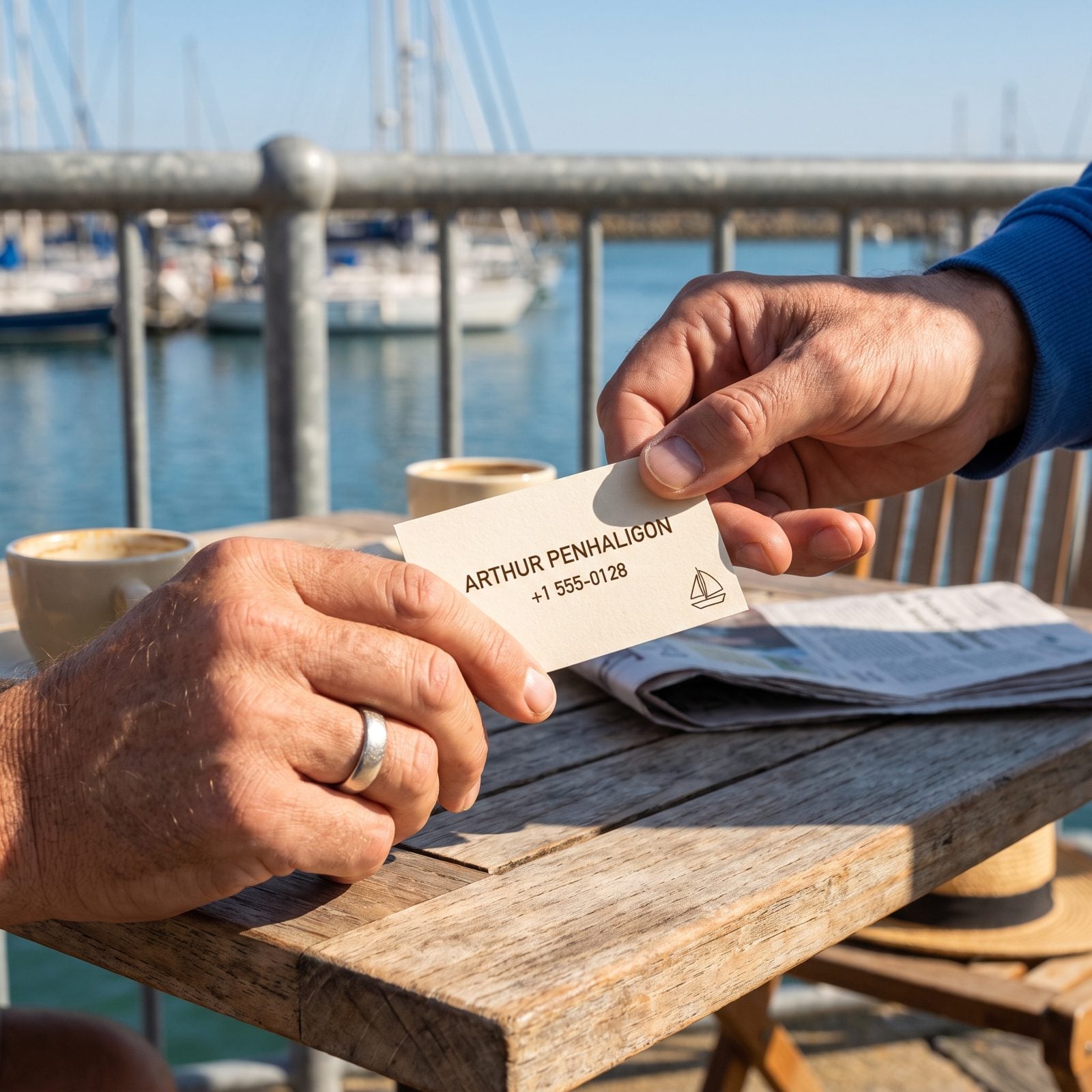
You meet someone great at the boat ramp and talk for twenty minutes about outboard motors and grandkids. Then you both say “we should get coffee sometime” and never do, because neither of you had a pen.
Personal cards fix that. Not the old work ones with a title you no longer hold — new ones. Name, cell, maybe an email, and nothing else. You hand one over and the vague “sometime” becomes a real thing, because now the other person can actually find you.
Retirees tend to assume cards are for working people. Wrong. Working people are the ones too busy to use them. You’re the one with time to actually show up for that coffee.
41. Chore Body-Doubling That Makes Tedious Jobs Easier
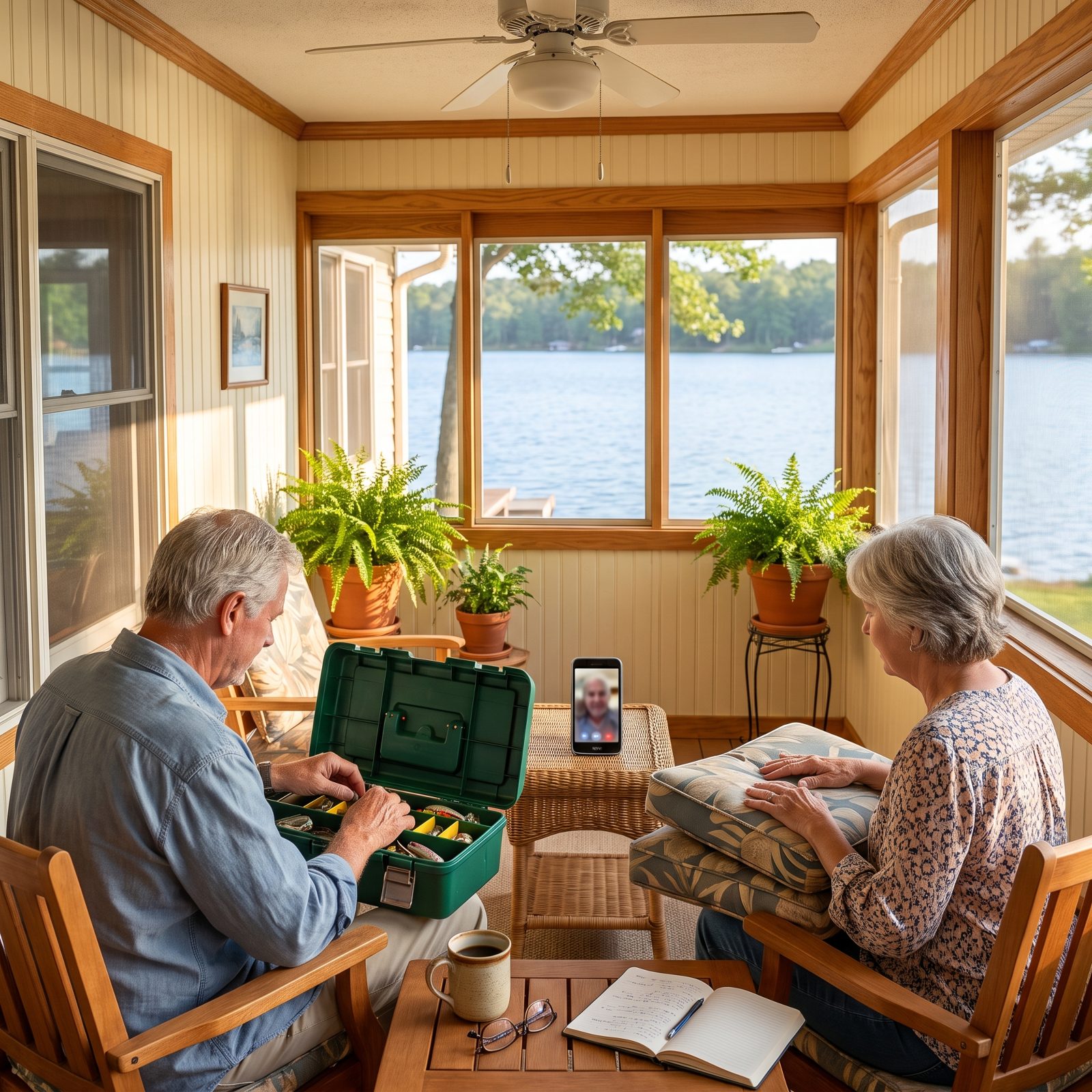
The paperwork pile. The closet that needs sorting. That tackle box that’s been a disaster since spring. You keep not doing it, and it keeps sitting there, getting heavier in your head than it ever is in real life.
Body-doubling is the odd fix. You do your boring task while someone else does theirs — in the room or on a video call, barely talking. Something about another person being present makes the dull job move. Students and folks with ADHD have leaned on this for years, and it works on anyone.
Call a friend across the state. You scrub the cooler, they do their taxes, and you both just stay on the line. The task gets done because quitting feels rude.
40. A Household Friction Audit That Finds Daily Irritations
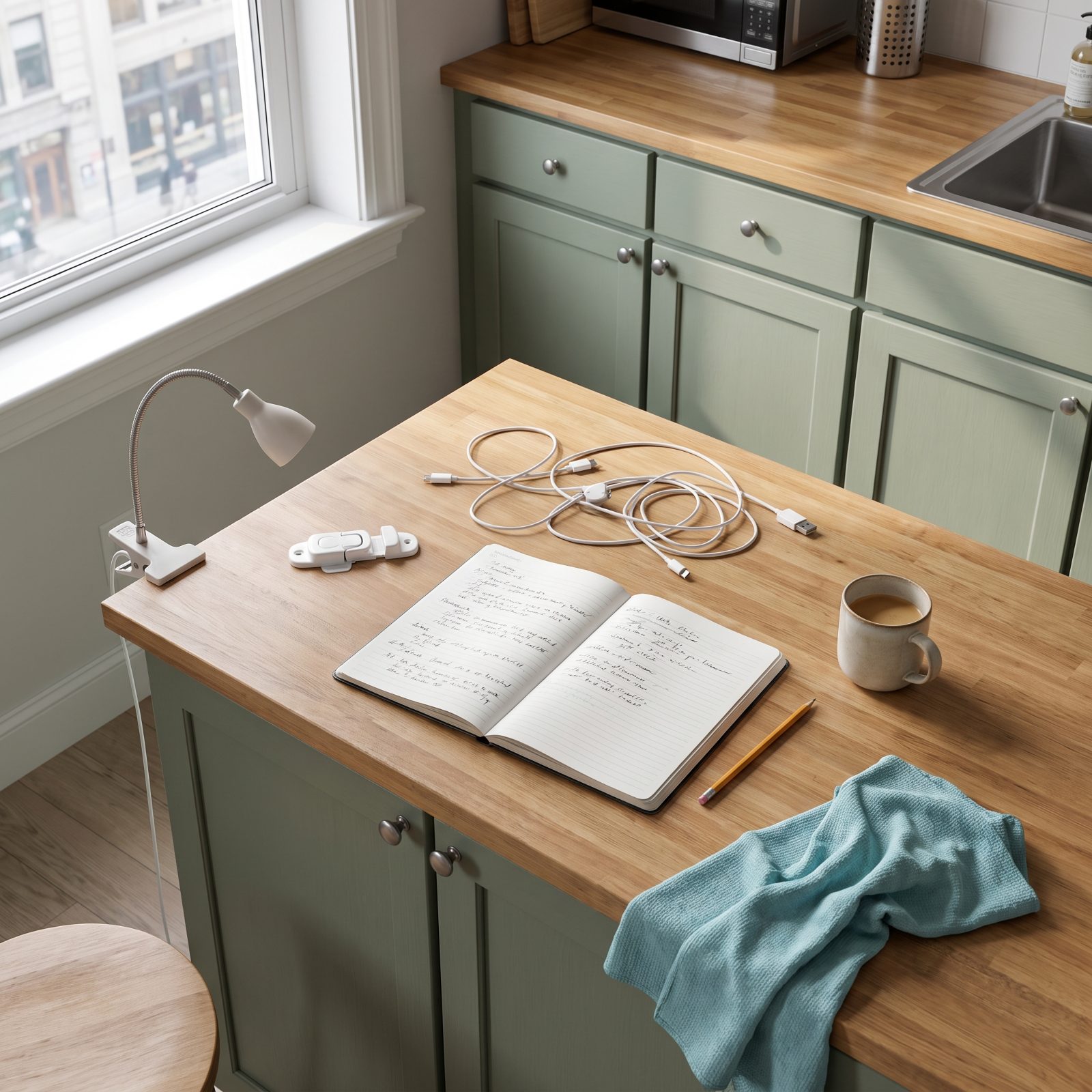
For one week, write down every small thing that annoys you at home. The drawer that sticks. The lamp you have to lean over to reach. The spot where you always stub your toe. Don’t fix anything yet. Just notice.
By Friday you’ll have a list of maybe a dozen-plus tiny irritations you’d stopped seeing because you got used to working around them. Most cost a few dollars and ten minutes to solve — a hook, a longer cord, a step stool left where you actually need it.
Here’s what nobody mentions: these micro-annoyances don’t register one at a time, but they drain you all day like a slow leak in a tire. Fix a handful of them over one weekend and the whole house feels lighter.
39. A Recurring Shift at a Favorite Third Place

Pick a spot that isn’t home and isn’t work. The coffee shop by the marina, the library reading room, the diner where they already know how you take your eggs. Then go at the same time every week, like it’s a standing appointment.
The magic is the repetition. Show up Tuesdays at ten and within a month the regulars nod at you. By month two you’re part of the furniture. Friendships in retirement don’t come from grand plans — they come from showing up in the same chair until familiar faces turn into actual people.
38. A Reverse Calendar That Schedules Rest Before Commitments
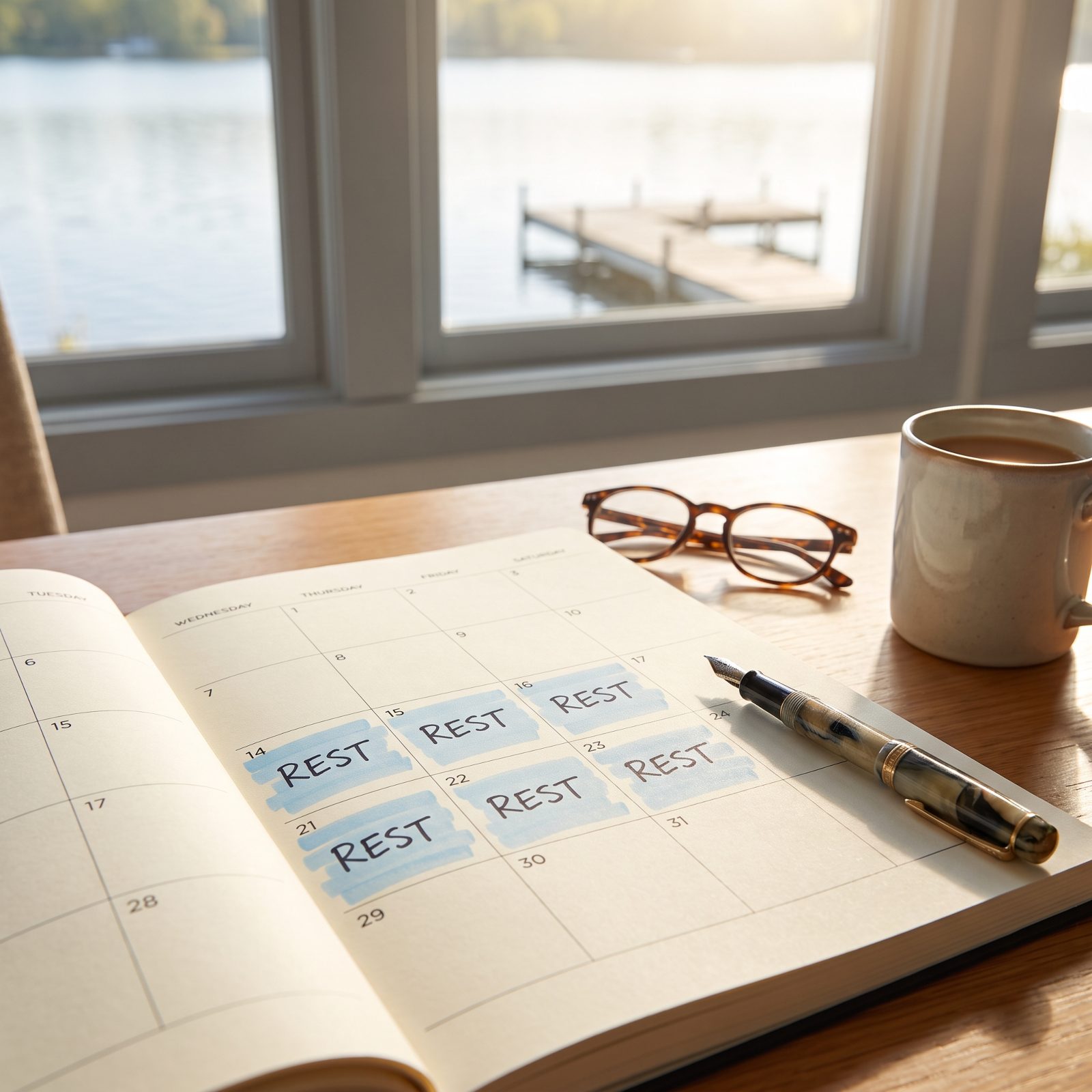
Most people fill the calendar with obligations, then try to squeeze rest into the cracks. There are never any cracks. The to-do list always wins.
So flip it. Block your downtime first — a slow morning, a nap window, an afternoon on the porch with nothing scheduled. Mark those as busy, because they are. Then let the appointments fill whatever space is left.
Sounds backward. Feels indulgent. But if you don’t defend your rest on the calendar, every open hour gets claimed by someone else’s request. Treat an empty afternoon like a dentist appointment: already booked, sorry, can’t make it. Nobody argues with a full calendar.
37. A Fake Commute Walk That Gives the Day a Clear Beginning

When you worked, the commute did something useful you never noticed: it drew a line. Home on one side, the day on the other. Retirement erases that line, and suddenly it’s eleven a.m. and you’re still in pajamas wondering where the morning went.
Build a fake one. Walk out the door, around the block or down to the water, and come back. Fifteen minutes, same route most days. By the time you’re home, your brain has clicked over from “waking up” to “the day has started.”
It’s a trick, and you know it’s a trick, and it works anyway. The walk by the lake beats the walk to the train every single time.
36. Personal Office Hours That Keep Favors From Taking Over

Something sneaks up on the newly retired: everyone assumes you’re free, so everyone asks. The grandkids need a ride. A neighbor needs a hand. Your old coworker wants to “pick your brain.” One by one they’re fine. Together they eat the week.
Office hours fix this. Pick a window — say Wednesday afternoons — when you handle favors and errands and the brain-picking. Outside that window, the answer is a warm “let’s do it Wednesday.” You’re not saying no. You’re saying when.
35. A Stop-Doing List That Removes Unwanted Obligations
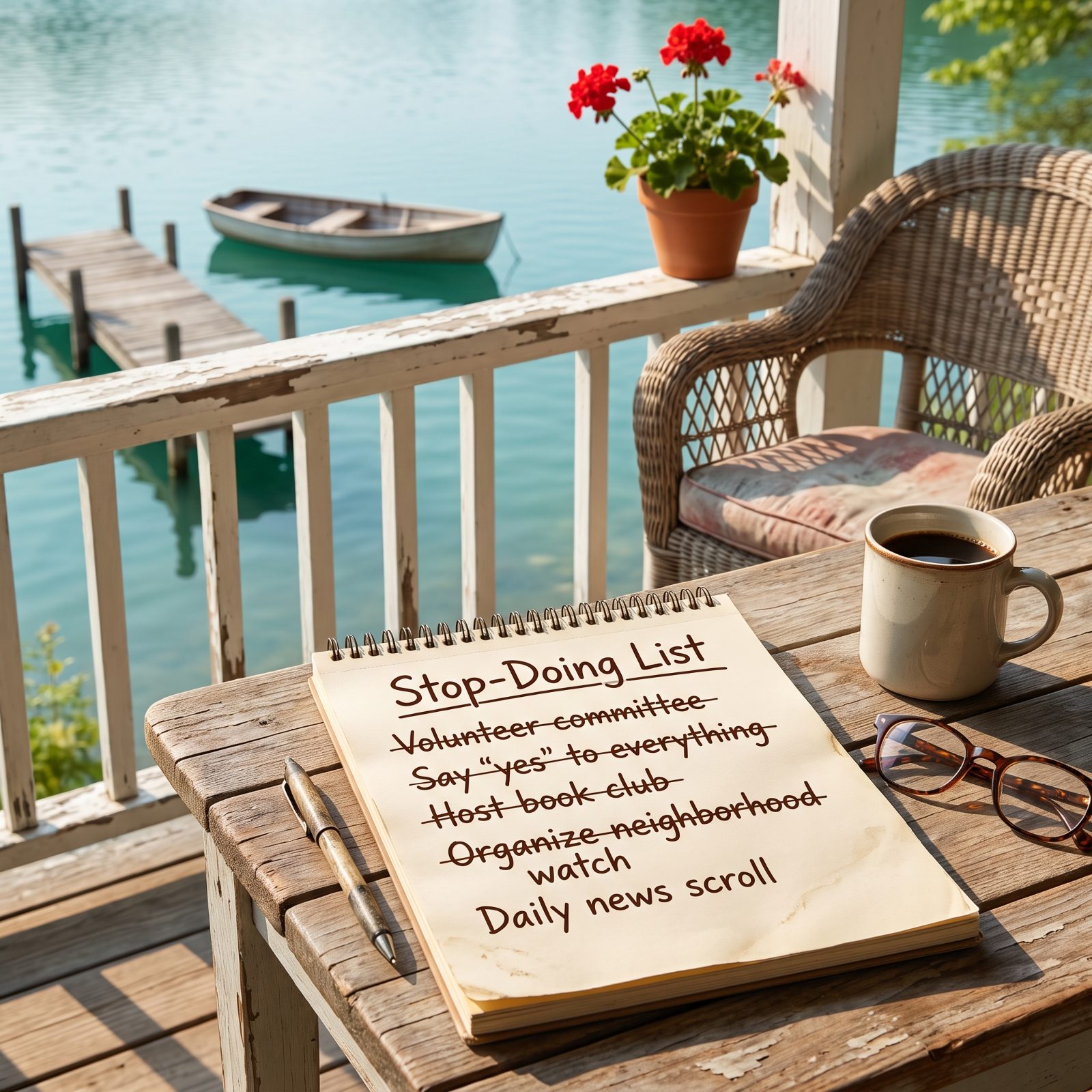
Everyone keeps a to-do list. Almost nobody keeps the better one.
A stop-doing list is where you name the things you’ve been doing out of habit, guilt, or sheer momentum, and then deliberately quit them. The committee you joined in 2009 and secretly dread. The holiday card to eighty people you barely know. The hobby you kept up only because you already bought the equipment.
Retirement is the one chance in life to subtract. You spent decades adding responsibilities, and now you get to prune. Write down three things you’ll stop, and actually stop them. The relief is almost physical, like setting down a bag you forgot you were carrying.
Nobody will notice you quit the newsletter. Honestly, half of them wanted out too.
34. A Personal Closing Time That Keeps Days From Feeling Shapeless

Restaurants close. Shops lock up. Your workday used to end at five whether you liked it or not. Retirement has no closing bell, which is exactly why some retirees drift until midnight and wake up feeling like the day never really finished.
Set your own closing time. Pick an hour — maybe eight — when the day is officially done. No more chores, no more errands, no more “I should just quickly.” The kitchen’s closed, the office is shut, and what’s left is yours.
Having an end makes the whole day feel like it had a shape. You worked toward something, even if that something was just the right to stop. The porch at sunset with a book beats scrolling in bed, and your closing time is what gets you there.
33. One Appointment-Free Weekday Reserved for Spontaneity

Leave one weekday completely blank. No appointments, no plans, nothing you’ve promised anyone. Protect it like it matters, because it does.
This is the day you drive to the lake town you keep meaning to visit. Or you don’t, and you read all afternoon instead. The point isn’t the adventure — it’s having room for one, should the mood strike at nine a.m.
Spontaneity needs empty space to live in. You can’t be impulsive on a packed calendar. Keep one day open and you buy back the one freedom working life never allowed: the right to decide what Friday is when Friday actually arrives.
32. A Permanent Hobby Station That Eliminates Setup Time

The single biggest reason a hobby dies is the fifteen minutes it takes to drag everything out. Set up the vise, hunt down the thread, clear the dining table, then pack it all away before dinner. Do that enough times and the hobby just quietly stops happening.
So don’t put it away. Give the woodworking, the fly-tying, the watercolors, whatever puzzle is half finished — a permanent surface where it lives out in the open. A folding table in the sunroom corner does the job. A spare bedroom does it better.
When the tools are always ready, a free twenty minutes turns into real time at the bench instead of a chore you talk yourself out of.
31. A Conveyor Belt of Library Holds Ready for Pickup

Most people miss this trick entirely. Your library lets you place holds on dozens of books and audiobooks at once, long before you actually want them, and the app pings you as each one comes in. You pick them up a few at a time, all year round.
No more standing in the stacks hoping something looks good. No more finishing a book on a rainy Sunday with nothing lined up behind it. The next one is already waiting with your name on it.
And it costs nothing. That part still surprises people every time.
30. A Standing Weekly Lunch That Prevents Social Drift

Friendships after retirement rarely end in a blowup. They fade because nobody picks the day. Everyone means to call, the weeks slide past, and a year later you realize you haven’t seen someone you genuinely like since the spring thaw.
So make it automatic. Same people, same place, same hour every week — Thursday noon at the cafe by the marina. Nobody has to organize a thing. You just show up, and so does everyone else.
A standing date removes the hardest part of a social life, which is doing the asking.
29. A Porch Chair Facing the Sidewalk Instead of the House

Most people set up their porch backward and never notice. The chairs face the front door, the way furniture faces a TV — which means you spend your evenings staring at your own house.
Turn them around. Point them at the sidewalk, the street, the slice of lake down the block. Now sitting outside means waving to the neighbor walking her dog, trading a word with the kid on the bike, watching the day drift past instead of watching your own siding.
Casual contact with people you half-know matters more than almost anyone expects. A chair’s direction is a small lever on a surprisingly big thing.
28. A Two-Household Meal Swap That Cuts Cooking Work
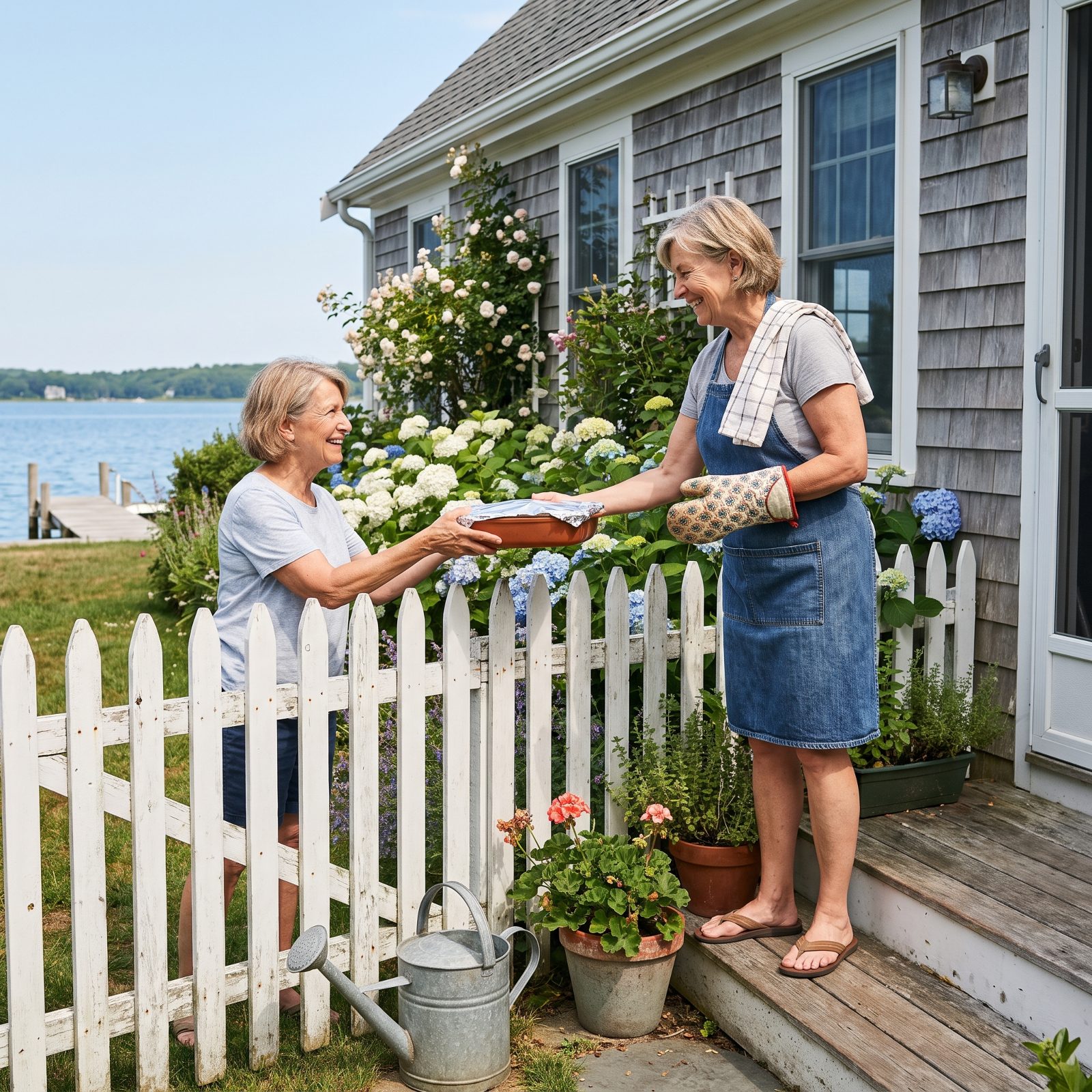
Cooking for two is a strange amount. Too much effort for the portion, too little to feel worth dirtying the pans, so you default to the same five easy meals and get bored of all of them by August.
The swap fixes it. Pair up with a nearby household. You cook a double batch of your lasagna on Monday and hand half across the fence. They cook a double batch of their chicken and rice and hand half back. Same kitchen work, twice the variety, half the nights at the stove.
Works best with friends who cook nothing like you. Otherwise you’re just eating a slightly different version of your own dinner.
27. An Eat-First Freezer Bin That Prevents Forgotten Food
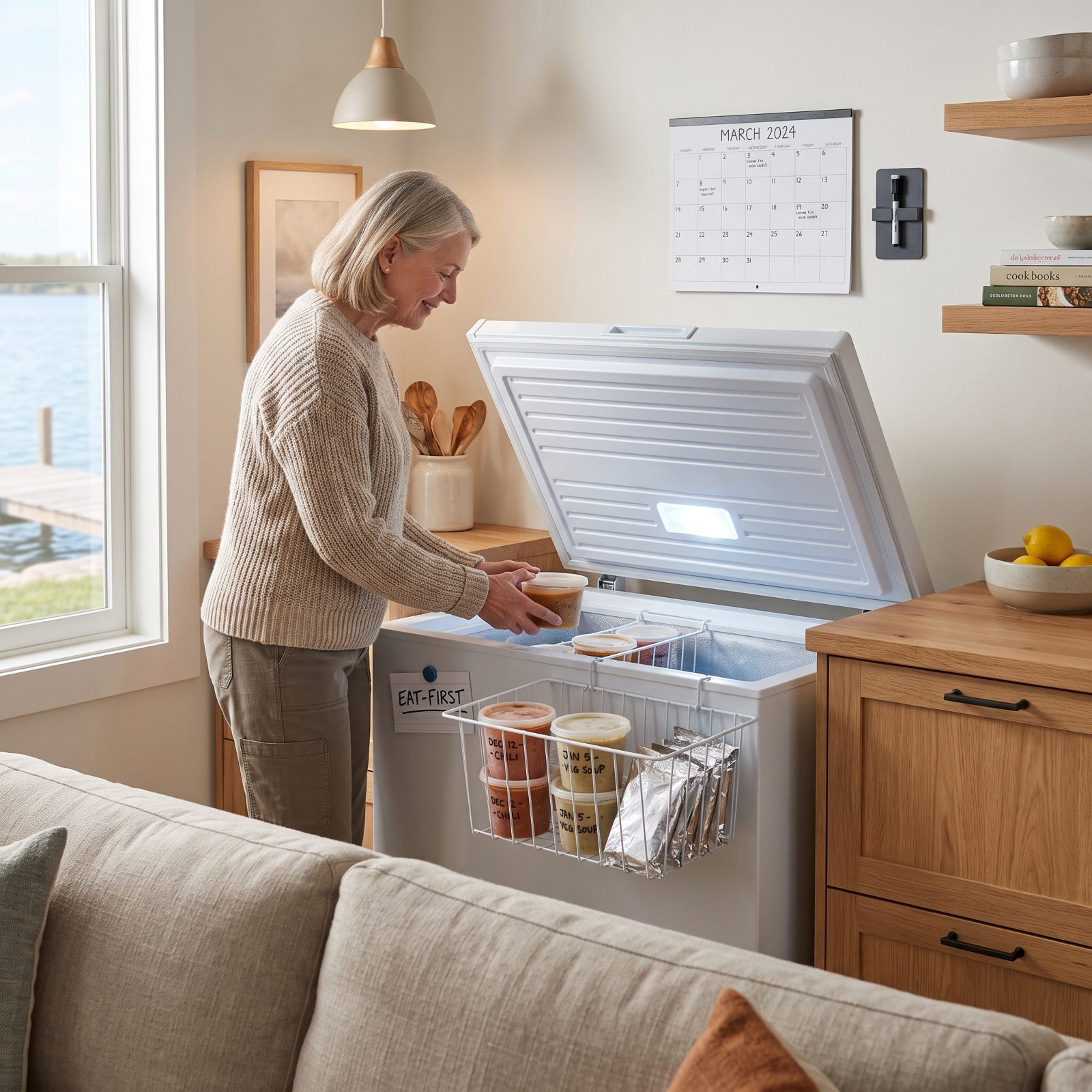
The freezer is where food goes to be forgotten. You buy with good intentions, something gets buried under the peas, and a year and a half later you’re tossing a frostbitted mystery you can’t even identify.
Keep one bin, basket, or shelf as the eat-first zone. Anything getting old, anything thawing soon, anything you mean to use up — it goes there and nowhere else. Deciding what’s for dinner? You look in that one spot first.
Nothing hides. Nothing gets wasted. You stop paying to freeze things you’ll never actually eat.
26. Half-Batch Baking That Provides Treats Without Excess

A full batch of cookies makes thirty-six. For a household of two, that’s a problem wearing a treat’s costume. You eat them because they’re sitting right there, not because you still want them, and the last dozen go stale with a faint little tug of guilt attached.
Halve the recipe, or even quarter it, and bake nine or so. Enjoy them warm the day you make them — honestly the only day a cookie is any good anyway.
The pleasure stays. The leftover obligation vanishes. Most recipes halve cleanly, and the handful that don’t aren’t worth the fuss.
25. Using the Good Dishes for Ordinary Tuesday Meals

The wedding china has sat in that cabinet for forty years, waiting for an occasion that keeps not arriving. Do the uncomfortable math: if you only break out the good things on special days, you’ll use them a handful more times in your whole life.
So use them Tuesday. Eat the leftover spaghetti off the plate with the gold rim. Pour your morning coffee into the cup you’ve been protecting from your own mouth.
And if one chips? You replace it, or you don’t, and either way you actually enjoyed the thing instead of guarding it behind glass. The occasion was always just dinner.
The good dishes aren’t for someday. Someday is a terrible place to keep the things you love.
24. A Slim Rolling Cart That Moves Supplies Between Rooms
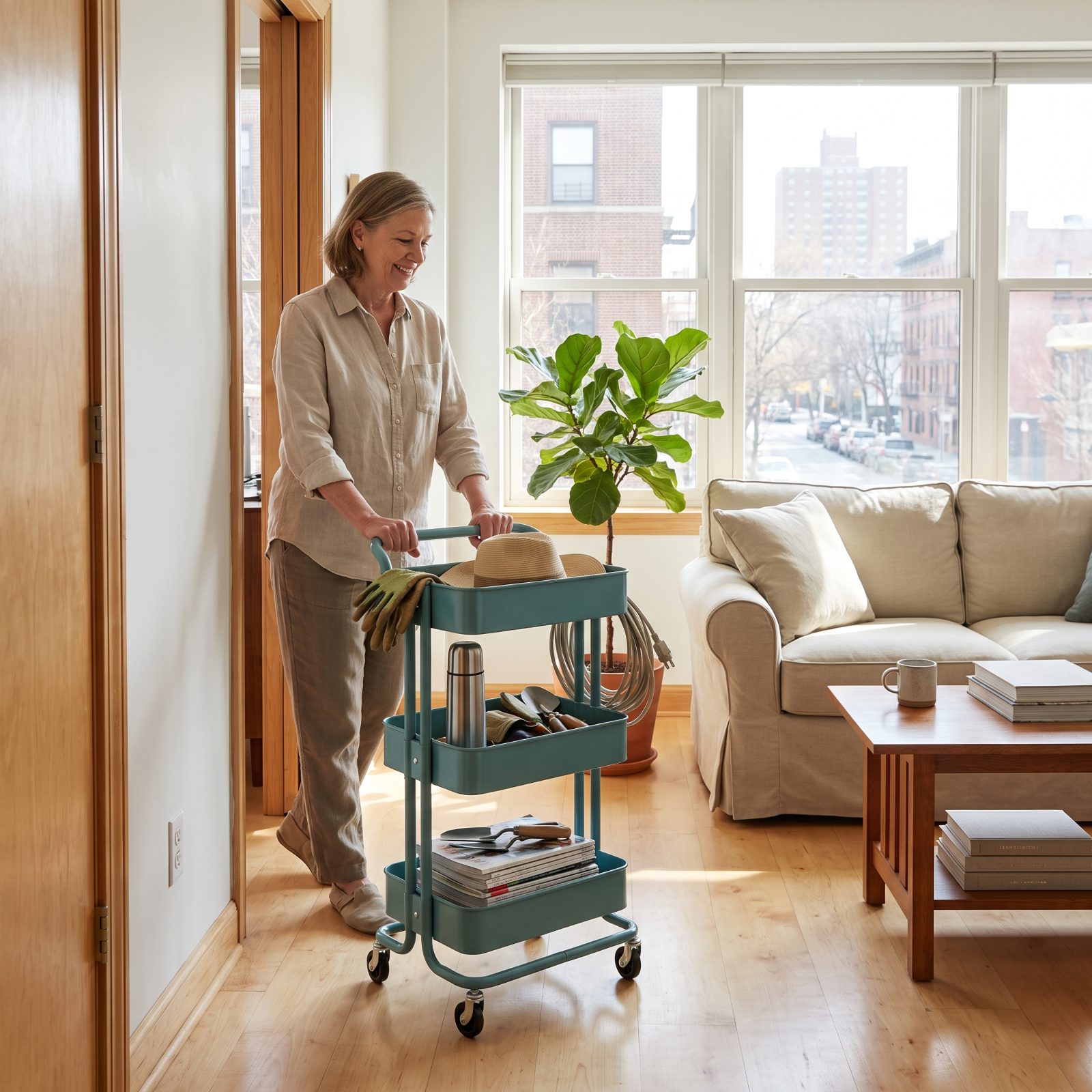
It’s always the second trip that gets you. You carry the coffee, the book, and the reading glasses out to the porch, settle in, and realize you forgot the phone and the throw blanket. Up you get.
A narrow cart on wheels mops up all those little wasted trips. Load it once, roll it where you’re headed, and everything shows up at the same time. Gardening gear out to the yard. Craft supplies to the sunroom. Snacks and a cold drink to the chairs by the dock.
For anyone whose knees vote against extra laps up and down the hall, a cart isn’t a luxury — it’s the difference between settling in for the afternoon and just giving up on the idea.
23. A Reacher Tool on Every Floor of the House
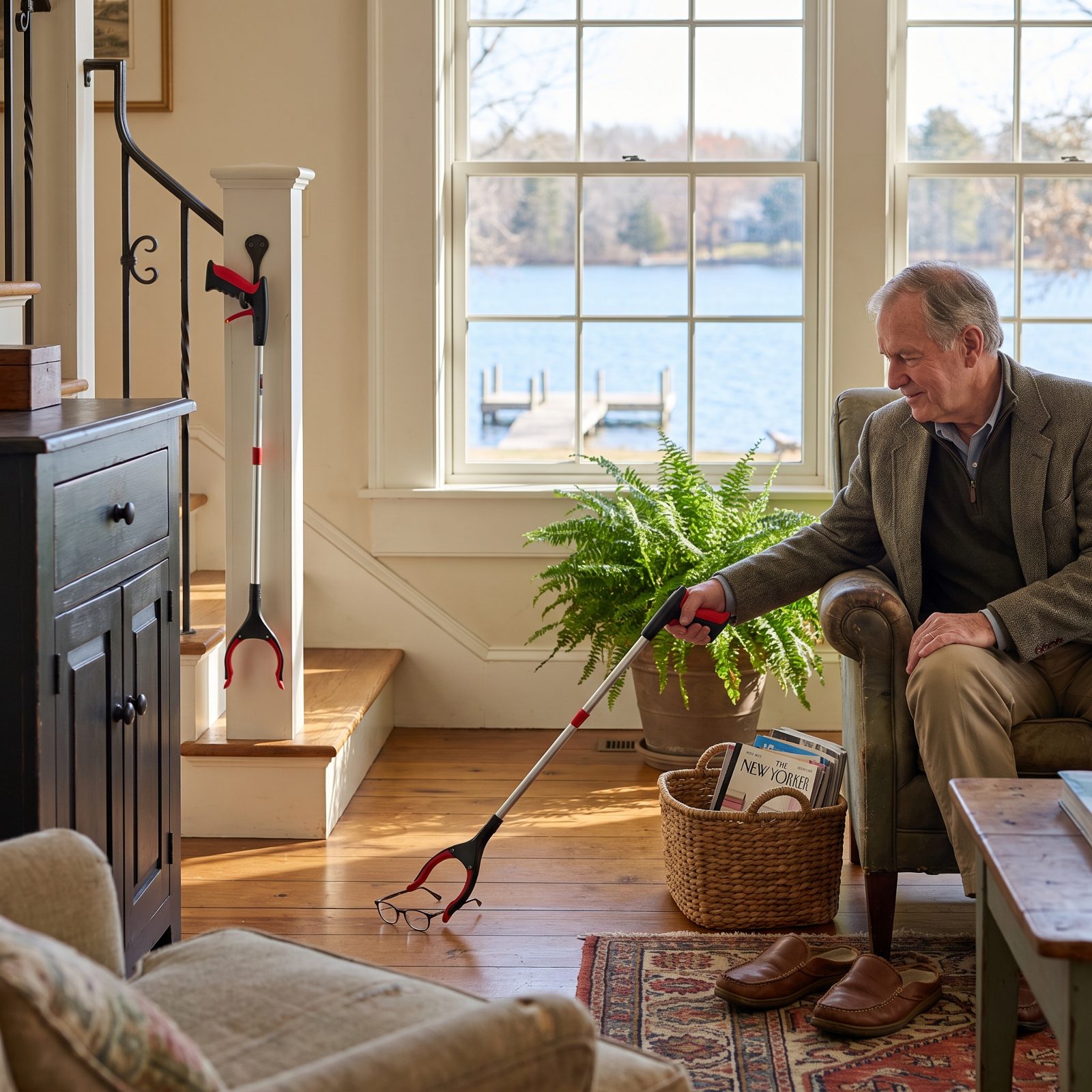
People file the grabber under things-you-buy-after-a-hip-replacement. Wrong frame entirely. It saves your back and your knees a dozen small times a day, long before anyone’s handing you a doctor’s note.
The dropped sock behind the dryer. The remote that slid under the couch. The can on the high shelf. Bending and stretching for those odds and ends is where a lot of falls and pulled muscles actually begin.
Buy a few. Put one on each floor so there’s always one within arm’s reach of wherever things tend to land. They’re cheap, and the first time you snag a mug off a top shelf without dragging over the step stool, you’ll wonder what took you so long.
22. An Outdoor Key Lockbox That Prevents Costly Lockouts
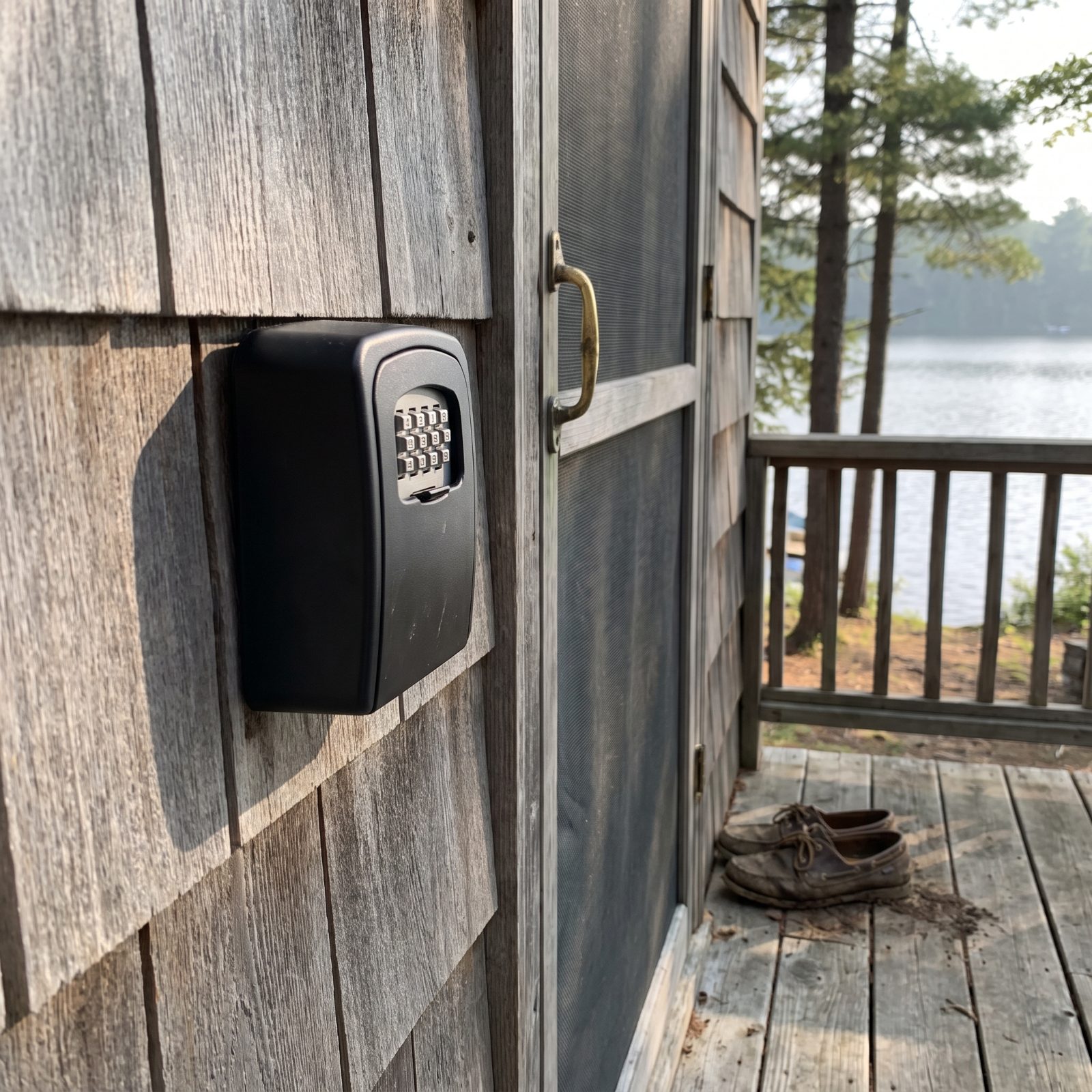
Locking yourself out of a lake house at dusk, with the nearest locksmith forty minutes away and charging a weekend rate, is a lesson nobody wants twice. A combination lockbox bolted near the door ends that whole category of problem. No hidden rock, no key under the mat where every burglar already looks.
The good ones are weather-rated and hold a spare for the house, the shed, and the boat lift. Set a code everyone in the family already knows by heart. A grandkid lets themselves in, and a neighbor can check the pipes in January without driving across the lake to hand off a key.
21. Motion-Sensor Night-Lights Along Familiar Routes
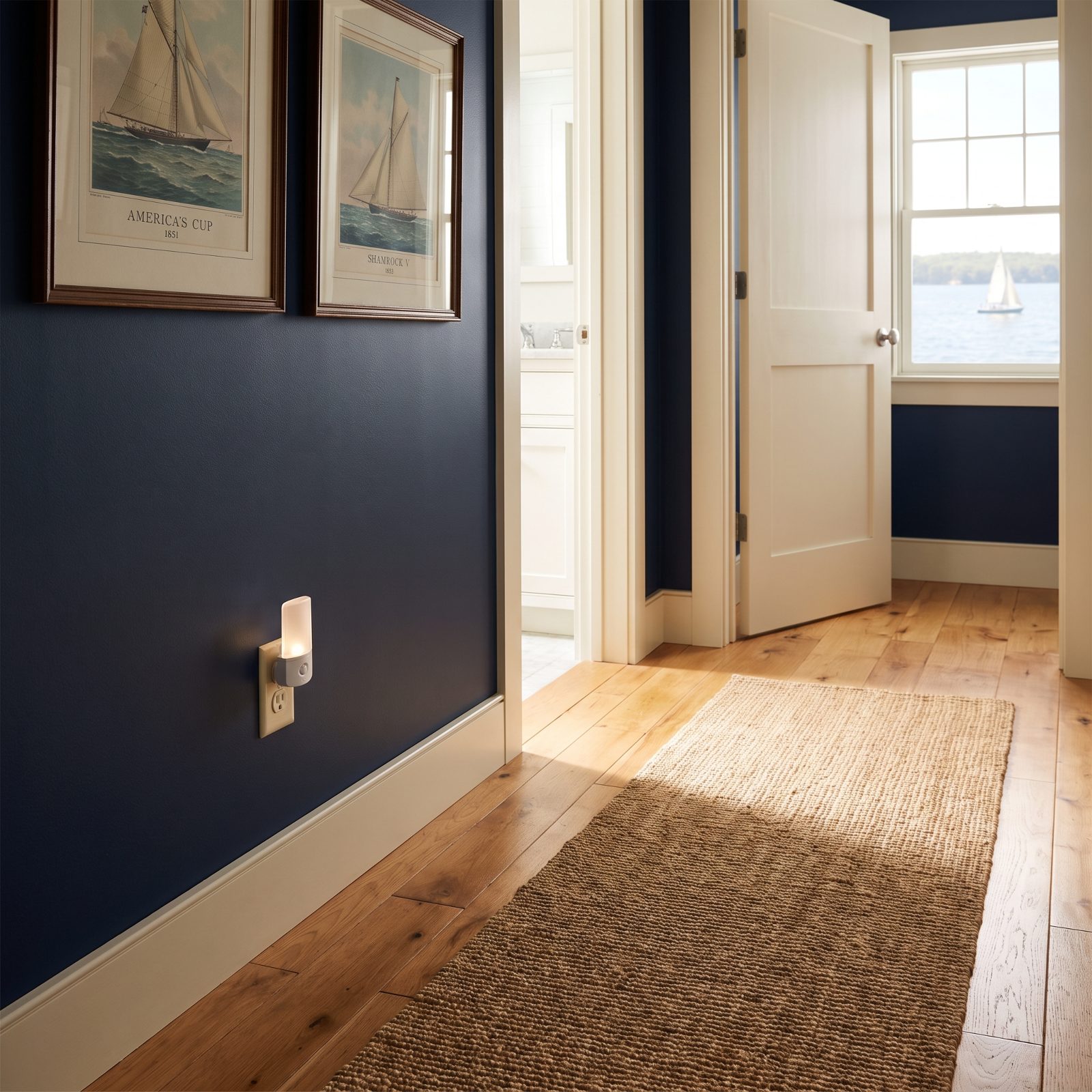
That walk from the bedroom to the bathroom at 3 a.m. is where a surprising number of falls happen. Overhead lights are too bright and leave you squinting, and fumbling for a switch means a hand on a dark wall with your feet guessing at the floor.
Small motion-sensor lights, plugged in low along the route, solve it without a single switch. Step into the hall and a soft glow comes up, just enough to see the edge of the rug and the top of the stairs. Warm-white, not blue, so your eyes stay half-asleep and you drift back down easily. A few dollars each, and they run for months on a charge or sip almost nothing on a plug.
20. A Bidet Attachment That Makes the Bathroom Easier
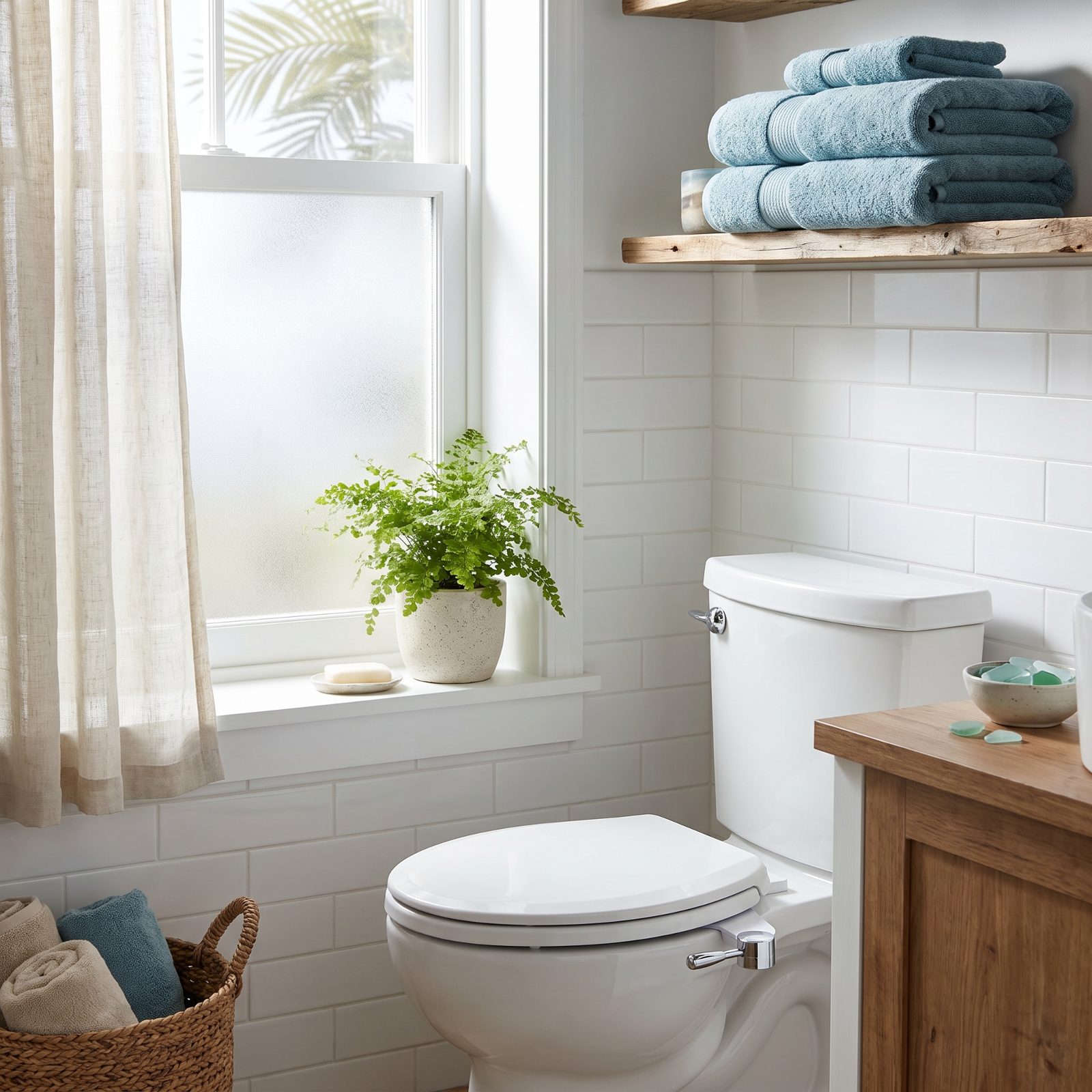
Of all the upgrades here, a bidet attachment gets the most eye-rolls and the fastest converts. It clamps onto the existing toilet in about twenty minutes with a wrench and no plumber, and most run under forty dollars.
Here’s why it matters more with age: reaching and twisting gets harder, and a bidet takes most of that out of the equation. Cleaner, gentler on sensitive skin, and far kinder to anyone managing mobility or hand-strength issues. Fewer wads of toilet paper also means fewer clogged septic lines at the cabin, which is its own small mercy.
19. A Portable Induction Burner for Safer Small Meals

An induction burner stays cool to the touch except where the pot actually sits. No open flame, no glowing coil left on by accident, no gas smell lingering because a knob got bumped. For anyone who has walked away mid-cook and forgotten, that margin of safety is real.
It heats fast and shuts off the second you lift the pan, which suits the way meals shrink after the kids move out. One pot of soup. A single poached egg. Tea for two on the porch. It also unplugs and travels, so it moves out to the dock or onto the pontoon for a slow lunch on the water, and a decent one costs less than a nice dinner out.
18. Separate Duvets That End Nightly Blanket Battles

Scandinavians figured this out generations ago and the rest of us are slow learners. Give each sleeper their own layer, like the extra duvet folded over one side of the big shared comforter here, so nobody gets dragged into the cold at 2 a.m. when the other person rolls over and hauls everything with them.
Sounds like a small thing. It isn’t. One of you runs hot while the other sleeps under a mountain of down, and now you both get exactly what you want without a single word of negotiation. Making the bed gets faster too — smooth the comforter, lay the extra duvet back over its side and done, no wrestling everything square. Better sleep after fifty does more for your days than almost anything else on this list.
17. Timer Caps That Show When Medicine Was Last Opened
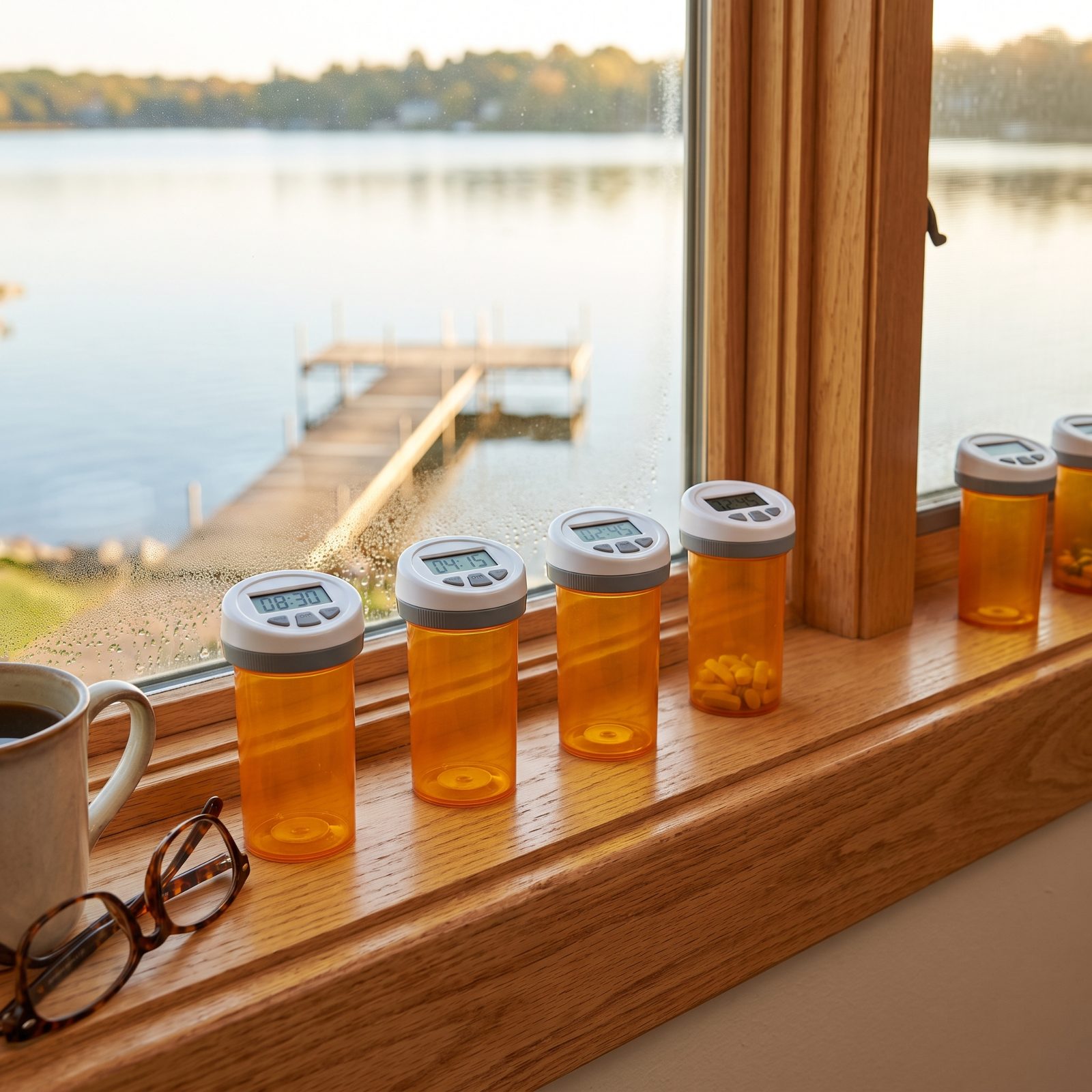
Did I take the blue one this morning, or am I thinking of yesterday? Everyone has had that moment standing at the counter, and the pill organizer only half-answers it.
Timer caps settle it cold. The cap runs a small clock that resets every time you open the bottle, so a glance tells you it’s been nine hours, or forty minutes — no guessing. That stops the double dose and the skipped dose, both of which land people in trouble more often than anyone admits.
A few dollars per cap, and they fit standard pharmacy bottles. For anyone juggling several prescriptions, this is cheaper and less fiddly than most app-based reminders.
16. A Clearly Labeled Legacy Binder for Essential Documents
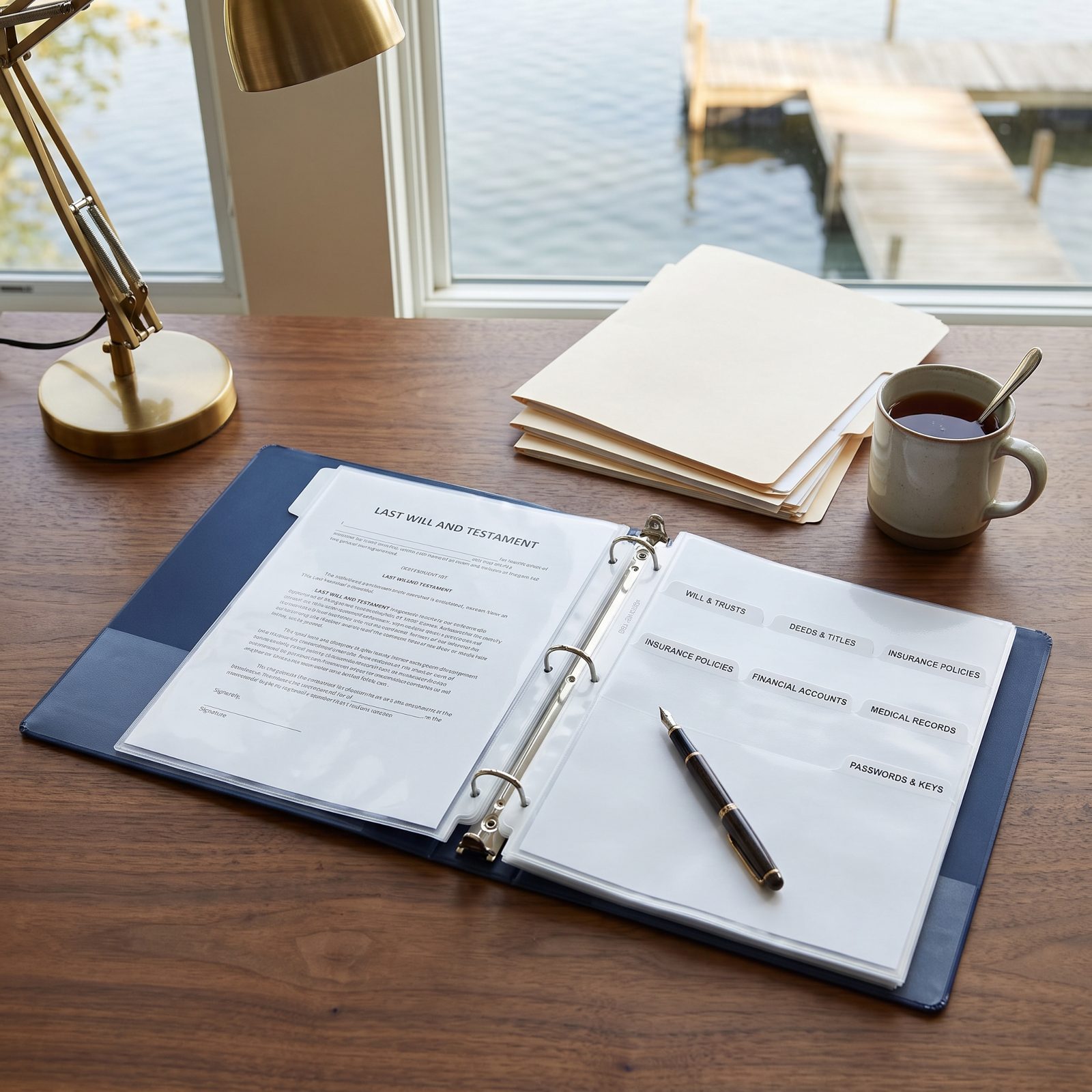
Nobody wants to think about this one, which is exactly why it gets put off until it’s a crisis for the people left behind. A single binder, clearly labeled, holding the things a spouse or adult child would otherwise spend months hunting for.
Insurance policies. Account numbers and where they live. The will and who has the original. Passwords, or at least where the password manager lives. The deed. Funeral wishes, if you have them. Toss in the name of your accountant and your lawyer so someone isn’t cold-calling strangers at the worst possible week of their life.
The kindest thing you can leave behind is a file that answers the questions you’re no longer there to answer.
Tell one trusted person where the binder sits. A gorgeously organized binder nobody can find helps no one.
15. A Permanent Credit Freeze That Blocks New-Account Fraud
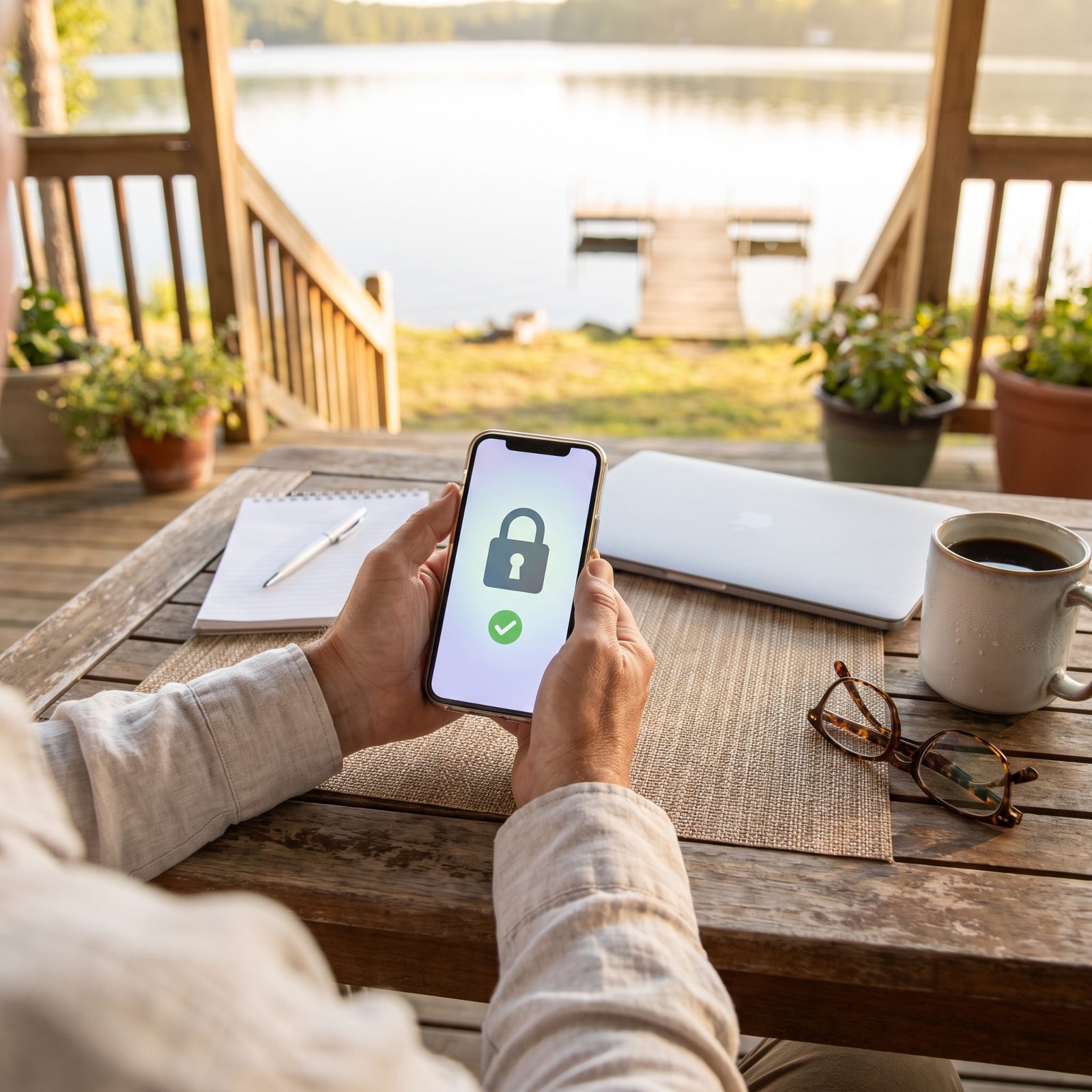
Here’s the part that surprises people: freezing your credit is free, legal in all fifty states, and the single strongest move against someone opening accounts in your name. A thief with your stolen details can’t open a new card or loan while the freeze is on, because lenders can’t pull your file to approve them.
You set it up once at each of the three bureaus and then mostly forget it. Need credit for a mortgage, a car loan, a new card? You thaw it temporarily with a PIN and refreeze after. Scammers go after retirees precisely because they’ve built up assets over a lifetime, and this closes a door the criminals count on being open.
14. A 24-Hour Pause Rule for Unexpected Money Requests
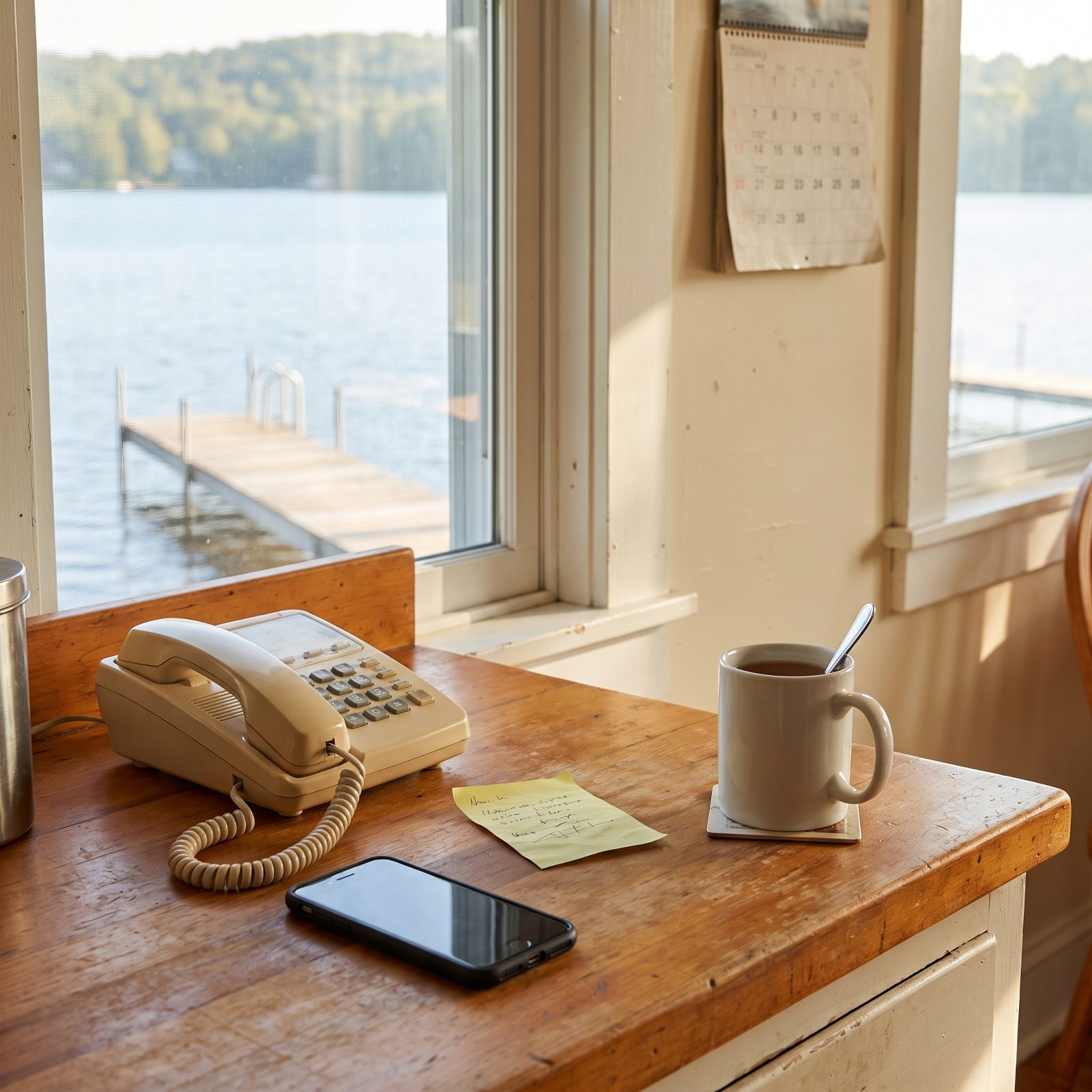
Scams run on urgency. The grandchild in jail, the IRS on the line, the contractor who needs a deposit in cash right now before the deal falls through — the pressure to act fast is the whole con. Slow it down and it falls apart.
The rule is simple. Any unexpected request for money waits a full day. No wire, no gift card, no cash handoff until twenty-four hours have passed and you’ve called the person back on a number you already had. Real emergencies survive a phone call. Real businesses survive a day’s delay. Only scams can’t.
13. A Budget Line Specifically Reserved for Small Indulgences
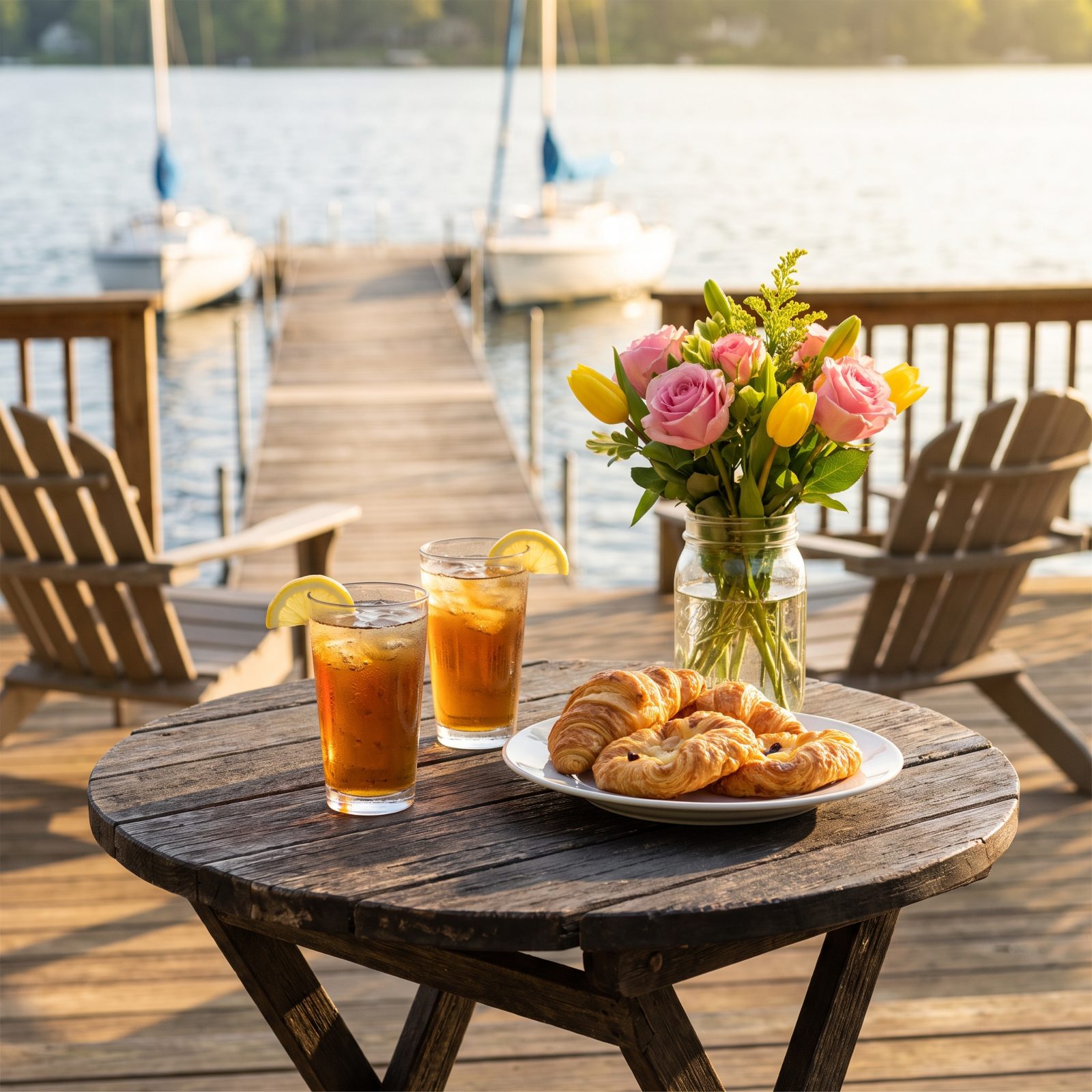
After decades of saving, a lot of people get so good at not spending that they can’t flip the switch when it finally makes sense to. The money’s there. The guilt isn’t.
So name a line in the budget just for small pleasures and give yourself permission to blow it with a clear conscience. The good coffee. Fresh flowers every week. The charter fishing trip. The second scoop. It’s not reckless — it’s planned, which is exactly what makes it feel earned. When the spending has a name and a limit, the guilt has nowhere to sit.
Days are made of small things, and a budget that forgets to fund the small things quietly funds a life that feels thinner than it had to.
12. A Rent-Before-Buy Rule for New Hobbies

The garage is where retirement enthusiasm goes to gather dust — half-finished kayaks, a kiln used twice, golf clubs still wrapped in their plastic. Renting first kills that problem before it starts.
Try the paddleboard for a weekend, rent the fishing rig for a season, book some bench time at a maker space. If it sticks, buy the good version knowing exactly what you need. If it doesn’t, you’re out forty bucks instead of four hundred, and nobody has to pretend they’ll get back to it someday.
11. A Tool-Lending Library Instead of a Packed Garage
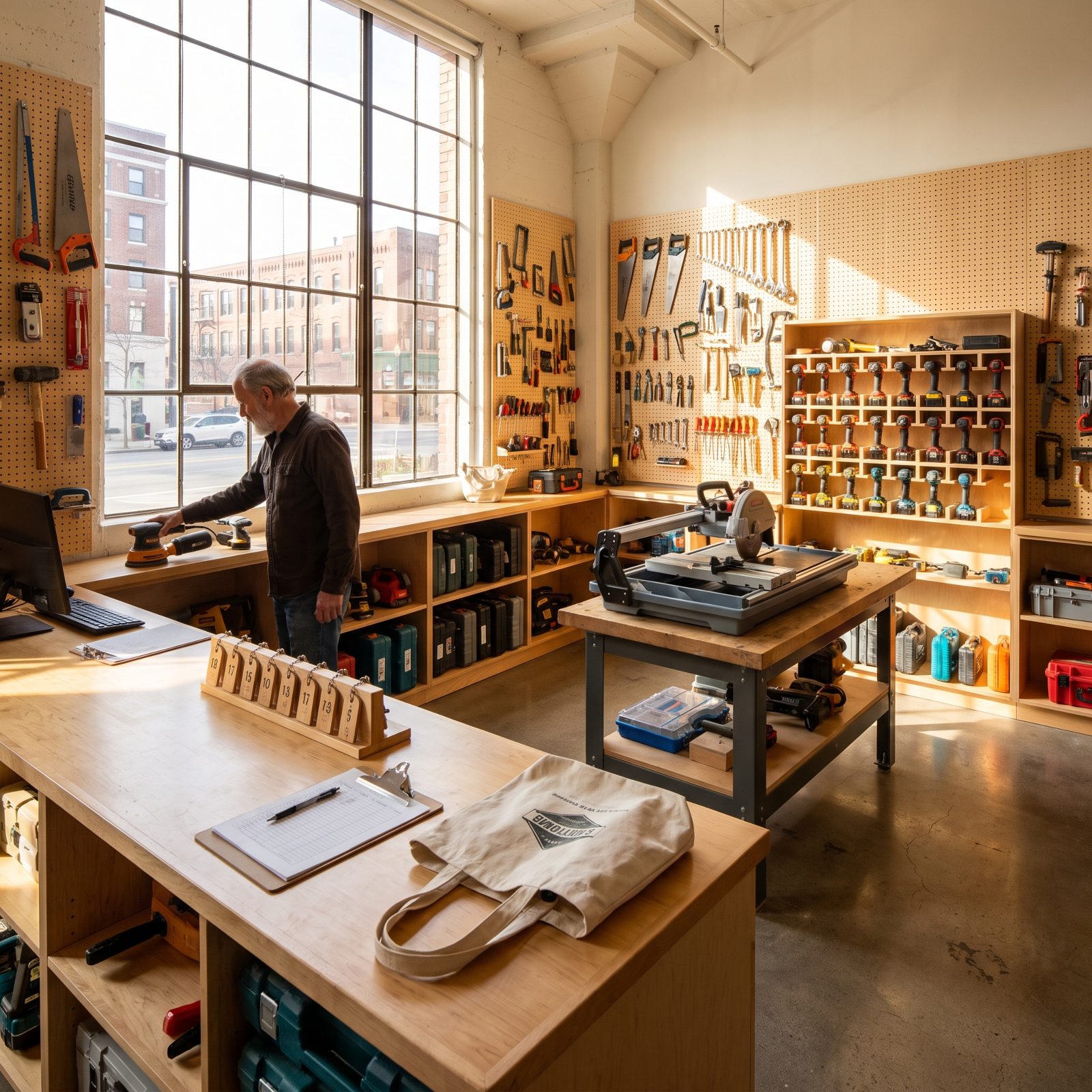
You need a pressure washer twice a year. A tile saw once a decade. A tool-lending library hands them over like a book — free or a few bucks, returned when the dock repair is done.
Hardly anyone knows these exist. They’re run by nonprofits, a few public libraries, and a growing crop of “library of things” branches. You borrow the expensive thing, use it, bring it back, and your garage stays walkable. No oil changes on a generator you touch once a year, no guilt about money sitting idle on a shelf.
10. A Reciprocal Museum Membership That Unlocks Day Trips

One membership, hundreds of free doors.
Buy a membership at a local museum that belongs to a reciprocal network, and suddenly you’re waved into other institutions all over the country for free or close to it. The big names are ASTC for science centers, NARM and ROAM for art and history.
It completely changes how day trips feel. Drive to the next coastal town and the maritime museum you’d normally pay to enter just lets you walk past the counter. A weekend near a new lake turns into a string of galleries and aquariums, one after another. By the third stop the thing has paid for itself, and all those aimless afternoons suddenly have somewhere to go.
9. Auditing a College Class Without Chasing a Grade
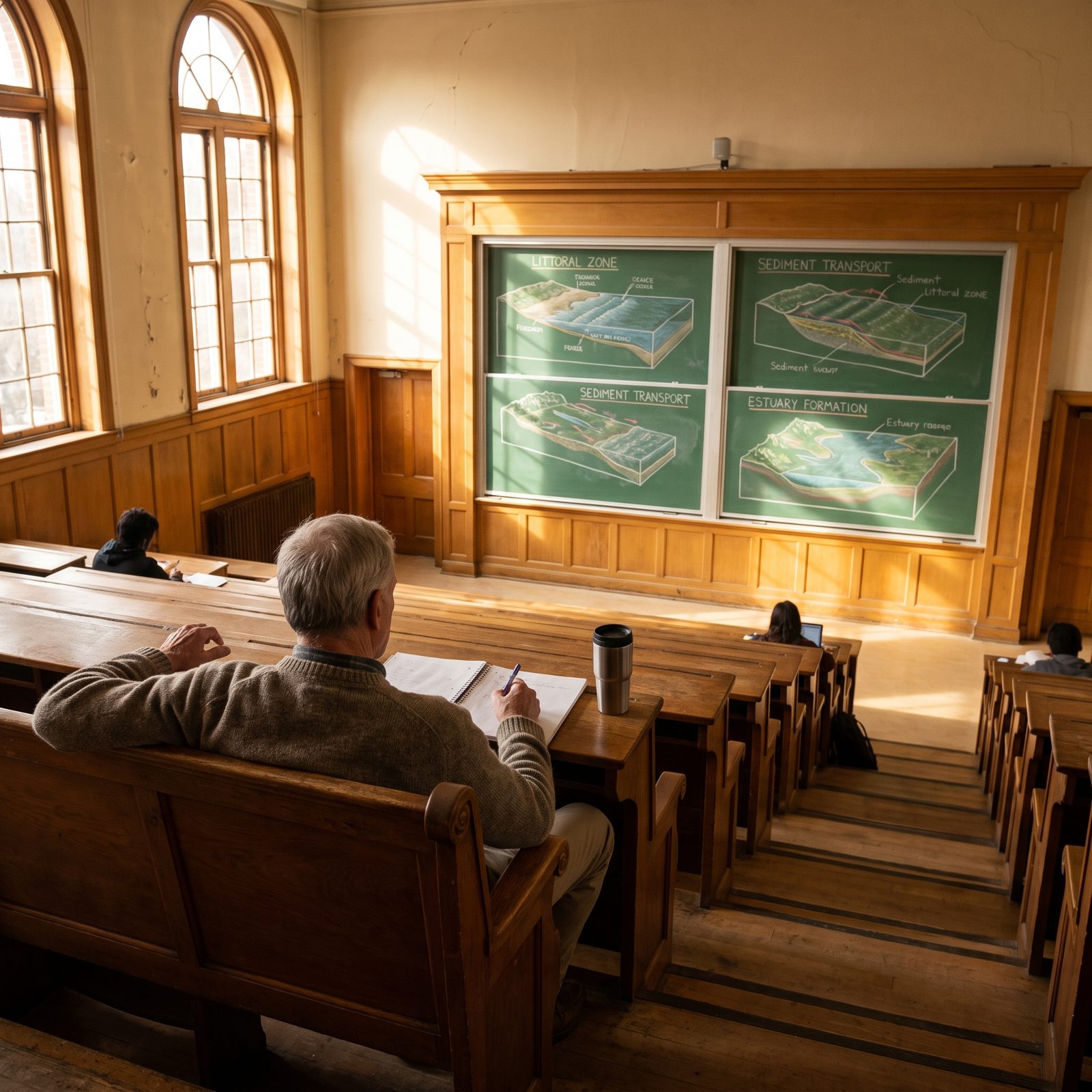
Grades are the part of school nobody actually enjoys. Auditing drops them entirely — you sit in on the lecture, do the reading if you feel like it, and skip the exams and the tuition panic.
Many colleges let residents over 60 audit for free or close to it, and community colleges are the easiest about it. You could finally wrap your head around marine ecology, or Civil War history, or Spanish, with no deadline hanging over you and a room full of people half your age who treat your questions like gold.
8. Volunteer Ushering That Comes With Live Performances

Tickets to the symphony, the ballet, the touring Broadway show cost real money. Ushering costs an hour of your time and a tidy outfit.
You tear tickets, point people to their seats, hand out programs, then sit down and watch the whole thing for free. Community theaters, concert halls, and performing arts centers run on volunteer ushers and are forever short of them. Show up reliable and polite and you’ll see more live performance in a year than most season-ticket holders. You also get to know the regulars — which matters more than people admit once the calendar starts feeling empty.
7. A Weekly Shelter-Dog Walk Without Full-Time Pet Care

A dog full-time means vet bills, boarding every time you travel, and a pet that may outlive your plans. Walking shelter dogs hands you the good parts and skips the lock-in.
Show up once a week, the staff passes you a leash, and off you go with some dog who badly needs the exercise — around the block or down to the water. The dog gets movement and socializing that makes it more adoptable. You get a reason to be up and moving, a little purpose stitched into the morning, and the company of an animal thrilled to see you. No fifteen-year commitment attached.
6. Repair-Café Visits That Rescue Useful Household Items
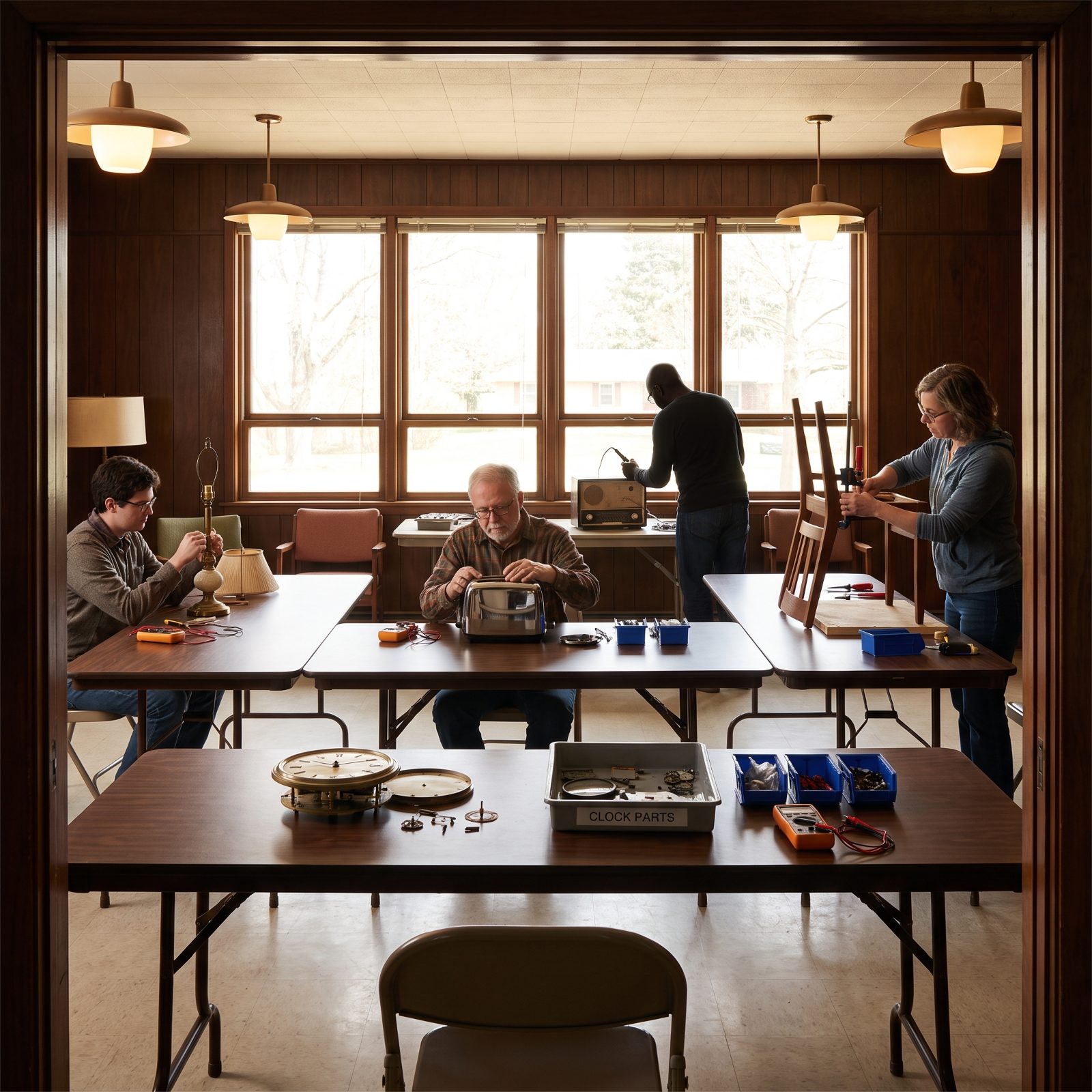
The toaster works fine except for one stuck spring, the lamp needs a new cord, and tossing either one feels wasteful while fixing it yourself feels impossible. A repair café splits the difference.
Volunteers who genuinely know electronics, small engines, and sewing sit at tables and fix your stuff while you watch, for free. You bring the broken thing in, they diagnose it, and more often than not they patch it right there. Even when they can’t, you leave knowing why it died and whether it was ever worth saving.
Here’s the side benefit nobody mentions. You end up chatting with a retired electrician for an hour, and that turns out to be the real reason you went.
5. Citizen-Science Projects That Give Walks a Purpose

A walk around the lake is pleasant. A walk where you’re logging bird sightings for actual research is a mission, and missions are what drag you out the door on the gray days.
Apps like eBird and iNaturalist, plus projects like Nature’s Notebook, turn your observations into data that real scientists lean on. Count the birds at the shoreline. Photograph the wildflower you can’t name and let the app sort it out. Report the water temperature.
Suddenly the same loop you’ve walked a thousand times has you clocking the migration shift, the new frog, the maple that leafed out early. Attention is the whole gift here — and it costs nothing.
4. A Public-Transit Practice Day Before Driving Becomes Difficult

Nobody wants to think about the day driving gets hard. That’s exactly why you practice transit now, while it’s a curiosity and not an emergency.
Take one low-stakes trip a month. Figure out the bus to the marina, the train to the next town, the senior shuttle to the grocery store. Learn the app, the fare card, the schedule quirks, the hours when it’s genuinely relaxed. Do all of it while you can still drive yourself home if the whole thing goes sideways.
3. A Digital Frame Fed by Distant Family Members
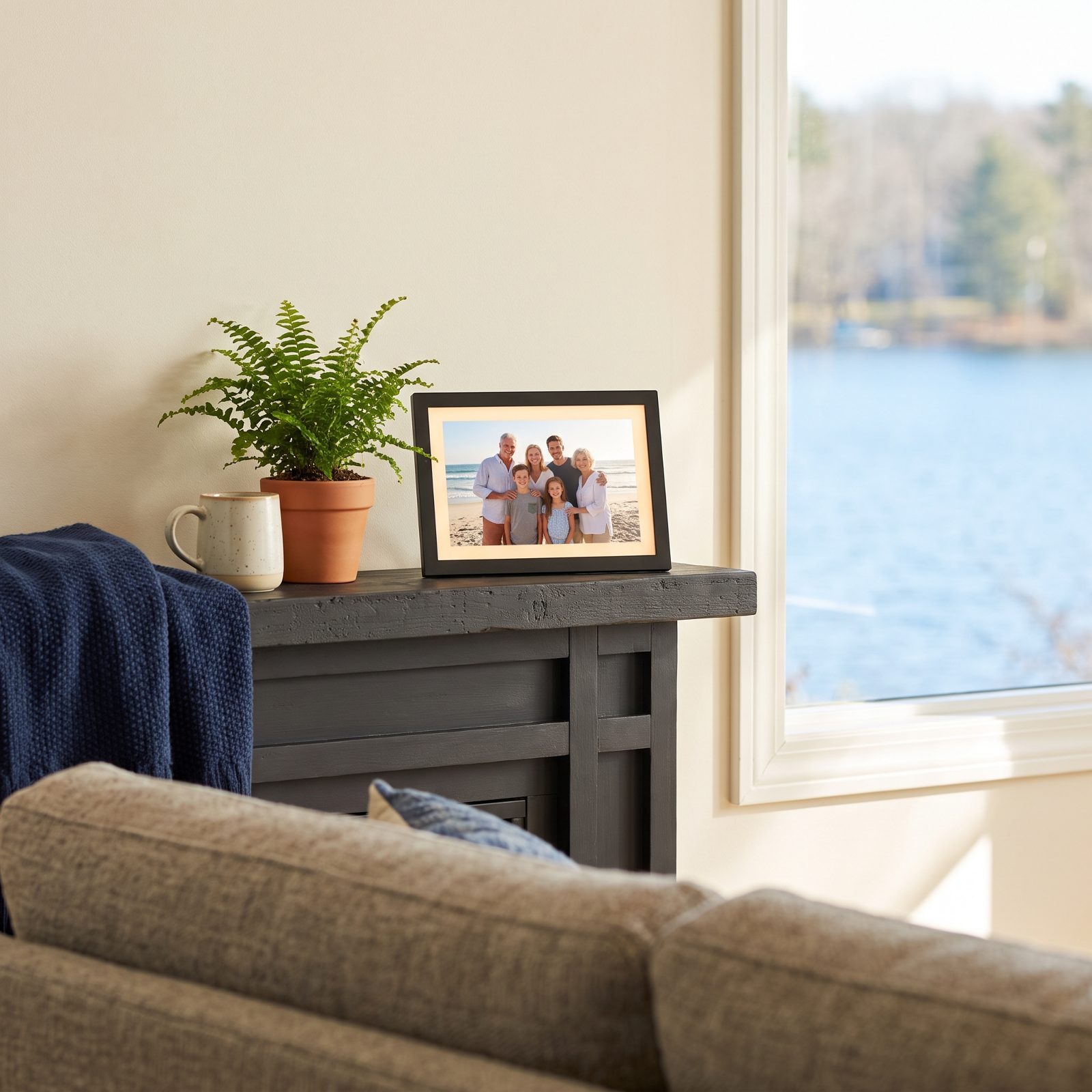
The grandkids live three states away and the photos pile up in a group text you can barely navigate. A cloud-connected digital frame fixes that.
Family push photos to it from their phones, from anywhere, and the pictures just appear on your mantel. No syncing, no cables, no asking anyone to explain the app again. You wake up to a new shot of the baby at the beach, the dog in the snow, your daughter’s new kitchen.
What catches people off guard is how much it pulls far-flung family back into the daily rhythm. They send more once they know you’ll actually see it. The frame handles the hard part. They just hit send.
2. Voice Memos That Preserve Family Stories in Natural Speech

The stories die before the photos do. You’ve got a shoebox of pictures nobody can name, and the one person who knew who was standing on the dock back in 1961 isn’t around to ask anymore.
A phone voice memo fixes that for free — not some stiff interview with a clipboard of questions. Record the ordinary telling. The way the story comes out over coffee, with the pauses and the sidetracks and the way a voice climbs right at the funny part. That texture is what you’re actually after, and a transcript throws all of it in the trash. The actual sound keeps the person in a way nothing on paper ever will.
Short memos win. Three or four minutes each, one story at a time, easier to record and a whole lot easier to find later. And for the love of everything, label them while the detail is still fresh in your head — not six months on when every file in the folder reads “New Recording 47.”
1. A Recipe-Recording Day That Captures Techniques Cookbooks Miss
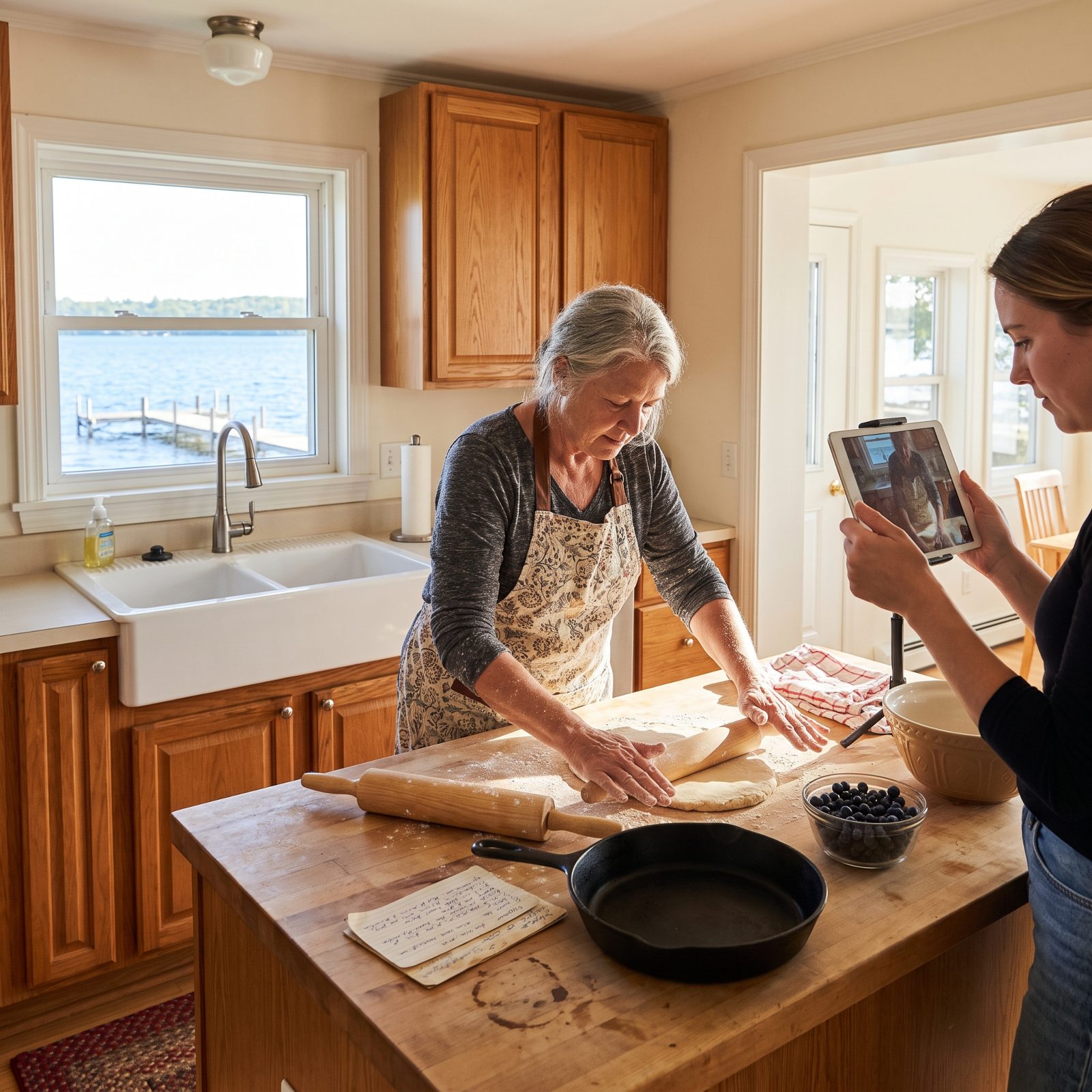
Written recipes lie by omission. “Knead until smooth” tells you nothing about what smooth feels like under your palm, or that the dough should still tack a little to the heel of your hand. Hands know things the card never bothered to mention.
So pick a day and film the cooking instead of copying the recipe. Prop a phone against the sugar canister and let it run while the biscuits get made the usual way, no fuss. The good stuff hides in the asides — “add flour till it looks right,” the thumb test on the dough, the exact color the onions go before the next thing lands in the pan. All the guesswork a cookbook trims out for being too vague to print.
The measurement you can’t write down is the one worth saving.
Do it with the dish nobody else can quite nail. The lake-cabin chowder. The fish fry batter the whole dock begs for every August. The pie crust. One camera, one afternoon, and the thing outlives the person who makes it.