The dock line fails at 2 a.m. during a storm, right where it rubs the cleat. Nobody warns you about that part. They sell you the boat and the view and the Adirondack chairs, and then the water goes to work on everything you own — salt, humidity, wave slap, the lake dropping four feet by August. The people who live well beside the water aren’t the ones with the biggest budgets. They’re the ones who figured out the small, strange tricks that stop the slow damage before it starts. Here are the ones worth stealing.
Please note that some of the imagery in this article may have been enhanced with the assistance of AI.
48. Old Fire Hose Cut Into Dock-Line Chafe Sleeves
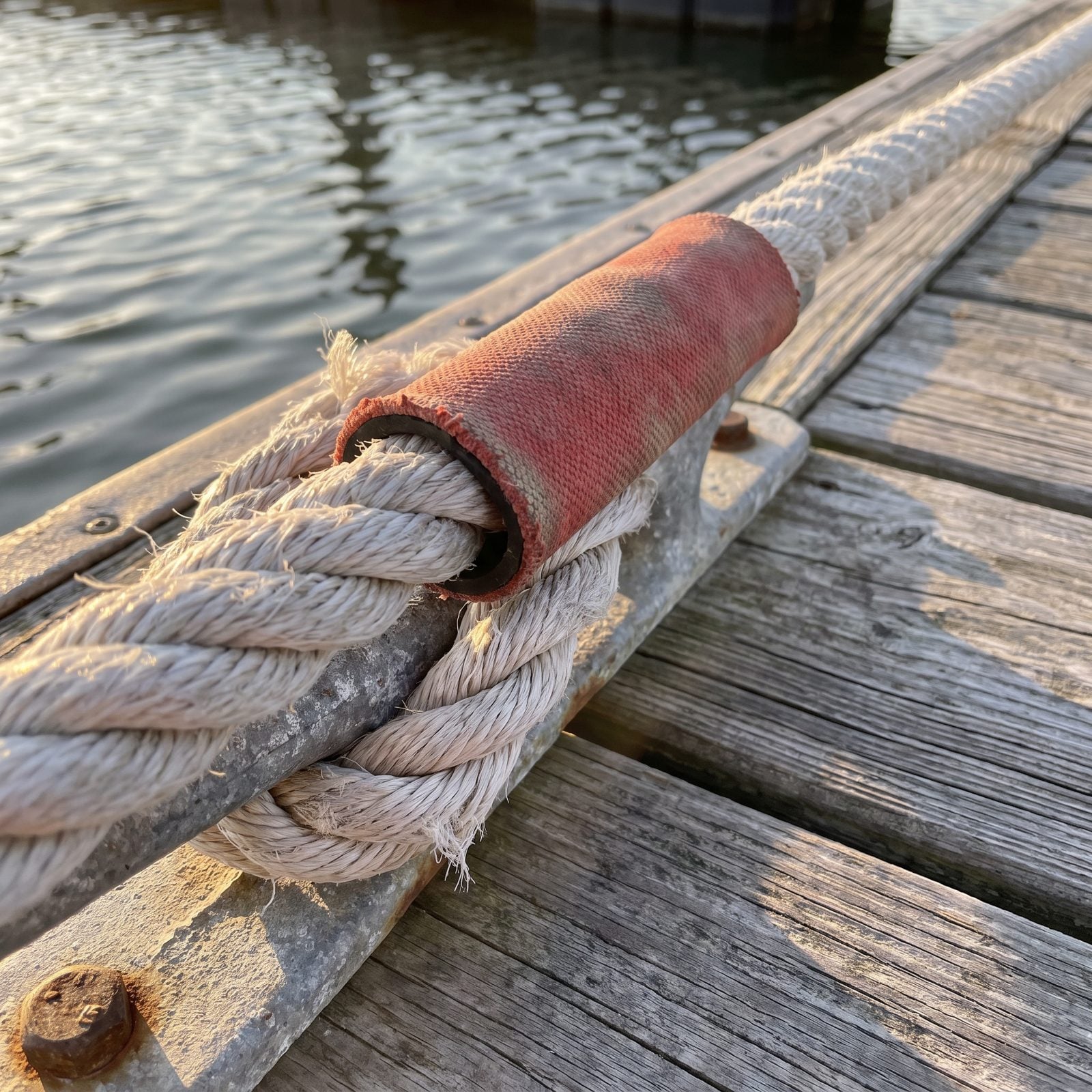
Chafe is what actually kills dock lines. Not age, not sun — the line saws against the cleat or the chock every time a wake rolls through, and one day the frayed spot just lets go. Marine chafe guards exist and they work fine. But a length of retired fire hose does the same job for nothing.
Fire departments retire hose by the mile once it fails pressure testing, and that canvas-and-rubber weave is tough, flat, and slides right over a line. Call a local station and ask for a scrap. Slit it or thread it, position it over the wear point, and the hose takes the abuse instead of your rope.
47. Sacrificial Anodes That Protect Metal Dock Parts
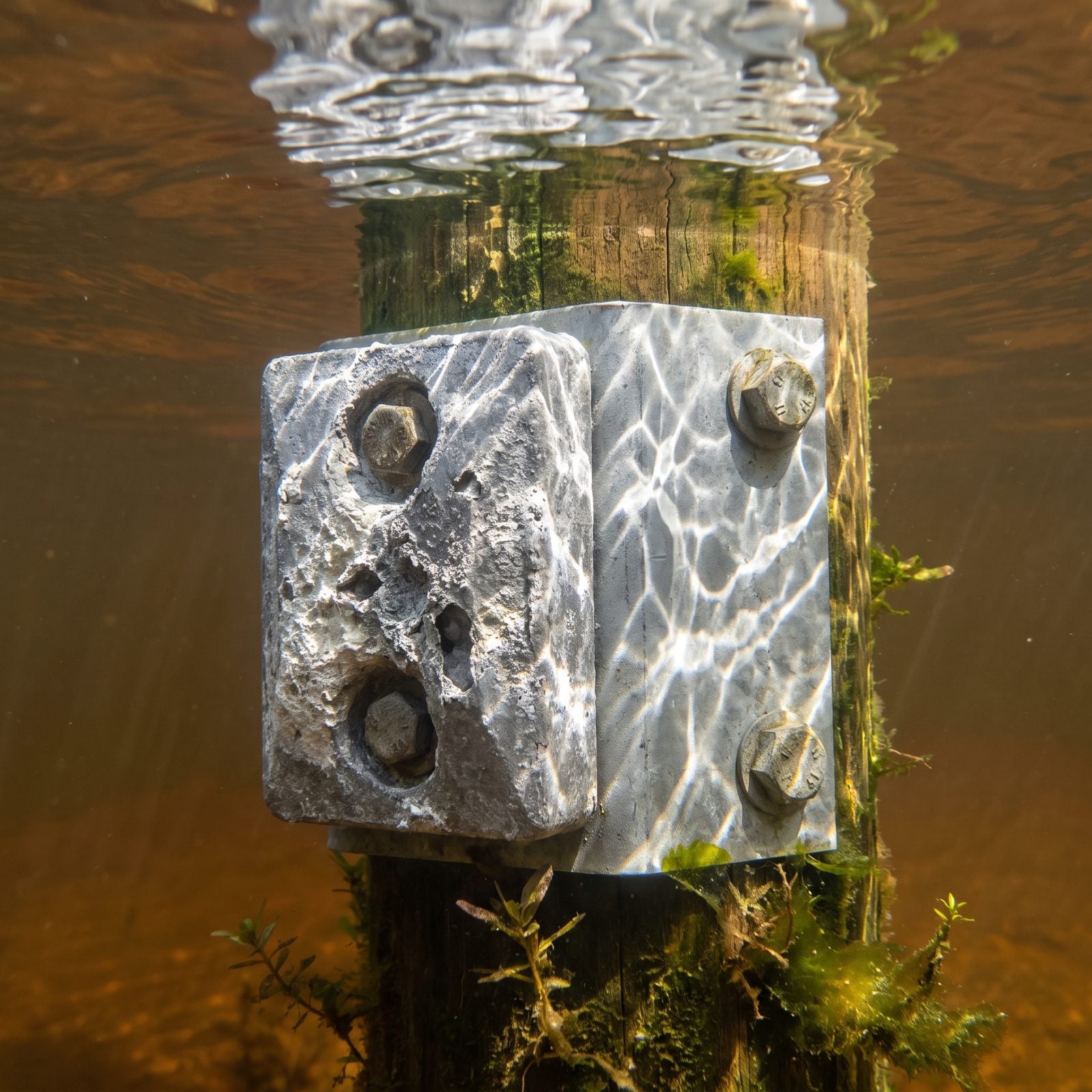
Metal in water dissolves. The only question is which metal. Dissimilar metals sitting in water set up a slow electrical current, and the more reactive one corrodes away to save the other. That’s galvanic corrosion, and it eats dock hardware, metal ladders, and steel pilings from the waterline down where you never see it.
A zinc or aluminum anode bolted to a wooden piling and wired to the vulnerable metal gives that current something cheaper to destroy. The anode corrodes. Your expensive hardware doesn’t. Check it once a season, and when the anode is half gone, swap it. A cheap lump of zinc buys years for the metal hardware on your dock — and somehow most waterfront owners have never heard of them.
46. Dielectric Grease on Every Outdoor Electrical Connection
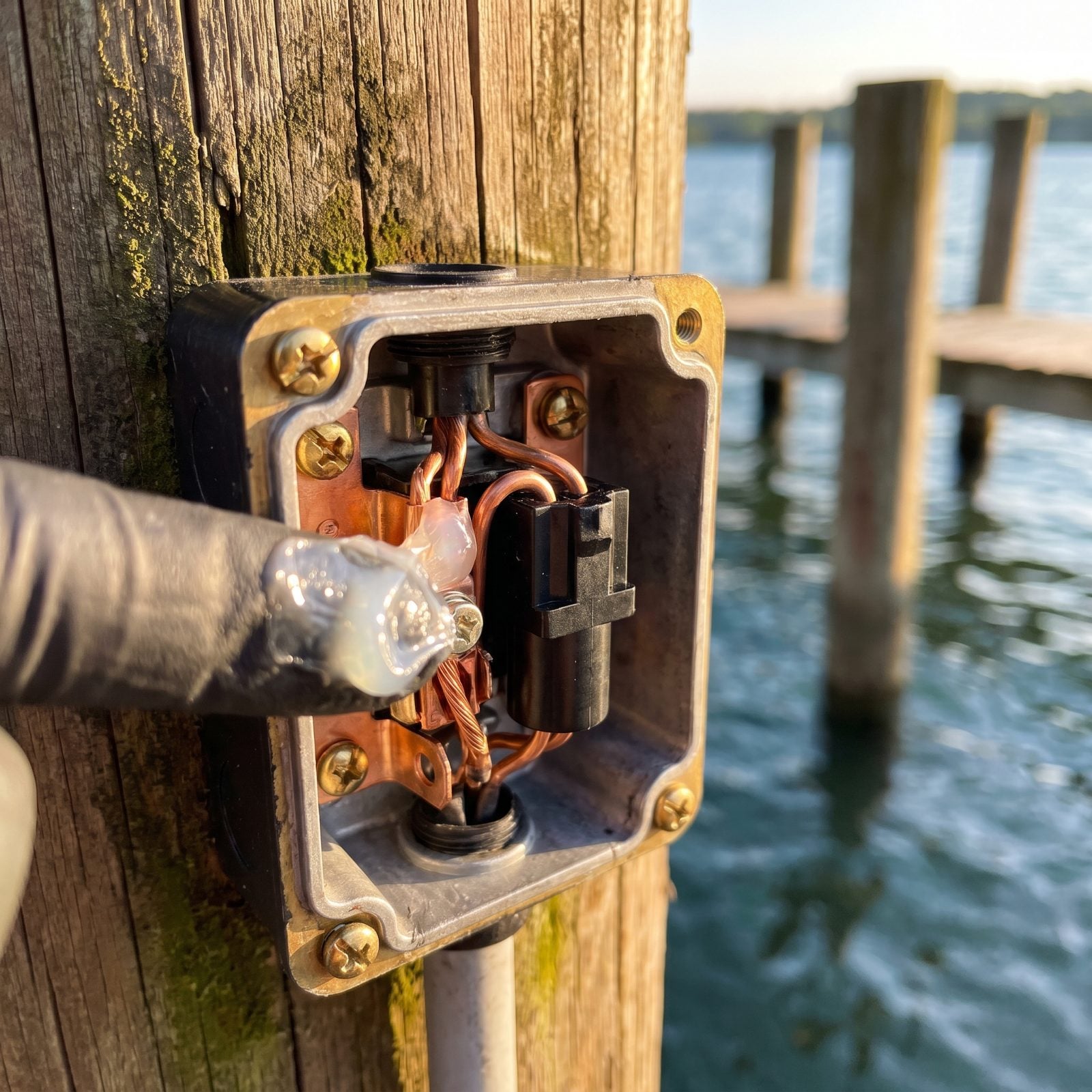
Every outdoor plug, every light fixture connection, every trailer harness near the water is slowly growing green crust inside. Moisture creeps into the contact points, corrosion builds, and the connection goes intermittent — then dead.
Dielectric grease is a non-conductive silicone goo that seals out water while still letting metal touch metal. With the power shut off, open the junction box, dab a blob over each splice and terminal screw with a gloved finger, then close the lid. Dock lights that used to flicker after every rain just stop. Maybe eight dollars a tube, and one tube lasts years.
45. Lanolin Spray for Tools Exposed to Water and Salt
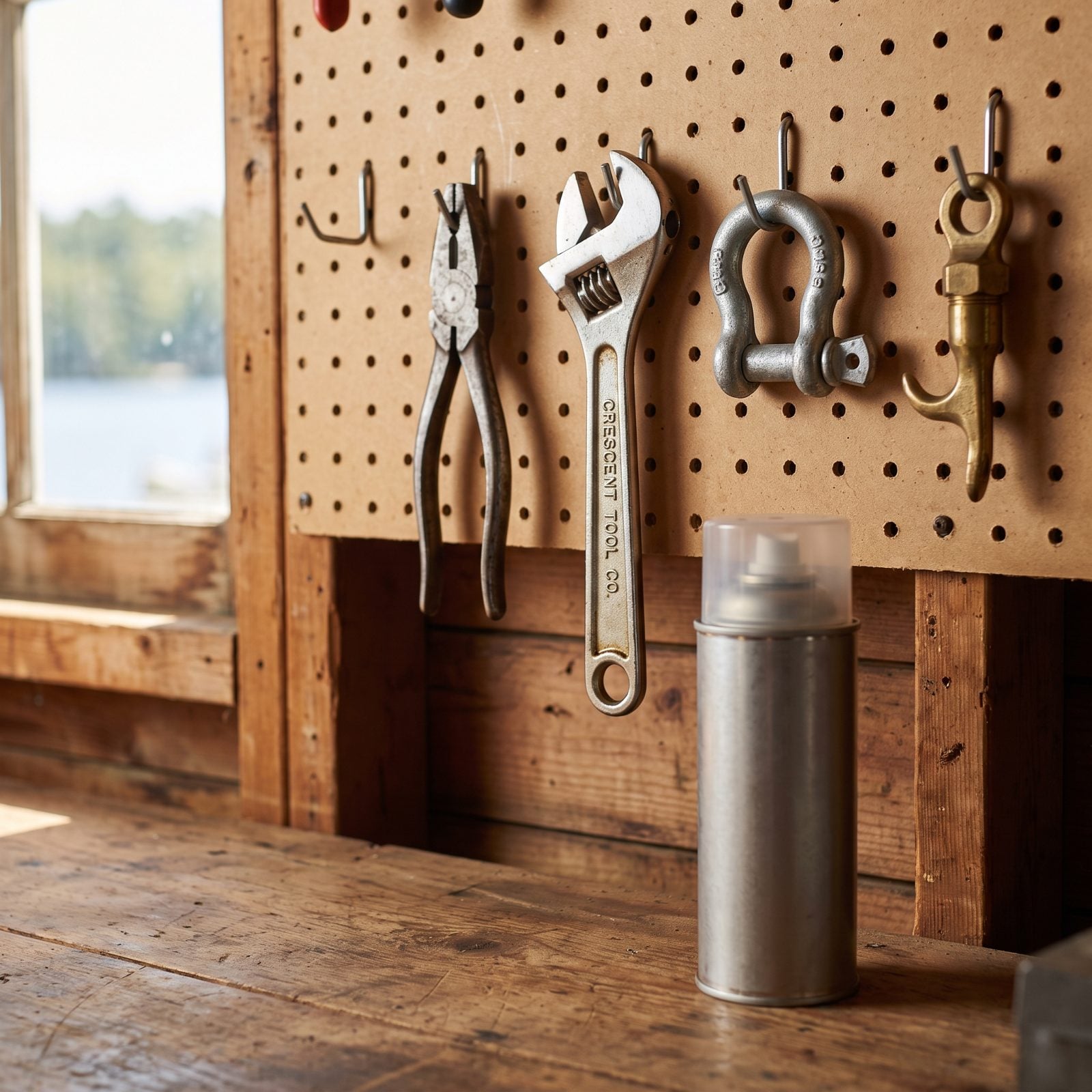
Lanolin is the grease sheep make to waterproof their own wool, and it happens to be one of the best rust blockers going. Spray it on tools, hinges, hose clamps, or exposed fasteners and it leaves a waxy film that water beads right off of.
Thin penetrating oils flash off in a week near salt air. Lanolin stays put. A boat hook left in a damp locker all winter comes out clean in spring. Yes, it’s a bit sticky, and it’ll pick up a little dust, which bugs some people. Worth it anyway. Rust never sleeps out here, and most light machine oils give up by July.
44. A Shoreline Staff Gauge for Tracking Water Levels
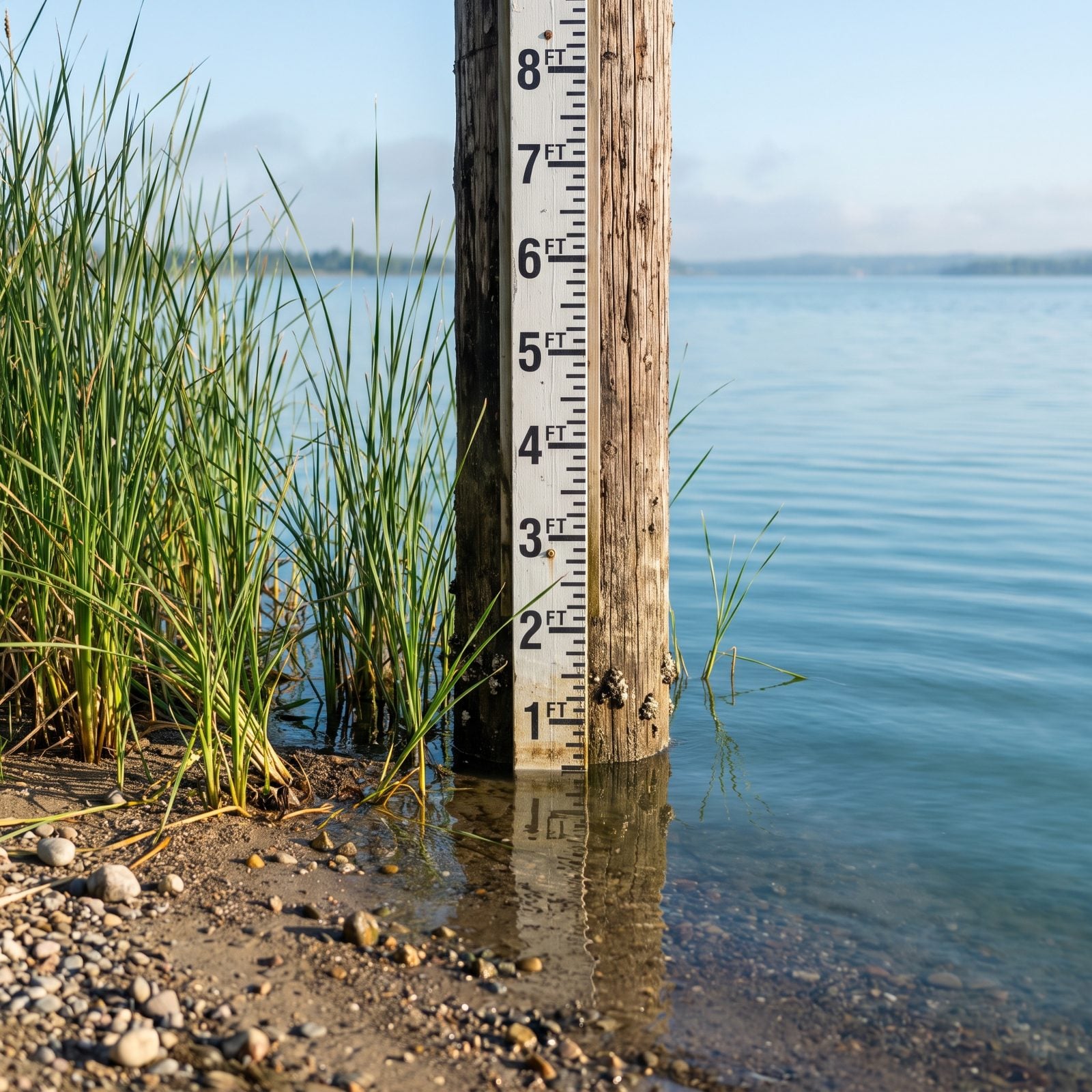
Ask anyone who’s owned a lake place a while and they’ll tell you the water moves more than you’d expect. Reservoirs get drawn down for power or flood control. Natural lakes swing with the season. A dock set perfect in June can be high and dry by October.
A painted staff gauge on a piling turns guessing into knowing. You read the number, write it down, and over a couple of seasons you learn your water’s rhythm — when to adjust the dock, when the ramp will be too steep, when the swimming’s deep enough off the end. Boring, cheap, and the single most useful thing for planning anything that touches the shore.
43. Sliding Pile Hoops That Let a Dock Rise and Fall
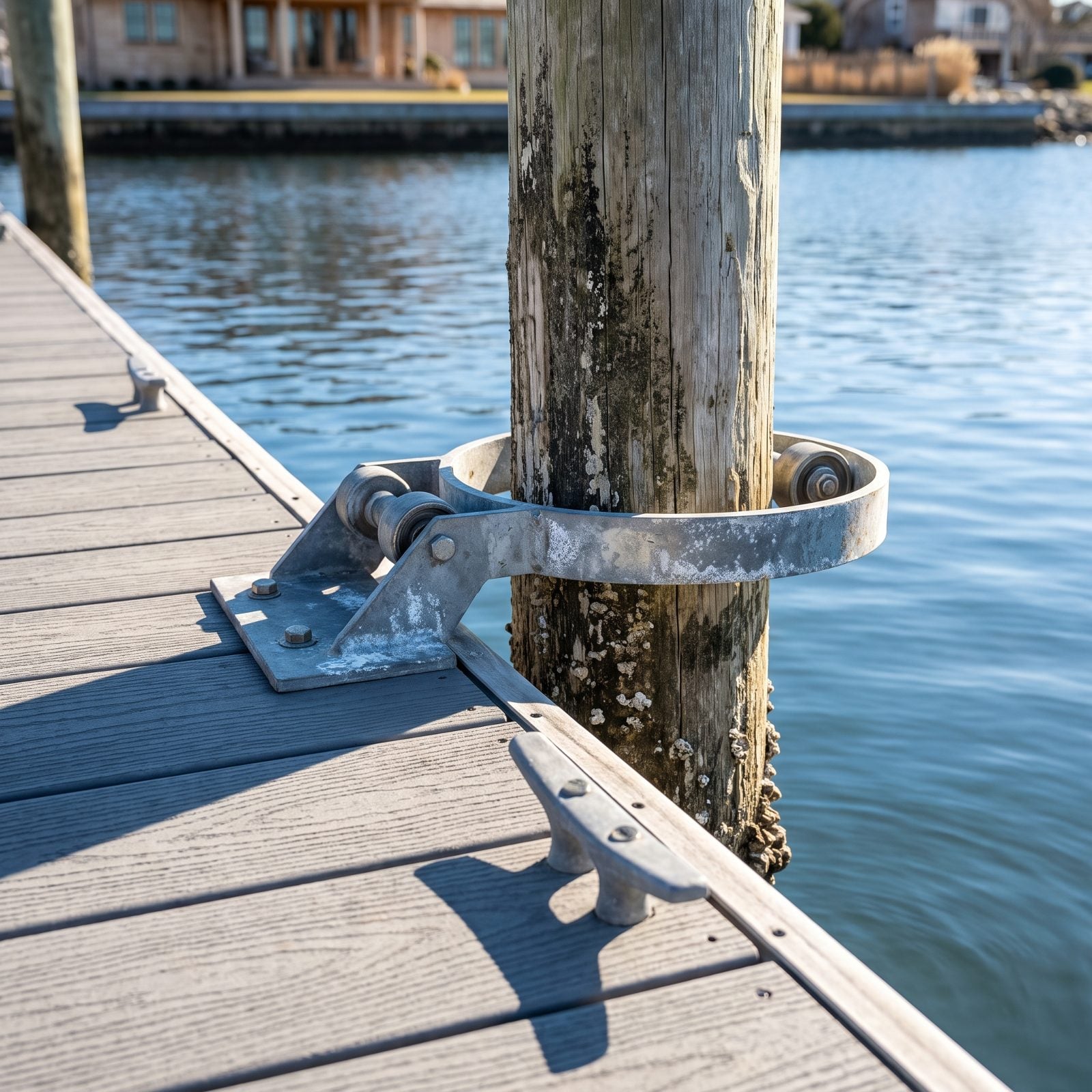
A fixed dock on a lake that changes level is a slow-motion disaster. The water comes up and swallows the deck, or drops and leaves the whole thing stranded on stilts.
Sliding pile hoops solve it. The hoop rides up and down the piling on rollers while holding the floating dock in position side to side. The dock floats, the hoop slides, and the structure stays put against current and wind no matter where the water sits. People with fixed docks spend every spring and fall wrestling adjustable brackets by hand. Hoops just let the dock do what water does — go up, come down, never ask permission.
42. Tiny Hygrometers Hidden Inside Waterfront Closets
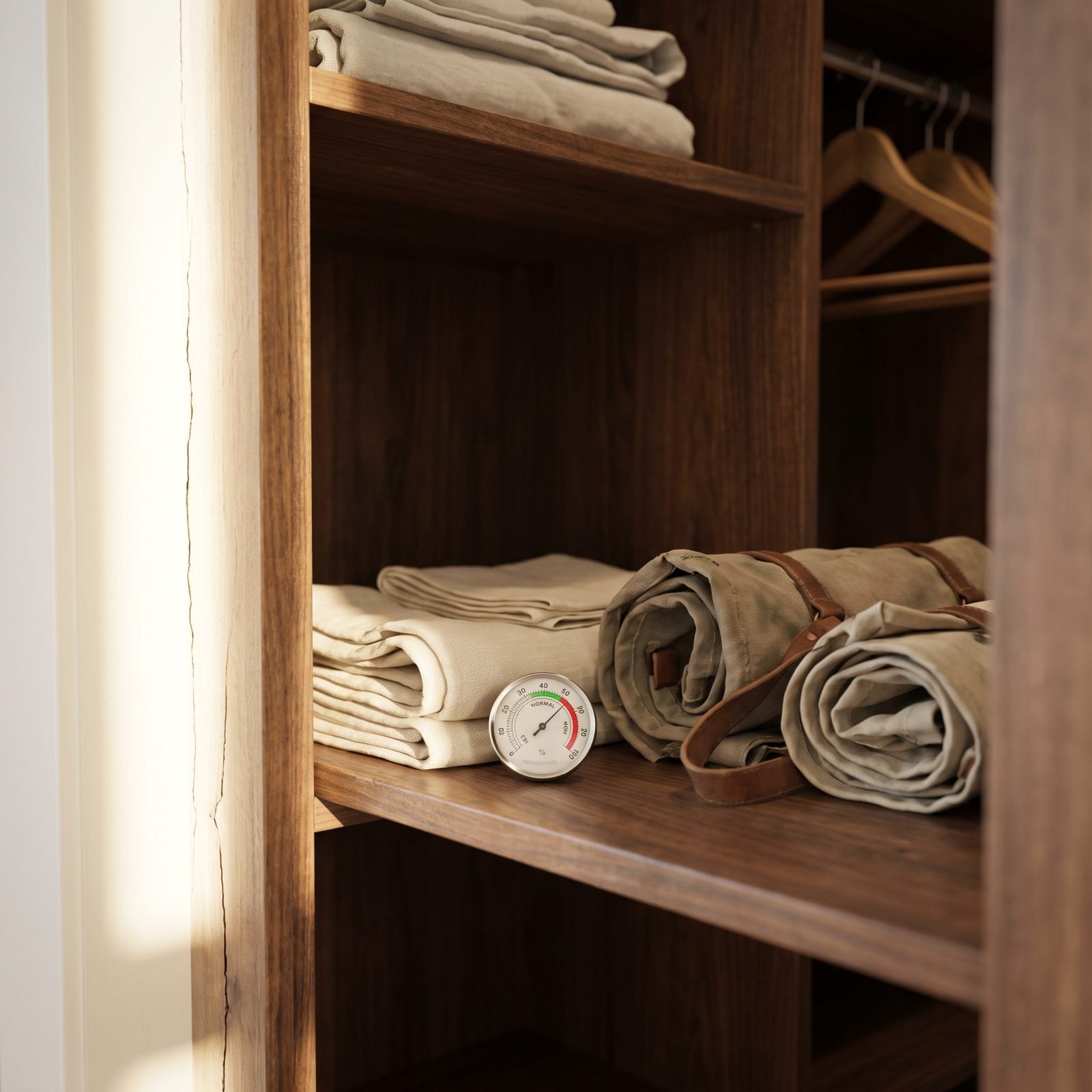
The damage you don’t see coming is inside the house. Closets, boathouses, and storage rooms near the water hold humidity you can’t feel until the mildew smell shows up and the leather’s gone fuzzy.
A cheap hygrometer tucked on a shelf gives you a number. Climb past about 60 percent and mold starts thinking about moving in. See that reading and you crack a vent, run a small dehumidifier, or toss in a desiccant tub before anything’s ruined. The difference between fixing a problem and discovering one.
41. A Wildlife Escape Ramp Beside a Seawall
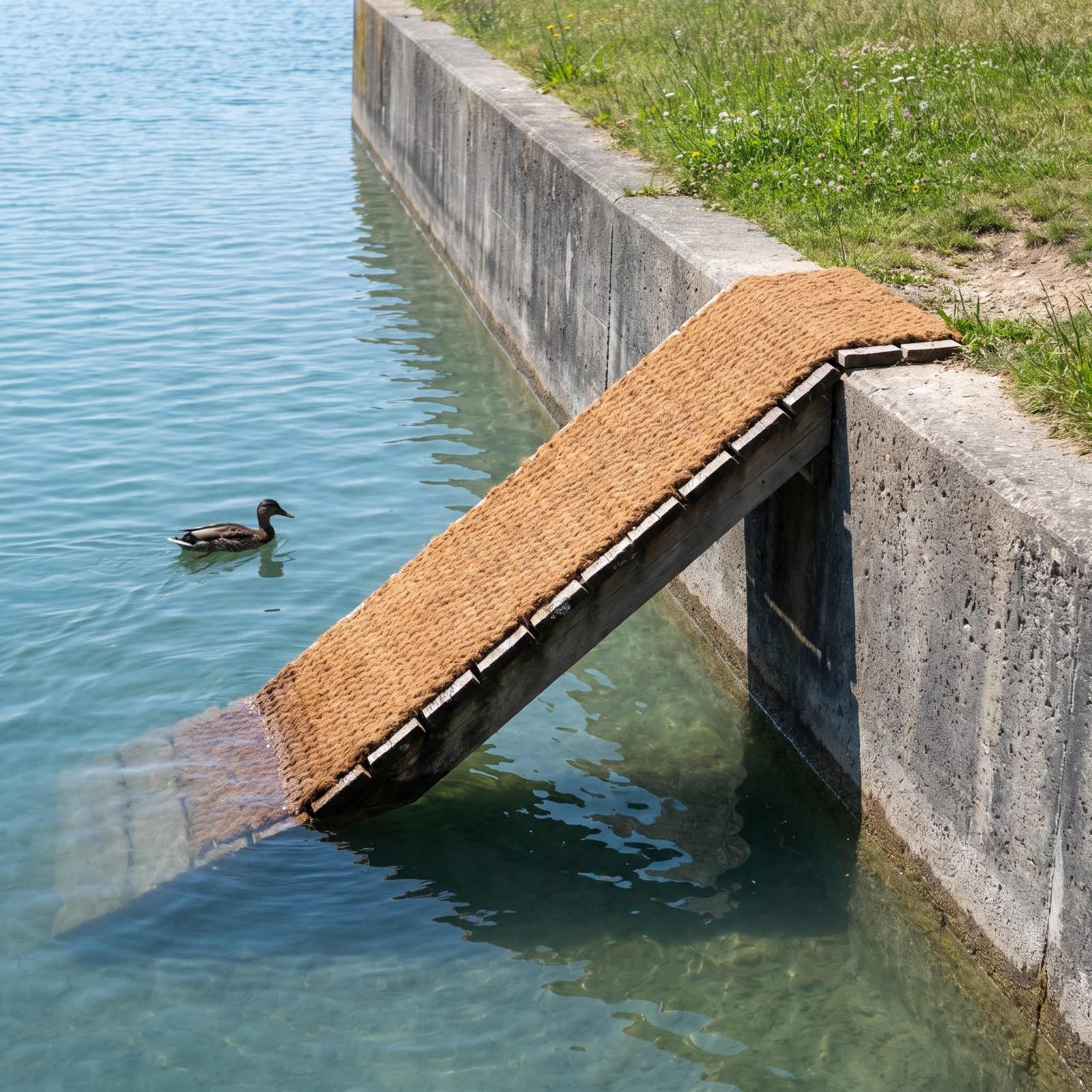
A vertical seawall is a trap for anything that falls in and can’t get out — ducklings, turtles, the family dog, small critters that swim up against smooth concrete and slowly tire. It’s a grim thing to find in the morning.
A ramp fixes it. Nothing fancy, just a board or a coir mat angled from the water to the top of the wall, roughed up enough for claws to grip. Some folks build a proper floating version that rides the water level. It costs almost nothing, and it means the little heron chick or the chipmunk gets a way up instead of a way down. Worth knowing before you need it.
40. A Dock Ladder With a Permanently Submerged Bottom Rung
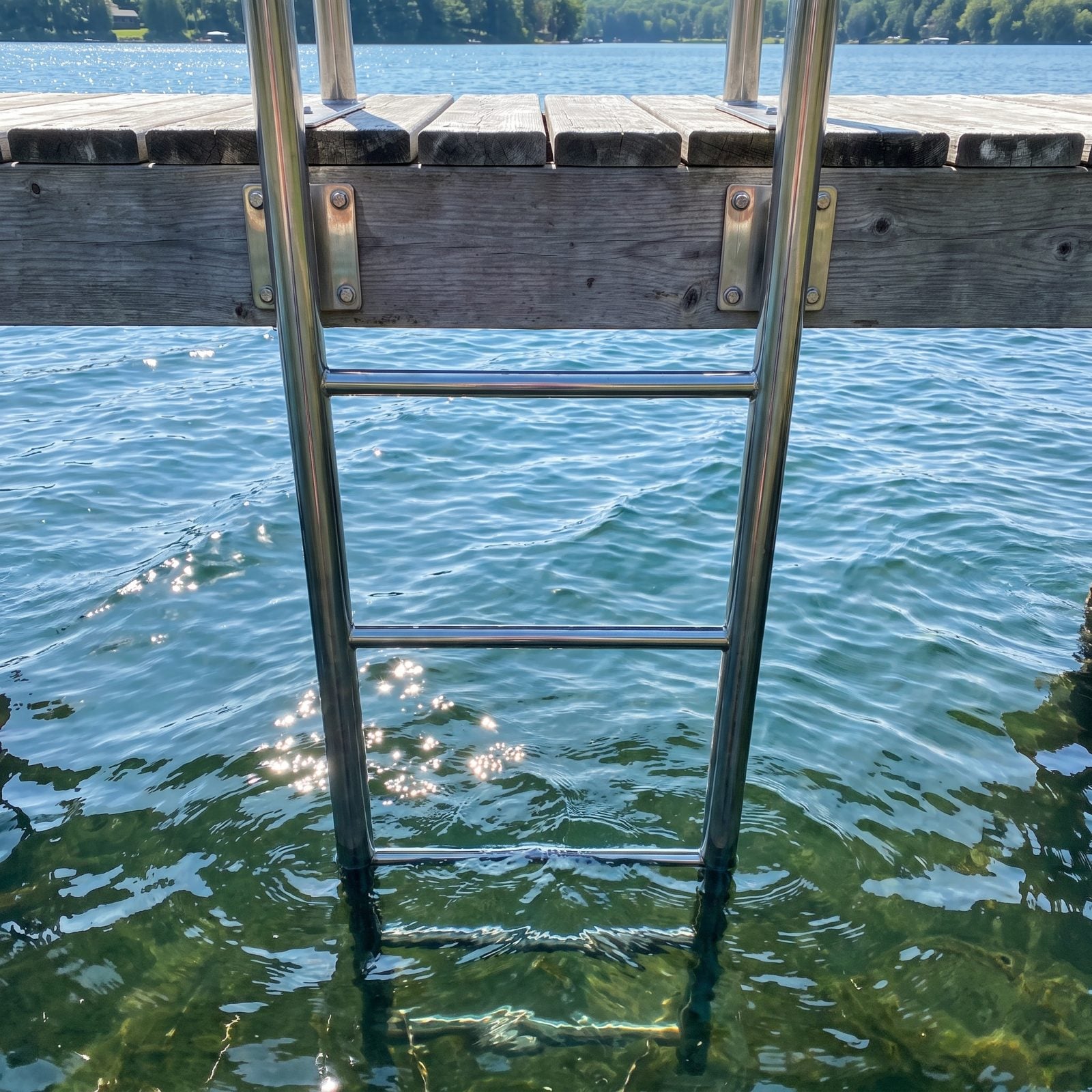
A good dock ladder, unlike most swim ladders, doesn’t stop at the waterline — its rails and rungs continue well below the surface. Ladders that end at the waterline are fine until you’re the one hauling yourself out tired, with a lifejacket on, after a long swim. That first blind reach down for a rung with your foot is exactly where people struggle.
With a bottom rung sitting a couple of feet underwater, you’ve got a foothold right away — no treading, no searching. It matters most for older swimmers and kids, and it matters most at the exact moment you’re most worn out. Genuine safety, not a gimmick, and one of the cheapest upgrades on the dock.
39. Bti Mosquito Dunks Placed in Standing Water
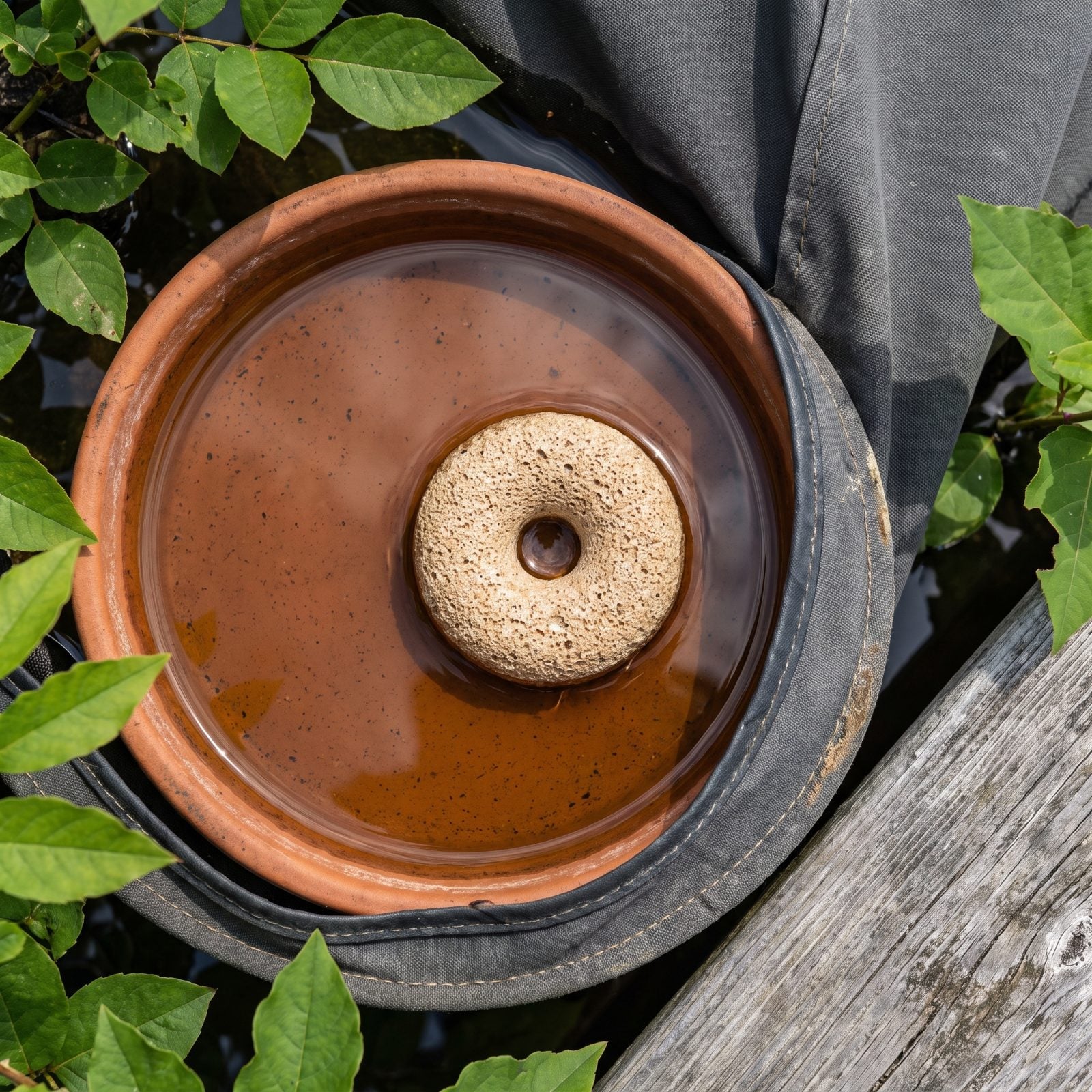
Waterfront living means standing water you can’t always drain. Birdbaths, clogged gutters, the puddle in the folded boat cover, the low spot by the seawall — every one of them a mosquito nursery.
Bti dunks are a bacteria that poisons only mosquito and black fly larvae. It leaves fish, pets, birds, bees, and you alone. Drop one in the standing water and it kills the larvae for about a month, before the next generation can hatch and bite. It’s the one mosquito control worth actually trusting around a lake, because it doesn’t wreck everything else living in the water. Toss a few around in spring and the summer evenings on the dock stop being a blood sport.
38. Mesh Produce Bags for Drying Dock Lines
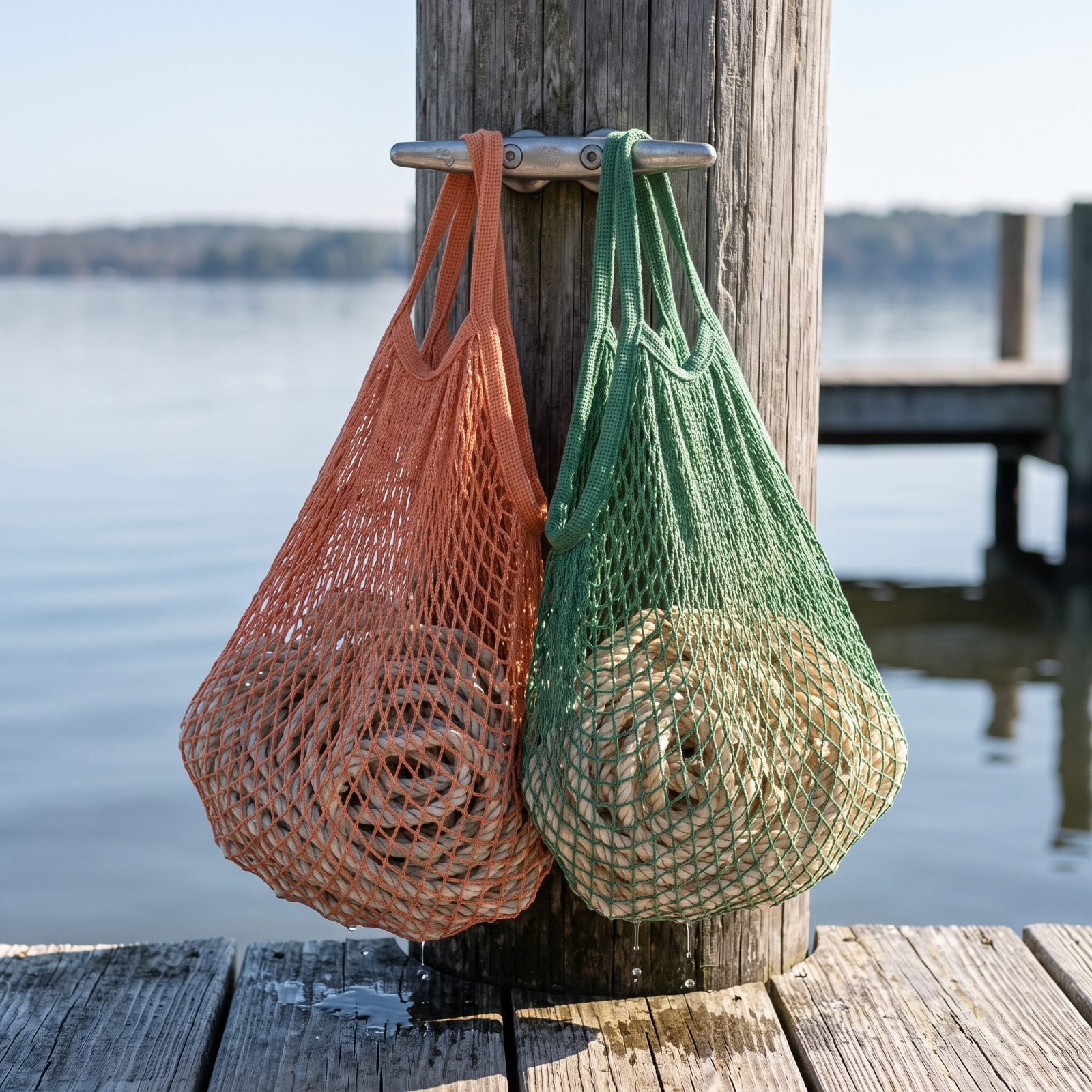
Coiled rope dries on the outside and rots from the inside, and nobody warns you about that part. Shove a wet dock line into a locker and the core stays damp for days, breeding mildew and that sour gym-bag smell that never fully leaves.
The fix costs nothing. Those nylon mesh bags your onions came in let air hit the rope from every angle. Stuff a line in, hang it on a piling, and it drains while it breathes, core drying as fast as the surface.
37. A Stainless-Steel Soap Bar for Removing Fish Odor
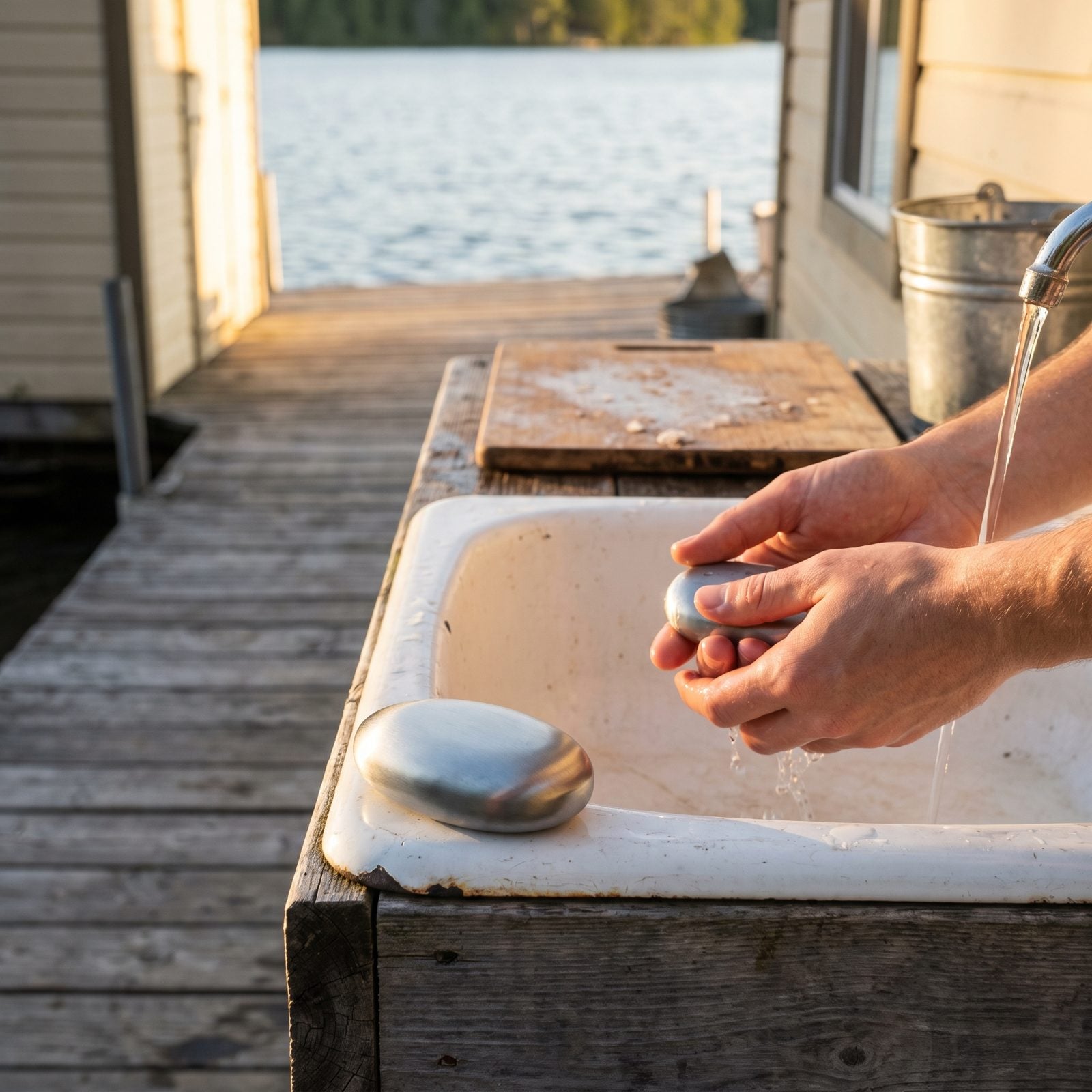
You’ve scrubbed your hands with dish soap, lemon, even toothpaste, and still caught that fishy whiff at dinner. Fish oils carry sulfur and amine compounds that bond to your skin and laugh at regular soap.
A stainless-steel bar does something strange and chemical: the metal binds those sulfur molecules and lifts them off. Rub it under running water for half a minute like a real bar of soap. No suds, no scent, just gone. It never wears out, it can’t go rancid, and it lives on the dock sink forever.
36. Museum Putty Beneath Wind-Prone Table Decorations

Lake wind has opinions. It funnels off the water, hits the porch, and sends your centerpiece skittering toward the edge of the table. You right the vase for the tenth time and start wondering why you bother decorating at all.
Museum putty, the beige tacky stuff conservators use to hold artifacts to shelves, fixes it. A pea-sized dab under each piece anchors it against gusts without marking the wood, then peels off clean when you want to rearrange. It holds a candle lantern through a stiff afternoon breeze and still lets you lift it the second the sun drops.
35. Rechargeable Desiccant Canisters Inside Tackle Boxes
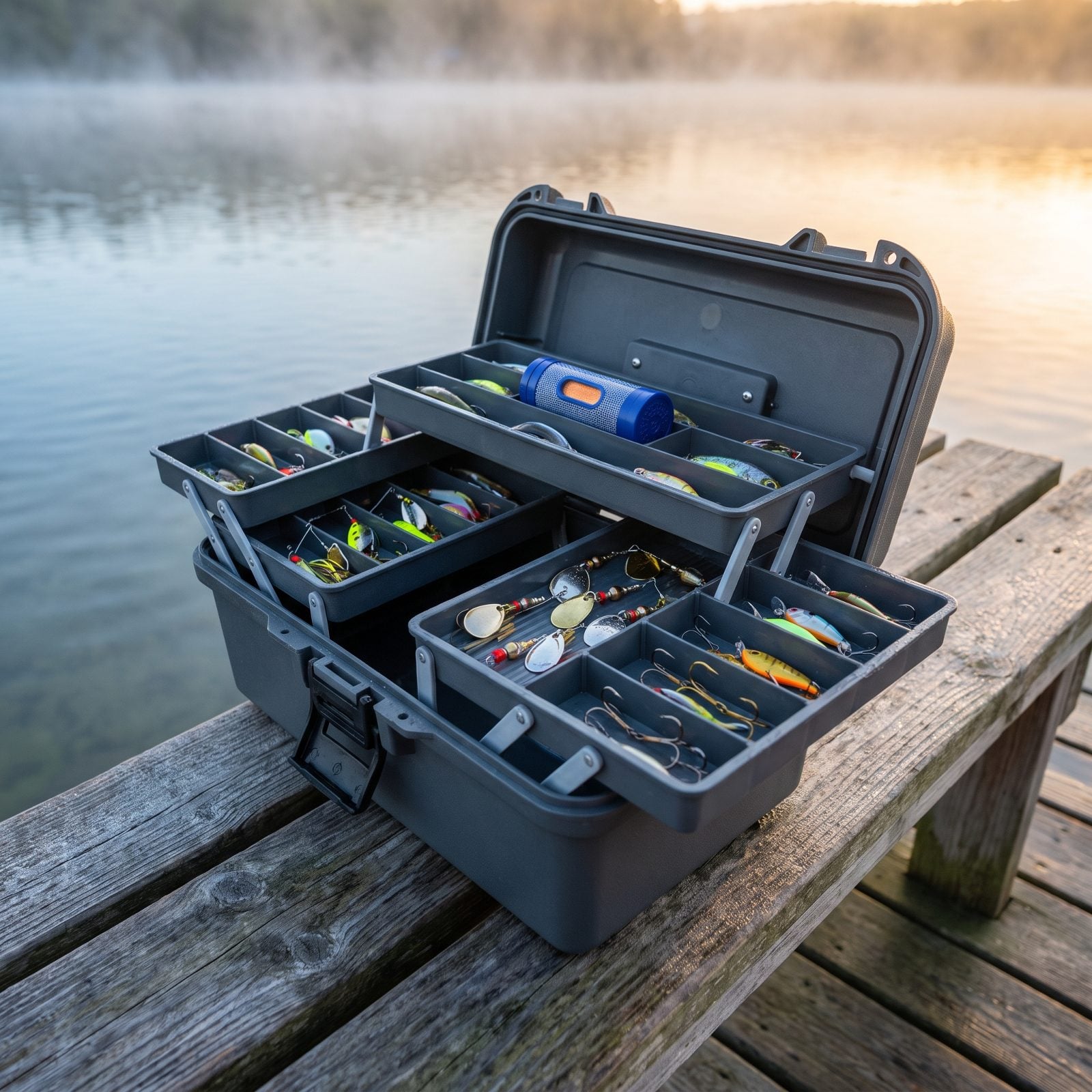
Open a tackle box after a humid week and you’ll find the slow betrayal: orange rust blooming on your best trebles, hook points gone dull, split rings seized. Lake air is wet air, and a sealed plastic box traps that moisture against bare metal.
A rechargeable desiccant canister sits in the tray and pulls the damp out before it ever touches your hooks. The window shifts from blue to orange when it’s full. Pop it in the oven a couple of hours, it resets, and back to work it goes. One canister protects a box of lures worth more than most people admit to their spouse.
34. Silicone Lubricant for Outdoor Zippers and Snaps
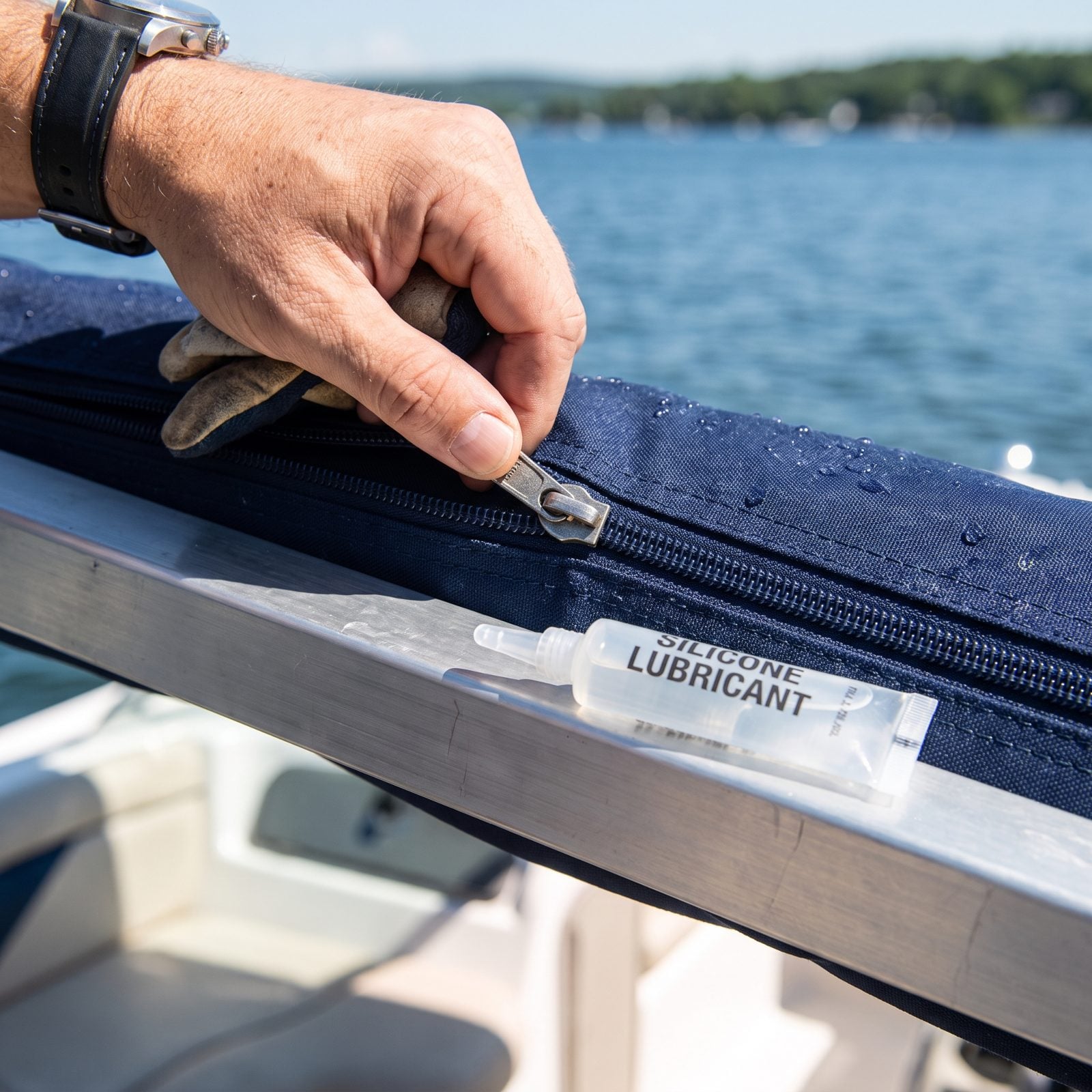
Salt and mineral crud turn a zipper into a wrestling match. You yank, the slider jams, and eventually the pull tab snaps off in your hand on a snap cover that cost a fortune.
A clear silicone lubricant, not WD-40, slides onto zipper teeth, snap studs, and canvas fasteners and keeps them moving all season. It won’t attract grit the way oily lubes do, and it plays nice with vinyl and canvas.
33. A Lidded Freezer Container for Fish Scraps
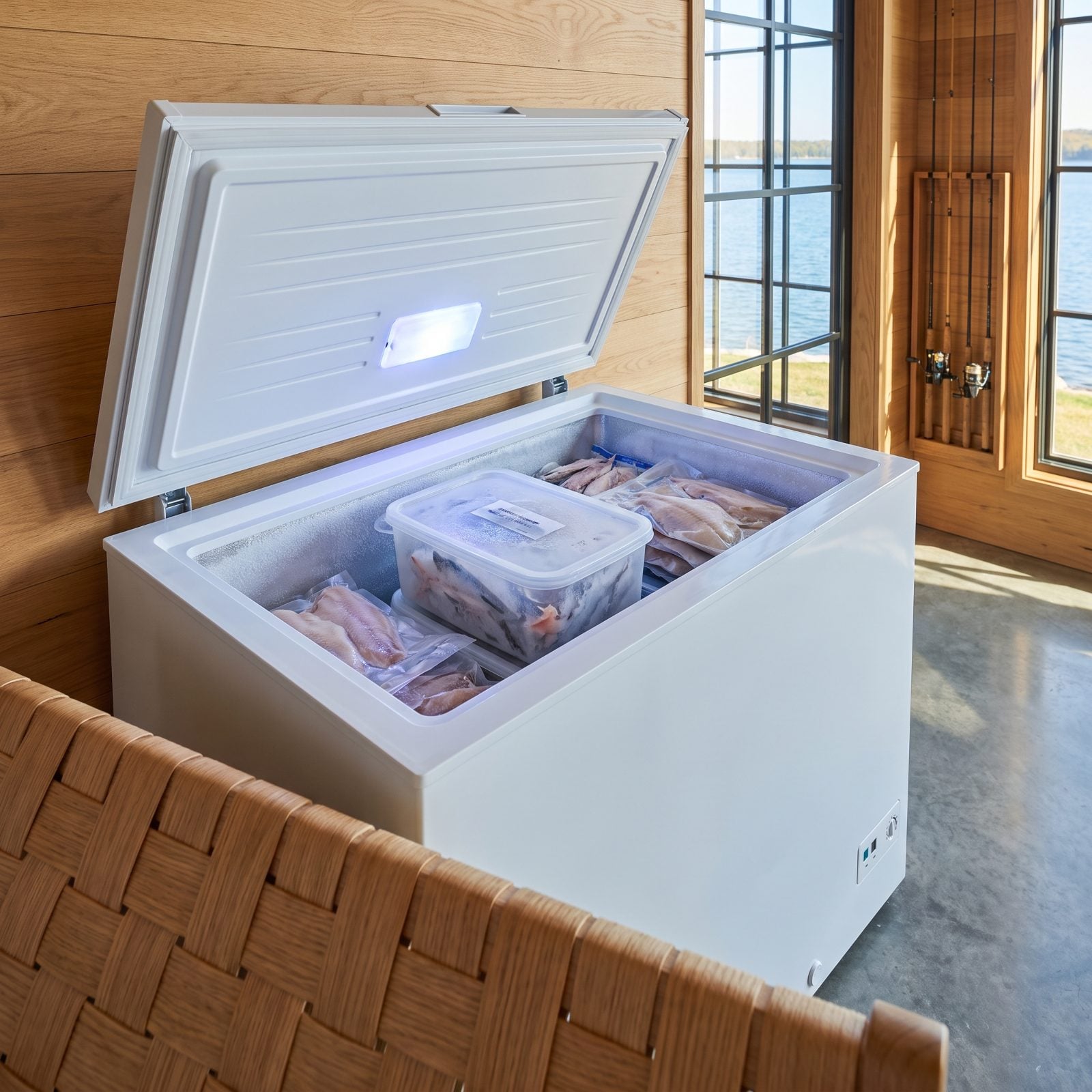
Nobody tells first-time lake house owners this part: fish carcasses in the kitchen trash will announce themselves to the whole house by hour six, and to the raccoons by hour eight. In summer heat it gets ugly fast.
A lidded container that lives in the freezer solves both at once. Skins, heads, and racks go in, the lid snaps shut, and the cold stops the smell dead. On trash day, or when you’re heading out to crab or set traps, you grab it and go. Nothing decomposes in your bin. Nothing claws through your garbage at 2 a.m. And the garage quits smelling like low tide.
32. An Address Sign That Faces the Water
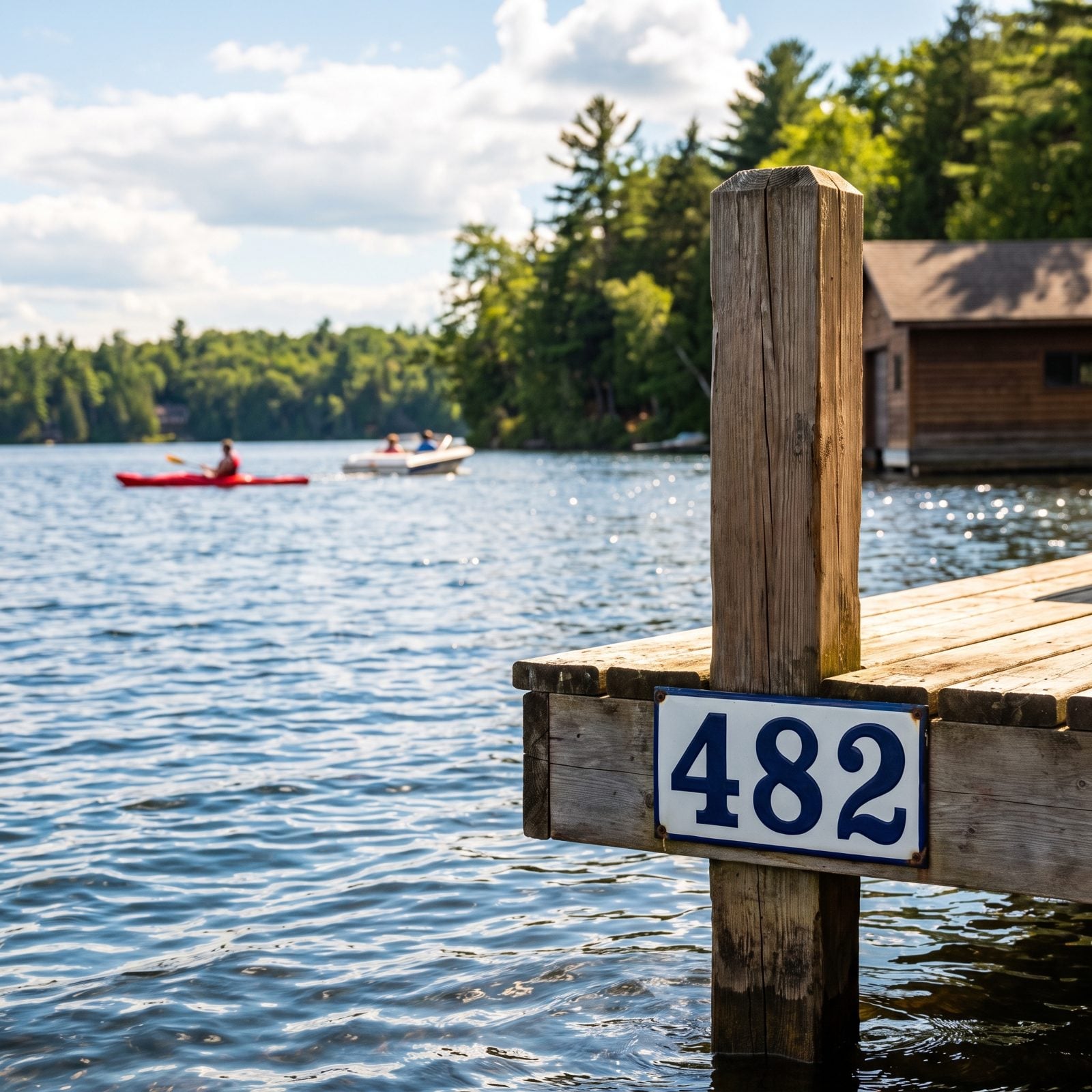
Your house number faces the road. Fine for the mail carrier, useless to a friend arriving by boat, a kayaker hunting a landmark, or the marine patrol trying to find your dock in an emergency. From the water, every shoreline looks like every other shoreline.
A second sign facing the lake fixes that. Big reflective numbers on a dock post or the water side of the boathouse let anyone out there find you fast. Sounds minor until the night a guest circles the cove for twenty minutes. Or worse, until first responders need the exact spot.
31. A Dedicated Fishing-Line Recycling Tube
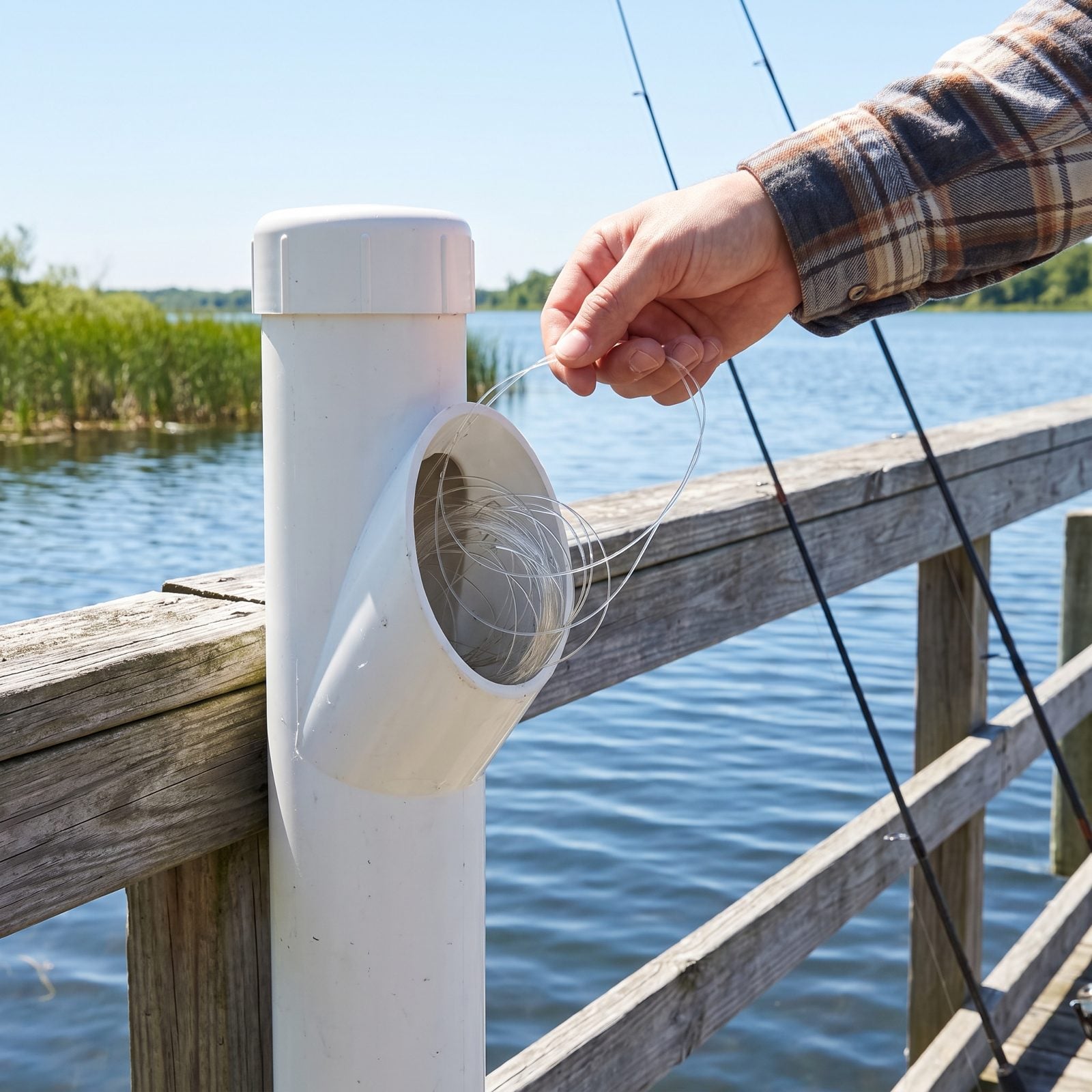
Monofilament line doesn’t break down. It sits in the water for centuries, and before that it wraps around turtle legs, bird wings, and your own prop. A stray loop tossed on the dock blows into the lake by evening.
A capped length of PVC with an angled slot becomes a recycling tube you mount right where you fish. Snipped tag ends and old spools go straight in instead of into the water or the trash. When it fills, you empty it into a monofilament recycling program, which plenty of tackle shops and boat ramps now run.
30. Floating Tags on Every Set of Waterfront Keys
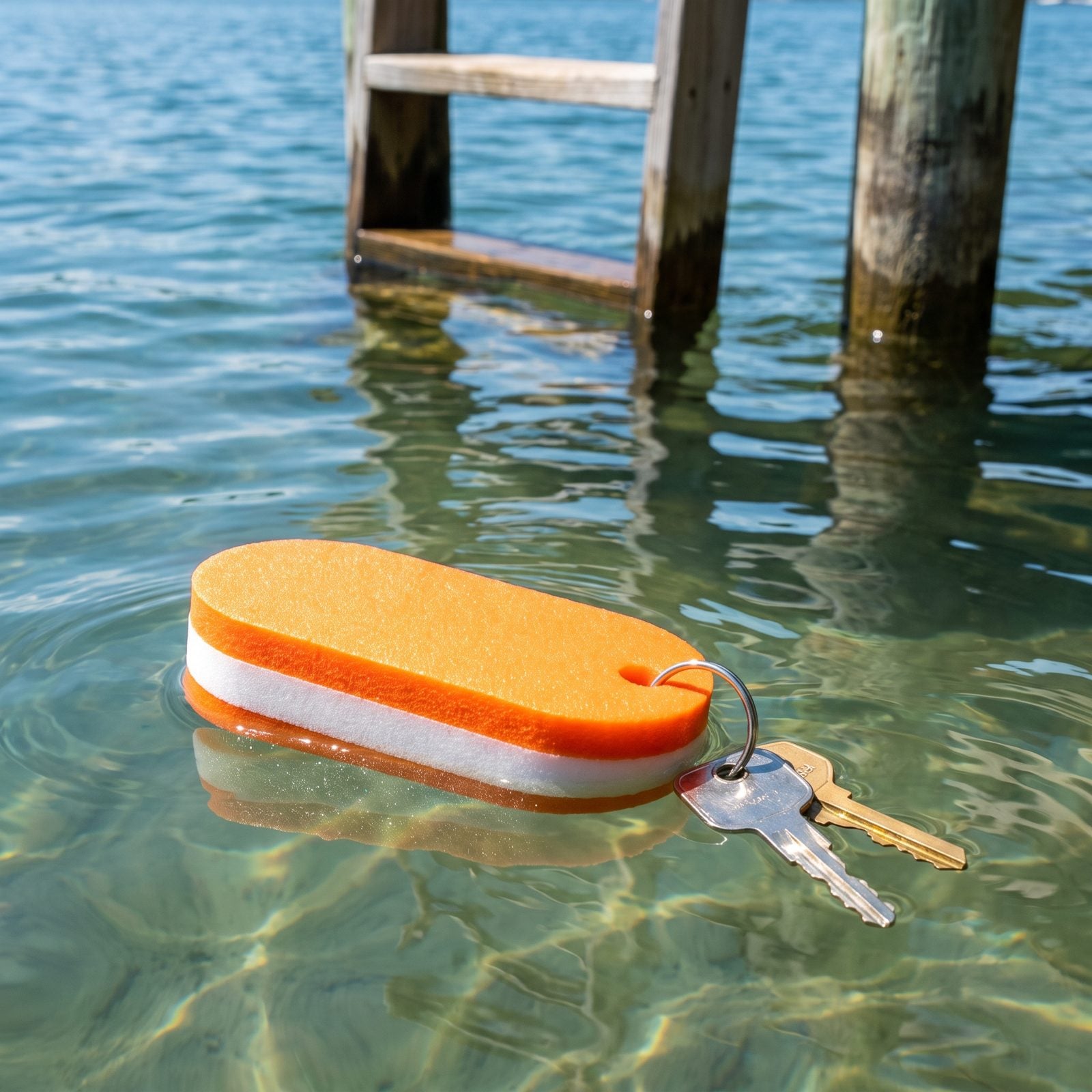
Keys go in the water. It’s not a maybe around here, it’s a when. They slip off a cleat, out of a wet pocket, off the dashboard mid-chop, and then they’re ten feet down in the muck and gone for good.
A foam floating key tag means a dropped key bobs on the surface instead of sinking. You scoop it up, laugh about it, and carry on. Put one on the boat key, the cabin key, the shed key, anything that travels near water. It’s a couple of dollars against a locksmith call and a ruined afternoon.
29. Spare Boat Drain Plugs Hung on a Labeled Board
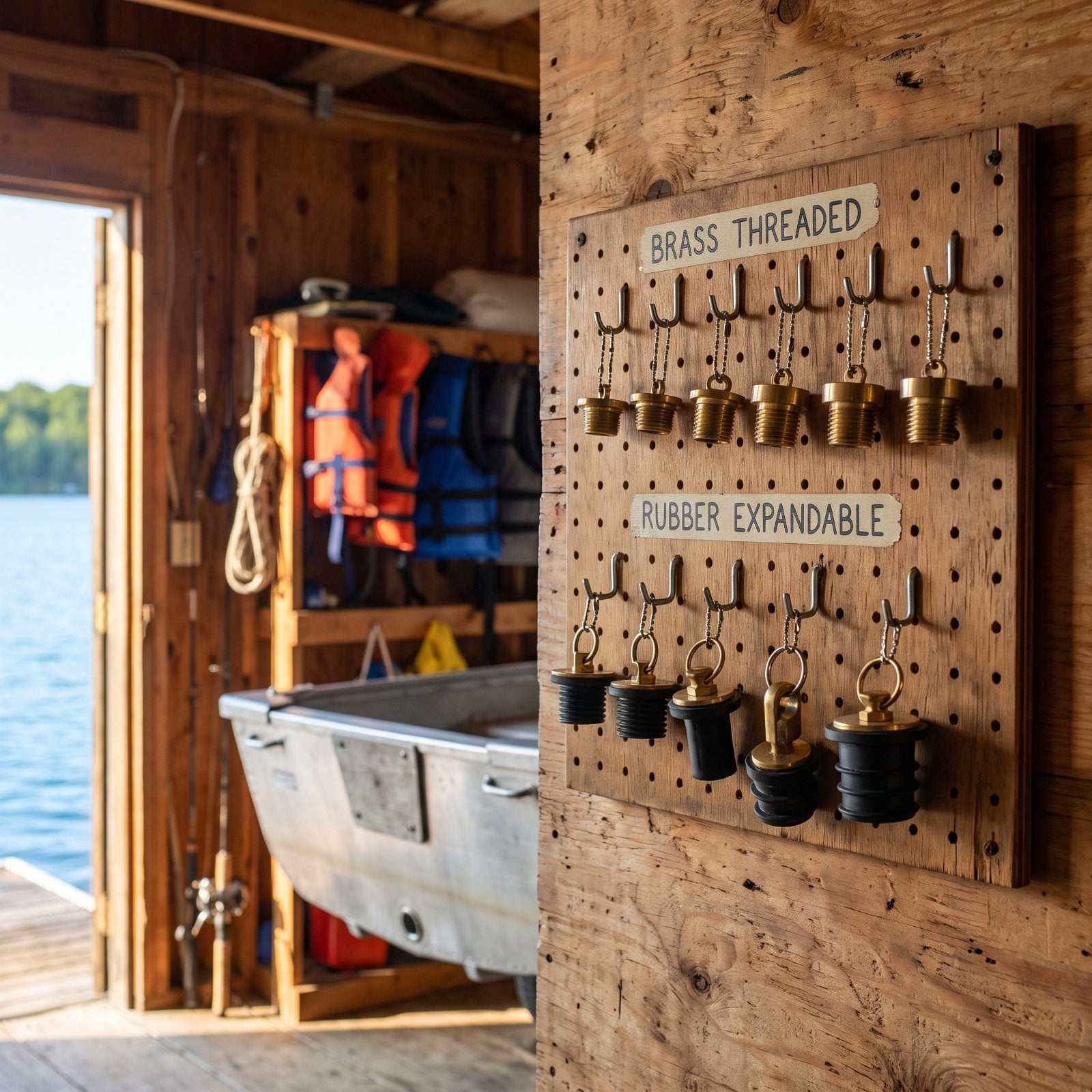
The drain plug is the smallest part of the boat and the one most likely to sink it. You back off the trailer, forget to seat the plug, and the lake starts filling your bilge before you’ve even cleared the ramp. Every boater has either done it or watched someone do it.
Spares hung on a labeled board by the door end the panic. Grab one on the way out. You’ll know exactly where the replacement lives when the old one strips or vanishes, and you’ll have the right size instead of guessing at the ramp.
28. Rubber Dock-Line Snubbers That Soften Sudden Pulls
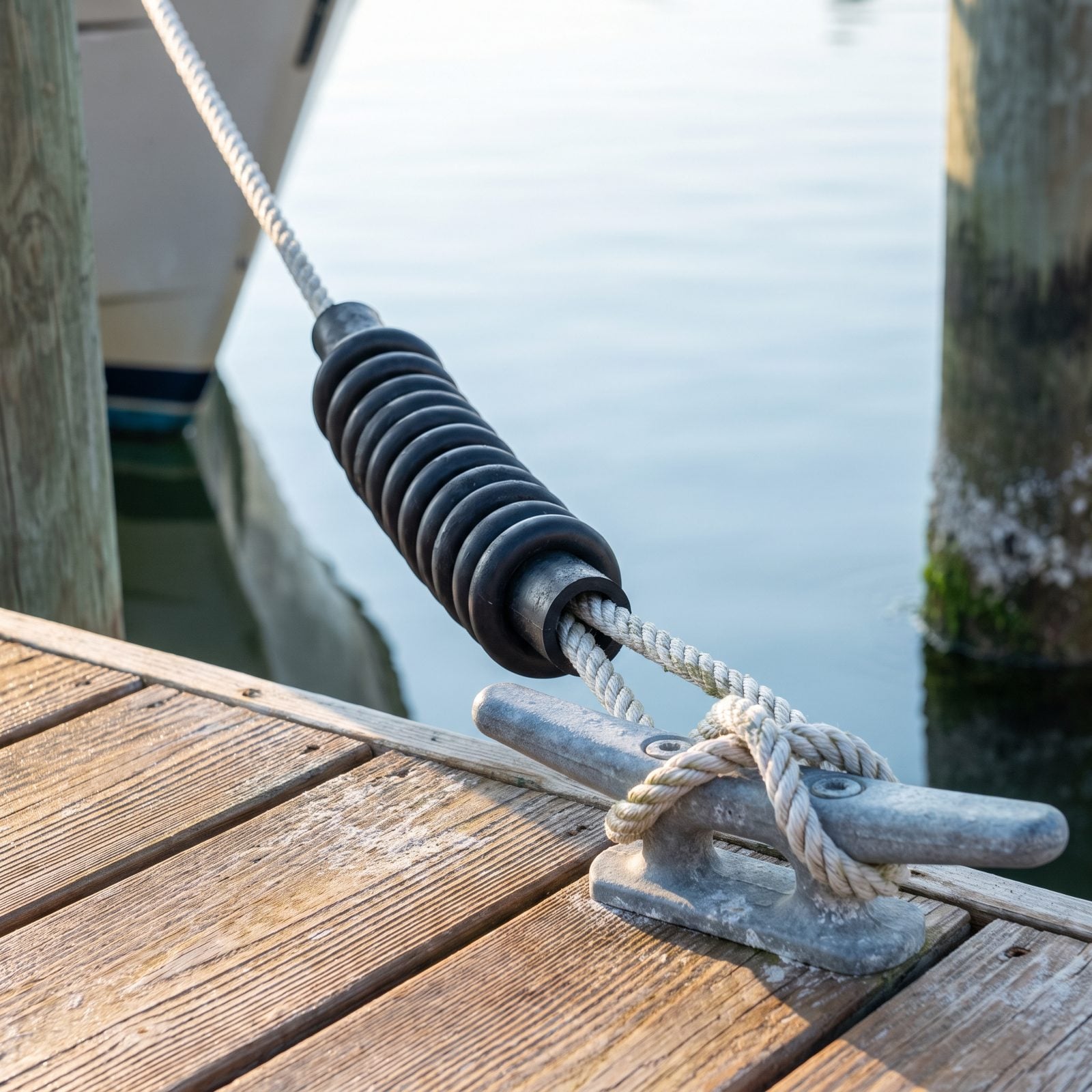
Most people blame their cleats when the dock lines groan at 2 a.m., but the real culprit is shock load. A wake rolls in, the boat lunges, and that force slams straight into the hardware with nothing to absorb it. Over a season it loosens cleats, frays rope, and cracks gelcoat around the chock.
A rubber snubber is a thick coil you thread onto the line, and it stretches under sudden pulls to give the rope a spring instead of a jolt. Cheap — ten or twenty bucks each — and they outlast the line they protect. The surprising part? How much easier the boat sleeps once the jerk is gone.
27. A Magnetic Parts Tray for Dock Repairs
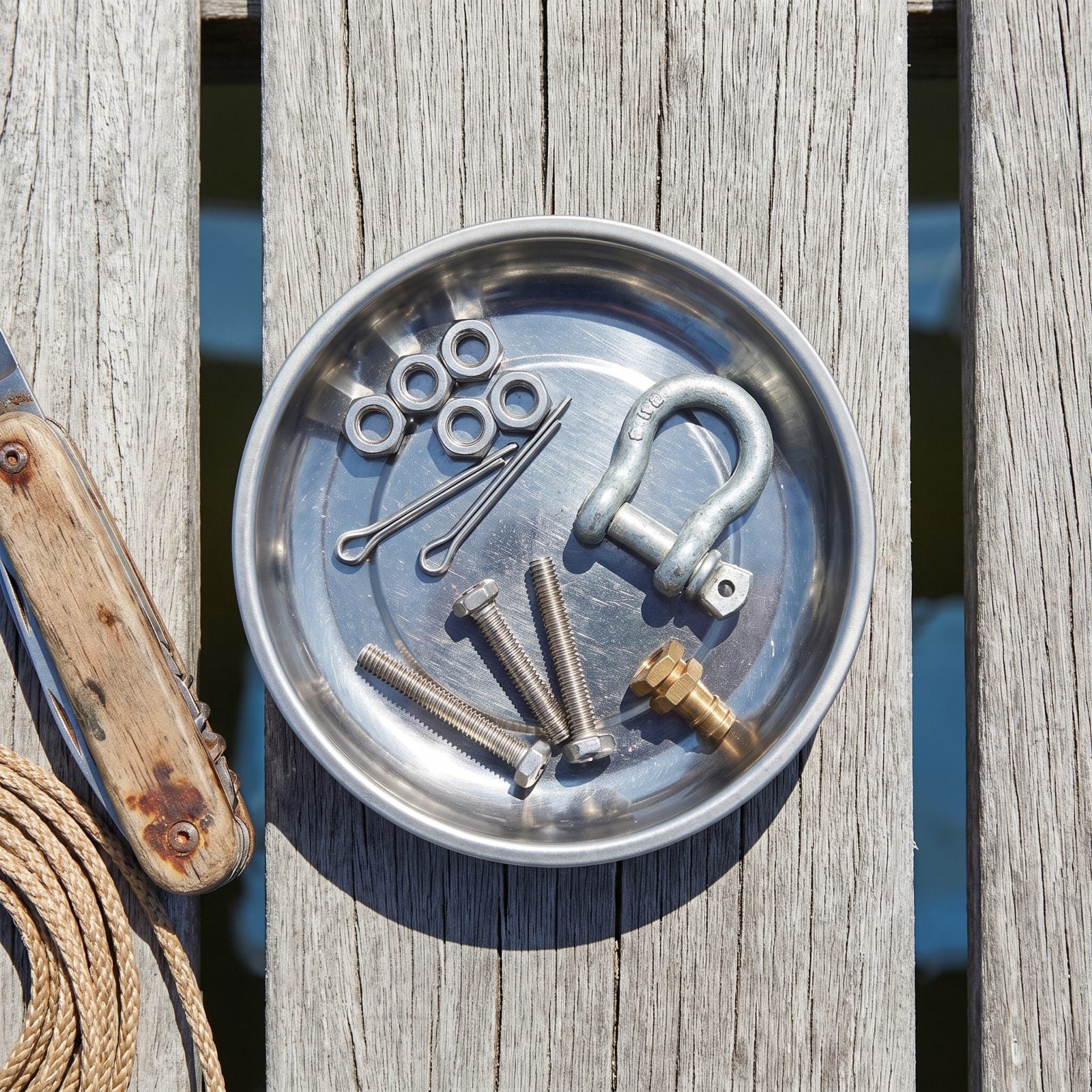
Drop a stainless nut on a dock and it’s gone. Not misplaced — gone, straight through the gap between boards and into eight feet of water. Anyone who’s done a dock repair knows that sinking feeling, literally.
A magnetic parts tray fixes the single most maddening thing about working over water: screws, shackles, cotter pins, all of it stays put even when a gust comes through. Five bucks at any auto parts counter. Sounds too small to matter, right up until the first time you don’t have to row out for a dropped washer.
26. A Dock De-Icer Positioned Before the First Freeze
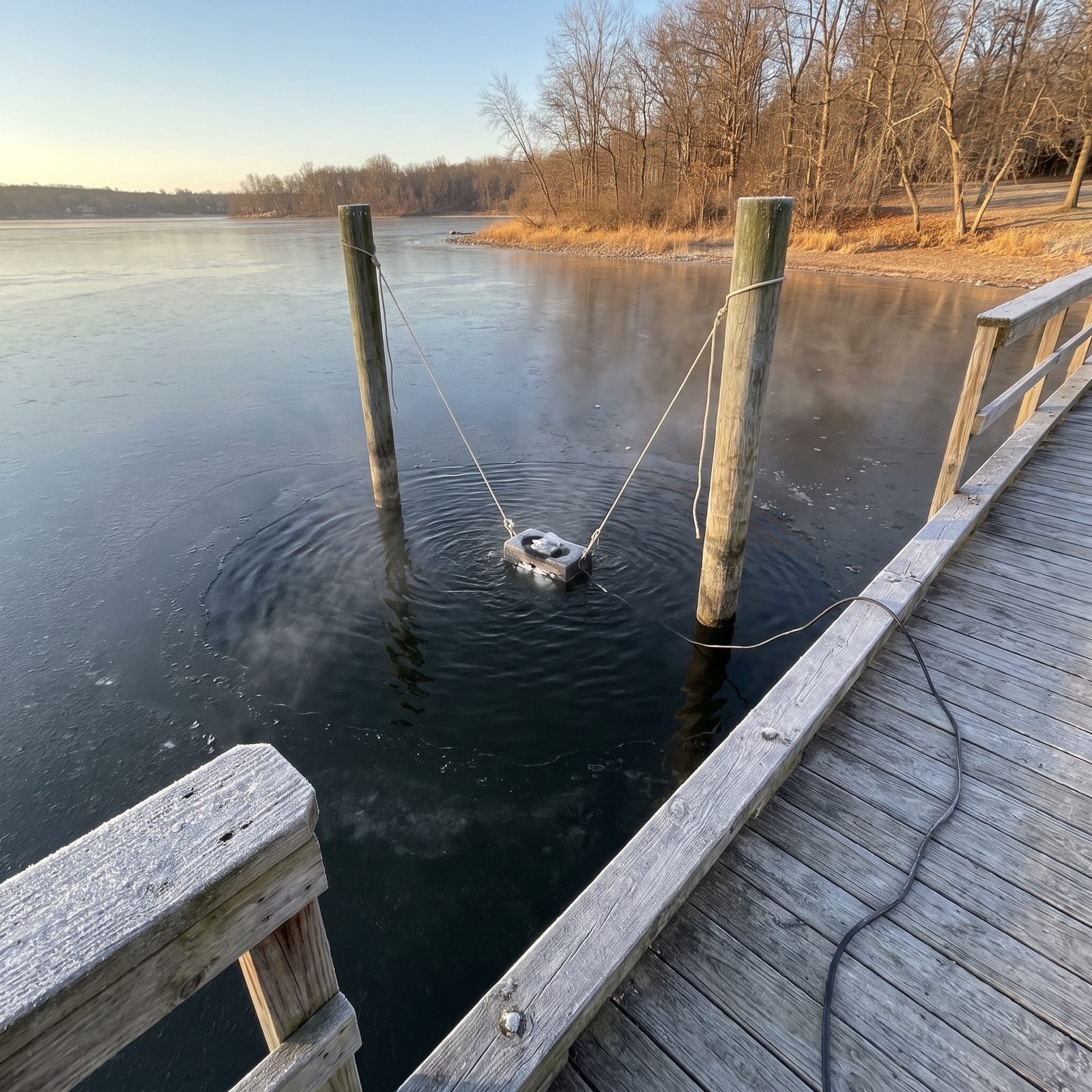
Ice doesn’t crush a dock slowly. It does it all at once. Water expands as it freezes, the whole sheet shifts, and it grabs the pilings and lifts them like a car jack. By the time the surface looks solid, the damage is already underway.
A de-icer is a motorized agitator that churns the water and keeps a pocket of it moving around your pilings so ice can’t lock on. The part that trips people up: it has to go in before the freeze, not after. Try to install one once there’s ice and you’re chipping a hole to drop it through, which rather defeats the purpose.
25. A Vented Dock Box That Releases Trapped Moisture
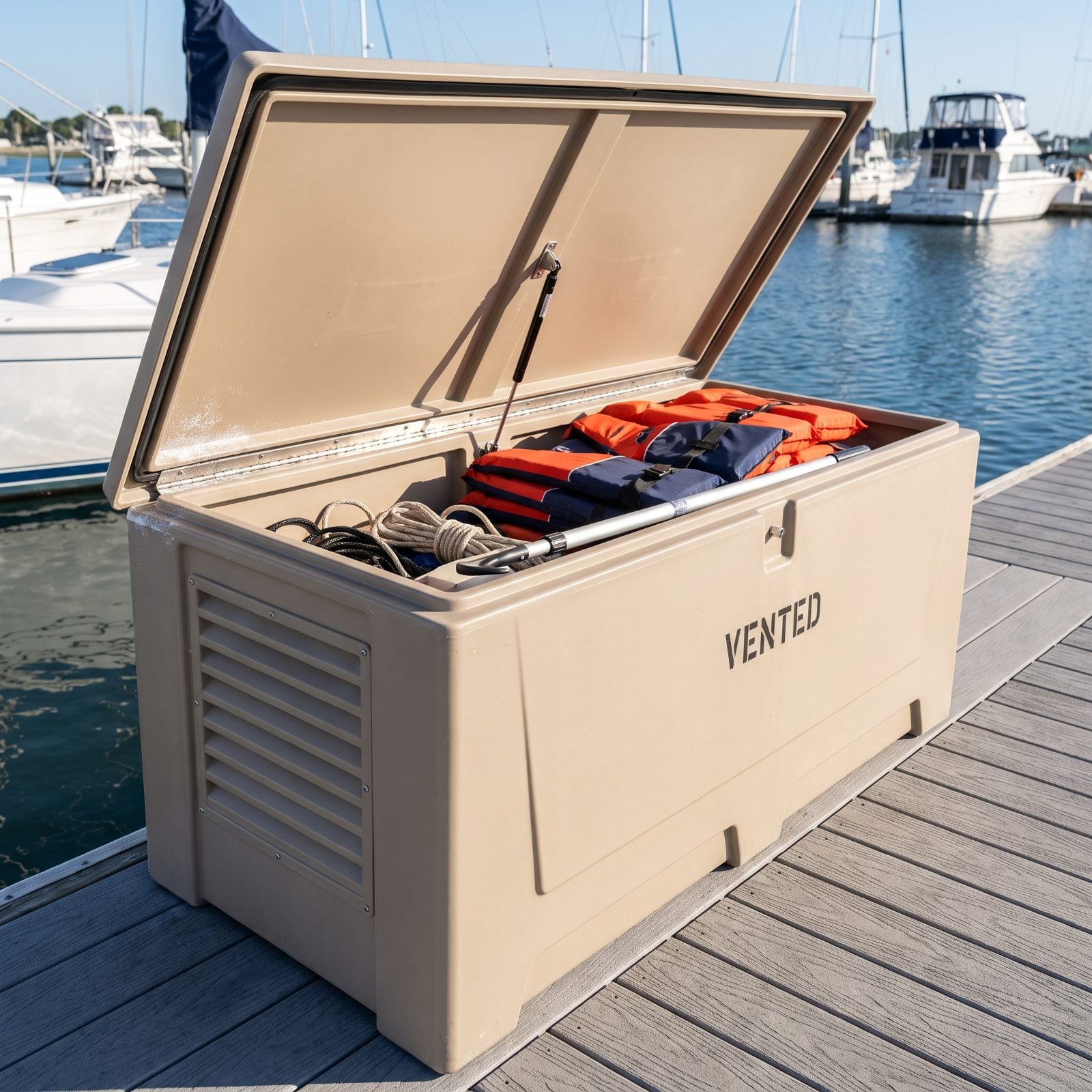
Open a sealed dock box in July and you get a smell you don’t forget — mildew, warm plastic, and whatever was damp when you last shut the lid. A dock box lives in full sun over cold water, which is pretty much a recipe for condensation with nowhere to go.
A vented box has small louvers that let humid air escape without letting rain in. Your life jackets stay dry, your lines stop going slimy, and the box itself lasts longer because trapped moisture isn’t quietly working on the seams. No vents on your current box? You can retrofit a couple of marine vents for under thirty dollars.
24. A Ceiling Pulley Rack for Drying Life Jackets
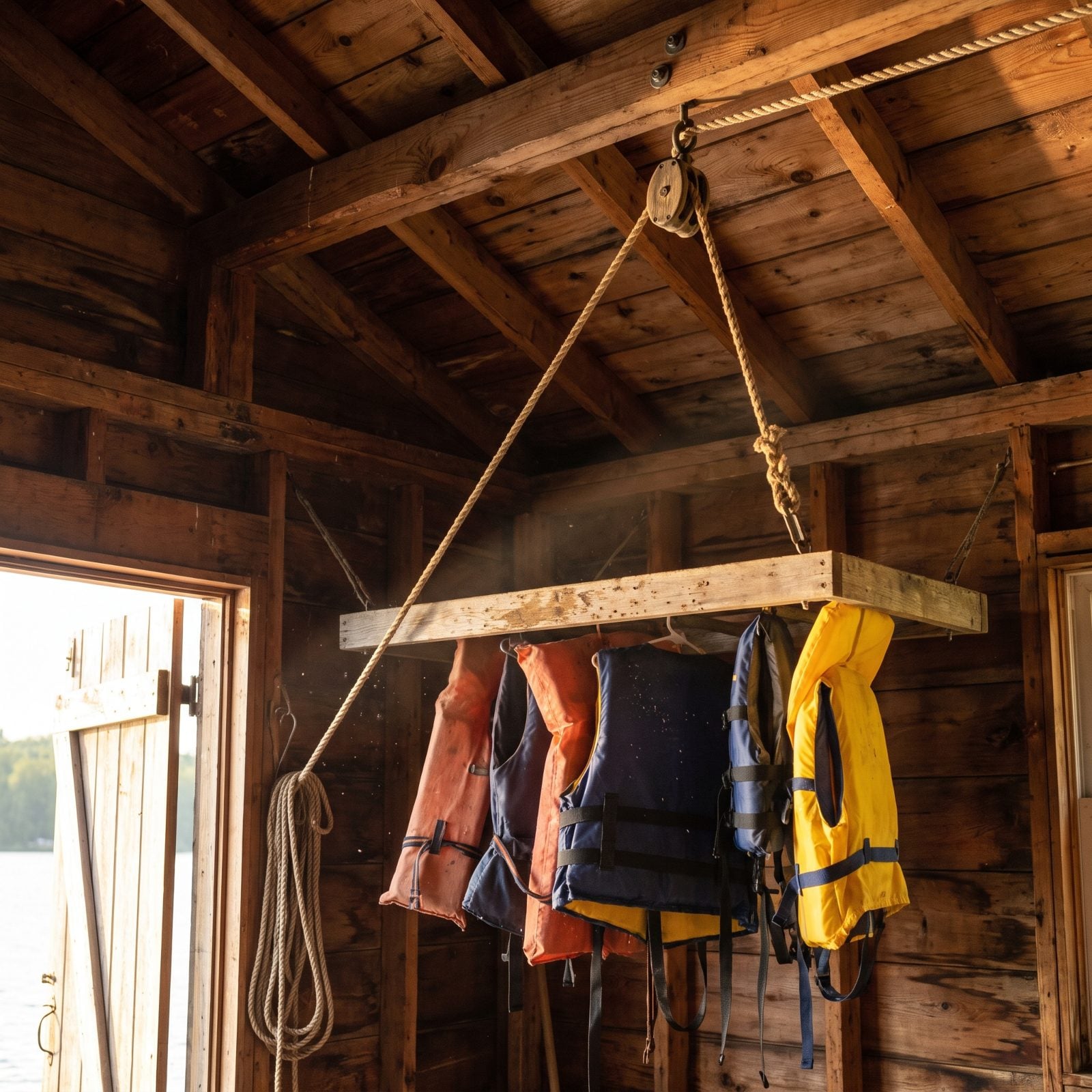
Wet life jackets left in a pile don’t dry. They stew. The foam holds water, the nylon sours, and by midweek the whole boathouse smells like a gym locker.
A ceiling pulley rack hauls them up into the warm air near the rafters where they actually dry, and it clears your floor while it’s at it. The clever bit is the pulley. You load it at waist height, cleat the line, and let the whole rack rise — no reaching, no ladder, no jackets draped over every chair back. Kayaks, waders, and wetsuits work the same way.
23. A Boot Dryer Reserved for Wet Water Shoes
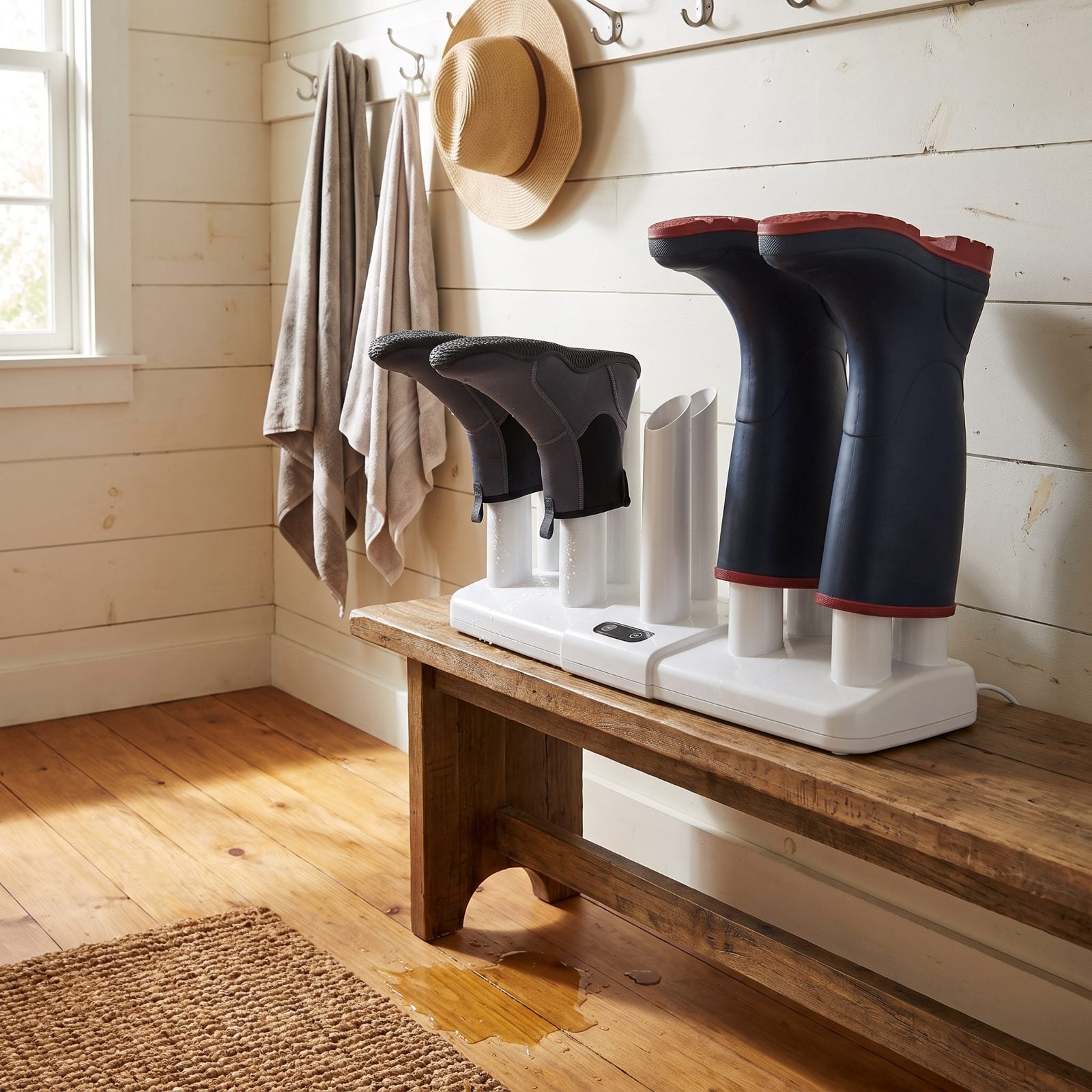
Water shoes never dry. Neoprene traps moisture, and if you shove them in a closet damp, you pull them out next weekend cold, clammy, and smelling faintly of lake bottom.
A forced-air boot dryer — the kind hunters swear by — blows warm air up deep into the toe where sun and towels never reach. Just slide each shoe or boot onto a tube. Keep one by the back door and make it the water-shoe station. Twenty to forty dollars, no heat element strong enough to cook the rubber, just gentle moving air overnight. The difference between a shoe that’s ready and one that makes you wince is a single evening on the dryer.
22. A Freezer Alarm That Warns of Storm Outages
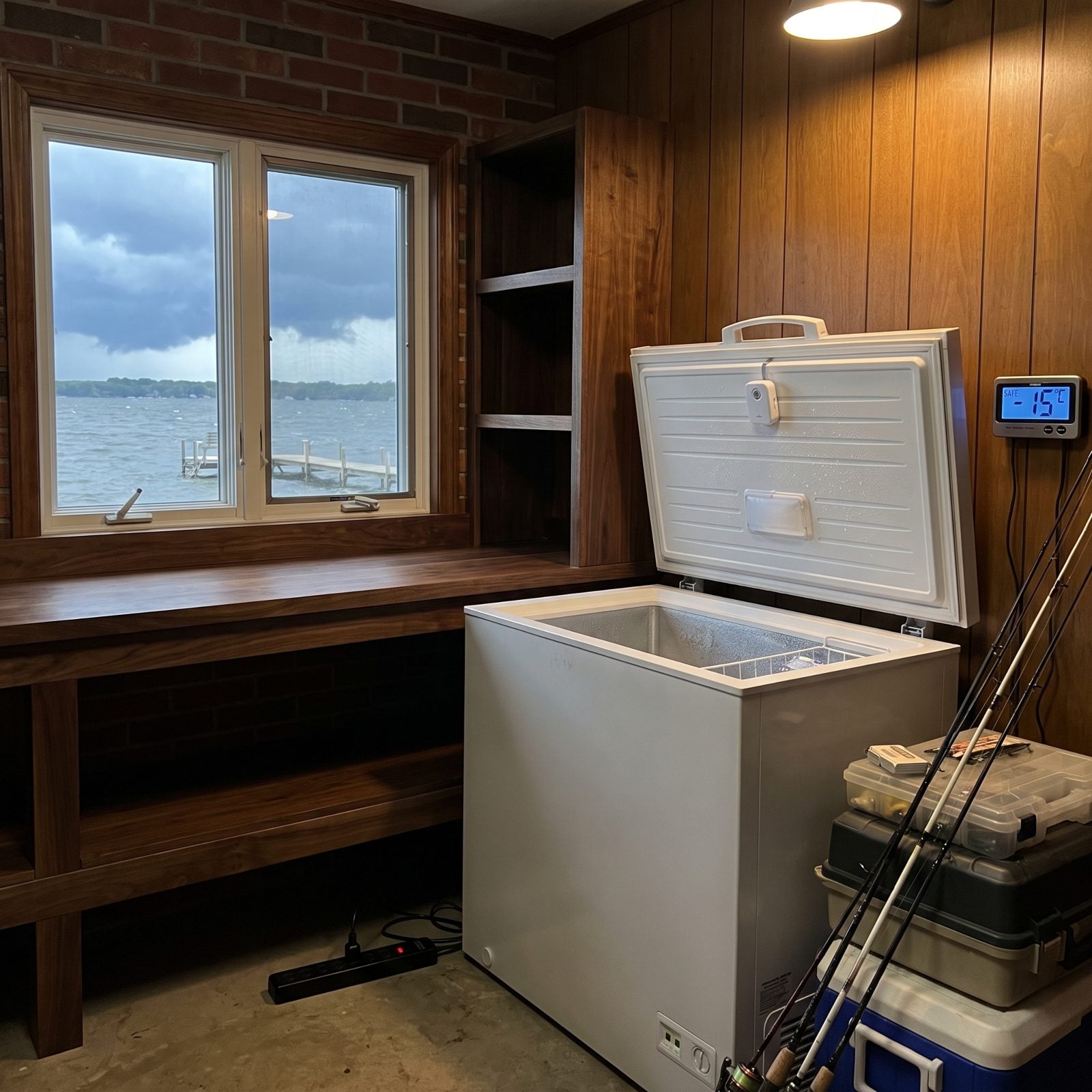
Here’s a loss that happens quietly. The power blips during a storm while you’re off at the marina, the freezer full of a season’s walleye thaws, refreezes when the grid comes back, and you don’t know a thing until you open it weeks later.
A wireless freezer alarm reads the temperature and pings your phone the moment it climbs past a set point. Some use a cellular or Wi-Fi hub, so they work even when you’re an hour away. For a lake house that sits empty midweek, it’s one of the cheapest forms of insurance going — often under fifty dollars.
21. Amber Outdoor Bulbs That Attract Fewer Insects
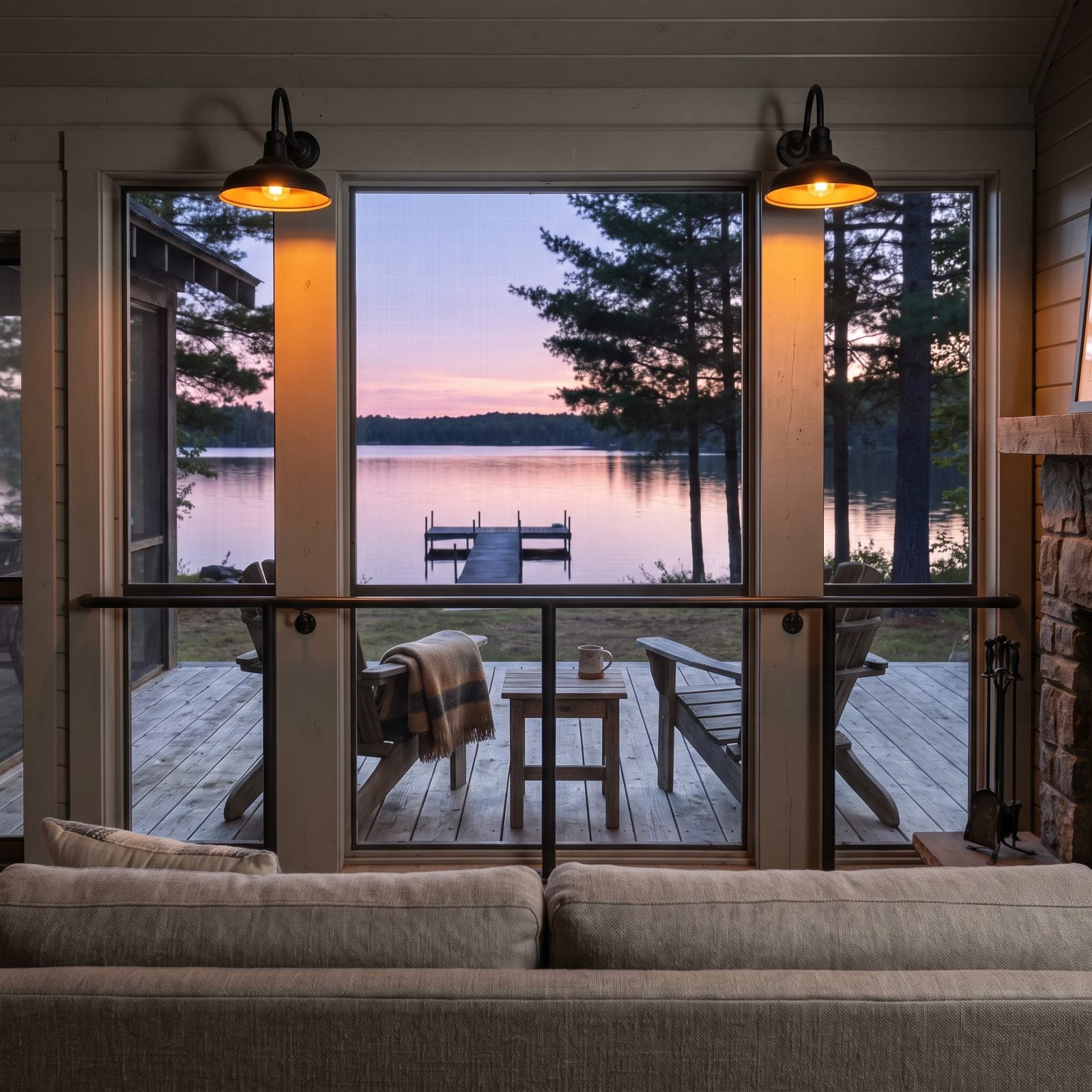
Bugs don’t love your porch. They love your porch light. More specifically, they’re drawn to the blue and ultraviolet wavelengths in ordinary white bulbs, which read as daylight to a lot of flying insects.
Amber bulbs cut most of that blue end out. The light shifts warm, closer to firelight, and far fewer moths and midges show up to the party. This isn’t some fake “bug light” that just looks yellow — true amber LEDs genuinely emit less of what the insects track. The porch feels cozier for it too, which is a nice accident.
20. A High-Velocity Porch Fan for Flying Insects
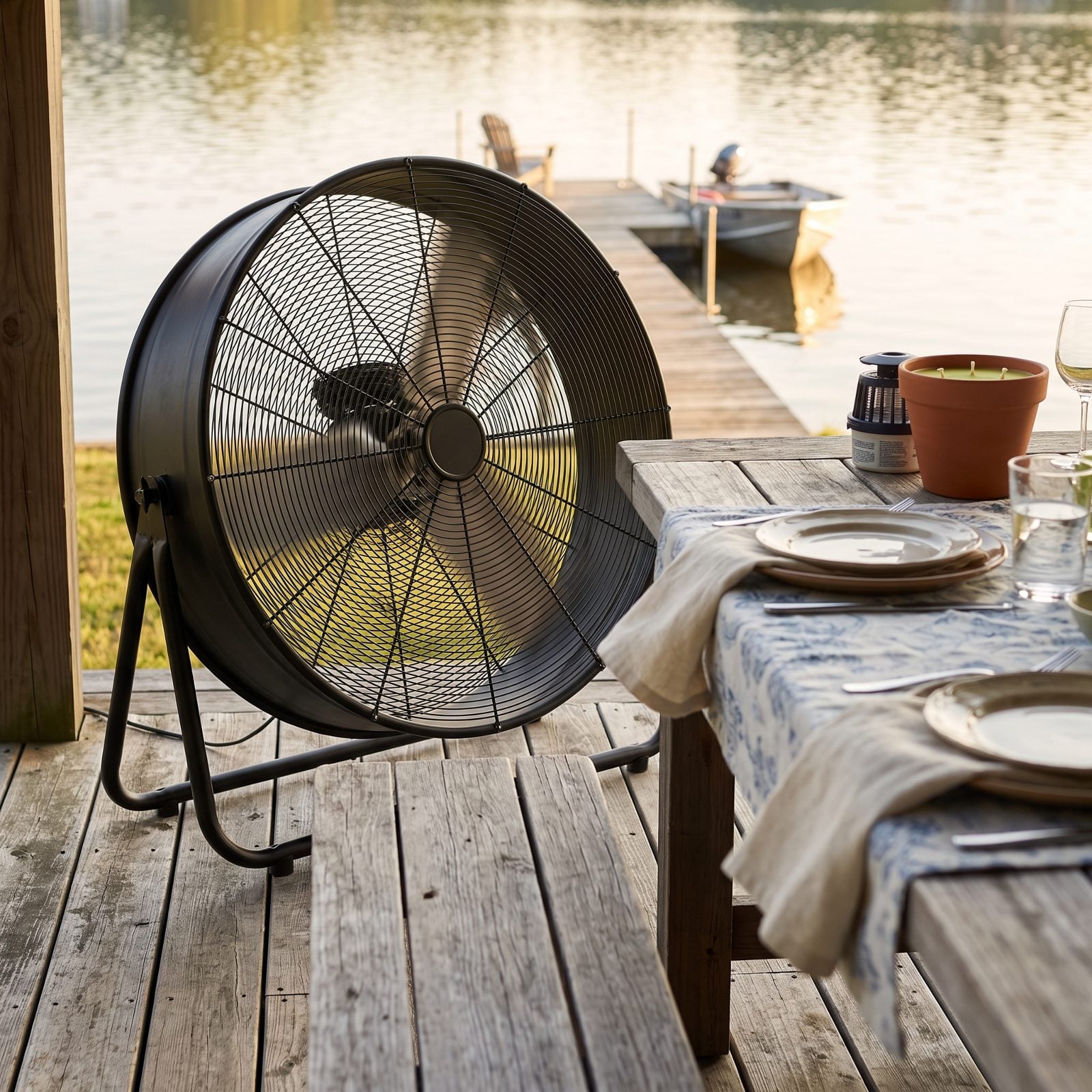
Mosquitoes and gnats are weak fliers. That’s the whole trick. They can’t hold a line against moving air, so a strong breeze blows them off course before they ever reach your ankles.
A high-velocity floor fan aimed across your porch table outperforms any candle, coil, or clip-on. No chemicals, no smoke, just a wall of air they can’t punch through. Point it low, toward people’s legs, since that’s where the biters aim. On a still, humid lake evening it’s the difference between finishing dinner outside and retreating indoors by the second course.
19. Bird-Safe Dots on Large Water-Facing Windows
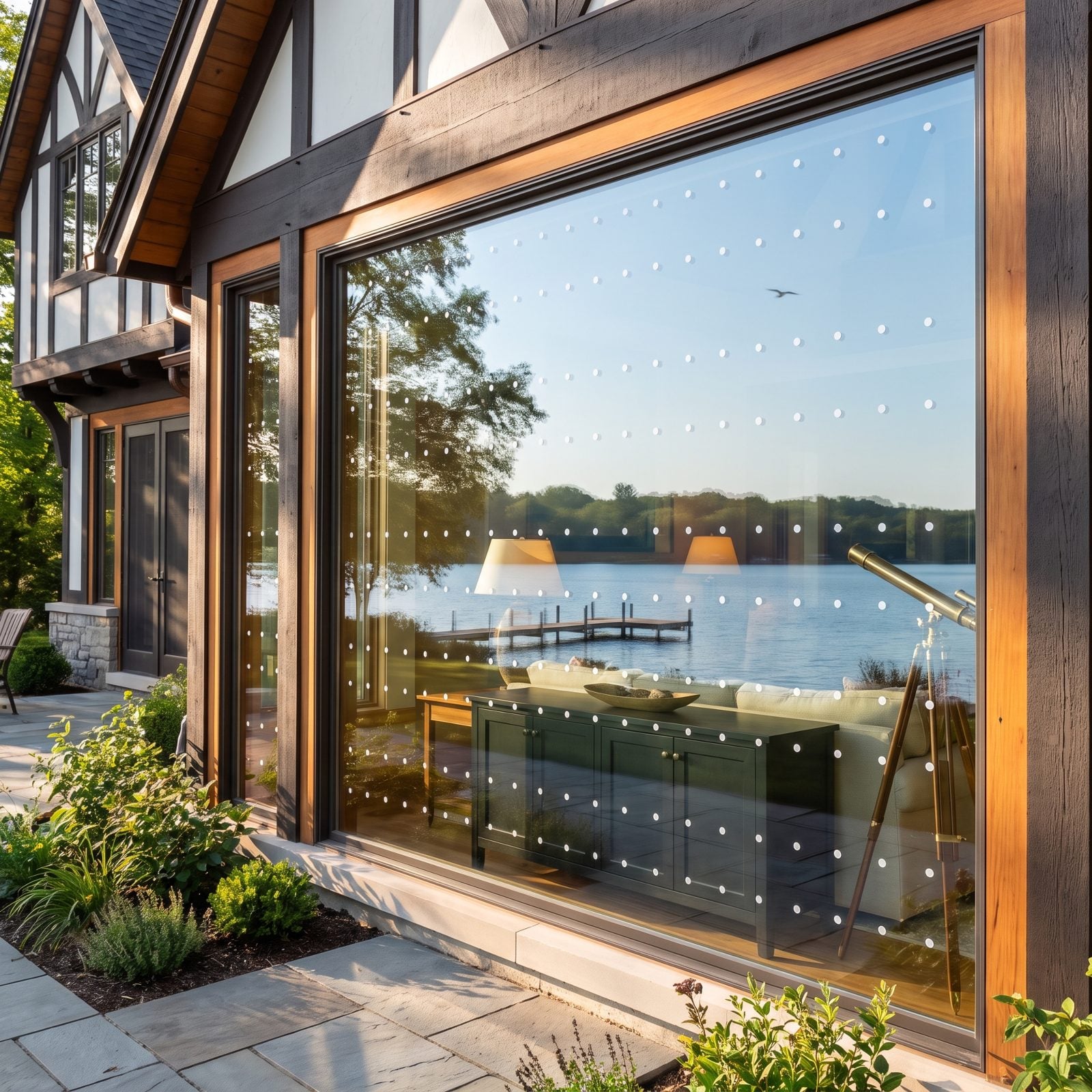
Big water-facing windows are a bird killer. The glass mirrors the sky and trees, a bird reads it as open air, and it hits full speed. On a lake house with a wall of windows, this happens far more than most owners realize — because the strikes happen while they’re out on the boat.
Bird-safe dots are small decals spaced a couple of inches apart across the outside of the glass. Close enough that birds see a barrier, spread wide enough that you barely notice them from inside. Research on window collisions points to tight spacing as the thing that actually works; a lone hawk silhouette in the corner does nothing. Cheap, humane, and once they’re up you stop hearing that awful thud.
18. Downward-Shielded Fixtures Along the Shoreline
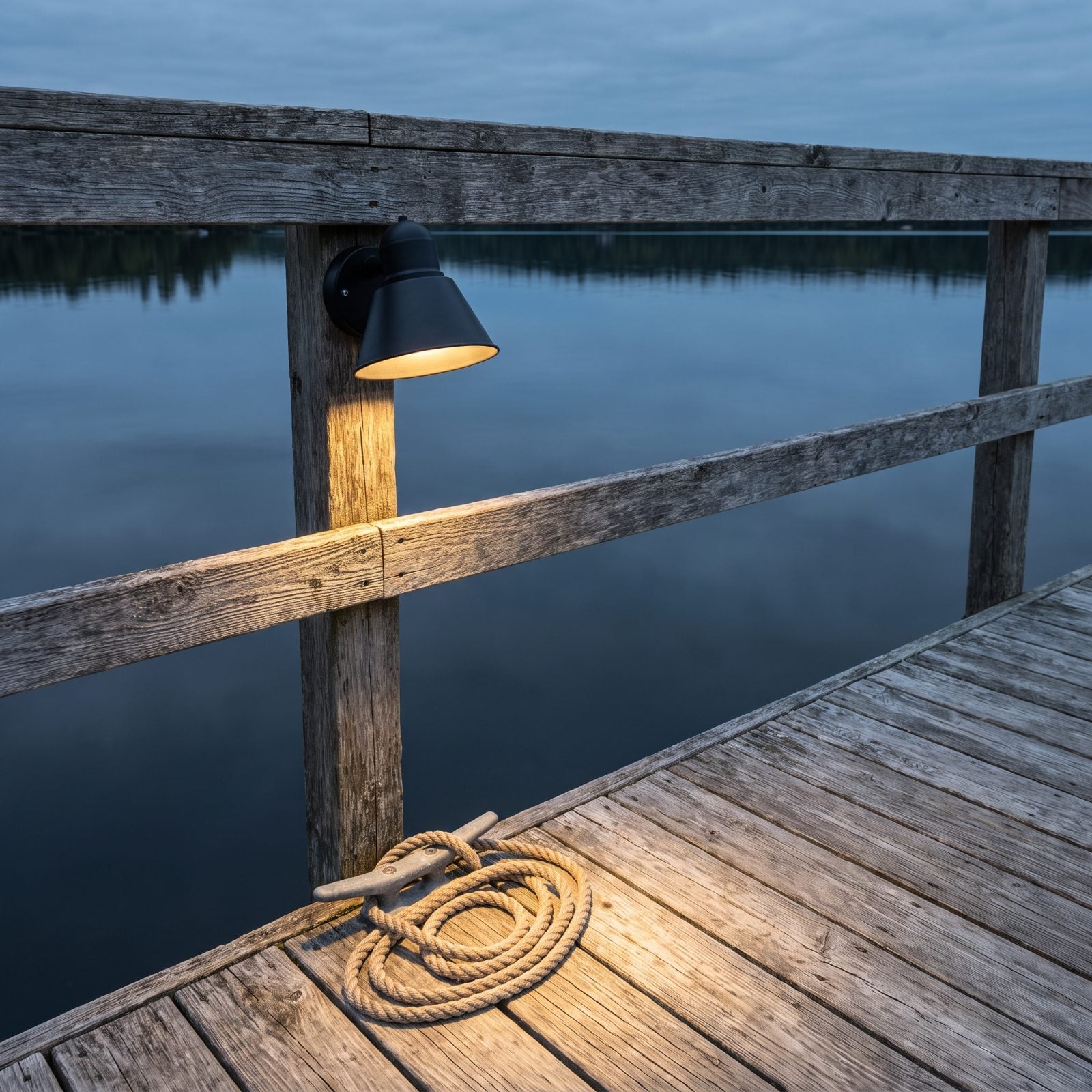
Most dock lights do the exact opposite of what you want, throwing glare across the water, blinding anyone coming in by boat, and pulling every bug within half a mile toward your face. A downward-shielded fixture solves all of it by pointing the light where you actually walk: the deck boards under your feet.
The shield is a small hood that caps the bulb and aims the beam straight down. You still see the dock edge, still find the cleat in the dark. But the lake stays black, which is how your neighbors and the local wildlife prefer it.
17. Coir Logs That Hold Eroding Shoreline Soil

Shoreline erosion is slow until it isn’t. One wet spring, a stretch of bank that held for a decade slumps into the lake and takes your good topsoil with it. A coir log, basically a long sausage of packed coconut fiber, buys you time and does something a seawall never will: it lets plants take over.
You stake it along the waterline. It absorbs wave energy, holds the soil behind it, and gives native sedges and rushes a place to root. Over a few seasons the roots grab the bank, the fiber breaks down, and you’re left with a living edge instead of a crumbling one. Costs a sliver of what hard armoring runs, and it won’t bounce waves back to chew up the bottom. Here’s where folks go wrong: they skip the plants and expect the log alone to save them. It won’t. The log is the babysitter. The roots are the fix.
16. Rolling Dock-Corner Wheels That Protect Boat Hulls
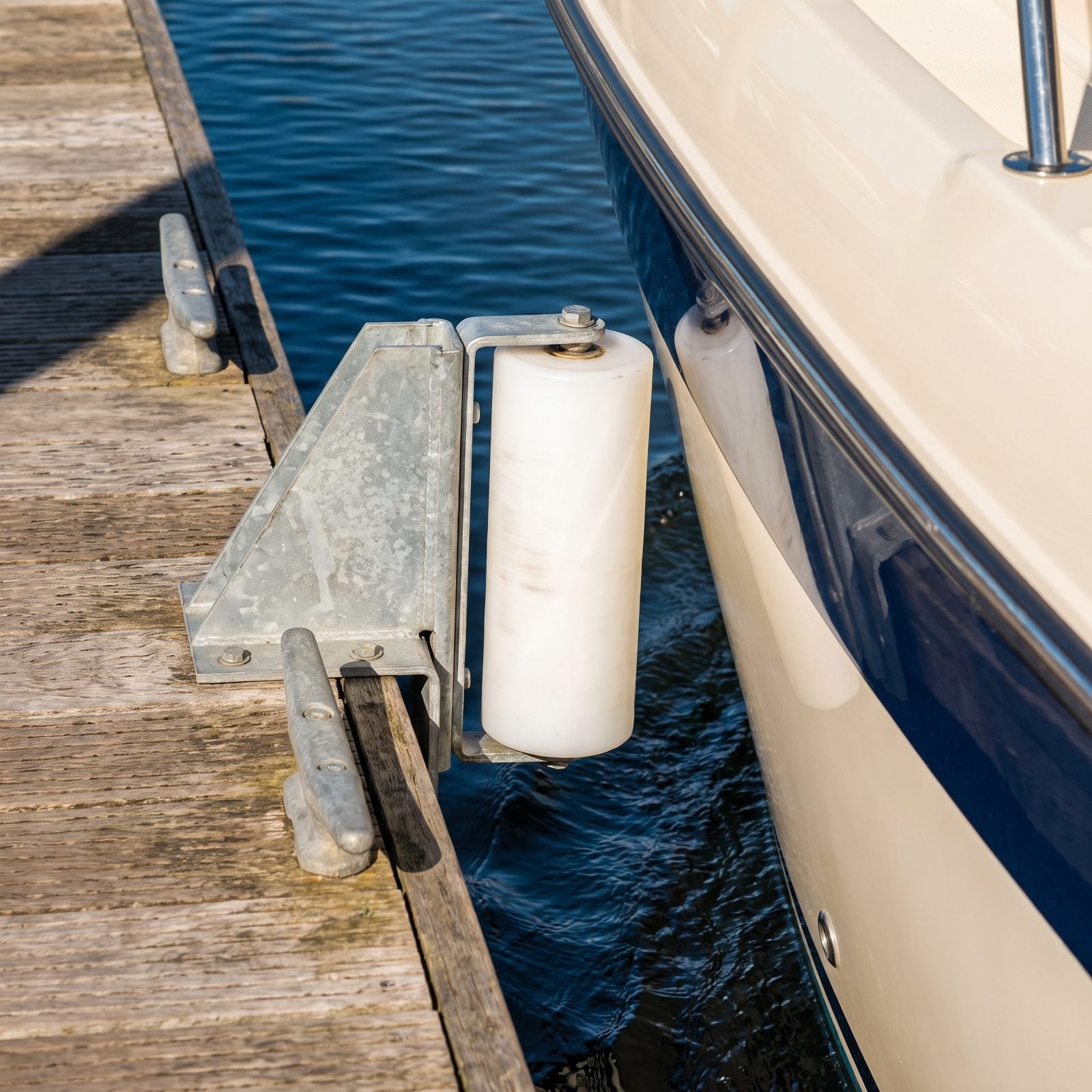
The gouge on your hull probably came from the dock, not another boat. Wind pushes you in, the current nudges you, and the sharp corner of the dock does the rest. Gelcoat repair, courtesy of a piece of lumber.
Corner rollers are cheap insurance. Mounted vertically at the dock’s edge, they spin when the hull touches them, so the boat glides along instead of grinding. They work when you’re docking solo and the second pair of hands you wished for isn’t there. For the price of a nice dinner out, you protect a hull that costs a great deal more to fix.
15. Rounded Cleat Covers That Prevent Stubbed Toes
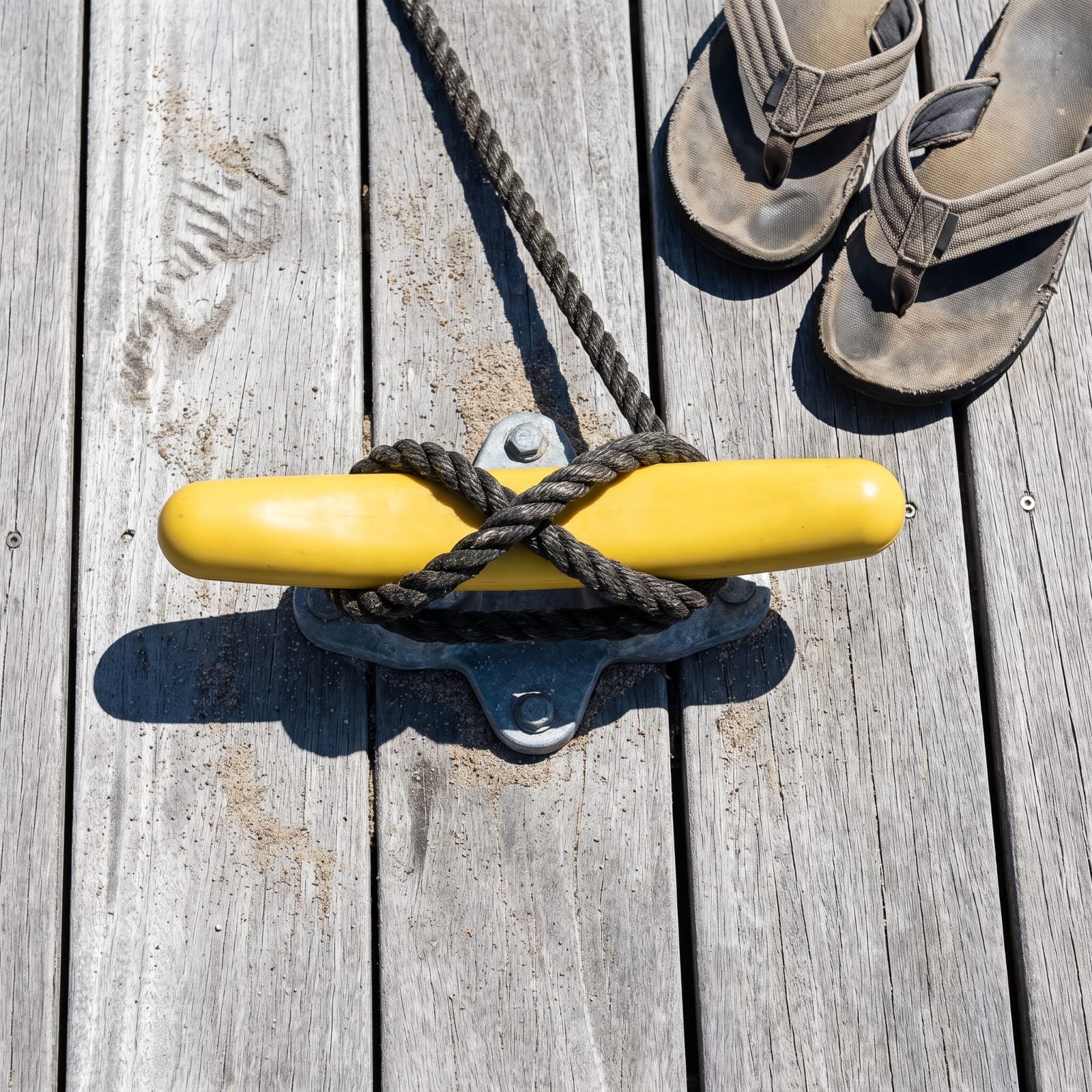
Everyone who owns a dock has done it at least once. Barefoot, carrying a cooler, and the cleat finds the side of your foot. The language that follows is not family-friendly.
A rounded cover slips over the cleat’s horns and takes the bite out of the edge. The line still cleats off the same way, but the hard metal corner that used to open up your toe is gone. Get the brightly colored ones. At dusk, when you can barely see the deck, that little dome of yellow is the difference between walking past the cleat and hopping the rest of the way to the house.
14. A Quick-Connect Rinse Manifold for Multiple Hoses
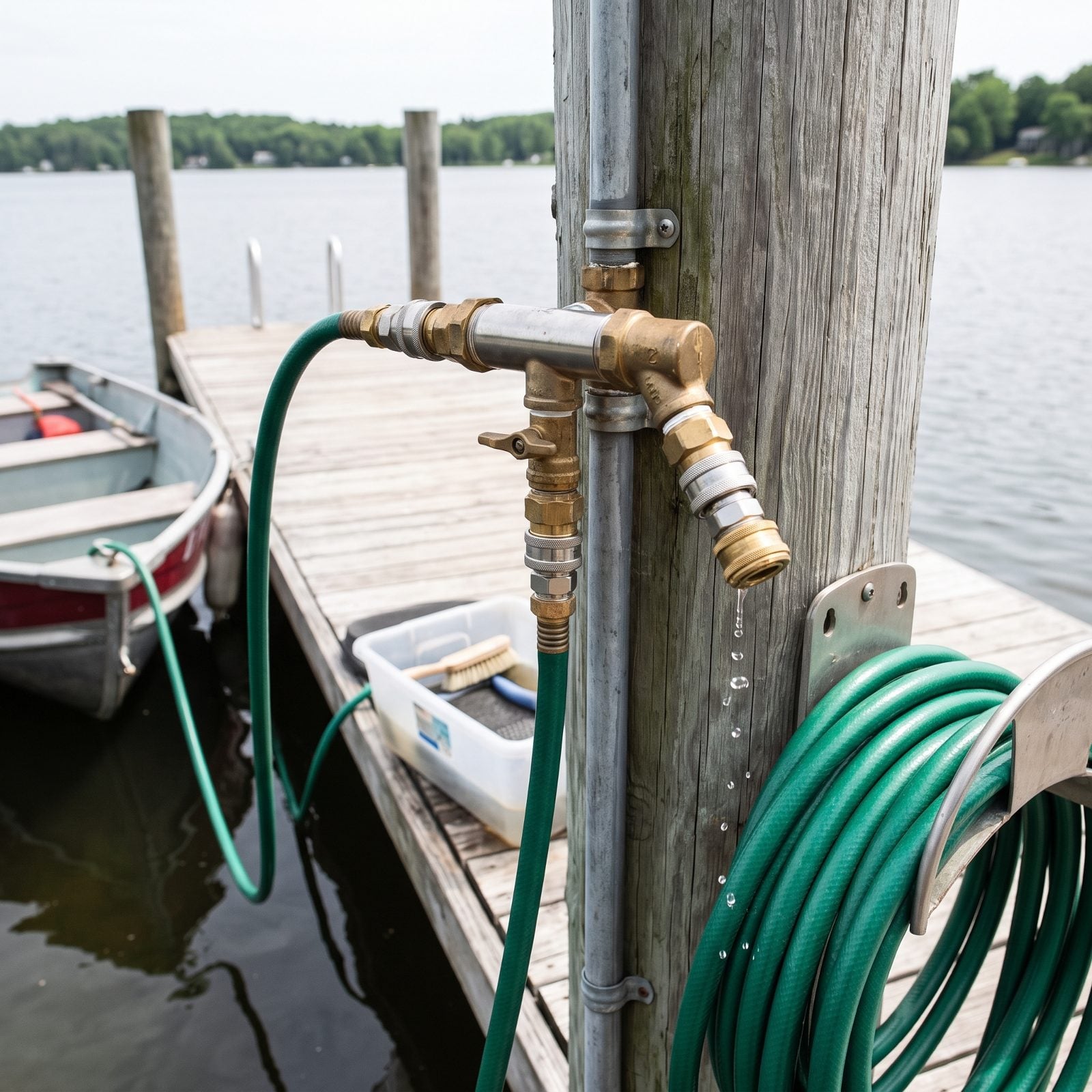
You know the dance. Unscrew the hose from the boat rinse, screw it onto the dog-wash, unscrew that, drag it over to flush the outboard. Threads cross, your hands get raw, and somewhere in there you snap a fitting.
A quick-connect manifold ends the shuffle. One feed line splits into several ports, each with a push-on coupling, so you click a hose where you need it and move on. The real payoff shows up in October, when winterizing means rinsing everything once, fast, instead of wrestling a single hose around the dock for an hour.
13. A Balloon-Tire Cart for Sand, Gravel, and Soft Ground
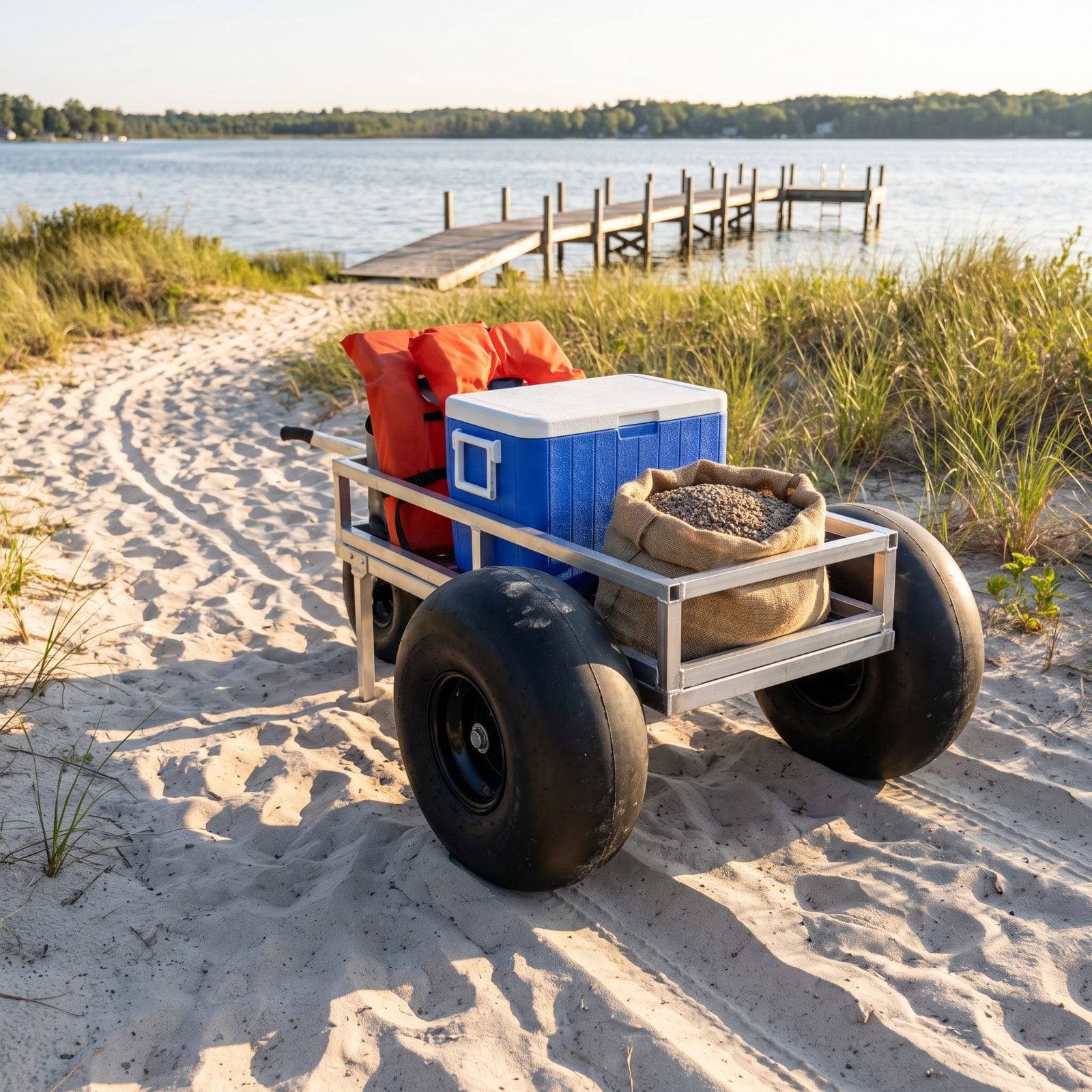
A regular garden cart on sand is a trap. The narrow tires slice down, the whole thing stalls, and you end up hauling the load by hand across a hundred feet of beach while sand works its way into your shoes.
Balloon tires change the physics. They’re wide and run at very low pressure, so they spread the weight and ride on top of soft ground instead of plowing through it. Sand, pea gravel, muddy shore paths, the stuff that eats normal wheels alive. One trip from the truck to the dock with coolers, gear, and a case of water, instead of four miserable ones. Anyone who has carried a full cooler across a beach already knows why this made the list.
12. Kayak Launch Rollers at the Water’s Edge
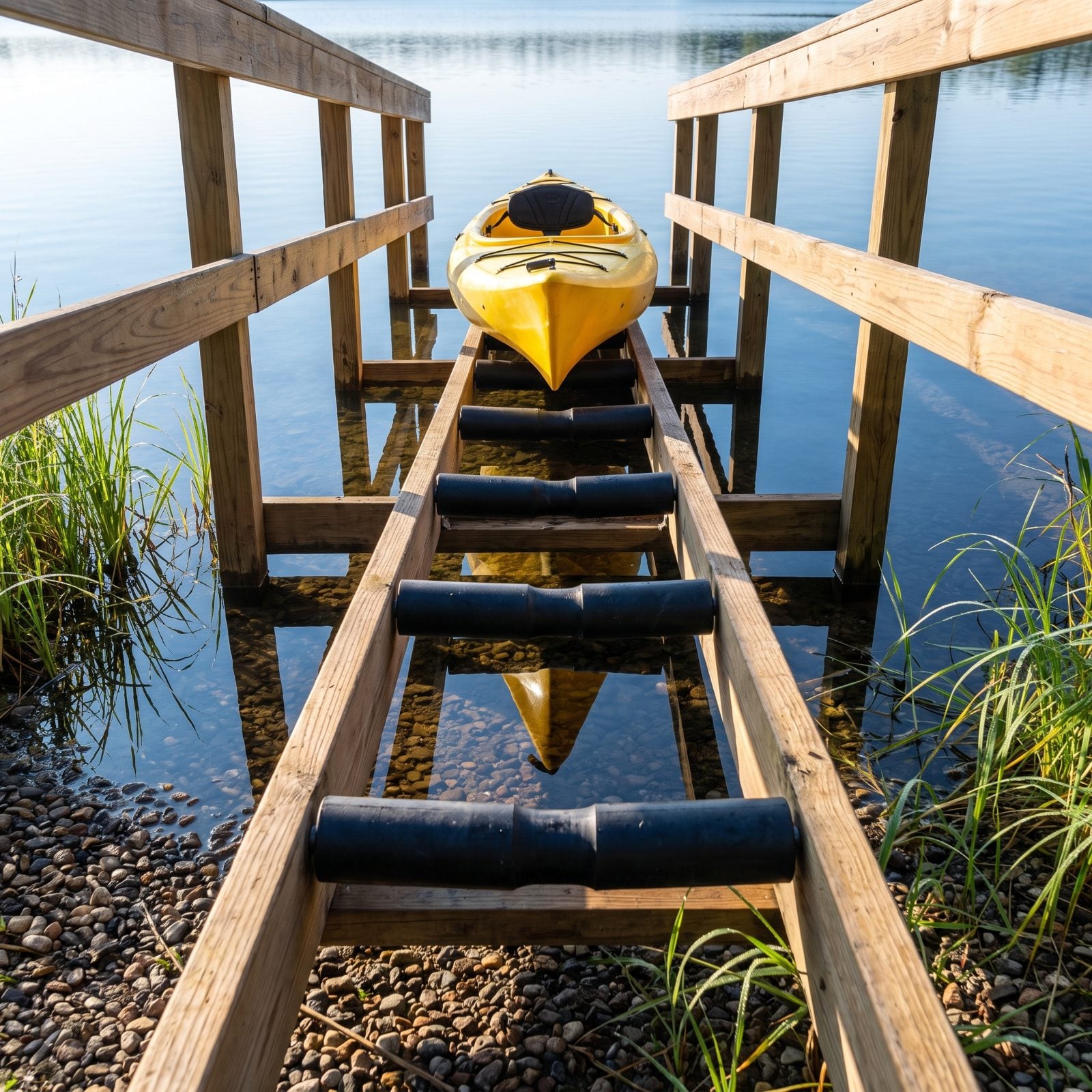
Getting into a kayak is easy. Getting it to the water without dragging it across rocks that scar the hull is the part nobody mentions.
Launch rollers are a short run of free-spinning cylinders set into a ramp at the shoreline. You rest the kayak on them, give a push, and it rolls itself down into the water while you keep your balance on dry ground. No scraping, no awkward squat-and-shuffle, no fresh gouge every time. For anyone whose knees have opinions about the old method of wading in alongside the boat, this is the upgrade that keeps you paddling into your seventies and beyond.
11. Rail-Mounted Clips That Keep Paddles Off the Deck
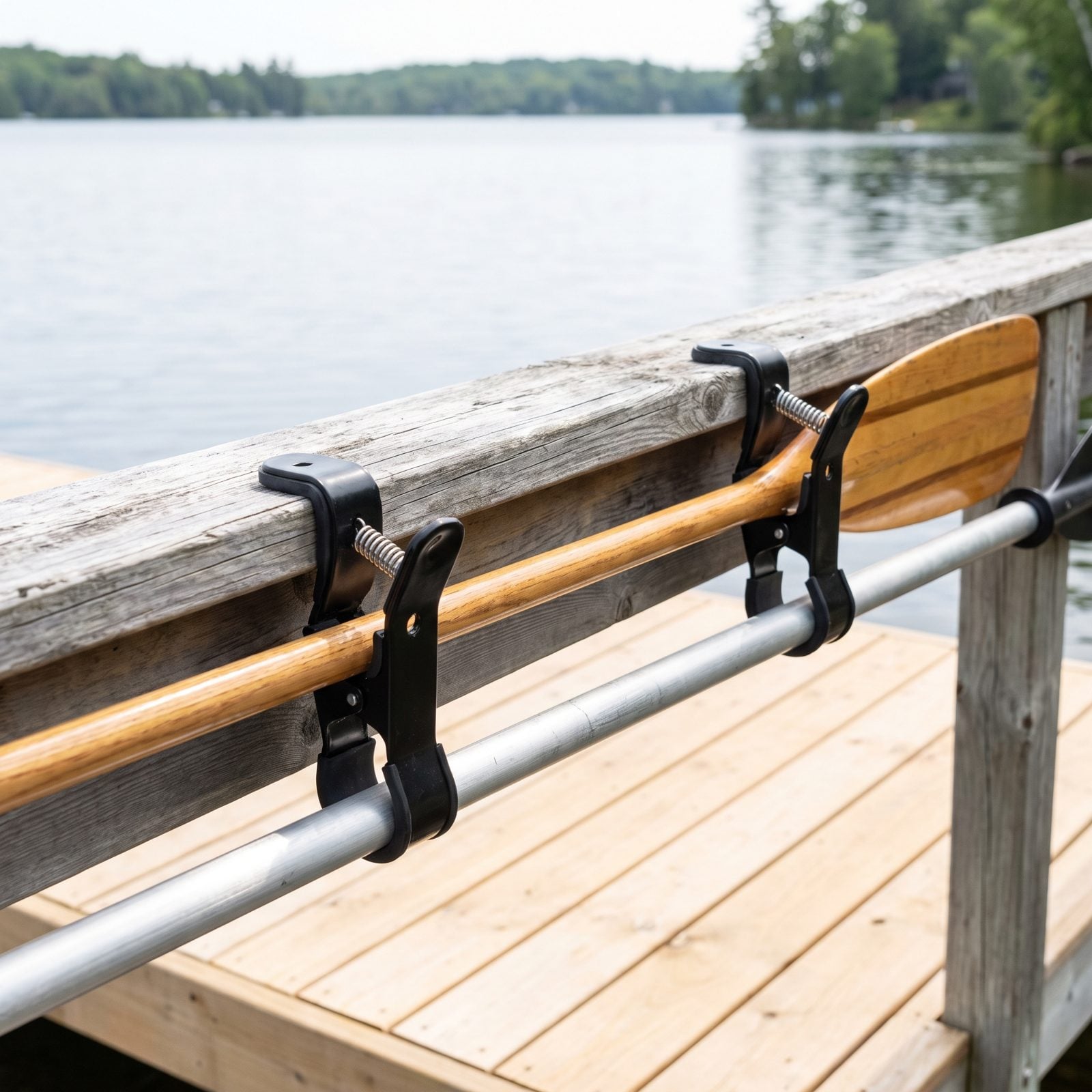
Paddles on the deck are a sprained ankle waiting to happen. They roll under your foot in the dark, slide into the water when a wake hits, and always seem to be exactly where you’re about to step.
Spring clips mounted along the railing get them up and out of the way. Push the paddle in, it holds, you grab it when you need it. The deck stays clear, the paddles stop drifting off, and you quit fishing them out of the shallows with the net. Small fix. Fewer bruises.
10. Vertical PVC Tubes for Rod and Net Storage
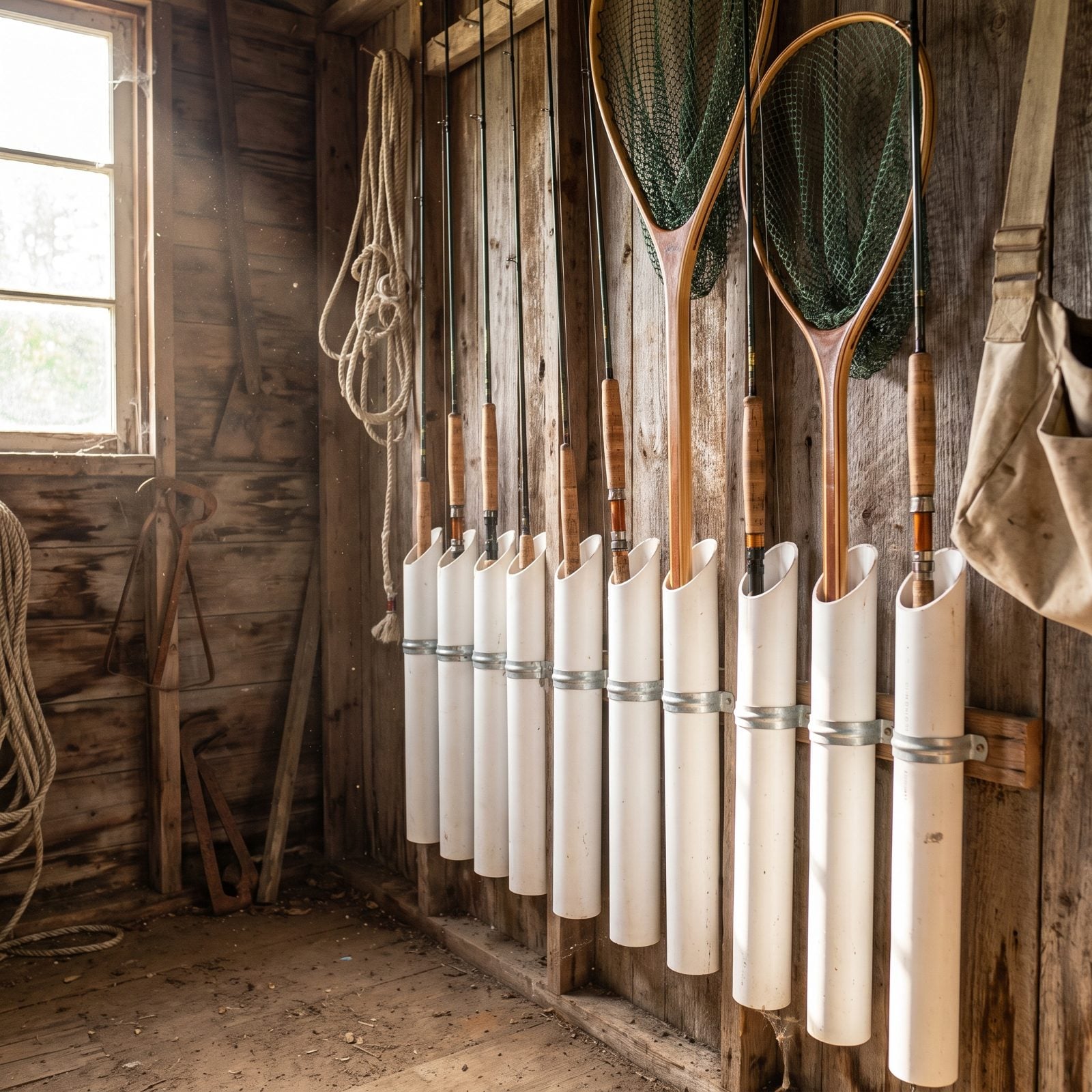
A pile of rods in a corner is a pile of broken tips and knotted line. Lean them against the wall and the first one to slip takes three others down with it.
Short lengths of PVC pipe, screwed to the wall and standing upright, solve it for a few dollars. Each rod or net drops into its own tube, tip up, handle down, nothing touching its neighbor. No tangles, no cracked guides, no hunting through a heap when the fish are biting at six in the morning.
Size the tubes to the butt of your handles and leave a little breathing room so wet gear can dry. The kind of five-dollar fix that makes you wonder why you put up with the chaos for so long.
9. A Low Foot-Rinse Wand Beside the Main Entrance
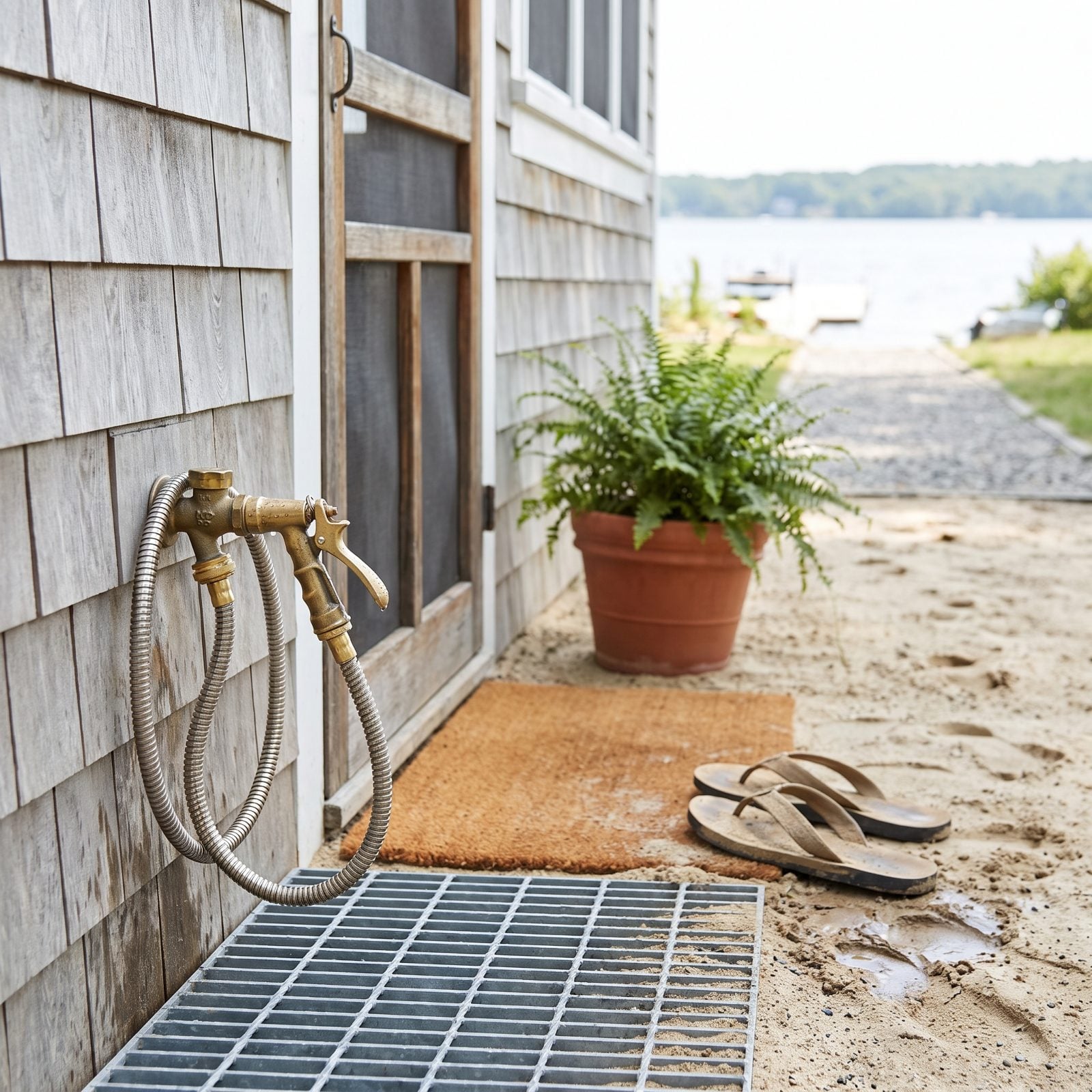
Sand is relentless. It rides in on wet feet, grinds into your floor finish, and clogs drains faster than anything else a waterfront house can throw at you. Hardly anyone thinks of the fix: a short rinse wand mounted low by the door, maybe knee height, fed off the outdoor spigot.
One quick blast at ankle level and the grit stops at the threshold instead of migrating through the whole house. Costs almost nothing. It saves your floors, your pipes, and the running argument about who tracked in half the shoreline.
8. A Stiff Boot Brush at the End of the Dock
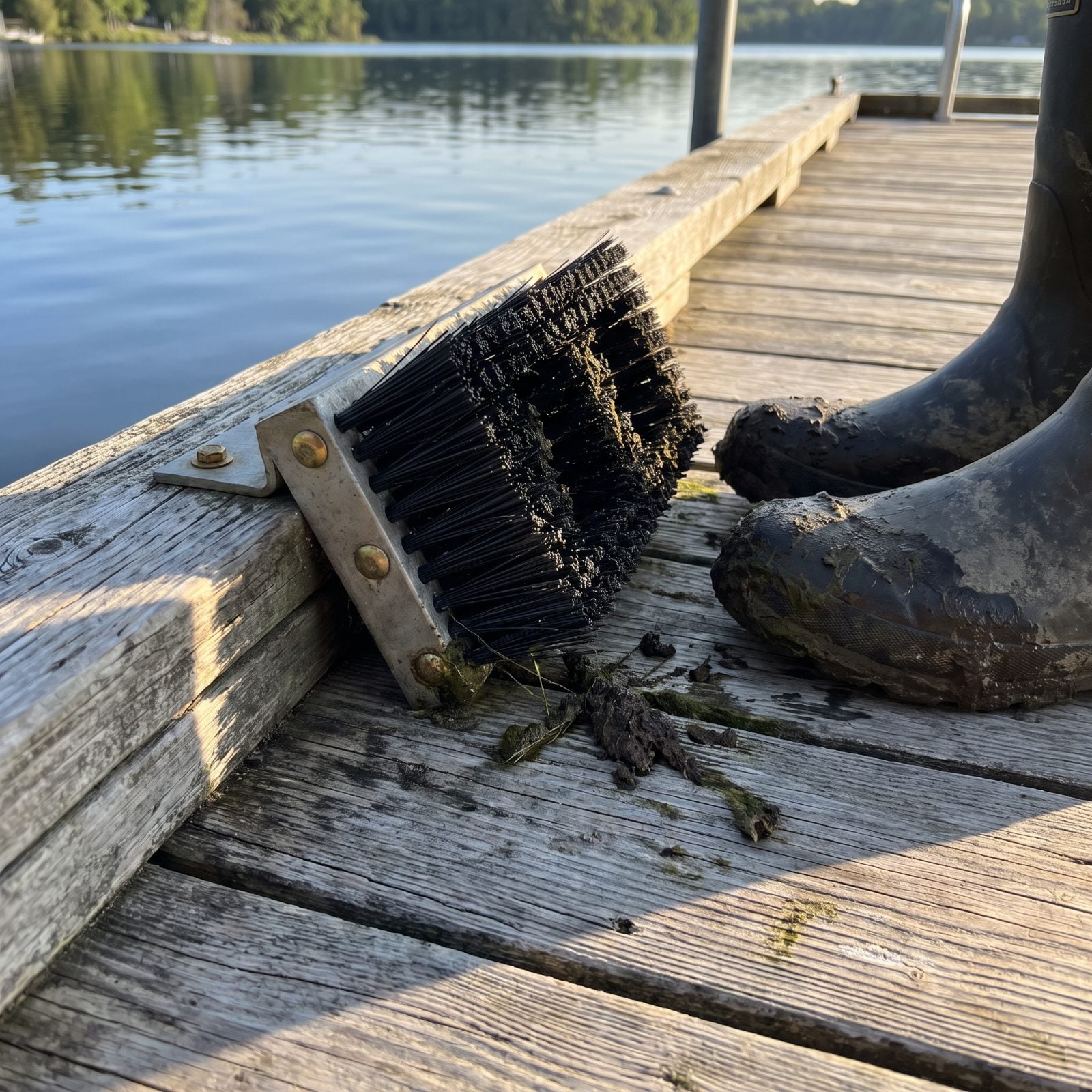
Algae and lake muck are slick as oil, and they peel off boots in exactly the wrong place: the kitchen floor, the boat deck, the top rung of a swim ladder. Bolt a stiff, straight-row bristle brush to the end of the dock and you stop the mess where it starts.
Scrape down before you walk up. Thirty seconds, tops. The muck stays by the water and nobody goes skating across the hardwood later. Least glamorous thing on this whole list, and the one every dock regular I know swears by.
7. A Rescue Throw Bag Mounted Near the Water
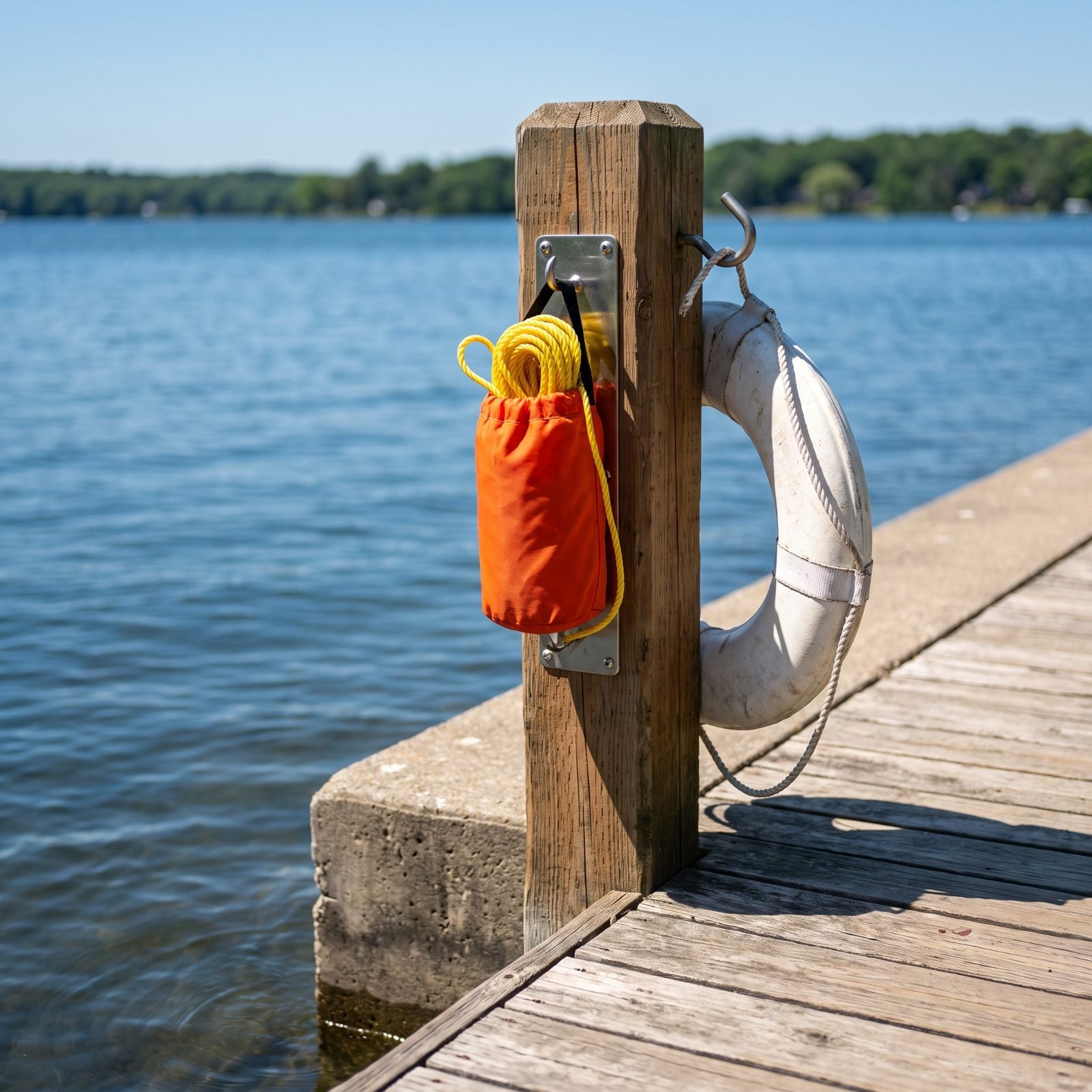
The difference between a scare and a tragedy is often fifteen feet of rope you can actually reach. A throw bag should hold its floating line stuffed inside, so it pays out clean when you pitch it to someone struggling in the water. No swimming out, no second person in trouble.
Mount it where the water is, not in the shed. A rescue tool locked in a garage during an emergency might as well be a lawn ornament. Hang it on a post at arm’s reach from the dock edge, and every spring, check that the rope hasn’t rotted or seized, and that it’s packed back inside the bag.
6. Reflective Markers Along the Dock’s Outer Edge

Docks are hardest to see at exactly the moment you most need to see them: after sunset, hands full of cooler, half a glass of wine in. The edge goes invisible and the water never bothers to warn you.
A line of reflective markers or low solar studs along the outer edge draws a clear boundary in headlight glare, in a flashlight beam, or just in the ambient dusk. Cheap, screw-in, done in an afternoon. Run them all the way to the very end, where the drop is deepest and the planks stay wettest.
5. A Tide Clock Mounted Where Departures Are Planned
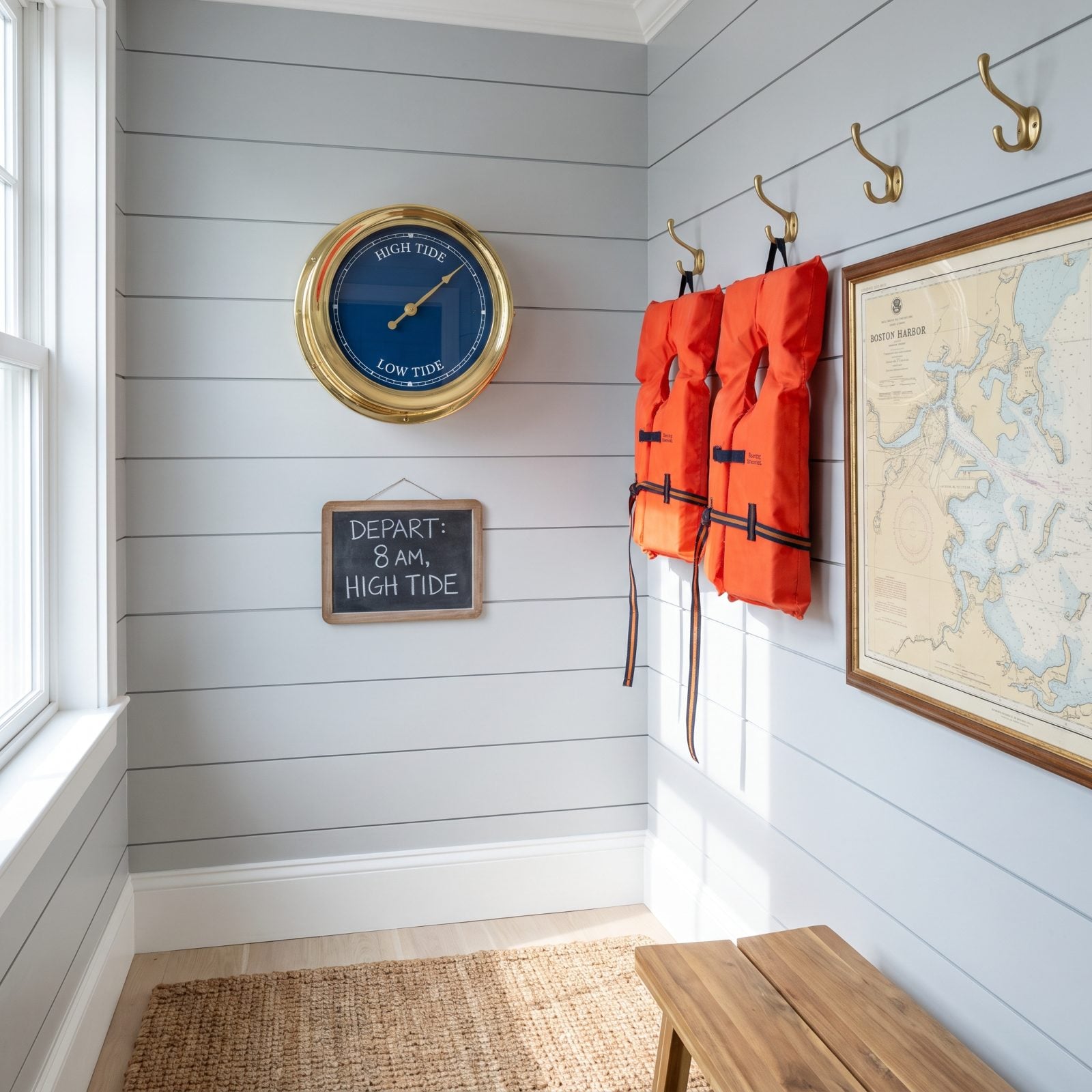
Coastal living runs on a clock that has nothing to do with the one on your phone. Get the tide wrong and you’ll find your boat planted in mud, your dock ladder dangling above nothing, or your way home blocked by a channel that quietly drained while you were off having lunch.
Hang a tide clock by the door, where the coats and keys already live, and the next high and low sit right in front of you before you shove off. The mechanical ones drift, so reset them now and then against a printed tide table. Reference, not gospel.
4. Wearable Ice-Rescue Picks Stored Near the Shore
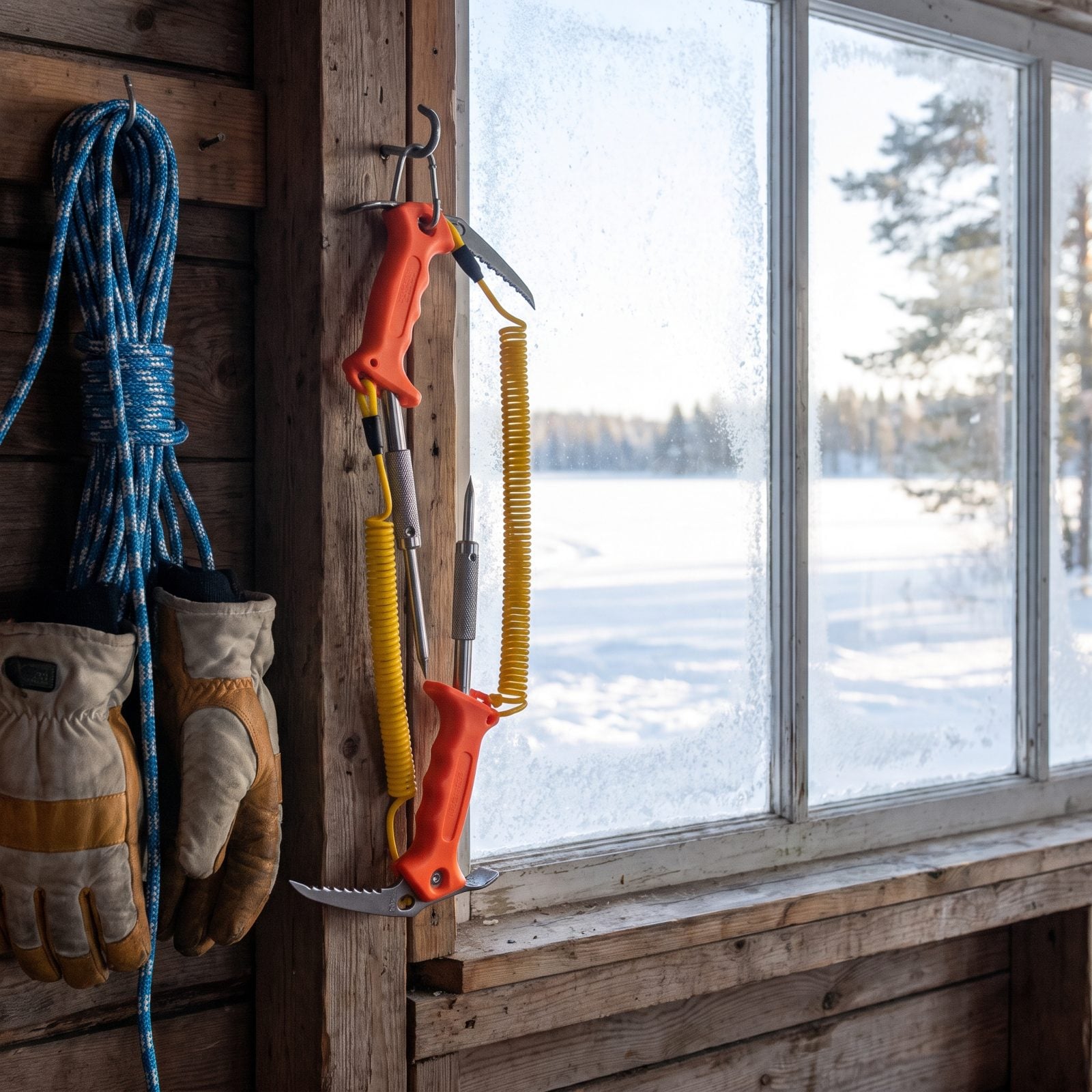
Fall through thin ice and your bare hands can’t grip the smooth, wet shelf to haul yourself out. That’s what kills people, not the cold alone but the plain inability to get back up and over. Ice picks are two handles, each with a sharp steel spike, joined by a cord you wear around your neck all winter long.
Jab, pull, kick, slide out onto the firm ice behind you. They cost about what a pizza runs and they live on a hook by the door, worn by anyone walking the frozen shore. Most waterfront newcomers have never heard of them. Everyone who’s gone through once? Never leaves the house without them again.
3. A Handheld Lightning Detector for Fast-Moving Storms
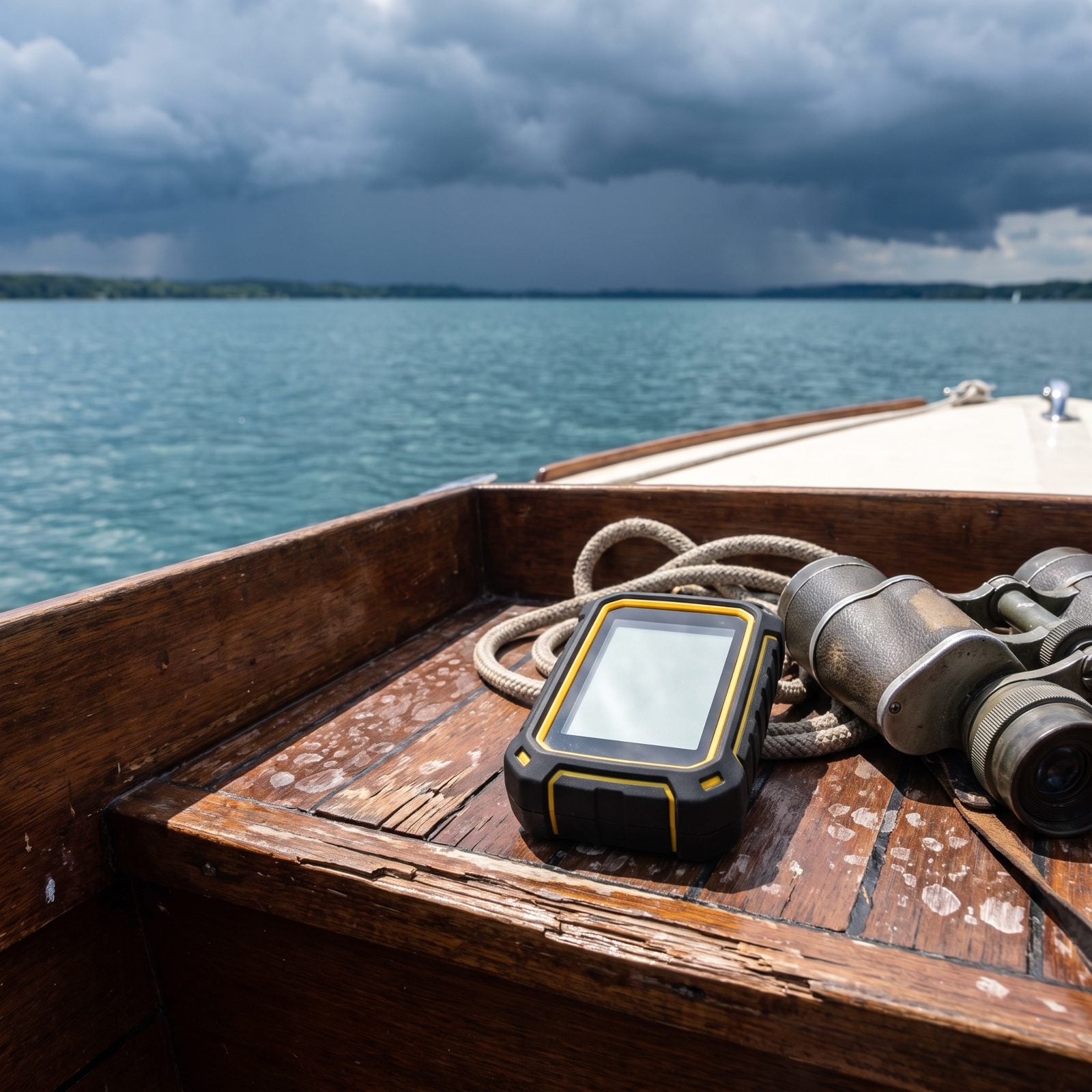
Open water is the last place you want to be guessing about lightning. By the time the thunder’s loud enough to scare you, the first strike may already be in range. A handheld detector senses the electrical signature of a strike and shows you how far off the activity is, often while the sky overhead still looks perfectly fine.
It’s no forecast, and it won’t pin the exact moment. What it gives you is an early nudge to head in before the squall line lands. Out on a lake where you’re the tallest thing for a mile, that head start matters more than most people like to admit.
2. A Backwater Valve That Blocks Reversing Drain Flow
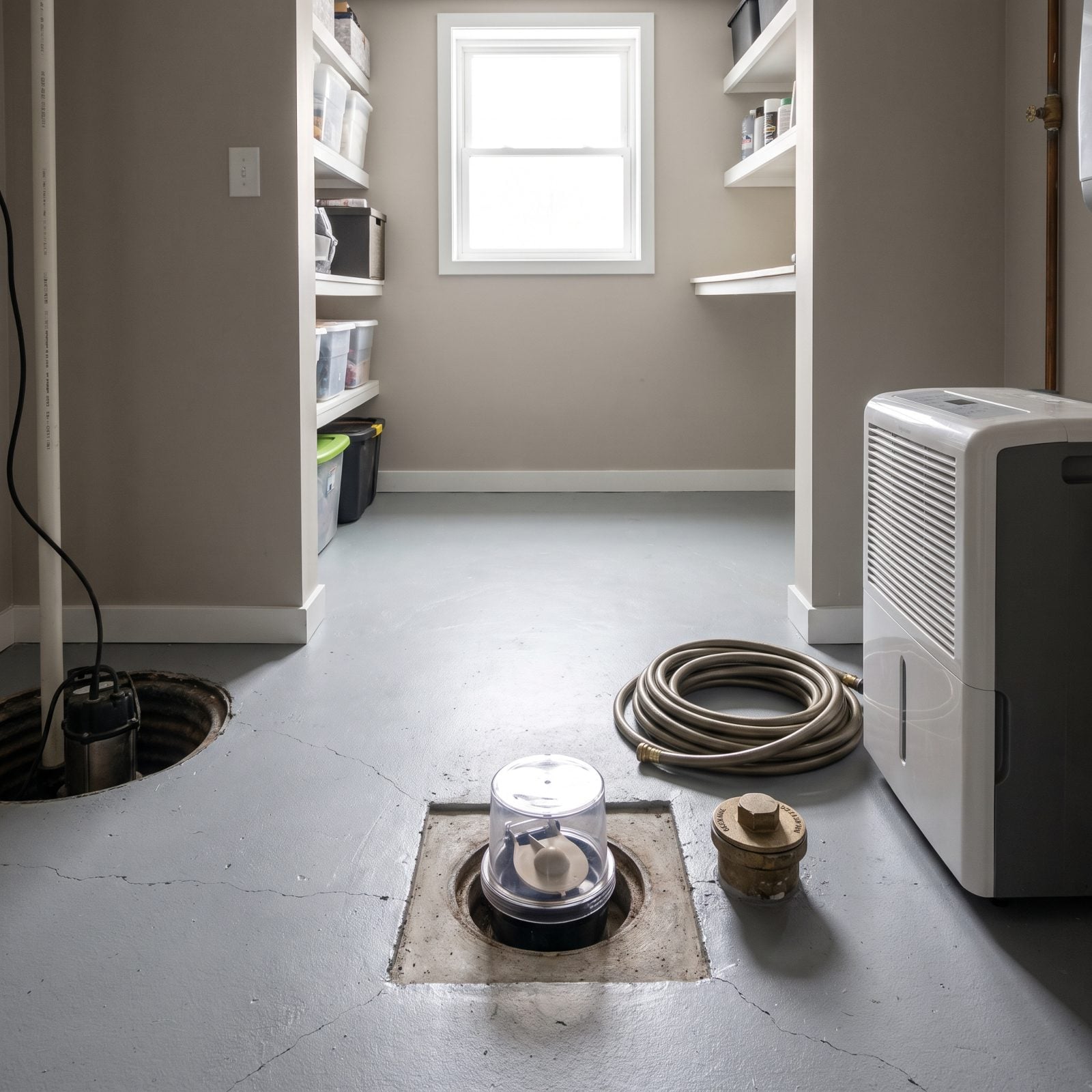
High water doesn’t always roll in off the lake. Sometimes it climbs up through your own floor drains when the storm or sewer system backs up and starts pushing the wrong direction. A backwater valve is a one-way flapper plumbed into the drain line that lets waste out and slams shut the instant flow tries to reverse.
Nobody gives it a thought until a heavy rain sends gray water bubbling up into a finished basement. For waterfront and low-lying lots, it’s the plumbing upgrade that pays for itself in a single rotten night.
1. A Long Roof Rake Reserved for Snow-Covered Docks
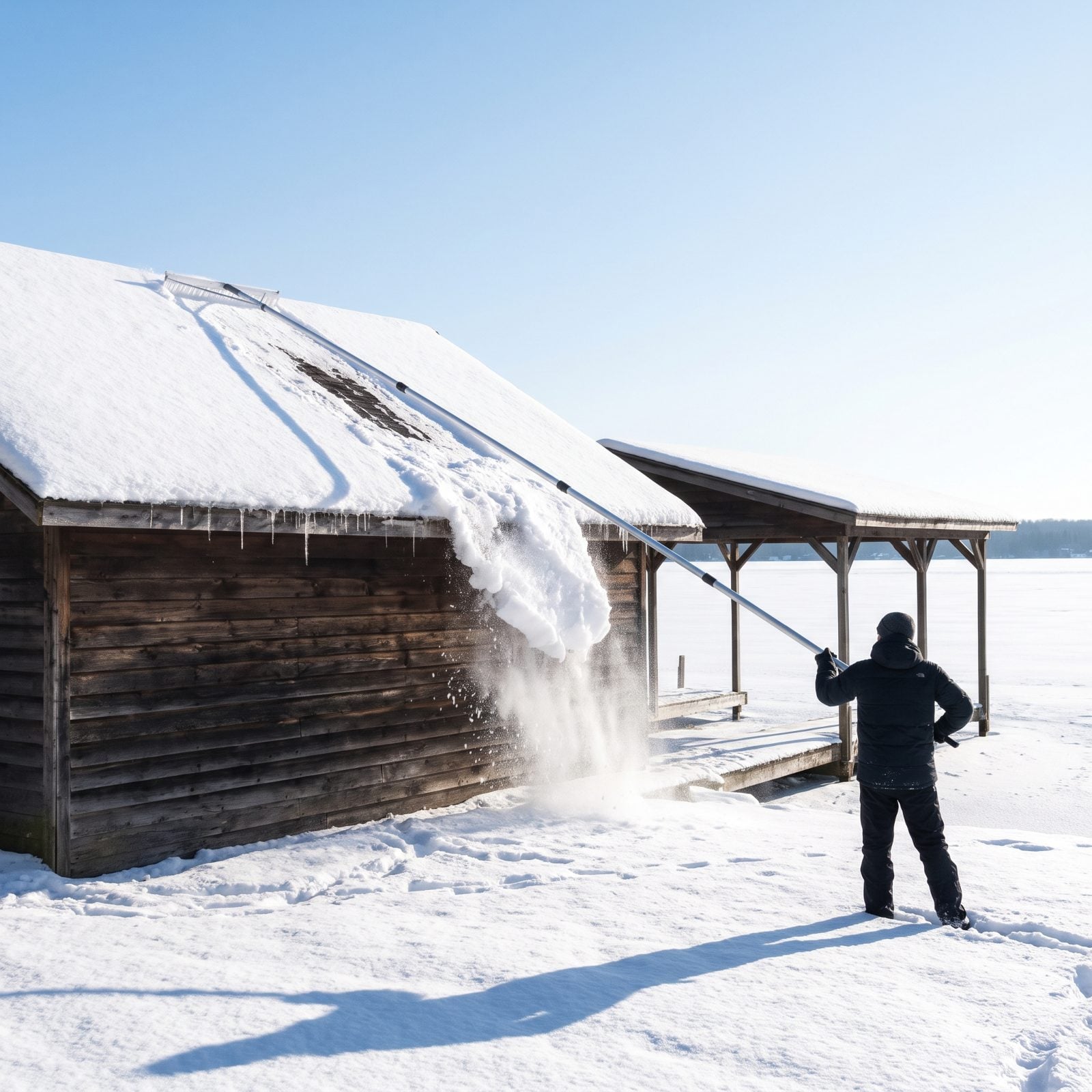
Snow weighs far more than it looks, and a dock roof or boathouse thrown up for summer shade was never built to hold three feet of sodden March snow. Roofs sag, then they let go, usually inside one ugly week.
A long telescoping roof rake lets you drag the snow down from the ground. No ladder. No standing on an icy structure that might already be past its limit. Keep one set aside just for the dock and boathouse so it’s never buried in the garage behind the kayaks the day you actually need it.