
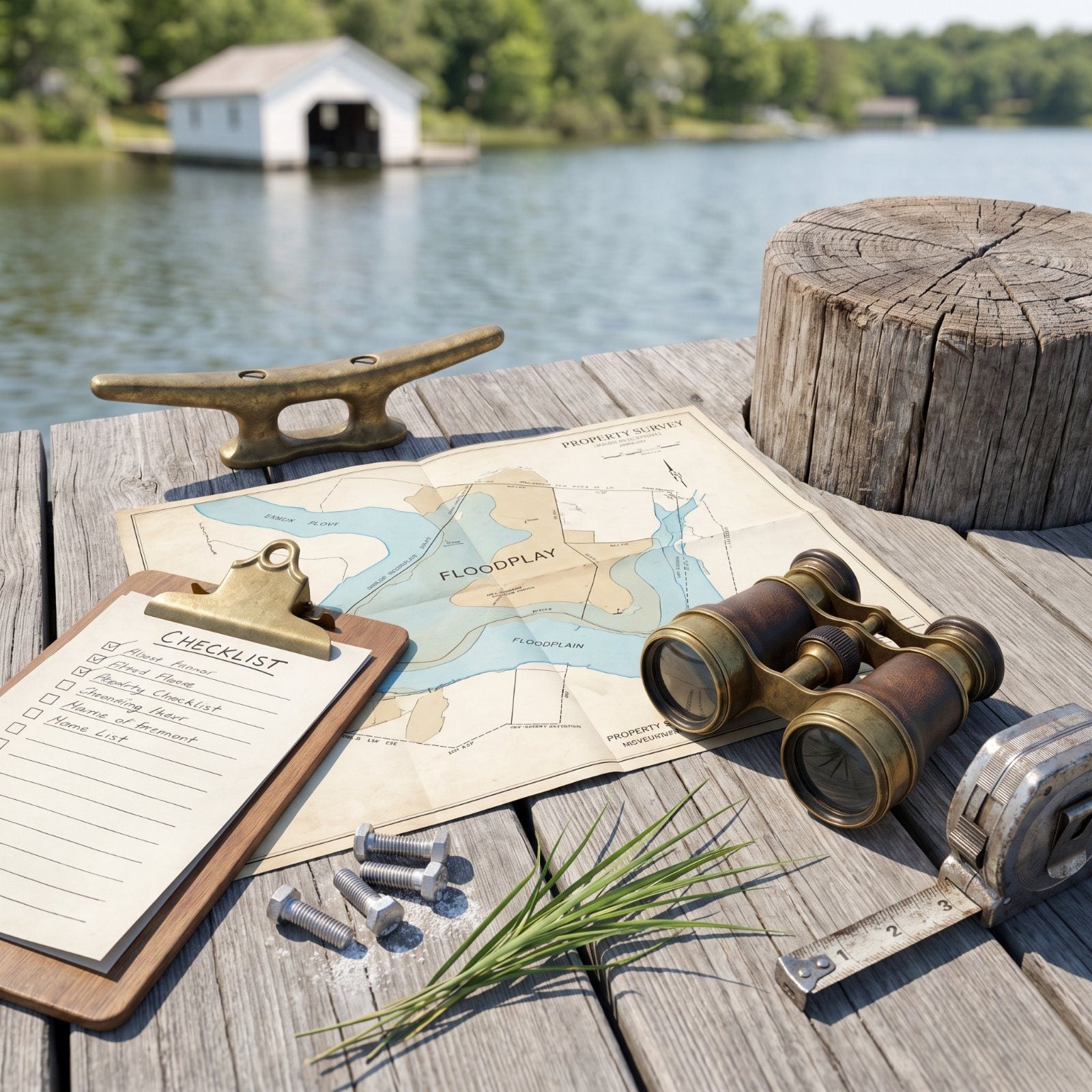
The listing photo shows a dock at golden hour, a kayak, water flat as glass. What it doesn’t show is the seawall quietly leaning toward the lake, or the crawl space that smells like a wet basement every time it rains. Waterfront property hides its trouble below the waterline and behind the trim. Good news, though: every one of these is catchable before you sign. You just have to know where to look and which inspector to call.
Please note that some of the imagery in this article may have been enhanced with the assistance of AI.
44. Skipping a Seawall or Bulkhead Inspection
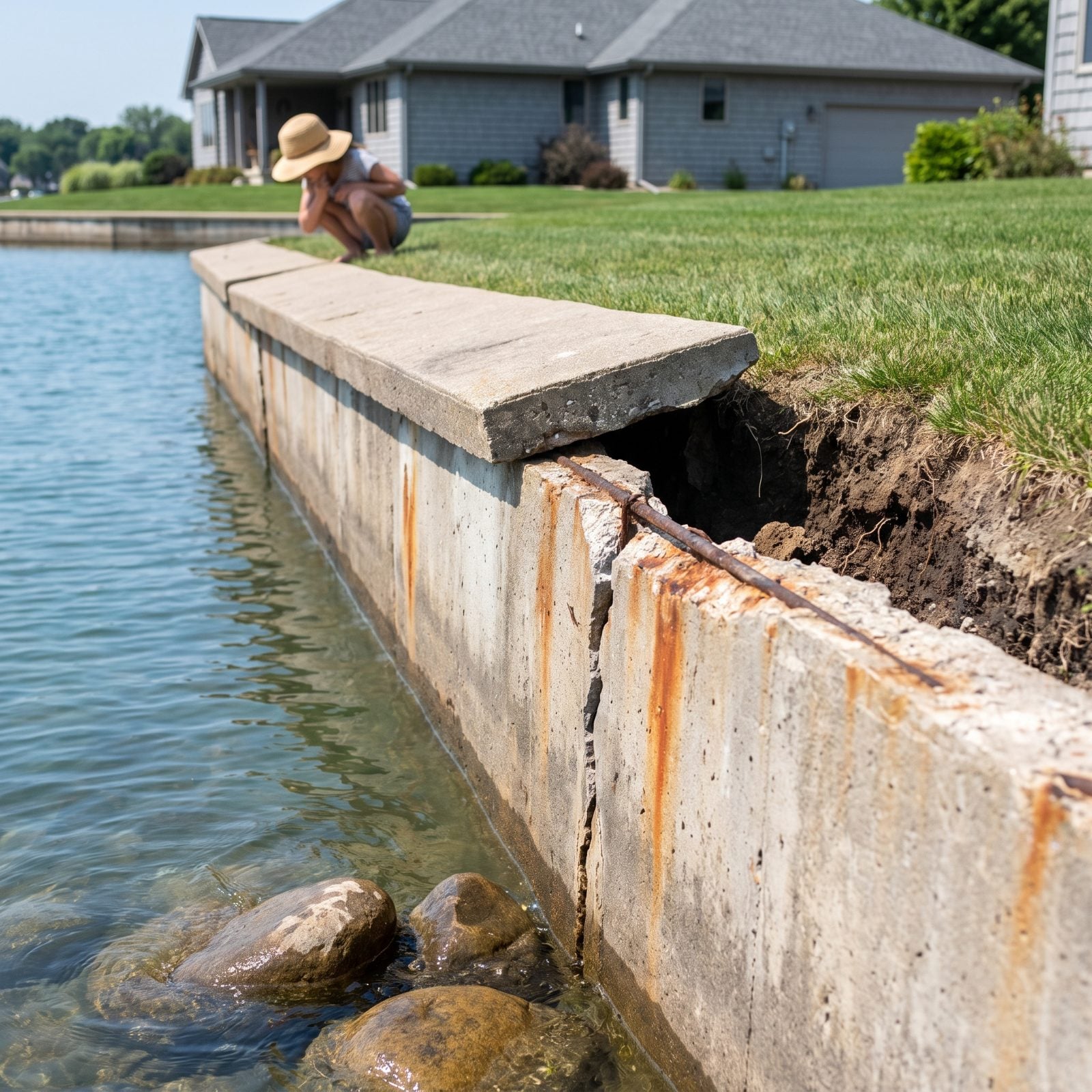
That seawall is the only thing keeping your yard out of the lake, and it fails from the back where you can’t see it. Soil washes out behind the cap, the wall starts leaning, and one wet spring it goes. A full replacement runs into the tens of thousands, and some lakes measure the permitting wait in seasons rather than weeks.
Hire a marine contractor or a structural engineer who works on shorelines. Not the general home inspector. Ask for probing behind the wall, a check of the weep holes, a look at the tie-backs — and get it in writing before you close.
43. Assuming a Standard Home Inspection Covers the Dock
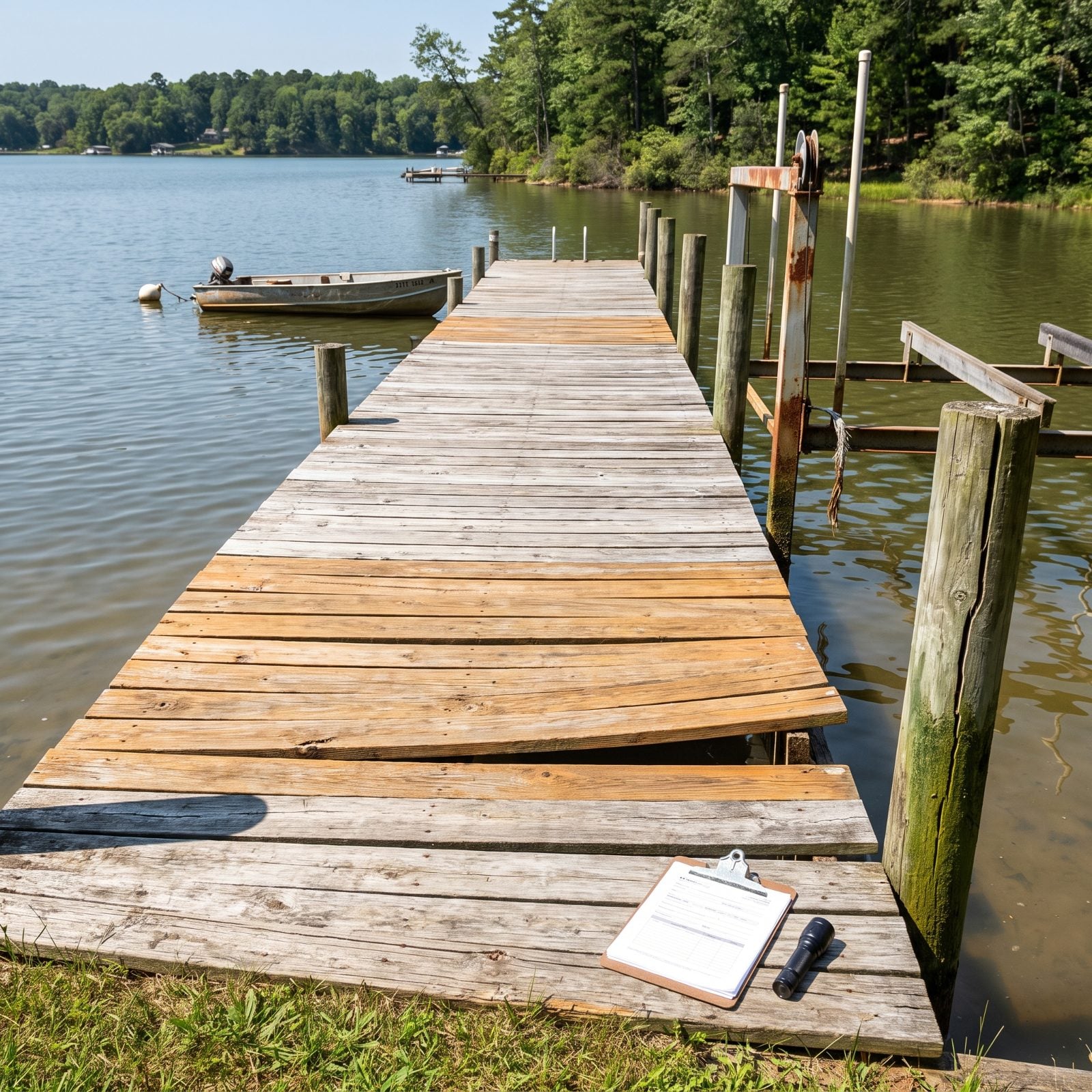
Your home inspector is terrific at attics and furnaces. The dock? Not in their scope — and most will say so right on page one of the report you didn’t read closely.
So the rotted stringers, the loose lift cable, and the piling that’s hollow under the algae all go unmentioned, and you find out when a plank gives way under a guest. Bring in a dock or marine inspector separately, and ask specifically about the lift motor, the cables, and the condition of the pilings below the waterline. A diver’s look at the submerged wood is cheap compared to rebuilding the whole thing.
42. Relying on the Seller’s Word About Past Flooding

“It’s never flooded once” is the most repeated sentence in waterfront real estate, and it’s often true for the seller, who’s owned the place four years.
Water has a longer memory than any owner. Trust it, and the cost is a gutted first floor plus a disclosure lawsuit that goes nowhere. Pull the FEMA flood history, check the property against the National Flood Insurance claims record where available, and hunt for the tells yourself: a fresh coat of paint only on the lower walls, new baseboards in an old house, a high-water line on the garage studs.
41. Buying Without an Updated Elevation Certificate

An elevation certificate tells you exactly how high your lowest floor sits above the base flood elevation. That single number sets your flood insurance premium, and it can swing by thousands of dollars a year.
Buy without one and you’re guessing at your biggest recurring cost. A home sitting below base flood pays a brutal premium forever, and you learn about it only after the policy quote lands. Order a current certificate from a licensed surveyor — not whatever yellowed copy came tucked in the listing. Elevations get re-mapped, and an old certificate can be worse than none at all.
40. Ignoring Future Flood-Map Changes
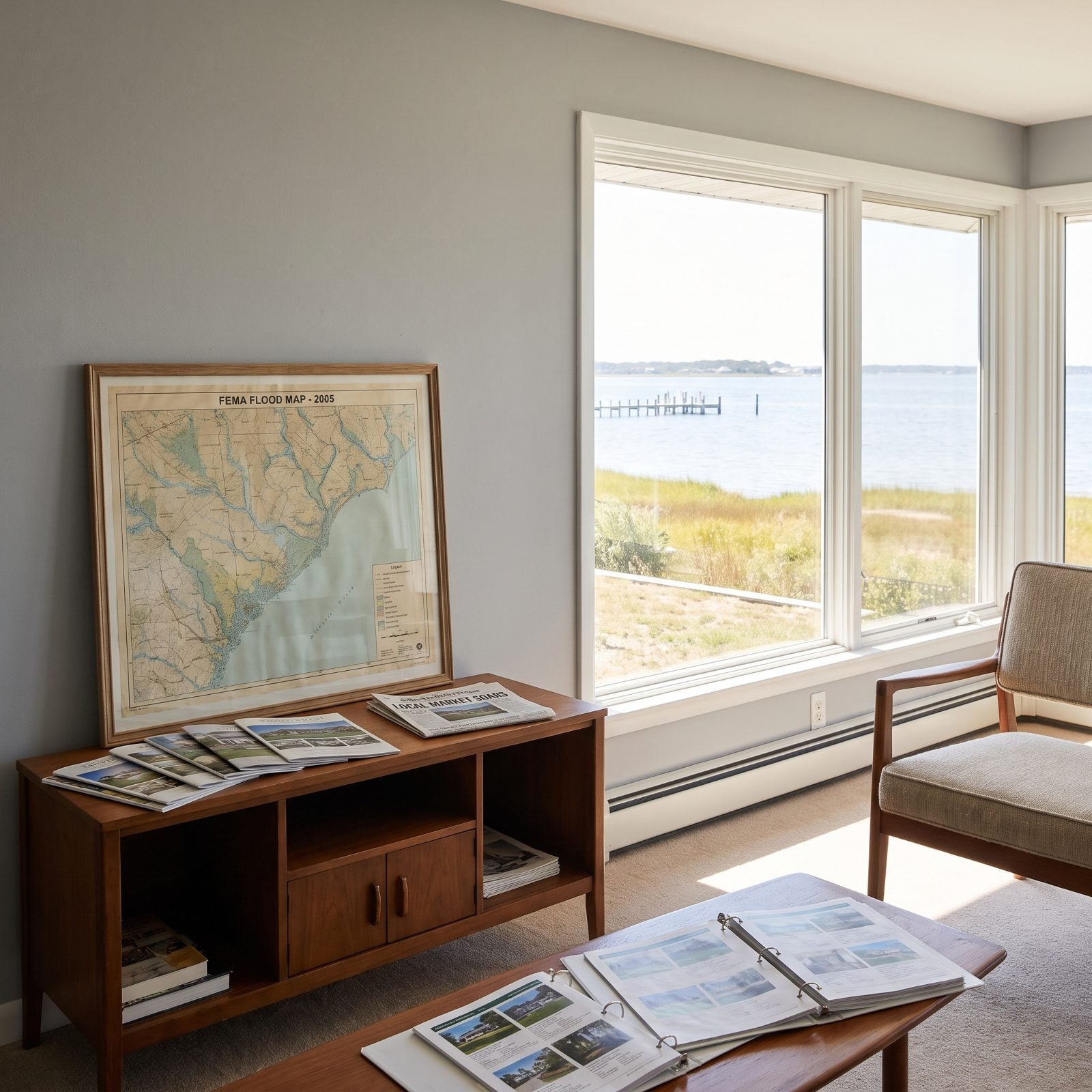
Today the house sits in Zone X — low risk, cheap insurance. Then FEMA redraws the maps, your lot lands in a high-risk zone, and the mandatory premium shows up like a second mortgage.
Flood maps aren’t permanent. They get revised as data improves and water patterns shift, and a remap can hit resale value as hard as it hits your wallet.
Before you buy, check whether the community has preliminary or proposed flood maps working through the pipeline. Your county floodplain office will know. A lot that’s borderline today is the one that reclassifies tomorrow.
39. Forgetting Separate Windstorm or Hurricane Coverage
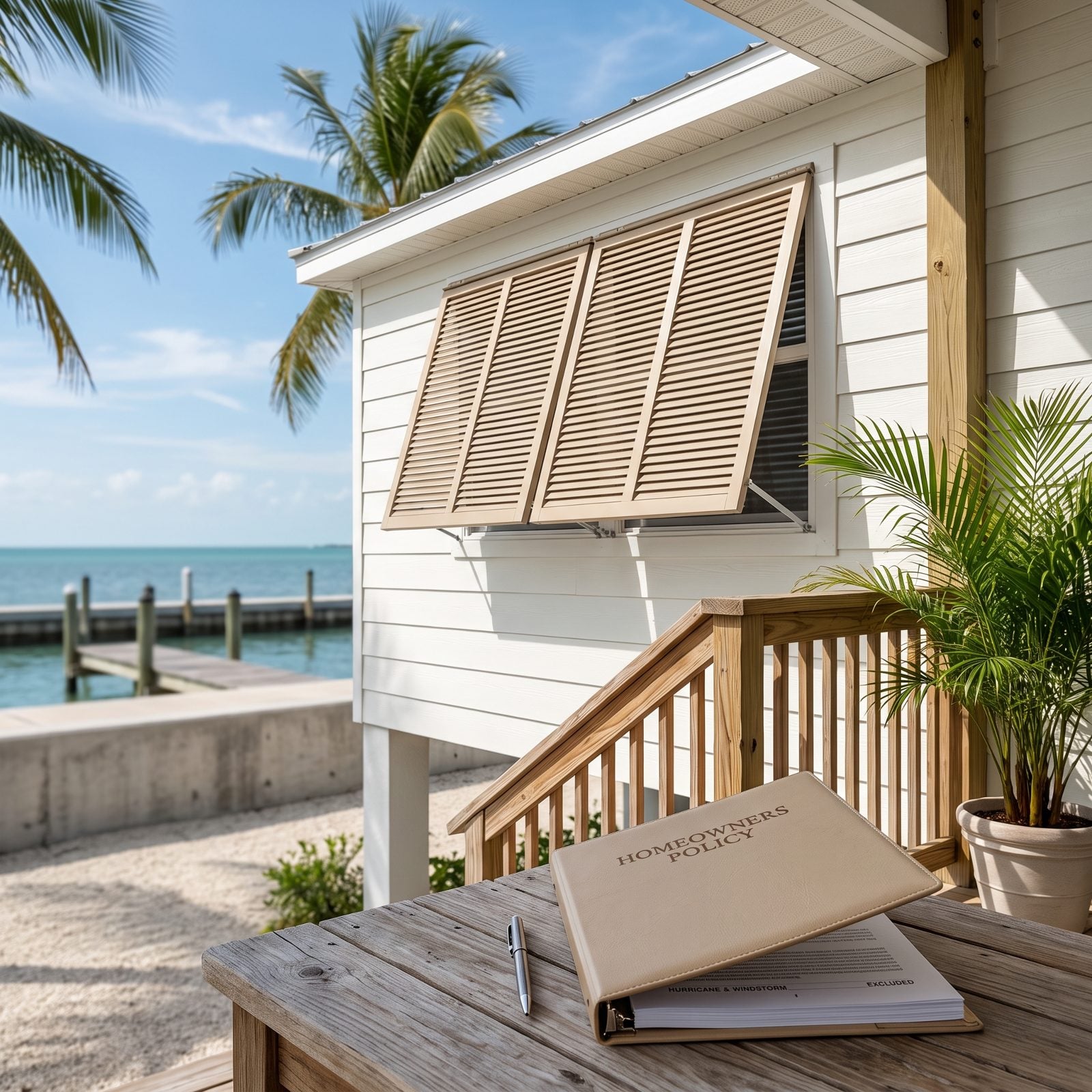
And here’s the trap: your shiny new homeowners policy quietly excludes wind in a lot of coastal counties. People sign it, feel covered, and read the exclusions page only after the roof is gone.
Wind and hurricane damage near the coast often requires a separate windstorm policy or a state wind pool, each with its own deductible — a percentage of the home’s value, not a flat number.
Get three quotes before you waive your inspection contingency: homeowners, flood, windstorm. If the combined number makes you wince, better now than after the storm.
38. Assuming Insurance Covers Every Dock, Lift, and Waterfront Structure
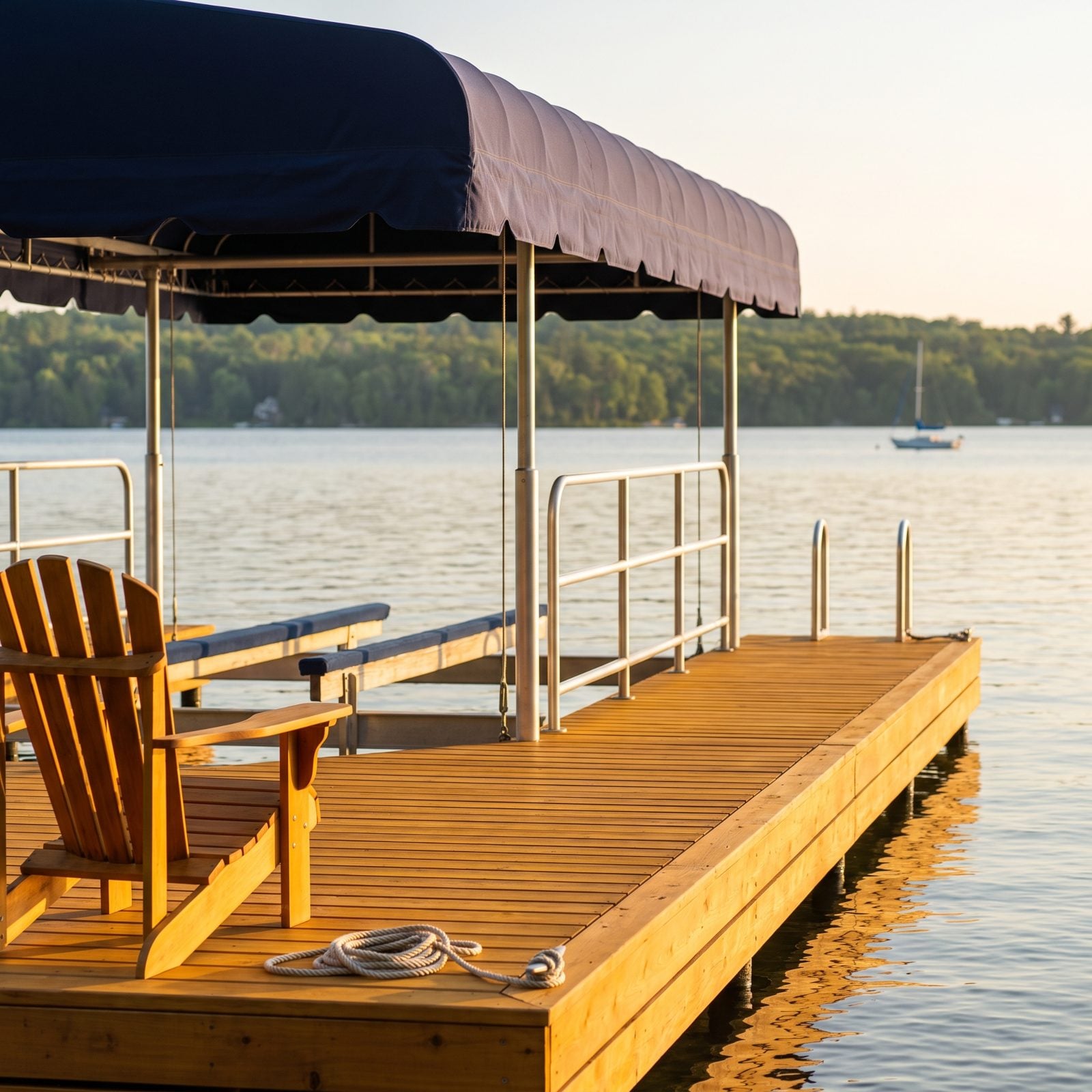
The dock, the covered lift, the jet ski platform — together they can be fifty grand of structure parked out over the water. Standard homeowners policies frequently cap or exclude detached and over-water structures entirely.
So a winter ice heave or a passing barge wake wrecks the dock, and the claim comes back denied or short. Ask your agent, before closing, exactly which waterfront structures are scheduled on the policy and for how much. Add an endorsement if they’re not. A line item today beats a rebuild you fund out of pocket.
37. Missing Hidden Water Damage in the Crawl Space
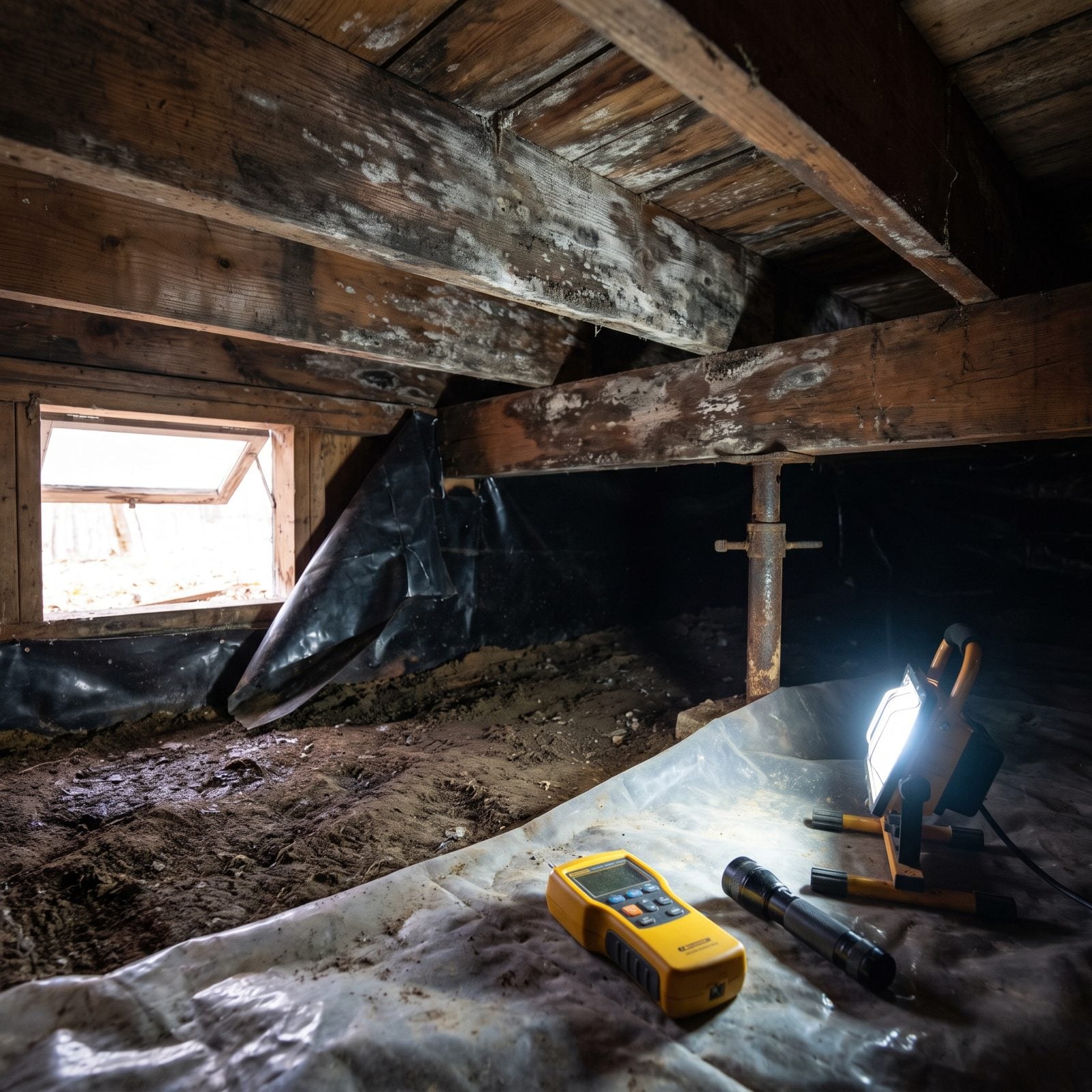
Nobody wants to crawl under a waterfront house. The soil down there stays damp and the air barely moves, which is exactly why it’s the first place to rot.
I’ve seen beautiful lake houses with show-ready interiors sitting on joists you could push a screwdriver clean through. Mold, cupped subfloor, rusted jacks, soft sill plates — all of it lives in the three feet nobody checks.
Insist your inspector physically climbs into the crawl space and runs a moisture meter, not just a peek through the vent. If the vapor barrier is torn or the ground’s wet, there’s a story down there. Get to the bottom of it.
36. Ignoring Salt-Corroded Fasteners and Structural Connectors
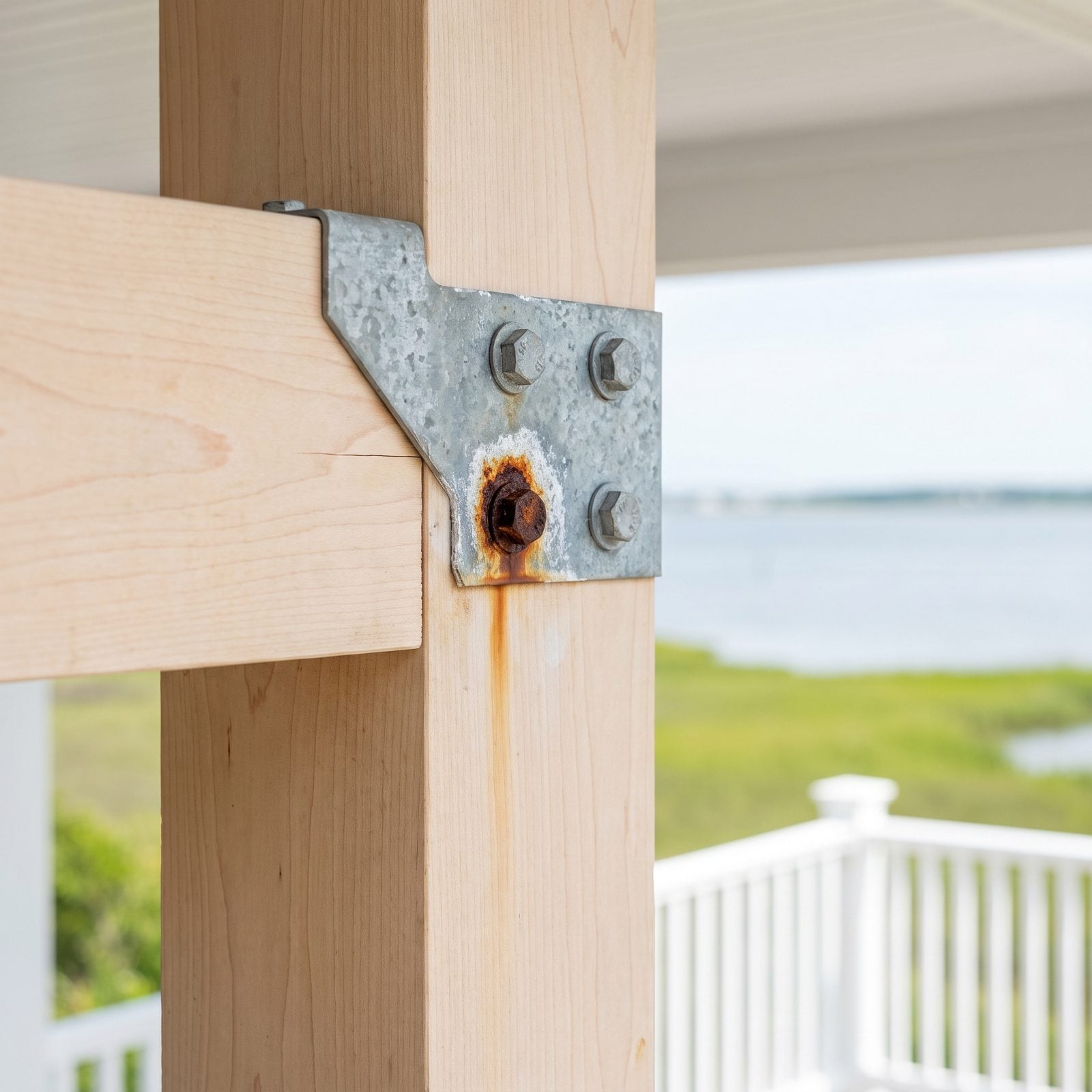
Salt air eats metal for a living. Near the coast, every bolt, joist hanger, hurricane strap, and deck screw is slowly dissolving — and the pretty wood around it hides how far gone the hardware already is.
A deck held together by rust-weakened connectors is one connector away from collapse, usually when it’s full of people. Have a coastal-savvy inspector pull back the trim and check the fasteners and brackets, especially on decks, piers, and the dock framing. Stainless or hot-dip galvanized hardware is the fix. And those rust streaks bleeding down the siding? That’s your warning sign.
35. Underestimating Shoreline Erosion
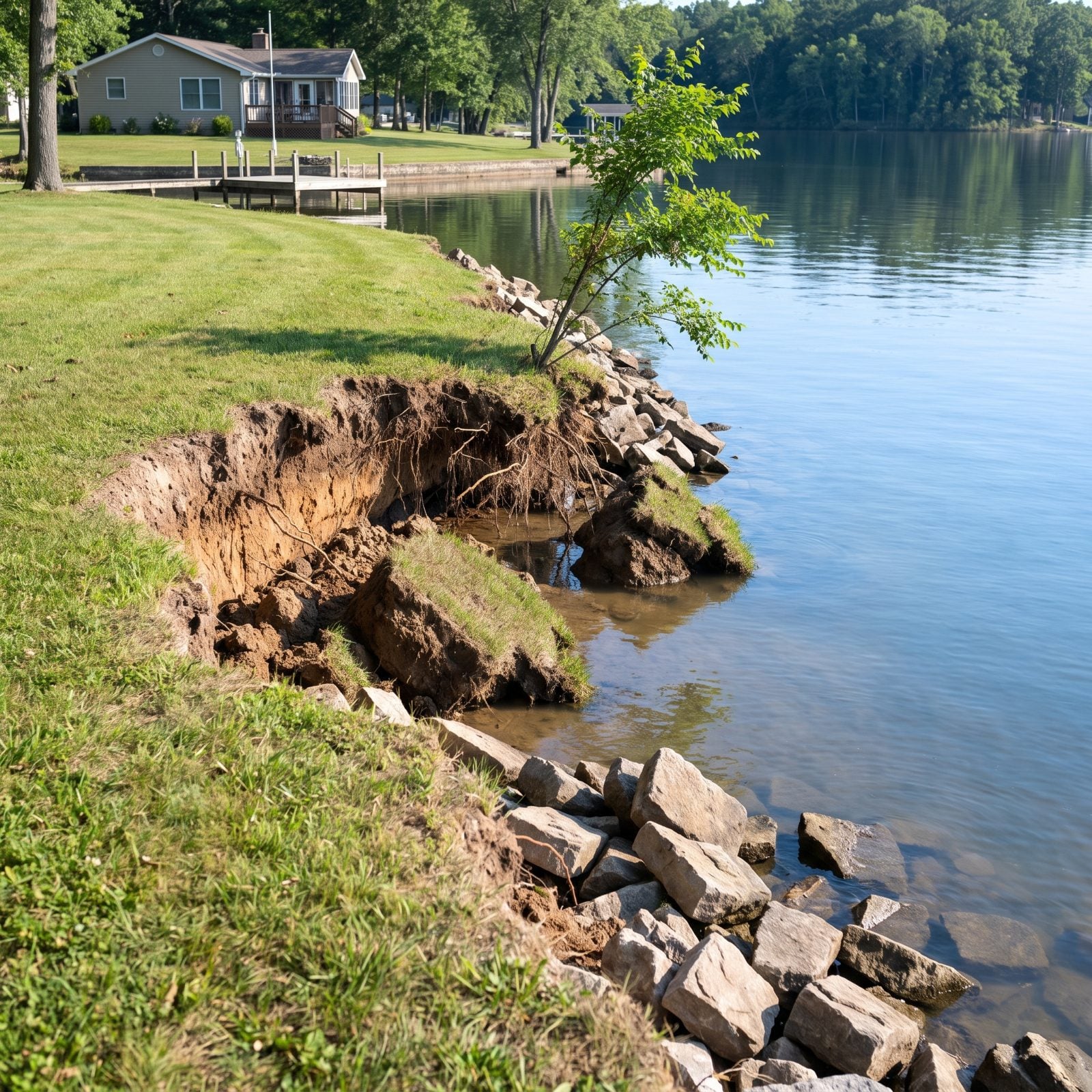
The lot line on the survey and the actual edge of the water are two different things, and the water wins a little more every year. A few inches of bank per season doesn’t sound like much — until it’s your gazebo, your septic field, or your foundation setback.
Erosion is slow, relentless, and expensive to stop once it’s moving. Compare old aerial photos against today, walk the bank for undercutting and exposed roots, and ask the county whether shoreline hardening is even permitted here before you assume you can fix it.
The property you tour isn’t the property you’ll own in twenty years. On an eroding shore, you own a little less of it every spring.
Buy the house, sure. Just buy it knowing which direction the land is heading, and budget for a riprap wall or a living shoreline before you need one in a hurry.
34. Failing to Verify Who Owns the Shoreline
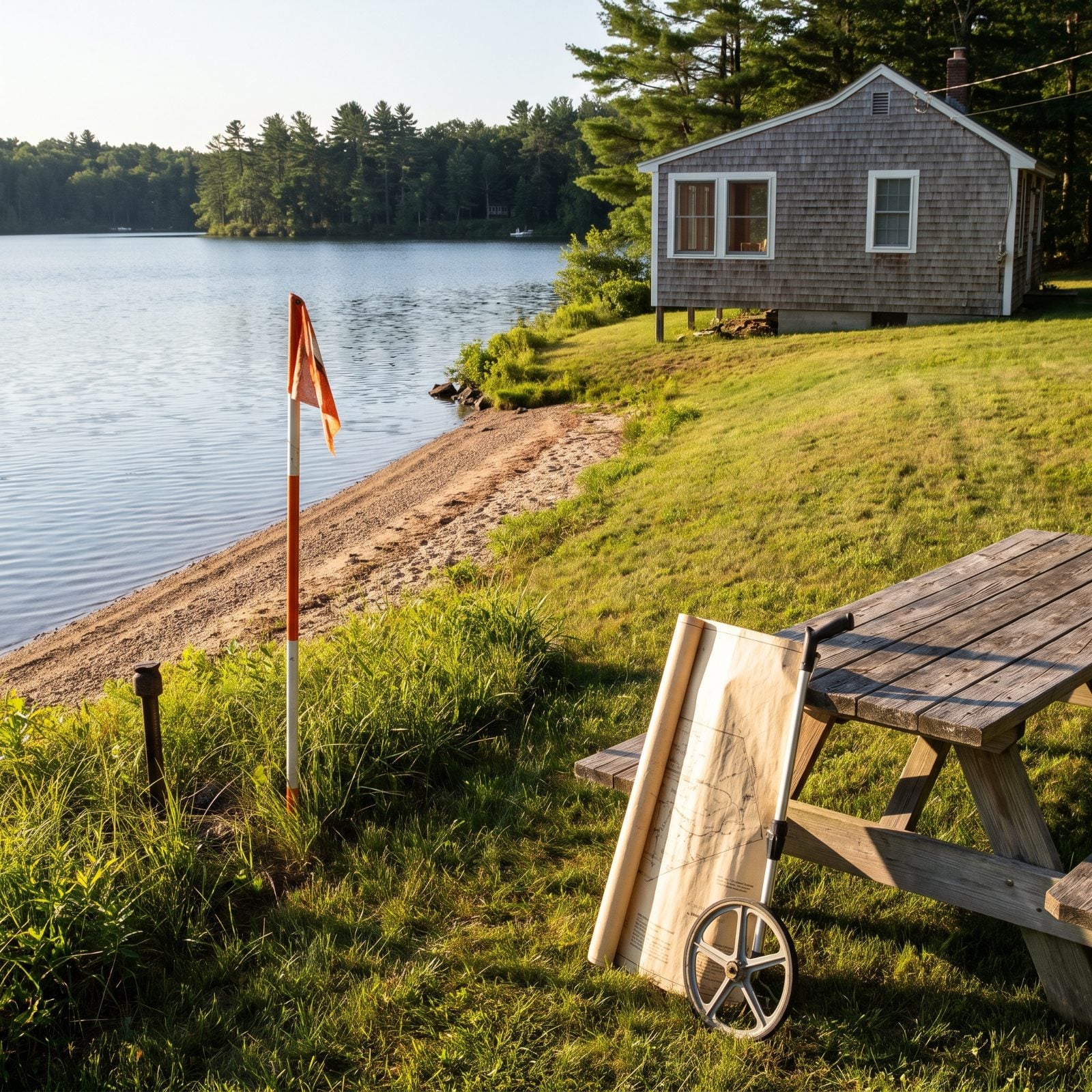
That strip of grass down to the water might not be yours. On a surprising number of lakes and rivers, the shoreline below a certain line belongs to the state, a utility, or a flood-control district. The house is yours. The sand where you pictured the Adirondack chairs is somebody else’s business entirely.
Buy without confirming it and you can end up paying property tax on land you can’t fence, can’t build on, and can’t stop strangers from strolling across. I’ve watched folks discover this at the closing table — the worst possible moment to learn geography.
Get a current boundary survey that nails down the exact ordinary high-water mark, and have the title company spell out, in writing, where your ownership stops. A view of the water is not a deed to it.
33. Confusing a Water View With Deeded Water Access
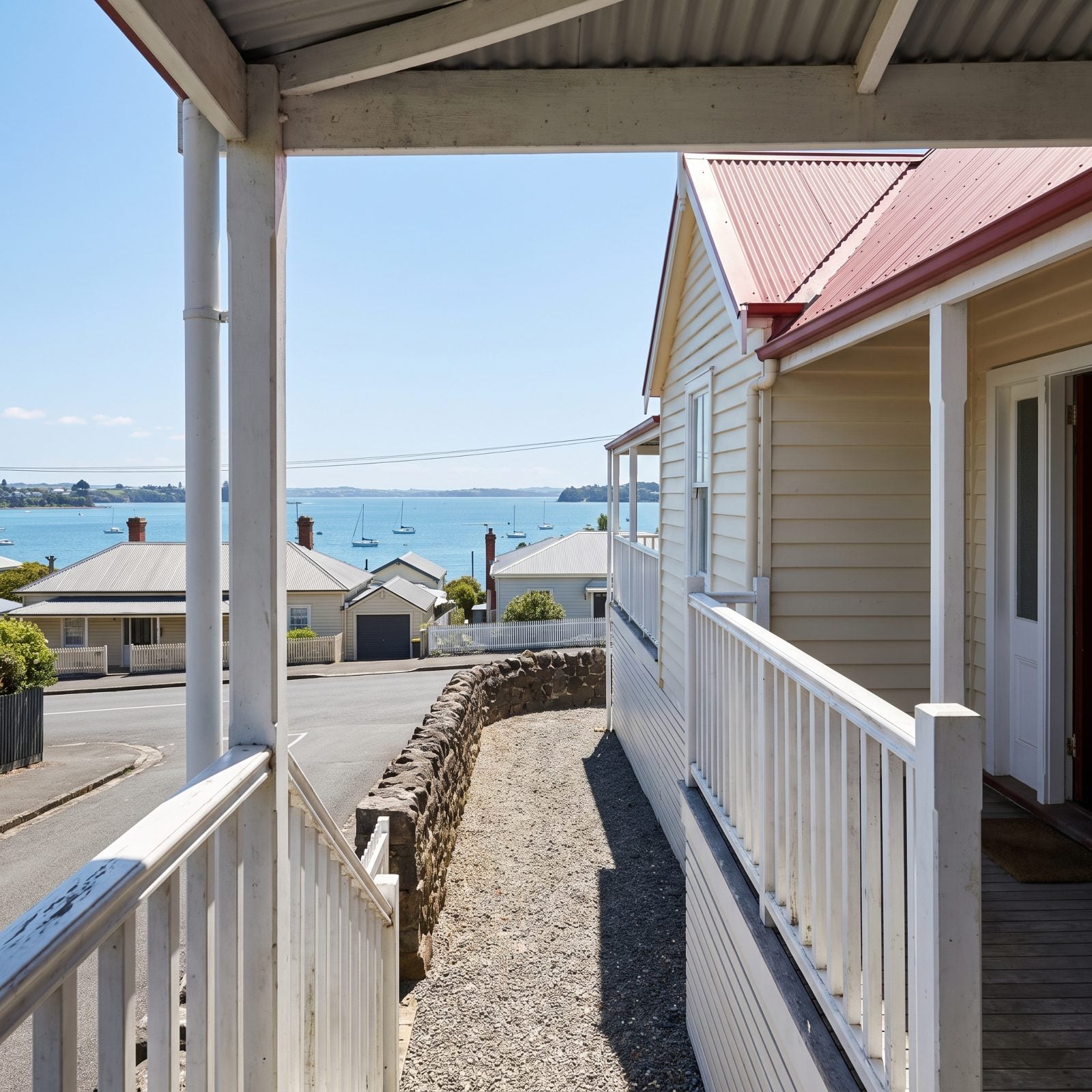
A listing that says “waterfront” and a listing that says “water view” are two different animals, and the price tag often hides the gap between them. You can pay a premium for blue in the window and own exactly zero feet of usable shore.
Say you buy the cottage on the bluff. The view is lovely. Then you learn the only way to your own water is a public boat ramp four miles off, shared with the whole county. You bought the postcard, not the dock.
Read the deed for the words that actually grant access: deeded, riparian, littoral, or a named easement to the water. No words, no access — no matter what the brochure photographs suggest.
32. Missing Public Access Easements Across the Property
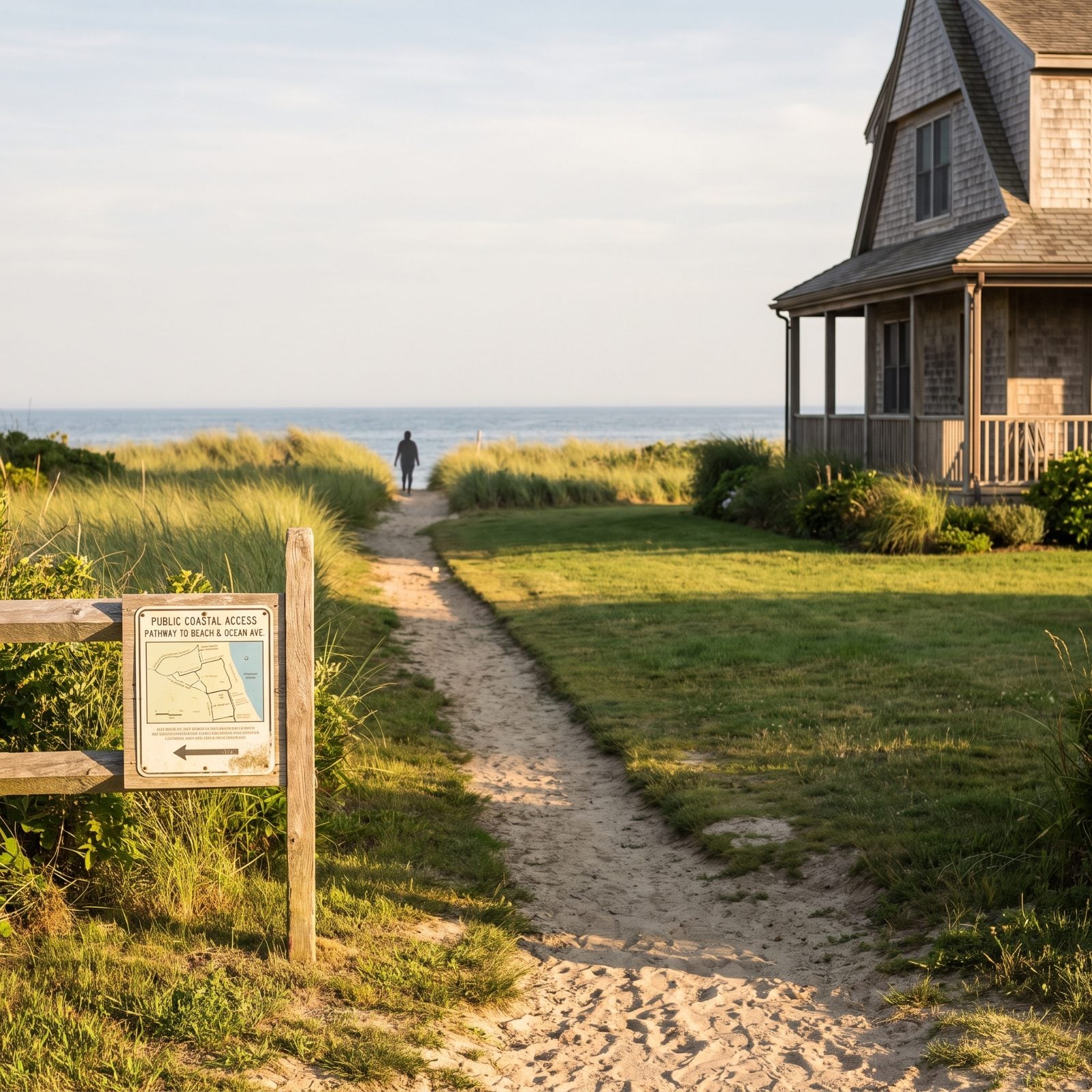
Picture waking up on your first July morning to a line of beachgoers ambling across your back lawn, towels over their shoulders, right past the kitchen window. That’s a public access easement. On coastal and lake properties they turn up more often than buyers expect.
And they’re permanent. They don’t vanish because you didn’t know about them, and they can quietly reshape where you’re allowed to put a fence, a garden, or any privacy at all.
Pull the full title report and have your attorney flag every easement, especially recorded public or pedestrian access to the water. Then walk the property and look for a worn path. Sand remembers foot traffic even when the paperwork stays vague.
31. Assuming the Existing Dock Is Legal
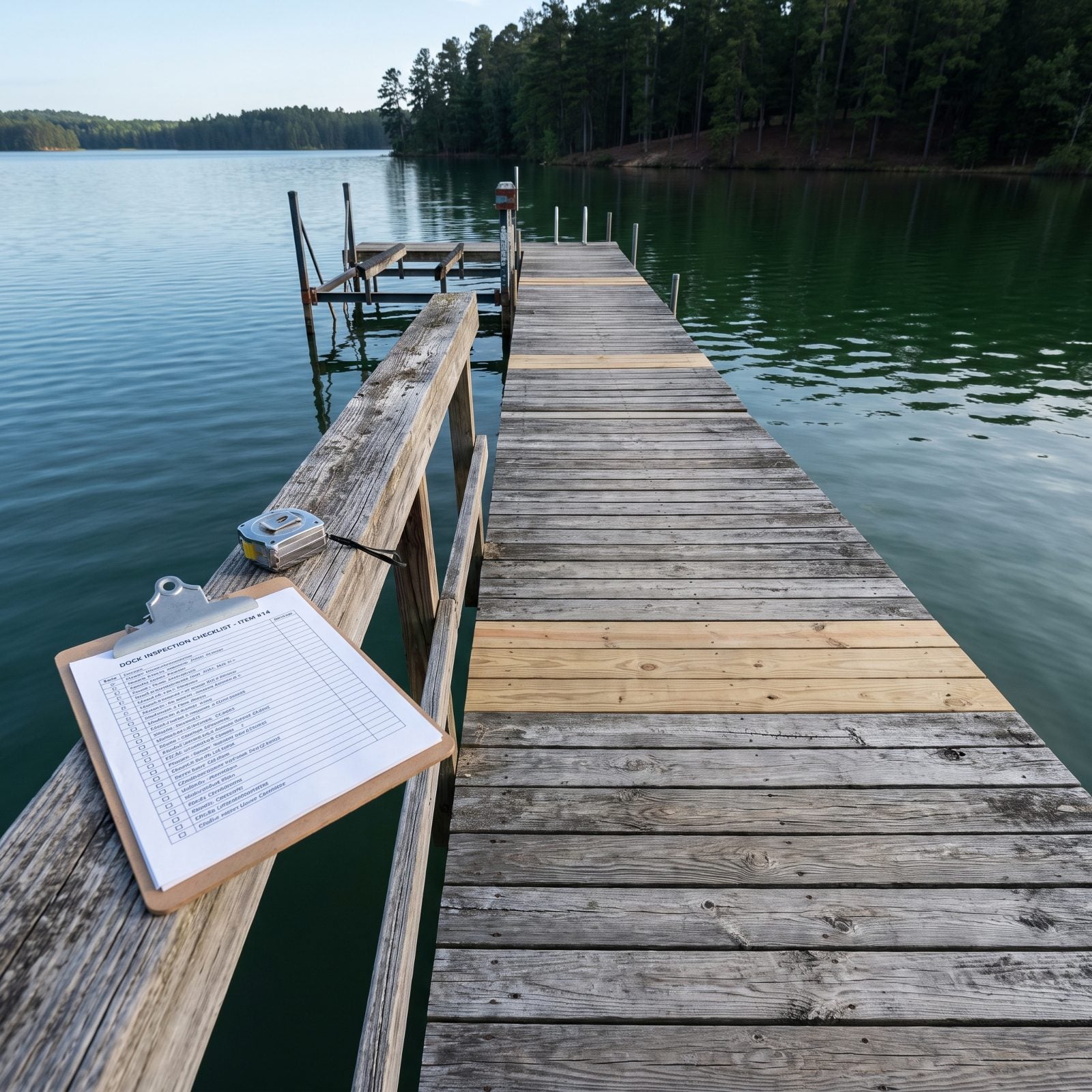
A dock standing in the water is not proof it’s allowed to be there. Plenty of waterfront structures went up decades ago without permits, or were permitted and then rebuilt bigger while nobody bothered filing the paperwork.
Inherit an illegal dock and you inherit the fight. The agency can order it torn out, at your expense, and refuse you a replacement in the same spot. Suddenly your “turnkey” waterfront needs a new dock you might never get approved.
Before closing, ask the seller for the original dock permit and any approvals for repairs or expansions. Then call the state or county waterway authority yourself and confirm the structure is on file. A missing permit is a negotiating point, not something to shrug off.
30. Expecting Automatic Approval to Build or Replace a Dock
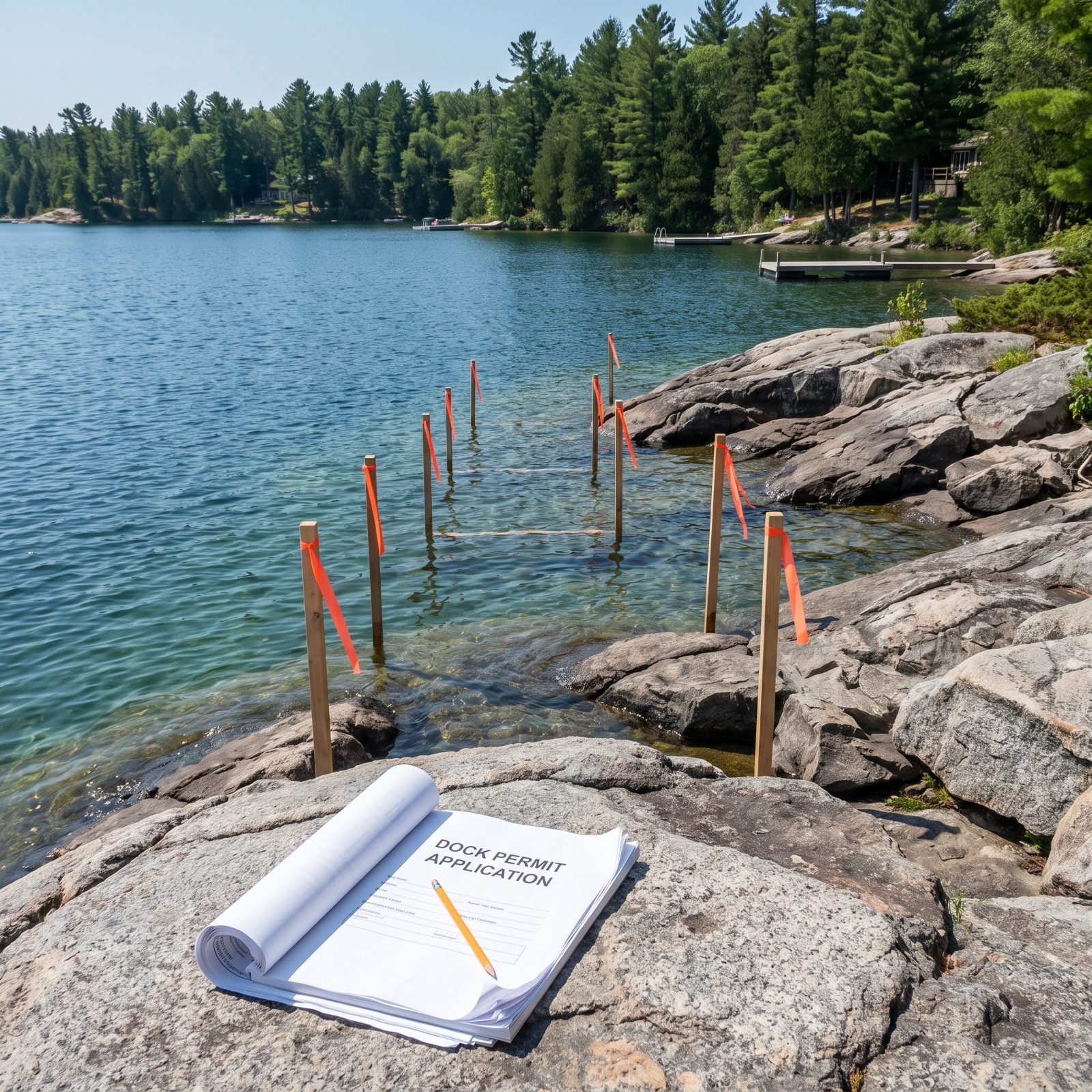
The lot next door has a dock, so yours is just a formality — right? Not even close. Permits get denied for shallow water, sensitive bottom habitat, navigation concerns, cranky neighbors, and rules that changed since that neighbor’s dock went in.
Buyers who plan their whole waterfront life around a dock they assume they’ll get are gambling with the main reason they bought the place. No approval, no boat at the door.
If a dock matters to you, make the sale contingent on getting a permit, or at minimum on a written pre-application review from the permitting agency. Let the people who issue the permit tell you what’s possible before you sign anything. Hope is not a permit.
29. Ignoring Wetlands and Shoreline Setback Restrictions
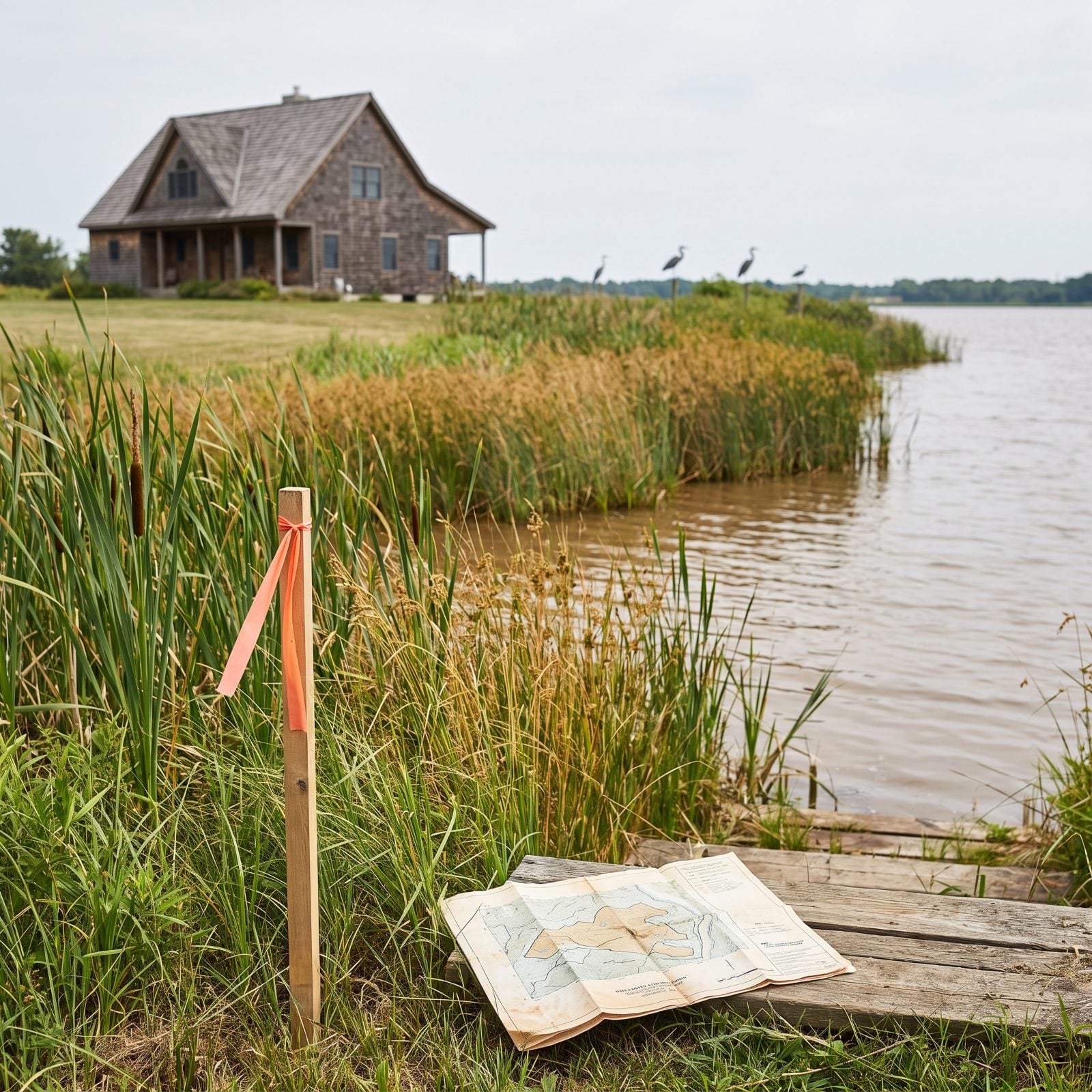
That soggy, reedy patch at the edge of your dream lot isn’t a landscaping project waiting to happen. It’s likely a protected wetland, and it drags buffer zones along with it — buffers that can shove your buildable area dozens of feet back from the water.
Setbacks and wetland buffers decide where you can put an addition, a patio, a shed, even a fire pit. Dreaming of a glass sunroom cantilevered over the shore? The rules usually want everything parked well behind the tree line.
Request a wetlands delineation and the local shoreline setback ordinance before you fall for a renovation plan. The map that matters most here isn’t the one in the listing. It’s the one sitting at the planning office.
28. Assuming a Grandfathered Waterfront Structure Can Be Rebuilt
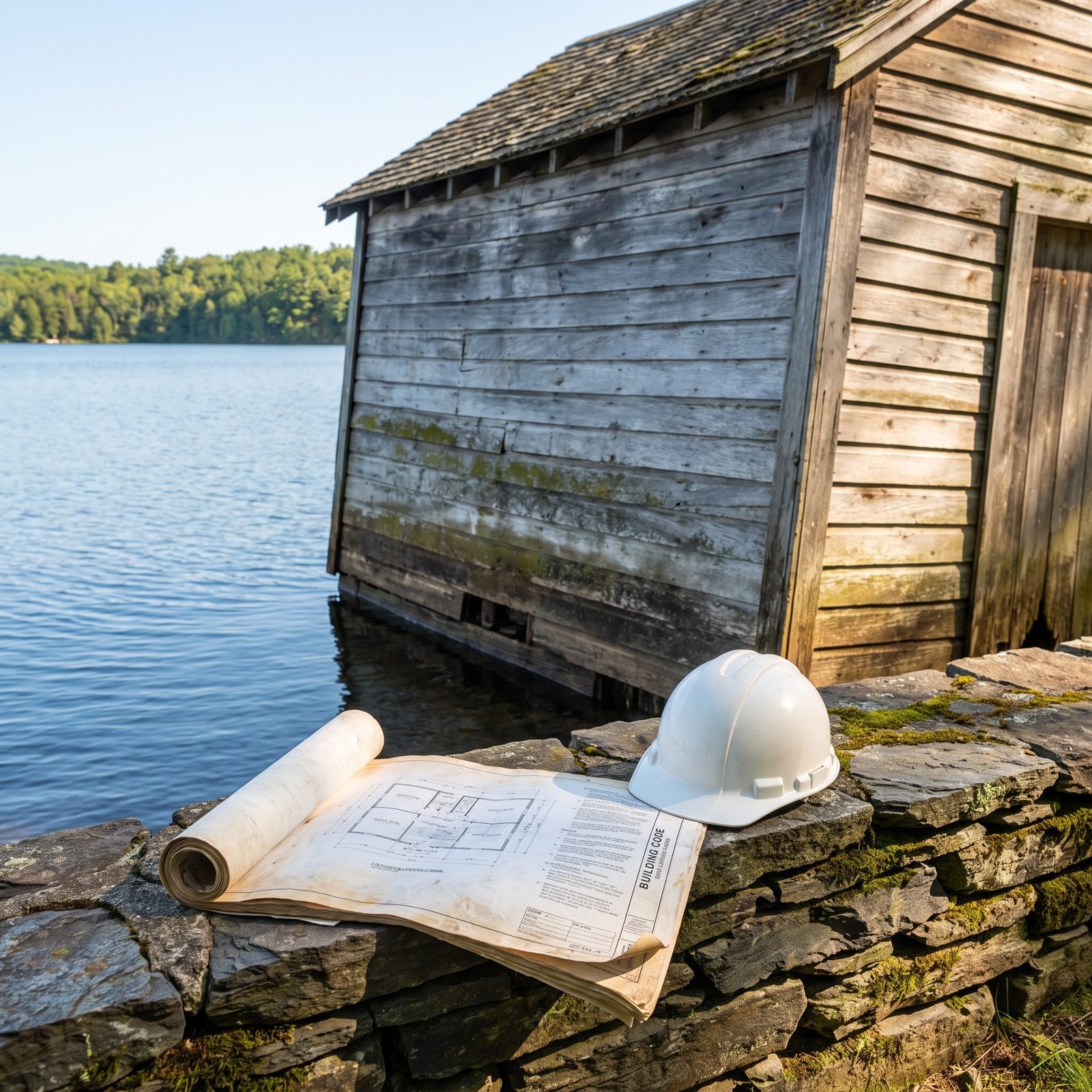
Grandfathered means tolerated, not guaranteed forever. That charming boathouse sitting right on the water was probably legal when somebody built it. Today’s rules wouldn’t let it anywhere near that spot.
Here’s the trap. A grandfathered structure usually keeps its rights only as long as it stays standing. Tear it down, or let a storm take more than half of it, and you often forfeit the right to rebuild in the same footprint. You’re left with a prime spot and a rule that says hands off.
Before you count on that structure, ask the local authority exactly what triggers the loss of grandfathered status. Fire, flood, demolition, and even major repairs can all reset the clock to today’s stricter code.
27. Failing to Confirm Riparian or Littoral Rights

Riparian rights (on rivers and lakes) and littoral rights (on larger lakes and the ocean) decide what you’re actually allowed to do out in front of your own land — put in a dock, moor a boat, draw water, reach the deeper channel. None of it is automatic, and it doesn’t always transfer the way buyers assume.
Skip confirming them and you can own the bank but not the right to use the water off it. That turns a boater’s paradise into a very expensive picnic spot.
Have your attorney confirm in writing that the property carries full riparian or littoral rights and that those rights pass to you at closing. Rules vary wildly state to state, so local legal advice beats internet confidence every time.
26. Not Investigating Shared-Dock Agreements
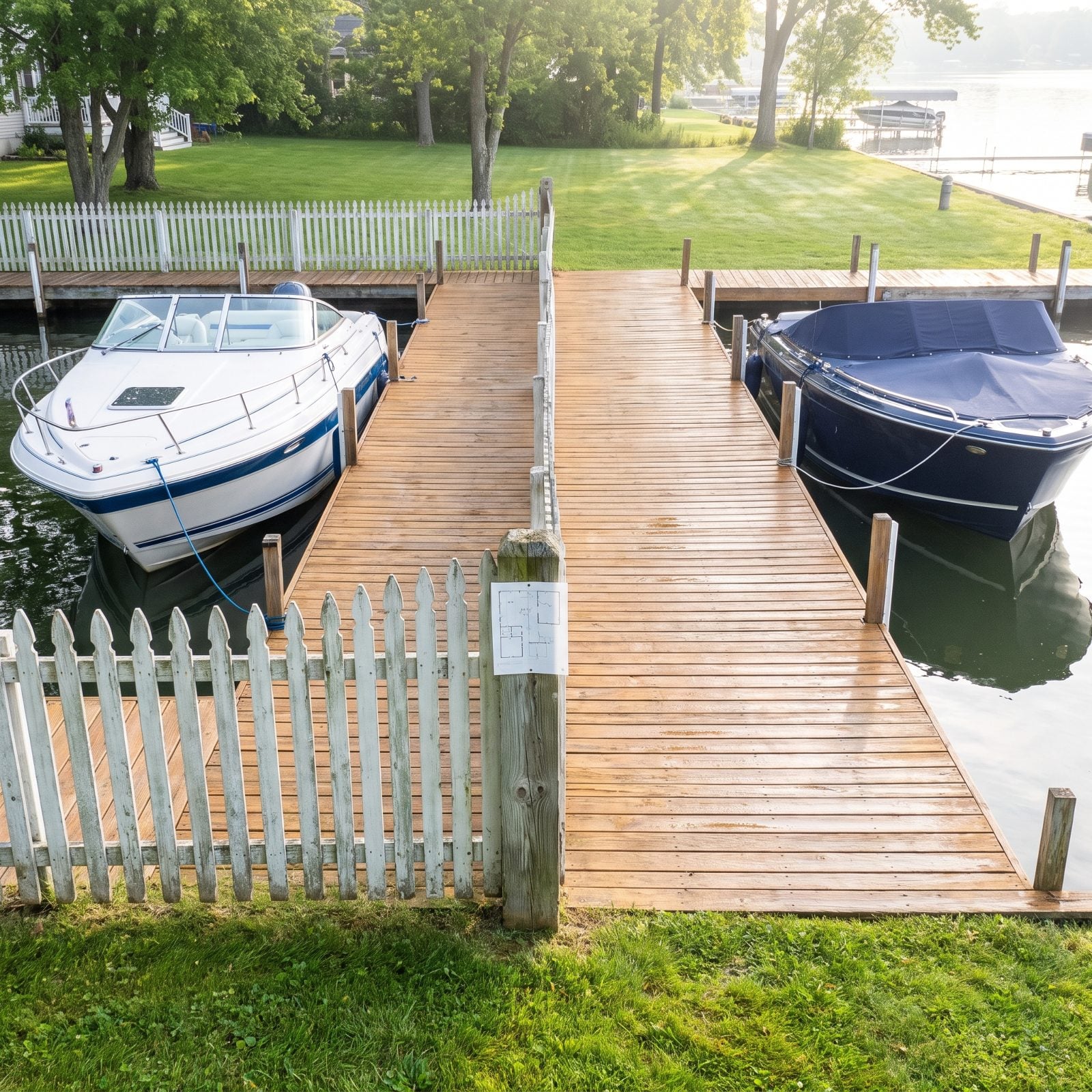
Shared docks look like a bargain until you realize you’ve also bought into a relationship. Two owners, one structure, and a document that decides who gets which side, who pays for repairs, and who calls it when the whole thing needs replacing.
Say the agreement is vague, or there isn’t one at all. Now a new boat lift, a storm repair, or a plain disagreement about the summer schedule becomes a standing feud with the one neighbor you can’t move away from.
Get the written shared-dock or dock-easement agreement before closing and read every line about cost-splitting, maintenance, and dispute resolution. A good one is specific and boring. The exciting ones cost you a lawyer later.
25. Buying Without Checking Seasonal and Low-Tide Water Levels
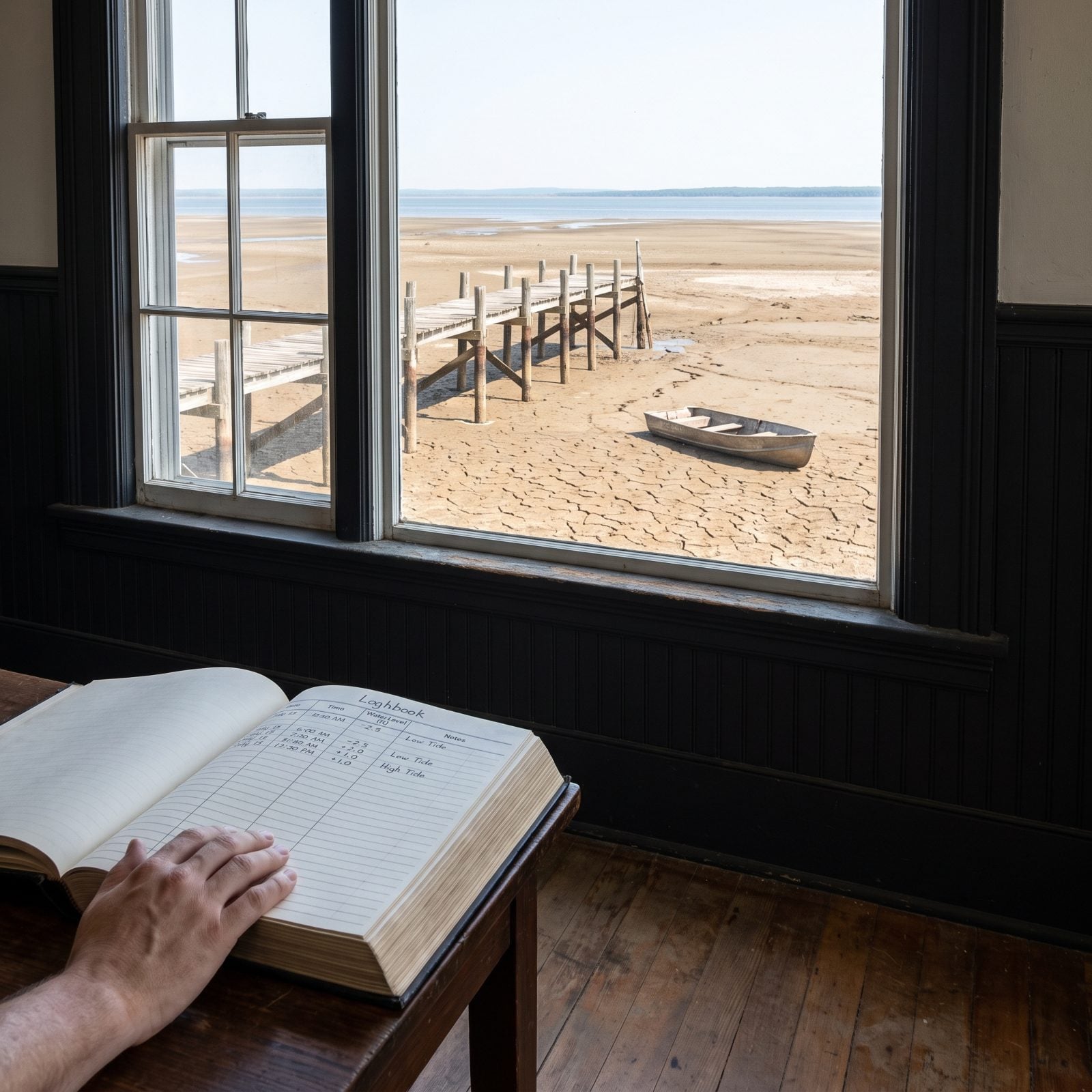
You toured in June when the lake was brimming and the water lapped the dock. What you didn’t see was September, when the reservoir draws down and your boat squats on cracked mud, or the twice-daily low tide that turns a tidal creek into a walkable flat.
Seasonal drawdowns, drought cycles, and tidal swings can leave a waterfront unusable for boating during exactly the stretch you’d want to be out there. The dock that looked perfect becomes a boardwalk to nowhere.
Look at a full year of water-level data for lakes, or a tide table for coastal and tidal spots, before you buy. Ask the neighbors how low it really gets. Better yet, visit in the dry or draw-down season, when the water tells the truth.
24. Forgetting Bridge and Power-Line Clearances
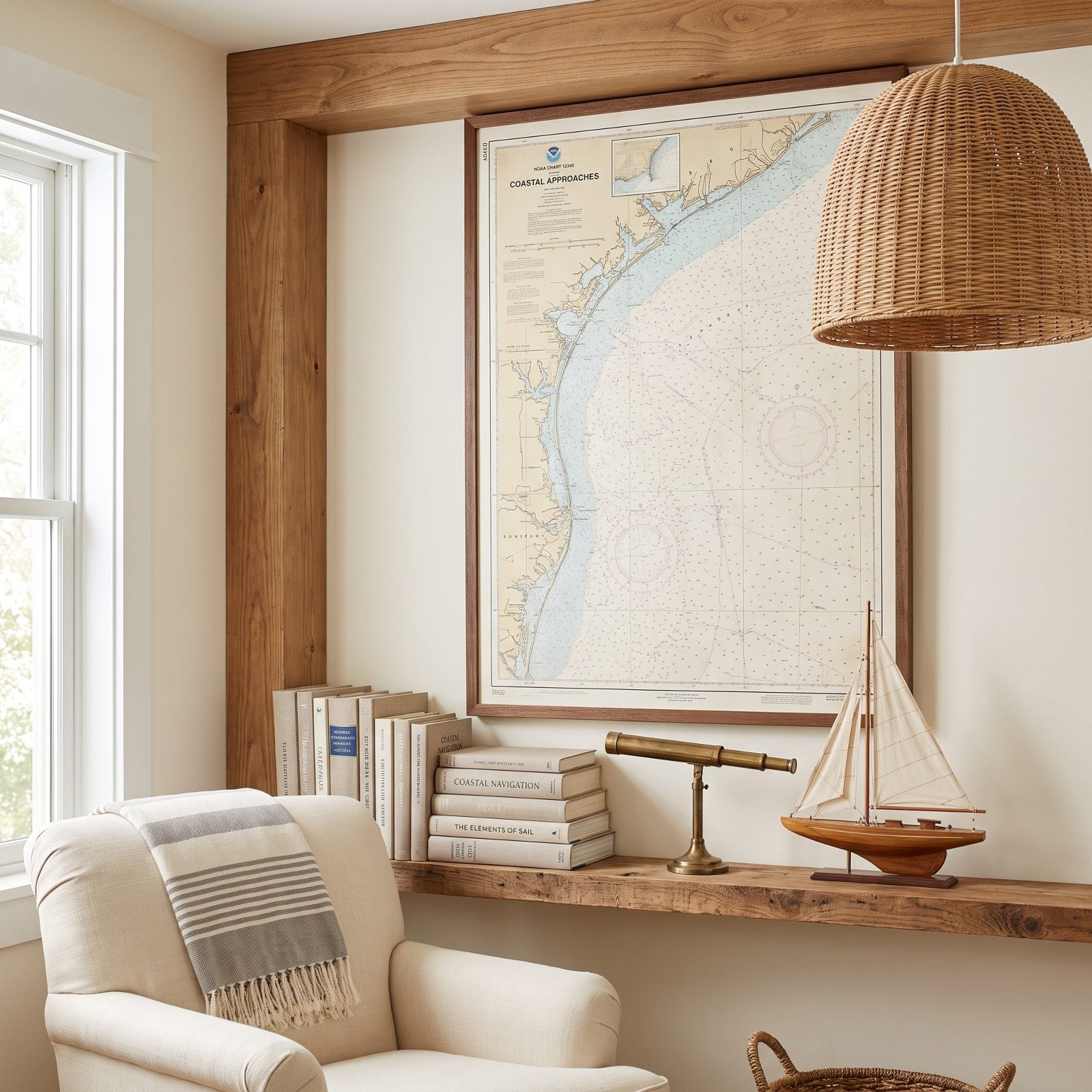
Sailors learn this one fast. The mast that clears open water does not clear the fixed bridge between your slip and the bay, and neither does your tower-mounted antenna, your T-top, or the hardtop on a tall express cruiser.
Vertical clearance is fixed. The bridge isn’t moving, and that sagging power line definitely isn’t. Buy a boat your home can’t let out and you’ve bought a very expensive lawn ornament with navigation lights.
Check charted clearances at high water, bridges and overhead cables both. Call the local marine patrol. Then measure your own air draft honestly, including anything that sticks up.
23. Ignoring Sandbars, Shoals, and Submerged Hazards
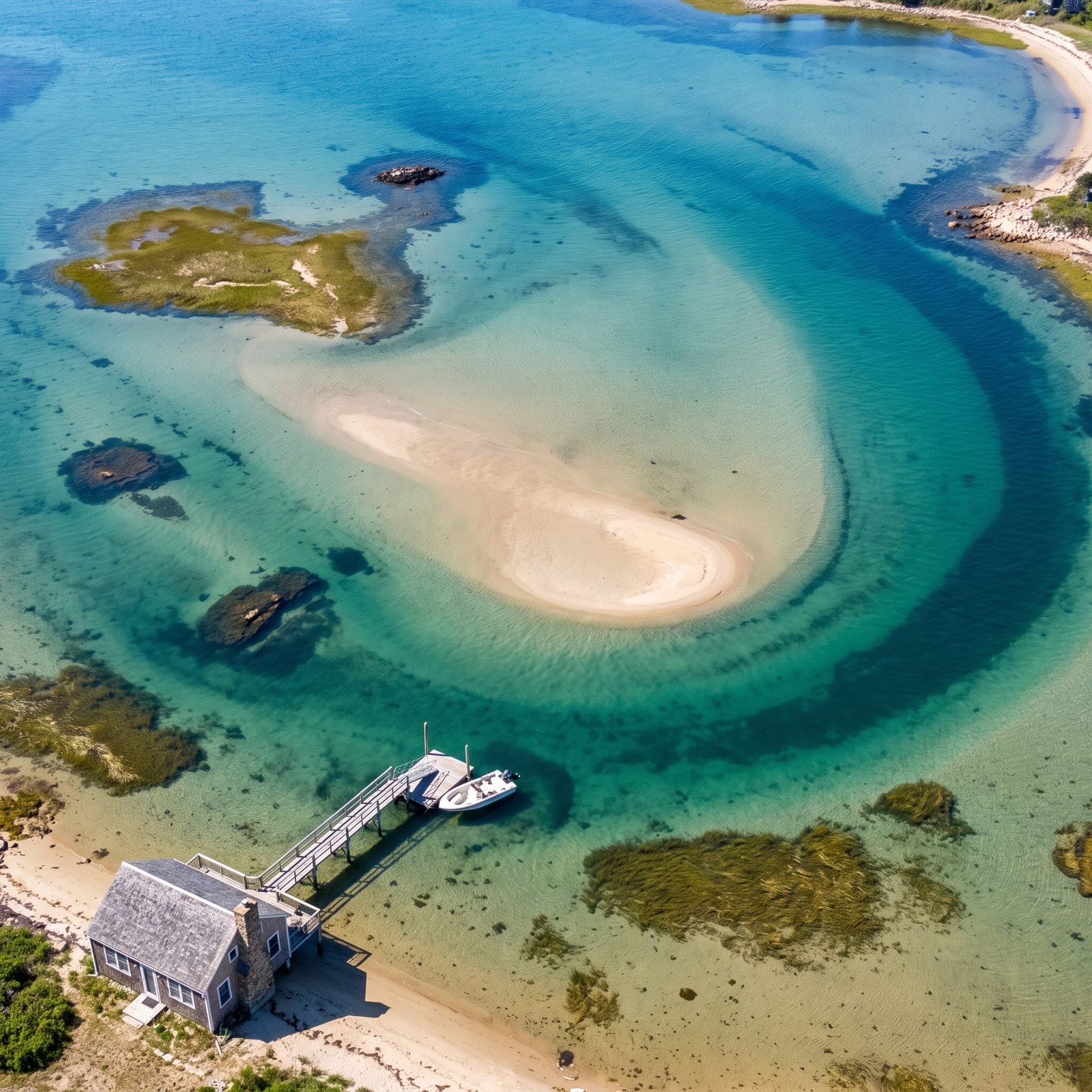
A submerged rock waits. It doesn’t care how good the view is from the deck. Shoals shift, sandbars migrate, and old pilings and deadheads lurk right where you’d naturally want to run your boat.
Hit one at speed and you’re looking at a cracked hull, a bent prop, and a bill that makes the home inspection look like pocket change. One strike can total a lower unit.
Pull the latest charts and check for recent survey updates. Talk to neighbors who actually run that water. And idle your approach the first dozen times until you’ve mapped the hazards yourself.
22. Buying Before Testing Water Quality and Seasonal Algae Risk
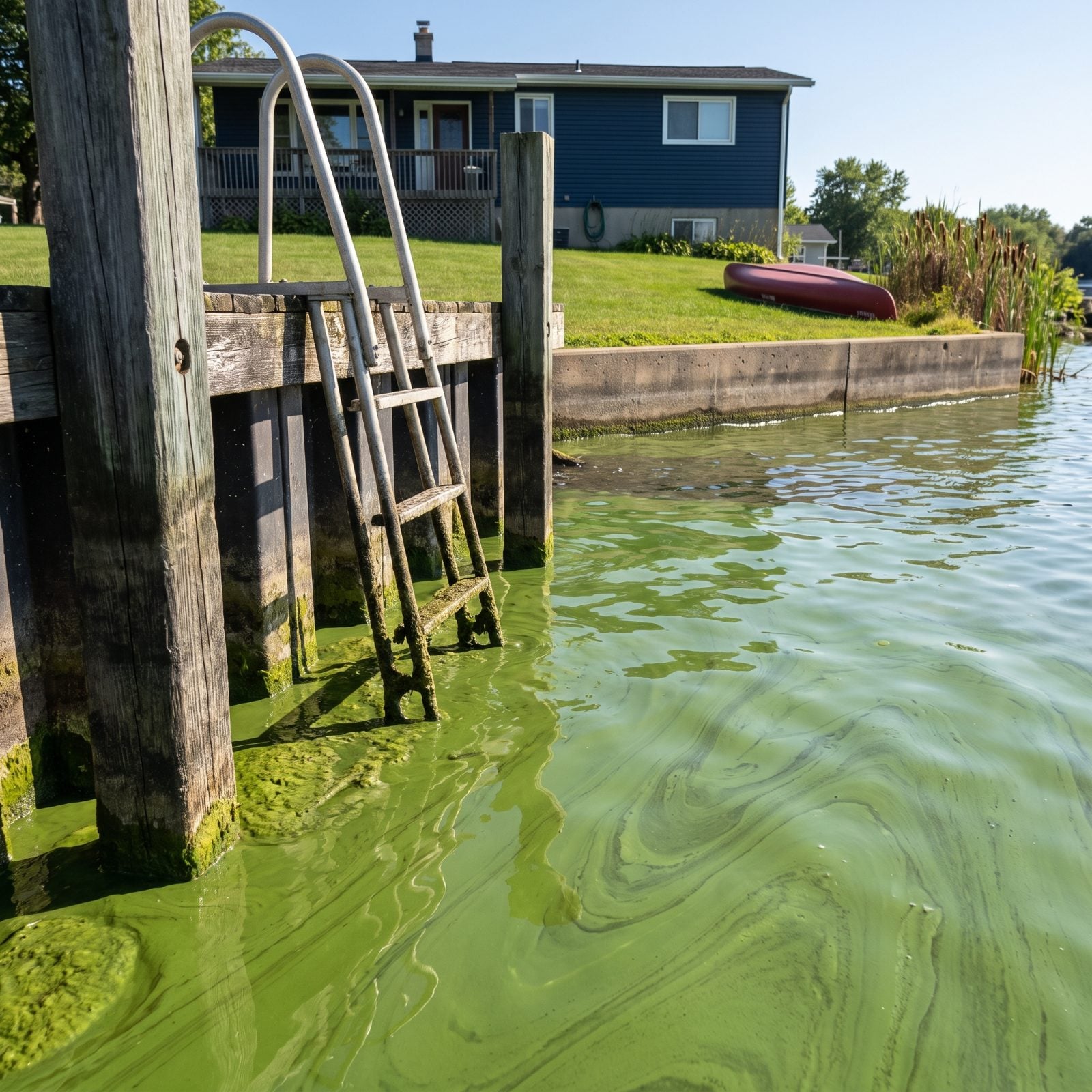
You visit in May and the water is glass. What you don’t see is the August problem: a pea-green bloom that smells like a pond filter nobody cleaned, closes the swim area, and keeps the grandkids stuck on the porch all weekend.
Harmful algal blooms aren’t just ugly. Some are toxic to dogs and people, and a lake with a recurring bloom problem drags down resale and your actual enjoyment of the place.
Pull the lake’s monitoring history before you offer. Many states post bloom advisories by waterbody. Ask the association, test a sample, and visit in the hot months — not just the pretty ones.
21. Ignoring Saltwater Intrusion in the Well
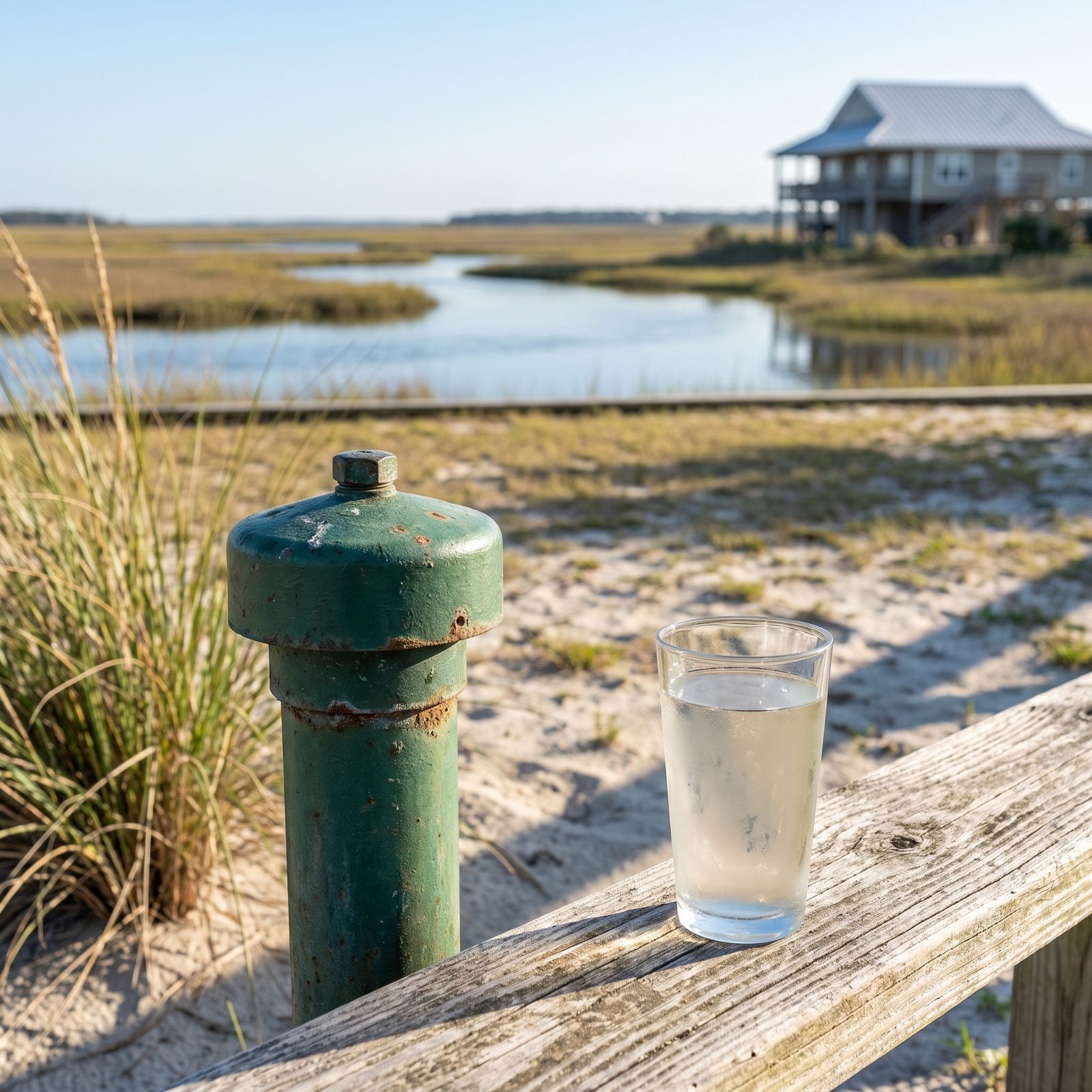
A well near the coast is drawing from an aquifer that the ocean is pushing on from below. Overpump it, or buy during a wet year, and you might not notice the salt creeping in until the tap starts tasting faintly of the beach.
Saltwater intrusion corrodes plumbing, kills landscaping, and ruins drinking water. Fixing it can mean drilling a new well, a desalination setup, or hooking to municipal supply at serious cost.
Test the well for chloride and total dissolved solids before closing — not just bacteria. Ask neighbors if their wells have gone brackish. One clean test in winter tells you nothing about what late summer looks like.
20. Skipping a Full Septic-System Inspection
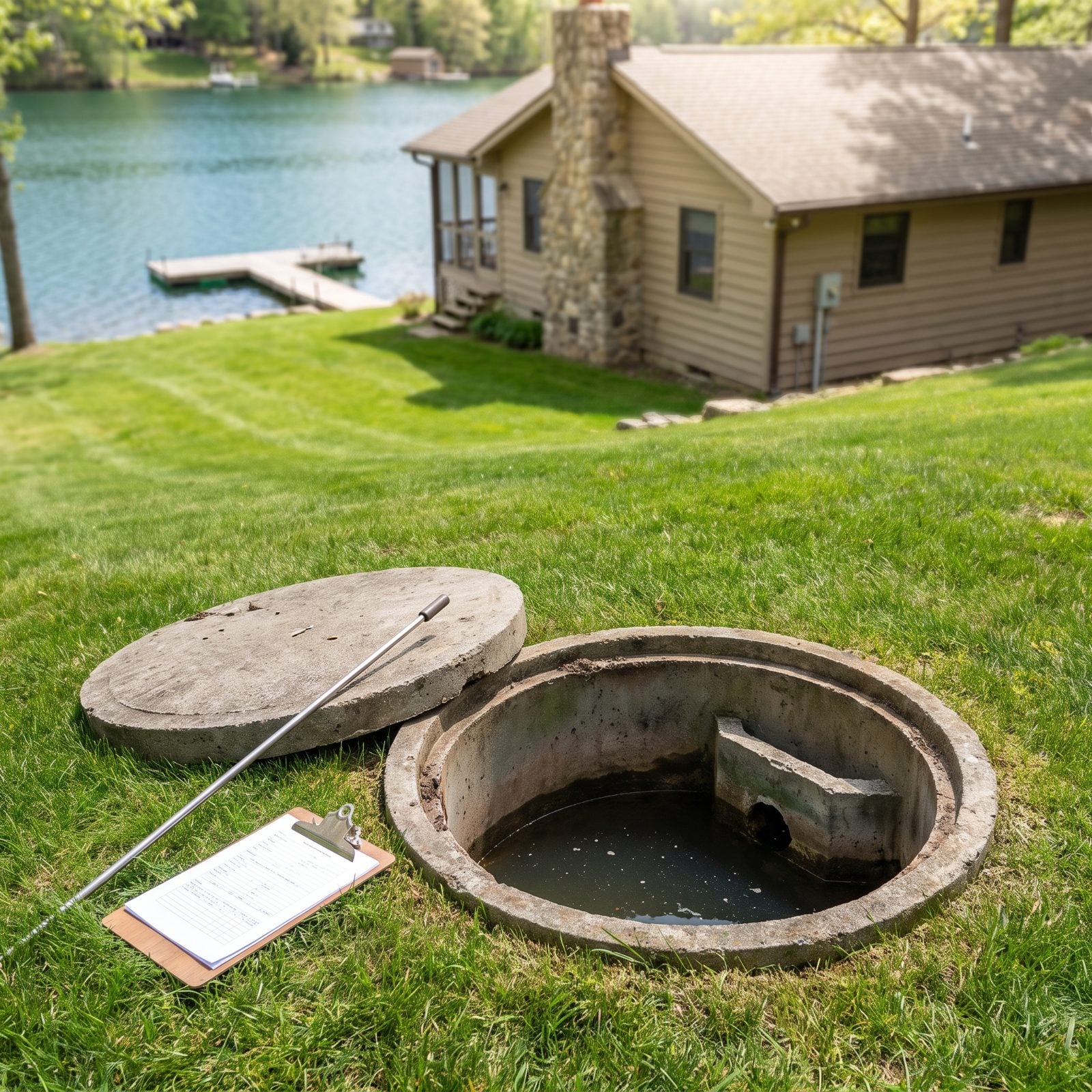
Here’s a sentence that should scare you more than it does: “The seller says the septic works fine.” On the water, a failing septic isn’t just your problem — it leaks nutrients straight into the lake you bought the place to enjoy.
A standard home inspection usually doesn’t open the tank, which means you can close on a system that’s cracked, root-bound, or one storm away from backing up into the basement.
Hire a dedicated septic inspection with a tank pump and a dye test. Get the tank size, age, and last pump-out in writing. Make the result a contingency, not a footnote.
On the water, a failing septic isn’t just your problem. It’s the lake’s.
19. Assuming the Septic System Can Support an Addition
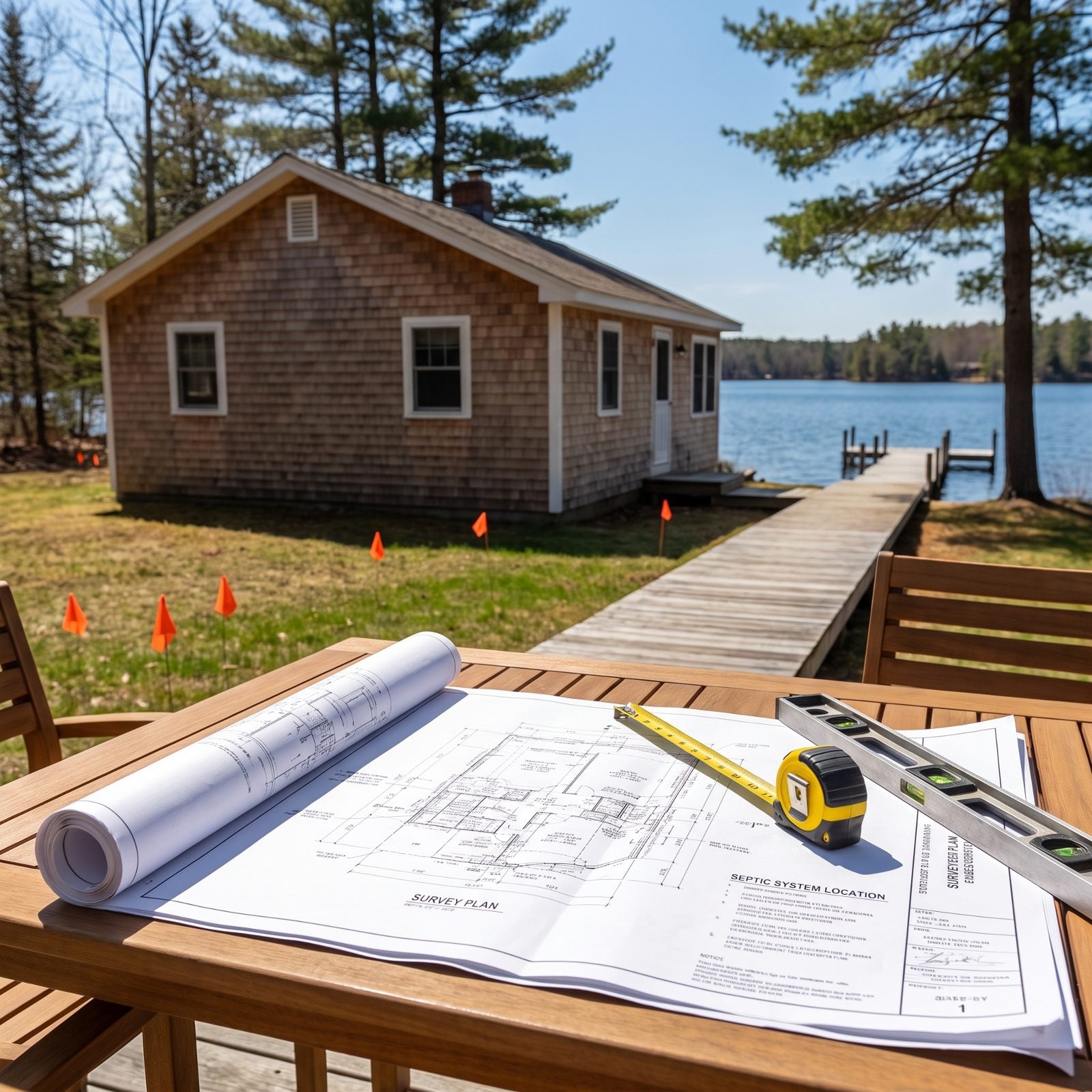
You picture a master suite over the garage, maybe a bunk room for the grandkids. What you may not picture is that the septic field was sized for a two-bedroom cottage — and the county counts bedrooms, not square footage.
Add bedrooms and most jurisdictions require a system upgrade. On a tight waterfront lot with setback rules and poor soils, there may be nowhere legal to put a bigger field.
Before you buy with expansion in mind, confirm the permitted bedroom count and whether the lot can take a larger drain field at all. A soils test answers it fast.
18. Overlooking Drain-Field Flooding Risk
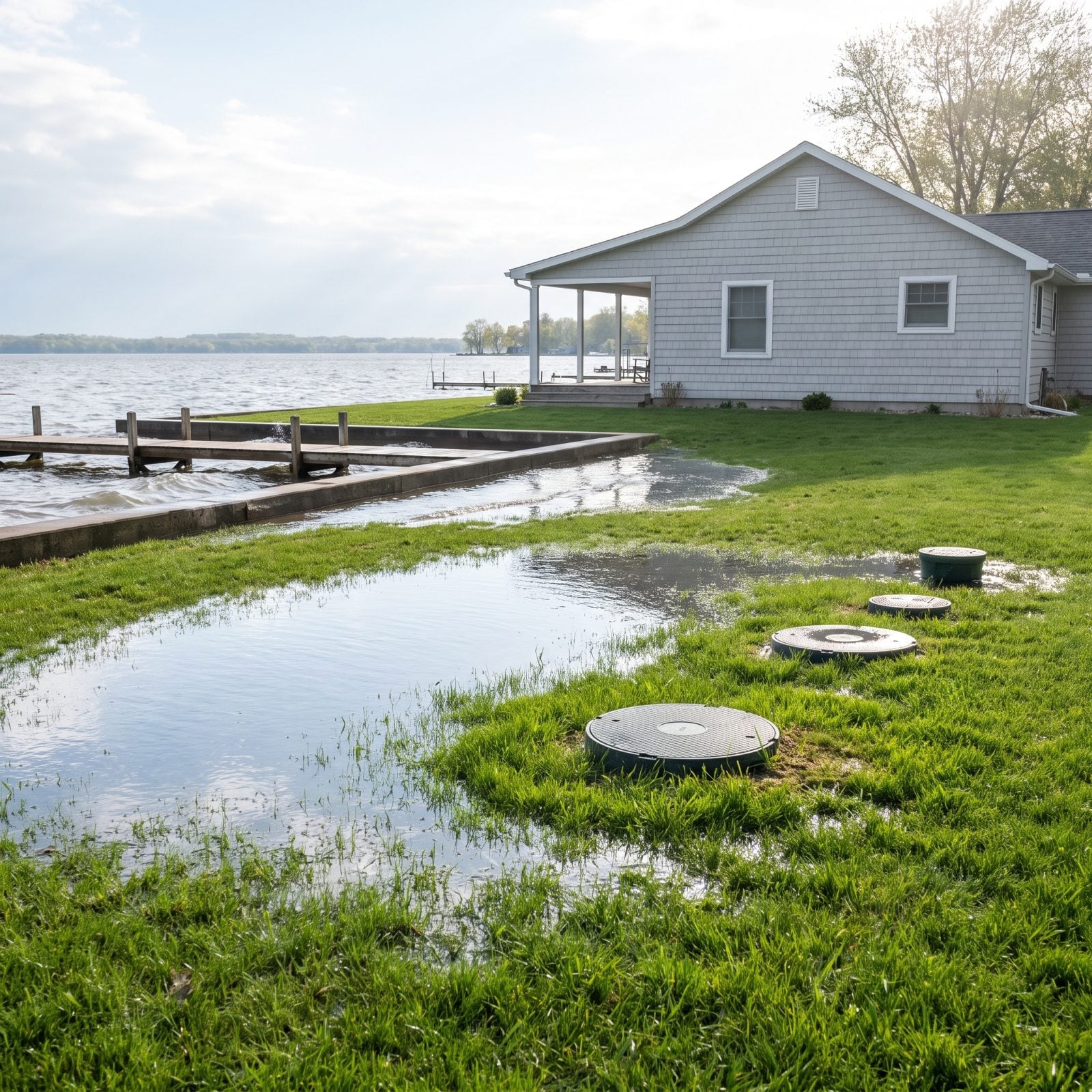
A drain field needs dry soil under it to do its job. Put it in a low spot near a lake that rises every spring, and a few days of high water turn the whole thing into a swamp that can’t absorb a drop.
A saturated field stops treating waste and starts pushing it back toward the house, or up through the lawn. Repeated flooding shortens the system’s life dramatically.
Check the field’s elevation against the high-water mark and the FEMA flood map. Look for an unusually green, soft patch of lawn — a classic tell. Ask whether the field has ever surcharged after storms.
17. Ignoring Stormwater Flow Across the Property
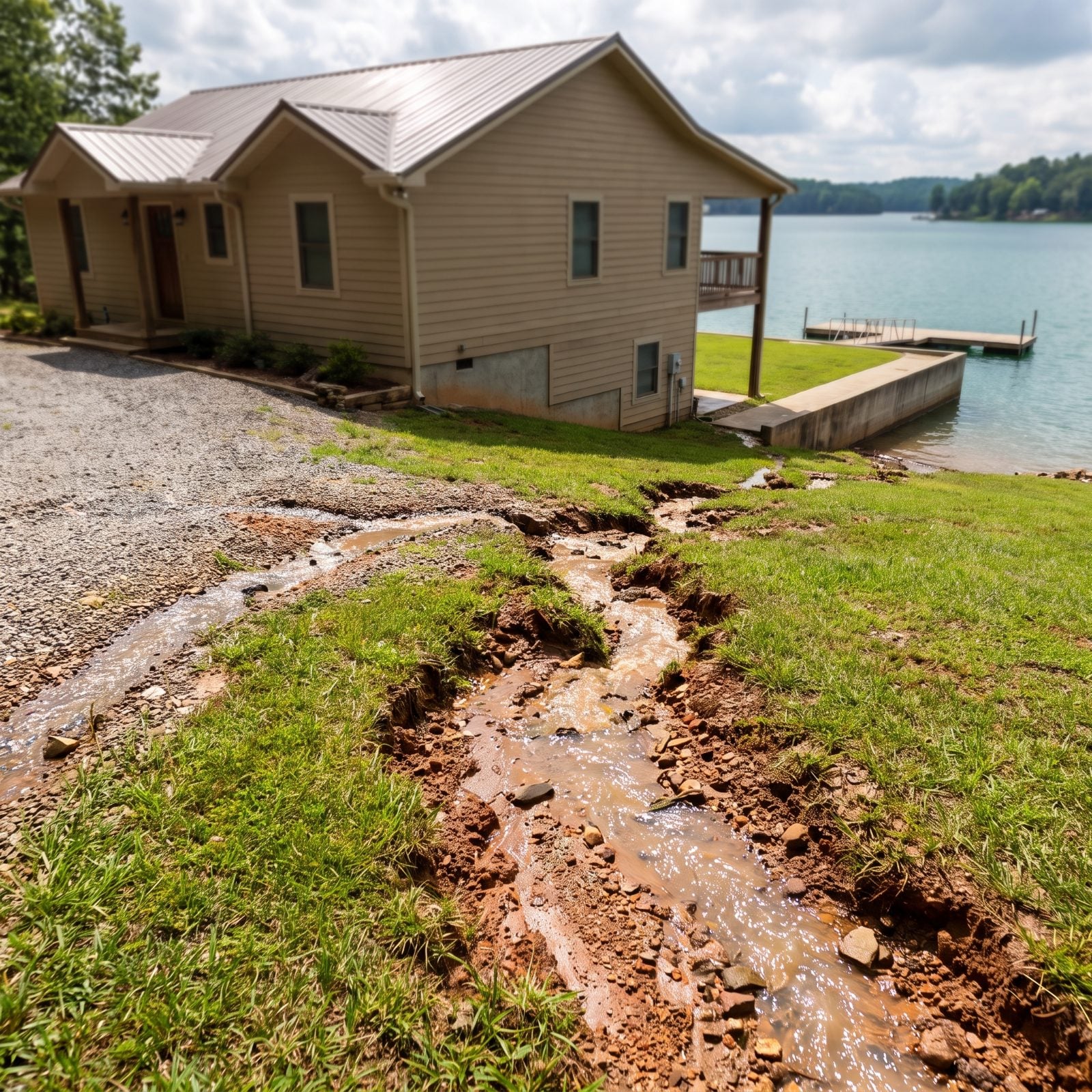
Every waterfront lot slopes toward the water. That’s the appeal. It’s also the trap, because everything the hill sends down — roof runoff, the neighbor’s driveway — is aimed at your foundation and your shoreline.
Bad grading carves gullies, drowns the lawn, undermines the seawall, and funnels water into the crawl space. I’ve watched a single rainy season chew a channel across a yard that looked perfect in the brochure.
Visit during or right after a hard rain if you can, and trace where the water actually goes. Look for erosion scars, pooling against the house, and gutters that dump at the foundation instead of away from it.
16. Missing Foundation Scour Near the Water
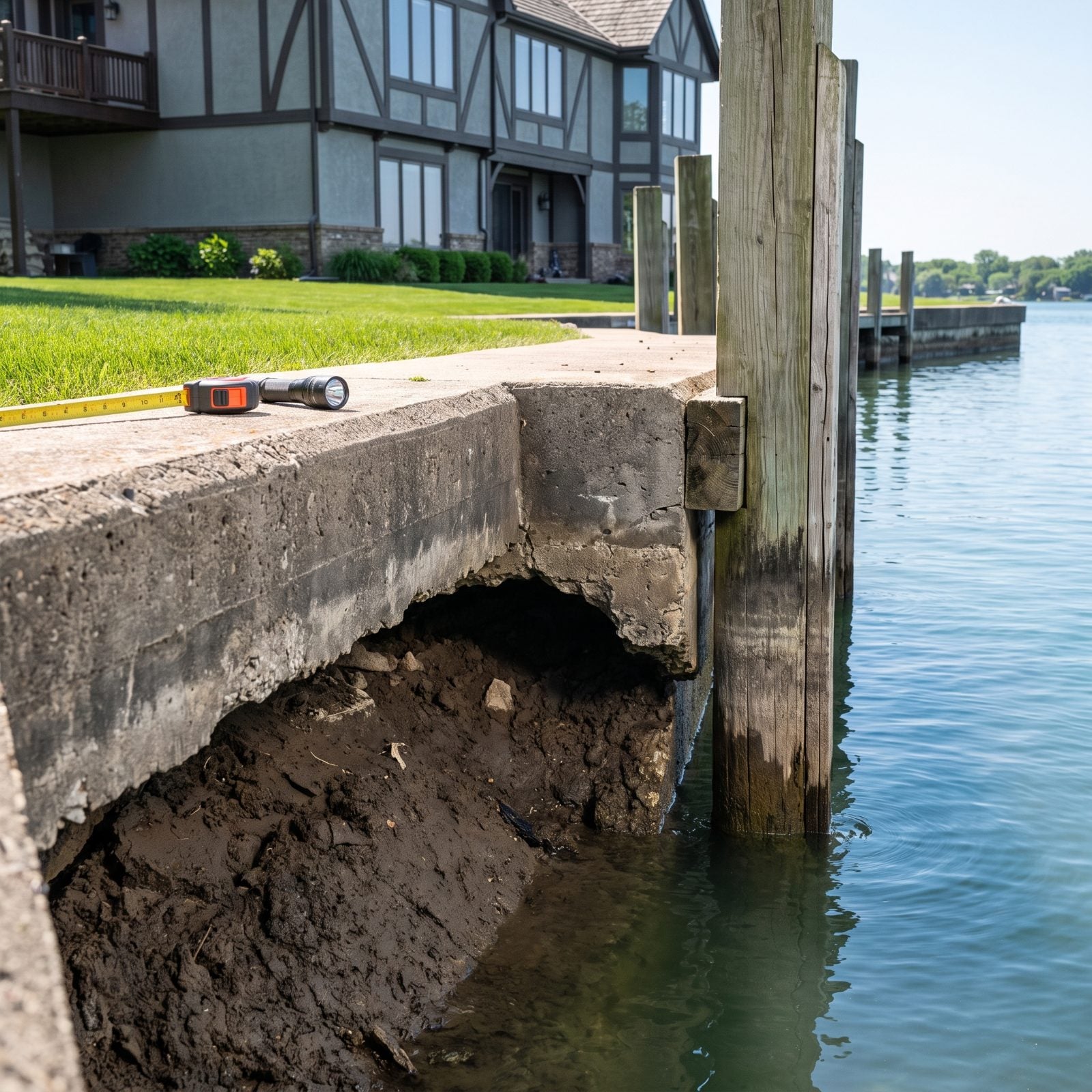
Water is patient, and it never stops. Waves, current, boat wakes and the seasonal rise and fall quietly pull soil out from under a seawall or a foundation until there’s a hollow you can’t see from the lawn above.
Scour undermines footings and seawalls from below. By the time cracks show up in the house, you’re often staring at structural repairs that run into serious money, plus a seawall that may need rebuilding.
Get down to the waterline and look at the base of the seawall and any pilings. Probe for undercutting and voids. Then hire a structural engineer who knows shoreline work — not just a general inspector — before you fall in love with the view.
15. Ignoring Rot Beneath Waterfront Decking
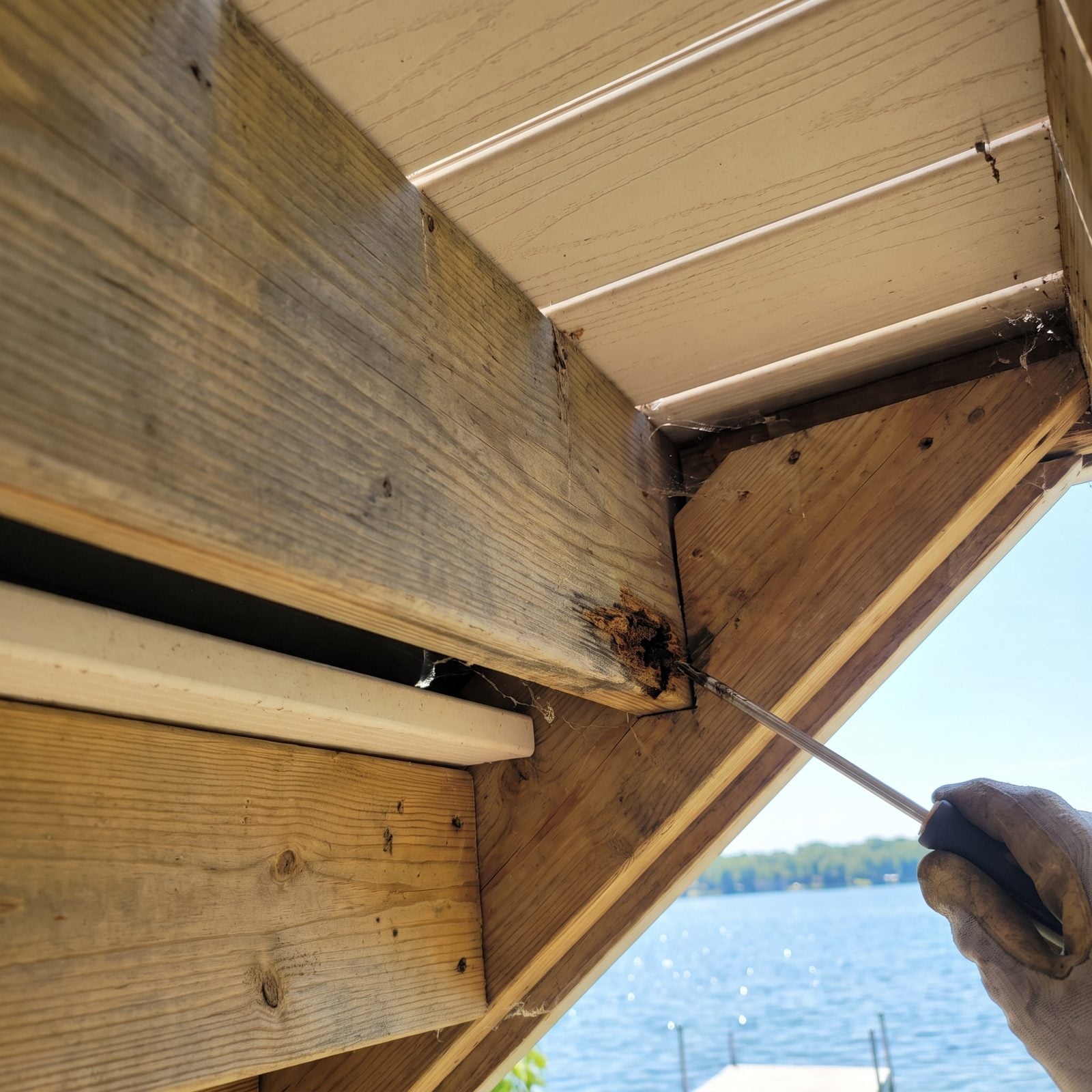
Top of the deck looks fine. New stain, tidy furniture, a view that sold you in about four seconds. The trouble lives underneath, where constant spray and shade keep the joists damp and the fungus happy.
Push a screwdriver into the beams near the ledger and the posts. If it sinks like it’s going into a ripe pear, you’re looking at a rebuild — and a rotten ledger board is how decks collapse under a crowd. Get down there, or send someone who will.
14. Overlooking Unsafe Dock Wiring
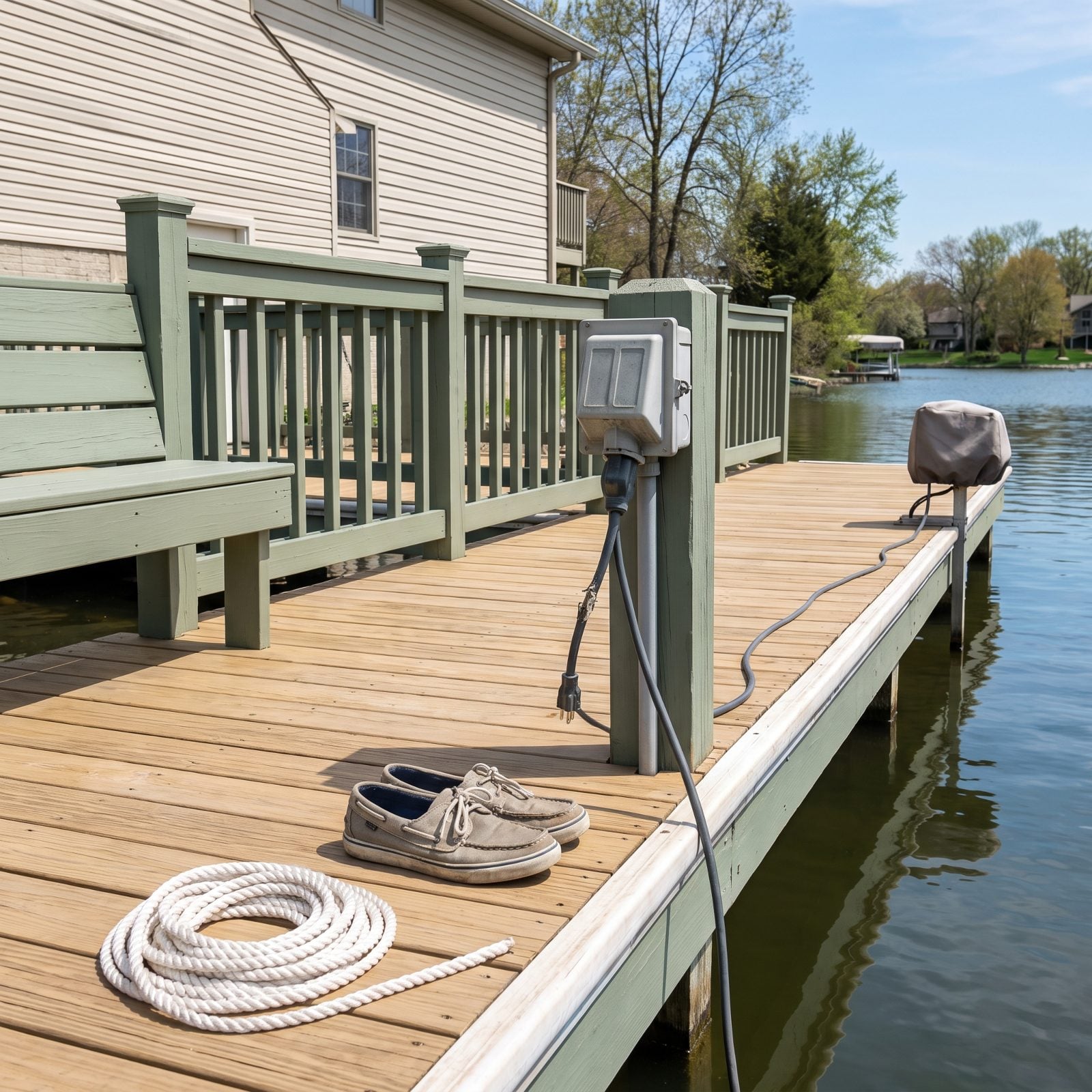
Electricity and water keep a civil distance only when someone makes them, and on too many docks nobody did. You find junction boxes with missing covers, extension cords run out to the lift motor, and wiring spliced by a previous owner who meant well and knew nothing.
This is no cosmetic problem. Current leaking into the water around a dock can incapacitate a swimmer — it’s rare, it’s real, and it has a name: electric shock drowning. Have a licensed marine electrician inspect for GFCI protection, proper bonding, and ground-fault equipment. If the answer is vague, assume the worst and budget to redo it.
13. Failing to Test the Boat Lift Under Load
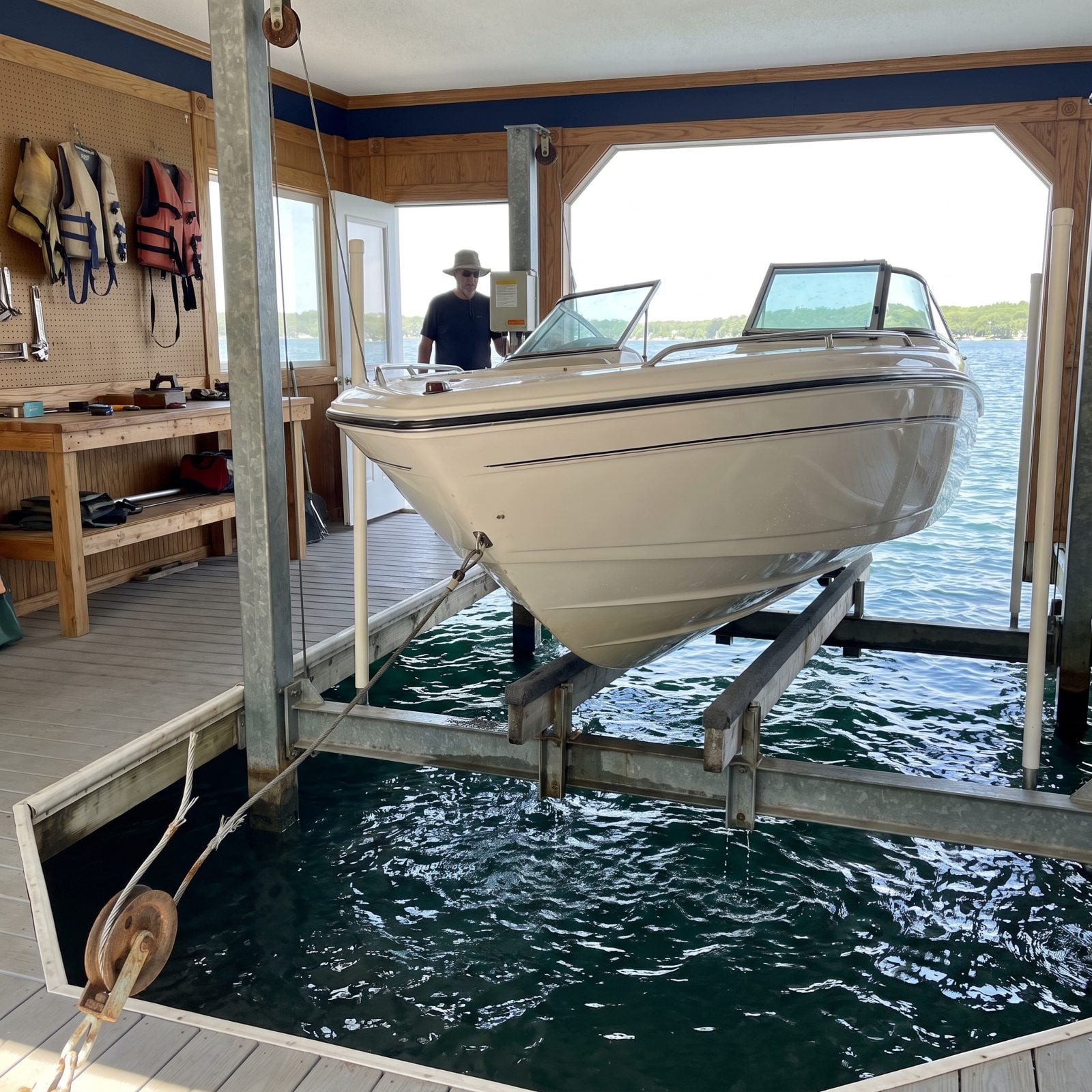
A boat lift is a machine, and machines reveal themselves under weight — not sitting empty at an open house. An owner who shrugs and says “it works fine” has usually never watched it strain against a full hull.
Insist on a demonstration with a boat on it, or at least something heavy. Listen for grinding. Watch the cables for frays and birdcaging, check the pulleys for seized wheels, and look over the motor for corrosion. A new lift motor and cable kit won’t bankrupt you, but discovering you need one the week your boat arrives certainly ruins the mood.
12. Underestimating Annual Dock Maintenance

The dream is sunset cocktails at the water’s edge. The reality includes a recurring appointment with a pressure washer and a bag of galvanized hardware.
Docks live in the harshest spot on the property: full sun, constant moisture, freeze and thaw, and a steady film of algae that turns planks into a slip hazard by July. Boards warp. Bolts loosen, foam floats waterlog, and seasonal docks need hauling out and reinstalling every single year. Ask the seller what they actually spend, in hours and dollars, then add a little. Nobody ever overestimates this one.
11. Ignoring Ice Damage to Docks and Pilings
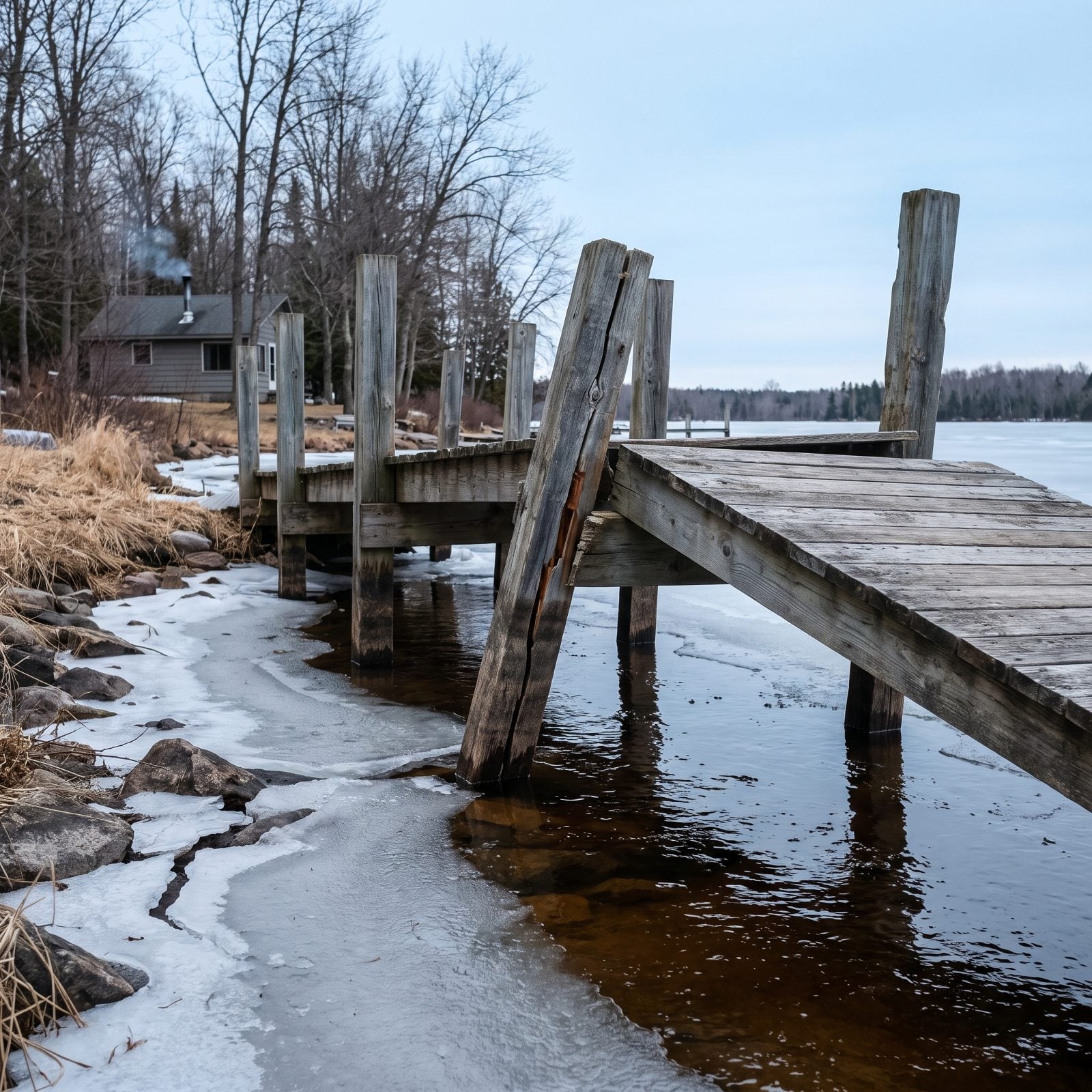
Ask any northern lake owner about March and watch their face change. Ice doesn’t just sit there over winter — it expands, it heaves, and as it melts and shifts it grabs pilings and walks them sideways like it has somewhere to be.
A dock that looked perfect in a July listing photo may be hiding a split piling or a heaved frame that only shows after the thaw. Buying in a cold climate? Ask how the dock is protected, whether a de-icer or bubbler runs all winter, and when the pilings were last replaced. Then budget for the day ice wins anyway, because eventually it does.
10. Overlooking Floating-Debris Damage After Storms
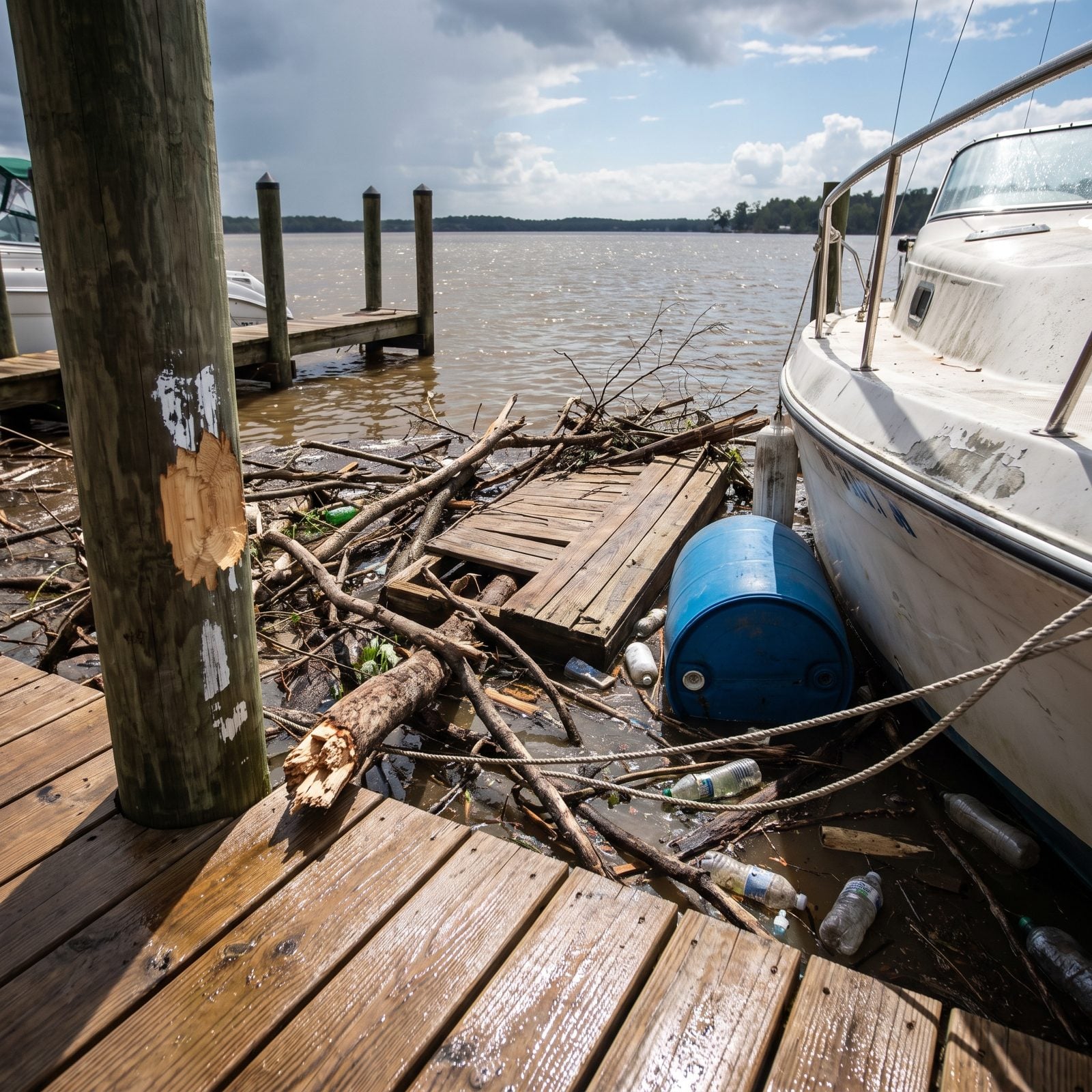
Water moves things. After a hard blow, whatever was upstream or upwind ends up against your dock: logs, a neighbor’s stray float, a propane tank nobody claims. It shows up at three in the morning and lands on your pilings.
A single heavy log riding a wind-driven current can crack a piling or stove in a hull. Find out which direction weather usually pushes debris on this body of water, and whether your shoreline happens to be the collection point everyone else’s junk drifts toward. Some coves are magnets for it — a maintenance tax you inherit right along with the deed.
9. Ignoring Wake Damage From Passing Boats
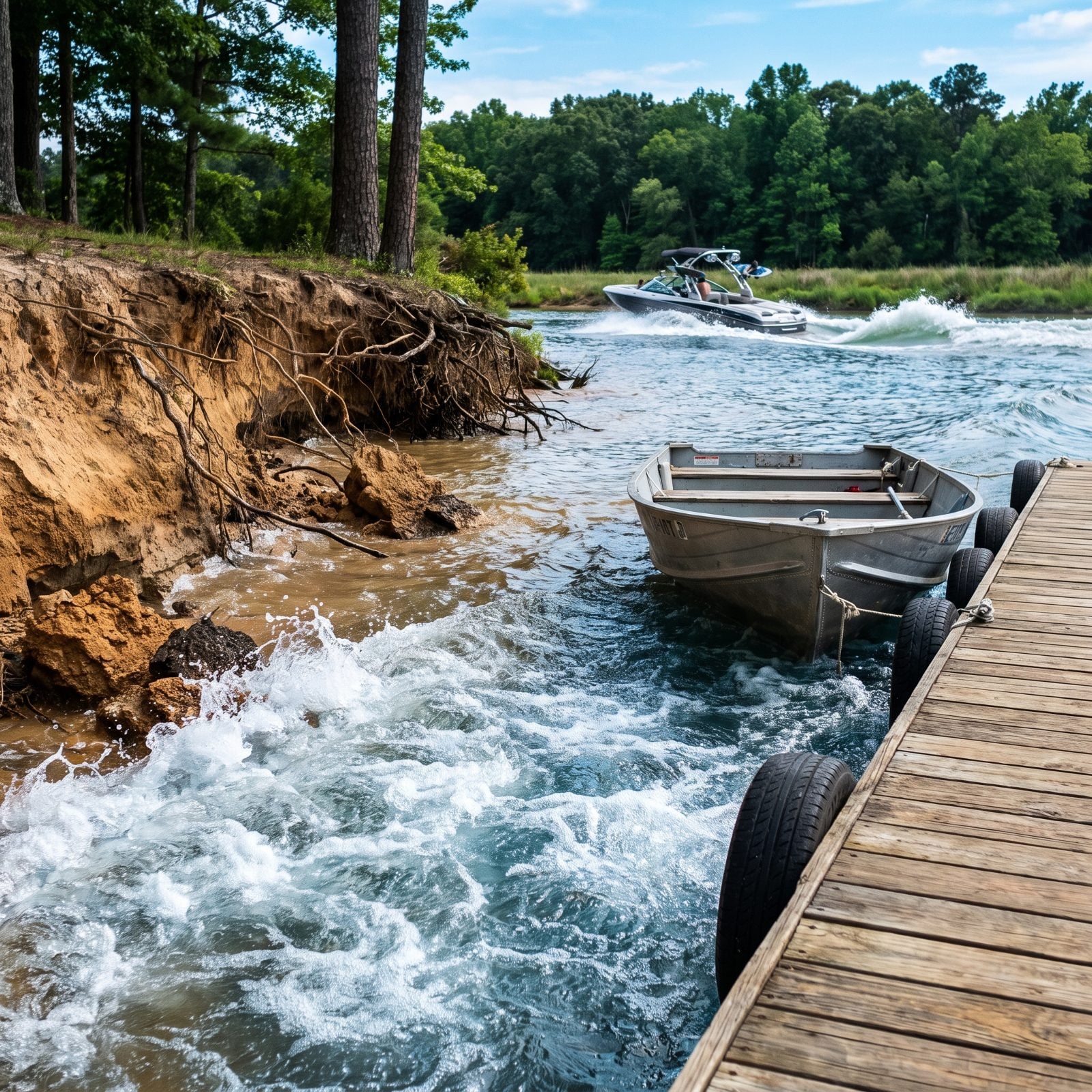
Big wake boats are the loudest argument on the lake right now, and honestly, for good reason. The wall of water they throw is terrific for surfing and merciless on everything that holds still.
Day after day those rollers slam a dock, grind a moored boat against its bumpers, and undercut the shoreline until the bank calves off and takes your trees down with it. A house on a narrow channel, or near a no-wake zone that nobody honors, lives with that pounding full time.
A quiet cove on a Tuesday tells you nothing about a Saturday wake highway in August.
Sit on the dock during peak boating hours and count the wakes. Scan the neighbors’ shorelines for that telltale undercut bank. Erosion is a clock you can’t stop.
8. Visiting Only on a Quiet Weekday
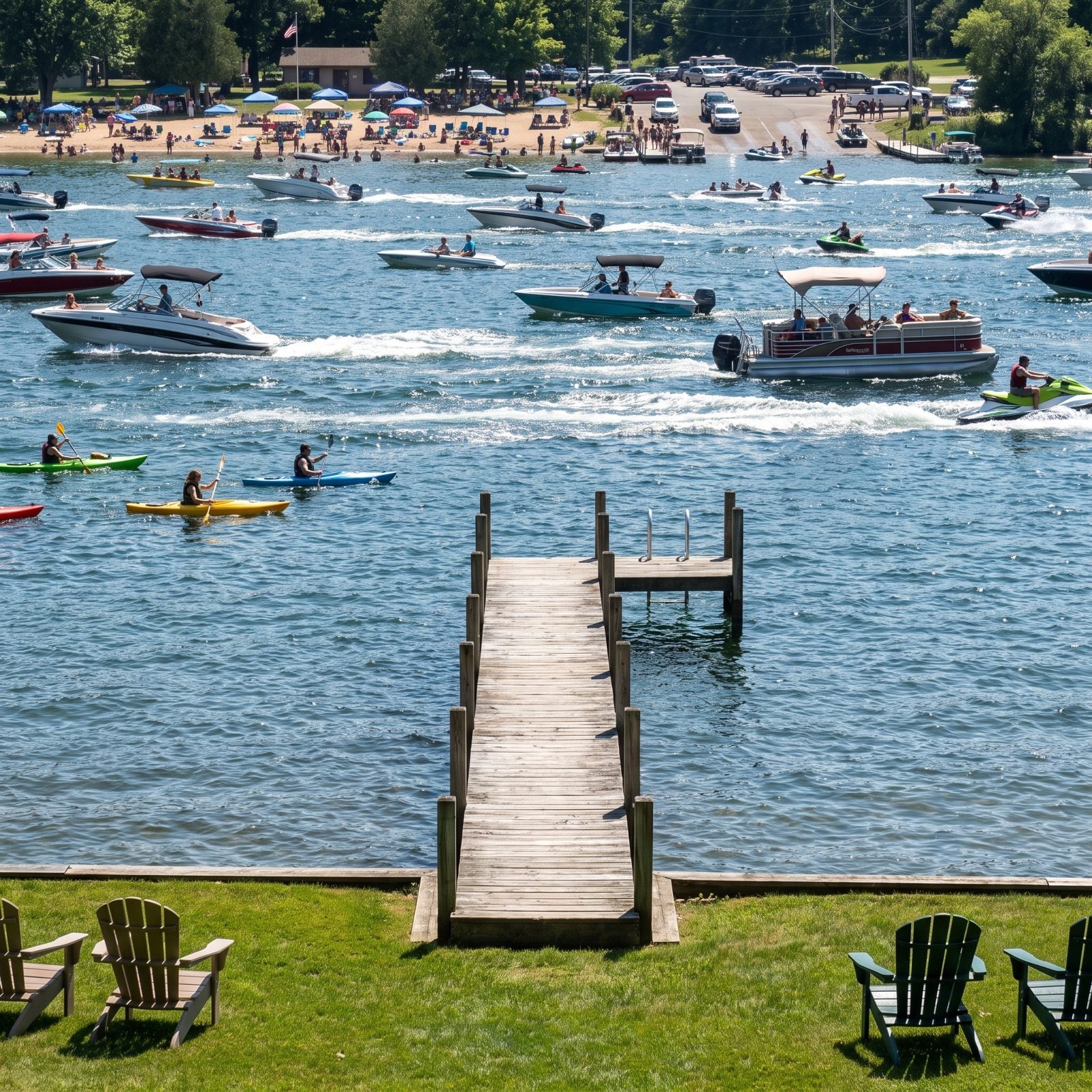
You toured on a Tuesday in May. Loons calling, water like glass, not a soul in sight — and you fell in love with a version of the place that exists maybe sixty days a year.
Now picture the Fourth of July. The public launch two coves down feeds a hundred boats onto the water, the beach beside you fills with families and portable speakers, and that quiet lane out front turns into a parking lot. The property didn’t lie to you. You just asked it an easy question.
Go back on a hot Saturday afternoon in the thick of the season. Listen, watch the traffic, note where everyone else puts in. That’s the home you’re actually buying.
7. Assuming the Water View Can Never Be Blocked by New Development
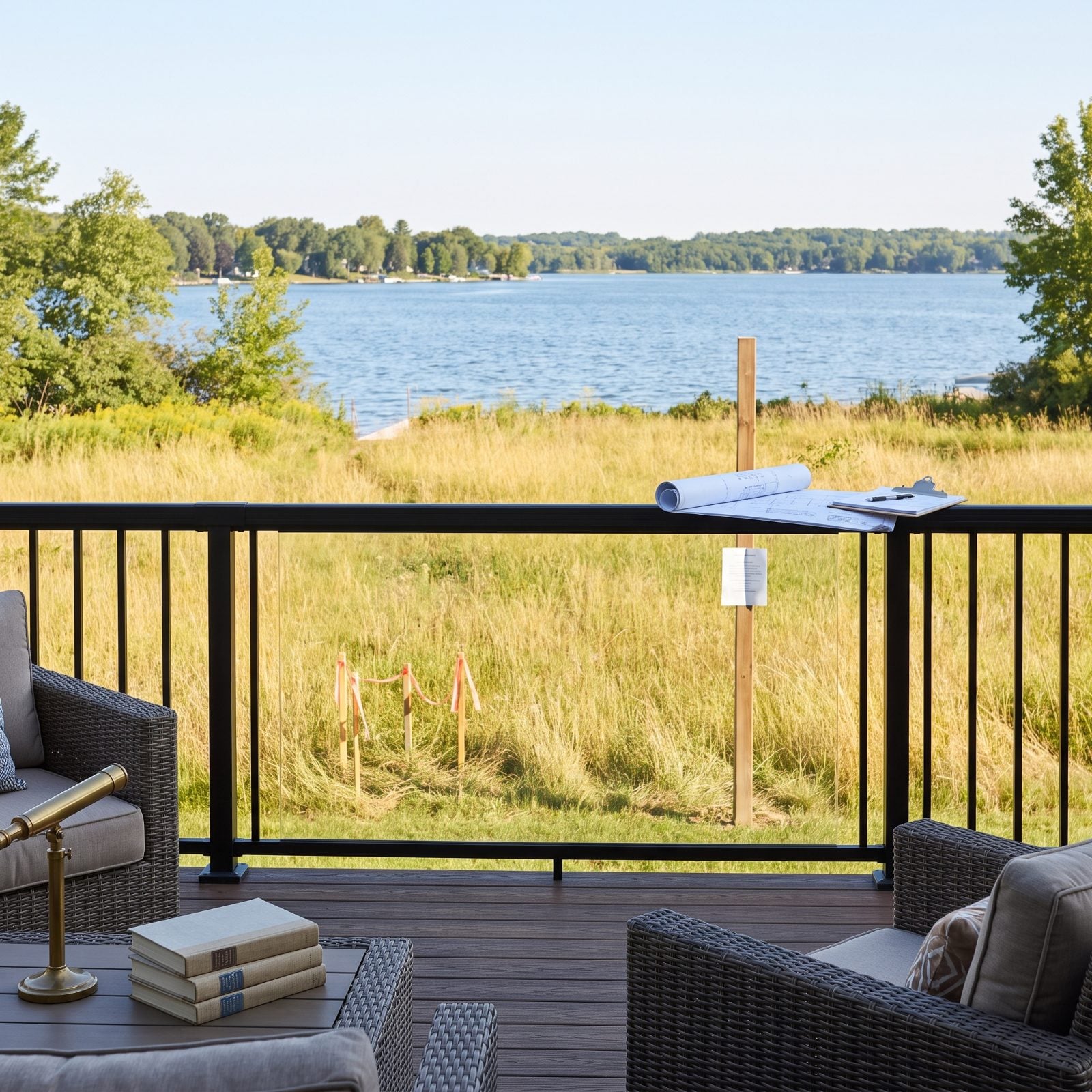
The view from the deck is the whole reason you’re writing a check this size. And a view, unlike the walls around it, is something you don’t actually own.
That empty lot beside you, the low treeline across the cove, the modest cottage downhill that could be torn down and rebuilt tall — any of them can swallow your water view with one permit. People learn this the summer a two-story addition goes up and their lake turns into a neighbor’s siding.
Pull the zoning for the surrounding parcels before you buy. Check height limits, setbacks, and whether that vacant lot next door is buildable. A protected view is worth a fortune. An assumed one is worth nothing.
6. Ignoring the Home’s Sun, Wind, and Afternoon-Heat Exposure
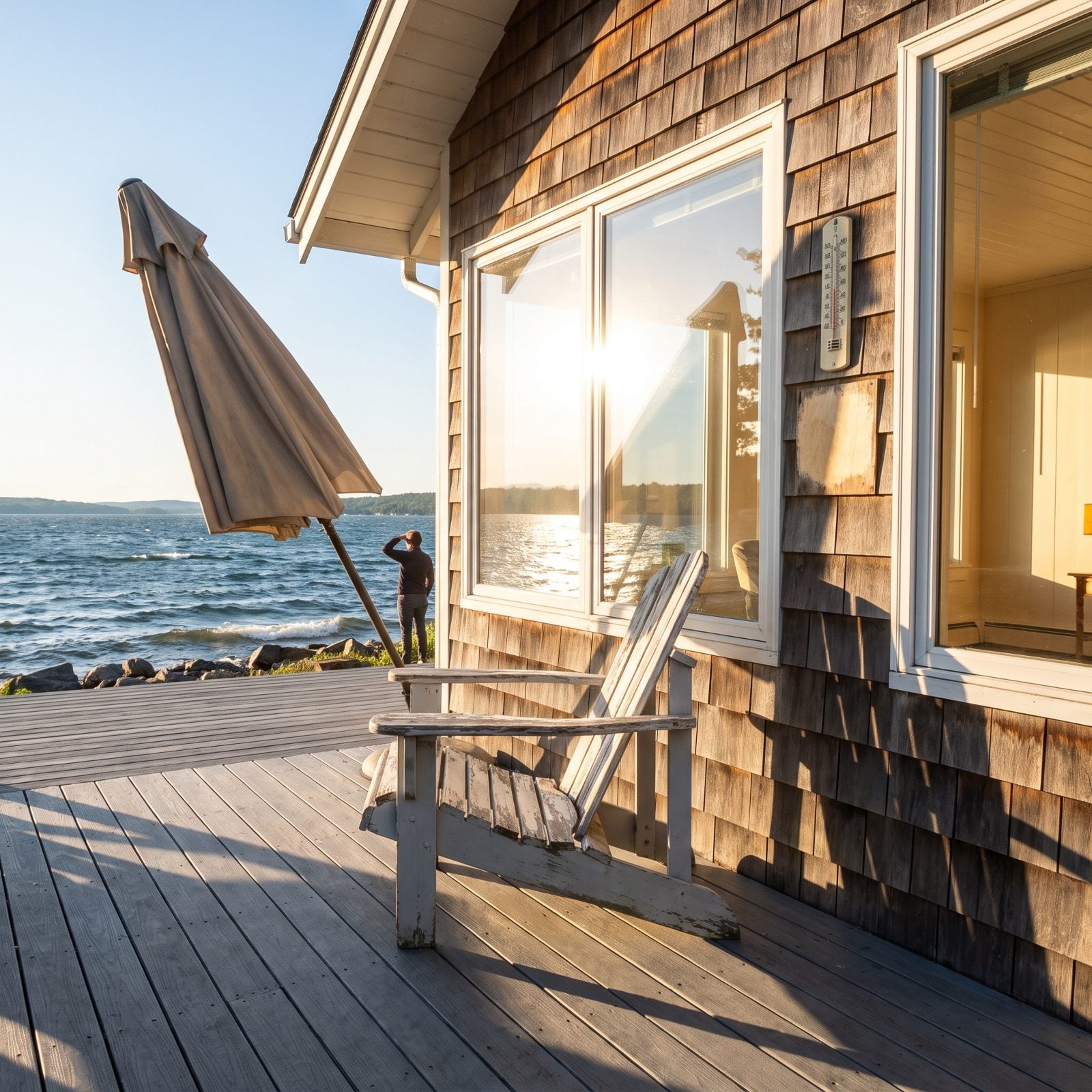
You tour the place at 11 a.m. on a soft morning and fall for the light. Then you move in and discover the whole back of the house faces due west, and from two o’clock on it cooks like a greenhouse. That deck you pictured for sunset wine? Useless until the sun finally drops below the far shore.
Wind matters just as much. A house sitting out on an exposed point takes gusts that shred umbrellas and keep the screened porch cold clean through June. So visit at different hours, in different weather, before you sign anything. Ask the neighbors which way the afternoon wind comes from — they’ll tell you, because they’ve been fighting it for years.
5. Forgetting Mosquito and Biting-Fly Season

Nobody puts the bug situation in the listing photos. But a house backed by a marsh, a slow creek, or any patch of standing water can be flat-out unlivable outdoors from June through August. I’ve walked gorgeous properties where you literally cannot sit on the dock after six without getting eaten alive.
Biting flies are worse, honestly, because citronella and bug spray barely touch them. Ask when the worst weeks hit, whether the county sprays, how close the nearest wetland sits. A screened porch and a steady breeze off open water help a lot. A stagnant backwater behind the house does not.
4. Underestimating Salt Spray and Marine-Grade Exterior Maintenance
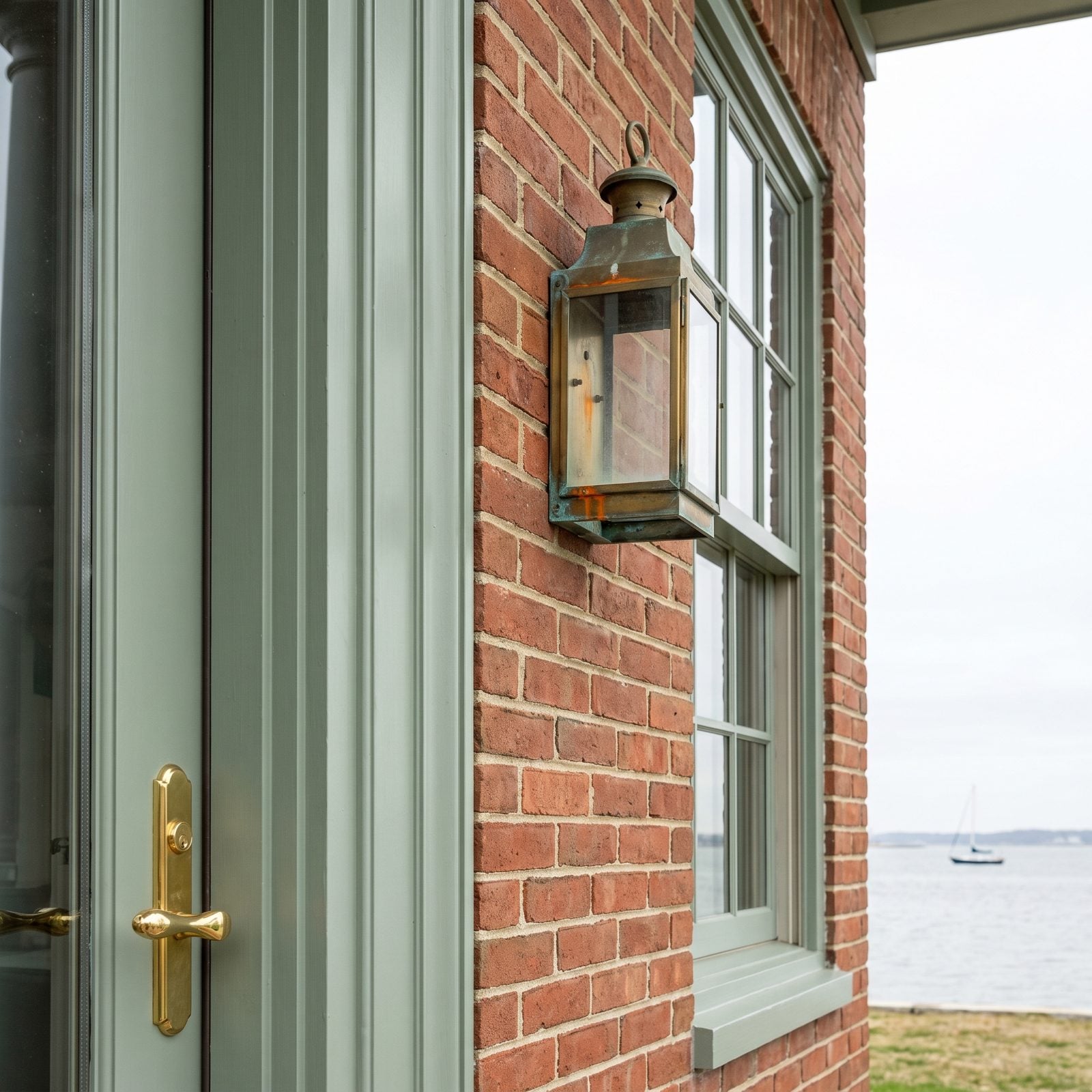
Salt eats everything. Hinges, light fixtures, screws, air-conditioner coils, the cute brass house numbers, your deck fasteners — all of it. Coastal living puts you on a maintenance schedule the inland folks never have to think about, and the first repair bill is a rude education.
Standard hardware corrodes in a single season near the water. Anything exposed has to be marine-grade — stainless, powder-coated, or specifically rated for salt air. Before you buy, look hard at the window frames, the HVAC unit, the exterior lights. Rust streaks under the hardware tell you exactly what the last owner skipped. Budget for repainting on a tighter cycle than you’d ever expect, and ask the inspector to flag anything already going.
3. Missing Special Assessments for Shoreline Work
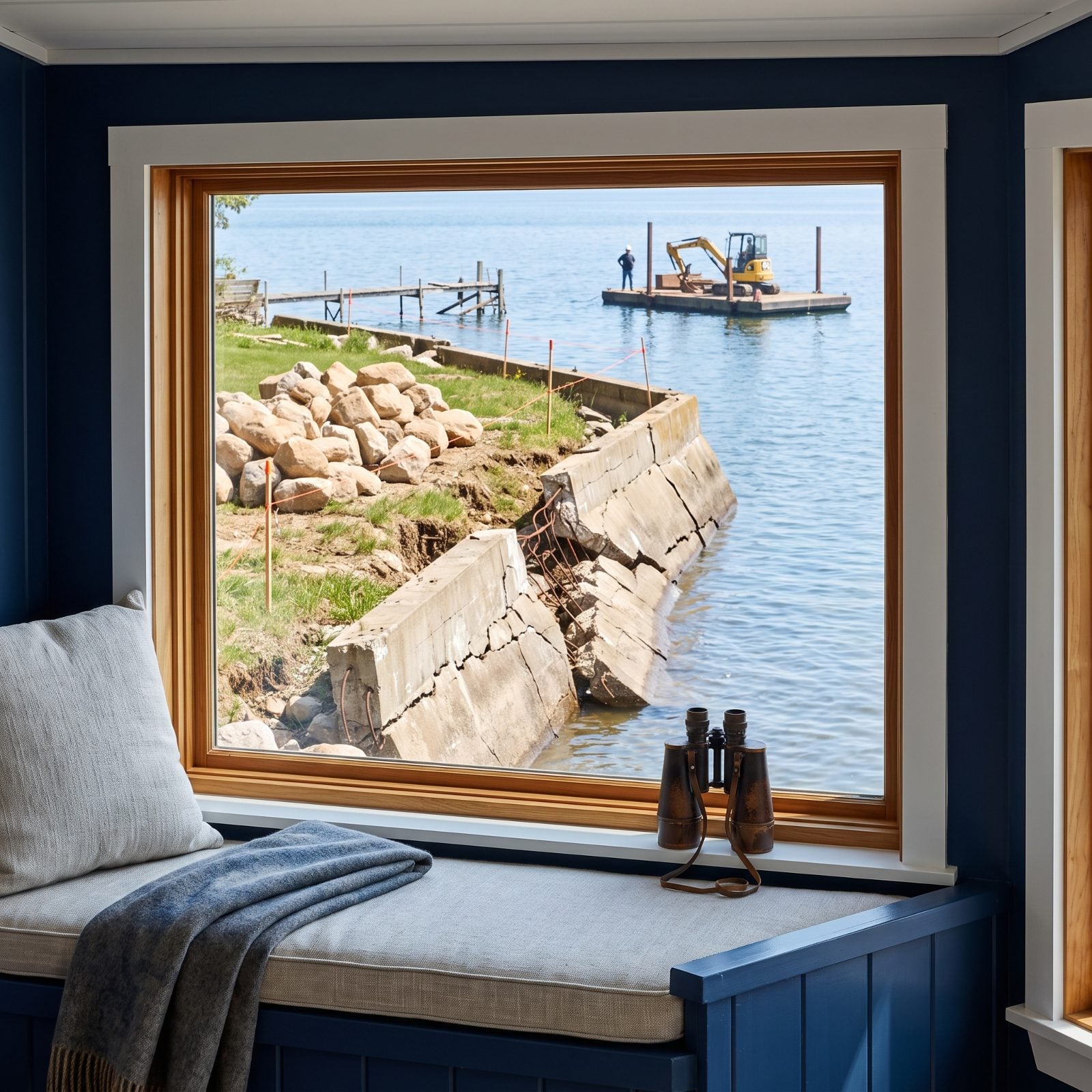
Say you buy into a lakefront community with a shared seawall. Everything looks fine at closing. Then eighteen months later a letter arrives: the association voted a special assessment, your share is several thousand dollars, due in ninety days. Shoreline work is brutally expensive, and it comes for everyone on the water eventually.
Seawalls, bulkheads, dredging, dock rebuilds, erosion control — these projects climb into six figures for a whole community, and your deed quietly signed you up for a slice of it. So read the HOA minutes going back a few years, ask about reserve fund balances, and get it in writing whether any shoreline project is pending or already approved.
2. Overlooking a Flood-Prone or Privately Maintained Access Road
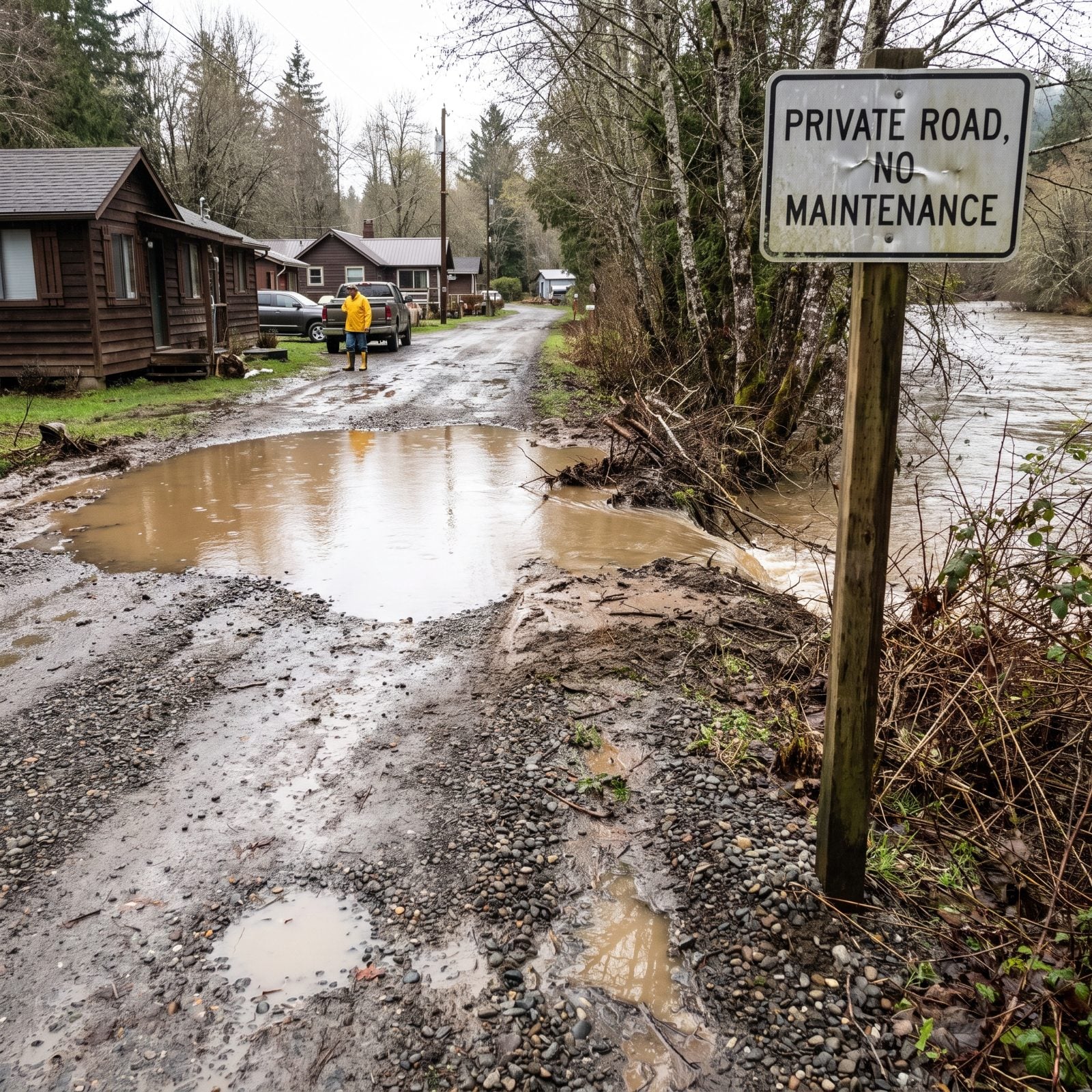
The house checks every box. Then the river comes up in March, the only road in goes underwater, and you learn the county doesn’t plow it, grade it, or fix that washed-out culvert. That’s your road now, and the repair bill splits among whoever lives on it.
Private access roads sound charming right up until you own one. Flooding, snow, potholes, the endless cost of upkeep — it all lands on the residents. Ask who maintains the road, whether there’s a road agreement, how often it floods. Drive it after a heavy rain if you can. A low spot that puddles today becomes a lake tomorrow, and it decides whether you can even reach your own front door.
1. Waiting Until Closing to Price Flood Insurance
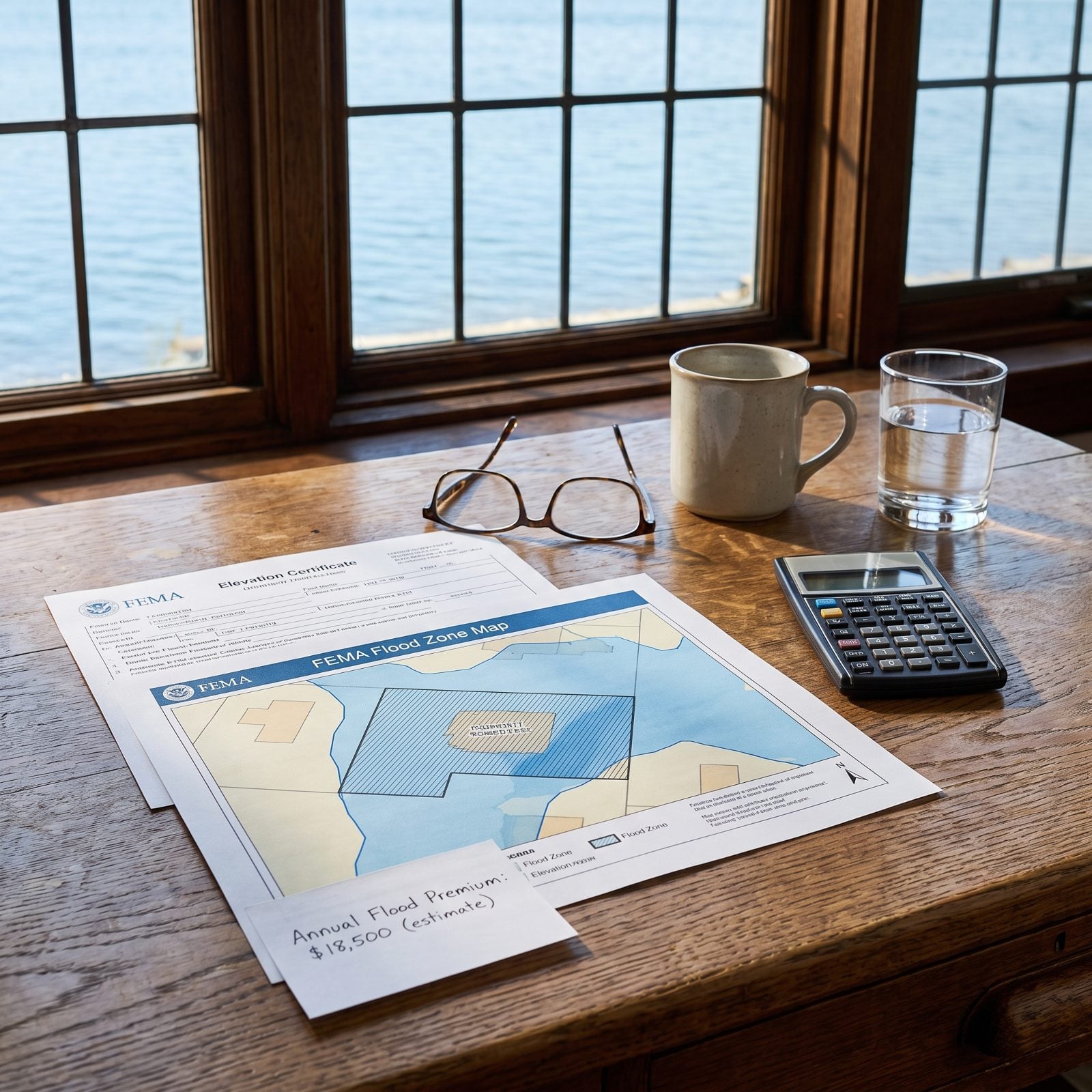
Here’s the trap. You fall for the house, run the mortgage math, feel good about the whole thing, and only after you’re emotionally committed do you bother requesting a flood insurance quote. Then the number lands — several thousand a year, sometimes far more — and suddenly the deal is underwater before the water is.
Flood insurance is a line item that can rival your property tax. Get a quote before you make an offer, never during closing. You’ll need the flood zone, the elevation certificate, and the specifics of the structure.
Price the flood policy the same week you fall for the house, not the week you sign for it.
That elevation certificate can swing your premium wildly, so ask the seller whether one already exists. If it doesn’t, ordering one might save you a bundle every year — which is the rare bit of waterfront paperwork that actually pays you back.