The dock that fights you every spring is the one that got built once and never touched again. You step down onto a transition plate that’s dropped two inches since last year, you yank a mooring line that’s gone taut at low tide, and you pull a dock box off the deck to find the underside black with mildew. None of it is dramatic. All of it is fixable, usually with something small and strange that experienced dock owners install and then never mention. The ones below start with the picks almost nobody talks about and work toward the upgrades you’ve at least heard of.
Please note that some of the imagery in this article may have been enhanced with the assistance of AI.
37. A Capillary-Break Grid Beneath Dock Boxes to Stop Trapped Dampness
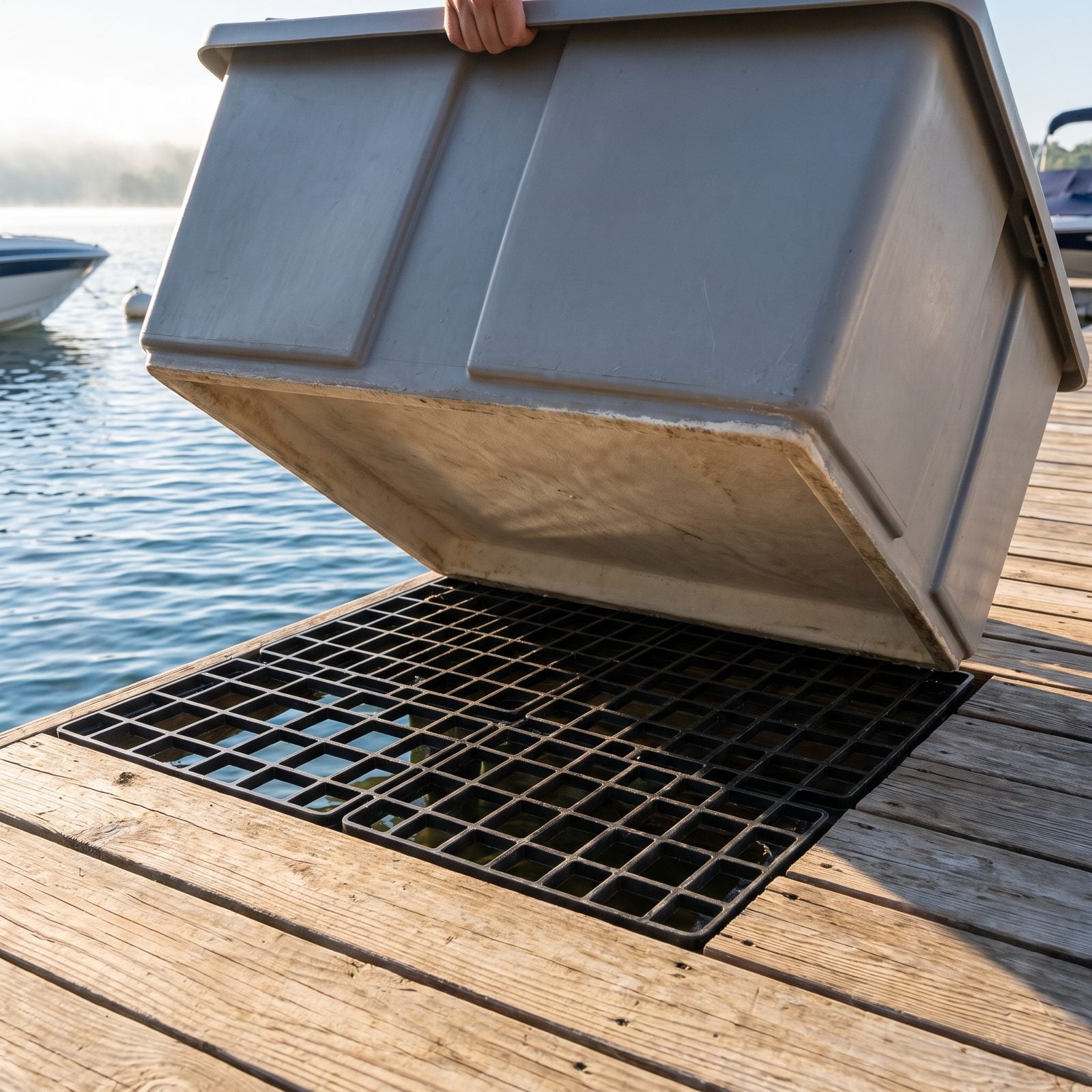
Set a bottomless dock box shell flat on solid decking and you’ve built a sweat lodge. Water splashes up through the planks, gets trapped underneath with nowhere to go, and sits there all season rotting whatever cushion, line, or life jacket you stored under it.
A capillary-break grid is just a stiff plastic lattice, set flush into an opening cut through the planks, that serves as the floor under the open-bottomed box shell. Air moves up through the ribs from the water below, so gear resting on it dries between splashes instead of staying damp for weeks.
Cheap, nearly invisible, and it’s the difference between lifting your box to clean gear and lifting it to that smell everyone with a lake knows.
36. Roller Pile Guides That Keep Floating Docks From Binding
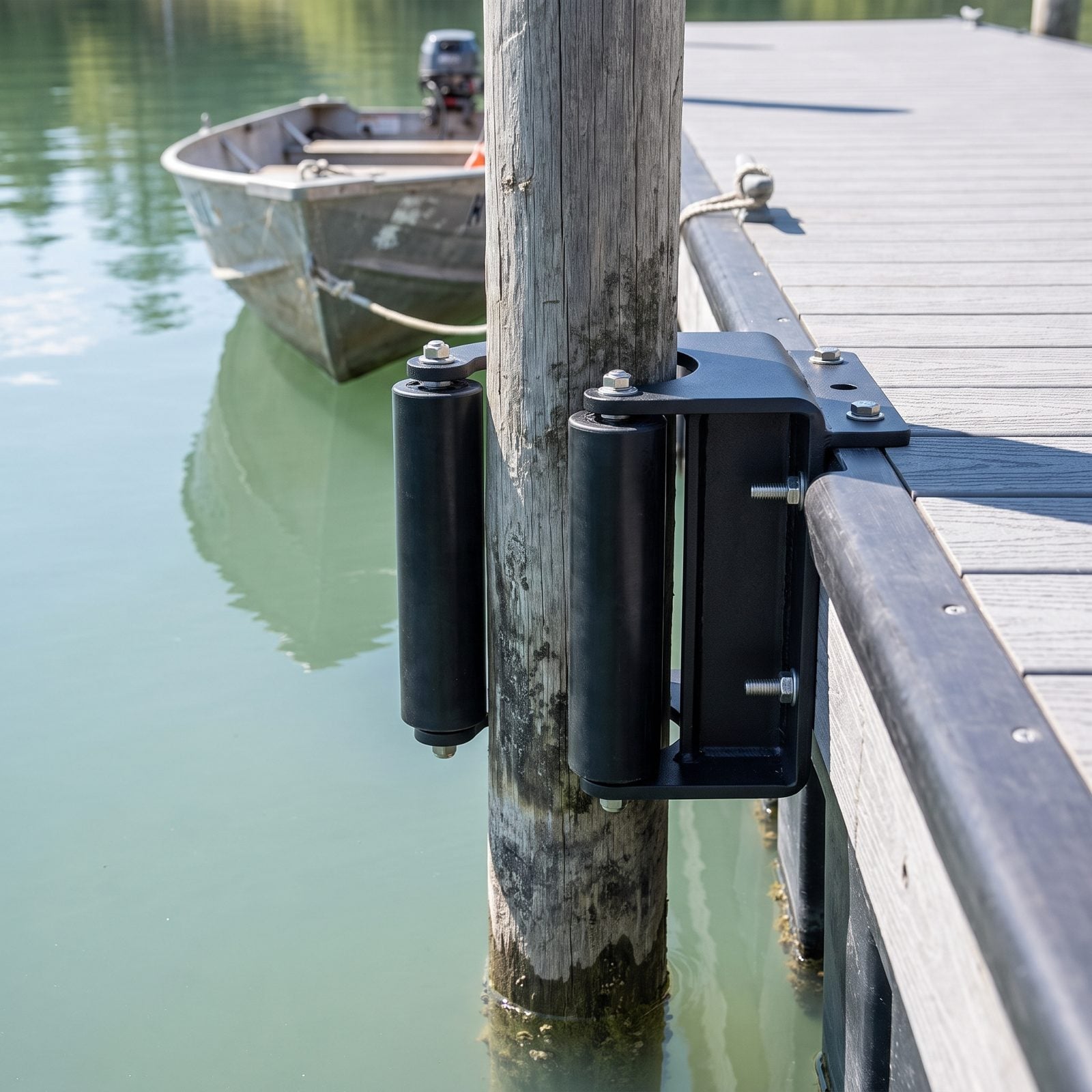
A floating dock that groans and shudders when the water changes is usually binding against its pilings. Fixed brackets grab, wood swells, and the dock fights its way up and down, wearing a raw groove into the piling until one day it sticks fast at the wrong height.
Roller pile guides swap the grab for a pair of rollers that ride the piling. Now the dock glides instead of scraping, and a six-inch change in level stops being an event.
Owners who’ve added these say the first thing they notice is the silence. No more that awful wooden shriek at 2 a.m. when a wake rolls through.
35. An Angled Debris Deflector That Diverts Floating Branches
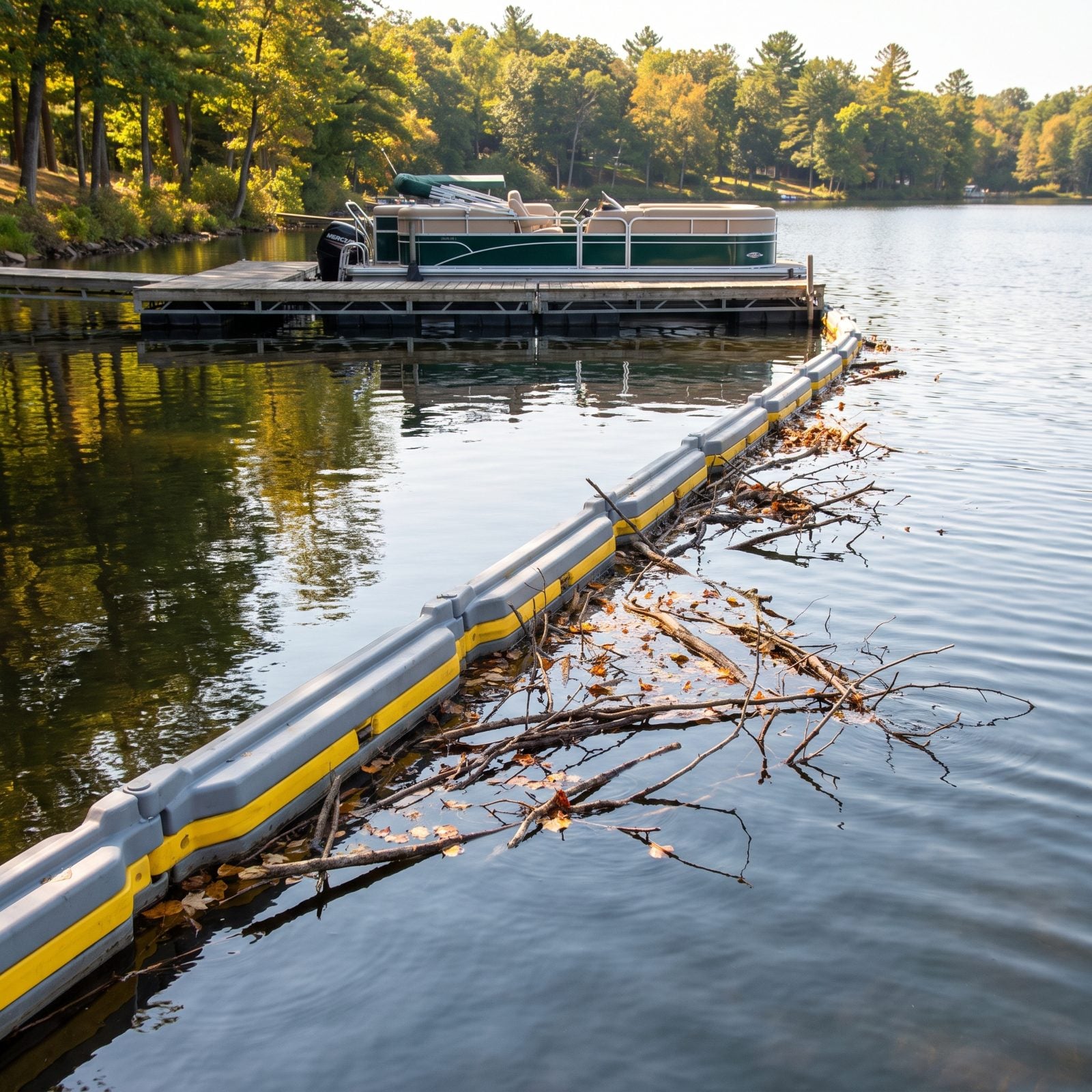
Every spring the same raft of branches, pine needles, and someone’s lost foam noodle piles up in the corner of the slip and jams the gap between the dock and the boat. You spend a Saturday with a rake. Next weekend it’s back.
An angled deflector is a floating boom set at a slant across the current, upstream of the dock. It doesn’t stop the debris. It steers it. Branches ride the angle and slide off to one side instead of collecting where you tie up.
Works on current, works on prevailing wind-driven drift. The slip stays clear and so does your Saturday.
34. A Hinged Shore-End Transition Plate That Bridges Changing Gaps
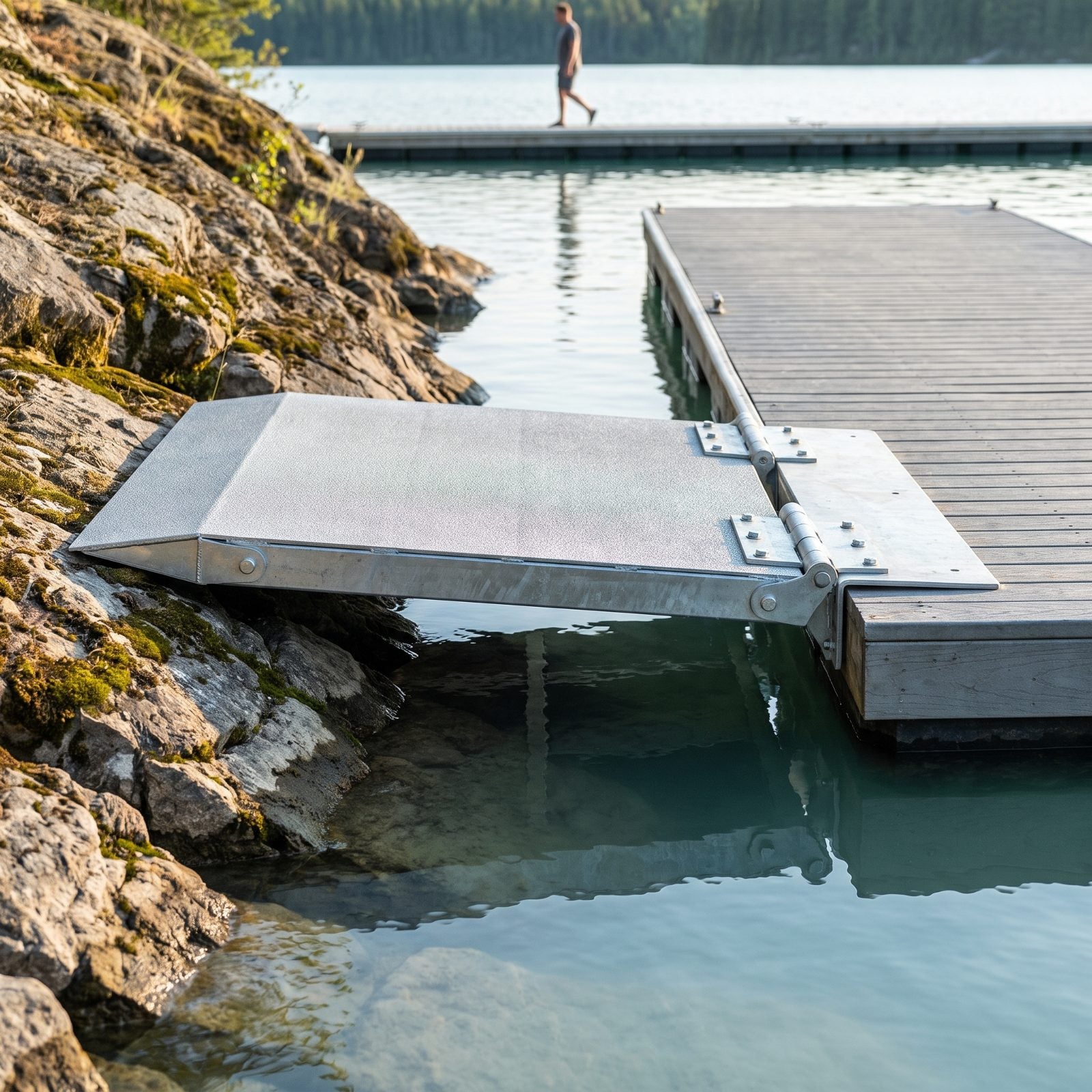
The spot where land meets a floating dock is where people trip. Water drops, the dock drops with it, and suddenly there’s a four-inch lip you have to step down onto while carrying a cooler and not looking.
A hinged transition plate solves it the way a loading ramp does. One edge pins to the shore, the other rests on the dock, and the hinge lets the plate tilt as the water level moves. No gap, no lip, no mystery step.
33. A Floating Pump Intake That Stays Above Silty Bottom Water
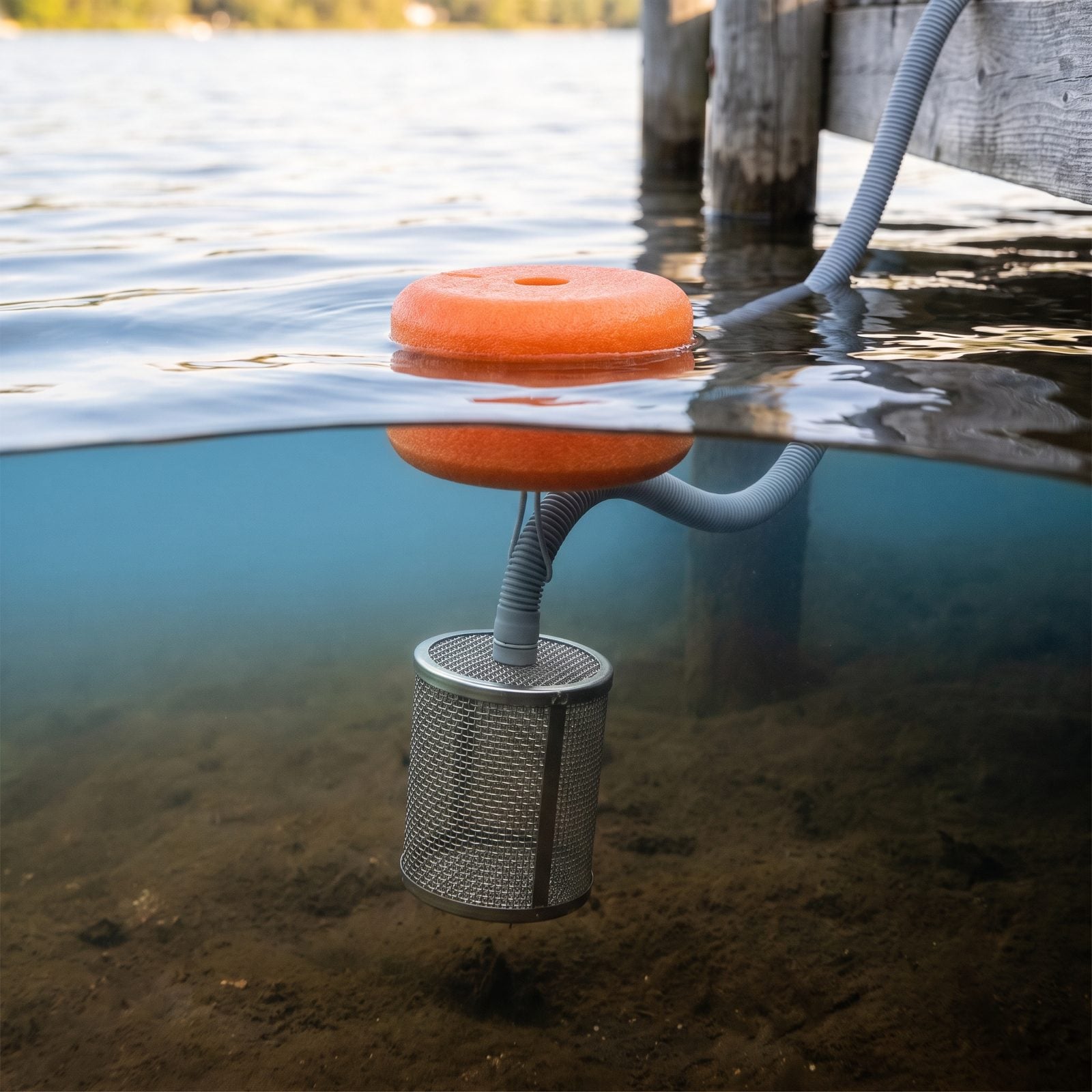
Drop a pump intake to the bottom to be sure it’s always underwater, and you spend your summer sucking up silt, sand, and whatever else settled down there. The screen clogs. The impeller grinds. You’re cleaning filters instead of swimming.
A floating intake hangs off a small float and draws from the clean layer a foot below the surface, where the water’s clearest and the muck stays put on the bottom. As the level drops in late summer, the float drops with it, so the intake never runs dry and never buries itself.
Anyone running a dock-side irrigation line or a washdown hose figures this one out eventually. Usually after the second clogged pump.
32. Flexible Expansion Loops That Protect Dock Water Lines
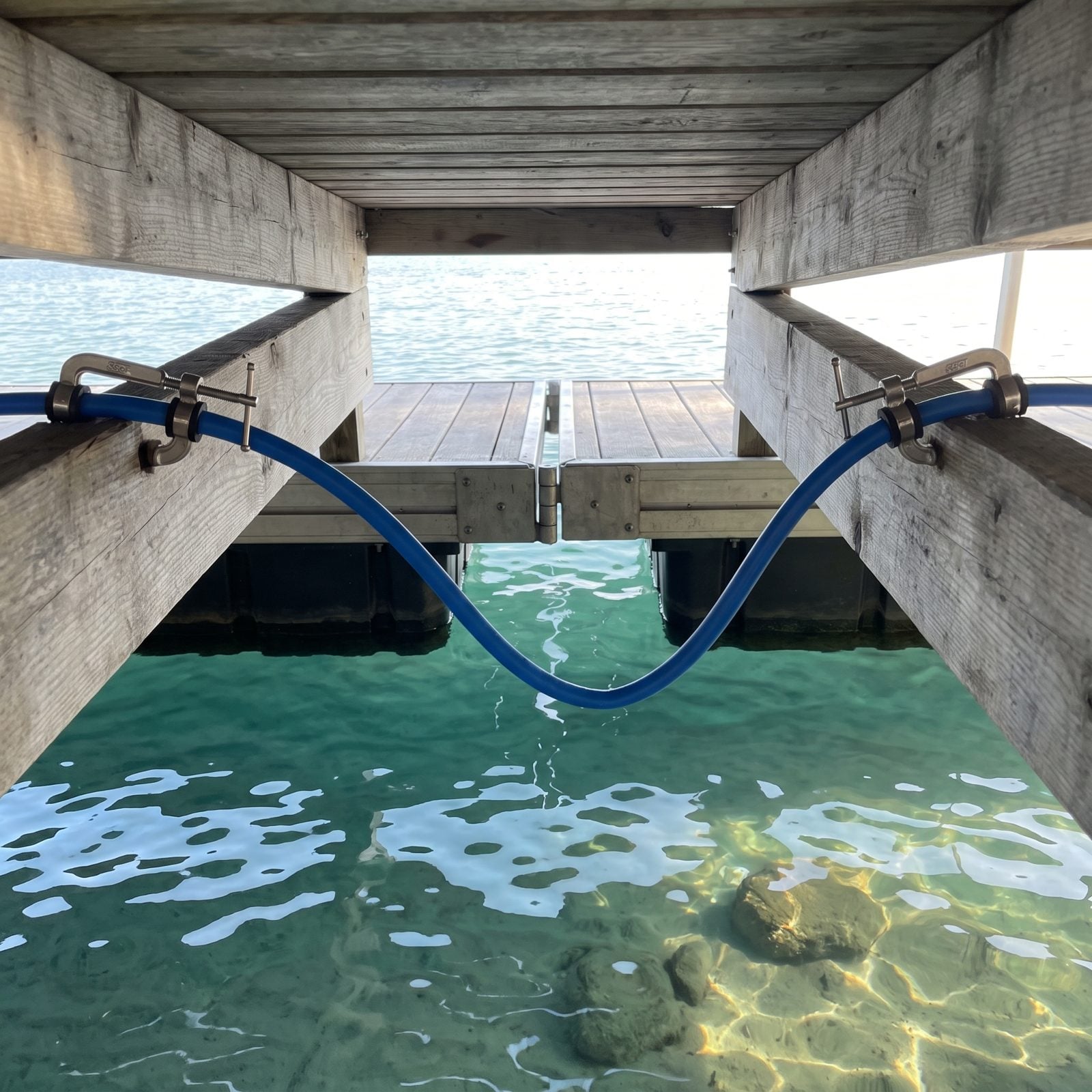
Run a water line straight and rigid across a floating dock and you’ve built yourself a slow-motion failure. Docks flex. Sections rise and fall against each other on every wake, and a taut line has nowhere to give, so it cracks at a fitting. You find out when the dock’s underside is spraying like a fountain.
An expansion loop is nothing more than a deliberate curve of slack built into the line at a joint. Here it’s a single continuous hose clamped to the beam on either side, draped in one easy sag across the gap between dock sections. The loop absorbs the movement. The fittings stay put.
It looks like a mistake, like someone left the line too long. Exactly backwards. The straight line is the mistake.
31. Removable Wedge Inserts Between Floating Dock Sections
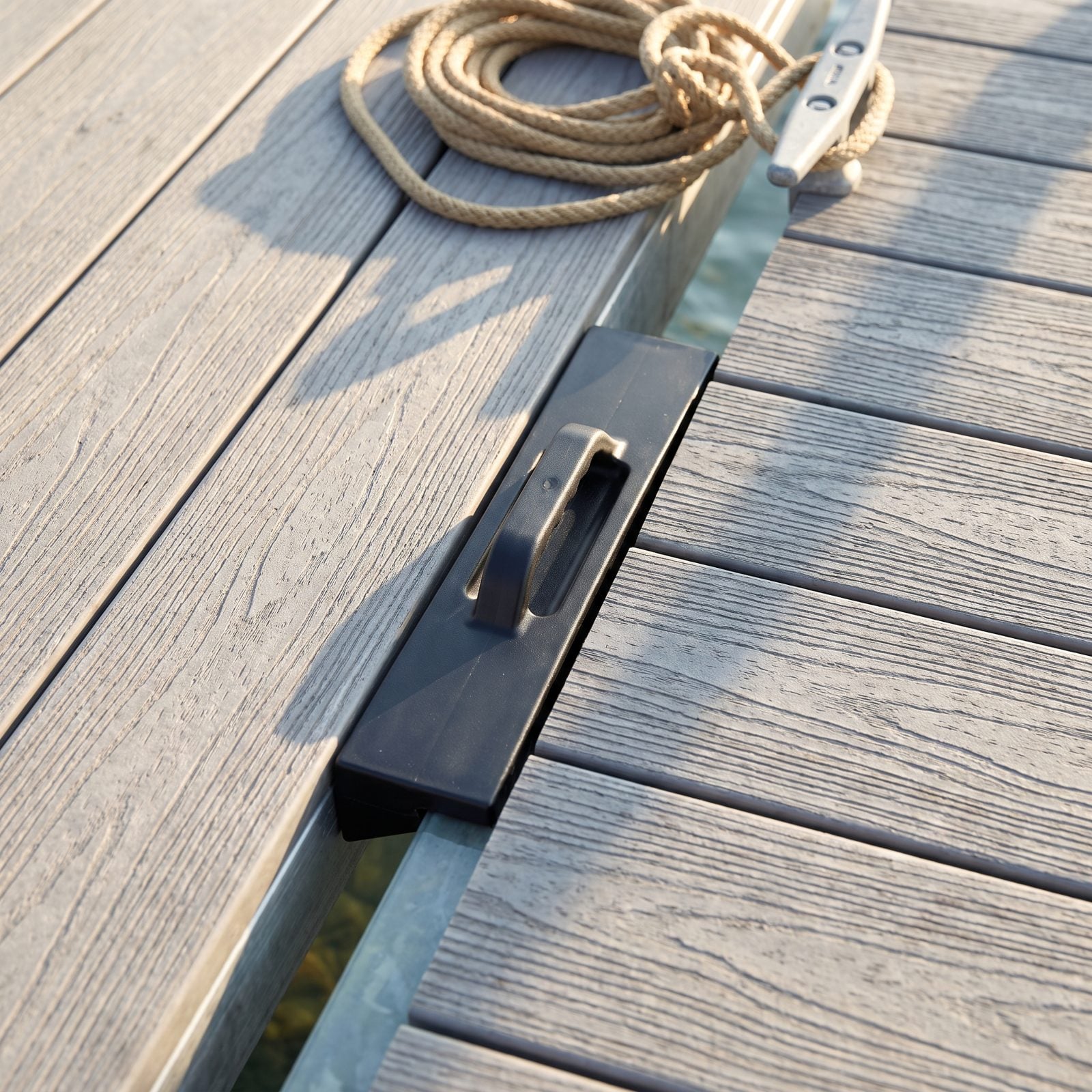
Floating dock sections never meet quite right. The connectors leave play, and over a season that play turns into a gap several inches wide that catches a toe, a dog’s paw, or the wheel of a dock cart.
Removable wedge inserts like this one are flat black plates with a recessed handle that rest on the edge of one section and reach across the joint. Each one bridges only a short stretch of the gap, so the sections still sit apart; put them where feet and wheels actually cross. When you need to separate the dock for winter, you lift them out by the handle and it comes apart clean.
30. Piling-Mounted Tide Slides That Move Mooring Lines With the Water
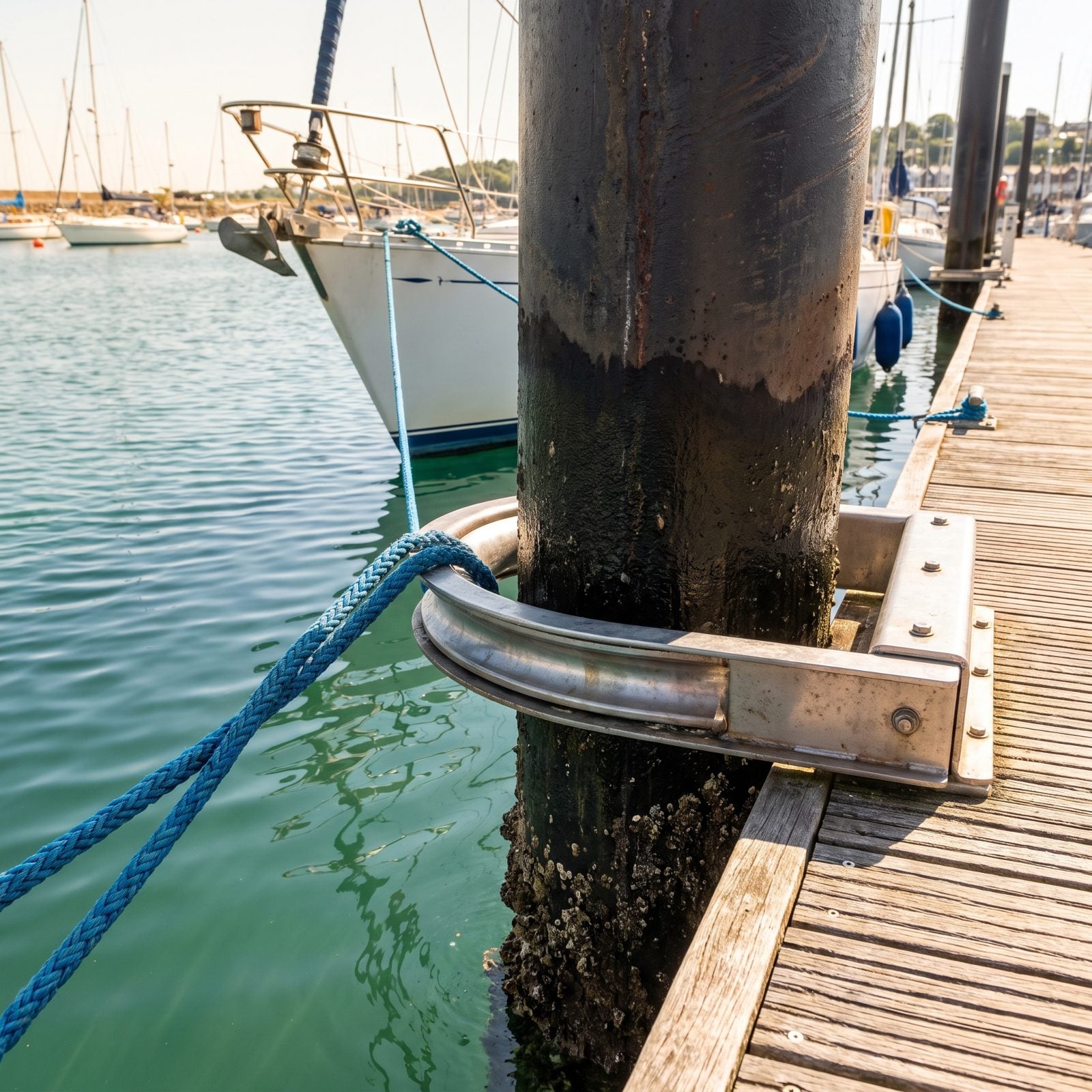
On a tidal pier, a fixed mooring line is either too tight at high water or dragging in the mud at low. You can’t win with a knot. The water moves several feet and the line can’t.
A tide slide is a collar that rides the piling and carries the mooring line up and down with the water. The boat stays snug against the piling at every stage of the tide, no slack, no strain, no 3 a.m. trip down to the dock to let out line.
Freshwater lakes with big seasonal swings get the same benefit. The water doesn’t have to be salt for a fixed line to let you down.
29. An Equipotential Bonding Grid Around Powered Dock Equipment
This is the upgrade nobody wants to think about and everybody should. Electricity and water near a dock is where the word serious actually belongs.
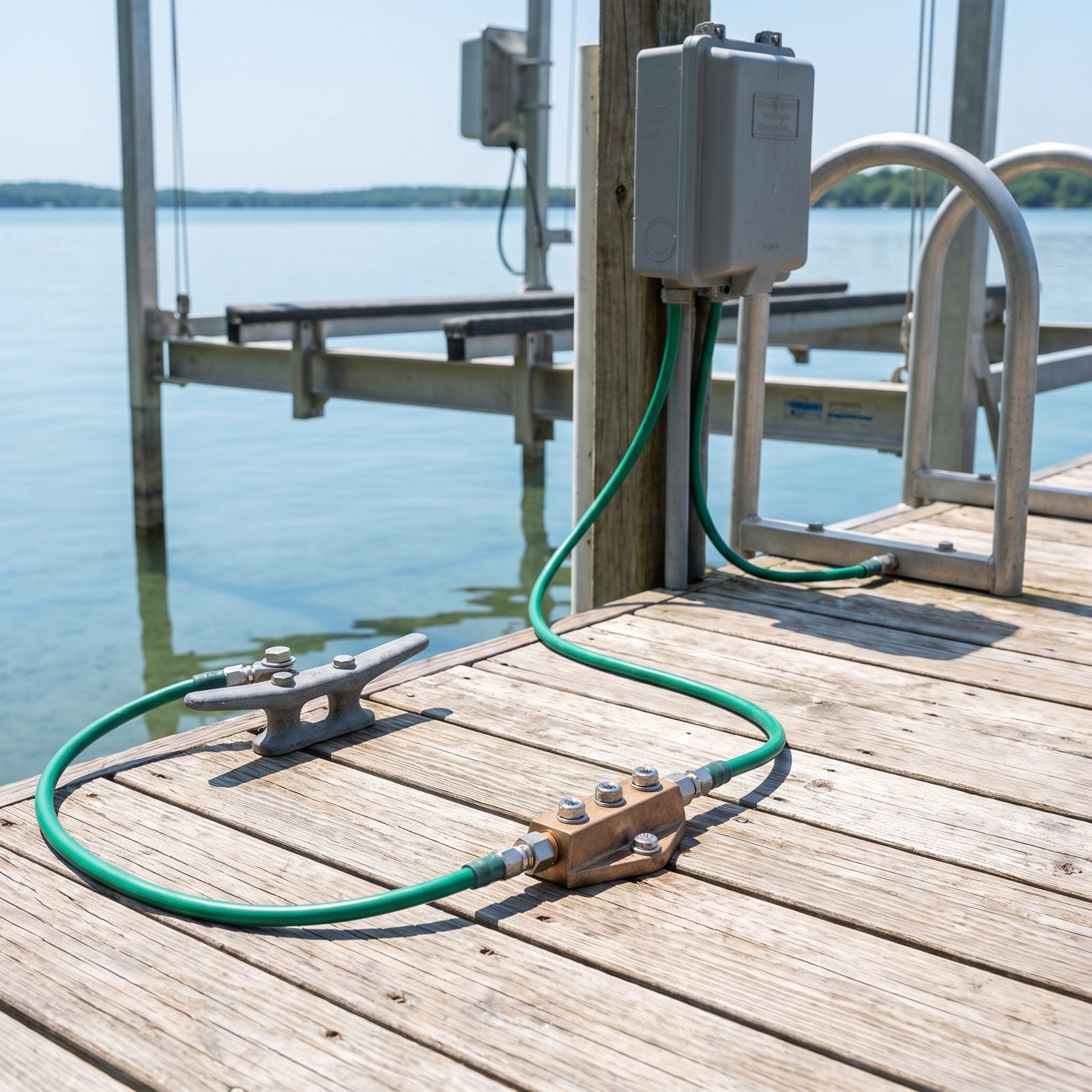
An equipotential bonding grid ties all the metal around your powered equipment, the lift, the ladder, cleats, the shore power pedestal, into one connected system at the same electrical potential. If a fault ever energizes something, the grid gives the current a path that isn’t a swimmer.
It is not a weekend project and it is not a place to improvise. This is the one item here that belongs to a licensed marine electrician, full stop. Have it done right, inspected, and documented. That includes routing: a green bonding conductor left lying loose across the deck boards in a slack loop, as in this photo, is an unsecured trip hazard and should be fastened along the framing instead.
28. Embedded Root Wads That Break Up Wave Energy Along the Bank

A bank that’s washing away a little more every year usually gets answered with a wall of rock or a stack of timbers. It works for a while. Then the water finds a way around, and the wall just shoves the erosion down the shore to your neighbor.
Embedded root wads take the opposite approach. Whole tree root balls get anchored into the bank at the waterline, roots fanning out into the shallows. The tangle soaks up wave energy before it reaches the soil, and the soil behind it holds.
The strange part is the second payoff. Those submerged roots become cover for fish fry and feeding grounds for bass. You set out to save your bank and end up improving the fishing off your own dock.
Least engineered thing on this list, and in some ways the smartest. Nature spent a long time working out that a root wad slows water. Someone finally wrote it down.
27. Geocell Reinforcement Along Boat-Ramp Shoulders
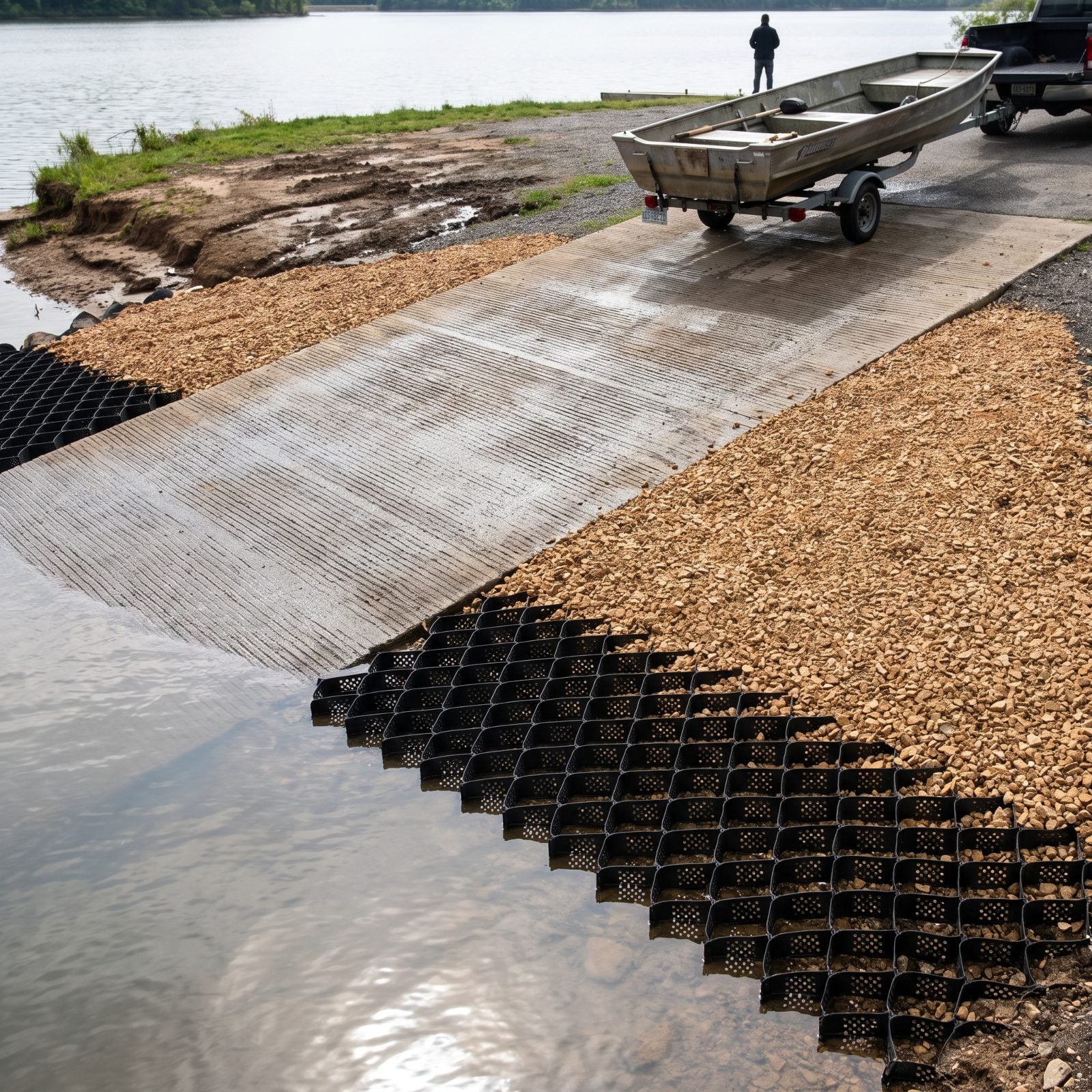
The gravel at the edge of a boat ramp is where the damage hides. Every launch pushes water and tire wash into those shoulders, and over a season or two the stone migrates downhill and leaves a soft rut that swallows trailer tires and turns a simple backup into a recovery job.
Geocell changes that. It’s a plastic honeycomb grid you lay down and fill with crushed stone, and each cell locks its pocket of gravel so nothing wanders off. Launches stay level. The edge holds its shape. You stop re-grading the same miserable spot every single spring.
26. A Wildlife Escape Ramp for Trapped Turtles and Ducklings
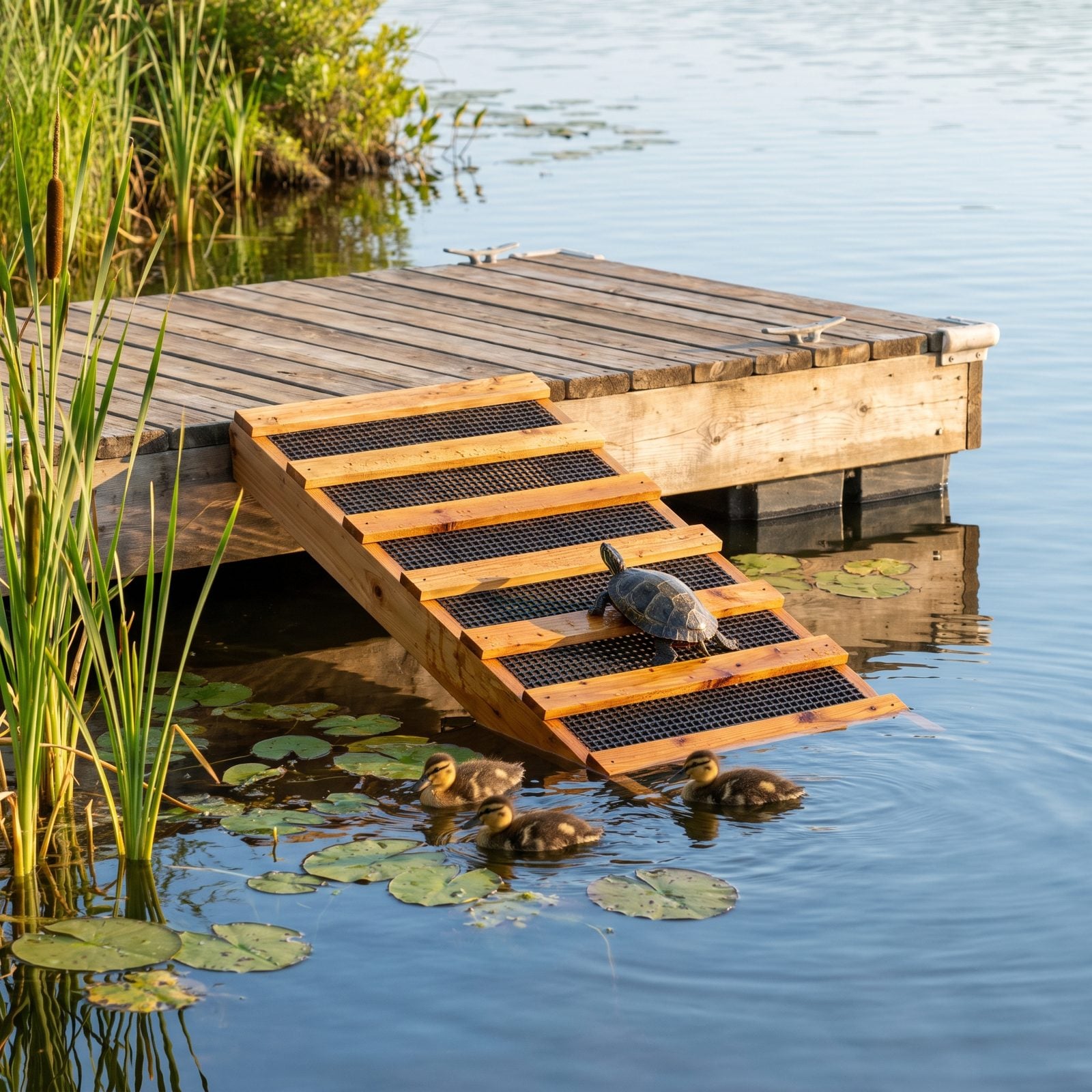
Most people never think about what happens when a duckling paddles up to a smooth dock face and can’t climb out. It happens constantly. Steep seawalls and floating docks turn into traps, and ducklings, turtles, even young geese will exhaust themselves trying to scramble up a vertical edge they have no hope of beating.
A small escape ramp fixes it. Cedar slats and rubber mesh angled from the waterline to the dock give small animals a grippy way up, and it costs almost nothing to build in an afternoon.
Honestly? Watching a turtle actually use the thing is better than it has any right to be.
25. Sacrificial Zinc Anodes That Protect Metal Dock Hardware
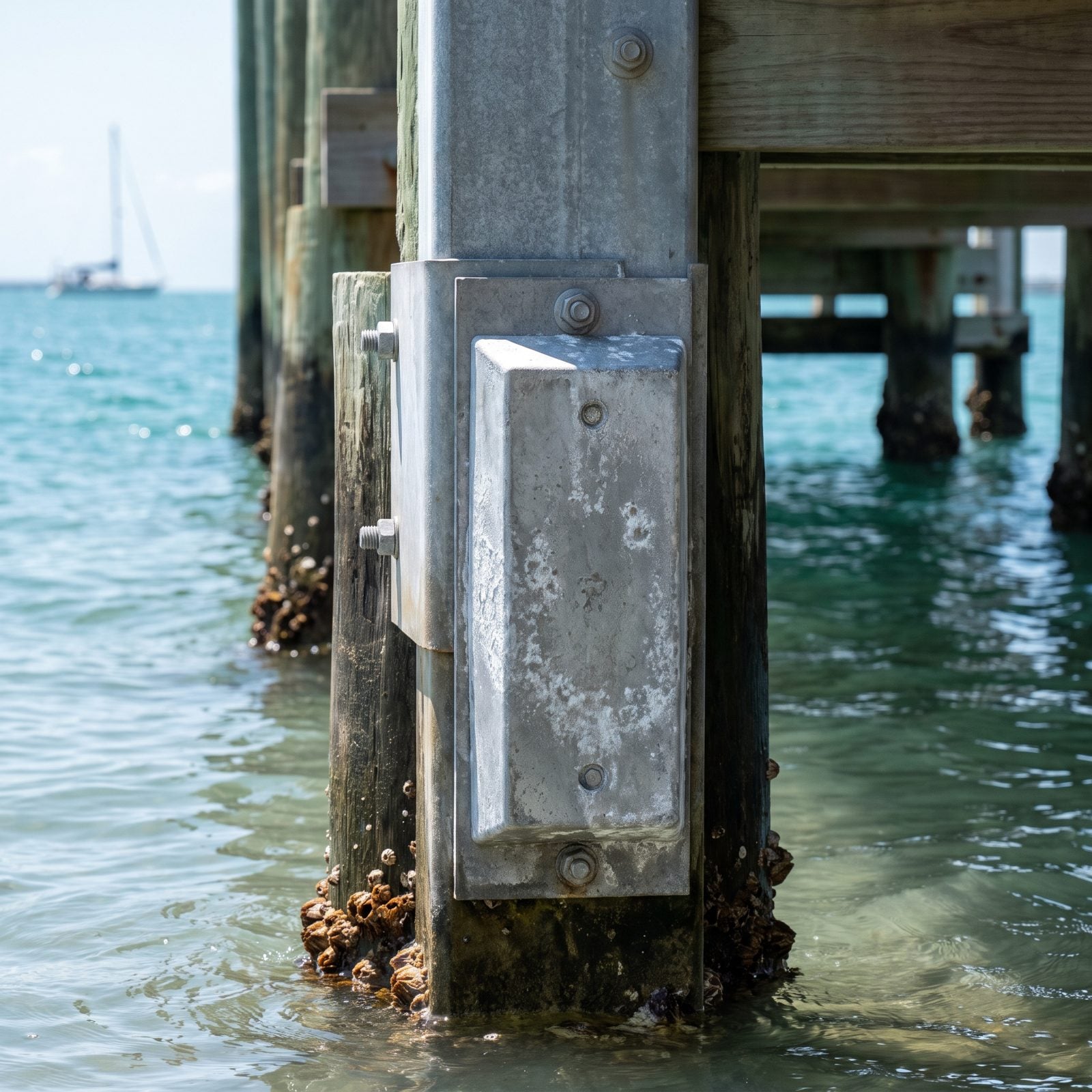
Your dock hardware is in a slow fight with the water, and it’s losing. Any time metal sits in water — especially salt water, or water carrying stray electrical current — corrosion eats it from the inside, and your cleats, brackets, ladder frames, and fasteners all rust faster than they should.
A sacrificial zinc anode is a cheap chunk of metal you bolt on nearby. It corrodes first, on purpose, drawing the damage to itself and sparing everything else. When it’s eaten away, you swap it. A twenty-dollar block that saves a thousand-dollar ladder.
24. A Hose Vacuum Breaker That Prevents Backflow Into Drinking Water
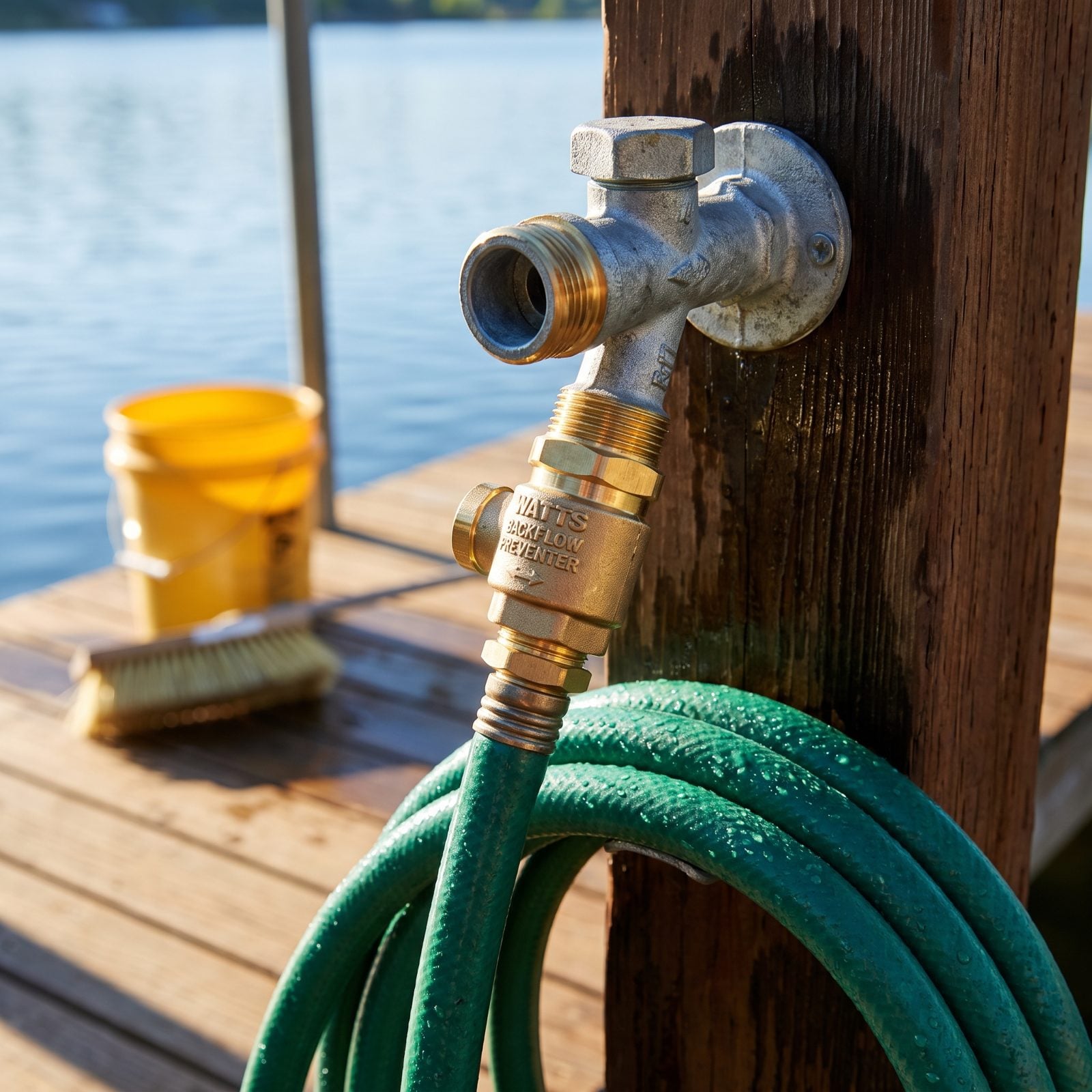
Picture a scenario nobody pictures. You’ve got a hose running from a drinking-water line down to the dock, the end sitting in a bucket of soapy lake water or a tank you’re filling. Pressure drops upstream — maybe someone flushes, maybe a pump kicks off — and suction pulls that dirty water backward into your supply line.
The brass piece on this spigot, embossed ‘WATTS BACKFLOW PREVENTER’ with a side cap, is what stops that. A vacuum breaker like this is a small brass fitting that threads onto the spigot. It opens to air the instant pressure reverses, breaking the siphon before anything nasty gets sucked back. Plumbing codes require them in a lot of places for exactly this reason, and for pennies it keeps your drinking water clean.
23. Removable Deck-Panel Fasteners for Ice-Prone Shorelines
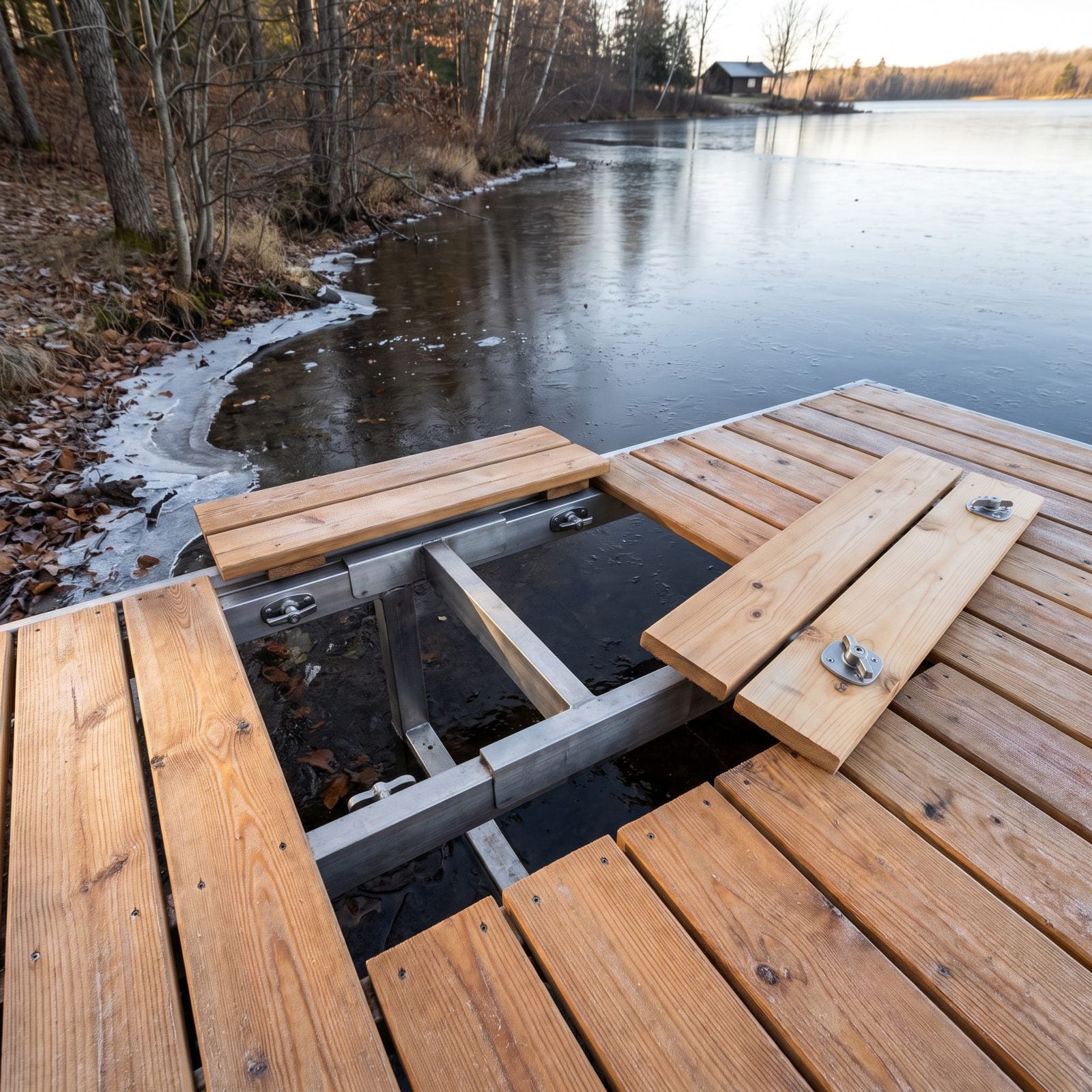
Ice doesn’t just sit on a lake. It grips, lifts, and heaves, and every winter it tries to pry a fixed dock apart board by board. On freeze-prone shorelines, screwing deck panels down permanently is a losing bet.
Quick-release fasteners let you pull the panels off before the hard freeze and stack them on shore. The frame rides out the ice bare, your expensive decking waits safe in the garage, and reassembly in spring is an hour of work instead of a rebuild.
People who’ve replaced a heaved dock once never make that mistake twice.
22. Stand-Off Fender Boards That Protect Hulls From Exposed Pilings
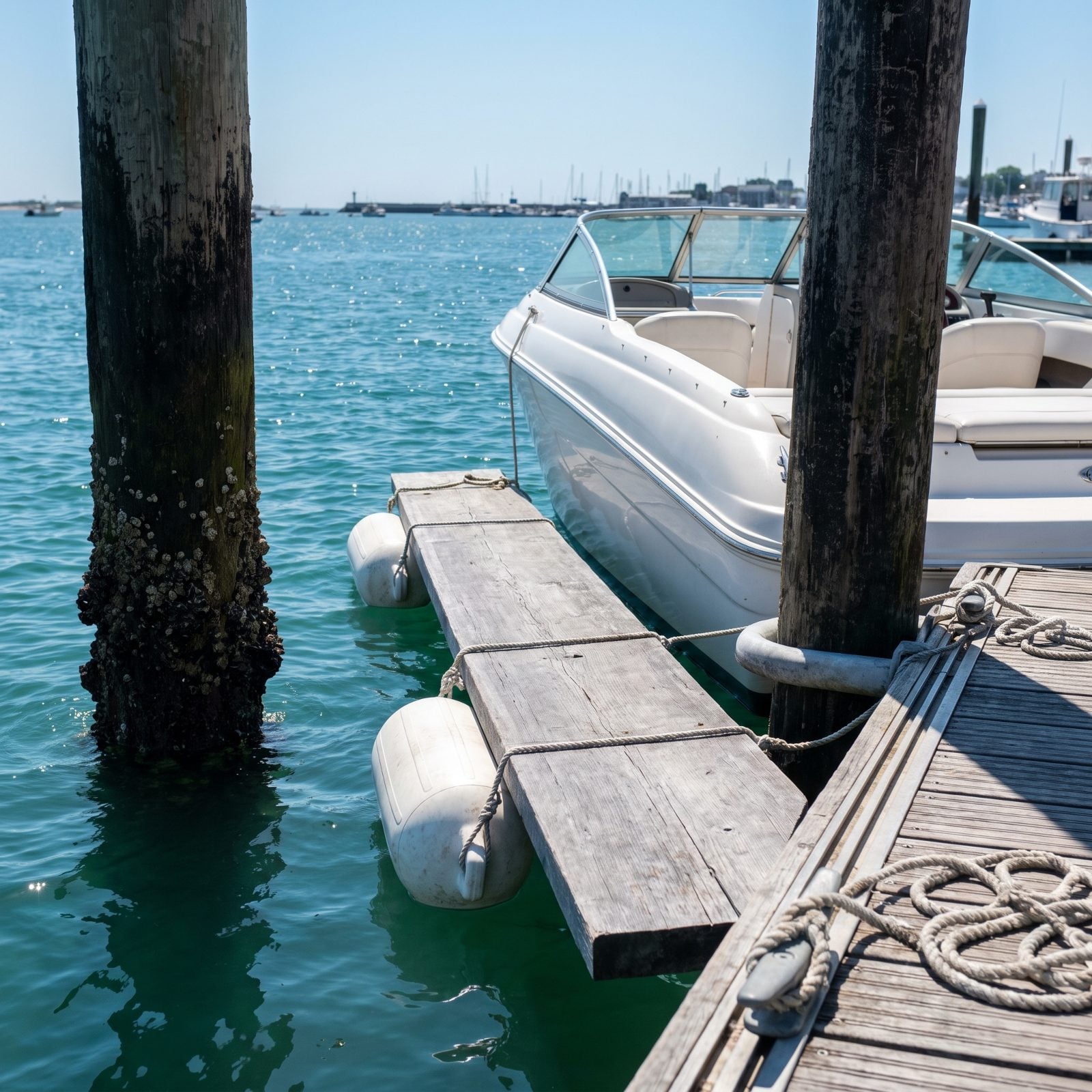
Round fenders are great until the piling is wider than the fender, or the corner of a rough timber finds a gap and grinds a line into your gelcoat on the first swell. Anyone who’s docked against old creosote pilings knows the sound.
A fender board solves it — a plank hung horizontally outside two fenders, between the hull and the piling, so it spans the piling face and buffers the gap between boat and piling and keep the splintery edges away from the gelcoat.
Cheap to make. Turns a nervous mooring against ugly pilings into a non-event.
21. Vertical Corner Wheels That Guide Boats Past Sharp Turns
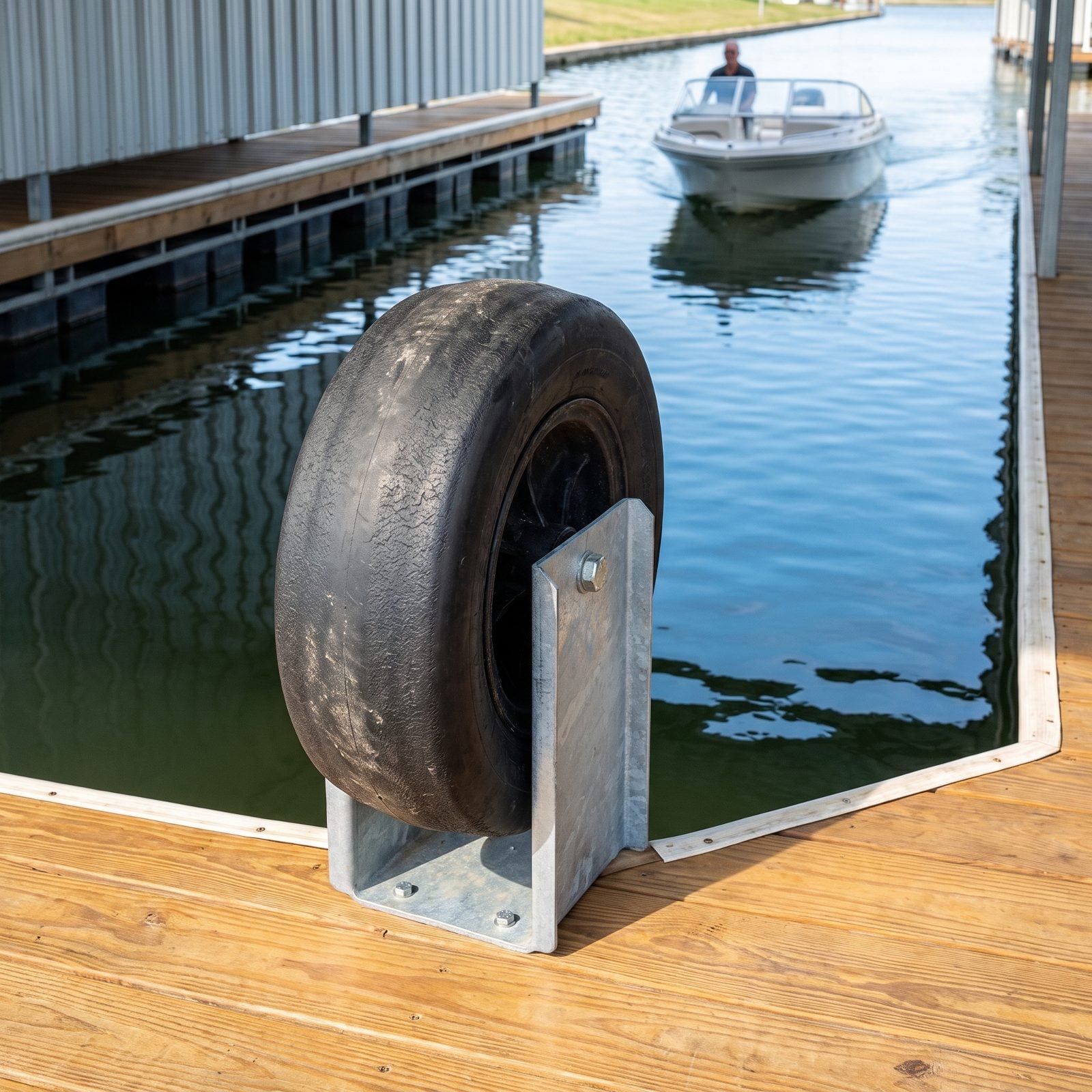
Tight channels and sharp dock corners are where gelcoat goes to die. You line up the turn, the wind nudges you, and suddenly the bow is kissing a hard wooden corner you can’t quite steer around.
A vertical corner wheel is a free-spinning rubber roller bolted to the outside of that corner. Instead of scraping, the hull meets the wheel and rolls right past, which takes the energy out of a bad line and sends the boat on its way.
20. A Sloped Boot-Rinse Grate That Drains Mud Before It Reaches the Dock
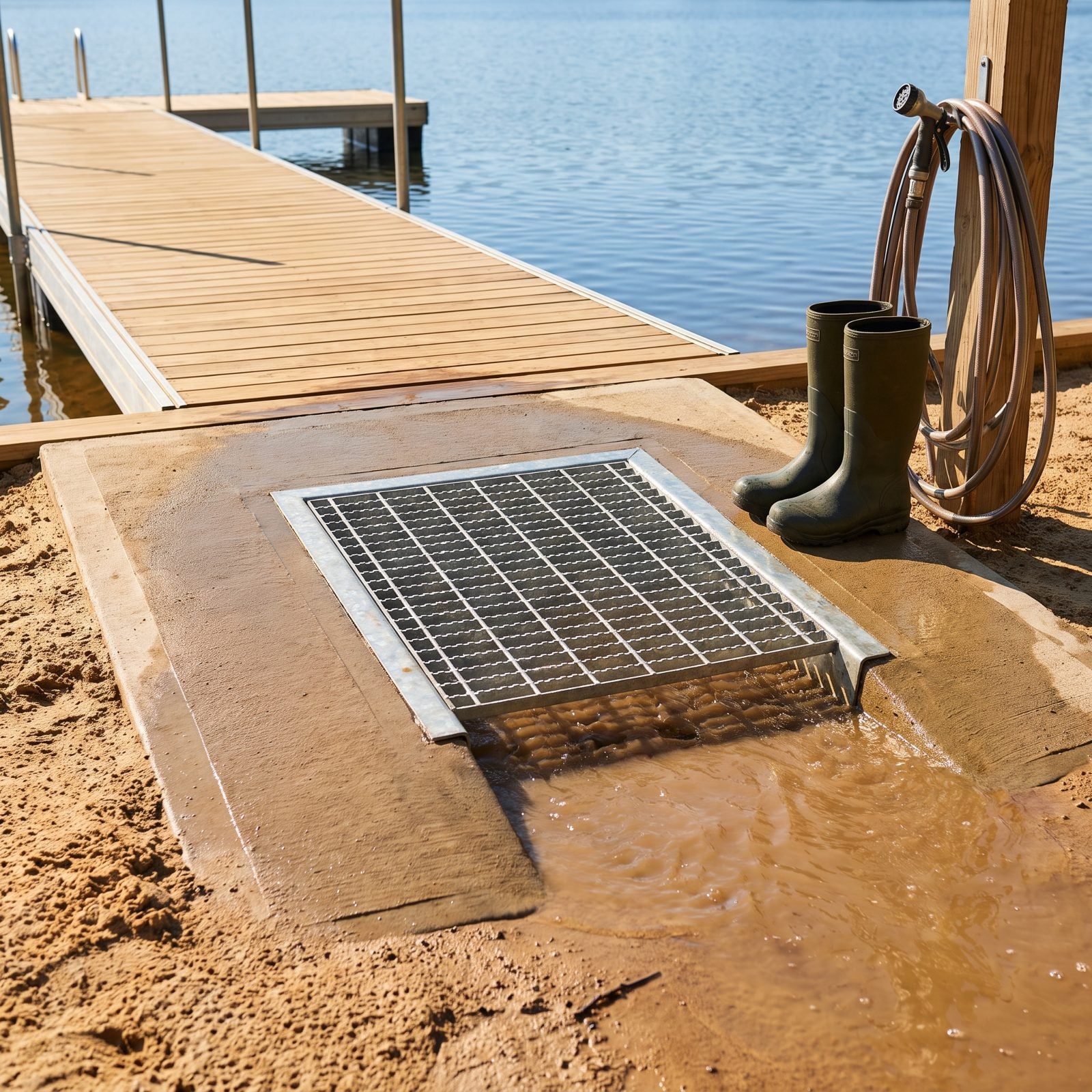
You know the stripe of dried mud that tracks right up the center of every dock by August. It comes off boots, grinds into the boards, and makes the whole walkway slick and gritty.
A sloped rinse grate at the shore end stops it at the door. Stand on the grate, spray off, and the muddy water runs out from under the grate, across the slab and back onto the sand instead of riding onto the dock on your soles. The boards stay clean, and clean boards are safer boards.
Small thing. Changes the whole feel of walking out to the water.
19. A Low-Angle Dog Ramp With Grippy Cross Slats
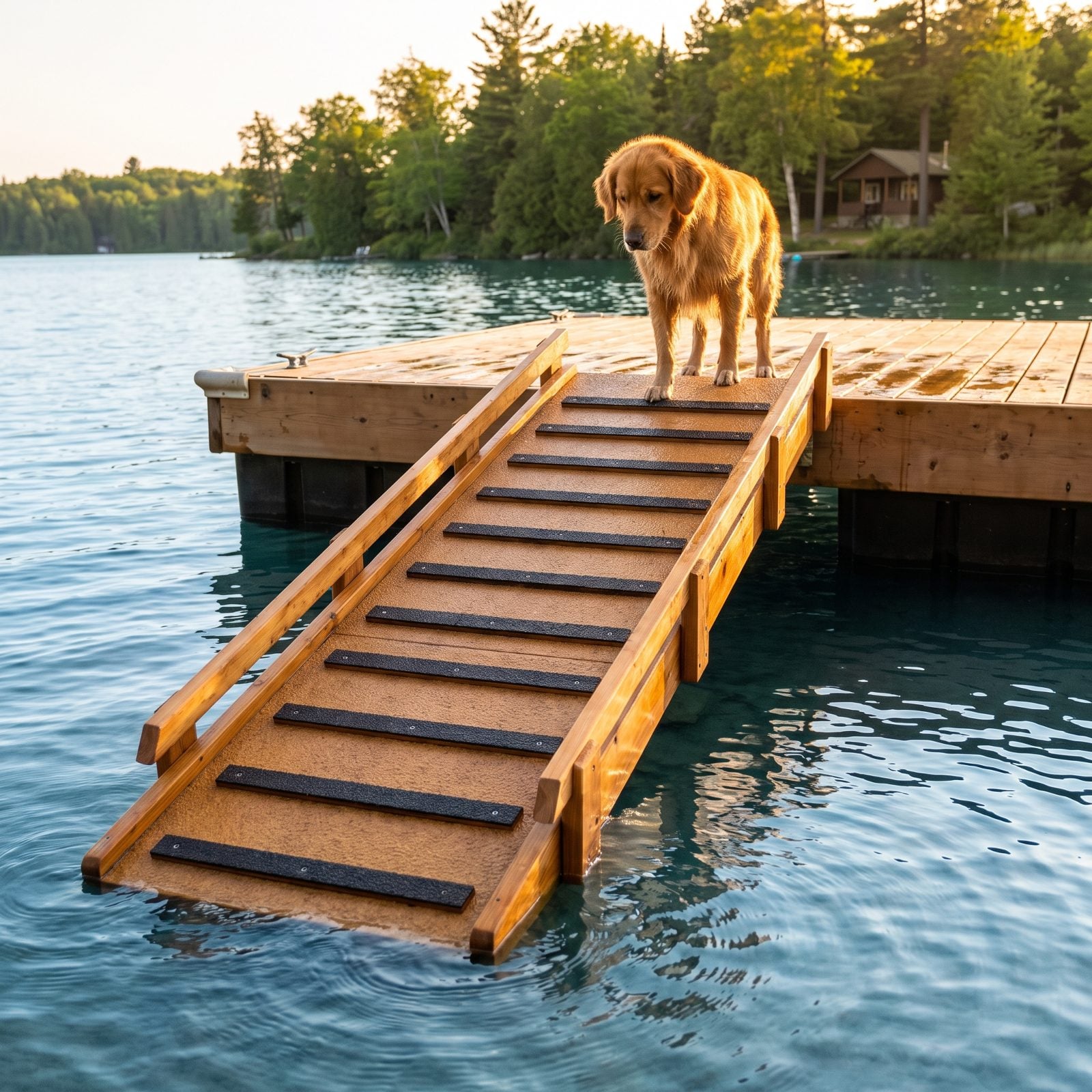
A dog that loves the water will launch off a dock and then have no way back up. Older dogs especially tear their paws and their nerves scrambling at a smooth dock face, and plenty of them simply quit swimming because the exit scares them.
A low-angle ramp with cross slats fixes both problems. The shallow slope lets an arthritic dog walk out instead of claw out, and the raised slats give wet paws something to grab. Dogs that used to hesitate will take the ramp at a run.
18. A Detachable Canoe-Stabilizing Arm for Easier Boarding
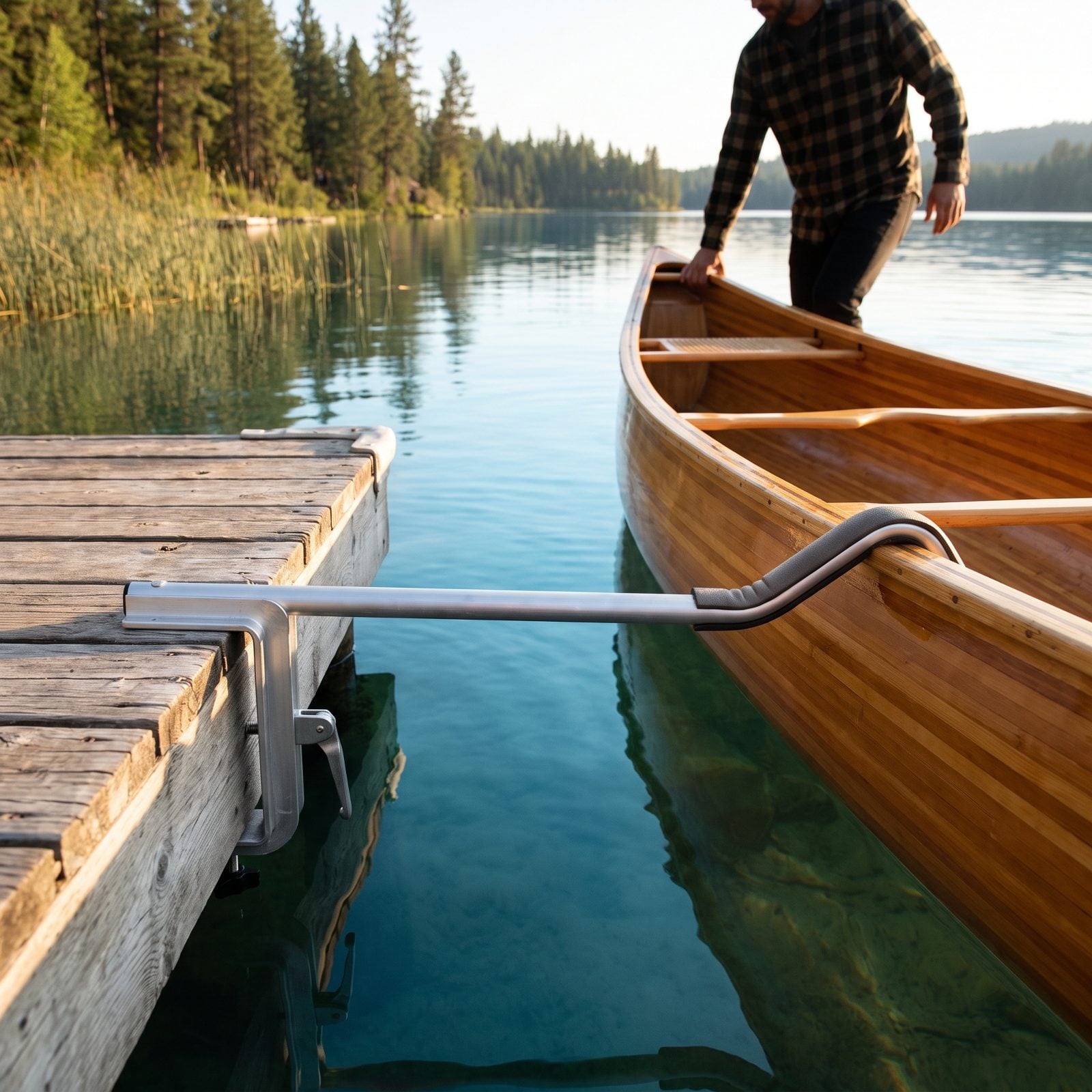
Getting into a canoe is where most dock mishaps happen. The hull rolls the second you shift your weight, and suddenly you’re doing that awkward crouch-stumble while the boat scoots away from you.
A detachable stabilizing arm clamps to the dock edge and pins the gunwale flat while you board, so you can stop praying your partner holds the stern tight enough. It bolts on in seconds and stores flat against a wall when you’re done. For anyone over 50 whose knees have opinions about low, wobbly surfaces, this is the small piece of gear that keeps canoe season going longer.
17. A Low-Freeboard Kayak Launch With Side Grab Rails
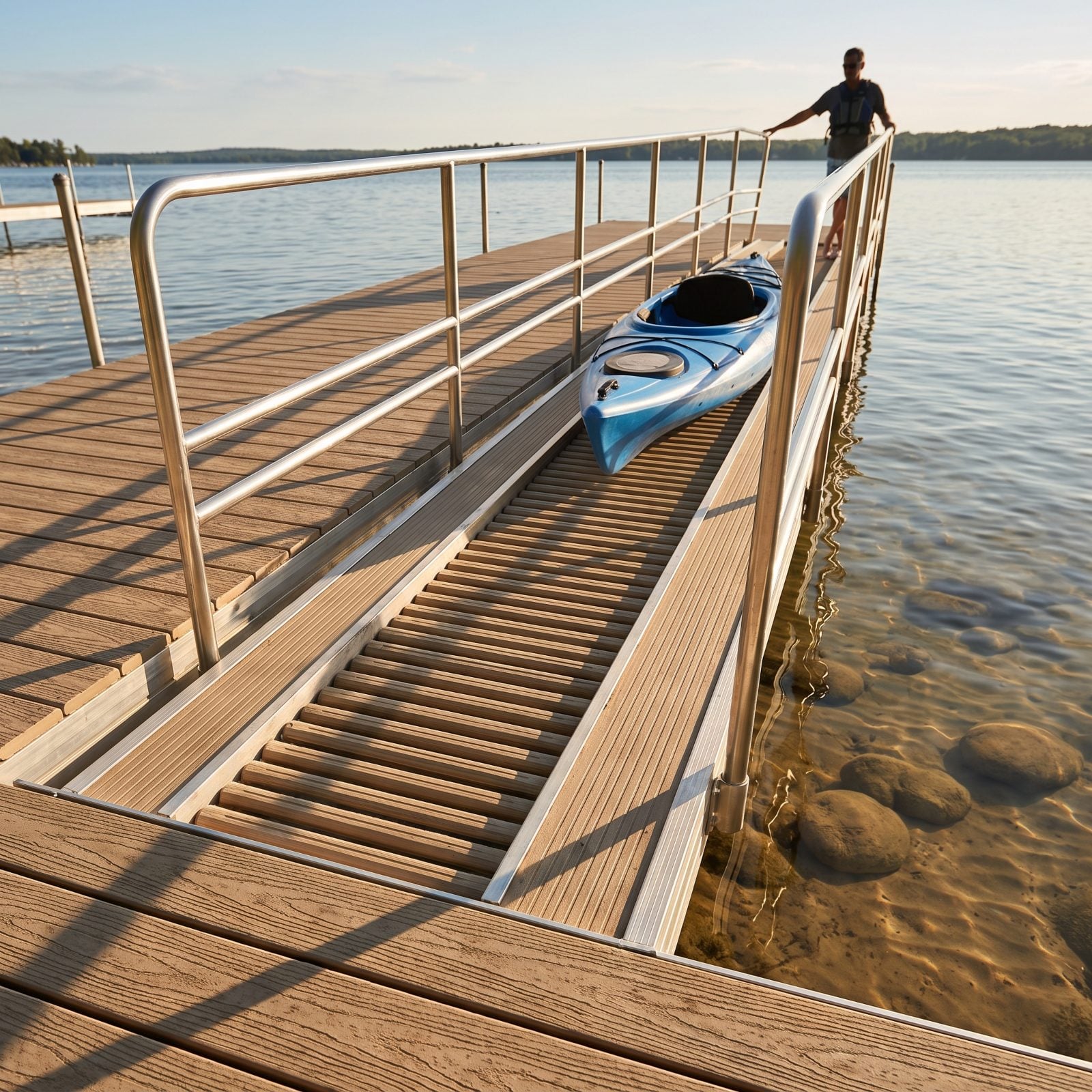
That gap between dock height and water level is a kayaker’s nemesis. Regular docks sit two or three feet up, which means dropping blind into a bobbing boat and hoping for the best.
A roller-bed launch sits flush with the dock deck, so you can roll the kayak along the ramp instead of lifting it, and the side rails give your hands something solid to hold while you guide the boat toward the water. You stay in control the whole time. Here’s the good news: these roller launch systems have come way down in price from the municipal versions you see at public parks, and a homeowner-scale one is genuinely doable for a private dock.
16. An Under-Dock Kayak Cradle That Frees Up Deck Space
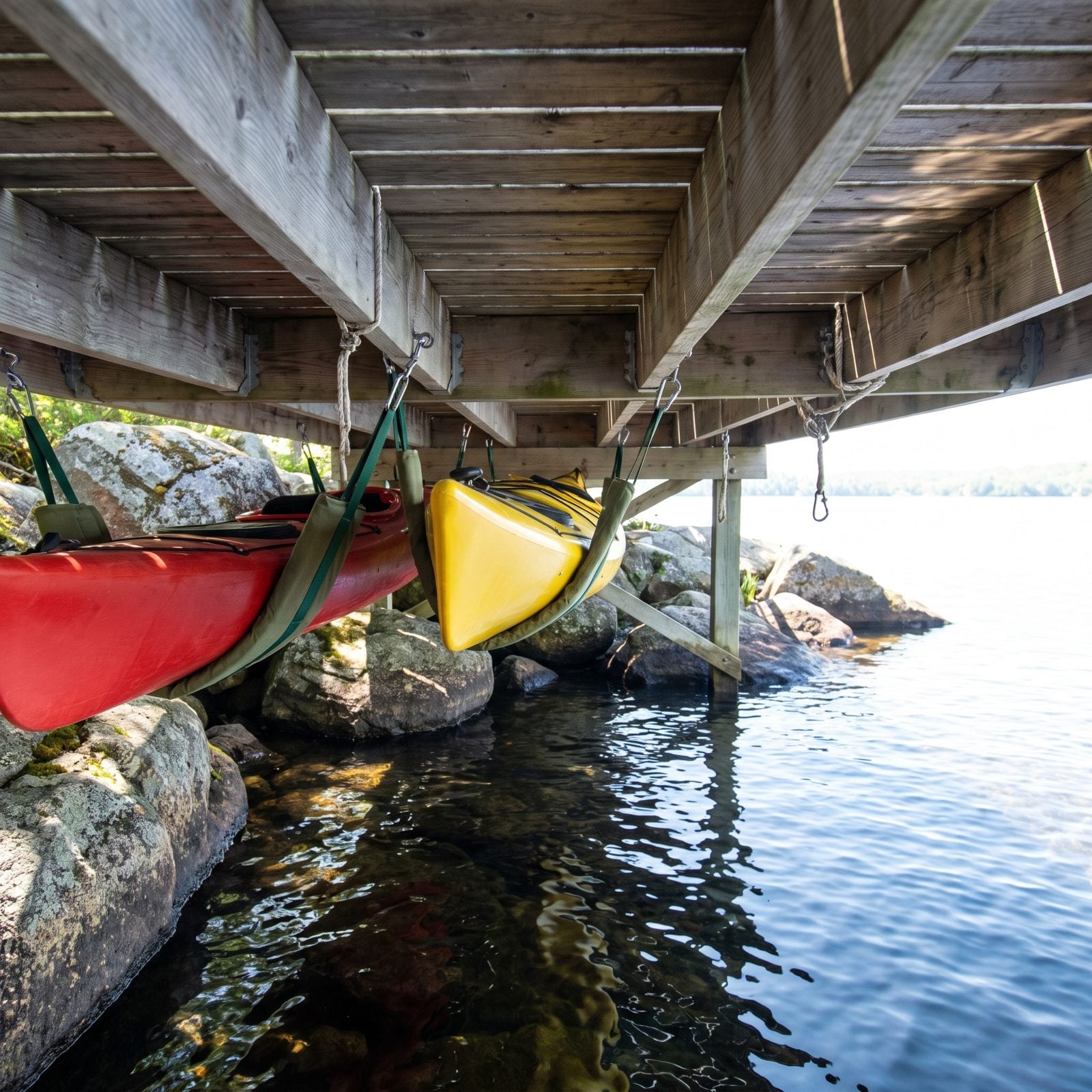
Most docks drown in gear. Kayaks stacked on the walkway, paddles leaned against the railing, everyone shuffling sideways past the pile.
Hang your kayaks in padded slings beneath the deck and the whole traffic jam disappears. The hulls stay shaded, cradled right at the waterline, off the hot boards that fade gelcoat, and your dock surface opens back up for chairs, coolers, and actually walking. It’s one of those storage tricks that seems obvious the moment you see it — and then you spend a while wondering why you didn’t do it years ago.
15. A Flip-Up Swim Ladder That Stays Clear of Algae Growth
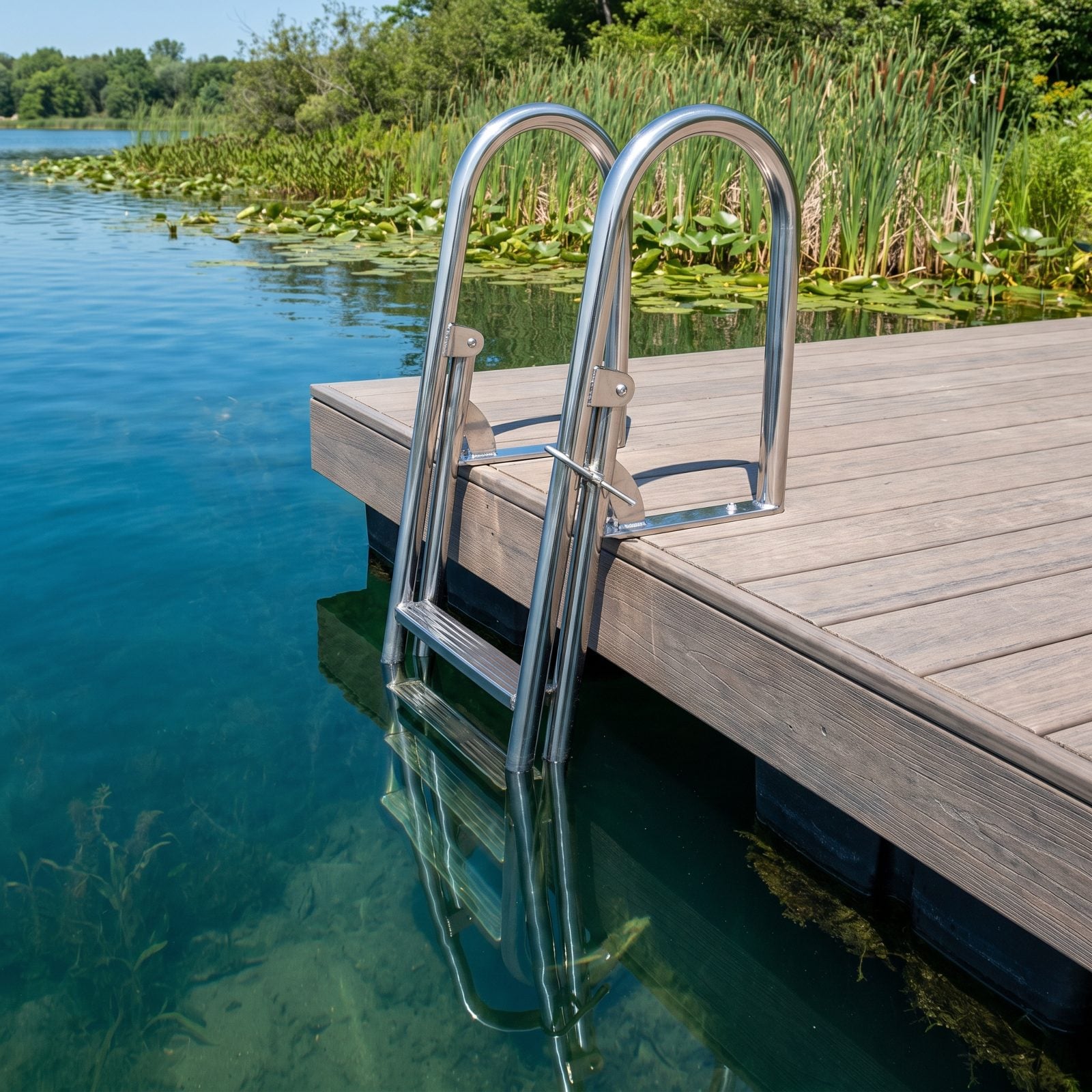
Anyone who’s gripped a swim ladder after a few weeks underwater knows the feeling. That slick, cold film of algae that turns every rung into a trap.
A flip-up ladder is meant to solve it by lifting the submerged rungs clear of the water when nobody’s swimming (the one pictured is lowered, rungs in the water, ready for a swim). No sunlight, no standing water, no slime — so the next time you climb out your hands actually grip something. It also keeps the lower rungs from snagging lines and limbs that drift past the dock.
14. A Ventilated PFD Bench That Combines Seating and Storage
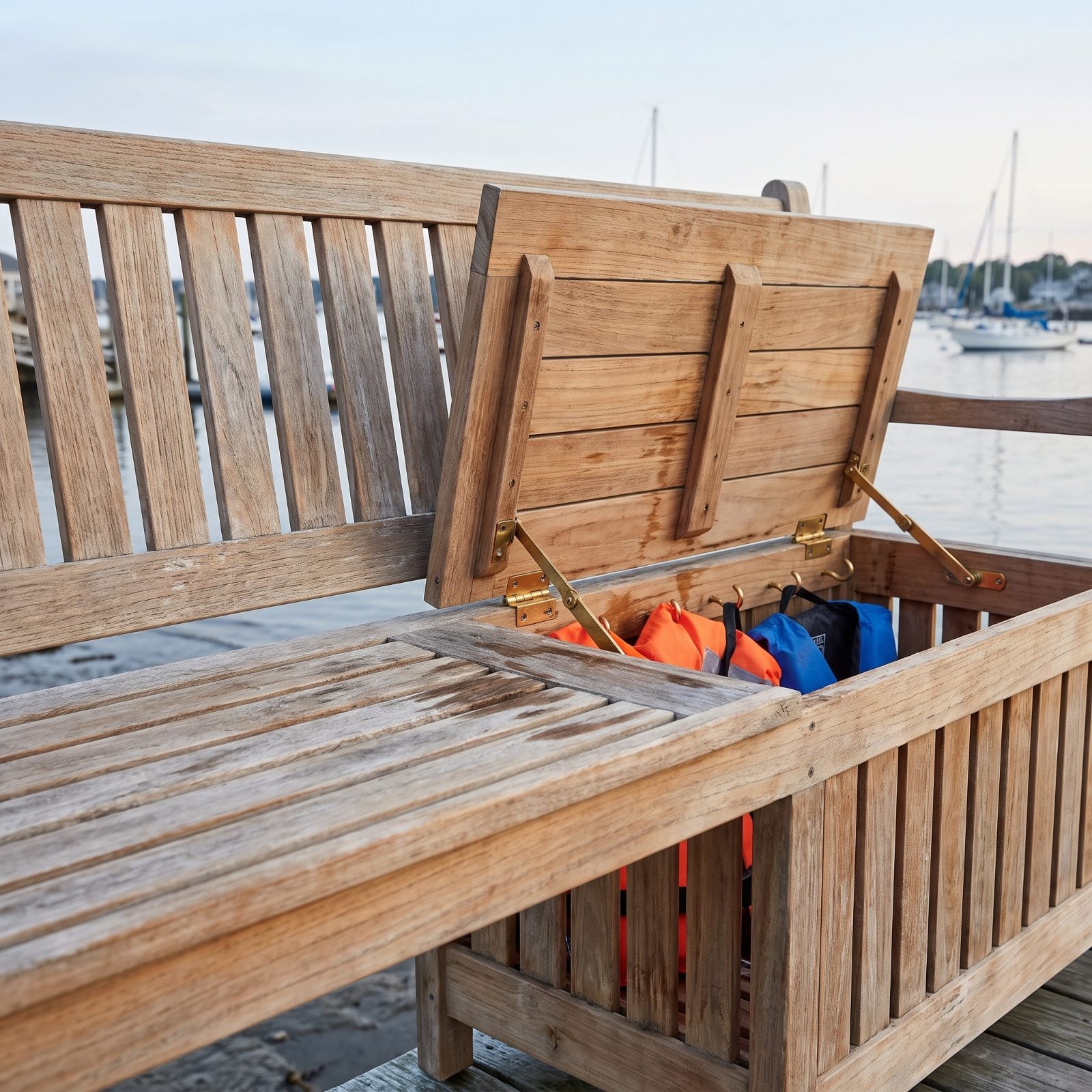
Wet life vests shoved in a bin is how you end up with a storage box that smells like a locker room and vests that never fully dry.
A ventilated bench pulls double duty. You get a dry seat for lacing up your shoes, and underneath, slatted sides let air move through the stored PFDs so they dry between outings instead of festering. And keeping them dry means nobody skips wearing one because the only option reeks of mildew — which matters more than any convenience.
13. A Retractable Washdown Hose Reel Under the Dock Edge
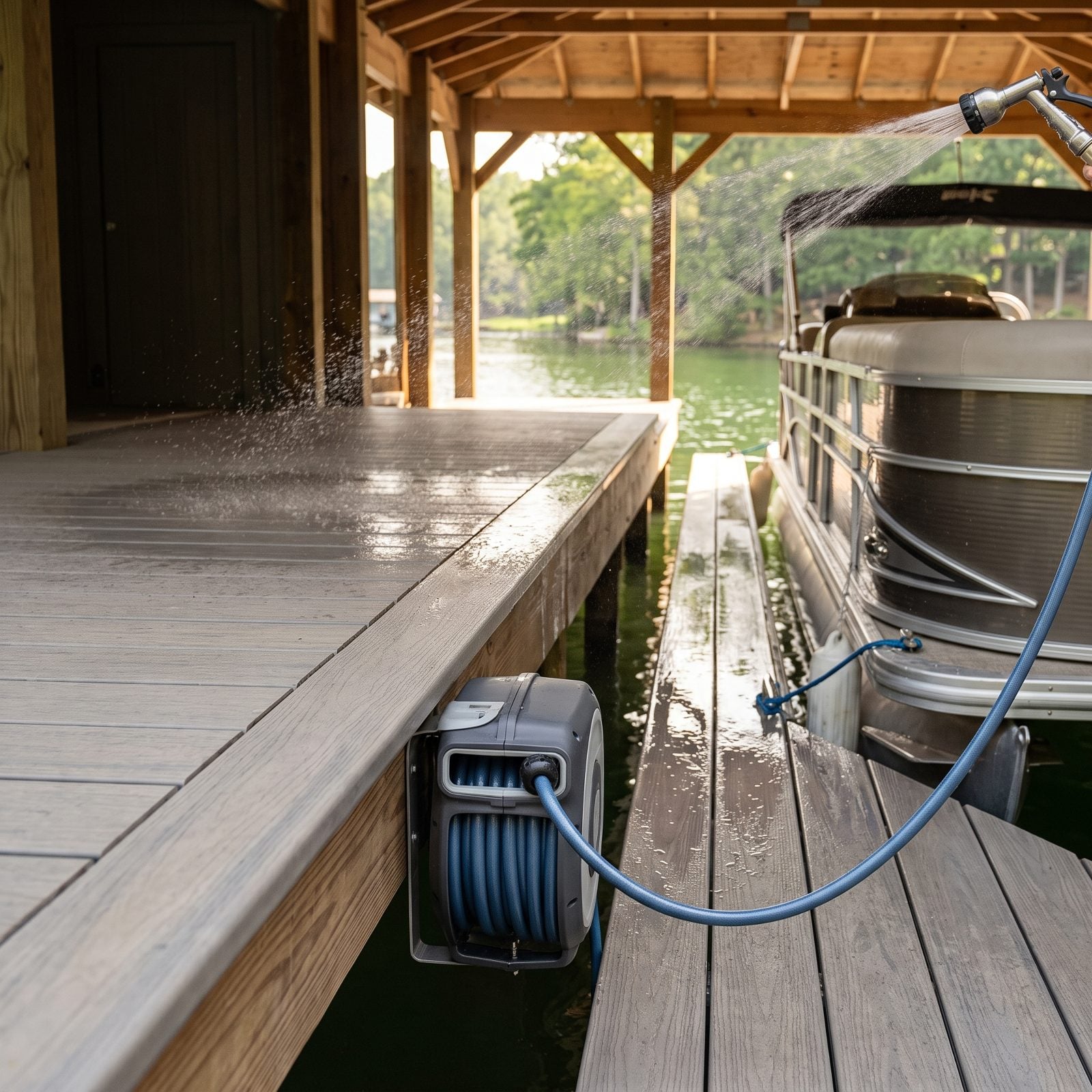
A garden hose coiled on the dock is an ankle-breaker dressed up as a convenience. Half the time it’s full of hot, stale water and knotted into a nest.
Mount a retractable reel under the dock edge and the hose stays out of the walkway until you need it, then snaps back out of sight when you’re done. Rinse salt, lake scum, and fish gunk off the boat right at the slip and you extend everything from your gelcoat to your trailer. Nobody trips over a hose that lives under the deck.
12. A Dock-Cart Wheel Stop That Prevents Runaways
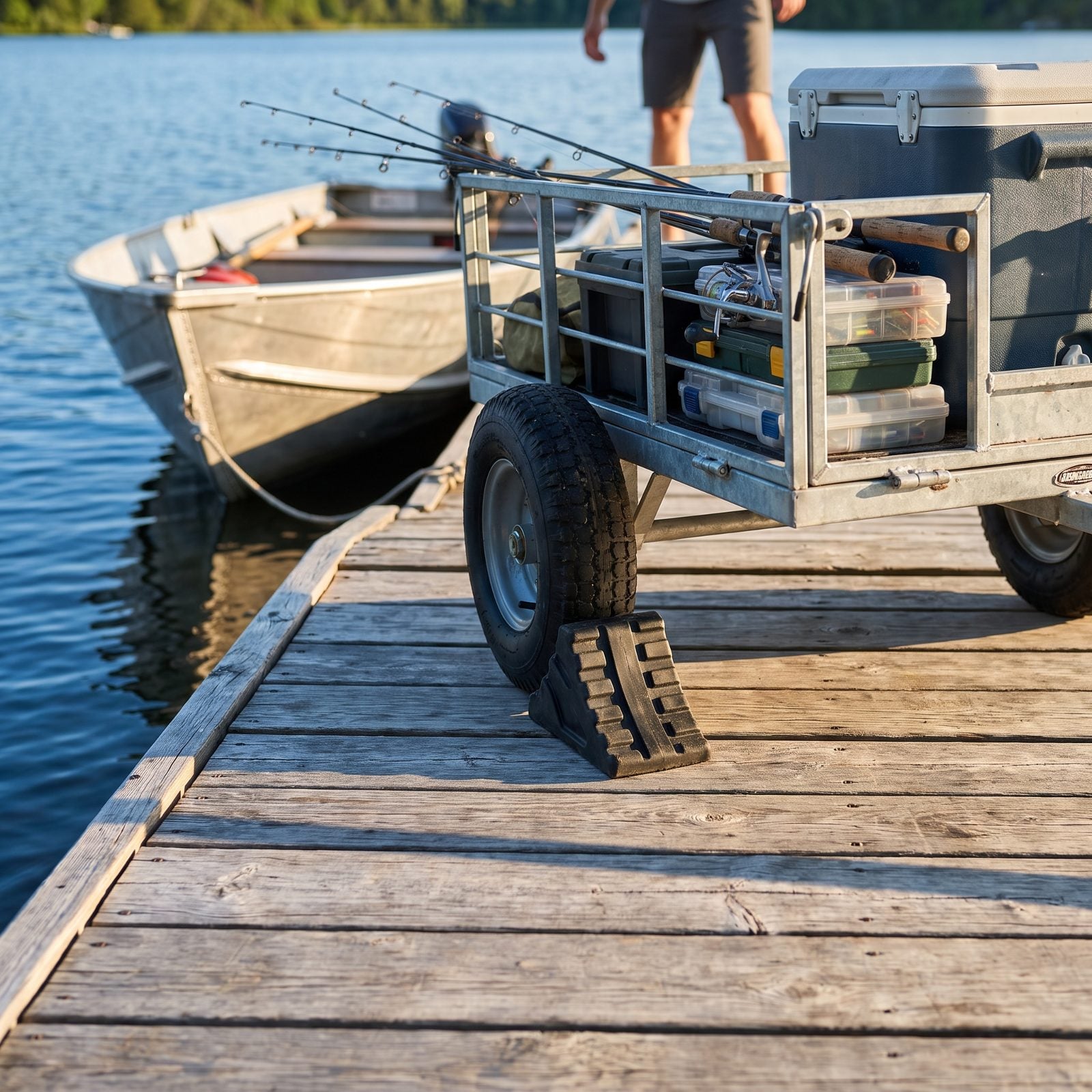
A runaway cart ends up in the lake. Every time.
Docks are almost never perfectly level, and a loaded cart parked near the edge will find the slope eventually — usually while your back is turned unloading. A molded wheel chock, or a small raised stop screwed into the deck, holds it put. Cheap, nearly invisible, and it saves you from fishing a cart and a cooler of groceries out of six feet of water. Small thing. But a cart full of gear rolling off the end is a bad afternoon nobody forgets.
11. Flip-Down Cleats That Leave a Clear Walking Surface
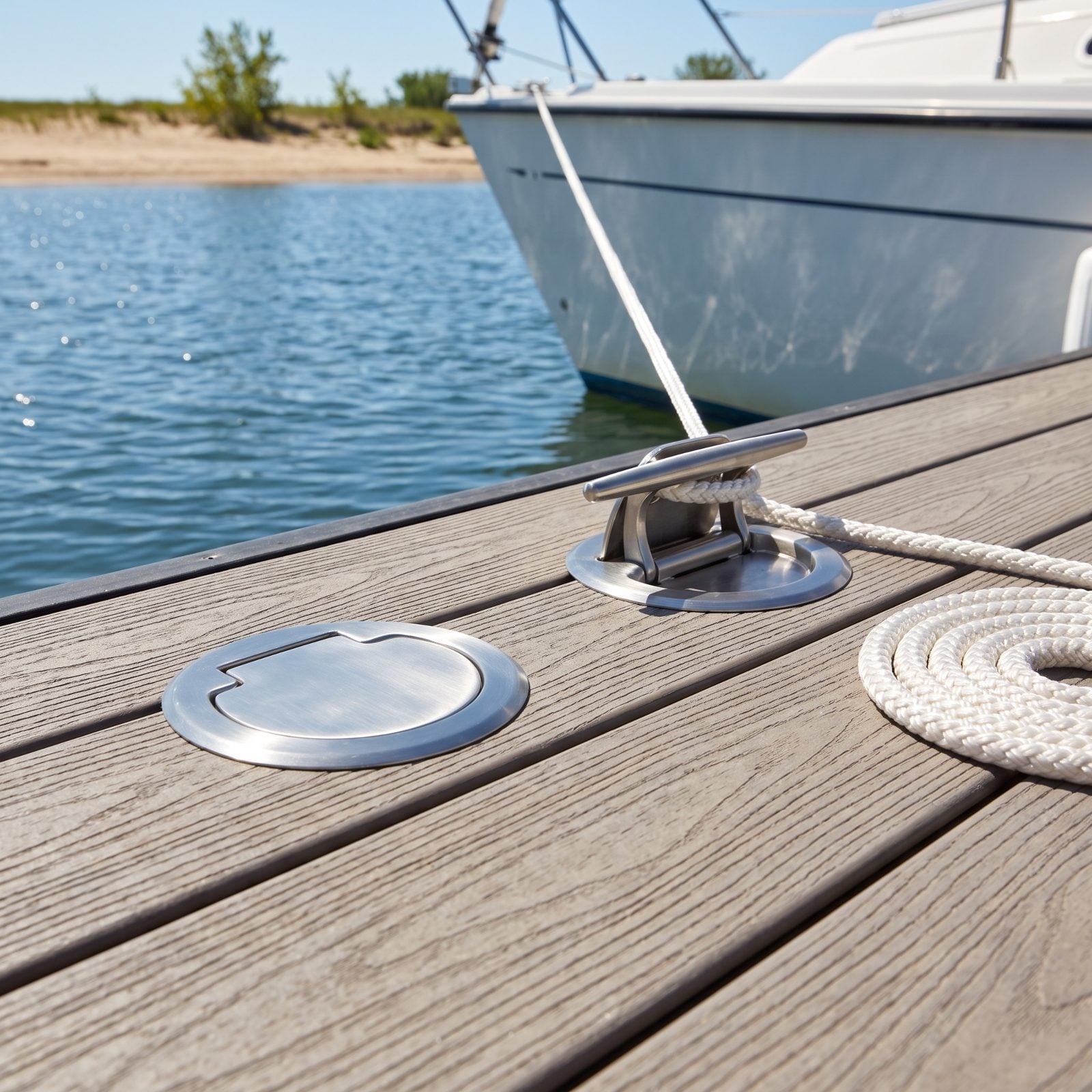
Standard horn cleats are toe-stubbers. They jut up out of the deck right where you walk, and sooner or later a bare foot finds one in the dark.
Flip-down cleats sit flush with the surface until you pull one up to tie off. With no boat moored there, the deck stays clean and smooth, with no protruding metal to catch a toe, a line, or a towel. They run a bit more than fixed cleats, but on a dock where people pad around barefoot all summer, the math is easy.
10. A Recessed Utility Channel for Hoses and Electrical Cords
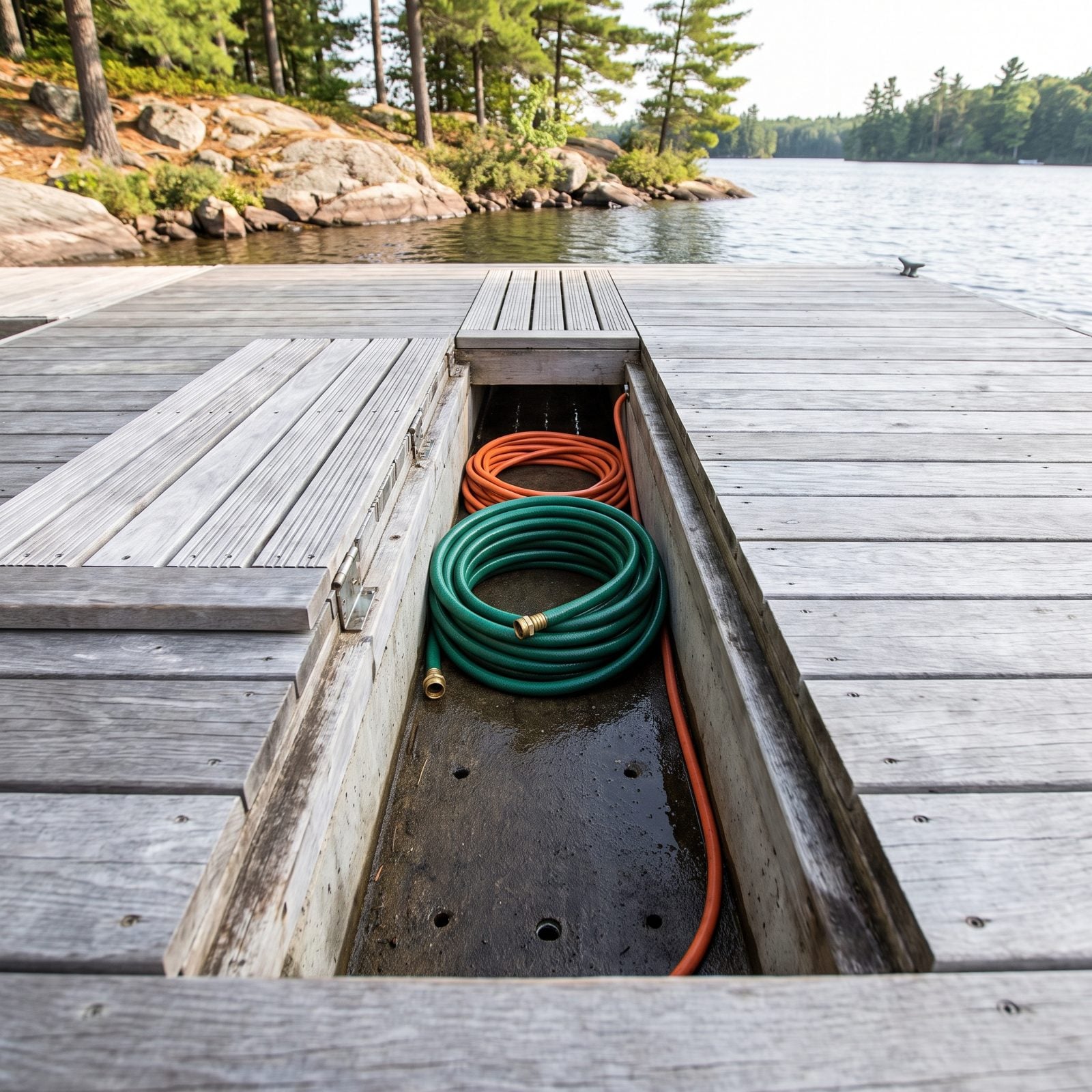
Cords and hoses snaking across a dock are ugly, dangerous, and they bake in the sun until they crack. Everyone just steps over them and hopes.
A recessed utility channel routes shore power, washdown lines, and lighting cable inside a raised, curb-like trough topped with a slatted cover instead of loose across the walkway. The deck boards on either side stay clear, the cables stay shaded and protected, and checking on them is as simple as lifting a panel. For docks with electricity, getting power cords off the wet deck and out from underfoot is a genuine safety upgrade, not just a tidier look.
9. Toe-Level Amber Lights That Reveal the Dock Edge Without Glare
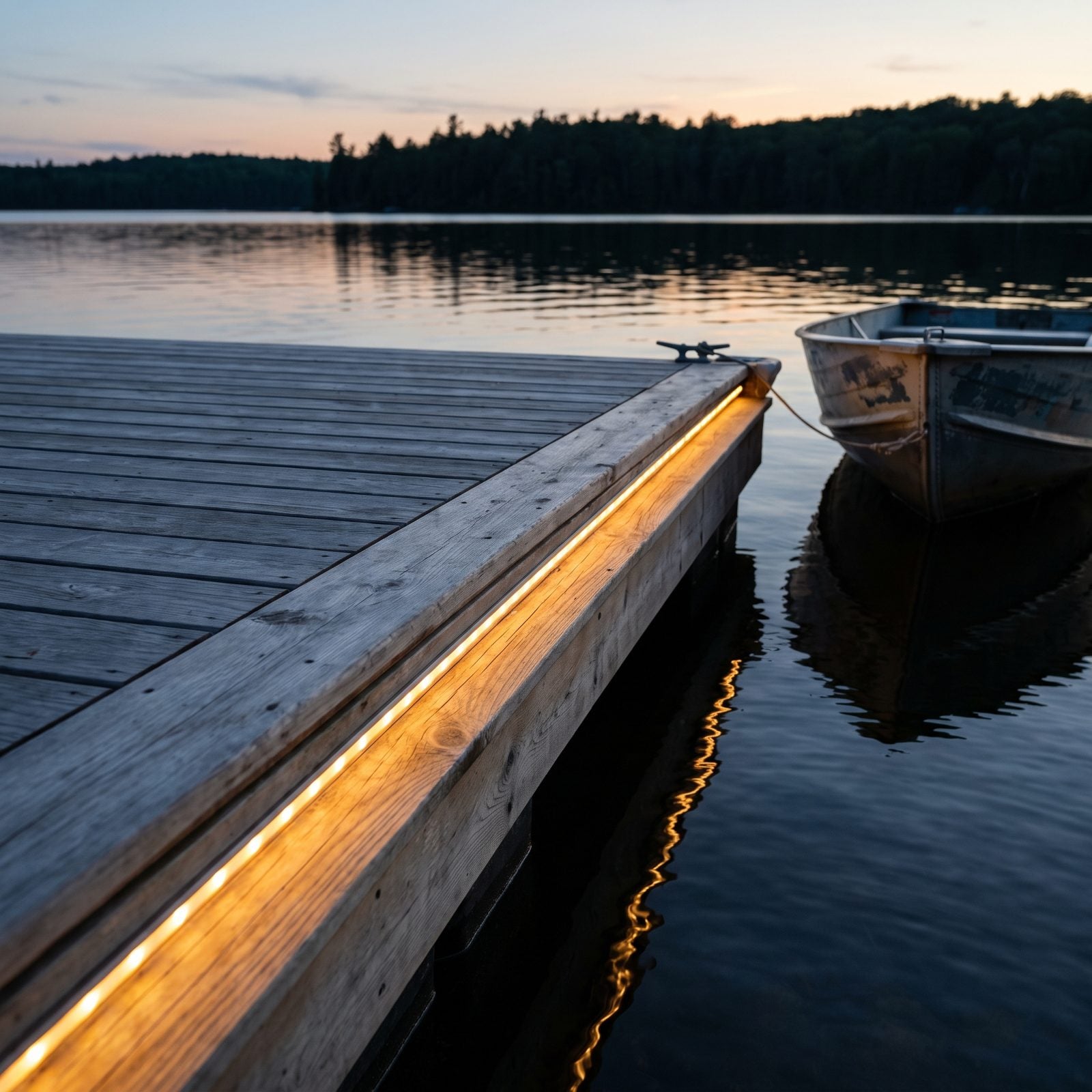
Most dock lighting gets installed at eye level, which blinds you right when you most need to see your feet. So flip the logic. Amber strips set low, along the toe of the decking, light the edge instead of your retinas.
Amber matters. White and blue light wreck your night vision and pull in every bug on the lake, while warm amber keeps your eyes adjusted to the dark, so the water past the dock stays readable instead of turning into a black wall.
The edge is the whole danger. You already know where the middle of the dock is — it’s the last eighteen inches before the drop that sends people in.
8. A Tall Boarding Grab Post at the Boat Entry Point
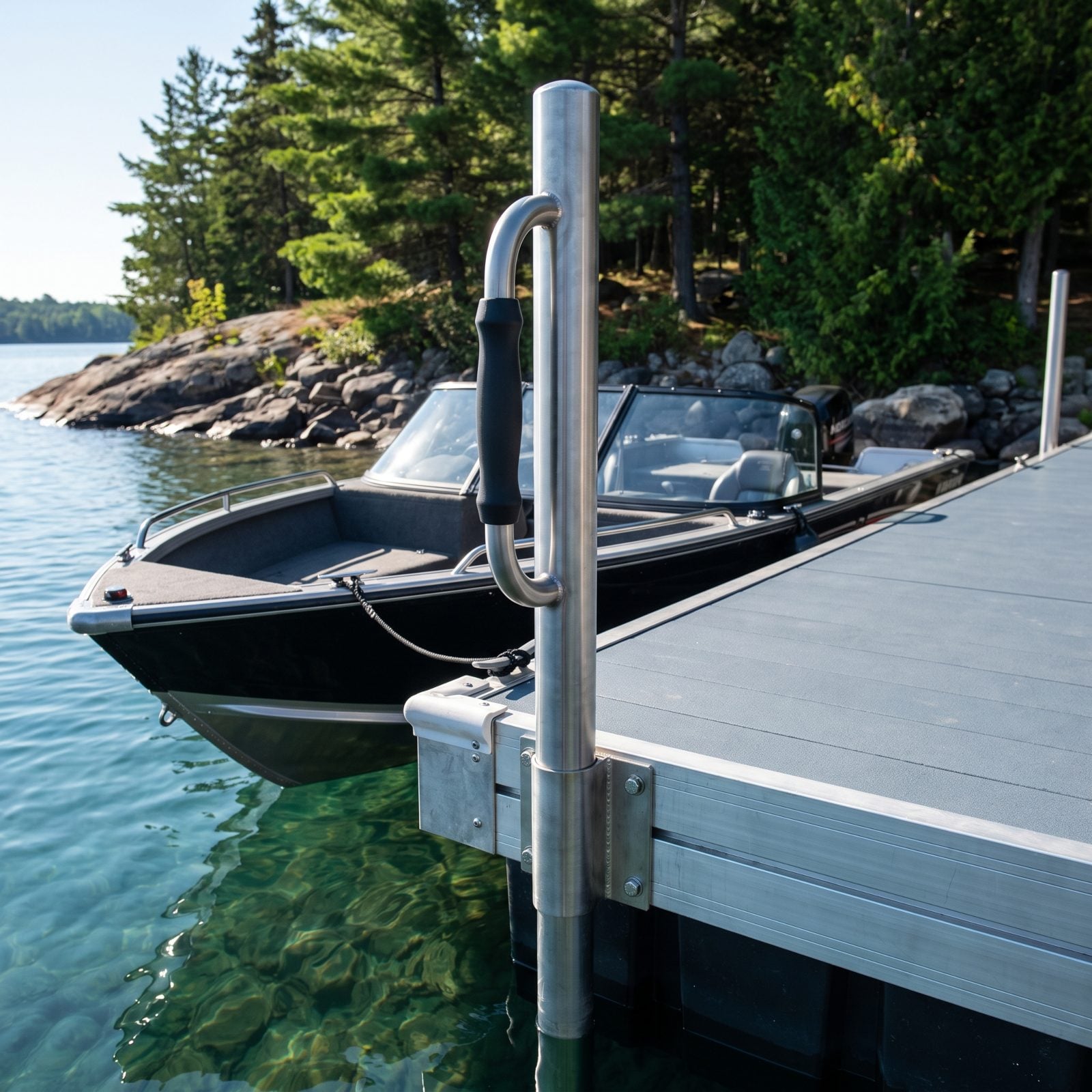
The gap between dock and boat is where confidence goes to die. People reach for a cleat, a piling, anything — usually something at knee height that pulls them forward instead of holding them up.
A grab post fixes the geometry. Set one upright at the exact spot where you step across, tall enough to grip at chest height, and now the hand goes where it can actually brace a body: above the center of gravity, not below it.
This is the single most useful thing an older boater can add, and almost nobody does. Marinas figured it out decades ago. Private docks keep leaving the entry point as a leap of faith.
7. A Sliding Shade-Sail Track That Follows the Afternoon Sun
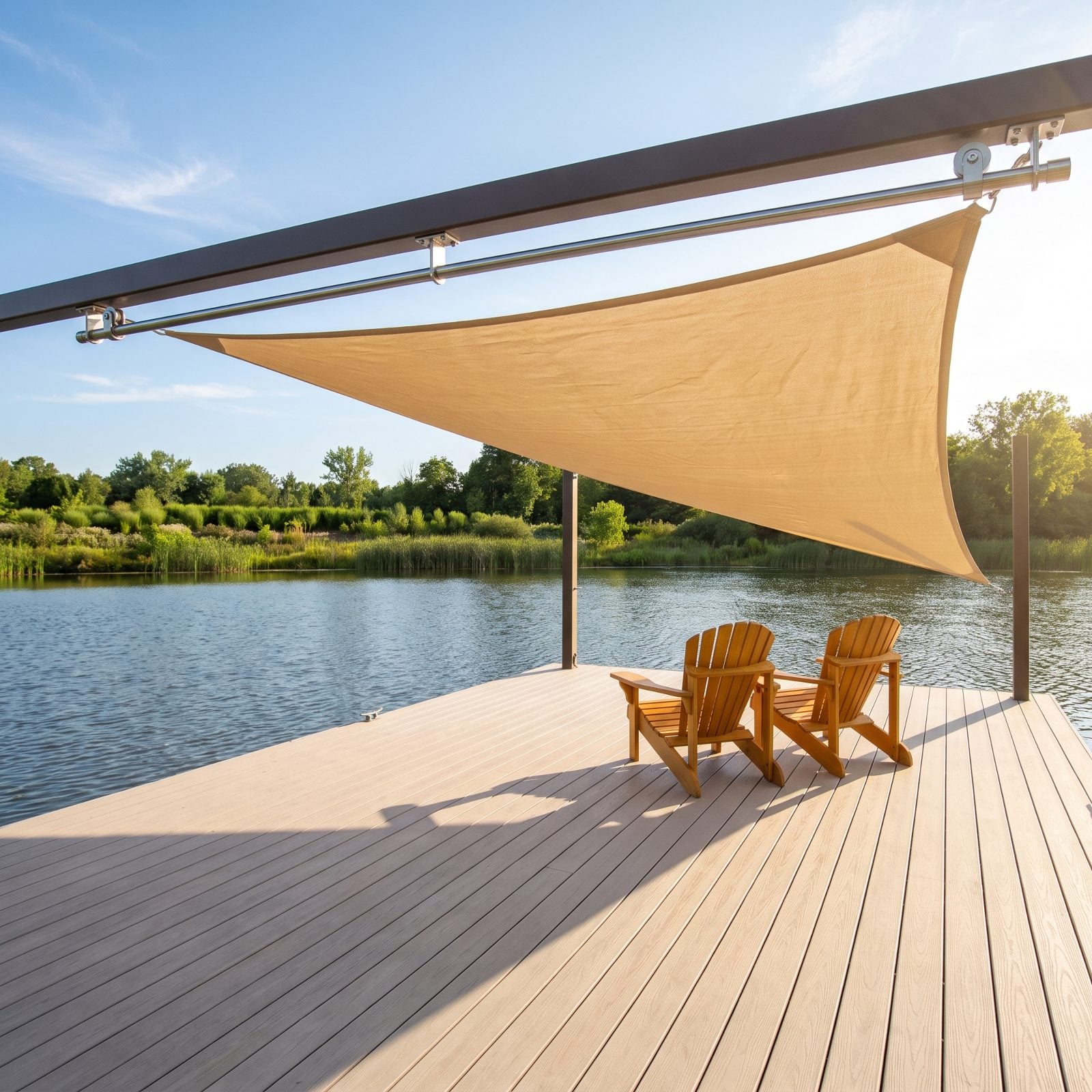
Fixed shade is a compromise you make once and regret every afternoon. The sun moves. Your umbrella doesn’t. By four o’clock you’re squinting into glare off the water with a perfectly good shade structure throwing shadow onto nothing.
A shade sail on a sliding track moves with the day — pull it east in the morning, west after lunch, park it over the chairs when the light goes low and sideways. Ten seconds of effort buys you the whole afternoon out there.
6. Low-Profile Perch Blockers on Dock Lights and Rail Posts
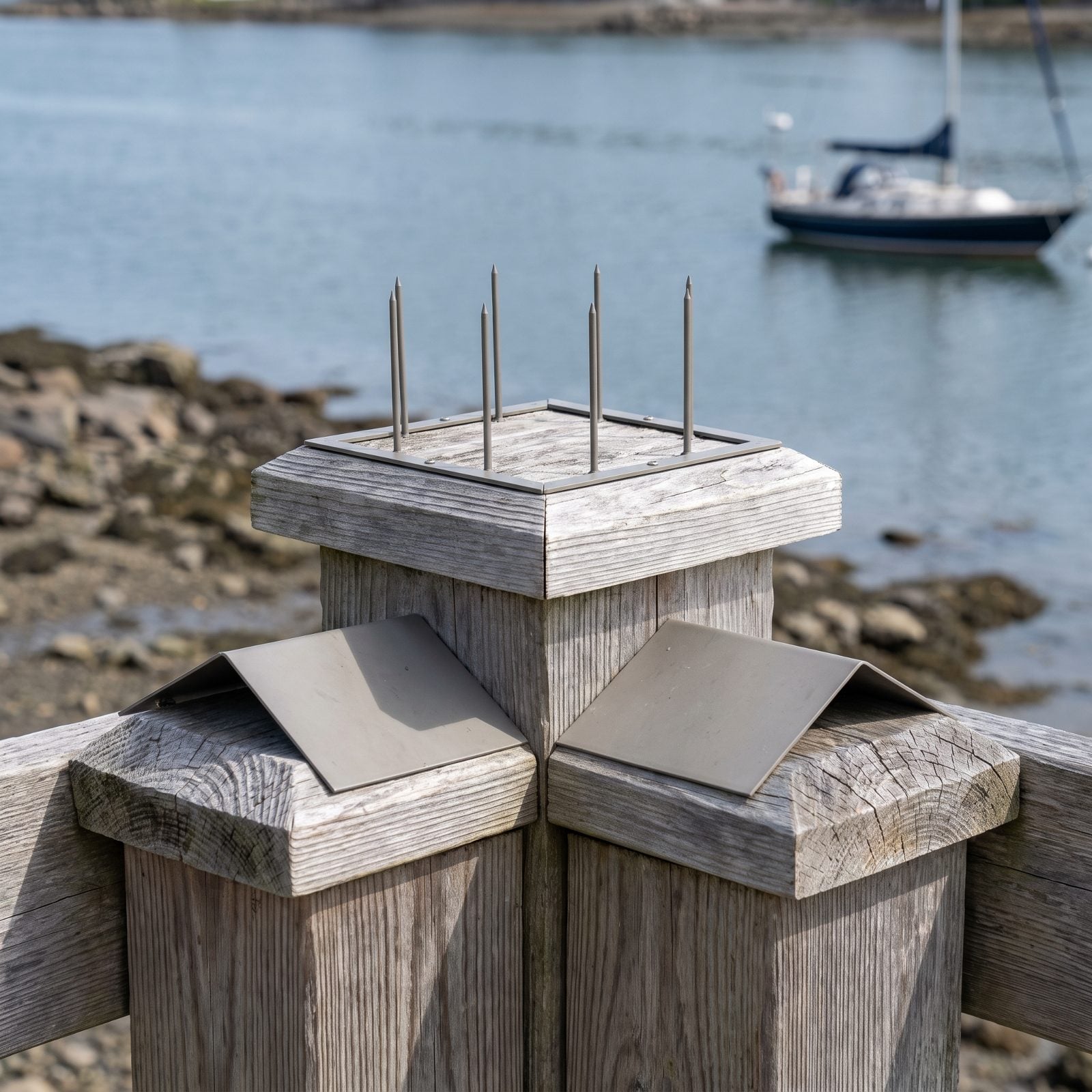
Every dock has that one post. The favorite. Gulls and cormorants claim it, and by August the decking below looks like a crime scene and smells worse.
Low-profile perch blockers — slim angled caps or short spikes — take the landing pad away without turning your rails into something out of a horror film. The birds move on, and your pressure washer gets a break.
Nobody warns you about this grubby little problem when you buy a waterfront place. Bird mess isn’t just ugly. It’s slick underfoot and genuinely corrosive to metal fittings over time, so blocking the perch protects more than your mood.
5. A Reflective Waterfront Address Marker Facing the Water
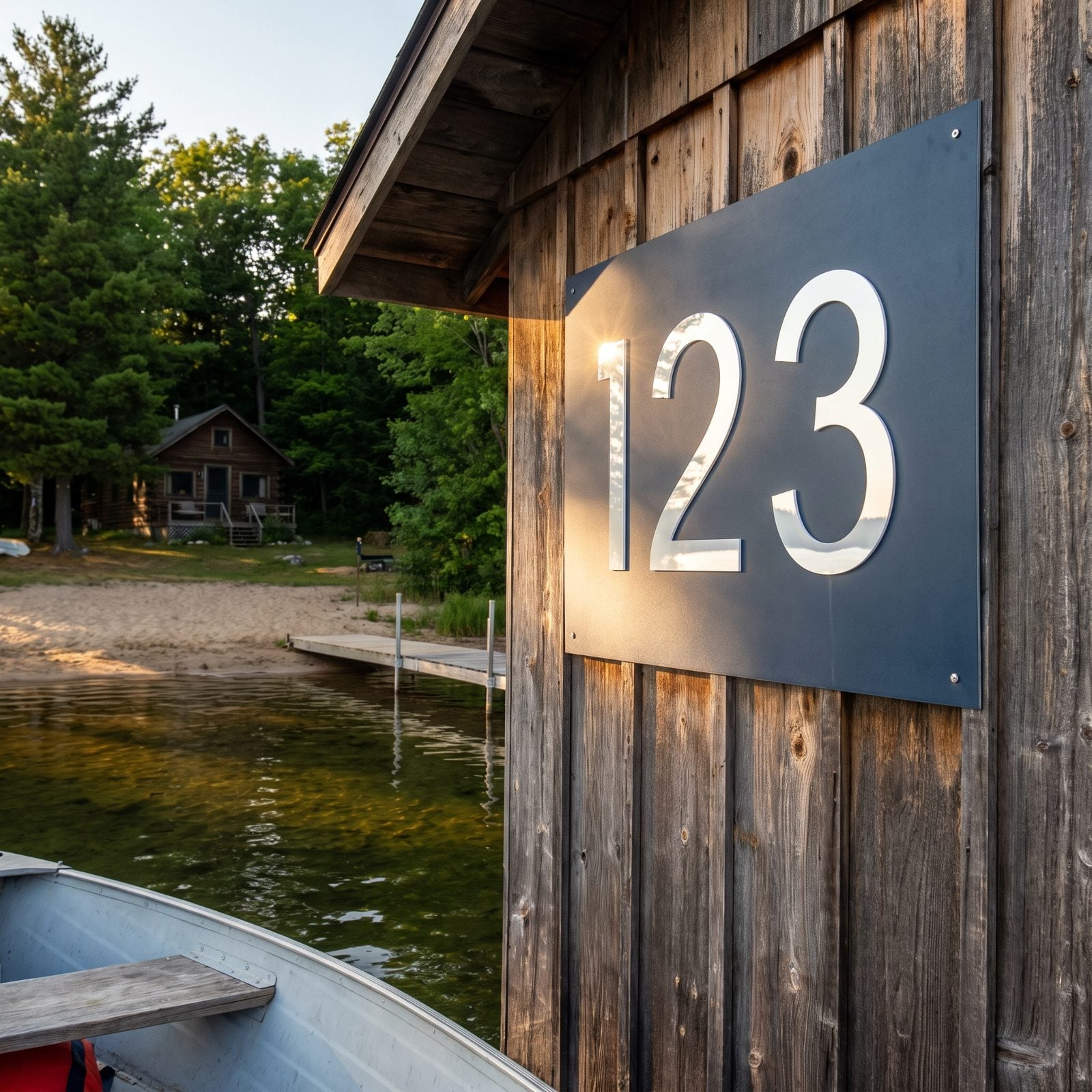
Your street number faces the road. Fine for the mail carrier, useless to the one person who might actually need to find you fast: emergency services coming by water.
A reflective address marker facing the lake solves a problem you hope you never test. If someone has to reach your dock in the dark, or guide a boat to it, numbers on the land side do nothing. Numbers on the water side, lit by a spotlight, read from a hundred yards out.
4. A Telescoping Rescue Pole Mounted Below the Handrail
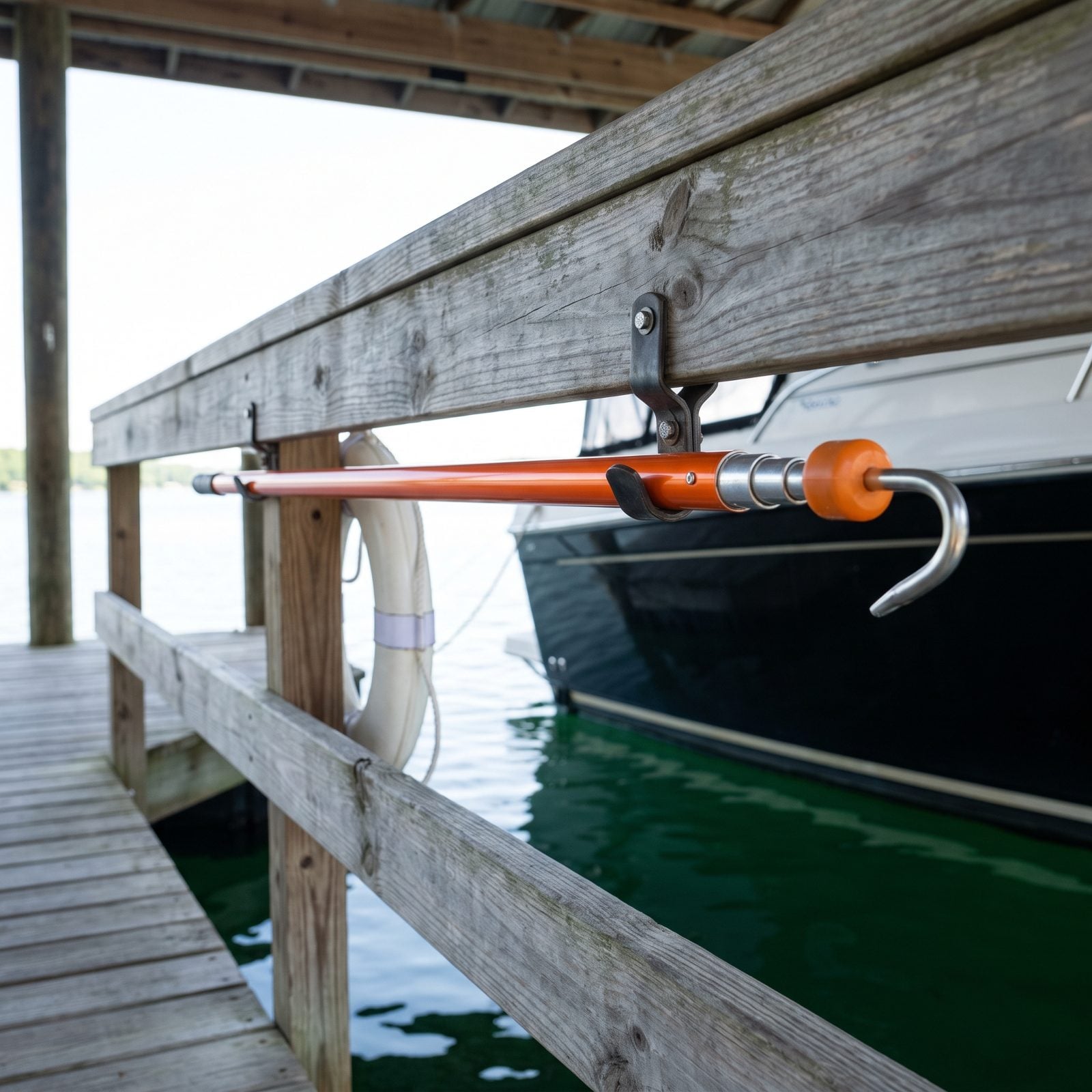
A life ring gets all the attention. But throwing one accurately, to someone panicking in cold water, is harder than movies make it look. A reach pole doesn’t need aim — it needs an arm.
Mount a telescoping rescue pole in clips under the handrail, where it’s invisible until the second you need it. Someone goes in, you extend it, they grab it, you pull. No getting in the water yourself, which is exactly how would-be rescuers become second victims.
Here’s the part people get wrong: they store the pole in a shed. In an emergency, the distance between you and that shed is the whole game. It has to live at the dock, within reach, always.
3. A Rollout Beach-Access Mat for Sand, Gravel, or Soft Ground
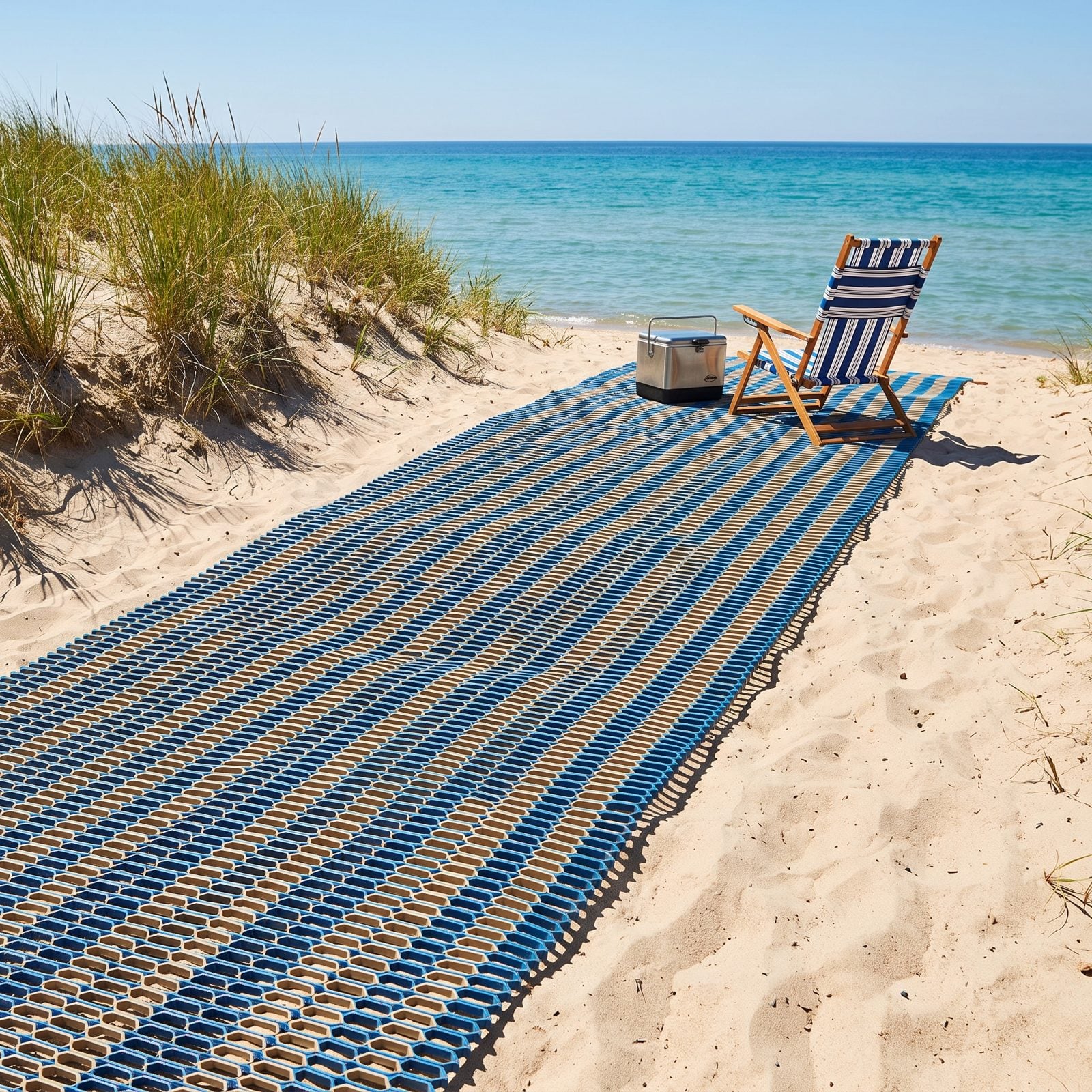
Soft sand defeats more people than any stairway. Walkers sink, wheels bog down, and anyone with a bad knee just stops coming to the water.
A rollout access mat lays a firm, level path right across the sand or gravel to the waterline. It flattens the ground enough for a wheelchair, a stroller, a cooler on wheels, or just unsteady feet that don’t want to fight loose footing.
Roll it up at season’s end, roll it out in spring. Cheapest way there is to open the water back up to someone the beach quietly started excluding.
2. A Shoreline Rain Garden That Captures Roof and Driveway Runoff
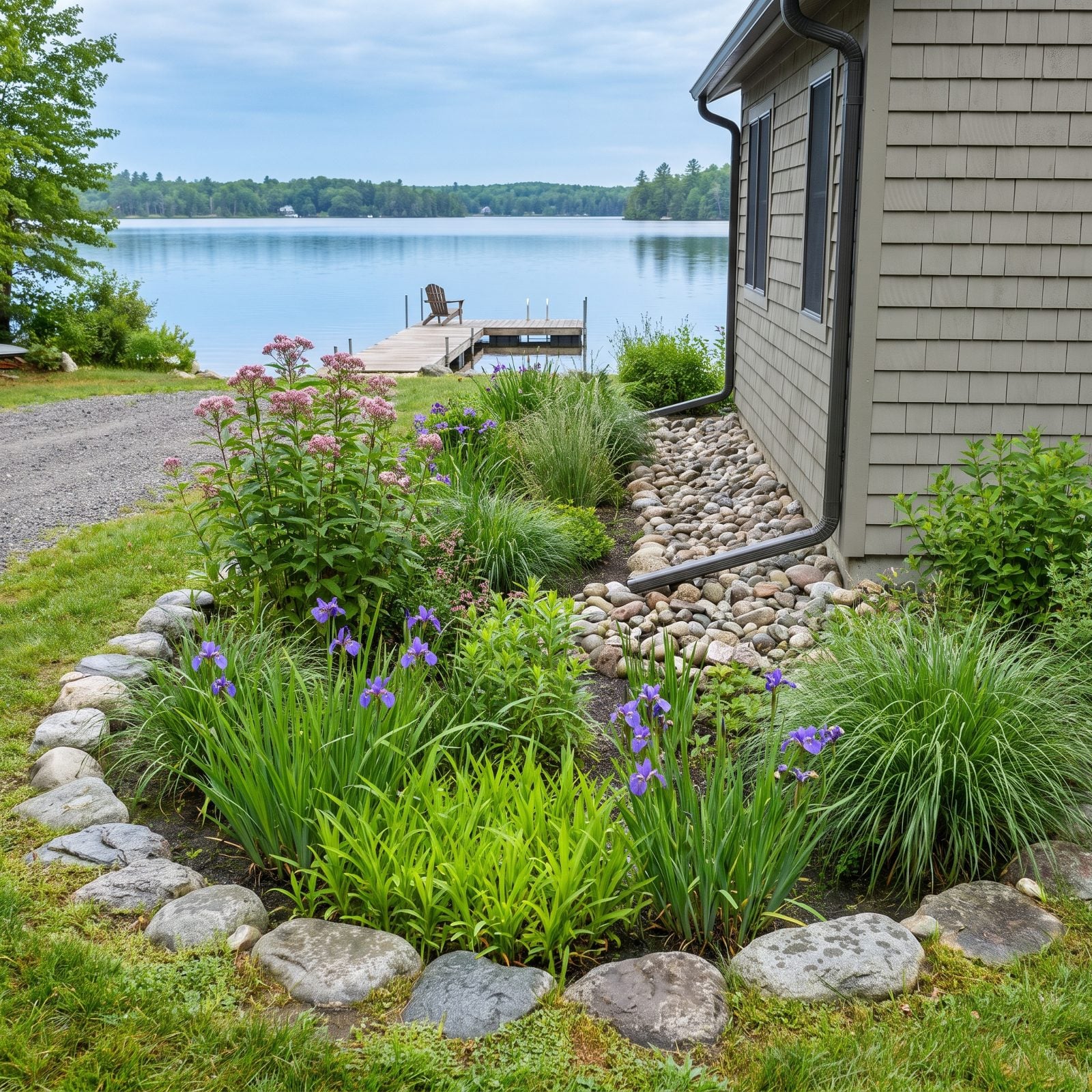
The water in your lake is partly your driveway’s fault. Rain hits roofs and pavement, picks up oil, lawn fertilizer, and sediment, then runs straight downhill into the water you swim in.
A rain garden intercepts all that. It’s a shallow planted basin, set between the house and the shore, that soaks up runoff and lets native roots filter it before it reaches the lake. Deep-rooted plants like blue flag iris and swamp milkweed do the work.
It reads as a pretty flower bed and functions as a filter. And it cuts the muddy, weedy algae that fertilizer runoff feeds every summer.
1. A Floating Wetland Island That Absorbs Nutrients Through Its Roots

Least glamorous fix on this whole list? A mat of plants that floats. No glamour, serious payoff.
A floating wetland island is exactly that — a buoyant planted raft anchored off your shore. The plants grow on top while their roots hang down into the water, pulling out the nitrogen and phosphorus that feed algae blooms and turn clear water murky.
They’re small, they’re moveable, and they do double duty as habitat. Fish shelter under the roots, dragonflies work the stems, and the water around them clears up over a season.
Won’t save a badly fouled lake on its own. But in a cove that’s been going green and soupy each August, a cluster of these is a genuine, living improvement you can actually watch happen.