Salt doesn’t knock. It seeps. That screw you tightened in June won’t budge come September, the window dries with a white film no matter how clean you got the glass, and the cabin air sits on you like a wet towel even with the dehumidifier grinding away. The folks who live well near the water aren’t tougher about any of it. They just keep a handful of odd, cheap tricks that stop corrosion and damp before either one gets a foothold. These are the sleeper picks — the stuff longtime dock dwellers quietly swear by, not the obvious ones everybody already parrots.
Please note that some of the imagery in this article may have been enhanced with the assistance of AI.
49. Slip Nylon Washers Between Stainless Hardware and Aluminum
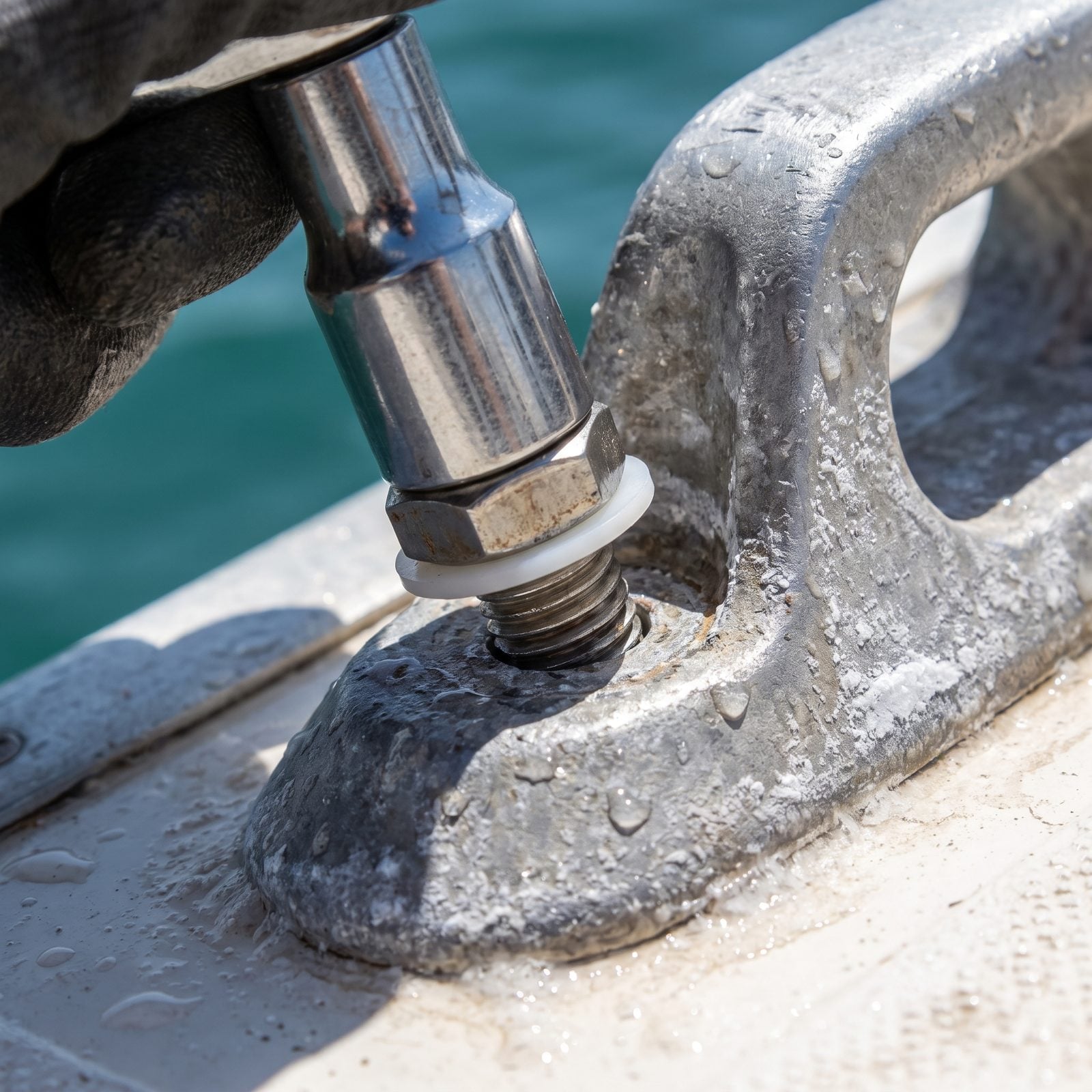
Stainless and aluminum hate each other. Put them in contact near salt water and the aluminum slowly rots around the harder stainless fastener — galvanic corrosion, and by the time you spot the chalky white powder the fitting is already weak.
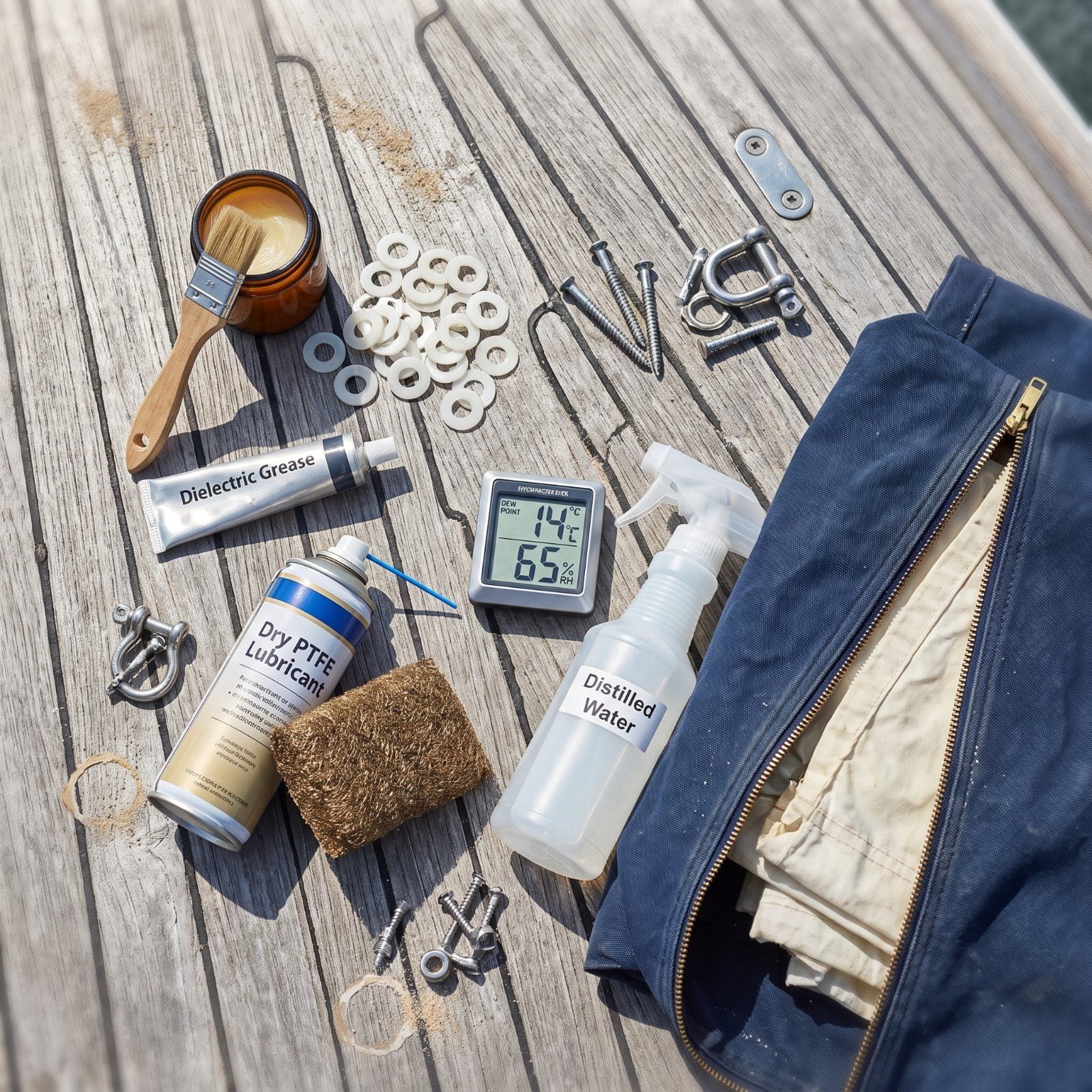
A ten-cent nylon washer between the two metals breaks the circuit. No metal-to-metal contact, no galvanic party. Keep a bag of assorted sizes in the dock box. Cheapest insurance on the boat, honestly, and almost nobody bothers until a cleat pulls loose in their hand.
48. Watch Indoor Dew Point Instead of Humidity Alone
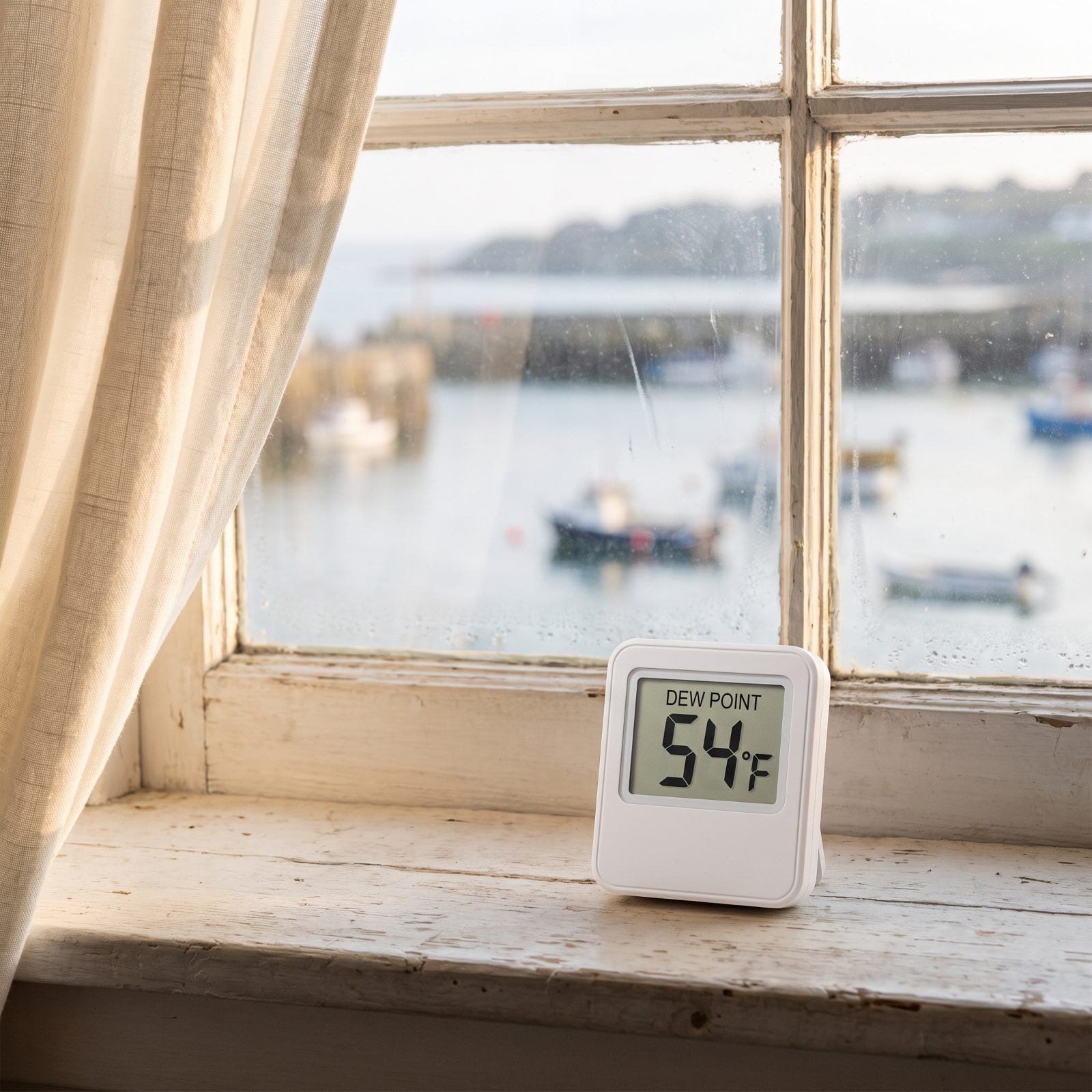
Relative humidity lies to you. Sixty percent at 70 degrees and sixty percent at 85 degrees feel like two different planets, and only one of them is quietly soaking your cushions.
Dew point doesn’t lie. It tells you the actual moisture load riding in the air rather than a percentage that jumps around every time the temperature wanders. Hold the indoor dew point under roughly 60°F and the clammy sticky feeling just goes away, mold slows down, and the dehumidifier quits running itself ragged. A meter that shows dew point runs a few dollars more than one that only shows humidity. Buy that one.
47. Coat Outdoor Screw Threads With Lanolin Before Salt Can Lock Them
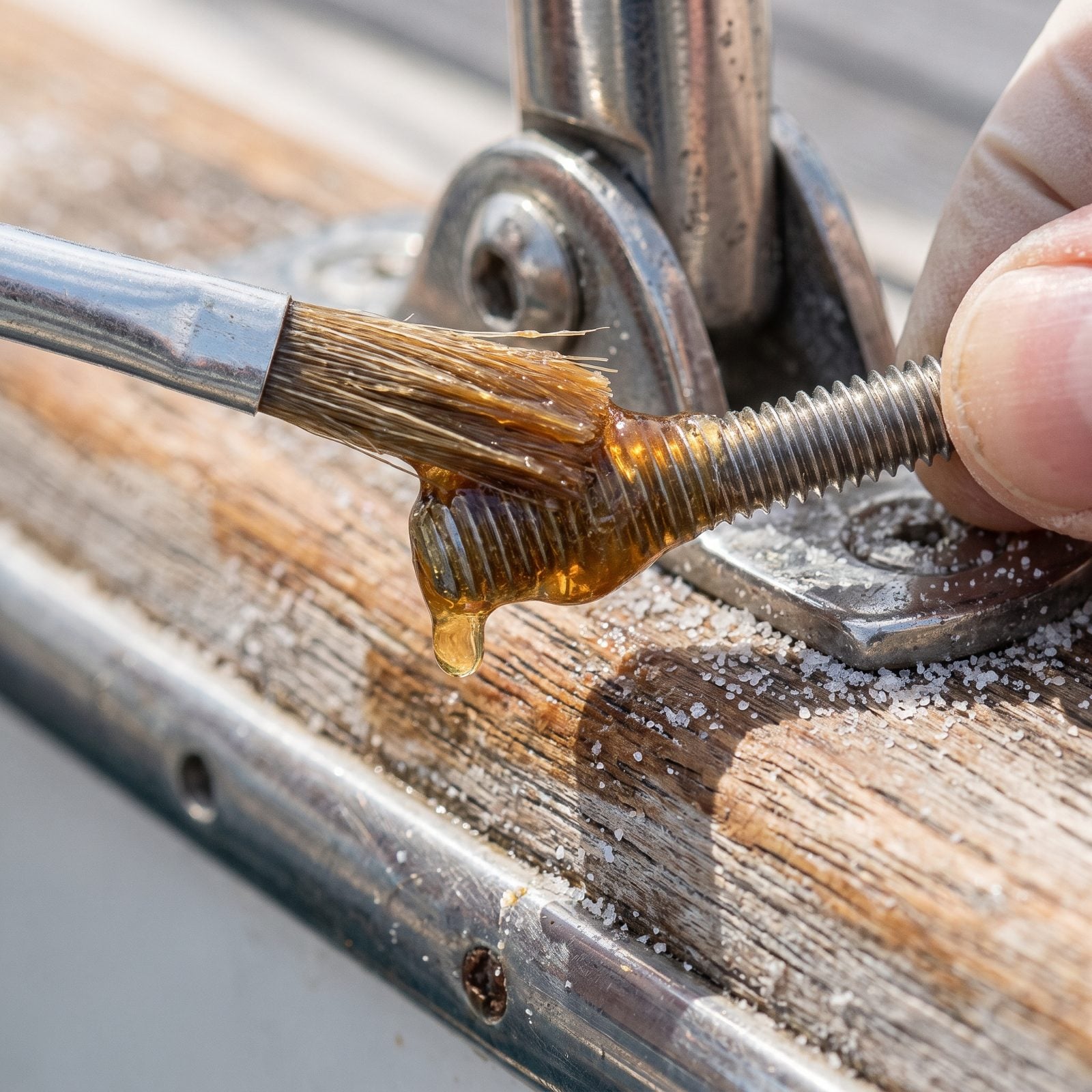
Salt gets into threads and sets like cement. Months later you strip the head trying to back the screw out, and what should’ve been a thirty-second job turns into drilling and cursing.
Liquid lanolin — a runny amber oil rendered from sheep wool — flows into threads and shrugs off salt water far better than most oils. Brush a little onto the threads before you drive any exterior screw, and when you need it out later, it comes out. Boaters have greased fittings with the stuff for generations, mostly because it works deep into the threads and holds up through spray and sun instead of washing off by August.
46. Use Bronze Wool Where Steel Wool Would Leave Rust Freckles
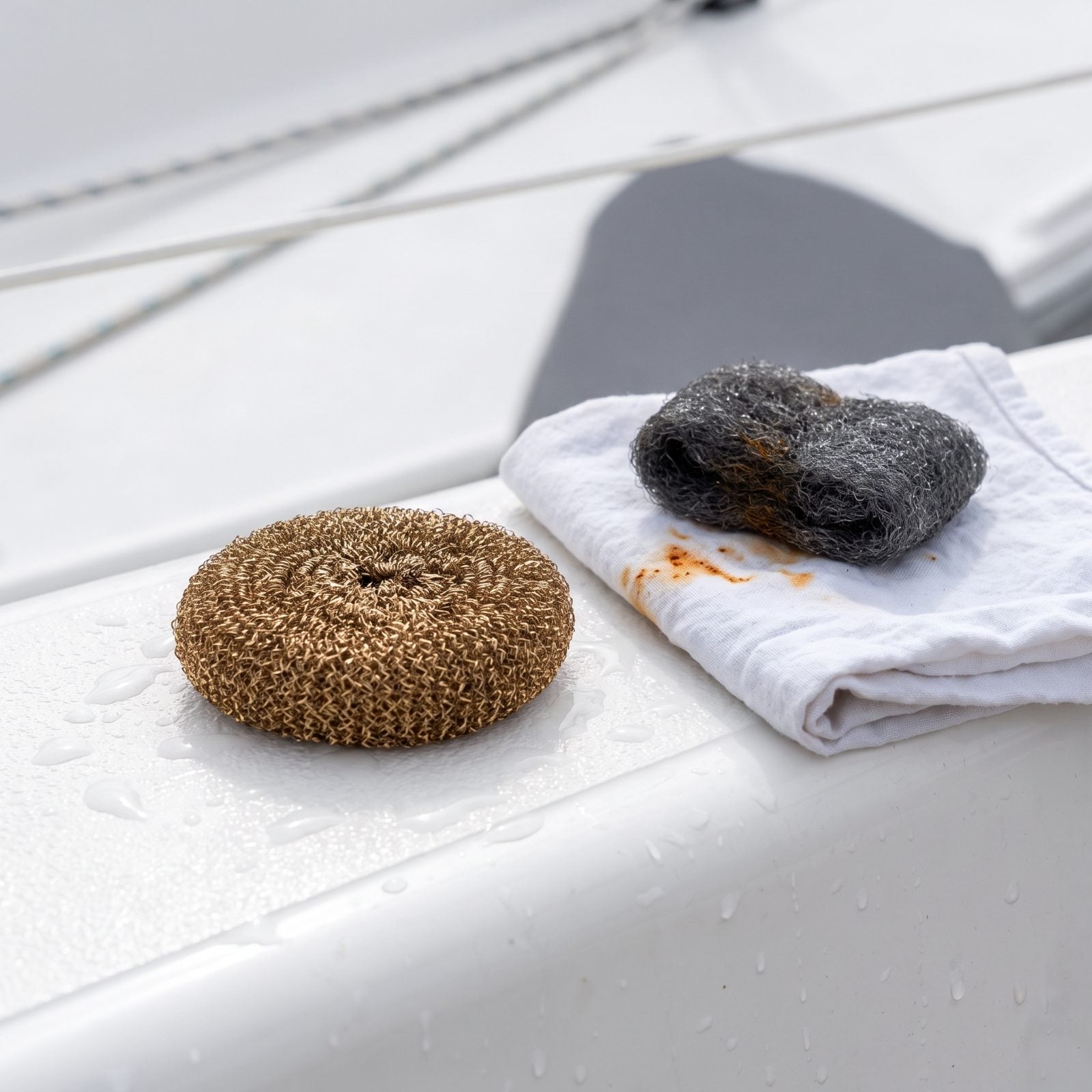
Steel wool leaves little pieces of itself behind. Those bits flash-rust in salt air within days, and all of a sudden your clean white gelcoat is freckled orange like you never touched it.
Bronze wool doesn’t rust, and it’s softer than steel besides, so it scrubs scum and oxidation off fiberglass, glass and brightwork without the staining aftermath. Costs a bit more. One bag lasts, though, and you skip the second cleanup entirely — which beats spending an afternoon chasing rust spots off a transom you’d already called finished.
45. Set the Air Conditioner Fan to Auto in Humid Weather
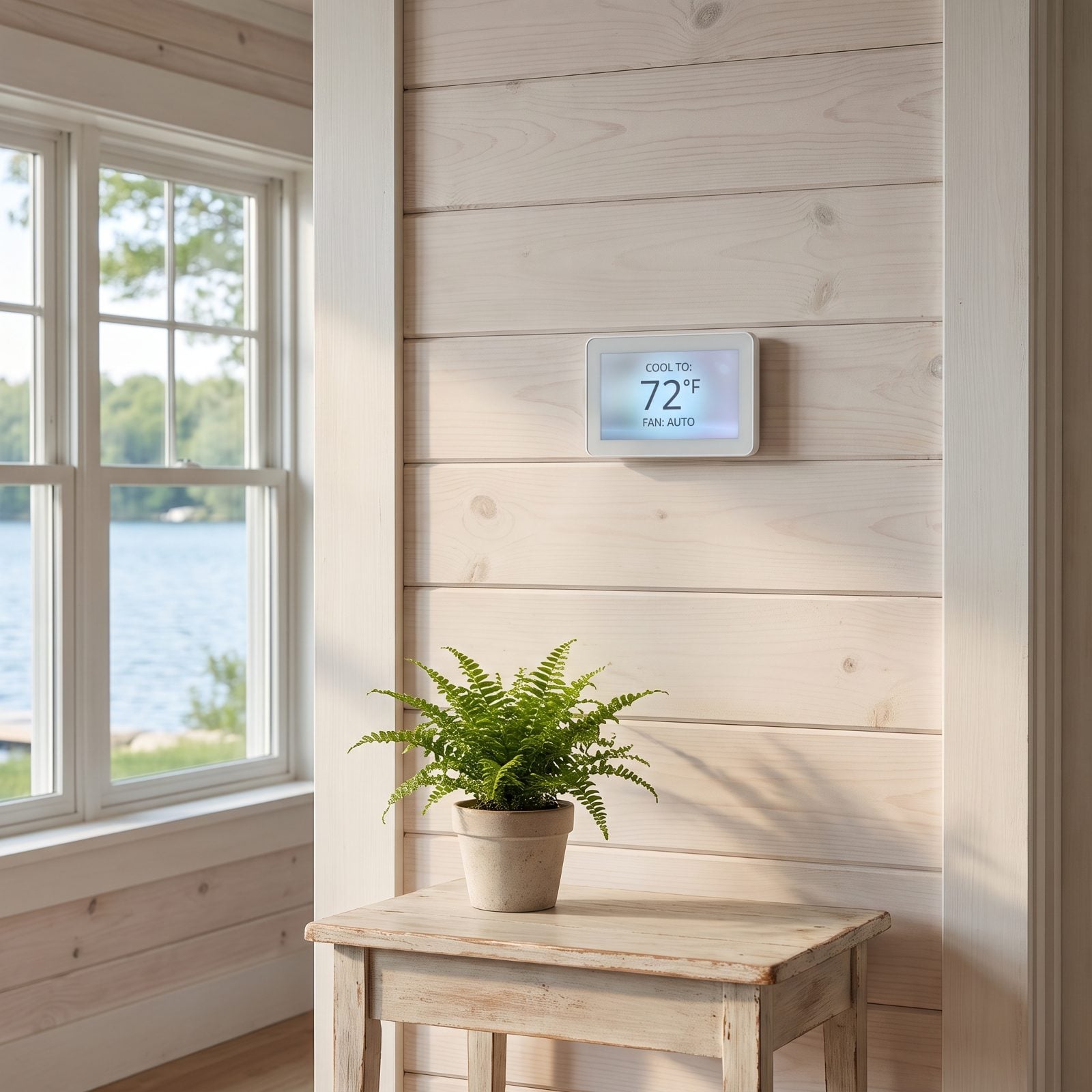
Leaving the AC fan on “On” feels efficient. On the coast it isn’t.
When the compressor cycles off but the fan keeps spinning, it blows all the moisture that just condensed on the cold coil right back into your rooms. You’re re-humidifying air you already paid to dry. Flip the fan to Auto so it only runs while the unit is actively cooling, and that water drains away outside where it belongs.
44. Feed Coastal Locks Dry PTFE Instead of Grit-Collecting Oil
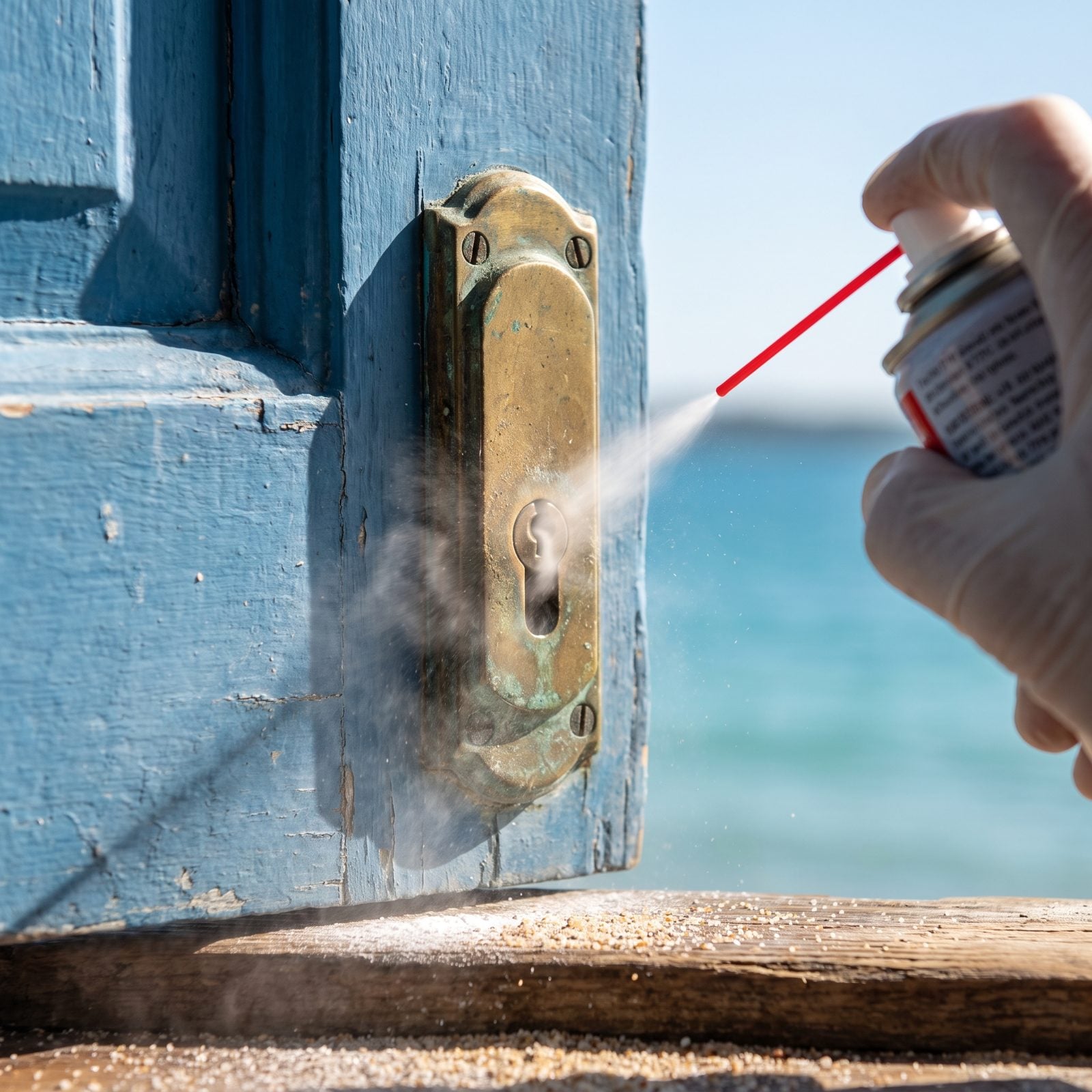
Your first instinct with a sticky lock is to squirt oil in it. Near the beach that backfires, and fast.
Oil is tacky, and tacky catches every grain of blown sand and salt dust that drifts past. Give it a few weeks and the cylinder is packed with grinding paste while the key barely turns. Dry PTFE spray goes on wet, flashes off, and leaves a slick film with nothing for grit to grab onto. The key glides, the pins move, nothing gums up. A tiny shot into the keyway, work the key a few times, and you’re done.
43. Dab Dielectric Grease on Exterior Bulb Bases and Plugs
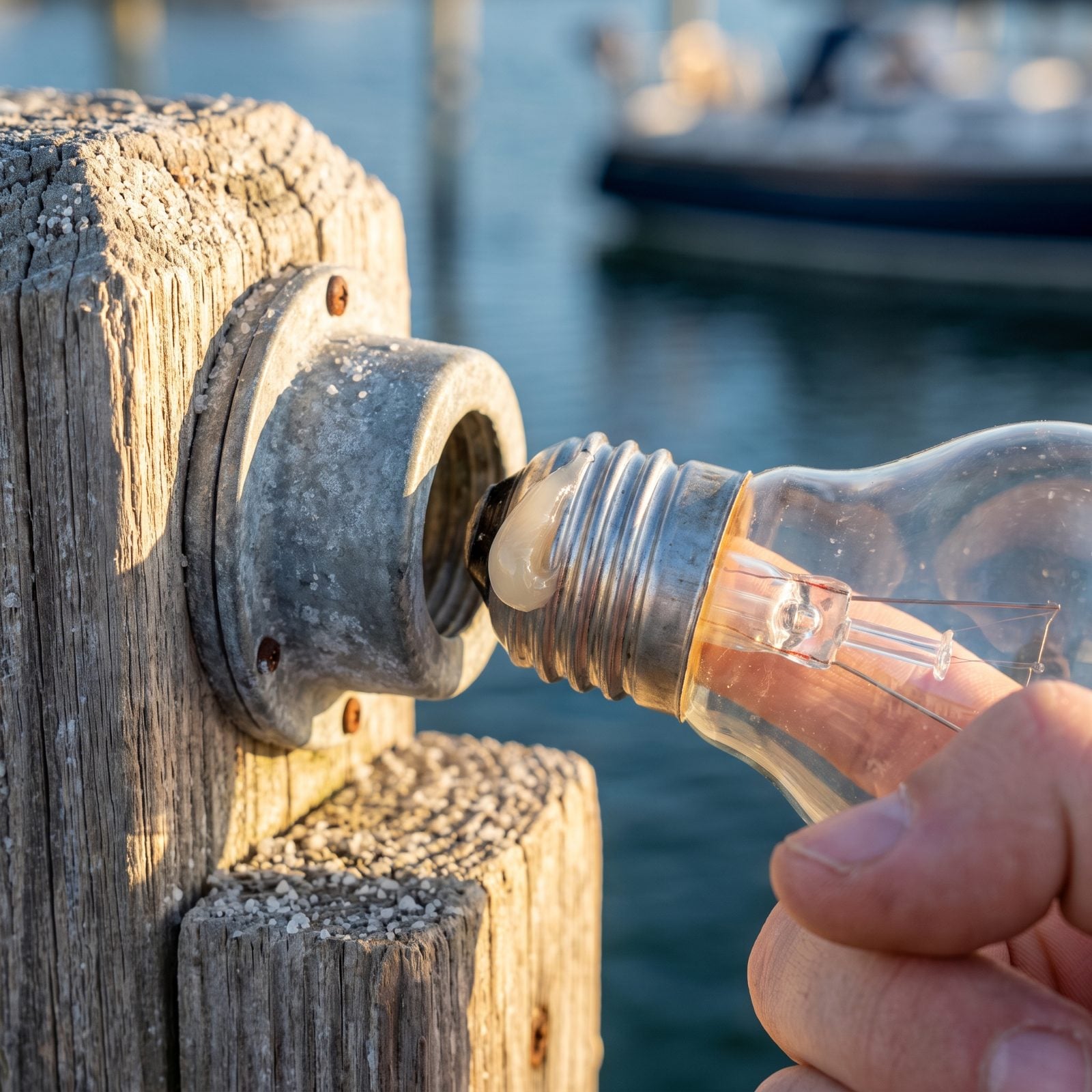
Corroded contacts are why your dock light flickers and your trailer plug quits at the worst possible moment. Salt air creeps into every metal junction and lays down a crust that fights the current.
Dielectric grease is non-conductive and seals out moisture without interfering with the connection, since the metal contacts still press through it. A thin smear on bulb threads, bayonet pins, and the prongs of exterior plugs keeps them clean for years. The thing that threw me at first is the name. It won’t carry current — and that’s the whole point. It protects the metal without shorting a thing.
42. Rinse Zippers, Then Apply a Dry Marine Zipper Lubricant
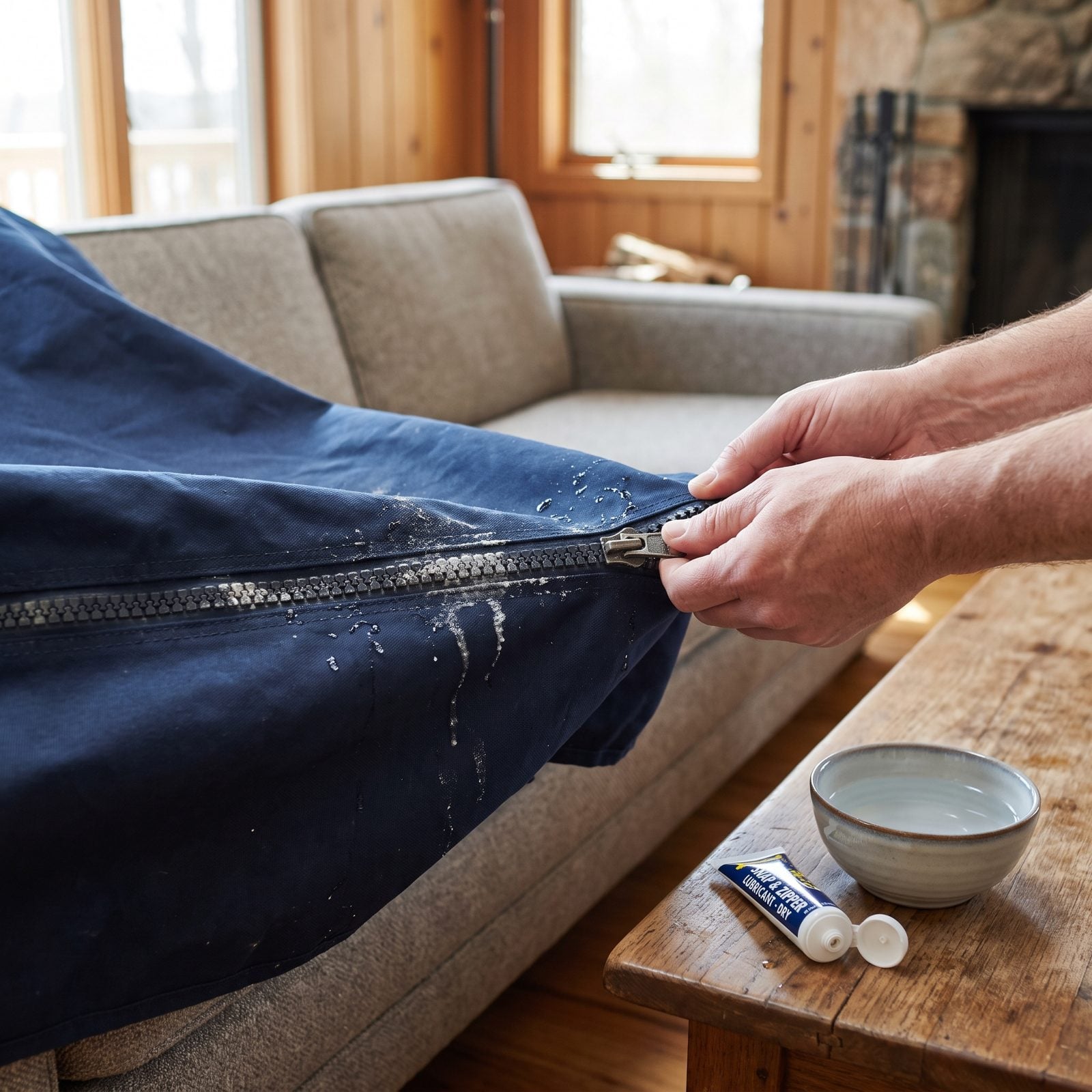
A seized zipper on a bimini or sail cover nearly always comes down to one thing: dried salt crystals wedged between the teeth, grinding away like sand in a gear.
Rinse first with fresh water to flush those crystals out. Lubricate over salt and you just cement the grit in place. Right after rinsing, with fresh water still beaded on the fabric, run a dry marine zipper lube along the teeth and work the slider back and forth a few times — dry formulas won’t pull in more dirt the way wax or oil will. Skip the rinse and all you’ve done is pack abrasive straight into the mechanism.
41. Give Exterior Windows a Distilled-Water Final Rinse
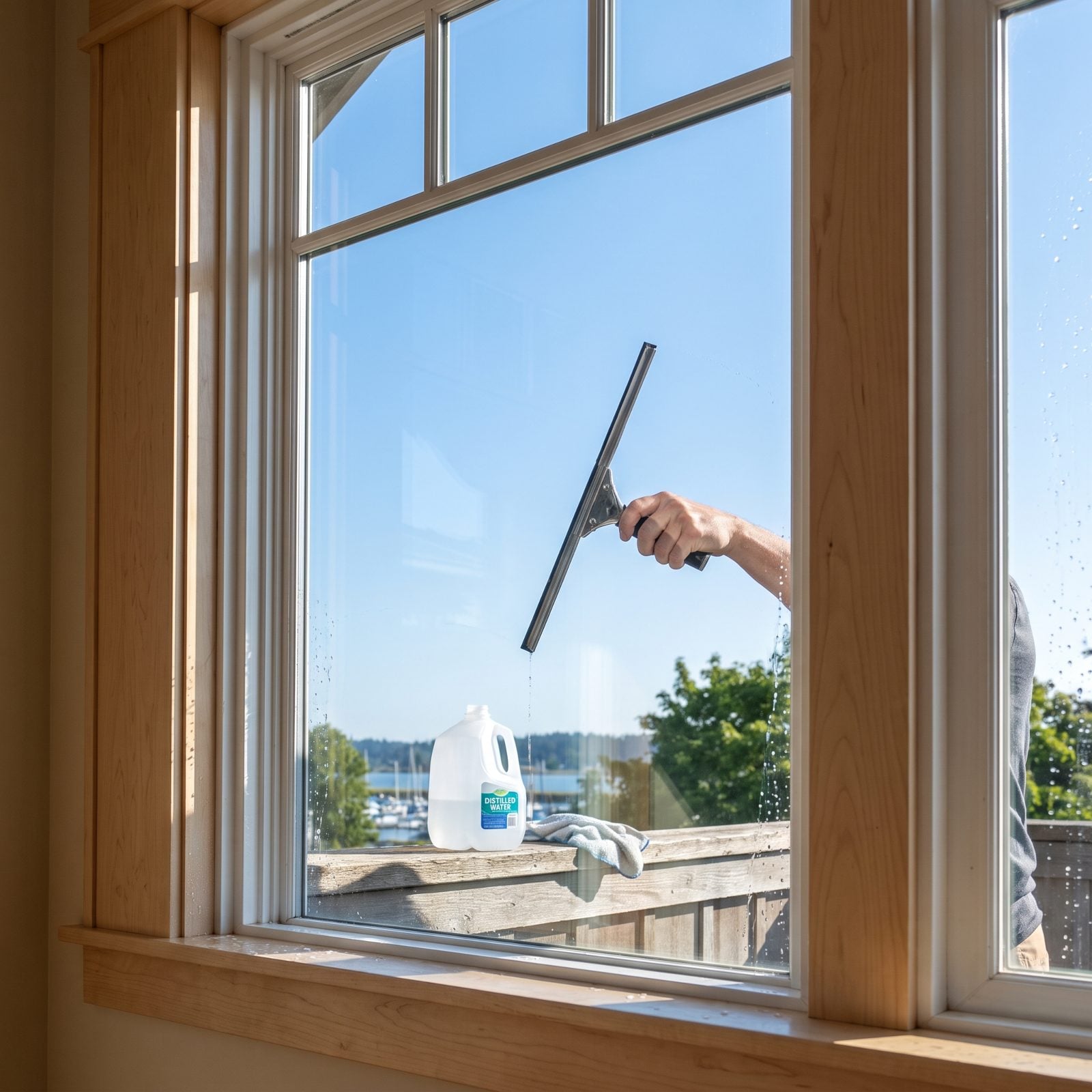
You wash the windows, they dry, and there’s the haze again — that cloudy film that has nothing to do with how hard you scrubbed.
What you’re looking at is minerals and salt, left stranded on the glass when tap water evaporates off it. Distilled water carries no dissolved minerals, so a final rinse with it dries clear. One gallon stretches a long way as a last pass, and the glass stays clean longer too, because there’s no salt residue sitting there pulling moisture out of the air.
40. After Cutting Power, Gently Rinse Salt From the AC Condenser
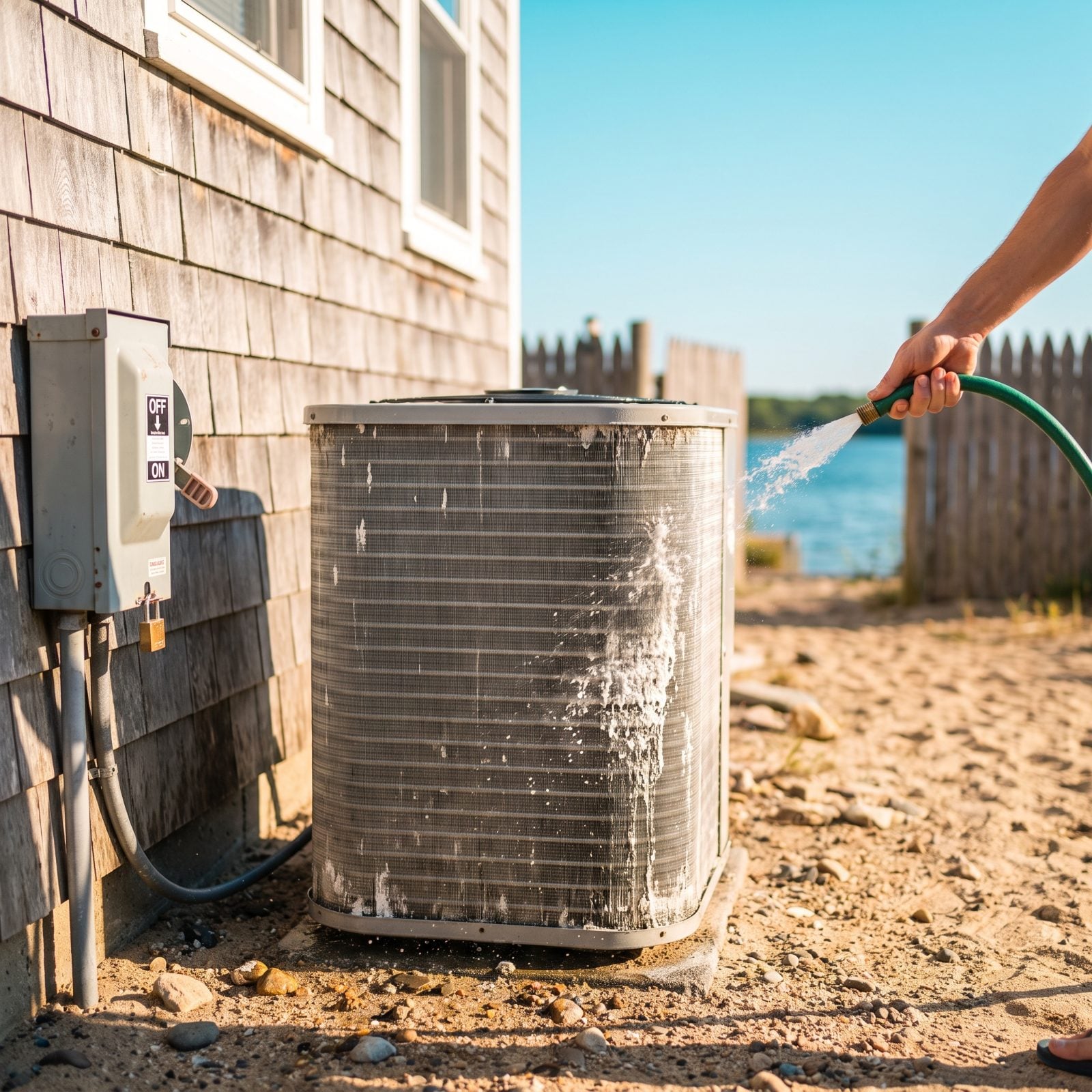
Coastal air coats the condenser’s aluminum fins in a salt crust that eats them from the outside in. A corroded coil cools worse, works harder, and dies years before it should.
A gentle fresh-water rinse a few times a season washes that salt off and buys the unit real life. Order matters here. Kill the power at the disconnect first, then rinse, and keep the pressure low — crank the pressure up and you’ll flatten those delicate fins, which makes everything worse. Done right it’s five minutes that saves a very expensive part.
39. Keep a Coin on a Frozen Cup to Reveal Power Outages
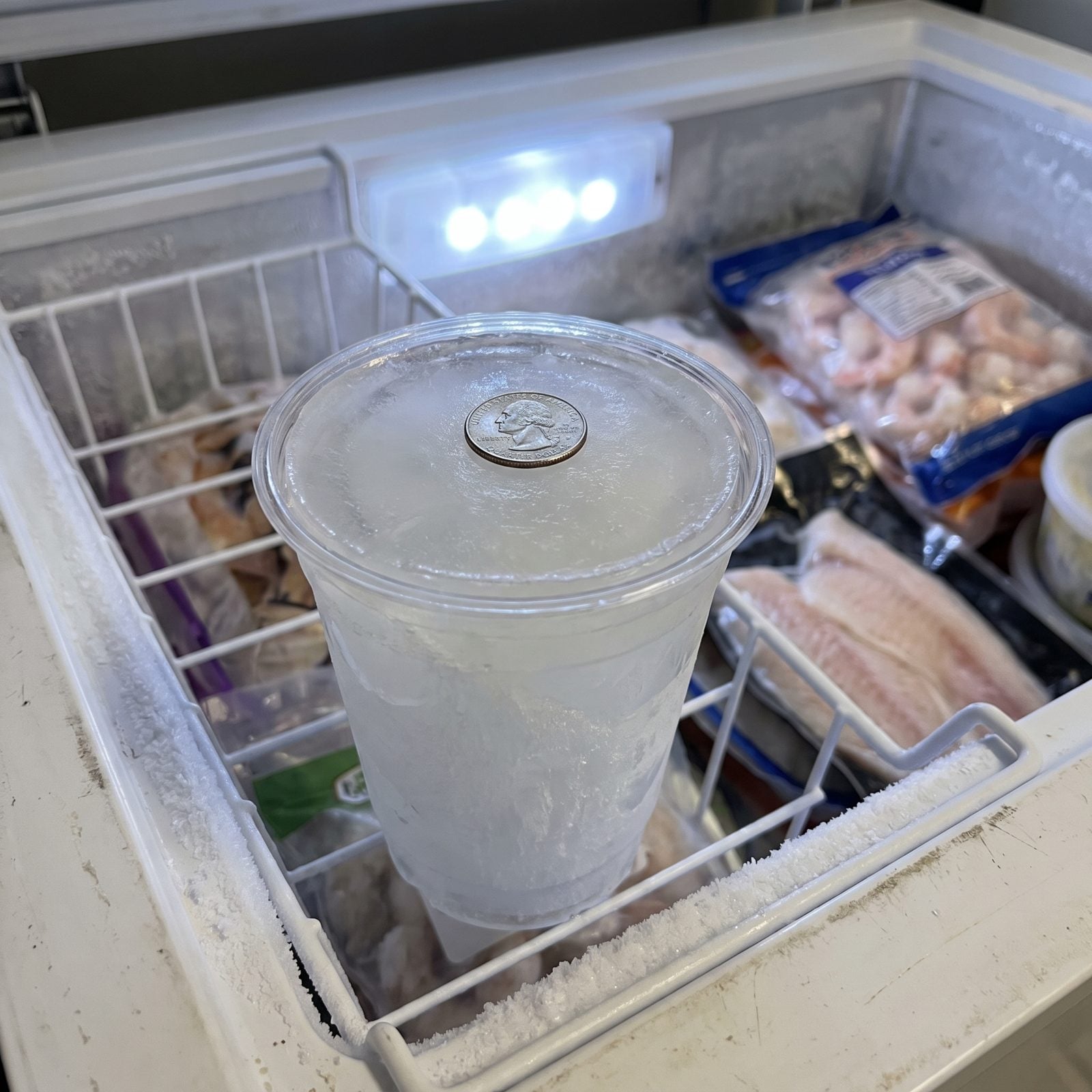
You come back from a long weekend and the freezer looks fine — humming, cold, everything hard as a rock. But did the power blink for six hours Tuesday while nobody was home? You’d never know, because everything just refroze. And refrozen food can make you sick. In a storm-prone coastal town, the power goes out more than you’d like.
Here’s the fix. Freeze a cup of water solid, drop a coin on top, leave it in the freezer. Come home to a coin at the bottom? Everything thawed and refroze while you were gone. Coin still sitting on top means you’re fine.
38. Freeze Seafood Scraps Until Collection Day
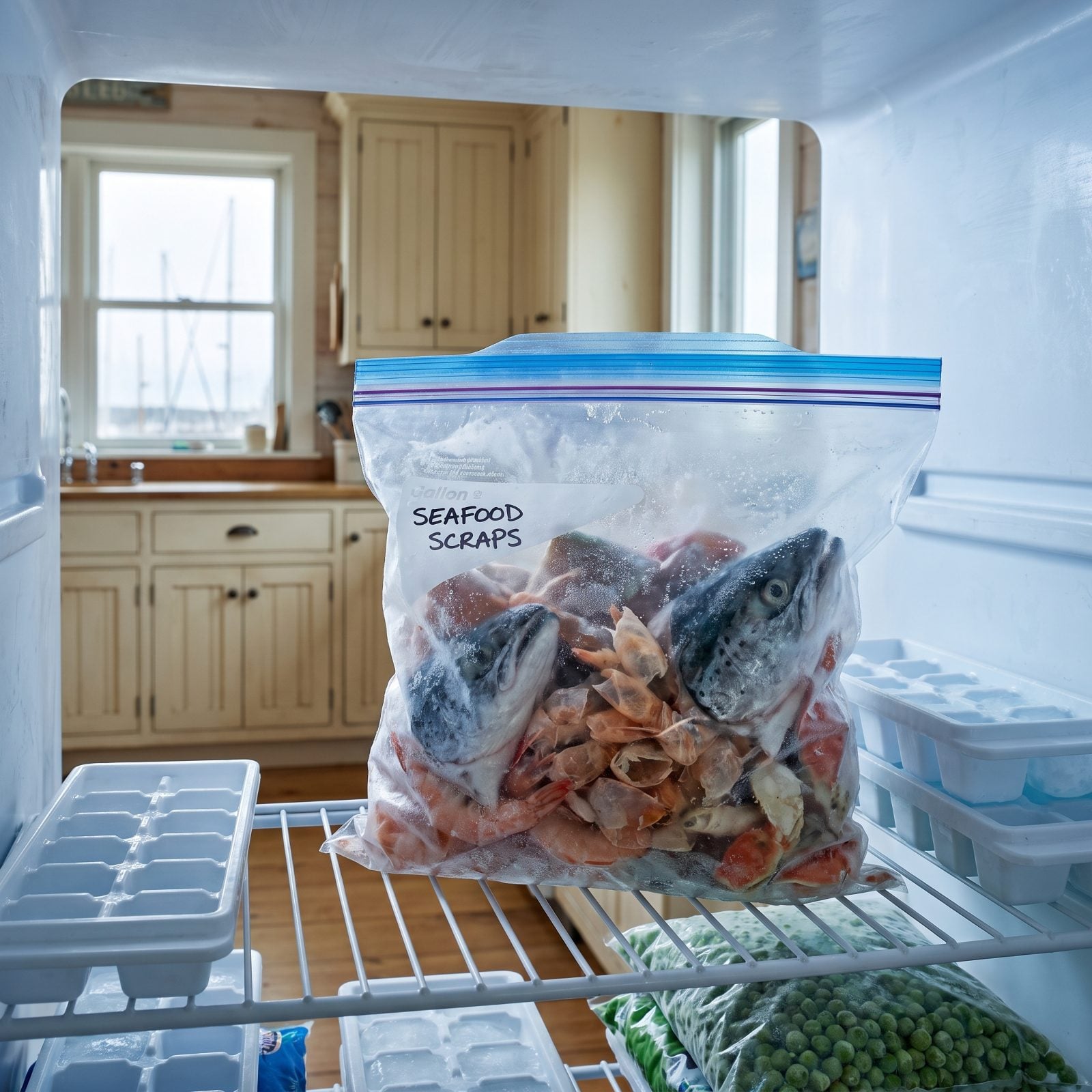
Anyone who’s cleaned a mess of fish on a Saturday knows what the trash can smells like by Monday. In coastal heat and humidity, seafood scraps go from fresh to raccoon-magnet in about a day.
So don’t let them sit. Bag the heads, shells and guts, and stash them in the freezer until collection morning — no smell, no flies, no neighborhood cat convention on the back porch. Pull them out five minutes before the truck comes and the whole thing’s a non-event. Yes, it sounds odd to keep garbage in the freezer. It’s one of those habits that feels strange exactly once, then becomes permanent.
37. Dust Sandy Feet With Cornstarch Before Brushing Them Clean
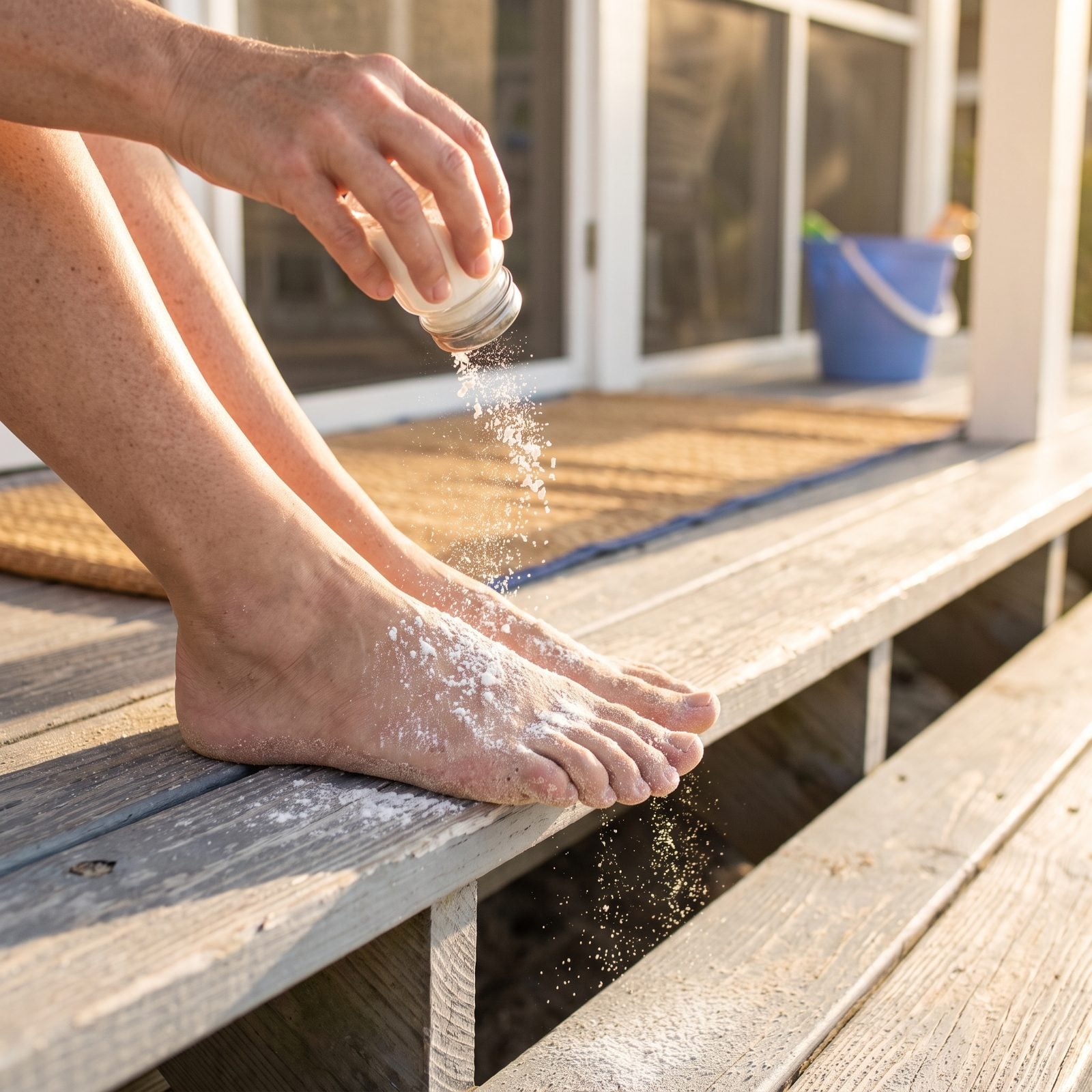
Sand sticks to wet skin like it’s got an opinion about it. You brush and brush and it just smears around, and then it’s in the rug, in the bed, in the couch cushions forever.
Cornstarch breaks the bond. A light dusting over damp bare feet and lower legs soaks up the moisture, and any grit sheets right off with one swipe. Baby powder works too if that’s what’s already in the cupboard.
36. Seal Powder-Coat Chips Before Salt Reaches the Bare Metal
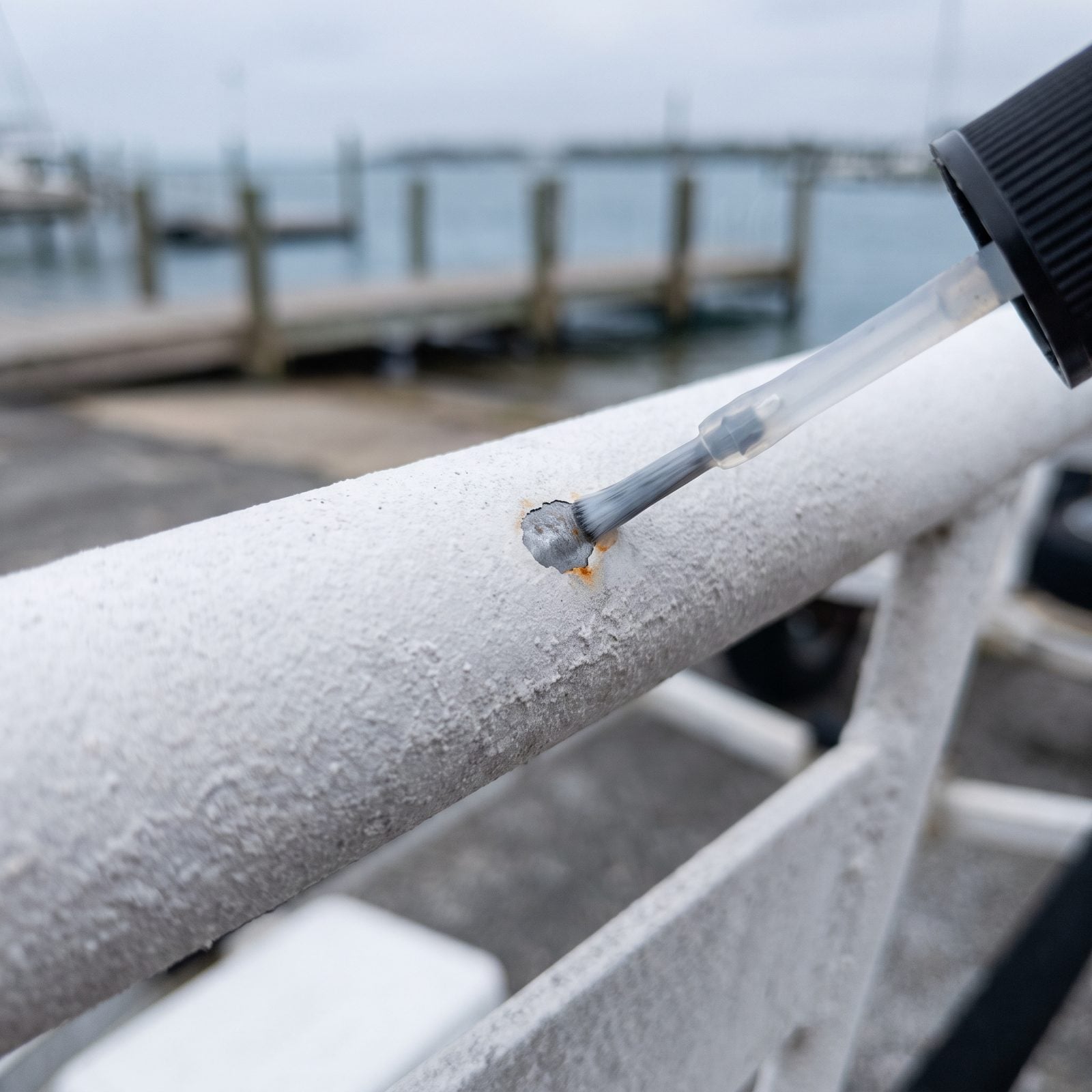
Powder coat looks bulletproof. It isn’t. Chip it, and salt air finds the bare steel underneath in a hurry, and rust starts where you can’t see it, creeps under the coating, and lifts it off in sheets. By the time it’s ugly, it’s expensive.
The fix is almost insultingly simple — a dab of touch-up paint, or even clear nail polish in a pinch, seals the exposed metal before salt gets a foothold. Walk your railings, your trailer frame, your deck furniture a couple times a season and spot-seal the nicks. Five minutes now versus a wire wheel and a rattle can later.
35. Remove Hose Nozzles Regularly Before Corrosion Fuses Them On
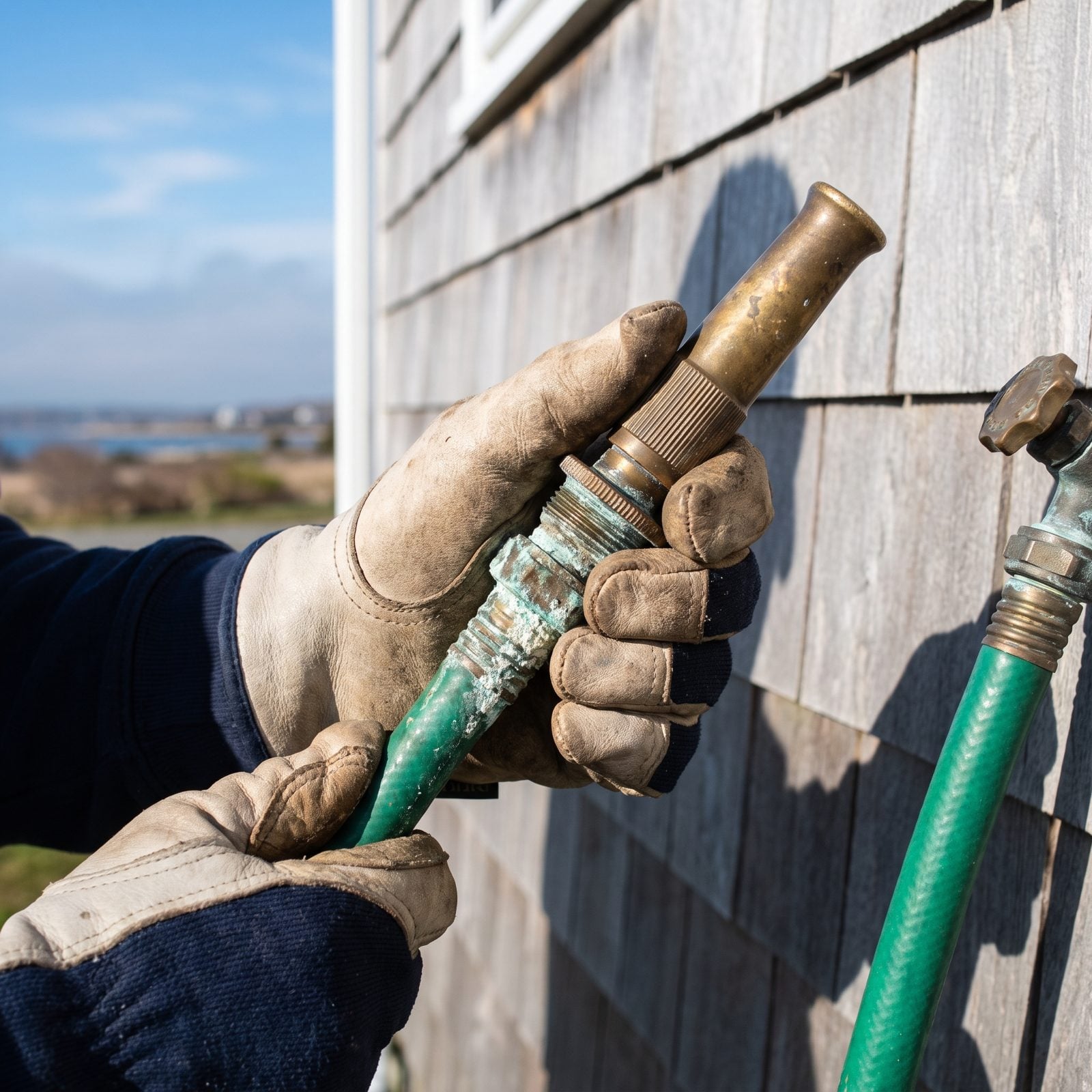
Leave a brass nozzle screwed onto a hose all summer in salt air and try to take it off in October. Go ahead. You’ll strip the threads, snap the hose end, or stand there turning red while it refuses to budge.
Salt and dissimilar metals weld themselves together given enough time, and the trick is motion. Unscrew the nozzle every few weeks, even just to break the seal and thread it back on — that little bit of disturbance keeps the corrosion from locking it solid. Same goes for spray heads, quick-connects, anything brass-on-brass left outside near the water.
34. Grease Hose-Coupling O-Rings With Silicone Lubricant
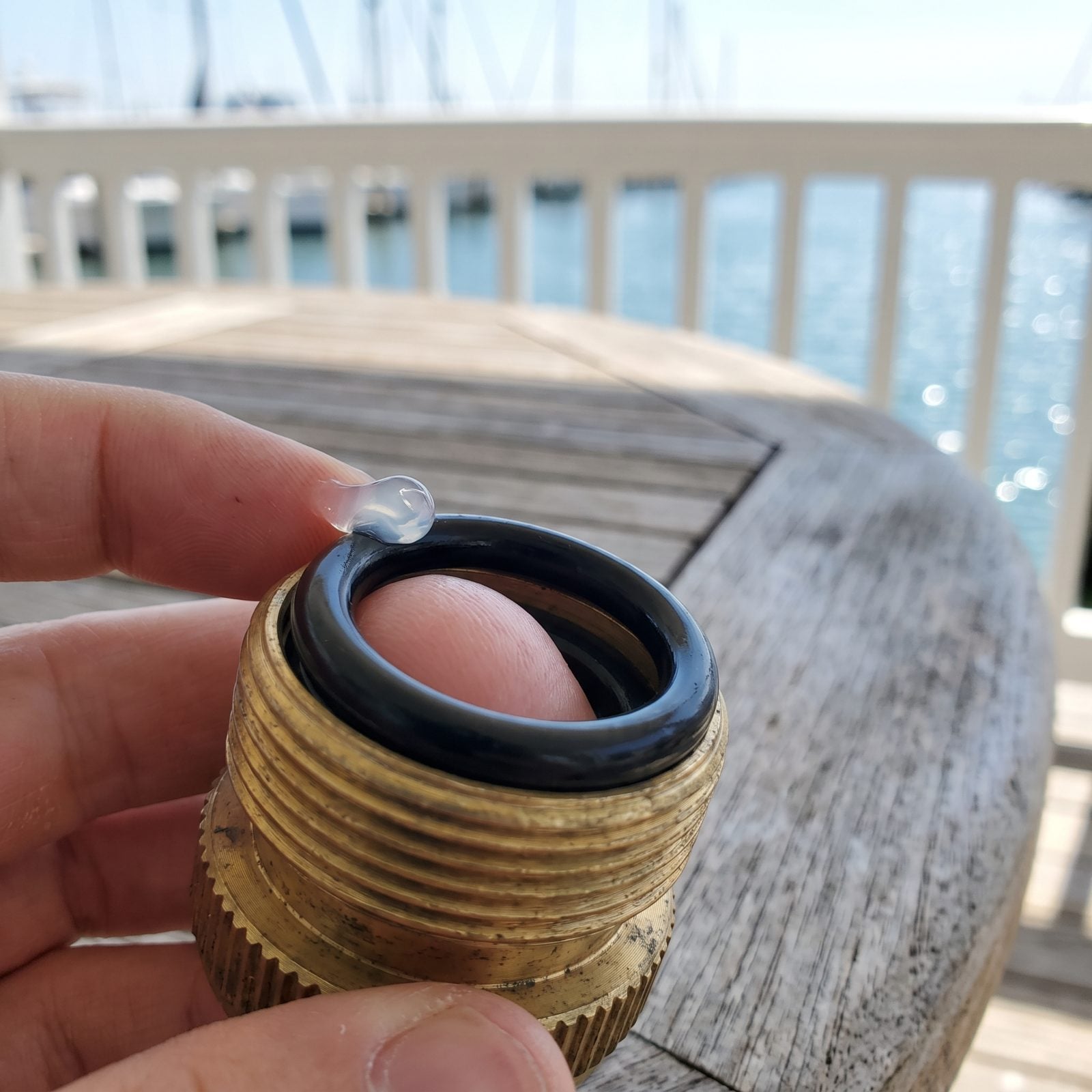
That little rubber ring inside the hose coupling is the whole reason your connection doesn’t leak. In sun and salty coastal air it cracks, hardens and shrinks fast. Then you get the slow drip nobody can find, and you overtighten the coupling trying to stop it, which just wrecks the threads.
A dab of silicone grease keeps the O-ring supple and seals clean with hand pressure. Skip petroleum grease — it rots rubber over time. Do this when you first hook up the hose for the season and the drips never start.
33. Wax the Metal Mailbox Before the Salt-Spray Season
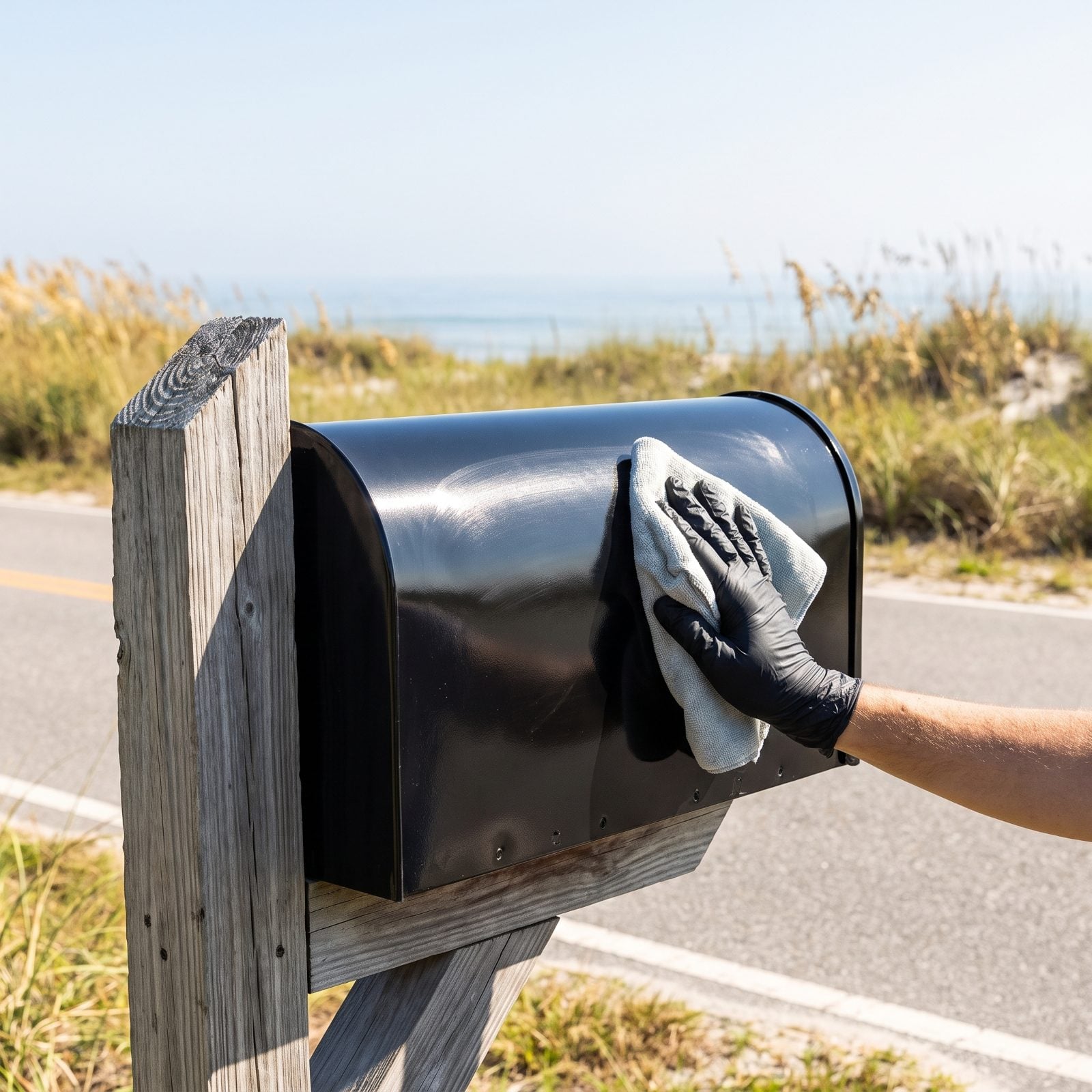
Nobody thinks about the mailbox until it’s a rust-streaked eyesore bleeding orange down a white post. Out near the water, it takes the full brunt of salt spray on windy days, and the paint doesn’t stand a chance alone.
Here’s where a coat of plain car wax before the blowy season earns its keep. Salt gets something to slide off of instead of sink into. The wax beads the moisture, keeps the finish from chalking, and buys the whole box another couple of years. Same move works on house numbers, light fixtures, hinges — any painted metal that lives outside.
32. Rinse the Vehicle Underbody After Windy Beach Days
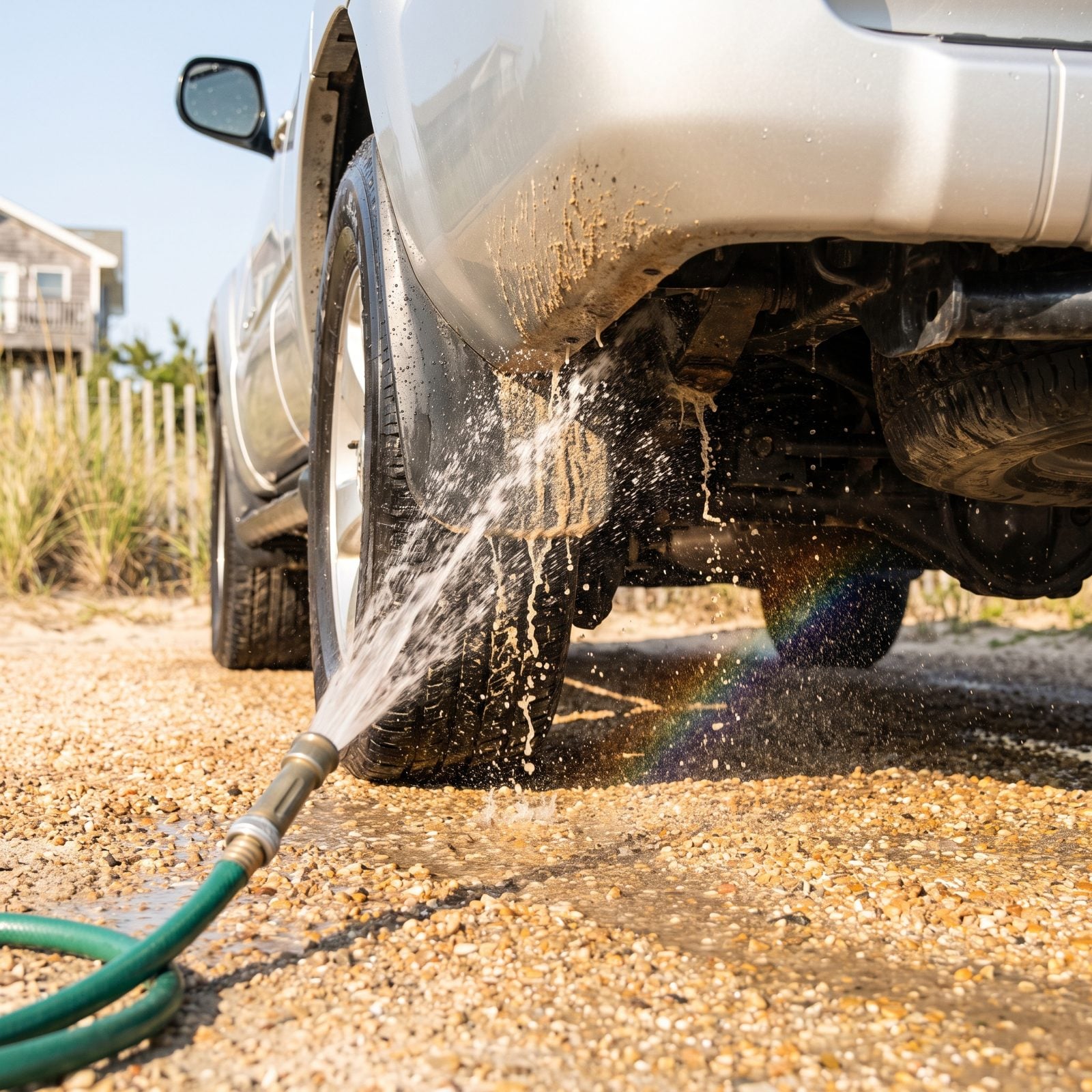
You wash the paint because you can see it. The salt that’ll actually kill the car is underneath, packed into the frame rails and brake lines where you never look.
On a windy beach day, salt mist coats everything, and the undercarriage holds it like a sponge. A few minutes with the hose aimed up into the wheel wells and along the frame flushes it off before it starts eating metal. Do it the same day, while the salt’s still loose and before it dries into a crust.
Rust never sleeps near salt water, and it always starts where you’re not looking.
A cheap underbody sprayer attachment makes it a two-minute job. Worth every penny if you’re keeping the vehicle more than a few years.
31. Freshwater-Rinse Bicycle Chains Before Drying and Relubricating
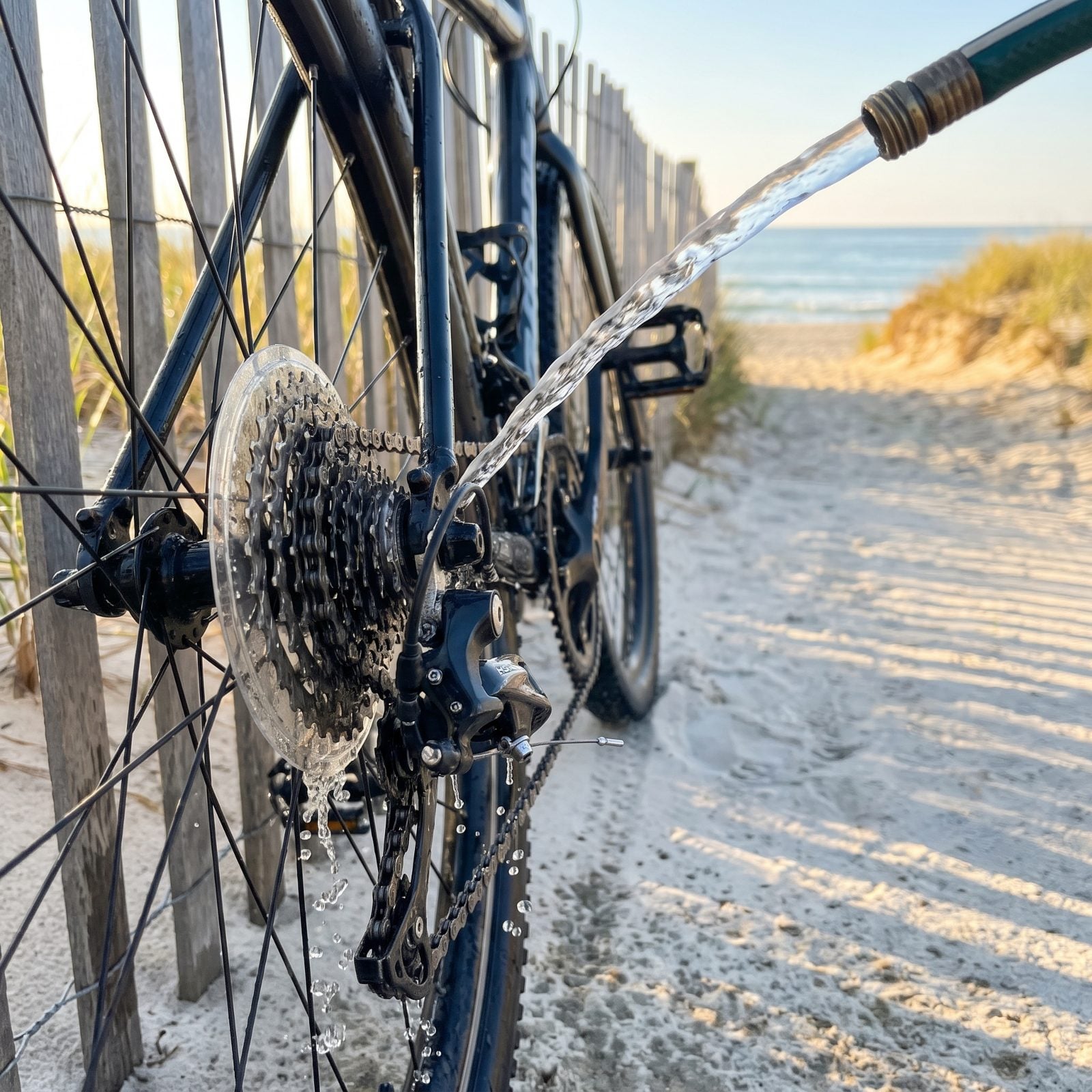
Beach-cruiser chains die young. Salt air plus sand plus old lube makes a grinding paste that chews through the chain and cassette in a season or two. You hear it before you see it — that dry, crunchy pedal no amount of fresh oil fixes.
So here’s the order that matters: a gentle freshwater rinse to wash off salt and grit, a thorough dry so you’re not sealing water inside the links, then fresh lube. Oil over salt just traps the salt against the metal, which is backwards. A chain that gets this treatment regularly lasts years instead of months.
30. Rinse Fishing Reels With a Gentle Freshwater Mist
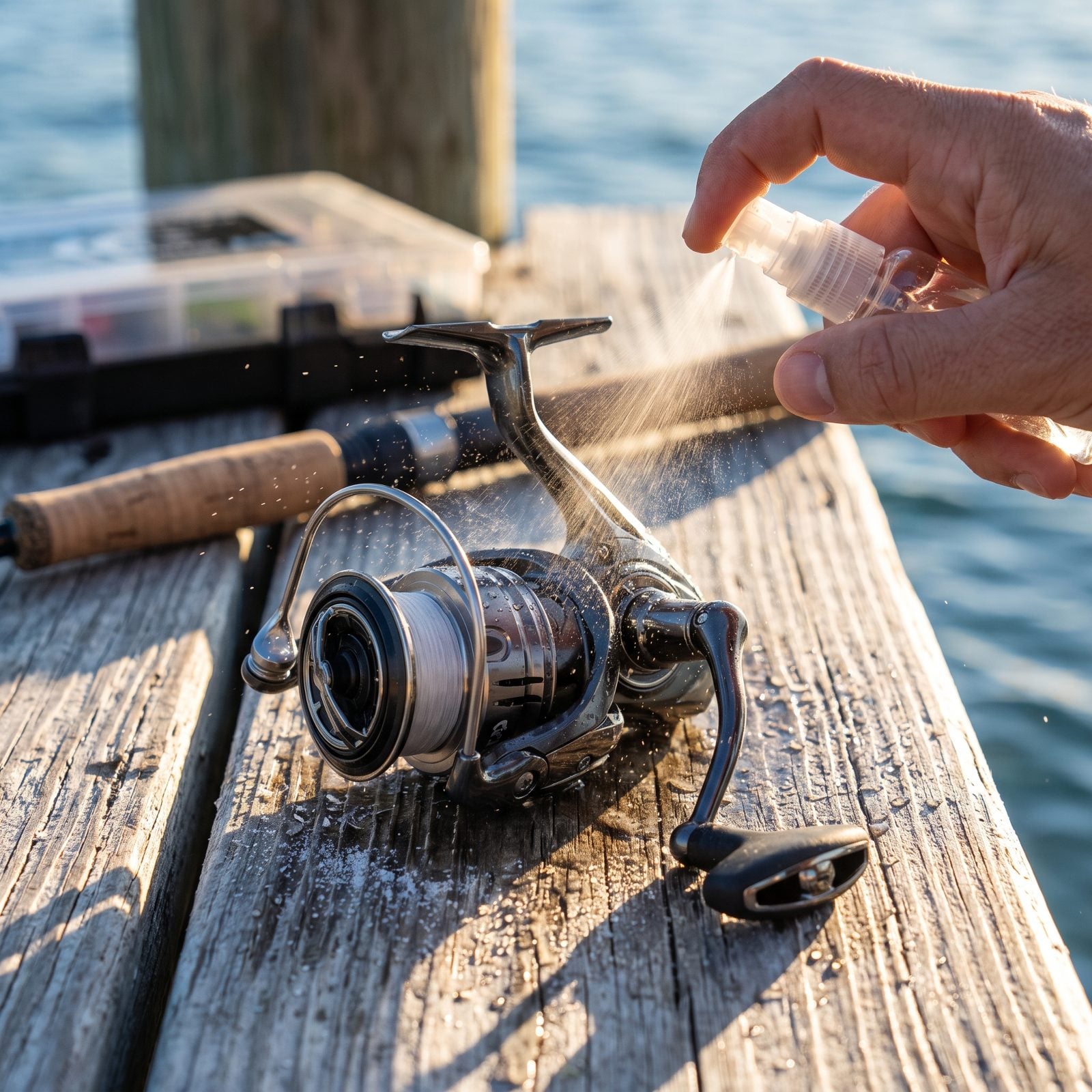
The instinct after a day of saltwater fishing is to blast the reel with the hose. Don’t. A hard stream drives salt and water straight past the seals into the bearings and gears, which is the exact place you’re trying to keep salt out of.
A gentle mist is the right amount of force — it rinses the salt off the outside without pushing anything inward. Wipe it down, let it dry, then a drop of reel oil on the moving parts keeps everything turning smooth. Take care of a good reel this way and it lasts decades. Skip it and you’ll be shopping again by next season.
29. Tuck Rechargeable Silica Canisters Into Tool Drawers
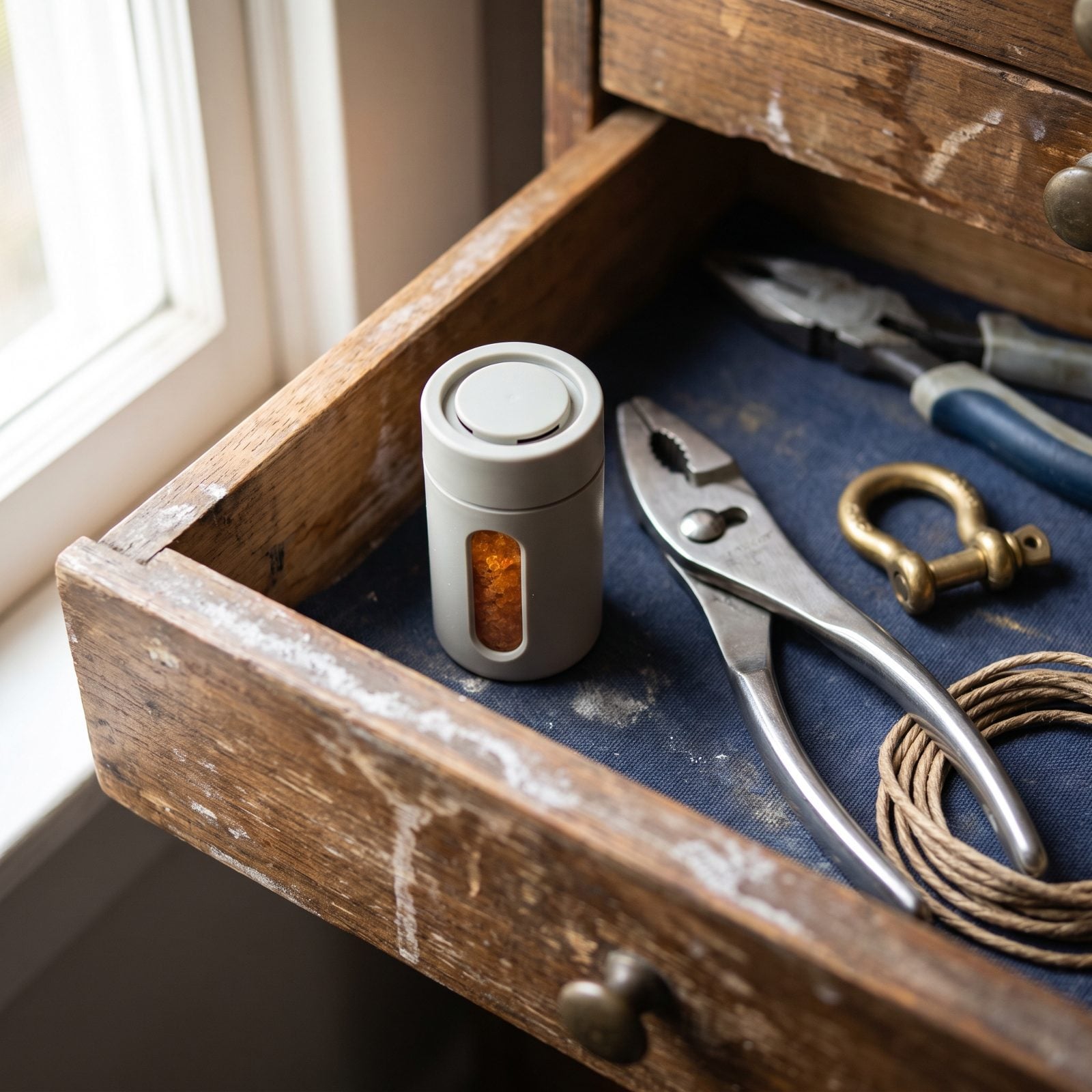
Rust shows up in a coastal tool drawer before it shows up anywhere else. The salt gets in, the humidity settles, and three months later your good pliers wear a film of orange on the jaws.
A rechargeable silica canister solves most of that for about twenty bucks. It pulls the damp out of a closed drawer, and when the little indicator window turns from orange to green, you plug it into a wall outlet overnight and it resets itself. No refills, no waste.
Toss one in each drawer that holds metal. Keep one in the junk drawer too, honestly, where the batteries and the spare keys live.
28. Inspect HVAC Filters After Major Onshore-Wind Events
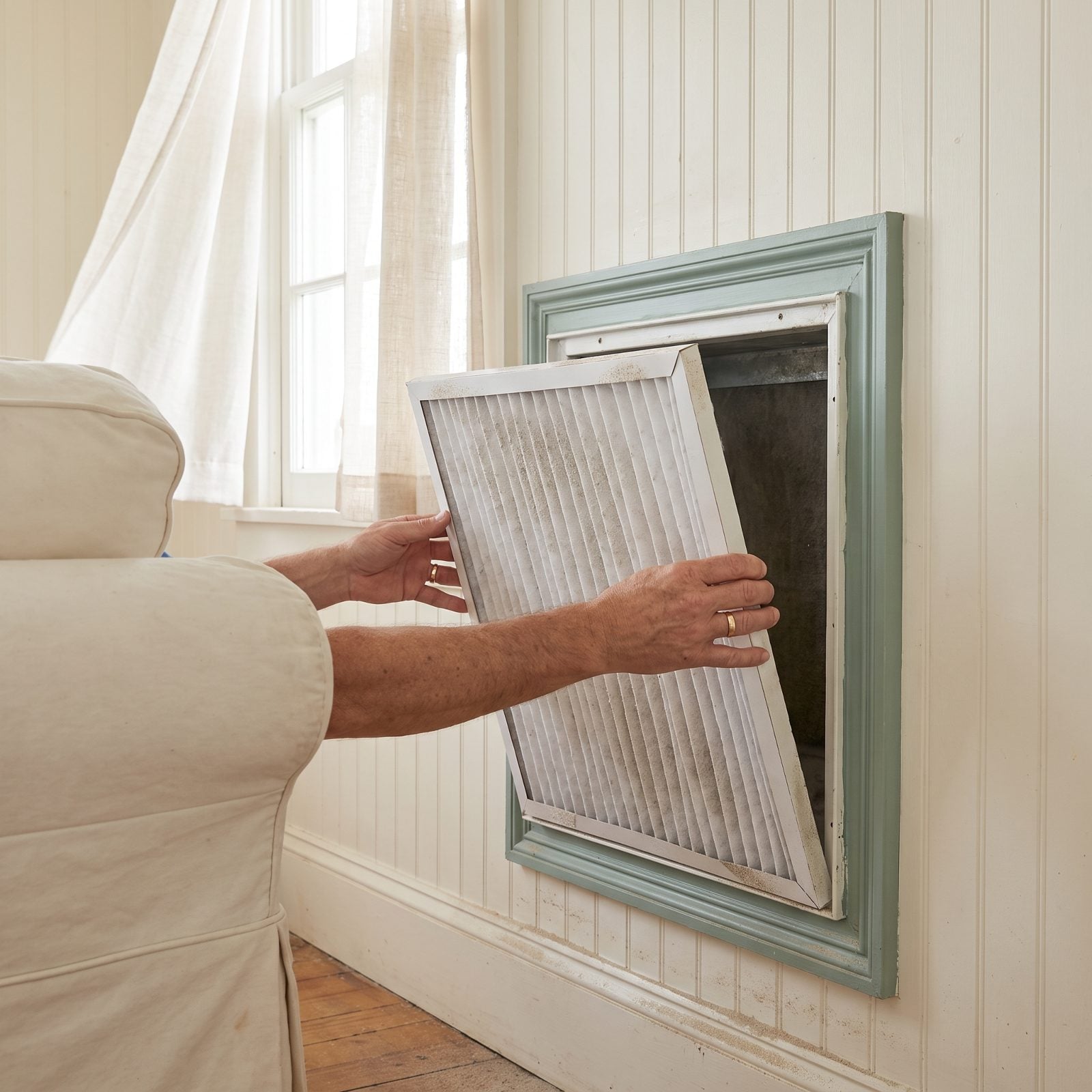
After a hard onshore blow, the air pushed into a waterfront house carries more than moisture. It carries fine salt aerosol and sand so small you never see it land.
That grit goes straight into the return vent and clogs the filter faster than any inland home would believe. A filter rated for months can choke in weeks on a windy stretch of coast.
So pull it after the big weather and hold it to a window. If light barely passes through, swap it. A strangled filter makes the whole system work harder, and a tired blower motor is an expensive thing to replace.
27. Leave a Small Air Gap Behind Furniture on Exterior Walls
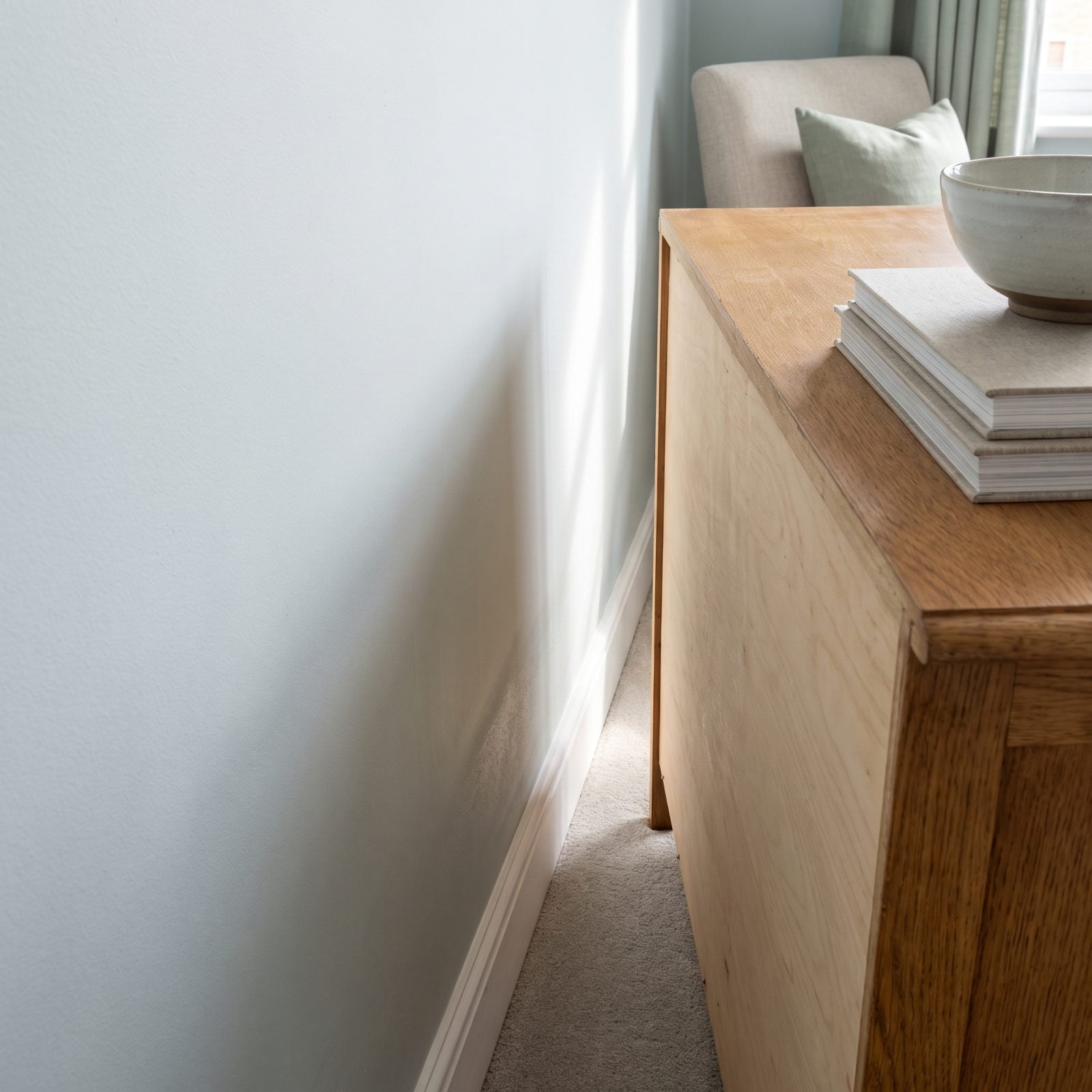
Push a bookcase flat against an exterior wall in a humid coastal house and you build a pocket where air stops moving. That still air holds moisture against the wall, and moisture against a wall grows mildew back there where nobody ever looks.
Two inches fixes it — enough space for air to drift behind the piece and carry the damp away.
You find out the hard way, usually when you drag a dresser out to clean and discover a black constellation spreading across the drywall behind it. Give it the gap from day one and you never meet the constellation.
26. Use a Slatted Bed Base to Let Coastal Moisture Escape

A mattress sweats. Everyone’s does, a little, every night — and in a dry inland bedroom that moisture evaporates by morning and nobody thinks about it.
On the coast, where the air already holds all the water it can, that moisture has nowhere to go. Trap a mattress on a solid platform base and the underside stays damp for days, and mildew sets in on the part you never flip over to check.
Slats change the math. The gaps let air move under the mattress all night, so it dries instead of stewing.
25. Choose Ventilated Closet Shelving Instead of Solid Boards

Solid shelf boards look nicer. They also trap a still cushion of air around your folded sweaters, and in a coastal closet that still air is exactly where mildew wants to live.
Ventilated wire or slatted shelving lets air pass through the whole stack. The linens breathe, the leather belts don’t bloom, and the folded cotton on the bottom shelf dries instead of going musty by August.
It’s one of those swaps nobody mentions until you’ve already thrown out a favorite jacket that smelled like a damp basement.
24. Stand Outdoor Cushions on Edge After Damp Nights

Coastal dew is heavier than people expect. It settles on everything overnight and soaks into the bottom of a cushion where it sits flat on the chair.
Leave it lying flat all morning and the underside never dries. Do that enough nights running and you get that sour, mildewed smell no amount of Febreze fully beats.
Stand them on edge when you wake up. Both faces get air, the dew burns off by mid-morning, and the cushions last years longer. Thirty seconds, and it saves a whole patio set.
23. Use Breathable Mesh Furniture Covers Instead of Solid Tarps
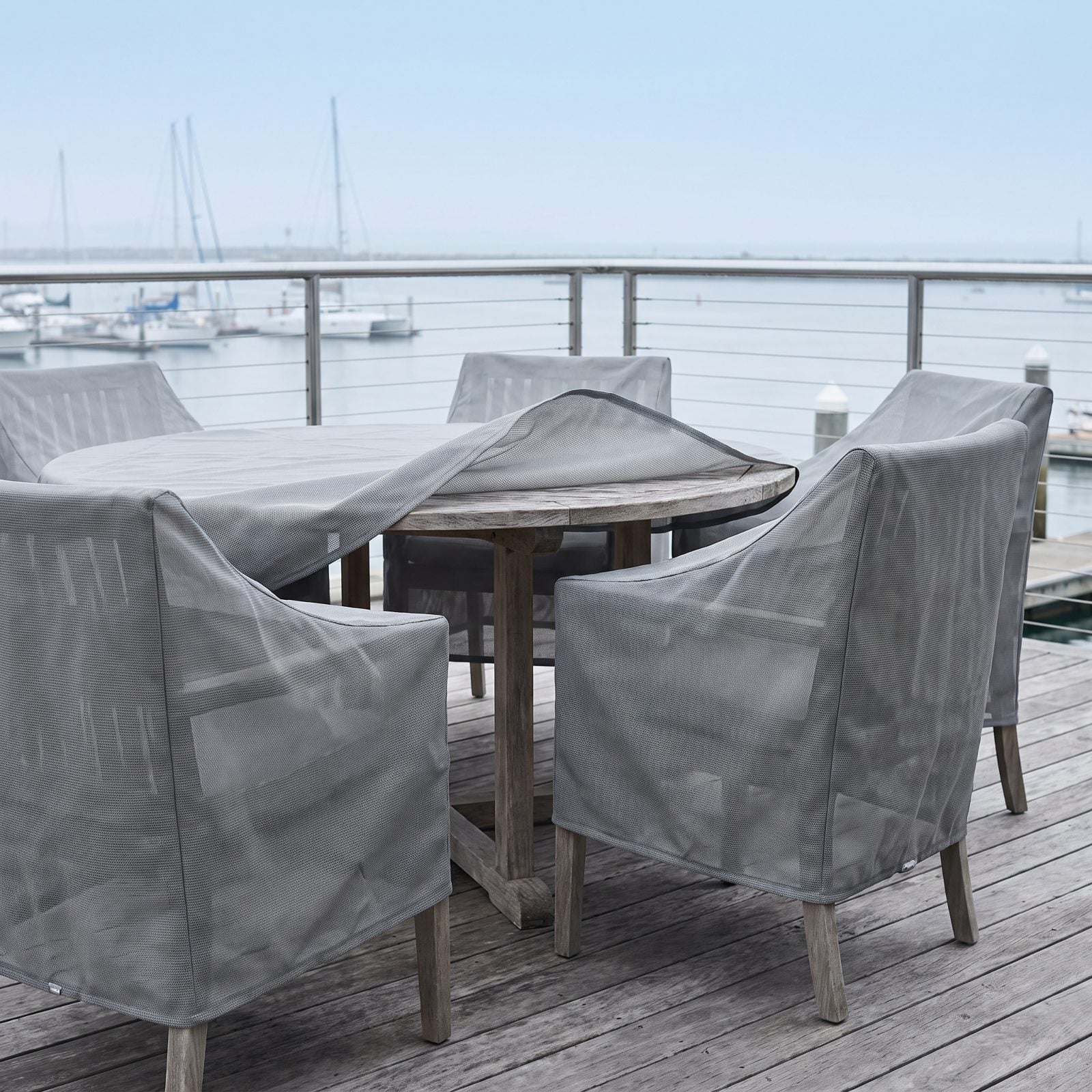
A solid tarp over outdoor furniture does the opposite of what you want. It keeps rain off the top and then traps every bit of humidity underneath, so the furniture sits in a sweatbox and rots from within while looking protected.
Breathable mesh covers shed the worst of the weather but let air move through. The wood dries, the metal doesn’t sweat, and you don’t peel back a cover in spring to find mold climbing the chair legs.
They cost a little more than a blue poly tarp from the hardware store. The furniture they save costs a great deal more than that.
22. Squeegee Window Condensation Before It Reaches the Sill

Interior window condensation is the coast letting you know the indoor humidity is high. Cold glass meets warm damp air, and by morning the lower panes are running with water.
Let it pool and it creeps onto the wooden sill, soaks into the paint, lifts the finish, and eventually the wood underneath goes soft and black.
A cheap shower squeegee kept on the sill clears the whole pane in two passes. Wipe the strip at the bottom with a cloth and you’ve spared the sill entirely.
Small habit. Over a few winters, the difference is a window frame you never have to replace.
21. Vacuum Sliding-Door Tracks Before Adding Dry Lubricant
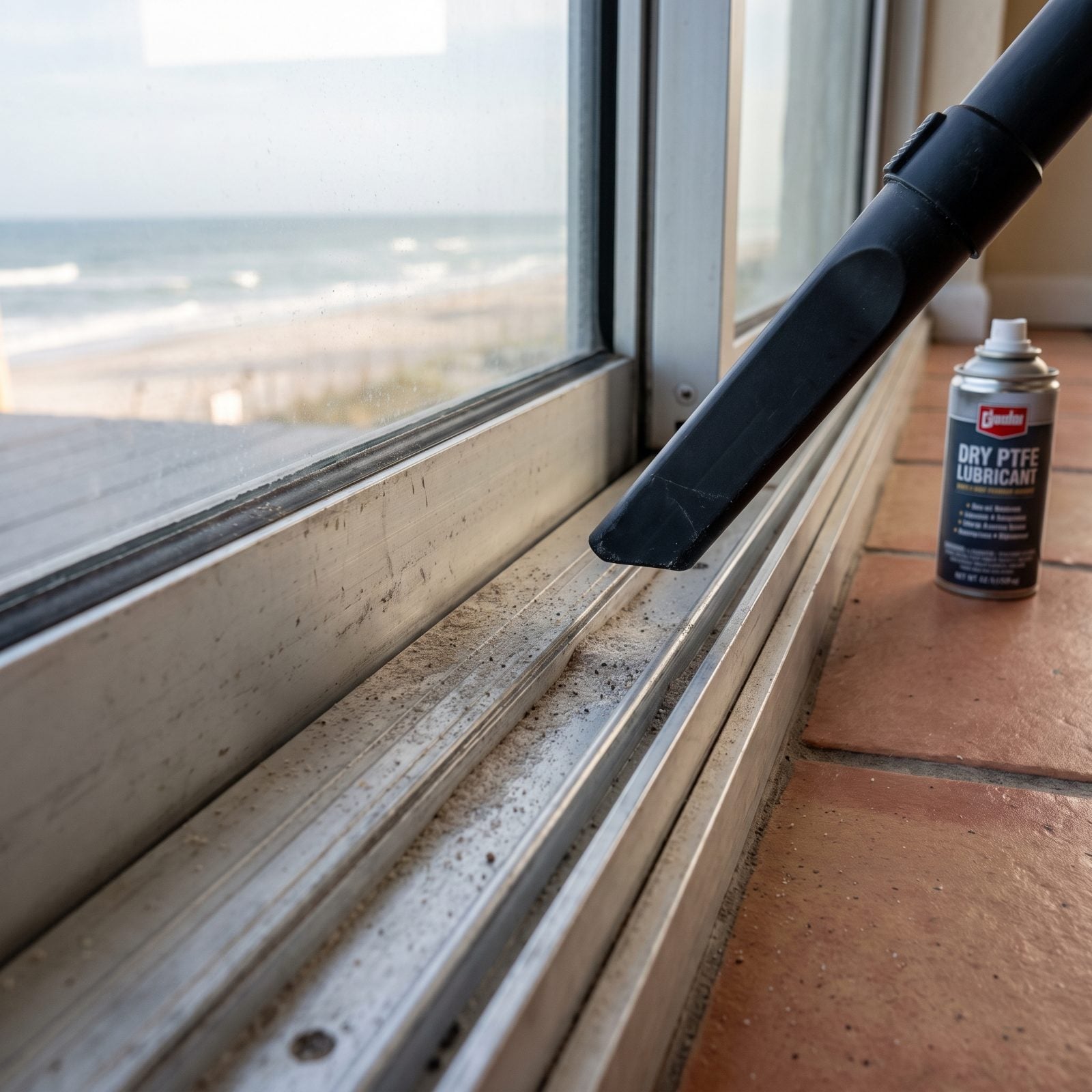
Sliding doors on the coast grind, and the reason is always sand. It drifts into the track, works into the rollers, and turns a smooth glide into a two-handed shove that eventually jumps the door off its line.
Here’s where people make it worse. They spray lubricant straight onto a gritty track, and now the sand is glued in place, grinding paste into the rollers.
Vacuum first. Get every grain out of the channel with a crevice tool, then follow with a dry PTFE lubricant — not an oily spray that attracts more sand. The door glides again and stays that way.
20. Add a Brush-Style Door Sweep to Block Windblown Sand
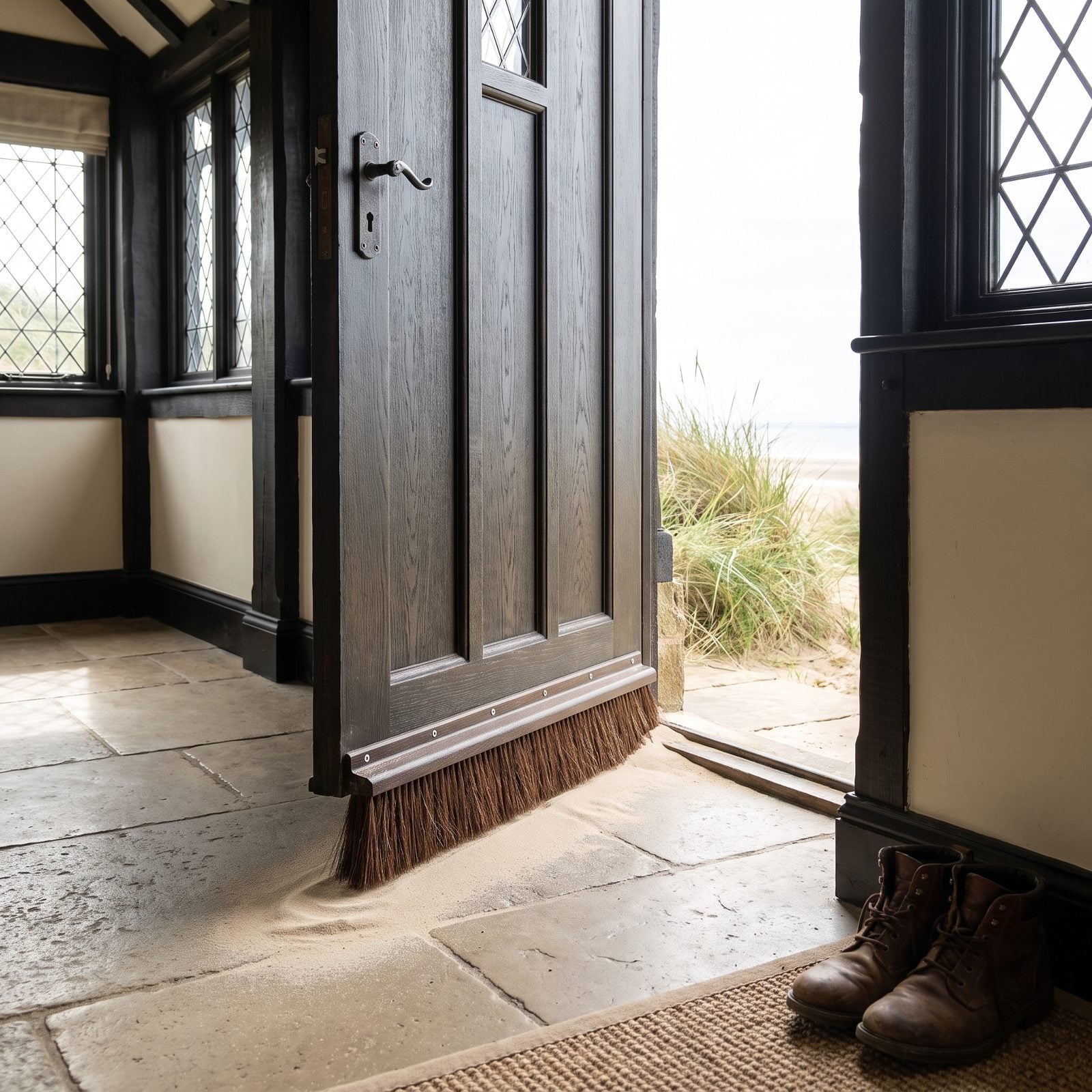
You sweep the floor, look away for an hour, and there’s a fresh fan of sand spread across the entry again. It isn’t the shoes. It’s the wind, pushing fine grit under the door through a gap you can barely see.
A brush-style sweep handles what a rubber one can’t. The dense bristles flex over an uneven threshold and still block the windblown sand, and they don’t drag or squeal the way a rubber flap does on a sandy sill.
Of everything on this list, it’s the one you notice the first day, as long as the door is actually shut. Leave it standing open to the dunes and the sand still blows in and fans out around the bristles.
19. Place a Slatted Teak Grate at the Outdoor Shower Exit
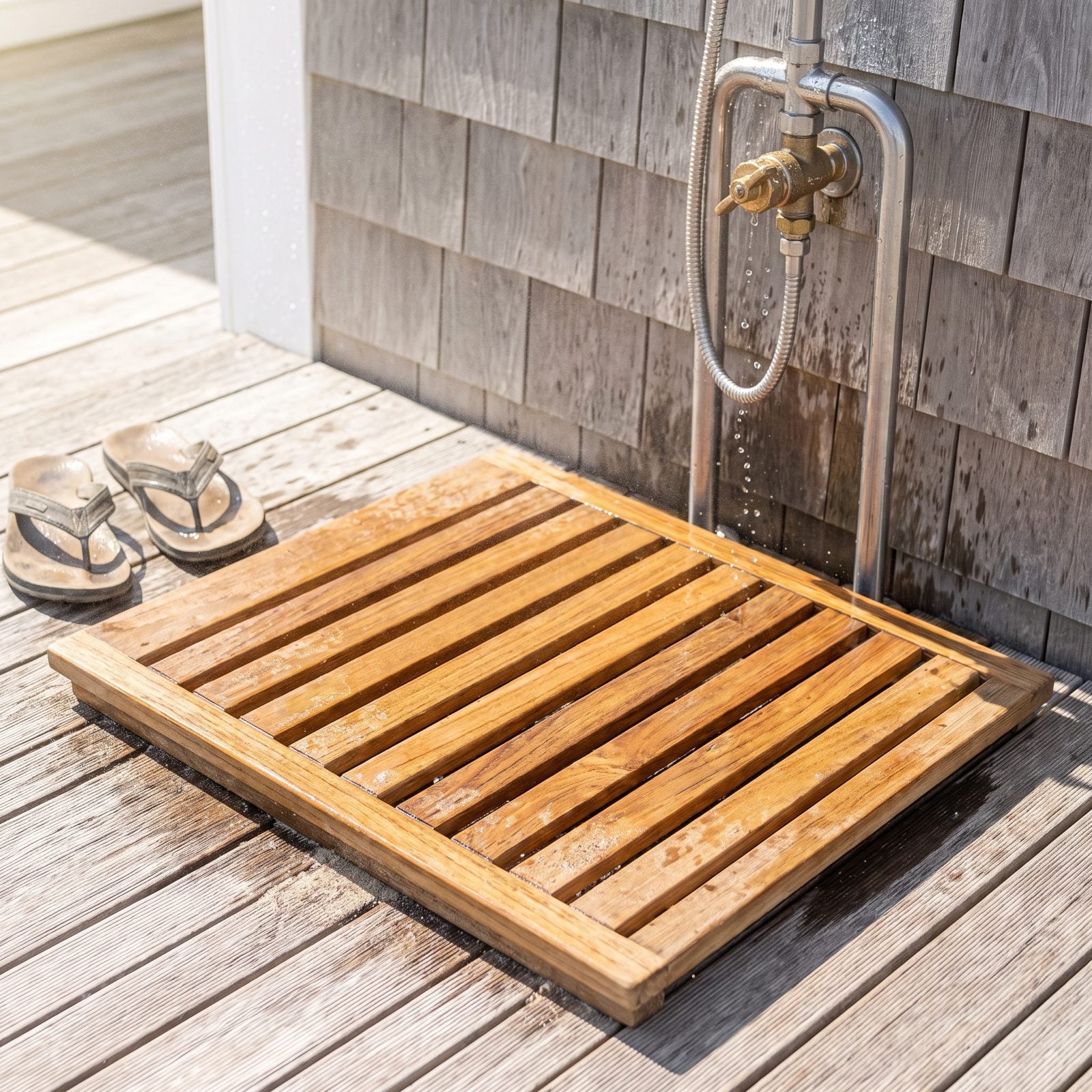
Sand tracked through a house always starts at the same spot: the wet, bare foot stepping off the shower pad straight onto the floor. A teak grate fixes it, and it asks nothing of you in return.
The slats hold your feet above the drip zone so water and grit fall through the gaps instead of riding inside on your soles. Teak earns its place because it shrugs off standing water and salt, the two things that wreck cheaper wood in a single season. A grate roughly two feet square runs you fifty bucks or so, and it’ll outlast most of your beach towels — which, let’s be honest, is a low bar after a few summers.
18. Keep a Stiff Paintbrush in the Car for Sandy Crevices
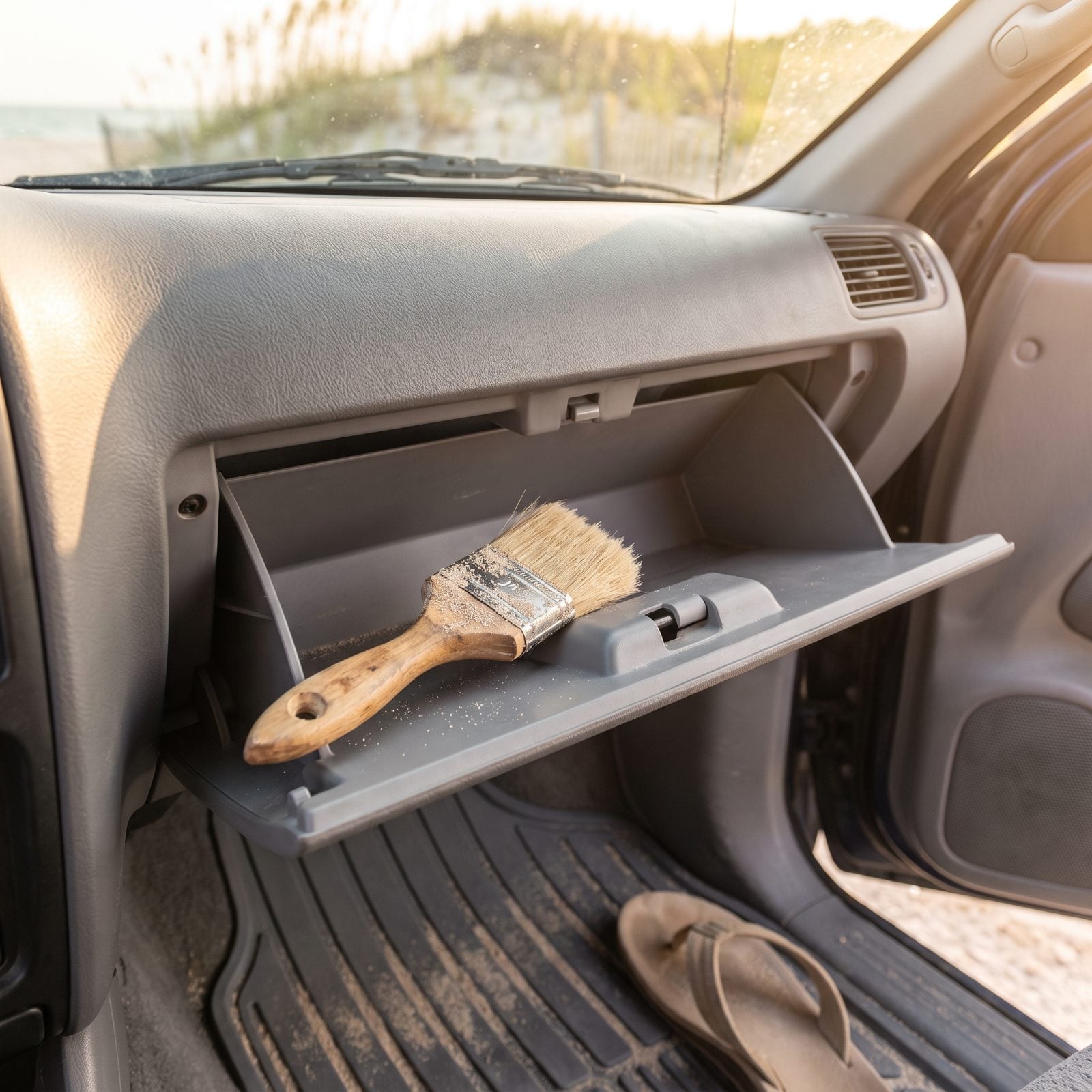
A dry two-inch paintbrush lives in the glovebox and does one job better than anything else: it flicks sand out of the places your hand can’t reach. Between the seat cushions. The rubber grooves of the floor mats. That stubborn seam where the door panel meets the sill.
Towels just smear the sand around, and the vacuum at the gas station eats your quarters while missing every corner. A brush pushes the grit out into the open where you can sweep it onto the pavement before you pull away. Boat owners have cleared sand off deck hardware this way for ages, and it works just as well on a sandy minivan.
17. Carry Beach Gear in Mesh Bags That Release Sand
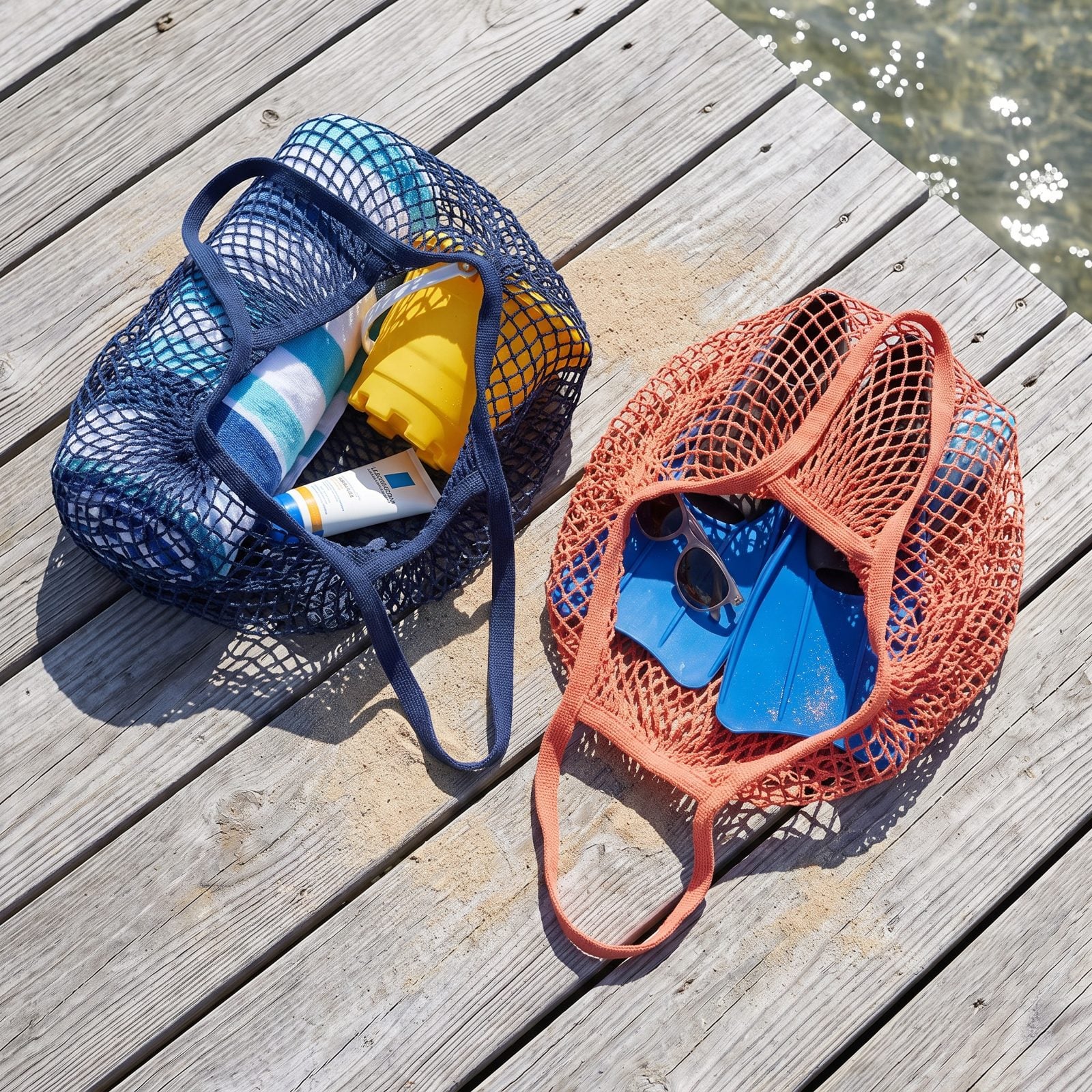
Zip your gear into a solid tote and you carry the whole beach home with it. A mesh bag does the opposite — the sand sifts out through the weave while you walk back across the lot, so what reaches the car is mostly just your stuff.
Give it a shake at the boardwalk and watch the grit rain out. And because air moves through the open weave, everything dries instead of fermenting in a sealed bag. Anyone who’s ever cracked open a forgotten canvas tote in July knows exactly what I’m sparing you here.
16. Use a Small Garden Sprayer as a Portable Foot Rinse
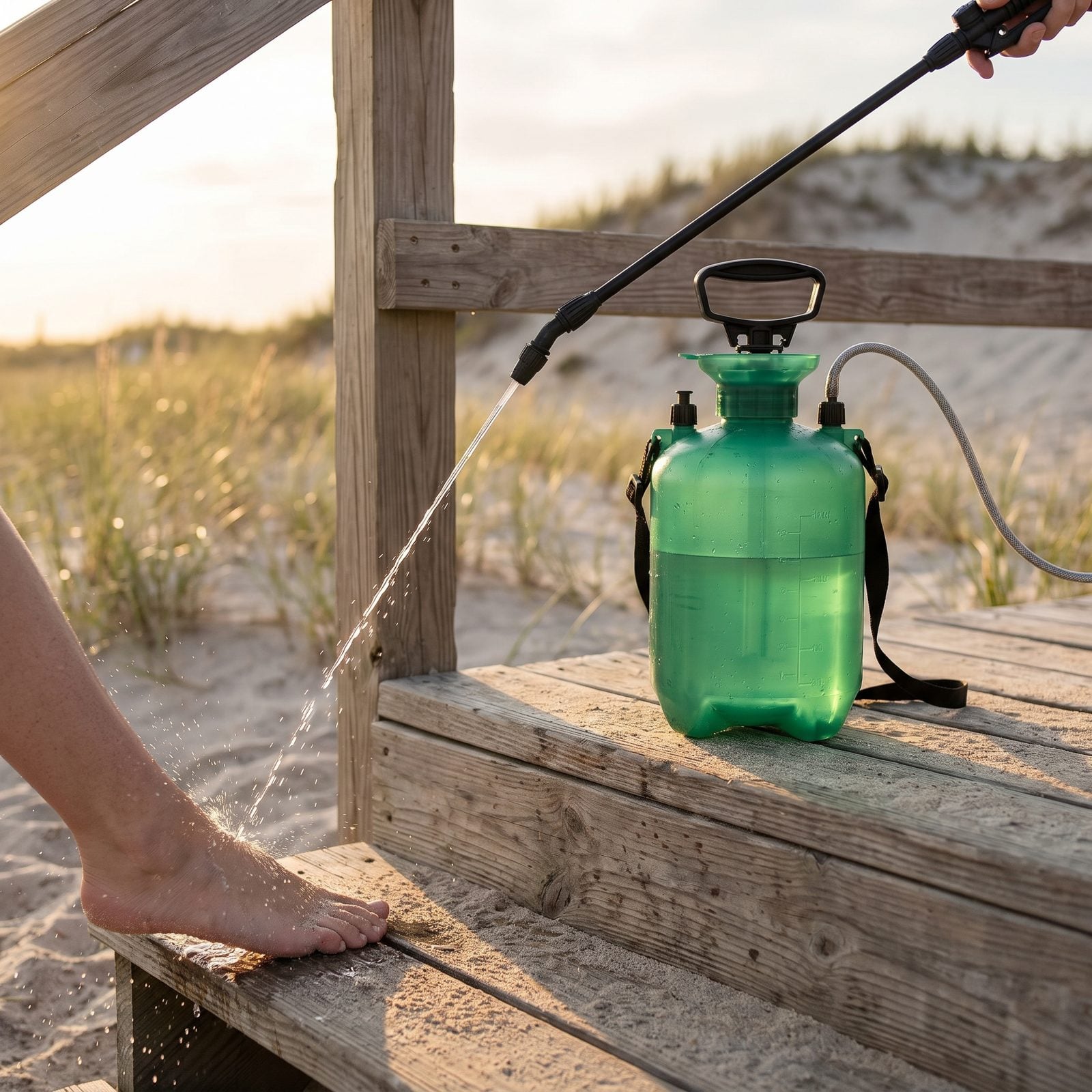
Fill a cheap pump sprayer — the kind sold for weed killer — with plain water and you’ve got the best portable foot rinse you’ll ever own. Pump it a few times and a steady pressurized stream blasts sand off feet, legs, dog paws, coolers, whatever climbed back up from the waterline.
No hose bib at the access point? Doesn’t matter. It rides in the trunk, rinses the gear before it goes in, and kills the sandy-backseat problem at the source.
One rule, non-negotiable: buy a sprayer that has never held chemicals, and never, ever reach for one that has. Label this one WATER and don’t let it cross over.
15. Give Wet Beach Gear a Vented Landing Bin
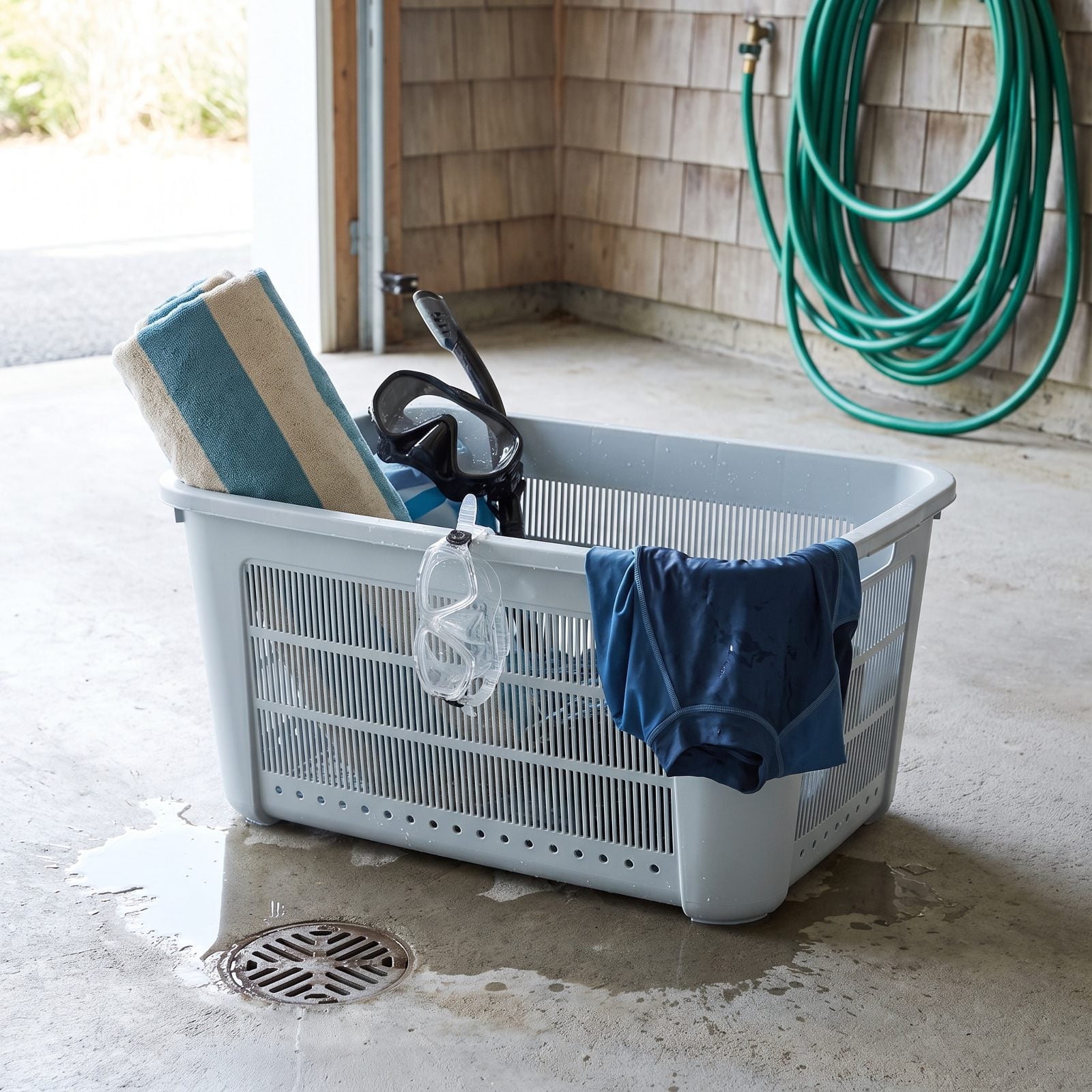
Wet gear needs somewhere to go that isn’t the floor or the washing machine. A vented bin with slatted sides and drain holes in the base gives everything a landing spot where it can drip and breathe at once.
Toss in the towels, the masks, the sandy rash guards. Air moves through the slots, water drains out the bottom, and nothing sits in a soggy pile growing that mildew funk no detergent ever fully kills. Park it near a floor drain or out on the covered porch. In humid coastal air, the line between drying and rotting is airflow — and a sealed tub gives you none of it.
14. Freeze New Flour Briefly Before Airtight Pantry Storage
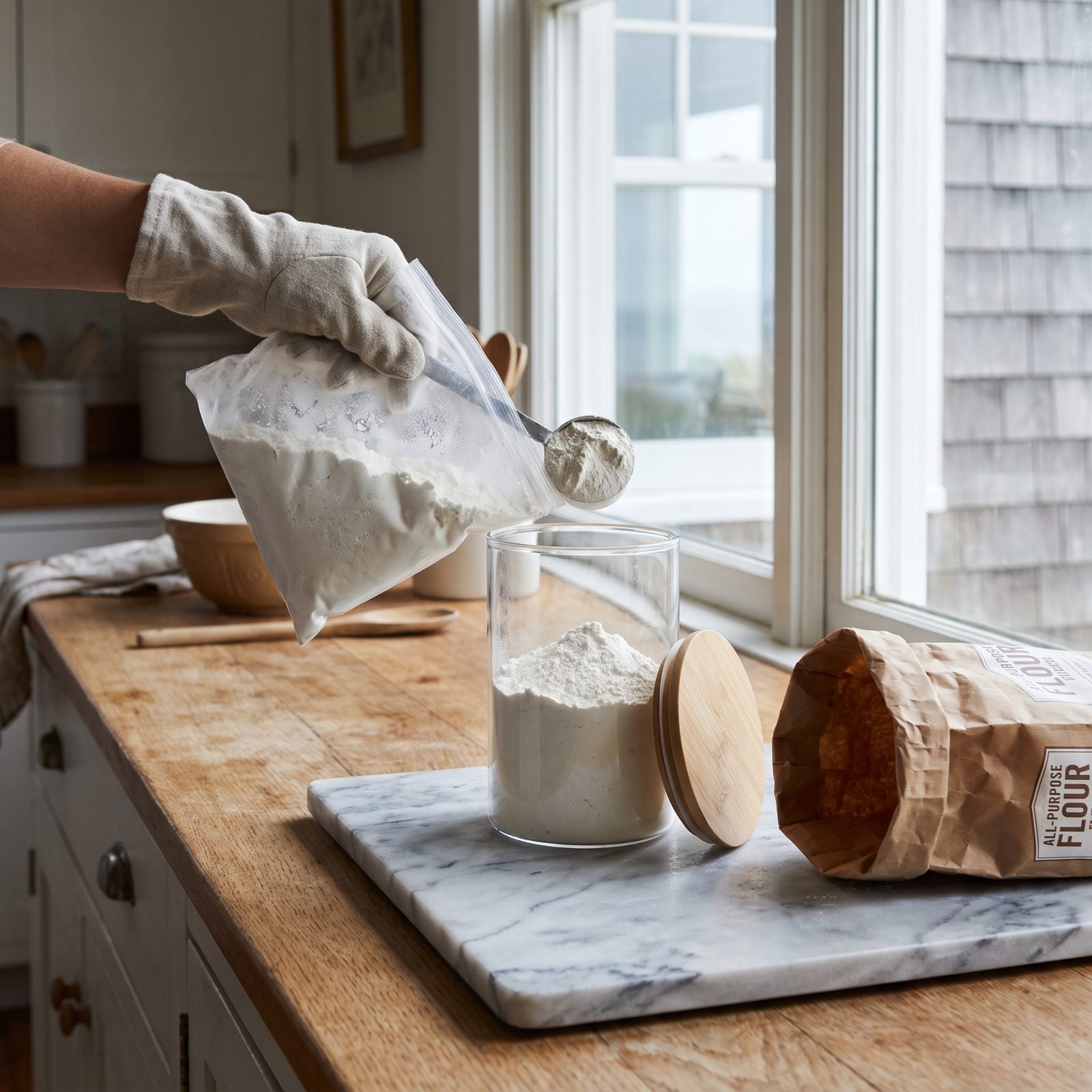
Flour mites and the occasional weevil arrive in the bag from the store, not from your kitchen. Nobody mentions this at the register. A few days in the freezer, sealed up, kills off any eggs riding along before they ever get the chance to hatch in your pantry.
Warm, humid coastal kitchens are precisely the conditions pantry bugs adore, which is why this habit matters more by the water than it ever does inland. So freeze the new bag for two or three days, then let the sealed bag come back to room temperature before you transfer it to an airtight canister.
13. Drop a Few Dry Rice Grains Into the Salt Shaker
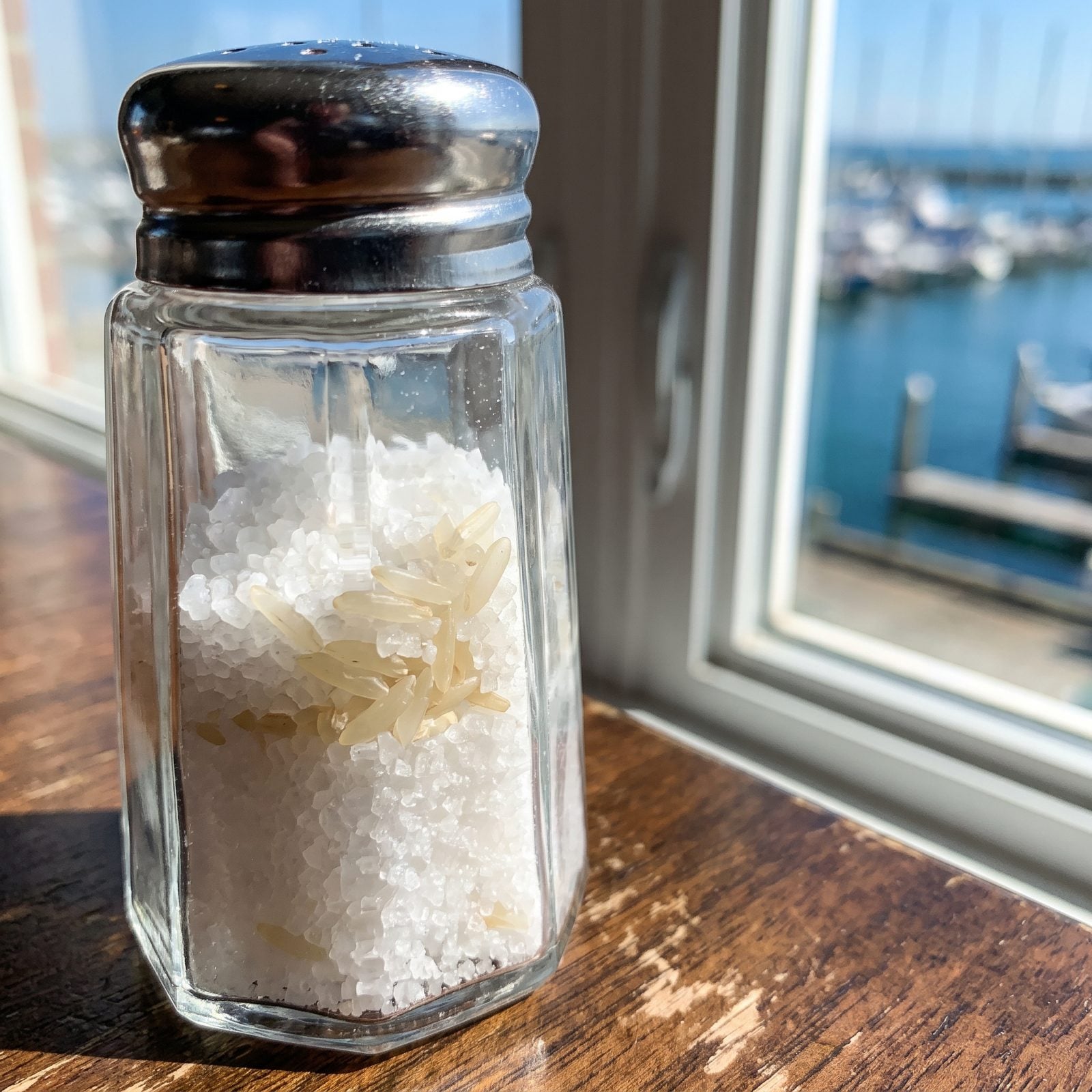
Salt refuses to pour in a seaside kitchen. The air is thick, the salt clumps, and you end up whacking the shaker against your palm like it owes you money. A handful of dry rice grains fixes the whole thing.
The rice pulls moisture out of the air before the salt can soak it up, so the crystals stay loose and free. It’s the same idea behind those little packets in a pill bottle, except the rice is already sitting in your cabinet. Pick grains too big to drop through the holes and they’ll do the work without ending up in your dinner.
12. Put the Bathroom Exhaust Fan on a Countdown Timer
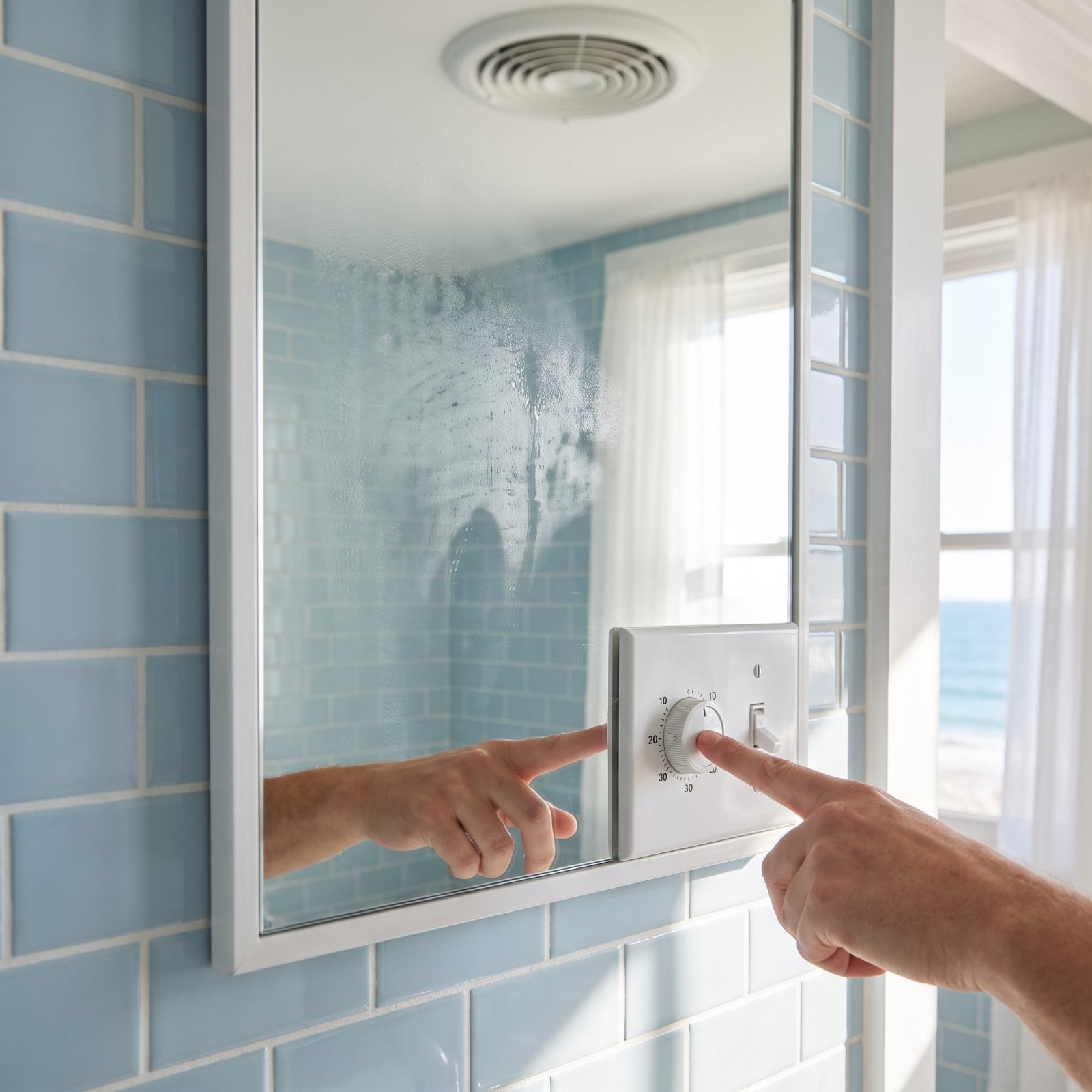
Everyone kills the fan the second they step out of the shower. That’s the exact moment it should keep running. All the moisture is still hanging in the air, settling into the grout and the drywall — which is where coastal mold gets its foothold.
A countdown timer switch swaps in for the standard flip switch for twenty or thirty dollars, and it takes maybe fifteen minutes if you’re comfortable with a screwdriver and the breaker. Dial it to thirty minutes, walk away, and the fan keeps clearing humidity long after you’ve left the room. Set it and forget it, in the good way.
11. Run the Dehumidifier Through a Permanent Drain Hose
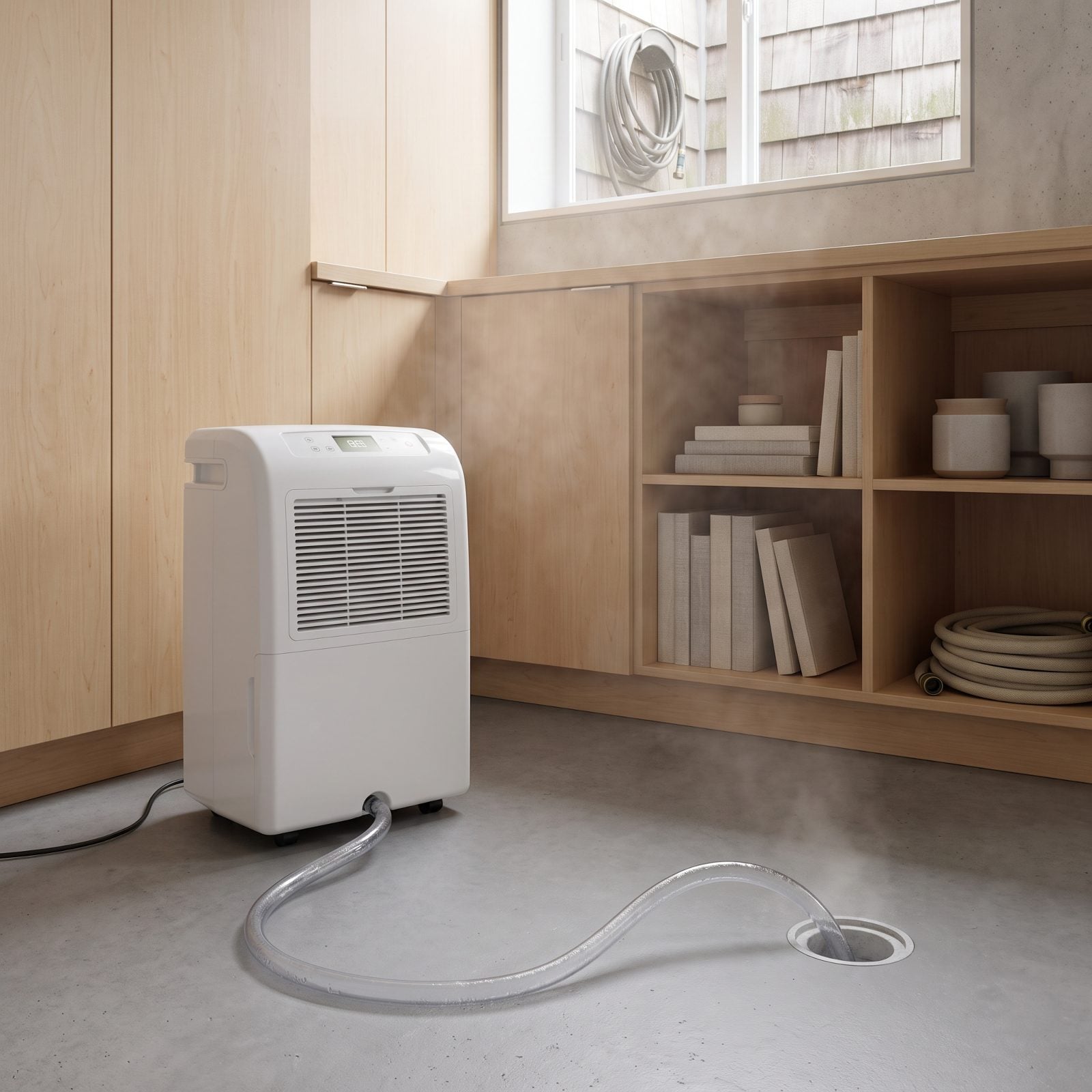
A dehumidifier goes useless the moment its tank fills and the unit shuts itself off — which it’ll do constantly in a damp coastal basement. What most people never notice is the drain port low on the front, built for exactly this.
Hook a garden hose or a vinyl line to that port, run it to a floor drain or a sump, and the thing empties itself forever. No more hauling a sloshing tank up the stairs twice a day. No more walking in to find a unit that quit six hours ago.
10. Freshwater-Rinse Garden Plants After Heavy Salt Spray
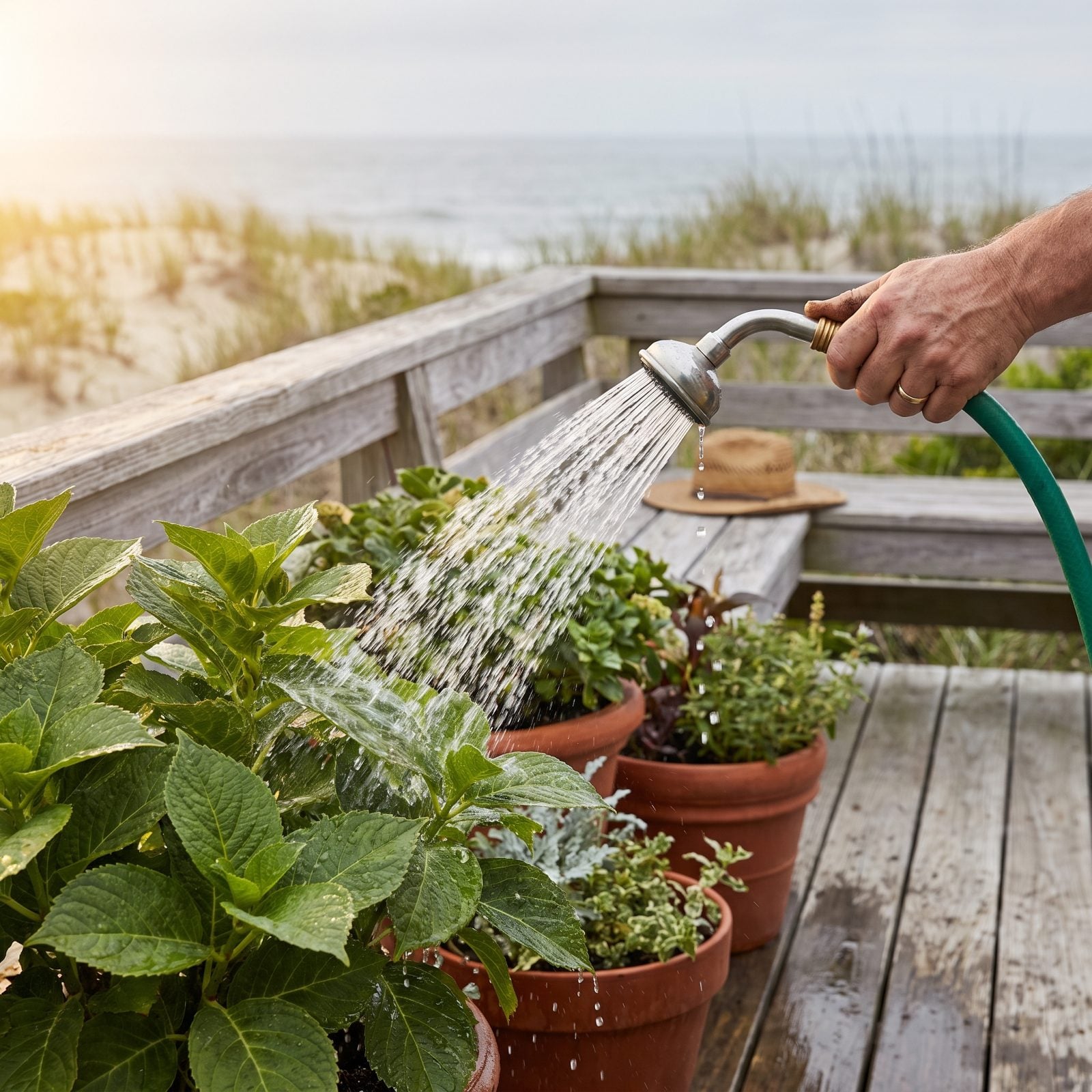
After a storm or a long stretch of onshore wind, the leaves of your coastal garden wear an invisible crust of salt. It burns the foliage from the outside in, drawing moisture out of the plant until the edges go brown and crisp.
A plain freshwater rinse washes it off before the damage sets in. The morning after heavy spray rolls through, hit the leaves with a gentle spray — undersides too. The plants that struggle hardest near the water usually aren’t failing from the wind at all. They’re failing from the salt film nobody bothered to rinse off. Do this faithfully and even the fussier flowers hang on through the whole season.
9. Use Gravel Mulch Where Strong Coastal Wind Scatters Bark
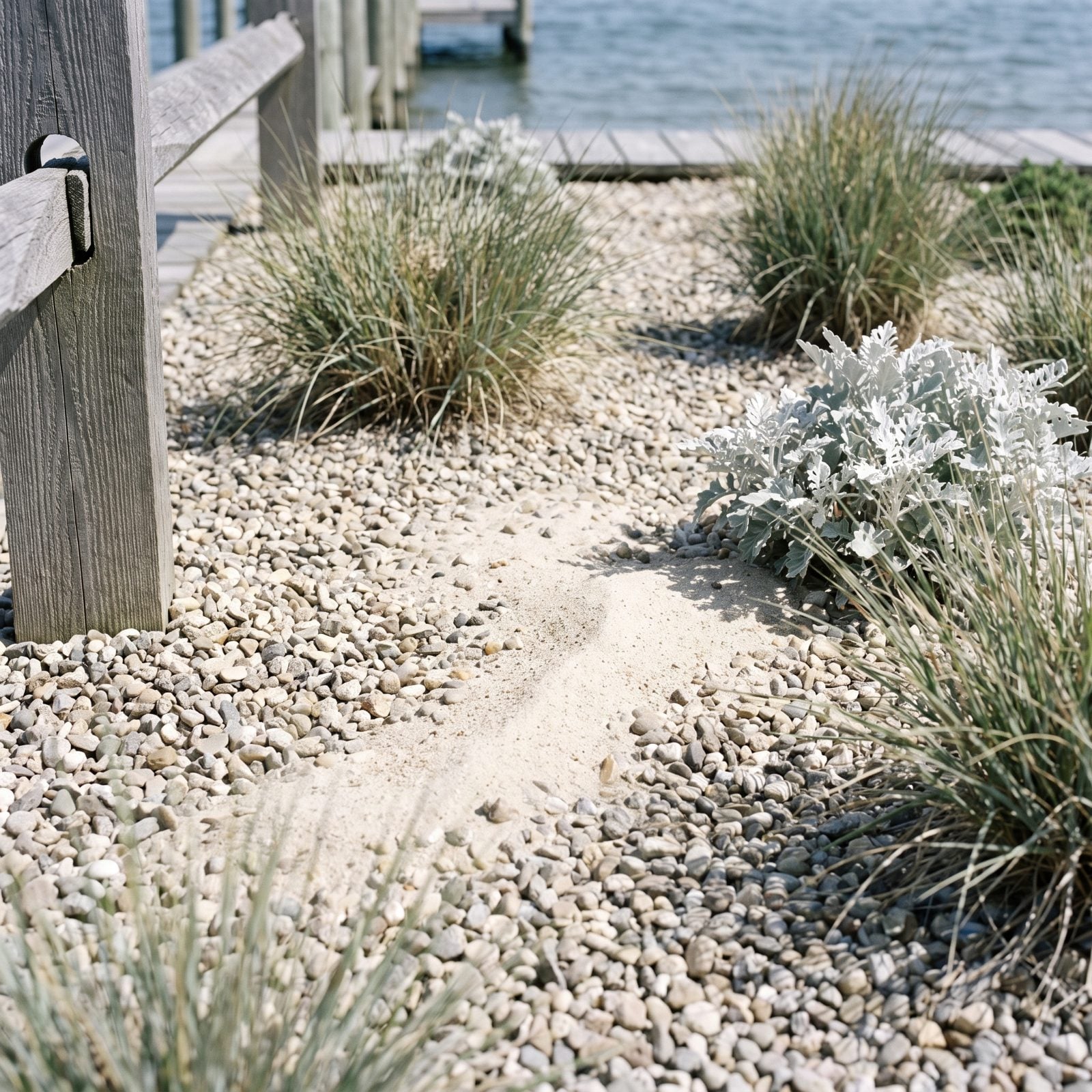
Bark mulch and sea breeze don’t get along. One honest gust off the water and you’re picking shredded cedar out of the driveway, the pool filter, and the neighbor’s hydrangeas. Gravel? It just sits there, unbothered.
Pea gravel or crushed shell stays put in wind that would launch bark halfway down the block, and it drains fast when a squall dumps two inches in twenty minutes and your beds need to shed water instead of hold it. Salt doesn’t rot stone the way it chews through anything organic.
8. Switch Seaward Outdoor Fixtures to Shielded Amber Lighting

Bright white floods pointed at the water do two bad things. They wash out your own night vision so you can’t find the dock steps, and they disorient nesting sea turtles and shorebirds along the stretches where that genuinely matters.
Shielded amber fixtures fix both problems. The warm wavelength bothers wildlife far less, and a shield that aims the light down instead of out means you see where you’re walking without lighting up the whole cove. Plenty of coastal counties already require this near beaches, so check the rules before a turtle-patrol volunteer shows up at your door.
7. Label Every Storm Panel for Its Exact Window
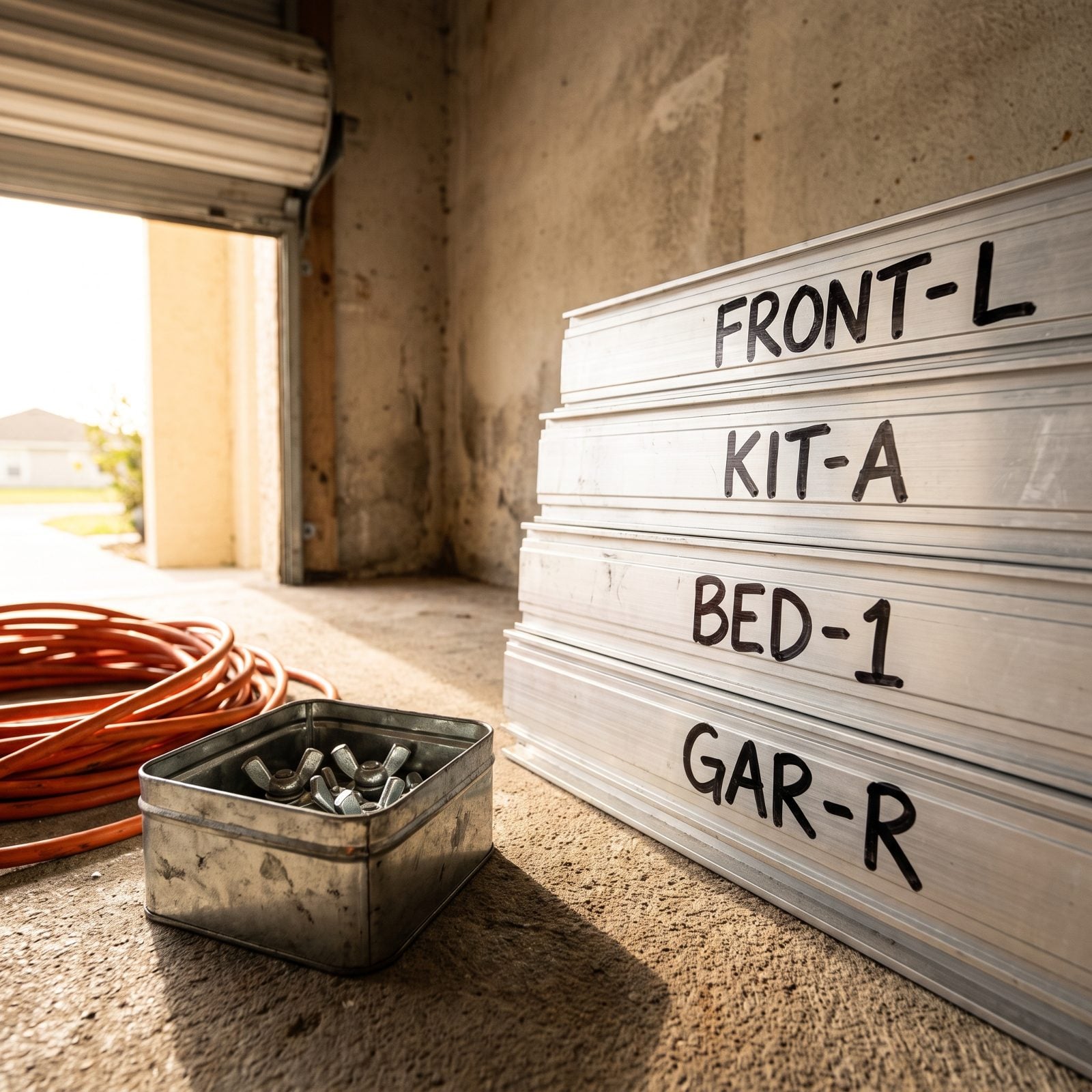
Picture the scene nobody warns you about. A storm is twelve hours out, the wind is already picking up, and there you are in the garage trying to work out which panel fits which window while your hands shake. Been there. It’s miserable.
So mark each panel with a waterproof paint pen the first time you hang them. Window location, which way is up, which corner. A dozen minutes of labeling now saves you an hour of trial-and-error later, in weather, on a ladder. The panels don’t change. Your memory does.
6. Freeze Water Jugs to Fill Empty Freezer Space Before Storms
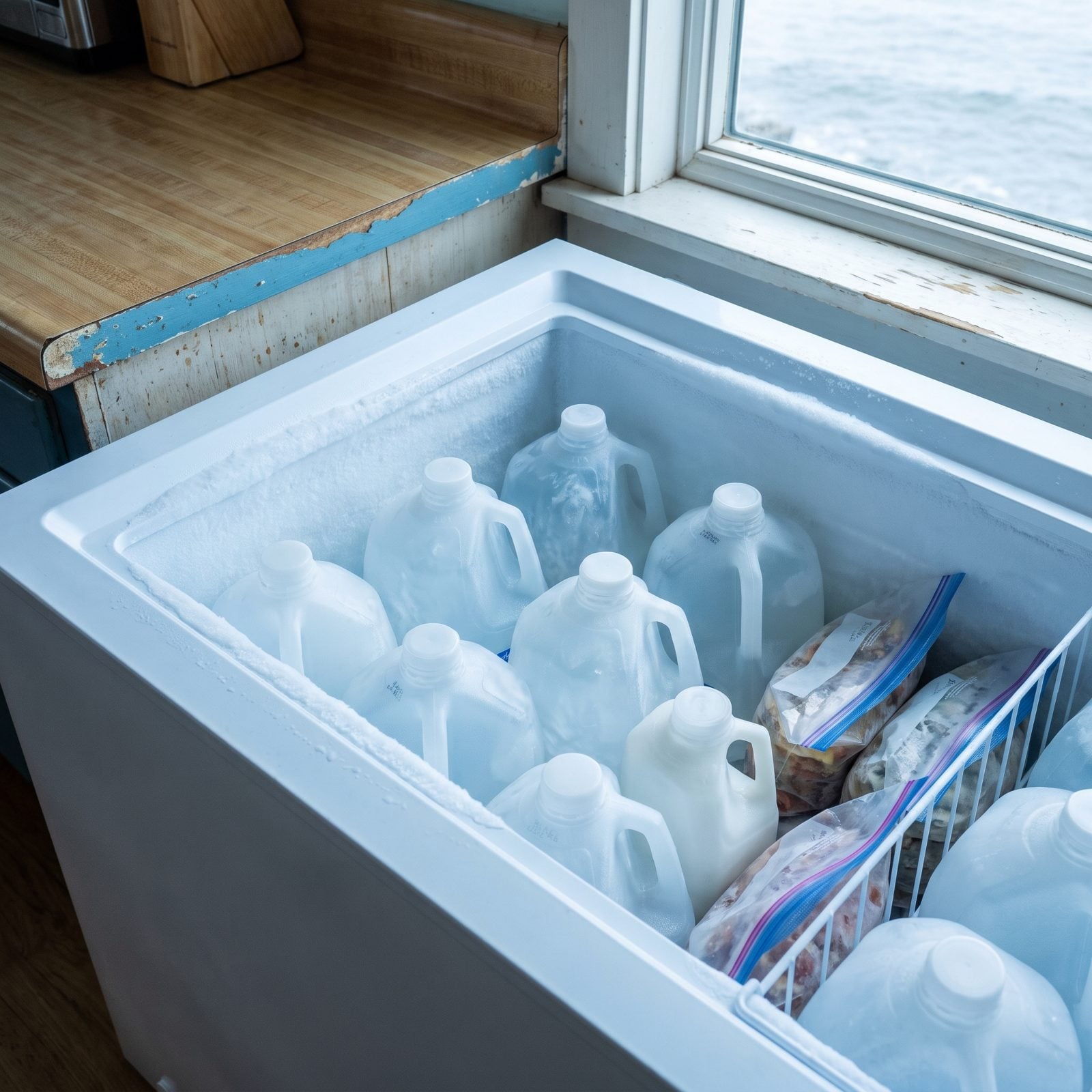
A half-empty freezer is a liability when the power goes out, because all that air warms fast. Fill the gaps with frozen jugs of water and you’ve built yourself a thermal battery that carries you through the dark hours.
Packed full, a freezer holds its cold for a day or more without power — versus just hours when it’s mostly empty. The jugs keep everything else frozen longer, and once they finally thaw you’ve got clean drinking water on hand. One thing: leave an inch of air at the top so the plastic doesn’t split as the water expands.
5. Clip Trash-Can Lids Down With Locking Carabiners
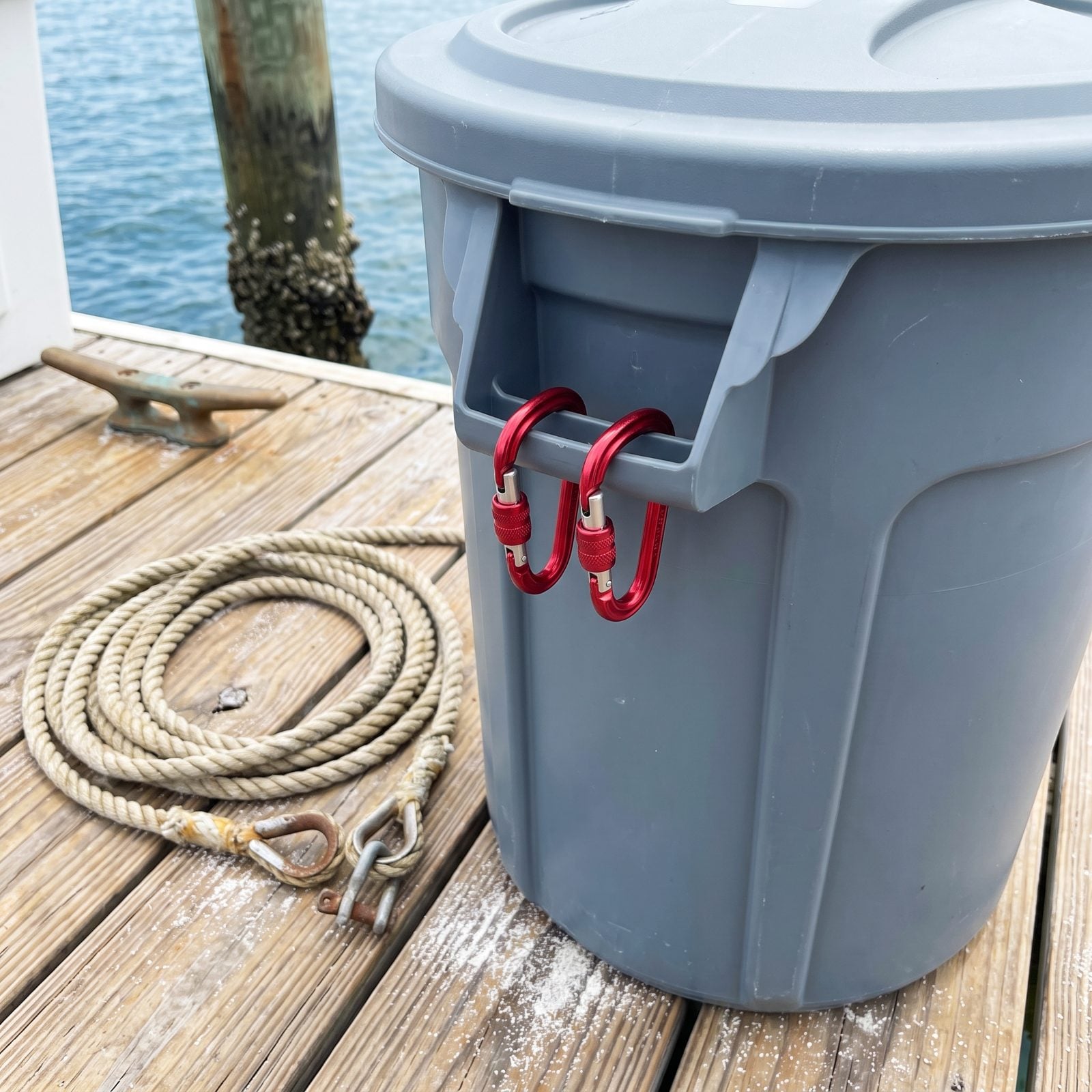
Raccoons, gulls, and a thirty-knot gust all want your trash lid open. Locking carabiners tell every one of them no.
Keep a pair clipped on the can’s side handle bar, ready to latch the lid down, and spring for marine-grade or stainless — the cheap hardware-store clips seize up and crumble within a season out in the salt air. It’s two seconds to unclip on trash day, and the rest of the week your driveway stays clear of scattered garbage after a blow. Small habit, enormous difference the morning after a windy night.
4. Set Phone Alerts for King Tides and Coastal Flooding

King tides are the highest tides of the year, and on a calm, clear day they’ll still shove water up over the bulkhead and into the yard. No storm required. People get caught flat-footed because the sky looks fine.
NOAA Tides & Currents and most tide apps let you set alerts for the days the water runs highest. Get the heads-up the night before and you move the car, raise the dock box, and pull the cushions off the lower deck. Nothing dramatic. You just don’t get surprised.
3. Flip Dock Ladders Out of the Water Between Uses
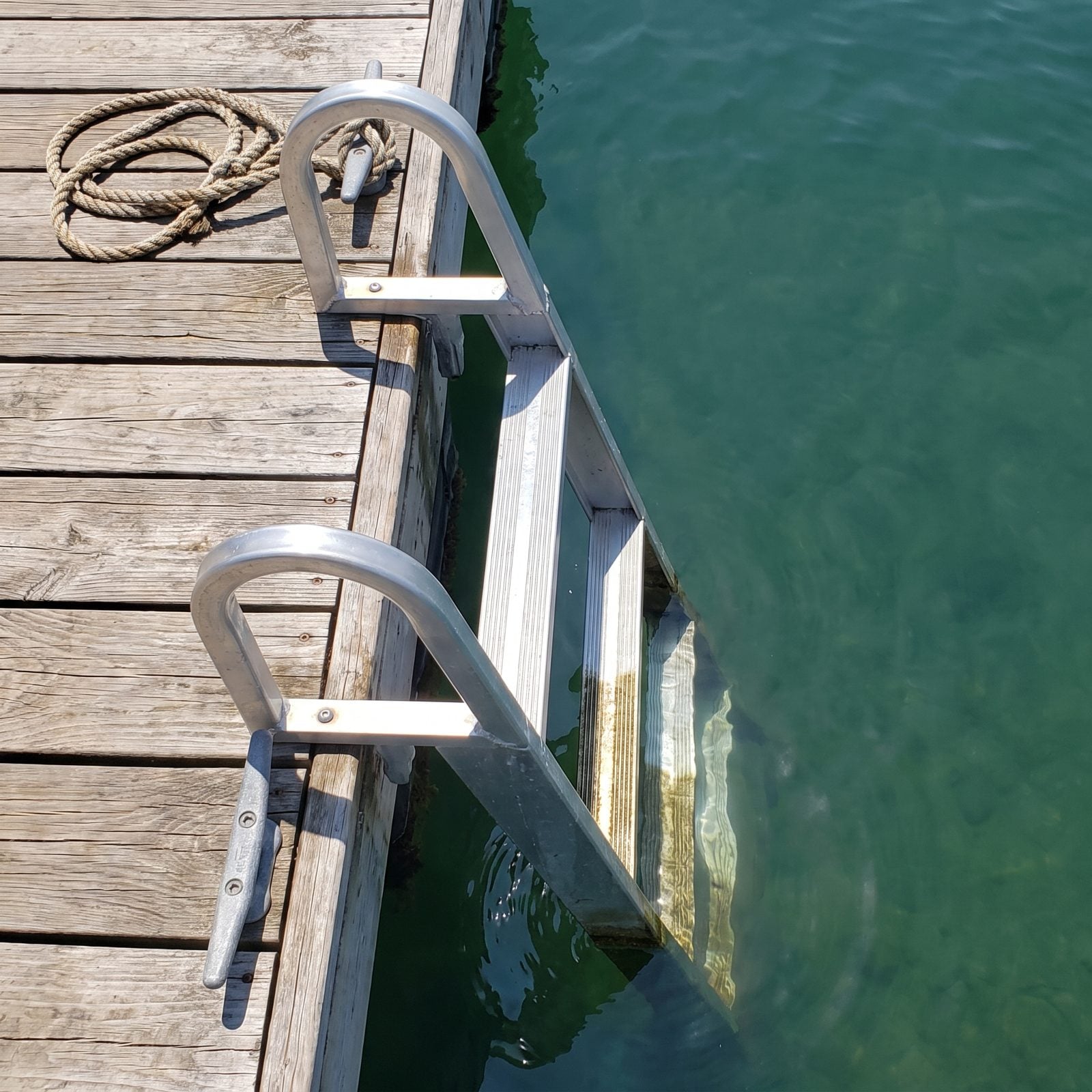
Leave a ladder in the water all season and by August the bottom rungs are furred with algae, barnacles, and that slick green slime that’s a stubbed toe waiting to happen. So flip it up when you’re done.
Out of the water between swims, a ladder stays clean, lasts longer, and doesn’t become a condo for whatever’s growing in your cove. Five-second flip. And both stainless and aluminum appreciate not soaking twenty-four hours a day, especially in salt.
2. Add Chafe Guards Where Dock Lines Rub Against Hardware
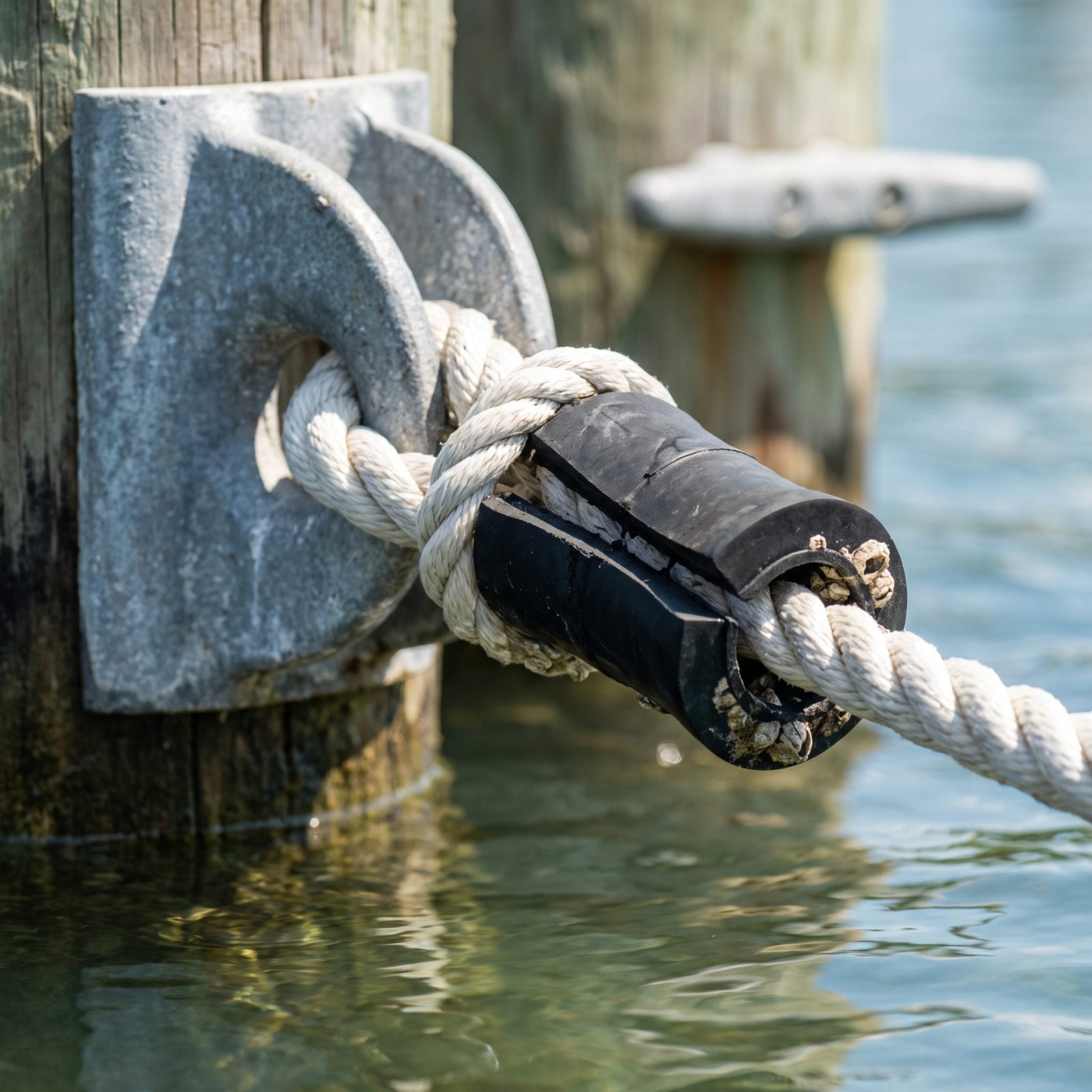
A dock line almost never breaks in the middle. It breaks where it rubs.
Every spot a line passes over a chock, a cleat edge, or a piling, the rope saws itself apart a little more with every wave. A chafe guard — split hose, leather, a purpose-made sleeve — soaks up the abrasion so the line doesn’t, but only if it sits right at the contact point. A guard that slides out past a galvanized eye leaves the rope bare right where it wraps through the metal, which is exactly where it needs protection. And during a storm, when surge works your boat harder than you’ve ever seen, that one guard can be the difference between a boat still tied up at dawn and one on the rocks.
1. Put Waterfront Keys on a Bright Floating Key Fob
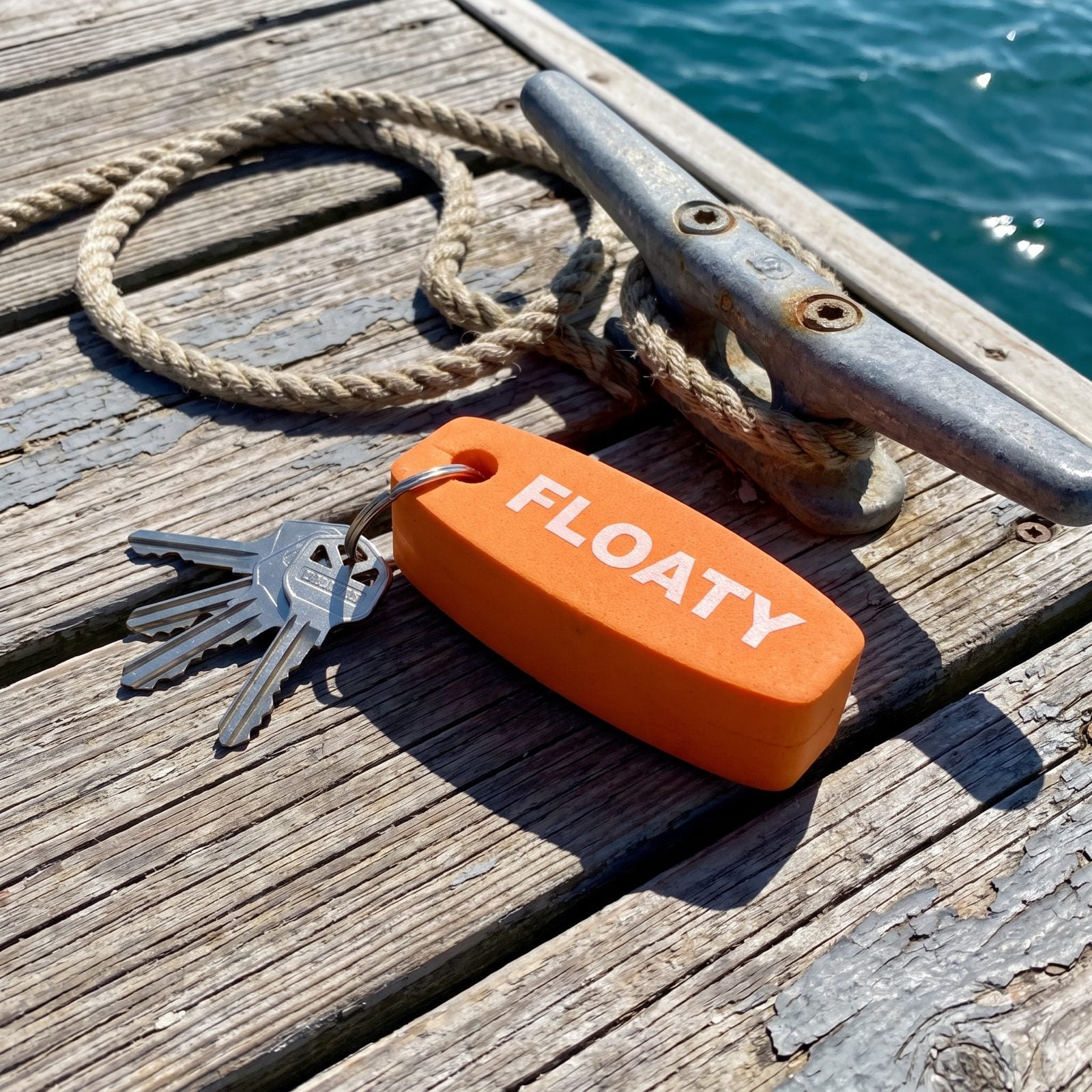
Keys end up in the water. Boat keys, dock-box keys, the one key to the shed with the gas can in it. It happens to everyone eventually, usually while you’re stepping from dock to boat with your arms full and no free hand to catch anything.
A floating foam fob buys you a second chance. Instead of watching your keys sink into eight feet of murky water, you watch them bob there — bright orange, waiting to be scooped up. Just buy the ones that actually float with a full ring on them. Some are more decoration than flotation, so test yours in the sink before you trust it over the deep end.