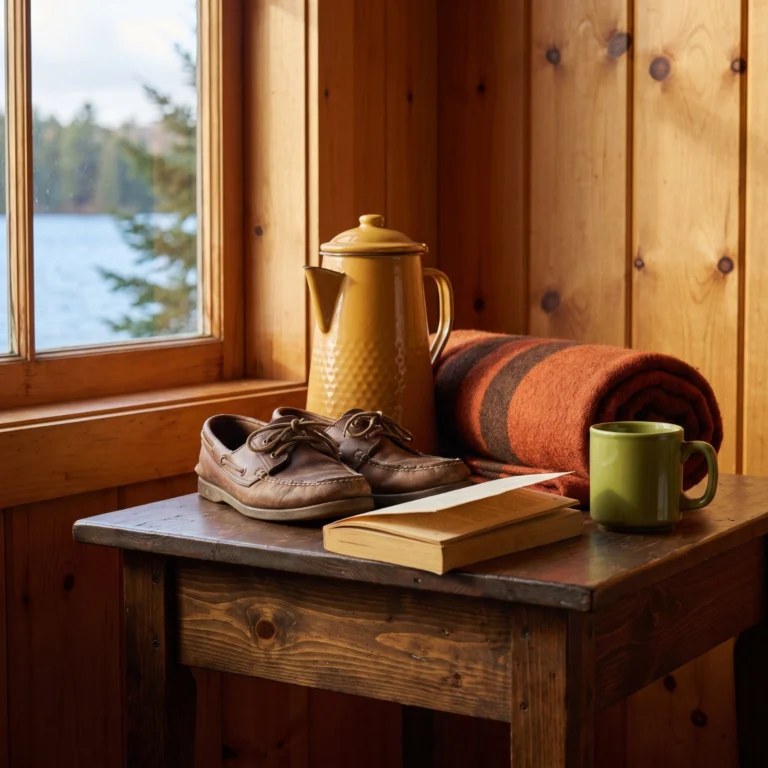
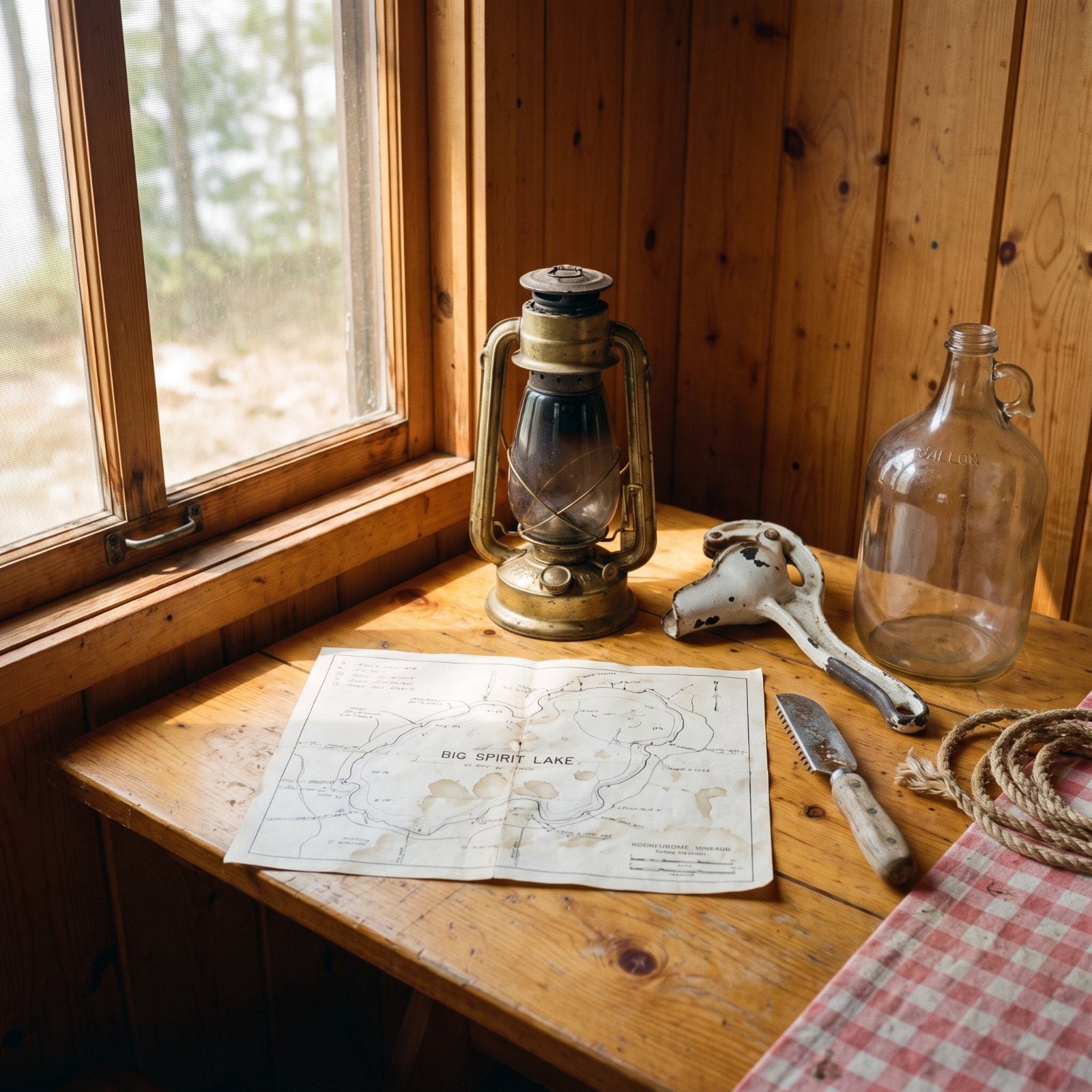
The smell hits first. Kerosene, lake water, and whatever had been living in the screen porch since Labor Day. A 1970s lake cabin wasn’t furnished so much as accumulated, one practical fix at a time, by people who drove up with a car full of tools and a short list of things that had broken over winter. Nothing matched. Everything worked, more or less, and the gear in these old cabins tells you exactly how families lived back then — self-reliant, a little rough around the edges, never more than an arm’s reach from a fishing rod. Here’s what you’d have found, and why it mattered.
Please note that some of the imagery in this article may have been enhanced with the assistance of AI.
49. The Hand-Marked Lake Contour Map With Shoals and Fishing Holes
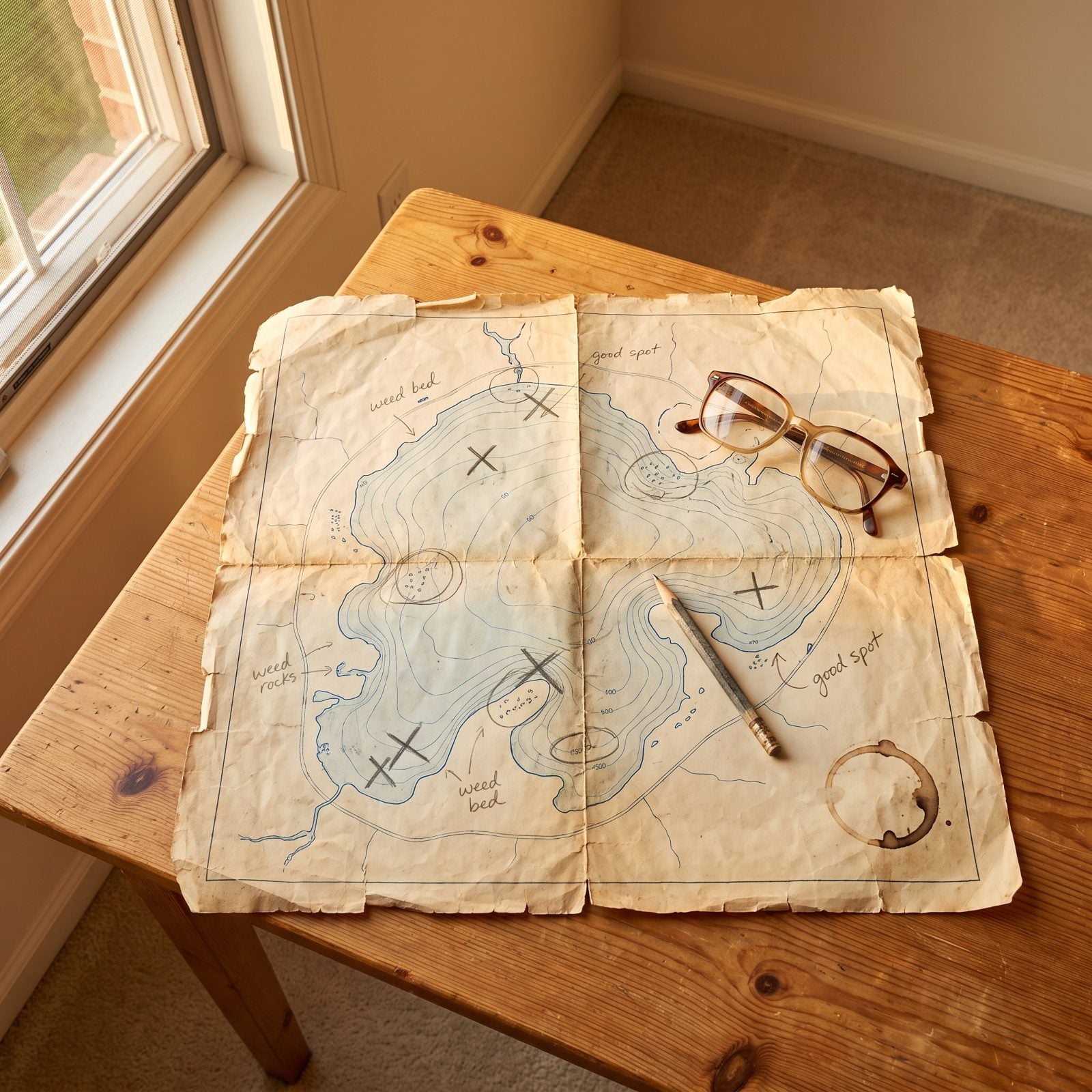
Before fish finders beeped and sonar painted the bottom in color, there was a folded paper map and a pencil. Every productive spot got a mark — the drop-off where the walleye held at dusk, the submerged stump that ate three lures but held bass, the shoal nobody could see until a prop found it the hard way.
These maps became family heirlooms by accident. A grandfather’s X in soft pencil told you where to fish decades after he stopped going out, and you cannot buy that. It was earned one slow morning at a time, and it only worked if you kept it dry.
48. The Fish-Shaped Scaling Board With a Metal Clamp
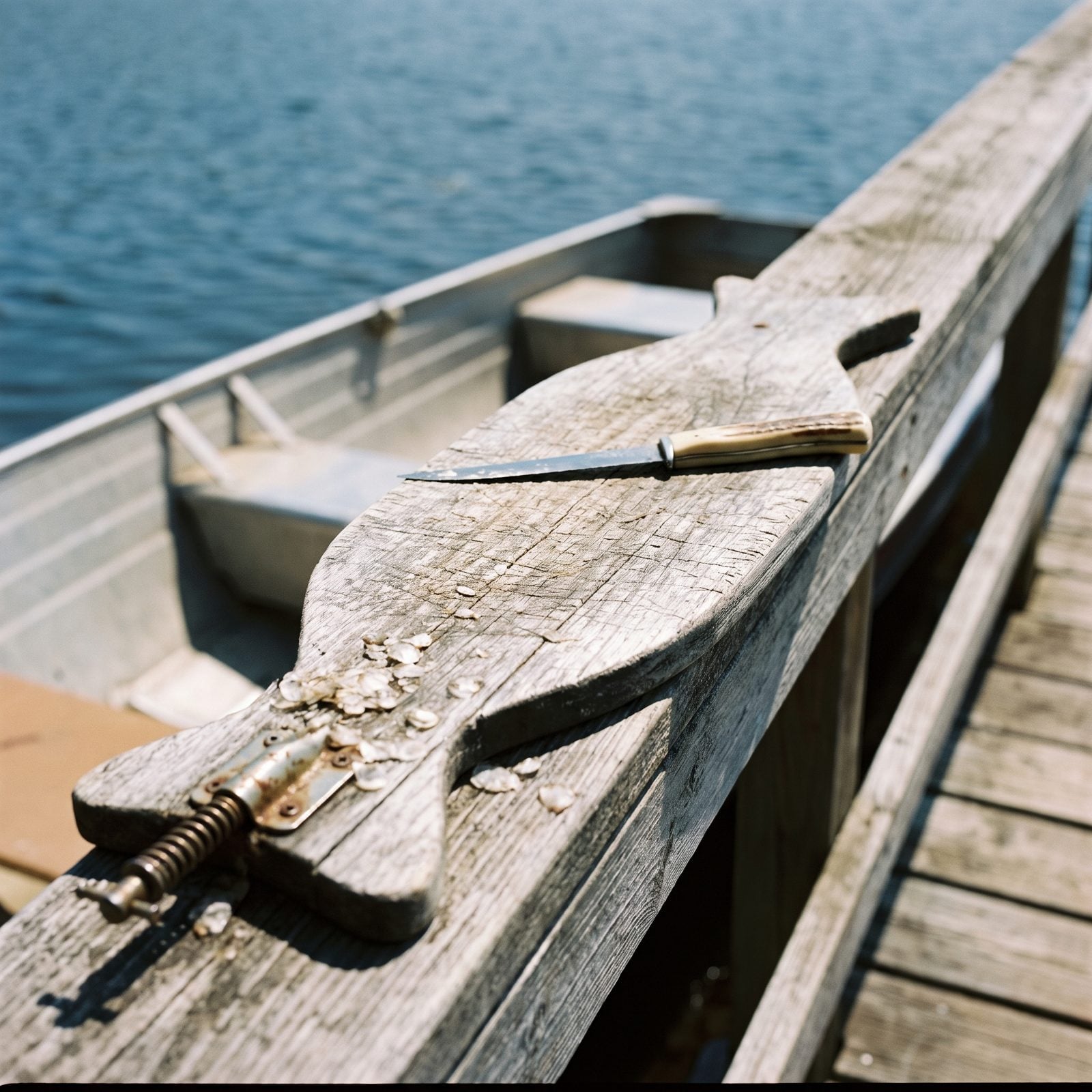
The clamp was the whole point. You locked the fish by the jaw, dragged the scaler tail-to-head, and let the scales fly instead of chasing a slippery crappie around a cutting board. Most were homemade, cut from a scrap pine board into a rough fish shape because somebody thought that was funny — and they were right.
They lived nailed to the dock rail or a porch post, grey and gouged, smelling faintly of lake no matter how many times you hosed them down. Nobody ever brought one inside. Hard rule. A good one.
47. The Collapsible Wire Fish Basket Hanging From the Dock
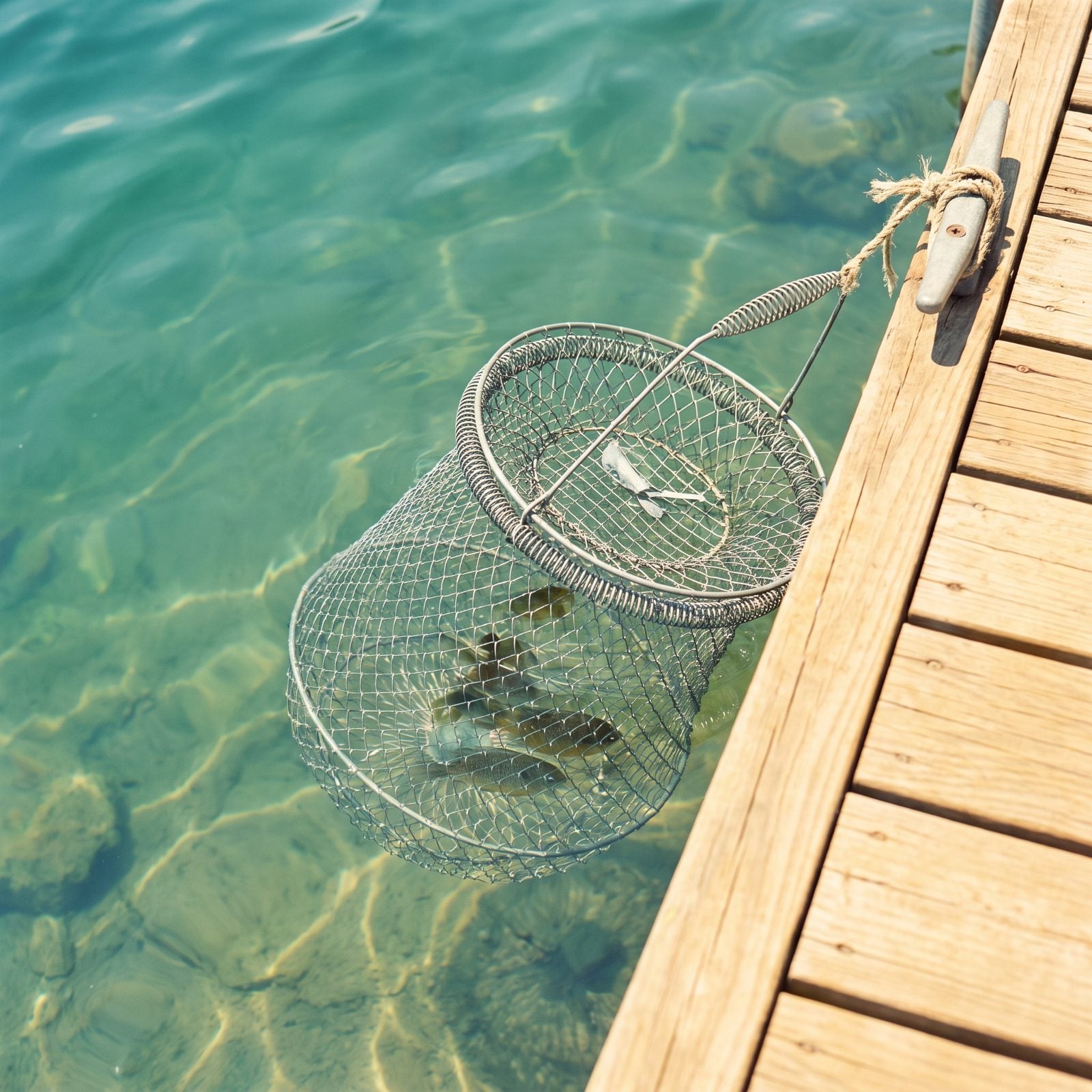
Catch a mess of panfish in the morning, drop them in the basket, lower it back into the lake, and dinner kept itself fresh until suppertime. The basket collapsed flat when empty, so it stowed anywhere. When fish were in it, the lake did the refrigeration for free.
You learned the hard way that a basket left too shallow baked in the sun, and a basket tied with a lazy knot became a gift to the turtles. Check your knots. The turtles are patient and they are watching.
46. Removable Storm Windows Stored Beneath the Cabin
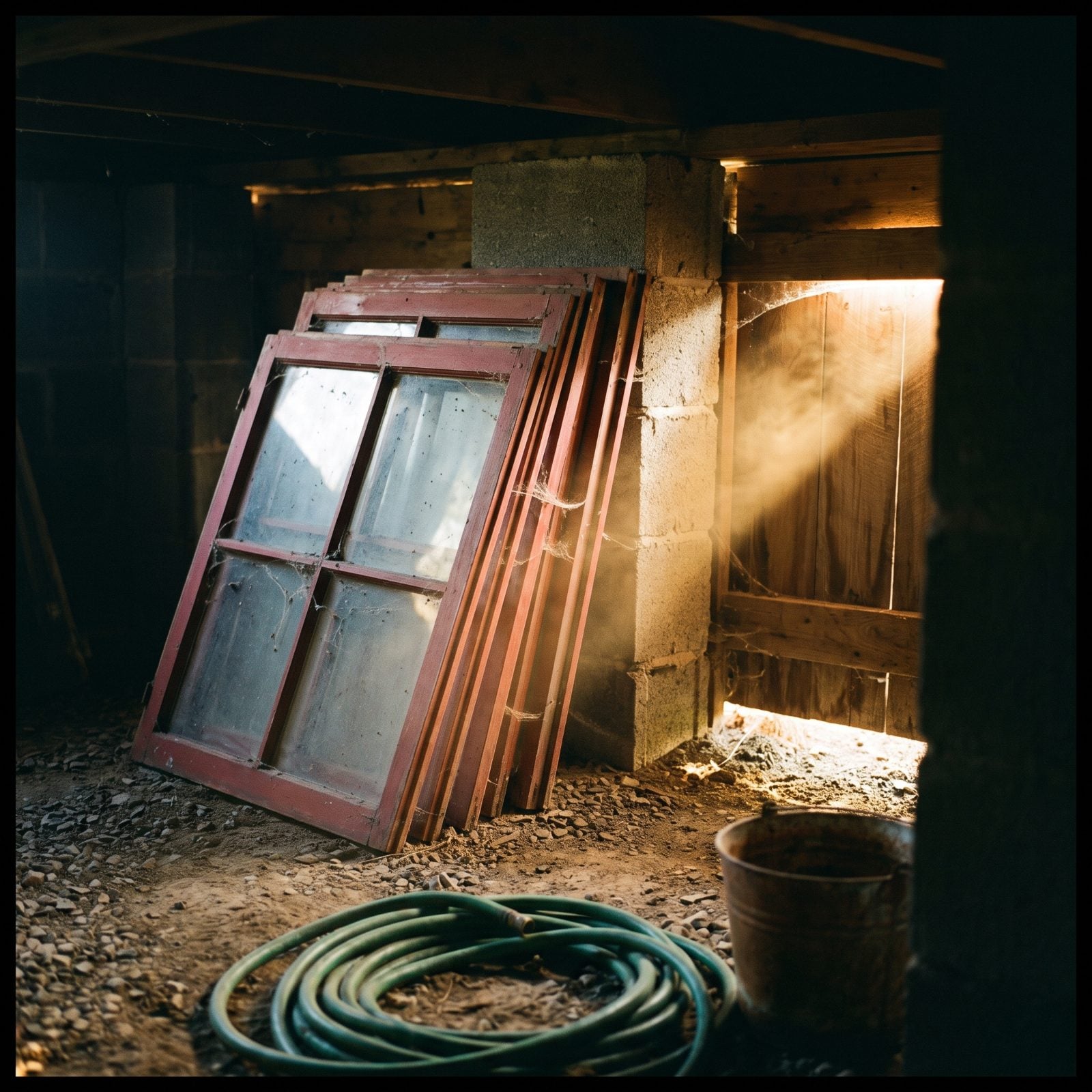
Lake cabins were built for July, not January. So the real windows for cold weather came off every spring and lived under the cabin, stacked on their edges in the crawlspace where the spiders ran the show.
Closing up in the fall meant carrying each one up, lining up the swollen wood frame with hooks that never quite matched, and swearing at the one window that had warped over summer. Every cabin had that one window. You knew which it was. You saved it for last and you cursed it every single year.
45. The Screen Door Repaired With Sew-On Wire Patches
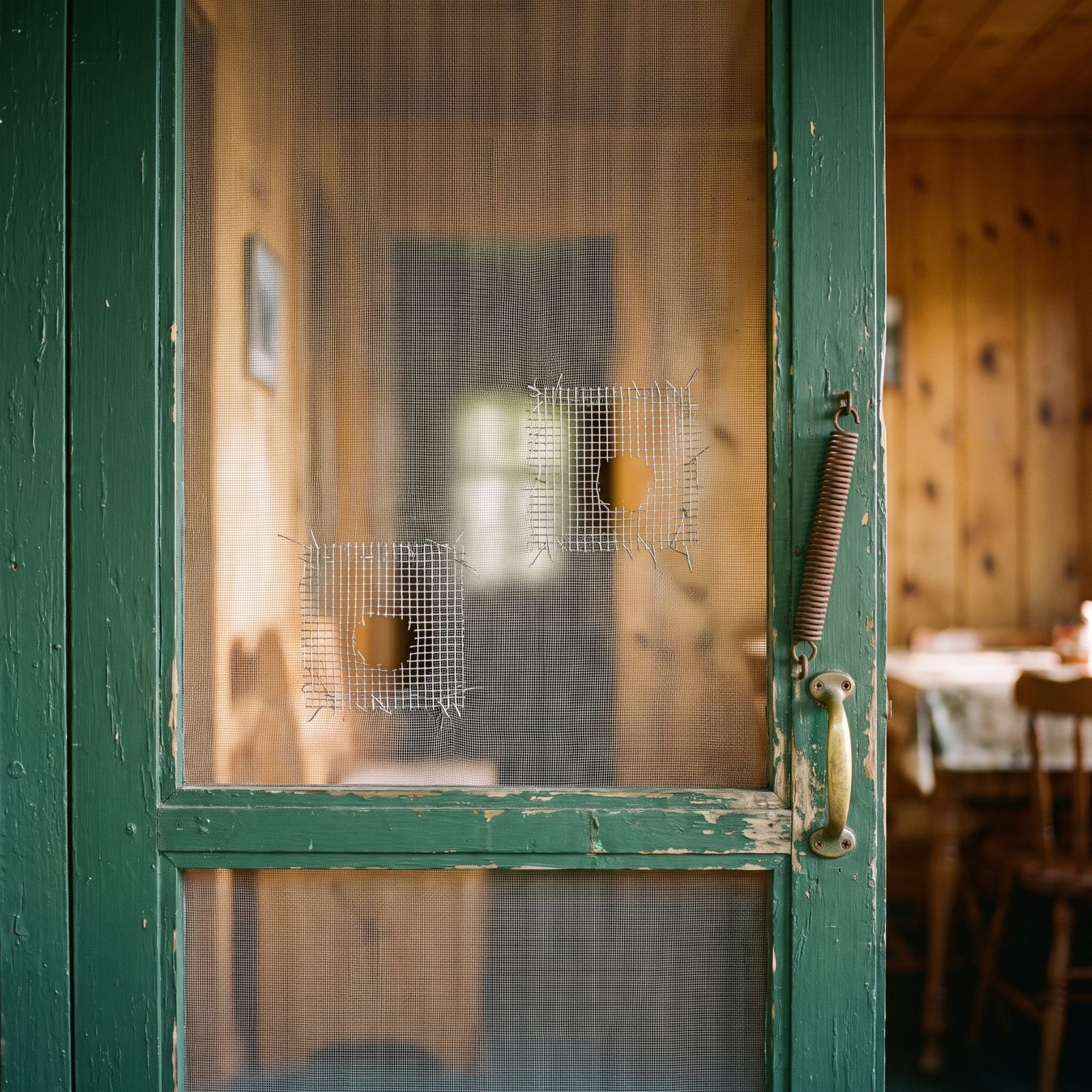
Nobody replaced a whole screen over one tear. You bought a little square patch kit, laid it over the hole, and sewed it down with the wire threads provided, like darning a sock made of metal. The patch was always visible, and that was fine — it kept the mosquitoes on the right side of the door.
The spring was the soul of it anyway, that satisfying twang and the slam your mother yelled about forty times a day. A cabin with a silent screen door isn’t a real cabin. I will not be taking questions on this.
44. The Rotary Telephone Connected to a Rural Party Line
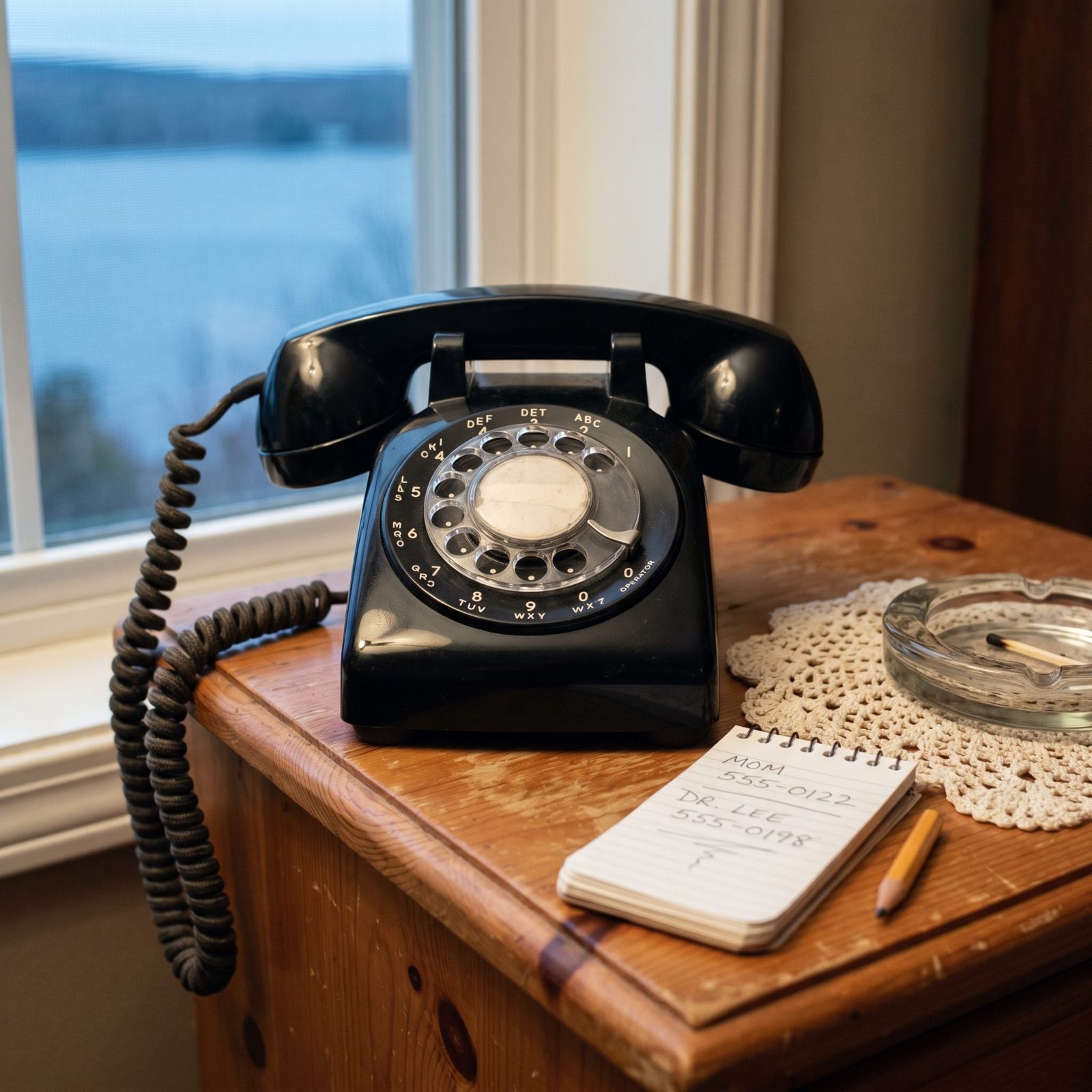
Pick up the receiver and you might hear a neighbor already mid-conversation. That was the party line: one physical phone line shared by several cabins, each with its own ring pattern. Two short rings meant the Hansens. One long ring meant you. Everybody learned everybody’s pattern, which meant everybody could, in theory, listen in on everybody else.
They mostly did. Privacy on a party line was a polite fiction. You said what needed saying and kept the gossip for the dock.
43. The Fuse Box Filled With Screw-In Glass Fuses
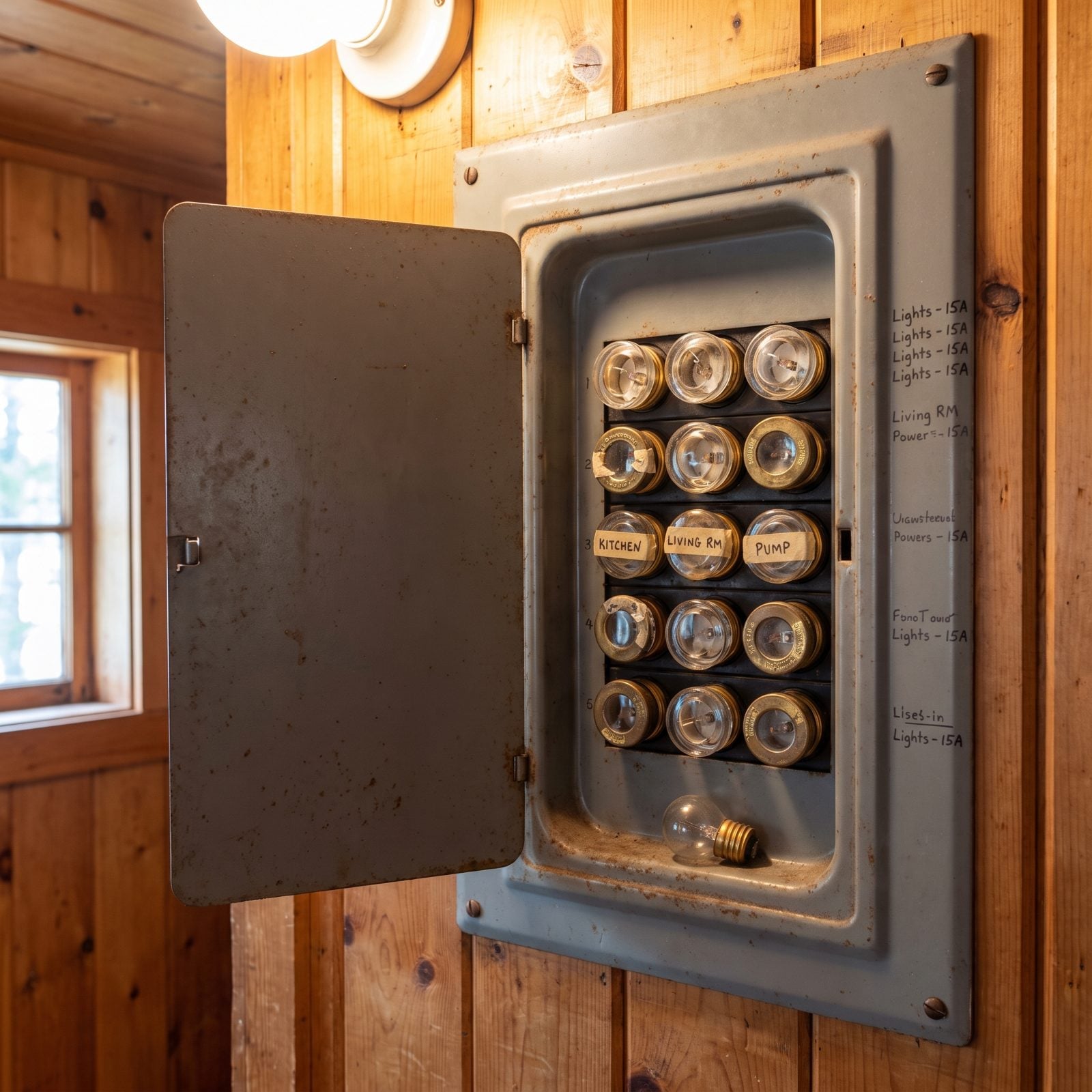
No breakers to flip. When you overloaded a circuit — usually by running the toaster and the coffee pot off the same outlet — a little glass fuse blew with a tiny flash, and the lights went out.
Then came the ritual. Find a flashlight, locate the spare fuses in the coffee can where they always lived, unscrew the dead one, screw in the new one, and promise not to run the toaster and the coffee pot together again. You always ran them together again. The coffee can of spares never ran dry because nobody ever learned the lesson.
42. The Cast-Iron Hand Pump for the Cabin’s Water Supply
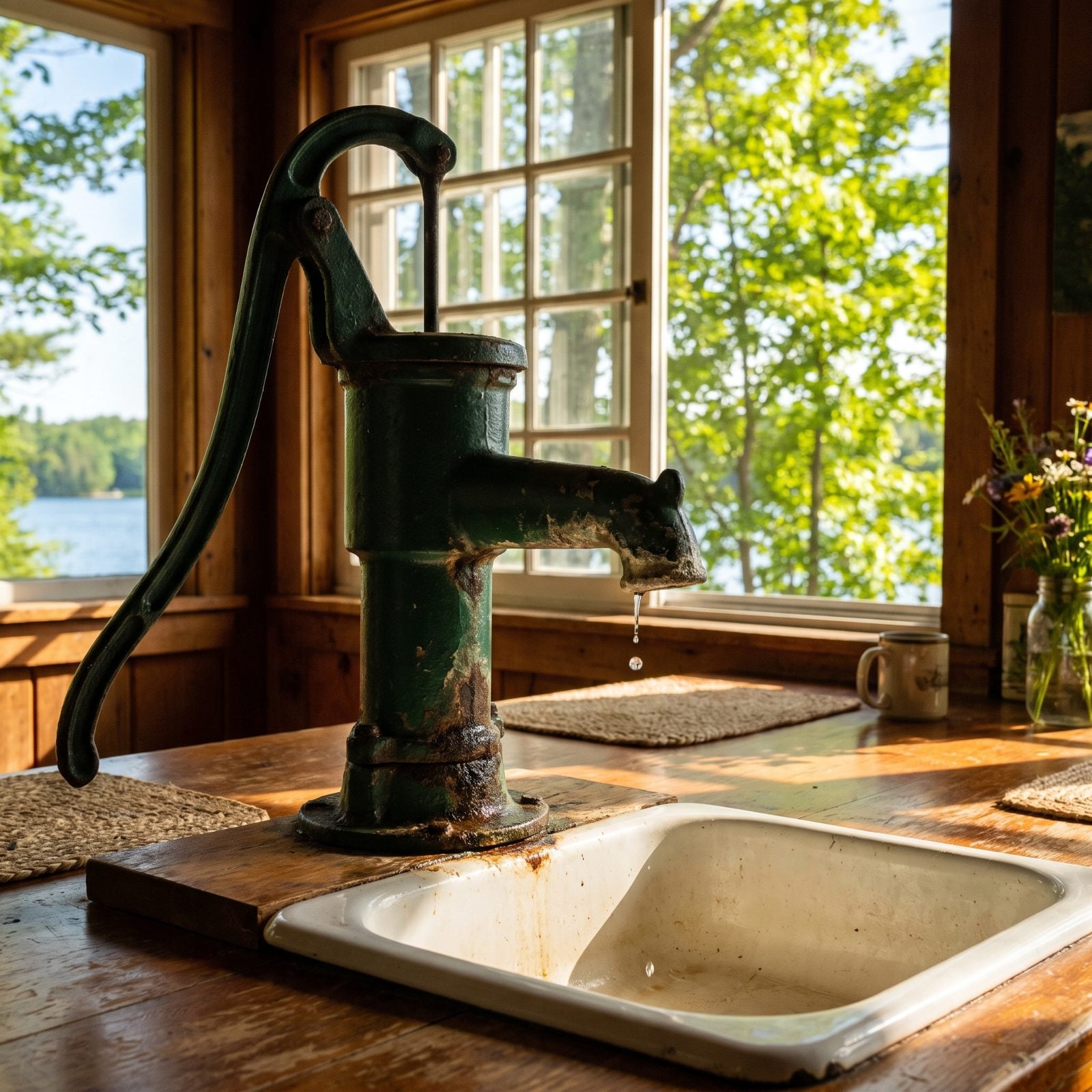
Water didn’t arrive. You made it arrive, one squeaking stroke of the handle at a time, until the pump caught its prime and water came up from the shallow well below.
The first pump of the morning was the worst, because the thing lost its prime overnight. You’d pour a cup of water down the top to re-seat the leather seal, then work the handle like you meant it. Cold, iron-tasting, worth every stroke. Kids thought it was a toy. Adults knew it was a chore, and a quietly satisfying one once the water finally ran.
41. Glass Gallon Jugs for Hauling Drinking Water
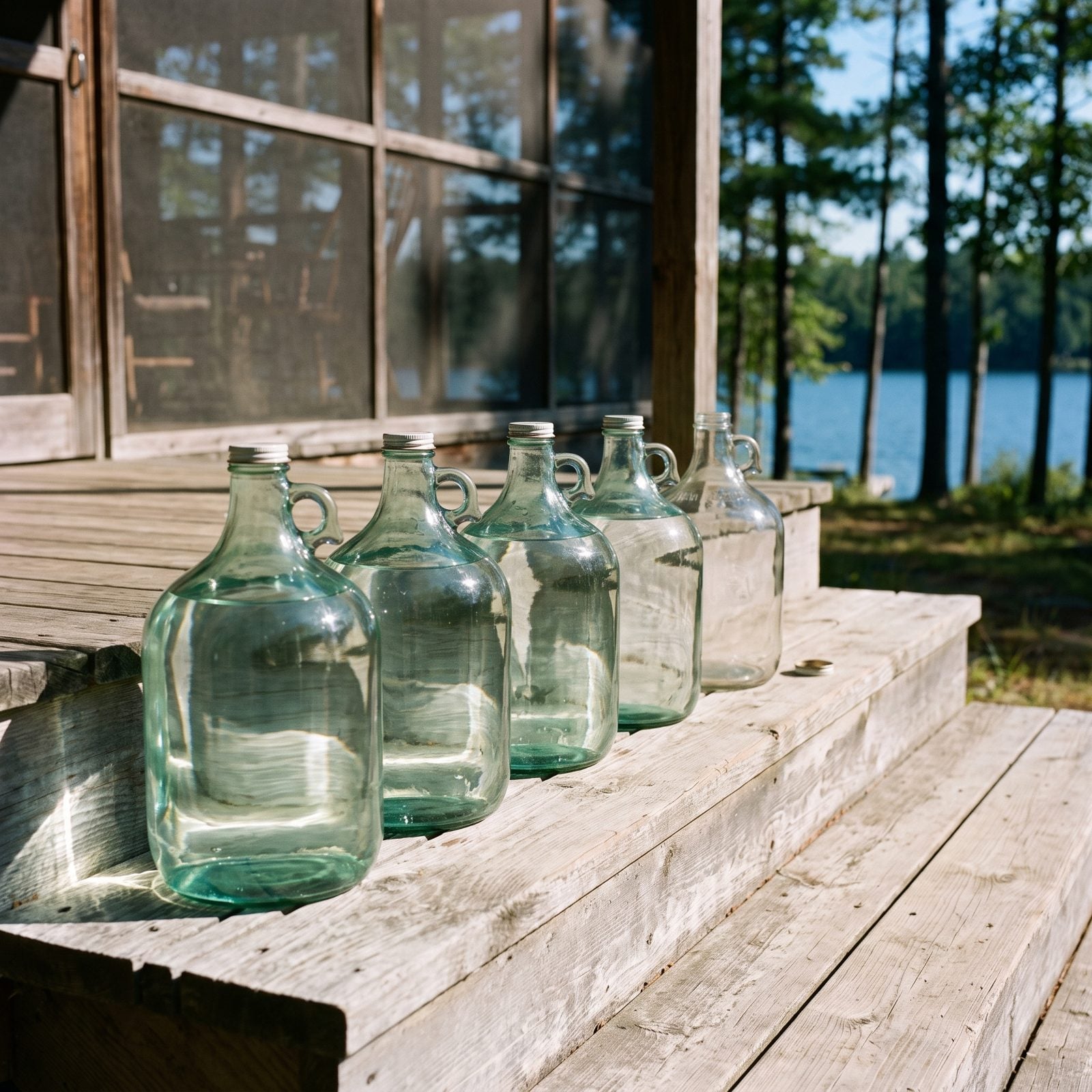
The well water pumped fine for dishes and washing, but plenty of cabins didn’t trust it for drinking. So the good water came from town in glass gallon jugs, hauled up in the back of the car and parked on the porch.
Glass meant weight, and weight meant you rationed. A dropped jug was a small tragedy — a shattered gallon you now had to drive back to town for. The thick green-tinted glass felt cold and heavy in your hand, the kind of object that made you careful without being told.
40. The Kerosene Lantern Reserved for Trips to the Privy
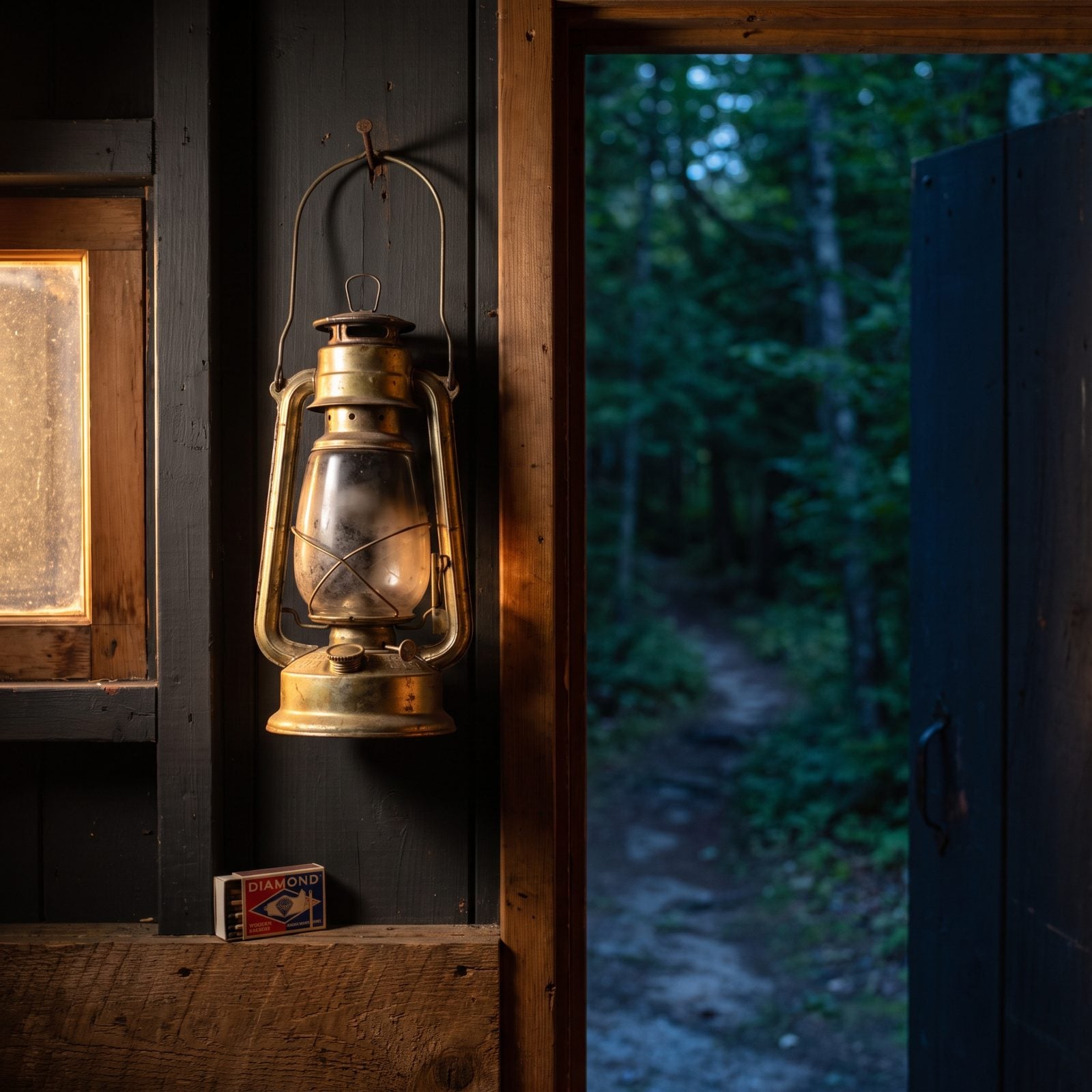
One lantern had a job, and it was the loneliest job at the cabin: lighting the walk out back to the outhouse after dark.
It hung by the door, matches tucked on the ledge beside it, its globe forever smudged with soot nobody bothered to clean. You’d light it, carry it down the path, and try not to think about what was rustling in the brush. Flashlights existed, sure. But a flashlight battery always died at the worst possible moment, and the lantern never did — it just needed a splash of kerosene and a steady hand with a match. That steady glow through the trees on the walk back is one of the things people miss most about the old cabins. Alright, go check your lantern wick.
39. An Outdoor Fish-Cleaning Table Beside the Water
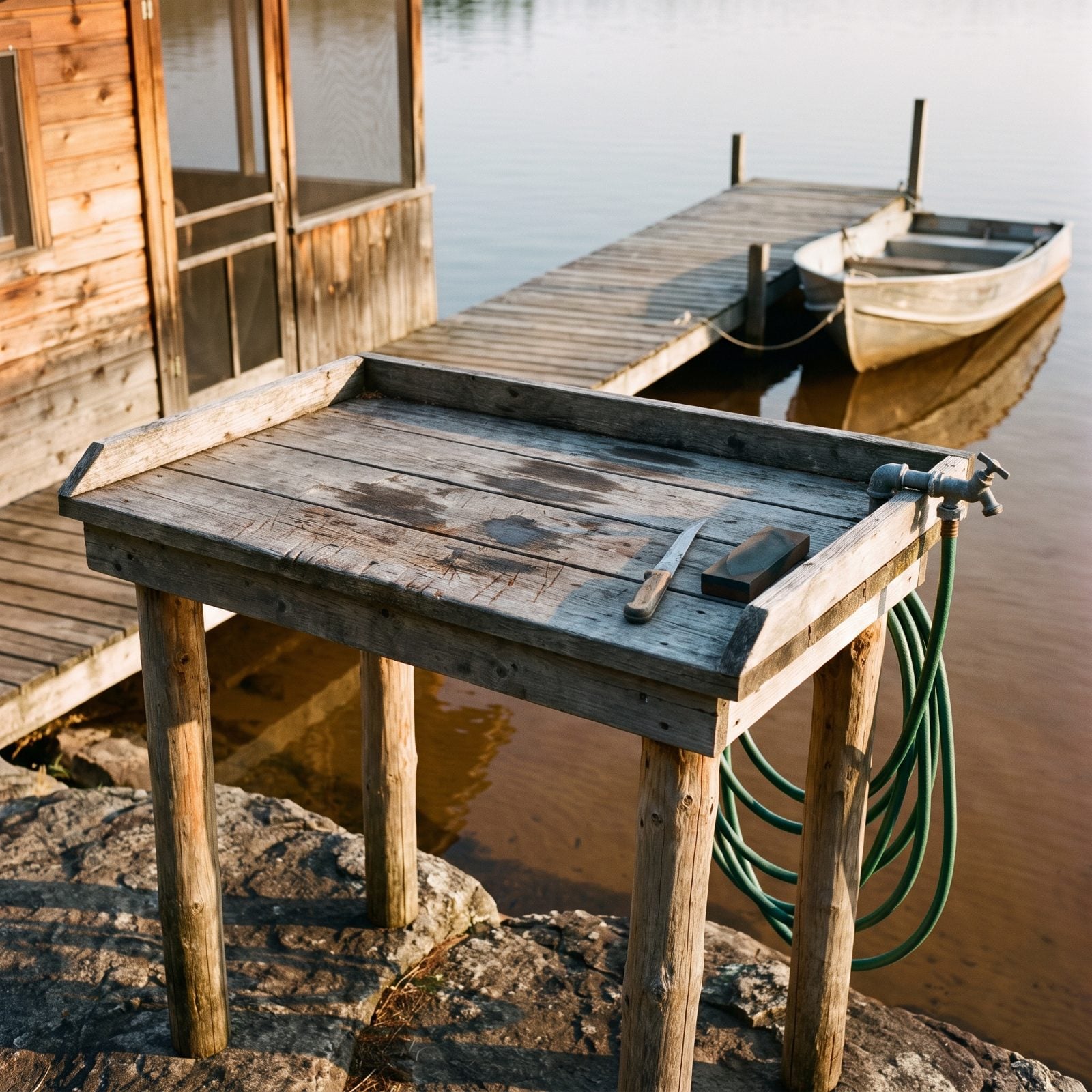
Nobody built one of these to look nice. It stood where the wind pushed the fish smell away from the porch, a short walk from the dock, with a hose long enough to rinse everything straight back into the lake.
The real tell was the surface — soft cedar that took a knife edge without dulling it, scarred into a topographic map of twenty summers of walleye. Guests learned fast that the table had a season. Early morning before the mosquitoes, or dusk after the flies gave up.
38. A Galvanized Minnow Bucket With a Perforated Insert
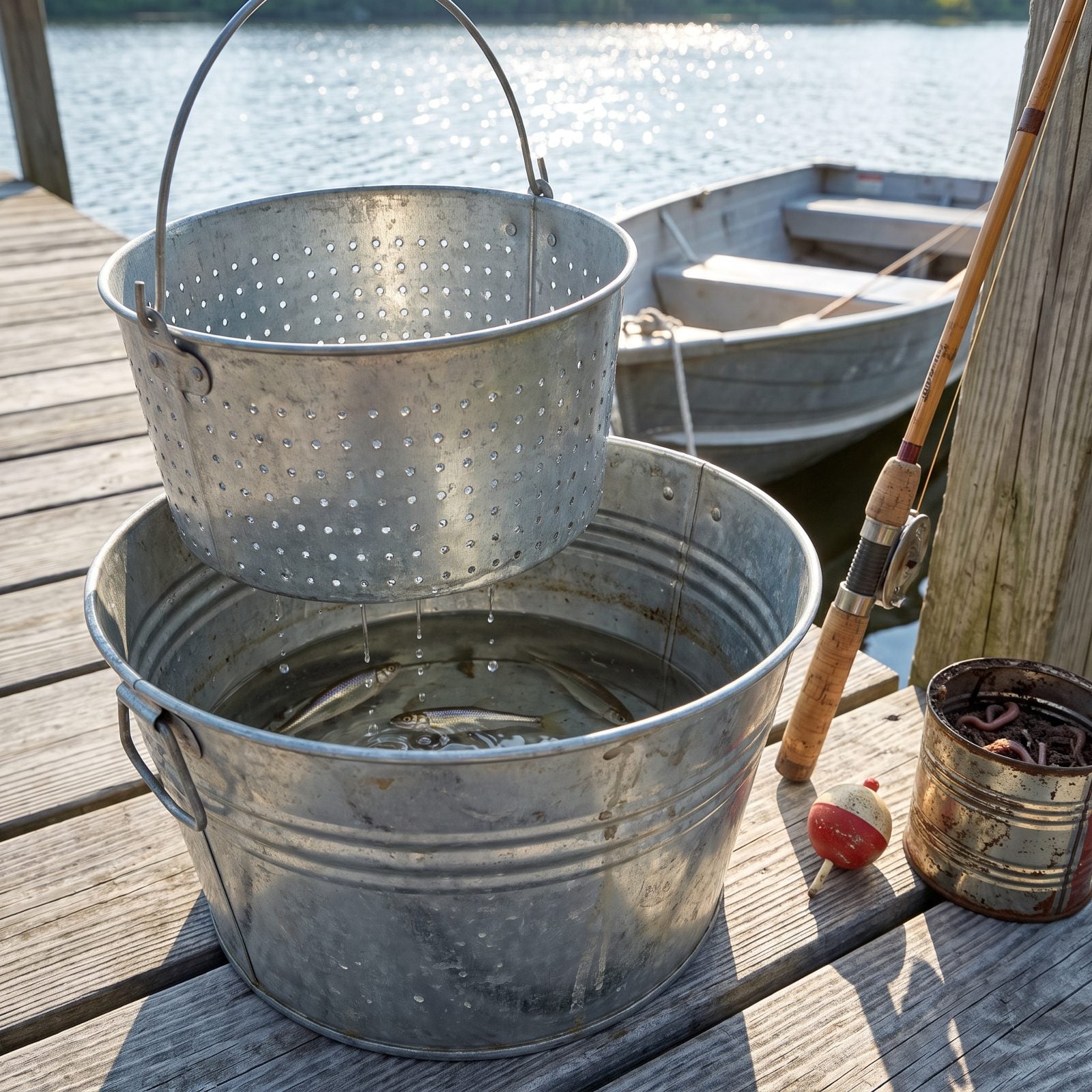
The genius was the inner liner. Lift the perforated bucket out, lower it over the side of the dock, and the minnows got fresh lake water flowing through the holes all day while you fished. No pump, no fuss, nothing to break.
Leave them in the solid outer pail in July heat and they’d roll belly-up by noon. Every kid at the cabin got told that lesson exactly once — usually after wasting a bucket of shiners from the bait shop in town.
37. A Cabin Guestbook Recording Weather and Fishing Results
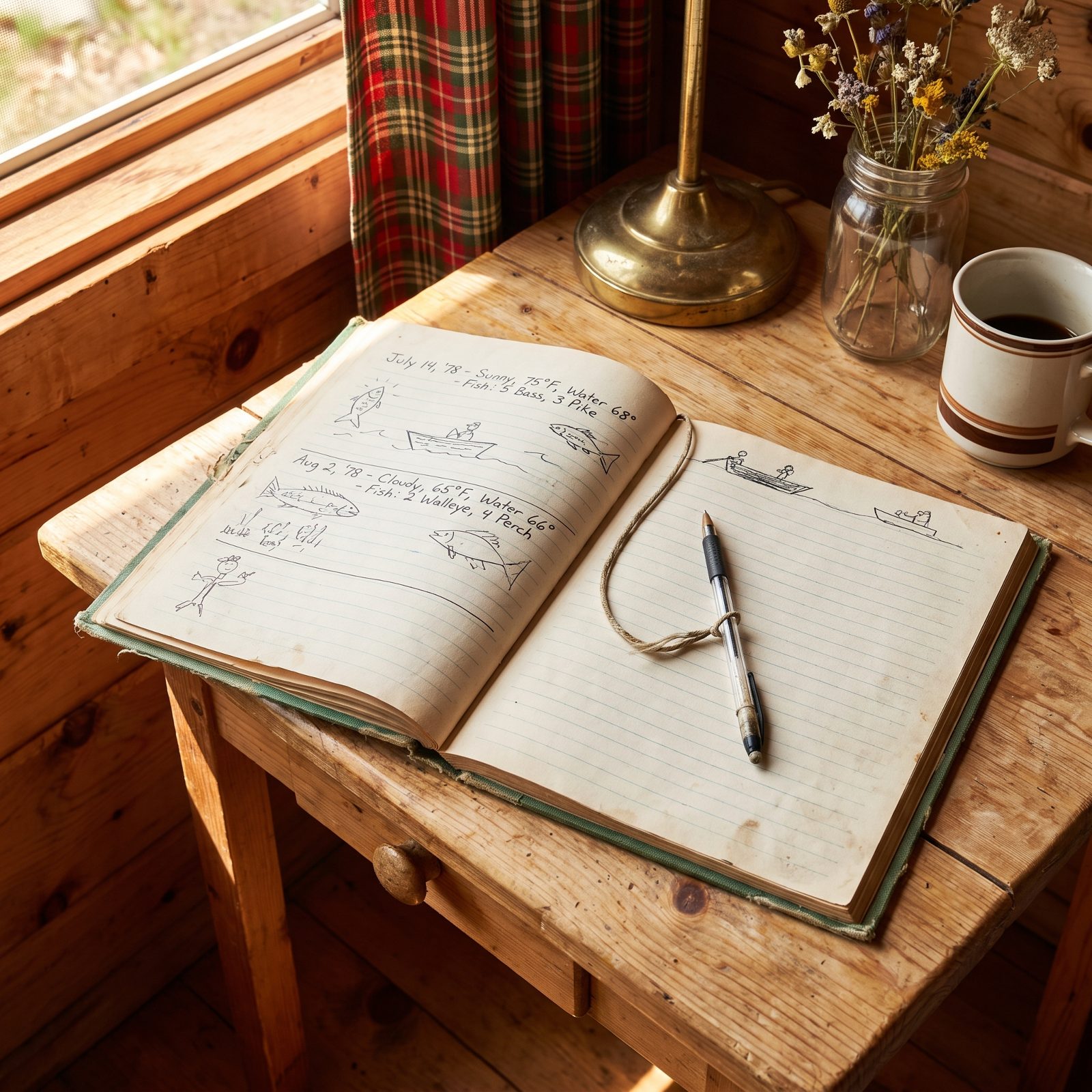
Half logbook, half family memory. The entries weren’t about who slept where. They were about what the lake did.
Wind out of the northeast, bite shut off by ten. Caught six, kept four. Loons back on the point. Rain all weekend, played cards. Read enough of these and you start to understand a particular stretch of water better than any map could teach you. The good cabins kept decades of them stacked in a drawer, and the first thing returning guests did was flip back to their own handwriting from three summers ago.
36. A Wood-Cased Barometer Mounted Near the Door
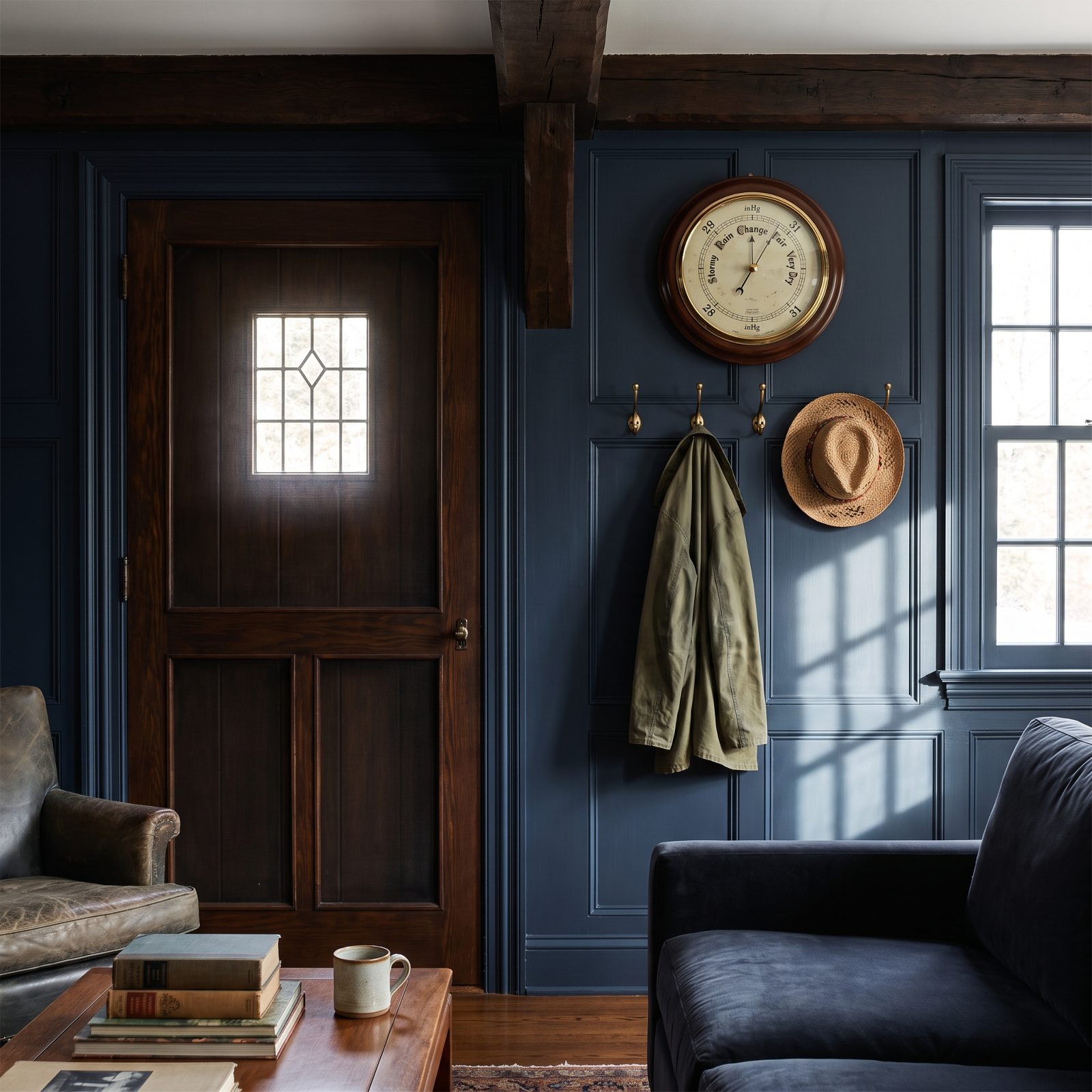
Before the weather came from a screen, it came from a needle on the wall. The barometer hung by the door so you could tap it on your way out, watch the needle twitch, and decide whether the morning fishing trip was worth the gamble.
Falling pressure meant weather moving in, and fish that fed hard before it arrived. Rising and steady meant a calm, often slow day. None of it was precise. You tapped the glass, read the drift, and trusted the lake more than the numbers. Honestly, a good barometer plus a look at the western sky still beats most app forecasts for one specific bay.
35. A Red Metal Outboard Fuel Tank With a Primer Bulb
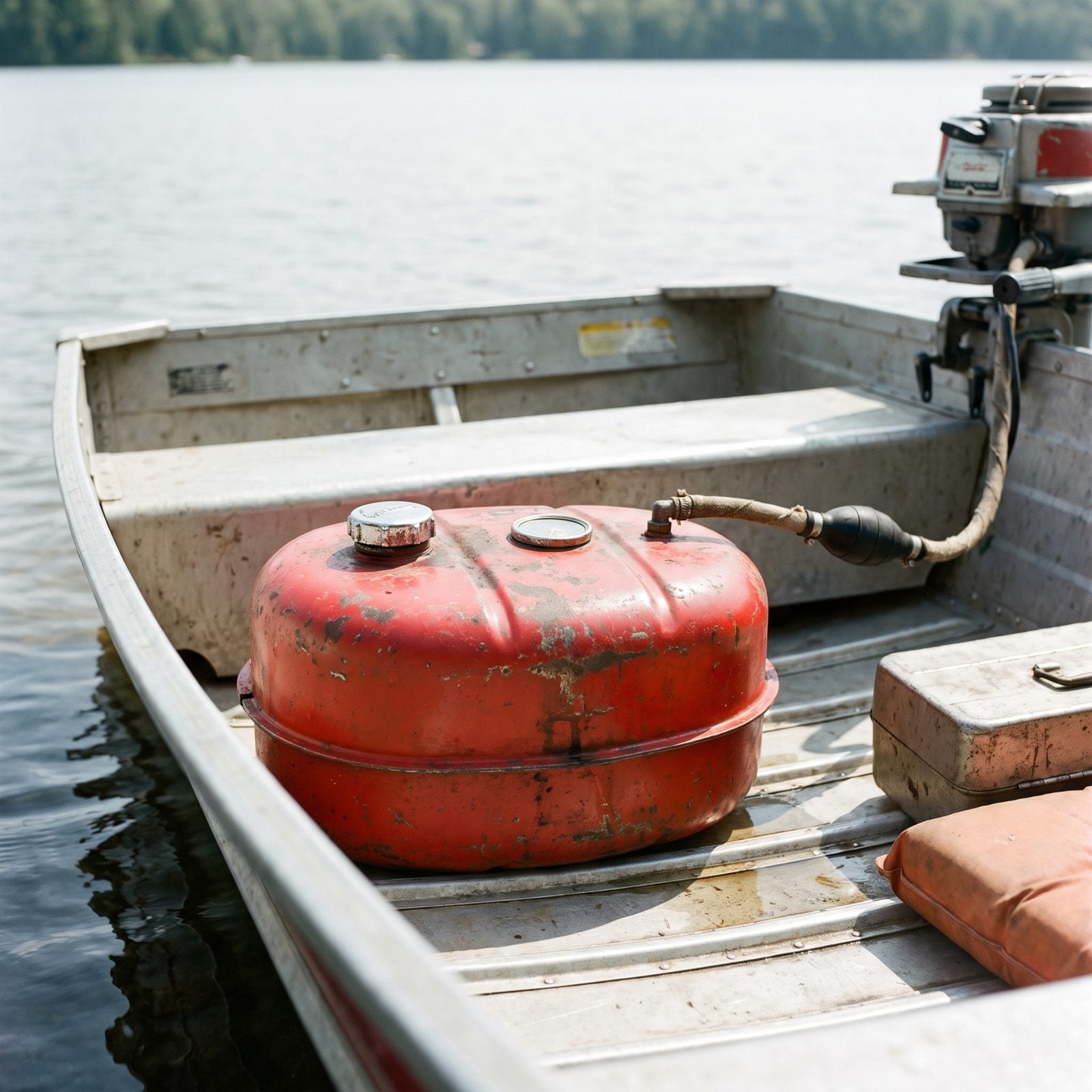
That red tank was the whole starting ritual. Squeeze the primer bulb until it went firm, pull the choke, give the rope a couple of yanks, and the little outboard coughed to life in a blue haze that smelled like summer.
The bulb told you everything. Soft and squishy meant air in the line or a tank near empty; firm meant you were good to go. Guests always squeezed too much and flooded the motor, then stood there yanking the cord and sweating while the dad on the dock handed out advice nobody asked for.
34. A Wooden Swim Raft Supported by Sealed Steel Drums
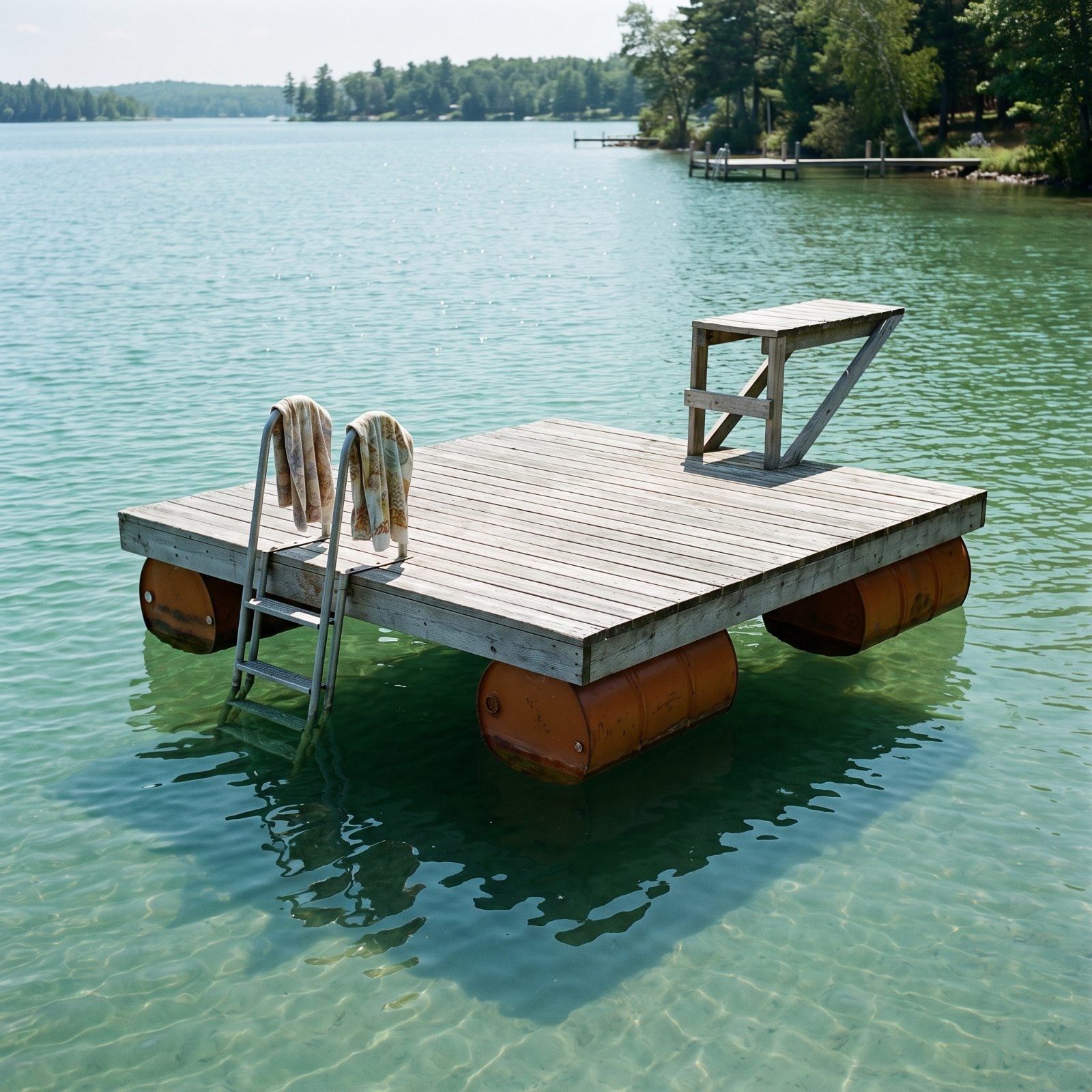
Every good swimming lake had one anchored just far enough out to matter. The raft was a destination, a dare, and a sunning deck all at once, and reaching it the first time without a life jacket was a rite of passage no parent ever officially sanctioned.
Underneath, four sealed steel drums did the floating. They rusted at the waterline, groaned when you climbed the ladder, and warmed the planks until the wood nearly burned your feet by two in the afternoon. You dried off flat on your back out there, listening to the water slap the drums, in no hurry to swim back.
33. Patterned Sheet-Vinyl Flooring Made for Wet Feet
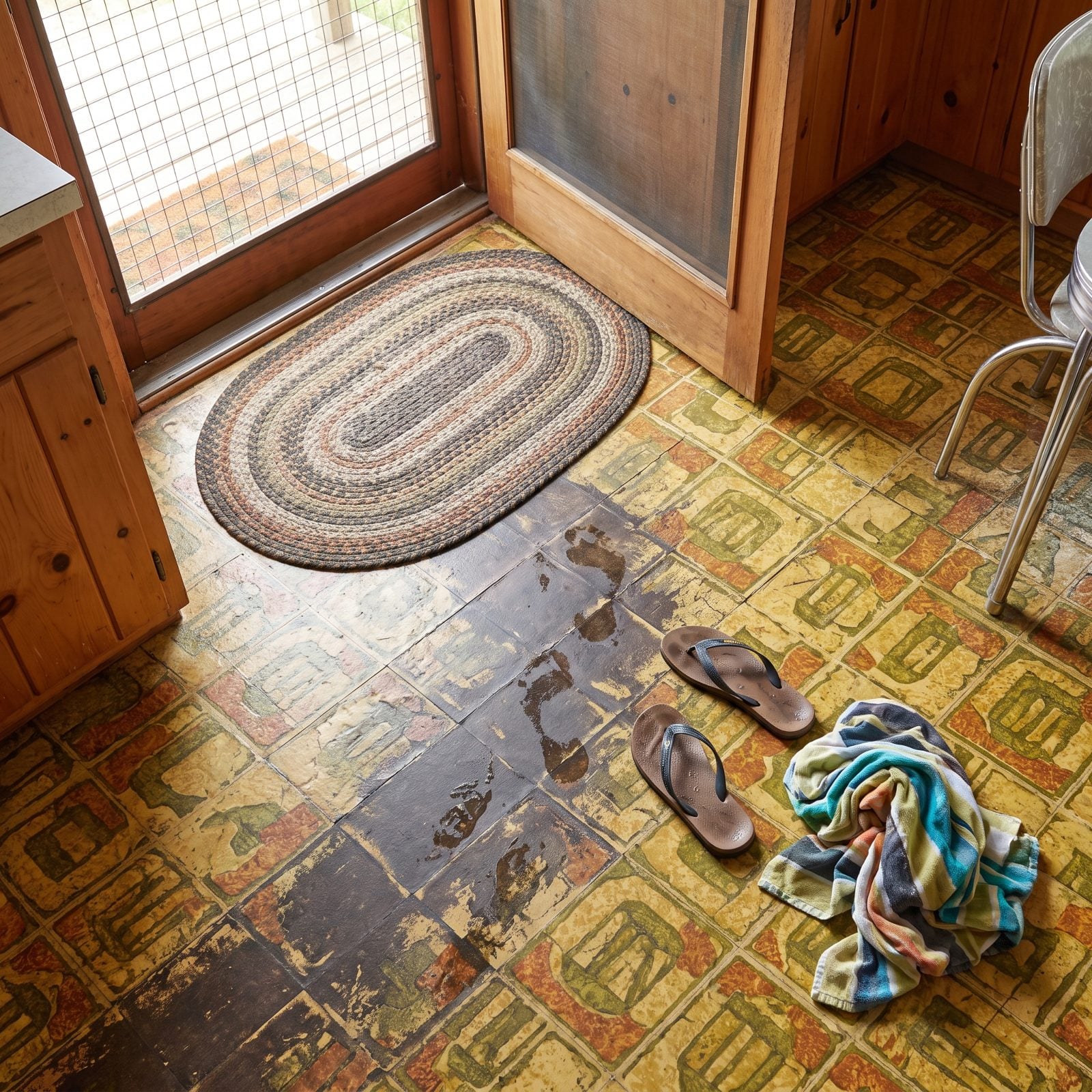
Carpet at a lake cabin was a rookie mistake. The floor had to survive wet swimsuits, tracked-in sand, dripping stringers of fish, and the occasional overturned bait can — which is exactly why sheet vinyl ruled every kitchen and entry.
The patterns were loud on purpose. Harvest gold, avocado, rust geometrics that hid dirt and dried in seconds when you mopped them. Worn straight through to the backing in a path from the screen door to the sink, because that’s the line everybody walked a thousand times a summer, barefoot and dripping.
32. A Wall-Mounted Bottle Opener With a Cap Catcher
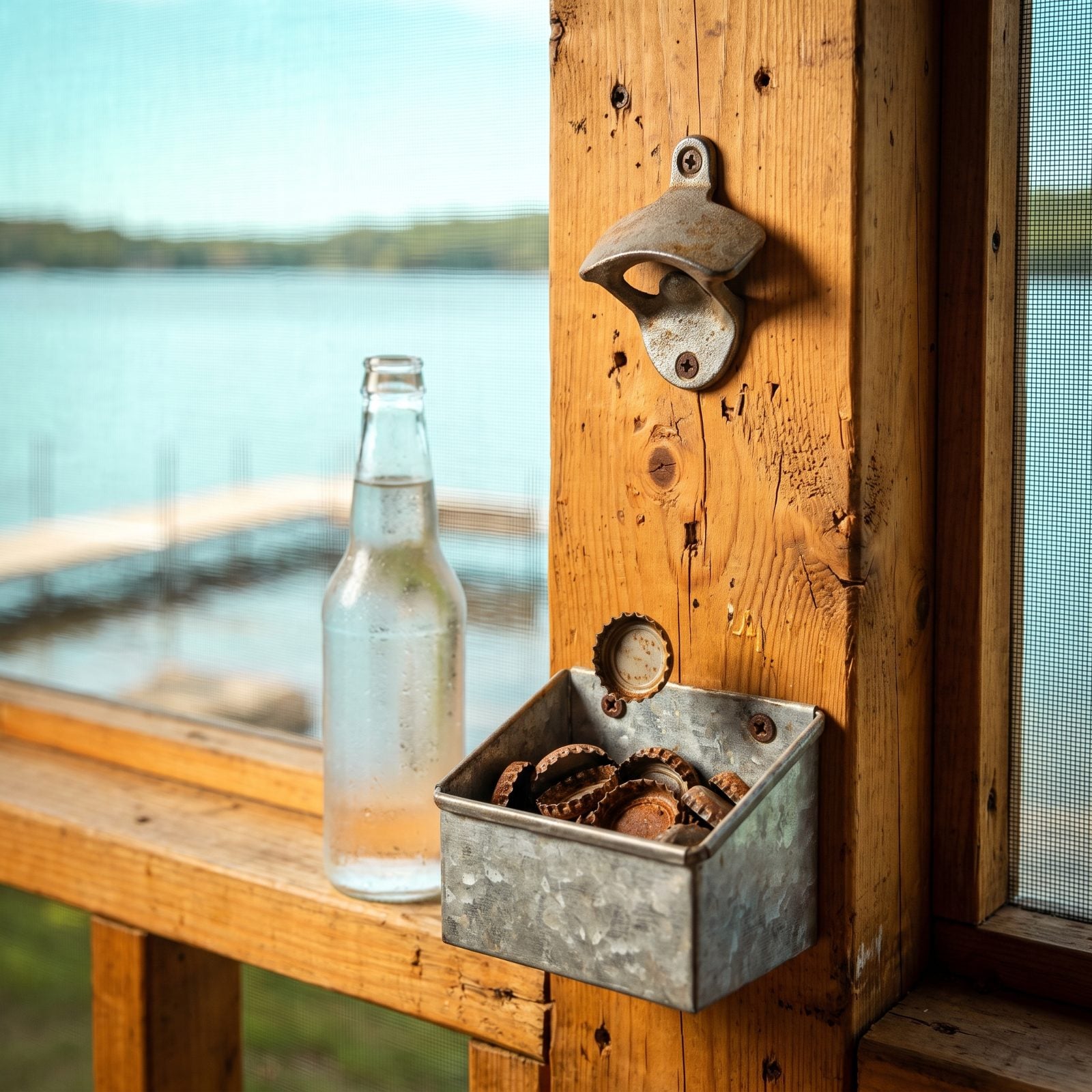
Small thing, big deal. Screwed to a porch post at exactly the right height, it opened pop and beer with a satisfying hiss, and the little box underneath caught every cap so nobody stepped on a sharp edge barefoot.
The catcher filled up over a season and nobody ever emptied it until it jammed. Pull one off the top and you’d find caps going back years, a rusty archaeology of every hot afternoon on that porch.
31. A Battery-Powered Transistor Weather Radio
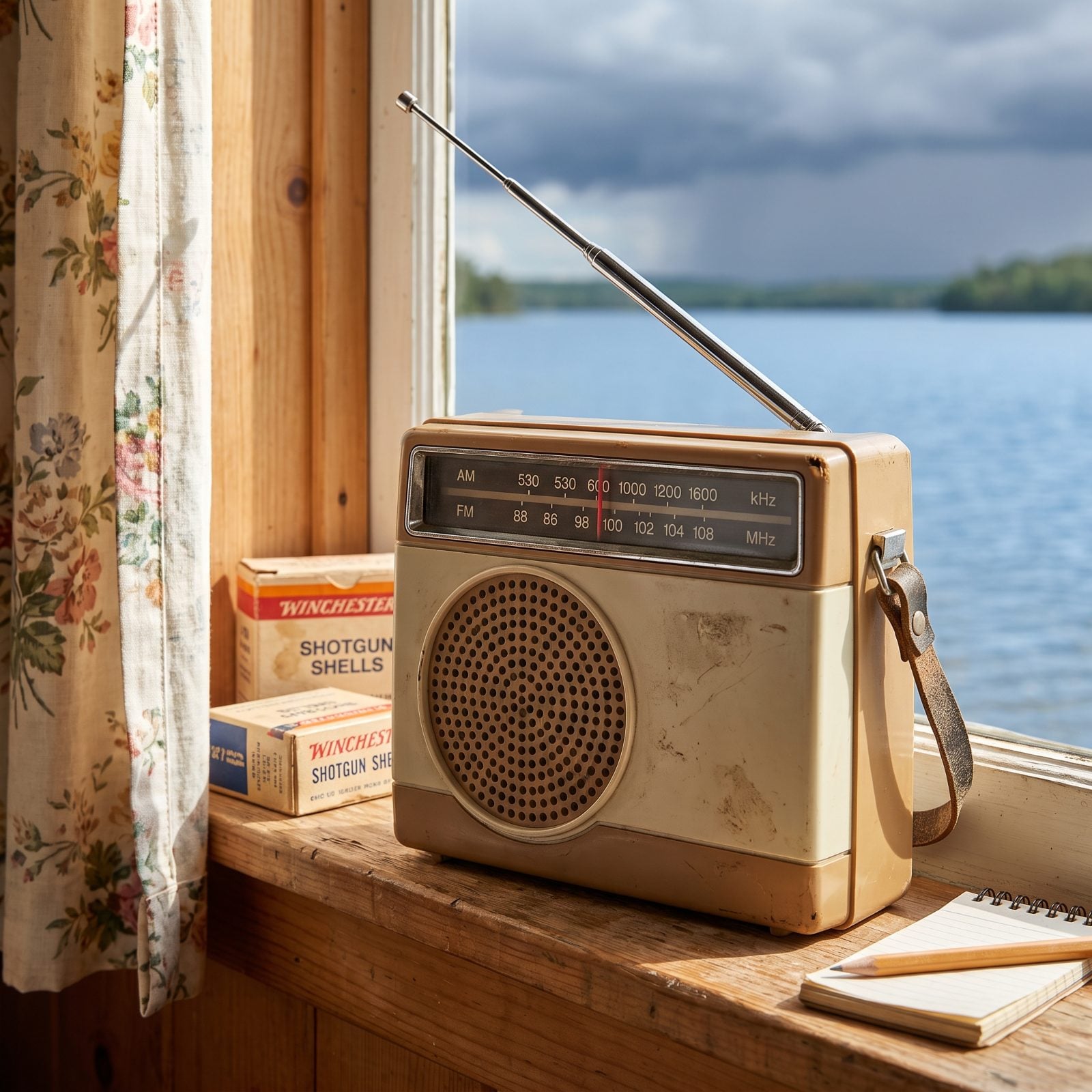
When the power went out in a storm, and it always did, this little box was your only line to the outside. Nine-volt or a pack of D cells, telescoping antenna cranked out the window, tuned to whatever AM station carried the marine and weather report.
The static was part of it. You’d angle the thing around the room chasing the clearest signal, everybody quiet while the voice read wind speeds and small-craft warnings. Then back to the ball game. A transistor radio and a deck of cards got more families through a rained-out weekend than any amount of planning.
30. A Dog-Eared State Road Atlas Marked With Back Routes
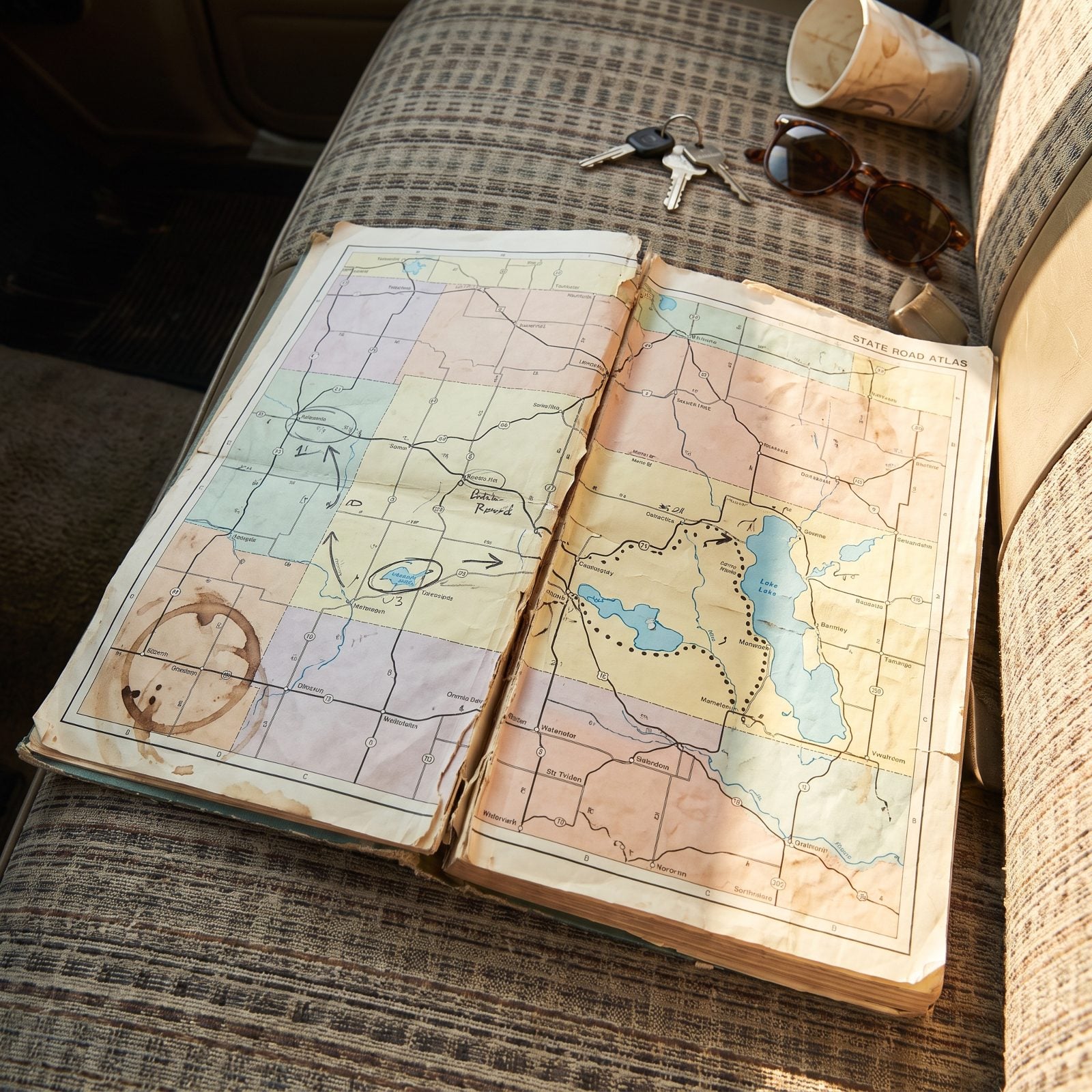
The GPS of its day was a book you argued with. Kept in the glove box or the cabin drawer, the atlas earned its creases from the one route the family used every single trip up.
The real value was the ink marks. A circled town. A circled pond. Arrows pointing the way, a dotted line looping around the lakes, and scrawled notes nobody but the writer could ever read. None of that was printed — it got added by hand, year after year, until the page that mattered most was soft as cloth and torn clean along the fold. Somebody always refolded it wrong, and somebody always complained.
29. A Carousel Slide Projector and Trays of Lake Photos
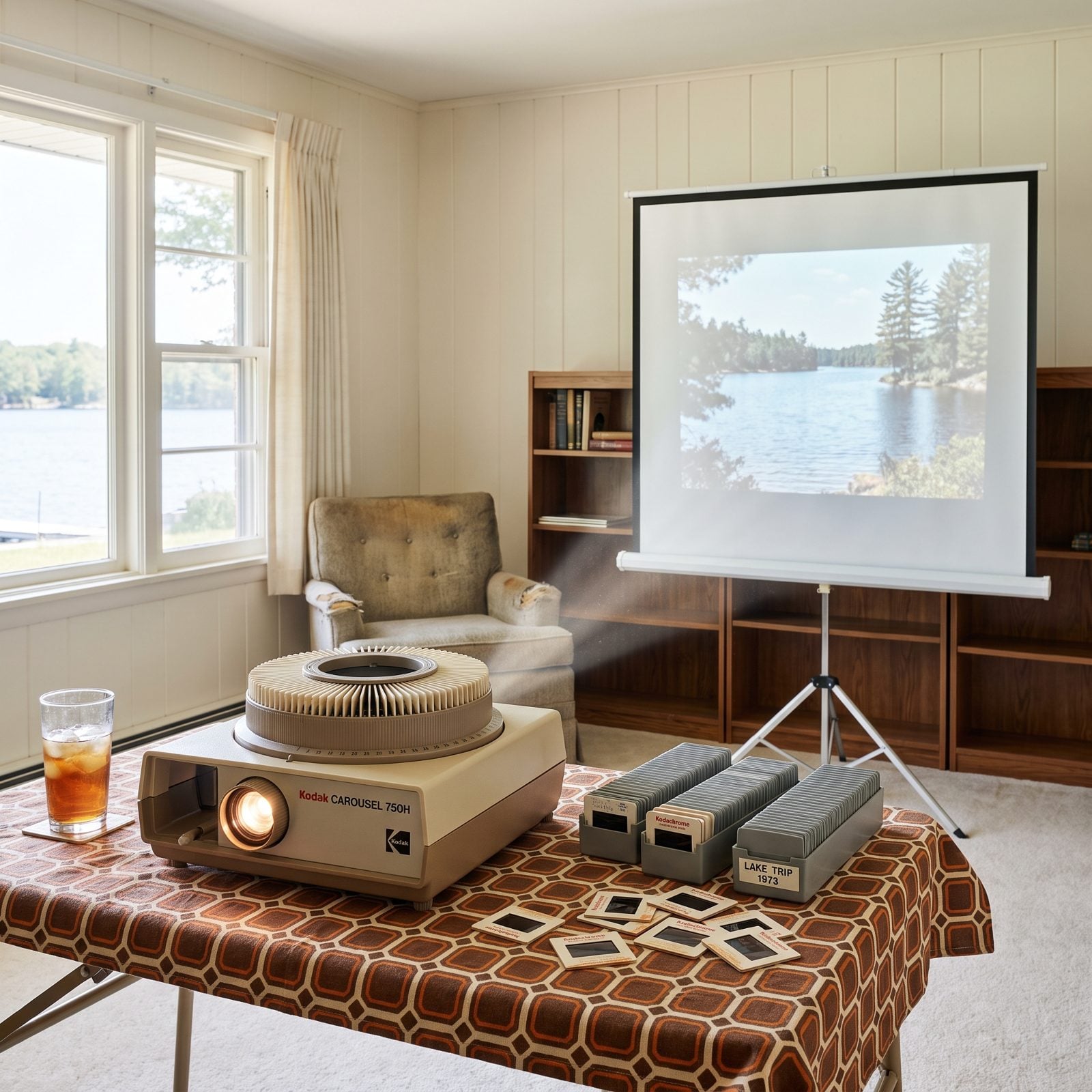
You hauled it out after supper, that heavy tan brick of a projector, and everybody groaned a little even though they secretly wanted to see. Click, whir, a slide of Uncle Ray squinting into the sun. Click again. There’s the dock before the storm bent it sideways in ’74. Sunlight poured through the open curtains and caught that dusty beam, and somebody always narrated every single frame whether you asked them to or not. Half the trays were mislabeled and you’d land on a stranger’s barbecue by mistake. Nobody cared. That was the fun of it — you never knew what the next click would drag up out of the carousel.
28. An Instant Camera With Square Vacation Prints
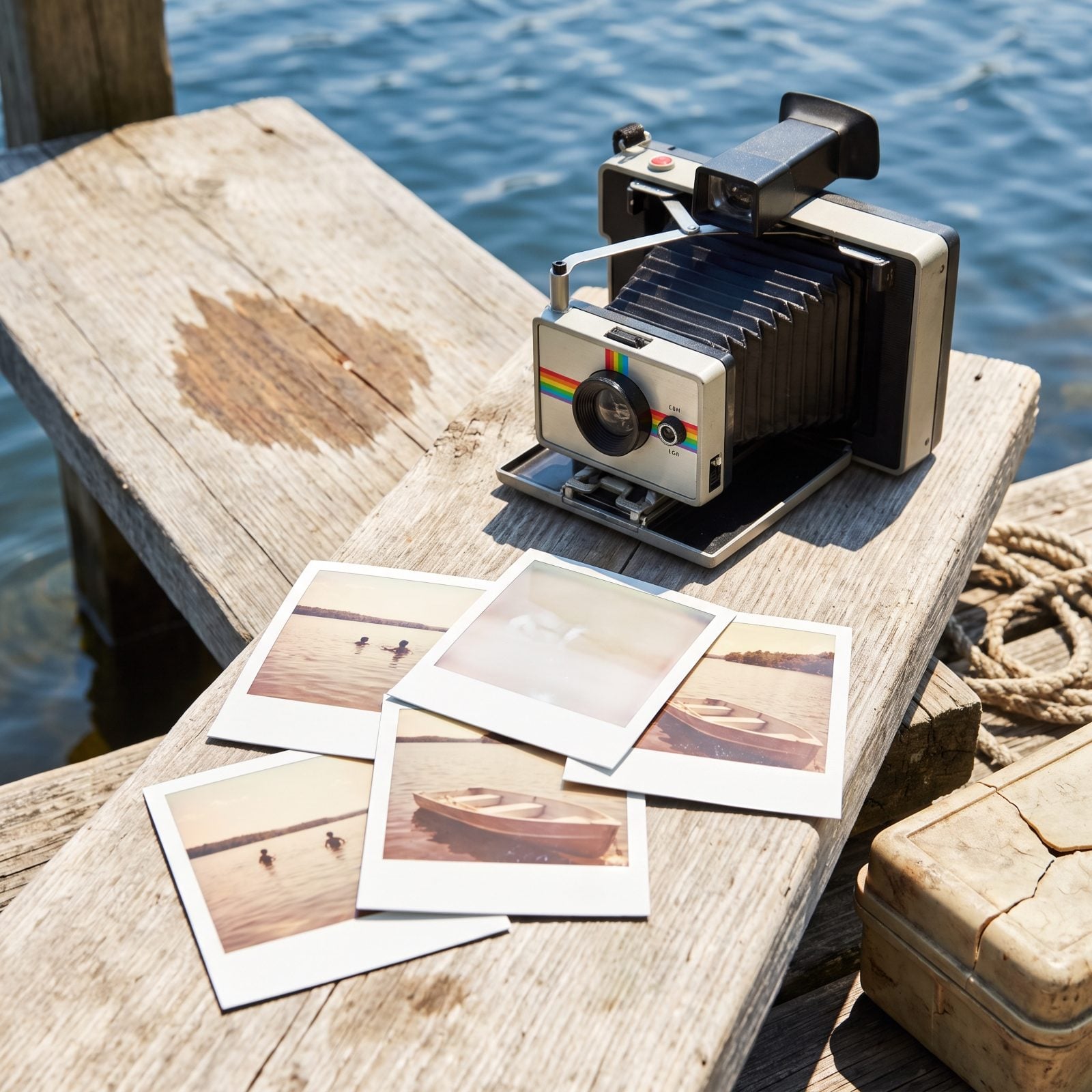
Here’s what nobody tells you about those cameras: you’d wave the print around like an idiot because somebody swore it made the picture come up faster. It didn’t. But you did it anyway, flapping a milky gray square at the lake until a boat and a couple of blurry swimmers slowly swam into focus right there in your hand. The film cost a fortune, so every shot counted — you didn’t rattle off forty frames of nothing. You framed it. You held your breath. And then you taped the good ones to the fridge where the dock sun faded them to a soft orange by August.
27. A Portable 8-Track Player With a Carrying Handle
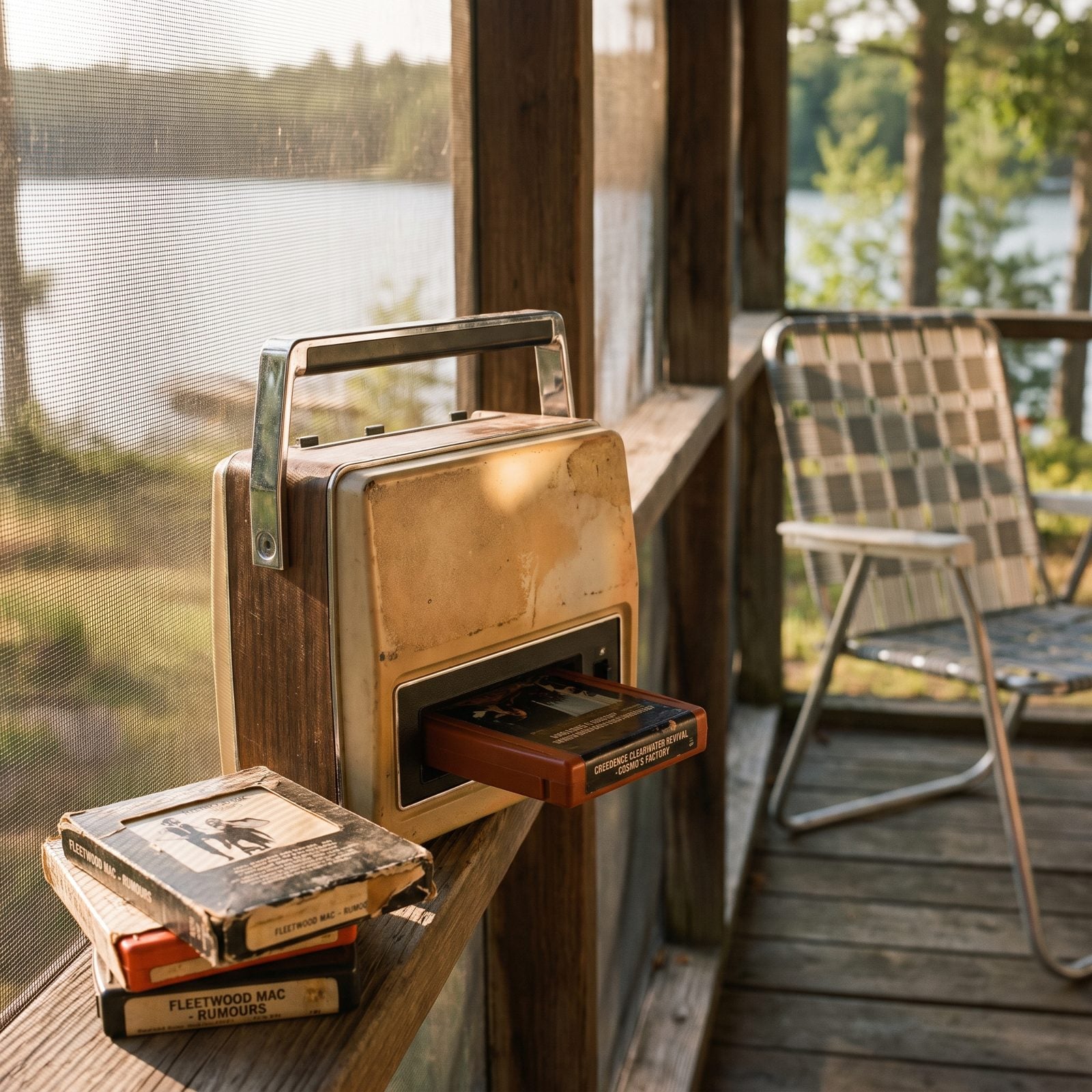
Chunky as a cinder block and about as elegant. You lugged it out to the porch rail by that chrome handle, slapped in a cartridge, and the whole thing would do its infamous mid-song KA-CHUNK right in the middle of your favorite part. Cut the chorus clean in half. There was no fixing it, no skipping back, just the machine deciding it was time for a different program whether the song had finished or not. We put up with it because out there on the water nobody had anything better, and a tinny guitar solo over the lap of the lake beat silence any day.
26. A Small Woodgrain Television With Rabbit-Ear Antennas
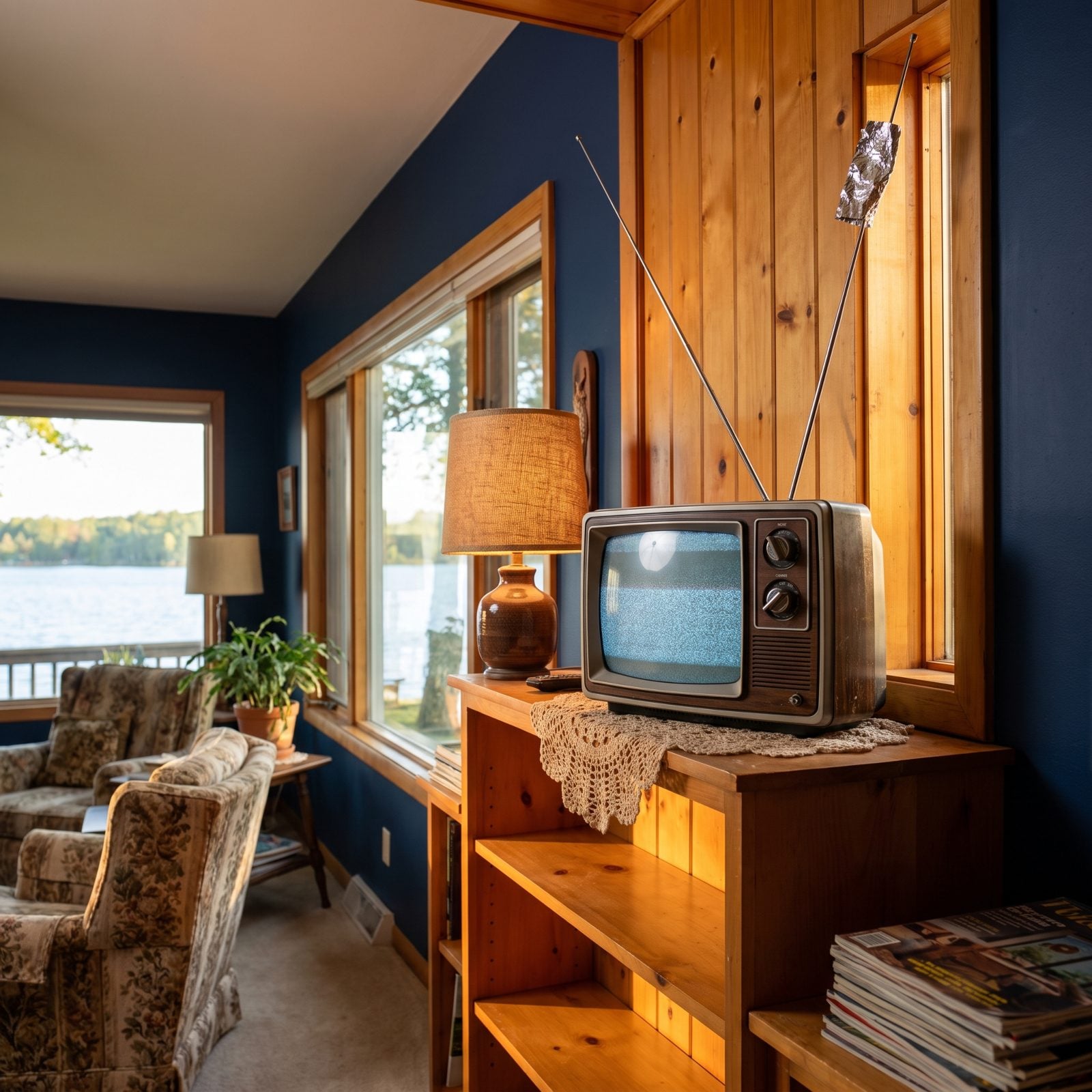
Three channels on a good night, and good nights were rare out at the lake. You’d get maybe two if you stood in exactly the right spot with one hand on the antenna, which meant somebody was always drafted into human-aerial duty while everyone else hollered that the picture just got worse. The aluminum foil trick? Dad’s gospel. Wrap a wad around the rabbit ear, angle it toward town, and pray. Mostly you watched snow with a voice buried somewhere underneath it. Didn’t matter. The lake out that window put on a better show than anything the networks were beaming over the hills anyway.
25. Honey-Colored Knotty-Pine Walls and Ceilings
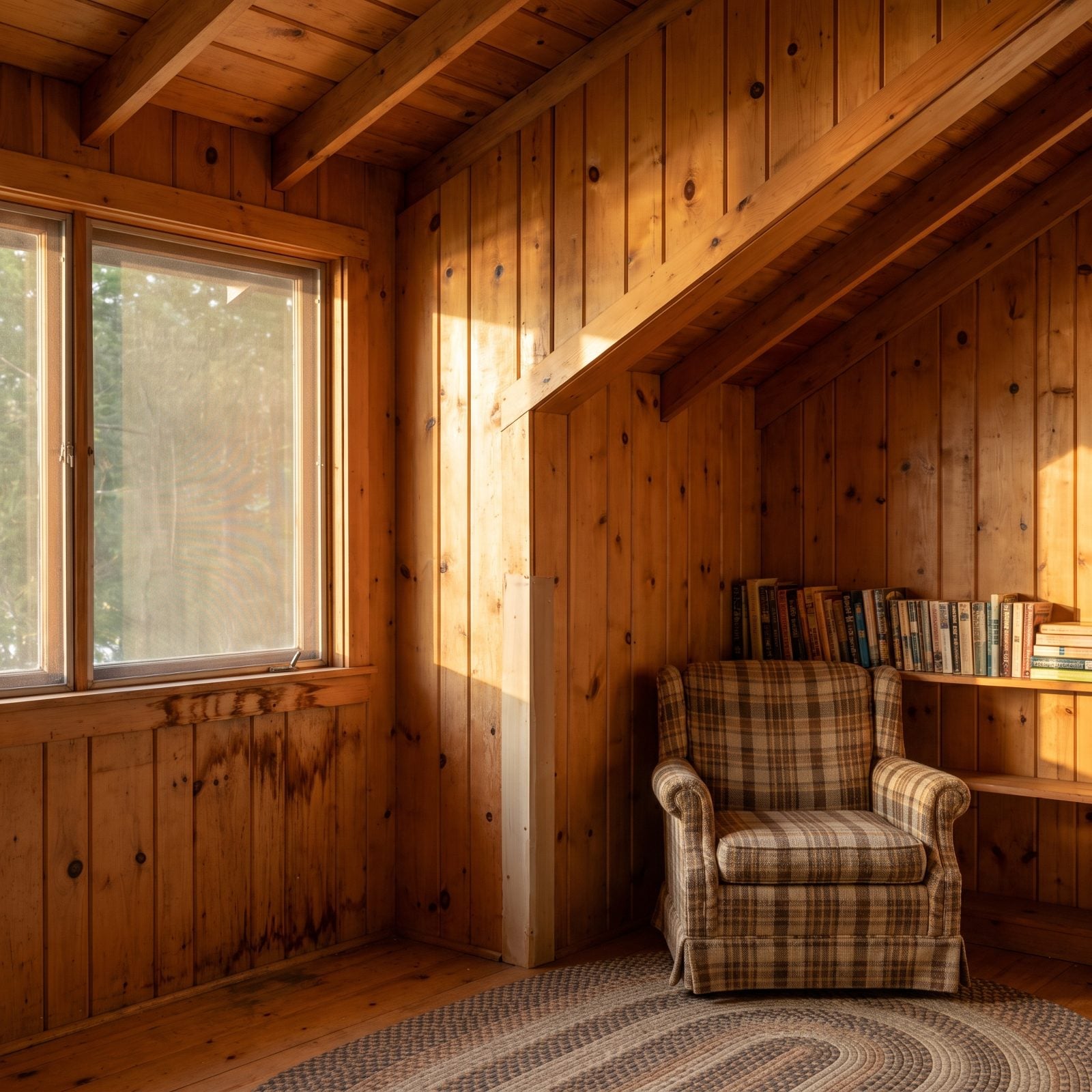
Every cabin had it. Pine, floor to ceiling, so much of it the whole room turned the color of weak tea when the afternoon light came slanting in. The knots looked like eyes if you stared long enough as a kid, and you did stare, lying on the braided rug on a rainy day with nothing to do. It smelled faintly of sap and woodsmoke and whatever had been fried for breakfast. Designers spent decades ripping this stuff out and painting over it gray, which still strikes me as a small crime. That honey glow was the whole personality of the place. You can’t fake it with a can of eggshell.
24. A Wagon-Wheel Light Fixture Over the Main Table
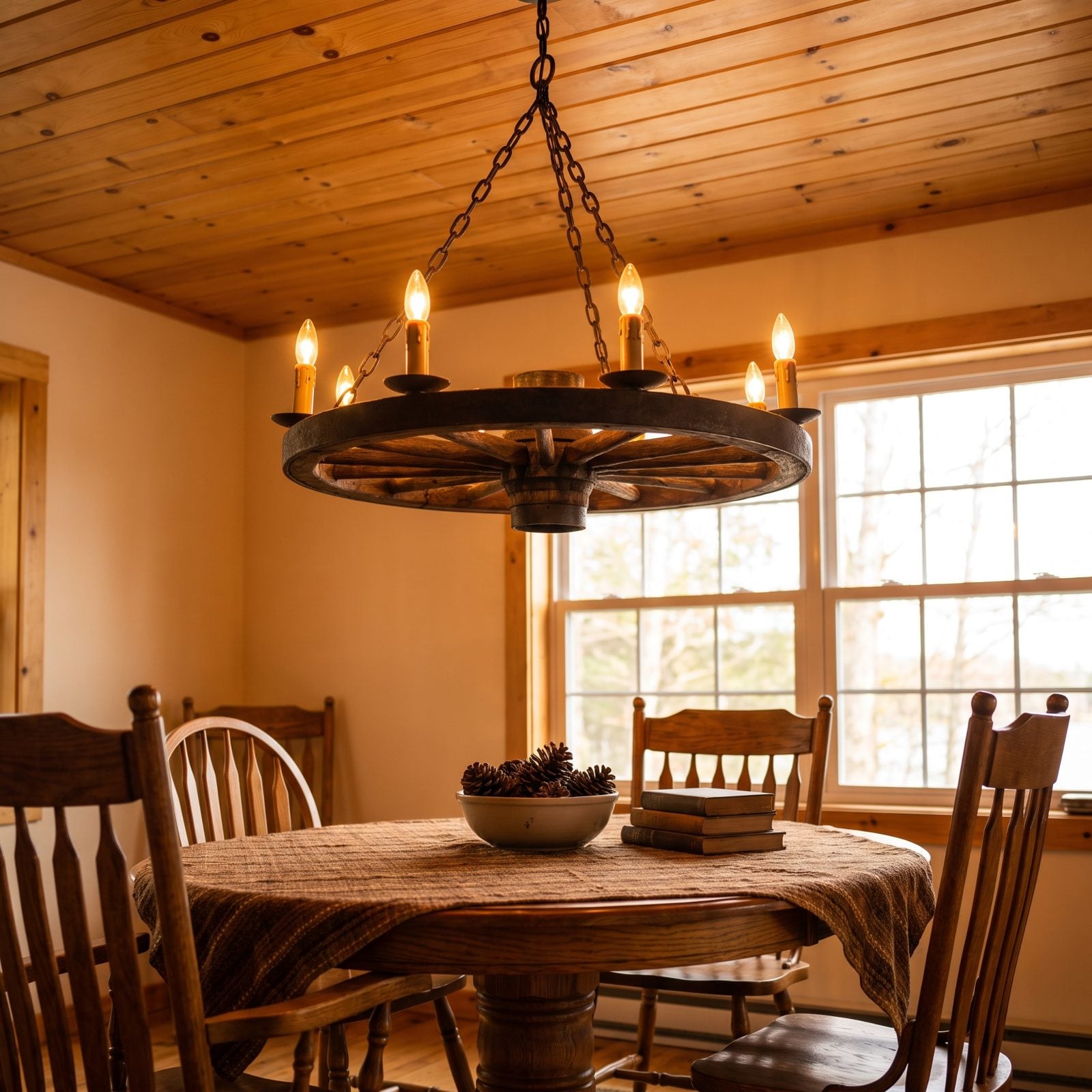
Somebody decided a cabin needed to look like a frontier saloon, and so you got the wagon wheel bolted to the ceiling with little flame-shaped bulbs flickering around its rim. It collected dust in the spokes nobody could reach. One bulb was always burnt out or sitting crooked in its cup. But lower the lights at dinner and those fake candles threw this warm amber wash over the tablecloth and the mismatched chairs and whoever was reaching for the last ear of corn, and the whole corny thing suddenly earned its keep.
23. A Mounted Bass Displayed Above the Mantel
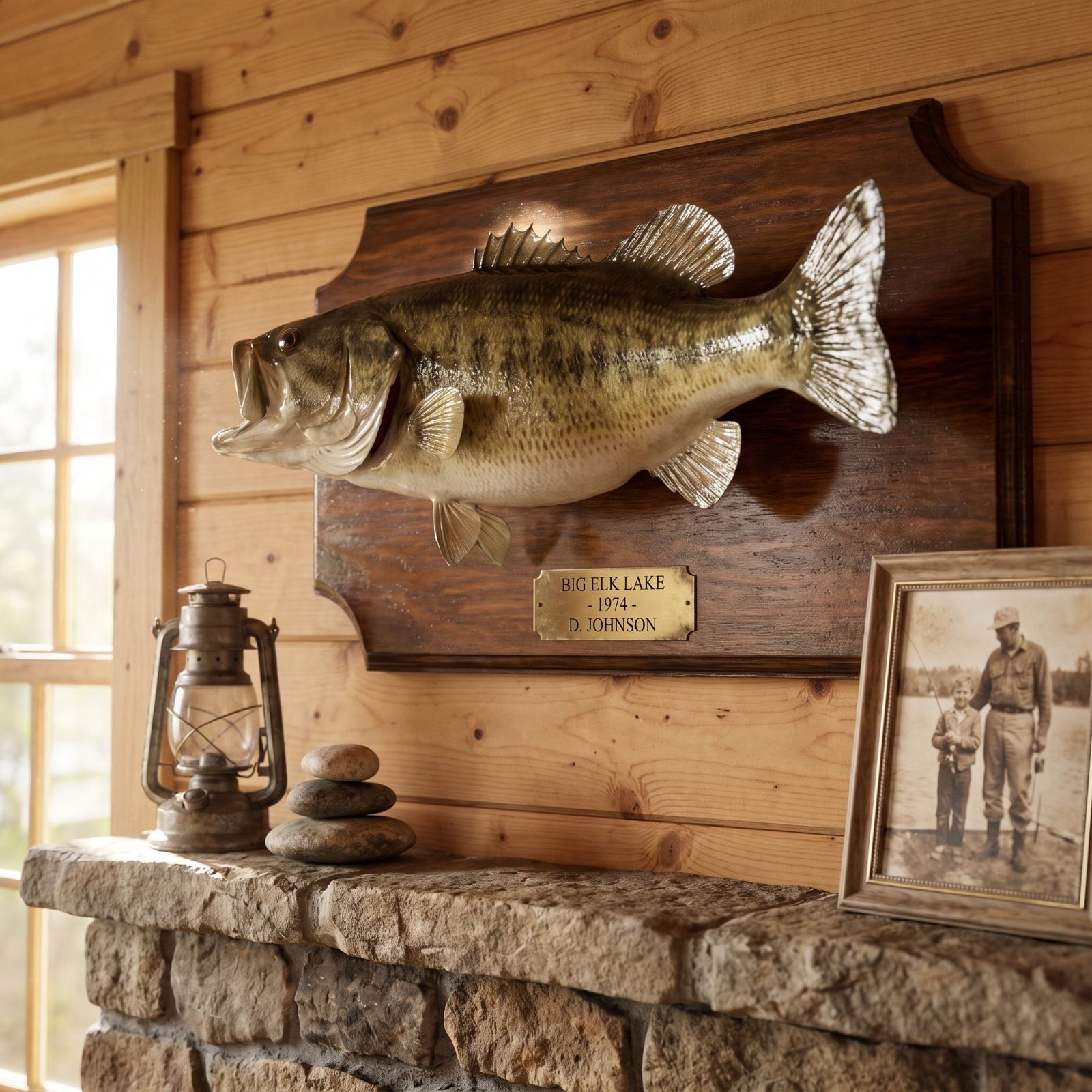
Up on the wall, frozen mid-leap with its mouth gaping, hung the one fish somebody was never going to let anyone forget. There was a little brass plate under it with a date and a weight, and the story that came with it grew about a pound every summer. You’d hear the whole saga again every time a new guest glanced up at it — the drag screaming, the line almost snapping, the forty-minute fight that was probably closer to four. Glossy varnish, a little dust on the dorsal fin, eyes that seemed to follow you across the room. That bass had outlived three dogs and two marriages and it wasn’t going anywhere.
22. A Macramé Owl Hanging on the Paneled Wall
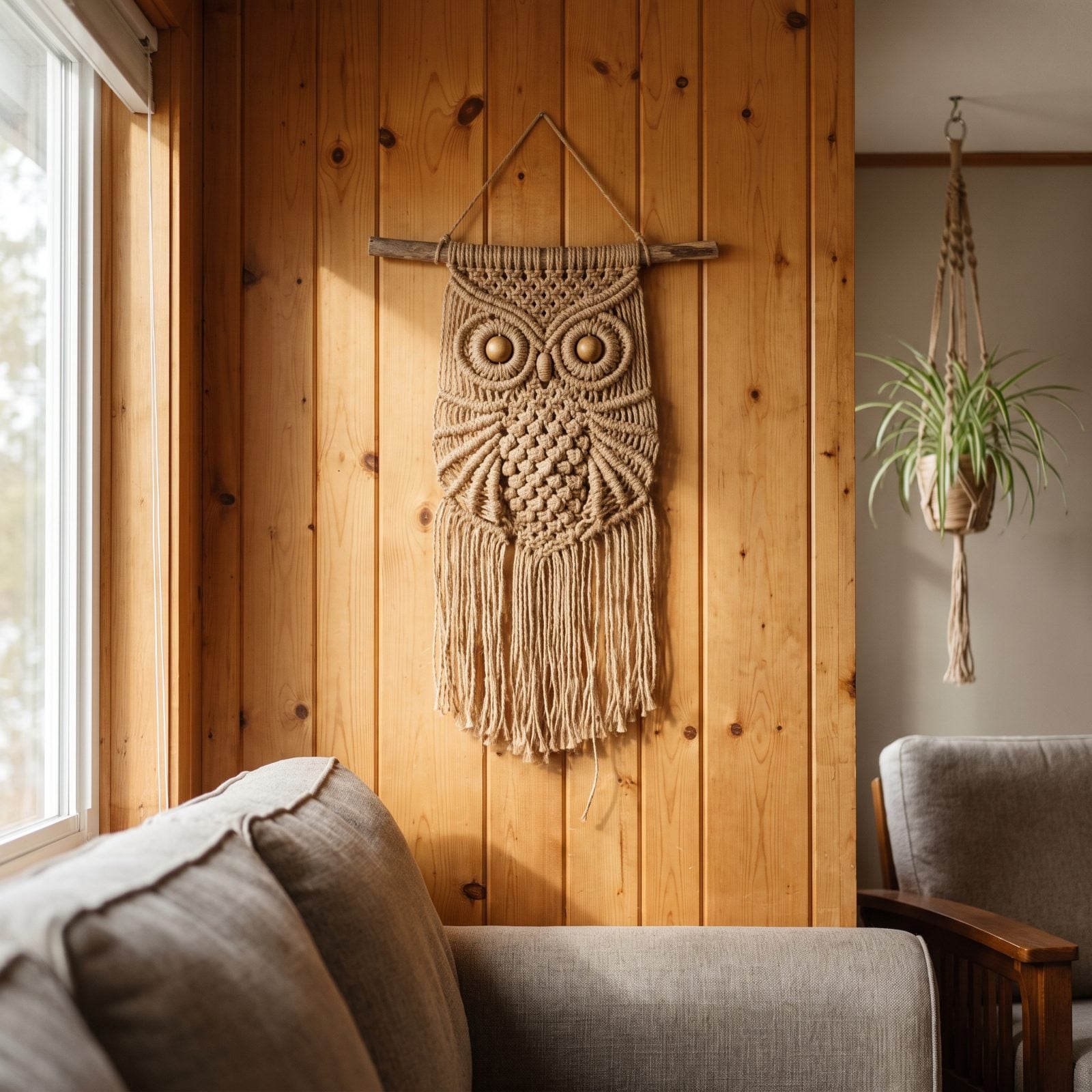
Somebody’s aunt made this. That’s practically a law — every macramé owl in America came off the kitchen table of a woman who’d just discovered knotting cord and couldn’t be stopped. Two big wooden beads for eyes, a scratchy jute body, fringe at the bottom that the cat would eventually destroy. It hung there against the pine watching the room with those unblinking buttons. You never asked for it and you’d never take it down. It was simply part of the furniture now, loose strand and all.
21. A Crocheted Granny-Square Afghan Across the Sofa
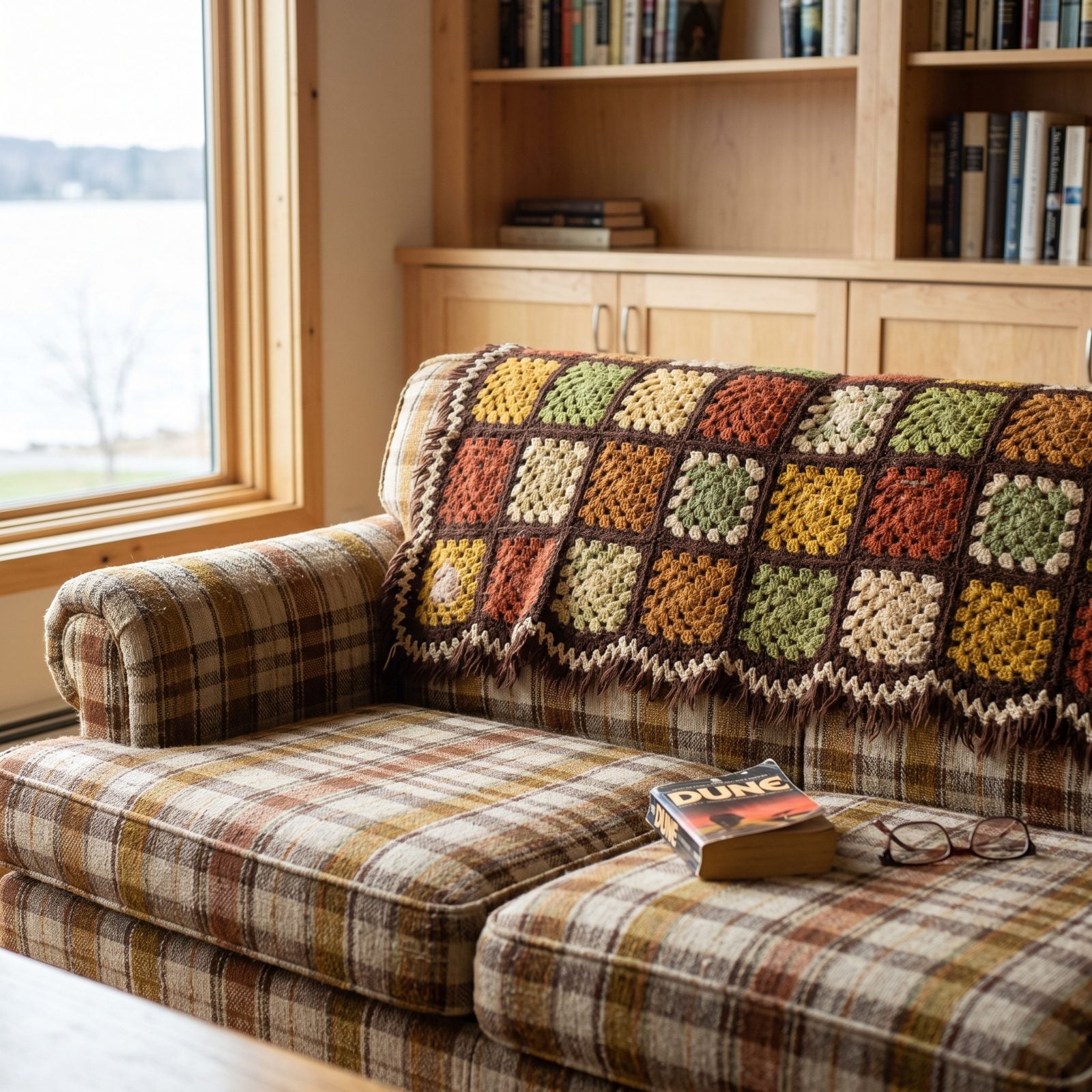
Rust, mustard, avocado, cream — every square a different leftover skein, all of it edged in brown like it owed the color money. It lived on the back of the sofa until the first cool evening, when somebody pulled it over their legs during a card game and claimed it for the rest of the night. Scratchy in the way only real wool is. It had that plain brown edge you absolutely would pick at with your finger when you were bored. Decades of lake nights had worn it soft in patches and faded a few squares to nothing, and that only made people fight over it harder when the fire burned low.
20. A Burnt-Orange Plaid Sofa With Low Wooden Arms
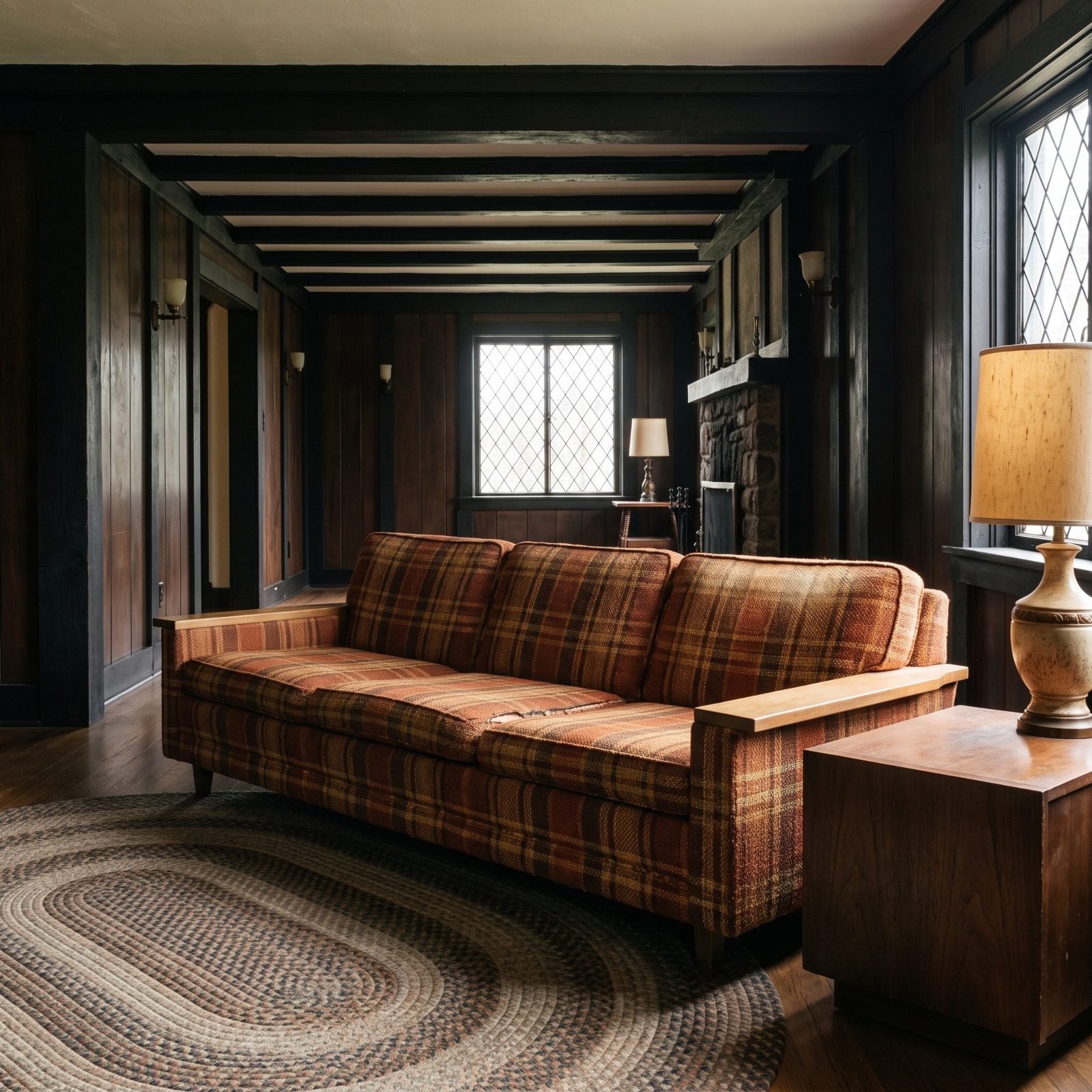
The sofa nobody was allowed to replace. Burnt-orange plaid tweed scratchy enough to leave a waffle print on the backs of your legs, with those flat wooden arms worn smooth from years of somebody perching a plate on them. The cushions had given up and sagged toward the middle, so two people inevitably slid together whether they meant to or not. One end was faded pale where the afternoon sun hit it for thirty summers straight. It smelled like lake and old campfire smoke. Ugly? Sure. But you could fall asleep on it in a wet swimsuit and nobody would say a word, and try finding furniture that forgiving today.
19. An Avocado-Green Refrigerator With Rounded Handles
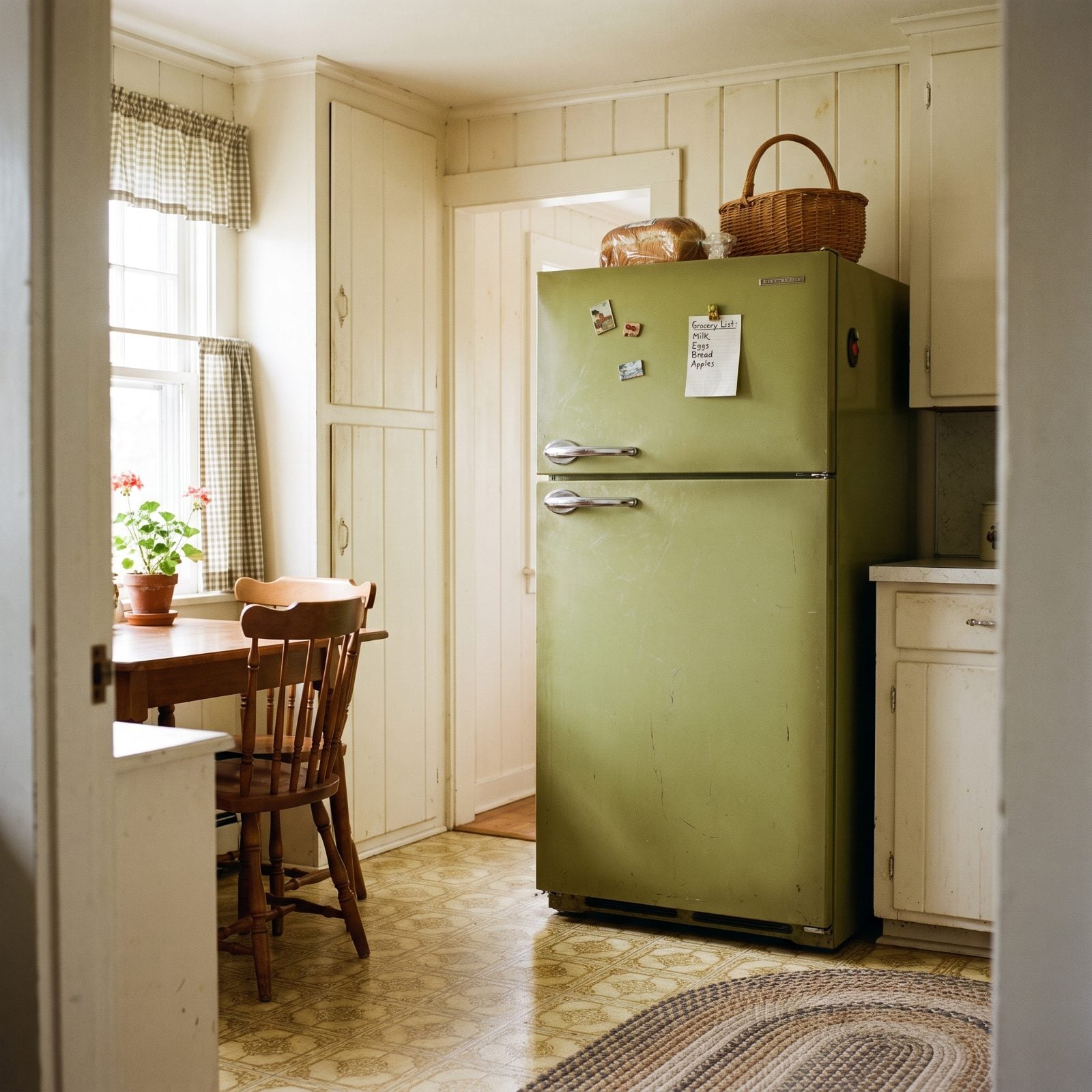
Avocado was the color of the decade, and lake cabins got the leftovers. When a family remodeled the main house and bought something newer, the old fridge got loaded into a pickup and hauled out to the water. That’s how most of these ended up in cabins in the first place.
The rounded handle was a clever little detail — big enough to grab with a wet hand, smooth enough that it never caught a sleeve. These units ran forever because they were built heavy and simple, with a compressor that would outlive three newer models.
18. Melamine Picnic Plates in Bright 1970s Colors
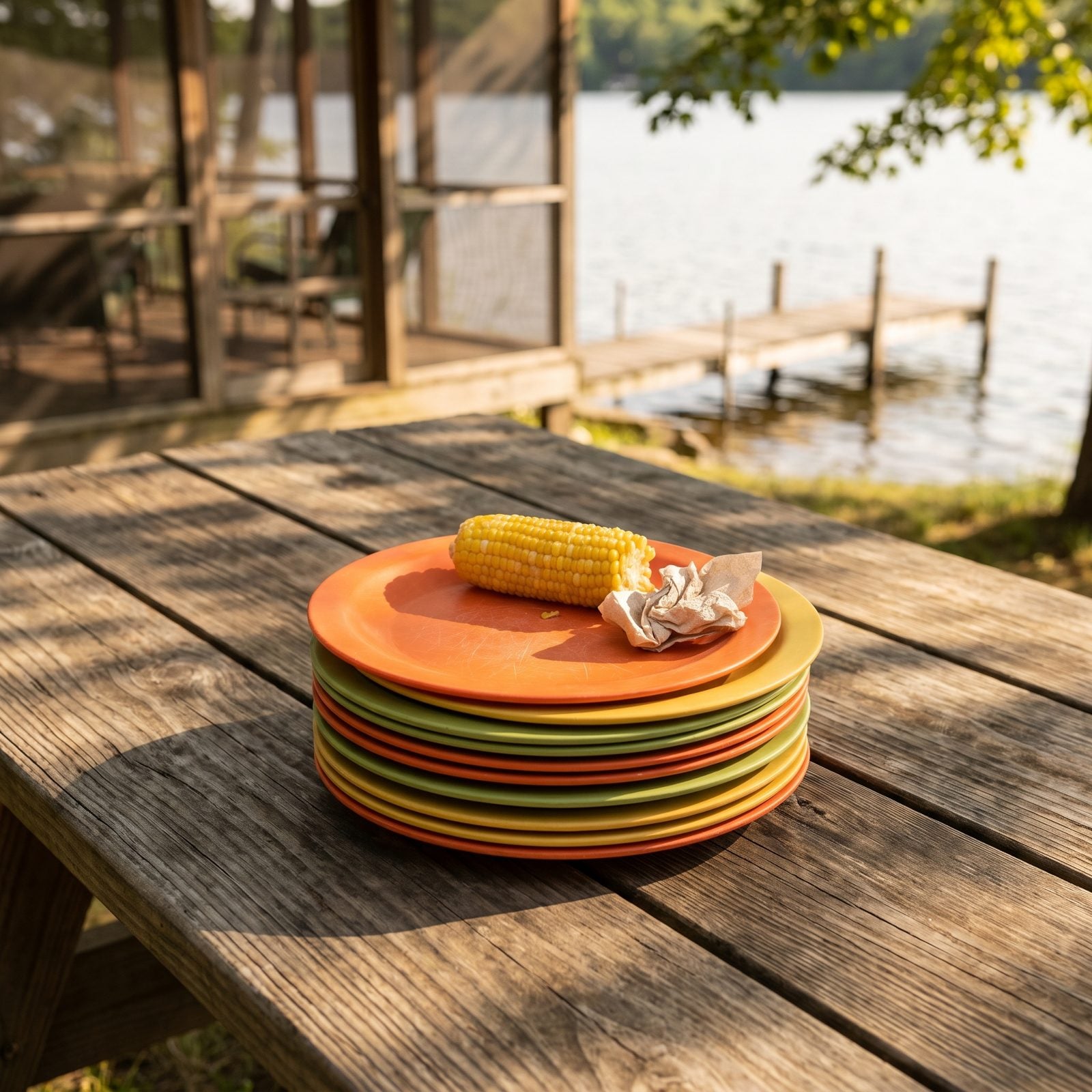
These plates survived everything. Drop one on the dock and it bounced, leave a stack in the sun and the colors mostly held — which is why cabins went through case after case of melamine while the good china stayed home in a hutch nobody opened.
The downside shows up over years. Dark coffee and tomato sauce stained the lighter plates, and the surface went chalky where knives scored it. Nobody cared. A plate you don’t have to worry about is worth more at the lake than one you do.
17. Anodized Aluminum Tumblers That Sweated in Summer
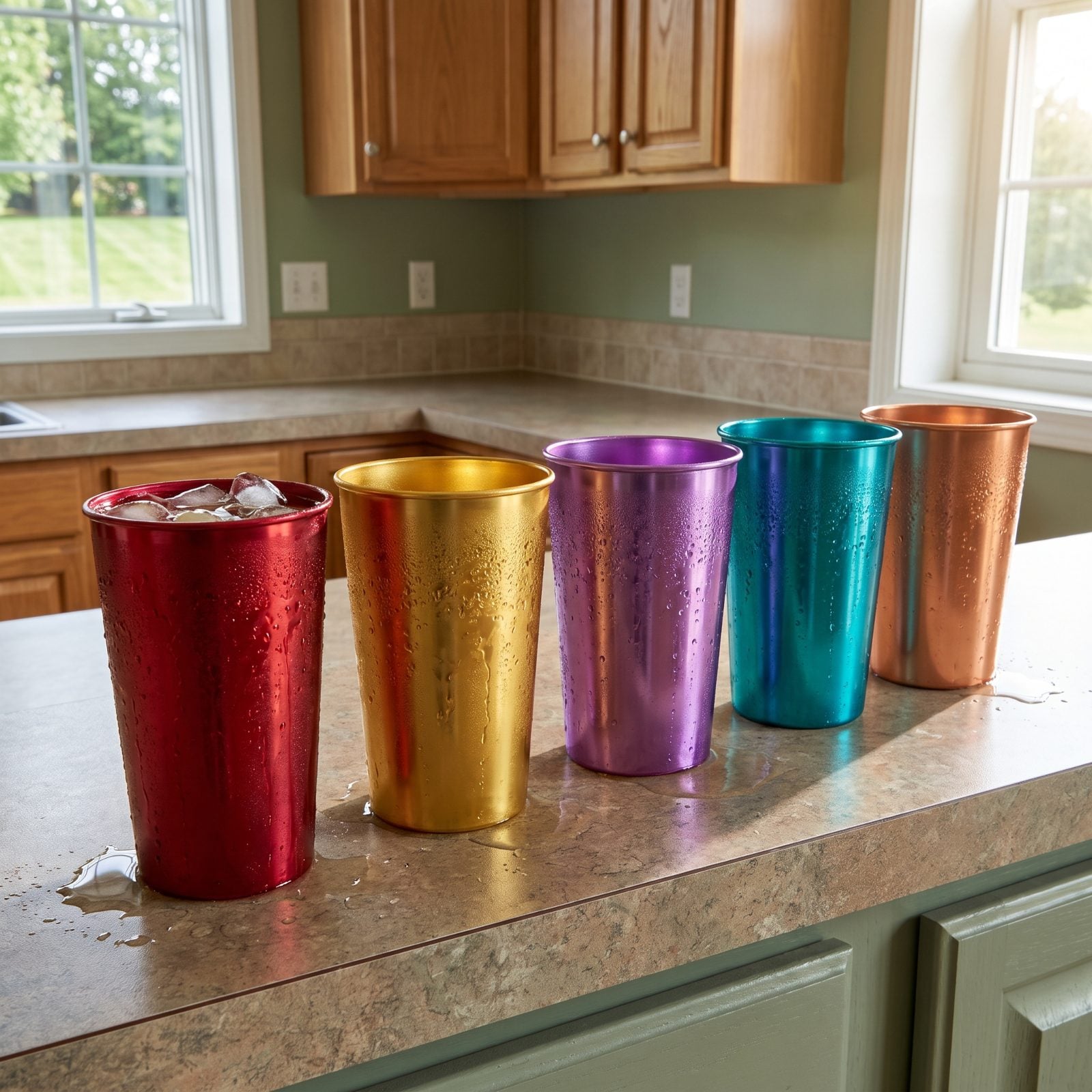
You remember the cold. Not the drink — the cup. Those anodized tumblers in ruby, gold and purple got so cold against your palm on a hot day that your hand almost ached, and they sweated rivers onto every surface they touched.
Each kid claimed a color, and that was the real function. Nobody argued over whose glass was whose when yours was the violet one and your brother had gold.
16. A Stovetop Percolator Used for Morning Coffee
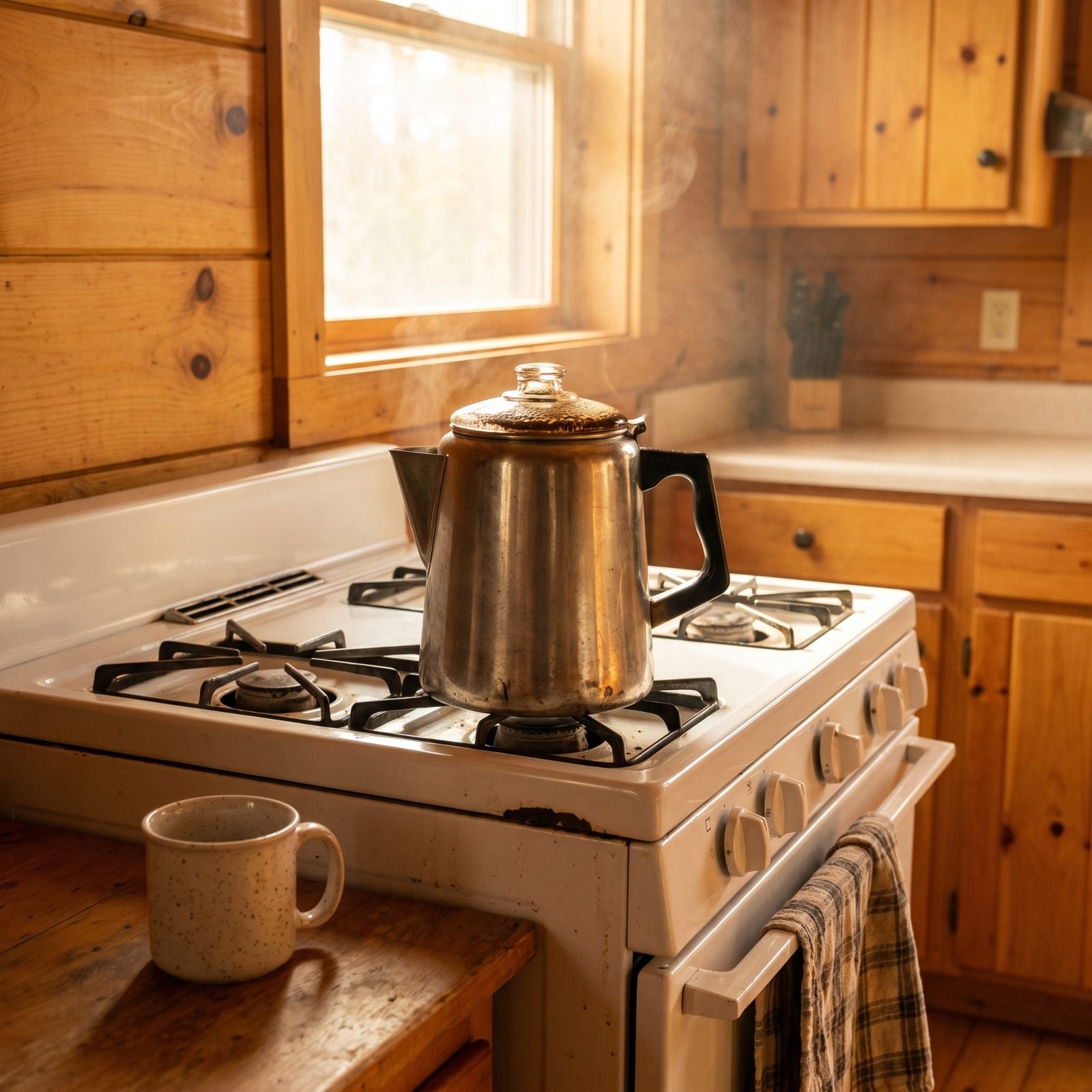
The sound came first — that slow, rising perk… perk… perk against the glass knob while the cabin was still cold, and then the smell drifting into the bunk room. For a lot of people that’s the actual memory of lake mornings, not the lake itself.
Percolator coffee runs stronger and a little bitter because it keeps pushing the same water back through the grounds. Honest truth: it isn’t as good as a decent drip pot. But it ran on a woodstove or a camp burner when the power was out, it never broke, and at a cabin that counts for more than flavor.
15. A Rectangular Electric Skillet for One-Pan Suppers
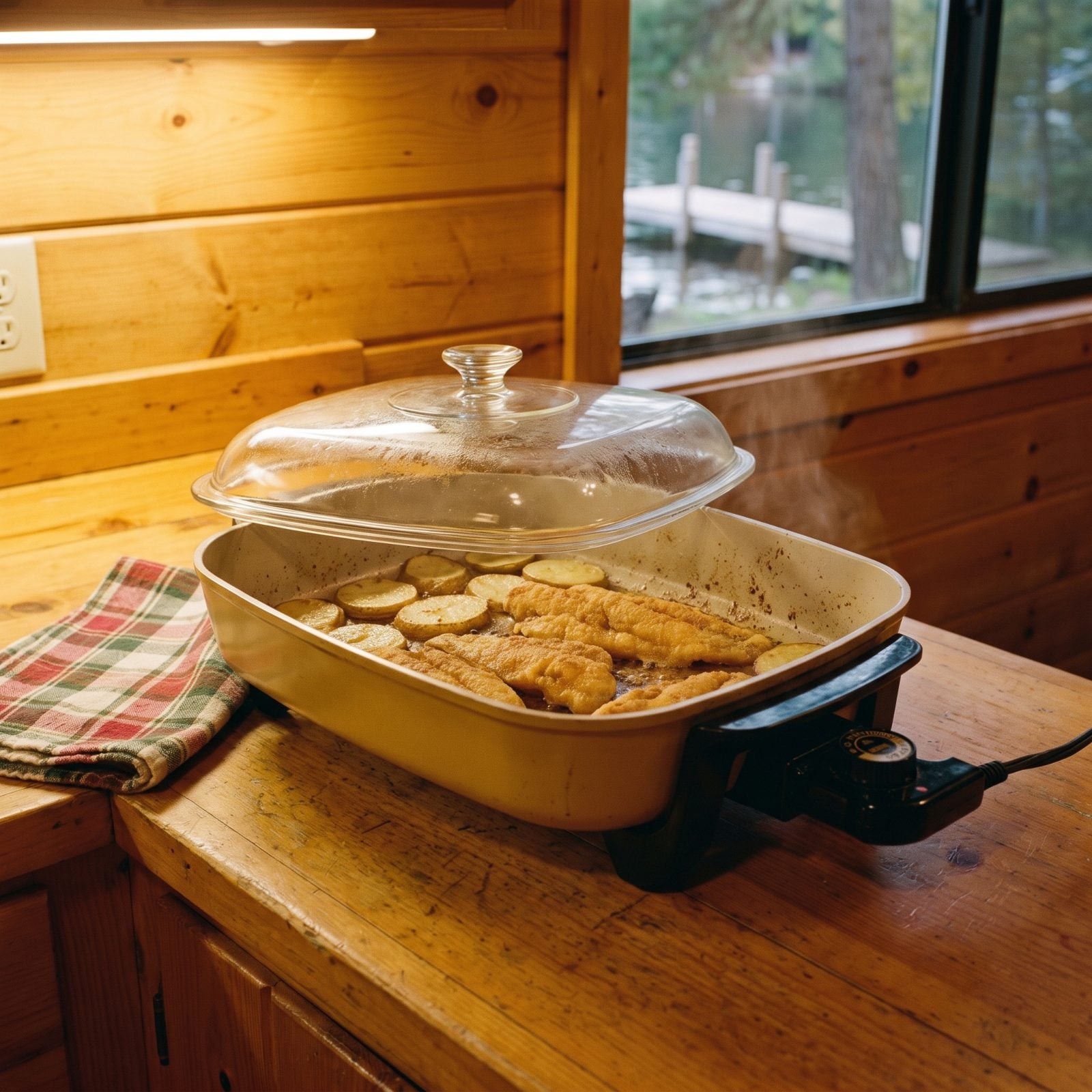
One pan, one plug, one supper. The electric skillet was the cabin’s whole kitchen when the stove felt like too much trouble — fish fry, hash, pancakes, a pound of bacon for a crowd, all of it cooked right at the table if the cord reached.
The dial was the genius of it. You set the thing and walked down to the water, and it held temperature with no stove to babysit. They came in harvest gold and avocado to match everything else, and the non-stick coating wore thin right in the center from a thousand eggs.
14. A Molded Plastic Pitcher Filled With Powdered Drink Mix
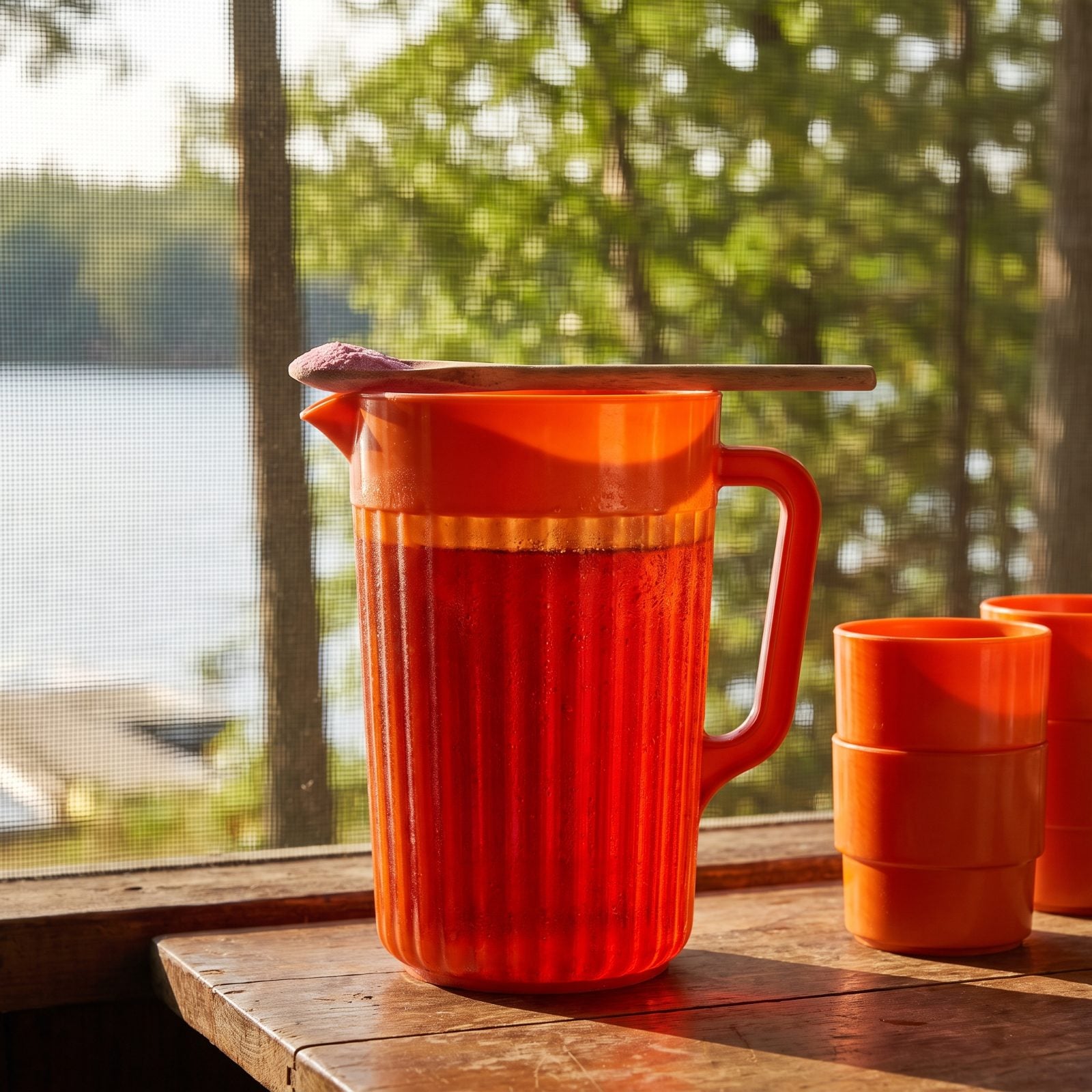
Scoop, water, stir, done. The plastic pitcher of powdered drink mix was the unofficial beverage of lake afternoons, mixed too sweet by a kid who eyeballed the sugar. It lived in the fridge door and got refilled twice a day.
These pitchers were built to take a beating — ribbed sides for grip, a spout that never quite poured clean, a lid that went missing by July. The bright molded plastic stained faintly pink at the bottom and nobody ever managed to scrub it fully out. Honestly? That pink ring was part of the charm.
13. A Plaid Insulated Jug Carried Down to the Dock
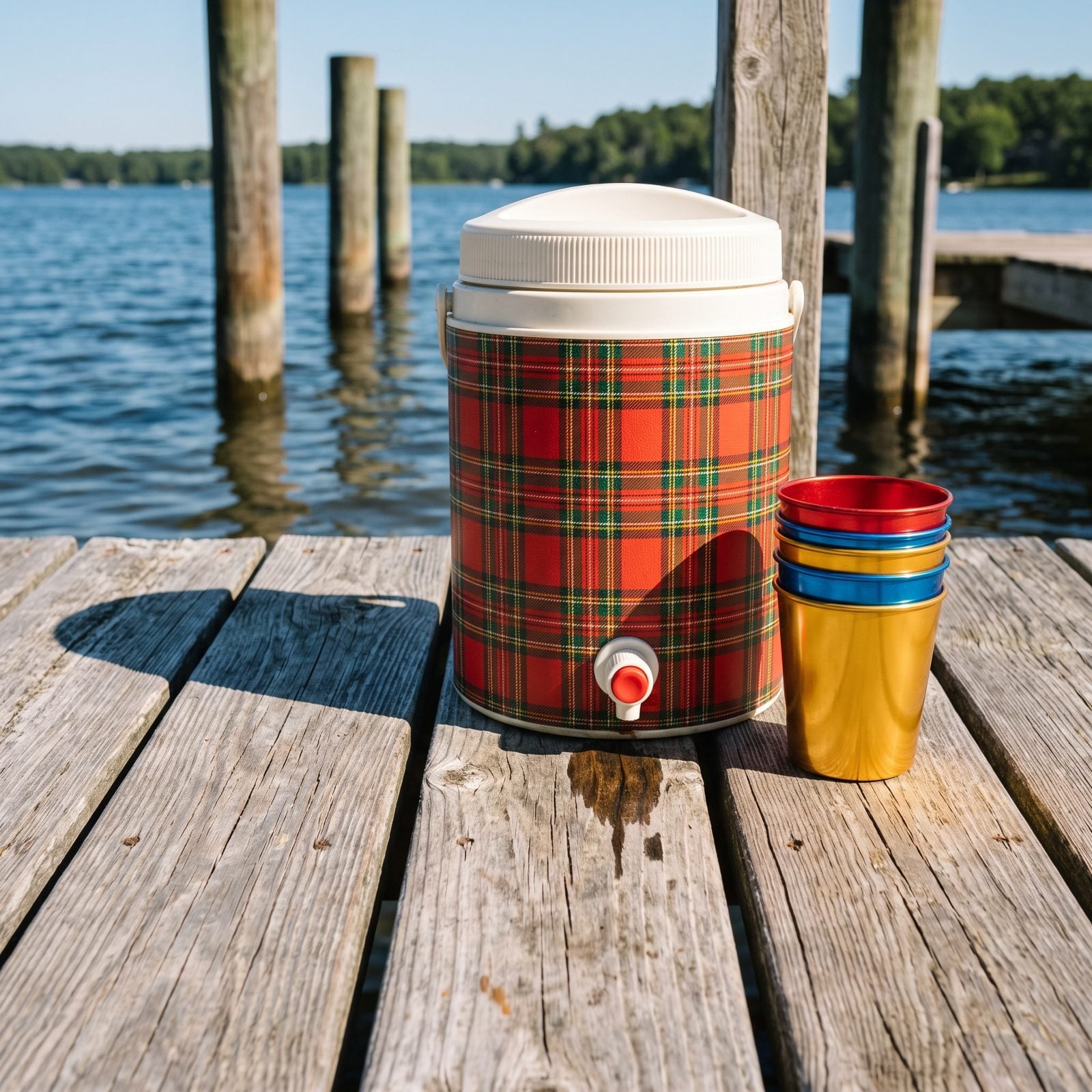
The plaid jug was a commitment. You filled it in the morning, hauled it down the hill, and that was the water supply until somebody volunteered to climb back up. The spigot dripped, the ice melted by two o’clock, and the lemonade turned warm and watery by the bottom.
That tartan vinyl shell showed up on coolers, thermoses and lunchboxes all through the decade. It read as outdoorsy and practical — exactly what a jug living on a sun-baked dock needed to be.
12. A Speckled Enamel Stockpot for Corn and Fish Boils
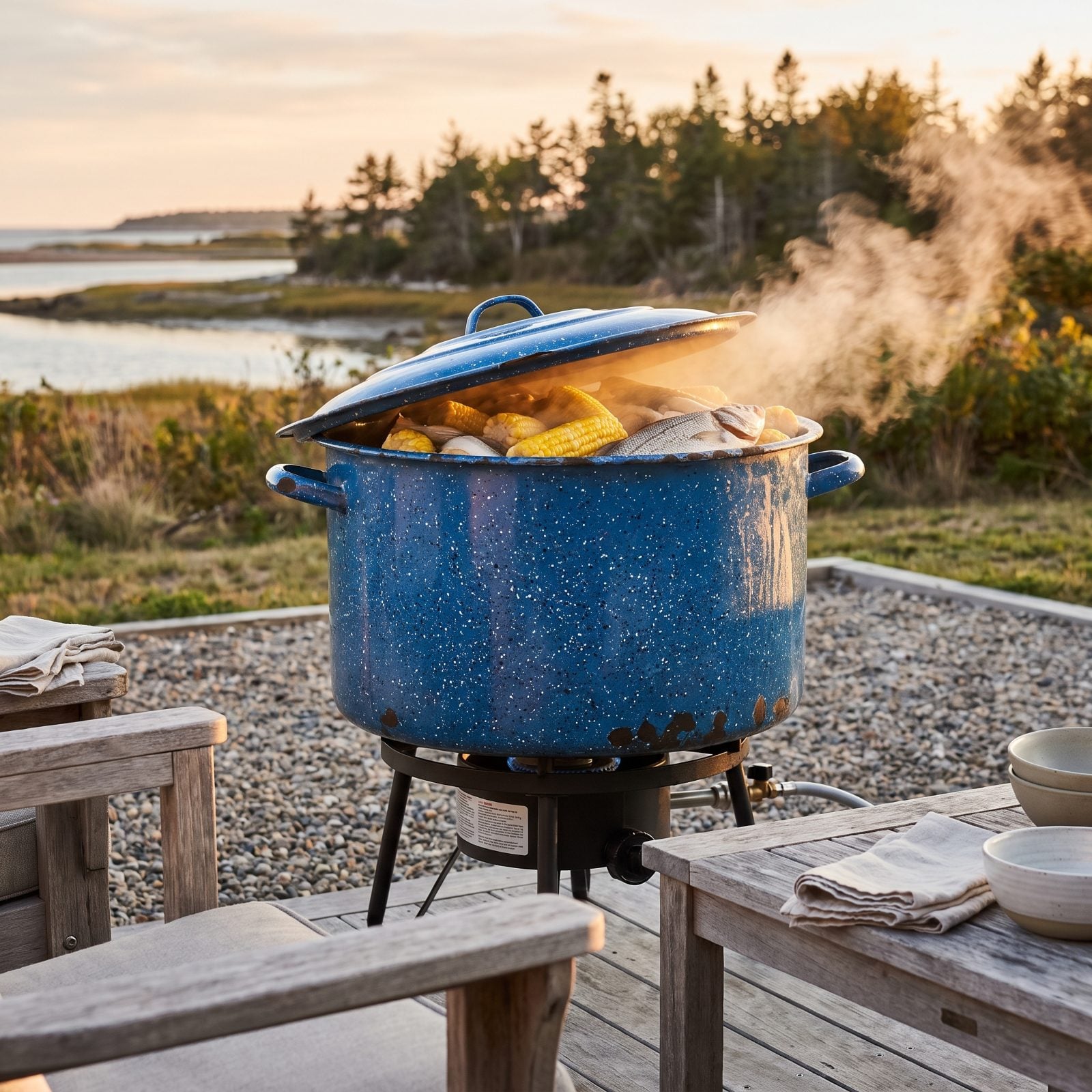
Every cabin had the big speckled pot, and it only came out for a crowd. Corn boils, fish boils, crab if you were near the coast — the whole thing cooked outside on a burner so the cabin didn’t fill with steam and fish smell.
Speckled enamelware was cheap, light, and spread heat well, which made it the standard for canning and big-batch cooking across generations. The trade-off is the enamel chips. Knock it against the burner and a little black crater opens up on the rim. Didn’t matter. A chipped boil pot is a pot that gets used.
11. A Freestanding Wood Stove With a Black Stovepipe
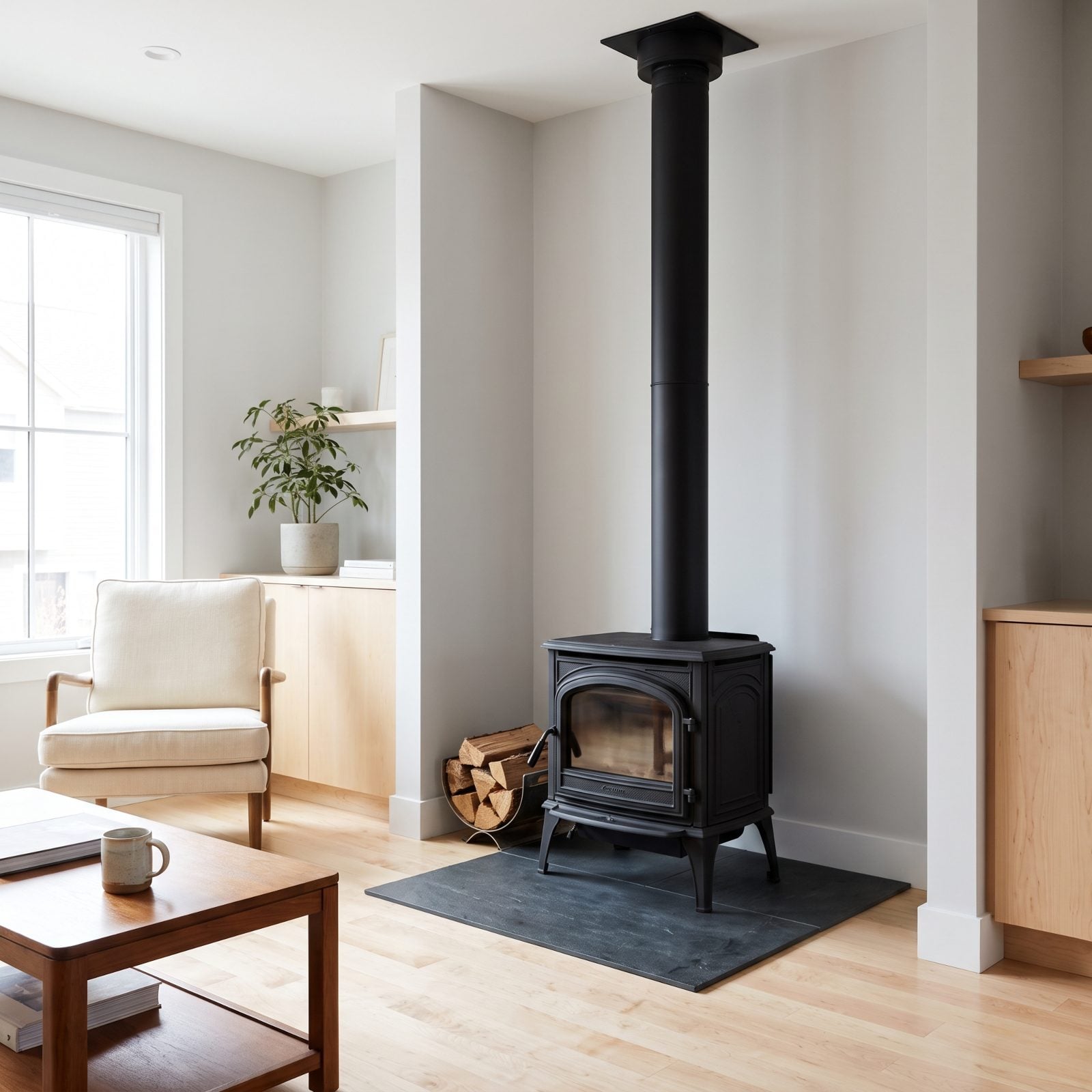
On a cold spring morning or a damp fall weekend, the woodstove was the cabin’s heart. First one up fed it, and the whole place organized itself around that pool of heat until the sun finally came up over the lake.
A black stovepipe looks simple and isn’t. It needs clearance from the ceiling, regular cleaning, and real respect, because creosote building up inside that pipe is the thing that burns cabins down. People who grew up with these learned to read the draft by ear — you’d hear the fire pulling right.
10. Metal-Framed Bunk Beds in the Smallest Bedroom
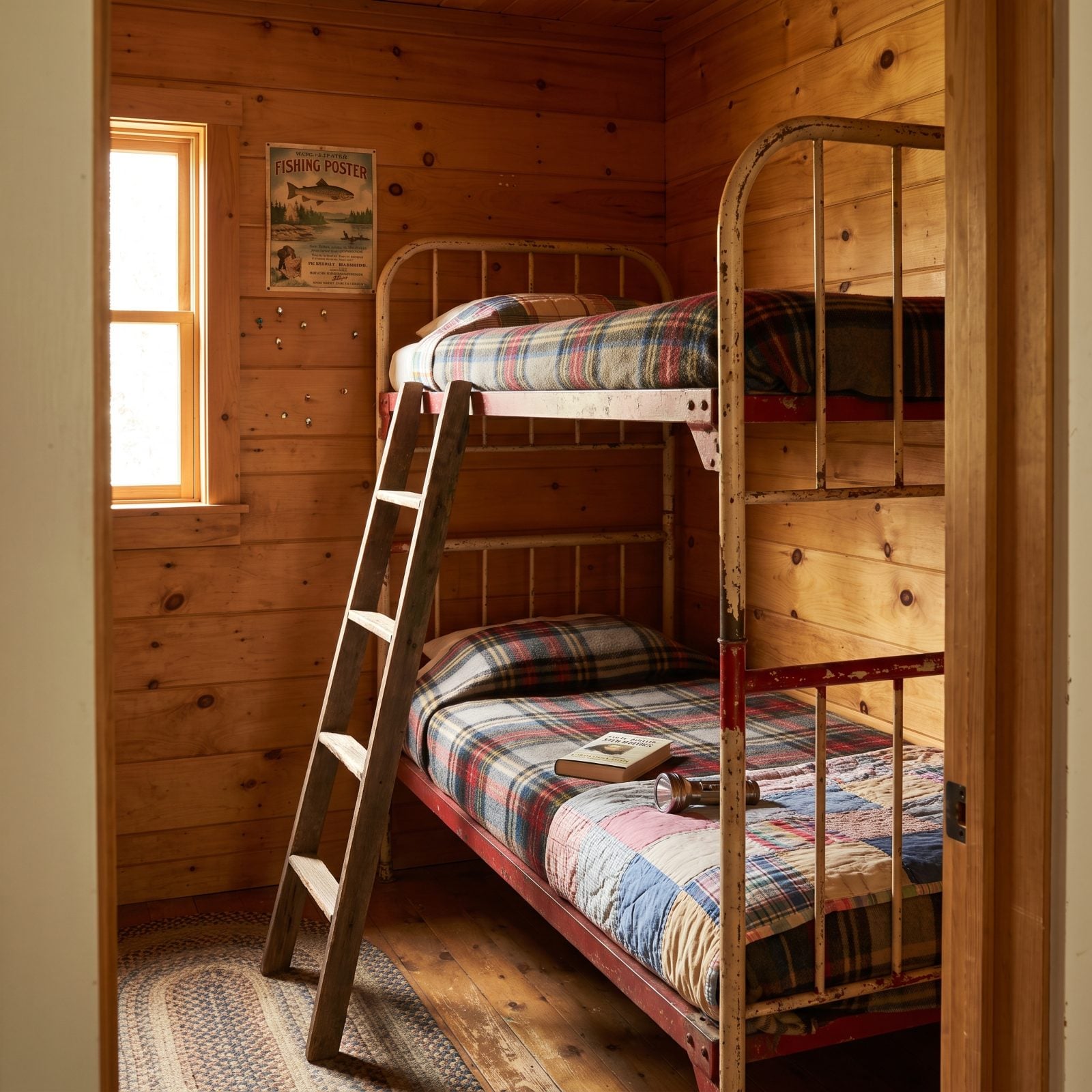
The smallest room, the most kids, the loudest arguments. Bunk beds solved the cabin’s oldest problem — everybody wants to come and nobody wants to pay to add a bedroom. Stack the beds and the room sleeps four.
The top bunk was both prize and hazard: that thin painted ladder, the single metal rail, the ceiling close enough to touch. Plenty of lake kids learned about physics by sitting up too fast up there. The frames were steel and nearly indestructible, which is why so many are still bolted together in cabins today — same mattresses, same plaid wool blankets, same creak when somebody rolls over at two in the morning.
9. Spiral Mosquito Coils Smoldering on the Porch Rail
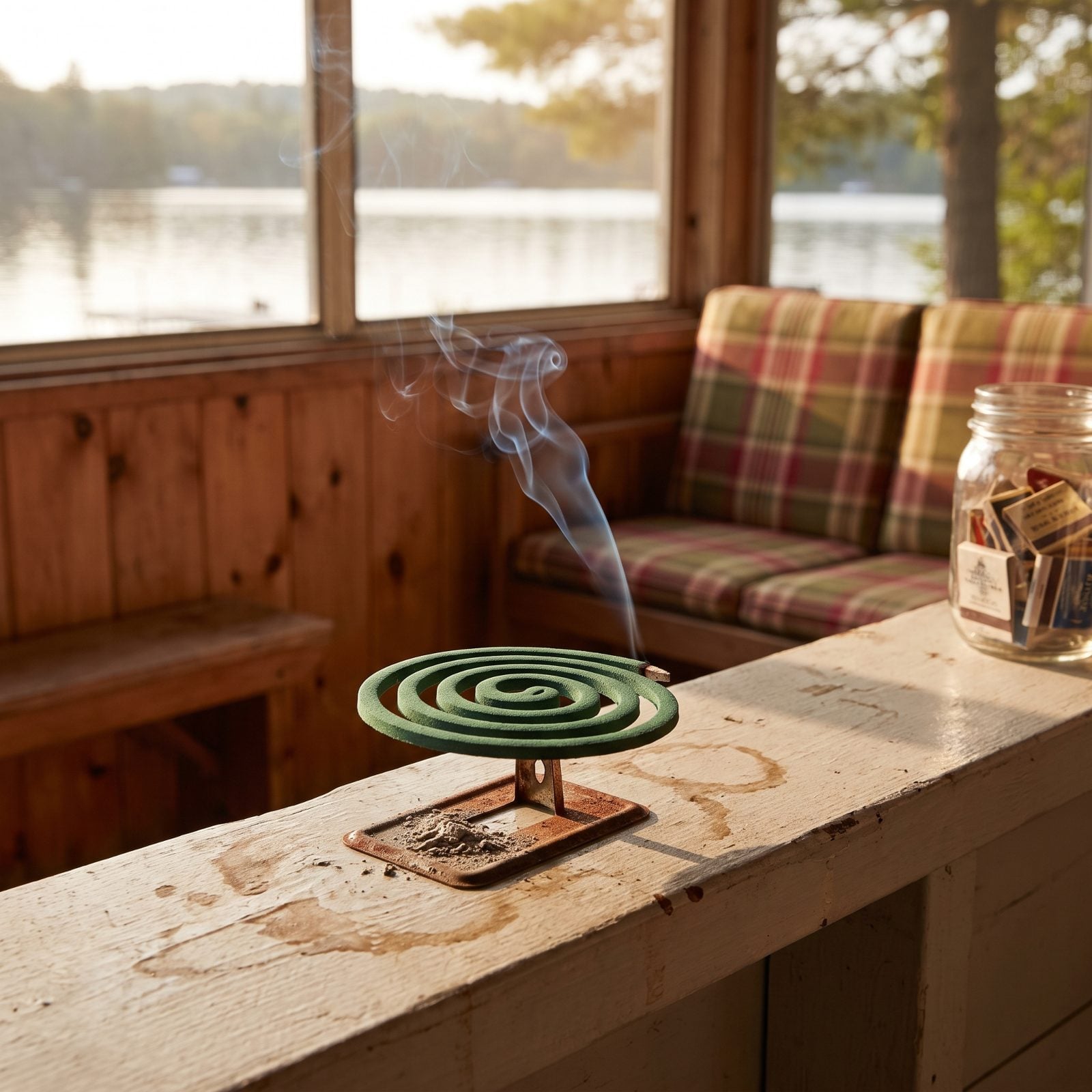
That smell hits before you even see the coil. Sweet, a little acrid, the first thing the nose files under summer. You light the outer tip, blow out the flame, and watch the orange ember crawl inward over the next few hours.
Pyrethrum did the work, pulled from chrysanthemums, and a single coil ran most of an evening. Nobody read the box — you just set it on a saucer, cracked a soda, and let the dusk arrive.
8. A Blue-Glow Bug Zapper Strung Up Under the Eaves
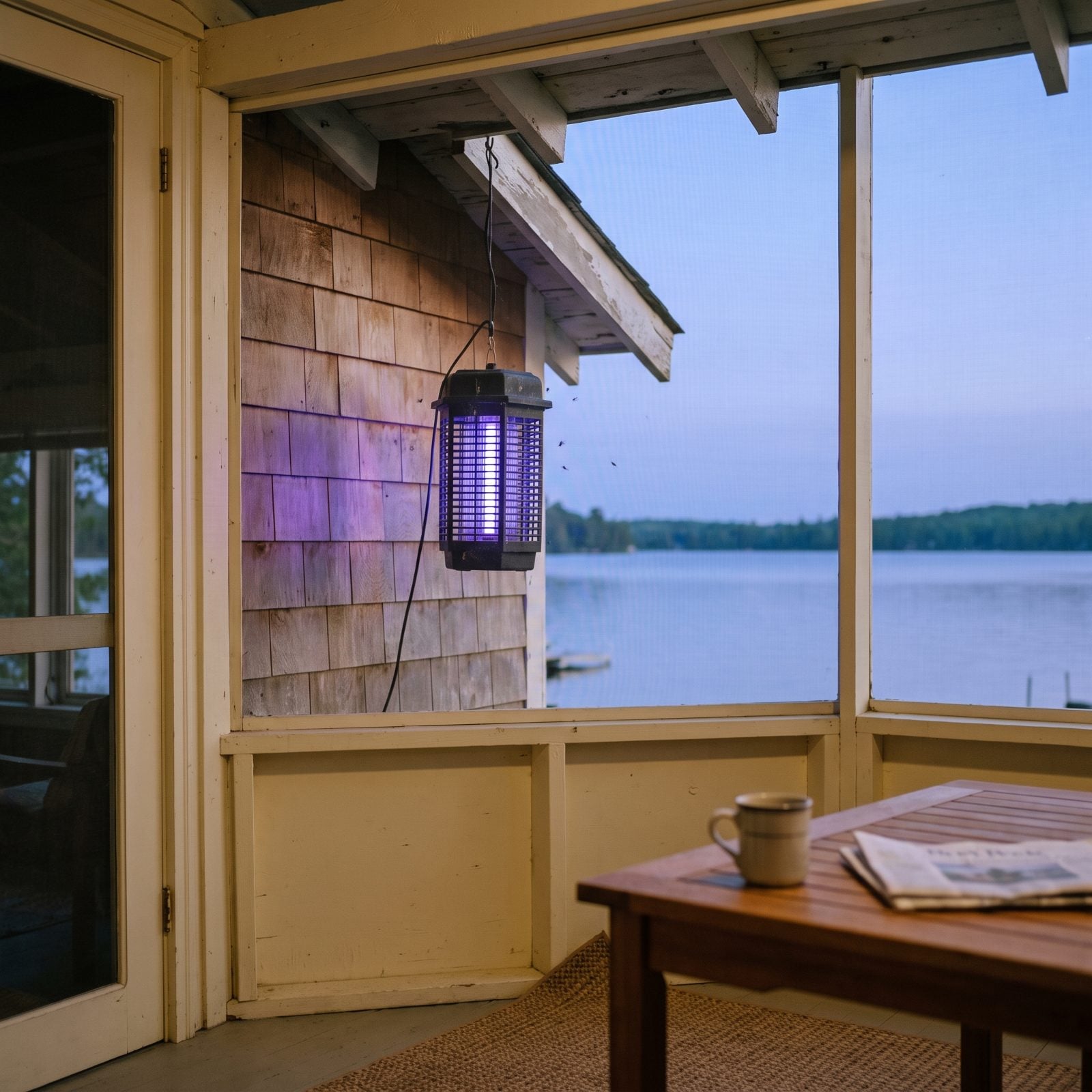
The soundtrack of the lake porch after dark. That irregular electric snap, loud enough to make a first-time visitor flinch. Everyone swore it helped.
Nobody liked to admit it, but zappers are mostly useless against mosquitoes. The light pulls in moths and beetles, not the things actually biting your ankles, and most of what they kill turns out to be harmless. And yet. The glow was oddly comforting, a blue nightlight that fought back, so you kept it running anyway.
7. Bulky Orange Kapok Life Jackets With White Cotton Ties
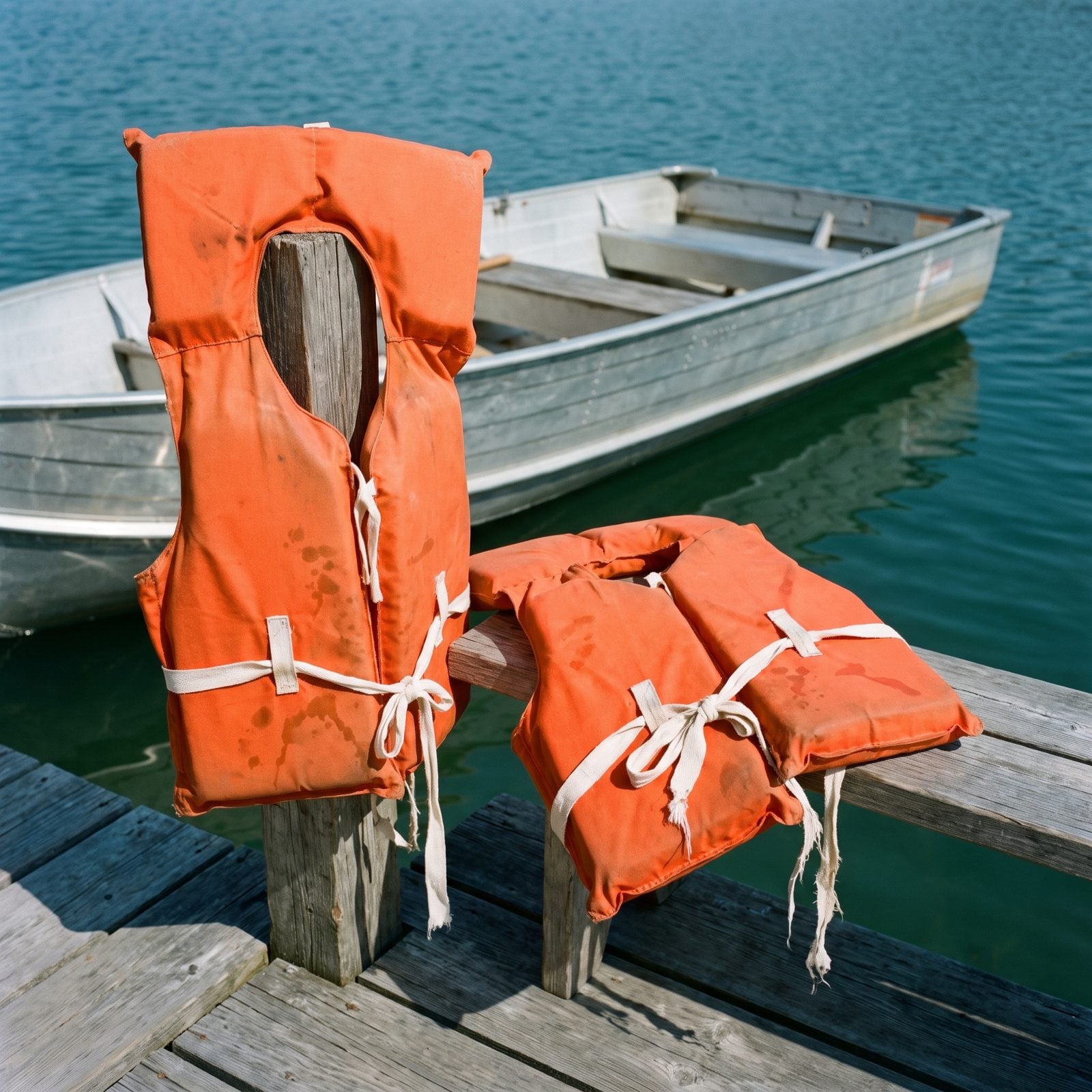
Stiff as cardboard, hot as an oven, and shaped so the collar shoved your chin skyward. Kids hated them. Parents insisted anyway.
The flotation came from kapok, a fluffy fiber packed inside sealed pouches — and those pouches eventually cracked, soaked through, and quit floating. The test was to squeeze one. Soggy or hard meant it was done, no matter how bright the orange still looked.
6. Bright Foam Ski Belts Cinched With Plastic Buckles
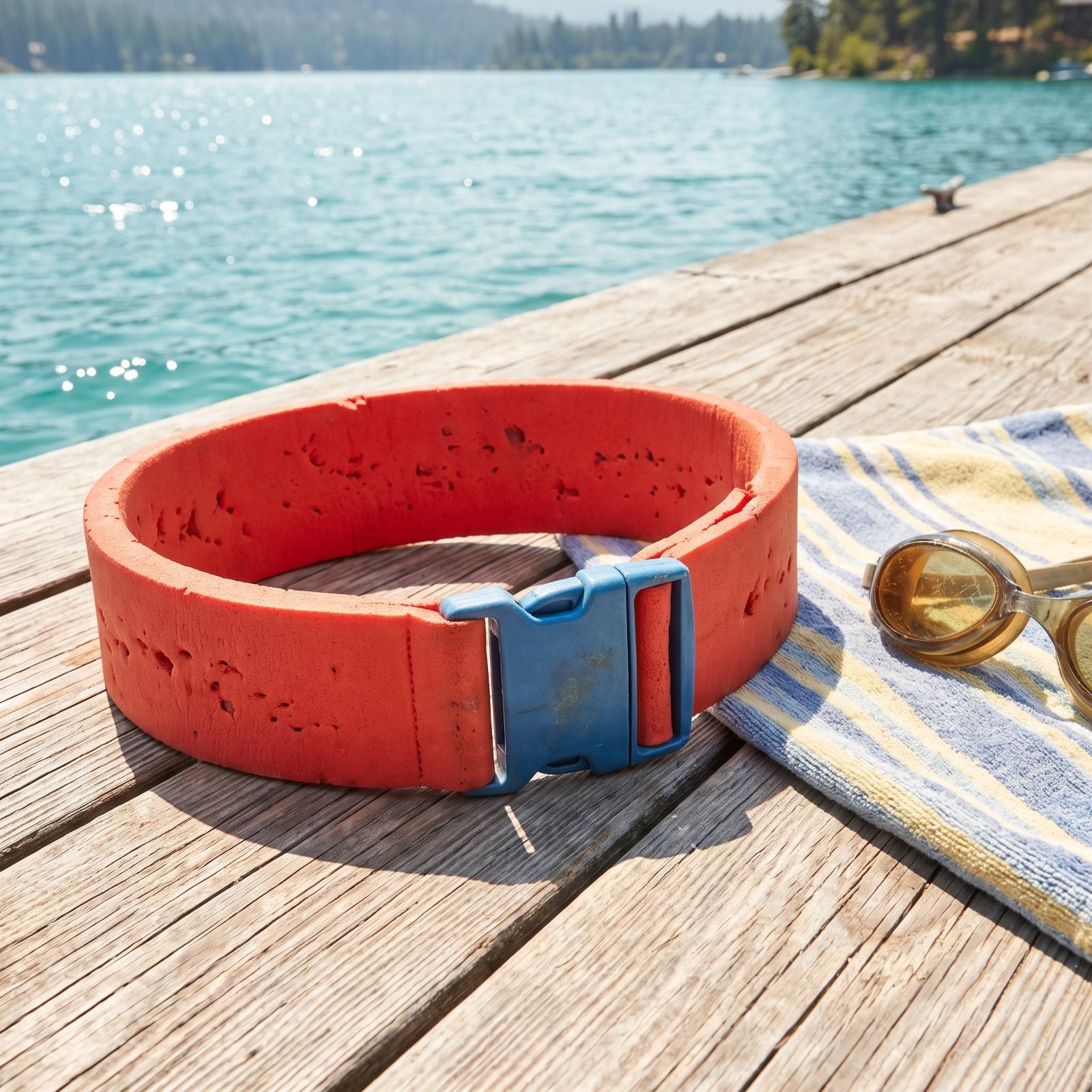
Before anyone trusted a kid alone in the water, there was the foam belt — a fat strip of closed-cell foam that buckled around the waist and let a new swimmer bob upright without a parent holding on.
They came in loud reds and oranges, and the plastic buckle got a little temperamental after a few summers. Not technically a life jacket, and the box said so in fine print nobody read. But for an afternoon of splashing off the end of the dock? It did the job.
5. Varnished Wooden Water Skis With Rubber Foot Bindings
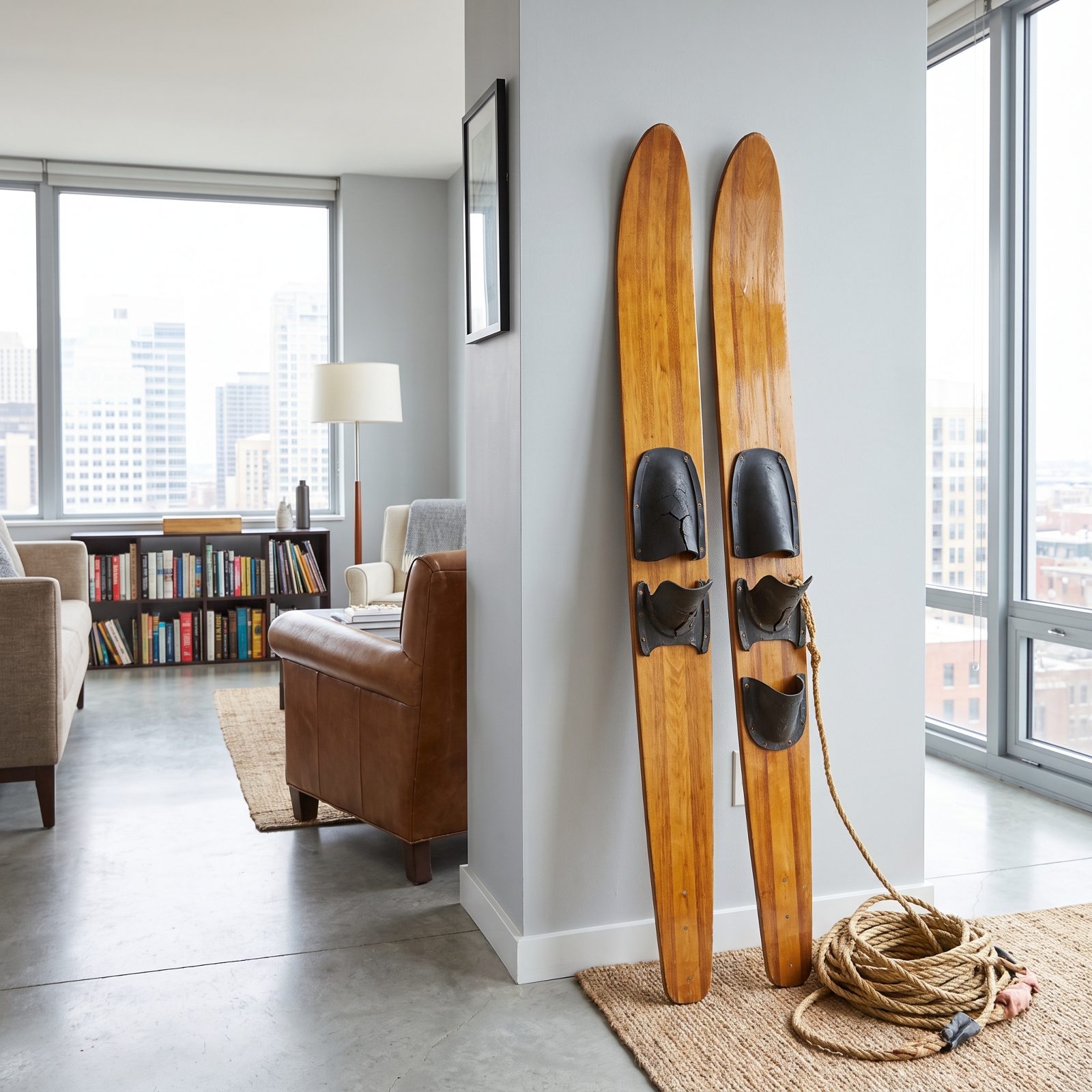
Heavy, beautiful, and a genuine pain to get up on. Wooden skis had real weight to them — laminated maple or ash sealed under coats of varnish you re-did every few years when the finish started to cloud.
The rubber bindings cracked and pinched, and getting both feet planted before the boat gunned it was half the battle. Fiberglass eventually made the whole business lighter and more forgiving. But a maple ski with a fresh coat of varnish, hung on the boathouse wall, still looks like something worth holding onto.
4. Inflated Truck Inner Tubes Bobbing Off the Dock
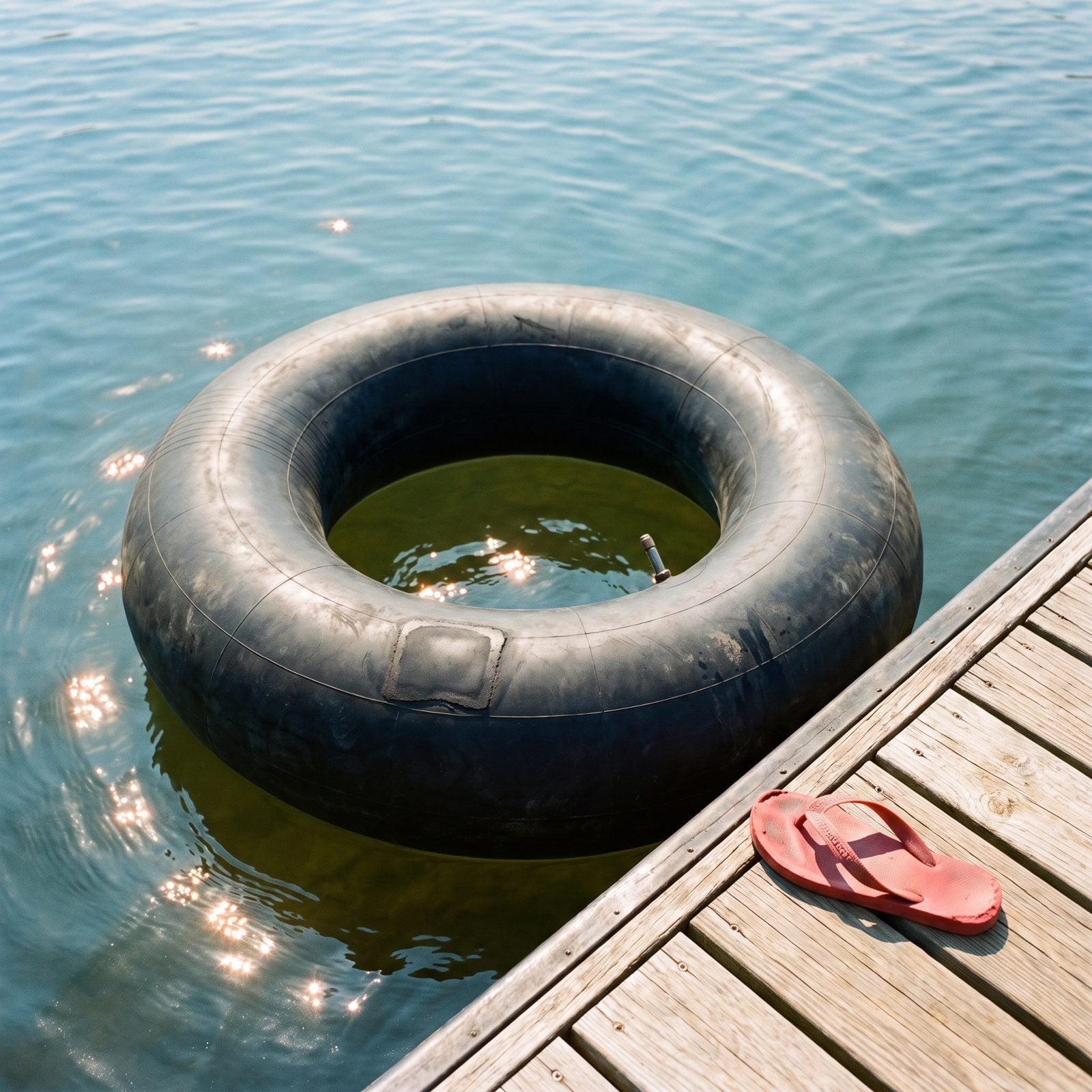
No lake summer was complete without one. A fat black tube begged from the gas station, scrounged from a farmer, or pulled off the family truck when nobody was looking.
You’d lie back in the hole, legs dangling, and drift for an hour. The valve stem jabbed your back, the hot rubber smelled like a tire fire in the sun and left a dark ring on your swimsuit. Worth it every time.
3. A Riveted Aluminum Canoe Flipped Belly-Up on the Bank
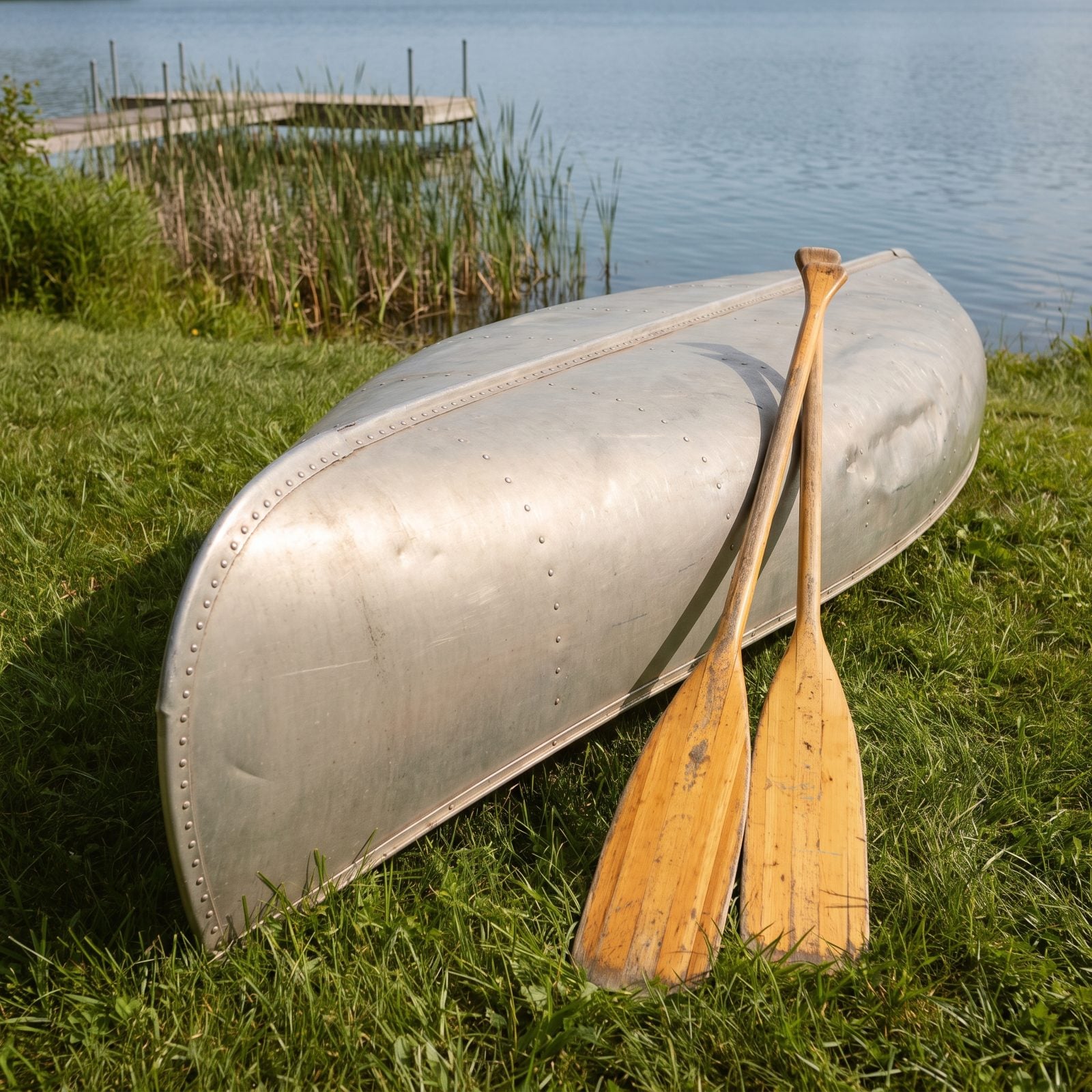
Flipped over on the bank, it was half boat and half bench. Kids sat on the hull, gear got stashed underneath, rain ran right off.
Grumman started building these from surplus aircraft aluminum after the war, and they became the default lake canoe for decades. Nearly unkillable. Loud as a drum when you knocked a paddle against the side, and hot enough on a sunny day to brand the backs of your legs. Every dent told a story about a rock somebody swore wasn’t there.
2. A Cantilever Tackle Box Fanned Open With Metal Lures
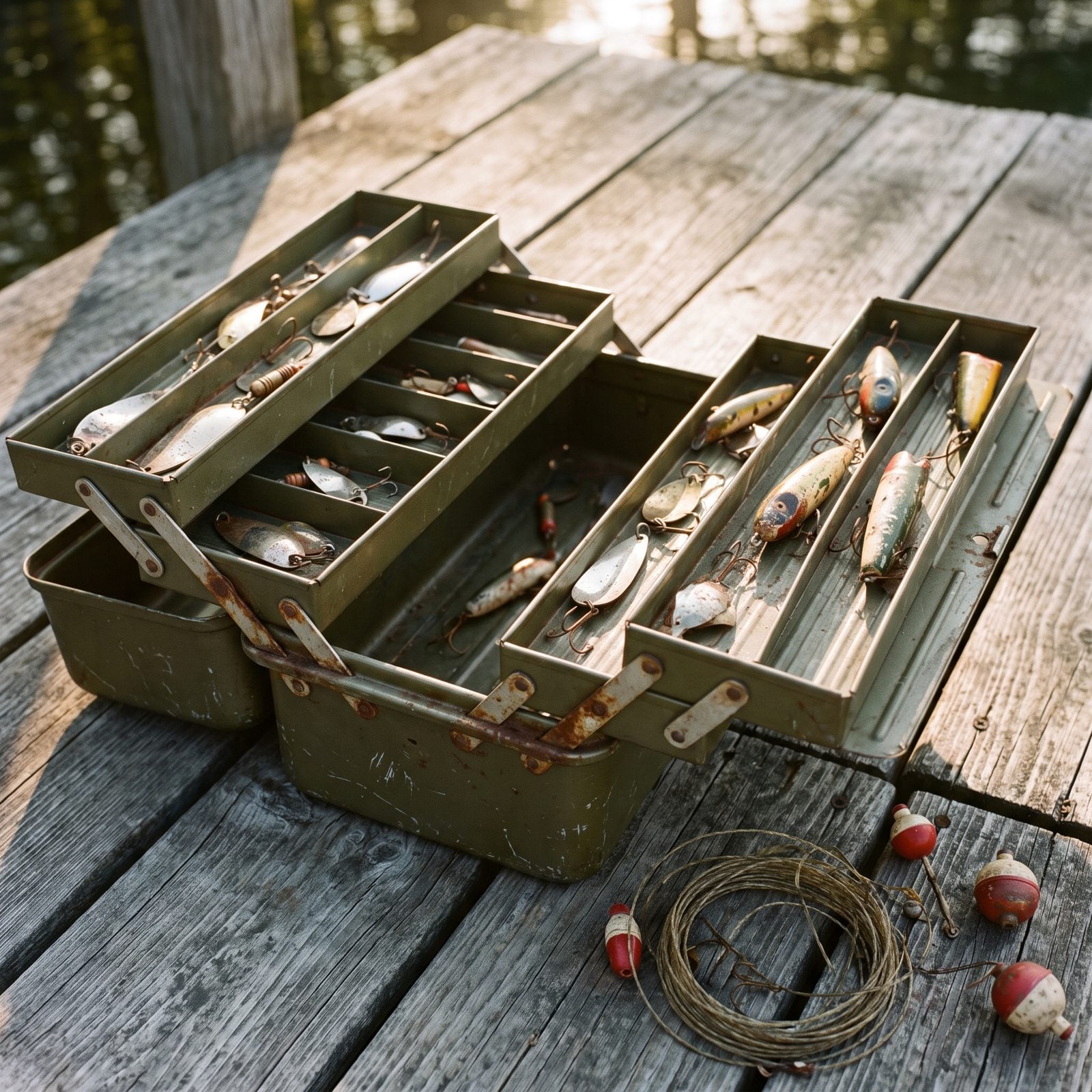
Pull the handle and the whole thing accordioned open, trays lifting and spreading until every lure you owned was laid out in front of you.
The boxes were steel then, usually green or tan, heavy enough to double as a step stool. Inside: red-and-white bobbers, lead sinkers, a tangle of spoons and spinners, and at least one rusty hook waiting to find your thumb. The lures were metal and glass-eyed, painted to look like minnows, and half of them probably never caught a thing. You kept them anyway. A full tackle box felt like being ready for anything.
1. Folding Aluminum Lawn Chairs Laced With Woven Webbing
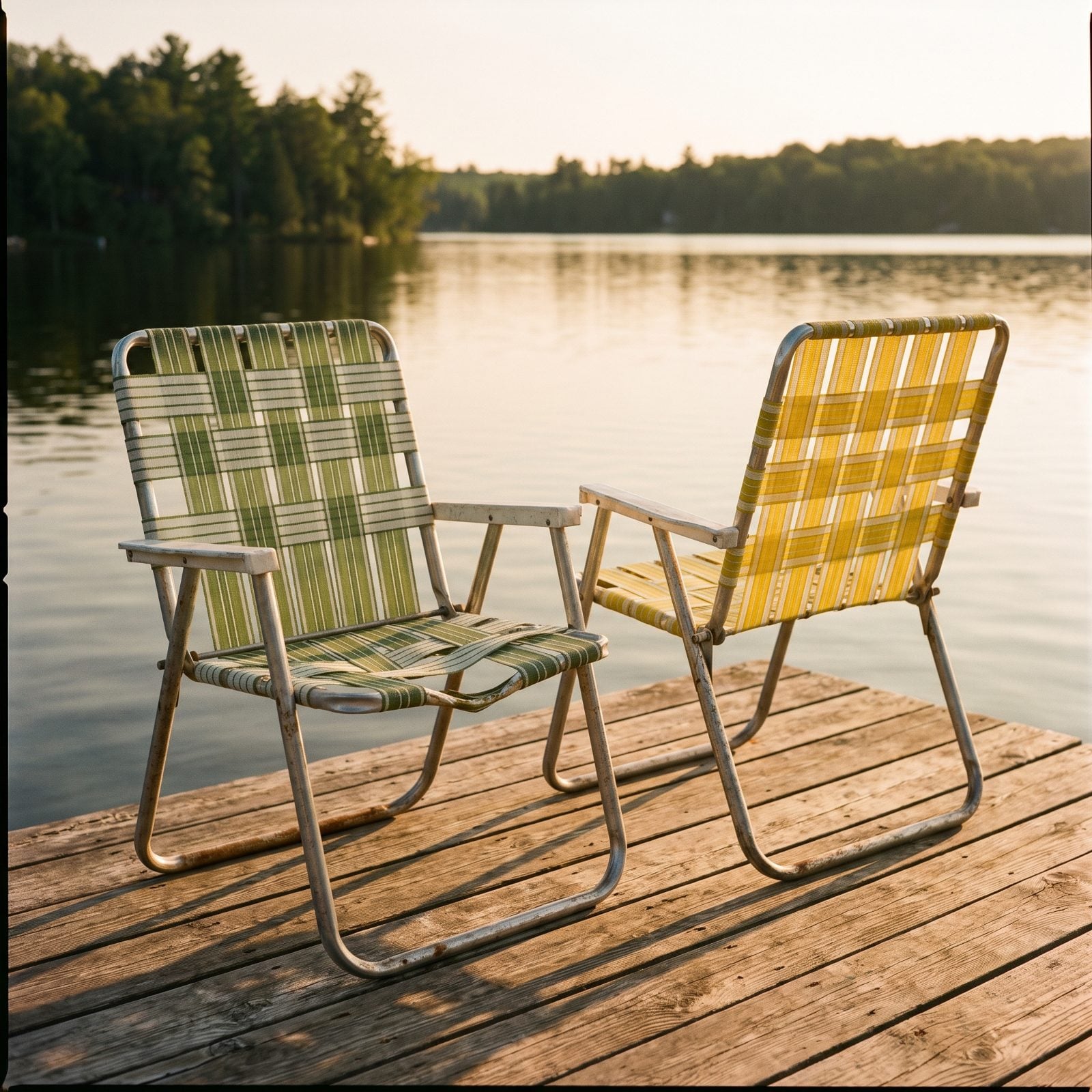
Light enough for a kid to carry, cheap enough to own six, and loud enough that you knew exactly who was sitting down behind you. The webbing was the whole personality — green and white, yellow and white, the occasional daring stripe of orange.
Strands snapped one at a time over the years until a lazy cousin dropped straight through to the dock. You could re-web them yourself with a kit from the hardware store. Most people just flipped the chair around and used the good side.