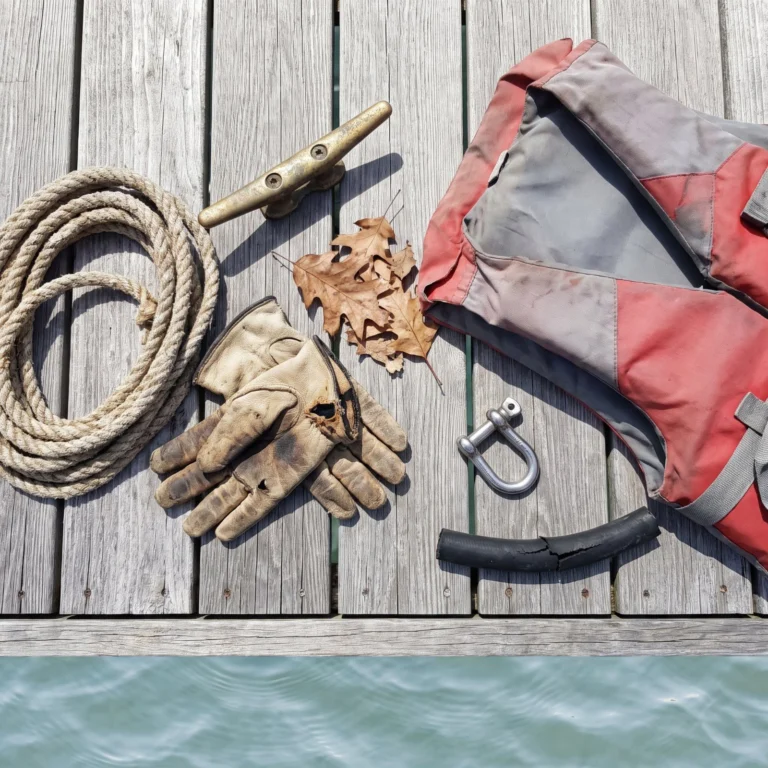
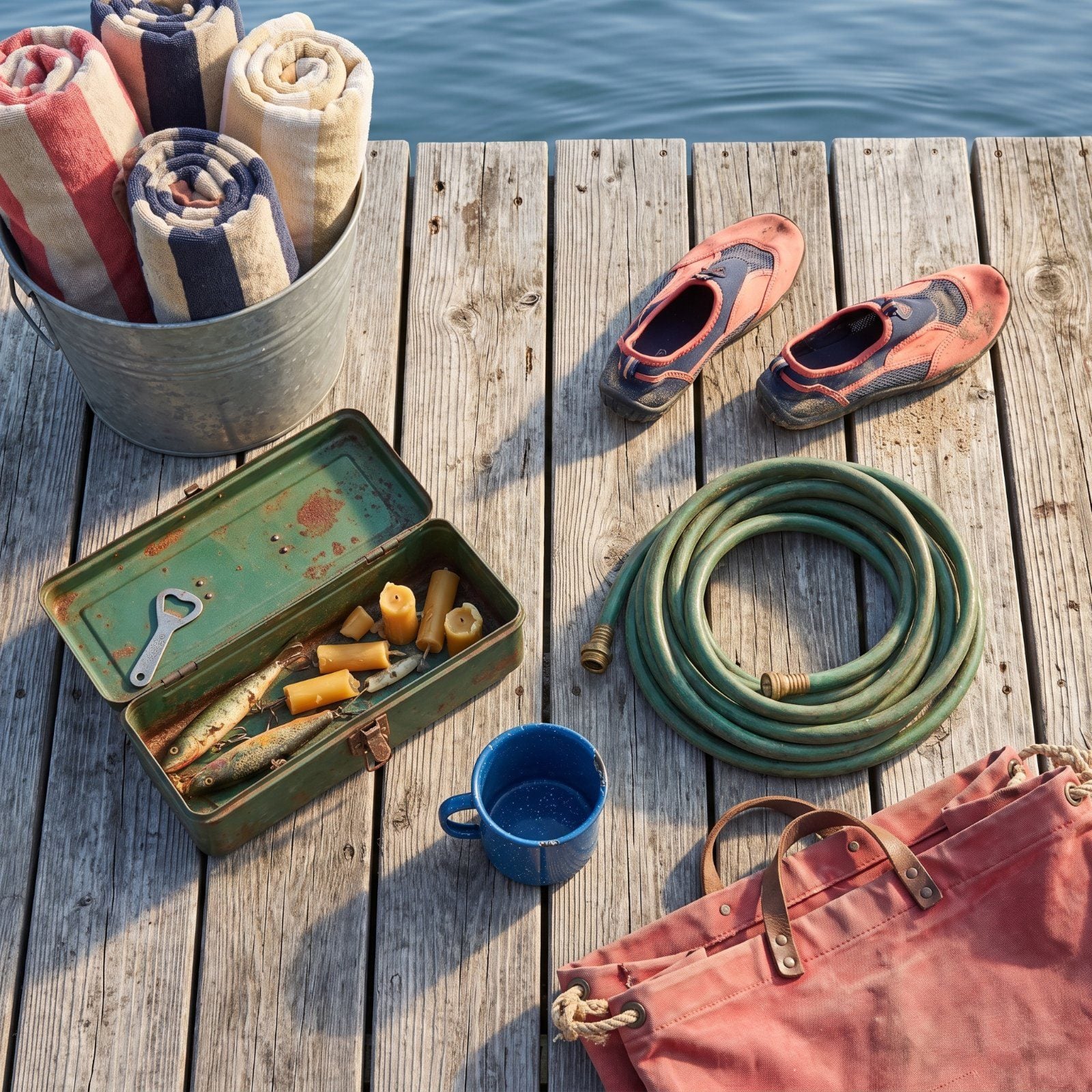
The best lake houses aren’t the ones with the biggest decks. They’re the ones where nobody’s standing in a puddle of their own making, hunting for a dry towel that doesn’t exist. Lake living runs on small frictions — wet suits that never dry, shoes that smell like pond, the hundred-yard haul from the car to a dock at the bottom of a hill. Fix those and a weekend stops feeling like chores with a view. The upgrades below aren’t fancy, most cost less than a tank of marine fuel, and they just work. Dock veterans swear by them.
Please note that some of the imagery in this article may have been enhanced with the assistance of AI.
48. Rig a Hand-Crank Pulley Basket for Steep Lake Banks
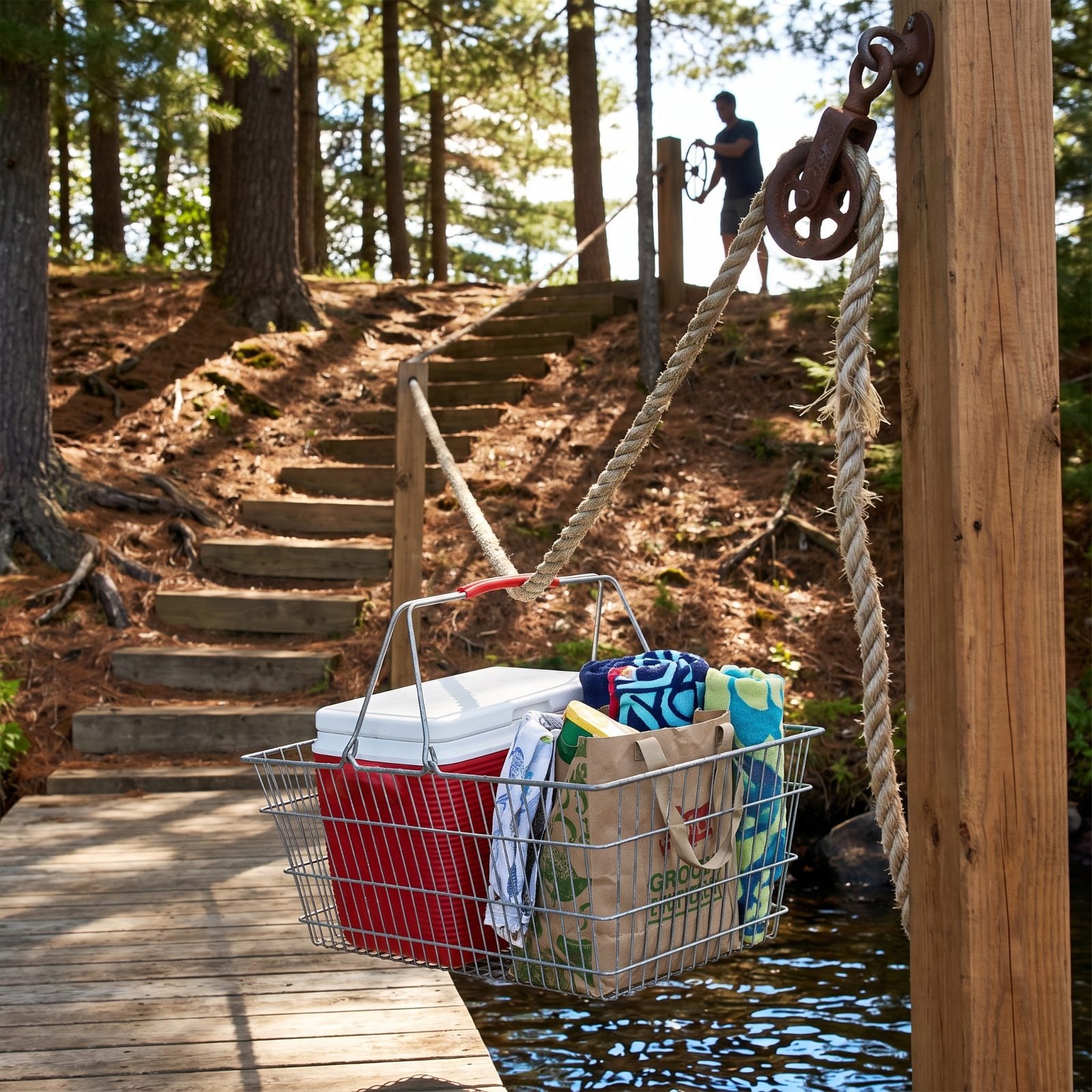
Anybody with a lake house built into a hill knows the real workout isn’t the swim. It’s the eighth trip up from the dock carrying a cooler, two chairs, and a soggy toddler. A hand-crank pulley basket fixes that in an afternoon.
You bolt a pulley to a sturdy post down at the dock, run marine rope from it to a galvanized wire basket and up to a crank at the top of the stairs, and let the crank do the hauling. Groceries, firewood, the heavy cooler — up it goes while you walk the stairs with your hands free. Source the pulley and rope locally instead of buying a prebuilt kit and the hardware stays cheap.
47. Install a Swimsuit Spinner to End the Wet-Suit Cycle
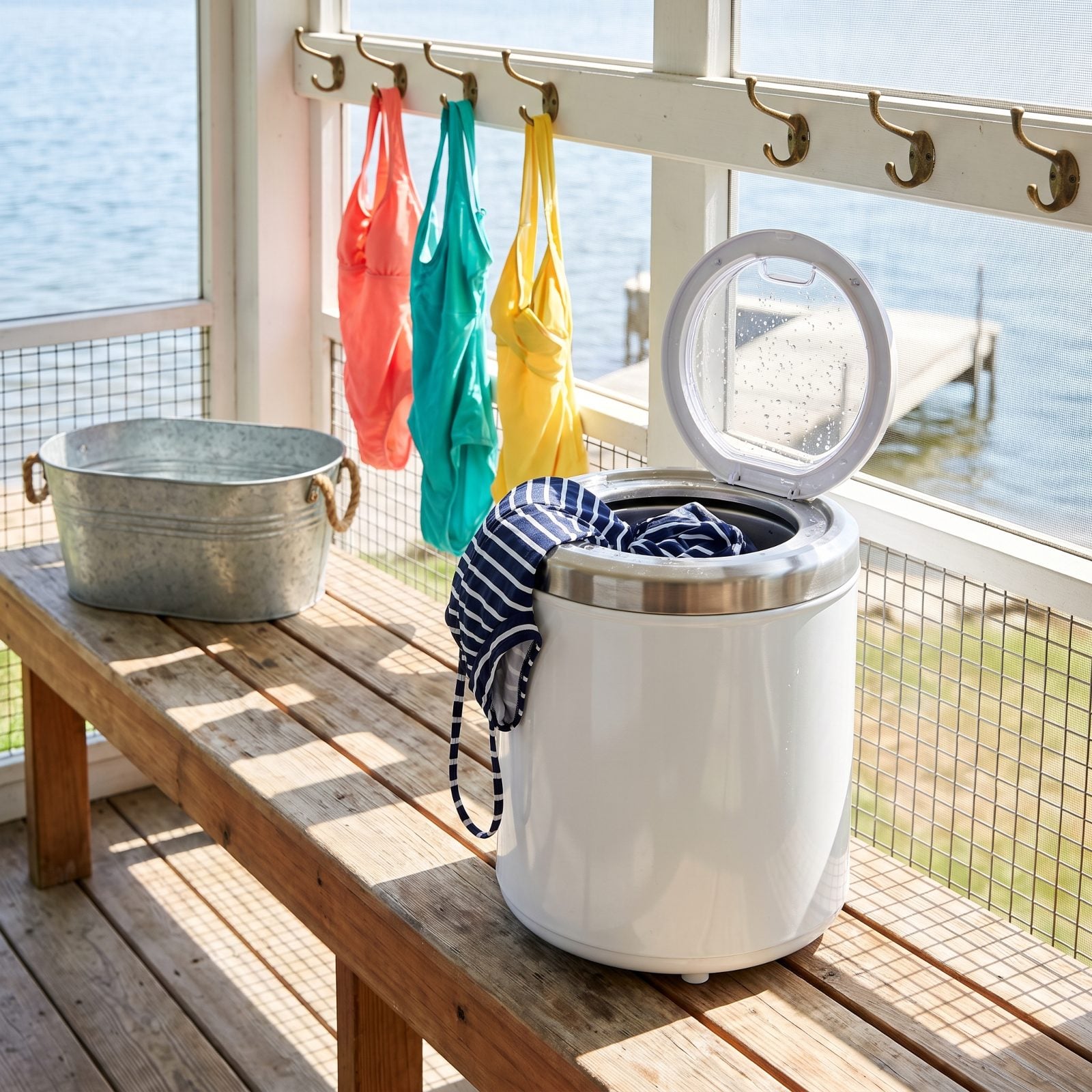
Nobody warns you about this one: a swimsuit never fully dries by morning, so you pull on a cold clammy suit, swim, hang it, and do it all again for the whole vacation. A small misery that quietly ruins the first ten minutes of every lake day.
A countertop swimsuit spinner — the same gadget you’ll find at pools in Japan — flings most of the water out in about half a minute. A suit goes from dripping to barely damp. Hang it and it’s dry by the next swim.
Small, cheap, happy in a mudroom corner. Honestly one of the best waterfront purchases going.
46. Build a Box-Fan Drying Wall for Water Shoes
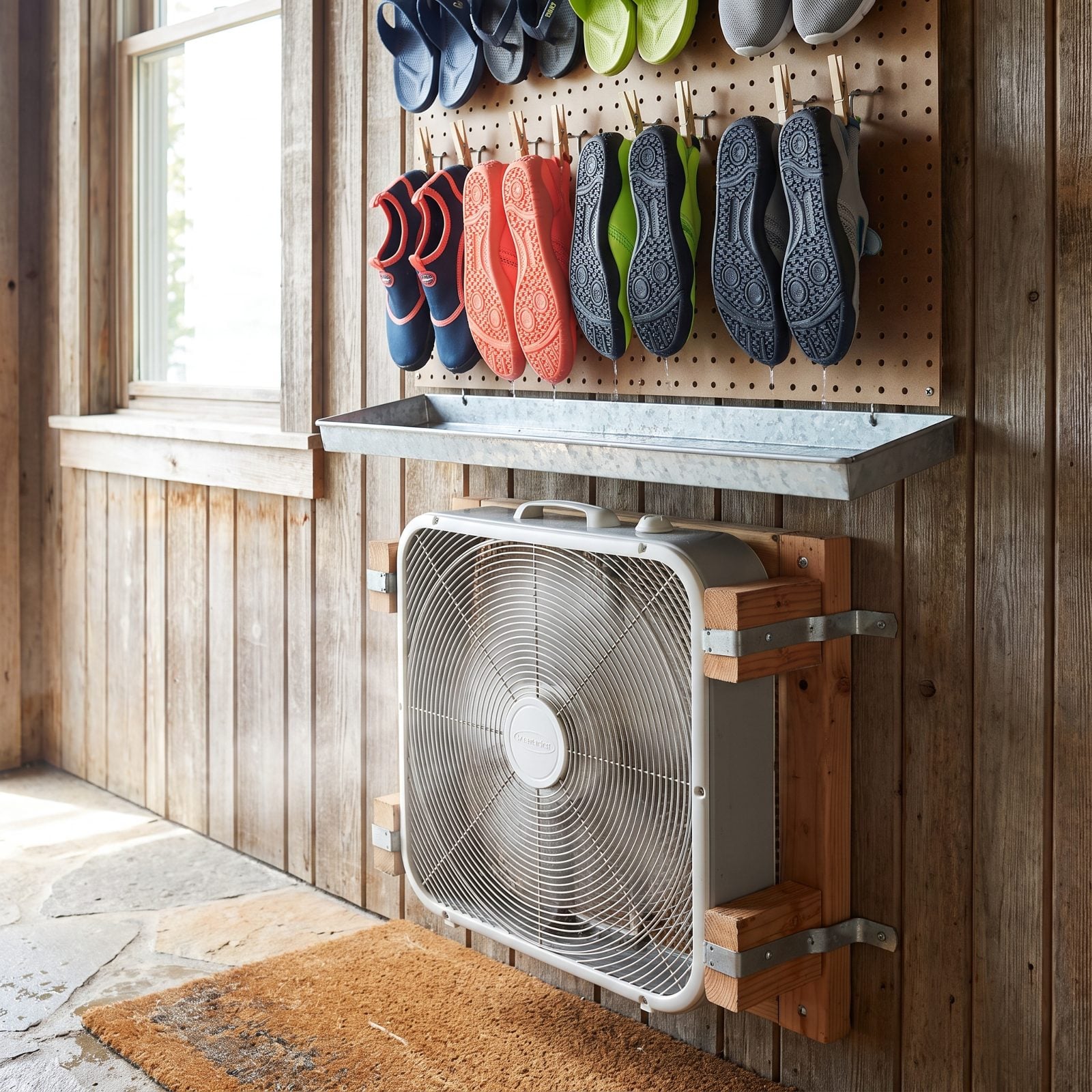
Water shoes are the worst-smelling object at any lake house, and everyone pretends not to notice.
They trap grit and lake water, and they never air out because they’re jammed in a bin by the door. Wet rubber plus warm air plus zero circulation equals that smell.
Fix it with a pegboard where you clip shoes upside down by the heel, a galvanized tray underneath, and a box fan mounted in a wooden bracket at the base of the wall, blowing out into the room. The circulating air helps dry everything out overnight, and the drips and grit fall into the tray you empty once a week.
45. Give Each Person a Color-Coded Dock Bus Tub
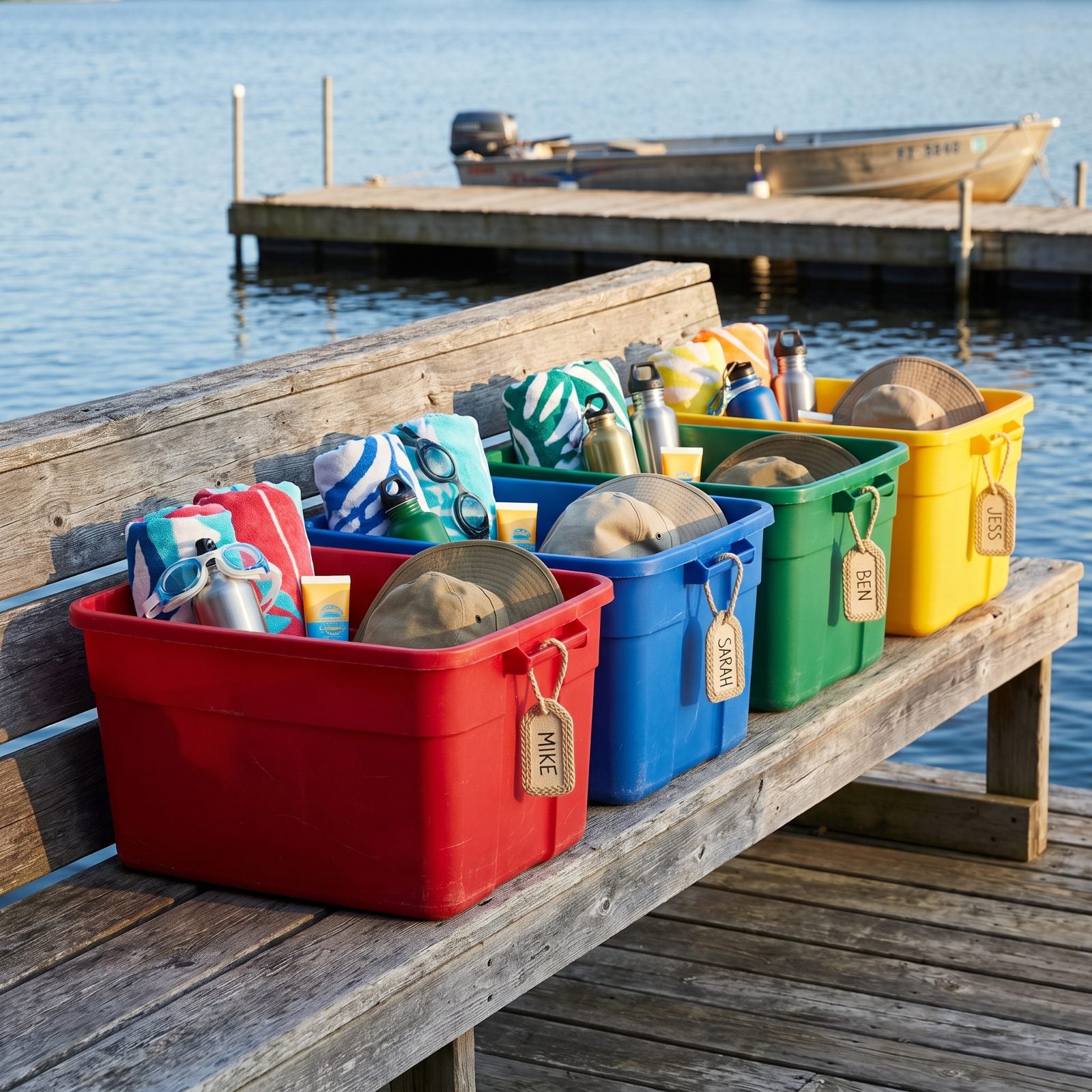
The eternal lake argument: whose towel is this, why is it on the floor, and where are my goggles. A color-coded bus tub per person ends it.
Restaurant bus tubs are the right tool. Cheap, stackable, big enough for a towel plus goggles plus sunscreen plus a hat, and the drainage slots mean sand doesn’t collect. Red is Dad’s, blue is the kid’s, and nobody has to ask.
44. Add a Foot-Pump Rinse Station Beside the Lake Path
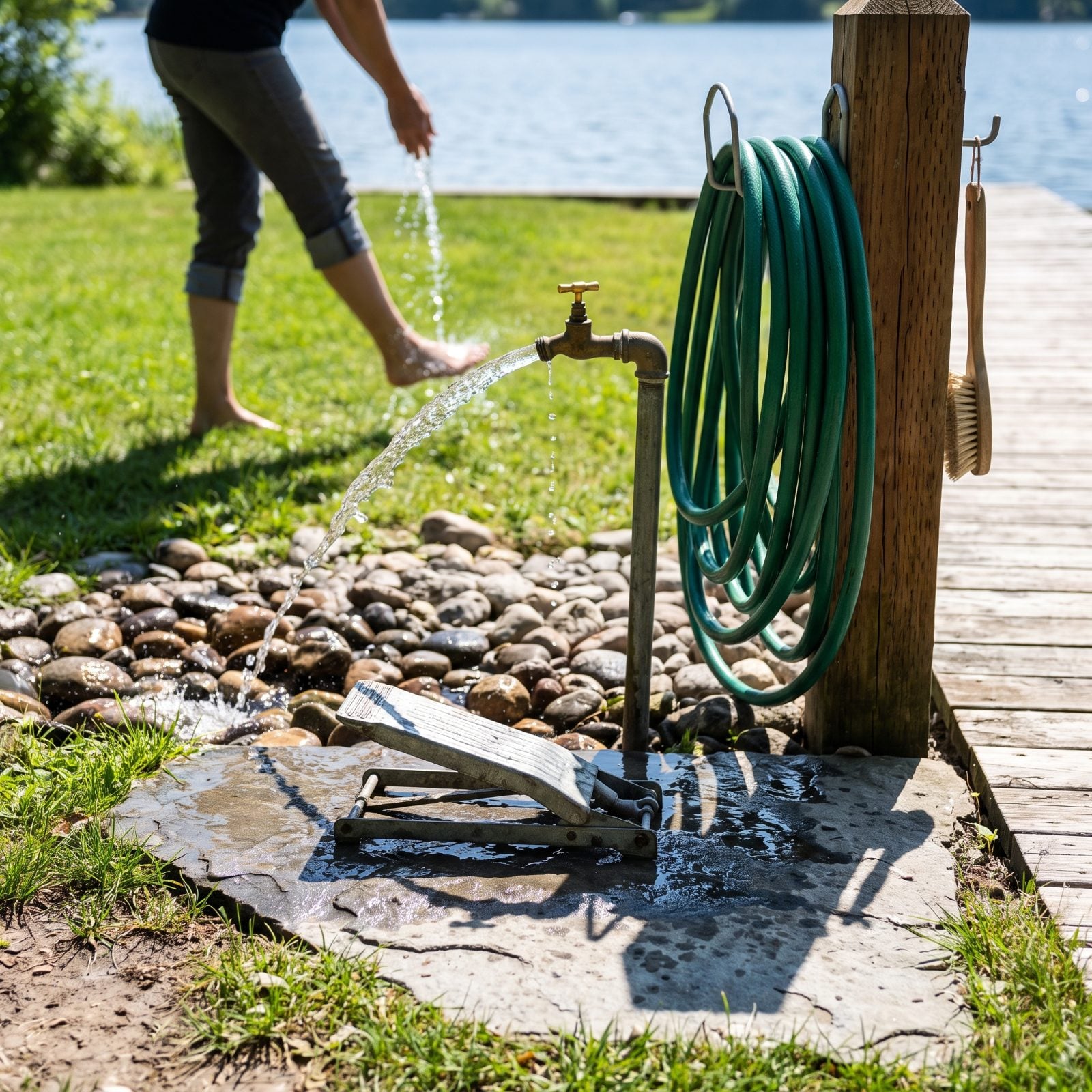
Sand and lake muck travel. It comes off the path, up the stairs, across the deck, and straight onto the kitchen floor — and then you’re sweeping at nine at night wondering how you got here.
Put a simple rinse station where the path meets the dock and you catch it at the source. No electricity, nothing fancy. Press the foot pump, water arcs out of the spout and splashes down onto the river rock beside the stone pad, feet get clean, muck stays outside. A bed of river rock under the spout handles drainage.
Install it once and quietly bless it for years.
43. Put a Wet-Towel Laundry Chute Near the Back Door
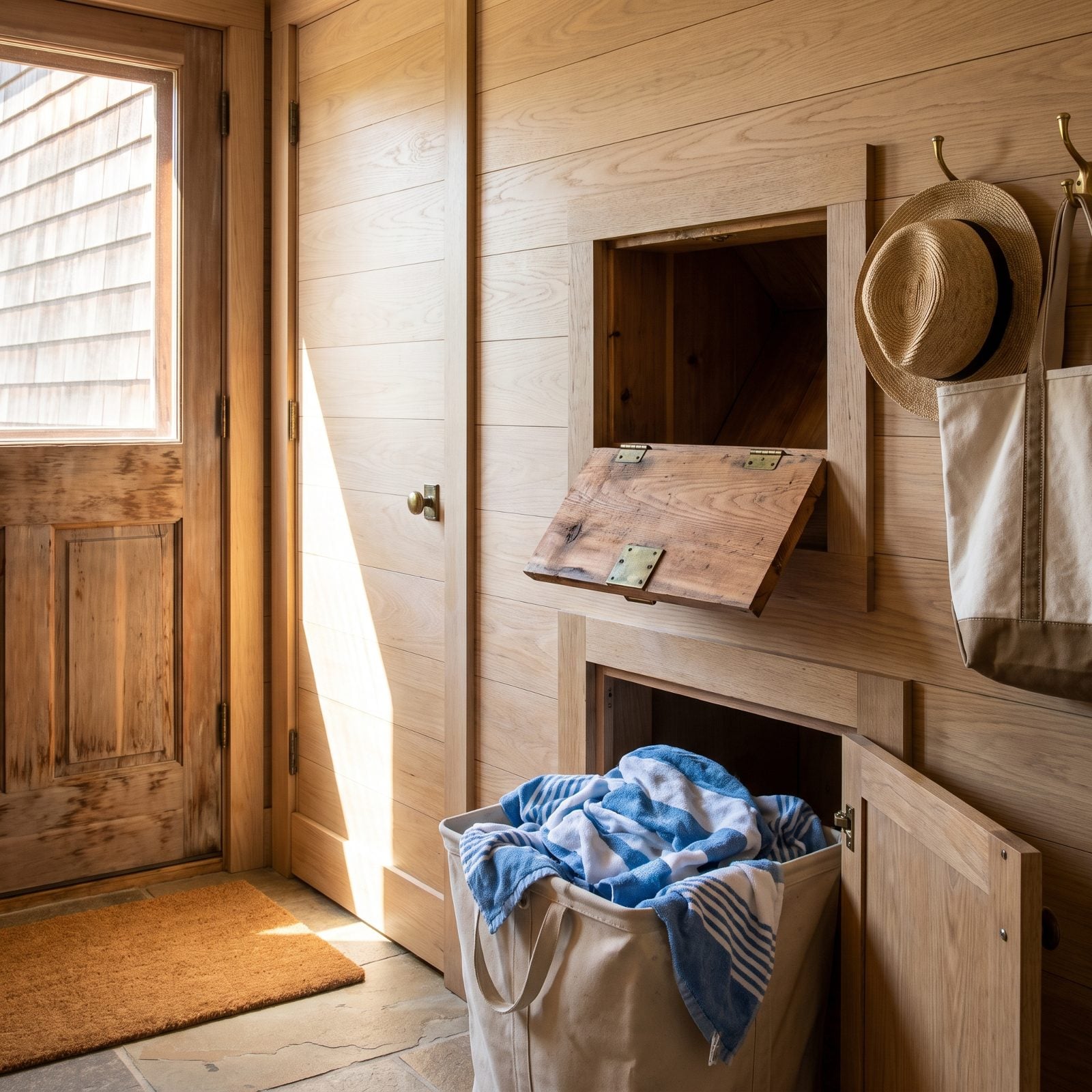
Wet towels end up over railings, over doors, over the backs of chairs — all of them staying wet, all of them starting to sour. The problem isn’t the people. It’s that the hamper is upstairs and nobody’s hauling a damp towel up there mid-day.
A short chute, or even just a big canvas bag on a hook right at the back door, catches towels where they land. Downstairs laundry is halfway done before you’ve thought about it.
42. Reserve One Freezer Shelf for Dock Ice and Frozen Towels
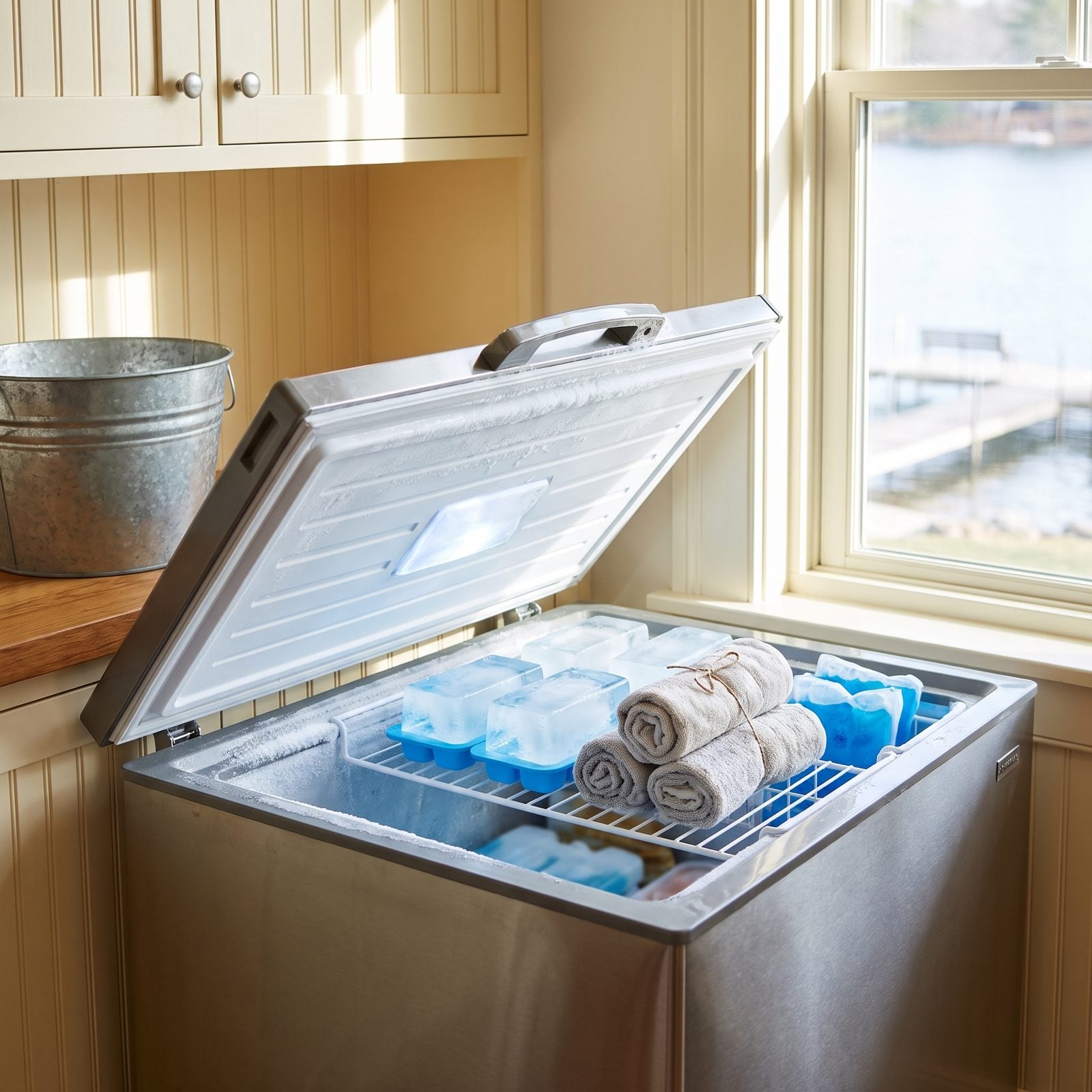
A frozen towel on a hot neck is a small revelation.
Roll damp hand towels, freeze them flat, and keep a stack ready. On a brutal August afternoon on the dock, they beat anything you can buy. Hand one to a sunburned kid and watch the mood of the whole dock turn around.
Same shelf, make real ice. Big block ice in silicone molds melts far slower than bagged cubes, so your cooler actually lasts the whole day on the water instead of turning to lukewarm soup by two o’clock.
41. Pack Sunset Supplies in an Old Tackle Box
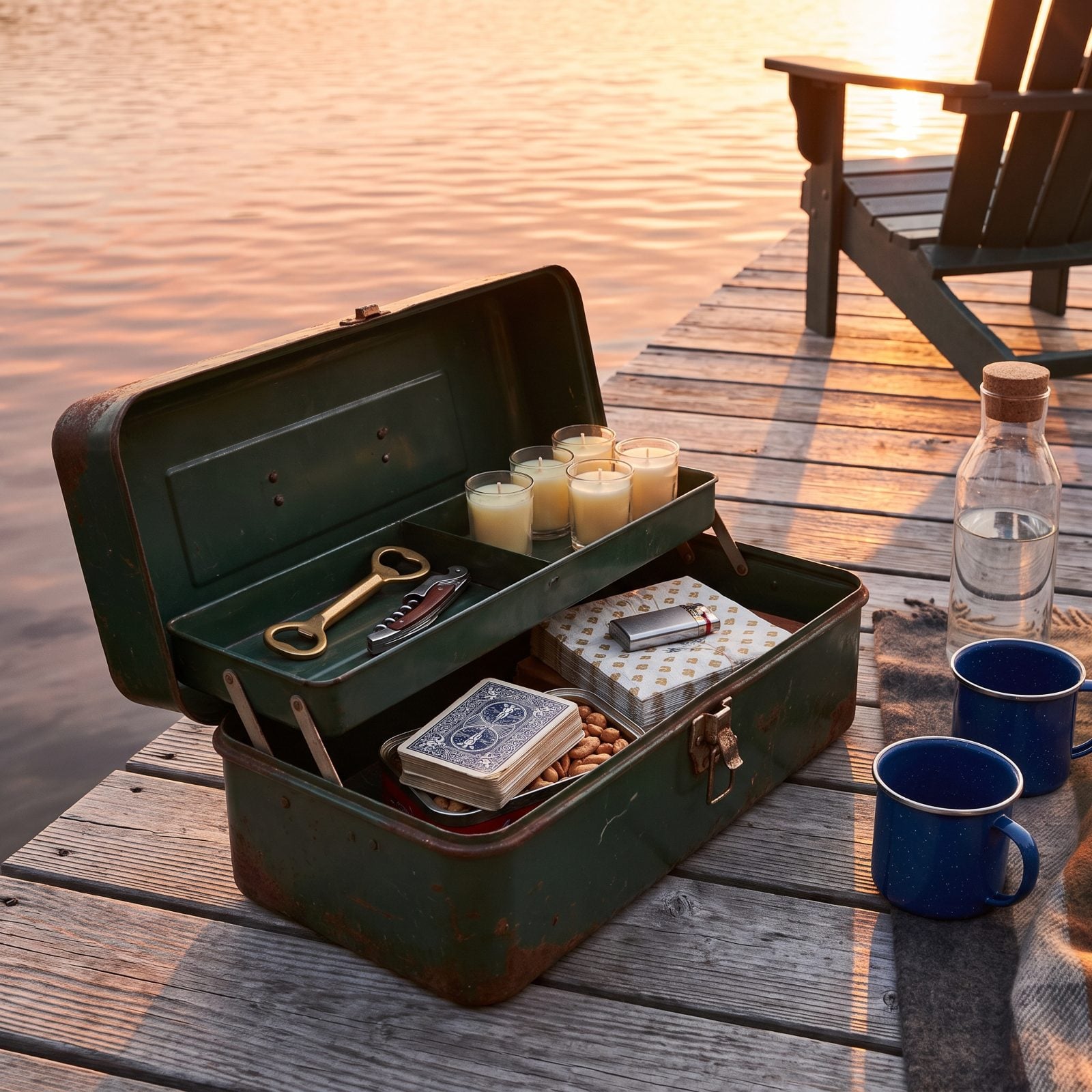
The sunset is the whole reason people buy lake houses. And yet half the time you miss the good part because someone’s inside hunting for the bottle opener.
An old tackle box fixes the scramble. The trays are built for small things, so one holds a corkscrew, a lighter, votive candles, bug spray, napkins, a deck of cards, maybe a harmonica if somebody in the family plays. It lives by the dock door. When the sky starts going, grab the handle and go.
40. Fly a Reversible Dock Pennant to Signal Open or Closed Plans
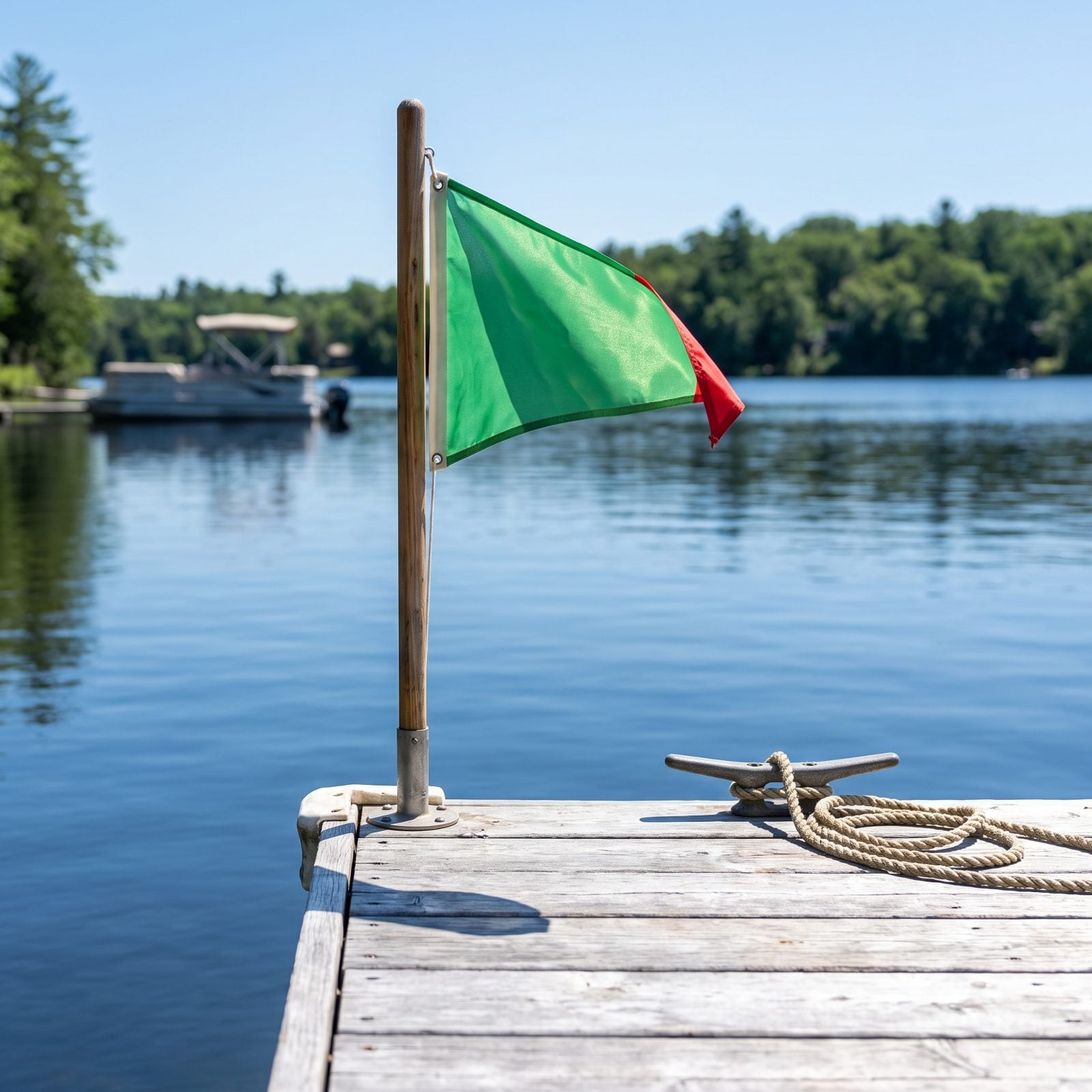
Lake neighbors are social, which is lovely until you want an afternoon of nobody dropping by. A reversible dock pennant — green on one side, red on the other — is the lake’s old-fashioned version of a status light.
Green flying means come on over, the dock’s open, bring a drink. Flip it to red and the whole cove understands you’re having a slow one. No awkward conversations, no phone games. Boating communities have run on flag signals forever, and this is the friendly backyard version.
It sounds a little precious until you try it. Then you wonder how you lived without a polite way to say not today.
39. Aim a Pedestal Fan Across the Outdoor Dining Table
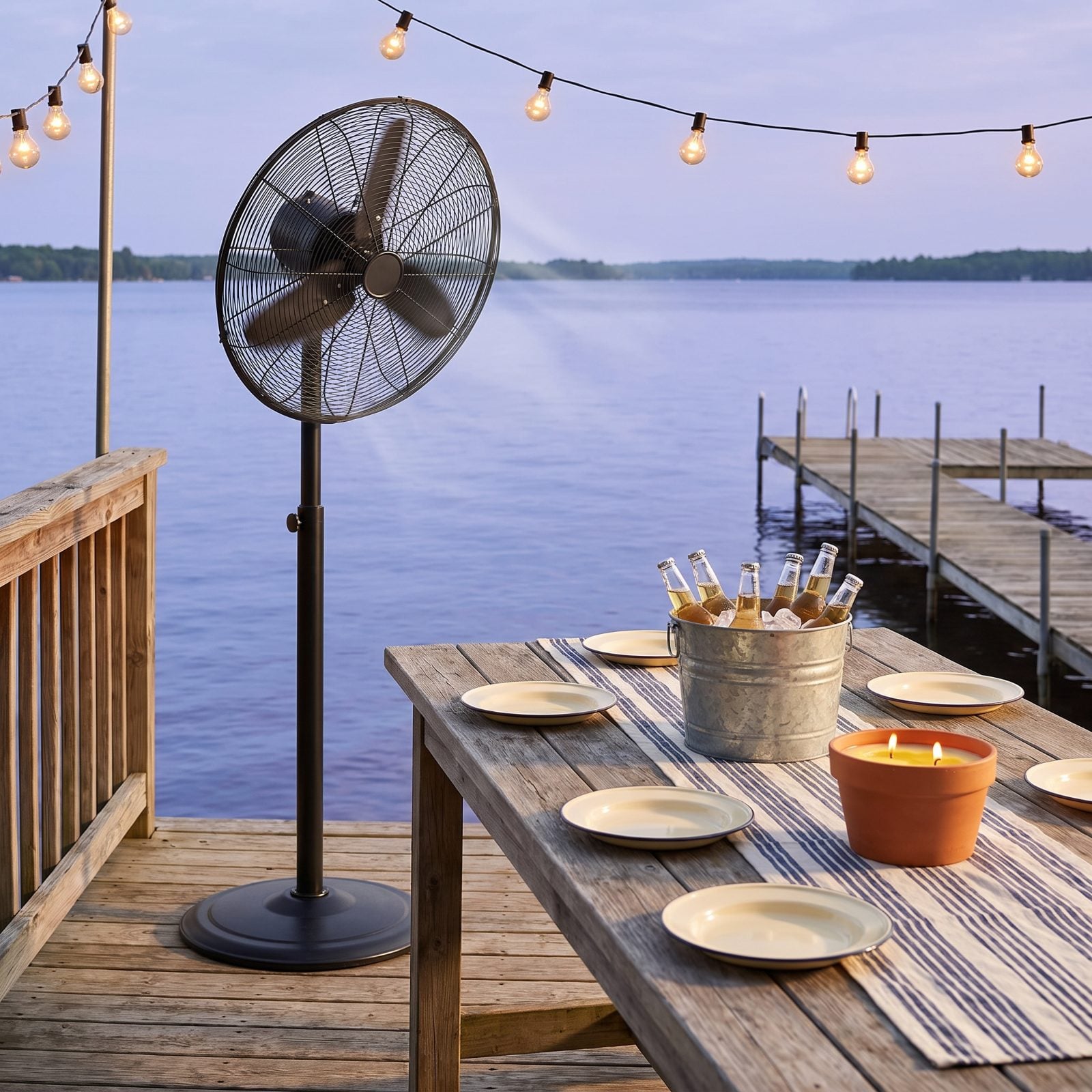
Mosquitoes are weak fliers. That’s the whole trick, and it’s criminally underused at lake houses that spend a fortune on sprays and torches that barely work.
A pedestal fan standing beside an outdoor table keeps a steady breeze moving over everyone’s shoulders and arms, and the bugs simply can’t hold position in it. Dinner gets another hour on the deck. No chemicals, no smoke in your eyes, no candle that sputters out the second you need it.
38. Mount an Analog Barometer Where Everyone Can See It
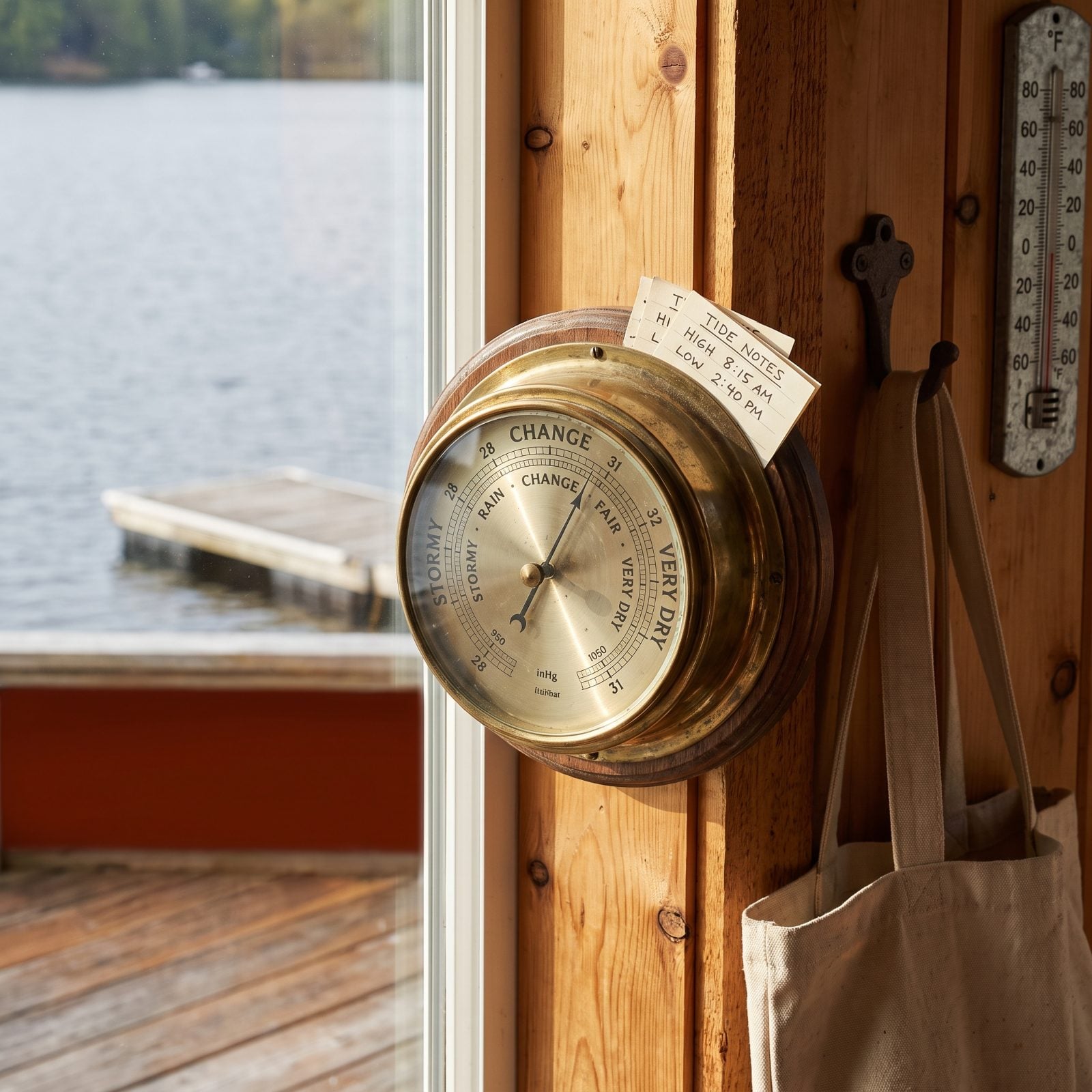
A good barometer settles arguments before they start. The needle drops, the air turns heavy, and you know the afternoon squall is coming a full hour before the sky owns up to it. So you stop checking your phone and start reading the room instead.
Mount it at eye level in the mudroom or by whatever door you actually use — not some hallway nobody passes. People will tap the glass on their way out, the way old sailors kept one by the wheel. Becomes a habit before you notice it’s a habit.
37. Keep a Canoe on Rollers for Effortless Weekday Launches
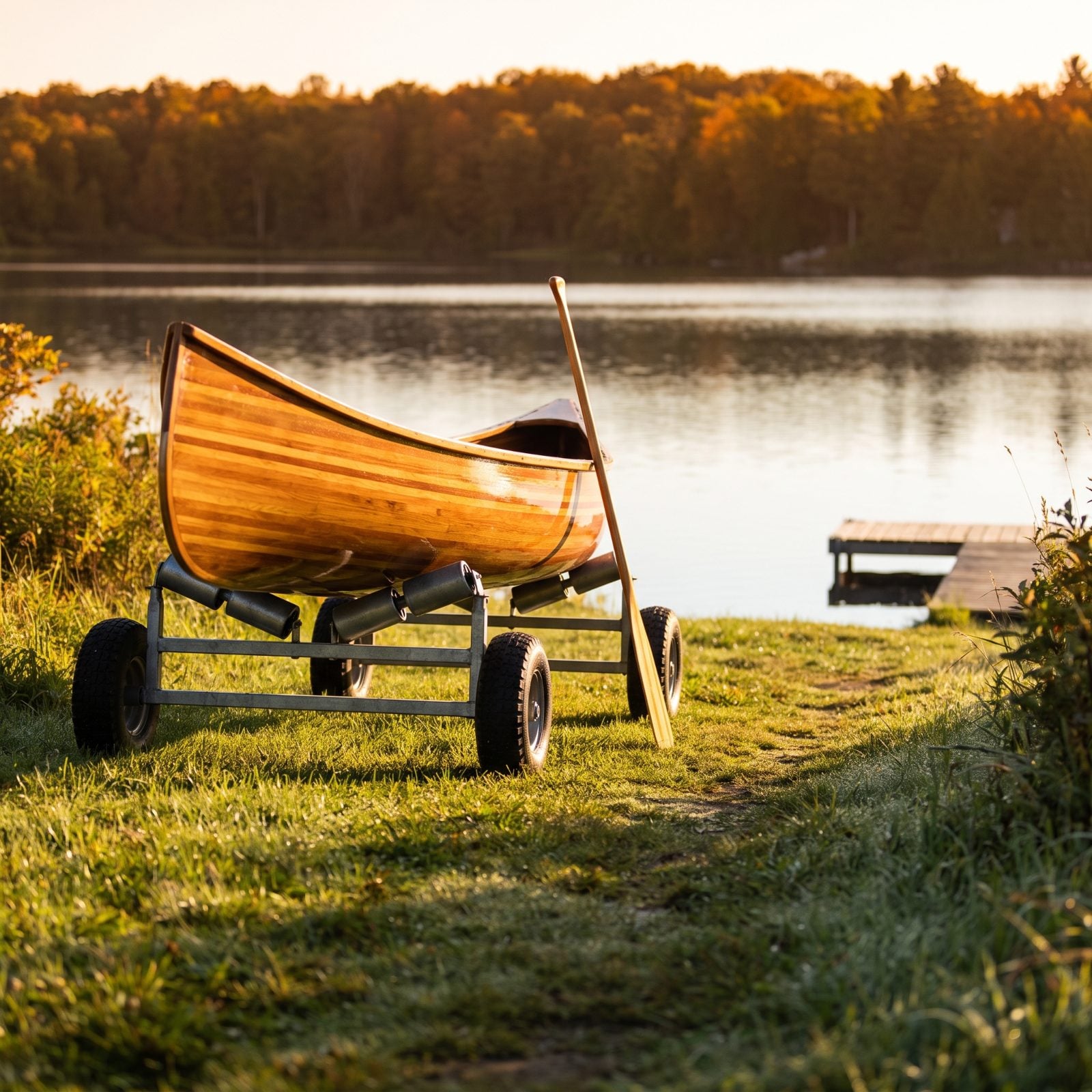
The canoe sits unused all week not because of the water. It’s the fifteen minutes of dragging, lifting, and grunting it down to the shore. A short rack of rollers kills that friction dead.
Set the canoe on a sturdy rack of boat rollers at the top of the path, a short walk from the dock, and a weekday paddle becomes a thirty-second decision. Roll it off, grab the paddle, go. You’ll find yourself out there after dinner on a Tuesday — something that almost never used to happen.
36. Warm Lake Towels in a Small Heated Cabinet
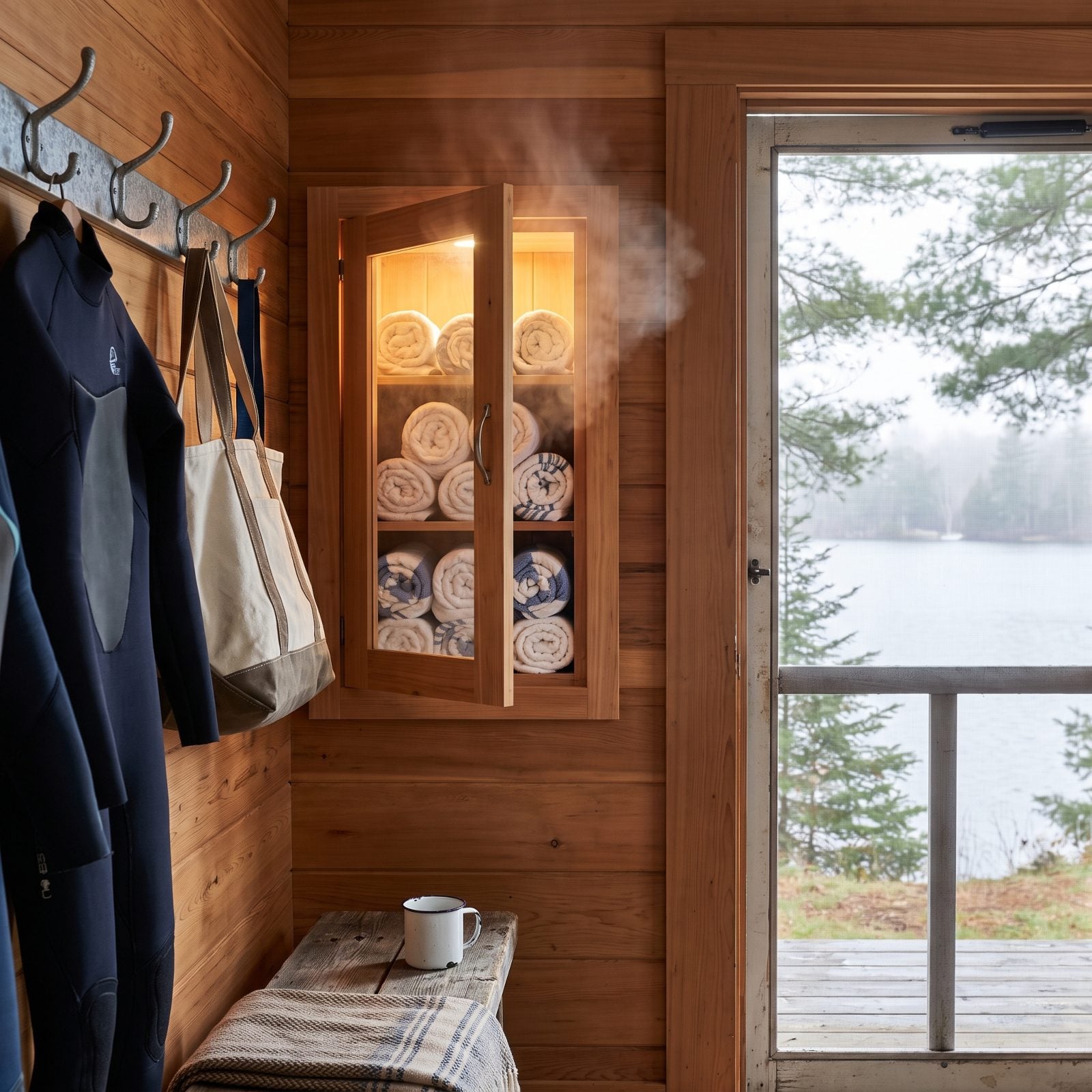
Cold water does something to a person at seven in the morning. You come out shivering, grab a towel that’s been sitting in the damp, and the whole swim starts feeling like a punishment.
A small towel-warming cabinet — the kind people bolt into bathrooms — fixes the part nobody talks about: the after. Load it the night before, and by sunrise you’ve got warm, dry towels waiting. Suddenly a cold dip feels like a reward instead of a dare.
35. Keep an Insulated Coffee Urn at the Water’s Edge
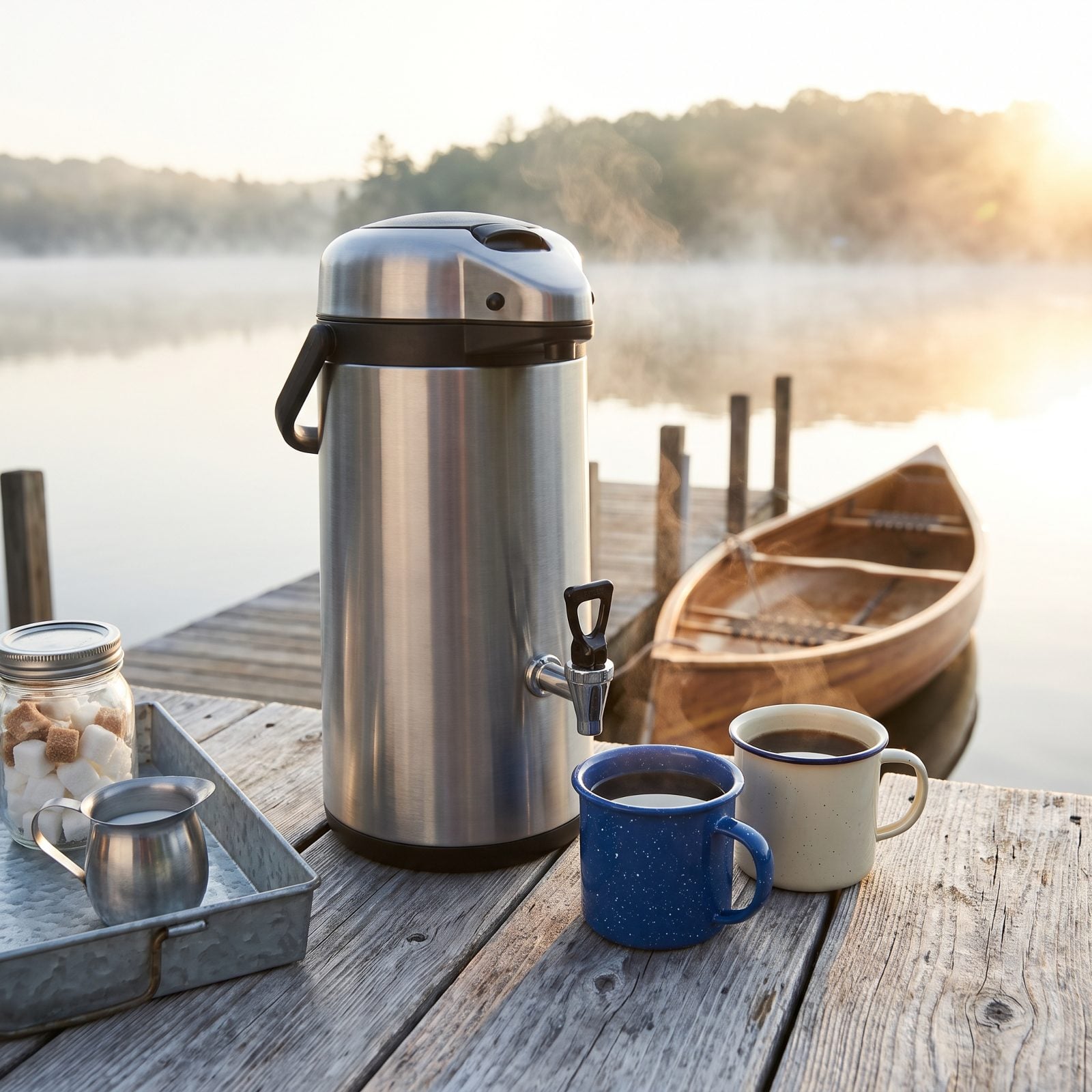
The best cup of coffee all summer is the one you drink on the dock before anyone else is awake. The worst part is trudging back up to the house for a refill and losing the whole thing.
Fill a big insulated urn, carry it down once, and you’ve bought yourself an hour. Two or three people can wander down, pour, and watch the mist burn off the water without a single trip back to the kitchen. Nobody breaks the spell.
34. Trade a Downspout for a Rain Chain and Stone Basin
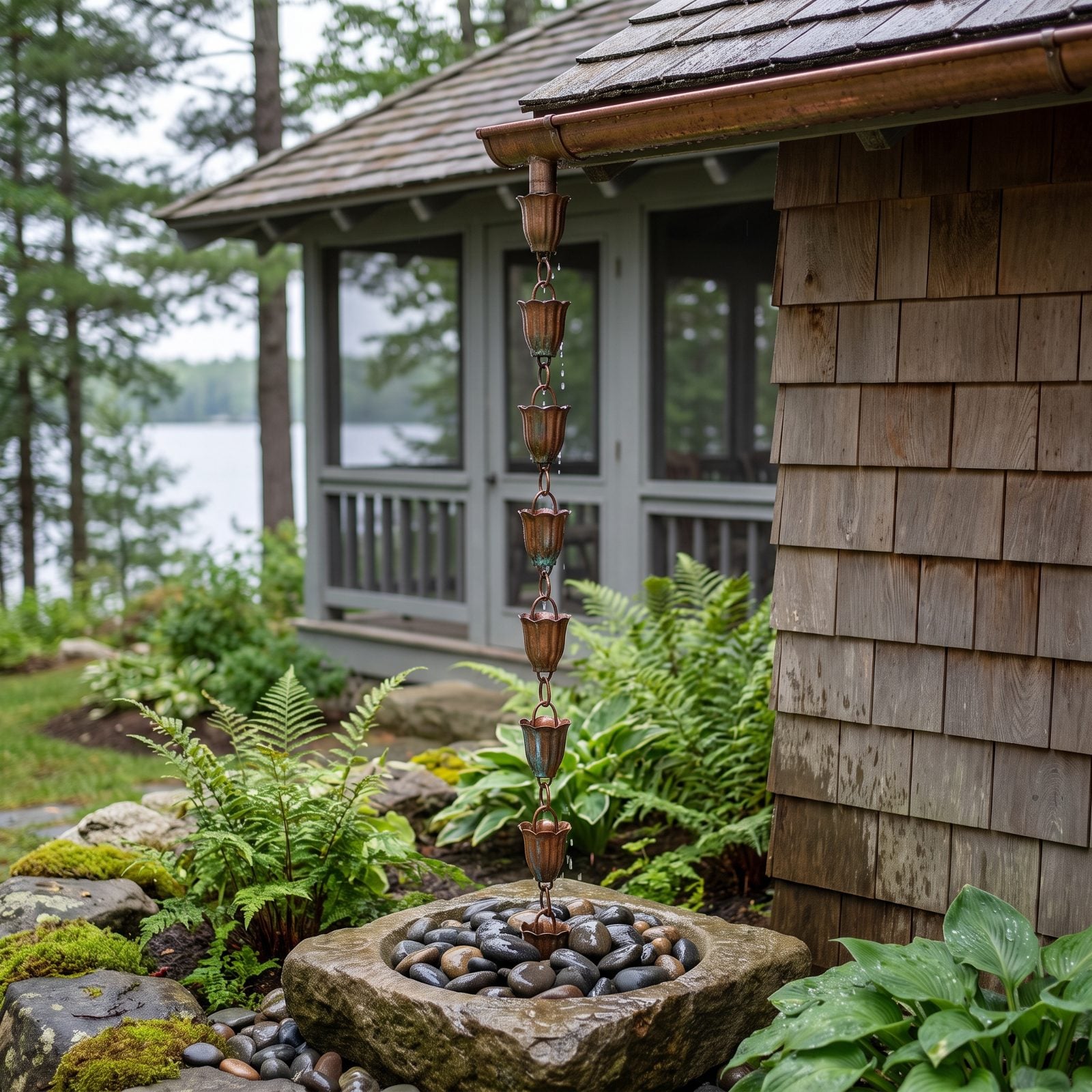
A rain chain turns a storm into something you actually want to watch. Instead of a plastic downspout dumping water with a gurgle, a chain of copper cups guides it down link by link into a bed of stones. During a hard rain it’s the best seat in the house.
It handles real runoff too, as long as you keep the basin clear and set some drainage underneath. In a heavy downpour a single chain can struggle, so folks in high-rain regions sometimes pair it with a hidden overflow. But for most lake cabins it does the job, and sounds a lot better doing it.
33. Add a Warm-Water Outdoor Shower With Swimsuit Hooks
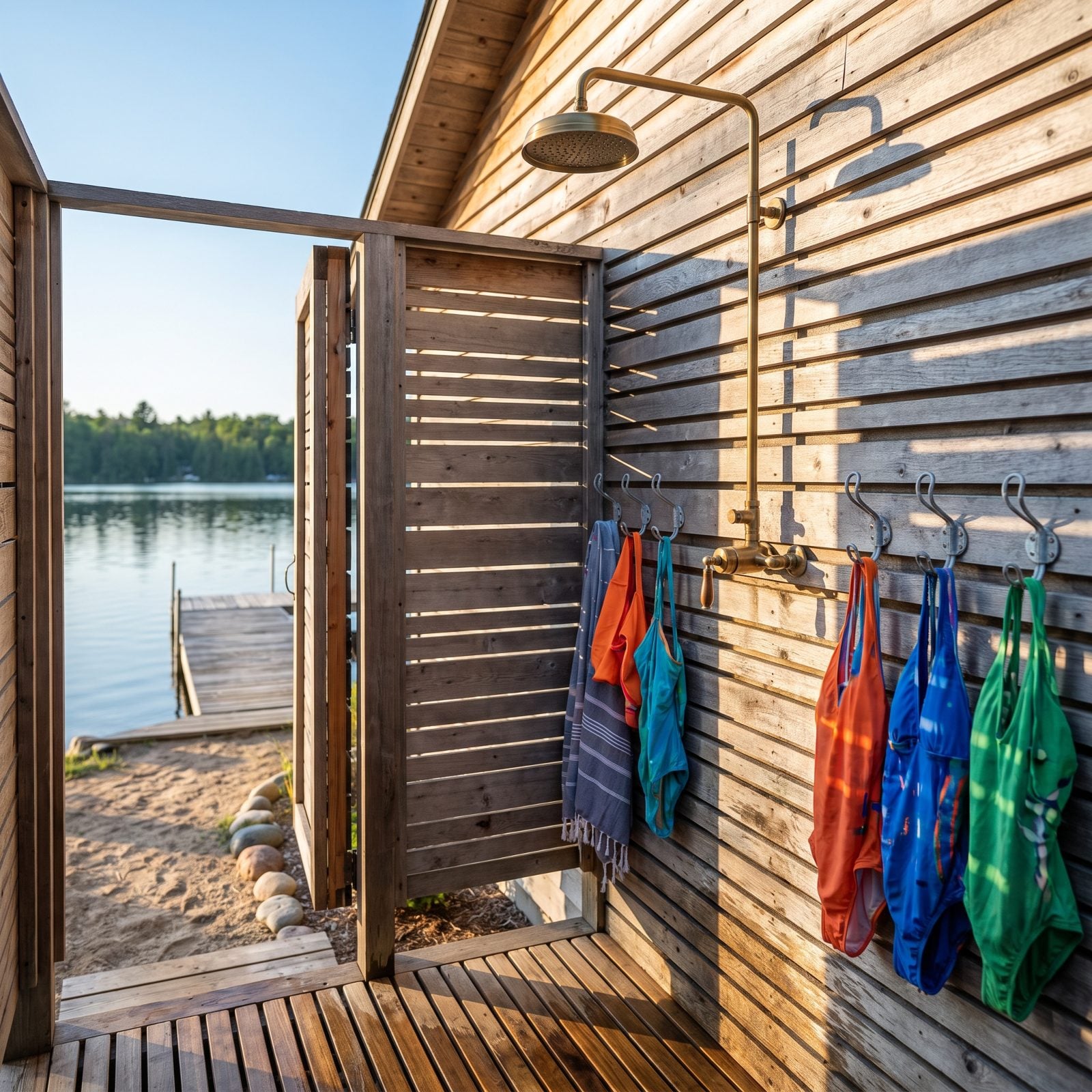
Sand tracked through the house is the fastest way to start a fight at a lake place. A warm-water outdoor shower stops it at the door.
And the warm part matters more than people expect. A cold rinse gets rushed, so the grit comes inside anyway. Warm water means folks actually stand there long enough to get clean. Add a row of hooks for wet suits and you solve the second problem too — that pile of dripping swimwear that ends up draped over every chair on the porch.
32. Roll Breakfast Outside on a Slim Utility Cart
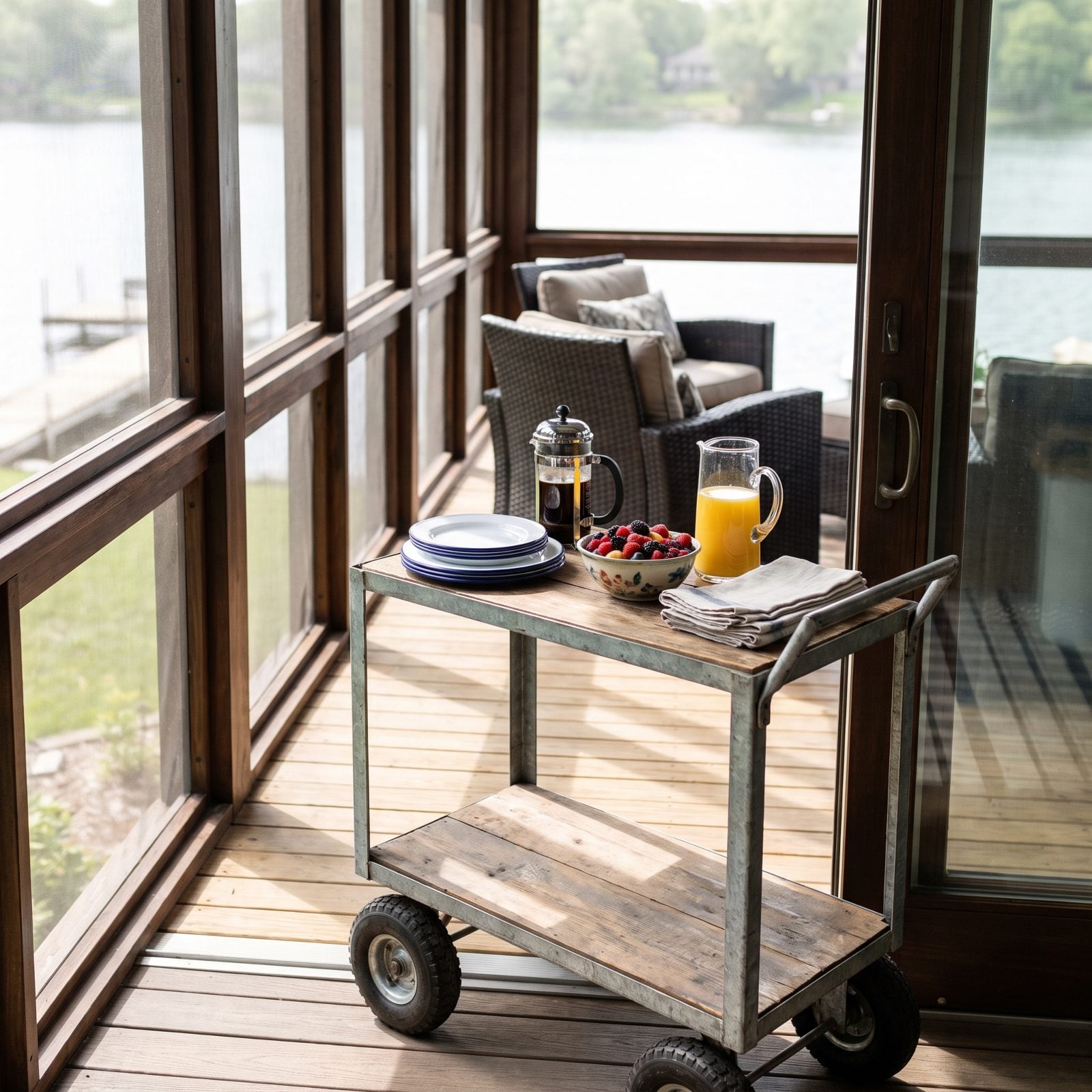
Eating breakfast on the deck sounds easy until you count the trips. Plates, mugs, the coffee, the butter you forgot, the napkins nobody grabbed — four round trips and the eggs are cold.
A slim rolling cart with decent wheels carries the whole spread in one push. Load it in the kitchen, roll it out to the water, eat where the view is, then roll it back dirty when you’re done. Just make sure the wheels are big enough to clear a deck board gap. Skip the dinky casters.
31. Leave a Cast-Iron Fish-Fry Station Set Up Outdoors
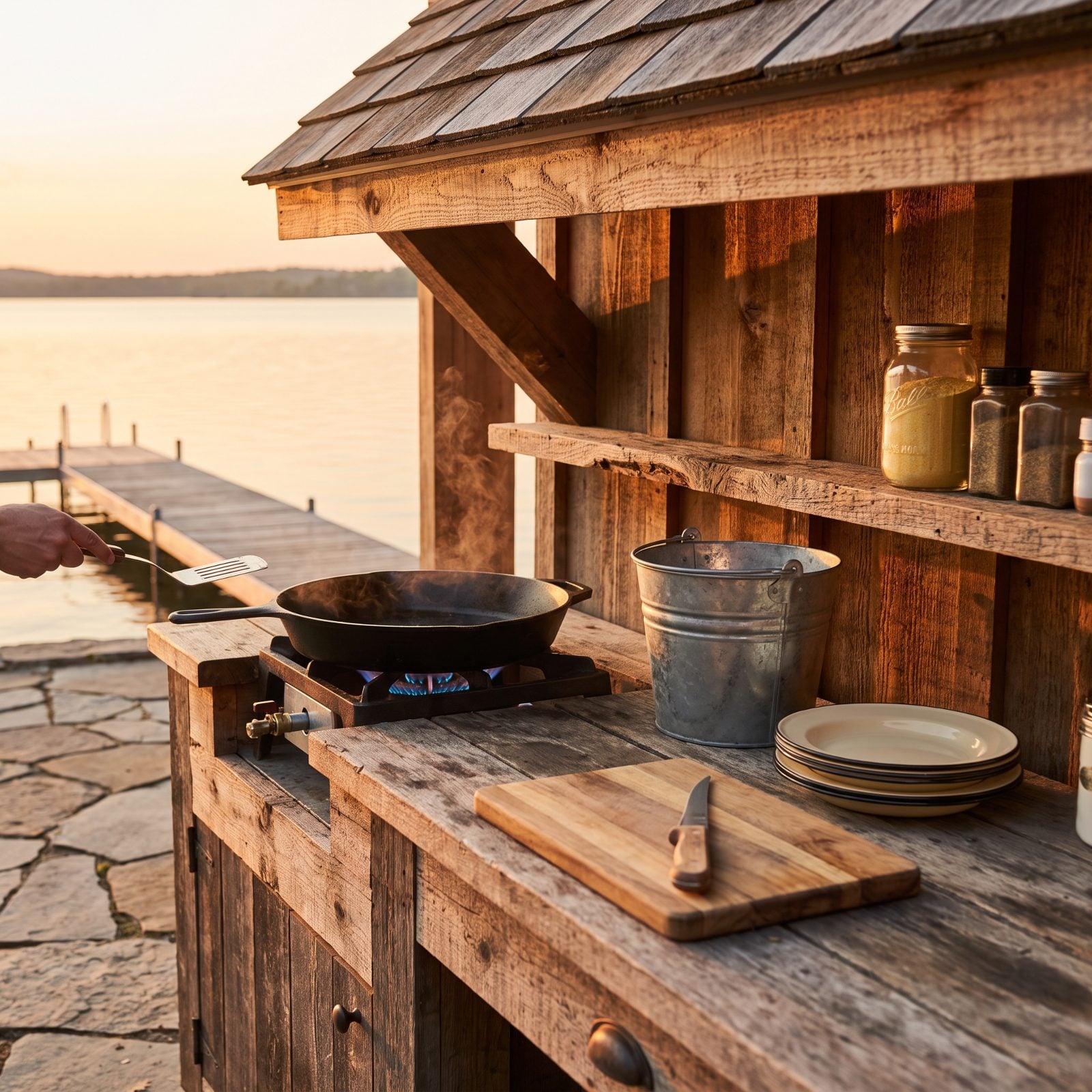
Here’s why people bring their catch home, freeze it, and never eat it: the setup. Nobody wants to haul out the burner, hunt down the oil, and scrub the kitchen afterward. So the fish sits in the freezer until it gets tossed out next spring.
Leave a fry station standing outside and that excuse disappears. A seasoned cast-iron skillet, a propane burner, cornmeal in a sealed jar, a cutting board. You come off the water, clean the fish right there, and it’s in the pan before it even thinks about a freezer. Which is the reason you caught them in the first place.
30. Create a Permanent Binocular Ledge by the Best Window
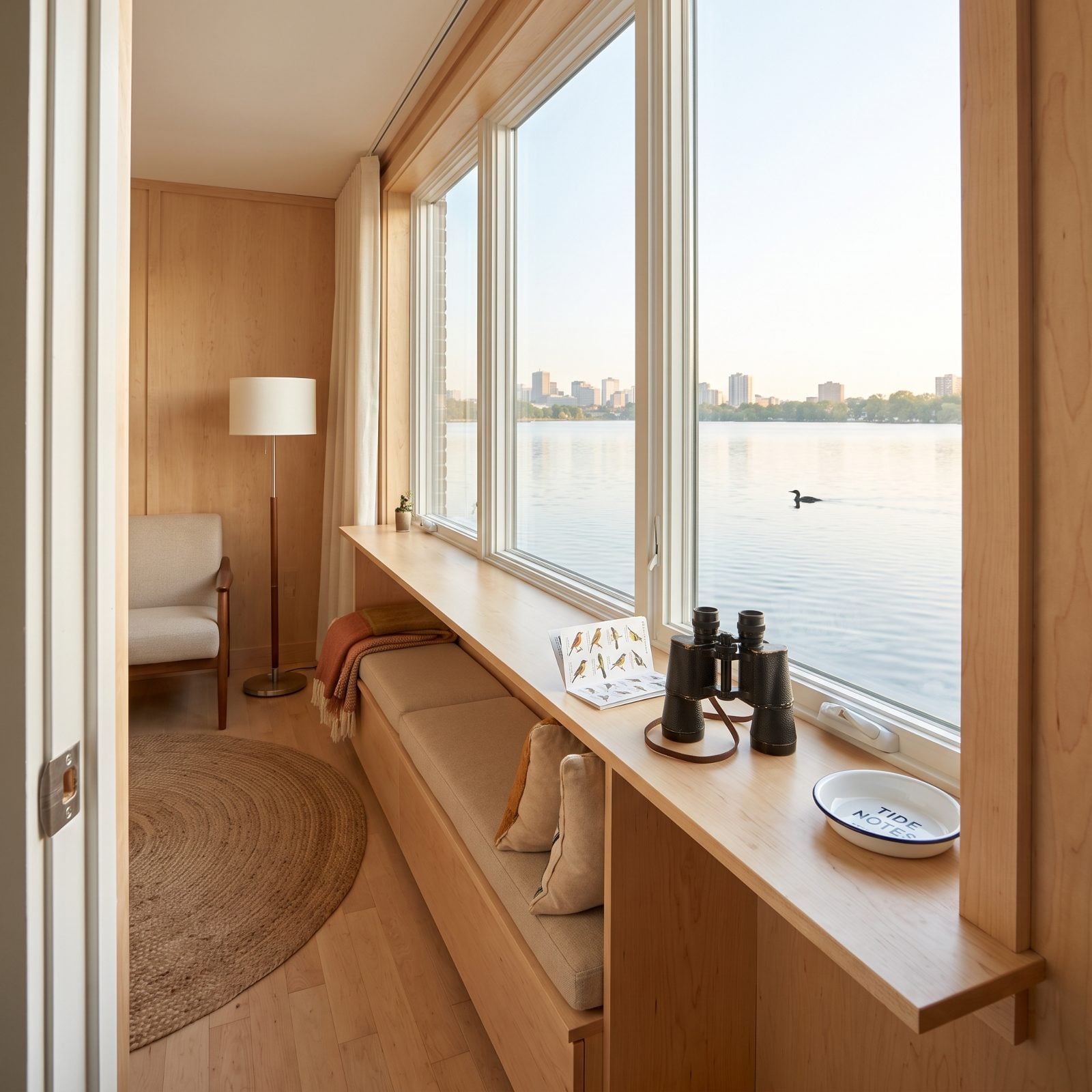
Binoculars that live in a drawer never get used. By the time you’ve gone digging for them, the eagle has moved on and the moment is gone.
Build a shallow ledge under the window with the best view and leave a pair sitting there, always. Now the second something happens on the water — the loon diving, the osprey working the shallows — you’re on it in two seconds. Set a bird-name card beside them and idle watching turns into something you half learn over a summer without meaning to.
29. Put the Lake Depth Chart Under Glass on a Table
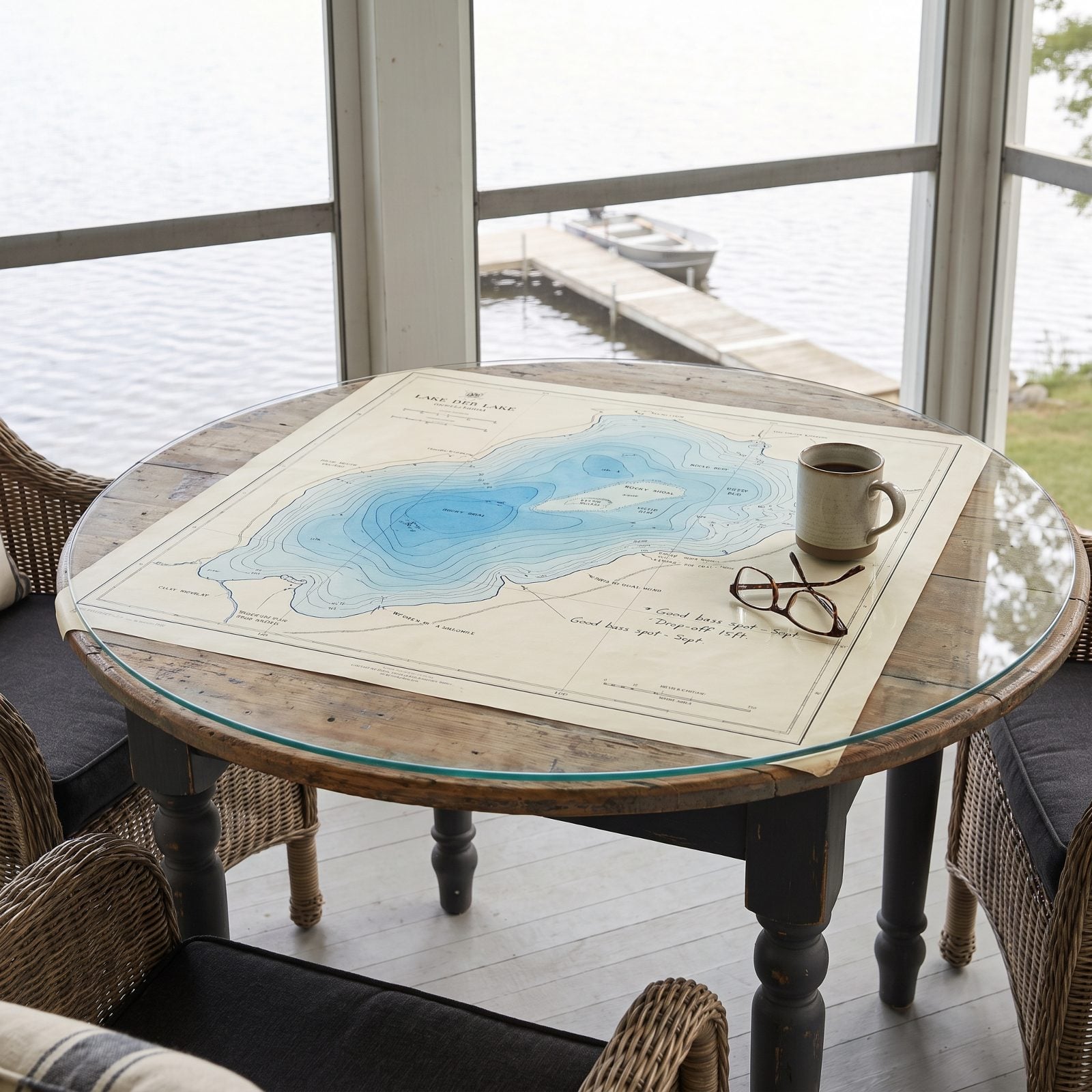
Every lake carries knowledge that lives in people’s heads and dies with them. Where the drop-off is. Which cove goes shallow fast. The rock that’s taken three props off careless boats.
Slide the depth chart under glass on a table everyone gathers around and all of that becomes shared. Guests study it over coffee. Someone pencils a fishing spot right onto the glass, kids learn the shape of the bottom they swim over, and the water stops being a flat blue mystery. It becomes a place the whole family actually understands.
28. Mount a Telescope on a Marked Stargazing Spot
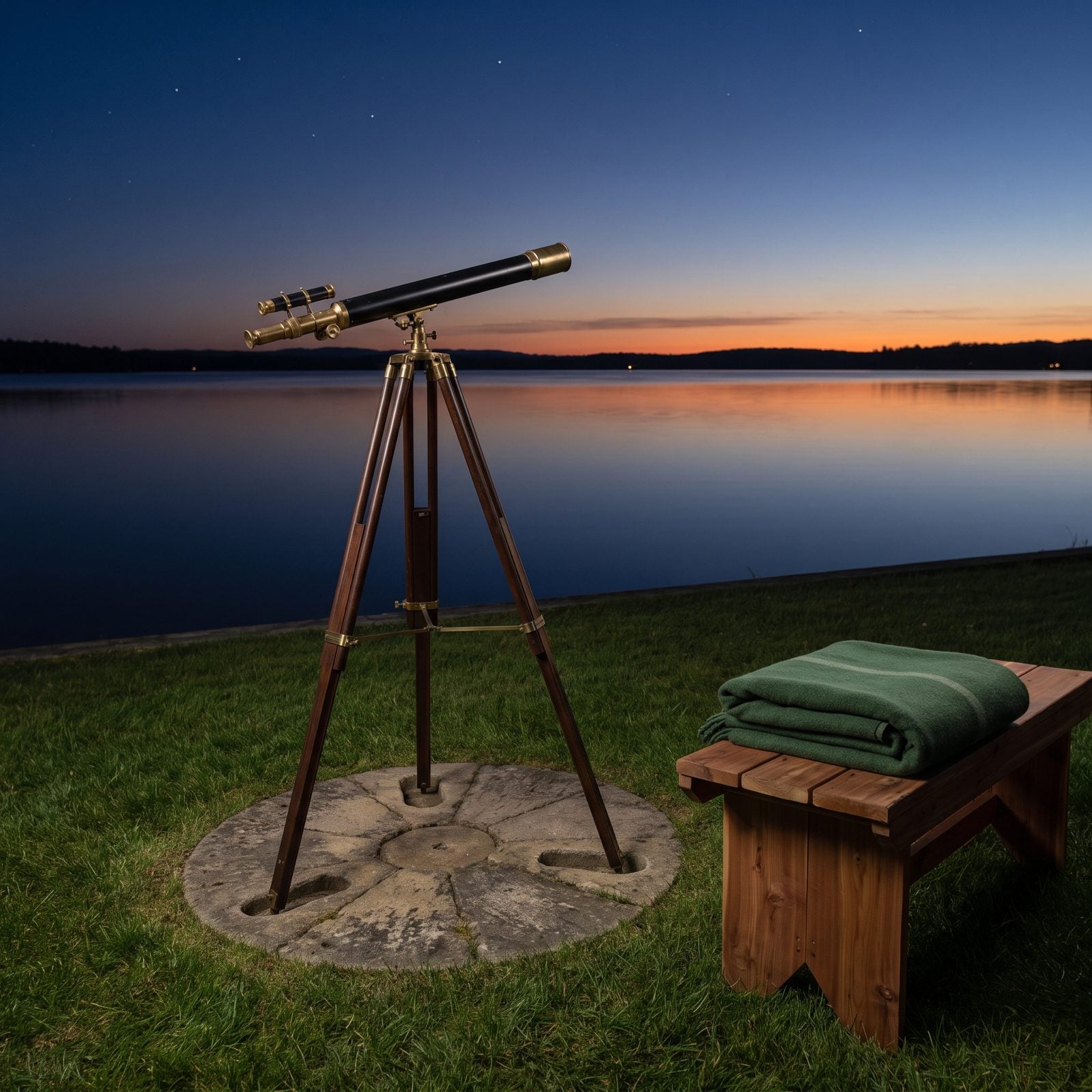
A telescope you have to set up from scratch every night is a telescope you stop using by July. The trick is a fixed spot. Sink a paver or screw a small mount into the dock where the tripod legs seat the same way every time.
Now the whole thing takes thirty seconds. You catch Saturn’s rings between the dock lights, and you do it on a Tuesday because it’s no longer a project. Dark-sky lakes, the ones without a town glowing across the water, show you things a suburban backyard never will.
27. Post the Month’s Moonrise Times on the Refrigerator
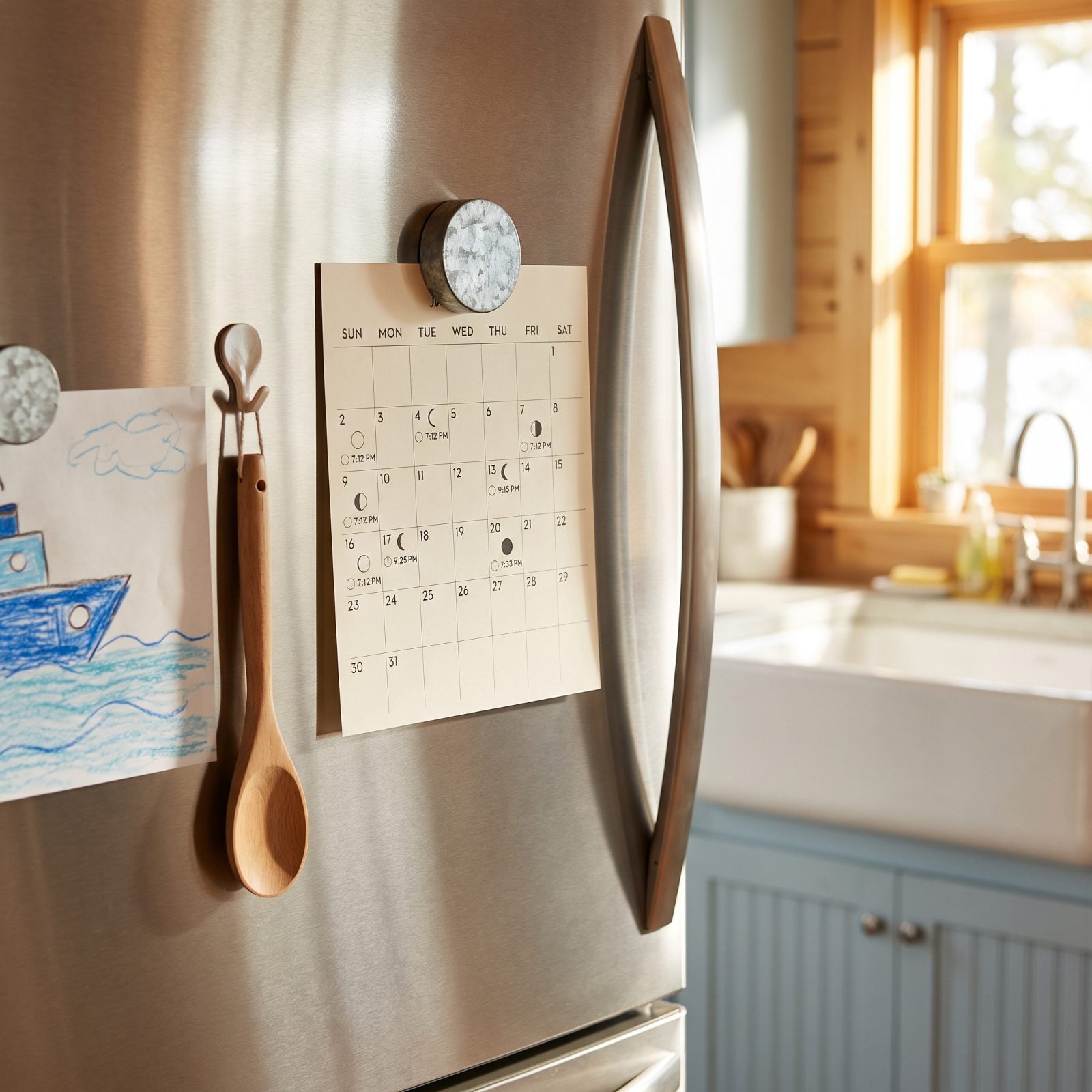
A full moon rising over open water is the kind of thing you’ll drive hours to see on vacation and completely miss when you live there. Because nobody’s watching for it.
Look up the month’s moonrise times, then clip a printed calendar to the fridge and write your launch time on the nights the moon comes up around dusk, where you’ll see it with your coffee. On the right nights you’ll take the boat out at moonrise and glide through a silver path laid straight across the lake. Two minutes to look up. Pays off a few times a month.
26. Take Your Lunch to the Dock Even on Workdays
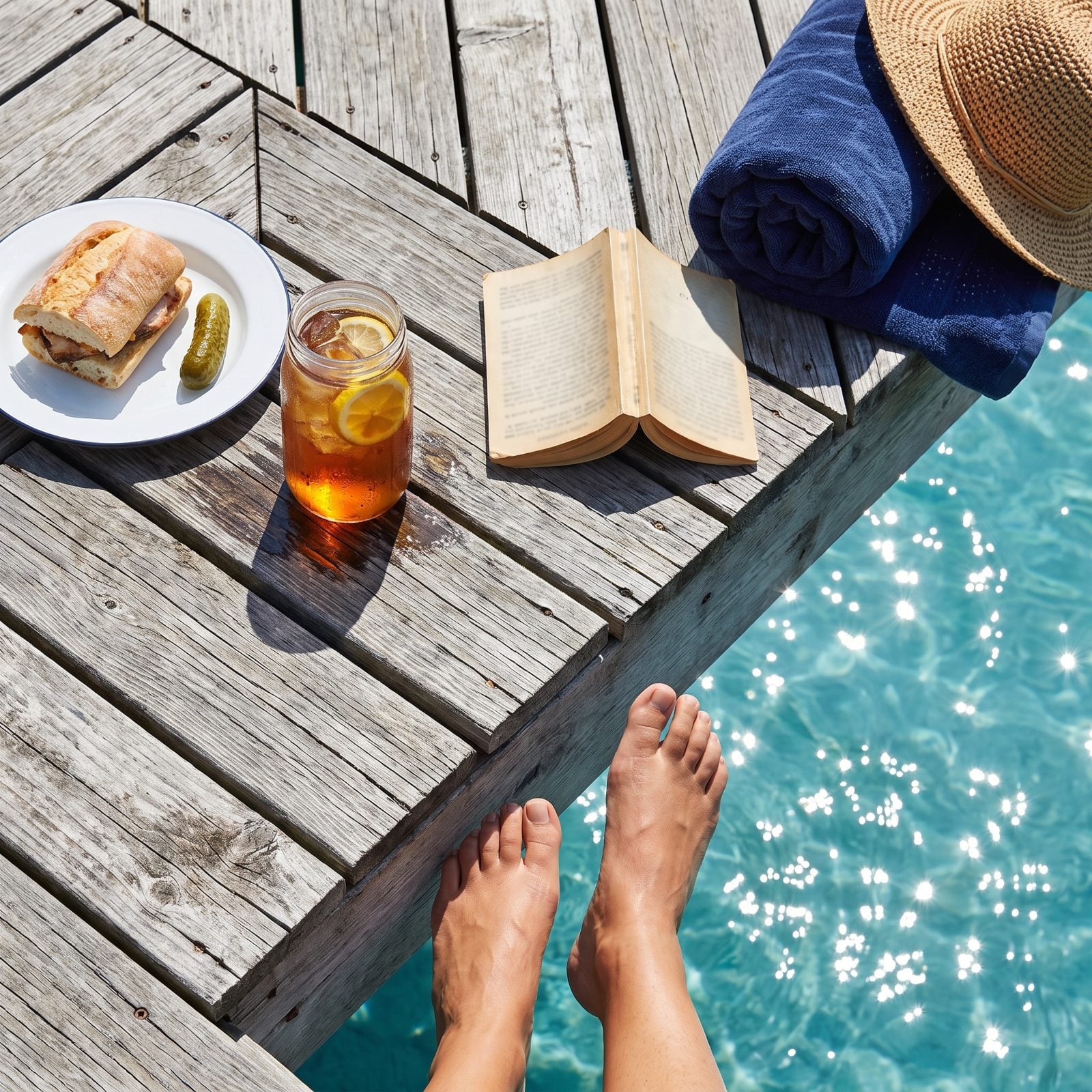
You bought a house on the water, then you eat lunch at your desk looking at a screen. No polite way to say it: that’s a waste.
Carry the sandwich down to the dock. Thirty minutes with your bare feet on the warm planks, just above the water, resets the whole afternoon better than scrolling ever will. The work’s still there when you climb back up. You just do it with lake light still in your eyes.
25. Set a Daily Sunset Alarm Instead of Watching the Clock
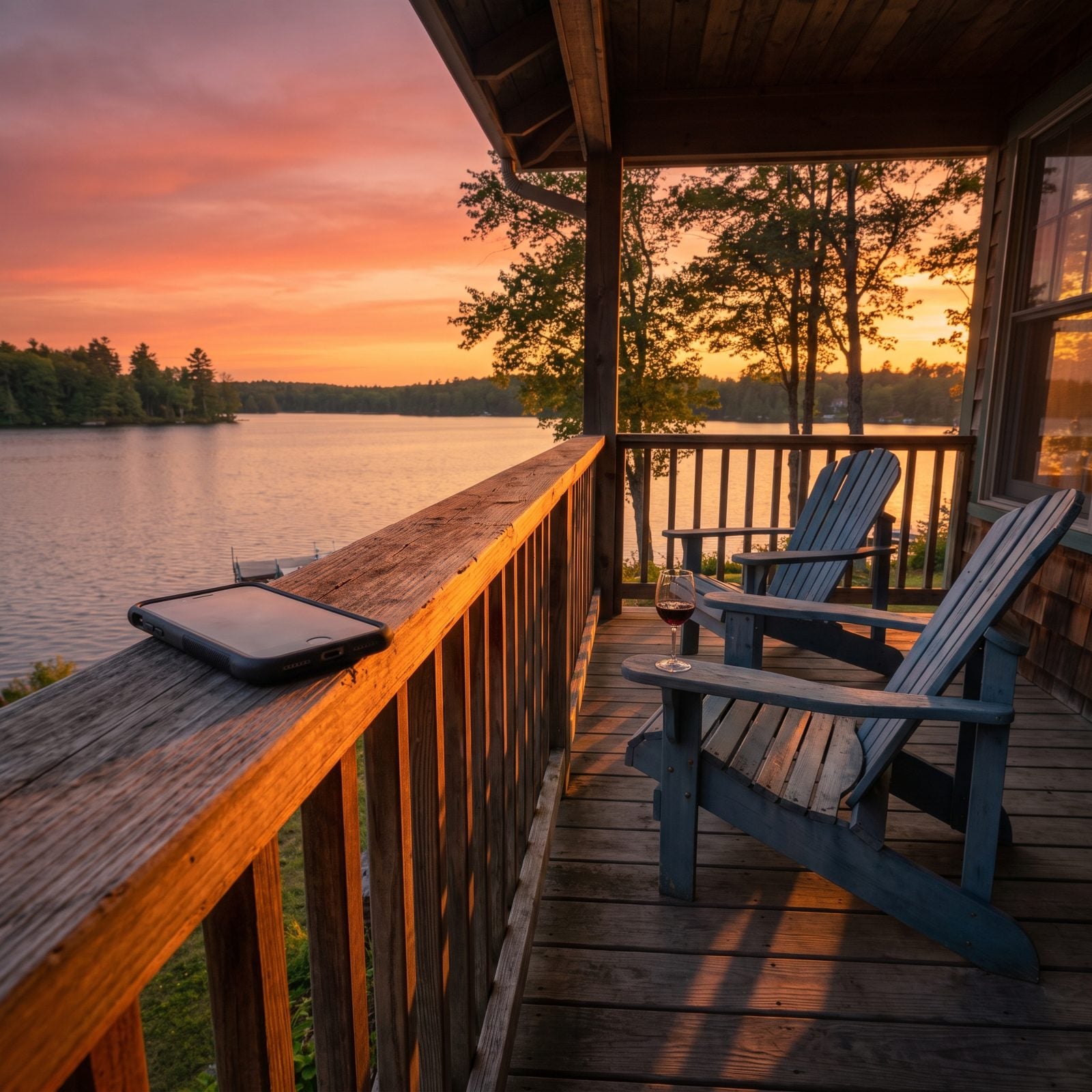
Checking the weather app for sunset time, then forgetting, then catching it halfway down. Everyone does this. Set the alarm instead.
One repeating reminder, timed fifteen minutes before the sun hits the far treeline, bumped every few weeks as the days shift. When it goes off, you stop. You pour something, you walk to the water. The habit removes the one thing that kills sunsets at home, which is the deciding. You don’t decide. The alarm decides. You just show up.
24. Drop Phones Into a Lidded Basket During Dock Hours
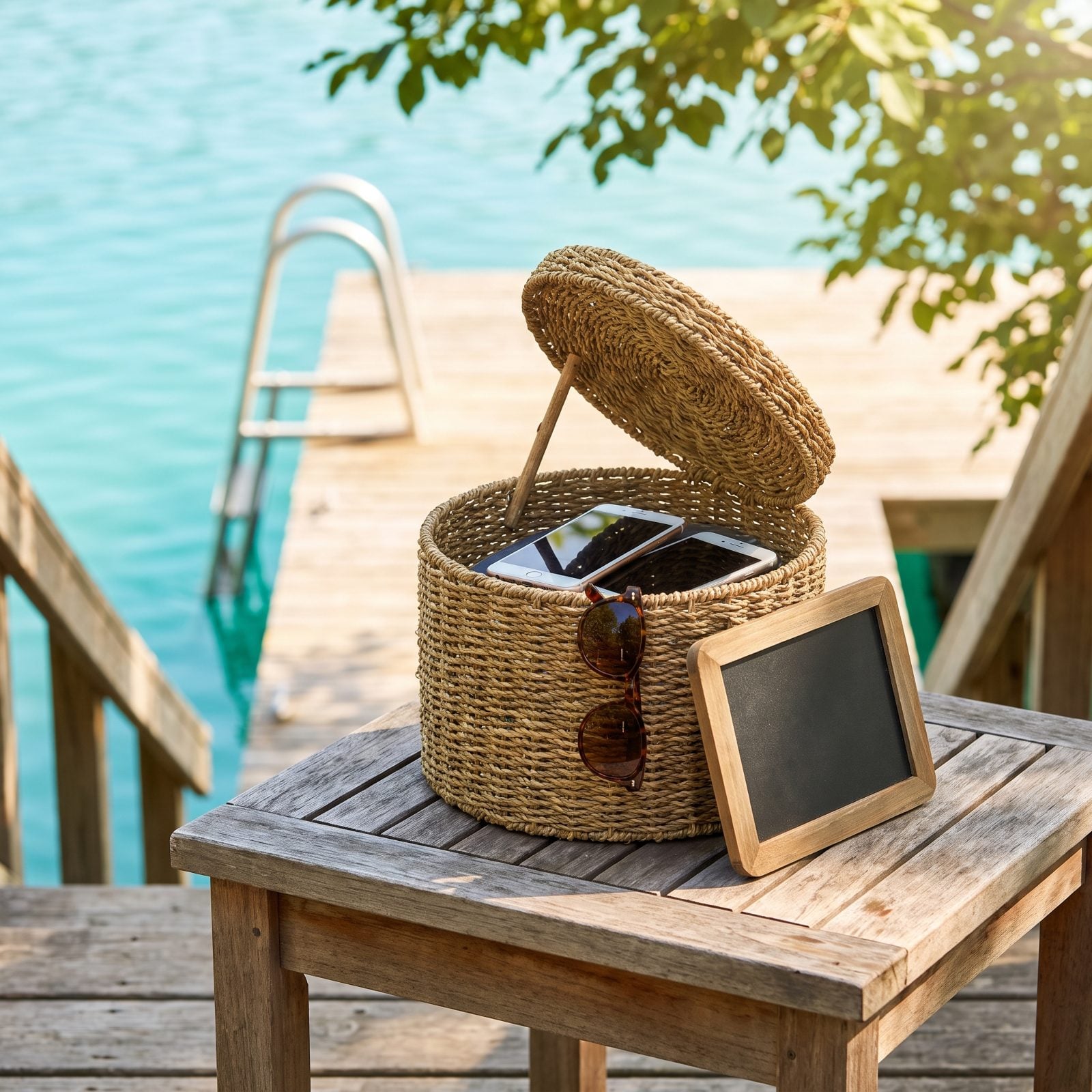
A basket with a lid, parked at the top of the dock. Phones go in before anyone walks down. That’s the whole system.
Nobody’s asking for a full digital detox. Just a boundary with a physical object attached, because physical objects work on people in ways willpower doesn’t. The lid closing is the signal. Conversations run longer, and kids actually look at the fish. When a text really matters, the basket’s right there, ten feet away. Most of the time it stays shut until the mosquitoes come out.
23. Ring a Dinner Bell Between the House and Shore
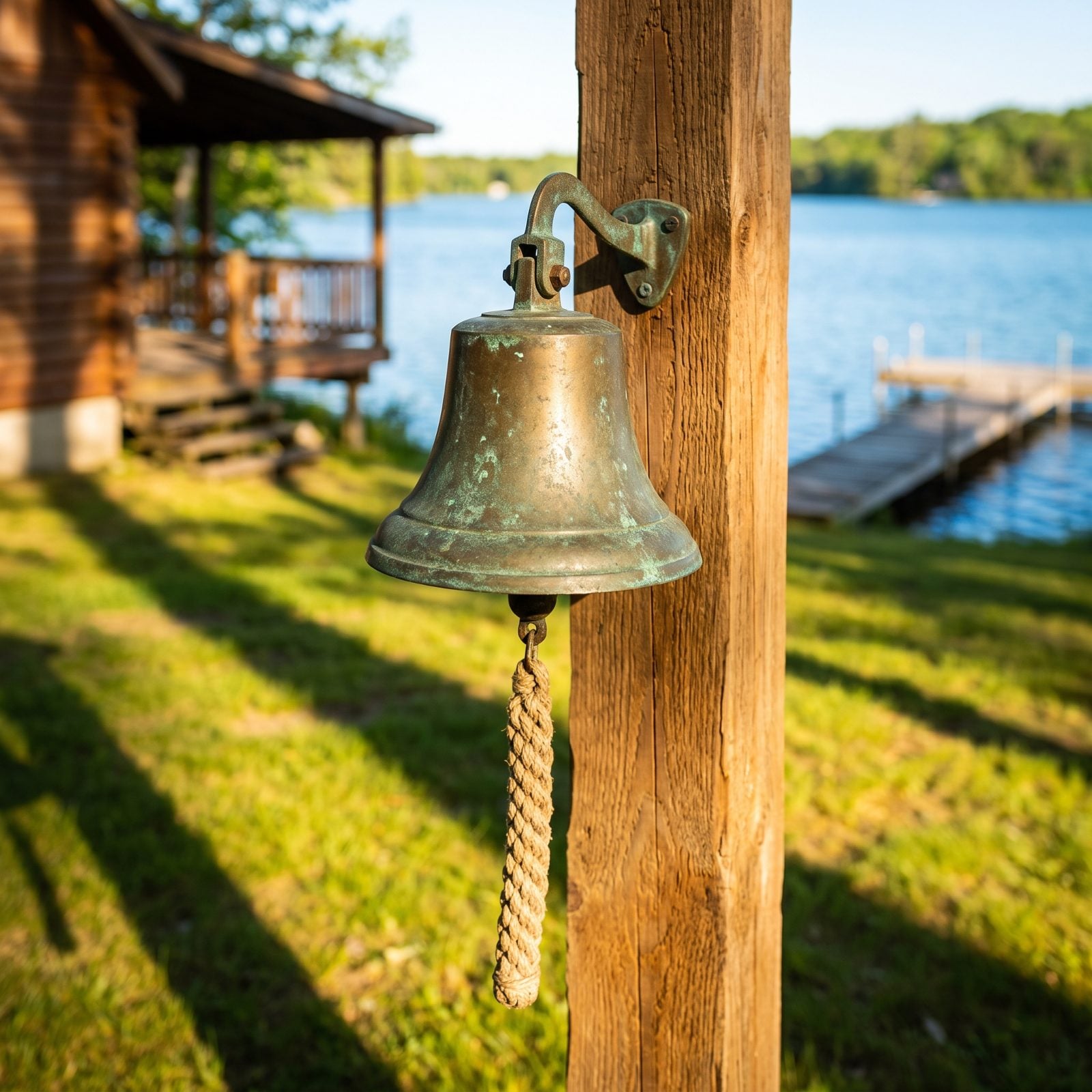
Try yelling across two hundred feet of lawn and water to tell someone dinner’s ready. Doesn’t work. Try texting a kid who left their phone in the basket. Also doesn’t work.
A real bell does. Mount it where the house meets the slope down to the shore, and one good ring carries to the far end of the dock and halfway down the beach. Something about the sound pulls people home in a way a notification never will. Pick a brass one with weight. The cheap ones rust and go flat by the second season.
22. Turn a Screened Porch Into a Sleeping Porch
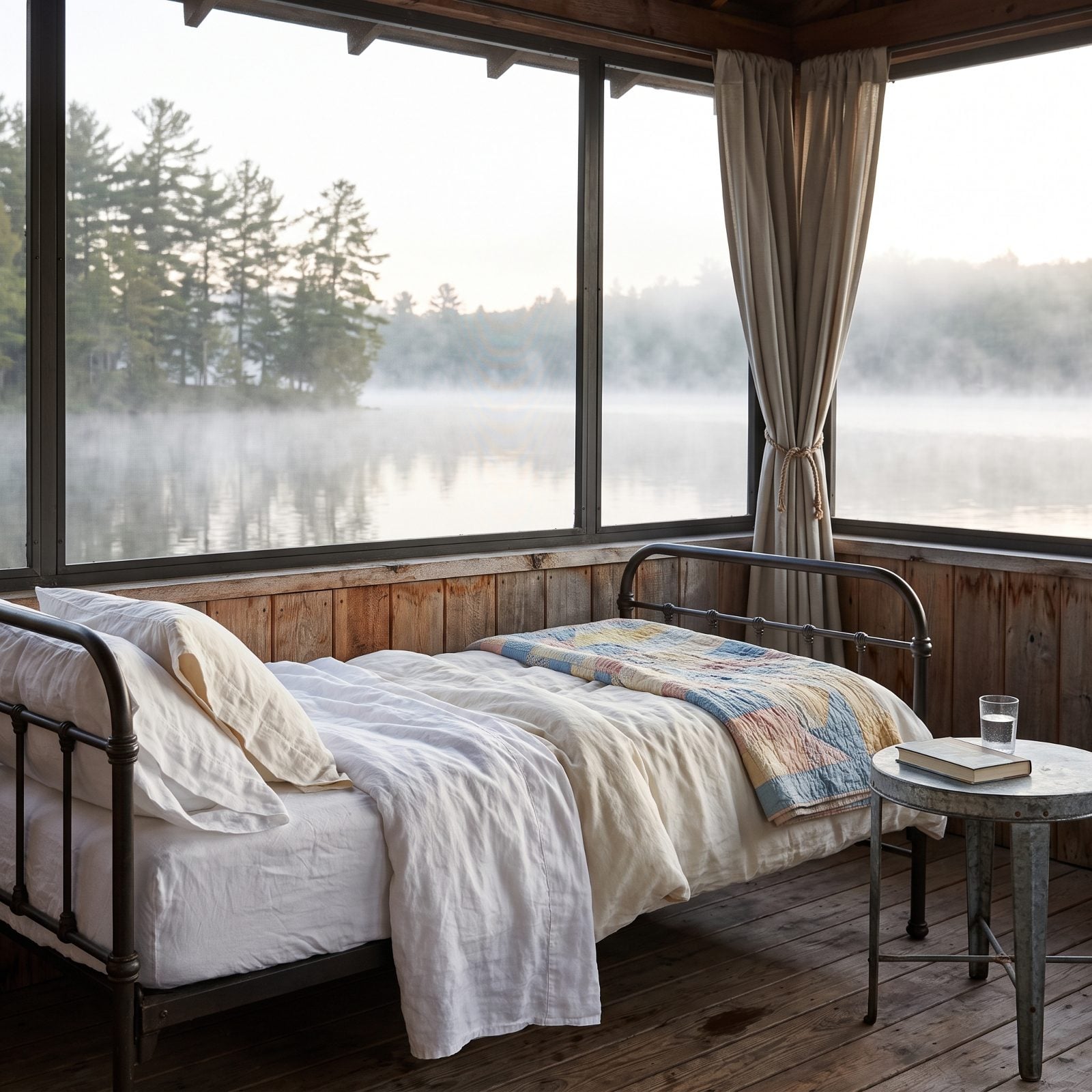
The best sleep of the summer happens on a screened porch, and most people never try it because they assume it’s a hassle. It isn’t.
Move a daybed or a sturdy cot against the screen, add a weatherproof quilt, and leave it set up. You fall asleep to frogs and wake up to loons and mist on the water. On hot nights the air moves through, and the house never gives you that. The screens handle the bugs. A canvas curtain handles the one morning the sun comes in too hard.
It’s the single change that makes guests say they slept like they were ten years old again.
21. Anchor a Floating Mat as an Instant Swim Platform
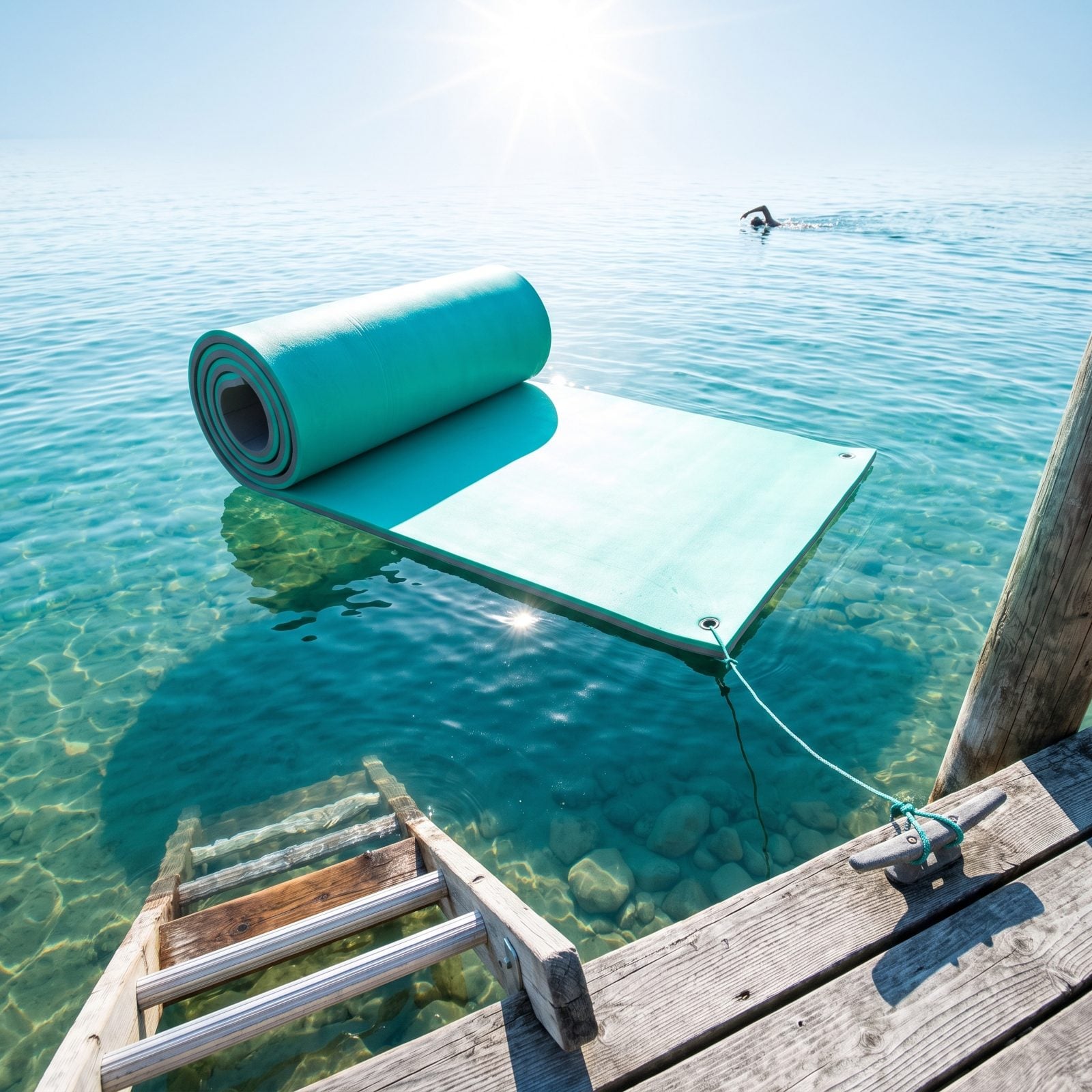
A roll-out foam mat, tethered to the dock, turns deep water into a place you can just stand around. It floats a few adults easy. Kids treat it like an island.
Here’s what nobody mentions: tie it with a rope to a cleat and run a second line down to an anchor on the bottom, so it stays put in the wind and doesn’t drift to the neighbor’s. Pull it up onto the dock at the end of the day or algae finds the underside fast. Set up right, it’s what makes afternoons stretch an extra two hours.
20. Store Paddles on a Rack at the Waterline
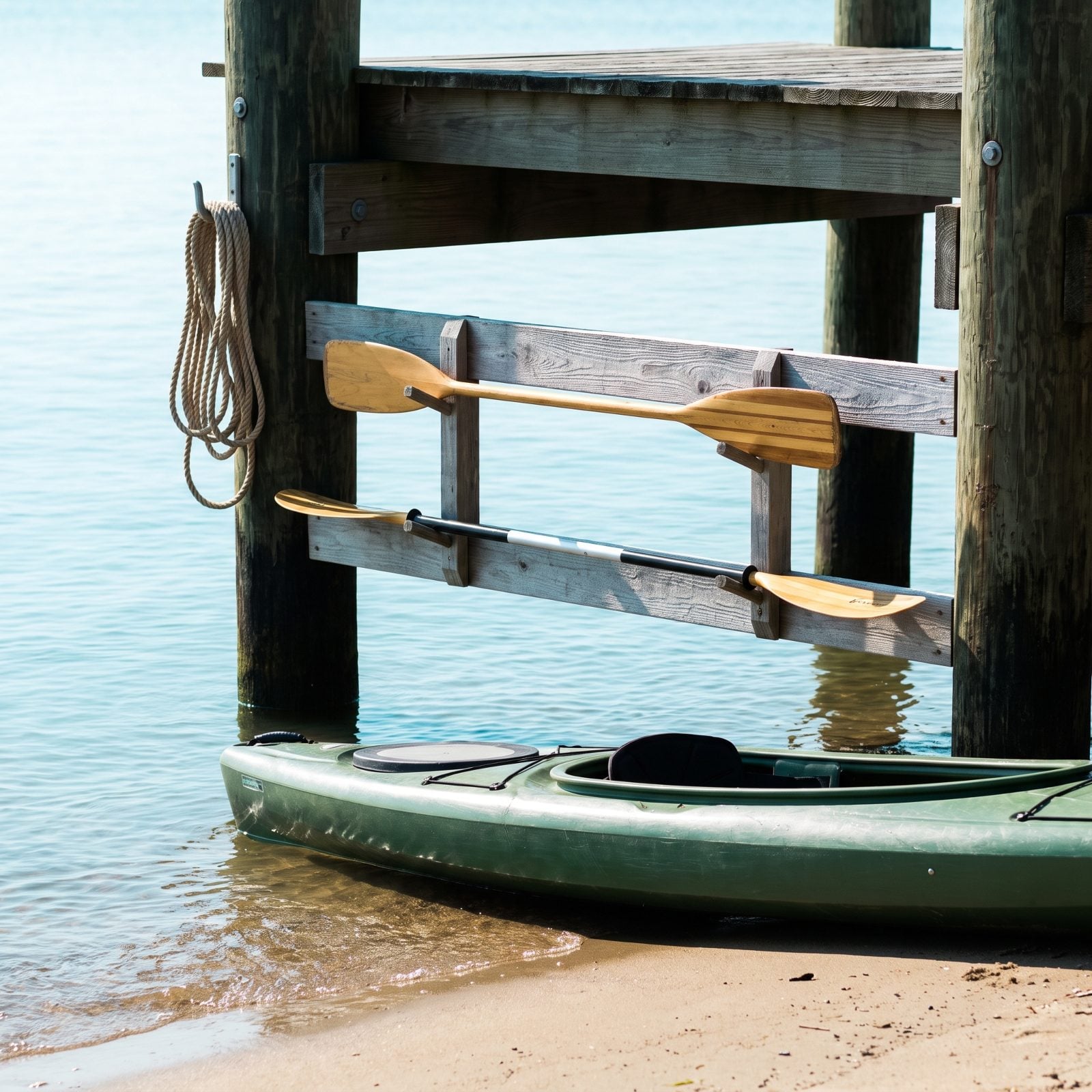
Paddles stored up at the house mean every paddle is a whole expedition. You decide to go, then you have to go get the gear, and half the time you just don’t bother.
Hang a rack right at the waterline where the boats live. Now a paddle at seven in the morning takes the same effort as walking outside. That’s the difference between a kayak you use twice a summer and one you use before coffee. Mount it high enough to clear spring high water, and put the paddles somewhere shaded so the sun doesn’t bleach the blades.
19. Hang Life Jackets on Open Grab-and-Go Hooks
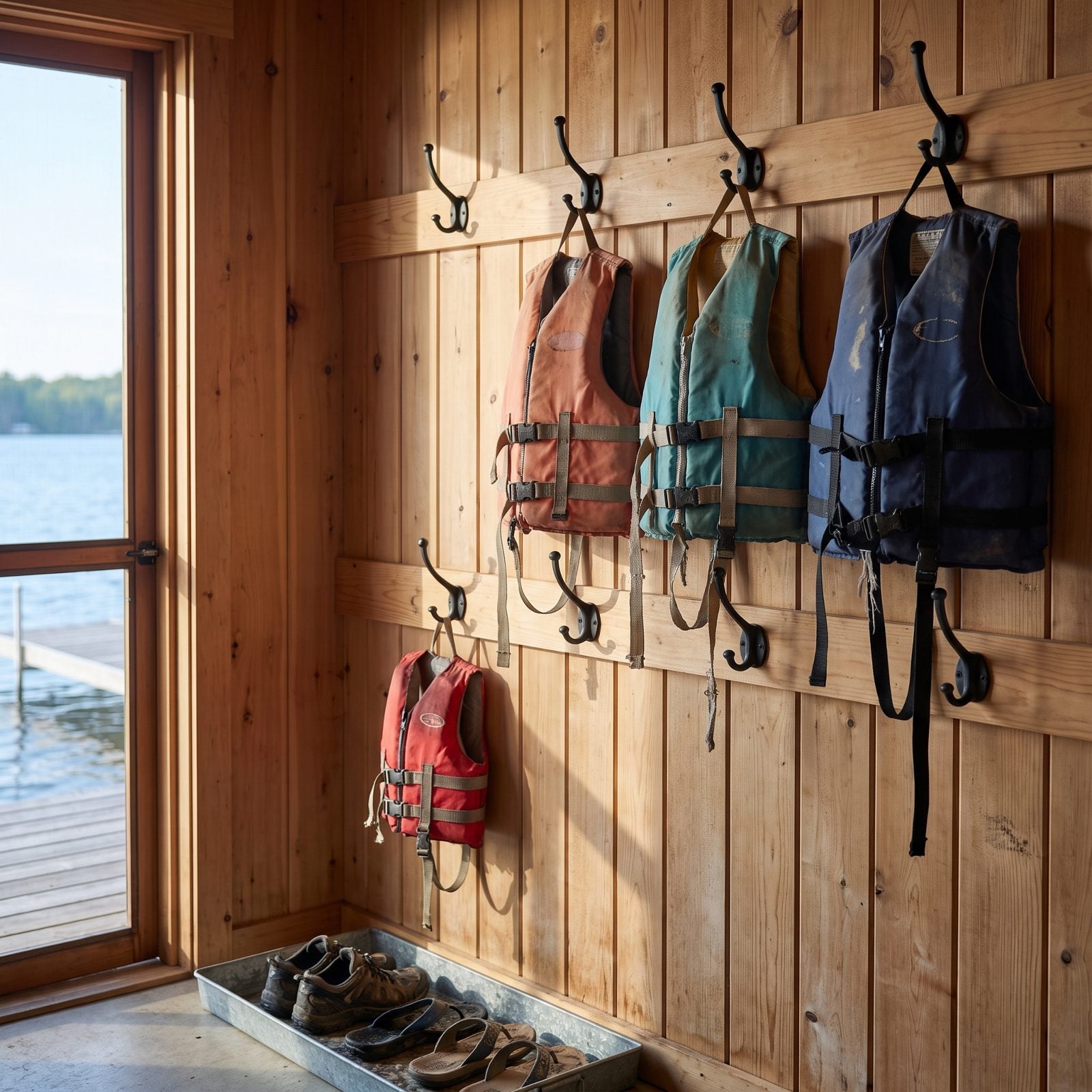
Life jackets live in the worst possible place at most lake houses: a plastic tote at the bottom of a closet, damp from last time, nobody wanting to dig for them. So they skip it. That’s the real cost of bad storage. Not clutter. Risk.
Open hooks on a wall near the door fix it in an afternoon. The vests hang spread out, so they actually dry. You see at a glance who’s got a jacket and who still needs one. Hang them at two heights, lower for the kids, and a six-year-old can grab their own without a word from you.
18. Keep Evening Blankets in a Cedar Deck Box
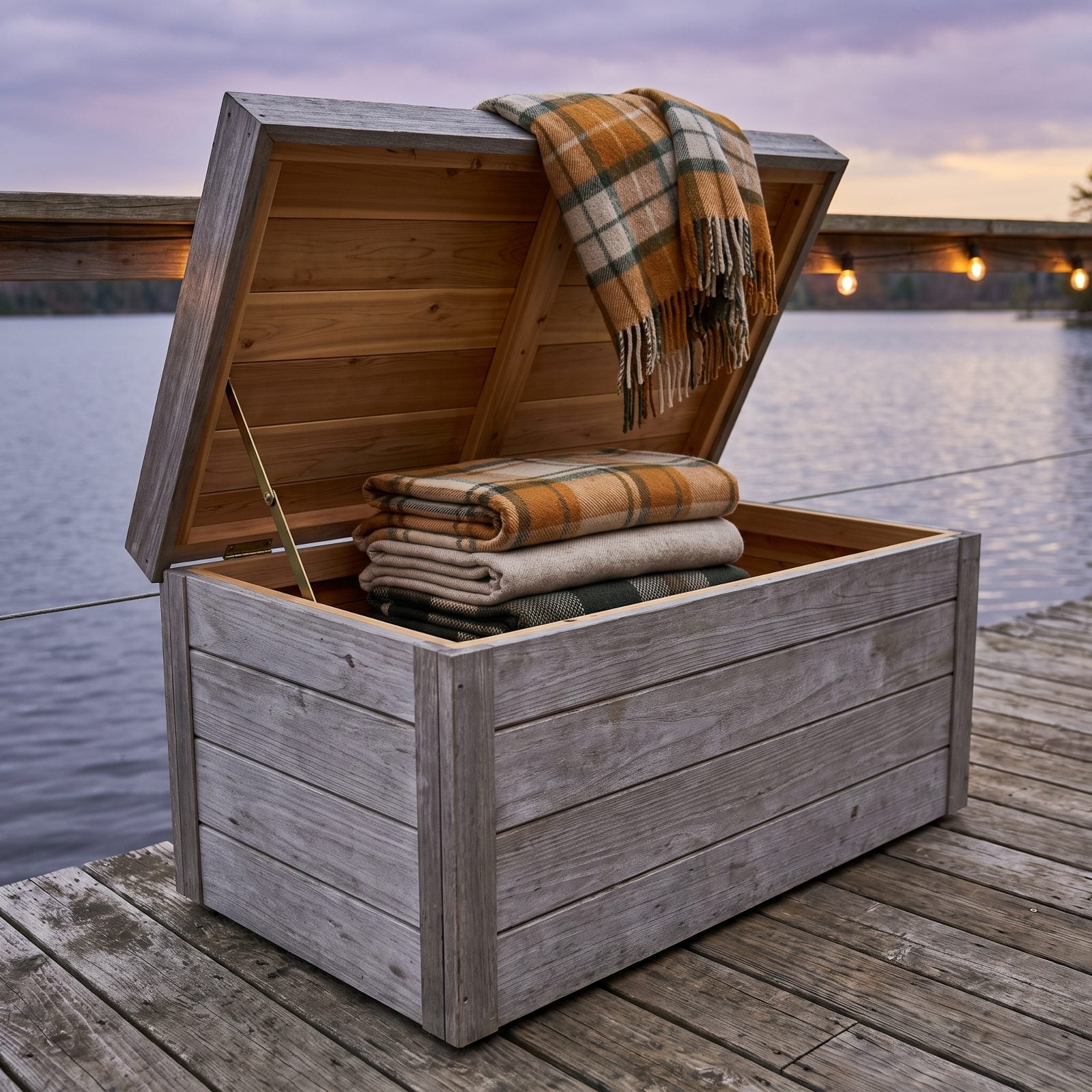
Lake evenings turn on you fast. One minute it’s shorts weather, the next the sun drops behind the far shore and everyone’s hugging their own arms. The blankets are inside, nobody wants to go get them, so people just leave early.
A cedar deck box sits right where you sit. Cedar matters here, not for looks, but because it fends off mildew and keeps the moths off the wool. Open the lid, hand out blankets, stay another hour. And that hour after dark, with the loons going and the water gone glassy, is half the reason you have a lake house at all.
17. Stock a Ready-Made Picnic Basket in the Pantry
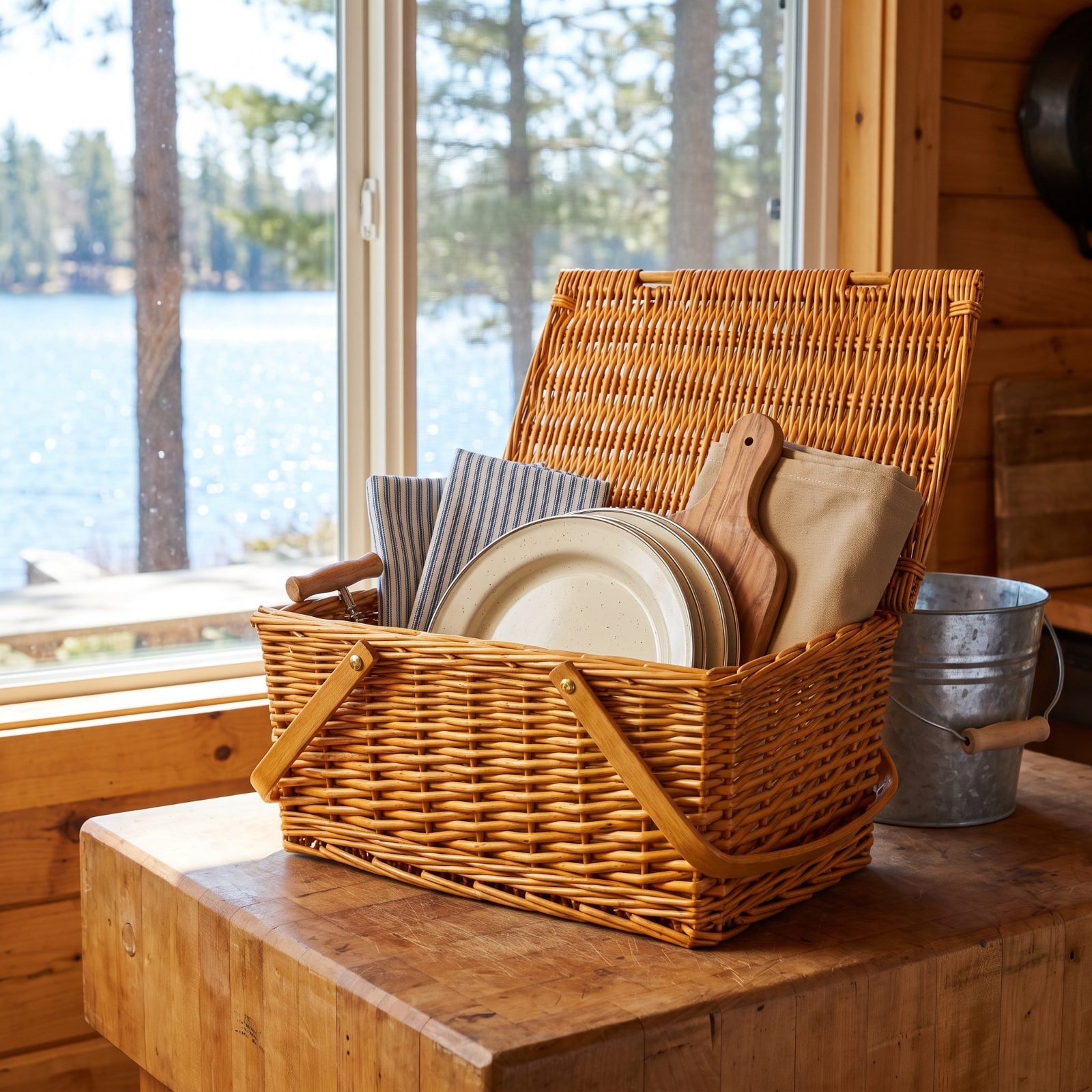
The trips you never take are the ones that require packing. There’s a cove you’ve been meaning to visit, a sunset point ten minutes away by boat, and you don’t go because assembling the gear is a half-hour project you’ve got no energy for after a swim.
Keep a basket packed year-round. Enamelware plates, cloth napkins, a corkscrew, a cutting board, a tablecloth, salt. Not the food, obviously, the food’s fresh. Everything else stays loaded and waiting on a pantry shelf. Grab it, add a sandwich and a bottle, and you’re gone. The packing was never the fun part. Take that away and suddenly you’re a family that picnics.
16. Turn a Potting Bench Into a Self-Serve Drink Station
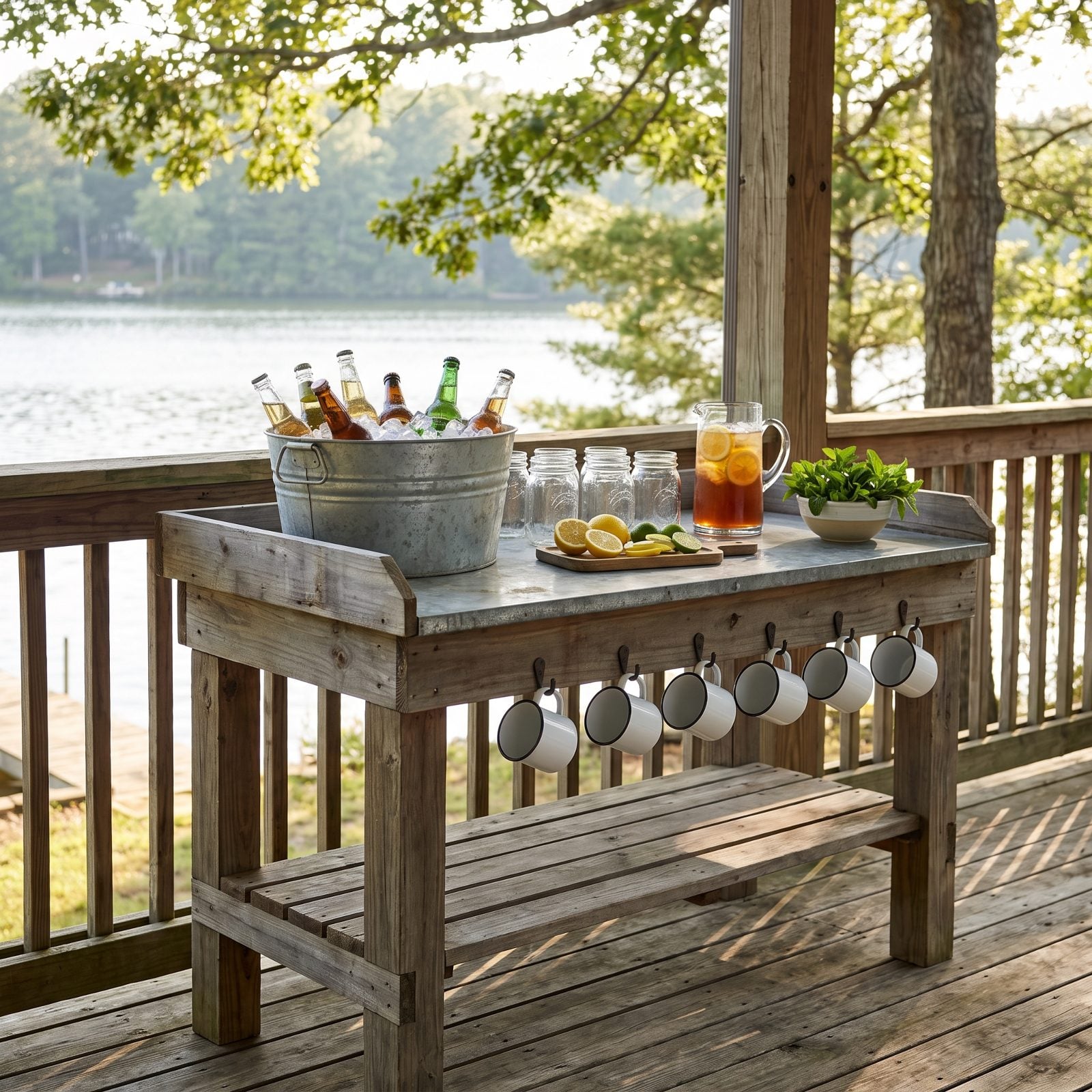
Something hosts learn the hard way: you spend the whole party as the bartender. Guest wants a refill, you get up. Someone needs ice, you get up. You never sit down, and you came to the lake to sit down.
An old potting bench ends that. The zinc or galvanized top shrugs off water rings and spills. Load it up with a tub of ice, bottles, mason jars, cut citrus, a pitcher of tea. Hooks underneath hold the mugs. People help themselves, which they actually prefer, and you get to be a guest at your own gathering.
15. Keep Homemade Freezer Pops Ready for Hot Afternoons
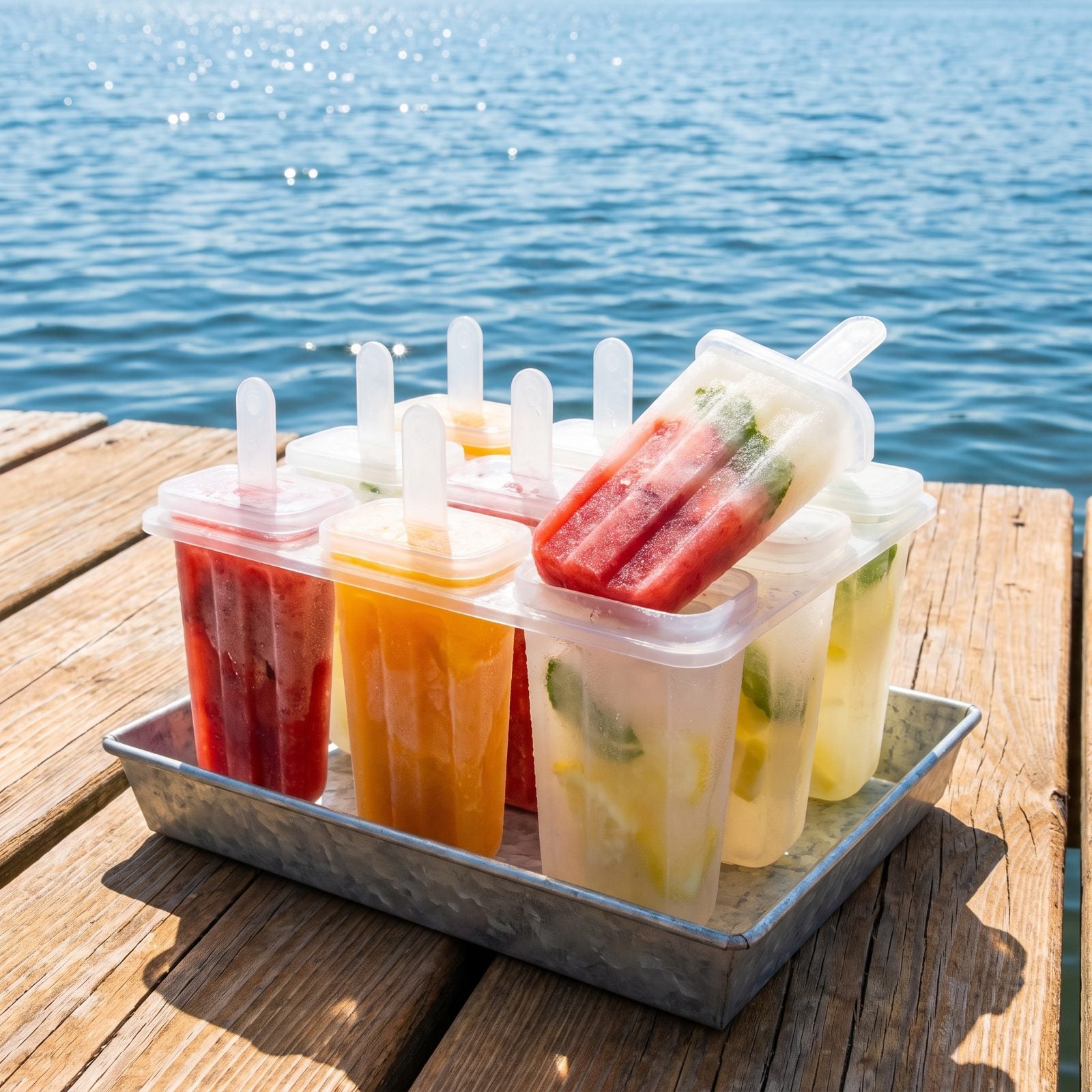
Two in the afternoon, dock boards hot enough to hop across, everyone melting. Store popsicles are fine. But homemade ones, frozen the night before out of real fruit and a little juice, are a different thing entirely.
Freeze a batch in reusable molds and they live in the door of the freezer, ready to go. Kids come dripping up from the water and there’s something cold waiting that isn’t a sticky mess of dye and sugar. Blend whatever’s about to go soft, berries, peaches, a handful of mint, and you’ve turned sad produce into the best part of someone’s afternoon.
14. Grow Cocktail Herbs in a Trough Beside the Dock
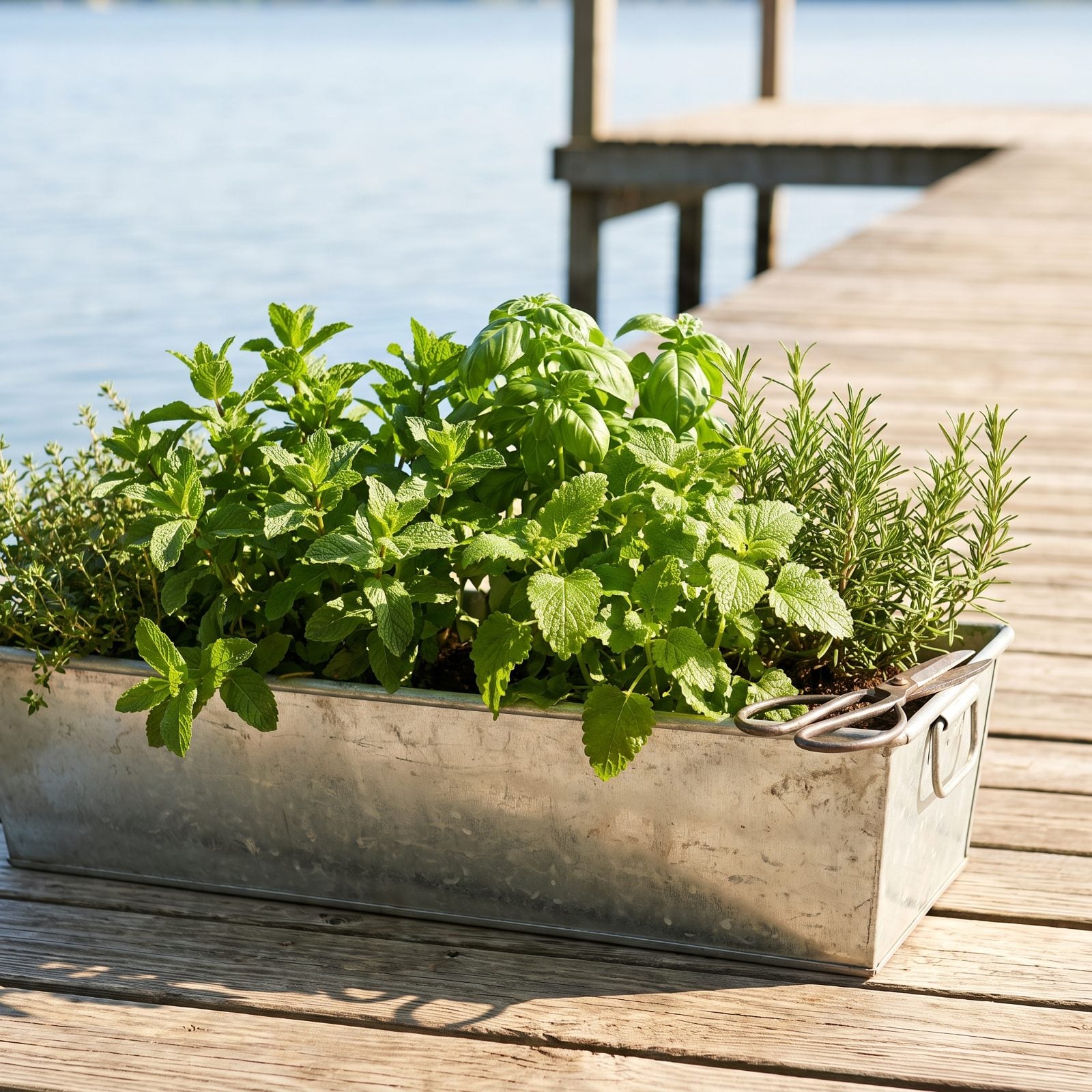
Mint grows like it has a grudge, which is exactly why you want it in a trough and not loose in a bed where it’ll strangle everything by August. Put the trough right by the dock, where you make drinks, not thirty steps up a path by the kitchen.
Mint, basil, lemon balm, rosemary. Snip a sprig into a glass of anything and it tastes like you tried. You didn’t. The herb was two feet away. Keep the good stuff where you already are, and that does the work for you.
13. Run Warm String Lights Under Railings Instead of Overhead
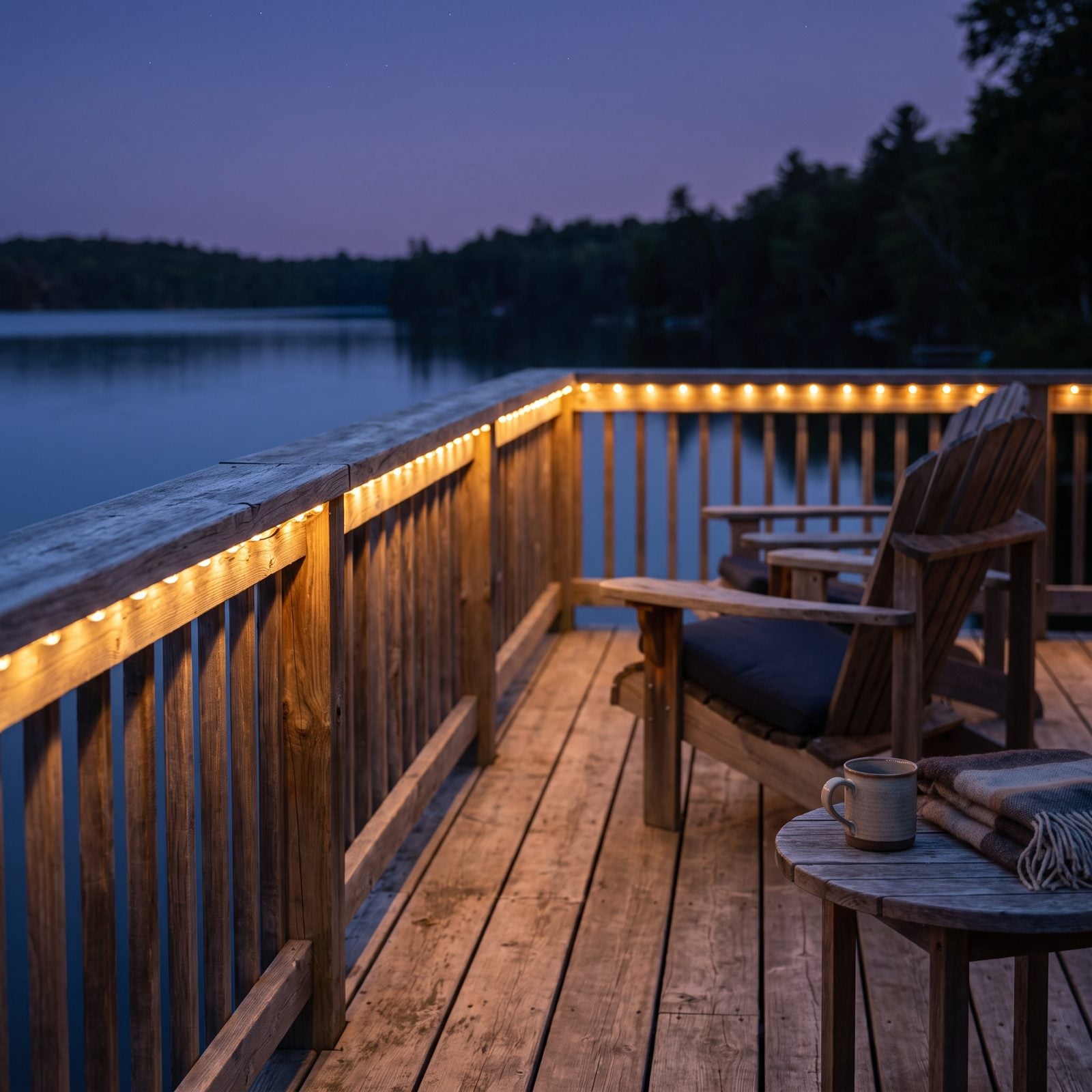
Overhead string lights do one thing nobody wants at the lake: they wash out the sky. You string them proud across the deck and suddenly you can’t see a single star, and the whole reason for being out here goes dim in the glare.
Mount them under the railing instead, facing down. The light pools on the deck where you need it, finding the steps, finding your wine glass. Above, the sky stays dark enough for the Milky Way. That’s the difference between a patio and a place you don’t want to leave.
12. Mark the Shore Path With Low Amber Lanterns
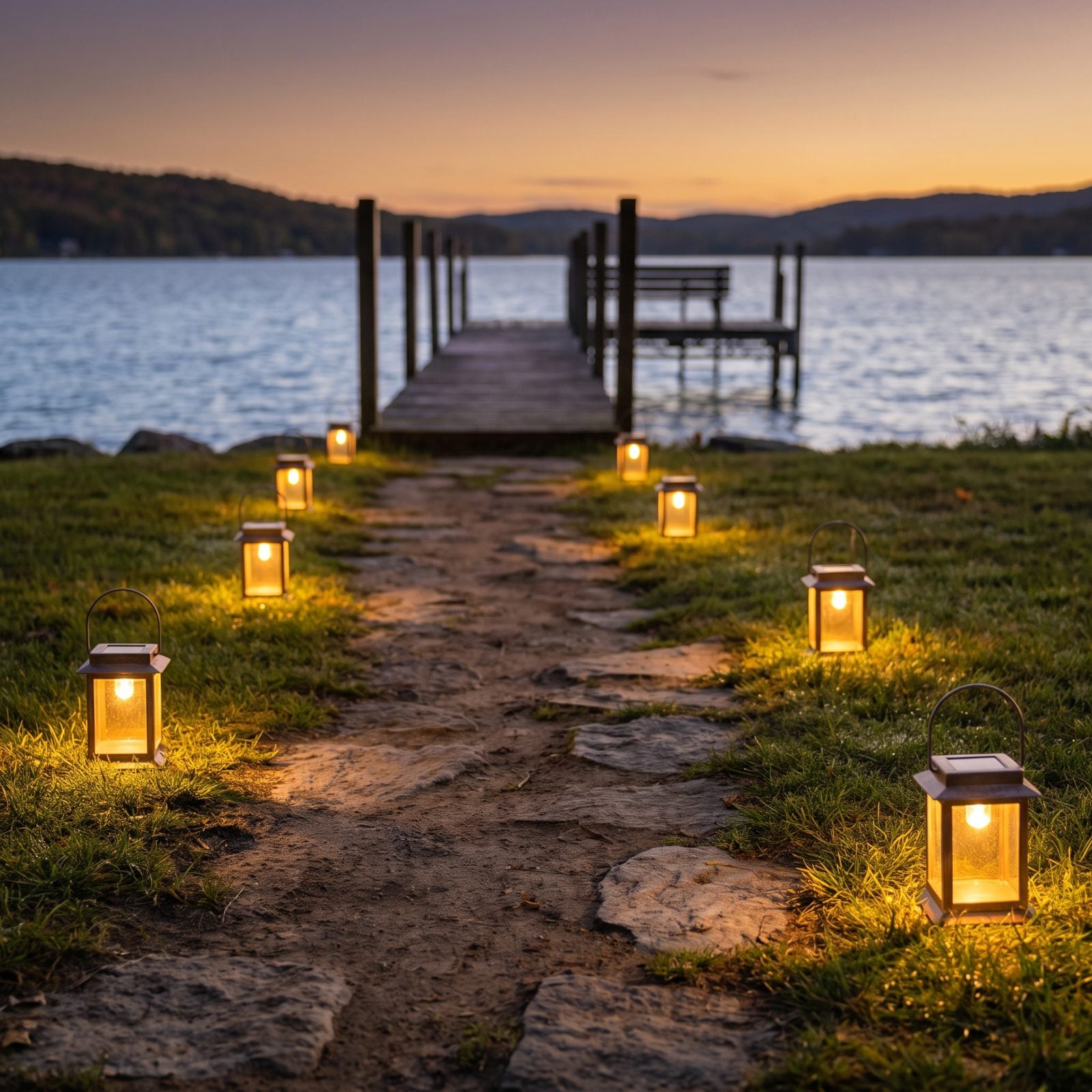
White solar lights and amber solar lights are not the same, and anyone who’s walked a lake path at night knows which one they want. Cool white blinds you and kills your night vision. The path looks lit, sure, but your eyes can’t adjust to the dark water beyond it.
Amber does the opposite. Low lanterns along the shore throw just enough warm glow to find the roots and the dip by the big rock, without stealing the darkness you need to walk comfortably. They look like something, too. A line of soft lights leading down to the water. Cheap to run, nothing to wire, done in an afternoon.
11. Build the Firepit With Wide Ledges for Plates and Mugs
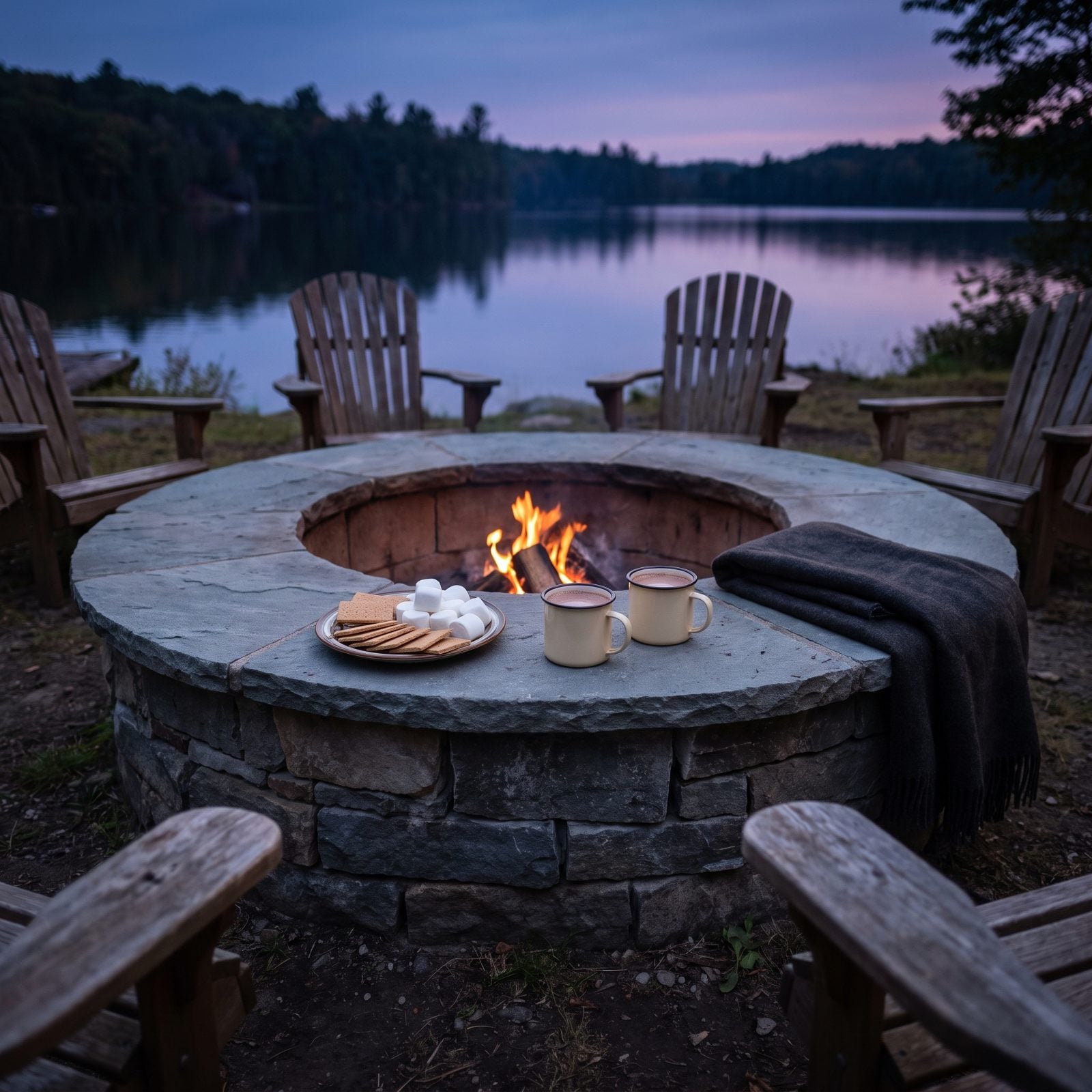
Most firepits are a ring and nothing else. So everyone’s balancing a hot mug on their knee, a plate of s’mores fixings on the ground where the dog can reach, and a roasting stick in the other hand. Something spills every single night.
Build the pit with a wide stone ledge all the way around, fieldstone or capped block, flat on top, a foot or more deep. Now there’s somewhere to set the cocoa, line up the marshmallows, rest a plate. The fire’s the draw. The ledge is what keeps people sitting around it instead of juggling.
10. Keep an Outdoor Movie Screen Rolled Beneath the Eaves
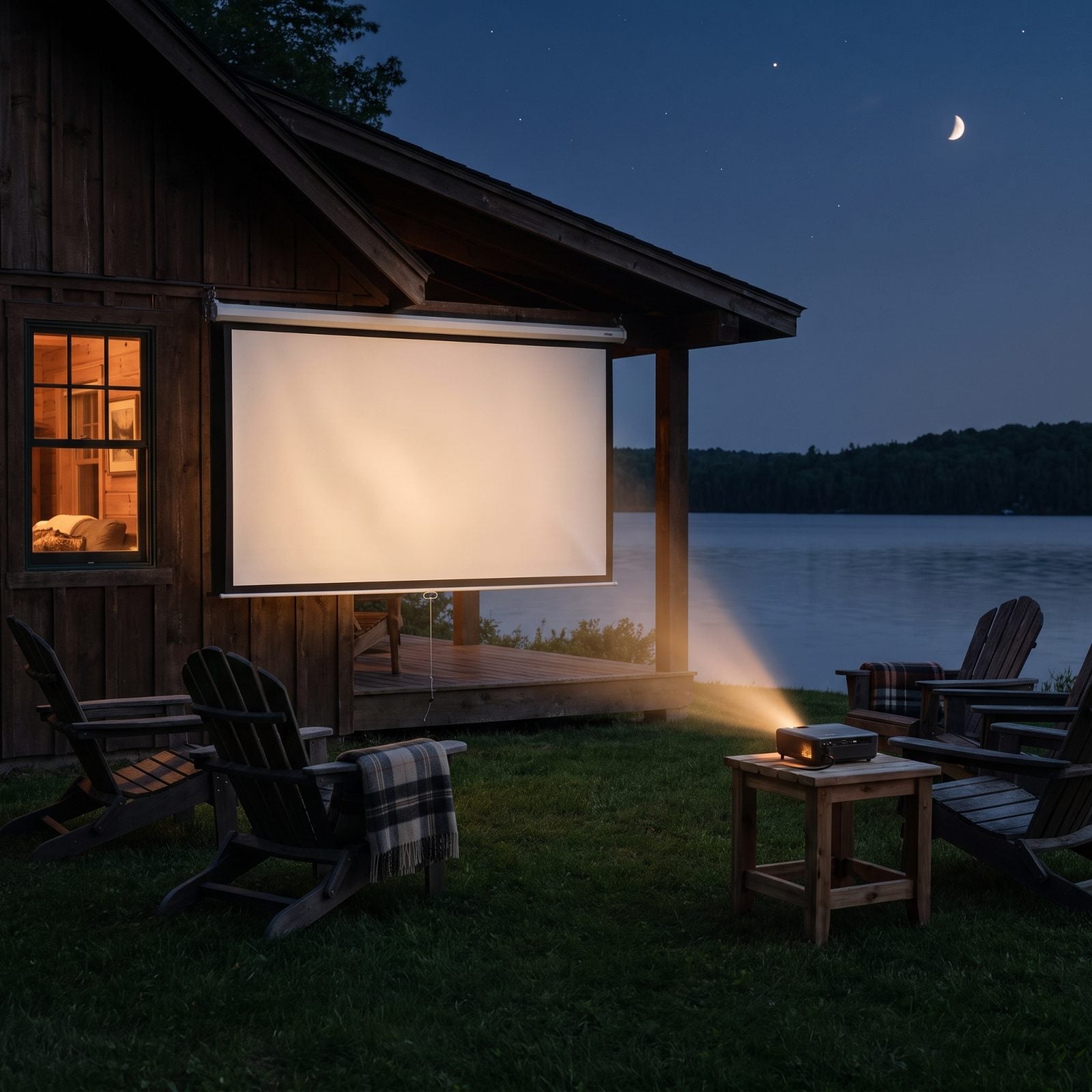
The problem with outdoor movie nights is setup. By the time you’ve found the screen in the garage, strung it up, untangled the cords, and leveled the projector, the kids are asleep and the mood’s gone. So the gear sits in a box and movie night never actually happens.
Mount a pull-down screen under the eaves, where it stays dry and out of the way. Tug it down, swing the chairs around from the lake to face it, aim the projector, and you’re watching something under the stars in two minutes flat. The lake makes a dark, open backdrop no indoor room can touch. Fireflies, a blanket, a movie, the water lapping just beyond the chairs. People remember a night like that longer than most vacations.
9. Dedicate One Drawer to Waterproof Cards and Travel Games
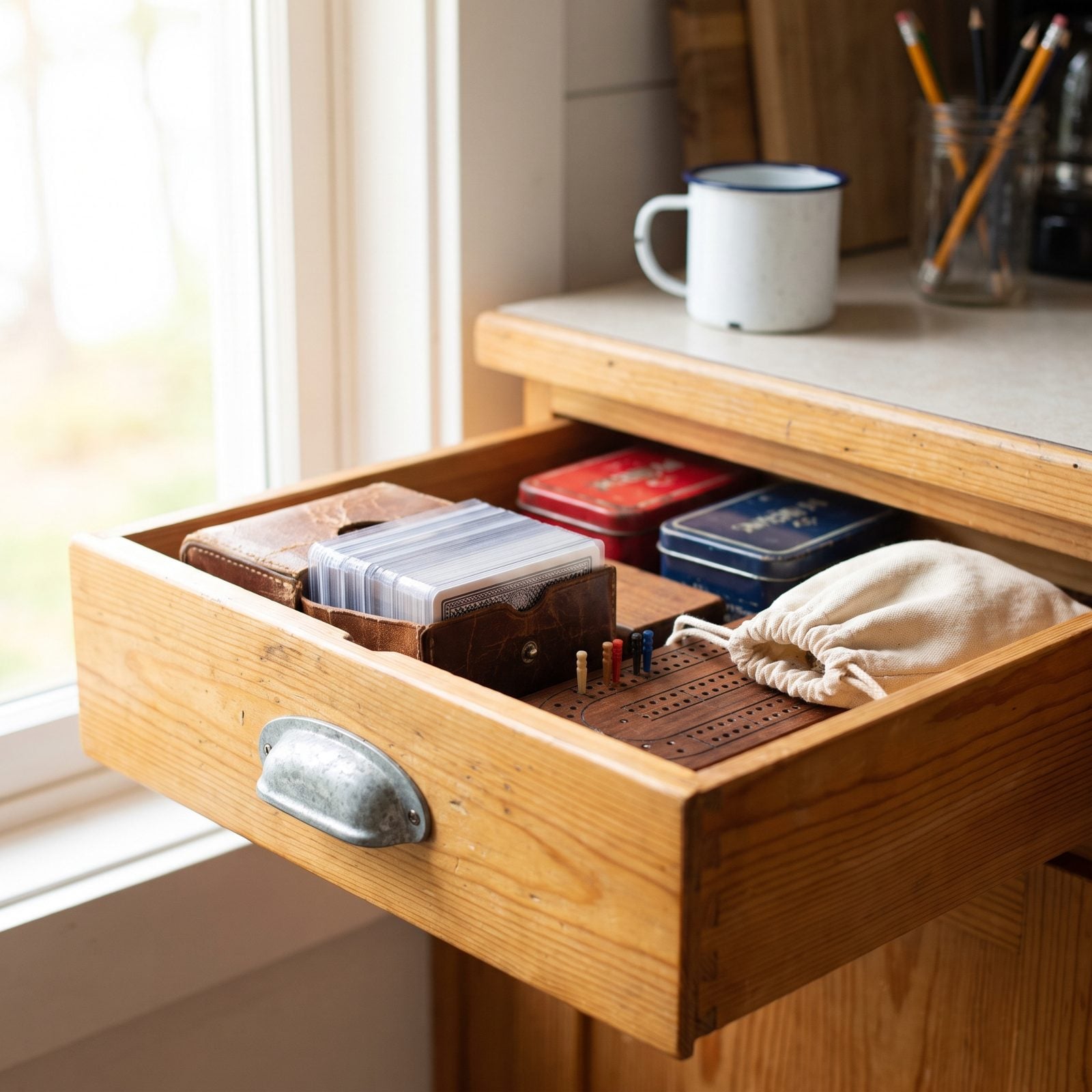
A deck of paper cards lasts about two weekends at a lake house before the humidity swells them, a stray splash warps them, and by August you’re playing hearts with a deck that fans like a half-eaten sandwich.
Waterproof plastic cards fix that for good. The real trick is giving them a home. One drawer — cards, a cribbage board, a couple of travel tins that shrug off wet hands and spilled lemonade. When the rain rolls in and the kids get restless, nobody has to hunt through three closets. You open the drawer and the afternoon takes care of itself.
8. Fill a Weatherproof Basket With Short Vacation Reads
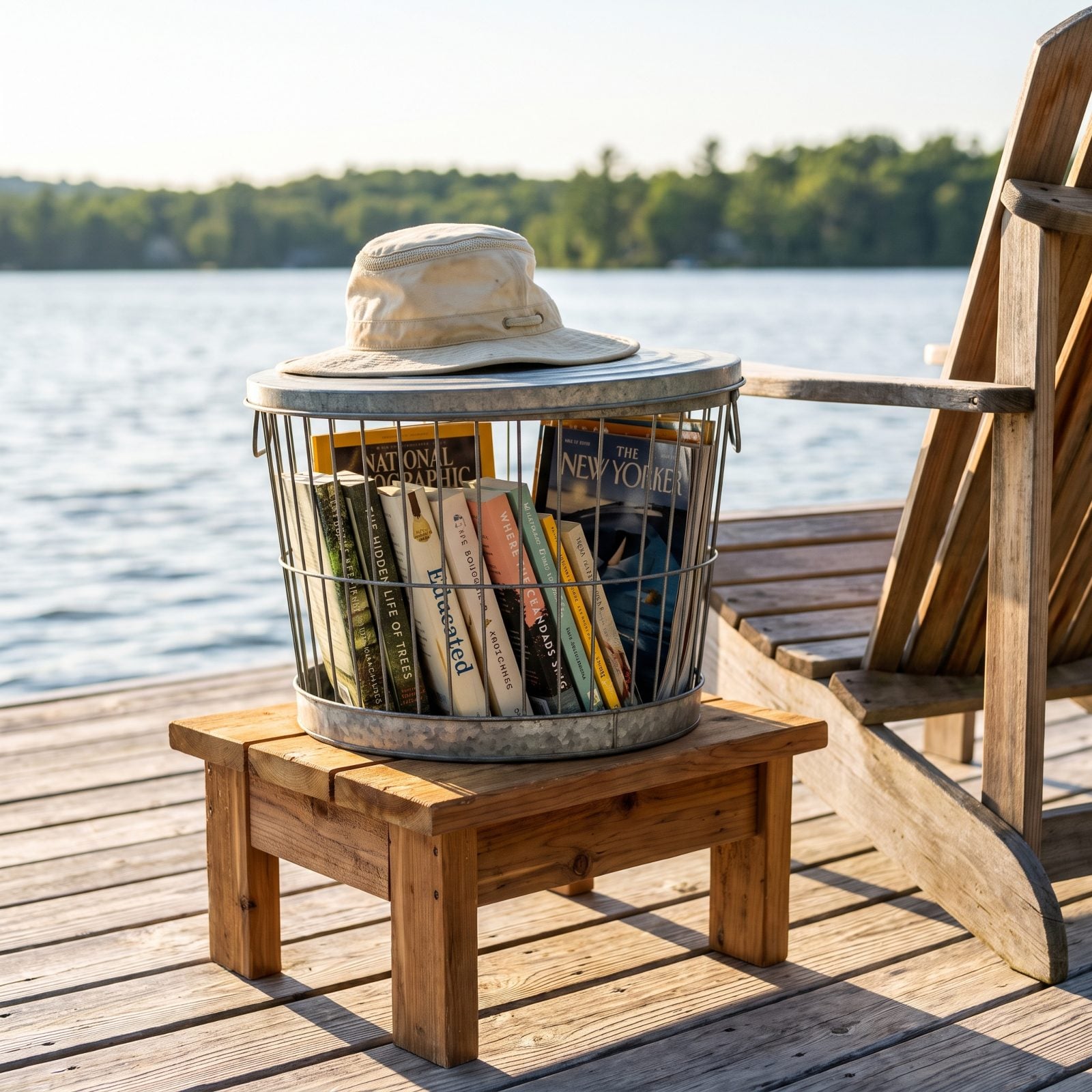
Nobody finishes a 600-page novel at the lake. You start it, the neighbor’s boat comes by, somebody wants to swim, and the book sits spine-up in the sand for three days.
Stock the basket with short things instead — story collections, slim mysteries, a field guide to local birds, a stack of old magazines you don’t mind getting splashed. Weatherproof means you leave it on the dock or the porch and quit fretting about dew. Someone who can pick up and put down in twenty-minute bursts actually reads. The thick hardcover just collects sunscreen fingerprints.
7. Give Day Guests Open Cubbies for Towels and Sandals
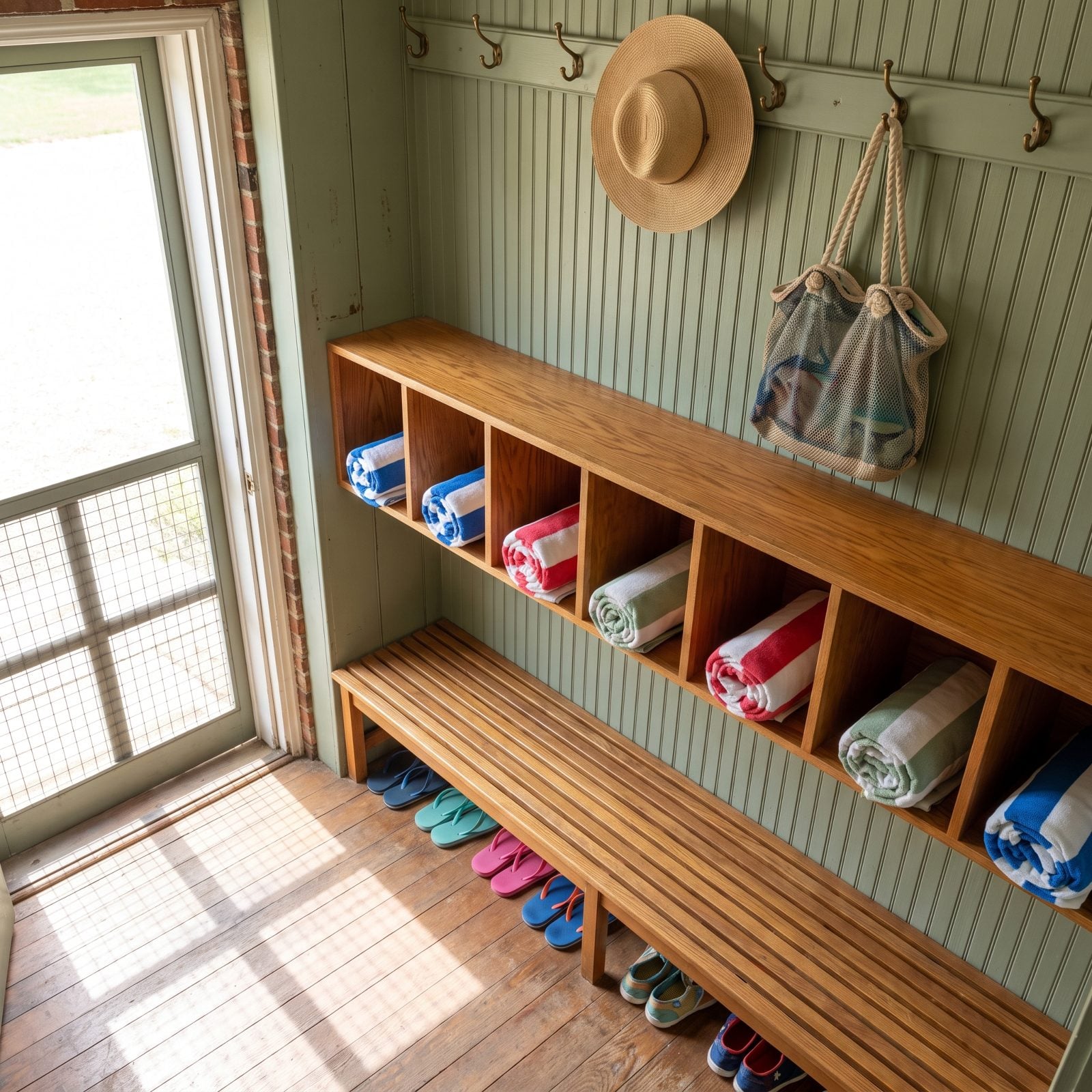
Open cubbies solve a problem no one warns you about: wet guests have nowhere to put their stuff.
Day visitors show up with a towel, a pair of sandals, maybe a swimsuit still dripping. Give them no landing spot and all of it ends up on your kitchen chairs or in a damp heap by the door. A simple cubby wall, one slot per person, keeps the chaos contained and lets folks grab their own things without digging through a shared pile.
Skip the doors and bins. Open fronts let everything breathe and dry, which matters when six towels come off the dock at once.
6. Turn One Entry Into a Dedicated Wet Zone
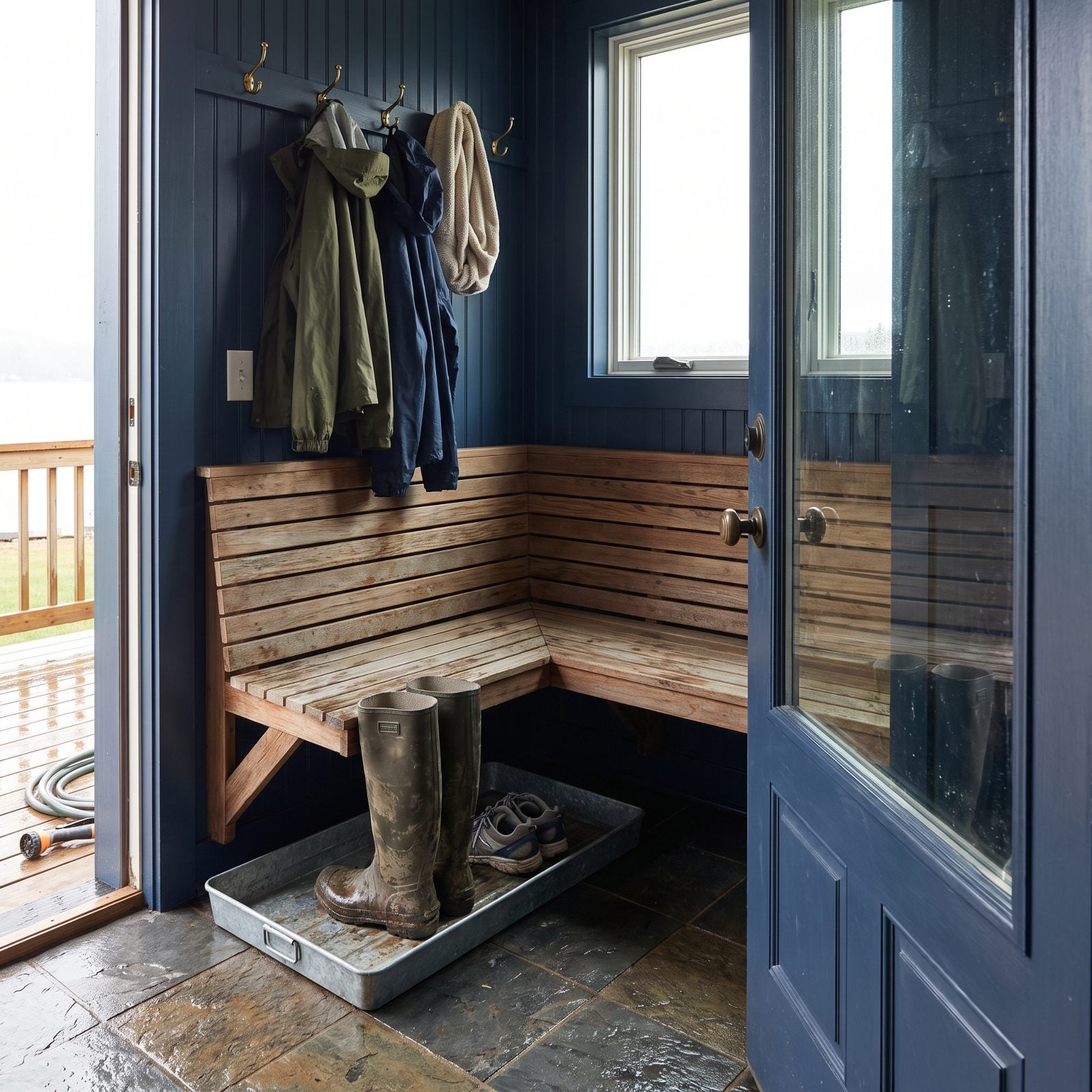
Lake life is wet life. Feet come in muddy, swimsuits drip, and the fishing gear smells like the lake because, well, it is the lake.
Pick your least-pretty entrance and commit it fully to the mess — sealed floor, a boot tray that catches runoff, hooks low enough for kids, a bench for peeling off waders. One room allowed to be damp so the rest of the house stays dry. Guests sort themselves out here, and you stop mopping a trail of lake water from the door to the bathroom six times a day.
5. Use a Dutch Door to Bring Lake Air Into the Kitchen
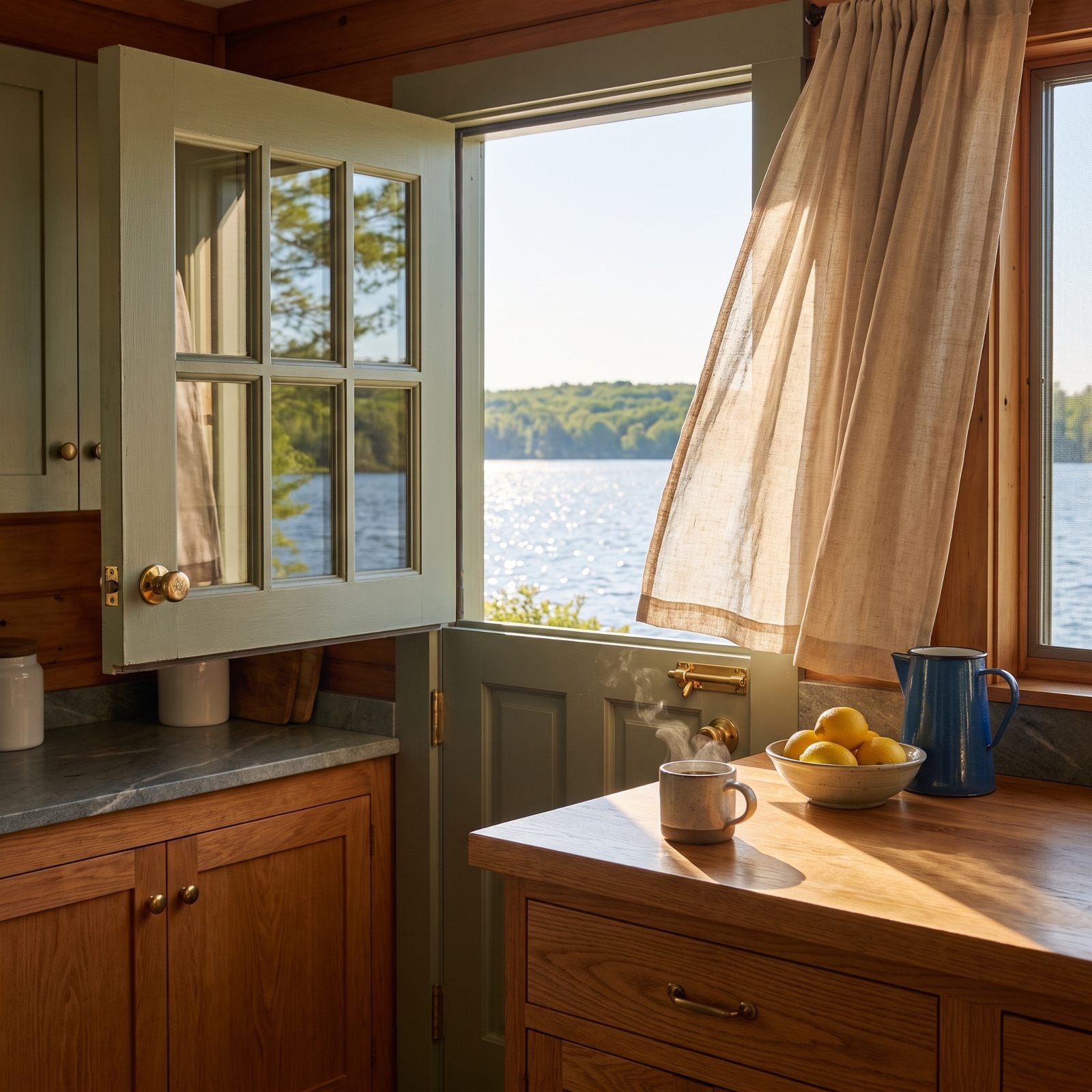
A Dutch door is the old farmhouse trick that happens to be built for the water. Open the top, keep the bottom shut, and the lake breeze pours over the counter without the dog wandering out or the mud wandering in.
The kitchen stops feeling walled off from the view that sold you on the place. You can hand a plate to someone on the porch over the closed half, hear the loons while you scrub dishes, and still keep a toddler from making a break for the dock.
We held out on these for years, figuring they were just cute. They are cute. They also work better than any window you’ll ever open.
4. Switch Off Overhead Lights After Sunset
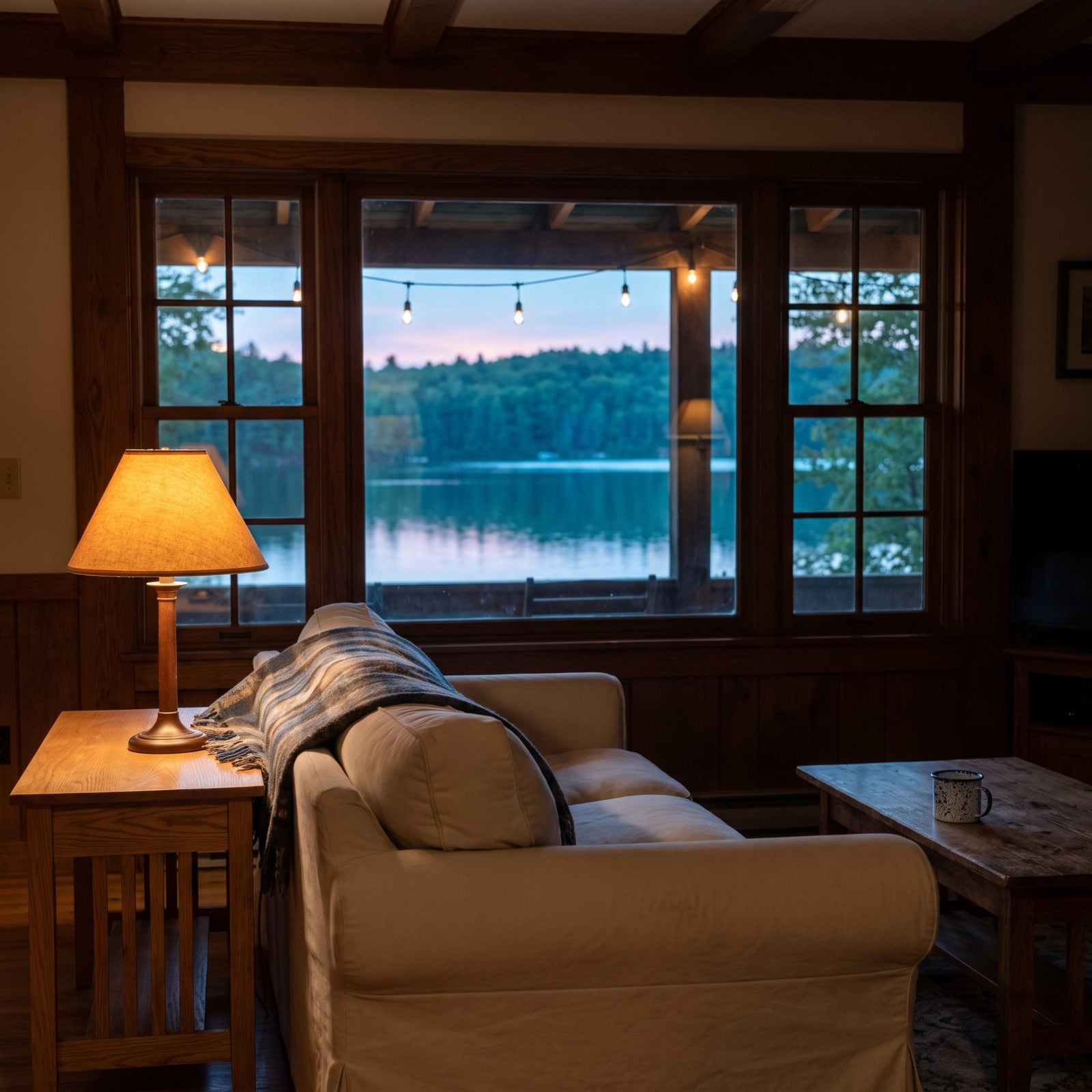
The ceiling fixture is the enemy of a good lake evening. It flattens the room, kills the view through the window, and makes the whole place feel like a dentist’s waiting area.
Flip it off once the sun drops. Reach for lamps, a string of soft bulbs on the porch, a candle on the table. Low light pulls the last of the sunset back into the room and lets your eyes relax after a day of water glare. People talk more. Nobody checks the time. And the lake outside the glass actually stays visible instead of turning into a black mirror that bounces your own kitchen back at you.
3. Leave One Fishing Rod Rigged for an After-Dinner Cast
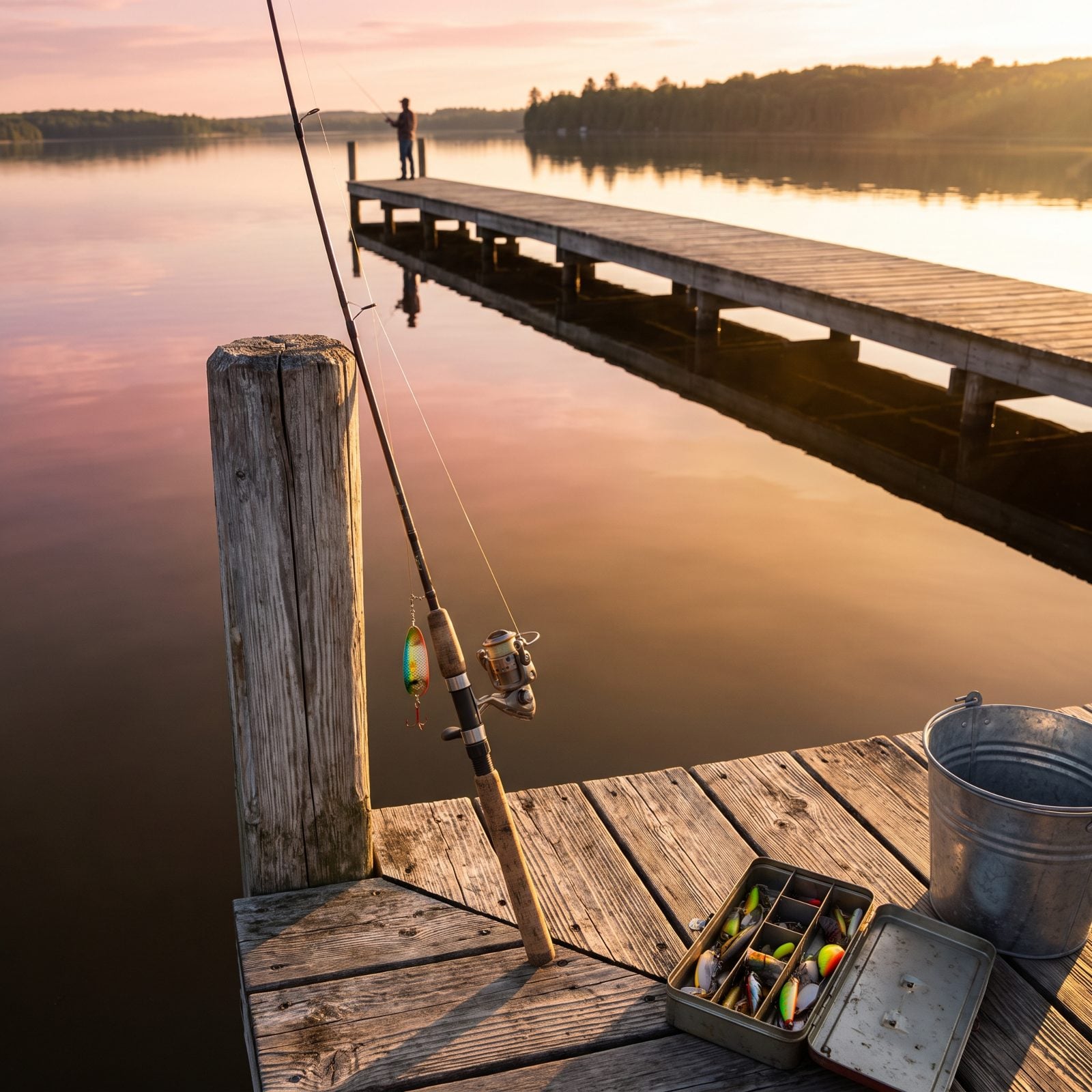
The fish bite at dusk and so does the urge to do nothing productive.
Keep one rod rigged and standing by the door — line already threaded, a lure you trust tied on. No tackle box archaeology, no re-spooling, no hunting for the right hook while the light fades. When dinner’s done and somebody drifts down toward the dock, the rod is just there. Grab it, walk fifty feet, send a few casts into the pink water. Half the time you catch nothing. That was never the point.
2. Hold Rainy-Day Picnics on the Screened Porch
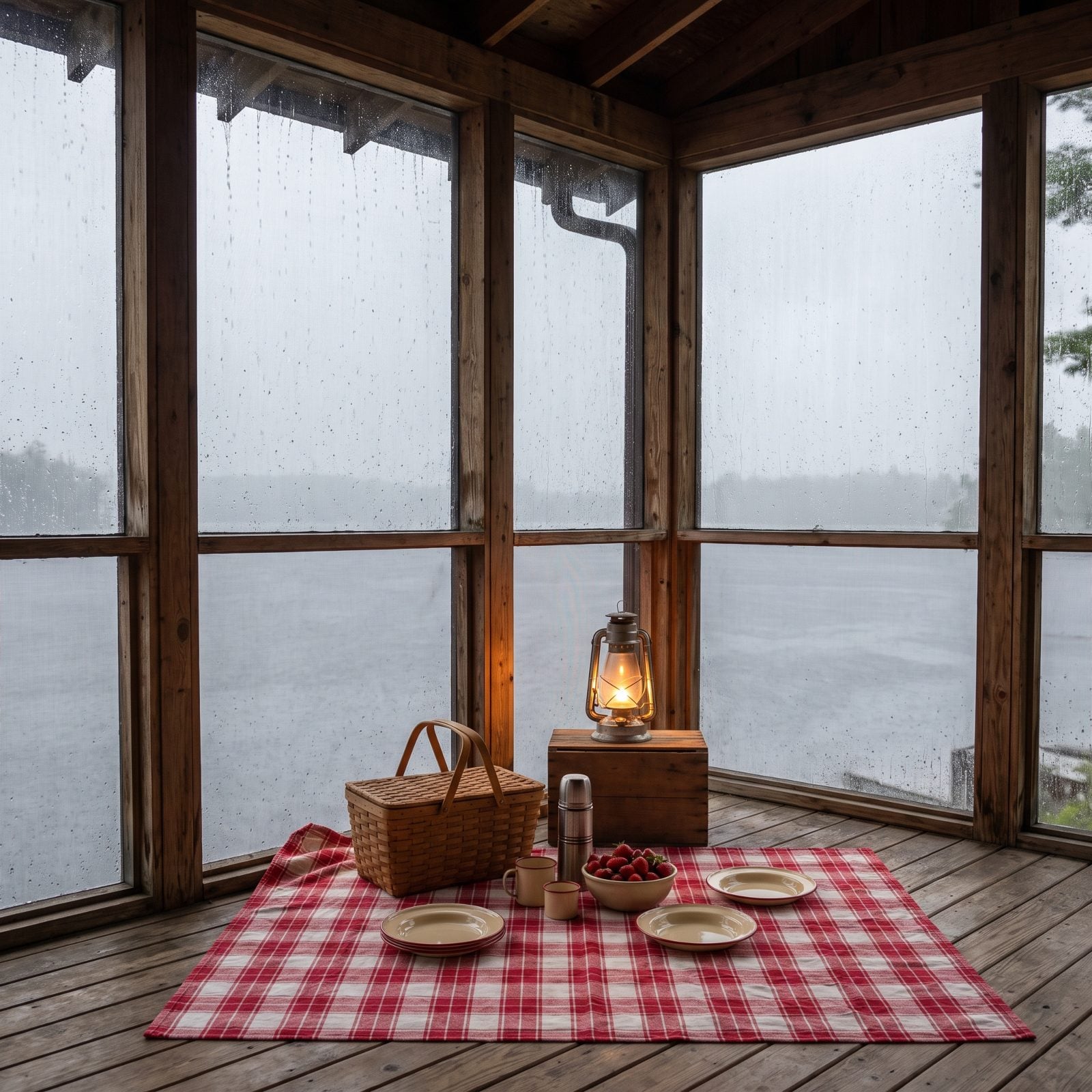
A rainy day at the lake doesn’t have to mean everyone staring at phones until the sun comes back. Spread a blanket on the screened porch floor and eat lunch down there like you would on a sandy beach.
Now the rain is the entertainment instead of the problem. You hear it on the roof, smell the wet pine, watch it dimple the lake, all without getting soaked. Kids who’d be whining indoors turn a floor picnic into the highlight of the trip. Keep an old cotton blanket folded in the porch chest for exactly this.
1. Use a Galvanized Stock Tank as an Ice Chest for Gatherings
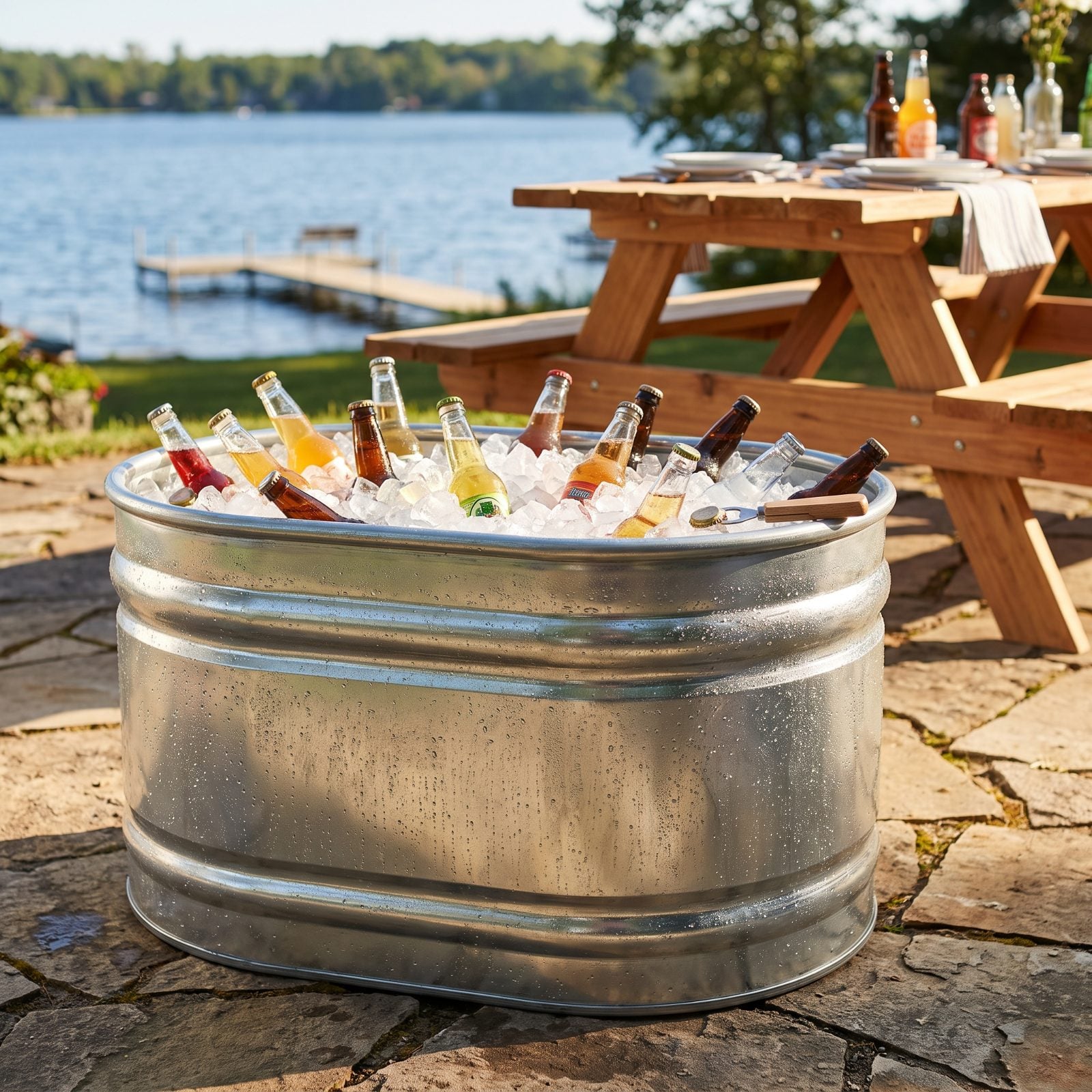
Forget the plastic cooler that cracks after two summers and never quite closes right.
A galvanized stock tank — the kind farms use to water cattle — holds a mountain of ice and a party’s worth of drinks in one open trough everyone can reach into. No lid to wrestle with wet hands. It looks right on a patio, drains easy when the ice melts, and lasts for decades because it was built to sit outside through everything.
Sizes run from a couple feet across up to something you could nearly swim in. Get one bigger than you think you need. You’ll fill it.