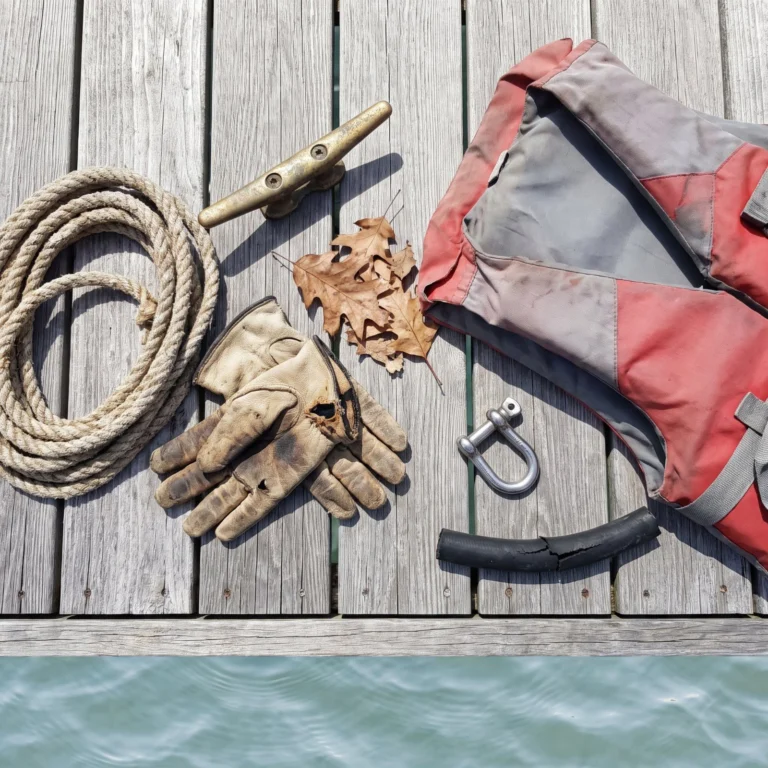
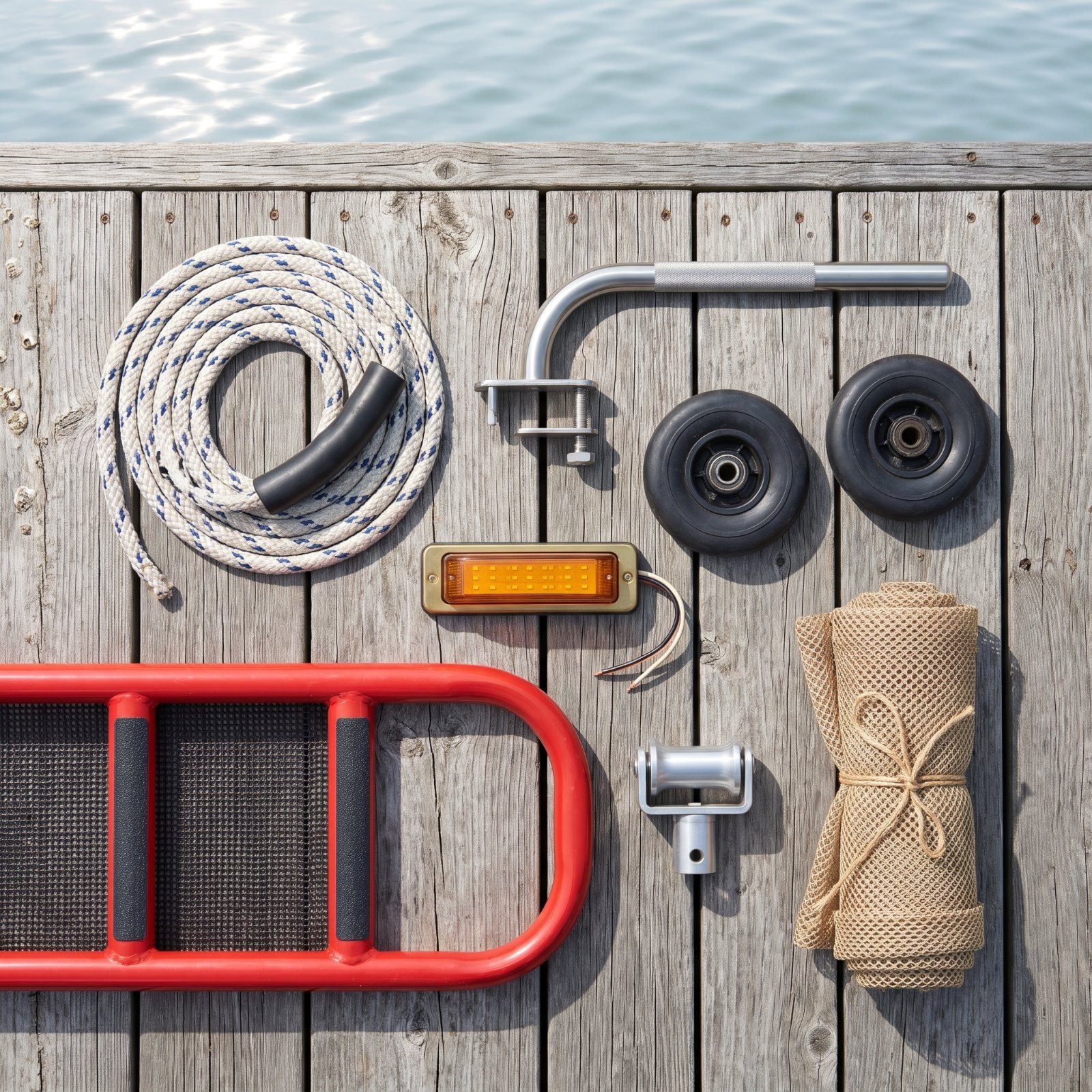
A dock tells on its owner. The ones that work look calm: lines that don’t snap, a ladder the dog can actually climb, a corner for the pool noodles that would otherwise drift to the neighbor’s beach. The ones that don’t work show it in bruised fenders and barked shins. None of the fixes below cost a new boat, and most bolt or clamp on in an afternoon. They solve the small, nagging problems that pile up over a summer — the bugs at the dock light, the boat kissing the dock at 2 a.m., the kayak nobody wants to lift. Small moves. Big difference by August.
Please note that some of the imagery in this article may have been enhanced with the assistance of AI.
44. Amber Downlights That Attract Fewer Insects
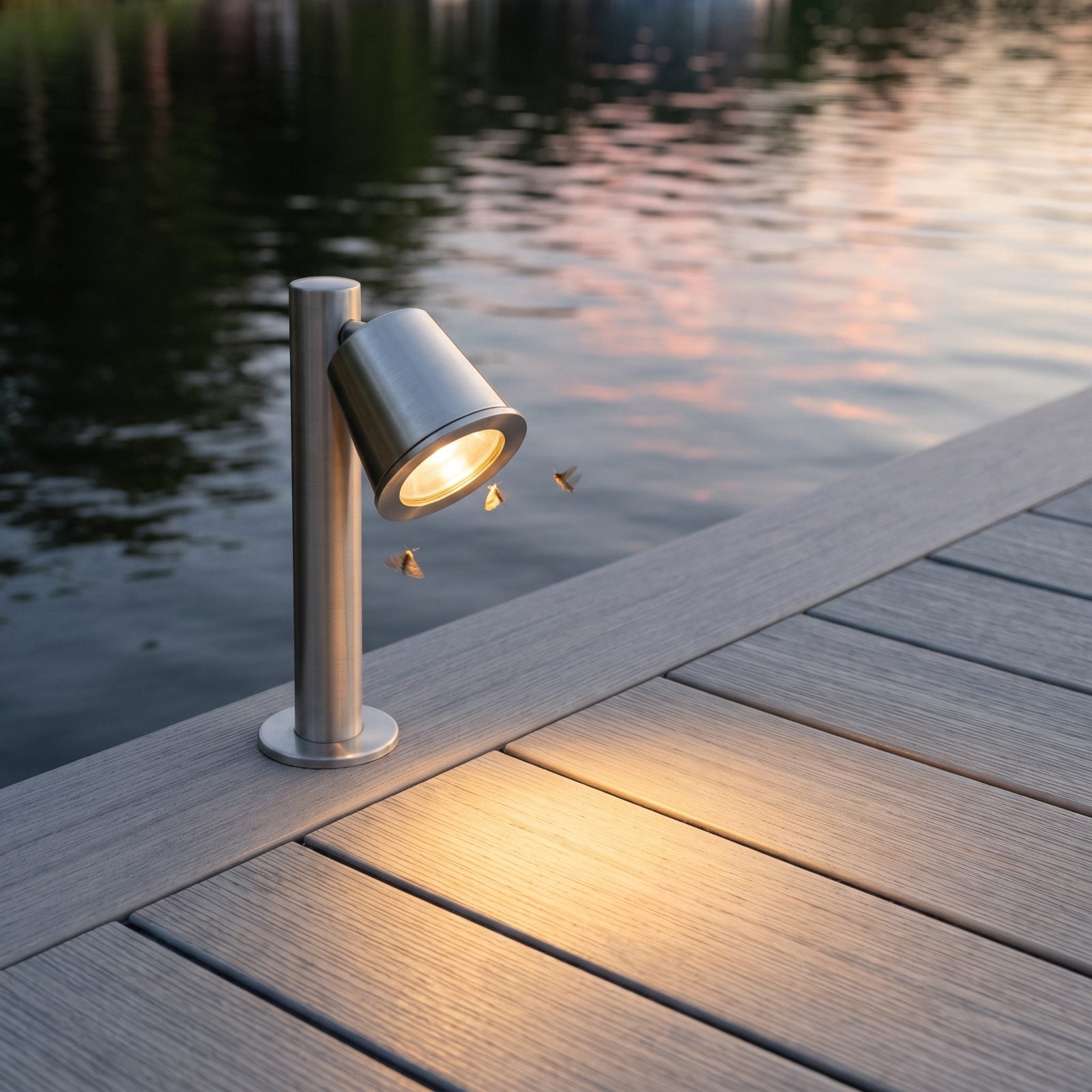
White dock lights are basically an all-you-can-eat sign for bugs. Insects navigate by shorter blue and white wavelengths, so a bright cool-white fixture pulls in clouds of mayflies and midges the second the sun drops. Swap to amber, somewhere around 1800 to 2200K, and most of that traffic thins out because the color sits where insect eyes barely register.
Aim it down, too. A downlight washes the planks so you can see where your feet are going, and it won’t throw a glare across the water that wrecks your night vision on the boat.
43. Dock-Line Snubbers That Cushion Sudden Pulls
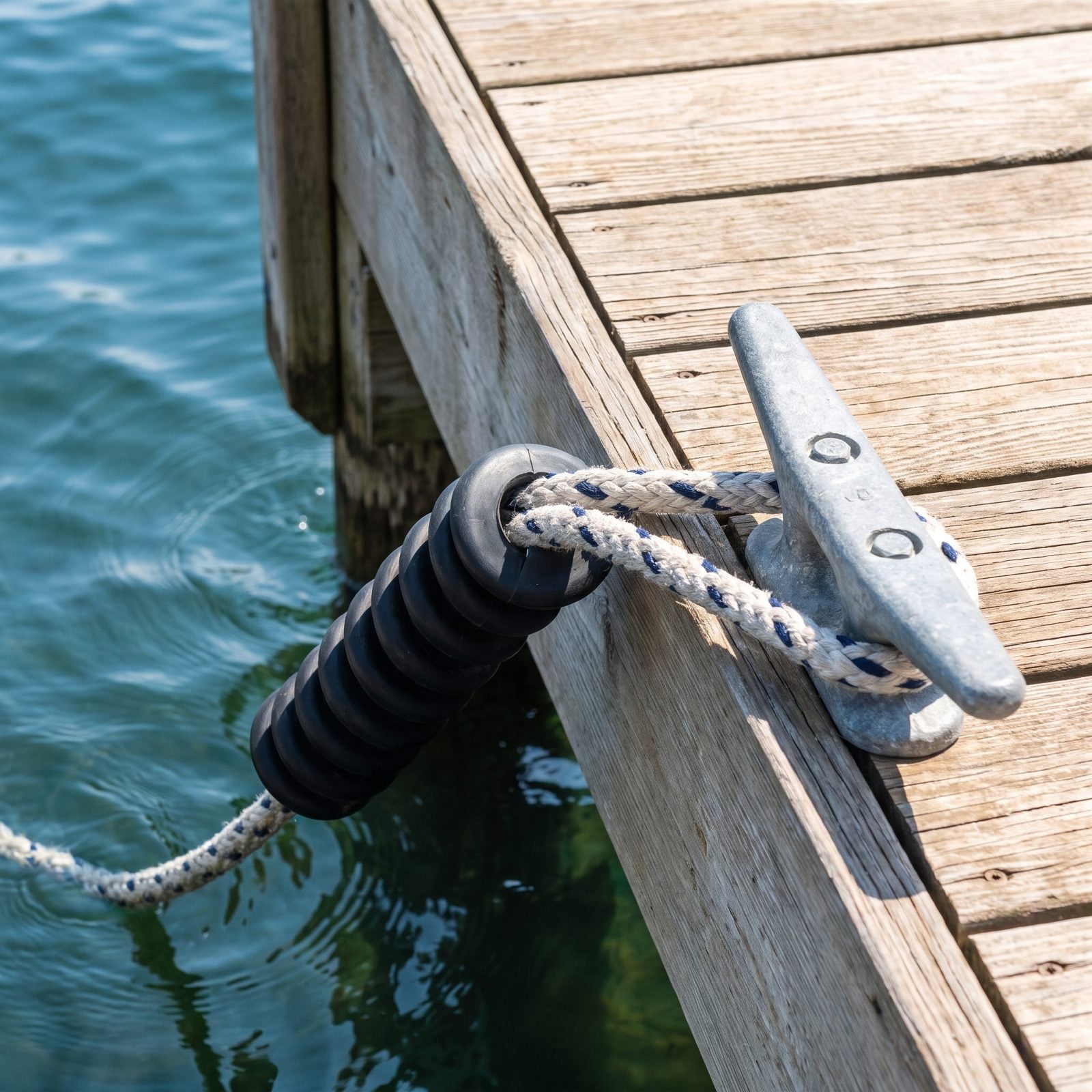
Nobody mentions this until a cleat rips loose: a taut dock line has almost no give. A passing wake, a sudden gust, and the full jolt goes straight into the hardware and the rope fibers. Snubbers — those spiral rubber or coiled sections you clip onto the line — stretch under load and take the snap out of it.
Quieter nights, too. Half the creaking and groaning at a dock is lines going tight and slack against the cleats, and the rubber eats that sound. Cheap, no tools, and it saves you from the slow fray that ends with a boat drifting off at 3 a.m.
42. Under-Deck Slings for Storing Kayaks Out of the Way
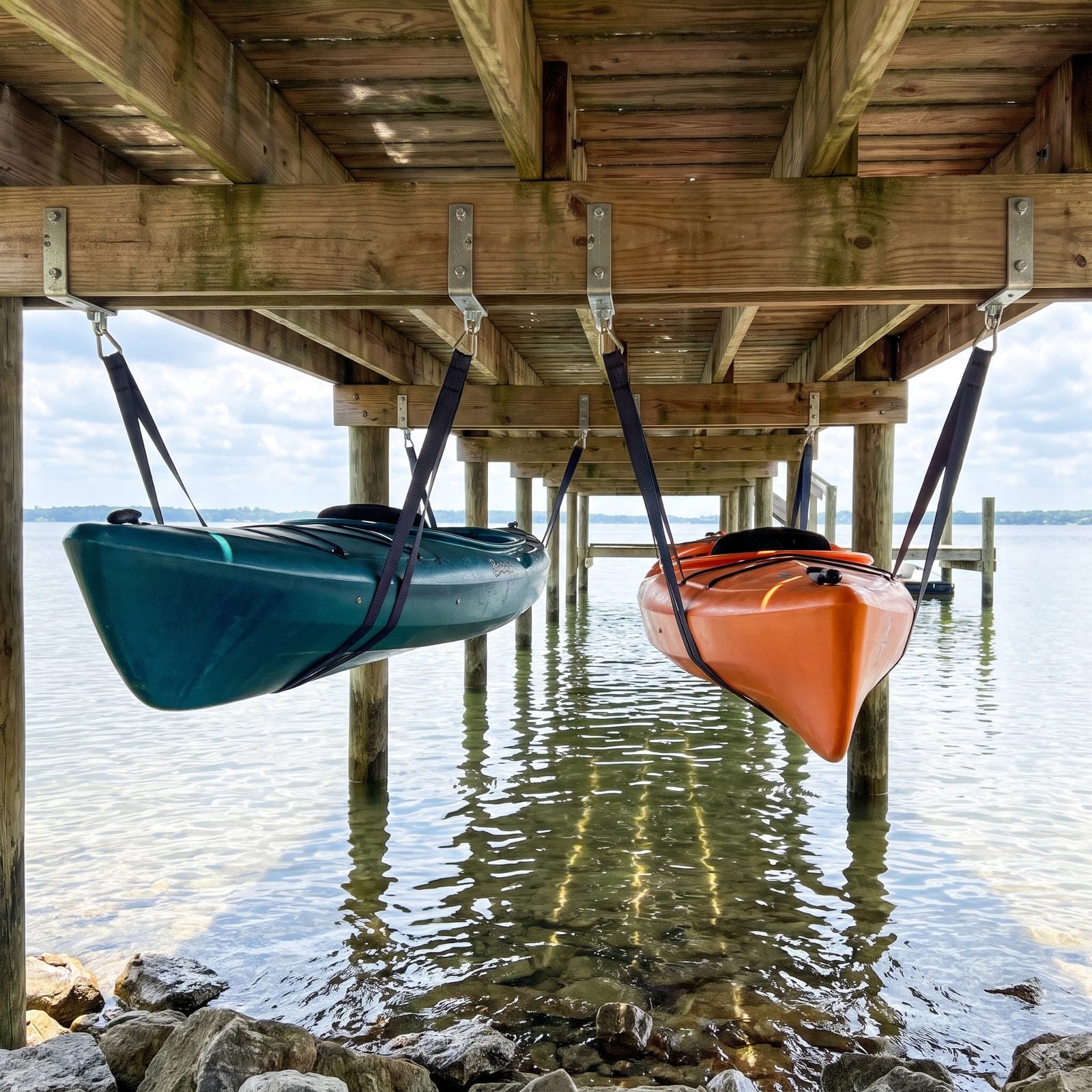
A kayak left flat on the dock is a toe-stubber that also sits in the sun cooking all day. Webbing slings bolted to the underside of the deck get it up off the planks and into the shade, hung belly-up so rainwater drains instead of pooling.
You free the walkway, keep UV off the hull, and stop stepping over the thing every time you head to the end of the dock. Two straps, a few lag bolts into solid joists, done. Just check your weight rating and hit a real beam, not the decking.
41. A Launch Roller That Makes Kayaks Easier to Handle
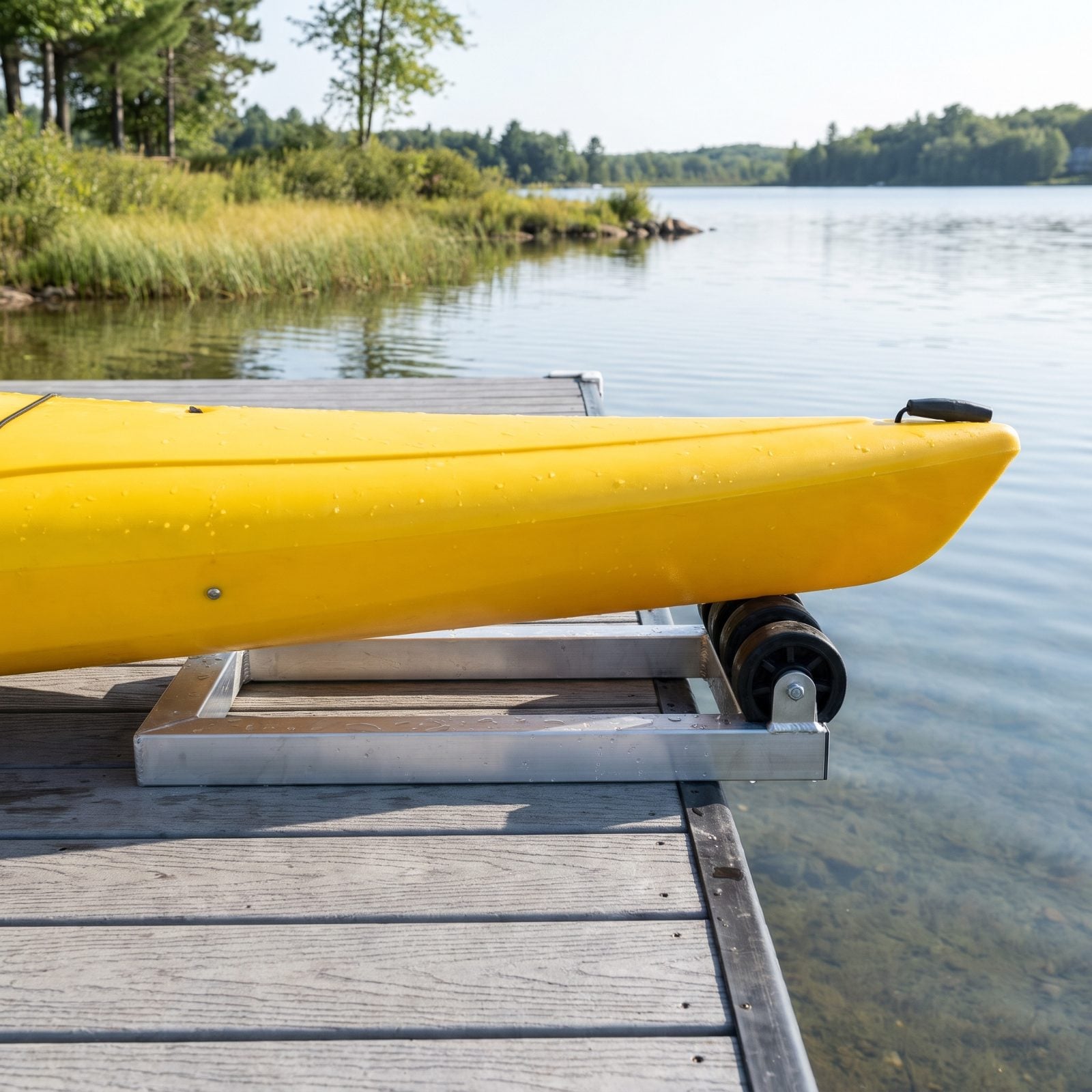
Lifting a loaded kayak over the dock edge is how people hurt their backs. A roller mounted at the lip lets you slide the hull out and glide it back in — no dead-lift, no scraped gelcoat.
Most are a short frame of rubber rollers you clamp or bolt to the edge. The payoff shows up most for anyone launching solo, or anyone whose knees have opinions about crouching on a wet dock. It also spares the hull bottom from the dragging that slowly sands away your keel line.
40. A Pet Escape Ladder With Grippy Treads
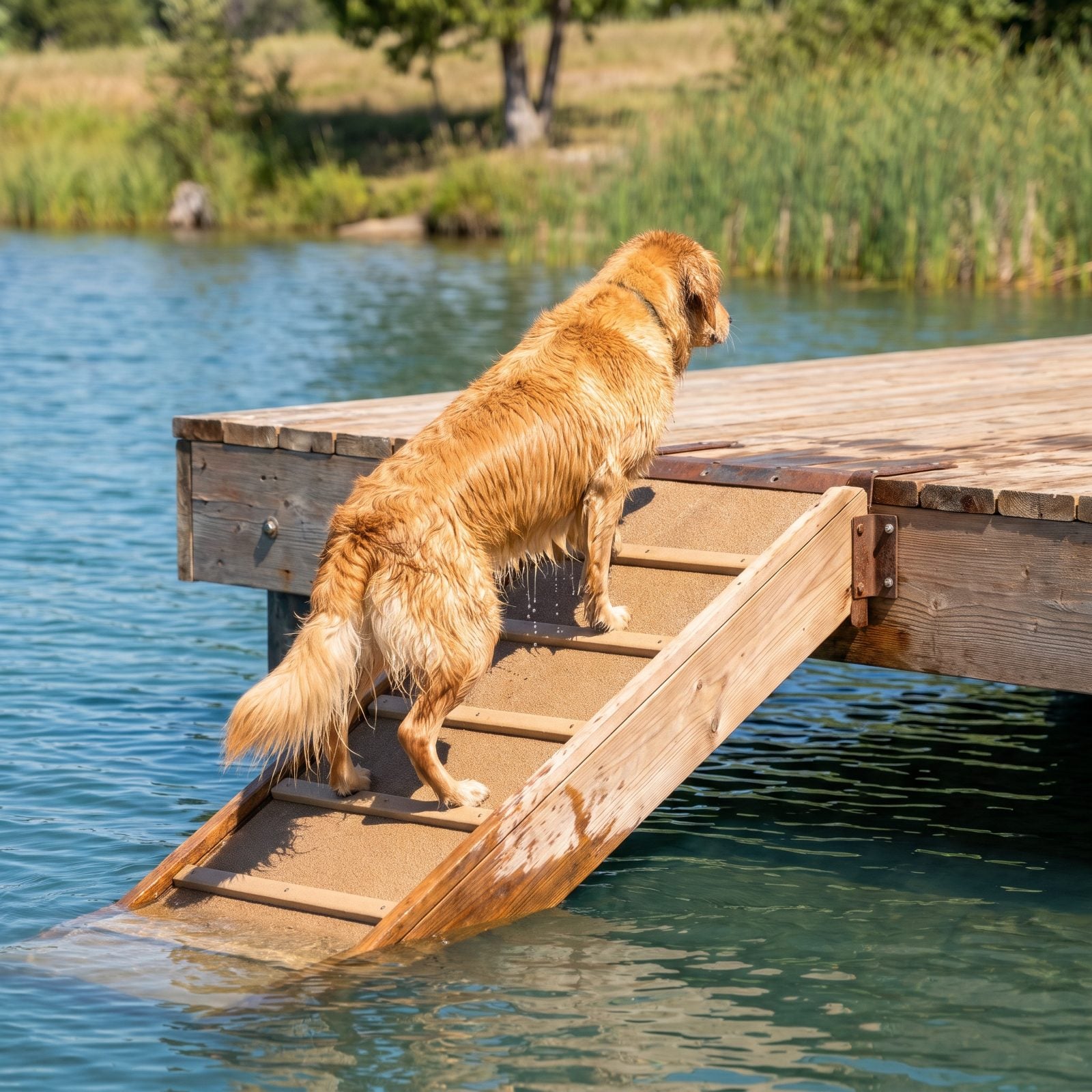
A dog that falls off a dock can’t climb a standard swim ladder. The rungs are too narrow and too slick for paws, and a panicking animal that can’t find an exit is genuinely dangerous. A pet ramp with wide, textured treads gives them a surface they can dig into and walk right up.
Angle matters. A gentle slope reads as a path; a steep one reads as a wall. Get your dog on it once on a calm day so it knows the ramp is there before the day it actually needs it.
39. Mooring Whips That Hold the Boat Away From the Dock
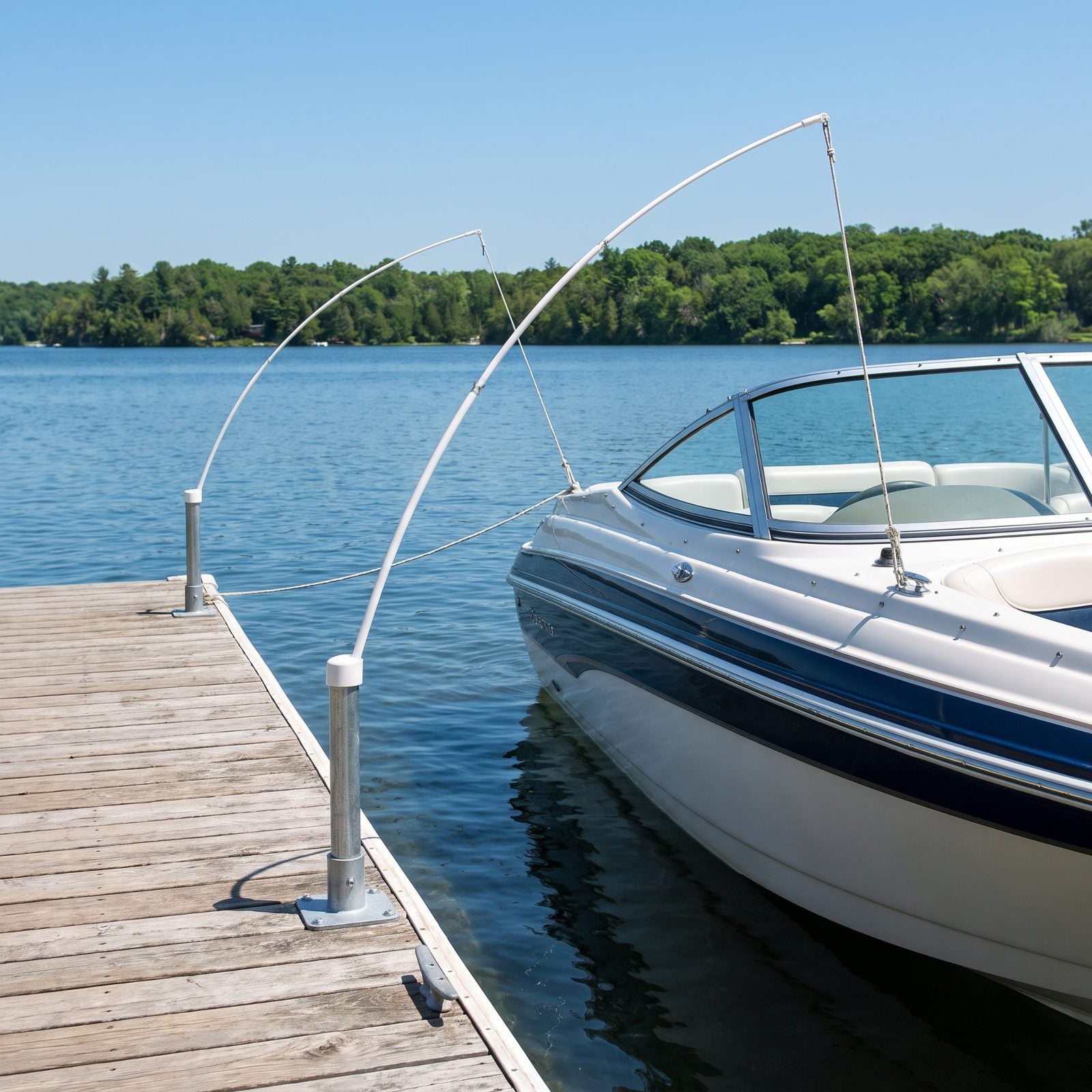
Fenders only do so much when a boat is pinned against a dock by wind-driven chop all night. Mooring whips are flexible fiberglass poles that mount to the dock and arc out over the water, with lines running to the boat, and their spring tension holds the hull off the dock face instead of letting it grind against it.
Less rub-rail wear, fewer scratched topsides, and a boat that doesn’t bang you awake at midnight. Size them to your boat’s length and weight. An undersized pair just flexes flat and does nothing — a frustrating way to learn the spec sheet matters.
38. Corner Docking Wheels That Guide Boats Into Slips
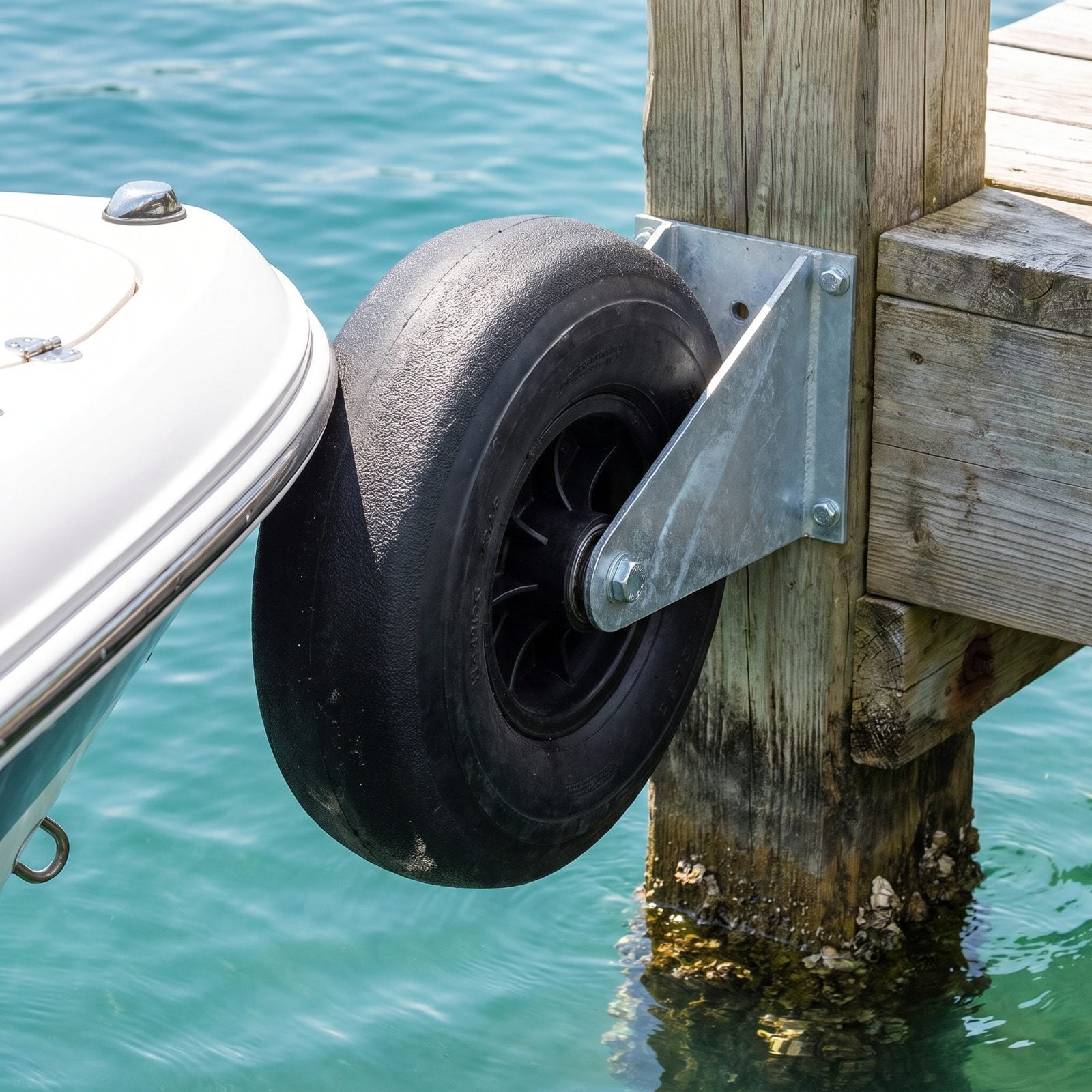
The dock corner is where docking goes wrong. Misjudge the wind, come in a touch hot, and the hull meets a hard edge. A rubber docking wheel on that corner post spins on contact and rolls the boat along instead of stopping it dead, so a clumsy approach becomes a nudge rather than a crunch.
Great for new boaters, tight slips, and days when a crosswind refuses to cooperate. Mount it so the widest point sits where your hull naturally kisses the corner — not above or below the waterline you actually dock at.
37. A Clamp-On Grab Rail Positioned at Water Level
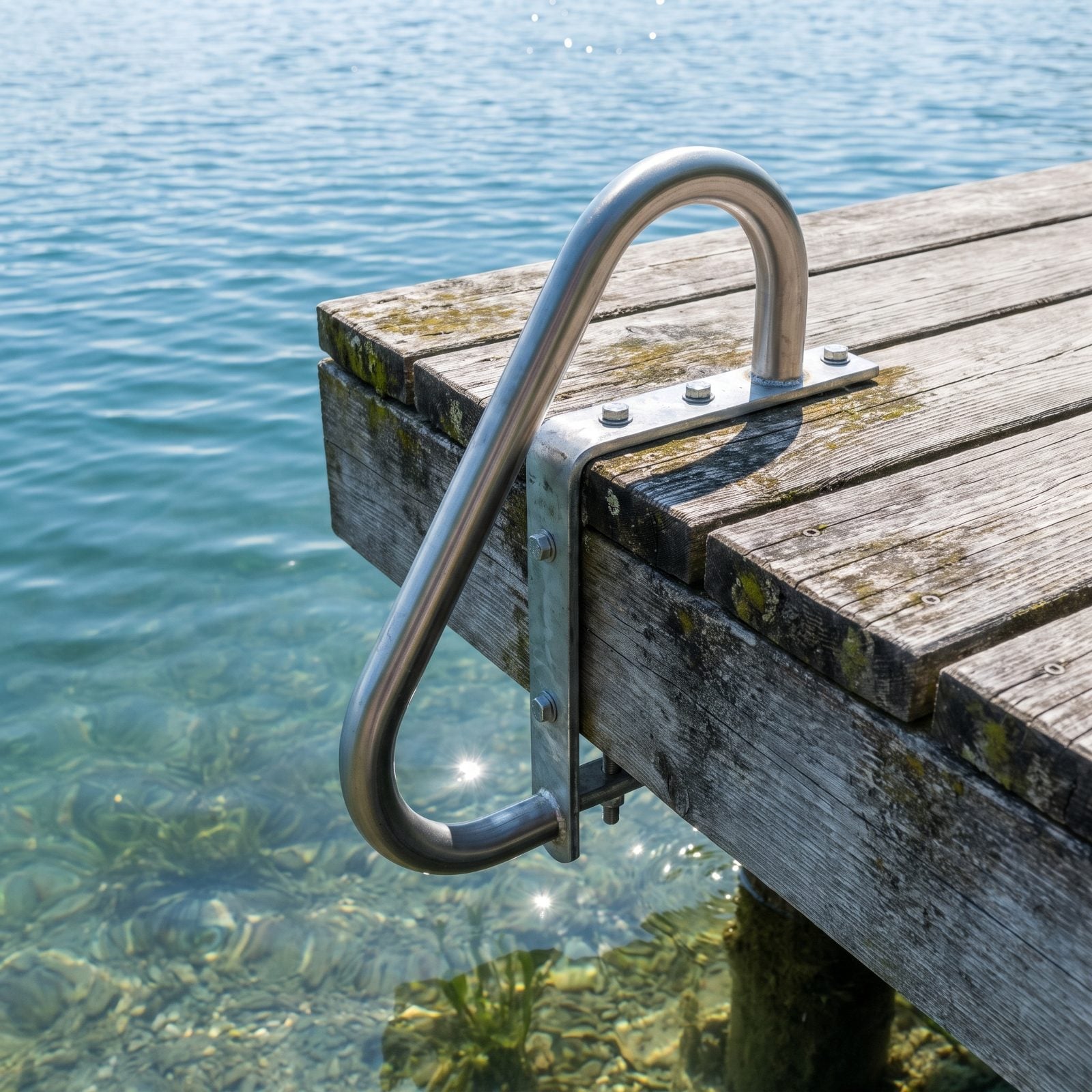
Climbing out of the water is the moment people slip. Wet hands, a high dock edge, nothing to grab but a splintery board. A stainless grab rail bolted to the edge and reaching down toward the waterline gives a real handhold right where swimmers need to pull up and over.
It earns its keep with kids, older swimmers, and anyone hauling themselves up after a long float. An L-shaped mounting plate bolted through the deck boards and into the side beam holds it firmly in place, so it can be added to most dock edges and stays solid through the season.
36. A Ventilated Locker That Lets Life Jackets Dry
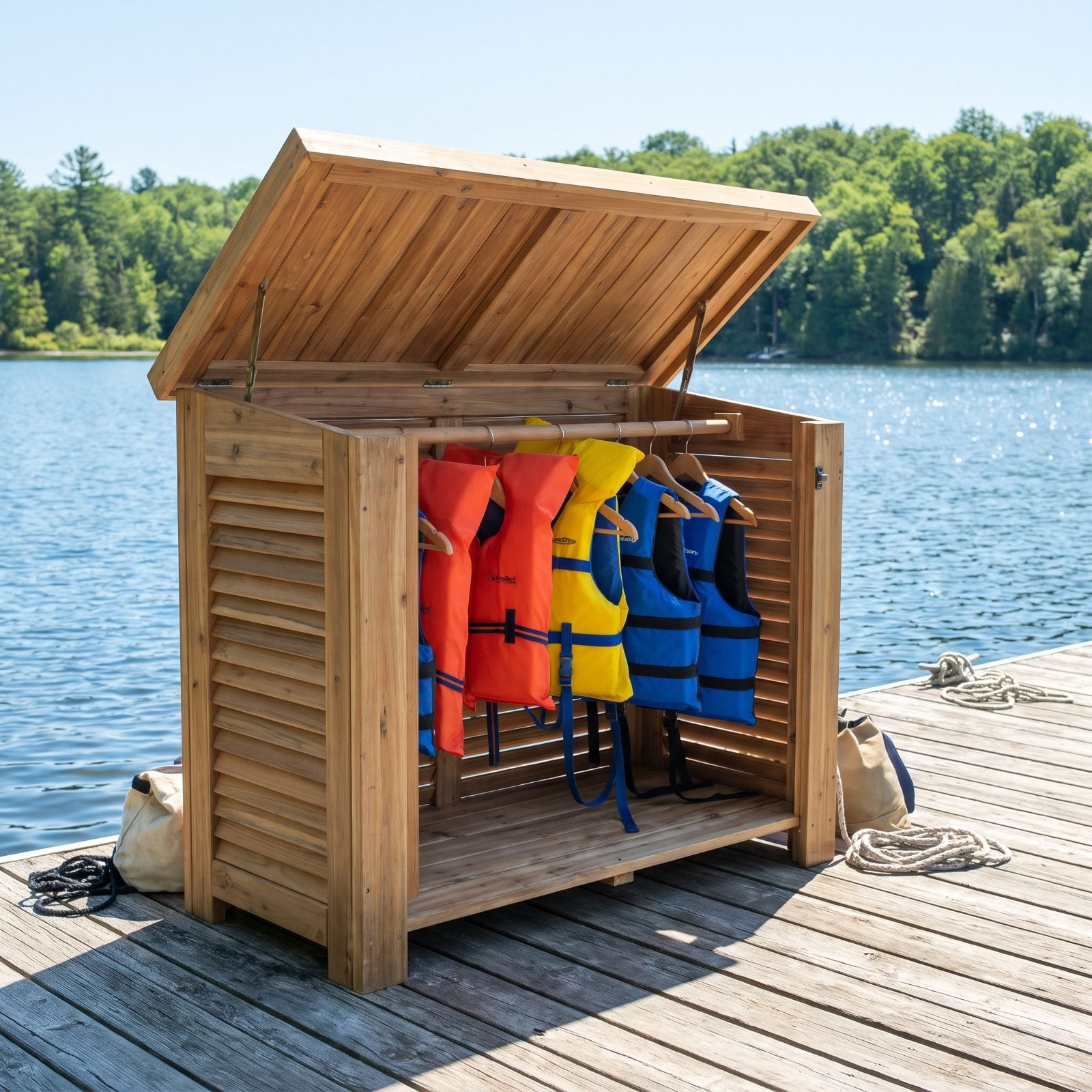
A life jacket stuffed wet into a sealed bin comes out smelling like a swamp, and over time the trapped damp breaks down the foam and fabric that keep it afloat. A ventilated locker, louvered or mesh-sided, lets air move through so the jackets actually dry between swims.
Dry gear lasts longer and people actually wear it, because nobody wants to zip into a clammy, mildewed vest. Keep it near the dock entrance so grabbing a PFD is the easy default, not a trek back to the shed. A dry, handy jacket is a worn jacket.
35. A Floating Toy Corral for Balls and Small Inflatables
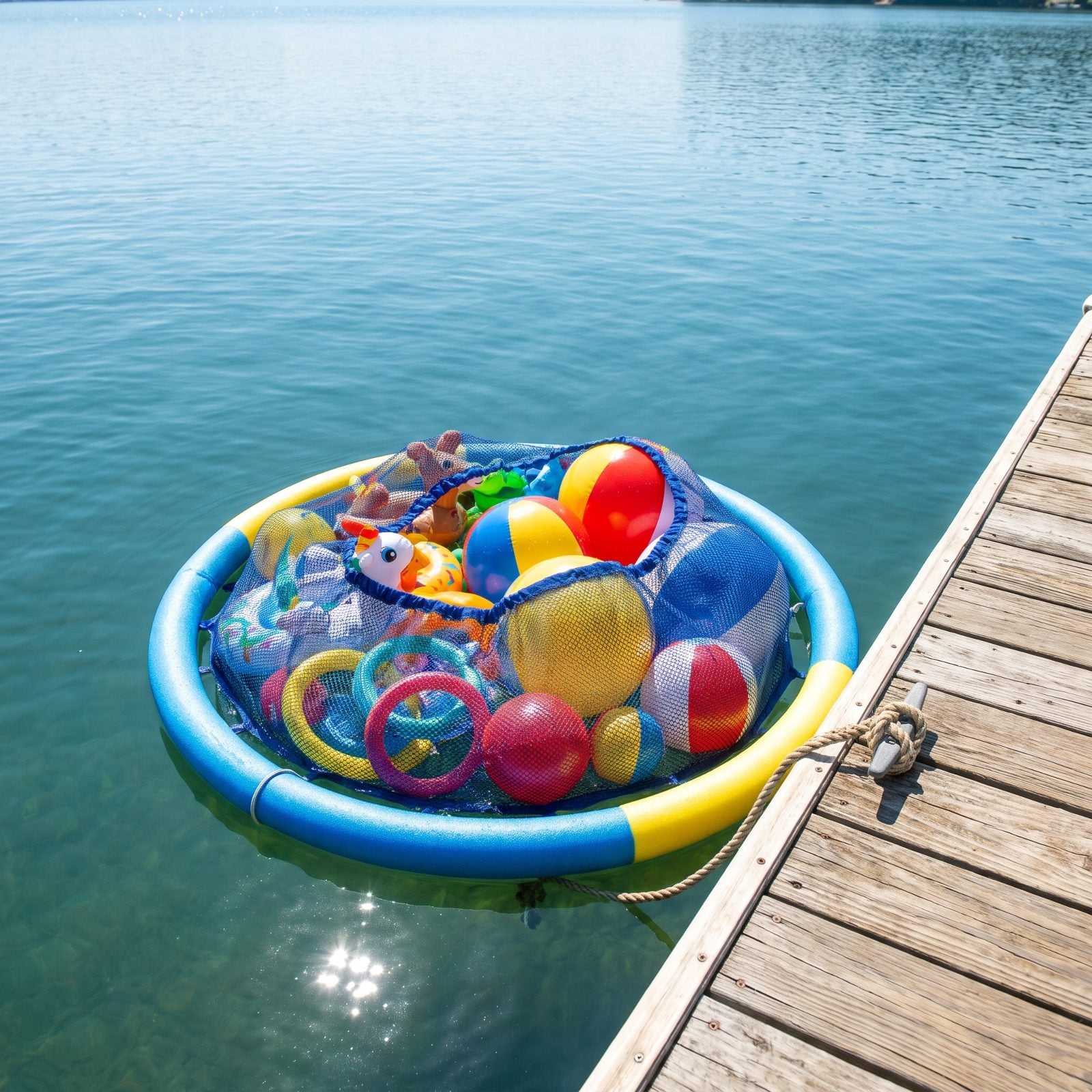
Pool toys have one job and it’s escaping. Balls, noodles, little inflatables — they drift off on the first breeze and wind up at the neighbor’s or snagged in the weeds. A floating mesh corral tethered to the dock pens them in on the water surface, so they’re there when the kids want them and out of the way when they don’t.
It also keeps the dock itself clear. No more slalom around deflated flamingos on the walk to the boat. Small thing, sure, but it’s the difference between a tidy dock and a floating yard sale.
34. A Recessed Fish Ruler Built Into the Dock Edge
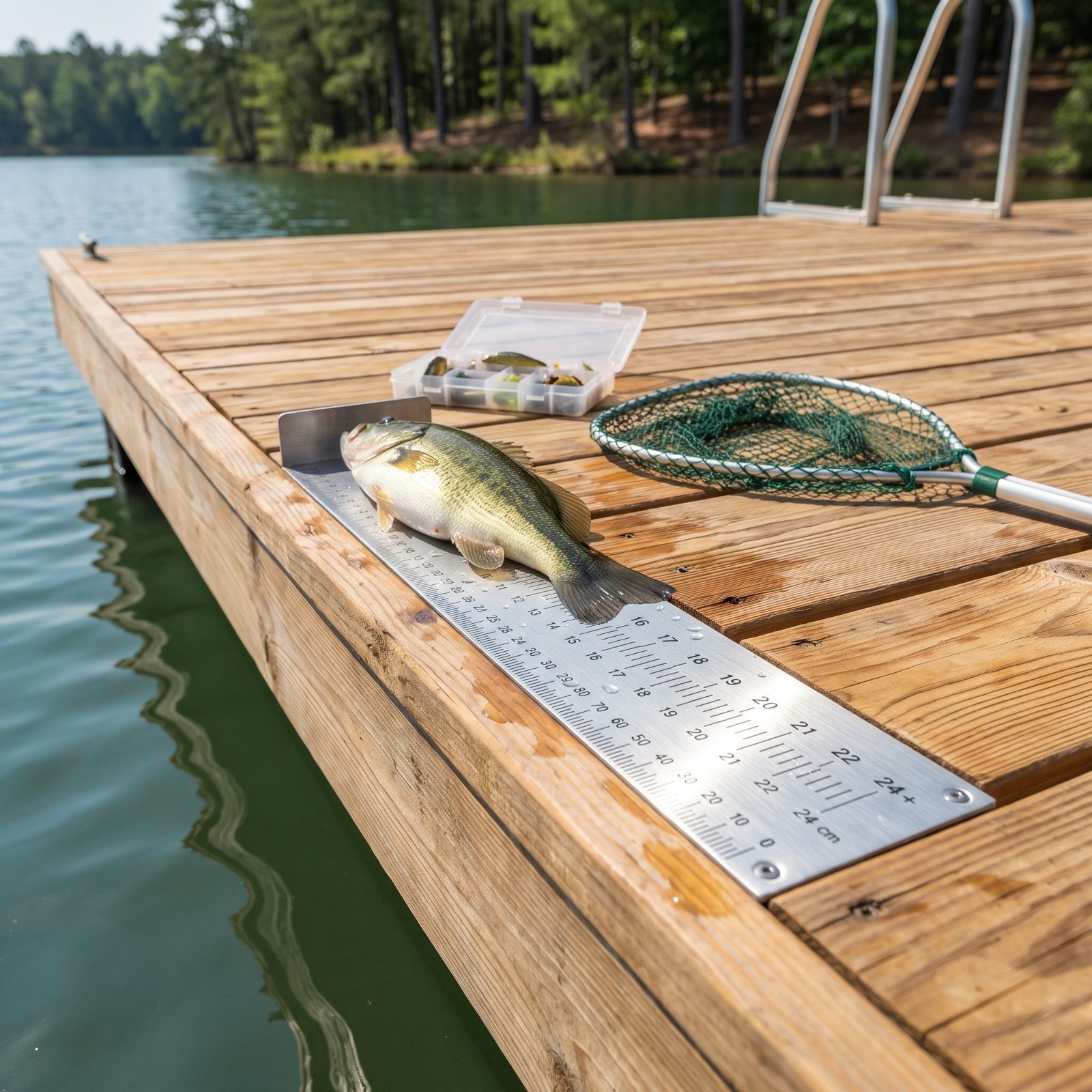
You’ve already lost this argument. The one where somebody swears the walleye was “easily twenty inches” and nobody can prove otherwise. A ruler screwed right onto the dock boards ends it — no fumbling for a tape measure with wet hands, no guessing, no fish flopping off a slick cutting board while you dig through the tackle box.
Just remember the fish has to start at the zero end, tail fin and all. A bass resting partway up the strip, with its tail lost against the metal, isn’t being measured yet. This one is a metal plate screwed down on top of the decking, so mind your toes on its raised edge and screw heads. But the real value is legal, not bragging. Slot and length limits vary by state and even by lake, and a built-in ruler keeps you honest before you drop a short fish in the bucket.
33. A Quick-Connect Sprayer on a Retractable Hose Reel
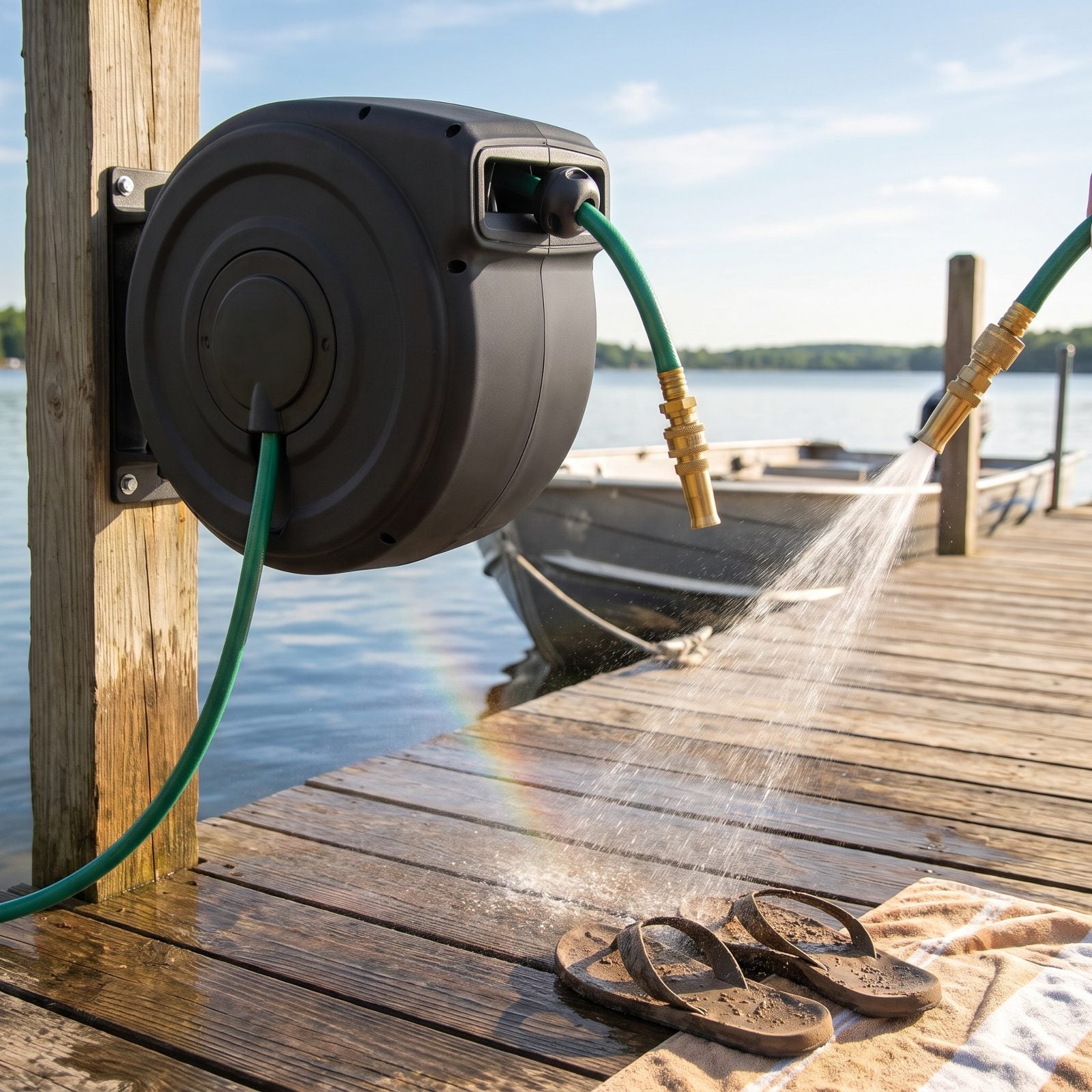
Sand gets everywhere — in the boat, on the bench, ground into the deck boards until the whole dock feels like a cat’s litter box by August. A retractable reel mounted to a post fixes the rinse problem without the tangle of a hose coiled in the grass tripping everyone who walks by.
The quick-connect fitting is the part that earns its keep. Swap from a sprayer to a fill wand for the cooler to a nozzle for washing fish guts off the cleaning board in two seconds flat. Buy a reel rated for outdoor and freeze cycles if you leave it mounted through winter. Otherwise the spring mechanism gives up and the hose hangs there limp.
32. A Secured Cooler Slide-Out Beneath the Bench
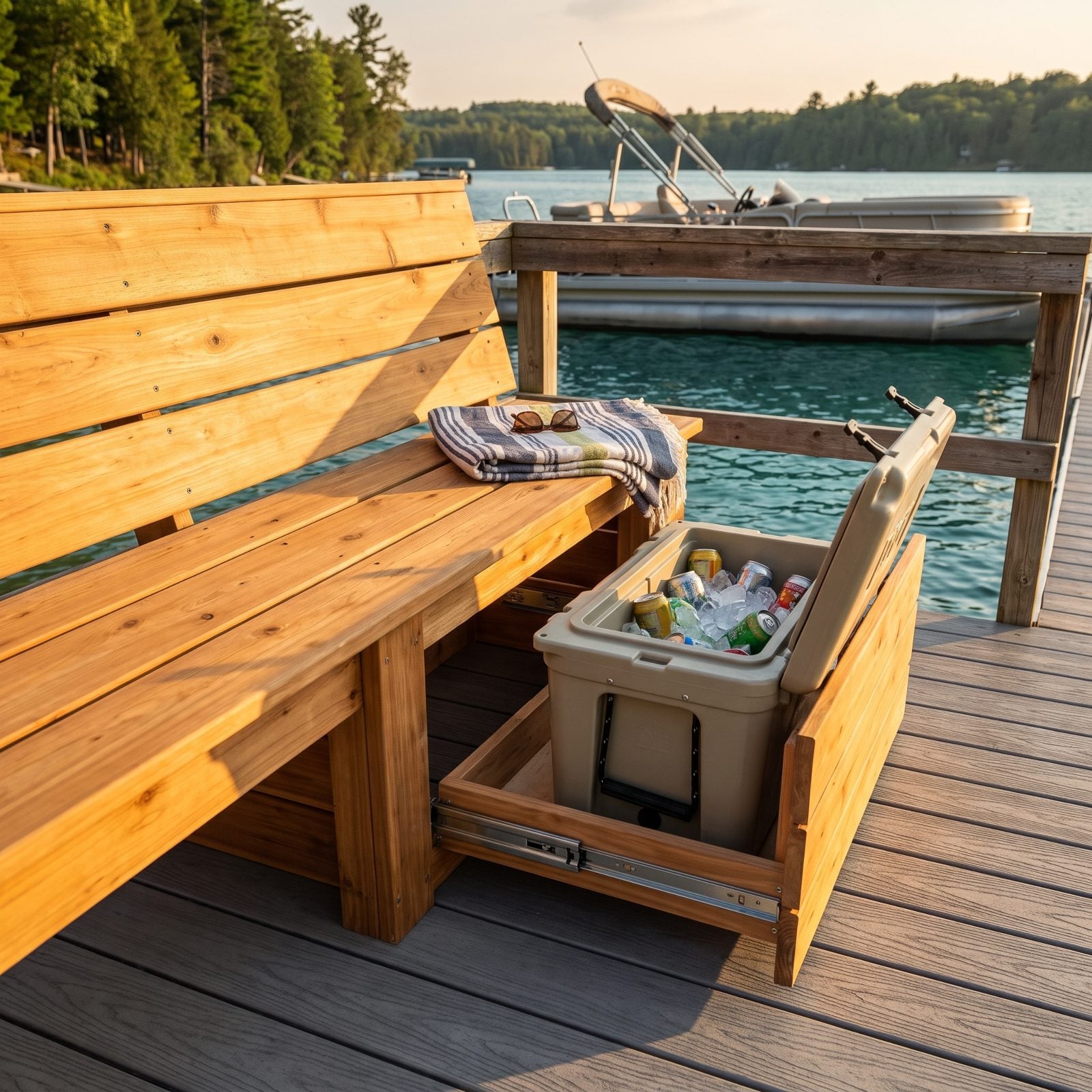
A cooler that doesn’t walk off the dock is a small miracle. Tuck one on heavy stainless slides under the bench and it stays put in a boat wake, stays out of the sun, and stops being the thing everyone trips over on the way to the ladder.
The detail nobody mentions is drainage. Melted ice has to go somewhere, so angle the slide-out a touch toward the water or drill a weep hole, or you’re hauling a sloshing tub out every evening. Marine drawer slides cost more than the hardware-store kind, but salt and splash chew through cheap steel in a season. For a freshwater lake you can usually get away with coated slides, which is friendlier on the wallet.
31. Flush-Mount Sockets for a Removable Hammock Stand
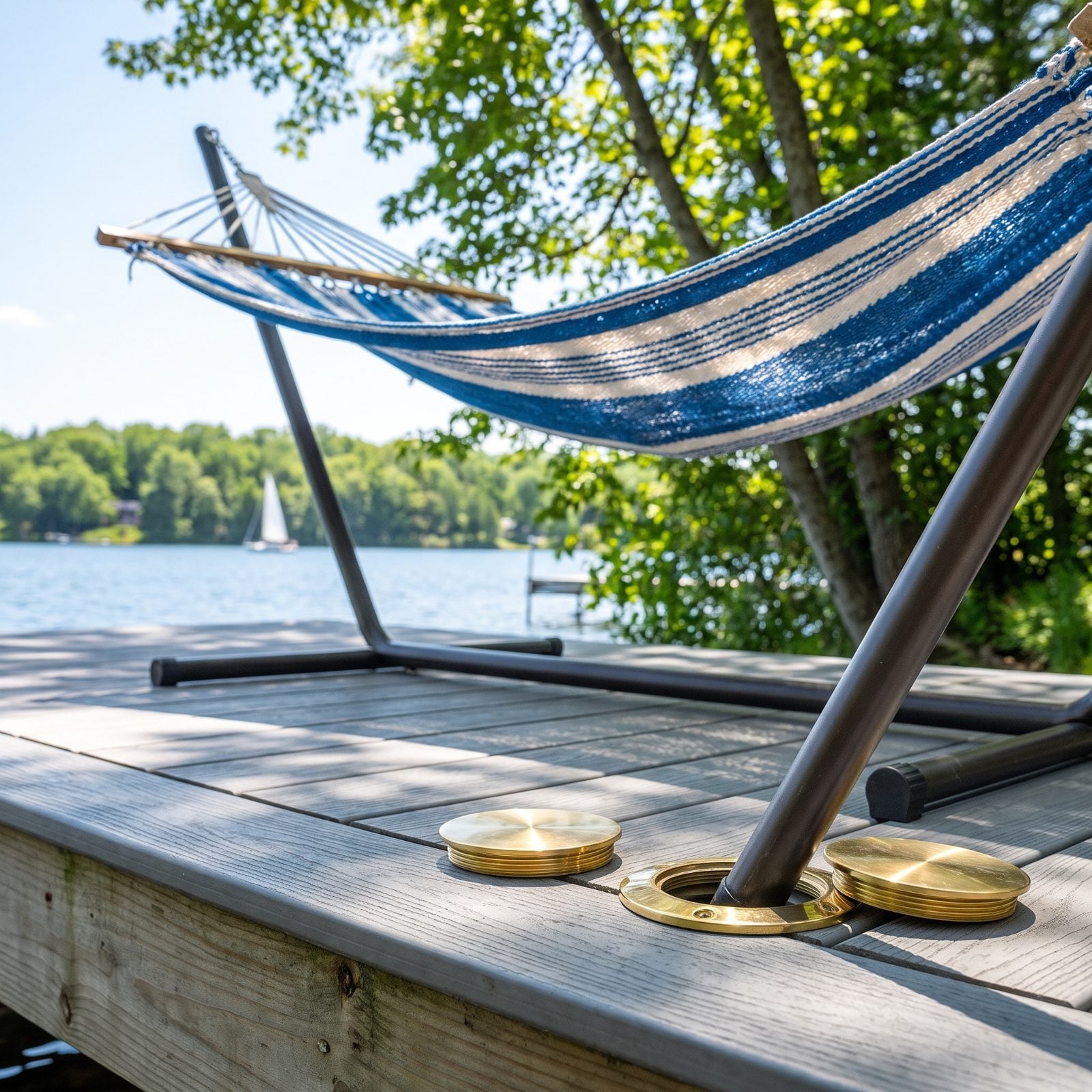
Picture the opposite problem. You buy a nice hammock, there’s nowhere to hang it, and a freestanding stand slides an inch every time you shift your weight until you’re basically doing core work to stay in it. Flush sockets set into the deck give the stand feet something to grip. In goes the stand, out comes the stand, and when it’s gone the dock is flat and clean.
These are the same sockets people use for bimini poles and flag holders, usually brass or nylon, with a cap that screws flush so nobody catches a heel on a bare hole in the dark. Set them near the dock edge so the hammock hangs over the planks, not the water, and a hot afternoon nap still comes with a breeze off the lake.
30. A Removable Bait-Cutting Board With a Raised Rim
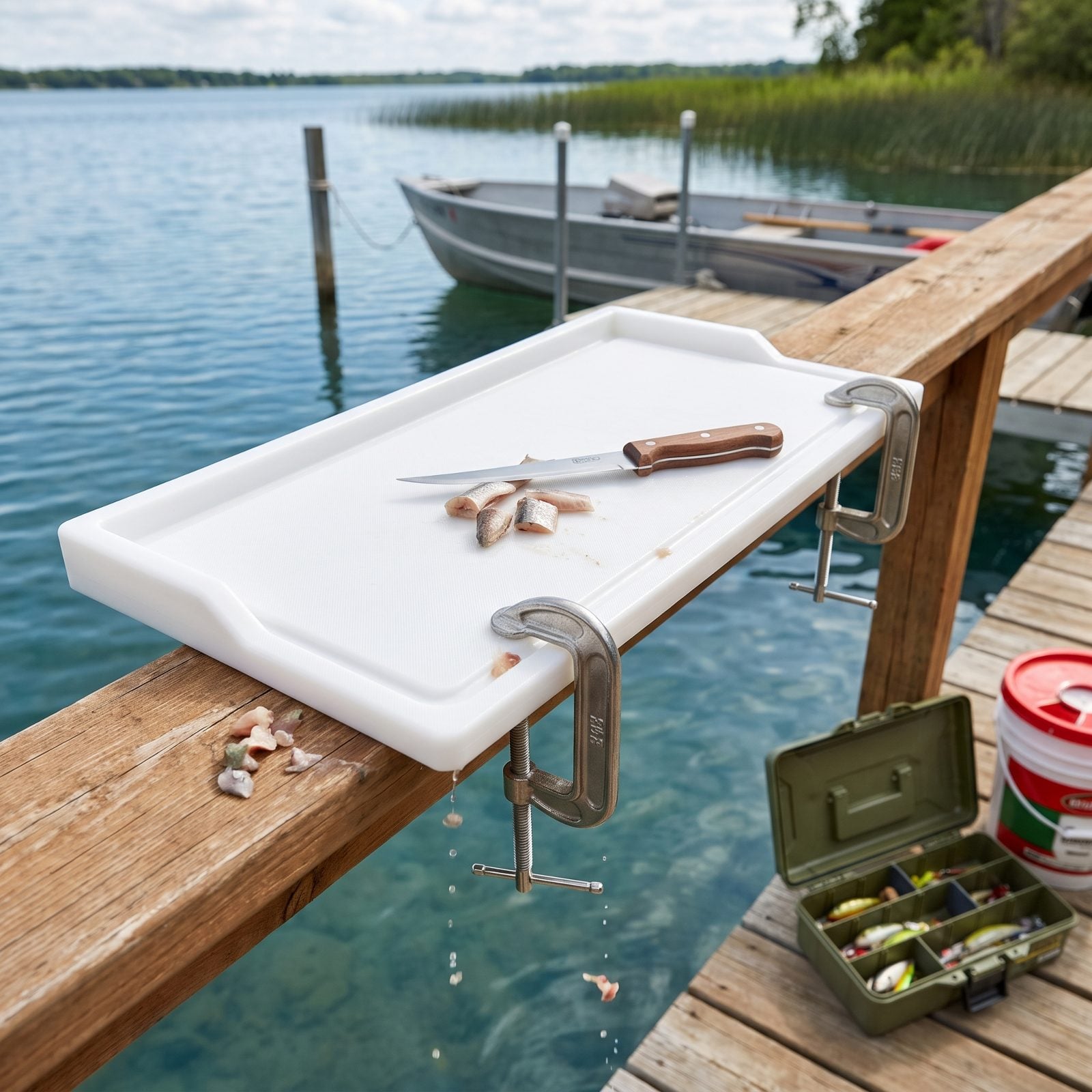
Cut bait on a flat board and the juice runs straight onto the deck, where it bakes into a smell that outlasts the fish. A board with a raised rim corrals most of the mess, though pile on enough slime and it will still spill over a corner and drip down the rail. Wipe it down often, and tip the scraps into the water or a bucket before the board overflows.
Go removable. A board that simply rests on the rail, with C-clamps fitted only to its own edge, lifts off for a proper scrub and goes away when guests arrive who’d rather not sit next to the fish station. White HDPE is the standard because it shrugs off bleach and doesn’t hold odor the way wood does.
29. A Small Windsock That Reveals Crosswinds at a Glance
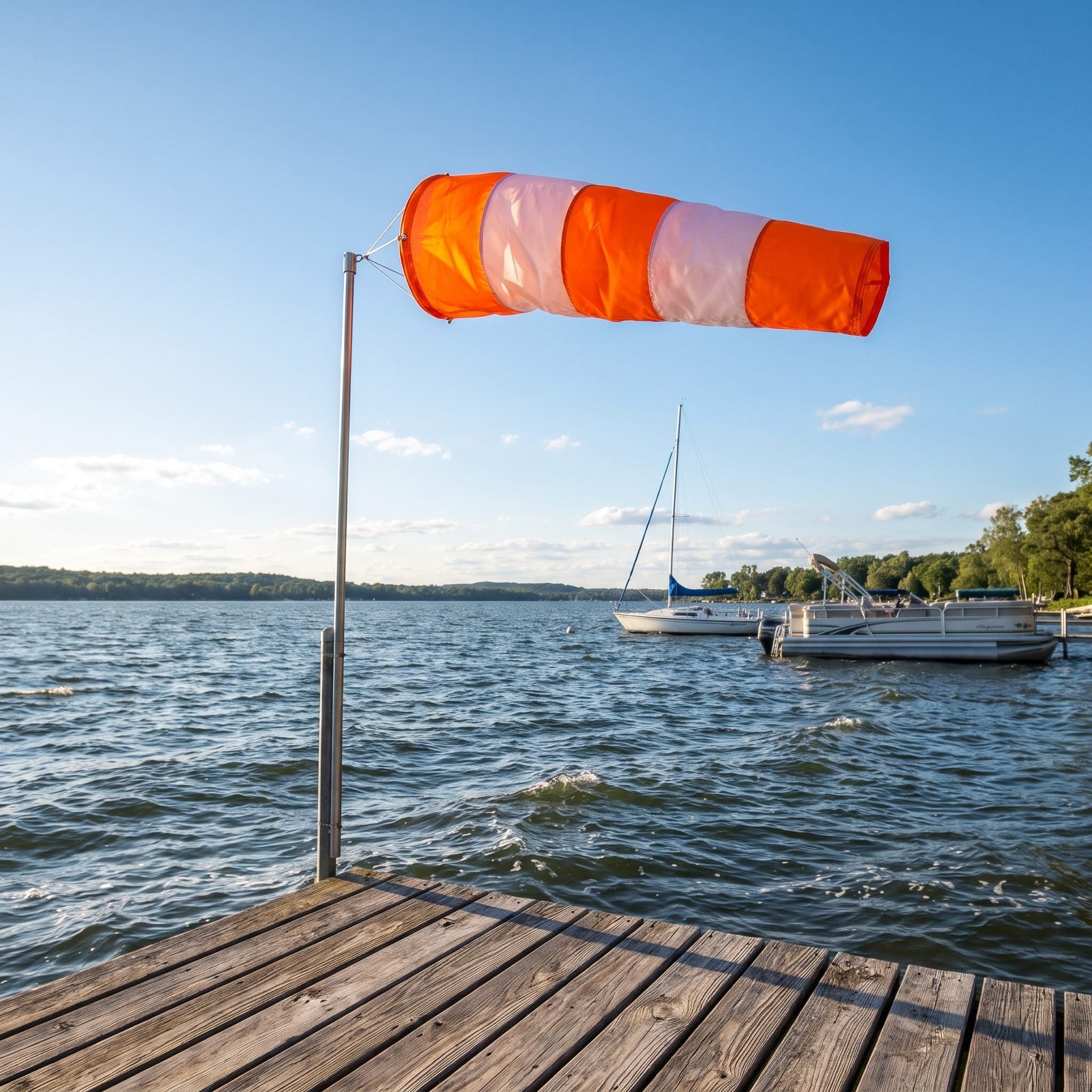
Docking a boat into a crosswind you didn’t see coming is how fiberglass gets scratched and marriages get tested. A small windsock at the dock end tells you which way the air is pushing before you ever leave the slip, and more honestly than the flat water near shore, which lies.
You don’t need the airport-sized version. A short sock on a pole reads direction and rough speed at a glance, and a limp sock is its own useful message: the lake’s calm, go swim. For anyone running a seaplane dock or launching small sailboats, it’s less a gadget than a safety habit.
28. A Dedicated Anchor Point for a Floating Swim Mat
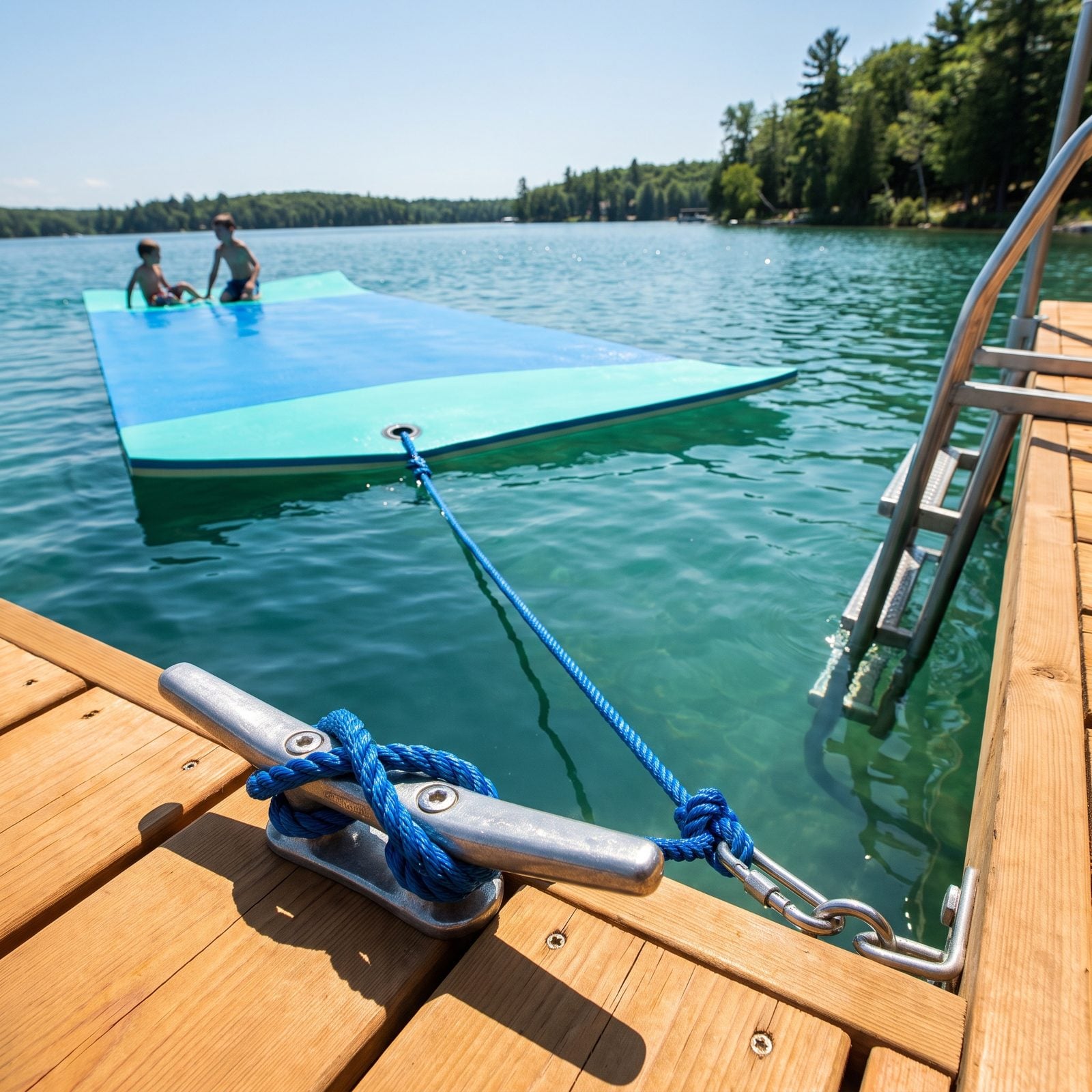
Those big foam swim mats drift. Turn your back and the kids are forty feet out, slowly touring the neighbor’s dock. One dedicated anchor point — a cleat or a ring set where the mat naturally floats — keeps it tethered on a line you can pull back in with one hand.
Keep the tether drawn snug so the mat holds its spot close to the dock instead of wandering on the small waves. And if the anchor sits right beside the swim ladder, as it does here, watch that nobody’s climbing out over a stretched line. Floating mats take years of sun and chlorine-free lake water without much complaint, but the connection point is where they fail first, so use a stainless clip rather than whatever carabiner came in the box.
27. A Rechargeable Inflation Pump in a Splashproof Case
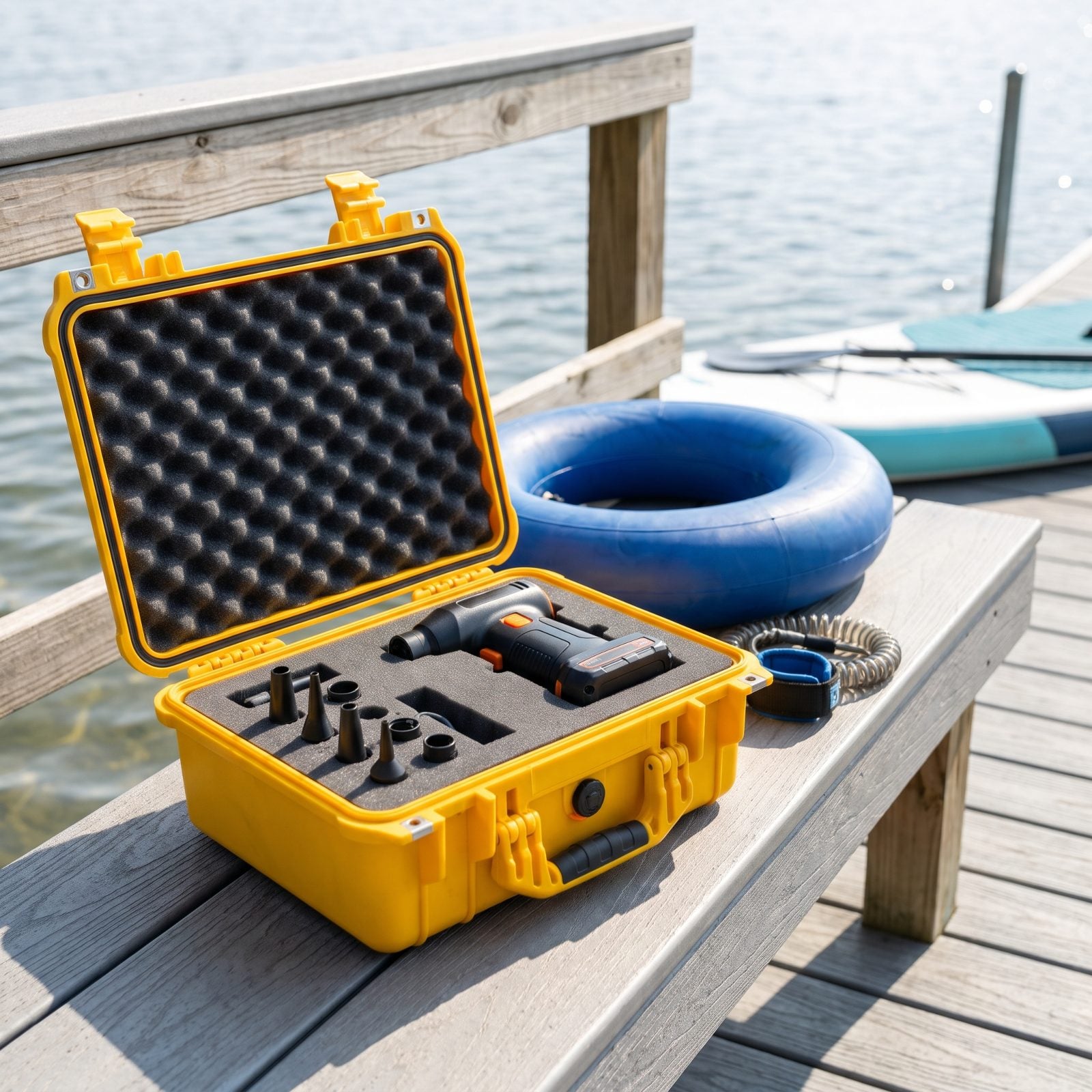
Lung-powered tube inflation is a rite of passage nobody asked for. A cordless rechargeable pump turns a red-faced ten minutes into thirty seconds, and the splashproof case keeps it alive on a dock where everything eventually gets wet.
Look for one with high-volume, low-pressure output for tubes and paddleboards — little tire-style compressors take forever on big air chambers. Keep the whole kit, pump plus nozzle adapters, in one sealed case clipped to the bench, because a stray inflation adapter is the most losable object on earth. And charge it at the cabin, not the dock, unless you’ve got proper weatherproof power out there.
26. Folding Cleats That Leave a Flatter Walking Surface
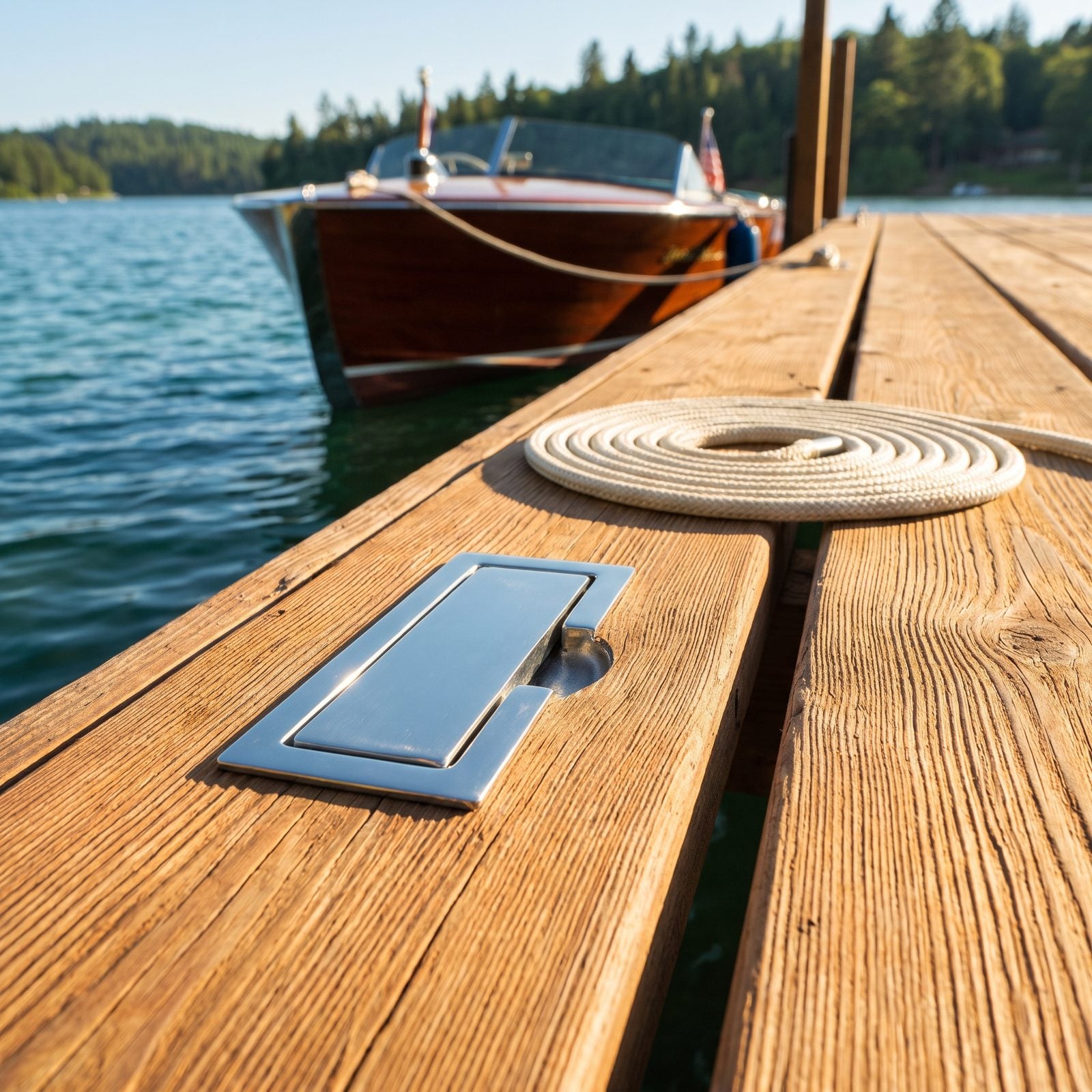
A standing cleat is a toe trap. Everyone who owns a dock has hopped on one foot cursing at a horn cleat they’ve walked past a thousand times. Folding cleats lie flat against the deck when nothing’s tied off, then flip up when you need to secure a line.
They cost more than fixed cleats, and they’ve got a hinge that can seize if you buy the cheap version and let it corrode. For a dock where people walk barefoot and carry coolers two-handed, the flatter surface is worth it. Spend on marine-grade stainless. The bargain ones freeze up by the second summer and you’re back to stubbing toes on a cleat that won’t fold.
25. A Slim Fender Rack Beside the Boat Slip
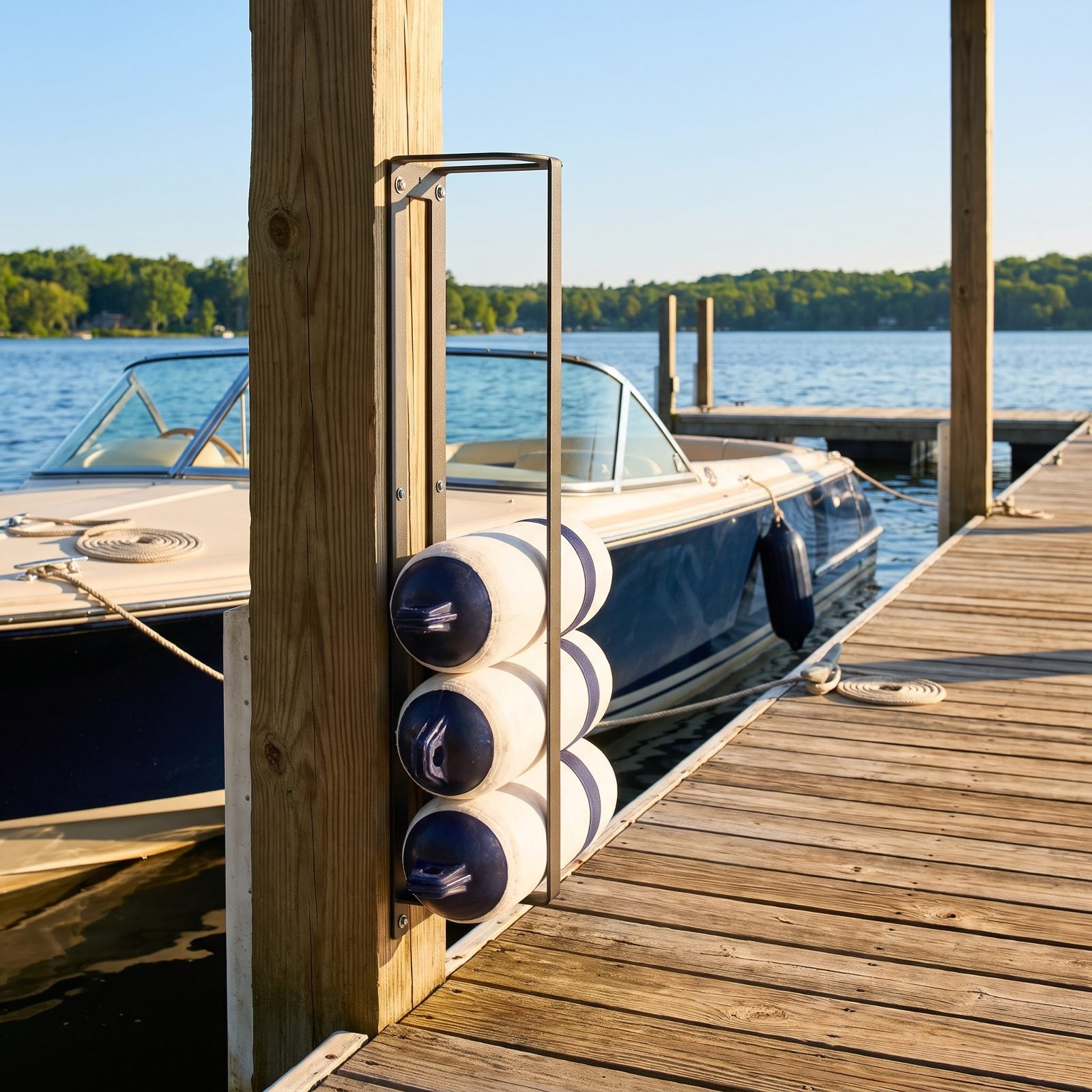
Boat fenders live one of two lives. Either they hang off the rail forever, dirtying the hull and flapping in the wind, or they pile in a heap at the dock entrance where someone’s always kicking one into the water. A slim rack mounted to a post gives them a home, vertical and out of the walking lane.
Stowing them off the hull matters more than people think. Fenders left pressed against gelcoat in full sun can leave marks and bake in grime, so hang them to dry and rack them between outings. A narrow three- or four-slot rack beside the slip keeps them within arm’s reach without eating up a square foot of deck you’d rather use for a chair.
24. A Continuous Rub Rail Along the Docking Side
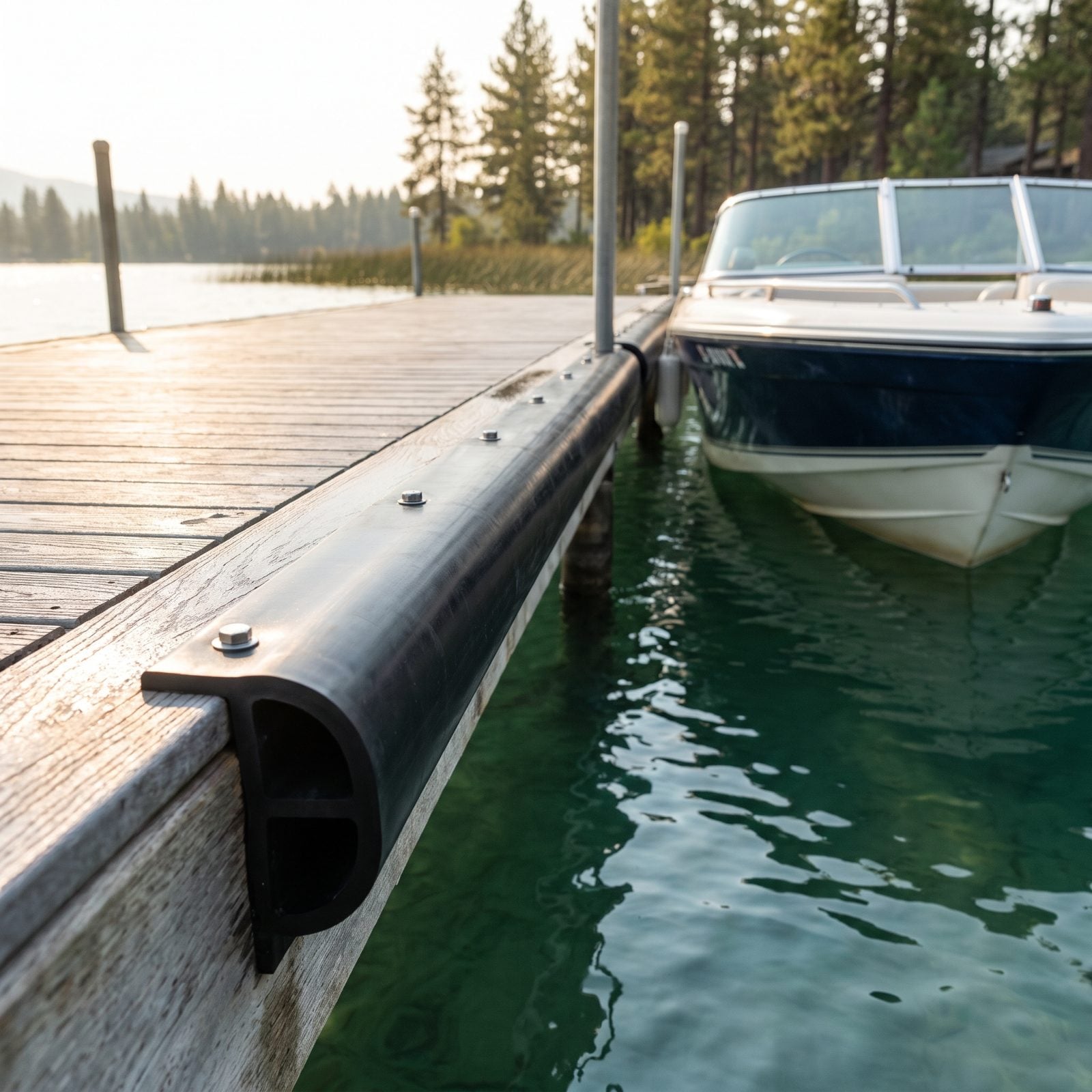
Every ding in your hull has a story, and most of them start at the dock. A continuous rub rail fixes the one thing scattered bumpers never quite solve: the gaps. Those little rubber fenders you tie on migrate, flip up, or end up sitting exactly where the boat isn’t. Bolt a single D-shaped rubber profile along the whole docking edge and there’s no spot left unprotected.
Go with marine-grade EPDM or dock-specific vinyl rail. Not pool-noodle foam that crumbles by August. Stainless hex-head bolts with washers, snugged down tight on the mounting flange along the top of the decking, with the heads seated low and flat so nobody catches a toe walking past. It guards the gelcoat and the dock itself, which rots fastest right where boats keep slamming into it.
23. A Vertical Paddle Rack That Drains Between Outings
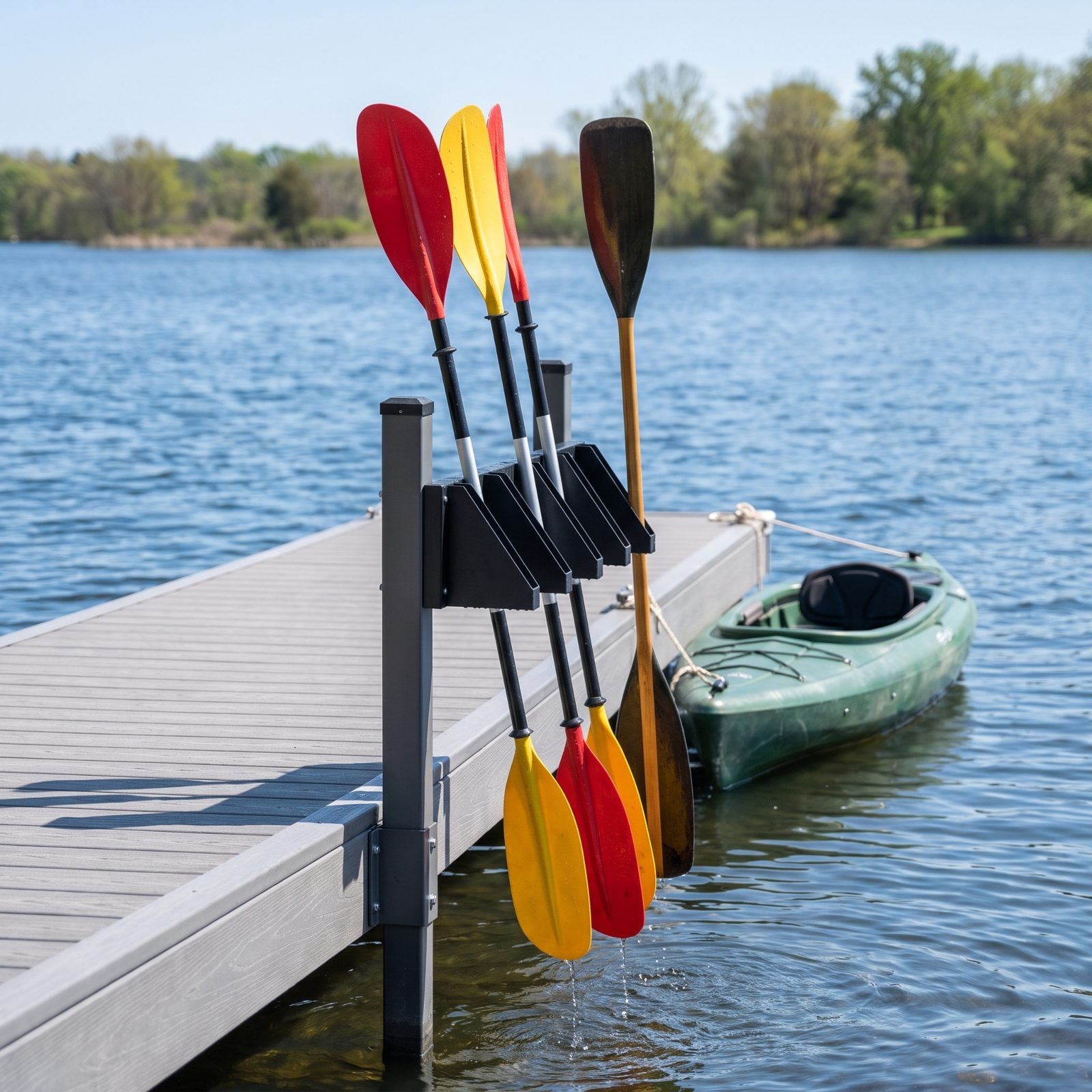
Paddles left flat on the dock become trip hazards, splinter magnets, and eventually little homes for mildew where the blade sits damp against the boards.
Stand them upright with the blades pointing down and the water just runs off instead of pooling. Mount the rack on a post or rail so paddles, oars, and even a boat hook stay off the walkway, ready to grab — here they’re simply leaned against the front, but dropping each into its own slot keeps them from tipping over. Aluminum or marine HDPE won’t rust. And space the slots wide enough for a two-blade kayak paddle — the one thing people always forget until they’re wedging it in sideways.
22. Snap-In Clips That Keep the Boat Hook Accessible
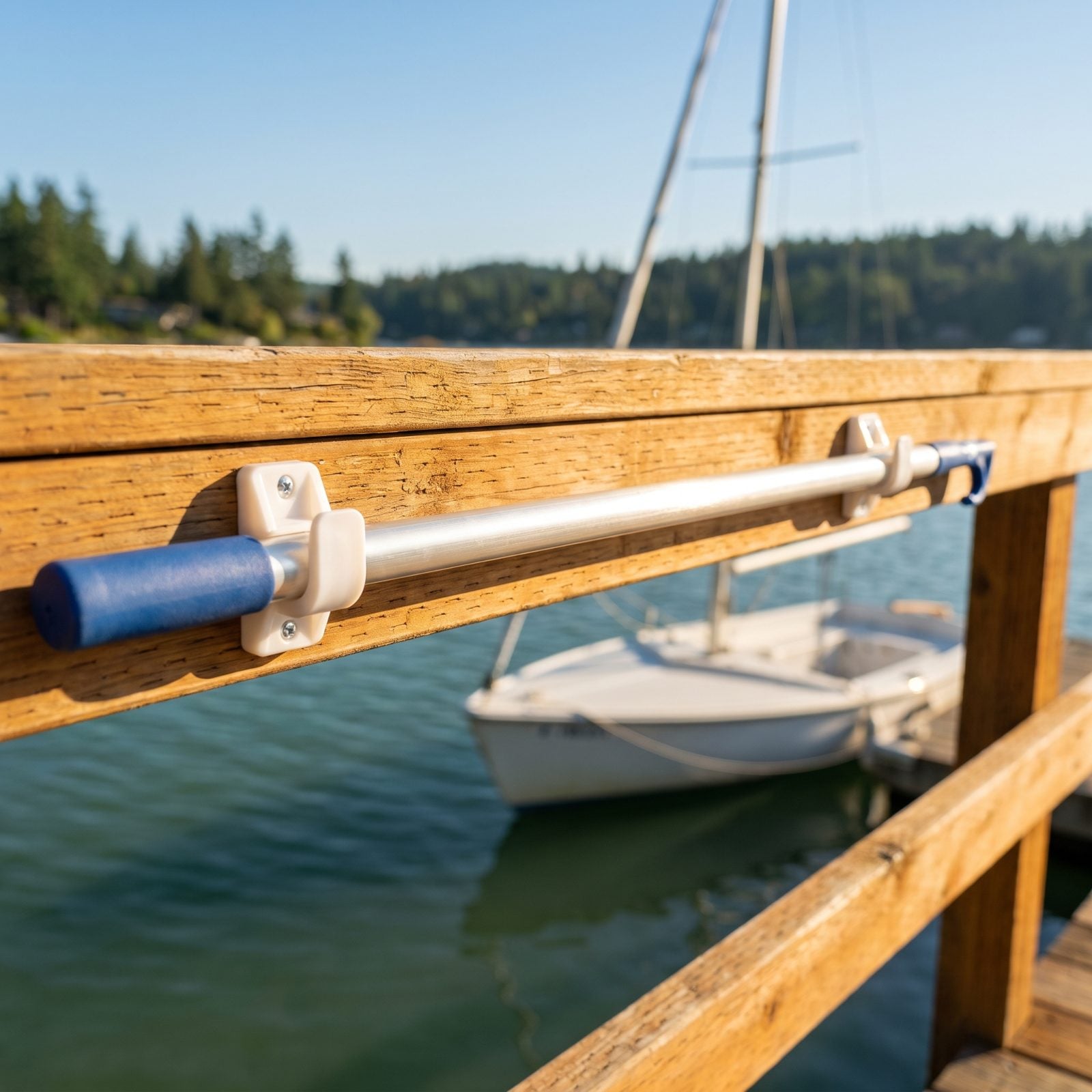
The boat hook is the tool you need in half a second or not at all — a drifting bowline, a hat blown off, a kid’s float sailing away. And it’s always the thing that’s rolled under the bench or gone overboard already.
Two spring-loaded snap clips at railing height solve this for about the price of a sandwich. The hook sits horizontal, visible, one-handed to pull free. Mount them where you actually stand when a boat comes in, not at the far end of the dock where it looks tidy. Tidy and useful aren’t the same thing, and the clips only earn their keep when the hook’s within arm’s reach of the action.
21. An Adjustable Rail of Fishing-Rod Holders
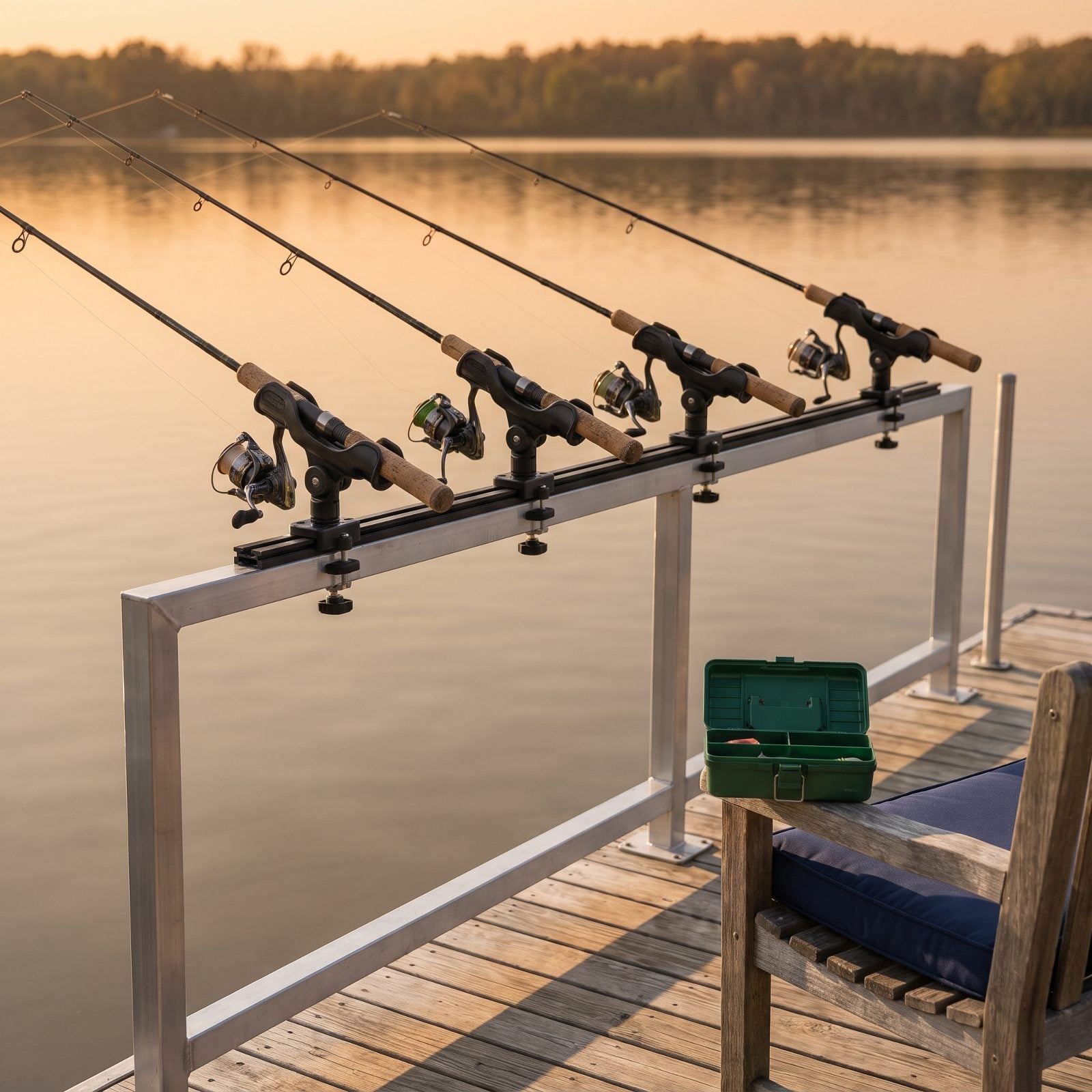
Three rods leaned against a railing will all slide into the lake the moment you turn around. You know this because it’s happened to you, or to someone next to you who said a word the kids repeated at dinner.
A track-mounted rail lets you set multiple lines at different angles and slide the holders along as the bite moves. Look for a cam lock so you can tilt the angle without tools. Stainless or anodized aluminum stands up to fish slime and sunscreen, which is the real test of any dock hardware.
20. A Removable Shade Sail Over the Main Seating Area
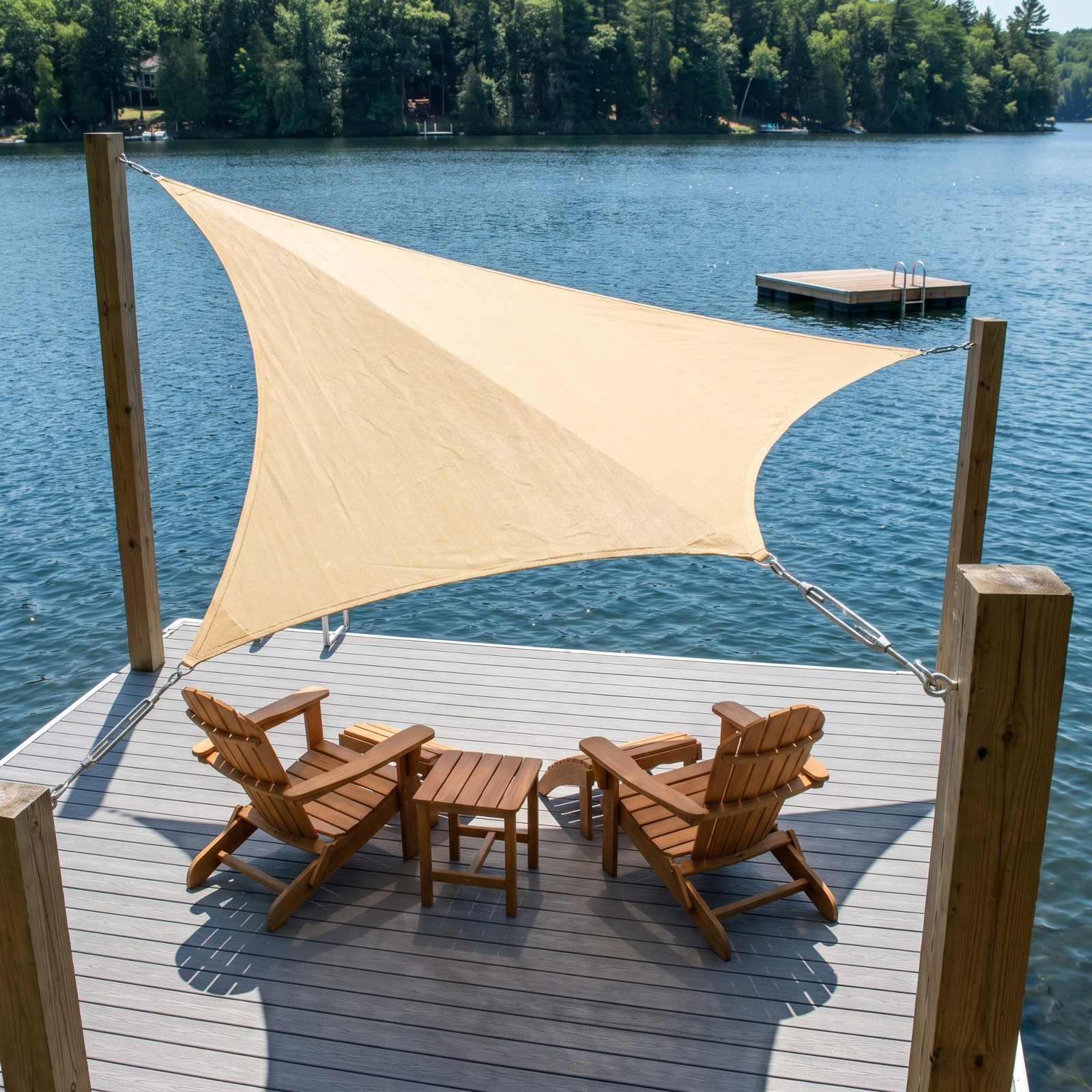
Shade on a dock is the difference between people staying an hour and people staying all afternoon. Open water throws sun up at you from below, so even a hat and sunglasses leave you squinting and pink by two o’clock.
A removable four-corner shade sail in HDPE knit fabric blocks most UV while letting breeze slip through, so it won’t balloon and yank its posts in a gust the way a solid tarp does. Stainless turnbuckles let you crank it tight. And removable is the whole point: take it down before the first real storm and before winter, and it’ll outlast a fixed awning by years.
19. A Rechargeable Clamp Fan for Hot, Still Afternoons
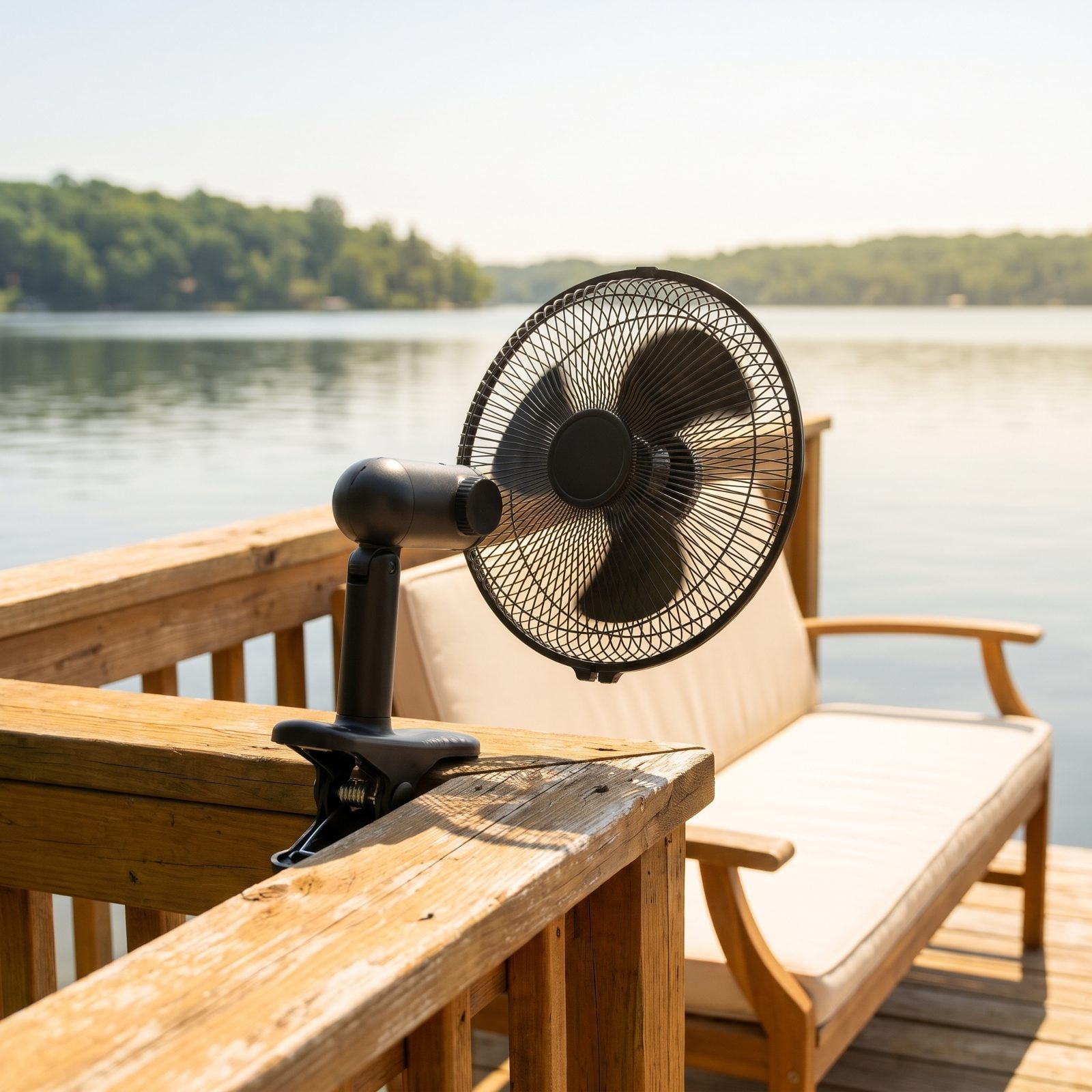
The worst dock days aren’t the stormy ones. They’re the dead-still August afternoons when the lake turns to glass and the air just sits on you.
A rechargeable clamp fan grips a railing or chair arm and runs for hours on a USB charge, no cord trailing toward the water. Get one rated for outdoor or marine use with a sealed battery, because dock humidity murders cheap electronics. Point it across the seating area, not at one person, and the whole gathering spot becomes livable again.
18. Quick-Dry Bench Cushions With Tie-Down Straps
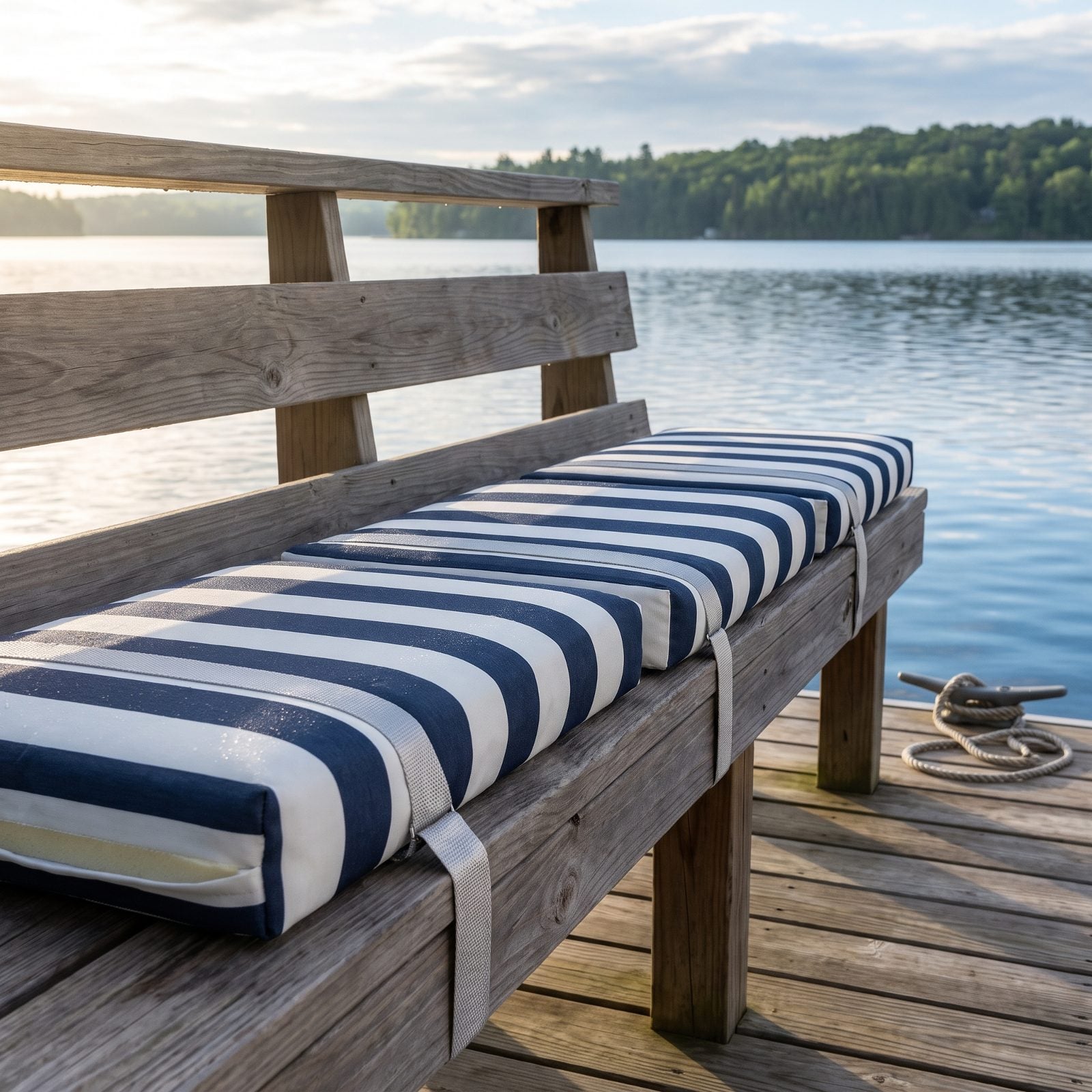
Regular patio cushions on a dock turn into cold wet sponges you sit on and instantly regret. Quick-dry marine cushions use a foam core (visible here where the cover is open at the end of the front cushion) that sheds water instead of soaking it in and staying wet for a week.
The straps are the part nobody thinks about until a cushion goes sailing off the dock in the night. Plain webbing straps, shown here hanging loose and unfastened down the front of the seat, give you a way to tie them to the bench once you wrap and secure them, so they hold in a gust and don’t skate off when a wet swimmer flops down.
Solution-dyed acrylic covers like Sunbrella shrug off fading and the occasional spilled soda. They cost more up front and last a good deal longer, which is the math that eventually wins.
17. A Fold-Down Table That Disappears When Not Needed
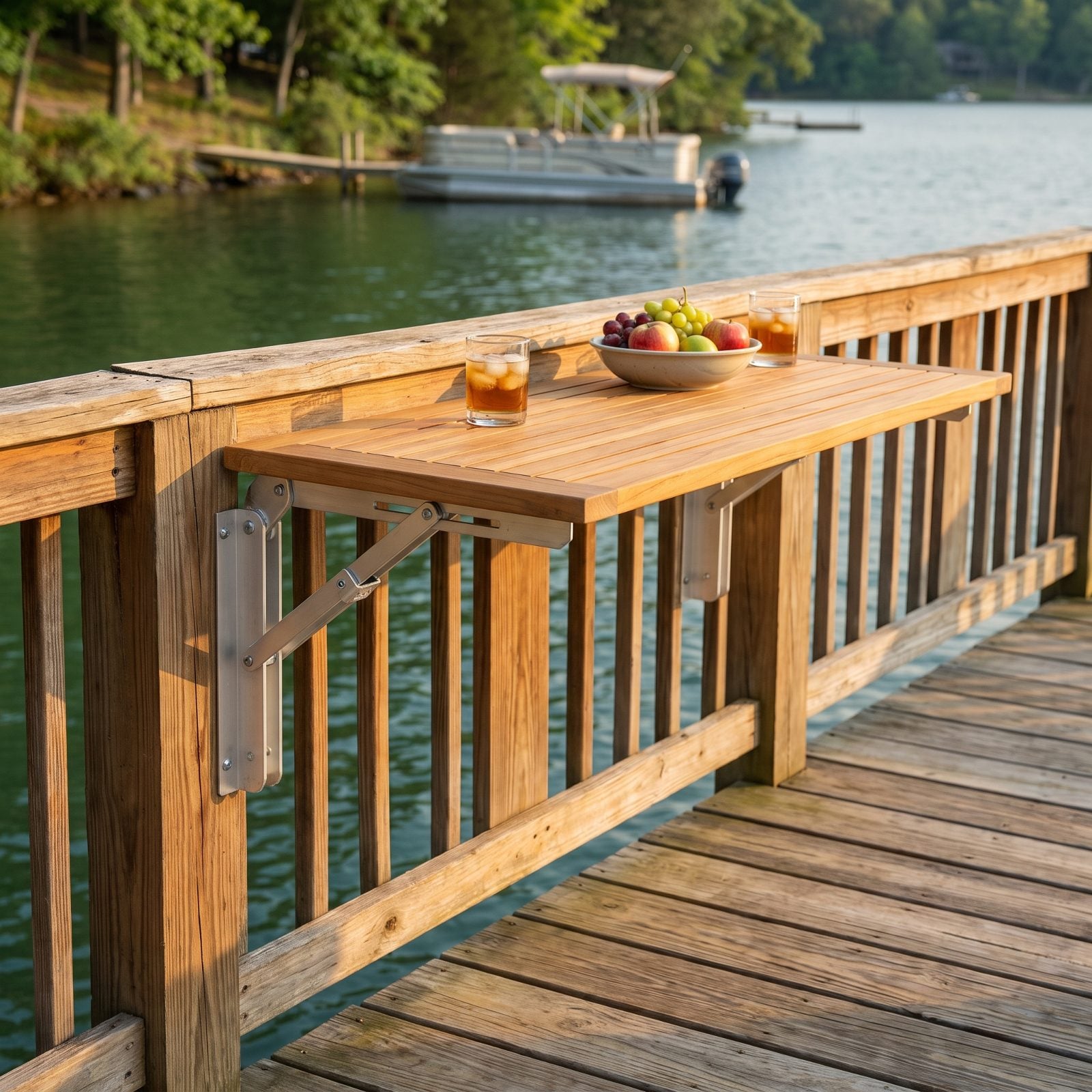
A permanent table on a narrow dock is a shin-barking menace most of the time. But the moment you’ve got iced drinks and a fruit bowl and nowhere to set them down, it’s worth its weight in gold.
A fold-down table hung from the railing gives you both. Its folding metal brackets bolt flat to the face of a railing post, so the slatted top sits just below the rail and projects out over the deck for happy hour. When the dock turns back into a diving board, fold the top down against the balusters. Teak or marine HDPE slats drain fast and dry quick. Mount the bracket into the rail frame itself, not just the top board, so it holds a full tray without sagging.
16. Clamp-On Swivel Seats for Flexible Fishing Perches
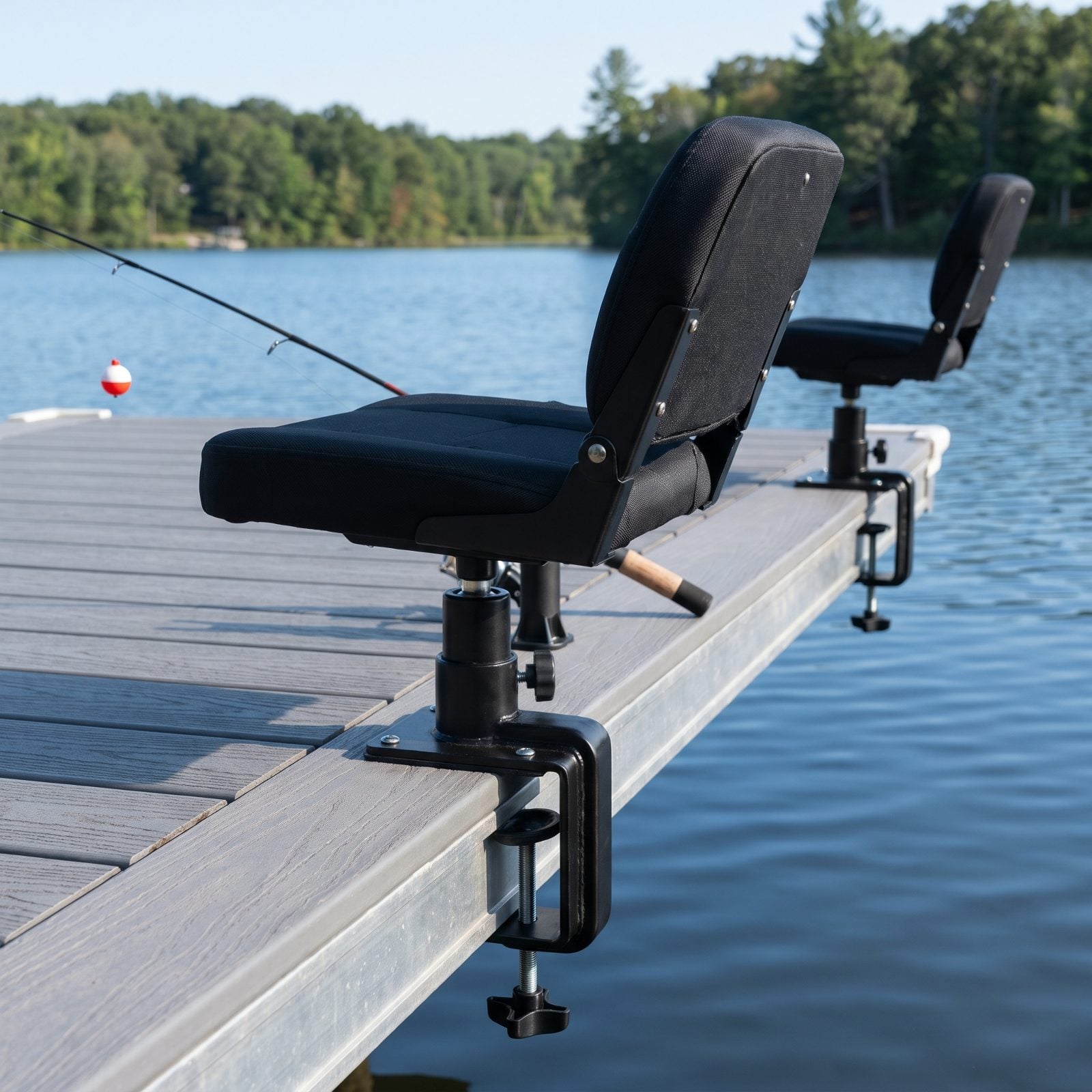
Fishing from a fixed bench means forever twisting your spine to follow the line. A clamp-on swivel seat handles that in the most literal way possible: the seat turns, your back doesn’t.
These pedestal seats grip the dock edge with a padded C-clamp — no drilling, no permanent fittings. Move them to the sunny corner in the morning and the shady one by afternoon. Clamp them off entirely when the little ones want to practice cannonballs.
15. A Towel Rail Positioned Near the Swim Ladder
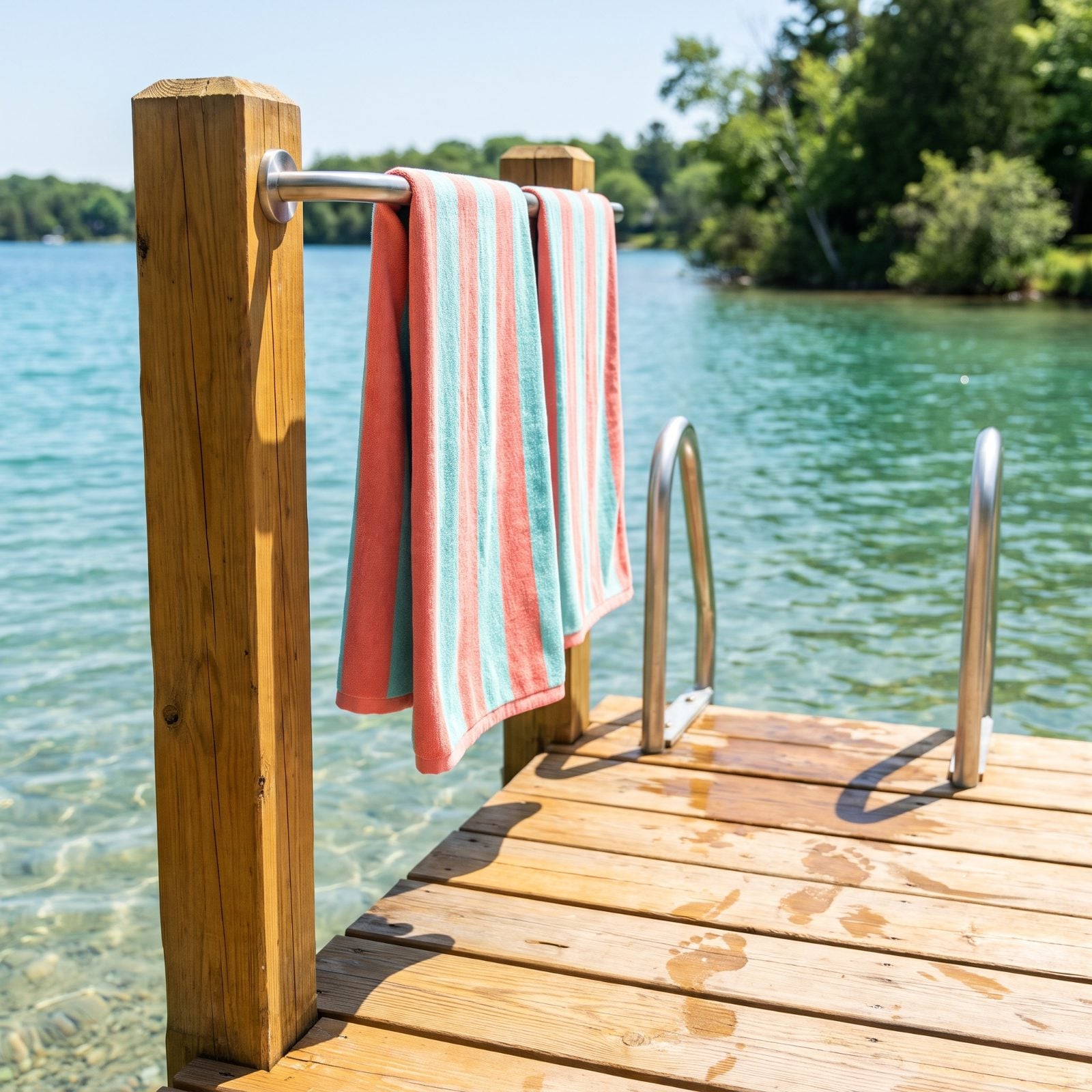
The gap between climbing out of the lake and finding your towel is short, cold, and dripping across the whole dock. Someone always slips in the puddle. Usually you, holding a phone.
A stainless towel rail right at the top of the swim ladder means dry cotton waits exactly where wet people arrive. Put it on the post beside the ladder — high enough that trailing ends don’t drag in the splash, low enough that a kid can reach. Marine-grade stainless won’t streak rust down your dock post the way a cheap chrome rack will after one season. It’s the smallest upgrade here, and the one everyone thanks you for.
14. A Draining Shoe Cubby at the Shore-End Entrance
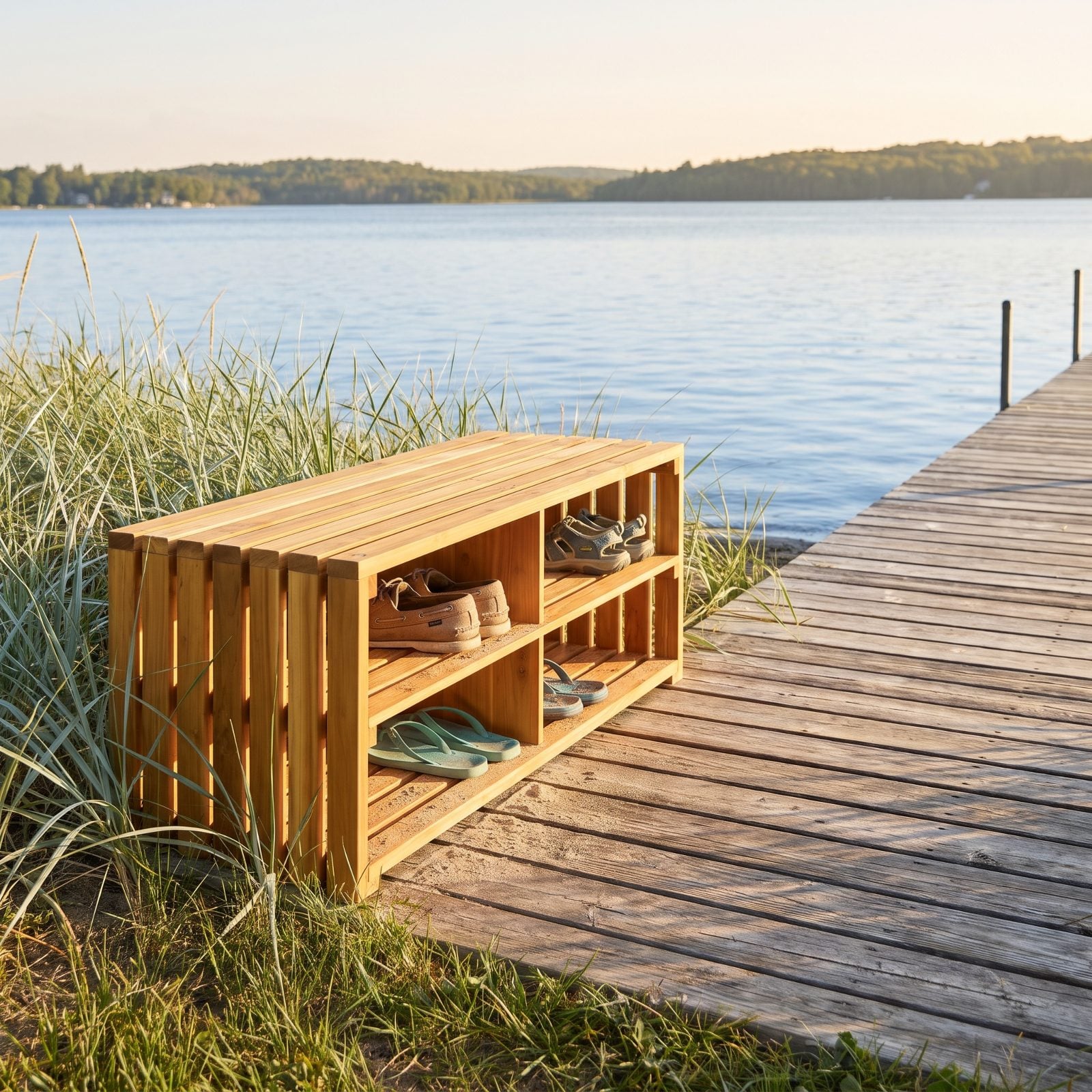
Half the grit that wrecks a dock walks in on the soles of your shoes. A slatted cedar cubby at the shore-end entrance stops it before it starts, giving sand and lake water somewhere to fall instead of piling up on your clean planks.
The draining part is everything here. Solid-bottom bins turn into swampy little ponds by August, and nobody wants to reach into that for their flip-flops. Open slats let it all breathe and dry. Mount the cubby where grass meets wood, so the barefoot rule begins exactly where it should.
13. A Gasketed Dock Box for Sunscreen, Towels and Games
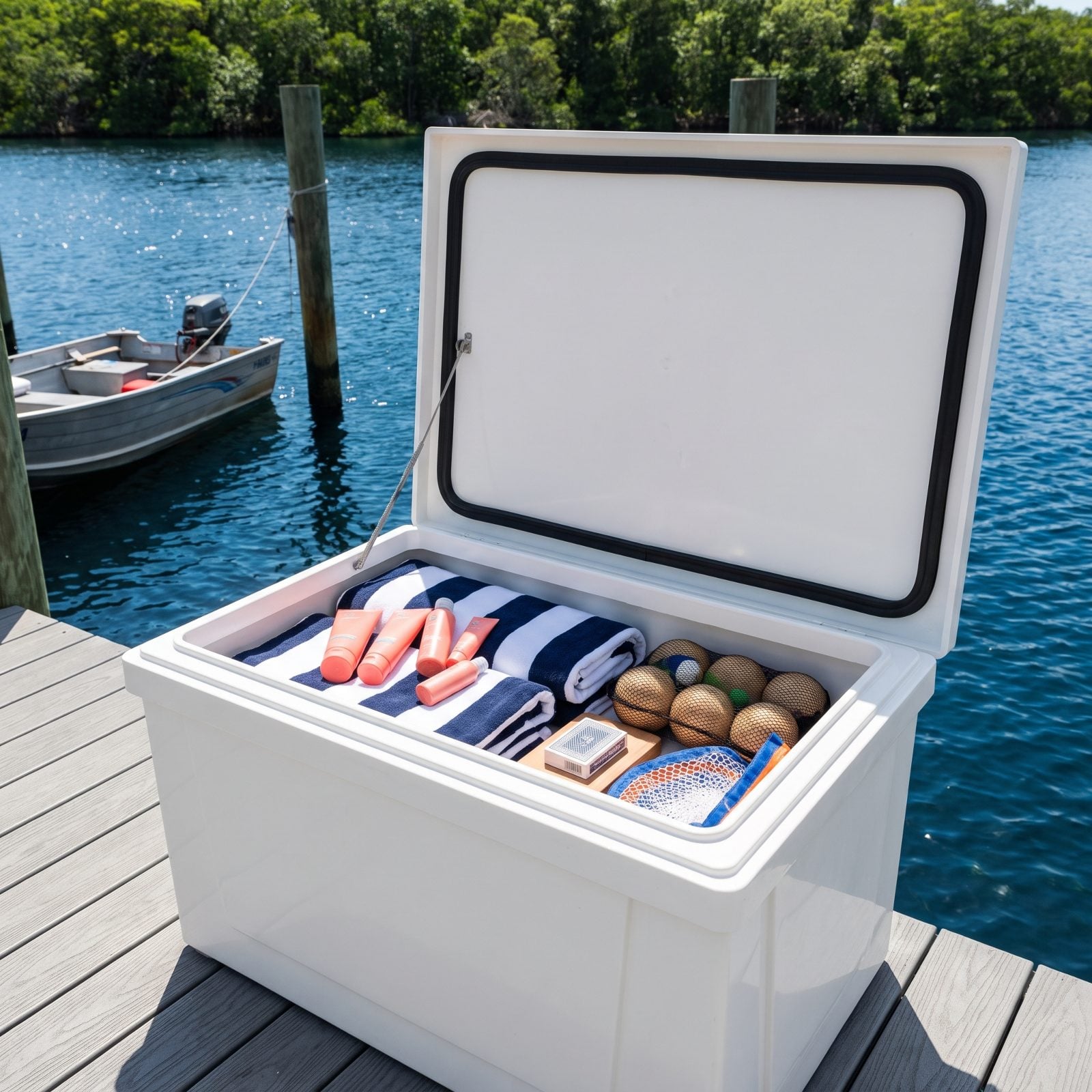
Wet towels and loose sunscreen have a way of migrating into every corner of a dock until the whole place looks like a yard sale after a storm. A gasketed dock box ends that.
The gasket is the detail nobody mentions until they skip it. A cheap box without a real seal lets humidity creep in, and your spare towels come out smelling like a pond bottom. A sealed lid rides out a surprise shower, which happens more often than the forecast will ever admit. Size it bigger than you think you need, because games multiply when you aren’t looking, and that pile of frisbees and foam noodles always finds a way to outgrow its home.
12. A Mesh Hamper That Separates Wet Gear From Dry Supplies
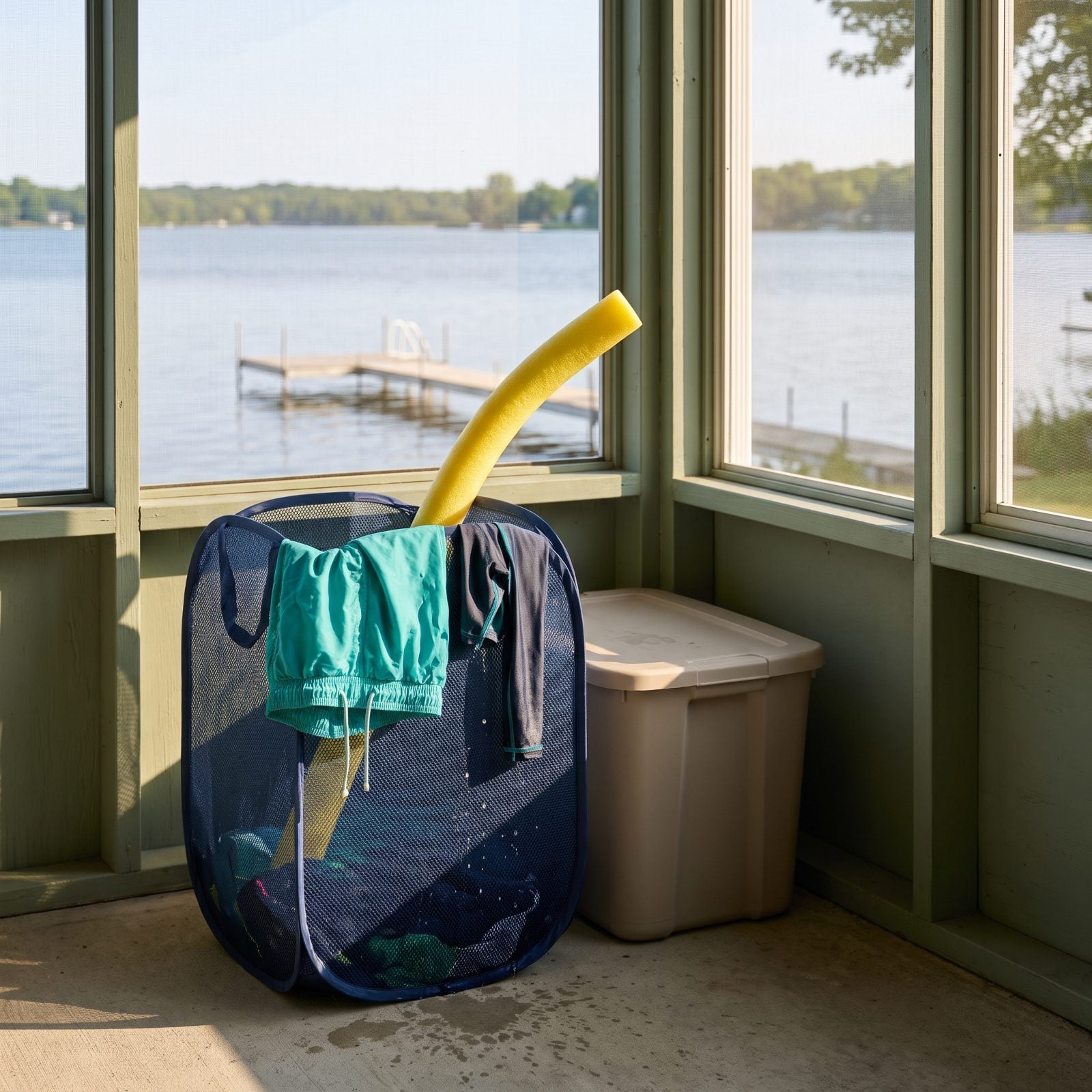
Dry swim shirts shoved in with the wet ones come out clammy every time. A breathable mesh hamper fixes the oldest dock problem there is: where does the dripping stuff go.
Mesh lets air move and water drip straight through, so gear actually dries instead of stewing in its own puddle. Pair it with one closed bin for the dry supplies and the whole thing sorts itself out. Wet on the left, dry on the right, and the mildew smell that haunts most dock boxes never gets a foothold.
11. A Compact Dual Bin for Trash and Recycling
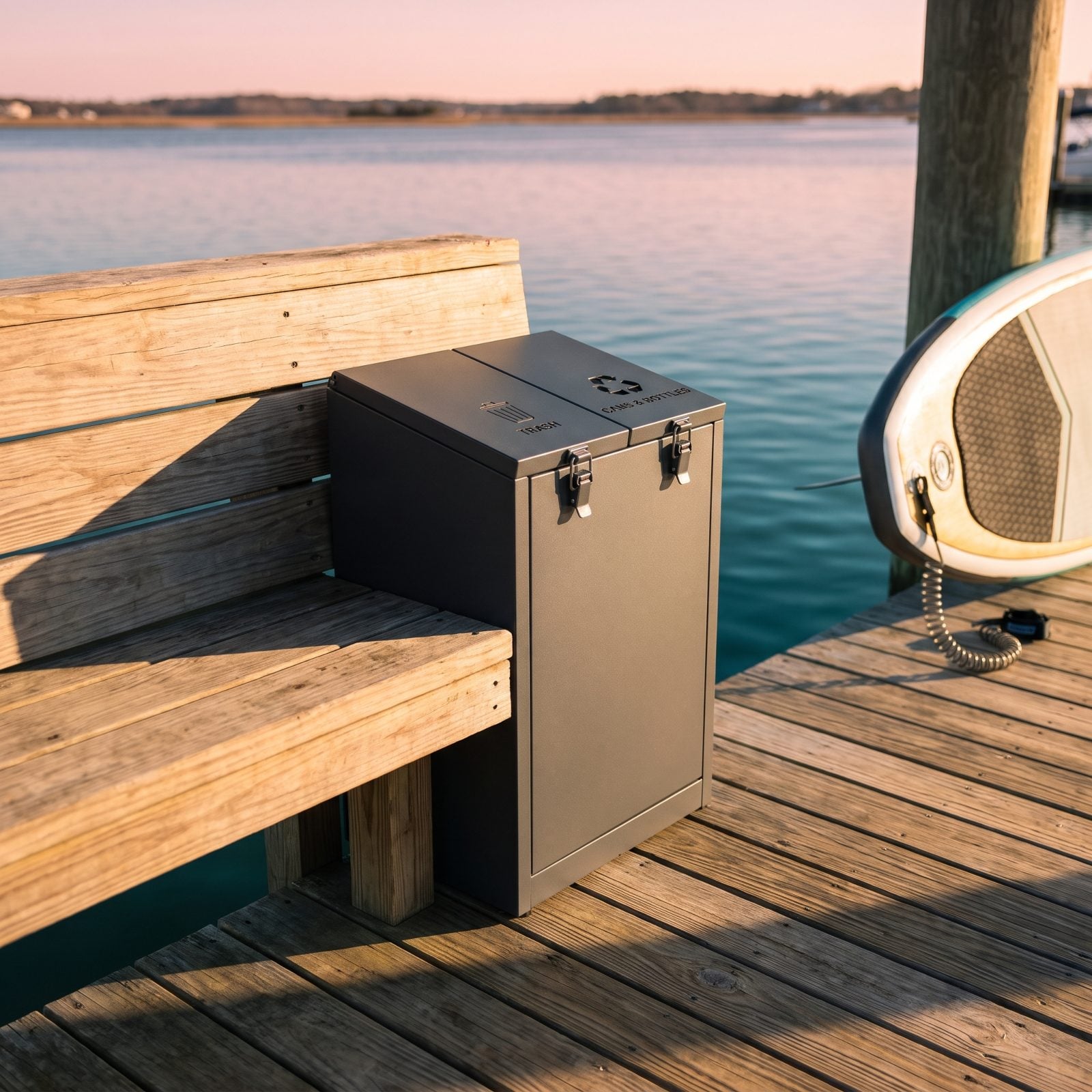
A loose plastic bag flapping on a hook is how recyclables end up in the lake. A compact dual bin with hinged lids keeps cans and bottles contained and separated, right where people finish their drinks.
Lids matter more than you’d guess. Gulls and gusts both love an open bin, and one breezy afternoon can scatter a weekend’s worth of empties across the water. Go slim so the thing fits against a bench or rail without eating up walking space. And empty it before you leave. Every time.
10. A Combination Key Lockbox for Spare Dock and Boat Keys
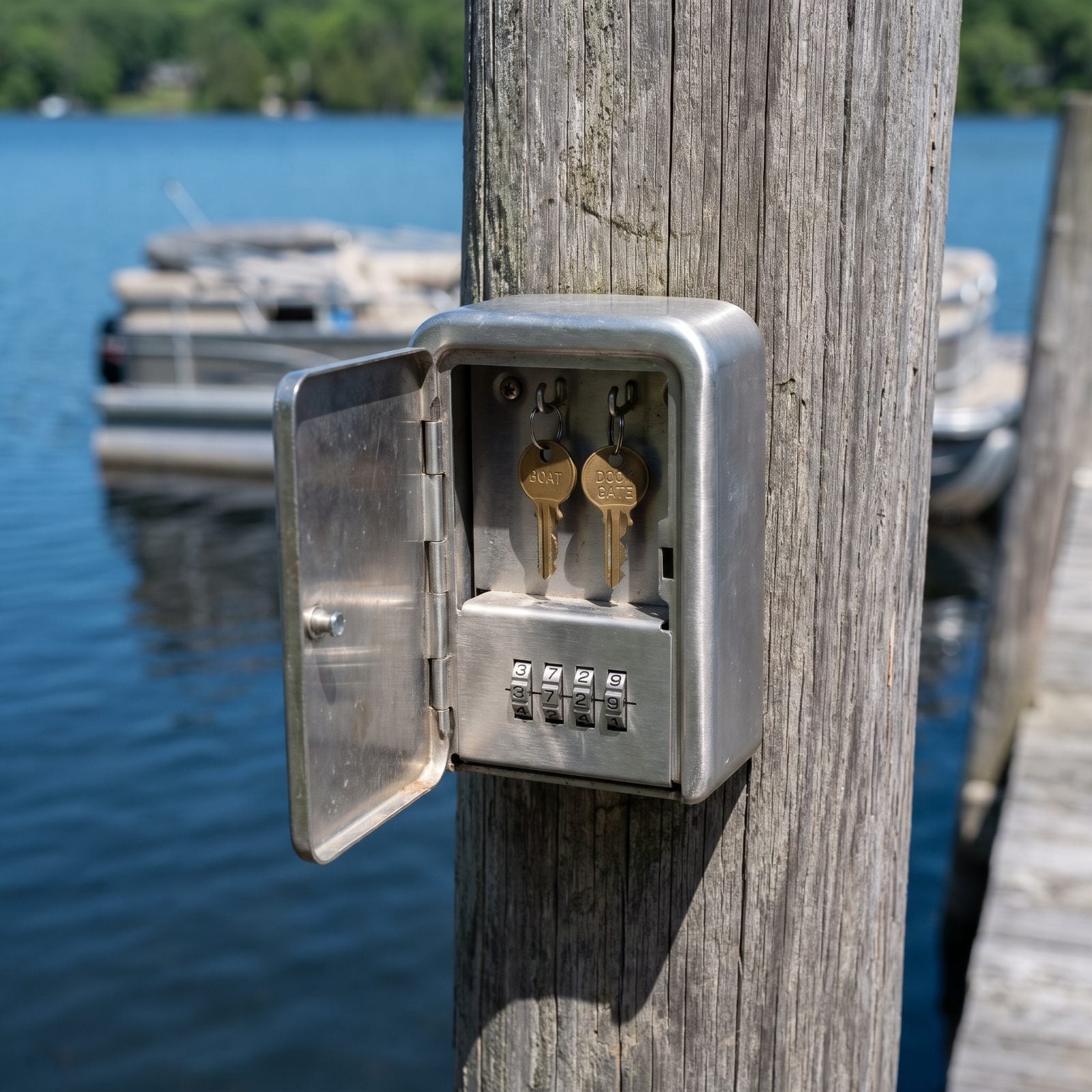
The spare key hidden under the planter is not a plan. Everyone knows the planter trick, and the one time you actually need the thing, it’s rusted to the piling anyway.
A combination lockbox bolted to a piling handles the real headache: a guest arrives early, the dog-sitter needs in, the boat has to move before a storm rolls through. No physical key to lose, no copy floating around in someone’s junk drawer three towns over. Change the code once a season, and again whenever a short-term renter cycles through.
9. A Lockable Charging Drawer With Weatherproof USB Ports
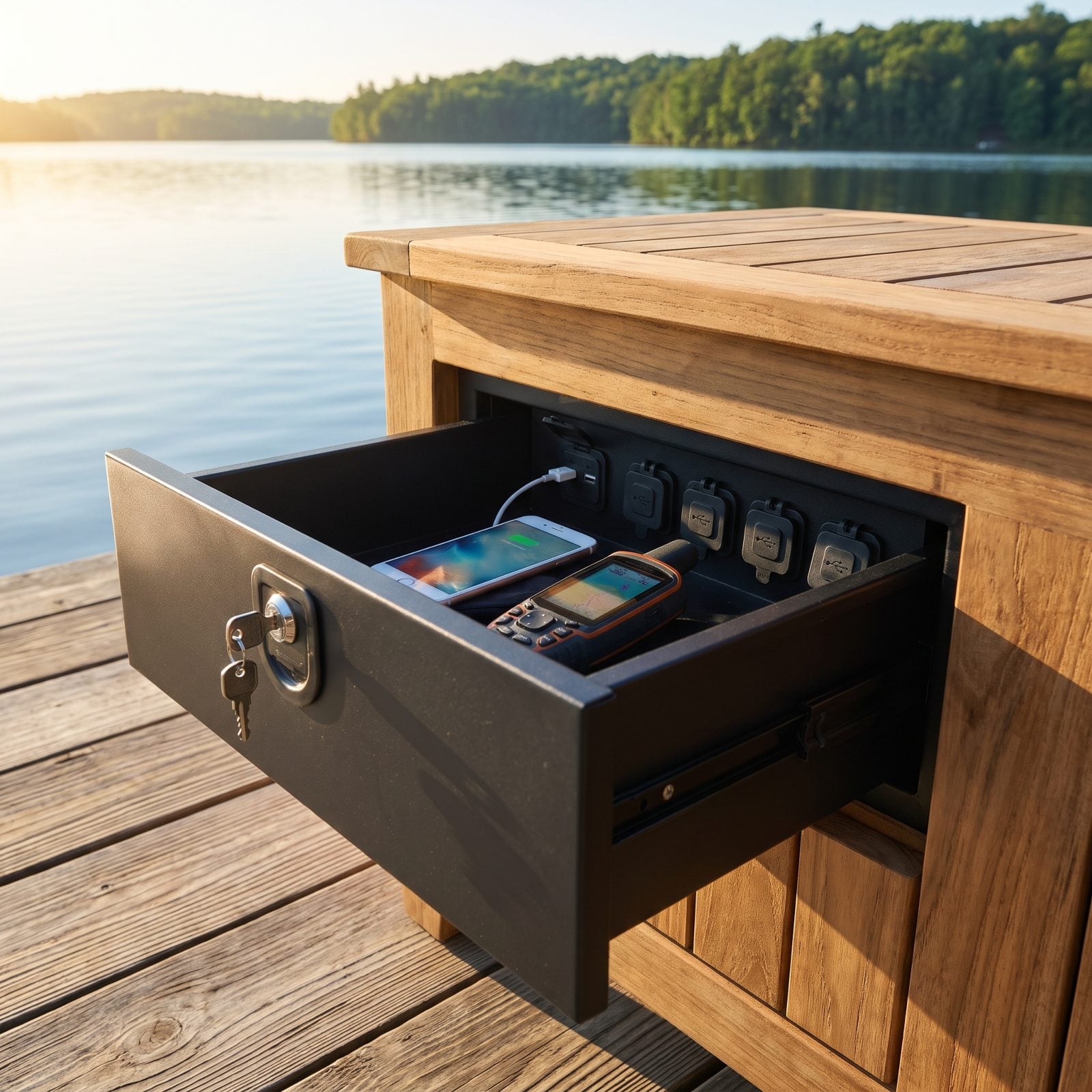
Phones and docks have a bad relationship. One slips out of a pocket, one bad splash kills it, and now someone’s scrolling through the bottom of the lake.
A lockable charging drawer with weatherproof USB ports gives devices a dry, out-of-sight home while they top up. The rubber port covers keep moisture out when nothing’s plugged in, and the lock means phones and a handheld GPS stay put while everyone’s in the water.
8. An Outdoor Wi-Fi Access Point Aimed Toward the Dock
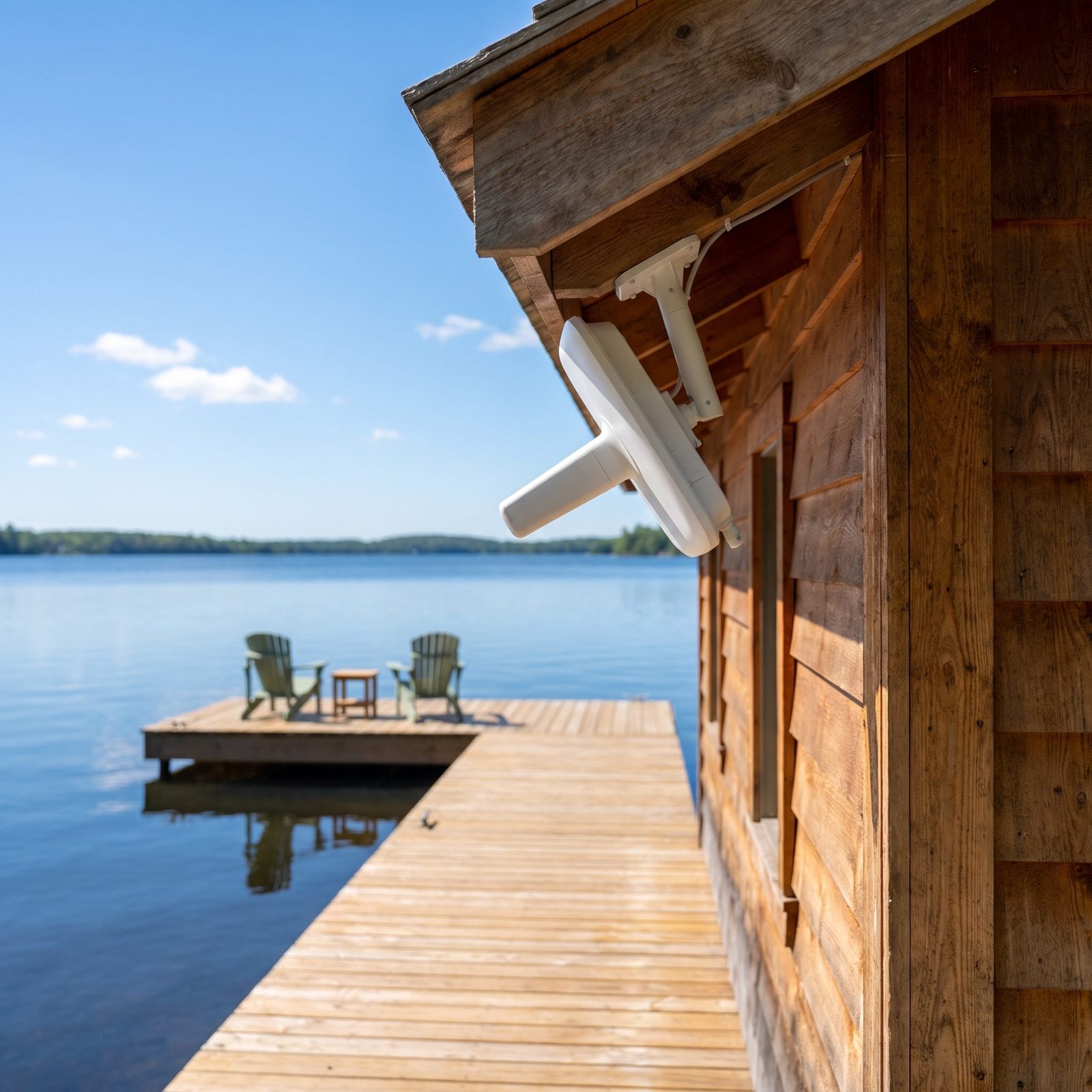
The signal that’s fine in the kitchen dies halfway down the dock. Thick cabin walls and plain distance eat Wi-Fi alive, and the dock is exactly where you want to stream the game or check the radar before a front rolls in.
An outdoor access point mounted under the eave and aimed at the water pushes a real signal to the far end of the planks. Place it high and point it where people actually sit. Hardwire it back to the router if you can, because repeaters that bounce a weak signal just hand you weak signal, farther away.
7. A Marine-Rated GFCI Power Pedestal
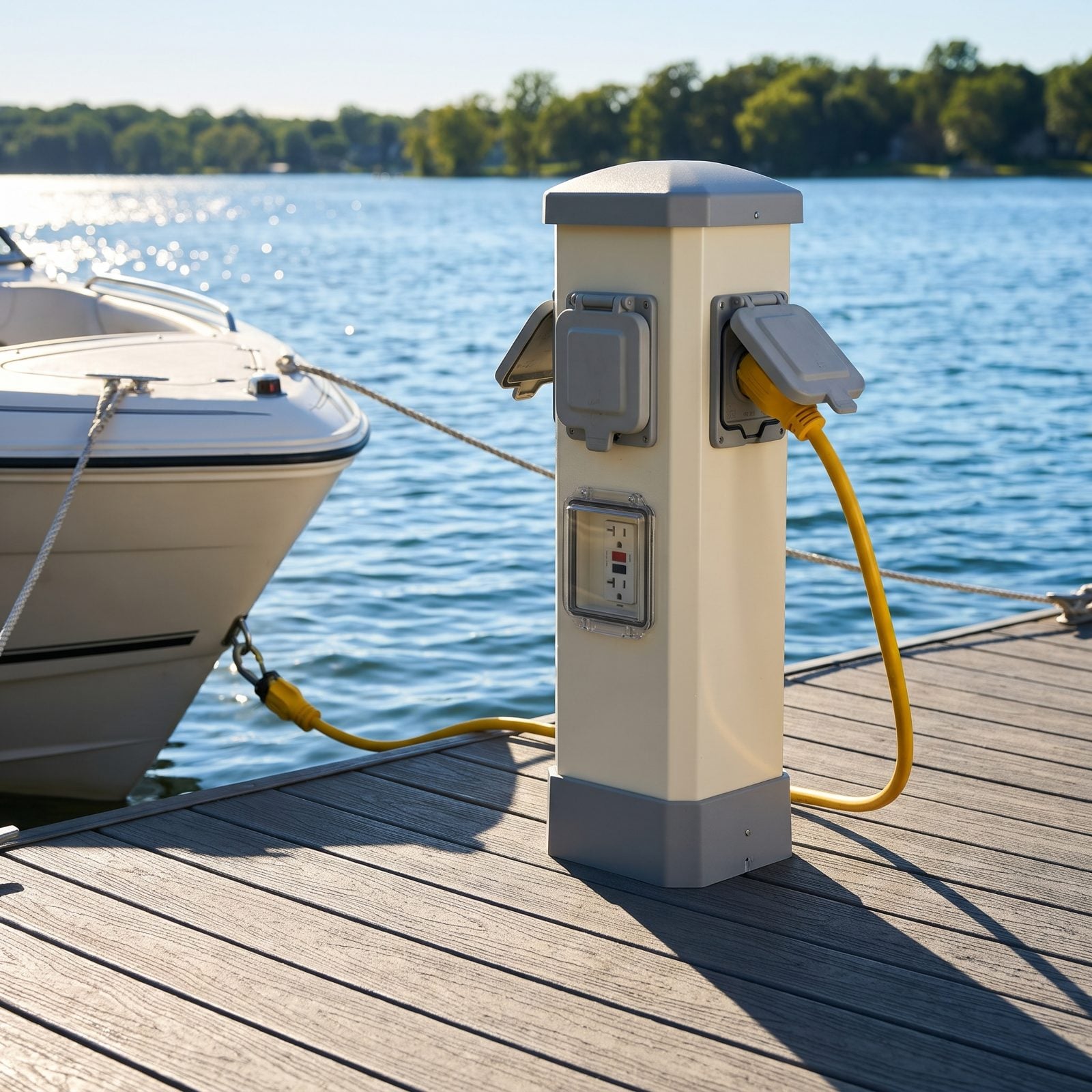
Water and electricity don’t negotiate. A marine-rated GFCI pedestal is the one piece of dock gear that isn’t about comfort or tidiness. It’s about not turning the swimming area into a hazard.
The GFCI trips the instant it senses current leaking where it shouldn’t, which near a dock can mean the difference between a flipped breaker and a tragedy. Electric shock drowning is a real and badly underdiscussed risk around powered docks, and most people have never heard the term.
This is the one job on the list for a licensed electrician. Marine wiring has its own code, and guessing here is the kind of mistake you only make once.
6. A Clearly Marked Rescue Ring and Throw-Rope Station
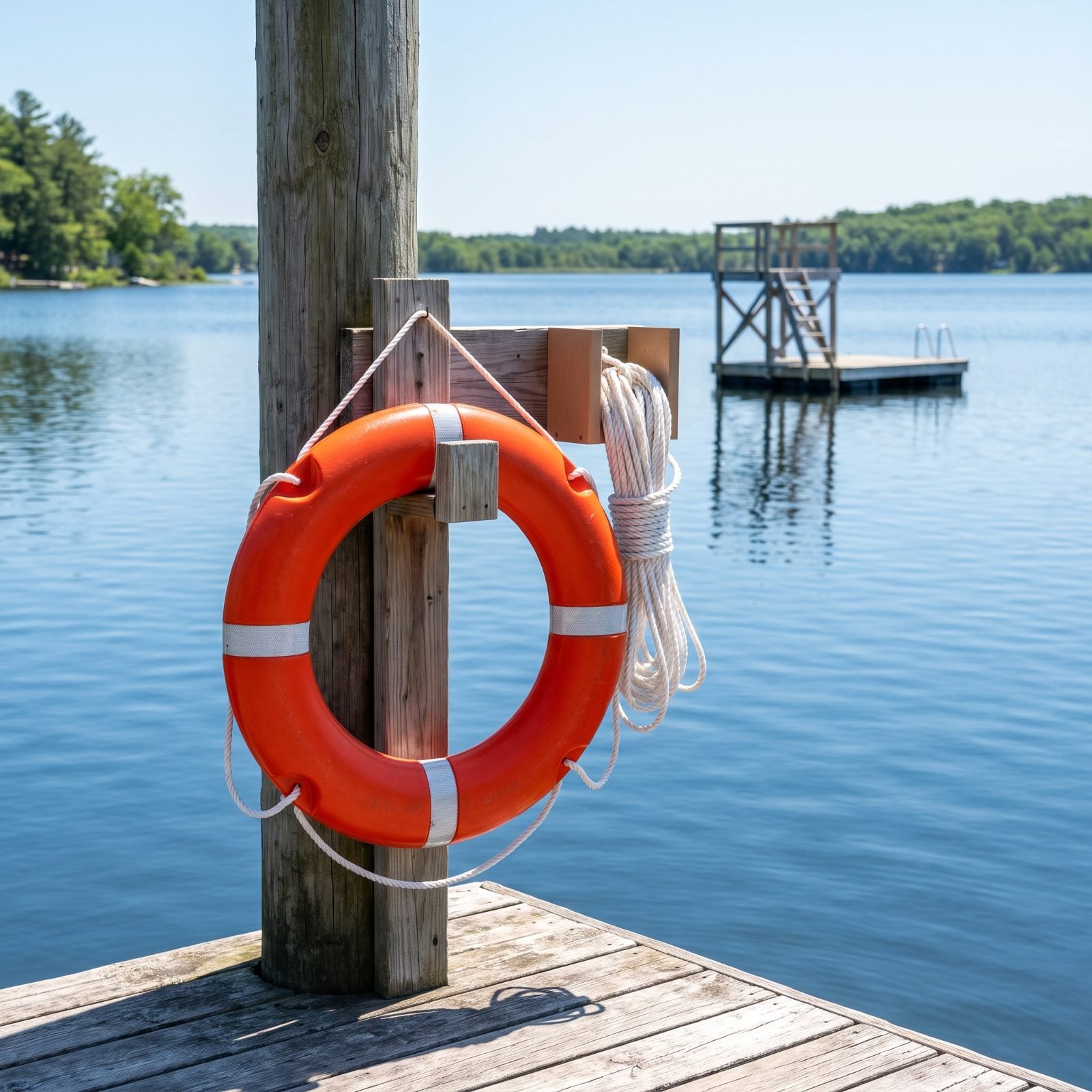
A rescue ring buried in a dock box is a rescue ring that doesn’t exist. Seconds decide these things, and nobody’s digging under the towels while someone’s in trouble.
Mount a bright ring buoy and a coiled throw-rope out in the open, near the deep end, where anyone can grab them without thinking. Visibility and reach are the whole value. A throw-rope lets you help from the dock instead of jumping in, which keeps one emergency from becoming two. Point it out to every guest the first time they visit, and make it the boring safety talk nobody needs until they do.
5. A Reflective Address Plaque Visible From the Water

Street numbers face the street. On a lake, help often comes by water, and a rescue boat or marine patrol cruising a dark shoreline can’t read a sign aimed at the road.
A reflective address plaque mounted on a piling and aimed at the water handles the problem no one thinks about until there’s a reason to. Big, bold numbers that throw a spotlight right back at night mean responders find you fast.
4. A Gasketed First-Aid Box Mounted in Plain Sight
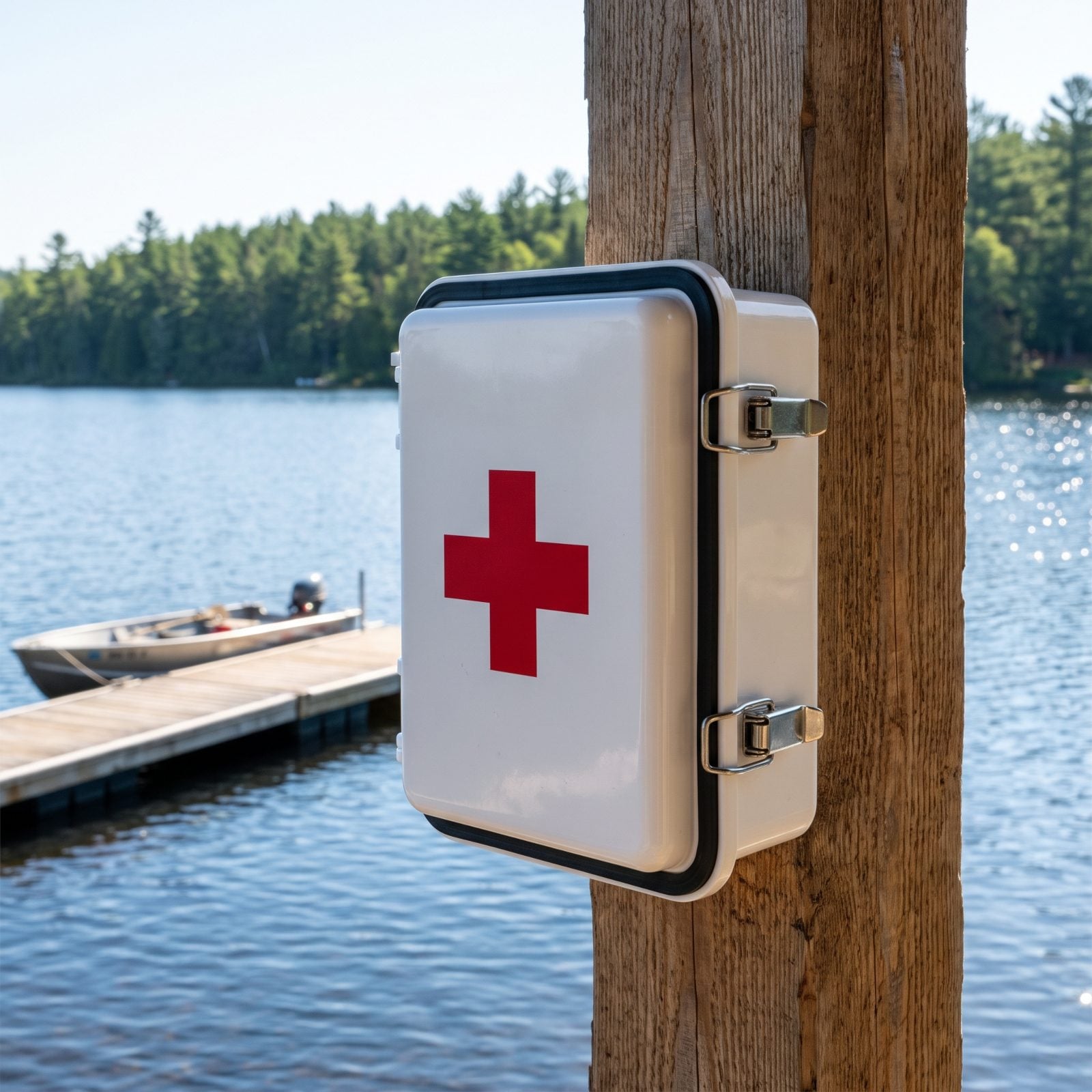
A first-aid kit buried in a dock box under life jackets and a tangle of ski rope is a kit nobody can find when it counts. Fishhooks in a thumb, a shin split on a cleat, a bee sting mid-cannonball — these happen fast, and the person helping is usually the one with wet hands and no patience for digging.
Mount it on a post, lid facing out, at adult chest height. The gasket is the detail most people skip. Lake air is damp and splash is constant, so an unsealed box turns your bandages into a soggy brick by August.
3. Textured Nonslip Strips on Steps and Transition Points
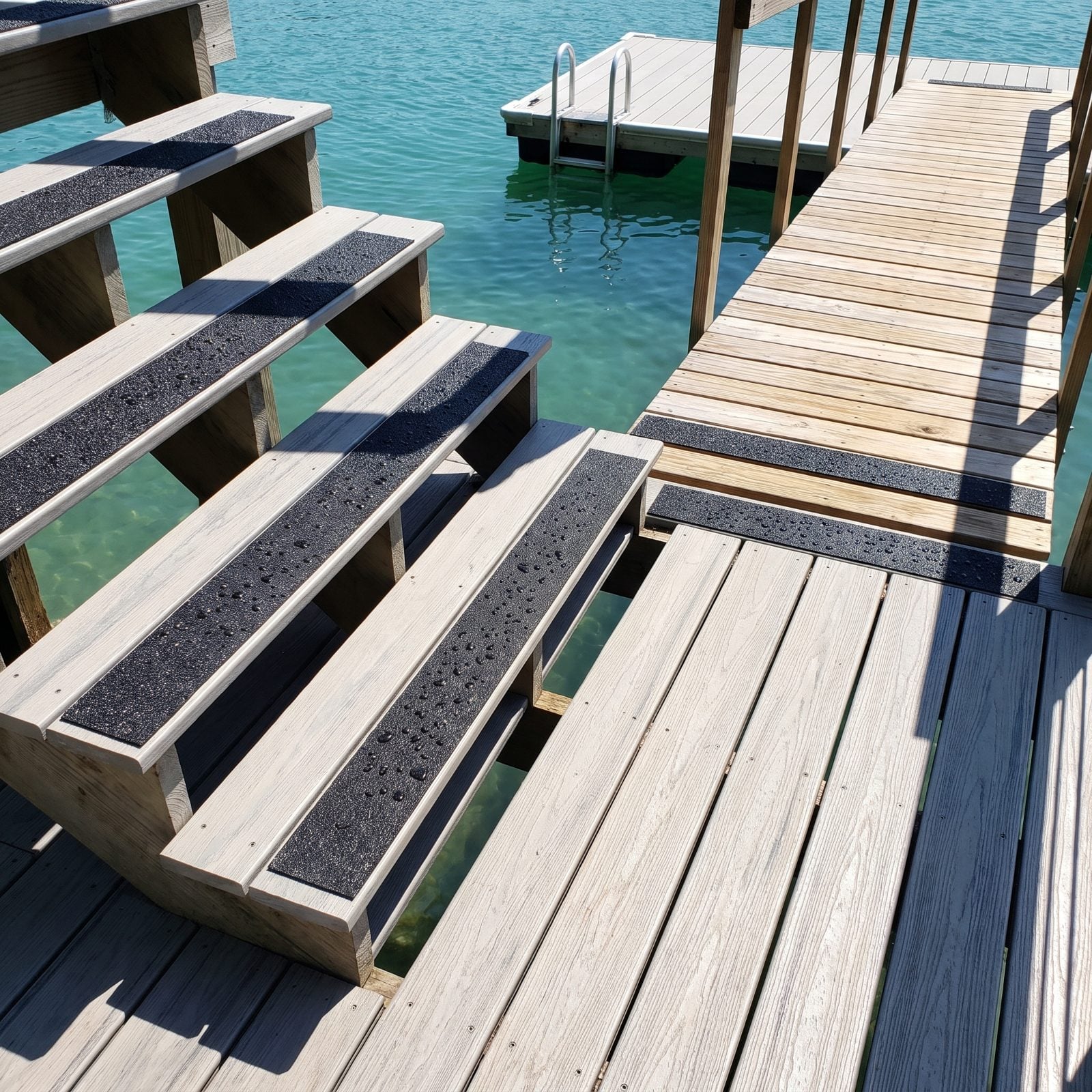
Wet wood is a skating rink with splinters. And the spot that gets people is almost never the open deck — it’s the transition: dock to gangway, step to swim platform, the one board that catches the morning dew and holds it all day.
Textured strips cost next to nothing and go on in an afternoon. Peel-and-stick works for a season or two. The screw-down aluminum-grit kind lasts years and shrugs off freeze-thaw without curling at the corners, so run them across the leading edge of every step and anywhere a bare foot changes direction.
2. A Flip-Up Swim Ladder With Wide, Barefoot-Friendly Steps
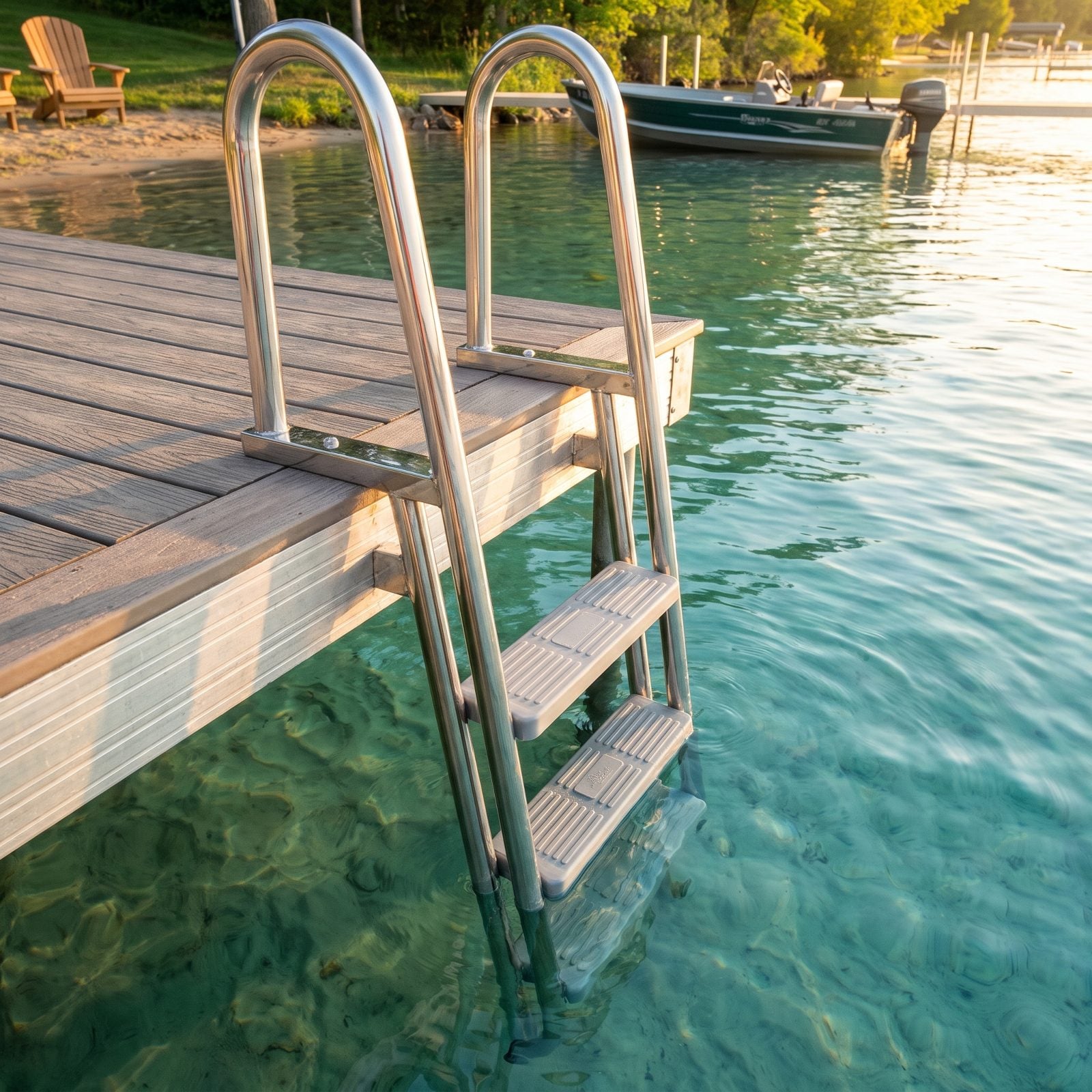
The thin-rung ladder that came with the dock is fine until you’re a tired swimmer trying to climb out with pruny fingers and no grip. Narrow steel rungs dig into the arch of a bare foot, and anyone over a certain age knows the particular indignity of hauling yourself up one painful toehold at a time.
Wide treads change the whole exit. Three flat, grippy steps, with the lowest one reaching below the waterline, mean you climb instead of claw your way up. Flip the ladder up when nobody’s swimming and you spare it from a green beard of algae, which keeps the lower rungs from turning slick between weekends.
The easiest ladder to use is the one that reaches a step deeper than you think it needs to.
Get at least one fully submerged step. Kids, older swimmers, and anyone in a life jacket all need something underfoot before their head clears the surface.
1. A Self-Latching Gate for Children and Pets
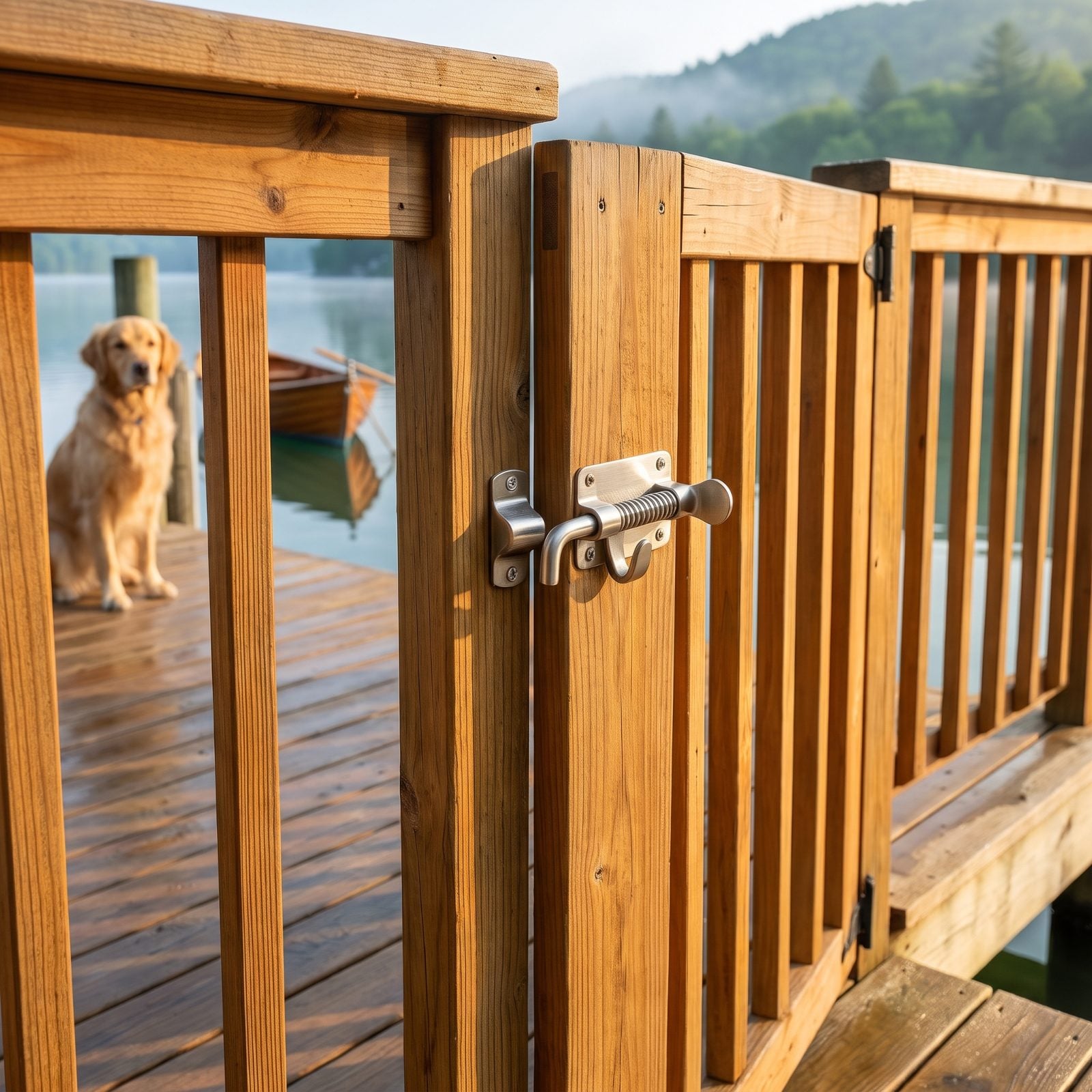
A toddler on a dock moves faster than anyone wants to admit, and a dog that spots a duck has exactly one plan. A gate that swings shut and latches on its own takes human memory out of the equation — which matters, because that memory is busy carrying coffee, towels, and a fishing rod.
Mount the latch at a comfortable mid-gate height, and make it spring-loaded so a careless shove still clicks it home. Put the gate at the land end of the dock, not out over the water, so a slip happens on solid ground instead of off the edge.
Hinges live a hard life by the water. Go stainless or coated — it’s the difference between a gate that still latches in year five and a rusty flap that sags open all season.