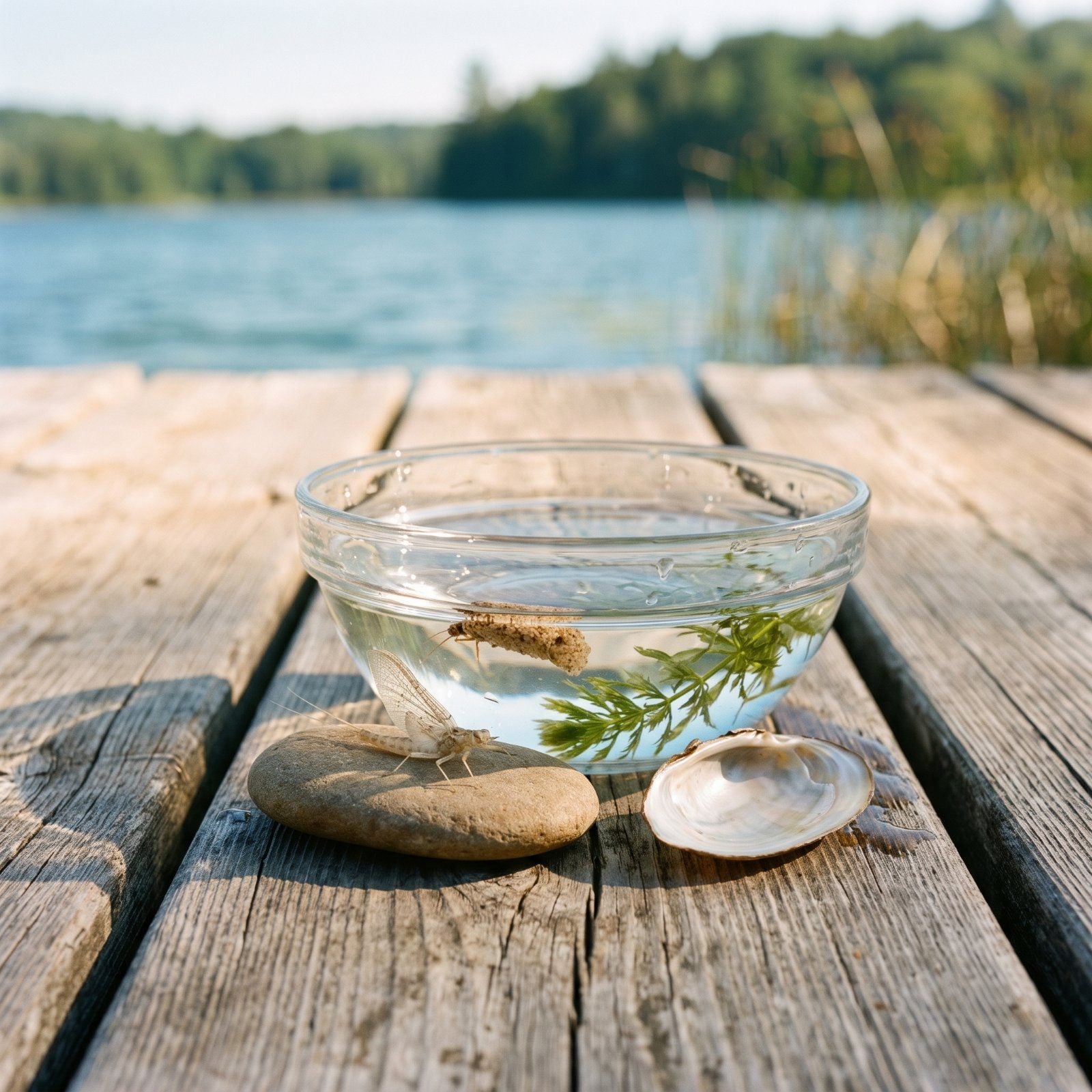
Dip a paddle into a lake and most people see one thing: water. But the shoreline is talking the whole time, if you know the dialect. A jelly blob on a sunken branch isn’t gross, it’s good news. A film on the surface might be harmless, or it might be a problem leaking from a boat upstream. After enough summers at the dock you start reading the water the way an old farmer reads the sky. Here are the signs worth noticing, the ones that mean a lake is alive and well, and the ones that should make you pause before you dive in.
Please note that some of the imagery in this article may have been enhanced with the assistance of AI.
28. A Rainbow Surface Sheen That Shatters When You Touch It
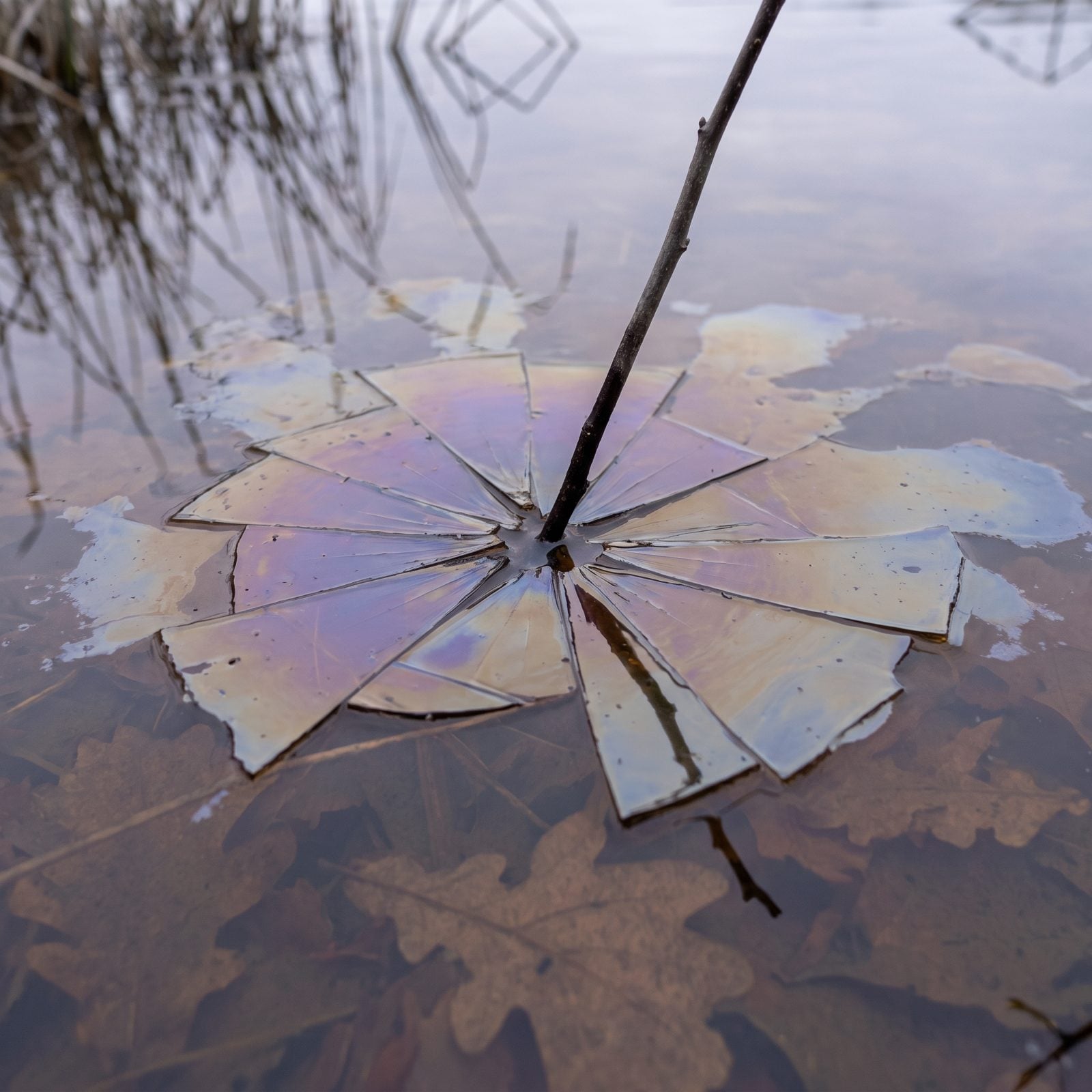
Here’s the trick nobody teaches you at the boat launch. A rainbow film on the water sends people into a panic about fuel leaks, but most of the time it’s natural, and you can prove it in two seconds.
Poke it with a stick. A bacterial sheen, made by iron-processing microbes chewing through leaf litter, is brittle. It cracks into wedge-shaped shards that radiate out from where you poked it, and the pieces hold their shape. Petroleum doesn’t do that. Oil swirls back together and keeps flowing, because it’s one continuous slick. If the film heals itself after you disturb it, that’s the one to worry about near a dock full of outboards.
27. Jelly-Like Bryozoan Colonies Clinging to Submerged Branches
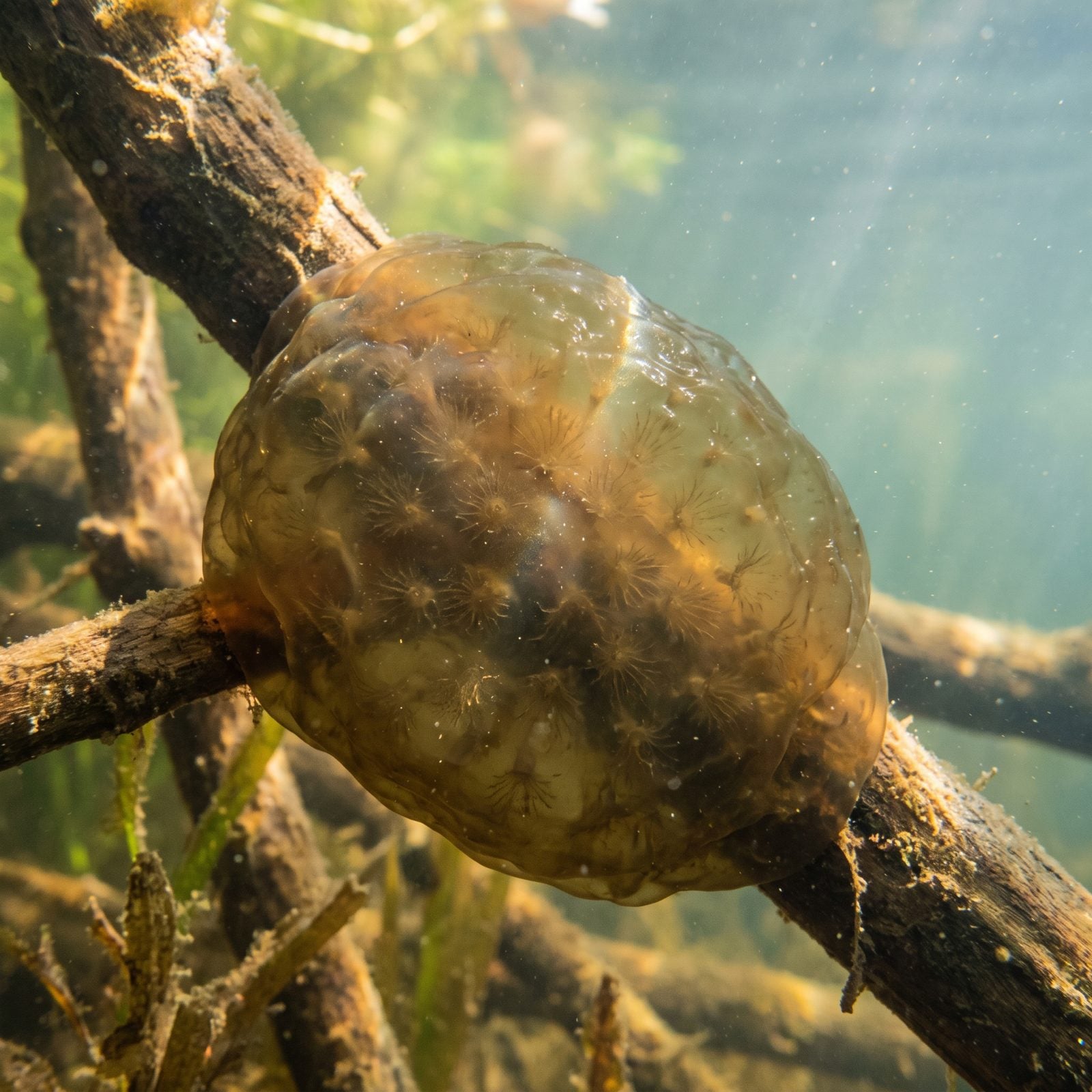
People find these and assume the worst. A softball-sized brown blob of jelly wrapped around a dock piling looks like something out of a creature feature, and pulling it up doesn’t help, because it wobbles like a cold poached egg the size of a cantaloupe.
It’s a bryozoan colony, most likely Pectinatella magnifica, and it’s made of thousands of microscopic animals filtering the water clean. They only settle where the water is reasonably clear, warm and decent in quality. So the blob that made your kids scream? Gold star. Leave it alone, admire the strange rosette pattern on its surface, and let it keep doing its job.
26. Rust-Orange Iron Bacteria Where Groundwater Seeps In
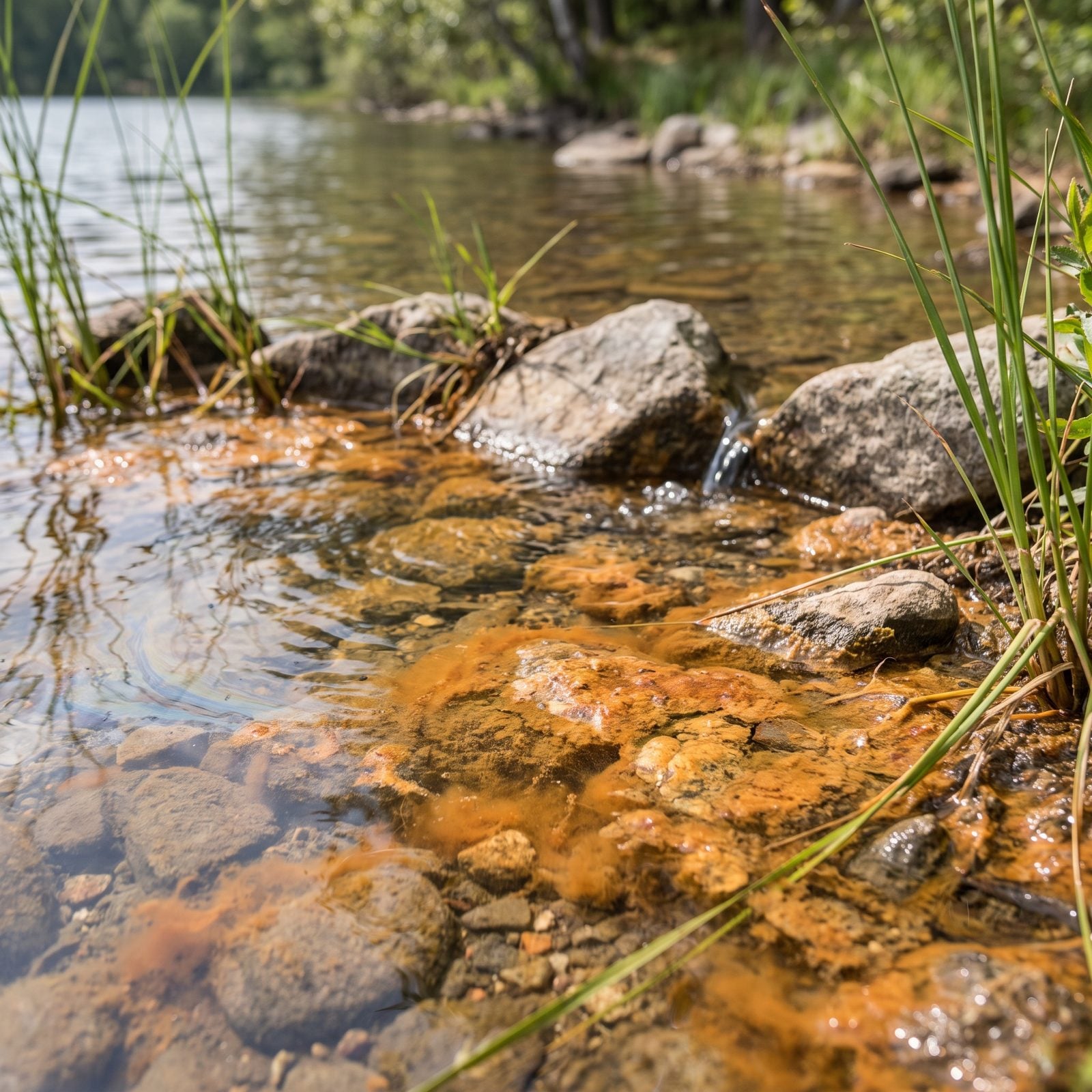
You’ll spot a smear of orange-rust gunk coating the rocks where a cold seep trickles into the shallows. It looks industrial. It isn’t.
That’s iron bacteria, oxidizing dissolved iron the moment groundwater hits open air. The seep itself tells you the lake is fed by springs, and that’s good news, because groundwater keeps things cool and stable through a hot August. The ochre fluff can smell faintly metallic or swampy, harmless to swimmers if a little unappetizing. Where you see it, you’re usually standing over the spot where the lake quietly refills itself.
25. Caddisfly Larvae in Tiny Cases of Sand or Twigs
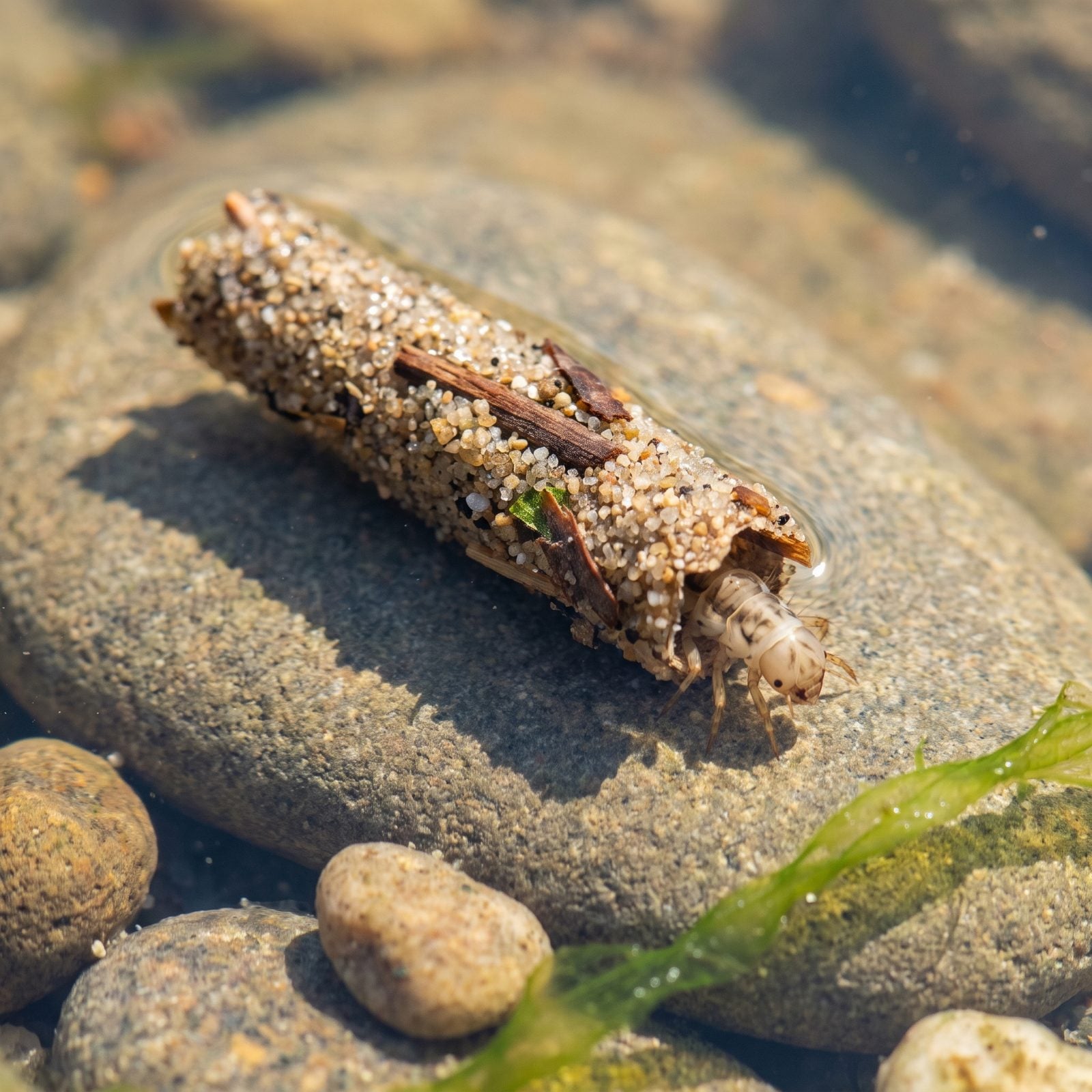
Turn over a rock in the shallows and you might find what looks like a seed or a bit of debris glued together from sand. Then it starts to crawl.
Caddisfly larvae build portable armor. Each species has its own style, some using sand grains, some tiny twigs or leaf bits, all cemented with silk. Here’s what matters to you: caddisflies are pollution-sensitive. Biologists use them as living water-quality meters. Find a good population and the lake is holding decent oxygen and low contamination. No caddis at all, where the habitat looks right? That’s a flag on its own. Little inspectors carrying their offices on their backs.
24. Tea-Brown Water Stained by Natural Tannins
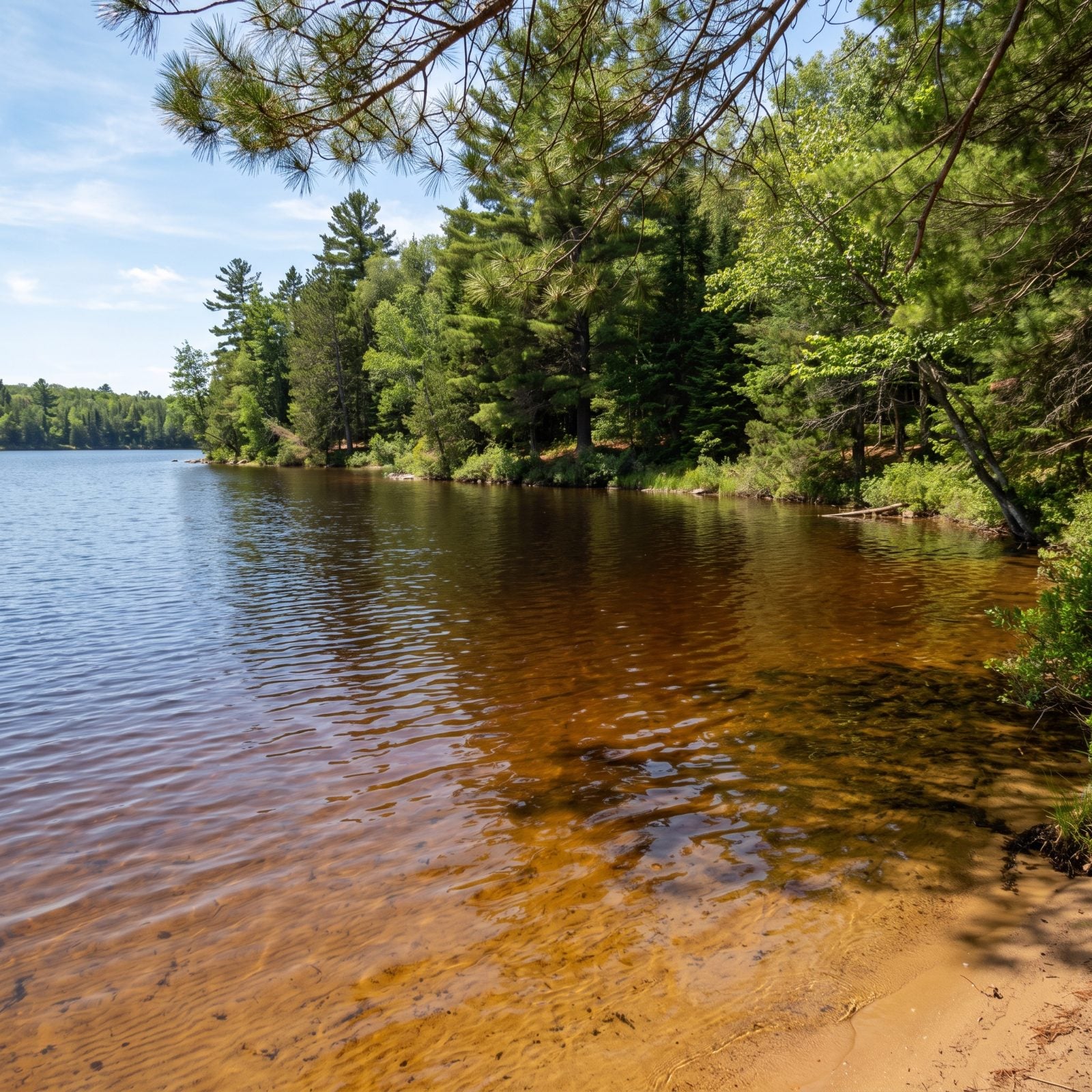
Not all brown water is dirty water. Some of the cleanest lakes in the North Woods look like iced tea, stained amber by tannins leaching out of decaying leaves, pine needles, peat and cedar swamps.
That color doesn’t mean polluted. A tannic lake runs naturally acidic, low in nutrients, and perfectly healthy for the species that evolved there. The tell is clarity within the color. Hold a white object just under the surface and you can still see it clearly against the tea tint. Murky brown that hides everything an inch down is a different story. Stained and clear is fine. Stained and cloudy deserves a second look.
23. Living Native Mussels Half-Buried in the Lakebed
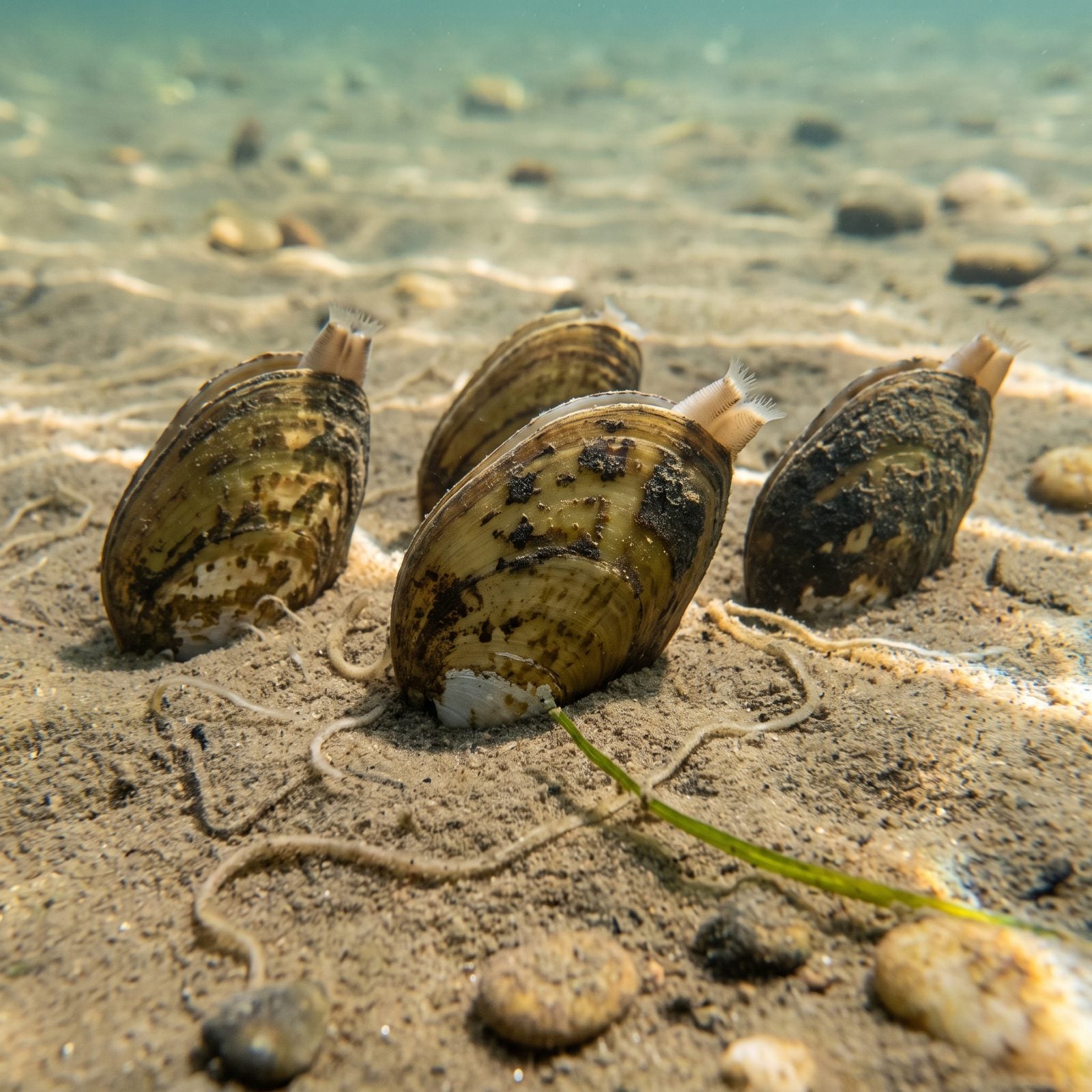
Native freshwater mussels are the longest-lived thing in most lakes that nobody ever notices, and some hang on for decades.
Find a few sitting upright, half-sunk in the sediment with their shells slightly parted and pale, rope-like cords snaking across the sand from their bases, and you’re looking at one of the best signs going. Each one filters water all day. More importantly, they only reproduce if the lake supports the specific fish their larvae need to hitch a ride on. A living mussel bed means the whole food web is intact, not just one piece of it.
22. A Thin Brown or Green Film of Periphyton on Submerged Rocks
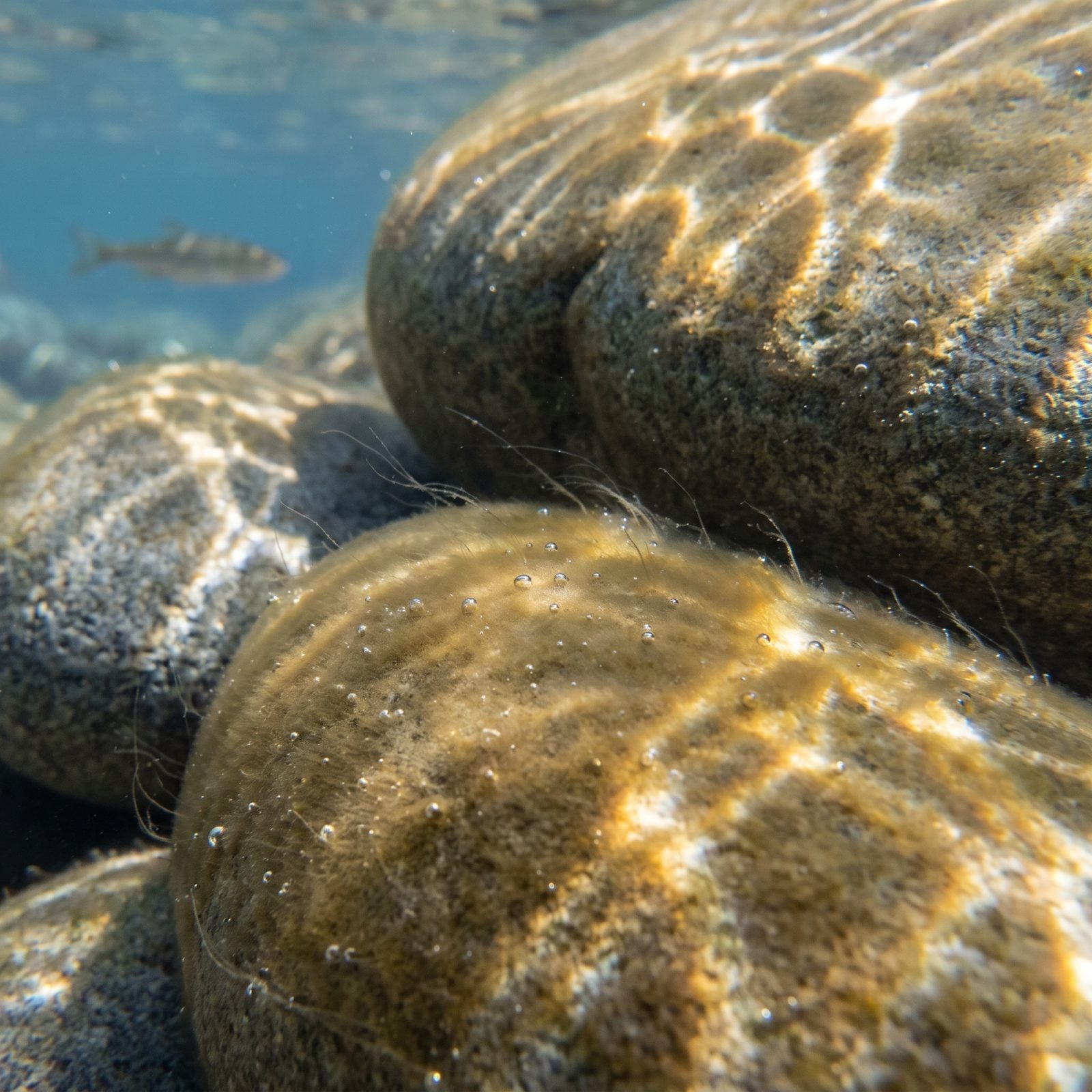
That slippery brown-green skin on every rock in the shallows, the stuff that puts you on your backside when you wade out, has a name: periphyton. And it’s supposed to be there.
It’s a thin living carpet of algae, bacteria and microscopic grazers coating hard surfaces, feeding snails, insect larvae and young fish from the bottom of the food chain up. A modest, even film is exactly right. The problem version is different, thick stringy mats that smother everything and peel off in slimy sheets. Thin and slippery means a working lake. Shag-carpet thick usually means too many nutrients feeding runaway growth.
21. Fresh Mayfly Husks Carpeting the Shore After a Mass Hatch
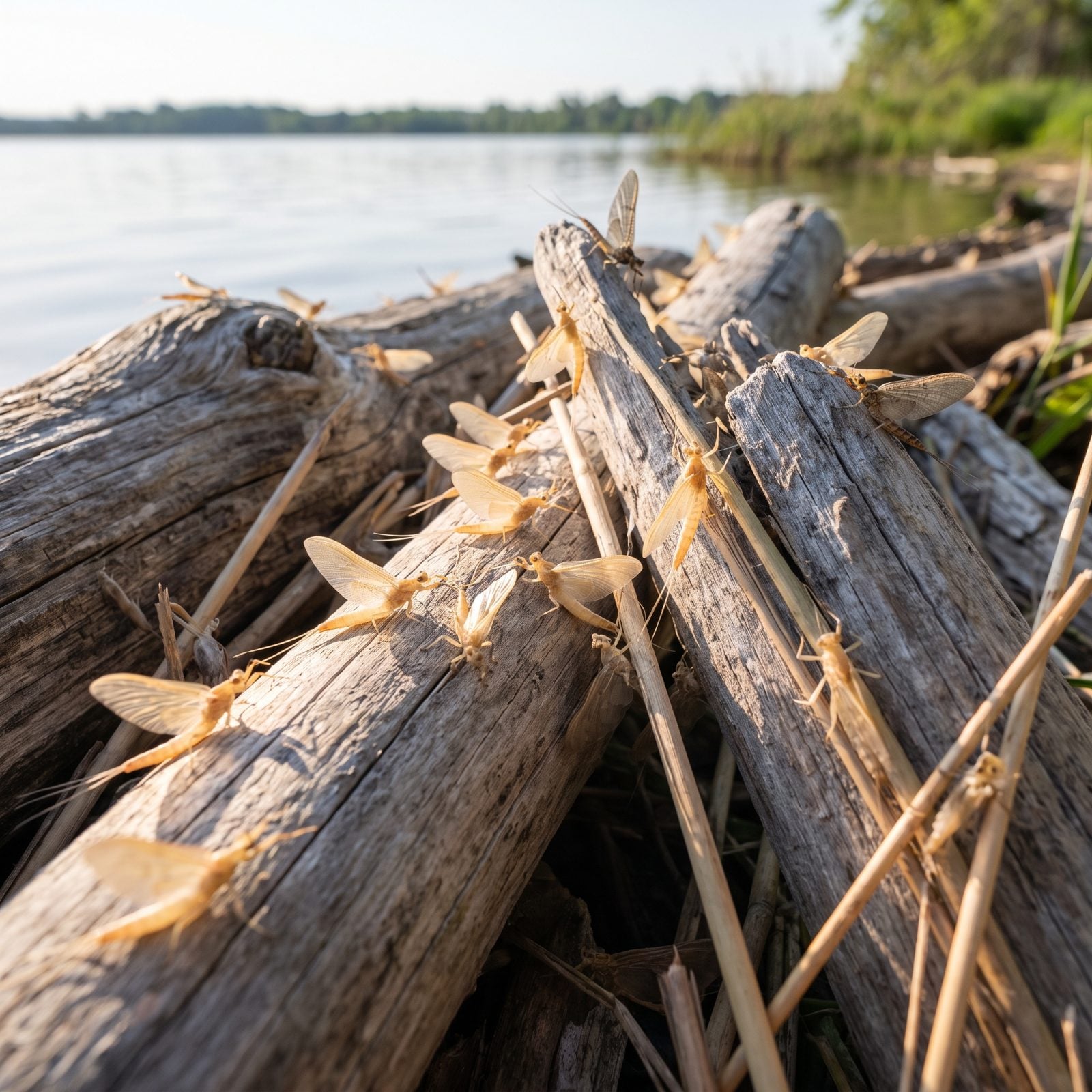
One morning the dock railing, the window screens and the shoreline grass are all draped in papery ghost-skins. People grumble about cleanup. Longtime lake folks grin.
A mass mayfly emergence is one of the surest signs of a lake in good shape. Mayfly nymphs spend a year or more on the bottom and, like caddisflies, they can’t survive in low oxygen or polluted sediment. A sky full of them means the deep water stayed breathable all year. The husks on the shore are just the empty suits they left behind on their way up. Mild inconvenience, major compliment to your lake.
20. Translucent Amphibian Egg Masses in the Weedy Shallows
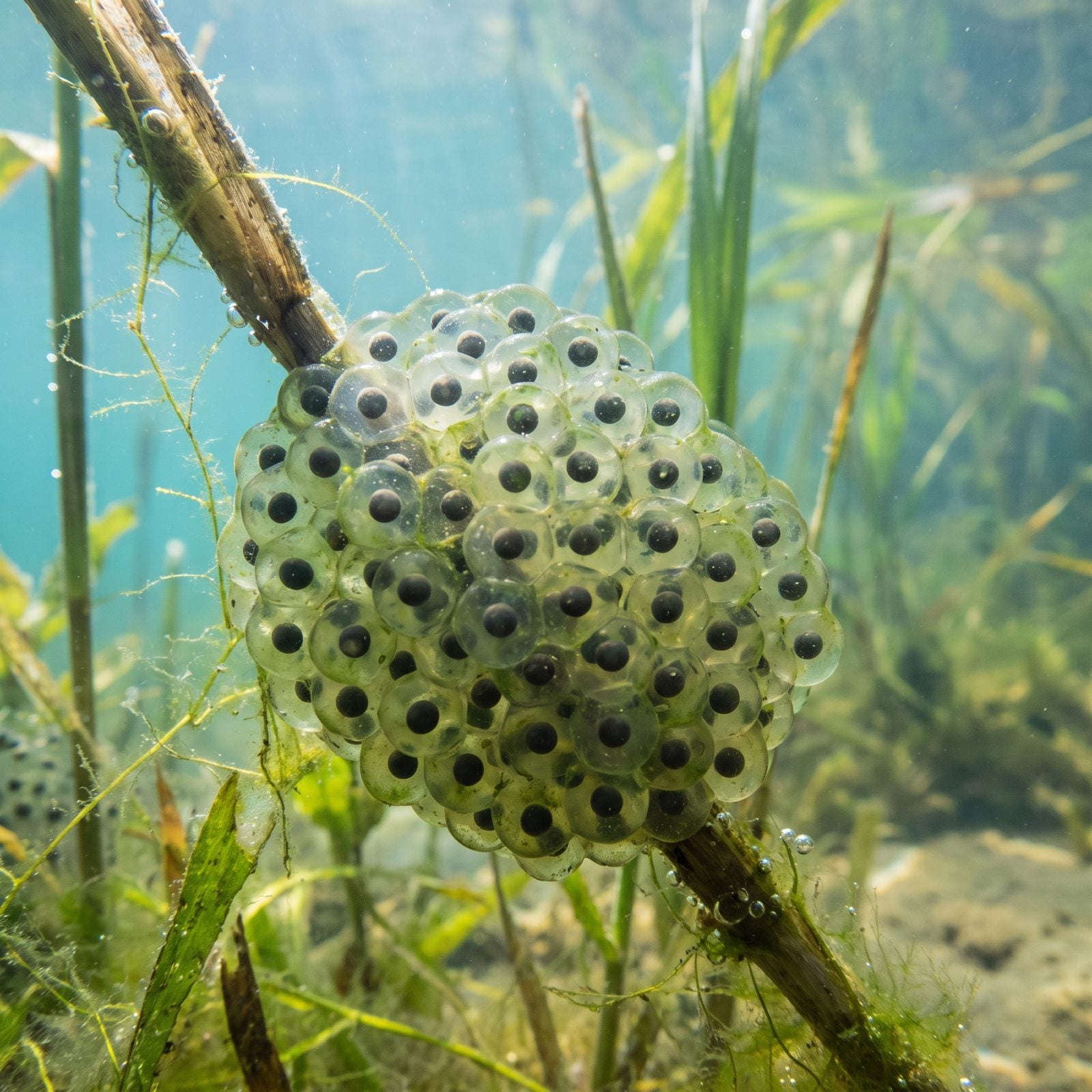
Amphibians are the canaries of the freshwater world. Their eggs have no shell, just a clear gel, so whatever is in the water passes straight into the developing embryos.
When you find a fist-sized clump of translucent jelly dotted with dark embryos, lashed to a reed stem in the spring shallows, take it as a genuine endorsement. Frogs and salamanders won’t lay in water that poisons their young. That faint green tint some masses carry comes from a symbiotic algae that supplies the embryos with oxygen, one of the stranger partnerships in a pond. Leave them be, and don’t let the dog trample the weedy edges where they hide.
19. A Chorus of Different Frog Species From Different Corners
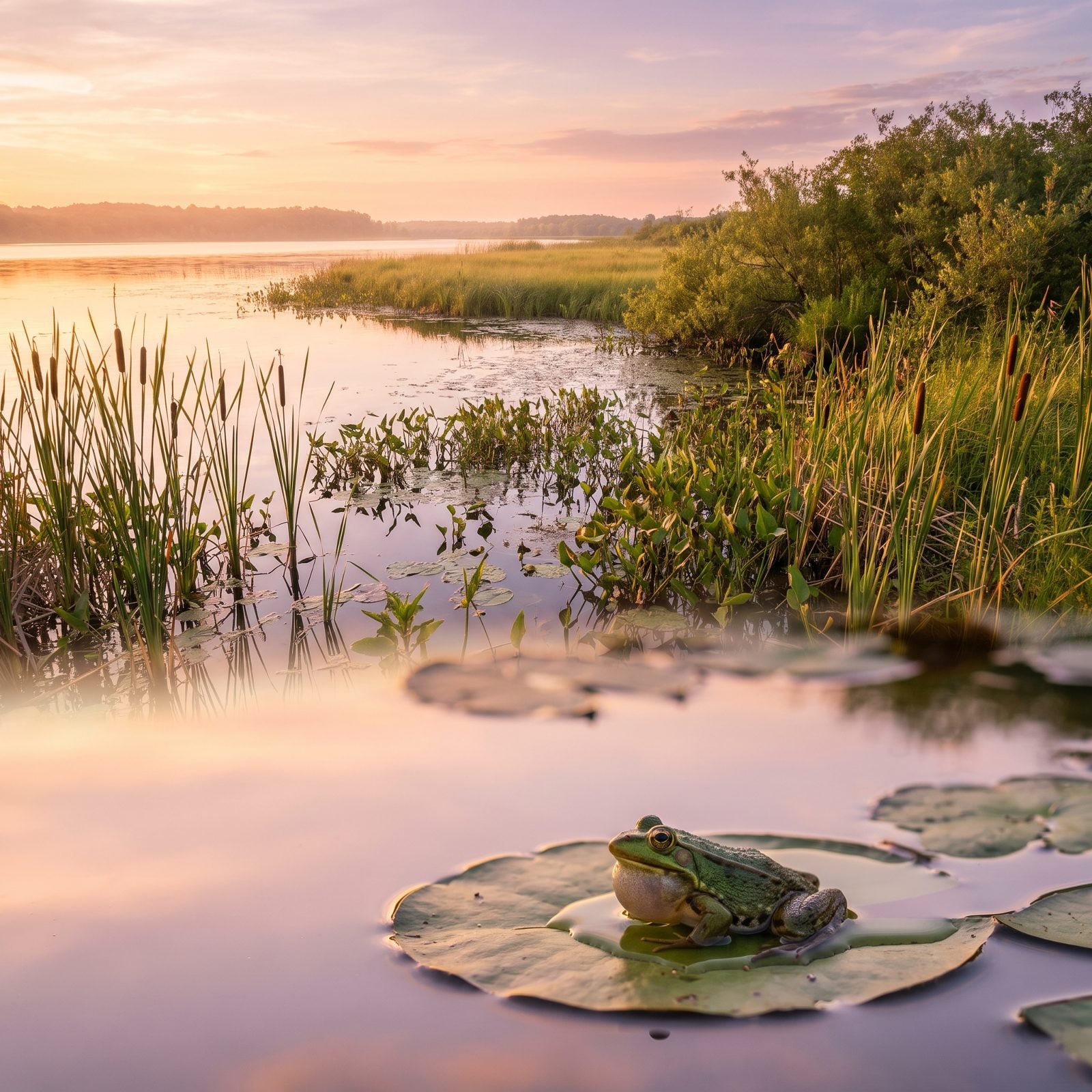
Stand at the shore on a warm evening and listen for layers. One species isn’t enough. You want a chorus with parts.
Spring peepers calling from the flooded brush, the deep jug of a bullfrog out in the lily pads, the banjo-twang of a green frog, maybe trilling toads from the gravel margin. Different frogs need different habitats to breed, so a stack of overlapping calls tells you the shoreline still offers all of them: marsh, open water, wet meadow and brushy edge. A lake that fell to a single lonely species, or went silent, has usually lost the variety of habitat that kept the whole band together. The richer the concert, the healthier the stage.
18. Tiny Zooplankton Darting in a Jar of Scooped Lake Water
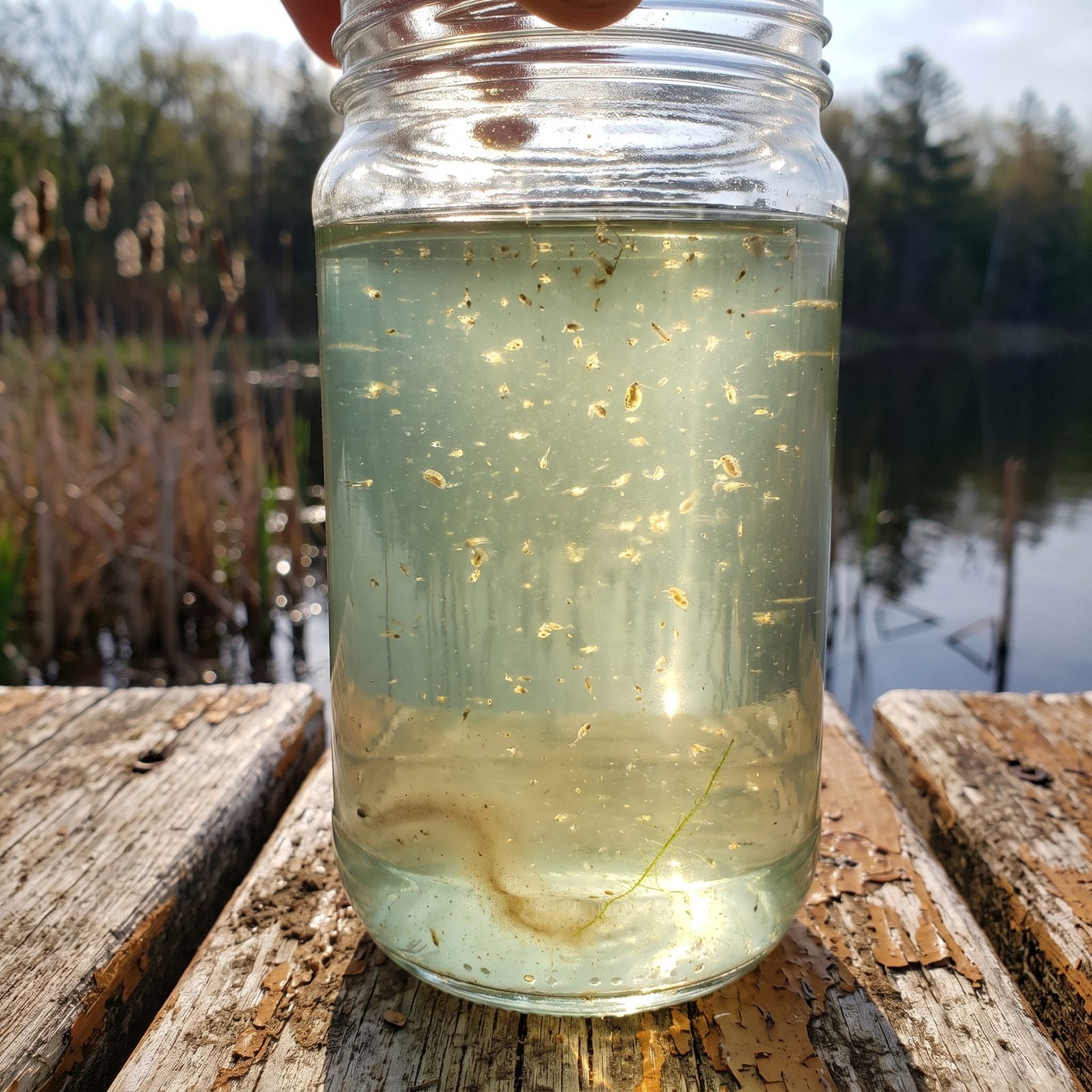
Scoop a jar from the shallows and hold it to the sun. If you see little flecks jerking and drifting around like dust that changed its mind, that’s zooplankton — Daphnia, copepods, the stuff most people never think about.
And it matters more than you’d guess. These tiny grazers are the hinge of the whole food web, eating algae and getting eaten by young fish. A lake thick with them is a lake that’s feeding everything above it.
17. Several Size Classes of the Same Fish Species in One Spot
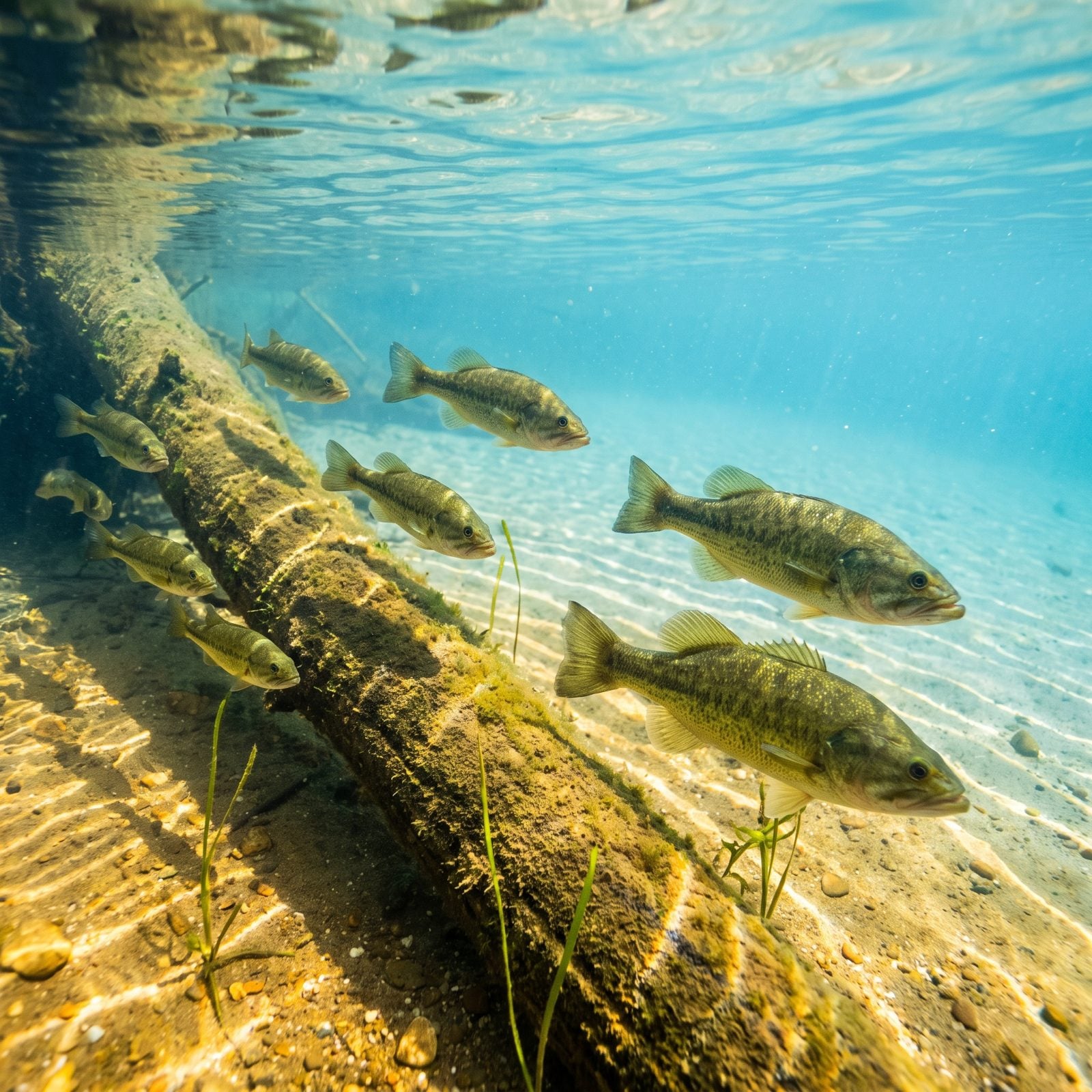
One of the clearest signs a lake is working is boring to look at. You drop a line, or snorkel a cove, and there they are — bass of wildly different sizes hanging in the same water. Fingerlings, teenagers, old slabs. All ages present and accounted for.
That mix tells you the fish are reproducing every year and the young ones are surviving long enough to grow up. A lake where you only ever catch big old fish, or only tiny ones, is a lake missing a generation. Something broke the chain somewhere.
16. Fish Spawning Beds Swept Clean in Gravel and Sand
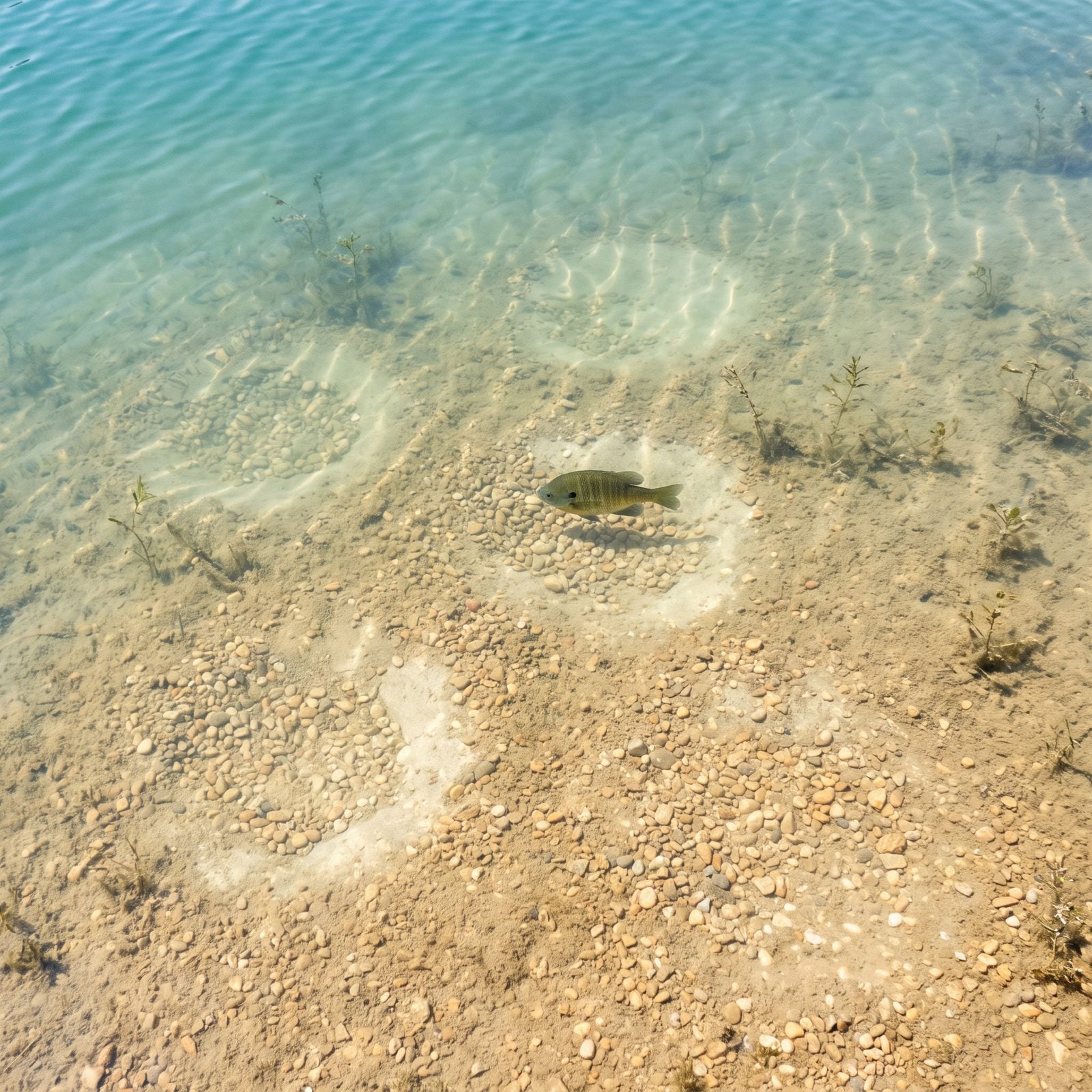
Walk a sandy shoreline in late spring and look down into the shallows. Those pale circles swept clean of silt, each about the size of a dinner plate, are nests — sunfish and bass fan the muck away with their tails to expose clean gravel for their eggs.
Clusters of them, even with just one fish hovering over a single bed and the rest standing empty, mean two things at once. The fish are spawning, and the bottom is clean enough to spawn on. When silt smothers everything, there’s nowhere to lay eggs and the beds disappear. A silted-over bottom with no beds is the tell.
15. A Loon Pair Ferrying Chicks on Their Backs
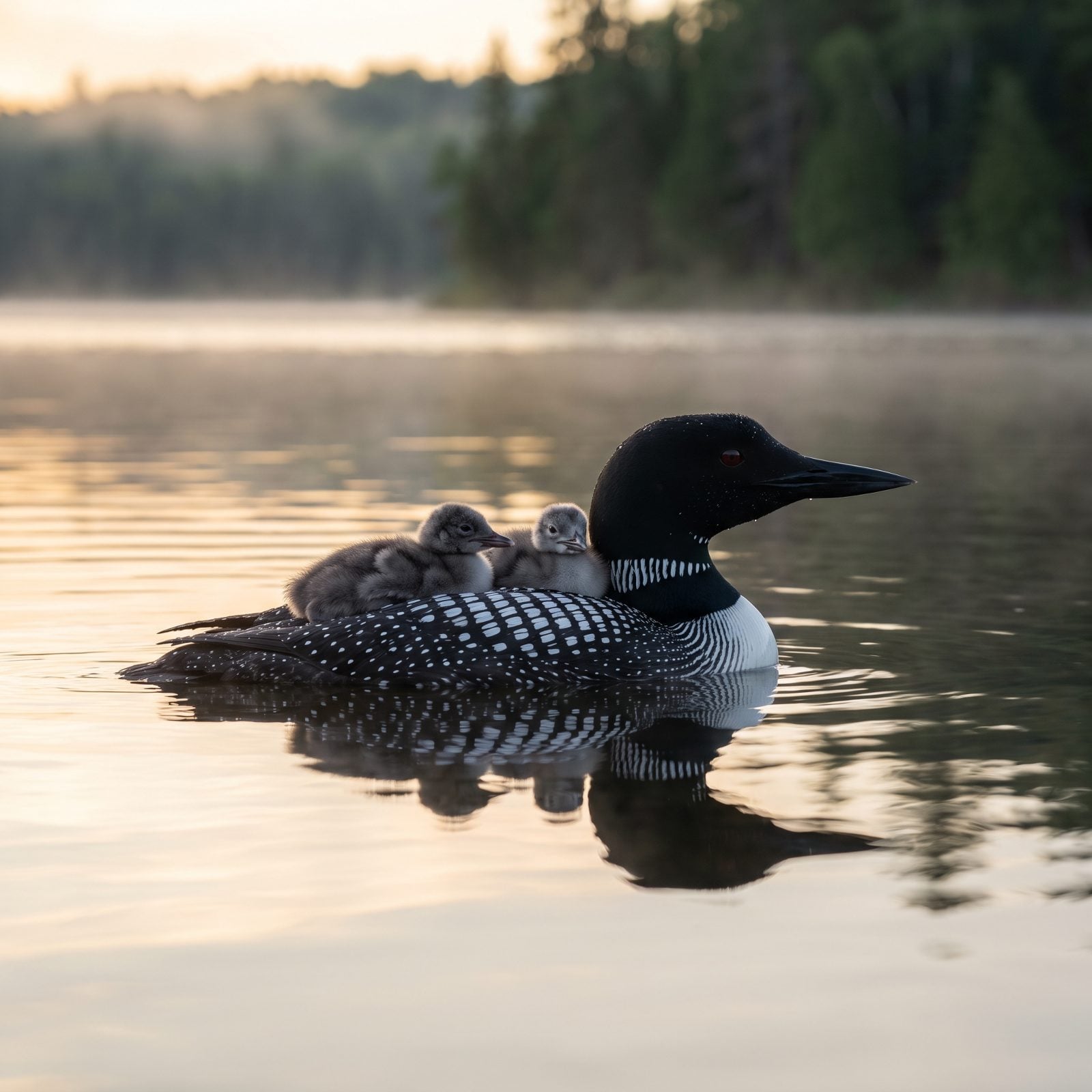
A loon with a chick riding on its back is one of the great sights of a northern lake. It’s also a report card. Loons need clear water to hunt fish by sight, clean shorelines to nest on, and enough small fish to raise a chick on. Pile on development or murky water and they stop breeding long before they leave.
Grebes tell the same story, their striped young bobbing along behind. When these birds are actually raising chicks to fledging, not just passing through, the lake is doing its job top to bottom.
14. A Patchwork of Native Underwater Plants, No Single Bully Species
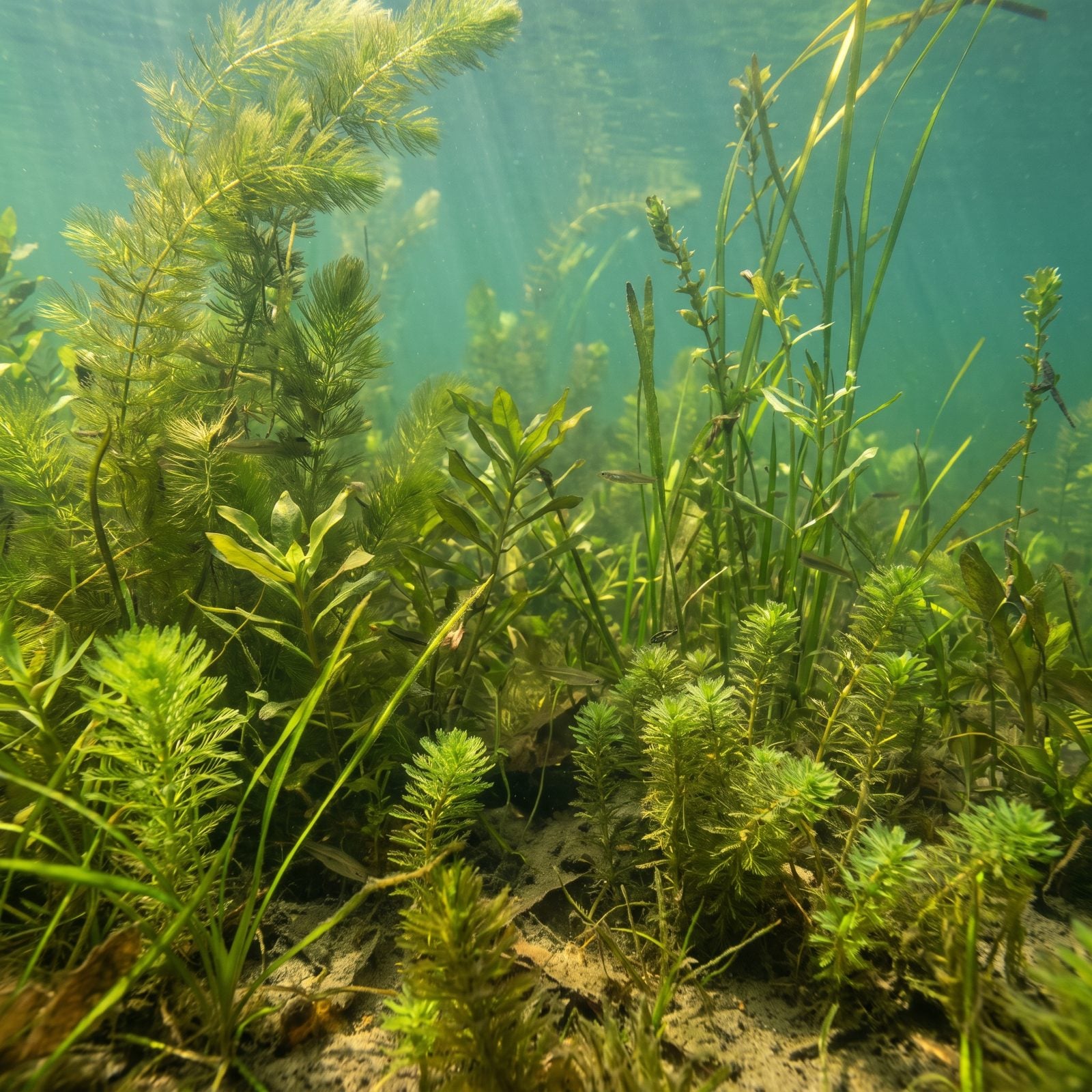
Peer over the gunwale into a weedy flat and count the kinds of plants. Feathery coontail here, ribbony wild celery there, broad pondweed leaves off to the side. A dozen shapes and shades of green.
That variety is the point. Different plants feed different bugs, shelter different fish, and hold the bottom together. A lake run by one plant and nothing else is usually a lake taken over by an invader — a red flag disguised as greenery.
A healthy weed bed looks like a crowd. An invaded one looks like an army.
13. Open Lanes and Clearings Inside the Weed Beds
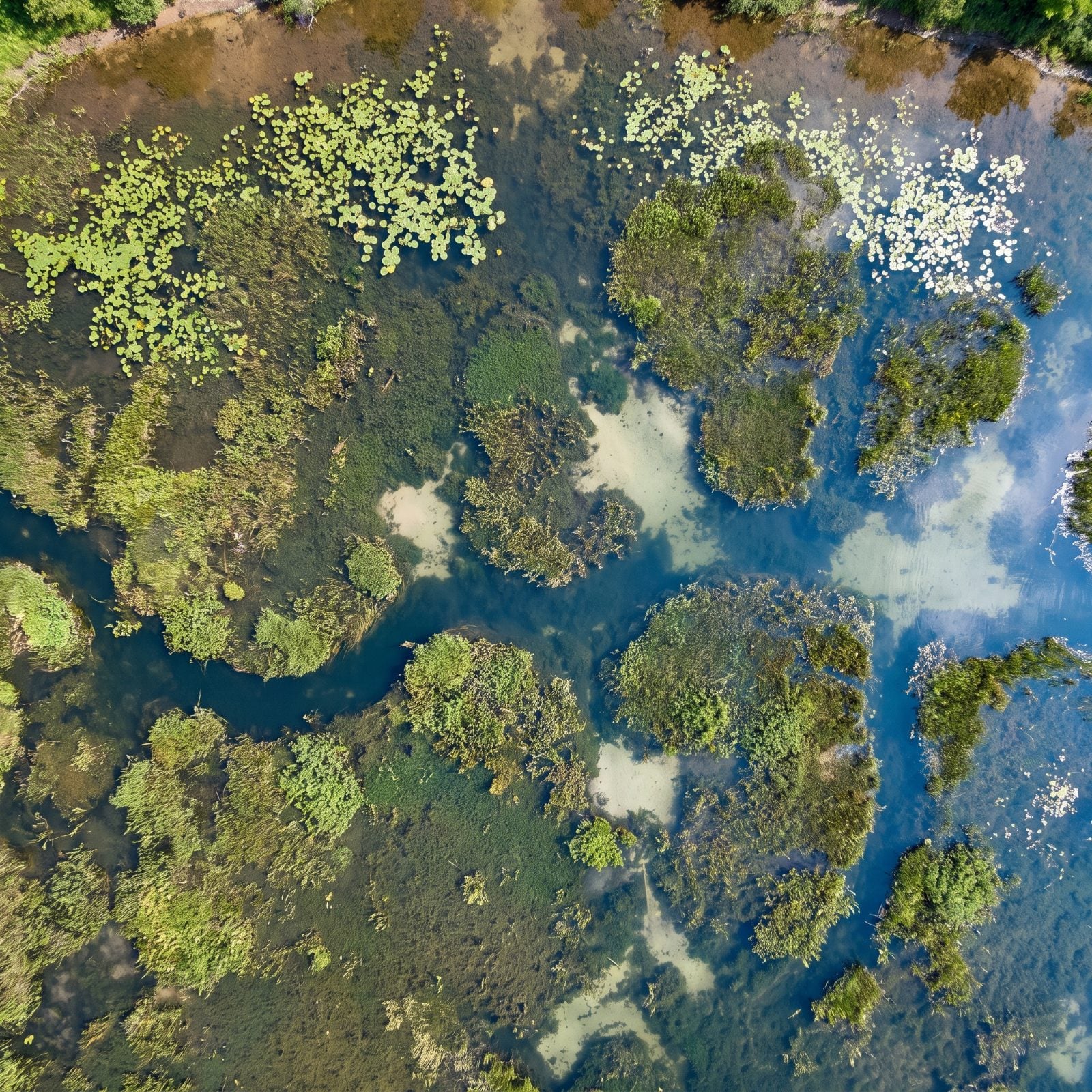
A perfect wall of weeds from shore to drop-off isn’t the goal. The healthiest beds are patchy, with open lanes and clearings threaded through them like paths worn into a hedge.
Those gaps earn their keep. They’re where predator fish ambush prey, where you can actually paddle a canoe, where sunlight reaches the bottom. A bed with no openings has usually been colonized by something aggressive that crowds out everything else, choking the water column and the fishing both. The holes are a feature, not a flaw.
12. Cold Spring-Seep Patches Bubbling Up Along the Shore
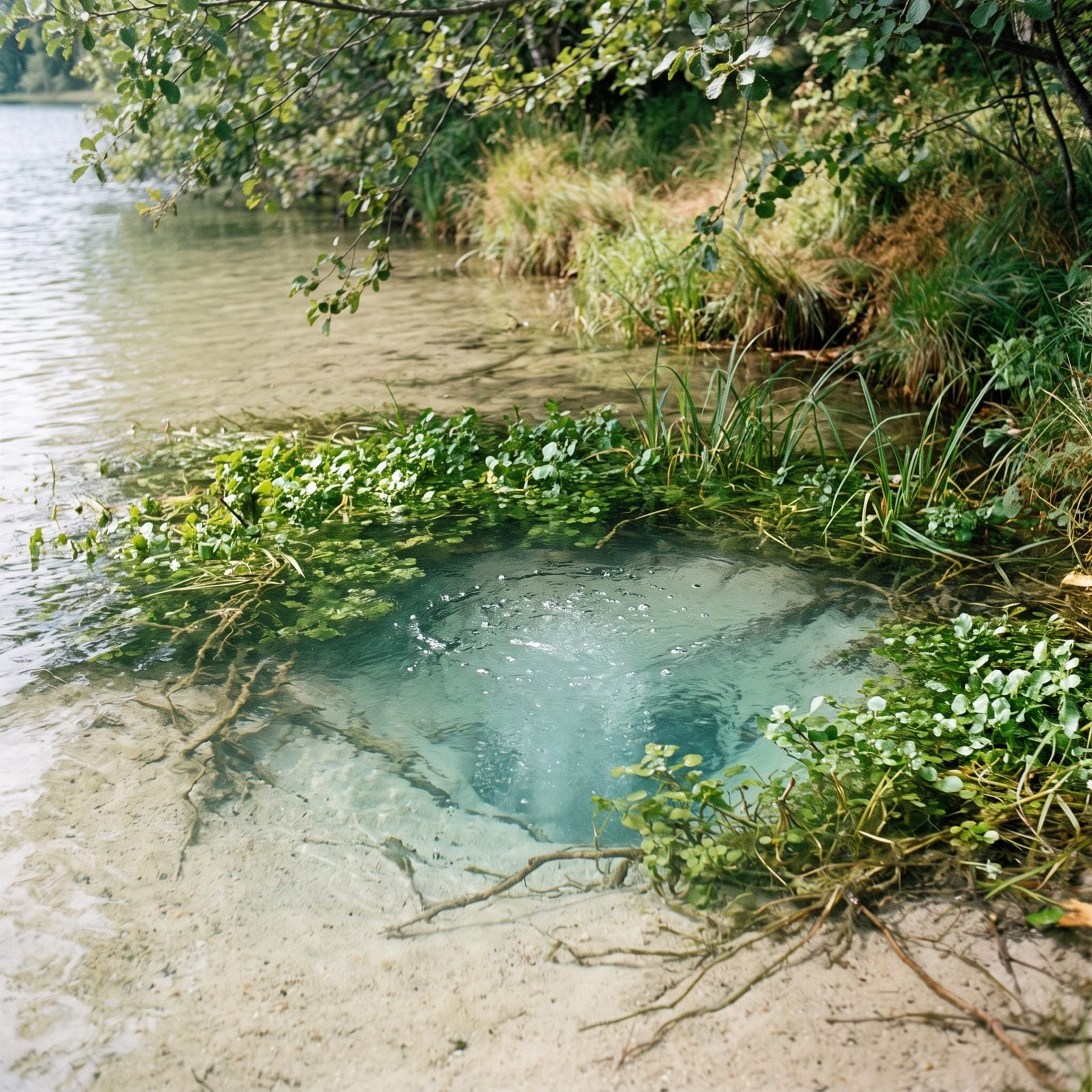
Wade a shoreline on a hot July afternoon and you might hit a patch that suddenly feels icy on your ankles. That’s a spring seep — groundwater pushing up into the lake. Look for milky, turquoise-tinted water, bubbles and fine sand welling upward, maybe a little watercress thriving nearby.
These cold spots are lifelines. Trout and other cool-water fish stack up near them in summer when the rest of the lake warms past comfortable. A lake with working seeps has refuges that keep sensitive fish alive through the hot months.
11. Marshes Stitched to the Lake at Inlet and Outlet Streams
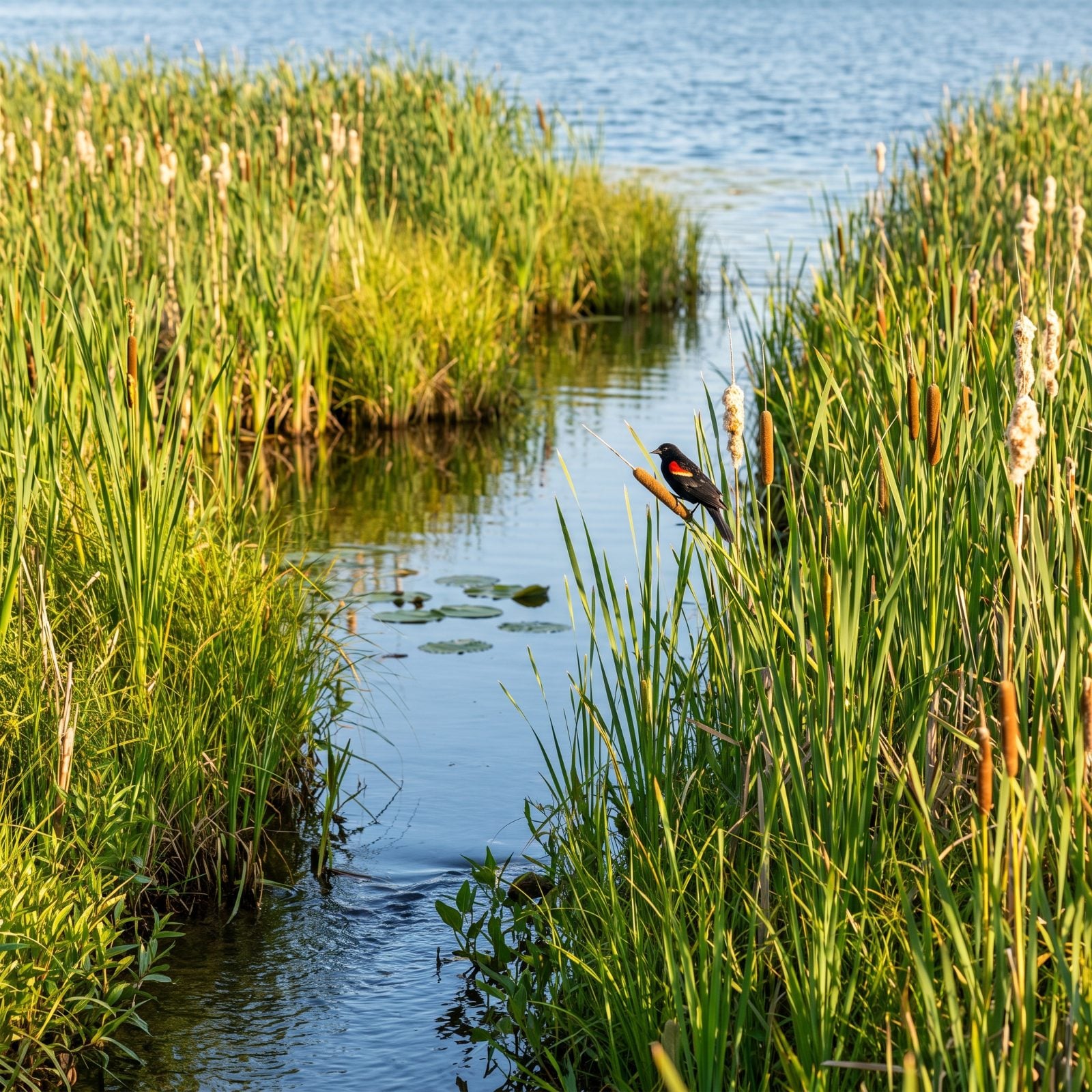
Where a stream meets the lake, the best thing you can see is a mess — a sprawl of cattails, bulrushes, and winding channels filtering the water before it ever hits the open lake.
These transition marshes do the dirty work. They trap sediment, soak up nutrients, and raise whole generations of fish and frogs in their tangles. Bulkhead that shoreline and clean it up into a neat lawn down to the water, and the filter is gone. Whatever the stream carries goes straight in.
10. A Beaver Wetland Doing the Filtering Upstream
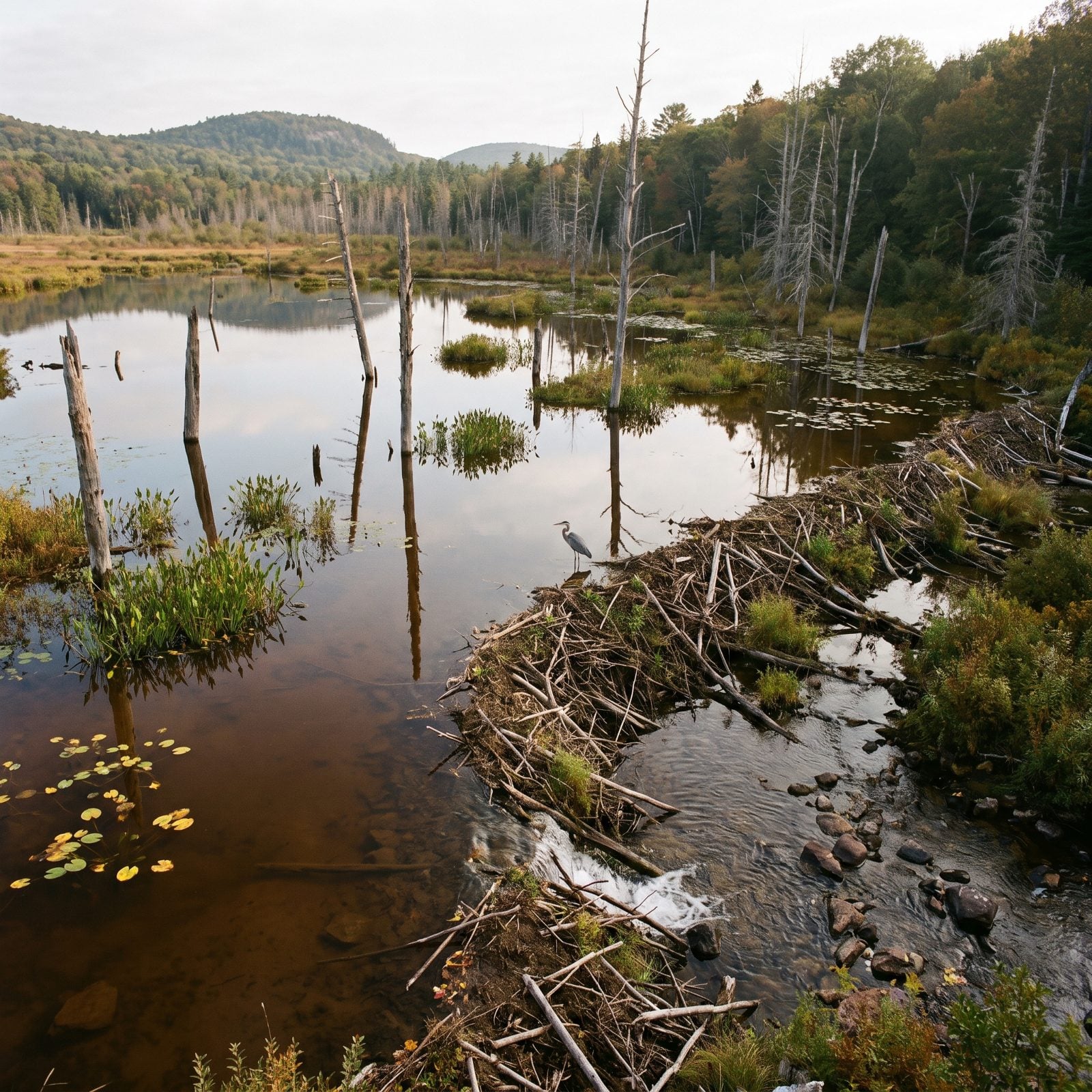
Beavers get a bad rap from anyone whose dock they’ve undermined. But a beaver pond upstream of your lake is free water treatment: the dam slows the flow, drops out sediment, and spreads water across a wetland that scrubs nutrients before they reach you.
Follow the inlet stream. Find a stick dam, standing dead snags, and a pond full of lilies, and that’s a good sign for the lake below. Lose the beavers and you often watch the downstream water get muddier and greener within a few seasons.
9. Fallen Trees and Branches Left Half-Sunk Along the Bank
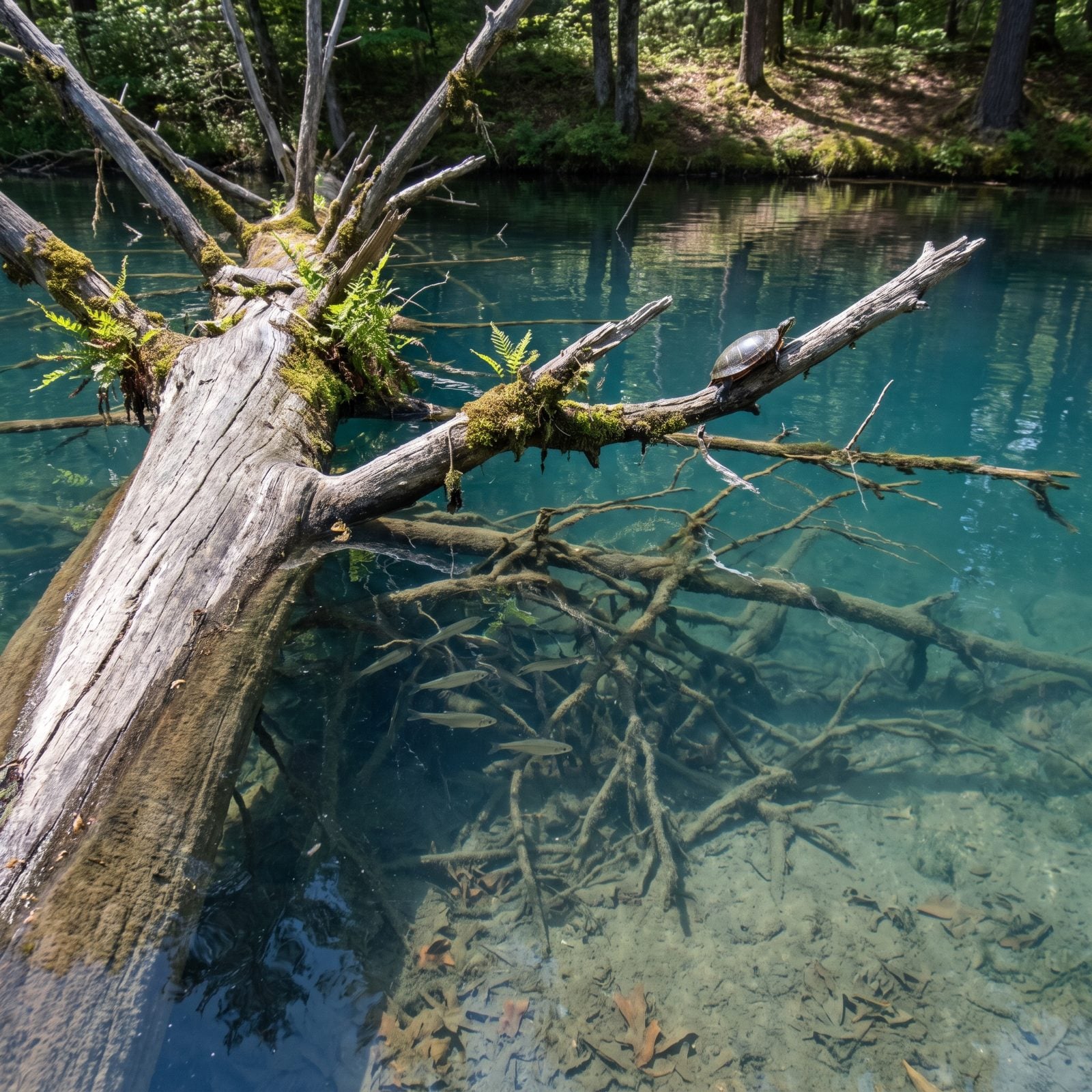
Wanting to tidy up a shoreline is understandable, and usually a mistake. A tree that fell years ago and now sits half-sunk along the bank is some of the richest habitat the lake has.
Fish hide in the branches. Turtles bask on the exposed trunk. Insects and invertebrates colonize the soft wood, which feeds everything else down the line. Lakes with a lot of this “woody habitat” tend to hold more and bigger fish than lakes scraped clean for swimming and boating.
The messy shoreline is the alive one. The manicured one looks nice from the deck and does almost nothing for the water.
8. A Wide Buffer of Native Grasses, Shrubs and Trees
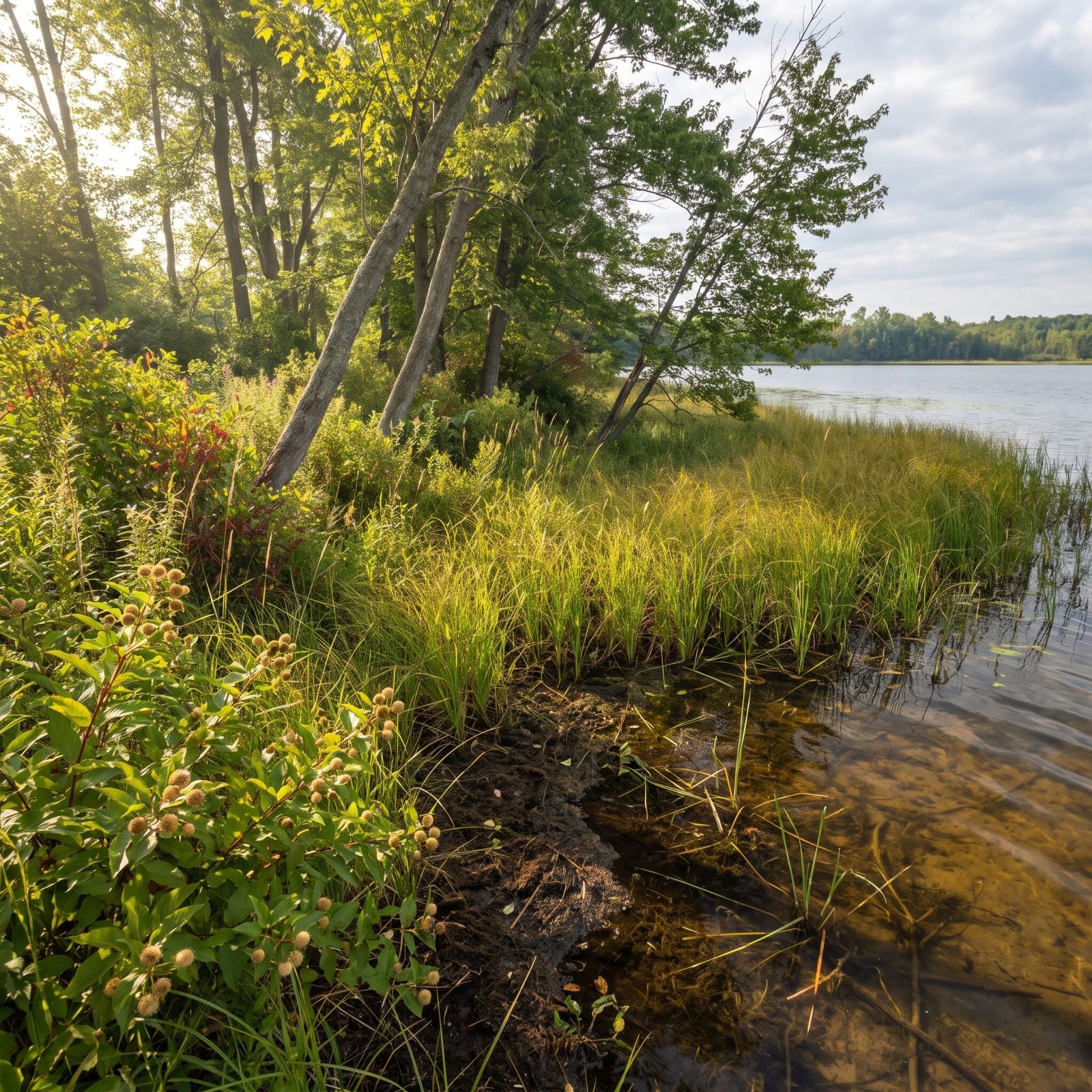
Look at where the land meets the water. A healthy lake wears a messy green collar — cattails, sedges, dogwood, a few leaning trees with roots dug into the bank — and that tangle is doing real work. It filters runoff before it hits the water, holds the soil in place during heavy rain, and feeds the whole food web from the shallows up.
Then there’s the lake ringed by lawn right to the edge. Grass mowed to the waterline has shallow roots and catches nothing — not fertilizer, not goose droppings, not loose dirt. It all slides straight in.
7. An Earthy Sediment Smell Instead of a Sulfur Odor
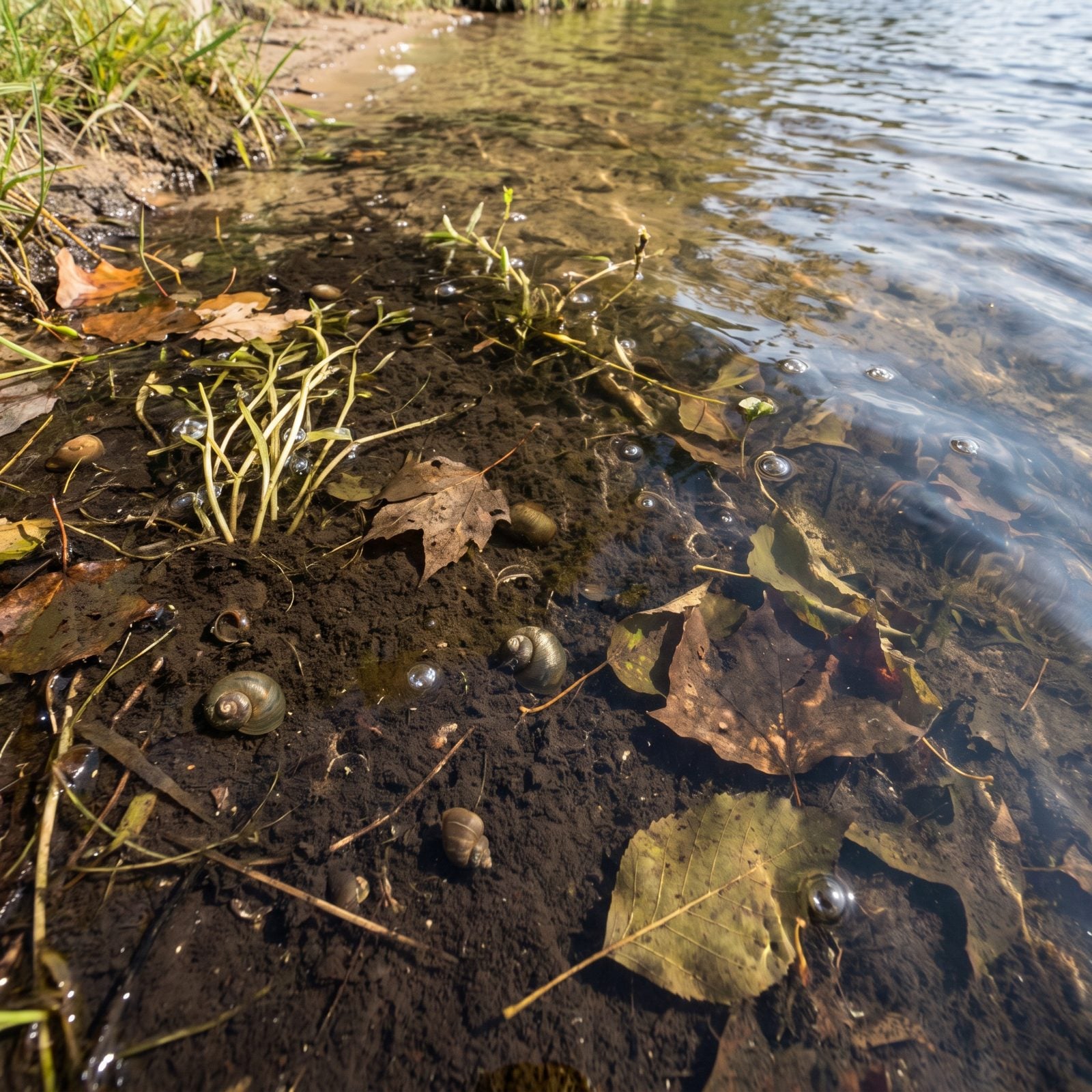
Smell is one of the most honest readings a lake gives you. Almost nobody uses it.
Scoop up a little bottom sediment near the shallows and sniff. Healthy muck smells earthy, like a forest floor after rain or fresh garden soil — that’s normal decomposition with oxygen in the mix. A little swampy around decaying leaves is fine and expected.
What you don’t want is a sharp rotten-egg punch. That sulfur smell means the sediment has gone oxygen-starved, and the bacteria down there have switched to the kind that pump out hydrogen sulfide. Earthy, good. Egg-y, take note.
6. Water That Recovers Its Usual Clarity After a Storm
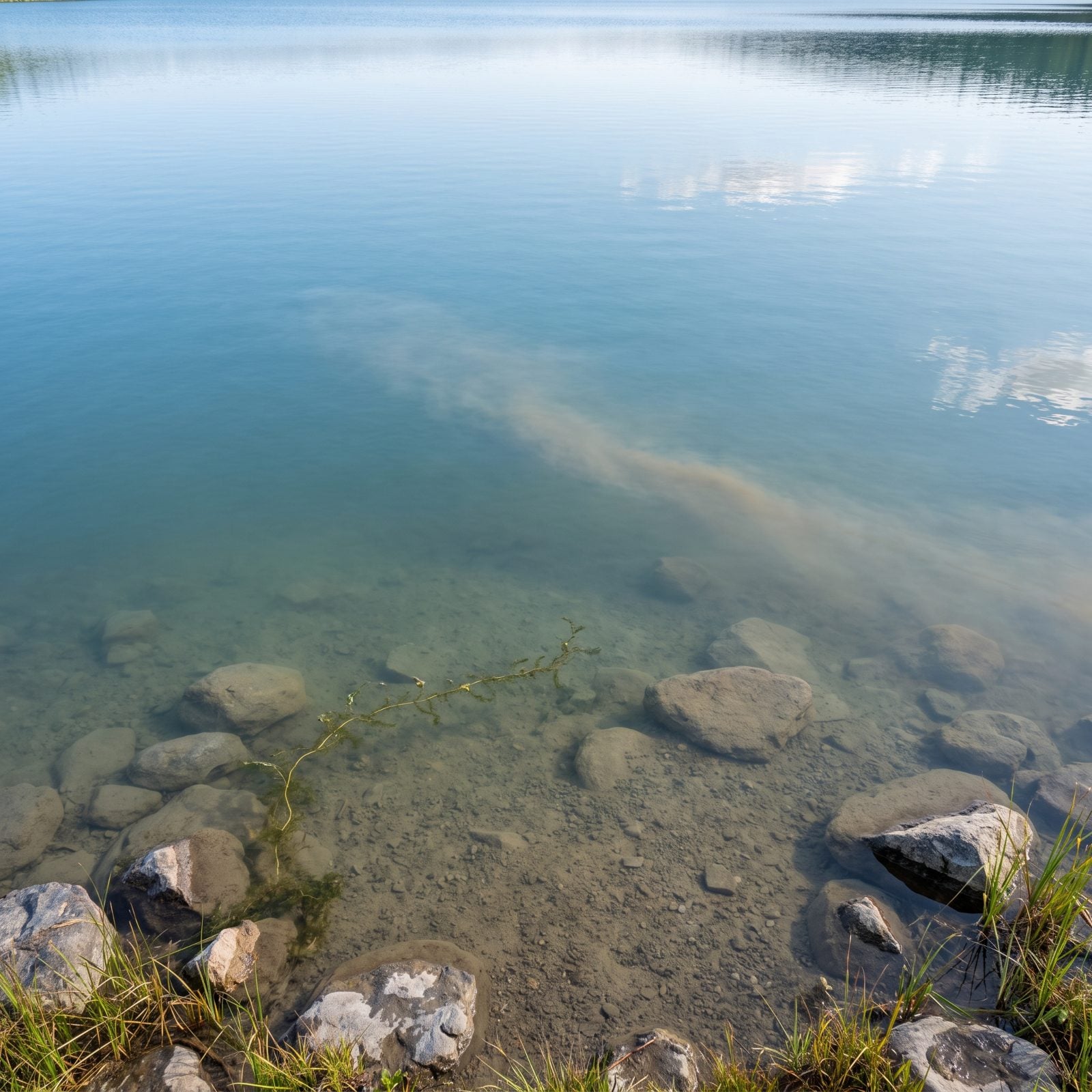
Every lake turns cloudy after a hard rain. Runoff drags in sediment, the shallows stir up, and for a day the water looks like weak coffee. Normal. The real test is how fast it clears.
A healthy lake settles back to its baseline within a few days — particles drop, plants and plankton find their balance, and you can see your usual depth again. A lake in trouble stays murky long after the weather calms, or clears into a strange green instead of its old transparency. Watch the recovery, not the one cloudy afternoon.
5. Blue-Green Surface Scum That Resembles Spilled Paint, Warning Sign
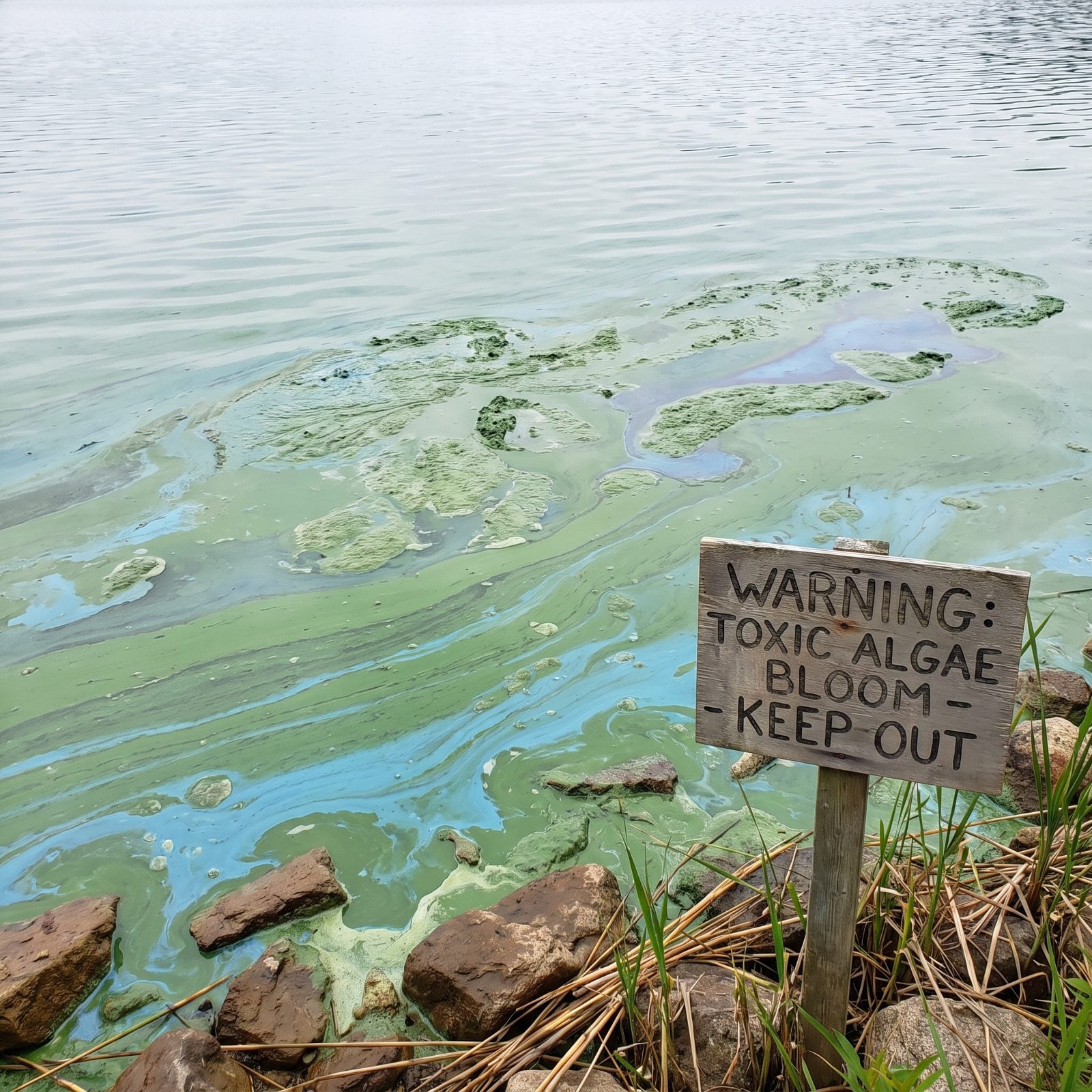
This one’s a hard stop. A blue-green bloom pools along the downwind shore and looks exactly like someone poured paint on the water — streaky, swirled, sometimes clumped into greenish curds at the edge.
That’s cyanobacteria, and some strains release toxins that can sicken people and kill dogs that drink or swim in it. The scum won’t tell you which bloom is toxic and which is harmless, so assume the worst.
Keep pets and kids out of it. Don’t swim, don’t let dogs lick their coats dry, don’t rinse gear in it. Looks like paint? Stay out of the water.
4. Fish Gulping at the Surface or Gathering Near an Inlet, Warning Sign
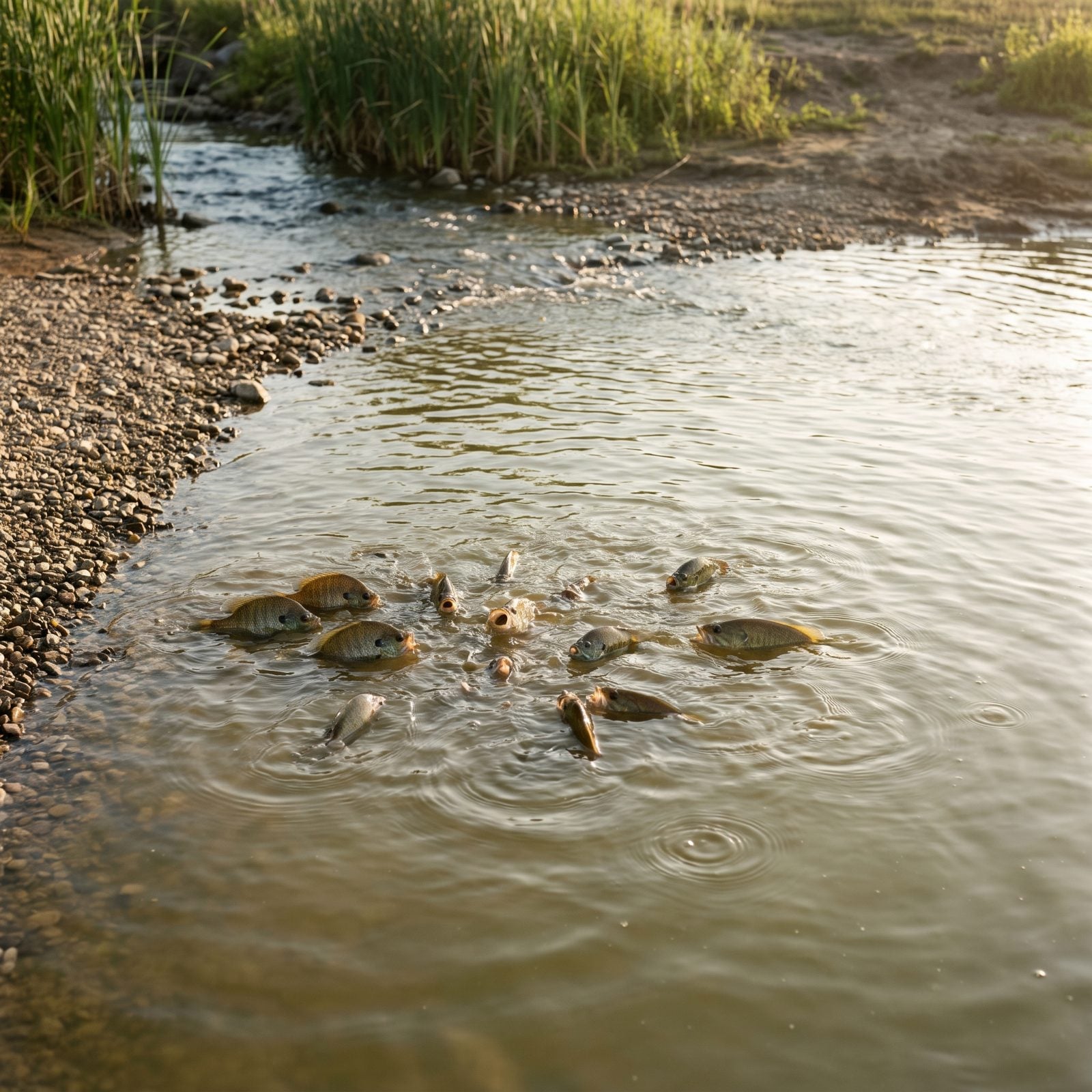
Fish don’t gulp at the surface because they’re friendly. They do it because they’re starved for oxygen.
On a hot, still summer day, watch where they go. If bluegill and bass pile up at the surface or stack near a cool inlet where fresh water trickles in, the oxygen has crashed somewhere below. Warm water holds less to begin with, and a heavy algae load burns through what’s left overnight.
One or two fish near the surface isn’t a crisis. A crowd of them, mouths working at the air in the early morning, is the lake telling you it can’t breathe.
3. A Sudden Fish Kill Affecting Multiple Species, Warning Sign
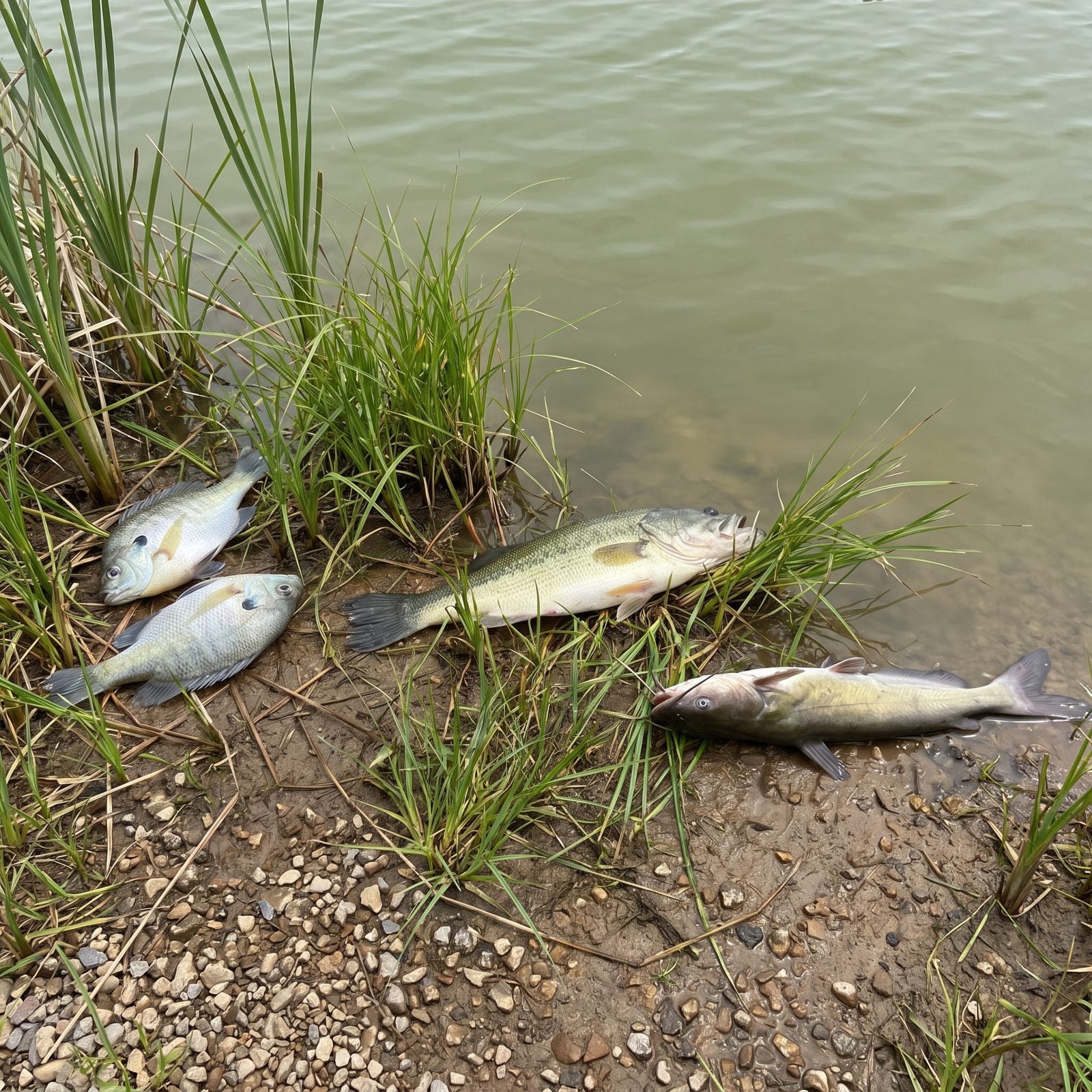
A fish kill is one of the loudest alarms a lake can sound — but the pattern matters more than the count.
When a single species dies off, it’s often a disease specific to that fish, or natural spawning stress. Sad, but usually local.
When many species go down together — bluegill and bass and catfish all belly-up along the same stretch of shore — something hit the whole system at once. Usually a dawn oxygen crash after a bloom collapses, sometimes a chemical spill or runoff event. Note the date, the water temperature and how many kinds of fish are affected, then report it. State fisheries biologists want that call, and they want it early.
2. Persistent Rotten-Egg or Sewage Odors, Warning Sign
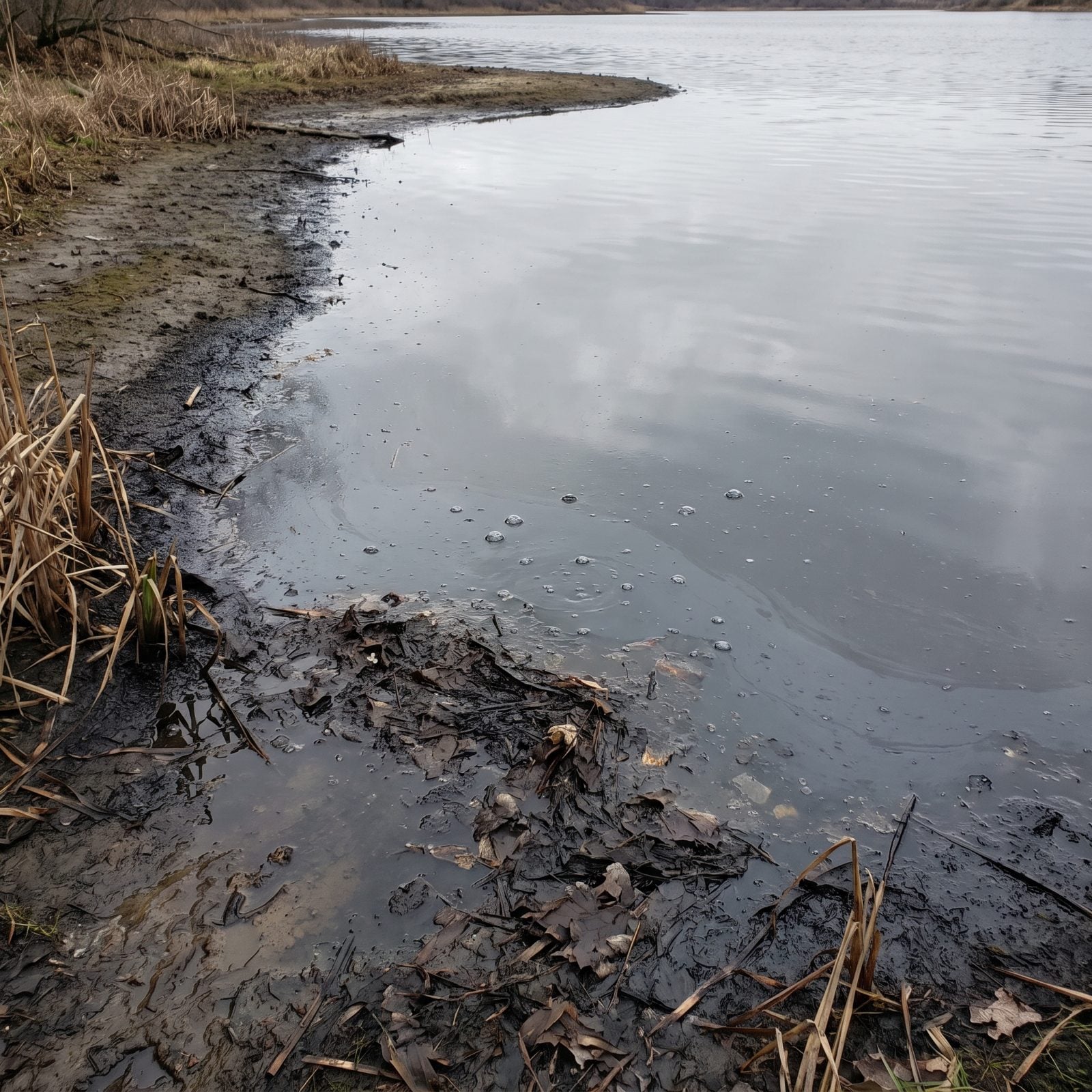
Trust your nose here, even when the water looks fine.
A steady rotten-egg smell from a cove or over the whole lake means the bottom has gone oxygen-dead and is producing hydrogen sulfide. A sewage or barnyard reek is different, and worse — it points to a failing septic system, an overflow, or farm runoff feeding the lake raw nutrients.
Both smells say the same thing in different words: the lake can’t process what’s coming into it fast enough.
1. Dense Eurasian Watermilfoil Mats Reaching the Surface, Warning Sign
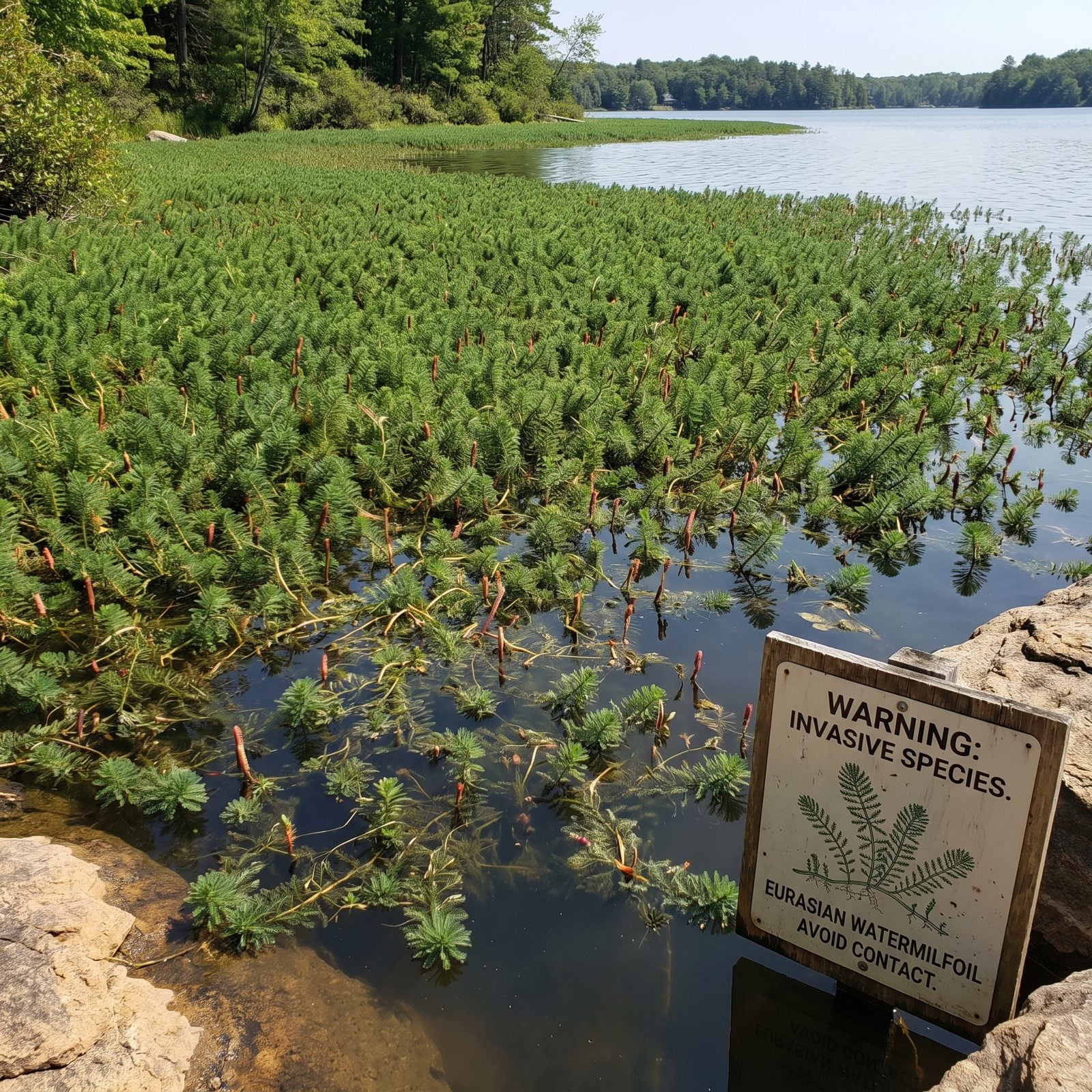
Some underwater plants are a good sign — a lake with zero plants is often a lake in trouble. Eurasian watermilfoil is the exception you learn to recognize and dread.
It’s an invasive that grows in feathery whorls, tops out at the surface, and builds mats so thick they choke out native plants, tangle propellers and strangle swimming areas. The giveaway is the density and that surface canopy — a shallow bay packed wall to wall in green with no open water between stems.
Worst part? A single fragment, snapped off by a boat prop, can root and kick off a whole new colony somewhere else. Clean your boat, trailer and gear between launches, every single time.