
The first swing of the sledgehammer feels incredible. For about eleven seconds. Then you’re standing in a pile of plaster dust, staring at a load-bearing wall you didn’t know was load-bearing, wondering what exactly you’ve started. Anyone who has gutted an old lake cabin knows that feeling, and so does anyone who started over from scratch after a marriage ended. The work is slow, dirtier than you pictured, and it gets uglier before it gets better. But the wiring under both is identical: the urge to tear down, the fear of what’s behind the walls, the hard math of what to keep. These parallels won’t fix your subfloor. They might make you laugh at how familiar all of it is.
Please note that some of the imagery in this article may have been enhanced with the assistance of AI.
19. You Tear Out Walls Before the New Layout Makes Sense
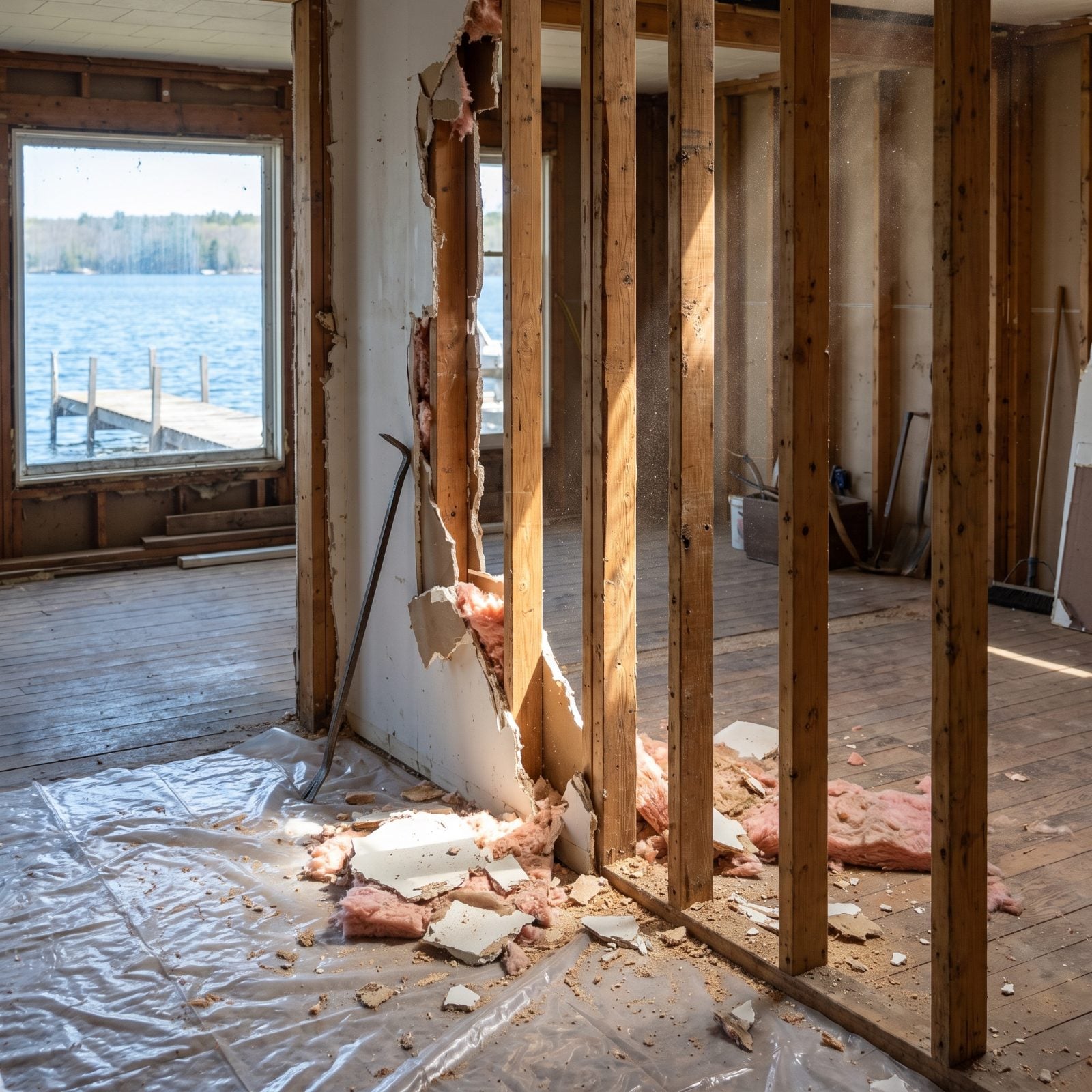
The demo always comes first. You rip out the dropped ceiling, the ugly partition wall, the cabinet that blocked the lake view, and you do it the very first weekend, before the architect has even returned your email. It feels like progress. It feels like control. Mostly it makes a mess you now have to live inside for six months.
Starting over works the same way. The clearing-out happens fast and early, long before you have any idea what you’re building in its place. You change the locks, toss the stuff, cancel the subscriptions, then stand in the empty middle of it all wondering what the new life actually looks like.
Psychologists call this action bias. When we feel powerless, doing something — anything — soothes us more than waiting, even when waiting is smarter. Tearing down is visible and immediate; designing is slow and invisible. So we swing the hammer first.
18. The Rot Behind the Paneling Predates Your Demolition
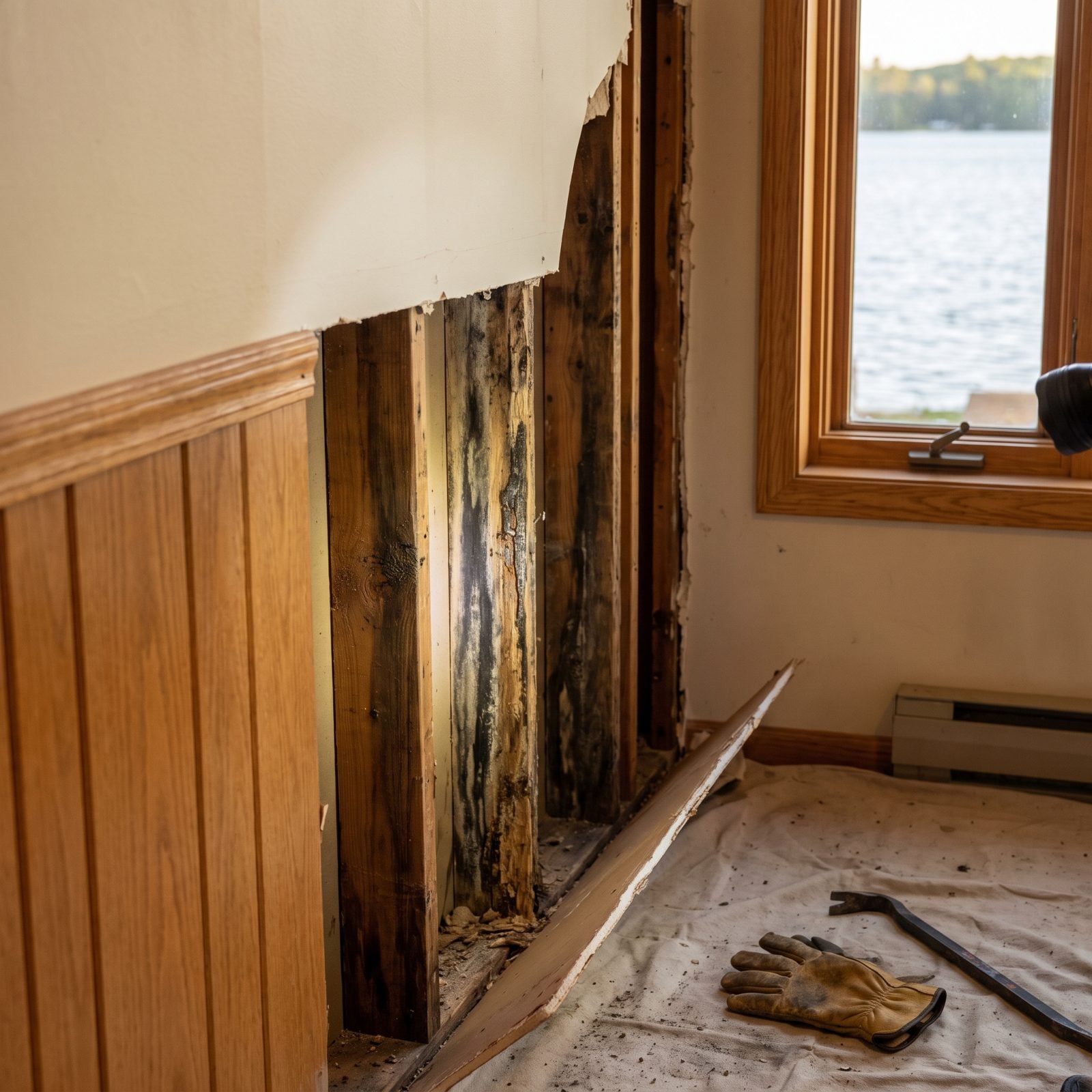
You tear away one section of cream-painted drywall expecting a clean stud bay. Instead you find soft, black, spongy wood that’s been quietly rotting since the Carter administration. You didn’t cause it. You just happened to be the one holding the crowbar when it finally saw daylight.
The end of a marriage does this too. The cracks you find in the aftermath — the resentments, the patterns, the things you both stopped saying — almost never started at the end. They were behind the paneling the whole time, holding weight in their own quiet way.
And there’s a strange relief in it. Easy to blame the demolition for the damage it reveals, except the hammer didn’t make the rot. It just stopped you from pretending it wasn’t there.
17. The Inspection Finds Problems Charm Helped You Ignore
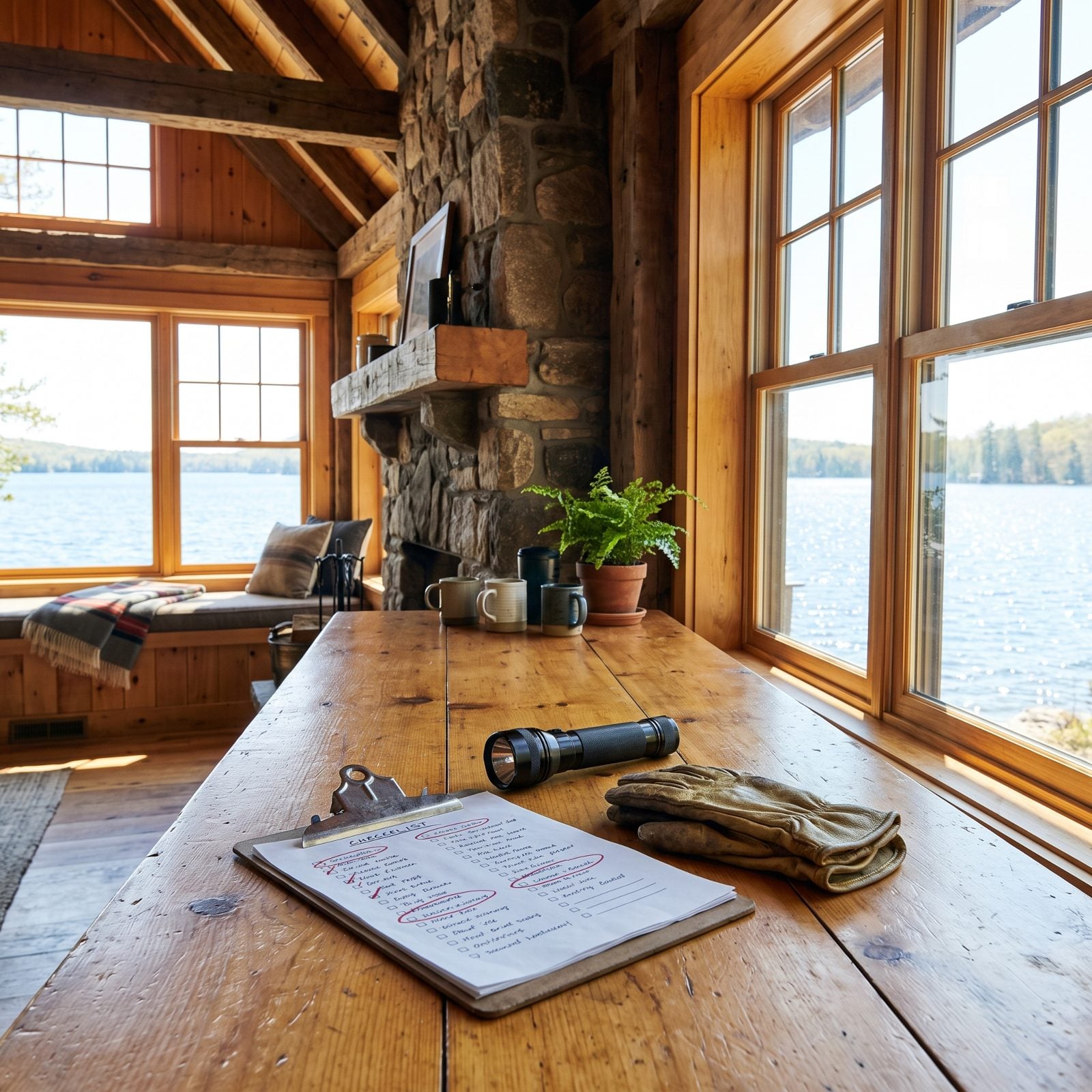
You fell for the cabin because of the stone chimney and the way the light hit the dock at five o’clock. Then the inspector shows up and starts circling things on a clipboard: knob-and-tube wiring, a sloping porch, a septic situation you’d rather not discuss. None of it is new. You just never looked, because the charm was doing all your looking for you.
We do the same with people, and with our own old habits. The things that drew us in — the easy laugh, the big personality — were so pleasant that we never ran the inspection. The halo effect is the technical name: one strong positive trait makes us assume everything else is fine too. Charm is a wonderful anesthetic. It numbs the part of your brain that asks about the wiring.
16. You Save the Stone Fireplace, Not Every Cabinet

Not everything old is worth keeping, and not everything old deserves the dumpster. You protect the fieldstone fireplace with cardboard and painter’s tape because that thing is the soul of the place. The dated dark-stained cabinets stacked in the corner? Out to the curb, no second thought.
Rebuilding after a split forces the same sorting. Some things from the old life are genuinely yours and worth carrying forward — the friendships, the recipes, the version of yourself that laughed easily. Other things were never really you, or stopped being you years ago. The skill isn’t demolition. It’s discernment.
This is where a lot of people get stuck. Grief makes you want to either torch everything or save all of it, and neither works. You keep the fireplace. You let the cabinets go. And you get honest about which is which.
15. Shoreline Setbacks Kill One Plan and Sharpen the Next

You wanted the addition right out over the water. The county had other ideas. Shoreline setback rules say you can’t build within so many feet of the lake — period, no appeals, no charm offensive. Your dream floor plan dies on a survey stake with a little orange flag.
And then a funny thing happens. Forced back from the water, you redesign, and the new layout is better. Bigger deck. Smarter kitchen. The limit didn’t ruin the project; it made you stop and actually think.
Boundaries do this in a rebuilt life too. The ones you set after a divorce — the hard no, the this-far-and-no-further — feel like losses at first. They close doors. But a boundary is just a setback line for your own peace. It kills the plan that would’ve flooded your foundation and points you toward the one that won’t.
14. One Paint Swatch Somehow Turns Into Forty Decisions
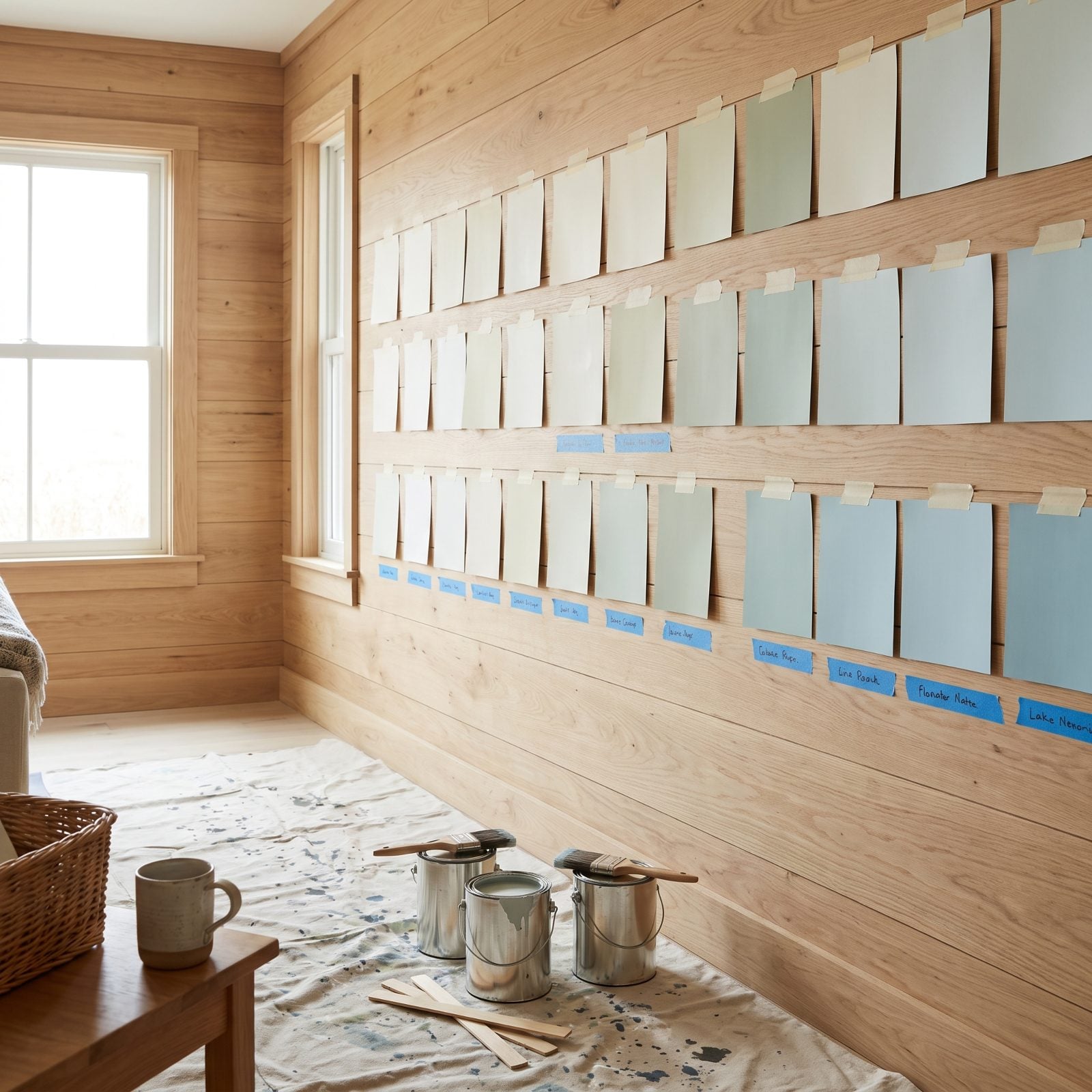
It starts with one honest question: what color for the main room? Then you discover that “white” is a hundred different whites, each with a temperature and an undertone and a committed following online. You tape forty swatches to the wall and watch them all day as the light moves across them, and somehow you lose a full weekend to a decision that should’ve taken ten minutes.
Freshly single, the small choices multiply the same way. When you were a couple, half your decisions were made by inertia or by the other person. Now everything is yours — what’s for dinner, what’s on the walls, how you spend Saturday. It’s freedom. It’s also exhausting.
Barry Schwartz called this the paradox of choice: more options don’t make us happier, they make us anxious and prone to second-guessing. A locked-in life asks fewer questions. An open one asks all of them at once. The answer isn’t fewer choices. It’s learning to pick a decent white and move on.
13. The Budget Meets Reality Somewhere Around the Plumbing
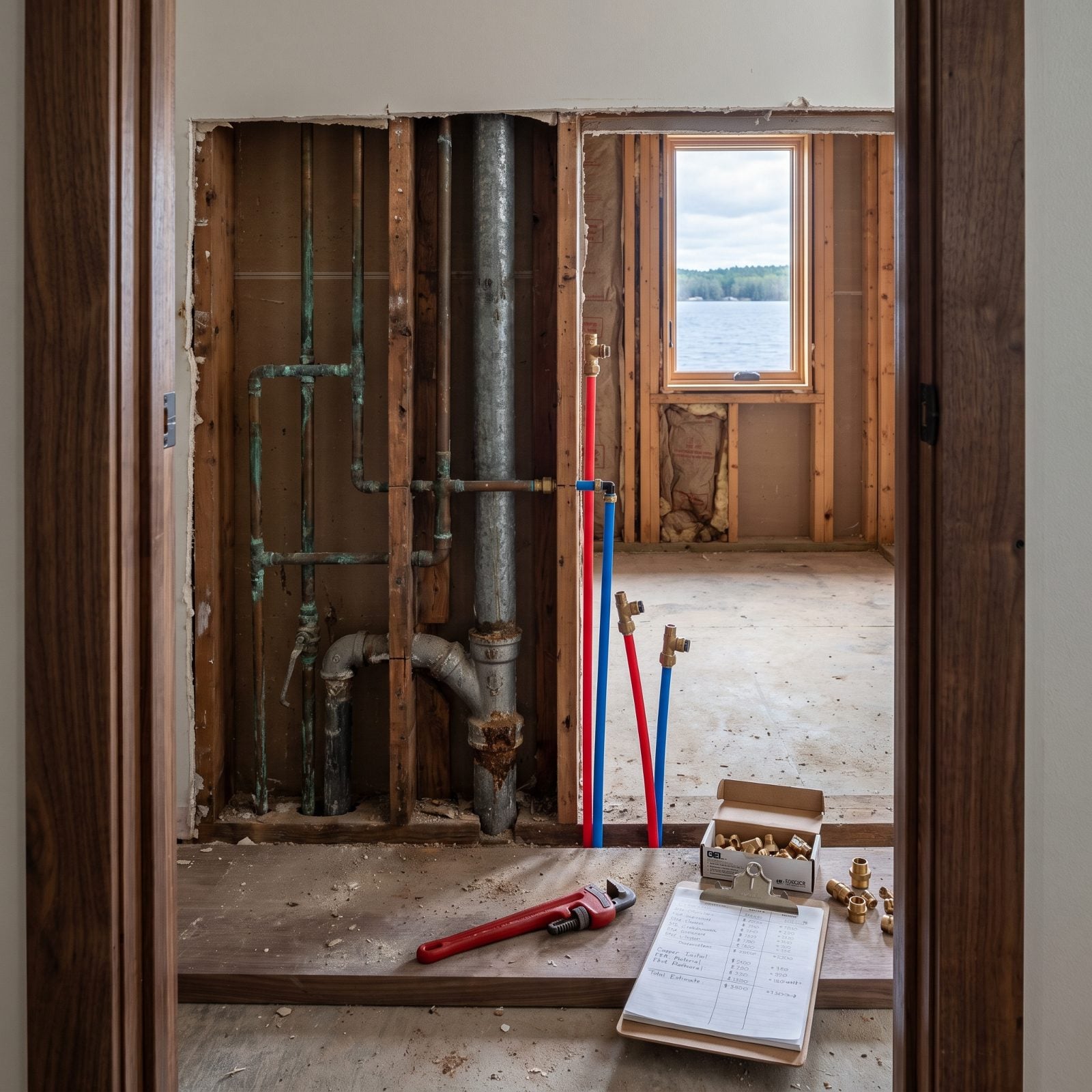
Every renovation budget is a work of fiction until the plumber opens the wall. That’s where the optimistic number you wrote in a spreadsheet meets forty years of corroded galvanized pipe, and the number changes. It always changes, and never in your favor.
Starting over costs more than the brochure said too. You priced out the single life assuming you’d keep your energy, your savings, and your timeline intact. Then reality opened the wall. The legal part, the moving part, the sheer emotional overhead — all of it ran past estimate.
This is the planning fallacy, named by Daniel Kahneman: we chronically underestimate how long things take and how much they cost, even when we’ve been burned before. We picture the smooth version and budget for that. Then we pay for the real one.
12. You Hire Help After Swearing You Could DIY
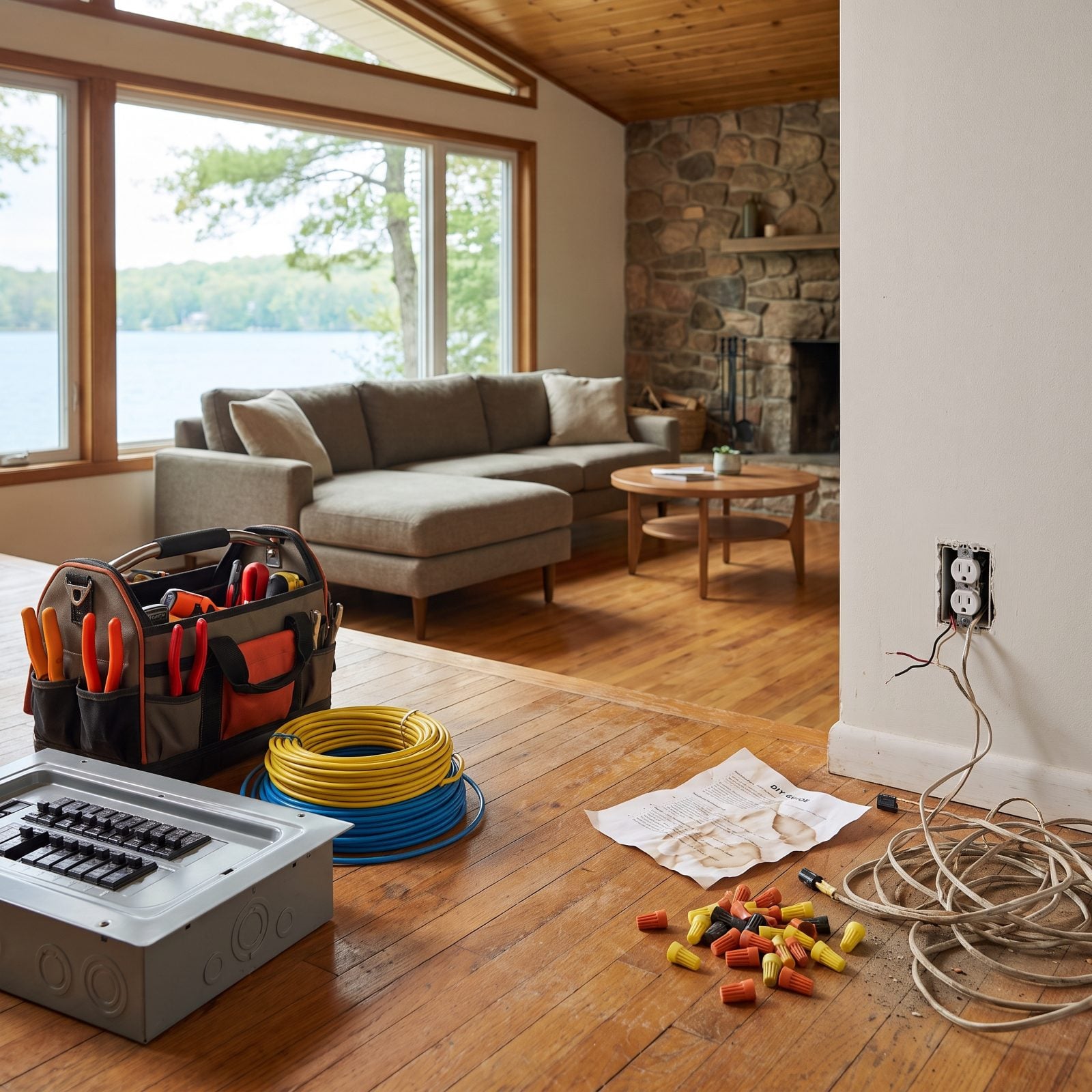
You were going to do the electrical yourself. You watched the videos. You bought the stuff. Then you stood in front of the open panel at eleven at night and felt a cold, sensible dread, and the next morning you called a licensed electrician and felt only relief.
Asking for help after a divorce follows the exact same arc. The vow to handle everything solo, to prove you don’t need anyone, holds strong right up until you hit the thing you genuinely can’t rewire alone. A therapist, a lawyer, a friend who’ll just sit with you. Hiring out isn’t weakness. It’s knowing which jobs will burn the house down if you fake them.
Pride tells you independence means doing it all. It doesn’t. It means being clear-eyed about what you’re good at, and humble about what you’re not.
11. The Cabin Looks Worse Right Before It Feels Yours
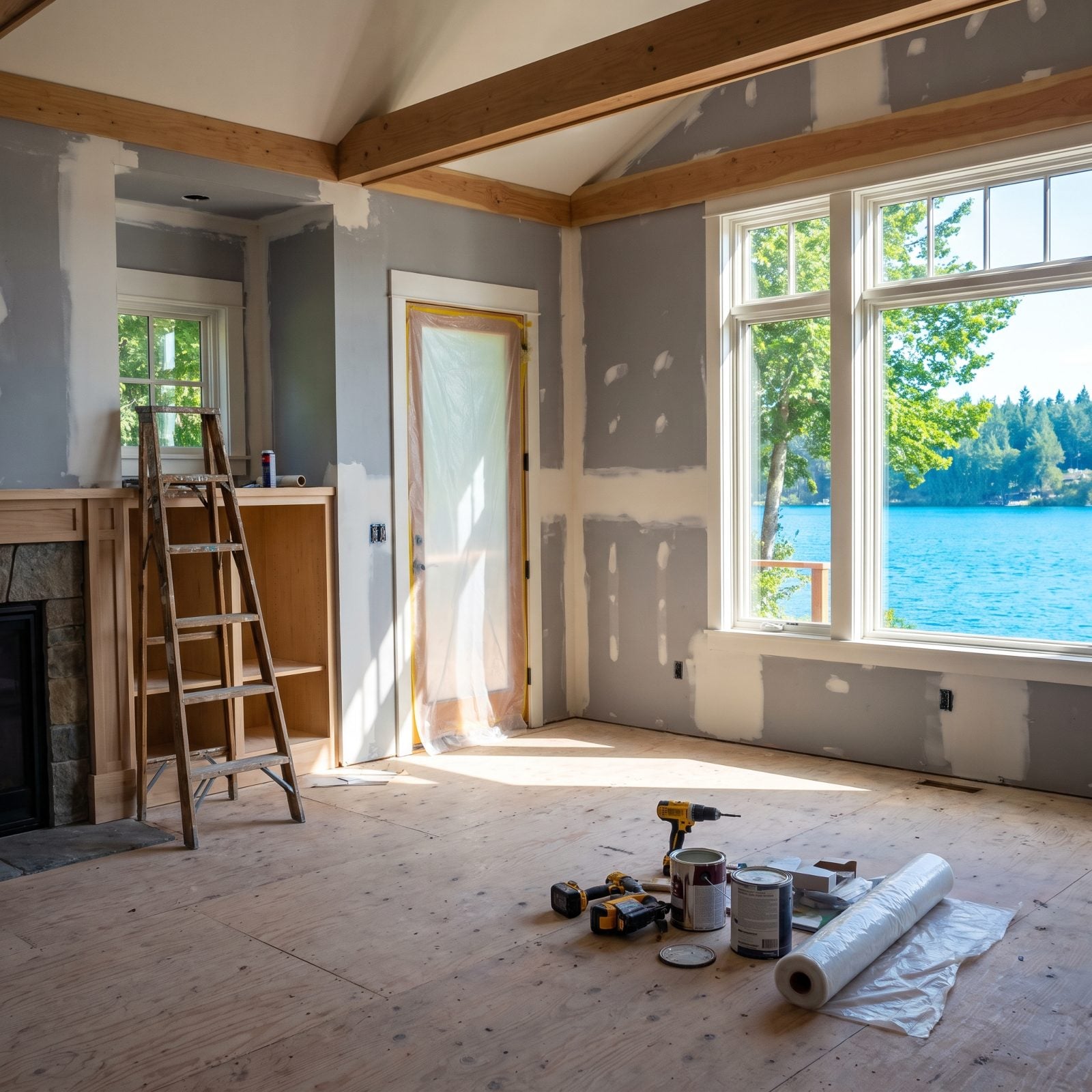
There’s a stage in every renovation where you’re certain you’ve ruined everything. The old charm is gone, the new finishes aren’t in yet, and the whole place is gray primer and exposed subfloor and plastic sheeting flapping in a doorway. It looks worse than when you started. This is normal. It’s also where most people panic.
Rebuilding a self works on the same cruel timeline. There’s a middle stretch where the old identity is gone and the new one hasn’t arrived, and you feel like a stranger in your own life. Not who you were. Not yet who you’re becoming. Just gray primer.
The trough is real, and it’s temporary. Researchers who study major life transitions find that well-being usually dips hardest in the messy middle, then climbs back up. The cabin doesn’t feel like yours when it’s pretty. It feels like yours right after the ugly part, when you realize you’re still standing in it.
10. A Rain Delay Feels Personal Until the Roof Goes On
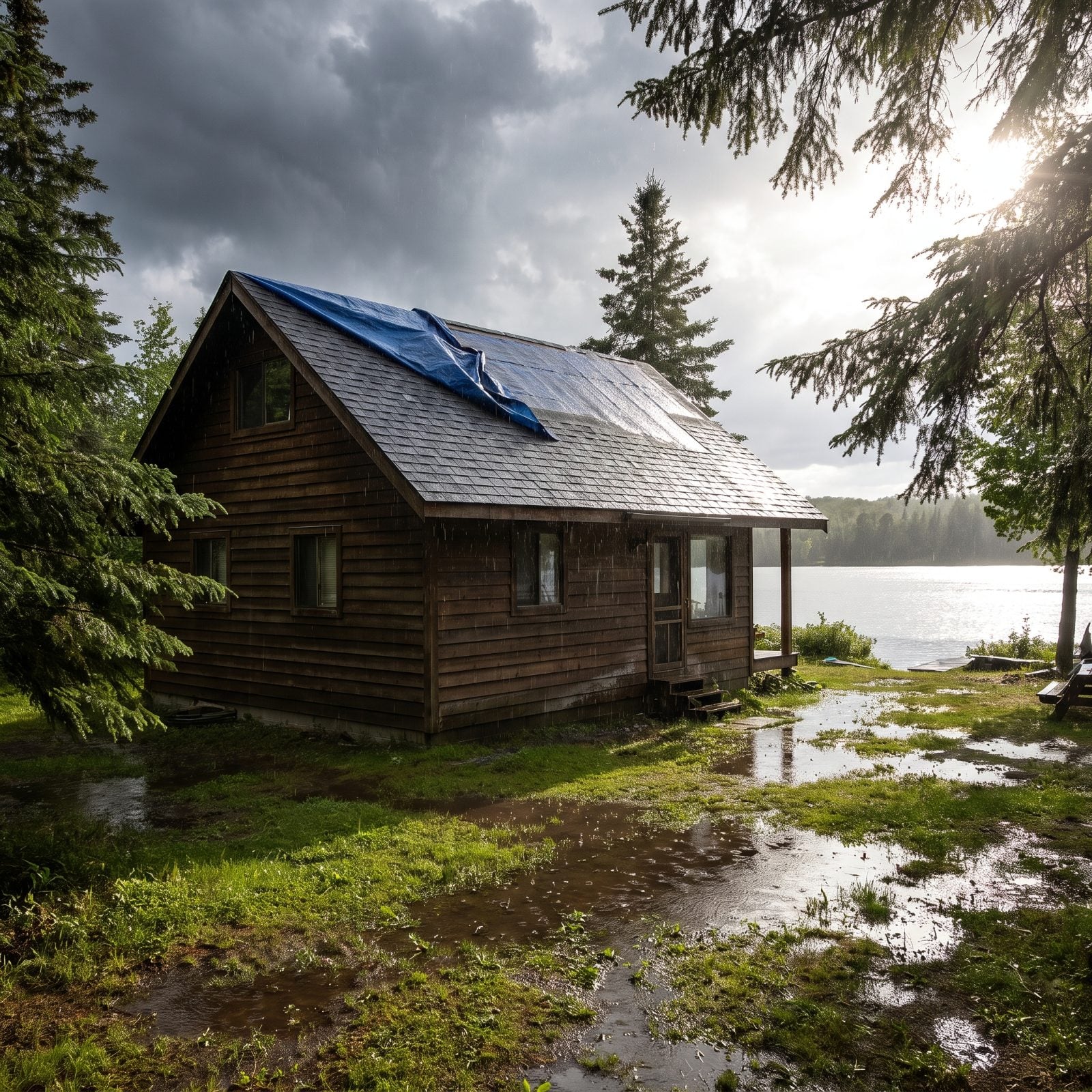
Three days of rain, the roofers can’t work, the whole timeline slides, and you take it personally, like the weather has a grudge. It doesn’t. Rain is just rain. It doesn’t care about your schedule, and the roof still goes on the minute the sky clears.
Setbacks in a rebuilt life carry the same sting and the same illusion. The lonely holiday, the ex’s good news, the Tuesday that flattens you for no reason. It feels aimed. It feels like proof you’re failing at this. But it’s just weather. It passes, and the work resumes.
We’re wired to read random bad timing as personal meaning, because our brains hunt for patterns and intentions even where there are none. The delay isn’t a verdict on you. The roof going on — eventually, dry, solid, done — is the only verdict that counts. And that one you earn by waiting out the rain and picking the hammer back up.
9. You Replace the Leaky Windows Despite What They Already Cost
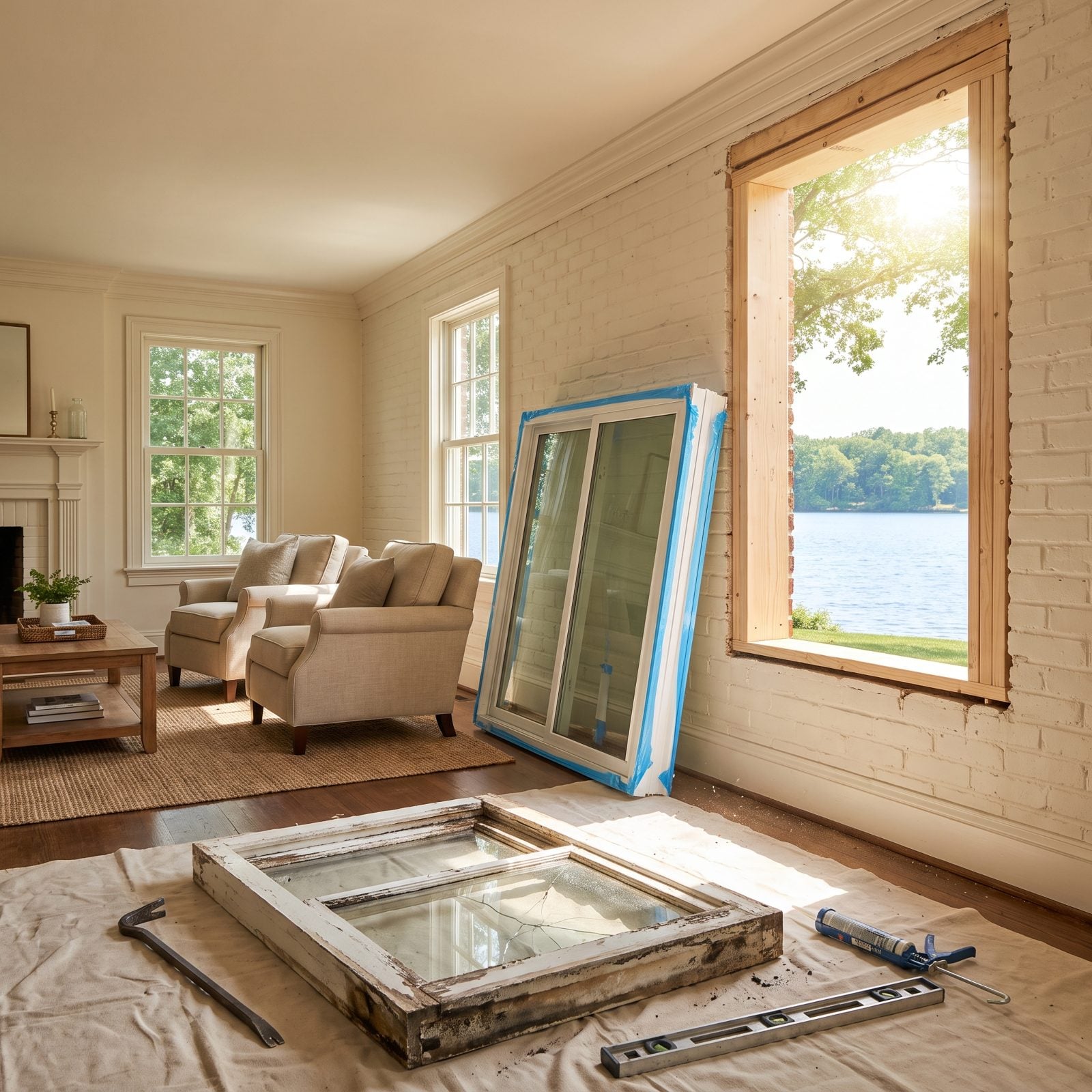
Those windows cost a fortune when they went in, and you remember the invoice down to the number. So the brain does its favorite trick: because you paid for them, it argues, they’re worth keeping — never mind the cold air whistling through the sashes every January and the condensation quietly rotting the sills from the inside.
That’s sunk-cost fallacy, and it runs the exact same loop in a marriage. The years you already put in start masquerading as a reason to stay. You tell yourself twenty years can’t just be thrown away, as if the next twenty owe anything to the last. They don’t. Money spent is gone whether you keep the drafty windows or not.
Pulling them out feels like waste right up until the first quiet, warm morning after. Then you wonder why you waited.
8. The First Finished Room Restores Momentum Everywhere Else
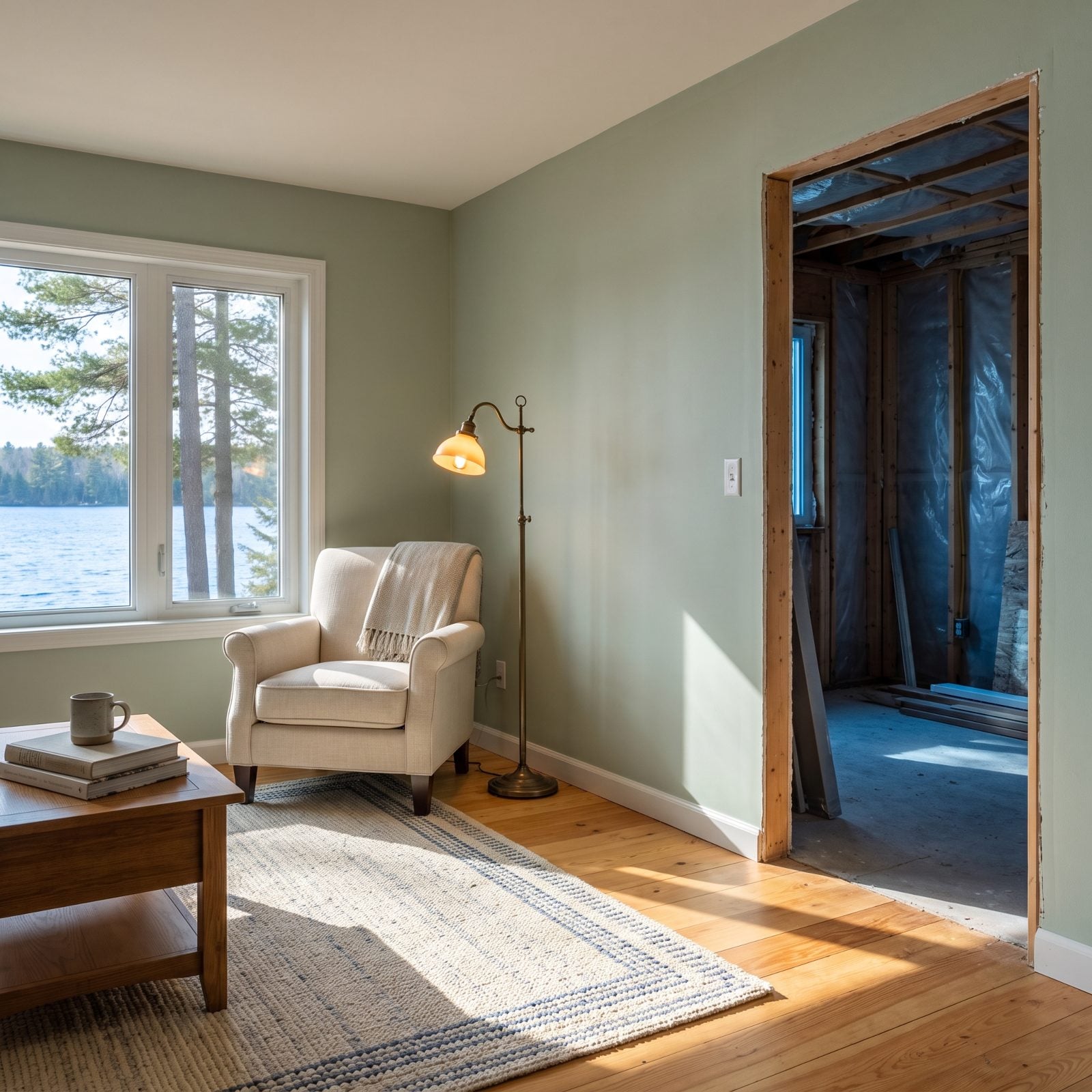
You don’t finish the whole cabin at once. You finish one room first. One room where the floor is sealed, the paint is dry, and you can sit down with a coffee and feel like a human instead of a project manager. And something strange happens — that single finished room makes the rest of the work feel possible.
After divorce it’s rarely the big life overhaul that turns things around. It’s one small win. The morning you finally cook a real breakfast for one. The first week the laundry stays done. That tiny proof that you can run your own life becomes the evidence everything else borrows from.
Psychologists call it self-efficacy — the belief you can actually pull off the next thing. It doesn’t come from pep talks. It comes from one completed thing you can stand in the middle of. Finish the small room first and the rest gets easier to start.
7. Before Photos Remember the Progress Better Than You Do
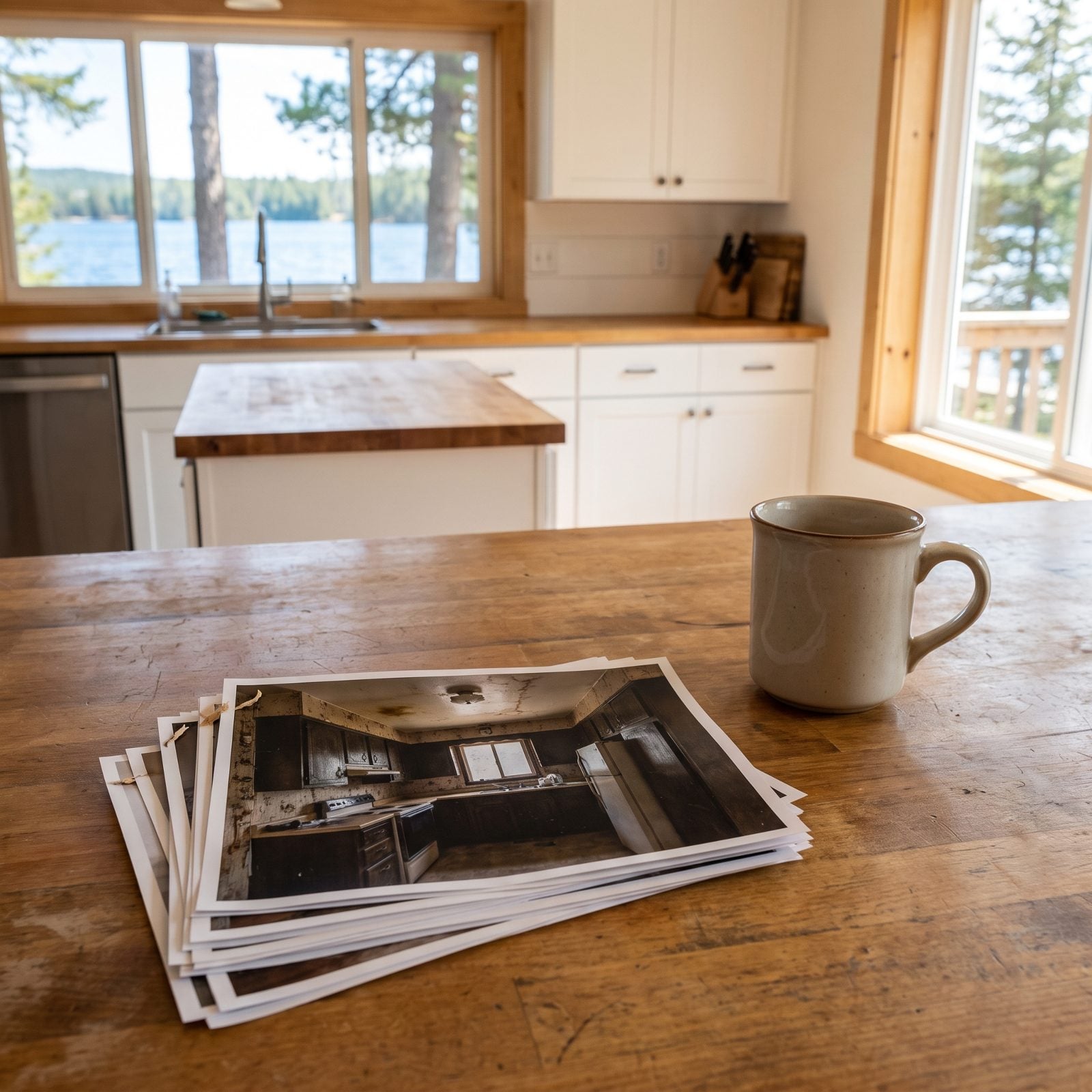
You pull up the phone and find the photo from the day you bought the place. Dark paneling, the sagging ceiling, that carpet nobody wanted to touch. You’d forgotten how bad it was, because you’ve been living inside the slow improvement the whole time and your eye adjusted to each small step.
This is hedonic adaptation, and it steals the same credit after a divorce. You get used to feeling steadier so gradually that the steadiness stops registering as anything at all. You only feel the one bad Tuesday, not the forty calm ones before it.
The before photo breaks the spell. So does remembering how the hard season actually felt at the bottom. Keep some record of where you started. On the days it feels like nothing’s changed, it’s the only honest witness you’ve got.
6. The Neighbor’s Perfect Deck Makes Yours Feel Half-Finished
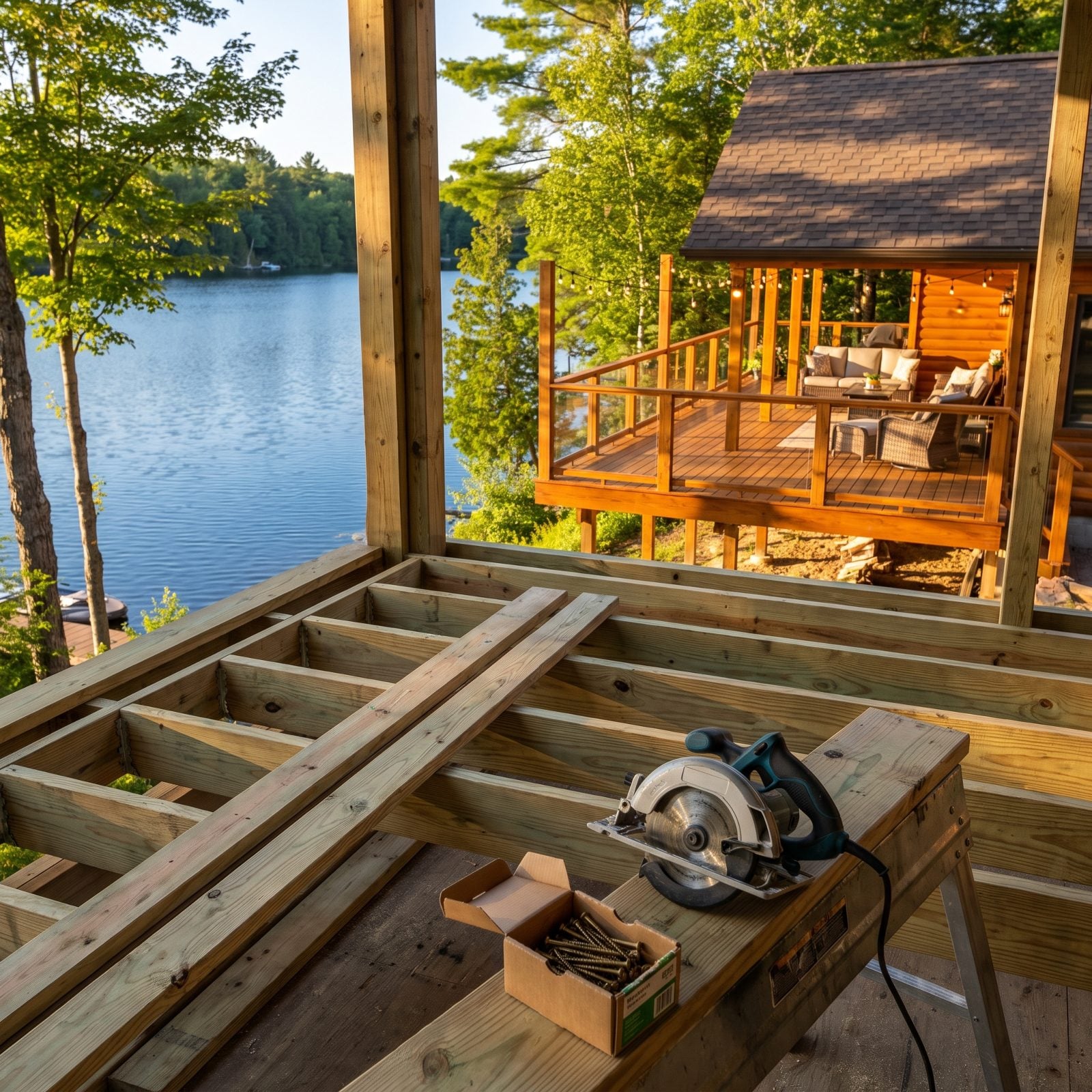
Your deck is half-built. Theirs, two lots down, has the glass railing and the string lights and the outdoor sofa that looks like it wandered off a catalog page. And just like that your perfectly good project feels like a failure — even though you’re comparing your messy middle to their finished end.
Call it the comparison trap, sharpened by the fact that you never saw the three years of their mess, the budget fights, the contractor who ghosted them. You only see the lit-up finished version.
It hits harder after a divorce, when it seems like everyone else repaired their life faster and cleaner. They didn’t. You’re watching a highlight reel and grading your own raw footage against it. Your deck isn’t behind. It’s just yours, still being built, which is the only honest state anything worth having is ever in.
5. You Plan the Dock Around How You Actually Live

The old plan had a party dock. Room for a crowd, a spot for the big boat, benches for people who came twice a year. Then you actually watch how you use the water, and it turns out what you want is one good chair at the end, a kayak rack, and a place to drink coffee while the lake wakes up.
So you build for that. Not for the imagined version of your life — for the one you’re actually living.
After a split, the same honesty finally shows up. You stop arranging your days around someone else’s preferences and start building them around your real ones: the quiet mornings you always wanted, the hobby that got shelved. Designing around who you are instead of who you were supposed to be is where the whole thing turns, and the dock is just the first place you notice it.
4. The Spare Bedroom Becomes What You Need Now

The spare room sat frozen for years. A bed for guests who stopped coming, a dresser full of things that belonged to nobody in particular, a function it outgrew ages ago. One afternoon you clear it out and give it a new job. A studio. A workshop. A room that finally answers a question you actually have now.
After divorce there’s always a room like that in your life too — a pocket of space and time that used to serve the old arrangement and now sits empty, waiting for permission to become something else.
Loss aversion is what keeps those rooms frozen. We hold on to the old purpose because changing it feels like admitting the old life is really gone. It is, though. And the moment you let the room become what you need now, the whole house stops being a museum of what used to be.
3. New Locks Make the Same Cabin Feel Like Yours
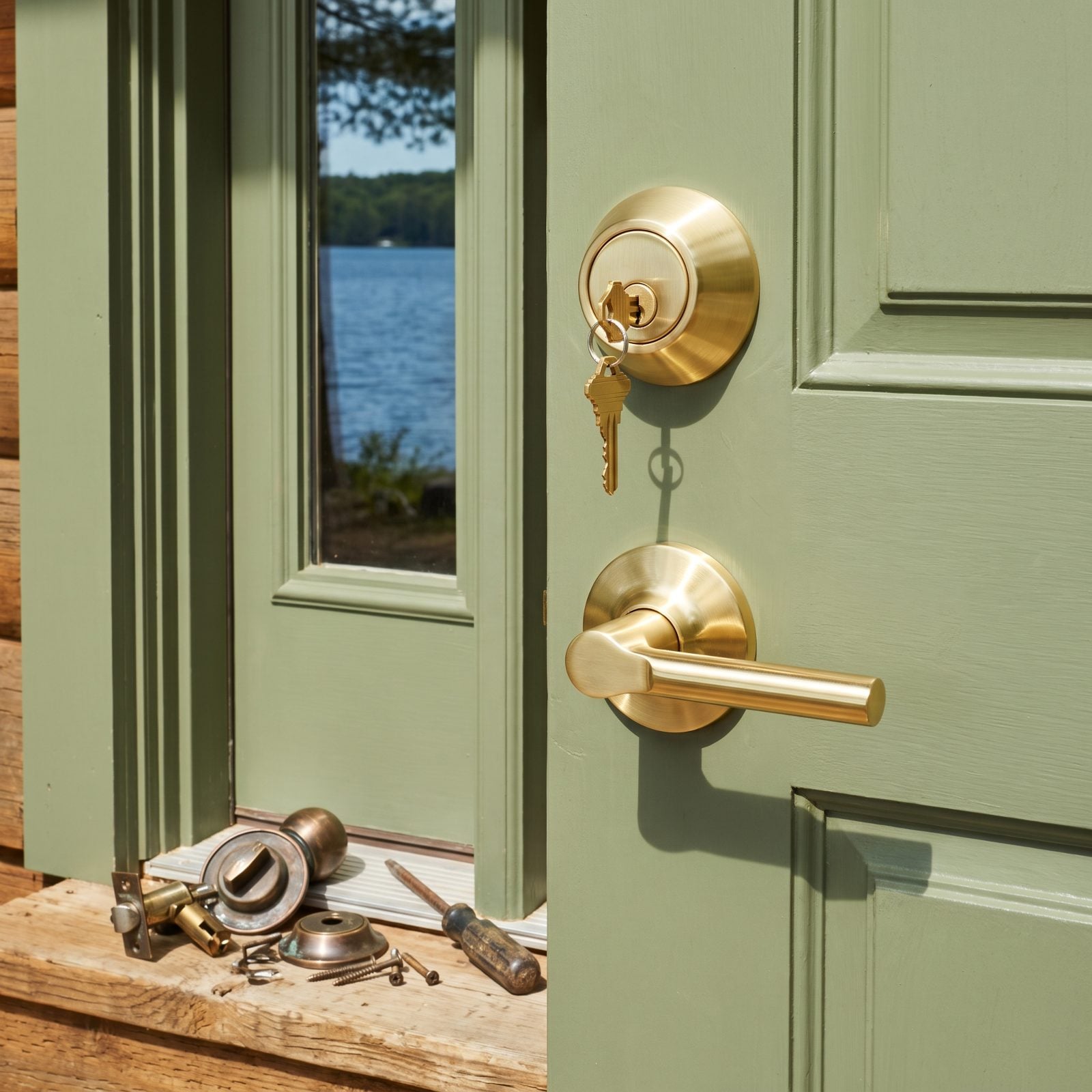
Nothing about the cabin changes when you swap the locks. Same walls, same roof, same creaky third step. But the first time you turn the new key, the place feels different. More yours. Like a line got drawn between before and after, and only you hold the thing that opens it now.
Changing the locks after a divorce is almost a cliche, and it’s a cliche because it works. The act is symbolic, and the symbolism is the entire reason you do it. You’re redefining who has access, and in doing so you’re redefining whose place this is.
Boundaries aren’t lectures or long talks. Often they’re small, physical, undramatic decisions. A new lock. A key you control. The door that was always there, now closing on your terms.
2. Your First Solo Coffee Creates a New Morning Routine

The first morning you make coffee just for yourself, in the quiet, with no one else’s schedule bossing the kitchen, it feels almost too small to matter. One mug. One chair facing the window. Nobody to coordinate with.
Then you do it again the next day, and the one after, and it becomes a thing. A ritual. The calm anchor that starts to hold your whole day in place.
Rebuilding after divorce isn’t done in grand gestures. It’s done in repeated small acts that slowly become identity. Routines are how the brain learns what the new normal is, and they only count when they repeat. The solo coffee isn’t about caffeine. It’s your nervous system being taught, one quiet morning at a time, that this version of life is safe and steady and yours.
1. Maintenance Starts the Minute the Renovation Finally Ends
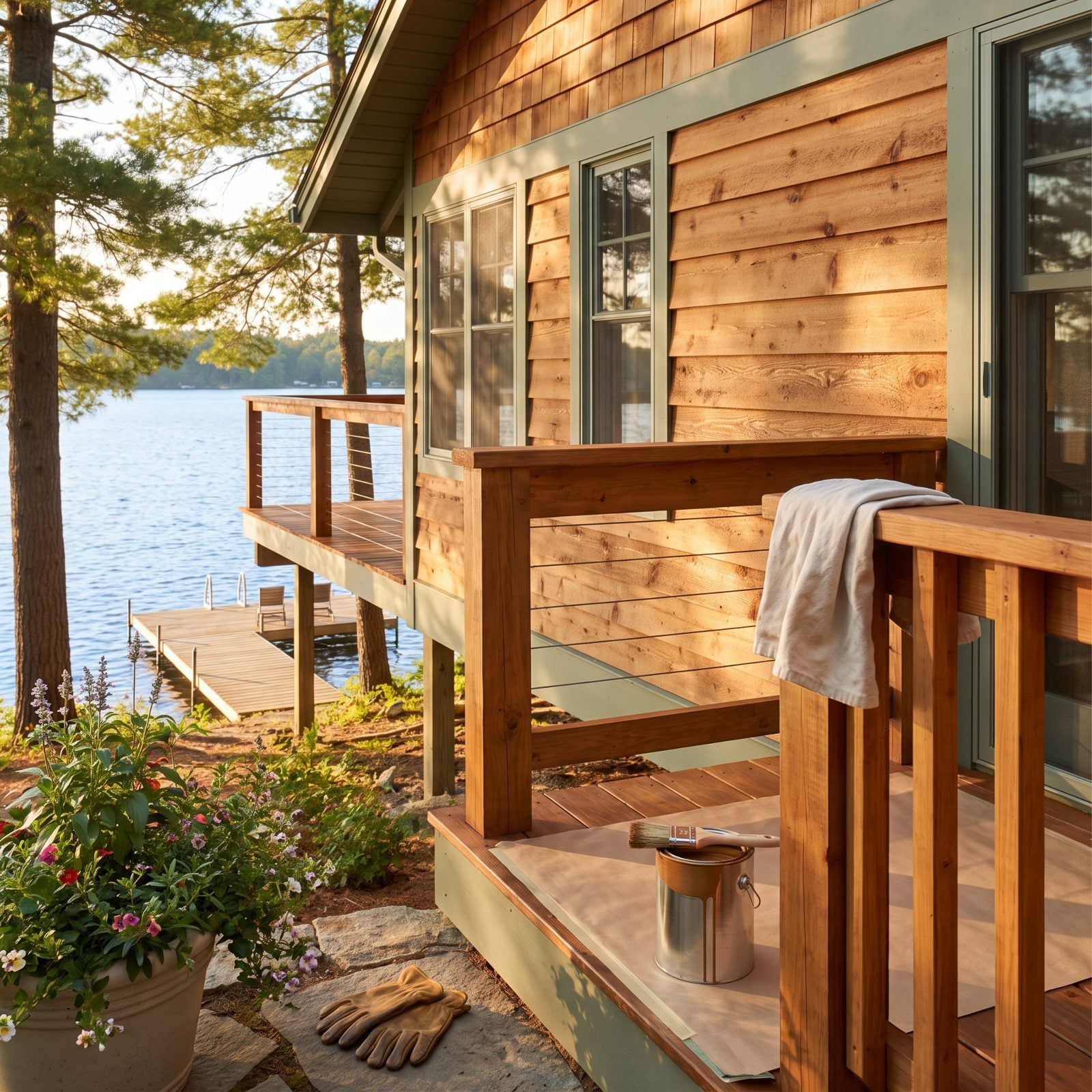
You finish the renovation. Last room done, deck stained, dock set. And just as you’re ready to call it complete and relax forever, the truth arrives: the cabin needs care now for the rest of its life. The staining, the caulking, the small repairs that never truly stop.
Nobody warns you about this part after you’ve rebuilt yourself, either. There’s no finish line where you’re fixed and done. The confidence, the boundaries, the routines — all of it needs tending. Skip the upkeep and the drafts come back.
And honestly? That’s the good news. A finished project is something you walk away from. A life you keep is something you keep showing up for. The work doesn’t end. It just changes from building to belonging.