The best-kept dock on the lake usually belongs to someone who does less, not more. Spend a few summers out here and you notice it. The folks fighting their property every weekend are wrecked by August, while the ones who figured out which chores to drop are still in the hammock, cold drink sweating on the armrest. Some of the sharpest lessons out here aren’t new tricks at all — they’re things experienced owners simply stopped doing. And honestly, half the standard advice passed around at the marina does more harm than good. Here are the habits worth dropping, with a real reason behind each one.
Please note that some of the imagery in this article may have been enhanced with the assistance of AI.
43. Stop Putting Cardboard or Wood Under Stored Marine Batteries
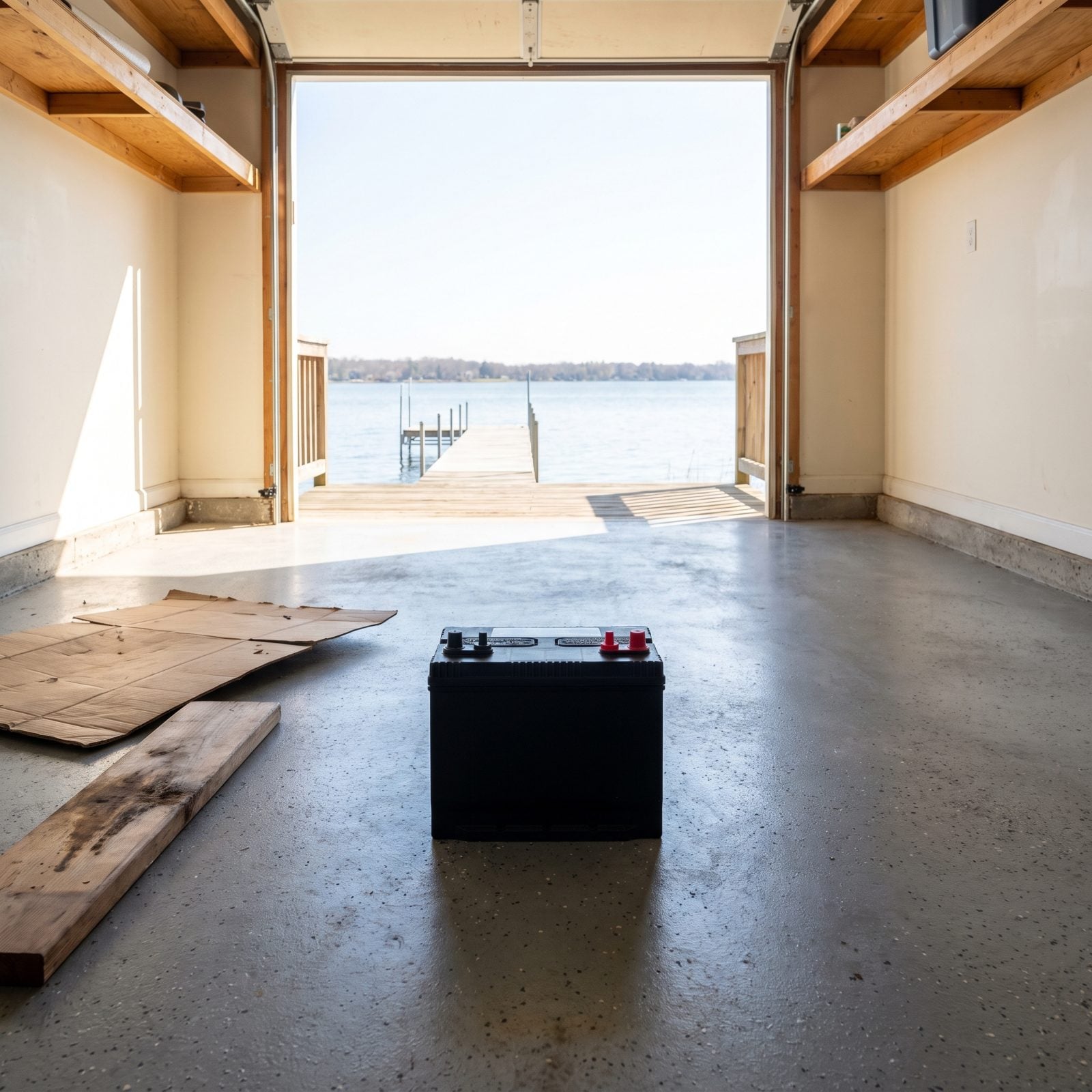
The myth refuses to die: concrete drains a battery, so set it on wood. That stopped being true decades ago, back when battery cases switched from hard rubber to plastic.
Here’s the part nobody mentions. A cardboard sheet or old board holds moisture against the case and traps condensation underneath, and that damp patch corrodes the case and wicks into the garage floor besides. Bare sealed concrete stays cooler and drier. Exactly what a stored battery wants.
42. Stop Sweeping Spiderwebs Off Every Dock Light
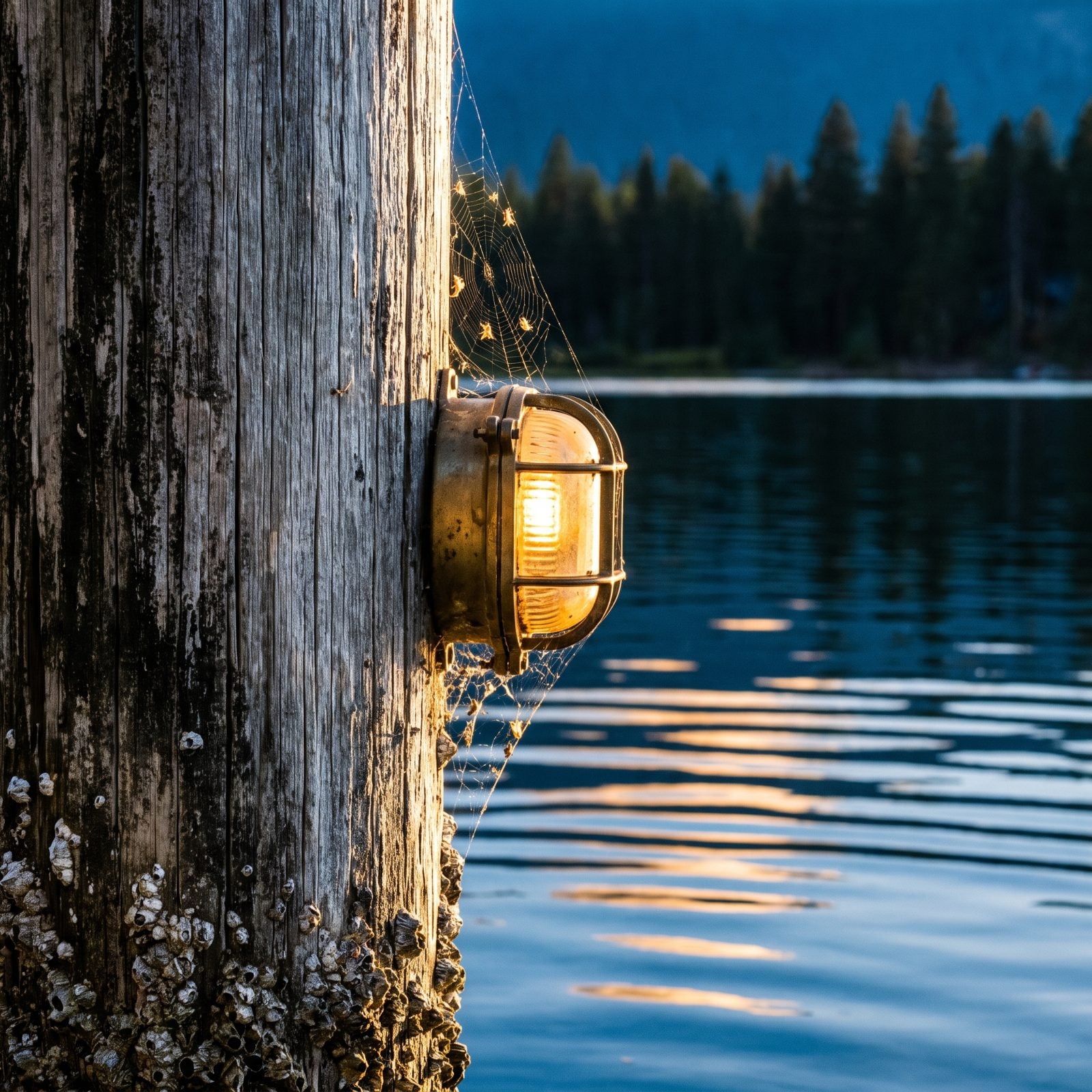
Those webs look messy. Leave them anyway.
Dock lights pull in clouds of midges, mayflies and mosquitoes all summer, and the spiders set up shop right where the bugs gather. Knock the webs down every evening and you’re volunteering to eat the bugs yourself. The spiders are running unpaid pest control on the one spot where you actually sit after dark.
Smart move: wipe the lens clean for light output and leave the corners alone. Fewer bites, less wiping, better evenings.
41. Stop Pouring Additives Into a Septic System That’s Working Fine
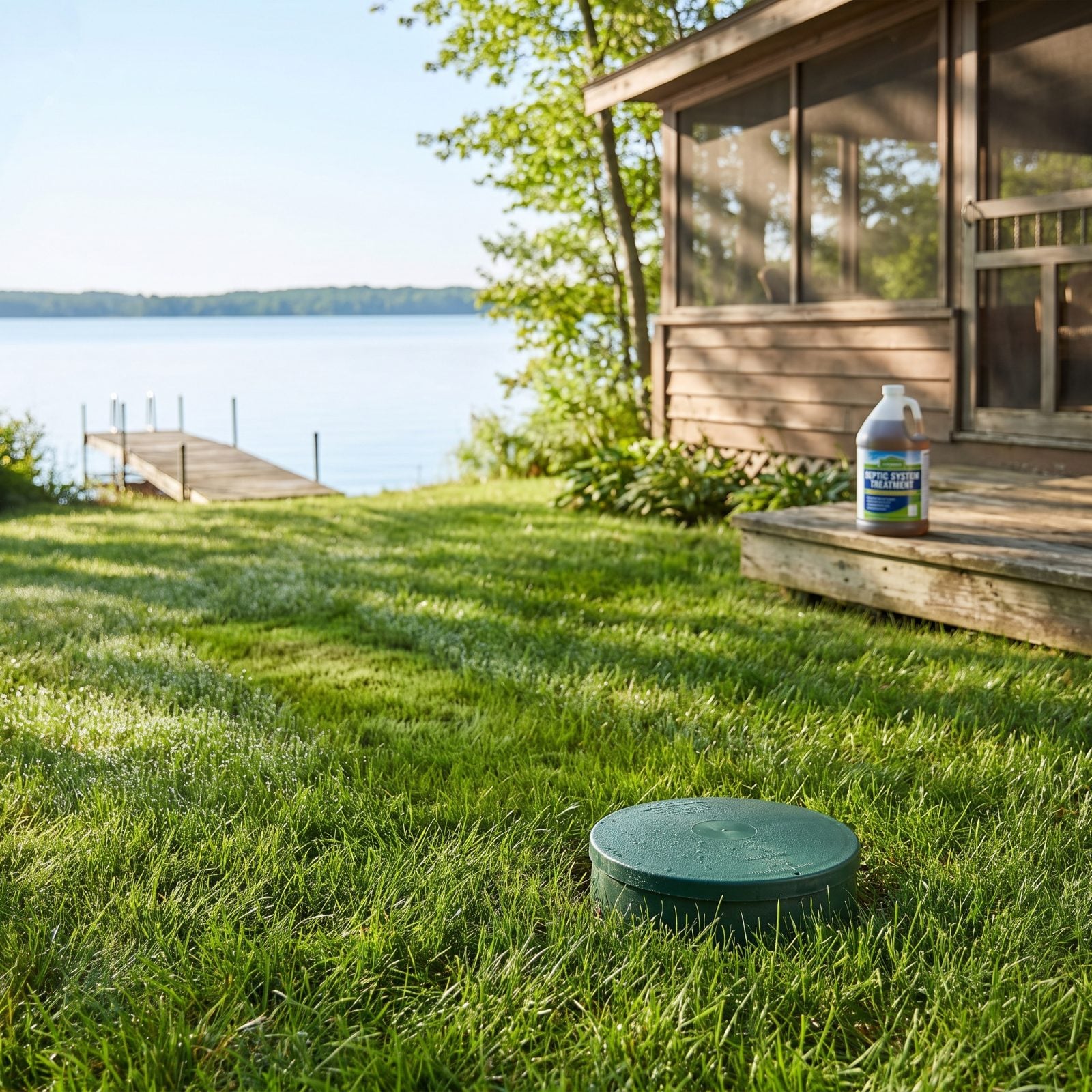
A healthy septic tank is already full of the bacteria it needs. It makes its own. That monthly packet you flush is solving a problem you don’t have.
Worse, some additives churn up the settled solids and shove them out toward the drain field — which, on most waterfront lots, sits uncomfortably close to the lake. A clogged field near open water is the expensive nightmare out here. Skip the additive, pump on schedule, keep the harsh chemicals out of the drains.
40. Stop Hauling Every Fallen Branch Out of the Shallows
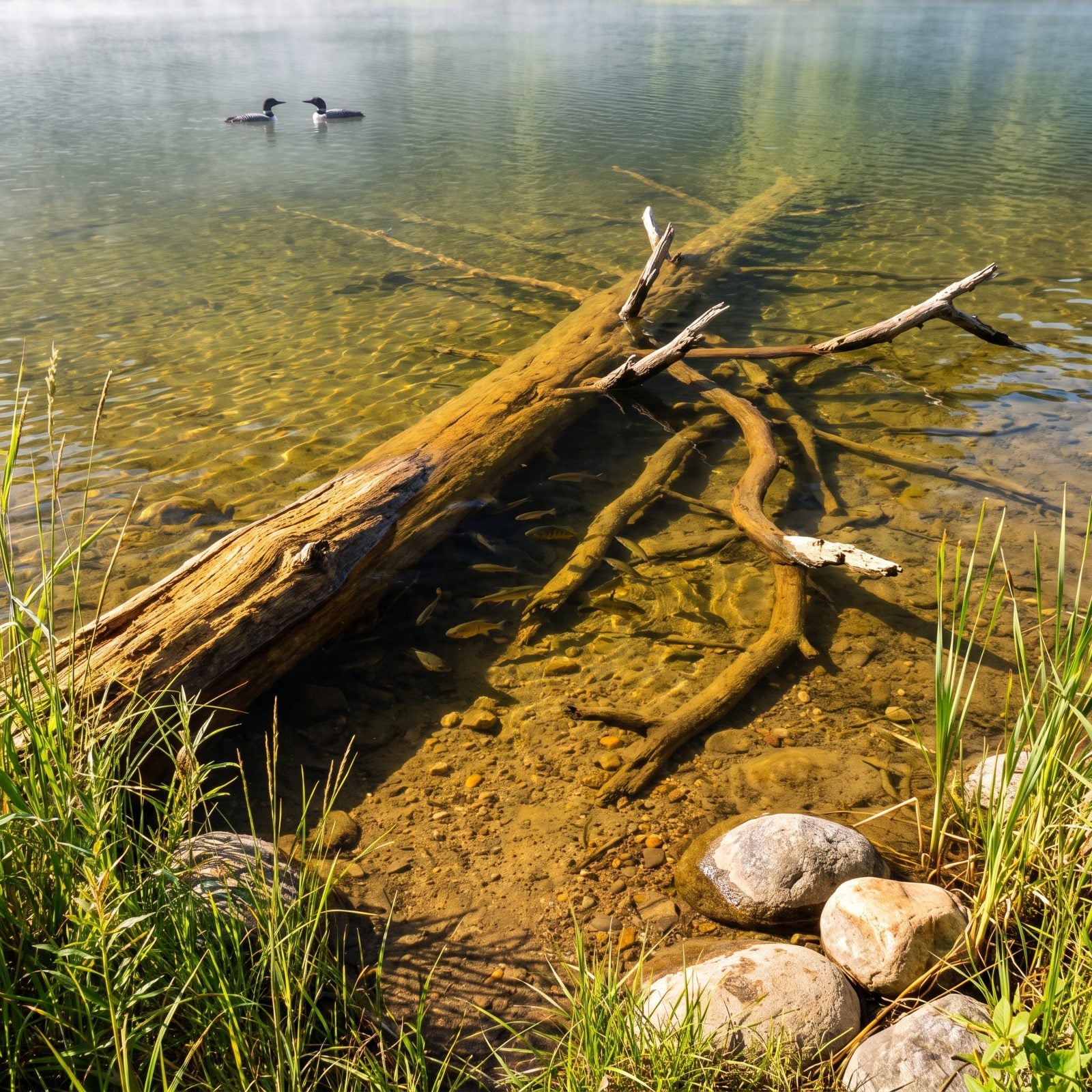
Submerged wood looks like clutter. To a lake, it’s prime real estate.
Fallen branches and logs in the shallows give small fish cover and give bass and panfish a place to feed, which is exactly why the fishing is always better off the messy shoreline than the manicured one. The wood slows wave action too, holding your sand in place instead of letting it wash out.
Pull out whatever’s a genuine hazard near the swim ladder. Leave the rest to do its work.
39. Stop Raking Every Leaf Out of the Shoreline Buffer
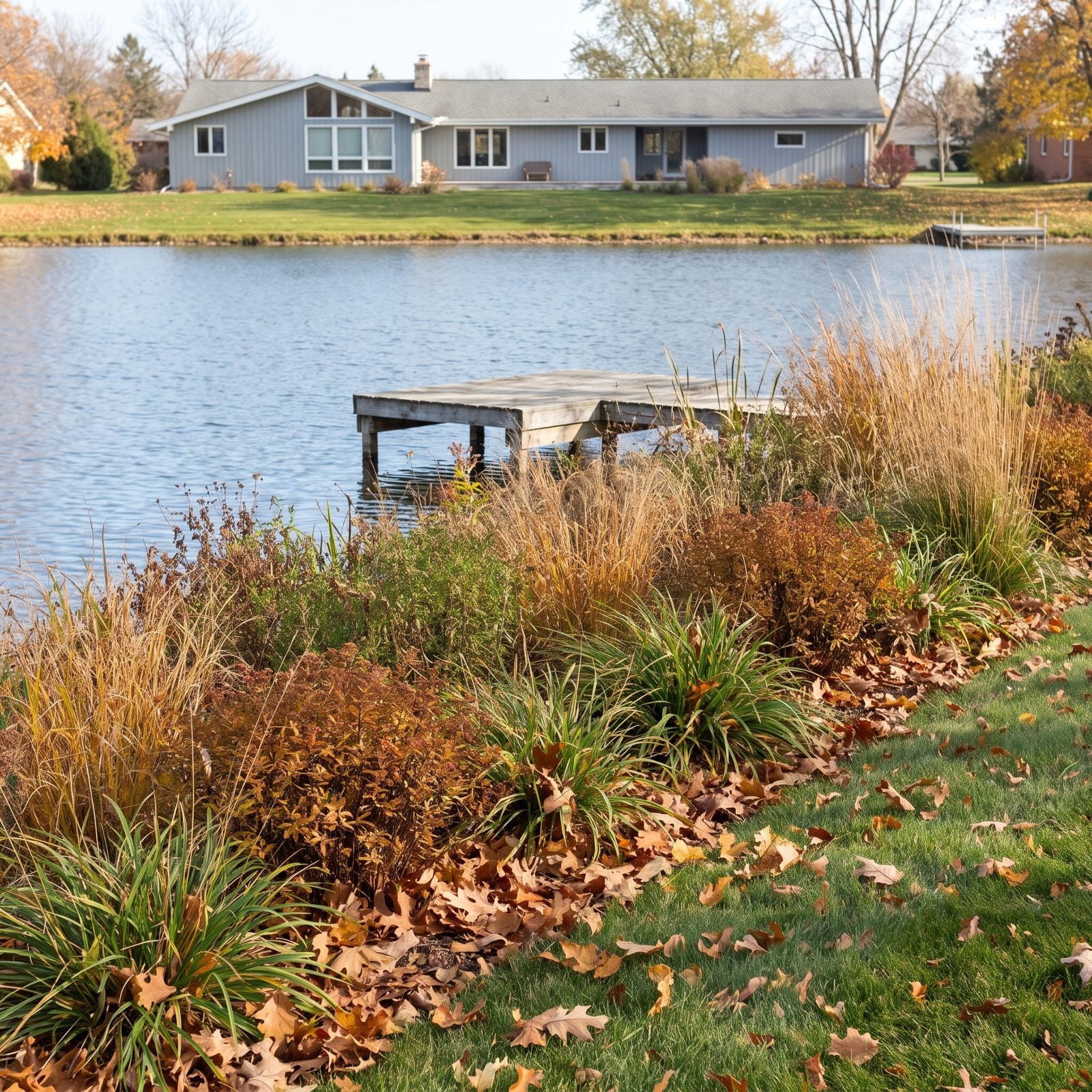
That buffer strip of native plants between your lawn and the water? It’s the hardest-working stretch of your whole property — it filters runoff before it hits the lake and traps sediment that would otherwise cloud everything up.
Raking it bare defeats the point. Leaves break down into the root zone, feed the soil and hold the bank together through spring melt. A buffer swept clean is just a slower lawn, and lawns are exactly what you want kept well back from the water’s edge.
38. Stop Chasing Geese Off a Wide-Open Lawn
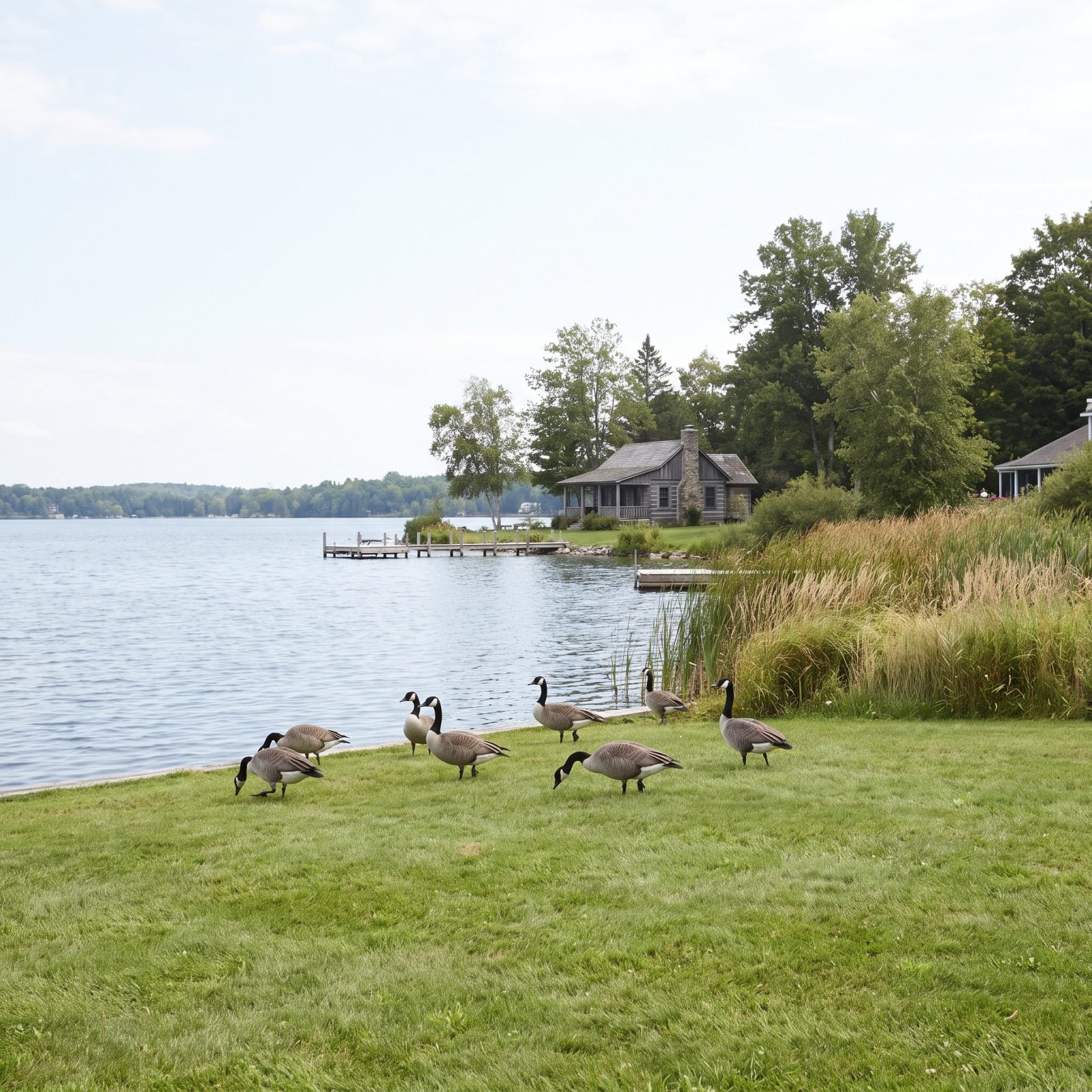
You can run at the geese every morning for the rest of your life. They’ll be back by lunch.
Geese love a short lawn that runs clean to the water because it lets them walk up, graze and keep a clear sightline for predators. Chasing them changes nothing about why they came. The fix that actually works is boring: let a band of tall native plants grow along the shoreline, because geese won’t push through cover they can’t see over.
Less sprinting, fewer droppings, and you get your mornings back.
37. Stop Expecting a Fountain to Fix the Whole Lake
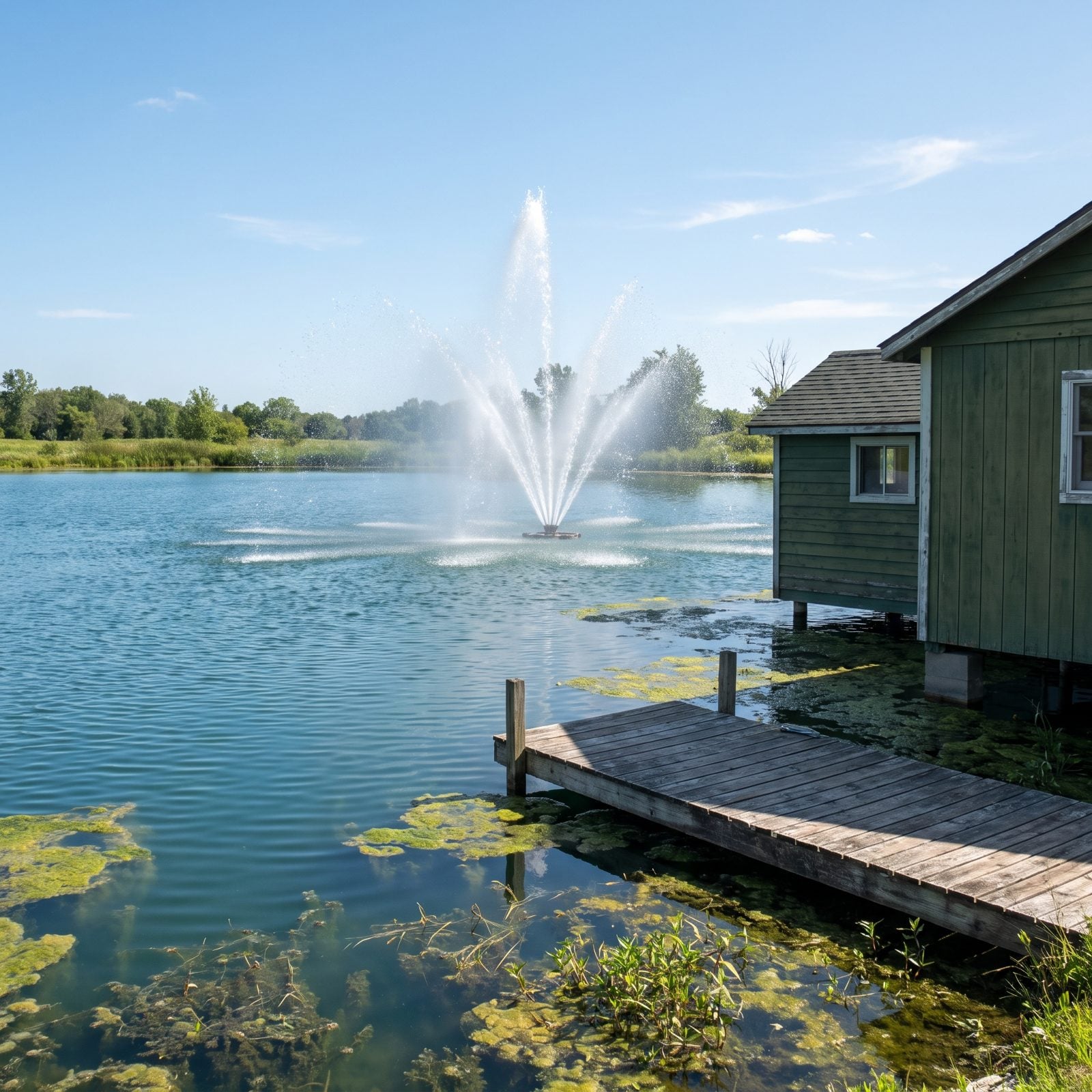
A fountain looks like a solution. Mostly it’s scenery.
Those pretty spray fountains move surface water and look great lit up at night, but they do next to nothing for the deep oxygen problems and nutrient loads that actually drive algae and muck. People install one expecting a clean lake and get a clean picture instead.
Real water quality comes from the unglamorous stuff — buffer plantings, controlling runoff, pumping septic, cutting back on fertilizer. Want aeration that earns its keep? A bottom-diffuser system sized to the water does far more than a surface sprayer ever will. Just don’t expect the fountain to carry the whole load.
36. Stop Tying the Boat With One Short Fixed Line
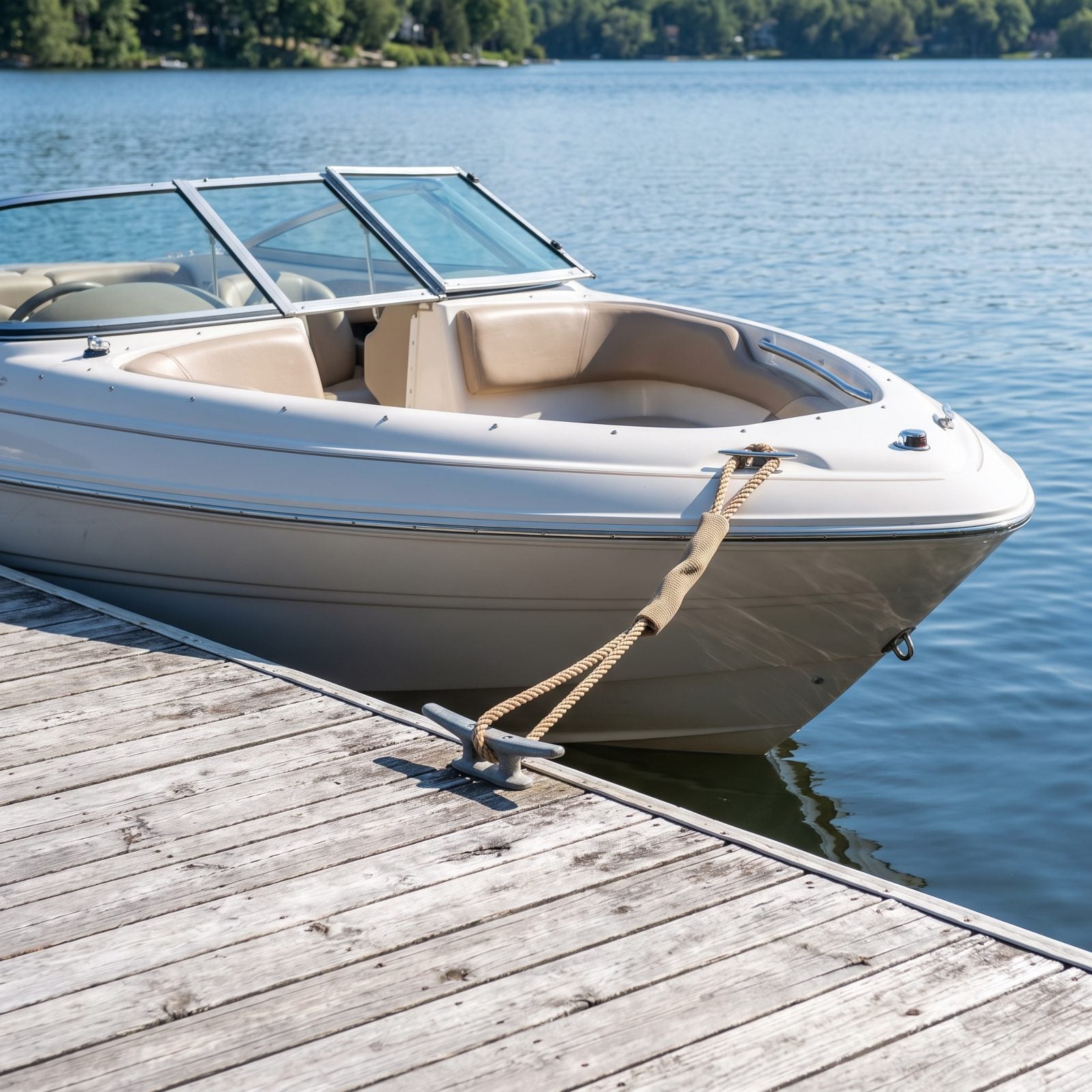
One short line snugged tight feels secure. It’s also the setup that chews up more hulls than any storm ever will.
Water levels shift, wakes roll through, wind swings the bow around. A single fixed line has nowhere to give, so it either drags the boat into the dock or loads up until the cleat or the rope lets go. The owners who’ve been at this a while use several lines with deliberate slack — bow, stern and spring lines working together, plus chafe guards where the rope rubs.
More lines, more slack, less damage. The boat rides the water instead of fighting it.
35. Stop Coiling Wet Dock Lines Into Tight Bundles
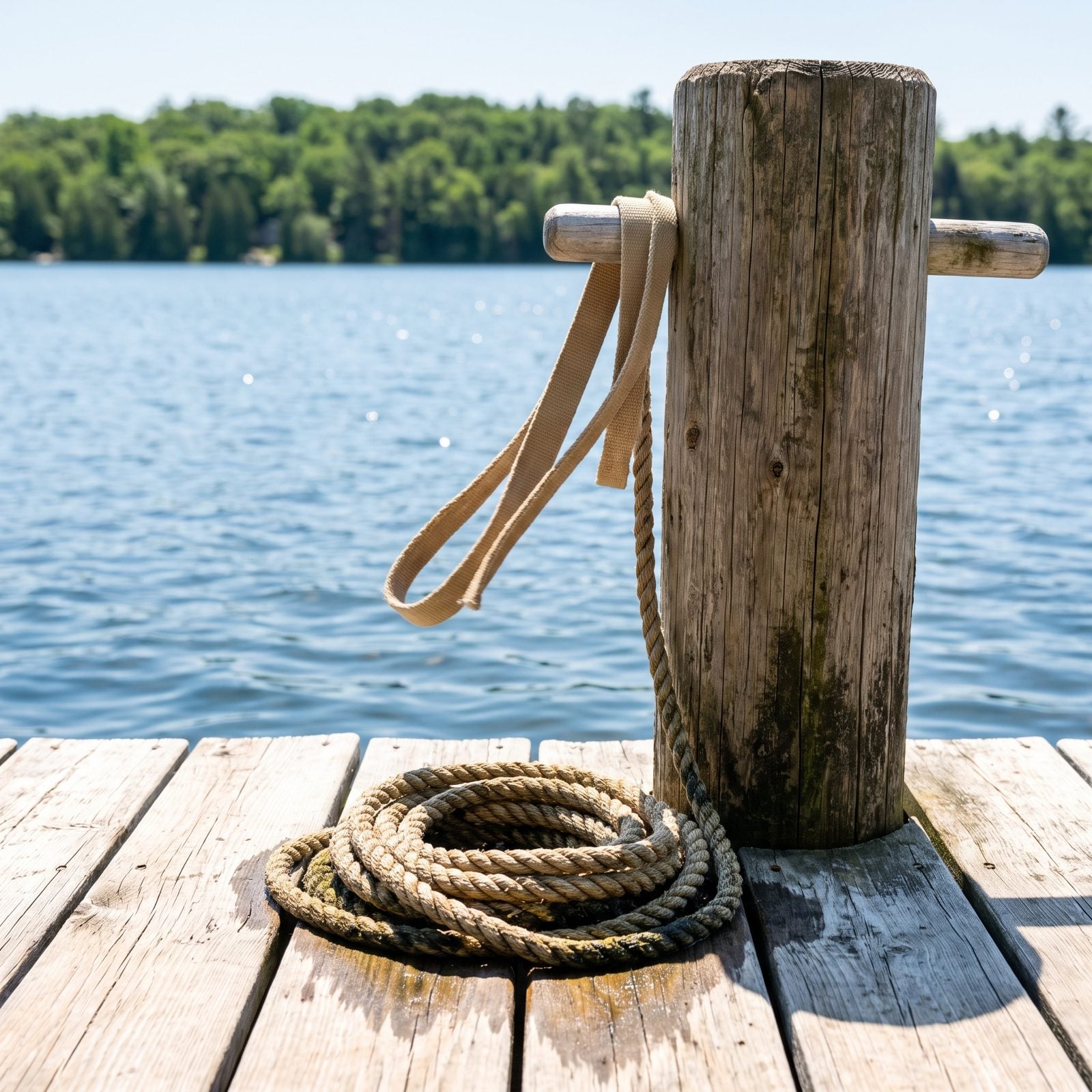
Coil a wet line tight, tuck it in the dock box, and you’ve built a little greenhouse for mildew. The center never dries. Rope that stays damp in a tight coil loses strength and starts smelling like a locker room by July.
Hang wet lines loose over a peg or rail and let the breeze get through. They dry fast, last longer and don’t rot from the inside. It’s the laziest possible habit, which is exactly why it works.
34. Stop Sealing Damp Life Jackets in Plastic Totes
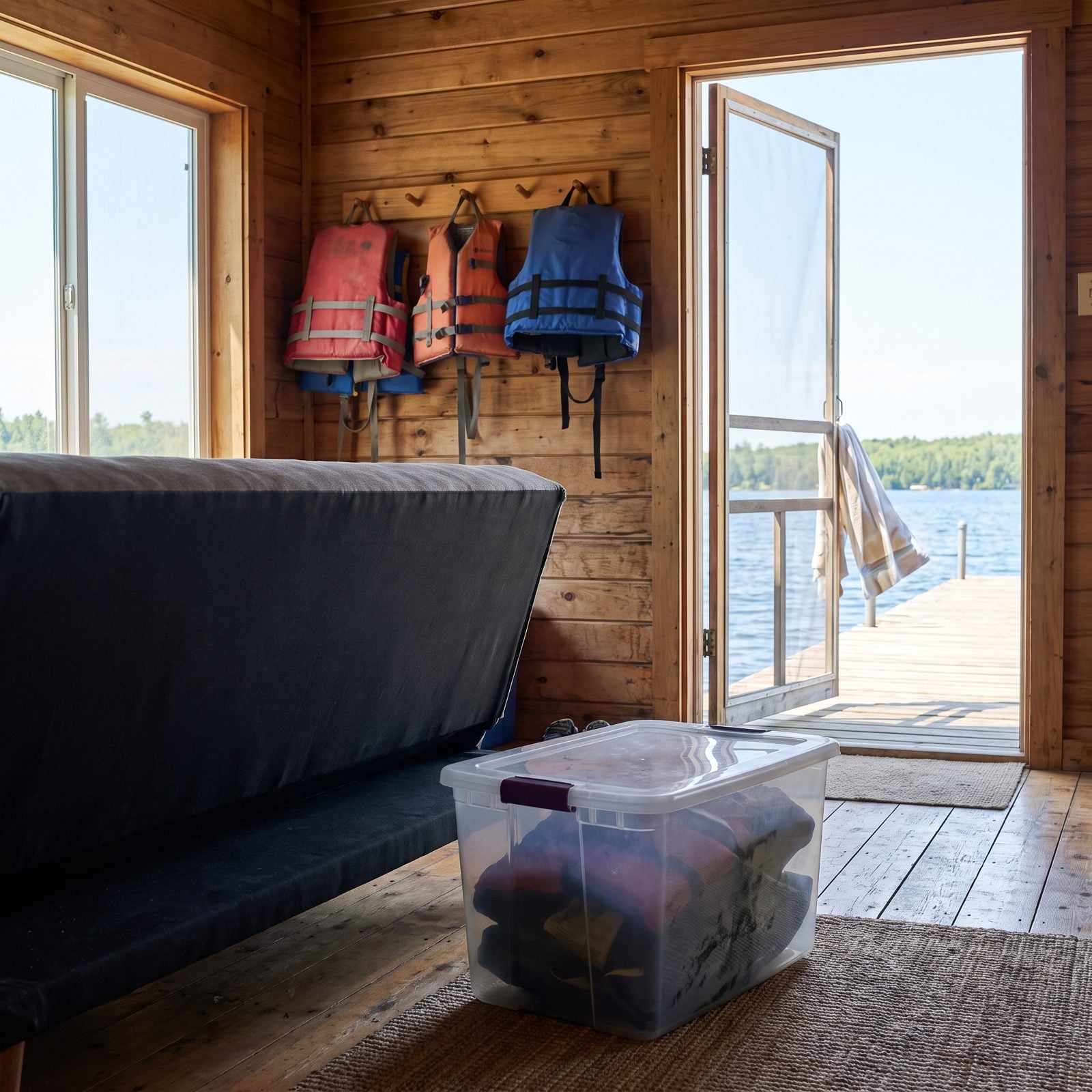
End of the day, everybody peels off wet life jackets and drops them in the tote. Lid snaps shut. That’s the problem.
Sealed up damp, the foam and fabric hold moisture for weeks, and you end up with mildew, a musty smell that never leaves, and foam that slowly breaks down — which is the one thing a life jacket can’t afford, since that foam is the whole reason it keeps a person afloat.
Hang them on pegs with air moving around them instead. Dry jackets last years longer, and nobody has to put on a clammy one before the boat even leaves the dock.
33. Stop Leaving the Swim Ladder Deployed Between Visits
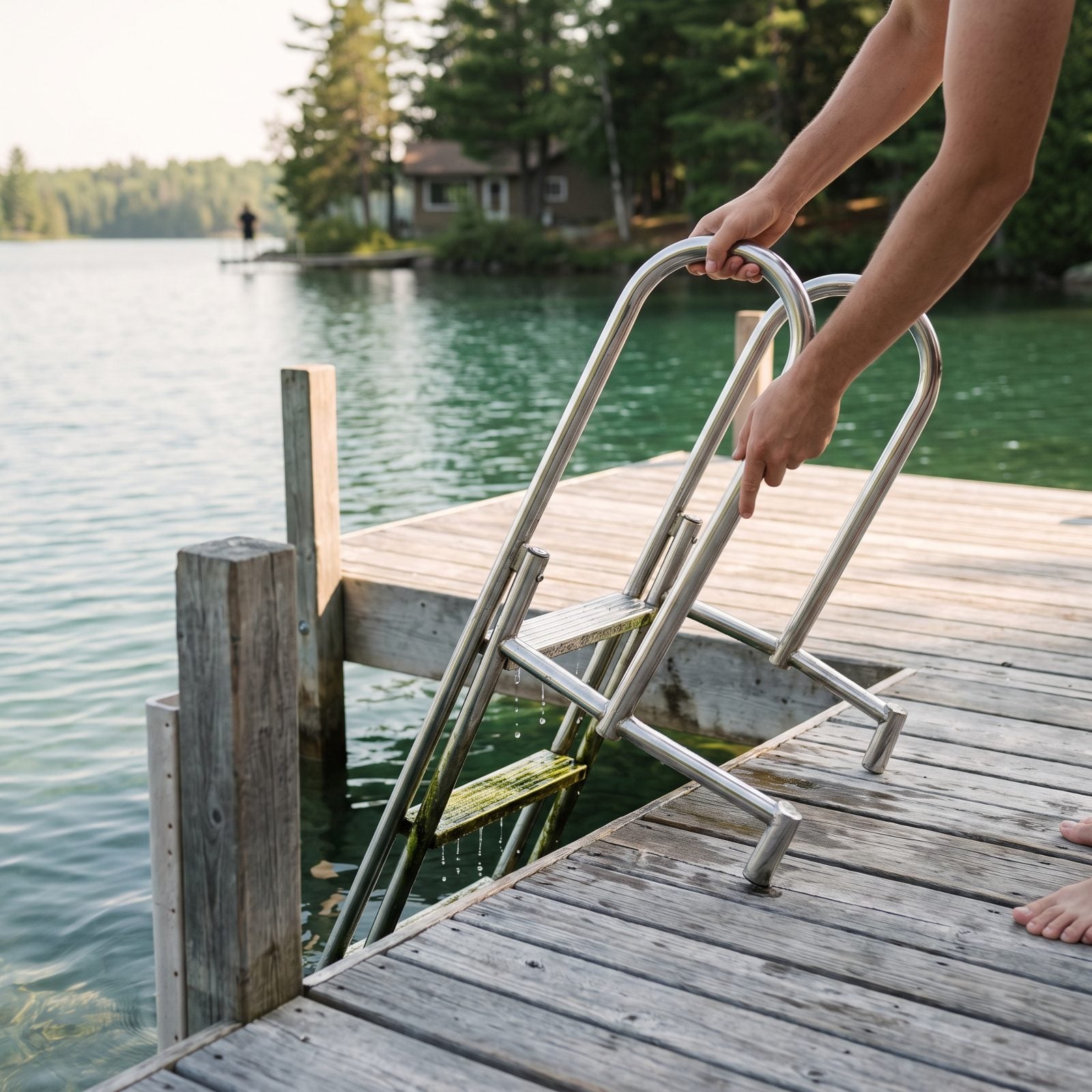
That ladder you leave dangling in the water looks convenient, but it’s really just a magnet. Submerged rungs collect slime, zebra mussels on infested lakes, and a slick biofilm that turns the bottom step into a trap by August.
Pull it up between visits and you buy yourself a ladder that doesn’t need scrubbing every weekend — ten seconds, tops. Steel and aluminum both corrode faster when they sit half-in, half-out of the water with a wet-dry cycle gnawing at them all week.
32. Stop Leaving Firepit Ashes Exposed to Rain
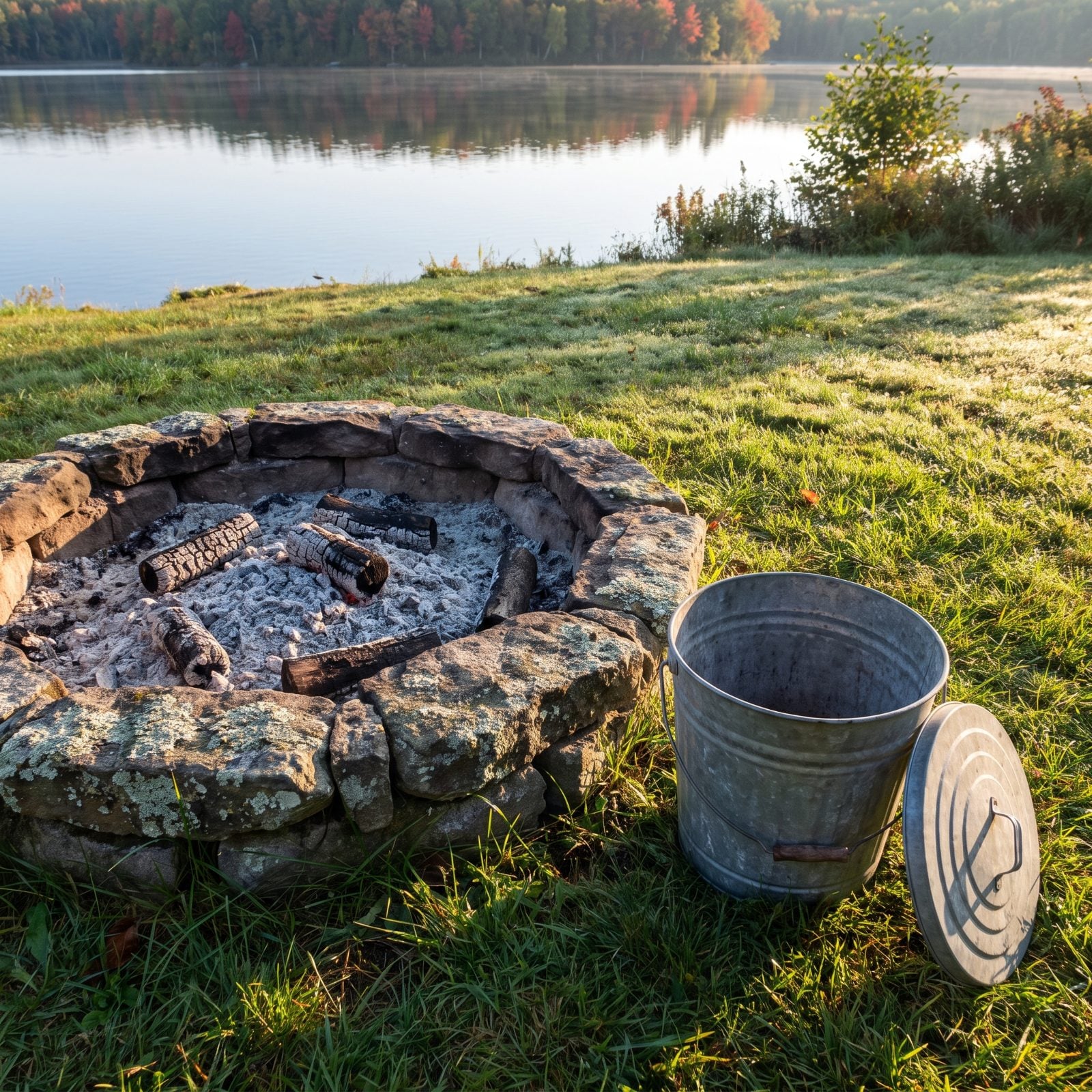
Wet ash is a problem most people never connect to the stain on their stone or the dead ring in the grass. Rain turns ash into lye — a caustic slurry that leaches straight into the soil and runs toward the water with the next downpour.
Let the last logs and glowing embers burn down completely, and once the ashes are fully cold, scoop them into a metal can with a lid and keep them covered. Firepit stones stay clean, the lawn dodges a chemical burn, and whatever runoff reaches the lake stays a lot closer to neutral. Dumb little habit, genuine payoff.
31. Stop Sending Gutter Water Straight Down the Bank
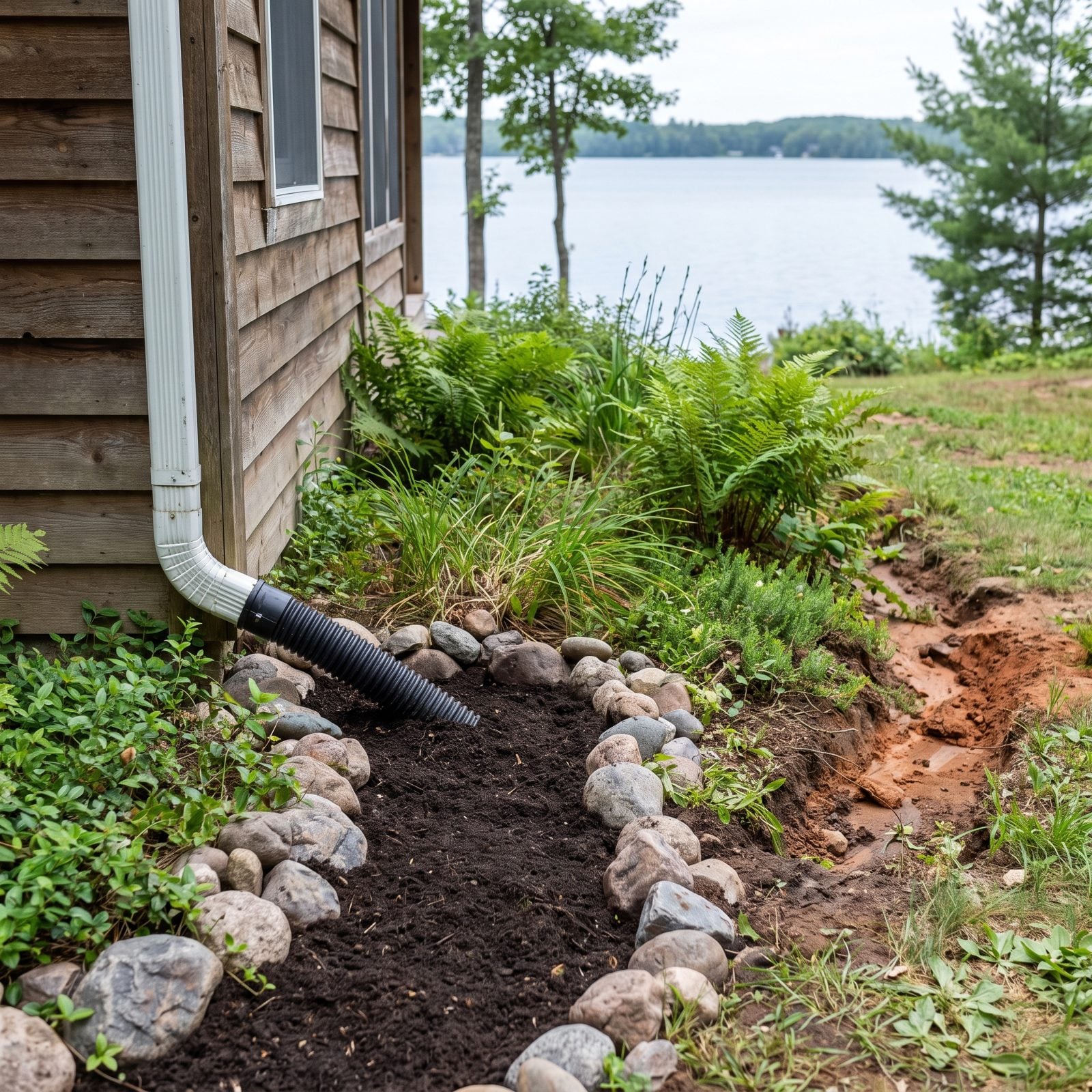
A roof is a funnel. Every storm it dumps hundreds of gallons at a single point, and if that point sits at the top of your bank, you’re paying for erosion you can’t even see happening — until a chunk of shoreline is just gone.
Extend the downspout. Run it to a rock-lined splash area, a rain garden, or buried drain tile that lets the water out slowly and well away from the slope. Spread the flow so the ground can drink it in instead of letting it carve a channel to the lake.
The folks who’ve owned a place a while quit treating the bank like a drainfield ages ago. The ones who didn’t tend to find out during the first big spring melt.
30. Stop Opening the Windows on Humid Summer Days
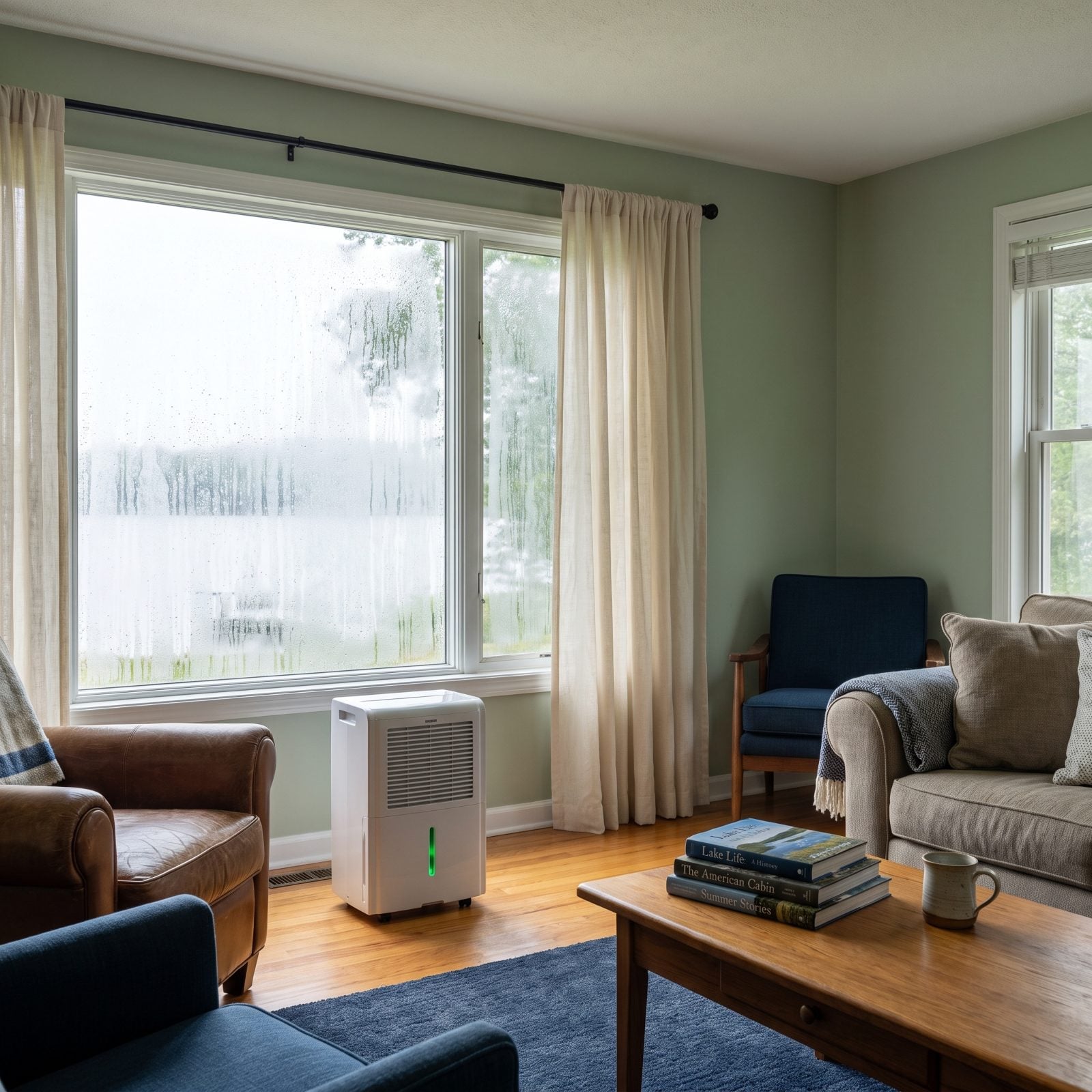
Throwing the windows open on a sticky July afternoon feels right. It’s usually wrong. On a muggy day the outside air can hold far more moisture than the cooler air sitting inside your cabin, so all you’re really doing is ushering that dampness onto your walls, into your closets, and behind the back of your upholstery.
That’s how you end up with musty bedding and a mildew bloom on the north wall by Labor Day.
29. Stop Running the Dishwasher and Laundry Together on Septic

A septic system is a living thing, and it keeps a schedule. Flood it with a dishwasher cycle, two loads of laundry, and four showers all before noon on the same Saturday, and you shove more water through the tank than it can ever settle. Solids that should stay put get flushed out into the drainfield, where they clog the soil and shave years off the whole setup.
Spread the big water users across the week. Weekend crowd? Stagger the laundry over several days. A pumped-out drainfield replacement runs into the thousands, and it always seems to pick the one week everyone’s visiting to finally quit.
28. Stop Running Ceiling Fans in Empty Lake-House Rooms
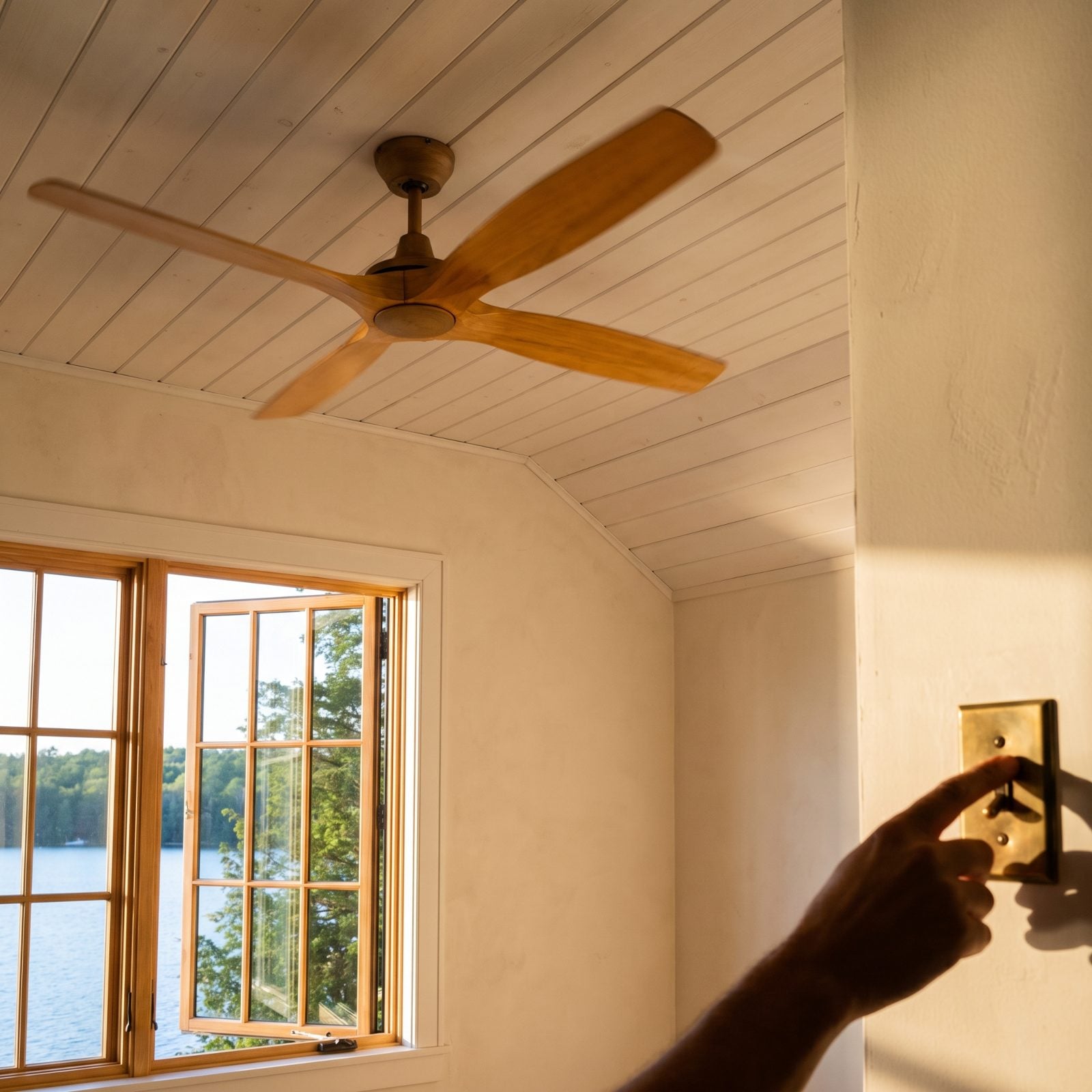
This one trips people up: a fan in an empty room cools nothing. Fans move air across skin. No skin, no cooling. The breeze just spins a motor and, if anything, adds a whisper of heat from that motor right back into the room.
So shut them off when you leave. Leaving every fan running all summer is pure waste, and on a lake property where the bedrooms sit empty five days out of seven, it adds up to a meter that never stops turning for no good reason at all.
27. Stop Turning the HVAC System Completely Off When Away

Killing the system to save money usually costs more. With the AC fully dead through a humid stretch, indoor moisture climbs and soaks into drywall, fabric, and framing. You come home to that damp-closet smell and, given time, mold that no vacation feels worth.
In winter, a dead furnace in freezing weather risks burst pipes — a five-figure mistake in a hurry.
Set it back, don’t shut it off. Even a steady away setpoint, around 80 in summer or 55 in winter, keeps humidity in check and the pipes safe. A basic programmable or remote thermostat handles the whole thing while you’re three hours away in your driveway at home.
26. Stop Ignoring Humidity in the Crawl Space
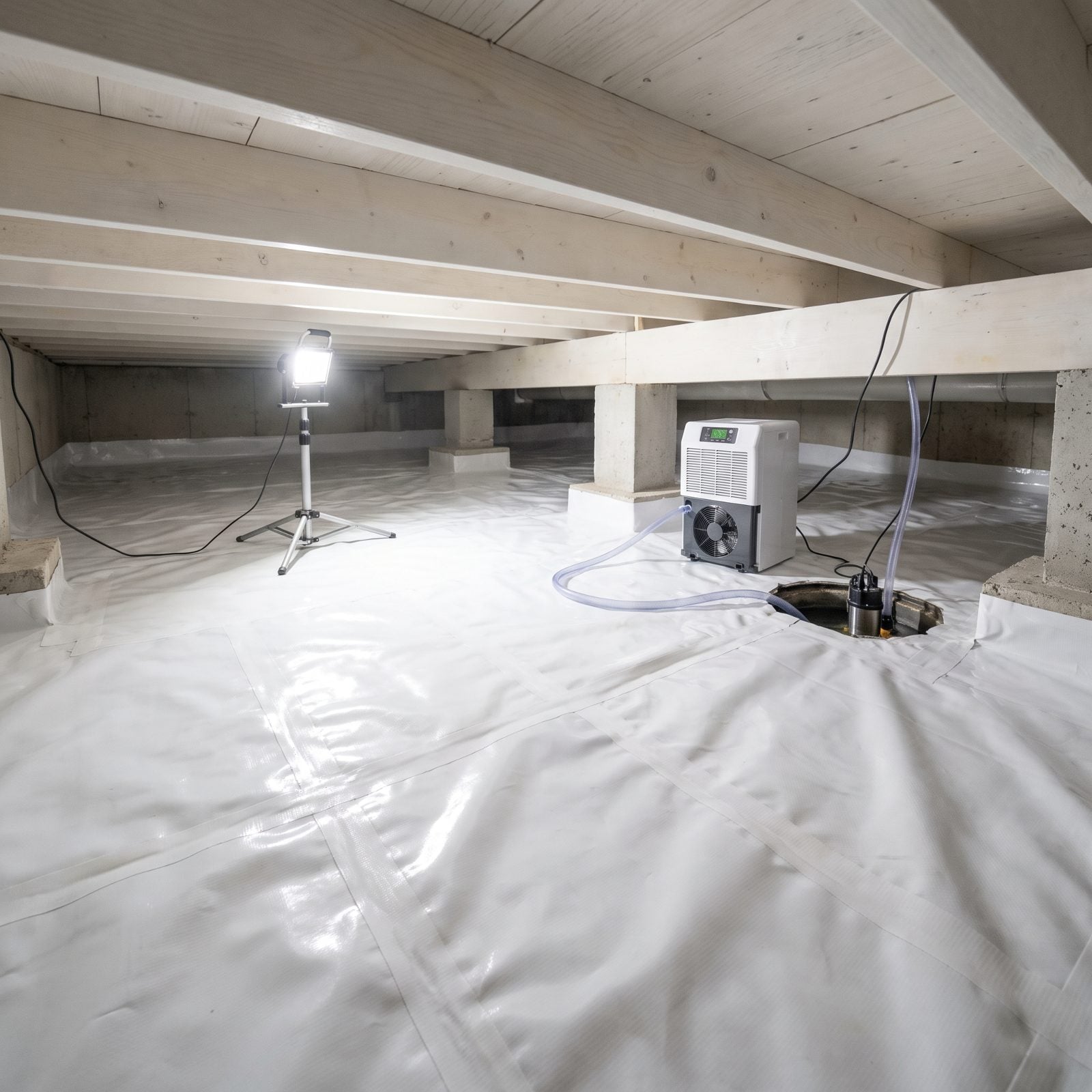
Nobody goes down there, so nobody notices. That’s the whole trouble. A crawl space under a lake house sits close to the water table, and a dirt floor without a vapor barrier wicks moisture straight up into your joists and subfloor all season long.
You find out when the floors start to cup or a soft spot shows up under the kitchen.
25. Stop Treating Algae With Copper-Based Chemicals
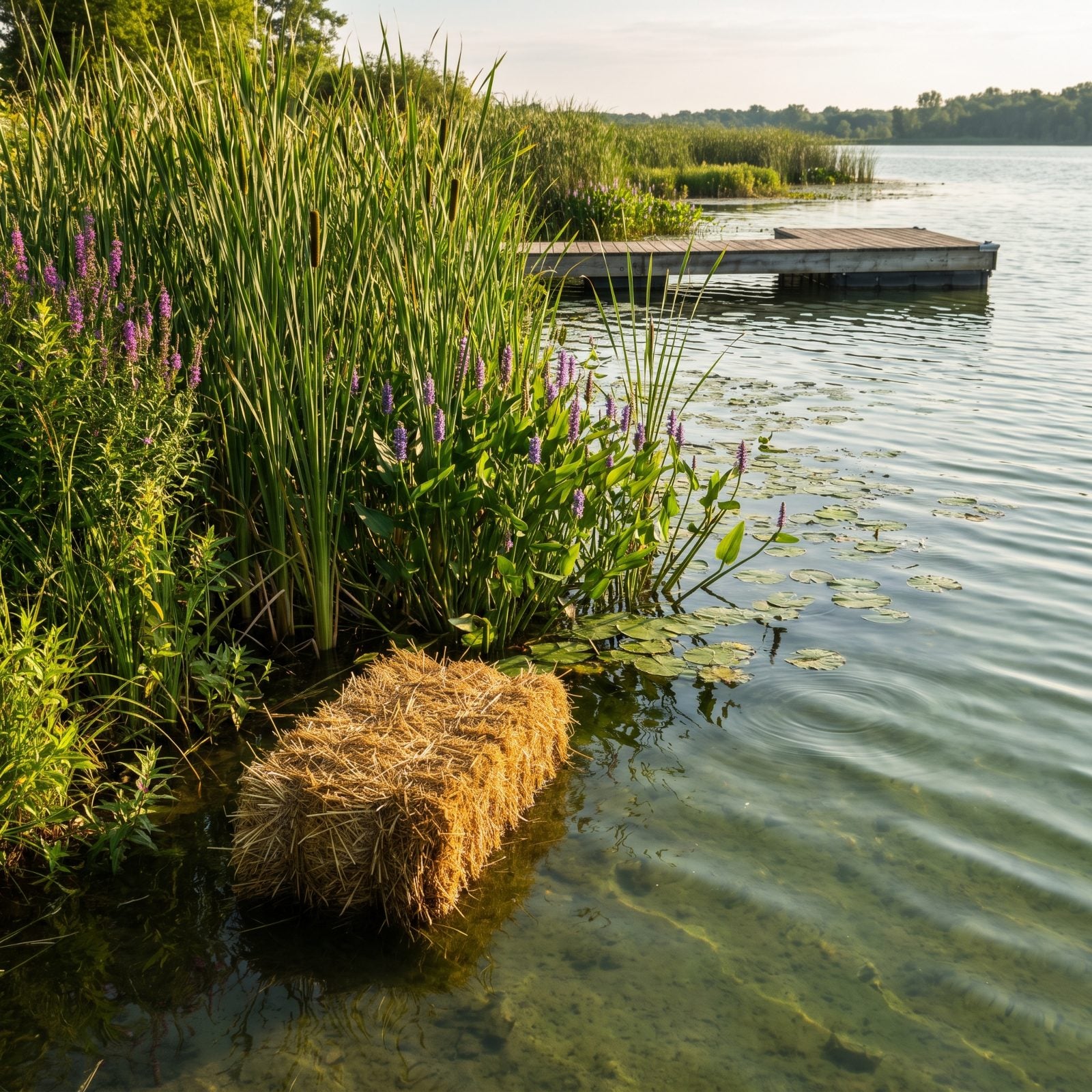
Copper sulfate clears algae fast. It also doesn’t leave. Copper settles into the sediment and stays there for good, piling up year after year, and it kills a lot more than the green stuff — it wipes out the insects and small life your fish depend on.
Plenty of states regulate it, and some demand a permit before you apply any algaecide to a lake at all.
The owners who’ve been at it a while go after the cause instead of the symptom. Less fertilizer near the water, a planted shoreline buffer to catch nutrients before they reach the lake, barley straw, a bottom aerator on the problem spots. Slower? Sure. But it won’t poison the ground under your swimming area.
24. Stop Replacing Washed-Out Beach Sand Without a Permit
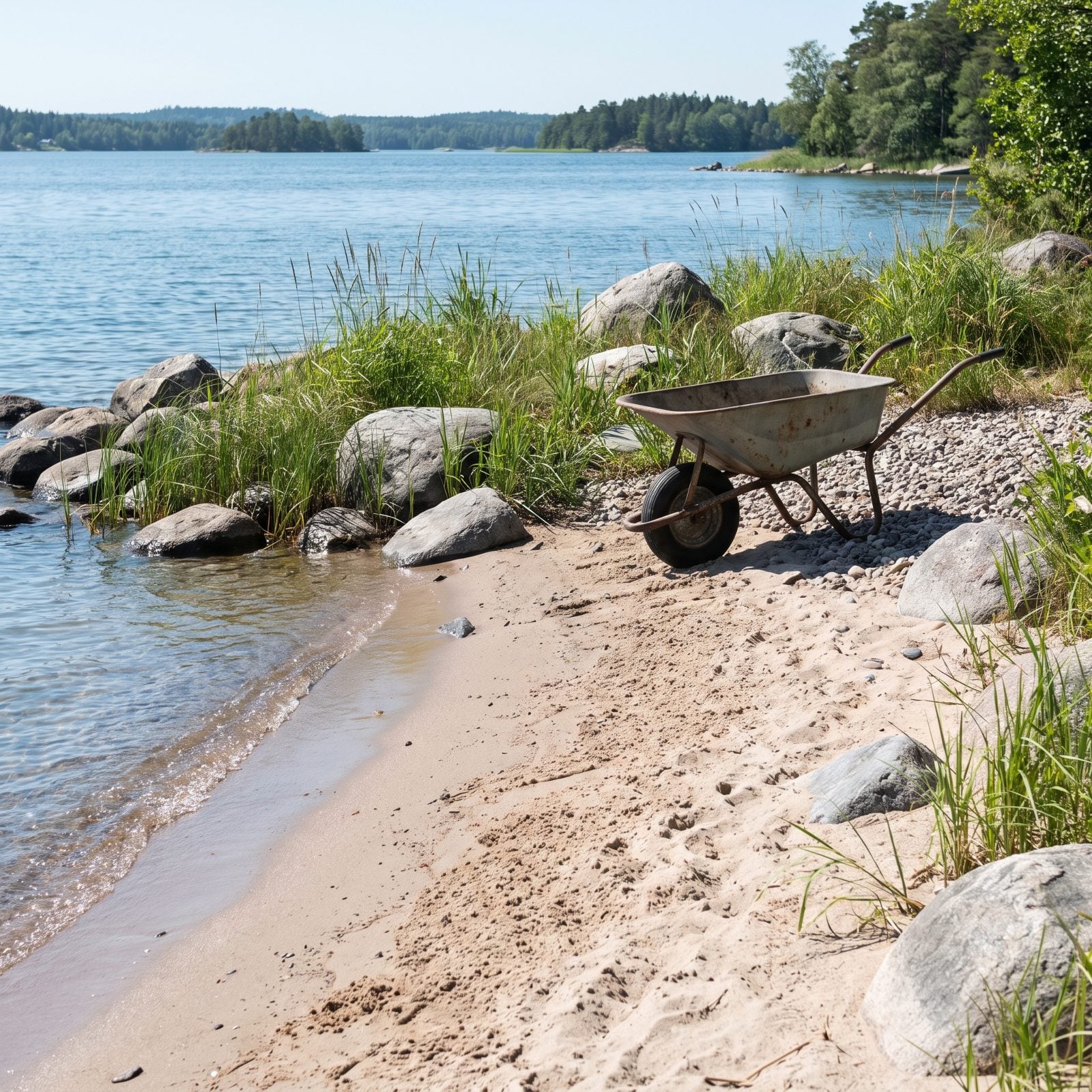
Your sandy beach keeps vanishing because the lake is doing its job, hauling sediment off with every wave and current. Dumping a fresh load of sand feels like the obvious fix.
In most states it’s also illegal without a permit. Adding sand below the ordinary high water mark counts as filling a public waterway, and the fines for freelancing it are not small.
23. Stop Using Phosphorus Fertilizer Near the Shore
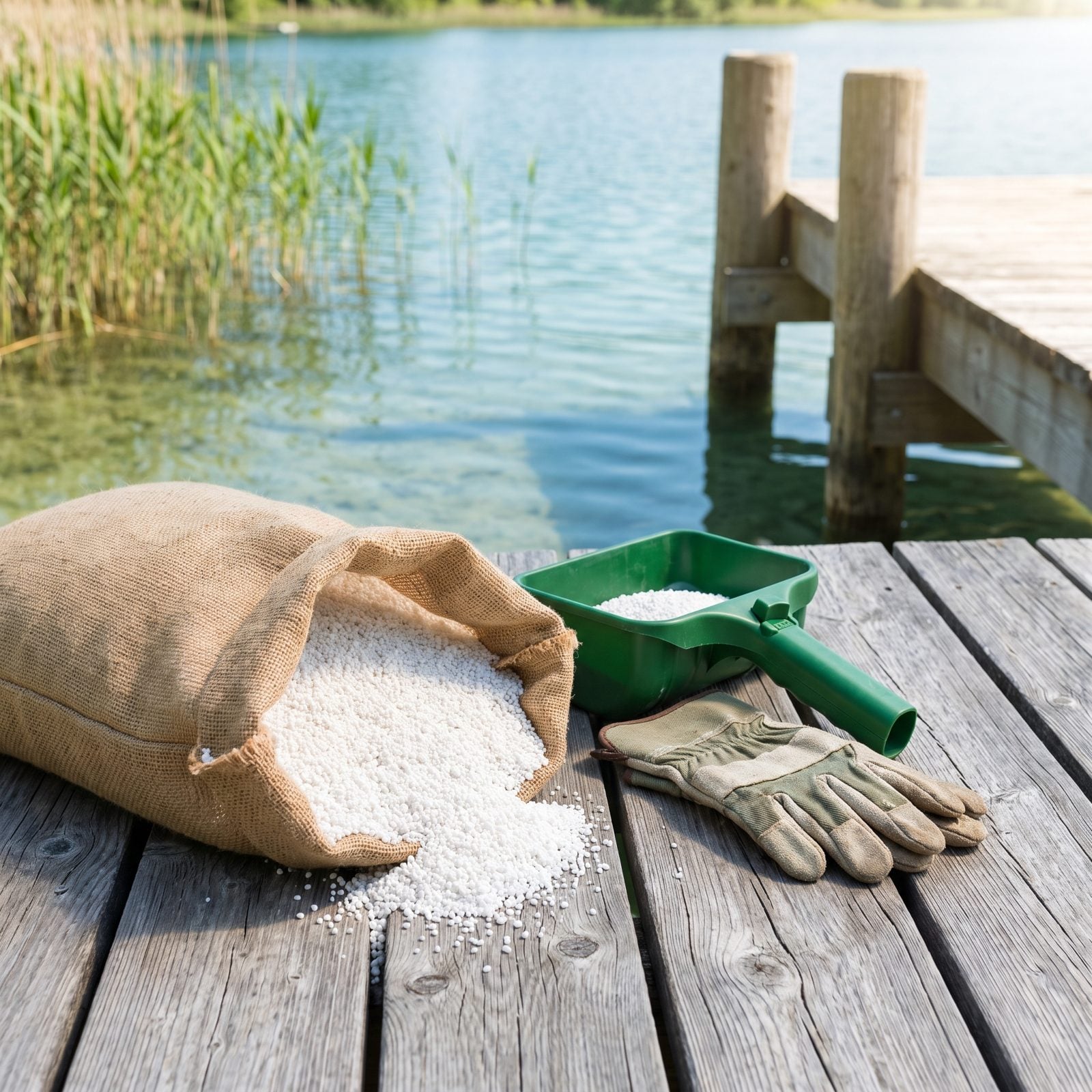
Phosphorus is algae food. Run it onto a lakeside lawn and the next heavy rain carries a share of it into the water, where it feeds the exact green bloom nobody wants to swim through come August.
Here’s the kicker: most established lake-country soil already holds plenty of phosphorus. A soil test will usually tell you to skip it entirely. Several states around the Great Lakes restrict phosphorus lawn fertilizer near water for exactly this reason, so check local rules before you spread a thing.
22. Stop Blowing Grass Clippings Toward the Lake
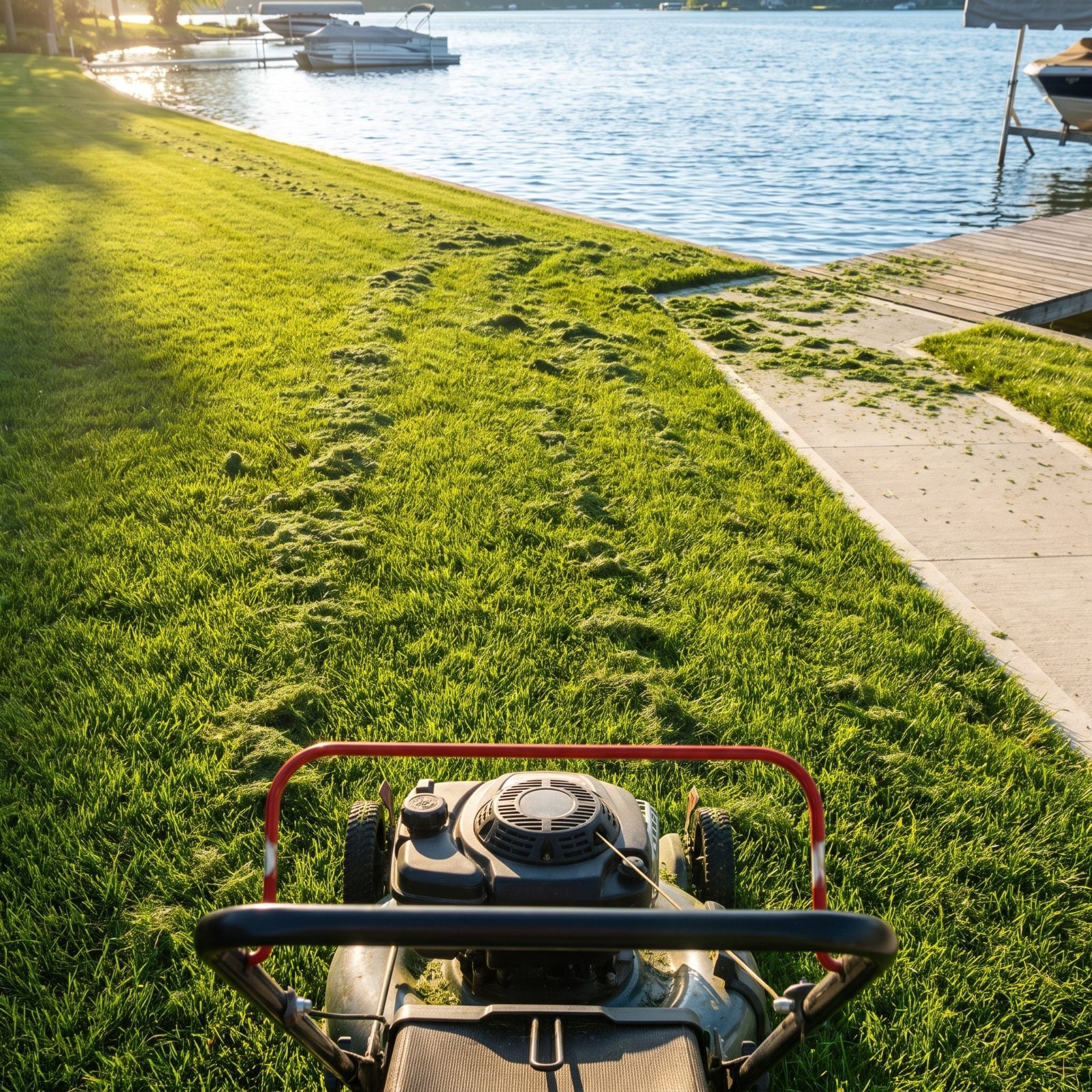
Clippings blown onto the driveway, path or water seem harmless. They aren’t. Grass is loaded with nitrogen and phosphorus, so a pile of clippings in the shallows is basically fertilizer tossed straight into the swim area.
Aim the mower chute back onto the lawn, not toward the pavement or the shore. Better yet, mulch them in place and feed your own grass for free — less raking, less sweeping, no green slick building up along the dock pilings by midsummer.
21. Stop Salting Lakeside Steps and Paths
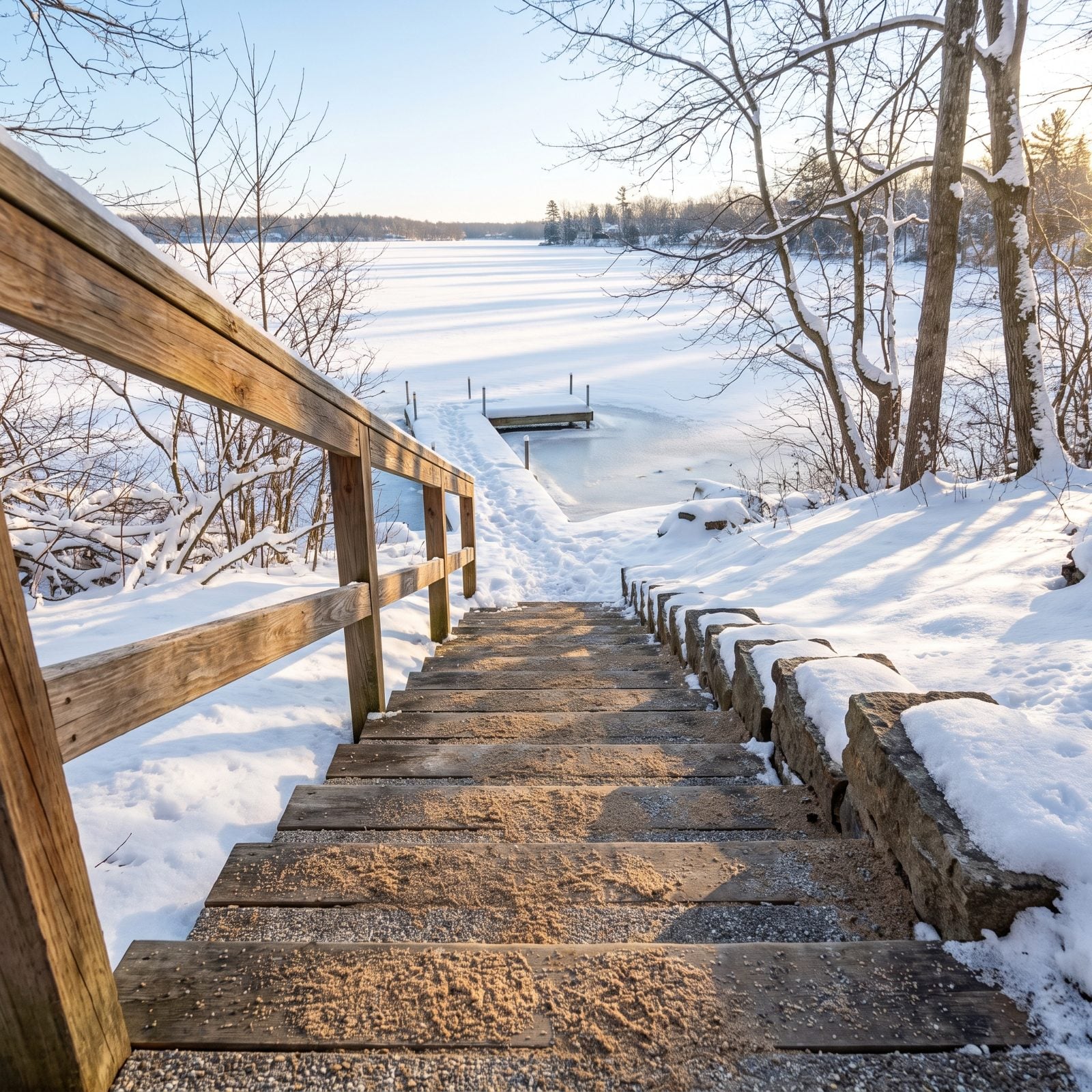
Rock salt is cheap right up until the day your shoreline pays for it. Every melt carries chloride downhill into the lake, where it doesn’t break down. It just piles up. Enough of it stresses fish, frogs and the very plants holding your bank in place.
Switch to coarse sand or fine grit for traction. You get grip without poisoning the water, and it won’t chew up concrete and metal railings the way salt does. Sweep up the leftover sand come spring and you’re set.
20. Stop Fogging the Entire Property for Mosquitoes

Property-wide fogging feels decisive. Here’s the catch: those broad sprays don’t know a mosquito from a dragonfly, a bee or a lightning bug. They wipe out the very predators that eat mosquitoes, and the mosquitoes bounce back fastest of all. So you end up spraying forever.
Go after the breeding sites instead. Dump standing water weekly — gutters, buckets, the tarp over the boat, that kayak you flipped upside down and forgot about. Drop a mosquito dunk in the rain barrel. Run a couple of fans on the porch, because mosquitoes are famously weak fliers. Fewer bites, and you keep the dragonflies that patrol your dock at dusk doing their free shift.
19. Stop Using Bug Zappers as Mosquito Control
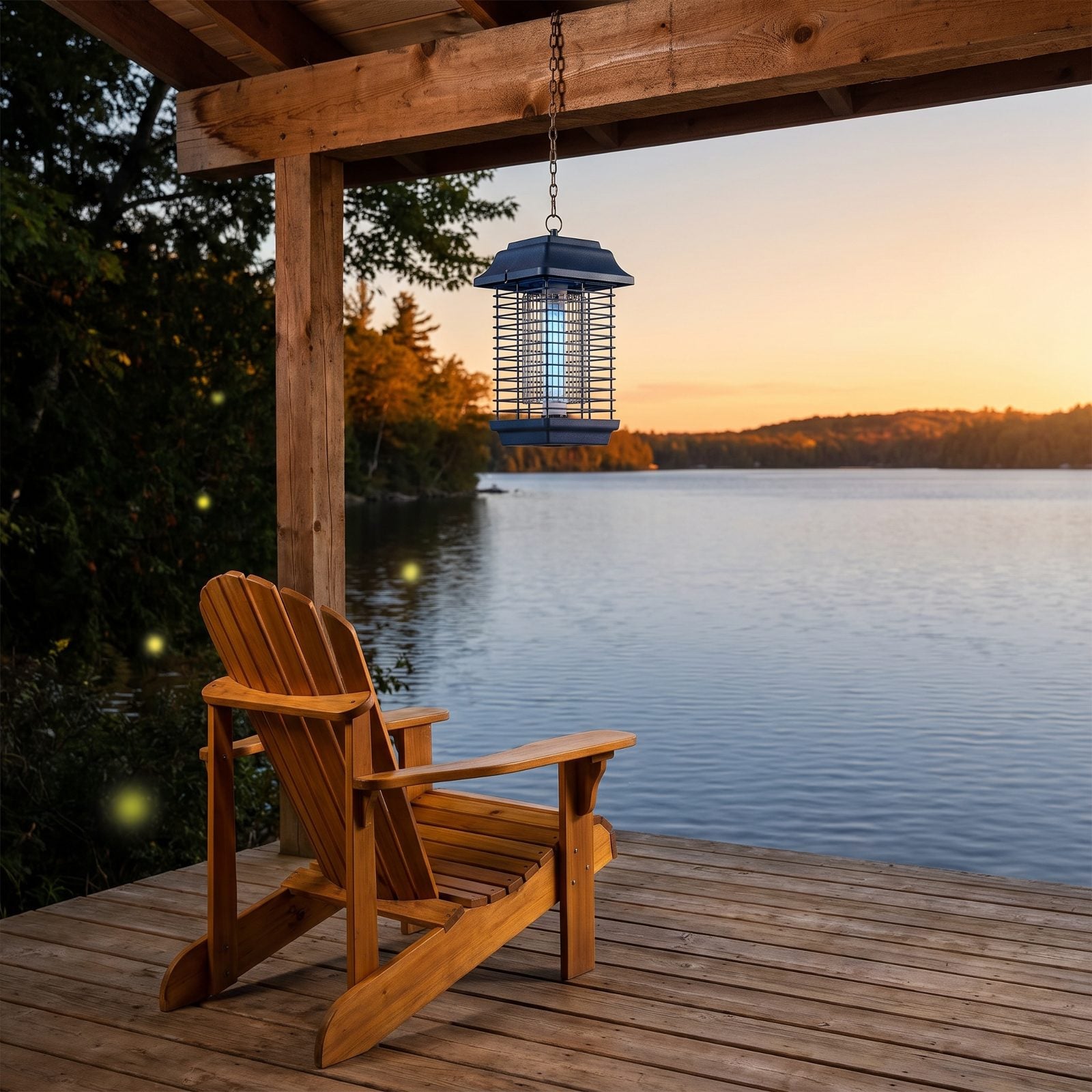
That satisfying zap is mostly beneficial insects frying. Study after study finds that the bugs zappers kill are overwhelmingly moths, beetles and midges. Mosquitoes barely register, because the UV light that draws everything else isn’t what mosquitoes hunt by. They’re after your breath and body heat, not a glowing lamp.
Unplug it. You’re killing pollinators and the firefly show for nothing. A CO2-baited trap, or honestly just long sleeves and a breeze, will do far more against the mosquitoes you actually have.
18. Stop Leaving Bright Cool-White Dock Lights on All Night

Cool-white floodlights blazing across the water all night do two things well. They pull in clouds of insects — and the mosquitoes that follow them — and they disorient everything from frogs to nesting birds to the bugs aquatic life depends on.
Warm, low, and pointed down. That’s the whole fix. A warm amber fixture aimed at the deck boards instead of out across the lake gives you safe footing without turning the dock into a moth magnet. Add a motion sensor or a timer so the light’s only on when you’re walking out there. And you get your night sky back, which is half the reason to own a lake place in the first place.
17. Stop Feeding Ducks From the Dock
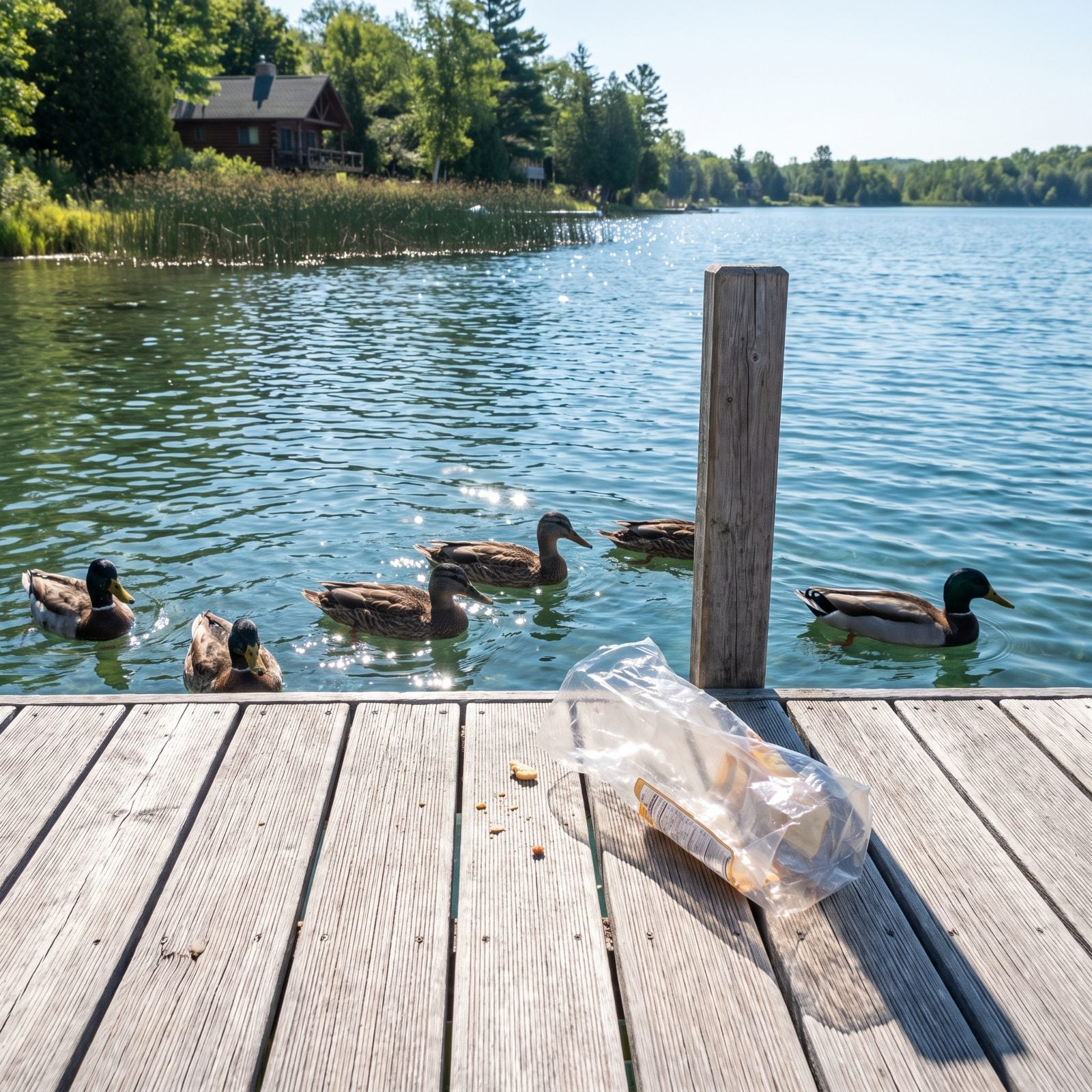
Tossing bread off the dock seems like a kindness. It isn’t. Bread wrecks a duck’s nutrition, encourages birds to crowd in and skip their natural foraging, and all that uneaten starch sinks, rots, and feeds algae right where you swim.
Then there’s the swimmer’s itch and the droppings all over the dock, because a fed flock is a flock that never leaves.
Let them forage. Ducks get along just fine without you, and your dock stays a whole lot cleaner for it.
16. Stop Using Rodent Poison Around Shoreline Wildlife
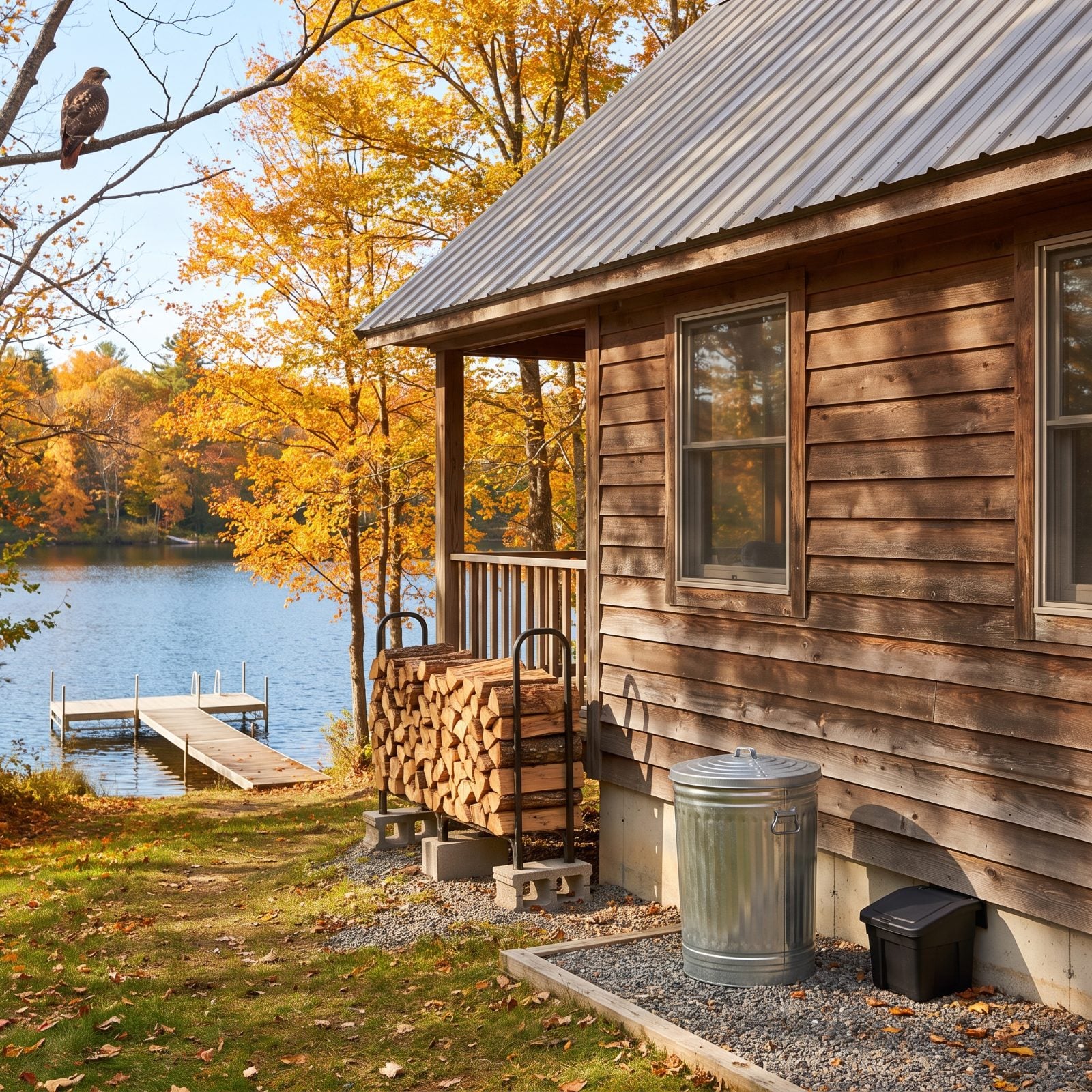
Rodent poison doesn’t stop with the mouse. A poisoned mouse gets slow and stupid before it dies, which makes it easy prey. The owl, hawk, fox or neighbor’s cat that eats it swallows the poison too. Around a lake, where raptors and foxes handle your rodent control for free, that’s a lousy trade.
Cut off the food and the shelter instead. Seal the cabin gaps, store seed and trash in metal bins, stack firewood off the ground on a raised metal rack. Where you genuinely need to knock down a population, enclosed snap traps do it without poisoning the whole food chain that keeps your shoreline in balance.
15. Stop Scattering Mothballs to Repel Lakeside Pests
People scatter mothballs under cabins, around foundations and along the shore to chase off snakes, squirrels and mice. Two problems. They barely work, and they’re a registered pesticide that’s illegal to use any way the label doesn’t allow. Scattered loose, they vaporize into the soil and leach toward groundwater and the lake — and that smell in your cabin? That’s the chemical, not proof it’s doing its job.
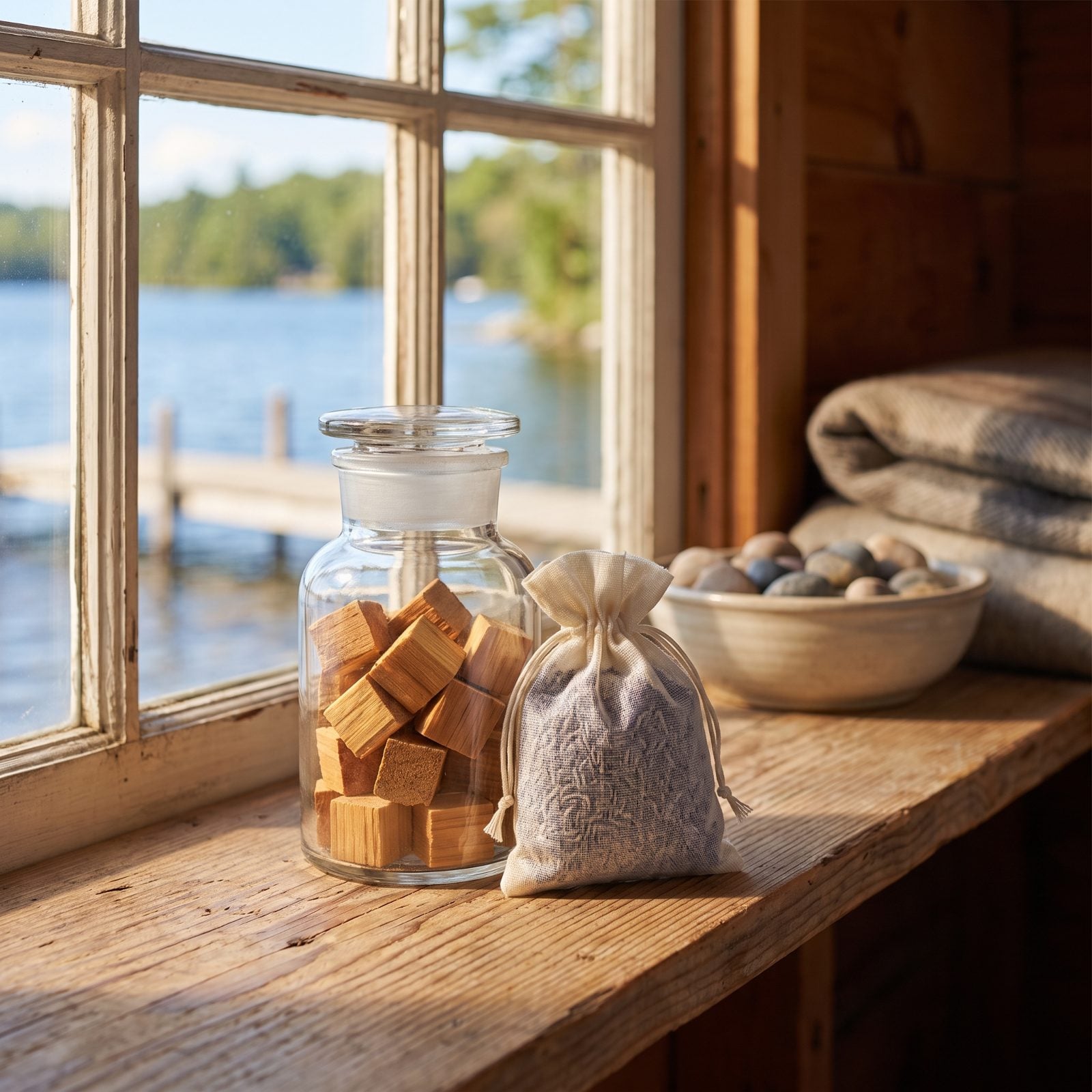
For clothes and linens, cedar blocks or a lavender sachet in a sealed tote handle it fine. For critters under the cabin, close the gaps. A physical barrier beats a toxic smell every time, and your bunkhouse won’t reek all season.
14. Stop Transporting Firewood From Home to the Lake
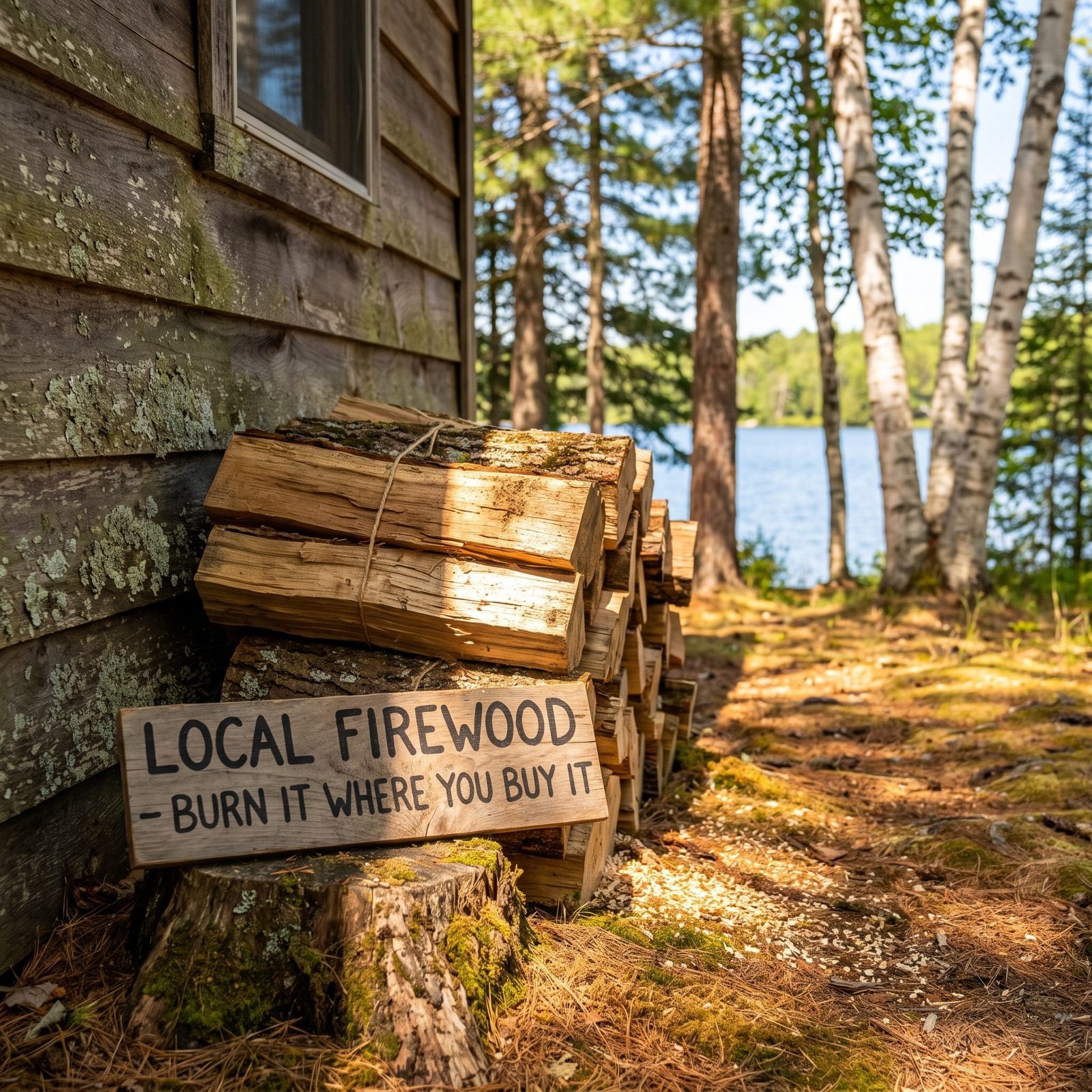
That load of firewood in the truck bed feels thrifty. It isn’t. Firewood is the suitcase of the insect world, and the emerald ash borer, Asian longhorned beetle and spongy moth all hitch a ride in it as larvae or eggs you’ll never spot.
Most states want you buying wood within a short radius of where you’ll burn it, often around 50 miles. Local firewood costs a few dollars more and skips the part where you accidentally kick off a decade-long tree die-off on your own shoreline.
13. Stop Burning Mystery Driftwood in the Firepit
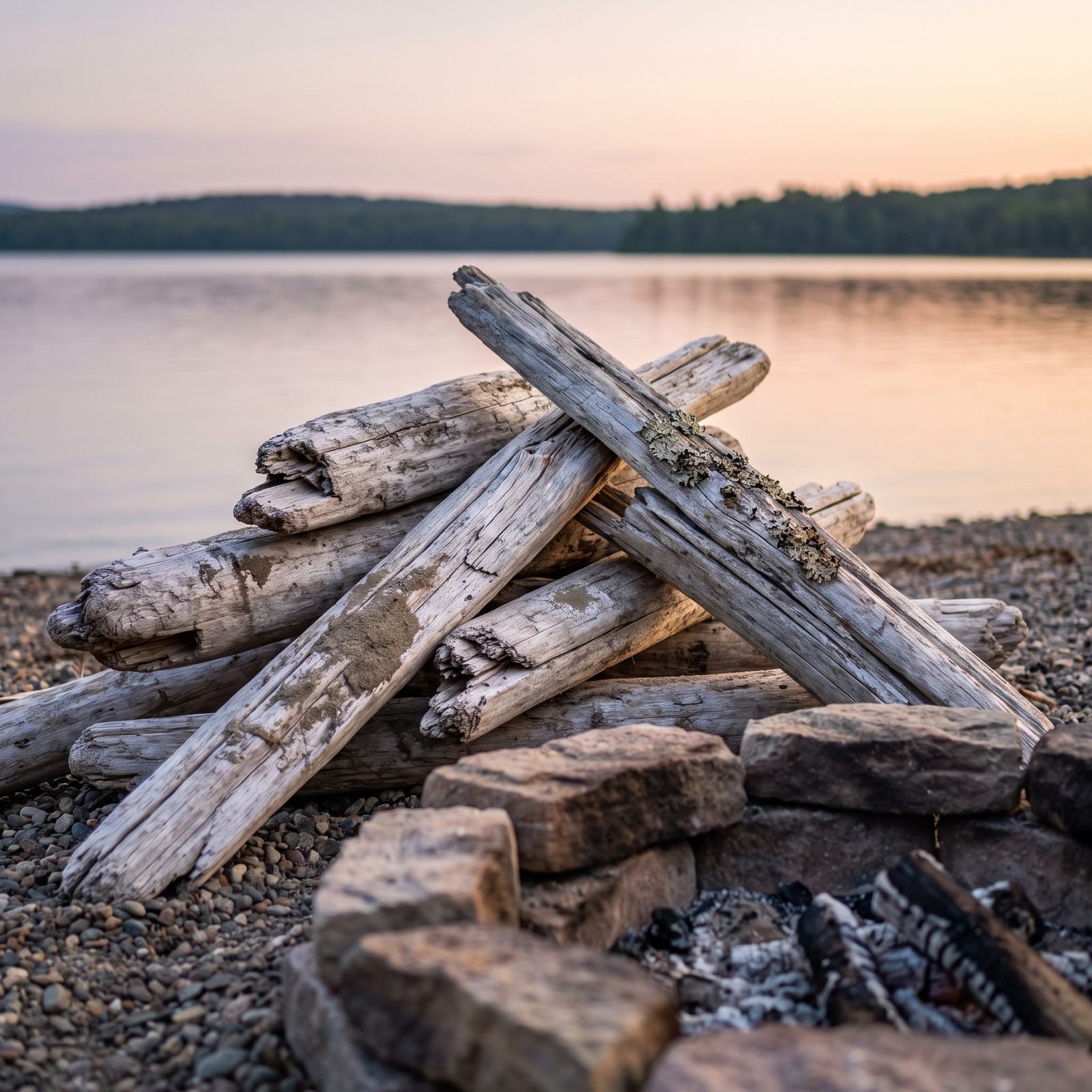
Lakeshore driftwood looks like free fuel. Burning it is a gamble nobody warns you about.
Wood that’s been soaking for months carries whatever leached into it, and near old marinas or treated lumber, that can mean copper, chromium and arsenic from CCA-treated boards that drifted in and weathered down to gray. Those metals don’t burn off. They go straight into the smoke and the ash, right where everyone’s sitting.
Burn seasoned local hardwood you can actually name. Honestly, the driftwood makes a better mantel piece than firewood anyway.
12. Stop Letting Dogs Drink Straight From the Lake
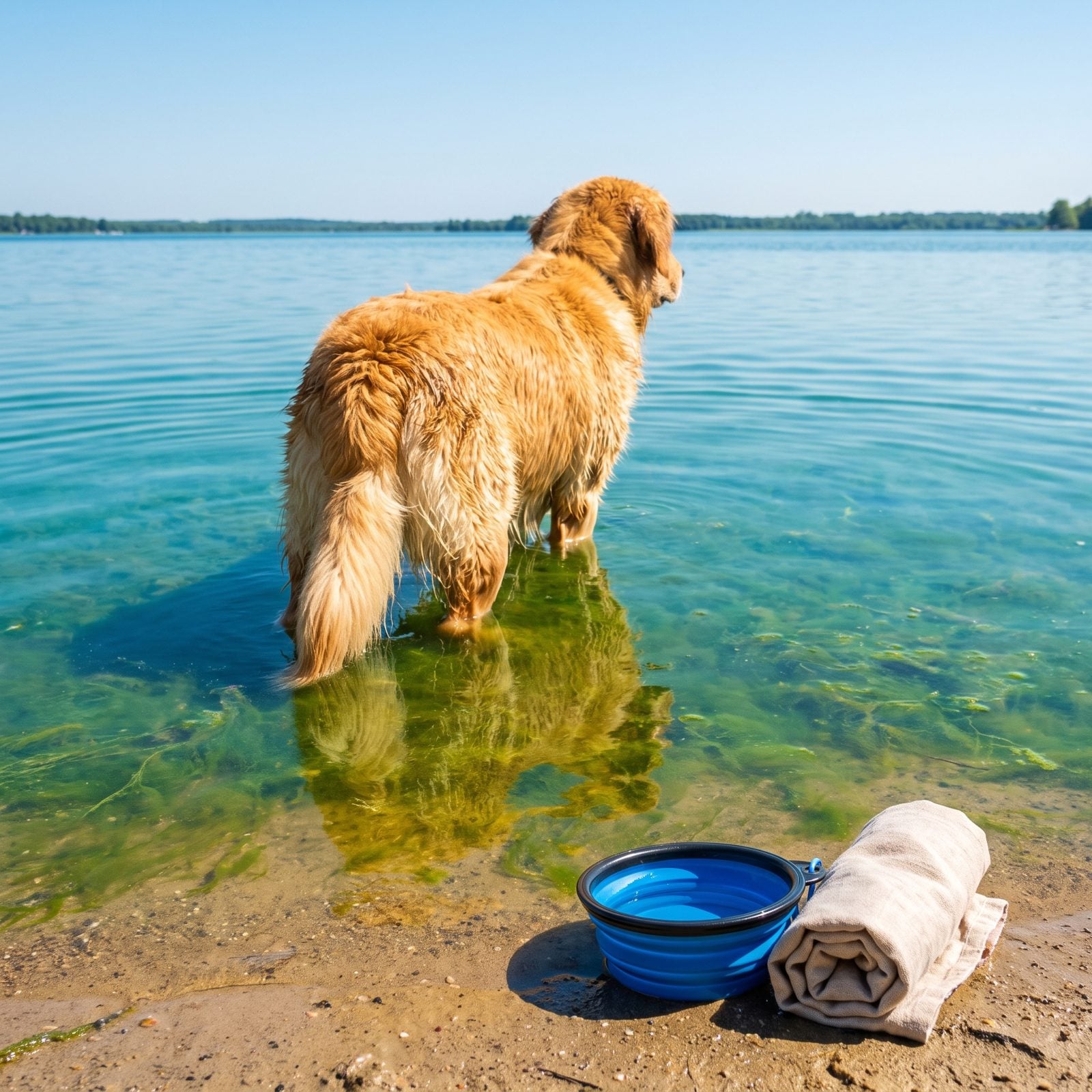
Warm, still water in late summer is where the trouble lives. Blue-green algae, which is really cyanobacteria, blooms into mats that look like spilled paint or pea soup, and the toxins it releases are fast and brutal for dogs. A dog that drinks, or just licks its fur after a swim, can get sick within the hour.
Owners who’ve been doing this a while quit trusting the lake as a water bowl years ago. They pack a collapsible bowl and fresh water, rinse the dog after a swim, and steer it clear of anything that smells musty or carries a green scum along the downwind edge.
11. Stop Swimming Immediately After Heavy Rain
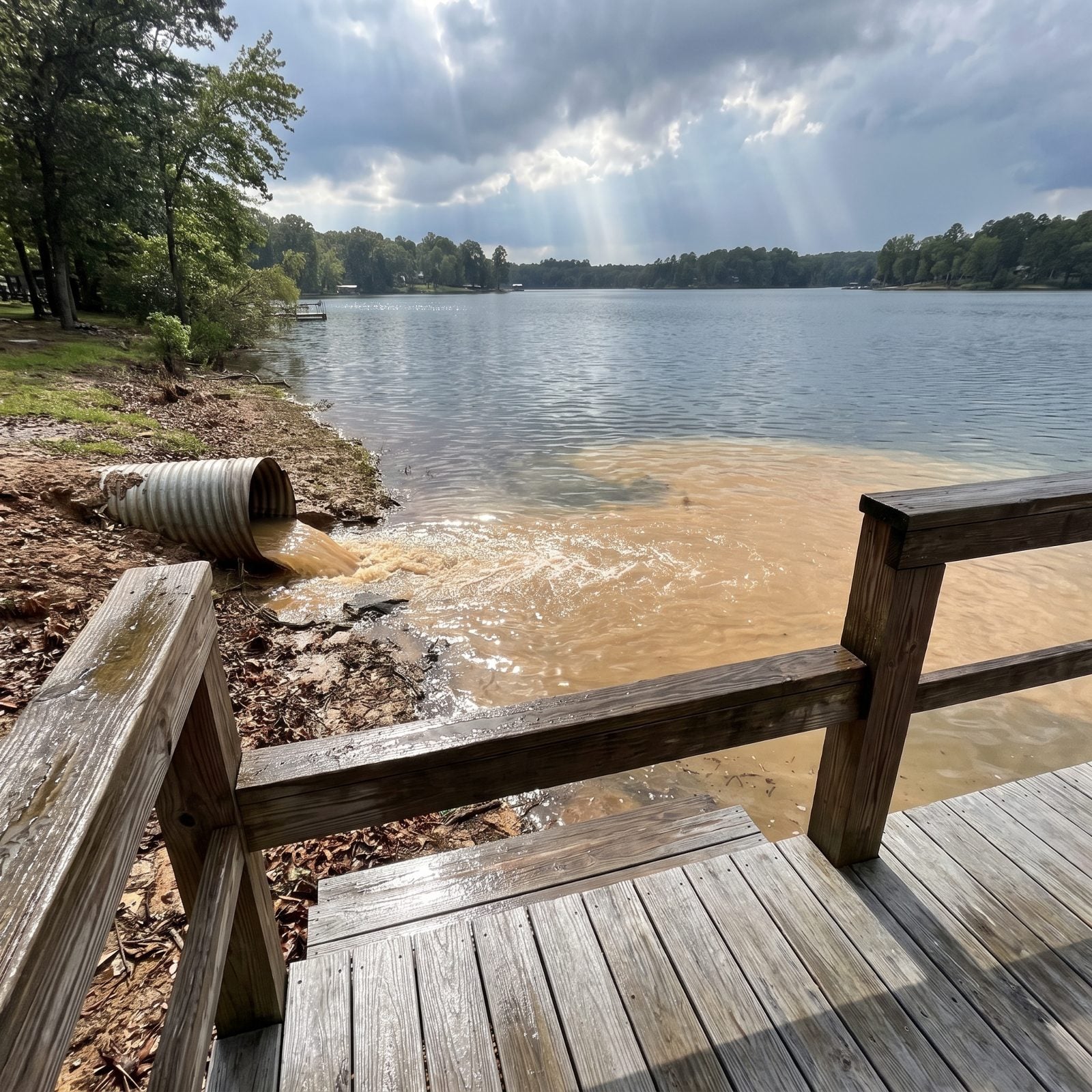
The water looks inviting after a storm clears. Underneath, it’s a different story.
Heavy rain washes road runoff, septic overflow, lawn fertilizer and animal waste straight into the lake through every ditch and culvert on the property. Bacteria counts spike. Plenty of health departments suggest waiting a day or two after a big rain before you swim, especially anywhere near inlets and storm drains.
Nobody posts a sign for this. The regulars just know the day after a downpour is for fishing off the dock, not jumping off the end of it.
10. Stop Washing Dishes in the Lake With Biodegradable Soap
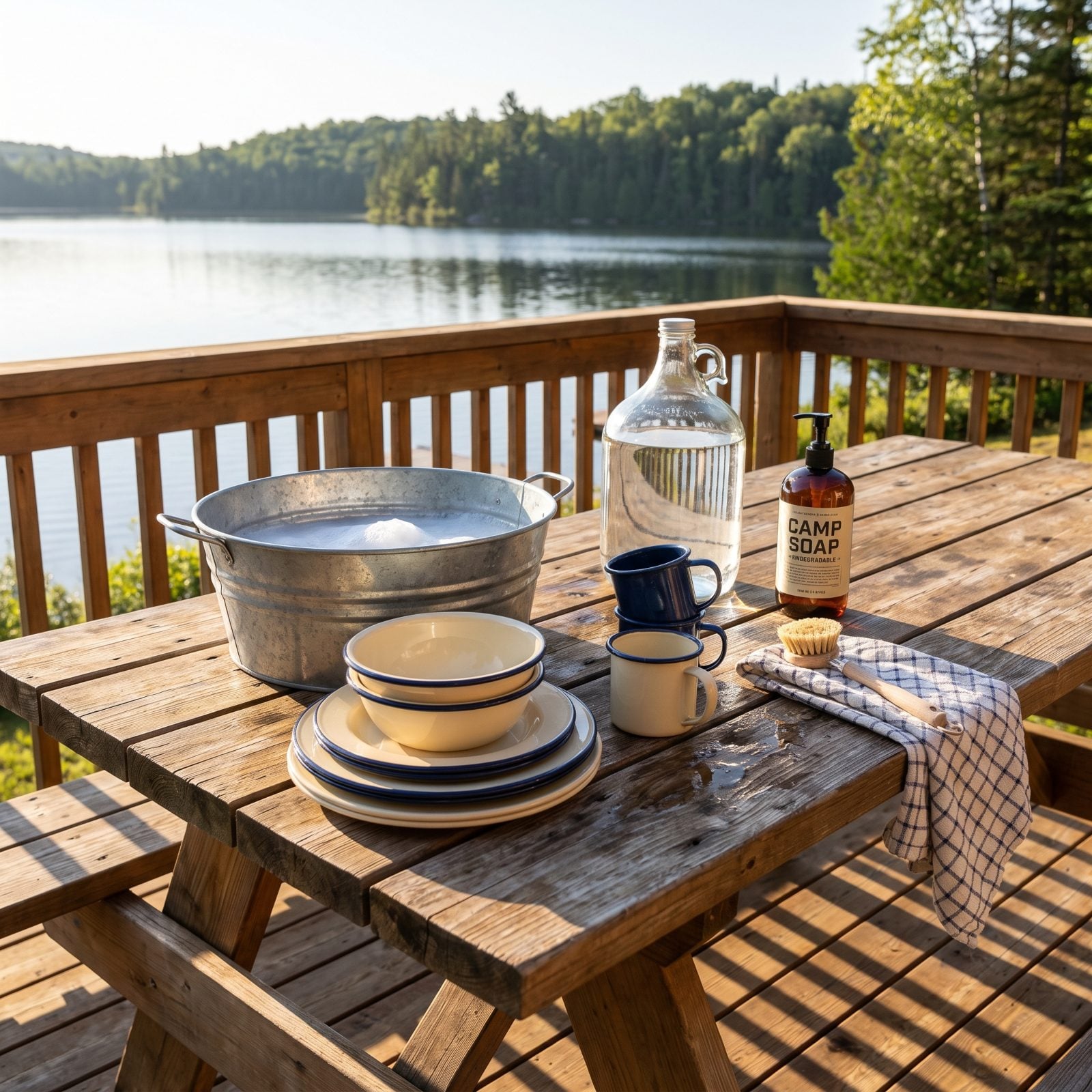
The “camp soap” label on the bottle is doing a lot of lying.
Biodegradable just means it breaks down eventually, given soil microbes and time. A lake isn’t soil. Dumped straight into the water, even the eco stuff adds phosphates and nutrients that feed the exact algae blooms you’re trying to dodge, and it strips the protective oils right off fish gills.
The fix is boring and it works. Wash and dump your wash water at least 200 feet from the shoreline, where it filters through ground before it ever reaches the lake. That soap was built to be used on land, period.
9. Stop Releasing Leftover Bait Into the Water
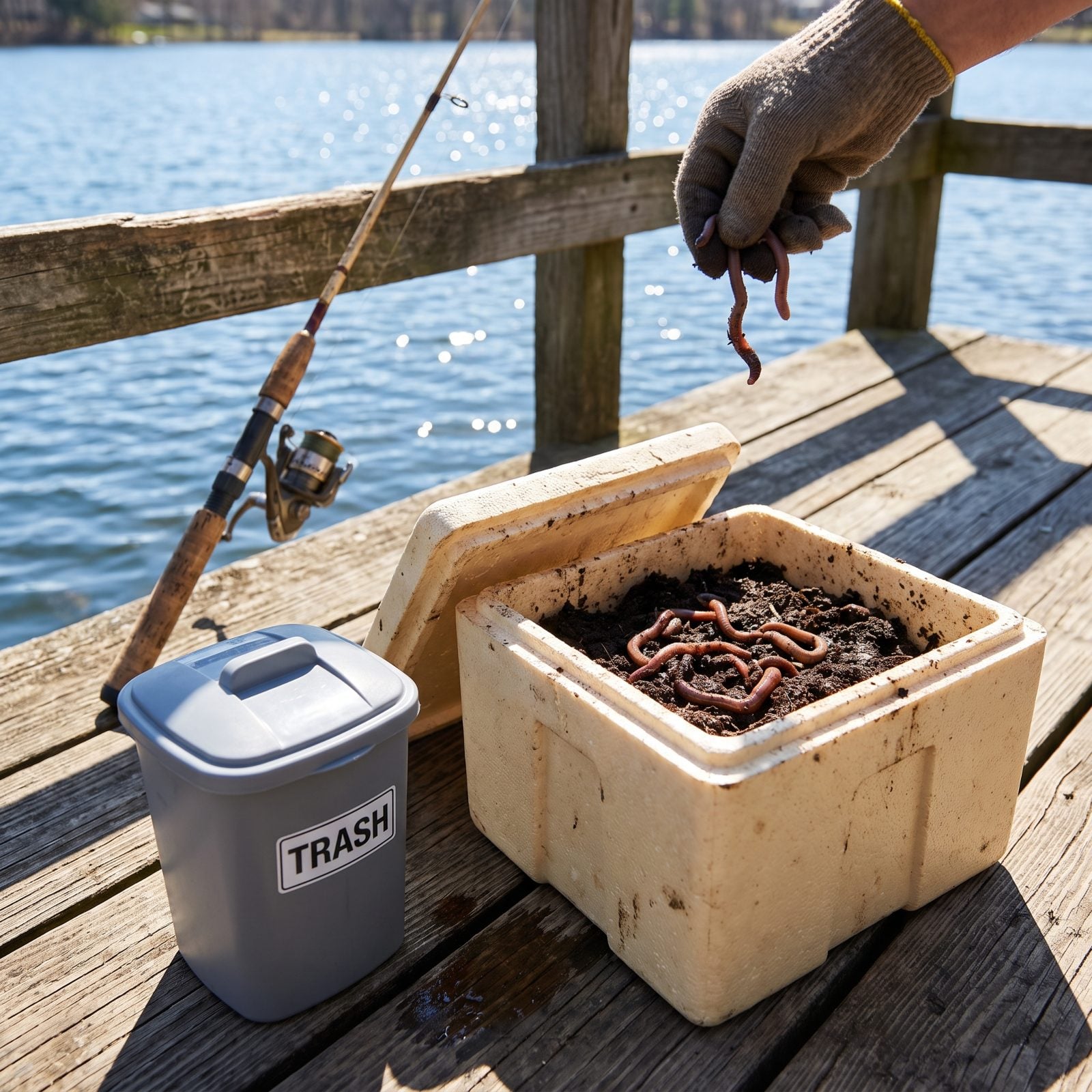
Dumping the leftover minnow bucket at the ramp feels generous. You’re giving the little guys a chance, right?
What you’re actually doing is one of the top ways invasive species and fish diseases move between waters. Bait minnows often aren’t native to the lake you’re fishing, and the water in that bucket can carry viral hemorrhagic septicemia, spiny waterflea or zebra mussel larvae.
A lot of states now make it flat-out illegal to release live bait or dump bait water. Toss the unused bait in the trash, drain the bucket on land, done.
8. Stop Moving Aquatic Plants Between Lakes
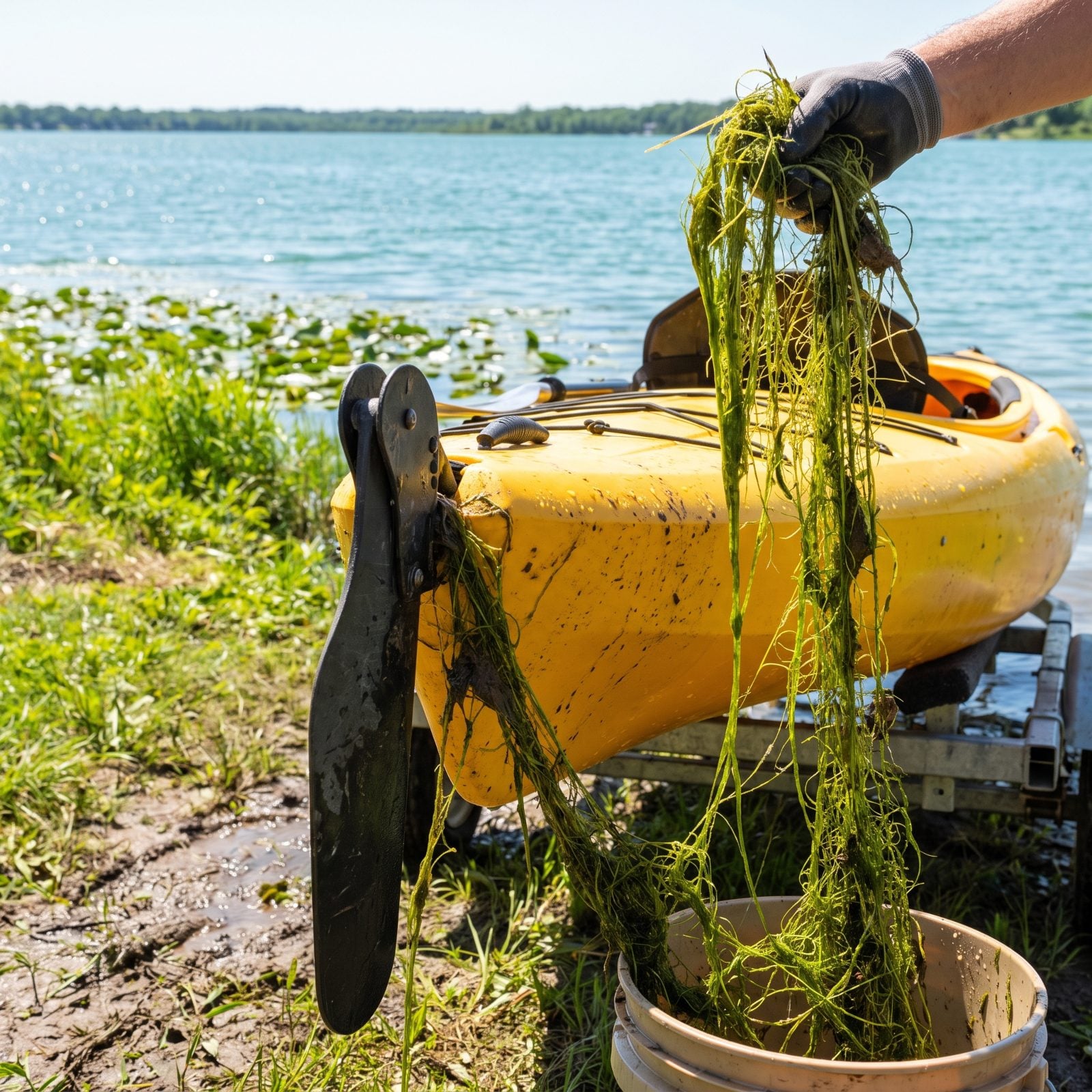
A fragment of Eurasian watermilfoil the size of a toothpick can start a whole new infestation. Not an exaggeration. These plants regrow from broken stems, so one strand clinging to a trailer, a prop or an anchor line does the job.
Hydrilla, milfoil and starry stonewort turn a swimmable cove into a weed mat you can’t paddle through, and they tank property values fast once a lake picks up that reputation. Clean, drain and dry every piece of gear between waterbodies. Pull the visible weeds before you leave the ramp, not after you’ve already launched somewhere new.
7. Stop Cranking Ratchet Straps Down on Kayak Hulls
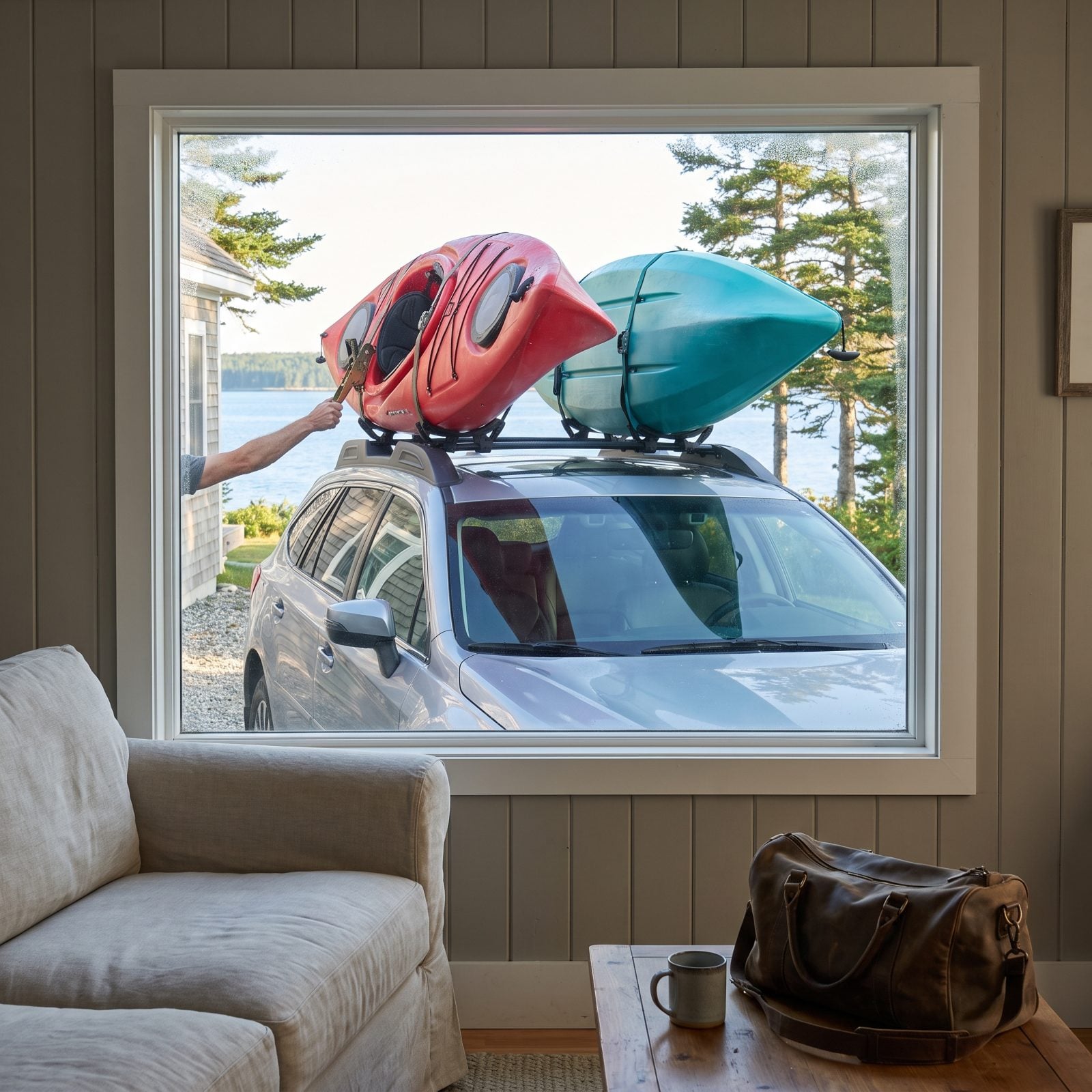
Ratchet straps are built for lumber and ATVs. On a plastic kayak, all that leverage is a trap.
Crank one down on a polyethylene hull and it’ll hold fine in the cool morning. Then the sun hits the parking lot, the plastic softens, and you come back to a permanent dent, sometimes a warp bad enough to ruin how the boat tracks. Paddlers who’ve learned the hard way switched to cam-buckle straps, because you can only pull those as tight as your hands allow. Which, it turns out, is tight enough.
Snug, not strangled. If the hull is dimpling, you’ve already gone too far.
6. Stop Leaving the Drain Plug in a Stored Boat
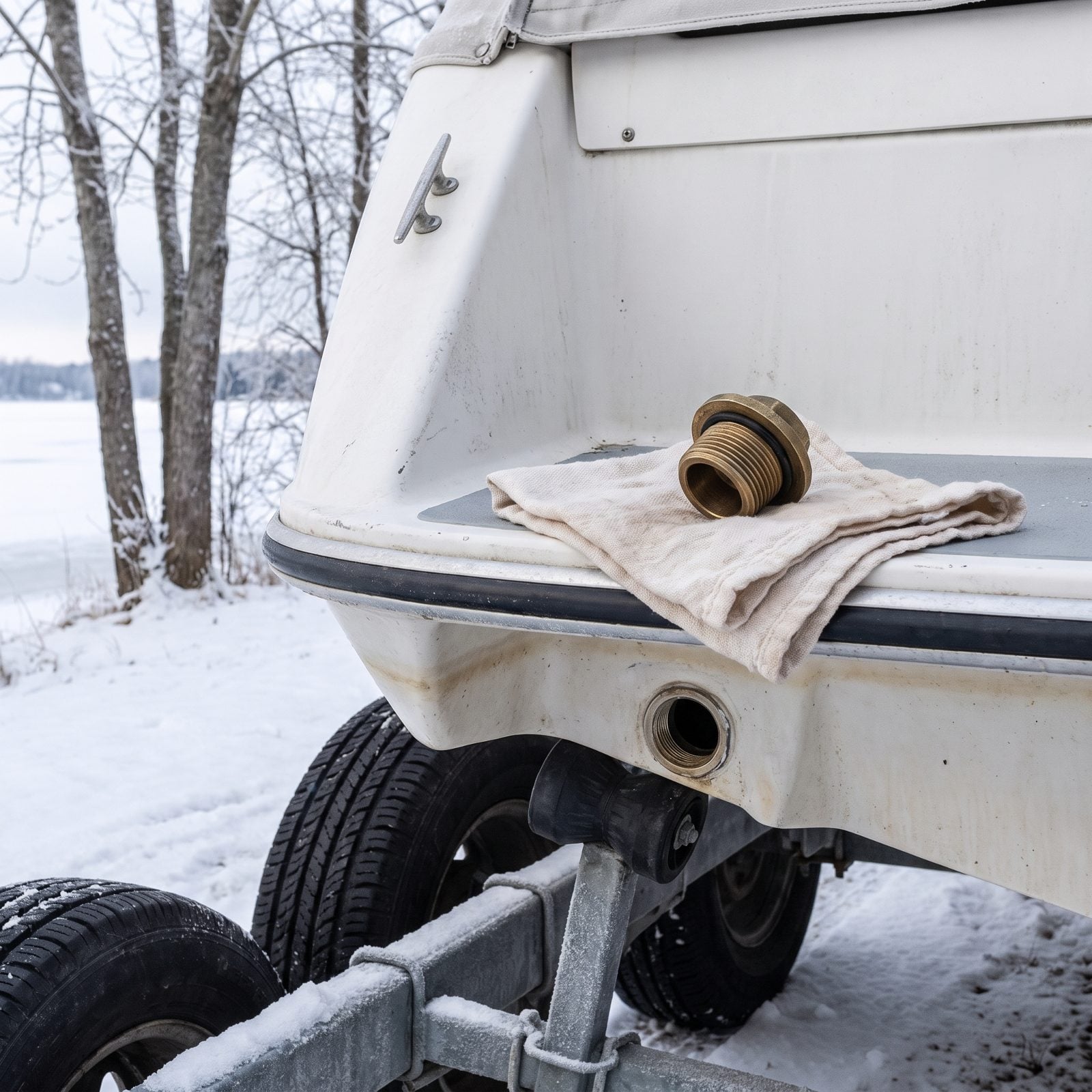
You remembered to winterize the engine. You forgot the one brass plug that can split your transom.
Leave the drain plug in over winter and any water that sneaks inside, whether it’s snowmelt, rain through a torn cover or plain condensation, pools in the bilge, freezes, expands and cracks the hull from the inside out. Pull the plug, store the boat nose-up so water runs to the back, and let it drain all season long.
Hang the plug somewhere you’ll spot it in spring. The real classic blunder is launching in May without putting it back in.
5. Stop Wrapping a Stored Boat in an Airtight Tarp
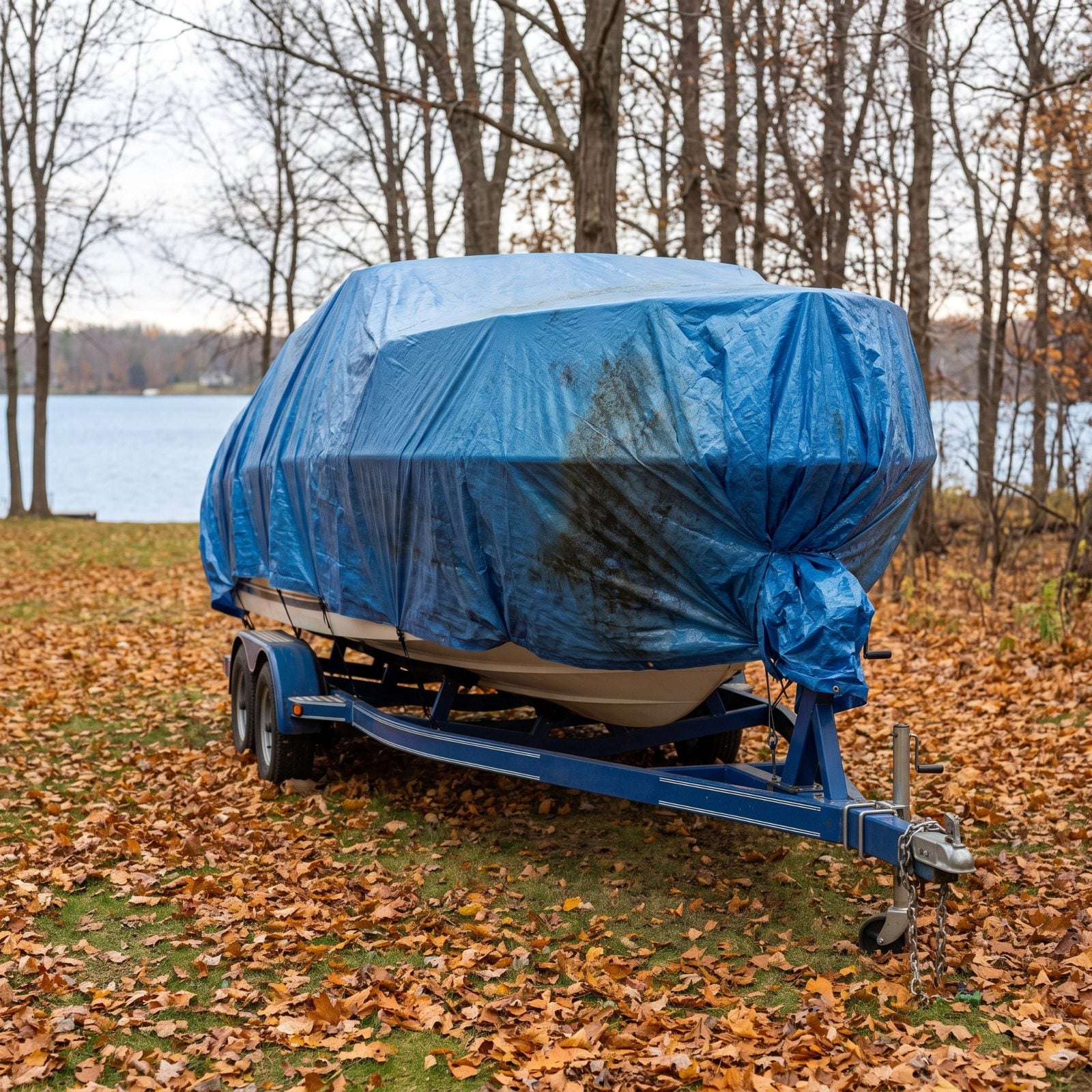
A cheap poly tarp cinched down tight feels like full protection. What you’ve actually built is a greenhouse for mold.
Seal a boat airtight and the trapped moisture has nowhere to go. It condenses on cold mornings, drips onto seats and carpet, and come spring you’ve got mildew in the upholstery, musty life jackets and a cabin that smells like somebody’s basement. The cover has to breathe.
Go with vented shrink wrap, or a cover tented on poles with mesh panels, so air moves through and water sheds off instead of pooling in the low spots. A little airflow all winter beats a whole weekend scrubbing mold in April.
4. Stop Trusting Last Season’s Gasoline
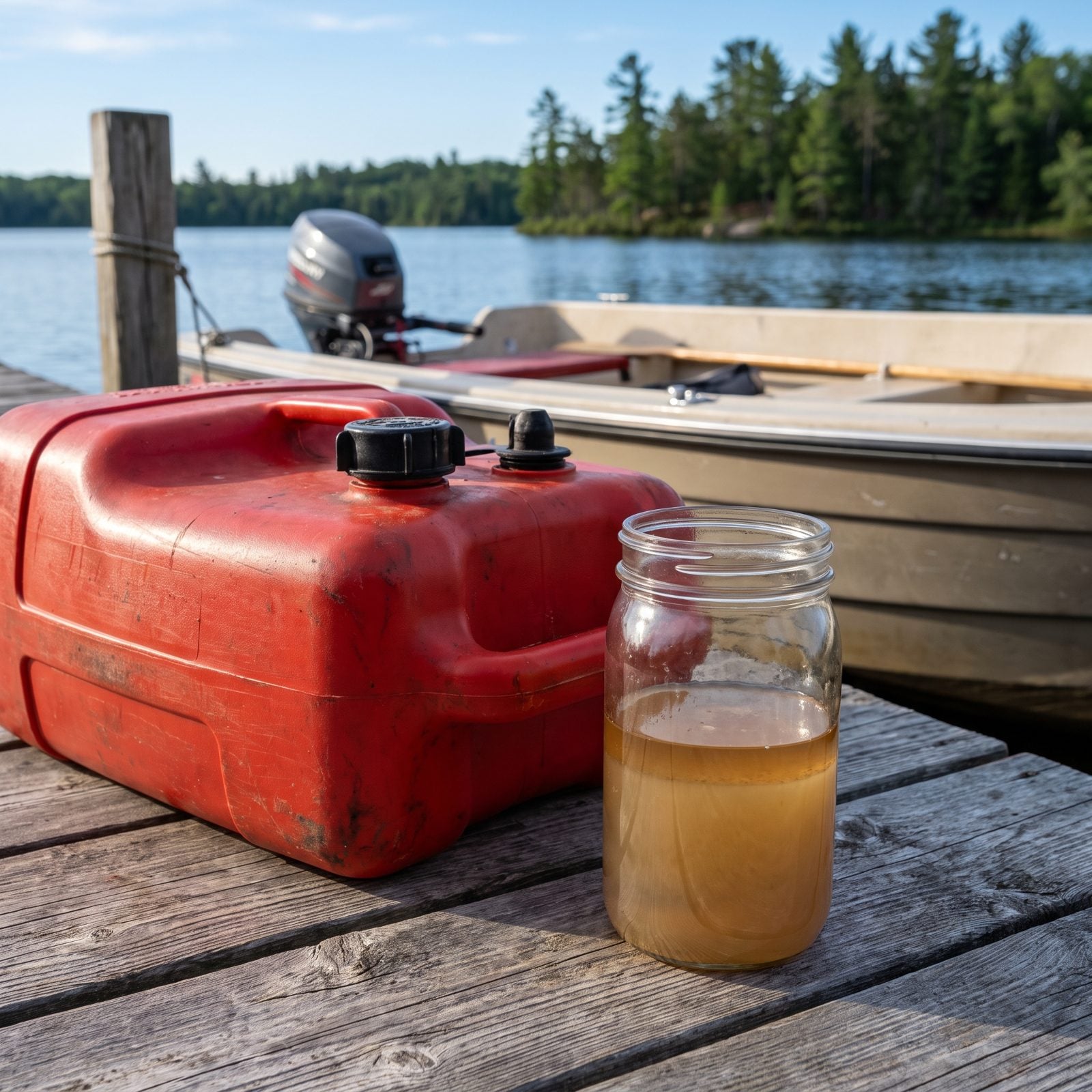
Gasoline that sat in the tank all winter isn’t the same gasoline you poured in last fall. Ethanol pulls moisture out of the air, and after a few months you get phase separation — a layer of water-heavy fuel sitting at the bottom, right where the pickup draws from.
That engine that won’t start on the first warm Saturday? Almost always this. People crank it, flood it, blame the plugs, curse the carb. Owners who’ve been around a while just stopped running old fuel. They drain it, run the tank down before haul-out, or keep it topped off with stabilizer so there’s less room for condensation to collect.
3. Stop Filling Portable Fuel Tanks While They Sit on the Dock
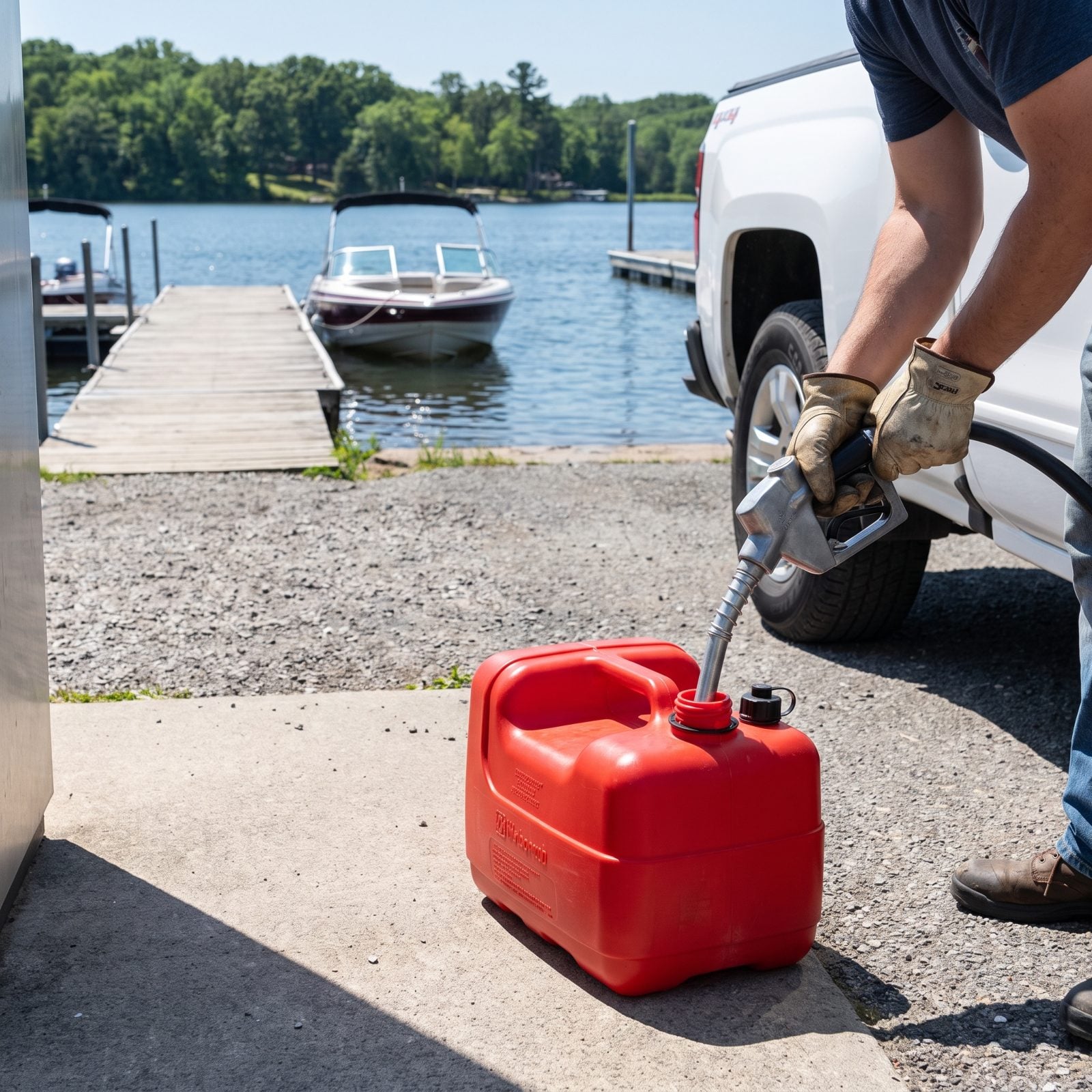
Static electricity doesn’t care that it’s a sunny afternoon. A plastic tank on a plastic dock surface or a boat deck can build up a charge while fuel flows, and vapor plus a spark is how you end up on the local news.
The fix is unglamorous and takes about ten extra seconds. Set the tank on the ground, keep the nozzle touching the fill opening the whole time, and never fill it inside the boat. Marina pros learned this the hard way, which is exactly why they’ll ask you to lift the tank out and set it down.
Bare pavement, metal-to-metal contact, slow pour. Nobody talks about the boring version of the rule, so there it is.
2. Stop Resetting a Tripped Dock GFCI Before You Find the Water
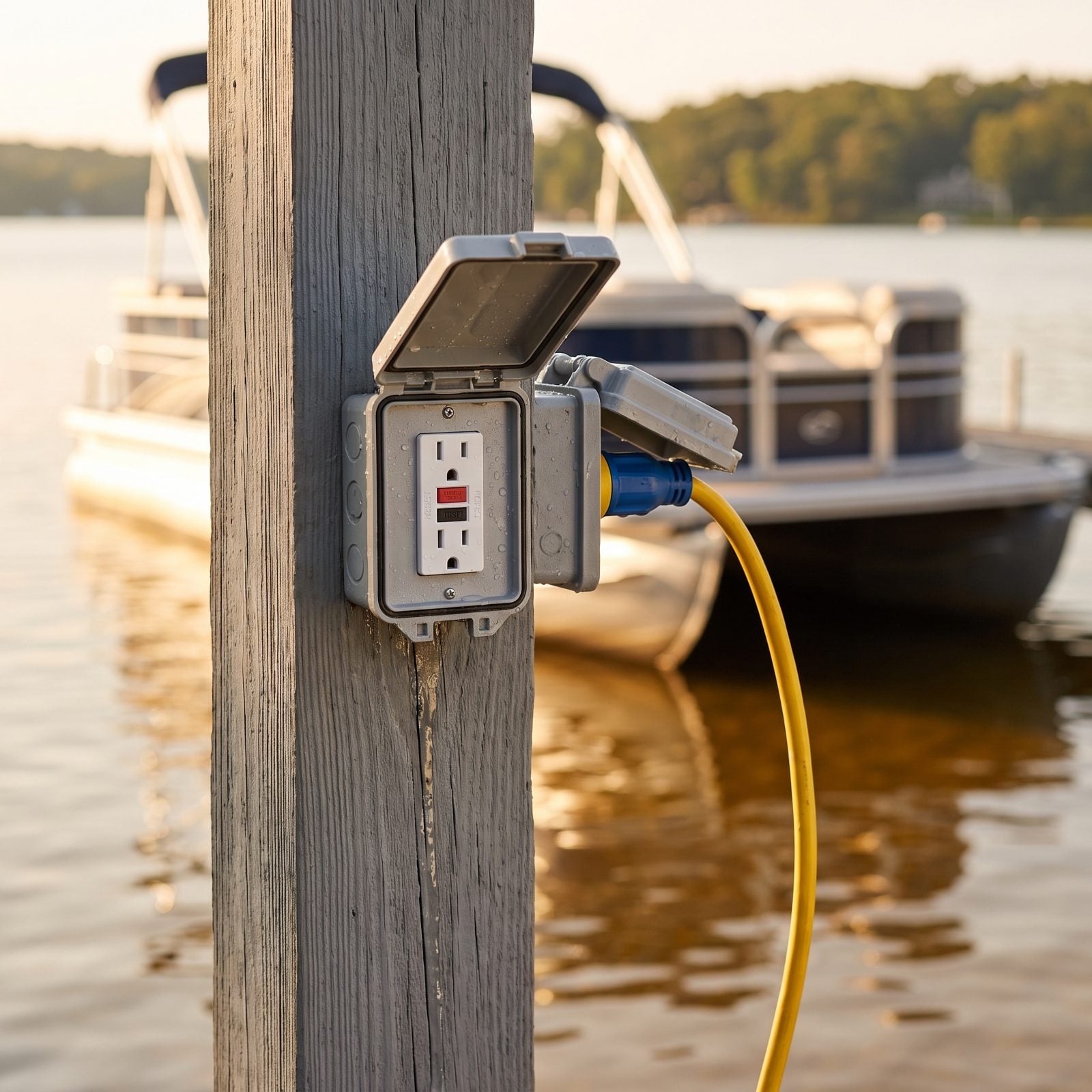
A tripped GFCI on a dock is the system doing its job. It sensed current leaking somewhere it shouldn’t, usually into the water, and it killed power to protect whatever happens to be standing in that water.
Jamming the reset button over and over is the first habit experienced dock owners drop. Around marinas and swim ladders, stray current can be deadly, and hitting reset without finding the fault just re-energizes the problem you haven’t fixed yet.
So chase the moisture. A cracked shore cord, a corroded plug, water pooled in a junction box, a light fixture that quietly filled up — any of them will do it. Keeps tripping? Something’s still wrong down there.
1. Stop Pressure-Washing the Whole Dock Every Spring
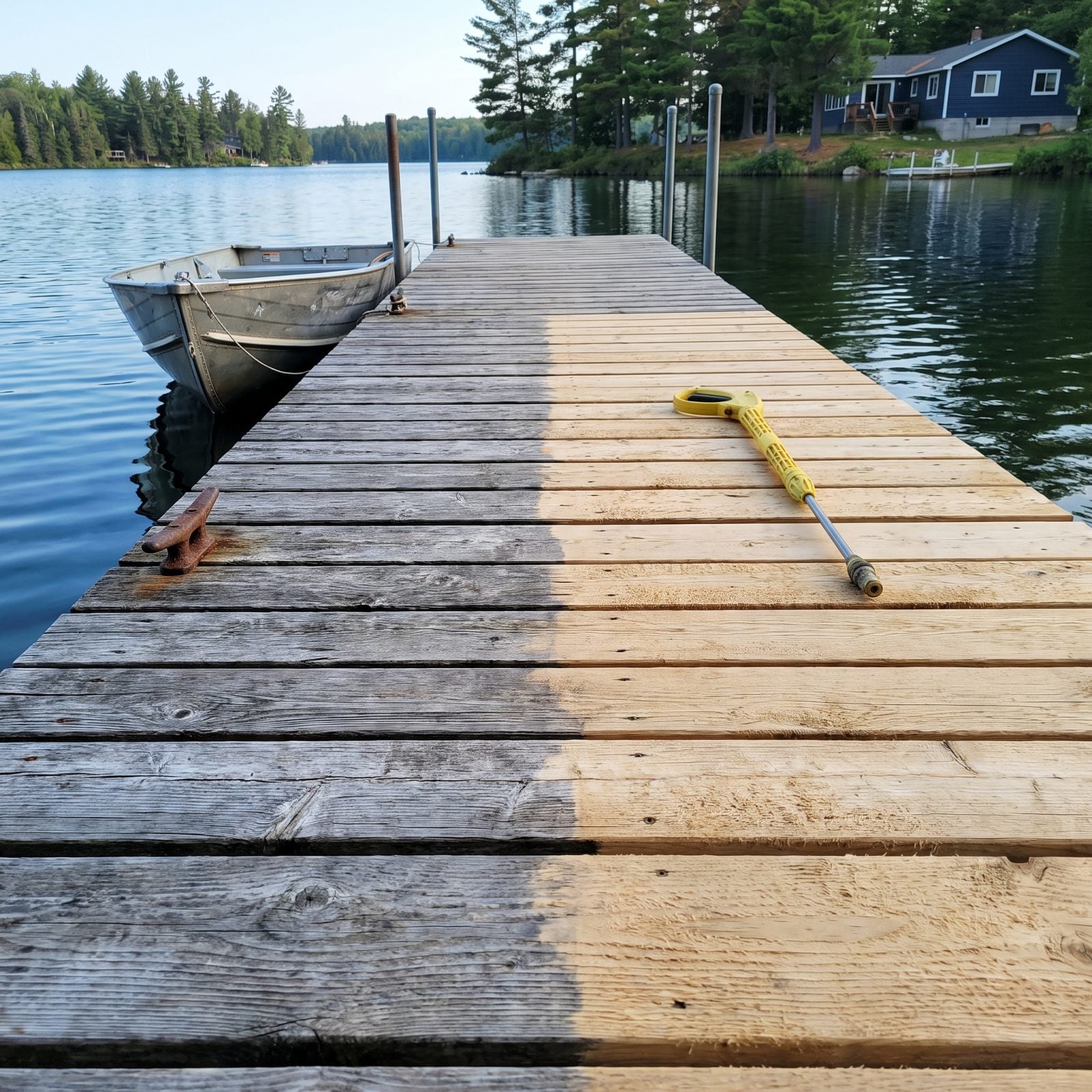
A pressure washer cranked to full blast doesn’t clean a wood dock. It erodes it. It rips out the soft spring growth between the harder grain and leaves the surface fuzzy and raised, which then grabs more dirt and grays out faster than it did before. You’re sanding your dock with water and calling it maintenance.
And every flake of lifted paint, old stain, and loosened grime goes straight into the lake, where it feeds algae and clouds the exact water you built the thing to enjoy.
Folks who’ve been at it a few summers switched to a stiff brush, a mild deck cleaner, and a garden hose. If they reach for a washer at all, it’s a wide fan tip held well back. Slower, gentler, and the boards last years longer — which, when you’ve replaced a few rotten planks on your knees in cold spring water, starts to sound pretty good.