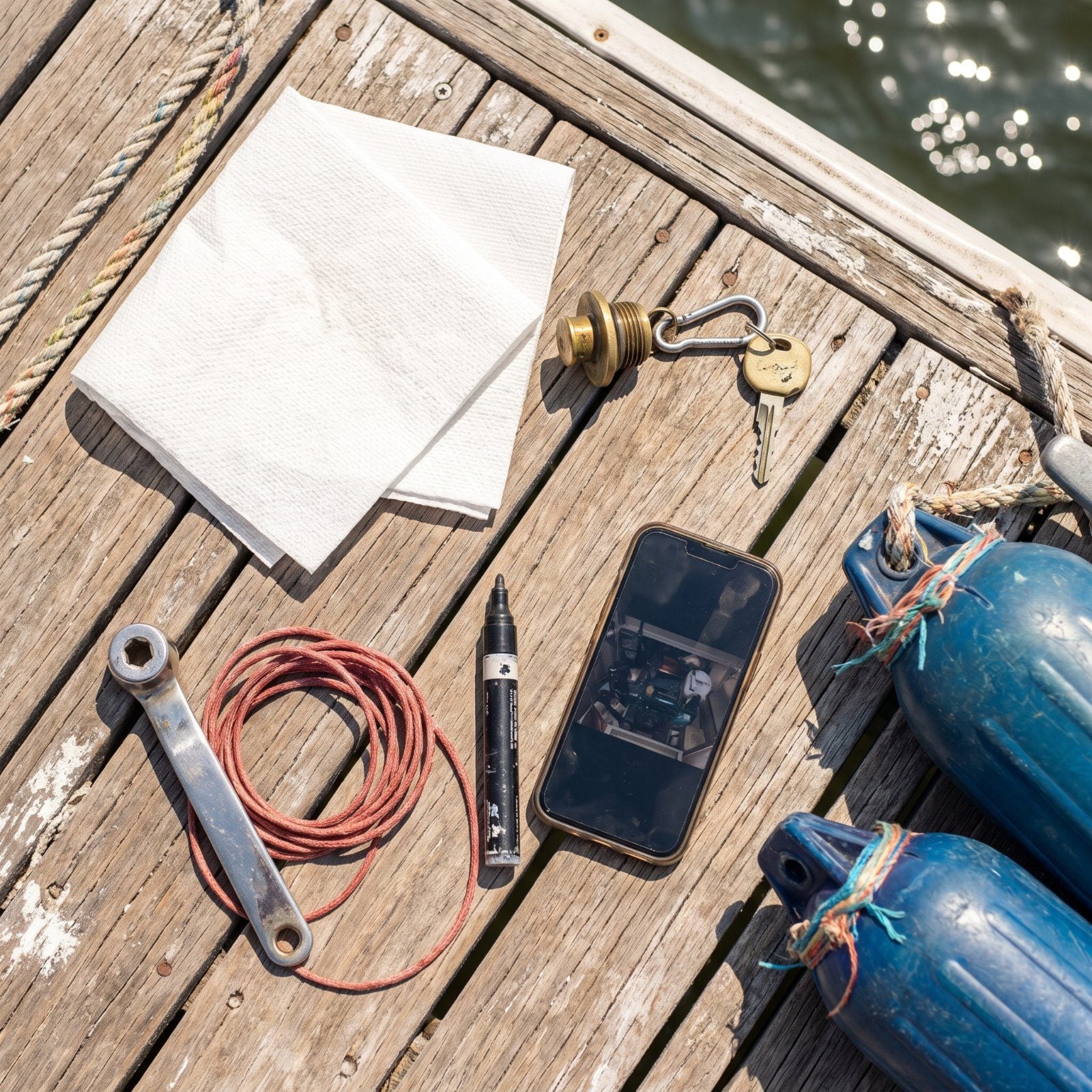
The best boaters at the ramp aren’t faster or stronger. They just know a handful of small tricks that save them from the big mistakes. A paper towel that tells you the engine bled oil overnight, a coin that proves the freezer quit while the dock stood empty. Nobody teaches this stuff in a boater safety course. You pick it up from the slip neighbor two docks down who’s been at it for forty summers. None of them cost much, and every one earns its keep the first time it stops a bad day before it starts. Here are the ones worth stealing.
Please note that some of the imagery in this article may have been enhanced with the assistance of AI.
44. Lay a Dry Paper Towel Beneath the Engine to Reveal Fresh Leaks
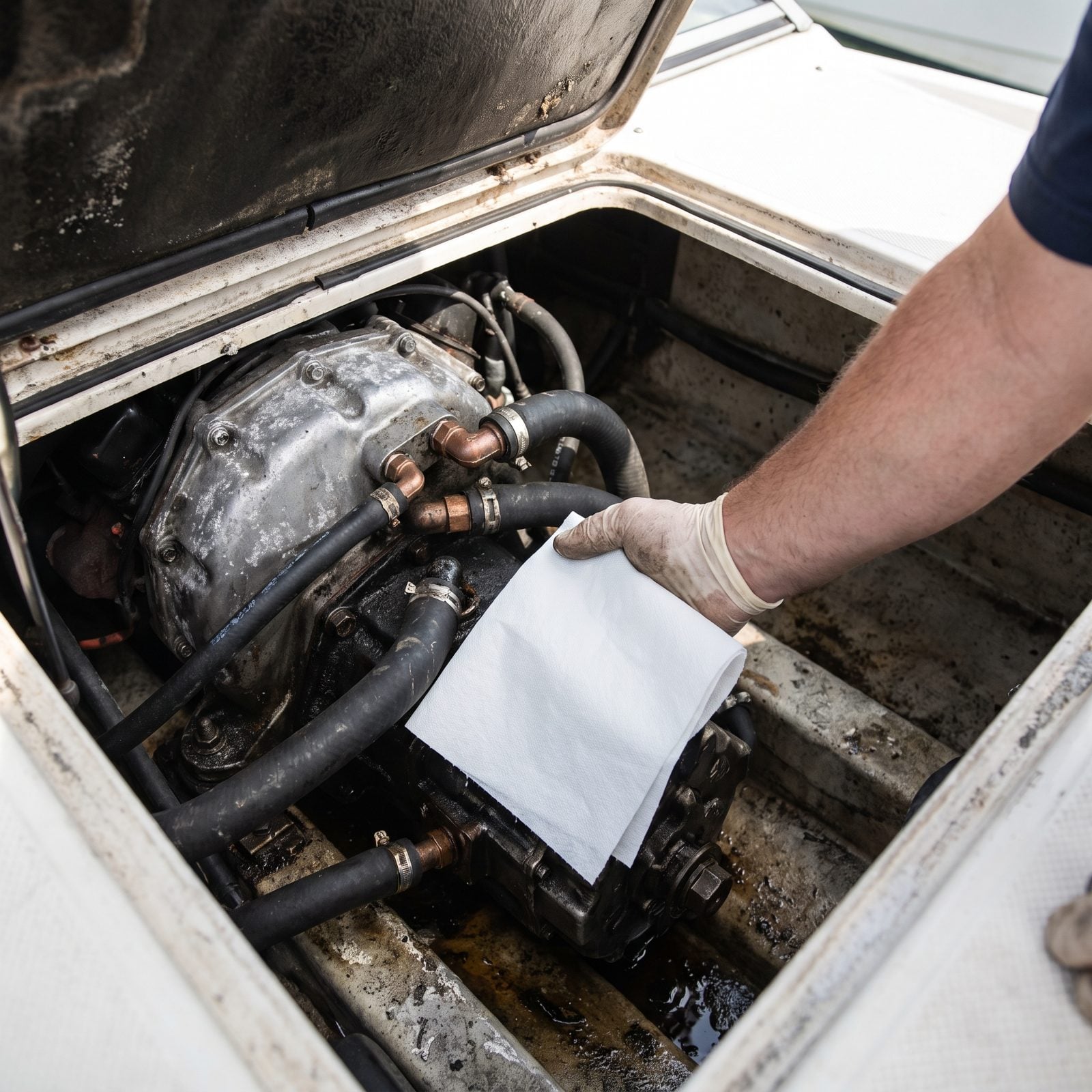
A clean sheet of paper towel is the cheapest diagnostic tool on the boat. Lay it flat under the engine before you button up the hatch, come back next week, and the story’s right there waiting for you. One fresh amber dot means something started dripping since your last trip. No stain means you’re fine.
It all comes down to the contrast. Old drips blend into a grimy bilge and hide for months, but against white, a new leak has nowhere to go. Date it with a pen if you want to track how fast it grows.
43. Clip the Boat Key to the Drain Plug Between Outings
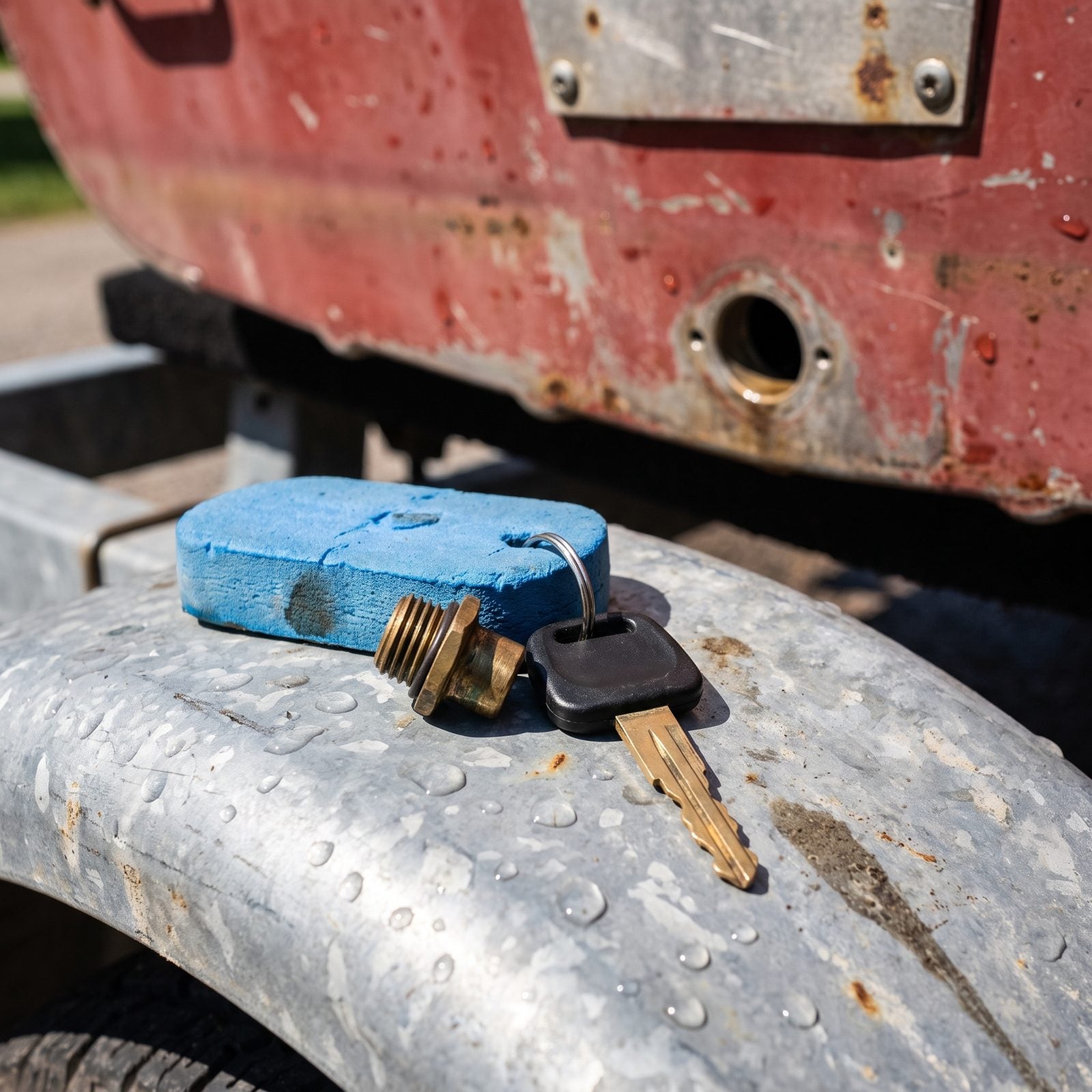
Every ramp has a sad story about the boat that went in without its drain plug. The water comes up through the floor while everyone’s still parking the truck, and by the time anyone notices, the bilge pump is losing the argument.
So you tie the two together. Key and plug on the same fob. If the key’s in your pocket, the plug isn’t in the boat — which is exactly what you want. You physically cannot start the engine until you’ve dealt with the plug. It’s a habit that turns your own forgetfulness against itself.
42. Freeze a Coin on Top of a Cup of Ice to Expose a Thawed Freezer
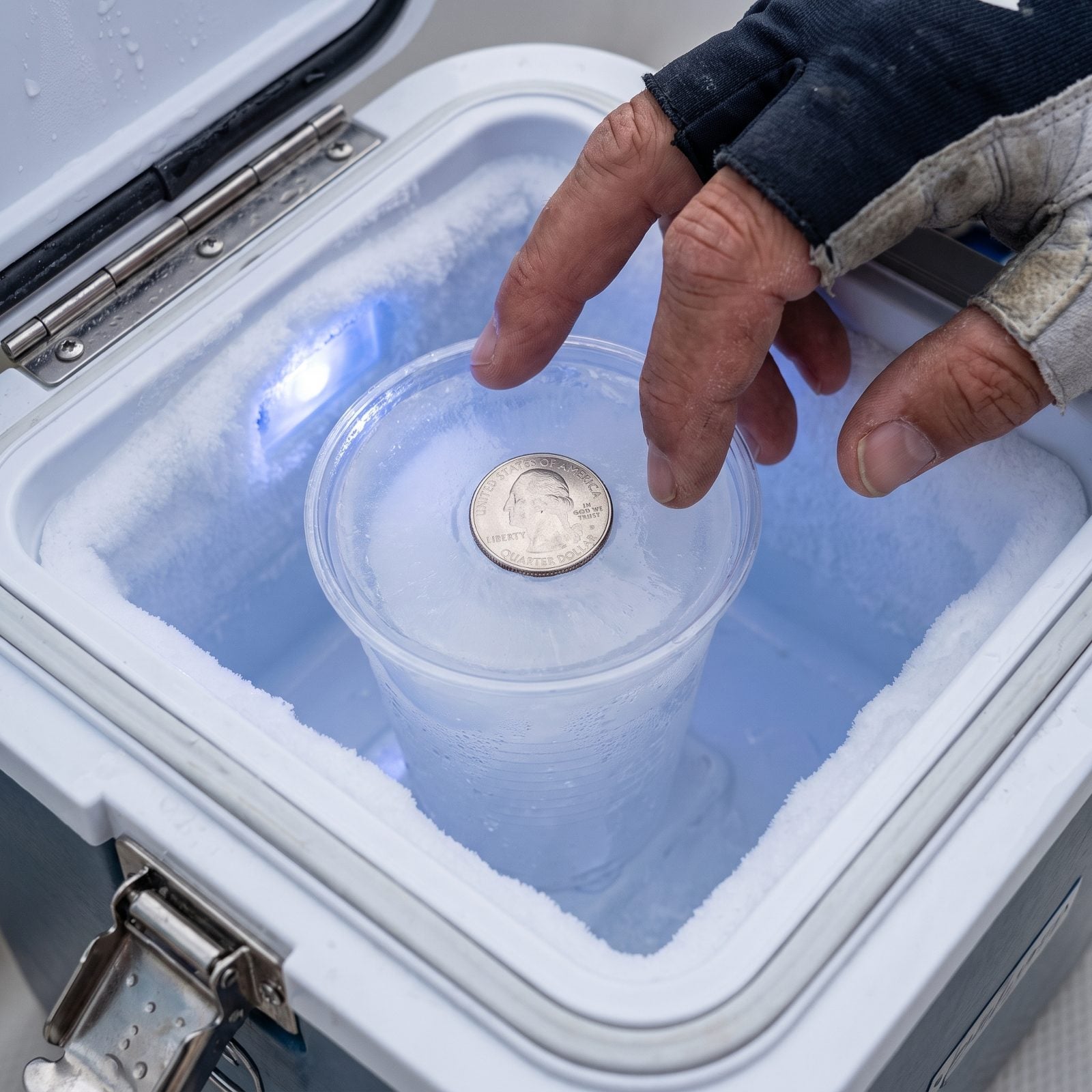
Leave the boat at the dock for two weeks and the freezer could cycle off and back on without you ever knowing. The food looks frozen when you open it, but it isn’t. It thawed, refroze, and now it’s a question mark.
The coin test settles it. Freeze a cup of water solid, set a coin on top, put it in the freezer. If the coin’s still riding the surface when you return, good. If it’s sunk to the bottom, the whole thing melted while you were gone and everything in there is suspect.
41. Hang the Winch Handle From the Tow Vehicle’s Mirror Until the Bow Is Secured
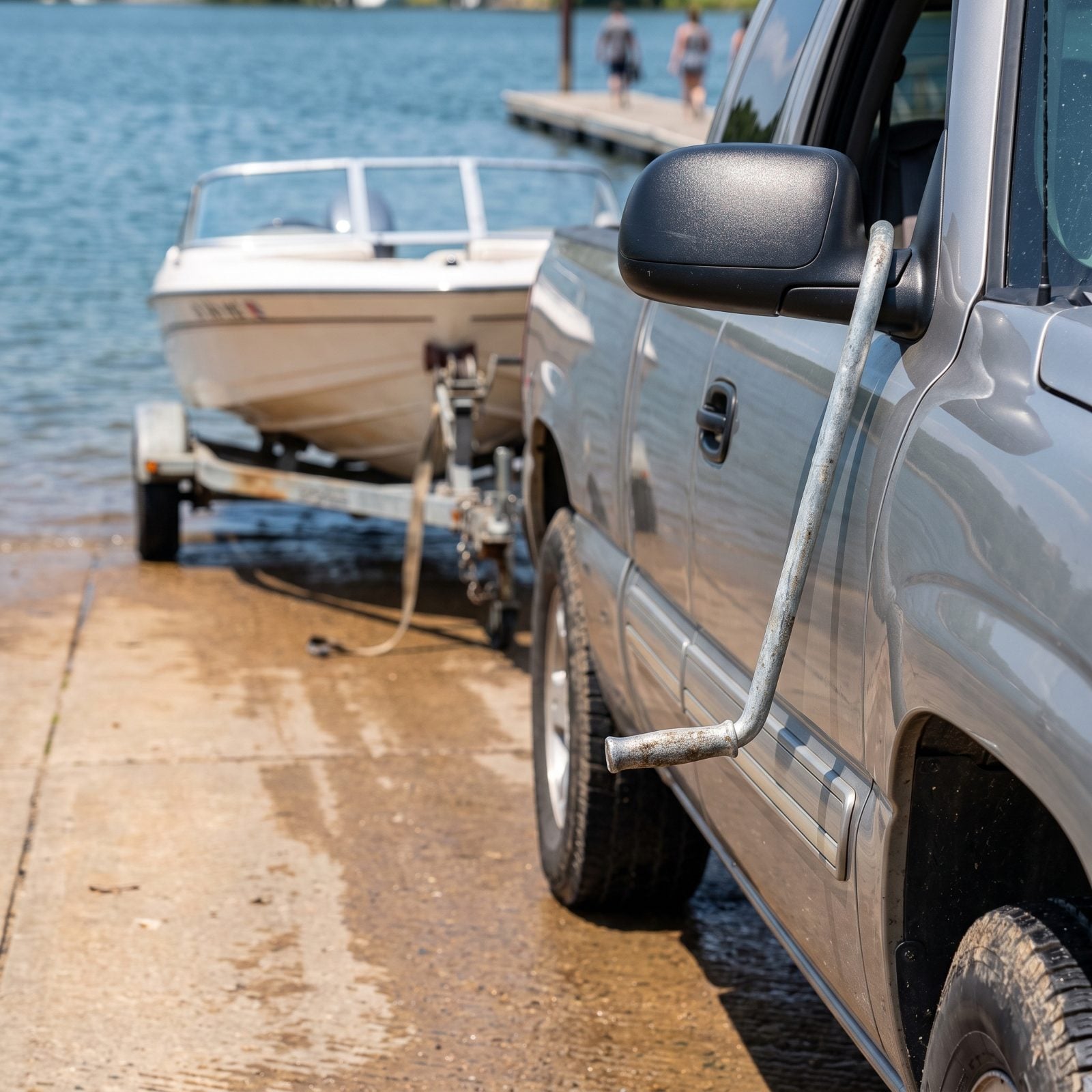
Pulling away from the ramp with the bow strap off is one of the ugliest mistakes you can make. The boat slides back off the trailer on the highway, and there’s no undoing that.
So the handle becomes your reminder. The moment you start winching the boat up, the handle lives on the truck’s passenger-side mirror until the bow is strapped and chained. You can’t drive off and ignore a handle swinging outside the passenger window. It stays in your eyeline, nagging, every time you check that mirror.
40. Wrap One Steering-Wheel Spoke With Cord to Identify Center by Touch
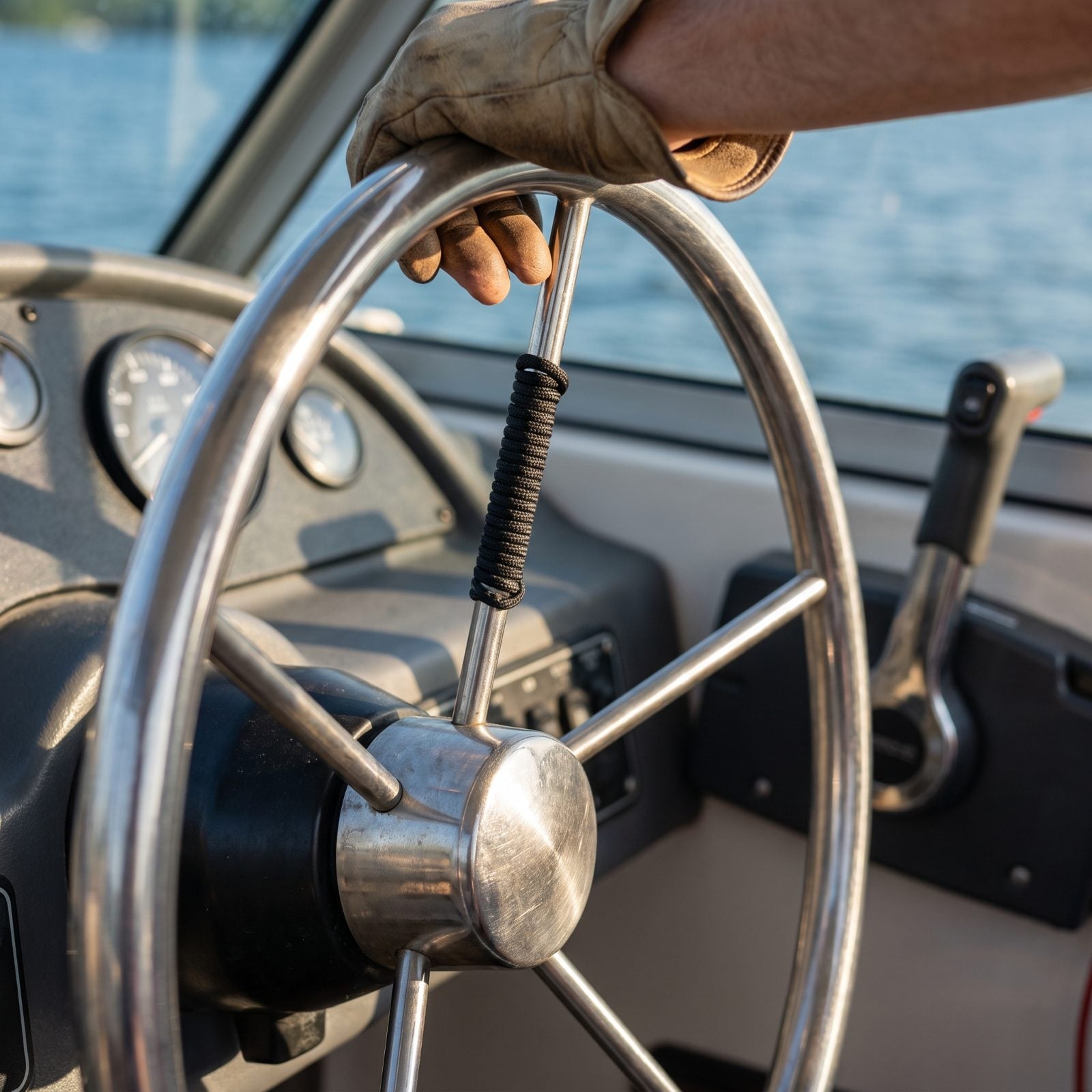
Boat wheels don’t center themselves like a car’s. No detent, no snap back to straight. In a tight slip or a crosswind, you’re guessing which way the outdrive is pointed, and guessing wrong puts you into the piling.
Wrap one spoke with cord or tape and now center has a texture. Your hand finds it without your eyes leaving the dock — you feel the straight-ahead position through your palm while you’re busy watching the fender clearance. Tiny thing. It pays off most when both your hands and your eyes are already full.
39. Photograph Every Battery-Switch Position Before Changing Anything
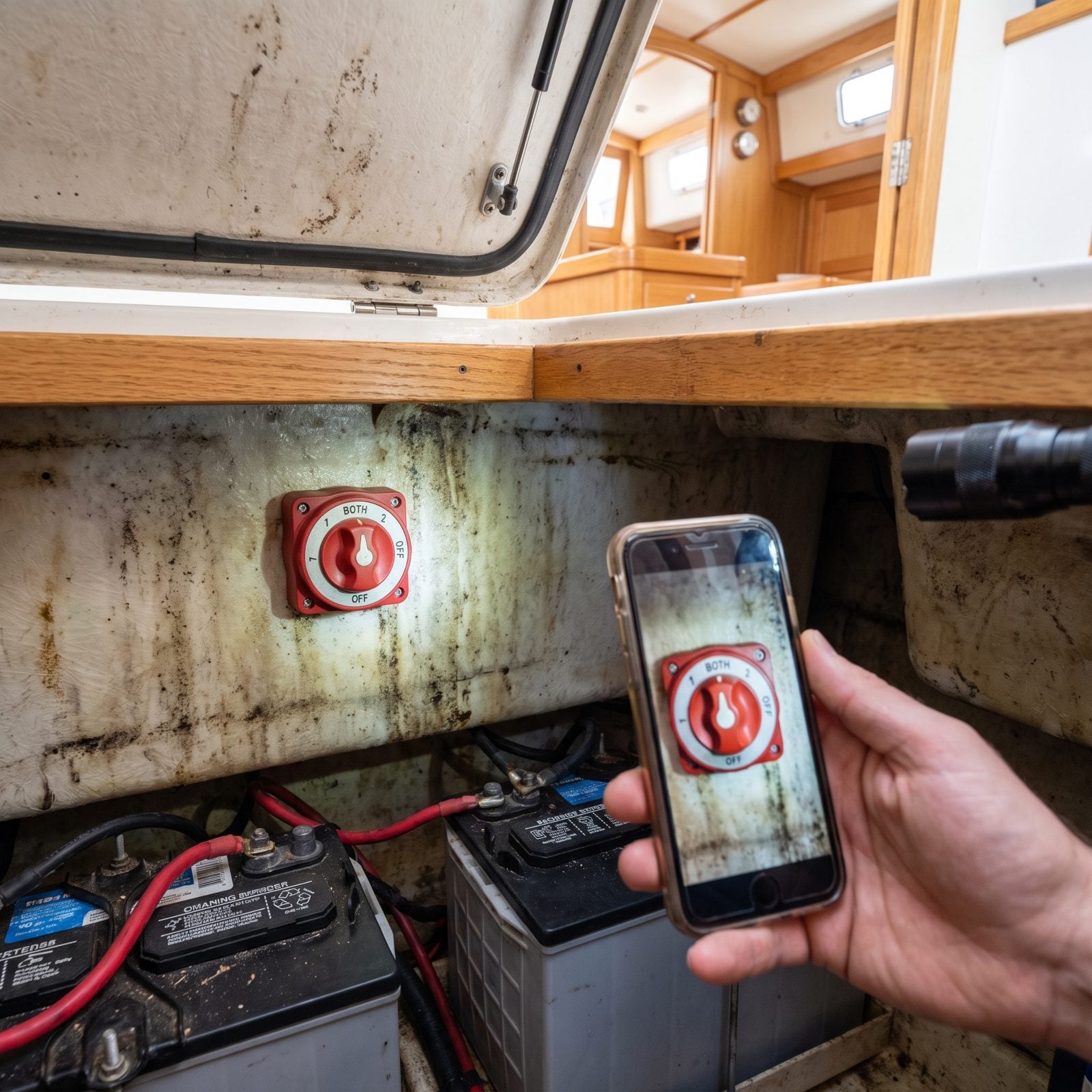
You open the battery box to chase a dead-starter problem, start flipping switches to test things, and twenty minutes later you have no memory of where anything started. Now you’ve got two problems.
Snap a photo first. Every switch, every selector, exactly as you found it. When the troubleshooting goes sideways, you have a known-good baseline to return to. Costs three seconds and saves you from the slow, sinking realization that you’ve made things worse.
The photo isn’t for the part that goes right. It’s for the part that goes wrong, which is the part you can’t predict.
Do the same before any wiring job, any plumbing swap, any hose you disconnect. Your phone remembers better than you do, and it doesn’t panic.
38. Mark Fender Lines at the Correct Height With Colored Thread
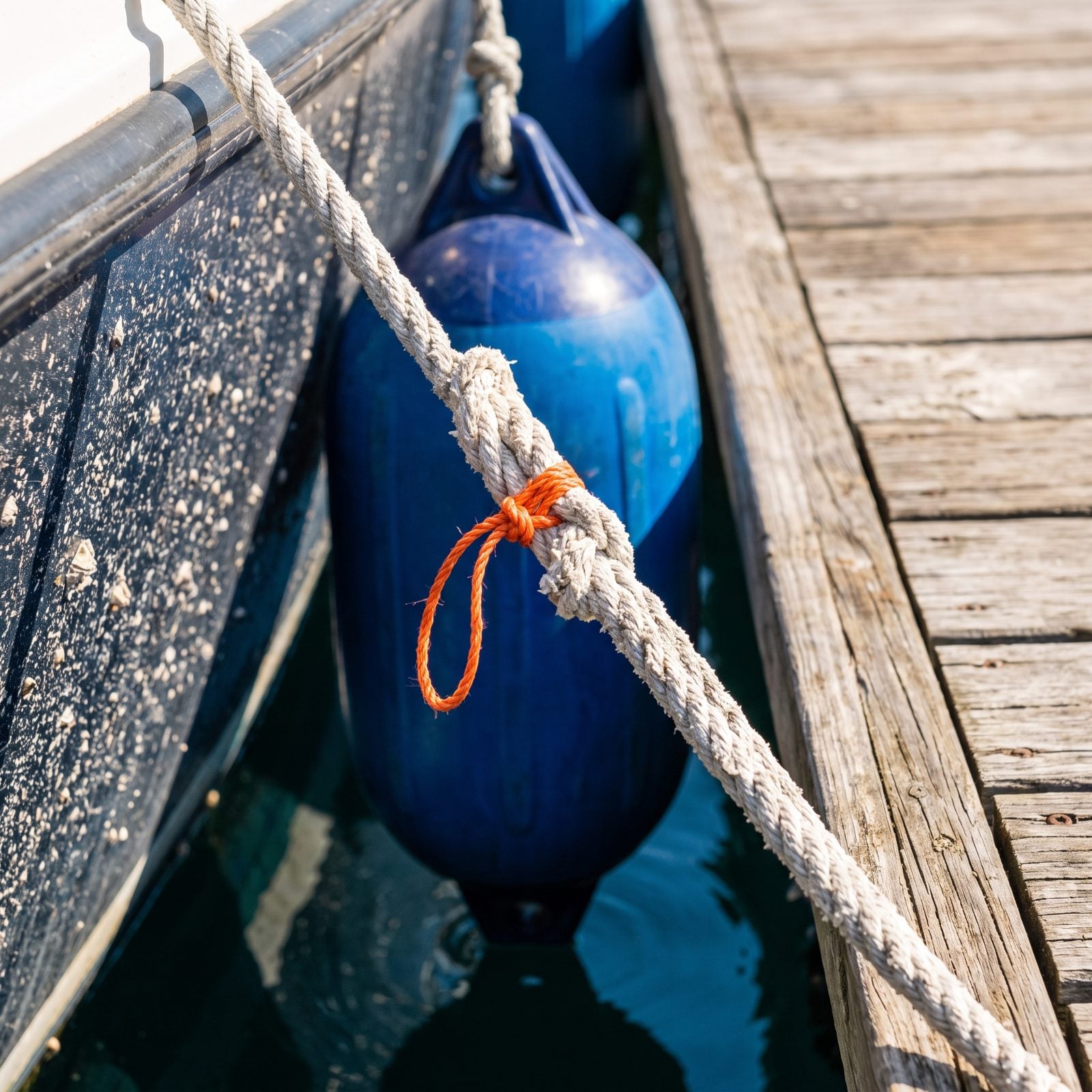
Hanging fenders at the right height is a fuss you repeat every single time you come in. Too high and they ride up over the dock. Too low and they dangle in the water doing nothing while your gelcoat kisses the piling.
Mark the line once and the fuss is gone. A loop of colored thread at the correct height for your home slip means you cleat off at the thread and the fender lands where it should, first try, every time. Use a second color for a dock that sits higher or lower. Your hands learn the colors fast.
37. Use a Phone Camera to Inspect Spaces Too Tight for a Head
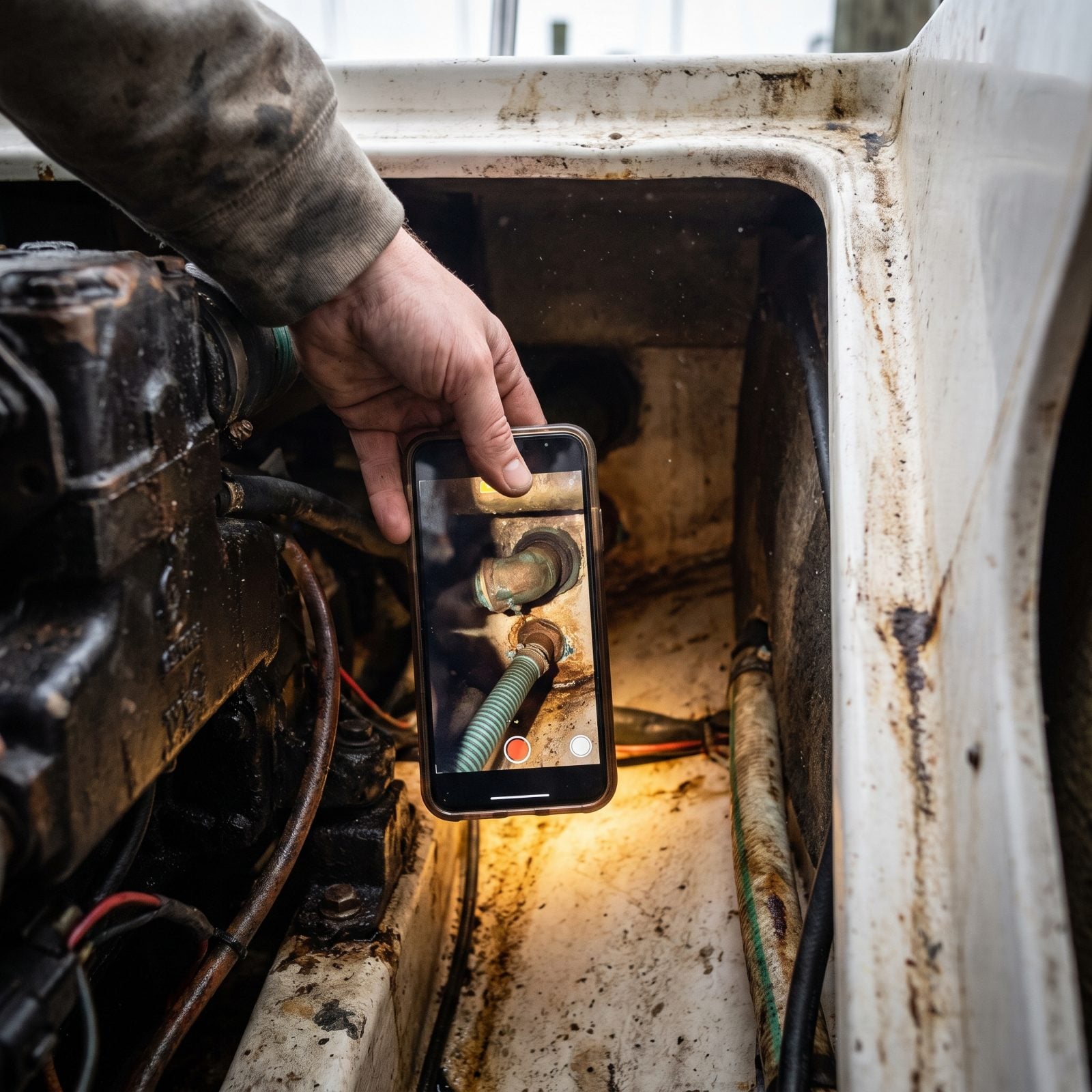
Boats hide their worst problems in places your head will never fit. Behind the engine. Under the fuel tank. In the back corner of the bilge where a hose clamp is rusting out of sight.
Your phone fits where you don’t. Flashlight on, camera running, lower it into the gap and pull it back out to review the footage. You’ll spot the weeping fitting, the chafed wire, the stowaway spare you dropped three years ago — no contortion, no flashlight-in-your-teeth, no wedging your shoulder somewhere it doesn’t belong.
36. Run a Finger Beneath Hose Connections Before Wiping the Bilge
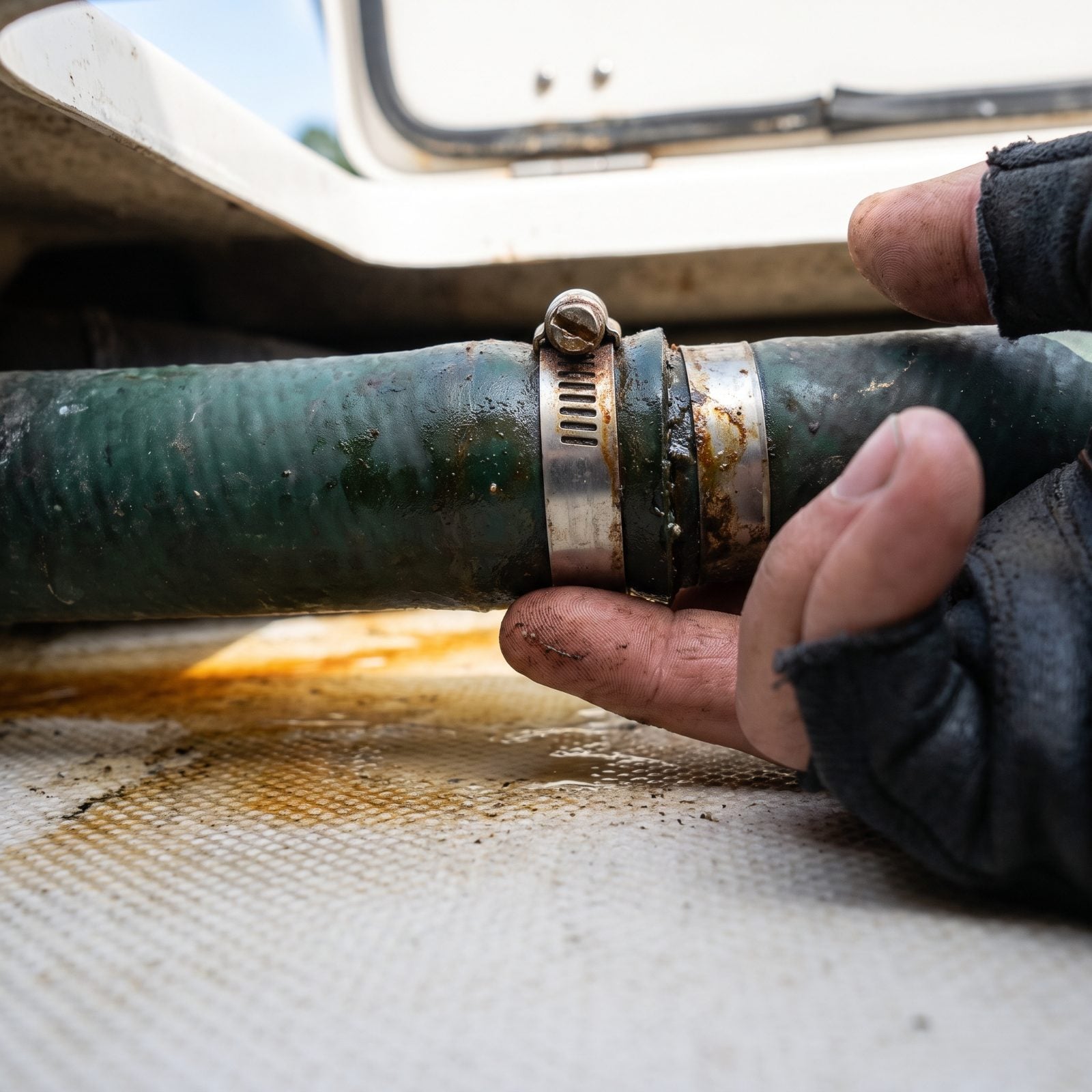
Most people wipe the bilge dry and call it clean. Big mistake. The instant that rag goes through, you’ve erased the evidence of where the water was coming from.
Feel first. Run a finger under every hose connection and clamp before you touch the dry rag. Wet where it shouldn’t be tells you the leak is active and points you straight to the source. A clean bilge with no clues is just a clean bilge. A damp fingertip is a diagnosis.
35. Add Paint-Pen Alignment Marks Across Caps and Housings
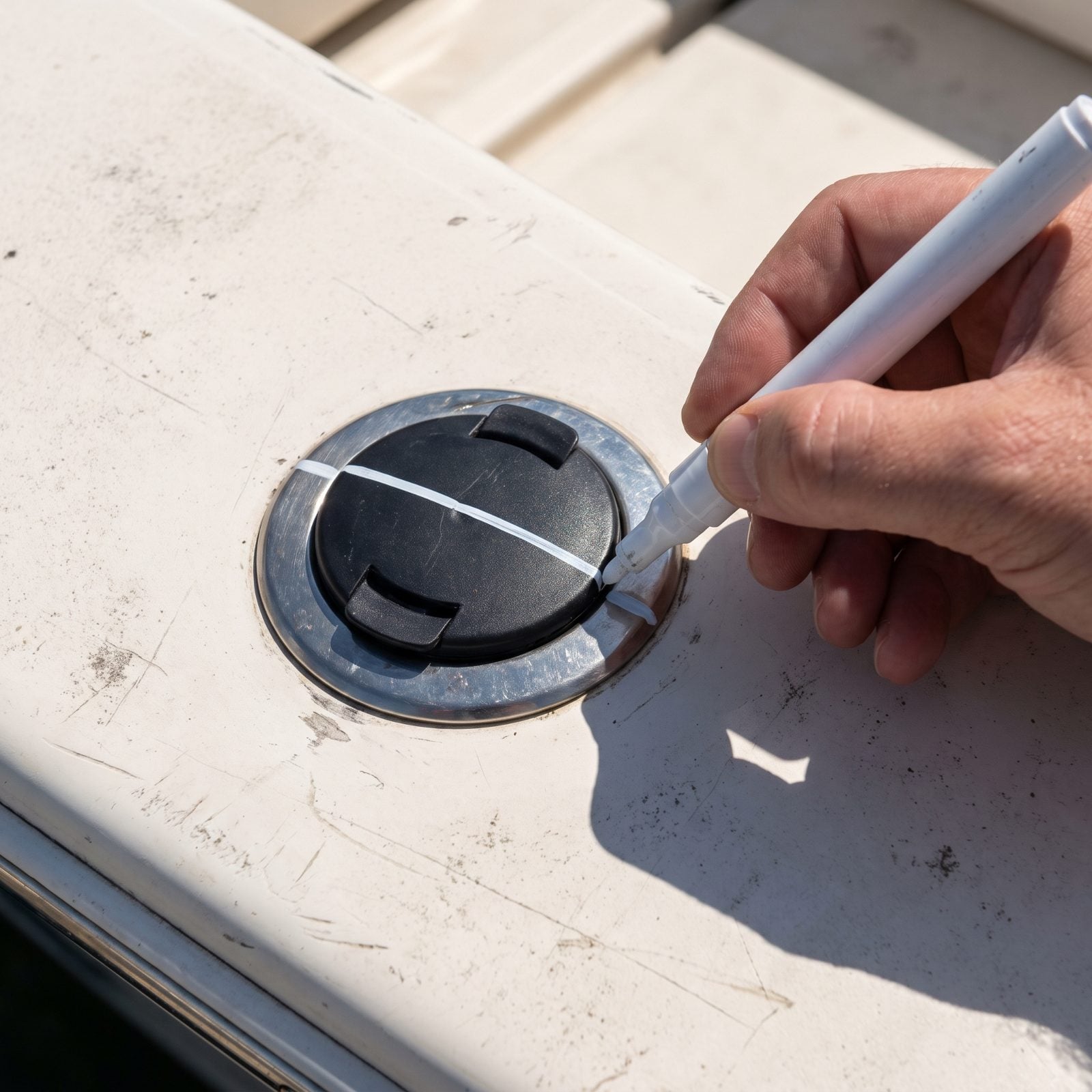
A fuel cap, oil cap or filter housing that backs itself loose hides in plain sight. It looks seated. It isn’t quite. Then you’re chasing a fuel-air problem or an oil weep with no idea where it’s coming from.
Draw a single paint-pen line straight across the cap and onto the fixed housing beside it. When the two halves of the line stop meeting, the cap has moved. A three-second glance tells you what used to take a wrench and a hunch.
34. Tag a Suspected Leak With Dated Painter’s Tape
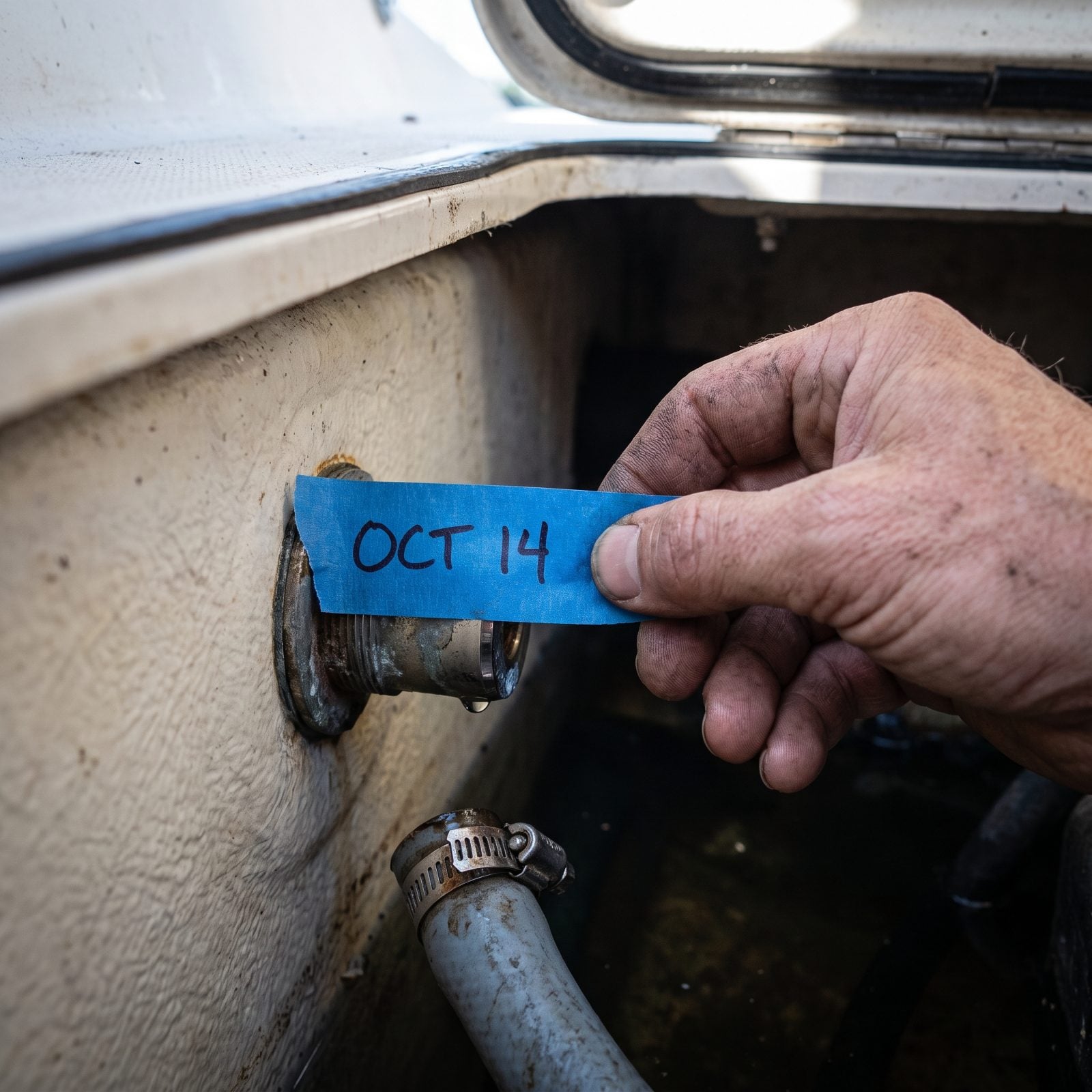
Water in a boat is sneaky. A little shows up, you wipe it, you forget, and three weeks later you’re wondering if it’s getting worse or if you imagined the whole thing.
Tape ends the guessing. Press a short strip of painter’s tape right at the suspected spot, write the date on it, and walk away. Next time you’re aboard you’ll see at a glance whether the drip crept past the tape line or stayed put. Dry tape after a rainy week means the hose fitting is fine. A damp, lifting edge means stop ignoring it.
33. Store Spare Fasteners With One Sample Taped Outside the Container
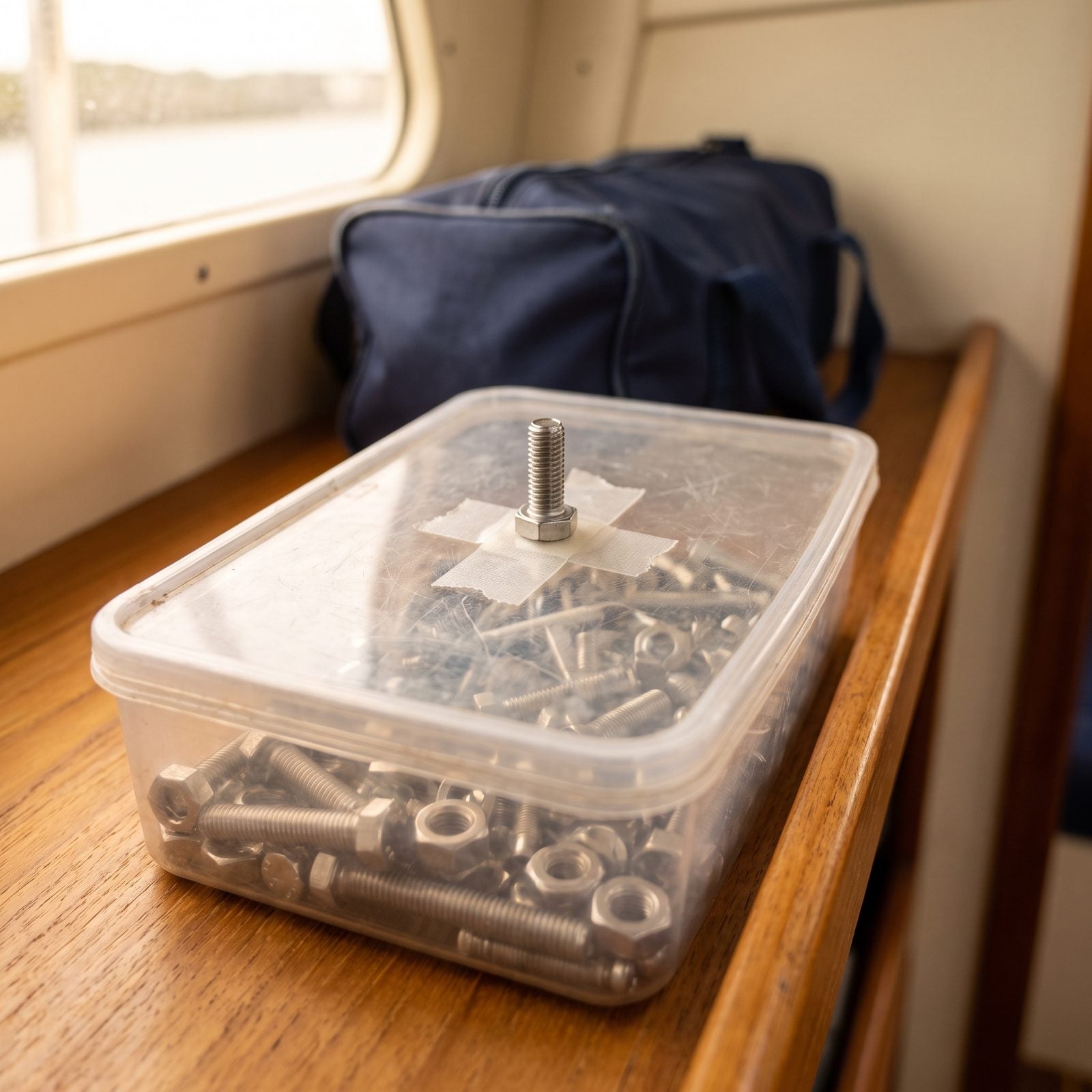
You know the drill. Something rattles loose at the worst possible moment and you’re down below digging through a tub of mixed hardware, holding bolts up to the light, squinting at threads.
So tape one sample of each fastener to the outside of its container. Now you match the loose bolt to the sample without opening anything, without dumping the tub, without dropping forty screws into the bilge. Dumb little move. Saves ten minutes every single time, and ten minutes feels like an hour when the dock lines are already off.
32. Clean an Outboard Telltale With a Soft Nylon Strand While the Engine Is Off
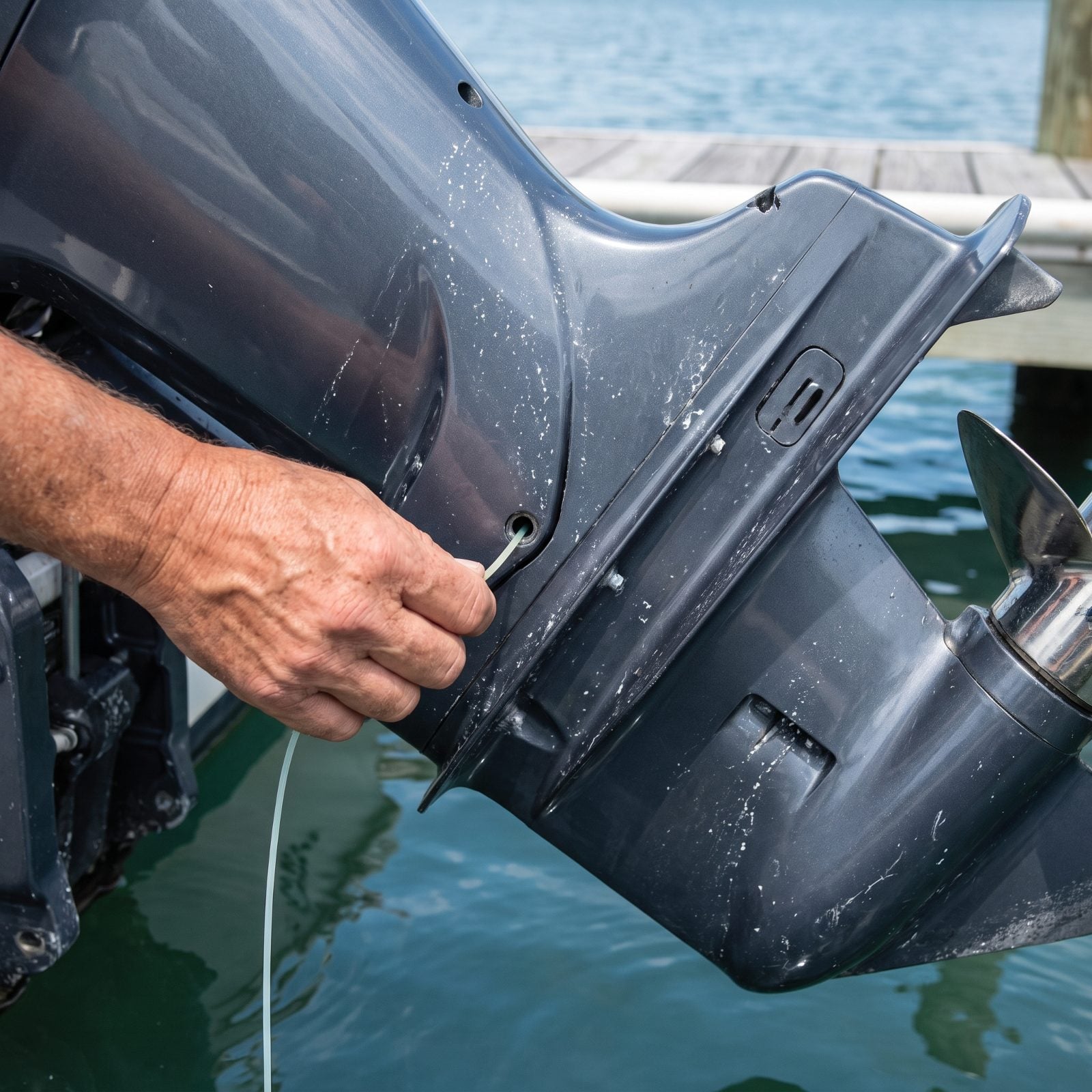
That thin stream of water squirting out the side of your outboard, the telltale, is the engine telling you the cooling pump is working. When it goes weak or stops, people panic. Usually it’s just mineral buildup or a wasp nest tucked in a tiny hole.
With the engine completely off, feed a soft nylon strand into the opening and ease the crud out. A single bristle from weed trimmer line works, or a zip tie trimmed thin. Soft is the whole point. Never push wire or anything stiff in there, and never, ever do it with the engine running.
31. Cover an Unplugged Shore-Power Connector With a Clean Shower Cap
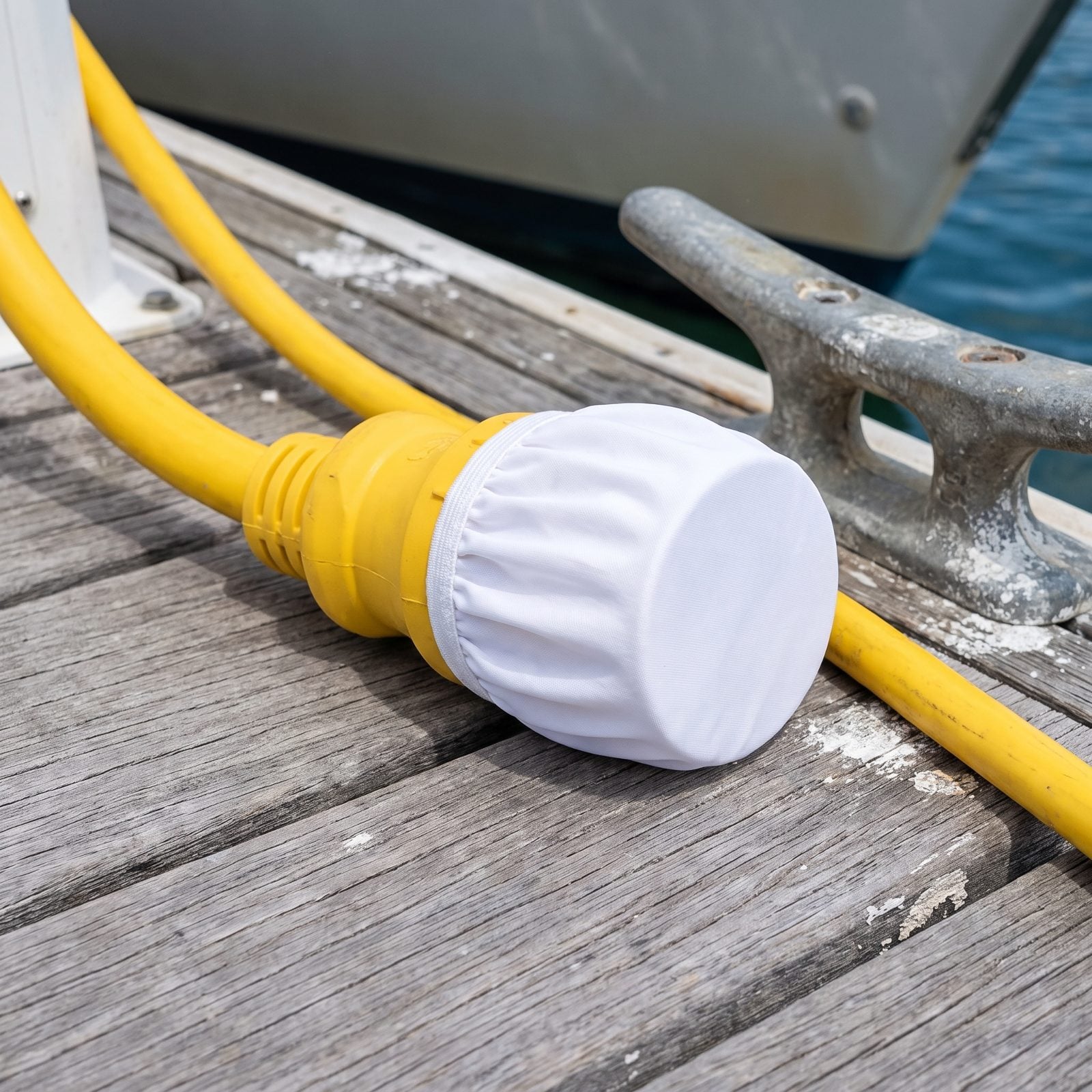
A shore-power connector left open overnight fills with dew, dust and the odd curious spider. Corroded pins make bad connections, and bad connections at 30 amps get hot.
A cheap elastic shower cap slips right over the connector end and keeps the whole thing dry and clean. Lighter than the factory cover, easier to put on one-handed, and if it wanders off you’ve lost about forty cents. A pack of them lives in the glovebox of every tidy boat for exactly this reason.
30. Put a Clean Tennis Ball Over an Exposed Trailer-Coupler Handle
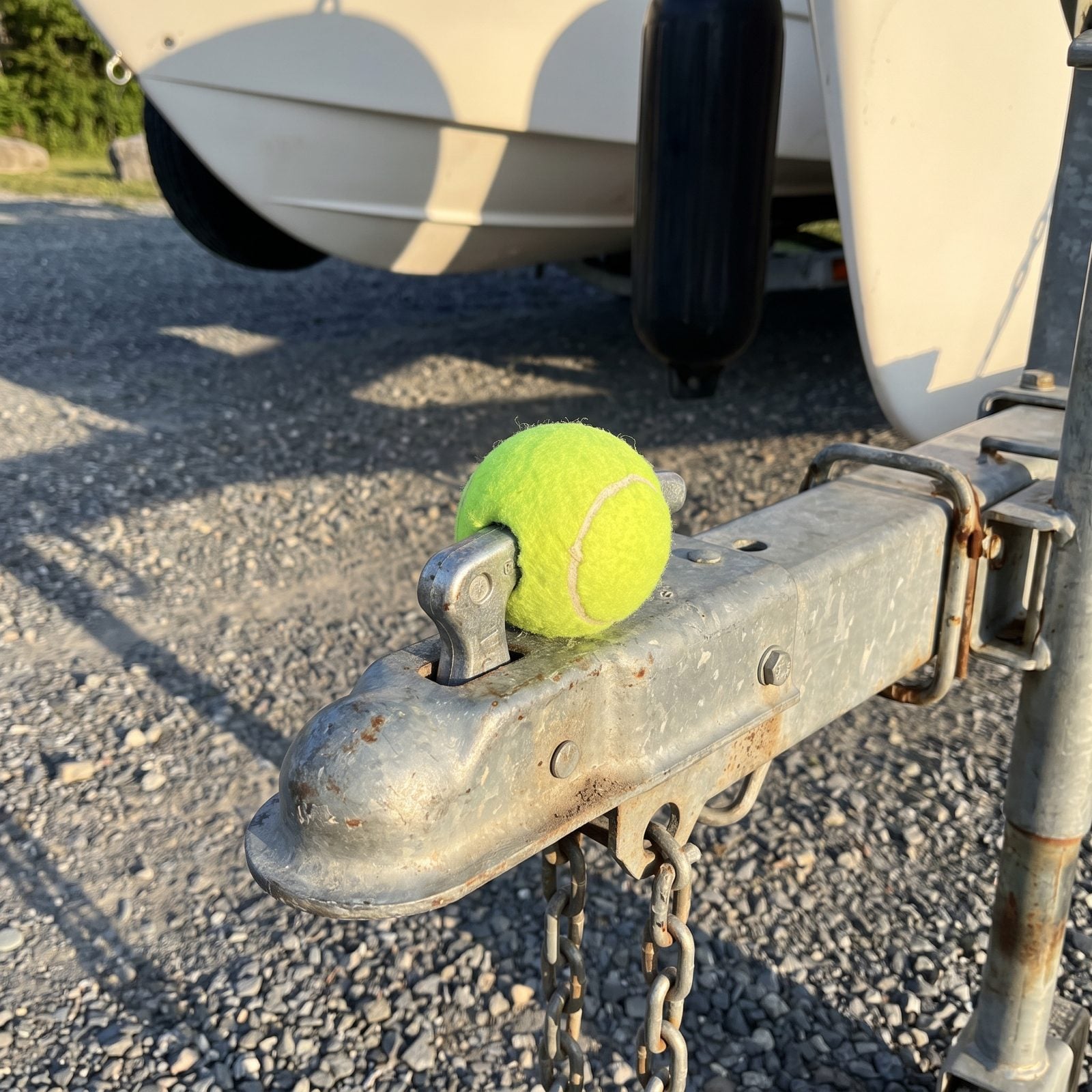
Anyone who has cracked a shin on a trailer coupler handle in a dark driveway remembers it forever. That little steel spike sits right at knee height, invisible against gravel.
Cut a small slit in a tennis ball and push it onto the exposed latch handle so the handle passes right through the ball. It pads the hard edge, and the color makes the whole coupler pop so you spot it in low light before it finds your leg. Cost you nothing, honestly, because the dog already chewed through a bag of them.
29. Keep a Dedicated Pair of Tongs for Retrieving Dropped Items
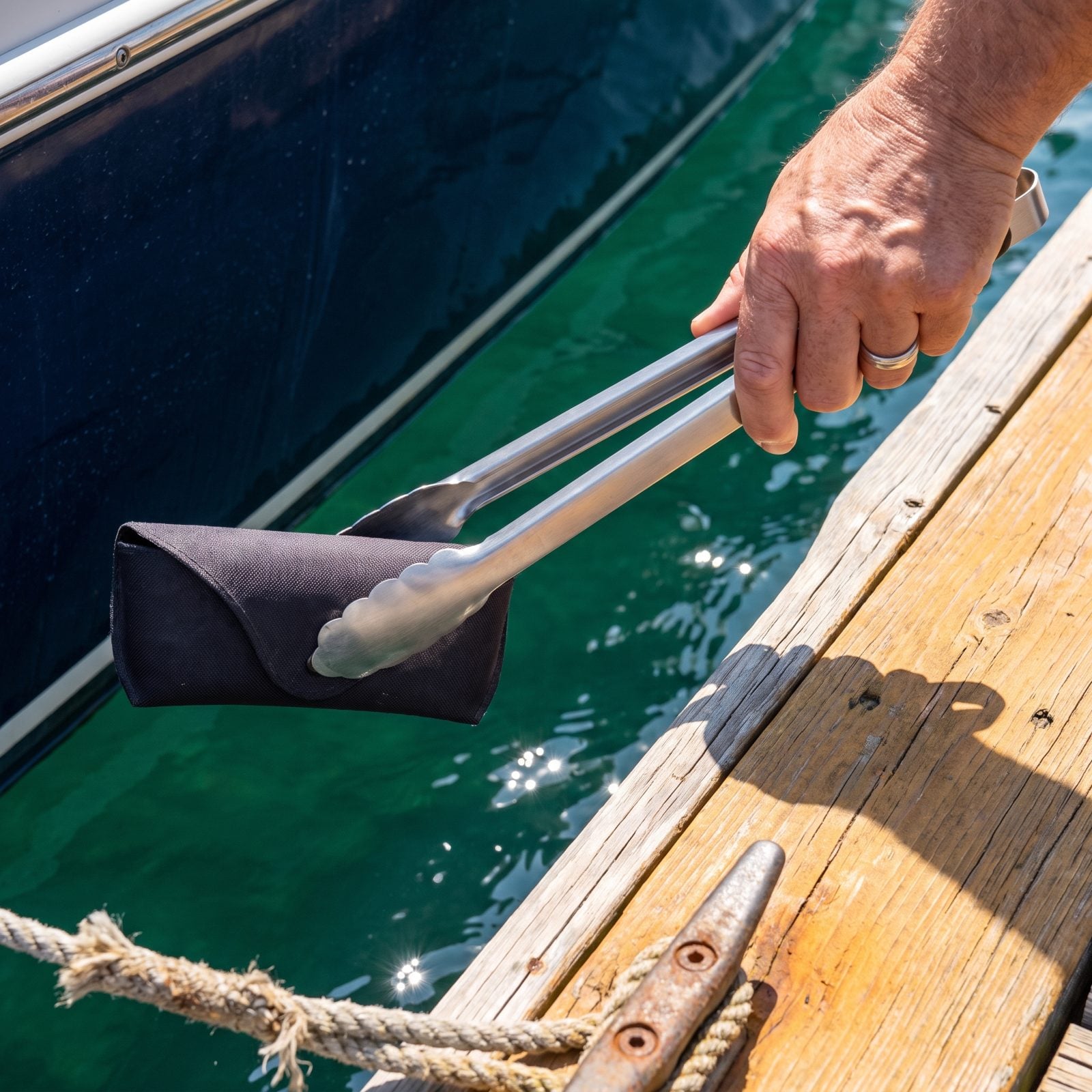
Things fall. Phones, keys, sunglasses, the cap off the oil bottle. They roll under a seat, wedge behind the batteries, or skate into that cruel slot between hull and dock where no hand reaches.
Keep a long pair of kitchen tongs aboard just for fishing them out. The grip reaches into bilge crevices a hand can’t, grabs a wayward bolt off the engine pan, and snags a floating hat before it drifts off. Mark them so they never migrate back to the galley. These are retrieval tongs now. That’s their whole job.
28. Tie a Short Ribbon to the Boat Hook to Read Wind Direction
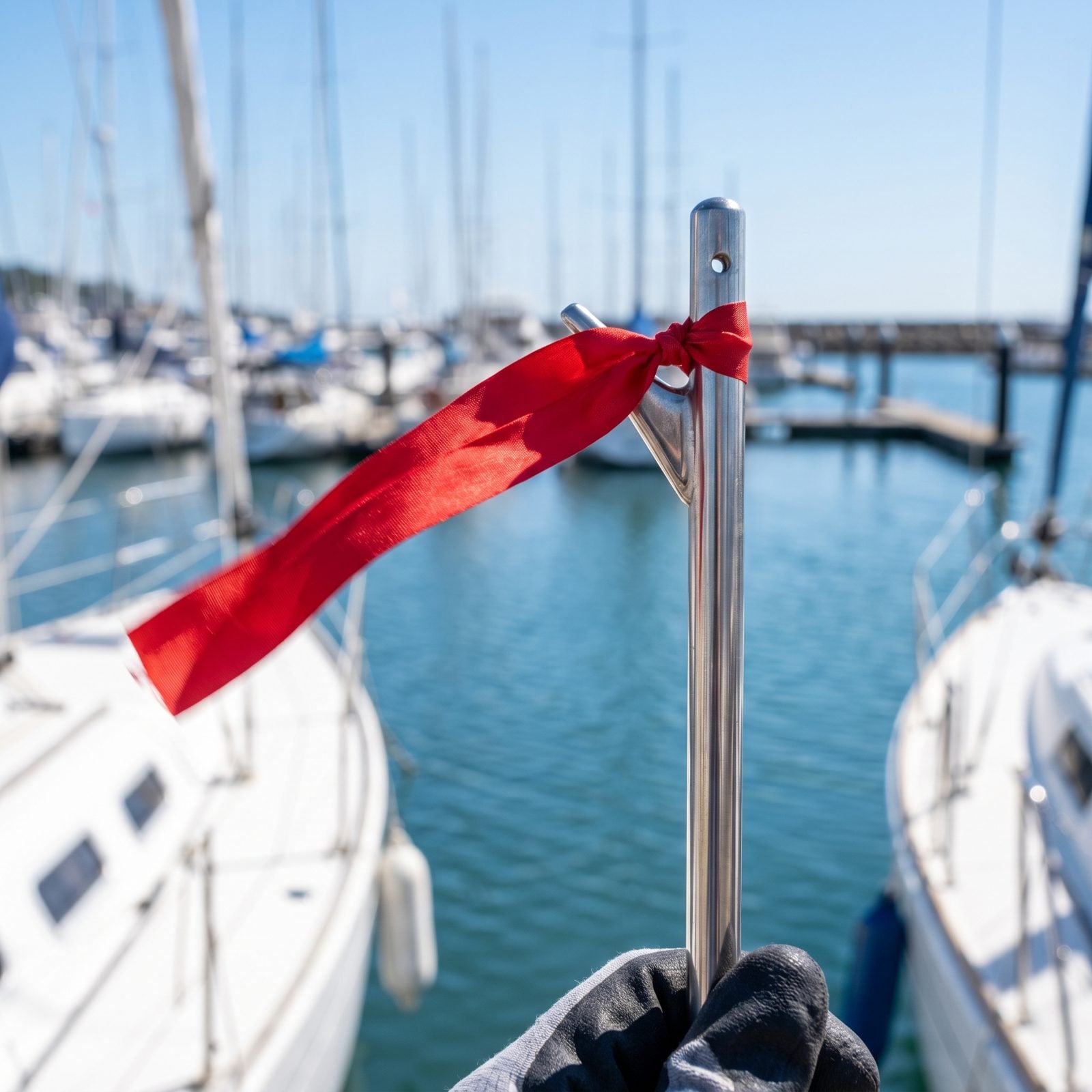
Wind decides your docking approach more than anything else, and the hardest part is knowing which way it’s actually blowing when you’re boxed in by other boats and buildings that swirl it every which way.
Tie a short strip of ribbon or surveyor’s tape near the tip of your boat hook. Hold it up for two seconds before you commit to a slip and the ribbon shows the true wind right where you’re standing. Flags lie. Trees block it. Water ripples confuse you. A ribbon at eye height doesn’t argue.
The best docking decision happens thirty seconds before the dock, and a two-dollar ribbon tells you more than the whole weather app.
27. Pull Wet Dock Lines Through a Towel Before Stowing Them
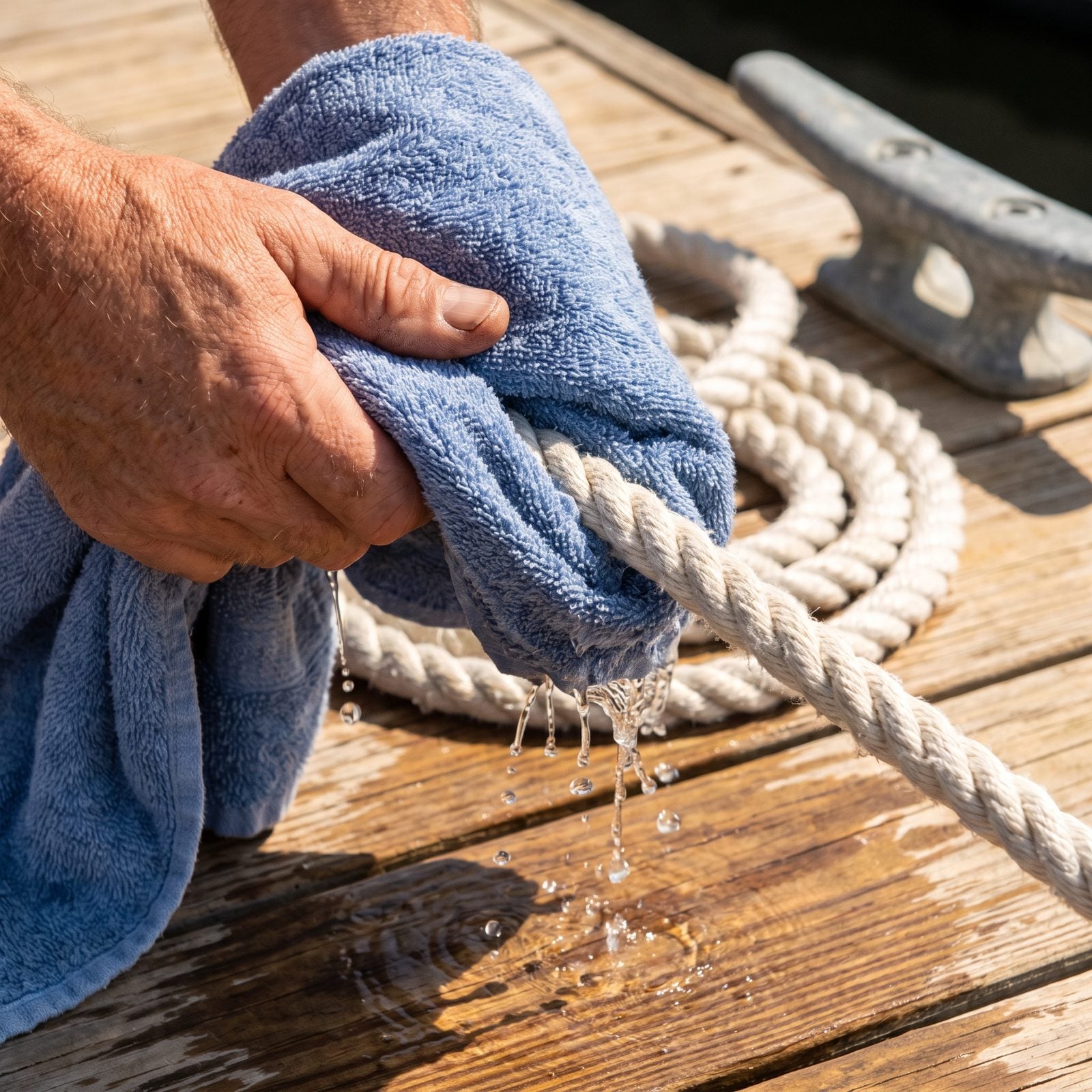
Wet rope stuffed in a locker is how you grow a science experiment. It stays damp for days, breeds mildew, and hands you a sour-smelling, stiff line next weekend.
Run each wet line through a folded towel on its way to being coiled. You strip off most of the water in one pass, so the rope dries far faster in the locker and stays soft instead of turning into a crusty dreadlock. Four seconds a line. Your hands will thank you the next time you’re hauling on it.
26. Coil Long Lines in a Figure Eight to Prevent Hidden Twists
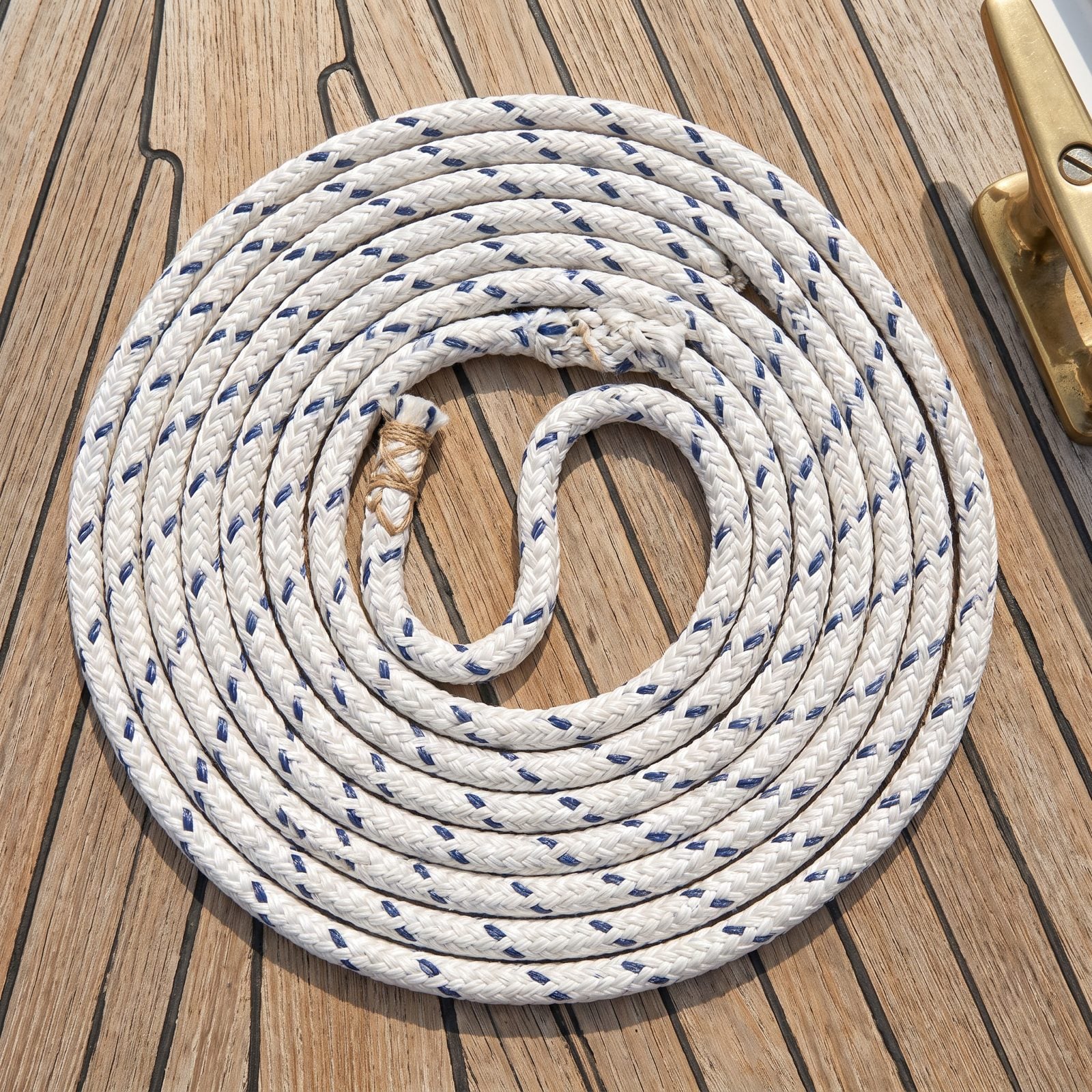
Coil a long line round and round the same way every time and you build in twist. By the end the rope fights you, hockles into little loops, and never pays out clean when you’re in a hurry.
Coil in a figure eight instead, alternating the loop direction each pass. The twist from one loop cancels the next, so the line lays flat and runs free when you throw it. Sailors have done this with halyards and heaving lines forever. It feels fussy for about a week. Then your hands just do it without you thinking.
25. Pre-Rig a Dock Line as a Large Slip Loop for Hard-to-Reach Pilings
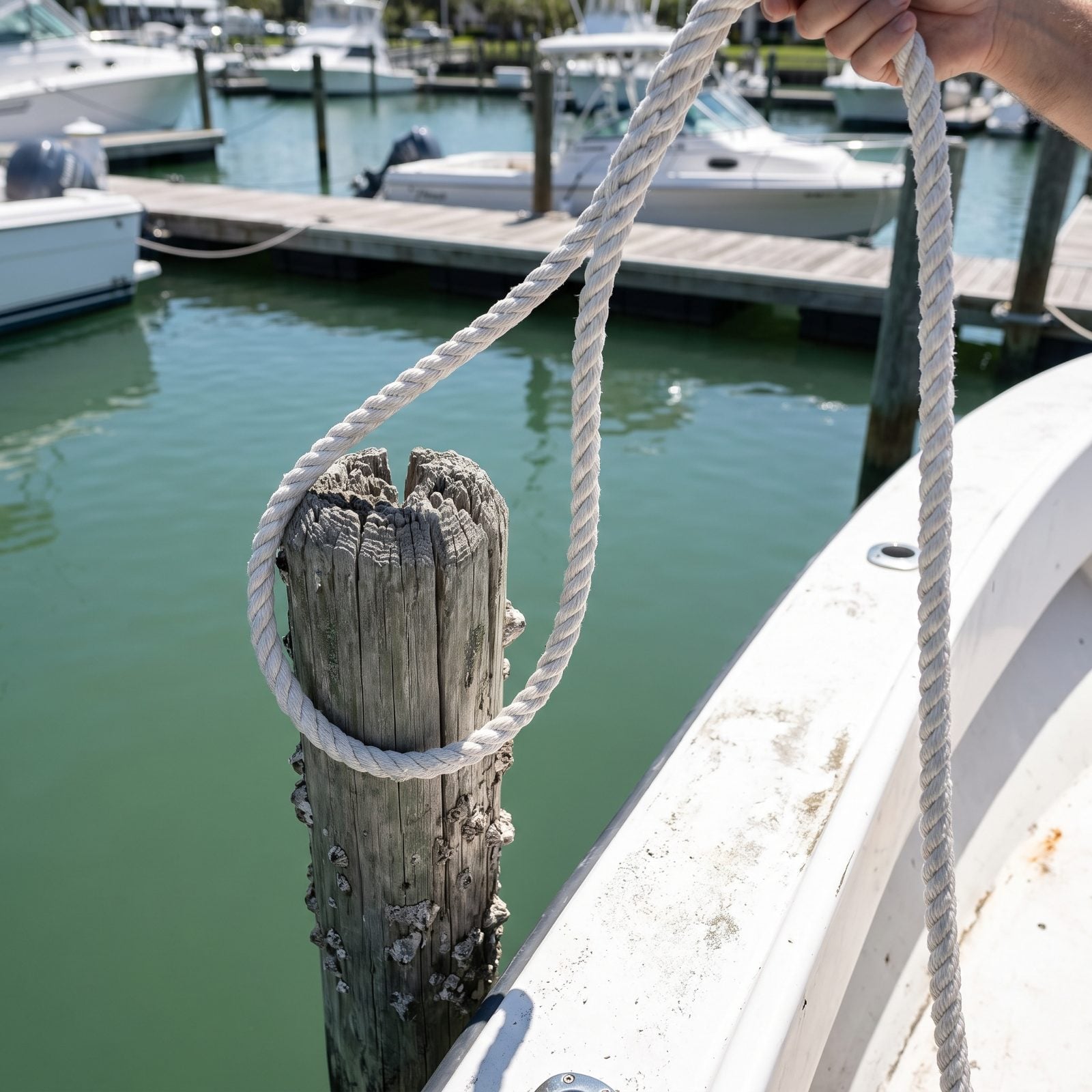
Lassoing a piling from a moving boat with a bare line is a special kind of misery, especially when the wind is shoving you off and your crew is stretched out over the rail with the boat hook.
Before you approach, tie a large open loop in the end of the line. Now you drop the whole pre-made loop over the piling top, or slide it on with the boat hook in one motion, no knot-tying while the boat drifts away from you. Make yours big enough to clear the piling easily but not so big it slides down past a cleat. One rigged line, one clean catch, and a whole lot less yelling across the deck.
24. Give Port and Starboard Dock Lines Different Colored Whippings
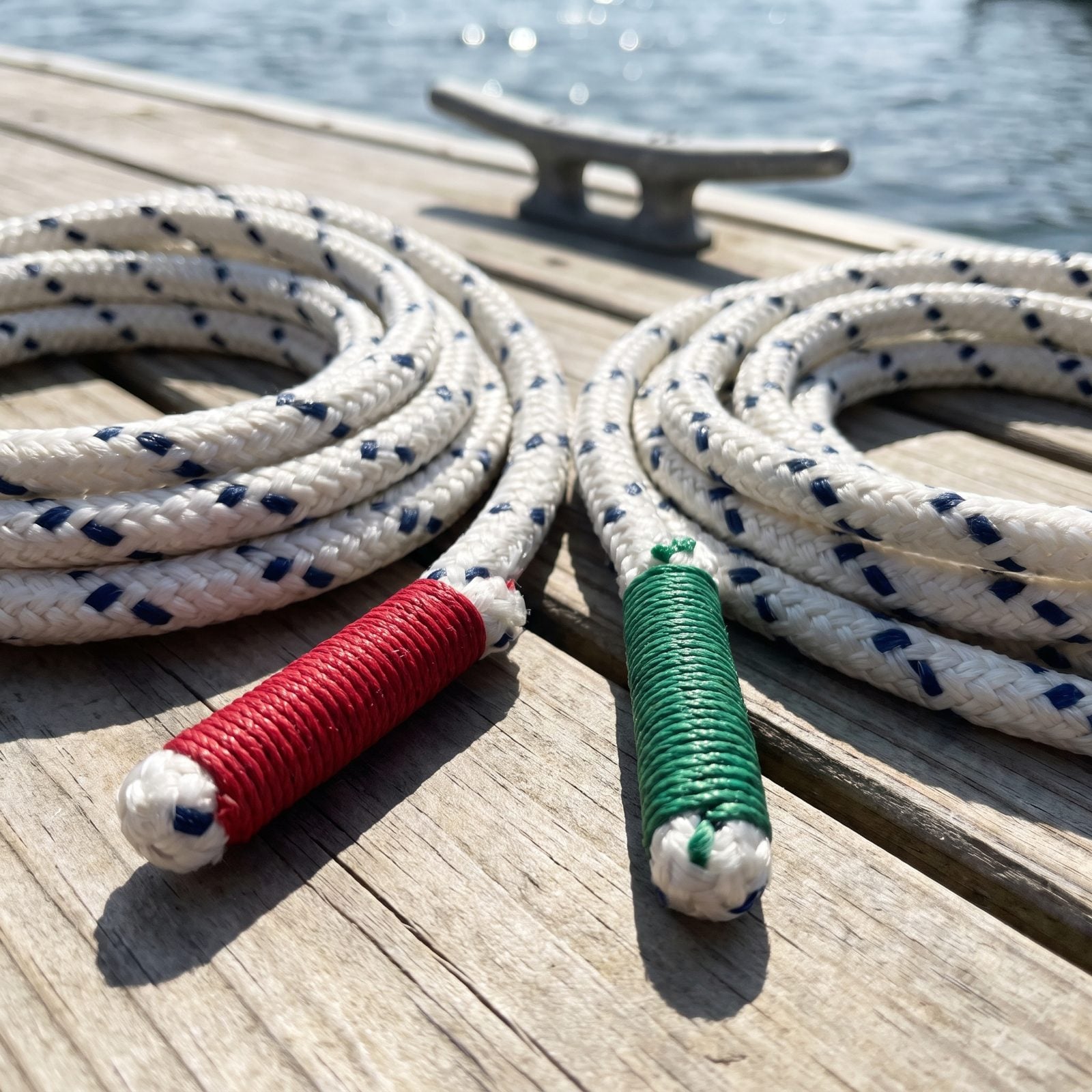
Docking at dusk with the wind pushing you sideways is the worst possible moment to be guessing which line is which. Color-coded whippings sort that out before it ever becomes a problem. Red for port, green for starboard, matching your nav lights, so whoever grabs a line in a hurry knows instantly which side it belongs to.
A spool of colored waxed twine runs a few dollars and takes ten minutes per line. What you get back is a crew that can throw the right line to the right piling without anybody shouting across the foredeck.
23. Freeze Drinking Bottles on Their Sides to Create a Built-In Ice Core
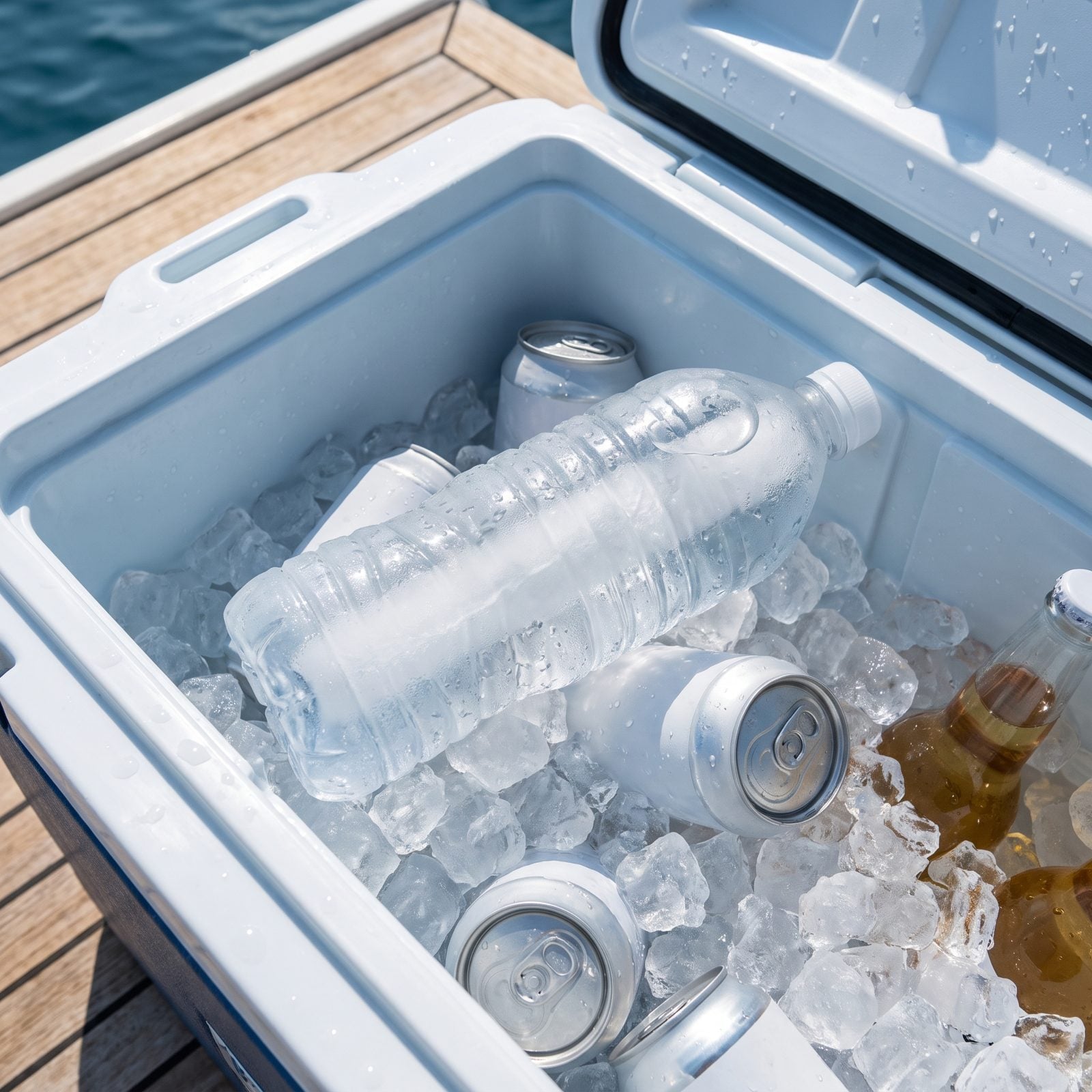
Freeze a water bottle standing up and you get a frozen brick with a few sad sips at the top. Lay it flat instead and the ice forms a long slab with more surface area, so it starts giving up cold water sooner. By late afternoon the whole thing has thawed into cold water. Nestle it in the ice with the cans and it helps keep everything chilled while it thaws.
Toss a few in the night before. They help the ice keep the cans cold on the way out and turn into your afternoon drinks on the way back. One trick doing two jobs — the best kind.
22. Use Muffin Tins to Keep Small Meal Ingredients From Sliding Away
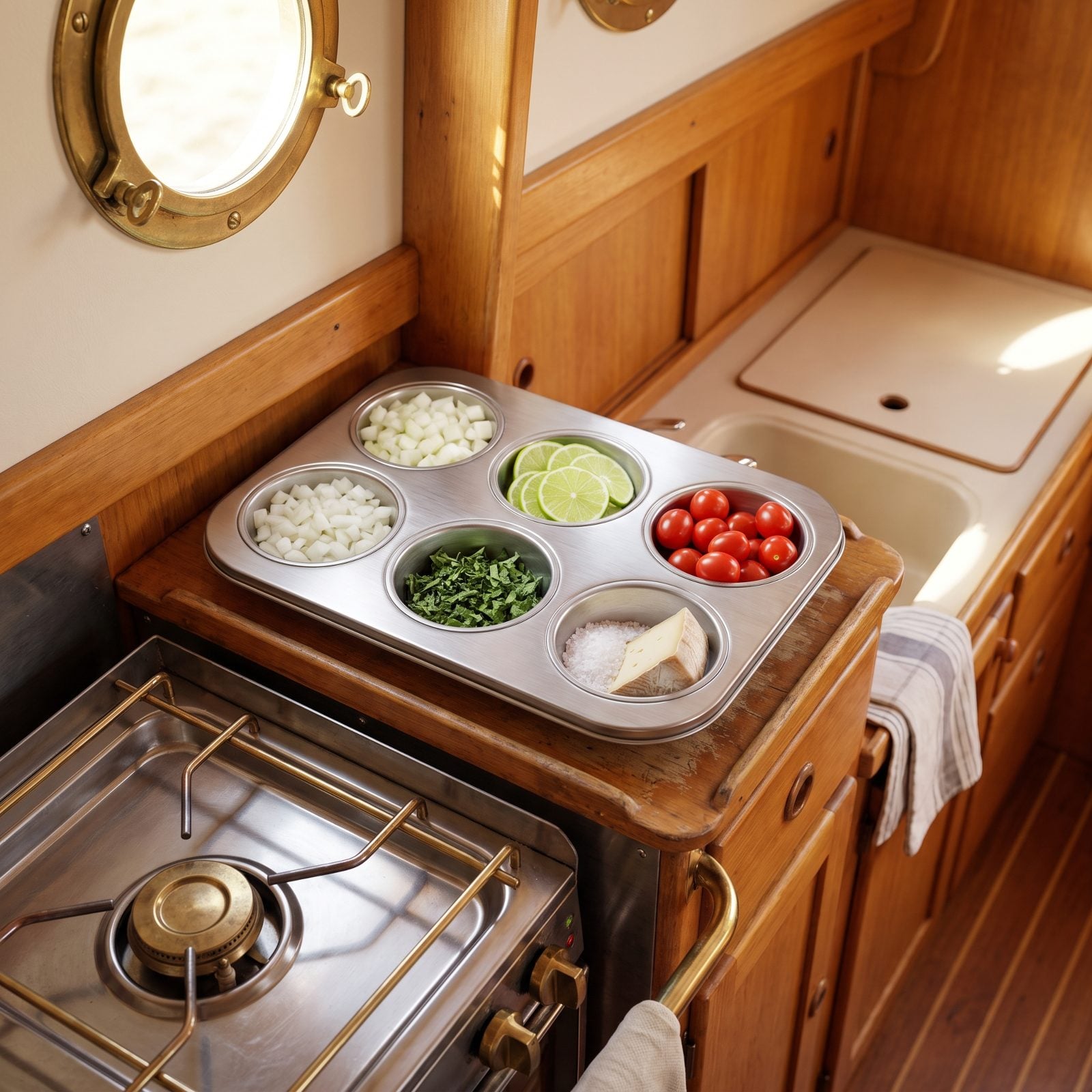
Boat cooking has a signature sound. It’s the clatter of a bowl of chopped peppers skating across the counter the second you hit a wake. A muffin tin puts a stop to it. Prep each ingredient into its own cup, the compartments corral everything, and the tin’s own weight keeps it planted while you work the stove.
It doubles as serving ware too. Set out a tin of toppings for tacos or burgers and let everyone build their own, no ten little bowls migrating around the cabin. Cheap, nests flat for storage, goes straight in the dishwasher back home.
21. Place a Silicone Baking Mat Beneath the Cutting Board
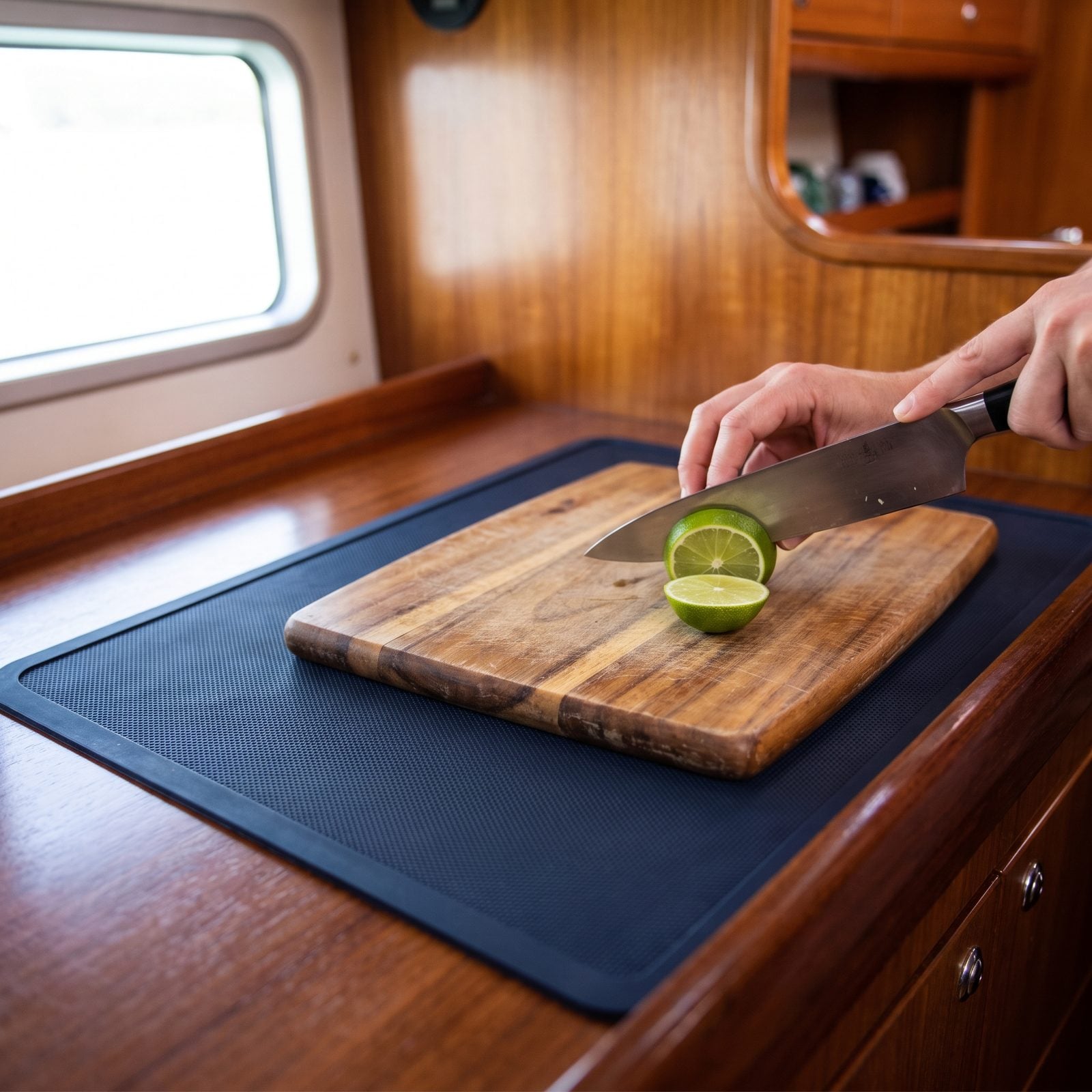
A cutting board that wanders while you’re holding a knife is more than annoying. On a moving boat it’s a genuine hazard. Slide a silicone baking mat underneath and it grips both the counter and the board, so nothing shifts through chop and swell.
That same mat doubles as a non-slip landing pad for a hot pot or a plate you don’t want sailing off the table. The molded rim catches juice and crumbs, it wipes clean, and it costs about ten bucks. One of those things you wonder how you ever cooked without.
20. Turn Every Mug Handle Inboard Before Getting Underway
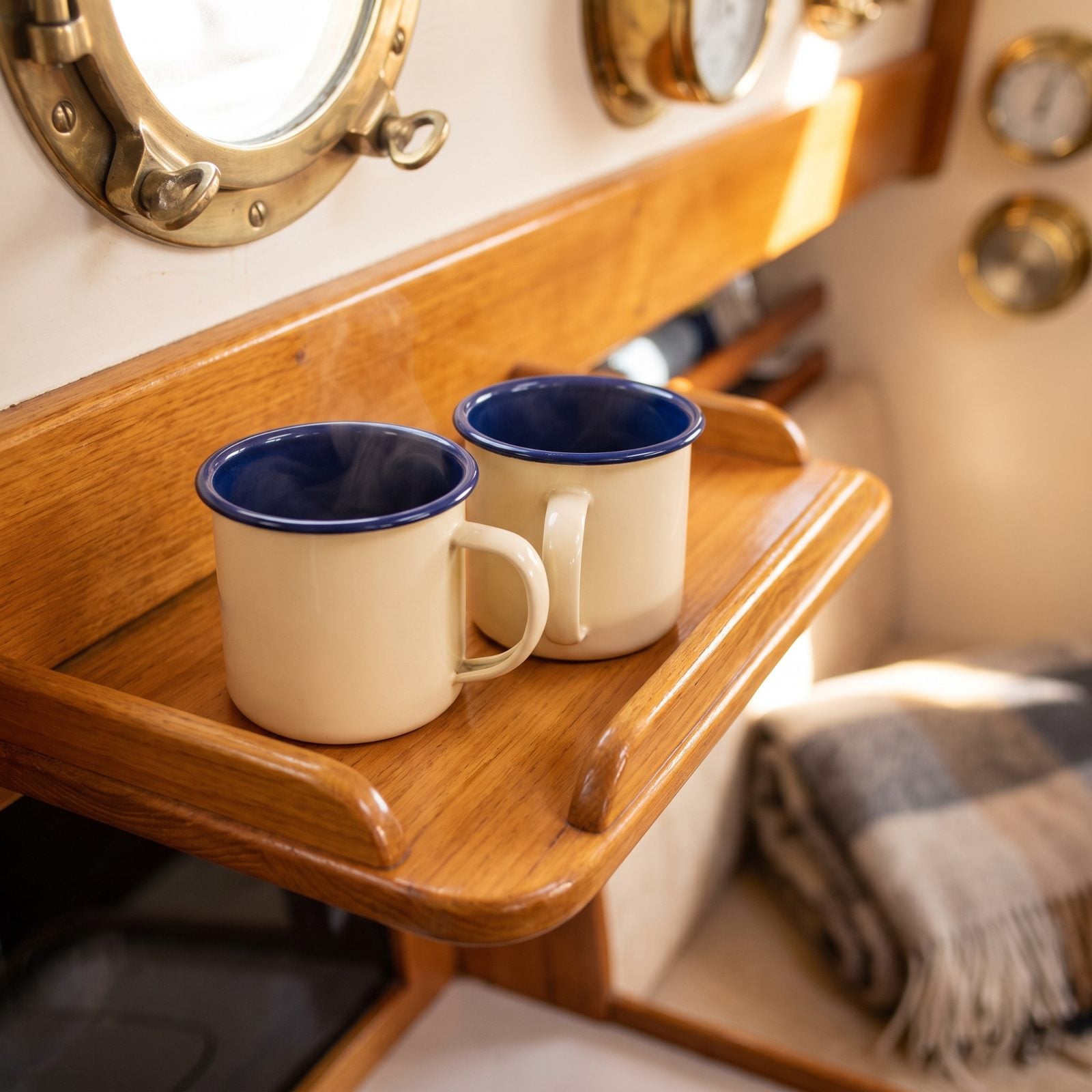
A handle pointing outboard is a hook waiting to snag a sleeve, an elbow, or a passing hip on a roll. Spin every mug handle inboard toward the centerline before you cast off, and suddenly the cups stop grabbing people.
Small habit, real difference. Fewer coffee spills down the companionway, fewer mugs swept off a shelf by someone squeezing past. Takes two seconds, and it’s the kind of quiet discipline that separates a settled galley from a chaotic one.
19. Secure Cabinet Knobs Together With Reusable Silicone Ties

You know the sound. A cabinet latch lets go in a seaway and everything inside goes avalanche. Loop a reusable silicone tie around two adjacent knobs and those doors stay shut no matter how the boat moves.
They’re the bendable rubber kind sold in packs for cords, a few dollars for a dozen. They grip in the wet, don’t scratch the woodwork the way a bungee can, and cinch off anything else that rattles. Keep a handful stashed in a drawer. You’ll find a fresh use every trip.
18. Put a Foam Earplug Behind a Loose Latch as a Temporary Rattle Stop
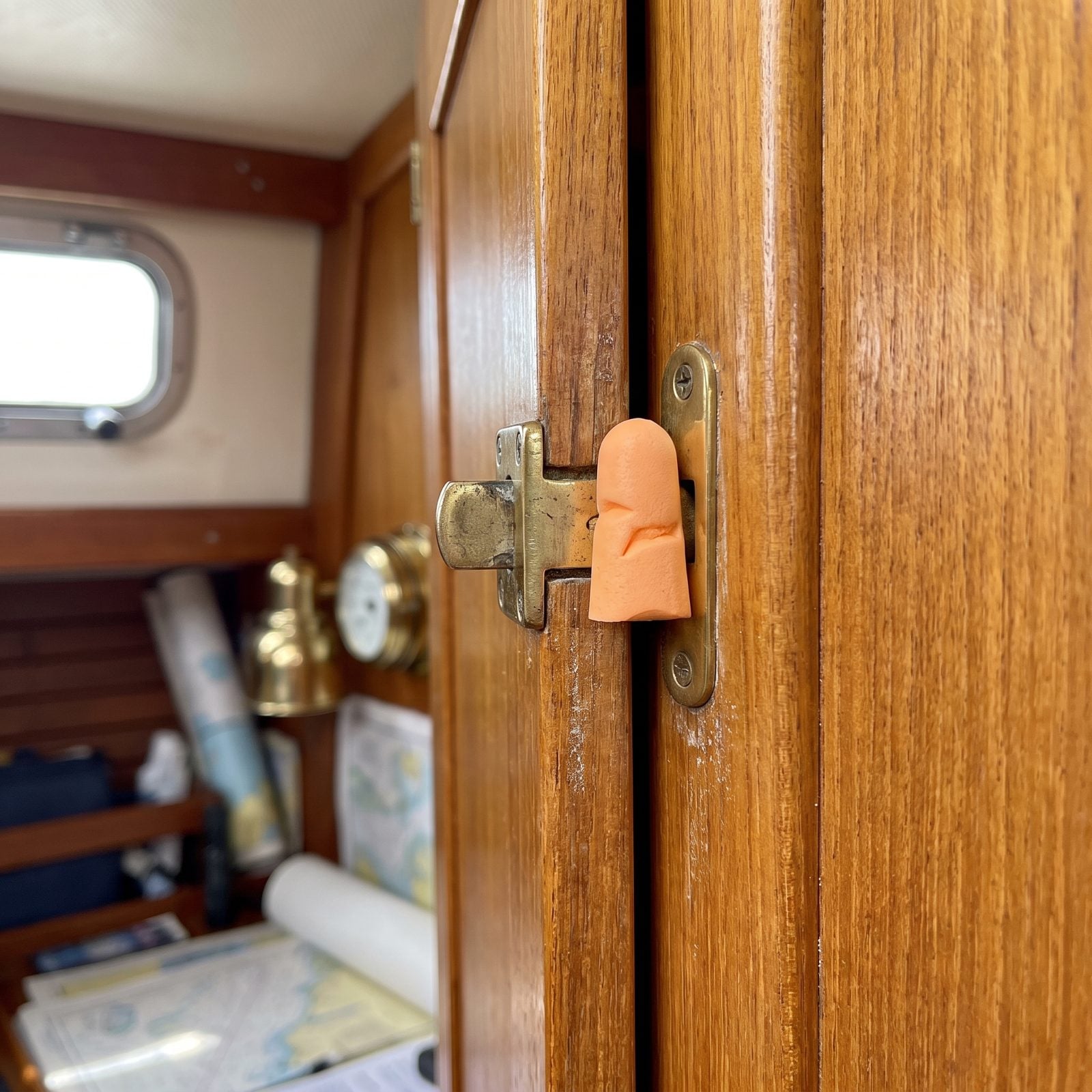
There’s a special kind of madness that comes from a single rattle you can’t locate three hours into a passage. When you finally track it down, a foam earplug is the fastest fix afloat. Press it over the offending latch tongue, hinge, or trim piece so it wraps around it, and the soft foam cushions the contact and kills the buzz.
It’s a stopgap, not a repair. Note the spot and sort it properly ashore. But at two in the morning with everyone trying to sleep, that little foam plug is worth its weight in gold.
17. Photograph Spare-Part Labels Before Installing the Parts
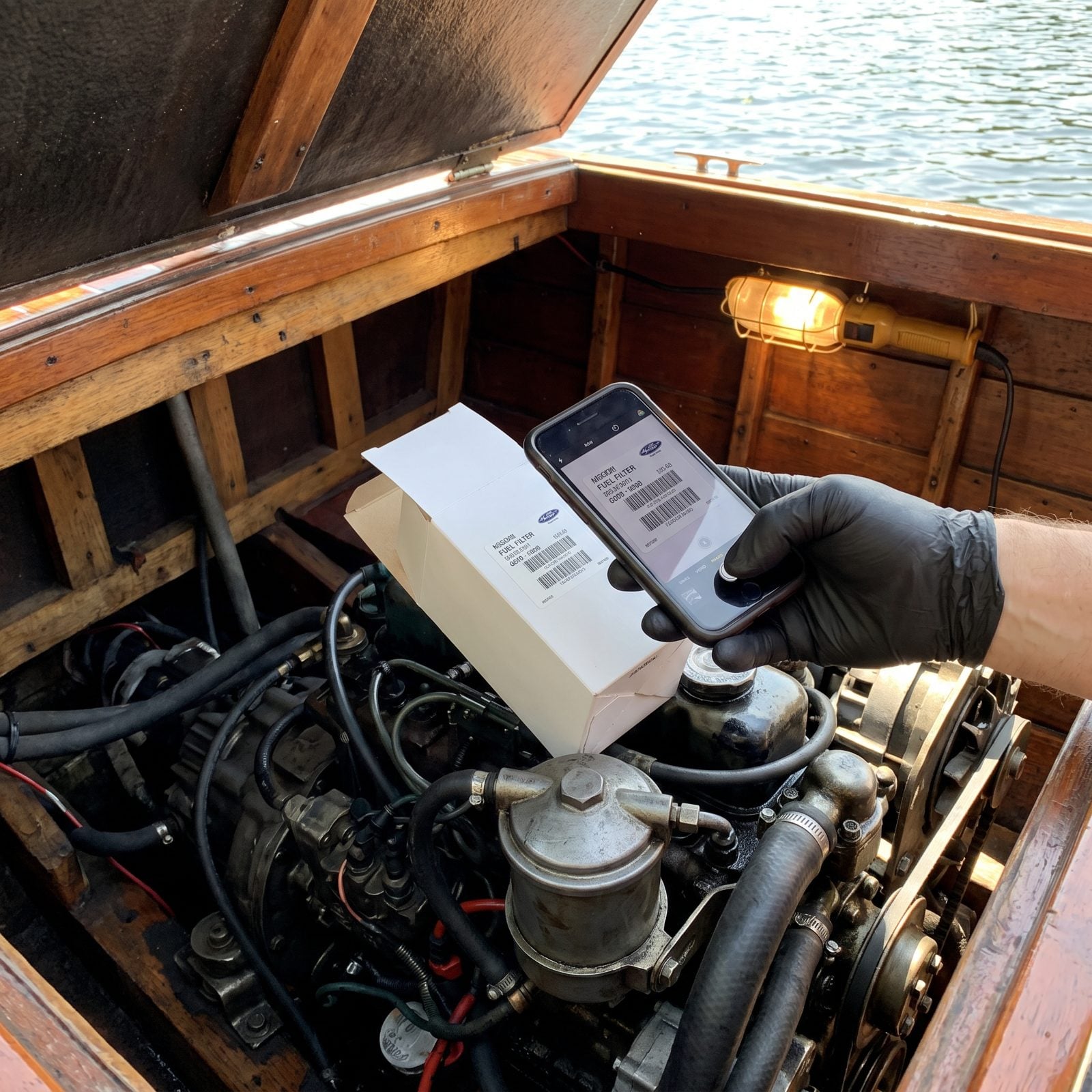
The moment you install a part, its box hits the trash and its part number vanishes from your life. Fast-forward a few years and you’re standing in a marine store trying to describe an impeller from memory. Snap a photo of the label first, every single time, then zoom in on the screen to confirm the part number is actually readable and not a blur, and that whole scene never happens.
Build a folder on your phone for it. Filters, belts, impellers, bulbs, zincs. When something fails far from home, you pull up the exact number and the counter staff match it in seconds instead of squinting at your hand gestures.
16. Write Filter and Impeller Dates Directly on Their Housings
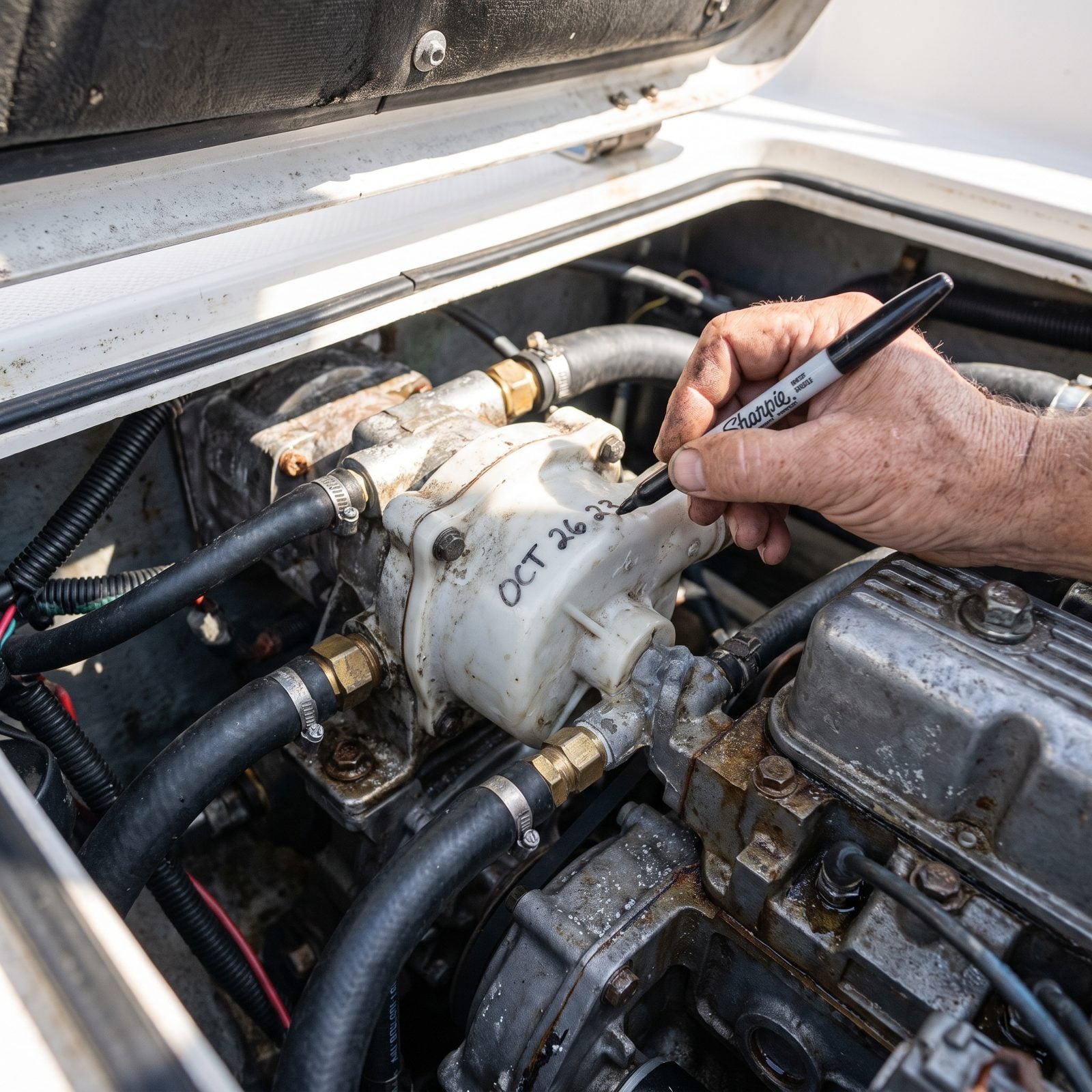
Service logs get lost. Memory lies. The housing never does. Write the install date right on the filter, impeller pump, or belt with a paint pen and the answer to “when did I last change this?” is sitting there waiting in your engine bay.
Ten seconds during a service you were already doing anyway. Next time you crack the hatch there’s no flipping through a notebook, no second-guessing yourself. You glance at the housing and you know precisely how old that impeller is before it strands you with a cooked engine.
15. Touch Each Trailer Hub at Fuel Stops to Catch a Heating Bearing
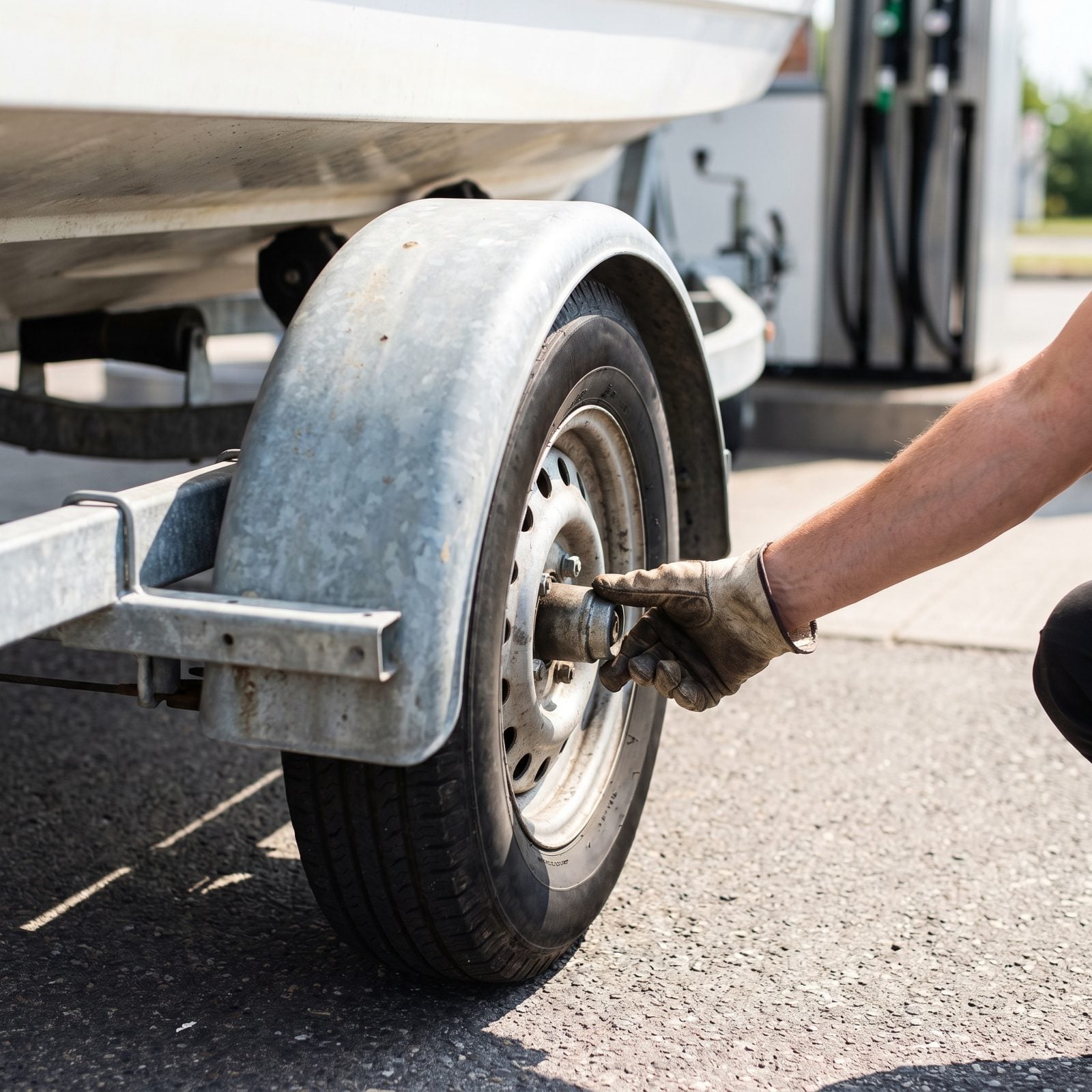
A failing wheel bearing announces itself with heat long before it seizes and dumps your boat on the shoulder of the interstate. So at every fuel stop, lay a hand on each trailer hub. Warm is fine. Too hot to hold comfortably is a warning you can actually act on before it turns into a roadside mess.
Costs nothing, takes about as long as stretching your legs. A hub that’s noticeably hotter than its mates means you stop and look into it right then, not after the smoke starts. Cheapest insurance on the whole tow.
14. Test Navigation Lights Against a Wall Before Departing Near Dusk
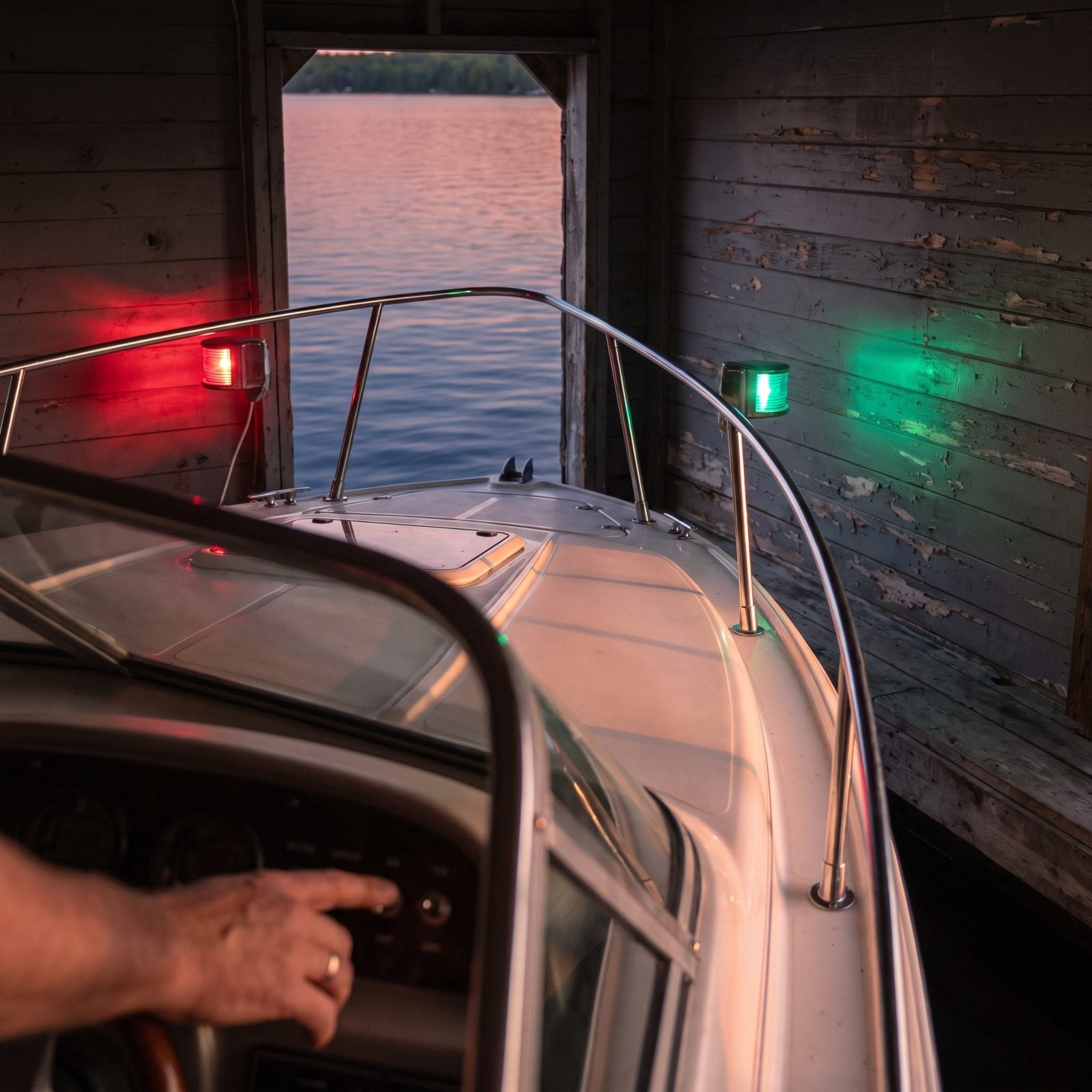
A burned-out stern light looks fine from the helm, because you can’t see it from there. You’ll find out it’s dead when a patrol boat flags you down after dark — or worse, when another boat can’t tell which way you’re pointed.
The fix takes ten seconds. Flip the nav lights on while you’re still tied up and point the bow at a wall, a piling, or the garage door. The red and green should throw clear color onto the surface. Then walk aft and confirm the white light actually burns. Bulbs and corroded contacts fail without warning, and dusk is a rotten time to learn that.
13. Take a Timestamped Photograph of the Fuel Gauge Before Long Runs
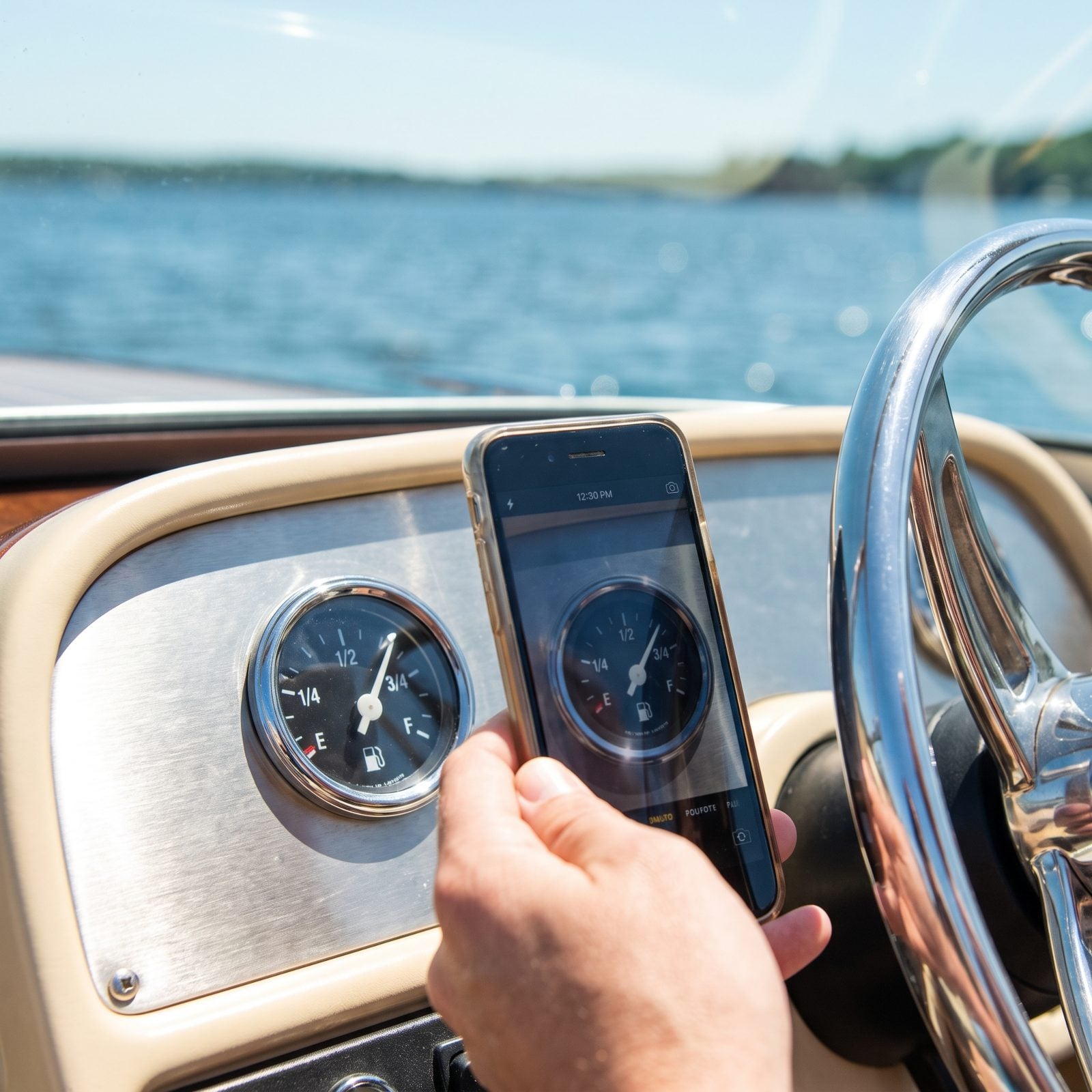
Boat fuel gauges lie. They bounce with the wave action, read full for the first third of the tank, then drop like a stone. Trusting the needle on a long run is how people end up paddling.
So snap a photo of the gauge before you leave, with the time showing. At the turnaround point, take another. Now you’ve got a real burn rate you can see instead of a guess. If the gauge barely moved on the way out but the clock says you’ve been running an hour, the second half of that tank is going to vanish faster than you’d ever expect. Plan your return on the math, not the hope.
12. Place a Bright Clip on the Chart at the Day’s Turnaround Time
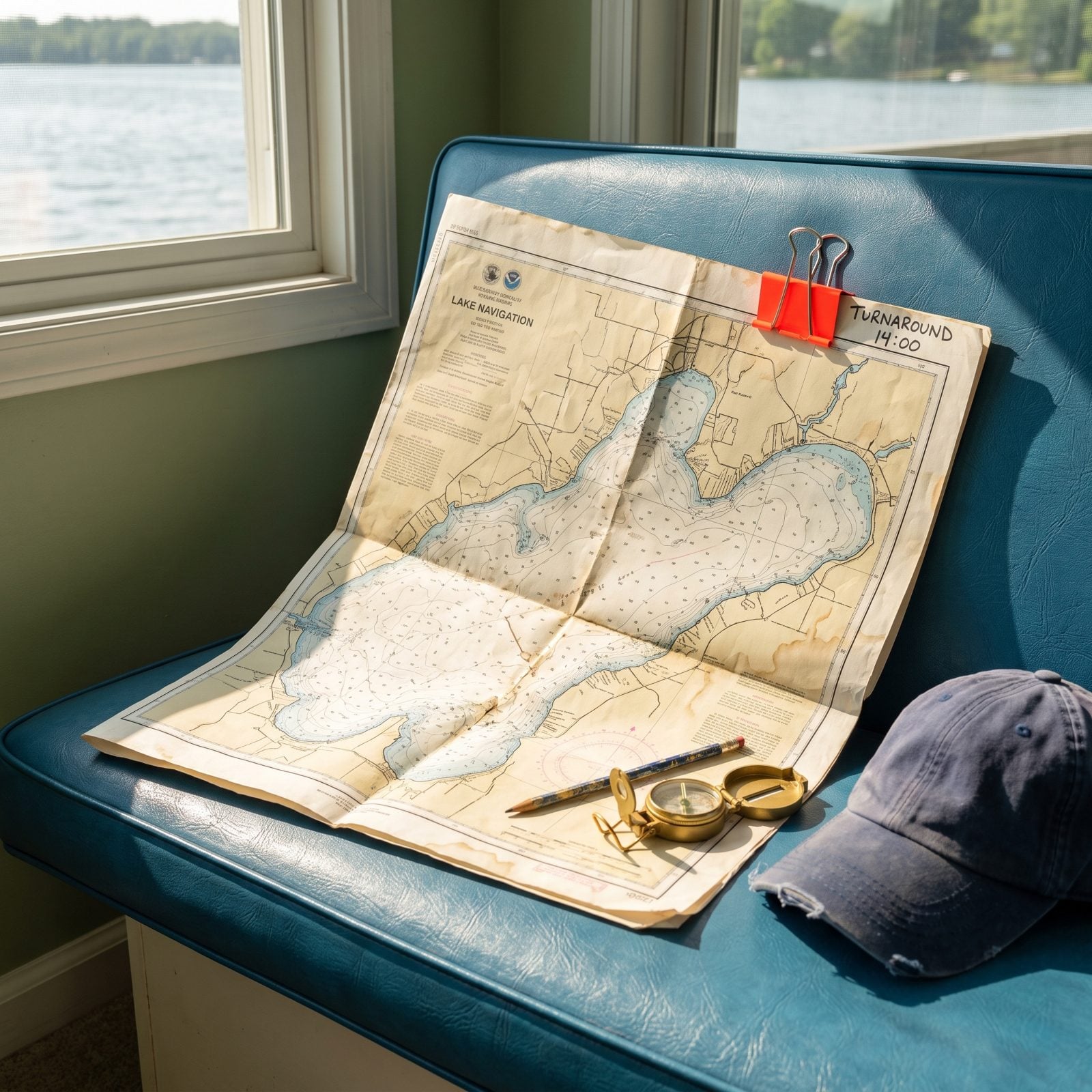
Here’s the trap. The water is perfect, the kids are happy, and you keep saying one more cove. Then the sun is low and you’re an hour from the ramp with everyone cranky and cold.
Decide your turnaround time before you leave the dock, then make it physical. Clip something loud — neon orange, or a clothespin wrapped in tape — onto the chart or the throttle. It’s a visual nag you can’t argue with. When the clock hits it, you point the bow home, no debate. Good skippers guard that margin at the end of the day, because that’s exactly when fuel runs low, traffic builds, and tired people make dumb calls.
11. Set an Arrival Alarm Before Relaxing at an Anchorage

Anchors drag. Even good ones. You set the hook, it feels solid, you crack a drink and doze off — and meanwhile the wind shifts and you’ve quietly slid two hundred feet toward the rocks.
Most phone chartplotter apps have an anchor-watch feature: drop a circle around your position and it buzzes the moment you leave it. No app? Note a fixed reference — a dock corner, a lone tree — and glance at it now and then. The habit matters more than the tool. Dozing at anchor is one of the great pleasures of boating, and it works best when something other than your own nap is keeping watch.
10. Walk the Ramp Once Before Backing Down an Unfamiliar Launch

Boat ramps are not all the same. Some drop off a cliff just past the waterline. Some are coated in algae slick as ice. Some end in soft mud that’ll swallow a rear tire. And you can’t see one bit of that from the truck.
Spend sixty seconds walking it. Look for where the concrete ends, how steep the drop is, and whether the wet portion is green and greasy. Note where other trailers are parking so you don’t block them. That short stroll saves you from the worst day on the water — the one that happens before you even launch, with your bumper underwater and a line of people waiting behind you.
9. Open the Tow Vehicle’s Windows Before Reversing Down the Ramp
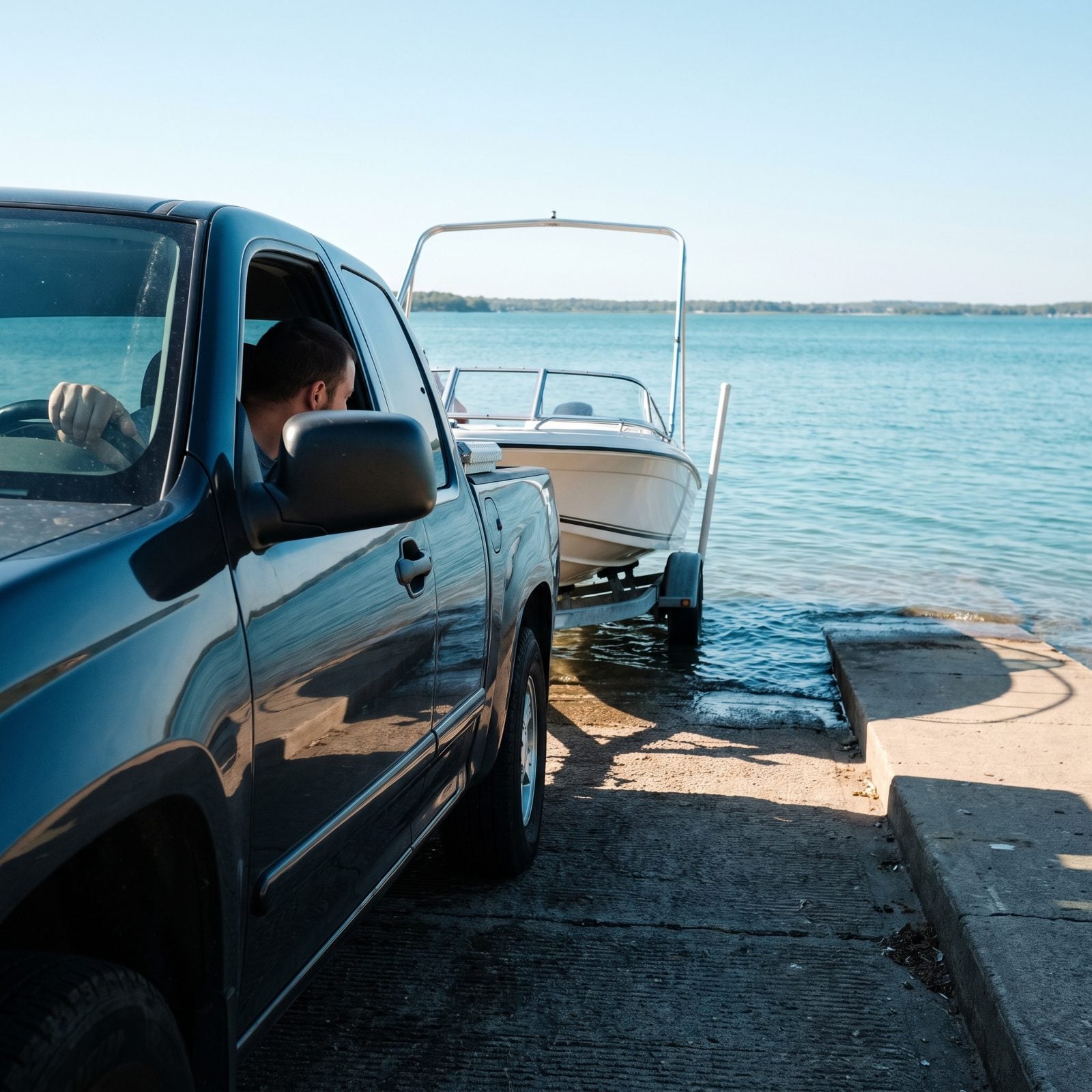
Mirrors fail you on a ramp. The trailer jackknifes into a blind spot, somebody shouts a warning, and your windows are up so you hear nothing but the radio.
Roll them down before you start backing. Now you can hear your spotter, hear the trailer guides tap the hull, hear another boater yell stop. And there’s a second reason nobody mentions: in the rare event the truck slides too far and water starts coming in, open windows are your exit. It almost never happens. But the window costs nothing to lower, and hearing everything around you makes the whole launch go smoother.
8. Photograph the Empty Trailer-Space Number at Large Marinas
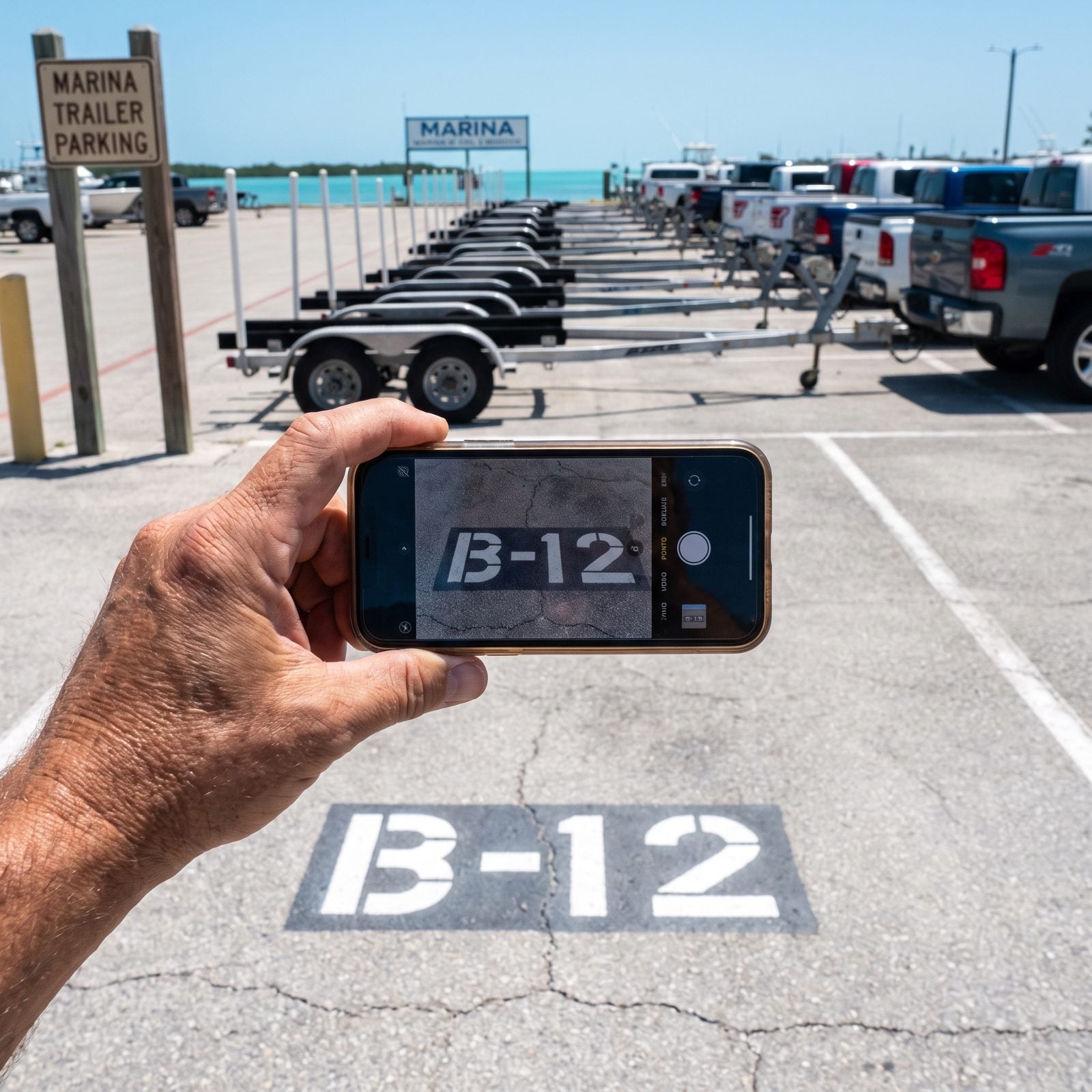
You launch, you have a great day, you come back at sunset wrung out — and the trailer lot is a sea of identical silver trailers. Good luck remembering which row you left the truck in.
Snap a photo of the space number, or the aisle sign, before you walk away. The timestamp and location tag do the remembering for you. At the big reservoirs and busy coastal ramps, these lots can hold hundreds of rigs, and wandering around in soggy shoes hunting for your own trailer is nobody’s idea of a good ending.
7. Check Trailer Lights by Recording a Phone Video
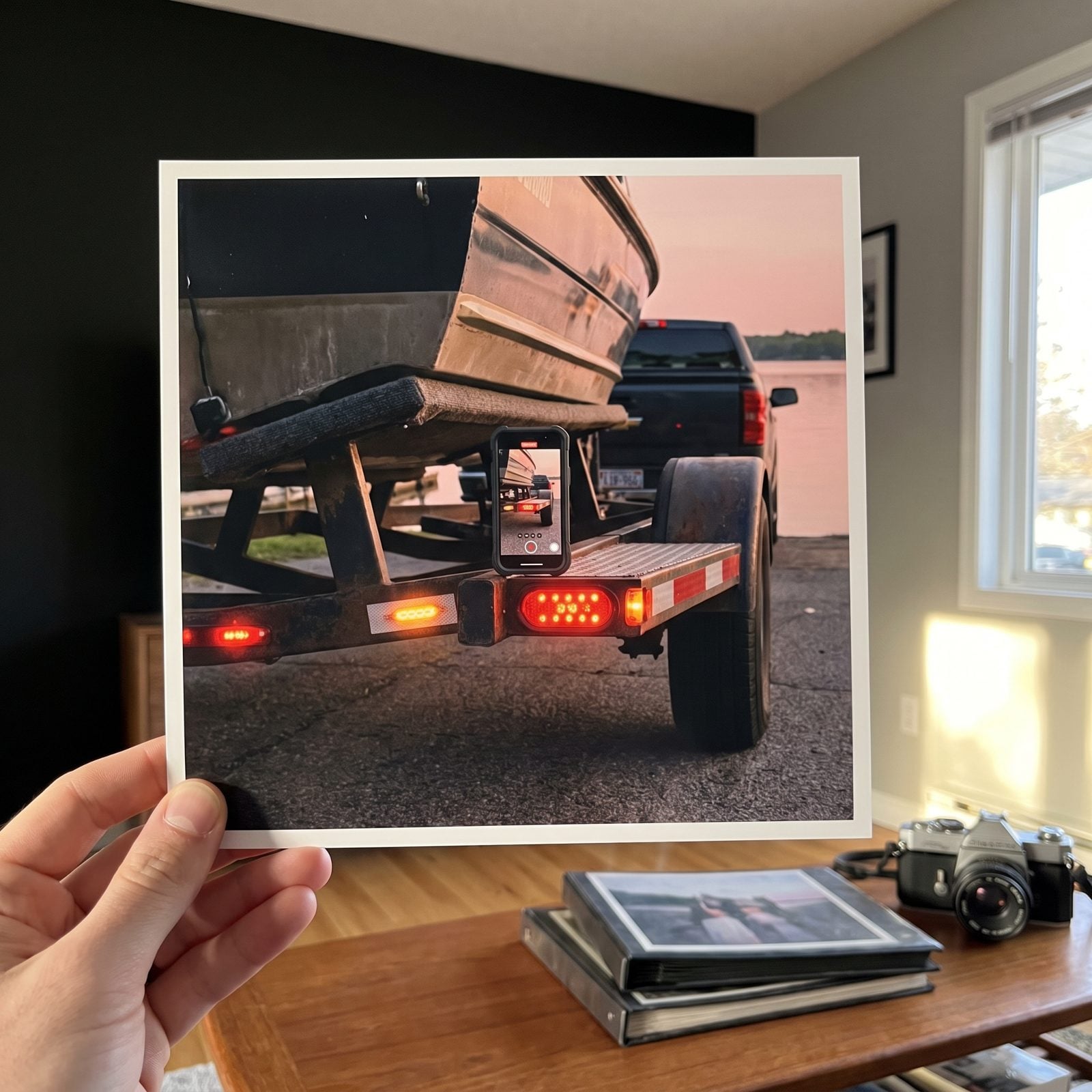
Checking trailer lights alone is a two-person job you’re doing solo. You tap the brakes, run to the back, and the lights are already off. The turn signal? Never catch it, because you can’t be in both places at once.
So prop your phone a few steps behind the trailer, with the camera pointed at the taillights, and hit record. Walk through the whole sequence — brakes, left blinker, right blinker, hazards, running lights — then sit down and watch the clip. A dead trailer light is a ticket waiting to happen and a genuine hazard on a dark highway home. The video catches a flicker or a slow bulb you’d miss in a live glance, and it takes about as long as checking them wrong would have.
6. Sweep a Hand Across the Trailer Bunks for Exposed Hardware
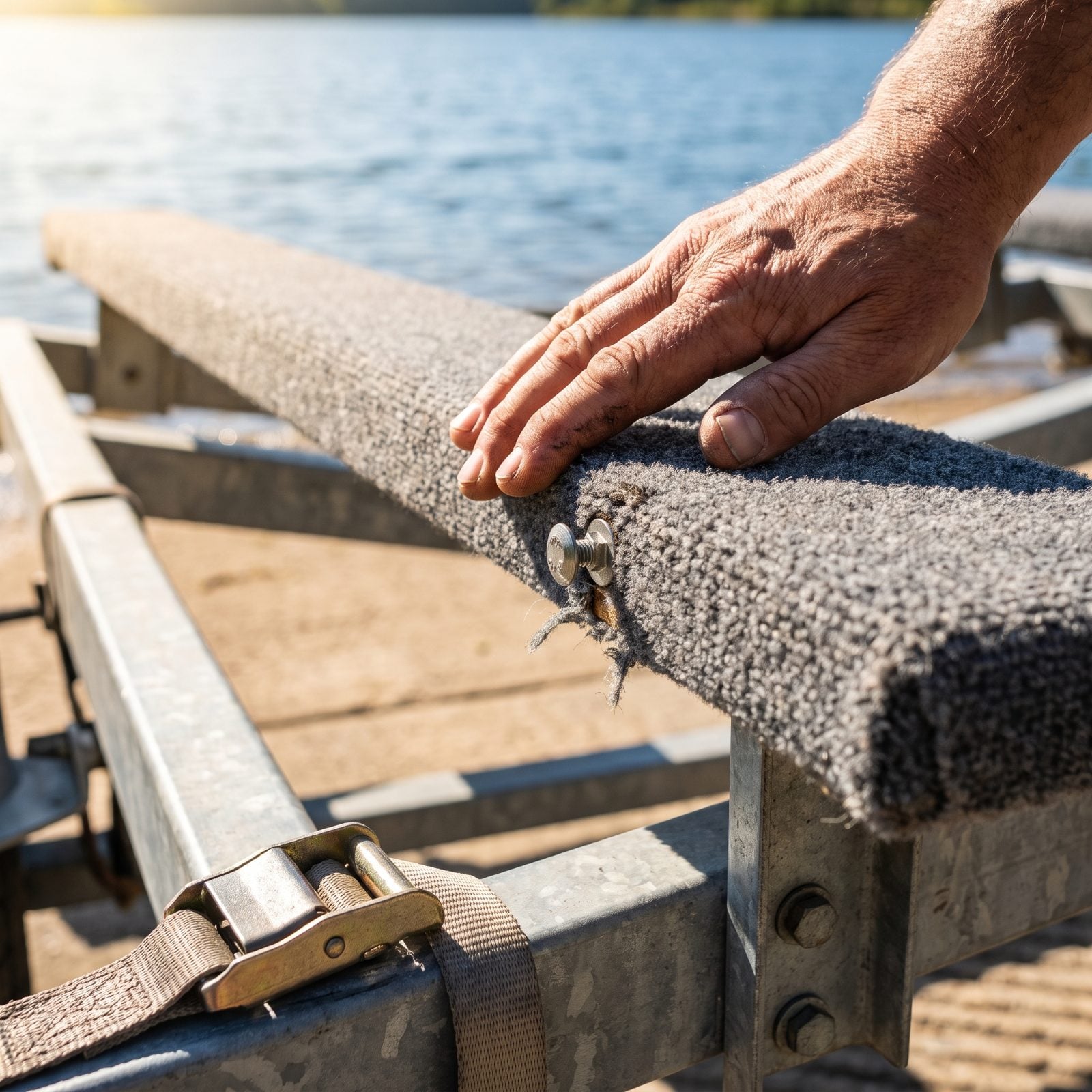
Trailer bunks are where fiberglass meets neglect. The carpet padding them wears thin, and underneath sit the carriage bolts holding everything to the frame. One works loose over a season of highway vibration, the head creeps above the carpet, and the next boat you float off that trailer gets a fresh gouge along its hull.
Running a bare hand down each bunk takes ten seconds and tells you more than a glance ever will. You feel the raised bolt your eyes skip right over. Snug it down, or shift a carpet flap over it, before the hull ever touches.
5. Turn the Propeller by Hand During Prelaunch With the Engine Disabled
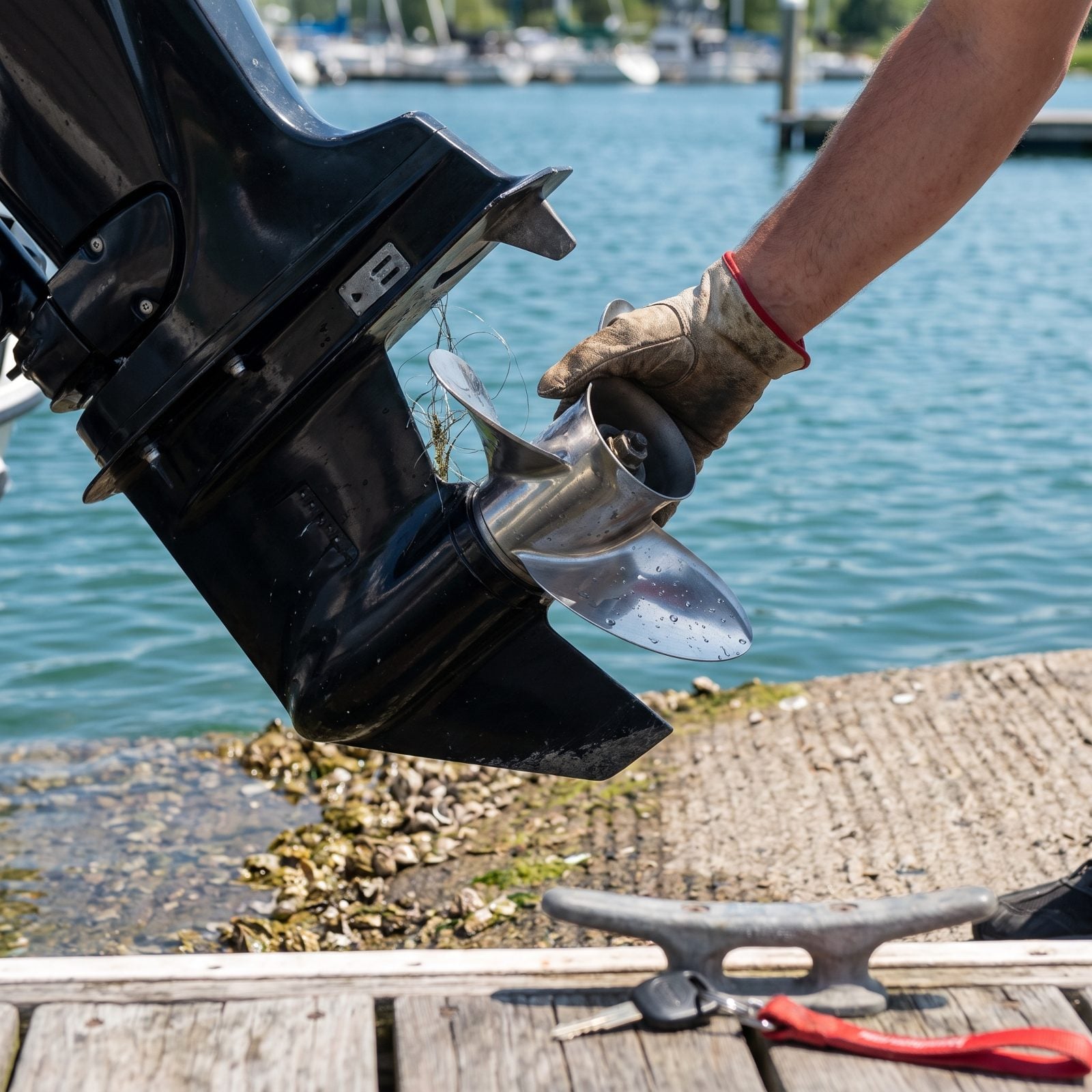
Spin the prop before every launch and it tells on itself. A smooth, free rotation means the lower unit is turning the way it should. A gritty catch or a wobble? Something’s wrong before you’re ever in gear.
This is also when you find the fishing line nobody wants to find. Monofilament wraps behind the hub, works past the seal, and chews up the gearcase over time. By hand, you feel the wrap, and you spot the nick on a blade edge that’ll make the whole boat buzz at cruising speed.
Key out, engine dead, no exceptions. A prop you turn by hand should never have any chance of turning back.
4. Point at the Drain Plug and Say It Aloud Before Launching
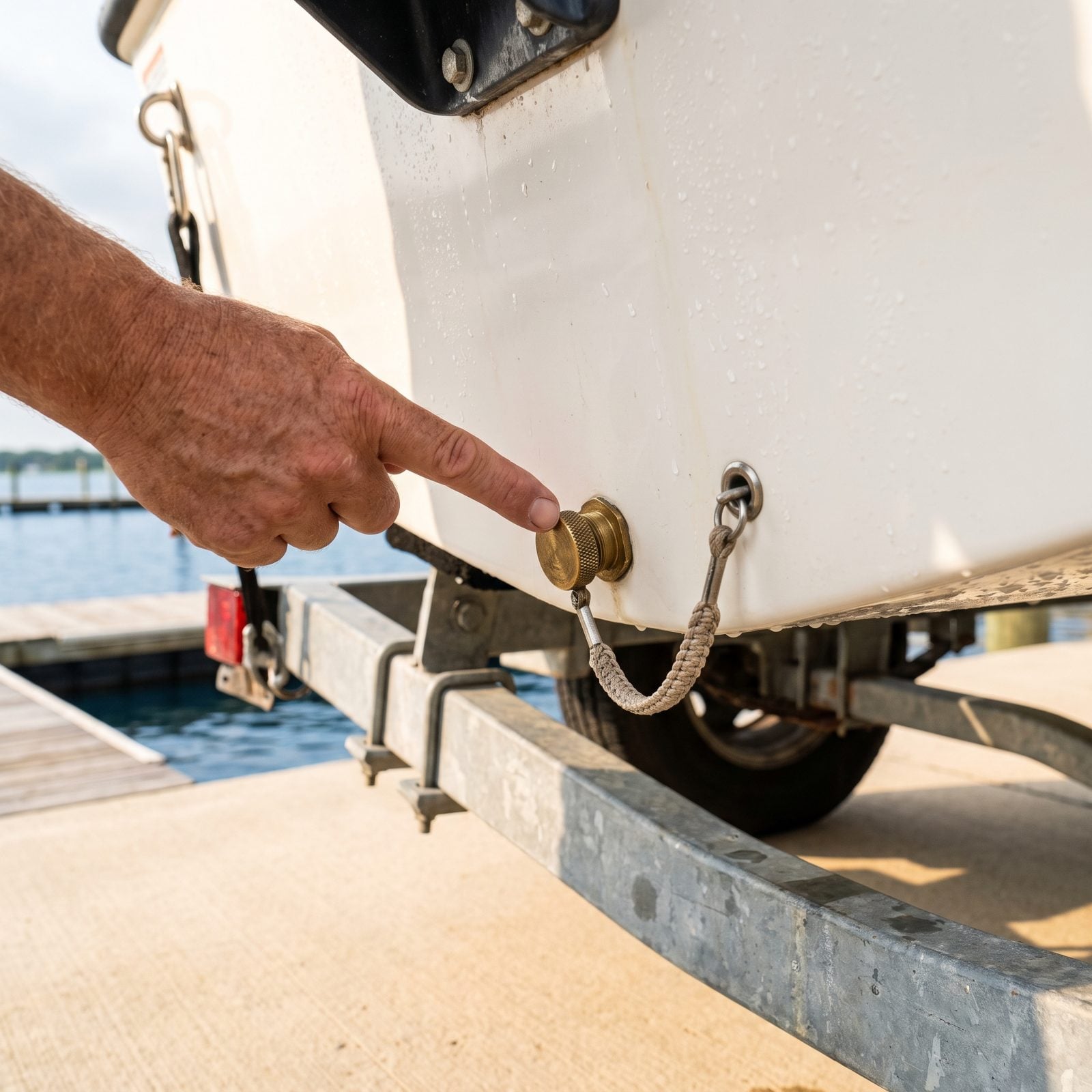
Every marina has watched it happen. A boat backs down the ramp, floats off clean, and starts sitting lower than it should while the owner wonders why the bilge is filling. The plug is still on the garage bench.
Pointing at it and saying “plug’s in” out loud sounds silly until you understand why pilots do the same thing with checklists. Naming the action forces your eyes and brain to actually verify it, instead of your memory nodding along and lying to you.
3. Test the Bilge Pump With Real Water, Not the Click of the Switch
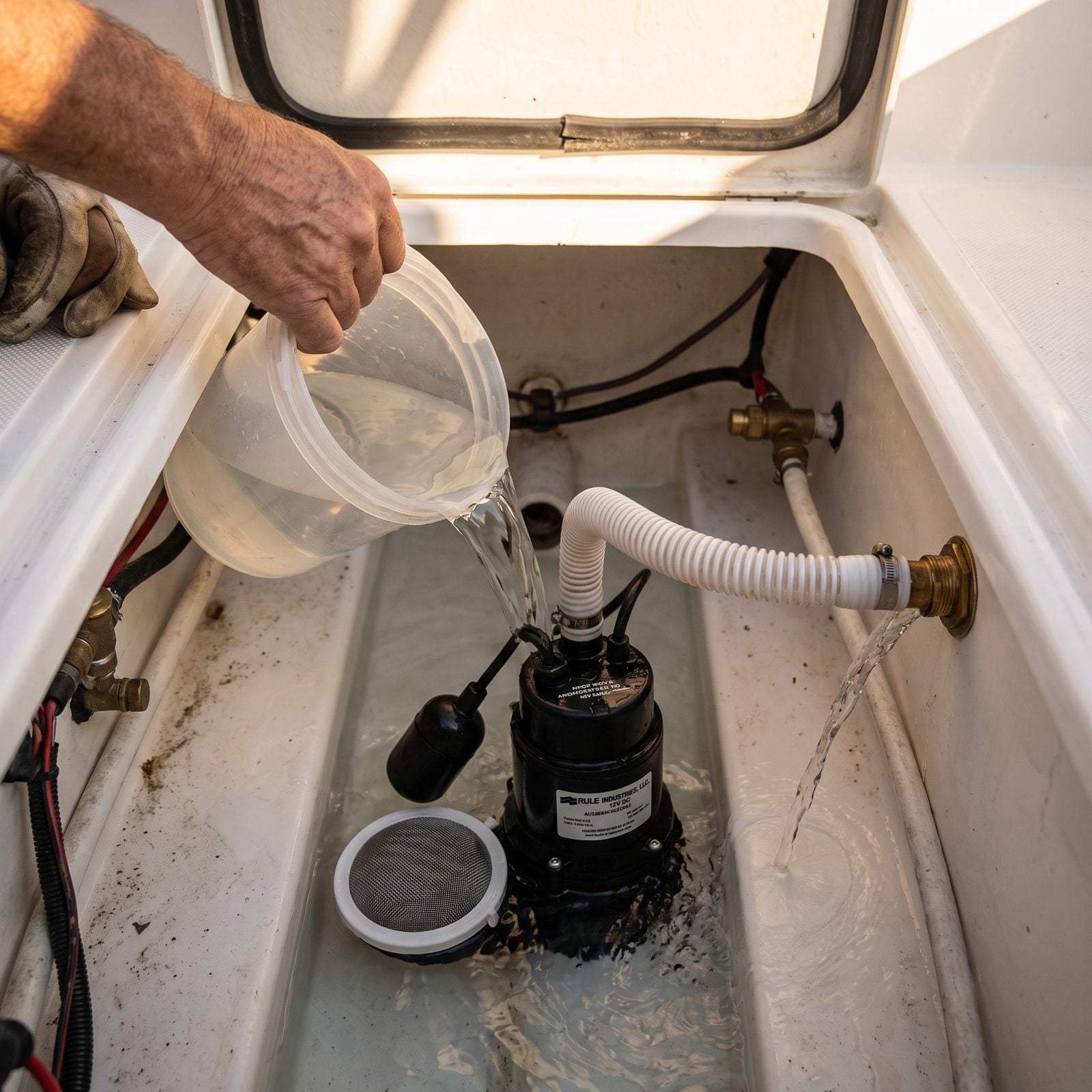
Flipping the manual switch and hearing the pump whir proves exactly one thing: the motor runs. It tells you nothing about whether water actually moves, whether the float rises, or whether the discharge line is clear.
Pour a bucket of water into the bilge instead. Watch the float lift, listen for the pump to catch, then watch the through-hull fitting. The stream should leave the hull; if water gushes back in through that fitting and into the bilge, the discharge is plumbed backwards or siphoning. That’s the whole system working together, which is the only version that matters at two in the morning in a rising chop. Plenty of pumps hum along happily while a kinked hose or a clogged strainer keeps the water right where you don’t want it.
2. Trace the Bilge-Pump Hoses by Hand Before the Season’s First Trip
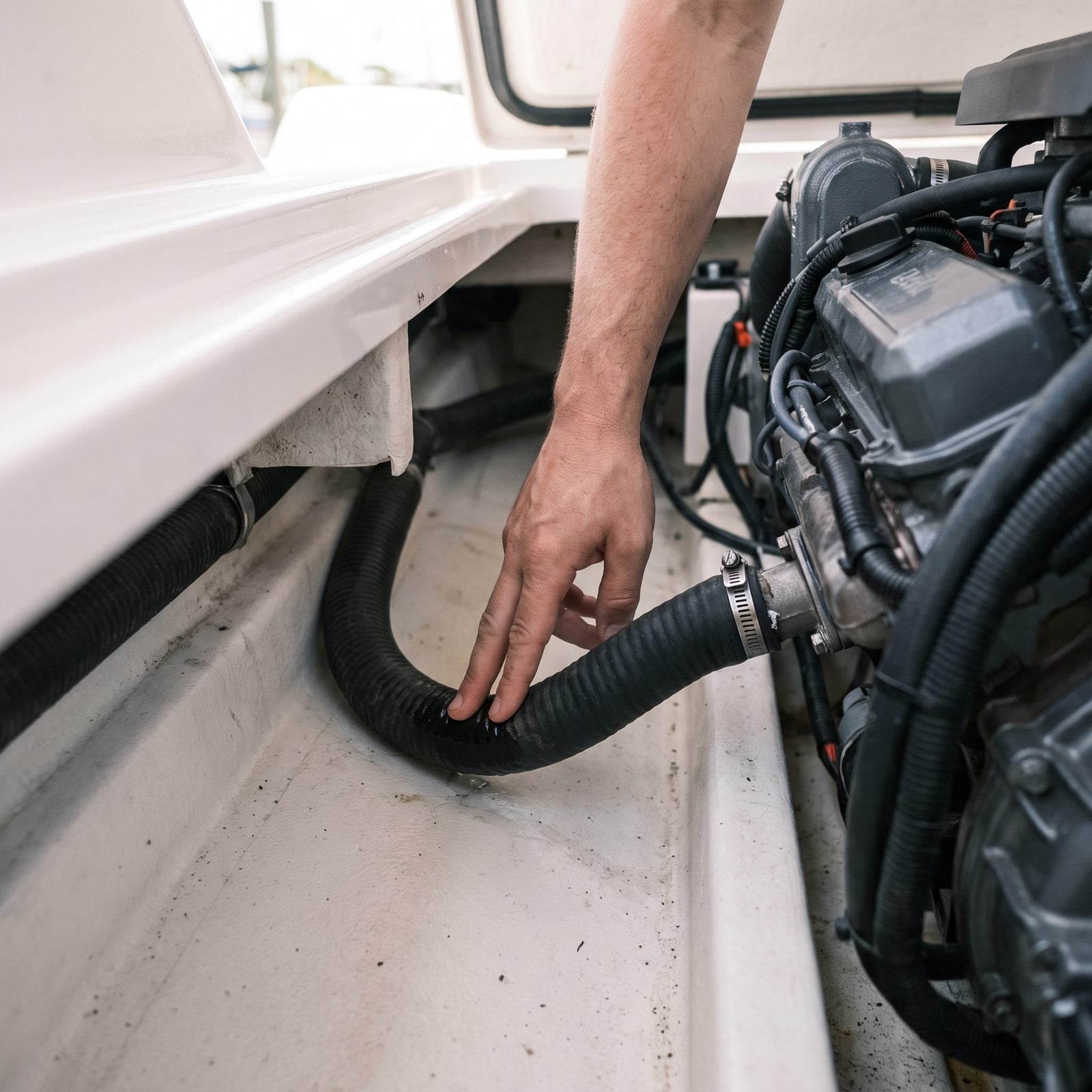
Hoses sag. Over a winter in storage, a bilge discharge line settles into a low loop behind the engine, and that dip holds a cup of standing water the pump has to shove uphill every single time. More work, less moved, and an early burnout.
Walking your fingers along the full hose run finds the loops, the soft clamps, and the spot where the line rests against something hot. You learn the path of your own boat’s plumbing — which turns a mystery leak in July into a thirty-second diagnosis instead of an afternoon lost with a flashlight in your teeth.
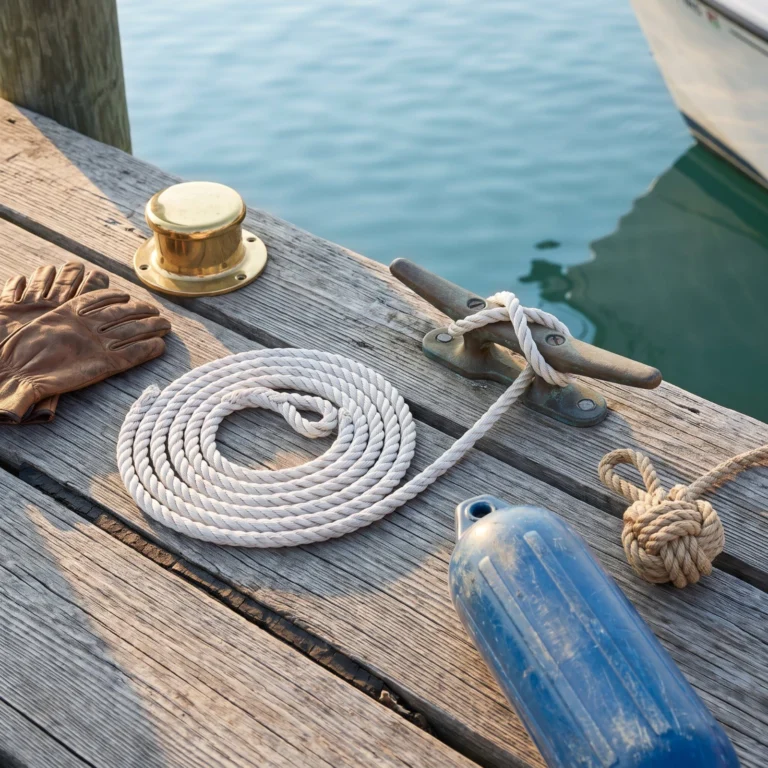
1. Face the Cleat-Horn Openings Away From Bare Toes When Coiling Lines
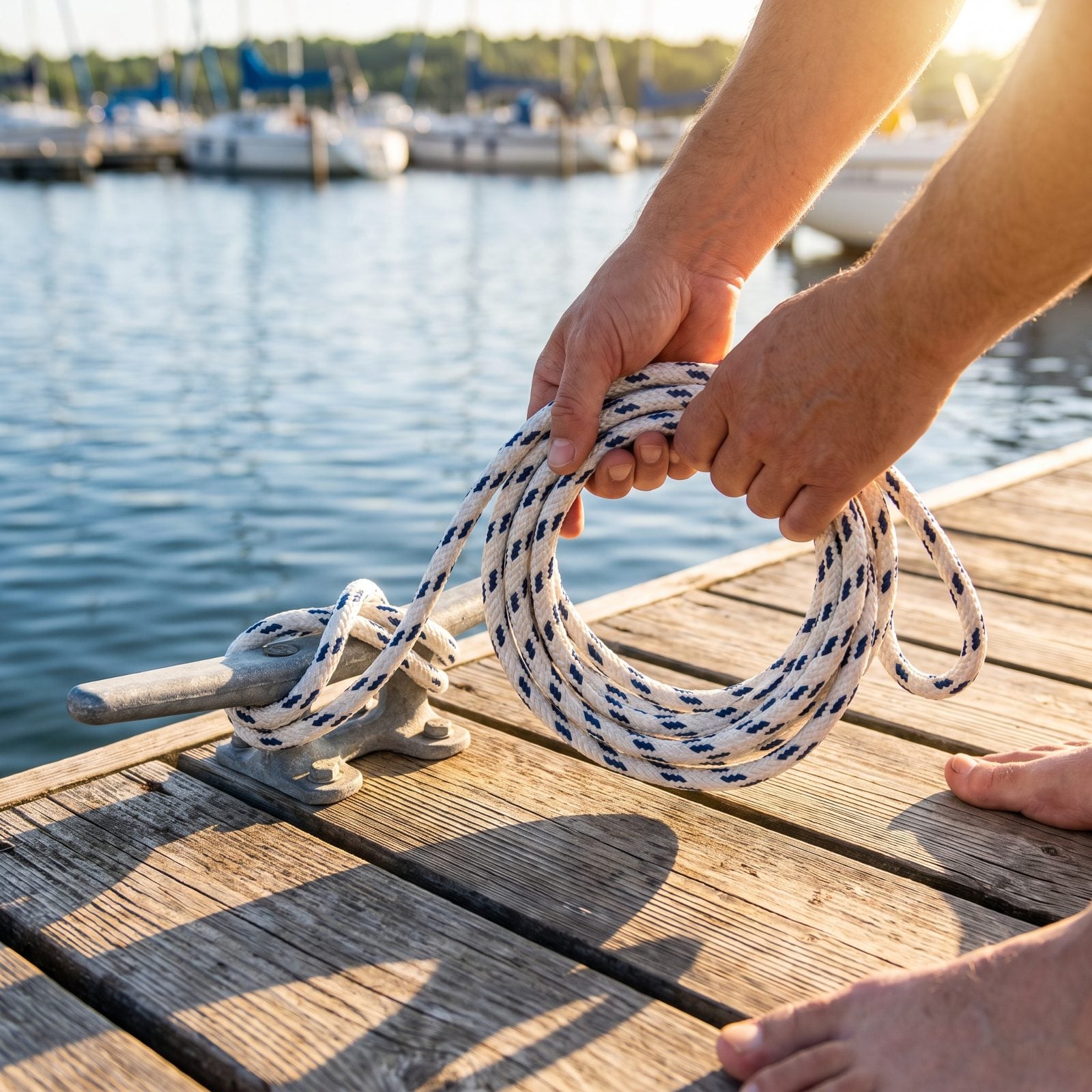
A coiled line looks harmless on the dock until someone steps into the loop and the boat drifts. The slack snaps tight around an ankle, and a loop that was decoration a second ago is suddenly a problem moving at the speed of the current.
Set your coils so the open end points toward the water, not back across the walkway where bare feet live. Same idea with a working line: keep the loops clear of where people stand so nobody gets a foot inside one when the load comes on. It’s the kind of habit you only build once — usually right after the day you almost didn’t.