Walk any boatyard in March and you’ll find a hull up on stands, tarped against the wet, a man standing beneath it with a flashlight and a paint scraper. He’s not fixing the boat. Not yet. He’s deciding whether to, and the look on his face — hope and dread going twelve rounds — is the same one you’ve seen across a kitchen table at eleven at night, two people deciding whether the thing they built is worth the work it needs. The parallels aren’t cute. They’re wiring. The same instincts that keep us sanding a tired old sloop long past reason keep us showing up for something harder to name. Here’s where the two overlap, and why we fall for it every single time.
Please note that some of the imagery in this article may have been enhanced with the assistance of AI.
16. You Love the Sheer Line Before Reading the Survey
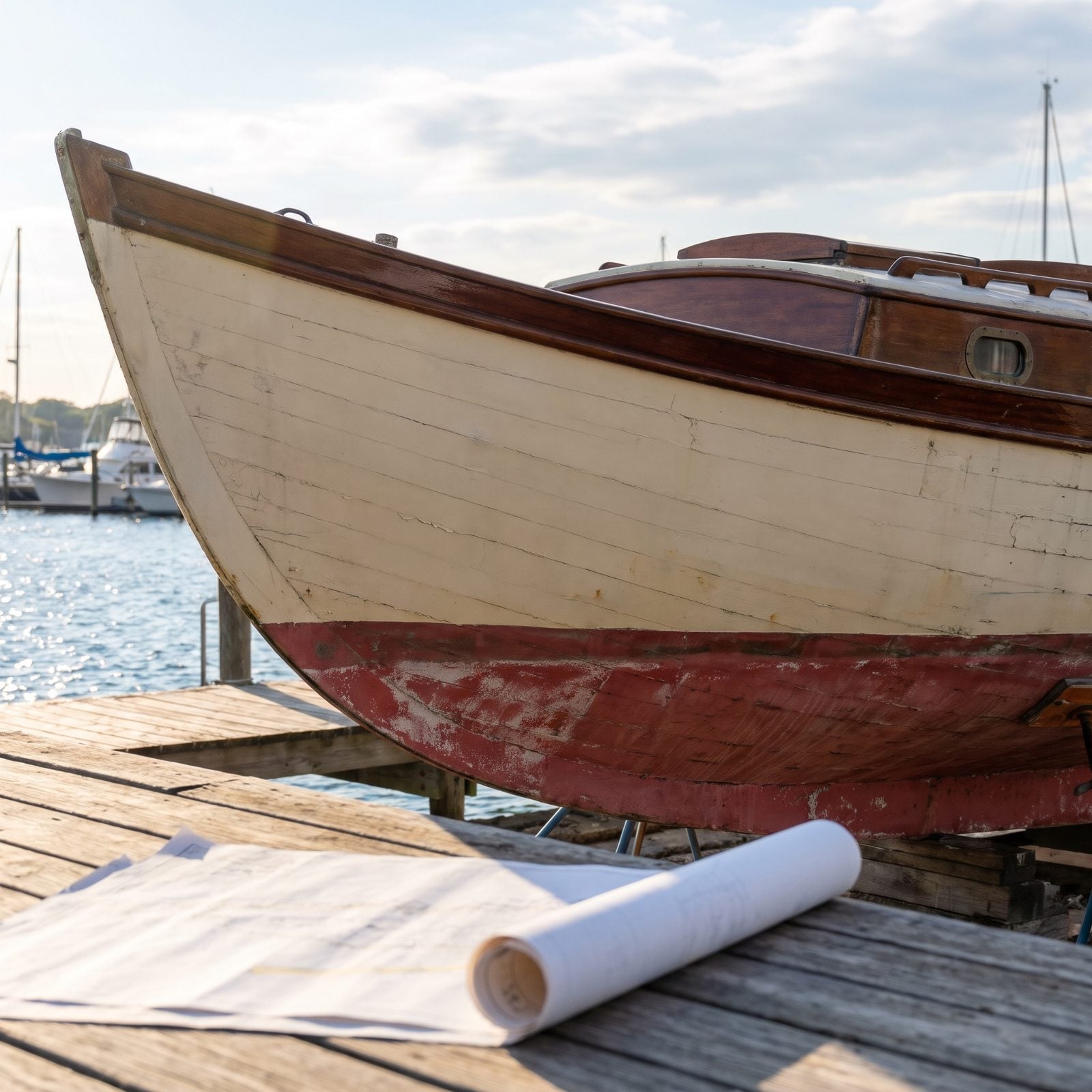
The sheer line gets you first. That long, easy curve from bow to stern that makes a hull look like it’s already moving while it’s still tied to the dock. You spot it across the yard and your whole chest does something, and you’re in love before you’ve opened a single locker.
Same way we fall for a person — the smile across the room, the way they tell a story, the shape of the whole thing before we know anything underneath it. The survey, the one that lists the soft spots and the corroded fasteners, comes later. We read it, sure. But we’ve already decided.
Psychologists call it the halo effect. One good trait we can see convinces us the parts we can’t see must be good too. A beautiful sheer line promises a sound hull; a charming first date promises an easy life. Neither promise was ever actually made. We just heard it.
15. You Budget for Paint, Then Find the Rotten Transom
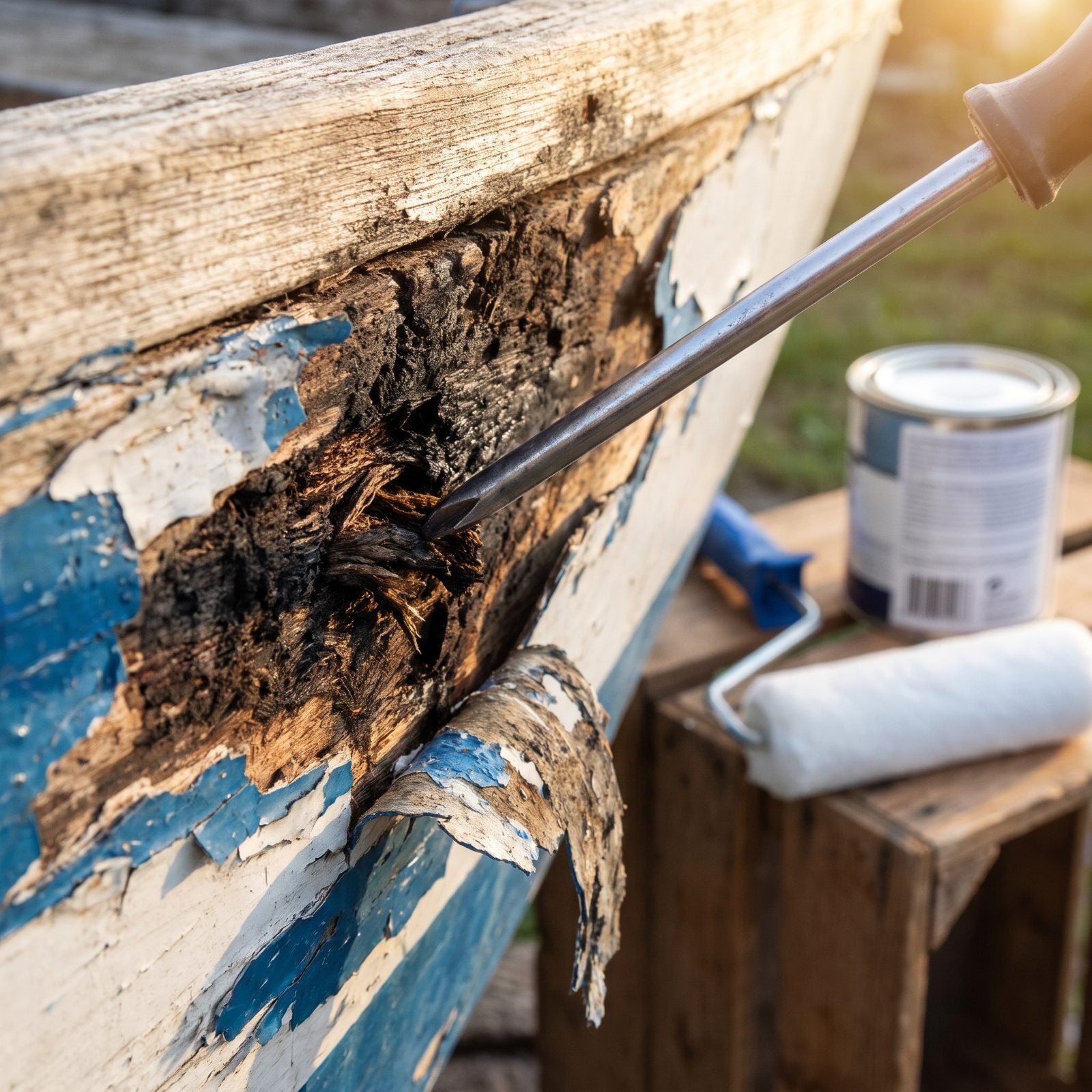
The plan was simple. A couple weekends, a few cans of topside paint, maybe new cushions — you can already see the finished boat in your head. Then you lean on the transom and your thumb goes in like it’s wet bread.
Now it’s not paint anymore. It’s structure. The whole budget just moved a decimal point.
This is the gap between the trouble we signed up for and the trouble that was actually sitting there the whole time. A tired relationship ambushes you the same way. You thought you were working on communication — turns out communication was the paint, and underneath it is something load-bearing that rotted years back while everyone admired the surface. The planning fallacy makes us wildly optimistic about what a repair will cost, in dollars or in effort, because we price the job we can see and never the job we’ll find.
14. You Polish the Brass While the Bilge Pump Struggles
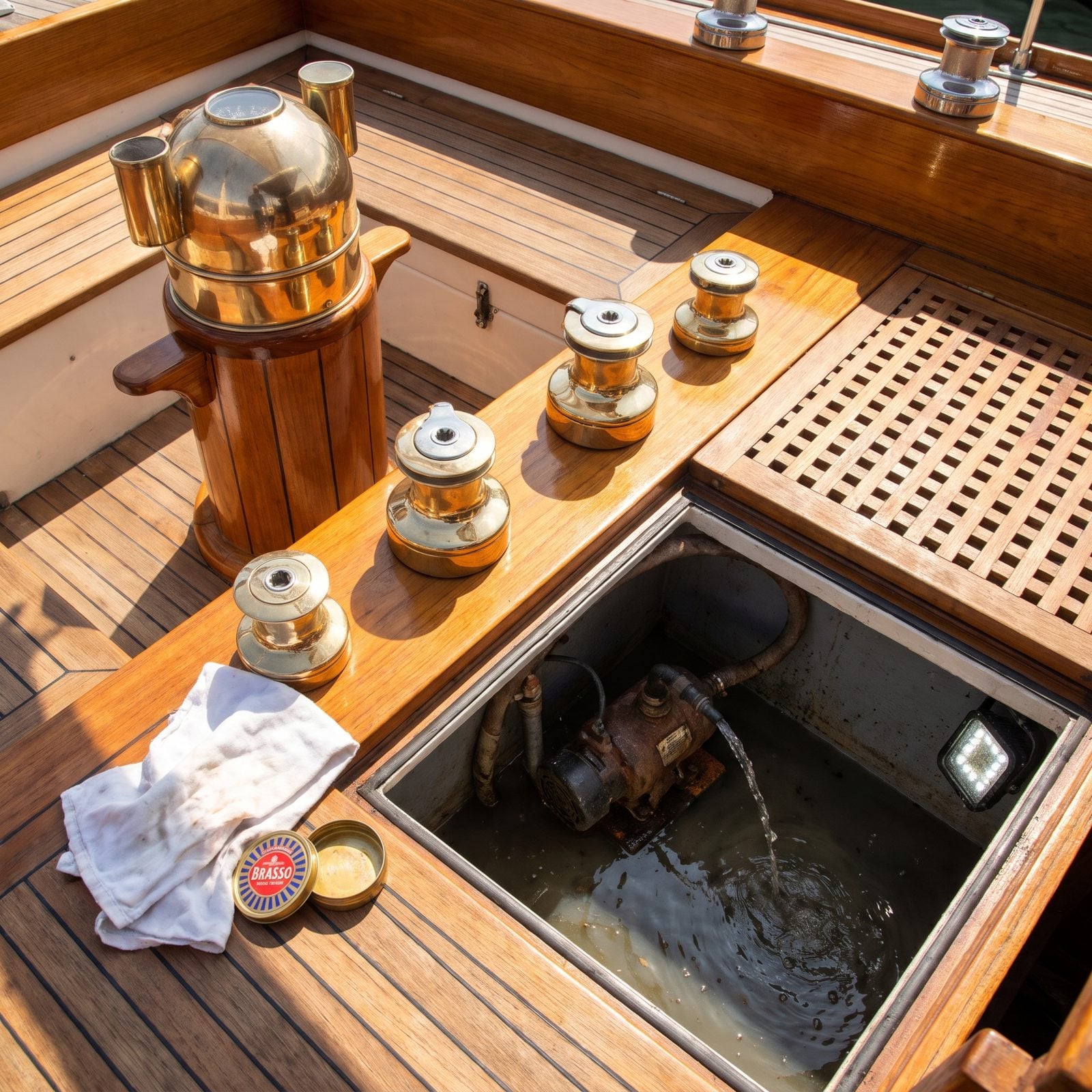
There’s a kind of peace in polishing brass. You buff a winch until it throws back the sun and you feel like a competent man fixing his boat. Meanwhile the bilge pump has been cycling every four minutes all afternoon, and you’ve decided not to think about that.
We do this in marriages constantly. We plan the nice anniversary dinner, we’re warm and attentive at the restaurant — we shine up the visible thing because the visible thing gives us a quick, clean hit of progress. The hard conversation about money or trust or how far apart we’ve drifted sits in the bilge, cycling, keeping us afloat by inches.
Polishing brass is real work. It just isn’t the work. We choose it because effort that shows feels like effort that matters, and the brain hands out the same little reward either way.
The pump keeping you afloat never gets polished. That’s exactly why it fails without warning.
13. The Previous Owner Gets Blamed for Every Mystery Wire
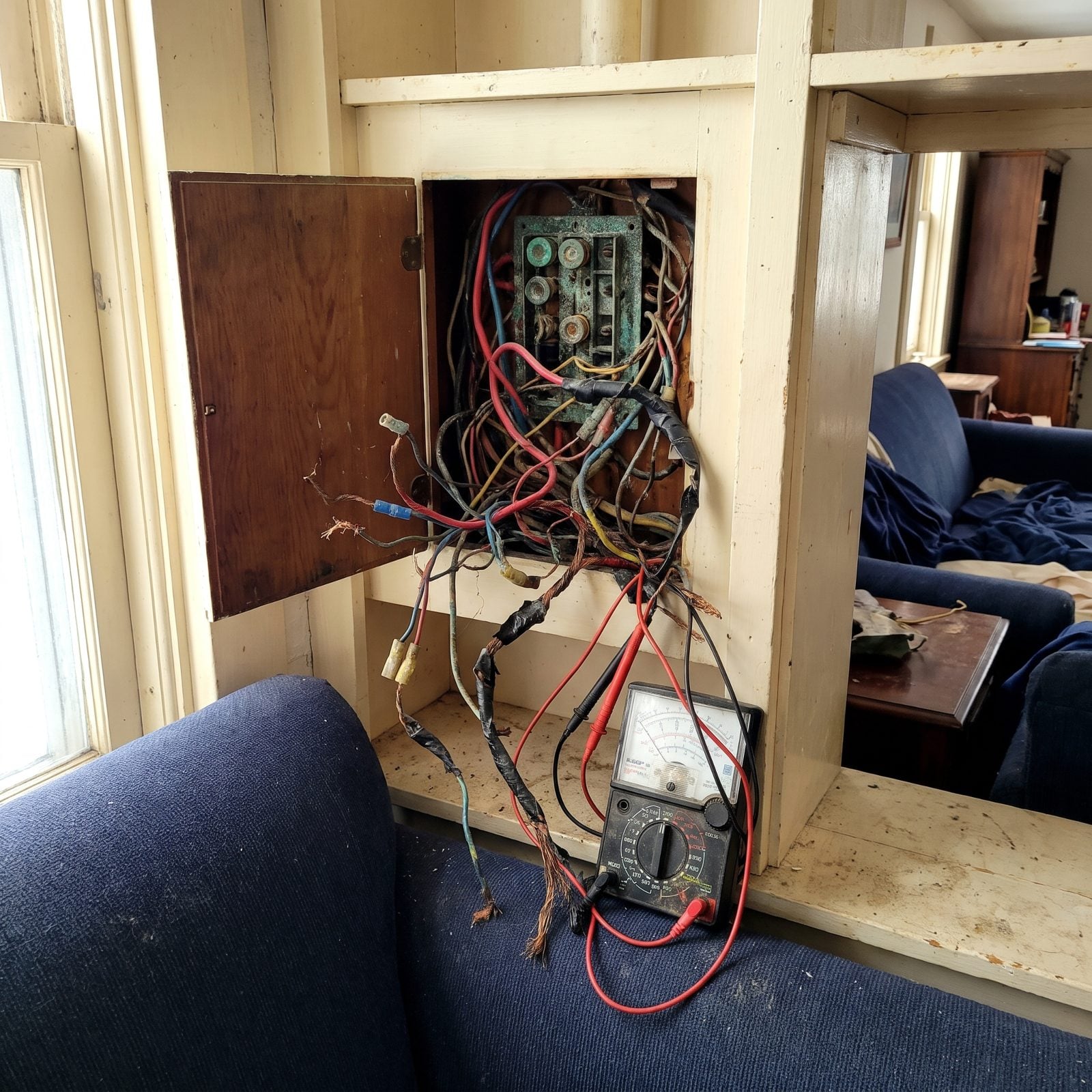
Open the electrical panel on any older boat and you meet the previous owner personally. A green wire doing a red wire’s job. A splice held together with tape and hope. A switch that turns on something nobody can locate. And every time, the same three words: what was he thinking.
There’s a comfort in blaming the previous owner. All the problems came with the boat, none of them are yours, you’re just the poor soul cleaning it up.
Troubled marriages run the same tape. Every bad pattern gets traced back to how they were raised, their last relationship, their mother — anyone but the two people standing in the boat right now. It’s called the fundamental attribution error. Their mess is a character flaw baked in before you arrived; your mess is just circumstances. Convenient, tidy, almost never the whole story. Somebody has to actually fix the wiring, and it won’t be the previous owner.
12. You Turn Up the Radio When the Shaft Starts Knocking
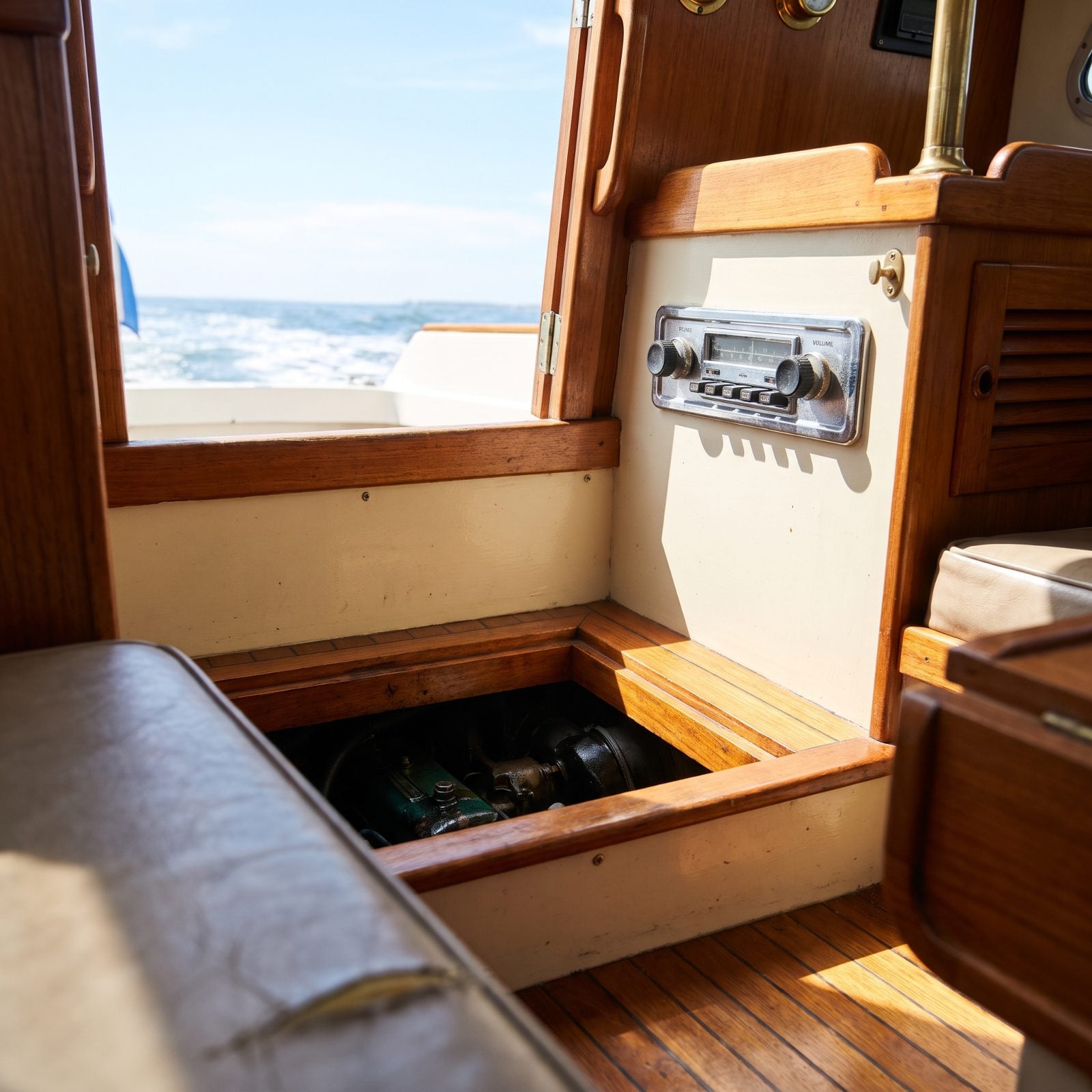
You know the knock — low, rhythmic, coming from somewhere aft, and it wasn’t there last month. You also know that checking the shaft means stopping, and stopping means facing it. So you turn up the radio and tell yourself it’s probably nothing.
Avoidance has a sound, and it’s usually a little too loud.
Couples do this with whole subjects. There’s a topic that makes the engine knock, and the reflex is to fill the quiet — keep busy, keep the kids around, keep the TV on, keep anything running so the dangerous silence where the real conversation lives never gets a chance to speak. The knock doesn’t go away. It gets louder, slower, more expensive, right up until it throws the whole works. Noise is not the same as peace. It just feels like it for a while.
11. You Keep Buying Parts Because You’ve Already Bought So Many
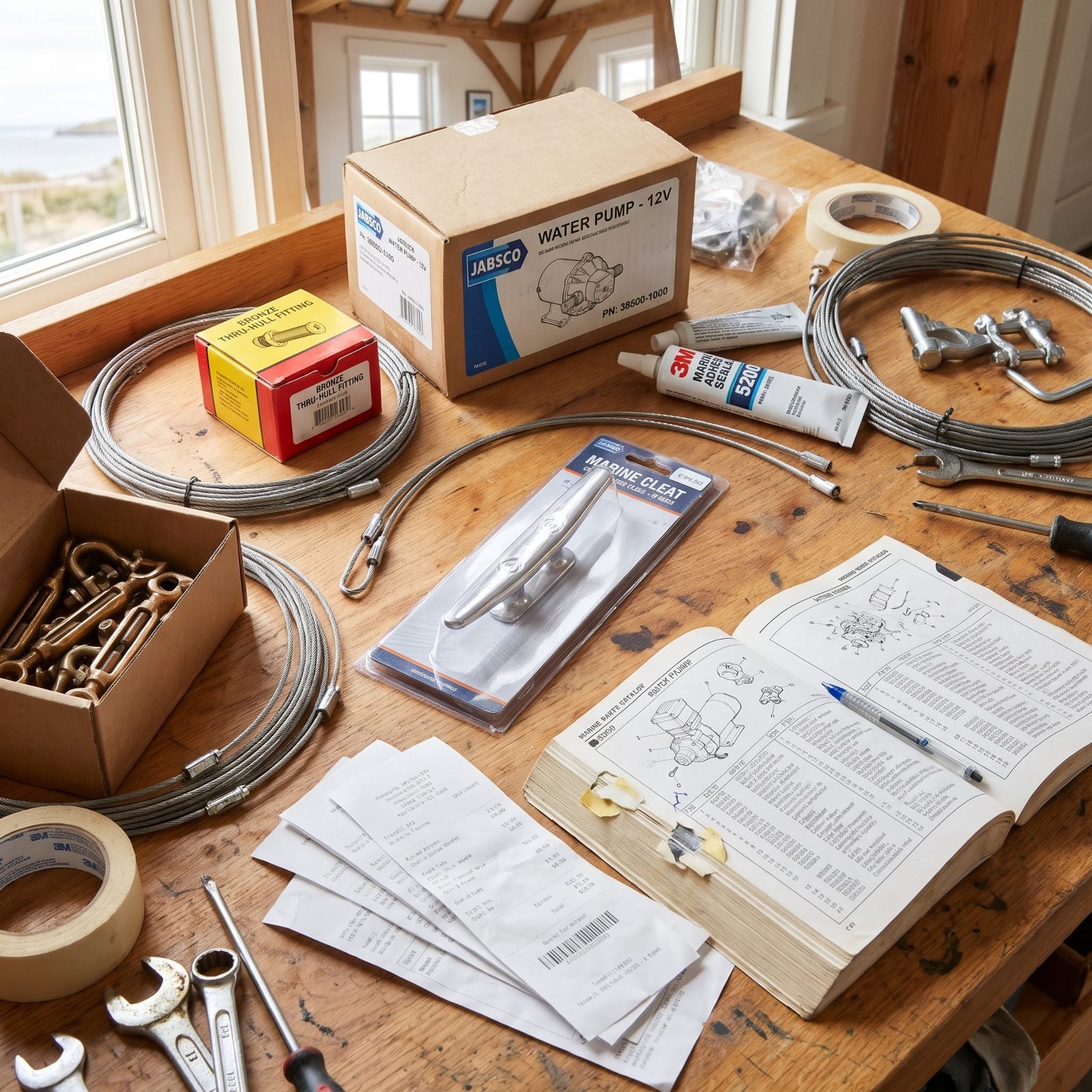
The receipts live in a shoebox now because the drawer filled up. New pump, new cutlass bearing, new stanchions, a windlass you haven’t even installed. Every so often you add it all up, the number is genuinely frightening, and the conclusion is always the same: well, I can’t stop now.
That’s the sunk-cost fallacy wearing foul-weather gear. The money’s gone whether you quit or continue, but the mind refuses to let it go to waste, so it throws good money after it to protect the bad.
Marriages do this with years. Fifteen of them in, and the thought isn’t “is this good for me,” it’s “I’ve put too much into this to walk away.” The investment that should weigh nothing, because it’s already spent, becomes the heaviest anchor aboard.
10. Every Polished Yacht Nearby Makes Your Project Look Worse

Your boat was fine this morning. You were proud of the cockpit you’d just sanded. Then you notice the sixty-foot flybridge motor yacht with topsides like white glass sitting in the slip beside you, and suddenly your whole project looks like a wreck somebody walked away from.
Nothing about your boat changed. Only the comparison did.
We do this to our relationships against other people’s highlight reels — the couple on the trip, the couple who finish each other’s sentences, the couple who seem to have it all figured out. We hold our messy, in-progress, real thing up next to their polished, public, staged thing, and ours comes up short every time. The envy runs hardest when the other party is only showing you the finished topsides and none of the bilge.
You’re seeing their best Sunday against your worst Tuesday. Everyone’s boat is a project. Some just keep the tarp up so you can’t tell.
9. You Stop Inviting Friends Aboard Until the Cabin Is Presentable
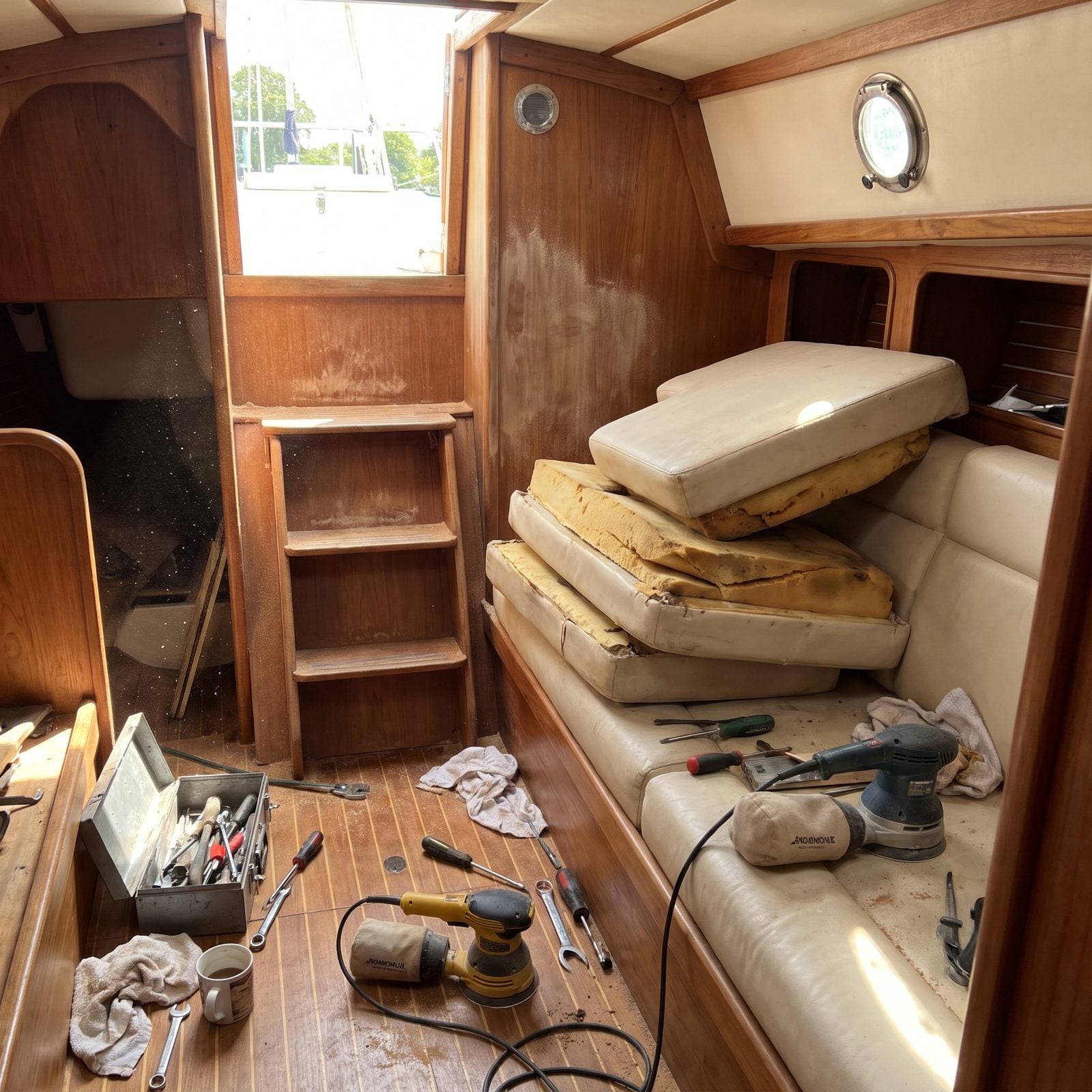
There was a time you’d have anyone aboard for a sundowner. Now the cabin’s torn apart, there’s sanding dust on everything, and when a friend asks how the boat’s coming you hear yourself say “oh, it’s not ready for company yet.” You’ve been saying that for two seasons.
Not-ready-yet is how we quietly pull the curtain. In a marriage going sideways, the invitations stop. You stop having people over. You get vague when anyone asks how things are. The isolation isn’t dramatic — it’s a slow folding-inward, telling yourself you’ll reconnect once things are presentable again.
But problems shrink in company and swell in isolation. The boat gets fixed faster with a friend holding the other end of the board. So does almost everything else. Shame keeps us alone exactly when alone is the worst place to be.
8. Old Launch Photos Make You Forget Last Winter’s Mold

You find the photos from launch day three summers back. Sails up, water throwing sparks, the boat looking like the whole reason you got into this. And it rushes back — the whole dream, clean and uncomplicated.
Funny how those photos never show the winter you pulled the floorboards and found mold climbing the frames. Memory doesn’t store the bad days at the same resolution.
Nostalgia is a professional editor, and it cuts ruthlessly for the highlight reel. A struggling marriage gets the same treatment. You remember the early trip, the laughing, the way it felt when it was new, and the memory quietly trims the long cold stretches. That rosy recall can be a lifeline, reminding you what’s worth saving. It can also be a trap, keeping you loyal to a version of the thing that no longer exists. The skill is telling the two apart.
7. One Clean Engine Start Makes the Whole Week Feel Worthwhile
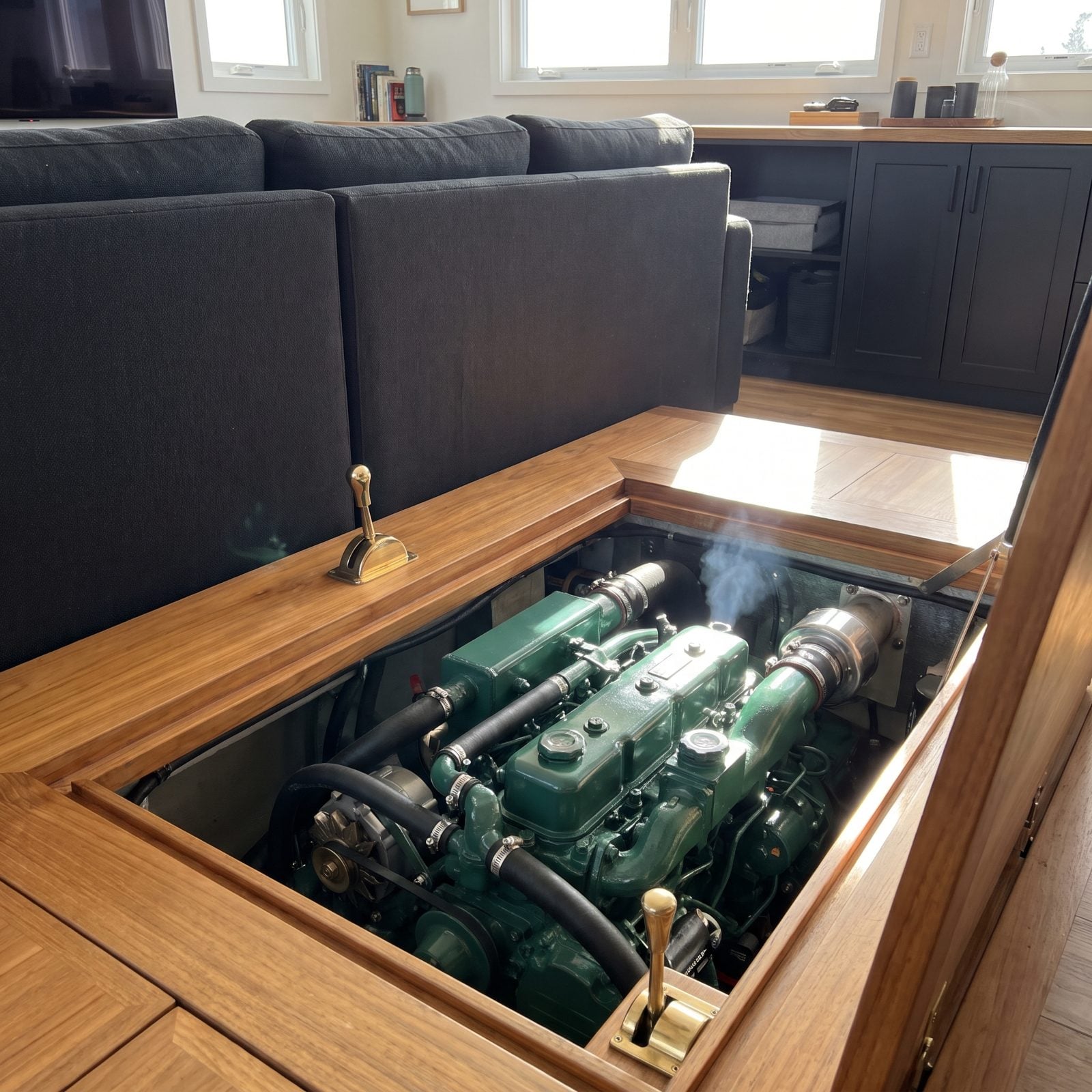
After the rot and the wiring and the shoebox of receipts, you turn the key and the engine under the living-room hatch catches first try. Steady. A plume of vapour curling up off the manifold, but no hesitation, just that even idle. And every miserable weekend of the last two months pays for itself in about four seconds.
There’s the whole game. Not the big dramatic finish — the one small thing that works when it’s supposed to.
Repair, in an old engine or a marriage, almost never delivers a triumphant before-and-after. It delivers these instead. A good laugh at the right moment. One honest conversation that didn’t turn into a fight. A single morning that feels the way it used to. These are the intermittent rewards, and the brain treats each one as proof the whole effort was worth it, which is exactly why the hard restorations ever get finished.
You don’t fix a deteriorating thing all at once. You fix it one clean start at a time, and you let each one count for more than it probably should. That’s not denial. That’s how anybody keeps going.
6. One Person Sands While the Other Hunts Parts
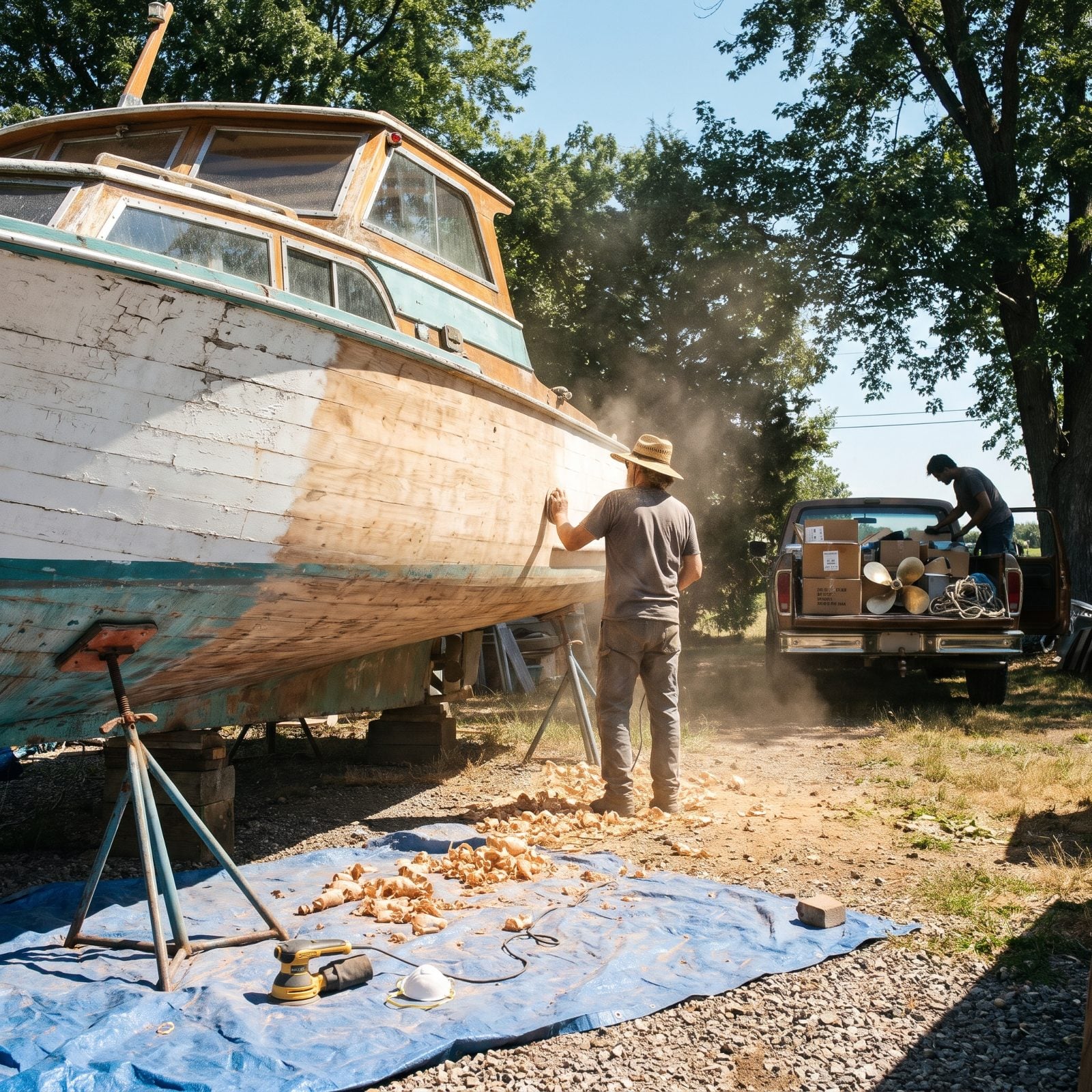
Watch any couple take on a tired old boat and the labor splits almost on its own. One person sits for hours with the orbital sander, shoulder aching, breathing fiberglass dust while chasing one clean patch of hull. The other lives on the phone, tracking down a discontinued water pump and a bronze through-hull from a yard three states over. Both are working hard. Neither really sees what the other is doing.
Same thing happens in a marriage trying to come back from the edge. One of you does the slow, invisible grind, the daily patience nobody applauds, while the other is out solving, scheduling, fixing the big obvious problem. You each think you’re the one carrying the project.
Call it the division-of-labor trap. It feeds resentment because effort you can’t see feels like effort nobody made — the sander never watched the parts hunt, and the parts hunter never felt the dust settle into his lungs.
5. Sometimes the Marine Mechanic Has to Say It
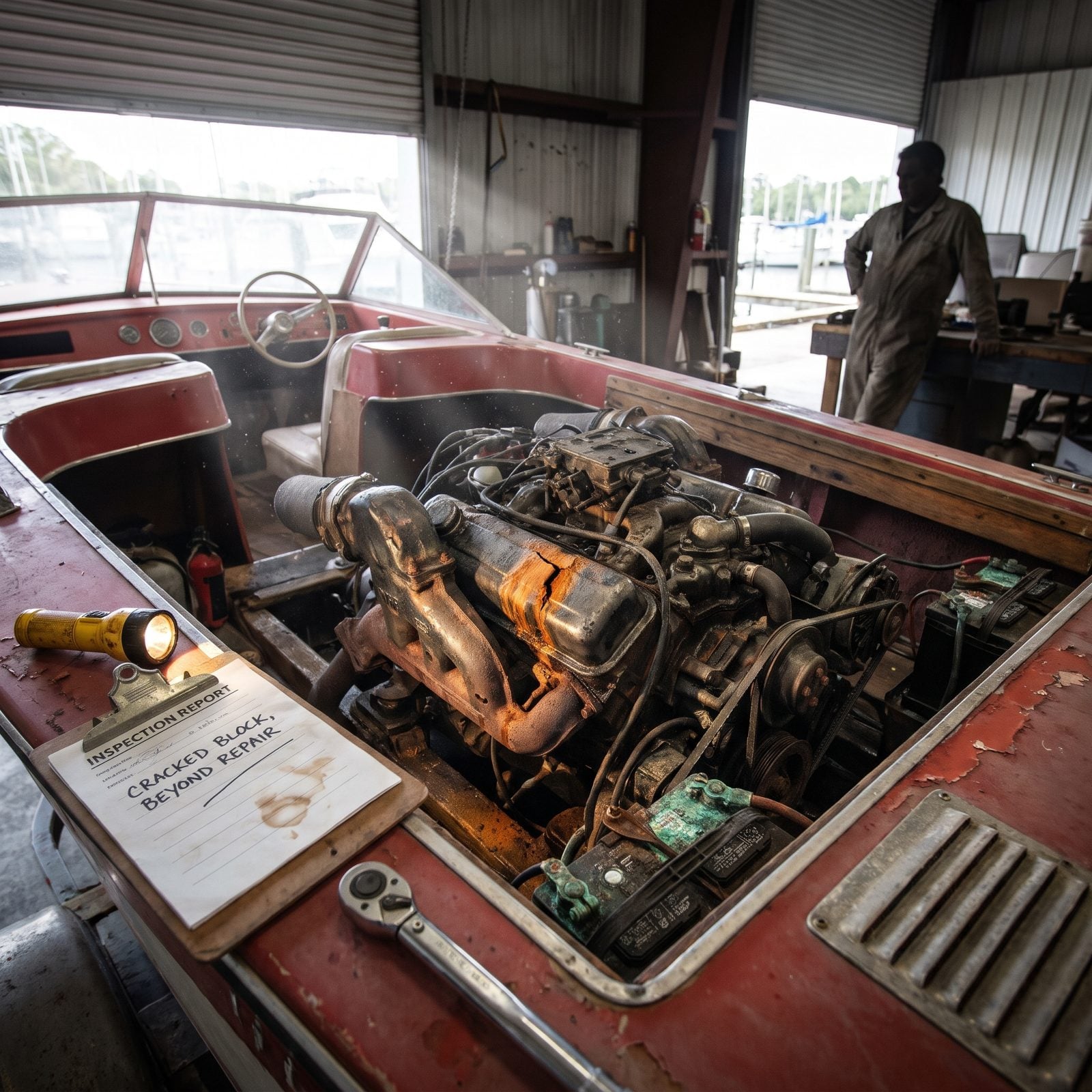
There’s a moment in every serious restoration when the mechanic wipes his hands, looks at you, and tells you the thing you’ve been paying him not to find. The stringers are soft. The block is cracked. You’ve poured four thousand dollars into a hull worth two. He isn’t being cruel — he’s just the only person in the room willing to say it out loud.
A struggling marriage has that same voice. Sometimes a counselor. Sometimes a friend who finally stops nodding along. Someone outside the project, with no sunk cost and no daydream to protect, names the structural problem you’ve both learned to steer around.
Why does it take an outsider? Because the people inside have adapted. You’ve normalized the slow leak, bailing it out every weekend without noticing you’re bailing at all. A fresh set of eyes hasn’t adapted to anything, so the damage looks exactly as bad as it is.
The person who loves the boat least is often the one who sees it clearest.
4. The Sea Trial Settles What Dockside Promises Cannot

A boat can look flawless at the dock — fresh wax, gleaming brightwork, every cleat polished. Then you push the throttle on open water and feel whether she tracks true or shudders at speed. At the dock, everything behaves. Under load, the hidden flaws come up for air.
Relationships run that same test. Anybody can be sweet over a nice dinner when nothing’s at stake. The trial comes under pressure — a sick parent, a money scare, a plan that falls apart — when you finally learn whether the thing you rebuilt actually holds.
We trust behavior over promises for good reason. Words cost nothing. What you do when the weather turns, though, costs plenty, and that’s exactly why it tells the truth.
3. Too Many Upgrades Can Erase the Boat You Loved
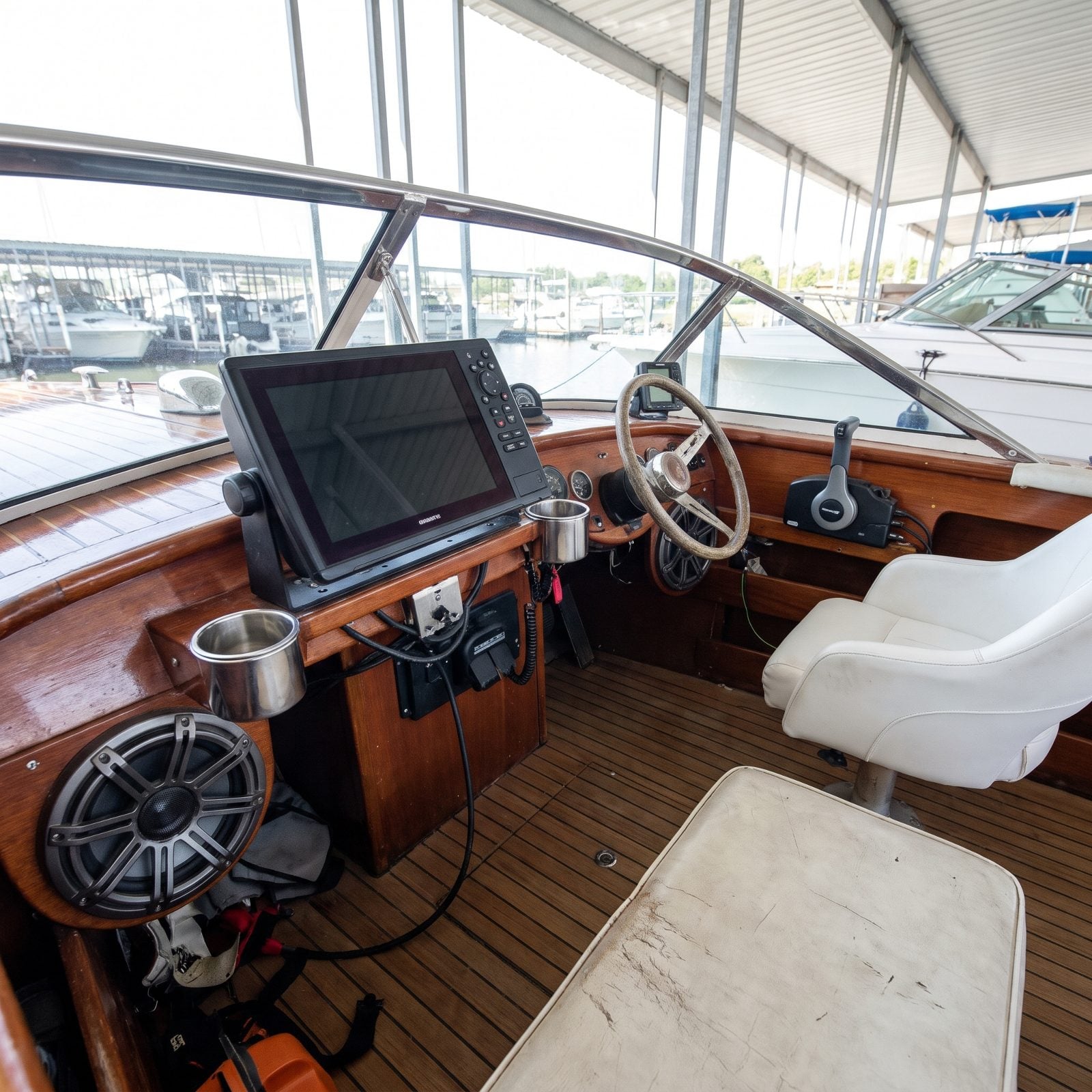
It starts reasonable. New electronics. Then a bigger engine to keep up with them, then the seats, the sound system, the fancy helm. Every upgrade made sense on its own. Stand back after a season and you realize you’ve buried the graceful old runabout you fell for under a heap of improvements that were never hers to begin with.
People do this to a marriage too. They keep bolting on fixes — new routines, new rules, grand gestures, a full reinvention of who you’re both supposed to be — until the thing they set out to save is unrecognizable under all the saving.
Each change feels like progress. Progress toward what, though? Somewhere along the way the goal quietly shifted from honoring the boat you loved to proving you could drag her into this decade.
2. You Eventually Ask Whether You Still Want the Same Cruise

There’s a question that sneaks up on you halfway through a big restoration. You stop sanding, look at the hull, and instead of asking whether you can fix the boat, you ask whether you even want the trips she was built for anymore. Maybe the lake you used to love is a parking lot of wakeboarders now. Maybe your knees want a flat deck, not a steep companionway. The boat was never the real question.
Couples hit that same crossroads. They sink months into repair and then realize the harder issue was never the arguing — it’s that they want different voyages now. Same vessel, two different maps.
And this is where all the effort goes sideways. We pour energy into fixing the vehicle because that’s the problem we know how to work on. The route — what we actually want out of the years ahead — is harder to say out loud, so we don’t. We keep sanding instead.
1. Sometimes the Kindest Decision Is Selling the Hull
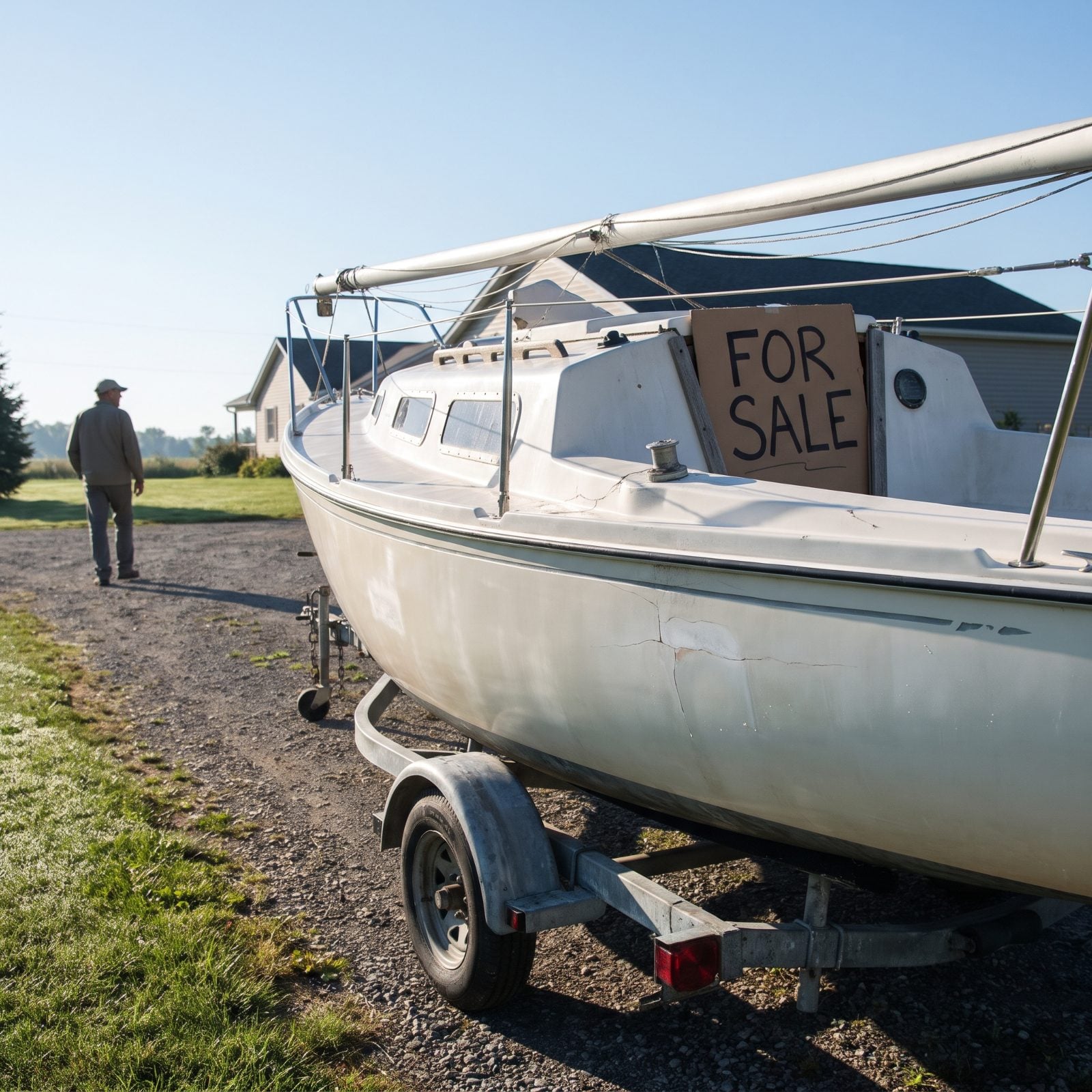
The bravest call in any boatyard isn’t the one where you double down. It’s the one where you wash her down, prop a sign in the cockpit, and let someone else take the dream. Not because you failed. Because you did the honest math, and the numbers — along with your heart — pointed somewhere else.
We treat letting go as defeat, and that instinct chains more people to sinking projects than any real hope ever does. Sunk cost whispers that walking away wastes everything you already put in. It doesn’t. What you put in is already gone either way. The only live question is what you do with the years still ahead of you.
Selling the hull can be the kindest thing you do for it. The right buyer has the time, the budget, the appetite you no longer have. The boat gets its second life. You get yours. Two good endings, not one sad one.