There is a boat at every marina that nobody should have bought. You can tell by the way the owner talks about it, half apology and half love letter, standing a little too protectively near the stern. The engine coughs, the invoices stack up, and still the devotion holds.
We don’t pick boats with a spreadsheet. We pick them the way we pick everything we end up regretting: heart first, reasoning limping behind and inventing excuses to keep up. The same mental shortcuts that keep people stuck too long in bad situations are the ones that park the wrong vessel in the slip. Here is how it happens, and why your brain keeps letting it.
Please note that some of the imagery in this article may have been enhanced with the assistance of AI.
16. You Love the Hull Before You Check the Bilge
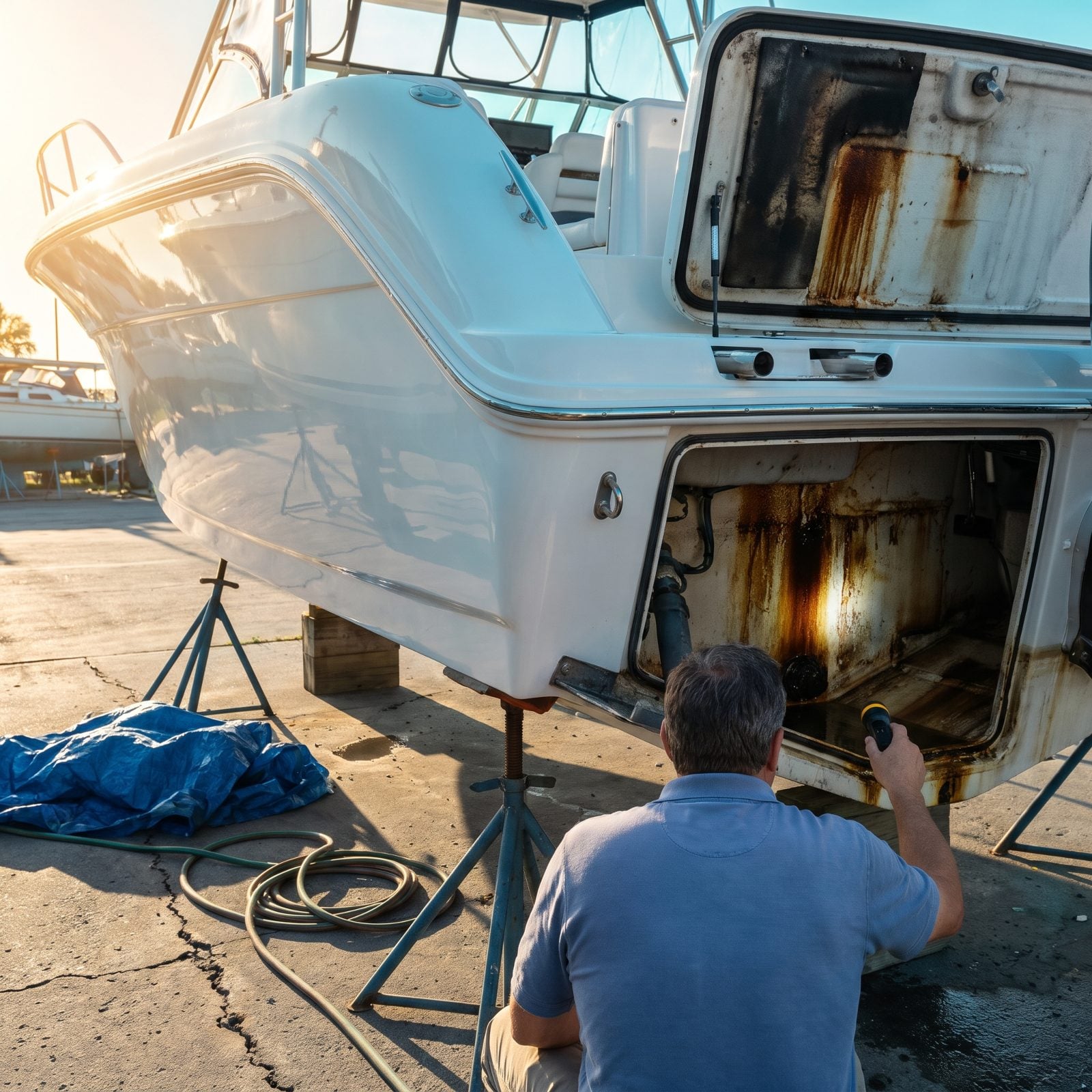
The listing photo shows a bow so clean it looks wet, and you’re already picturing it carving water before you’ve glanced below the waterline. Nobody opens the hatch first. We open it after we’ve fallen.
This is the halo effect doing its favorite trick. One attractive feature — the glossy hull, the sweeping lines — floods your judgment and spills across everything you haven’t checked yet. A good-looking boat must be a good boat, so the brain fills the gaps with optimism instead of information.
Then the surveyor crouches at an open hatch in the boat’s stern with a flashlight and the mood changes. Rust streaks down the walls. A whiff of old fuel. Water pooling where it shouldn’t be. The pretty hull was never lying to you; you just let it do all the talking.
15. You’re Cruising at Sunset Before the Sea Trial
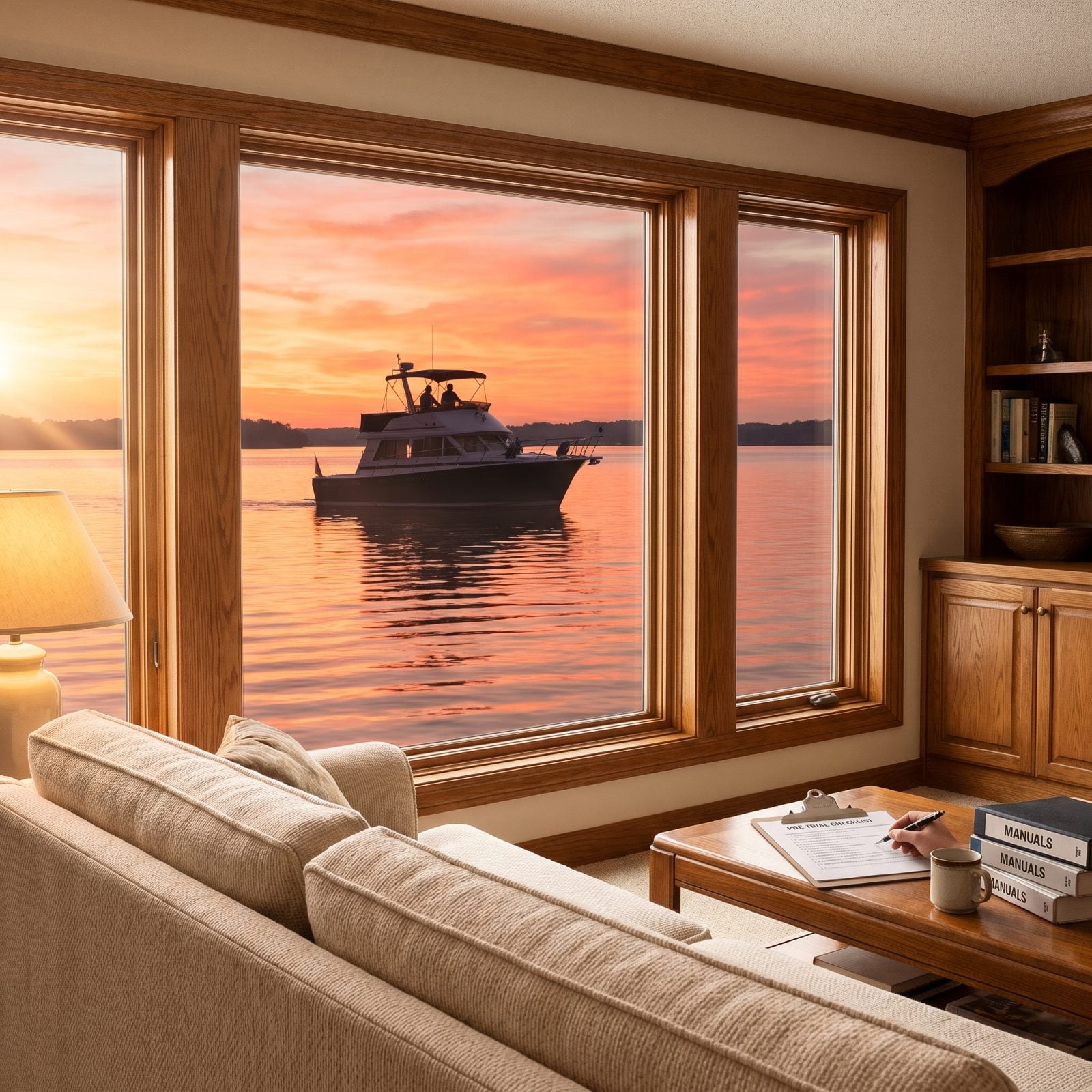
You haven’t run the engine under load. You haven’t felt how she handles in a beam sea or whether the trim tabs even work. But you’ve already imagined, in full color, the Friday evening cruise with a cold drink and the sky going pink. The fantasy arrives early and the facts never quite catch up.
Affective forecasting is the fancy name for it. We’re terrible at predicting how we’ll actually feel, so we skip straight to the best possible version and let it stand in for reality. The sea trial becomes a formality — something to get through on the way to the life you’ve already rented out in your head.
And here’s the catch nobody mentions. The sunset cruise is maybe a sliver of boat ownership. The rest is maintenance, docking, fuel bills, and waiting on a part that’s apparently being shipped from the moon. You bought the sliver and inherited everything else.
14. The Fancy Badge Makes the Boat Feel Safer
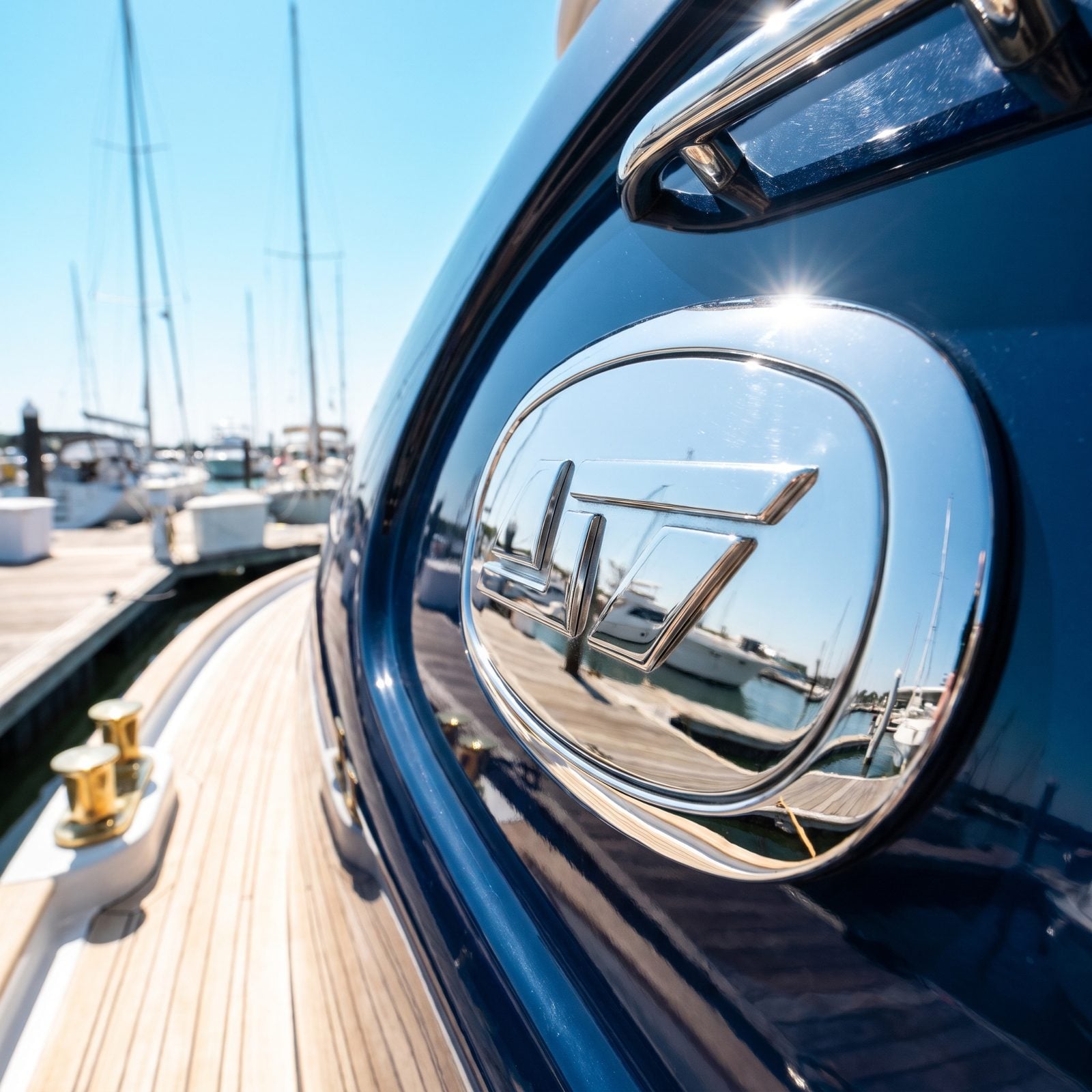
A respected builder’s name on the transom does something strange to a buyer. The exact same water leak feels less alarming on a prestige hull than on a budget one. You start assuming the brand already solved the problems you haven’t thought to check for.
That’s authority bias wearing a yachting cap. We hand our judgment over to the label and relax the scrutiny we’d apply to anything unbranded. A famous badge becomes a character reference the boat never actually earned — not this particular, aging, salt-worn example sitting in front of you.
Premium builders make fine boats. They also make boats that are now thirty years old, owned by six people and maintained by none of them. The name tells you how it left the factory. It tells you nothing about the last decade in a neglected slip.
13. You Buy the Boat Your Childhood Summers Remember
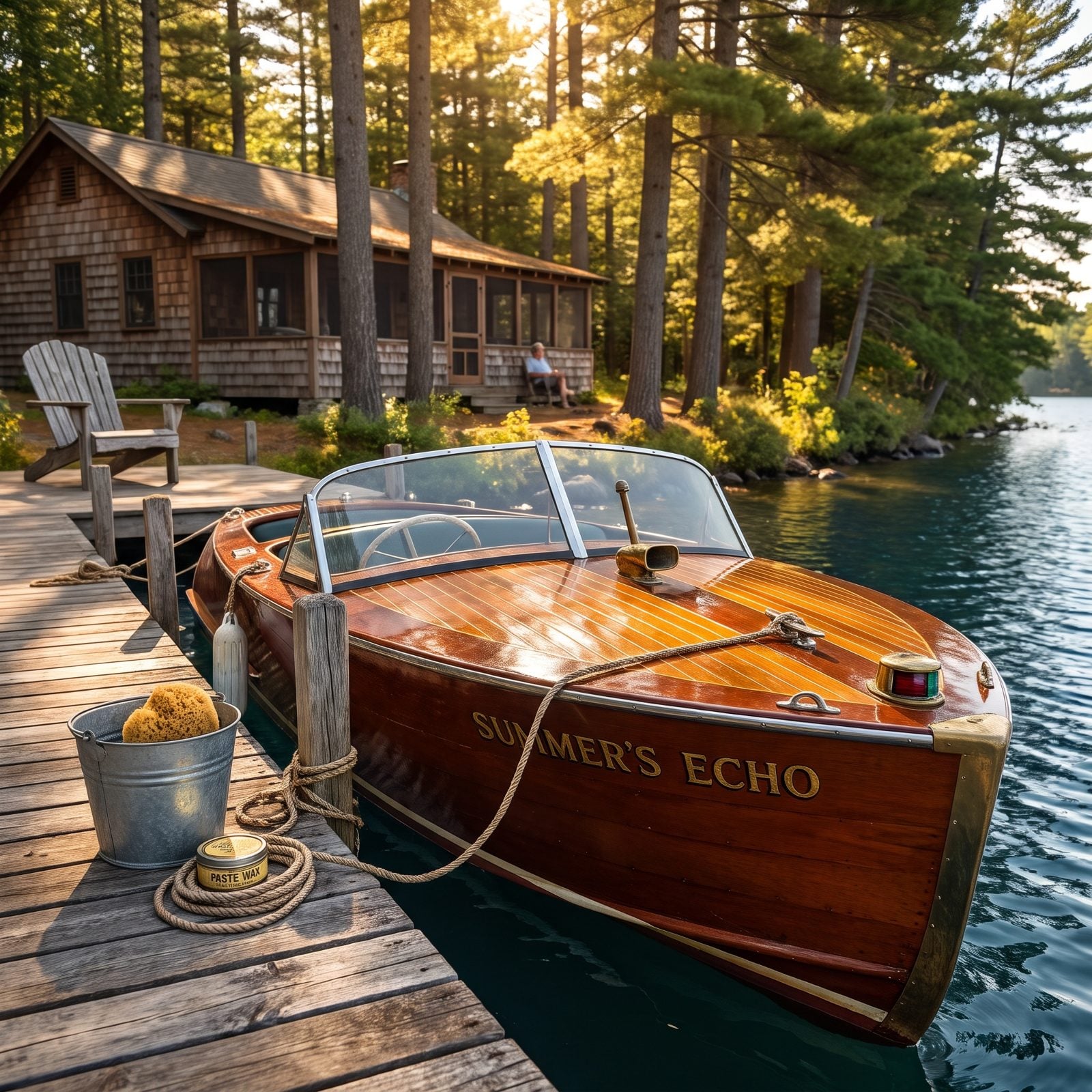
Some boats get bought because of a smell. Two-stroke exhaust and lake water and the particular warmth of a wooden deck at noon. Suddenly you’re ten years old again, your grandfather’s at the tiller, and a varnish-hungry mahogany runabout seems like a perfectly reasonable thing to own in middle age.
Nostalgia is a famously poor financial advisor. It edits out the sanding, the re-caulking, the winters in a heated shed, and keeps only the golden afternoons. You aren’t really buying a boat. You’re buying a time machine that happens to leak.
12. You Choose the Boat Your Dream Self Would Own
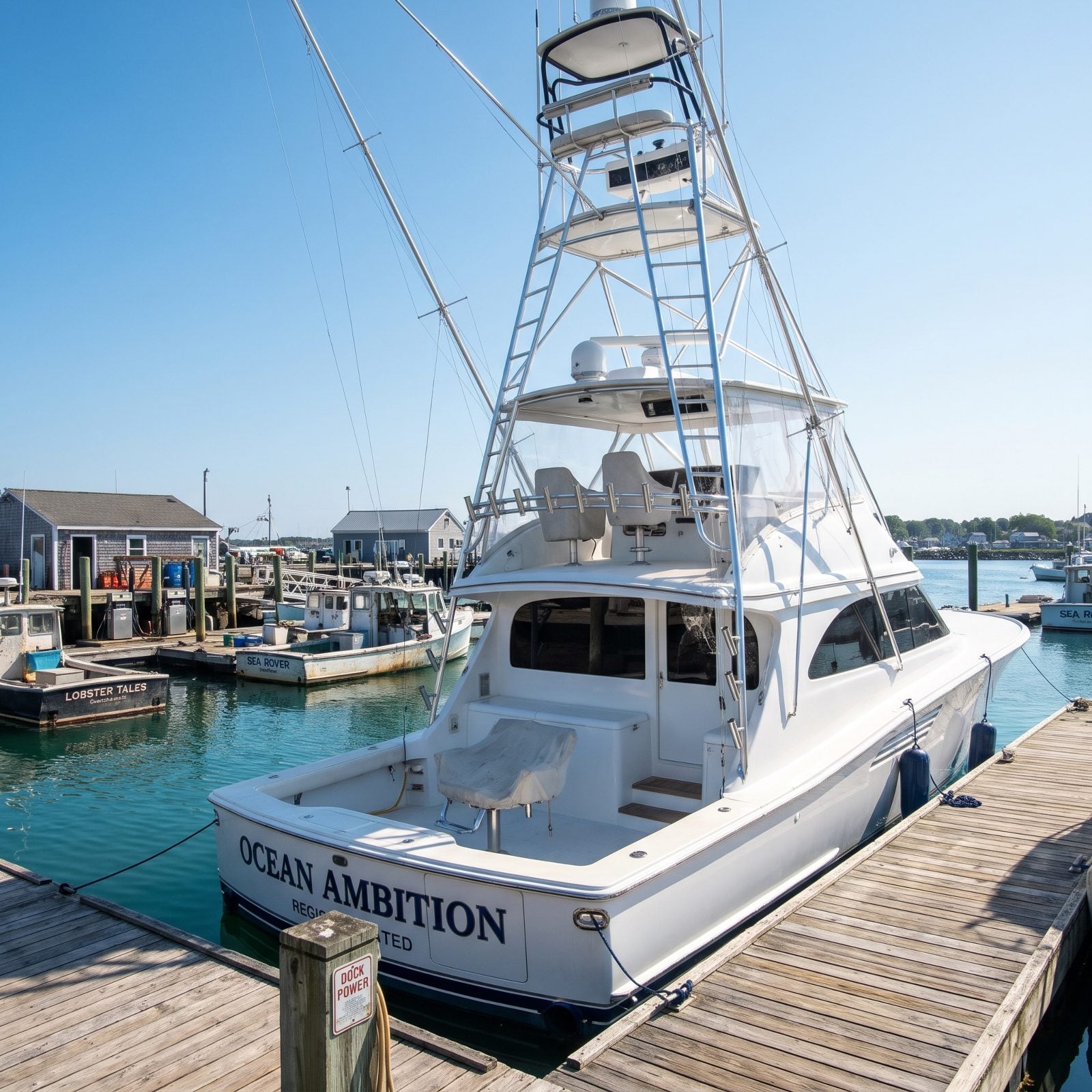
Sometimes the boat you buy is a costume for a person you intend to become. The serious bluewater cruiser for the circumnavigation you’ll definitely plan someday. The tournament sportfisher for the version of you who fishes forty weekends a year instead of four.
This is identity signaling, and it works on nobody more effectively than ourselves. We buy the gear of the life we aspire to and treat the purchase as progress toward it. The boat becomes a promise, then an expensive reminder of a promise.
The aspirational boat is almost always too much boat. Too big to dock alone. Too costly to run casually, too demanding for the way you actually spend a Saturday. Your dream self would love it. Your real self just wants to get out on the water before lunch.
11. You Let Horsepower Answer Every Compatibility Question
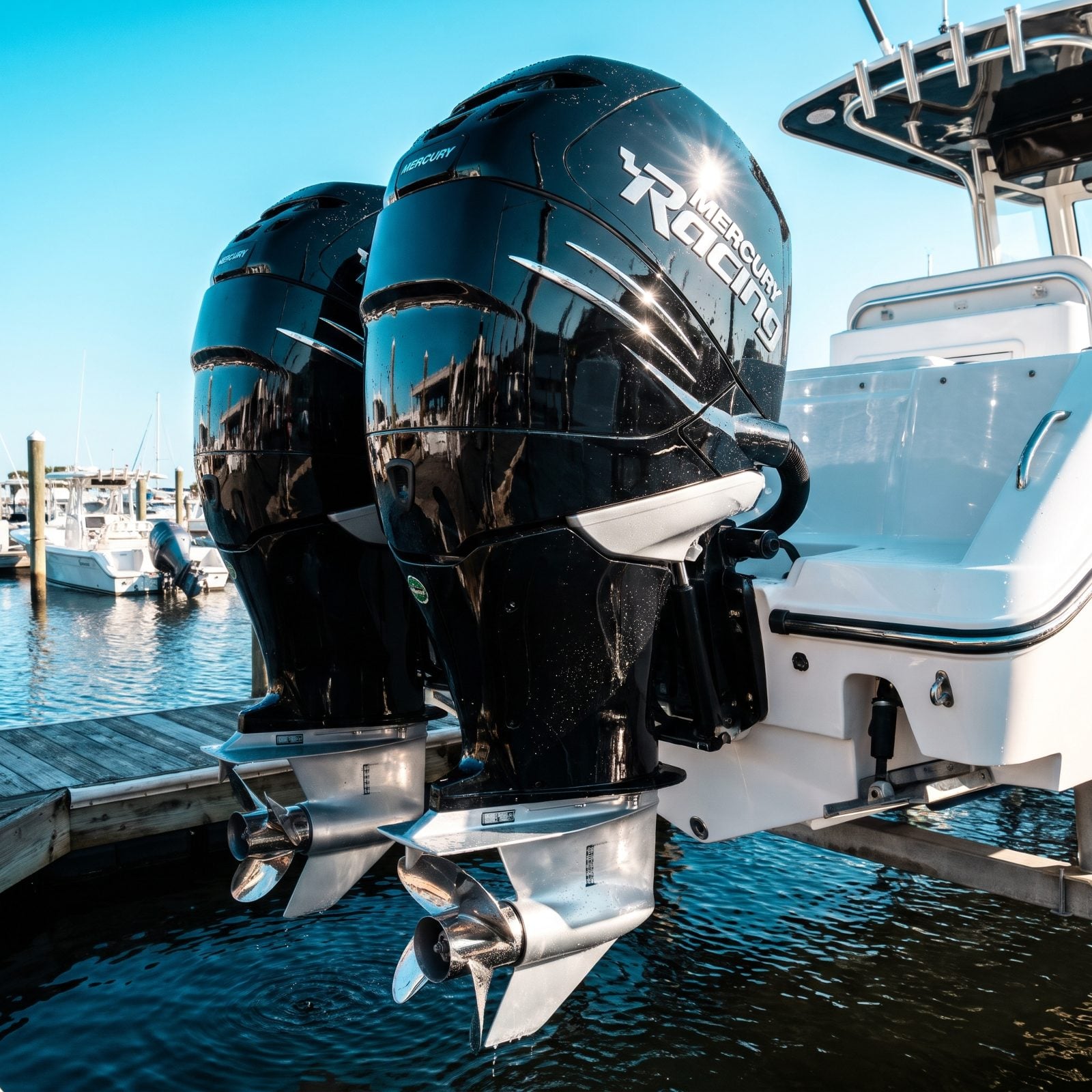
Ask a certain kind of buyer about a boat and the first thing you’ll hear is a horsepower figure. Not the ride, not the layout, not whether a family can actually spend a comfortable day aboard. Just the number, as if raw power could paper over every mismatch between you and the hull.
Chemistry is not compatibility. We confuse the thrill — the big engines, the hole shot, the top speed you’ll hit exactly once to show a friend — with whether this boat fits your actual life. Excitement is loud. Suitability is quiet, and quiet loses the argument almost every time.
Overpowered boats have a nasty habit: the thrill fades on a schedule your fuel bill doesn’t. Hedonic adaptation sees to that. By month two the speed feels normal, and by month three you’re just paying for it.
10. You Assume You’ll Grow Into All That Boat
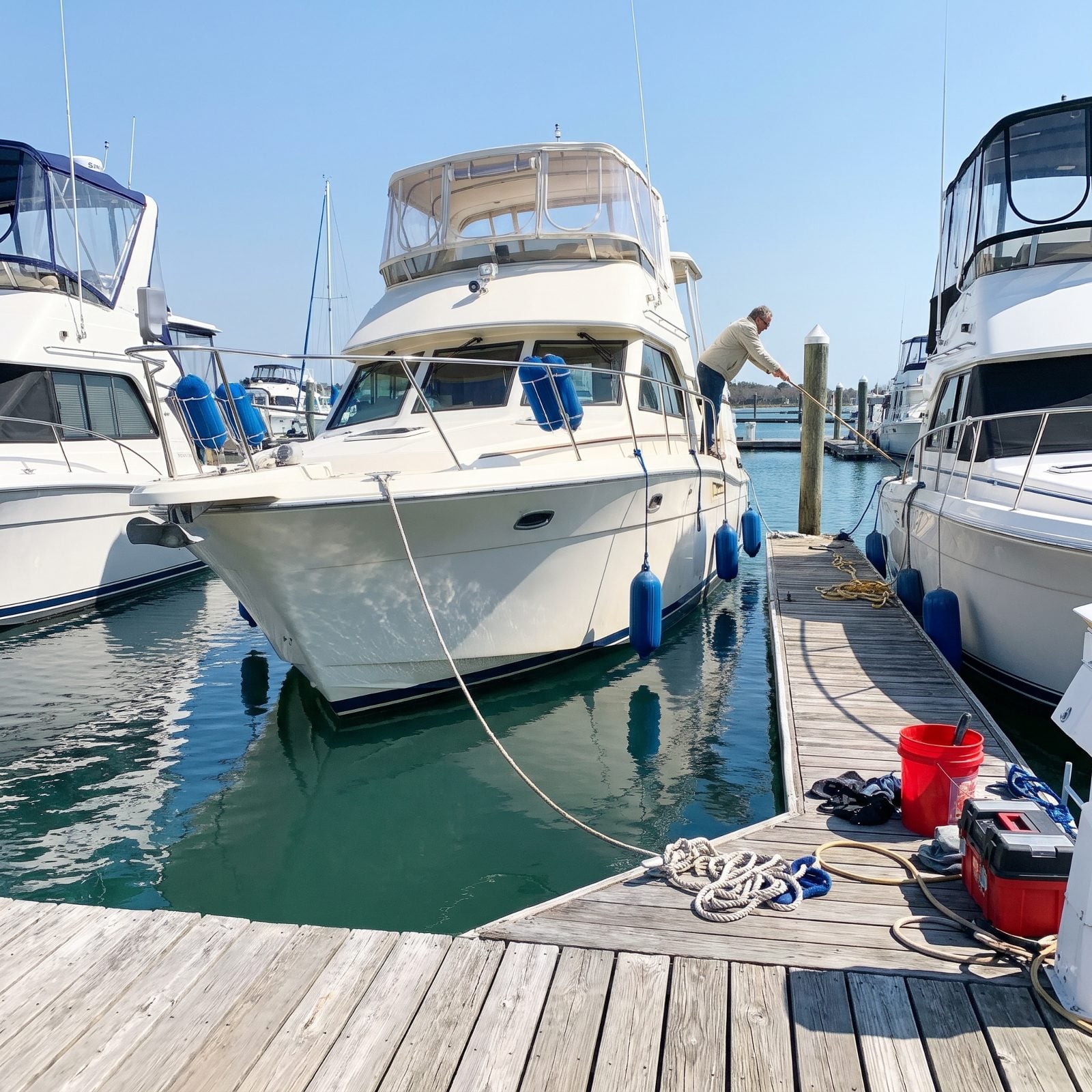
The forty-footer makes you nervous at the showing, and you tell yourself that’s temporary. You’ll learn. You’ll grow into the docking, the systems, the sheer mass of the thing — the way a new driver swears they’ll get comfortable on the highway any day now.
This is the planning fallacy aimed squarely at your own competence. We chronically overestimate how fast we’ll level up and underestimate how hard a big boat punishes a slow learner. The gap between the captain you are and the captain this boat demands won’t close on your optimistic timeline. It closes on the boat’s terms, usually in front of an audience.
9. You Rename Survey Problems “Weekend Projects”
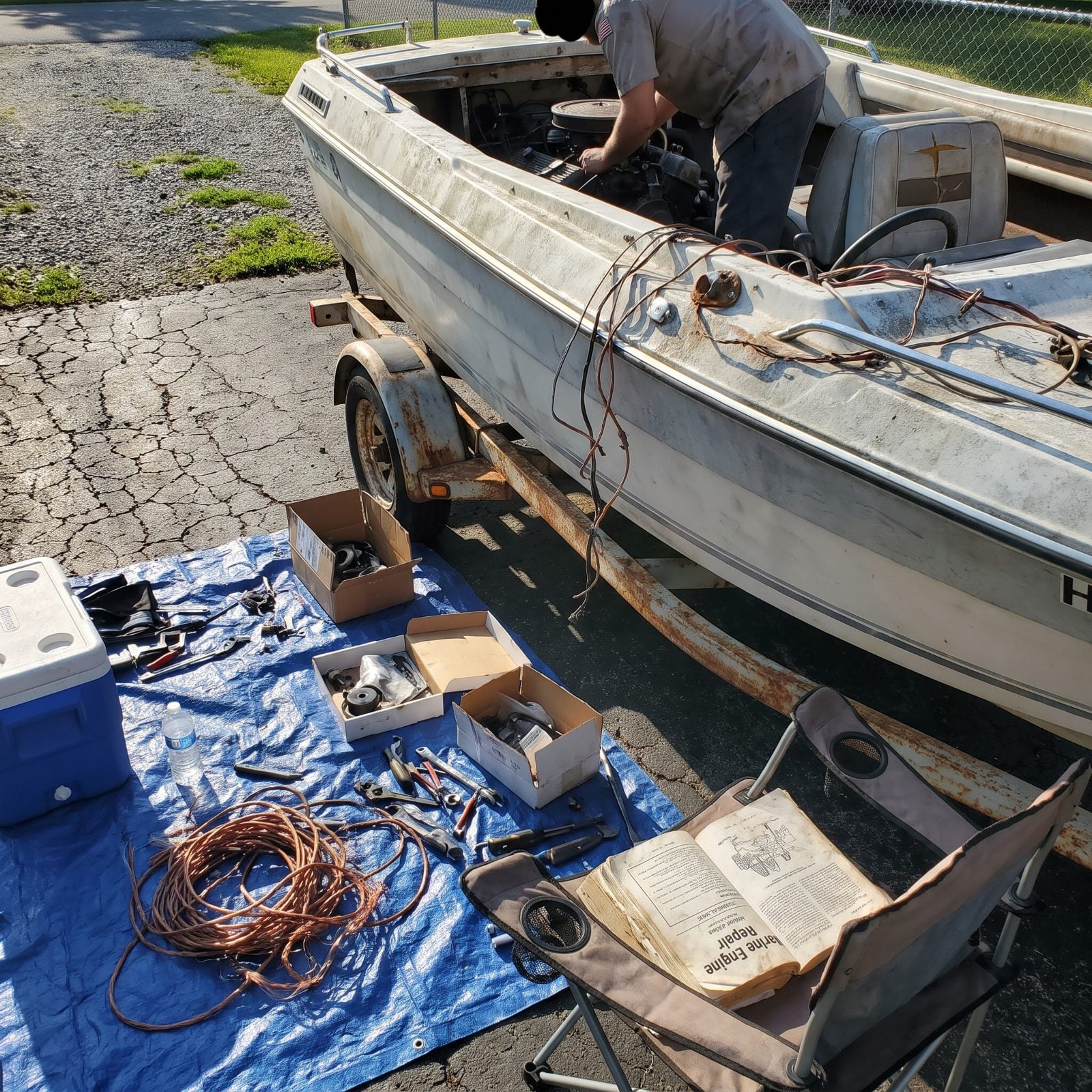
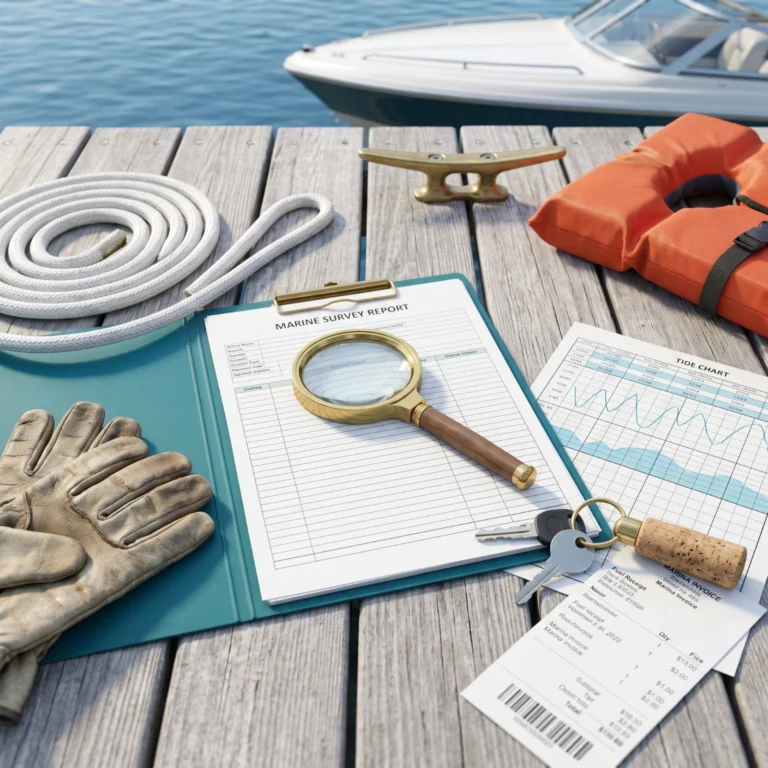
The survey comes back with a list. Corroded wiring, a soft spot in the deck, a water pump living on borrowed time. A sensible person reads that as a warning. A smitten buyer reads it as a to-do list and reaches for the word “projects,” said with a fondness the problems haven’t earned.
Welcome to the IKEA effect — the quirk where we value things more because we poured labor into them. The future sweat gets priced as romance instead of risk. Every scary line item becomes a cozy weekend with a wrench, a bonding experience with the boat you don’t even own yet.
Here’s what “project” hides. Boat jobs multiply. You pull one panel to fix the wiring and find three more problems the surveyor couldn’t see. The list you fell for was the short version.
8. A Pending Offer Makes You Suddenly Need This Boat
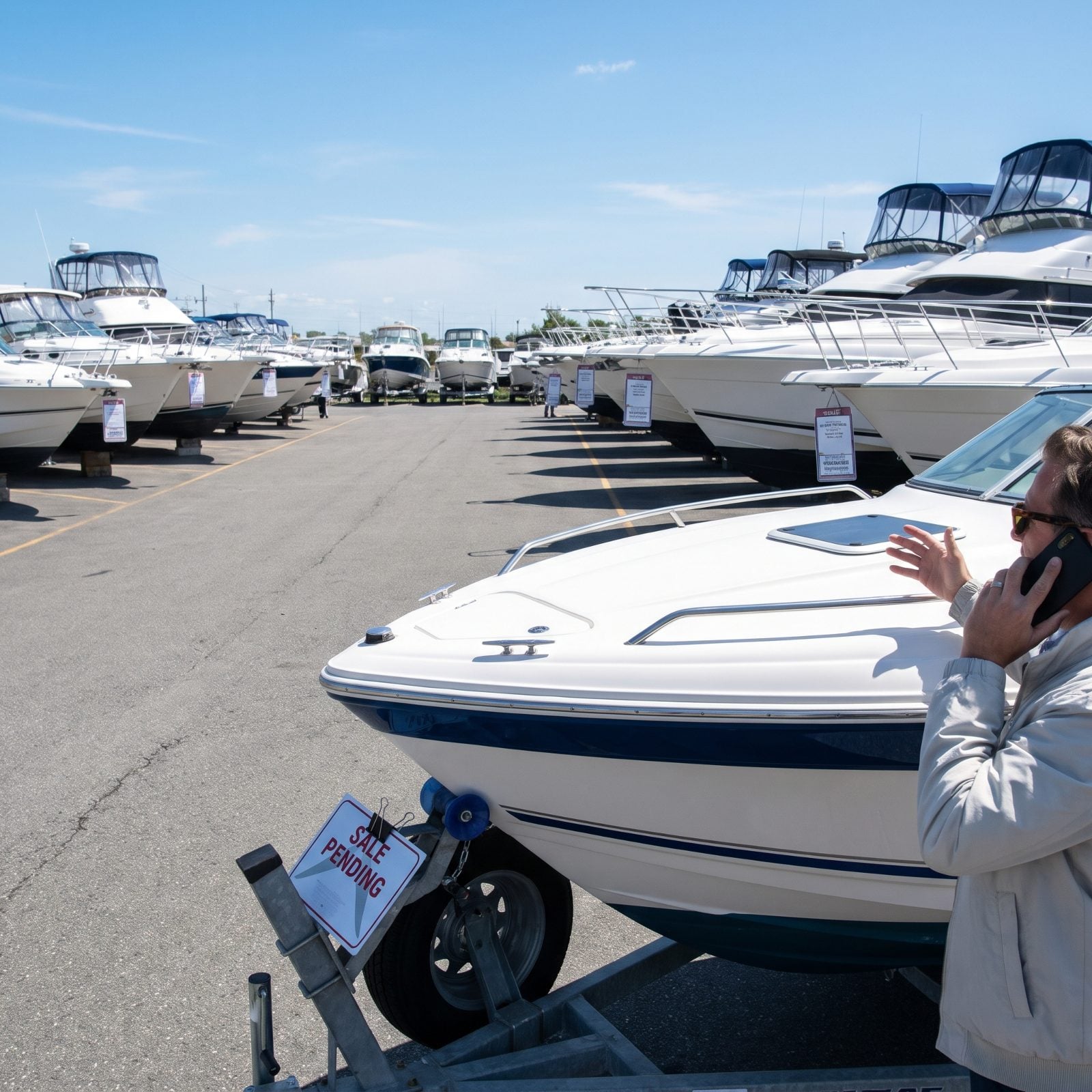
The boat you were lukewarm about for three weeks becomes urgently essential the moment the broker mentions another buyer circling. Overnight, lukewarm turns into panic. You must have it. Nothing about the boat has changed. Only its availability has.
Scarcity flips a switch logic can’t reach. We want what we’re about to lose far more than what’s calmly on offer, which is why “pending offer” is the oldest line at the dock. Doesn’t even matter if it’s true. The threat of loss alone rewrites the whole calculation.
Loss aversion means the sting of missing out hits roughly twice as hard as the pleasure of winning. So you rush, you overpay, you skip the second look. The boat you half-wanted is now the boat you overpaid for, and that competing buyer — real or invented — has already won.
7. Dockside Compliments Become Evidence You Chose Well
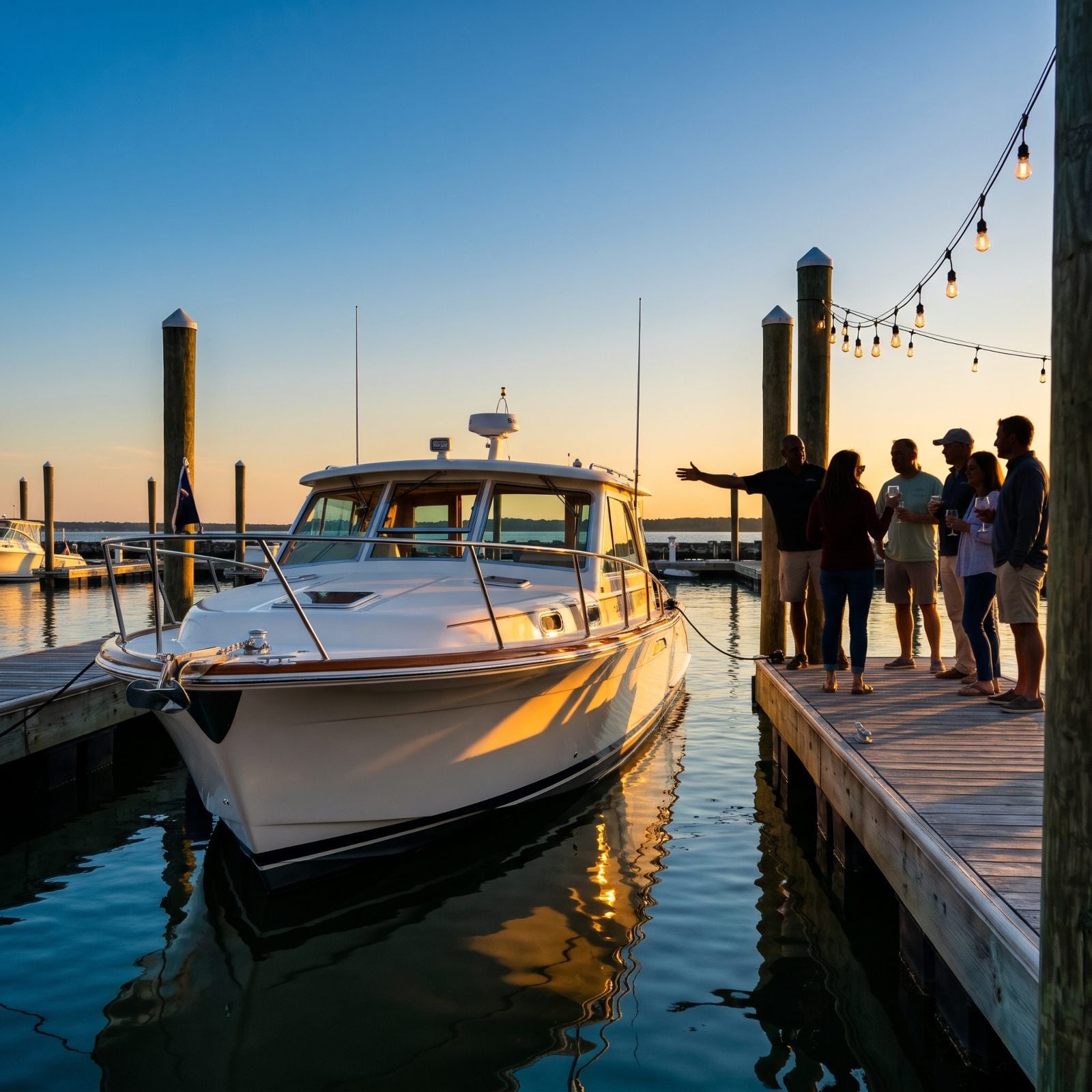
She looks sharp in the slip, and the dock neighbors say so. Every “beautiful lines” and “what year is she” lands like proof that your questionable decision was actually brilliant. The compliments arrive, the doubts retreat, and you file each kind word as evidence for the verdict you’d already reached.
That’s confirmation bias throwing a dock party. We hunt for whatever agrees with us and wave off everything that doesn’t. The guy admiring the hull isn’t the guy who’ll help you troubleshoot the fuel system at 2 a.m. He’s just being nice. You heard a review.
Compliments are cheap and plentiful at a marina. The ride, the reliability, the running costs — those are the only critics whose opinion actually bills you. A boat that looks right and runs wrong will collect praise all summer and break your heart in September.
A gorgeous boat that won’t start is still a boat that won’t start, no matter how many people on the dock admire it.
6. You Stop Inviting the Mechanic Who Hates It
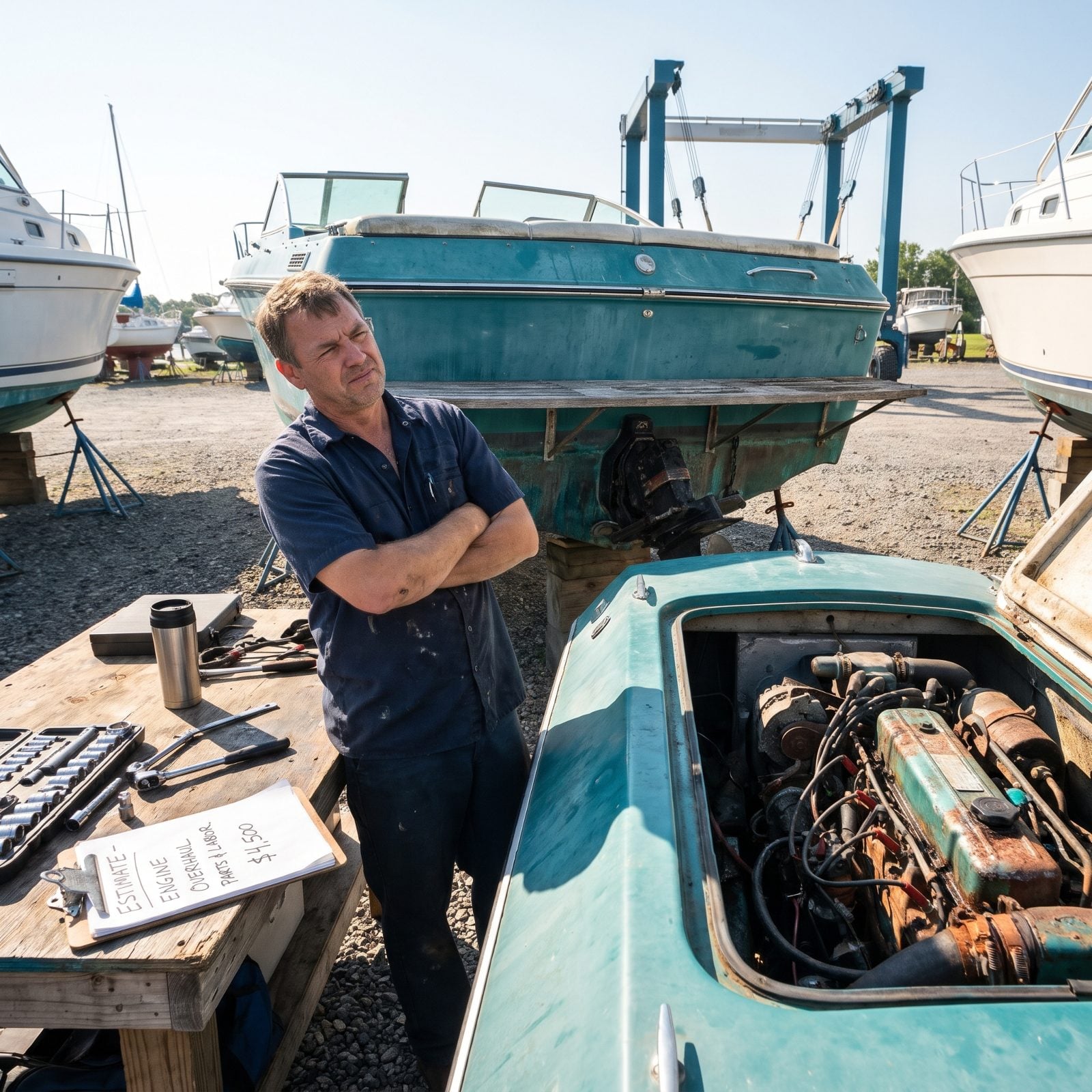
There’s always one guy at the marina who tells you the truth. He pops the hatch, looks at the engine, and sighs the sigh — the one that means you already know. So instead of booking him for the spring haul-out, you go find a different mechanic. A nicer one. The kind who says the motor has “good bones.”
We all do a version of this. When someone we trust questions a choice we’ve already made with our hearts, we don’t change the choice — we change the friend. Shopping for a second opinion is a lot easier than admitting the first one landed where it hurt.
Psychologists call it confirmation bias with a social twist. You pack your circle with voices that agree, and the disagreeing one slowly stops getting a call. The honest mechanic didn’t get worse at his job. He just got inconvenient.
5. You Budget the Payment and Forget the Marina
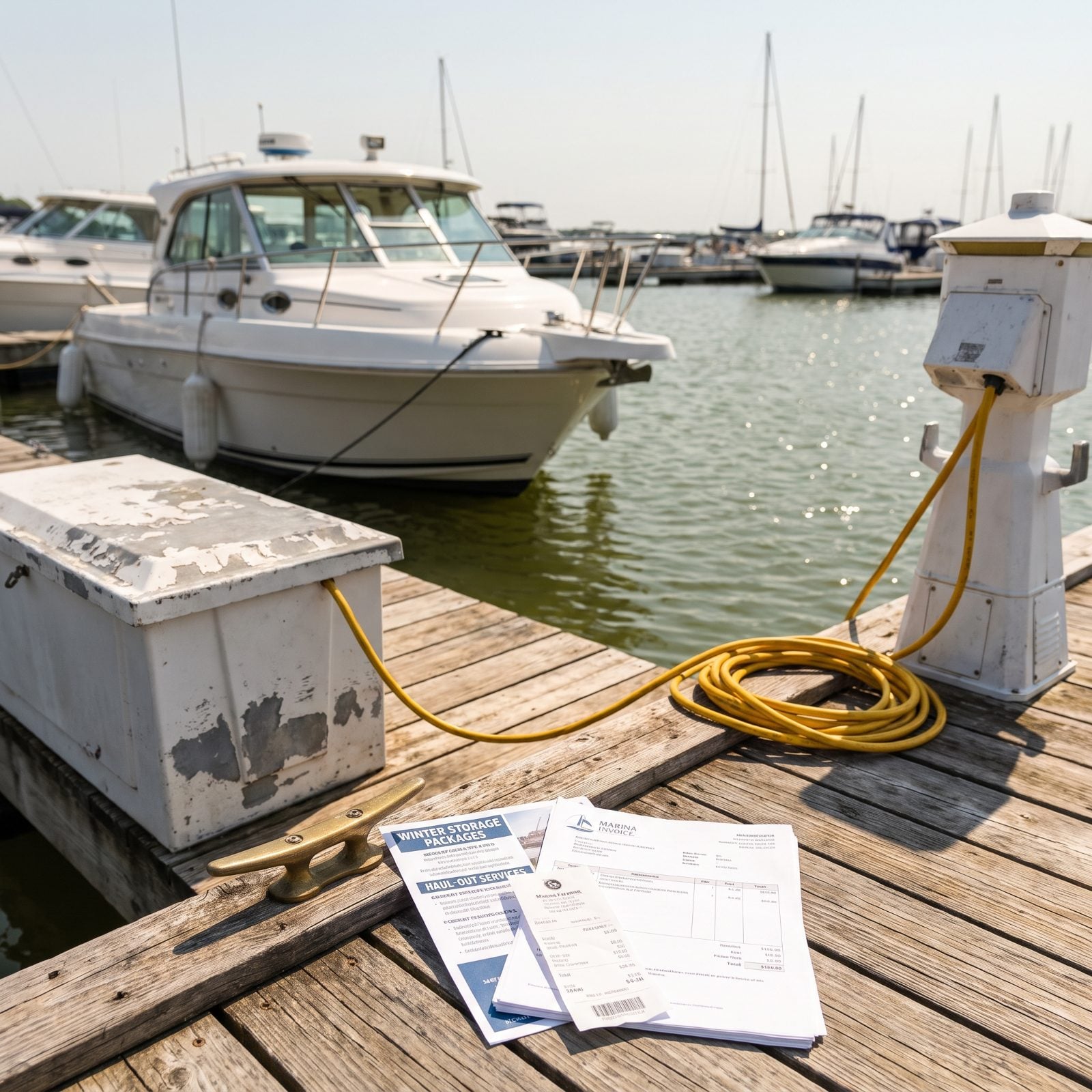
The salesman walks you through the monthly number and it sounds doable — a nice round figure that fits against your budget just fine. Deal done, handshake, dock photos.
Then the invoices start. Slip fees. Haul-out. Winter storage. Insurance. Bottom paint. And the fuel, which nobody mentions at the dealership because nobody wants to be the one to say it out loud. The payment was never the cost. The payment was the down payment on the cost.
Call it the planning fallacy wearing a life jacket. We anchor on the single number we were shown and quietly assume everything else will be small. Same wiring that makes people budget the mortgage and forget the roof, the taxes, the water heater that picks February to die.
4. One Perfect Cruise Cancels Three Weekends of Repairs
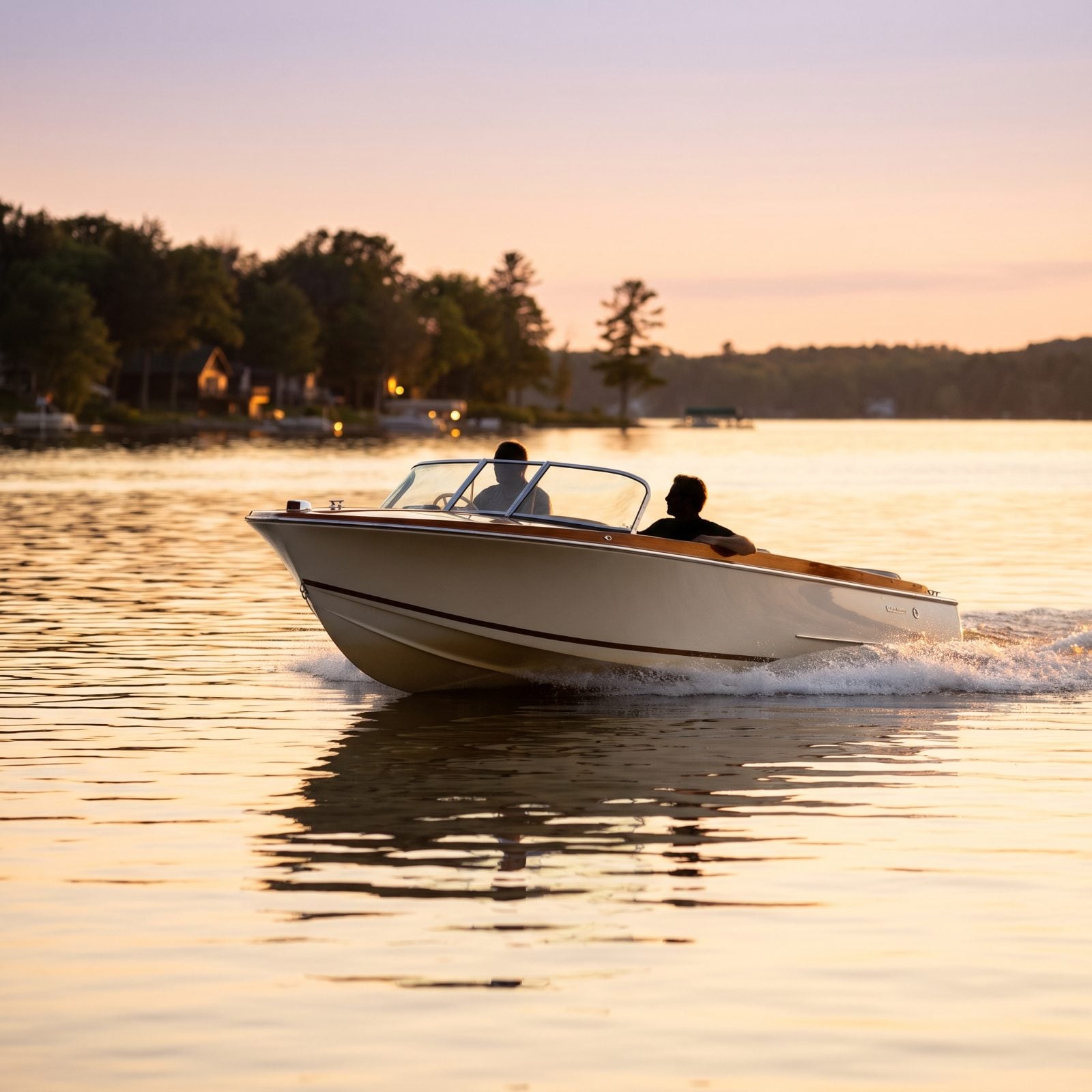
Three weekends gone to the bilge pump. A Saturday chasing a fuel leak. Knuckles scraped, wallet lighter, patience worn clean through. And then one evening the engine catches first try, the water goes flat as glass, the light turns gold, and you’re out on the lake wondering what on earth you were so grumpy about.
That one cruise erases the ledger. You walk back to the truck already forgiving the boat everything it put you through.
Here’s the trick your brain is pulling. We don’t remember experiences evenly — we remember the peak and the end, and that peak was spectacular. Those three rotten weekends fade into vague background static while the golden hour gets filed away in high definition.
Same reason people stay in situations that are mostly hard for the sake of the occasional great day. The good moments don’t just outweigh the bad ones. They record over them.
3. You Keep Repairing Because Last Year Cost So Much
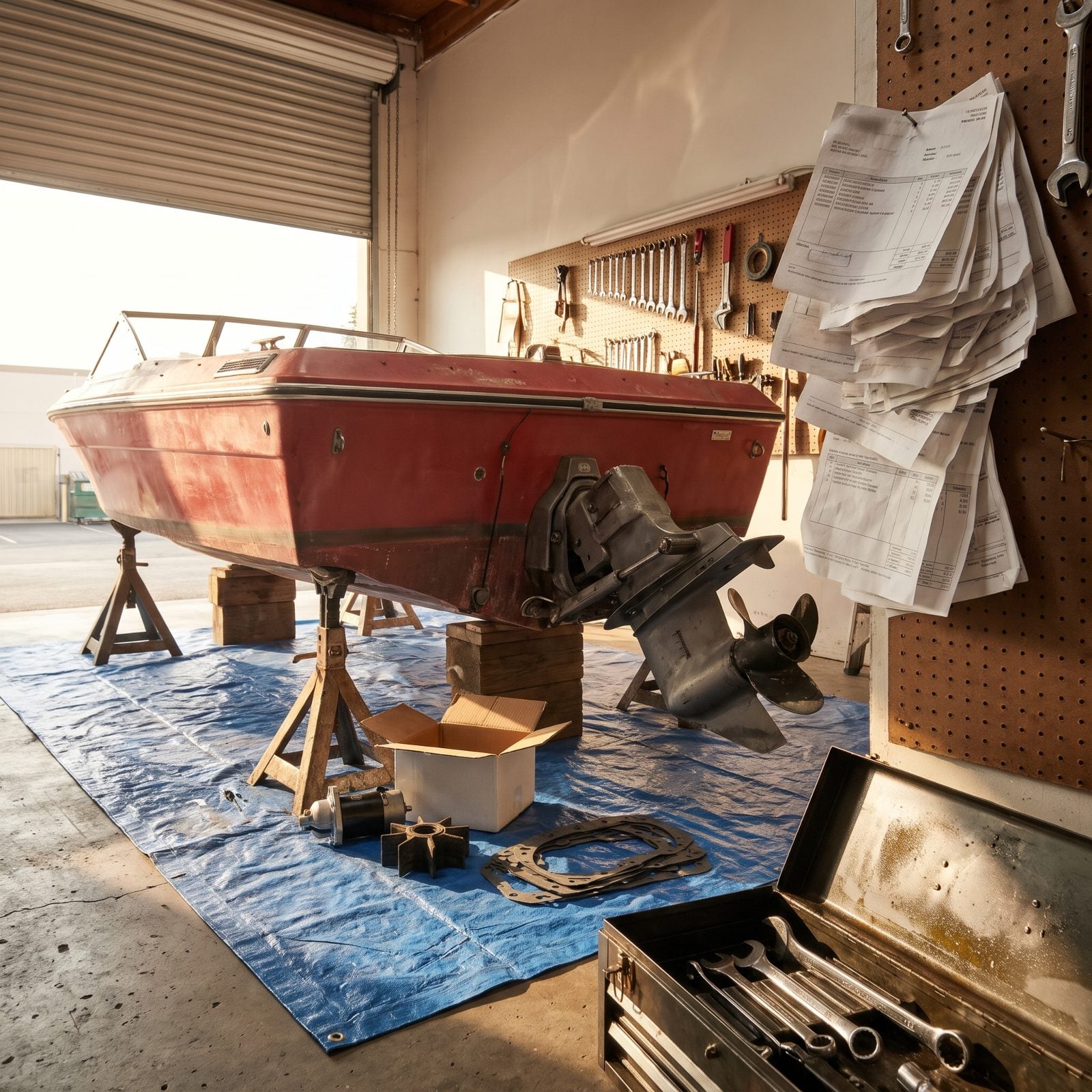
Nobody throws good money after bad on purpose. It happens one reasonable step at a time.
You replaced the water pump last spring, the starter in July, and the outdrive seals in the fall — that last one genuinely hurt. So when the fuel system starts acting up this year, quitting feels insane. Look at everything you’ve already put into this thing. Walking away now would waste all of it.
Except the money from last year is gone no matter what you do today. No amount of new spending brings it back. That’s the sunk cost fallacy, one of the stickiest traps there is. We count what we’ve already poured in as a reason to keep pouring, when it’s honestly no reason at all.
The invoices behind you shouldn’t vote on the decision in front of you. But they always try to.
People stay in all sorts of things this way. Old receipts feel like an argument. They’re just history.
2. The Boat Starts Owning Every Free Weekend
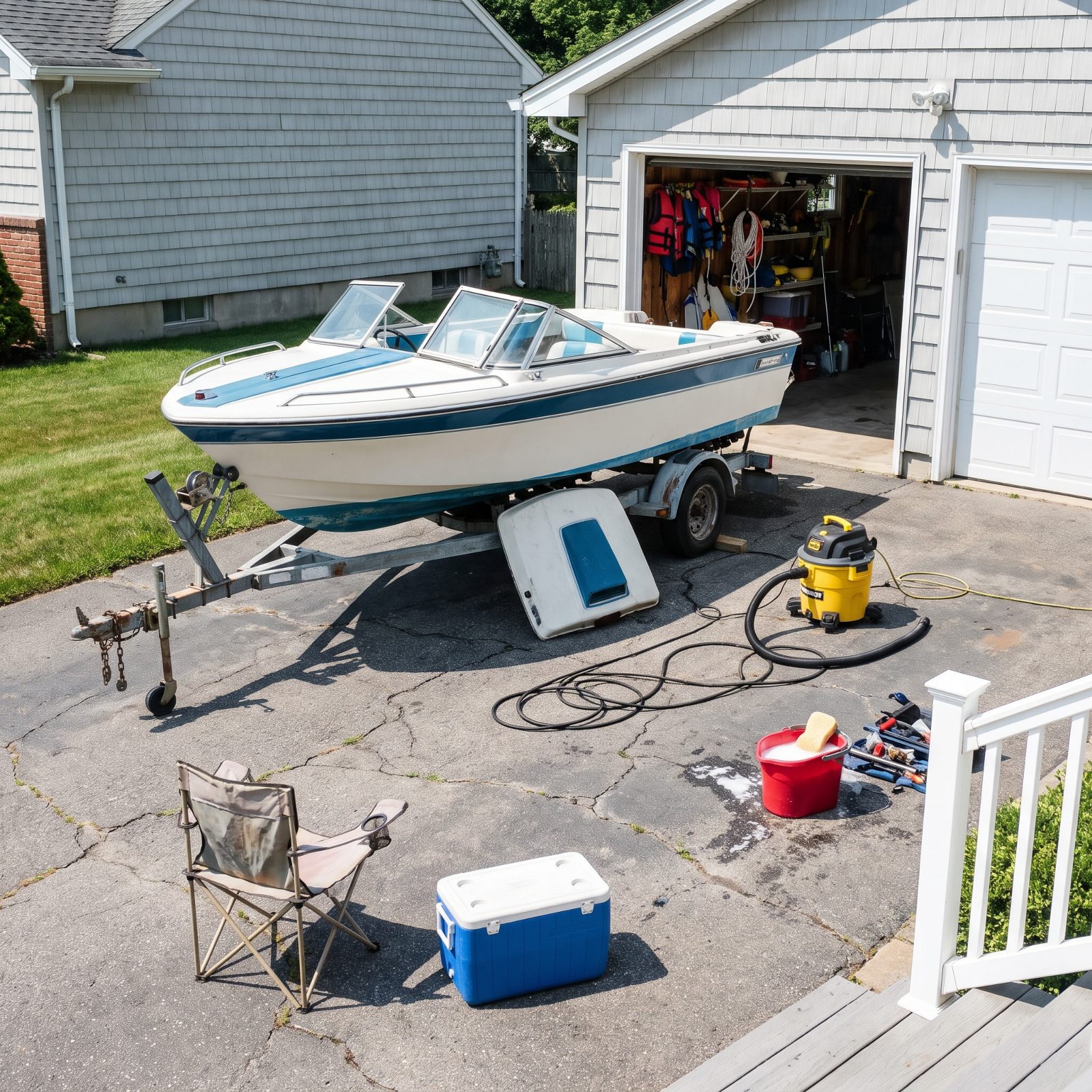
You bought the boat to have more weekends — better ones. Lake days, swim ladders, sandwiches eaten out on the water with your feet up. That was the whole pitch.
Now Saturday is the wax and Sunday is the bilge. The cooler sits unopened in the driveway while you’re elbow-deep in a battery compartment. The thing you bought for leisure has quietly become a second job that you pay for the privilege of showing up to.
Somewhere along the way the roles flipped. You started as the owner and ended up as the staff. It creeps so slowly you can’t name the exact weekend it happened.
This is commitment escalation — the same force that turns a hobby into an obligation, a fun idea into a standing appointment. The more you invest, the more it asks of you, and the harder it gets to say no, because by now it’s woven into who you are.
1. You Keep Expecting Maintenance to Calm Down Next Season
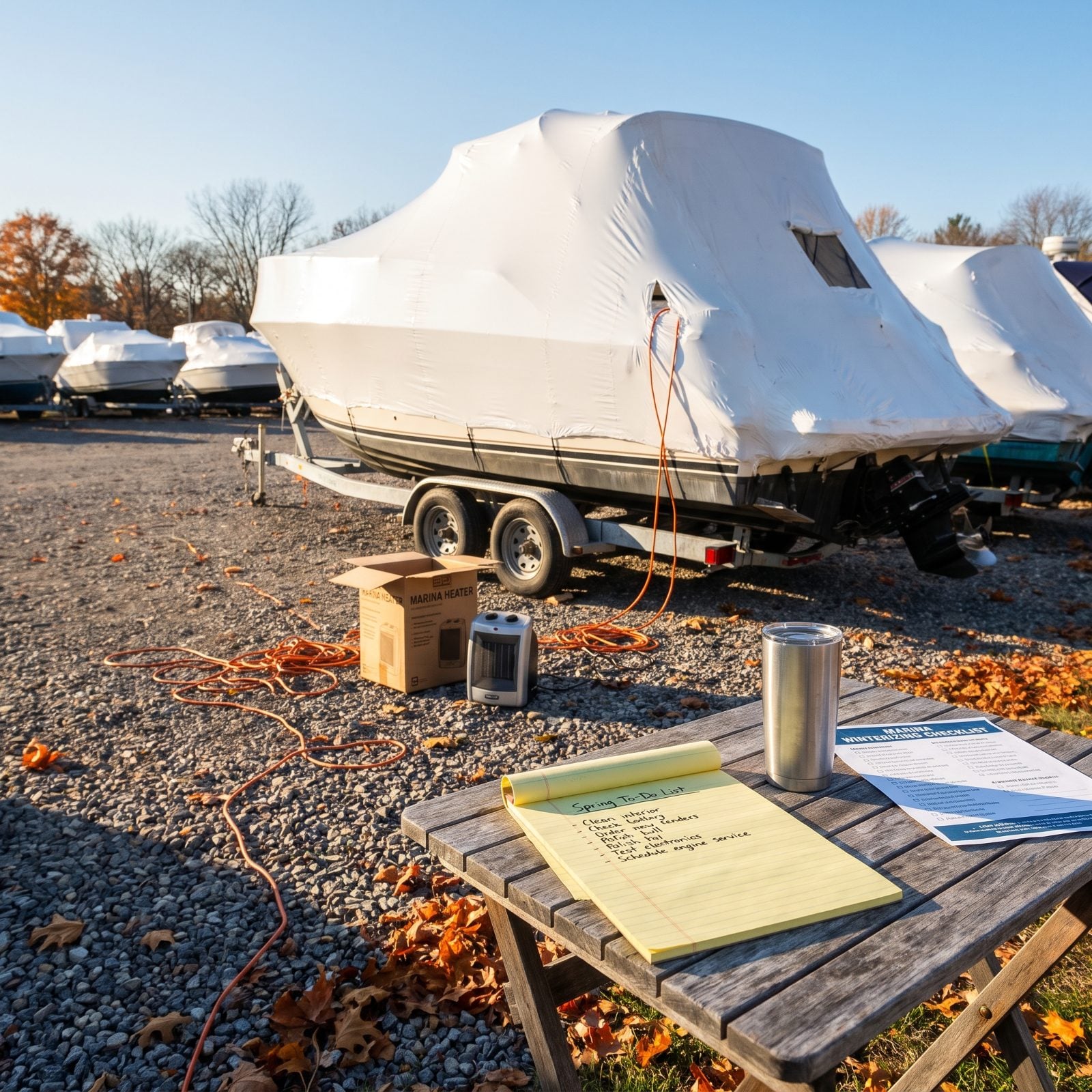
Every fall, the same promise. You wrap it up, scratch out the spring list, and tell yourself next season will be the easy one. The big jobs are knocked out. Surely now it just runs.
Then spring comes and something new breaks — something you didn’t even know could break. The list grows instead of shrinking, and you’re genuinely surprised, which is the funniest part of the whole business.
We’re hopeless optimists about the near future. We assume the next stretch will be smoother than the last, even when the last five stretches said otherwise. It’s how people buy fixer-uppers, start renovations, and plan “just one more big push.”