
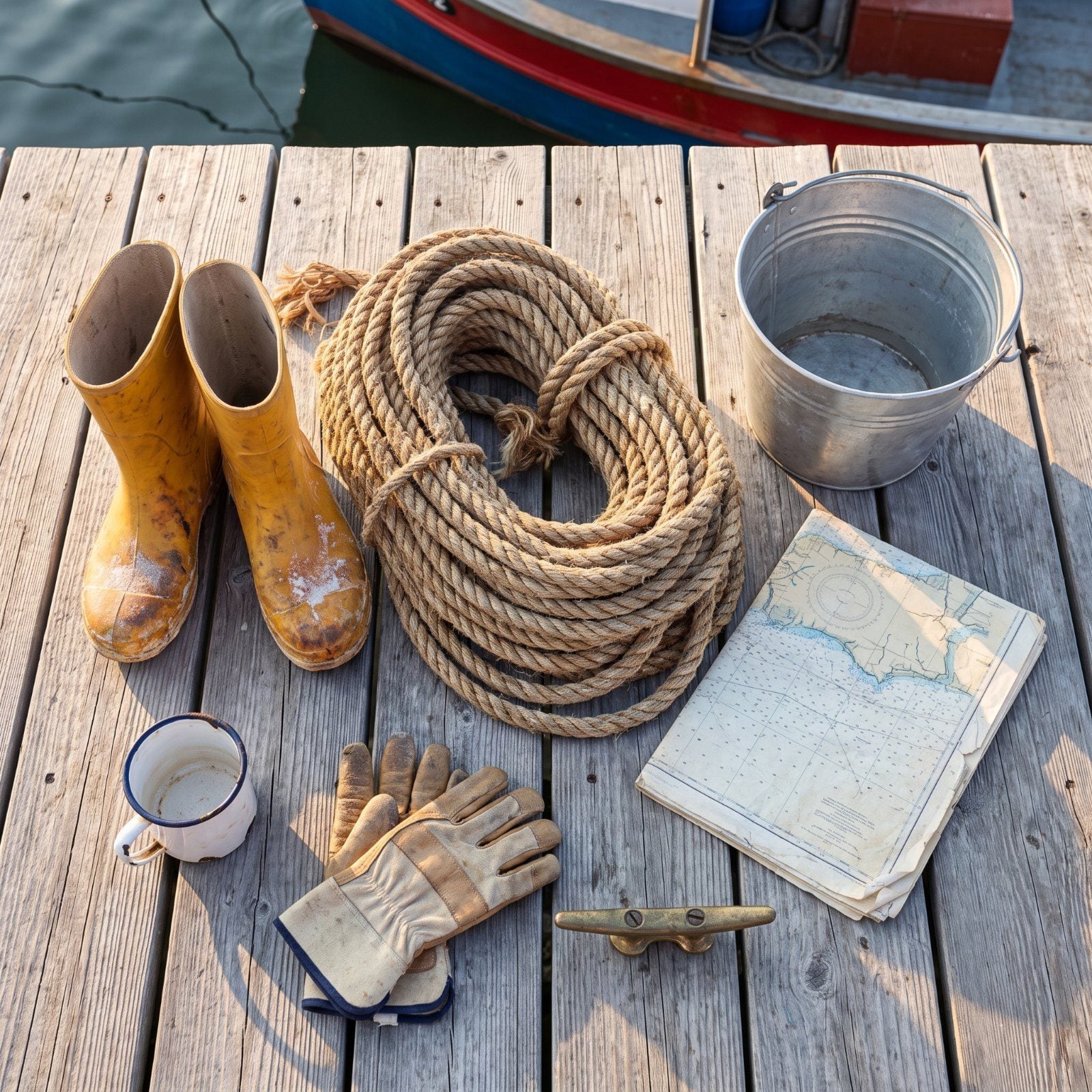
Most waterfront towns sold out years ago. The fish houses became taprooms, the net sheds turned into vacation rentals, and the people who actually worked the water got priced out to the next county over. Not these. Here the dock smells like diesel and bait at six in the morning because somebody is out there earning a living instead of posing for a brochure. The hardware store is open, the cafe knows your truck, and tourists are welcome enough — but they’re guests in somebody else’s town, not the reason it exists. You want the real thing? These are the harbors still built around work.
Please note that some of the imagery in this article may have been enhanced with the assistance of AI.
34. Port Orford, Oregon, Cranes Lift Boats Off the Dock Because There’s No Safe Harbor
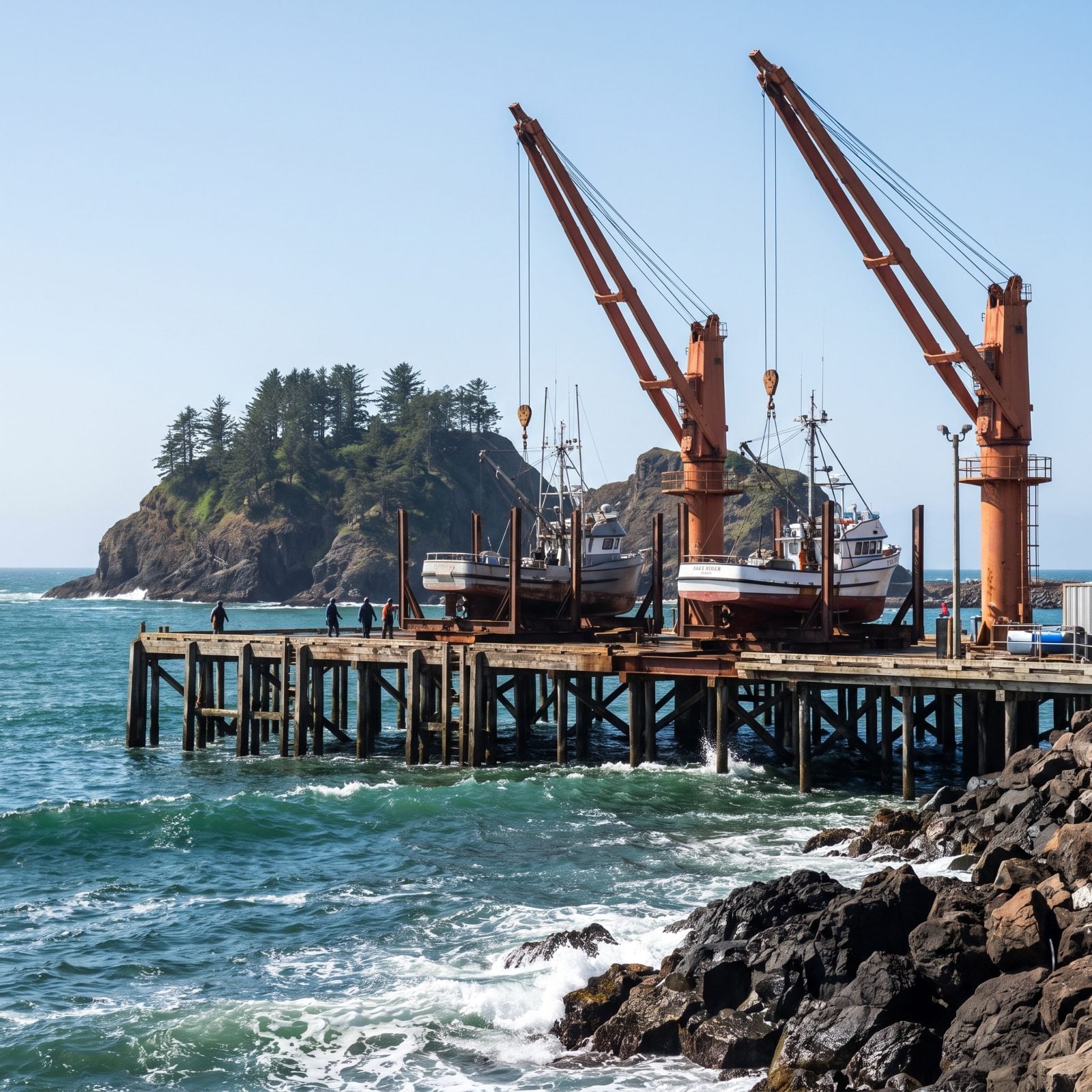
There’s no breakwater here. No protected marina either. The ocean at Port Orford runs too exposed and too rough to leave a boat tied up overnight, so the fleet solved it the only way that made sense — they lift the boats clean out of the water at the end of the day.
Two cranes hoist every commercial vessel onto steel dollies on the open pier. Stand on that dock and you can watch a loaded salmon troller swing through the air like it weighs nothing. This is one of maybe a handful of dolly docks anywhere on earth, and nobody built it to impress a soul. They built it because the alternative was feeding boats to the surf.
33. Port Lions, Alaska, You Can’t Drive Here, and That’s the Whole Point
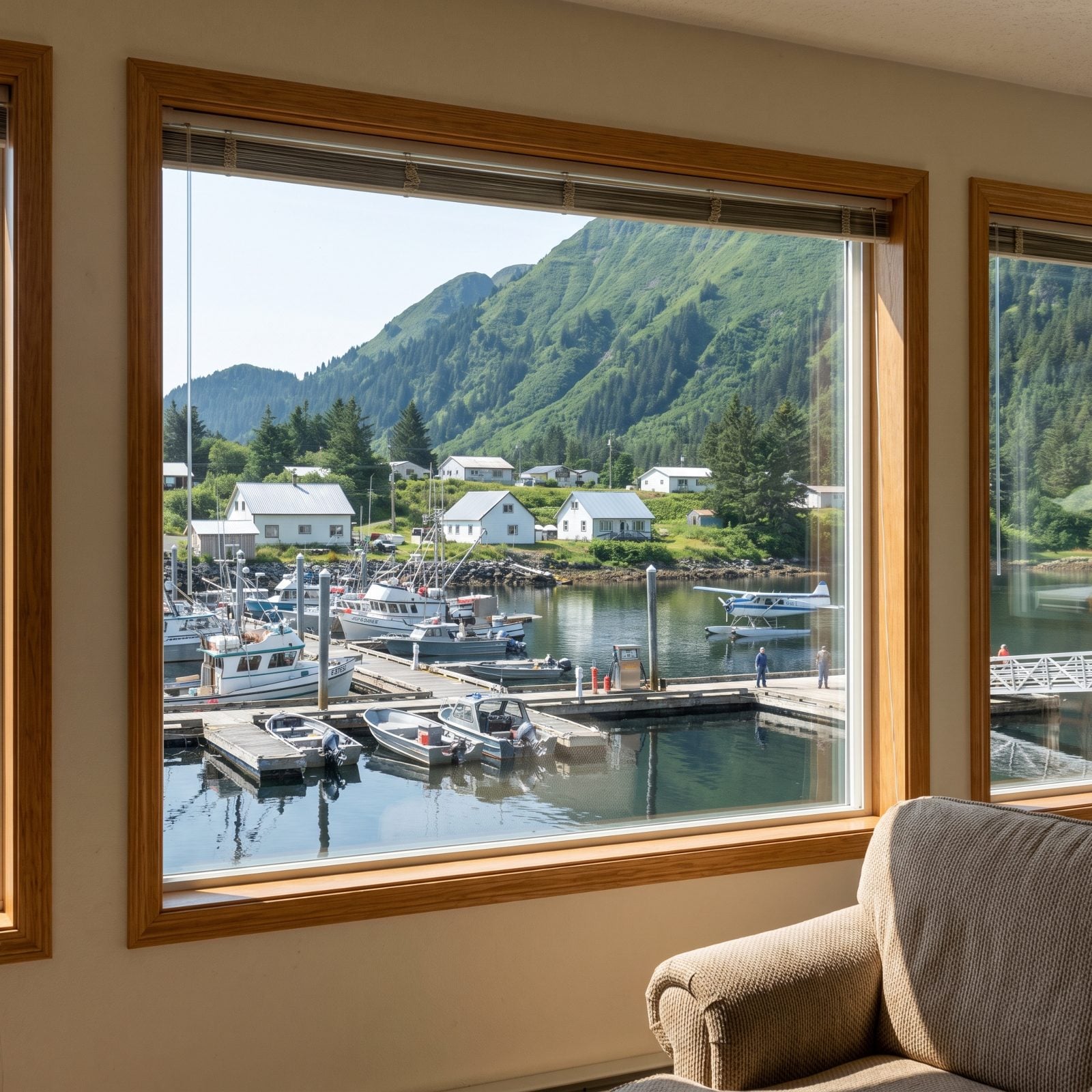
No road reaches Port Lions. None ever has. To get to this village on the north side of Kodiak Island you take a floatplane or the state ferry, and that single fact has shielded it from everything that tends to ruin small waterfront towns.
The community was built in 1964 for residents of Afognak, a village wiped out by the Good Friday earthquake and tsunami. What grew back is a working Alutiiq fishing town of a couple hundred people, built around a salmon and halibut fleet and a harbor that serves locals first. There’s no gift-shop economy because there’s barely a way for day-trippers to show up at all. The people who live here like it exactly that way.
32. South Bend, Washington, The Self-Proclaimed Oyster Capital Still Shucks for a Living
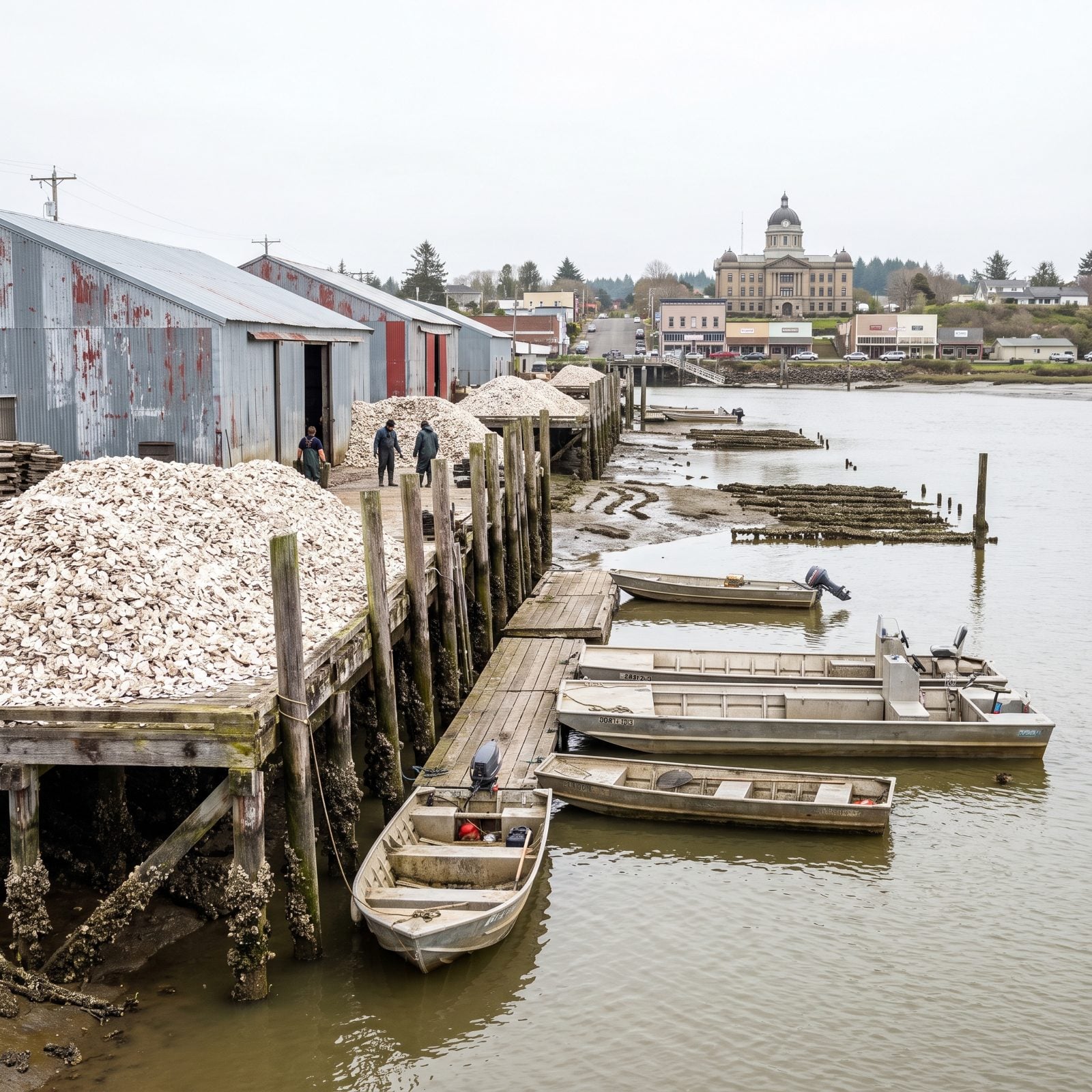
The shell piles tell you everything. Mountains of white oyster shell sit beside the shucking houses on the Willapa, waiting to go back onto the beds so the next generation of oysters has something to grab onto. That’s the rhythm South Bend has kept for well over a century.
Willapa Bay produces a huge share of the oysters eaten in this country, and a lot of them come ashore and get processed right here. The town calls itself the Oyster Capital of the World — the kind of bold small-town claim you have to respect. It’s not a slogan slapped up for the tourists. It’s a flat description of what people do here all day long.
31. Rogers City, Michigan, Freighters Load Limestone at the World’s Largest Quarry
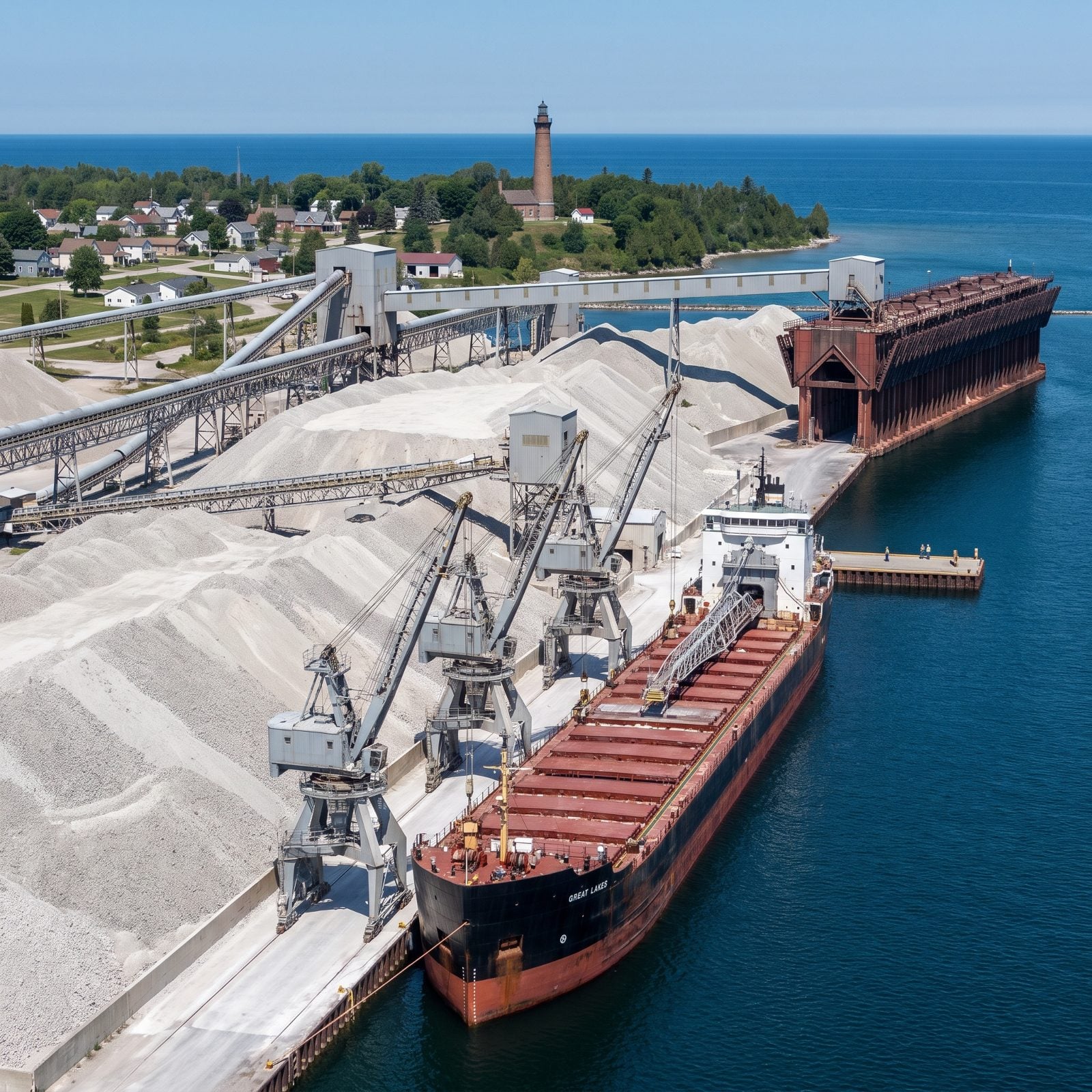
The quarry at Rogers City is the largest limestone operation in the world, and the whole town grew up around loading the stuff onto ships. The Port of Calcite isn’t tucked discreetly out of sight. It’s the main event — a sprawl of conveyors and gray stone terraces that freighters pull straight up to.
Watch a thousand-foot laker ease into the loading slip and you’ll understand the scale of Great Lakes shipping in a way no museum display can teach. Rogers City stayed a working freshwater port while fancier Lake Huron towns went all-in on fudge shops and galleries. Good for them, I guess.
30. Bayou La Batre, Alabama, The Shrimp Boats Pack the Bayou Shoulder to Shoulder
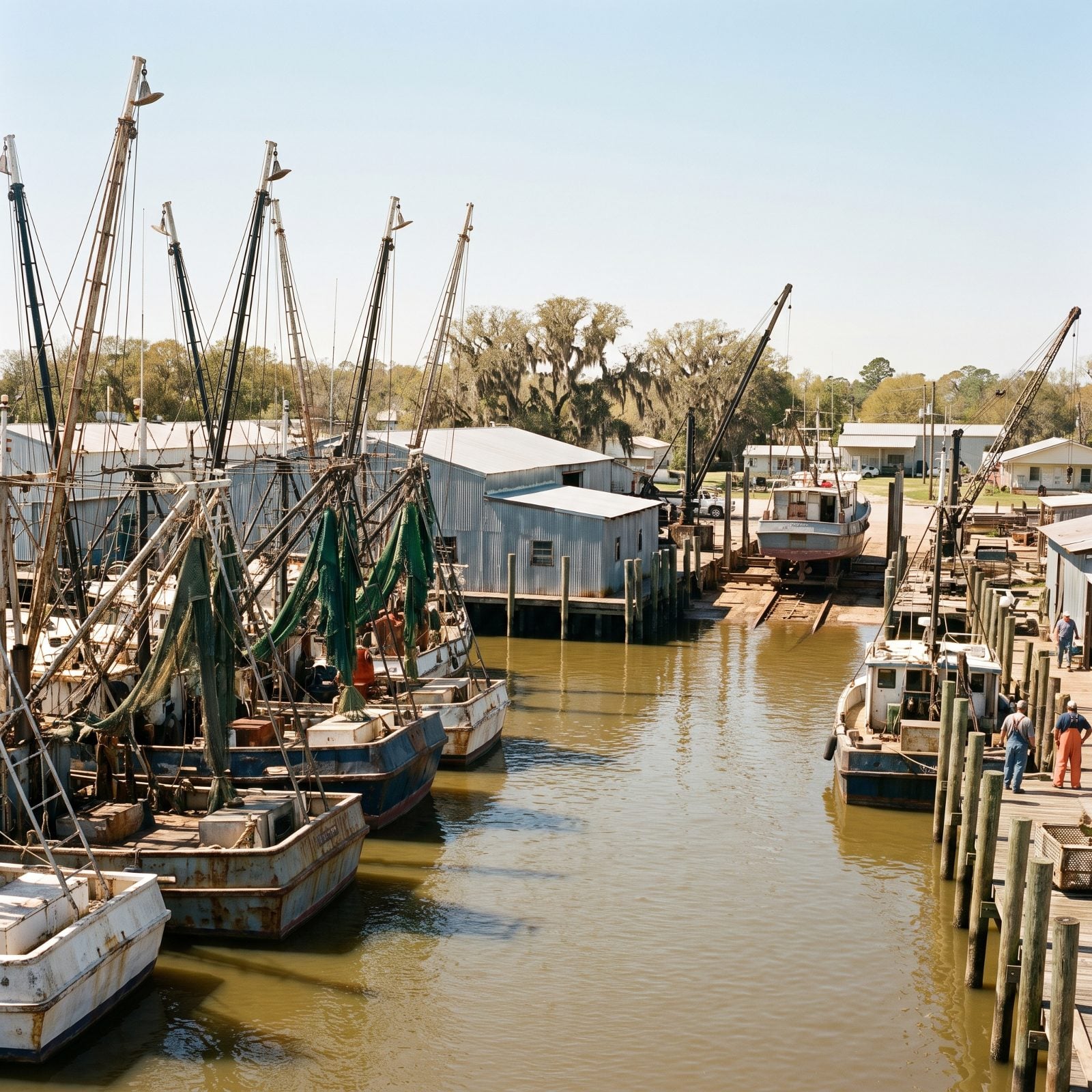
Drive down to the bayou and you’ll see trawlers parked so tight their outrigger booms nearly knock together. Bayou La Batre has been Alabama’s seafood capital for generations — a town that runs on shrimp, oysters, crab, and the boats and shipyards that keep the whole fleet moving.
Yes, the movie put this place on the map. But the town itself never turned into a theme park about itself. The processing plants still hum, welders still patch hulls on the marine railways, and the Vietnamese and Cambodian families who revitalized the fleet decades ago are now woven straight into how everything works. It’s loud, busy, diesel-scented, and plainly earning its keep.
29. Petersburg, Alaska, A Norwegian Fishing Town Big Ships Can’t Reach
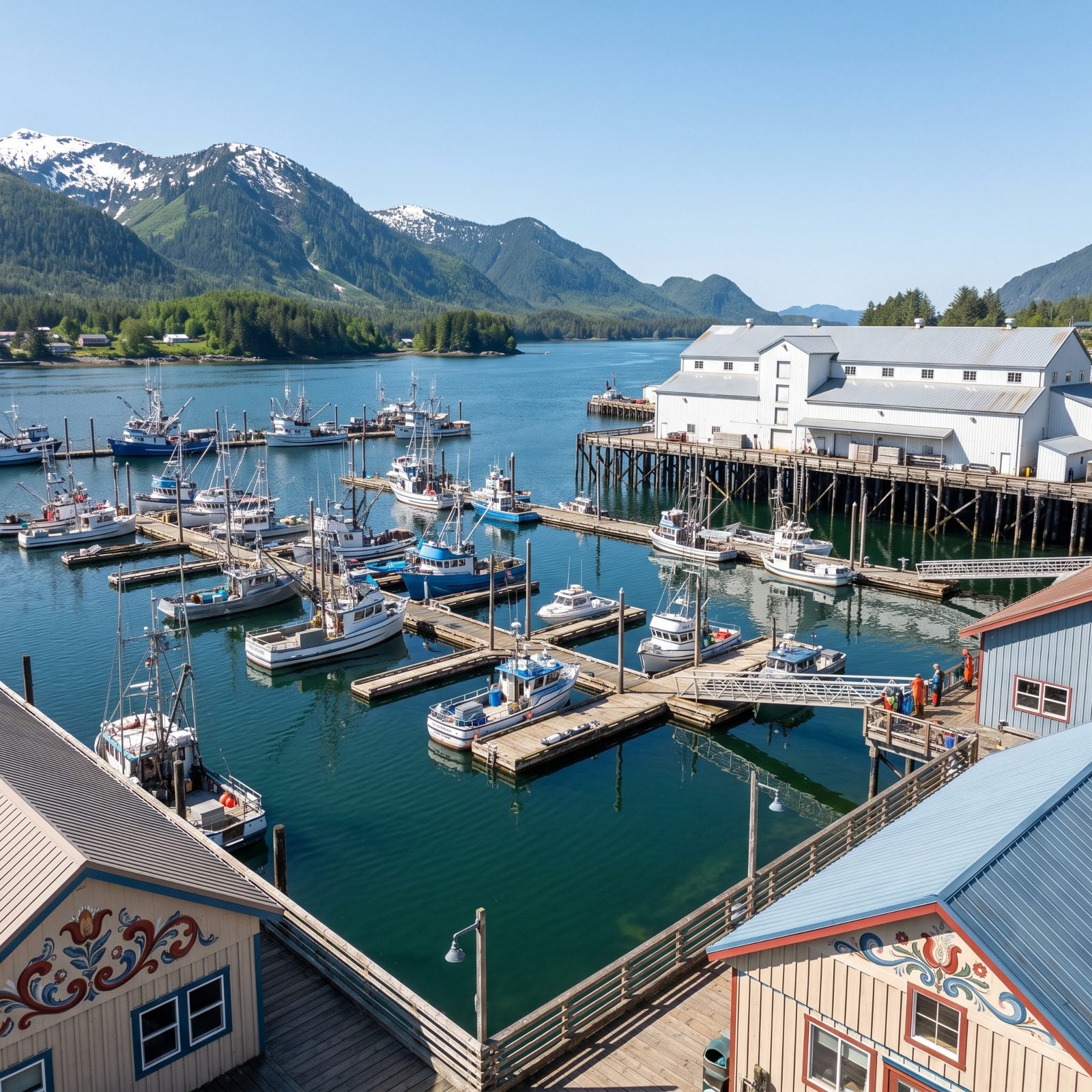
Petersburg sits on the Wrangell Narrows, a channel so tight and shallow that the big cruise ships simply can’t squeeze in. Geography did what zoning never could — it kept the mass tourism out and left a genuine fishing town to its own business.
The harbor here isn’t a backdrop for the town. It’s the reason the town exists.
Founded by Norwegian immigrants drawn to the halibut and salmon, Petersburg still runs one of the busiest fishing fleets in Alaska. The canneries operate, the floats stay full, and the small ships that do call treat the town as a stop rather than a stage. You’ll hear more talk about the salmon run than about souvenirs.
28. Cordova, Alaska, Copper River Salmon Keeps the Whole Town on Schedule
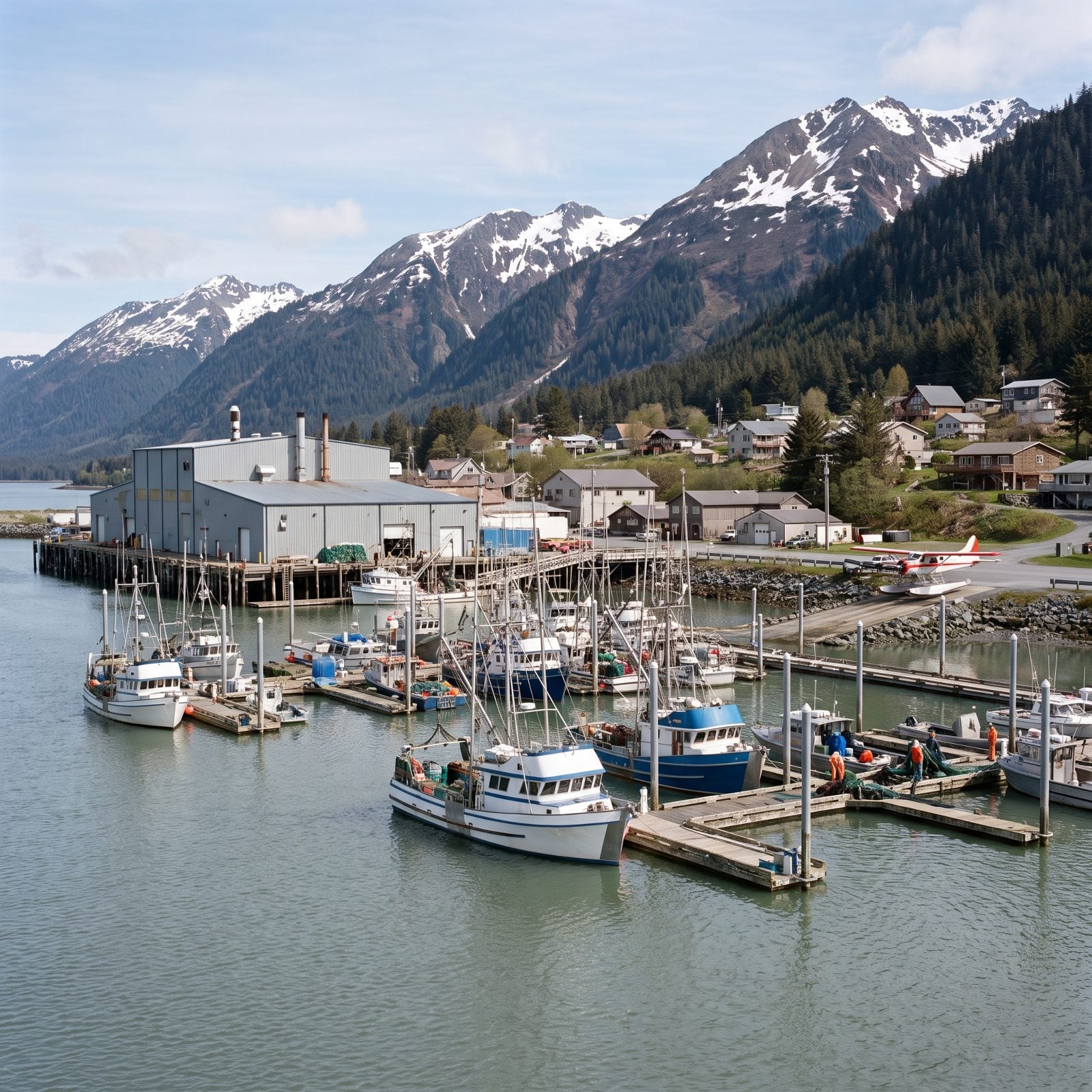
When the Copper River opens, Cordova wakes up. The whole town’s calendar bends around that run — the famously rich salmon flown out fresh to markets down south within days of coming aboard. No roads connect Cordova to the rest of Alaska, so the fish and the people move by boat and plane or they don’t move at all.
That isolation is exactly why Cordova stayed what it is. A fishing community on Prince William Sound where the harbor, the cannery, and the fleet set the pace for everyone. Visitors come for the birding and the glaciers, but they arrive into a town that’s clearly working, not performing for the camera.
27. Cathlamet, Washington, The Little Ferry That Still Does Real Work on the Columbia
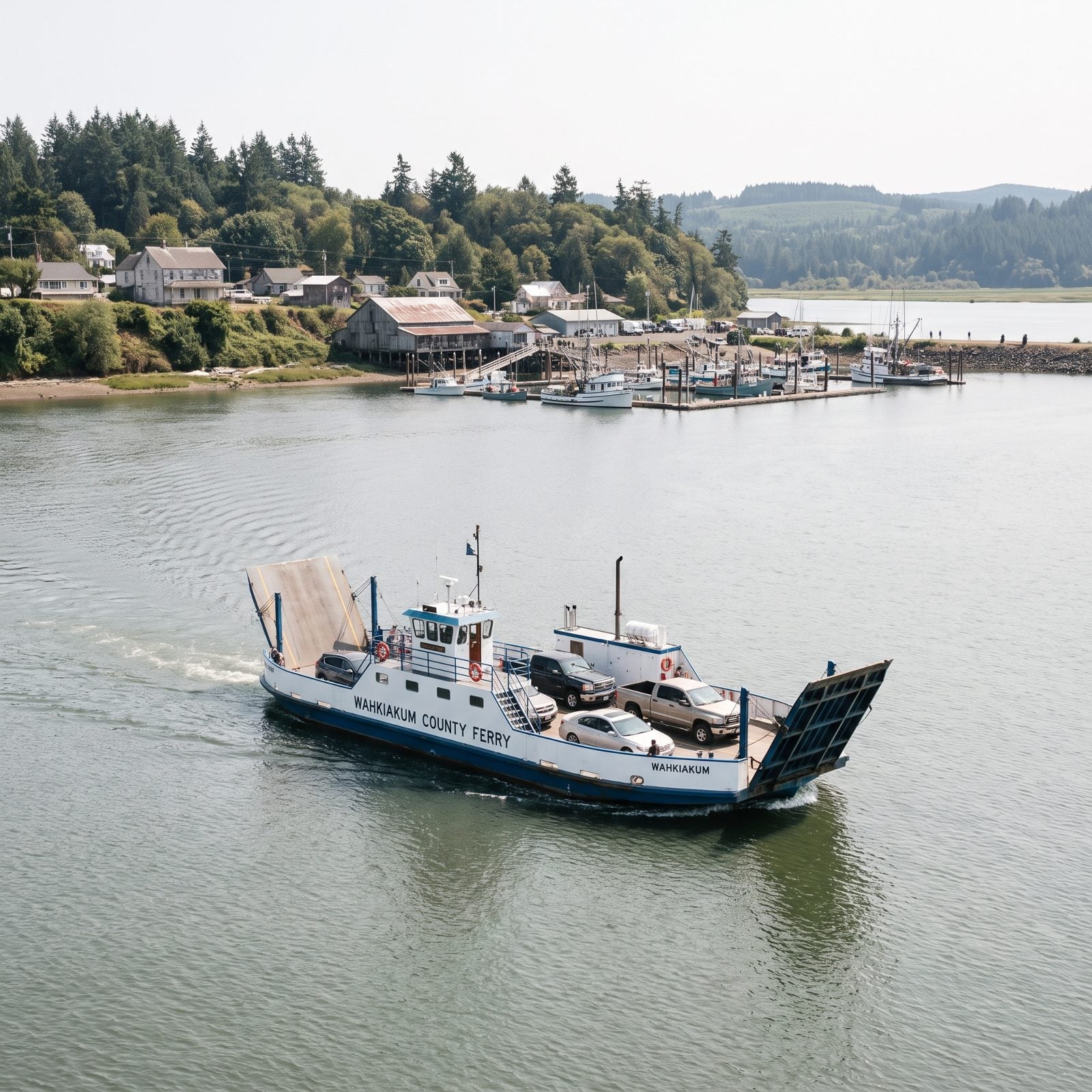
The Wahkiakum ferry isn’t a scenic attraction. It’s how people cross between Puget Island and Westport, Oregon — the last public ferry on the lower Columbia River, a small boat hauling a handful of cars across the channel on a loop all day.
Cathlamet is a tiny river town, one of the oldest in the state, built on fishing and timber and the plain fact of being a crossing point. The marina holds work boats and gillnetters, not a wall of rental kayaks. Catch the ferry on a weekday morning and you’ll ride with commuters and delivery trucks instead of a crowd chasing a photo.
26. Crisfield, Maryland, Crab Boats Load Ice While the Island Ferry Waits
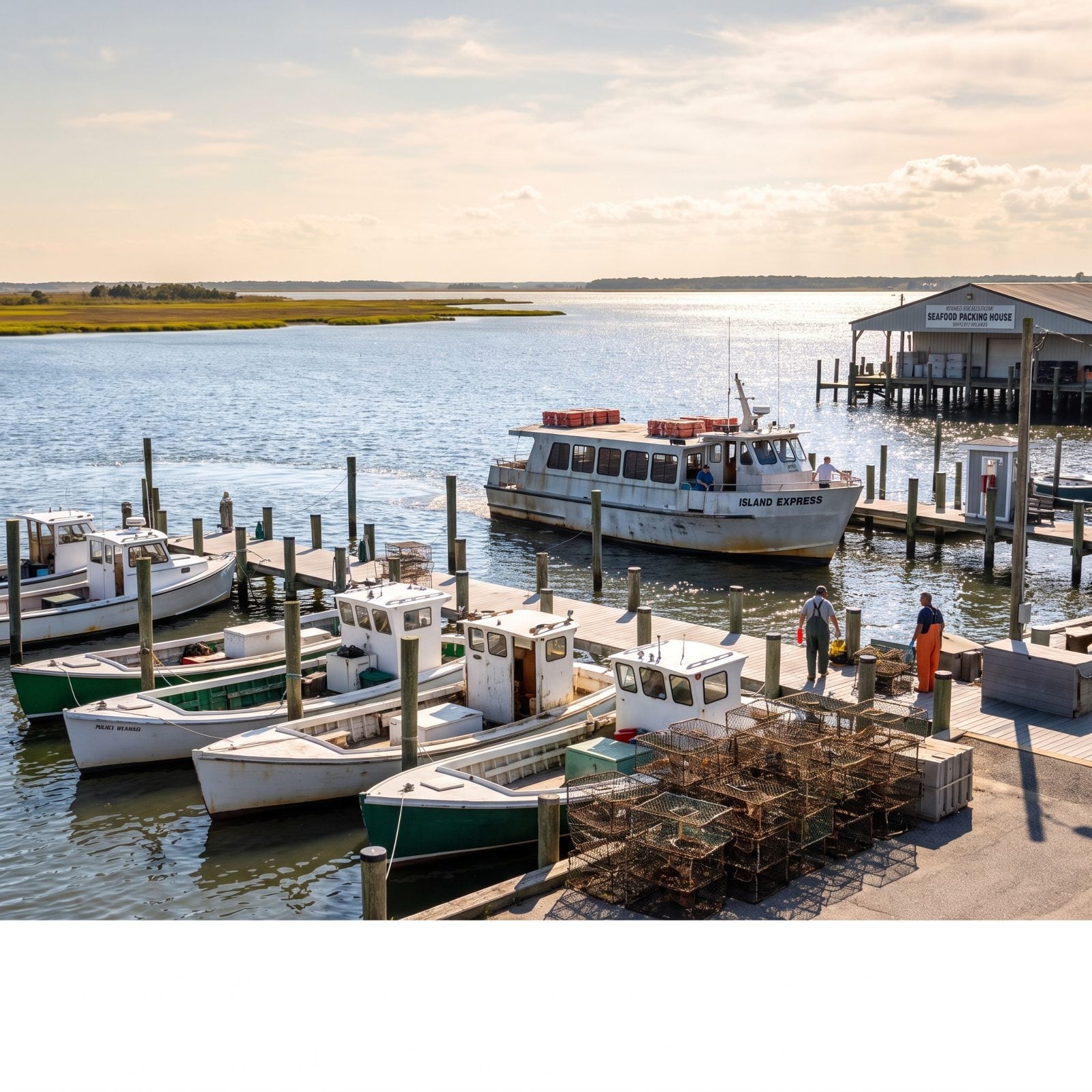
Crisfield was literally built on oyster shells — the town expanded out over the marsh on the discarded shell of its own seafood industry. It calls itself the Crab Capital of the World, and the docks back it up with workboats loading ice, piles of crab pots, and packing houses running hard through the season.
That same harbor is the mainland link for Smith and Tangier islands. The ferries leave from here, so the town is both a working crab port and a lifeline for the two inhabited islands out in the bay. Between the watermen and the island traffic, real business is happening before most visitors have finished breakfast.
25. Marine City, Michigan, Lakers Slide Past Downtown Close Enough to Wave
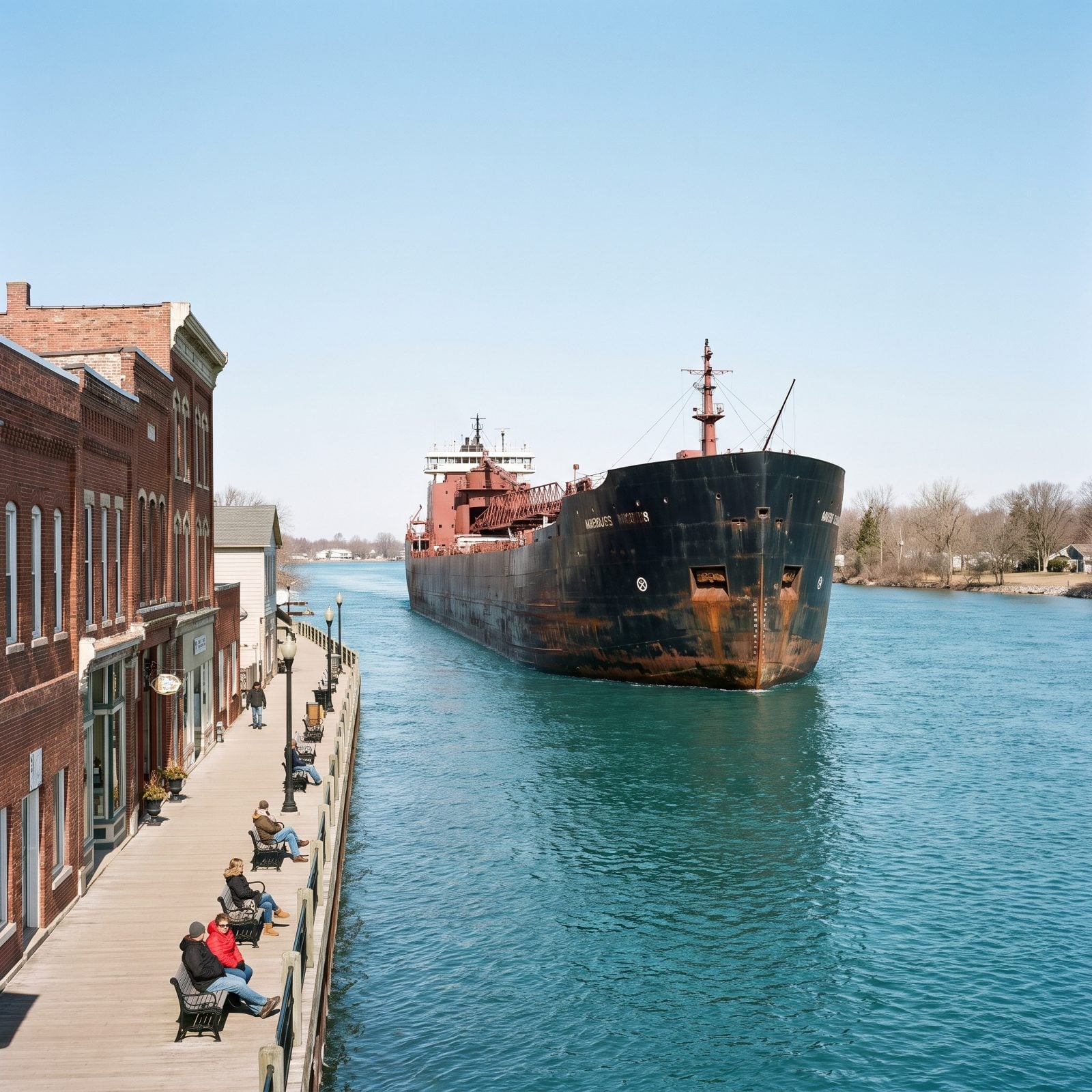
The St. Clair River narrows right at Marine City, which means the freighters pass astonishingly close to shore. Sit on a bench downtown with a coffee and you can watch a thousand-foot laker glide by near enough to count the rust streaks running down the bow.
This was a shipbuilding town back in the 1800s, and the river is still a working highway carrying iron ore, grain, and stone between the lakes. Marine City didn’t manufacture a quaint waterfront for anybody. The freighters were always going to pass through anyway. The town just kept its riverfront honest and let the ships be the show — for free, all day long.
24. Eastport, Maine, Working Waterfronts Brace Against the Bay of Fundy Tides
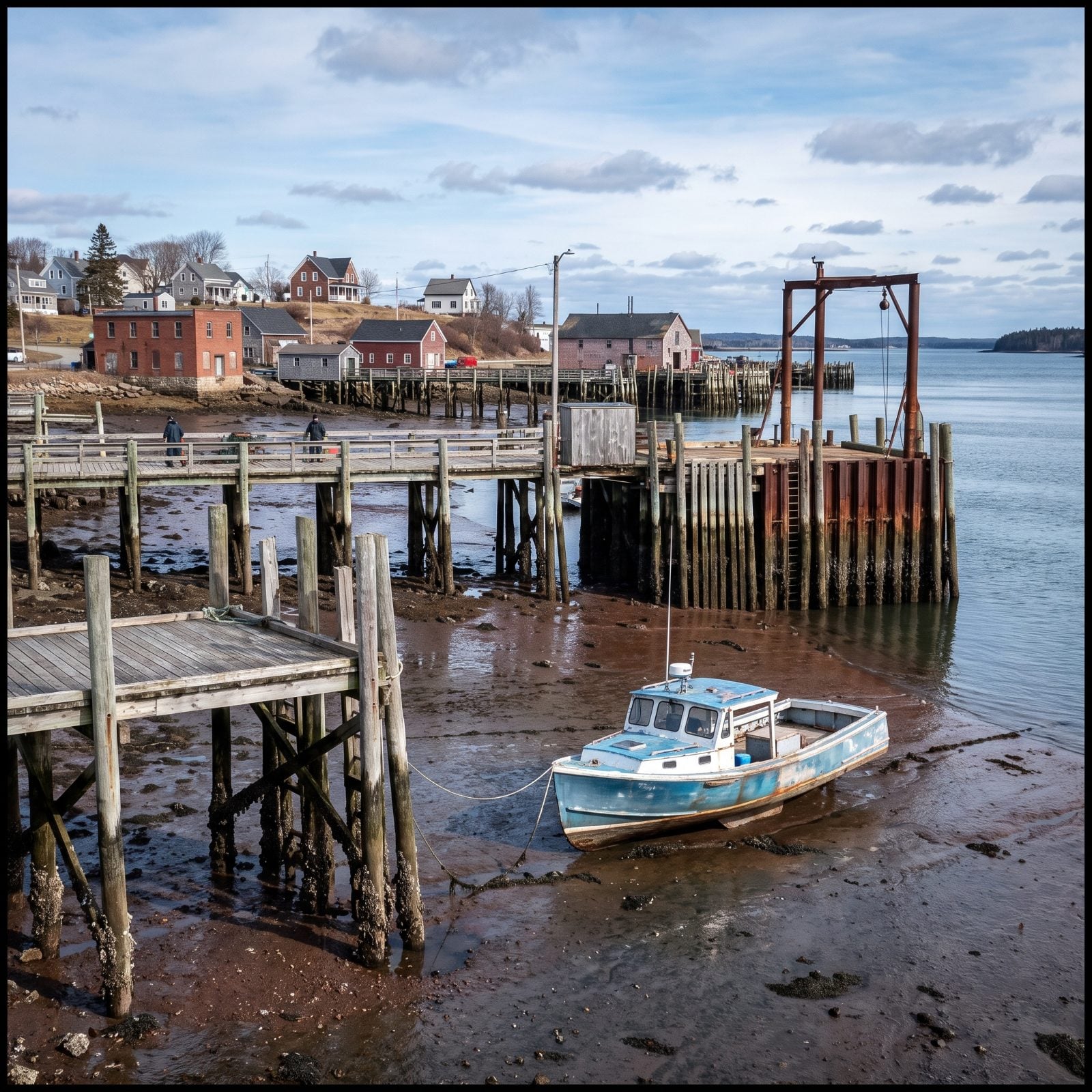
Eastport is the easternmost city in the country, and it works for a living. The tides swing something like twenty feet, which is why the docks perch on tall pilings and the boats slump sideways on the mud twice a day. A cruise schedule doesn’t run this town — that rhythm does.
Aquaculture and fishing still anchor the place. The deep harbor once drew cargo ships, and the port keeps hauling freight right alongside the lobster boats. You come for the working waterfront, the sardine-cannery past, and the plain strange thrill of standing where the sun first touches America.
23. Harbor Beach, Michigan, A Giant Breakwall Shelters a Local Lake Huron Port
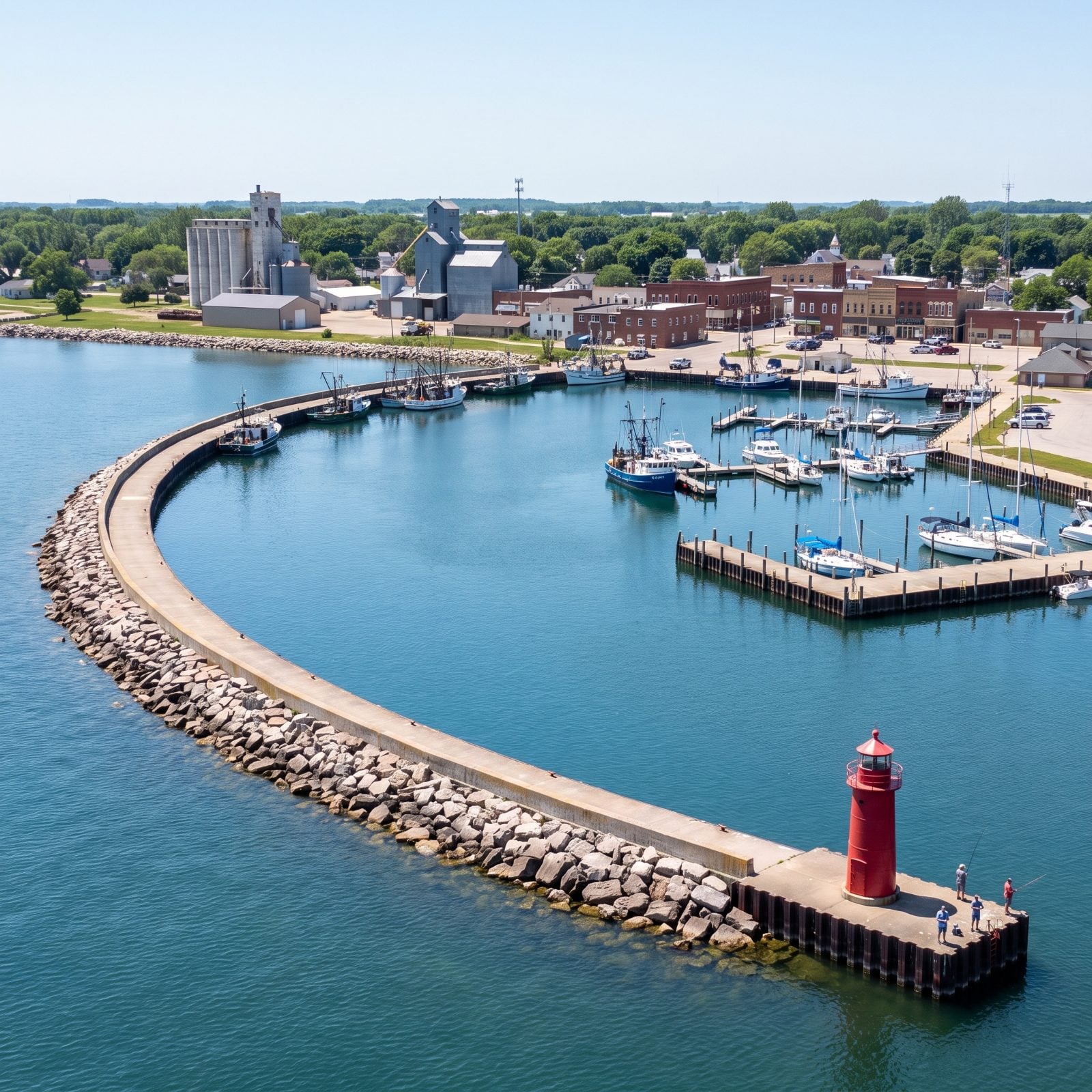
Harbor Beach claims one of the largest man-made freshwater harbors anywhere, ringed by a breakwall built to tame the open fury of Lake Huron. That wall does everything. Without it you’d have a brutal stretch of coast; with it you’ve got water you can actually use.
A Thumb-region town that never went all in on tourism. The lighthouse, the municipal marina, and the lakefront serve people who live here year-round — fishing is calm, parking is free, and nobody’s trying to sell you a harbor tour.
22. Darien, Georgia, A Shrimping Fleet Rides Beside Broad Salt Marshes
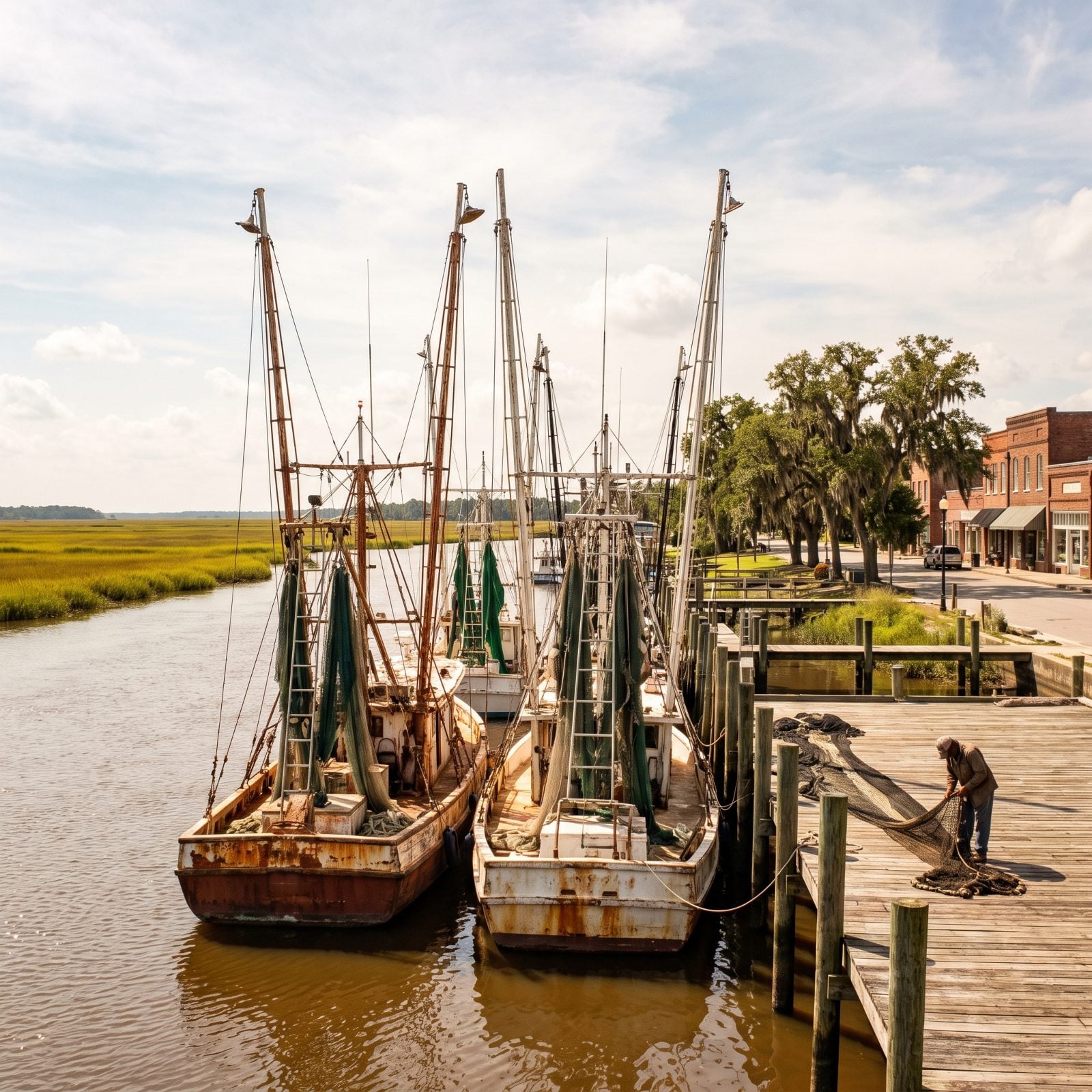
The shrimp boats in Darien aren’t decoration. This small Georgia town sits where the Altamaha River spreads into some of the largest unbroken salt marshes on the East Coast, and the trawlers working out of here are exactly why the docks smell like diesel and brine.
You can buy shrimp off the boat, which is about as fresh as food gets. The town itself is tiny, old, shaded by live oaks, with McIntosh County history layered into every brick. Go for the fleet. Stay for the marsh at golden hour.
21. Jonesport, Maine, Lobster Wharves Pack a Moosabec Reach Harbor
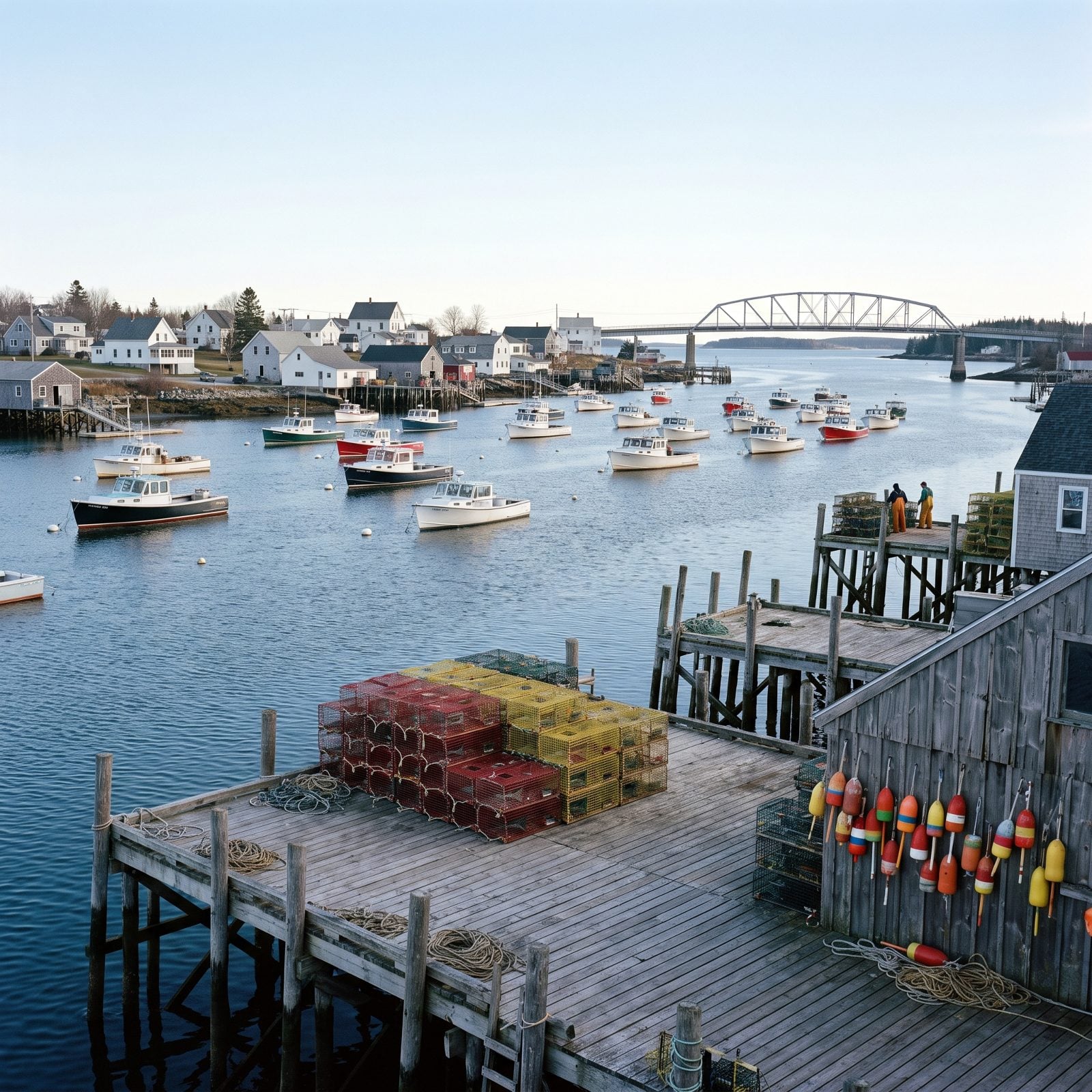
This is lobster country without the postcard gloss. Jonesport and neighboring Beals Island sit along Moosabec Reach, and the harbor is stacked with traps, buoys, and working boats that head out before you’re awake.
No boutique strip here. What you get is fish houses, a bridge to the islands, and generations of families who’ve hauled traps from this exact water. The lobster boat races held in the Reach each summer are a genuine local event — not something staged for the tourists who wander through.
20. Palacios, Texas, Shrimp Boats Line a Long Matagorda Bay Seawall
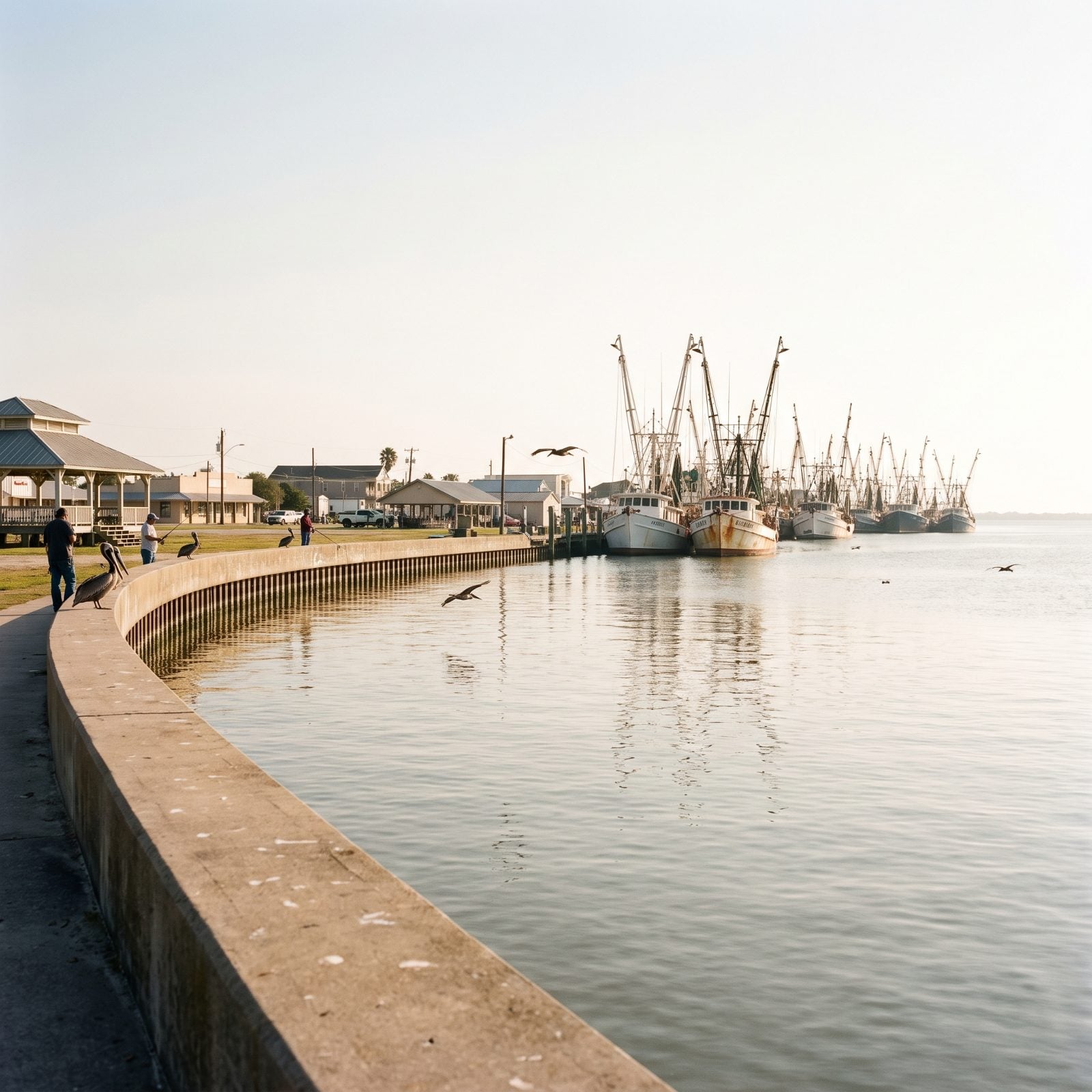
Palacios runs a shrimping fleet that has drawn Vietnamese-American and Gulf Coast fishing families for decades, and the harbor shows it. Steel trawlers with raised outriggers sit shoulder to shoulder along a waterfront most Texans have never heard of.
The town’s seawall runs a long way along Matagorda Bay, which makes it one of the best free walks on the middle coast. Fish off it, watch the shrimpers come in, and clock the old bay-front pavilion still standing after all this time. A fishing town first, a stop second.
19. Toledo, Oregon, A Yaquina River Mill Town Behind the Beach Traffic
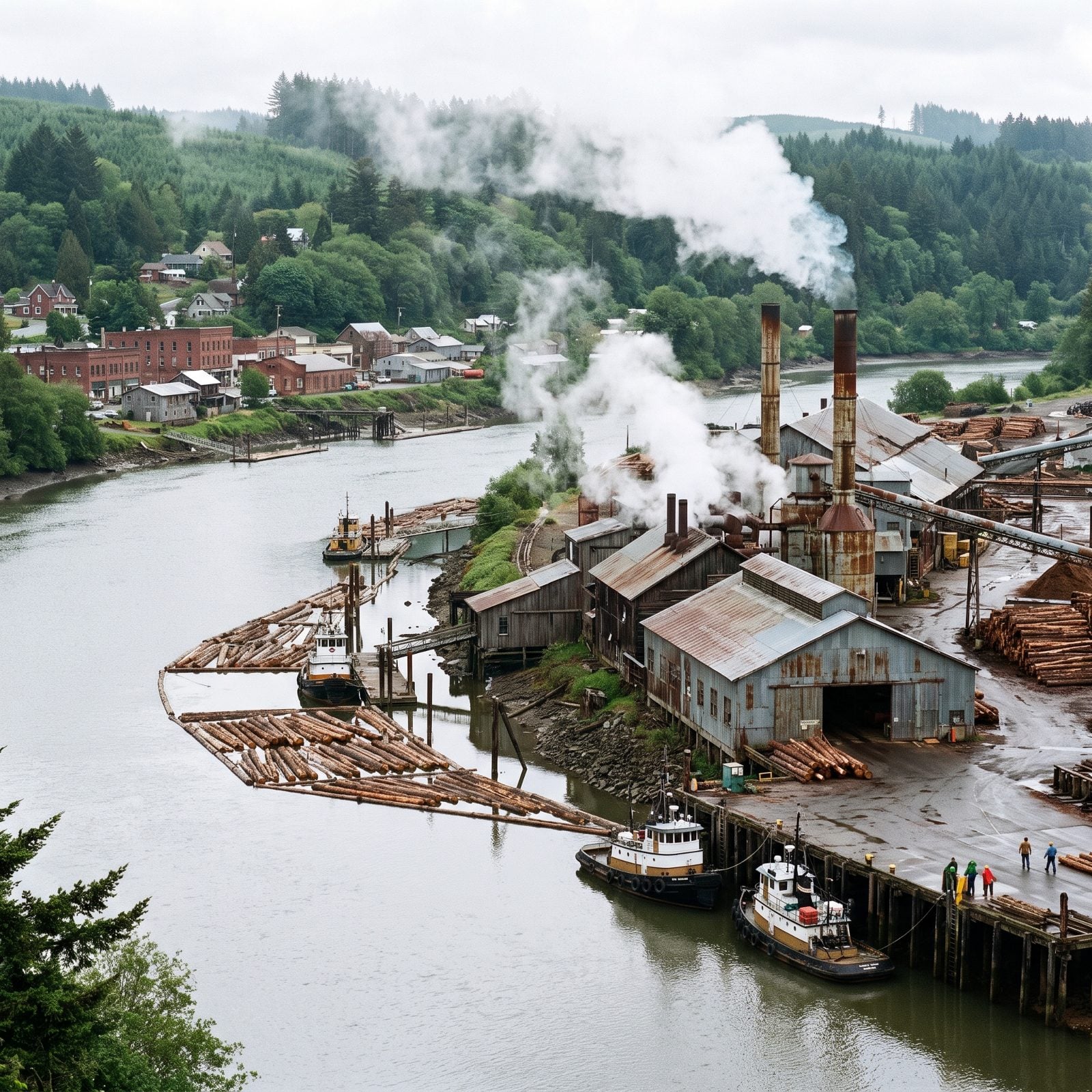
Everyone drives through Toledo on the way to Newport and the coast, which is exactly why it stays itself. Sitting inland on the Yaquina River, this is a mill town — the lumber operation along the water is the economic spine, not some tidied-up museum piece.
The old downtown has settled into an unhurried mix of antique shops, a few galleries, and working-class history. And because the river is tidal here, boats ride up and down with the Pacific. The coast, minus the parking fight.
18. Onancock, Virginia, A Creekside Wharf Links the Eastern Shore to Tangier Sound
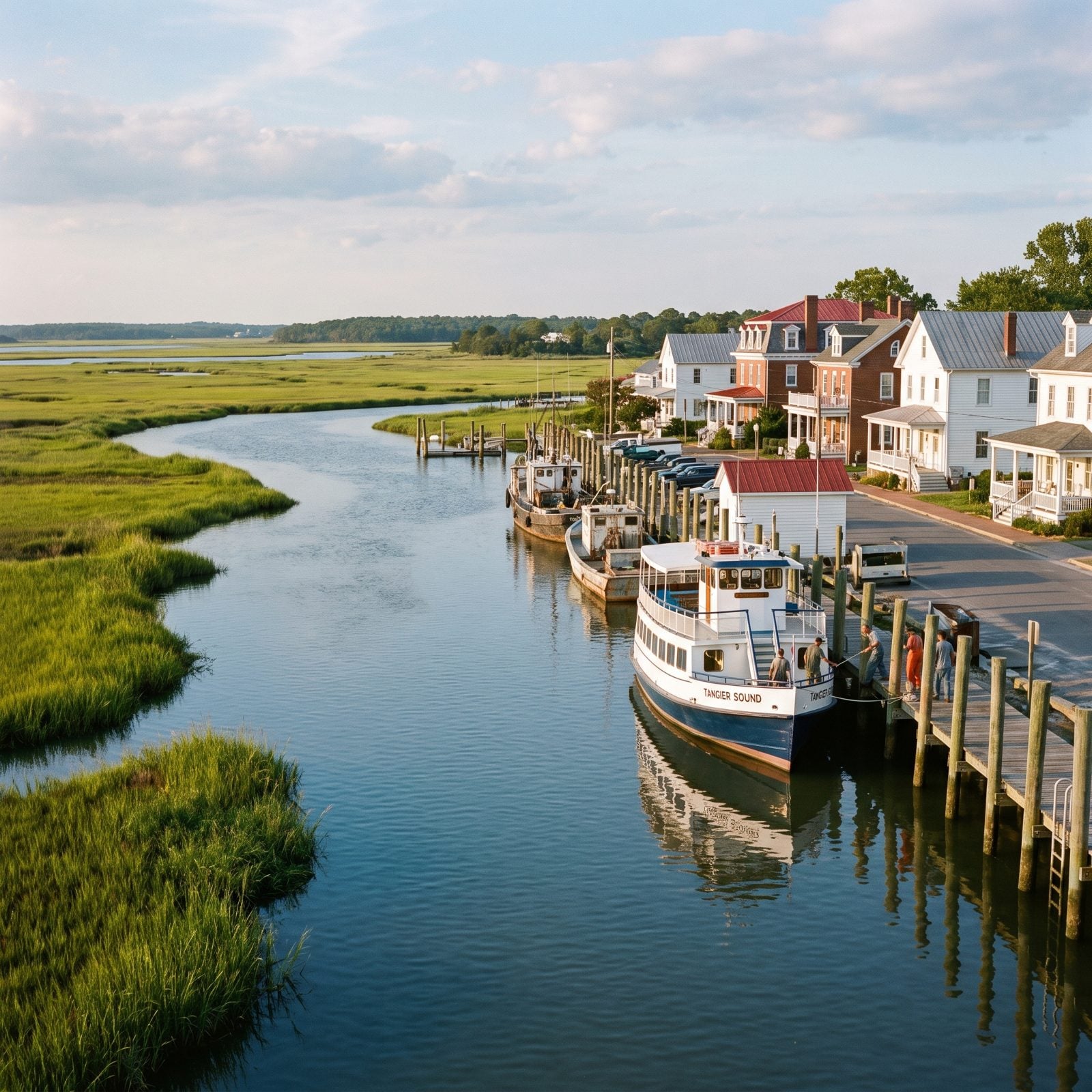
Onancock sits at the head of a winding tidal creek, and its wharf has been in continuous use since the 1600s. There’s the hook — a deep-water town on Virginia’s Eastern Shore where the water still does real work.
From here a passenger ferry crosses Tangier Sound to Tangier Island, that slowly disappearing crabbing community where watermen still talk with an accent all their own. The town keeps a working harbor, a handful of local businesses, and a pace set by tides rather than crowds.
17. Kewaunee, Wisconsin, Commercial Fishing History Wraps a Pierhead Lighthouse
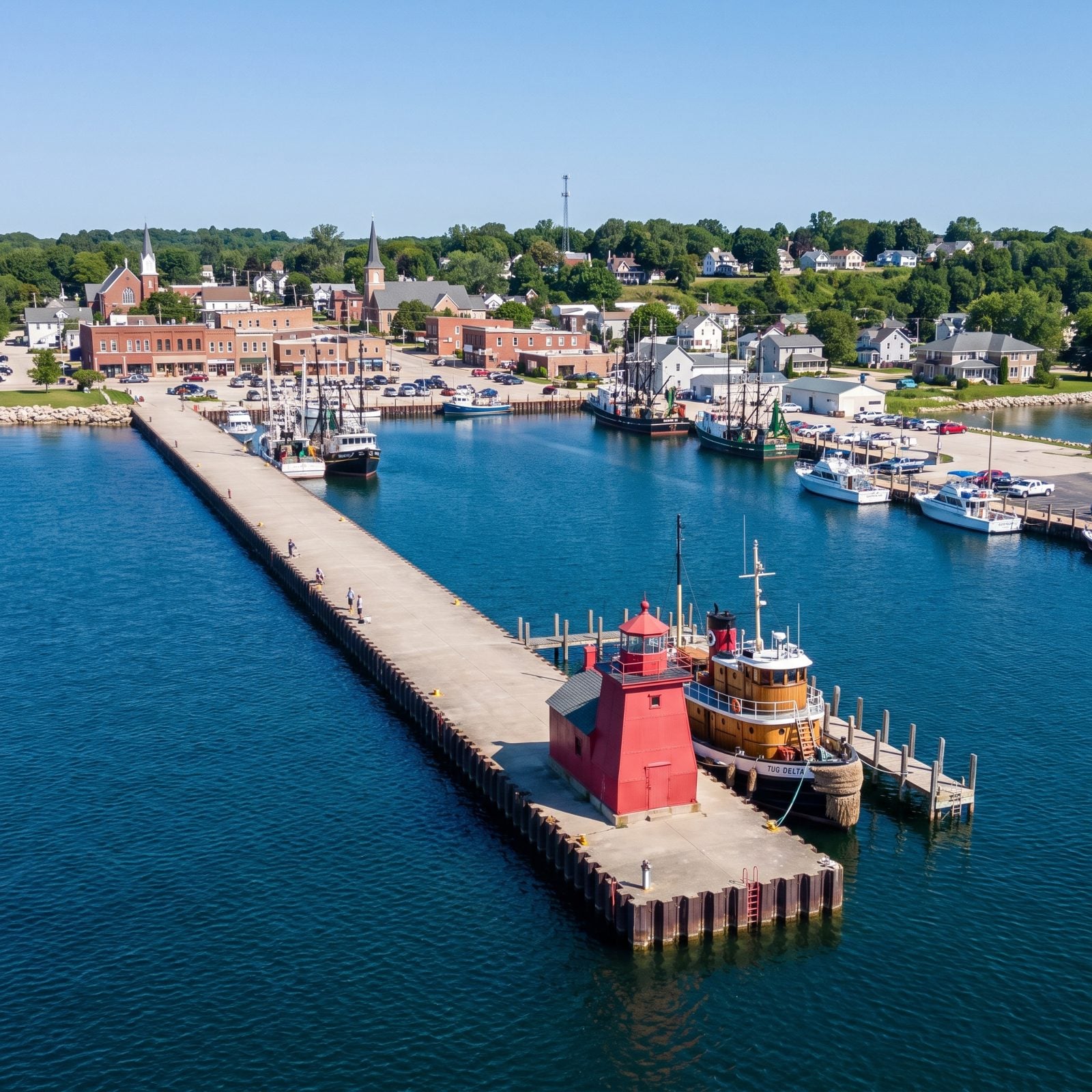
The red pierhead lighthouse at the end of Kewaunee’s breakwater is the town’s signature, but the real story is commercial fishing. This Lake Michigan port built itself on hauling fish out of deep water, and the harbor still carries that identity.
Charter boats run salmon and trout trips out of here, and a preserved wooden tugboat sits as a nod to the working fleet. Small town, free pier walk, and the catch coming off the boats is what pulls you in.
16. Garibaldi, Oregon, Seafood Docks Work Beneath a Forested Hillside
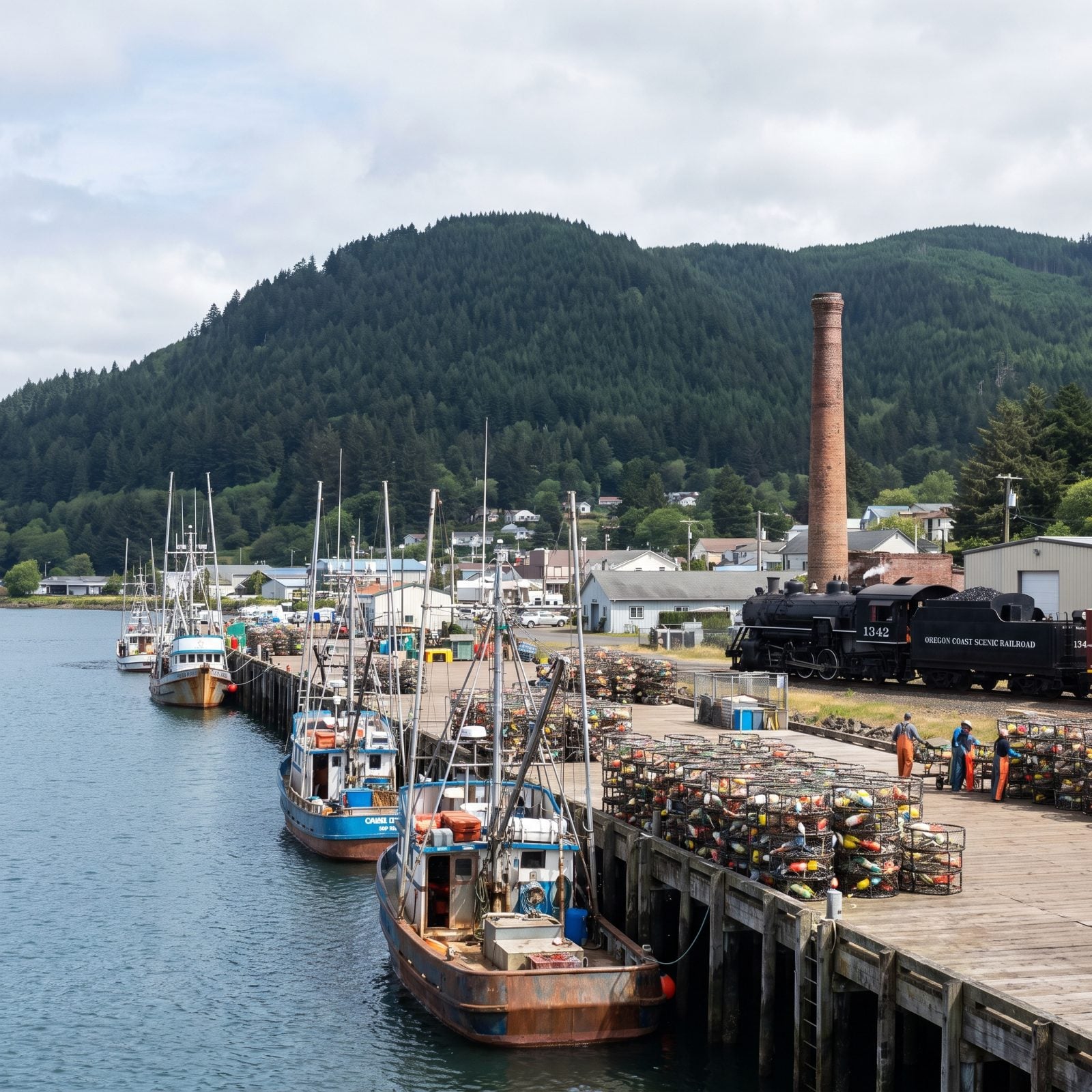
Garibaldi smells like crab, and that’s a compliment. Tucked under a steep green hillside on Tillamook Bay, this is one of the few Oregon coast towns where the commercial seafood dock is still the main event.
Crab and fish come off the boats here daily, and you can buy both fresh at the port. A landmark smokestack from the old mill and a vintage excursion train lend the place an industrial backbone most coastal towns scrubbed away years ago. Working first. Scenic second.
15. Wrangell, Alaska, A Working Port Keeps Tlingit Heritage in Plain View
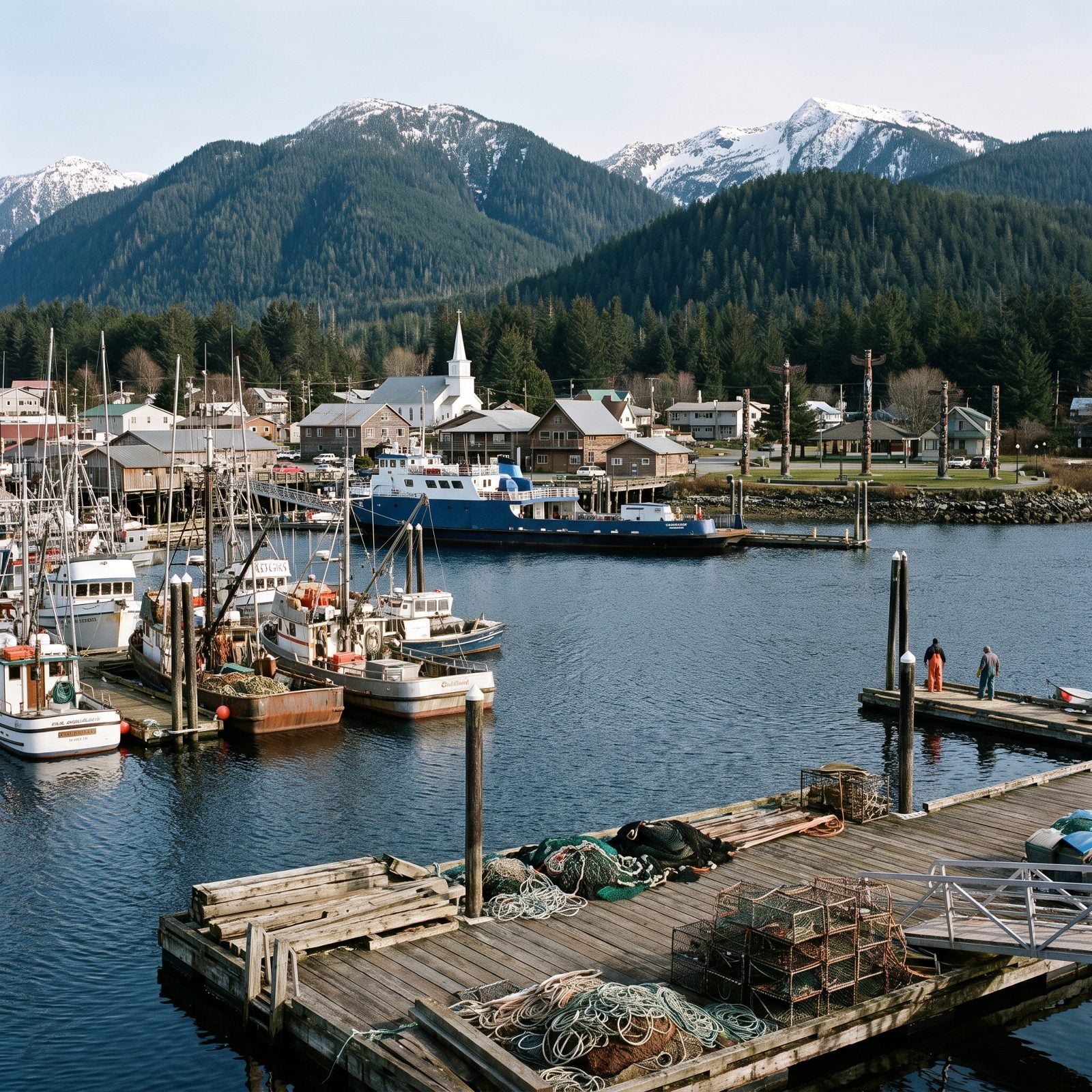
Wrangell doesn’t perform for anyone. One of the oldest towns in Alaska, it sits in the Inside Passage with a harbor full of commercial boats and a community that has lived on this ground for thousands of years. The Tlingit presence here isn’t a display — it’s the place.
Petroglyphs sit right on the beach, and totem poles and the Chief Shakes Tribal House stand near the water. Cruise ships mostly skip it, which is why the salmon, the halibut, and the lived-in feel all survive. You arrive by ferry or small plane and find a port still doing what ports do.
14. Escanaba, Michigan, An Ore-Dock Skyline Reveals the Harbor’s Industrial Roots
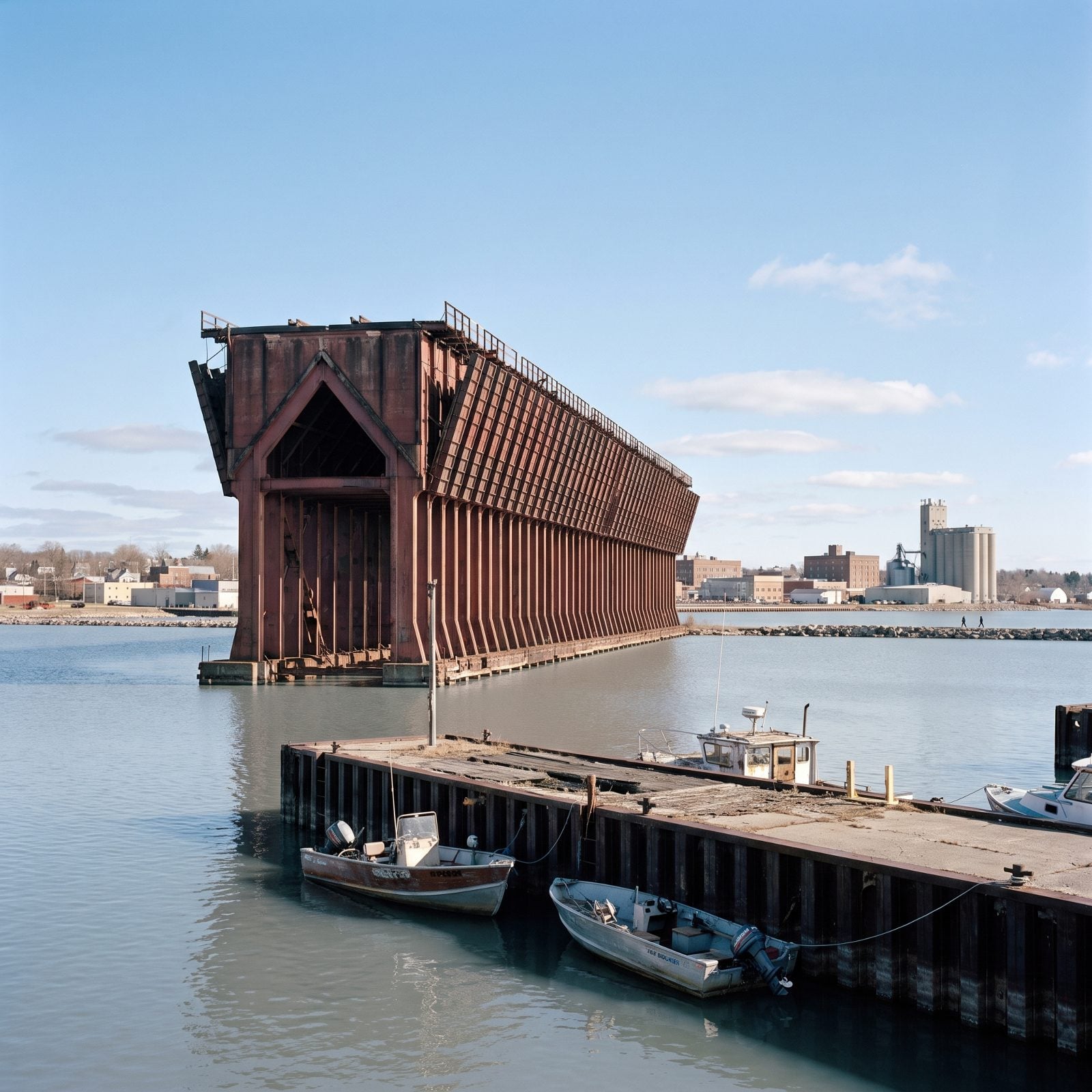
Most people drive the U.P. straight to Marquette and never stop, which is the mistake. Escanaba sits on Little Bay de Noc with an ore-dock skyline that tells you exactly how this town paid its bills for a century. Iron came down from the ranges, got loaded onto freighters bound south, and some of that still happens today.
The waterfront here isn’t pretending to be anything. You get Sand Point Lighthouse, a working marina, and a downtown with actual hardware stores and diners that open at six. Walleye and perch fishing runs strong into fall, and the locals know holes you won’t find on any map — not that they’ll tell you where.
13. Ontonagon, Michigan, An Old Mining Port at the Mouth of Its Namesake River
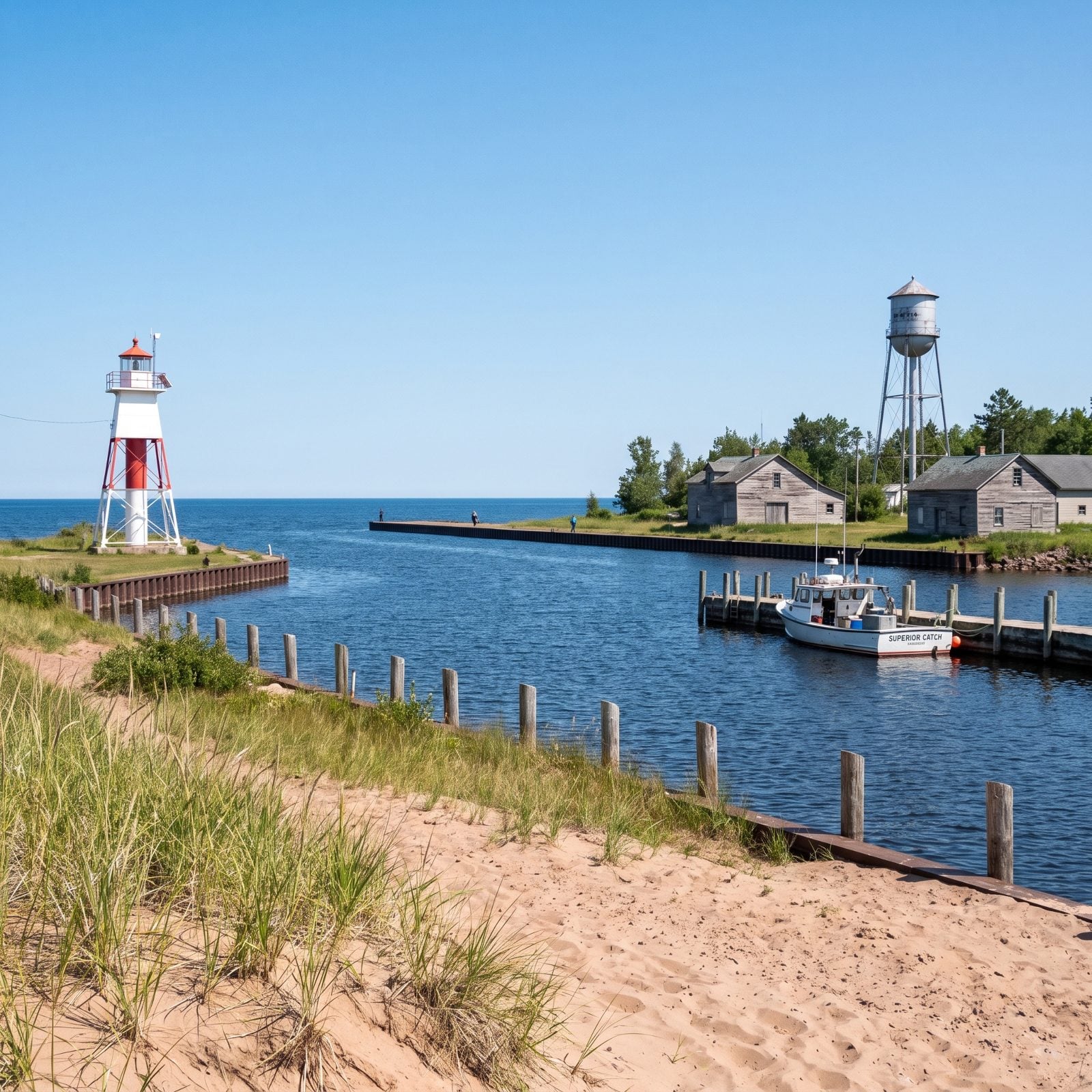
Ontonagon runs quiet now, and it earned that the hard way. Copper country boomed here, then it didn’t. The town loaded ore and lumber onto Superior freighters at the river mouth, and when the mine economy faded, it kept its bones instead of dressing them up for the tourists who never came.
What’s left is honest: a small harbor, a lighthouse you can see from the beach, a river that still carries fishing boats out to one of the coldest, clearest stretches of the Great Lakes. Superior doesn’t warm up for anyone, so pack a jacket even in July. The payoff is a waterfront that belongs to the people who live there, and nobody else.
12. Carrabelle, Florida, Fishing Boats Still Set the Pace on the Forgotten Coast
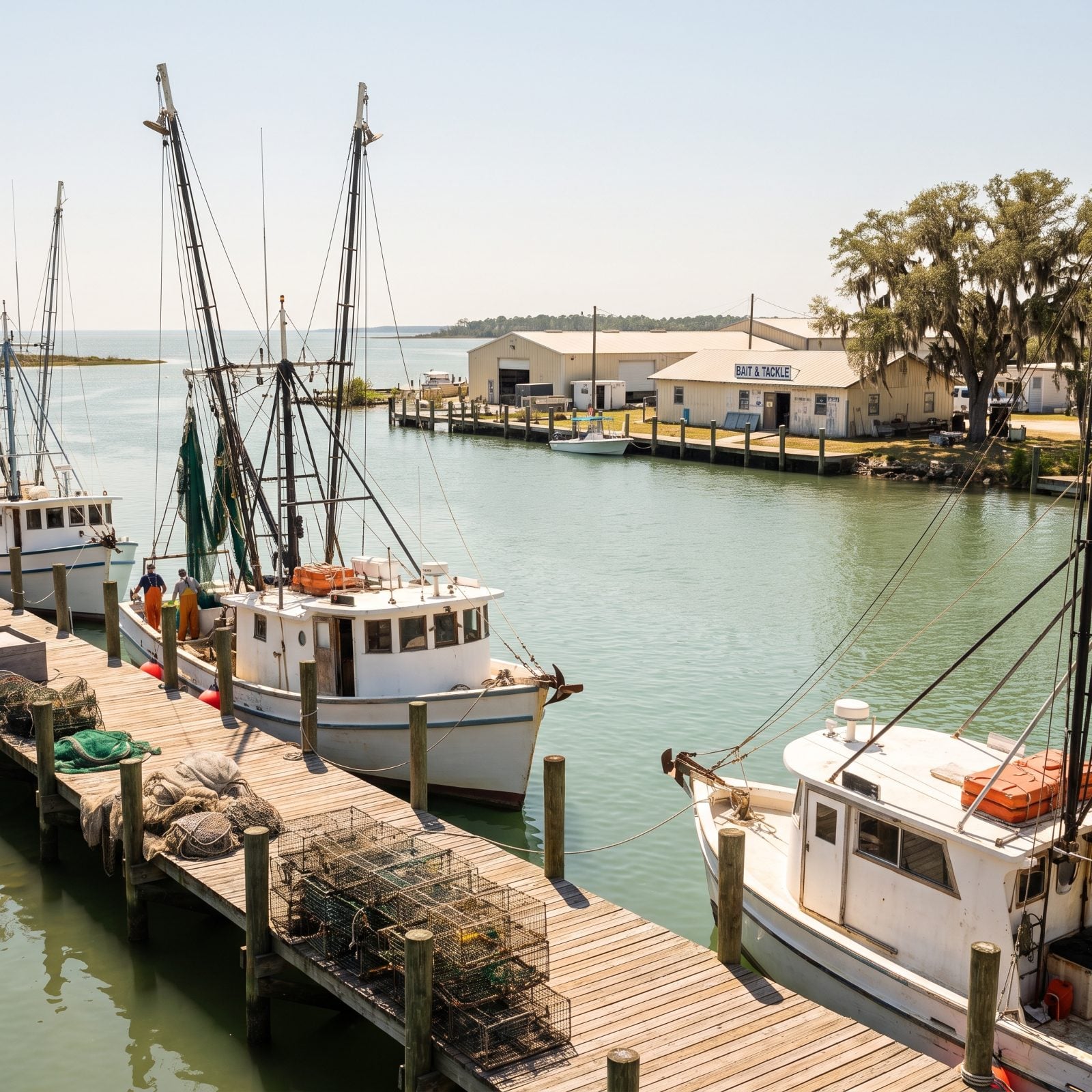
This is what the Florida coast looked like before it got expensive. Carrabelle sits on the Forgotten Coast, that stretch of Panhandle where the condos never arrived and the shrimp boats never left. The waterfront still works for a living, and it shows.
You come for the fishing — grouper, redfish, and some of the best oyster waters in the state right nearby. There’s a marina, a handful of family seafood joints, and a famously tiny police booth that locals will point out with a grin. No crowds, no valet. Just boats coming in with the catch and somebody selling it a hundred feet away.
11. Belhaven, North Carolina, Shrimp Boats and Sailboats Share the Pungo River
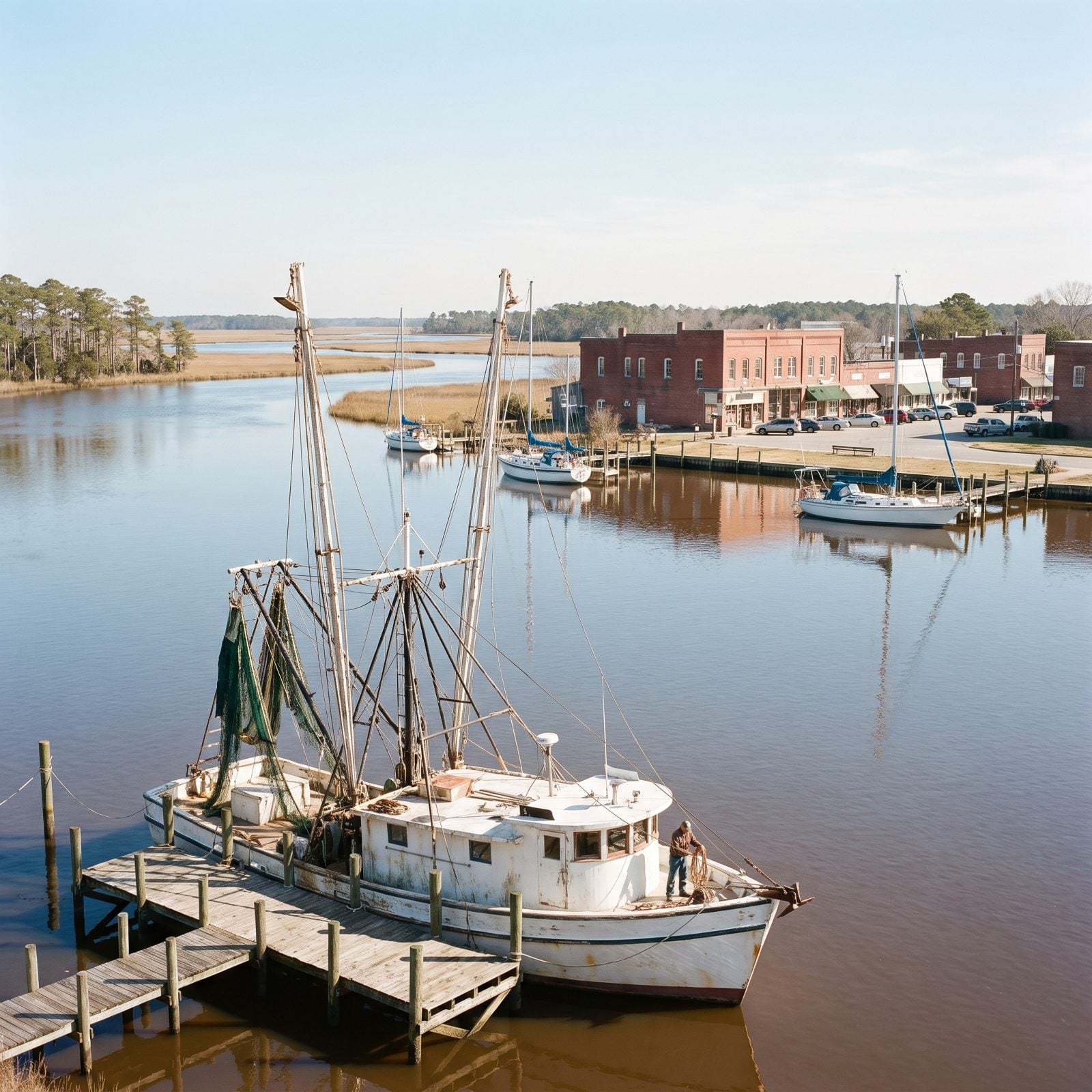
Belhaven calls itself the gateway to the ICW and actually means it. Boaters running the Intracoastal pull in to top off fuel and groceries, so the town ends up serving two kinds of mariners at once — the shrimpers who’ve worked the Pungo for generations and the sailors passing through on the inside route.
That mix keeps the waterfront real. A town museum crammed with oddities. A free dock for transient boats. Seafood that came off a local hull. The river is wide and brackish, the kind of water where pelicans and workboats show up in the same glance, and it’s a stopover too many people only stop over in.
10. Ogdensburg, New York, A Working St. Lawrence Port Looking Straight at Canada
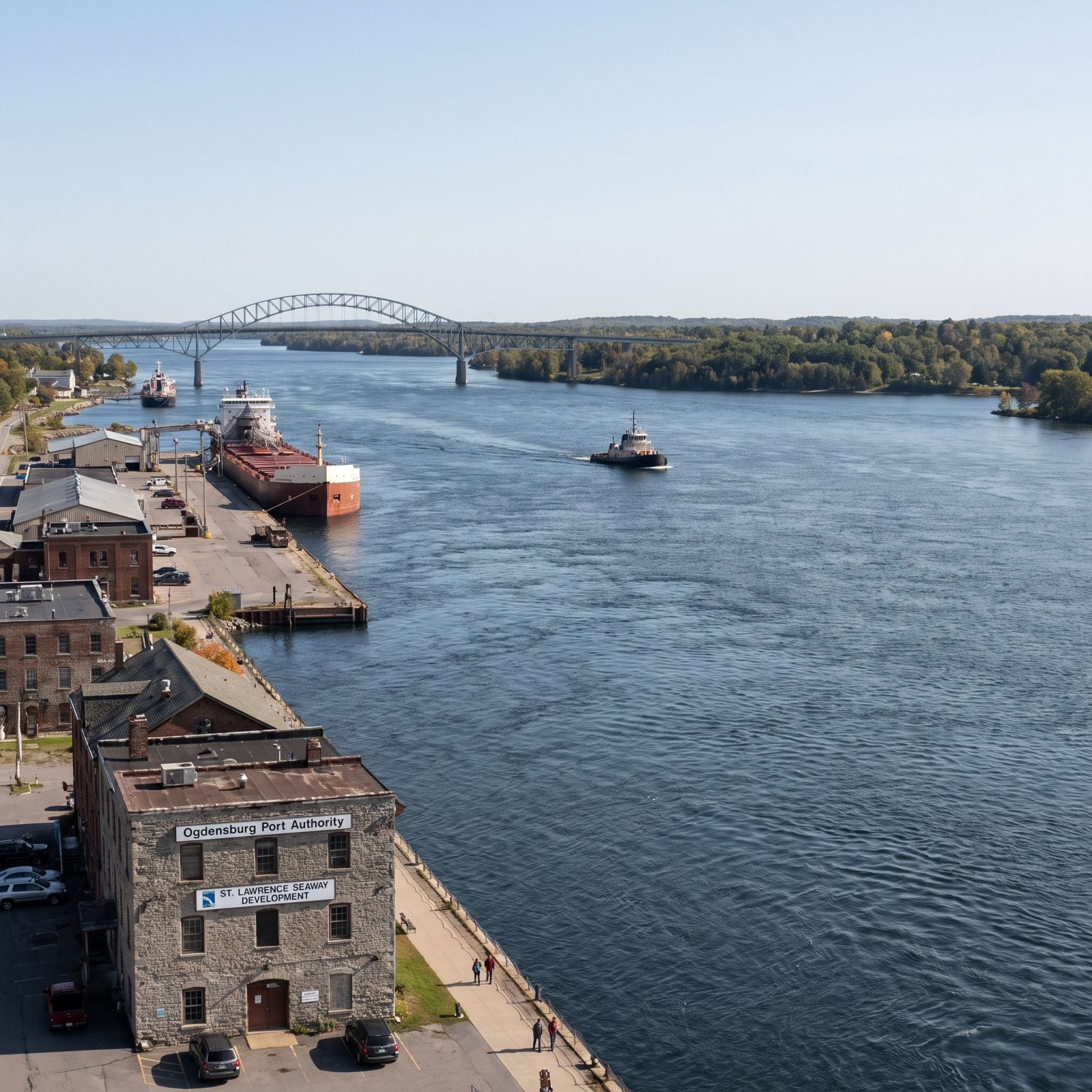
Stand on the Ogdensburg riverfront and you’re looking at another country. The St. Lawrence runs wide and fast here, with the city sitting right at the international line, a bridge to Canada, and a deepwater port that still moves cargo.
This was never a resort town. Old stone buildings, a historic lighthouse, and a working port give it a texture most river towns scrubbed away decades ago. The current along this stretch is no joke, so anyone putting a small boat in should respect it. Everyone else gets the riverwalk — freighter traffic, Canadian shoreline, and a sense of scale no lake will hand you.
9. Ashtabula, Ohio, A Bascule Bridge Lifts for Traffic on the Harbor River
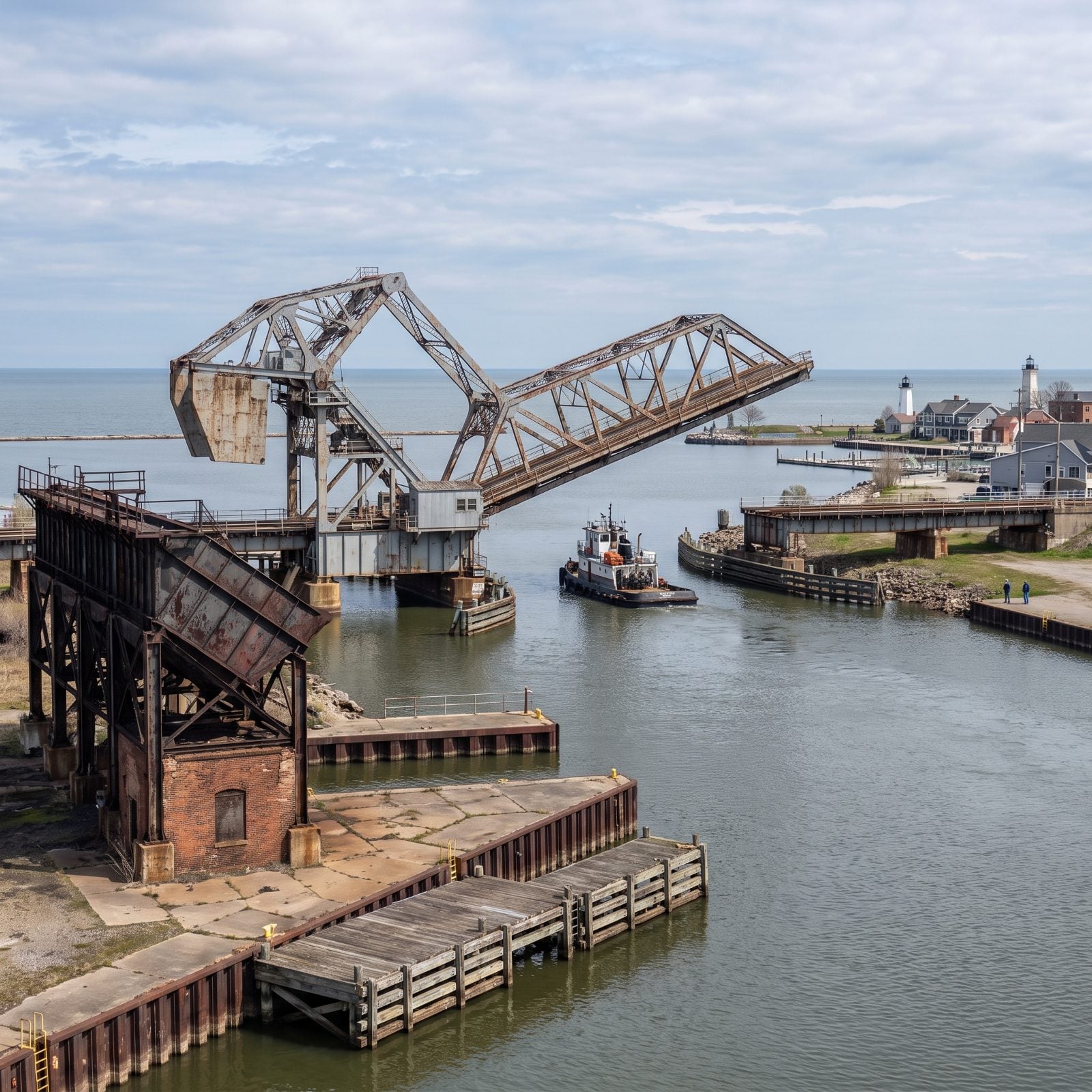
Ashtabula Harbor runs on a bascule bridge, and watching it lift is half the entertainment. The span swings up, a boat slides through, cars wait, life goes on. It’s a small ritual a working harbor still bothers to keep.
The harbor district has tightened into something charming without losing the grit, which is harder than it sounds. Ore and coal docks built this place on Lake Erie, and the maritime museum in the old lighthouse keeper’s house tells that story without any spin. Walleye fishing on Erie is a genuine draw, and the charter captains know their water cold. Come for the bridge, stay for the fish.
8. Oswego, New York, Grain Silos, Freighters and a Harbor Light Along the Lake Ontario Shore
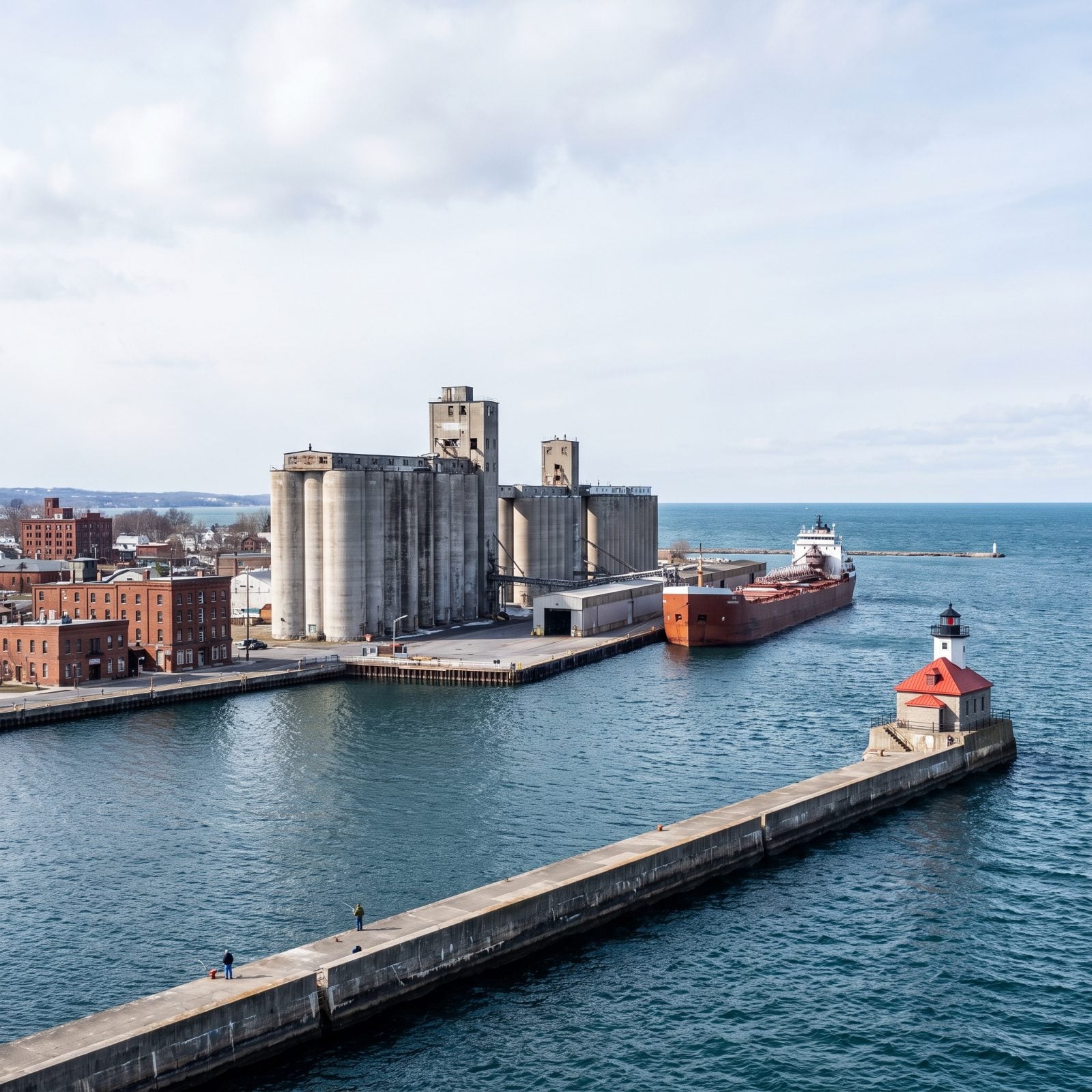
Oswego stacks it all on one shoreline — grain silos, a commercial pier, freighters, and a harbor lighthouse out on the breakwater. Lake Ontario hands this town serious water, and the port still handles cargo instead of just pleasure craft.
The salmon and trout fishing here is the stuff of legend, with fall runs up the Oswego River pulling anglers from several states. That fishery drives most of the local visitor dollar, but it shares the place with a real port and a college crowd, so Oswego never tips into theme-park mode.
Walk the river walls in September and you’ll see why people plan whole vacations around a fish.
7. Pascagoula, Mississippi, Shipbuilding and Shrimping Rule the Waterfront
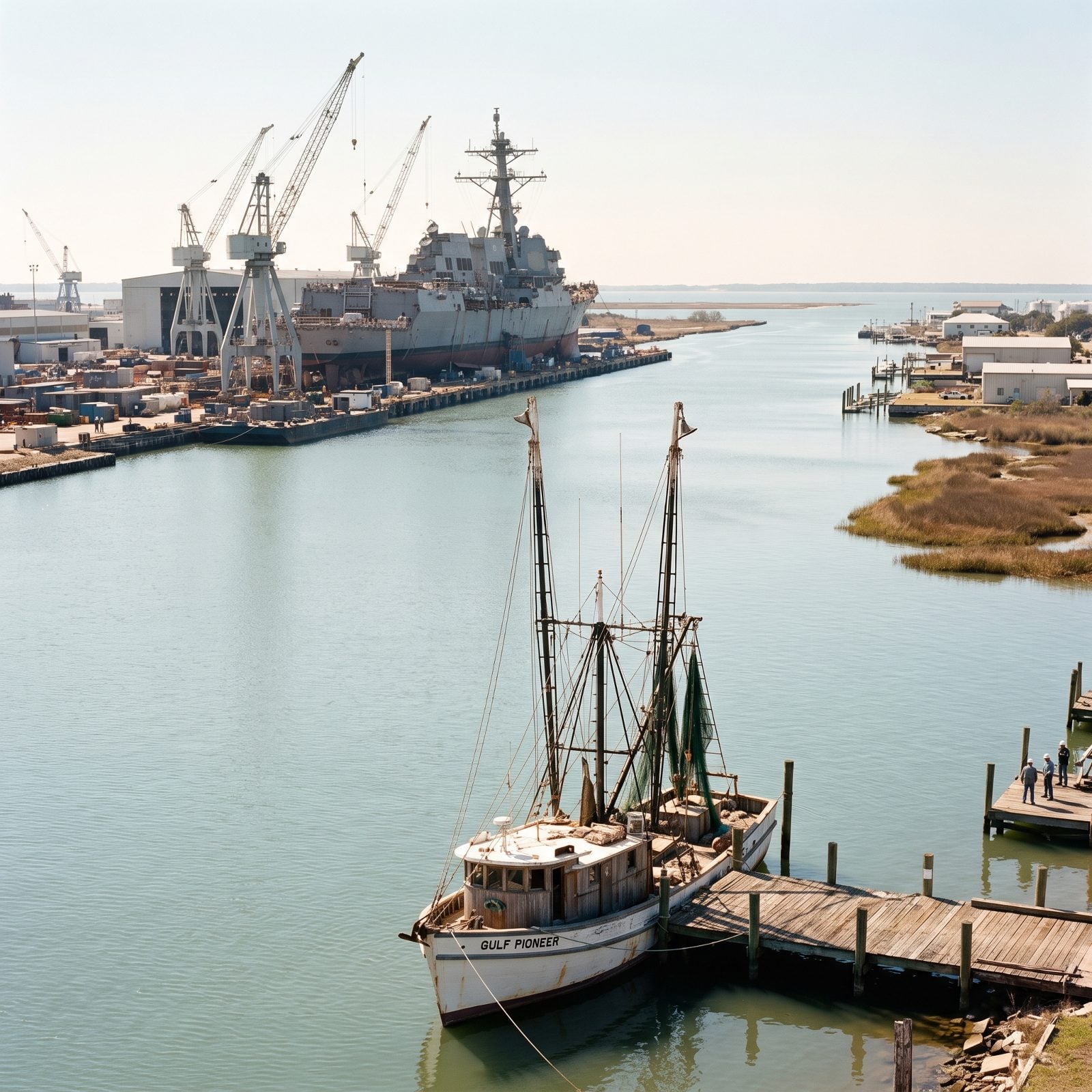
Pascagoula builds ships. Big ones. One of the largest shipyards in the country sits right on this waterfront, turning out Navy vessels, and the sheer scale of it reorders how you think about a coastal town. This is industry you can watch from shore.
Alongside the cranes and steel, the shrimp fleet still works the Mississippi Sound, so you get both on the same water — a destroyer under construction and a shrimp boat heading out at dawn. The beaches are modest, the seafood is the real thing, and the town runs on paychecks rather than postcards. Which is exactly the appeal.
6. Morgan City, Louisiana, Fishing, Energy and River Traffic Converge on the Atchafalaya
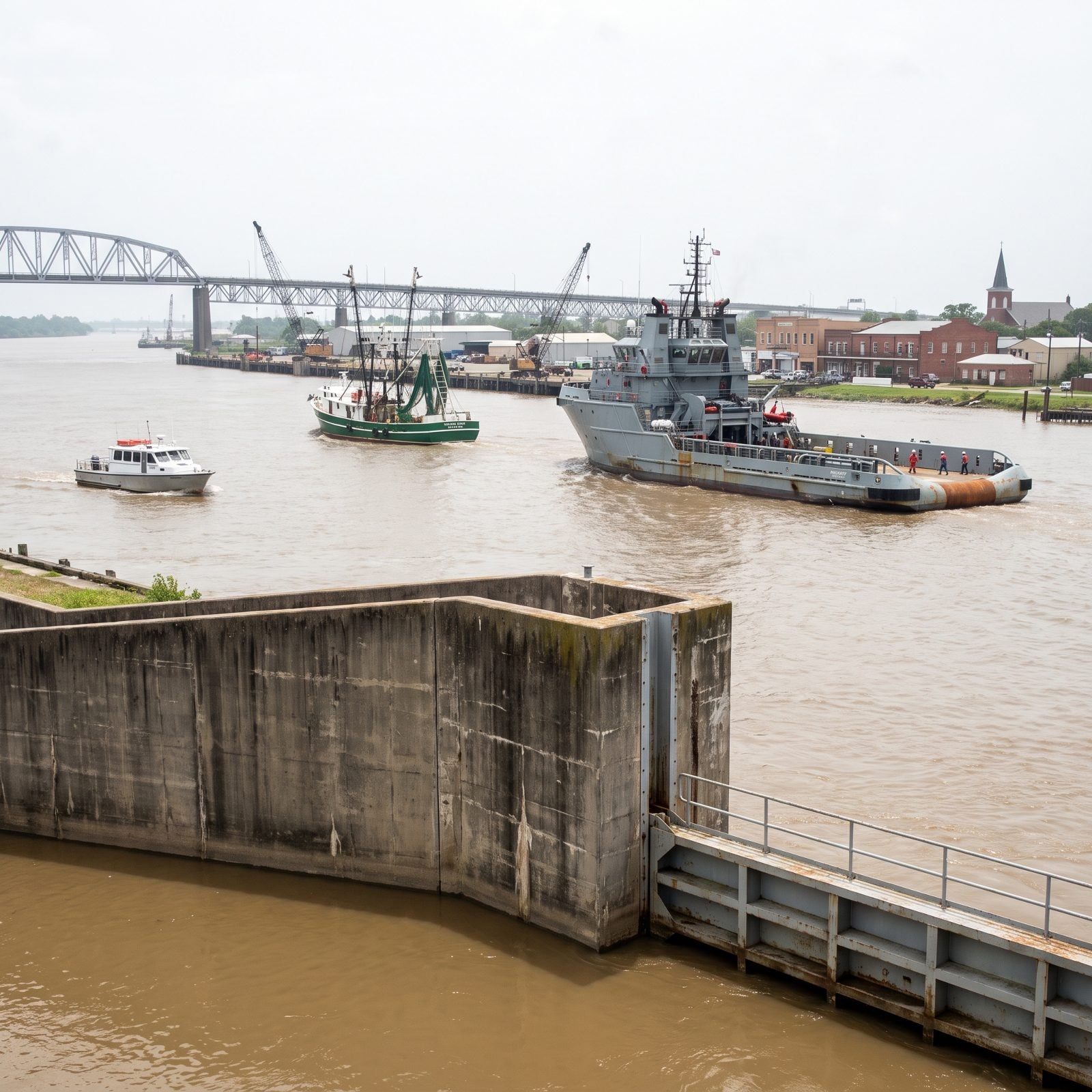
Morgan City lives behind a floodwall, which tells you how the Atchafalaya treats the people who work it. The river runs brown and powerful through town, carrying shrimp trawlers, crew boats, and offshore supply vessels all in the same current.
This is a crossroads of two tough industries — Gulf shrimping and offshore energy. The Shrimp and Petroleum Festival over Labor Day weekend puts both right out in the open, no apology offered. Don’t come looking for a polished resort. You’ll find a town that feeds and fuels a big chunk of the country, with a waterfront to match.
5. Brunswick, Georgia, Shrimp Boats and Cargo Ships Share One Deepwater Port
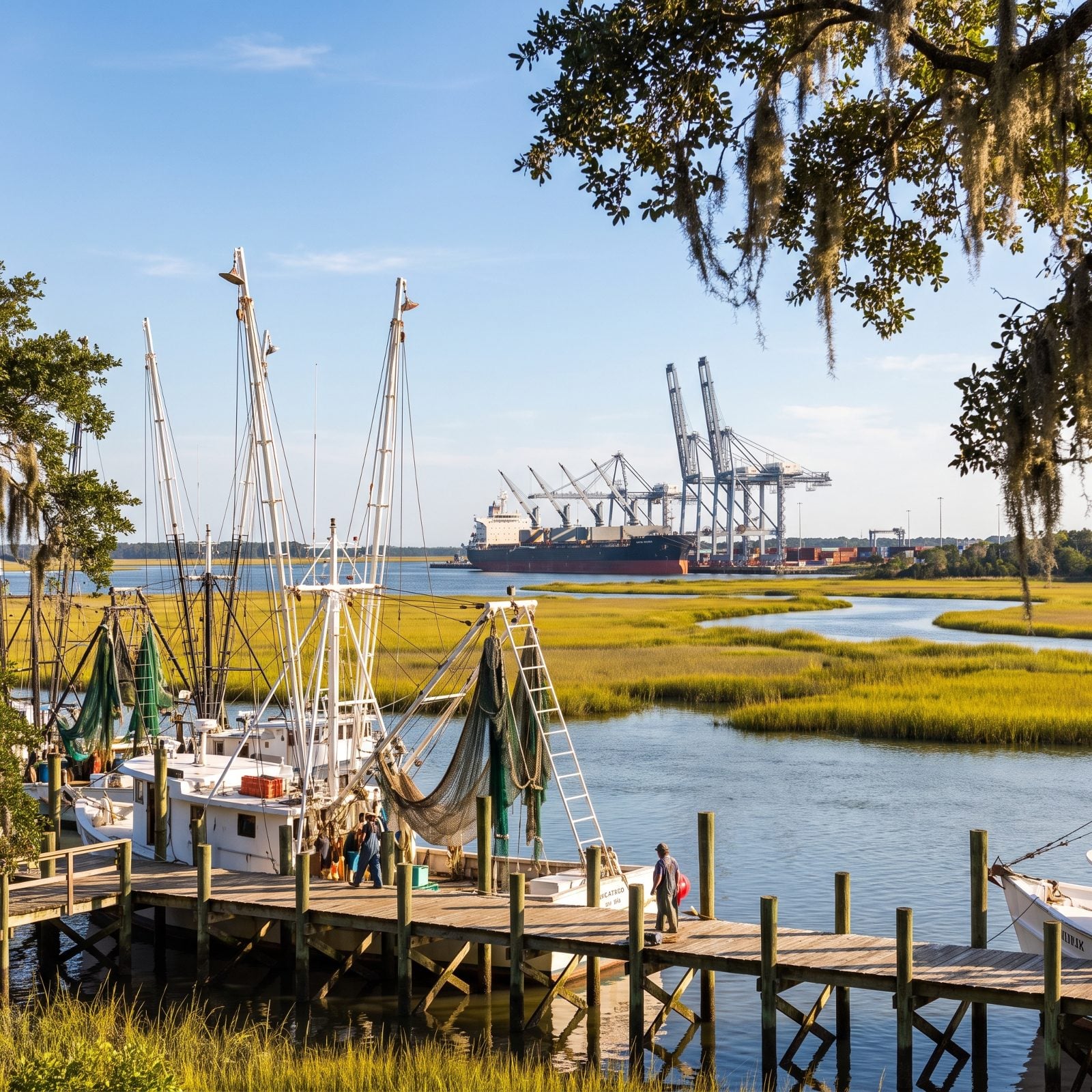
Brunswick sits in the salt marsh between Savannah and the Golden Isles, and most people blow past it to reach the beaches. Their loss. This is a working deepwater port where shrimp boats and cargo ships share the same channel.
The shrimp fleet here is the real article, the boats that supply the local seafood houses with wild Georgia shrimp. You’ll see them tied up in rows, outriggers folded, nets drying in the Lowcountry sun. A short distance off, the port moves enormous volumes of cargo, so the water never goes still. Eat at a dockside place, watch the marsh tide move, and let St. Simons wait an extra hour.
4. Georgetown, South Carolina: Shrimp Boats and a Steel Mill Frame the Historic Riverfront
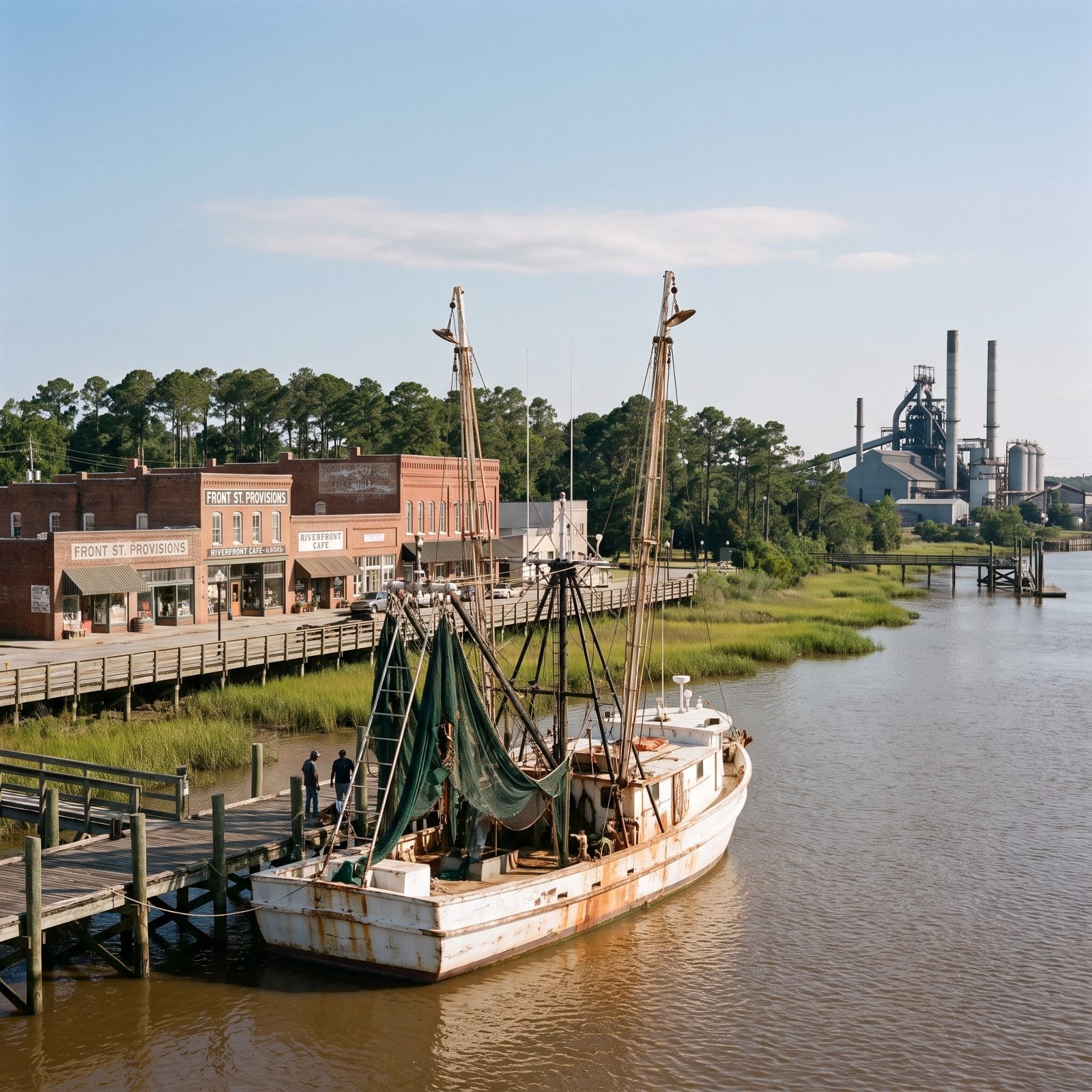
Georgetown doesn’t try to hide its working side, and honestly that’s the whole appeal. The steel mill sits right beside the brick storefronts on Front Street, on the same bank and just past the boardwalk, stacks and all, close enough that locals stopped noticing it years ago. Most towns would landscape a view like that into oblivion. Here it just sits there, unapologetic.
Shrimp trawlers still run out of the Sampit with their outriggers up and nets the color of old moss hanging to dry, and you can buy the catch pretty much where it comes off the boat. The Harborwalk is short and honest — a boardwalk past working docks, not some staged promenade with ice cream and a fee.
3. Bath, Maine: Major Shipbuilding Still Runs Beside a Working Downtown
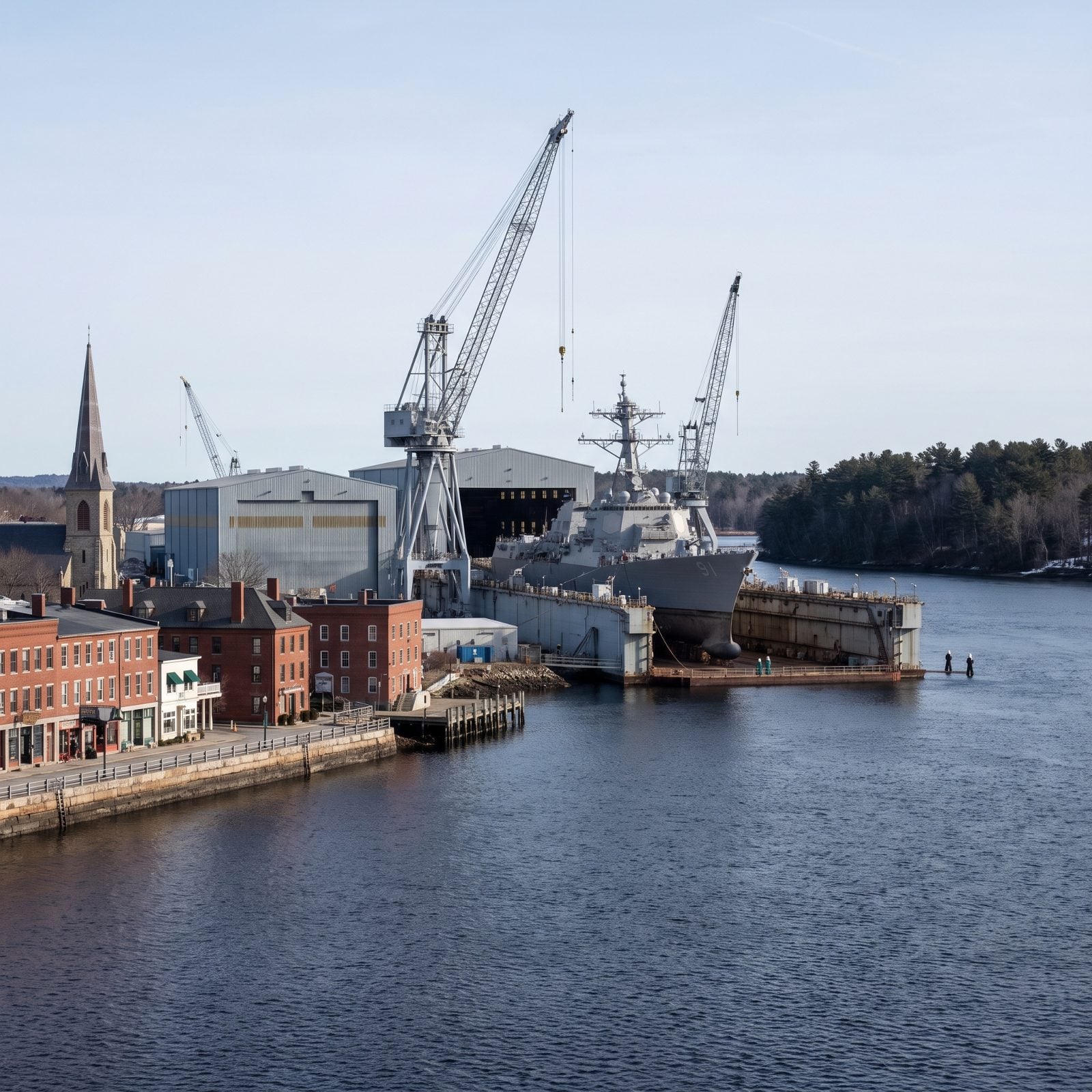
Bath builds destroyers. Actual Navy warships, right there on the Kennebec, cranes looming over downtown and the shift-change traffic a plain fact of daily life. Nobody here needs a maritime museum with a gift shop to call it heritage. This is a town where plenty of people still clock into the shipyard, same as their parents did, same as the folks before them.
Walk Washington and Front Streets and you get a real downtown — hardware store, a good bakery, a bookshop, the kind of places that stay open in February when the tourists are long gone. There’s a Maine Maritime Museum down the road that tells the deep history. But the living version is louder and a whole lot closer, measured out in whistle blasts and welding light.
The cranes aren’t a backdrop here. They’re the reason the town exists.
2. Coos Bay, Oregon: Timber Docks and Tugboats Outnumber the Resort Trappings
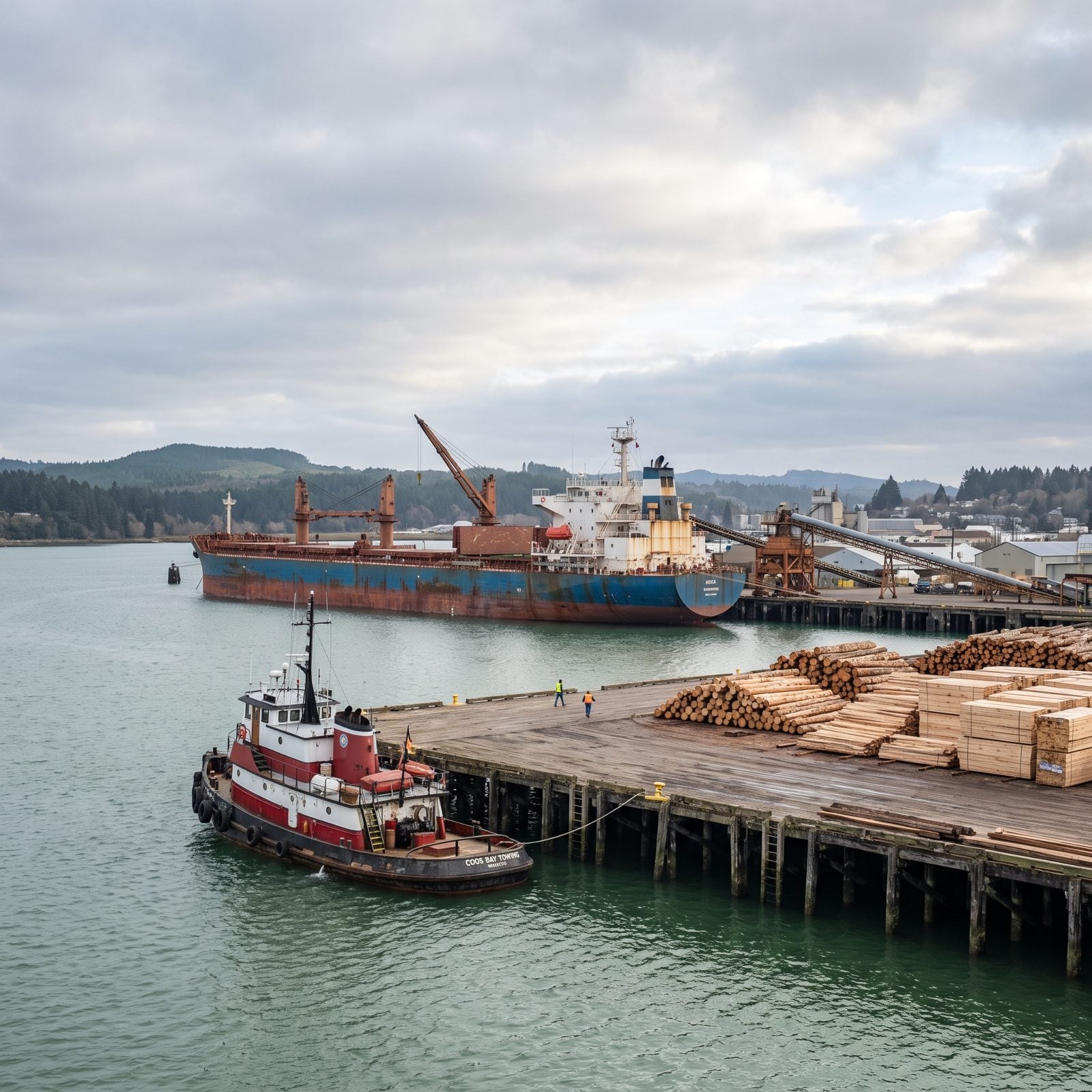
People drive the Oregon coast chasing postcard beach towns and blow right past Coos Bay. Their loss, and the town’s quiet luck. It’s one of the biggest deep-water ports on the stretch between San Francisco and Seattle, and it earns the title the old way — logs, lumber, wood chips, bulk cargo, tugs nudging ships that dwarf anything built for show.
No boardwalk of taffy shops. What you get instead is a Saturday farmers market, a working harbor, diners that feed the morning shift, and real estate that hasn’t been priced into another zip code. Fog most mornings. Nobody complains.
1. Crescent City, California: A Commercial Harbor Tucked Behind Tsunami-Ready Breakwaters
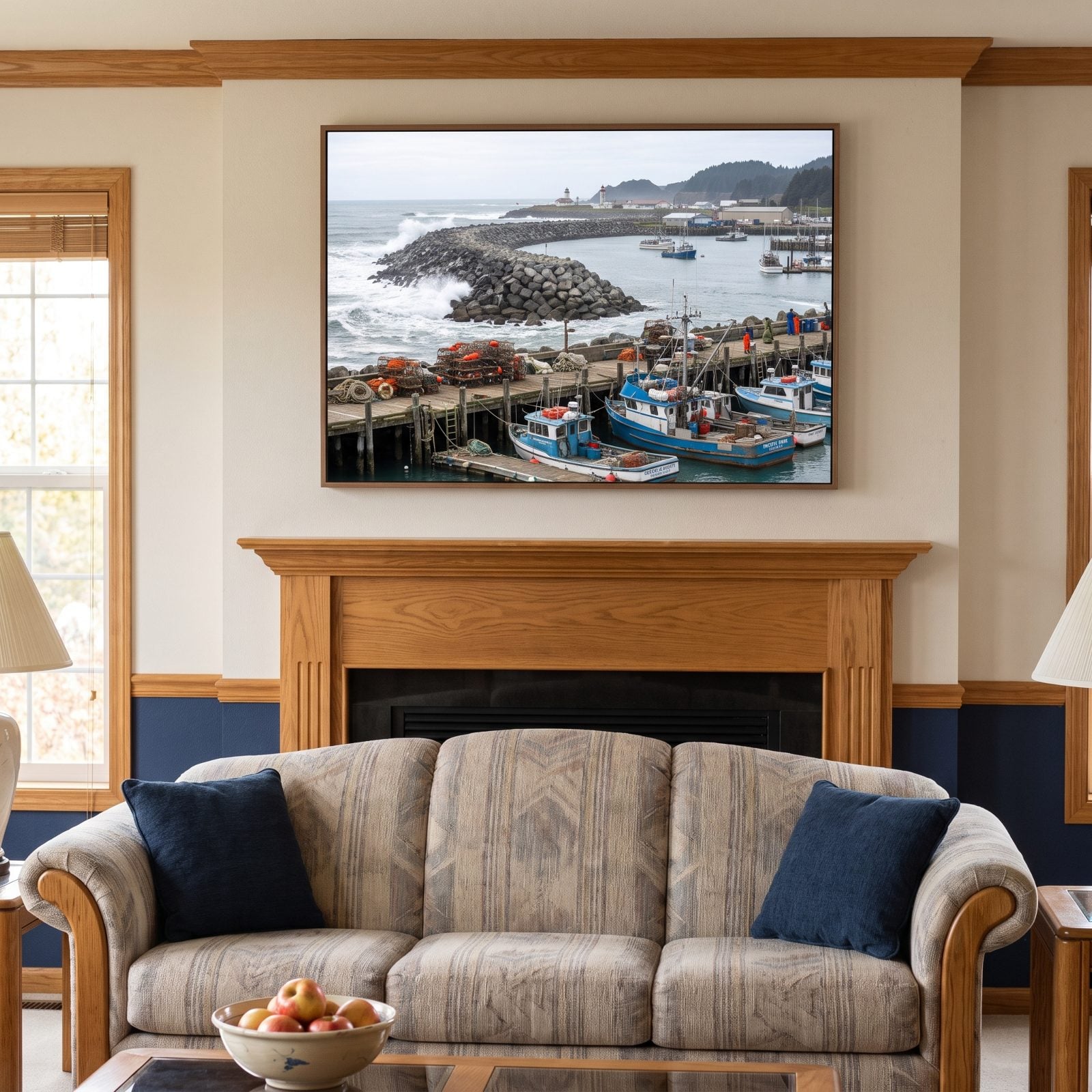
Crescent City has taken more tsunami hits than any other town on the West Coast, and it carries that history without the slightest fuss. The harbor got rebuilt behind serious breakwaters — the kind of stonework that tells you, plainly, the ocean here is a partner and not a view to admire over coffee.
Behind those rocks sits a genuine commercial fishing port. Dungeness crab is the heart of it, pots stacked by the thousand on the docks in season, boats slipping out before dawn and back by afternoon. This is the far northern coast, the part that feels more like Oregon than California: foggy, forested, in no hurry, and cheap by California standards, which still surprises people.