The fastest way to never get asked back on a pontoon boat isn’t spilling your drink. It’s showing up ten minutes late with a cooler nobody expected and a friend who assumed it was fine. Boating runs on small courtesies most people never think about until they’ve broken one, and the captain always notices. So does everyone already baking in the sun, waiting for you. Good guests make a day on the water feel easy, and they get the call again next weekend. Here’s what separates the people who get invited back from the ones who quietly don’t.
Please note that some of the imagery in this article may have been enhanced with the assistance of AI.
43. Never Bring an Uninvited Guest
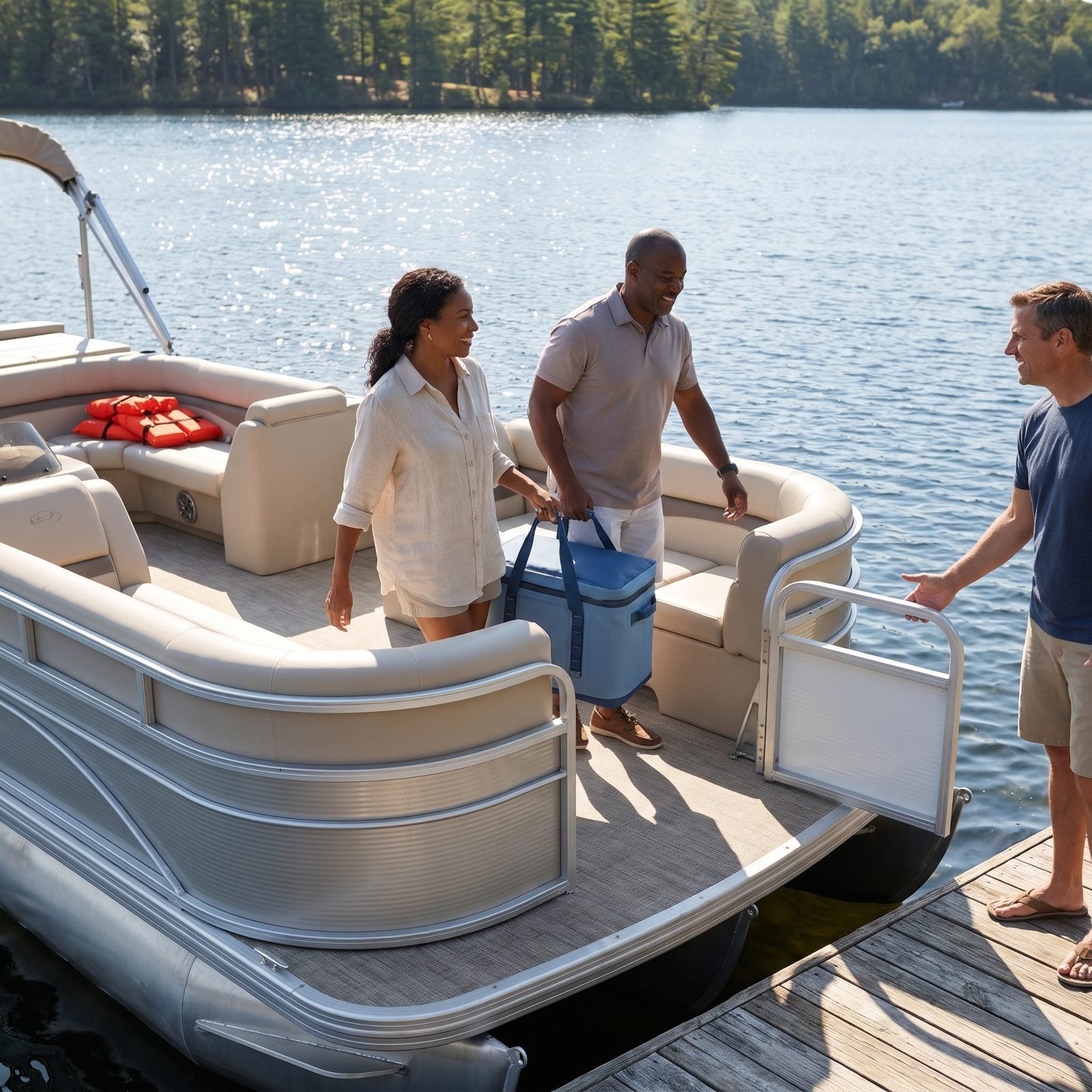
A pontoon has a weight rating and a seat count, and the captain already did that math before you got the text. Show up with a plus-one nobody planned for and you throw both off. Suddenly there’s no life vest in the right size, the cooler’s short on drinks, and someone’s riding in the captain’s sightline.
Want to bring a friend? Ask the day before. Not at the dock. “Can I bring Dave?” asked while Dave is standing right there puts the host in a corner, and they’ll remember it.
42. Arrive Before the Scheduled Departure
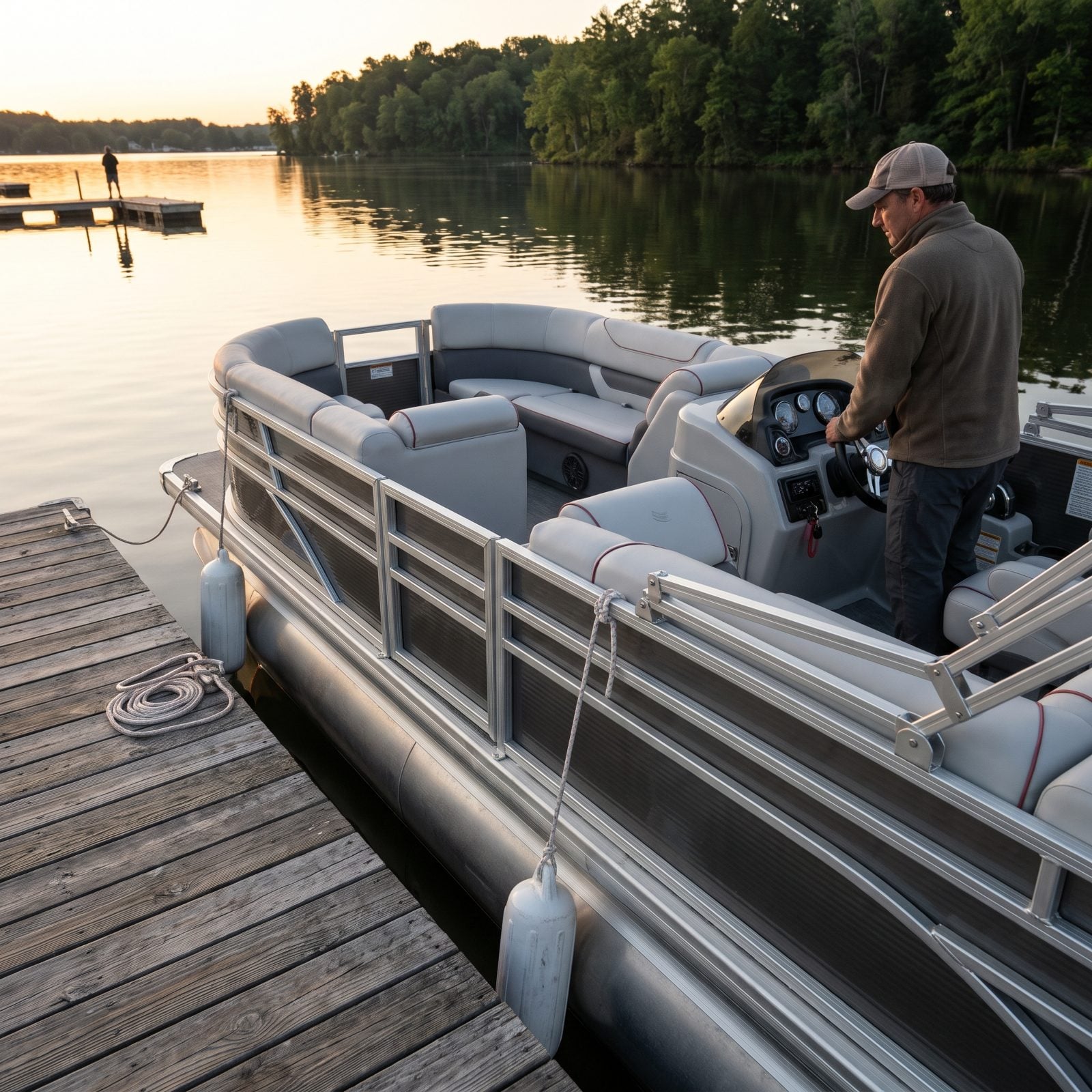
On the water, late isn’t fashionable. It’s expensive. Marinas charge by the hour, swim spots fill up, and on most lakes the afternoon wind kicks up right when you’d finally be pulling away.
When the invite says a time, that’s launch time, not arrival time. Show up fifteen minutes early so you can load coolers, find a seat, and catch the briefing before the lines come off. A captain who planned the whole day around tide, light, and wind really doesn’t want to burn the best hours watching the parking lot for your car.
Writing about guest manners, a veteran chesapeake bay captain puts it bluntly: “Being late for a cruise or day sail is wrong for a hundred reasons. Distance to be covered. The wind is going to die at noon.”
41. Wear Clean, Nonmarking Boat Shoes
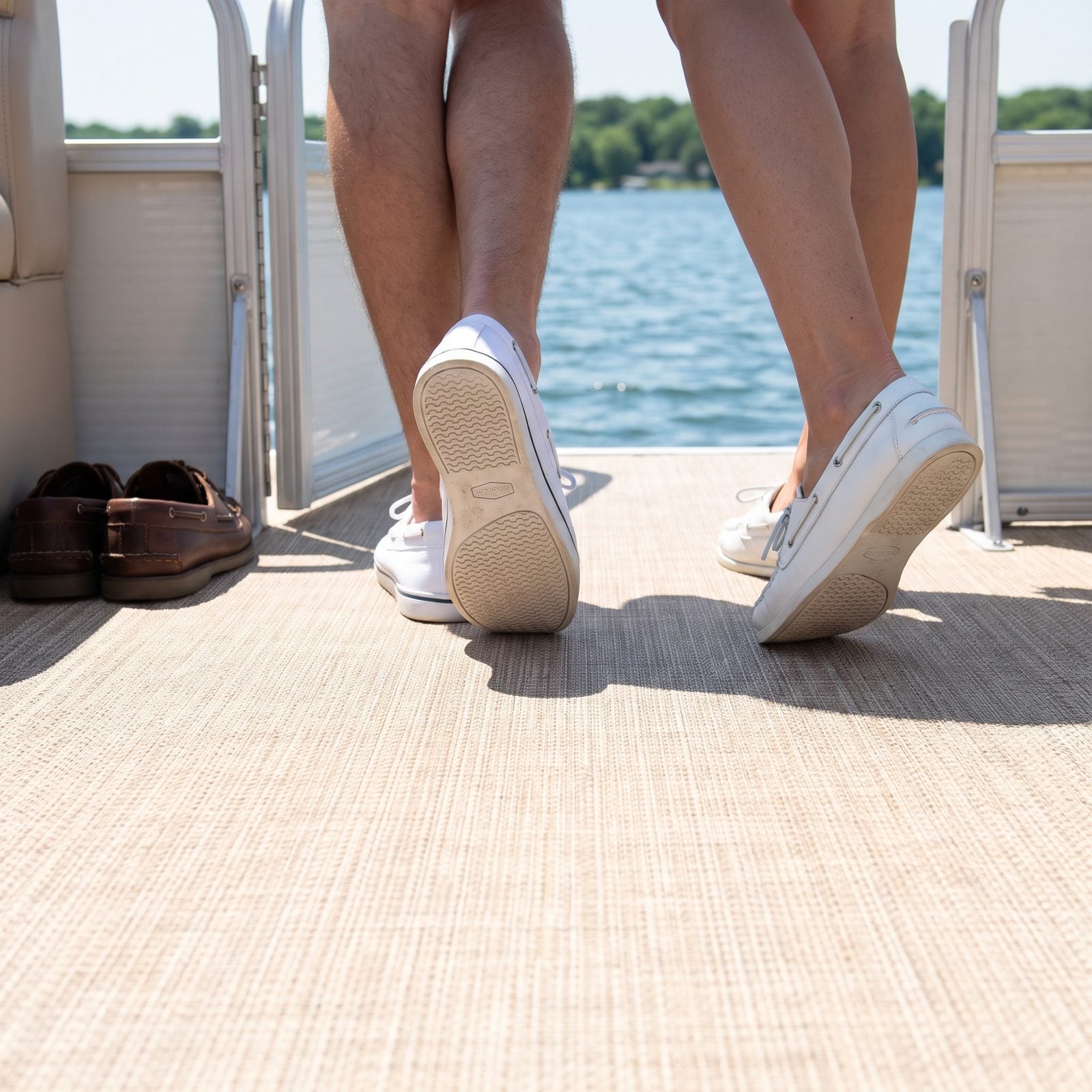
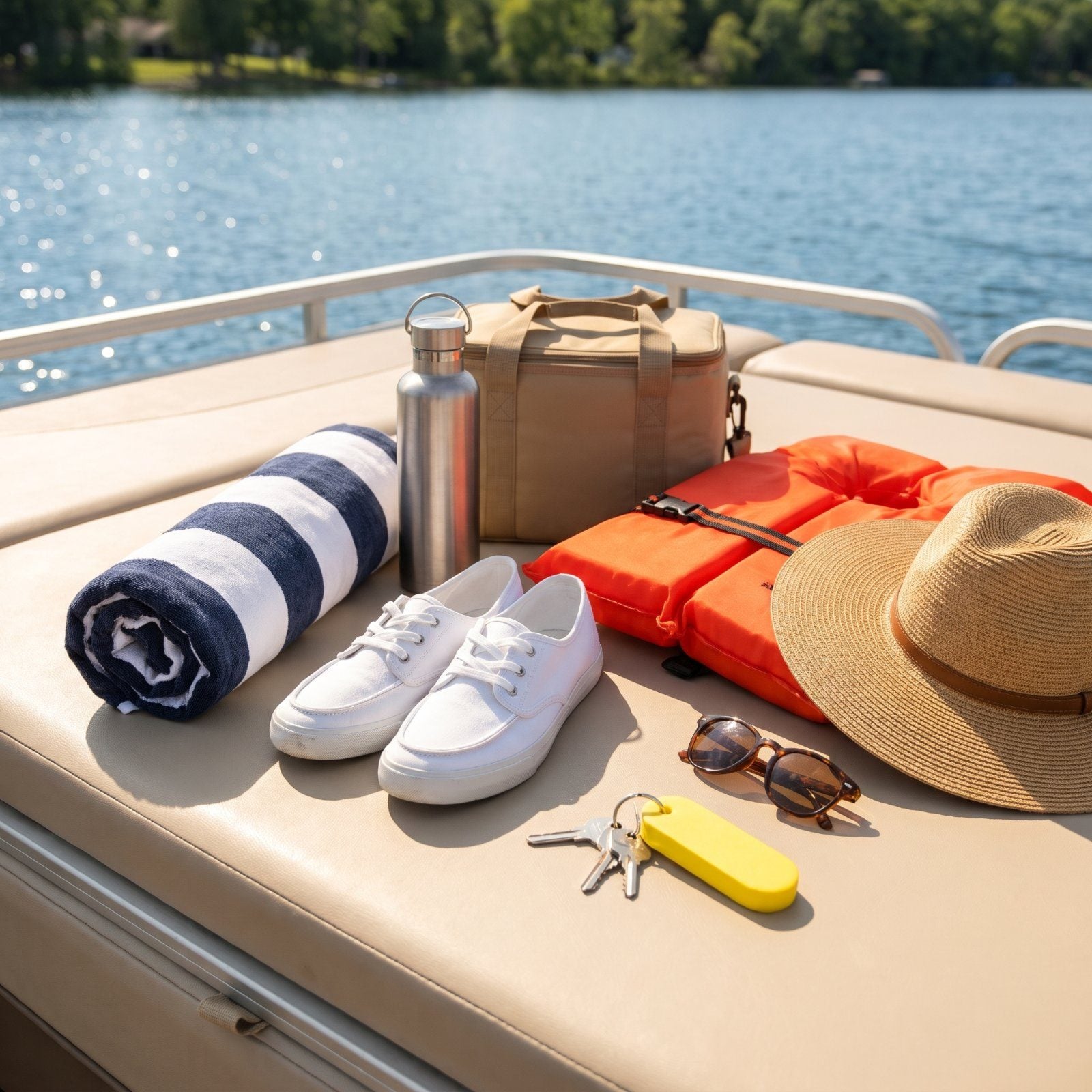
Black rubber soles leave streaks across pale pontoon flooring that take real scrubbing to lift, and the captain knows exactly who tracked them in. Those gym sneakers from the parking lot carry grit too, and it grinds right into the vinyl.
Wear soft, light-soled deck shoes, or go barefoot once you’re aboard. Plenty of pontoon owners run a shoes-off boat anyway, so check before you step on. Either way, nothing with a heel, a cleat, or a sole that squeaks when you drag it.
In a list of rules most captains are too polite to say out loud, a sportfishing magazine editor warns: “Be careful for new or old shoes. New shoes can bleed when wet. Old shoes can mark up the deck or track dirt aboard. Avoid black soled shoes, too.”
40. Leave Glass Bottles on Shore
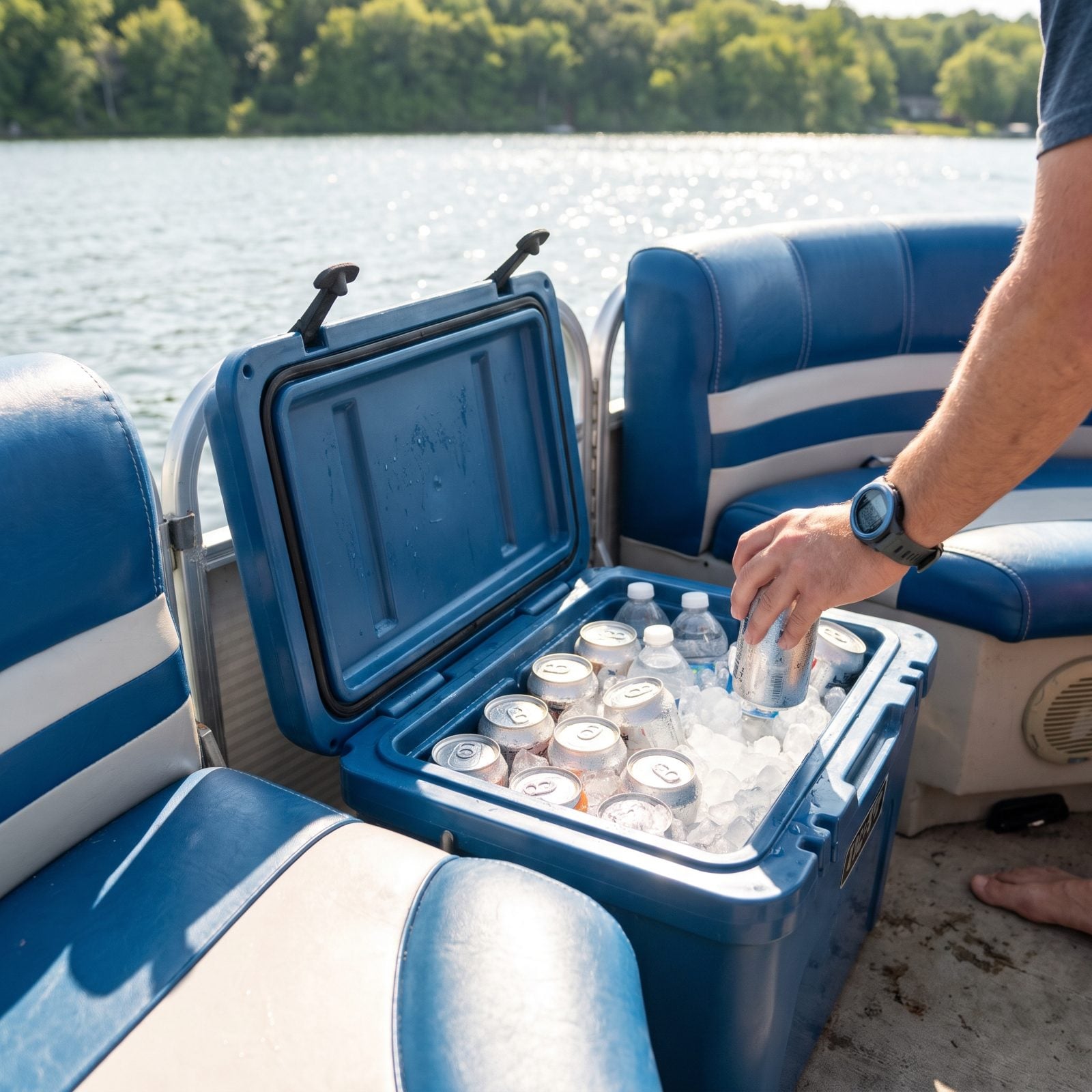
Glass and bare feet on a wet, rocking deck is a bad combination, and a shattered bottle stops the whole day cold while everyone goes hunting for shards near the swim ladder.
Cans and plastic are the water-day standard for a reason. They float if dropped, they don’t explode in a cooler, and nobody’s picking glass out of the bilge at sunset. Bring your drinks. Just leave the breakable packaging in the car.
39. Wait for the Captain’s Invitation to Board
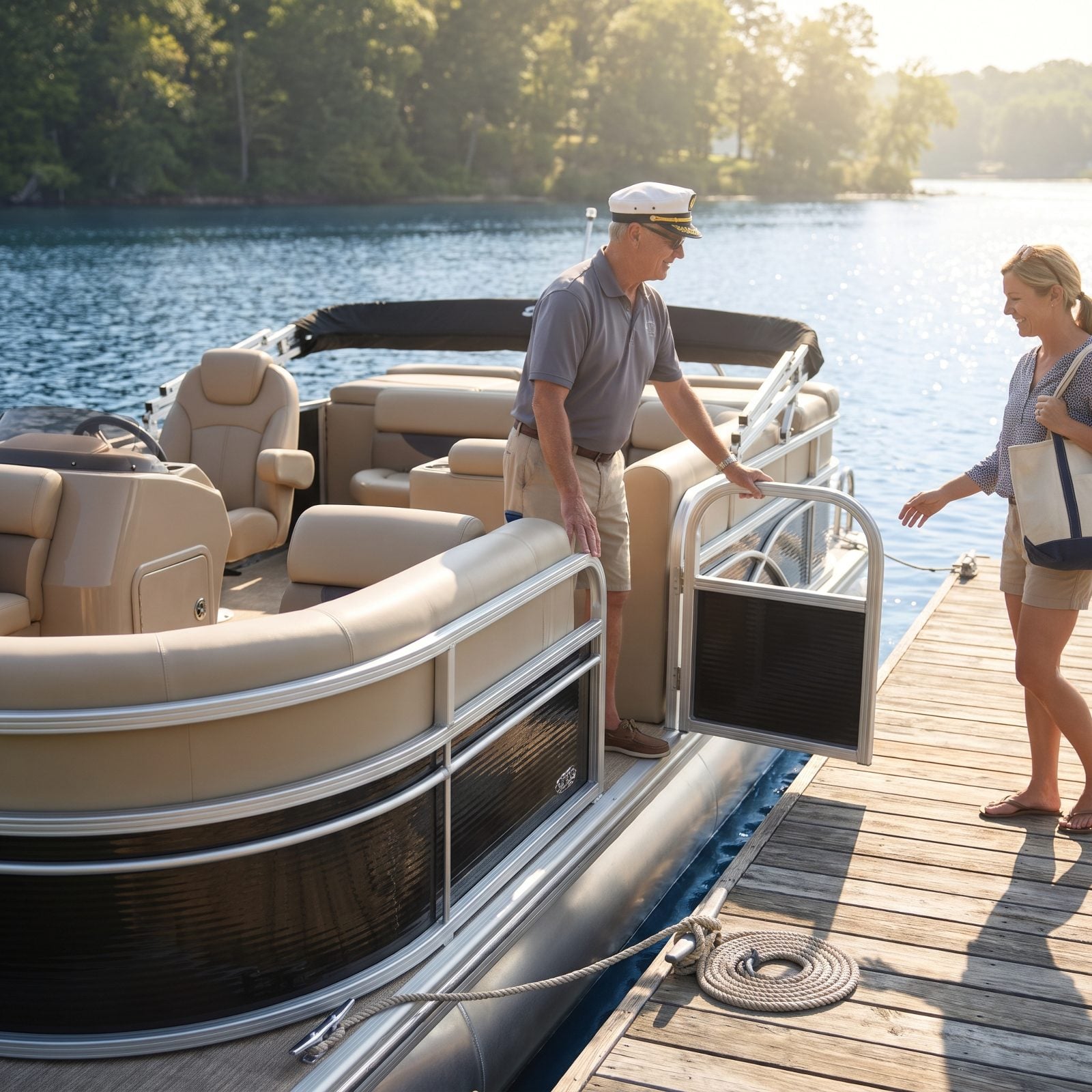
A pontoon that isn’t fully secured will swing and gap away from the dock the second you put weight on it. The captain is reading the lines, the fenders, the drift. Step on before they say so and you can pin a hand or dump yourself in the water between hull and dock.
Wait on the dock until you hear “come aboard.” Feels overly formal for a casual day out, sure, but that one word means the boat’s tied, balanced, and ready for your weight. Rushing it is how ankles get rolled.
38. Use the Boarding Gate, Not the Furniture
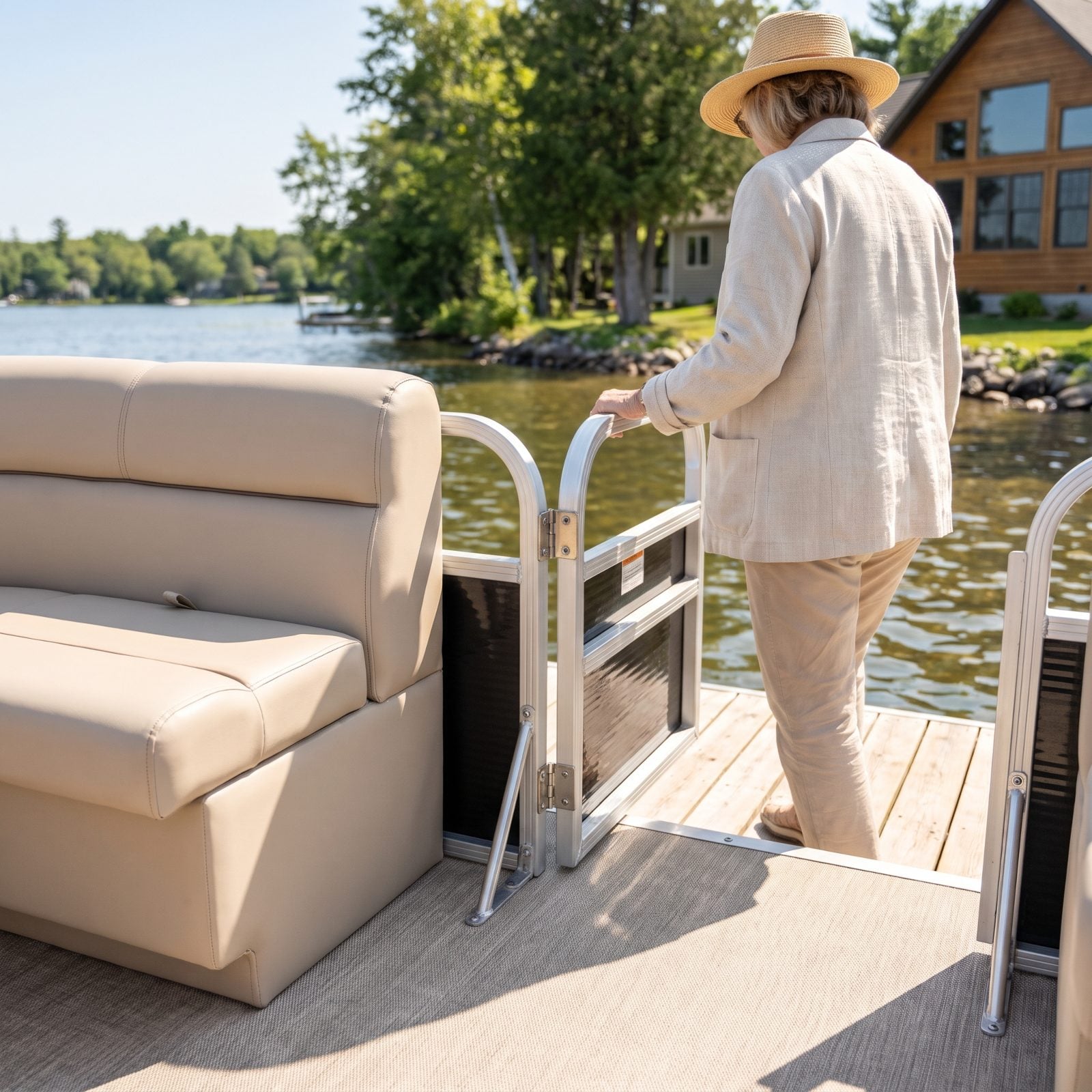
Pontoons have a gate for a reason. It’s the one spot built to take your full weight stepping on and off. The bench seats and the top of the rail are not.
Climbing over the furniture dents the vinyl, stresses the frame, and leaves you off balance over open water. Go through the gate, every time, even when it means a longer walk around the deck. And latch it behind you once everyone’s aboard so it doesn’t swing open underway.
37. Stow Bags Before the Boat Leaves
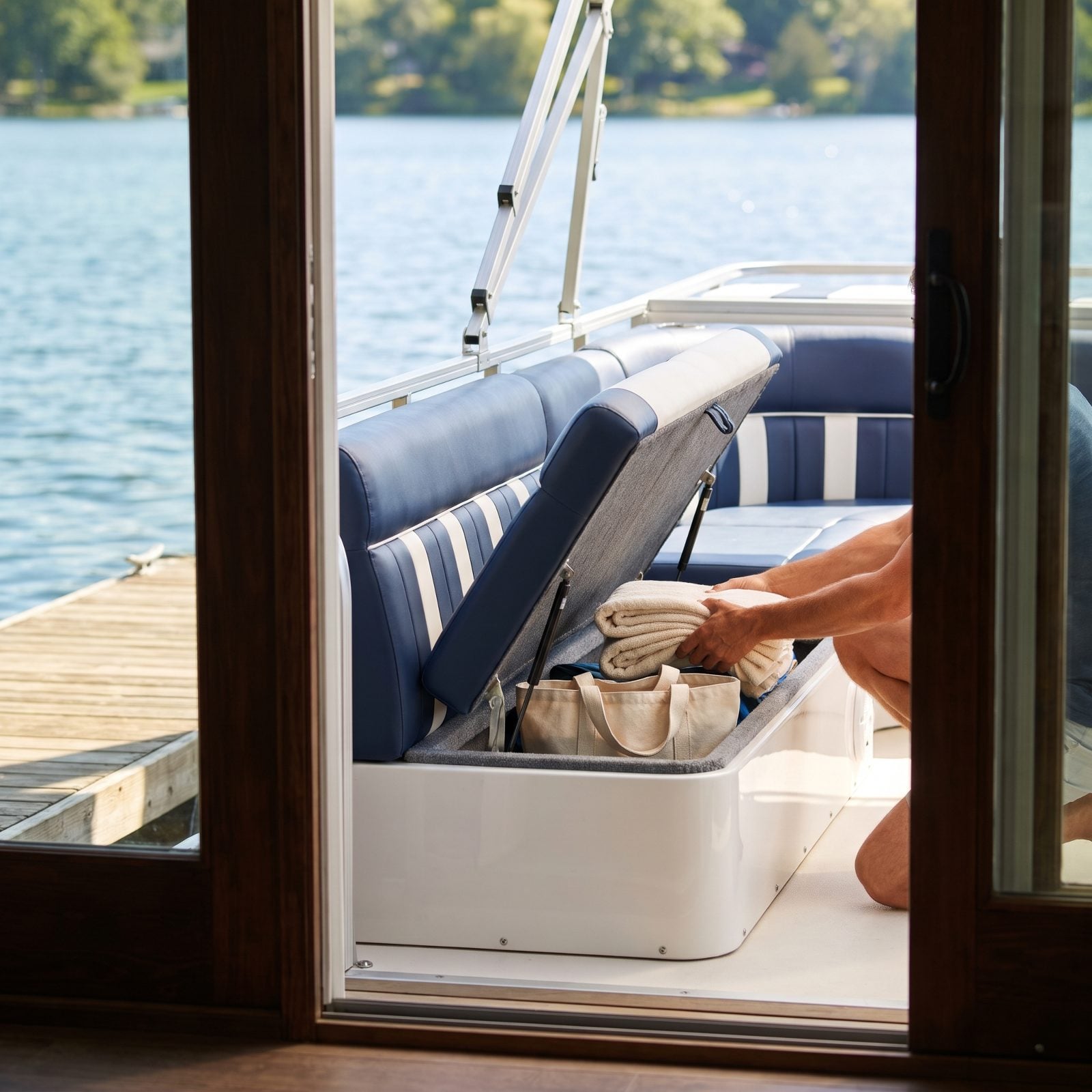
A clear walkway is a safety thing before it’s a tidiness thing. Loose bags underfoot turn into trip hazards the moment the boat rocks in another boat’s wake.
Tuck your stuff into the under-seat storage before the lines come off. Most pontoons hide more compartment space than people realize, down under every bench. Towels, dry bags, sunscreen, all of it goes below so the deck stays open once you’re cruising.
36. Never Claim the Captain’s Chair
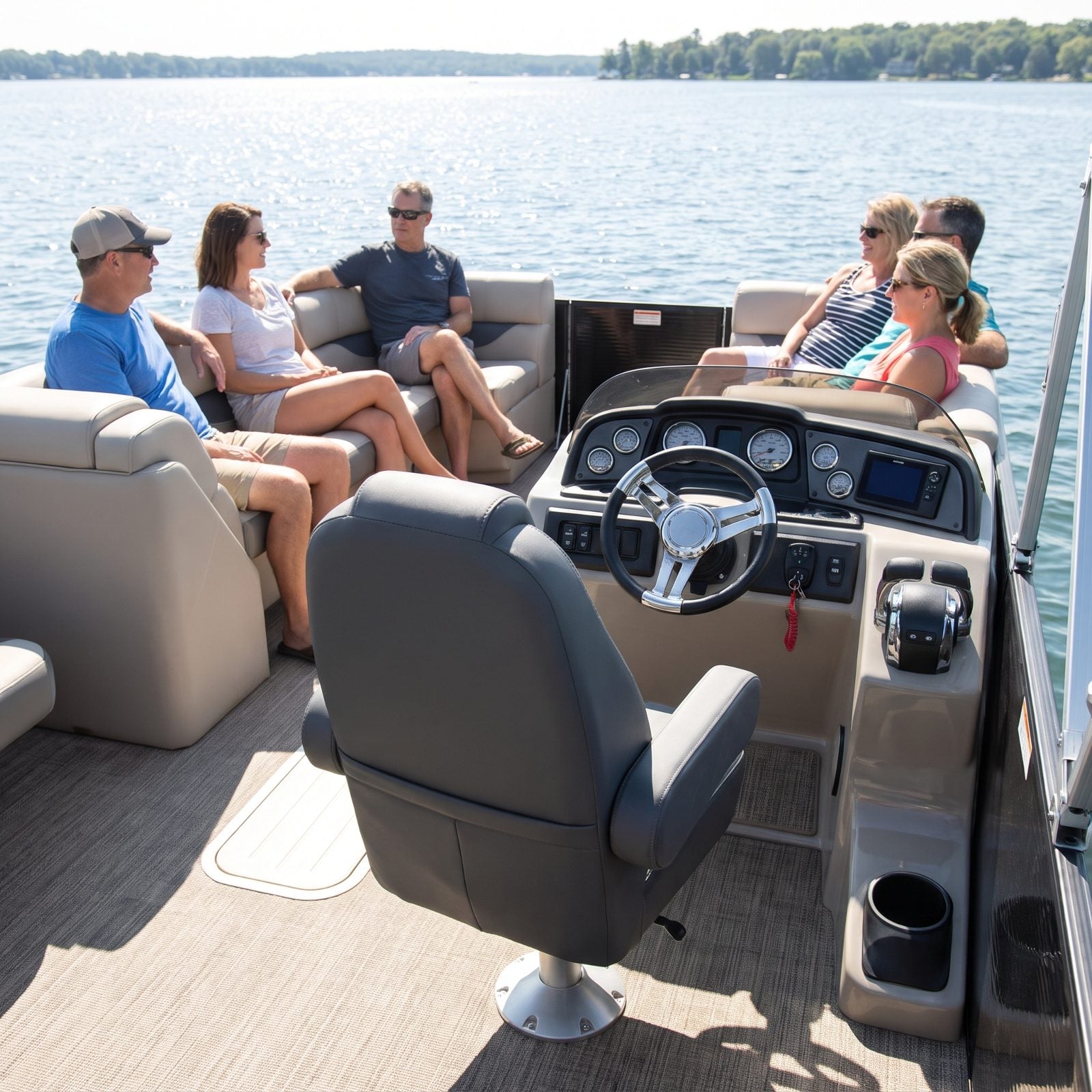
The helm seat belongs to whoever’s driving, full stop. It has the clearest sightlines, the throttle, the kill switch, the gauges, and the captain needs to drop into it fast if something changes on the water.
Sit there and someone eventually has to ask you to move, usually at the worst possible moment. Pick any other seat. And don’t touch the wheel or the controls as a joke, even at the dock. That one’s not funny to anyone who’s spent money on the boat.
35. Listen to the Entire Safety Briefing
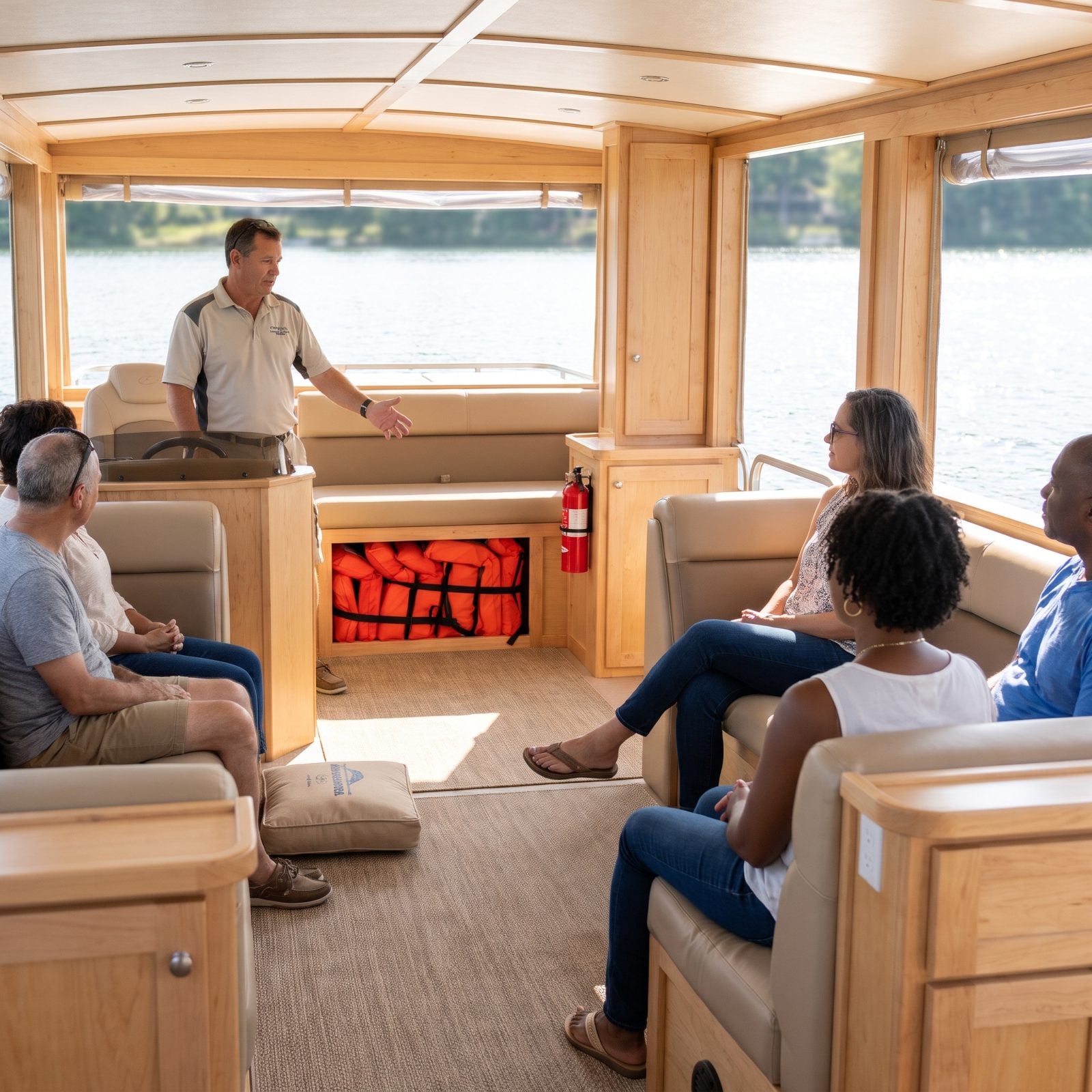
The briefing is short, it’s boring, and it’s the one part of the day that matters if things go sideways. Where the life vests live, how the ladder drops, where the fire extinguisher is clipped, what the horn means. Five minutes, tops.
Half-listening while you dig through the cooler is rude, and it’s useless in an actual emergency. Put the phone down and watch. If you’re one of the few sober, able adults aboard, the captain is counting on you to know where things are. Act like it.
34. Keep Children Within Arm’s Reach
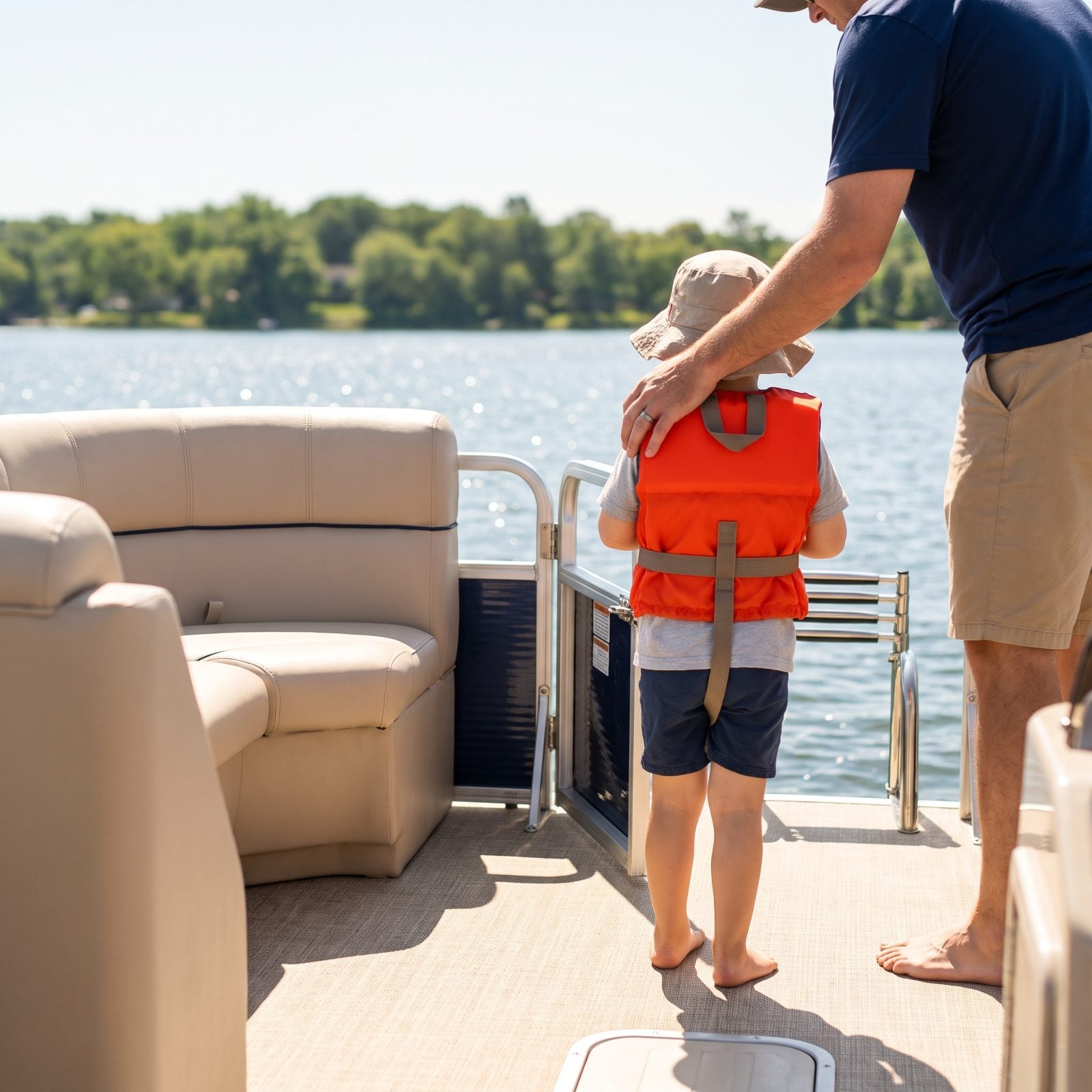
Kids on pontoons go from sitting to over the rail faster than any adult reaction time can catch. A life vest is the floor, not the ceiling, of keeping them safe, and only if it’s fitted right: a crotch strap left hanging loose down the back instead of buckled between the legs won’t stop a small child slipping out of it. Supervision is the rest.
Brought the child? Then you watch the child. Don’t assume the captain is tracking your kid while also running the boat and reading traffic on the water. Arm’s reach near the rails, the gate, and the swim ladder. Not across the deck, not “I can see them.” Reach.
33. Get Permission Before Bringing a Pet
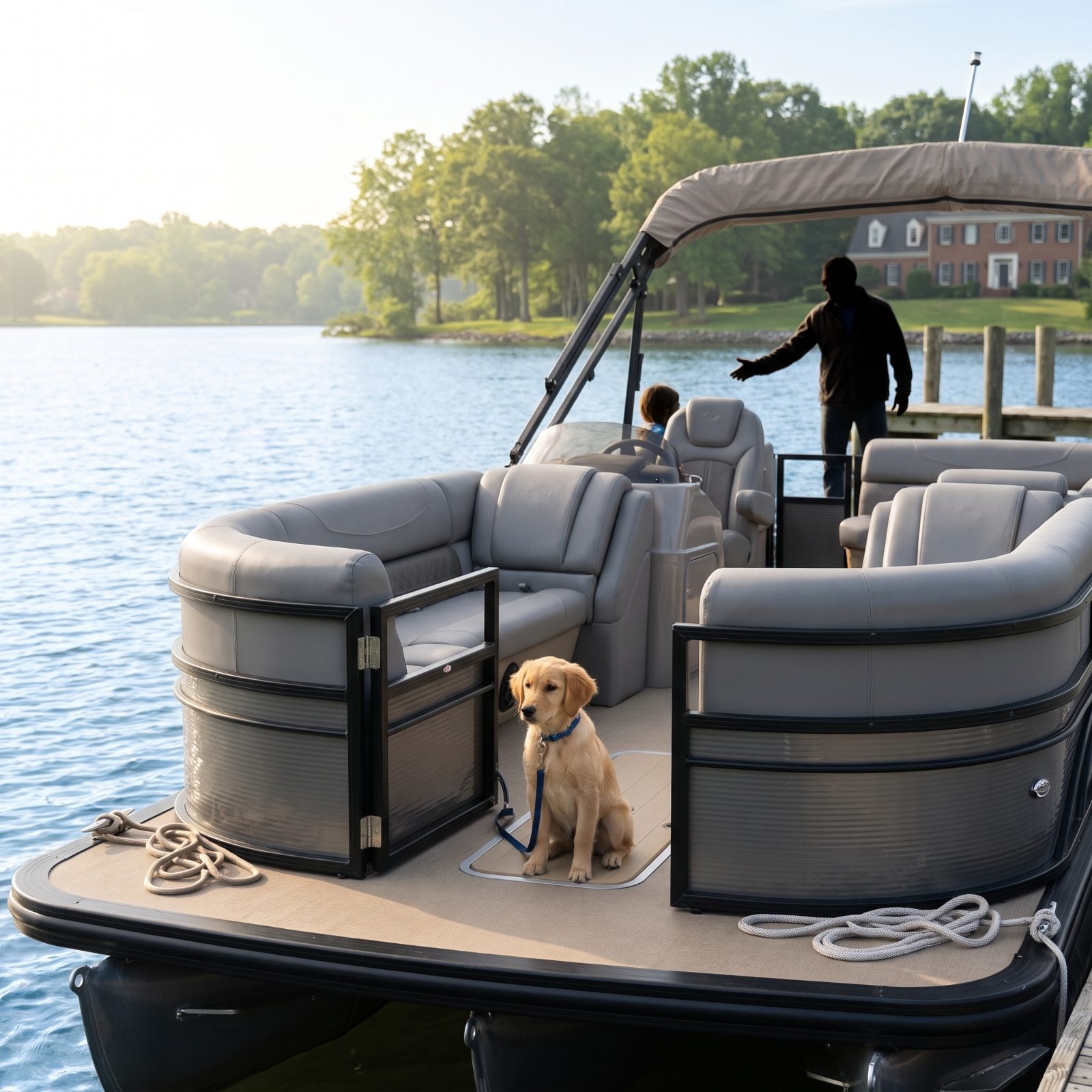
A dog on a pontoon is either the best passenger aboard or a claw-scratch waiting to happen, and the owner isn’t always the one who finds out. Ask before you load the leash. Some decks are fresh vinyl that nails and wet paws mark up in a hurry, and some hosts are quietly allergic or just don’t want a swimming retriever shaking off on the cooler.
Bring a towel, bring water, and keep the pup off the seats unless you’re told otherwise. A dog paddling after a stick is adorable right up until it tries to climb back aboard over someone’s lap.
32. Never Pressure the Host to Exceed Capacity
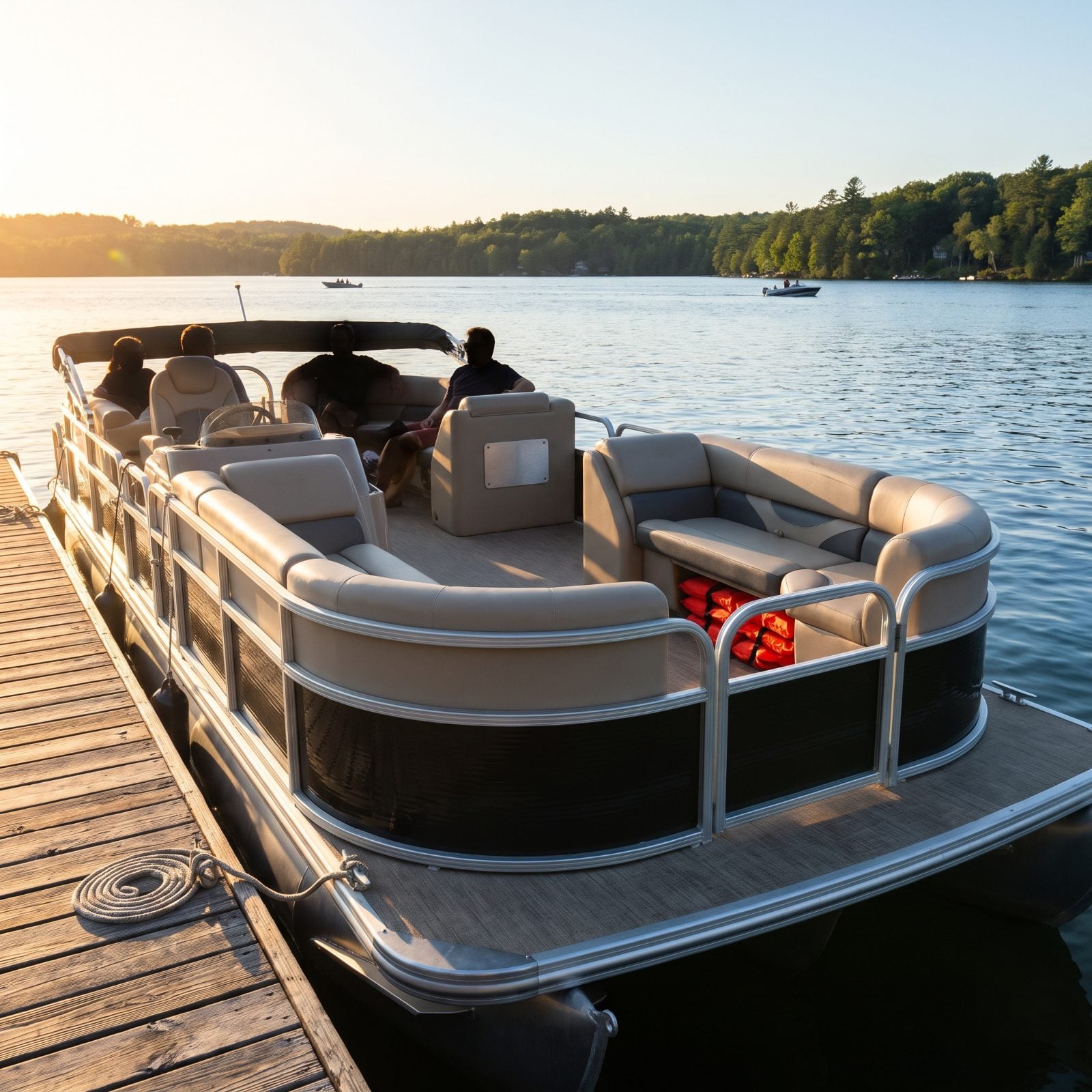
A boat’s capacity plate isn’t a suggestion. It lists the max load the hull and engine were built to carry, people and gear combined, and the captain is legally and personally on the hook for it.
So when the group grows and someone floats the idea of squeezing in two more, don’t be the guest who pushes. A crowded pontoon rides lower, drains slower, and handles worse in a wake. If there’s no room, there’s no room. Offer to run a second trip or stay back. A good host already feels bad saying no, so don’t make them say it twice.
31. Be Seated Before the Boat Starts Moving
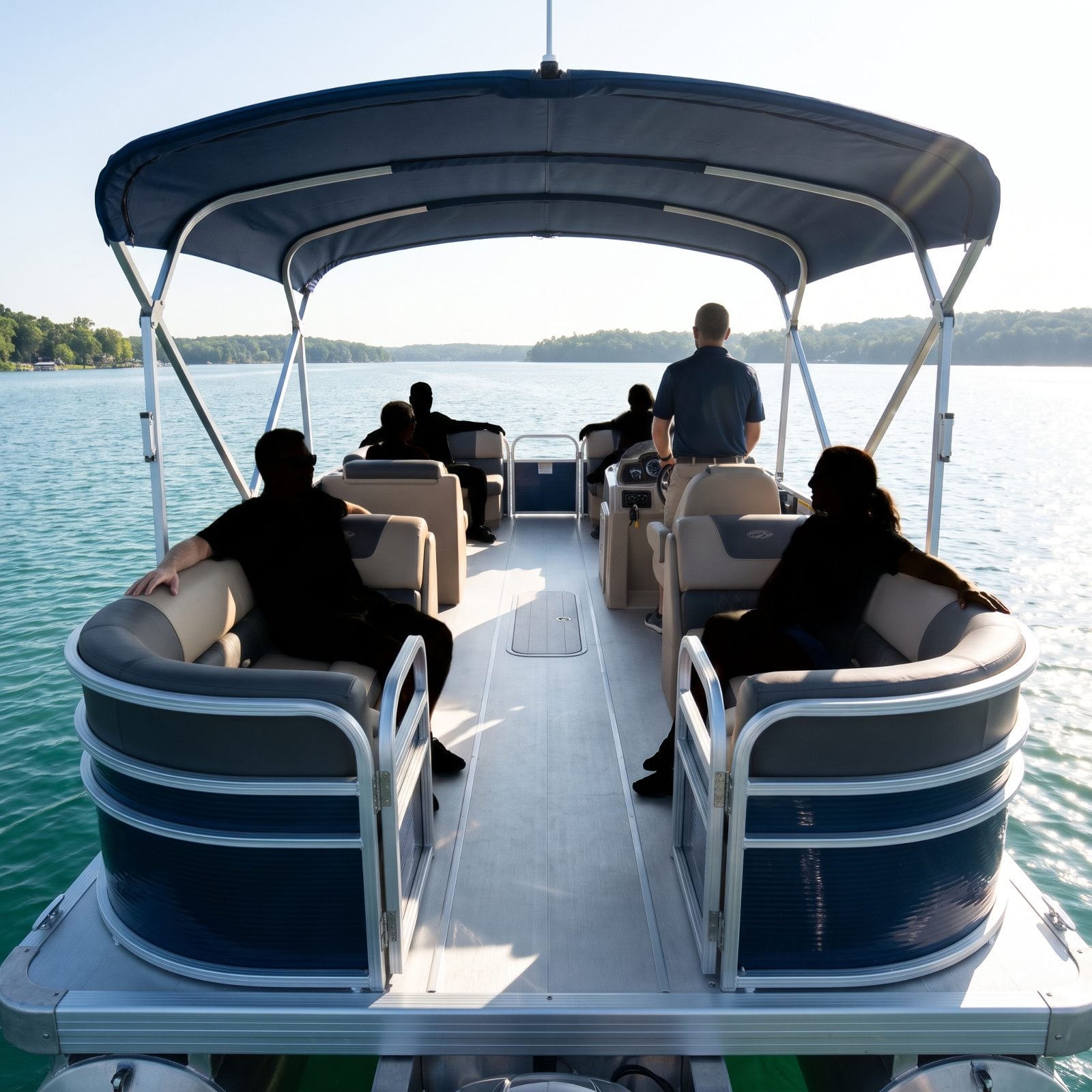
Pontoons feel so stable at the dock that people forget they move at all. Then the throttle goes down, the bow lifts a touch, and the guy still ambling toward the cooler stumbles into someone’s drink.
Park yourself before the captain pulls away. Not because you’ll go flying, but because an unexpected lurch, a crossing wake, a sudden slow-down for another boat, catches standing passengers off guard. Sit, grab a rail, let the captain know everyone’s set. Thirty seconds of patience beats a bruised shin and a spilled margarita.
30. Never Ride on the Bow Outside the Fence
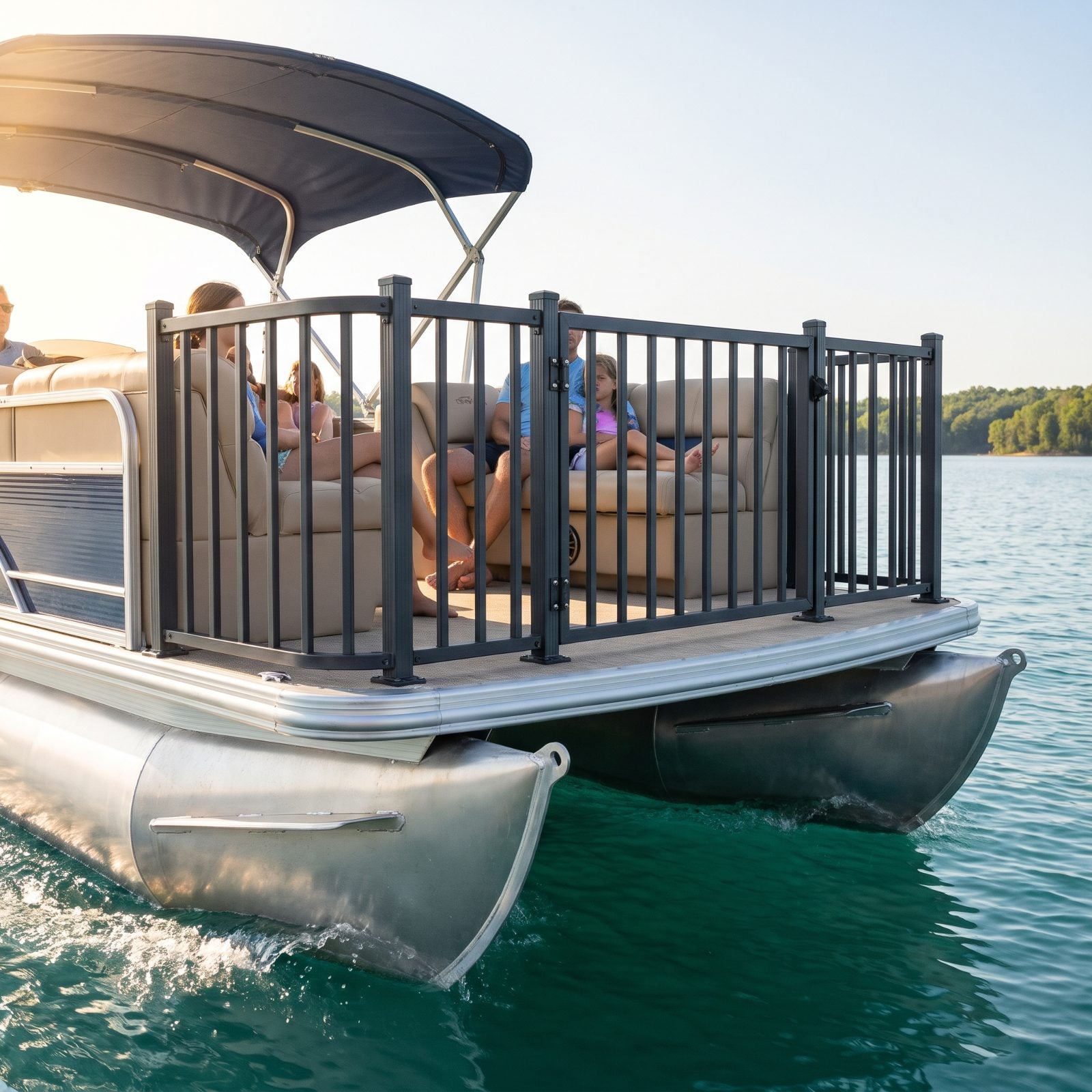
This is the one rule that has nothing to do with courtesy. It’s about staying alive.
Riding on the front deck outside the fence, legs dangling over the edge, looks like the postcard version of a day on the water. It’s also how people end up under the boat. Fall off the bow of a moving pontoon and the hull and prop are right there waiting. The fence is closed for a reason. Stay behind it while the engine’s running, every time, no exceptions, no matter how slow the captain’s going.
Explaining why bow riding is illegal in many states, a state natural resources writer notes: “Slipping from the bow of a pontoon boat is particularly perilous because the victim is channeled between the two pontoons and directly into the propeller.”
29. Avoid Distracting the Captain in Tight Traffic
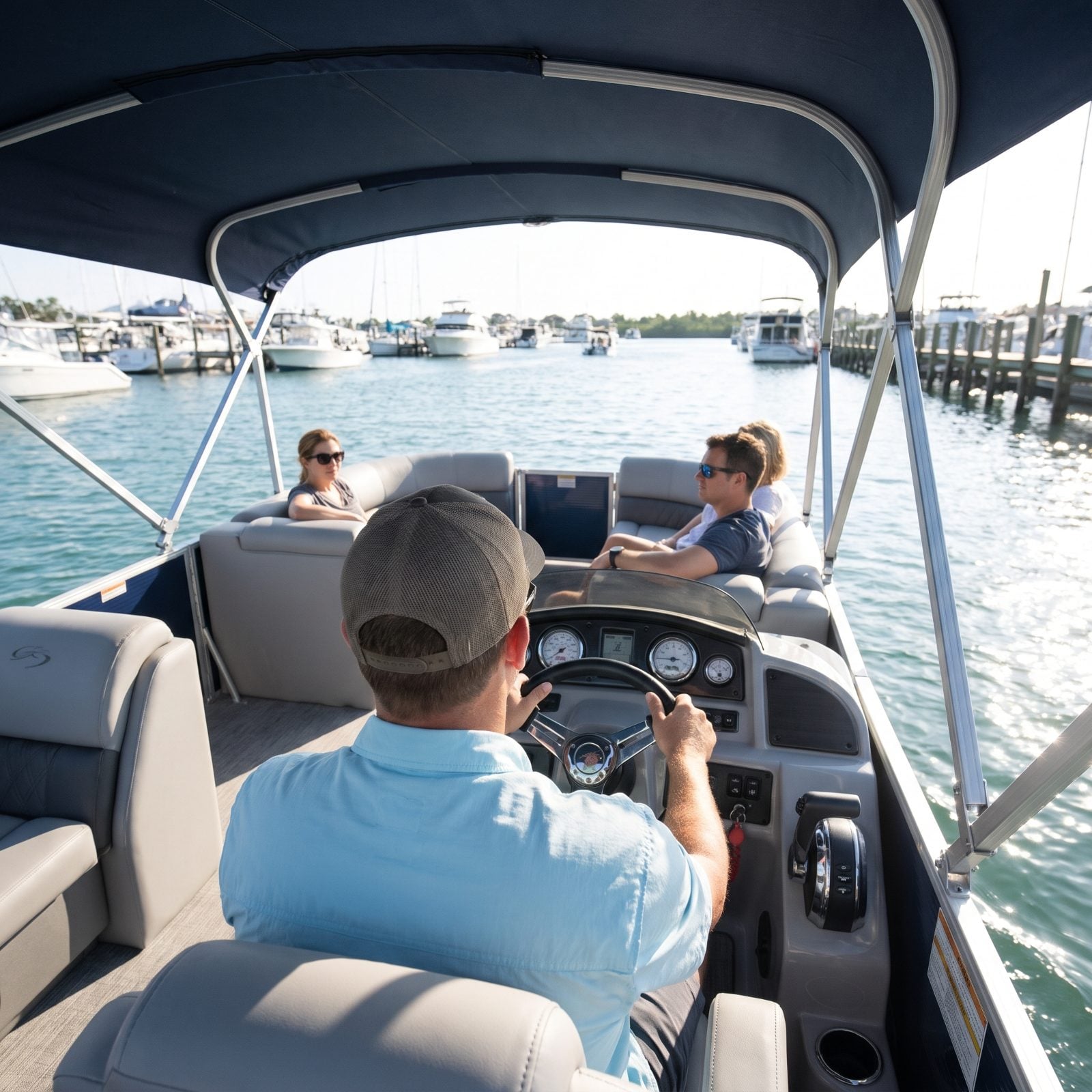
A packed marina channel is the boating equivalent of merging onto a freeway. Wakes bouncing off seawalls, boats cutting across, a swimmer where you’d least expect one. The captain needs every bit of attention on the water.
So save the story, the photo request, and the “hey, is that the Hendersons?” for open water. You don’t have to sit there in dead silence. Just read the room. When the captain goes quiet and leans forward, that’s your cue to do the same. The best passengers notice the moment to shut up without being told.
28. Accept the Captain’s Weather Decision Without Argument
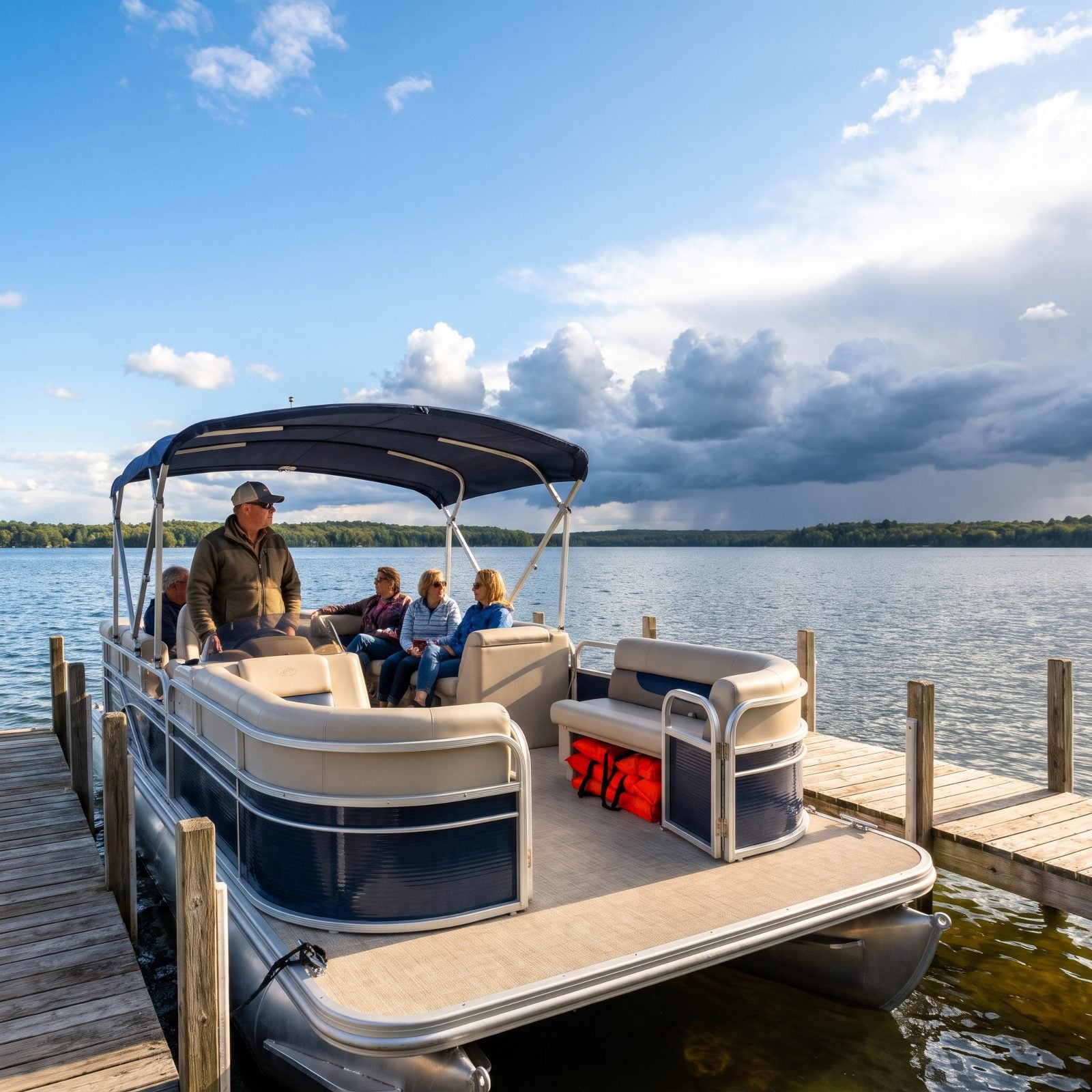
The sky turns from postcard to problem fast on a lake, and the captain is usually watching it before you are.
When they say we’re heading in, that’s the end of the conversation. Not a negotiation, not a “but it looks fine over here.” Open water has nowhere to hide when a squall line drops wind and chop in minutes, and a flat pontoon gets shoved around worse than most boats. A good captain would rather cut the day short than ride out lightning. Back them up. Help gather the towels and get everyone seated instead of lobbying for one more lap.
27. Keep Music at a Neighbor-Friendly Volume
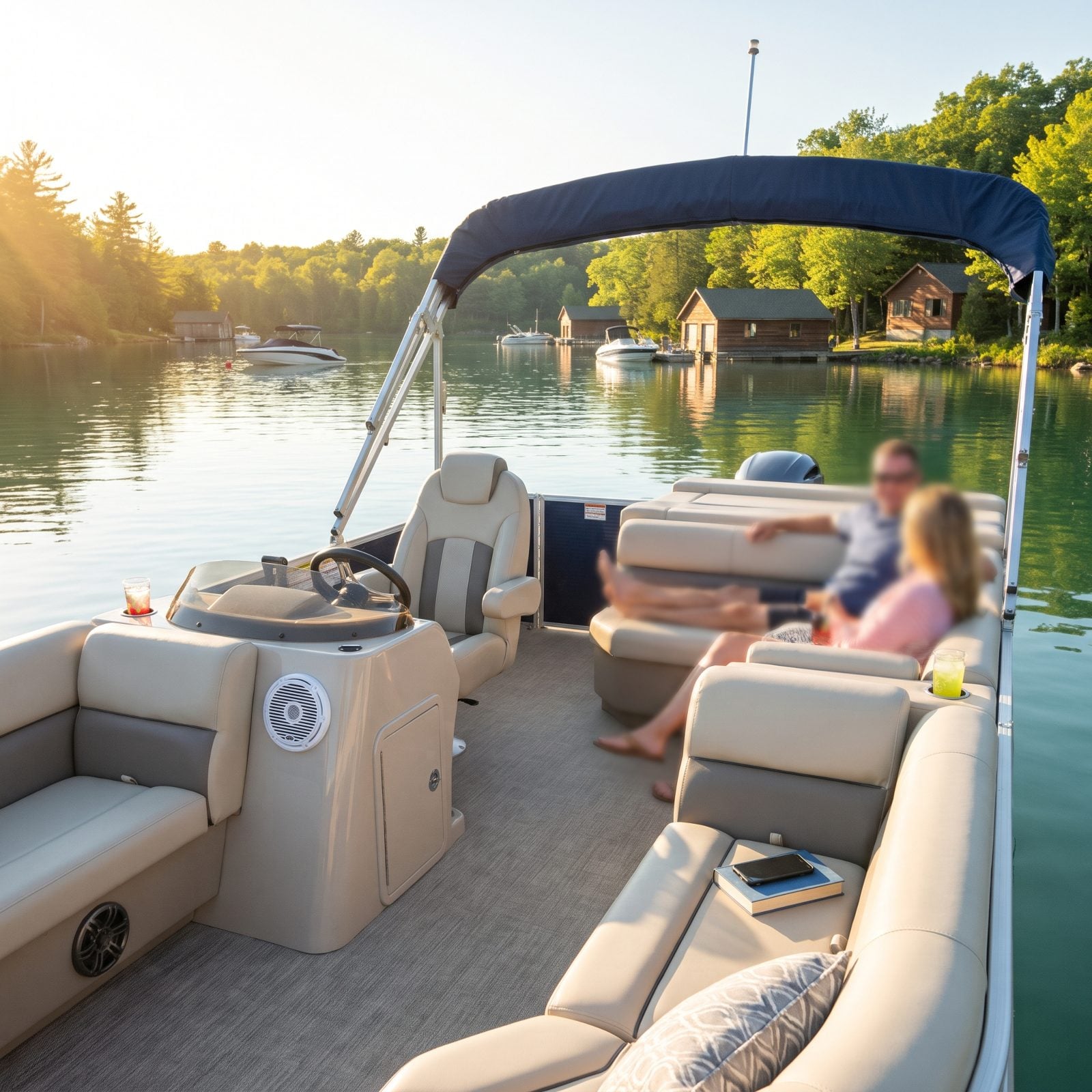
Sound travels across water in ways that’ll surprise you. Your playlist at a reasonable deck volume lands in a cabin a good way off like a front-row seat.
Keep it to where your own group can still talk over it. Lakeside homes, anchored neighbors, and the folks fishing a quiet cove didn’t sign up for your bass line. If you wouldn’t blast it on your own front porch at dinnertime, don’t blast it from the water.
As a longtime liveaboard cruiser puts it, “Sound travels over water in a way it never does on land. Everyone within half a mile can hear a normal cockpit conversation”
26. Use Lotion Instead of Spray Sunscreen Near Upholstery
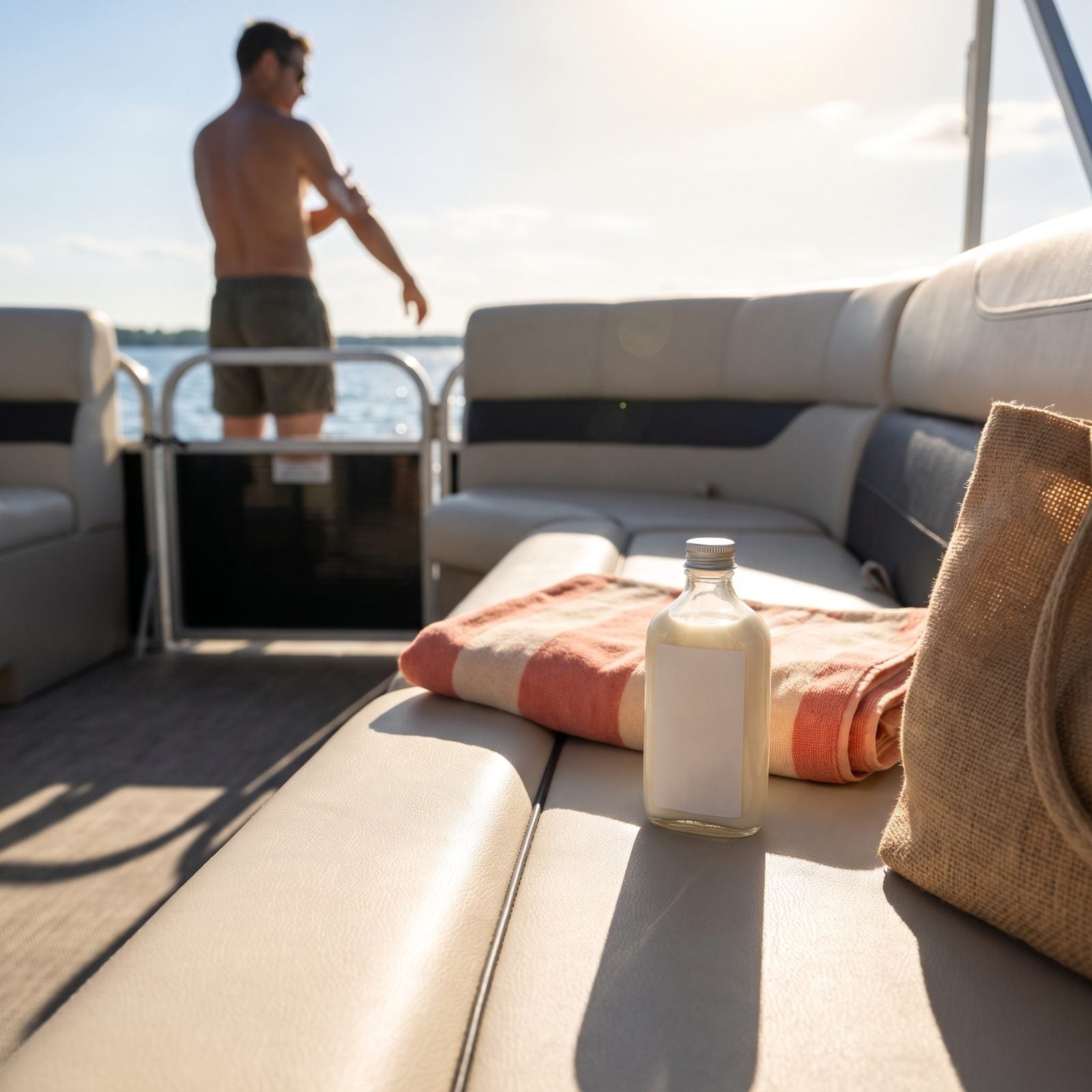
Spray sunscreen is the quiet killer of pontoon upholstery. The same chemicals that keep it from washing off your skin also stain and break down marine vinyl, leaving yellow blotches that never fully come out.
Apply lotion on the dock before you board, or step off to the swim platform and spray downwind over the water, never over the seats. Those cushions cost real money to replace, and a stain from one careless spritz outlives the whole summer.
In its advice on protecting seats, a pontoon boat builder cautions: “Spray-on sunscreens are convenient, but they can easily get onto your boat’s seats and other surfaces. The fine mist can settle on the vinyl and cause damage.”
25. Keep Your Shoes Off the Upholstered Seats
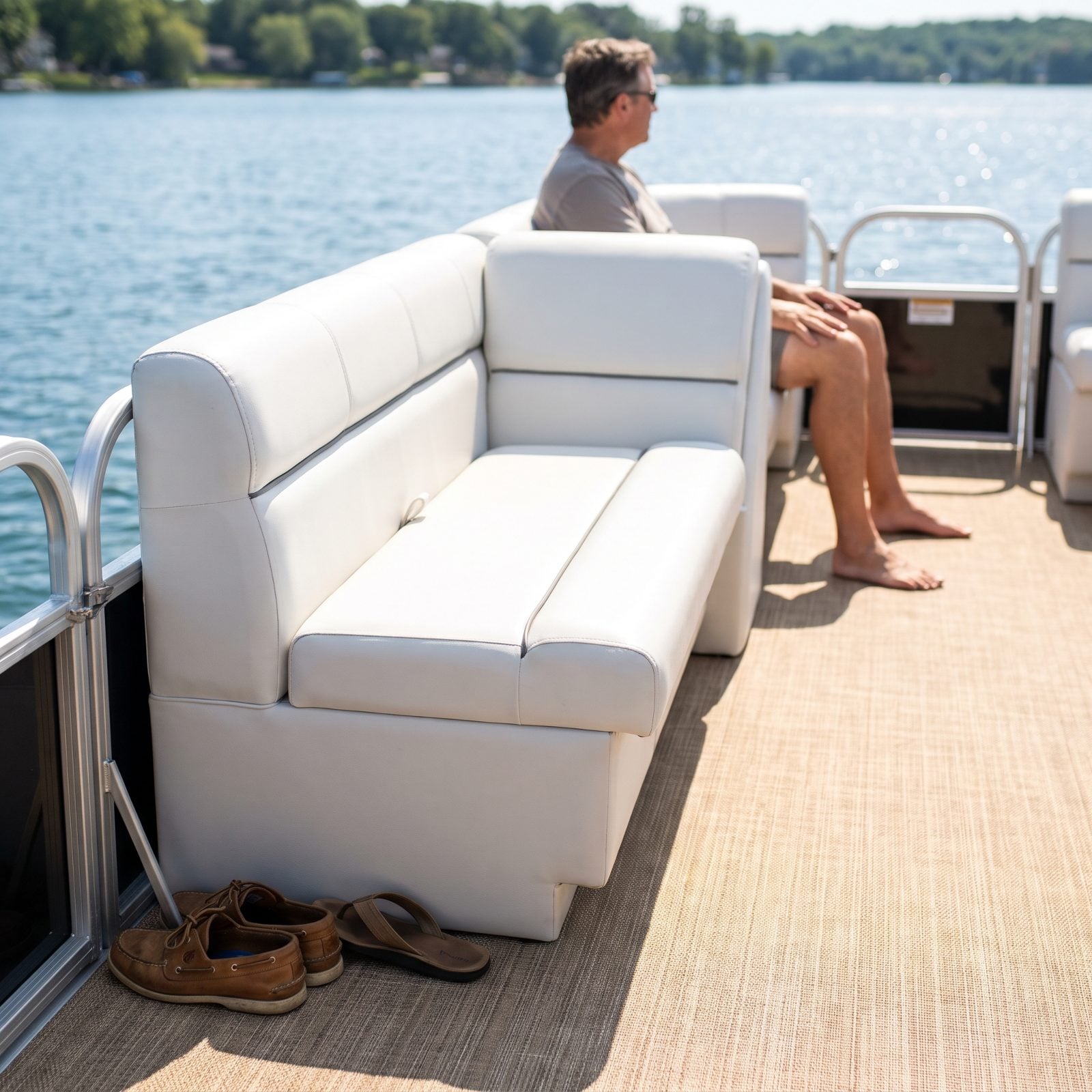
Marine vinyl shows everything. A smudge of lake-bottom muck, a scuff from a rubber sole, that faint grey half-moon of a heel print — it all sits there in the sun like evidence waiting for a jury.
Standing on the cushions to reach a cup holder or get a better look at a heron is the fastest way to leave a mark the owner will be scrubbing at next weekend. Sit on seats, stand on the floor. That’s the whole rule.
Need a boost to see something? Ask. Nobody minds a question. Everybody minds a sneaker print on the headrest.
24. Ask Before You Reach Up and Adjust the Bimini Top
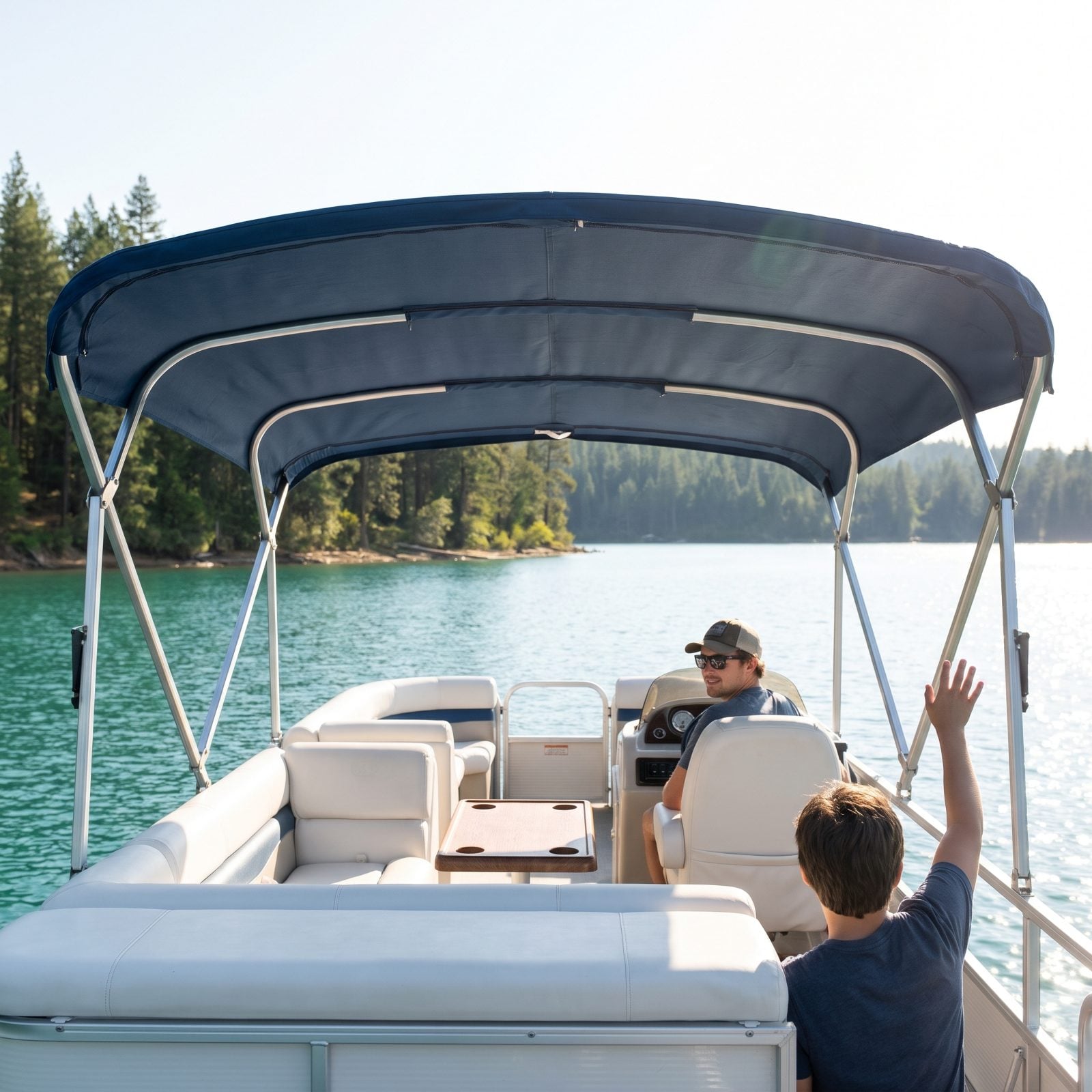
That shade canopy looks simple. It isn’t always. Some Biminis fold down with a quick-release pin, some are strapped to specific anchor points, and a few have been rigged just-so after the owner spent years figuring out how to keep the thing from flapping like a mad bird at speed.
Yank the wrong strut and you can bend a frame or drop the whole canopy on somebody’s head. So ask first. The captain knows exactly how it moves and will usually just do it for you in ten seconds flat.
23. Share the Shade and the Good Seats
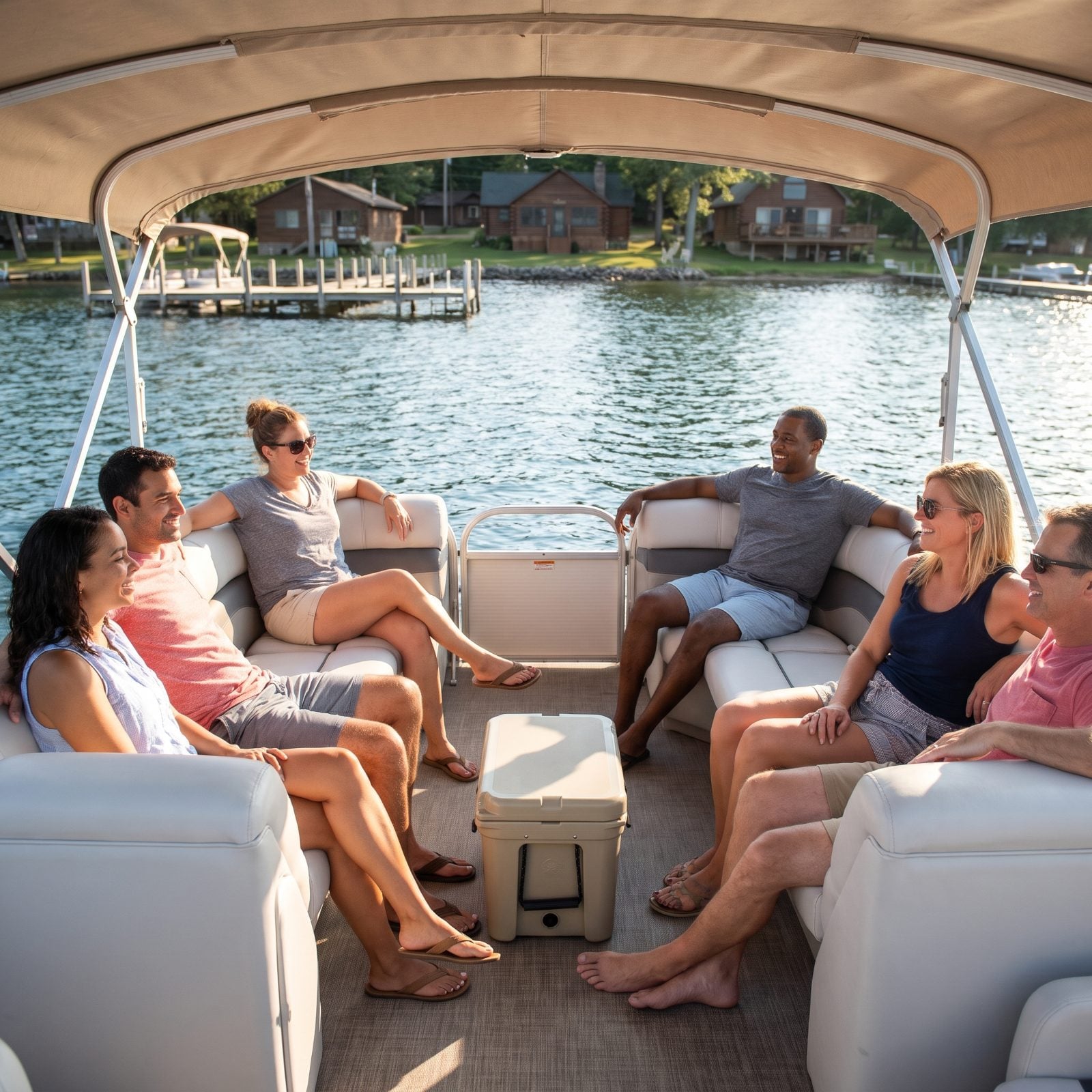
The shaded bench is prime real estate, and everybody knows it.
On a hot afternoon the spot under the Bimini is simply the best seat on the boat. Claiming it for the whole trip — bag on one cushion, feet on another — is a quiet way to tell six people you weren’t raised right.
Rotate. Offer the shade to whoever’s turning pink, and hand the bow lounger to someone who hasn’t had a turn yet. A pontoon seats everyone comfortably only when nobody treats a cushion like it’s got their name assigned to it.
22. Keep Food Over a Plate or a Napkin, Not the Cushions
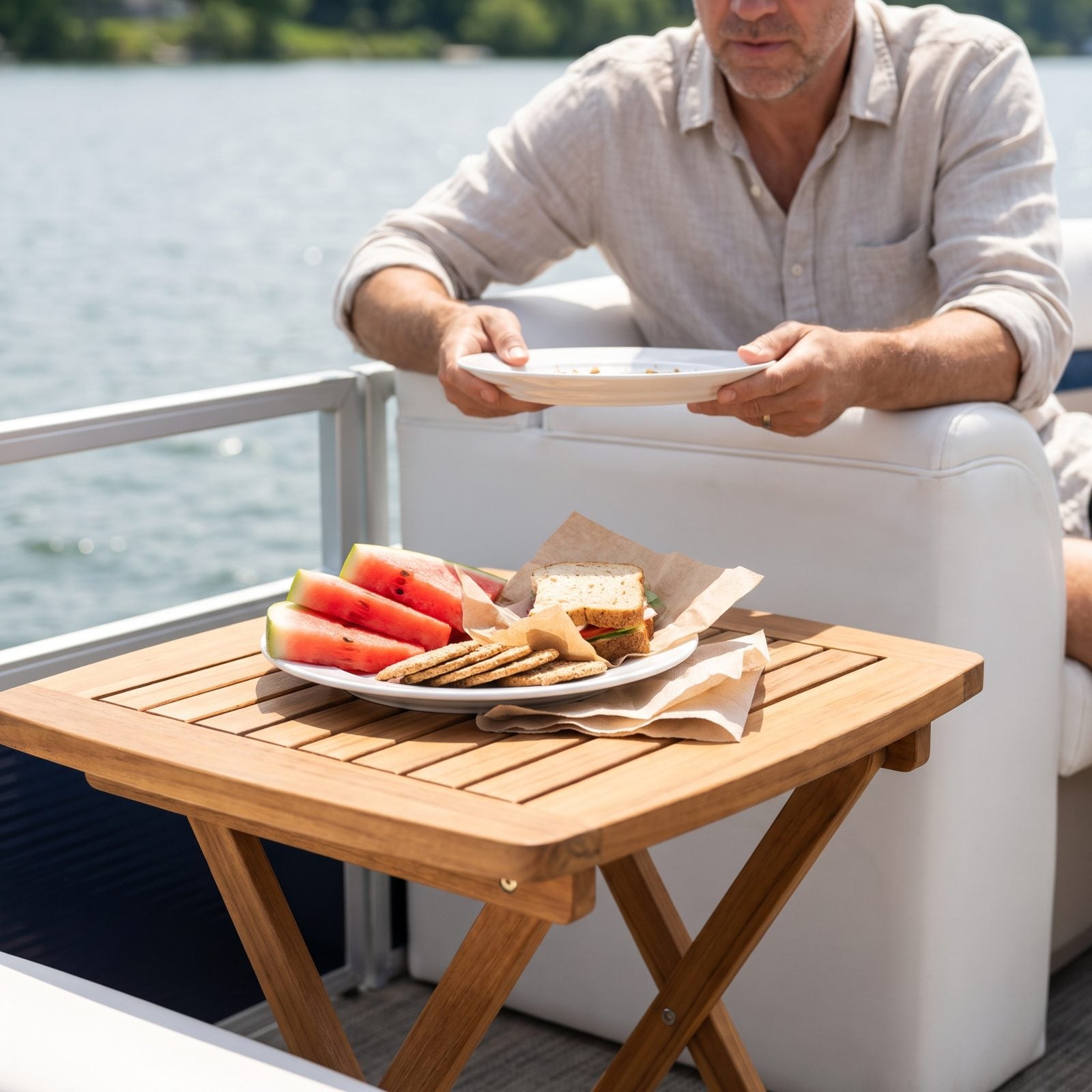
Mustard on marine vinyl is forever. So is barbecue sauce, melted chocolate, and the greasy halo a bag of chips leaves when it tips over in somebody’s lap.
Eat over a plate. Lean forward. Catch the crumbs. It sounds fussy until you’ve watched a dropped cheeseburger ride slowly down the front of a white cushion in full sun, cheese-first.
21. Wipe Up Your Spill the Second It Happens
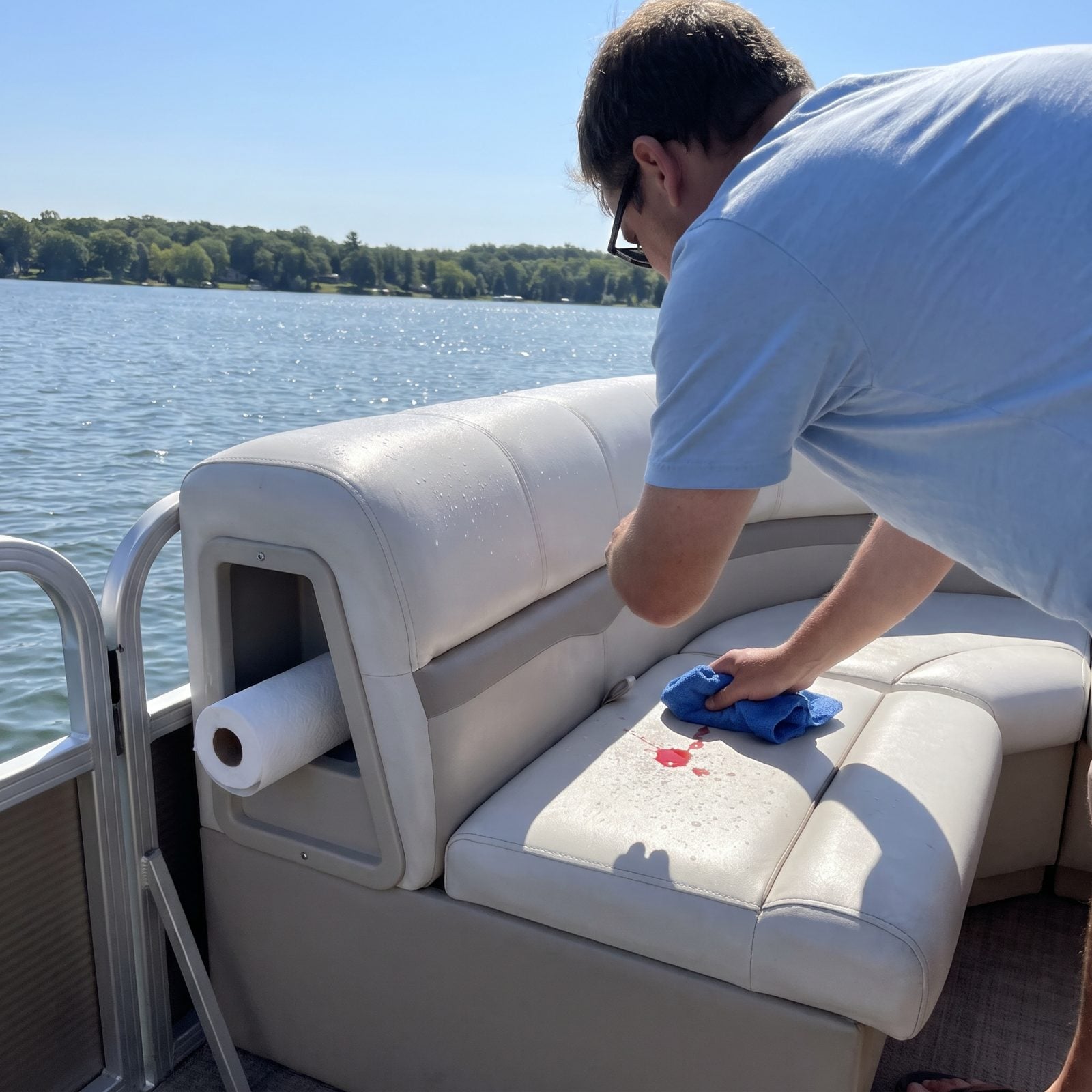
Timing is everything with a spill. Red wine, orange soda, sunscreen, even plain lake water left to pool in a seam — blot it in the first half-minute and it lifts clean, but let it sit while you finish telling your story and it sets right into the stitching for good.
Most boats keep a roll of paper towels in a cubby near the helm. Grab them. Don’t wait to be asked. Handle it, then give the owner a quick heads-up.
20. Ask Before You Light Up or Vape Onboard
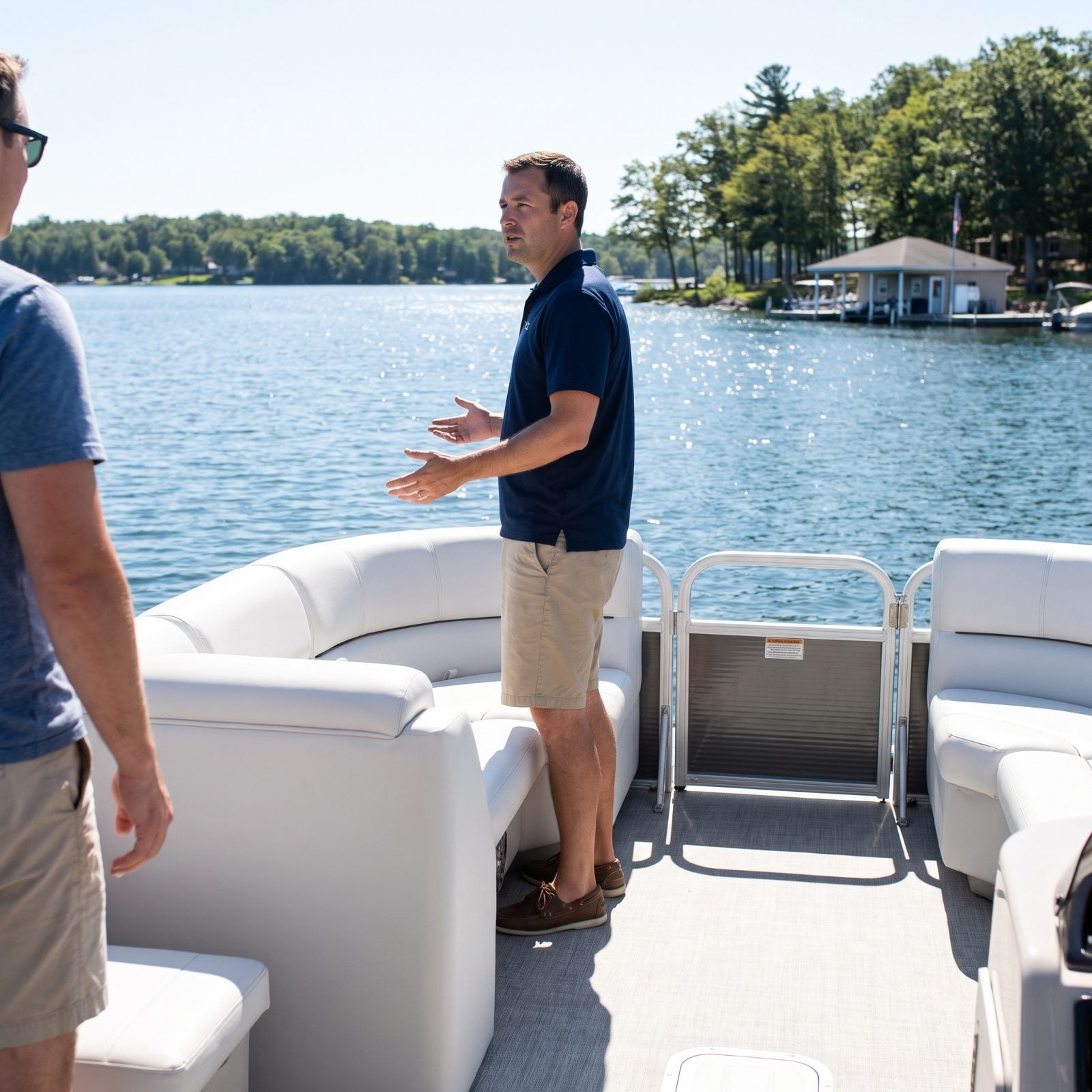
A boat is open air, so people assume smoking is fine out here. Then an ember lands on a vinyl cushion and burns a hole the size of a dime, or someone with asthma spends the whole ride breathing your vape cloud with nowhere on the water to go.
Ask the captain first, every time. Some owners allow it at the stern with a cup of water nearby for the butts. Some ask you to wait for a dock stop. Either answer is fair. Flicking ash over the side without asking is not.
19. Never, Ever Hand the Operator a Drink
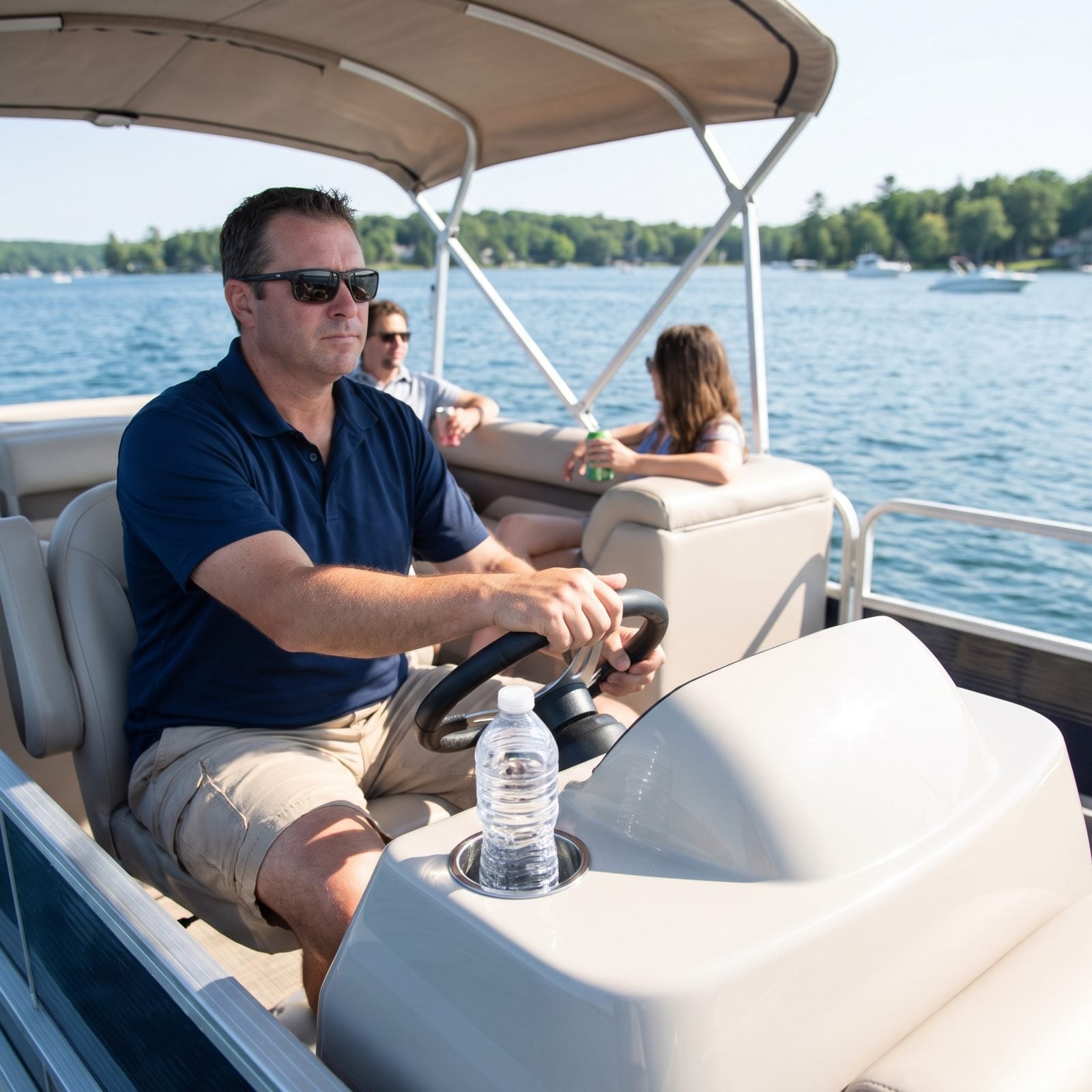
The person driving does not drink. Full stop.
Boating under the influence is illegal everywhere in the country, and the person at the wheel carries the whole boat’s safety on their decisions. Handing them a cold one to be friendly puts them in a terrible spot and everyone aboard at risk.
Want the captain to loosen up and join the fun? Offer to spell them at the helm once you’re anchored, or wait until the boat’s tied up for the night. Keep the water and the sodas flowing their way in the meantime.
18. Ask First Before You Pop Open a Storage Compartment
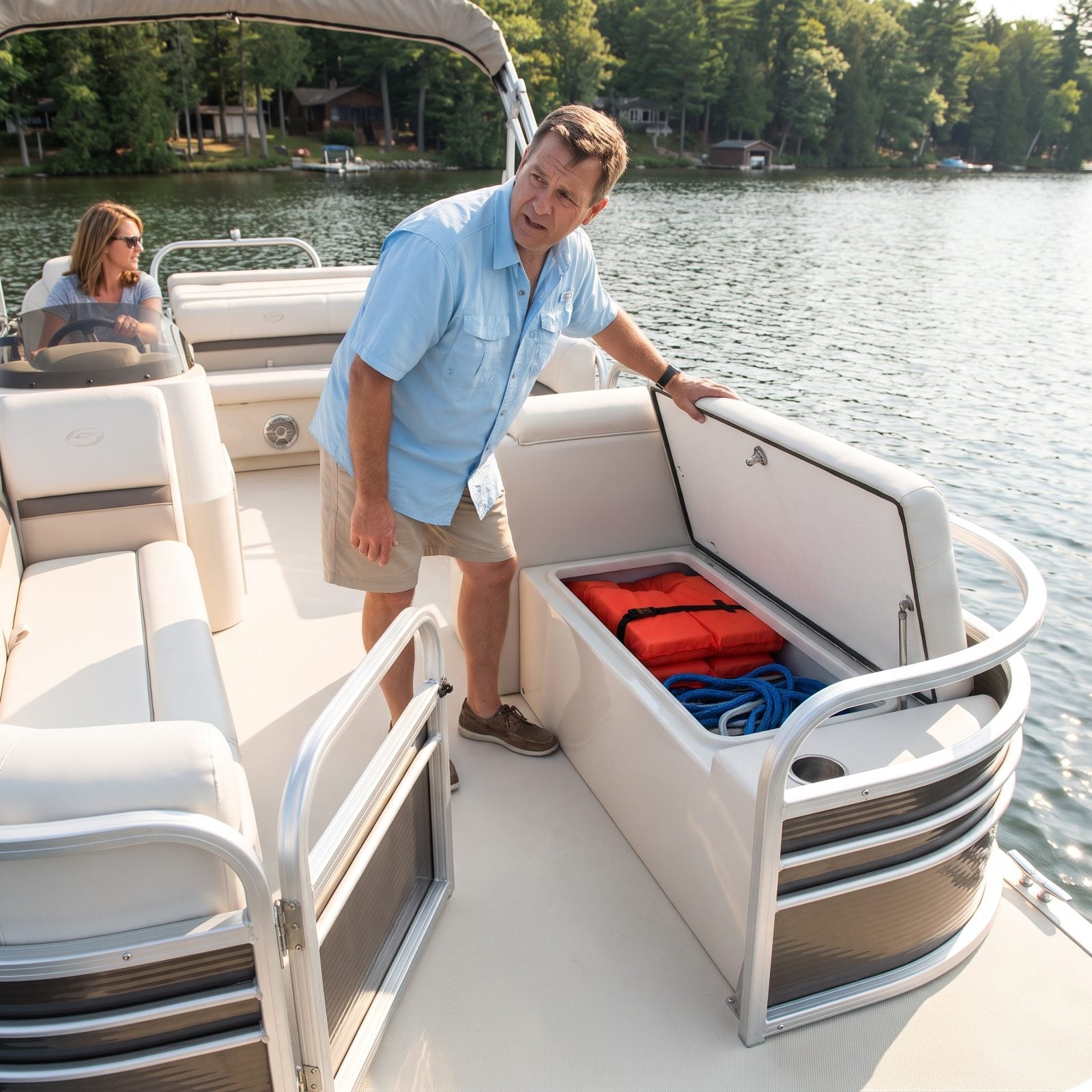
Those seats lift up, and under them live the dock lines, the anchor, spare life jackets, the first-aid kit, and sometimes the owner’s phone and keys. People go rummaging for a bottle opener, leave a hatch flapping open, and set a sopping wet towel down right on the safety gear.
Ask where things are kept. The owner would much rather point you to the right cubby than find their ditch bag soaked an hour later — and nobody loves a guest treating the boat like a scavenger hunt.
17. Wait for the Captain’s All-Clear Before You Jump In
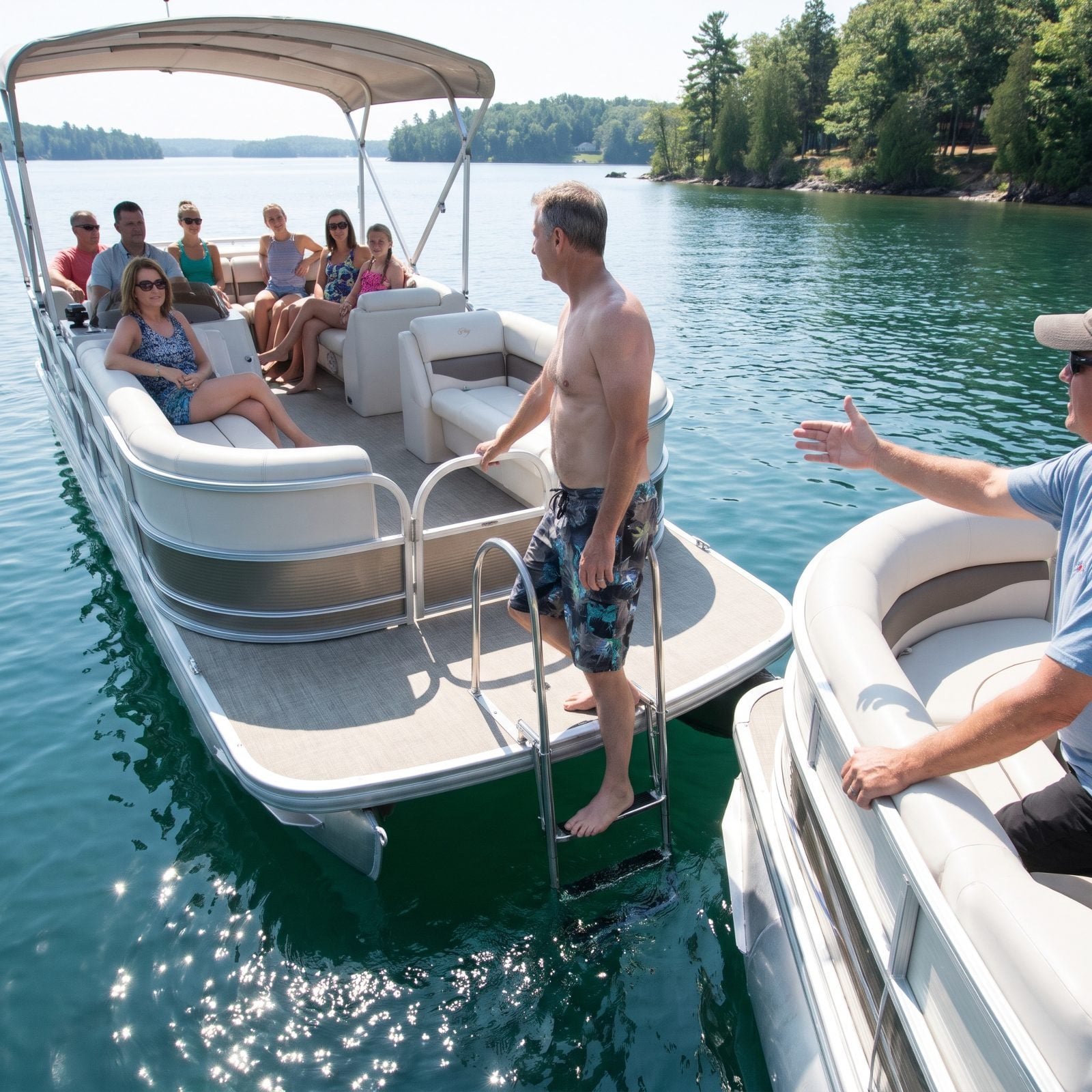
The water looks inviting the second the engine idles down. Don’t be first in anyway. The captain is watching for other boats, checking the depth, and making sure the ladder’s down and the swim area is actually clear before anybody goes over.
Wait for the word. A swimmer who leaps before the boat’s fully stopped and settled can end up near a prop that’s still turning, or drift off while everyone assumes they’re still aboard. Thirty seconds of patience is the whole cost.
16. Use the Swim Ladder Instead of Climbing Over the Rails
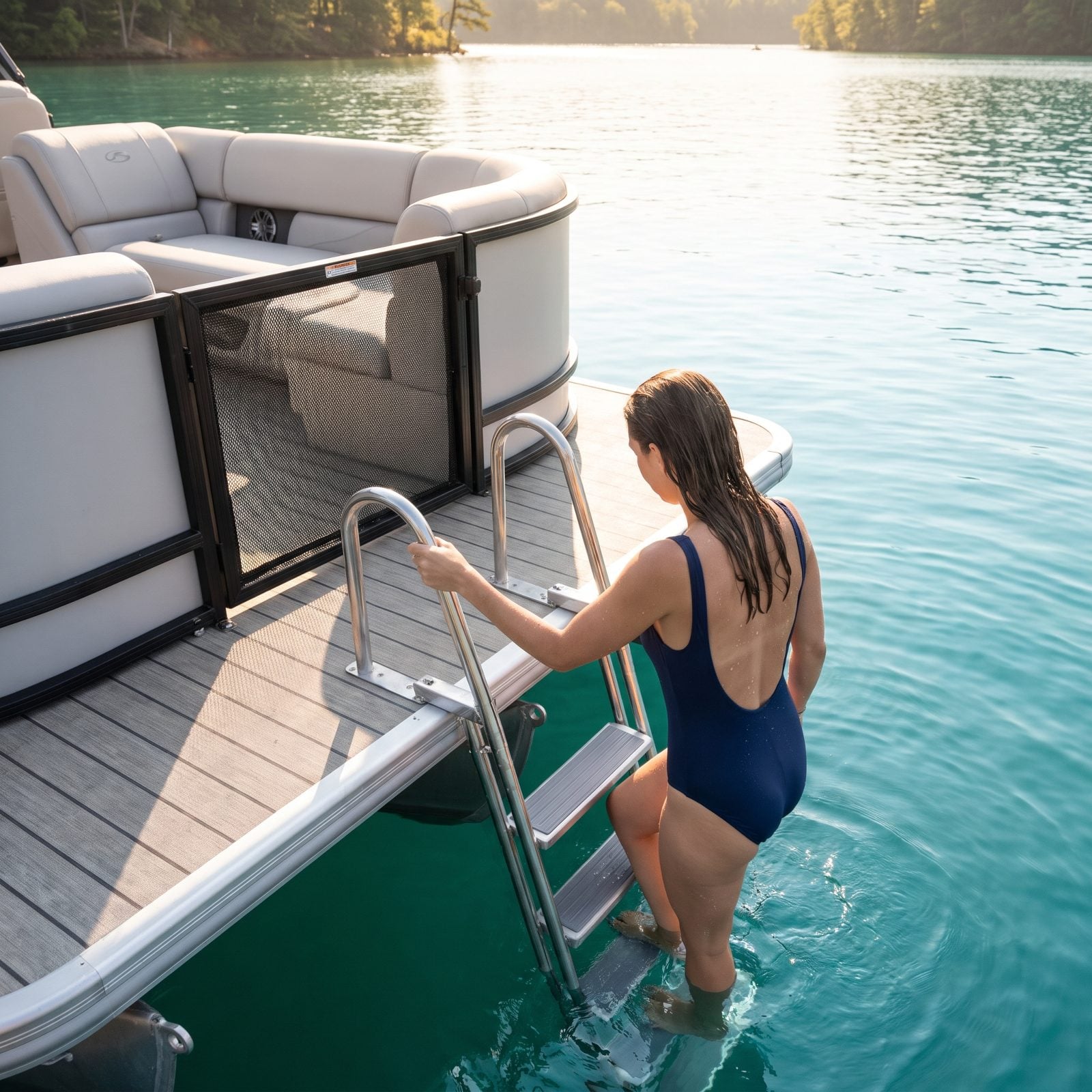
Pontoon rails look climbable. They aren’t. They’re fencing, not a step stool, and that aluminum turns slick the second your hands come out of the water, which is exactly how a guest cracks a shin or flips back in headfirst.
That’s what the ladder is for. Lower it all the way, let the person in the water plant both feet, and give them room instead of crowding the gate. Three or four steps and a grab rail — use every bit of it.
15. Never Push Another Guest Into the Water
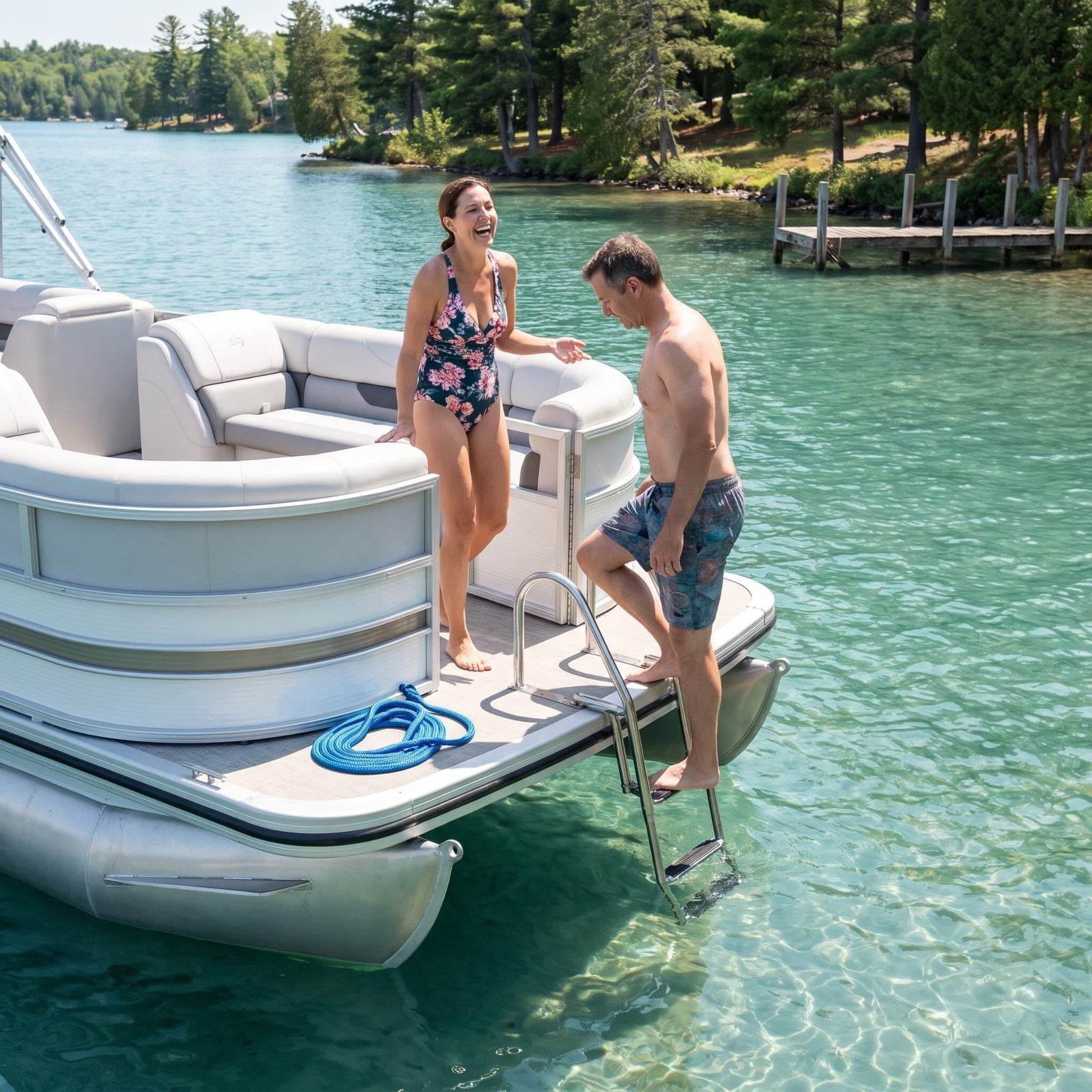
The classic dock-prank shove is always funnier in your head than in real life. You can’t see what’s under the surface, you don’t know who forgot to take out a hearing aid, and you definitely don’t know who can’t swim half as well as they let on.
People hit the water wrong when they aren’t braced for it. A twisted knee against the swim platform. Water up the nose. A pair of glasses sinking quietly to the bottom while everyone else laughs. Let folks pick their own moment to jump — it’s their body and their timing.
14. Ask How to Use the Marine Toilet
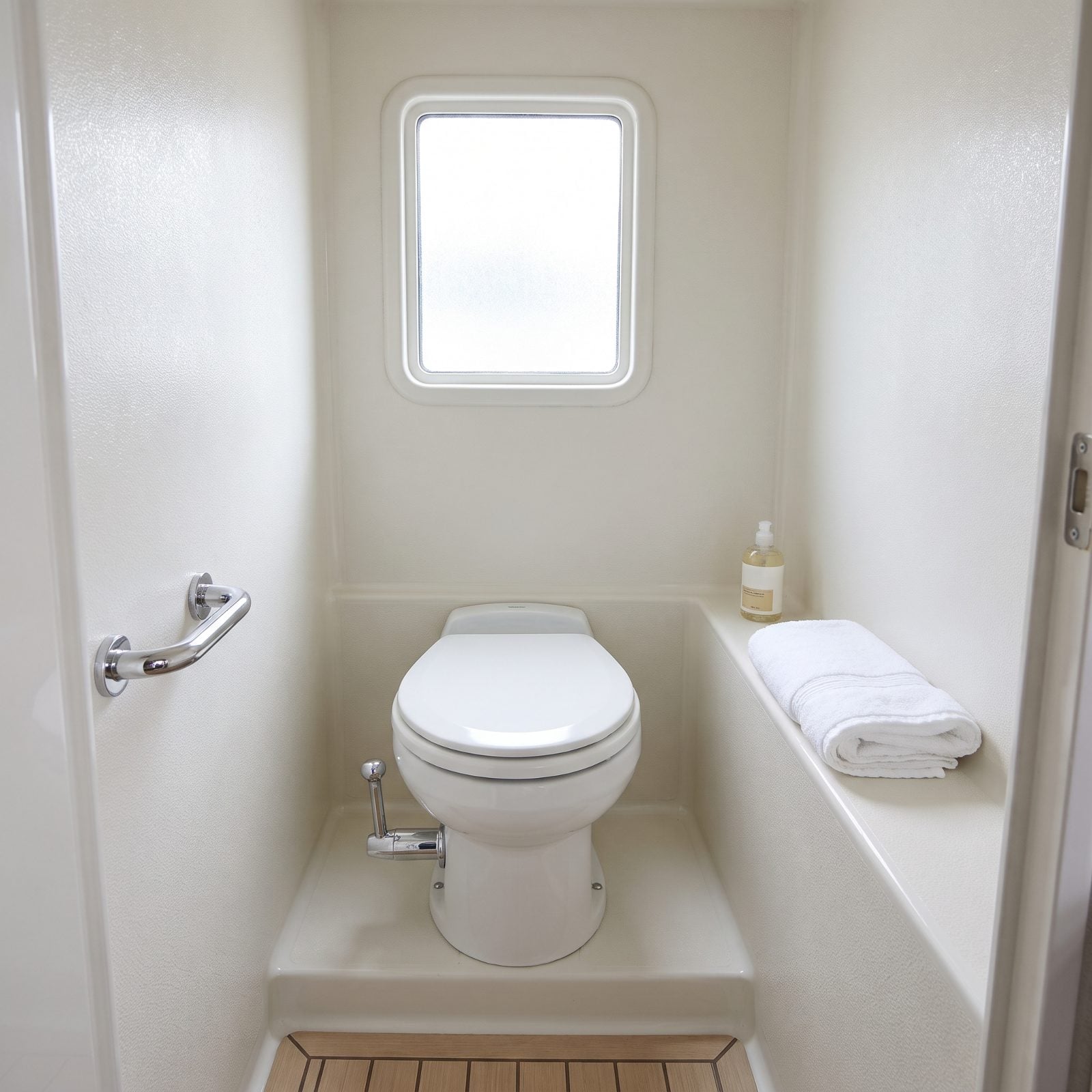
A marine head is nothing like the toilet at home, and the wrong thing going down one becomes a problem that will not stay quiet for long.
Lots of pontoons run a portable or pump-out head with strict rules — marine-safe paper only, nothing that shouldn’t be there, and a specific pump or flush sequence that isn’t obvious until someone shows you. Clog it on a hot afternoon and you’ve wrecked the day for the whole boat, yourself included.
So ask before you need it, not during. Thirty seconds of instruction saves a mess nobody wants to touch. Zero shame in it — every regular boater fumbled the exact same thing their first time aboard.
13. Ask Before Photographing or Posting Other Guests
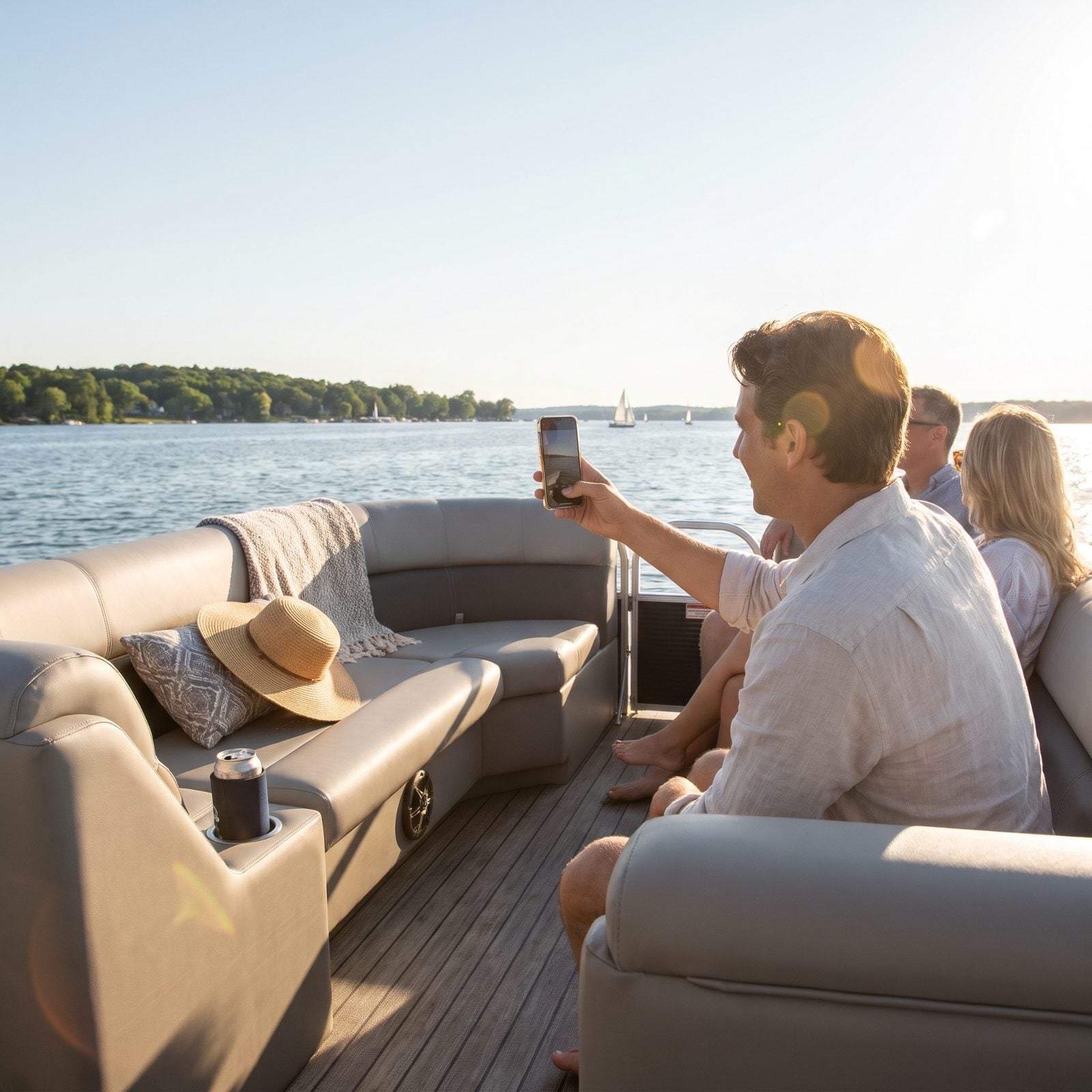
Not everyone wants their swimsuit on your feed. Simple as that.
Someone aboard might be dodging an ex, between jobs and not quite where they told people they’d be, or just allergic to getting tagged in anything. A quick “mind if I post this?” costs you nothing and spares you an awkward text three days later.
12. Do Not Broadcast the Owner’s Dock Location Online
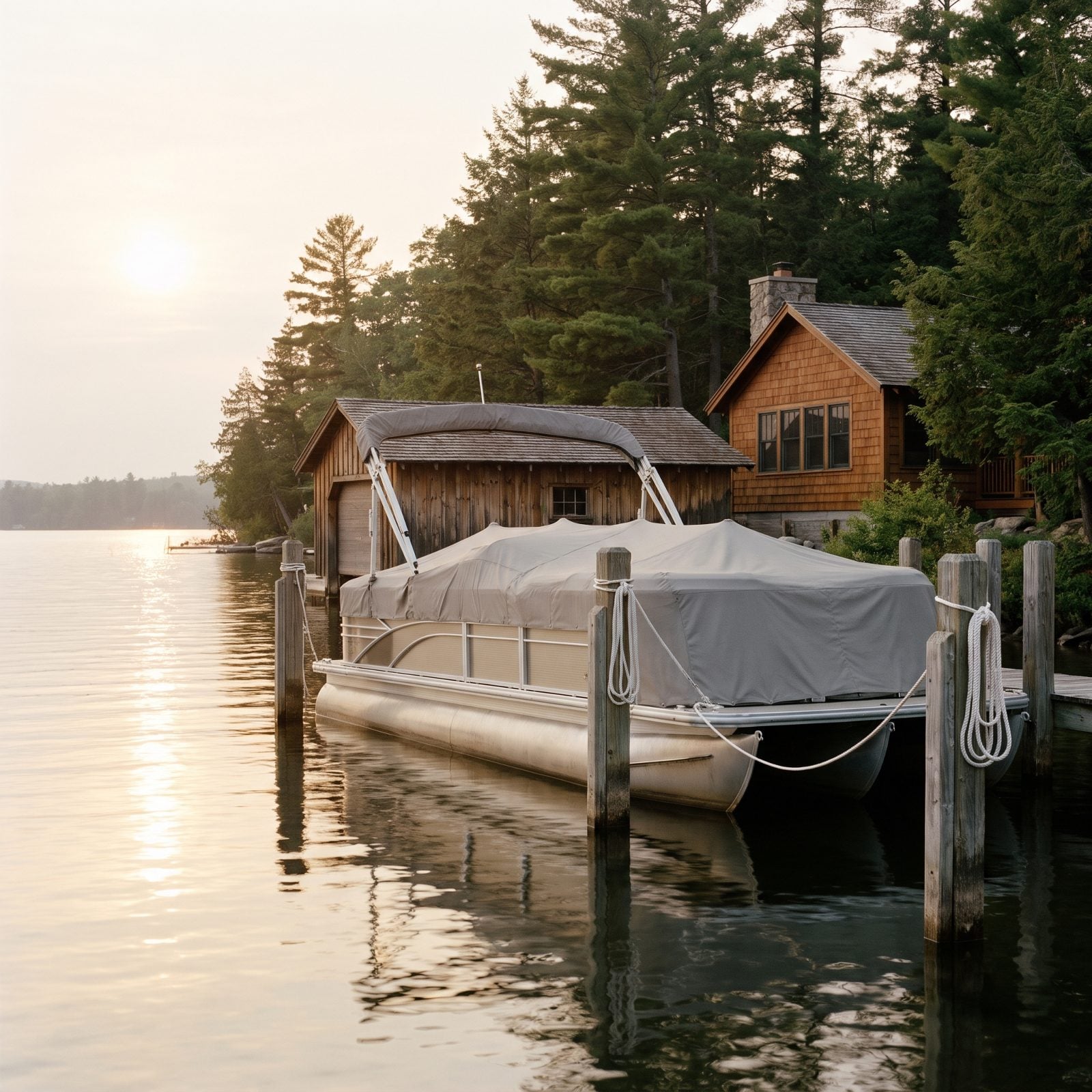
A geotagged photo of the slip tells the whole internet exactly where an expensive boat sits unattended most nights of the week. That’s not a detail you get to share on someone else’s behalf.
Owners guard dock locations for good reason — theft, marina access, nosy neighbors, insurance headaches that take months to untangle. You might think a sunset shot is harmless, but the metadata and that recognizable boathouse in the background do nobody any favors.
Tag the lake if you must. Keep the marina, the slip number, and the cabin out of it. Their property, their call.
11. Keep Trash and Food Out of the Lake
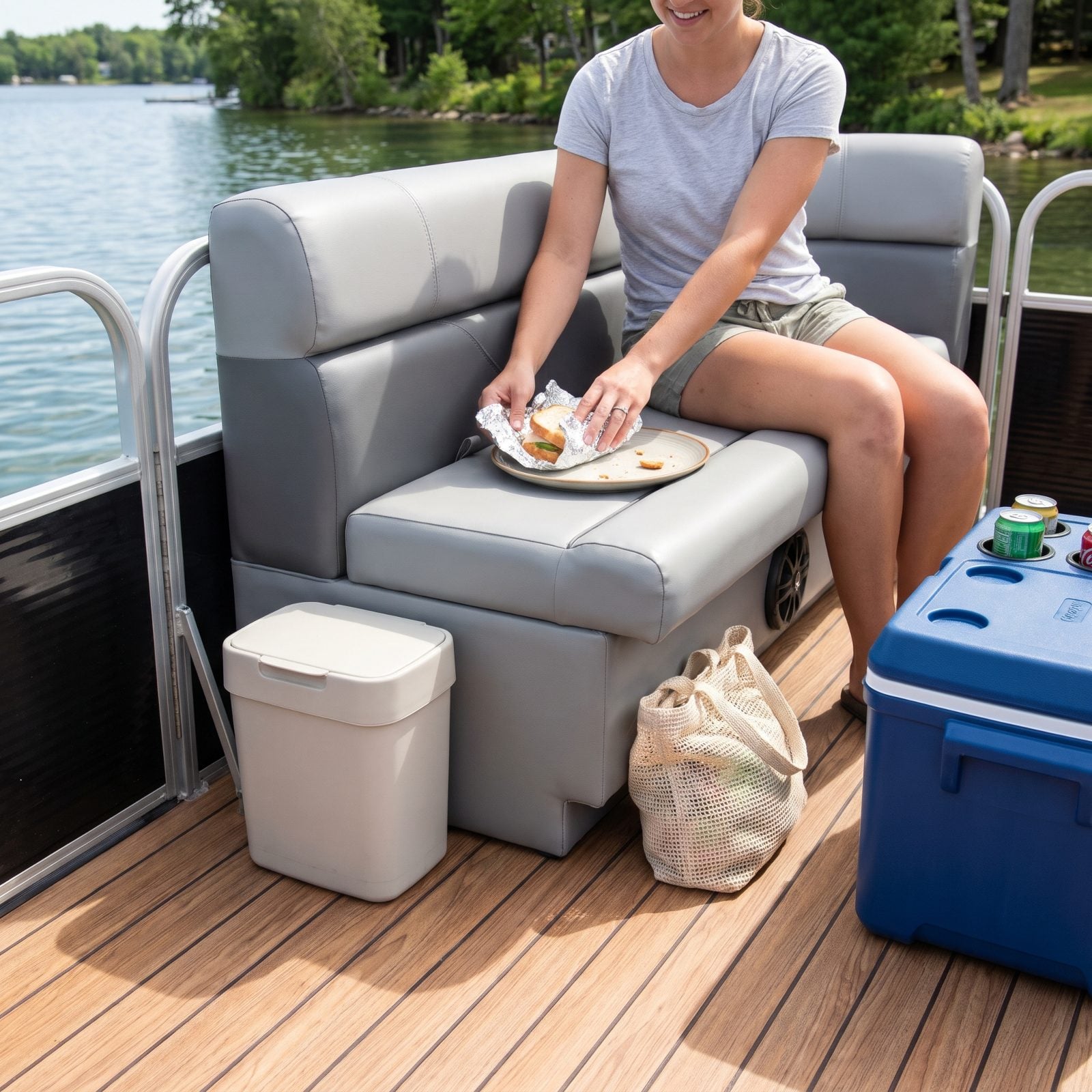
Bread crusts, lime wedges, cigarette butts, the foil off a granola bar. Each one feels like nothing going over the side, and it all piles up in a lake that a whole community drinks from, swims in, and fishes out of.
Feeding the ducks chips isn’t a kindness. It wrecks their diet and trains them to mob every boat that pulls up.
Bring a bag, keep a lid on the bin, carry out what you carried in. The owner is the one who has to live on this water long after your afternoon ends.
10. Remain Seated During the Docking Approach
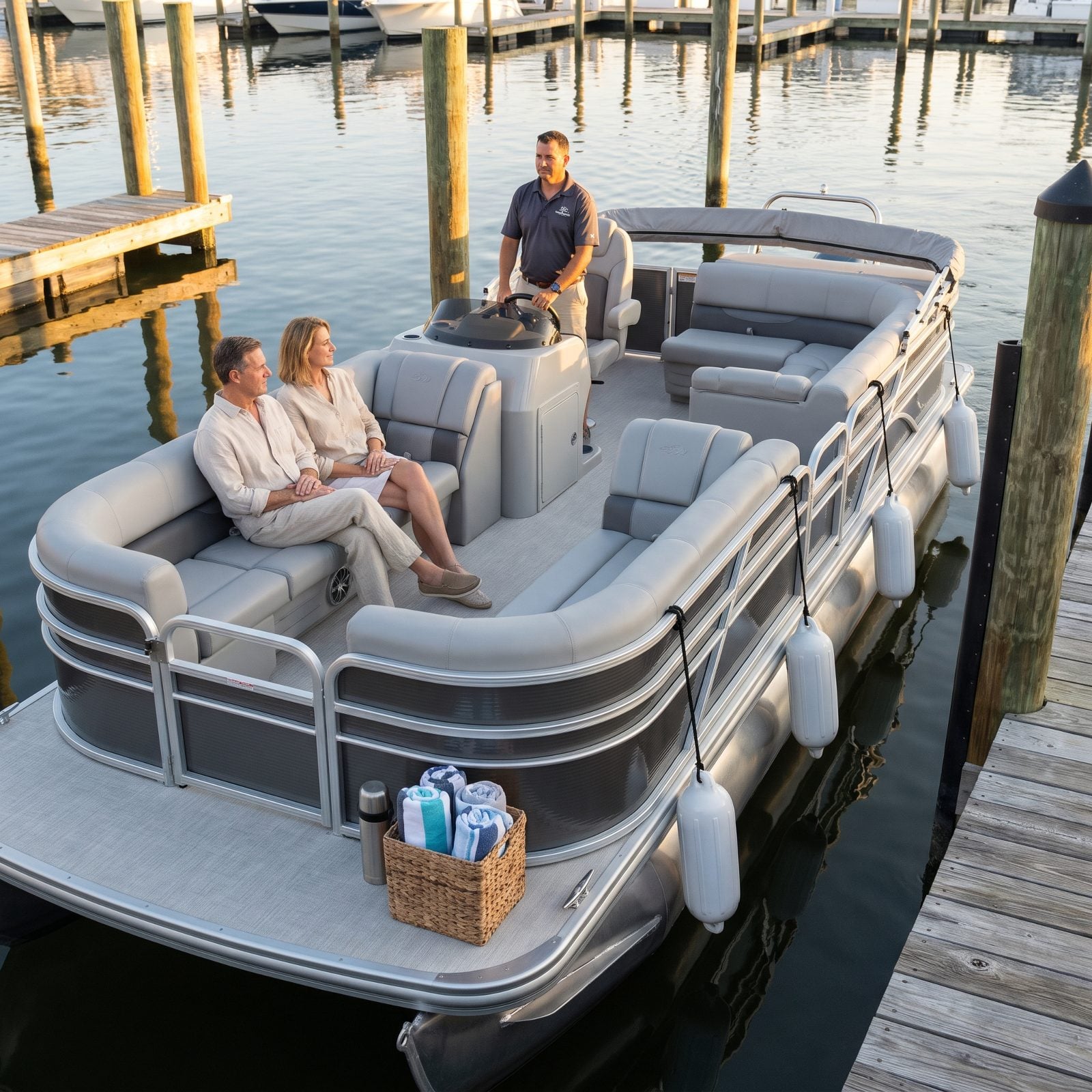
The docking approach is the most crowded two minutes of the whole trip, and the worst possible moment for someone to stand up and wander toward the rail to “help.”
A pontoon can bump, surge, or catch a gust at the last second. Someone on their feet loses balance, grabs a rail, reaches for the dock — and suddenly the operator is wrestling a wobbling boat and a flailing person instead of just the boat.
Park it. Stay seated until you hear the all-clear. The best thing you can do during docking is sit still, say nothing, and keep out of the way.
Listing the rules for avoiding docking injuries, a boating safety educator observes: “As a boats gets close to a dock, passengers tend to gravitate toward the rail and drape fingers, legs and arms over the side of the boat.”
9. Handle Dock Lines Only When Instructed
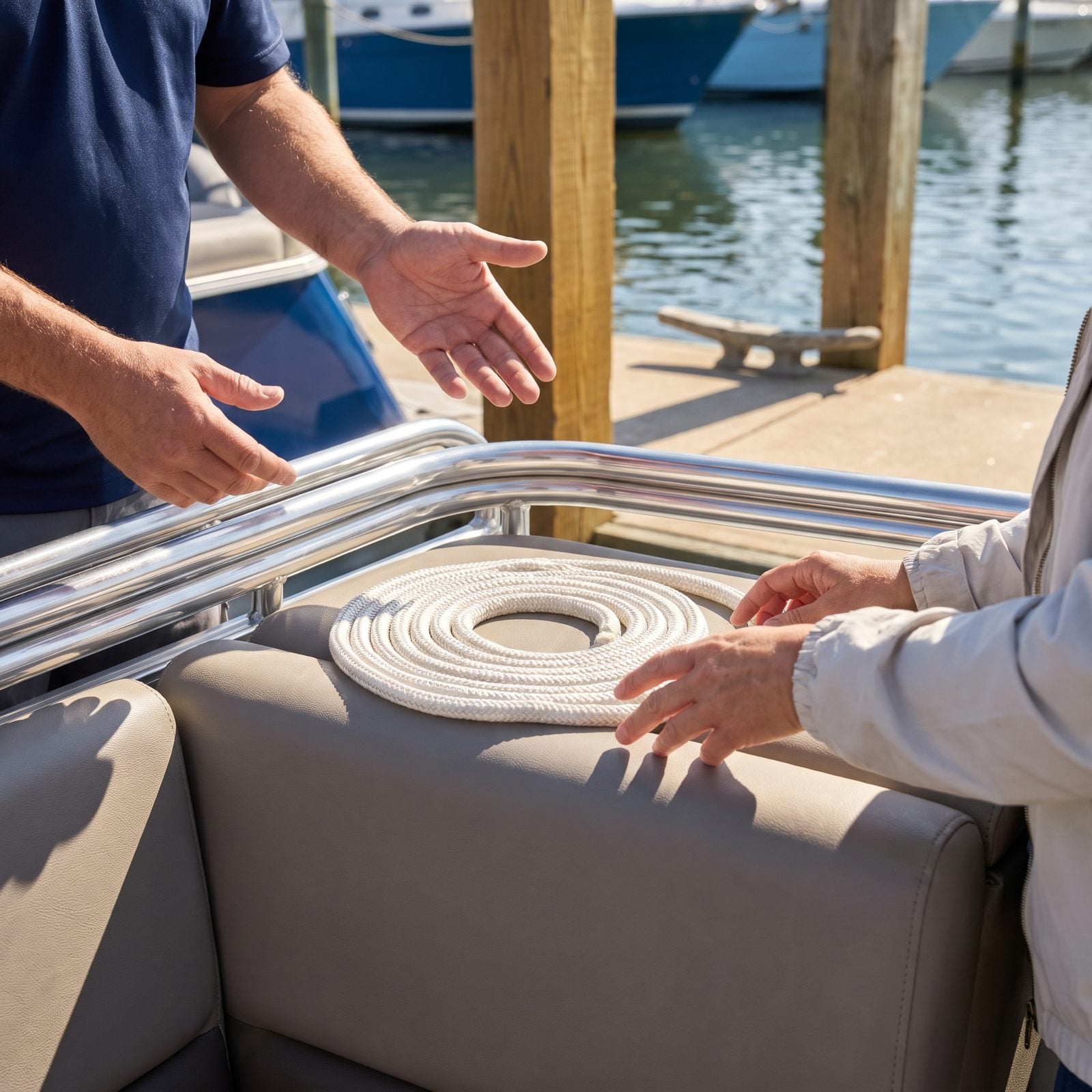
A dock line under load can take a finger off. Not a scare tactic — physics. A loop around a cleat with the boat’s full weight behind it does not care one bit about your hand.
Guests tend to grab the rope the instant it appears, usually the wrong end, always at the wrong moment. Wait for the operator to tell you which line, where it goes, and when. Don’t know how to cleat one? Say so and let someone who does take it.
8. Never Use Your Hands or Feet as Fenders
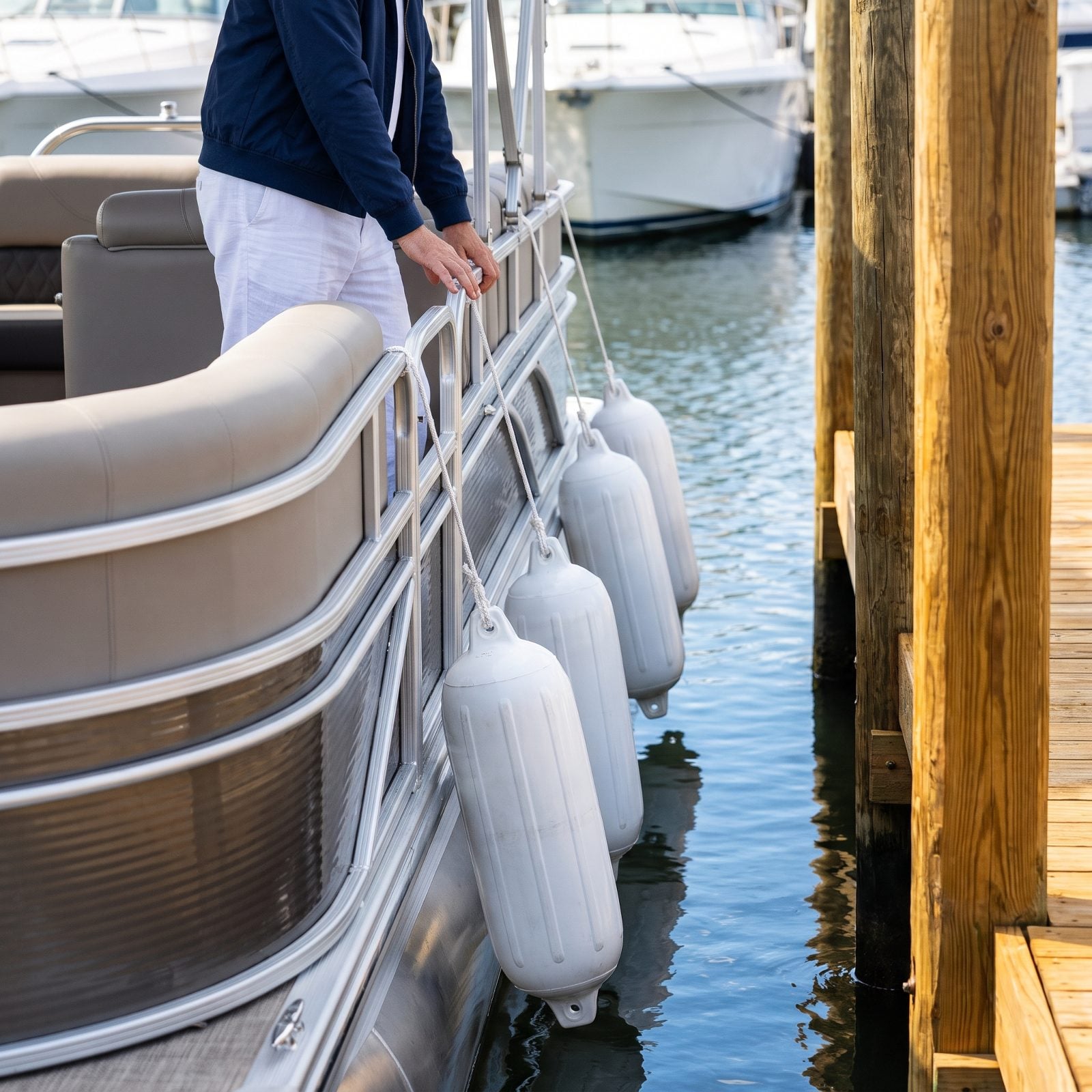
A pontoon drifting toward a piling is heavy. A couple thousand pounds of boat does not stop just because your palm happens to be against the dock.
Every season someone sticks out a foot to “soften” a bump and ends up with an ankle wedged between hull and wood. That gap closes with real force, and skin loses every single time.
Let the fenders do their job. If the boat’s coming in close and fast, your hands belong on a rail, nowhere near that gap. Tell the operator it looks tight and let them ease off the throttle instead.
After collecting boaters’ stories of severed fingers at the dock, a veteran boating educator warns: “Never put your hands/arms or feet/legs between a moving boat and a dock/post or even another boat.”
7. Wait Until the Pontoon Is Secured Before Stepping Off
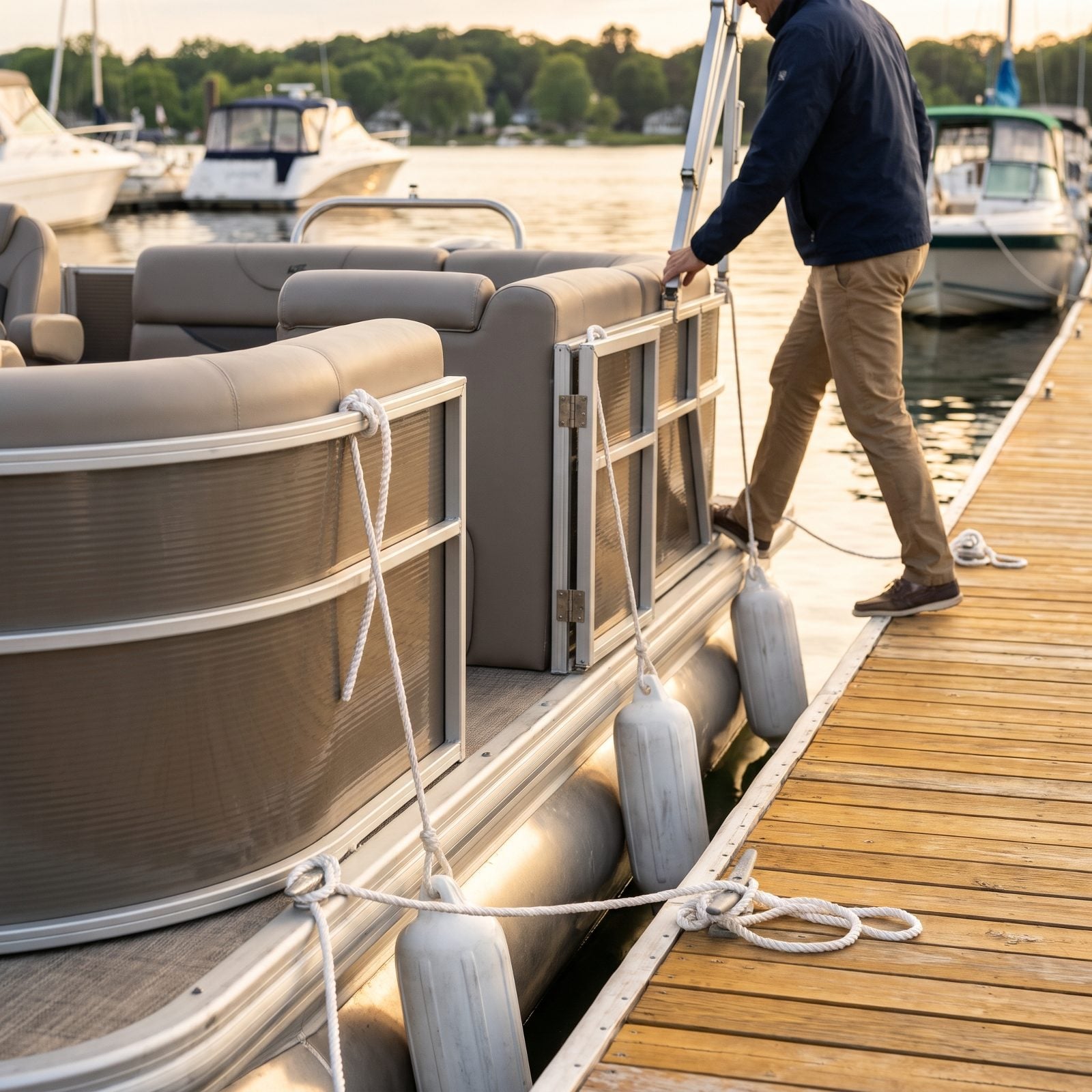
The second the dock is within reach, somebody always wants to leap for it. Don’t. An unsecured pontoon can drift the instant the first person’s weight shifts off, and the gap between boat and dock widens right as you’re stepping across it.
That’s the classic one-foot-on-each-side moment that ends with a person in the water and a story nobody actually wanted. Wait for both lines to be cleated and the operator to say it’s good, then step off one at a time, hand on the rail, no heroics.
Boarding and leaving are when most minor boating injuries happen. A steady boat and a little patience skip the whole thing. And once you’re off — pass the cooler up, coil a line, leave the deck the way you found it.
6. Respect the Agreed Return Time
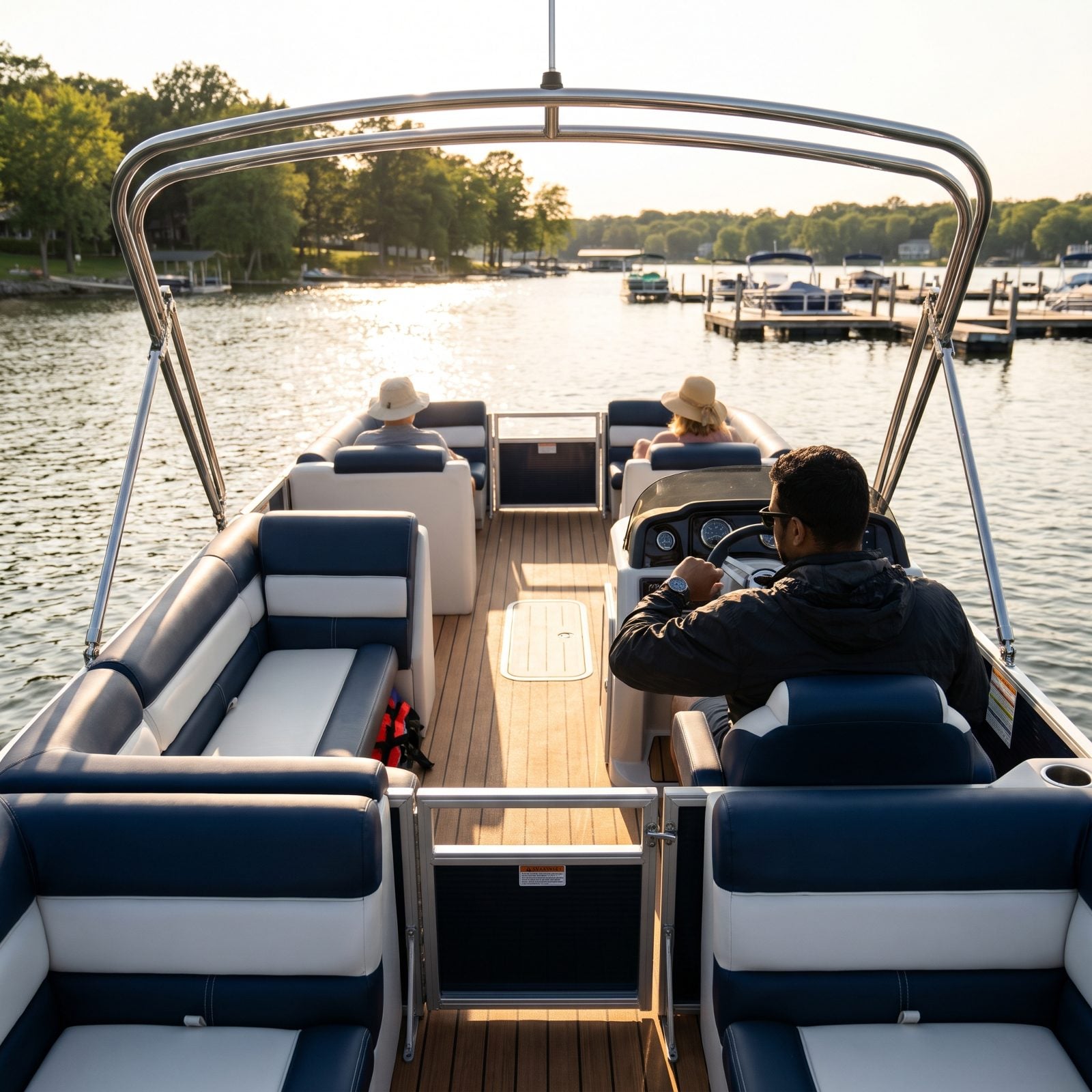
The return time isn’t a suggestion. It’s usually a slip reservation, a fuel-dock window, or a spouse waiting with dinner on the dock. When a guest says “just one more loop around the point,” that one loop turns into forty minutes, and now the owner is docking in fading light against a rising wind.
Watch the operator, not the sun. If they start steering toward home, you’re already done swimming, so pack up without being asked.
5. Offer to Help Wipe Down Seats and Tables
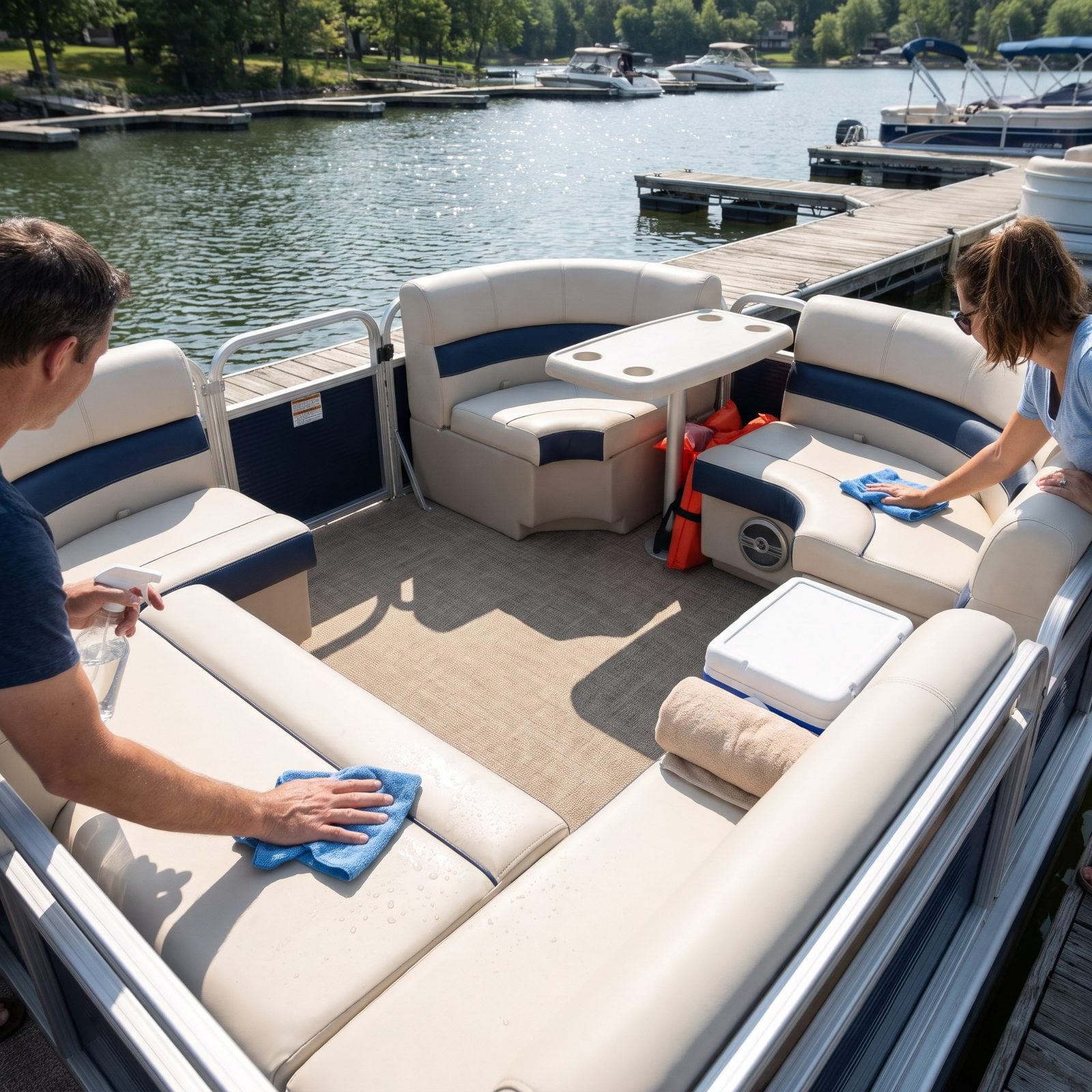
Sunscreen, spilled soda, and wet swimsuits turn vinyl into a sticky mess by the end of a hot day. The owner knows exactly where the sun will bake a stain if it sits overnight. You don’t. So offer the cloth and let them point you at the trouble spots.
A quick wipe-down while the boat’s still floating beats a scrubbing session next weekend. Grab the spray bottle, hit the cushions and the table, and you’ve handed somebody back an hour they’d rather spend fishing.
4. Report Spills, Tears, or Broken Gear Immediately
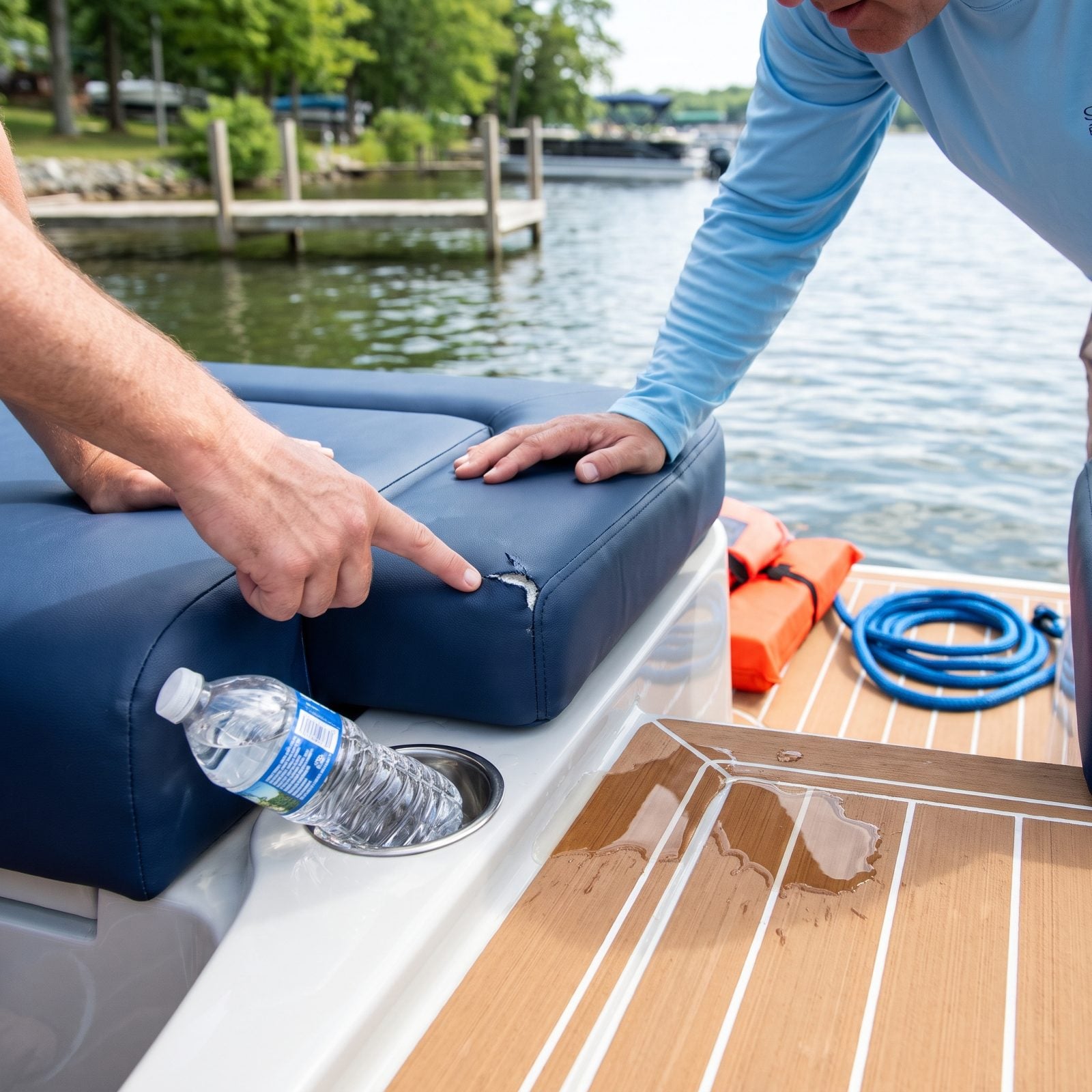
Hiding a problem always costs more than owning it. A small tear found at 2 p.m. is a dab of marine adhesive. The same tear discovered three weeks later, now frayed down to the foam? That’s a reupholstered cushion and an awkward phone call.
Say something the moment it happens — knocked a rod holder loose, cracked a cup holder, dropped a phone that scuffed the console. The owner would rather hear it now, while they can watch for it and keep it from getting worse.
3. Offer to Contribute Toward Fuel
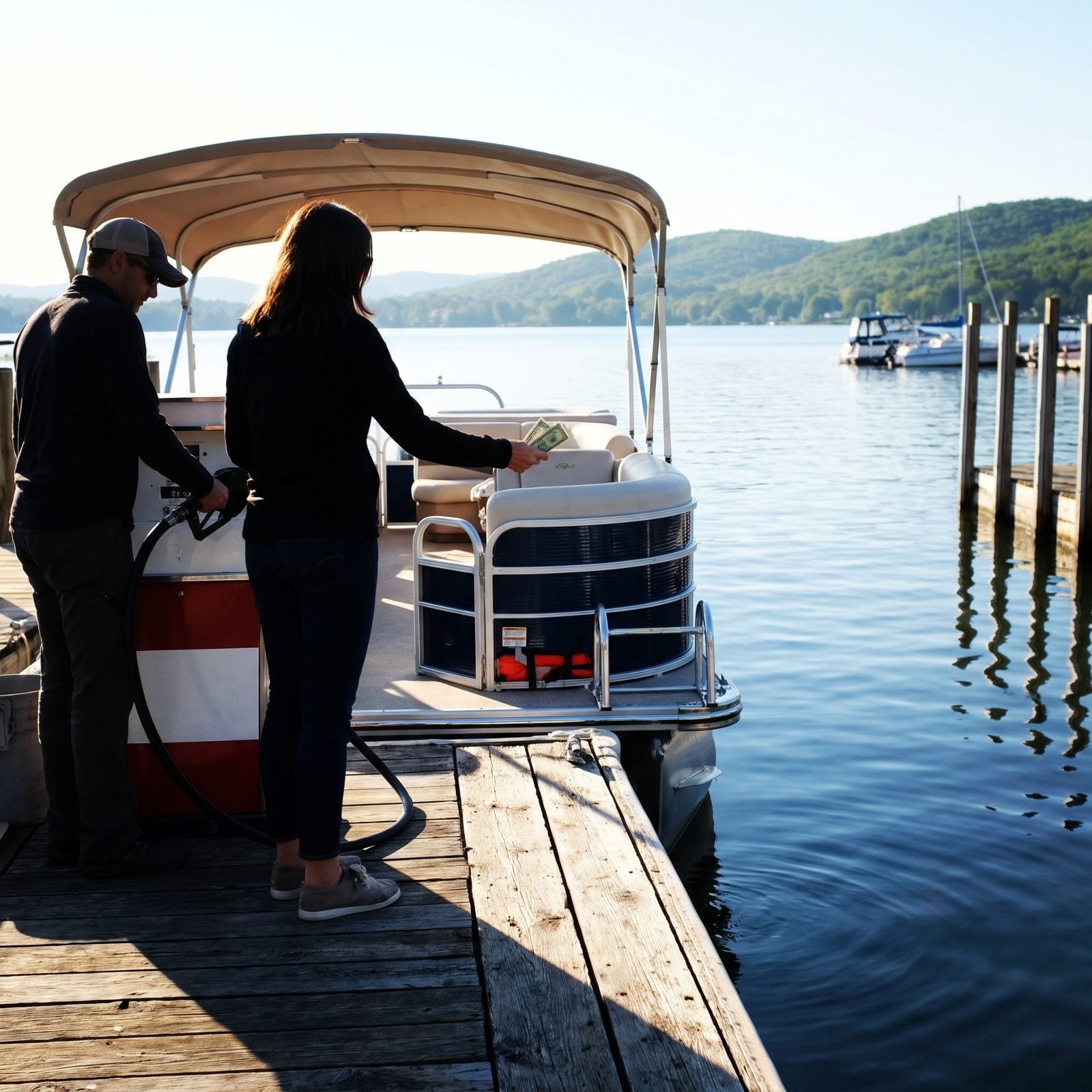
Pontoons drink more gas than people expect. A full day of tubing and idling at no-wake can run through a real chunk of a tank, and that tank isn’t cheap. The owner almost never brings it up, because they don’t want to turn a nice day into a tab.
So you bring it up. Hand over a twenty, split the fill-up, or show up with the cooler already stocked. The gesture matters more than the exact math.
2. Carry Your Own Trash Off the Boat
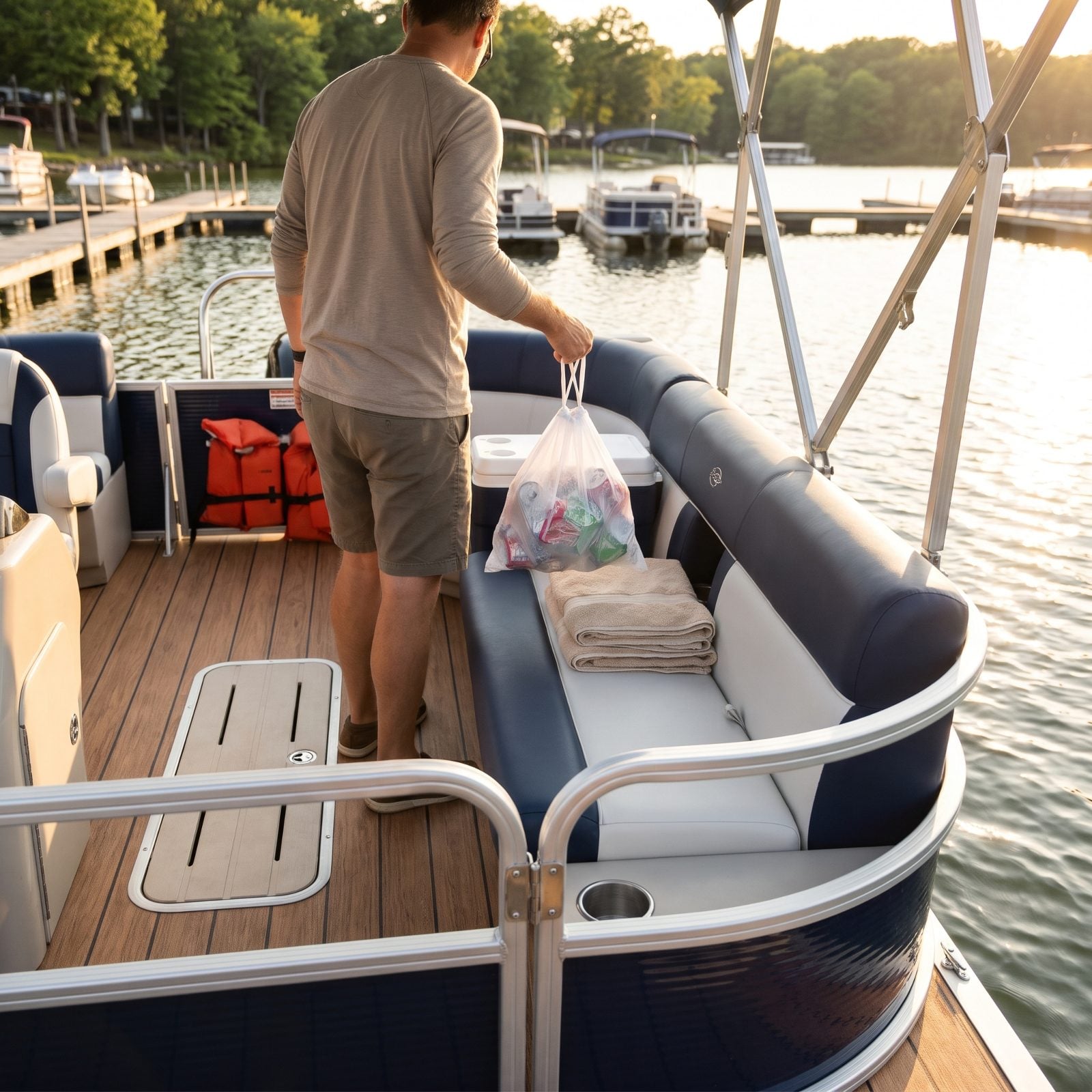
A stray can rolling under the seat ferments into something nobody wants to find Monday morning. And the owner shouldn’t be the one chasing down your sunscreen tube and three empty seltzers after you’ve already driven home.
Bring a bag. Fill it as you go, then walk it off the boat and into the marina bin yourself. Clean deck when you arrived, clean deck when you leave — that’s the deal.
1. Thank the Owner Before You Leave
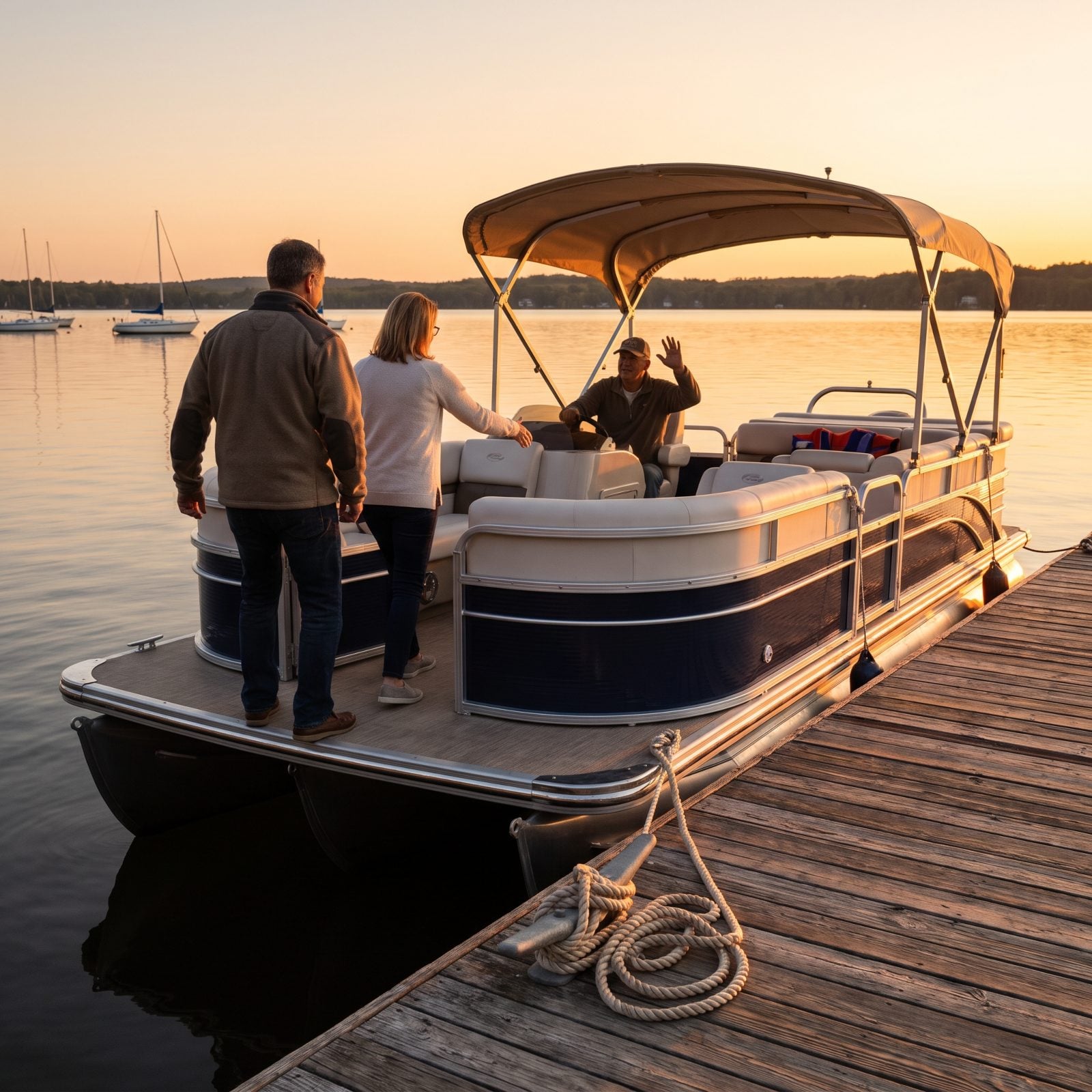
A real thank you. Not some shouted “thanks!” over your shoulder on the way to the car. Look the owner in the eye, name one thing you loved about the day, and mean it.
Owning a boat is a lot of quiet work — washing, winterizing, scrubbing the hull, replacing the anode nobody ever sees. The guests who notice that work are the guests who get asked back.
The invitation you get next summer is decided in the last five minutes of this one.