
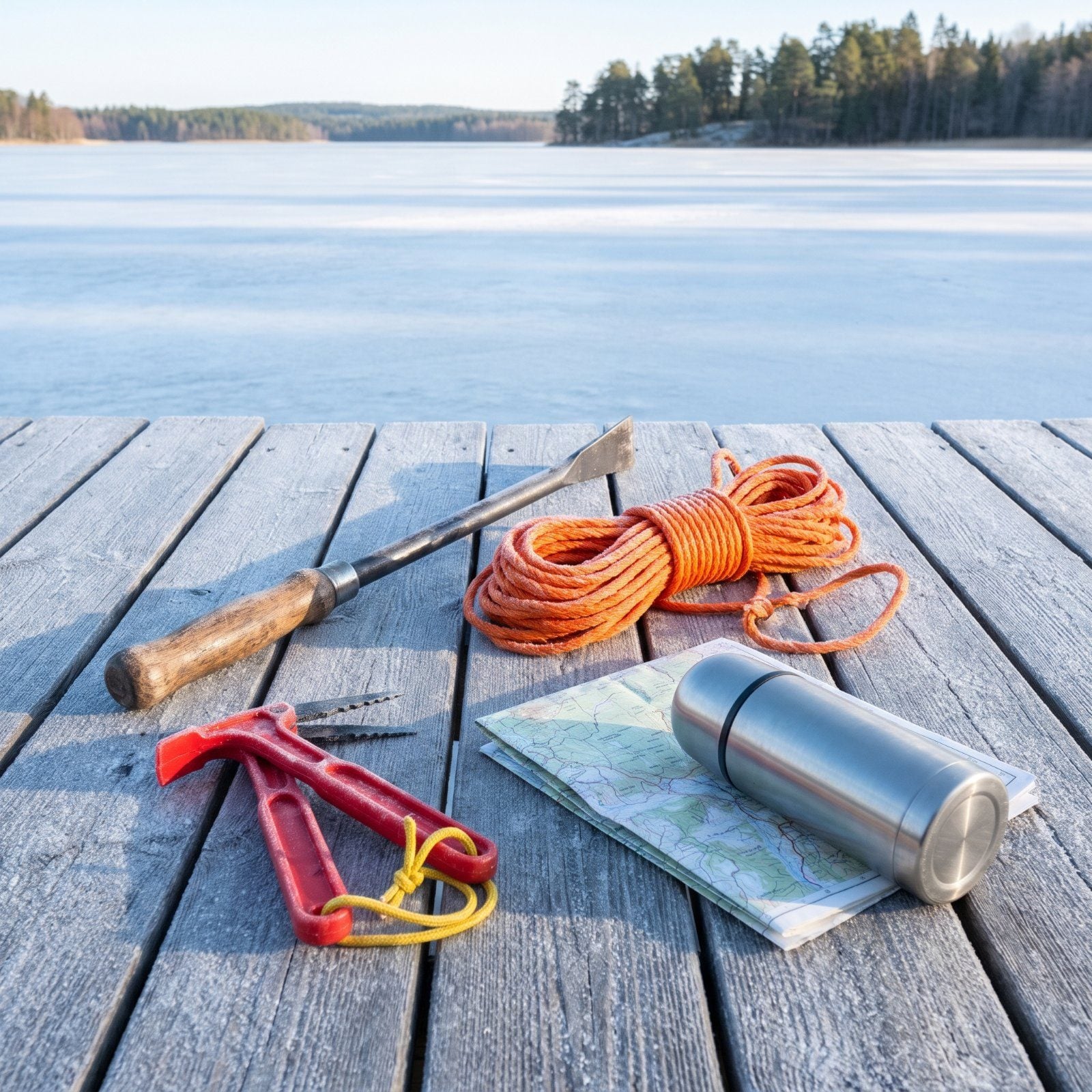
The first winter you own lake frontage, the water pulls a trick that still catches most people off guard: it goes solid and dares you to walk on it. That dare is a trap for the unprepared. A frozen lake looks like a parking lot and behaves like a living thing, thinning in spots nobody can spot from shore. We’ve watched new owners stride out onto ice that would hold a snowmobile in January and swallow a boot whole come March. These rules keep you upright, keep you on good terms with the cabin next door, and keep the local fire department off your dock.
Please note that some of the imagery in this article may have been enhanced with the assistance of AI.
24. Check Ice Thickness With a Spud Bar Every Few Steps
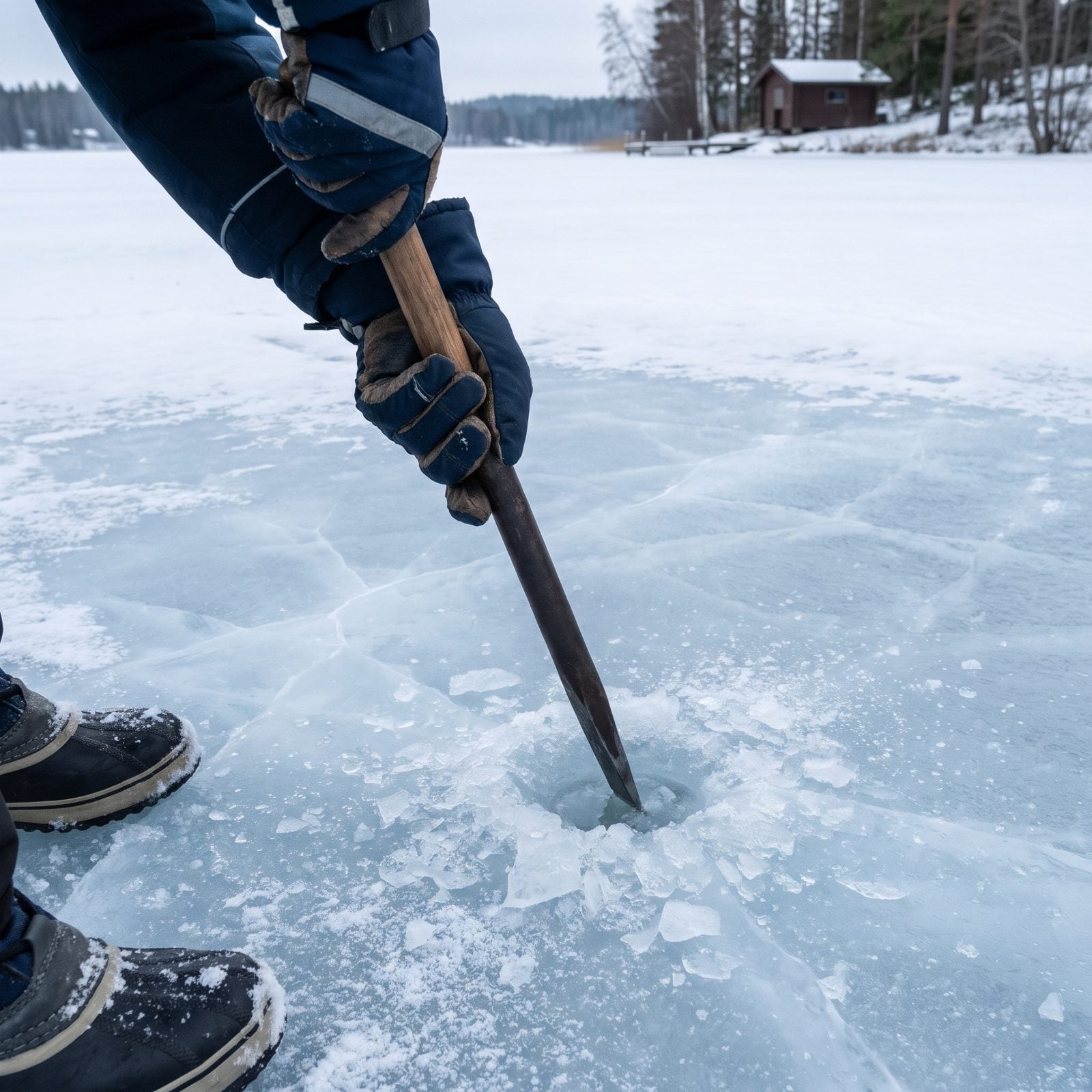
Four inches of new, clear ice is the rough floor for walking on foot. That’s the number anglers repeat, and it’s a floor, not a promise. The spud bar is how you check it, and the drill is simple: jab the ice a few feet ahead as you walk. If the bar punches through with one or two swings, you turn around.
New owners skip this because the ice near their own dock held last weekend. Ice is not loyal. The strip that carried you Saturday can go soft by Tuesday after one warm night. Walk, jab, walk, jab. It feels paranoid for about ten minutes, then it just feels like good sense.
Getting ready for first ice, a fishing guide recommends keeping the tip of your spud bar sharp so it can test ice thickness with firm strikes on every step.
23. Never Trust Clear Ice to Be Strong Ice
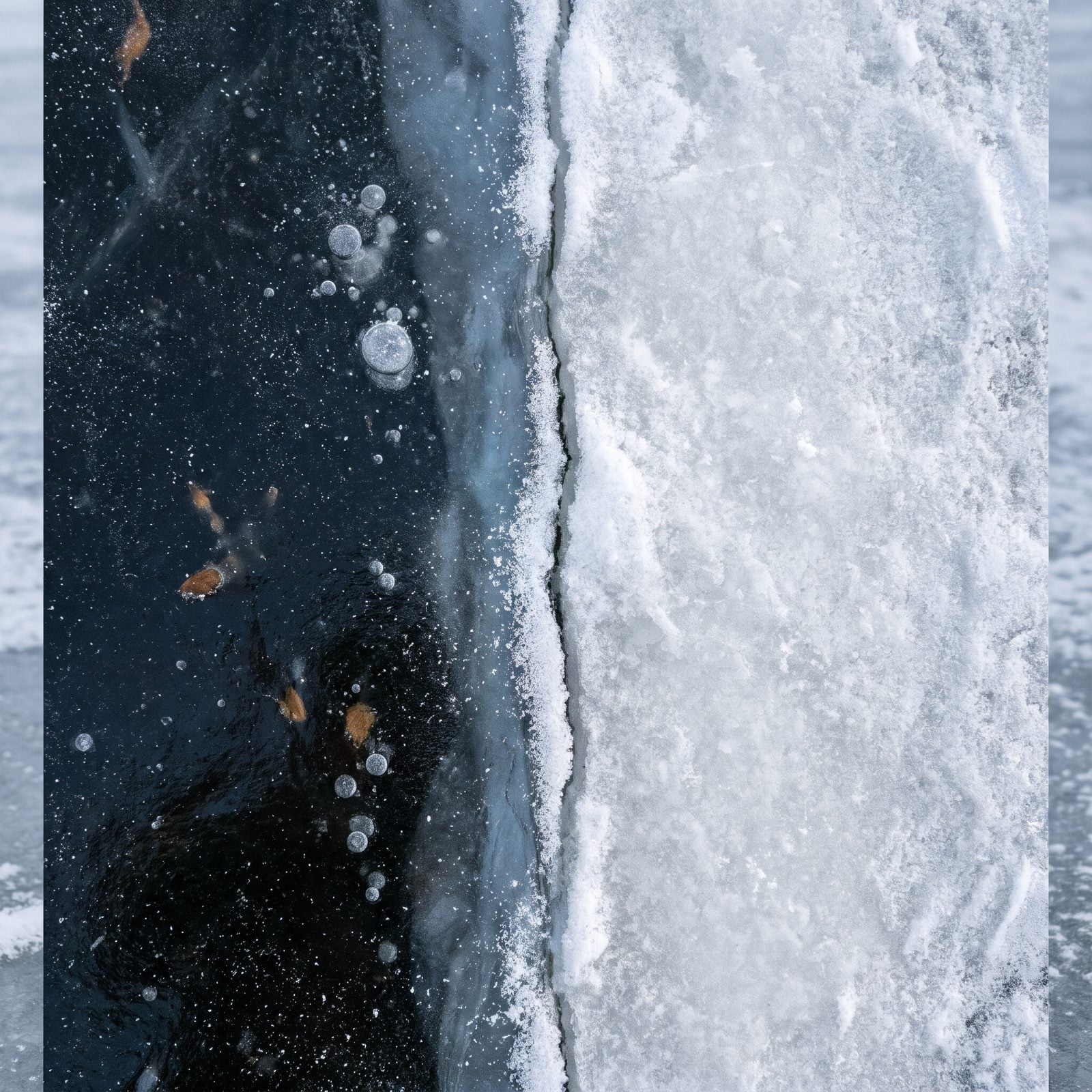
Here’s where plenty of smart people get it backwards. The dark, glassy, see-through ice looks dangerous and is often the strongest you’ll find, because it froze slow and solid. The chalky white stuff that looks safe underfoot is usually refrozen slush full of air, and it carries maybe half the load of clear ice at the same thickness.
Color is a clue, not a verdict. Thickness still rules, but when you find thick white ice, treat the number as inflated. We’ve seen new owners ignore this and go through to the knee on ice they’d have sworn was a foot thick. It was. Just not a foot of anything useful.
22. Treat Inlets and Outlets as Thin-Ice Zones, Always
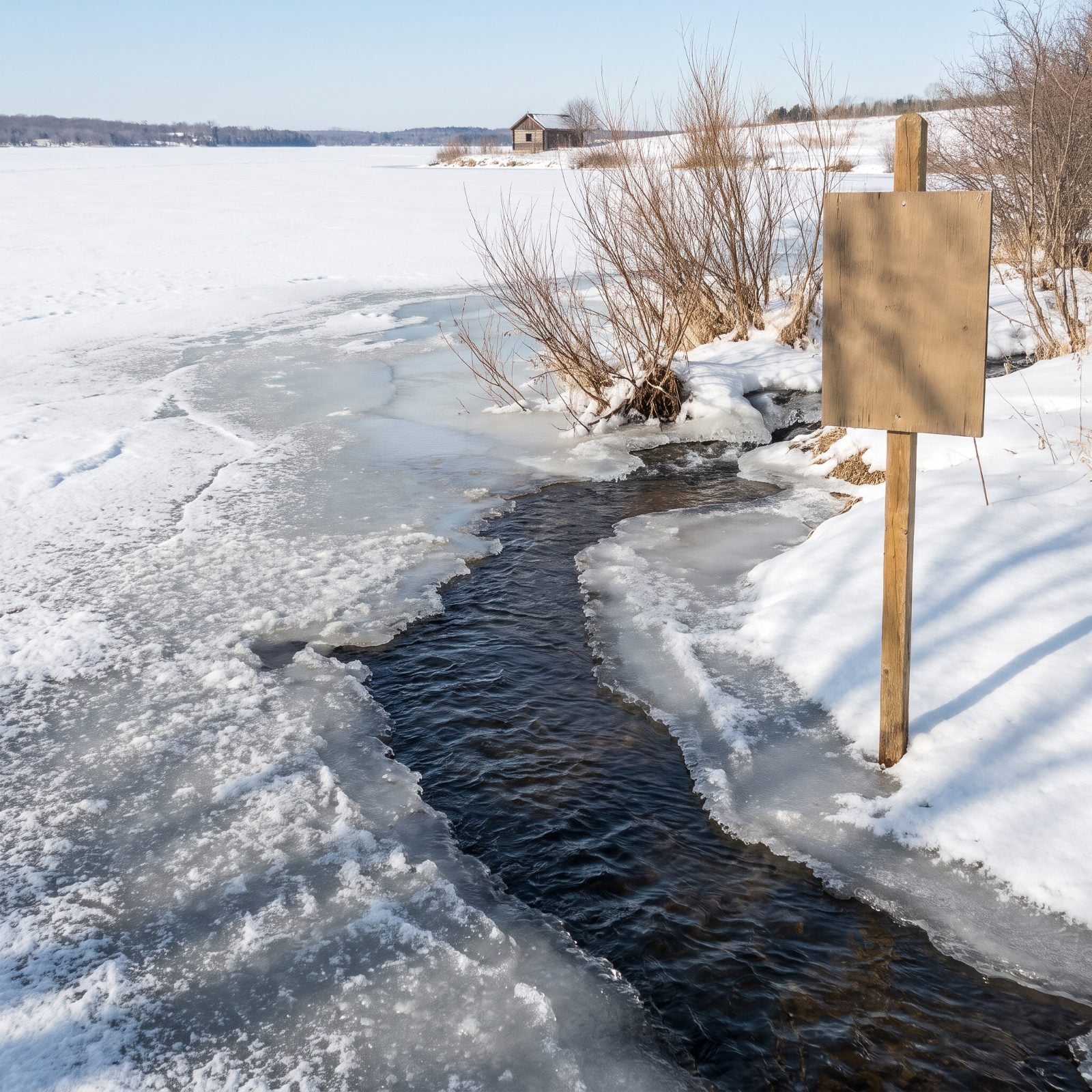
Moving water is the enemy of solid ice. Wherever a stream feeds the lake or drains out of it, the current wears the ice thin from below and keeps it that way all winter long. The surface above can look identical to the good ice twenty feet away.
Walk your shoreline before freeze-up and note where the water comes and goes. Spring holes do the same thing out in the middle of nowhere, fed by underground seeps you can’t see. If you don’t know your lake’s spring holes yet, a neighbor who’s wintered here a decade does. Ask before you walk, not after.
21. Mark Every Aerated Opening and Keep Your Distance
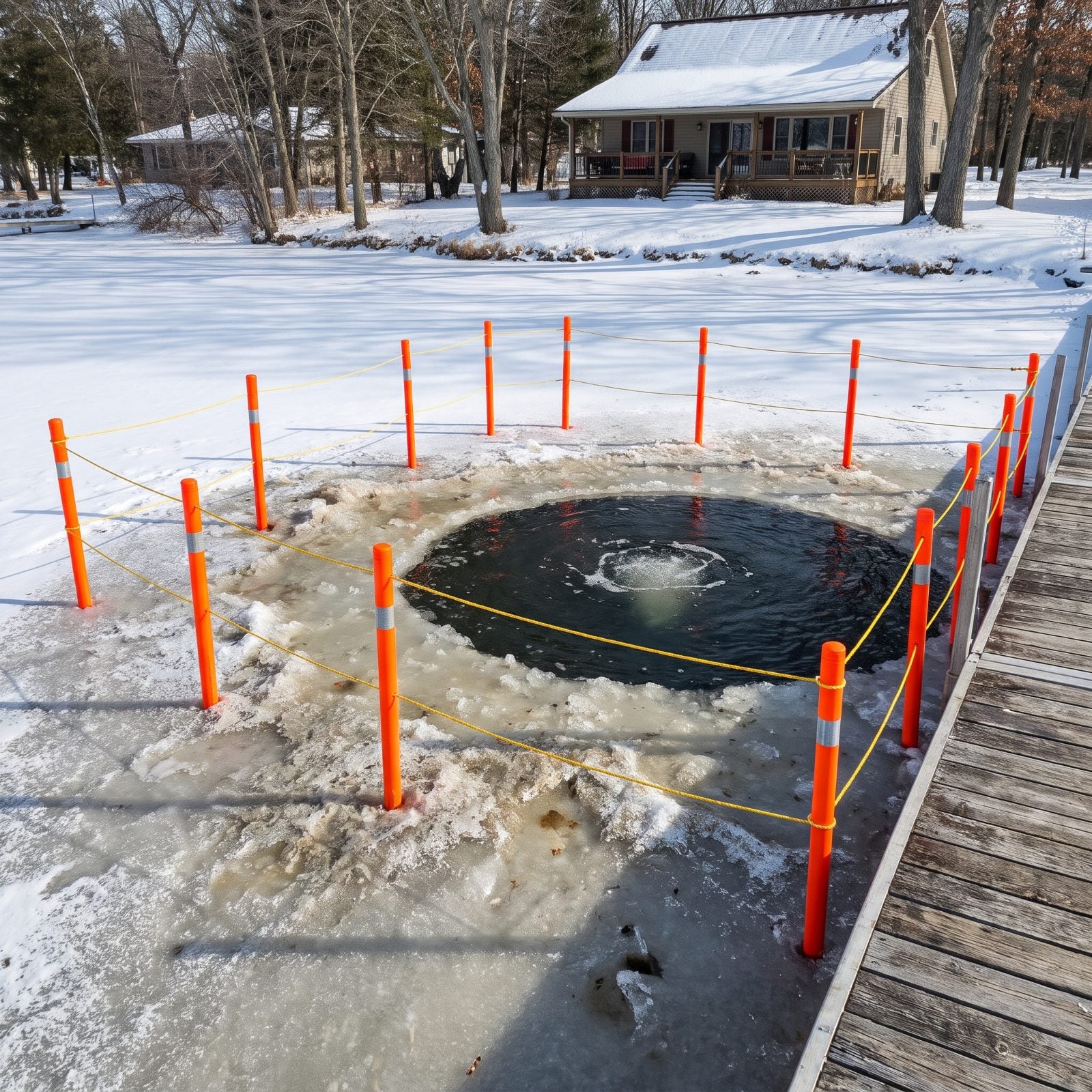
Lots of lake owners run a bubbler or de-icer to protect their dock pilings from ice heave. Good for the dock. Dangerous for anyone crossing the lake who doesn’t know it’s there. Those systems keep a ring of open or rotten ice around your pilings all winter, and it hides under a dusting of snow beautifully.
If you run one, mark it. Orange stakes, reflective tape, a wide perimeter roped off with more room than you think you need, because the thin ice reaches well past the open water you can actually see.
And if your neighbor runs one, learn exactly where it sits now, in daylight, with time to spare.
20. Treat Snow-Covered Ice as a Warning, Not a Blanket
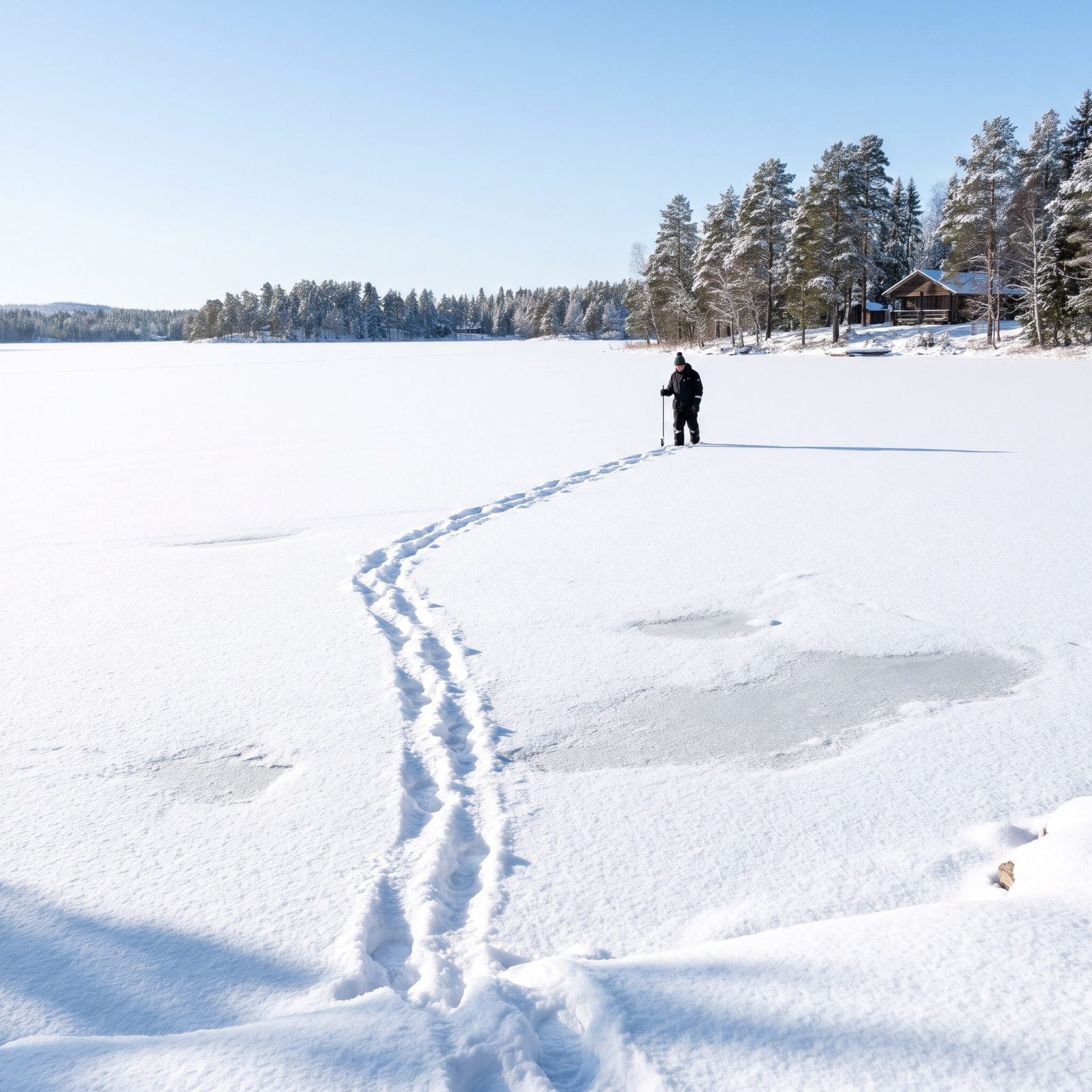
Snow looks like a cozy blanket on top of the ice. It is, and that’s exactly the problem. A thick snow layer slows the ice from thickening underneath, so a snowy lake can come out weaker than a bare one after the same cold snap.
Worse, snow hides everything underfoot: slush, pressure cracks, the dark patch over a spring, the ragged lip of a bubbler hole. You can’t read snow-covered ice by eye. So you check it the hard way with the spud bar, or you wait for a plowed or wind-swept route you can actually see.
Patrolling northern Minnesota lakes during a cold snap, a conservation officer reported that “The snow on area waterways has provided insulation and therefore has slowed the rate at which ice was thickening.”
19. Wear Ice Picks Around Your Neck, Not in Your Pack
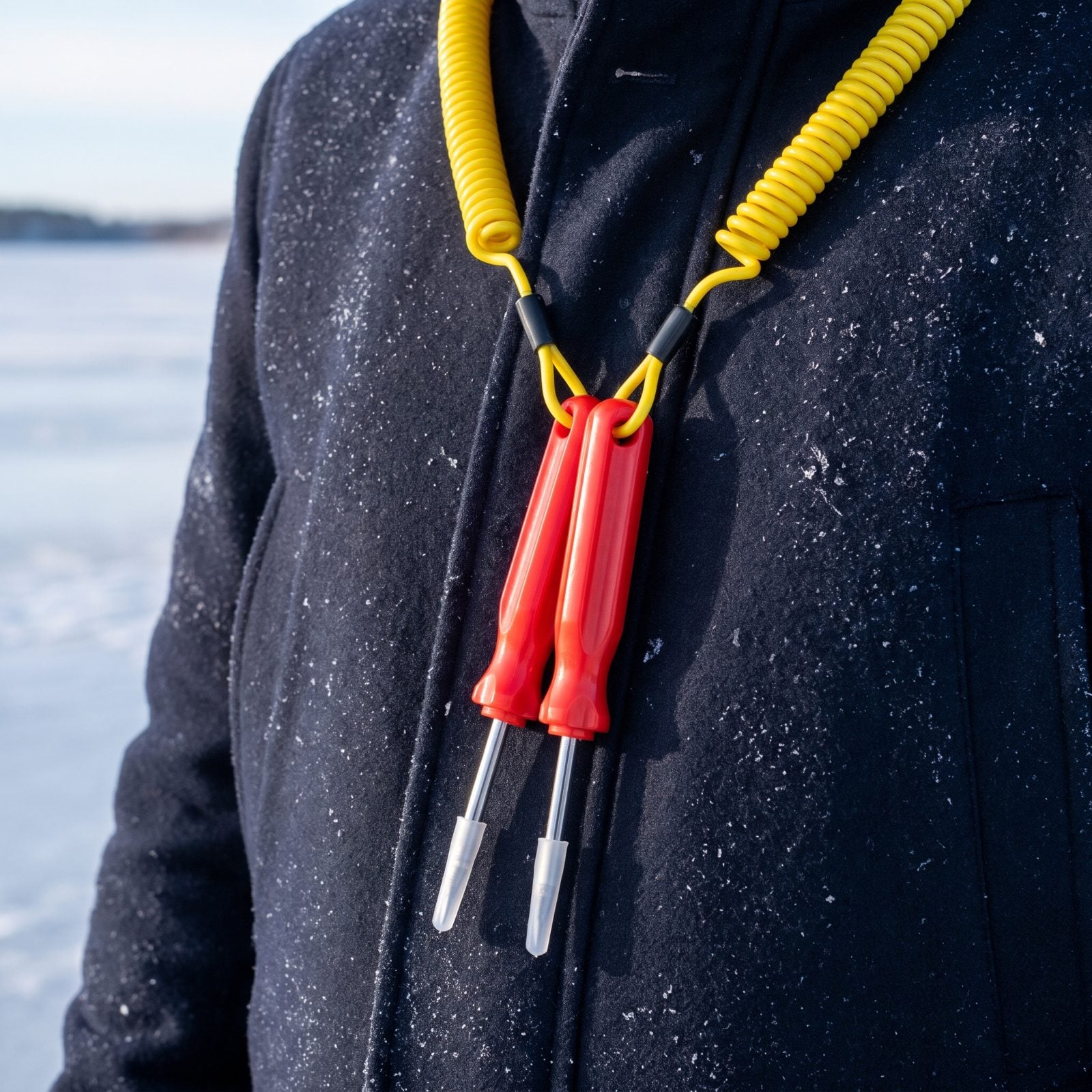
Go through the ice and your single biggest problem is that wet ice gives your bare hands nothing to grip. You can’t claw your way out of a hole up a surface slicker than a bowling lane. Ice picks fix that. A jab with each one and you’ve got purchase to haul yourself back onto solid ice.
But they only work if you can reach them in one second. Around your neck, hanging on your chest, outside your coat. Not in your backpack, not in a zipped pocket, not clipped to a belt under three layers. In the water, cold shock steals your coordination fast, so make the rescue tool the easiest thing on your body to grab.
Going over the gear his unit tells people to carry, a water patrol lieutenant says “The ice picks, people wear them around their neck as long as you are able to pull yourself out of the lake.”
18. Keep a Throw Rope Within Arm’s Reach on the Ice
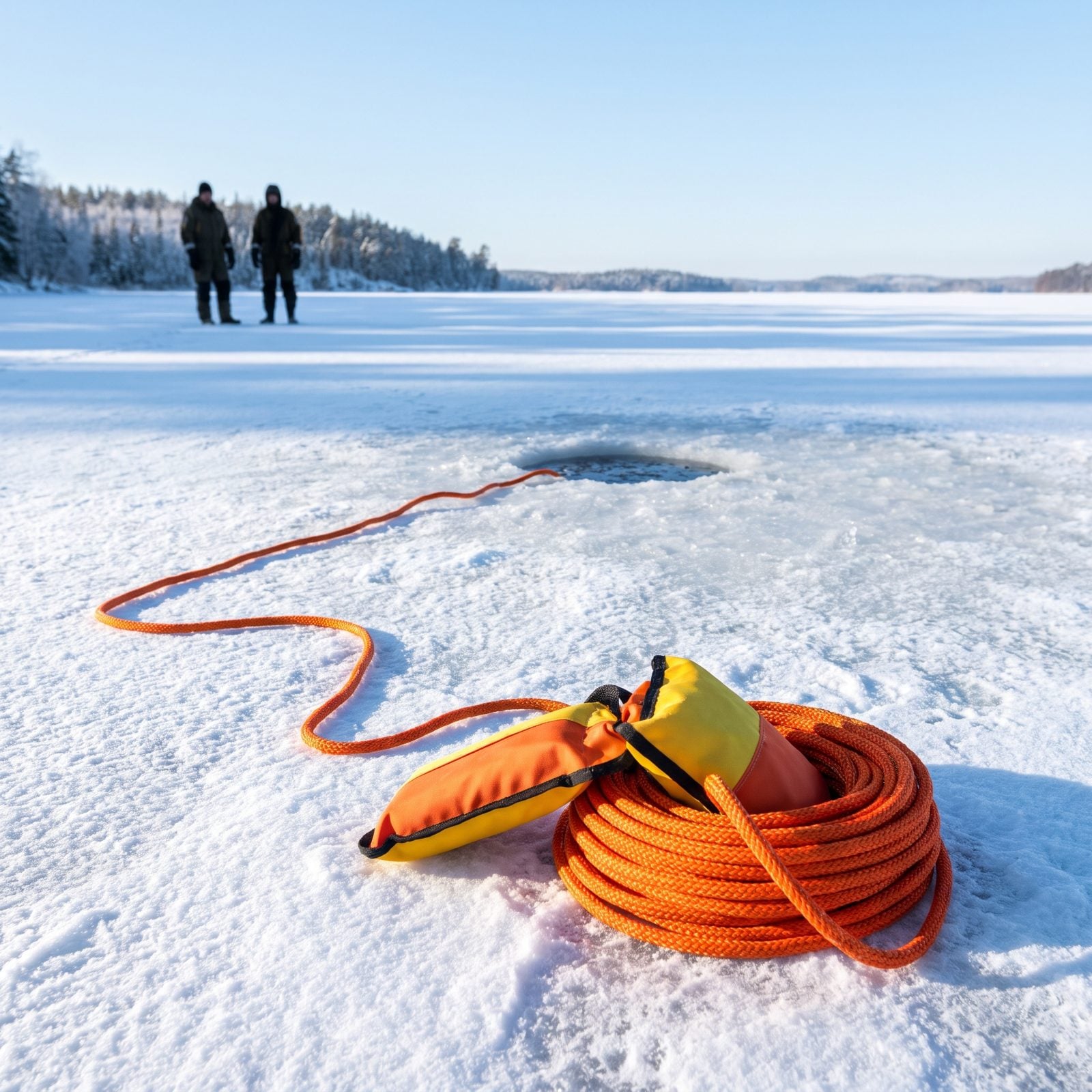
If someone you’re with goes through, you do not walk up to the hole. The ice that failed them will fail you, and now the lake has two people in trouble instead of one. You throw.
A floating throw rope, the kind kayakers carry, lets you reach a person in the water from solid ice forty or fifty feet back. Keep it accessible, not buried in a sled you’d have to dig through while someone’s hypothermia clock runs down. Minutes matter here, and panic eats minutes.
17. Tell Someone Your Route and Your Return Time
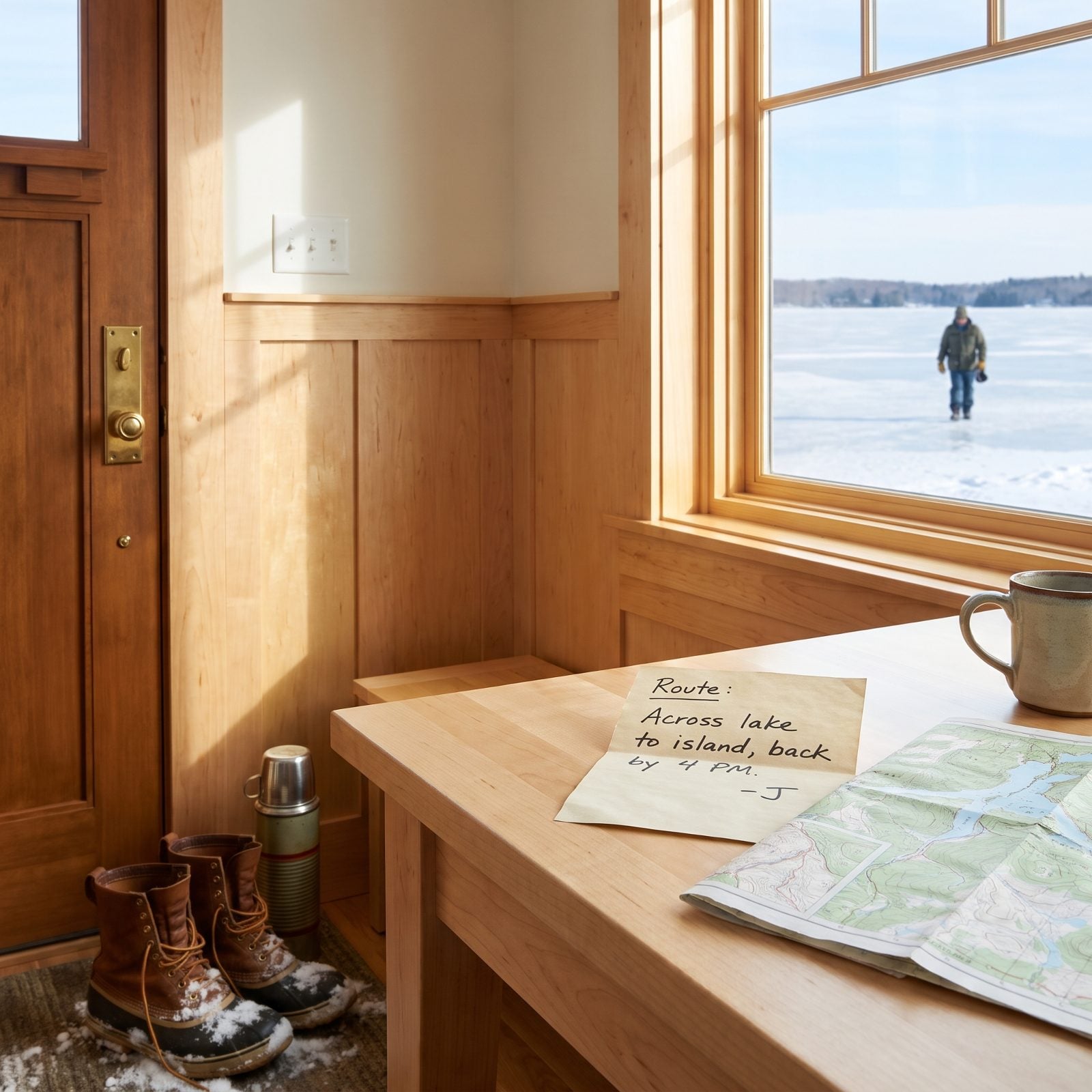
Nobody plans to go through the ice, which is exactly why this rule exists. Fall in alone, with nobody knowing where you went or when to expect you back, and the lake becomes a very large place to search.
Leave a note. Text a neighbor. Tell whoever’s in the cabin: heading to the far point, back by three. It costs you ten seconds and turns a potential tragedy into a phone call when you run late. On a quiet winter lake, you are nowhere near as findable as you feel.
16. Spread Out When You Cross as a Group
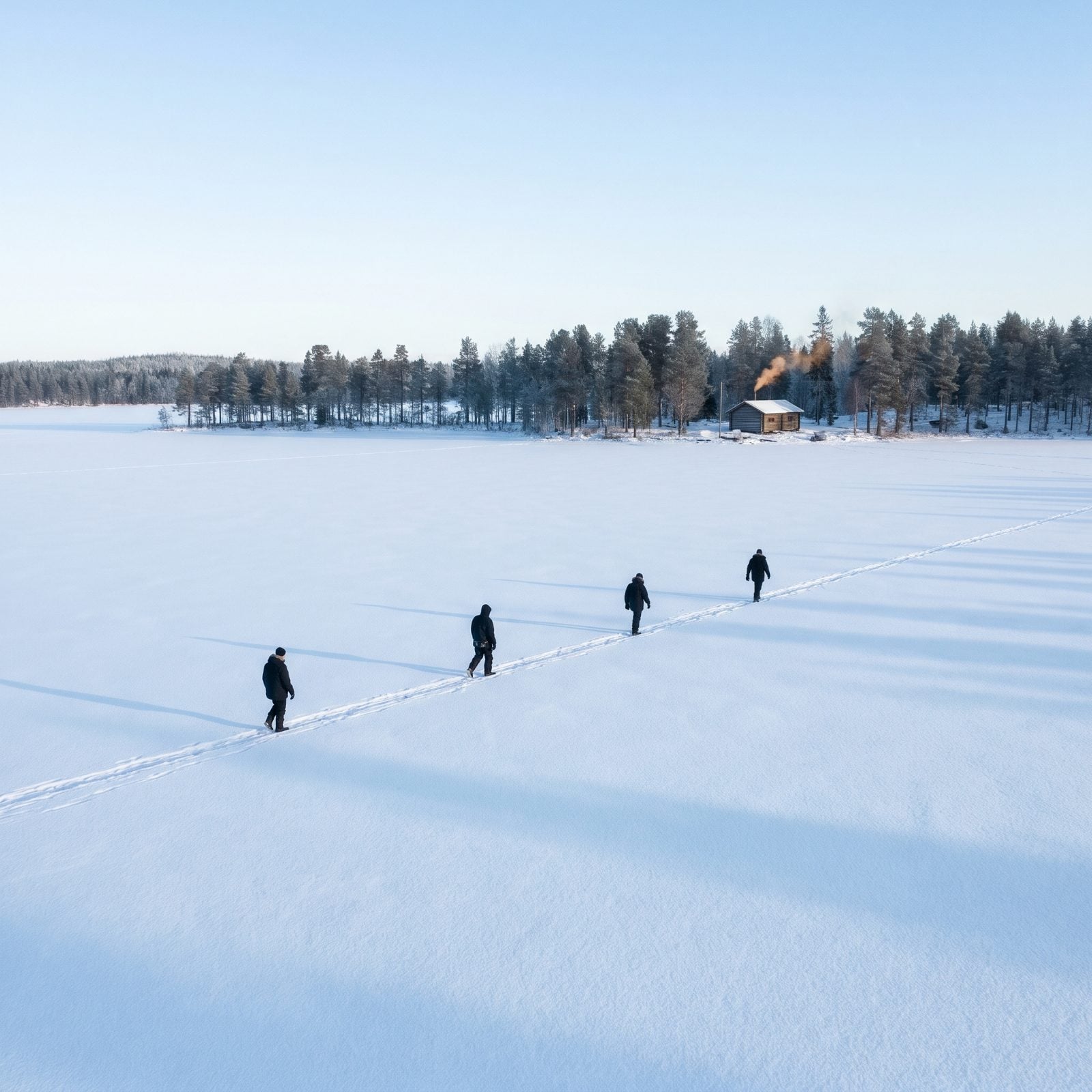
The instinct when ice makes you nervous is to huddle together. Do the opposite. Four people clustered on one spot concentrate a load the ice might not take, and if it breaks, everyone goes in at once with nobody left on solid footing to help.
Spread out. Leave real distance between each person, ten yards or more. Walk single file along a tested line so each one follows ground the person ahead already proved. If the leader hits soft ice, the rest are far enough back to stop and reroute instead of piling in after them.
It feels unsociable. It’s the opposite. It’s how everyone makes it to the far shore to warm up and laugh about it.
15. Never Follow Snowmobile Tracks Blindly
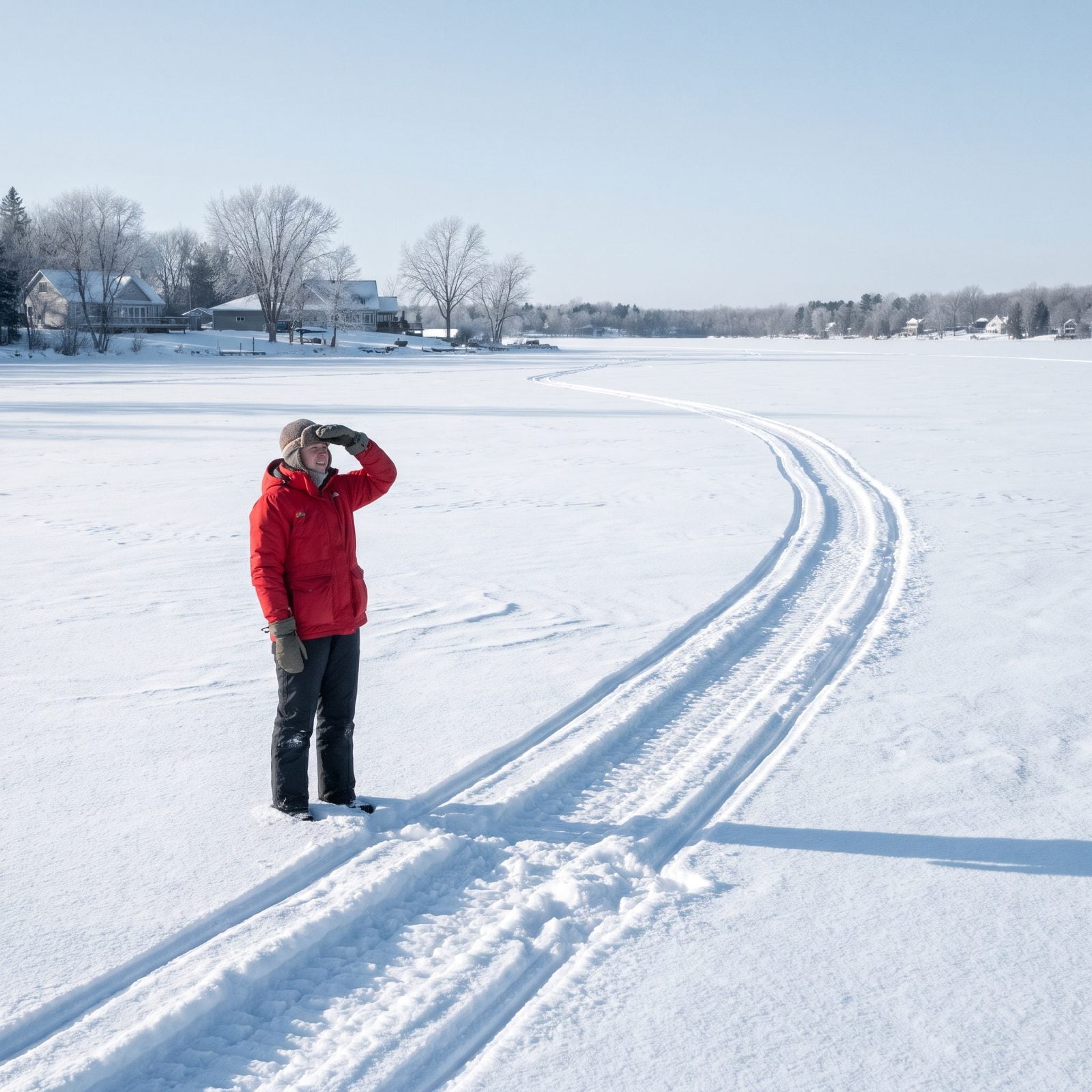
Those tracks look like a map. They’re not.
A snowmobile may outweigh you, but it spreads that weight over a wide track, and it moves fast enough to skim ice that wouldn’t hold you standing still. We’ve watched new owners treat somebody else’s track as proof, and all that track proves is that one machine passed once, at speed, in conditions that have since changed. There’s current you can’t see under the surface, a spring that never quite froze, a warm Tuesday last week. None of it shows in the snow.
Drill your own test holes. Trust your own auger, not a stranger’s throttle.
14. Avoid Pressure Ridges and Ice Heaves
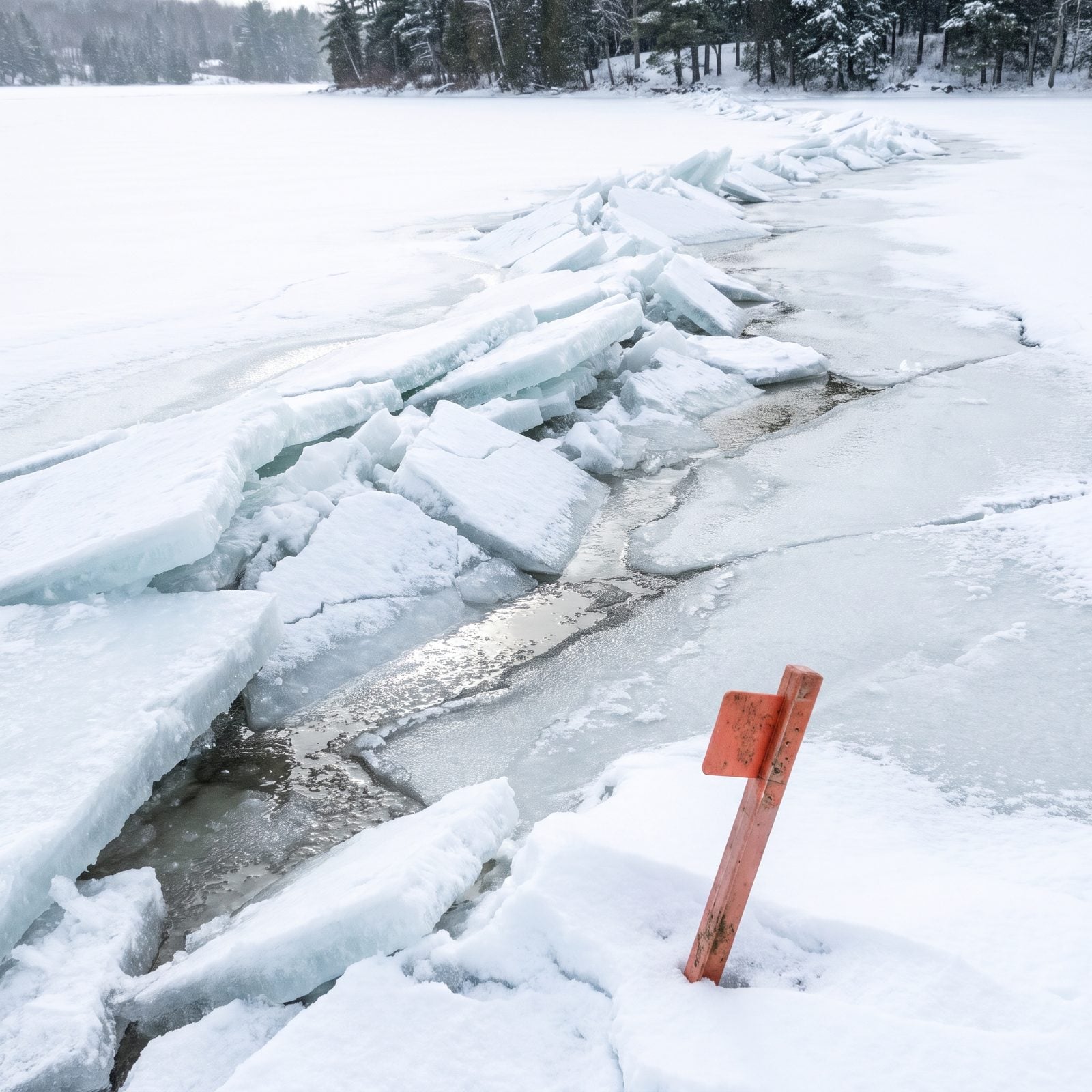
A pressure ridge is the lake telling you where it moves. Ice expands, contracts, and shoves against itself until slabs buckle into a broken seam, and right beside that seam the ice is thin, cracked, or wide open.
These ridges shift with temperature. A crossing that felt solid in the morning can gape open by afternoon, so give them a wide berth. If you absolutely must cross, do it on foot at the lowest, most solid point, testing every step. The heaves near shore, where ice rides up over rocks, deserve the same caution.
13. Know How to Escape If You Break Through
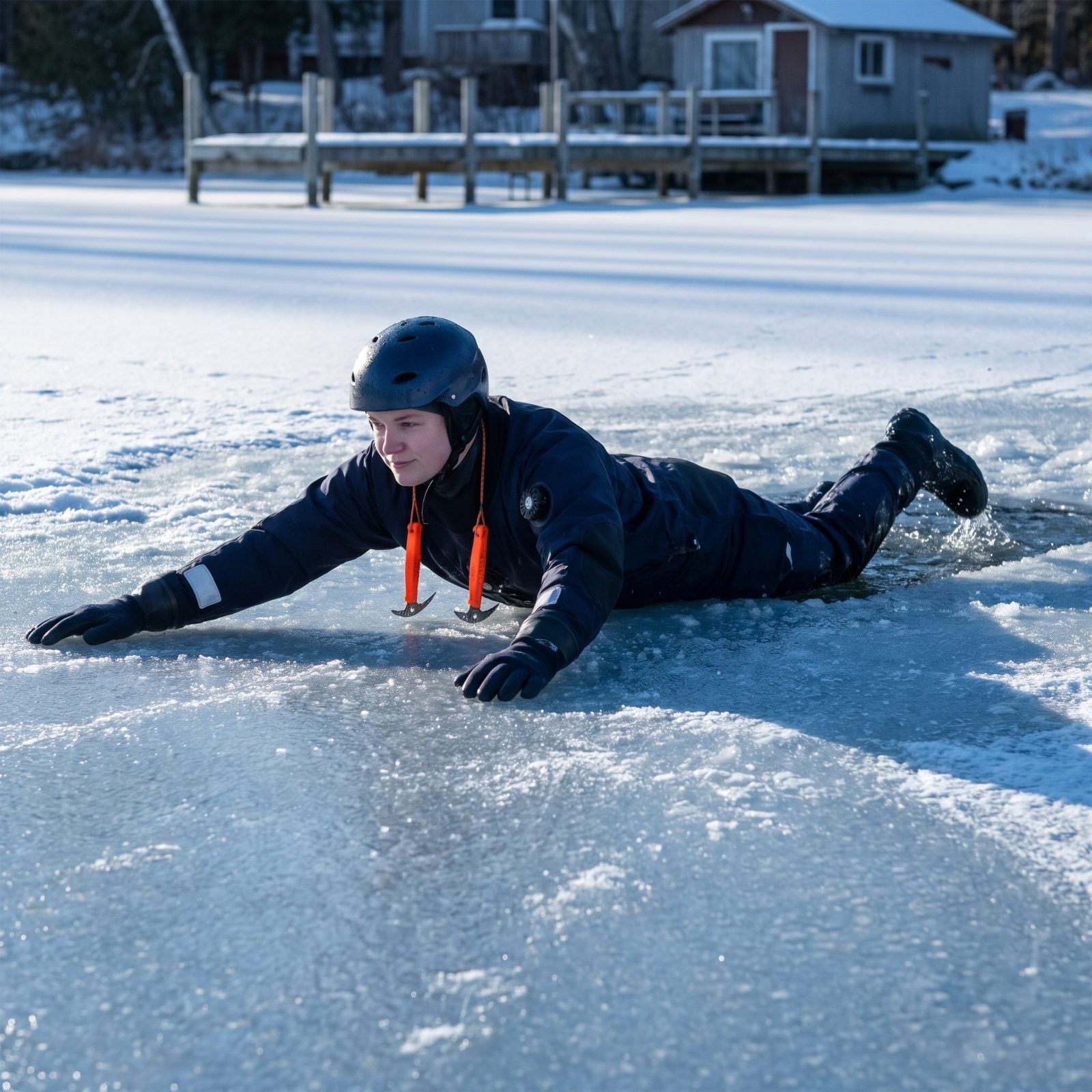
The cold will try to make you panic, and panic drowns people. Knowing the sequence ahead of time is what keeps your head screwed on.
If you go through, turn back toward the direction you came from, because that ice already held you. Get your arms flat on the surface, kick hard like you’re swimming, and haul your chest up and out. Then don’t stand. Roll away from the hole to spread your weight until you’re well clear.
Ice picks worn on a cord around your neck turn this from desperate to doable. They cost almost nothing and give your hands something to bite into slick ice when your grip is already failing.
12. Carry Dry Clothes in a Sealed Pack
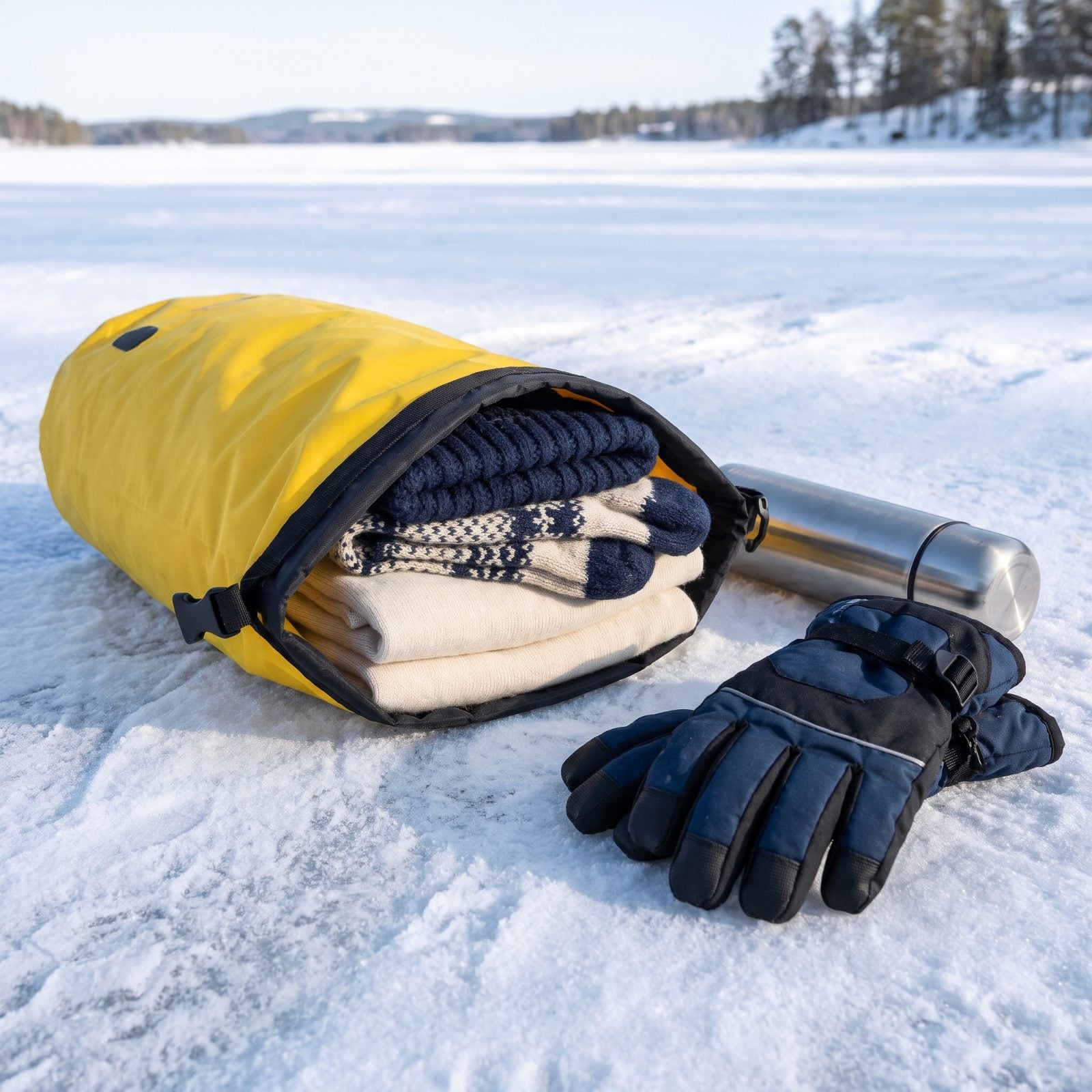
Getting wet in freezing air is the real danger, not the dunk itself. Even if you pull yourself out in seconds, wet clothes pull heat from your body fast enough to put you in serious trouble before you ever reach the cabin door.
So keep a full change of clothes in a roll-top dry bag, every single time you head onto the ice. Base layers, socks, a hat, something to pull on the moment you’re safe. A sealed pack stays dry even if it goes in the water with you, which is exactly why you carry it.
11. Keep Children Within Arm’s Reach Near Shore
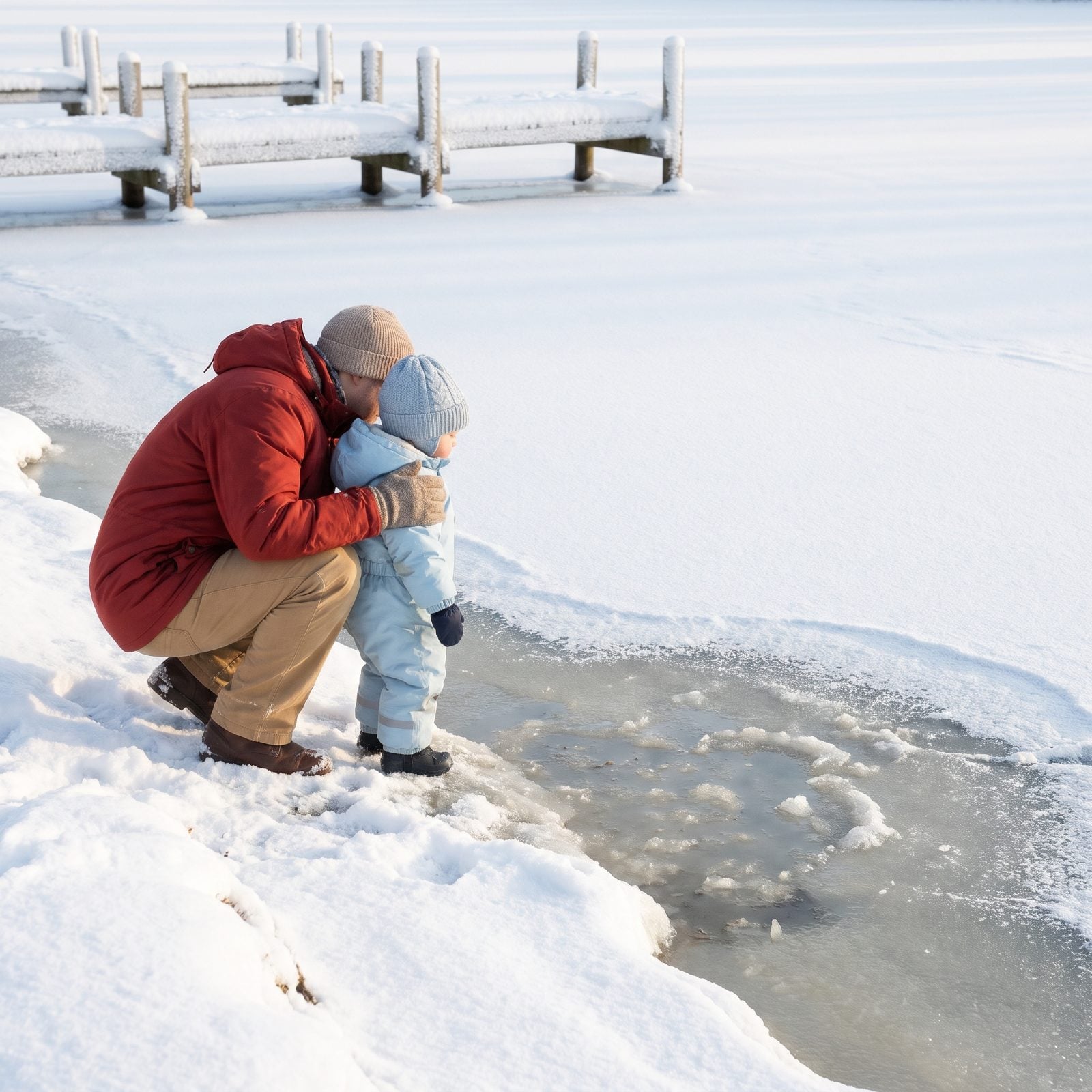
The spot everyone assumes is safest is often the worst. Ice near shore sits over shallow water, warms faster, and weakens around docks, pilings, and anywhere a stream or spring feeds in.
Kids go light and go fast. A child can be twenty feet out before you’ve set down your coffee. Keep them close enough to grab near the edge, and save the longer leash for ice you’ve personally tested and trust. Nobody ever regrets being the overcautious one here.
10. Leash Dogs Around Open Water and Thin Ice
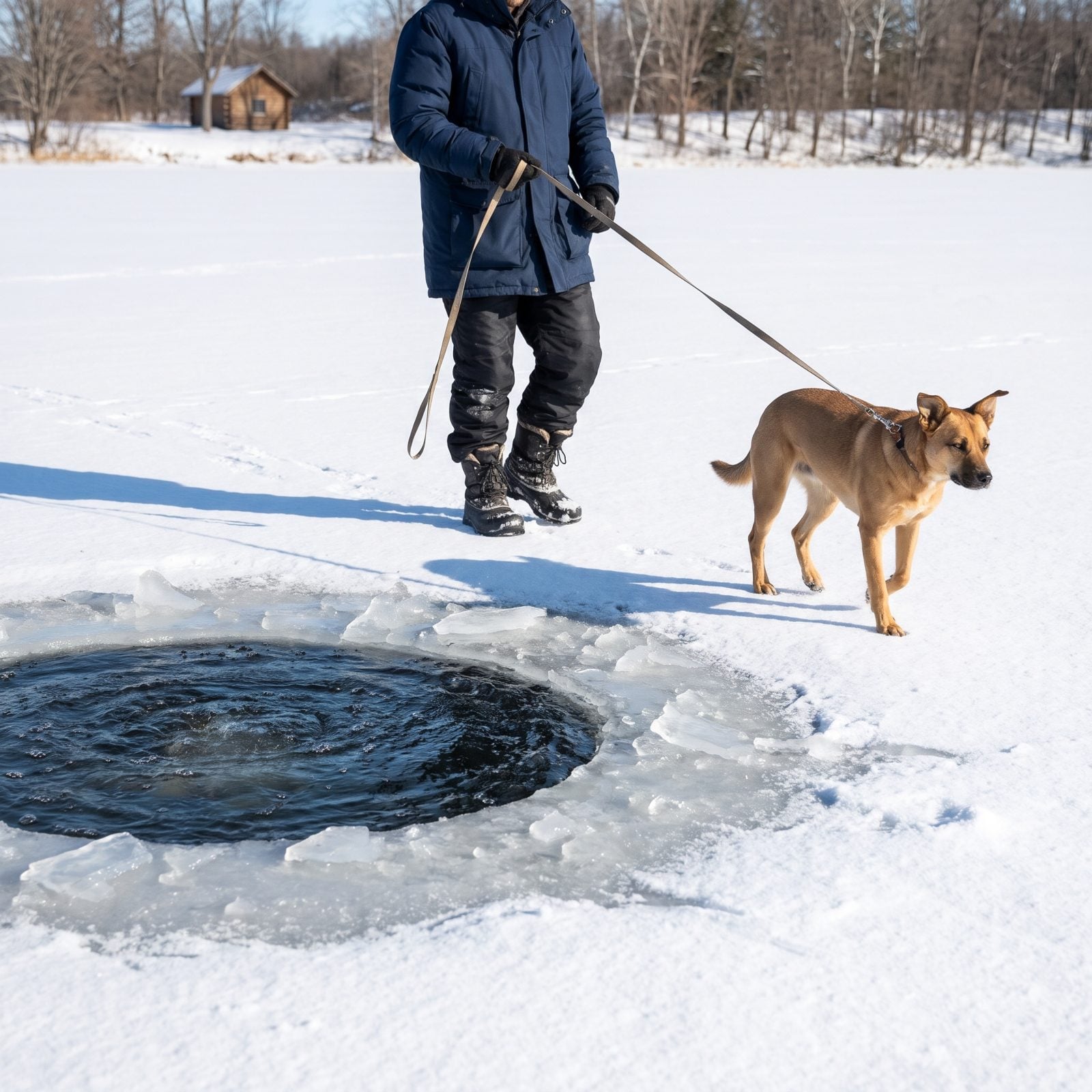
Plenty of people who go through the ice went through trying to save a dog. That’s the grim part nobody mentions at the real estate closing.
Dogs can’t read ice. They bolt after a scent or a goose, straight toward the open water near a current, and then you’re in after them. Keep yours leashed anywhere the ice is uncertain, especially near inlets, aerators, and those dark patches.
If your dog does go in, do not go after it. Call it, coax it, use a rope or a branch from solid ice. Dogs self-rescue far more often than their panicked owners do.
Talking about the ice rescues his crew handles each winter, a rescue specialist says “Usually the people that we end up getting are going in after pets or unattended children”
9. Keep Vehicles Off Until Local Authorities Confirm Conditions
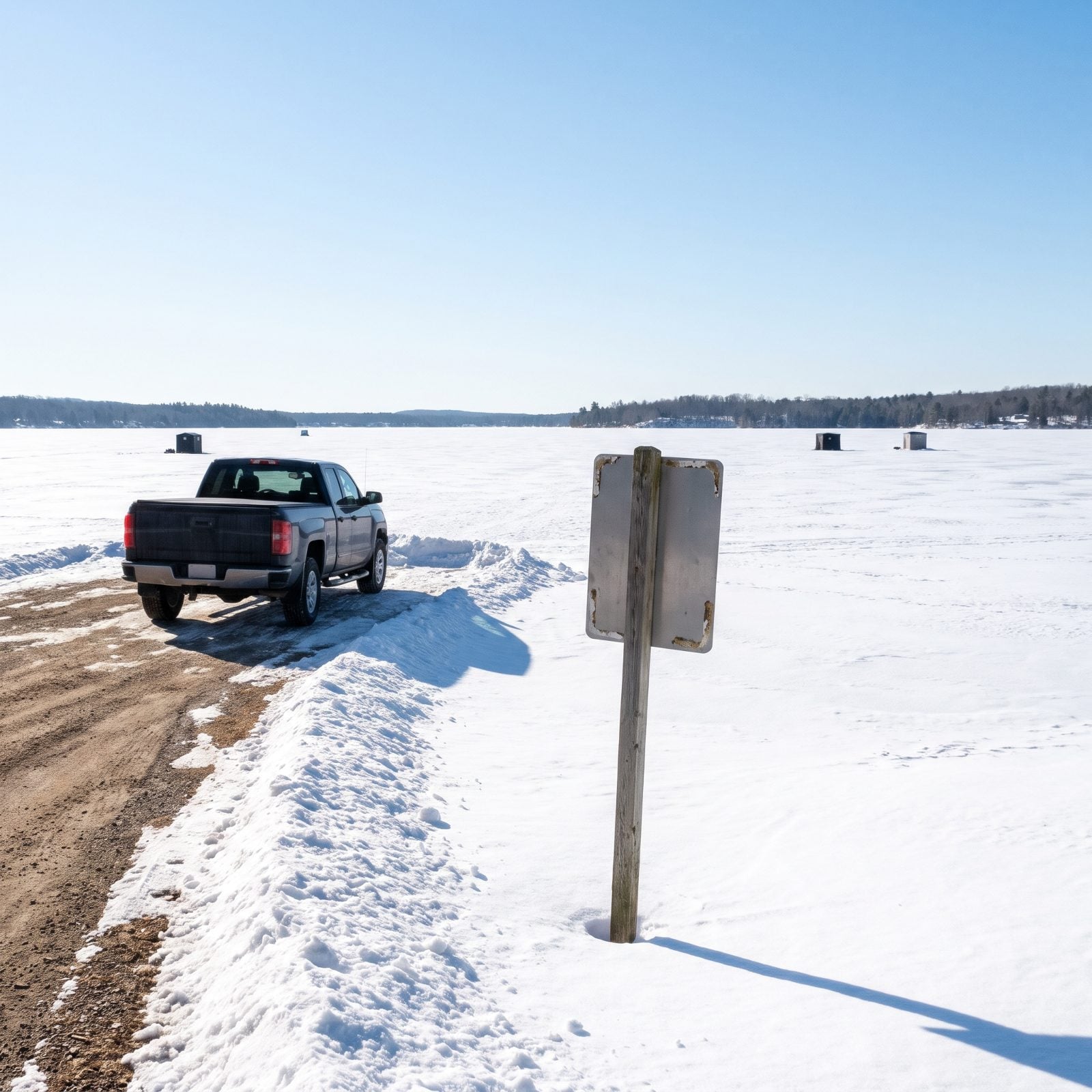
A truck wants a lot of ice. Far more than people guess, and it’s not a number you can eyeball.
General guidance runs to many inches of good clear ice for a small car and a solid foot or more for a light truck, but local conditions make or break that number. Springs, current, snow cover that insulates and weakens the ice from below, a mild stretch that quietly undid last week’s freeze. Minimums vary by state, and some lakes never freeze thick enough for a vehicle at all.
Wait for the word from local conservation officers, bait shops, or the ice-fishing regulars who’ve been drilling all week. They know this water. You don’t yet.
8. Follow Established Ice-Access Routes
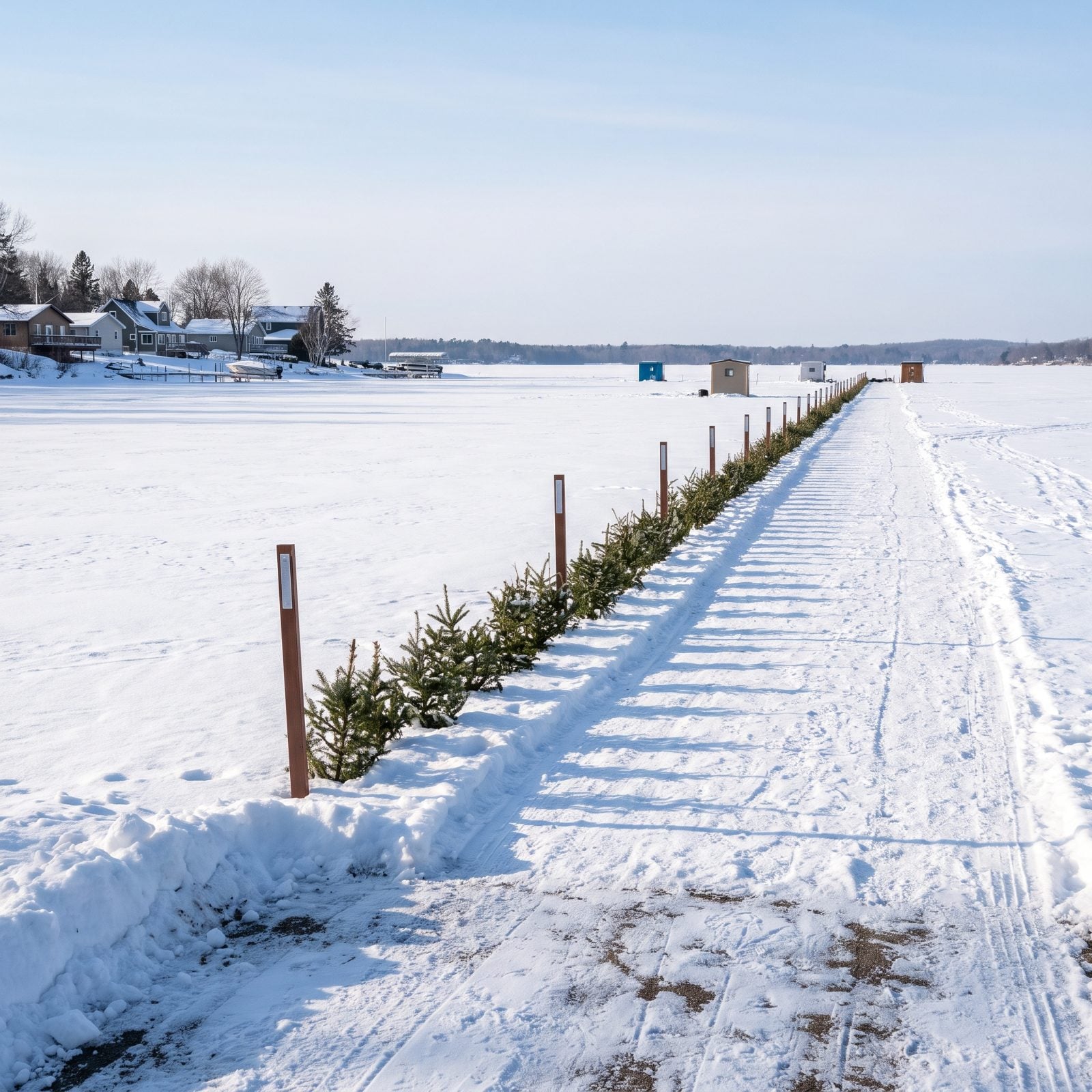
On a lot of lakes, locals mark a known route out with stakes, cut boughs, or reflectors. That line exists because somebody drilled it and found consistent, solid ice the whole way.
Stray off it and you’re guessing again. The marked path steers you clear of the aerator, the spring, the spot that never quite sets up. Learn where the route starts from your access point, and stick to it until you understand the lake’s quirks across a full season.
7. Do Not Block Public Ice Access
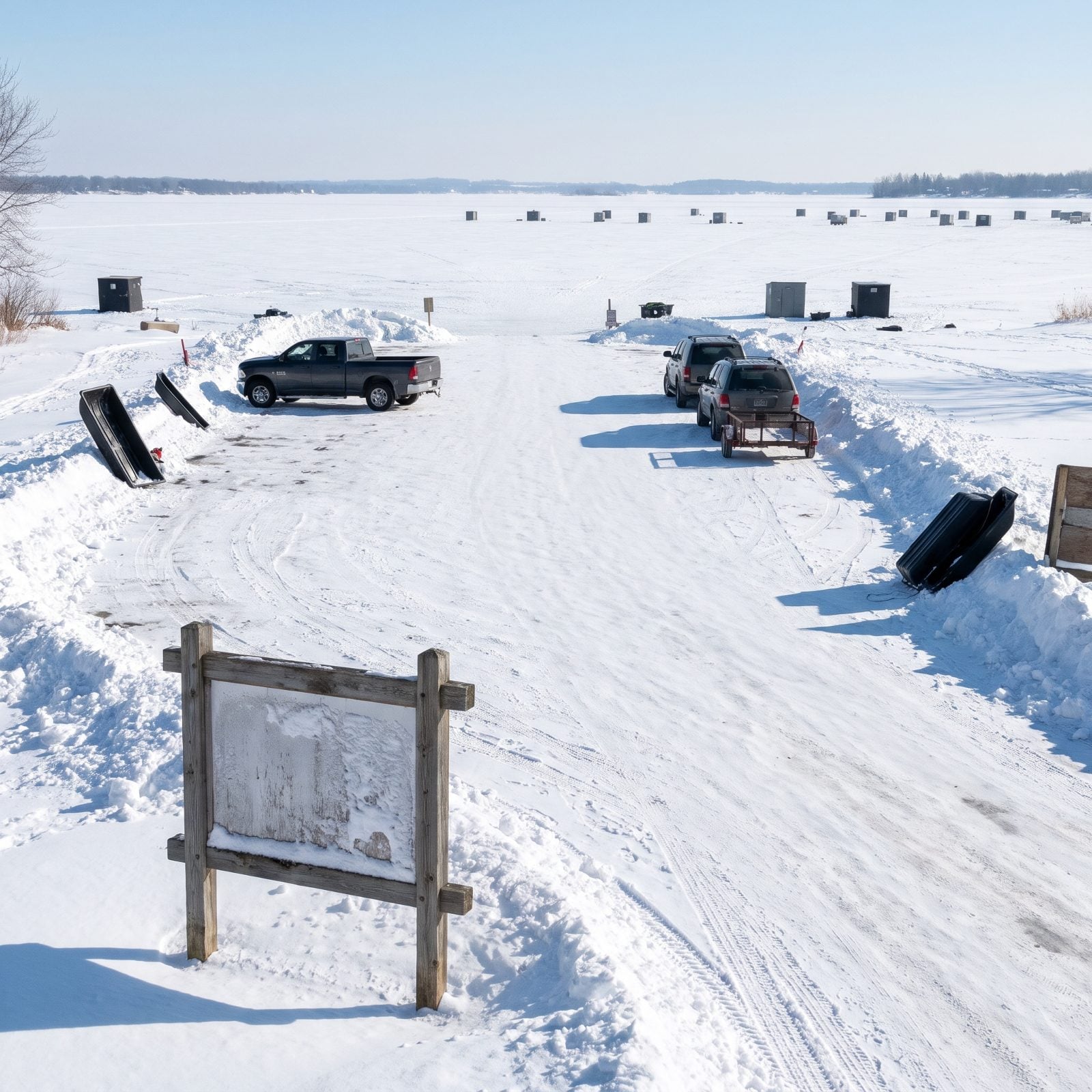
New owners sometimes forget that winter doesn’t suspend the rules of a shared lake.
That access point, the ramp, the little parking patch, the lane down to the ice, it serves anglers, skaters, and snowmobilers who’ve used it for years. Park your sled across it or pile your gear in the lane and you’ve made yourself the neighbor everyone grumbles about by February.
Leave room. Pull in tight, keep the ramp clear, and don’t treat the public landing as your private staging area just because it’s quiet in the cold.
6. Respect Shoreline Property Even in Winter
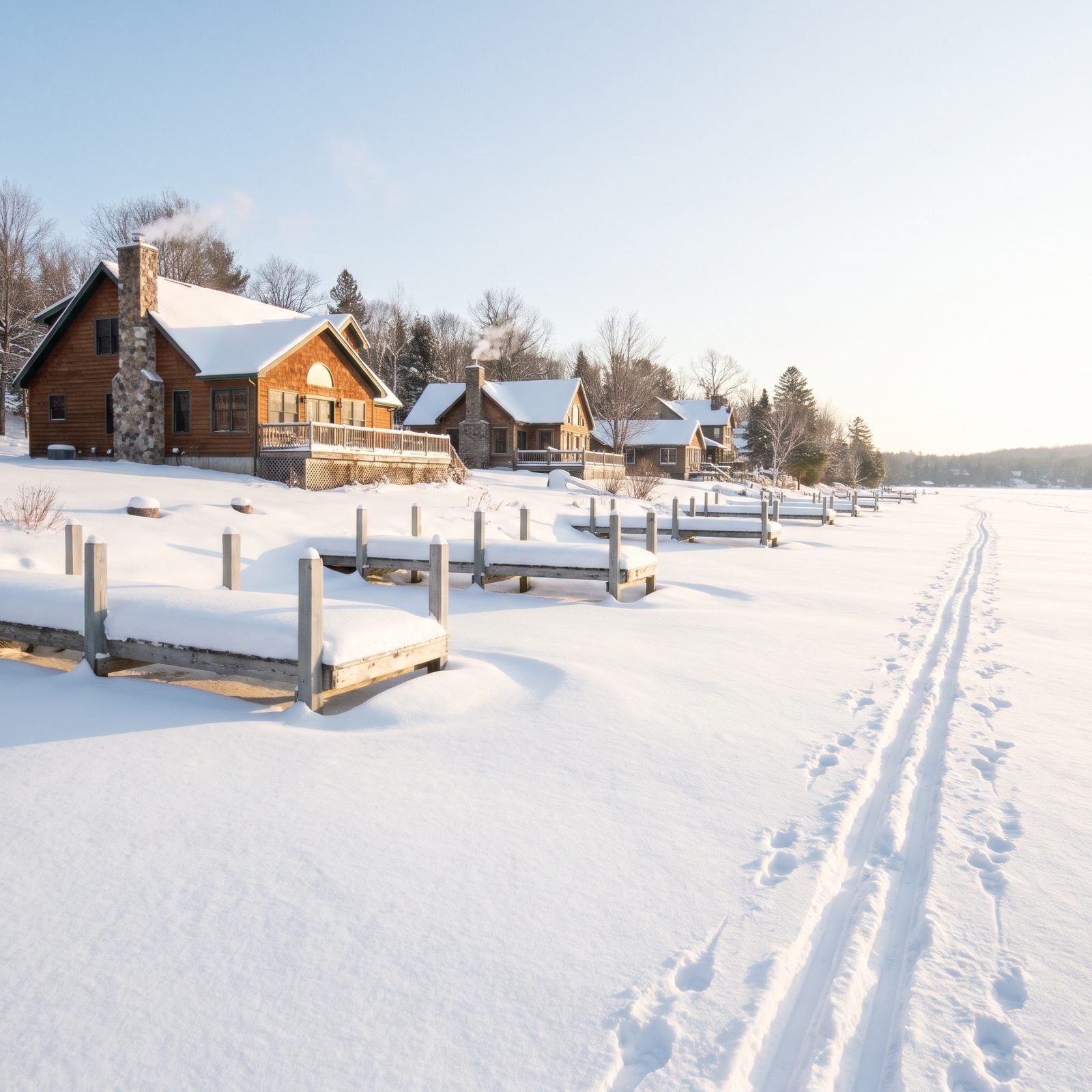
Ice flattens the lake into one open sheet, and that tempts people to treat the whole frozen surface as common ground. The water out in the middle usually is public. The frontage, the dock, the shoreline right up to the ice line? Often not.
Rules on where private property ends and public water begins vary by state and even by lake. When you’re unsure, keep your travel out on the open ice and off a neighbor’s dock, stairs, or snowy frontage, and don’t drill your fishing hole fifteen feet off someone else’s deck either. The lake feels wide open in winter. The property lines didn’t melt with the thaw that hasn’t come yet.
5. Pack Out Fishing Line, Bait, and Every Piece of Trash
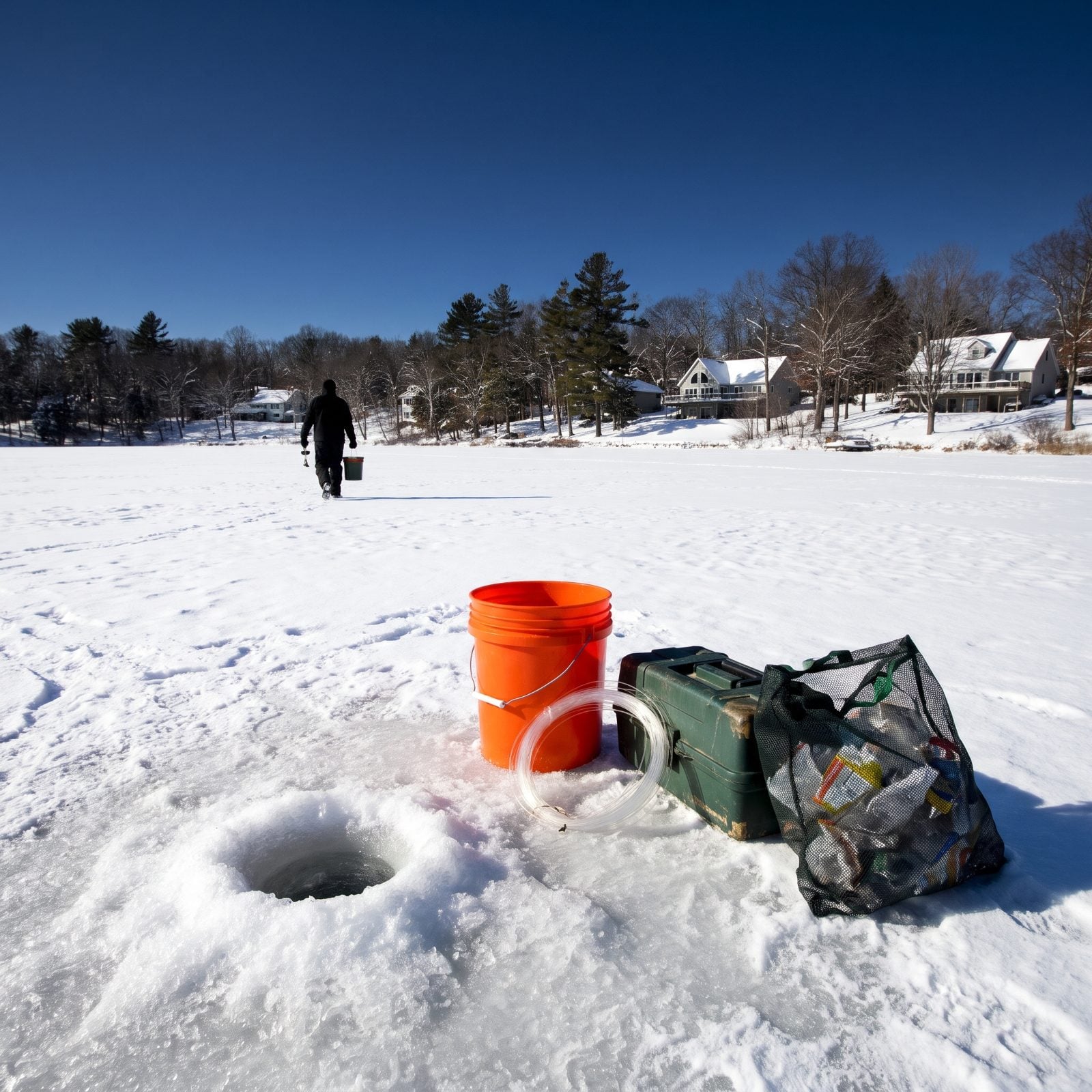
Nobody tells you this your first winter: fishing line does not rot. It just sits in the ice until spring, floats free when the lake opens, and then it’s wrapped around a goose’s leg or a boat propeller. So pack it all out. Line, bait tubs, snack wrappers, and that plastic cup of minnows you forgot about under the bucket.
Leftover bait is its own quiet problem. Dump live minnows down a hole and you can spread invasive species between waters, and some states will fine you for exactly that. Trash them on land.
4. Keep Fish Houses Away From Travel Lanes
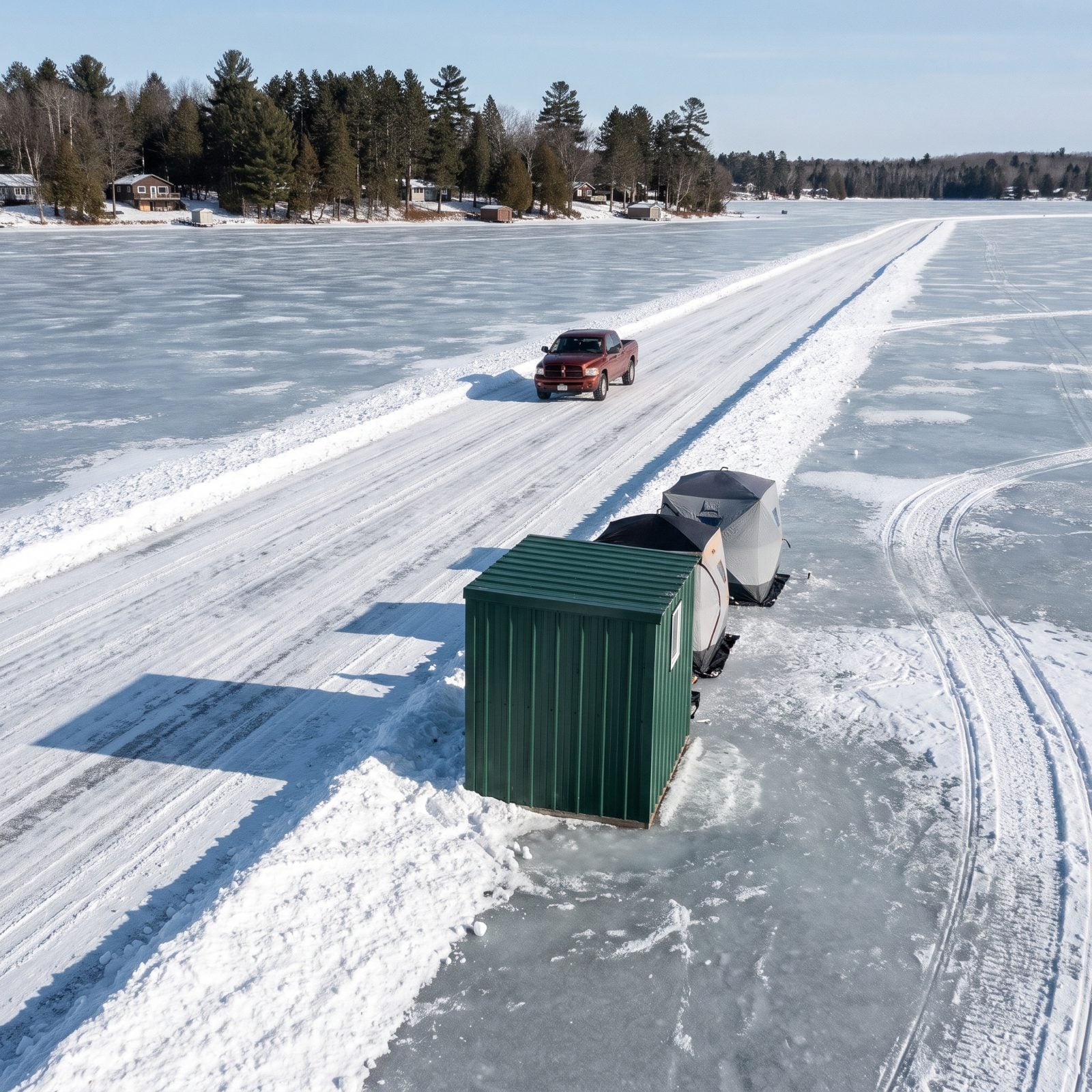
On a busy lake, the ice grows its own roads. Trucks, snowmobiles, and ATVs run plowed lanes between access points, often fast and sometimes after dark. Park your shack in one of those lanes and you’ve built a wall across a highway.
Set up off to the side instead, never dead center on a route, and give the plowed path a wide berth. A shelter tucked in a blind spot behind a snowbank is how collisions happen out there. The ice does not forgive a fast meeting between a snowmobile and a plywood box.
3. Know the Local Ice-House Removal Deadline
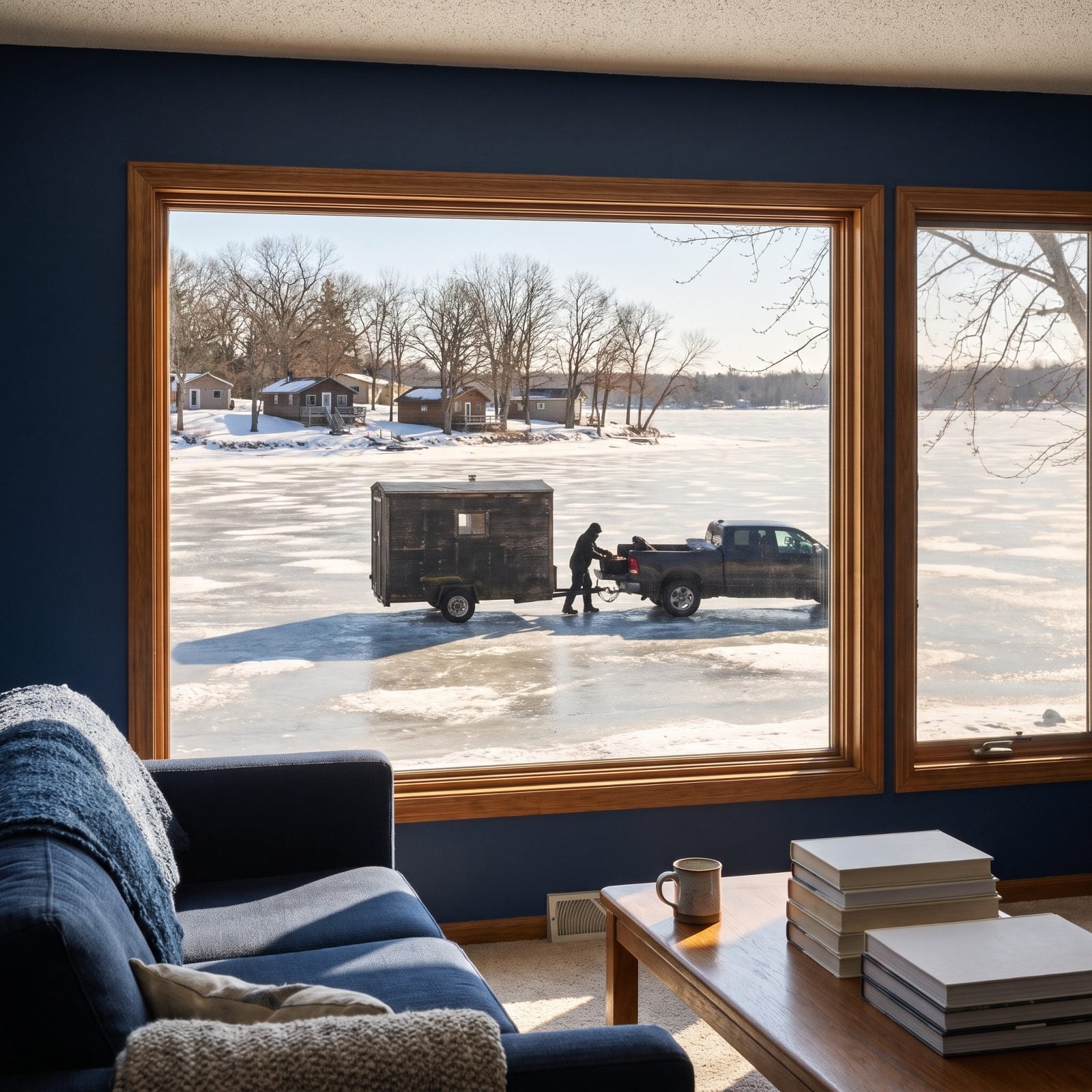
Every state with real ice fishing sets a date by which shelters have to come off the lake. They stagger it by region too, with the south of a state coming due earlier and the north getting more time. Miss it and you’re looking at fines plus the cost of someone else dragging your shack out.
The reason is grim and simple. Nobody wants your shelter crashing through rotten spring ice and turning into a hazard, a cleanup bill, and a pollution mess all at once.
2. Give Anglers and Their Tip-Ups Room
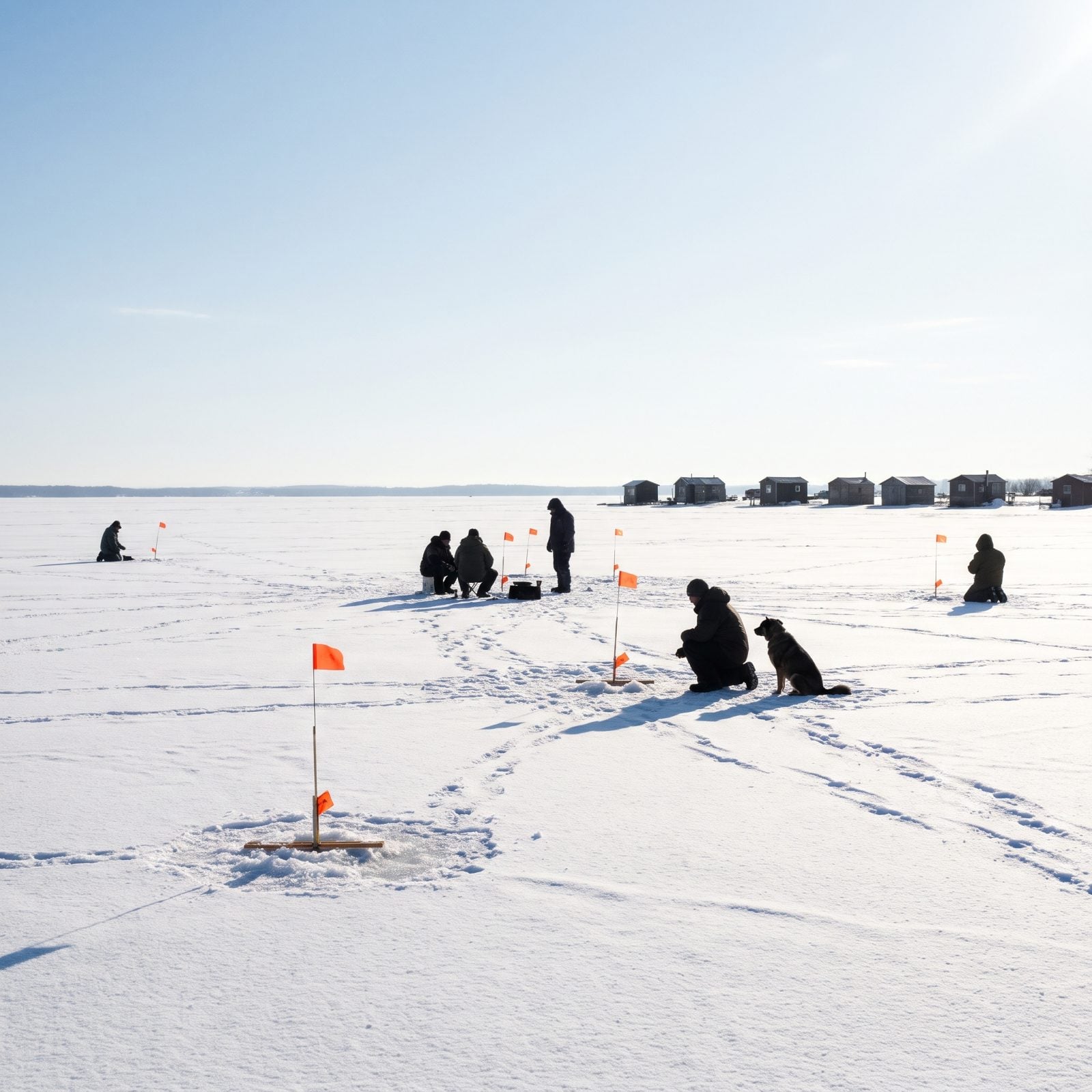
Ice has an unwritten spacing rule that newcomers trample without meaning to. Someone sets a spread of tip-ups across a stretch of lake — those little flagged rigs that trip when a fish bites — and they need that water to themselves. Drill right in the middle of their setup and you’ve basically parked in their living room.
Leave a good buffer. If a spot’s clearly being worked, move along and find your own water. There’s plenty of lake out there for everybody.
1. Slow Snowmobiles Near People and Fish Houses
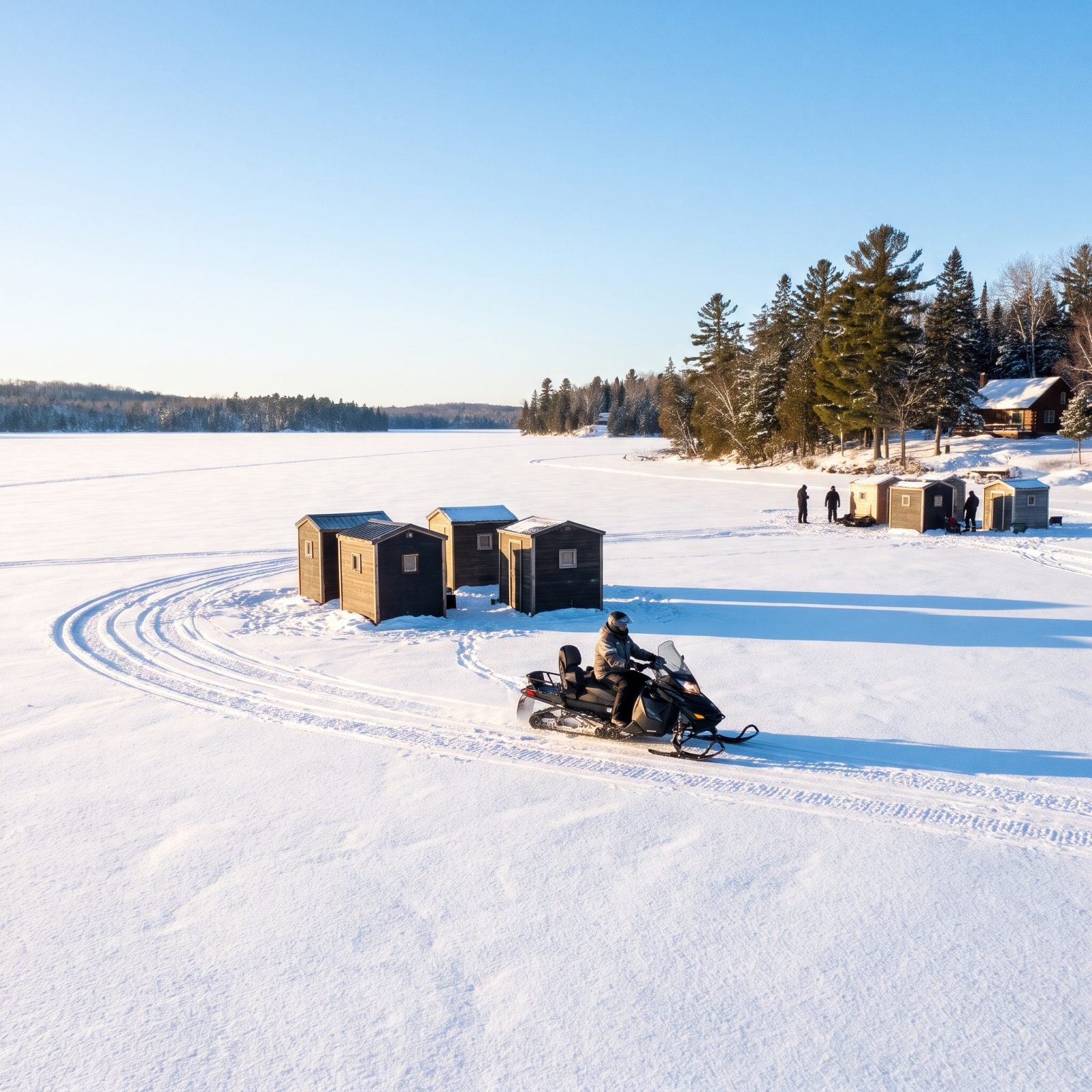
A snowmobile at full throttle near a cluster of shacks is dangerous three ways at once. Kids wander out of shelters without looking, soft spots and pressure ridges hide under fresh snow, and an open hole you can’t see at speed will stop a sled cold.
Ease off near people. Treat the ground around fish houses like a crowded parking lot, not an open run, and save the speed for empty ice where you can see what’s coming.