The person who ties up like they own the place usually doesn’t. You can read a boater in about ninety seconds at a transient dock — how they land, how they cleat off, whether they wave or just start chucking lines at your rail. Most trouble on a dock has nothing to do with skill. It’s the small habits that keep your boat, your neighbor’s boat, and everyone’s gelcoat out of each other’s business. Get these right and the regulars give you a friendly nod instead of that tight-lipped stare. Learn them once, use them forever.
Please note that some of the imagery in this article may have been enhanced with the assistance of AI.
46. Dip Your Second Line Through the First Eye on a Shared Cleat
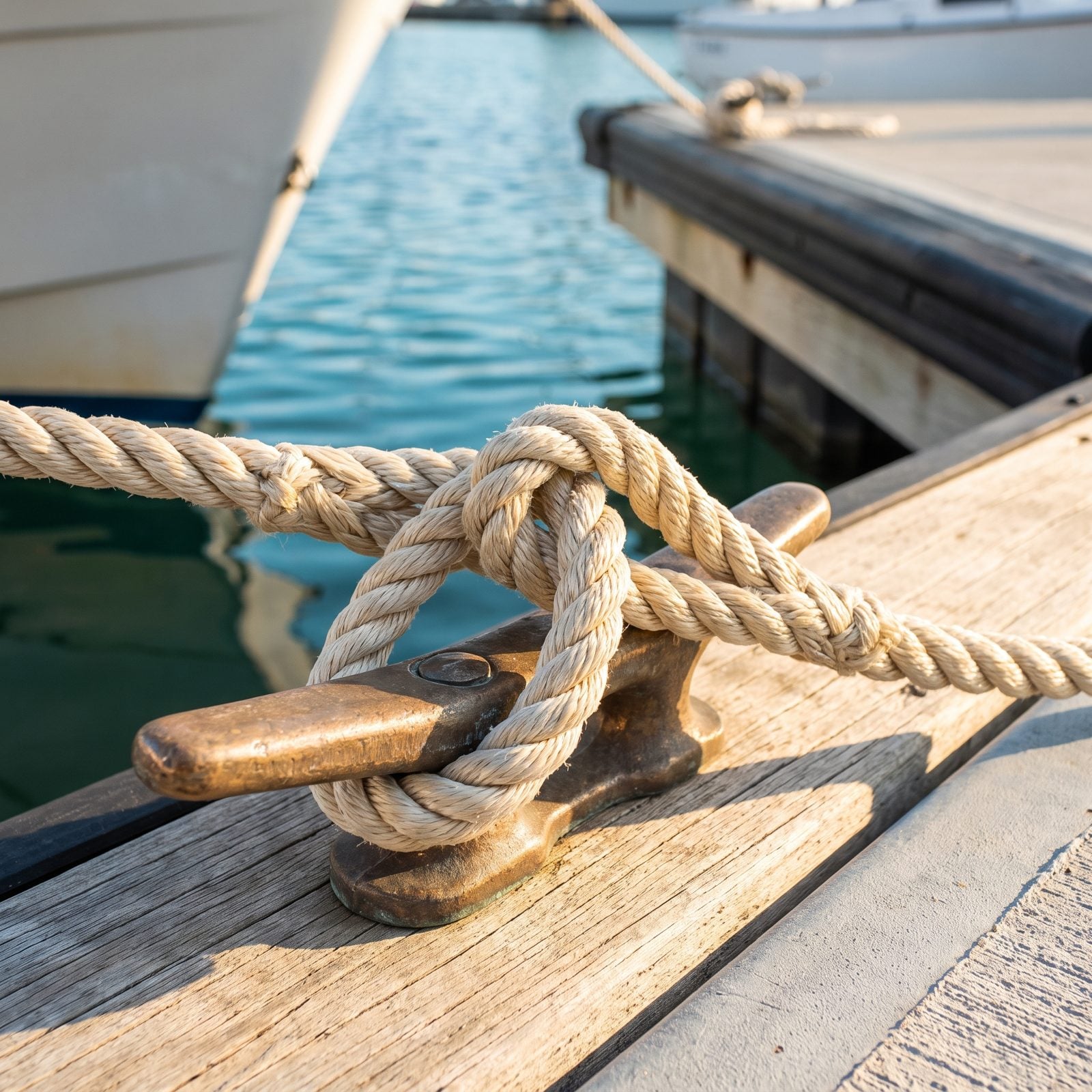
Two boats, one cleat, and the eternal problem: whoever leaves first has to lift the other guy’s line off to get theirs. Do that in a crosswind and you’ve just set a stranger’s boat adrift while they’re inside finishing their coffee.
The knotted tangle on this bronze cleat is exactly what to avoid: lines snarled together over the horns, so neither can come free without picking apart the other. The fix is older than fiberglass. Pass the eye of your line up through the eye of the line already on the cleat, then drop yours over the horns. Now either boat can slip its line without disturbing the other — a thirty-second habit that saves a lot of apologizing.
45. Put the Heaviest Boat Closest to the Dock When Rafting
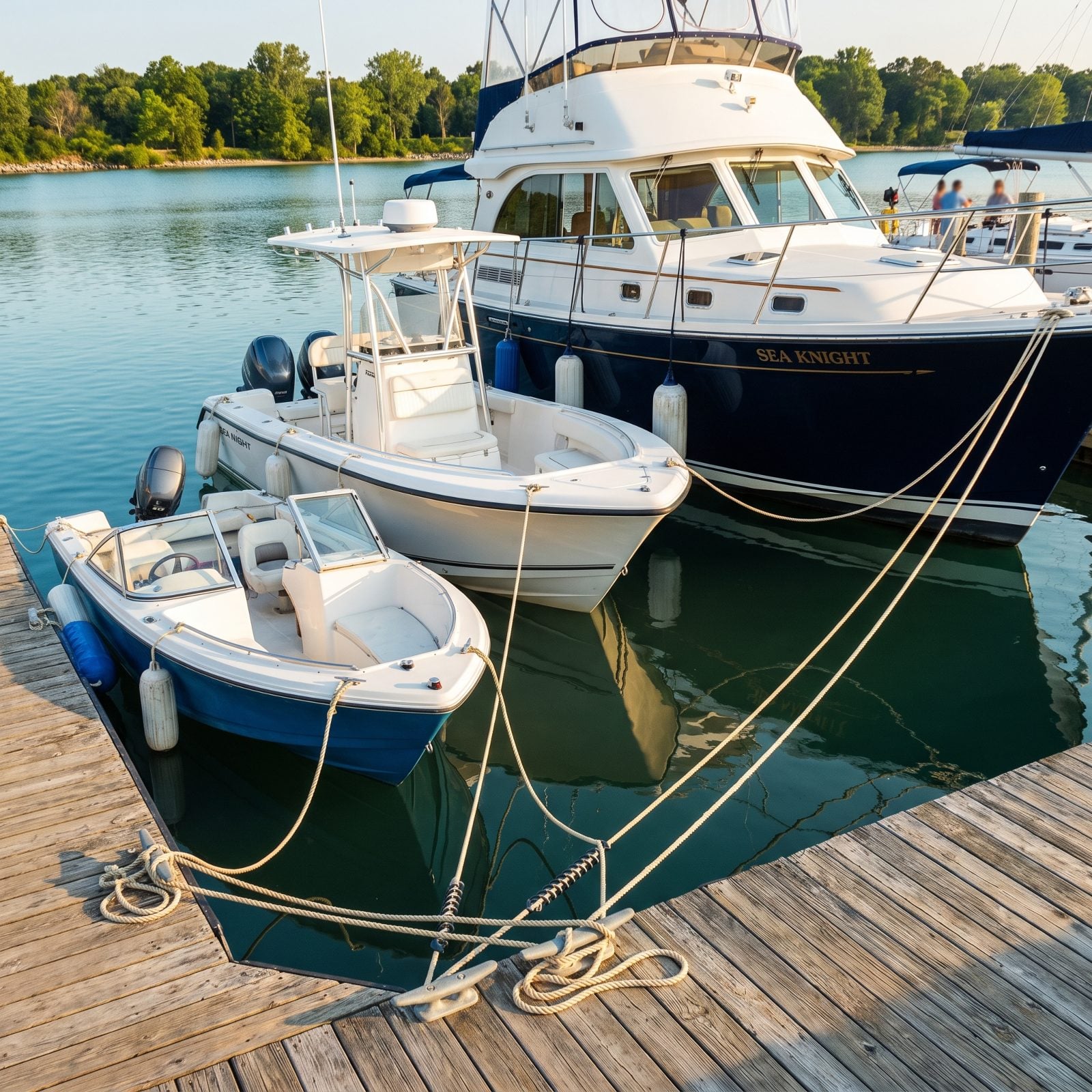
Rafting looks like a party until the wind picks up, and the order you stack the boats decides whether it stays one.
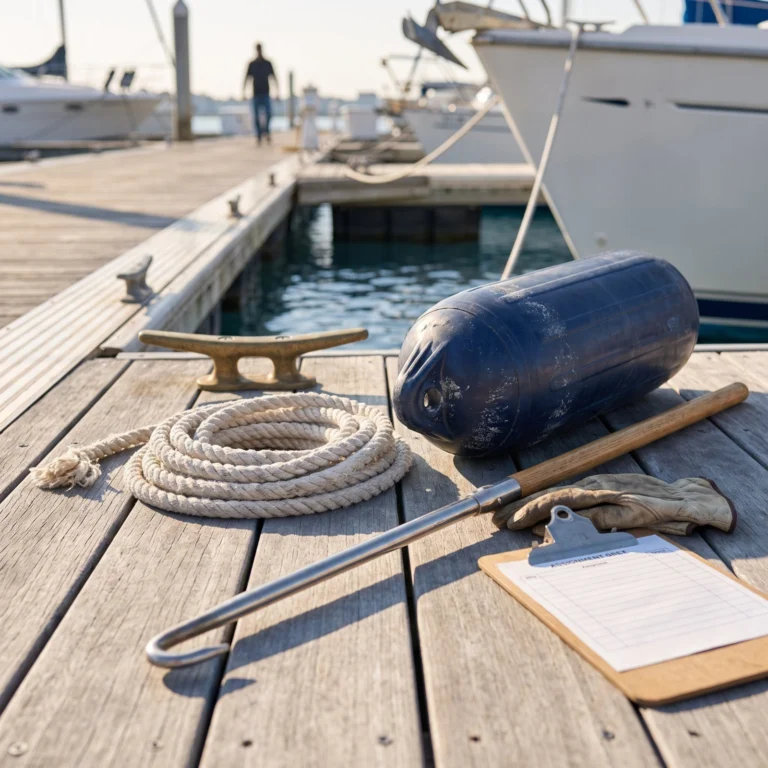
Heaviest hull against the dock, lightest on the outside. The big boat carries the ground tackle and the cleats to hold the whole string, and it won’t get shoved around when a wake rolls through. The raft pictured has it backwards: the little blue runabout sits against the dock, with the big navy cruiser on the outside, so the heaviest hull’s weight gets leaned onto the lightest one every time a wake rolls through. Run your own lines ashore too, not just boat-to-boat, so the inside vessel isn’t holding everyone single-handed.
44. Hand the Eye End of the Line to the Person on the Dock
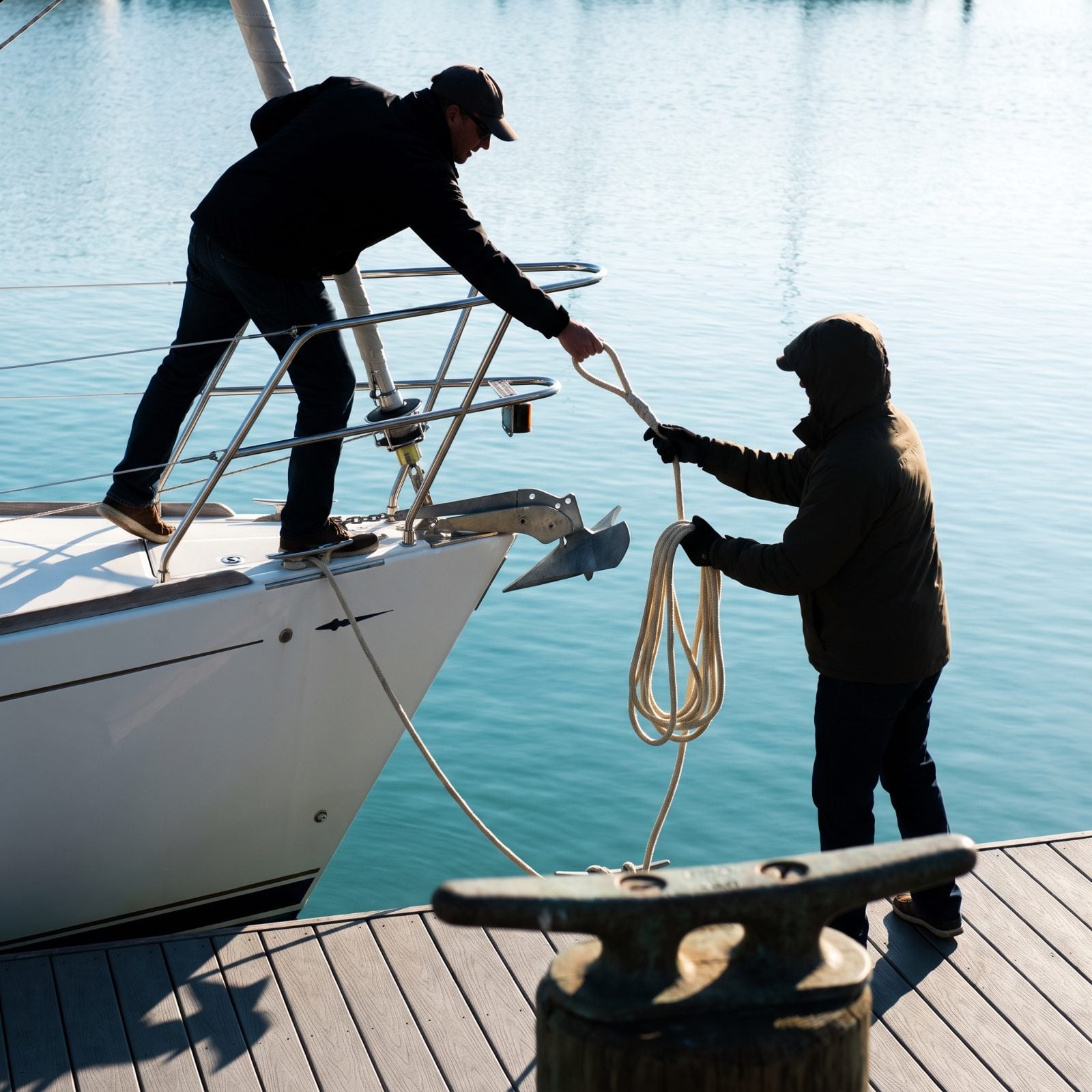
Here’s a small thing that marks you instantly as someone who’s done this before: pass the loop, not the tail.
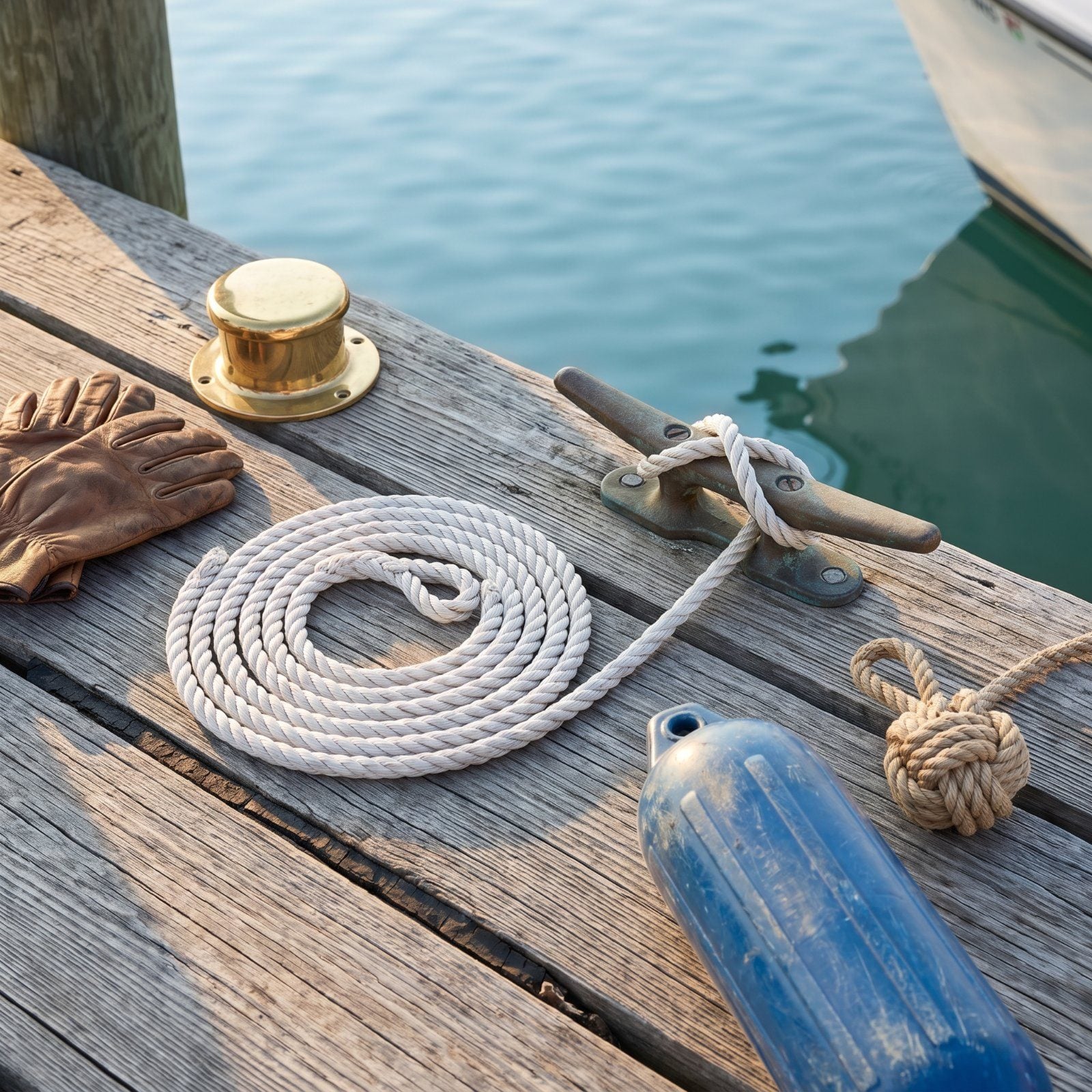
Here the roles are flipped: the person on the dock is passing a coiled line up to the crew reaching out from the bow. The principle holds whichever way the line travels — whoever gets the spliced eye can drop it over a cleat in two seconds. Hand over the loose working end and now they’re tying a knot they may not know, in a hurry, while your boat drifts off the pier. Keep the working end yourself and you can still adjust tension from your own deck afterward. Give away the loop, keep the control. Dock hands remember who makes their life easy.
43. Treat No-Wake Zones as a Wake Test, Not a Speed Limit
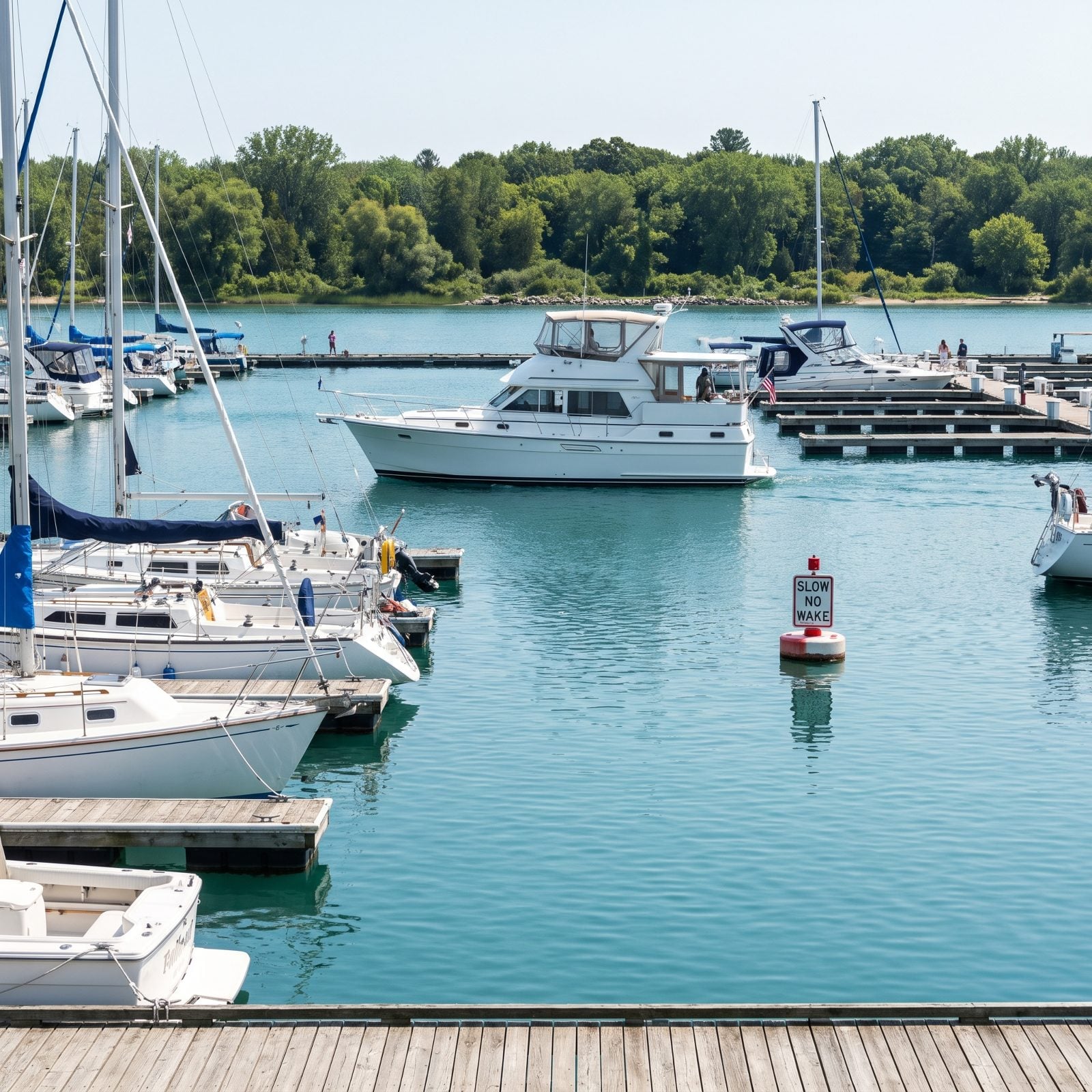
Plenty of boaters glance at the GPS, see the posted number, and feel righteous while their stern throws a wall of water into a row of moored boats.
The rule isn’t about miles per hour. It’s about the wake. Go slow enough that your boat has settled off plane and your wake has flattened to almost nothing. If dishes are sliding off tables on the boats you pass, you’re going too fast no matter what the sign says. Watch your transom, not your speedometer.
42. Leave Piling Lines Free to Rise and Fall With the Tide
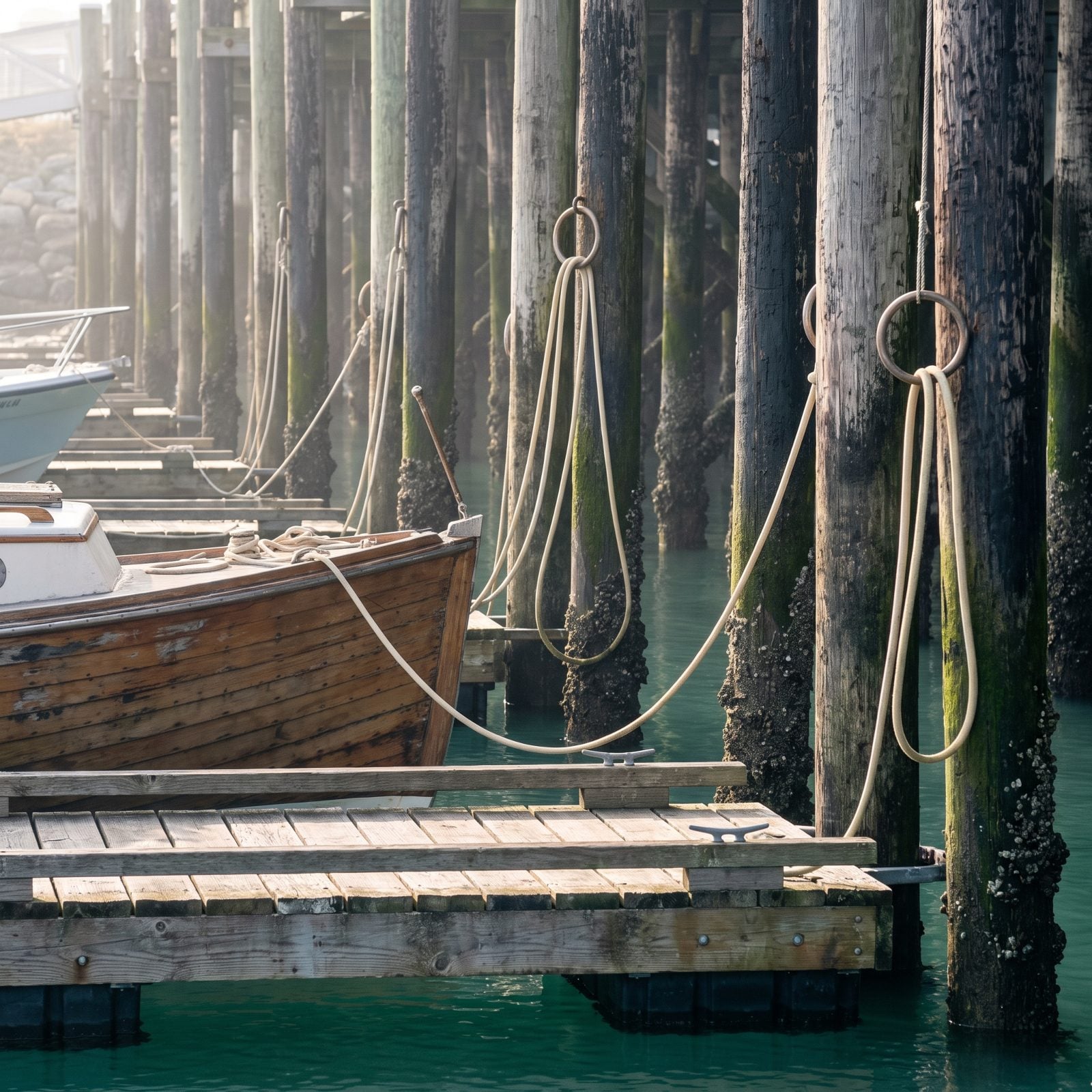
Tie up tight at high tide to a fixed piling and come back six hours later to a boat hanging by its cleats like a fish on a stringer. Tie up tight at low tide and the rising water either snaps a line or submarines your bow.
At a floating dock, the dock rises and falls with the tide on its own, so your dock-cleat lines can stay snug, but any line run to a fixed piling needs room to work. Run those long, with enough slack that the boat can settle through the whole range. Piling hoops or sliding loops help. Read the waterline growth on the piling to gauge how far the tide swings before you decide how much to give — that green-and-barnacle band tells you more than any tide chart.
41. Pick the Control Line First, Usually a Spring
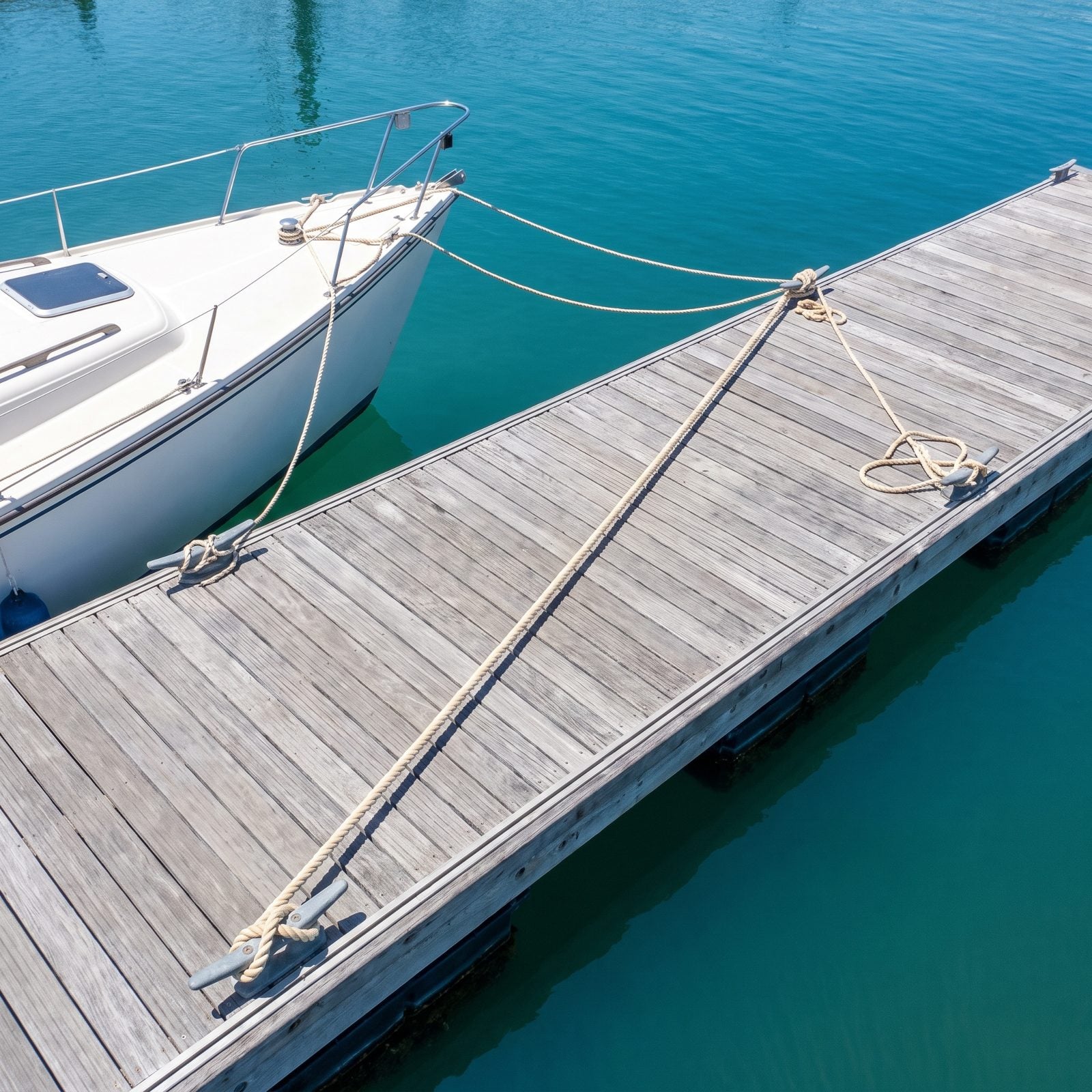
Most people tie the bow first because it’s closest. That’s backwards.
In wind or current, the line that actually controls the boat is almost always a spring — one running fore-and-aft along the hull to stop surge. Get a spring on early and the boat quits trying to walk down the dock while you fuss with the rest. Bow and stern lines just pin the ends. The spring does the heavy lifting against whatever wants to move you. So figure out which way the wind or current is pushing, then set the line that fights it.
40. Angle Your Lines to Control Motion Without Flattening Your Fenders
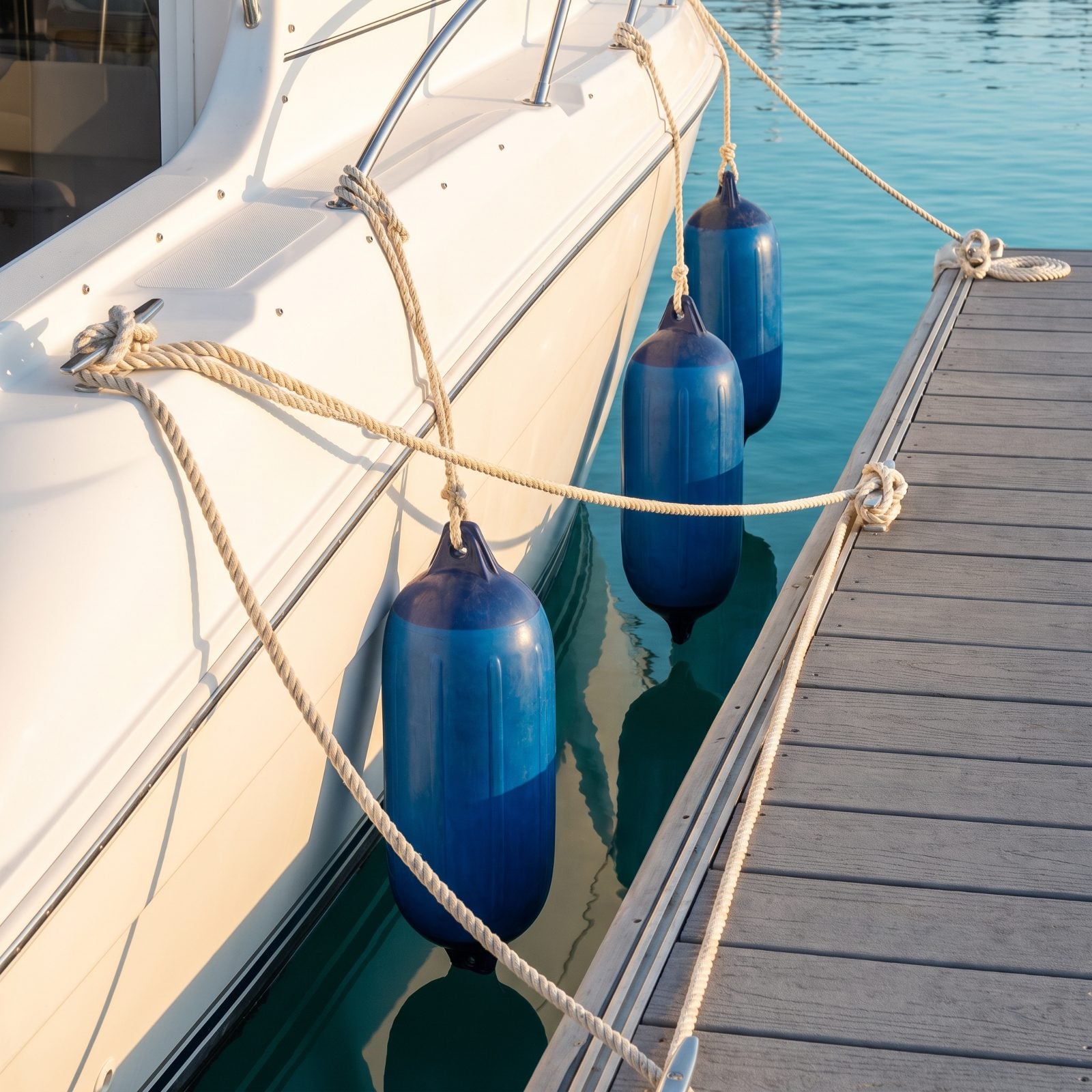
Lines pulled too tight and too straight do two bad things. They jam your fenders flat so they stop cushioning, and they let the boat slam the dock on every surge.
Good angles share the load. A fender needs to roll and compress a little to do its job, so your lines shouldn’t pin the hull dead against the dock. Let the fenders sit plumb and barely squashed, then use line angles to limit how far the boat can travel rather than clamping it rigid. A boat that can shift an inch or two rides out wakes. A boat strapped bone-tight transmits every jolt straight into the gelcoat.
39. Ask Before You Touch Another Boat’s Dock Lines

You see a neighbor’s line looking loose and your hands itch to fix it. Don’t — not without asking.
That line might be set exactly how the owner wants it, slack left on purpose for the tide or the wind. Tighten it and you could trap the boat, chafe a line, or invent a problem that wasn’t there. If something genuinely looks dangerous and the owner’s gone, grab the dockmaster. Don’t improvise with someone else’s rigging.
38. Center the Boat in the Slip Instead of Riding the Finger Pier
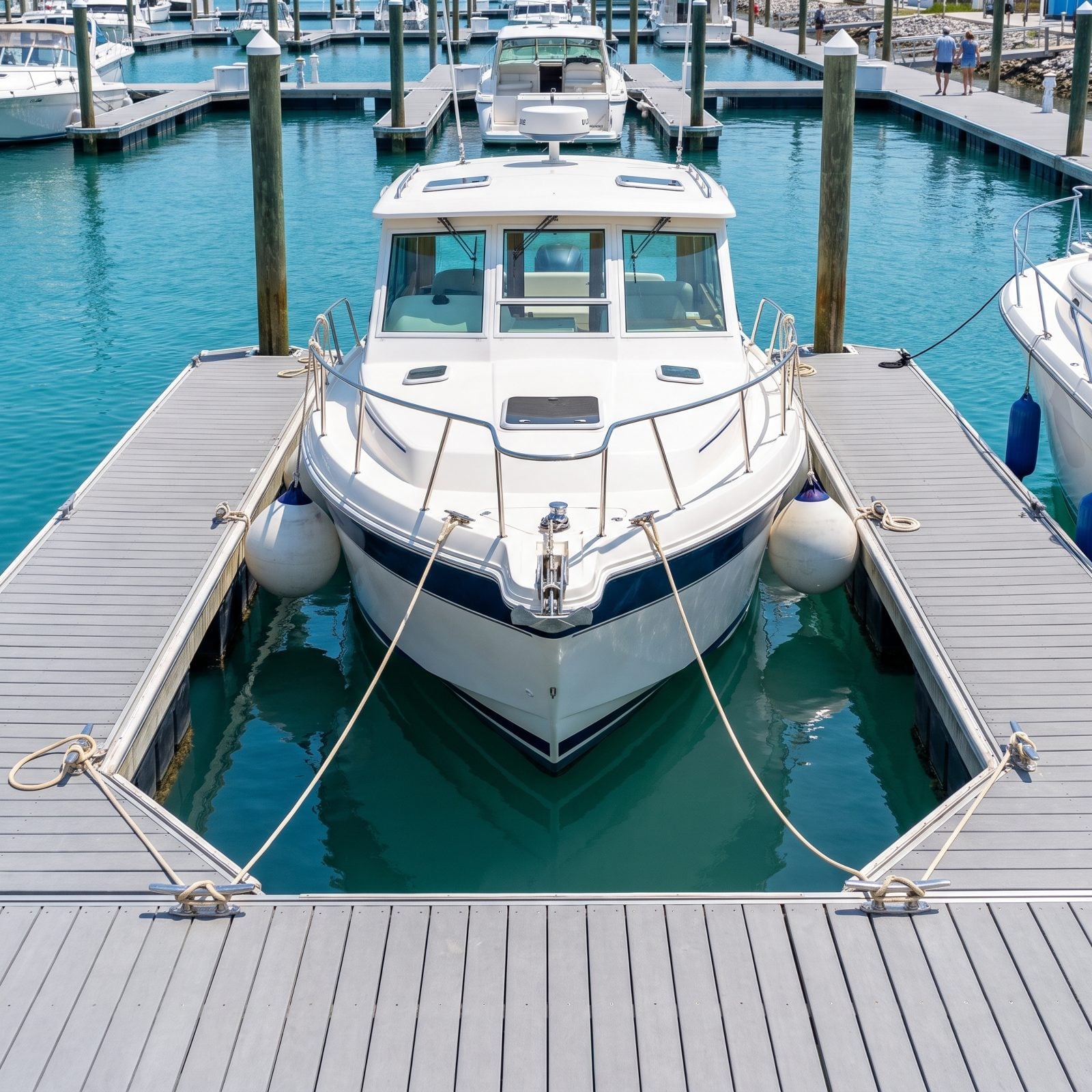
It’s tempting to let the boat lean on the finger pier because it feels secure and it’s easy to step off. It also hogs the space, grinds your fenders raw, and crowds the slip on the far side of that finger.
Center the boat with lines to both sides. Even fendering, easier egress for whoever shares the finger, and a hull that isn’t permanently kissing the dock. Sure, it takes a minute more to rig. Your neighbor and your topsides both thank you for it.
37. Keep Your Prop Wash Off Moored Boats and the Bottom
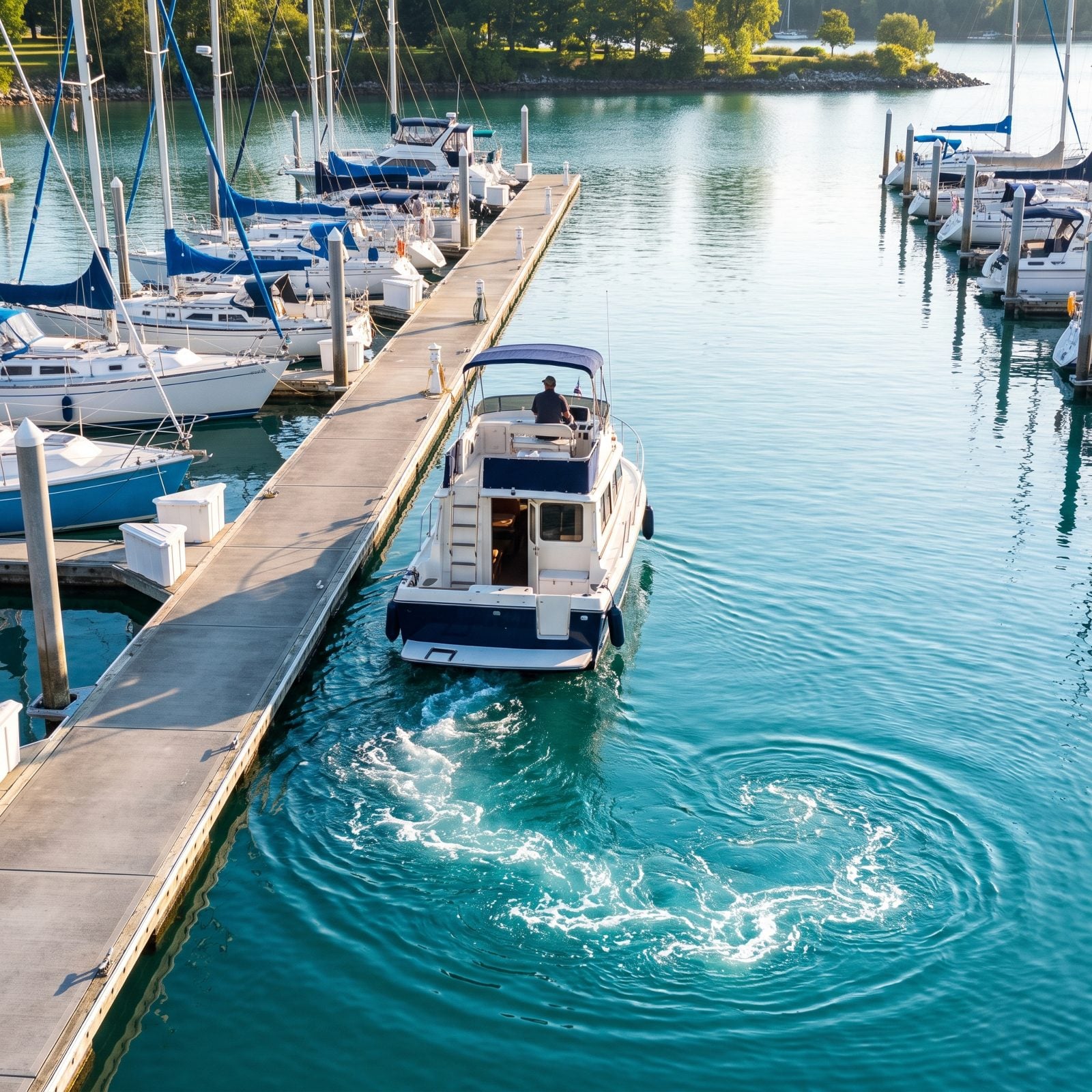
A short burst of throttle to pivot off the dock sends a cone of water somewhere. Aim it wrong and you’ve just shoved your neighbor’s bow into their fender — or stirred the mud into everyone’s cooling intakes.
In tight quarters, think about where your thrust is going, not just where your bow is pointing. Keep the wash aimed into open water, use the shortest bursts that’ll do the job, and go easy near the shallows where you’ll suck up silt and spray it across hulls. Slow, deliberate maneuvering looks better anyway. Nobody was ever impressed by a loud departure that rocked the whole row.
36. Switch Off Pedestal Power Before You Plug In or Unplug
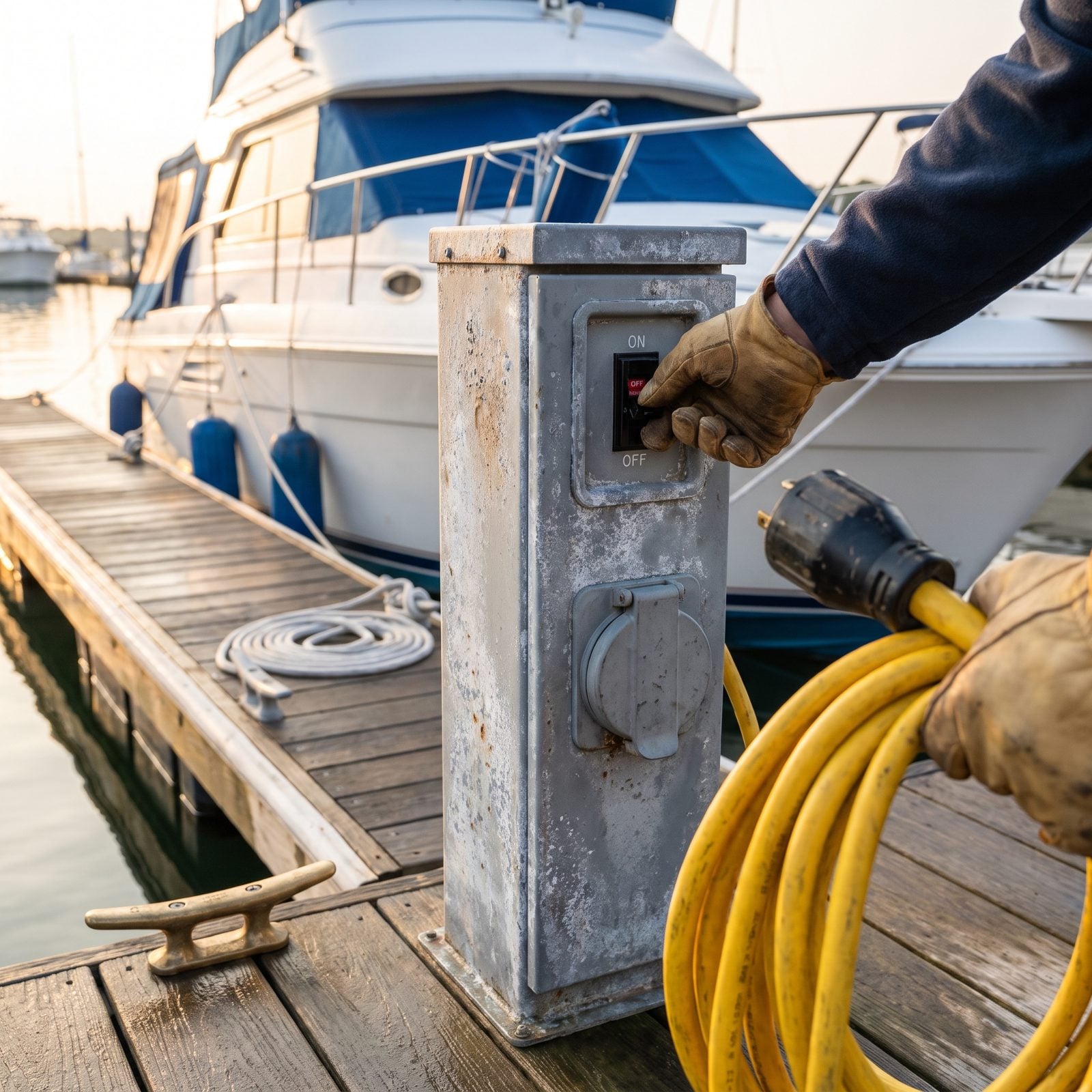
Live power at the plug is how you burn a cordset, pit the contacts, or worse. Flip the pedestal breaker off first. Every time. Then connect at the boat, uncoil the rest of the cord and run it to the pedestal, connect at the pedestal, and only then switch it back on. Reverse the order to unplug.
The arc from a hot connection does its damage out of sight, inside the plug, quietly cooking the pins until one day the whole thing melts. People skip this because nothing explodes when they don’t, and the cost shows up three summers later.
35. Shut Off Dock Water Before Walking Away From the Boat
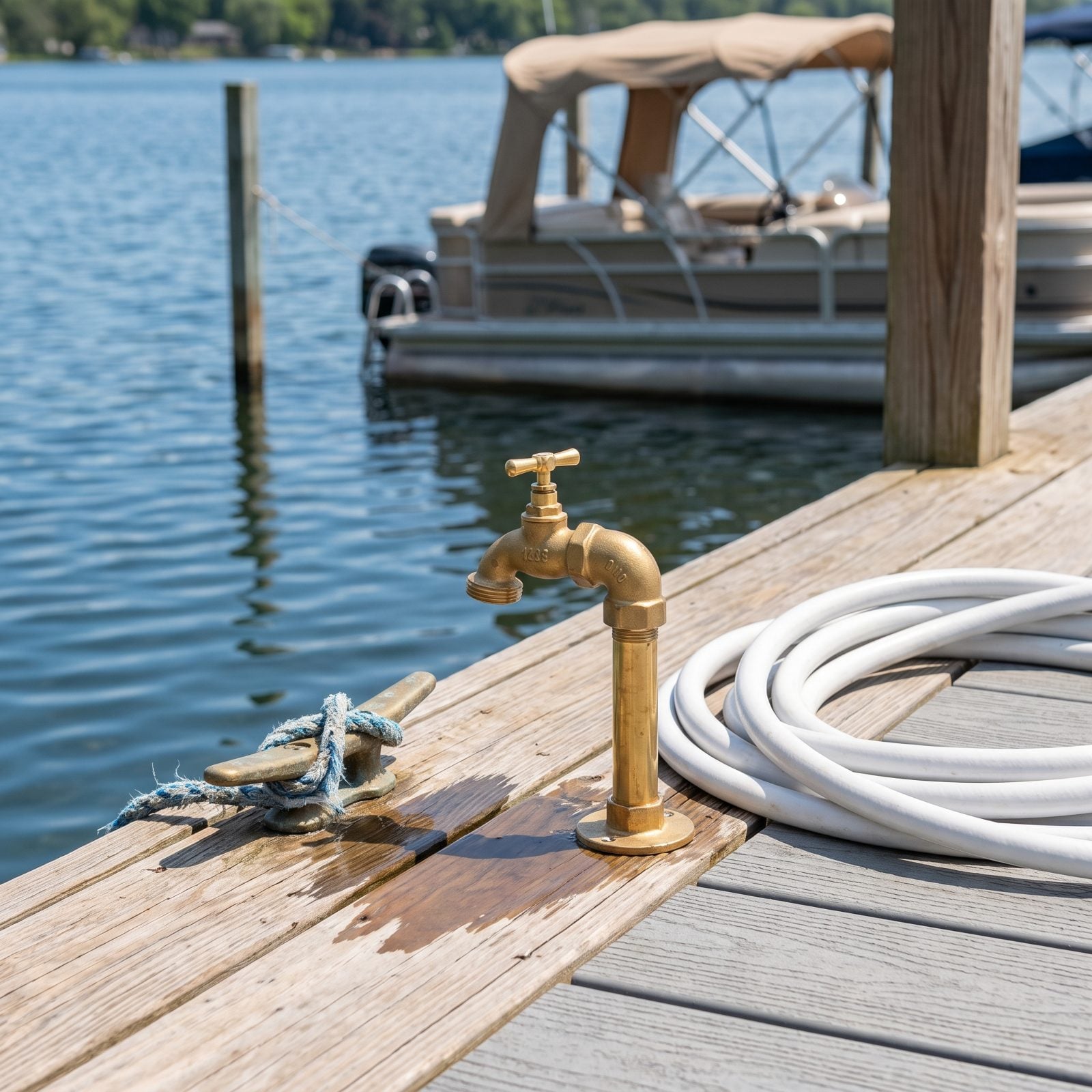
A pressurized dock-water line feeds your boat’s plumbing the whole time you’re hooked up. Leave it on, walk away, and one failed hose clamp fills the bilge while you’re off eating dinner. Boats have gone down at the dock this way — flat calm water, nobody aboard, nothing to hear the pump give up.
Shut the dock supply off at the spigot whenever the boat sits unattended overnight or for the day. Your onboard tank and pump handle the odd glass of water fine. Four seconds. Saves a very bad phone call.
34. Ask Before You Step Aboard Someone Else’s Boat to Help
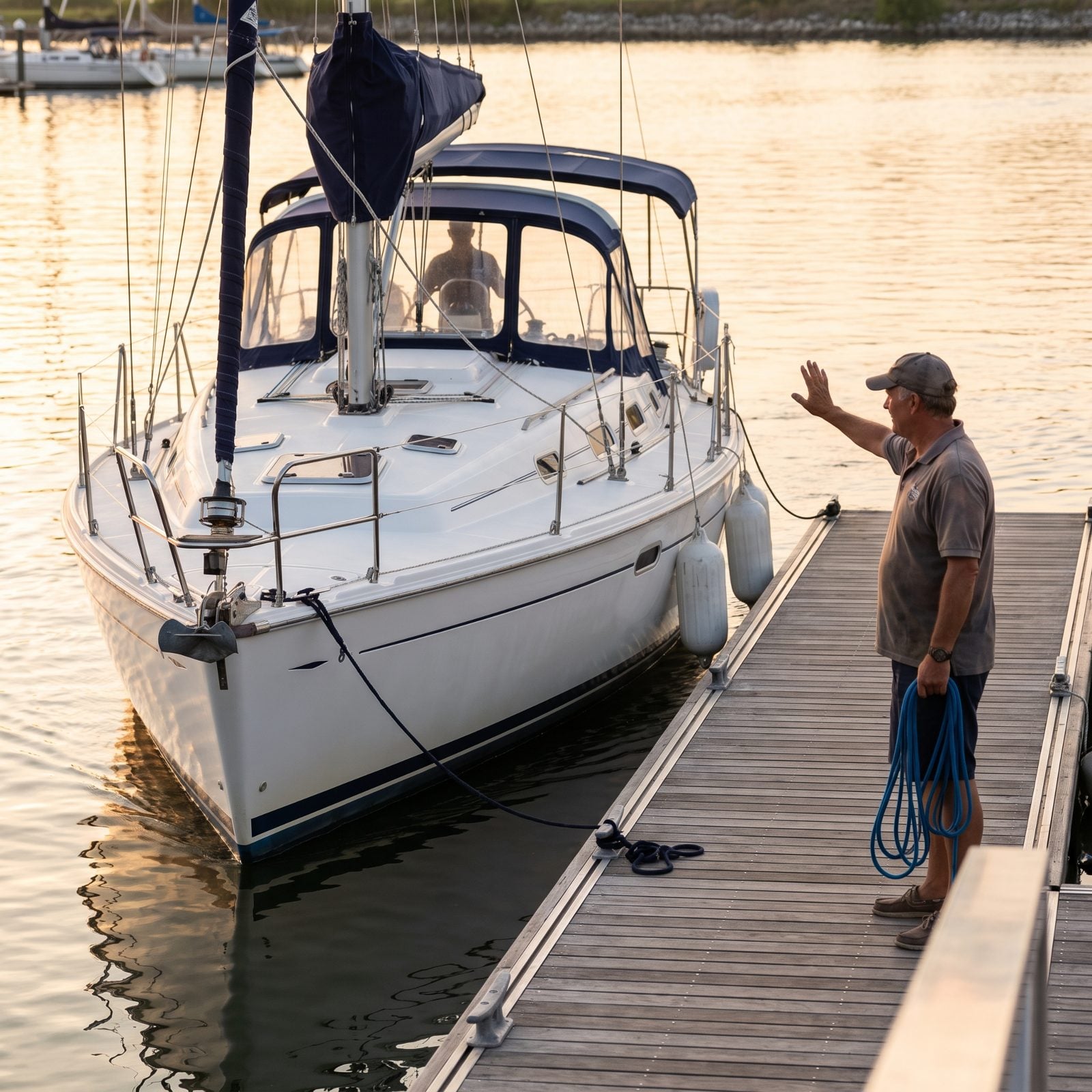
A stranger vaulting onto the deck mid-landing is not help. It’s a surprise weight shift, a scuffed gelcoat, and a skipper’s plan blown apart at the worst possible second. Even the kindest dock neighbor can wreck a good approach.
Offer to take a line from the dock and wait to be waved aboard. Most skippers would rather hand you a bow line and keep their own feet where they are. Coming in yourself? Say what you want out loud — “just the stern line, please.” Clear beats polite, and it keeps everyone’s shins intact.
33. Keep Your Anchor and Bow Pulpit Off the Walkway
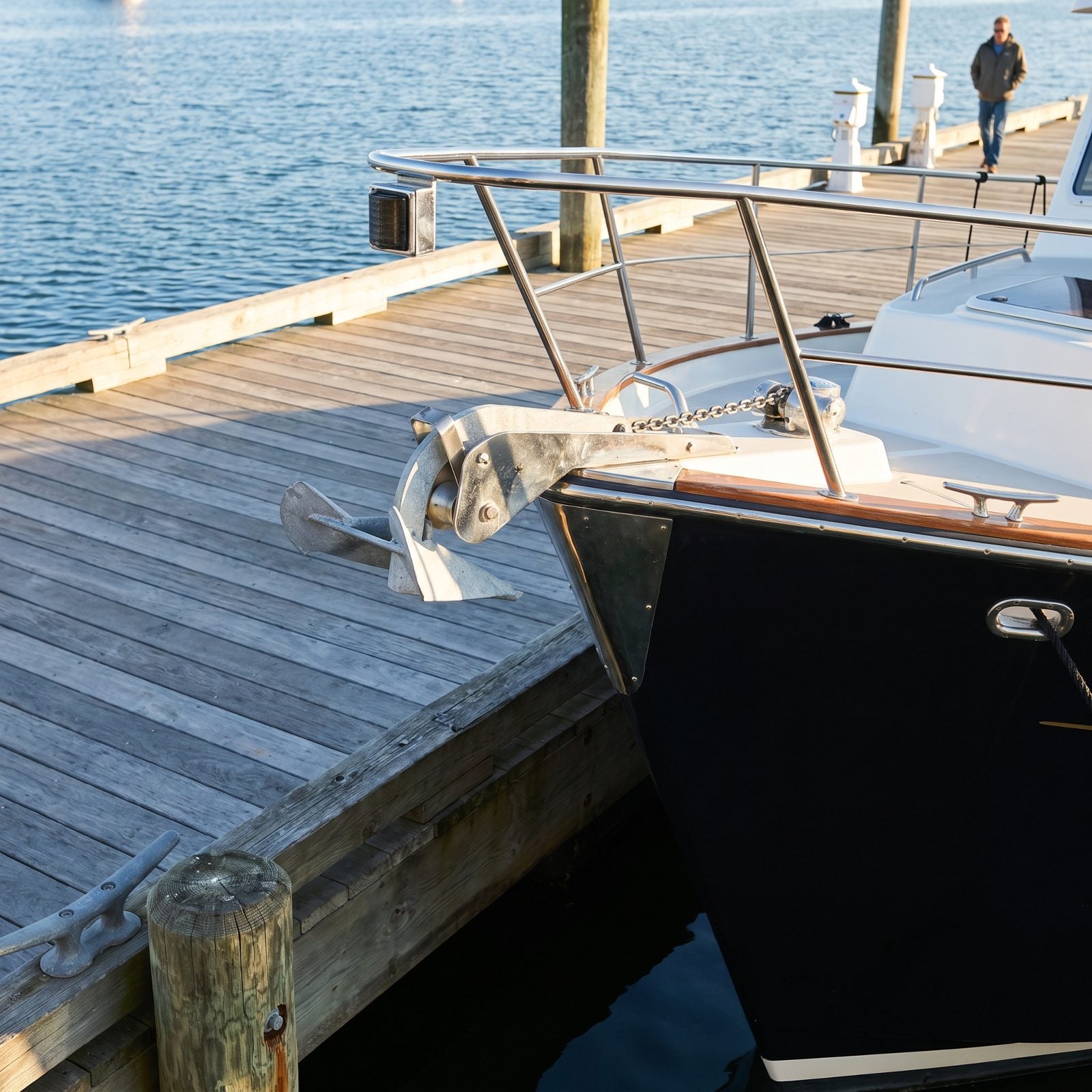
Dock bow-in with the anchor jutting out and you’ve turned the walkway into a shin trap sitting at exactly head height for kids. Those flukes catch jackets, snag dock carts, and open foreheads in the dark.
Pull the anchor up tight on the roller, or tie it back so nothing overhangs where people walk. Tight slip? Stern-in is the courteous call and gives you an easier step off anyway. Nobody has ever cursed the boat whose bow gear stayed out of their way.
32. Hold Outside the Fairway Until the Slip Is Actually Open
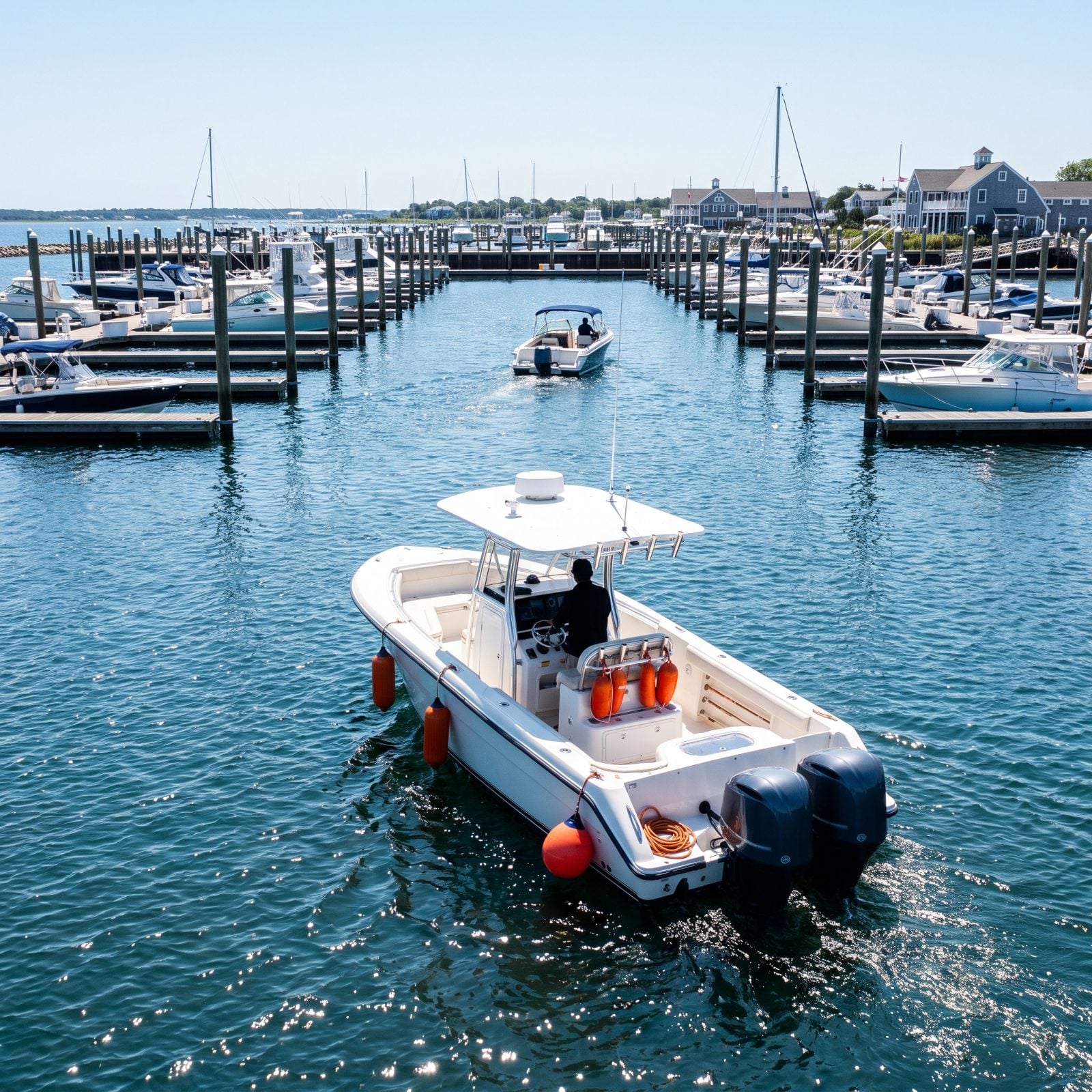
Crowding the fairway while the boat ahead is still sorting its lines just piles pressure onto a moment that doesn’t need any. Now they’re rushing, you’re drifting, and two hulls are closing with nowhere to go.
Sit back in open water and idle. Let them finish, settle, step off. A fairway holds one landing at a time, and the thirty seconds you save by pushing in is exactly the thirty seconds somebody else needs to fender off a mistake. Patience here reads as competence, not hesitation.
31. Don’t Force Two Boats Into a One-Boat Fairway
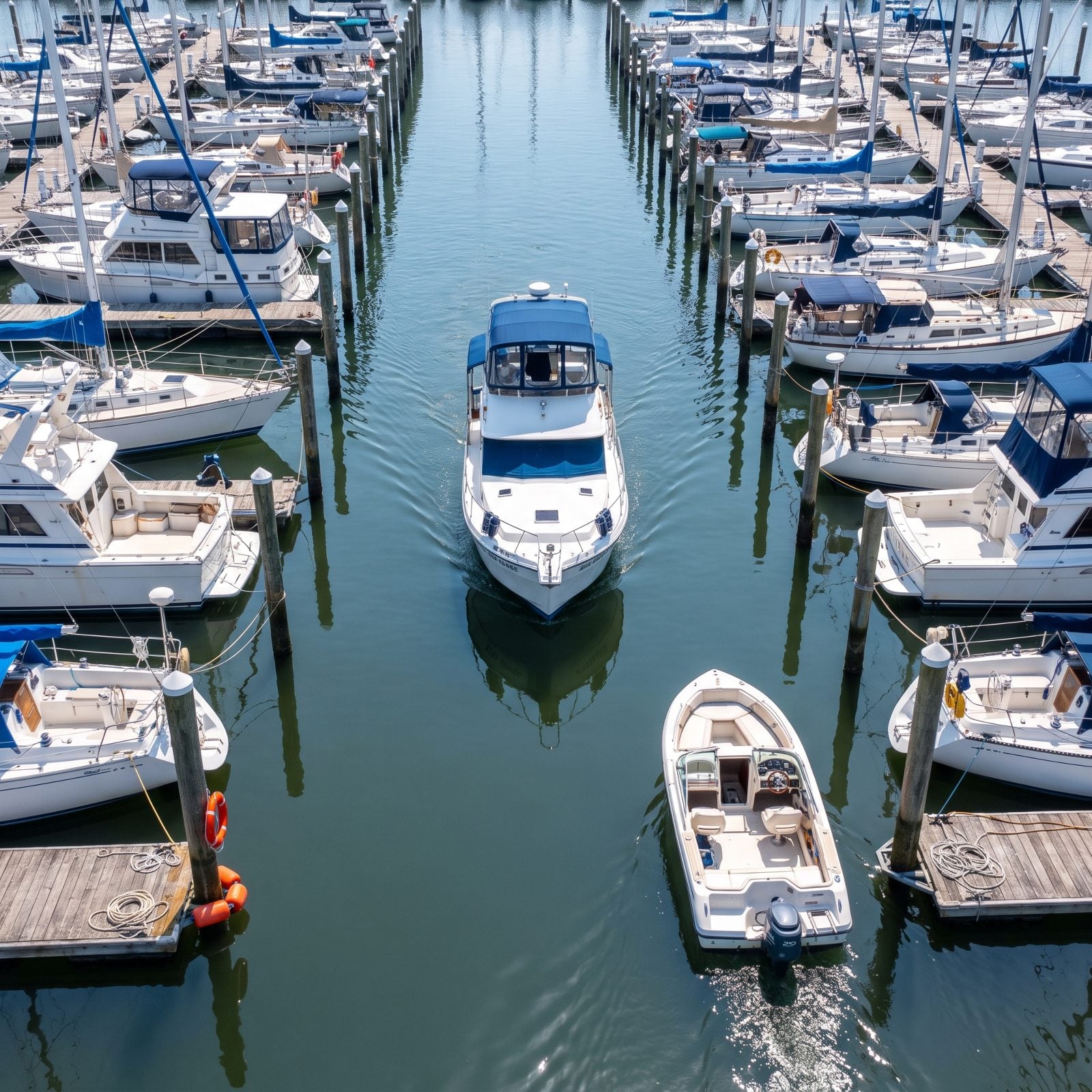
Some fairways are one lane whether the chart says so or not. Two boats meeting in the middle means somebody’s backing down, somebody’s pinned against a piling, and a whole lot of fenders suddenly earning their keep.
Whoever can see the squeeze coming yields. Hang back at the entrance, let the other boat clear, then go. There’s no prize for refusing to blink in a channel narrower than your beam plus theirs. A quick wave and a short wait beats grinding down a neighbor’s topsides because neither of you wanted to give.
30. Call the Marina Before You Enter an Unfamiliar Basin
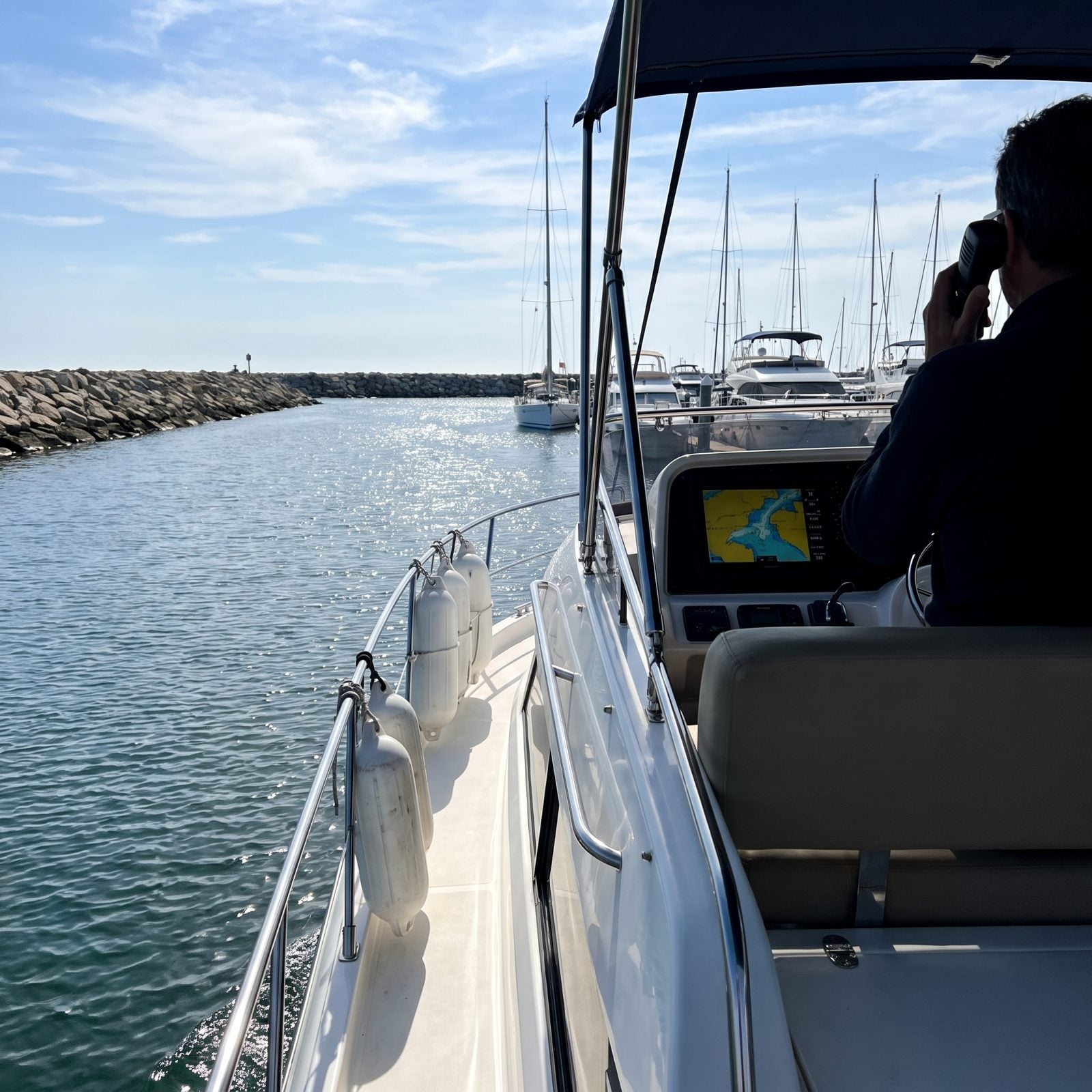
A radio call before you enter tells you what the chart can’t — which slip, which side to approach, whether the fuel dock is three deep, and where the shoaling crept after the last storm. It also warns the dockhands you’re coming, so somebody’s actually there to catch a line.
Hail them on the posted VHF channel or phone ahead. “Inbound, forty-foot sailboat, looking for a transient slip” gets you a plan before you’re committed inside a basin you’ve never laid eyes on. Walking in blind is how you end up idling in circles while somebody waves you off a reserved finger.
29. Read the Wind and Current Before Your Final Turn
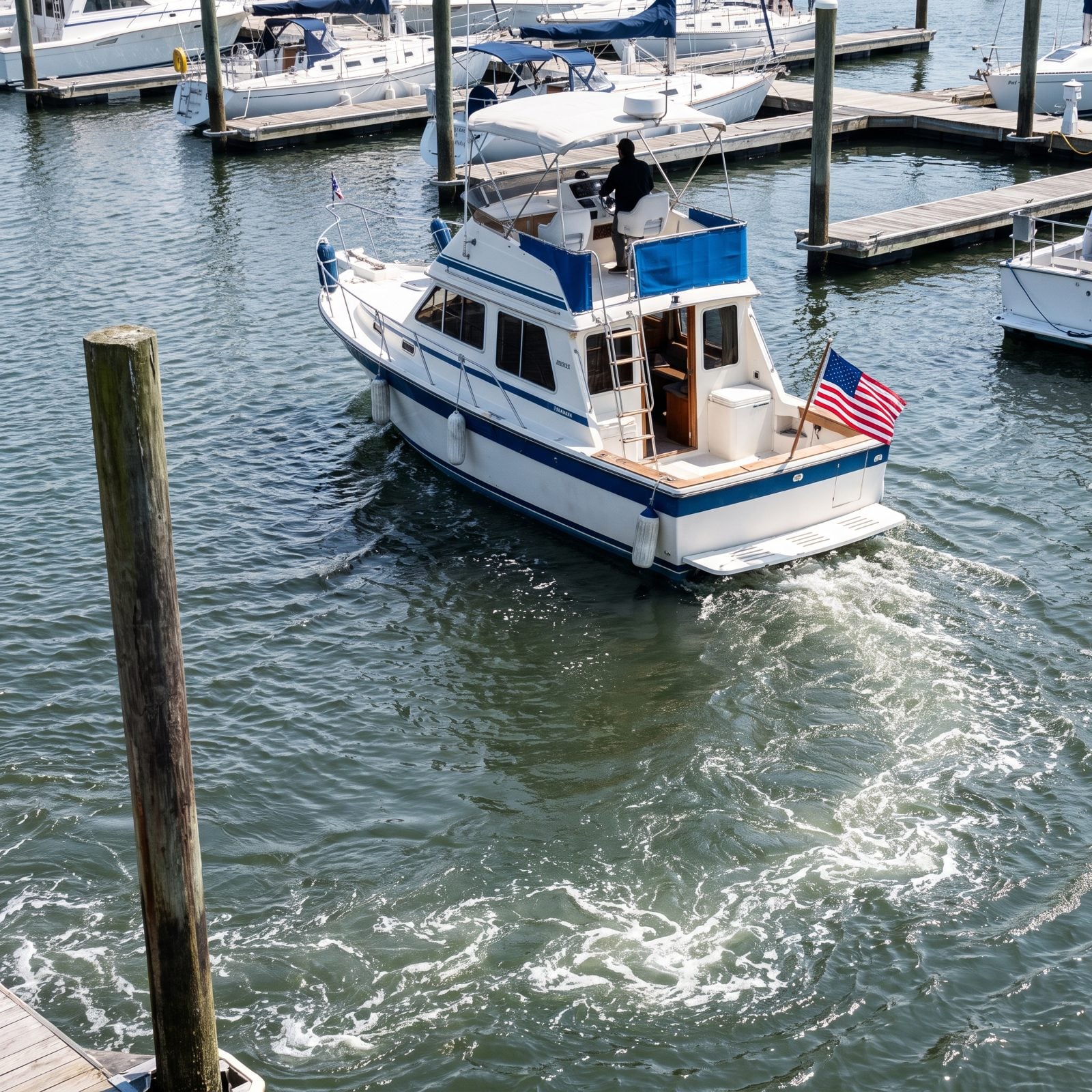
The boat doesn’t go where you point it. It goes where the wind and current carry it while you point it. Work out which way both are pushing before you commit to the turn, not halfway through it.
Watch the flags, the ripple against the pilings, the way a nearby boat sits on its lines. A crosswind that’ll set you down onto the dock wants you coming in slow and from upwind so you drift in gently, and current running through the slips rearranges all of that again. Half a minute of reading the water buys you a landing that looks easy from the dock.
Slow is smooth, and the skipper who idles in reading the wind almost always lands softer than the one who charges.
28. Rig Your Lines and Fenders Before You Enter the Fairway
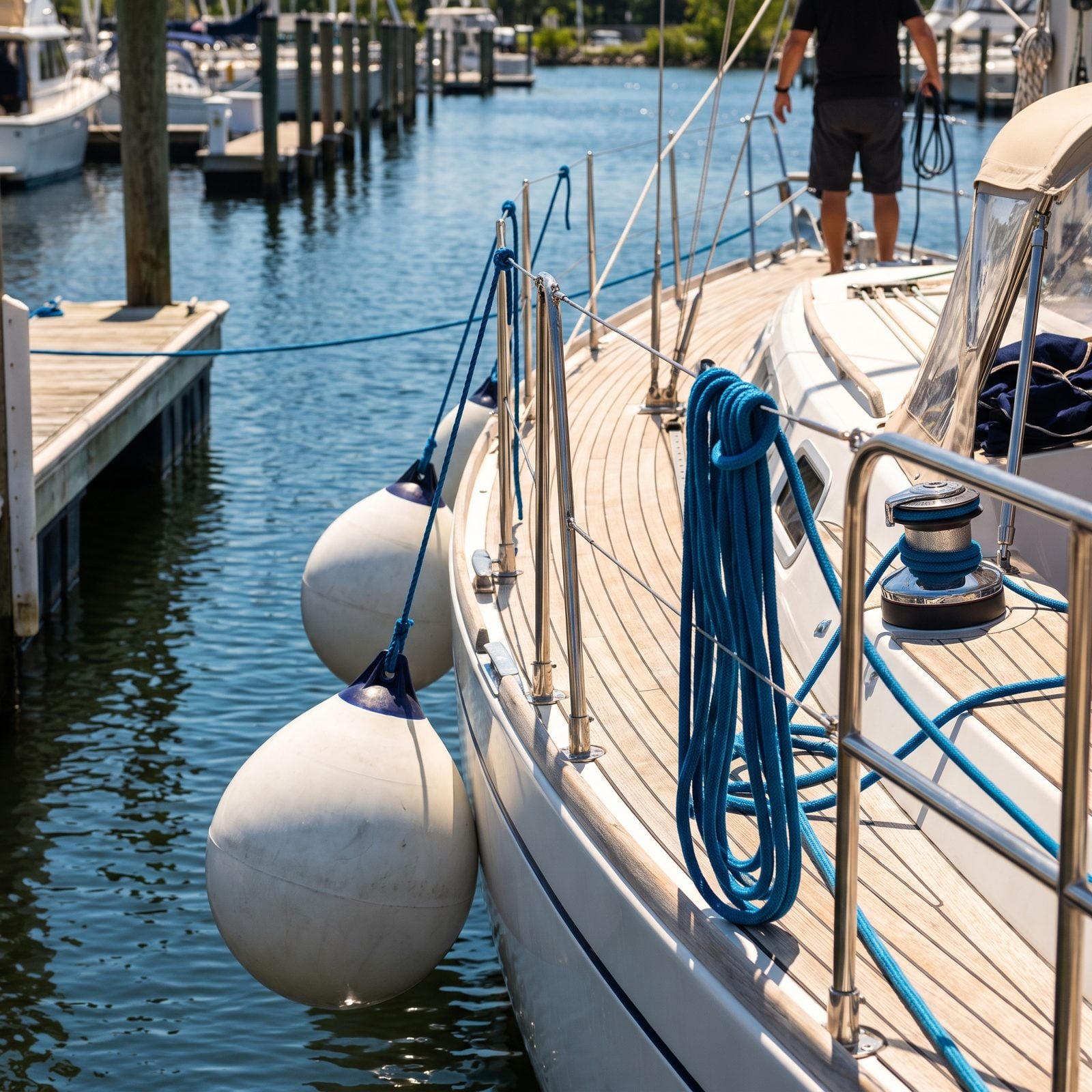
Scrambling for fenders once you’re already between the docks is the classic rookie move, and every slip neighbor can spot it from their cockpit. By then you need both hands on the boat, not buried in a locker.
Tie the fenders to the lifelines, run the lines, and stage the fenders on the side deck before you leave open water, ready to drop over the side as you approach. Bow, stern, spring — cleated and coiled where you can grab them. Walk into a tight basin with the deck already rigged and you arrive calm instead of frantic, and calm is what good landings are made of.
27. Set Fenders for the Dock’s Real Height, Not a Guess
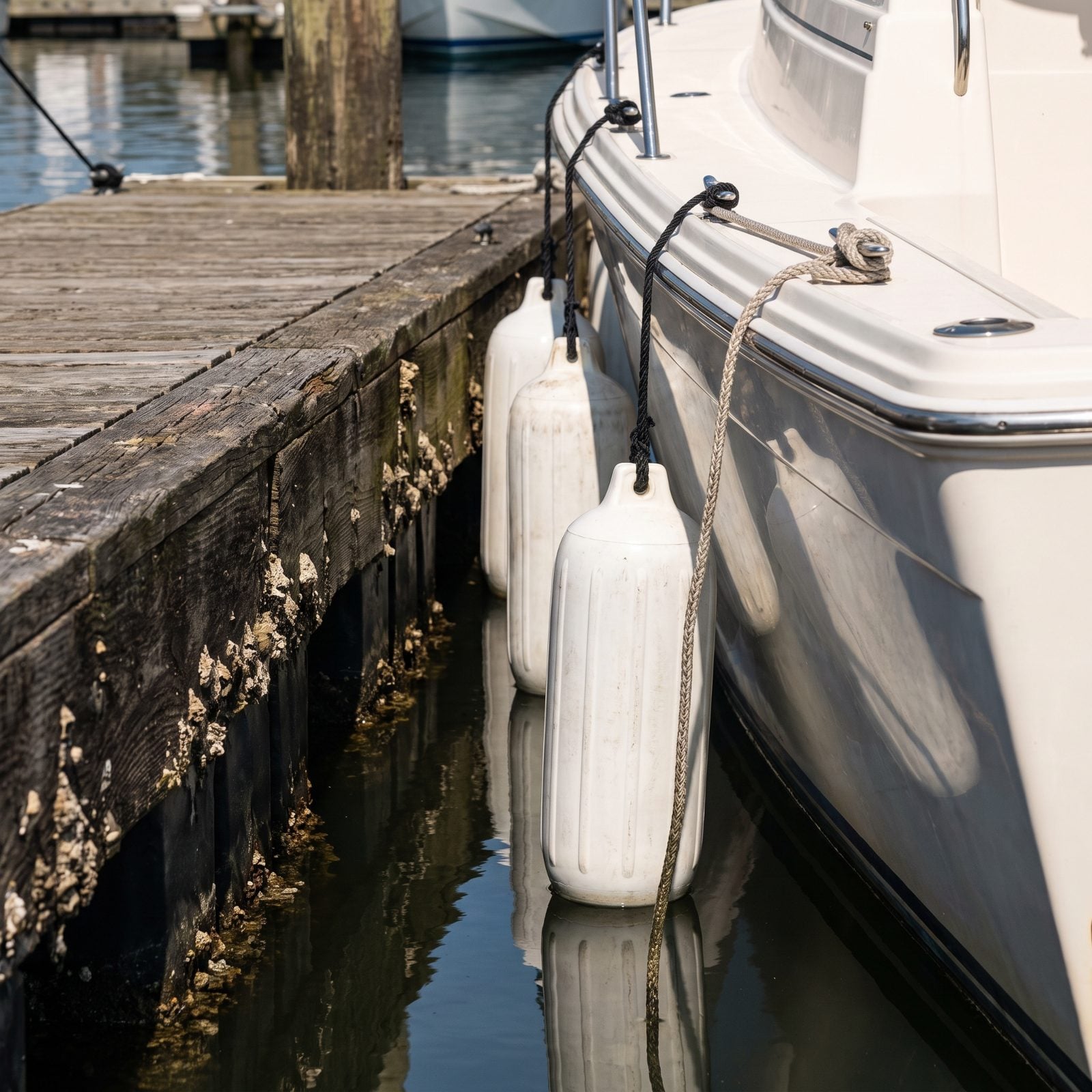
Fenders set at the wrong height do nothing but drag. At a floating dock they ride level with you, so they’re easy. At a fixed dock on a falling tide the dock climbs as the water drops, and fenders set for high water end up hanging in open air by mid-afternoon, protecting a patch of empty hull.
Hang them where the hull actually meets the dock, piling, or rub rail, and check again as the tide swings. On a tidal berth you may re-set them twice a day. A fender protecting nothing but the water is just decoration.
26. Abort a Bad Approach Instead of Powering Through It
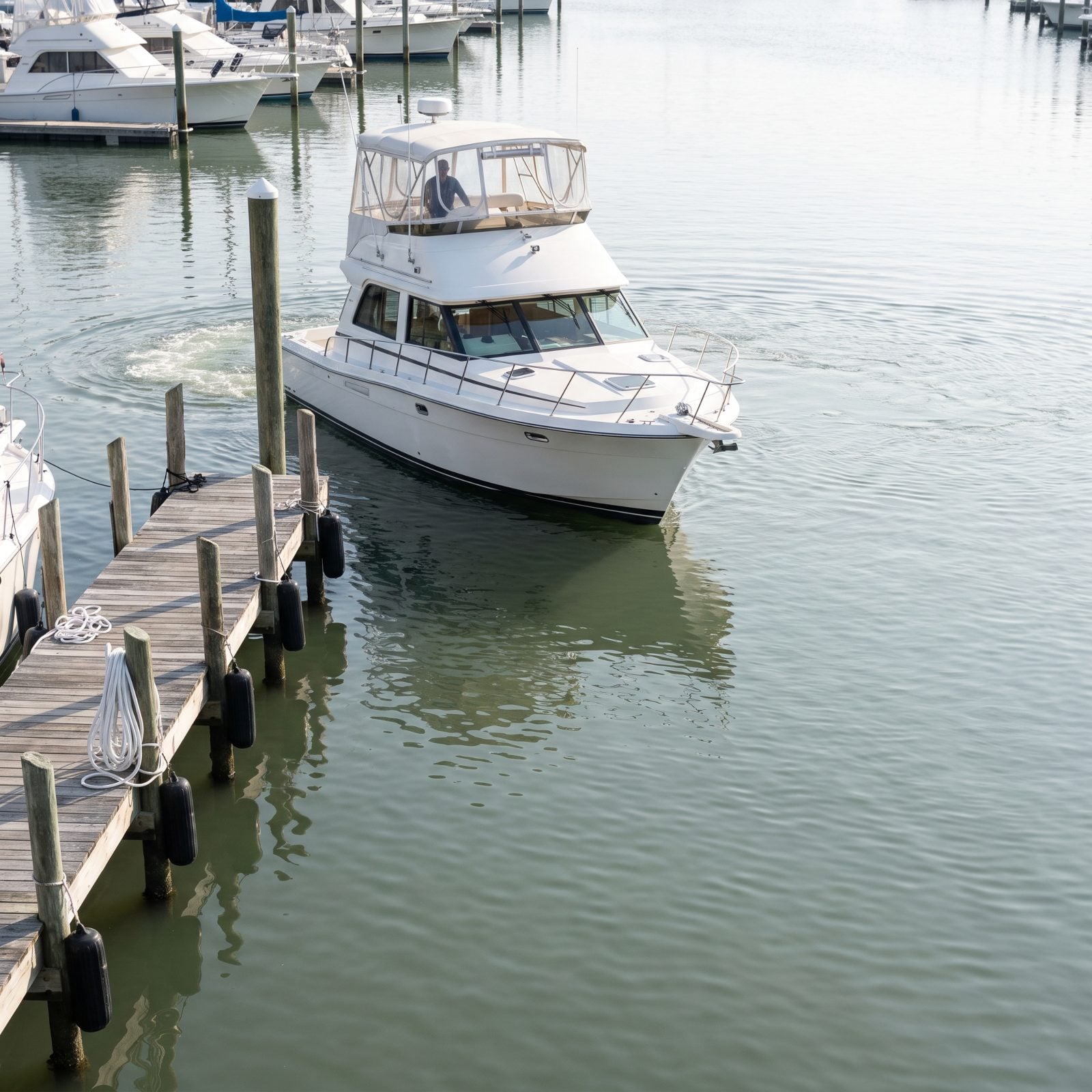
Nobody has ever regretted circling the basin a second time. Plenty have regretted the gelcoat gouge that came from committing to a line that was already wrong.
Wind shifts, a gust catches the bow, the current nudges you sideways at the worst moment — and the move here is boring and correct: ease off, back out, swing wide, come again. No audience is scoring your first attempt. The dockhands have seen a thousand aborts, and not one of them thought less of the skipper who waved off and reset.
25. Let One Person Give the Docking Commands
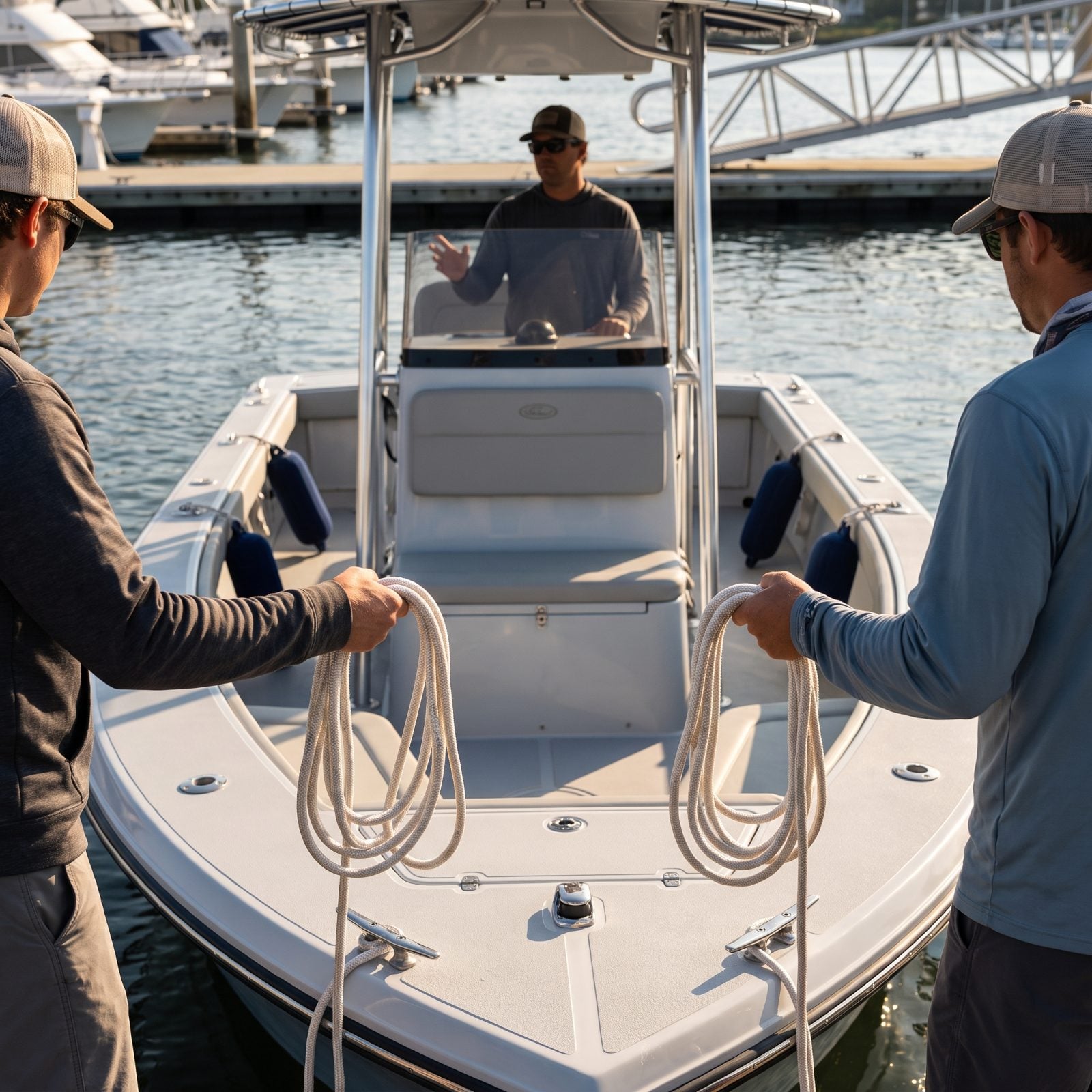
Two people calling instructions during a dock approach is how boats hit docks. One says left, one says reverse, the helm hears neither, and the fenders are still hanging inside the cockpit instead of between the hull and the piling.
Pick the caller before you’re near the dock. Usually the skipper. Sometimes the most experienced hand on deck, if they’ve got the better view. Everyone else works the lines and keeps the chatter off. Calm, short commands win — “forward a touch,” “hold,” “spring line on.” Volume isn’t communication. A quiet boat that knows its plan looks like it’s been doing this for years, because it has.
24. Keep the Helm Attended Until the Boat Is Fully Secured
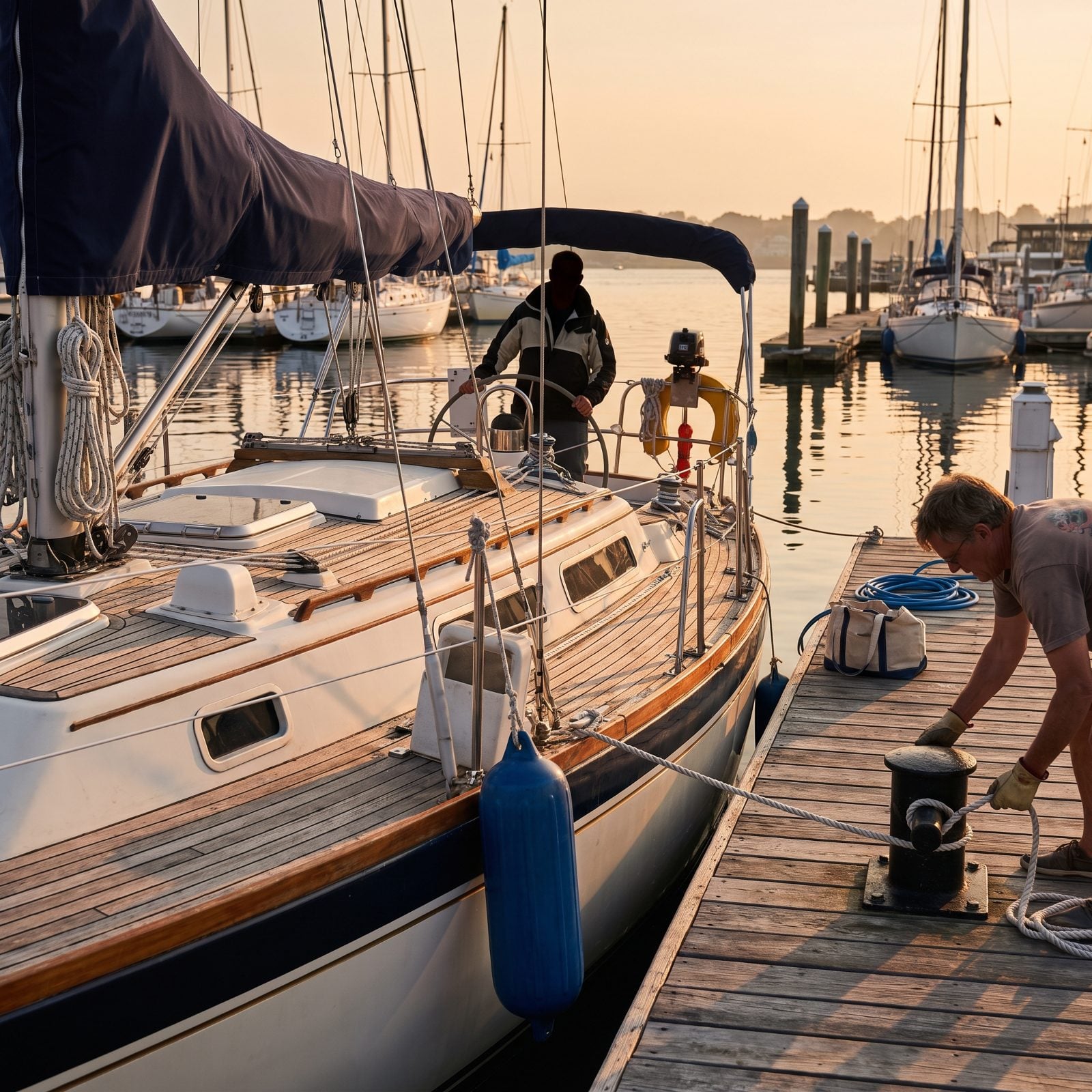
The boat isn’t parked until the lines say it is. Until then it’s a two-ton object with an engine, and an engine needs a hand near it.
A sudden gust, a passing wake, a line that pops loose — any one of these can shove a hull into a neighbor in seconds. And if the person at the helm has already walked forward to help with bow lines, there’s nobody left to nudge the throttle or correct the drift.
23. Keep Crew Aboard Until the Dock Is Safely Within Reach
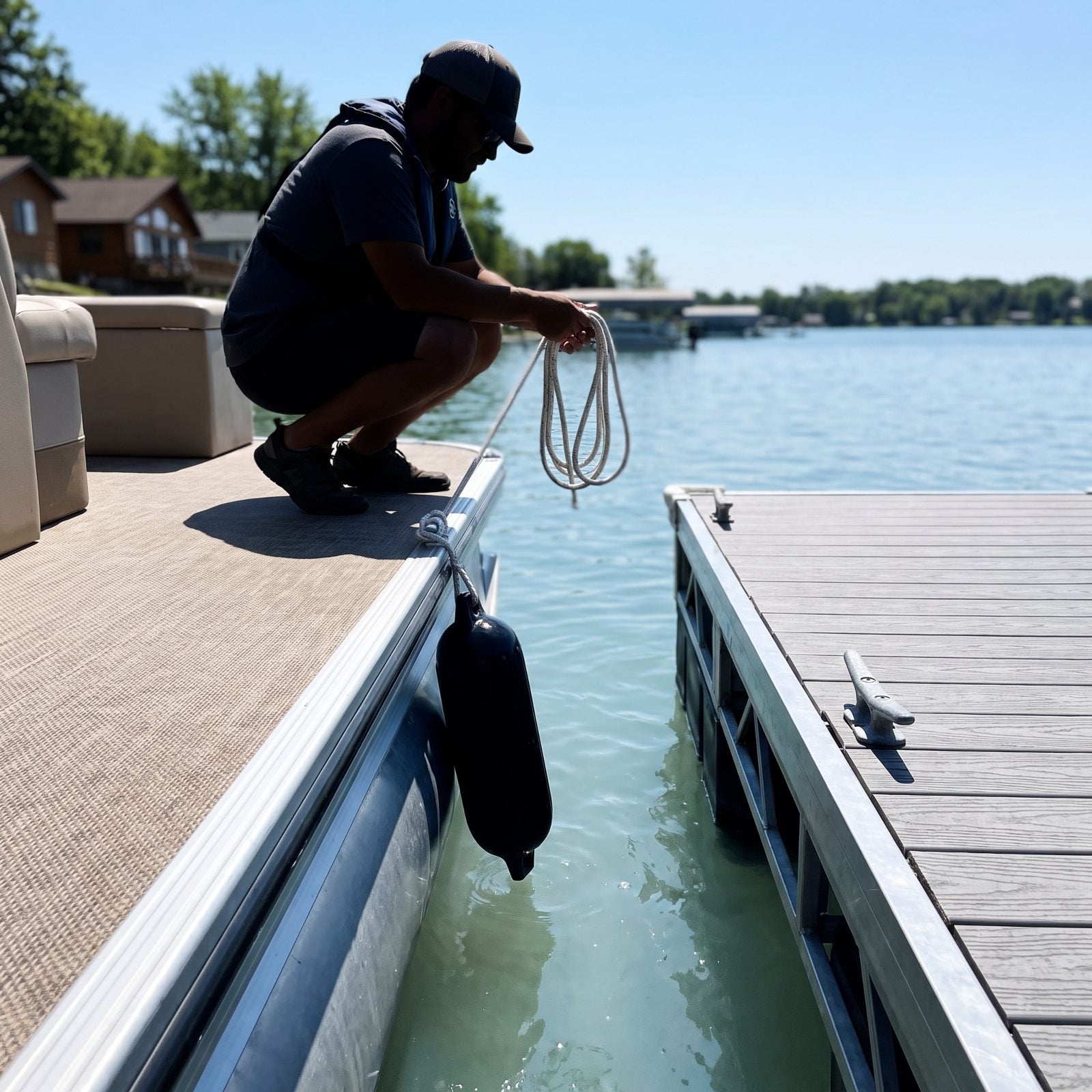
The jump is the mistake. That hop from a moving boat to a dock to “save” the landing is how ankles break and people go into the water between hull and pier.
Let the boat do the work. The helm brings the hull close enough that a crew member can step across one foot at a time, with a hand on something solid. A gap of two feet is not a reason to leap — it’s a reason to say “forward a touch” and wait. Nobody’s medal collection includes a dock jump.
22. Keep Hands, Feet and Legs From Becoming Fenders
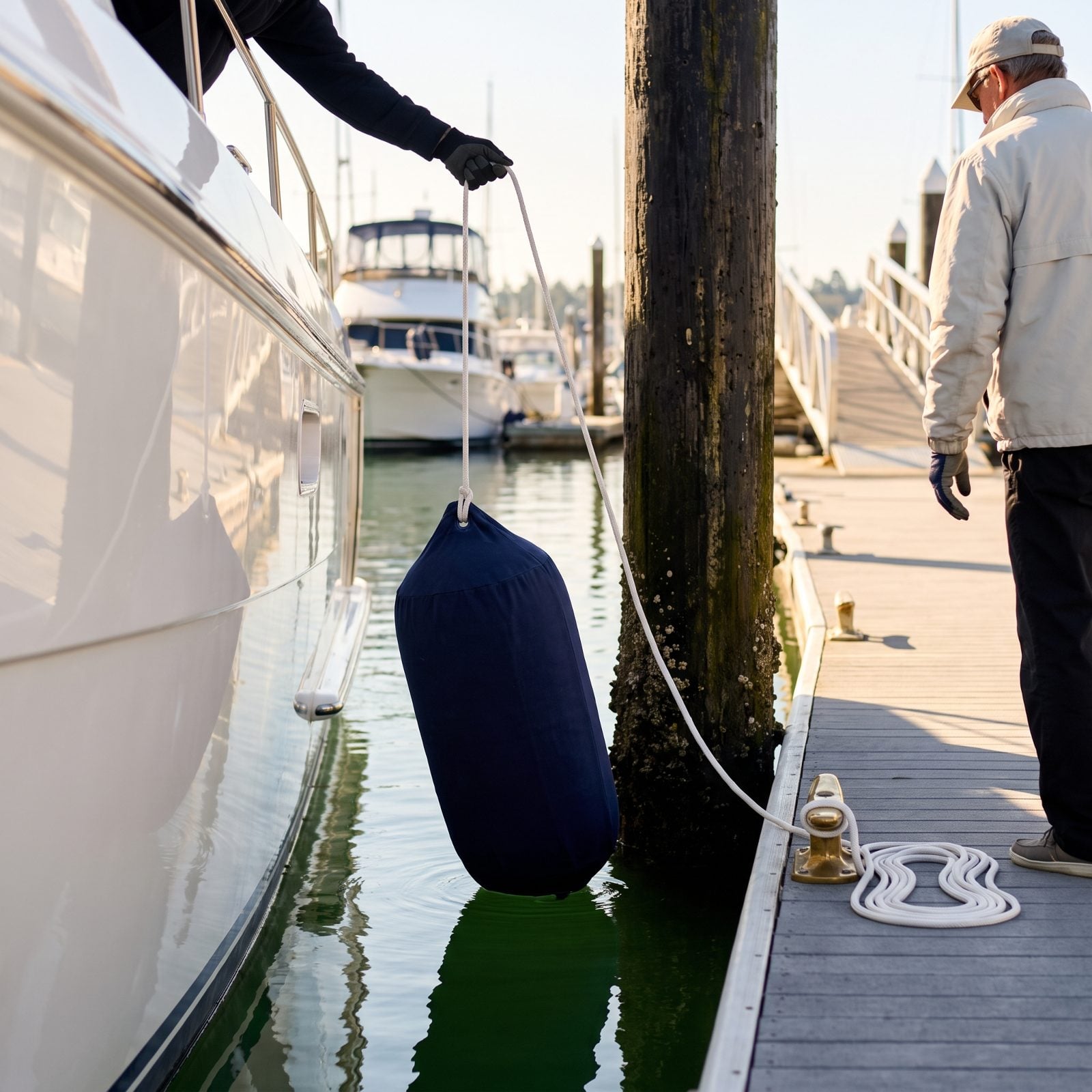
A boat drifting toward a piling has thousands of pounds behind it. A leg pushed out to stop it has none. That’s not a contest you want to enter.
Fenders exist precisely so nobody has to brace a hand against a crushing hull. If the boat is coming in harder than the fenders can handle, abort — don’t turn an arm into a cushion. A new fender costs twenty bucks. A crushed wrist costs a summer.
21. Never Wrap a Dock Line Around a Hand
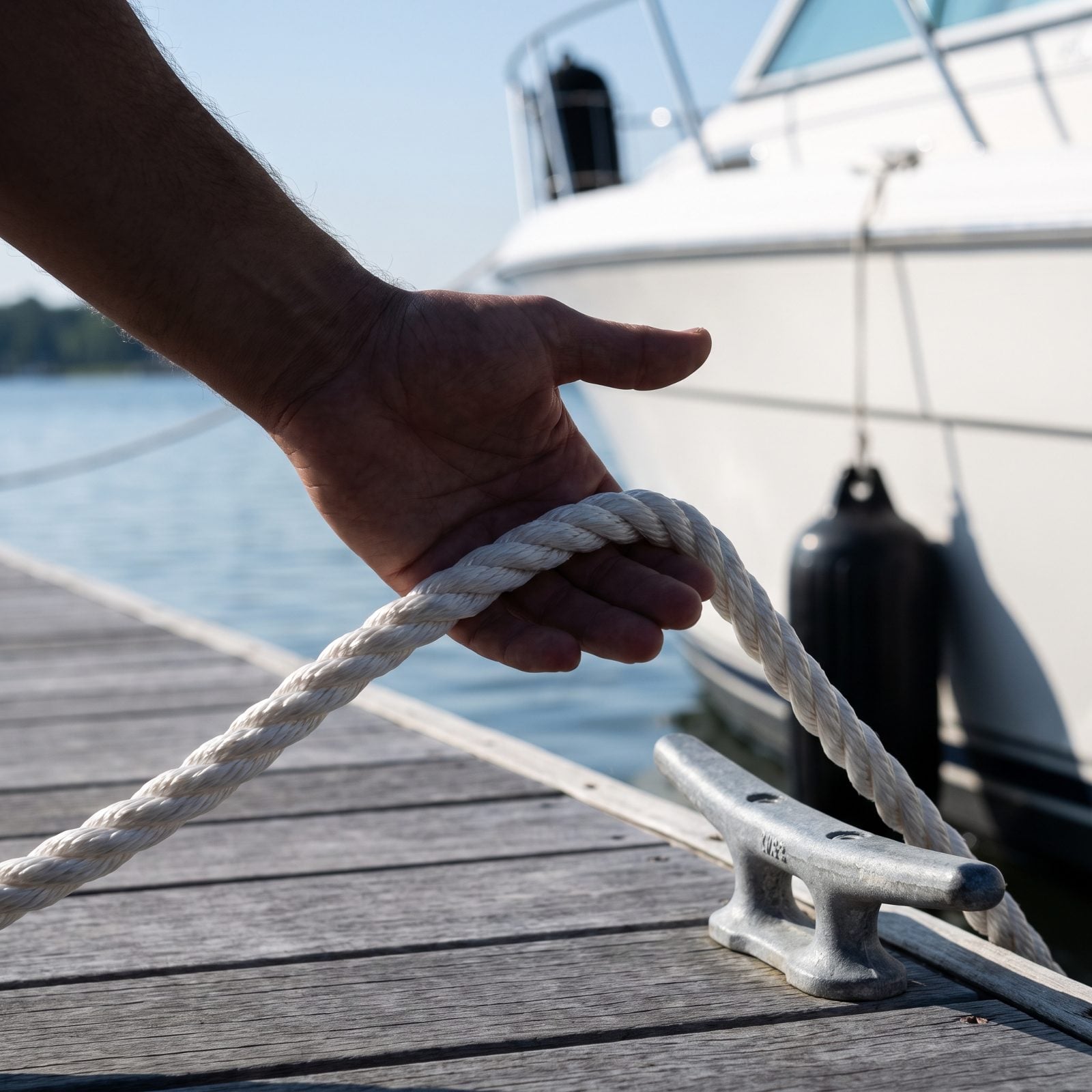
This is the one that takes fingers. A loaded dock line under a surging boat generates enough force to snap bone, and a line wrapped around a hand has nowhere to let go.
Hold it in an open palm. Take a turn around a cleat, never around your own wrist. If the load gets away from you, you drop the line and it goes into the water instead of taking your tendons with it. Experienced hands spot a greenhorn instantly by this one tell — the panicked grab that loops the rope around a hand. Keep yours flat and free.
20. Hand Over Dock Lines Instead of Throwing Heavy Coils
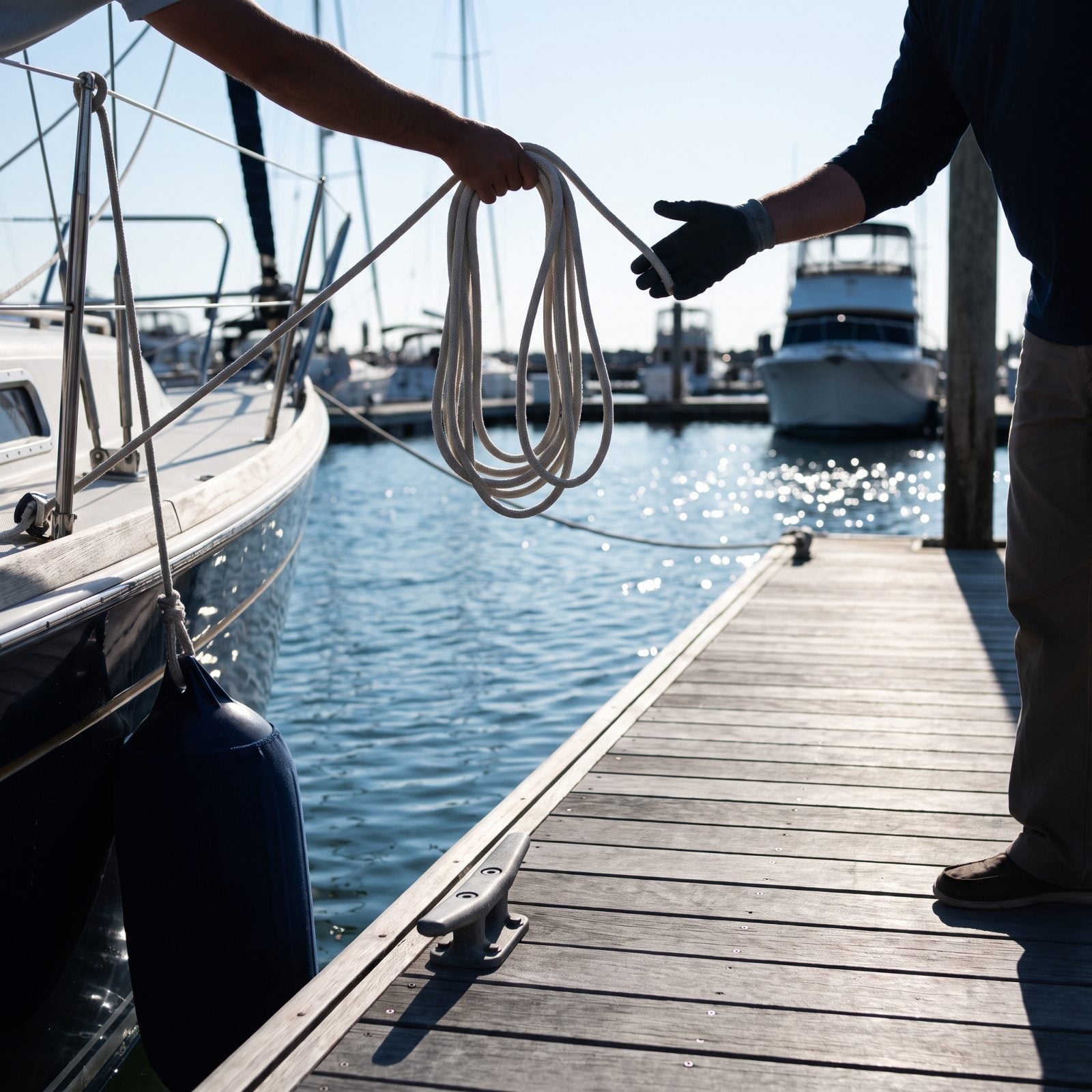
A heavy coil whipped at a dockhand’s head is not help. It’s a projectile with a monkey’s fist on the end.
When the boat is close enough, pass the line across. Hand to hand beats a hurl every time: no missed catch, no line in the water, no dockhand ducking. If you genuinely have to throw across a wide gap, use a light messenger line with a soft weight, and call out before it leaves your hand so the person on the dock is looking at you and not somewhere else. Boating is a small world. The dockhand you clocked in the ear remembers.
19. Clear Every Line From the Water Before Shifting
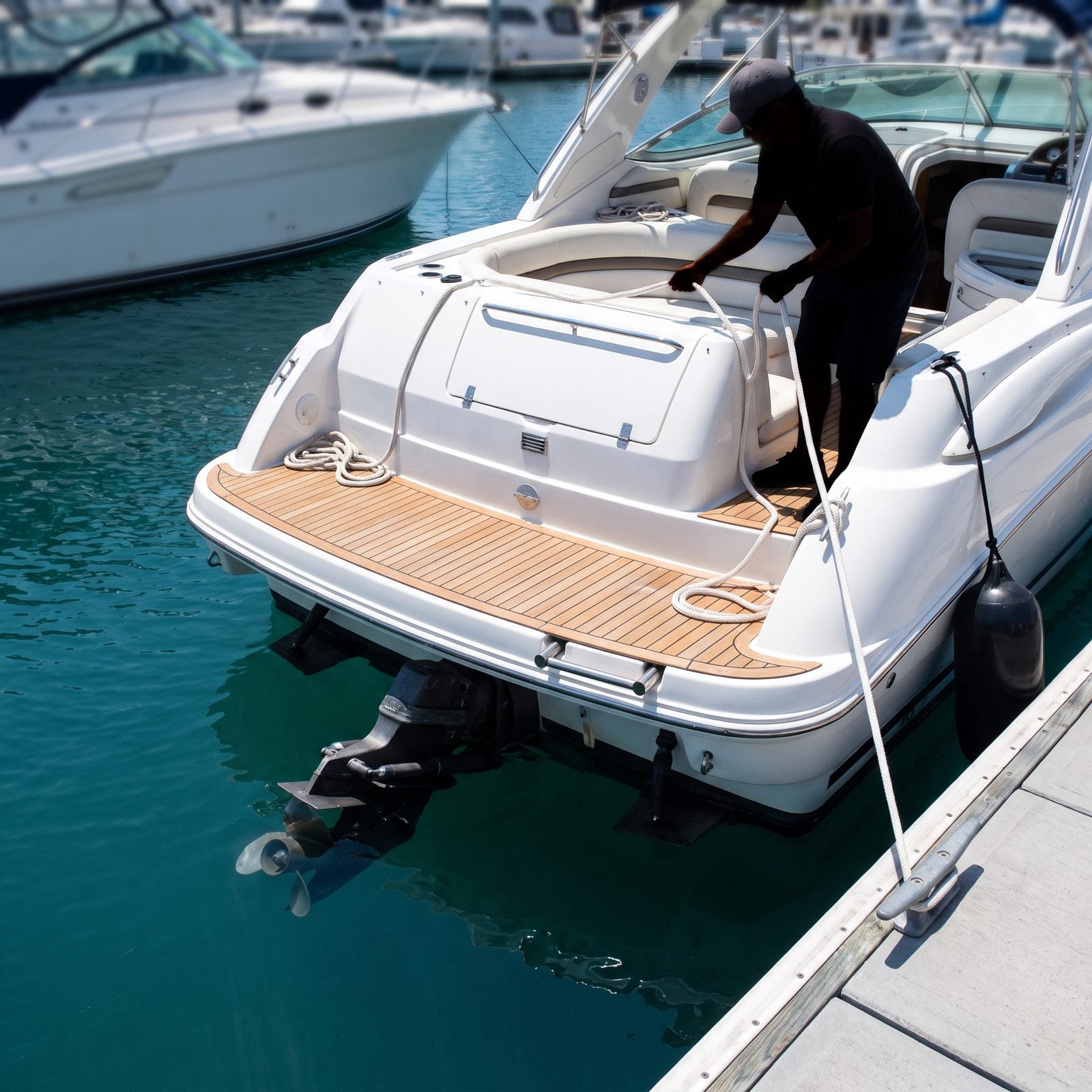
A loose line in the water is looking for a propeller, and it will find one.
Before anyone touches a throttle or shifts into gear, every line is either made fast or aboard and clear of the water. A dock line sucked into the prop can stop an engine cold, wrap the shaft, and leave you dead in the water in a crowded basin with no steering. Worse, it can drag taut and jerk whatever it’s still tied to.
So the habit is simple. Last thing before the shift, a quick scan of the stern and both sides. Clear water, clear to go.
18. Use Only the Assigned Slip, Even When Another Looks Empty
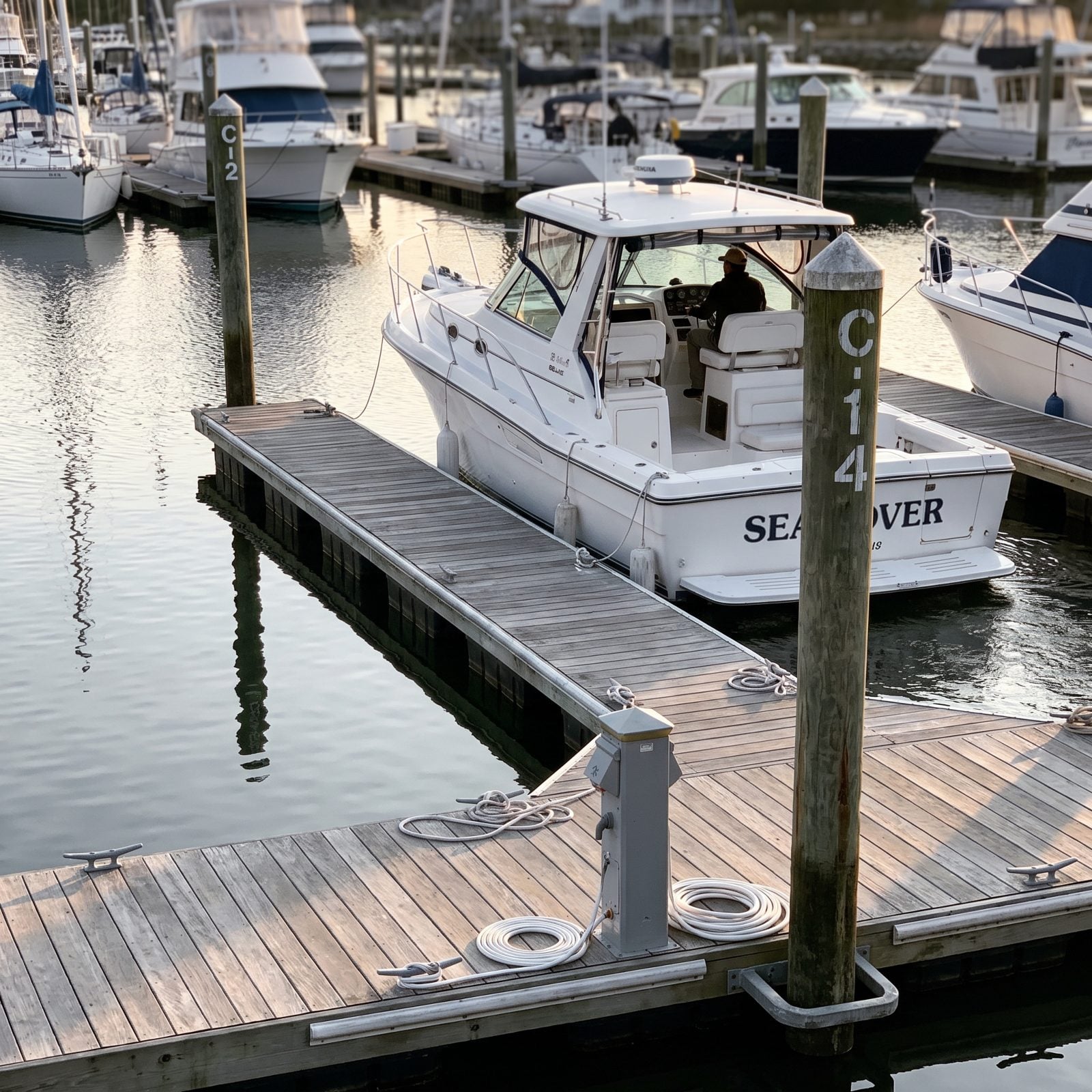
That empty slip isn’t empty. It’s reserved for a boat that’s out fishing, running fuel, or due back on the evening tide. Marinas assign berths for a reason, and “it looked open” is not a defense anyone wants to be making when the rightful boat shows up at dusk.
Transient docks run the same way. Check in at the office or hail the harbormaster on the VHF before you tie up anywhere. The slip that looks perfect may be too shallow at low water, or wired for a power draw your boat can’t match.
17. Keep the Entire Boat Inside the Assigned Slip Envelope
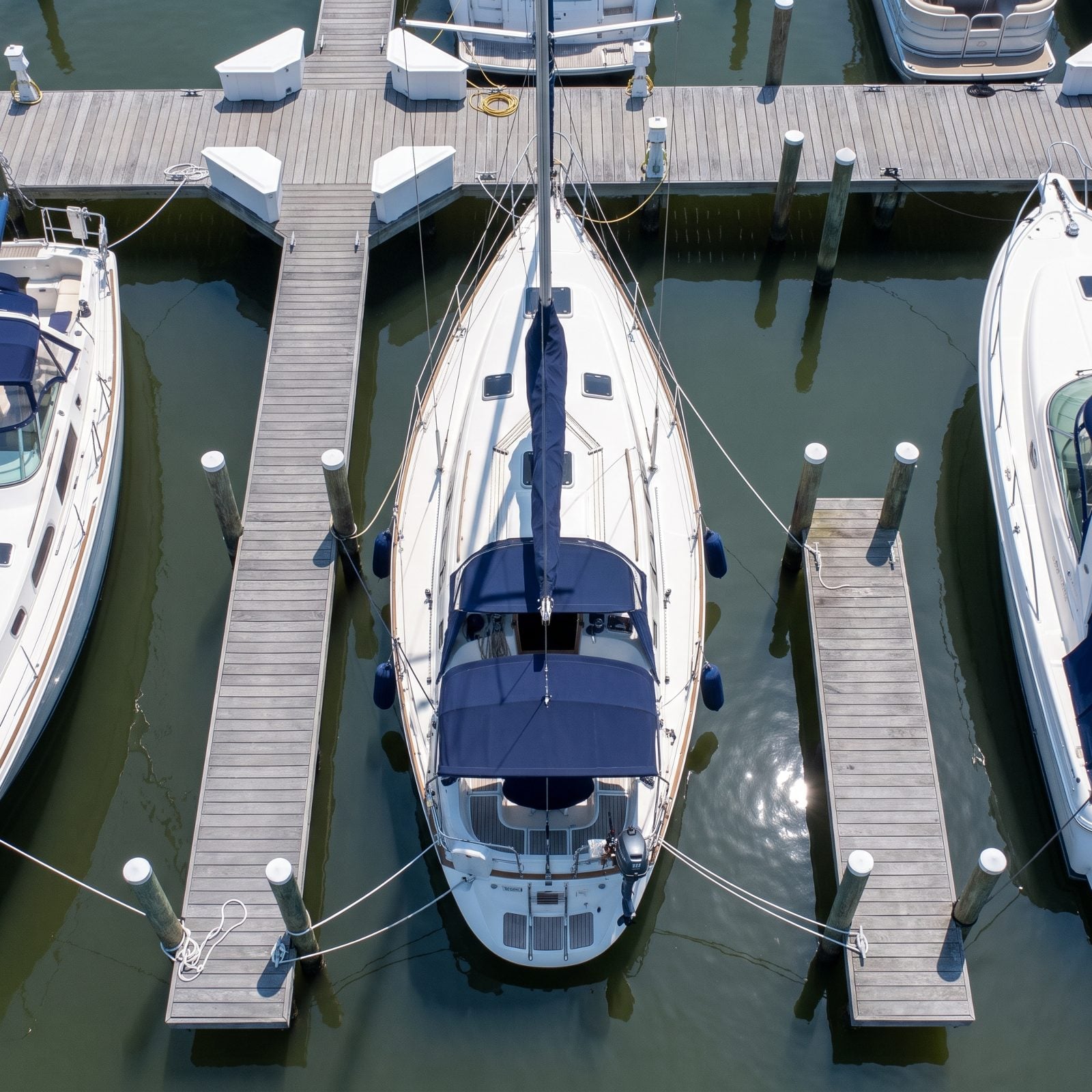
Your slip has an invisible box, and everything you own needs to live inside it. The bow pulpit that juts into the fairway, the dinghy hanging off the stern, the outboard tilted past the finger pier — all of it becomes somebody else’s problem the moment they’re backing into the slip across from you.
Adjust your lines so the boat sits centered and contained. Swing the outboard in. Snug the tender against the transom. A boat that overhangs its box turns every neighbor’s docking into an obstacle course, and marina life runs on nobody making their neighbor’s day harder than it has to be.
16. Secure Dinghies Where They Cannot Block the Fairway
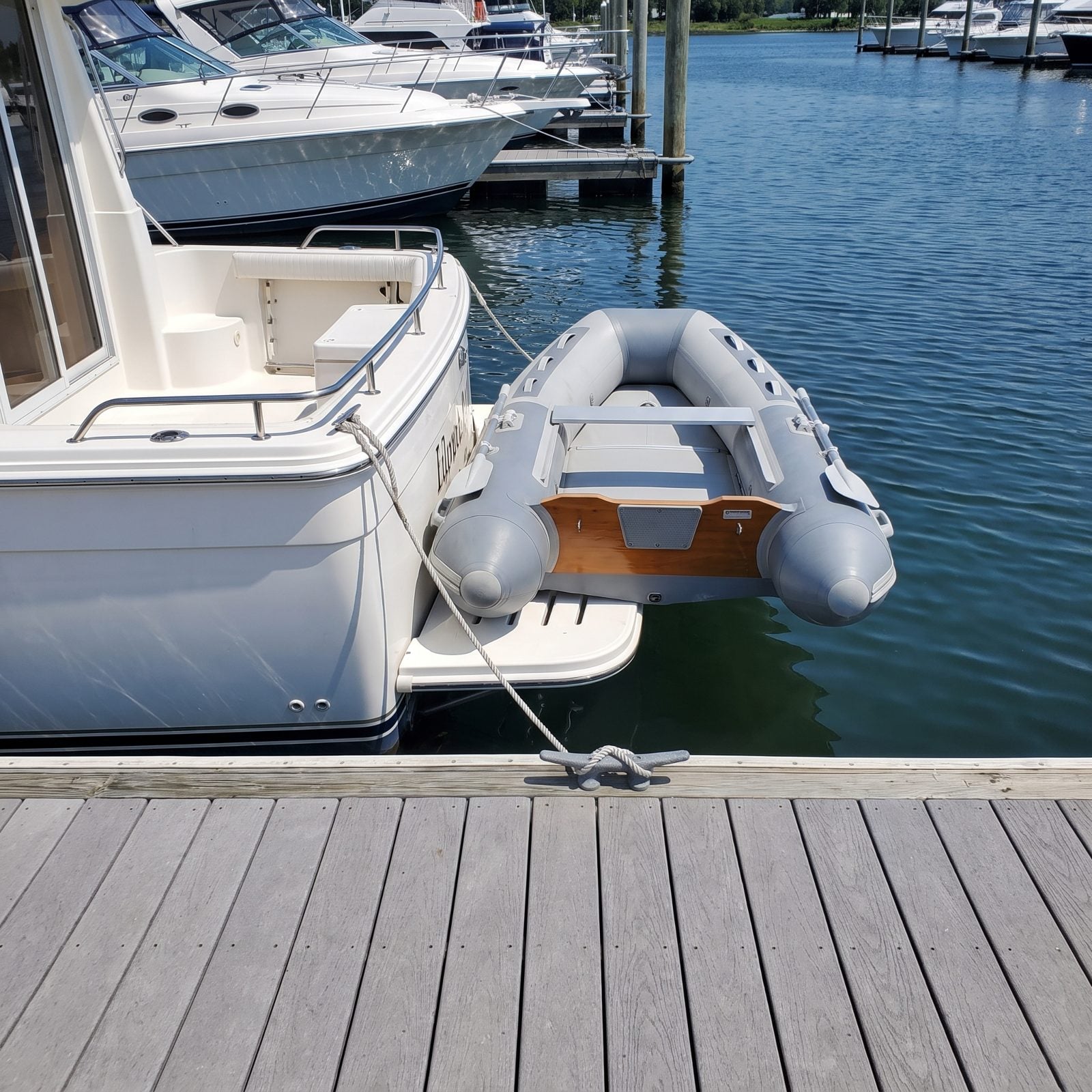
A dinghy trailing off the stern on a long painter looks harmless until a 38-foot cruiser tries to back out of the slip across the way. That little tender swings right into the fairway, and now someone’s fending off with a boat hook at idle, muttering things you can hear from three slips down.
Snug it tight to the transom, or haul it onto the swim platform overnight. Keep the painter short — long enough to float free of your prop, short enough that it never drifts into the lane boats actually use.
15. Add Chafe Protection Wherever Lines Rub
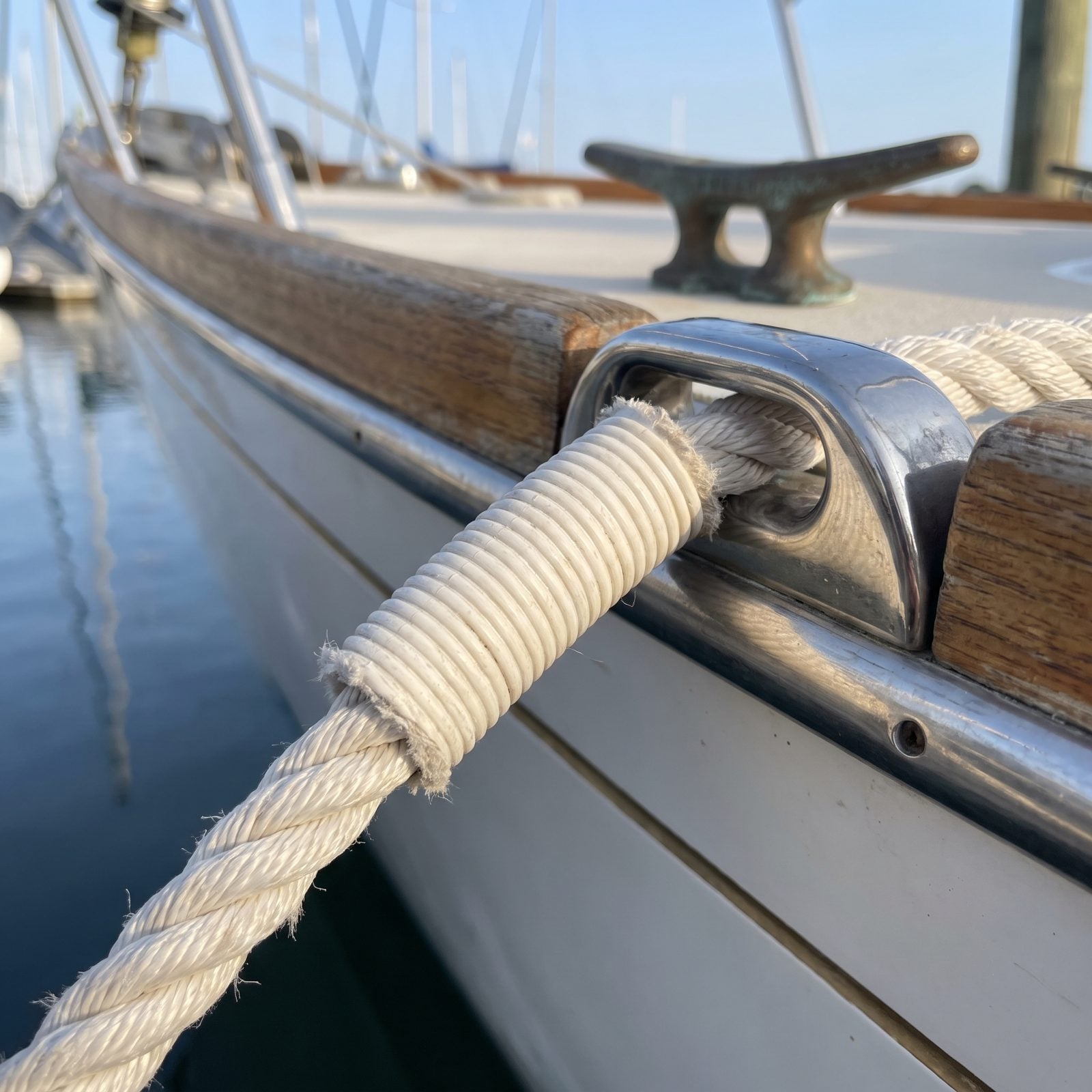
Lines fail where they rub, not where they’re strong. A dock line sawing back and forth across a chock or a rough piling edge will chew through its own cover in one bad night — and it always happens at 3 a.m., during the one blow nobody forecast.
Slide a chafe guard, a length of split garden hose, or even a wrapped rag onto the line, then work it along until it sits right where the line meets the chock or edge, not out on the free span. Cheap insurance. A parted line sends your boat into your neighbor’s gelcoat, and that’s a conversation nobody enjoys having over coffee.
14. Coil Extra Line Tails Clear of Walking Surfaces
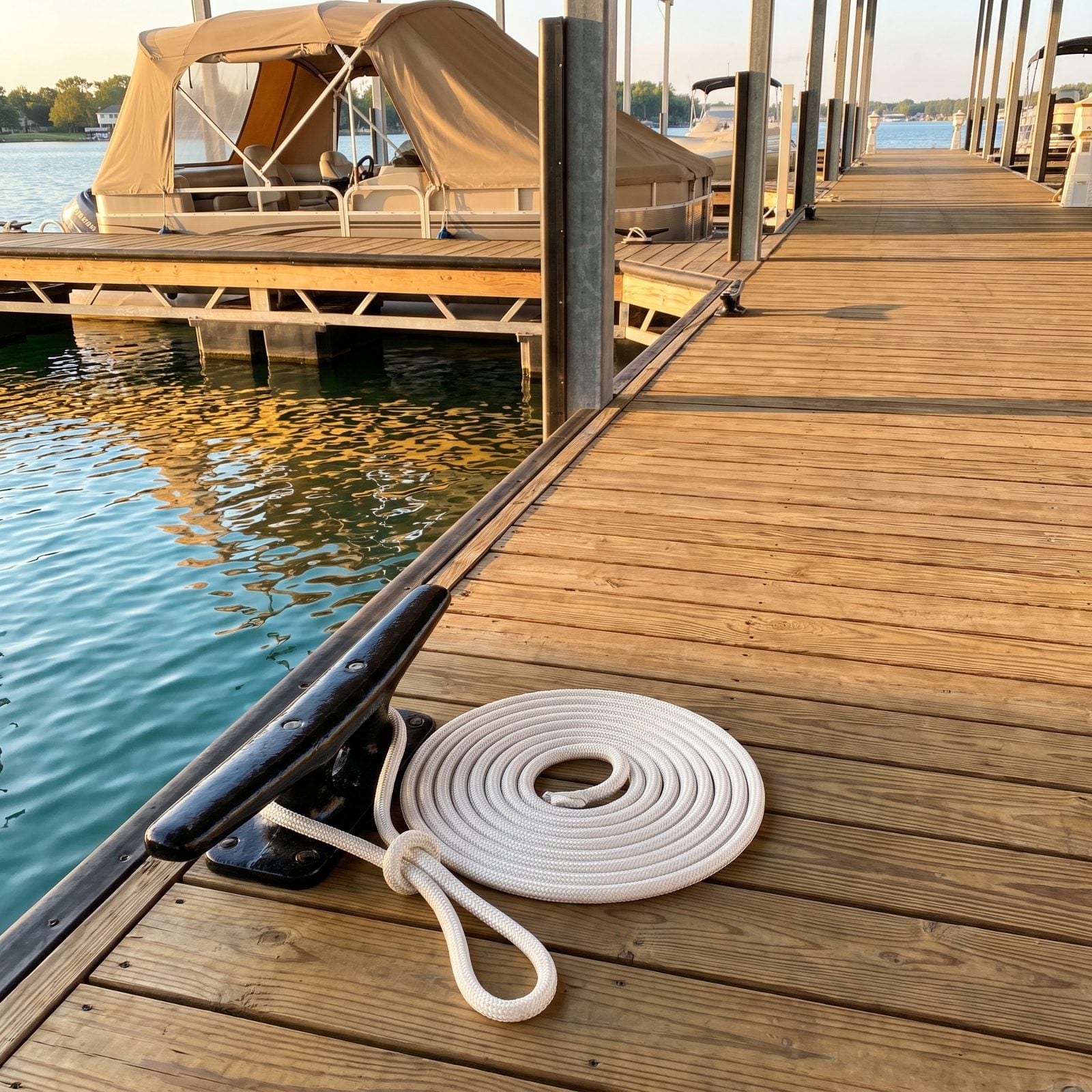
You’ve taken a turn around the cleat base with no boat on the other end and then left four feet of line and its eye loop snaking across the finger pier like a tripwire set for your dock neighbor carrying a cooler in each hand.
Flake the excess into a loose coil and drop it beside the cleat, not across the path. Some folks hang the coil off the cleat horn. Either works. What doesn’t work is the loop that catches a toe at dusk and puts somebody in the water between two hulls.
13. Route Hoses and Cords Without Creating Trip Hazards
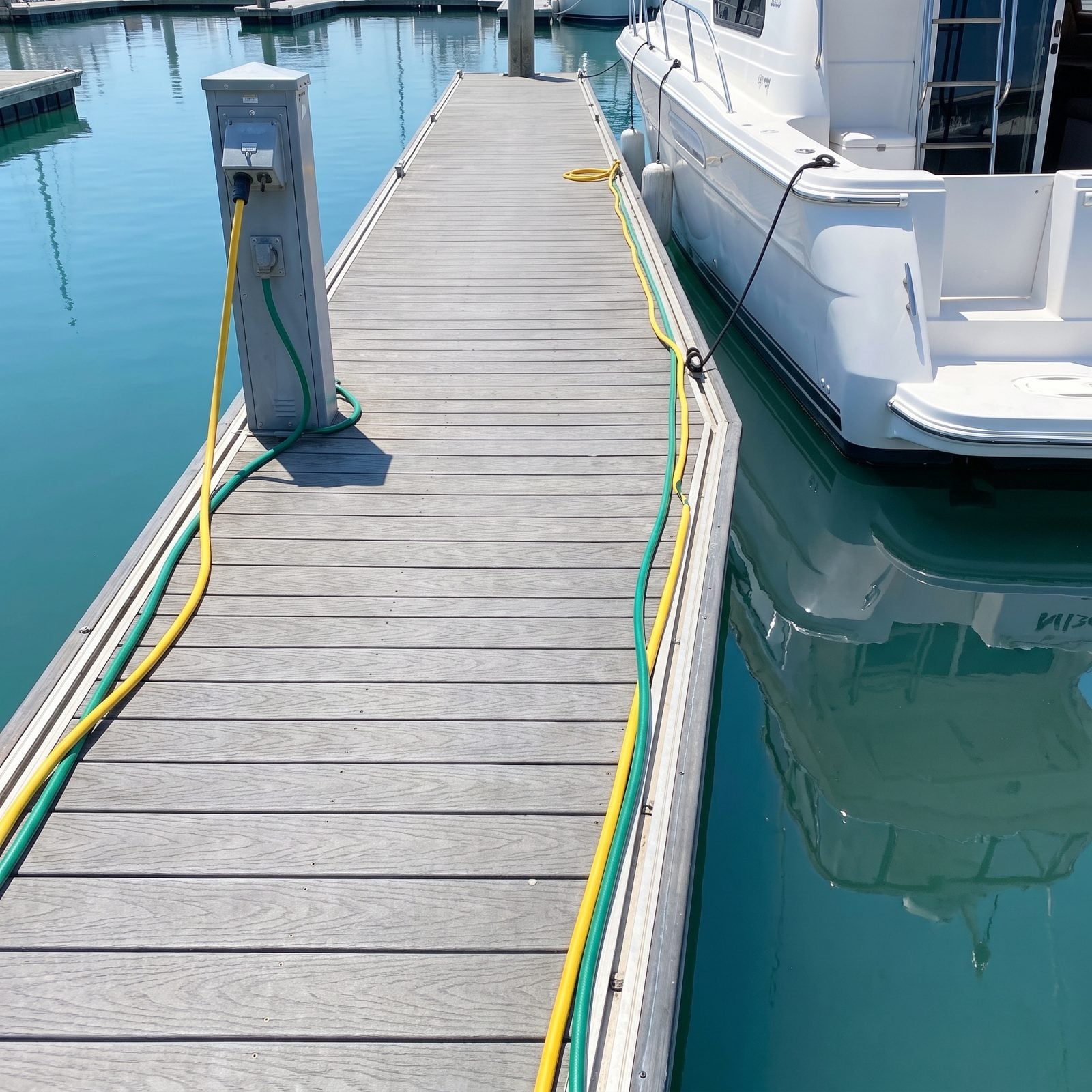
The walkway is not your cable run. A shore-power cord and a water hose stretched diagonally across the main dock turns a casual stroll into an obstacle course, and the older couple two slips over shouldn’t have to high-step anything.
Run them along the edge of the finger, hug them to the piling, keep the center open. If you must cross a walking surface, a rubber cord ramp solves it for about twenty bucks. Loose yellow cords are the thing people snag on most in a marina, and it’s entirely avoidable.
12. Ask Before Unplugging Anything From a Shared Pedestal
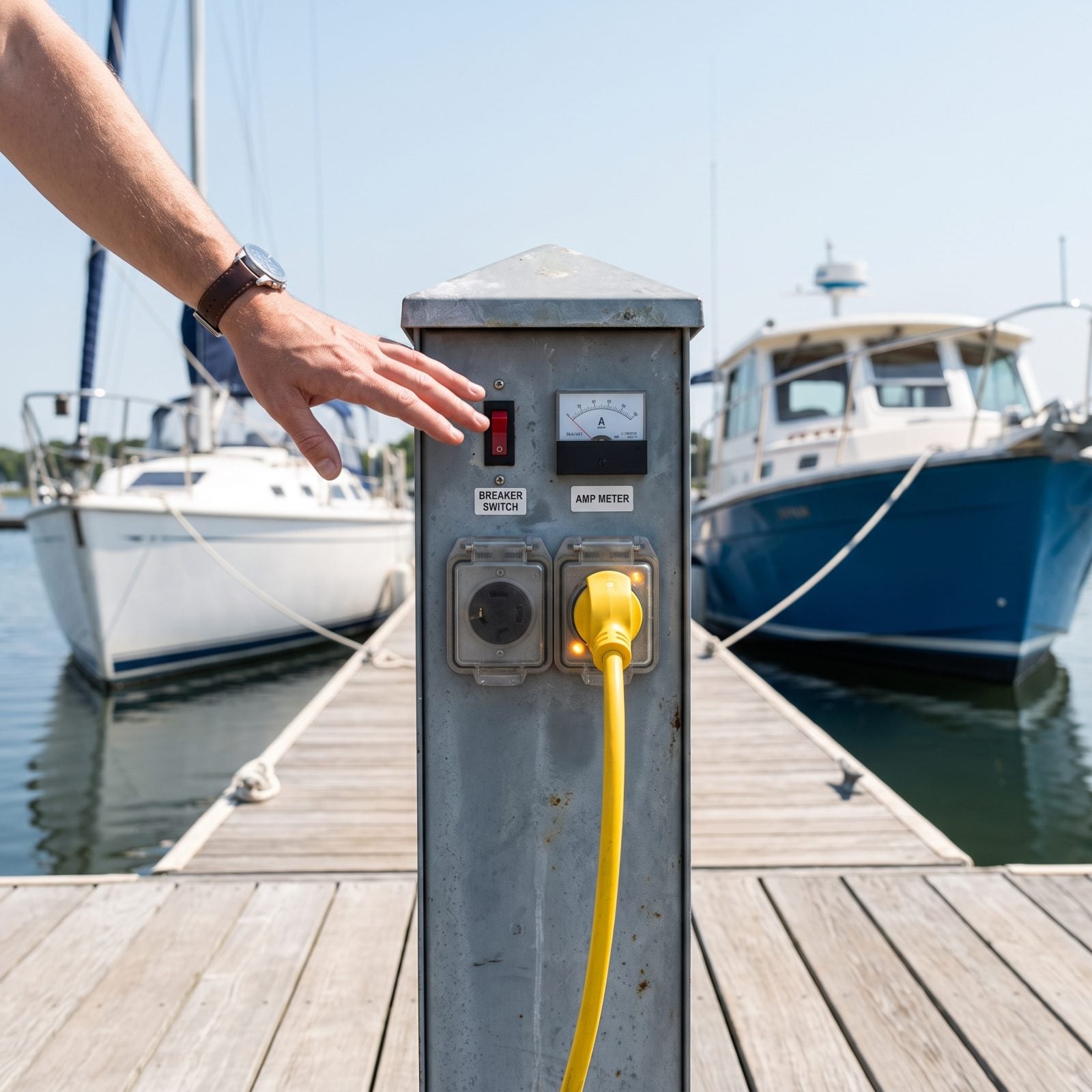
That pedestal you’re sharing is powering your neighbor’s refrigerator, their bilge pump float switch, maybe a dehumidifier keeping their cabin from turning into a terrarium. Pull their plug to free up an outlet for your own cord, and you might be melting a week’s worth of groceries — or sinking their boat slowly over a long weekend.
Knock, text, leave a note. Ask first, always. And flip the breaker off before you unplug or plug anything in. Yank a live 30-amp connector and you arc the pins and pit the contacts, which is how pedestals start running hot.
11. Return Dock Carts Immediately After Unloading
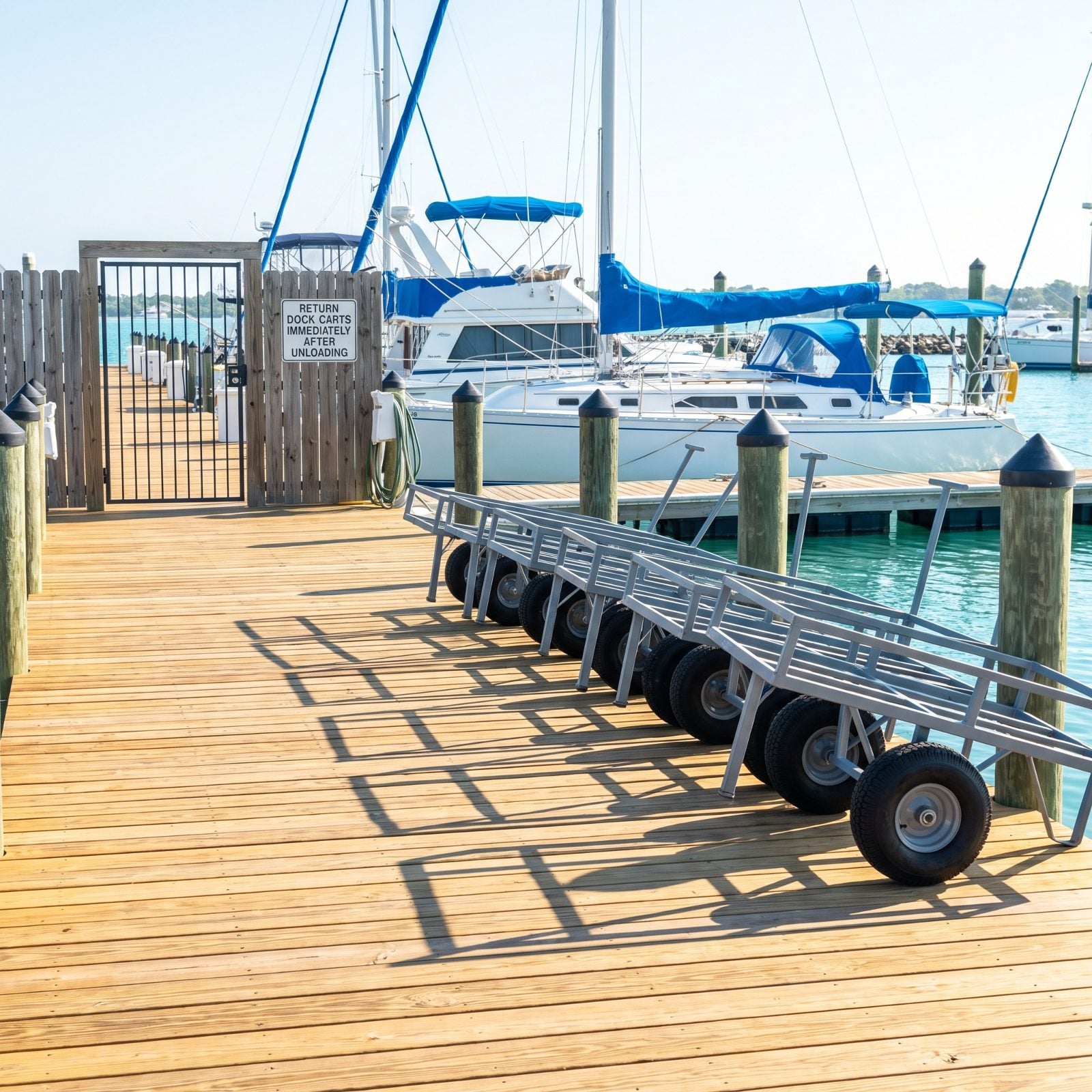
There’s a special frustration reserved for the family arriving with six bags of ice and a weekend of groceries, only to find every dock cart parked at the far end of G-dock, abandoned by someone who meant to bring it back and then cracked a cold one instead.
Unload, then walk it back. Right away. The cart is a shared tool, not slip furniture. A marina with three or four carts for a hundred boats runs entirely on the honor of people returning them, and the whole system collapses the second a few folks treat it like their own.
10. Move Coolers, Tackle and Luggage Off the Walkway
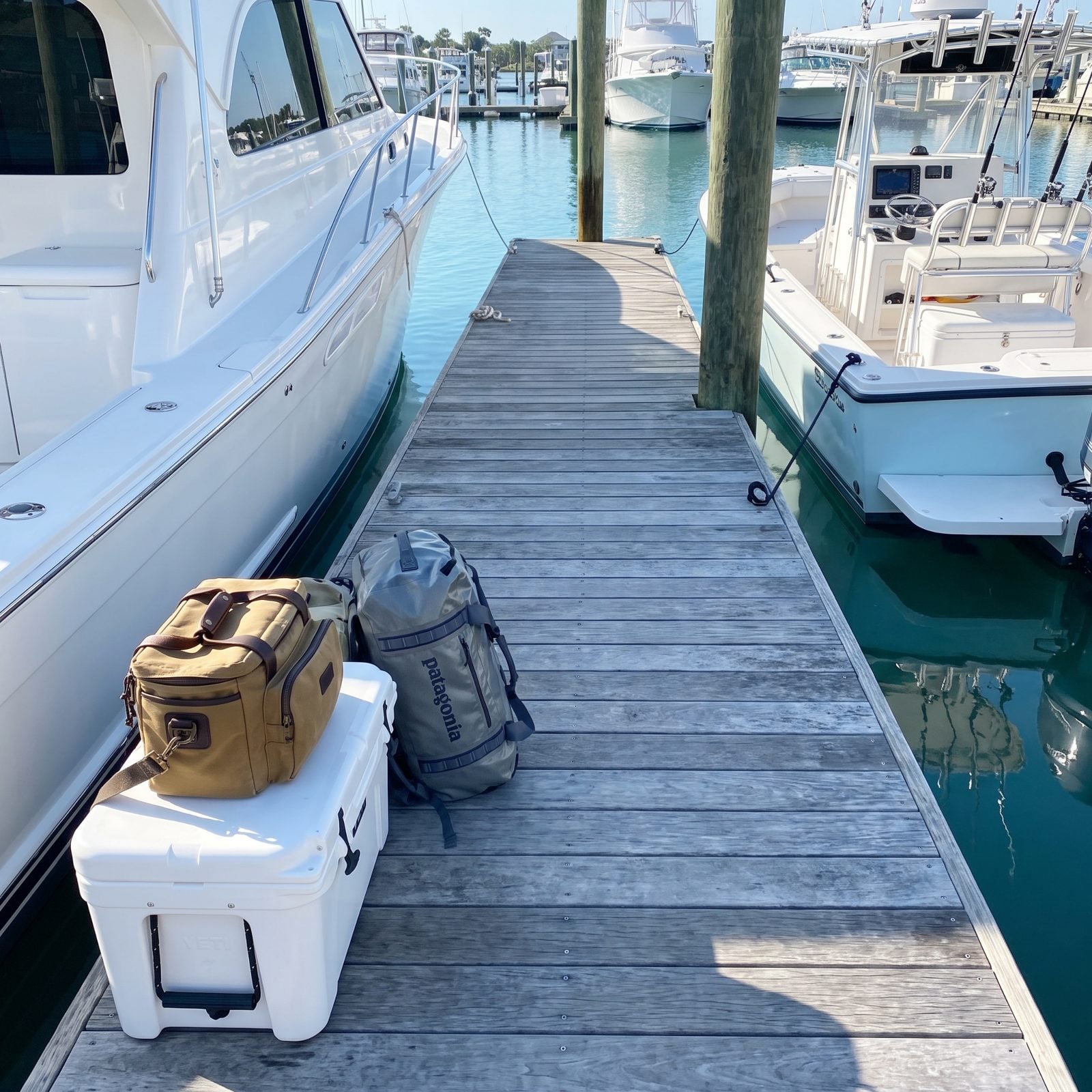
Loading day spreads out fast. Cooler here, rod bag there, somebody’s wheeled suitcase parked dead center while they go back for the sunscreen — and suddenly the finger pier is impassable.
Stage everything against your own hull, on the slip side, in a tight pile. Load aboard in waves rather than carpeting the dock with your whole trip at once. The dock belongs to everyone walking it, and nobody wants to turn sideways and shuffle past your weekend like it’s a yard sale.
9. Secure Halyards Before Their Repeated Tapping Disturbs the Dock
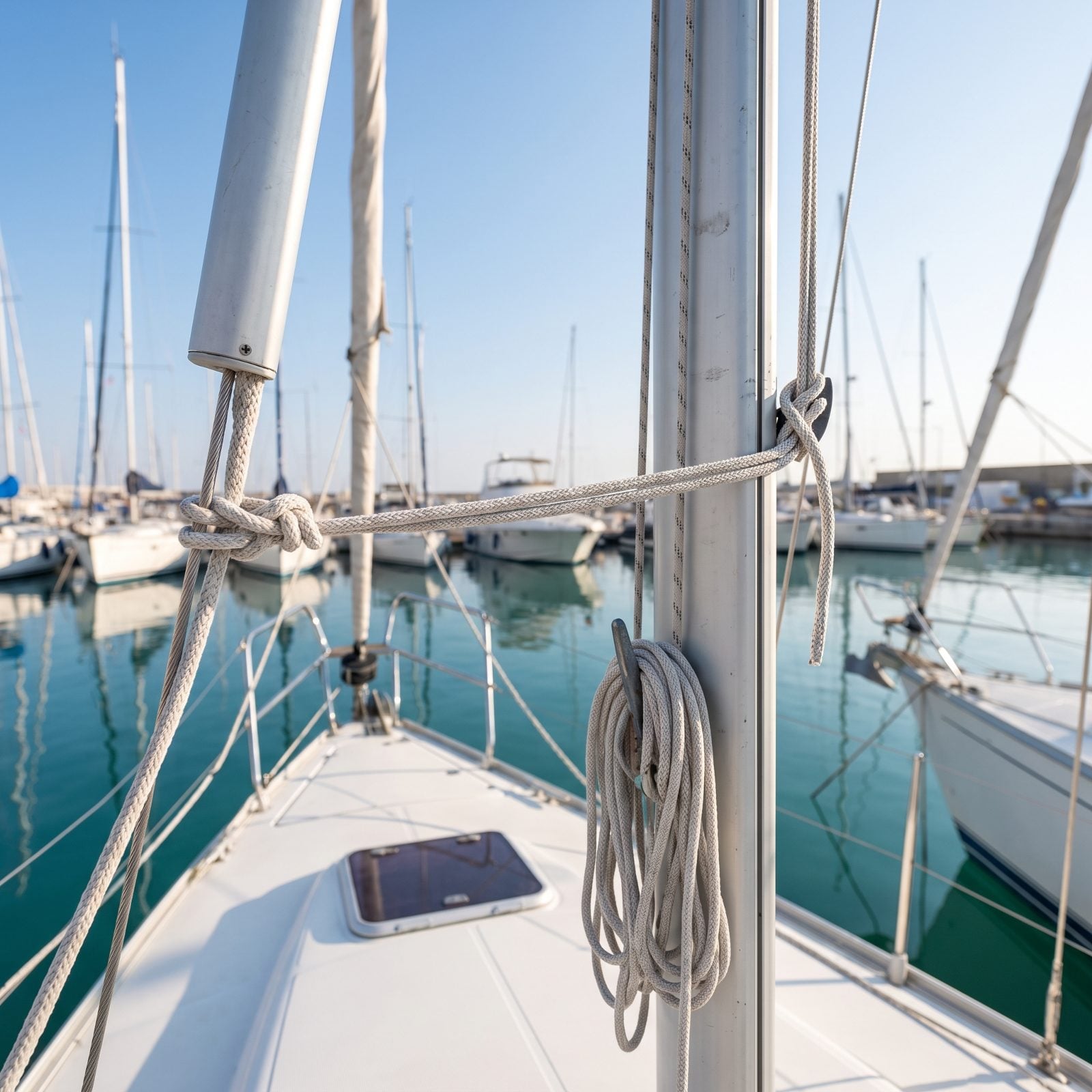
Ting. Ting. Ting. A loose halyard slapping an aluminum mast is the sound that has ended more marina friendships than any engine, any dog, any late-night party. It carries for hundreds of feet across the water, and at 2 a.m. it’s roughly as soothing as a dripping faucet wired to an amplifier.
Pull your halyards away from the mast and tie them off to a shroud, a stanchion, or snug them to the rail with a bungee. Thirty seconds of work. The owner who leaves theirs clanging all night is the one everybody on the dock has learned to resent by name.
8. Aim Deck and Courtesy Lights Away From Neighboring Cabins
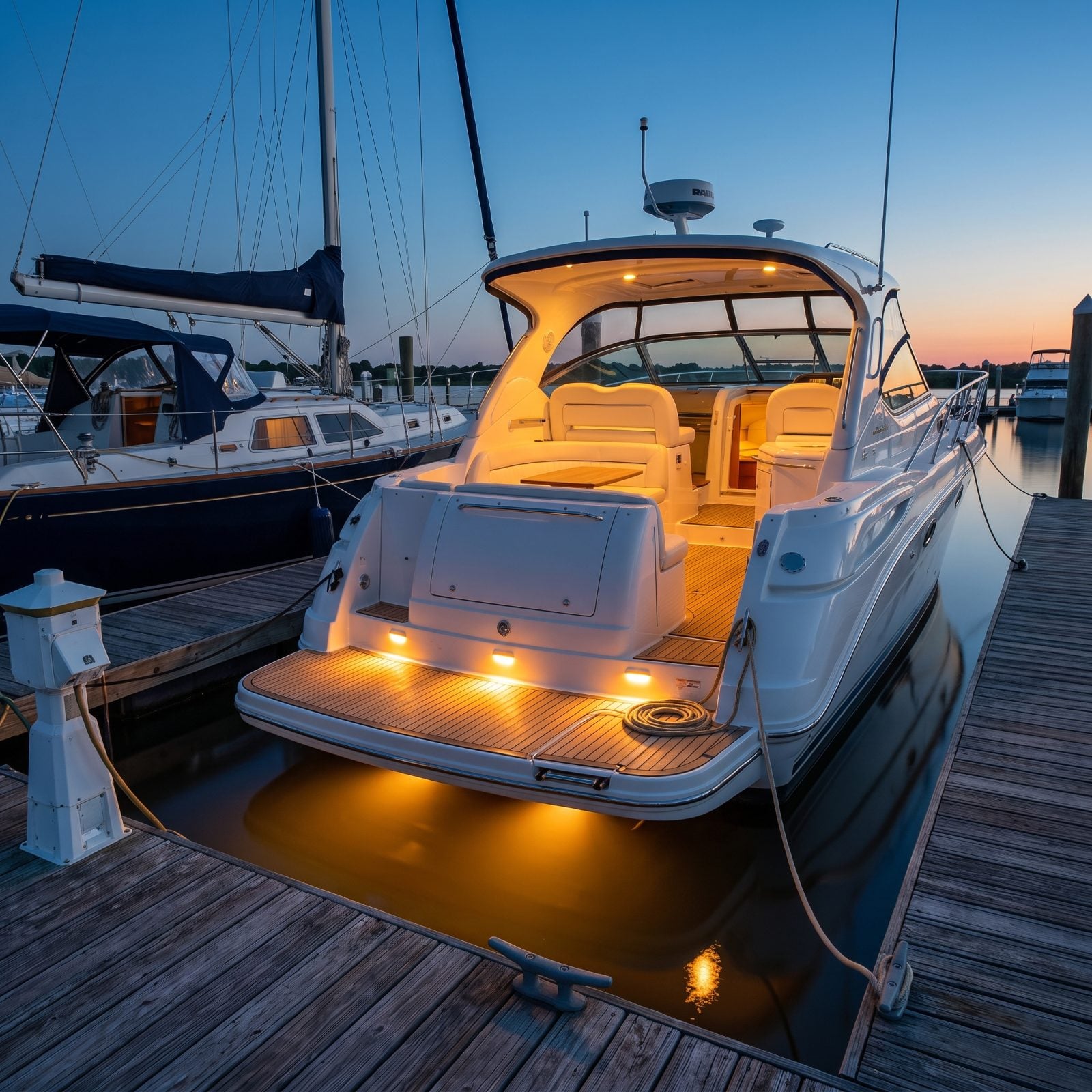
Your spreader lights and cockpit floods might make your evening feel like a stage, but they also pour straight through your neighbor’s cabin portlight and onto the pillow of someone trying to sleep ten feet away.
Point courtesy lights down onto your own deck, not outward across the water. Kill the bright white stuff after dark and switch to warm, low lighting that keeps the glow contained. A marina at night should read as a scatter of soft amber, not a parking lot. Nobody slipped nearby signed up for your floodlights.
7. Point Speakers Inward and Keep Sound Within the Slip
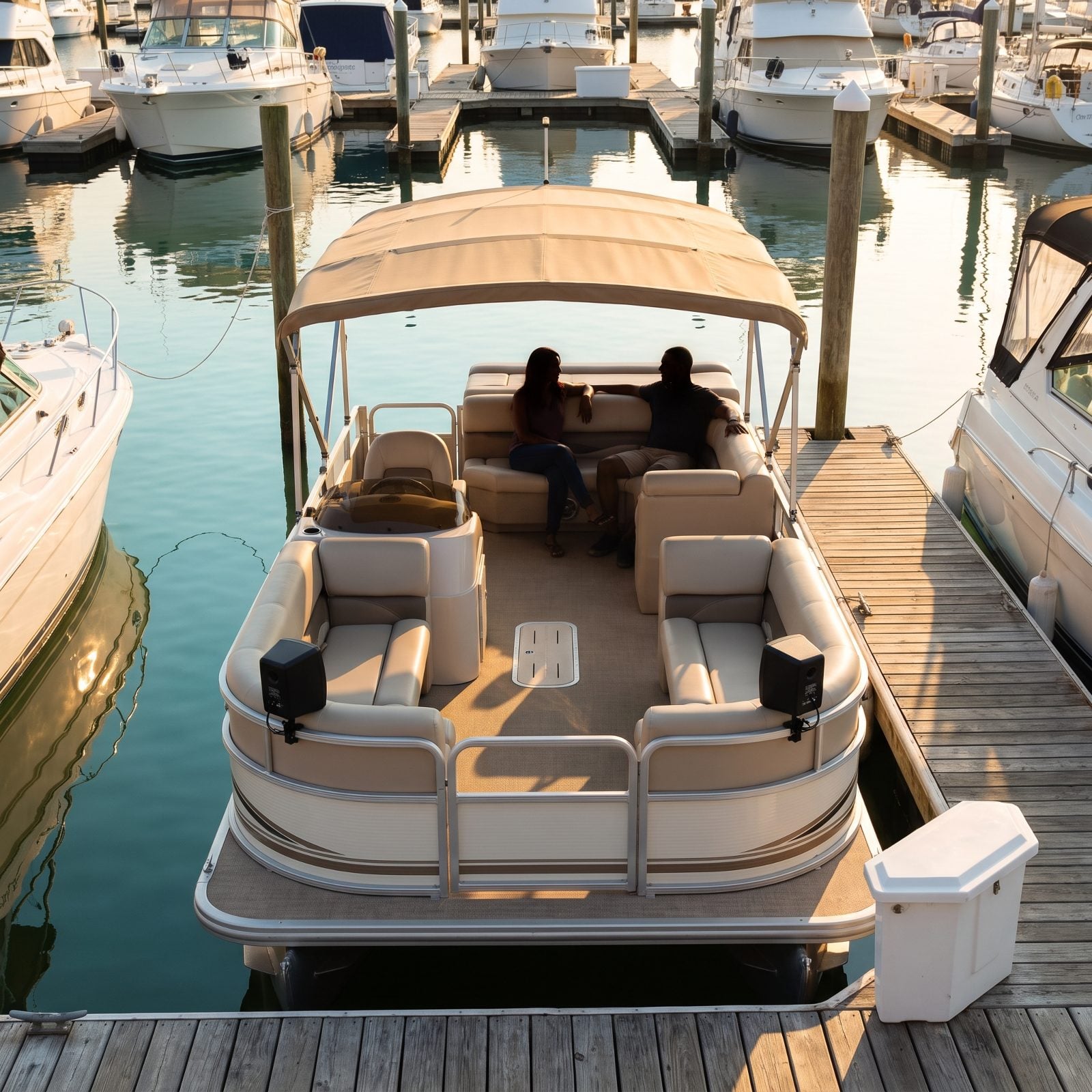
Sound travels across water like it’s on rails. The music that sits as pleasant background on your own deck lands in the next slip at full volume, and across a calm basin it reaches boats you can barely see.
Angle the speakers inward toward your own seating, keep the volume where conversation stays easy, and let the party wind down early on the water. The best marina evenings are the ones where you hear halyards, gulls, and the soft clink of someone’s ice — not a bass line from four slips over.
6. Never Cast a Fishing Line Across a Working Fairway
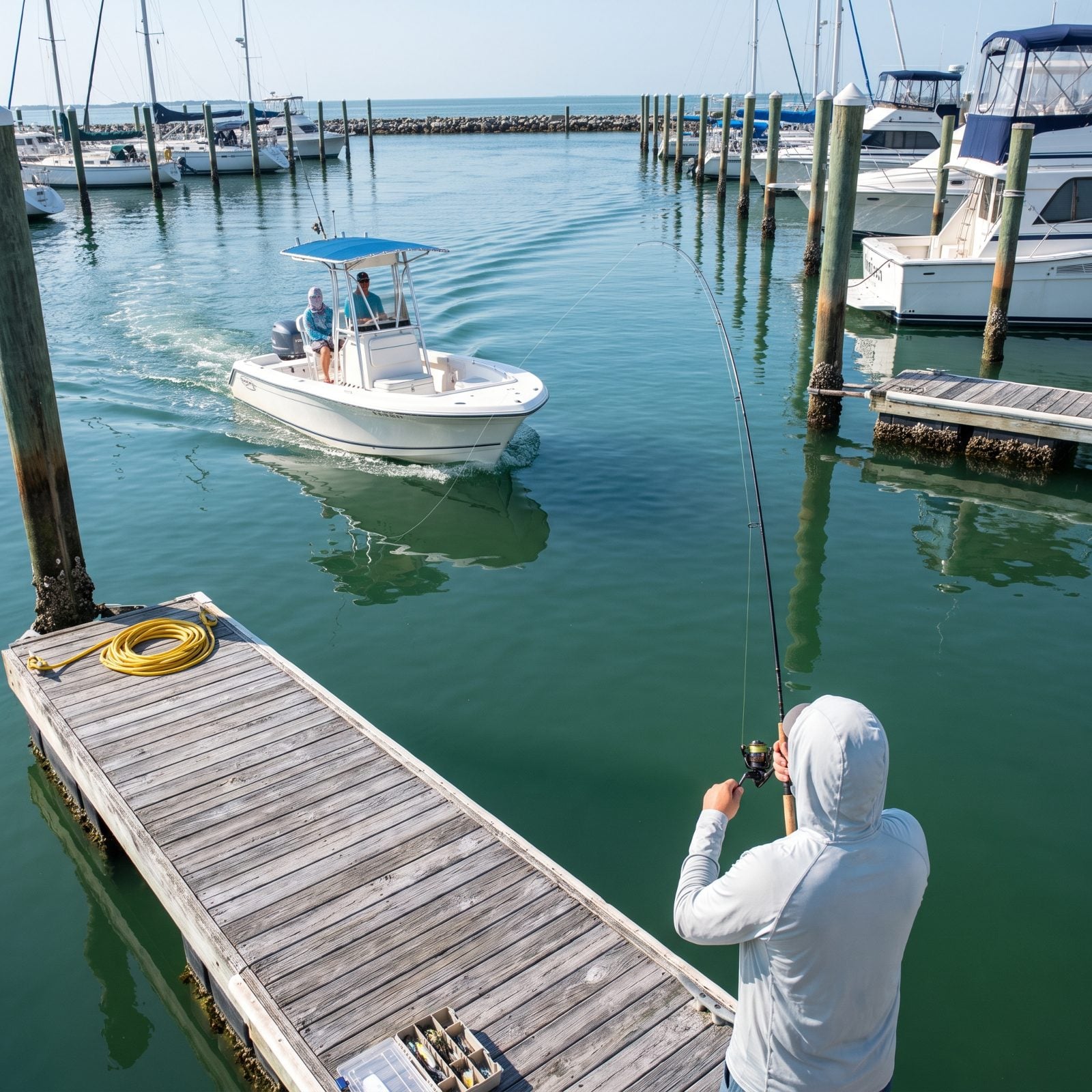
A fairway is a road. Boats need the whole width of it, and a monofilament line strung across open water stays invisible to a helmsman right up until it’s wrapped around a prop or raking across a windshield.
Cast into the slip beside you, along the bulkhead, toward structure that isn’t a traffic lane — honestly, the fish holding under the dock are the ones worth catching anyway. A line draped across the channel snags passing hulls, fouls props, and can whip back at you when a boat clips it.
5. Stay Out of the Water Between Docked Boats
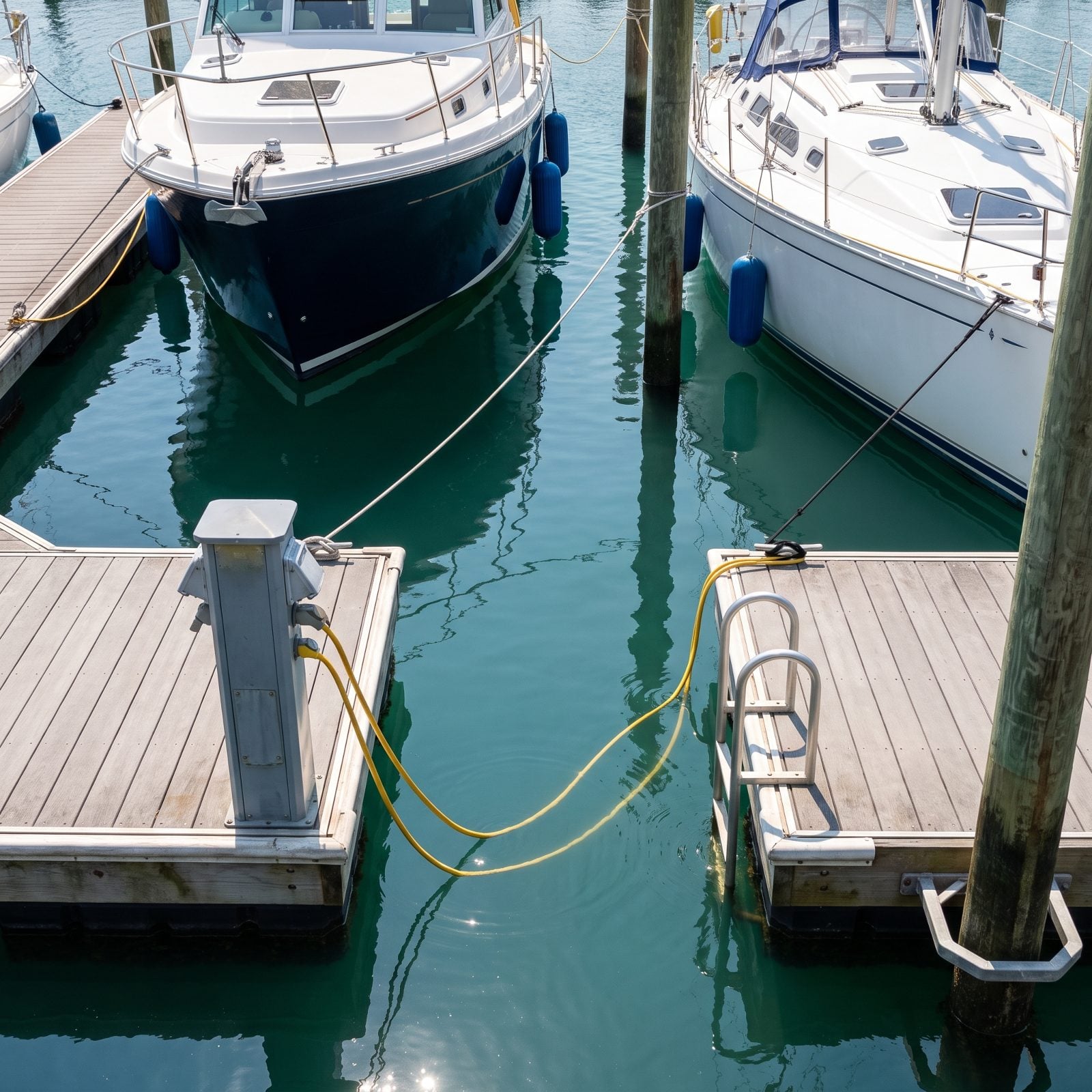
The gap between two boats looks like a nice place to cool off. It isn’t.
Marinas carry shore power, and faulty wiring or a nicked cord can energize the surrounding water. Electric shock drowning leaves no mark and gives almost no warning — swimmers lose muscle control and go under in water that looks completely normal. And the confined space between hulls traps you if a boat shifts against its lines or a wake rolls through.
4. Keep Grills and Open Flames Off Fuel and Wooden Docks
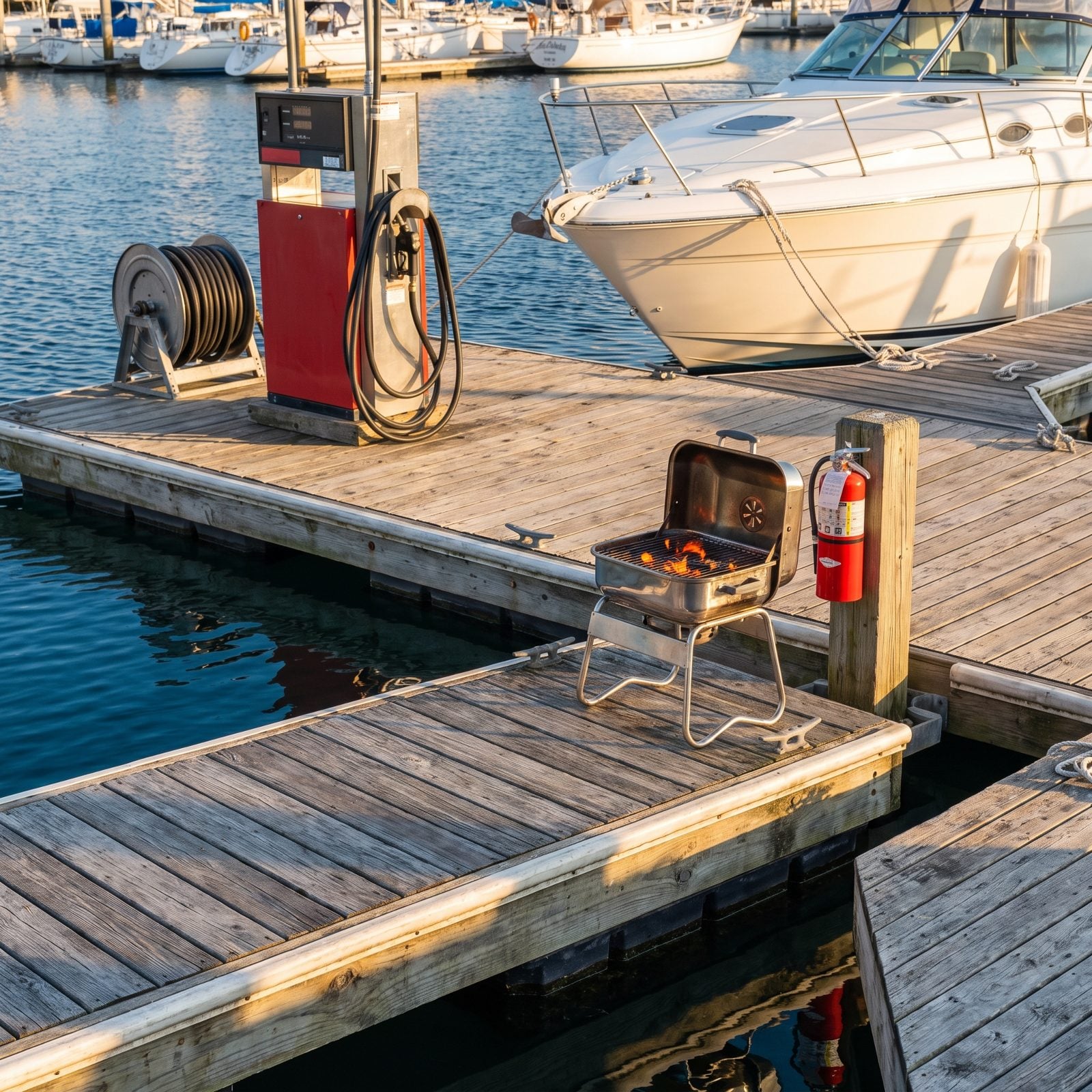
Fuel vapor is heavier than air. It pools low along the planks, right where a dropped coal or a tipped grill would land, and gasoline fumes linger around a fuel dock long after the pumps go quiet. Worse, wooden decking soaks up decades of spilled fuel and oil.
So grill over the water — off the stern or at the far end of a floating dock, never on or near the fuel dock. Keep a charged extinguisher within arm’s reach. One gust, one spark, one unattended lid, and a lovely evening turns into a very bad one for the whole fairway.
3. Move Away From the Fuel Dock as Soon as Fueling Is Complete
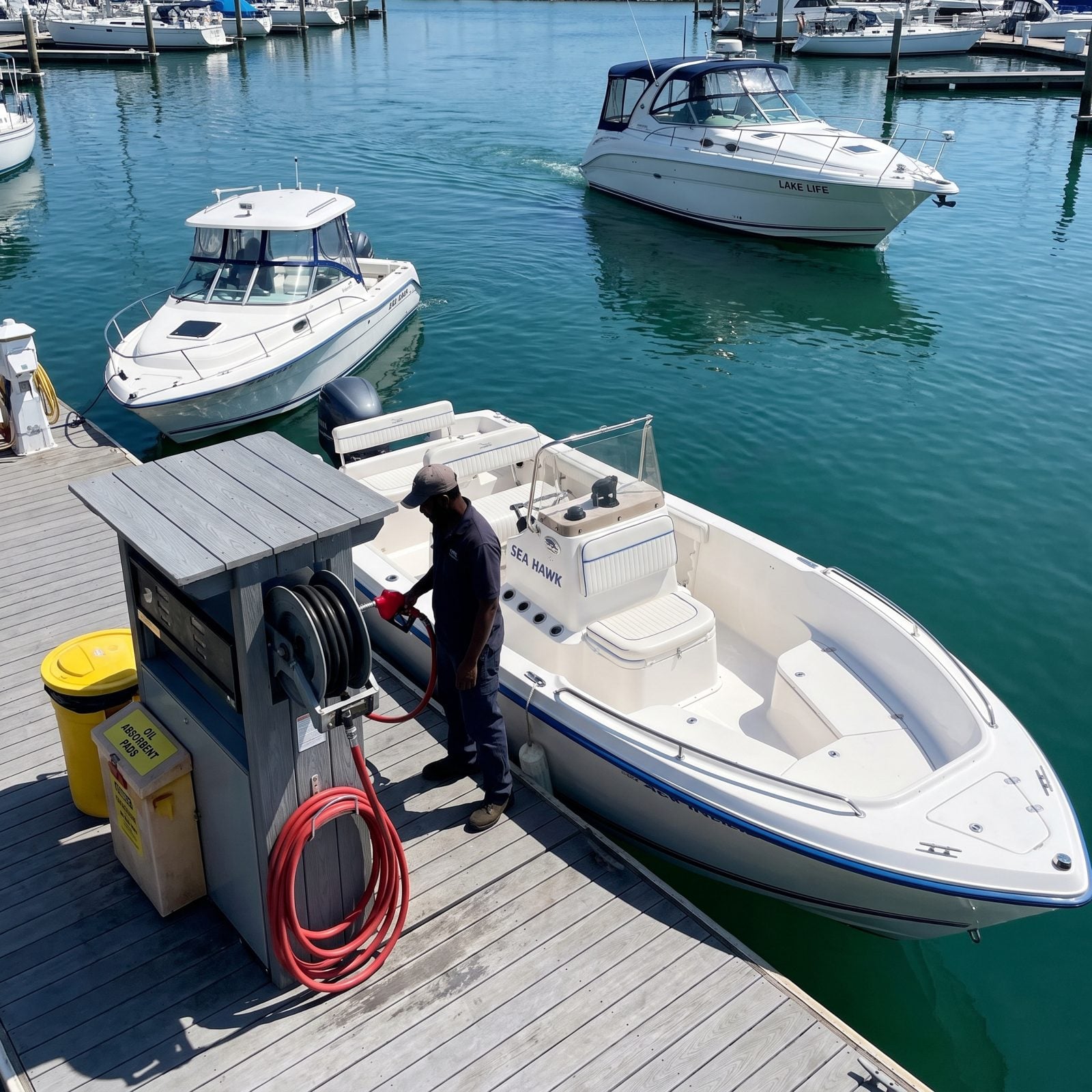
The fuel dock is a counter, not a parking spot. Settle up, stow the nozzle, and clear off so the next boat can pull in. Lunch, bathroom runs, and chart-folding happen in your slip or at the courtesy dock — not with your stern blocking the pumps.
On a busy summer Saturday, boats stack up in the fairway waiting to fuel, engines idling, crews getting impatient. Linger ten extra minutes and you’ve made a traffic jam on the water. Fill up, pay, cast off, go.
2. Report Fuel Spills Immediately and Never Apply Detergent
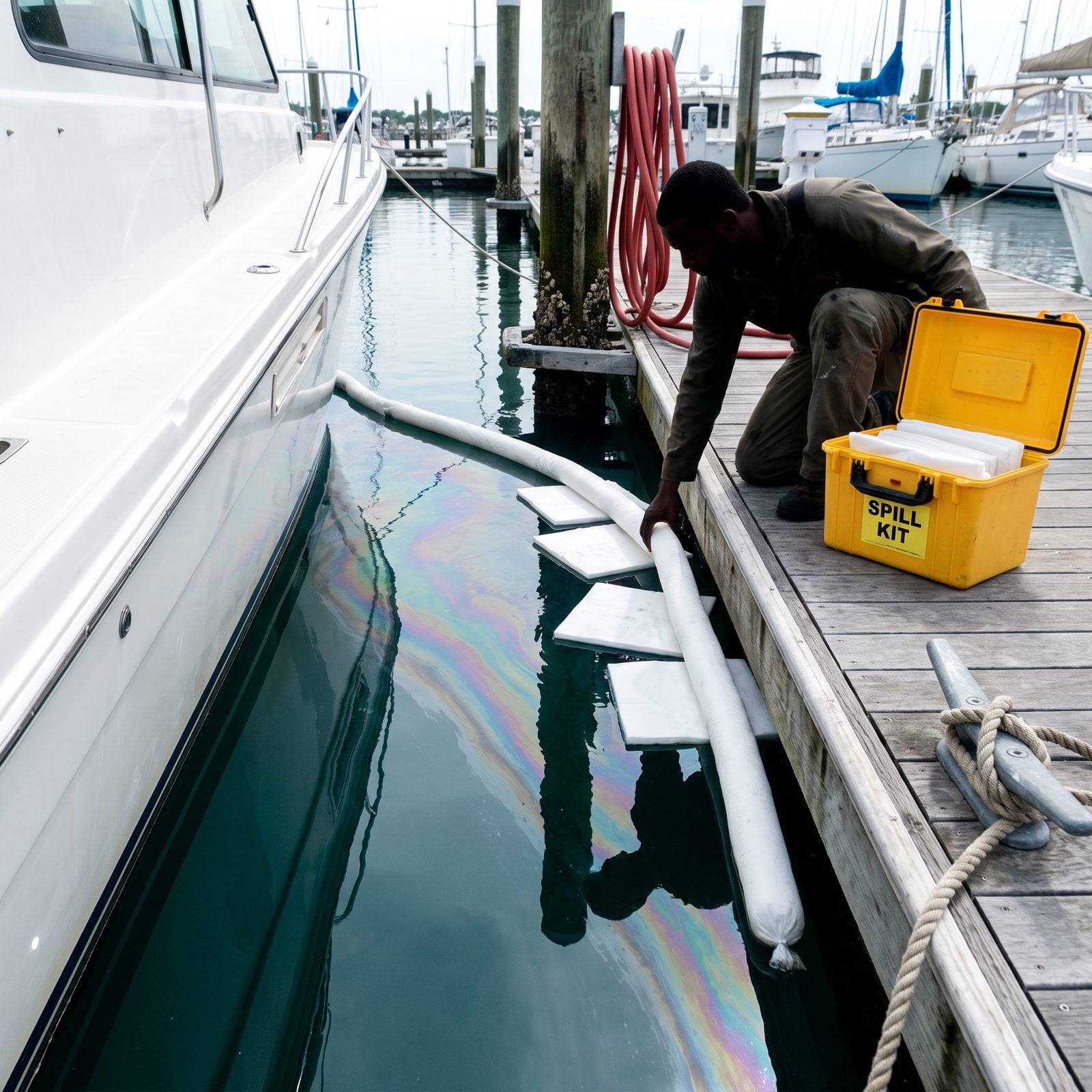
That rainbow sheen on the water is fuel, and it’s a federal matter. Even a cup of gasoline spreads into a slick you can see clear across the fairway.
Tell the marina office and the fuel attendant right away, then contain it with the absorbent pads or sorbent boom from the spill kit every fuel dock keeps on hand. Do not reach for dish soap.
Here’s why. Dispersing a slick with detergent doesn’t clean it — it drives the fuel down into the water column where it does more harm, and it breaks the Clean Water Act while it’s at it. Soap only makes the sheen vanish from view, which is exactly why it’s the wrong move.
1. Return the Pumpout Hose to Its Holder Instead of the Dock Planks
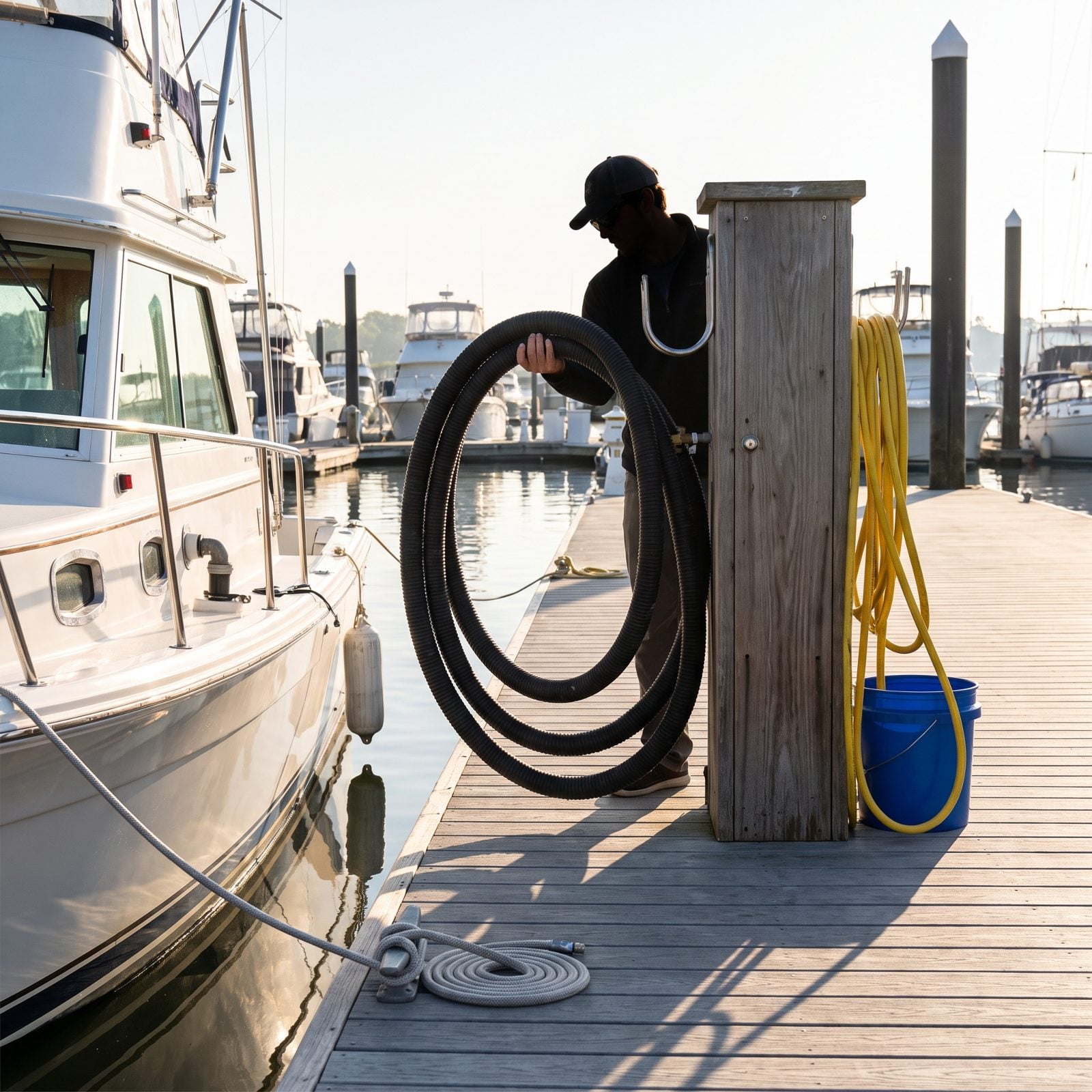
Pumpout hoses handle one thing, and you really don’t want it on the planks where everyone walks barefoot.
Rinse the fitting, coil the hose, set it back in its holder every single time. Leave it dropped on the dock and you spread waste, draw flies, and earn the kind of reputation that trails a boat around a marina for years.
Thirty seconds of courtesy keeps a shared station usable for whoever’s next. Leave the pumpout dock the way you’d want to find it — which, let’s face it, is almost never how the last careless boater left it.