
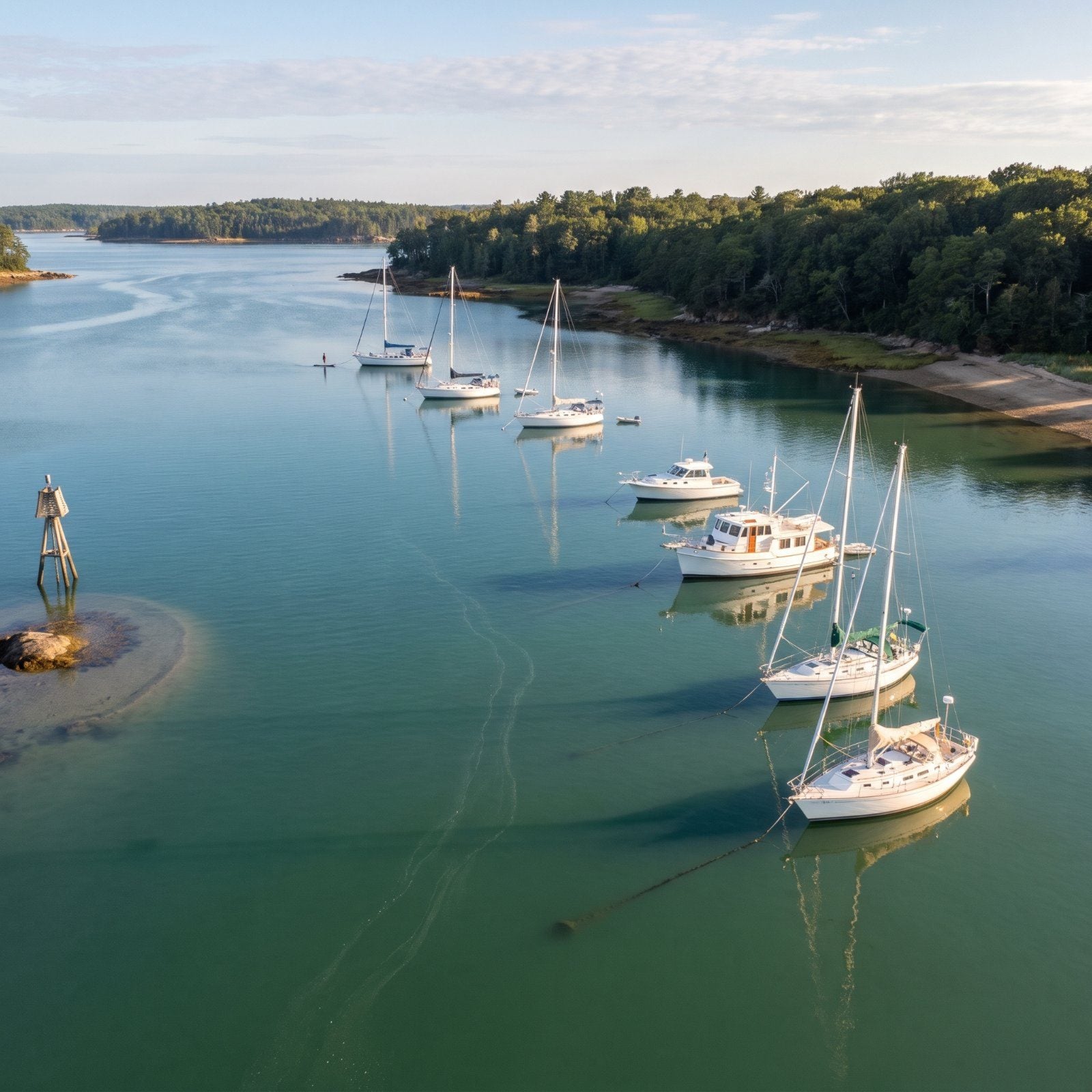
The guy who dropped his hook twenty feet off your bow at sunset didn’t read a rulebook. He just didn’t know better. And now you’re both swinging toward each other at two in the morning, flashlights out, fenders flying. Anchoring looks simple from the dock: you motor in, drop the hook, crack a beer. But the reality is a quiet set of expectations that keep a crowded cove from turning into a bumper-boat derby. Get these right and you become the boat nobody notices. Get them wrong and you become the story everyone tells at the fuel dock the next morning.
Please note that some of the imagery in this article may have been enhanced with the assistance of AI.
41. Enter the Anchorage at No-Wake Speed
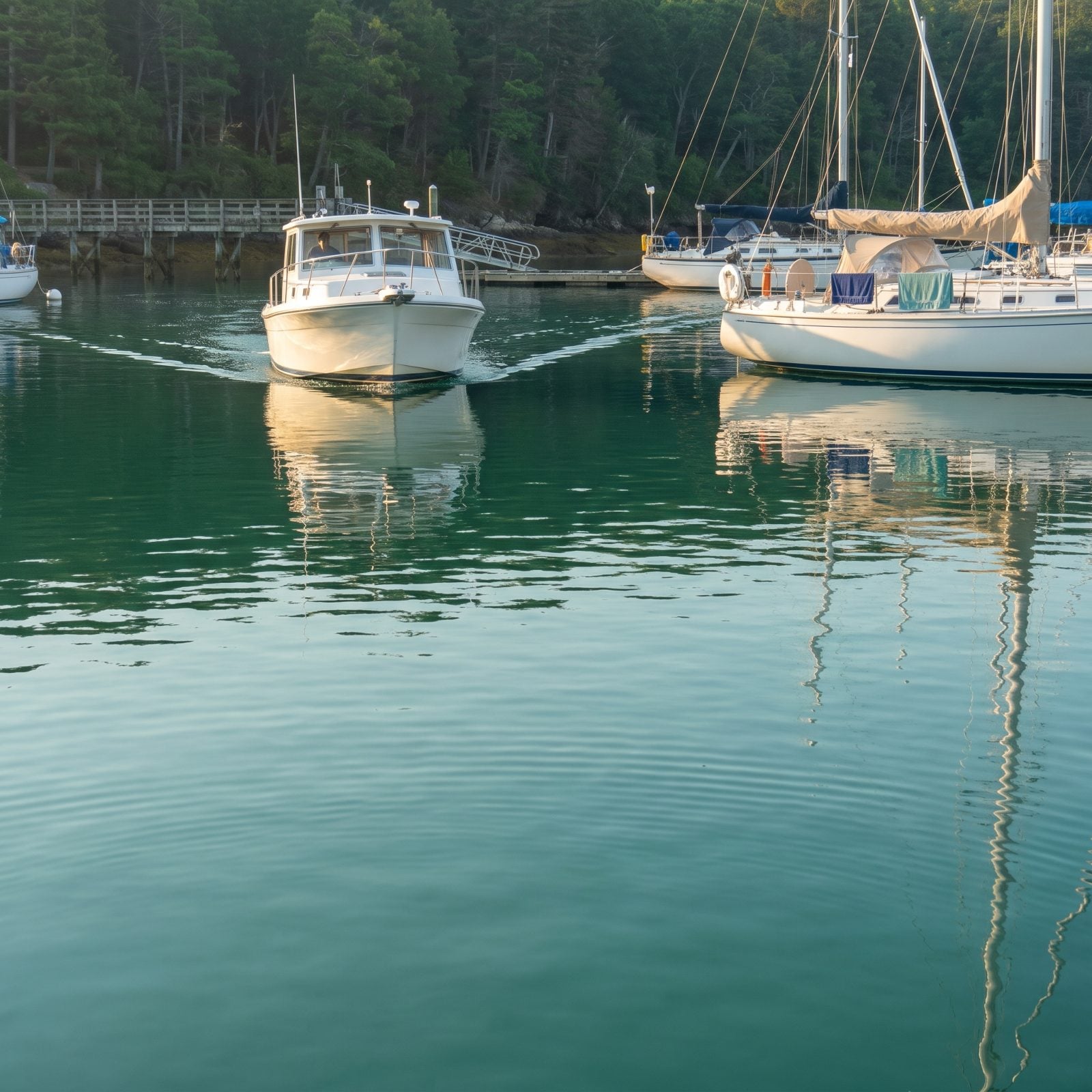
Your wake is the first thing you say to everyone already anchored. Roar in on plane and you’ve announced yourself as the person about to slosh coffee off a dozen cockpit tables.
Drop to idle well before you reach the outer boats. A wake that’s nothing out in open water becomes a three-foot roll in a tight cove full of boats rocking beam-on, knocking things off counters, waking the baby, sending dinghies banging against transoms. Slow also buys you time to read the whole scene — where boats are sitting, how they’re swinging, where the gaps are.
40. Study Your Full Swinging Circle Before Dropping
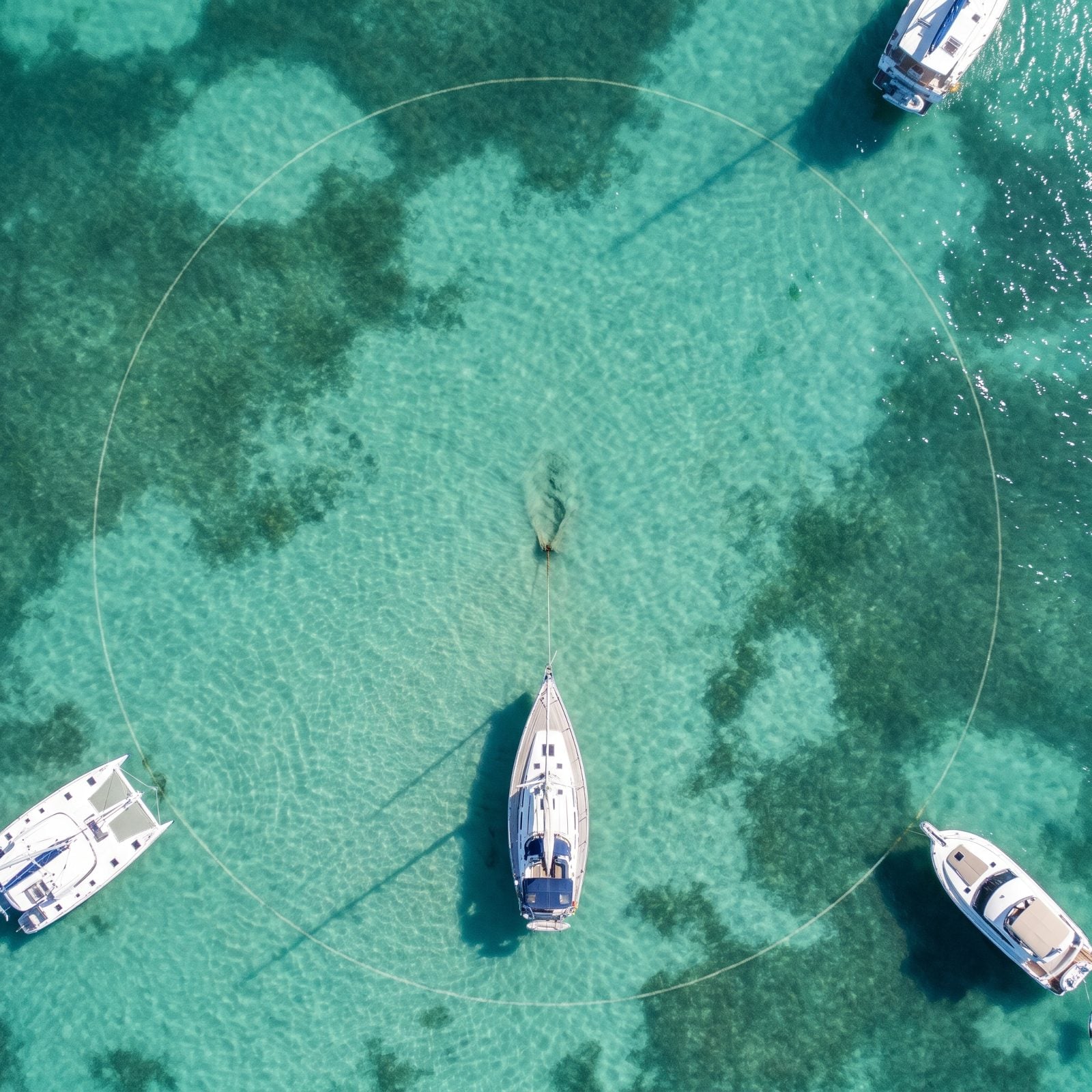
You don’t anchor a point. You anchor a circle. Once the wind or current shifts, every bit of water around your boat, out as far as your hook, comes into play, and the same goes for everyone else. The spot that looks wide open at drop can put your stern in your neighbor’s bow by dinner.
So before you commit, picture the full arc. How much rode you’re paying out, how it’ll change the radius, where you’ll end up if the breeze clocks around overnight. Boats with different windage and keels swing at different rates, which is why two of them can sit fine for an hour and then kiss at 3 a.m.
39. Never Anchor in a Marked Channel
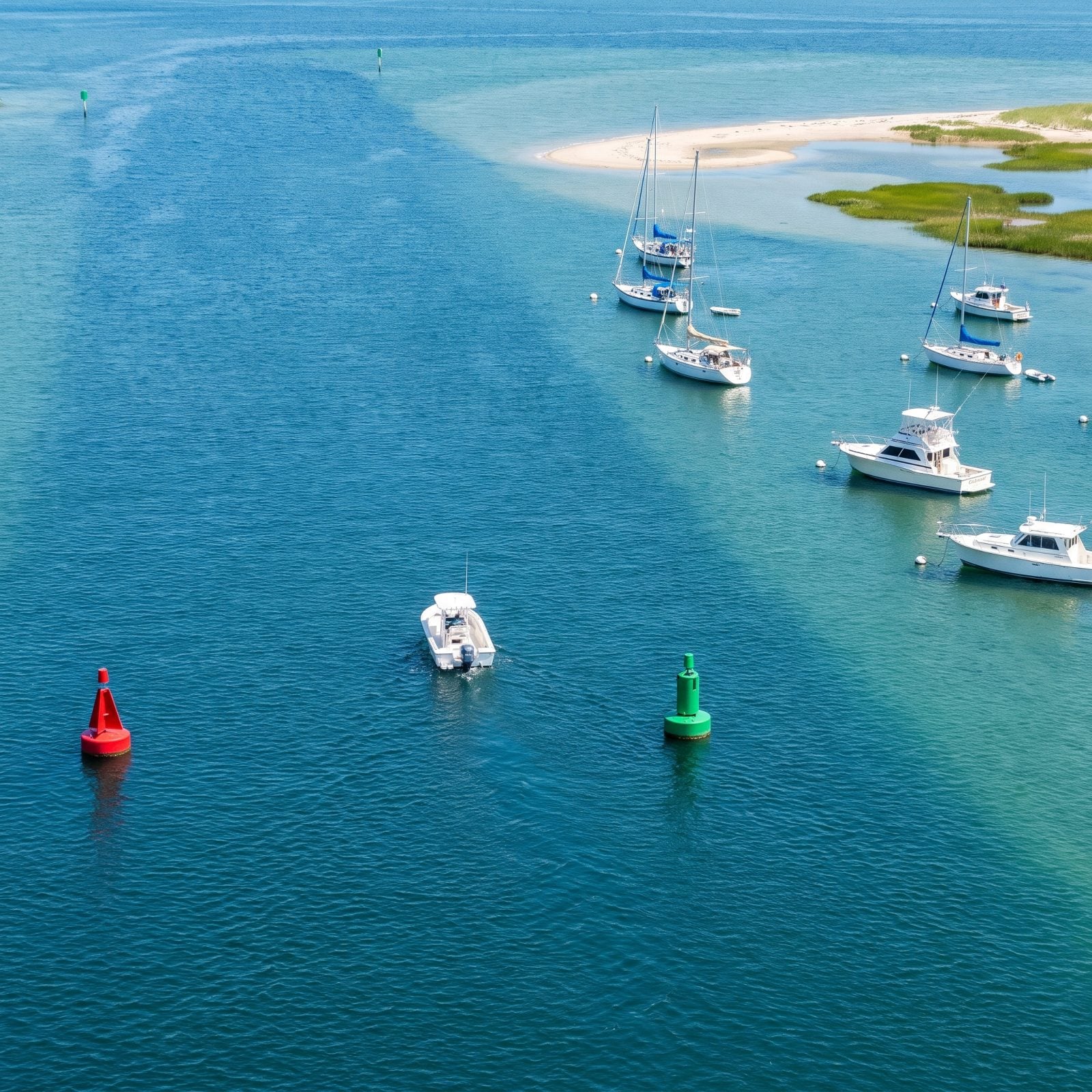
A channel exists so boats can move through safely, often the only deep water available. Park in it and you force everything from a kayak to a loaded trawler to squeeze around you, sometimes into shoal water they can’t afford.
The markers tell you exactly where you can’t be — red and green buoys, day beacons, those painted ranges on shore. Outside the channel is your anchoring ground. Inside it you’re an obstruction, and in most places a legal one the authorities can cite. If the only deep patch is the channel itself, that’s your sign to find a different anchorage.
38. Keep Clear of Harbor Entrances and Fairways
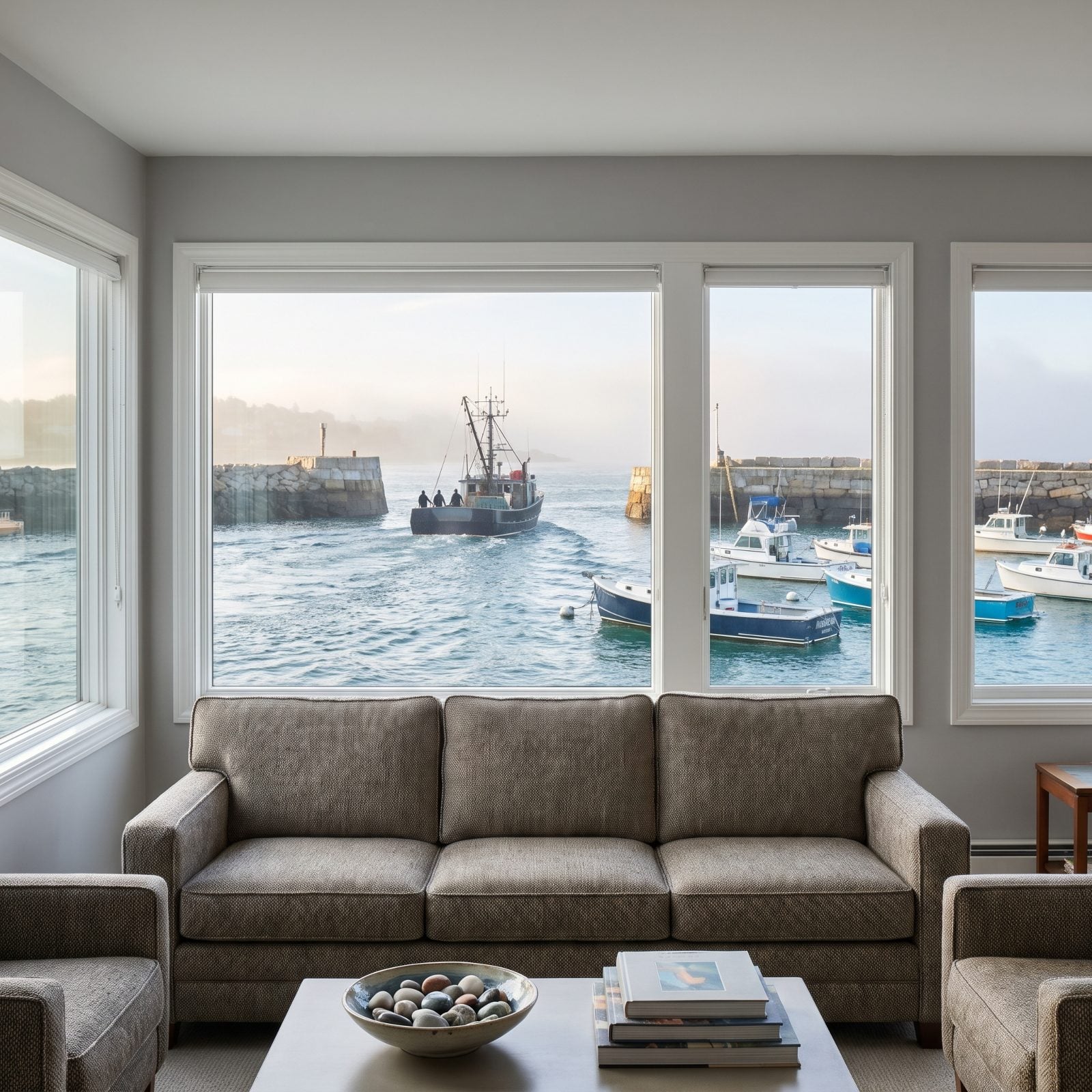
The water right off a harbor mouth looks tempting and calm. It’s also where a ferry, a fishing boat, or a sailboat under power needs full room to make its turn, often with barely any steerage at slow speed. Anchor there and you put yourself square in the path of vessels that can’t easily dodge. A loaded working boat coming in on a schedule isn’t going to thread around your swing circle, and shouldn’t have to.
Tuck in past the entrance or well to the side. The fairways inside a harbor count too — those marked lanes between mooring areas that keep traffic flowing.
37. Never Block Working Docks or Launch Ramps
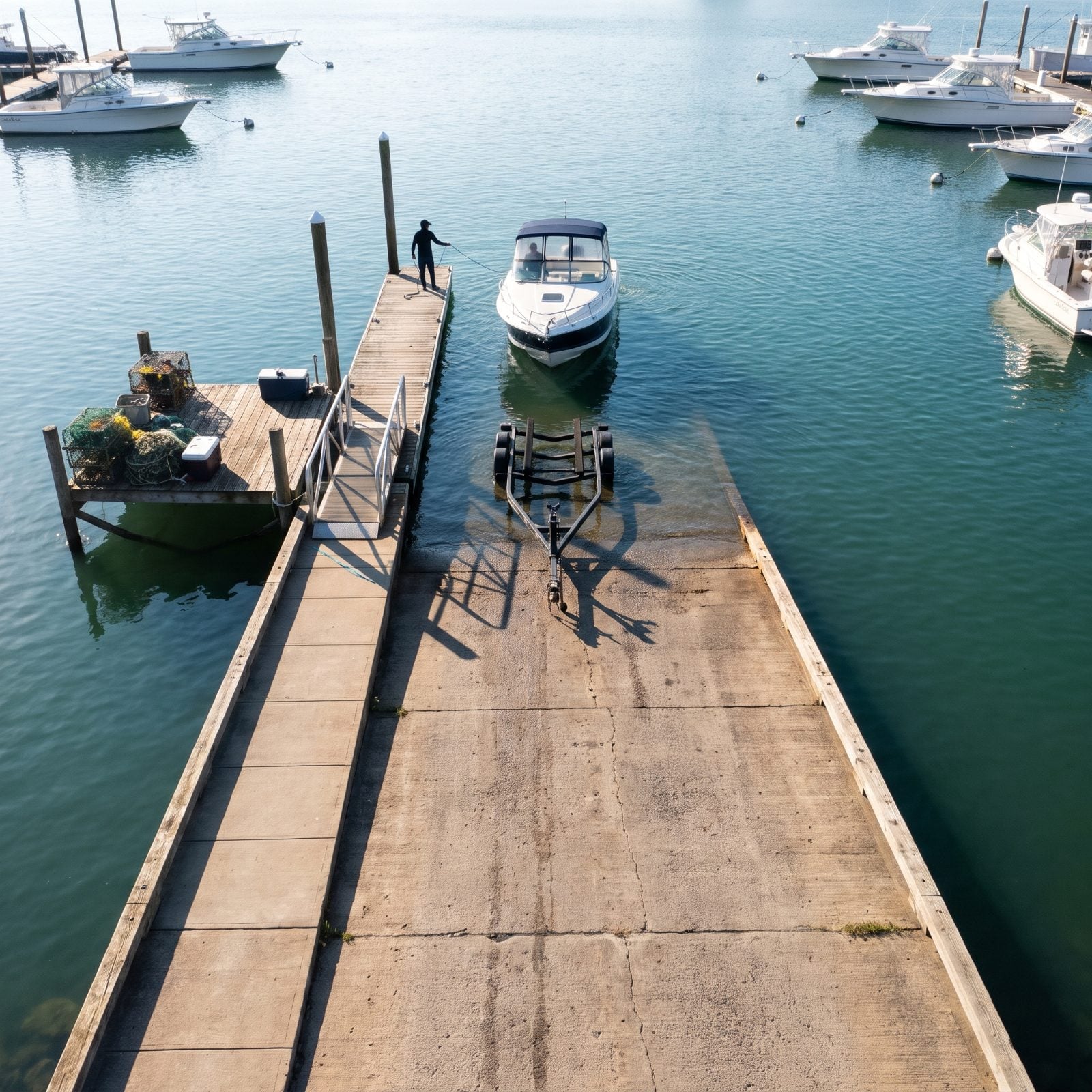
Think about what a launch ramp is for. People backing trailers down, floating boats on and off, sometimes in a nervous hurry with a line of trucks waiting behind them. Anchor in that approach and you’ve turned a simple launch into a jam.
Same goes for working docks, fuel floats, pump-out slips, and commercial piers. Those spots move boats and cargo all day, and the water in front of them has to stay open.
36. Leave Extra Room Between Your Boat and a Lee Shore
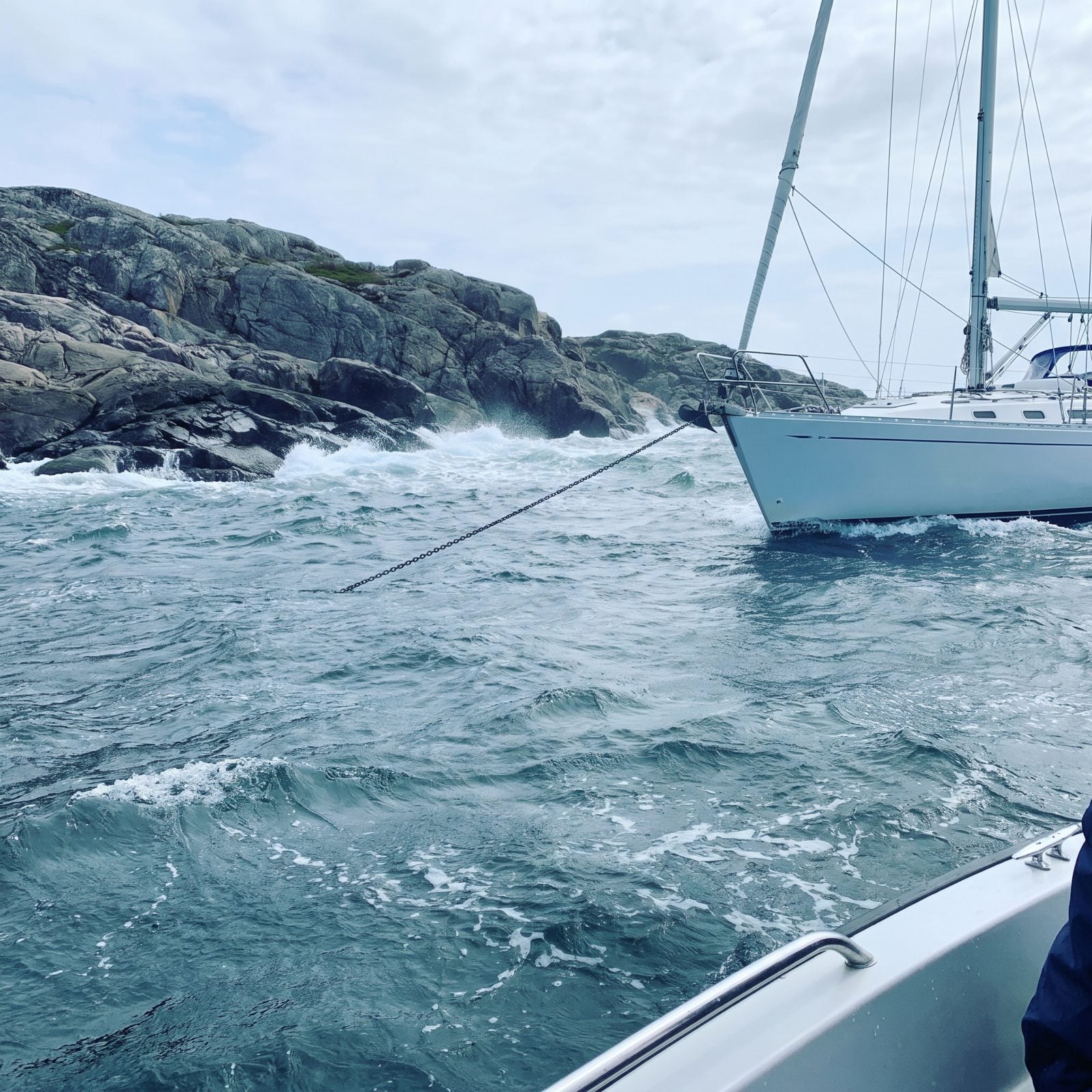
A lee shore is the one the wind is pushing you toward. It’s the shore you drift onto if your anchor drags, and anchors drag more often than anyone admits.
Give yourself margin — enough water between your stern and those rocks that a slipping hook buys you time to react, re-set, or motor off before anything touches bottom. Cozy up tight to a downwind shore and a 20-knot gust in the dark can turn a dragging anchor into a grounding in minutes.
I’d rather sit a little farther out and sleep than win the sheltered corner and spend the night watching the depth sounder.
35. Allow for the Full Tidal Range
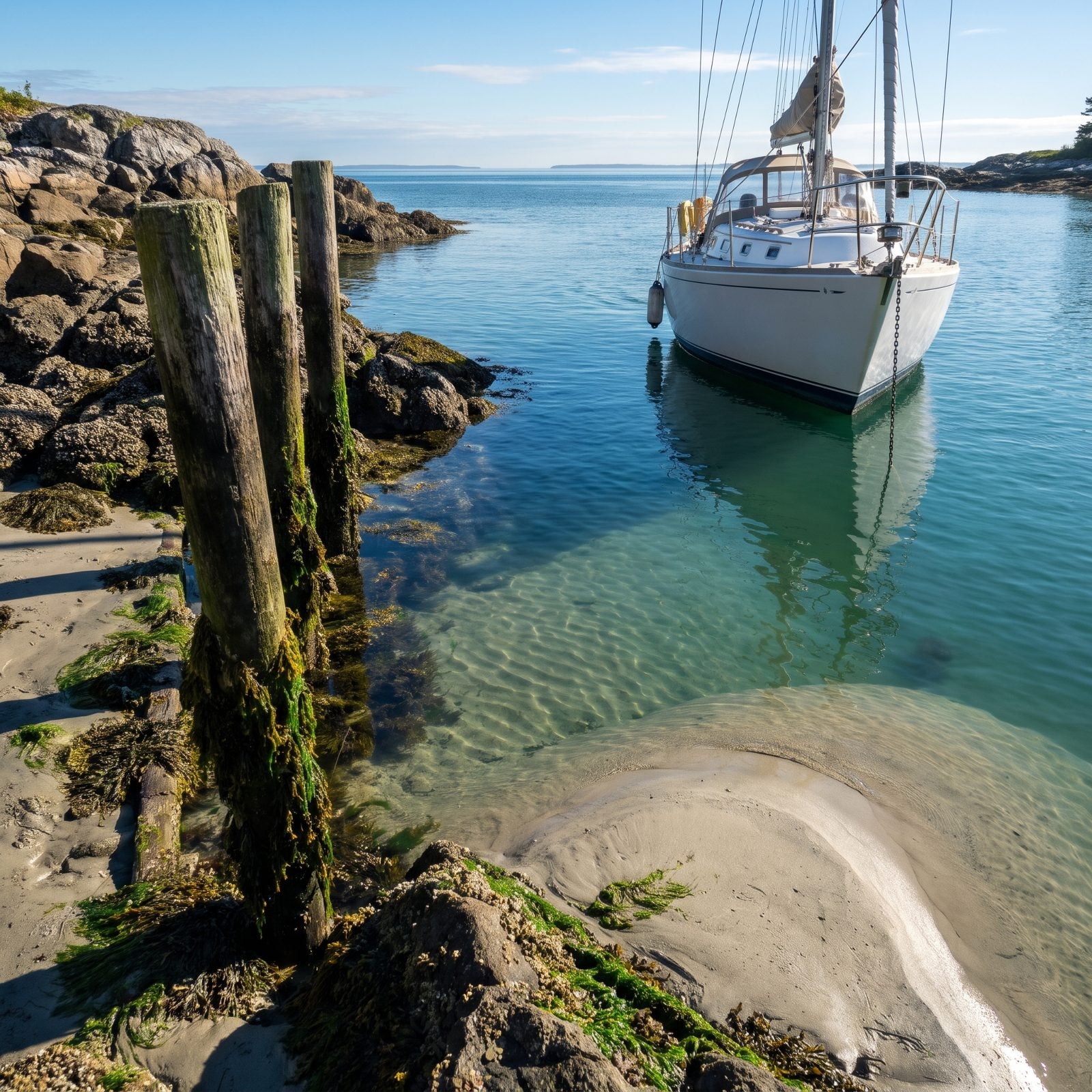
The water you anchor in at high tide can vanish by low. In big-range areas that swing can be ten feet or more, enough to leave a boat sitting on the mud or rocks if you anchored right at the top.
Do the math before you drop. Check what state the tide is in, how far it’ll fall, and whether your depth plus a safe cushion still floats you at dead low. Tide changes your scope, too. As the water drops, your effective scope grows; as it rises, it shrinks, which can pop a marginally-set hook right out of the bottom.
34. Plan for Current Reversals Before Nightfall
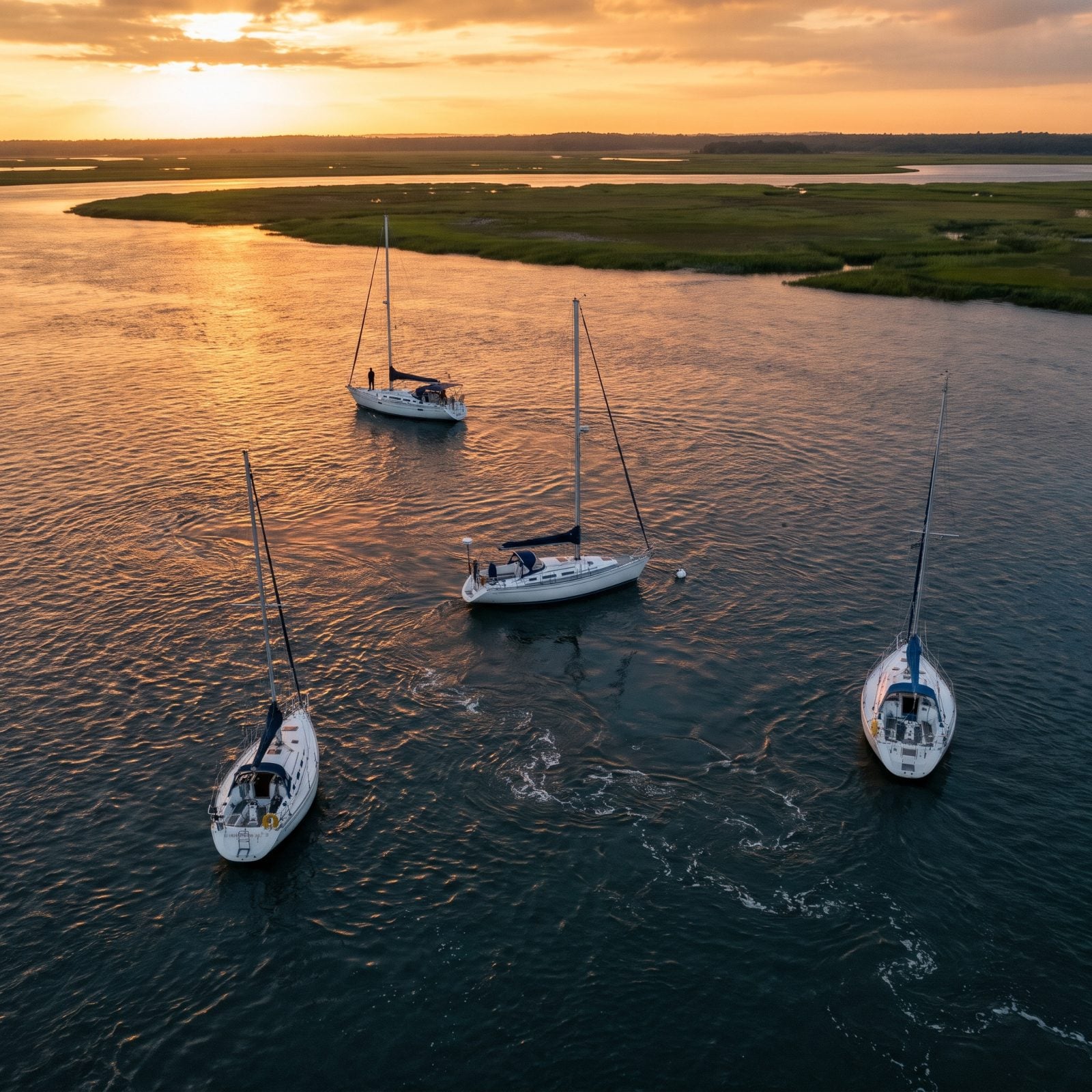
In tidal and river anchorages the current turns, usually twice a day, and your boat spins with it. The tidy spacing you set at dinner can look very different once everyone pivots 180 degrees around their hooks overnight.
Work out the swing before dark, while you can still see your neighbors and fix a problem. Where will your stern sit when the tide floods instead of ebbs? Who ends up closest once the whole anchorage reorients? And set your anchor light, so the boats arriving late or the ones pivoting toward you can actually see where you are.
33. Never Anchor on Coral or Seagrass

Drag a chain across a coral head and you kill in ten seconds something that took forty years to grow. Seagrass meadows are nurseries for half the fish you’d want to catch. Neither comes back fast, and in a lot of places anchoring on them is flat-out illegal now.
Look for the sand. In clear water you can see it, a pale bald patch among the darker grass and reef. In murkier water, use a mooring ball if one’s provided — that’s what they’re there for.
I’ll admit I didn’t think about this at all for my first few seasons. Then I watched a chain scour a gash through a grass bed and felt genuinely rotten about it.
Describing what a single hook does to an eelgrass meadow, a seagrass conservation advocate writes “When removed, the anchor yanks at the root and rhizome mat, pulling the entire plant out of the sediment.”
32. Match the Scope Used by Nearby Boats
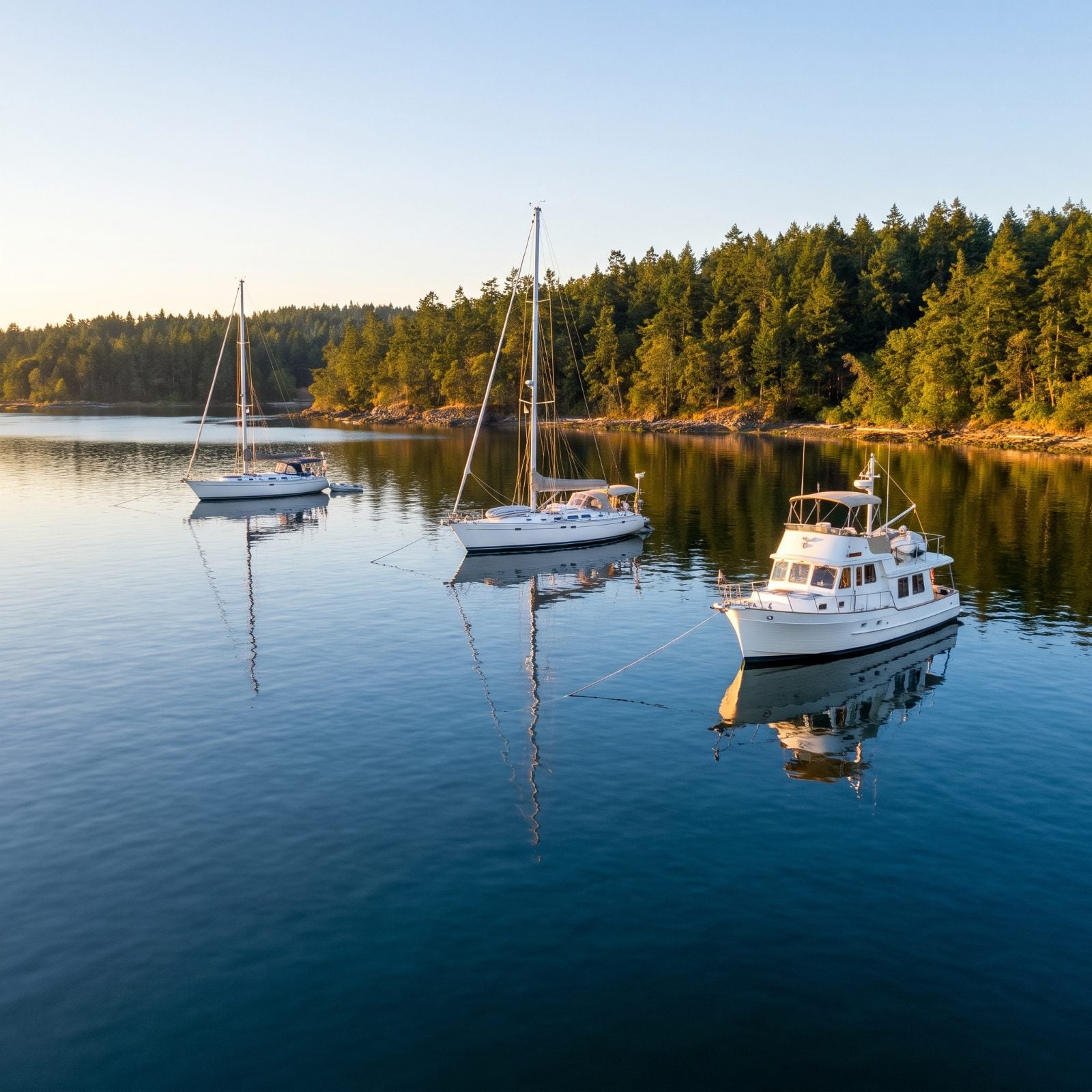
Scope is the length of rode you put out compared to the depth, and here’s the catch nobody tells you: boats on a lot of scope swing in wide arcs, boats on short scope swing tight. Put those two in the same anchorage and their circles don’t match. One swings, the other doesn’t, and sooner or later they’re kissing.
Look at what the fleet around you is doing. If everyone’s riding on 5-to-1, you ride on 5-to-1. Standing out here wins you nothing.
Explaining why anchorages get tangled, a sailing magazine editor notes “If all boats are anchored by a single hook at similar scope they should swing together, but the amount of scope and number anchors each boat has deployed may not be obvious.”
31. Ask About a Neighbor’s Scope When Spacing Is Tight
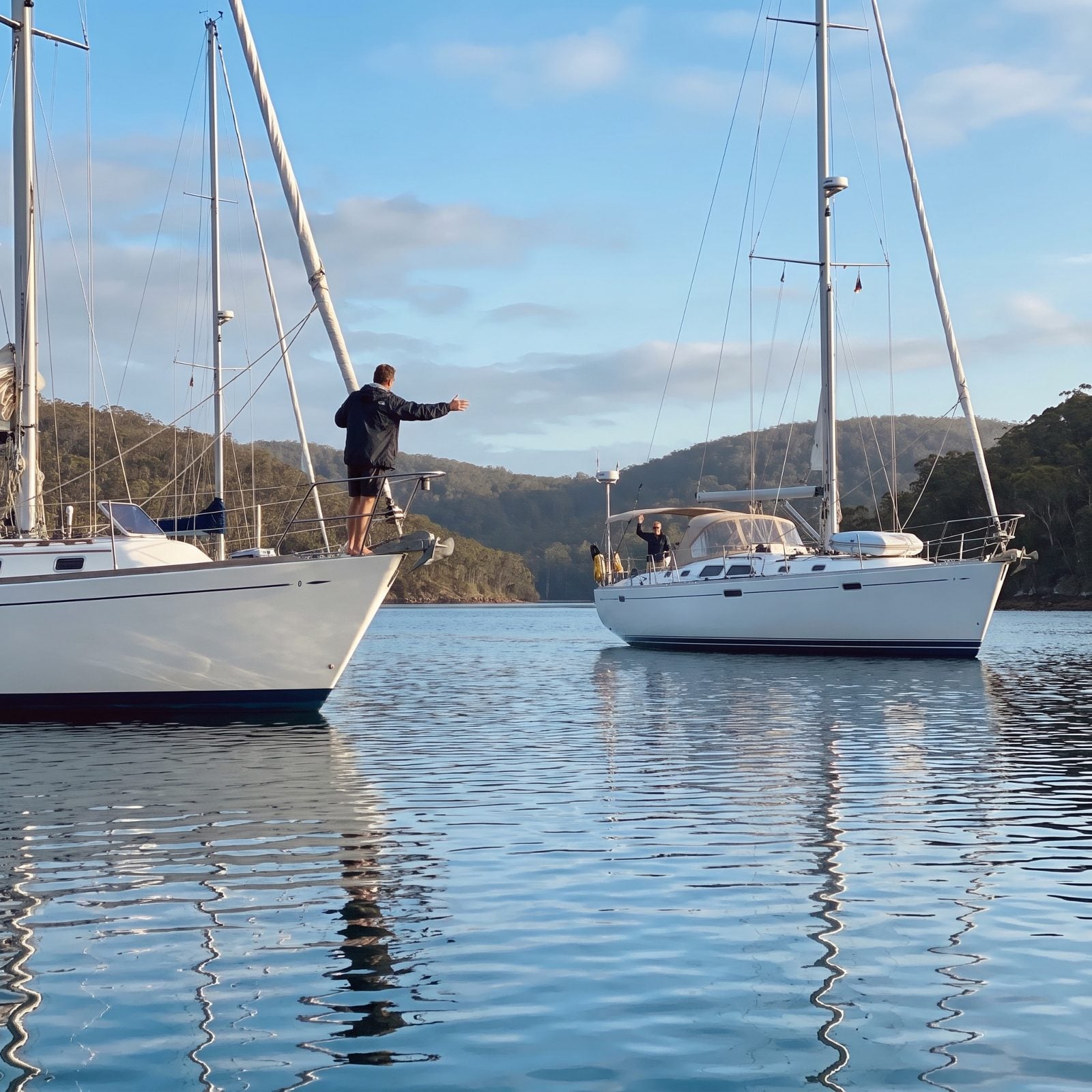
When you’re dropping anchor near a neighbor’s boat, a two-sentence conversation saves everyone a bad year. “How much scope do you have out?” tells you how far they’ll swing. “When’d you get in?” tells you whether their anchor has had time to set.
Most neighbors are glad you asked — it signals you know what you’re doing. The ones who get prickly about a polite question are usually the ones about to cause a problem anyway.
Nobody in a tightly packed anchorage ever regretted asking. Plenty have regretted assuming.
30. Never Squeeze Into an Apparent Courtesy Gap

You pull into a busy bay, scan the neat ring of moored boats, and spot it: a lovely open patch of water right in the middle. Looks like someone left you a spot. They didn’t.
That open centre isn’t spare. The boats ringing it sit on mooring buoys, bows pointing every which way, and the middle is the water everyone needs to come and go, manoeuvre and run dinghies. Drop anchor there and you’ve blocked the whole ring and put your swing right into their lines.
Open space in a mooring field is never parking. It’s the breathing room that keeps the whole place from colliding.
29. Leave Other Boats Room to Retrieve Their Anchors
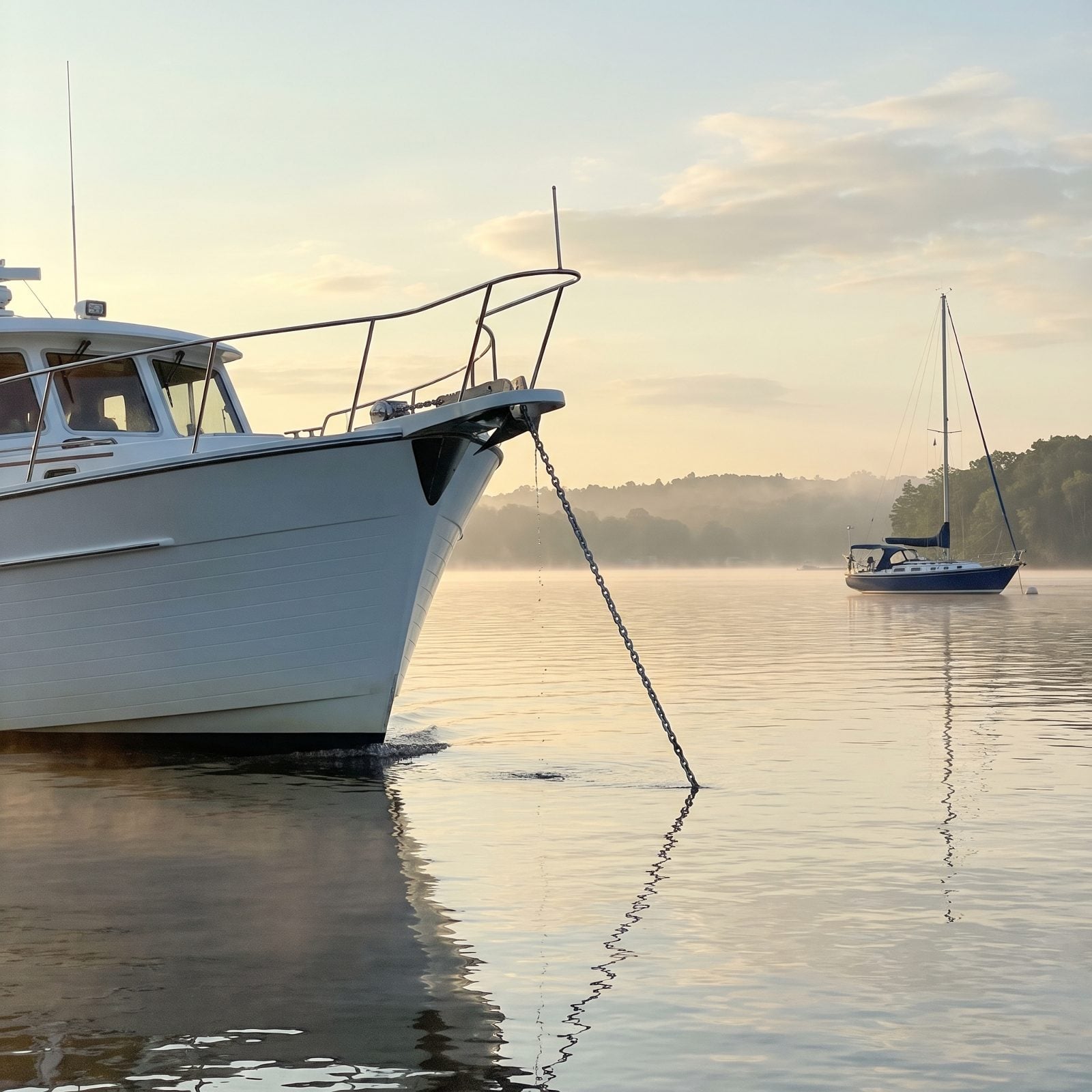
Here’s the part people forget: getting the anchor up takes room too. To break a well-set hook free, a boat usually has to motor forward over its own rode until the pull goes vertical. Tuck in right ahead of someone and you’ve parked in the exact water they need to leave.
So think about departures when you drop, not just arrivals. Give the boats around you a clear lane forward of their bows. Morning in a busy cove is a slow parade of engines and windlasses, and it only works when everyone has somewhere to go.
28. The New Arrival Moves When Swinging Circles Overlap
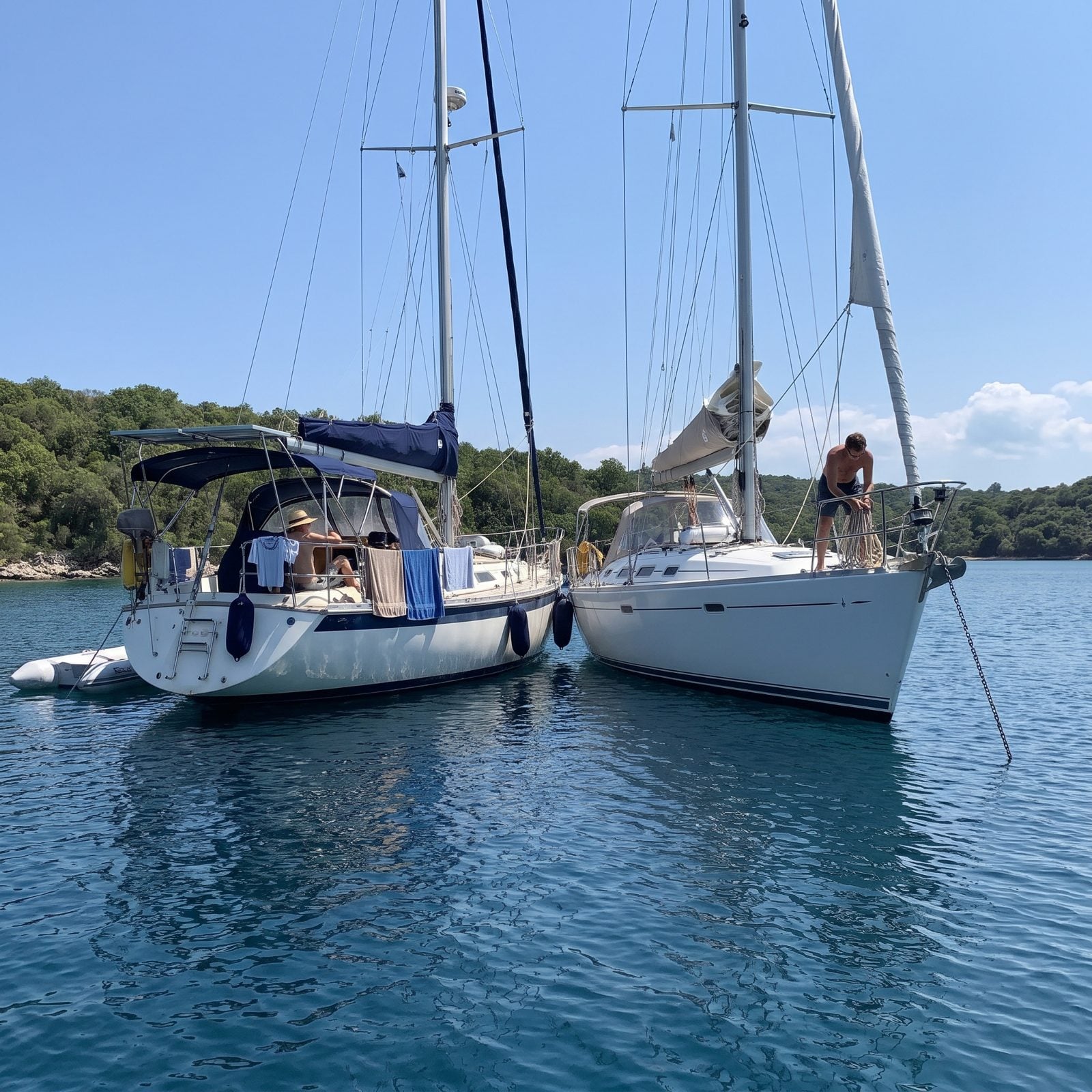
When two boats end up too close, the question isn’t who’s “right.” It’s who was there first. The boat that was anchored and settled holds the spot. The newcomer re-anchors. Full stop.
This one trips up good people who feel they set a fine hook and shouldn’t have to budge. Doesn’t matter. Whoever was first at anchor sets the geometry of the whole area, and everyone who arrives after fits around what’s already there.
If you rolled in last and the circles overlap, you’re the one hauling and moving. Do it with grace and you’ll have earned a nod instead of a glare.
Summing up what admiralty case law says about crowded anchorages, a sailing magazine technical editor writes “The first boat to arrive has the right to anchor as she pleases. This includes considerable scope and multiple anchors.”
27. Reanchor Early Instead of Defending a Bad Position
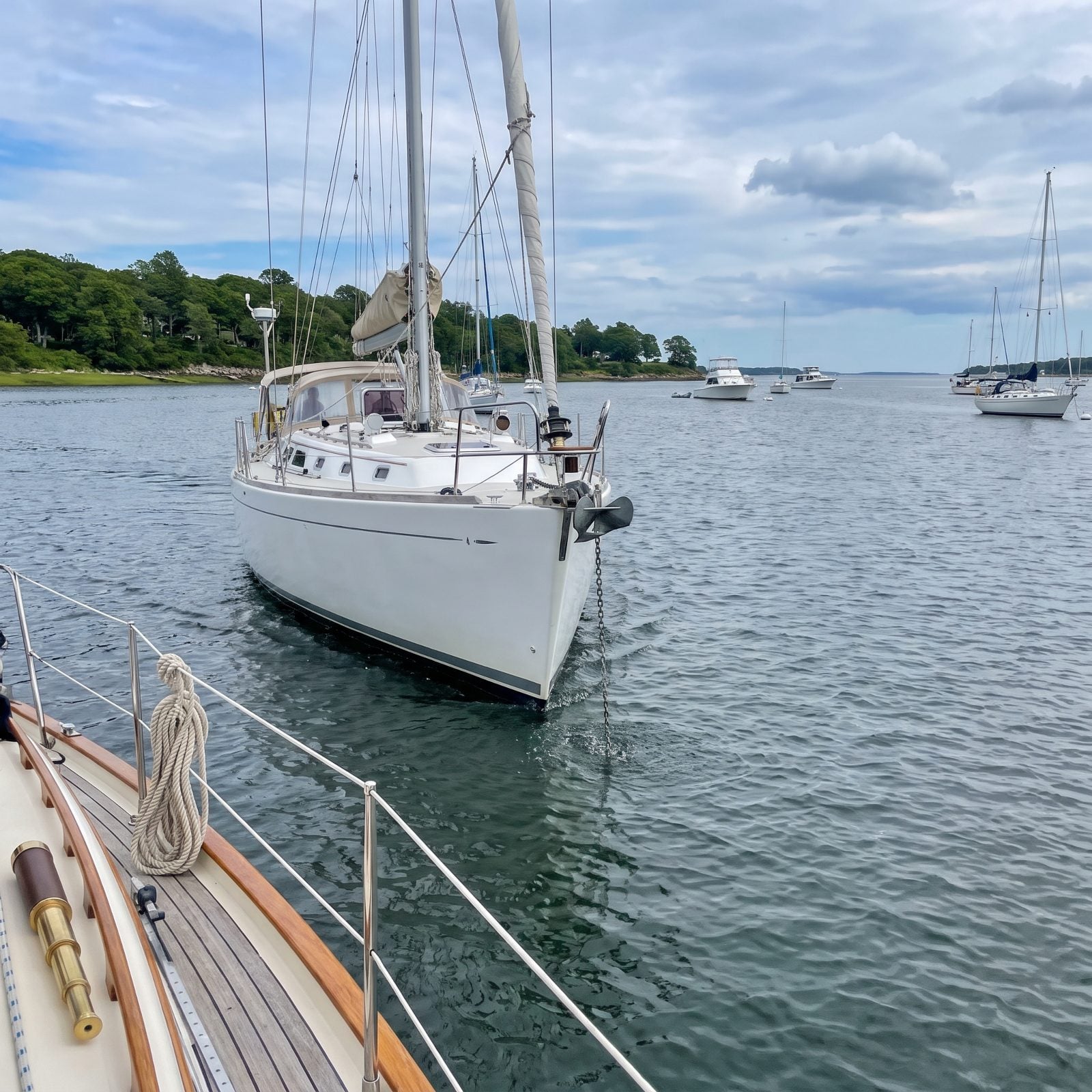
A bad anchor spot never gets better. It gets worse right around dinnertime.
If your hold feels marginal, if you’re closer to a neighbor than you’d like, if the wind forecast doesn’t love your current position — deal with it now. In daylight. With your coffee still warm and the anchorage half empty.
The temptation is to wait and see. Maybe it’ll be fine. Maybe the wind won’t clock around. But hauling up at 2am in a rising breeze, blinded by your own deck lights, with a dozen boats packed around you, is its own special kind of misery. Move while it’s easy. Future-you will be grateful.
26. Pay Out Rode Only as Fast as the Boat Moves Astern
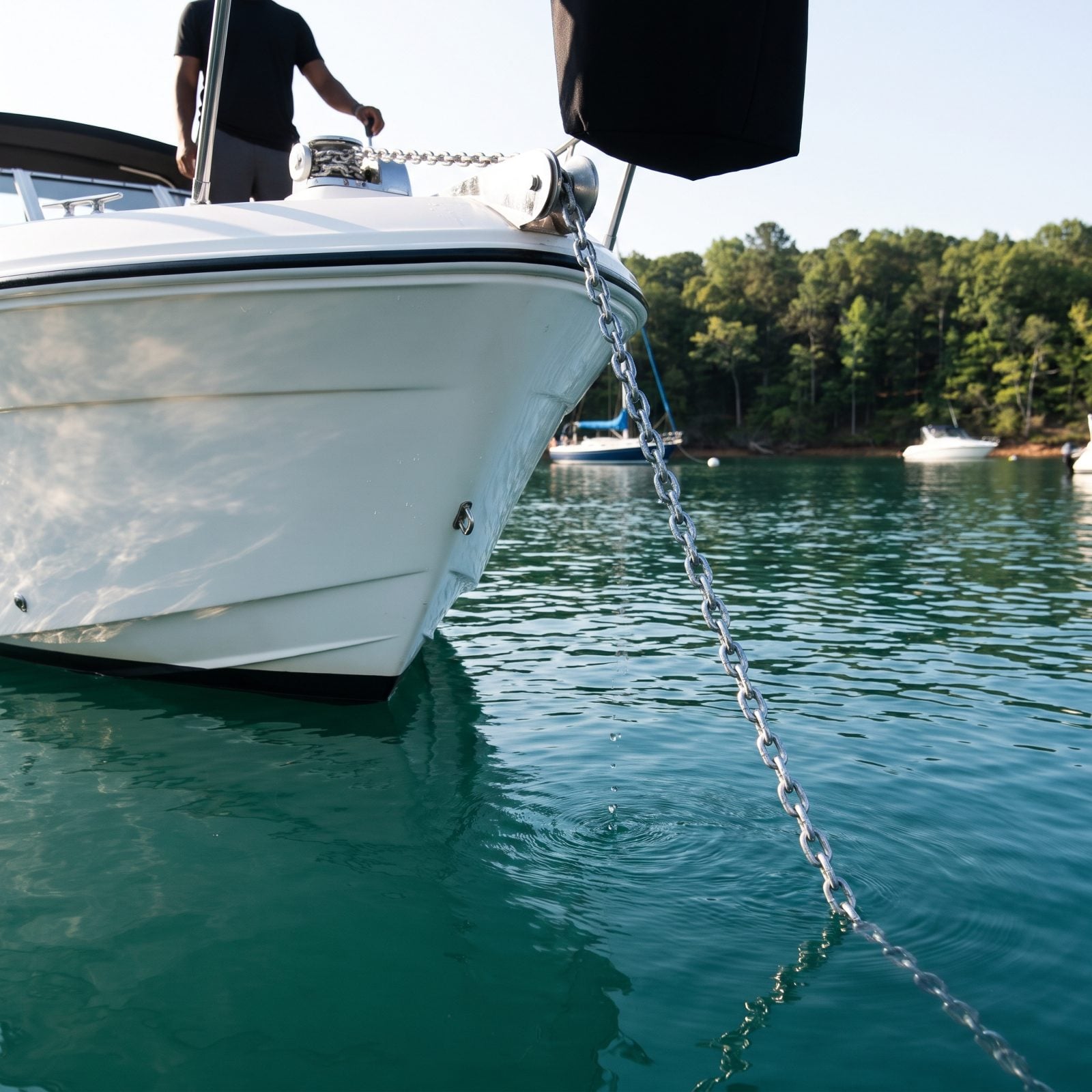
Dumping the whole rode in one rush is a classic rookie mistake, and it’s a mess. The chain lands in a heap on top of the anchor, the flukes foul, and you’ve got a pile of metal doing absolutely nothing down there on the bottom.
Let the boat drift back under its own weight or a touch of reverse, and feed the rode to match. The chain lays out in a long line along the bottom instead of a knot, and that line is what lets the anchor dig in when you pull against it.
In a step-by-step anchoring guide for students, a sailing school instructor advises “Lower from the bow, never throw it. Let the boat ease astern while paying out rode in a controlled manner.”
25. Use Enough Scope for the Conditions
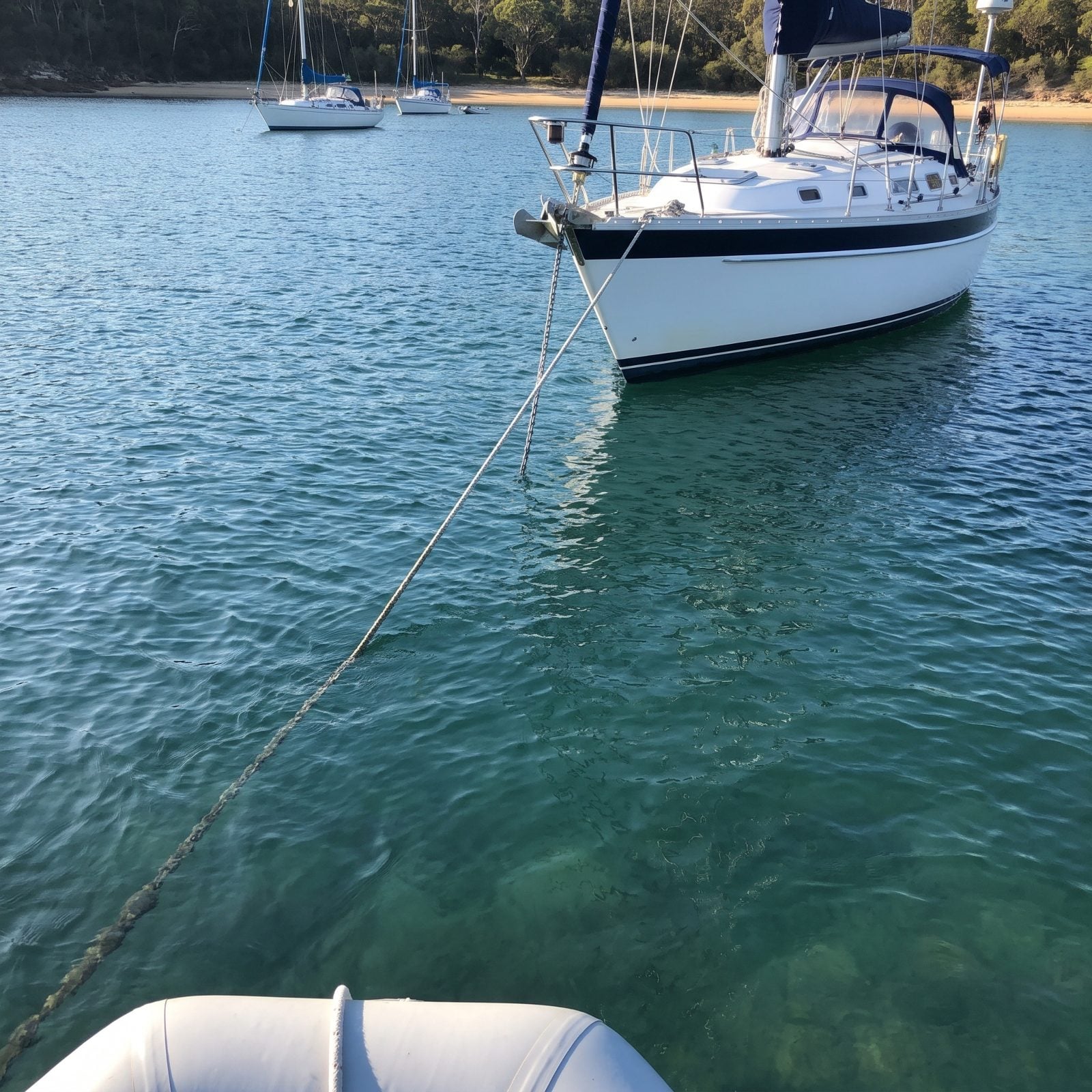
Scope is the ratio of rode you let out to the depth of water, measured from the bow roller to the bottom. The old rule of thumb runs seven to one for an overnight in settled weather. More depth, more rode. More wind in the forecast, more rode again.
Short scope pulls the anchor up at an angle and yanks it loose, while long scope keeps the pull nearly horizontal, which is exactly how an anchor is built to hold. The trade is swing room. More rode means a bigger circle, so you need space around you.
24. Set the Anchor Firmly Under Reverse Power
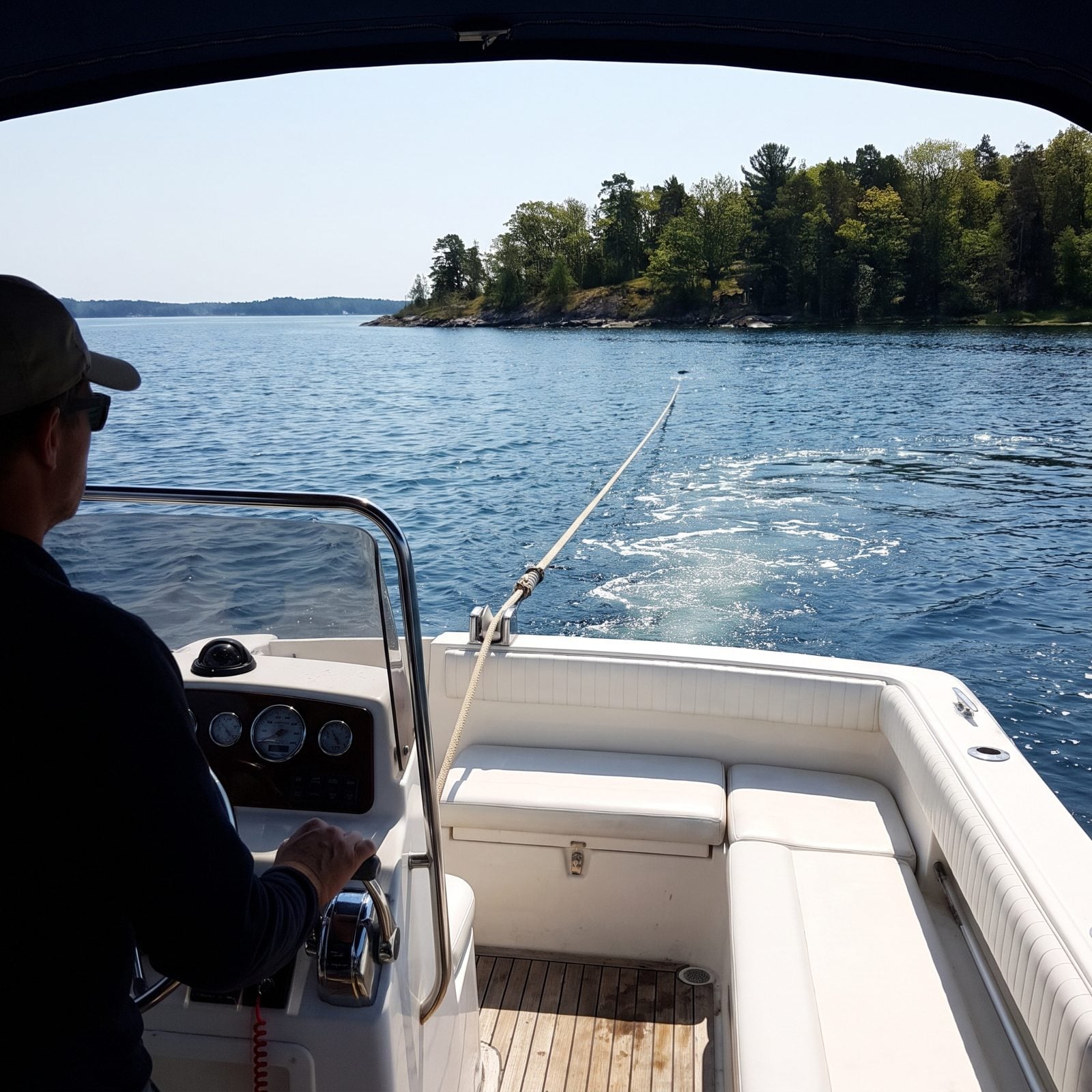
An anchor that’s merely sitting on the bottom is not set. It’s resting. The wind will happily drag it across the cove while you sleep.
Once the rode’s out, back down on it with steady reverse until the boat stops moving and the rode goes bar-tight. If the anchor holds against that pull, it’ll hold against the wind. If it skips and drags, you’ll feel it, and you reset before anyone unpacks the cooler. I’ve reset three times in one afternoon in a weedy bottom and felt fine about it, because the alternative is waking up on the rocks.
23. Verify the Set With Fixed Shore Transits
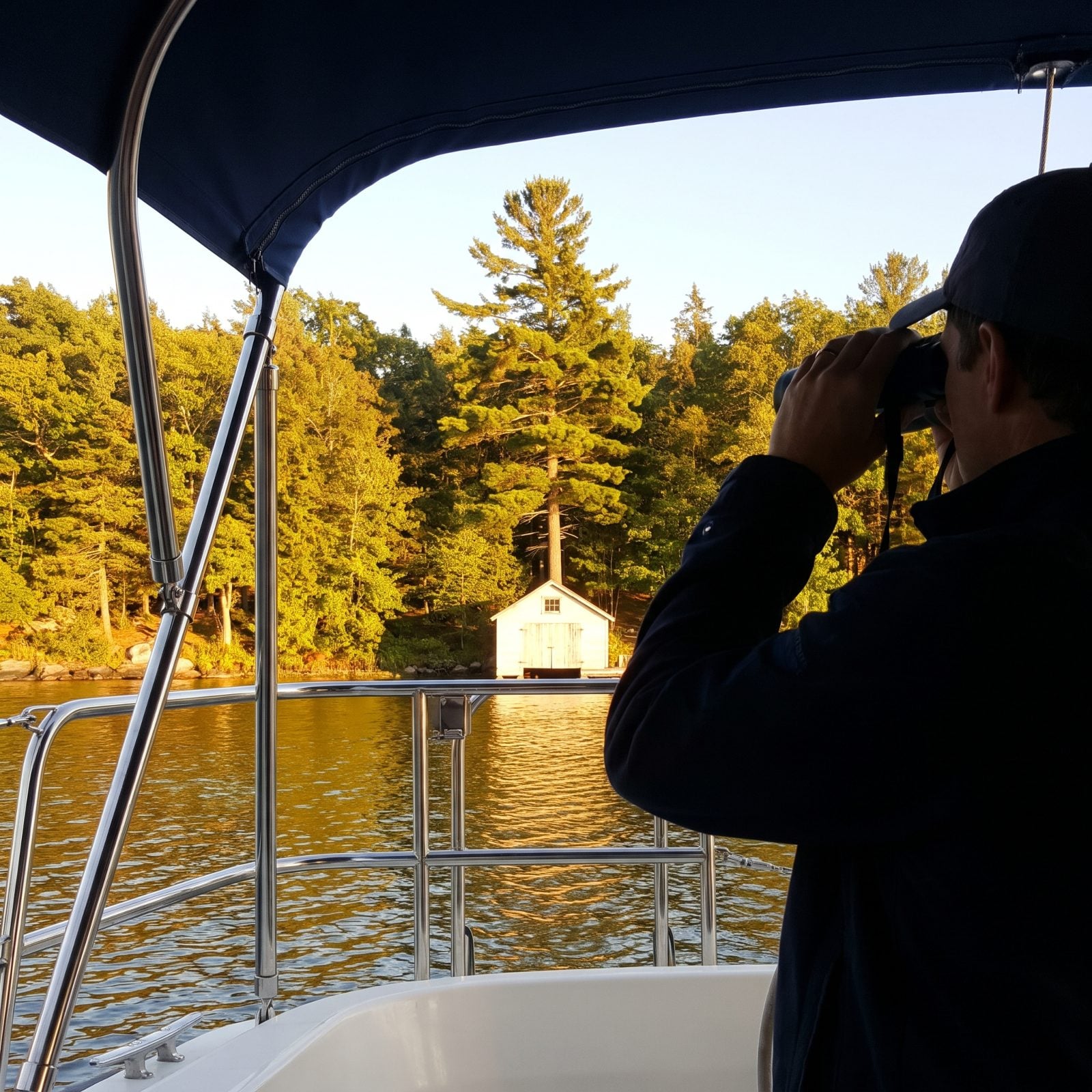
Your GPS is great, but your eyes are faster. Pick two fixed objects on shore that line up: a tree in front of a chimney, a dock piling against a far hill. That’s a transit.
If those two stay lined up over the next ten or fifteen minutes, you’re not moving. If the near object starts sliding across the far one, you’re dragging. It takes nothing to set up and it works with a dead GPS. Sailors were using transits a couple hundred years before satellites existed, and they still beat a screen for telling you in real time whether the hook is holding.
22. Activate an Anchor Alarm Before Relaxing
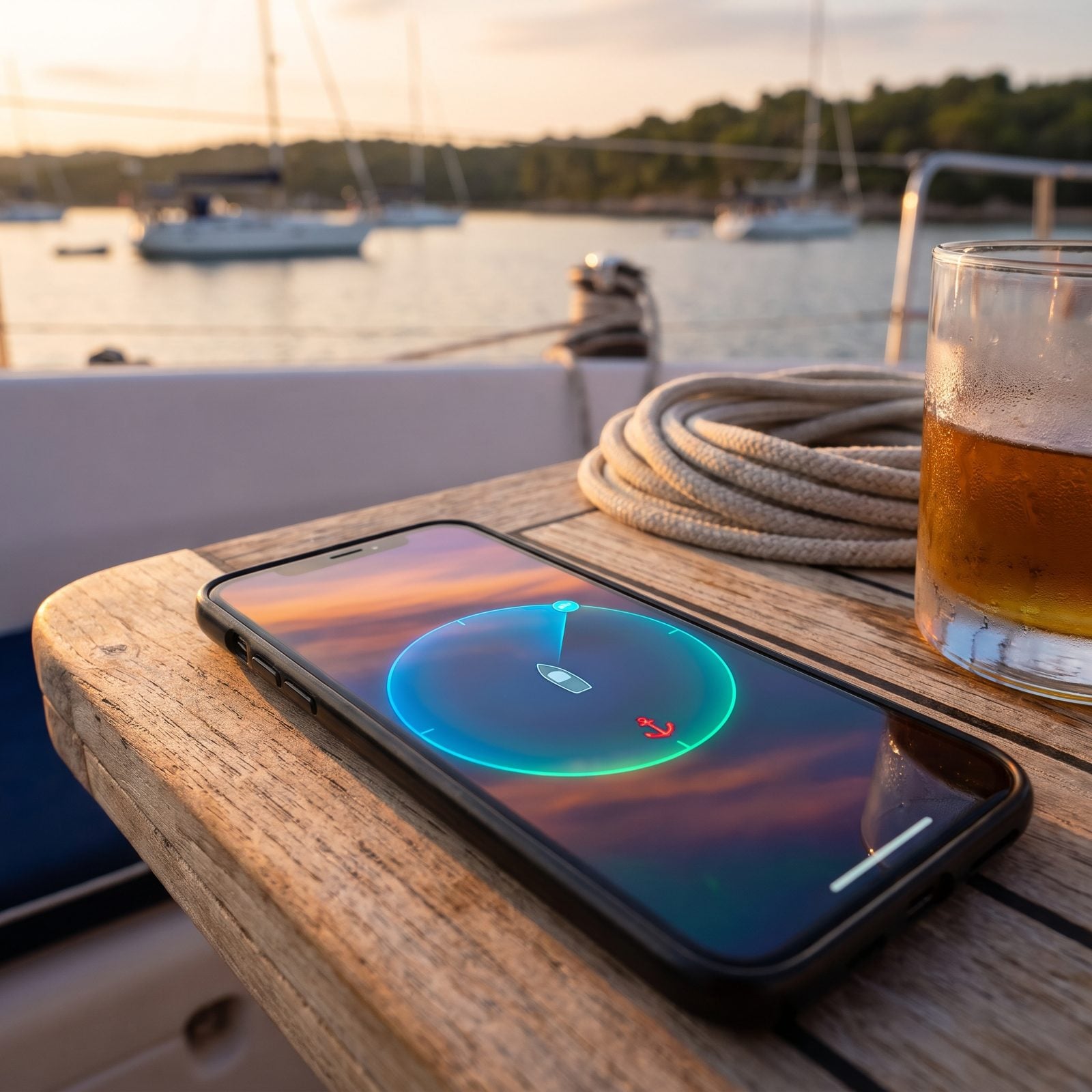
Set the alarm while you’re still clear-headed, not at midnight when the wind pipes up.
An anchor alarm drops a pin where your hook went down, draws a watch circle around that pin, and howls if the boat wanders outside it. Free apps on your phone do this fine. Dedicated plotters do it better. Either way the point holds: the alarm watches the boat so you don’t have to stare at shore all night.
Set your radius to cover your real swing plus a little slop, or you’ll get false alarms every time the boat sails around on the breeze.
21. Make Sure the Rode’s Bitter End Is Secured
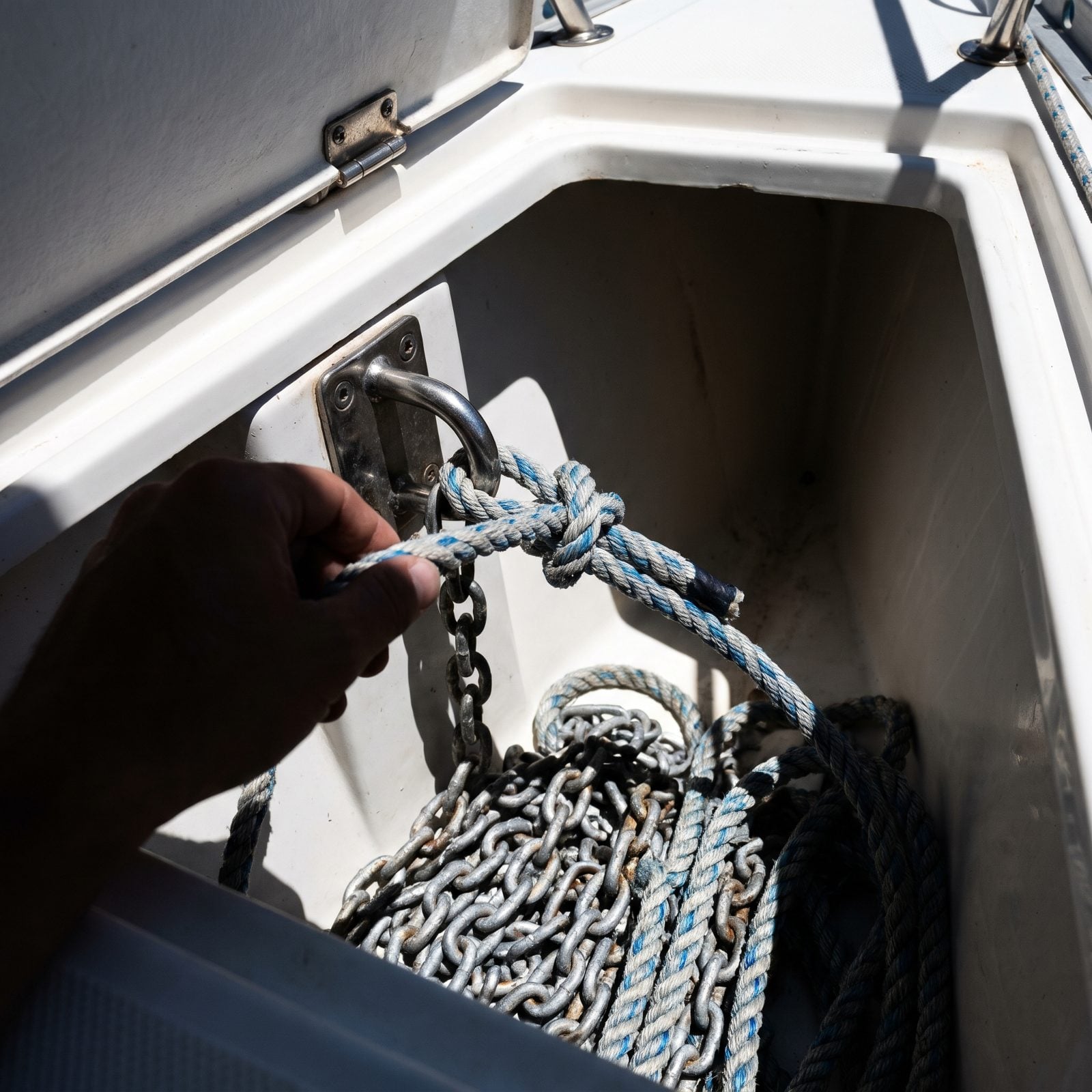
Picture the nightmare. You pay out rode, the pile in the locker runs out, and the very last link whips off the end and vanishes into the deep. Anchor gone. Chain gone. Nothing to show for it but a splash.
The bitter end is the inboard tail of the rode, and it should be tied off inside the locker to something solid. Use a light lashing, not a bulletproof knot, so you can cut it free in a hurry if you ever need to slip the anchor fast. I know a guy who learned this in one expensive second. Check yours before the season starts.
20. Never Anchor by the Stern Alone
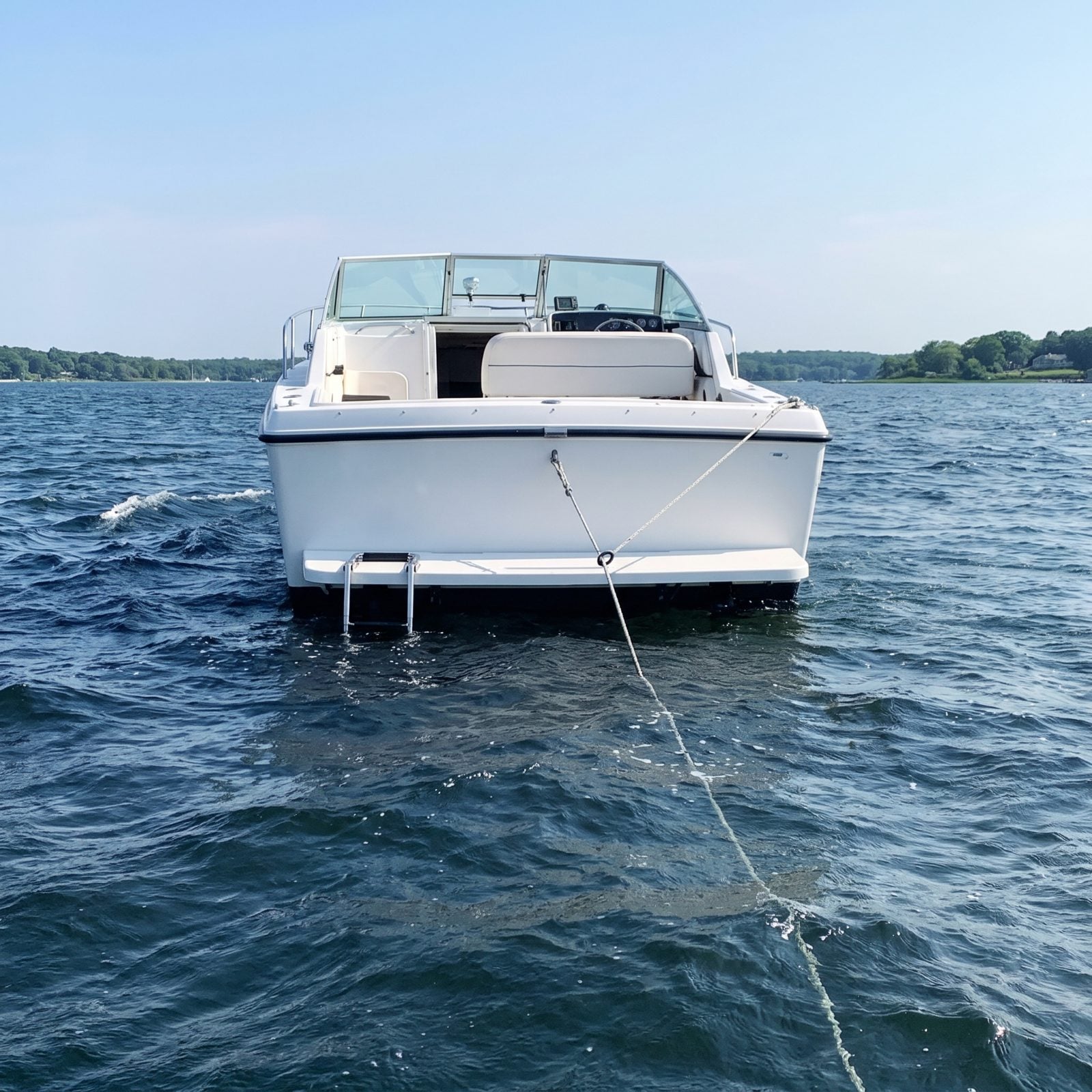
Boats are built to meet the weather bow-first. The bow is high, sharp, and sheds a wave. The stern is low, broad, and has a big open cockpit just begging to scoop water.
Anchor only from the stern and the first real gust or wake swings the back of the boat into the chop. Water comes over the transom, the cockpit floods, and a bad afternoon gets dangerous fast. If you want the boat to lie a certain way against current, that’s a bow-and-stern or a two-anchor setup done deliberately, never a single stern hook left to fend for itself.
19. Tell Nearby Boats Before Setting a Second Anchor
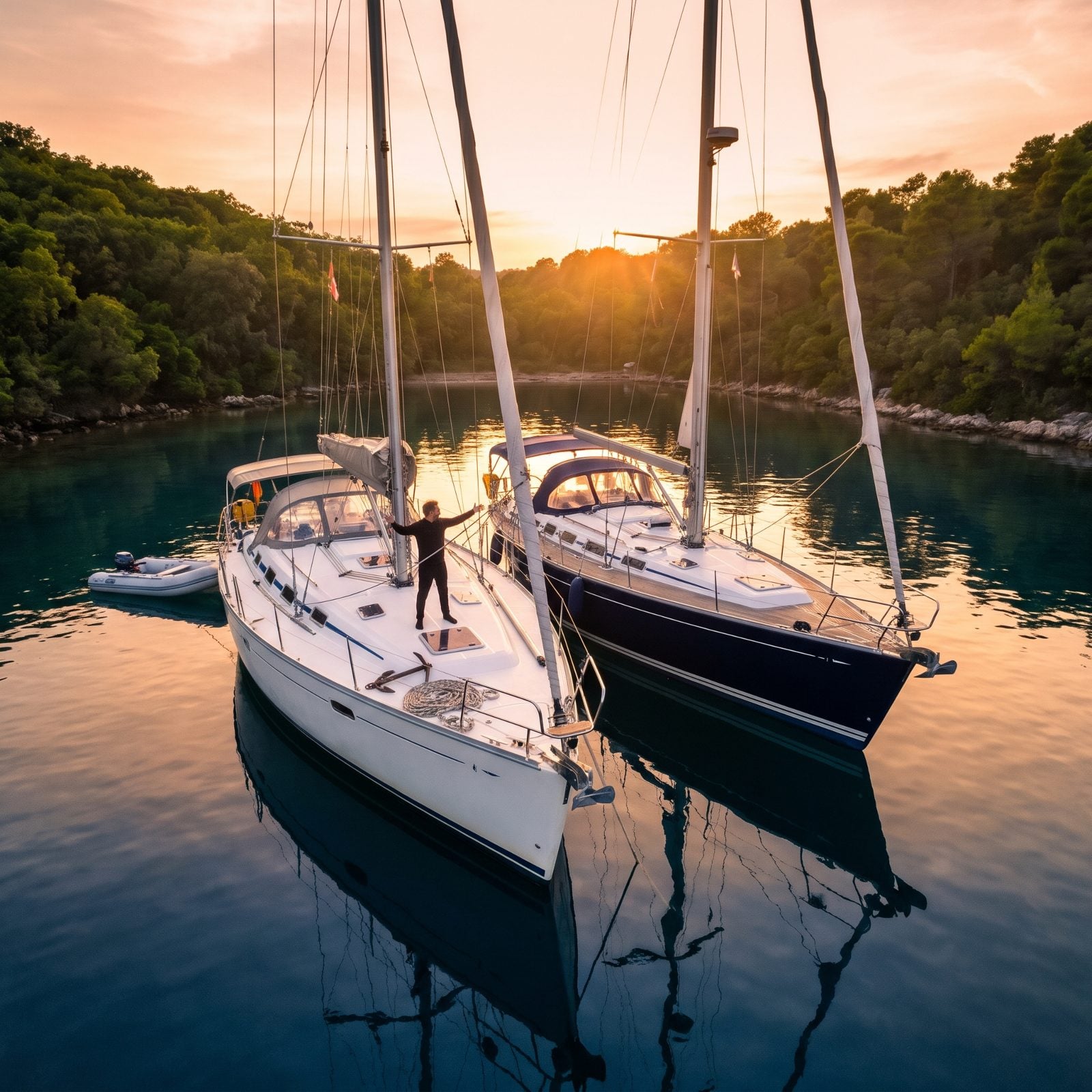
A second anchor changes how your boat swings. Instead of arcing freely with the wind like everyone else, you sit in a tighter, fixed arc, or you don’t swing at all. Meanwhile the boat next to you is still swinging on one hook, and now your paths don’t match.
That’s how collisions happen in the small hours. A quick wave and a word across the water before you drop the second hook lets your neighbors know you’ll be lying differently. They can adjust, move, or at least keep an eye out. Anchorages run on this kind of small courtesy, and the boats that skip it are the ones everyone remembers for the wrong reason.
18. Display a Proper Anchor Light From Sunset to Sunrise
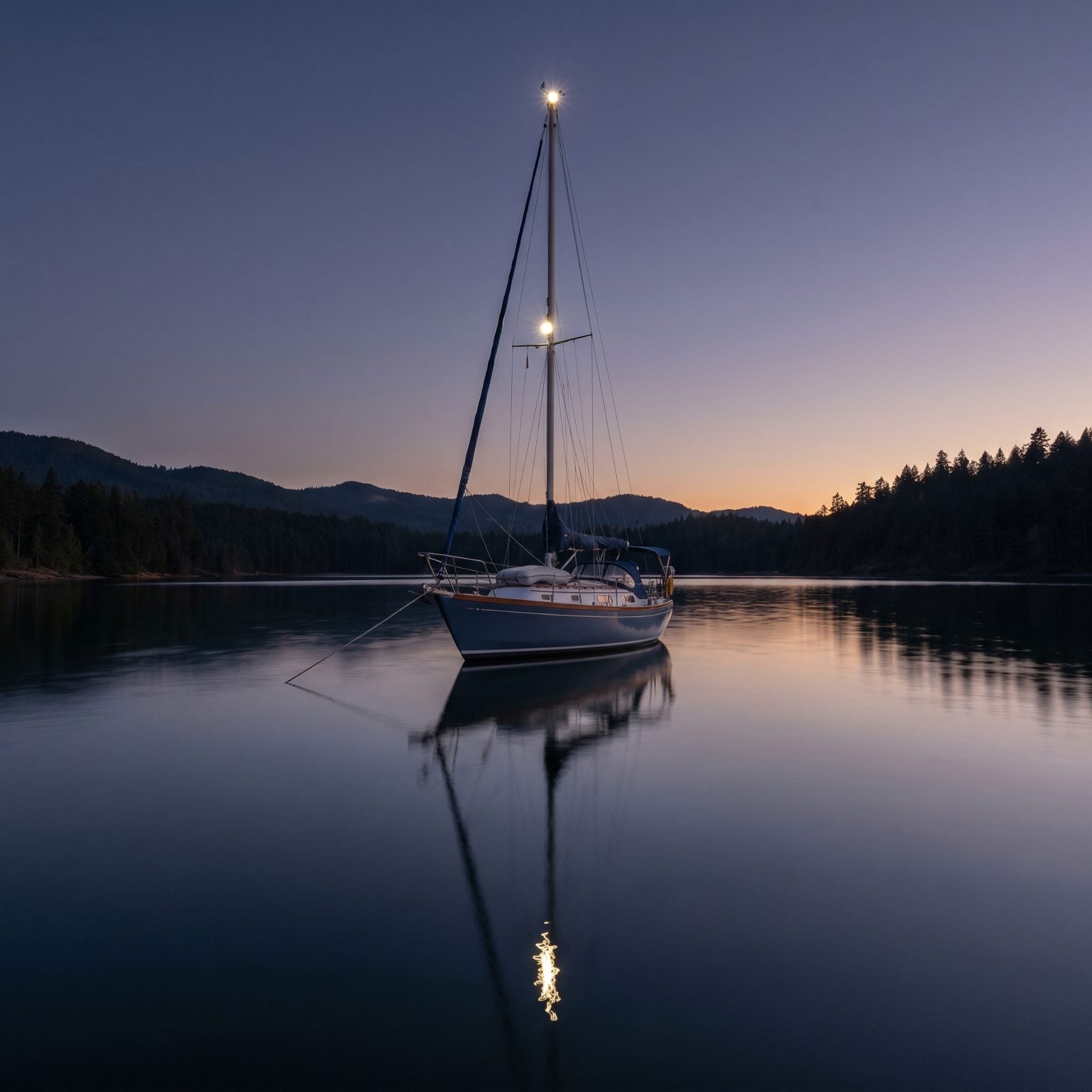
That white light at the top of the mast isn’t decoration. It’s a legal requirement under the navigation rules, and it’s the only thing telling a passing boat you exist after dark. An all-round white anchor light, visible for a couple of miles on most pleasure craft, goes on at sunset and stays on until sunrise. Every night, and no exceptions for “we’re only here one night.”
The failures I see most are a light that quit two seasons ago and nobody noticed, and the owner who kills it to save the battery. Either way you’ve gone invisible to a dinghy running back from shore at midnight.
17. Show the Required Anchor Day Shape
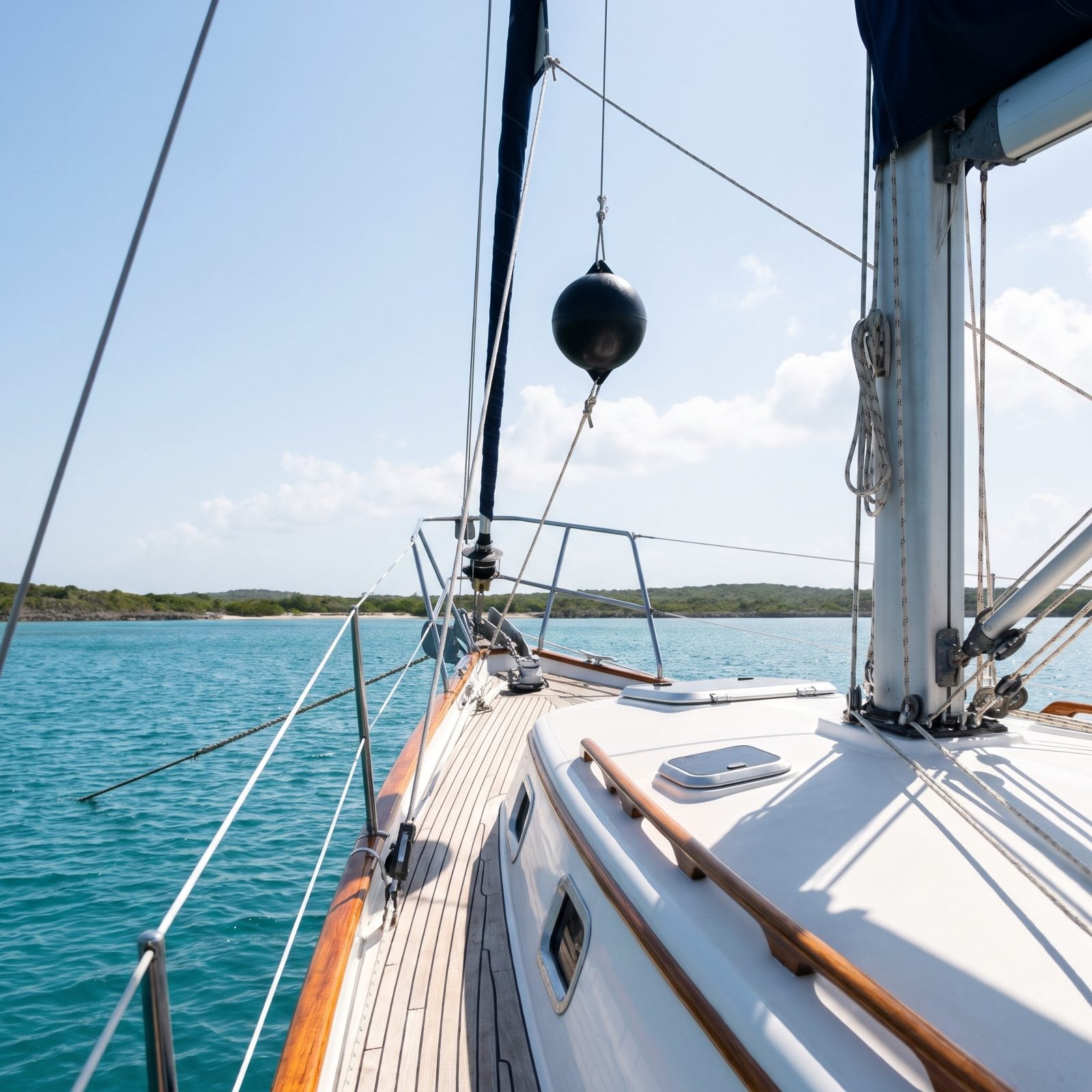
Most recreational boaters have never hoisted the black ball. Most have never been told they’re supposed to. In daylight, a vessel at anchor is required to show a single black ball shape forward, where it can best be seen. Call it the daytime cousin of the anchor light.
On a crowded weekend anchorage, nobody much cares. But drop the hook near a channel, a fairway, or anywhere a ferry or commercial skipper is reading the water, and that ball tells them instantly you’re not drifting and not under way. The cheap folding ones stow flat and cost less than a lunch.
16. Never Mistake Decorative Deck Lights for an Anchor Light
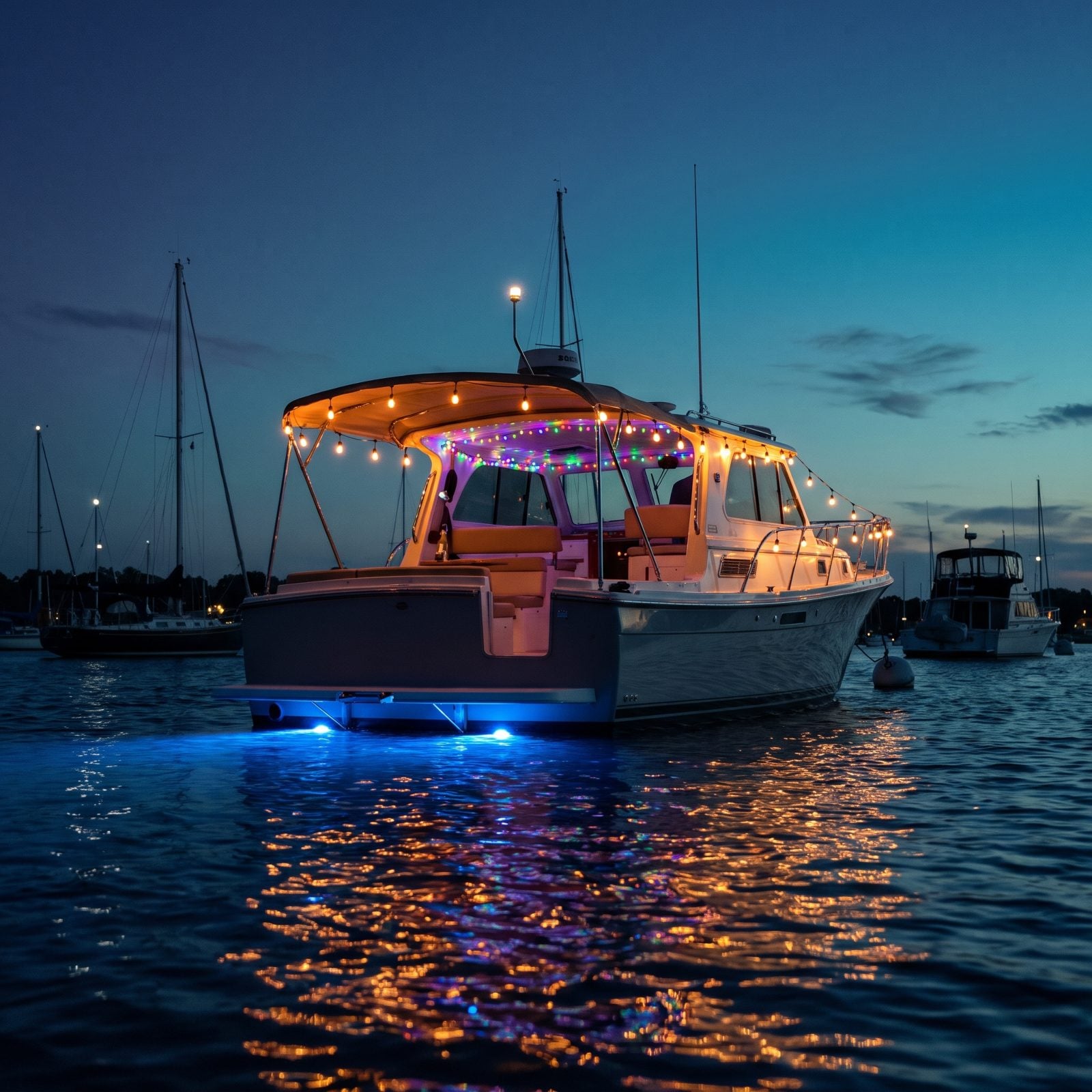
A deck lit up like a county fair is not the same as a legal anchor light, and plenty of boaters genuinely confuse the two. String lights, courtesy lights, those blue underwater transom lights, none of them satisfy the rule. Worse, they can smother the one light that matters.
Here’s the problem. A boater approaching in the dark sees a confusing cluster of colored glow and can’t read your position or heading from it. Your proper white all-round light needs clean air above the clutter. So enjoy the ambiance, but keep that white light unobstructed and burning.
15. Keep Bright Cockpit Lights Out of Other Helms’ Eyes
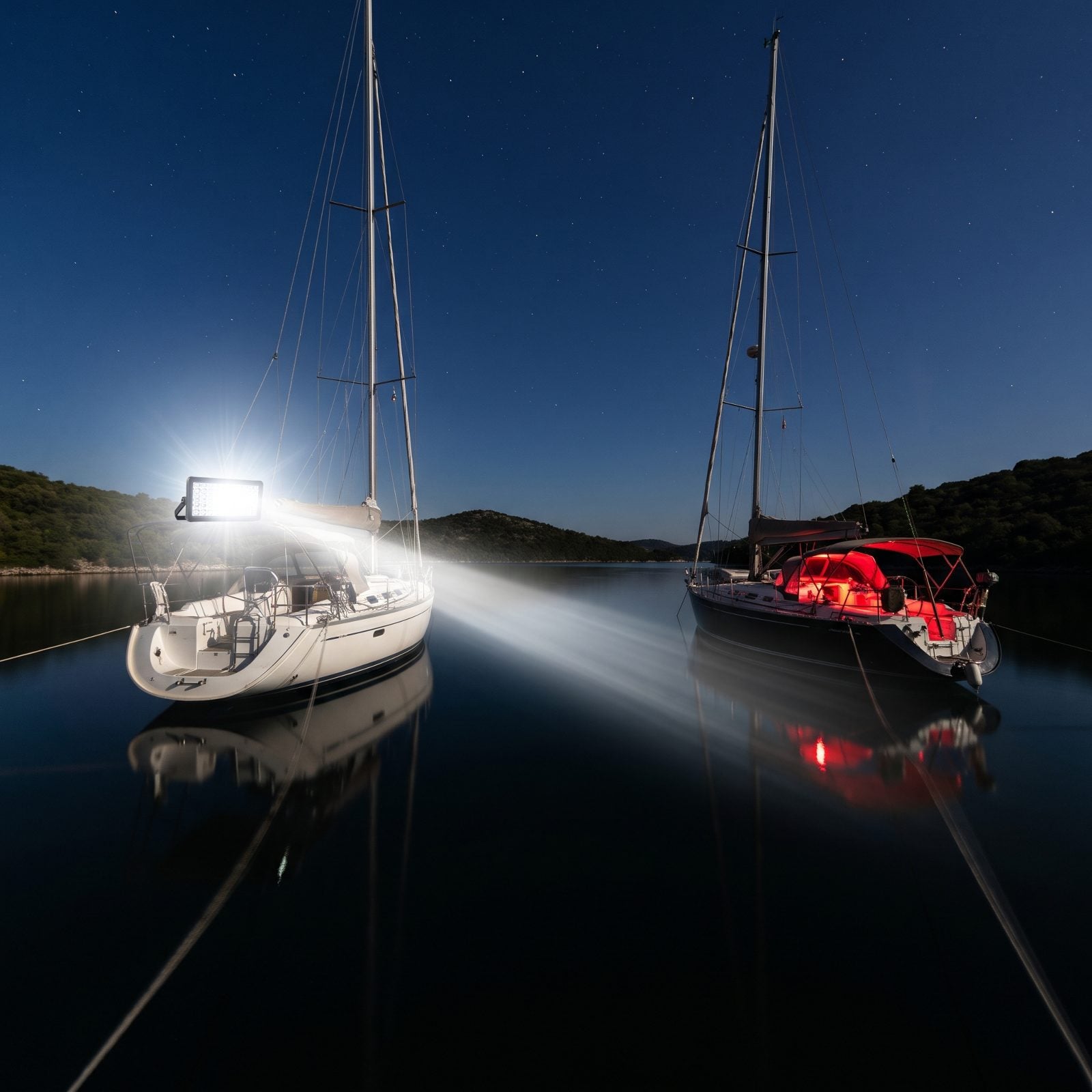
A floodlit cockpit feels cozy from inside. From the next boat over, it’s a headlight in the bedroom window.
Bright white light destroys night vision, yours and everyone else’s. When someone has to leave at first light, or check their rode at 2 a.m., your blazing cockpit means they’re half blind doing it. Switch to dim, warm, or red lighting once the sun’s down. Red preserves night vision almost completely, which is why it’s the color on every navy bridge in the world.
You’re not running a stadium. You’re parked in someone else’s bedroom.
14. Point Spotlights Away From Anchored Boats
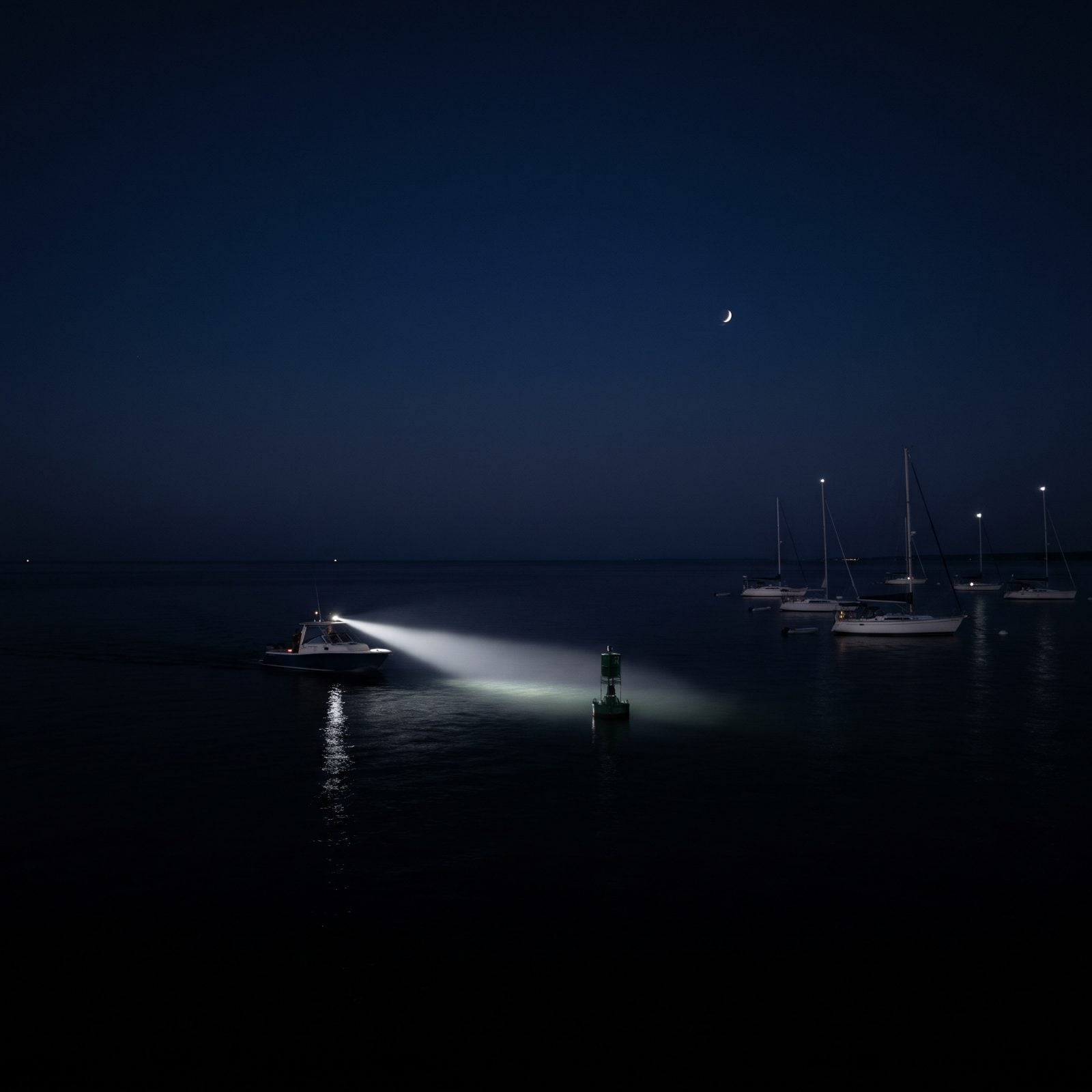
A spotlight has exactly one polite direction: wherever there are no boats.
Swing a million-candlepower beam across an anchorage to find your buddy’s boat or read a mooring number and you blind every person on deck in that arc. Recovering full night vision can take a long, groping while. If you need to pick out a buoy or a channel marker, aim low and ahead onto the water, use short bursts, then kill it. Never sweep it across cockpits. Someone over there is trying to anchor in the dark, and you just erased their eyesight.
13. Remember That Voices Carry Across Water
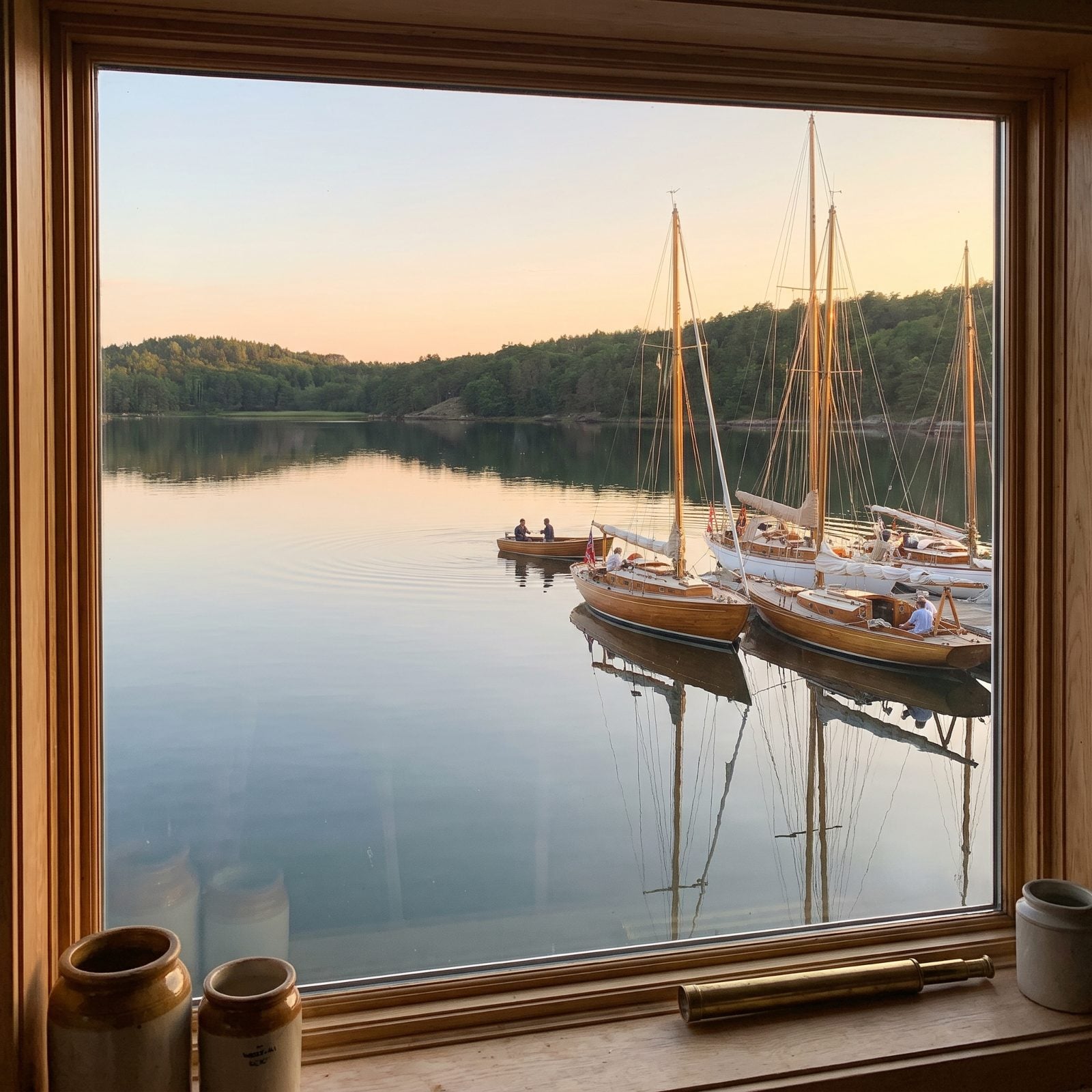
Still water is a loudspeaker. A conversation you think is private carries clean across a calm anchorage, and your neighbor fifty yards away is hearing every word about your brother-in-law.
Sound travels farther and clearer over water than over land, especially on flat, windless evenings when everyone has their hatches open. That dinner-table volume feeling normal on your boat lands in three other cockpits. It isn’t about whispering. It’s about remembering you have an audience, and that they came out here for the quiet.
As a longtime liveaboard sailor puts it, “Sound travels over water in a way it never does on land. Everyone within half a mile can hear a normal cockpit conversation”
12. Keep Music Low Enough for Only Your Boat to Hear
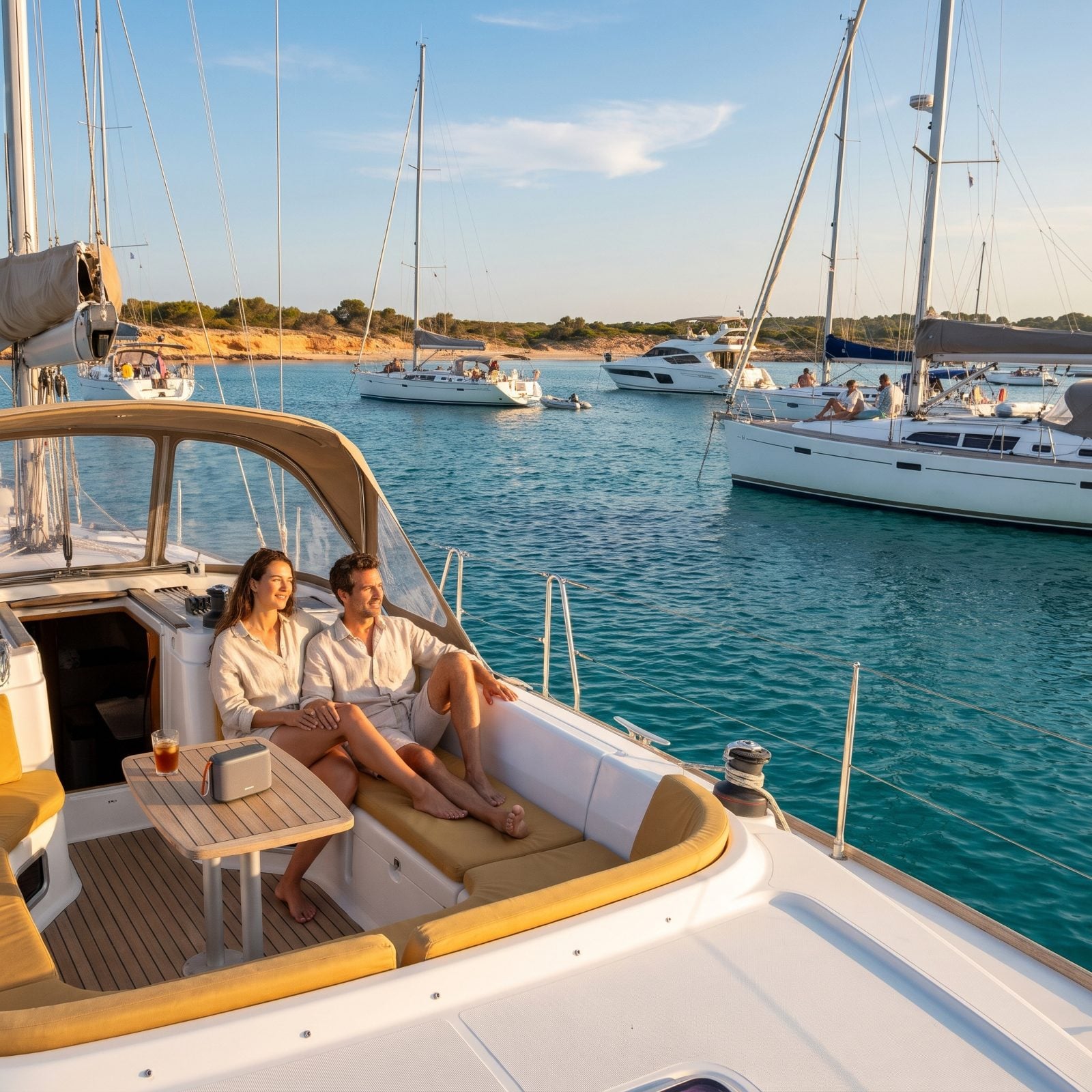
Simple rule of thumb: if your music is audible on the boat next to you, it’s too loud. Full stop.
Your playlist is your taste, not theirs. What sounds like a good afternoon to you is a nuisance to the couple who anchored here specifically to hear loons and wind instead of your bass line. Keep the speakers aimed inboard and the volume at conversation level. And when the sun drops, drop the volume with it. Nobody anchored in a wilderness cove to fall asleep under someone else’s subwoofer thumping across the water.
If the boat next to you can name the song, your speakers are pointed the wrong way and turned up too far.
11. Control Pets on Deck and During Shore Trips
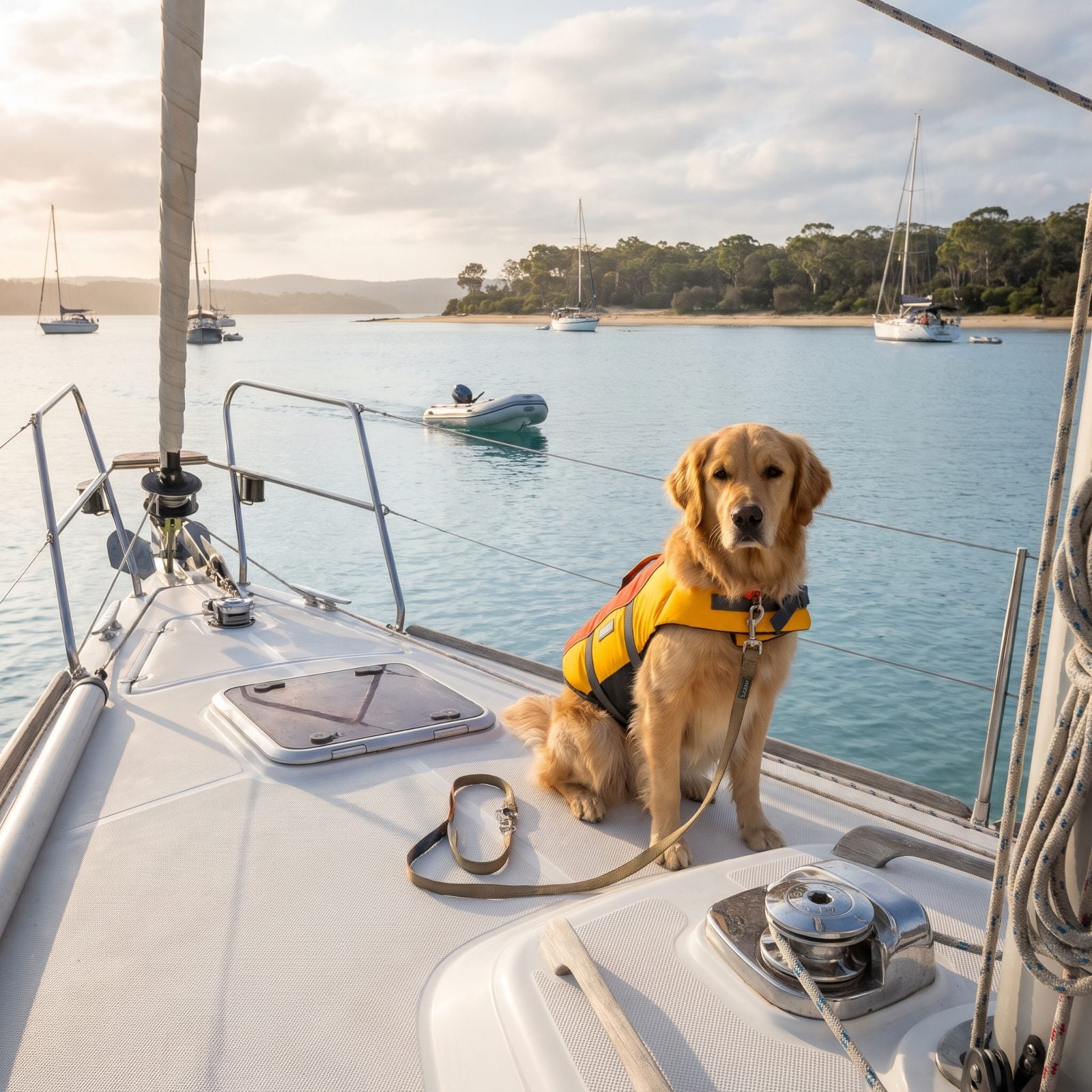
A barking dog at anchor carries exactly as far as a shouting human, which is to say everywhere.
Love your dog. Everyone does. But a pet that barks at every passing dinghy, or paces the deck all night, becomes everyone’s problem on a still evening. On deck, a canine life jacket and a clip to a jackline keep an excited dog from going over the side, which happens more than people admit. Ashore, clean up after them and keep them leashed where required. Nothing sours a shared beach faster than finding what the last boater’s dog left behind.
10. Slow the Dinghy Before Entering the Anchorage
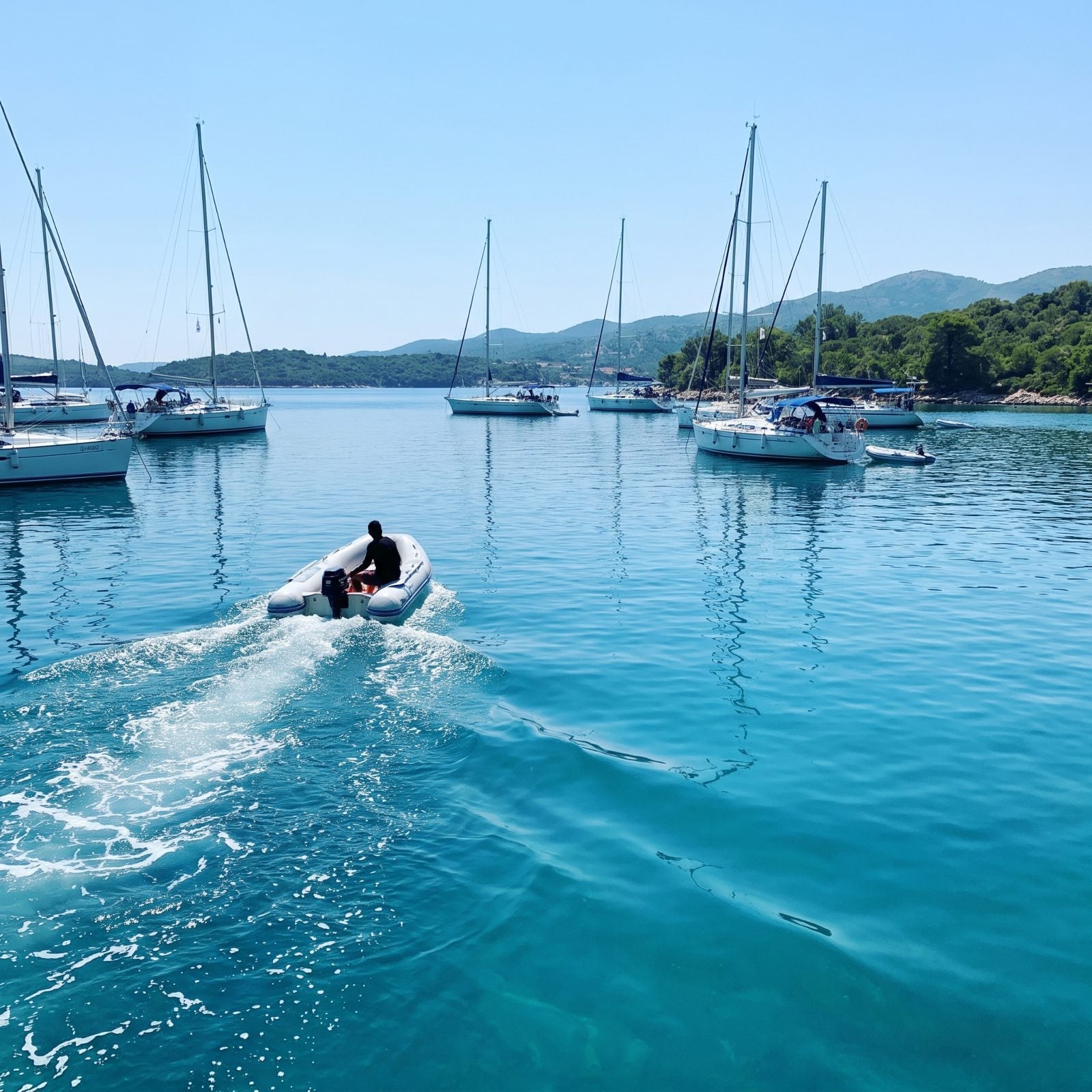
Nothing announces an inconsiderate boater like a dinghy ripping through an anchorage on plane.
Your wake rocks every boat it reaches. Drinks slide off tables, people lurch at the stove, someone’s nap ends badly. Pull the throttle back to idle speed well before you reach the first anchored boat, and hold it there until you’re clear on the far side. Yes, it takes longer, and that’s exactly the point. Same courtesy on the way out: ease off first, open up later, once there’s open water and nobody’s cockpit left to flood.
9. Never Discharge Sewage or Trash in an Anchorage
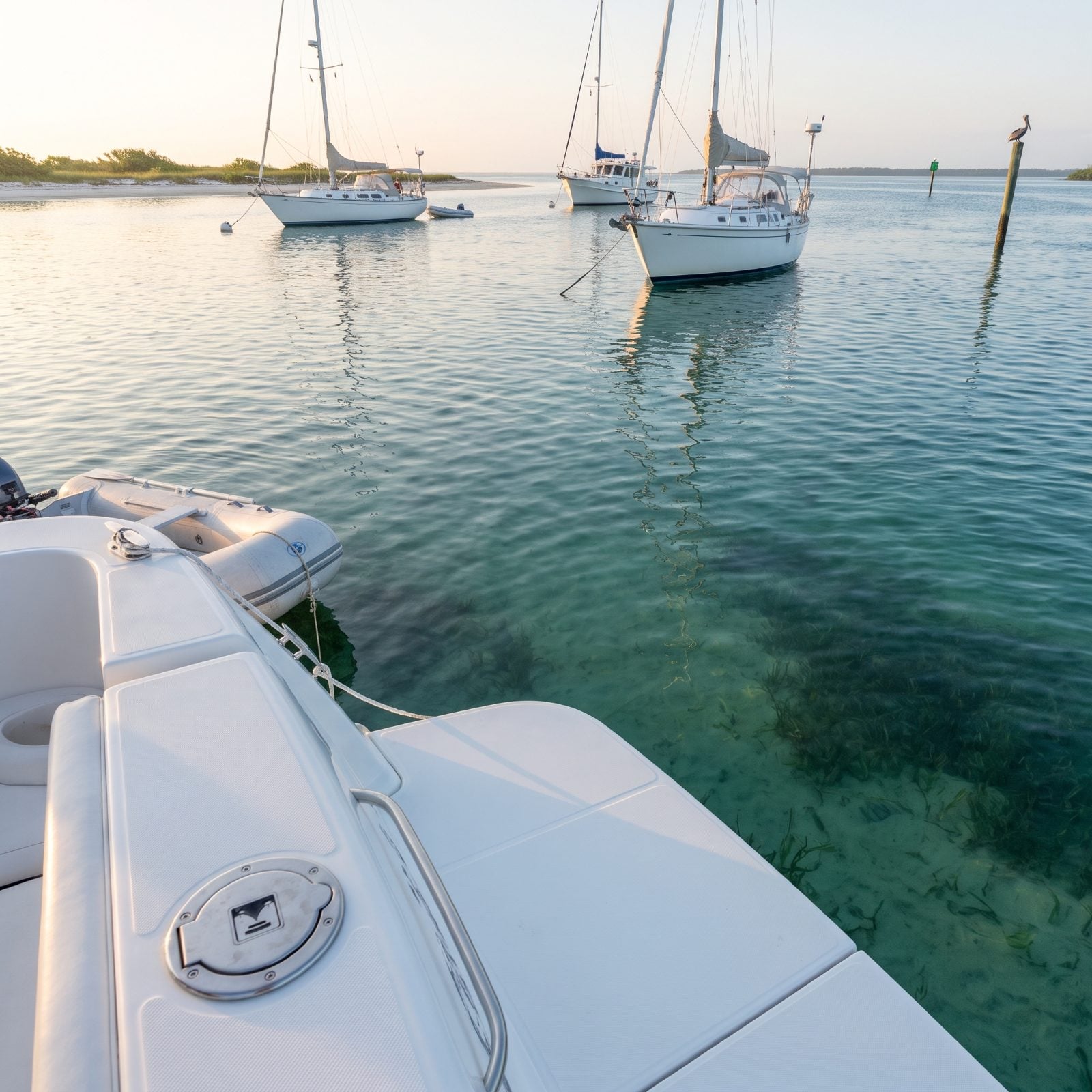
The water you anchored in is the same water the boat next to you will swim in, and the clams somebody’s dinner comes from. Argument settled.
Most anchorages sit inside no-discharge zones where dumping holding tanks is flat-out illegal, not just rude. Keep the Y-valve locked to the holding tank, run it to a pumpout before you leave, and bag your trash instead of tossing it over the rail. A banana peel is still litter. It just takes longer to insult everyone.
8. Maintain an Anchor Watch When Conditions Demand It
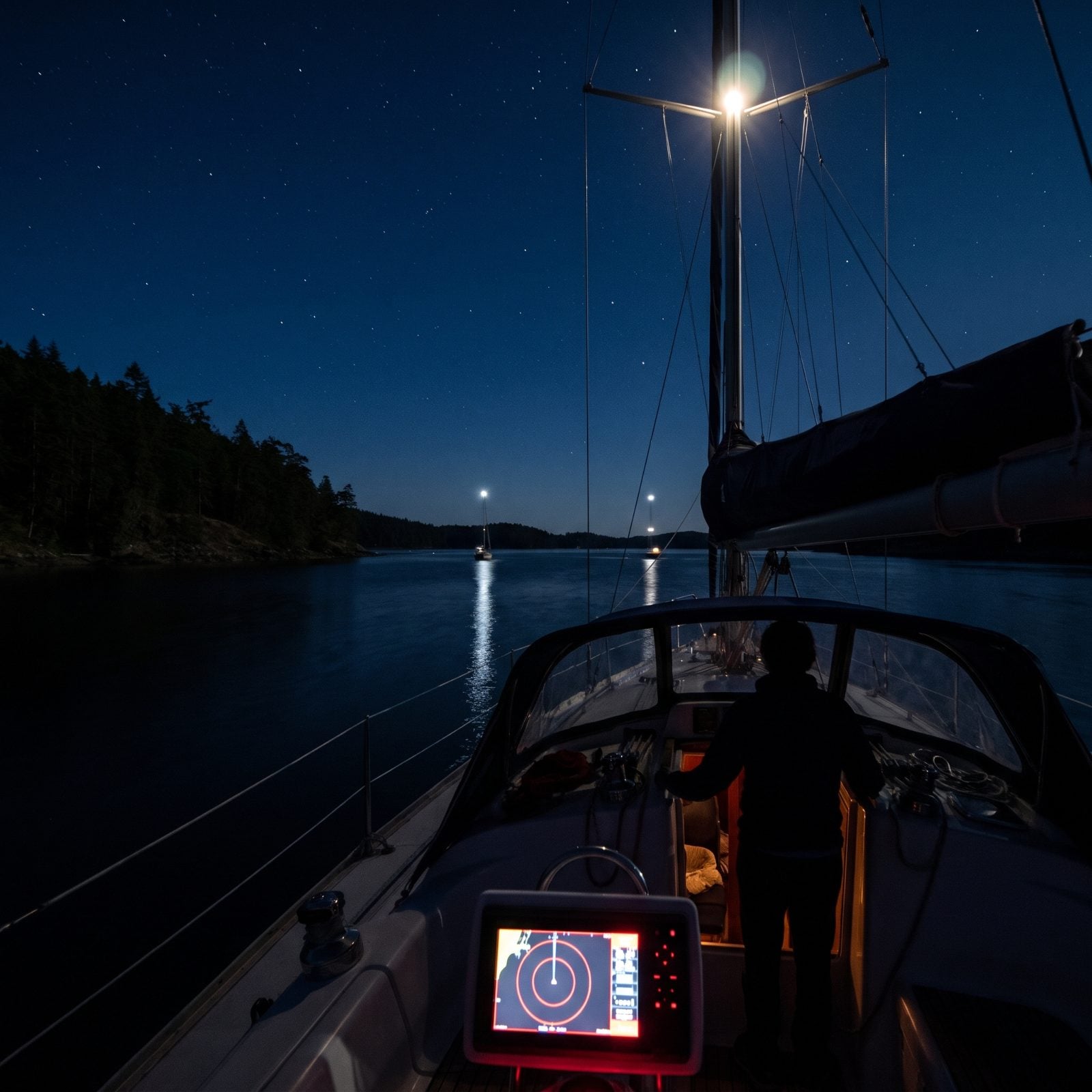
An anchor alarm is a good crew member. It is not the only one. On a nasty night, somebody stays up or takes shifts.
What you’re watching for is subtle at first. The lights of the boats around you start sitting in slightly different places, and your bearing to a fixed shore light creeps. By the time the alarm screams, you may already be a hundred yards closer to the rocks than you were an hour ago.
Dragging never announces itself. It just quietly changes where you are.
Set the alarm, sure. But trust your eyes and a couple of transit bearings on shore more than you trust the beep.
7. Keep the Engine Ready as Weather Deteriorates
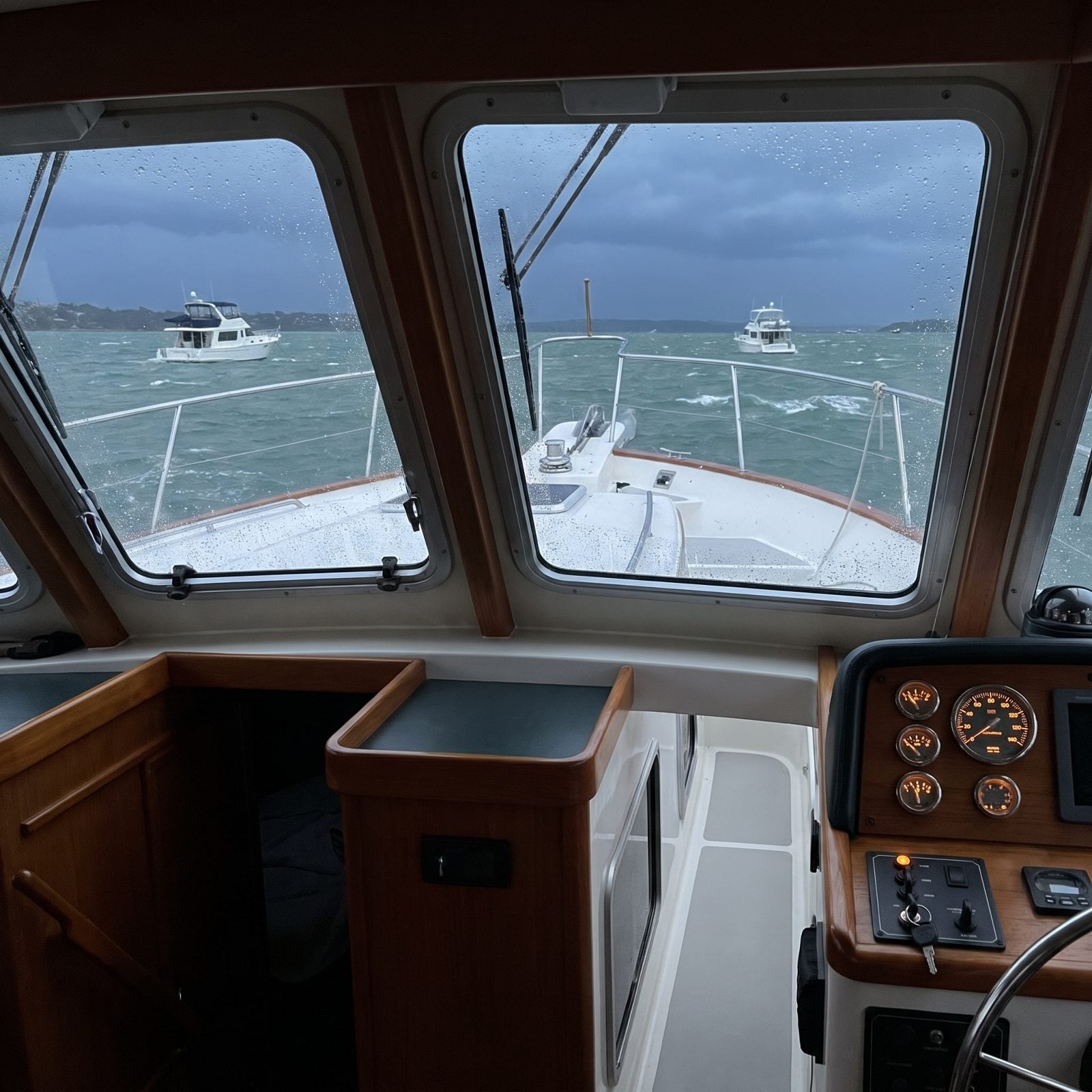
A cold engine is useless the exact moment you need it most. When the sky darkens and the wind starts to build, warm it up and let it run for a minute or two.
You’re not planning to leave. You’re making sure you can. If you start dragging toward another boat at 2 a.m., the gap between tapping the starter once and fumbling with a reluctant cold diesel is the gap between a non-event and a crunch you’ll pay for.
6. Leave Keys and Emergency Gear Within Easy Reach
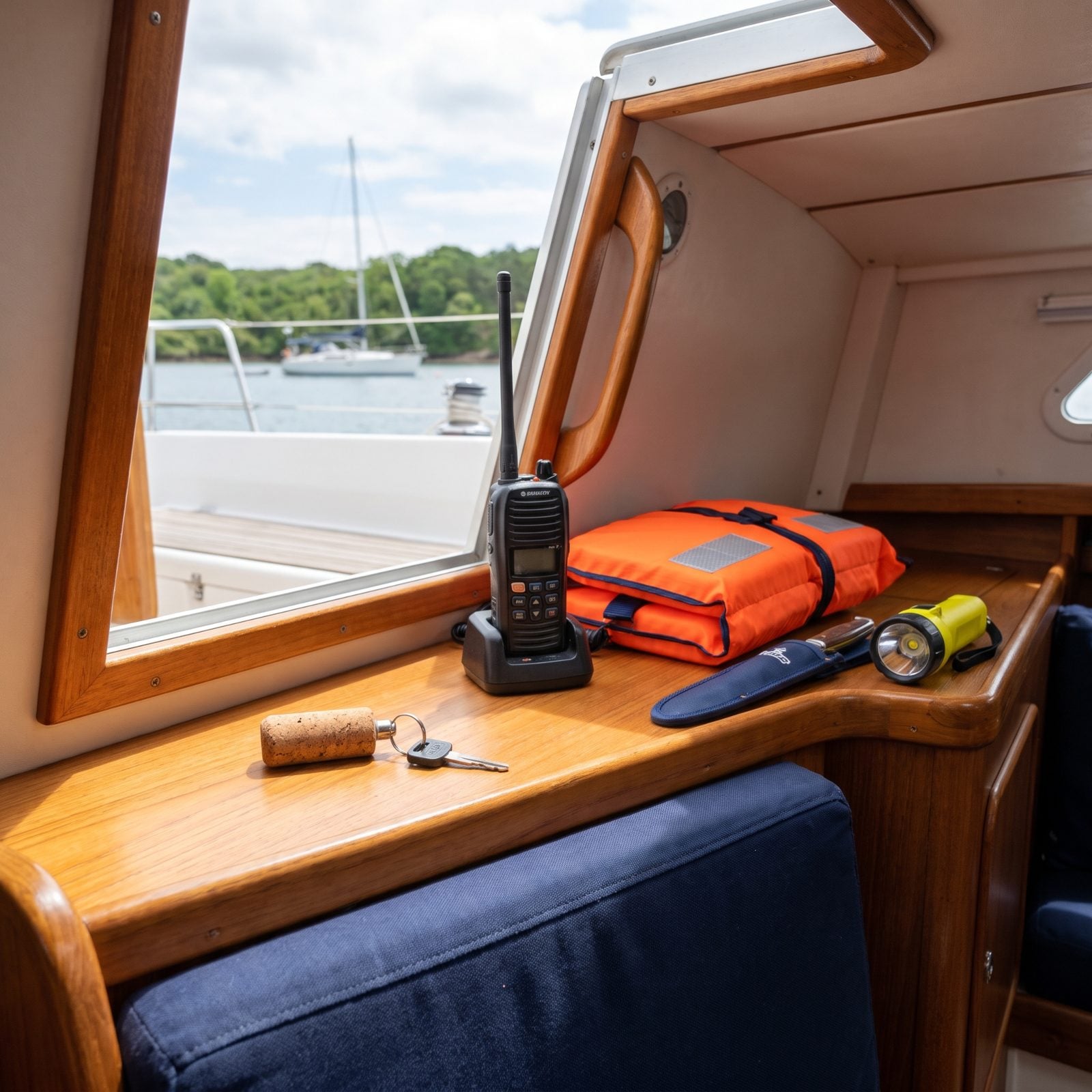
Picture the worst possible moment to go hunting for the engine key: pitch dark, the boat lurching, something already going wrong, and the key in a drawer behind the cushions you just stacked on the berth. That’s the scenario you’re trying to avoid.
Everything you’d grab in a hurry lives in one known spot. Keys, handheld VHF, a knife to cut a fouled line, a flashlight, your life jackets. You should be able to put a hand on each one with your eyes shut, because on a bad night you practically will.
5. Never Leave the Boat Unattended in Marginal Conditions
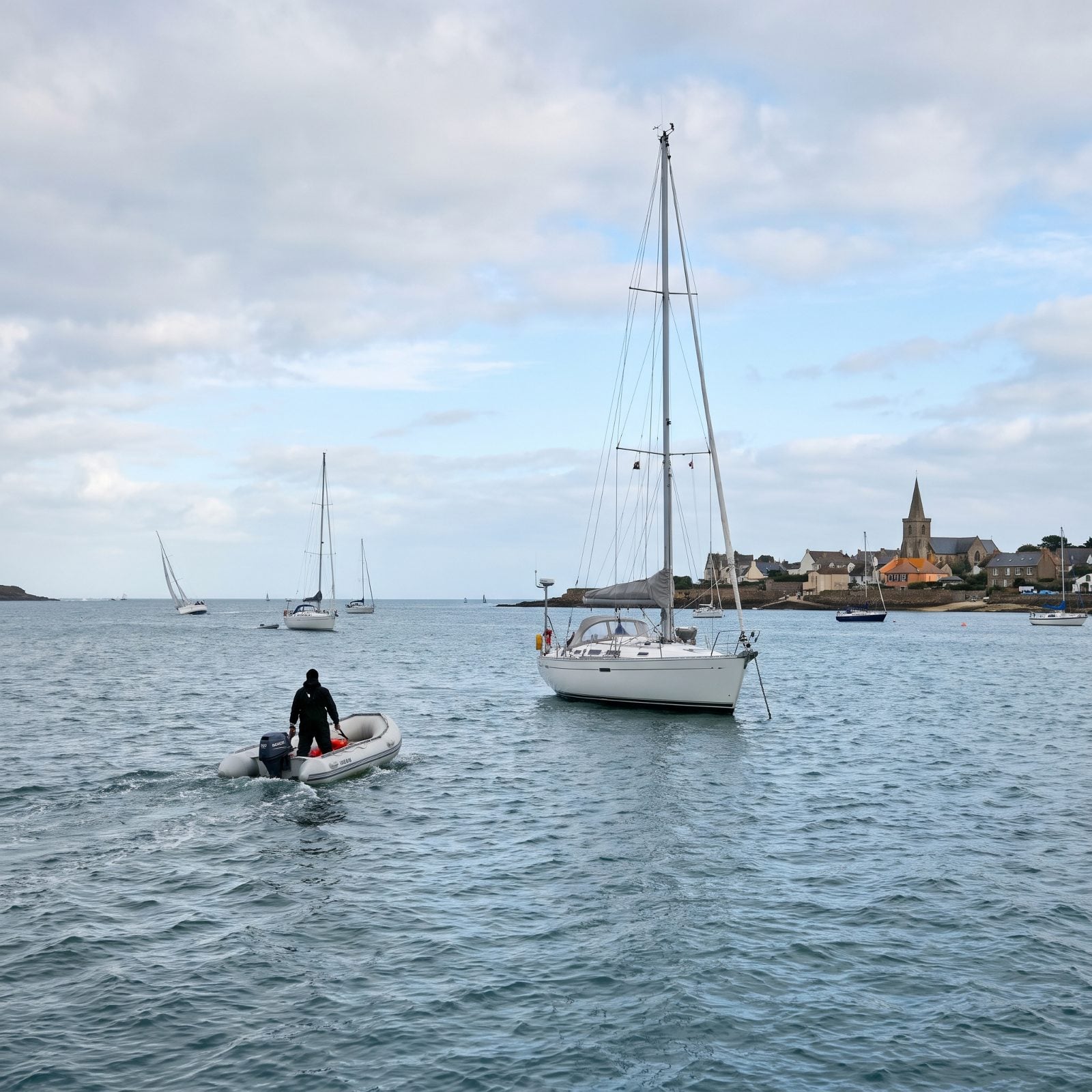
The hook is holding beautifully. The breeze is up a bit, but it’s fine. That’s exactly the setup that strands a boat on the rocks while its owner is ashore ordering a second round.
If conditions are marginal, somebody stays aboard. An anchor that’s been perfect for six hours can let go in the first real gust, and a boat with nobody on it can’t start an engine, pay out more rode, or call for help. Go ashore when it’s settled. When you’re not sure, you already have your answer.
4. Warn Other Crews Promptly if Their Boat Is Dragging
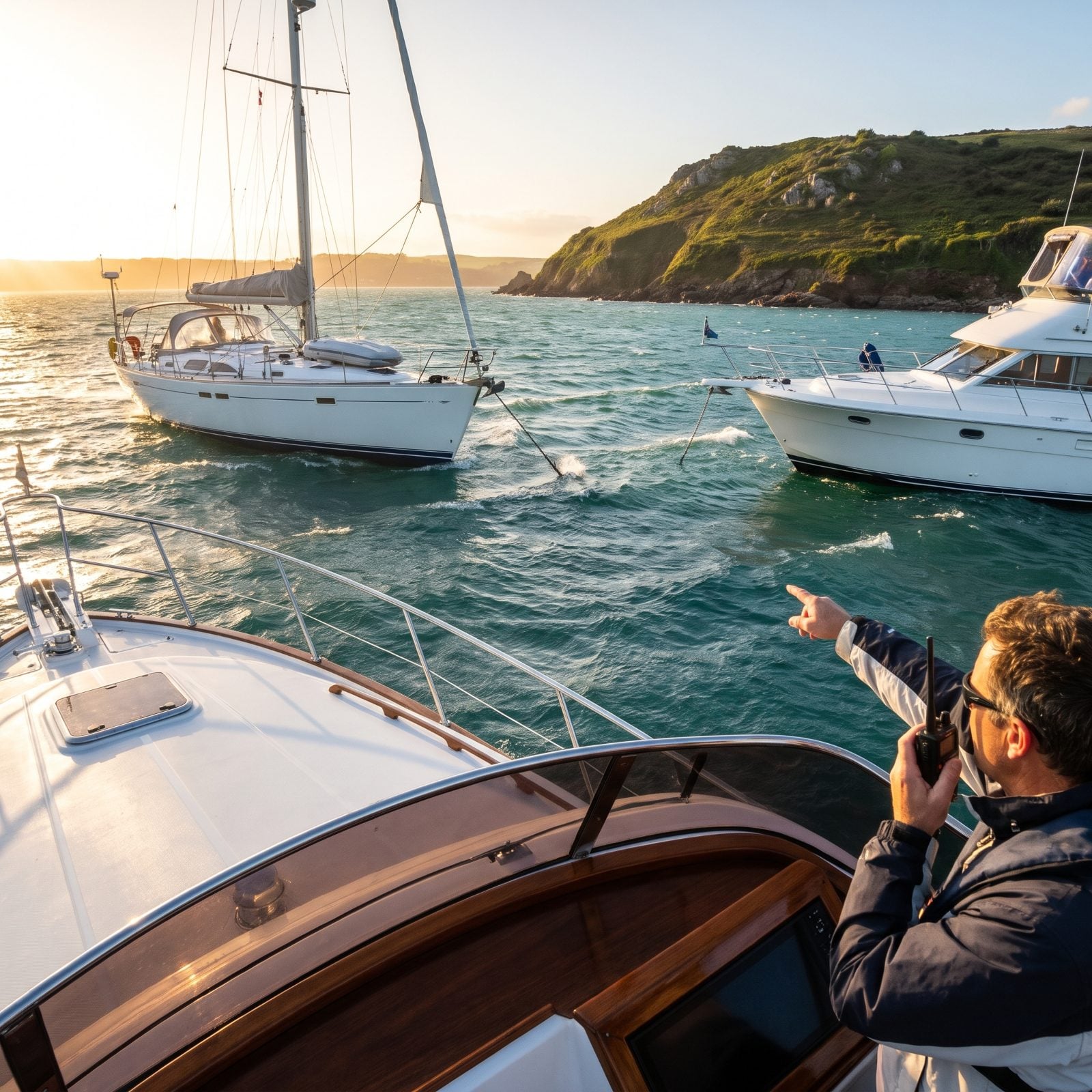
You spot it before they do. One boat sitting at the wrong angle, sliding backward past the others while their crew is below, oblivious to the whole thing, and every second you hesitate the gap closes a little more.
Hail them on VHF 16, blast the horn, shout, wave both arms. Whatever it takes to get a head on deck. Nobody has ever been annoyed at a stranger who saved their boat, and plenty of people have cursed the neighbour who saw it happening and said nothing because they didn’t want to be nosy.
3. Offer Help Before Filming an Anchoring Mishap
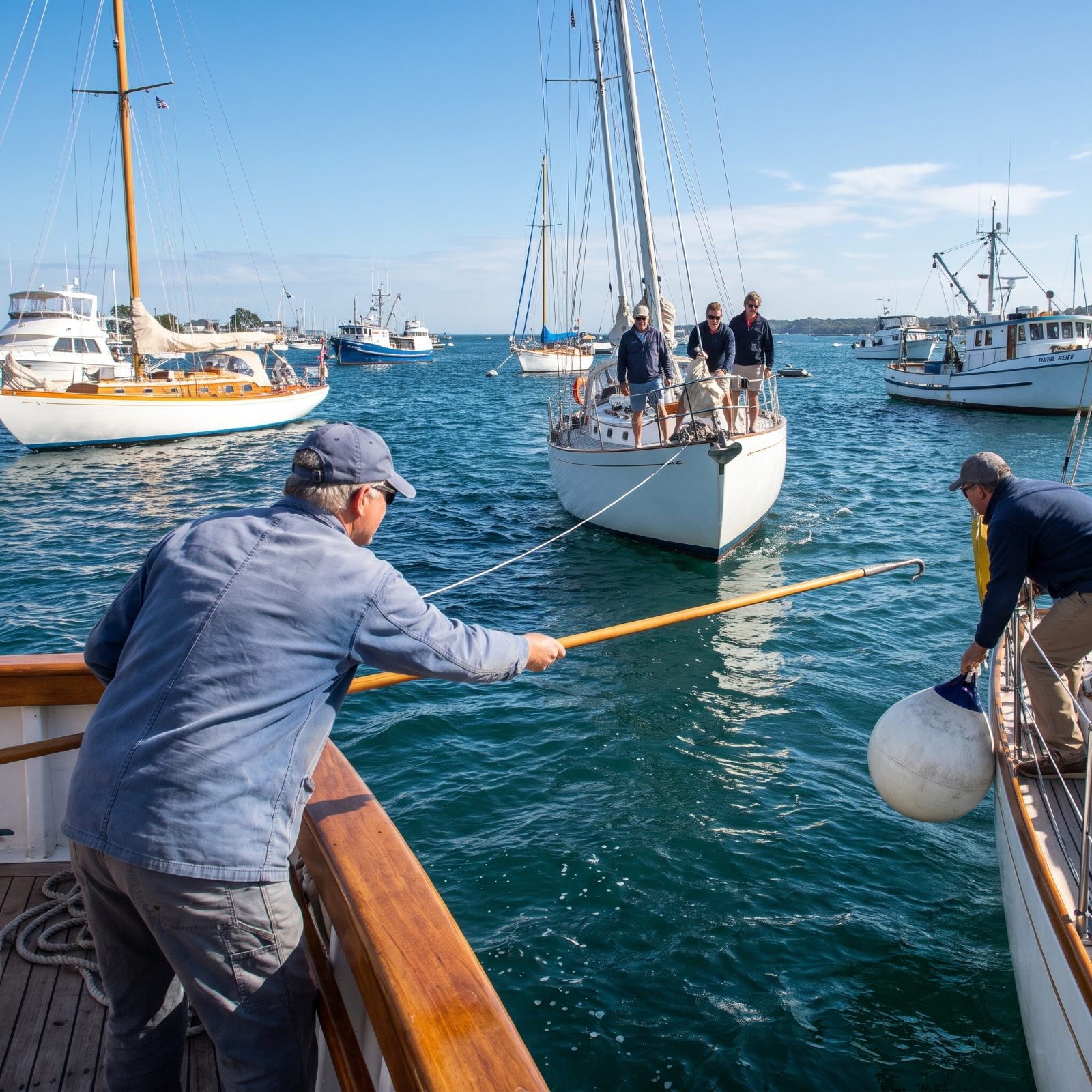
Anchoring in a crowded cove with a crosswind humbles everybody eventually. The boat that comes in three times before it sticks isn’t a comedy. It’s a crew having a hard day with an audience.
If they drift near you, fend off and talk them through it. Point to a gap, take a line, keep the phone in your pocket. There’s a whole genre of marina mishap videos online, and not one of them was shot by someone who thought to lend a hand first.
2. Retrieve the Anchor Without Powering Over the Rode
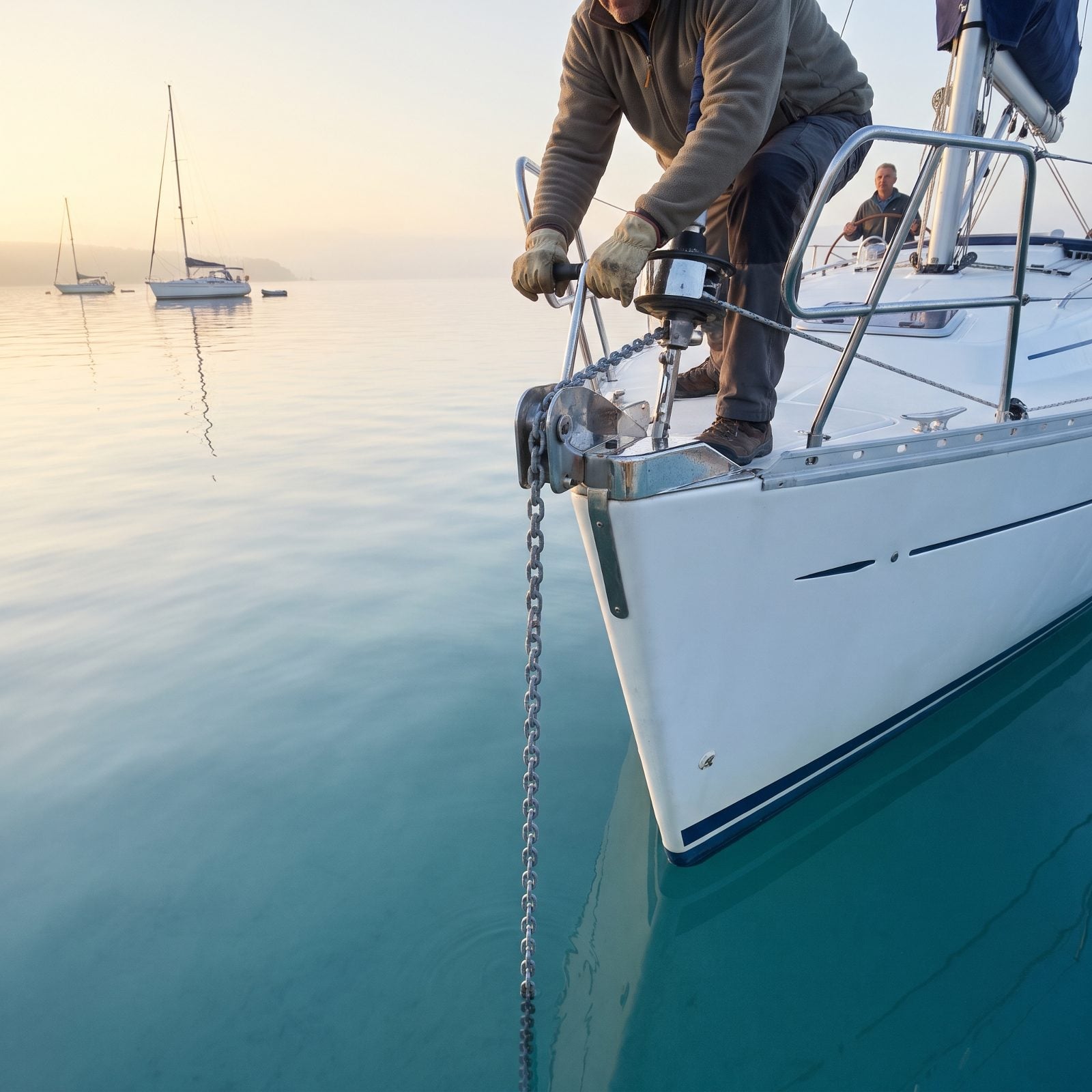
The windlass pulls the chain up. It does not pull the boat to the anchor. Confuse those two and you’ll either burn out a motor or bend a bow roller.
Ease the boat forward under power as the crew gathers rode, keeping the chain leading straight down rather than back under the keel. Power over your own line and you risk wrapping it around the prop, which turns a two-minute departure into an hour in the water with a knife. Short bursts, gentle, and let the person on the bow call the direction.
1. Depart Slowly Until Clear of Every Anchored Boat
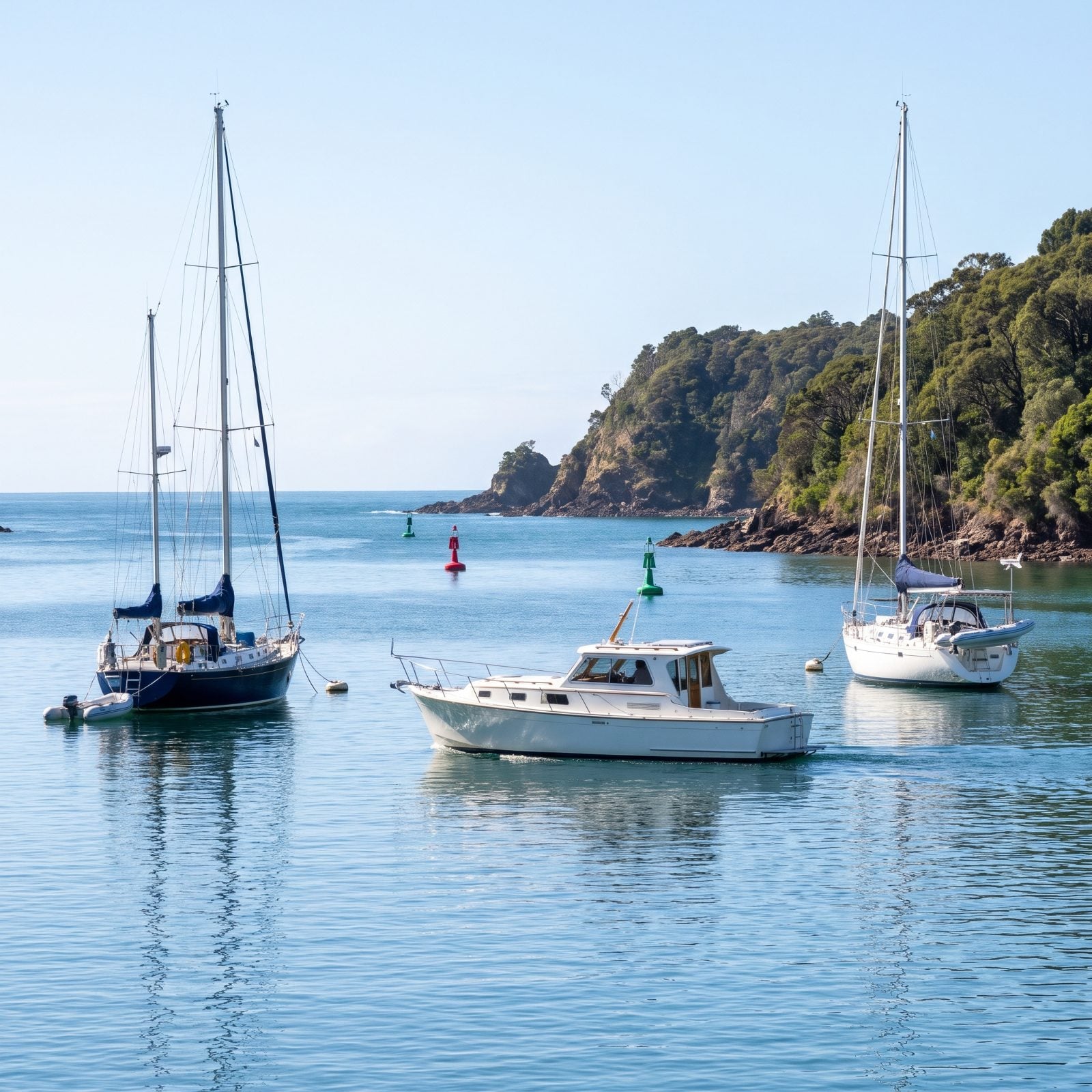
Your wake is your signature on the way out, and a big one signs it rude. Boats at anchor rock, dinghies slam, coffee spills in cockpits you’ll never see.
Hold it to idle, barely-there speed until you’re well past the last anchored hull, then open up only when the water ahead is clear and no stern is pointing your way. The two minutes you save gunning it out of the cove will cost somebody their morning, and the person you rolled is the same person you’ll be anchored next to in the next harbour down the coast.