
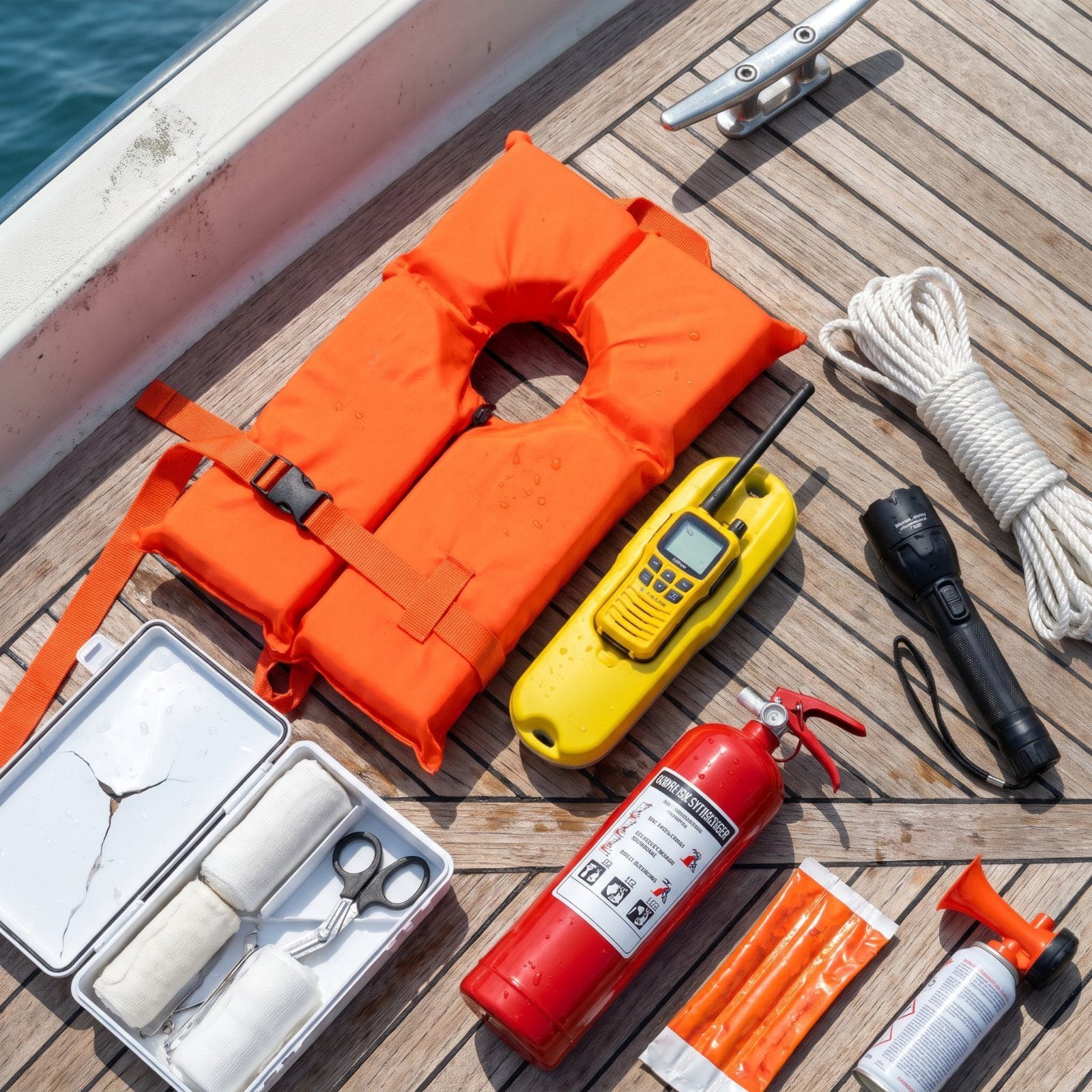
The dock on a Saturday morning tells you everything. Half the boats pull out with a cooler and a prayer, and the other half have a locker that opens like a well-run tackle shop, everything stowed where a cold wet hand can find it in the dark. That second group has been scared once. Maybe twice. They know the water is patient and indifferent, and they pack like they believe it. The gear below isn’t glamorous and most of it never gets used, which is exactly why you carry it — so the day you need it isn’t the day you wish you had.
Please note that some of the imagery in this article may have been enhanced with the assistance of AI.
47. Properly Fitted Life Jackets for Everyone Aboard
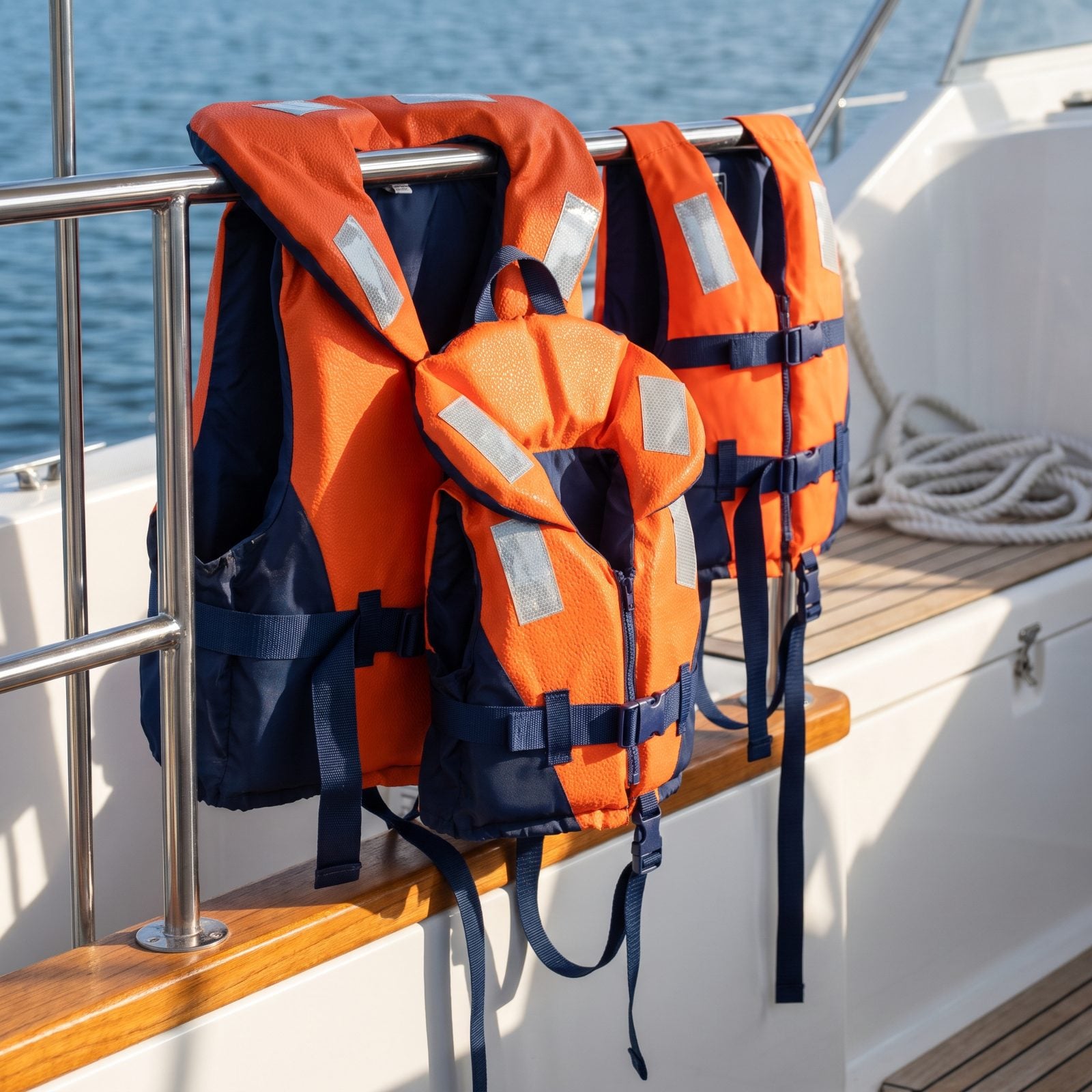
A life jacket that doesn’t fit is a cushion you’re wearing for comfort, not a device that saves you. The test is simple, and most people skip it: buckle it, grab the shoulders, and pull up hard. If it slides past your ears, it’s too big, and in the water it’ll ride up over your face while you’re trying to breathe.
Kids need their own, sized to weight, with a crotch strap and a grab handle. Adults need one each — not a shared pile under the bench. The law counts heads, and so does the water.
46. A Floating Handheld VHF Radio
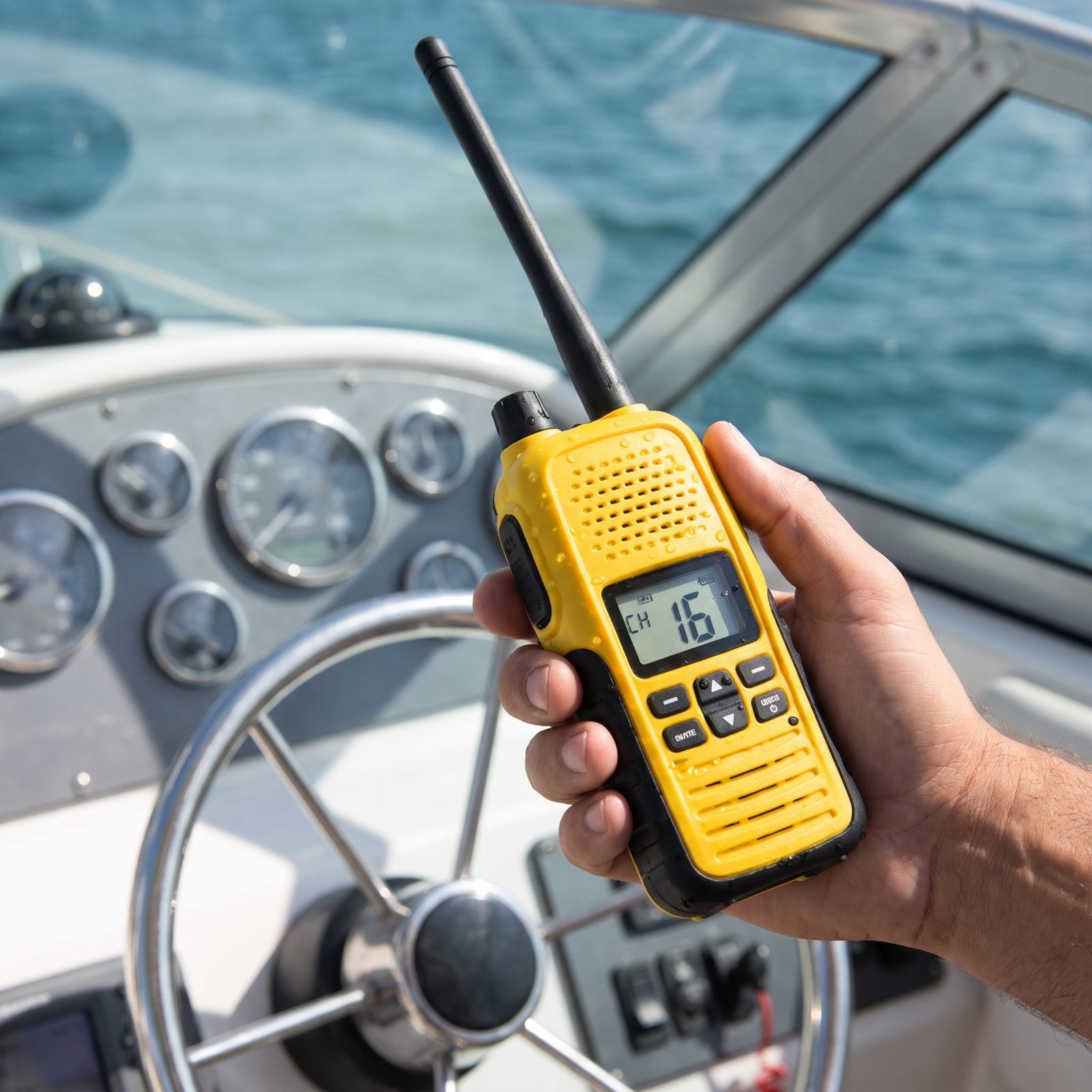
Your phone dies, loses signal, or goes overboard, and it doesn’t broadcast to every boat and rescue station within range at once. A VHF does. Channel 16 is monitored by the Coast Guard and by everyone else out there, which means your mayday reaches a dozen boats that might be closer than any rescue vessel.
Buy the one that floats, and buy it in a color you can spot. A black radio sinking in dark water is just gone. The yellow one bobs on the surface flashing a little light, waiting for you to fish it back out.
45. A Fully Stocked Marine First-Aid Kit
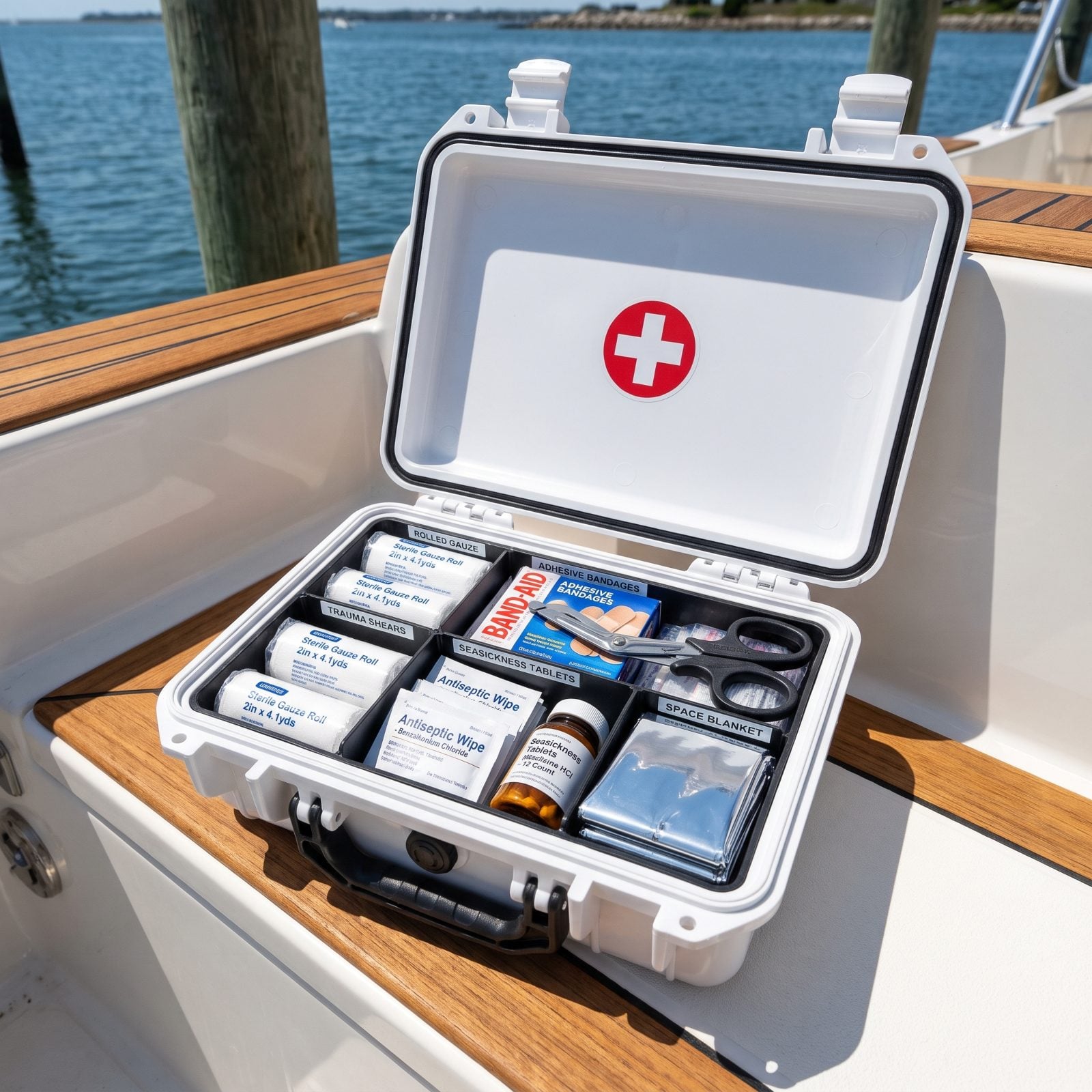
The drugstore kit in your glove box is not a marine kit. Out on the water you’re dealing with fishhooks, deep slips on wet fiberglass, sunburn, jellyfish, and the slow misery of seasickness. You want trauma shears, a real pressure bandage, tweezers that can grip a hook barb, and ginger tablets or scopolamine for the person turning green.
Store it in a hard case with a gasket, not a soft pouch. Salt air finds its way into everything, and a kit full of rusted scissors and crumbling tape is a kit that failed you quietly, months before you opened it.
44. A Marine-Rated Fire Extinguisher
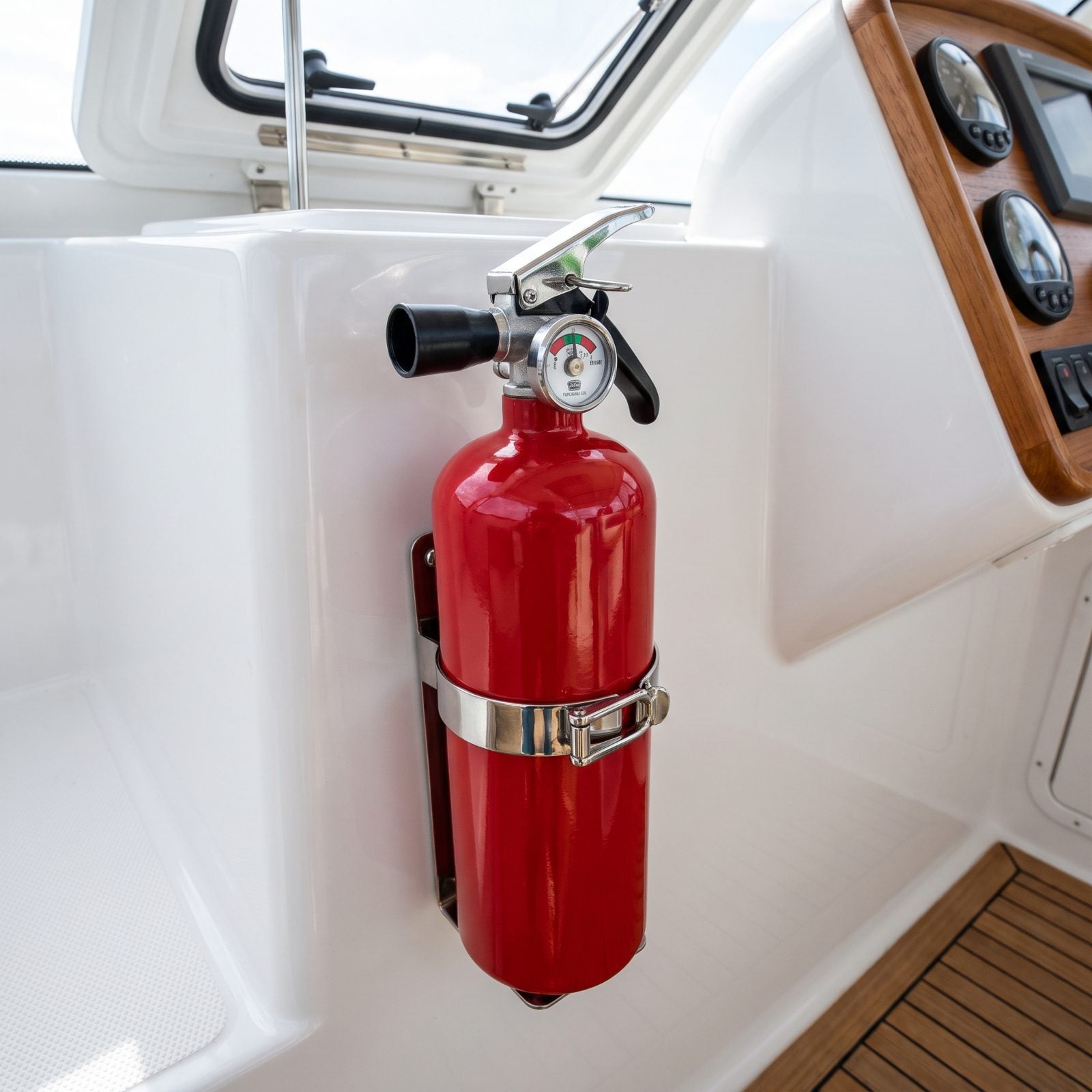
Boat fires move fast because everything around them is fuel, fiberglass, and trapped space. You get seconds, not minutes. Mount the extinguisher in a bracket you can reach without climbing over anyone, near the helm, and never buried in a locker under the cooler.
Check the gauge needle sits in the green every time you leave the dock. The powder inside settles and cakes, so give it a shake and a flip now and then. Federal rules require marine-type extinguishers sized to your boat’s length, and newer disposable ones carry a manufacture date — the old perpetual ones are getting phased out.
43. A Coast Guard-Approved Throwable Flotation Device
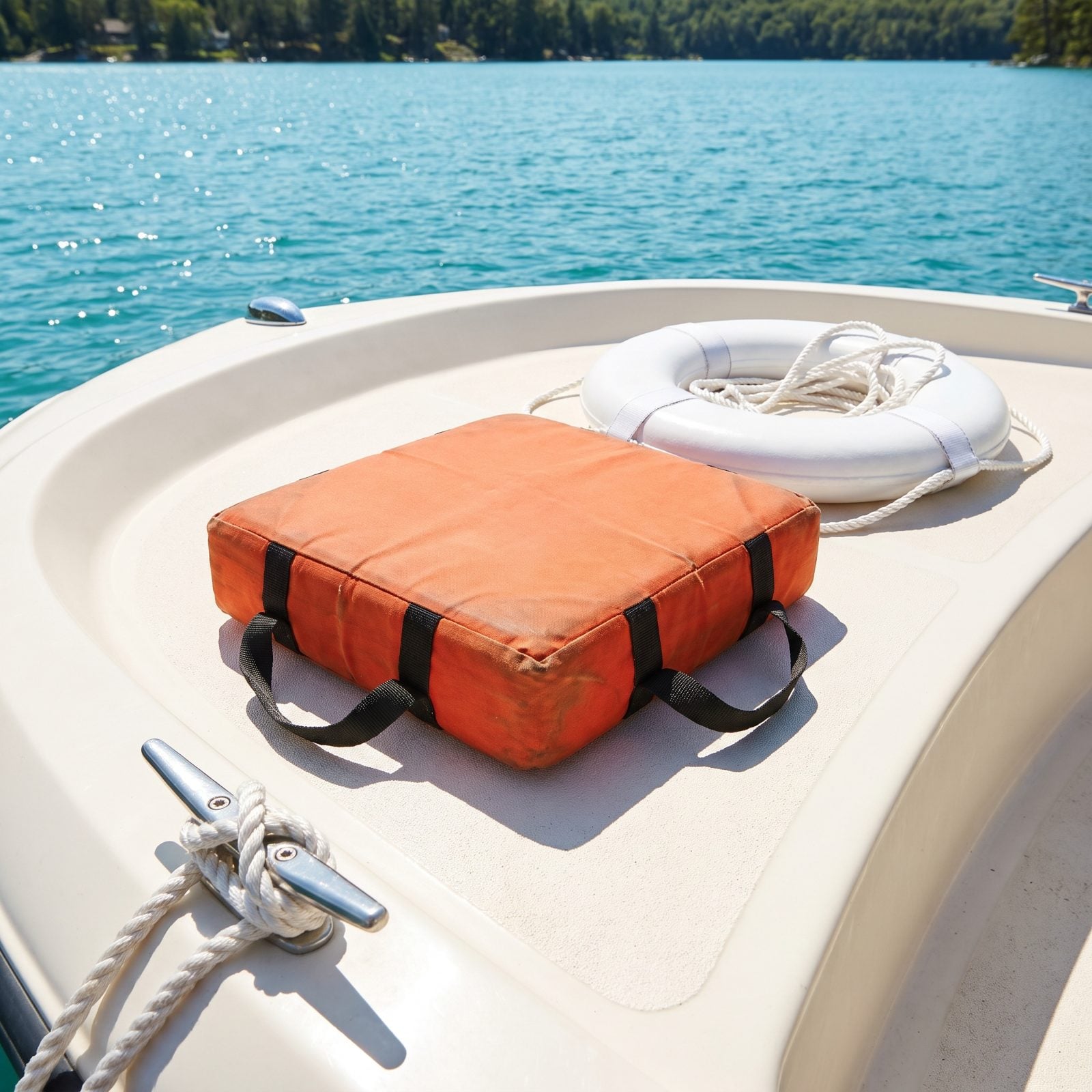
Someone goes over the side, and you can’t always reach them, turn the boat fast, or jump in yourself without making two victims out of one. A throwable buys you distance. You pitch it, they grab it, and now they’re floating while you figure out the rest.
Boats 16 feet and over are required to carry one. That orange square cushion doubles as a seat, which is exactly why people sit on it until the straps fray and the foam compresses flat. A ring buoy with floating line attached works better in open water. Keep it where you can grab and throw in one motion, not strapped down.
42. A Personal Locator Beacon
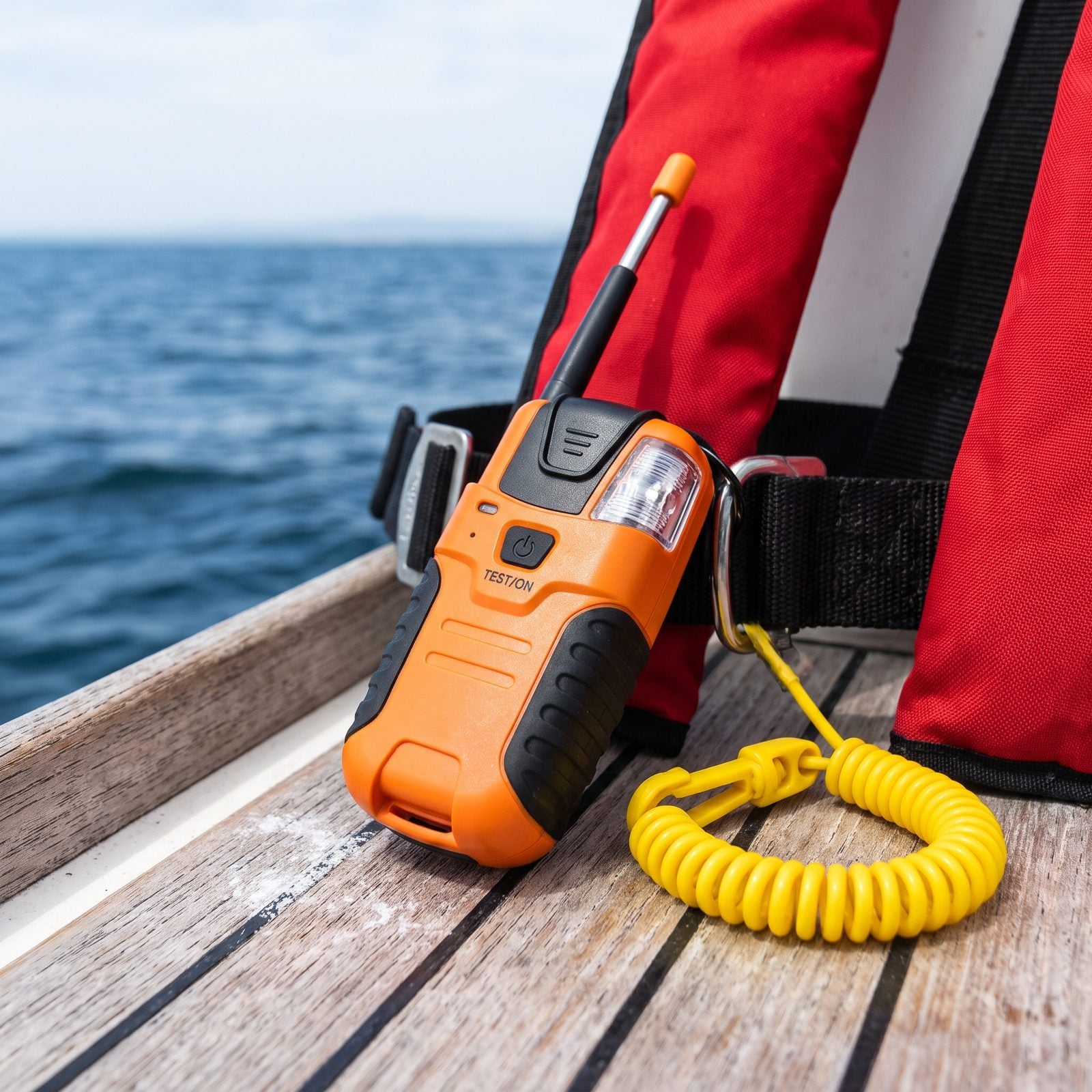
Here’s the one that works when nothing else does. A PLB sends your exact position to search-and-rescue satellites — no cell tower, no VHF range, no battery on a dying phone. You register it once with NOAA, clip it to your jacket, and forget about it until the day everything has gone wrong at once.
They cost a few hundred dollars with no subscription, and the battery lasts years. If you fish offshore, cross open water, or boat alone, this isn’t optional. It’s the difference between being found and being a search area.
41. Unexpired Visual Distress Flares
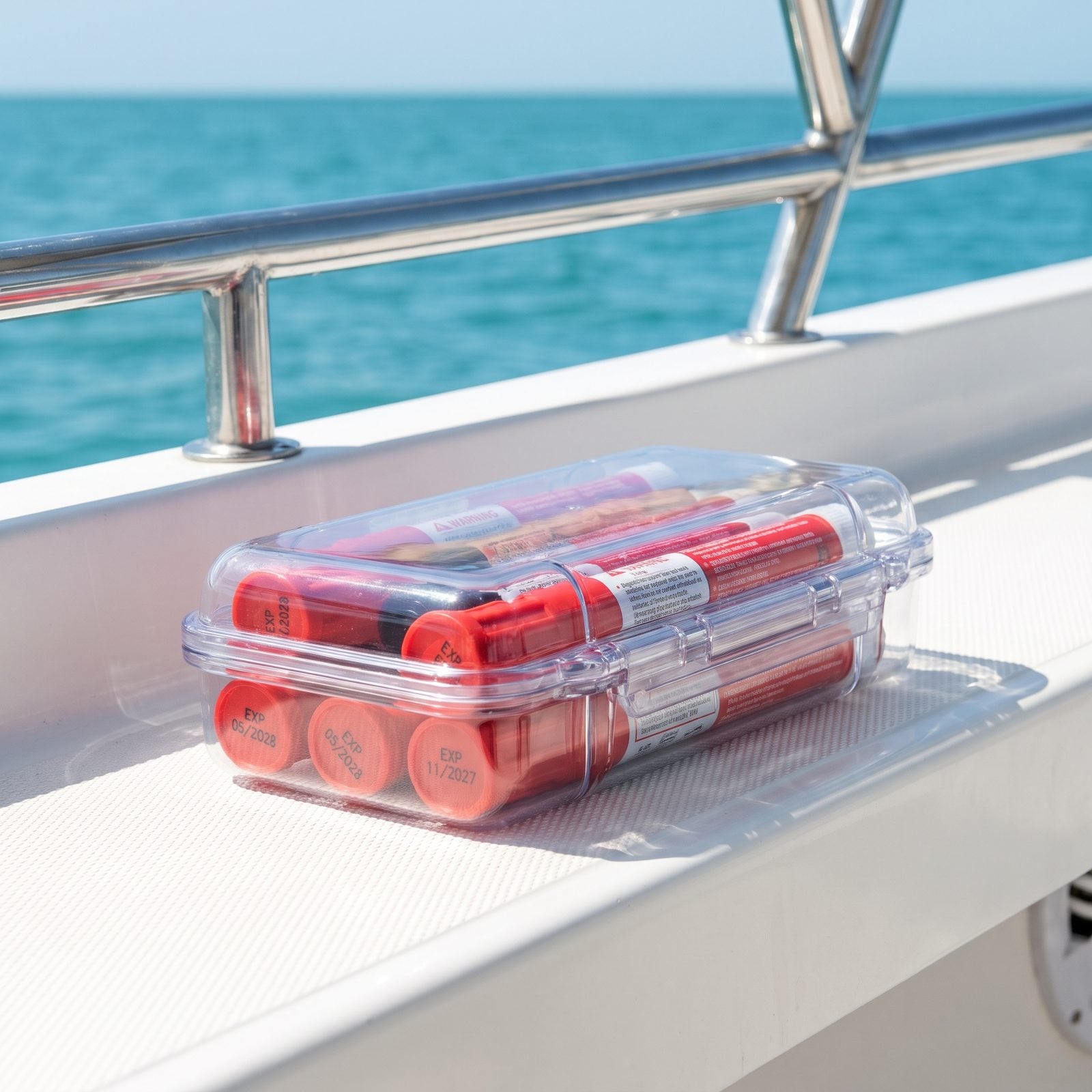
Flares expire, and expired ones are both illegal to count toward your requirement and unreliable when you light them. The dates are stamped right on the casing. They stay good for a few years, and plenty of boaters never once check them until a safety inspection calls them out.
Carry a mix: aerial ones to get spotted from a distance, handheld ones to guide help the last stretch. Keep them in a dry case, because a damp flare is a dud, and a dud at night is just a stick in your hand. Hang on to the expired ones as backups, but never let them be your only set.
40. A Handheld Marine Air Horn
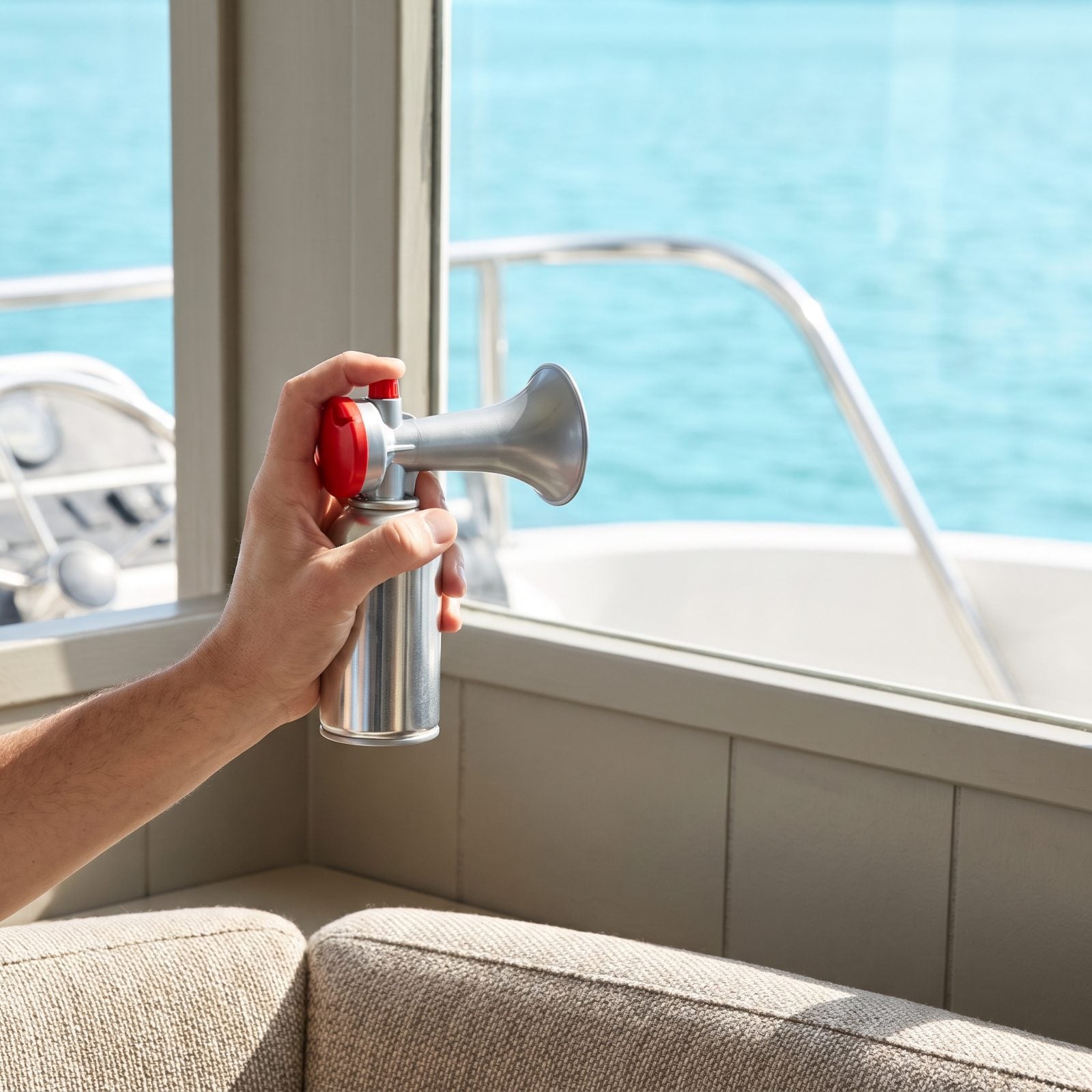
Sound signals aren’t optional. They’re the rules of the road. One blast means you’re passing on the left, two on the right, and five is the universal what on earth are you doing. In fog or tight channels, your horn is how other boats know where you are when they can’t see you.
The canned-air ones are cheap and loud, but they run out — often at the worst moment — and cold weather saps the pressure. Keep a spare canister aboard, or back it up with a mouth-blown horn that never empties. Either beats shouting into the wind.
39. A Waterproof High-Lumen Flashlight
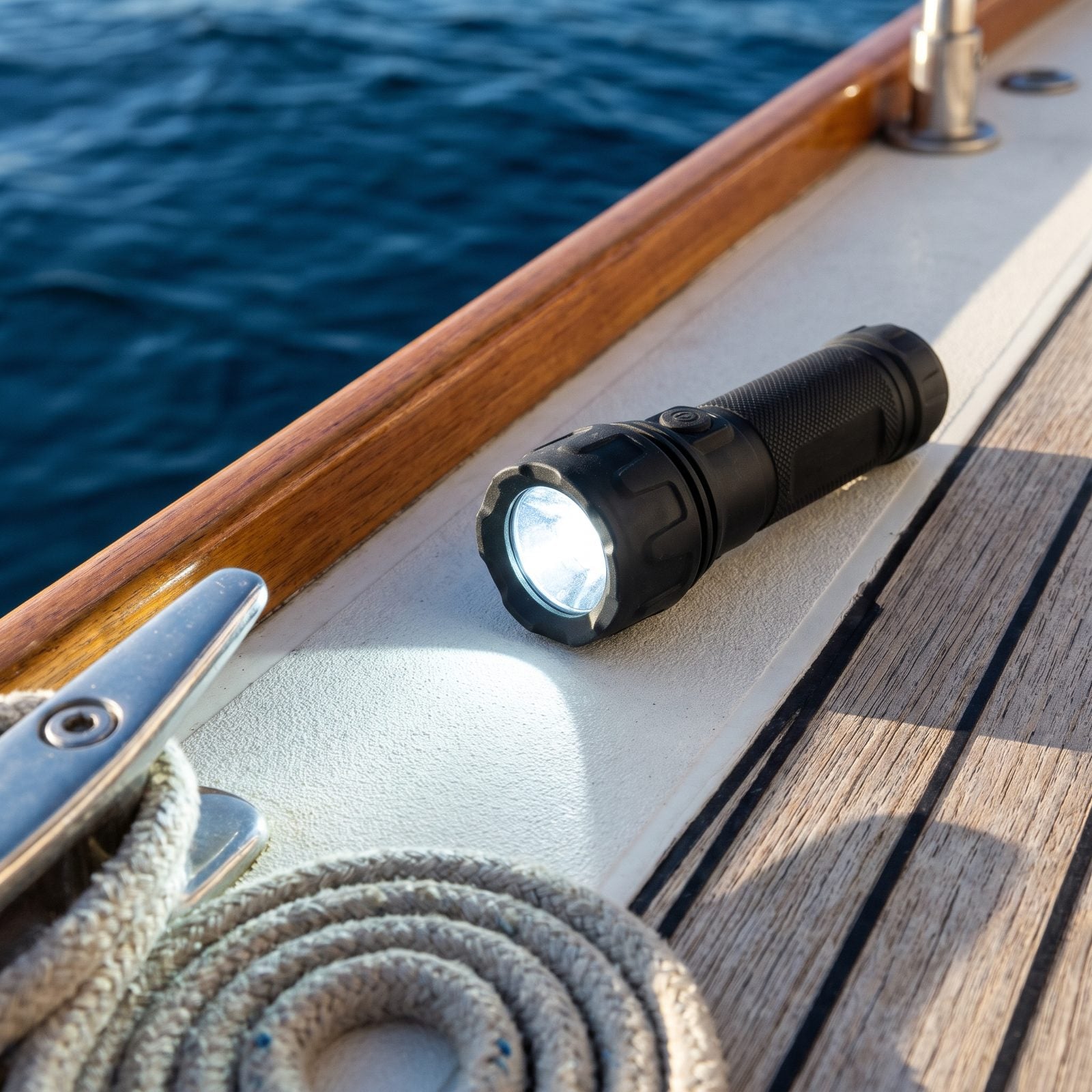
The sun sets faster on the water than you expect, and a dim phone light won’t find a mooring, spot a swimmer, or signal another boat. You want something rated waterproof, not splash-resistant, because it will go in the drink eventually. A good bright beam throws far enough to pick out a channel marker or a person in the water.
Keep it clipped somewhere you can grab blind. The night you need a flashlight is never the night you planned to need one, and digging through a locker in the dark is how good evenings turn sideways.
38. A Sealed Pack of Spare Batteries
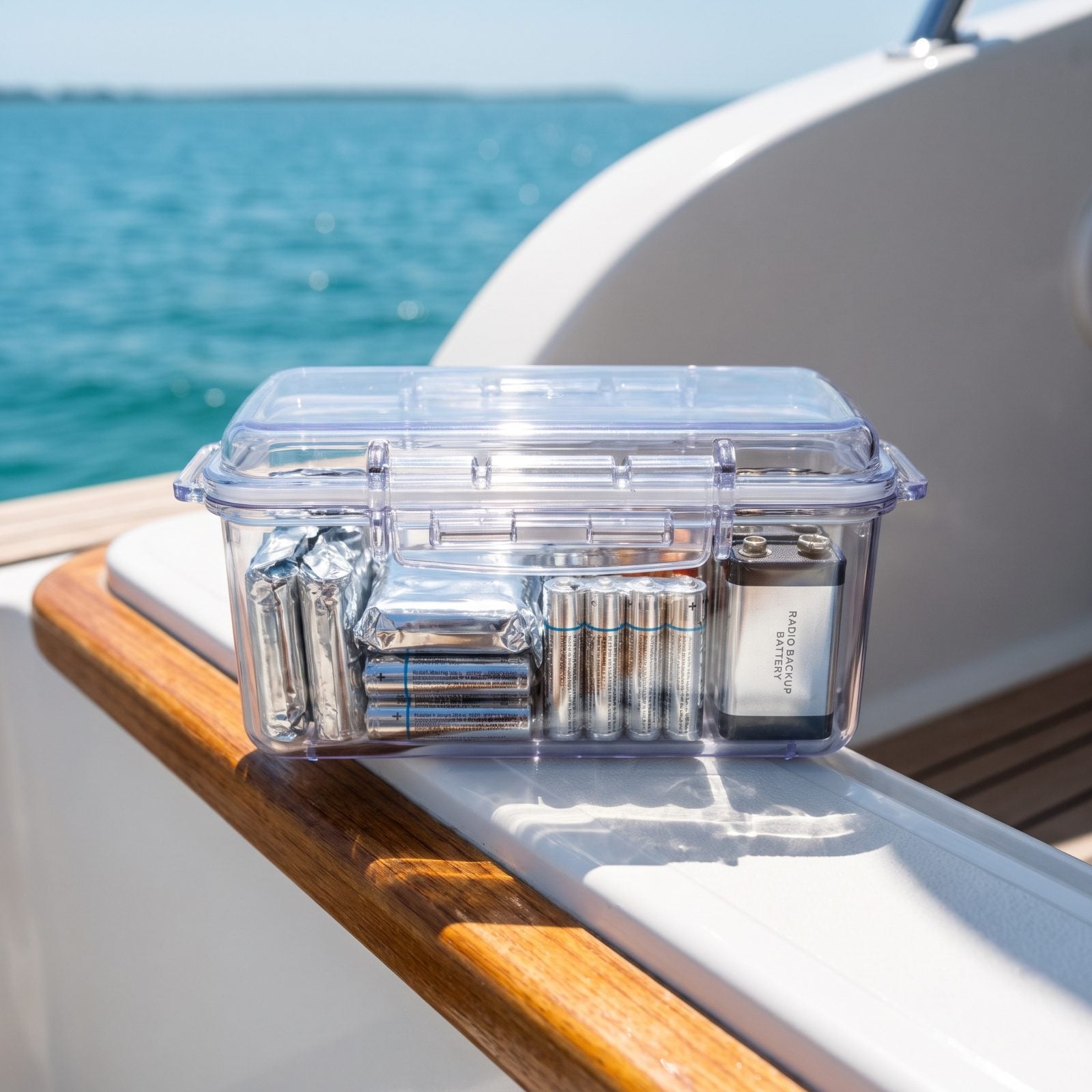
Every piece of safety gear that saves you runs on a battery, and every battery dies right when you reach for it. The flashlight, the handheld VHF, the GPS, the headlamp — all of it goes dark on its own schedule, never yours.
Keep a sealed pack in a waterproof box, matched to what your gear actually uses. Rotate them once a season, because batteries left in a hot locker self-drain and corrode. A dollar’s worth of spare cells is the cheapest insurance on the boat, and the easiest thing in the world to forget until the dark reminds you.
37. A Portable Emergency Navigation Light
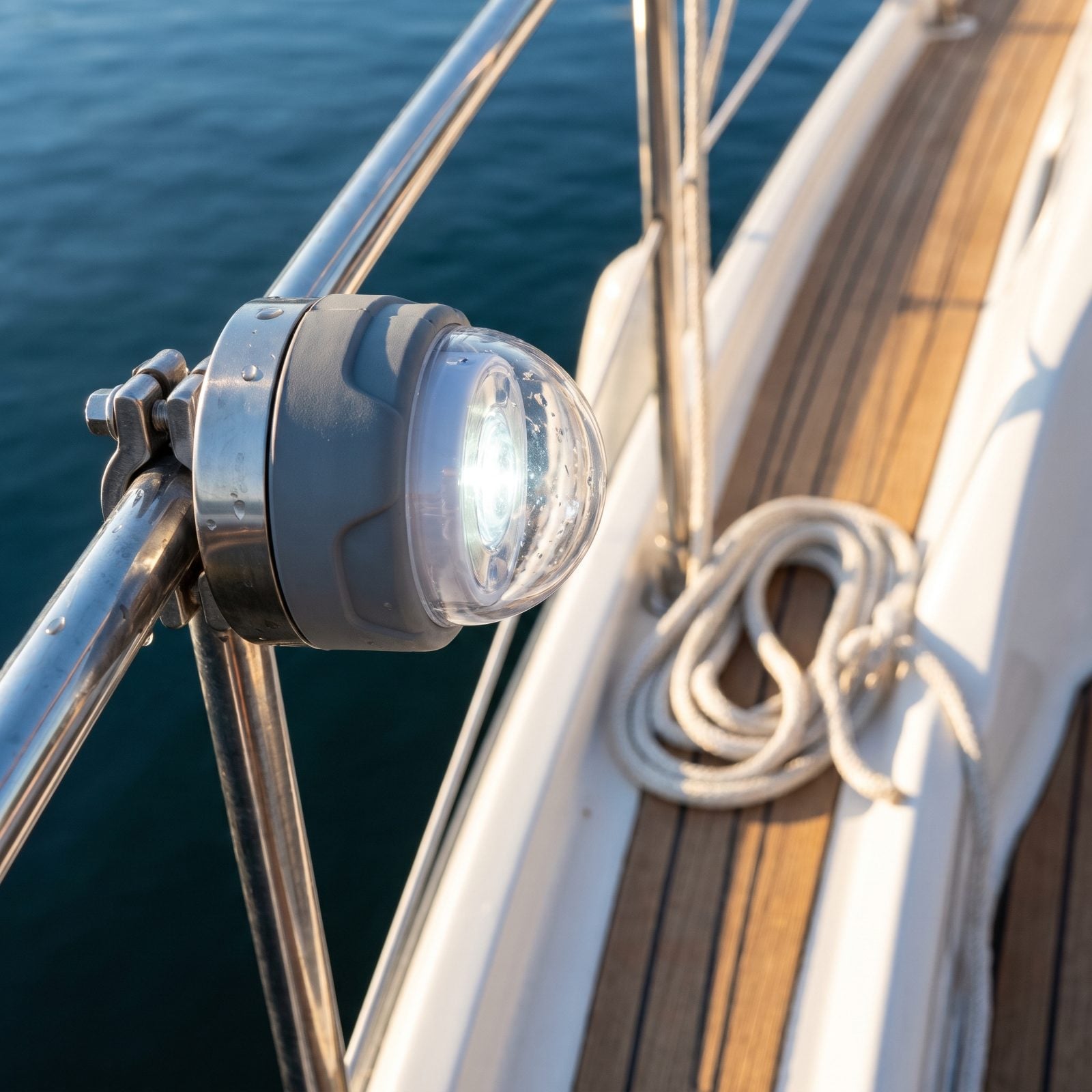
Your wired nav lights will fail at the worst possible moment. Usually it’s a corroded bulb socket, or a connection that’s been quietly rotting behind a panel since last season. When that happens after dark, you need backup you can clamp on in ten seconds flat.
A portable LED unit runs on its own batteries and mounts to a rail with a clamp. Keep one for the stern and one for the bow if you can. They run twenty-odd bucks to maybe sixty each, which is nothing against the fine for running dark — never mind the collision you’re trying to dodge.
36. A Reliable Magnetic Compass
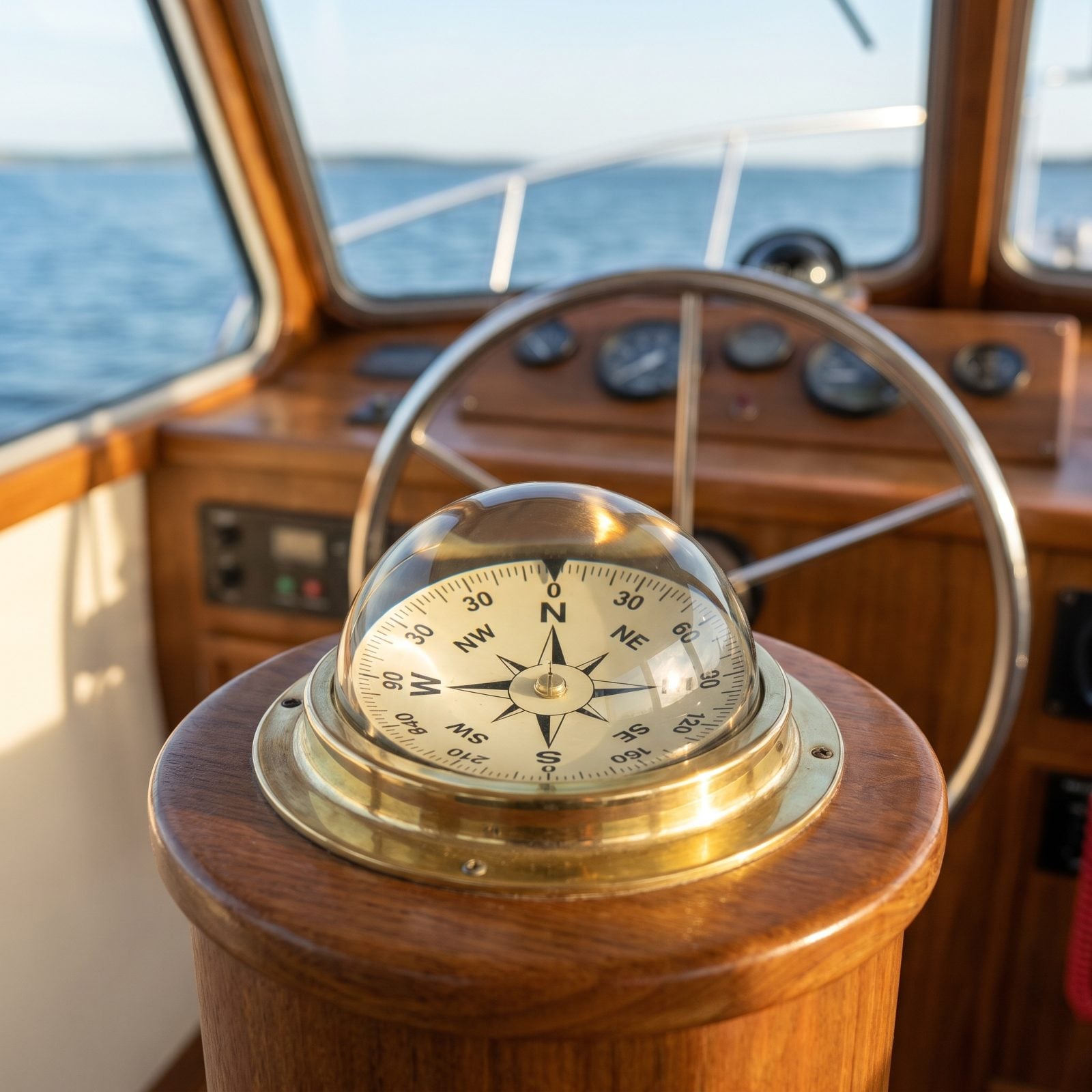
Electronics die. The compass doesn’t care that your chartplotter just rebooted itself into a frozen blue screen twelve miles out.
A good magnetic compass is the one instrument aboard with no batteries, no firmware, and no opinion — it points the same way it did a hundred years ago. Mount it on a solid base, like this brass-ringed compass on its teak pedestal behind the wheel, away from the radio, the stereo speakers, and that phone mount you keep forgetting is magnetic. Those things pull the card off true, and you won’t notice until the heading is already wrong.
Get it professionally swung if the deviation seems off. I ignored a compass error for two seasons once, blamed the current every single time, and felt pretty silly when a rigger found the problem in five minutes.
35. Current Waterproof Paper Charts
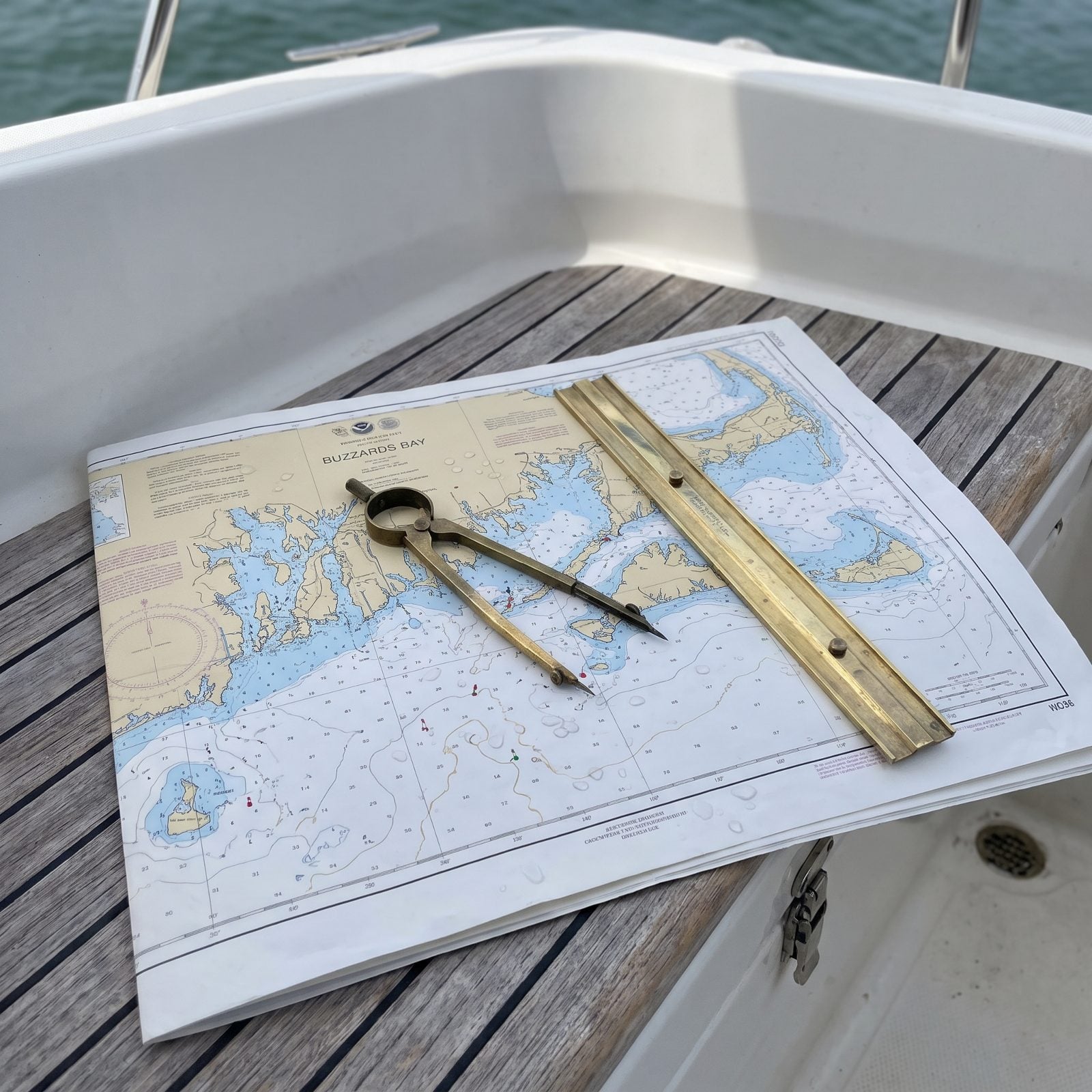
Paper charts feel old-fashioned right up until your screen goes dark.
Keep the current chart for your home waters aboard, laminated or printed on waterproof stock, folded to the area you actually run. Charts get updated for a reason — channels shift, buoys move, shoals grow. An outdated chart is sometimes worse than none, because it lies to you with total confidence.
34. A Properly Sized Anchor and Rode
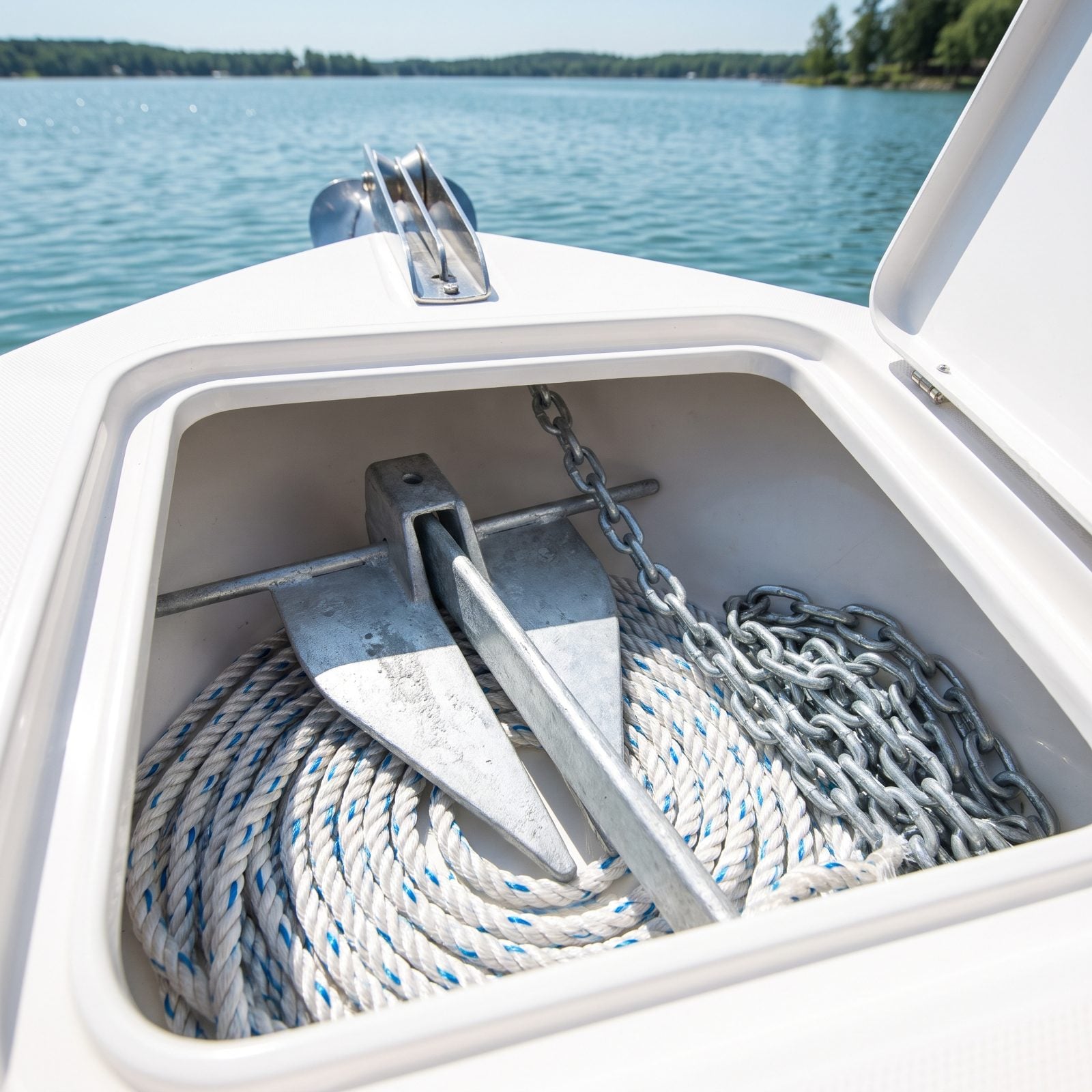
The anchor that came with your boat is probably too small. Builders spec the cheapest one that technically works on a calm day — which is never the day you’ll actually need it.
Size up. Match the anchor type to your bottom: fluke anchors bite sand and mud, plow and claw types hold better in grass and rock. And the anchor is only half the system. You want a proper rode — a length of chain shackled to the anchor plus nylon line, with enough of it to let out seven feet of scope for every foot of water depth. Folks carry fifty feet of rode and then wonder why they drag in anything deeper than a bathtub.
33. Extra-Long Marine Dock Lines
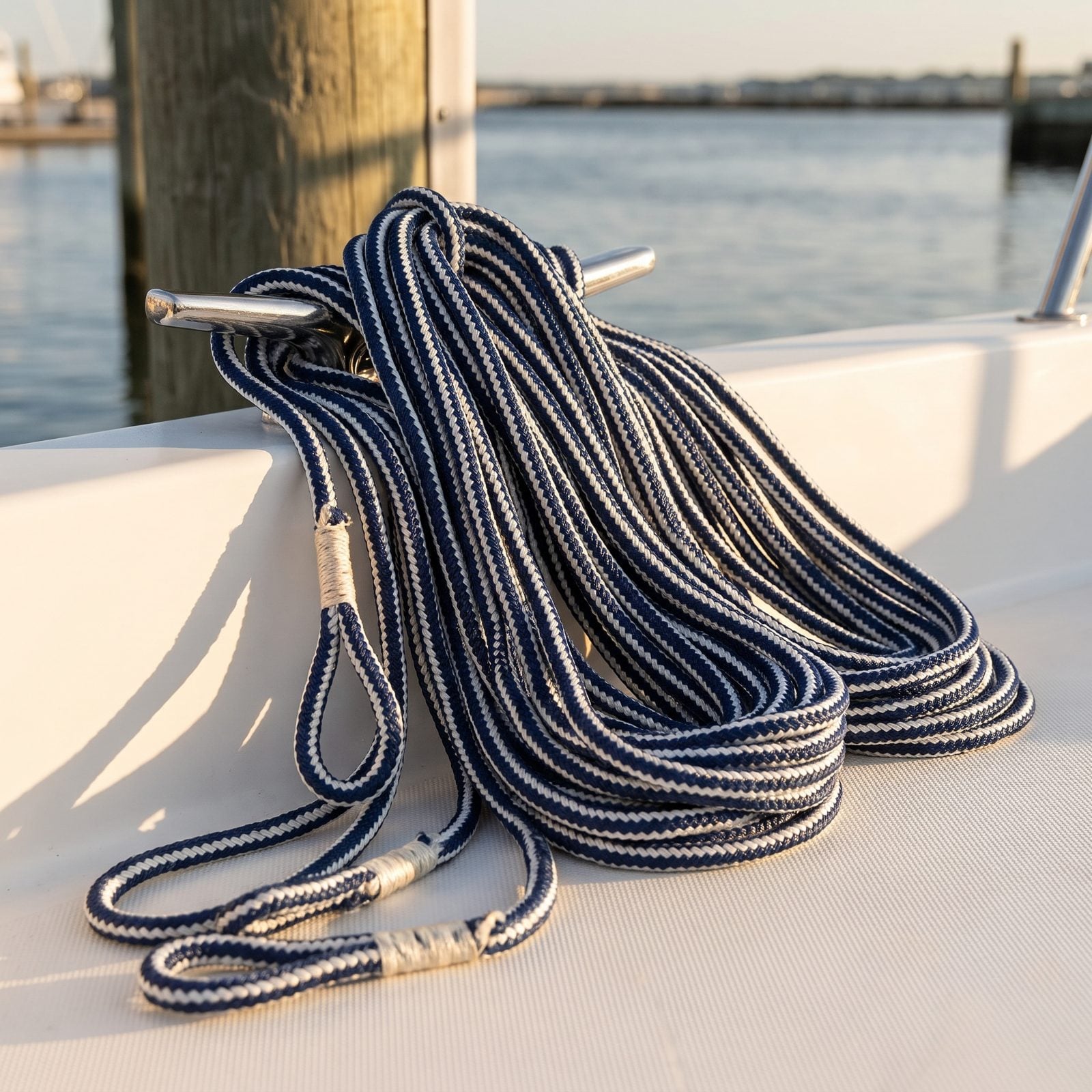
You always need more line than you think. A visitor’s dock, a lock wall, a face dock with cleats spaced for a bigger boat, a raft-up with three friends — the short lines that came with the boat handle your home slip and nothing else.
Carry a couple of extra-long double-braid nylon lines, longer than your boat and then some. Nylon for the stretch, because it cushions the surge instead of shock-loading your cleats. And don’t sleep on spring lines. They’re what stop the boat sliding fore and aft along the dock while you sleep. Spend a dollar more for pre-spliced eyes and whipped ends — frayed line is a tripping hazard and a nuisance to cleat.
32. Inflatable or Foam Boat Fenders
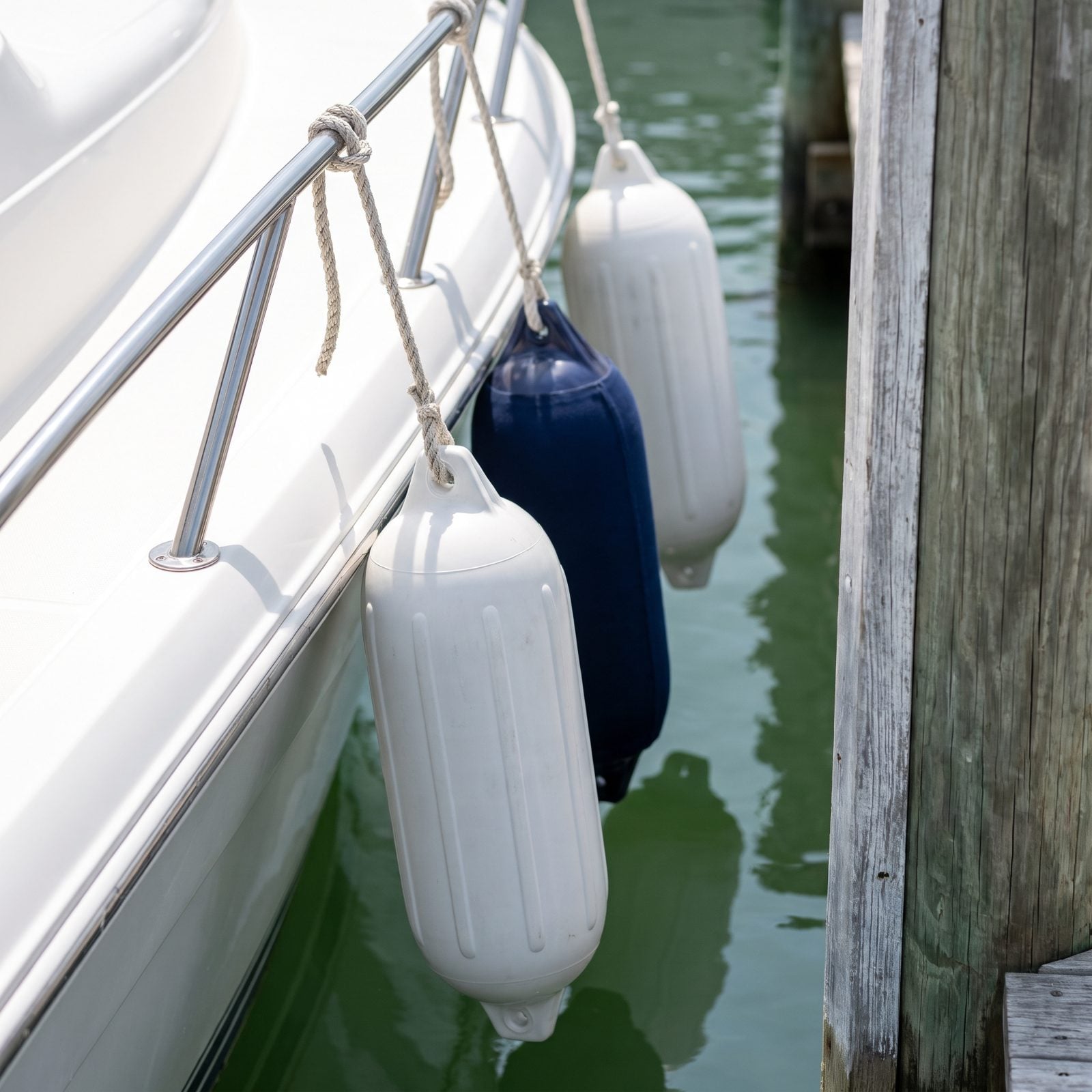
Fenders are cheap insurance against expensive gelcoat repair. One good scuff against a piling costs more to fix than a whole set of them.
Carry more than you think you need, and carry at least one big round ball fender for pilings and lock walls where a cylinder just rolls away and leaves your hull kissing concrete. Hang them at the waterline, not up where they do nothing but look nice. I’ve watched plenty of folks pull into a slip with fenders dangling knee-high, proud as anything, fending off the sky.
31. A Telescoping Boat Hook
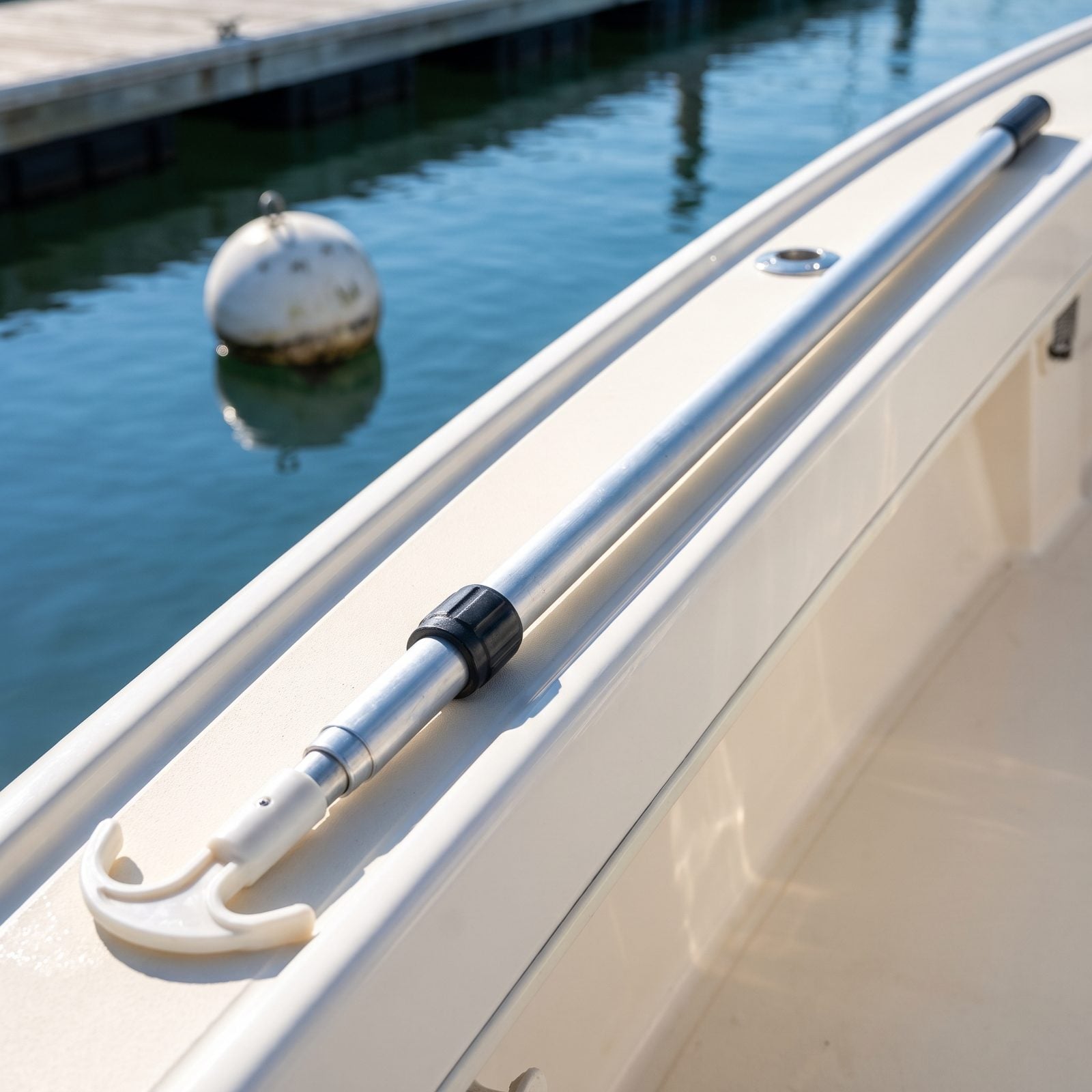
The boat hook is the most borrowed, least appreciated tool aboard.
You’ll use it to snag a mooring pennant, push off a piling, retrieve a hat that blew overboard, fend off a drifting kayaker, and poke the one dock line you can’t quite reach. A telescoping model collapses down for storage and extends out when the dock is just far enough away to make you look foolish reaching for it.
Store it somewhere you can grab it in one motion. Buried under life jackets in the lazarette, it’s useless. The moment you need a boat hook, you need it right now.
30. A Floating Rescue Throw Line
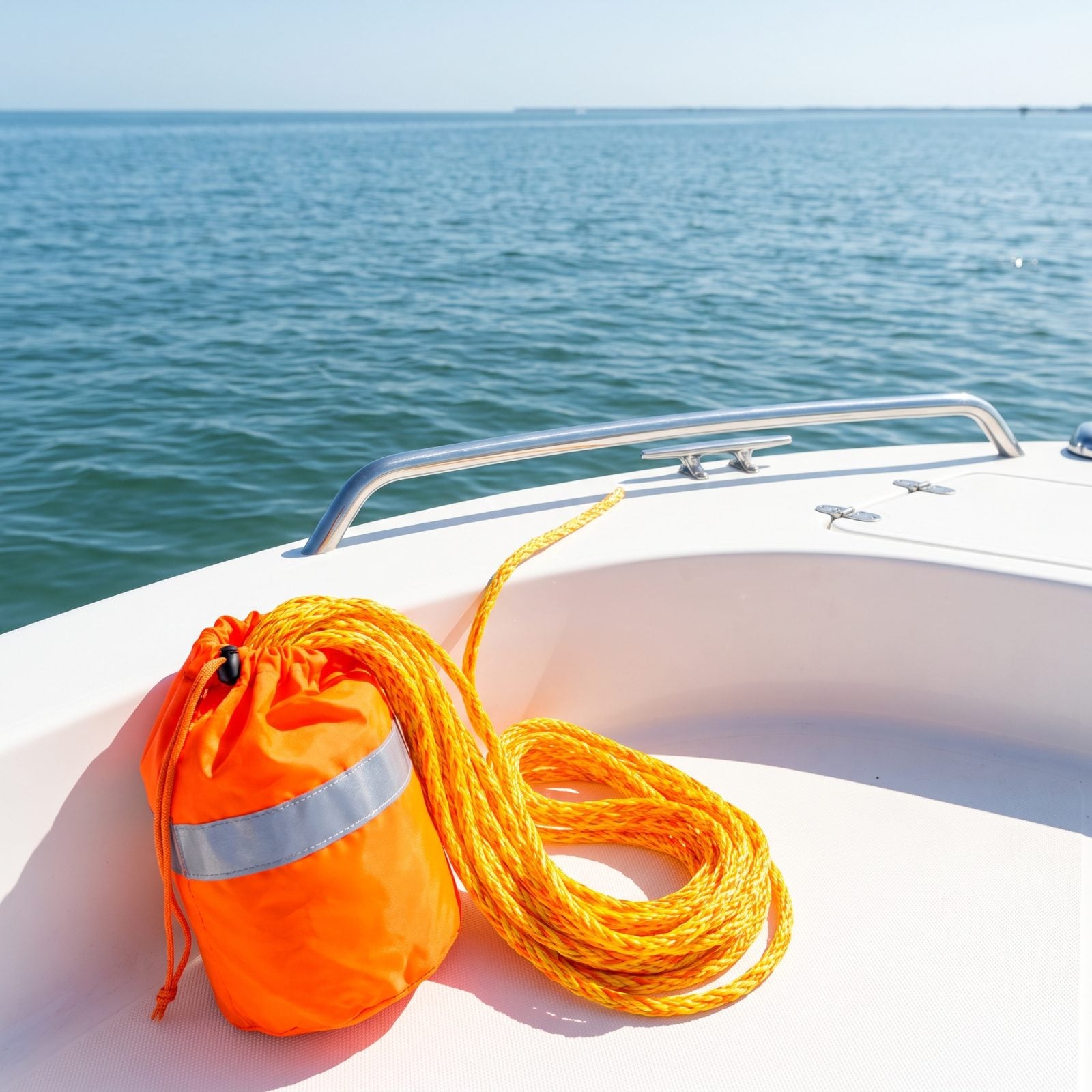
If someone goes in the water, seconds count and there’s no time to improvise.
A throw bag holds floating line coiled loose so it pays out clean when you toss it. No tangles, no snag on the cleat, no hopeless rat’s nest. The line floats, high-visibility yellow or orange, so a person in the water can see it and grab it. Throw past them, never at them, and let them pull it in.
Keep it where anyone aboard can reach it without rummaging. In a real crisis, the person doing the rescuing might be the one guest who’s never set foot on your boat before.
29. A Heavy-Duty Towline or Tow Bridle
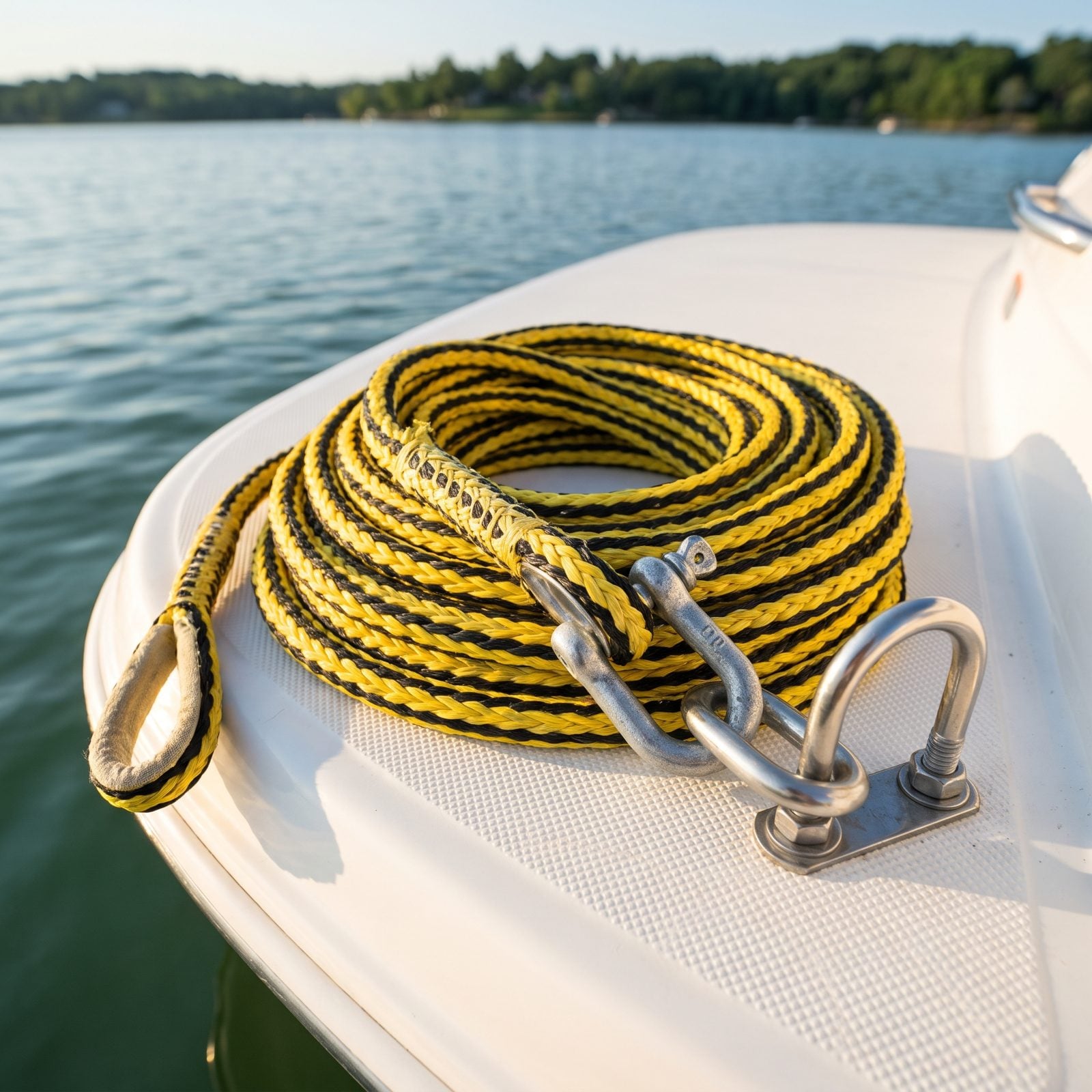
Someday it’s your engine that quits, and someday it’s your buddy’s. A real towline settles both situations without turning into a rodeo.
Thin dock line is not a towline. The loads involved in towing a dead boat are enormous, and a line that snaps back under tension becomes a whip that can break bone. You want thick nylon rated for the job, with stretch to cushion the surge between boats.
A bridle spreads the load across two stern points instead of yanking one cleat sideways. Mind how you cleat it, and keep everyone clear of the line while it’s loaded.
28. A Deployable Boarding Ladder
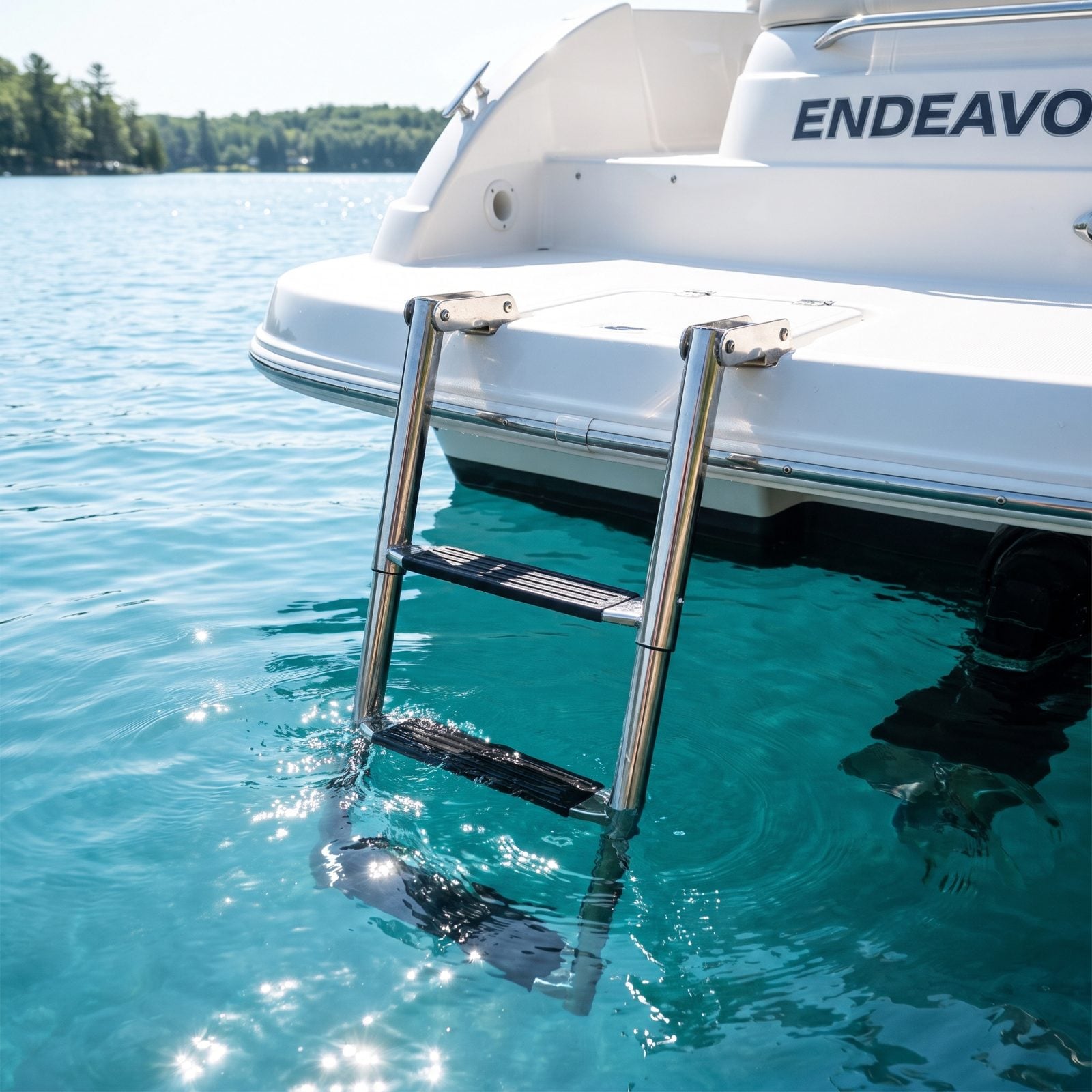
Getting back aboard is harder than falling off. People always forget this part.
A grown adult in wet clothes cannot haul themselves over the gunwale of most boats — the freeboard is too high and the fiberglass is slick. Without a ladder that reaches below the waterline, a swimmer, or someone who went in by accident, can be stuck alongside a boat they can see but can’t climb back onto.
Your ladder needs its bottom step to sit well below the surface, like the one here. Anything less and a tired swimmer has nothing to push off from. Deploy it, test it with your own weight, and make sure anyone aboard knows how to drop it from the water. The person who needs it most is the one already overboard.
27. A Compact Emergency Paddle
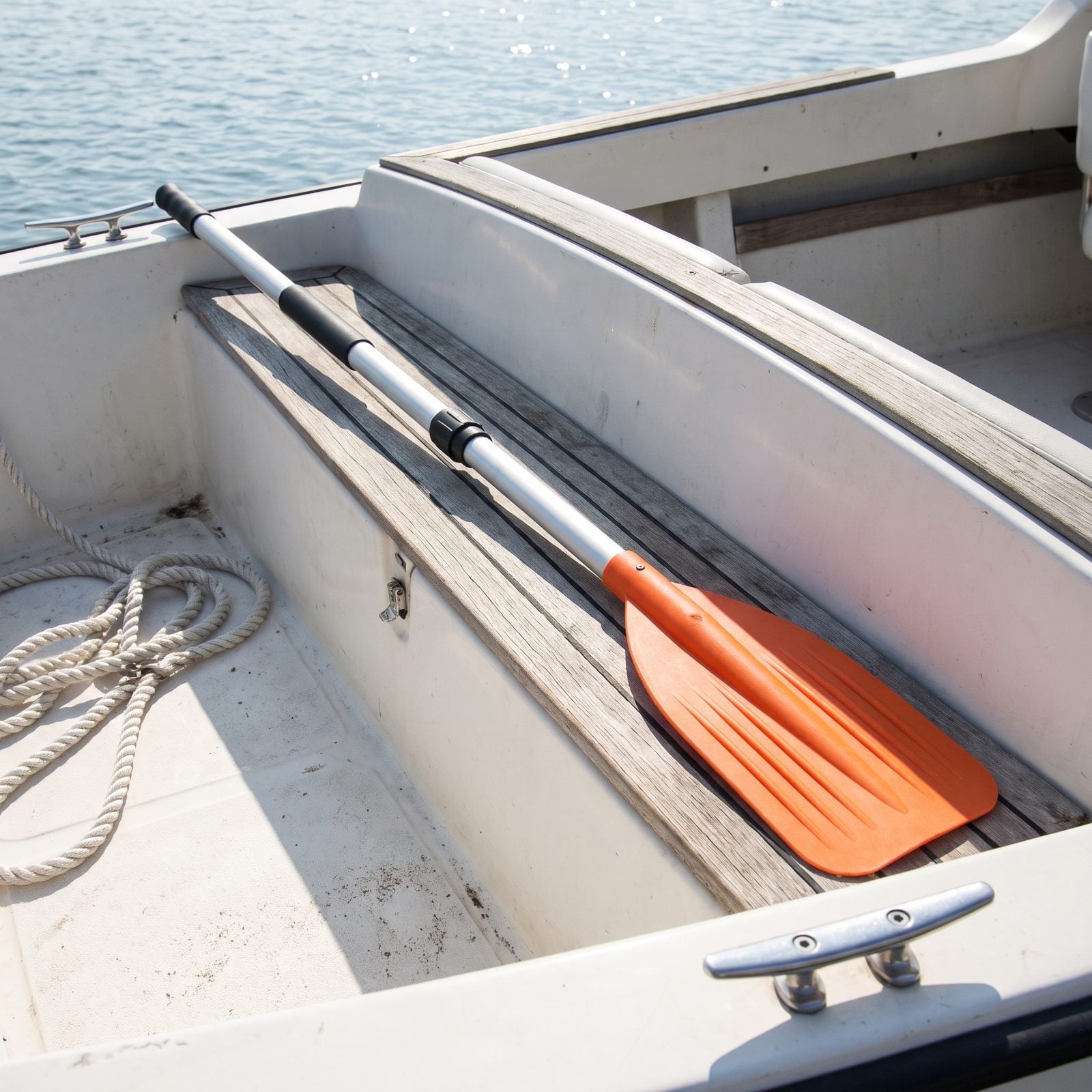
An engine that won’t start a hundred yards off the launch feels a lot bigger than a hundred yards. That’s when a cheap stowed paddle stops being clutter and becomes the only thing moving you.
These telescoping ones break down to the size of a tennis racket and live in a cockpit locker without a second thought. The blade is orange on purpose, so you can wave it. It won’t win any distance races against a headwind, but it’ll get a 16-footer off a sandbar and pointed home, which is the whole job.
26. A Sturdy Bailing Bucket
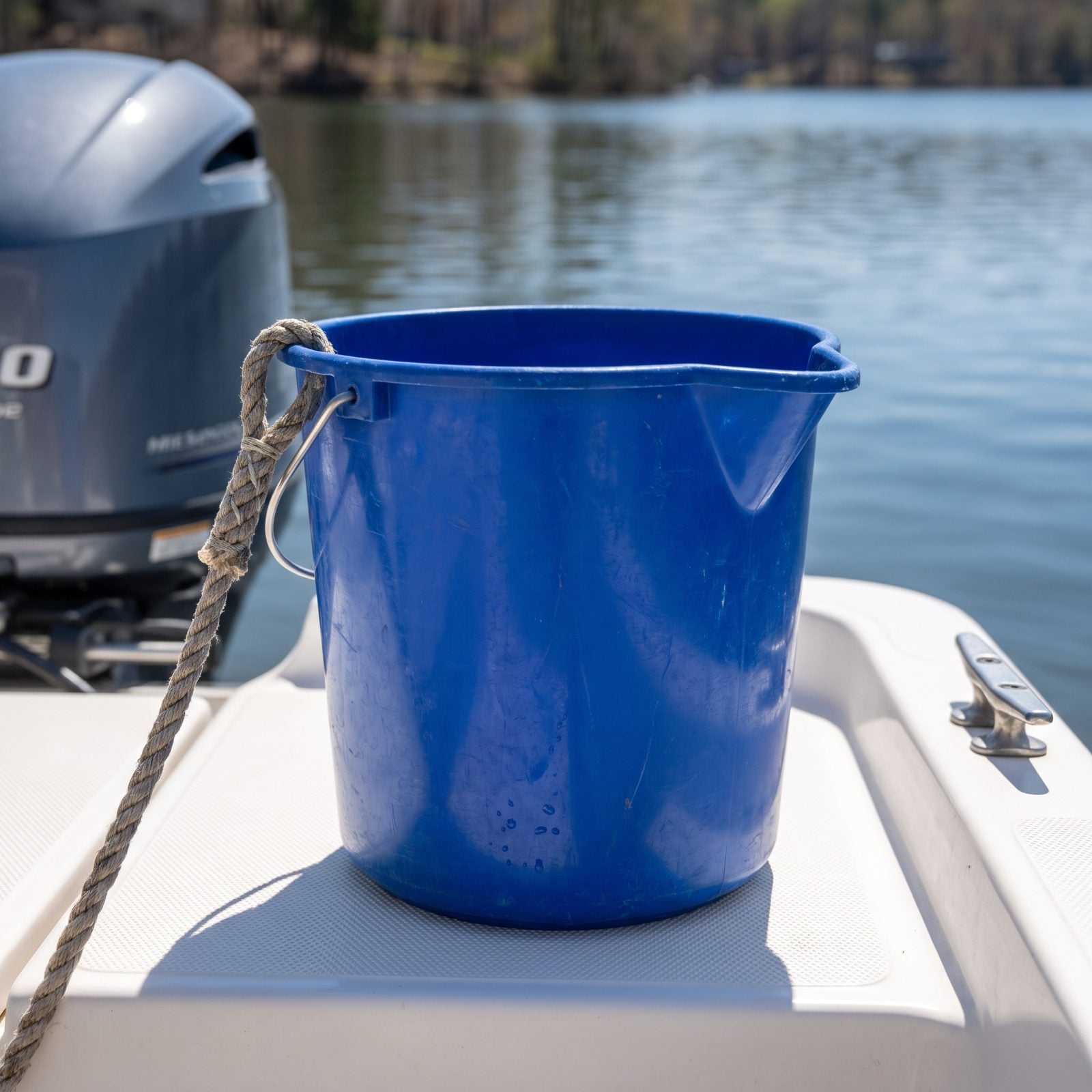
The bilge pump moves the gallons. The bucket moves the panic.
A real bailing bucket, five or six quarts, with a lanyard knotted to the handle so it can’t float off the moment you need it most, is the oldest tool on the boat for a reason. When water comes in faster than a pump can clear it, a human arm and a wide bucket still win. I’ve watched a fancy electric setup quit the exact second it mattered. A bucket never has a dead battery.
Tie it off somewhere it won’t bury itself under life jackets. Access beats capacity here.
25. A Manual Bilge Pump
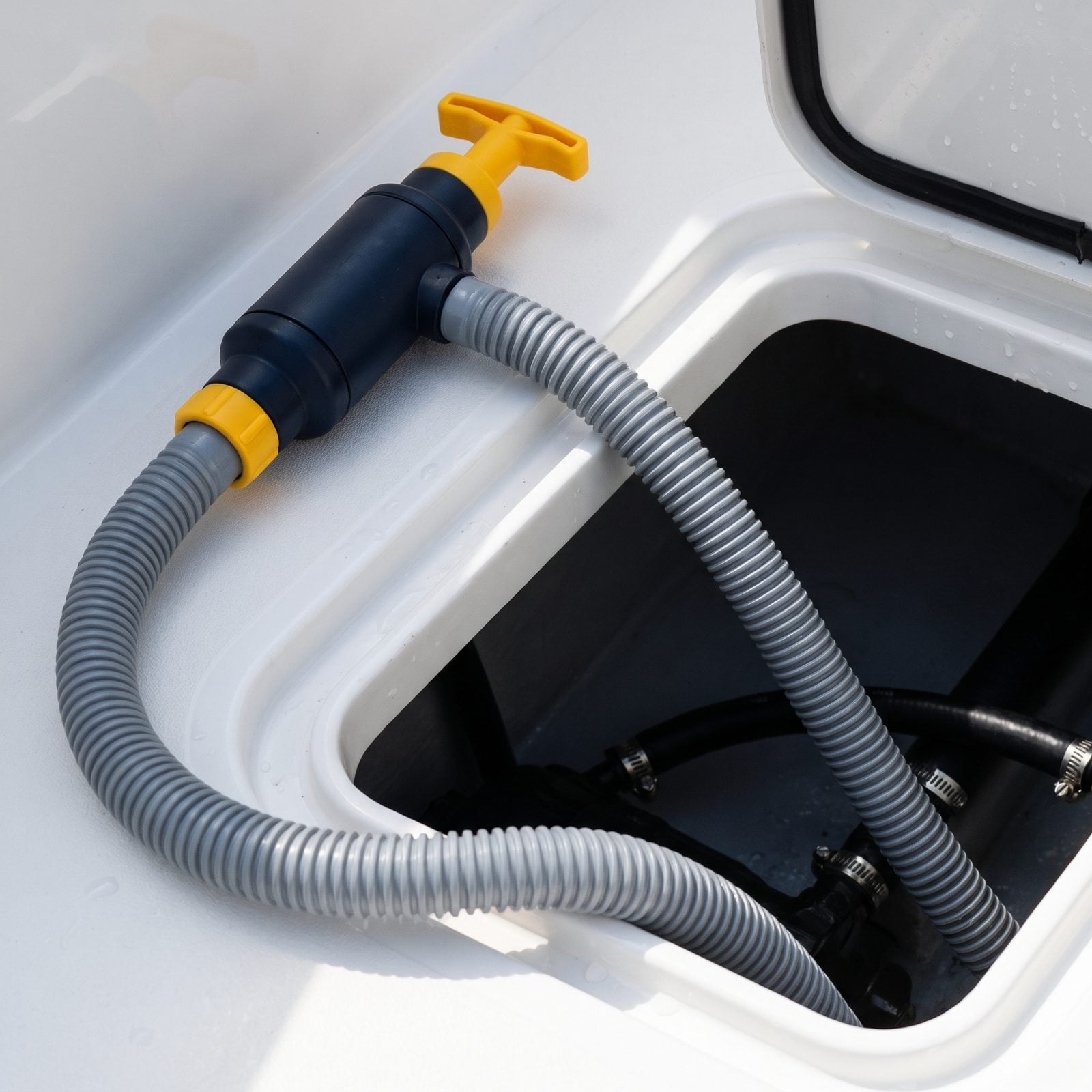
Your electric bilge pump is only as good as the battery feeding it. Flood the boat badly enough and that battery goes under, and now you own a paperweight.
A hand pump needs nothing but your shoulder. A good one pushes a lot of water for something that costs less than a tank of fuel, as long as you keep a steady rhythm going. Keep the pickup hose long enough to reach the lowest point of the bilge, because water you can’t reach is water you can’t move.
24. A Compact Marine Tool Kit
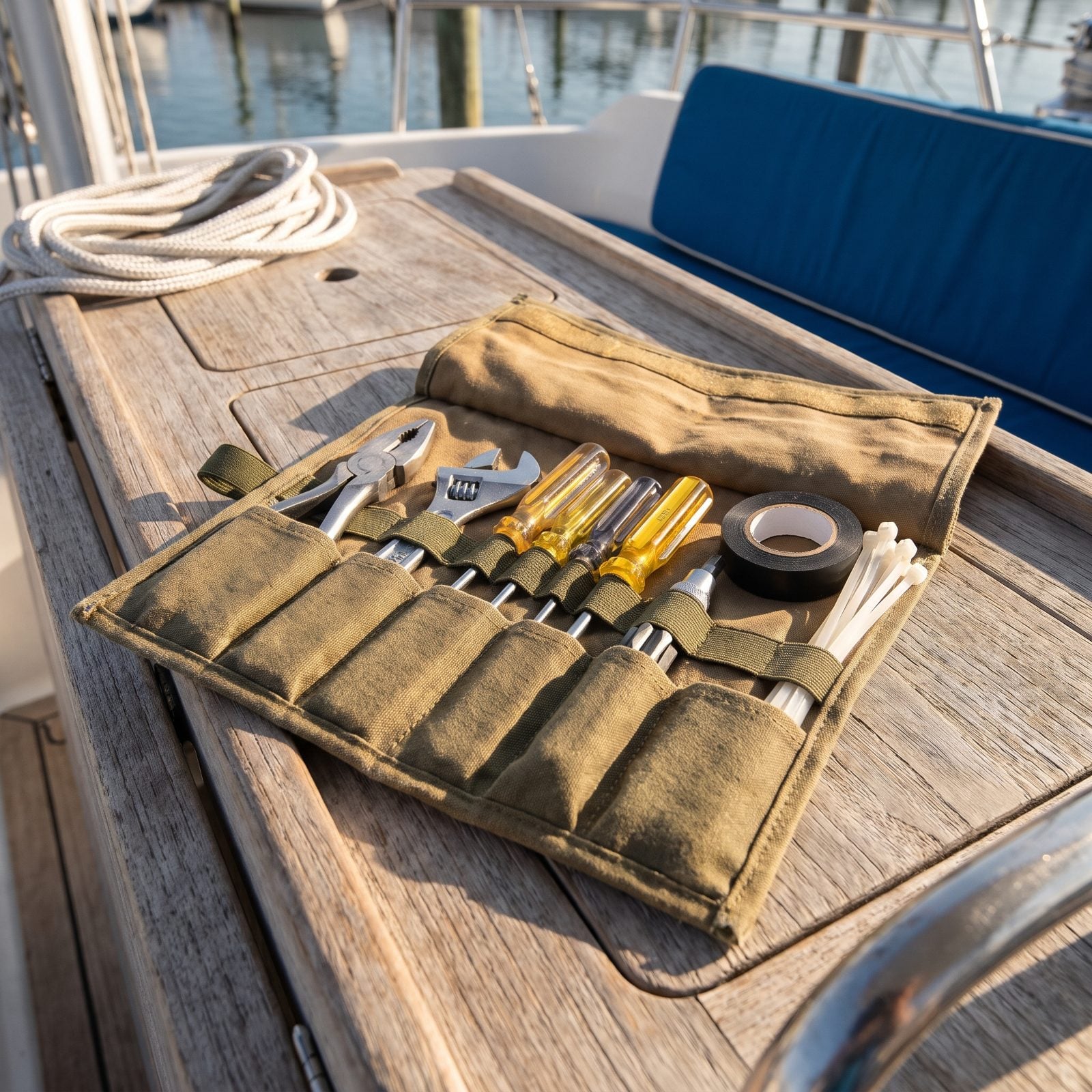
The tools in your garage will rust solid inside one season aboard. Salt air eats cheap steel for breakfast, and even on freshwater lakes the damp finishes the job.
A dedicated marine kit lives on the boat and stays there. Stainless or coated pliers, a multi-bit driver, an adjustable wrench, electrical tape, a knife, and a fistful of zip ties. Keep it in a sealed roll or a hard case so it doesn’t become a loose jangle in the bottom of a locker.
23. A Spare Propeller and the Correct Wrench
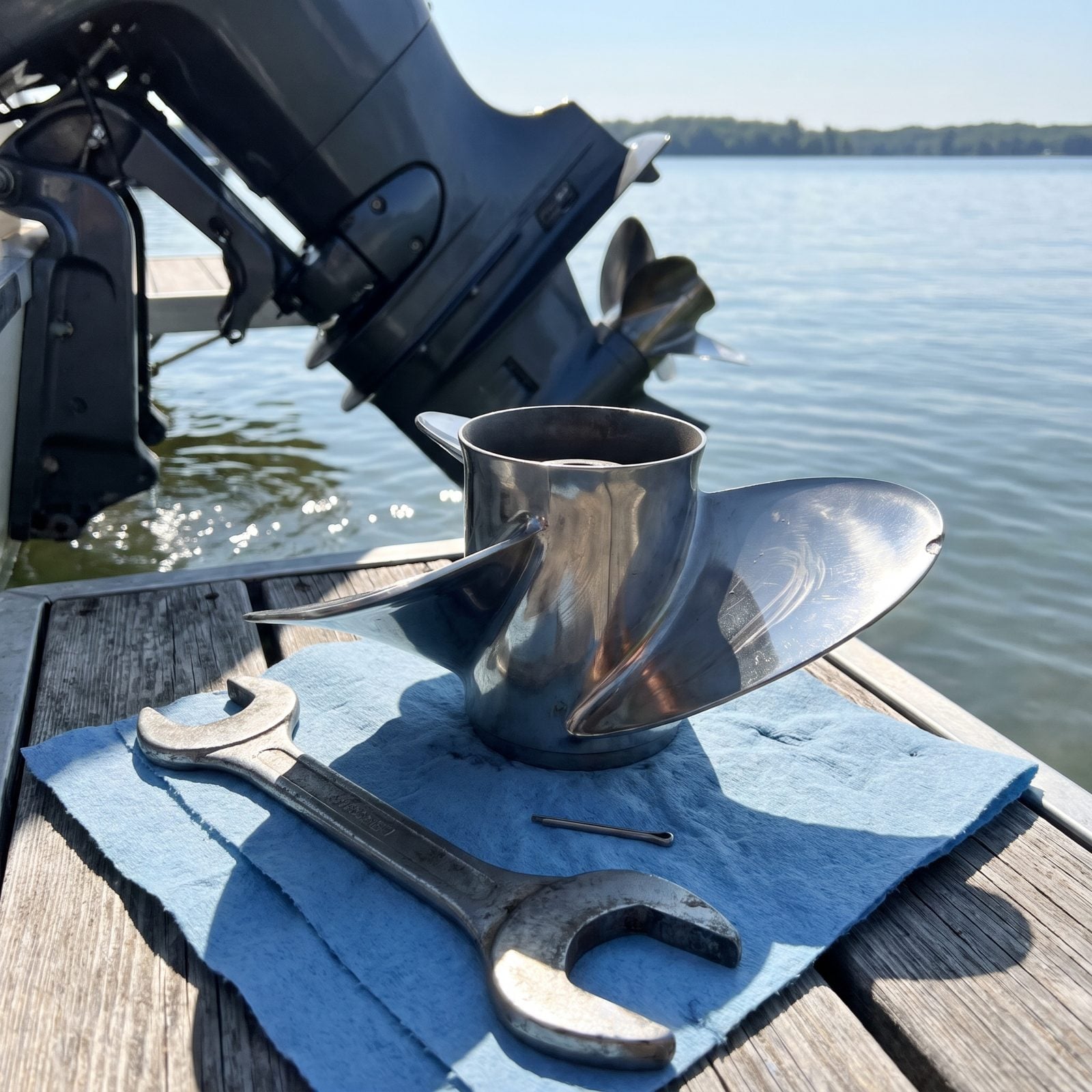
Clip a submerged log or a shallow rock and your afternoon depends entirely on what’s in the locker. A bent or shredded prop will still spin, badly, shaking the whole hull and getting you nowhere fast.
Carry a spare that actually fits your motor, and just as important, carry the wrench, the thrust washer, and a fresh cotter pin. People remember the prop and forget the hardware every single time. A good wrench you don’t have might as well cost you the day.
Changing one on the water is doable in flat conditions. Practice it once at the dock so your first attempt isn’t a panicked one.
22. A Boat-Specific Spare Drive Belt
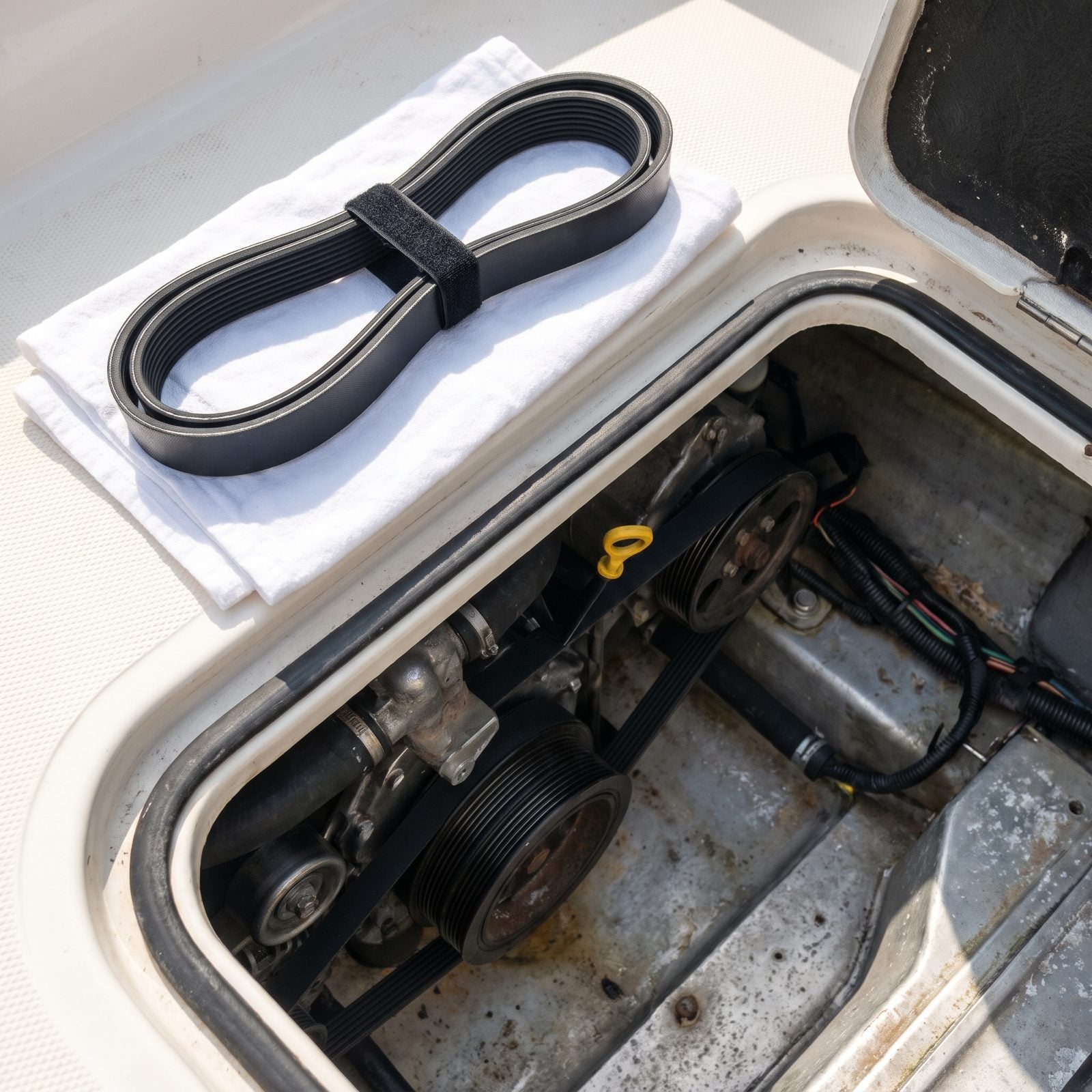
A drive belt costs next to nothing and weighs even less. A snapped one leaves your engine overheating or your battery dying with no warning, usually at the worst possible moment.
Here’s the catch people miss: belts are specific. The right length and profile for your exact engine matters, and a close-enough belt from an auto parts store will slip or walk right off the pulley. Buy the one your manual lists, write the part number on a strip of tape stuck to the coil, and stow it where the sun won’t cook the rubber.
21. A Replacement Raw-Water Impeller
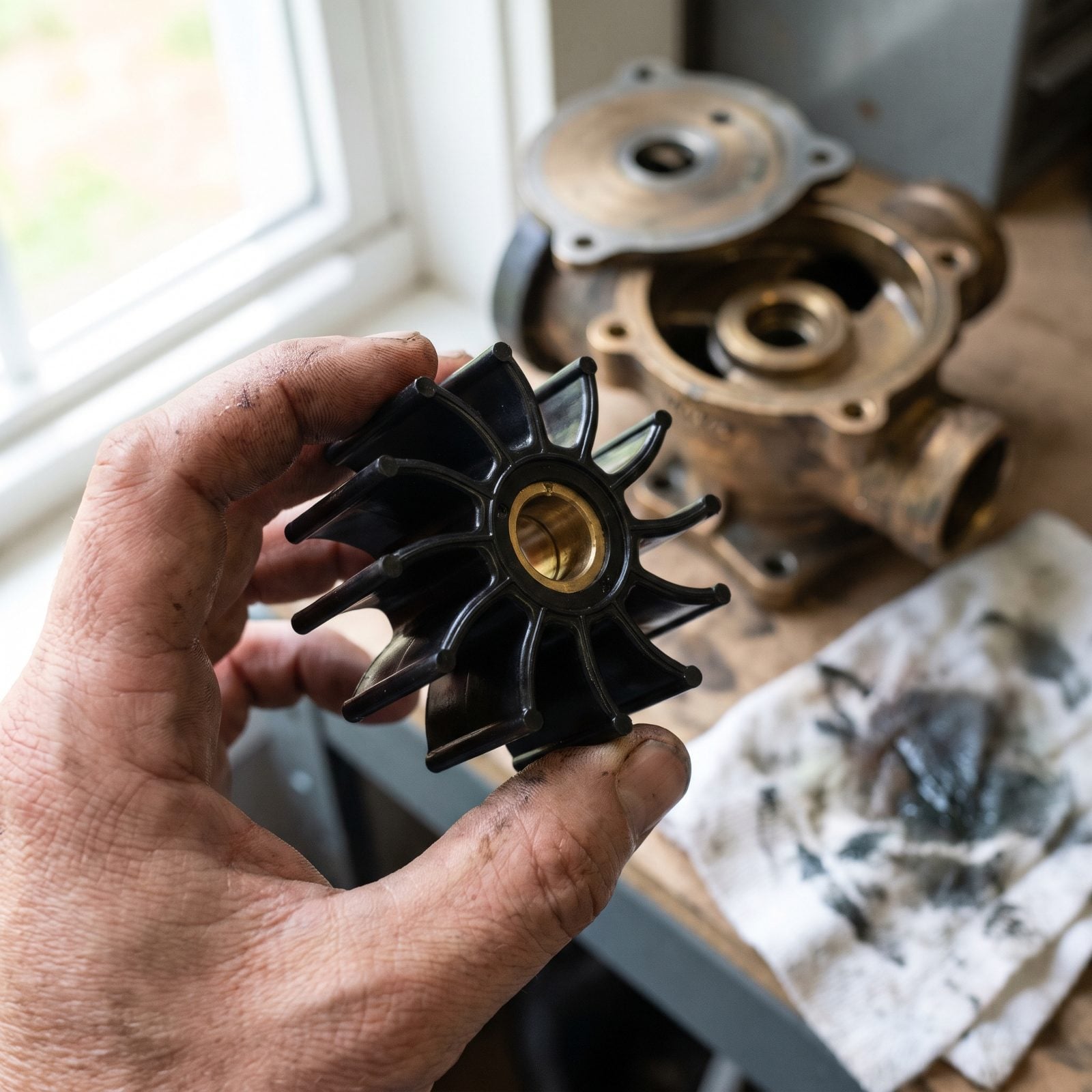
The impeller is a little rubber star that pushes cooling water through your engine, and when it fails, it fails fast and hot.
Run the engine dry for even a minute and the vanes shred. Suck up sand or weeds and they tear. A spare is cheap, and swapping one is a ten-minute job once you’ve done it before.
Keep the spare in its sealed bag so the rubber stays pliable, and tuck the cover gasket in alongside it. Overheating is the quiet killer of marine engines, and this one cheap part is often the difference between a scare and a bill with four figures on it.
20. A Clearly Labeled Spare-Fuse Assortment
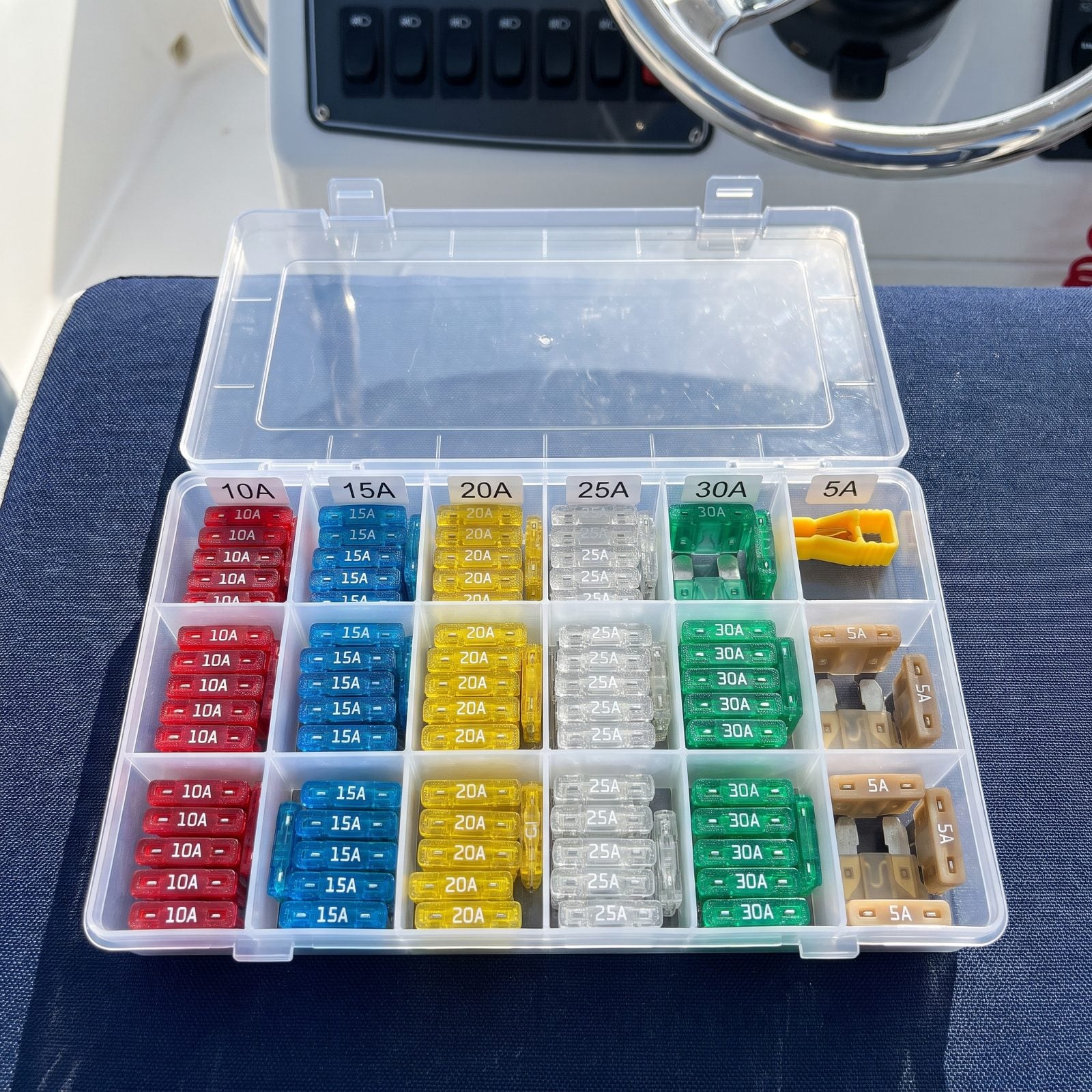
A blown fuse is a pocket-change problem that stops a serious boat cold. Lose your fuse and you lose your navigation lights, your bilge pump, your trim, sometimes your ignition.
Carry a full assortment sorted by amperage, and here’s the part that matters: label it. Fumbling for the right fuse in fading light while the boat drifts is no time to be squinting at tiny numbers on the side of a blade. A cheap organizer with marked compartments and a little puller tool solves it.
Match the amperage the manual calls for. Jam in a bigger fuse because it’s the one you’ve got and you’re inviting a fire, and a fire on the water has nowhere to go.
19. A Fully Charged Lithium Jump Starter
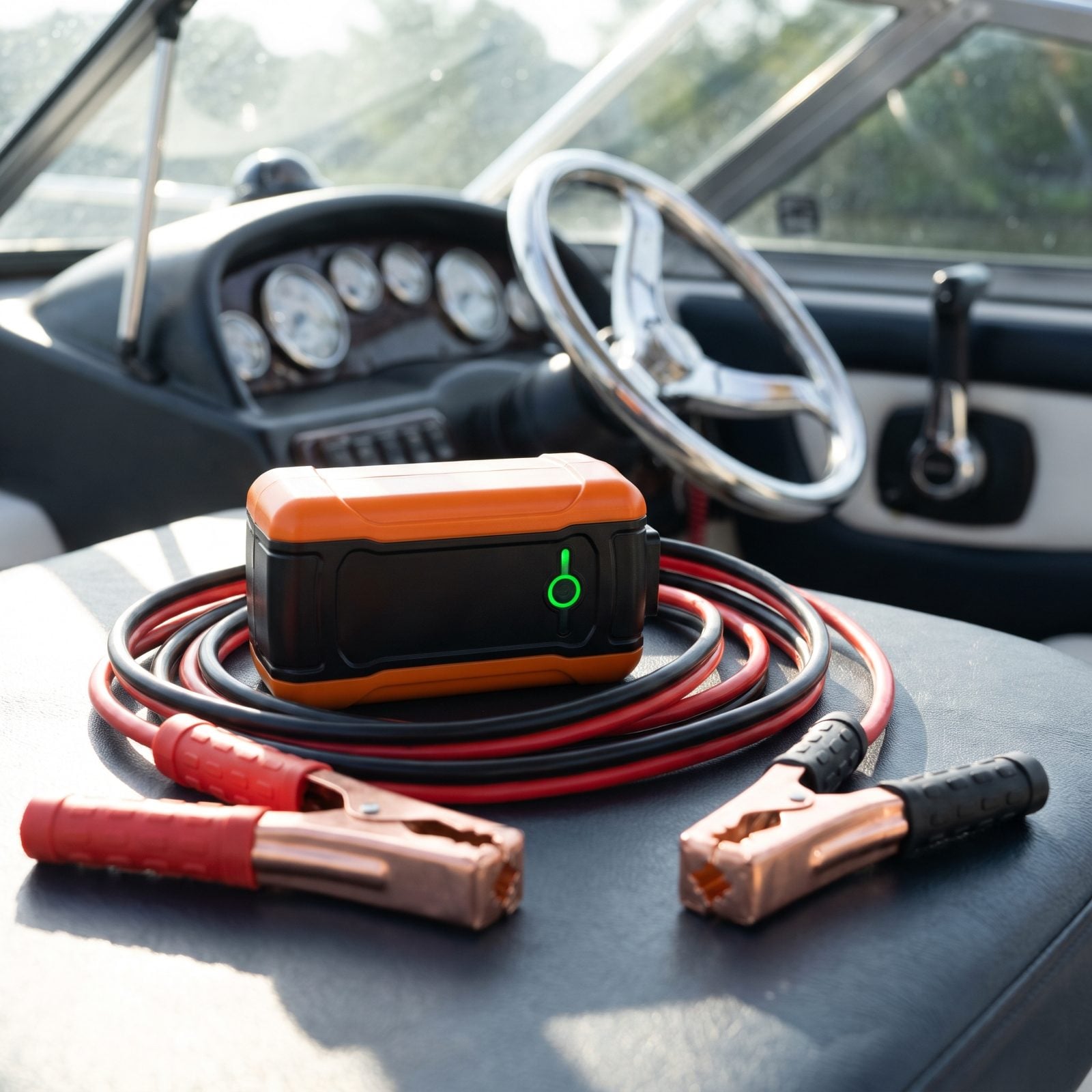
A dead battery is the most common way a good day ends early. You leave the stereo on at anchor, the fish finder draining quietly, and a few hours later the engine just clicks.
A lithium jump pack the size of a paperback holds enough punch to turn over most outboards and sterndrives, and it doubles as a phone charger when the raft-up runs long. Check the charge before you leave the driveway. A jump starter sitting flat in the glovebox is a brick that lies to you about being useful.
18. A Roll of Marine-Grade Duct Tape
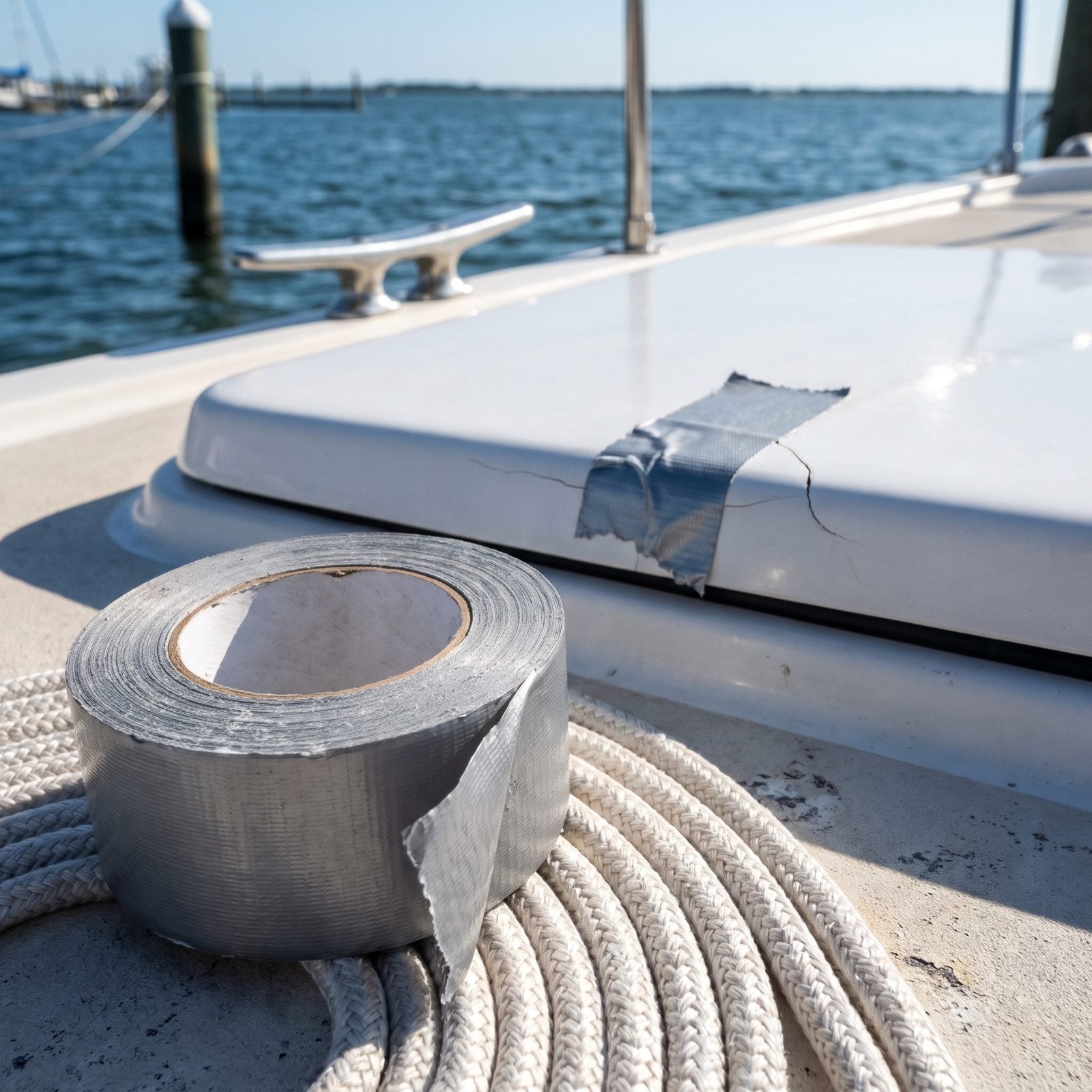
Regular hardware-store duct tape peels off the second it gets wet, which on a boat is immediately. Marine-grade tape actually sticks to damp gelcoat and holds under spray, and that difference is what you’re paying for.
It won’t fix the real problem. What it will do is buy you the twenty minutes you need to limp home and fix it properly: covering a cracked hose, patching a torn bimini, holding a shattered light housing together, taping down a flapping rail cover. A roll costs a few dollars and weighs nothing.
Keep it dry in a zip bag so the edge doesn’t gum up. And don’t burn it on everyday jobs. You want a full roll the day something actually goes wrong, not a sad little stub that runs out mid-repair.
17. Self-Fusing Silicone Repair Tape
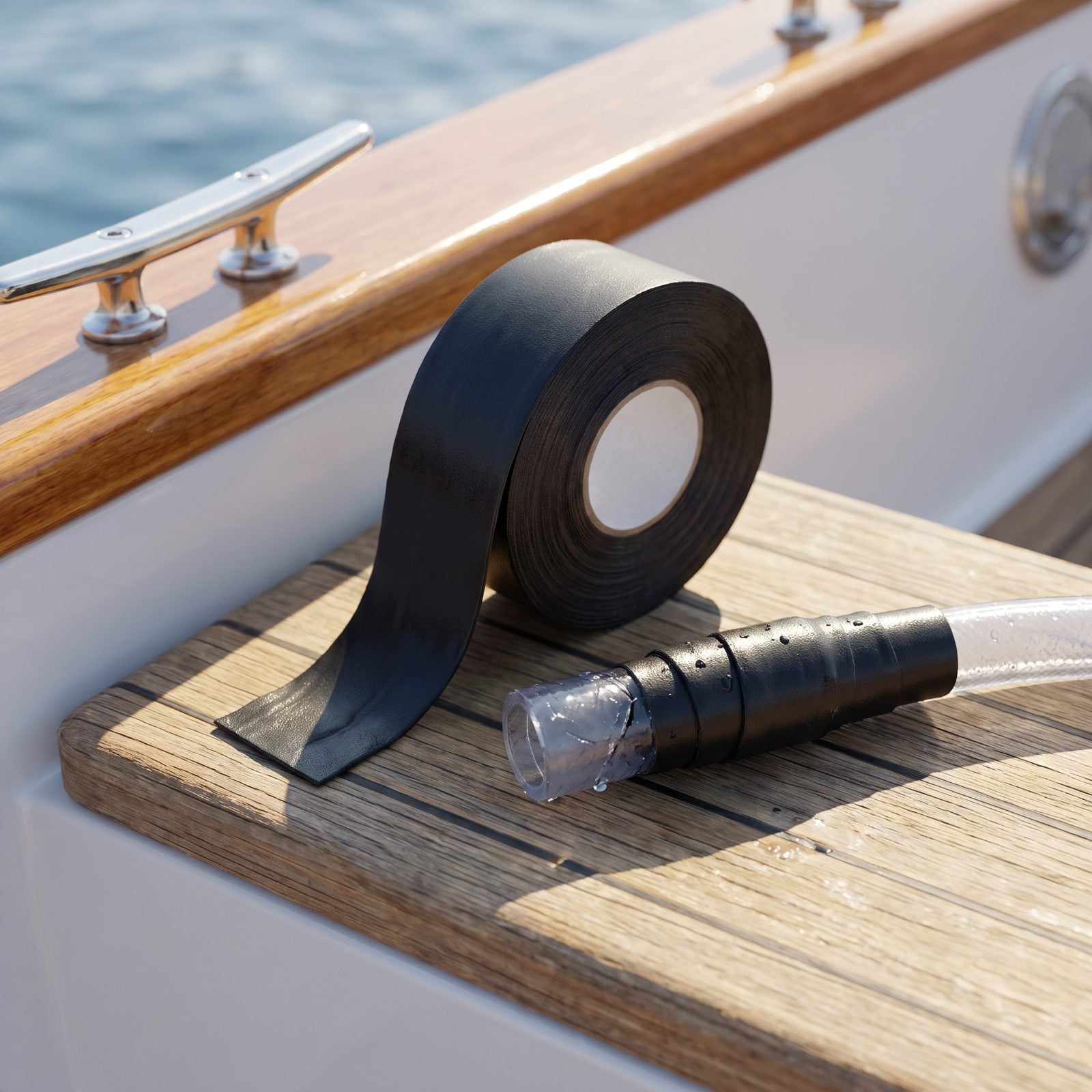
Regular electrical tape peels off a wet boat in a day. This stuff doesn’t, and here’s the trick: it has no adhesive at all. You stretch it, wrap it over itself, and within minutes it bonds into a solid rubber sleeve — no glue to fail, no residue to clean up.
It’s saved more than one weekend by holding a weeping hose or a chafed wire until I could limp back to the dock. A roll runs about ten bucks and lives in the glovebox forever, because it never dries out.
16. UV-Resistant Cable Ties
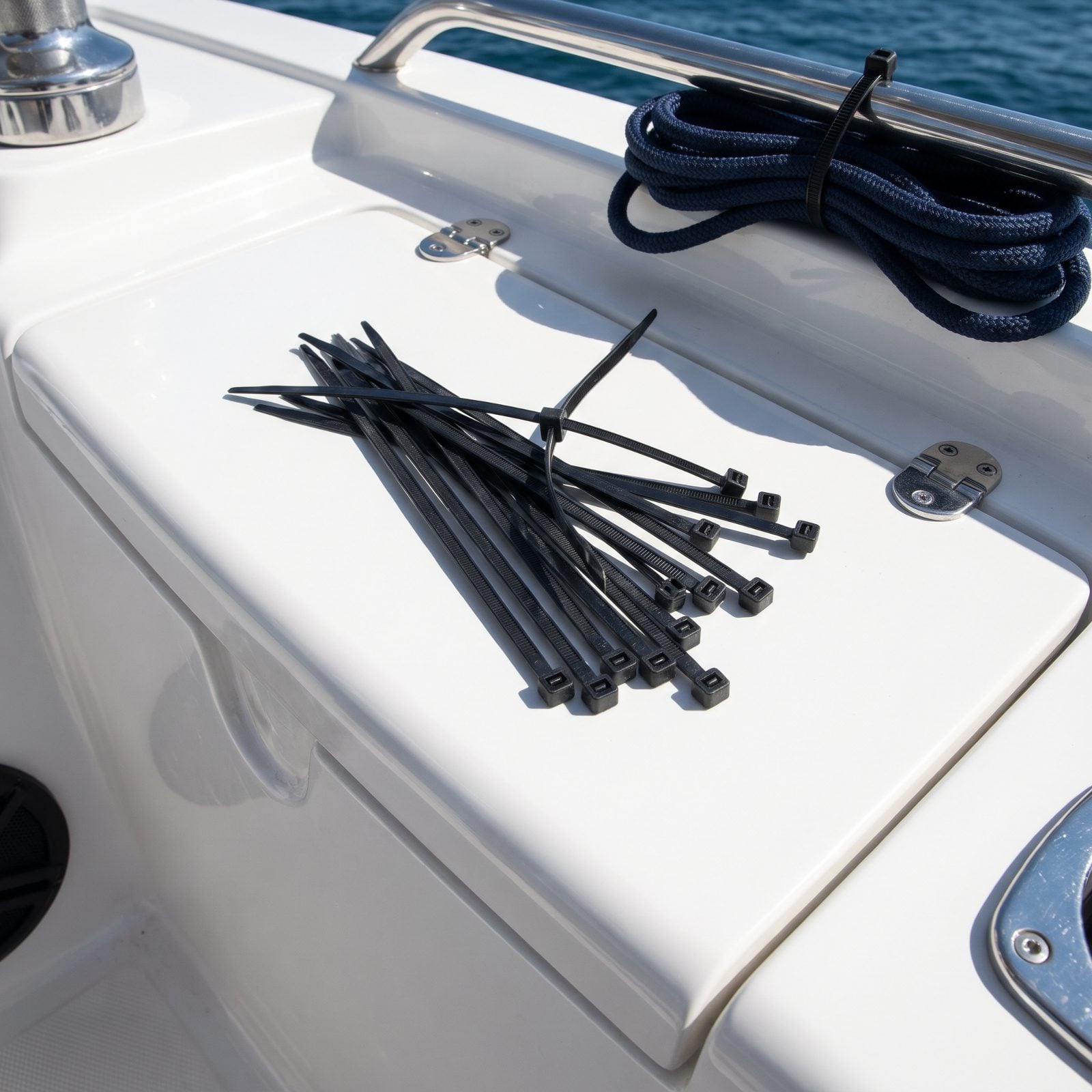
The cheap white cable ties from the hardware store turn brittle and snap after one season in the sun. The black UV-resistant ones hold for years, and the reason is carbon black mixed into the nylon, which blocks the light that chews everything apart out here.
Carry a mix of lengths. They’ll bundle loose wiring, lash a fender in a pinch, hold a trim tab wire clear of the prop, or strap down anything that starts rattling at speed. A bag of a hundred costs almost nothing and weighs nothing.
15. Assorted Stainless-Steel Hose Clamps
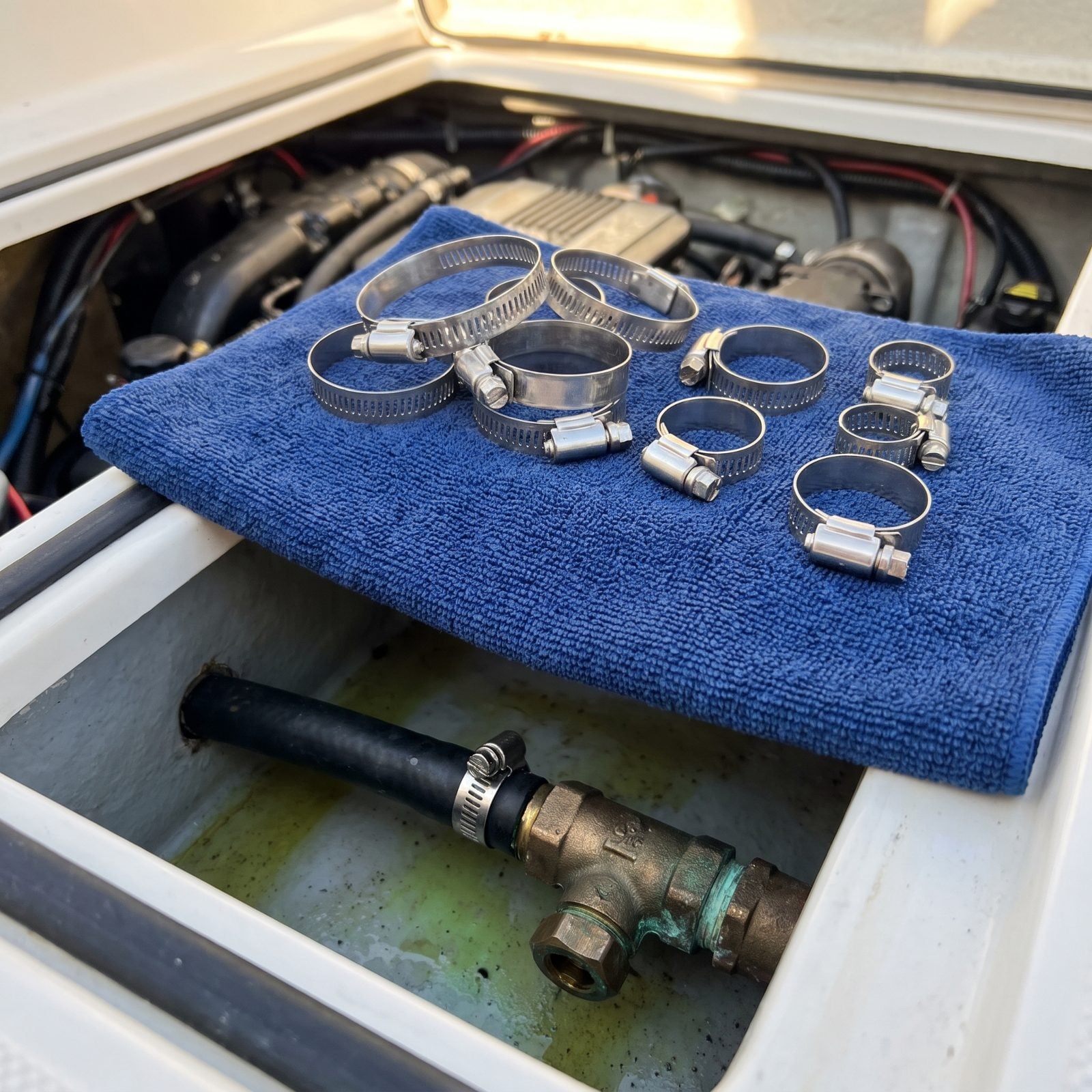
A failed hose clamp below the waterline can sink a boat. That’s not drama. The hose pops off the fitting, water comes in, and nobody’s watching the bilge until it’s a problem.
Keep a small box of all-stainless clamps in a few sizes, and look closely when you buy. Plenty of so-called “stainless” clamps use a plated carbon-steel screw that rusts solid within a season. The all-316 ones cost a couple dollars more each and actually survive salt.
14. Two-Part Waterproof Epoxy Putty
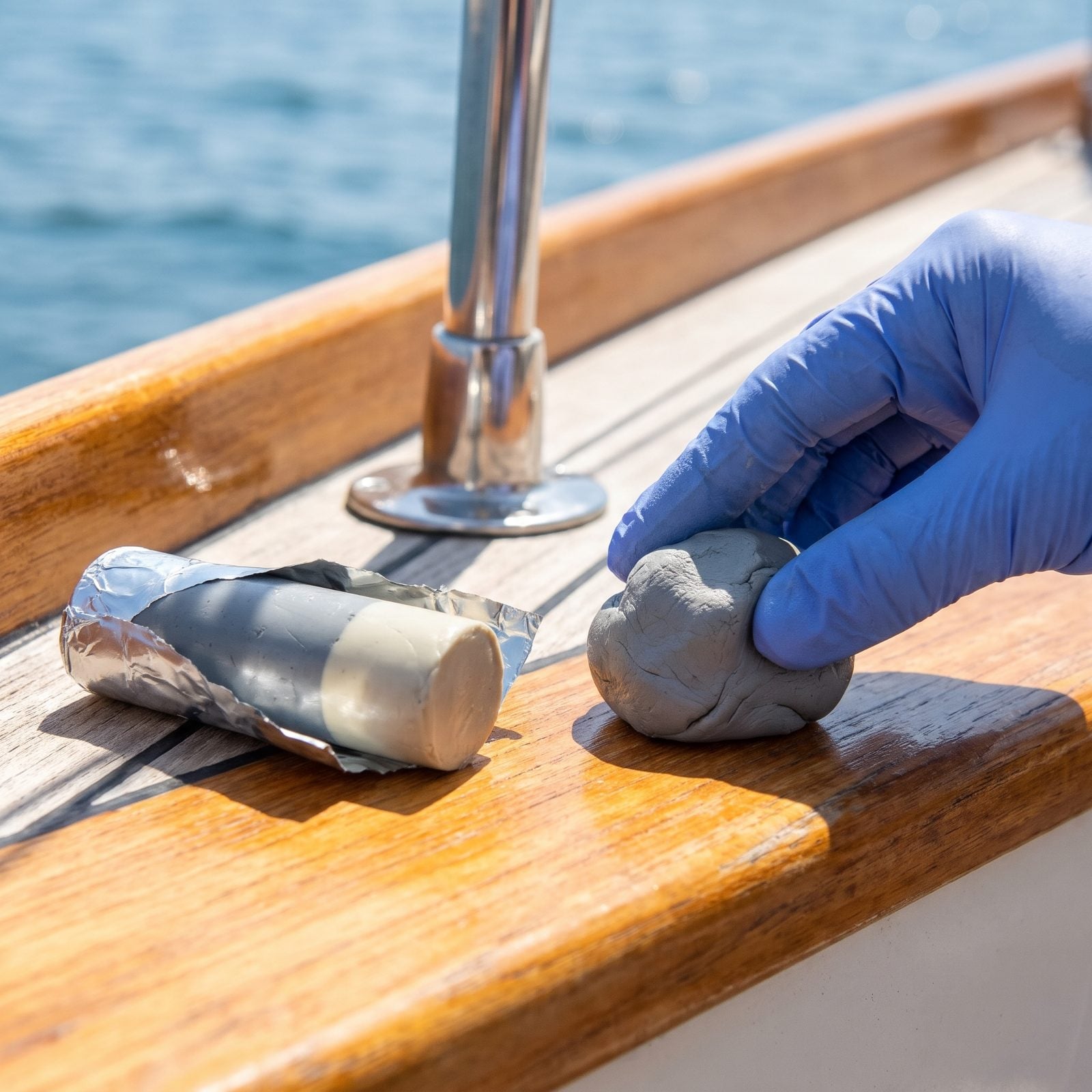
You cut off a slice, knead the two colors together until it’s one even grey, and press it onto whatever’s leaking. It hardens underwater. That’s the part people don’t believe until they’ve used it to stop a drip from a cracked fitting while still afloat.
Won’t hold forever, and it isn’t a real repair. But it buys you the hours you need to get home instead of calling for a tow. One stick lives in the toolbox for years.
13. A Corrosion-Resistant Utility Knife
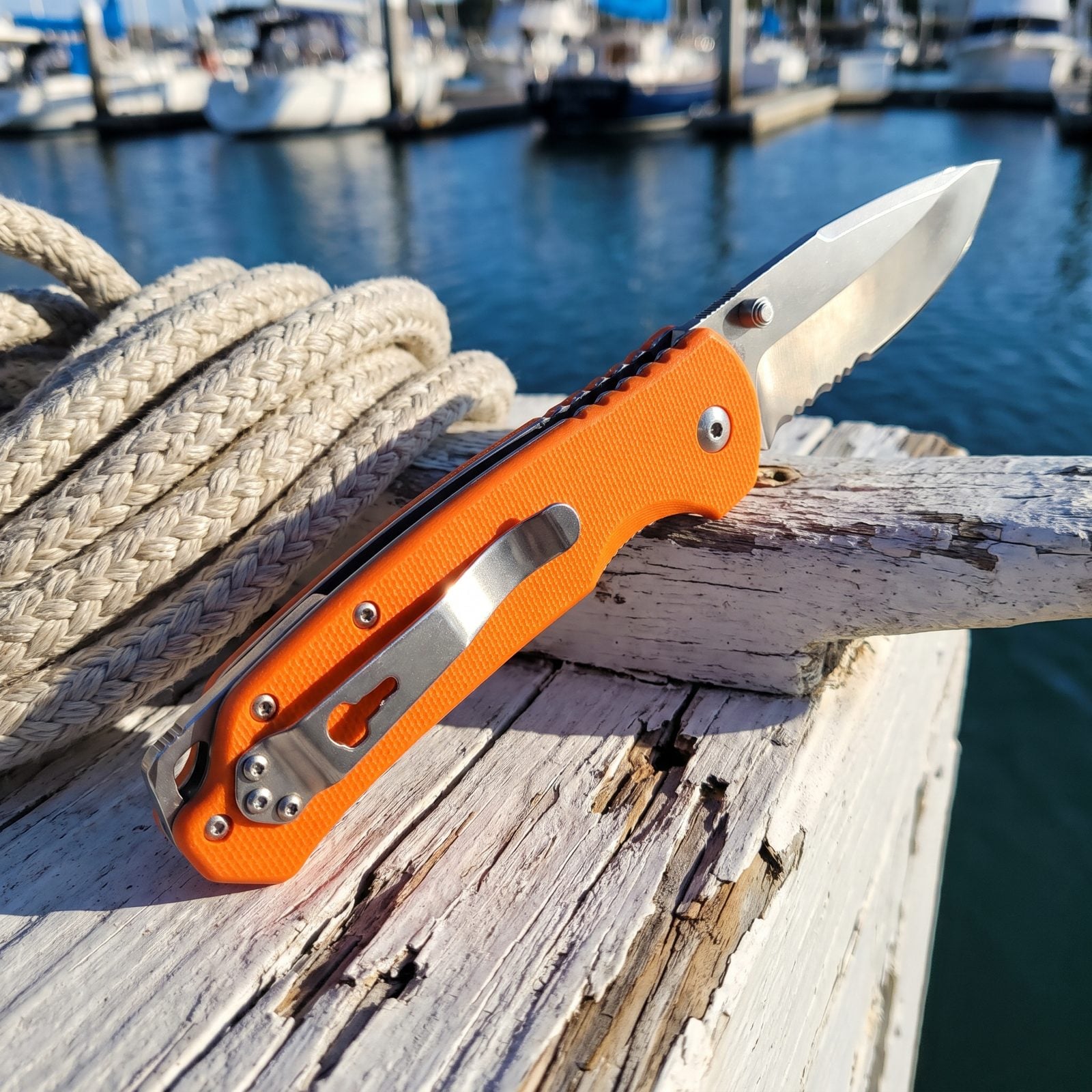
A rope wraps the prop, a line fouls under load, someone needs to cut free fast — and that’s the exact moment a seized, rusty knife lets you down.
Get one with a titanium-coated or H1 steel blade that shrugs off salt, a handle you can grip with wet hands, and a bright color so it doesn’t vanish when it hits the deck. Orange and yellow handles exist for a reason. I dropped a black-handled knife into a dark bilge once and never saw it again.
12. Oil-Absorbent Bilge Pads
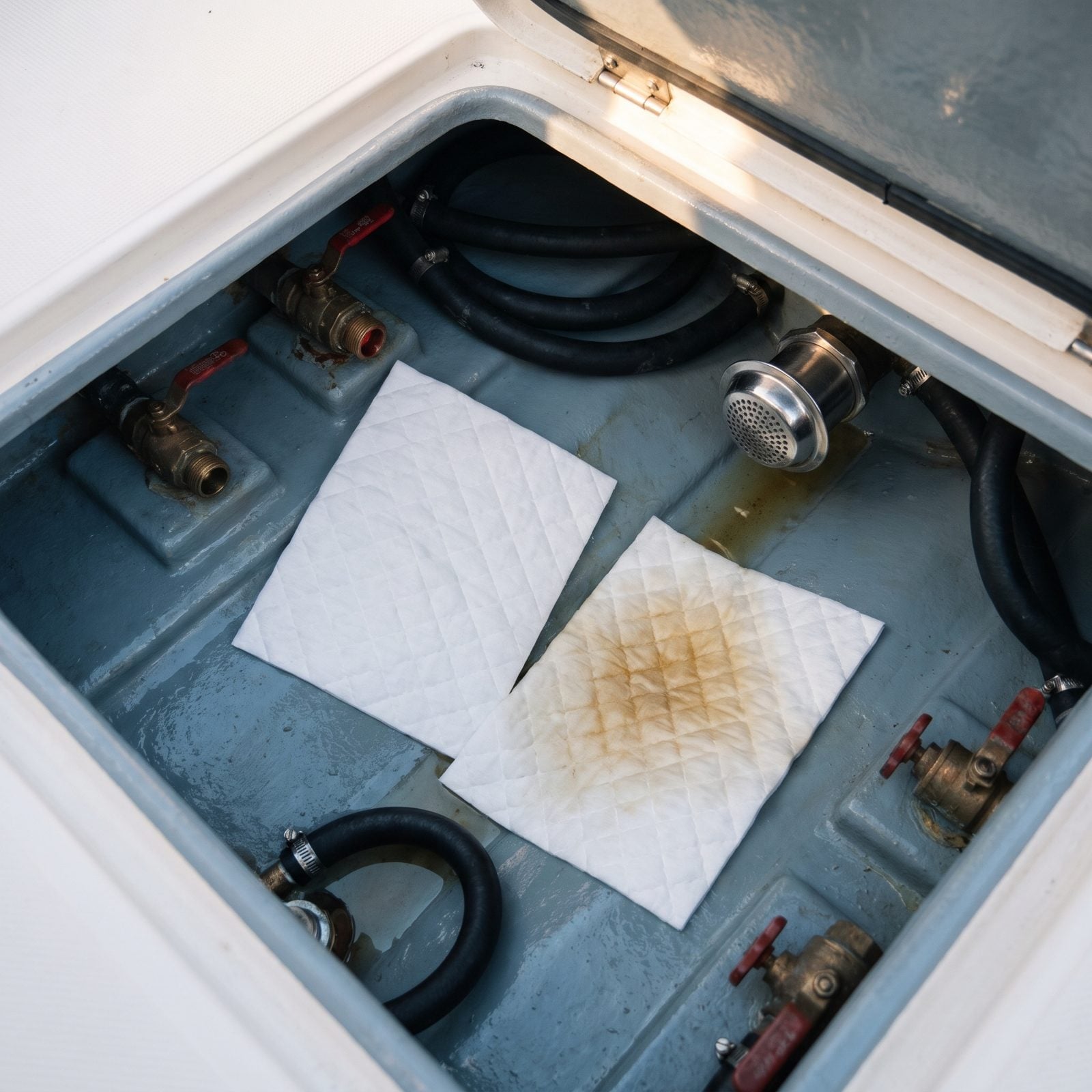
These white quilted pads soak up oil and fuel but ignore water, so they sit in the bilge and catch drips from the engine before that sheen ends up pumped overboard. Discharging oily water is illegal, and the fine runs a whole lot steeper than a pack of pads.
They double as a quiet diagnostic too. A pad that’s suddenly soaked tells you something’s leaking before the dipstick ever does.
11. A Hidden Spare Ignition Key
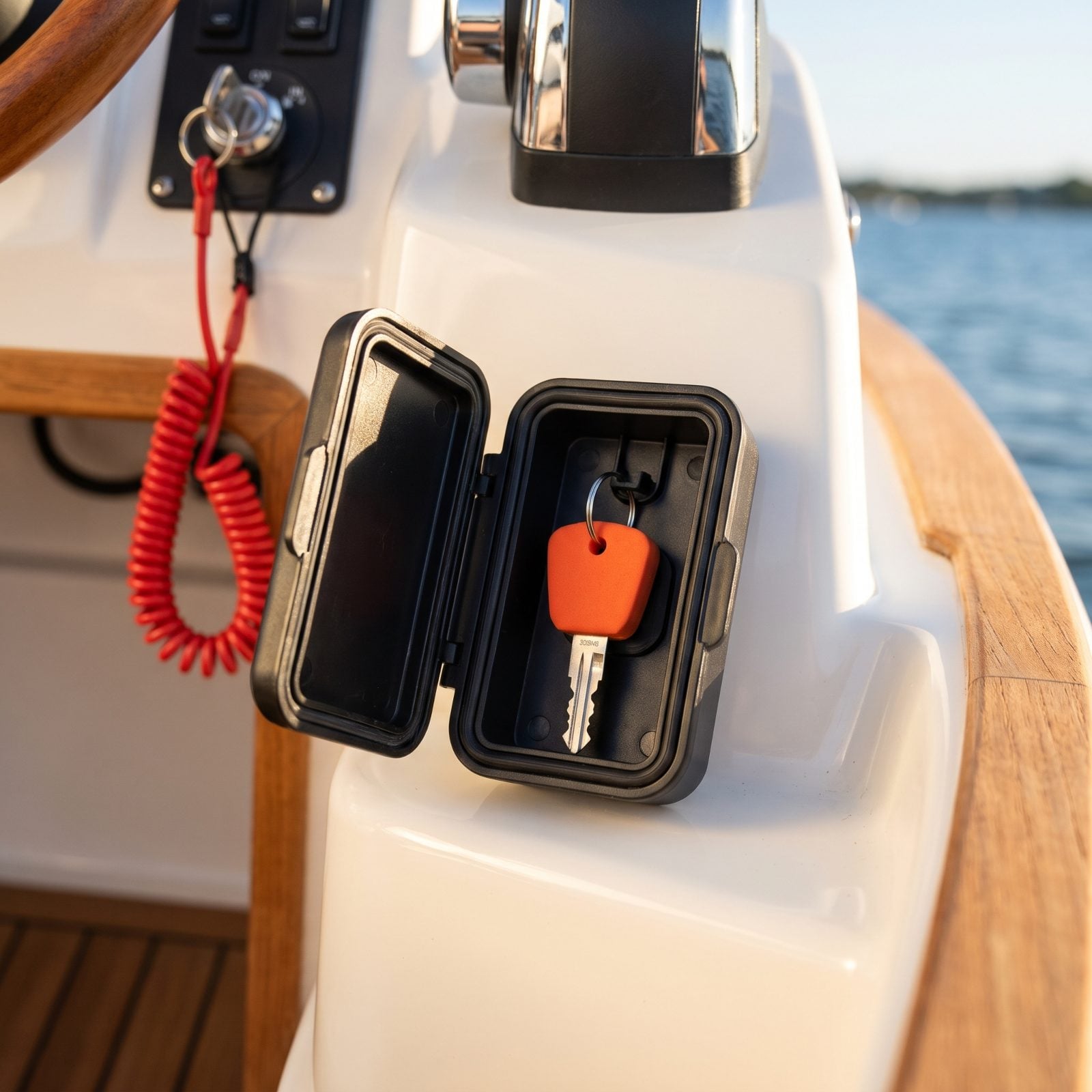
Every boater locks themselves out eventually. The key goes overboard, stays in the truck, or hides in a jacket back at the house. Out on the water, there’s no spare-key guy to call.
Stash a second key somewhere only you know, well away from the ignition, in a waterproof or magnetic holder. A single floating keyfob on it is worth the three dollars — because the one time it matters is the one time the key hits the water.
10. A Waterproof Pouch for Boat Documents
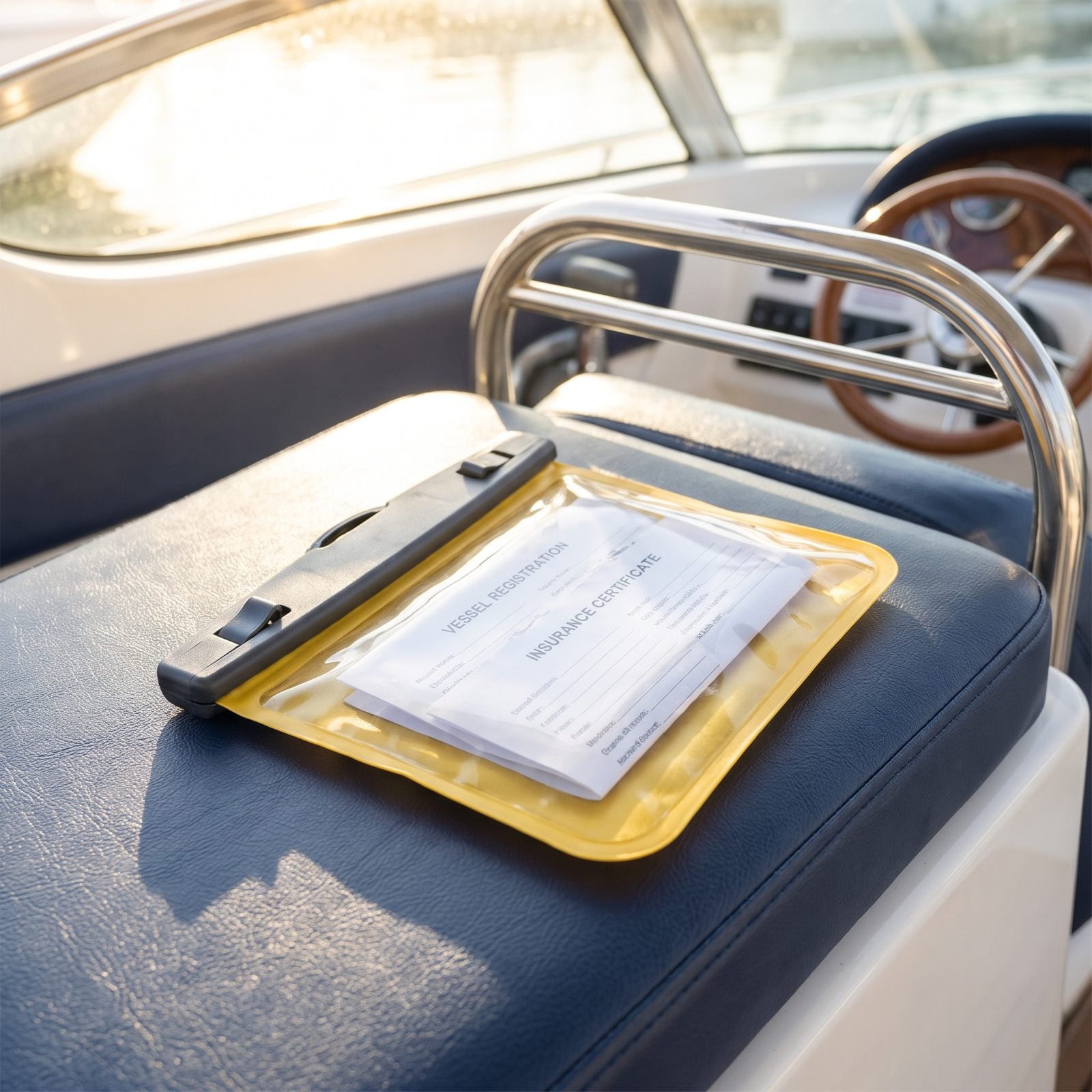
Registration, insurance, and your boating license all need to come out dry when an officer pulls alongside. Loose in a glovebox, they turn to pulp the first time a wave slops over the bow.
A sealed clear pouch keeps them readable and together. Toss in a laminated copy of your float plan and the marina’s number while you’re at it. Paperwork is boring right up until the moment someone official asks to see it.
9. A Laminated Emergency Information Card
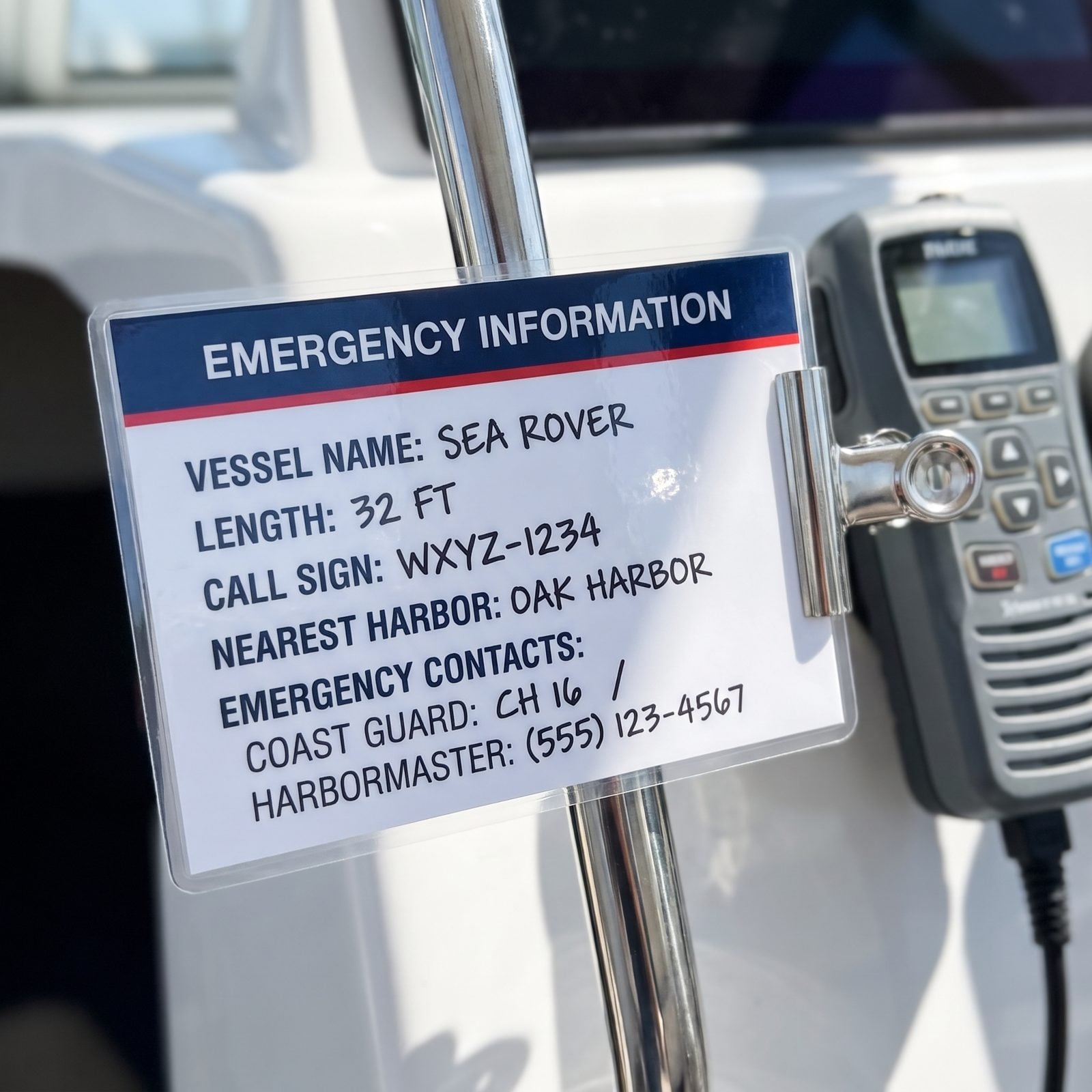
Picture handing the helm to a guest while you deal with something forward. They’ve never touched a VHF in their life. Now picture that card zip-tied right by the radio — how to call mayday, your boat’s name and length, the Coast Guard channel, your home port — and the whole thing gets a lot calmer.
In a real emergency, panic erases everything you think you know. A steady person reading a card to a dispatcher gives rescuers more than a frightened one guessing.
8. A Floating Waterproof Phone Pouch
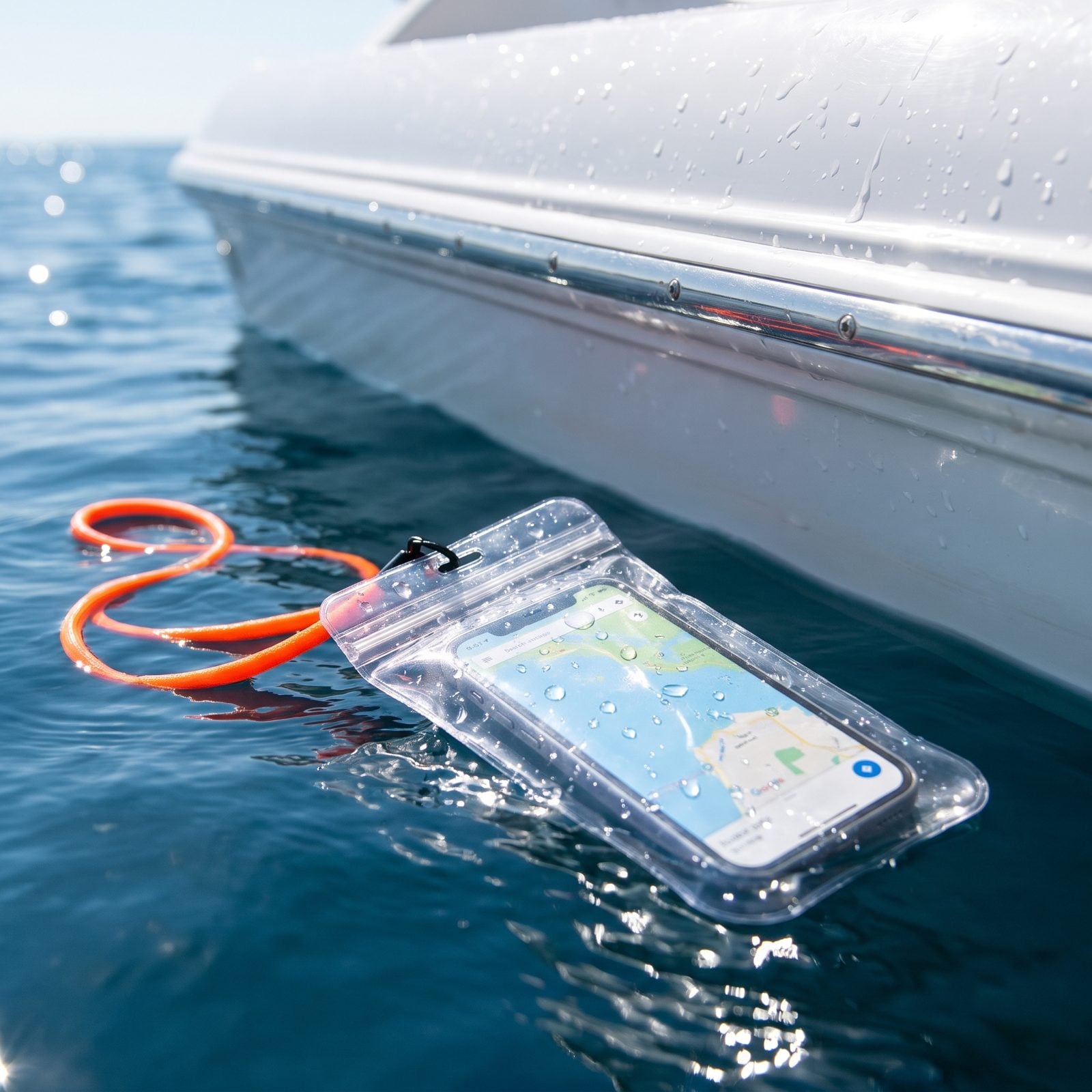
Phones and water don’t negotiate. One splash over the gunwale, one slick deck, and your lifeline to help is a paperweight.
A floating pouch handles both problems. It keeps the phone dry, and it keeps the thing on the surface instead of on the bottom. You can still swipe, shoot photos through the clear window, and call for help while it’s sealed. Ten dollars against a dead phone and no way to dial? Not a hard call.
7. More Drinking Water Than the Trip Requires
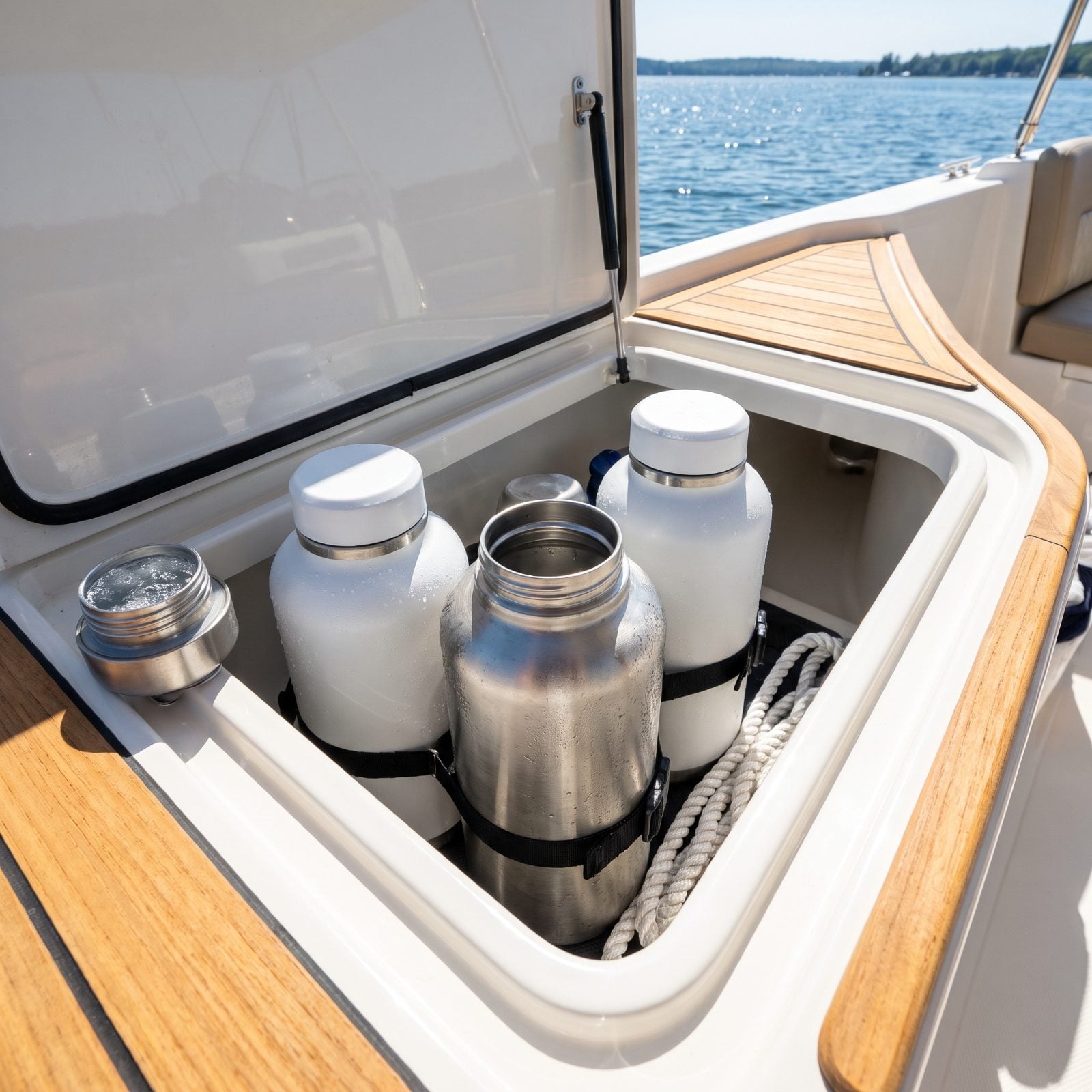
The math that gets people in trouble assumes everything goes right. You planned a three-hour loop, then the engine coughs, you drift, the sun climbs, and three hours turns into six. Nobody ever drifted back to the dock wishing they’d packed less water.
Carry a gallon per person per day as your floor, and more when July is cooking you. Split it across two or three containers instead of one big jug, so if one springs a leak or rolls overboard you’ve still got the rest.
6. Shelf-Stable High-Energy Snacks
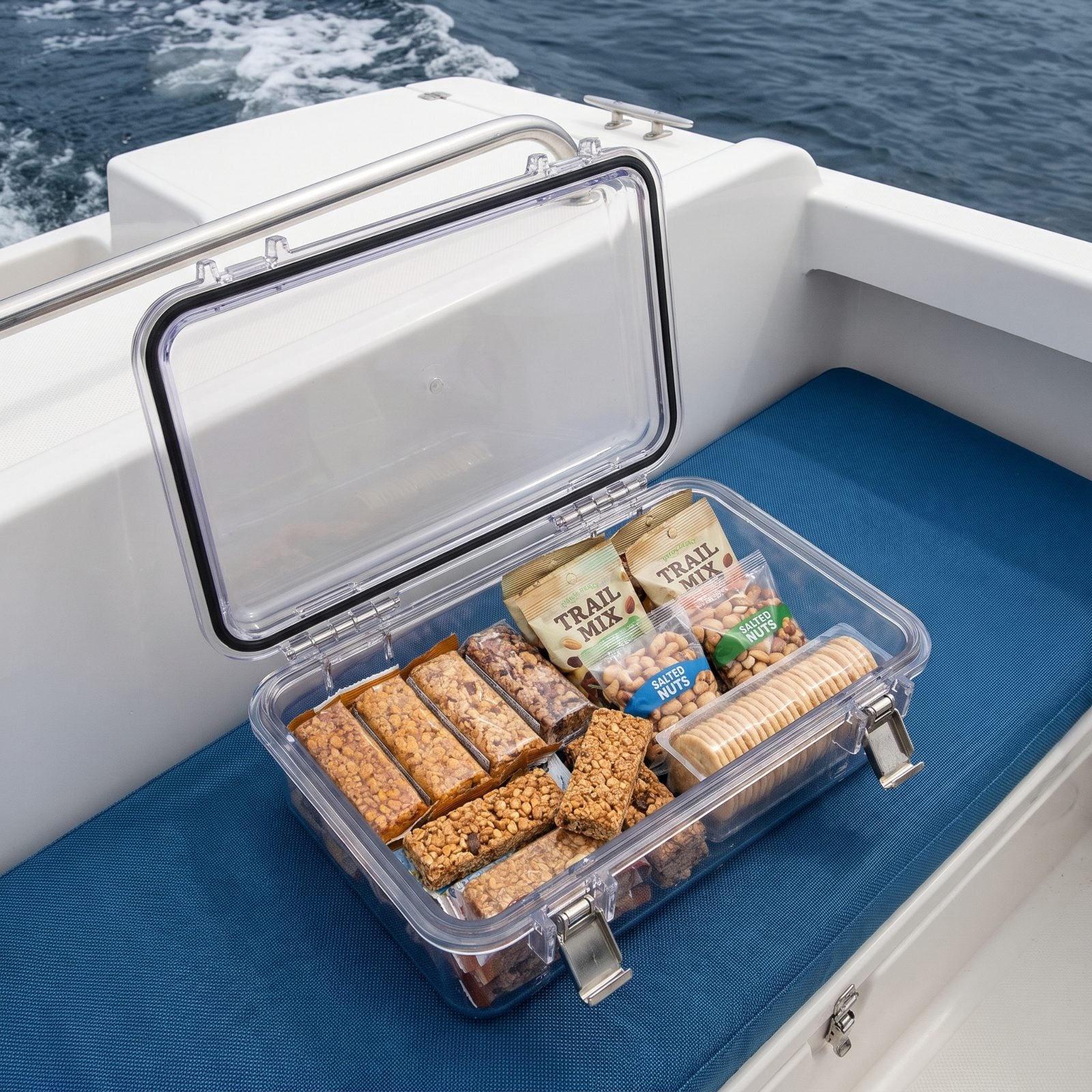
Low blood sugar on the water is its own small emergency. Judgment slips, patience goes, and the person at the helm starts making sloppy calls about weather and distance. A handful of almonds fixes more than hunger.
Pack things that survive heat and don’t care about getting jostled — trail mix, jerky, nut butter packets, crackers. Skip the chocolate that melts into a brown puddle in your bag. And skip anything that needs a fridge to stay safe.
5. Broad-Spectrum Water-Resistant Sunscreen
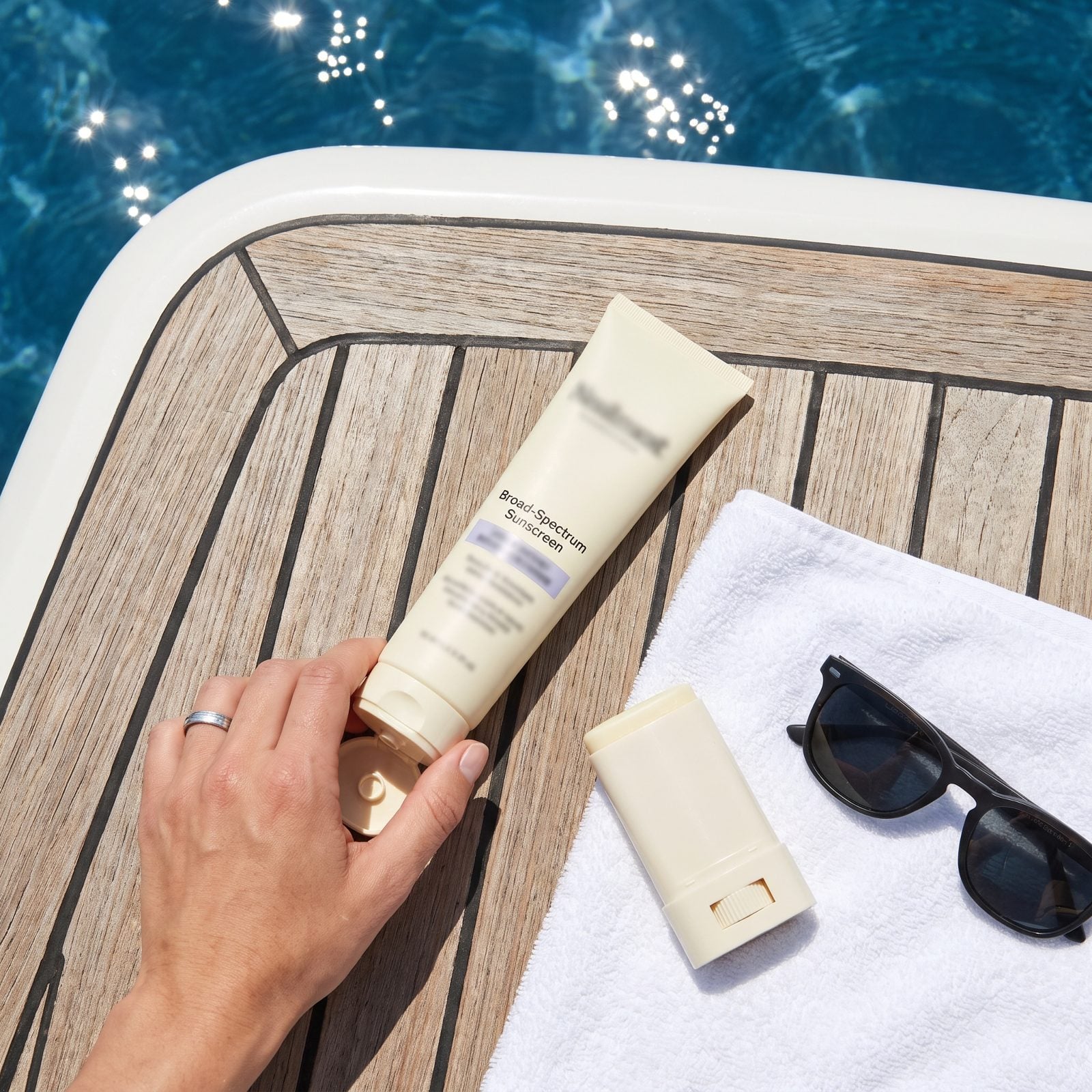
Water doesn’t shade you — it doubles the sun. Light bounces off the surface and hits you from below, which is how people burn the underside of their chin and the backs of their arms on calm bright days and never see it coming.
Go broad-spectrum, SPF 30 at minimum, water-resistant. Then reapply every couple of hours no matter what the bottle promises, because sweat and spray wear it off faster than you’d ever guess.
4. Packable Waterproof Rain Gear
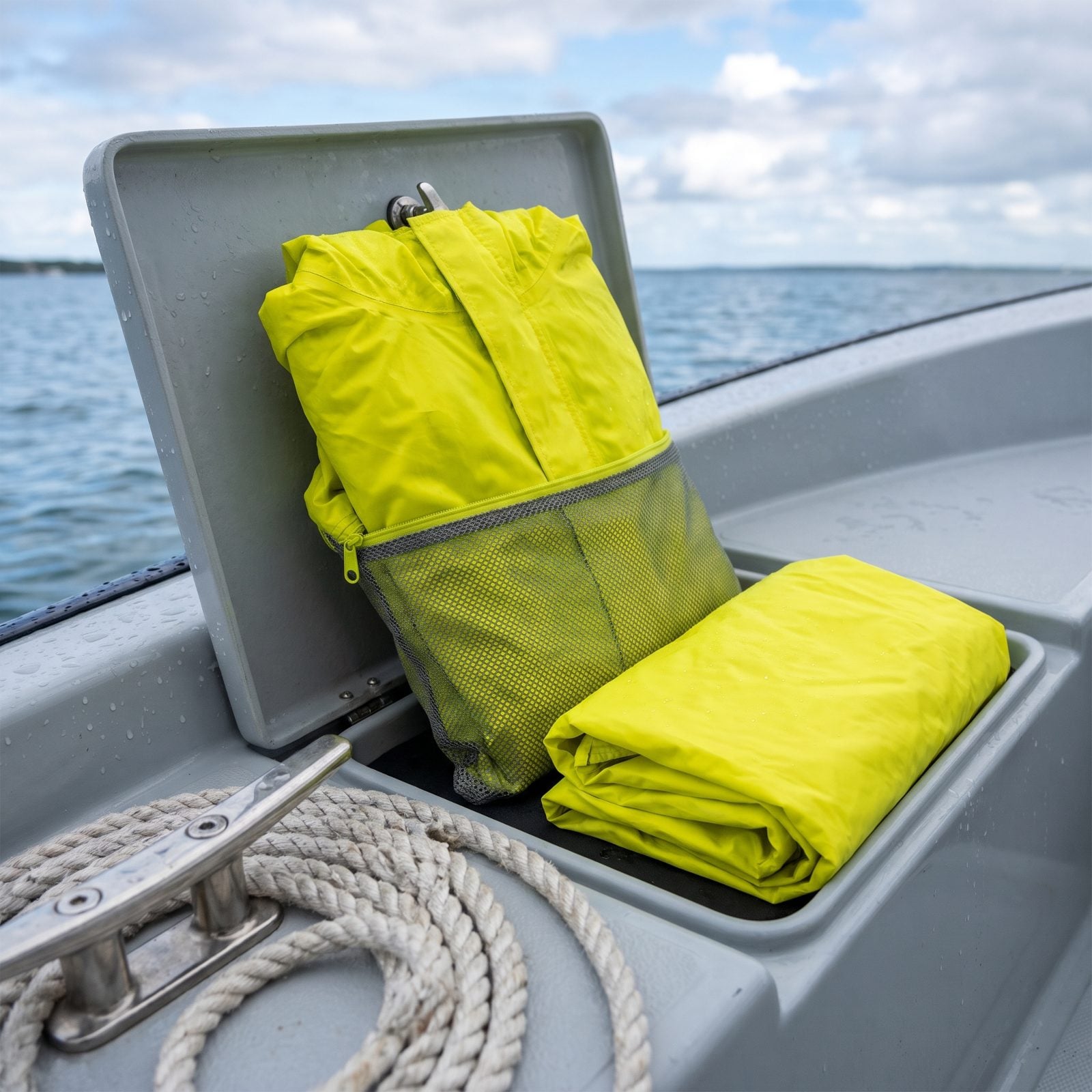
The sky on a lake changes its mind without asking. You can leave the dock under blue and be soaked to the collarbone an hour later. Wet plus wind over open water pulls heat out of you fast, and a shivering crew makes bad decisions.
Get a jacket and pants that pack down into their own pocket, in a loud color so you’re easier to spot if things ever go sideways. Cheap plastic ponchos tear on the first gust. A proper taped-seam shell earns its locker space the first time you need it.
3. A Warm Fleece or Insulated Layer
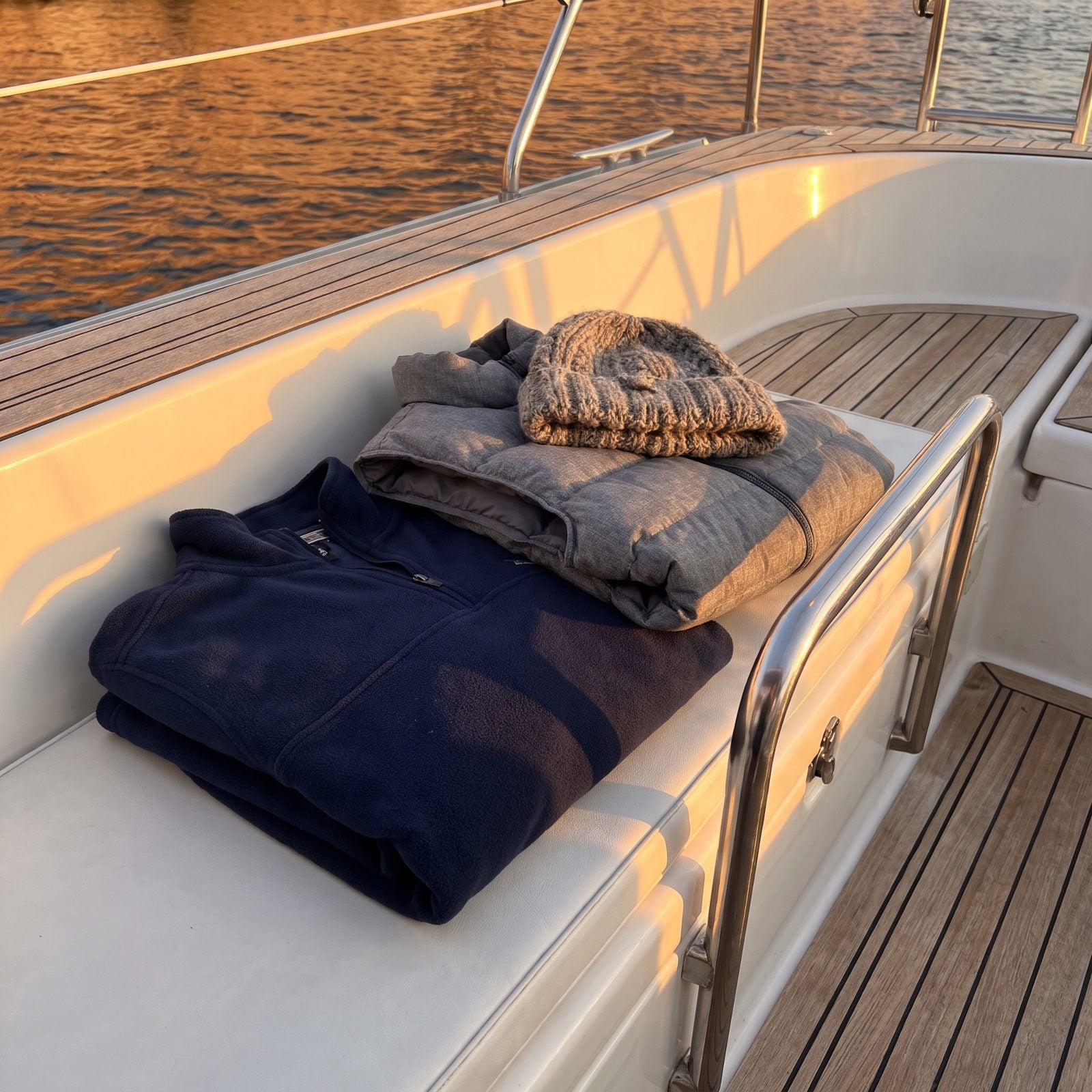
The warmest part of the day on the water isn’t when you leave. It’s somewhere in the middle. By the time you’re heading back, the sun sits low, the water has cooled, and that t-shirt you launched in feels like nothing at all.
Stash a fleece or a light insulated layer per person, even in summer — it takes up almost no room and it’s the whole difference between a pleasant ride home and a miserable one. I’ve handed mine to a shivering guest more times than I can count, and I’ve never once regretted bringing the spare.
2. Reflective Emergency Thermal Blankets
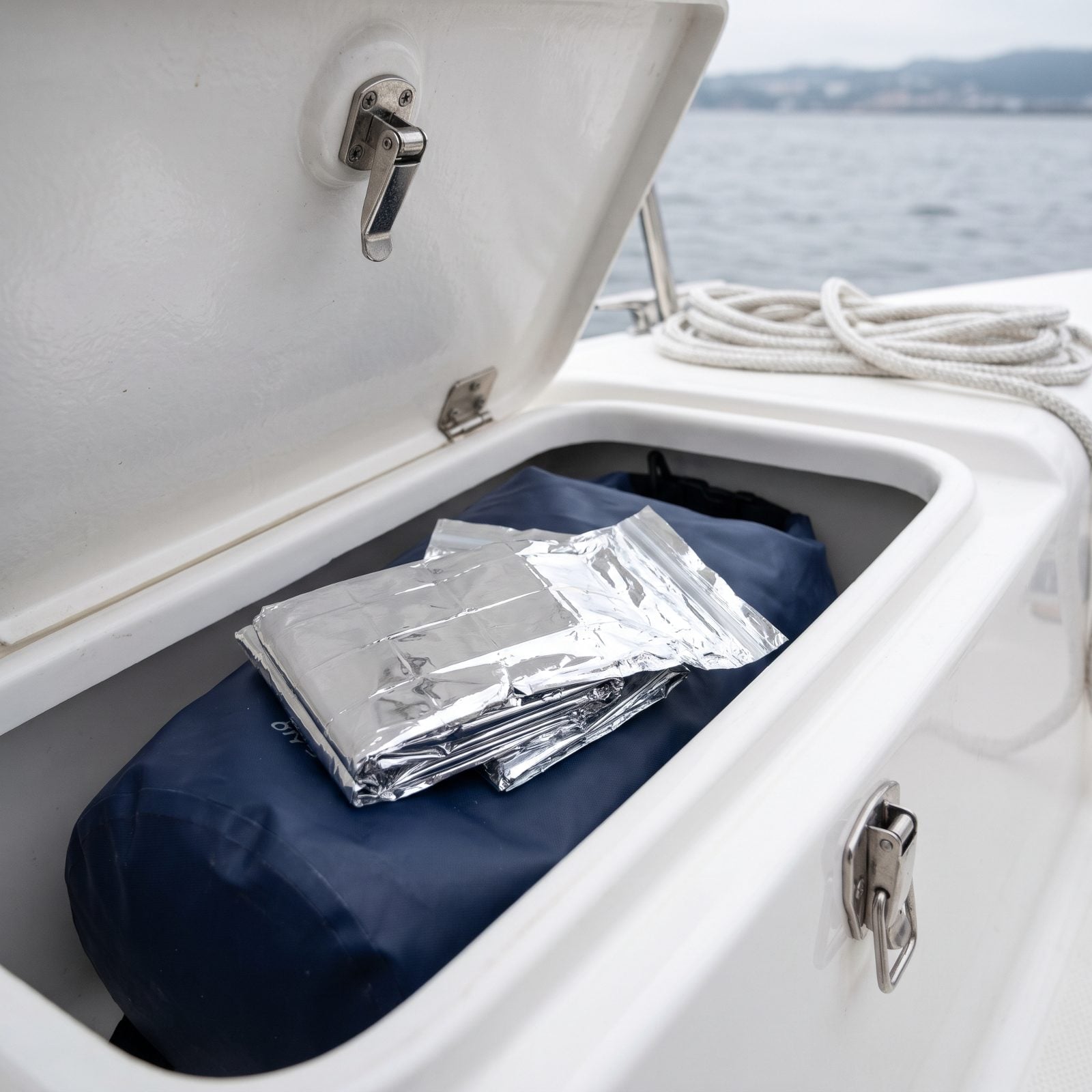
They look like a joke — a sheet of crinkly foil the size of a deck of cards. Then the temperature drops or someone goes in the water, and that silly foil reflects body heat back at them and buys you time to get to shore or to help.
Keep a couple in a dry bag. They cost a few dollars, weigh nothing, and live forever in a locker until the day they matter.
1. A Spare Drain Plug in the Correct Size
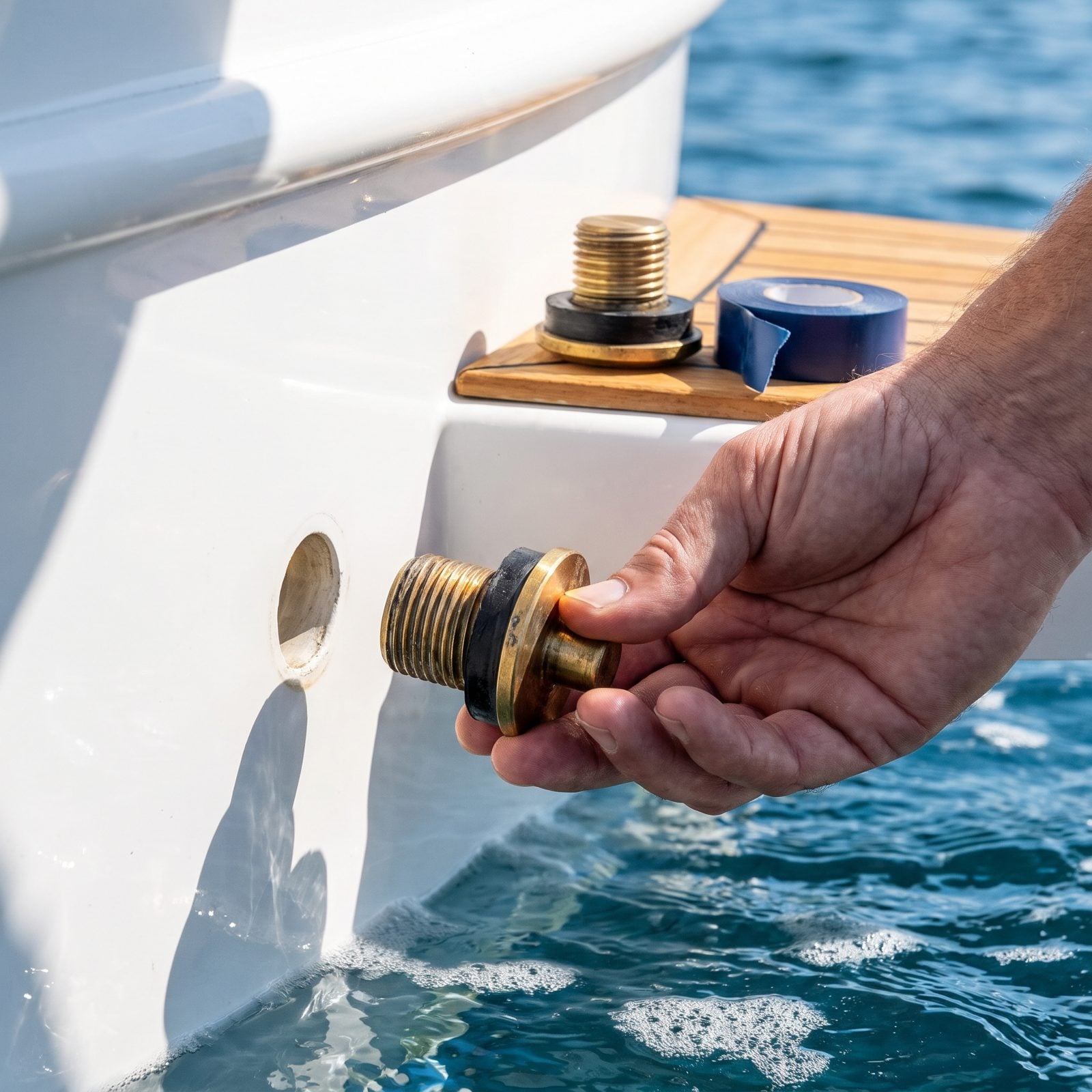
The cheapest part on your whole boat is the one that keeps the lake on the correct side of the hull. A drain plug is a few dollars of brass and rubber. Lose it at the ramp or out on the water and a nice day turns into a fast, sinking kind of panic.
They roll out of pockets, they corrode, they get left in a tackle box after winter. Tape a spare in exactly your boat’s size inside a dry locker, and know where it lives before you back down the ramp.