
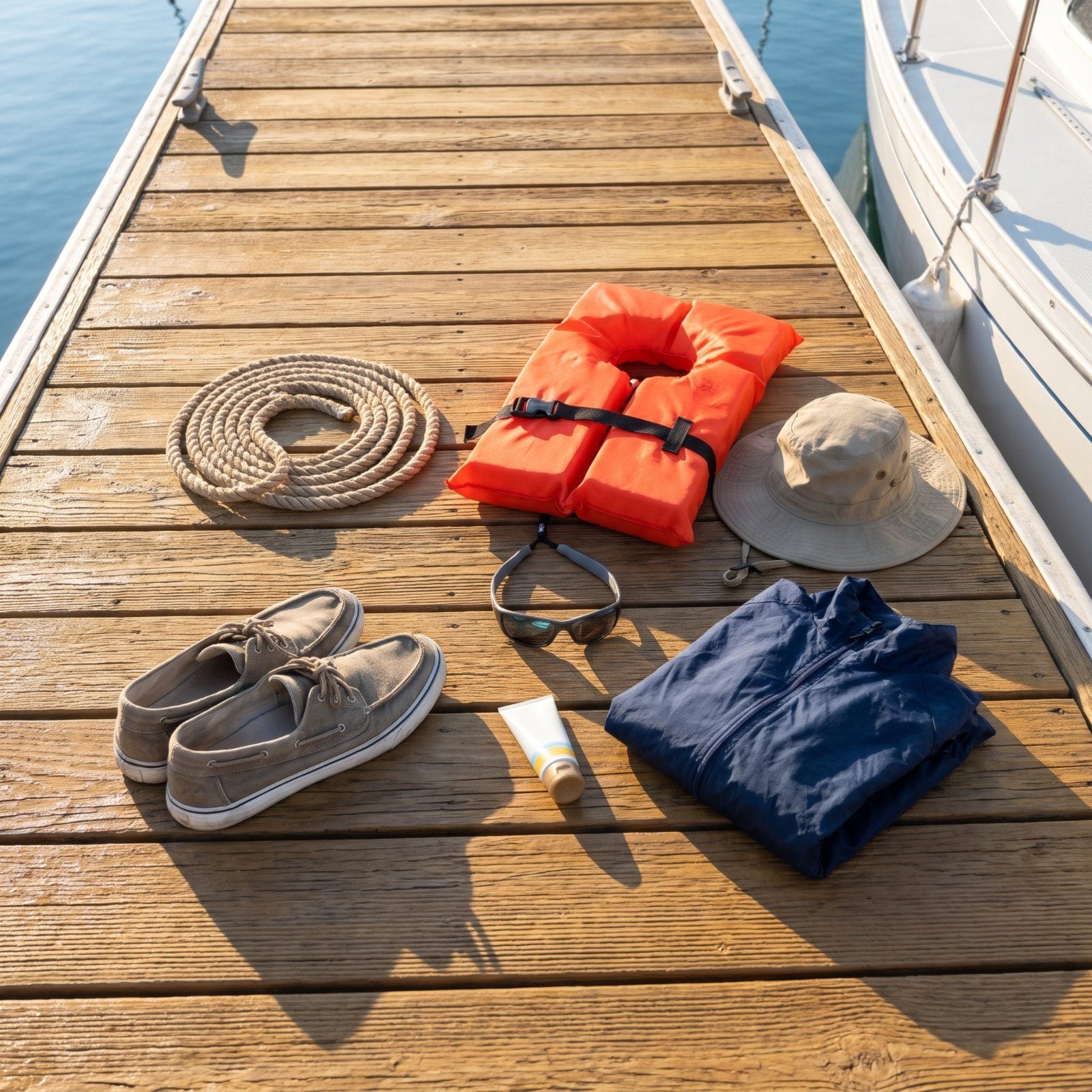
Watch an instructor at the top of a dock on a Saturday morning. The reading starts before anyone says a word — the way you walk toward the boat, the shoes on your feet, whether you glance at the sky or the water first. By the time you reach the finger pier, a good one has already formed an opinion about how the next three hours will go. None of it is about talent. It’s about preparation, attention, and the small habits that tell someone you take the water seriously. Here’s what gets noticed, and why it matters more than you’d think.
Please note that some of the imagery in this article may have been enhanced with the assistance of AI.
43. Whether You Show Up Early Enough to Actually Get Your Bearings
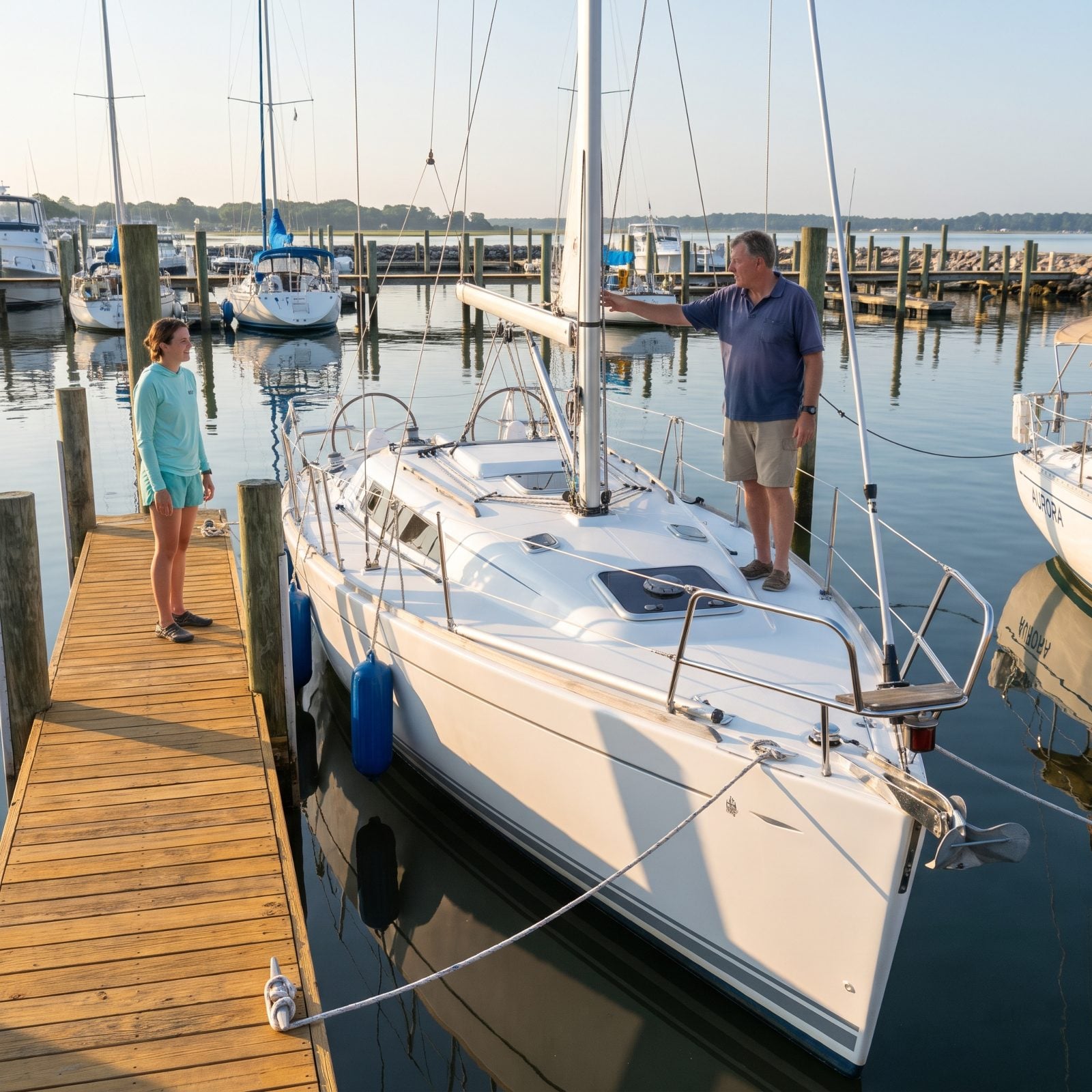
The student who rolls up with four minutes to spare has already announced something. Not laziness, usually. Just a misread of how much a boat demands before it moves.
Arriving early buys you the quiet part — you walk the deck, find the handholds, locate where you’ll sit and where you absolutely shouldn’t stand. You hear the safety briefing without half your brain still parking the car. Instructors notice the student who treats that buffer as part of the lesson, not padding before it.
42. Whether You Glanced at the Forecast Before You Left the House
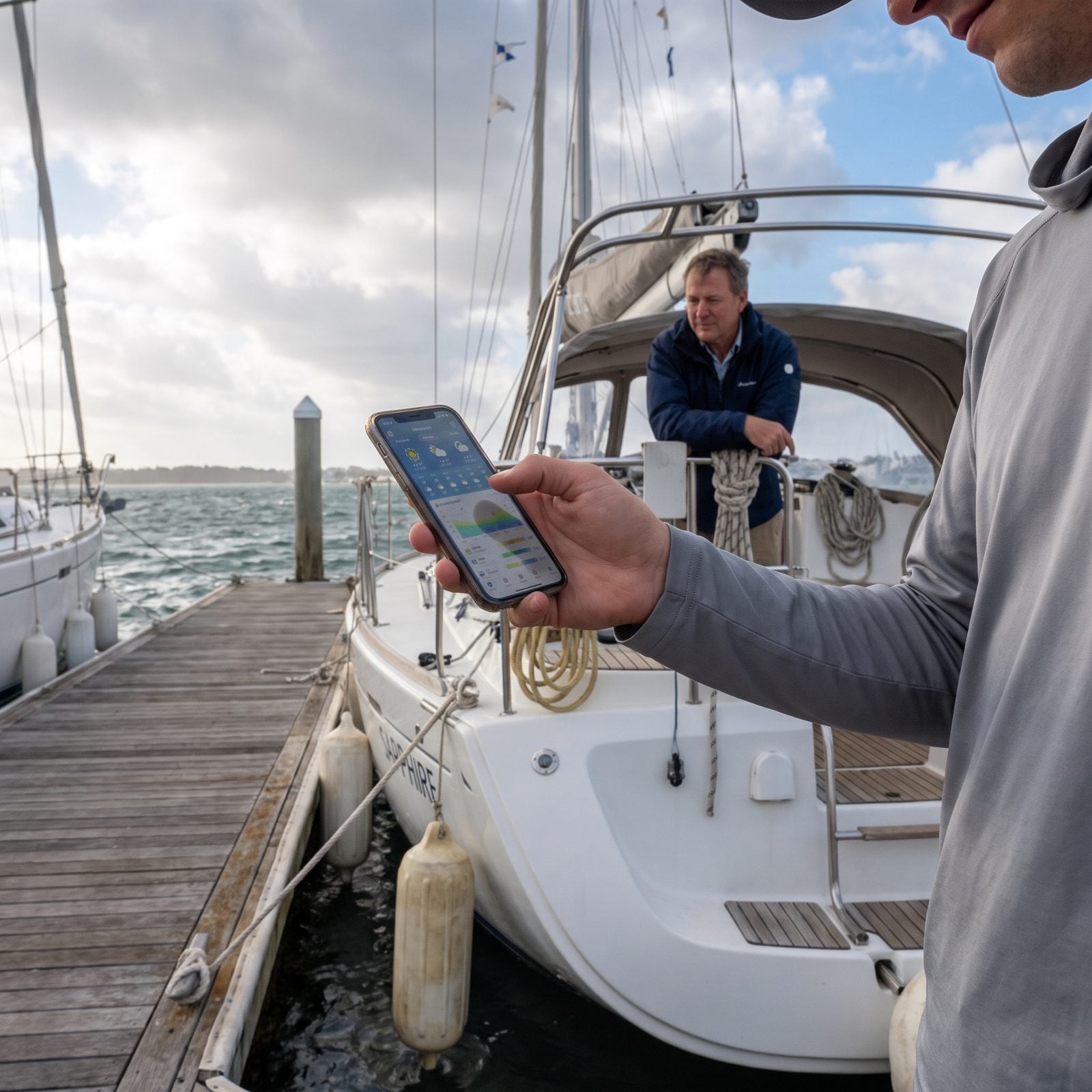
You don’t need to be a meteorologist. You need to know whether it’s blowing eight knots or eighteen, and whether that number is climbing.
The student who checked arrives dressed right and mentally braced. The one who didn’t shows up in a cotton t-shirt on a day with a small craft advisory, surprised there’s spray. An instructor can tell within a sentence which camp you’re in — “looks like it’ll build this afternoon” gets a very different conversation than a blank stare. It’s one of the cheapest habits to build and one of the clearest signals that you understand the weather runs the day, not your calendar.
41. What Your Shoes Say Before You Step Near the Boat
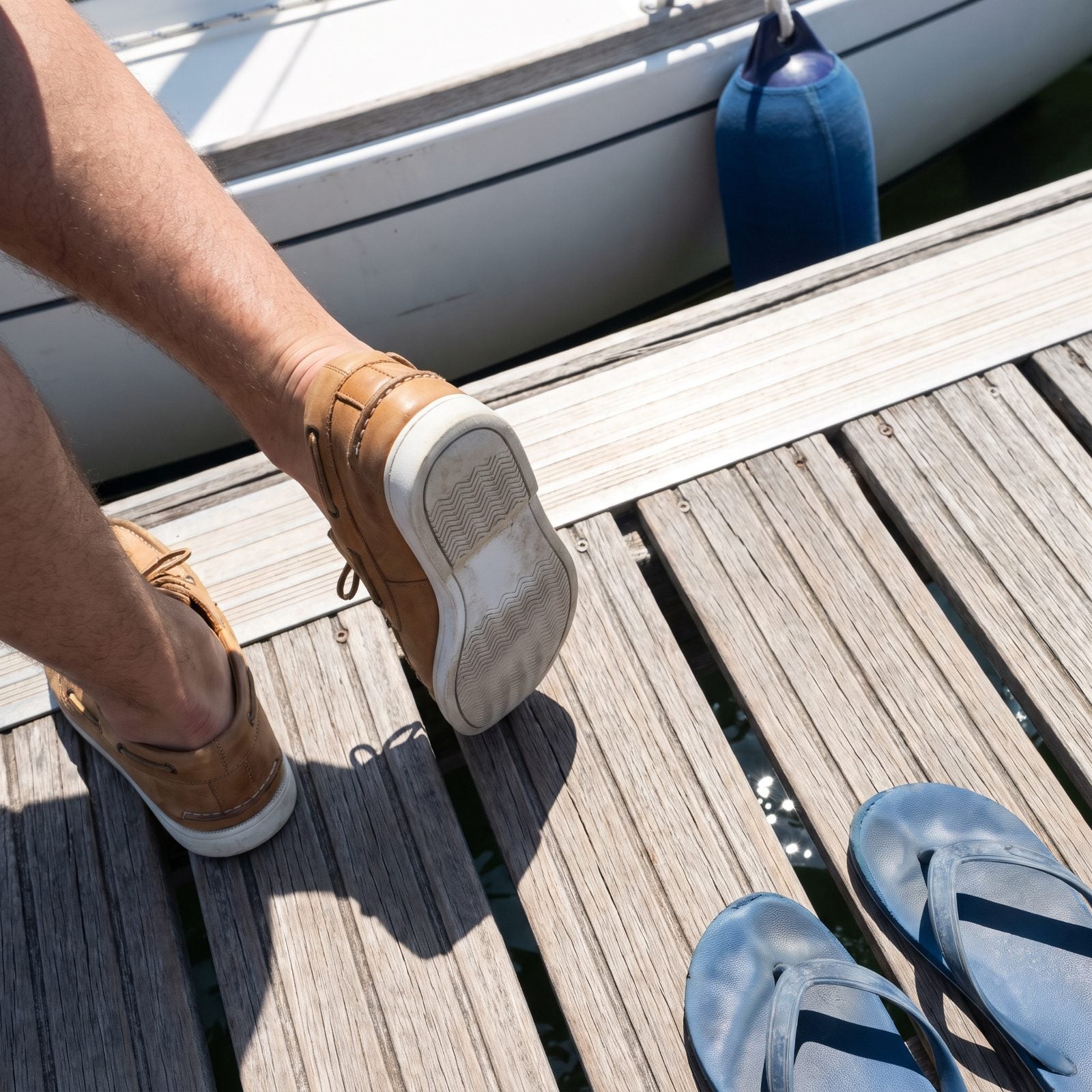
Flip-flops at the dock make an instructor wince. So does anything with a black sole that’ll streak the deck.
Here’s the honest version: your footwear is the fastest read there is. Closed-toe, non-marking, grippy on a wet surface, secure on your foot — that’s the whole requirement. A student in proper deck shoes has clearly thought about the environment they’re walking into. One in bare feet or beach sandals hasn’t, and now the instructor’s bracing for a stubbed toe or a slip that was entirely preventable.
Asked what to wear aboard, a sailing blogger who has crossed the Dutch lakes says “You want shoes with non-slip, non-marking soles. Most non-marking soles are made of rubber. Leather soles will generally leave marks on the deck.”
40. Whether You Dressed for the Weather That’s Actually Coming
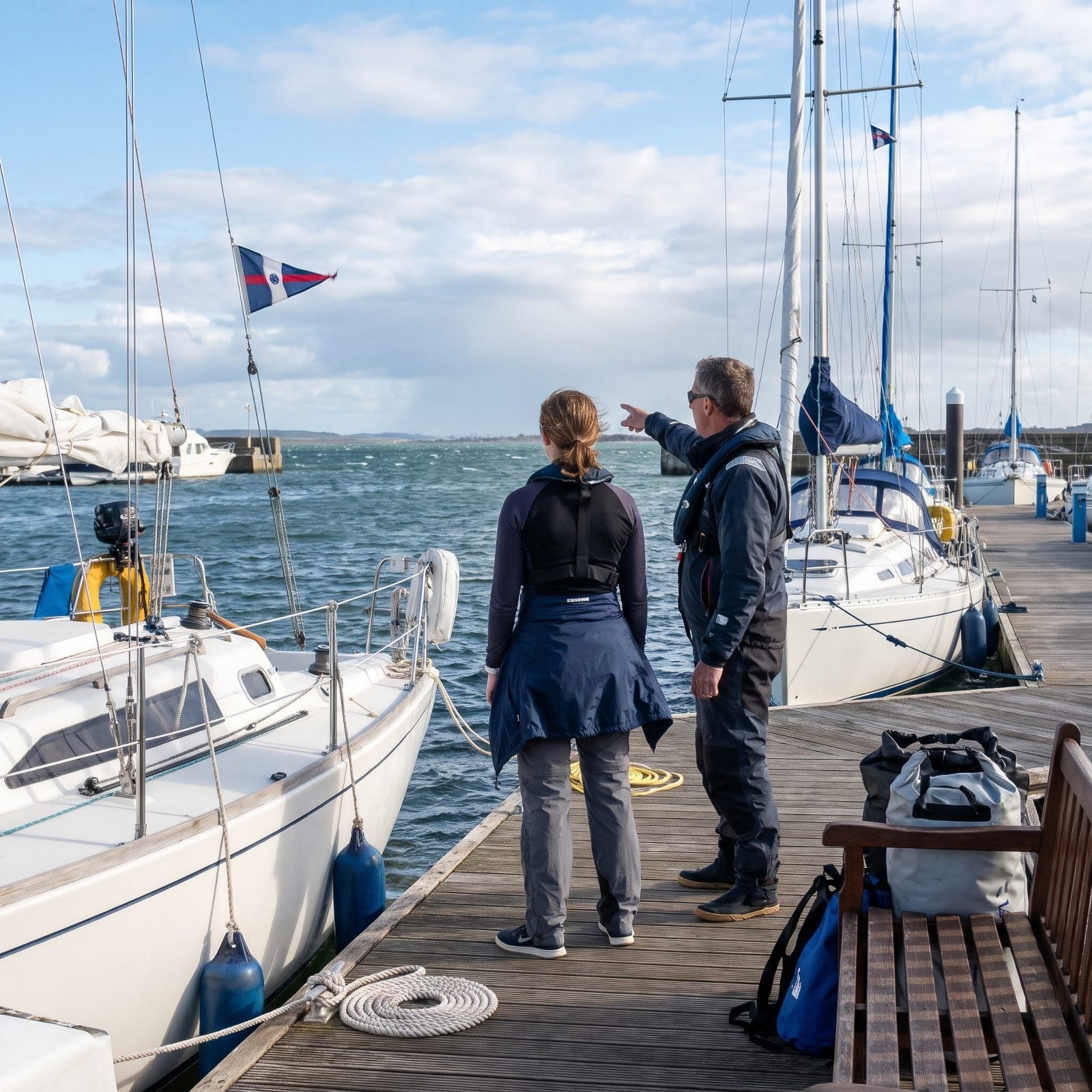
Water is always cooler than land, and moving water with wind across it is cooler still. Dress for the parking lot and you’ll regret it an hour out.
Layers are the tell. A wicking base, something to cut the wind, maybe a spare stuffed in a dry bag. It says you understand that comfort out there is a planning problem, not a luck problem. A shivering, soaked student can’t absorb a word of instruction — all they can think about is being miserable.
39. How Seriously You Treat the Sun
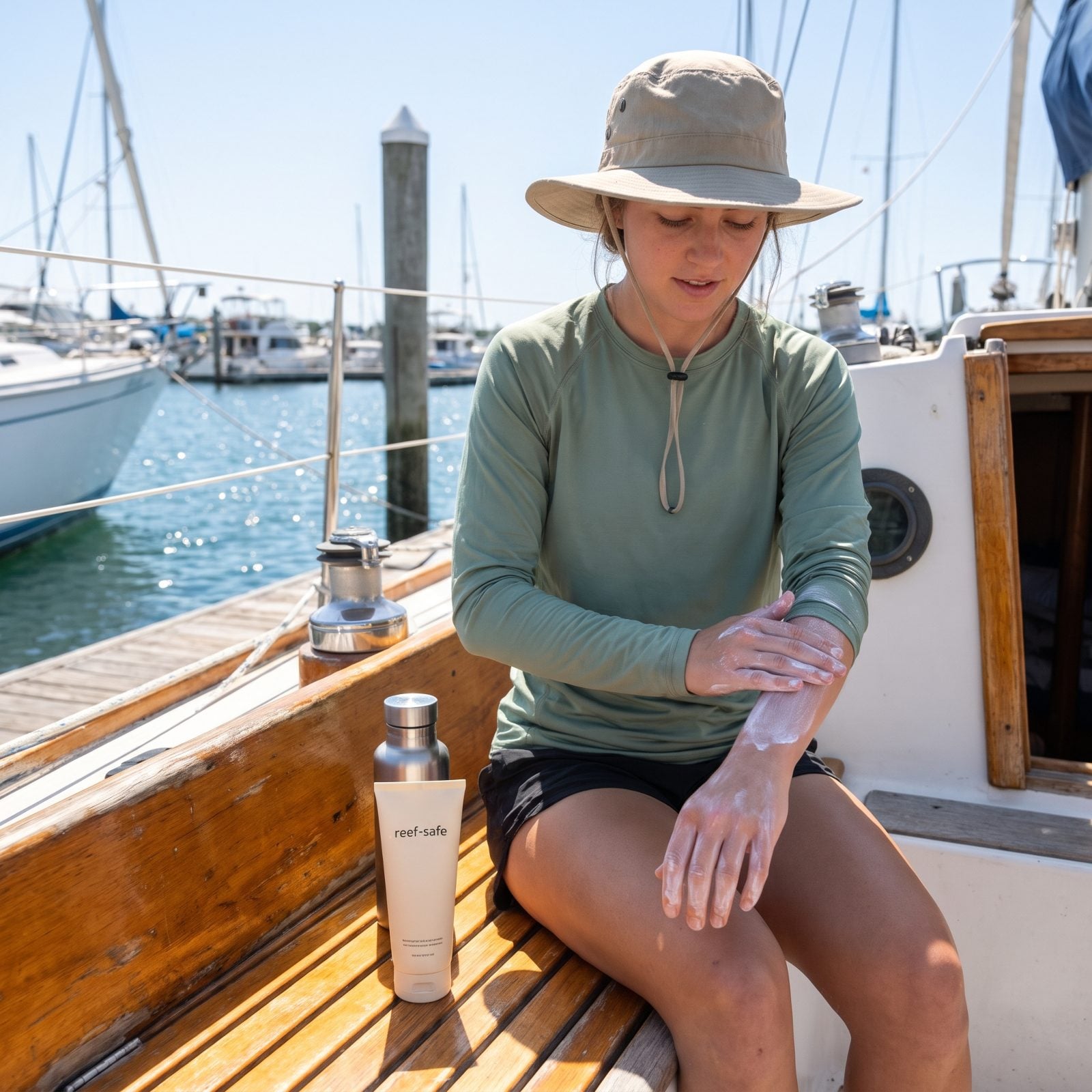
The water throws the sun back at you twice. People who’ve only ever burned on land don’t believe how fast it happens out on a boat.
Arrive already protected — long sleeves, a real hat, sunscreen going on before the lines come off — and you read as someone who’s done the homework. The one asking to borrow sunscreen at noon has already cooked. A sunburned, overheated student makes poor decisions in the afternoon, which is exactly when a lesson gets interesting. Nobody learns well while squinting and peeling.
Explaining why people burn faster afloat, a dermatologist who treats boaters notes “Therefore, when on the water and/or boat, one has more UV exposure than on the land from the reflection of UV rays off the water and boat deck.”
38. Whether Your Life Jacket Actually Fits You
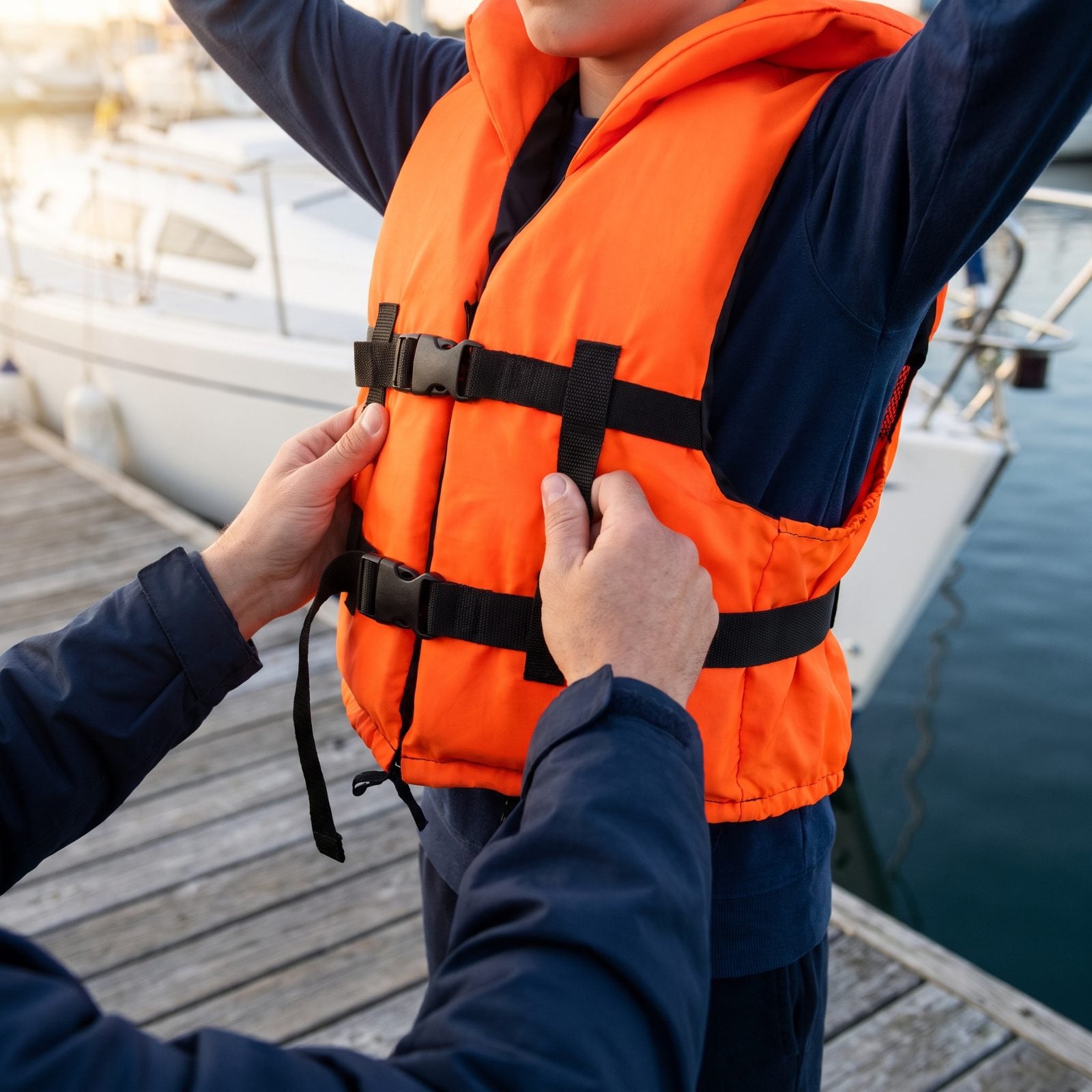
A loose life jacket is worse than useless — it lifts off over your head the moment it matters.
Instructors watch how you handle this. Do you grab the first one off the pile, or do you actually adjust the straps until it won’t ride up when someone tugs the shoulders? The student who fiddles with the fit, cinches the sides, tests it — quiet nod. It says you understand the thing is a tool, not a costume.
Comfort counts too. You’ll wear it the whole session, so a jacket that chafes or rides up isn’t a minor annoyance. It’s a safety item you’ll be tempted to loosen the first time it digs in.
37. Whether Your Hat and Sunglasses Are Tied Down
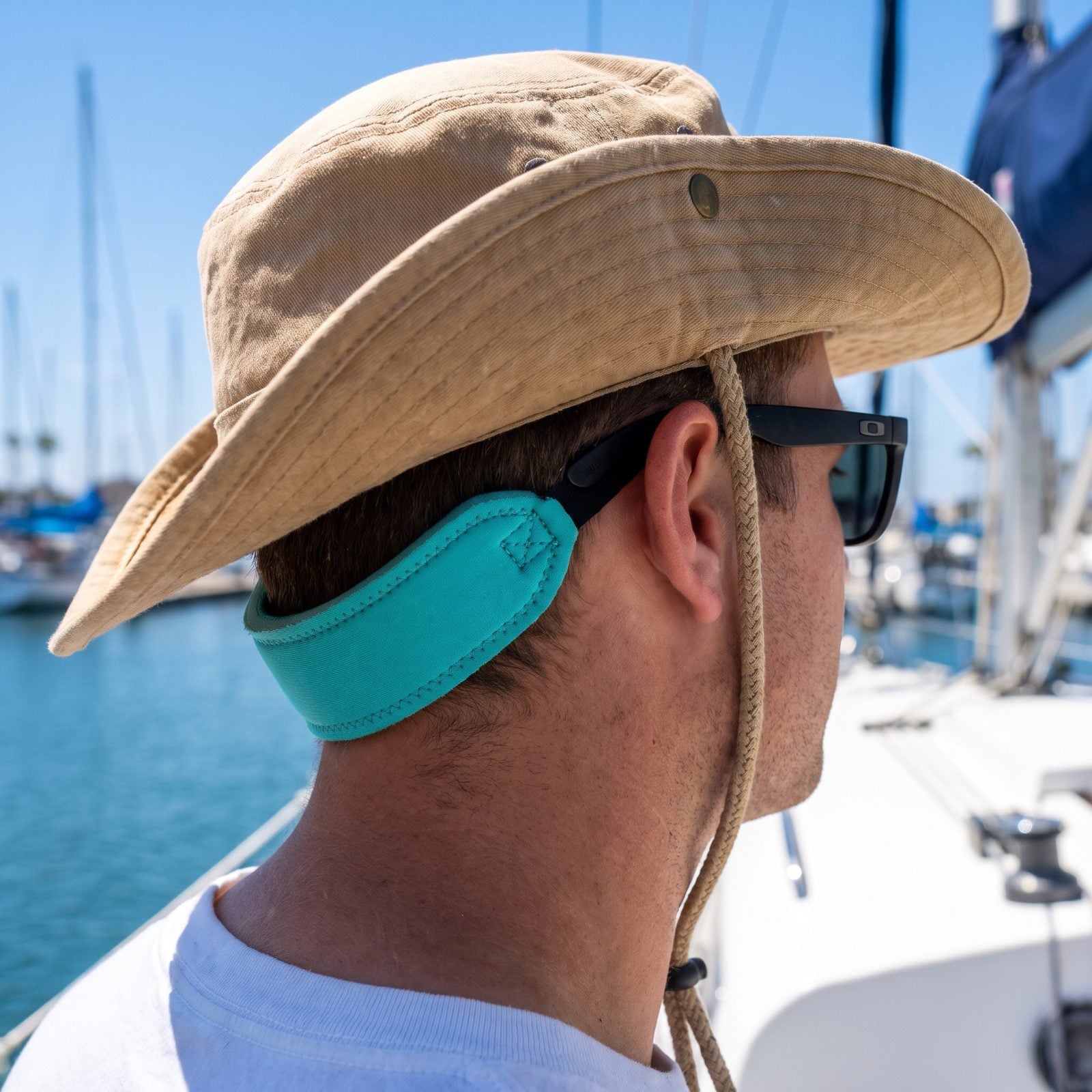
The first gust takes your hat. The boom or a quick heel takes your sunglasses. Then you spend the afternoon squinting while someone leans over the rail, watching your forty-dollar lenses sink.
A retainer strap and a chin cord cost almost nothing and say a lot. They tell the instructor you’ve anticipated motion — that you know a boat isn’t a stationary environment. Small gear, small habit, but it’s one of the clearest markers of someone thinking a step ahead.
36. Whether You Put the Phone Away and Pull the Earbuds Out
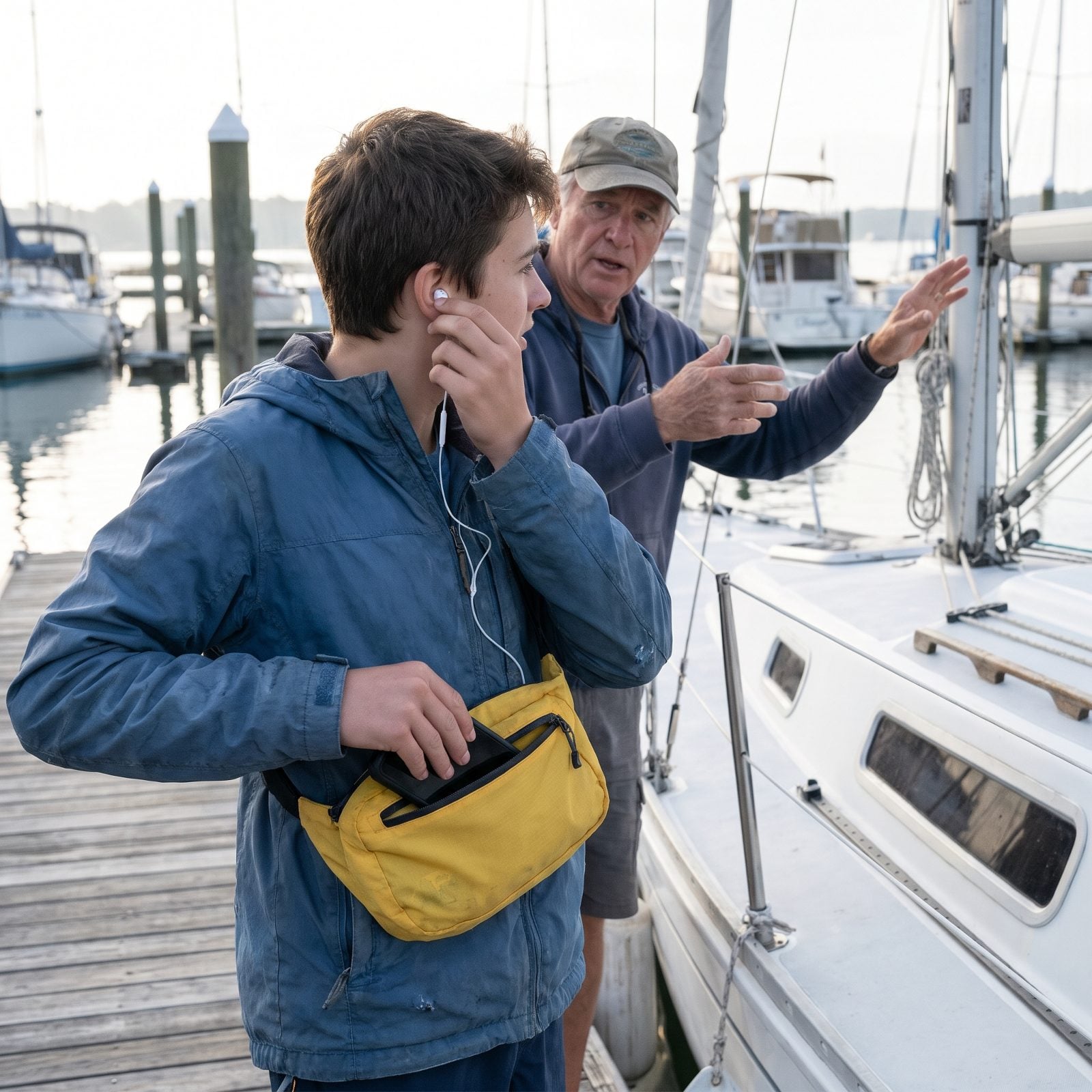
Earbuds are a quiet disqualifier. You can’t hear a warning, a command, or the wind shifting if you’ve got music piping into both ears.
Stow the phone before the briefing and take the earbuds out without being asked, and you’re telling the instructor something simple: I’m here, I’m listening, I trust you to run this. Attention on a boat is a safety system. Split it between a screen and the deck and you’ve slowed your reaction time.
And honestly? The sailing is better with your ears open. The slap of water on the hull, the luff of the sail, a gull overhead. That’s half of what people come out here for in the first place.
35. Whether You Stow the Loose Gear Before Anyone Asks
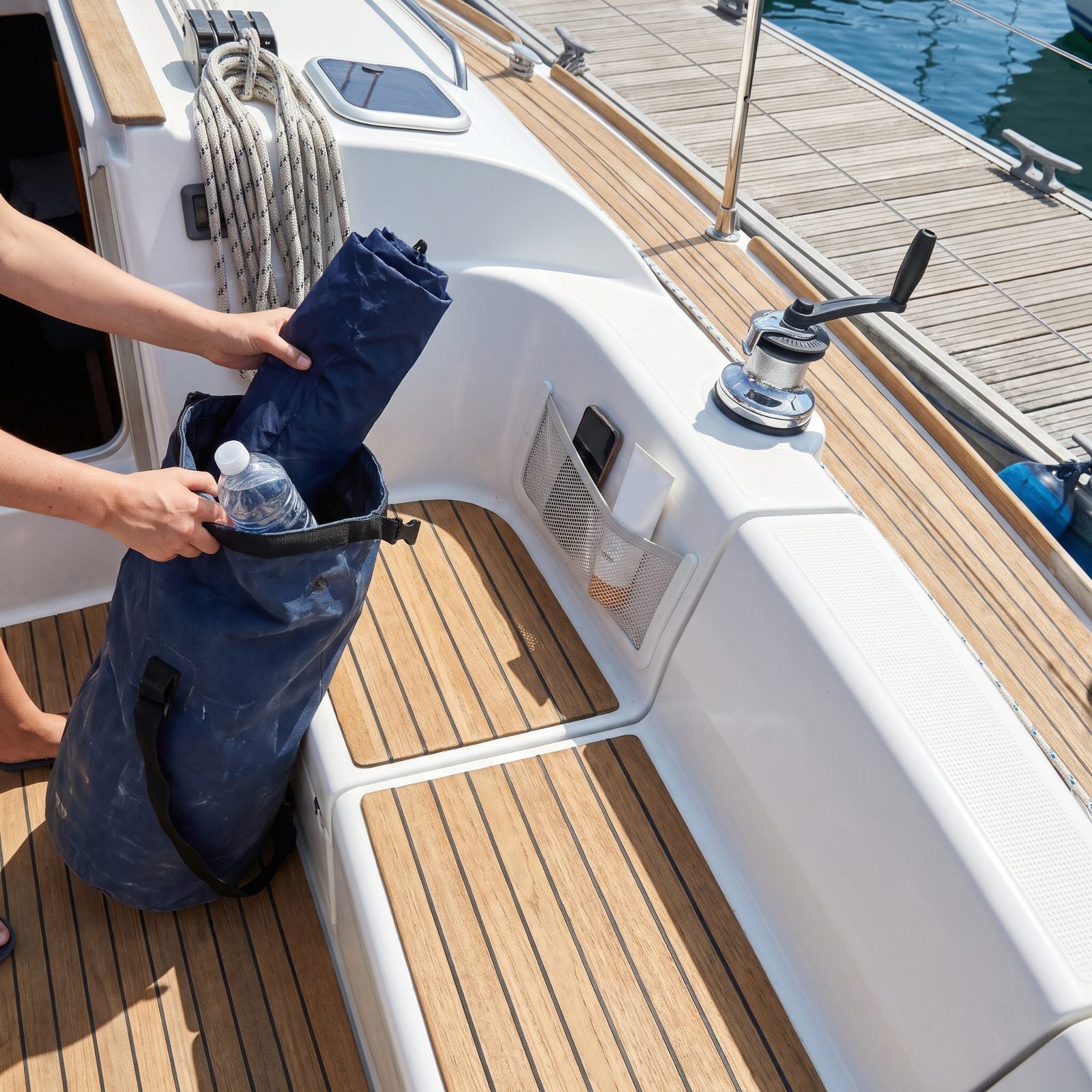
A deck with loose gear rolling around is a deck waiting to injure someone. A water bottle underfoot, a bag sliding toward a winch, keys somebody set down on the coaming.
Here’s what instructors love. The student who notices the clutter and handles it — who sees a windbreaker about to blow off the seat and stows it without a prompt. It’s the single clearest sign you’re thinking about the boat as a shared space, not just a ride. That kind of initiative is rare, and it changes how the whole crew reads you in about ten seconds.
34. How You Actually Step From the Dock Onto the Boat
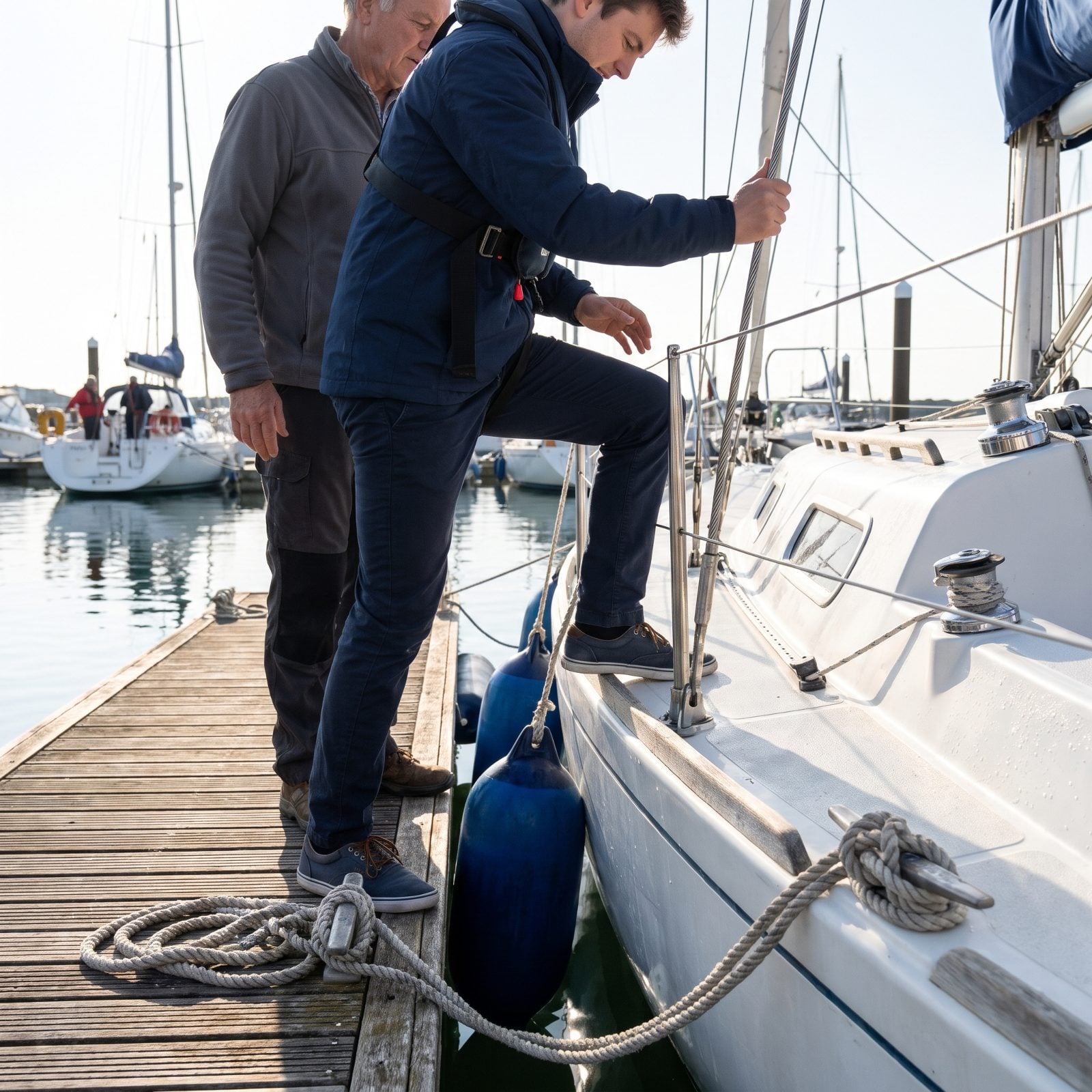
This is one of the biggest tells of all. How you board says more about your readiness than any answer you could give on dry land.
The ready student steps deliberately. One hand finds a solid handhold first — a shroud or the lifeline — before a foot ever moves. They plant a foot squarely on the deck edge beside a stanchion, weight low, no leaping across a gap of moving water. They wait for a steady moment rather than forcing it.
The unready one jumps, grabs nothing, lands half-on, half-off the edge and wobbles. Every instructor has seen the near-miss, the arms windmilling over the gap of water. One hand for you, one for the boat. Learn that line and mean it.
Get the boarding right and the instructor relaxes. They can see you’ll respect the water out there, because you already respected it at the dock.
Walking beginners through their first step aboard, a recreational sailing writer insists “Always make sure you first hold on to the shrouds before even thinking of placing your foot on deck.”
33. Whether You Keep Your Weight Near the Boat’s Centerline
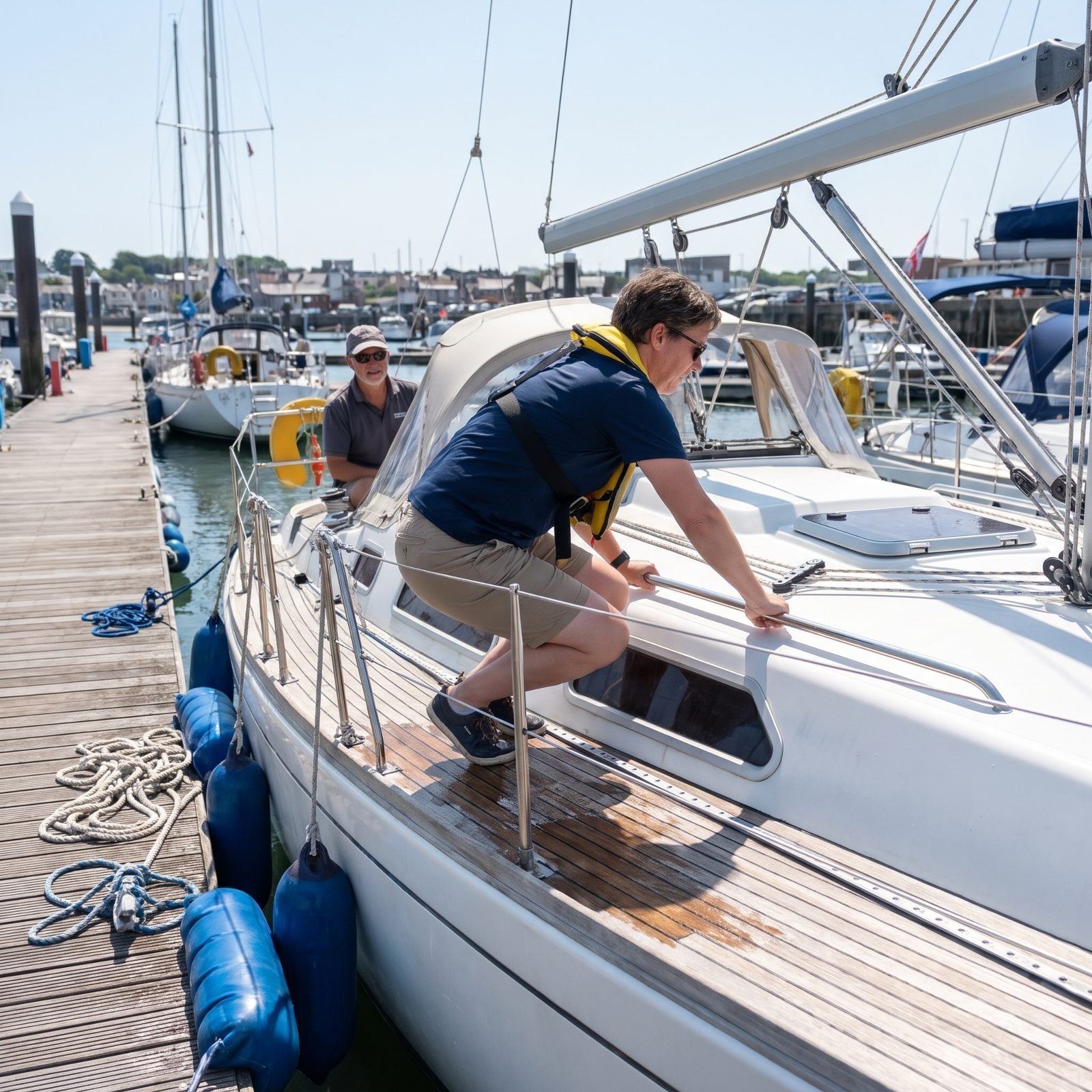
Watch where a beginner puts their body on a boat and you already know how the day will go. The steady ones stay over the centerline, knees soft and weight low, while the nervous ones drift out to the rail and lean on the lifelines like it’s a porch railing, which it is very much not.
A boat at the dock still rocks when someone steps aboard or a wake rolls through. Keep your mass over the keel and the boat barely notices you. Hang it out over the side and you become a problem the hull has to solve.
32. What You Grab for Balance
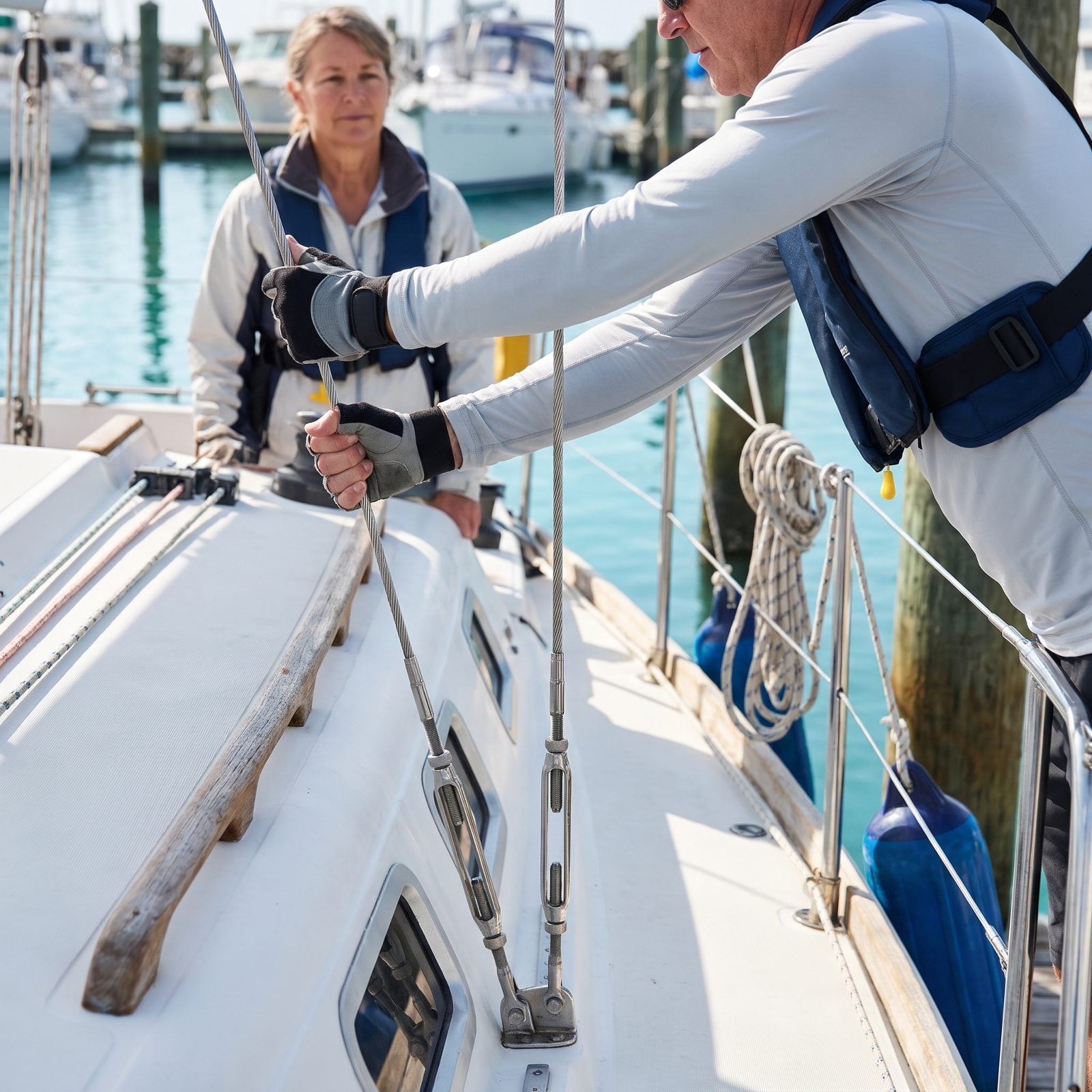
The giveaway is what the hand reaches for when the boat moves. Experienced crew grab standing rigging, a grab rail, something bolted down. Beginners grab the nearest rope, which on a sailboat is almost always a line that runs free, and the second you lean your weight on a loose sheet it pays out and takes you with it.
I got this wrong early on and ended up sitting down hard on a cockpit coaming. Nobody had warned me which lines held and which didn’t. So here it is: shrouds, stays and grab rails are your friends. A flapping line is not a handhold. Learn the difference before you need it.
31. How Aware You Are of Slippery Surfaces
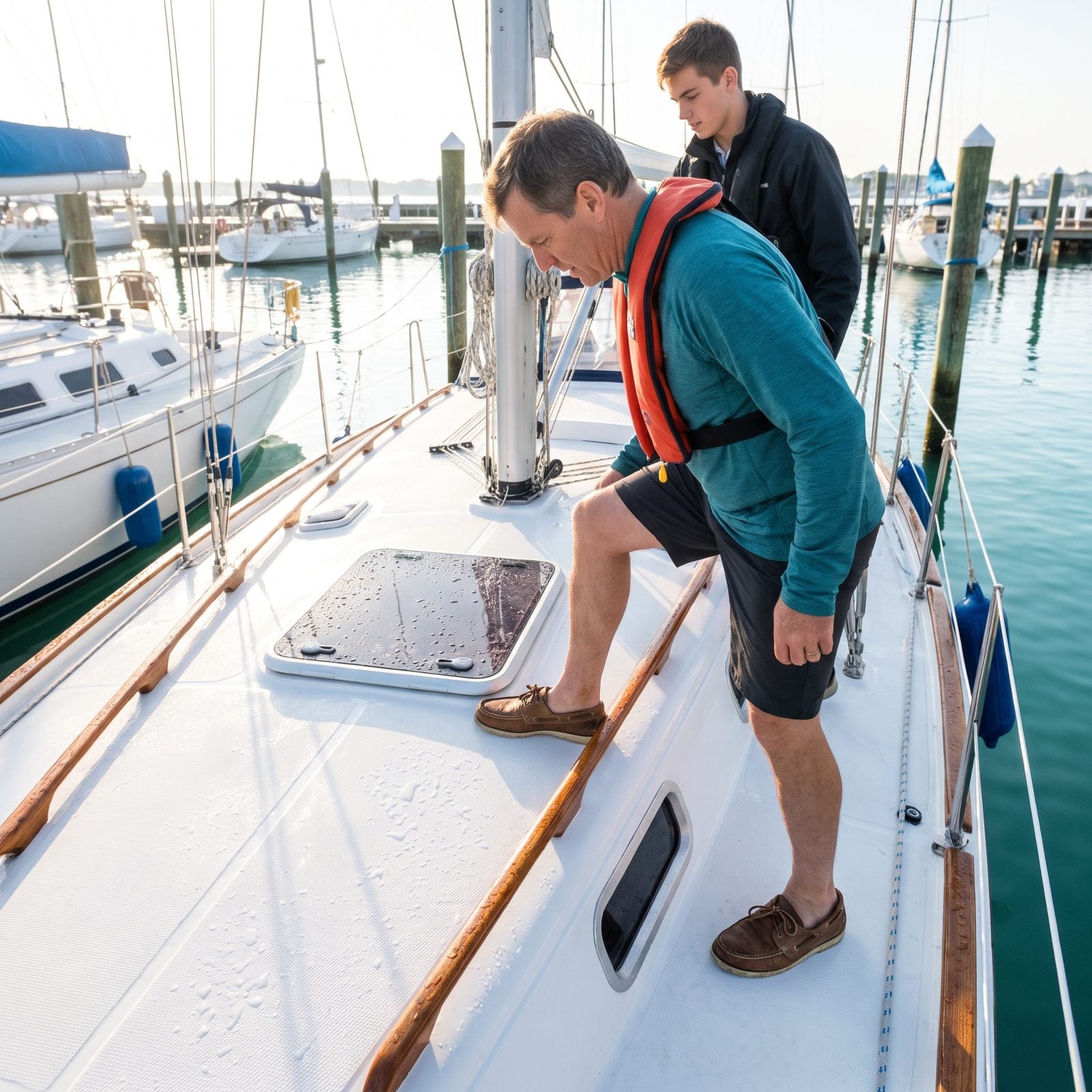
Morning decks are ice rinks nobody warns you about. Dew settles on fiberglass overnight, and the non-skid you trusted yesterday afternoon turns to glass by sunrise. Add varnished teak, a wet hatch cover, or a splash of lake water, and the surface changes under your feet without so much as a warning.
Readiness shows in the eyes. The ones who are going to be fine glance down before they commit a foot, test it, weight it gradually, and keep three points of contact when the deck looks shiny. The ones who stride across a wet foredeck like it’s a sidewalk? Those are the ones who go down.
30. Whether You Keep Hands and Feet From Between Boat and Dock
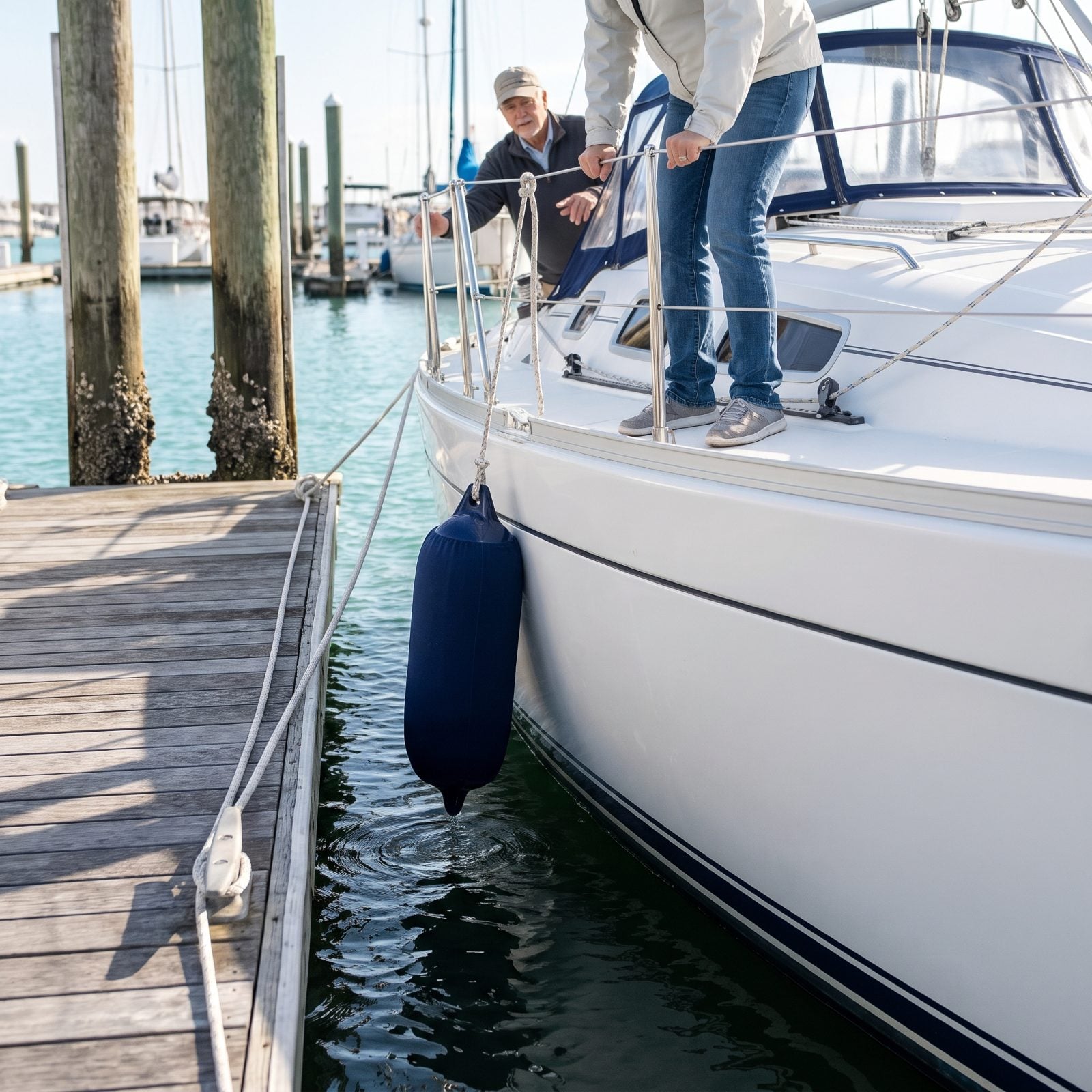
The space between a hull and a dock is the single most unforgiving spot in a marina. A boat weighs thousands of pounds, and even a gentle wake can swing it against the pilings hard enough to crush whatever’s in the way. Fingers. A foot. A fender line wrapped around a hand.
The ready student never puts a body part in that gap. They push off with a boat hook or a flat palm on the dock, never a hand hooked around the edge. If you’ve ever heard the hollow thud of a hull kissing a piling, you get why we won’t budge on this one.
29. How You Move Around Other Crew Members
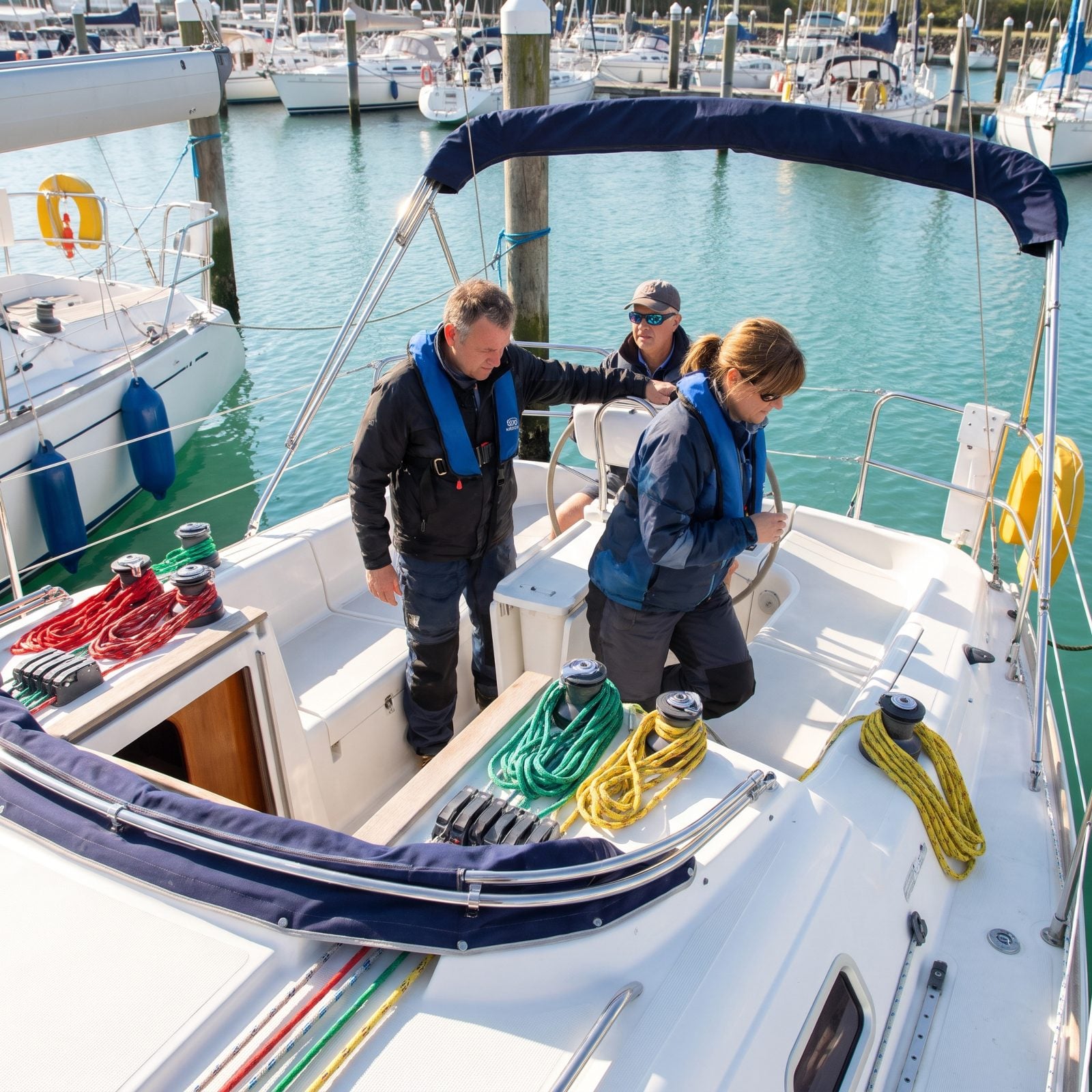
A cockpit is a small room full of winches, lines and open companionways waiting to trip you. How someone moves through it with other people aboard tells you whether they’ve thought about anybody but themselves.
The aware ones announce their move, wait for a clear path, and keep a hand on something solid as they go. They don’t step over coiled lines or shove past a crewmate working a winch. The ones still learning barge through, step on feet, and clip someone with a shoulder on a boat where there’s nowhere to fall but down or overboard. Good crew flow is a quiet dance. Bad crew flow is a subway car at rush hour.
28. Whether You Notice the Boom Above You
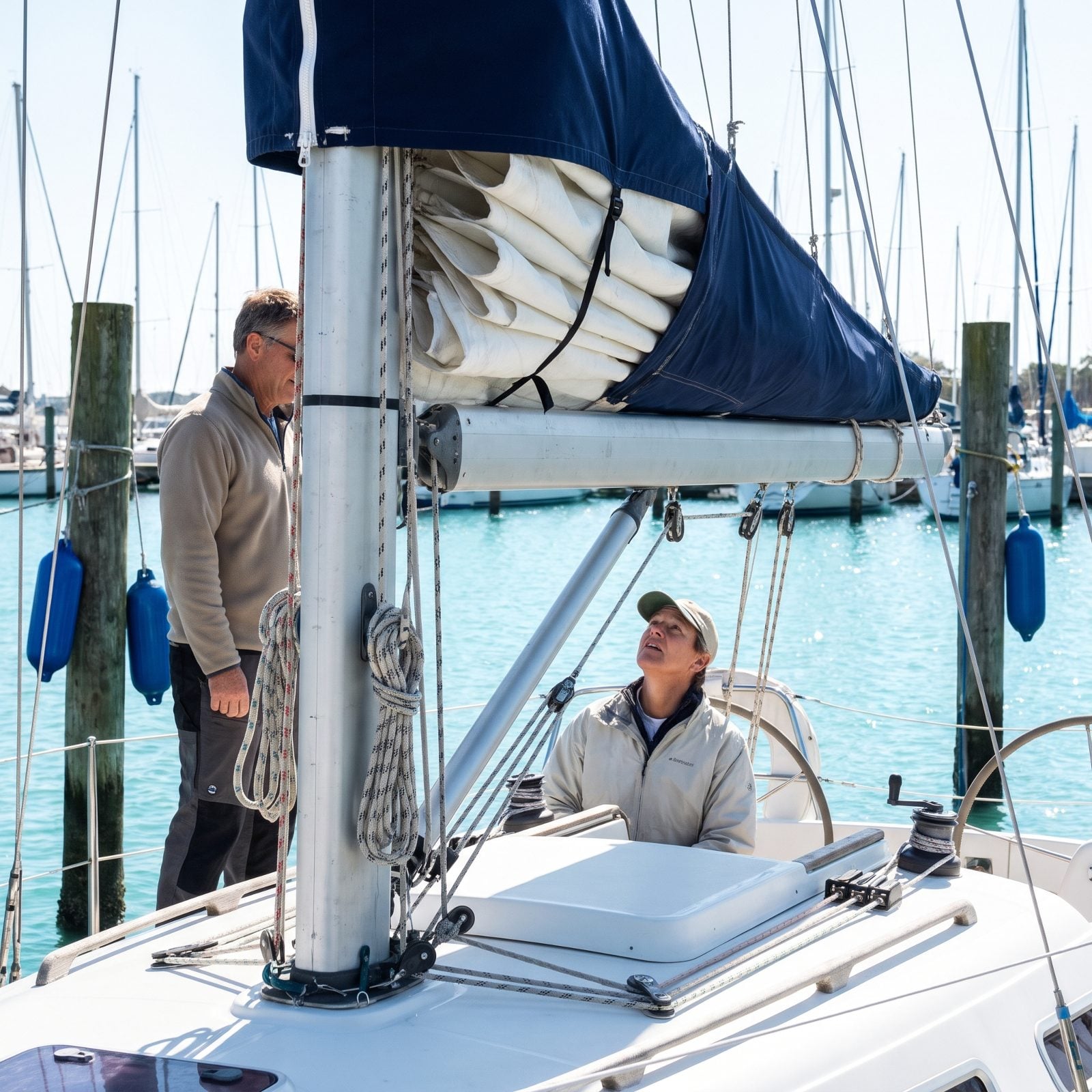
The boom is the heavy aluminum bar that lives right at head height, and it does not care about your plans. Even at the dock it can swing if a line is cast off or a gust catches the slack mainsail. A student who ducks instinctively when moving under it has already built the habit that matters most once you’re sailing.
The ones who aren’t ready stand up straight under it, chat, forget it’s there. Out on the water that same lapse meets a boom coming across the cockpit at speed. Respect the boom at the dock and you spare yourself a very literal headache later.
27. Whether You Look Up for Power Lines and Other Mast Hazards
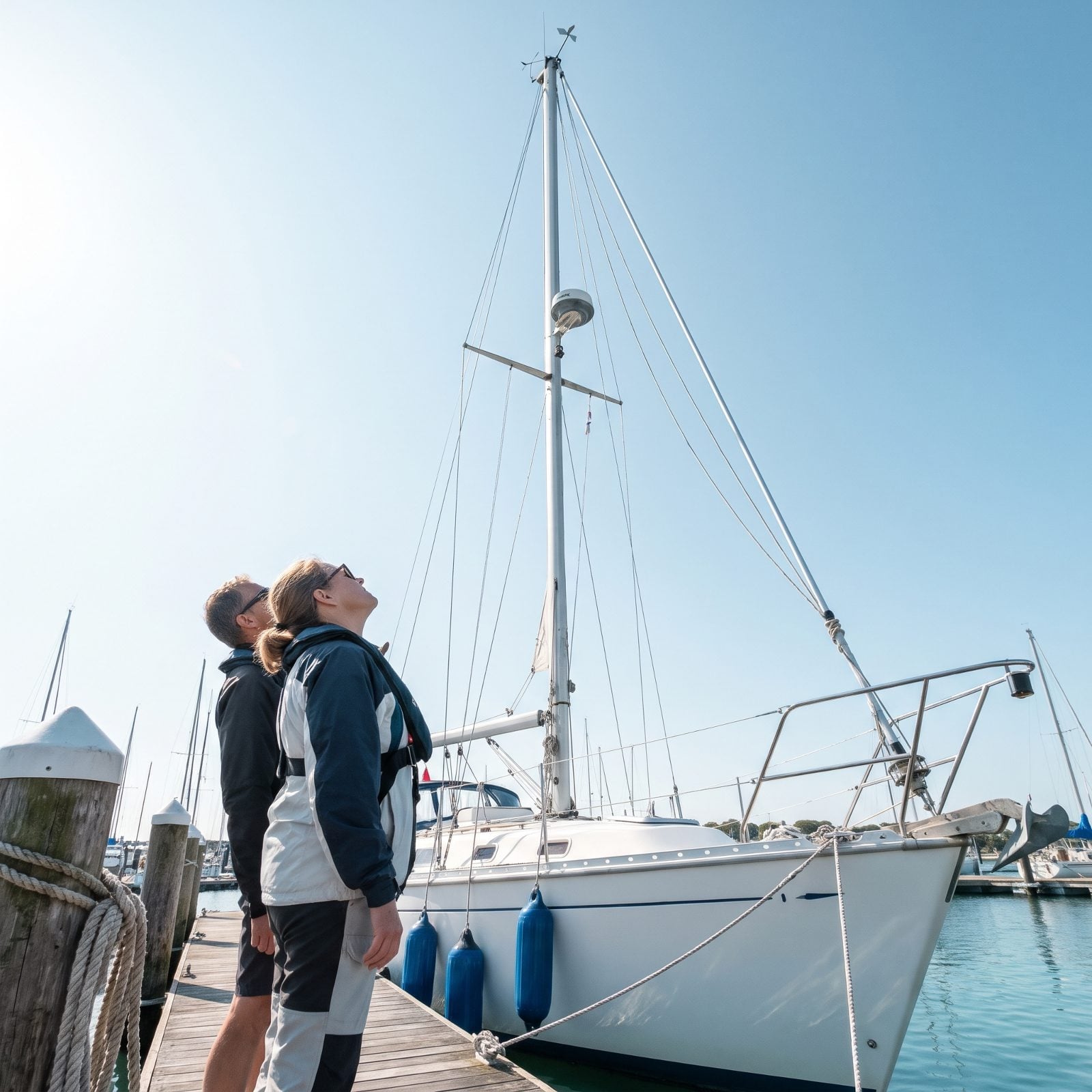
A mast can stand fifty feet or more above the water, and the sky it reaches into isn’t always empty. Overhead power lines near older marinas. Low bridges on the way out. A travel-lift gantry. The student who scans upward before moving a boat has grasped something most people never think about on land: the tallest part of your vessel is the part you can’t feel hit anything.
This separates the careful from the merely eager. Looking up costs nothing. Not looking up has ended masts, boats, and worse.
Warning sailors with tall aluminum masts, an electric cooperative safety team advises “Once out in the water, you should still look for overhead lines because power lines do cross over waterways.”
26. Whether You Read the Wind From Flags, Ripples, and Telltales
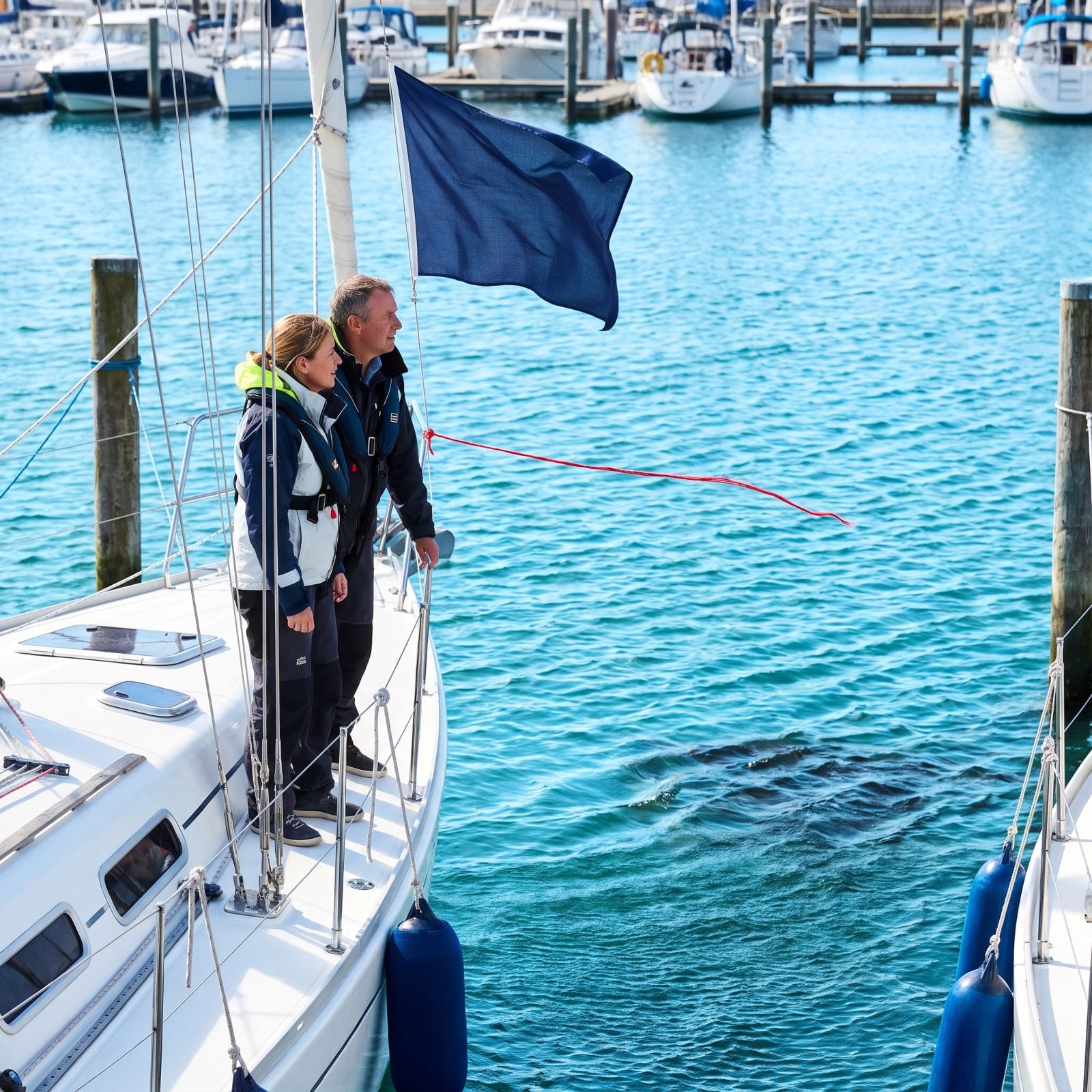
Wind is invisible, so you read its handwriting instead. A flag on a neighbor’s spreader, a yarn telltale streaming off the shrouds, the ripples moving across the sheltered marina water. The student who’s watching all this before the lines come off has already started sailing in their head.
You can see it in how they orient. They know where the breeze is coming from, which side will fill first, where the puffs are building, and that awareness turns leaving the dock from a scramble into a plan.
The sailors who look relaxed on the water are usually the ones who read the wind before they ever cast off.
The ones not ready yet wait for the sail to tell them. By then they’re reacting instead of deciding.
25. Whether You Account for Current Inside the Marina
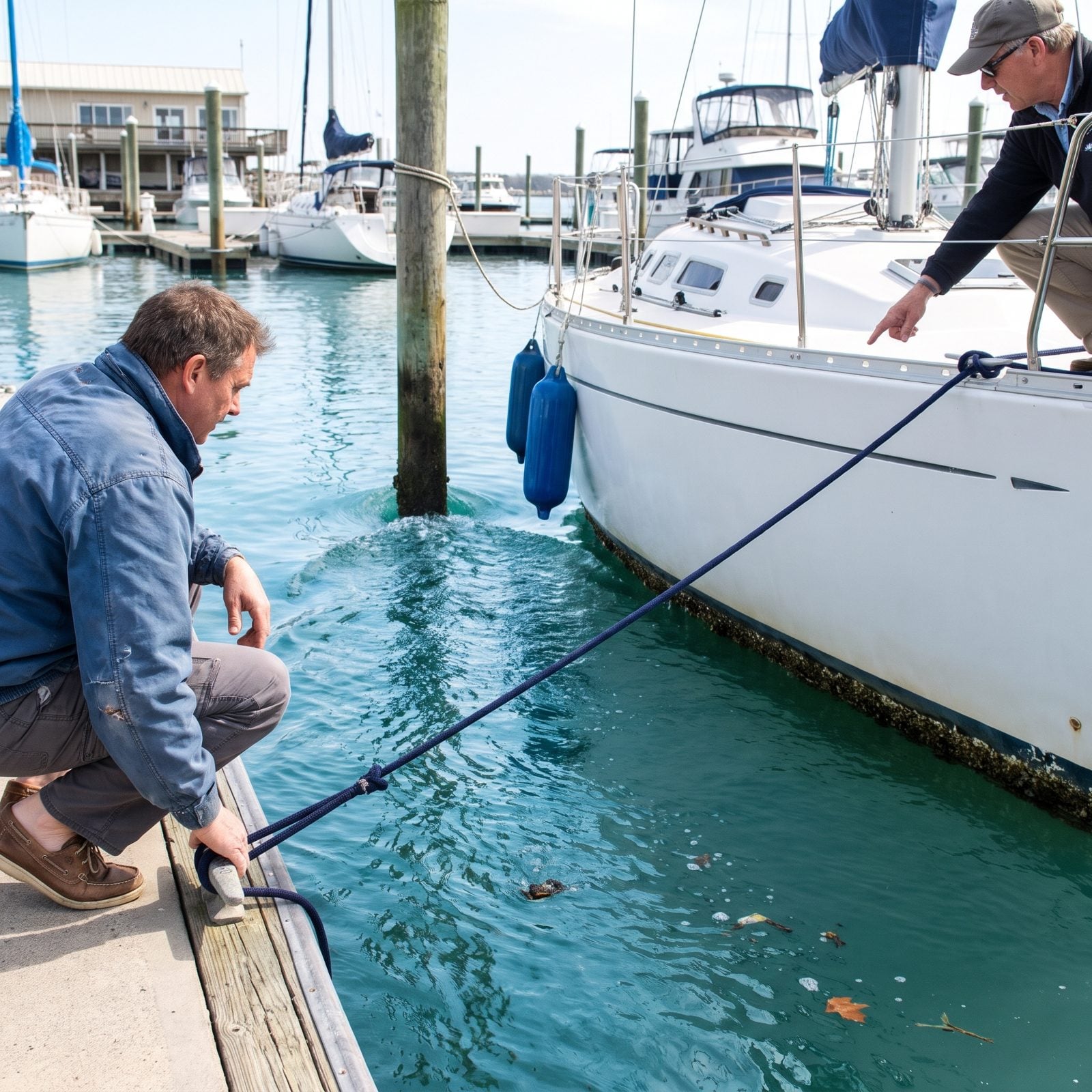
People picture marinas as still ponds. Plenty aren’t. Tidal basins, river-fed lakes and harbors with a channel running through them all carry current that shoves a boat sideways the moment you slip the lines. A student who clocks this at the dock won’t be surprised halfway out of the slip.
The tells are small. Water trailing a V off a piling. A leaf drifting with purpose. A boat riding off the dock with its line hanging slack. Someone who reads those and adjusts before casting off has one of the hardest skills in close-quarters handling: feeling what the water is doing before it does it to you.
24. Whether You Notice Neighboring Boats Before Casting Off
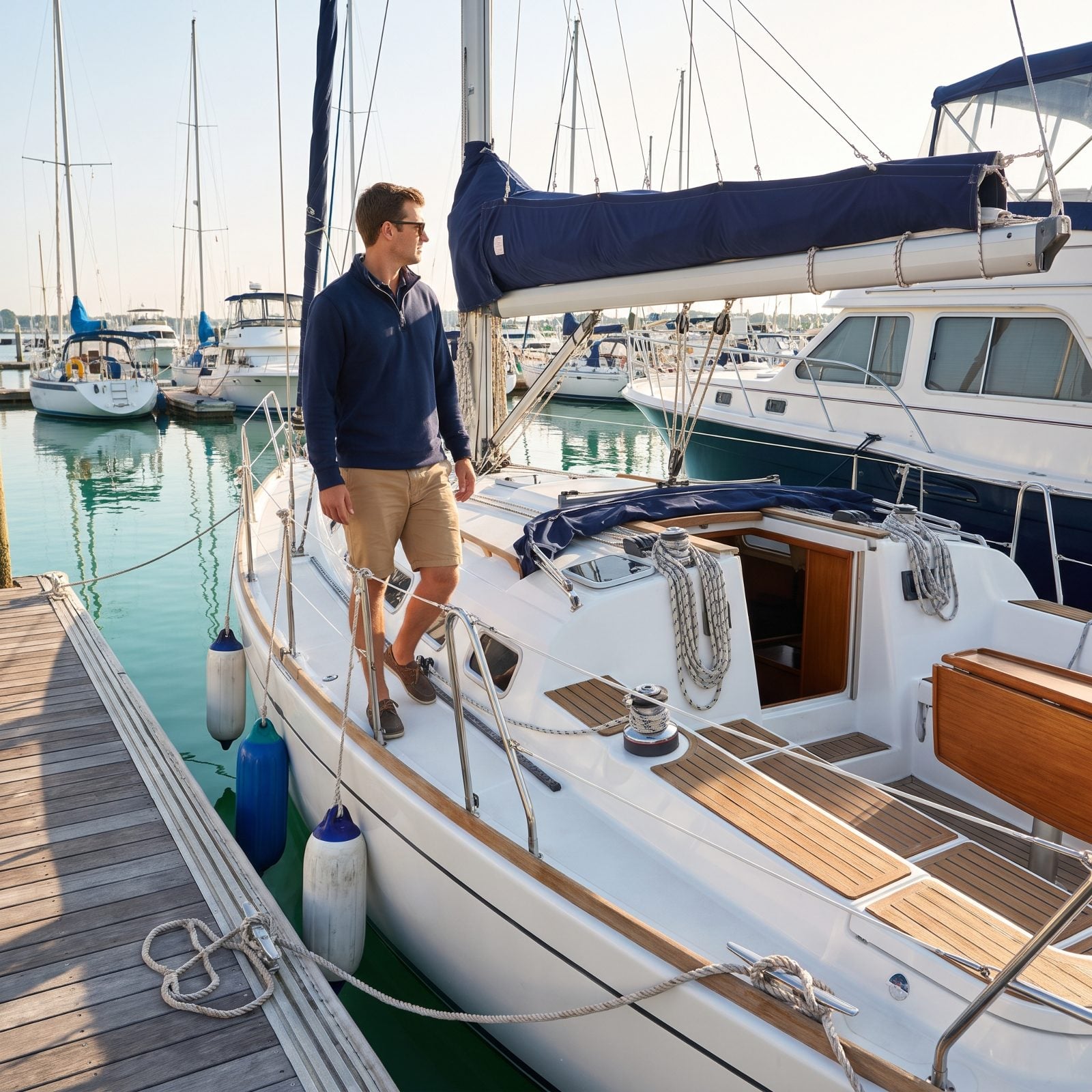
The first thing a good instructor clocks is where your eyes go. Step aboard, scan the boats on either side, the one astern, the fairway you’ll back into, and you’ve told them something before saying a word. You understand the slip isn’t just yours.
Most beginners stare at the deck under their own feet. Understandable. But a 35-foot boat with the wind on her beam doesn’t care about your feet — she cares about the stranger’s fiberglass sitting three feet off your quarter, the kind of boat that costs more than a car.
23. Whether You Ask About the Departure Plan
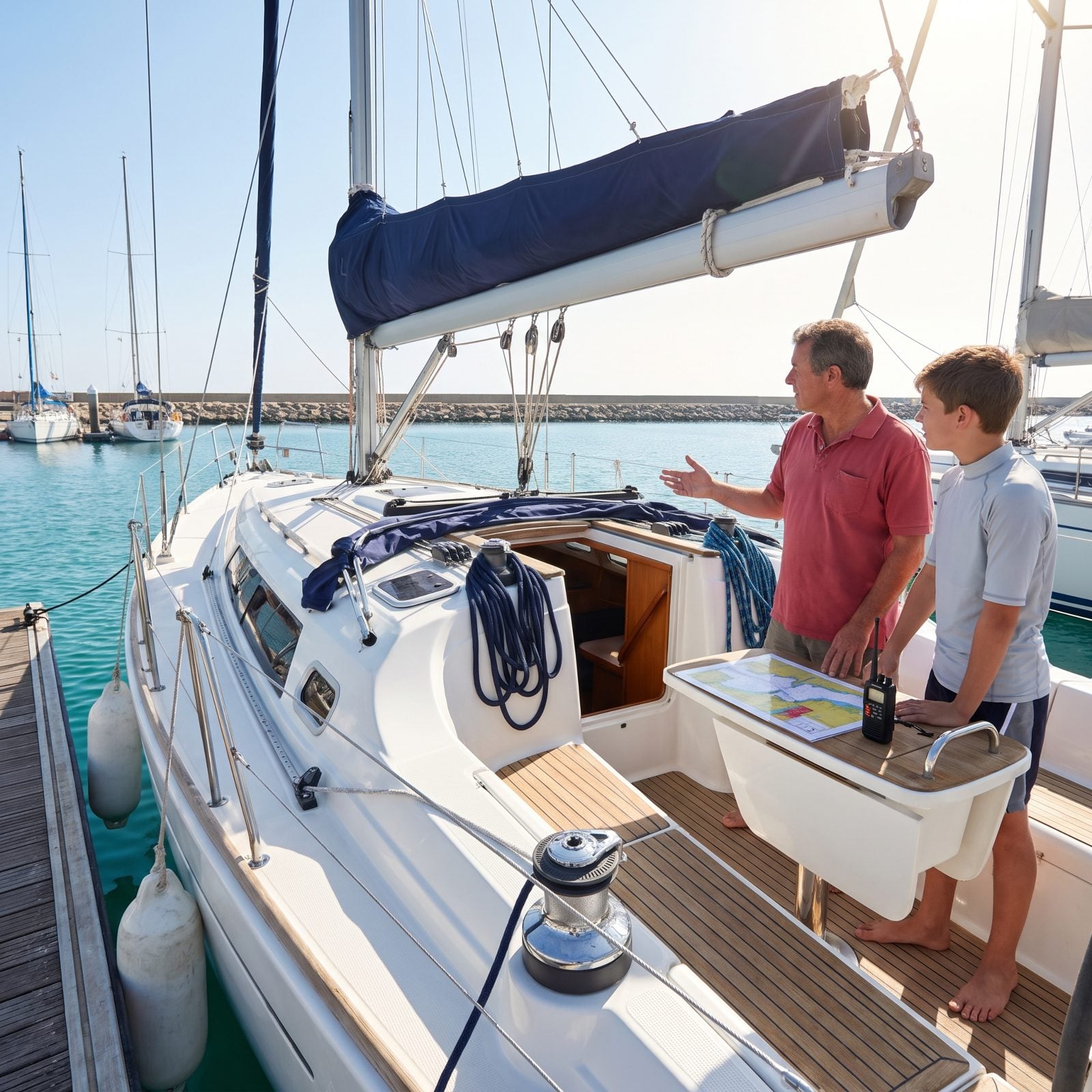
Ready students want the shape of the next twenty minutes. Which line comes off first? Backing out or pivoting on a spring? Who’s handling the bow fender? Asking that isn’t nervousness — it’s rehearsal.
The ones who worry an instructor climb aboard and wait to be told everything, like passengers on a ferry. A boat doesn’t want passengers. It wants a second pair of hands that already has a rough idea what those hands will be doing.
22. Whether You Listen Through the Entire Safety Briefing
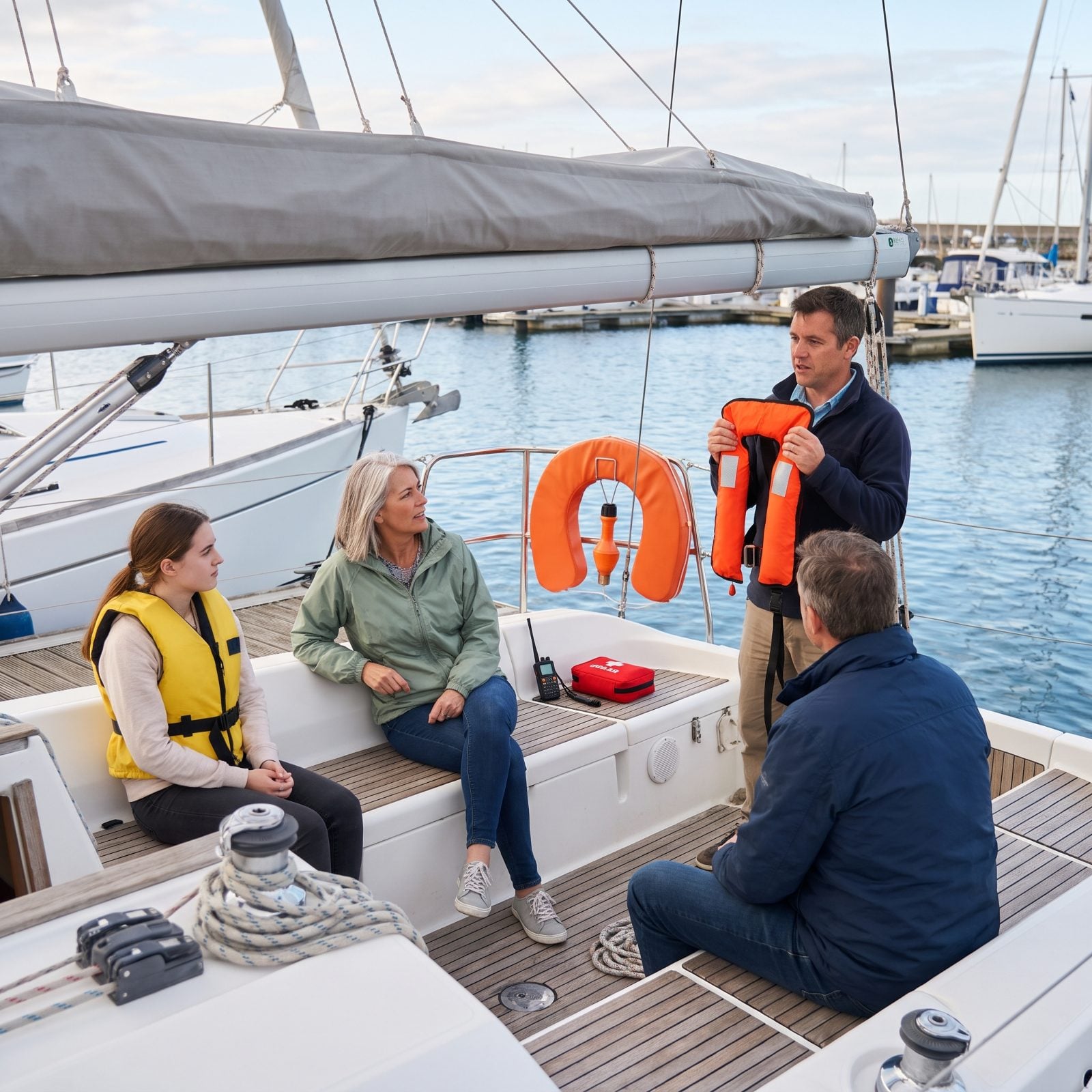
You can tell who’s actually listening by where their eyes go. When the instructor lifts the PFD, they look at the PFD; when the throwable gets mentioned, they glance at the horseshoe buoy on the rail. They’re building a map in their head, piece by piece, and you can practically watch it happen.
The glazed nodders are a different animal. They’ve decided the briefing is a formality to sit through before the fun part. Here’s the thing, though — the briefing is the part that lets the fun part stay fun. Nobody plans to need it, which is exactly why you listen to the whole thing the first time.
21. Whether You Know Where Emergency Gear Is Kept
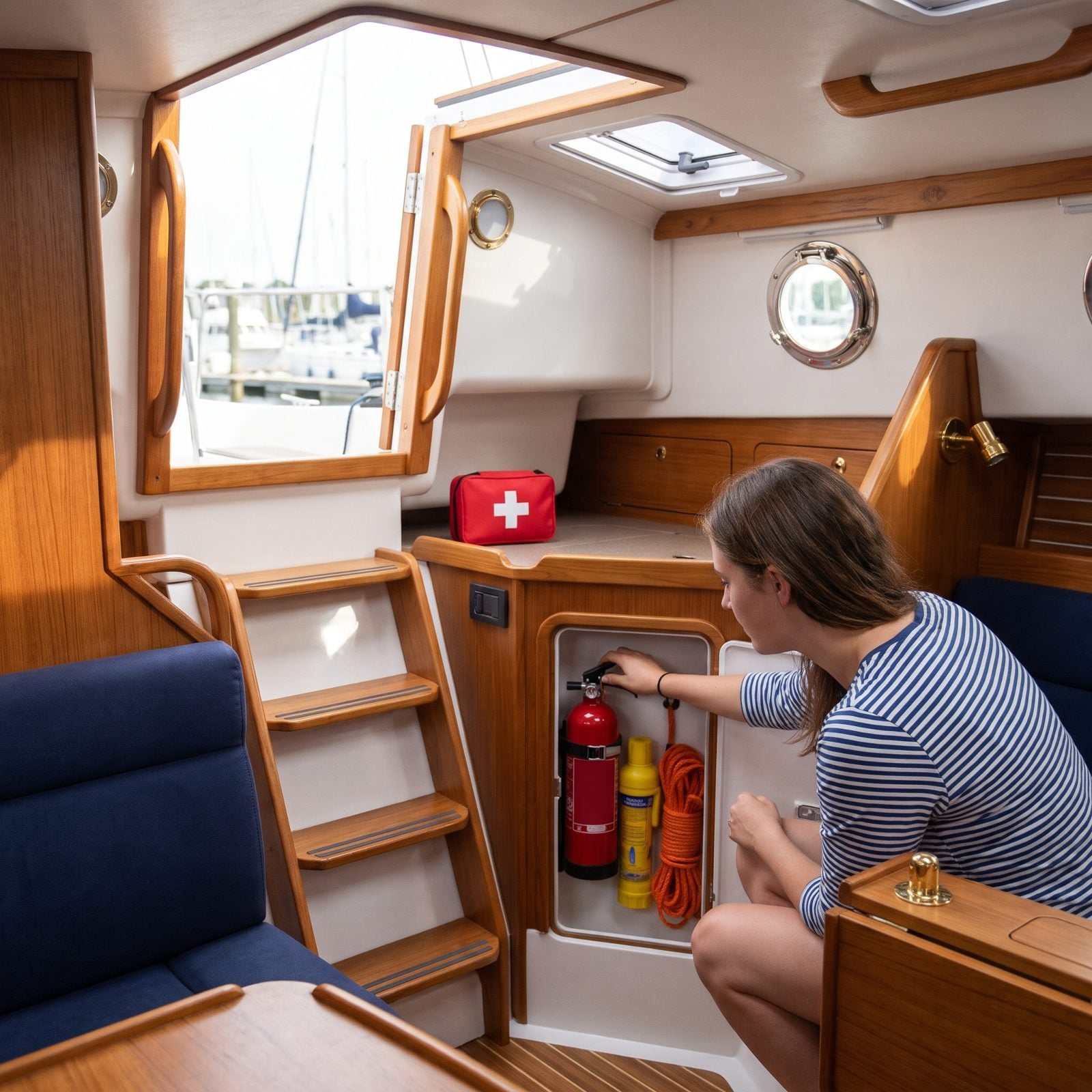
Knowing the fire extinguisher sits in the cabinet under the cabin counter beats any sailing theory you crammed the night before. In a real moment, nobody has time to open four lockers guessing. The hand that already knows where to reach is the hand that matters.
Good students ask on day one and don’t pretend to remember. I’ve watched rank beginners outperform experienced hands here, simply because they treated “where’s the gear” as a real question instead of a box to tick.
20. Whether You Mention Relevant Medical Concerns
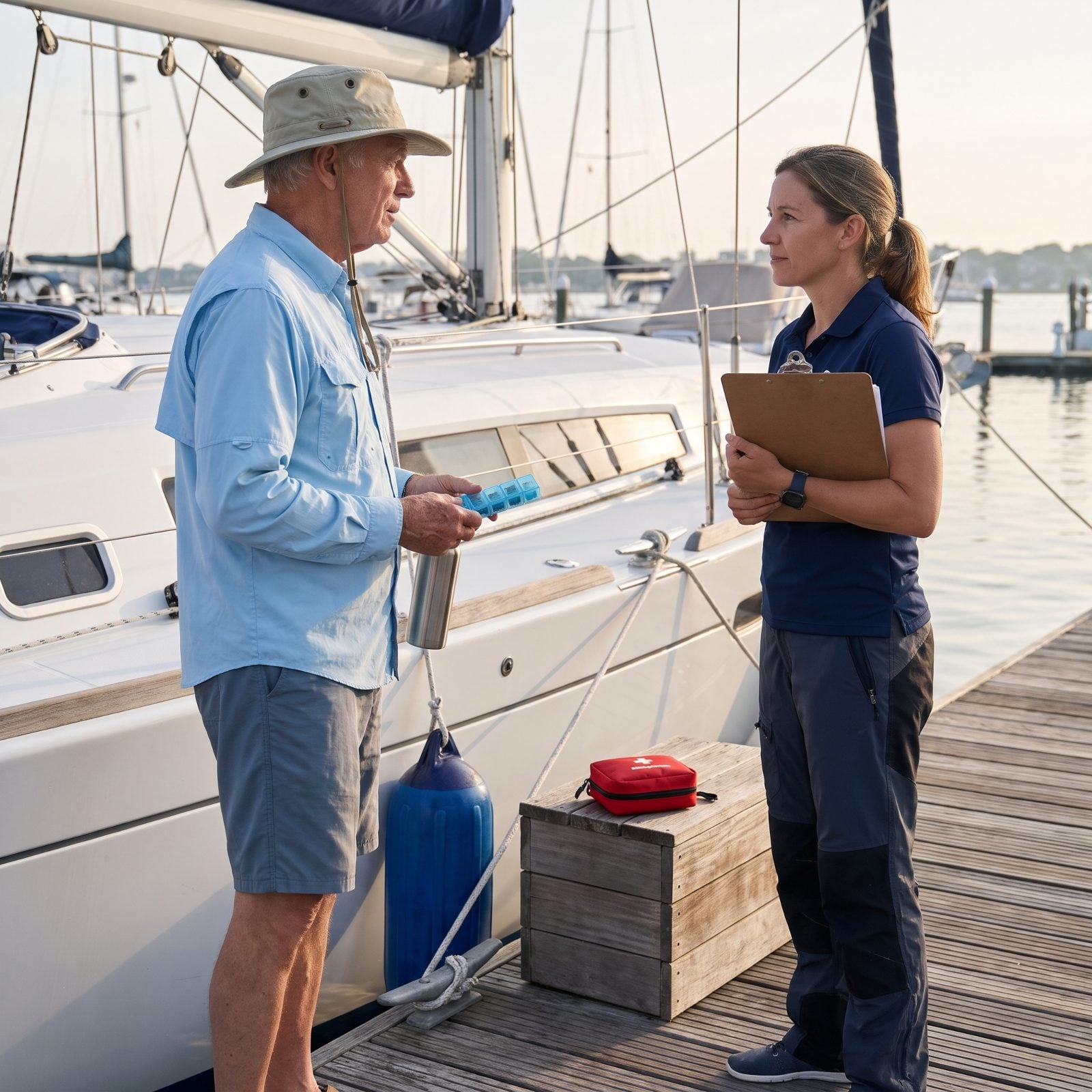
Mentioning your trick knee, your blood thinner, the fact that short chop turns you green — that’s maturity, not weakness. An instructor can’t plan around what you hide. Tell them you don’t do the foredeck well and they’ll build the day around it, rather than discover it at the worst possible moment.
People stay quiet out of pride. I get it. But a crew runs on shared information, and the detail you’re embarrassed about is often the one that keeps a small problem from eating your whole afternoon.
19. How Honestly You Describe Your Sailing Experience
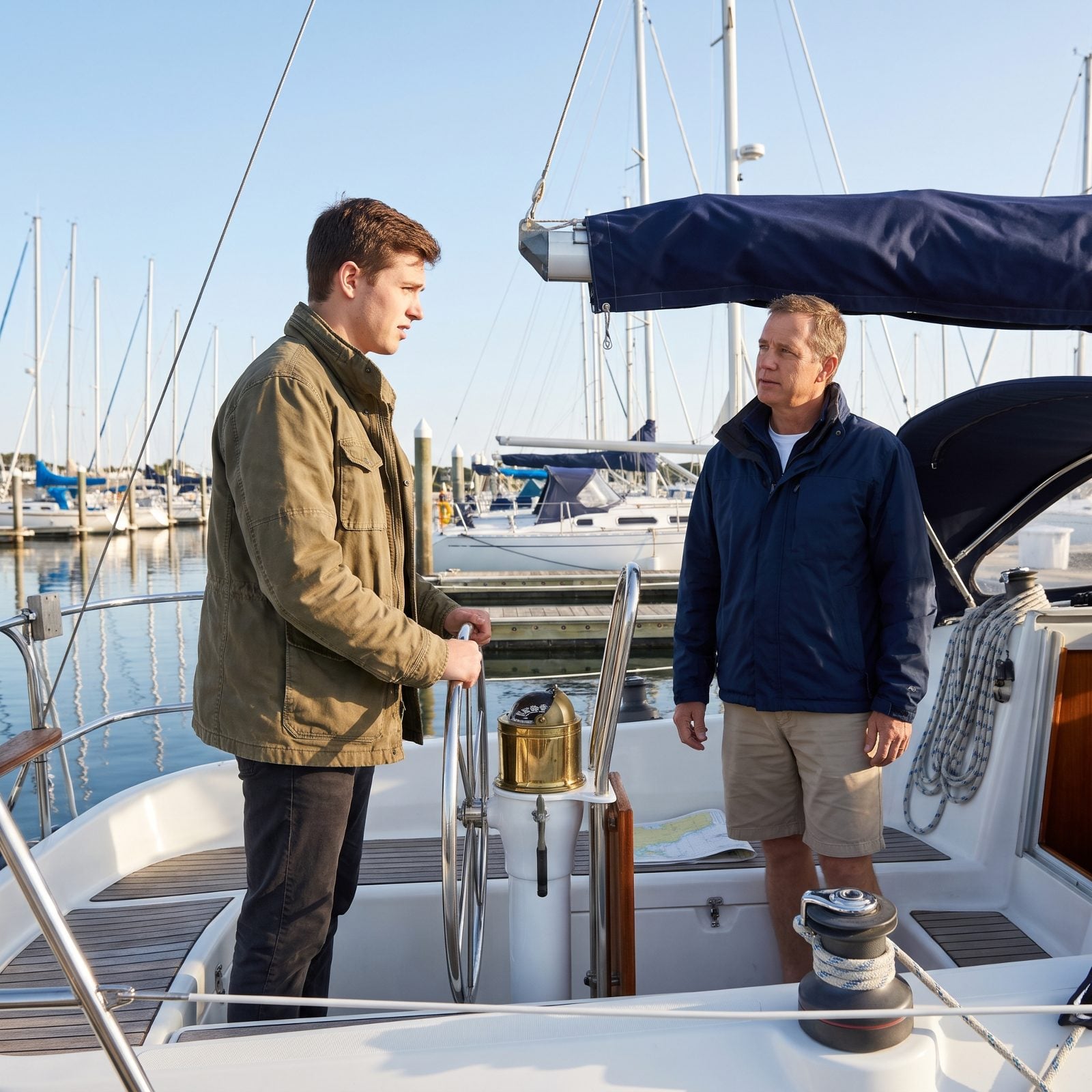
“I’ve crewed a few times” and “I can sail” are wildly different sentences, and instructors hear the difference before you’ve touched a line. The honest version lets them meet you where you actually are, while the inflated one quietly sets a trap you’ll fall into around the first tack — somewhere mid-harbor, usually, with an audience.
Nobody expects you to know everything. They expect you to know what you don’t. That’s the whole game.
Overstating your experience doesn’t make you look ready. It just moves the moment you get found out to somewhere less convenient.
18. Whether You Speak Up When Instructions Are Unclear
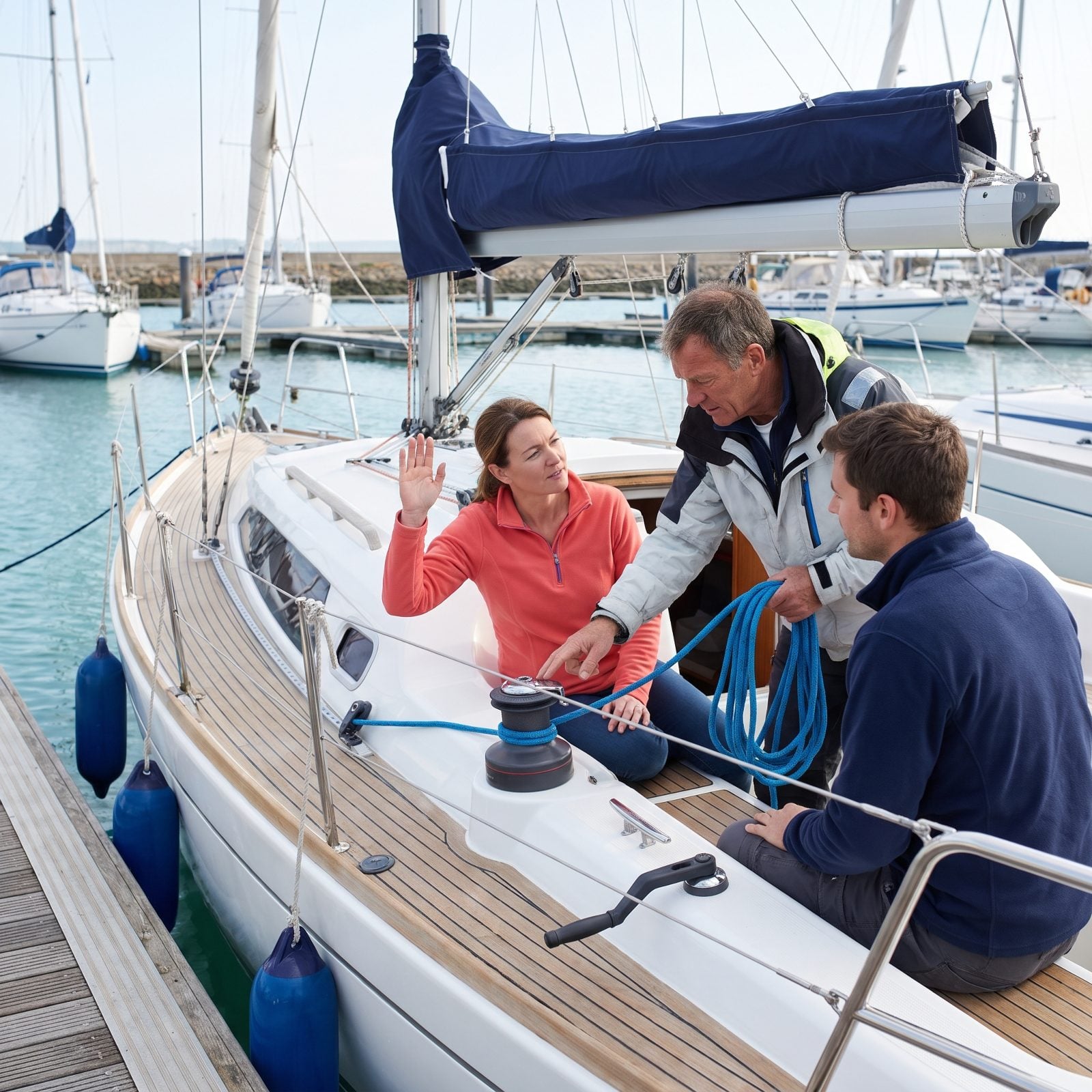
The quiet student who nods along and secretly has no clue what “ease the sheet” means is far more dangerous than the one who asks. Asking is readiness. Pretending is a timer counting down to a mistake.
A simple “wait, which line?” at the dock saves a fouled maneuver underway. Instructors love the question. What they quietly dread is the blank nod that means they’ll find out you were lost at exactly the wrong second.
17. How You Respond When Corrected
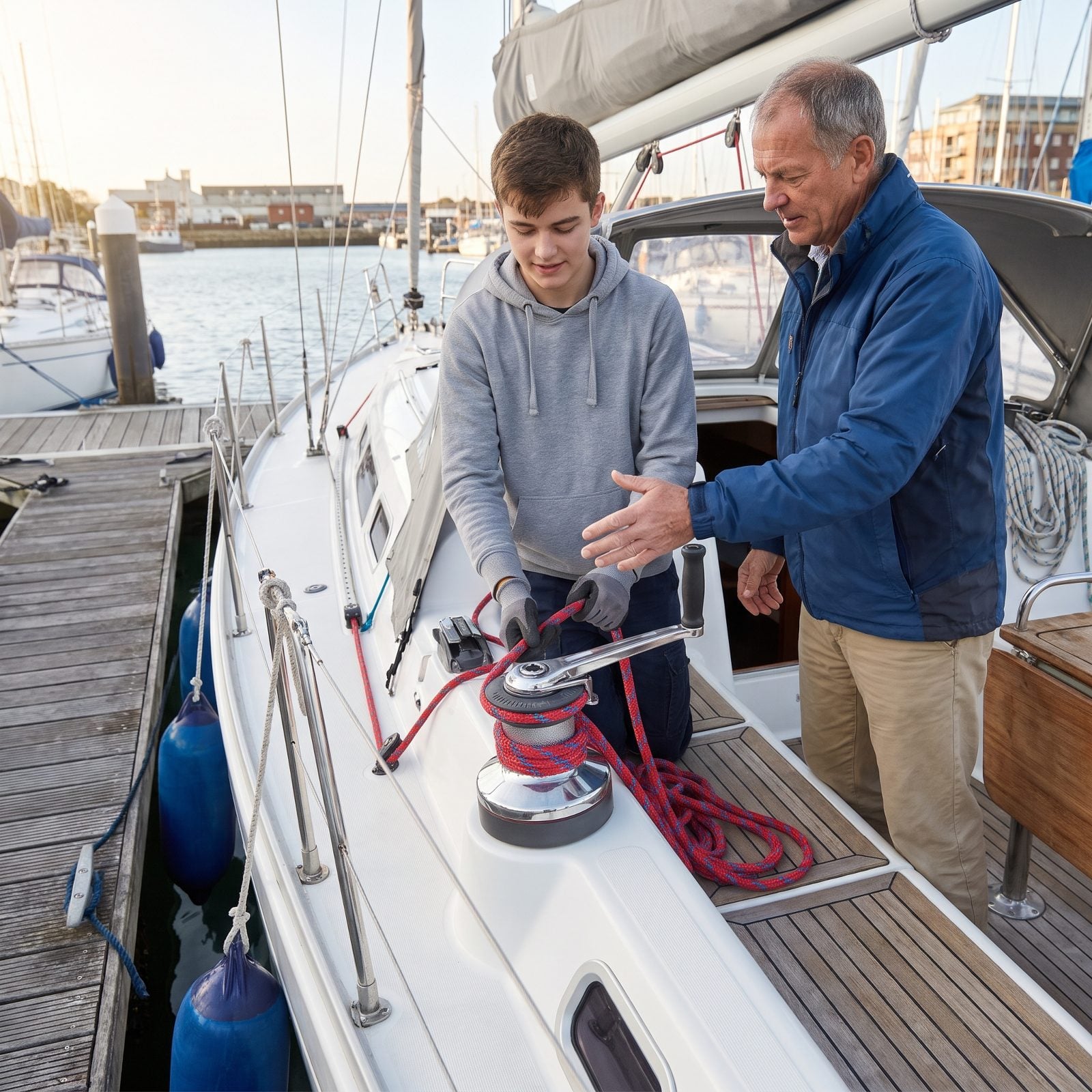
Watch what happens the first time someone tells you your line is wrapped the wrong way. The ready student fixes it and moves on — no wince, no apology speech, no sulk. Correction lands, hand adjusts, done.
The ones who take it personally turn every small fix into a negotiation. There’s no time for that aboard a boat. The water corrects everybody eventually, and it does so with a lot less grace than an instructor standing right next to you.
16. Whether You Repeat Important Commands Back

“Ready to tack.” “Ready.” That little echo isn’t naval cosplay. It confirms the message arrived intact across a windy cockpit, where half of what you say gets stolen by the breeze before it lands.
Students who repeat commands back are telling the instructor one thing: I heard you, I understood, I’m on it. The silent ones leave everyone guessing — and guessing is how a clean tack turns into a tangle.
15. Whether You Rush Simple Dockside Tasks
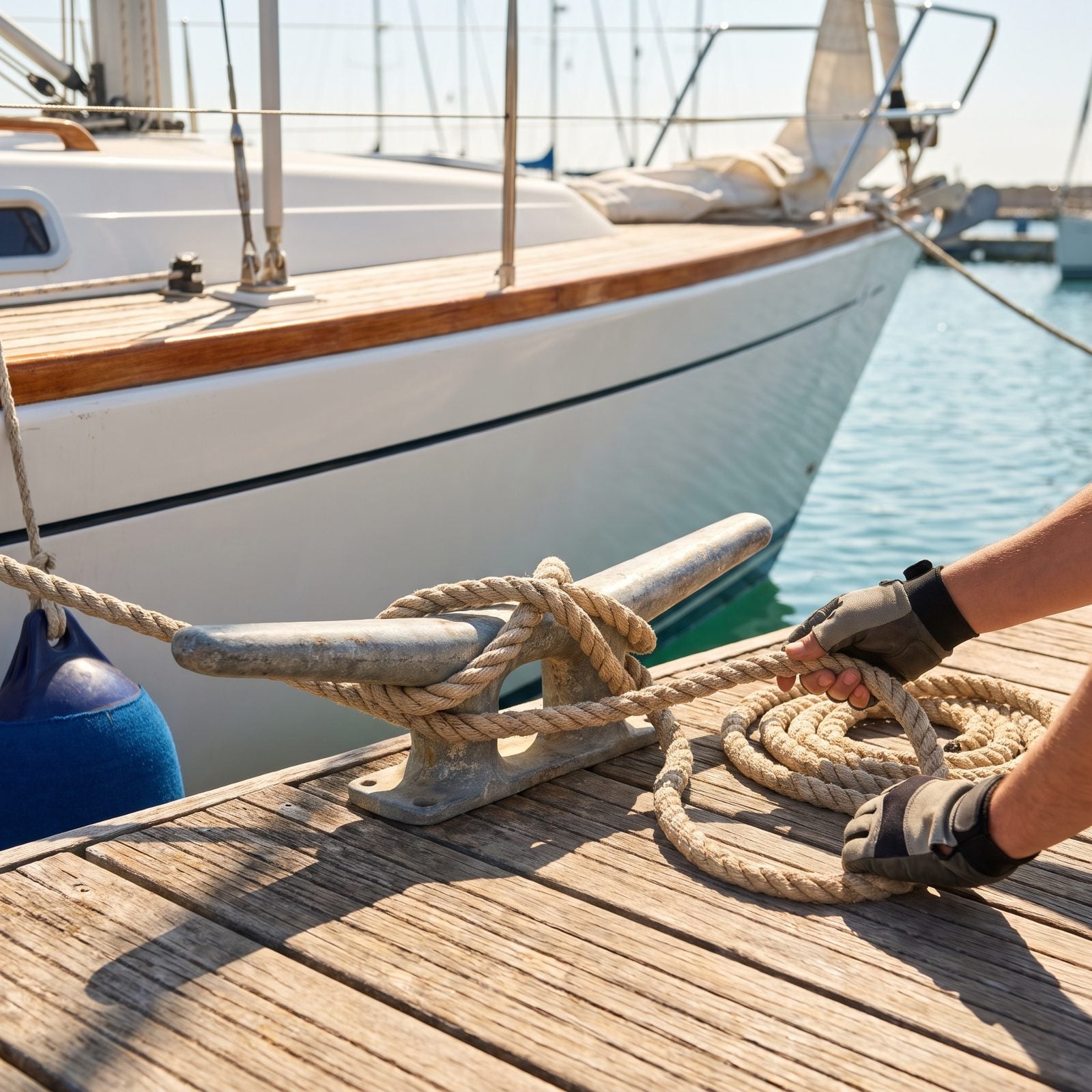
A sloppy cleat hitch tells the whole story. If you can’t be bothered to lay a clean figure-eight on a quiet dock with all the time in the world, an instructor already knows exactly how your lines will look when the pressure’s on and the wind’s piping up to eighteen knots.
Dockside is where care becomes a habit, or doesn’t. The fender tied at the right height, the coil that won’t foul, the line flaked so it runs free — none of that is fussiness. It’s the foundation everything else stands on. Rush the easy stuff and you’ll fumble the hard stuff. Every single time.
14. Whether You Anticipate Sensibly Instead of Acting Without Instructions
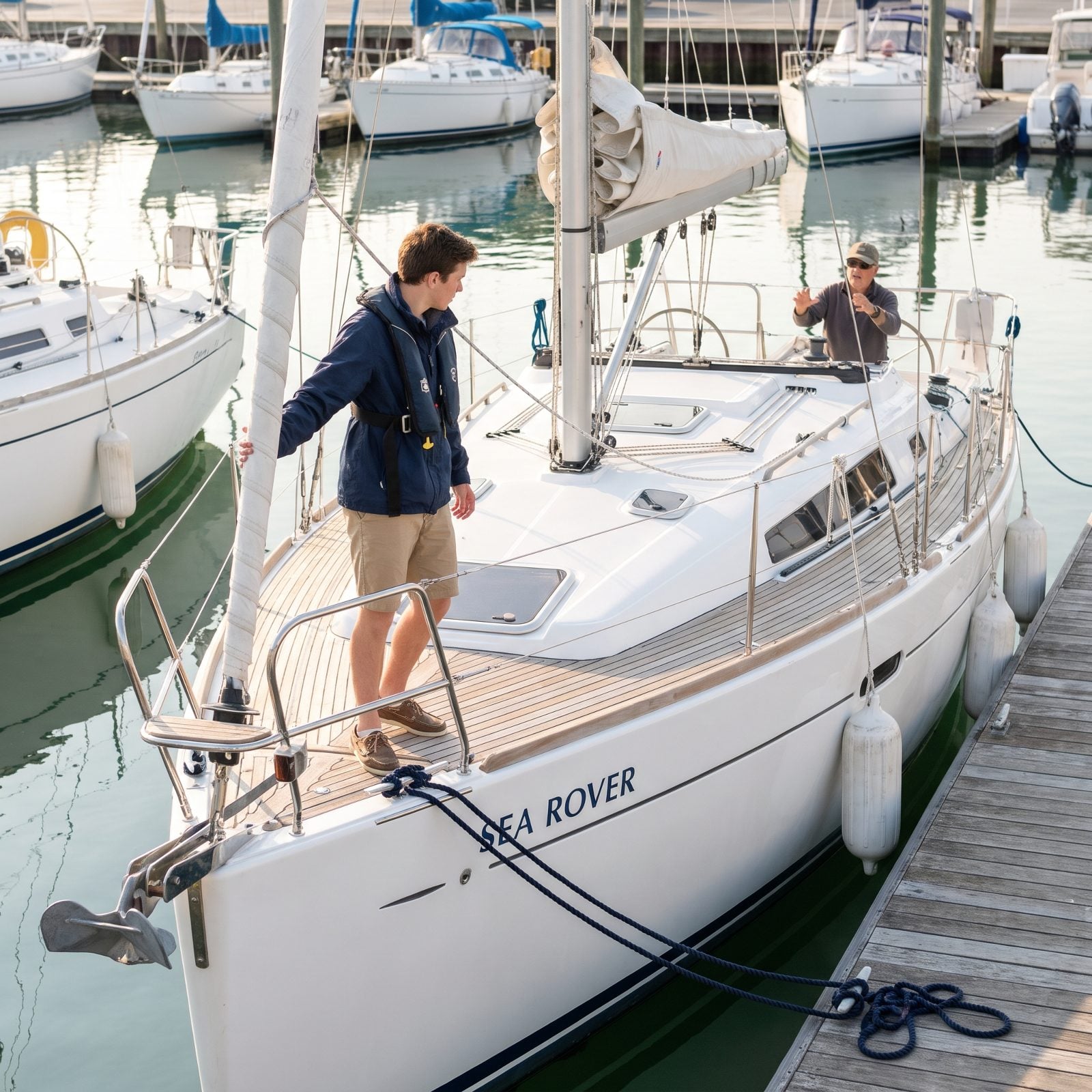
The students who make an instructor relax are the ones who pause. They watch the instructor reach for a line and, instead of lunging at the nearest cleat, wait half a second to understand what the boat is about to do.
Anticipation isn’t the same as initiative. One watches the whole boat; the other grabs one rope and hopes. The first keeps a departure calm, and the second is how a fender ends up swimming and a line ends up wrapped around the prop.
13. How You Treat Less-Experienced Crewmates
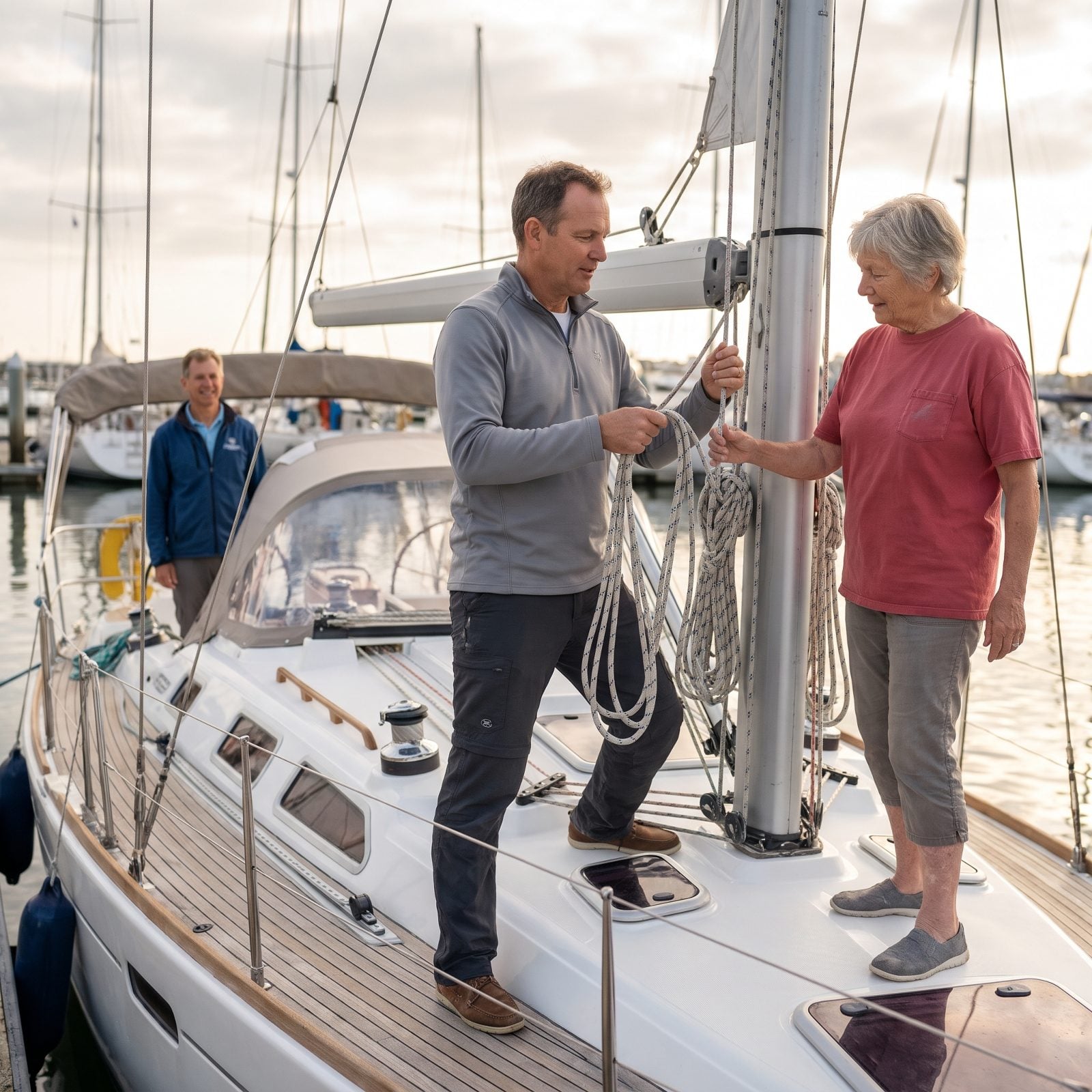
You can read a person’s sailing character faster by watching how they treat the nervous beginner than by watching how they tie a knot.
The ones worth sailing with slow down for the crewmate who’s a step behind. They narrate quietly, hand over the line instead of snatching it, and don’t sigh. A boat is a small space with no exits, and impatience doesn’t stay contained. It spreads to every job and makes the whole crew clumsier.
I’ve seen talented students make terrible crew because they treated slower hands as an obstacle. Grace under a little pressure tells an instructor you’ll be fine when there’s real pressure.
12. Whether You Understand Who Has the Helm
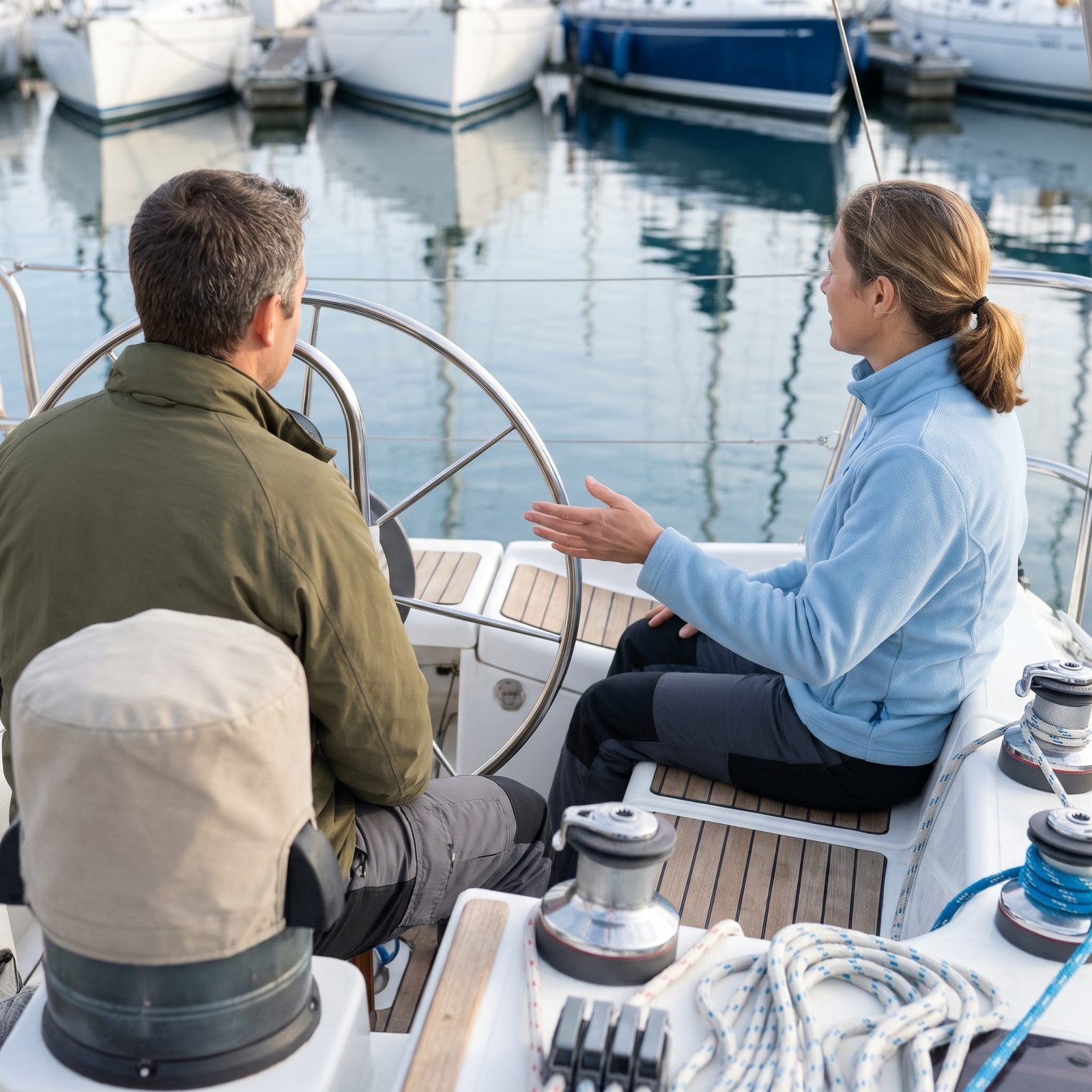
One hand steers, and everyone knows whose. That single clear fact is the backbone of a calm boat.
Ready students ask early, before the engine’s even on: who has the helm, and how do we pass it? You don’t touch the wheel without a spoken handover, and you don’t abandon it without one either. “You have the helm,” answered by “I have the helm.” Said out loud every single time.
Sounds formal. It isn’t. It’s the difference between a boat with a driver and a boat with a wheel nobody’s holding while two people each assume the other one is.
11. How Gently You Handle the Boat’s Equipment
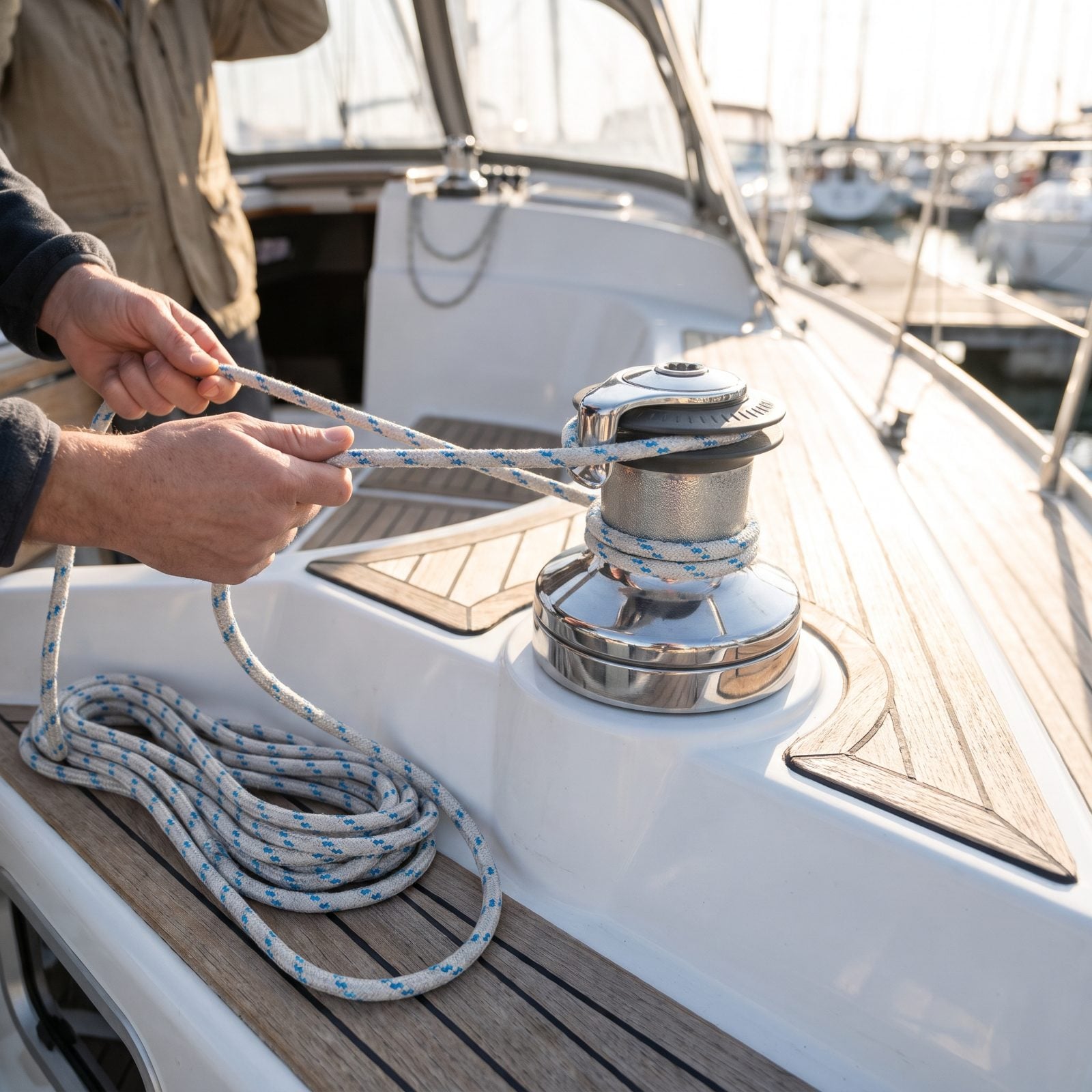
Watch the hands. A student who treats winches, lines and hardware like they cost money tells you something true before the boat has moved an inch.
Gentle isn’t weak. It’s controlled. They ease a sheet rather than let it scream around the winch, lower a fender instead of dropping it, and never slam a hatch or let the boom crash.
Rough handling isn’t just hard on gear that costs real money to replace. It’s a tell. Someone who muscles everything hasn’t learned yet that the boat does most of the work if you let it. Finesse on a calm dock becomes finesse in a blow.
10. Whether You Step on Lines or Keep Them Clear
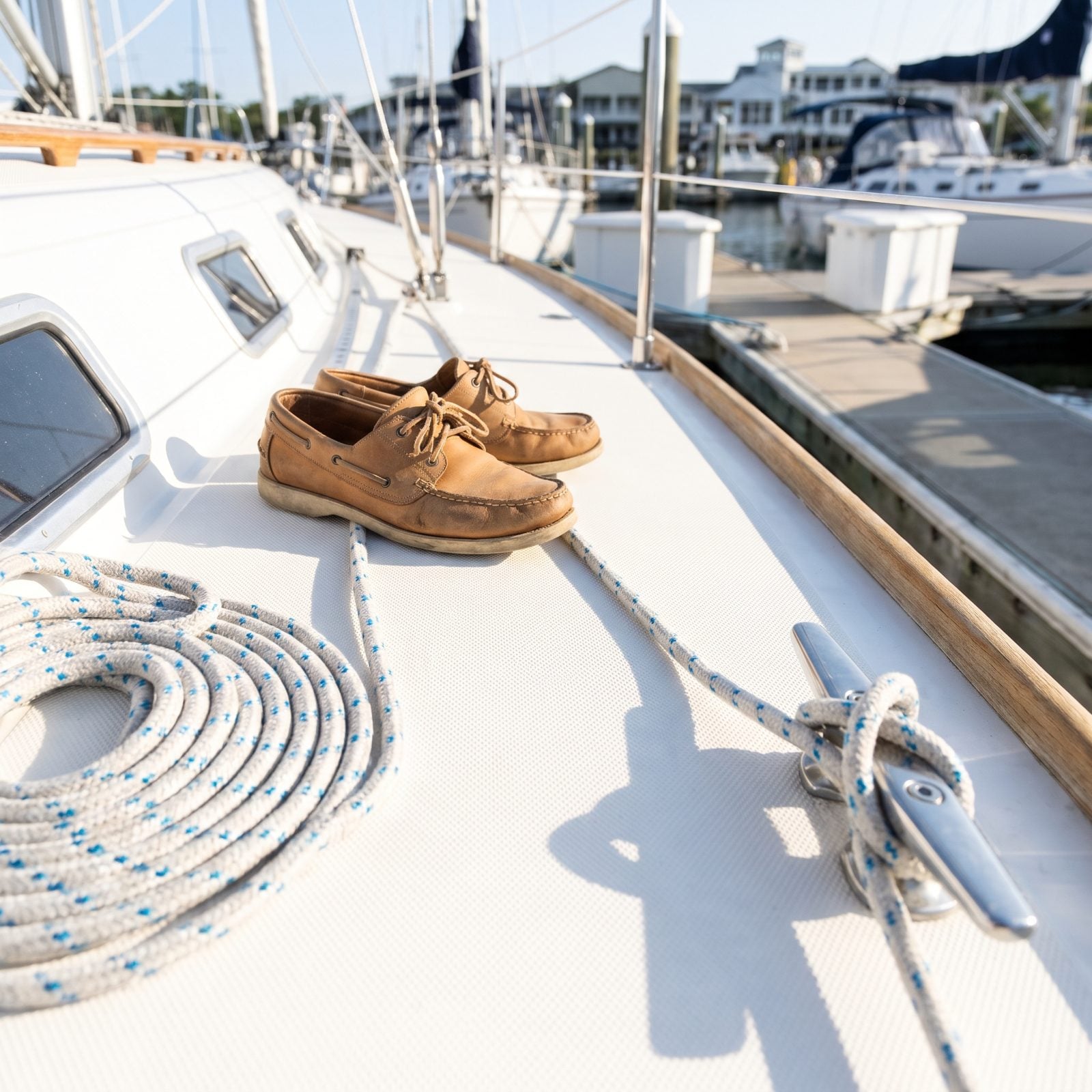
Lines belong under your eyes, never under your feet.
A student who steps over a running line, or walks around a coil instead of planting a shoe on it, has already understood something most beginners learn the hard way. A line underfoot can snag you, trip you, or run out under load and take your ankle along for the ride. On a loaded line, that’s genuinely dangerous.
It’s a small habit that reveals a big thing: situational awareness. The sailors who watch where their feet land are the same ones who notice the fender riding up before it floats away.
9. Whether You Can Coil a Line Without Tangling It
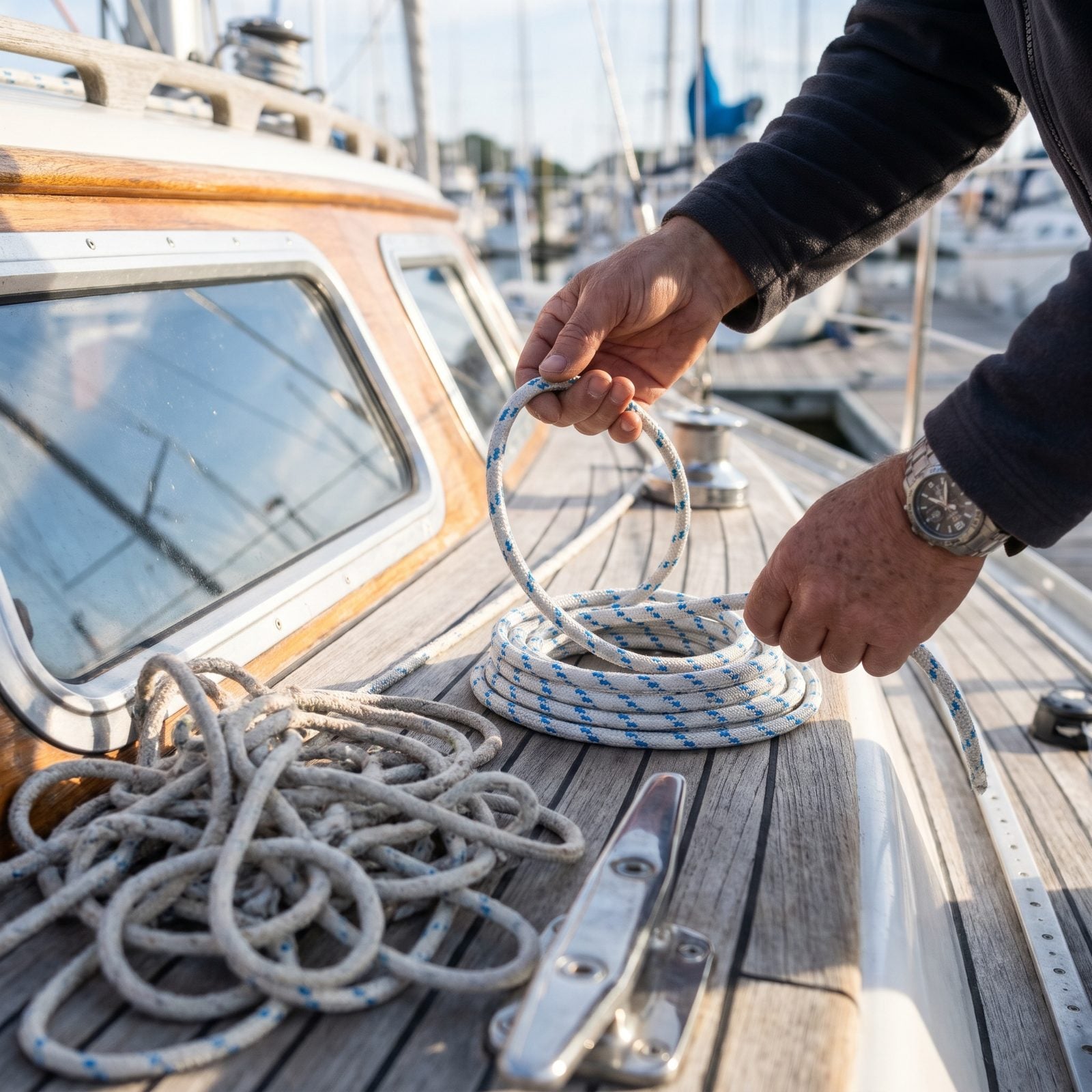
A clean coil is a quiet brag. It says you’ve done this enough that your hands know the twist without being told.
The giveaway is the figure-eight fight. A student forcing a line into loops that keep kinking hasn’t learned to roll each turn as it goes. Rope remembers how it’s laid, and if you fight it, it fights back the second you need it to run free.
Here’s why instructors care. A tangled coil is a jammed line waiting to happen. When you drop a halyard and it has to pay out clean, a bad coil is just a knot you tied on purpose without meaning to.
8. What Your First Cleat Hitch Reveals
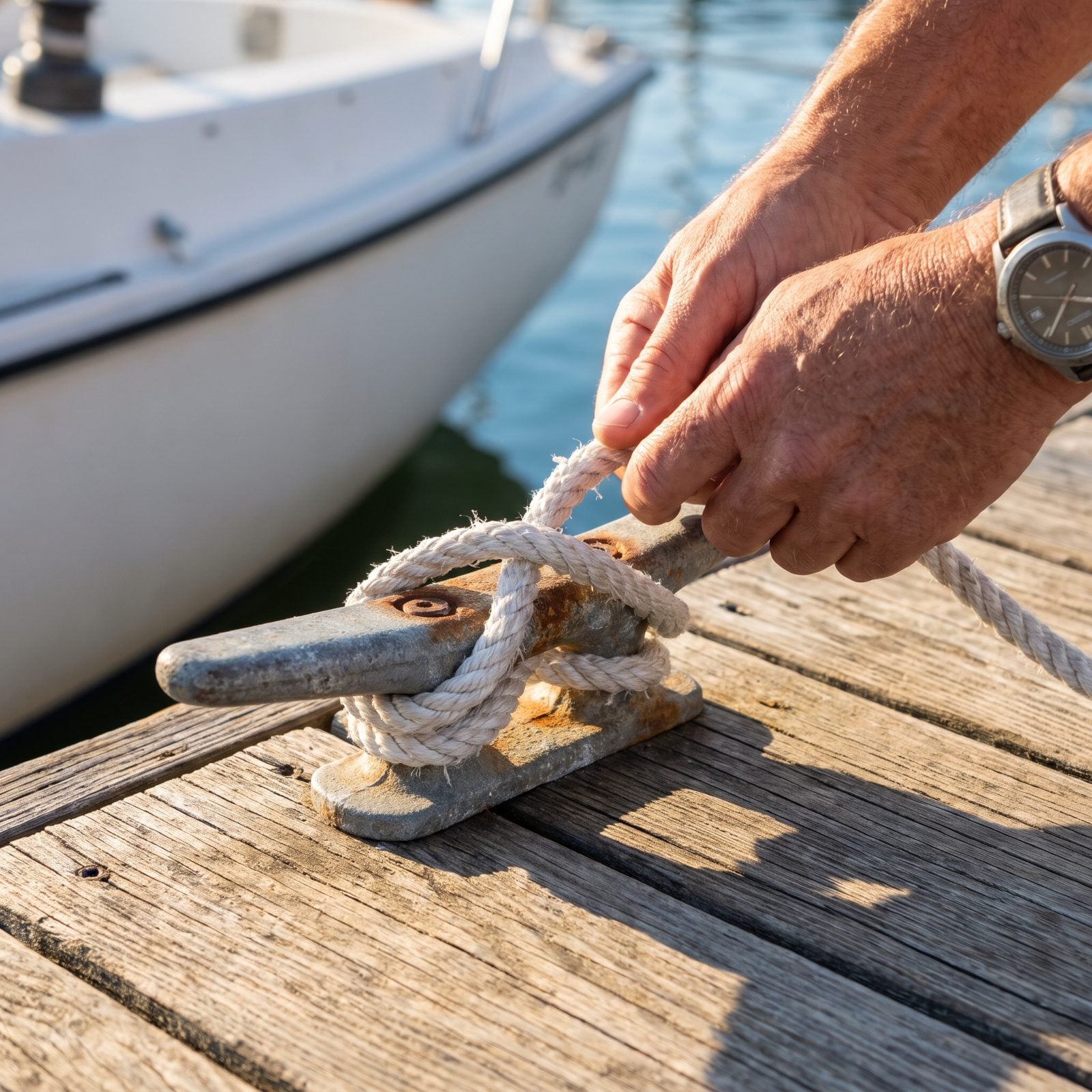
The cleat hitch is small, fast, and completely honest about where you stand as a sailor.
Done right, it’s a few figure-eights and one locking turn. It holds under load yet casts off in a second. Done wrong, you get a pile of half-hitches that look busy and jam solid the moment the boat leans on them.
Instructors watch that first one closely, and not because the knot is hard. Because it shows whether you learned the thing or just copied a shape. A locking hitch under strain, released clean with one pull, says you understand how load works, and that understanding carries into everything else on the boat.
7. Whether You Wrap a Line Around Your Hand
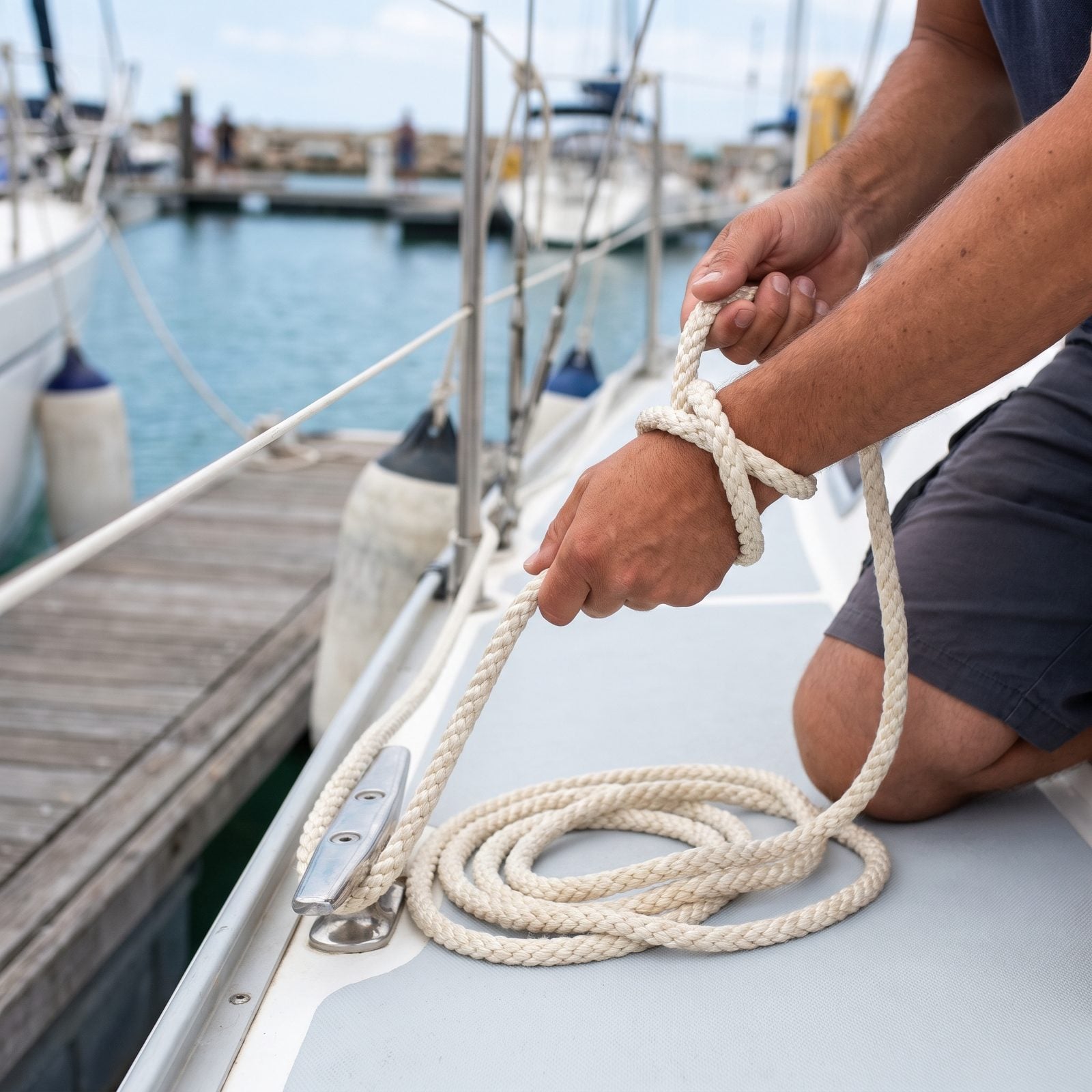
This one separates the careful from the confident-looking-but-dangerous. Wrapping a line around your hand, wrist, or forearm feels secure, and it is also the fastest way to get dragged off a boat or lose a finger when that line suddenly takes a load.
A student who holds the line across an open palm, ready to let go in a heartbeat, understands something real. You never tie yourself to a thing that can be yanked by three tons of drifting boat. Letting go is always an option — make sure you can always use it.
The rope should be able to leave your hand faster than you can think about it.
In a guide to preventing hand injuries, a sailing school staffer warns “If you’re needing a bit more leverage when hauling in a line, resist the urge to wrap or coil the line around your hand.”
6. Whether You Keep Dock Lines Away From the Propeller
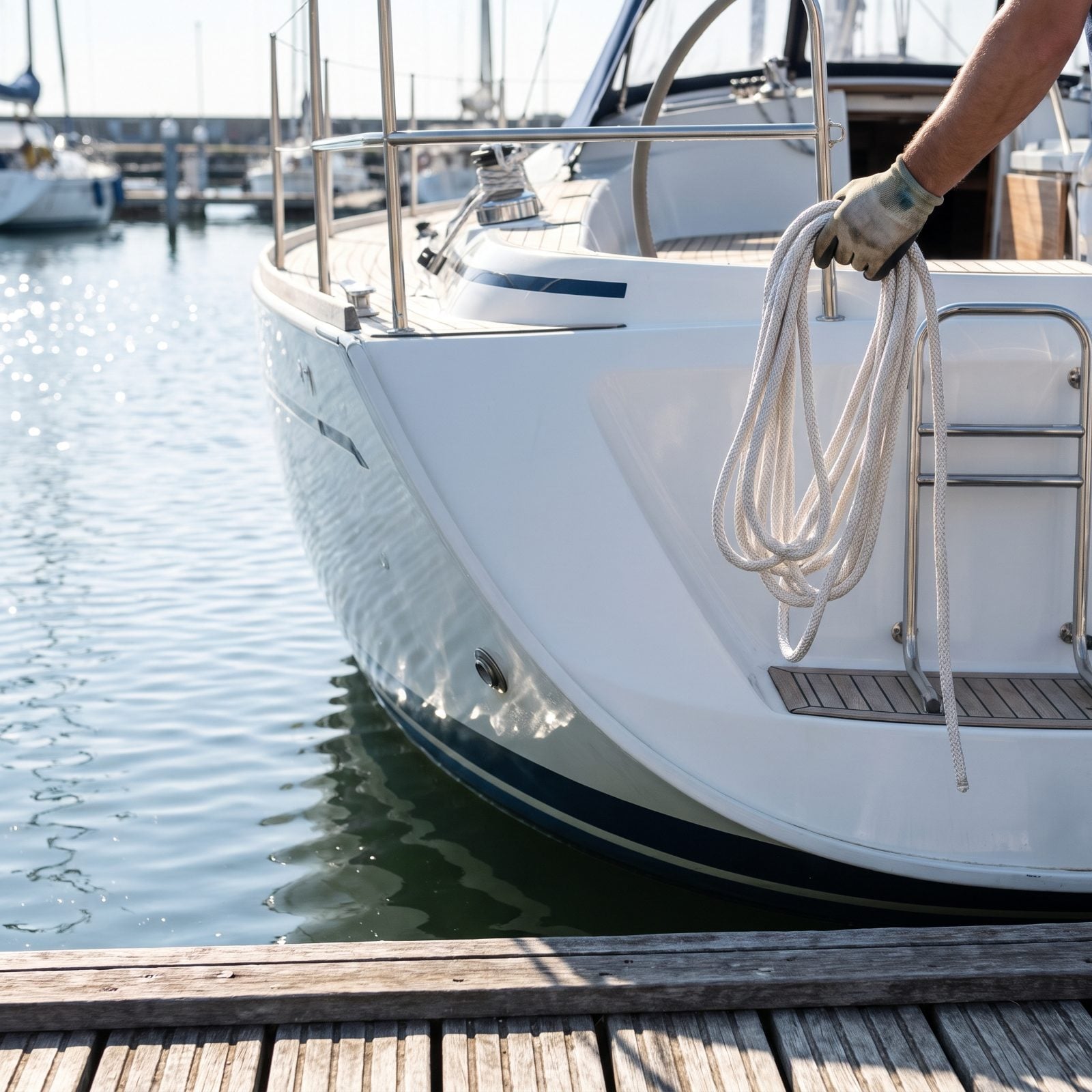
A dock line trailing in the water next to the stern is a fouled prop waiting to happen. The moment the engine goes into gear, a loose line can wrap the shaft, kill the engine, and leave you adrift with no steerage. It happens more than people admit.
Readiness shows in the habit of accounting for every line end before anyone touches the throttle. Stern lines up on deck, coiled, nothing hanging over the side. You can always tell who has snagged a prop once. They check twice now.
Having paid for plenty of divers to cut lines free, one charter sailing school reports “Dock lines are very common culprits. Due to their length, spring lines are the most common type of dock line to foul propellers.”
5. Whether You Check Fender Height and Snag Risks
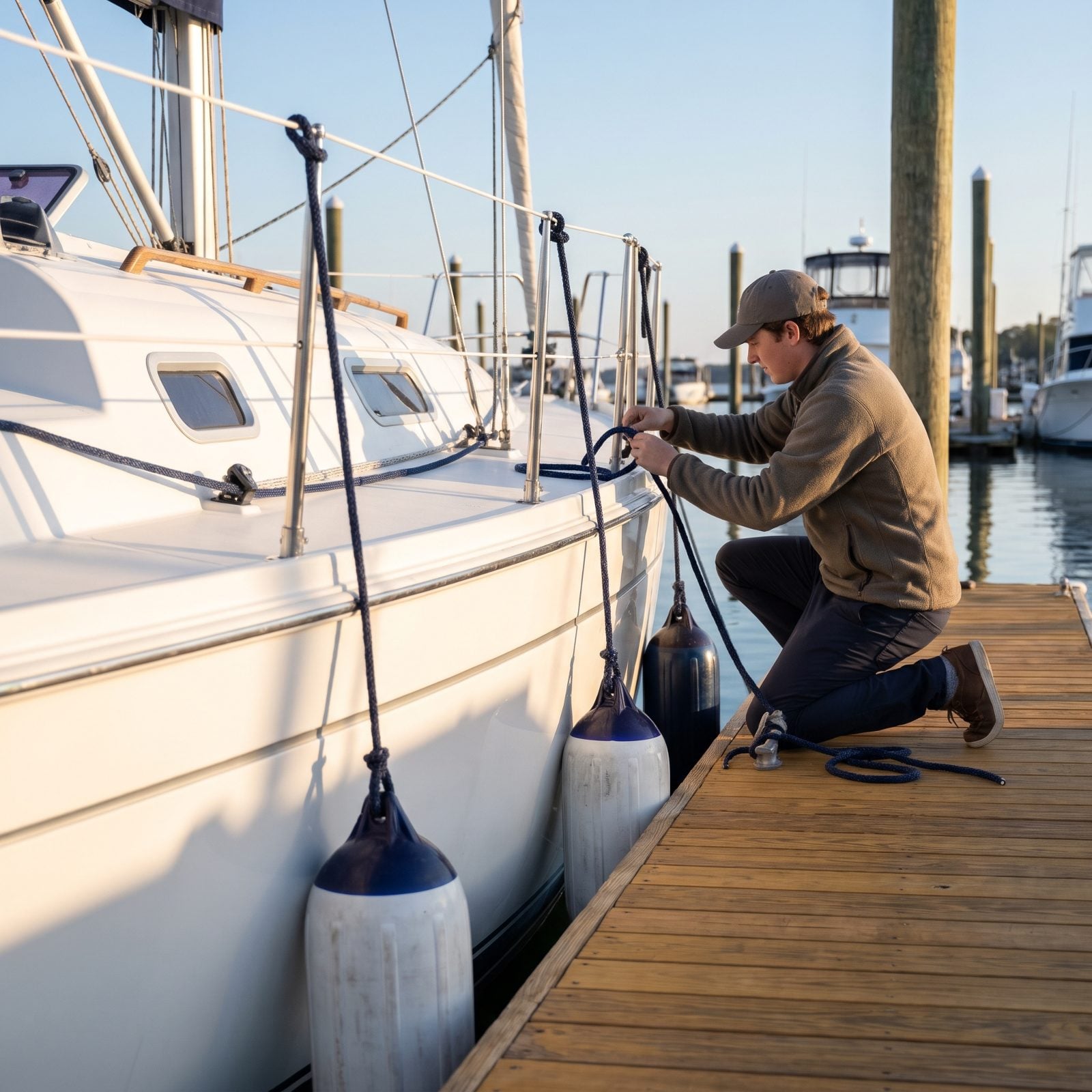
Fenders hung too high do nothing. Hung too low, they ride up over the dock edge and leave the hull to grind against a piling. A student who crouches to eye the waterline and the dock height before casting off is thinking ahead, which is most of good seamanship.
The snag check matters just as much — a fender line looped over a cleat the boat is about to pass, a fender caught on a dock bolt as the hull slides forward. Little things. They scratch gelcoat and, worse, they hold the boat where you do not want it held.
4. Whether You Understand the Cast-Off Sequence
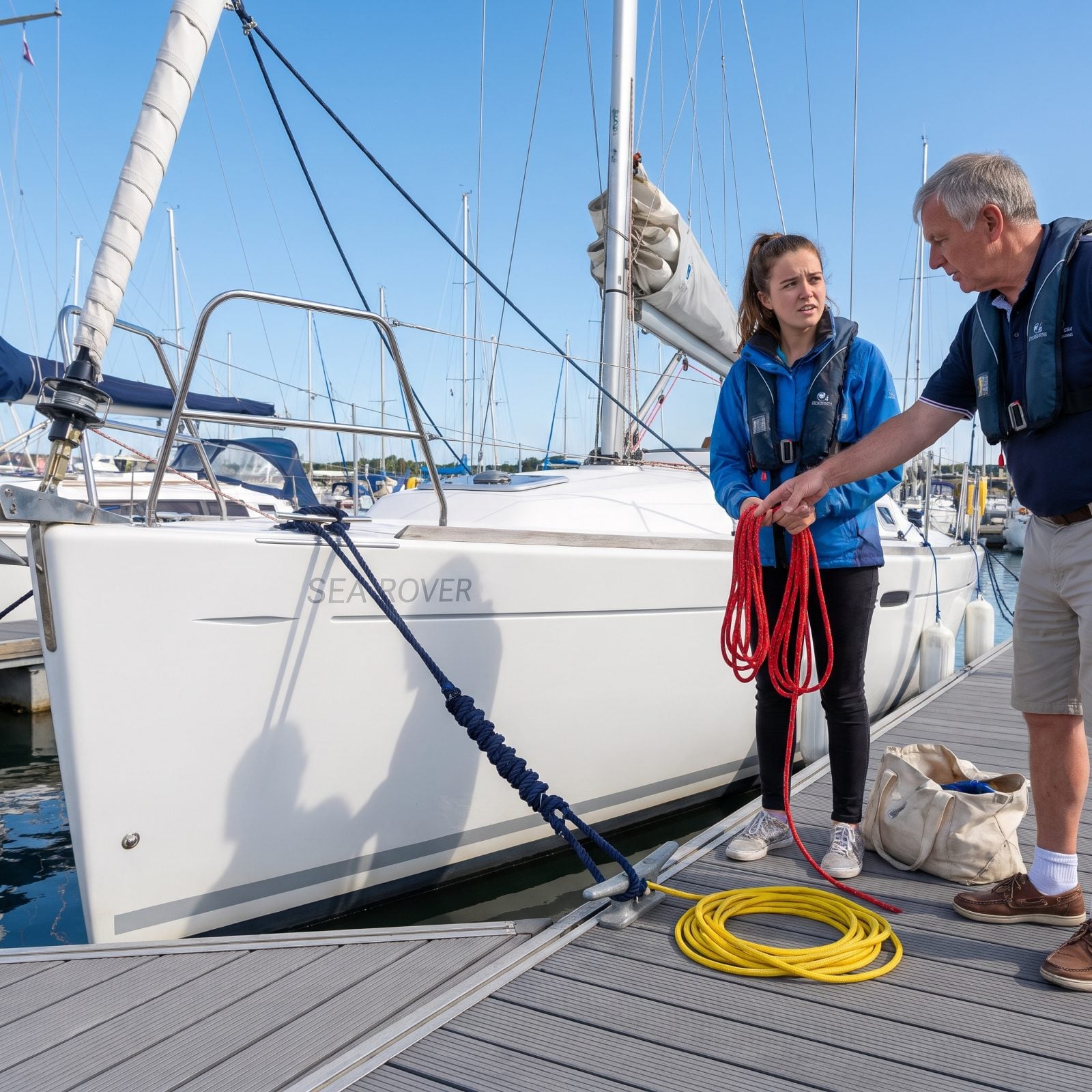
Order is everything. Drop the lines in the wrong sequence and wind or current will pin you against the dock or swing the bow into the boat beside you. The students who get this do not touch a single line until they have read the wind, read the current, and worked out which line comes off last.
Usually the line holding you against the forces comes off last, with someone keeping a hand on it, ready to re-secure if the departure goes sideways. That calm, deliberate order tells an instructor more than any amount of confidence does.
3. Whether You Check Hatches and Locker Lids
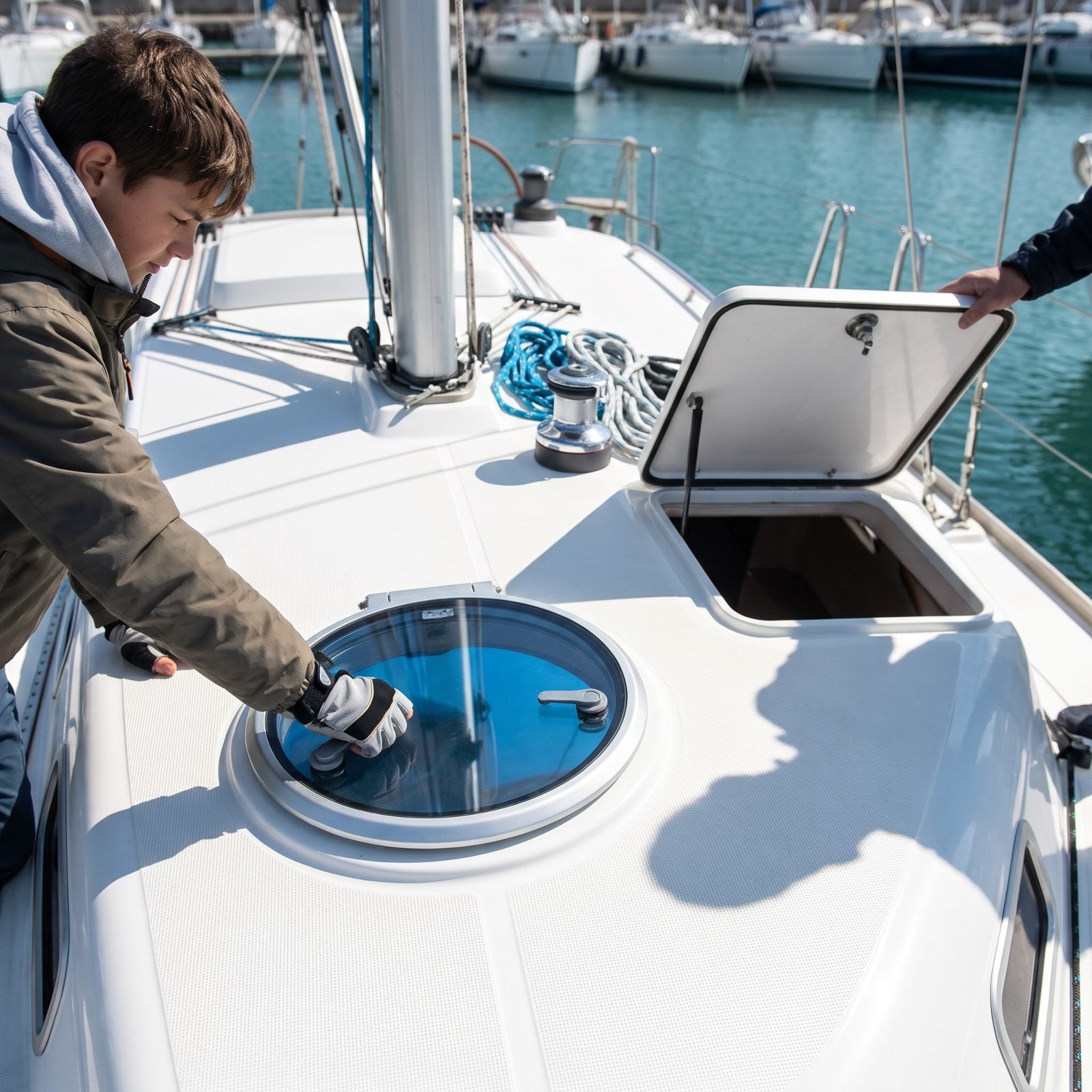
Open hatches and gaping lockers are how water gets below and how gear goes overboard. At the dock it looks harmless. Twenty minutes out, heeled over in a chop, an unlatched hatch is a wet bunk and a flapping foredeck locker lid is a lost sail bag.
Watch for the student who does a slow lap of the deck, pressing each hatch, latching each locker, before anyone talks about leaving. That lap is a tell. It means they are already picturing the boat moving, not sitting still.
2. Whether You Trace Sheets and Halyards for Snags
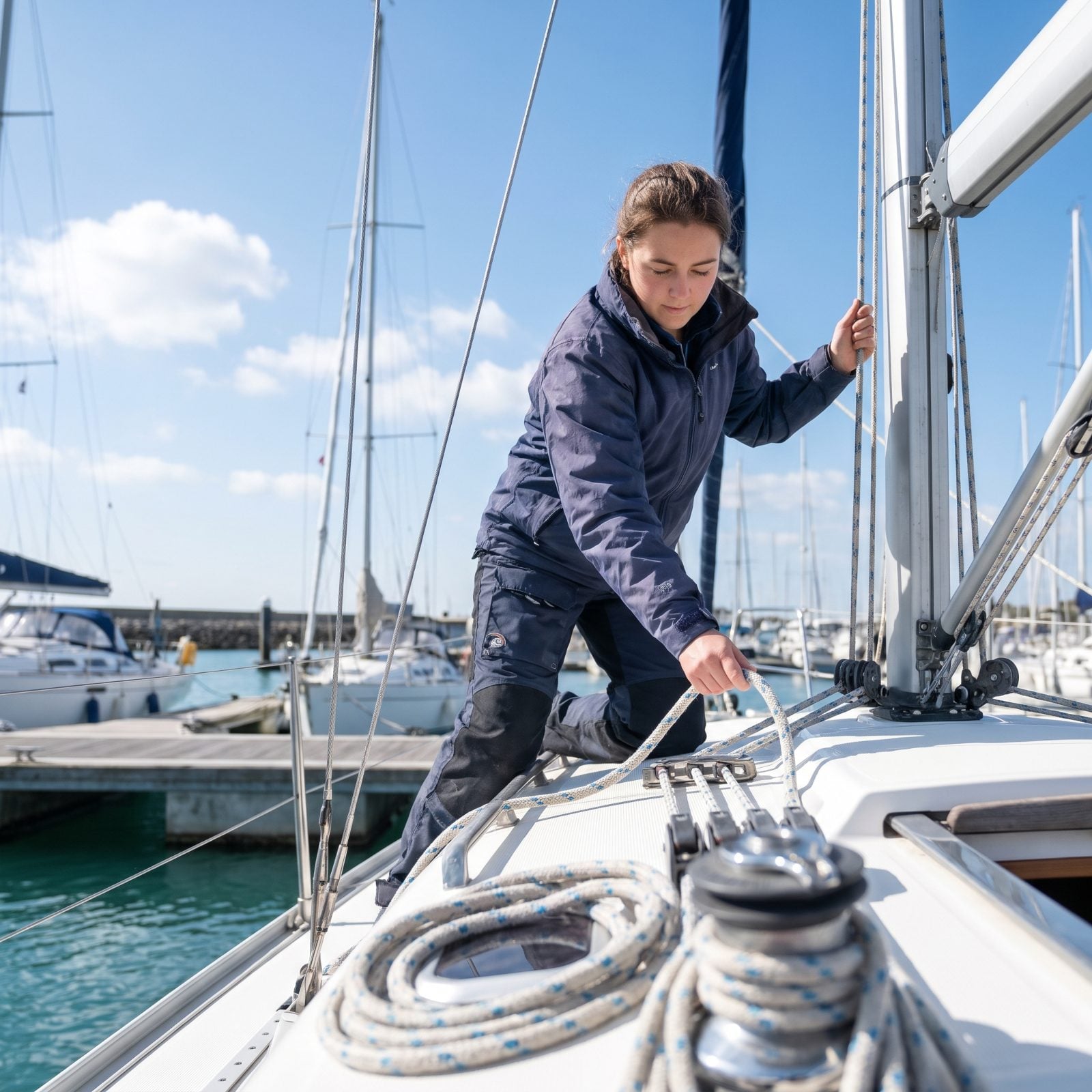
A halyard wrapped around a spreader, a sheet led the wrong side of a stanchion, a lazy line fouled under a winch. None of it shows until you load it, and by then you are usually trying to do three things at once in open water.
So the careful student runs the lines by hand and eye at the dock while everything is calm. Halyard clear to the masthead, sheets leading fair through their blocks, no tangles waiting to bite. It takes two minutes standing still. It saves ten minutes of swearing under sail.
1. Whether You Check That the Engine Control Is in Neutral
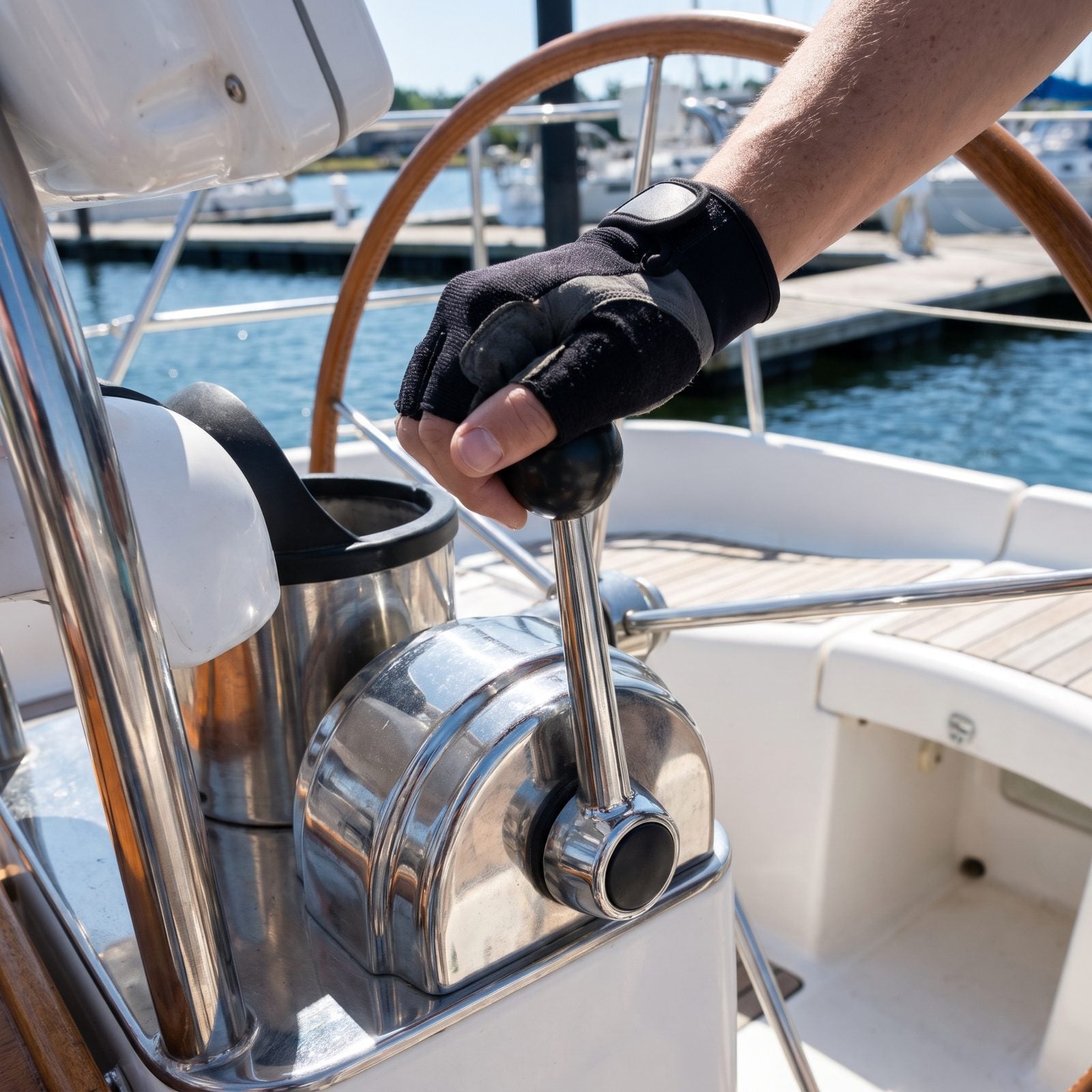
Start the engine with the lever in gear and the boat lurches against its lines while everyone is still finishing coffee. It strains the cleats, jolts the dock, and announces to the whole marina that nobody checked.
The ready student puts a hand on the throttle, confirms it is centered and in neutral, and only then turns the key. Boring. Routine. Exactly the point. The sailors who look calmest on the water are the ones who made every one of these small checks so automatic they stopped thinking of them as checks at all.