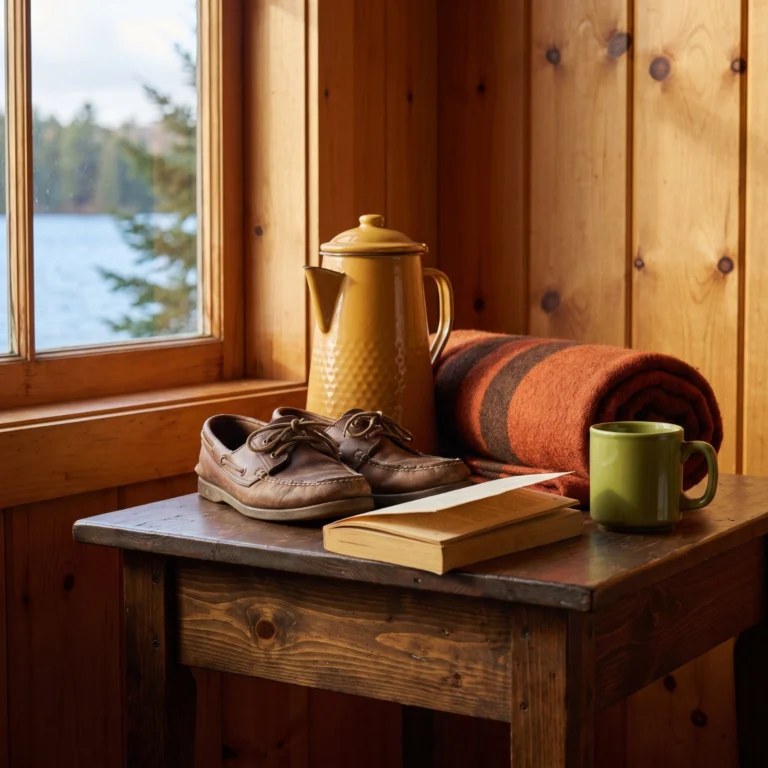
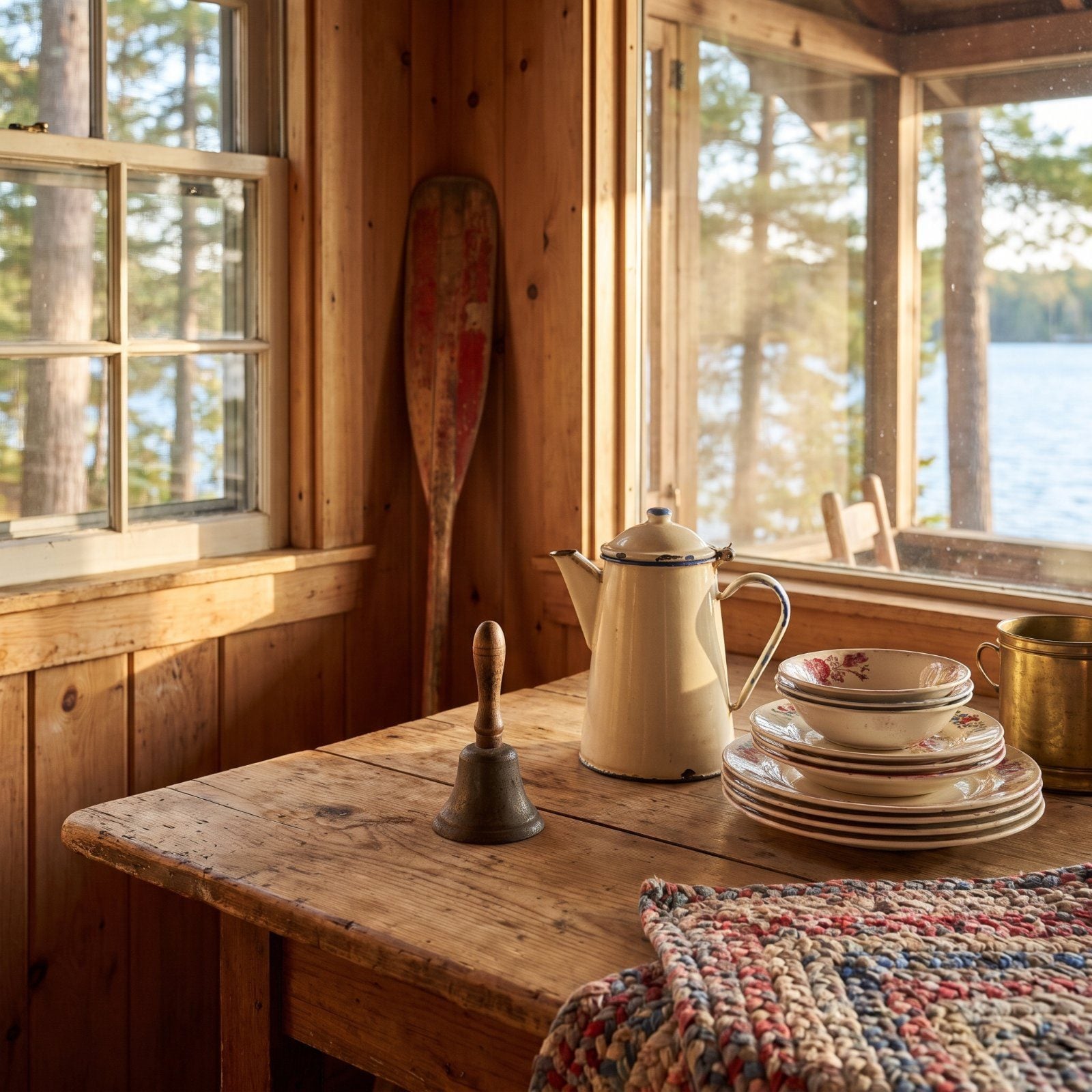
The screen door slaps twice behind you and nobody fixes it, because that sound is half the reason you came. Old lake cottages were built for a slower kind of summer. They creak, they smell like cedar and lake water and whatever got cooked last July. The new builds out on the point have quartz counters and three-car garages, and they’re lovely, and they’re missing something you can’t quite name until you walk into a place that went up in 1948 and feel your shoulders drop. These are the features that did the quiet work of making a cottage feel like one.
Please note that some of the imagery in this article may have been enhanced with the assistance of AI.
30. The Screened Sleeping Porch Built for Summer Nights
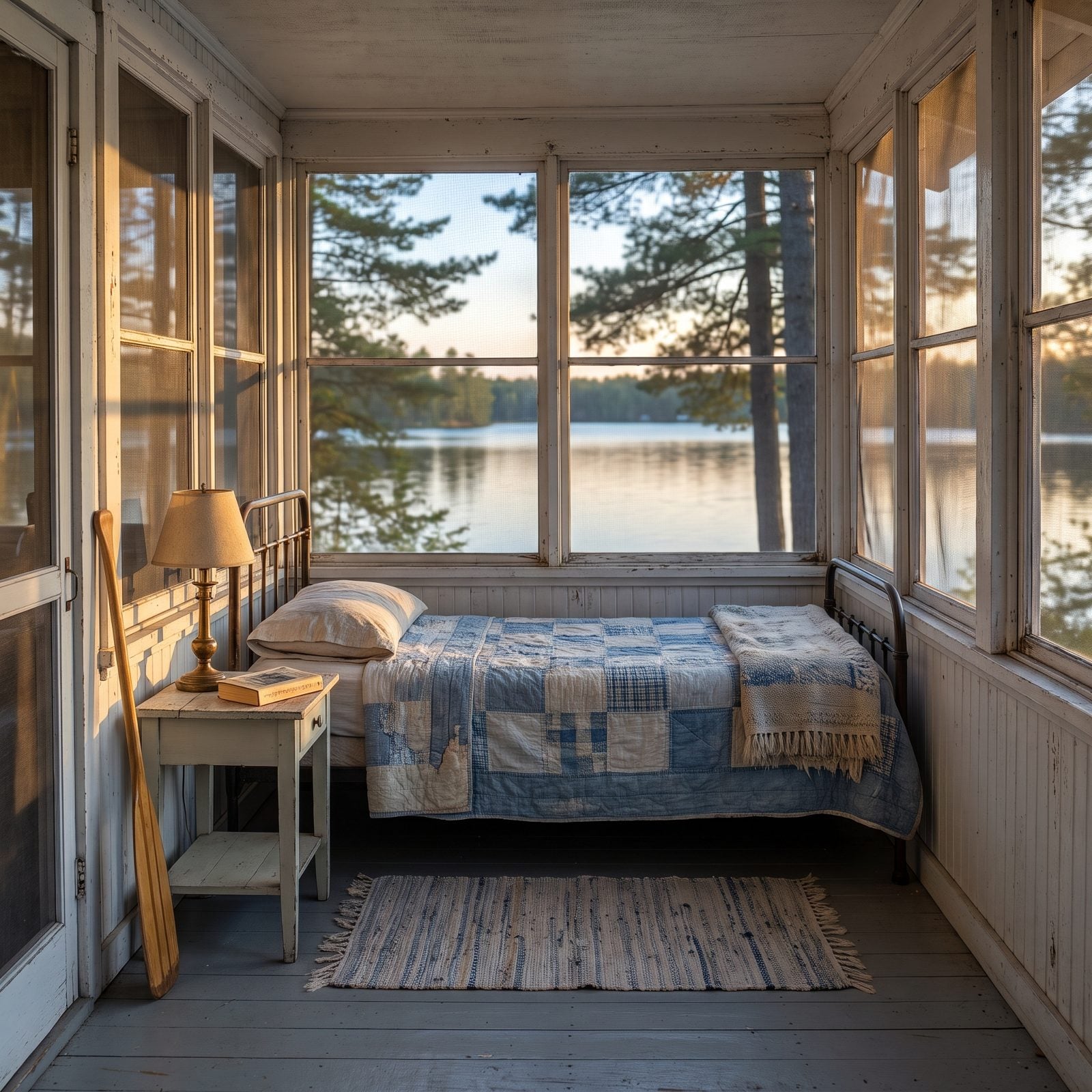
Before air conditioning, this is how you survived August. A porch with screens on three sides, a cot or a daybed, and the whole lake breathing through the mesh while you fell asleep to loons and the slap of water on the dock.
Modern lake houses seal everything up tight and set the thermostat to 68. Comfortable, sure. But you lose the bullfrogs, and you lose the way a night rain sounds six feet away through a screen instead of behind triple-pane glass.
29. A Cast-Iron Hand Pump at the Kitchen Sink
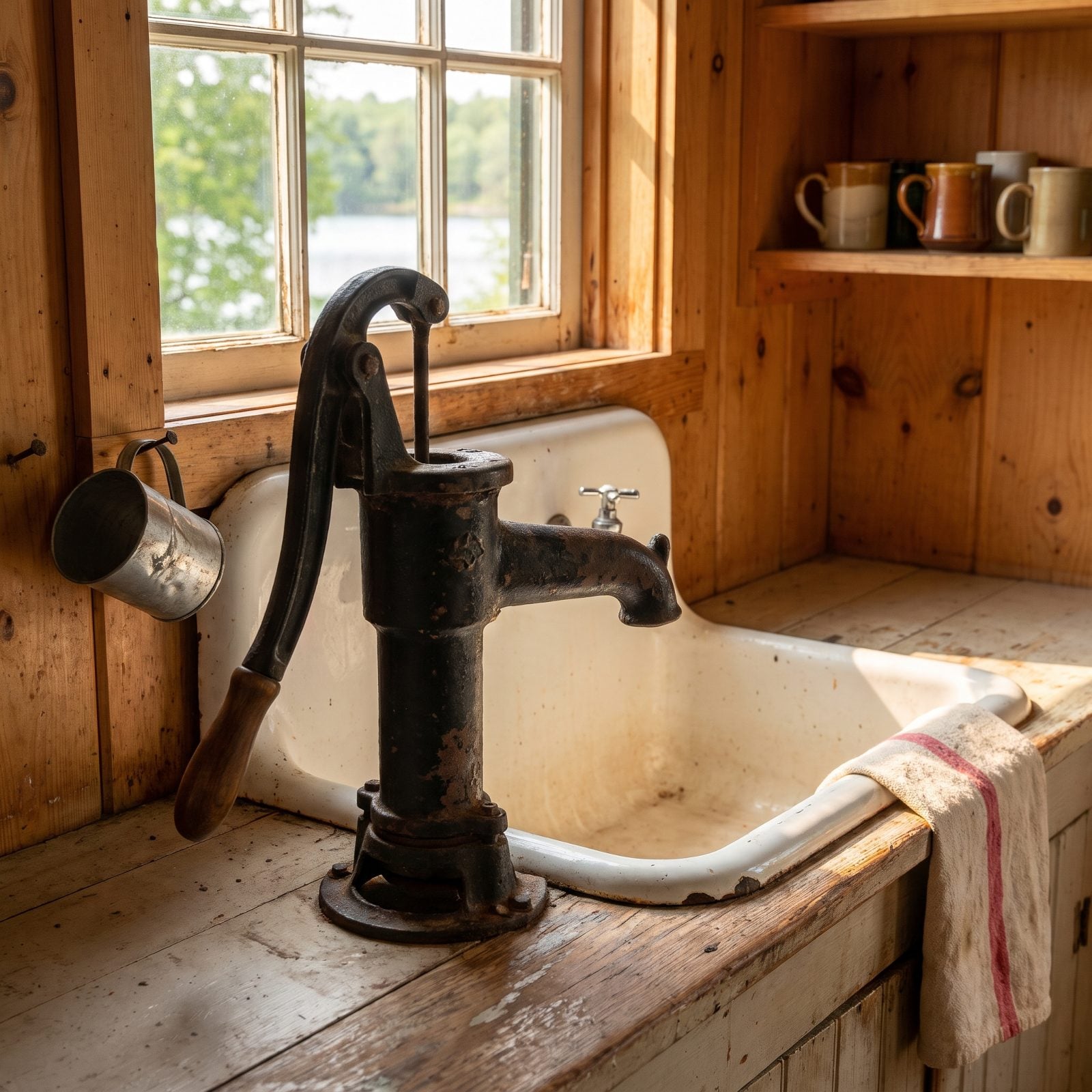
You pumped it a few times, waited for the cough of air, then cold water came up straight from the well. No waiting for the hot side. No faucet that looks like it belongs in a hotel.
Half of these pumps still work. The other half got left in place because nobody had the heart to pry them out, which is its own kind of charm. Modern houses run everything through a touchless tap now — efficient, and faintly soulless when you’re standing where generations learned to prime the line on a hot morning.
28. The Wood-Burning Cookstove That Ran the Whole Kitchen
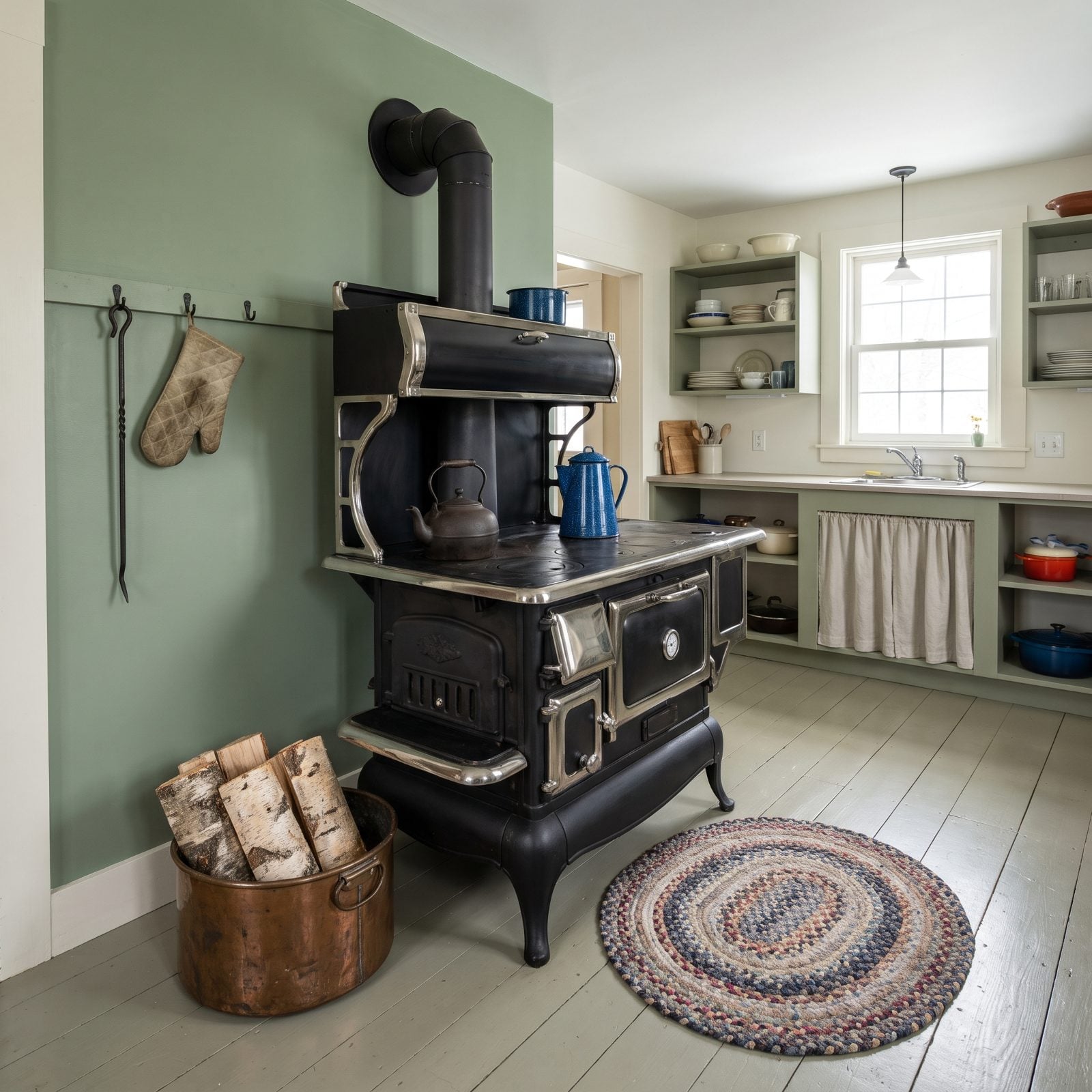
This stove did everything. It cooked breakfast, heated the water, dried your socks, and took the chill out of a June morning that forgot it was supposed to be summer.
Nobody’s suggesting you cook pancakes on cast iron over birch every day. It’s hot, fussy work, and anyone who gets misty about it hasn’t hauled wood at six a.m. But there’s a reason old cottage kitchens were built around the stove instead of around an island. The whole family drifted toward the warmth. A stainless range with five burners has never once made anyone want to stand near it.
27. Knotty Pine Paneling on Every Wall
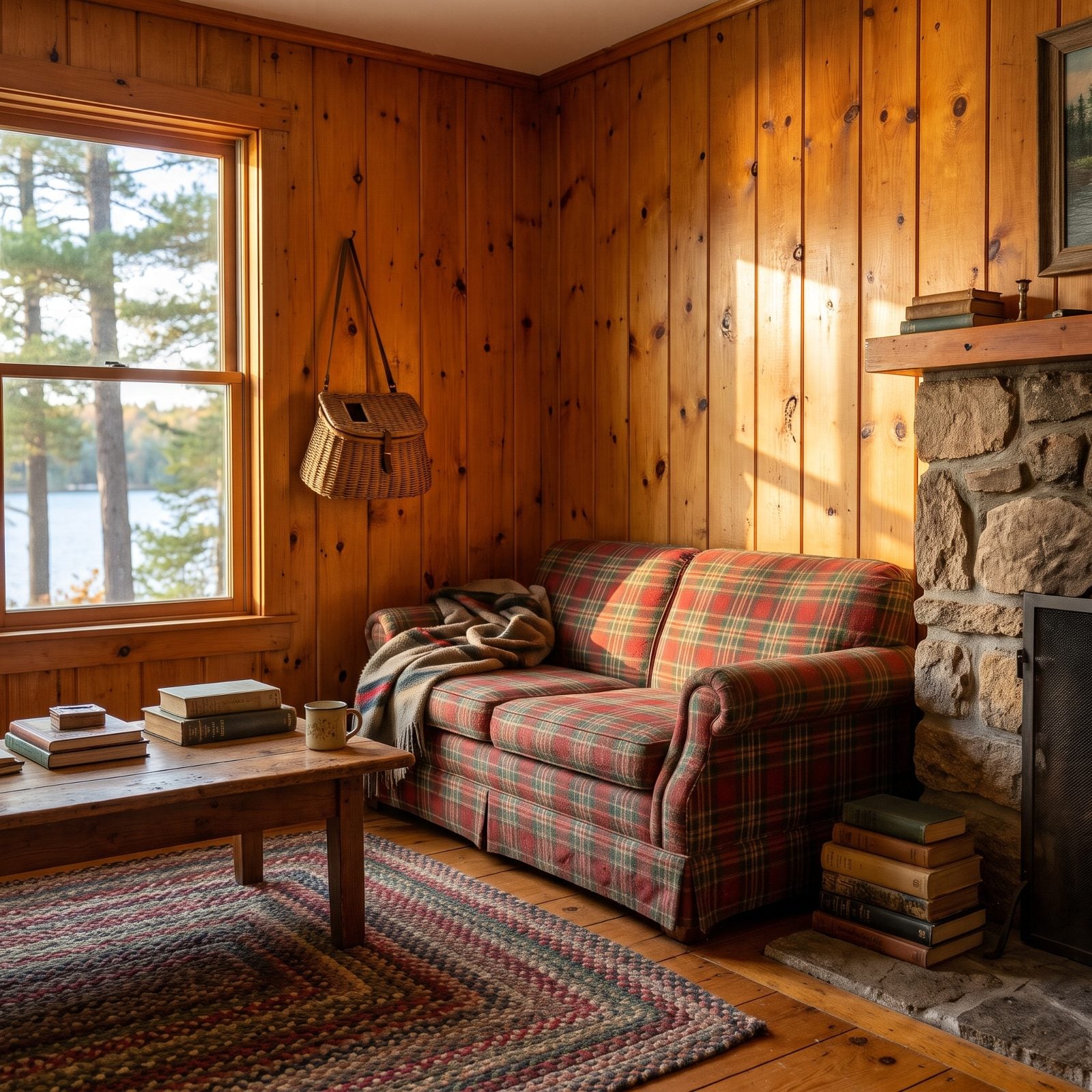
Honey-colored boards running floor to ceiling, every one with its own constellation of knots. By late afternoon the whole room turns the color of weak tea and you don’t want to leave it.
Designers spent two decades painting over knotty pine and calling it dated. They were wrong. I’ll say it flat: a pine-paneled room feels warmer than any white-walled great room ever will, because the wood actually soaks up warm light instead of ricocheting cold daylight around. New lake houses go all-white and call it bright. It’s just louder.
26. The Sagging Front-Porch Glider Nobody Would Replace
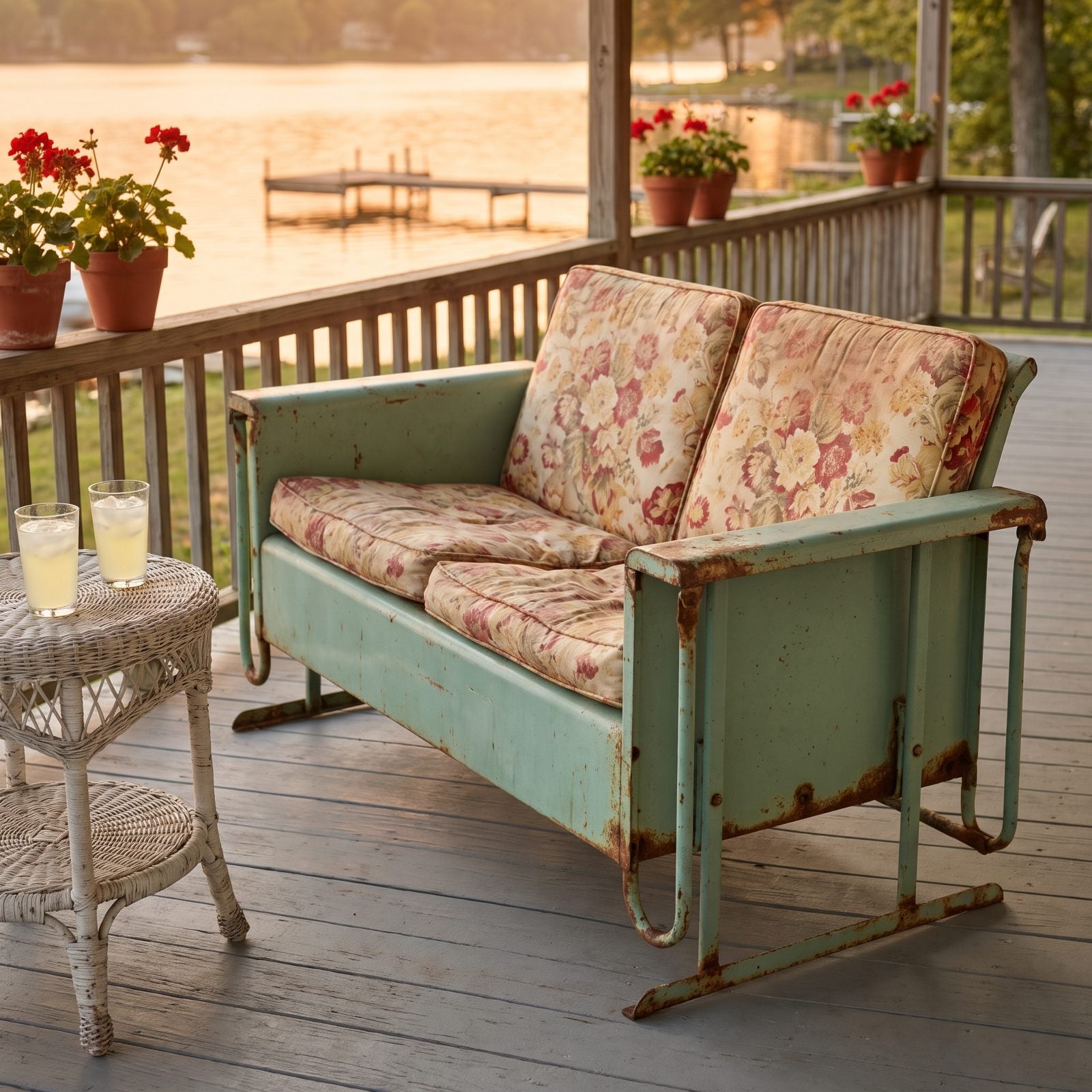
Every good cottage has one. The glider that lost its spring years ago and now bottoms out a little at the back of the swing, and everyone knows it, and nobody cares.
Sure, you can buy a new one. It costs real money, glides smooth, and never once earns the affection the old one did. That’s the thing about the sagging glider — it got that way from people. Thousands of evenings, cards after dinner, somebody’s grandmother shelling peas. A new porch set is just furniture until you’ve put twenty summers into it.
25. An Ice Box or Ice House Out on the Porch
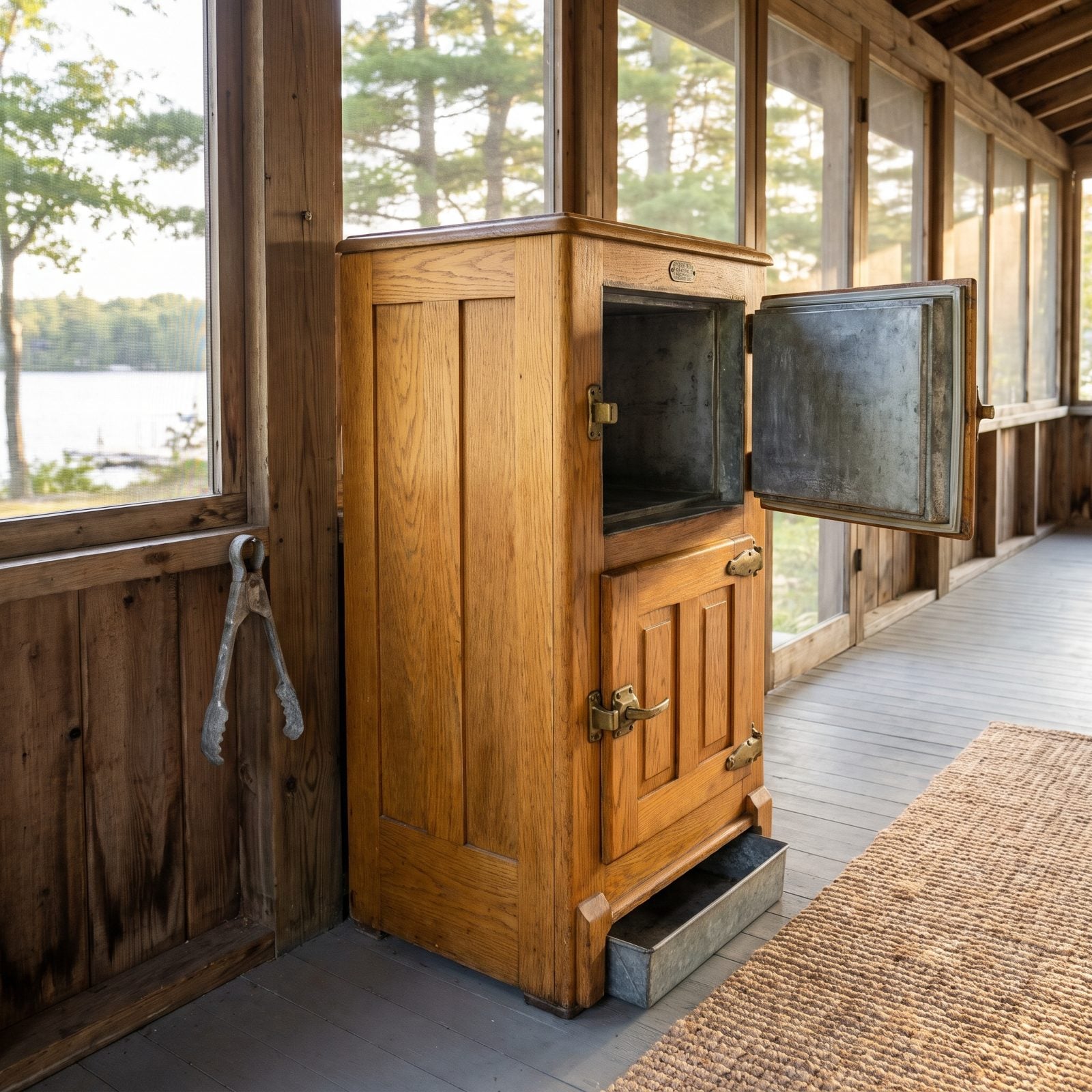
Before the lake road got power lines, the ice came by truck or got cut off the lake itself in winter and packed in sawdust. An oak ice box on the porch kept the milk and the fish cold through July.
Most are long gone, replaced by a humming second fridge in the mudroom. The few survivors got kept as cabinets, or as the thing where you stash extra blankets. Those brass latches still thunk shut with a weight no modern appliance door has. Function left ages ago; the object stuck around anyway, and good for it.
24. A Braided Rag Rug Waiting at the Door
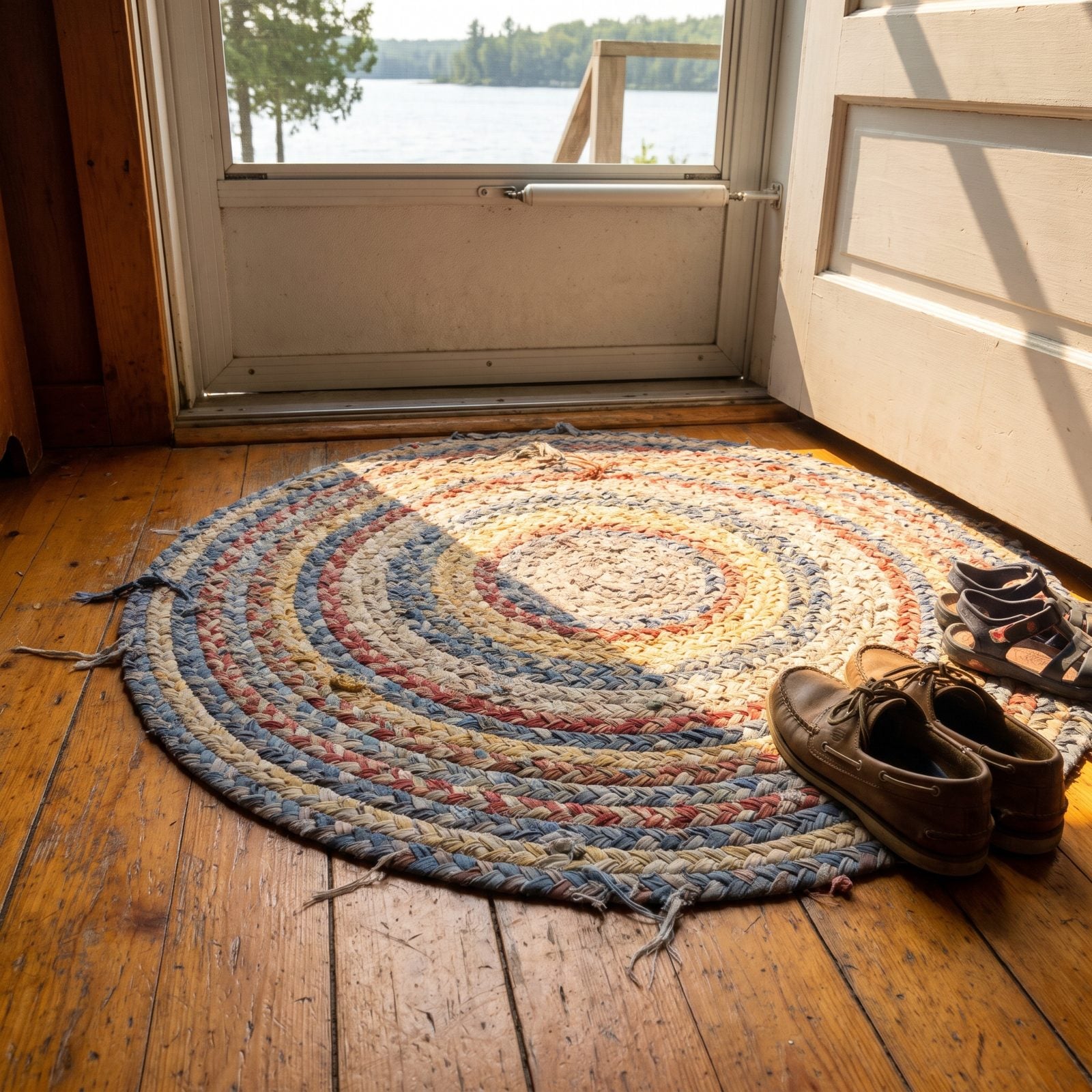
Made from old shirts and worn-out dresses somebody couldn’t bring themselves to throw out, coiled and stitched into a flat oval by the door. Every strip used to be something.
And that’s the part a store-bought entry mat can never touch. The braided rug was the opposite of disposable. Nothing went to waste. It carried the whole family’s cast-offs in a pattern only it understood, and you wiped your wet feet on your own history every time you came in.
23. Mismatched Vintage Dishware on Open Shelves
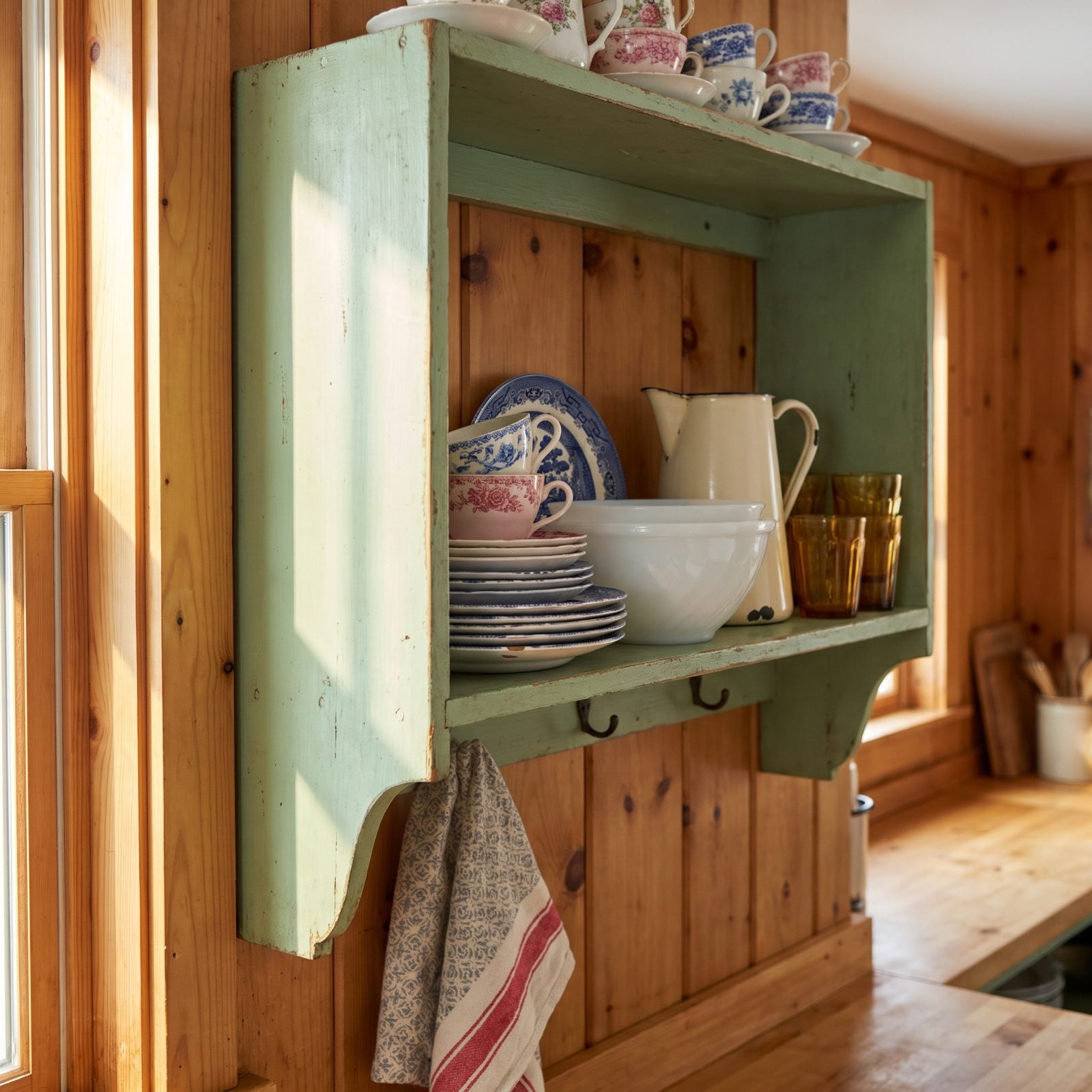
No two plates match, and that’s exactly right. Three generations of hand-me-downs, church-sale finds, and the one good cup somebody won at a county fair, all stacked out in the open where you can see them.
New lake kitchens buy a sixteen-piece set in one go and hide it behind cabinet doors. Tidy. Also anonymous. A mismatched shelf tells you people actually lived here — broke things, replaced them one at a time, kept the sweet floral cup that belonged to someone they loved.
22. The Cast-Iron Hand Bell That Called Everyone to Supper
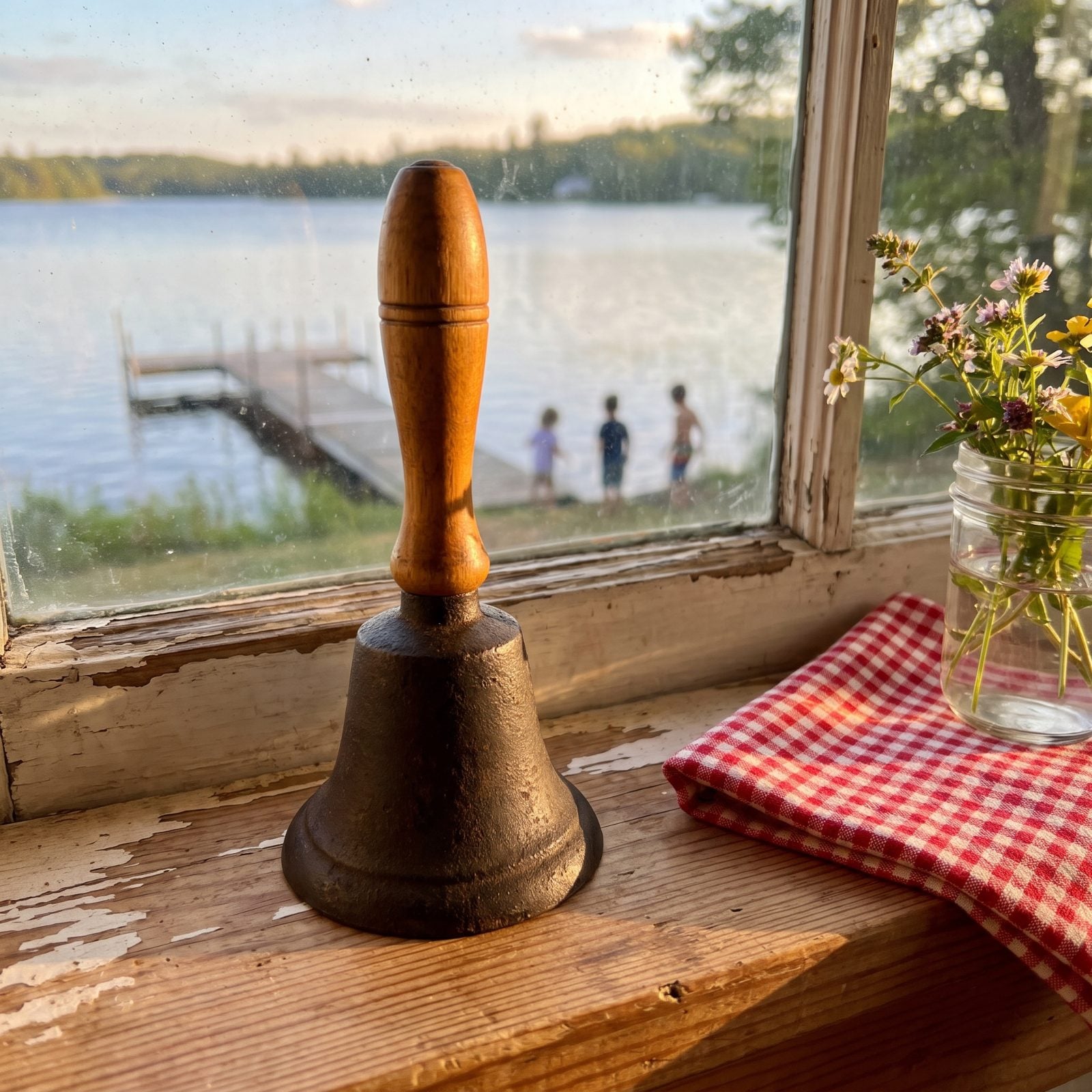
You rang it from the back step and it carried clear down to the dock, over the water, into the woods where the kids thought they were hidden. Supper’s ready. Everybody heard it. Everybody came.
Nobody fires off “dinner’s up” to a group chat and gets the same feeling. The bell was a small act of authority and love at once — one ring across the whole property, and for the length of its echo the entire family knew exactly where they belonged and who was calling them home.
21. A Row of Worn Wooden Paddles on the Wall
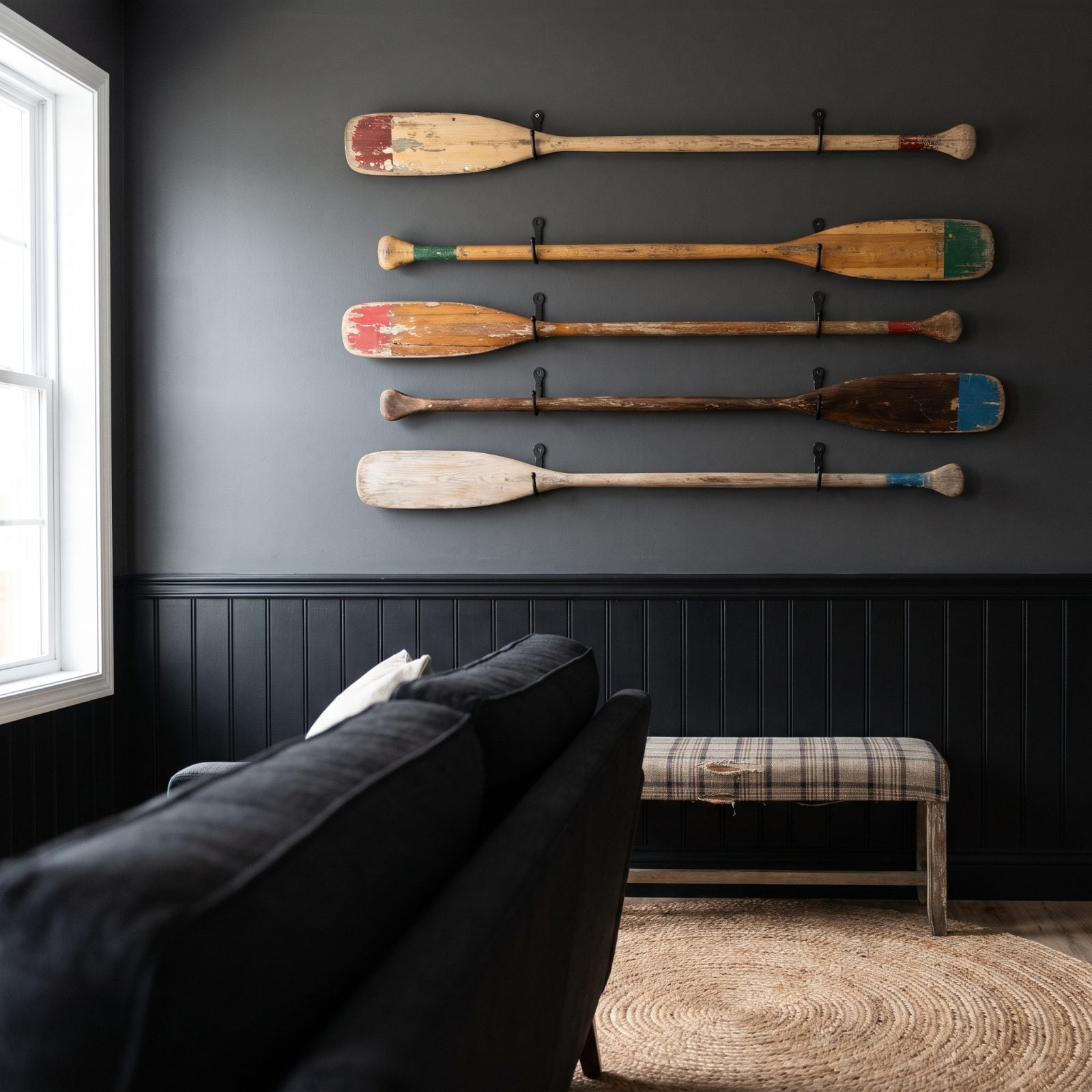
Not decor. At least, they didn’t start that way. Those paddles got hung on the wall because that’s where they went between trips — laid sideways on iron hooks, ready to grab on the way to the water.
Somewhere along the line they became the best thing in the room. Each one worn differently by different hands, a couple with faded paint on the tips, one short one for a kid who’s long since grown. New lake houses buy a decorative paddle at the boat-themed store and hang it over the fireplace. You can tell. It’s never touched water and it never will.
20. A Fireplace Stacked From Local Lake Rock
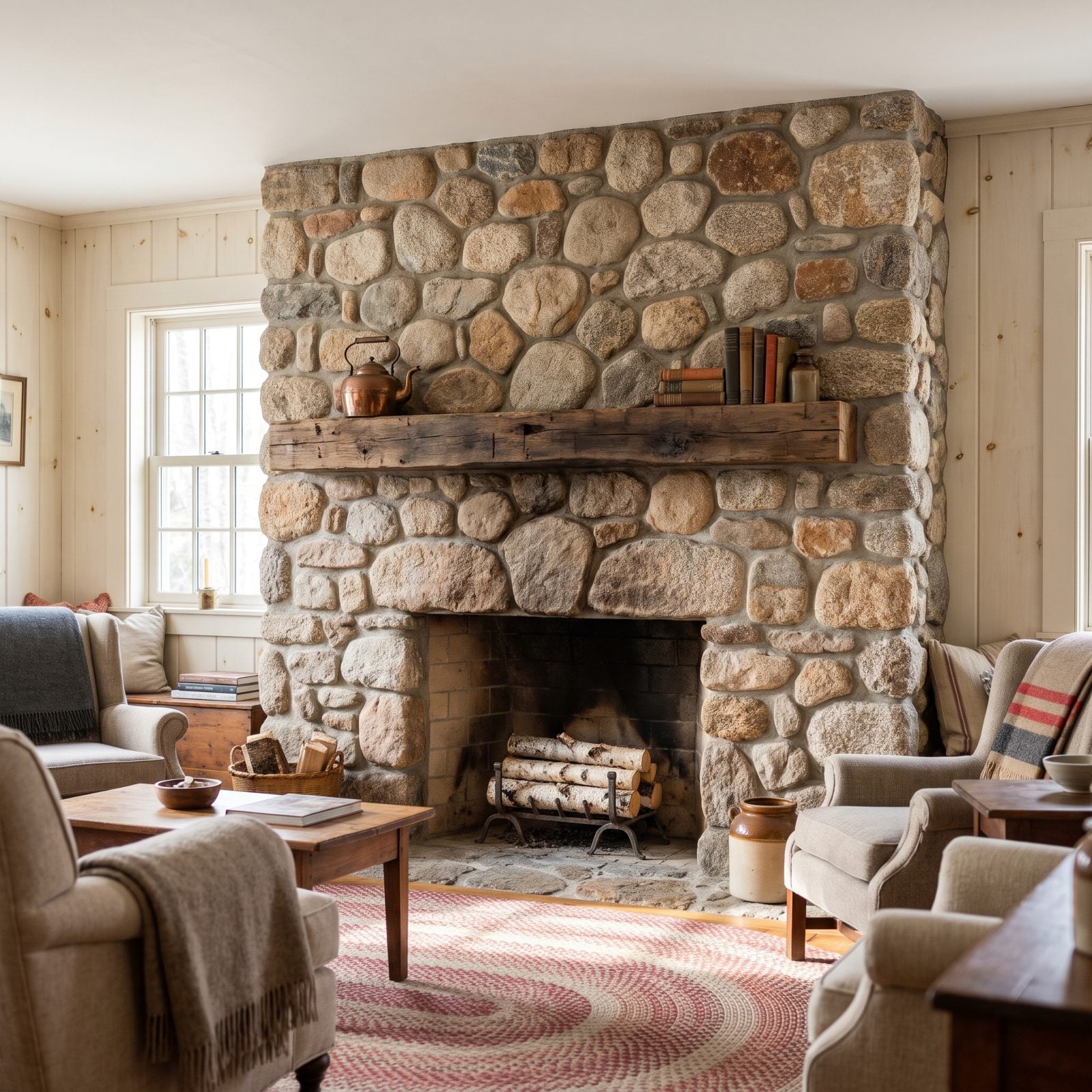
Someone walked the shoreline and picked these rocks by hand. That’s the part modern builders skip. A stone fireplace in an old cottage wasn’t a design choice but the lake itself hauled indoors, one rounded granite boulder at a time, mortared by a mason who knew which stones would sit flat.
You can feel the difference. Manufactured stone veneer is thin, repetitive, and cold to the touch, while real fieldstone holds heat for hours after the fire dies. And no two stones match, which is exactly why your eye never gets bored looking at it.
19. A Sleeping Loft You Climbed a Ladder to Reach
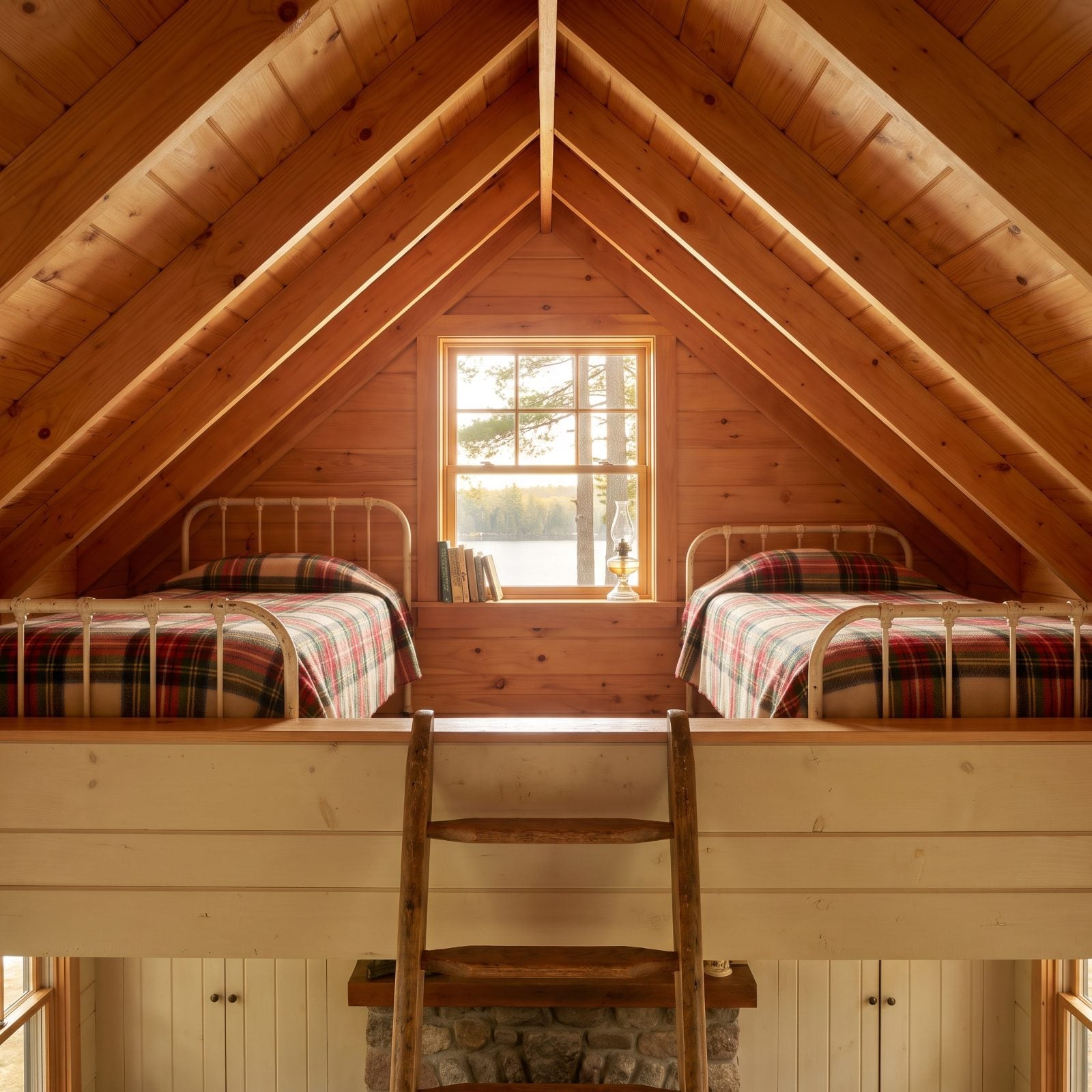
Kids fought over the loft. Always. It was the best bed in the house and everybody knew it, up where the heat collected and the rain sounded loudest on the roof.
Modern lake houses put everybody on one level with a nice safe staircase and lose the magic entirely. A ladder loft, though — that’s a small adventure built right into the floor plan. You climb up, the ceiling slopes down to meet you, and the lake sits right outside a window the size of a dinner tray. A childhood memory factory that costs almost nothing to build.
18. Oil Lamps and Hurricane Lanterns Lined Up on the Mantel
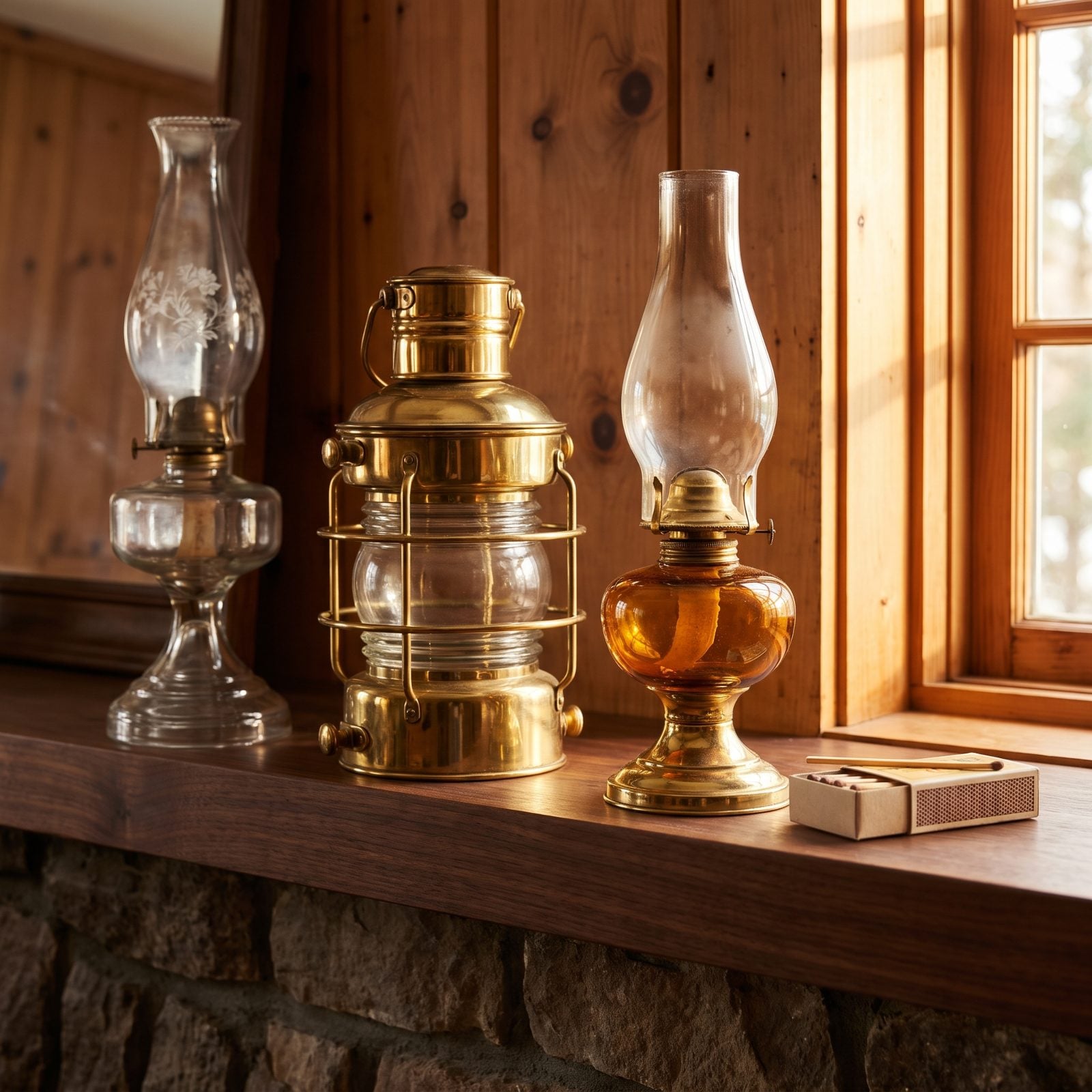
They weren’t decoration. They were the plan for when the power went out, which at an old lake place happened often enough that you knew where the matches lived.
A dimmer switch can’t do what these do. Lamplight flickers, pools, leaves the corners dark, and makes a room feel smaller and warmer the moment the sun drops behind the far shore. I’ll take a trimmed wick and the smell of kerosene over a smart bulb any night of the week.
17. A Hand-Crank Telephone Bolted to the Wall
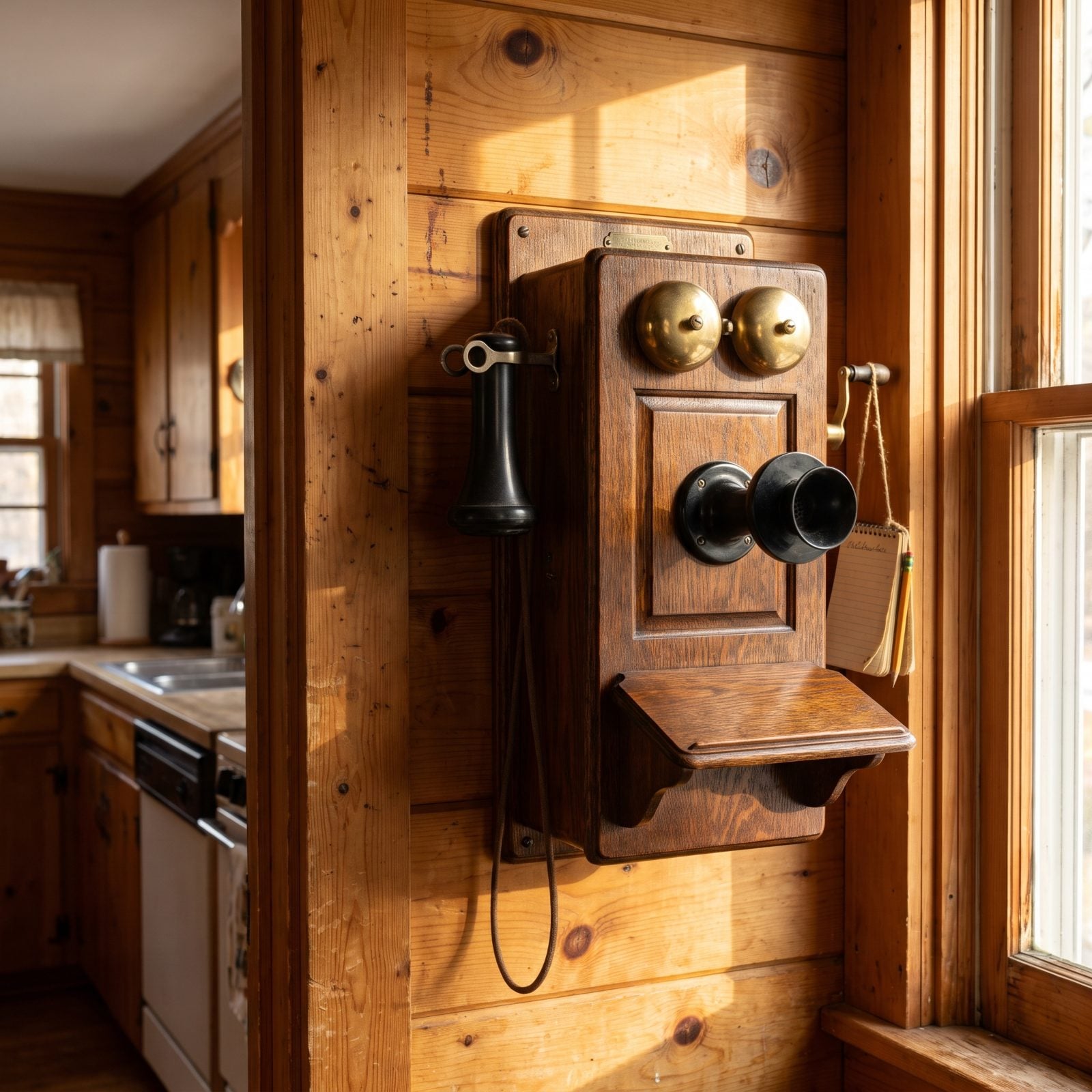
You cranked it, an operator picked up, and your whole party line could listen in if they felt nosy. Privacy at the lake was always a loose concept.
Most cottages shared a line with three or four neighbors, each with its own ring pattern — two shorts and a long, or whatever your family answered to. Nobody has a landline at the lake anymore, let alone a crank box. But the old oak ones turn up at estate sales and they make a better doorbell story than any video camera ever will.
16. Fishing Rods Leaning in the Corner by the Door
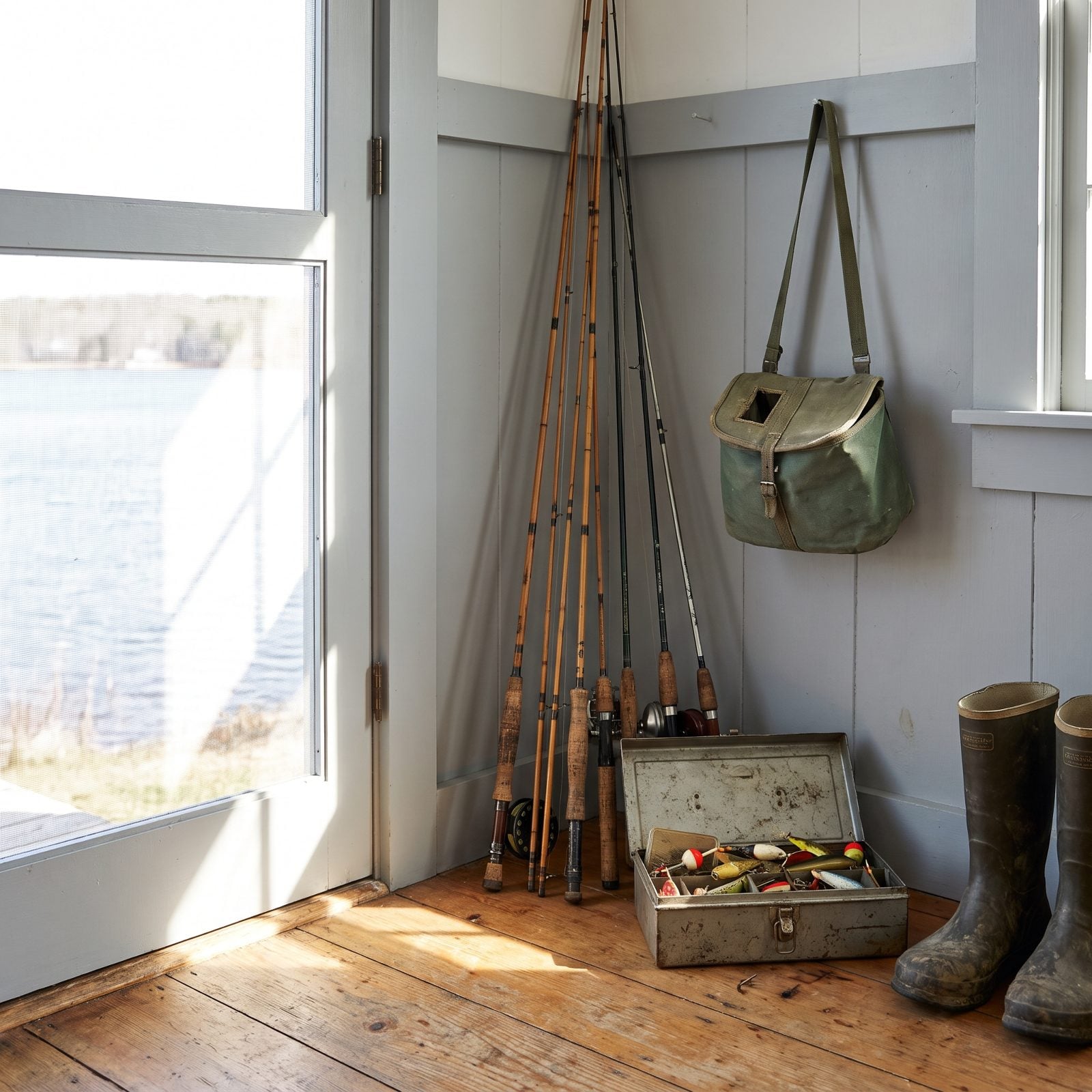
Not stored. Not organized. Leaning. The rods lived by the door so you could grab one on the way out if the water looked right, and at a real fishing cottage the water always looked right around six in the evening.
Modern lake houses give you a garage with pegboard and labeled hooks. Tidy, sure. But a rod propped in the corner says someone actually fishes here, and that’s a different kind of welcome than a clean mudroom. The tangled line and the dusty tackle box are proof of life.
15. A Spring-Fed Well House Out Back
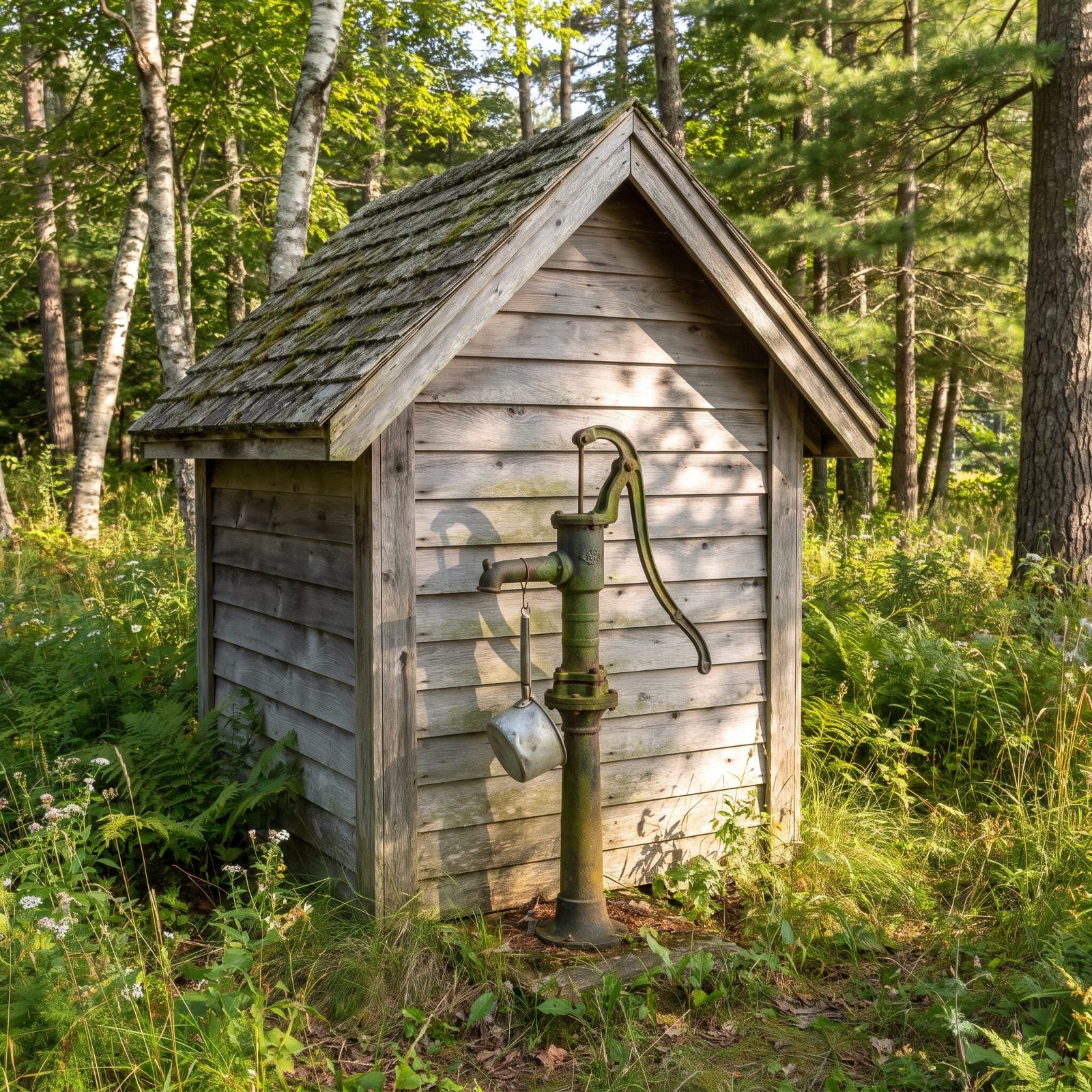
Cold water, no electricity, straight from the ground. A spring-fed well house was the original refrigerator at a lot of old cottages, and the water tasted like minerals and rock in a way bottled water spends millions trying to fake.
You’d set a watermelon down in the cool, or a few bottles of soda, and let the well house do the rest. Modern places tie into a municipal line or a drilled well with a pump you never see — more reliable, less character. I’ve drunk from a hand pump on a hot August afternoon and I promise you the tap can’t touch it.
14. An Outhouse Down a Worn Dirt Path
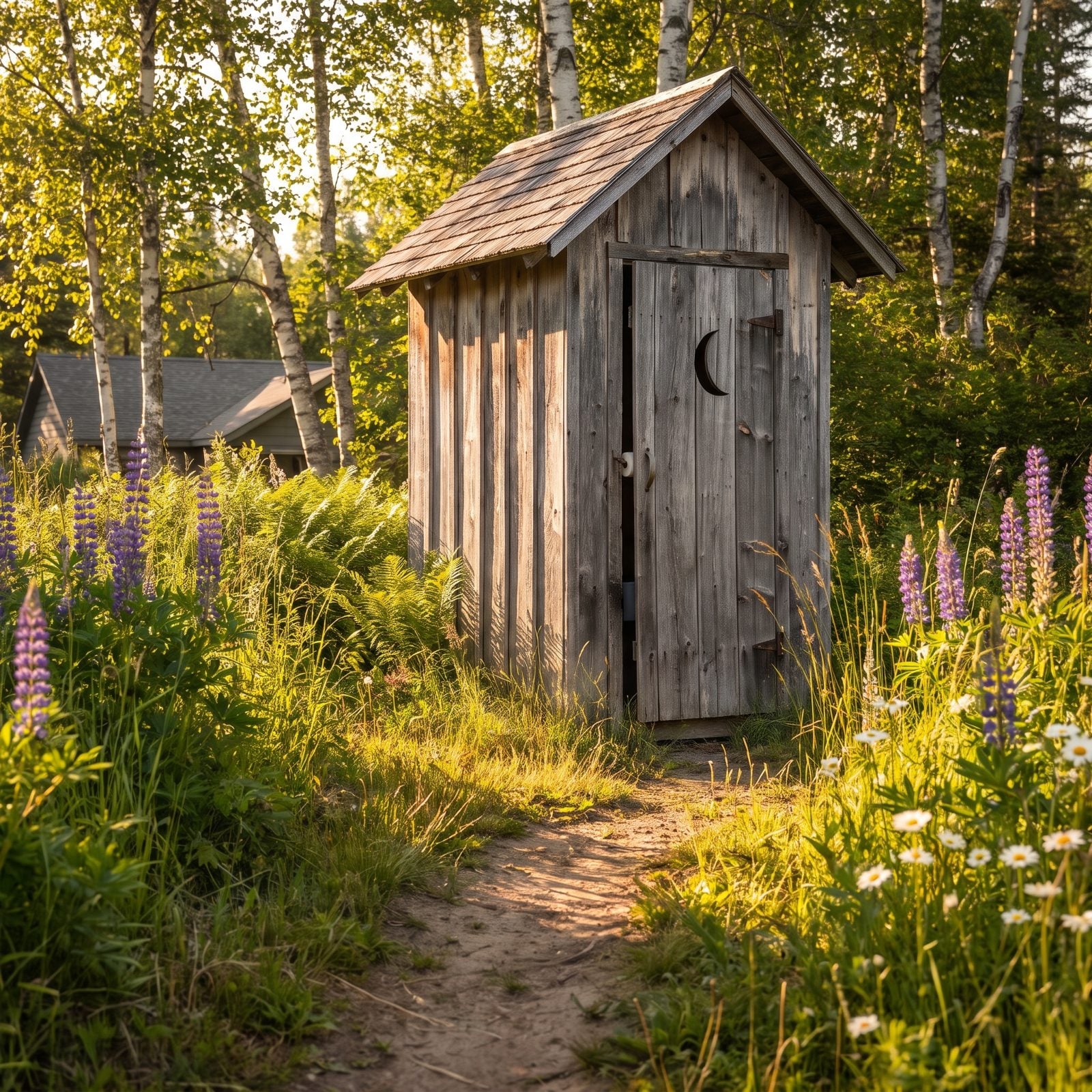
Nobody misses the midnight walk in the rain. I won’t pretend otherwise.
But the outhouse was real, and it taught a generation that comfort isn’t the whole point of being somewhere good. You’d walk the path with a flashlight, hear the loons, maybe catch the stars with no porch light to drown them. Indoor plumbing was the best upgrade any cottage ever got, and I wouldn’t go back. Still, the crescent-moon door is a piece of lake history worth a photo, even if you’d never trade your bathroom for it.
13. A Rope Swing Slung From a Lakeside Oak
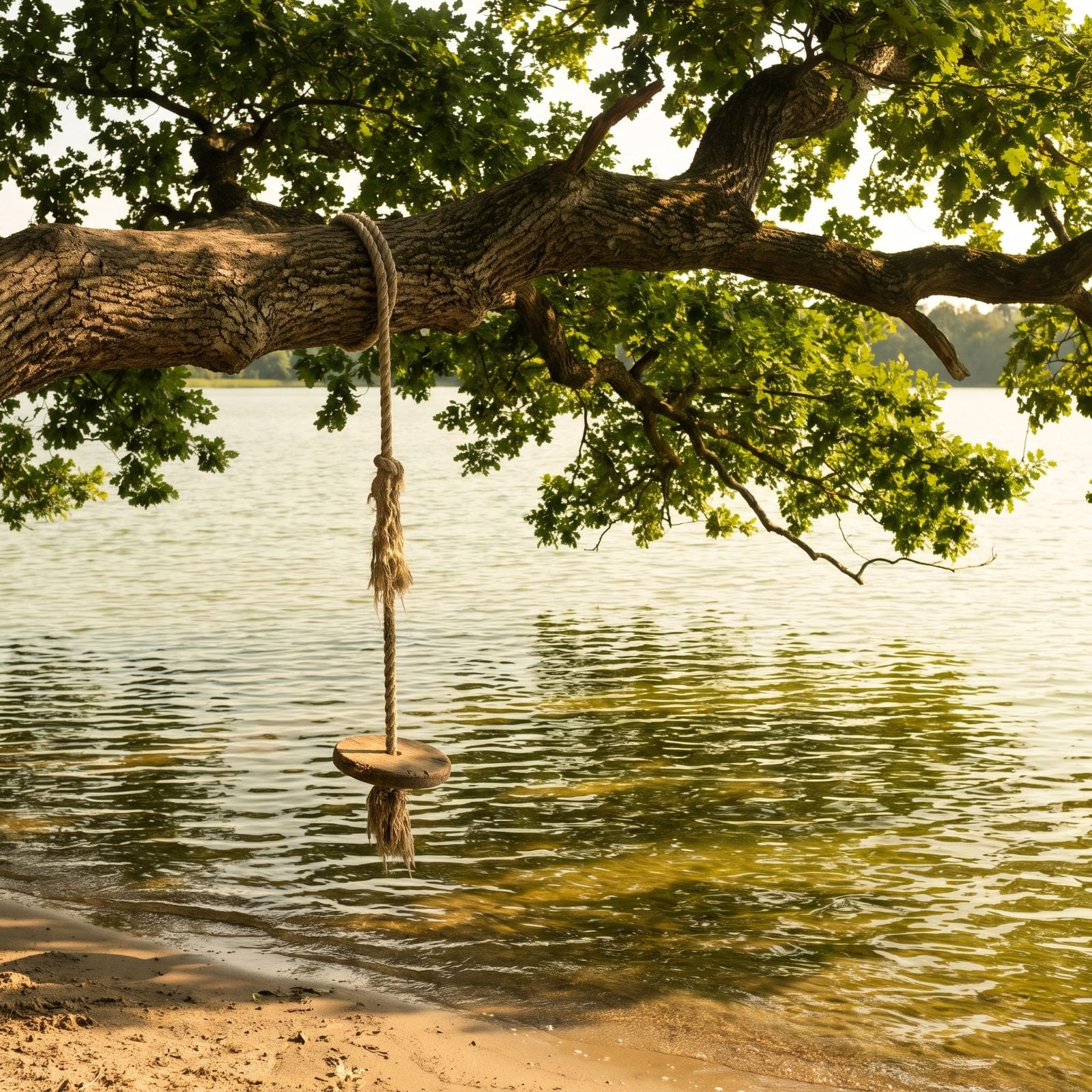
Find the right branch, throw a rope over it, tie a knot you trust. That was the whole project, and it produced more joy per dollar than anything a landscaper will ever install.
The modern version is a bolted dock slide with a weight rating and a warranty. Fine. Safe. Forgettable. A rope swing on an old oak taught you to judge the water depth yourself, to time your drop, to let go at the top of the arc. Pick a strong, healthy branch, check your knots often, and know the water below before anyone swings.
12. Hand-Sewn Quilts Thrown Over Iron Bed Frames
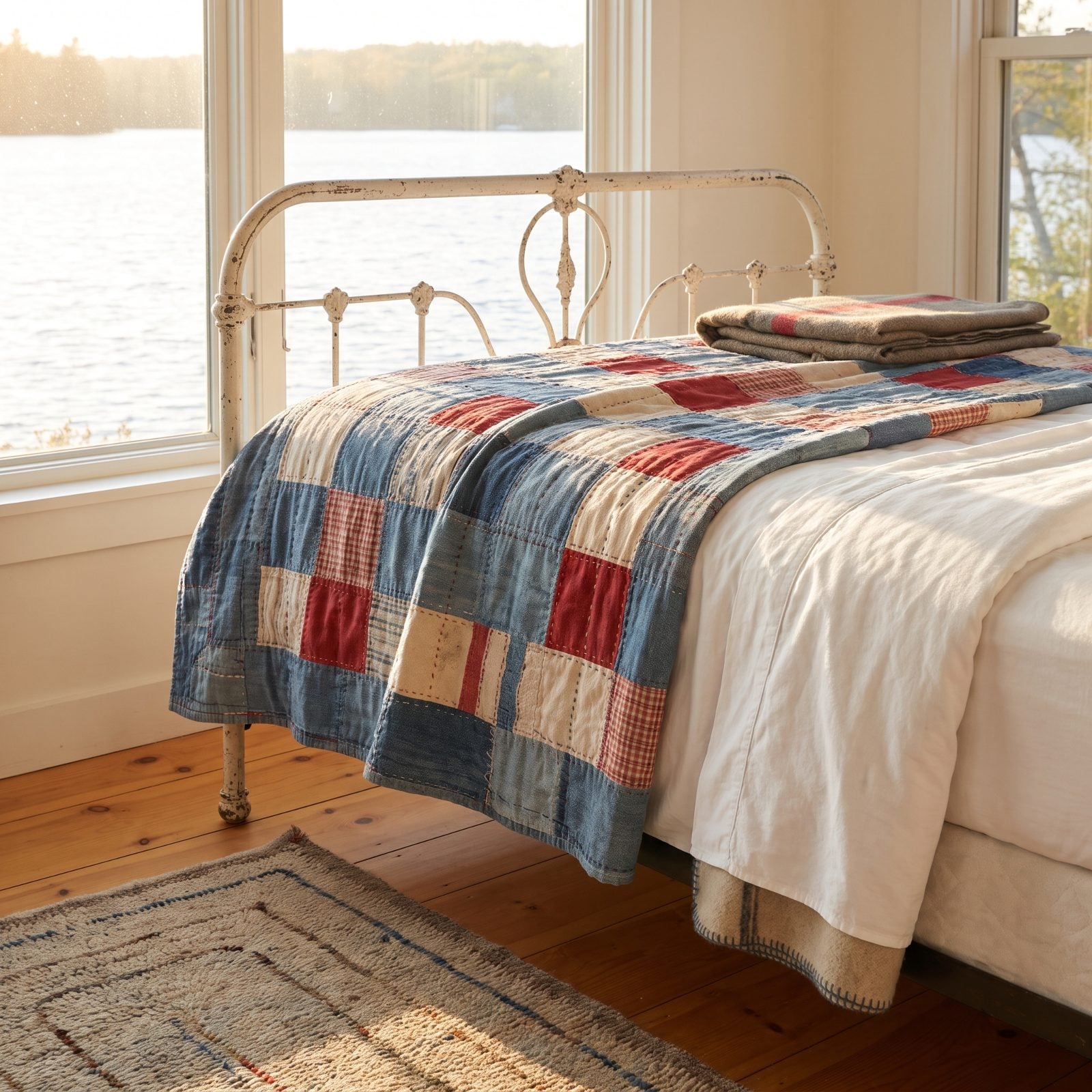
Someone’s grandmother sewed that quilt by hand over a winter, and the slightly crooked stitching is the whole point.
Machine-made duvets are uniform and warm and completely anonymous. A hand-sewn quilt carries scraps of other things — an old dress, a worn shirt, a flour sack — pieced together into something that keeps you warm on a cold lake morning. On a white iron frame by an open window, with the loons starting up across the water, it’s the most honest bed you’ll ever sleep in.
11. A Screened Dining Porch Right Over the Water
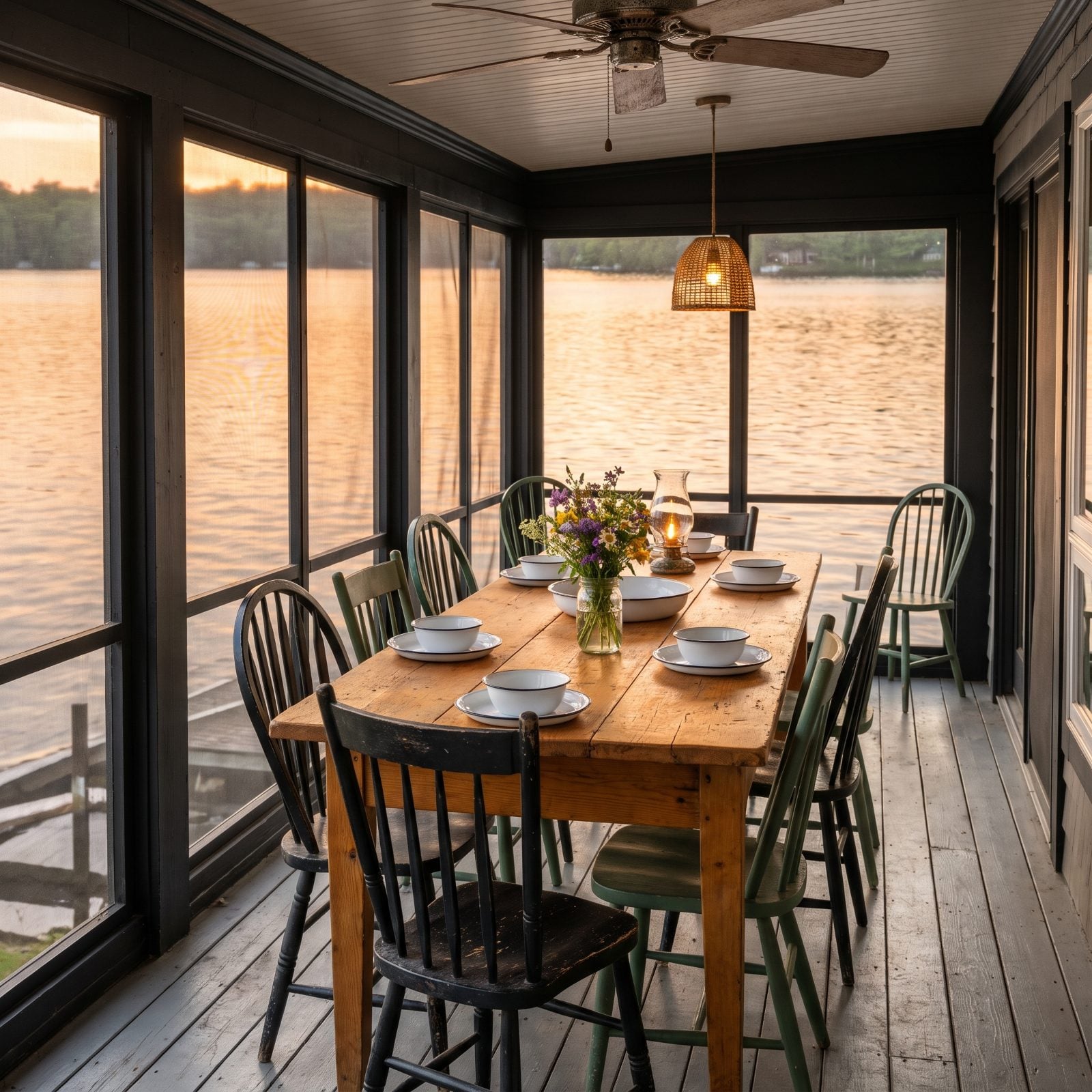
This is the one I’d fight to keep. A screened dining porch over the water is the best room in any cottage ever built, and modern lake houses keep swapping it for a sealed glass sunroom that misses everything that made it good.
You want the breeze off the water. You want to hear the waves slap the dock while the bugs stay outside where they belong. Dinner on a screened porch at golden hour, with a jar of black-eyed Susans on the table and the lake turning orange, beats any climate-controlled great room I’ve ever stood in.
A screen is a wall that lets the lake in. Glass just gives you a nice view of what you’re missing.
If you build nothing else from this list, build the porch. Deep eaves, good screens, a table long enough for whoever shows up. You’ll eat every meal out there and wonder why you ever considered anything else.
10. Window Screens With That Rusty, Summer-Smell Metal Mesh
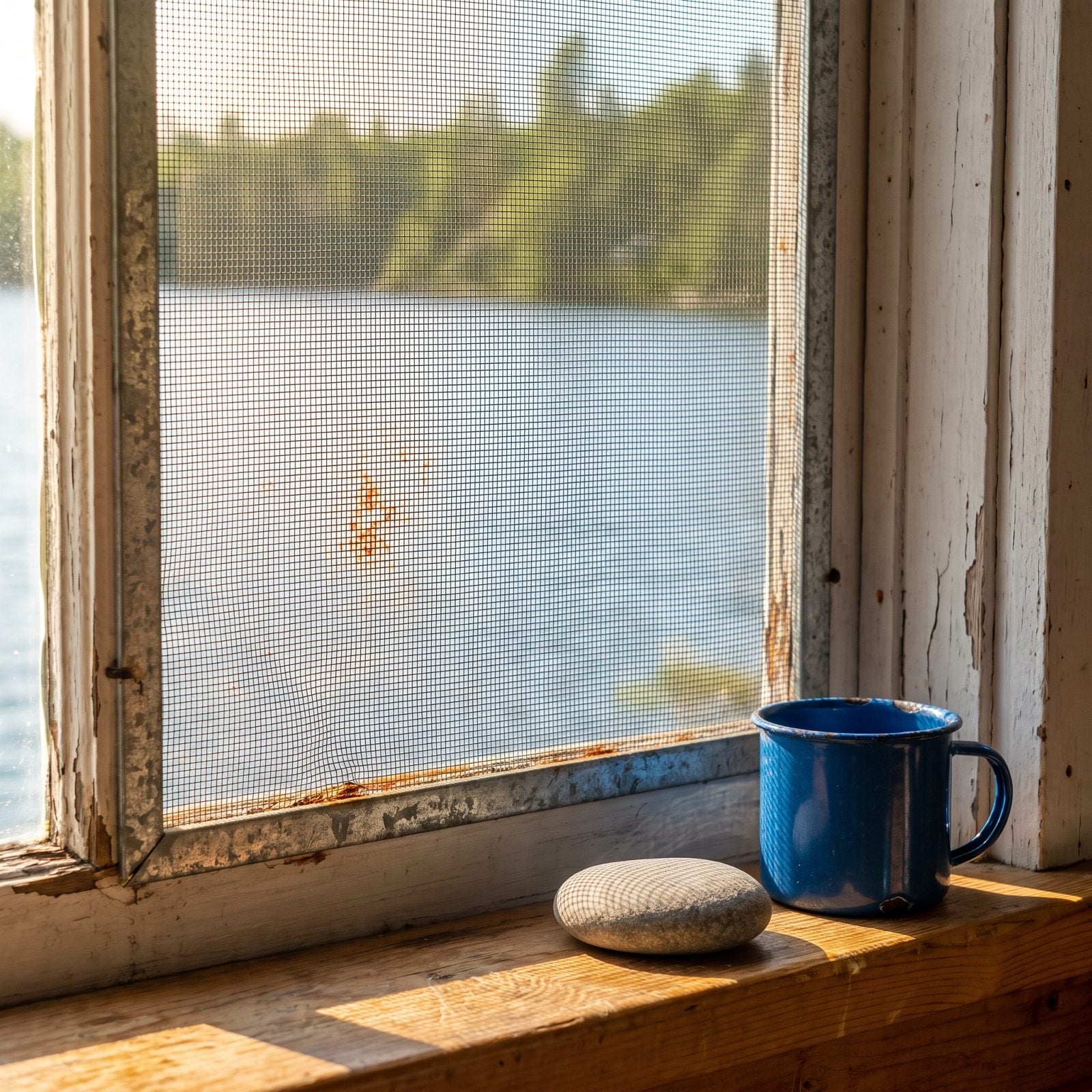
You never forget the smell — warm metal, a little rust, a little lake. The old screens weren’t aluminum. They were galvanized steel, and after a few summers of rain and humidity they oxidized into that faint tin-and-copper scent that hit you the second you leaned on the sill to watch the water.
Modern screens are fiberglass or coated aluminum. They last longer, they never rust, and they smell like absolutely nothing. That’s the trade: cleaner, quieter, and missing the one sensory cue that told a kid summer had officially started.
9. A Guest Book Thick With Decades of Visitors’ Scrawl
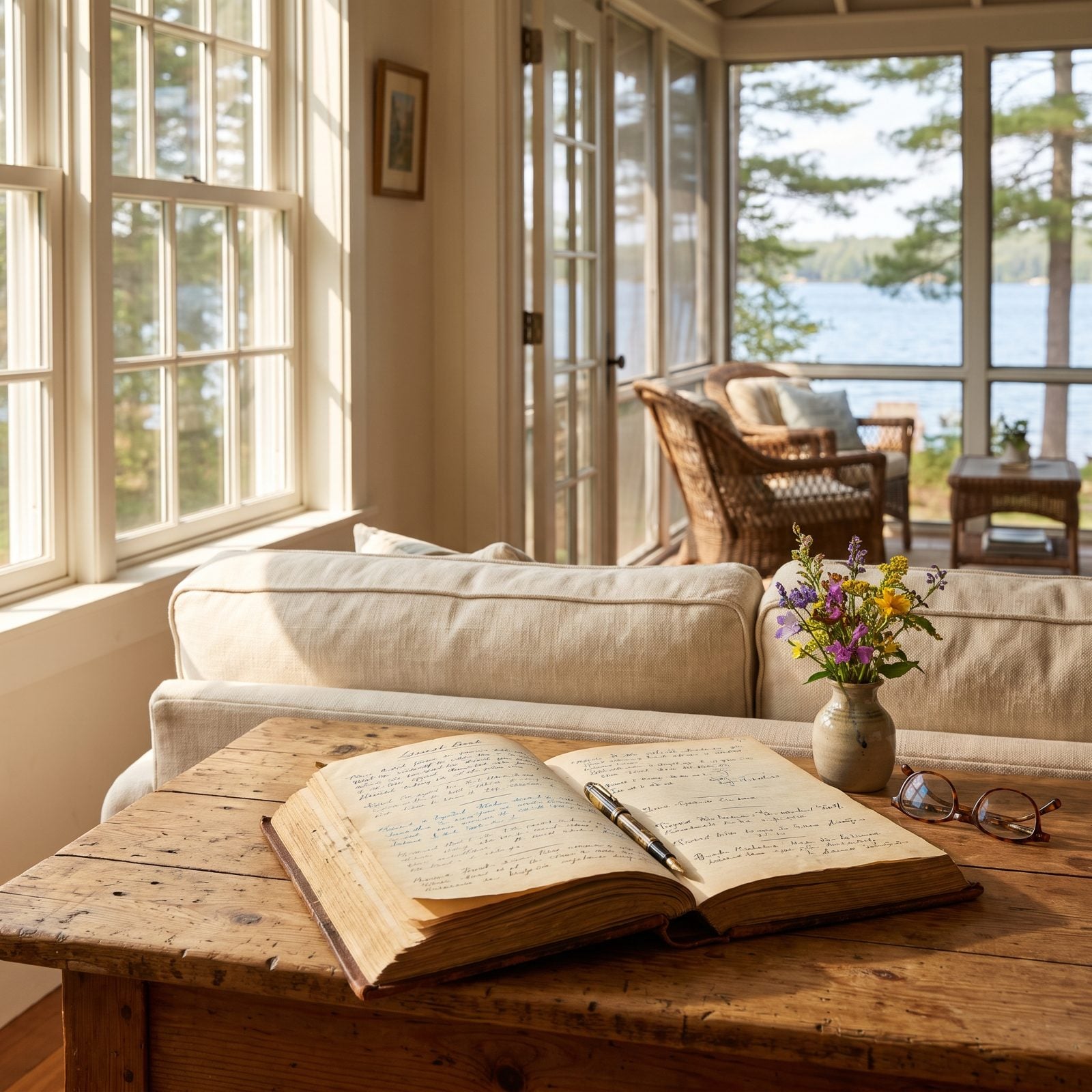
Every cottage worth its salt had one — a fat leather book on the hall table where anyone who stayed the weekend signed their name, the date, and usually a line about the weather or the fish that got away.
Flip back far enough and you find handwriting from people long gone, kids who are now grandparents, a wedding party, a thunderstorm in August of some year nobody else remembers. A whole run of ordinary happiness, written in a dozen different pens.
We don’t keep them anymore. The record lives on phones now, scattered across a hundred camera rolls nobody will ever scroll through together. Start a paper one this summer. It costs next to nothing and it outlives the cloud.
8. A Wooden Rowboat Tied Off at a Crooked Dock
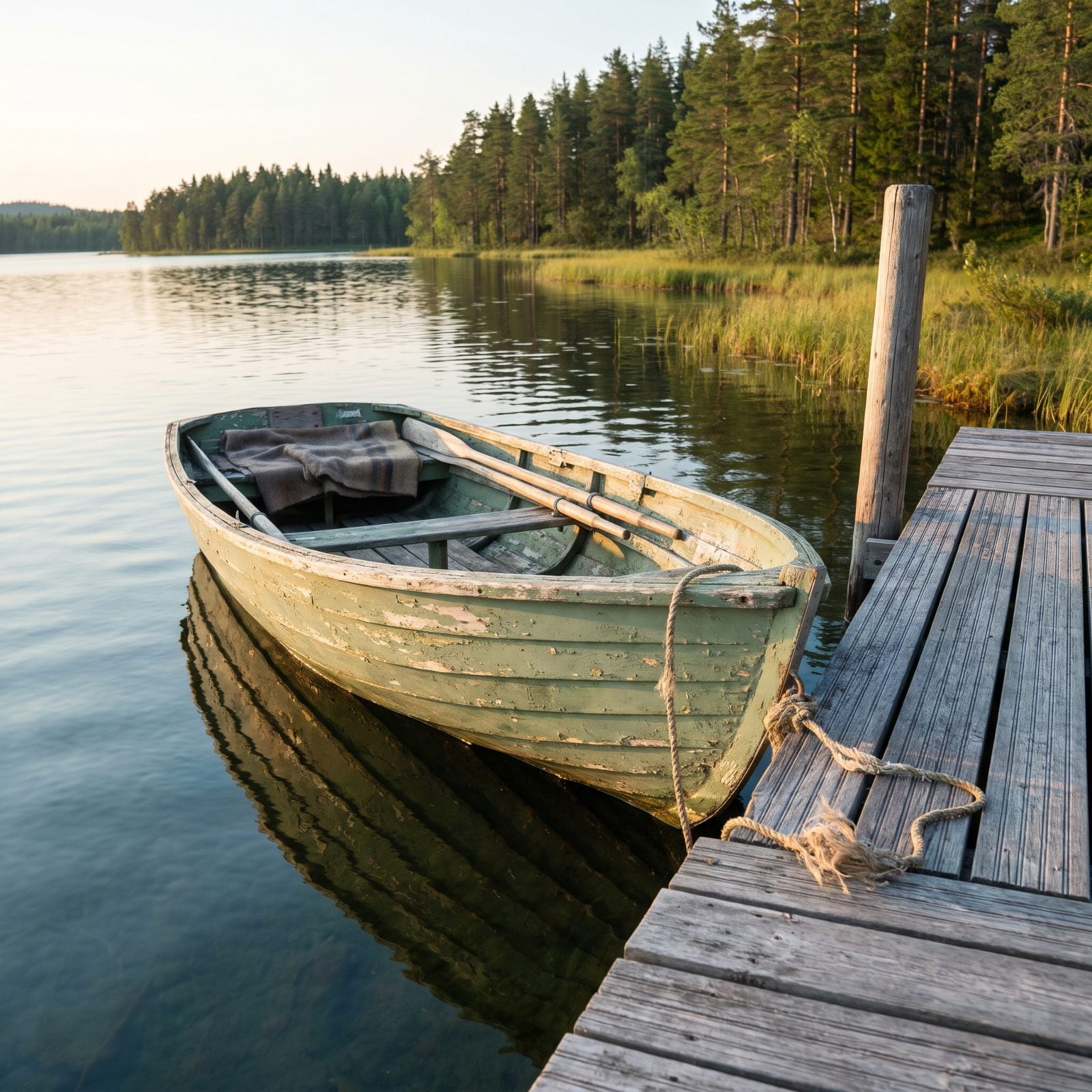
A good wooden rowboat moves different than an aluminum one — heavier, slower, quieter, no banging and booming with every little wave. It just sits there glowing in the water and makes you feel like you’re borrowing somebody’s childhood.
The catch is maintenance. Wood soaks, swells, needs scraping and varnish and the occasional plank. Most people gave up and bought the aluminum job you can drag up on the rocks and forget, and honestly, who can blame them? But a cedar rowboat tied to a leaning dock is still the prettiest thing on any lake, and it rows like a dream once you learn not to fight it.
7. A Clothesline Strung Between Two Birches
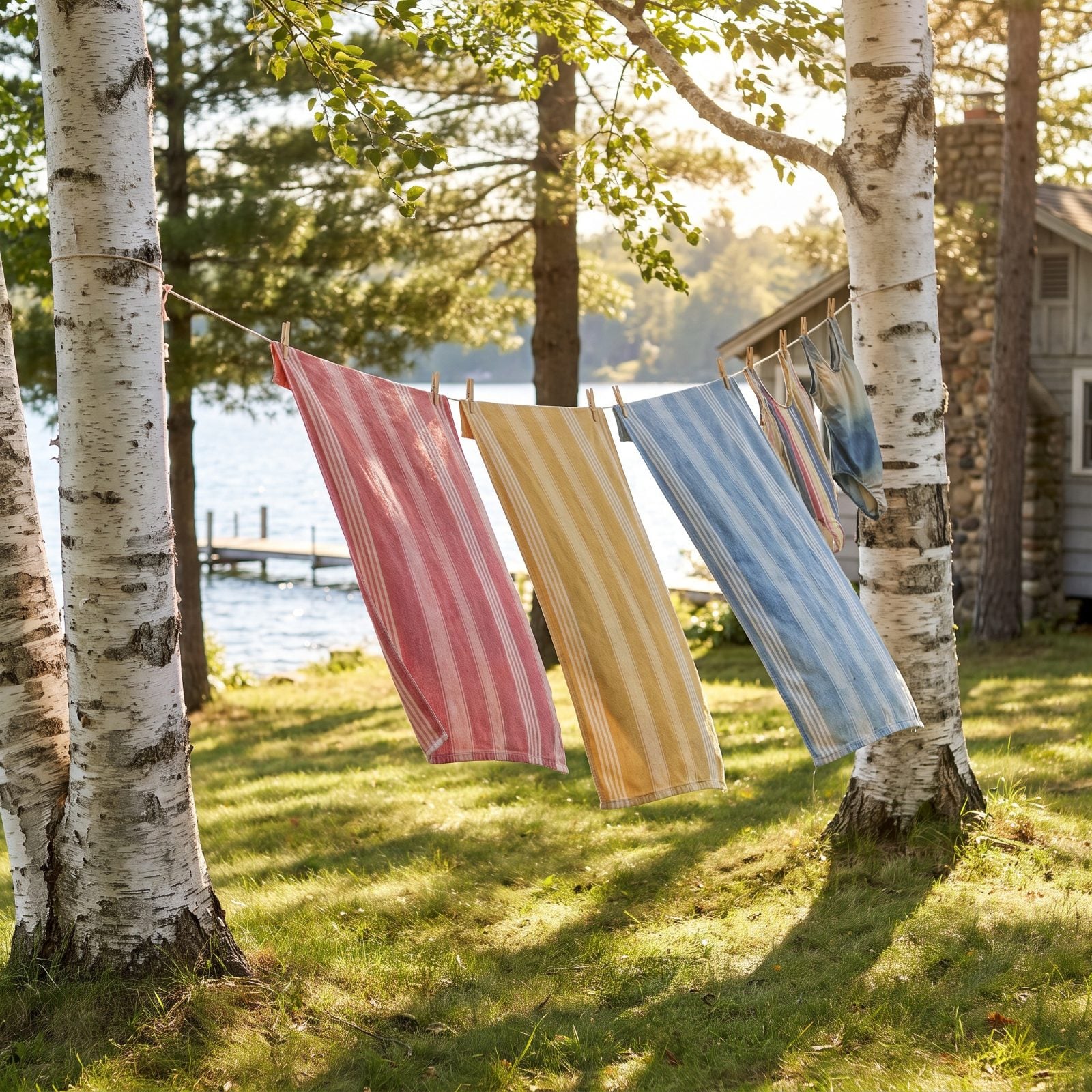
Nothing dries a swimsuit like the sun and a breeze off the water. Nothing. The dryer makes towels fluffy and lifeless, but the line gives them that smell of warm cotton and lake air and the slight crisp you only get outdoors.
6. A Sun-Bleached Cedar Canoe Resting Under the Eaves
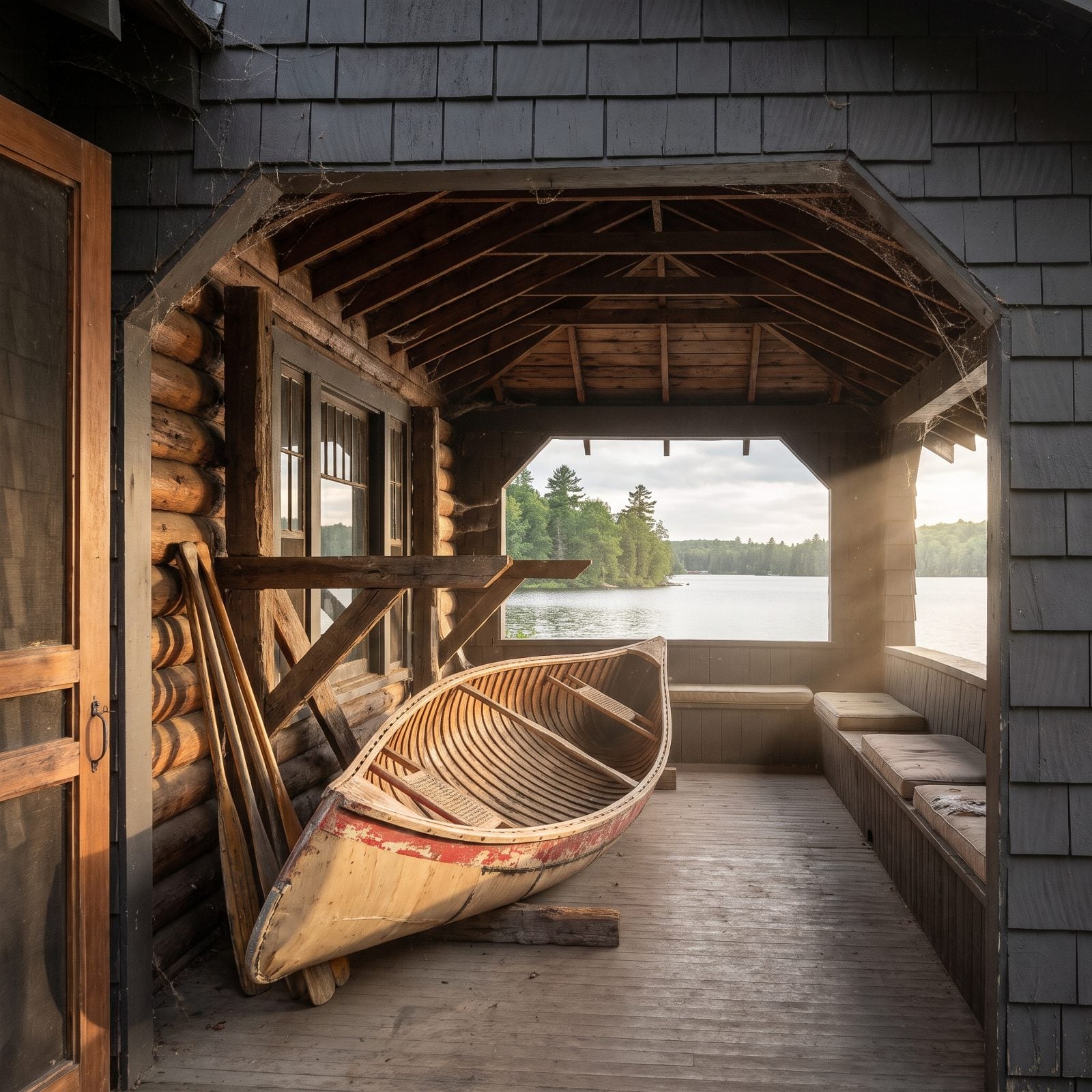
Tucked up in the rafters or hung on the porch wall, the old wood-canvas canoe waited out the off-season like a sleeping animal. By August the sun had faded the varnish to a pale honey and the canvas smelled of linseed oil.
Today’s canoes are Kevlar and plastic — light enough to carry one-handed, tough enough to bounce off a boulder. Smart boats. But a wood canoe has a hush to it on the water that no polymer hull will ever manage. It flexes. It feels alive.
Worth knowing: a well-kept wood-canvas canoe doesn’t come cheap, and it’ll outlive you if you treat it right.
5. A Cedar-Lined Closet That Smells Like the Woods
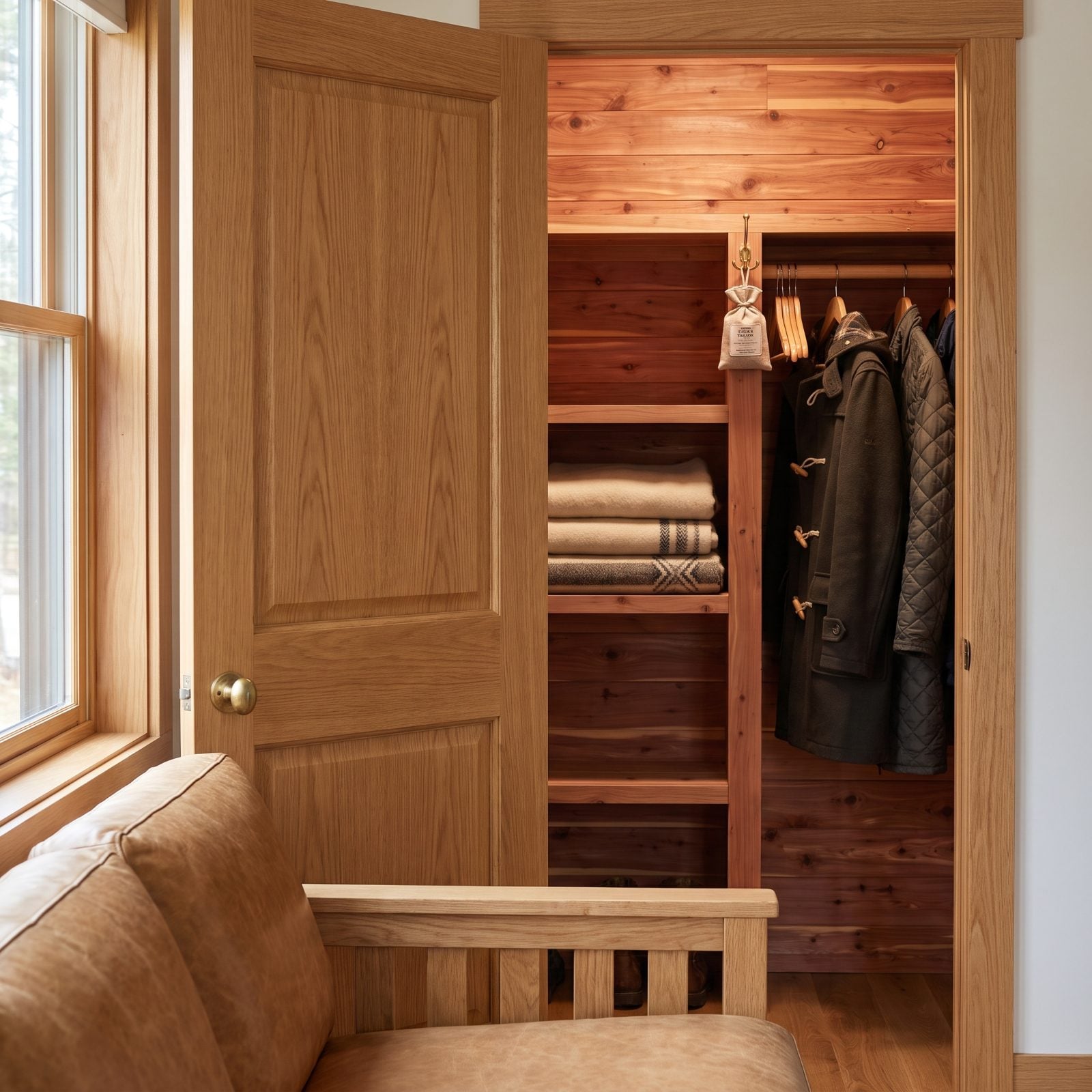
Open the door and the whole woods came out to meet you — aromatic red cedar, lined wall to wall, keeping the moths out of the wool blankets and perfuming every sweater you owned.
Builders skip it now. Cedar’s pricey, and cheaper closet systems do the storage job without the smell. Which is a shame, if you ask me. A cedar closet is one of the few features of an old cottage that works on you without you noticing, every single time you reach for a jacket.
4. A Wood-Plank Swimming Raft Anchored Just Offshore
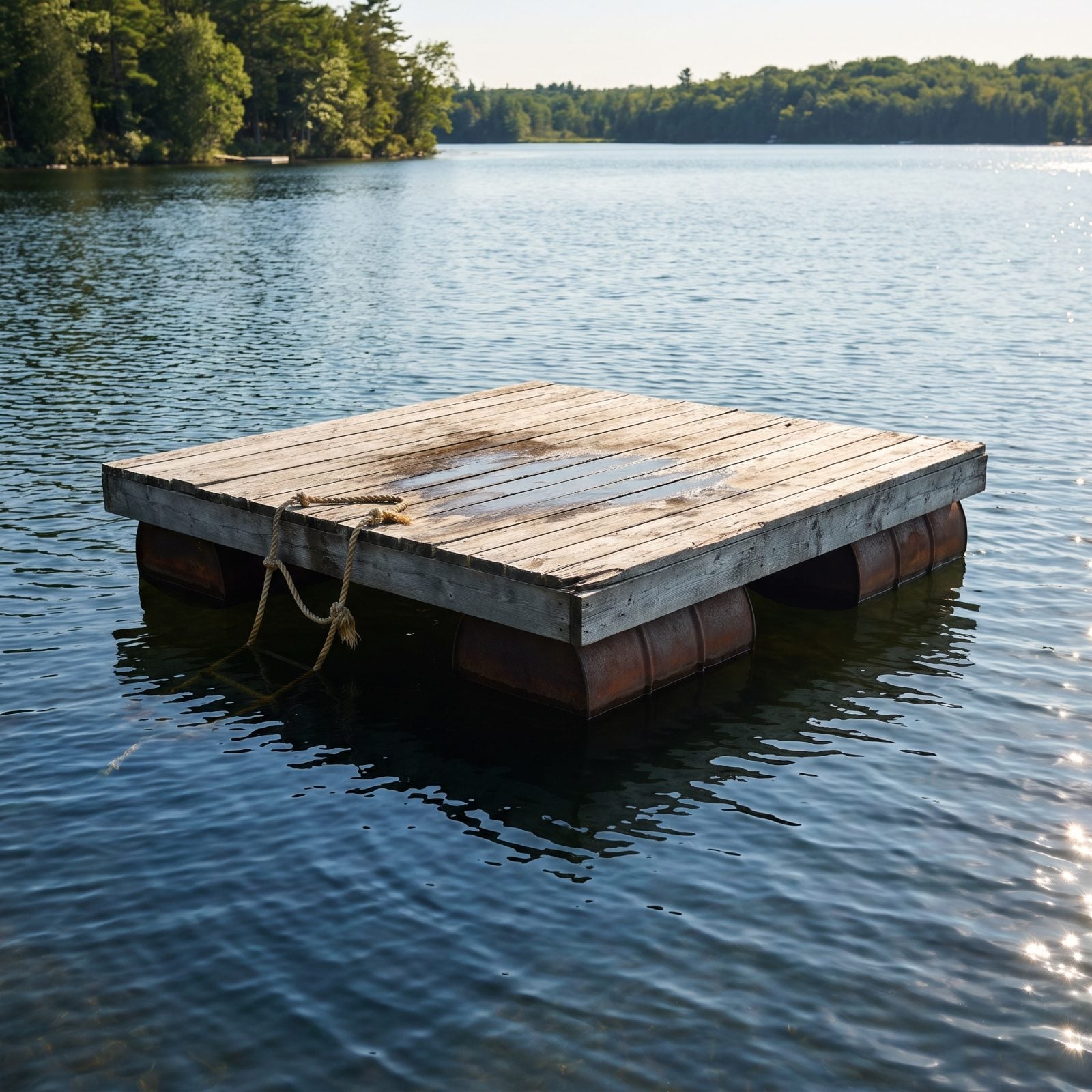
Every lake had one. The wooden raft, floating on rusty oil drums, anchored just far enough out that swimming to it felt like an accomplishment. The planks got hot by noon, and you’d haul yourself up the ladder, lie flat, and feel the whole thing rock when your friend cannonballed off the far corner.
The versions you see today are molded plastic with foam cores, bolted to a mooring, bright and slick and indestructible. Fine for what they are. But the old plank rafts had something the new ones don’t — the soft spot in the decking, the barnacle-cold water on the ladder rungs, the splinter you learned to avoid. They were the social center of the whole shoreline.
3. A Screen Door That Slammed With a Satisfying Bang
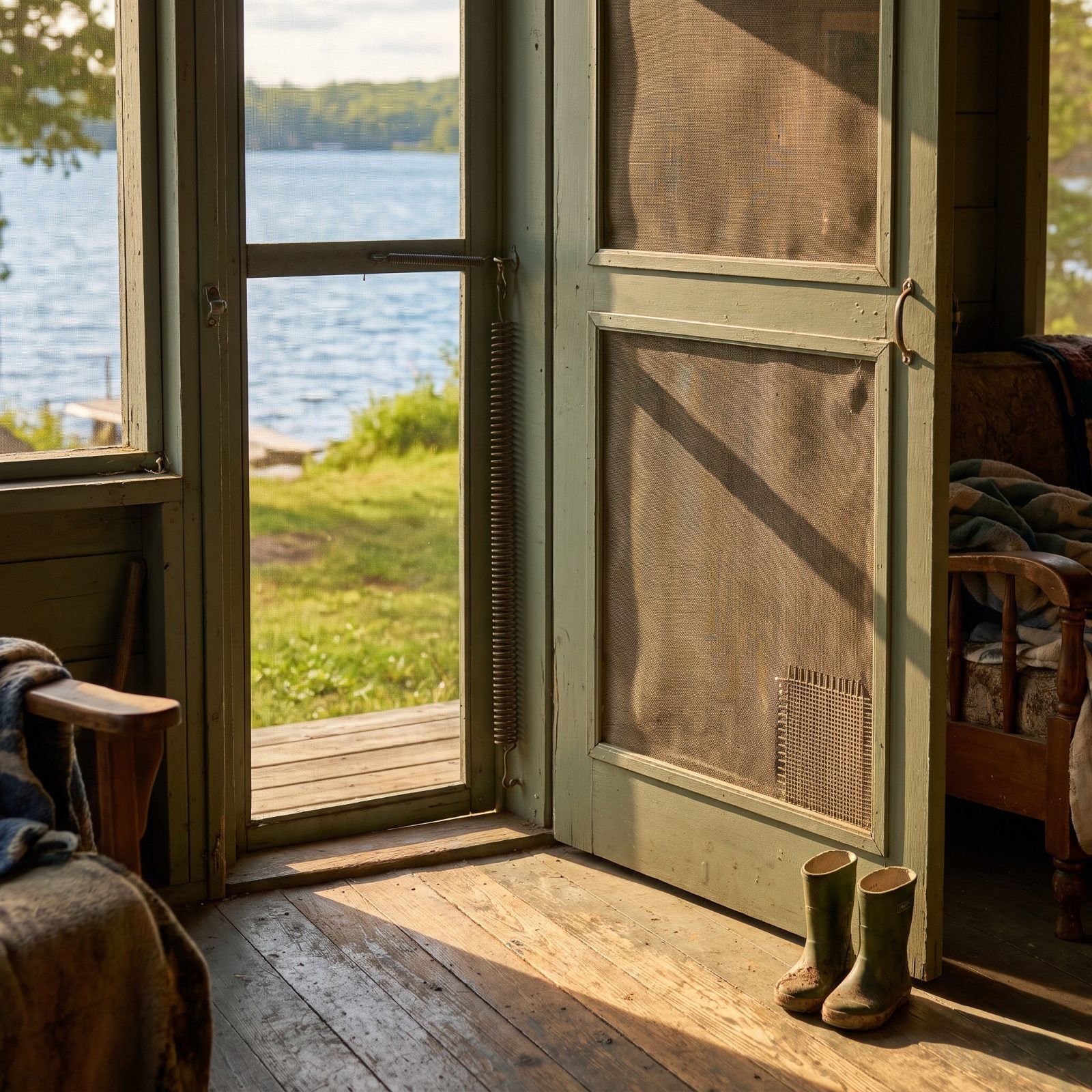
The sound of summer was a wooden screen door hitting its frame. That spring-loaded bang meant somebody was running in soaked from the lake, or running out to beat the rest of them to the boat. You could tell who it was by the rhythm.
New doors have soft-close pneumatic hinges. They ease shut with a polite little sigh so nobody’s startled and nothing gets pinched. Progress, sure. But we traded away one of the best pieces of ambient family music ever made, and nobody asked the kids first.
2. A Boathouse With a Hand-Cranked Winch
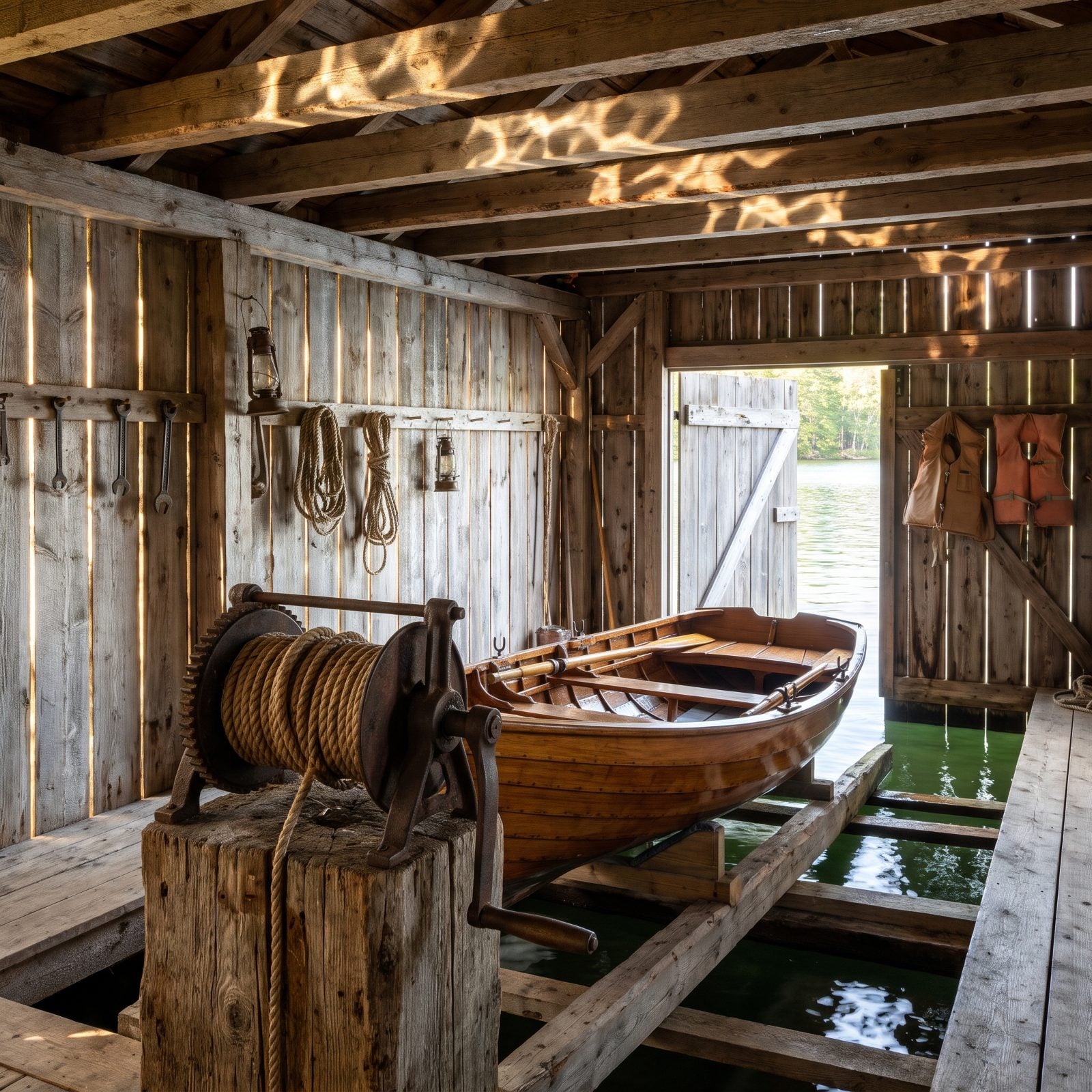
Before electric lifts there was the winch. A cast-iron crank and a drum of rope pulled your boat up the wooden ramp out of the water, one slow turn at a time. You leaned into it, and by the end of the season your arms knew the job cold.
Automated lifts do it now at the push of a button, which is genuinely better for your back and your schedule. No argument there. But a boathouse with light flickering off the water onto the rafters and an old winch ticking on its ratchet is a working building with a soul.
1. A Wringer Washtub Parked on the Back Stoop
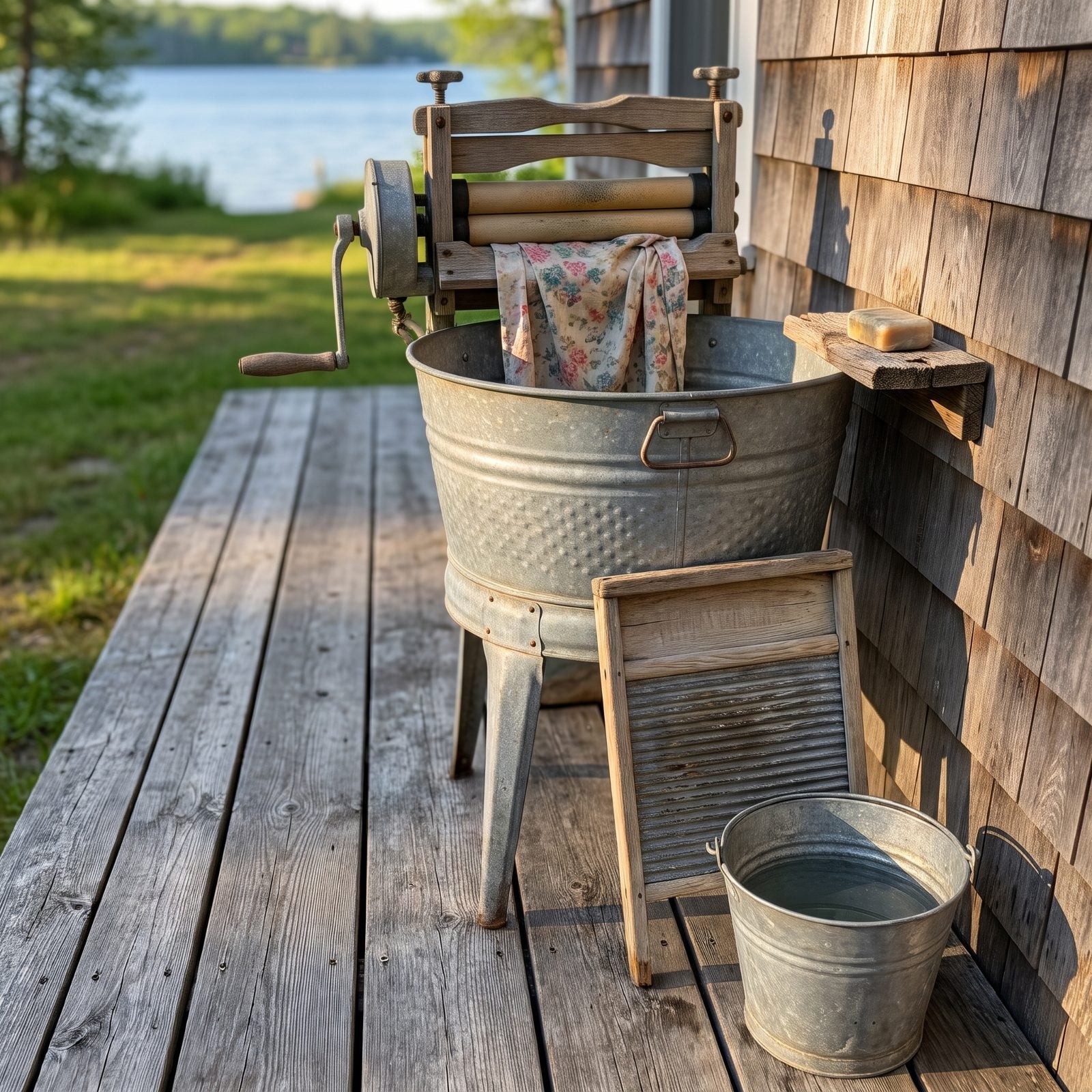
No laundry room out at the lake. There was a galvanized tub on the stoop, a washboard, and a hand-cranked wringer you fed wet towels through until your palms ached. Lake water, a bar of soap, and the clothesline did the rest.
Nobody misses the labor. I wouldn’t trade a modern machine for anything, and I’ll say that plainly. But the wringer tub tells you something about how little those old cottages needed to run — no hookups, no electricity, no monthly bill, just water, sun, and a strong arm. There’s a quiet lesson in that for anyone building a second place on the water today.