
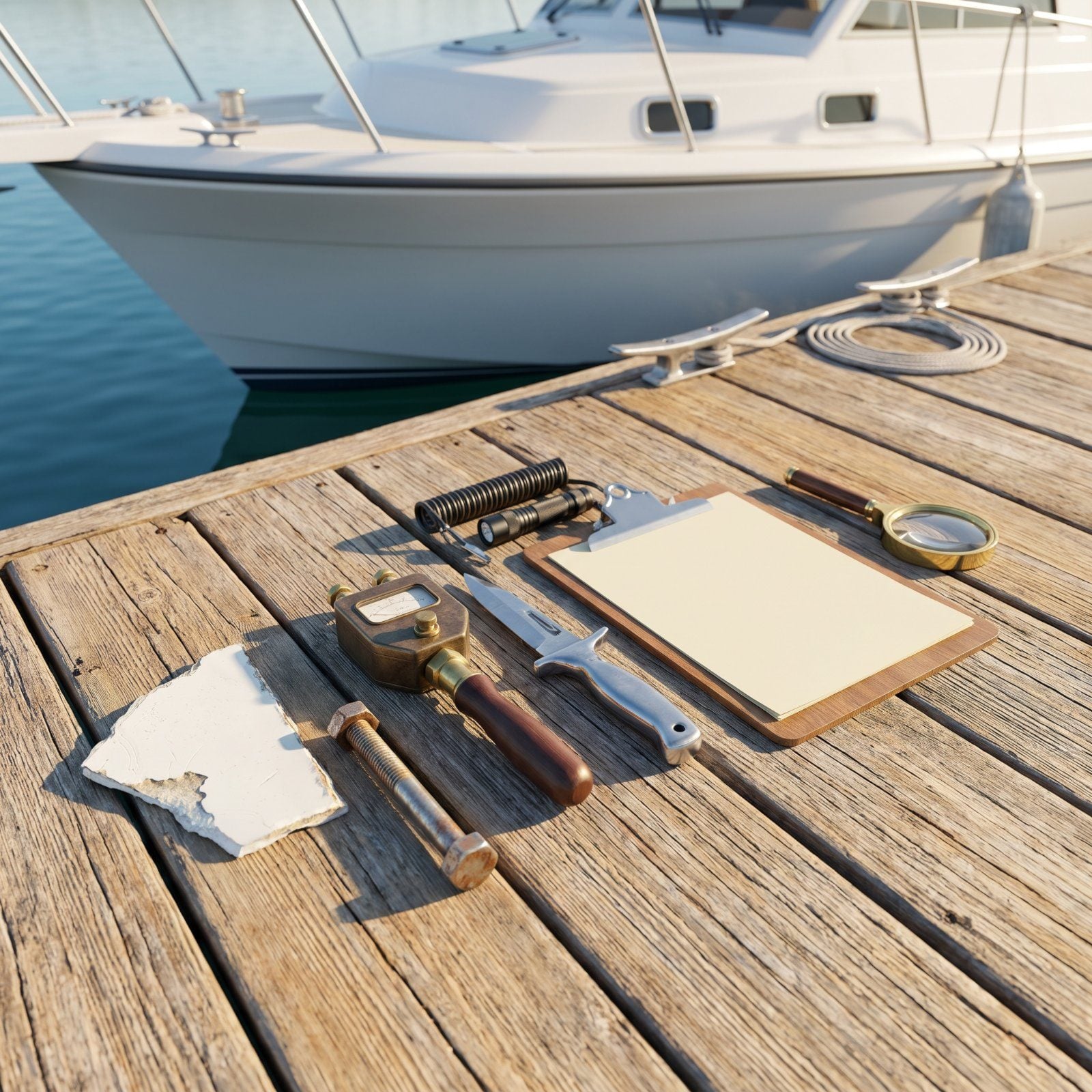
A good surveyor walks the dock before anyone shakes hands — before the paperwork, before the sea trial, before the owner’s cheerful tour. The boat tells on itself if you know where to look, and it tells fast. A warm engine on a cold morning. A hull line that sits wrong. A deck that gives a little underfoot. None of these are deal-breakers by default, but they’re the clues that decide whether you keep writing checks or walk back up the ramp. Here are the ones that make a surveyor slow down and reach for a flashlight.
Please note that some of the imagery in this article may have been enhanced with the assistance of AI.
40. Mismatched Gelcoat That Reveals an Old Repair
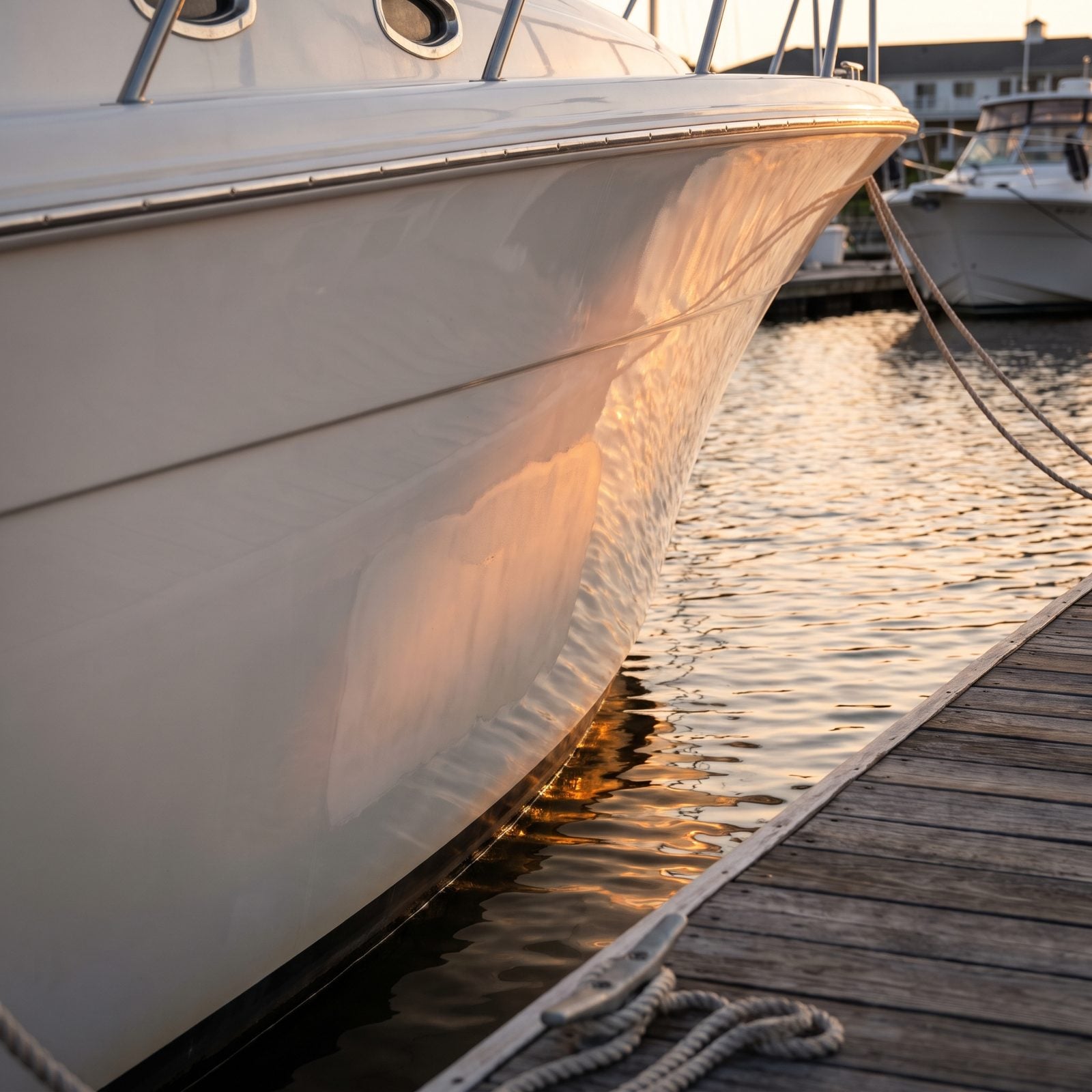
Hold your head low and look down the length of the hull in raking light. A repair you’d never spot straight-on suddenly jumps out — a dull patch, a slightly different white, a halo where the sanding feathered.
Matching gelcoat is genuinely hard, so a visible repair isn’t automatically bad news. It just means something happened there, and your job is figuring out what. A fender-rub ding? Fine. A patch low and forward near the chine, right where a grounding or a hard dock contact would land? Now you’re interested in what’s hiding behind the cosmetics.
39. A Boat Sitting Unevenly on Its Waterline
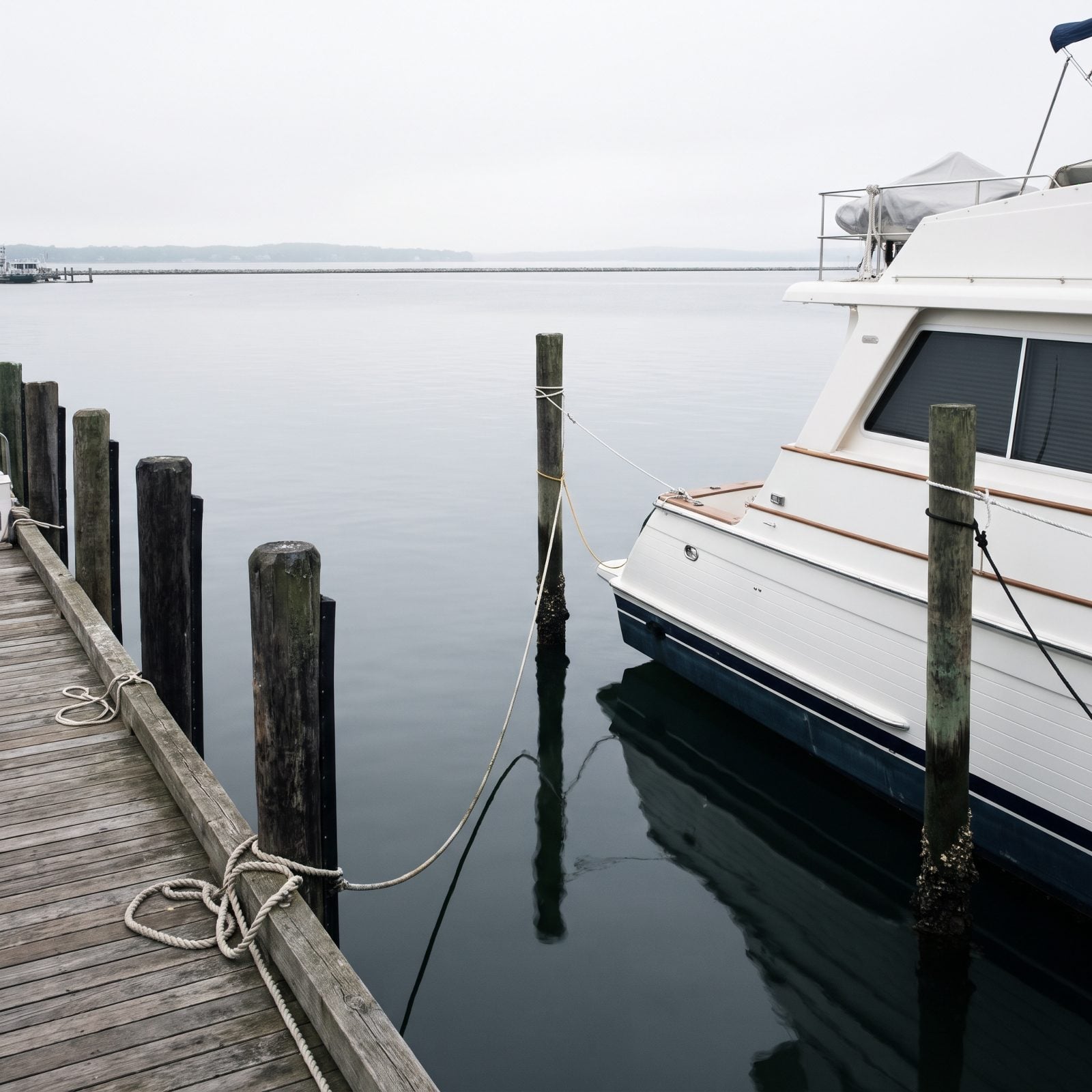
Step back on the dock and read the waterline. A boat that sits low at one corner is telling you where the weight is, and weight you can’t account for usually means water you can’t see.
Could be a soaked stringer. Could be gear piled in one locker. Could be a bilge that doesn’t drain to the pump. Nobody guesses the cause from the dock, but an off-kilter waterline shoves the bilge and the hull cavities straight to the top of the list.
38. The Tell-Tale “Smile” Where the Keel Meets the Hull
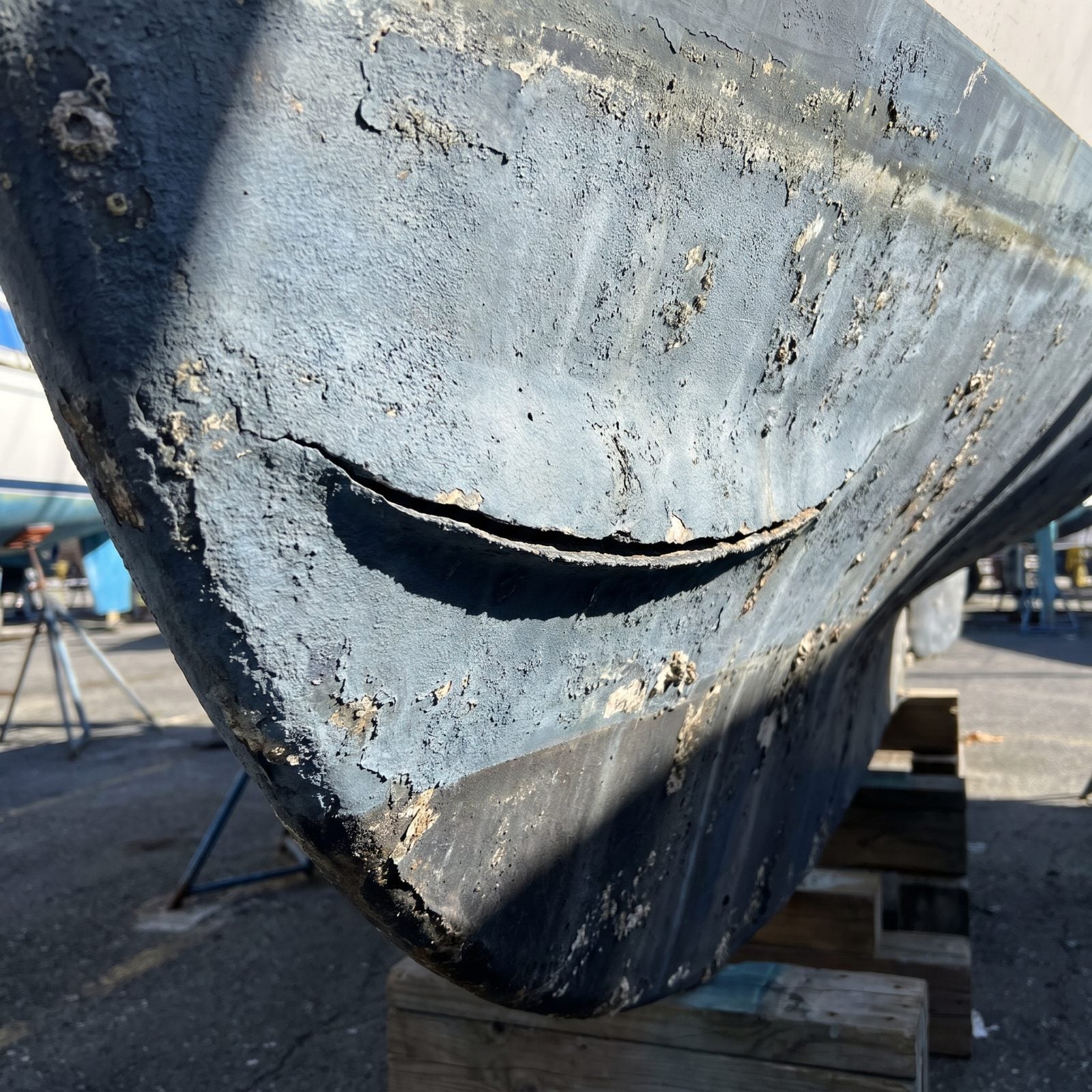
Surveyors call it the smile, and nobody’s happy to see it. It’s a crack that curves along the joint where keel meets hull, sometimes with rust weeping right out of it.
On a keelboat, that line usually means the keel has shifted — a grounding, most often — and the bolts or the fairing have let go. It’s not the end of the world. It’s also not nothing. Fixing it properly means dropping the keel, and that bill climbs fast. See a smile, and you want a surveyor and a yard looking hard before you fall in love with the asking price.
Explaining what a keel smile can mean, a marine surveying practice notes, “In more serious cases it indicates the keel has moved relative to the hull, the bedding has failed, or a grounding stressed the joint.”
37. A Transom That Flexes Under Light Pressure
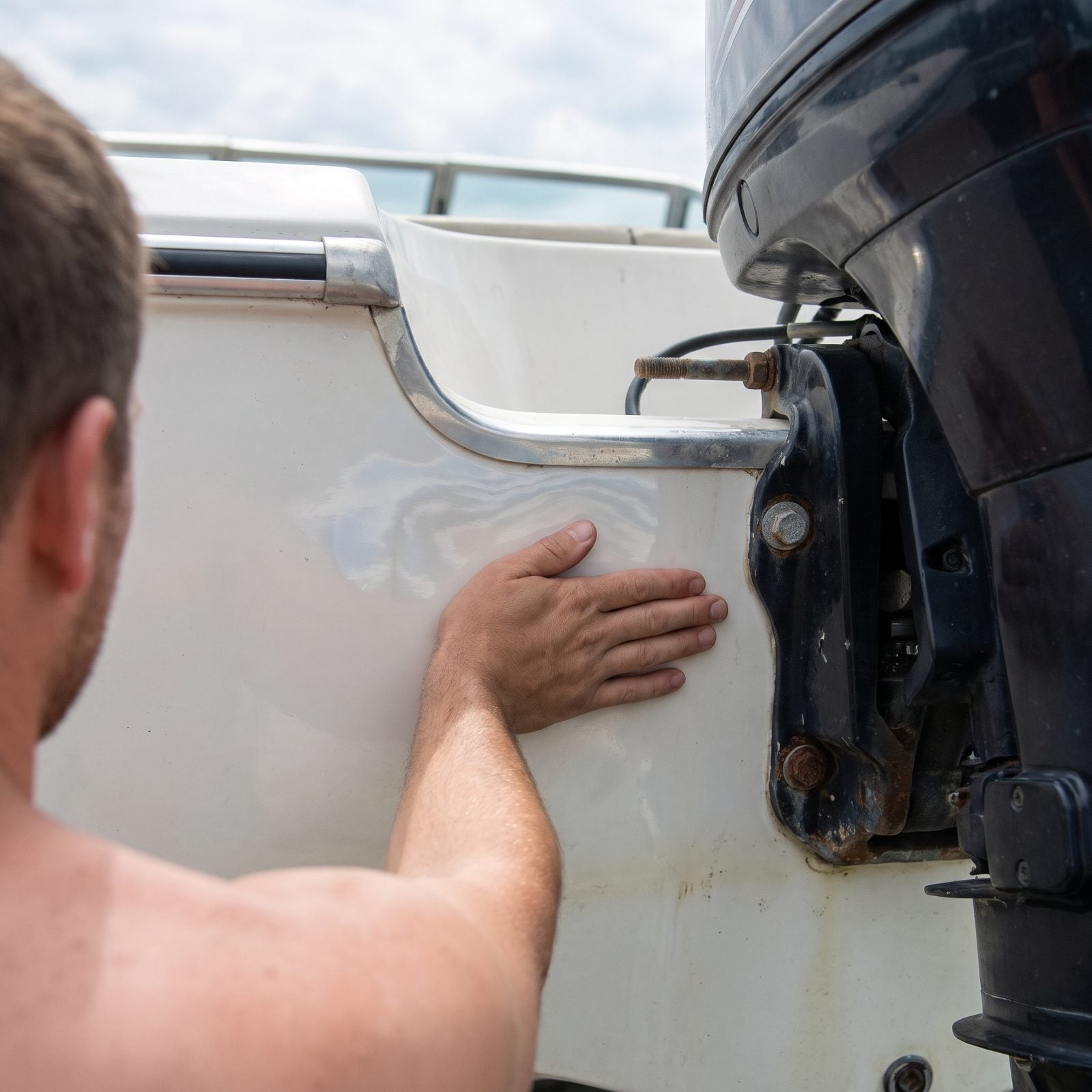
Press firmly on the transom with the flat of your hand, up near where the outboard bolts through. A sound transom doesn’t move. A rotten one gives, just slightly, like pressing on a stale loaf.
The transom carries your engine and takes every bit of thrust it throws. When the wood core inside has gone soft from water tracking in around the mounting bolts, you get flex — and flex on a transom is one of the few things a surveyor will flat-out tell you to fix before the boat leaves the yard. Rust-streaked bolt holes? That’s the giveaway that water’s been getting in for years.
36. Soft Decking Beneath the Surveyor’s Feet
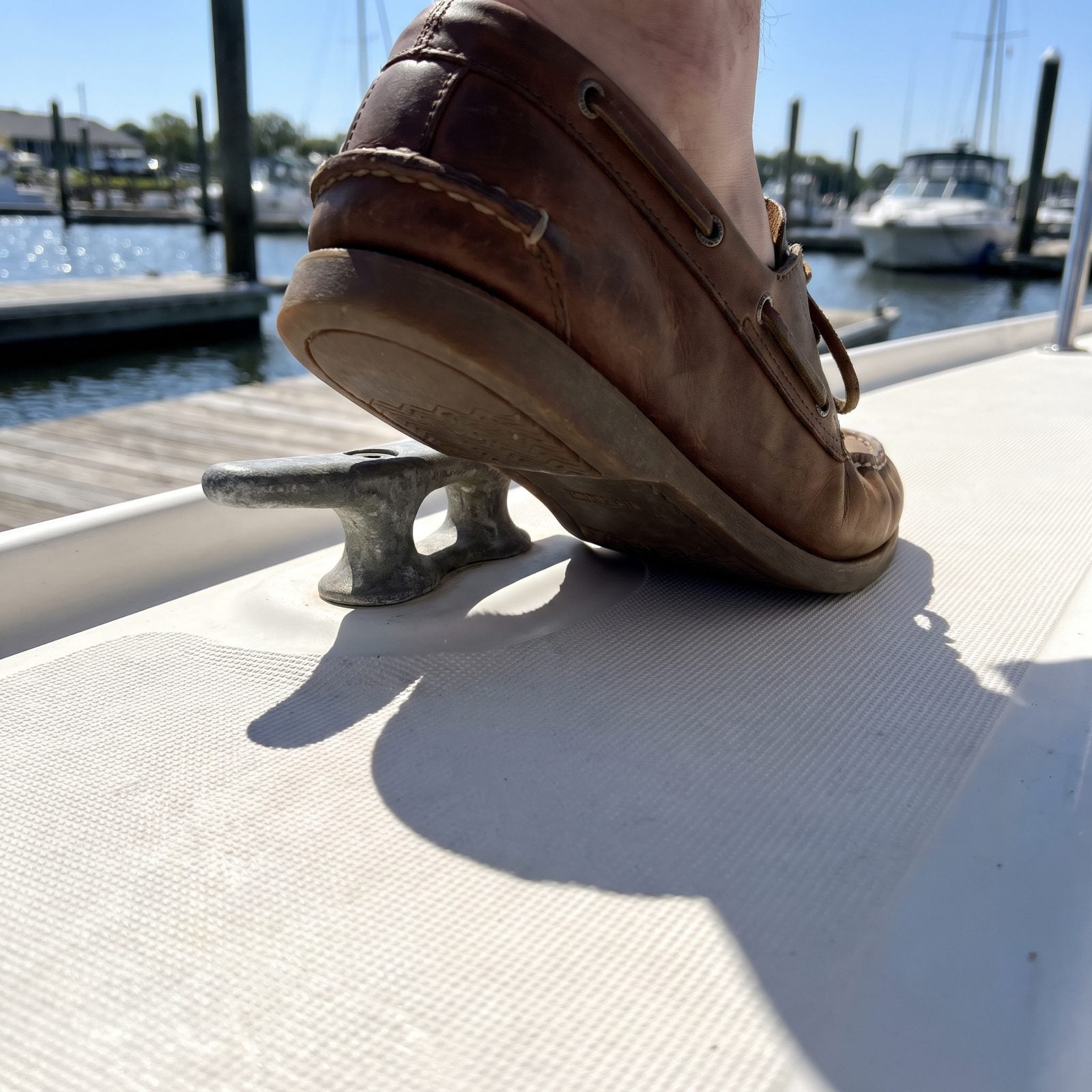
A surveyor walks the whole deck slowly, heel to toe, feeling for the give. Soft spots cluster around hardware — cleats, stanchions, handrails, anywhere a bolt punched through the deck and let water into the core.
Tap a healthy deck with a plastic mallet and it rings sharp. A cored deck gone soft thuds back dull and flat. The rot spreads under the skin for years before anything shows on the surface, which is exactly why the feet find it before the eyes do. And rust tears weeping from a stainless fitting? Usually means water’s been working away underneath it.
35. Clusters of Osmotic Blisters Below the Waterline
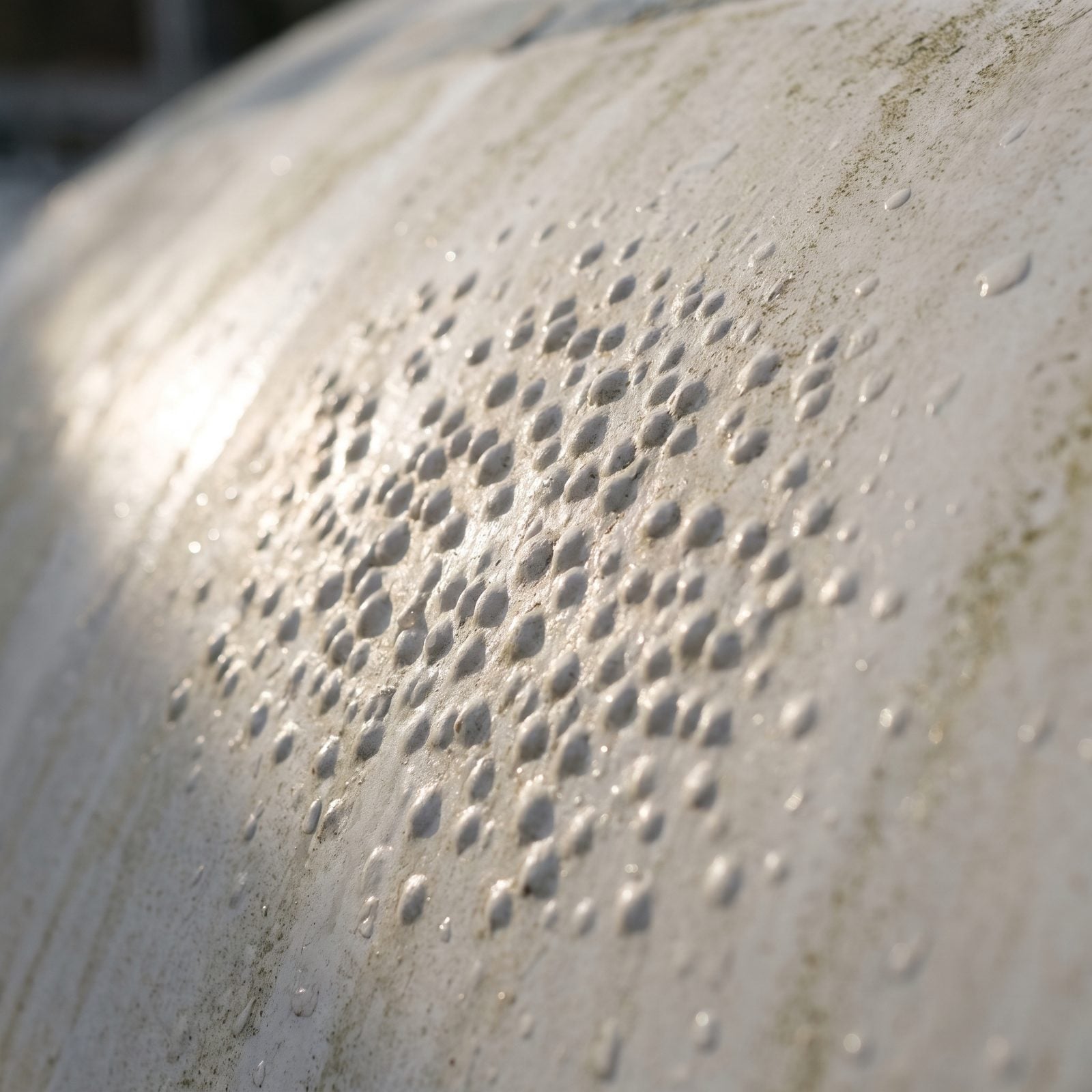
Run your palm along the hull below the waterline after a haul-out. Blisters feel like a bad case of goosebumps — raised bumps where water has worked its way into the laminate and pushed the gelcoat out.
A scattered few on an older boat is common and often minor. Clusters are a whole different conversation. Crack one open, and if it weeps fluid with a sharp vinegary smell, water’s been living in the laminate. A proper blister job means stripping the bottom, drying the hull for weeks, and re-barriering it — a yard bill that blindsides plenty of first-time buyers.
34. Grounding Scars Along the Bottom of the Keel
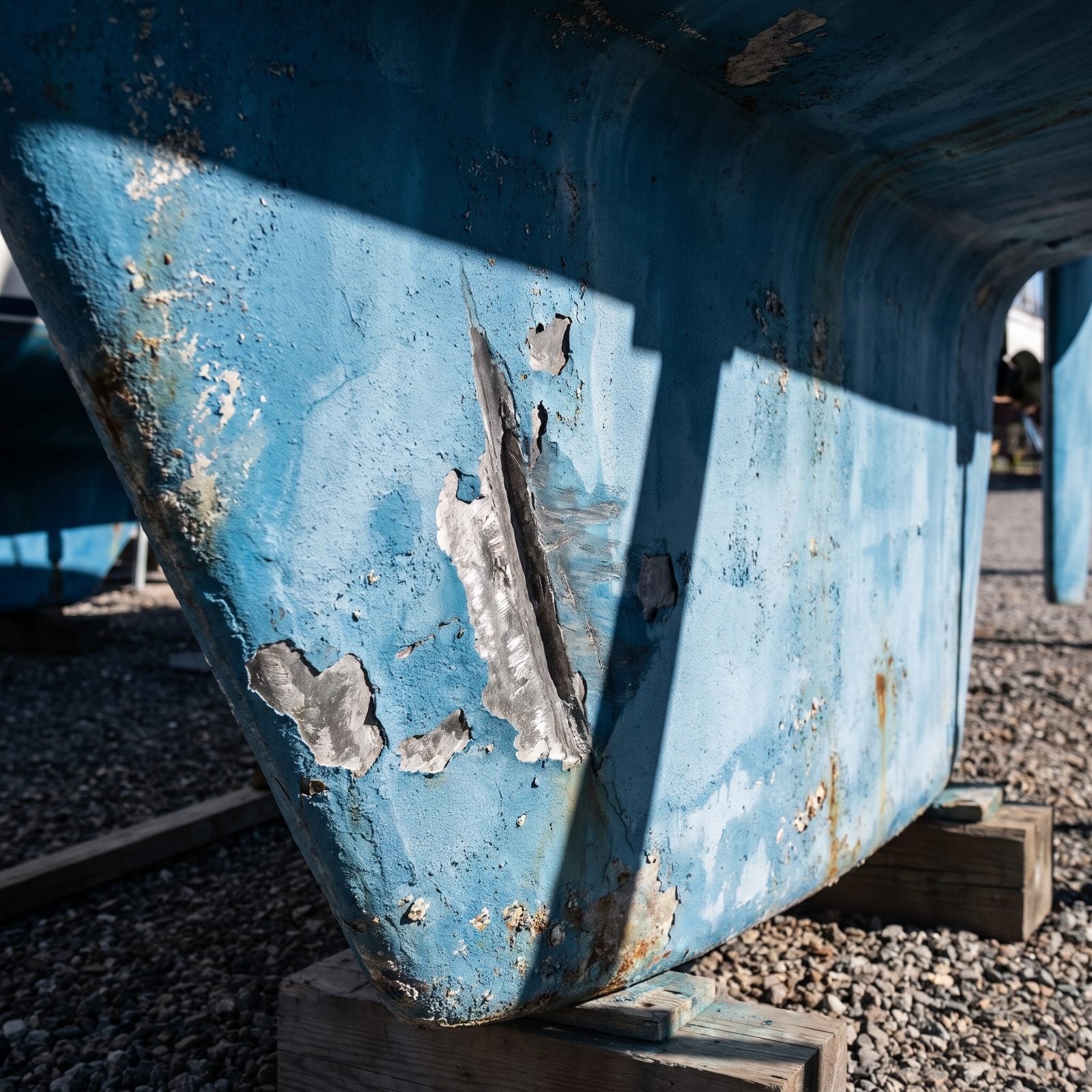
The bottom of the keel is the first thing to meet a rock, and it keeps a record. Fresh gouges, scraped paint, filler that’s a shade off — it all says the boat has touched bottom, maybe hard.
A few battle scars are honest wear. What the surveyor’s really chasing is what a grounding might have done further up: cracked bulkhead tabbing, a stressed keel joint, hairline fractures where the hull absorbed the shock. The scar on the keel is just the receipt. The real question is what that impact cost everything above it.
33. A Hull-to-Deck Joint Beginning to Separate
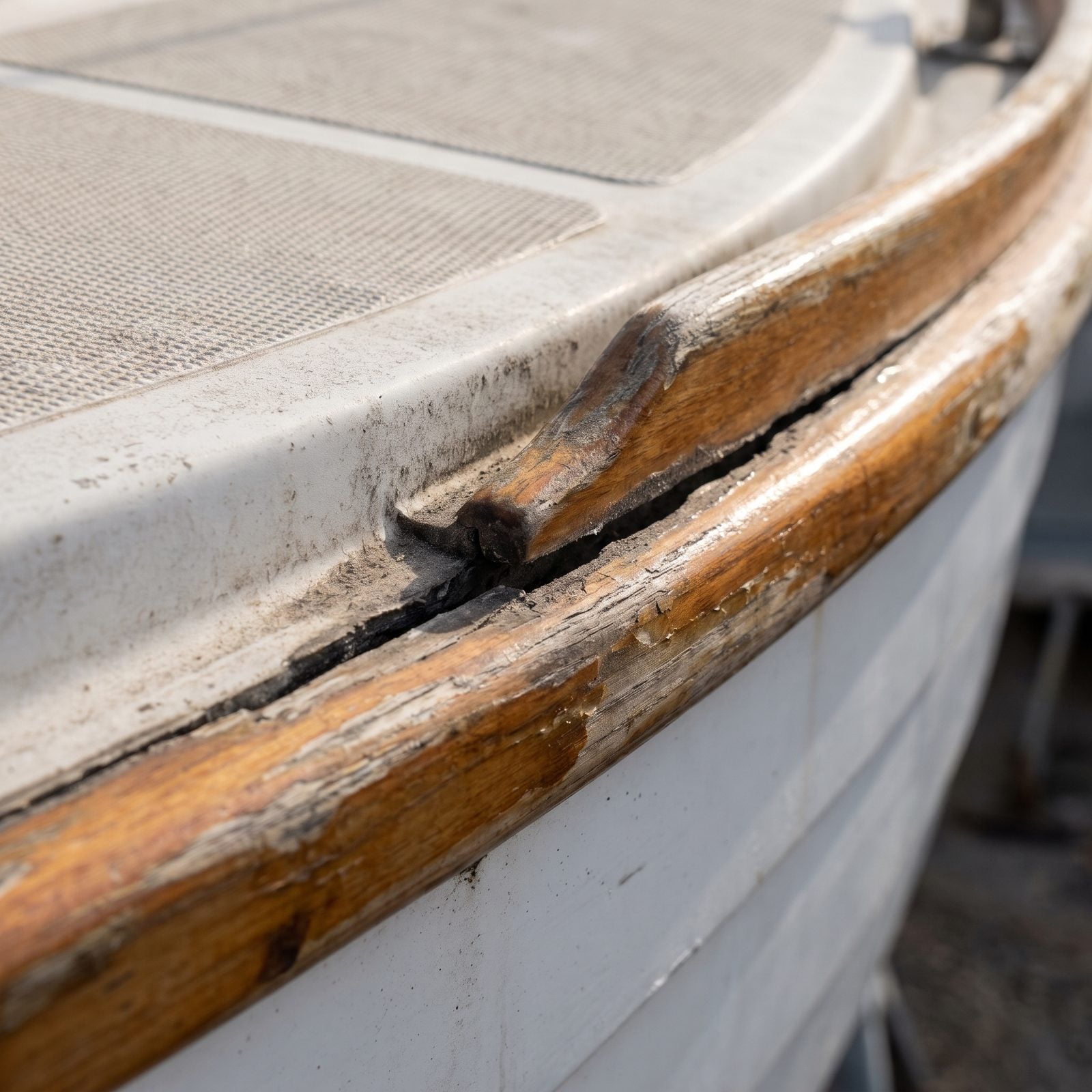
The hull and the deck are two separate moldings bolted and bonded together along the sheer. Where that joint starts to open, you’ll see the rubrail lifting, old sealant cracking, and a stain weeping down the topsides below it.
It photographs as a minor cosmetic gripe and reads very differently to someone who knows what the joint actually does. A separating hull-to-deck joint lets water in, and left long enough it weakens the structure that ties the whole boat together. Push gently on the rail, watch for movement, and you’ve learned a lot in two seconds.
32. Years of Bottom Paint Hiding the Hull Surface
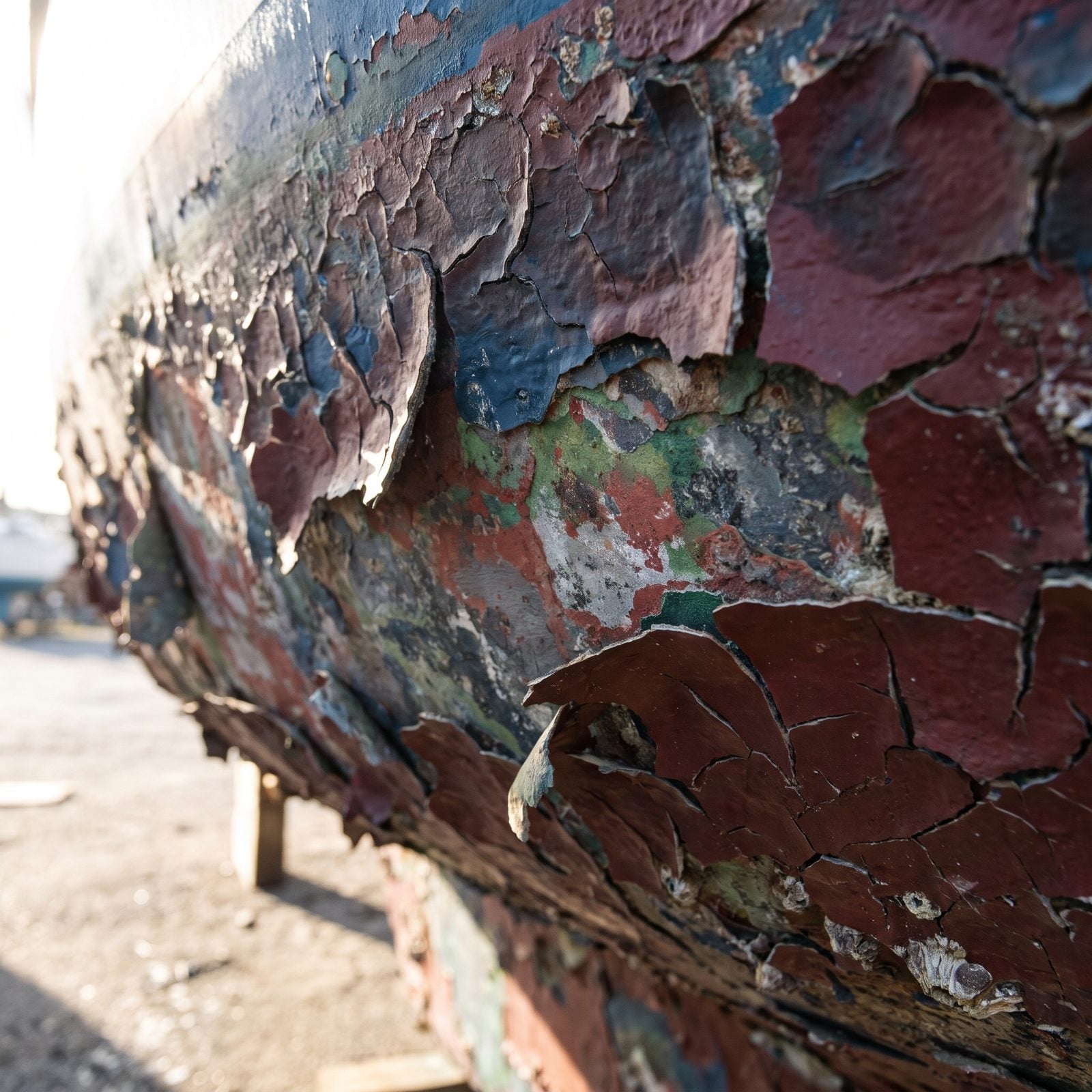
Layer after layer of old antifouling builds up over the years until the bottom looks like cracked mud, flaking off in sheets that show blue over red over green over black.
And here’s the catch. All that paint hides the one surface a surveyor most wants to read. Blisters, prior repairs, stress cracks — buried under a quarter inch of accumulated bottom coat. A seller who’s never stripped it may honestly not know what’s underneath. You just can’t take the hull’s condition on faith until somebody takes the paint back to glass, and that soda-blasting job is its own line item worth pricing out before you buy.
31. Green Corrosion Around Metal Through-Hulls
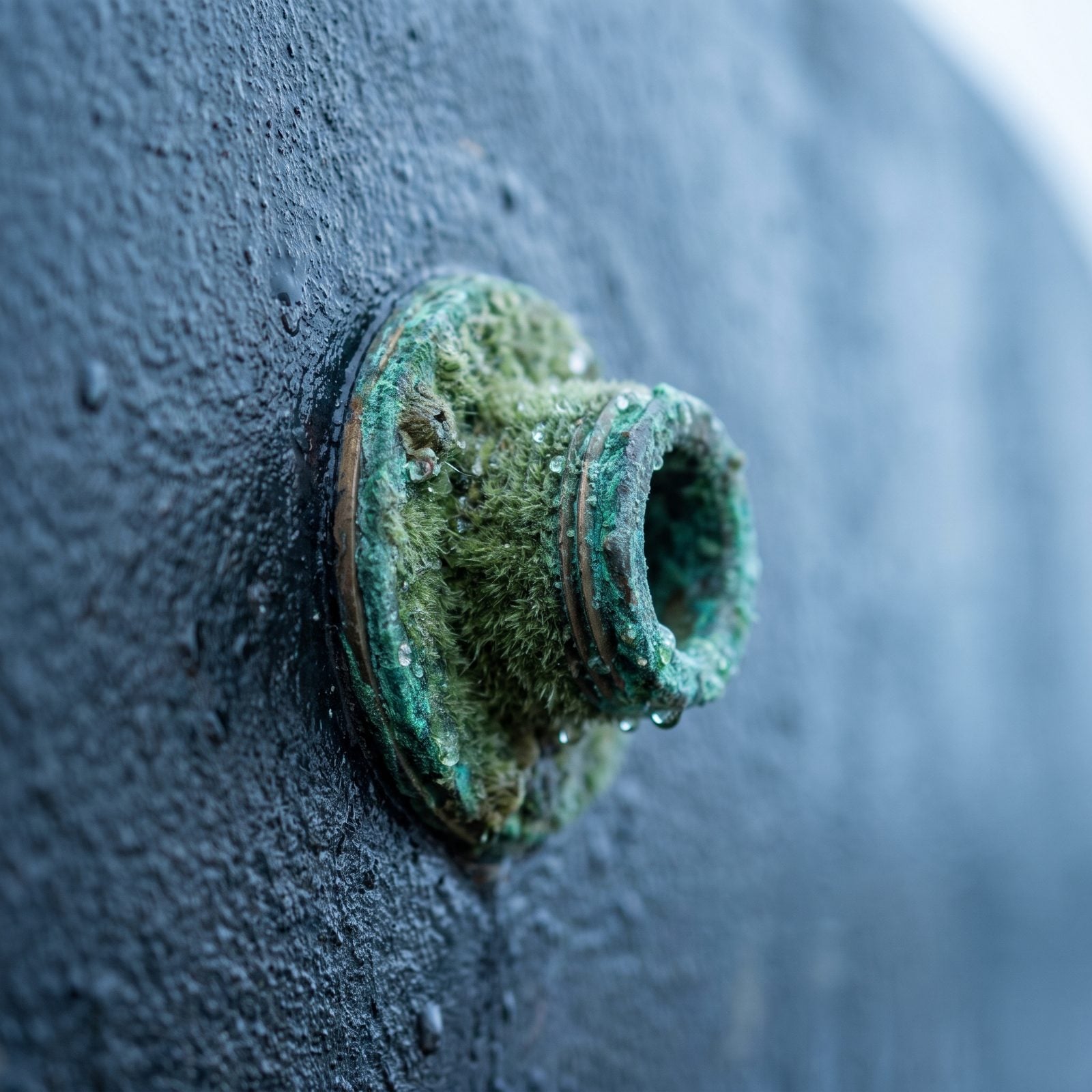
That fuzzy green crust around a bronze fitting isn’t just ugly — it’s the metal telling you something about the water it’s been sitting in and the wiring running nearby.
A little surface verdigris on bronze is normal. The pink is what stops a surveyor cold. When a fitting that’s really brass or a zinc-rich alloy turns a chalky salmon color, the zinc has leached out and left behind copper that crumbles like old chalk. That fitting is weaker than it looks, and it’s one freeze or one hard grounding away from a hole in your boat below the waterline.
30. Seacocks That No Longer Move Freely
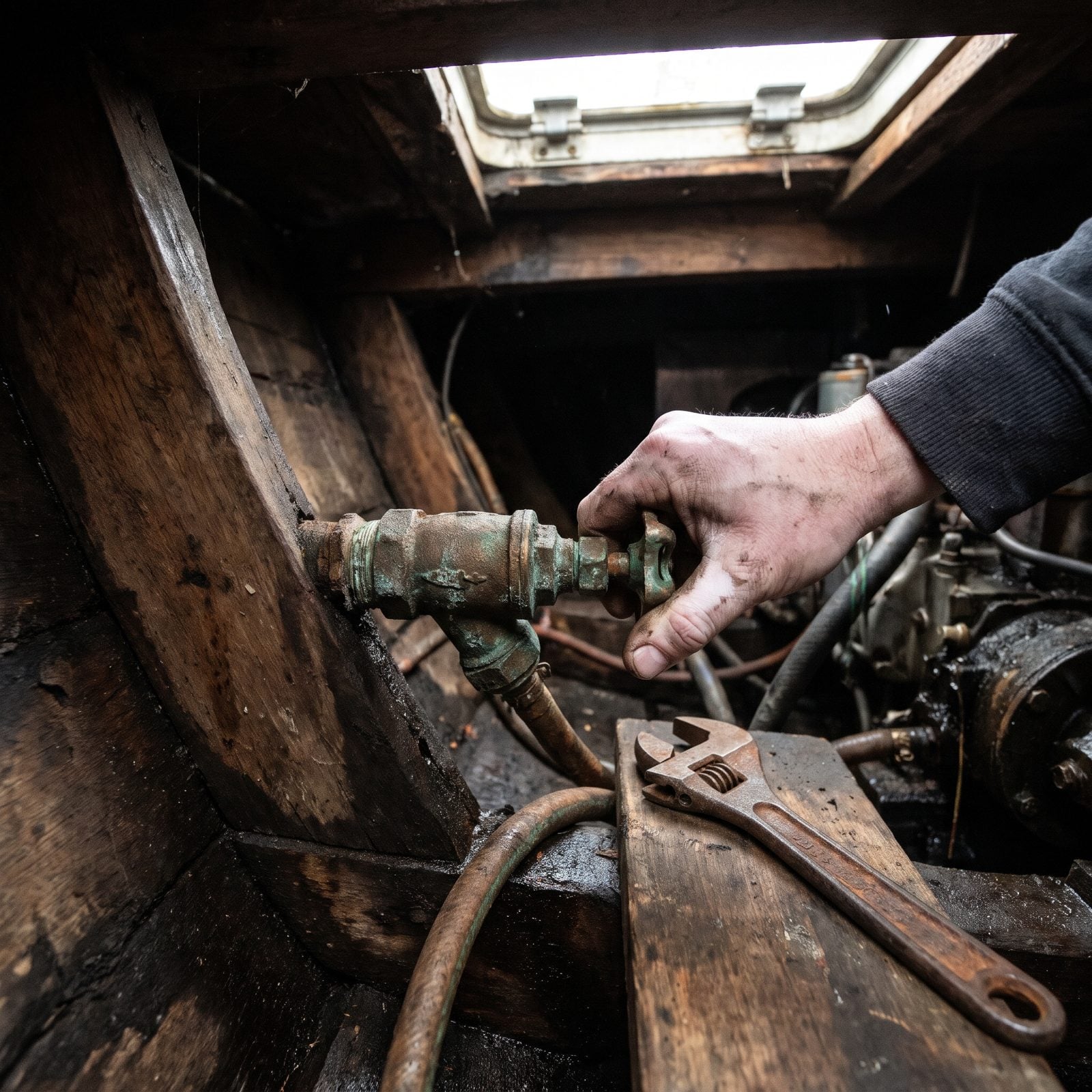
Every seacock on a boat should swing open and shut with one hand. Not two. Not a wrench. Not a prayer.
A surveyor walks the bilge and works each handle through its full travel, and the ones that fight back are the ones that scare you. A seized seacock is useless in the exact moment you need it — when a hose lets go and the ocean starts coming aboard. You can’t close what won’t move.
Worse, forcing a stiff one can snap an old handle clean off, and then you’ve got a flooding boat, a jammed valve, and nowhere pleasant to be.
29. Bent or Chipped Propeller Blades
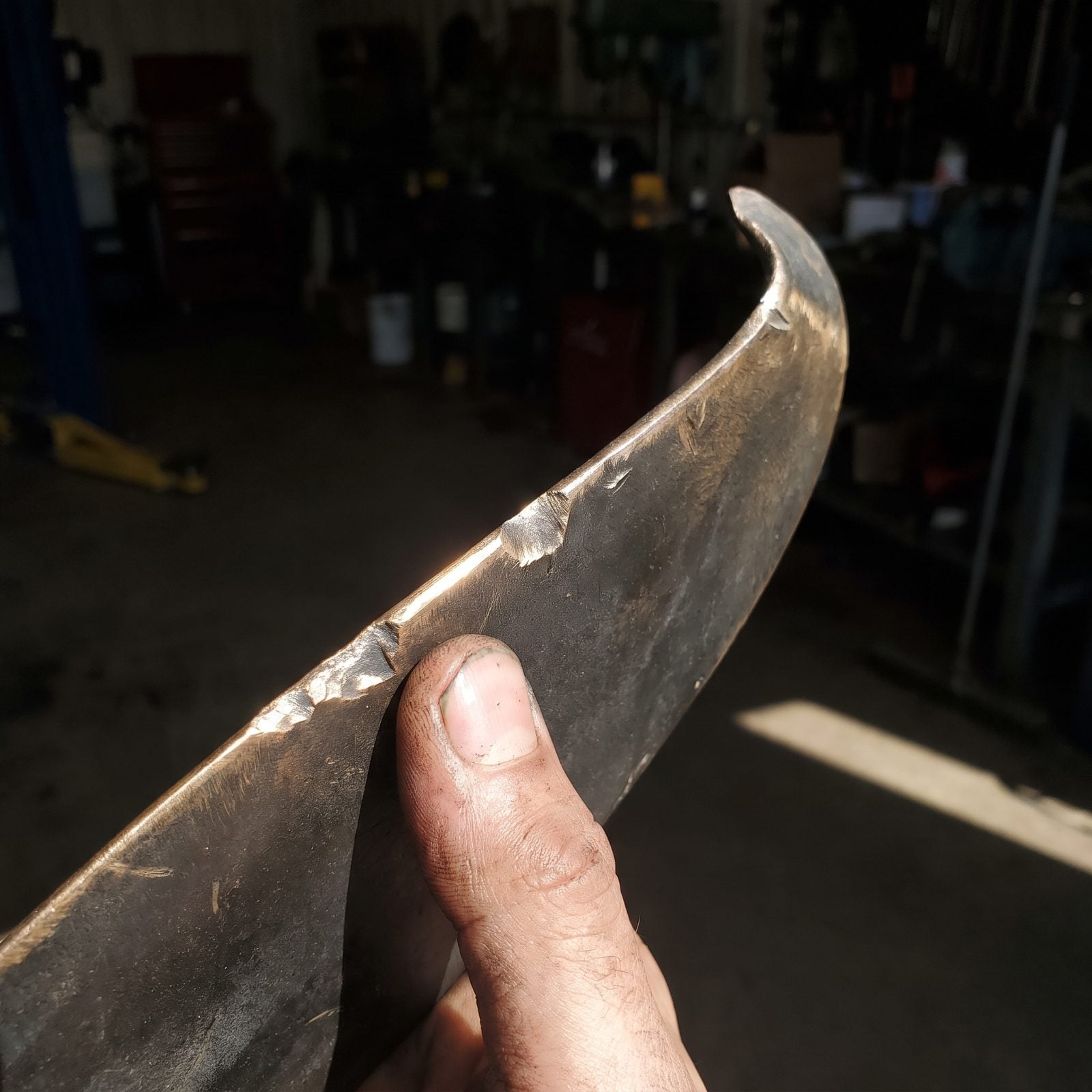
Run a thumb along each blade edge. Chips and dings tell the story of what this boat hit, and how often.
A bent blade isn’t just cosmetic. Even a tip that’s off by a quarter inch throws the whole prop out of balance, and that imbalance travels straight up the shaft, where you feel it as a vibration at cruising speed. Over seasons, that buzz wears the cutless bearing, the strut, and the shaft seal until something lets go.
A good prop shop can straighten and rebalance a lot of this for a few hundred dollars. A new prop costs a lot more. Ask when it was last tuned.
28. Excessive Play in the Cutless Bearing
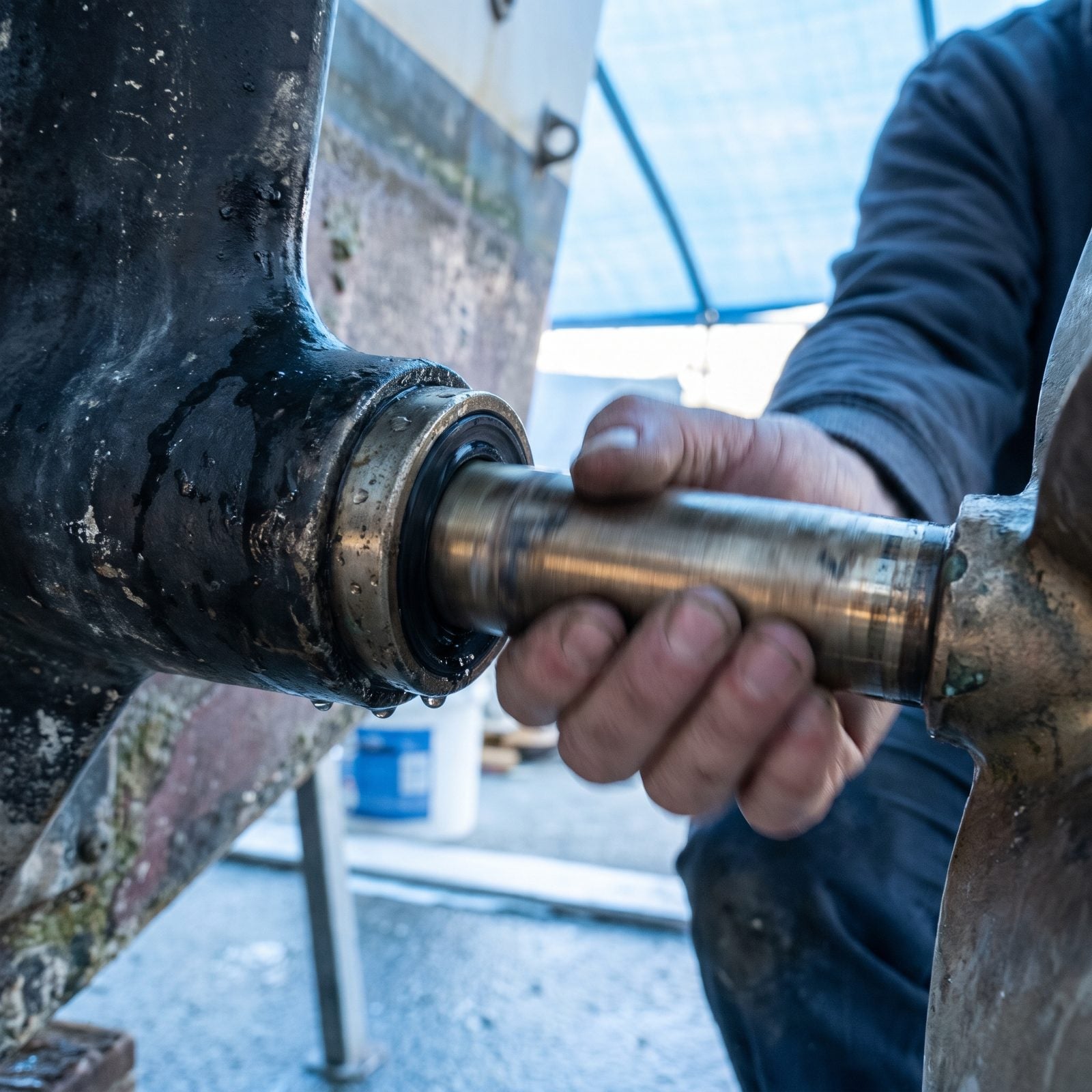
Here’s a test you can do yourself at the next haul-out. Grab the prop shaft right near the strut and try to wiggle it up and down. It should feel solid.
If it rattles against the bearing with a clunk, the cutless bearing is worn out. That ribbed rubber sleeve the shaft spins inside is a cheap part, maybe thirty or forty bucks. The labor to pull the shaft and press in a new one is where it gets real.
Ignore it and the slop keeps growing until the shaft’s whipping instead of spinning, chewing up the seal and sending vibration everywhere.
27. Side-to-Side Movement in the Rudder

A rudder should turn freely and move not at all in any other direction. Wobble is a warning.
When a surveyor grabs the bottom of a rudder blade and it rocks side to side, the bearings up inside the hull are worn, or the rudder stock itself is going. On fiberglass spade rudders, that play often comes with water intrusion into the blade. Tap it — a dead, dull thud instead of a crisp knock means it’s holding water, and water inside a rudder freezes, delaminates, and quietly rots the internal frame you can’t see.
26. Stanchions That Shift When Gripped
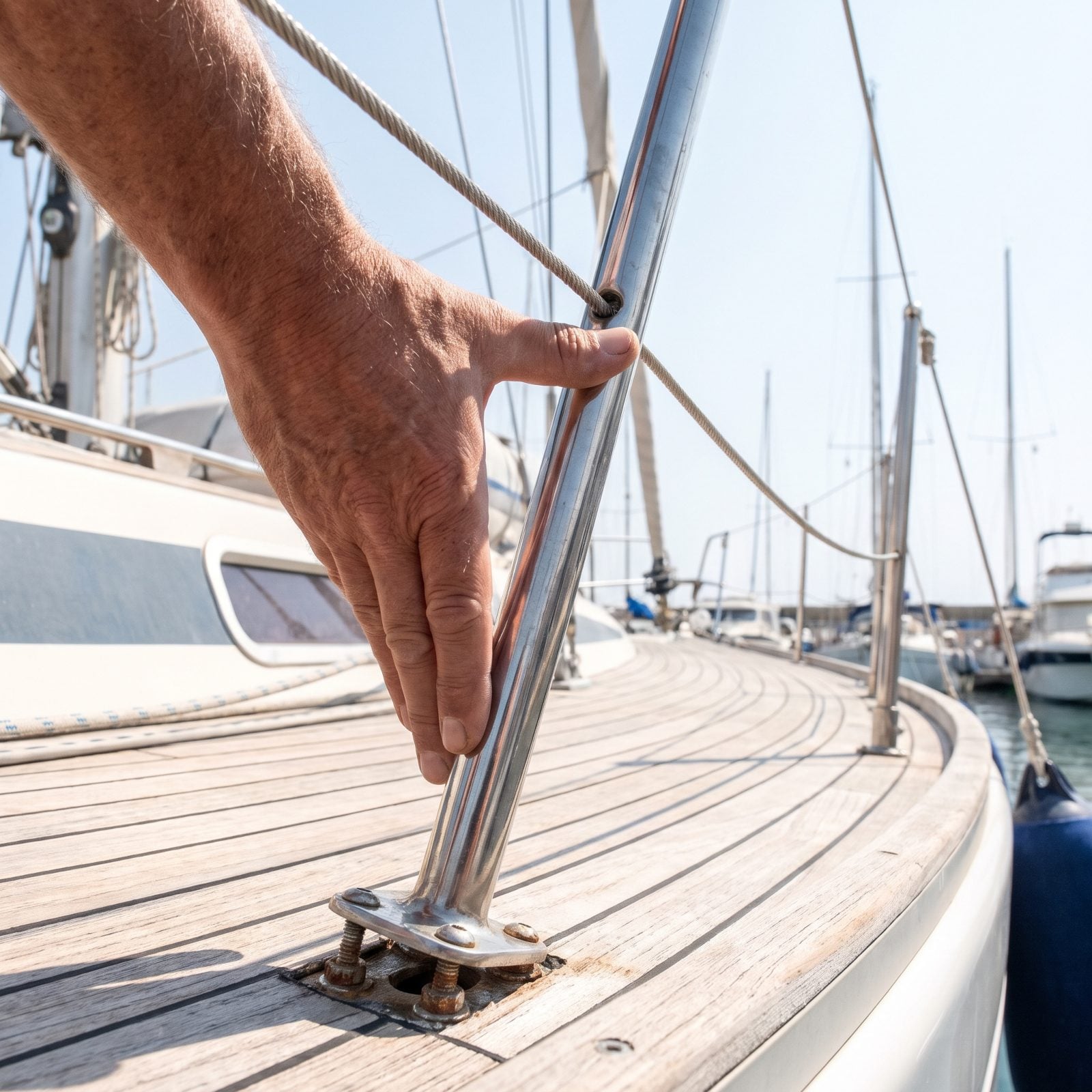
Grab a stanchion and lean on it like you’re coming back aboard in a chop. It should barely move.
One that rocks or tips at the base is telling you the deck underneath has given up — bolts worked loose, backing pulled through, or water into the core around the fitting, softening it to oatmeal. That’s a problem on a calm day at the dock. The first time someone trusts their full weight to a lifeline that’s only pretending to be attached, it’s a man-overboard waiting to happen.
25. Corrosion Where Chainplates Enter the Deck
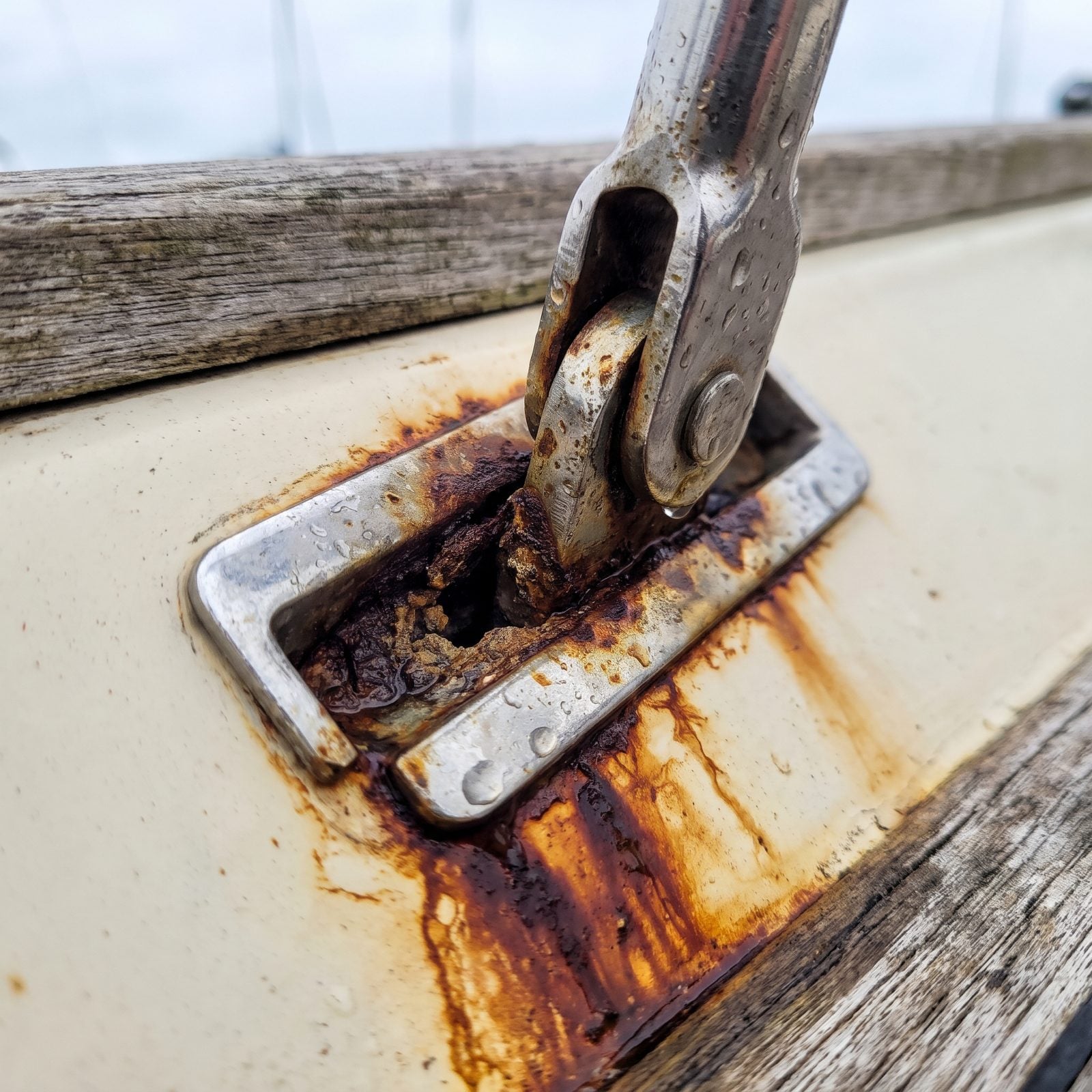
Chainplates hold the mast up. That’s the whole importance.
The spot a surveyor studies hardest is where the chainplate passes through the deck, because that slot traps water and the stainless sits starved of oxygen inside it. Starved stainless corrodes in a nasty, hidden way called crevice corrosion, and it eats from the inside out. The rust streak running down your topsides is the tell. The metal above the deck can look perfect while the part buried in the deck is pitted and cracking.
24. Water Trails Beneath Cabin Windows
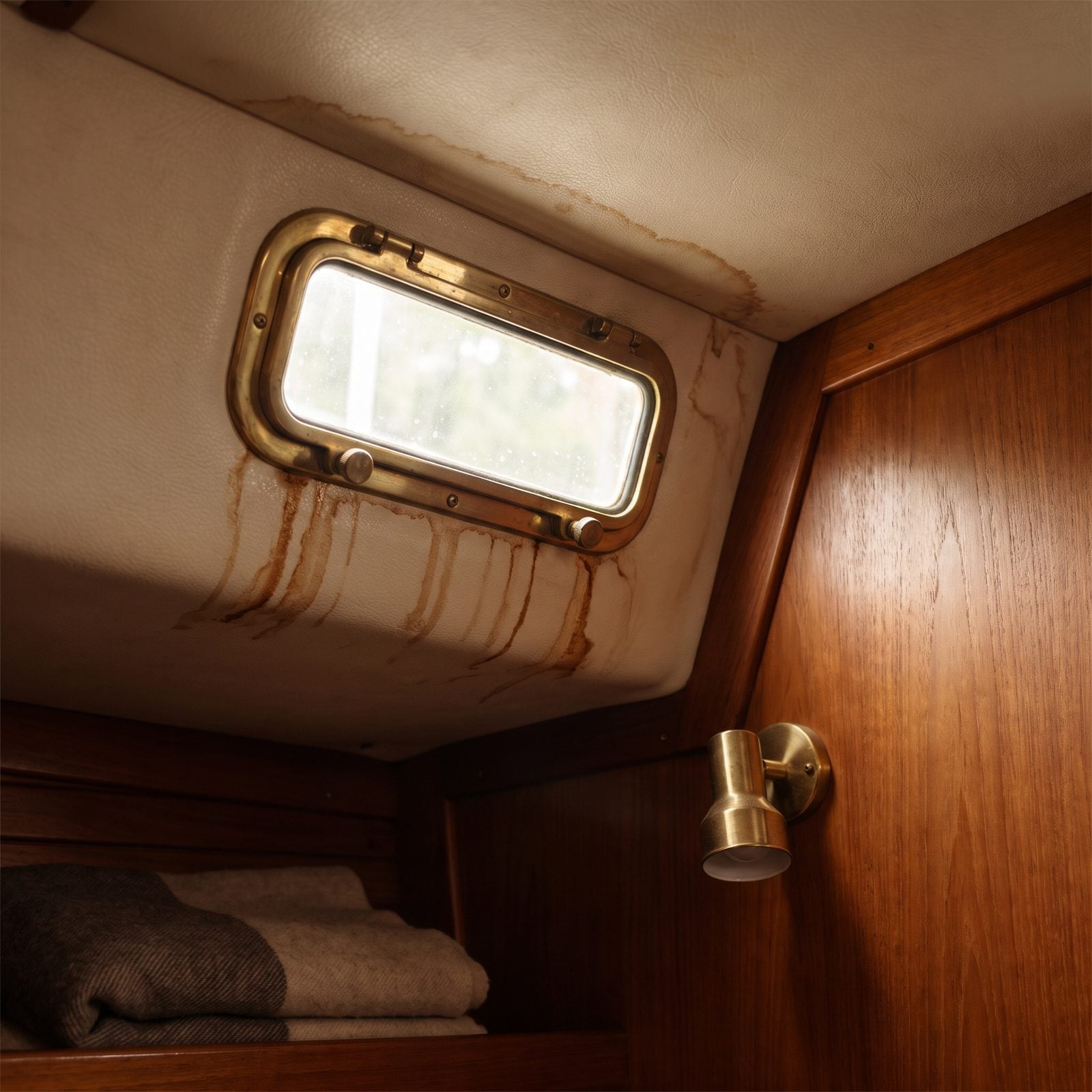
Climb below, let your eyes adjust, and look up under every window. Boats leak from the top down, and the evidence collects where gravity leaves it.
A brown tea-stain trail running from a window frame down the cabin liner means the bedding compound around that window has failed. On its own, that’s a weekend job with a tube of sealant. The real question is what the water did on its way down — if it got into the core or soaked the plywood behind the trim, you’re looking at soft decks and swollen veneer that cost real money and real weekends.
Musty smell plus water stains plus soft spots underfoot? Three clues pointing the same direction.
23. Cleats Installed Without Proper Backing Plates
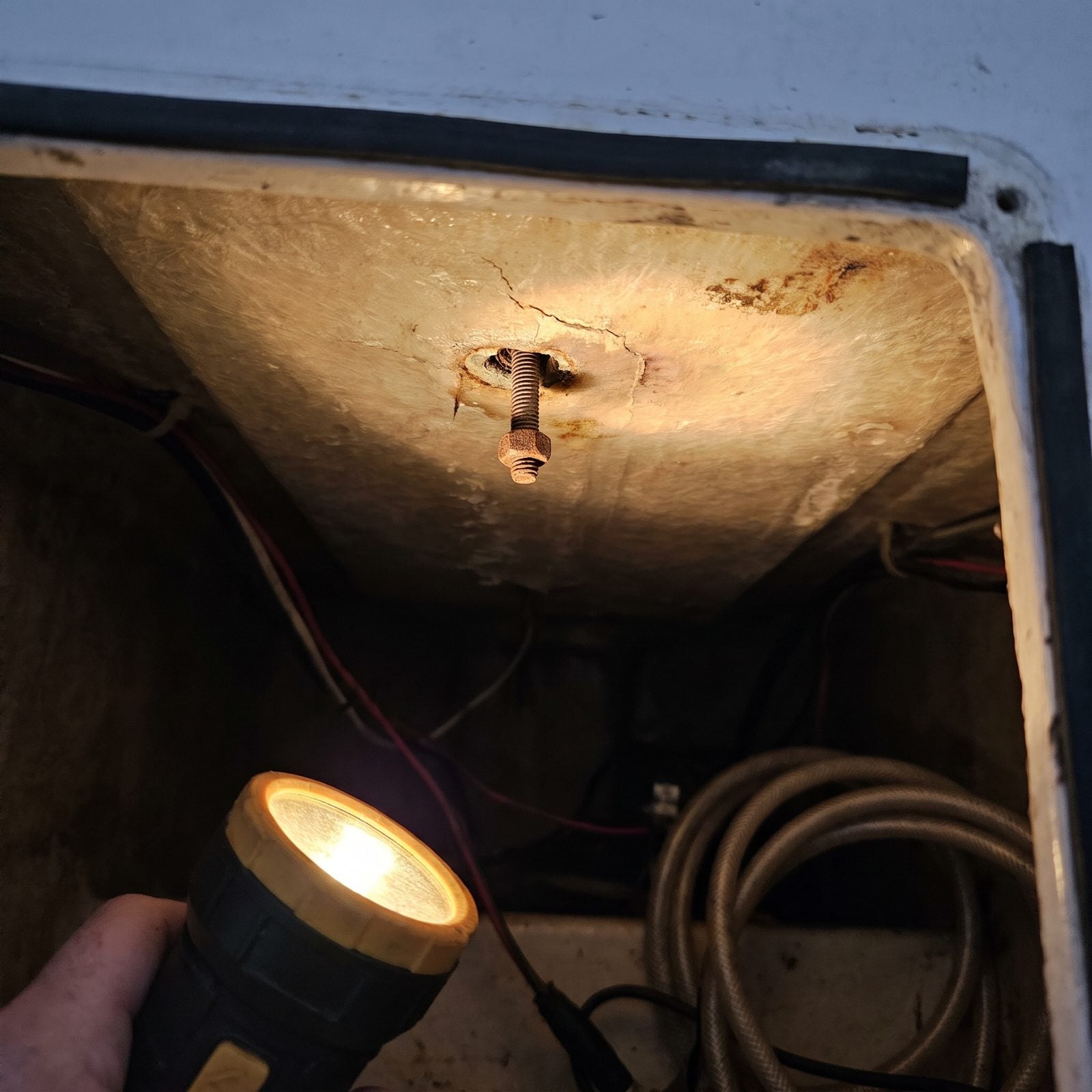
A cleat is only as strong as what’s hiding under the deck. And a surprising number of them are hiding nothing at all.
A proper installation spreads the load across a metal backing plate the size of your palm. What you often find instead is a couple of washers barely bigger than the bolts, waiting to punch straight through the fiberglass the first time a storm surge loads the line. From topside, the tell is a halo of stress cracks in the gelcoat radiating out from the cleat base.
22. Cockpit Drains That Empty Too Slowly
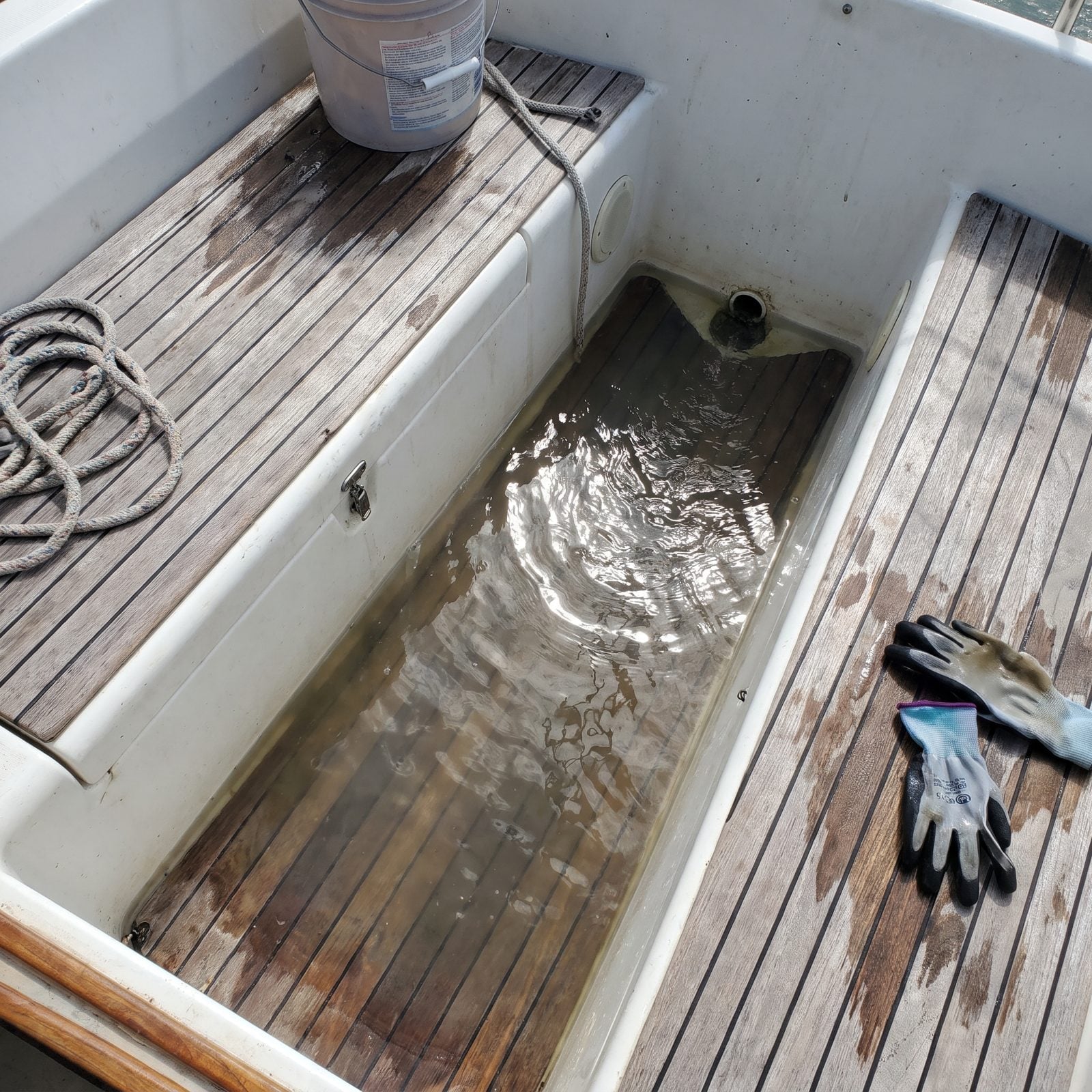
Pour a bucket of water into the cockpit and watch where it goes. If it sits and swirls instead of leaving, you’ve found a problem that isn’t really about the drain at all.
Slow scuppers mean debris, a kinked hose below, or a drain line someone routed with a sag that’ll have to be crawled back to and fixed. On a boat that takes a following sea or a sudden squall, water you expected gone in seconds hangs around the self-bailing cockpit instead. That’s weight you didn’t plan for, sitting high.
21. Standing Water in an Otherwise Dry Bilge
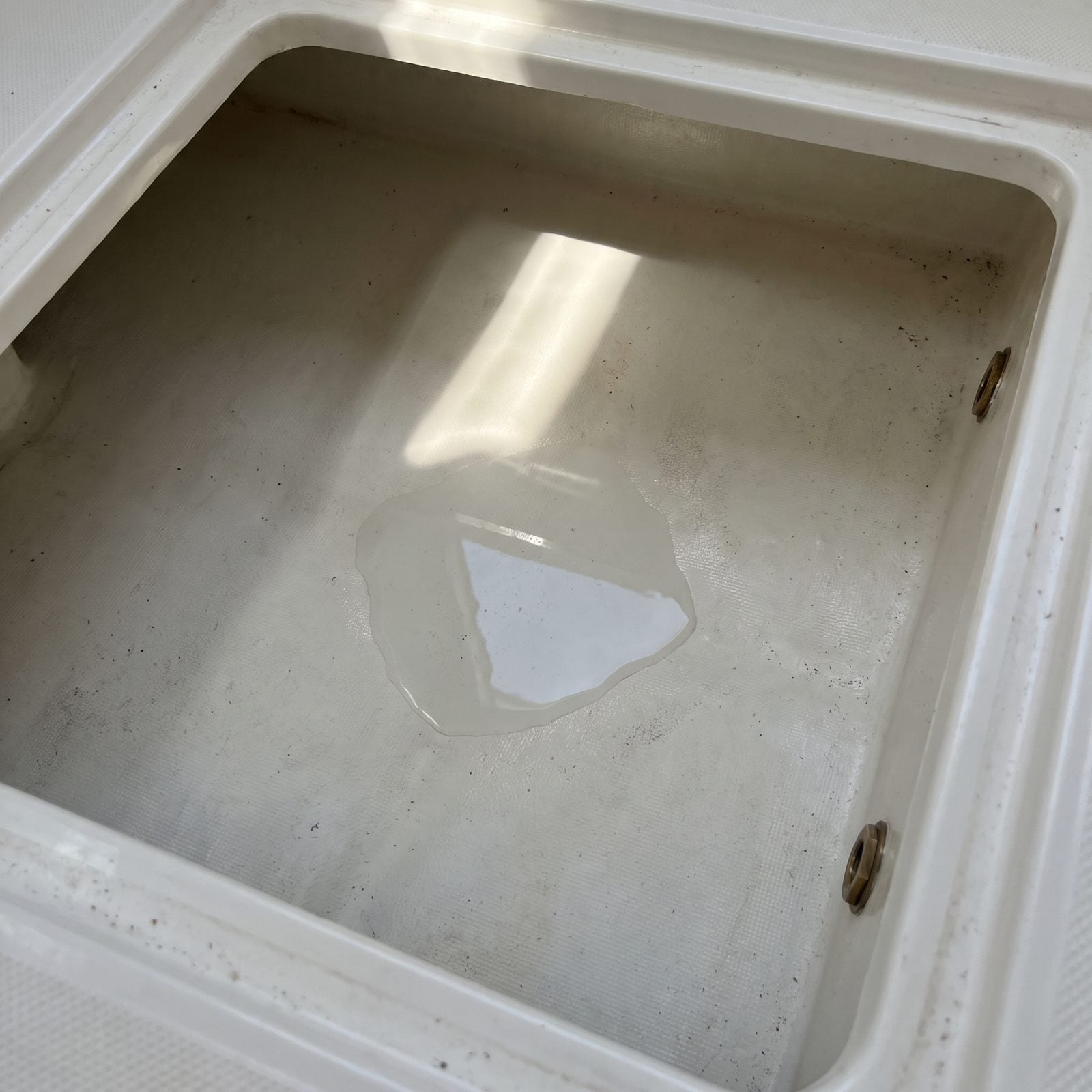
A dry bilge with one stubborn puddle is a riddle worth solving. Dry means no active leak. One puddle means something is getting in, just slowly.
Could be a dripping stuffing box. Could be rainwater sneaking past a worn hatch gasket, or a sweating water tank. The water itself tells you plenty. Taste a drop (I know), and salt points offshore while fresh points at rain or plumbing. Where it collects points at the source.
20. An Oily Sheen Beneath the Engine
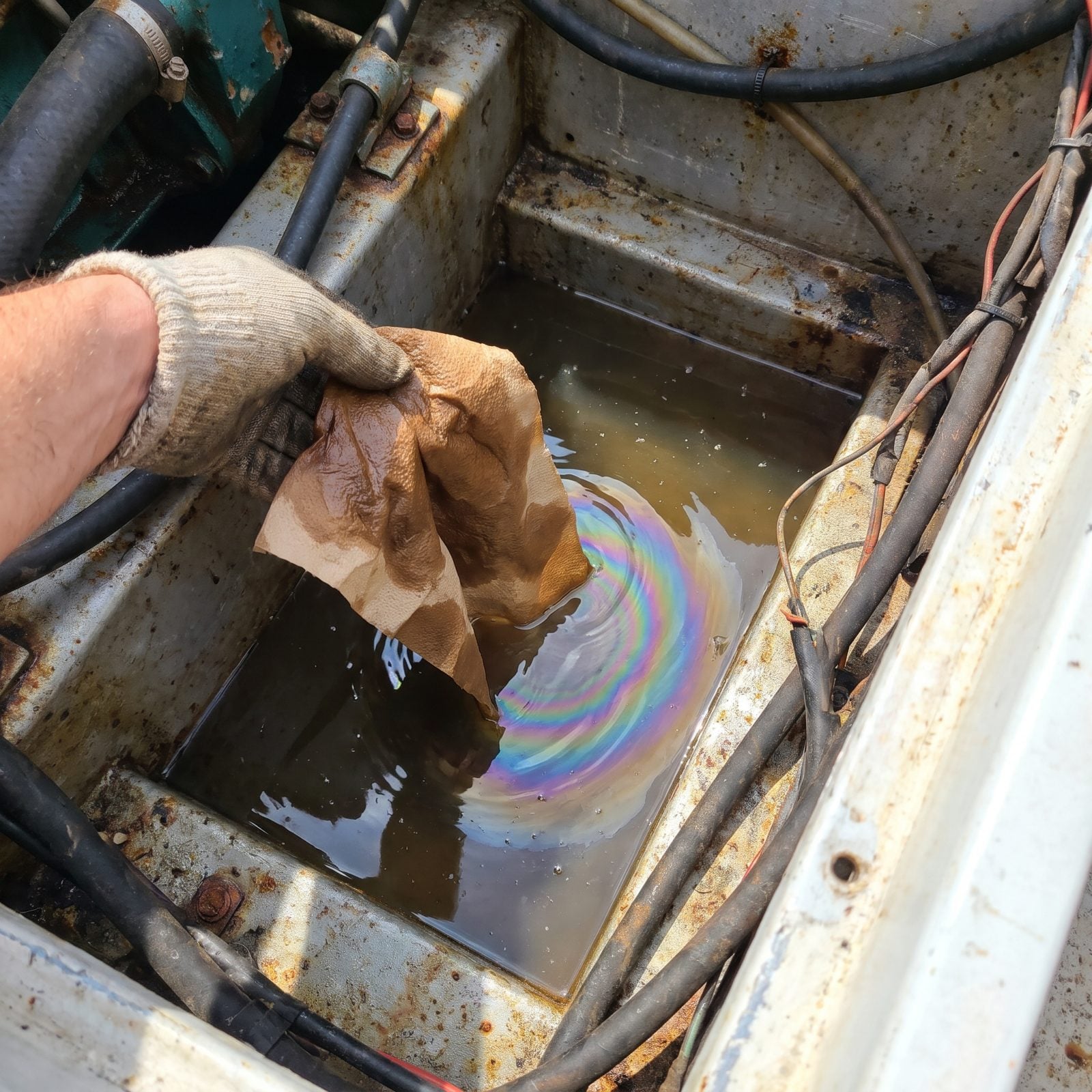
Lay a clean paper towel on the water under the engine. If it comes up stained with that telltale rainbow swirl, the motor is losing something it needs.
A sheen means oil, fuel, or coolant is migrating out of a seal, a gasket, or a fitting that should be tight. Small now, maybe. But every weep gets worse, and oil in the bilge is both an environmental fine waiting to happen and a sign the engine has a conversation going that nobody’s answering.
19. Blocked Limber Holes Trapping Water
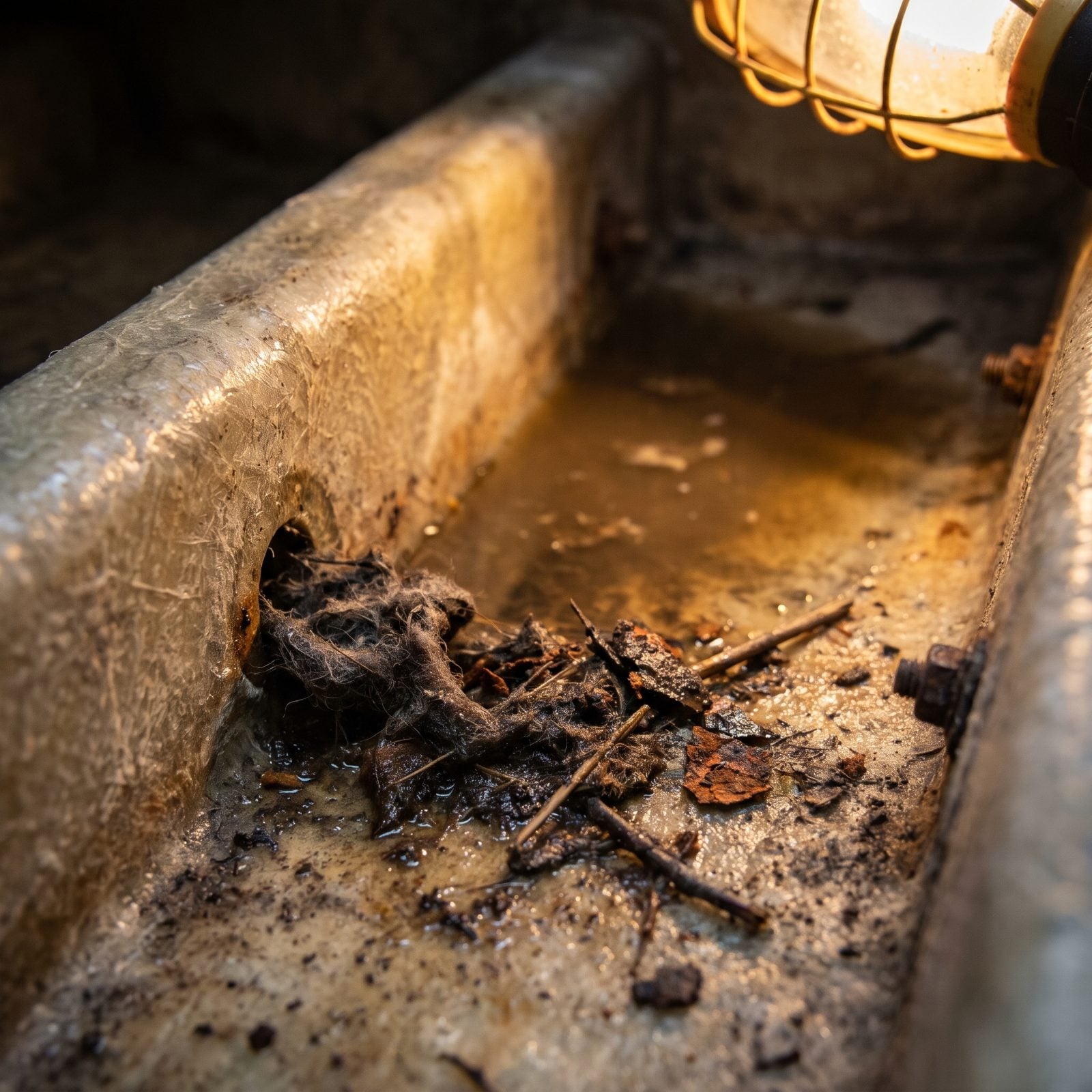
Limber holes are the little gaps at the base of the stringers that let water travel toward the pump. Plug them and the whole system breaks down quietly.
You’ll see it as water sitting in one compartment while the one right next to it stays bone dry. That’s the clue. The water can’t get where it’s supposed to go.
And trapped water doesn’t just sit there being water. It soaks the laminate, feeds rot in wood-cored sections, and piles dead weight exactly where you don’t want it. A pick and five minutes usually clears them. A surveyor checks whether anyone bothered.
18. A Bilge-Pump Float Switch Mounted Incorrectly
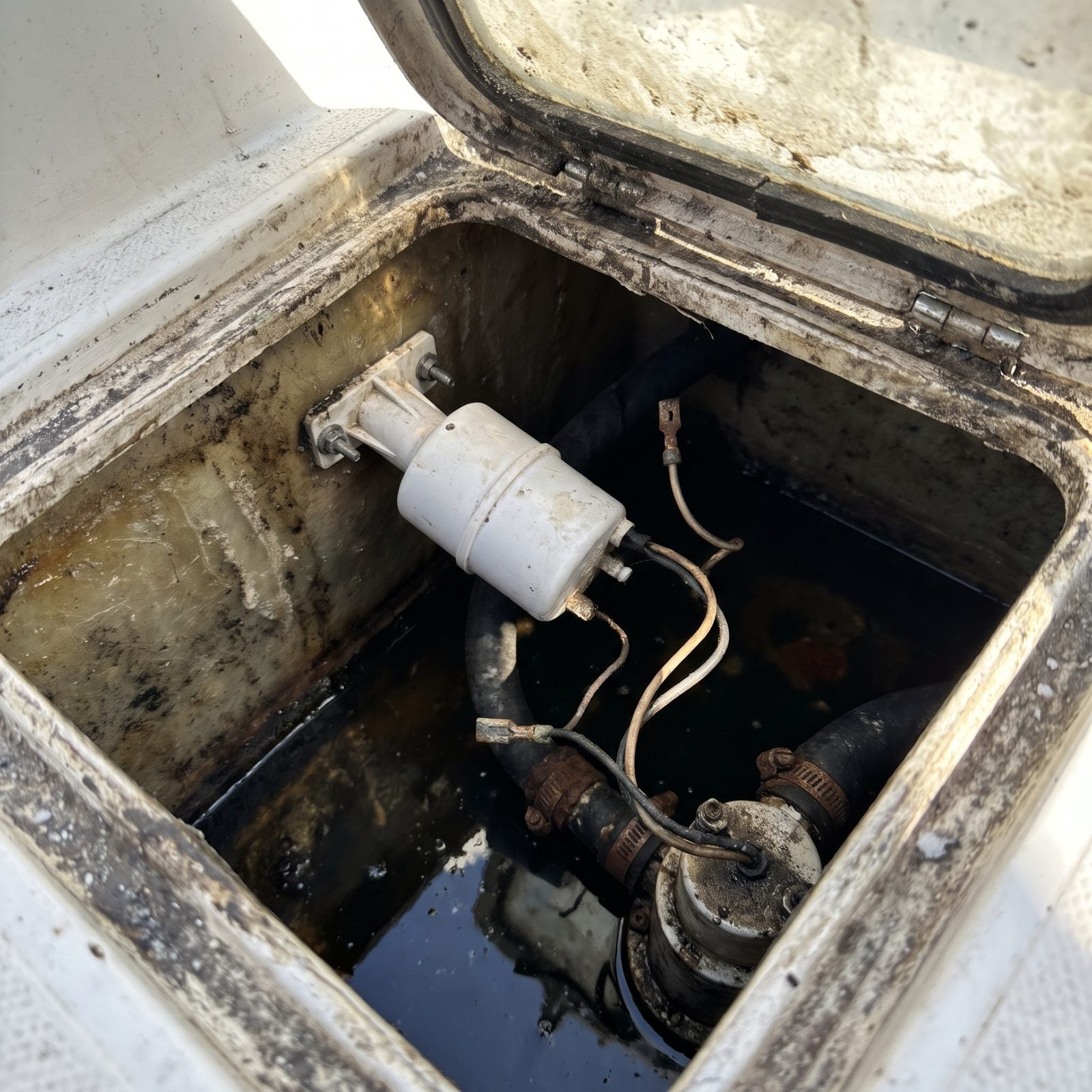
The float switch is the brain that tells the bilge pump to run. Mount it wrong and the pump sits there doing nothing while water climbs.
Common mistakes are easy to spot. Switch zip-tied too high, angled so it never trips, or jammed where loose debris can pin the float. Any of these means the pump might not kick on until the water is already a real problem.
17. Single Hose Clamps on Below-Waterline Connections
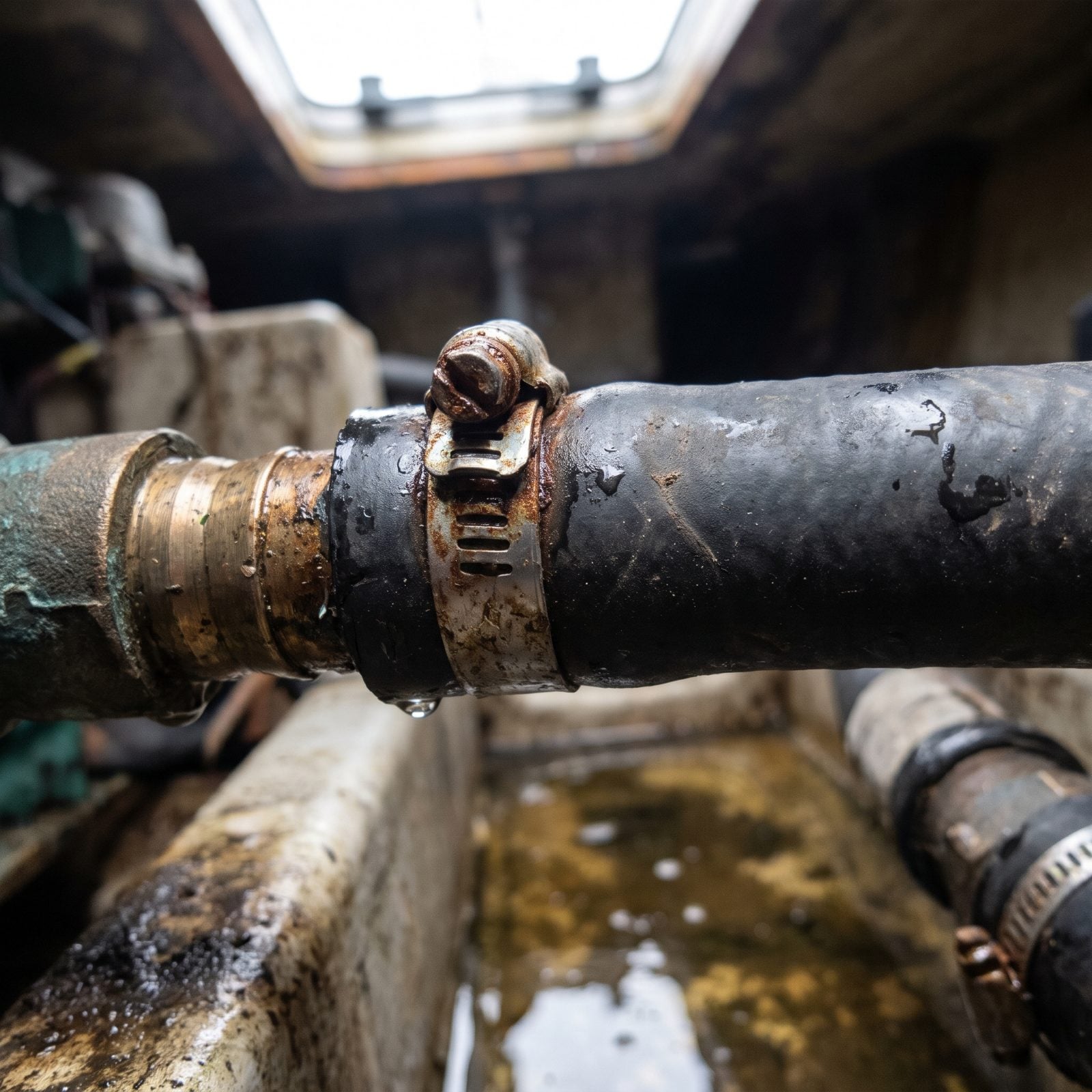
Below the waterline, one hose clamp is a shortcut that can sink a boat. Standard practice calls for two on every connection that would flood the hull if it failed.
I look for this one first on any below-waterline fitting, because a single clamp tells you someone did the plumbing fast and didn’t care to do it right. Clamps corrode. Hoses relax. That second clamp is your backup when the first one gives up at anchor on a Saturday night.
Describing a failed clamp his crew caught just in time, one boatyard technician writes, “This clamp was a single clamp, not one of two as it really should have been. It was installed on a galley sink drain. The hose was weeping because the single clamp had “slipped” and let go.”
16. A Fuel Smell Before the Engine Starts

Open the cabin after the boat has sat closed up and just breathe. Gasoline fumes where there shouldn’t be any is the single most serious thing a nose finds on a used boat.
Fuel vapor is heavier than air, so it settles into the bilge and engine compartment and waits. A seeping fitting, a cracked line, a loose fill connection, any of them can feed it. The smell is the warning you get for free. And if you lift the engine hatch and see wisps actually rising out of it, that isn’t fuel vapor at all. It’s smoke or steam, a sign of overheating or fire, and it needs dealing with before anything else.
15. Corrosion Along the Bottom of a Fuel Tank
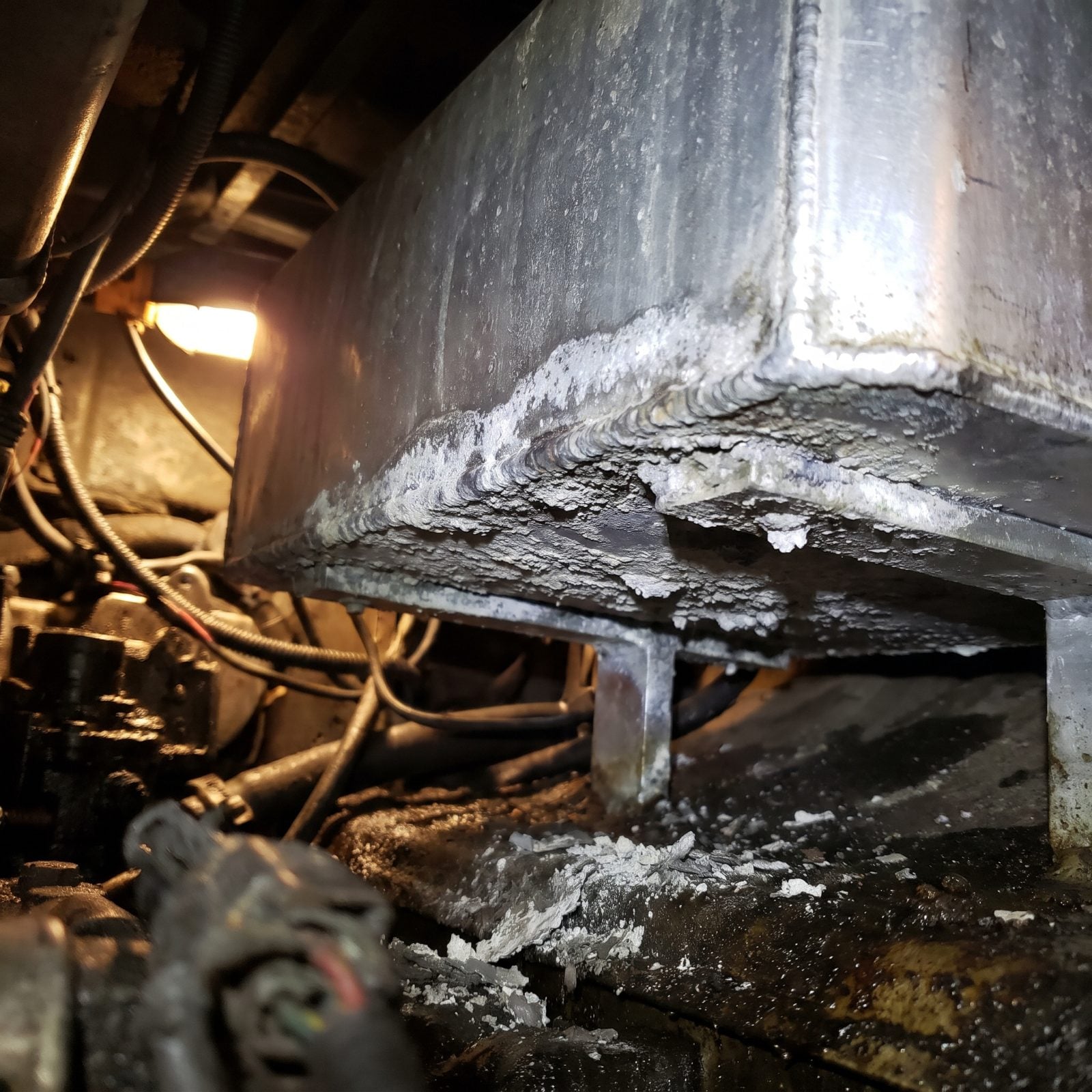
Aluminum tanks rot from the bottom up, where they sit against a damp surface and never get a chance to dry. That’s also the one place nobody can see without a mirror on a stick.
Look for white powdery bloom and pitting along the lower seam. That corrosion is working its way toward a pinhole, and a pinhole in a fuel tank is the kind of repair that means pulling the tank, which often means cutting the deck.
14. A Brittle or Deteriorated Fuel-Fill Hose
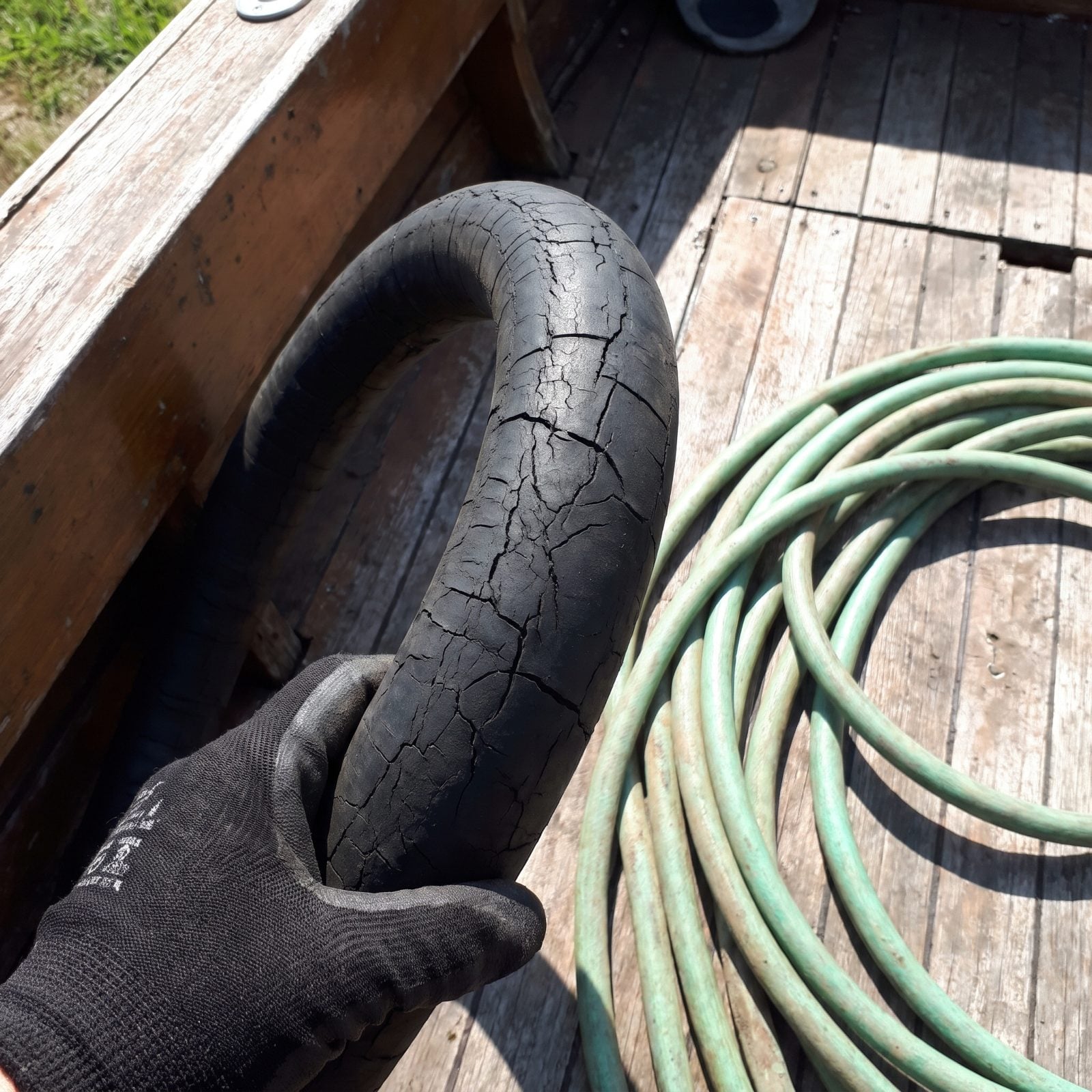
Flex the fuel-fill hose between two fingers. A healthy one gives. A dead one feels like a garden hose left out through ten winters, stiff and cracked along every bend.
This is the fat hose clamped onto the deck fill fitting, and it takes a beating from fuel, sun, and ozone. When the surface starts checking into a web of fine cracks, it’s on borrowed time. A split here spills gas during fueling, right where a spark would be the worst news of your boating life.
13. Fresh Engine Paint Covering Older Corrosion
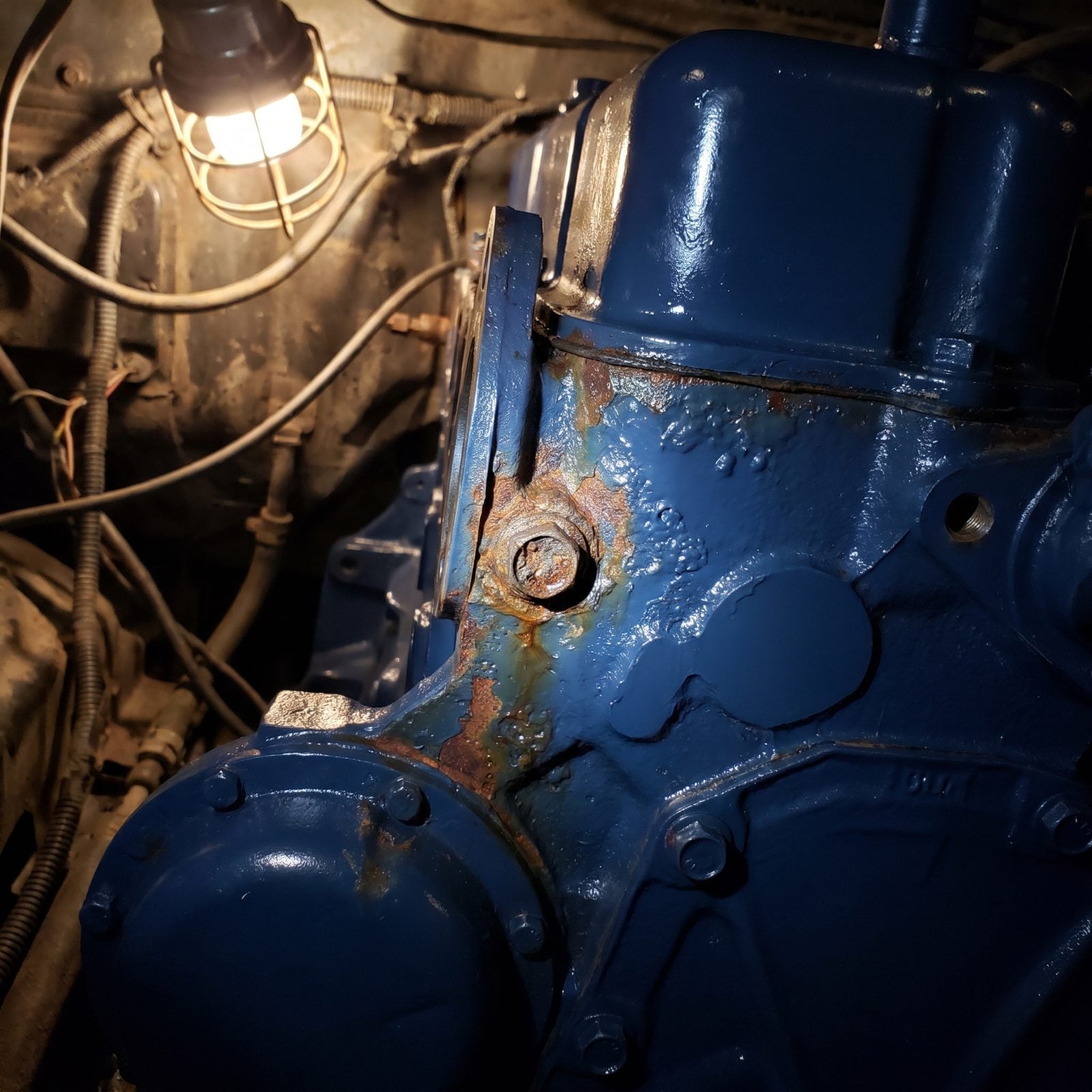
A freshly painted engine is supposed to say cared-for. Sometimes it says the opposite, loudly.
Paint laid straight over corrosion doesn’t stop it. It hides it, and never for long. Watch for bubbling at the seams, flaking around bolt heads, and rust-orange bleeding through glossy new color. A pick confirms it in seconds.
I once saw a beautiful fresh coat sprayed over a block that was quietly rotting at the mounts. The paint cost forty bucks. The problem it was covering cost a great deal more. Fresh paint in the wrong places isn’t maintenance, it’s makeup, and a surveyor is paid to wipe it off.
12. Black Belt Dust Around the Front of the Engine
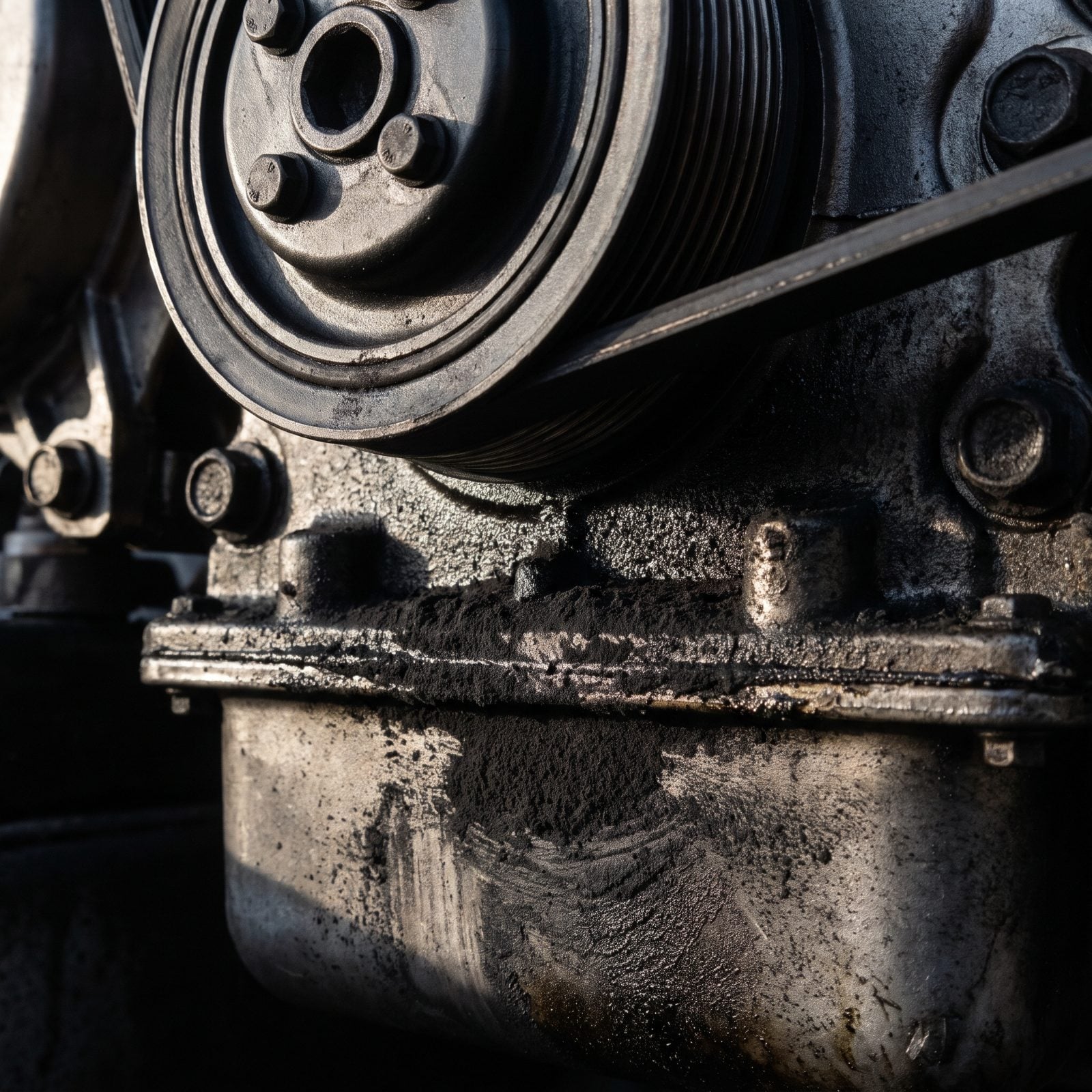
That black heap below the pulleys isn’t dirt. It’s belt. A belt sheds black powder when it’s slipping, riding a worn pulley, or chewing itself up against a seized tensioner, and left long enough you’ll find it piled in the trough beneath the pulleys like spilled coal. Scoop it out and it comes right back on the next run.
Caught early it’s a cheap fix. Ignored, it’s an expensive one. A slipping belt means your water pump and alternator aren’t turning at full speed, which is a cooling and charging problem waiting for the worst possible afternoon offshore. While you’re down there, run your eye over the belt edges for gloss and cracks.
11. Collapsed or Corroded Engine Mounts
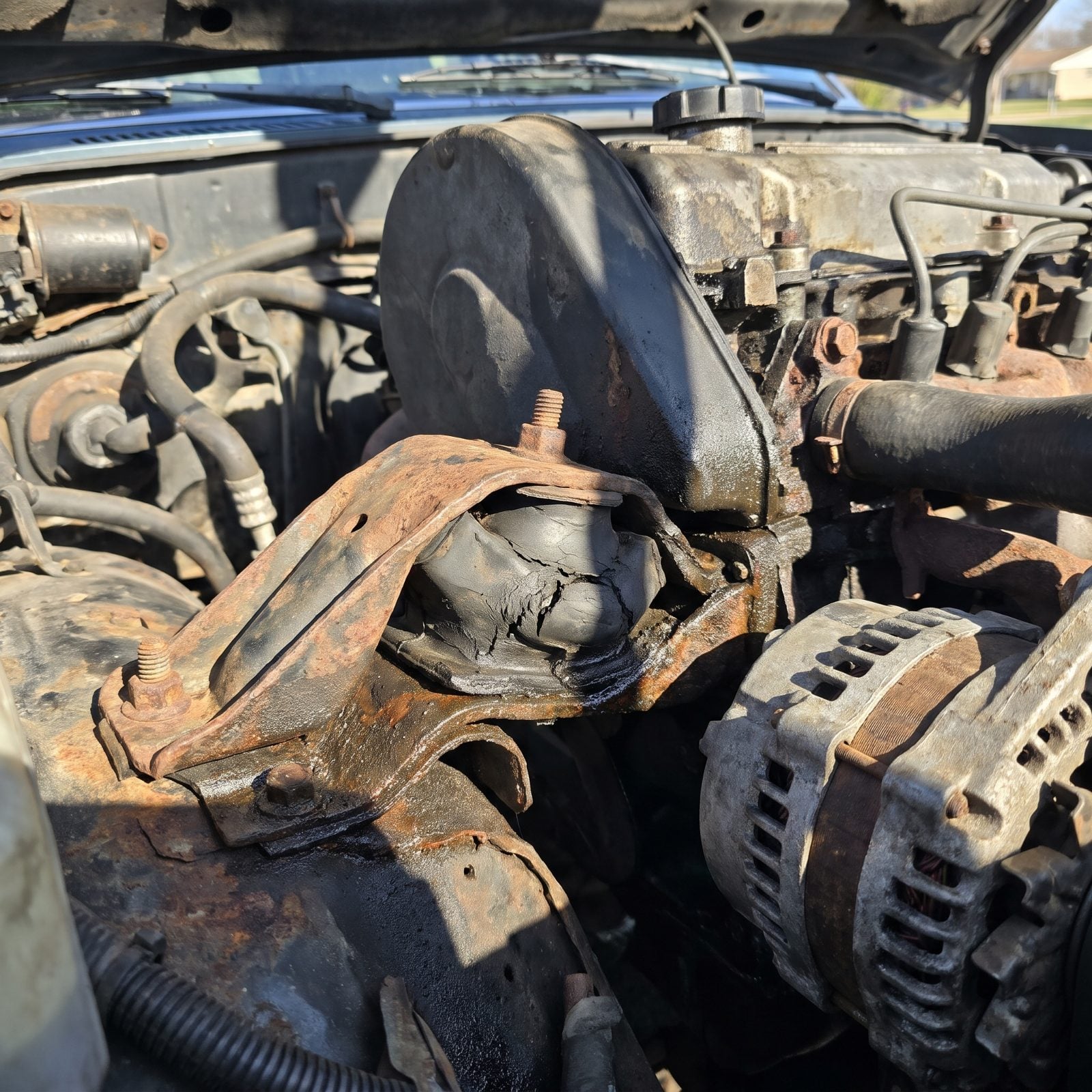
Push on the engine. A healthy mount barely moves. A tired one lets the whole block rock like a loose tooth.
Mounts live a hard life in the engine bay — salt air, oil leaks, the constant buzz of a running engine. The rubber perishes and the steel brackets and studs corrode until they can’t hold alignment anymore. When mounts sag unevenly the engine sits out of line, and that misalignment quietly grinds away at your shaft coupling, your exhaust, and your transmission. Rust flaking off the bracket and oil-soaked, cracked rubber are the giveaway. So is a gap where the rubber used to sit plump.
10. Fresh Oil Collecting Beneath a Gasket
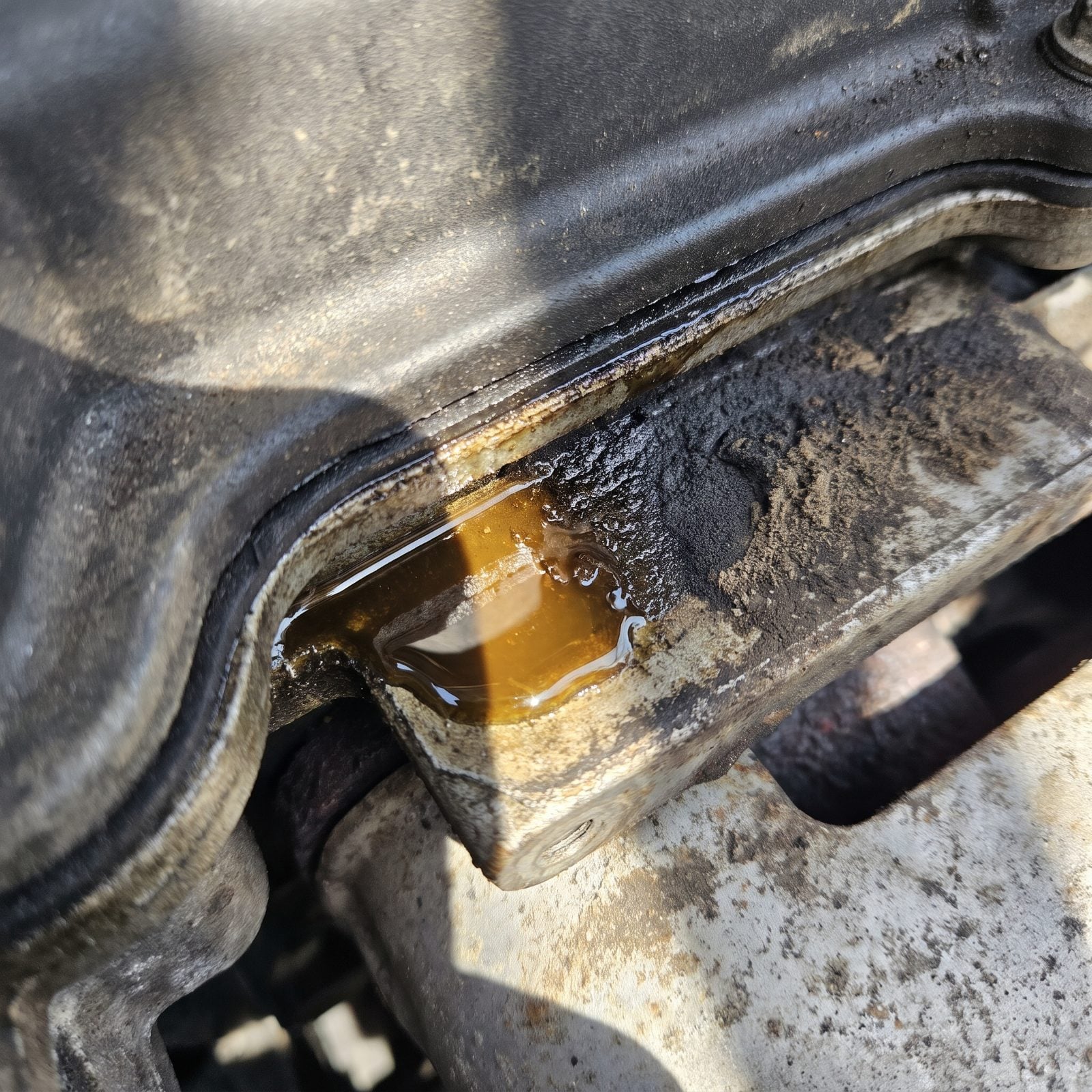
Old oil is dry and dusty, the color of a parking lot. Fresh oil is wet, shiny, still moving. That difference tells you whether a leak is a scar or an open wound.
A surveyor wipes the suspect gasket clean, runs the engine, and watches. If a fresh bead reappears, the seal is failing right now. A valve cover gasket is pocket change. A rear main seal means pulling the engine, and suddenly the whole deal math changes. The clue nobody mentions: oil mixing with bilge water leaves a tell-tale sheen that follows you around the harbor.
9. Dried Coolant Residue Around Hose Connections
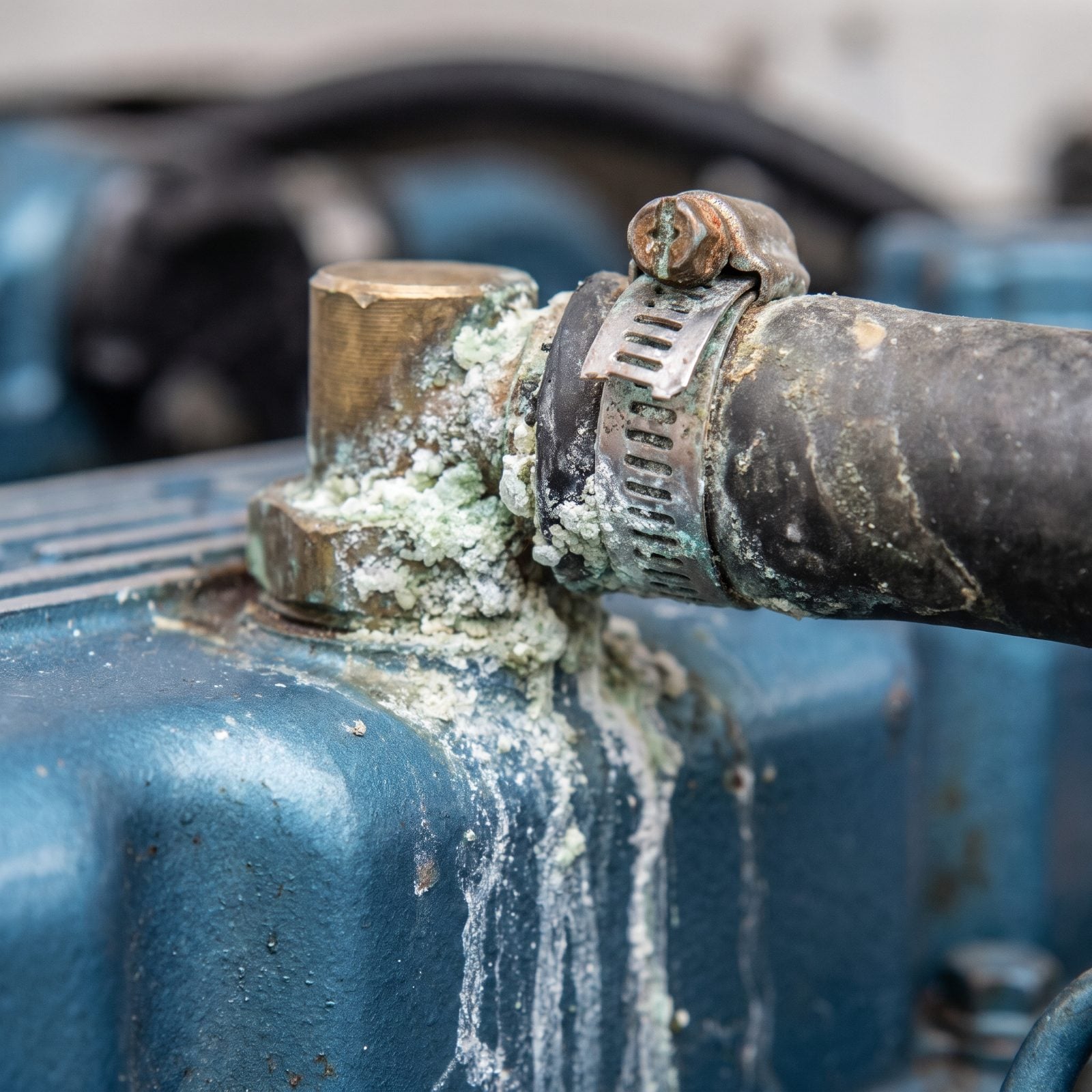
Those chalky green-white crystals around a hose clamp are dried coolant, and they mark the exact spot where antifreeze is weeping out under pressure.
Easy to dismiss as cosmetic. It usually isn’t. A weeping hose end means a loose clamp, a perished hose, or a corroded fitting, and a cooling system that can’t hold pressure will dump its guts the day you push the throttle offshore. Squeeze the hose. If it feels mushy, or hard and brittle, the rubber is done regardless of the clamp.
8. Rust Scaling Around the Exhaust Elbow
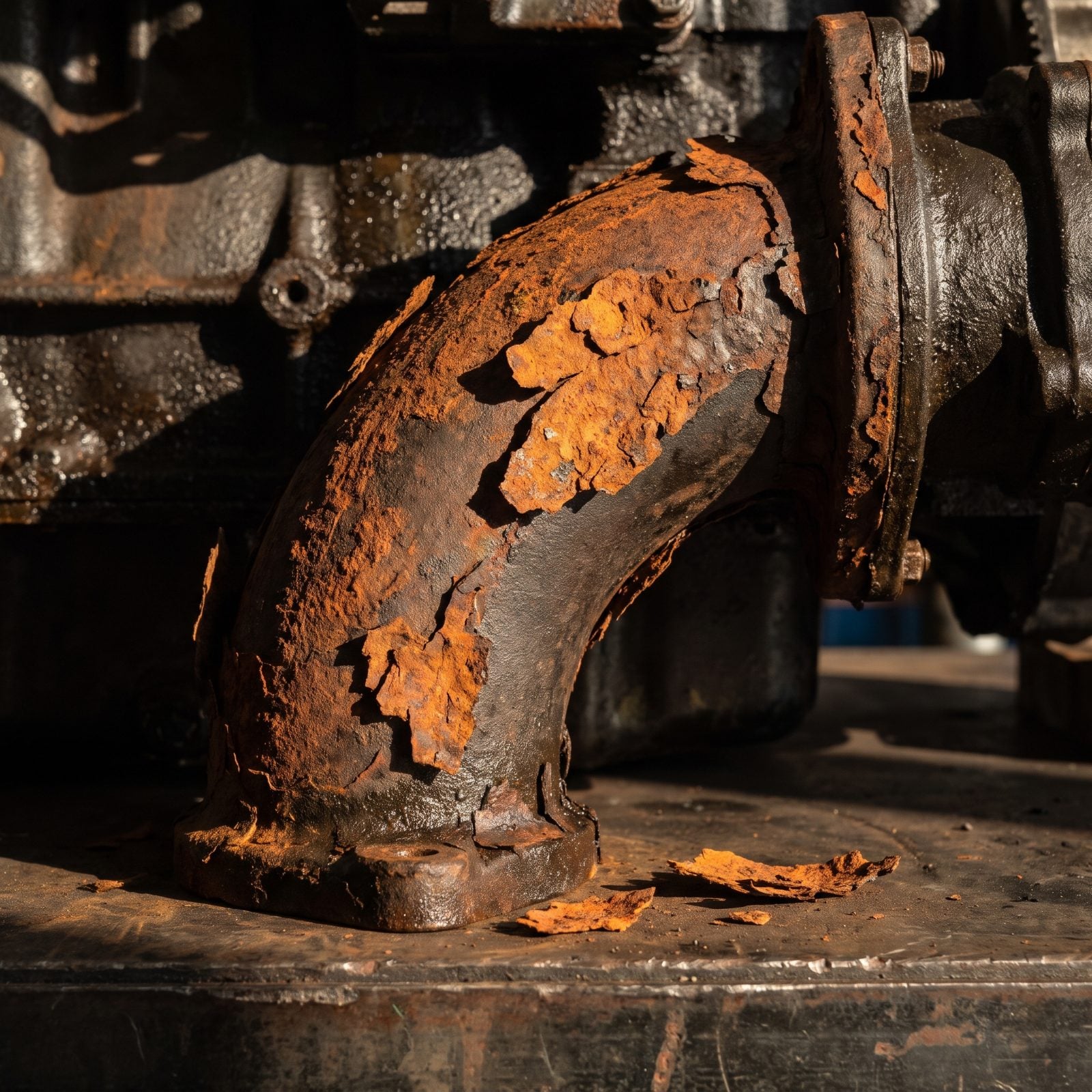
The exhaust elbow is the part that fails quietly and expensively. Raw-water-cooled riser elbows corrode from the inside out, and by the time heavy rust scale shows on the outside, the inner passages are often half choked.
A clogged elbow starves your engine of exhaust flow and can shove water back into the cylinders — which is how a good engine drinks itself to death. Surveyors tap these with a pick and listen. A dead, dull thud where there should be solid metal is a bad sign.
Posting a photo from a recent job, one UK boat surveyor writes, “Yanmar exhaust elbow weld corroding. A common fault found during our pre-purchase surveys.”
7. A Battery That Is Not Properly Secured
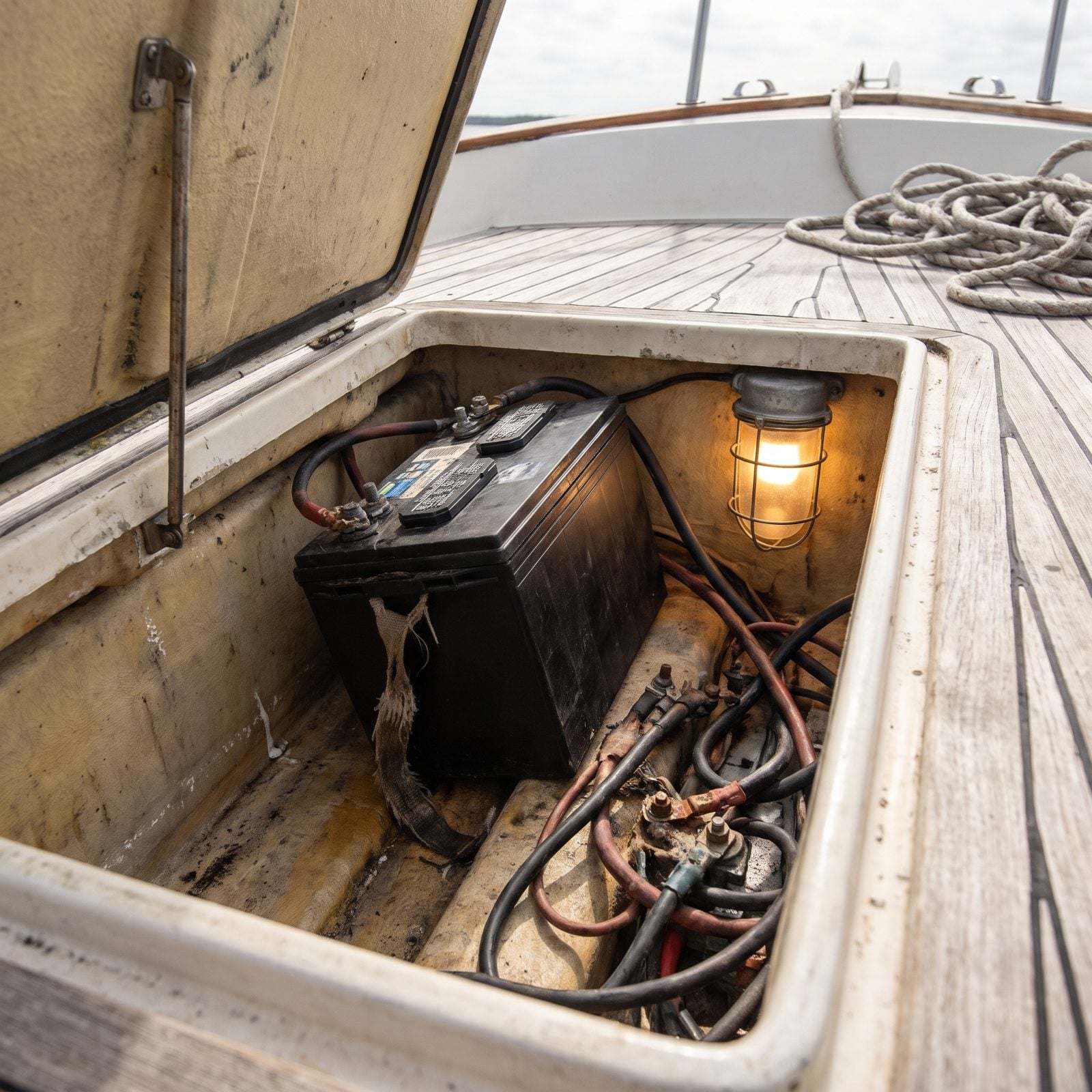
A loose battery is a brick that wants to move. In a beam sea it becomes exactly that, and it takes its wiring with it.
The rules here aren’t fussy. A boat battery needs a secured box or tray and a hold-down that resists real motion, plus a cover over the positive terminal so nothing metal can bridge it. You’d be amazed how often you lift a hatch and find a battery just set in the bilge, sliding on its own corrosion, with a bare terminal six inches from a fuel line. That’s a short, a spark, and a fire sitting there being patient.
6. Heat Discoloration Around the Shore-Power Inlet
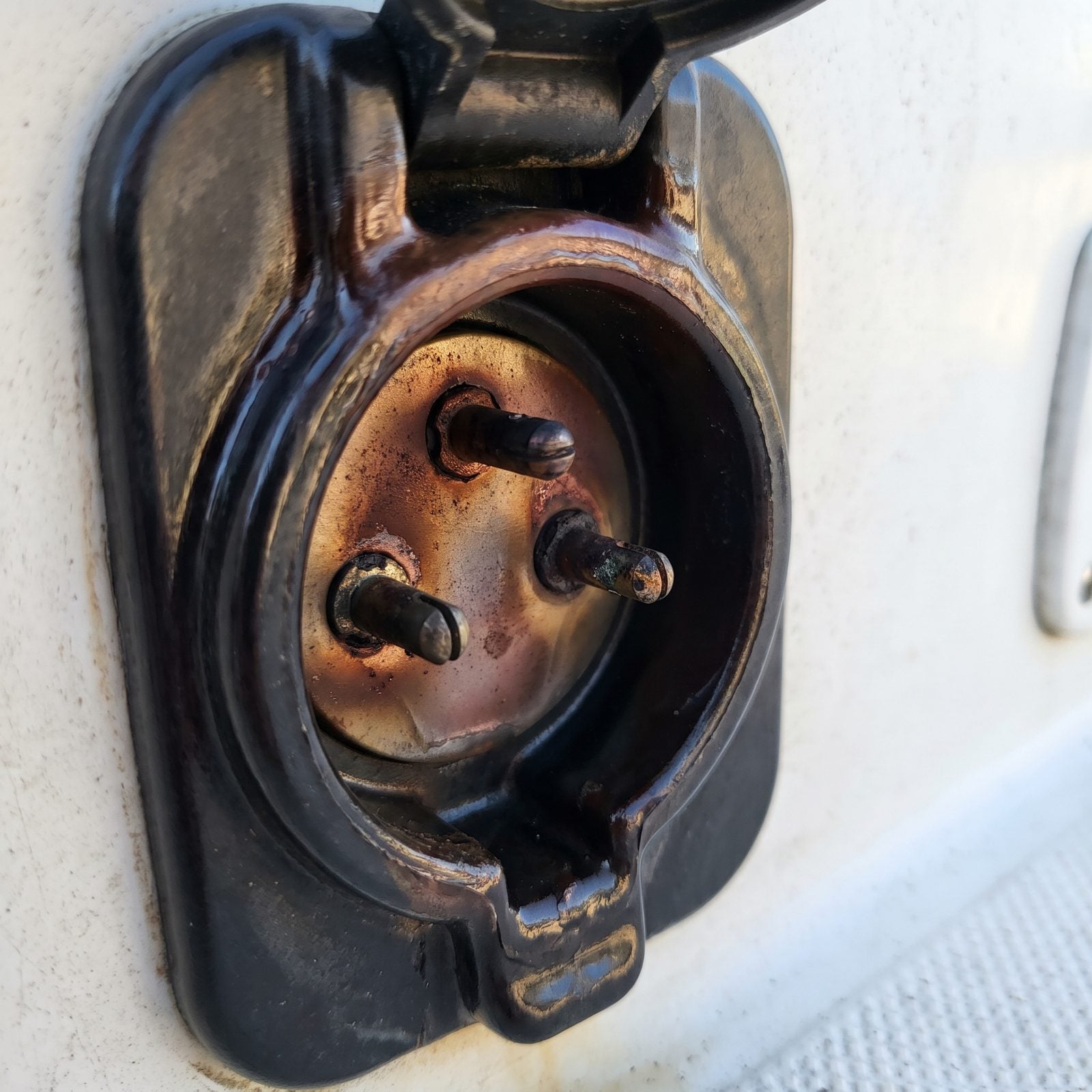
Brown scorching around the brass contact slots of a shore-power receptacle is the single scariest thing on this whole list.
That discoloration means heat, heat at a connector means resistance, and resistance at thirty or fifty amps is how marina fires start at two in the morning. Loose pins, corroded contacts, or a worn locking ring let the plug arc every time a wave rocks the boat. See melted plastic or a browned contact? That inlet gets replaced before the boat ever plugs in again.
5. Household Wire Nuts Used in Marine Wiring
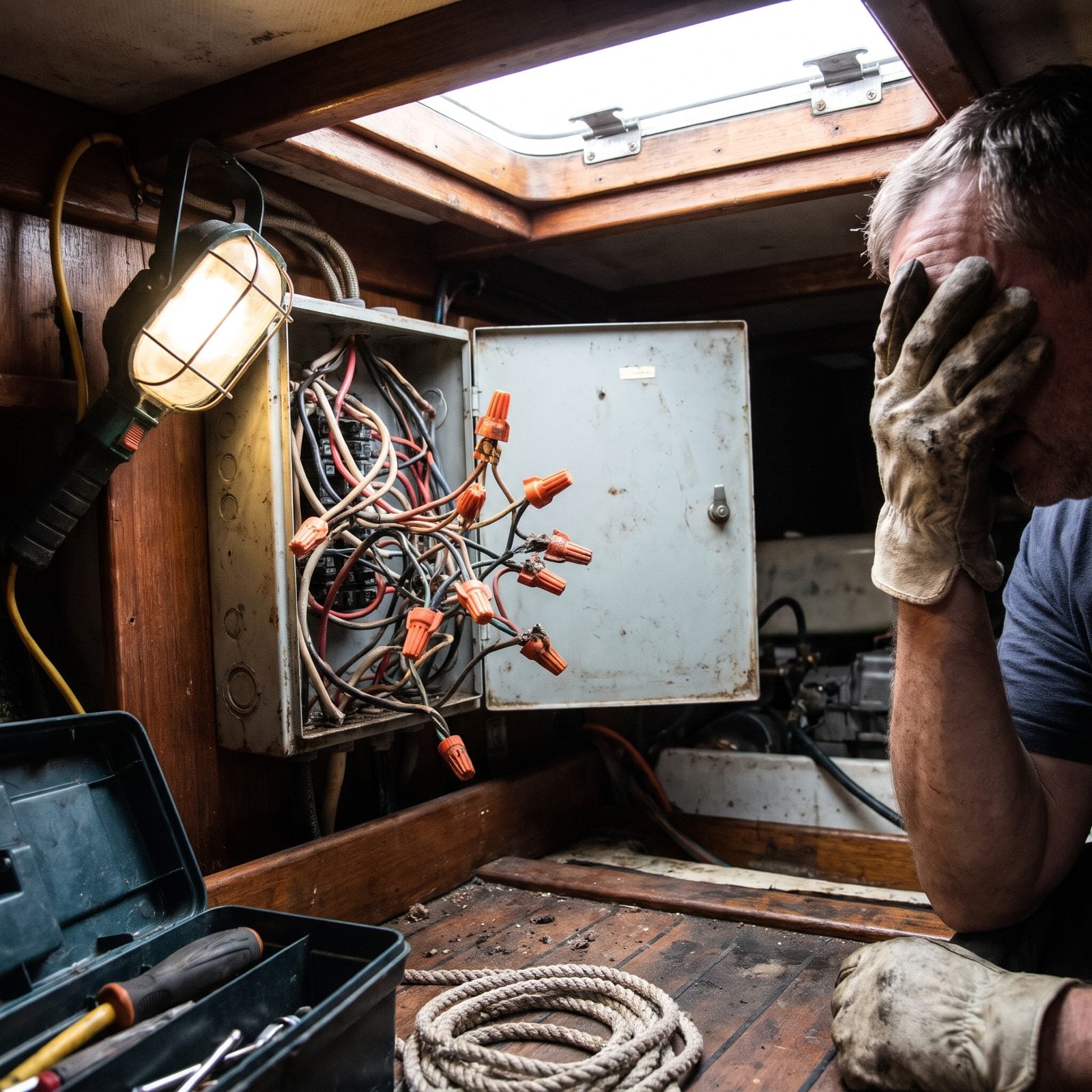
Flip open a panel and find orange wire nuts twisted onto the wiring. Now you know a previous owner did his own electrical, and you know how he did it.
Wire nuts are built for a dry house that never moves. A boat vibrates, flexes, and lives in salt humidity, so a twist-on connector just backs itself loose and corrodes. Marine connections want tinned, fine-stranded wire and crimped, sealed terminals. And one wire nut is rarely the only one. When you find household wiring, budget to trace and redo far more than the single clue in front of you.
4. Hairline Cracks in Standing-Rigging Swages
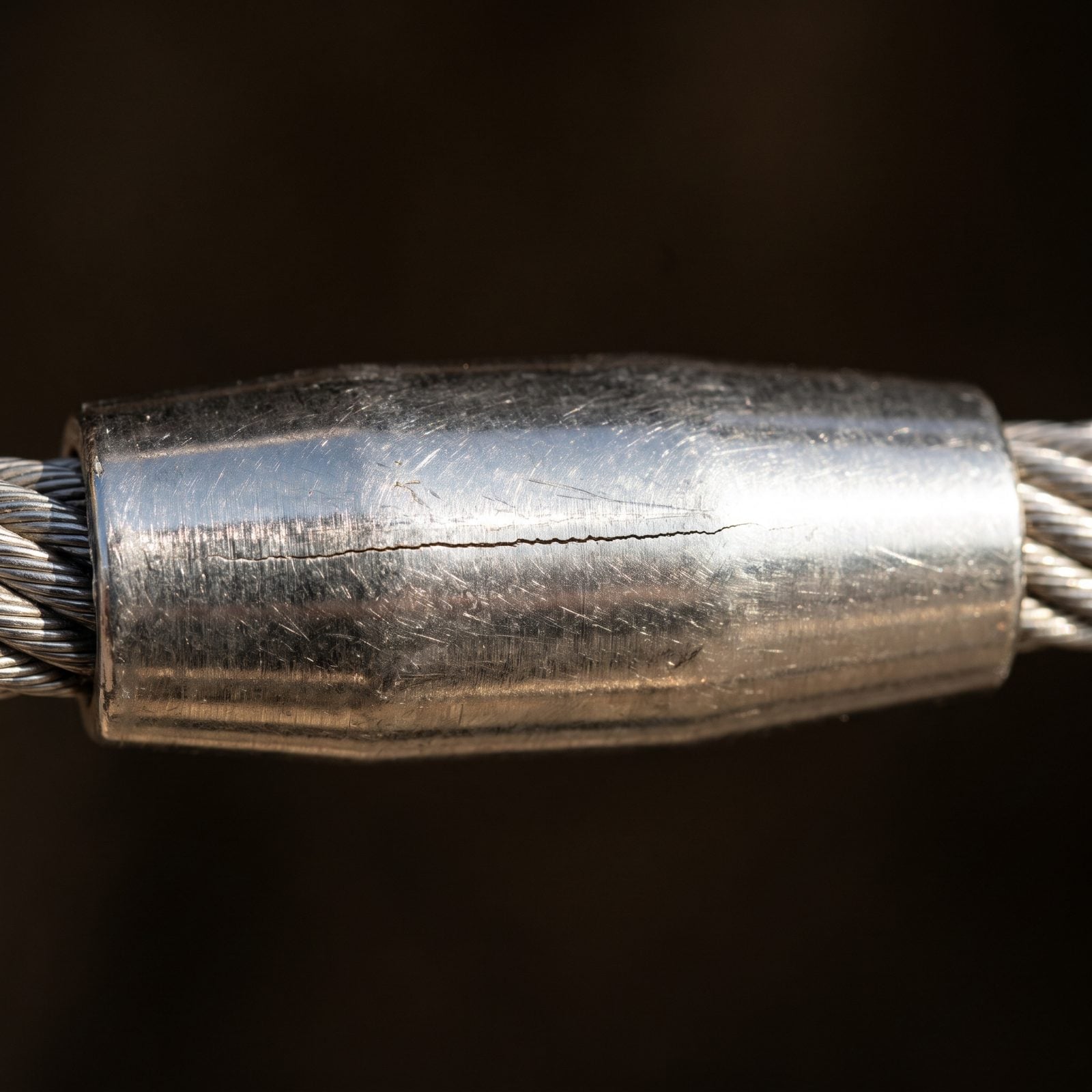
A sailboat’s rig holds the whole show up, and it fails at the fittings, not the wire. The swage — that smooth metal sleeve crimped onto each cable end — is where to look.
A fine vertical crack in a swage, often with a thin rust weep crying out of it, is a fitting on its way out. Stainless under constant load and salt develops crevice corrosion and fatigue cracks you can miss from two feet away. A loupe finds them. So does a rust stain that keeps coming back after you polish it.
On reading cracks in swage terminals, a longtime cruising sailor explains, “A vertical split along the barrel points to corrosion, while a horizontal crack points to fatigue and means replace immediately.”
3. Compression or Sagging Beneath the Mast Step

Look up inside the cabin at the base of the mast, then look for the dip.
A deck-stepped mast pushes thousands of pounds straight down, and over the years that load can crush the core beneath the step or buckle the compression post holding the deck up beneath it. Cracked gelcoat radiating out from the step, a headliner that sags, a cabin door that suddenly won’t close square — these are the quiet signs a structure is giving way under compression. Lay a straightedge across it and the dip shows itself.
This is the kind of repair that eats a season and a shipyard invoice, so it earns a long, slow look before any money changes hands.
2. An LPG Locker That Cannot Drain Overboard
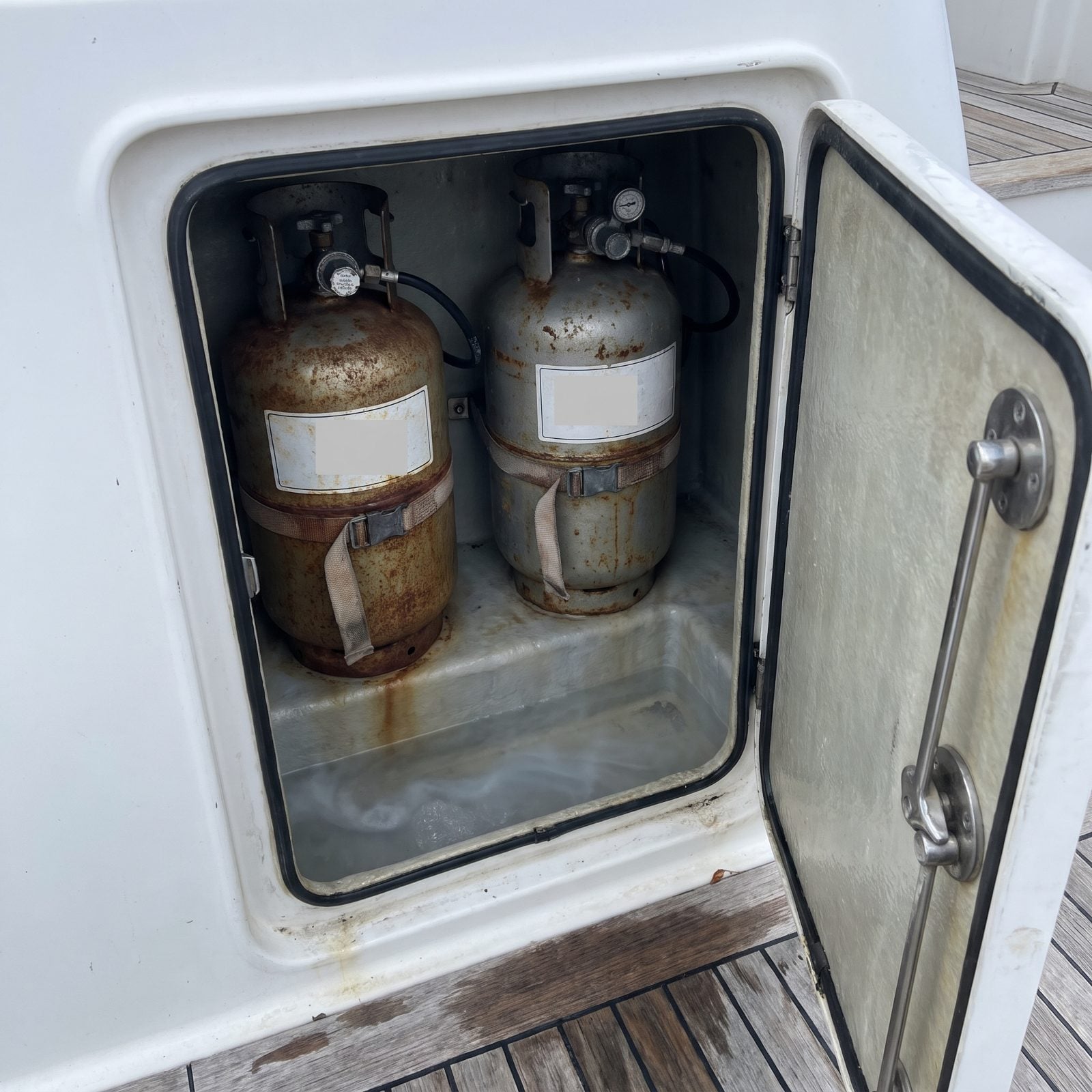
This one empties a slip at the first whiff. Propane is heavier than air, so it sinks, and a locker that can’t dump leaked gas overboard turns into a sealed box collecting the one thing you never want pooling near the bilge.
And here’s what gets missed: the locker looks perfectly fine from the outside. Tank strapped in, regulator sealed, door latches shut against its gasket with that satisfying little thunk. Swing open the door and look at the floor of the box, though, because that’s where the truth lives. There should be a drain at the very bottom routed to a through-hull above the waterline. What you often find instead is a hose that got disconnected during some long-forgotten repair and never put back, or a locker that was glassed over by somebody who never bothered with a drain in the first place.
I’ve watched surveyors spend ninety seconds here and call the whole deal off. Cheap part. Big consequence.
1. A Hull Identification Number That Looks Altered
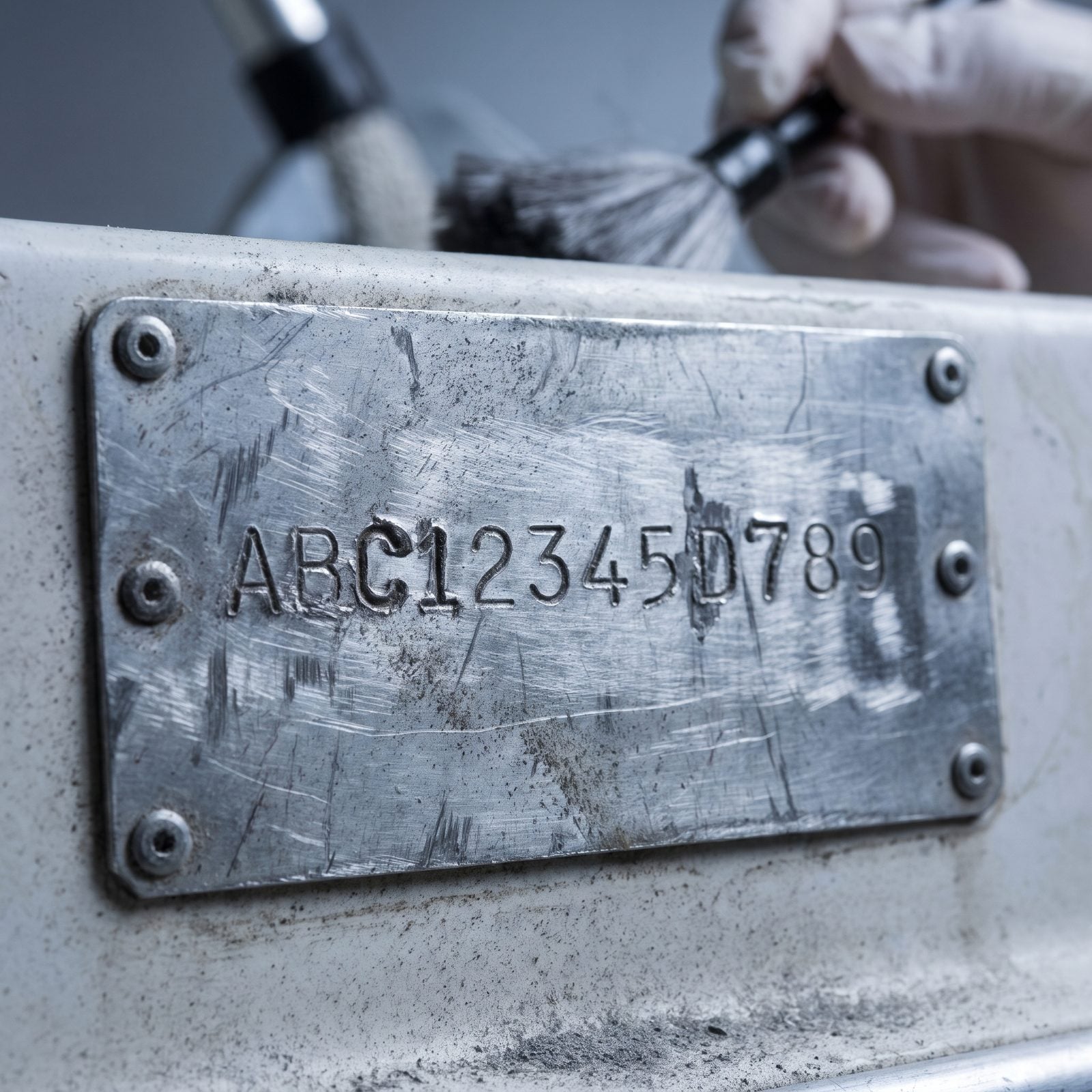
A clean HIN tells you the boat is who it says it is. A doctored one tells you to walk.
Every boat built since late 1972 carries a 12-character hull ID, often on a metal plate riveted to the hull or rail, with a second one tucked away somewhere inside the hull. That plate number gets stamped in when the boat is built, and it should look like it was done in one pass — same finish, same depth, crisp and even.
What a surveyor catches fast is a patch of scuffed or mismatched metal around the digits, feathered sanding marks, a stamped character standing taller or more off-kilter than its neighbors, or a number that simply doesn’t match the second hidden HIN. Any of those? The boat may have been rebuilt from a salvage title, re-stamped to hide a lien, or stitched together from two separate hulls. None of those stories ends well for you.