
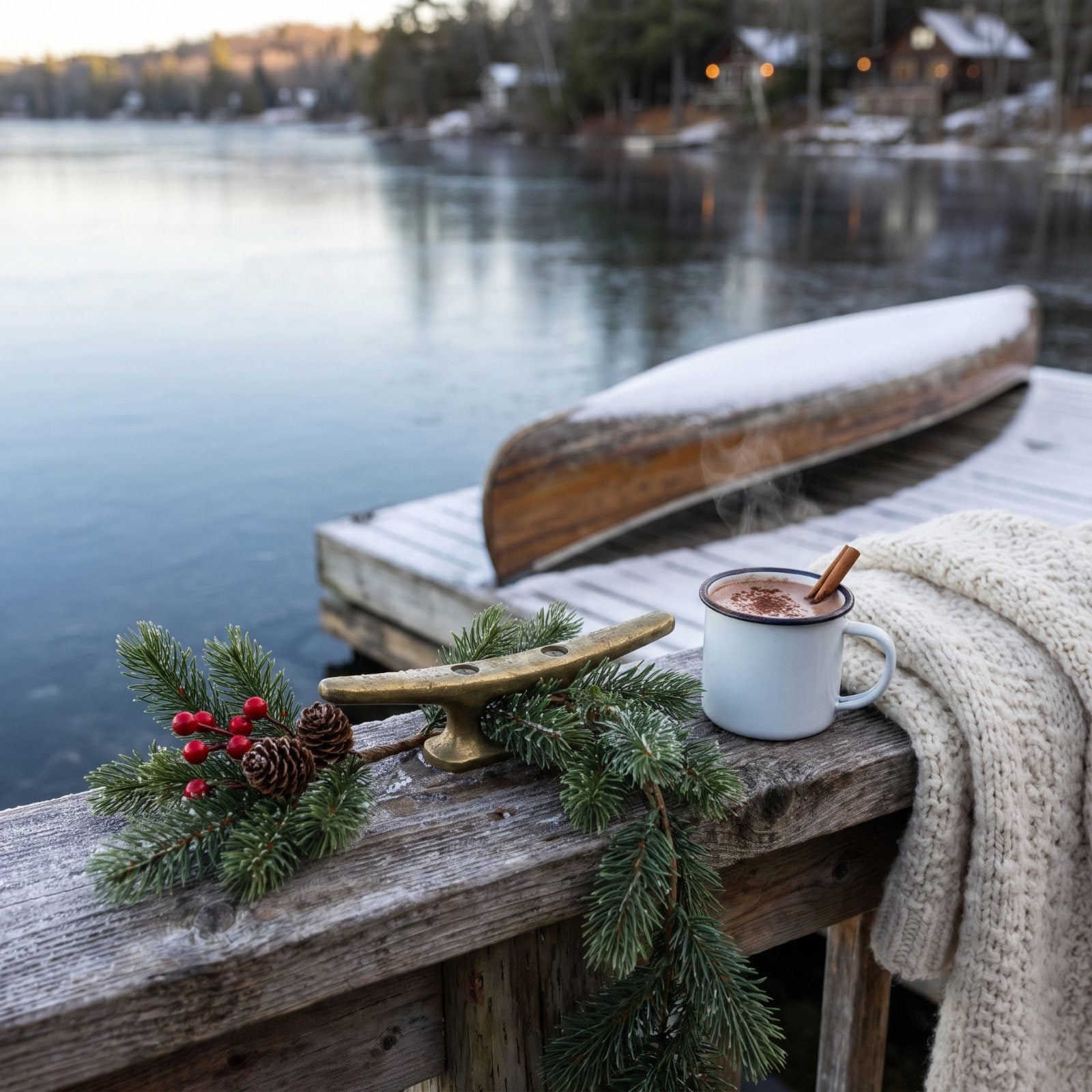
The dock boards go quiet in December. No slap of wake against the hull, no kids cannonballing off the end — just a long sheet of water doing its slow freeze while the house behind you smells like woodsmoke and somebody’s second batch of cookies. That hush is the whole point. A lake house at Christmas isn’t a smaller version of the holiday; it’s the version where the light does the heavy lifting and the traditions grow straight out of the water. These are the sights, rituals, and small sensory details that make it stick.
Please note that some of the imagery in this article may have been enhanced with the assistance of AI.
26. The Christmas Eve Boat Parade That Turns the Shoreline Into a Theater
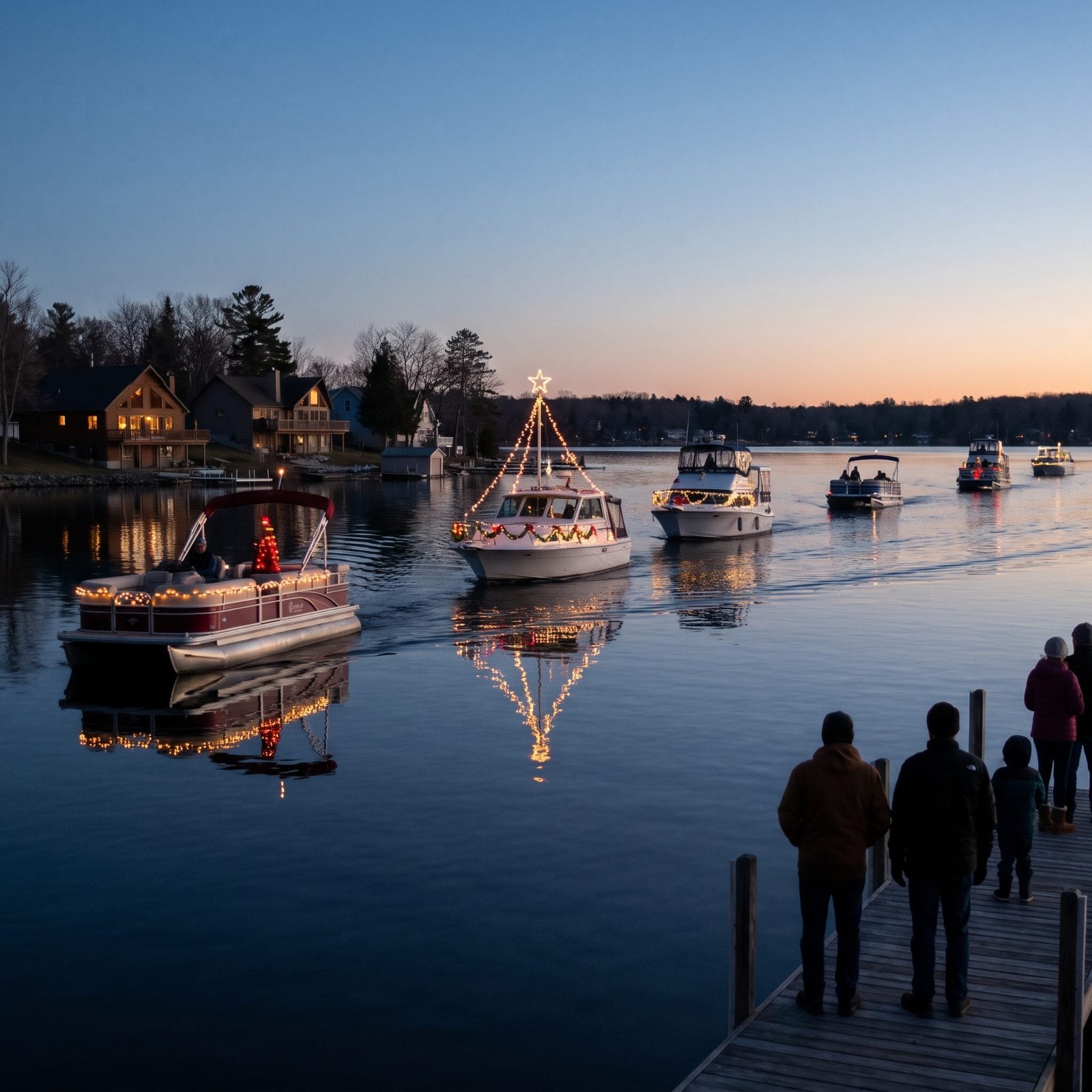
Lake towns don’t wait for a parade permit. Somebody with a pontoon and a few hundred feet of warm-white string lights decides it’s happening, and by dark half the cove has joined in.
The magic isn’t the boats — it’s the water. Every strand hits the surface and doubles, so you’re watching the parade and its reflection at once, two ribbons of color drifting past your dock. Bring a thermos. Those aluminum benches get cold fast once the sun drops, and you’ll want both hands free to wave.
25. Presents Ferried Across the Lake by Boat Instead of Driven Up a Driveway
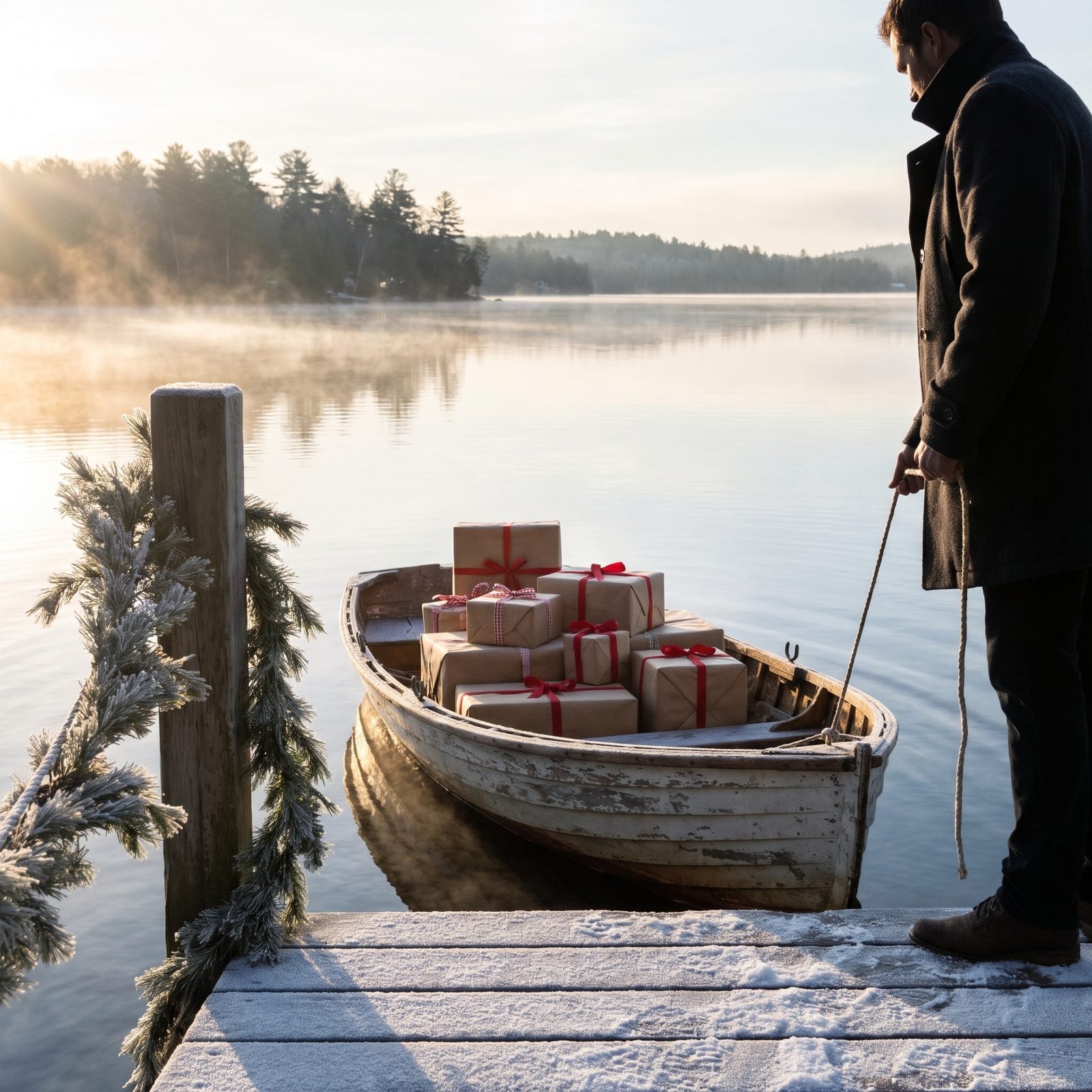
There’s a specific delight in watching gifts arrive by water. A loaded skiff crossing the cove on Christmas morning does something a UPS truck never could.
If the cousins are in the cabin across the bay, the hand-off becomes the event. Bundle the boxes in a waterproof tote — lake spray finds wrapping paper like it’s magnetic — and ease off the throttle near the dock so your wake doesn’t send the whole haul sliding. Honestly? The crossing is half the gift.
24. A Fresh Evergreen Wreath Hung on the Boathouse Door
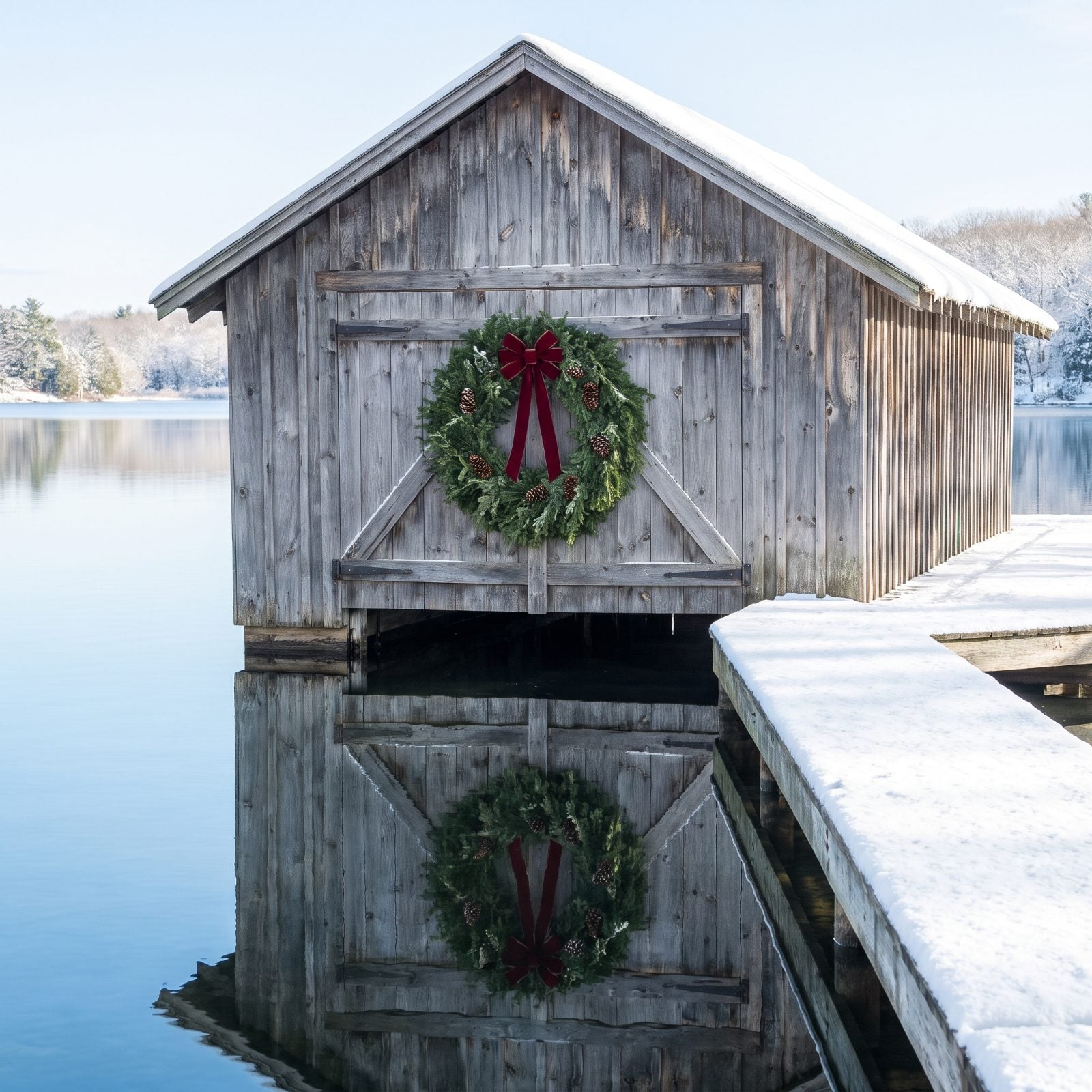
Everyone hangs a wreath on the front door. Fewer people think to put one on the boathouse — a shame, because that’s the door the lake actually sees.
Go bigger than feels reasonable. A wreath that looks right on a house door disappears against a wide boathouse face, so scale up. Real balsam or fraser holds up better in damp lake air than the pre-lit plastic rings, and it throws that cold-pine smell every single time you walk down for firewood.
23. The Christmas Tree Positioned So the Lake Is Its Backdrop
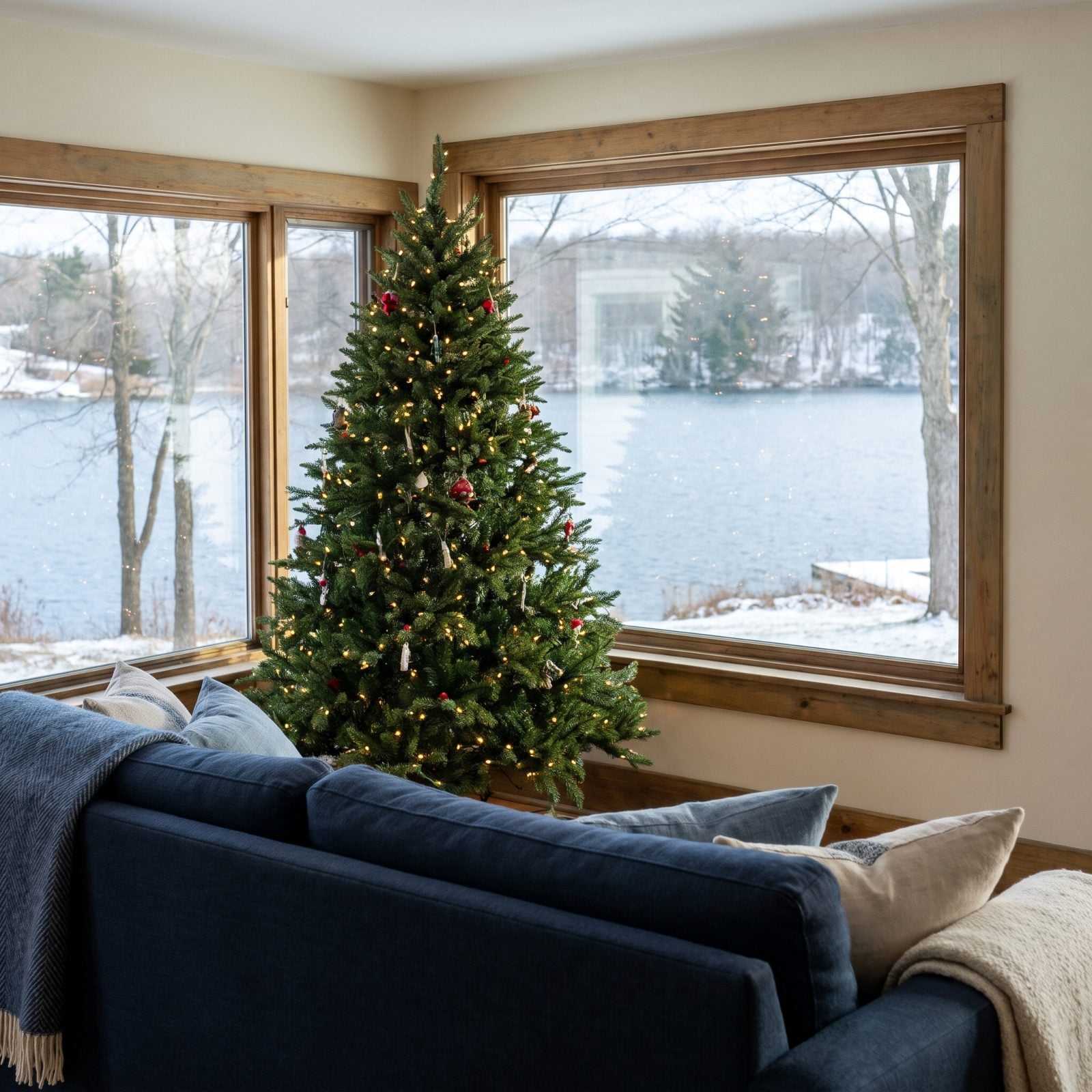
A tree in a city apartment stands against a wall. A tree in a lake house stands against open water, and that changes everything about how it reads.
Put it in front of the big window, not beside it. All day the water becomes the backdrop, and come night the glass turns into a black mirror that bounces every light back at you. Go lighter on ornaments than you would at home — the view is already doing the work, and a cluttered tree just fights it.
22. Dock Lights Smearing Long Ribbons of Color Across Still Water
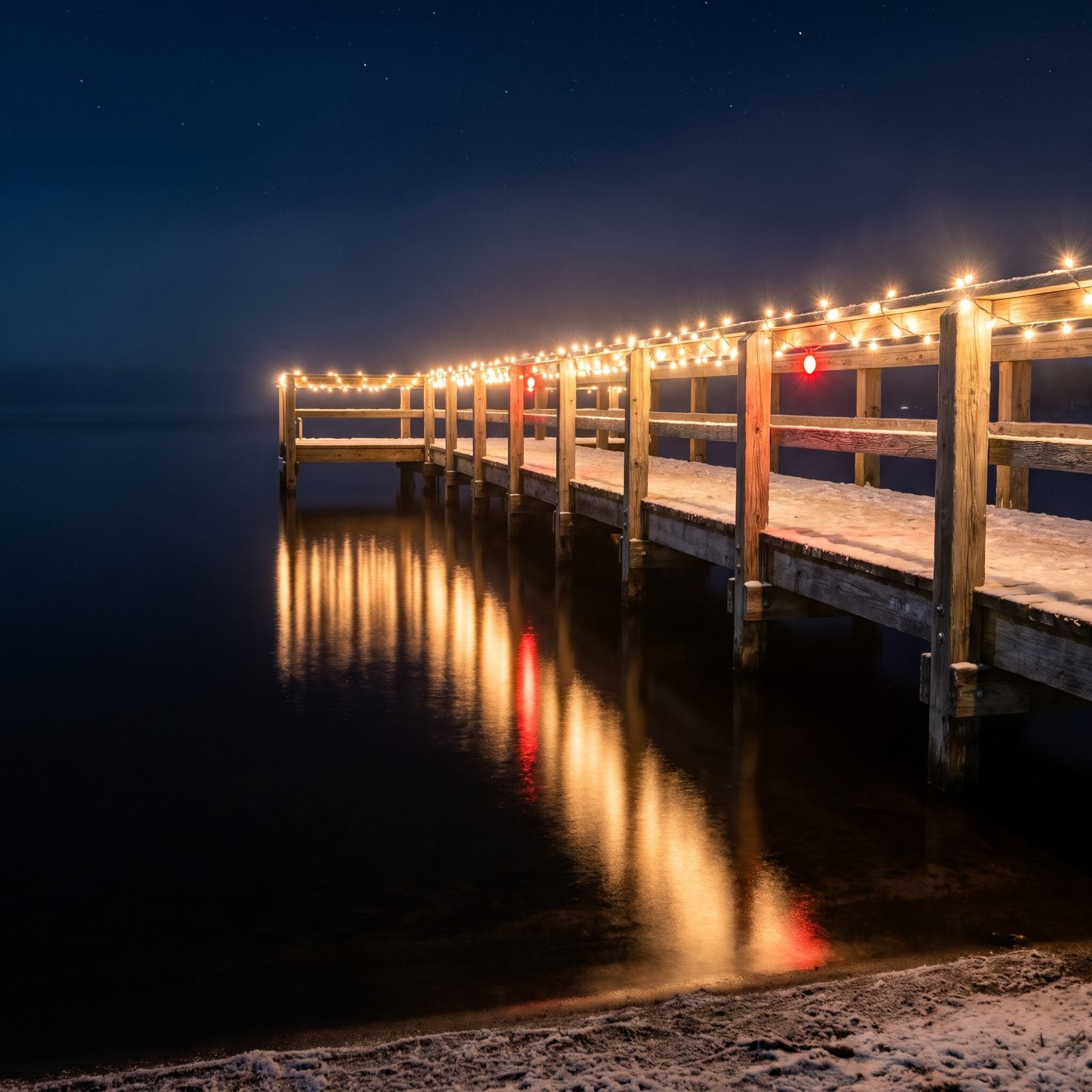
Still water at night is the best display surface money can’t buy.
String warm-white lights down the dock rail and the lake stretches each bulb into a long vertical streak, so a twenty-foot run looks like fifty. Avoid the cool blue LEDs — they go harsh and clinical over dark water, where warm white reads like candle glow. Two red bulbs in the strand give the eye somewhere to land.
21. Fresh Snowfall That Lays a Clean White Path Down to the Dock
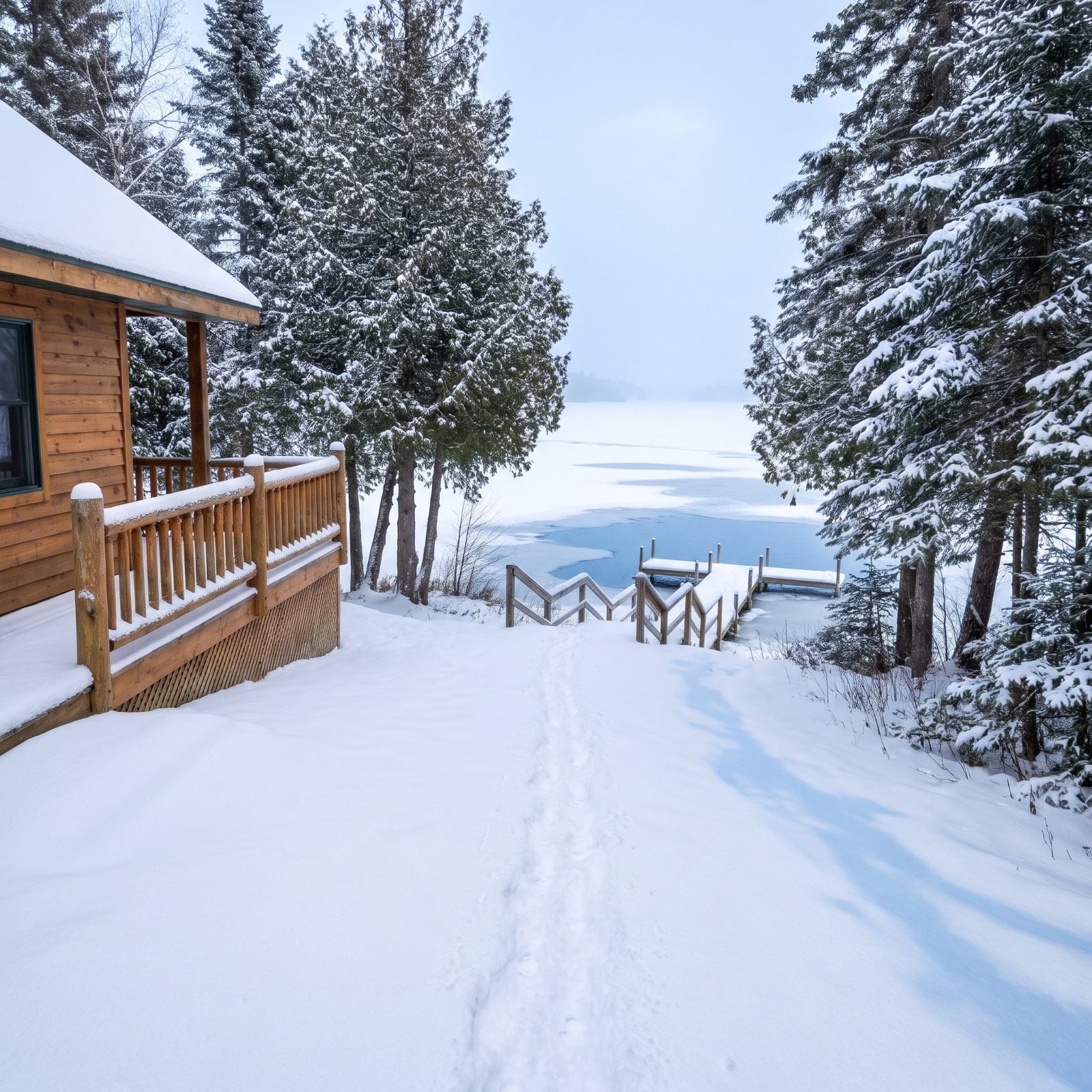
Wake up to a fresh six inches and the whole property resets overnight — the lawn, the steps, the dock, all of it wiped clean and waiting.
What gets me every year is that first walk down before anyone else is up. Your own footprints are the only mark on the snow, and they lead straight to the water. Salt wrecks wood dock boards over time, so keep a bag of plain sand or a push broom by the door instead. Your knees will thank you, and so will the planks.
20. The Ice Patterns That Form Like Lace Along the Frozen Shoreline
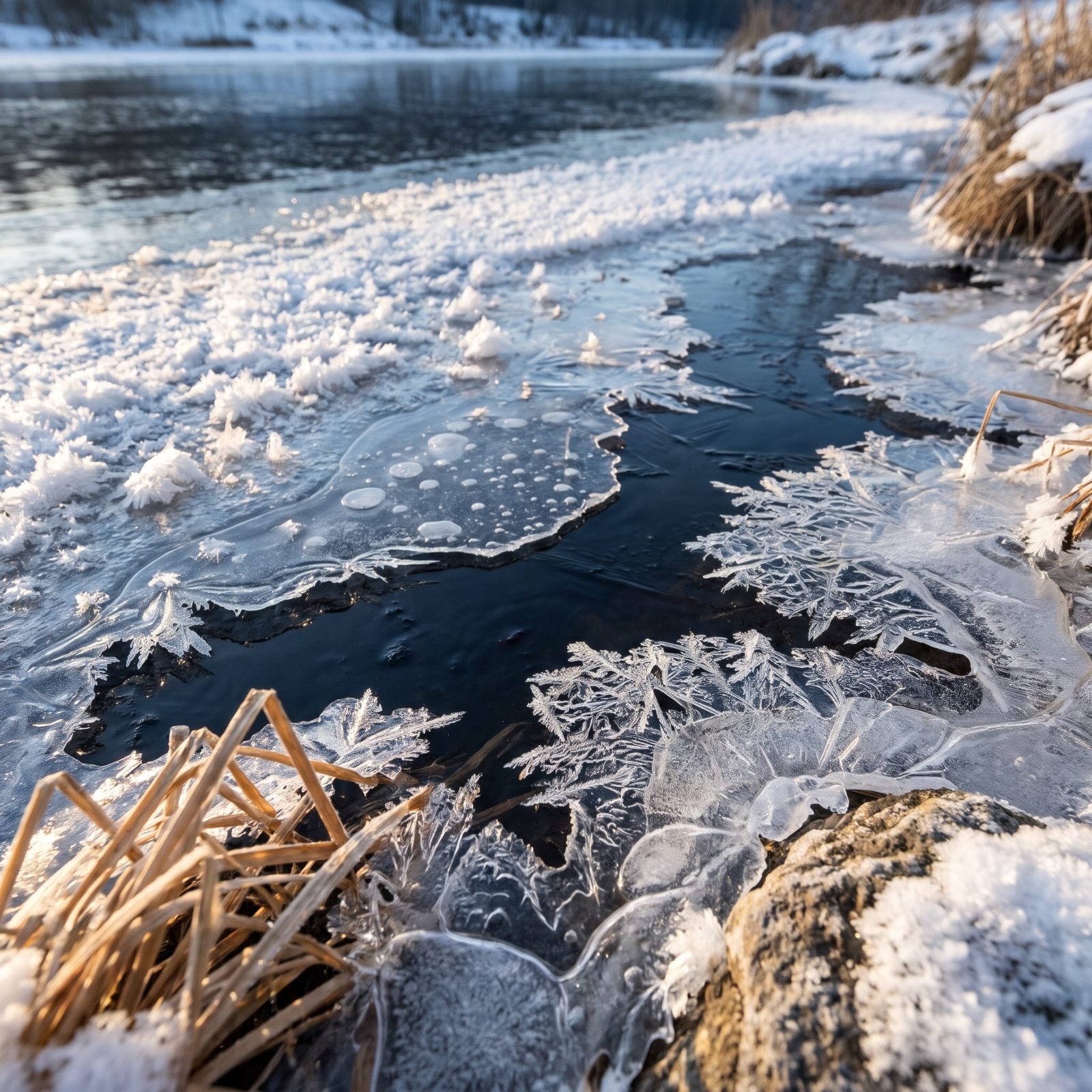
Nobody decorates these. The lake handles it alone, overnight, for free.
Where the shoreline freezes and thaws you get lace-edge patterns and feathered frost crystals that look like somebody designed them on purpose. Trapped air bubbles stack under clear ice like beads. Get down low with the morning sun behind them and it’s the best detail shot you’ll take all season. Obvious but worth saying: shoreline ice is almost never safe to stand on. Admire it from the dock.
19. Canoe Paddles Wrapped in Evergreen Garland Along the Mantel
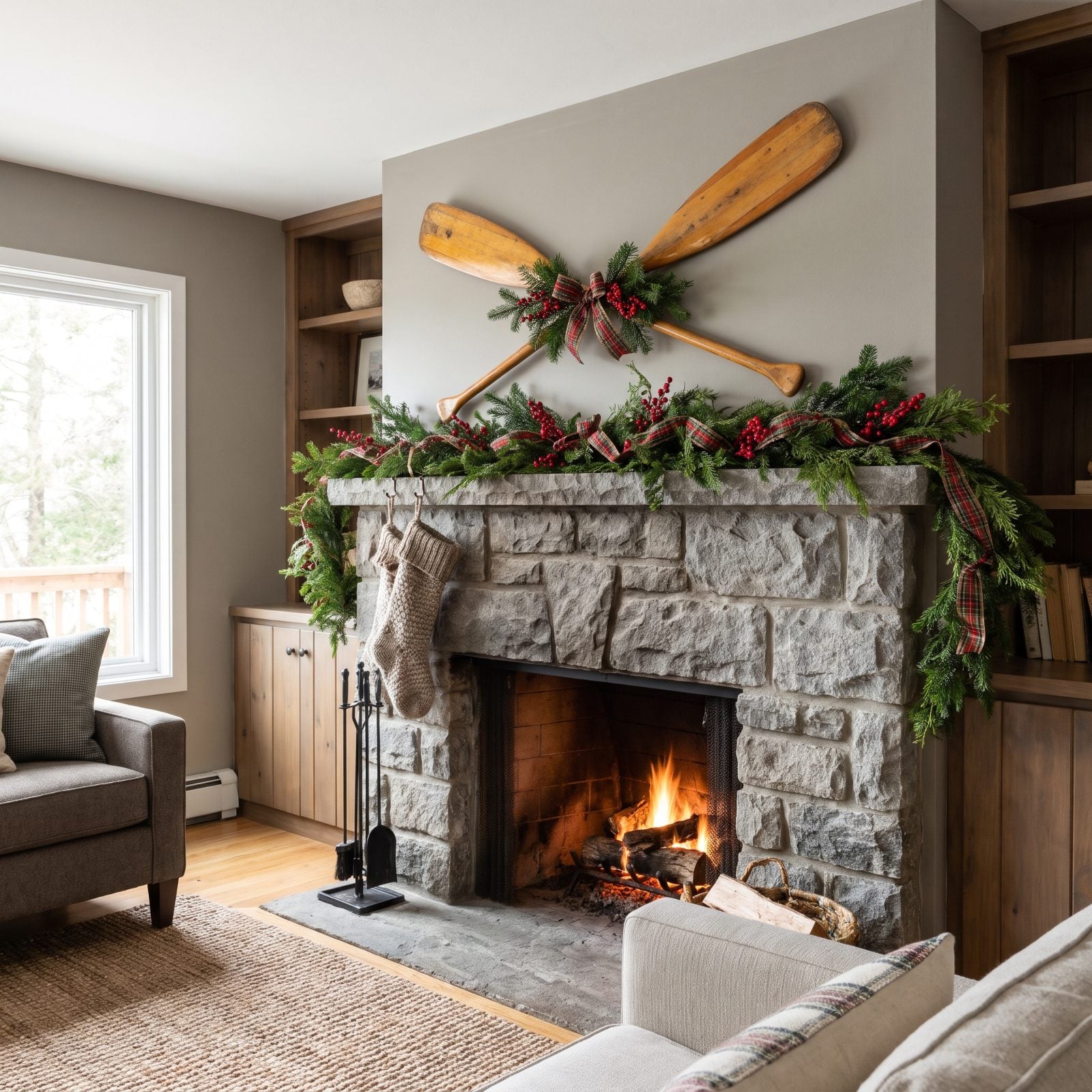
The paddles come off the water in October and usually gather dust in a corner until spring. Give them a December job.
Crossed above the mantel and wound with fresh garland, a pair of old wooden paddles becomes the most lake-specific decoration in the house. It beats a store-bought swag every time, because it actually means something — you’ve paddled with these. A length of plaid ribbon and a few sprigs of berry is all they need. Don’t overdress them.
18. Vintage Fishing Lures Repurposed as Tree Ornaments
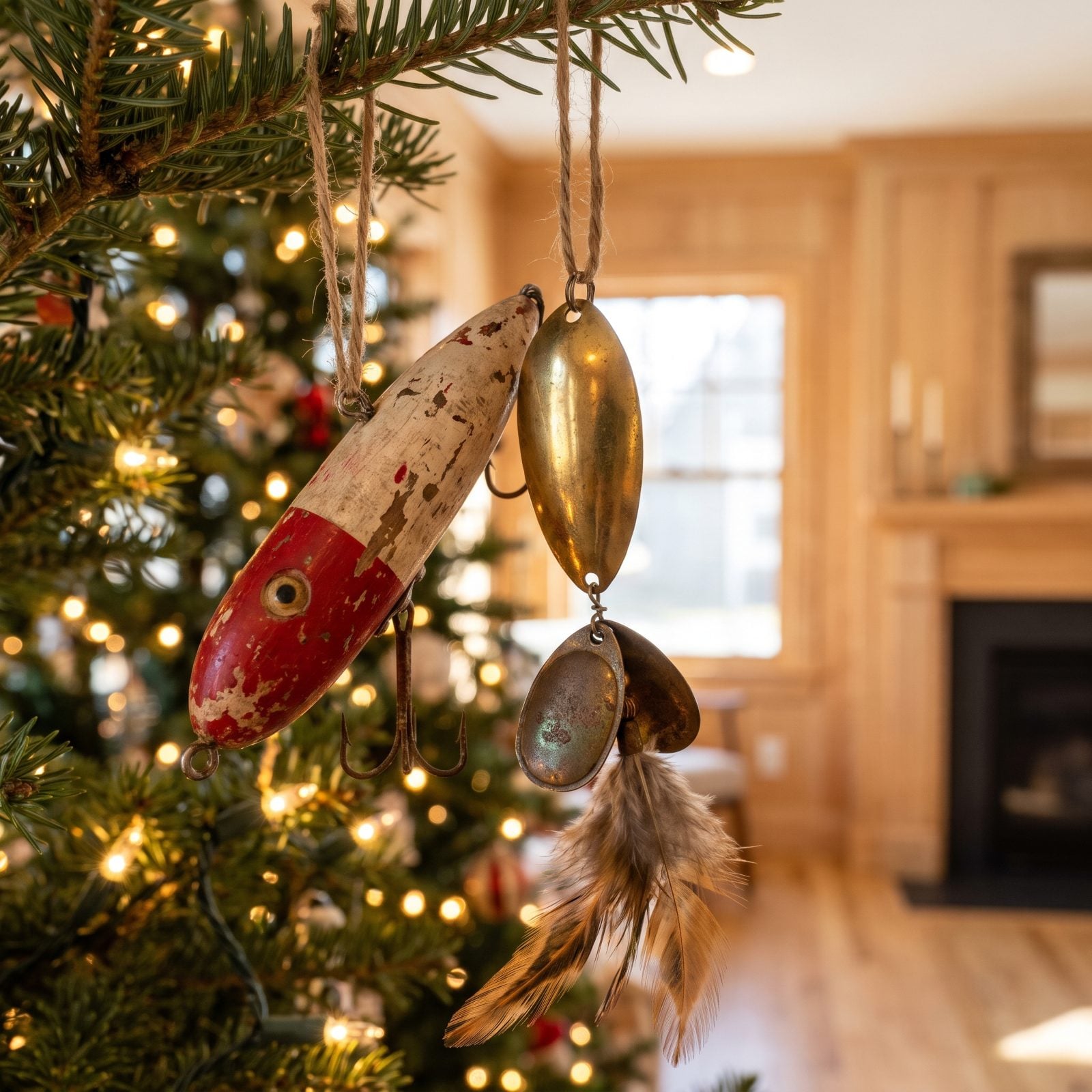
There’s a tackle box in every lake house full of lures too pretty or too old to actually fish. This is their second life.
An aged red-and-white wooden plug or a tarnished brass spoon catches tree light the way no mass-produced bauble can. If you leave the old hooks on for authenticity, as these still have, hang them high and out of reach — especially with grandkids reaching under the branches. Hang them where the warm bulbs hit the metal. Half your guests won’t clock what they are until they lean in close, and that little double-take is the whole fun of it.
17. A Hand-Painted Lake-Map Ornament Added to the Tree Every Year
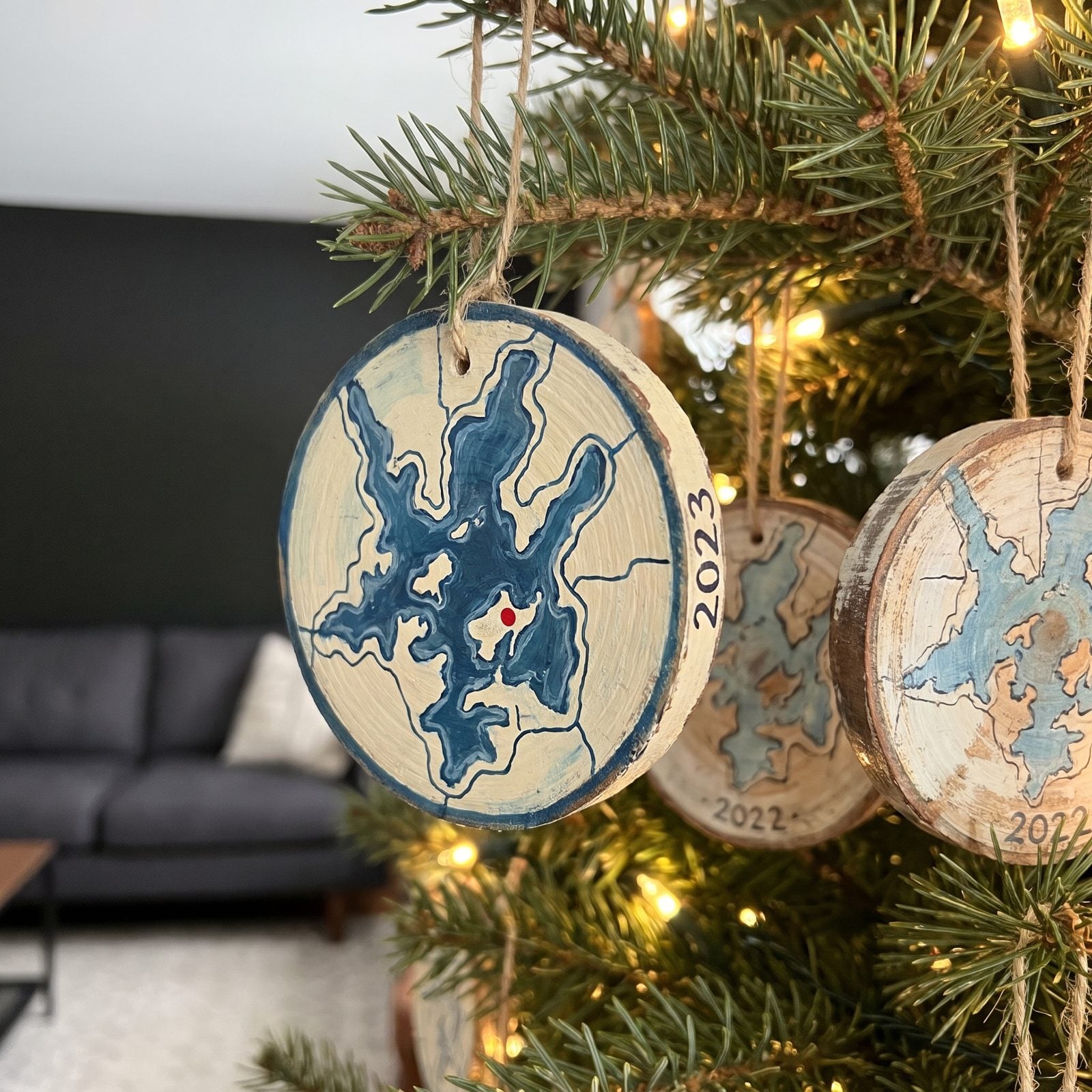
This is the one that outlives everything else on the tree.
Each Christmas, add a small ornament painted with the shape of your lake, a red dot where the cabin sits, and the year on the back. Over a decade or two the branches fill with them — a little timeline of the place, hanging in pine. The early ones look rougher than the later ones. That’s the point. You can paint your own on a wooden disk or commission a local artist, and it costs almost nothing to start.
The map ornament is the only decoration in the house that gets more valuable the longer you own it, and none of that value shows up on a receipt.
Years from now somebody will take this box down, find the one from the summer the big storm took the old dock, and remember the whole thing cold. Start the tradition this year. Future you is already grateful.
16. A Driftwood Centerpiece Pulled From Your Own Shoreline
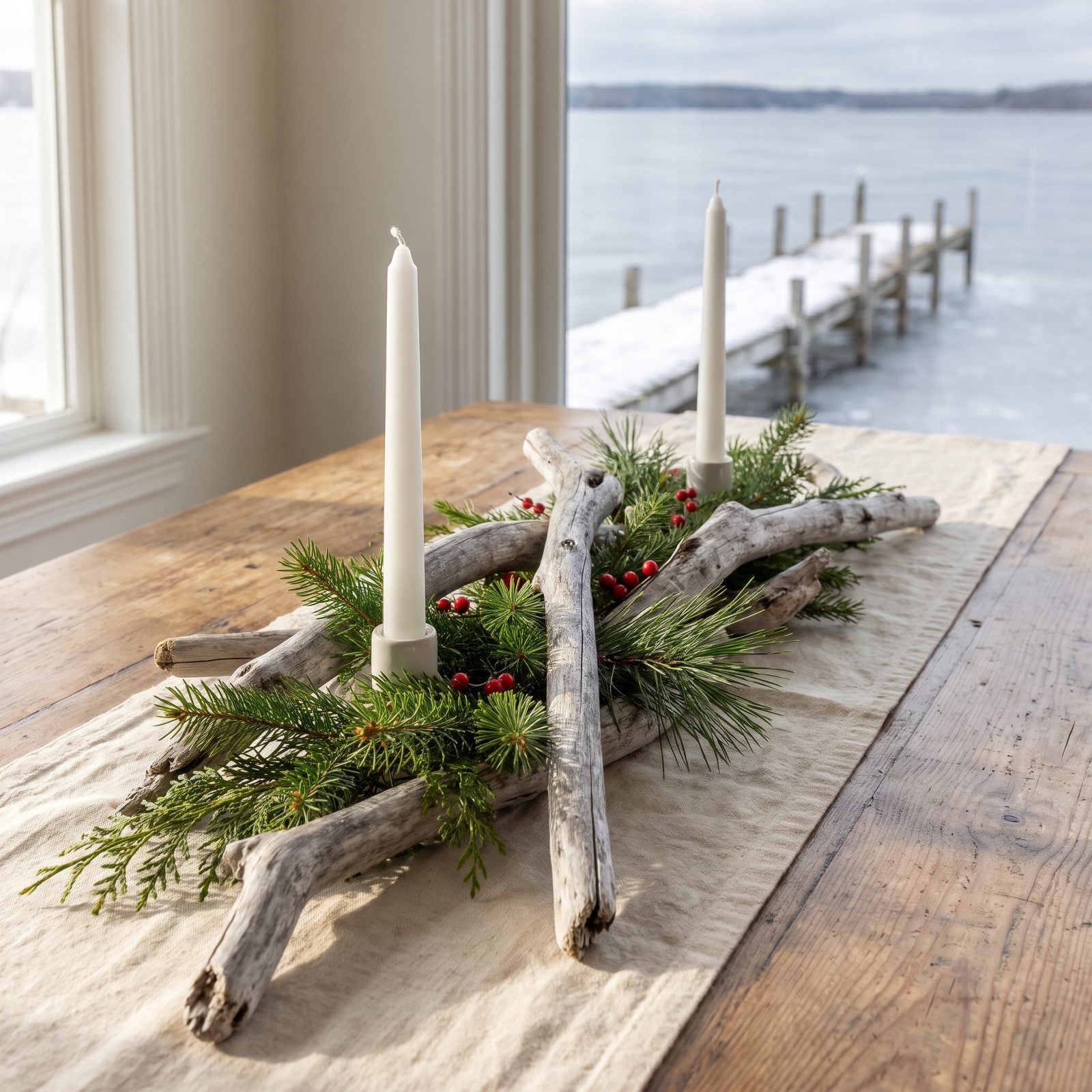
Skip the florist. The best centerpiece you’ll ever set is already drying on your beach, bleached gray and smooth from a summer of waves. A few good driftwood branches, some balsam tucked in the gaps, a handful of red berries if you’ve got a holly or winterberry bush, and you’re done.
It costs nothing and it looks like money. Better yet, it ties the table to the specific water outside the window, so when guests ask where you bought it, you get to say you didn’t.
15. Hot Chocolate Sipped at the End of a Frozen Dock
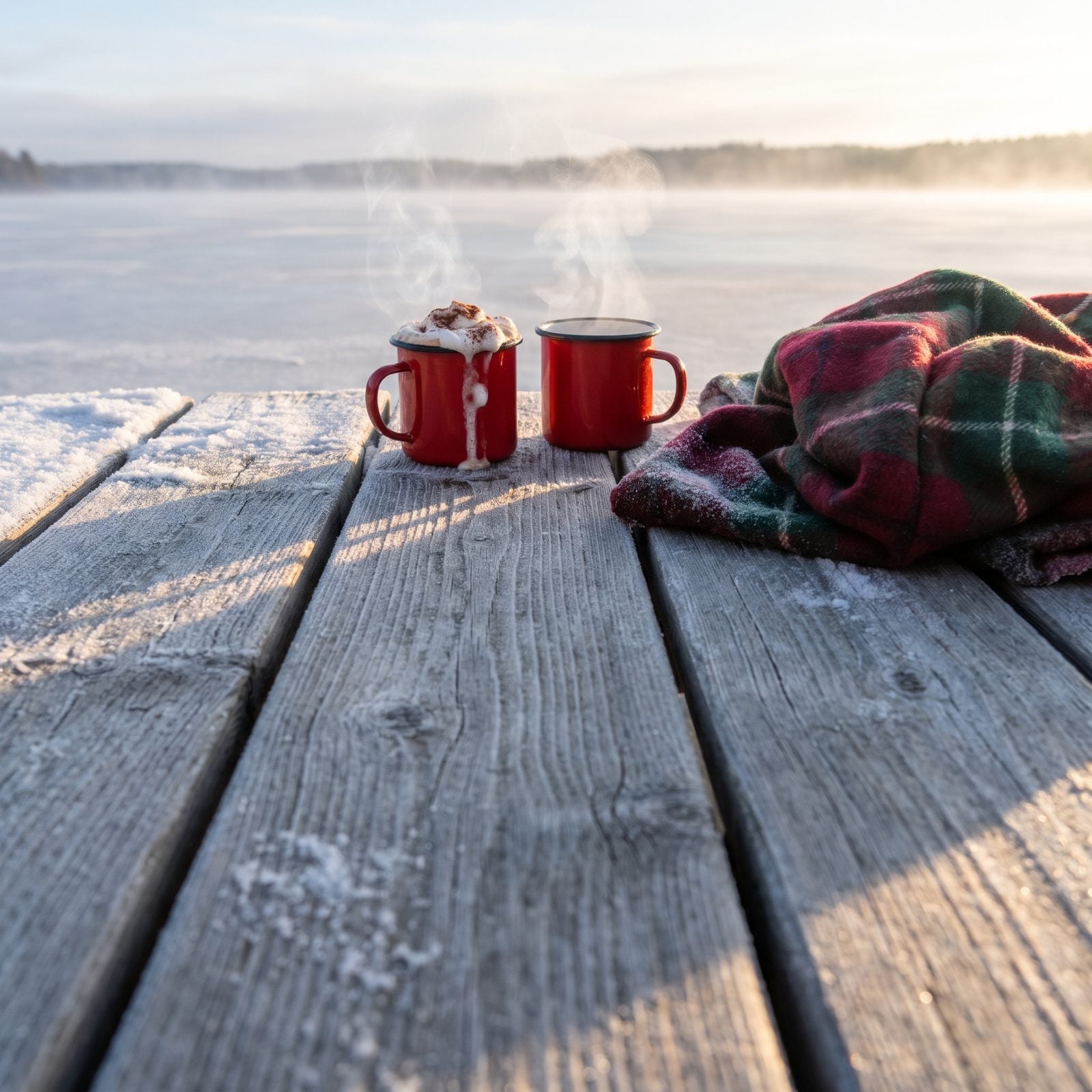
There’s a ritual to walking out to the end of the dock in December with a mug in your hands. The boards crack and pop under your boots, the cocoa steams against air so cold it hurts your teeth, and you stand where in July you dove off into warm water — now it’s a shelf of gray ice stretching out past the swim ladder.
Nobody talks much out there. That’s the point. Five minutes at the end of the dock resets the whole frantic morning of wrapping paper and gravy.
14. A Shoreline Bonfire Burning Under Winter Stars
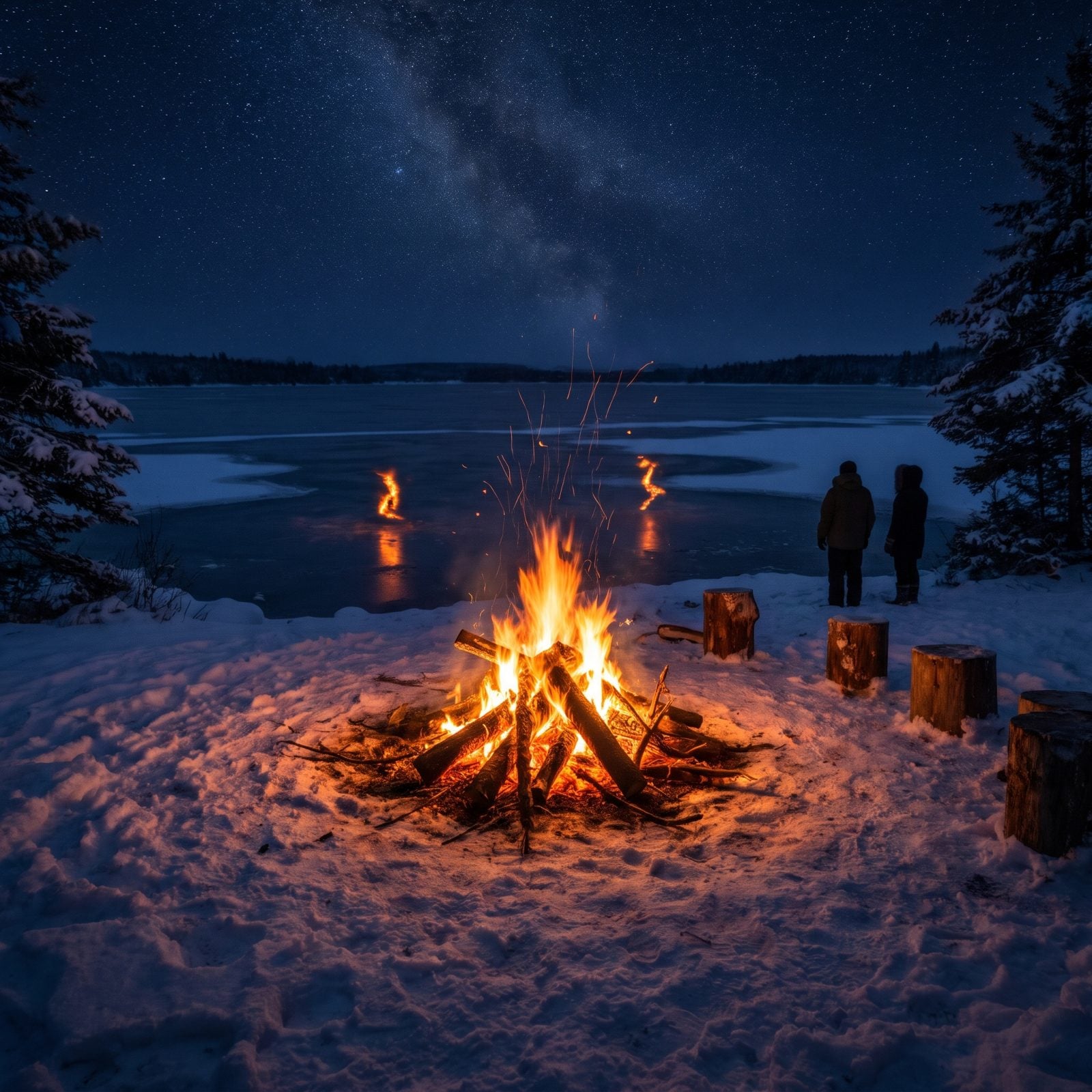
Winter skies over a lake are a different animal. No trees crowding the view, no streetlights — just a huge black bowl full of stars and the fire throwing orange light onto the snow and the ice.
Build it back from the water on solid ground, never out on the lake, and keep sparks and open flame off the ice entirely. The reward: a shoreline fire whose glow catches on any smooth patches of ice near the edge, which is half the magic.
13. Carols Drifting Clean Across the Open Water
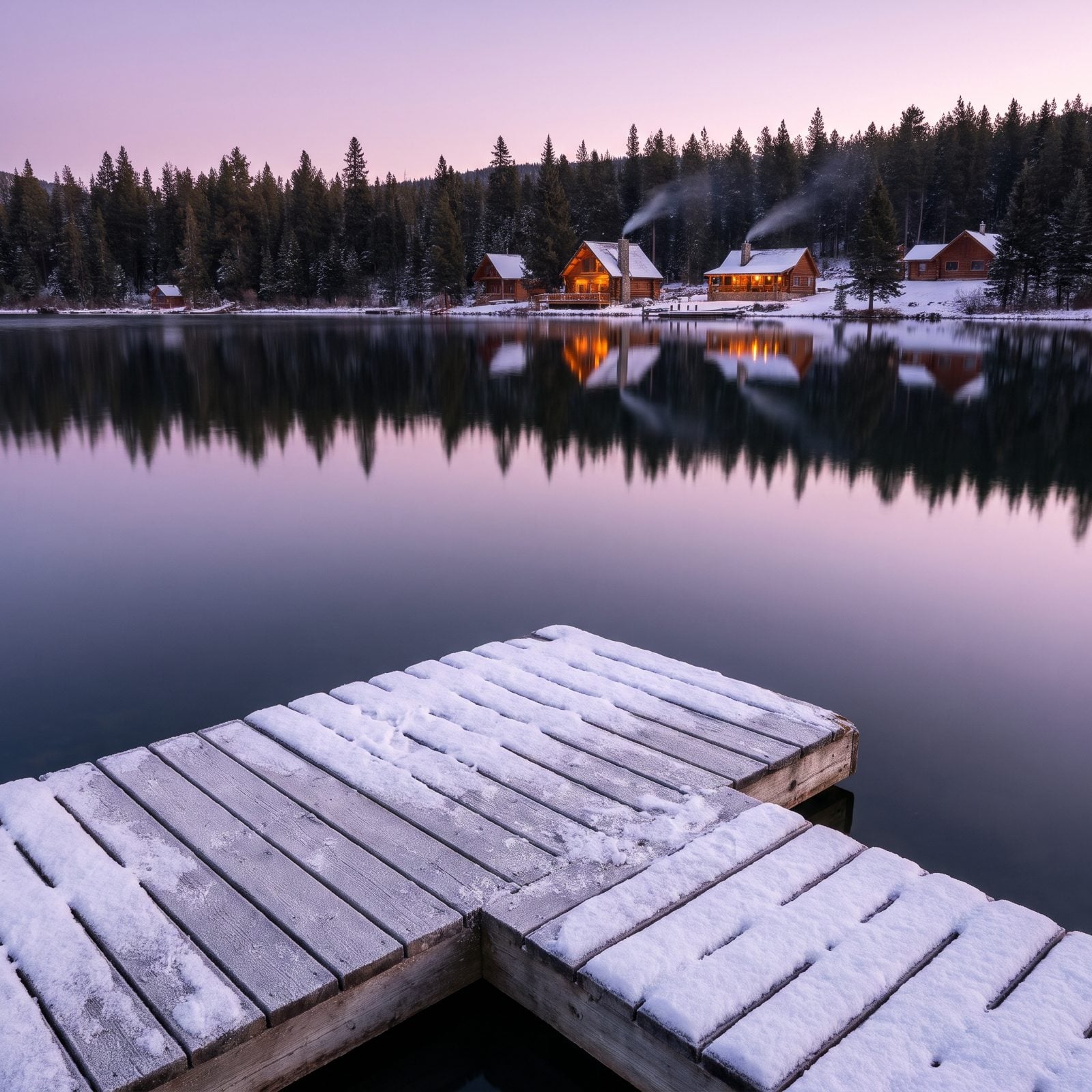
Cold, still air and a flat sheet of water turn the lake into an amphitheater. Someone starts singing on a far dock and you hear every word as if they were standing beside you. Eerie, the first time it happens.
On the right night, a few families around a small lake can hear each other’s carols trade back and forth across the ice. You don’t need to be good. The water does the work, smoothing everything out and sending it home.
12. A Loon’s Call Breaking the Holiday Silence
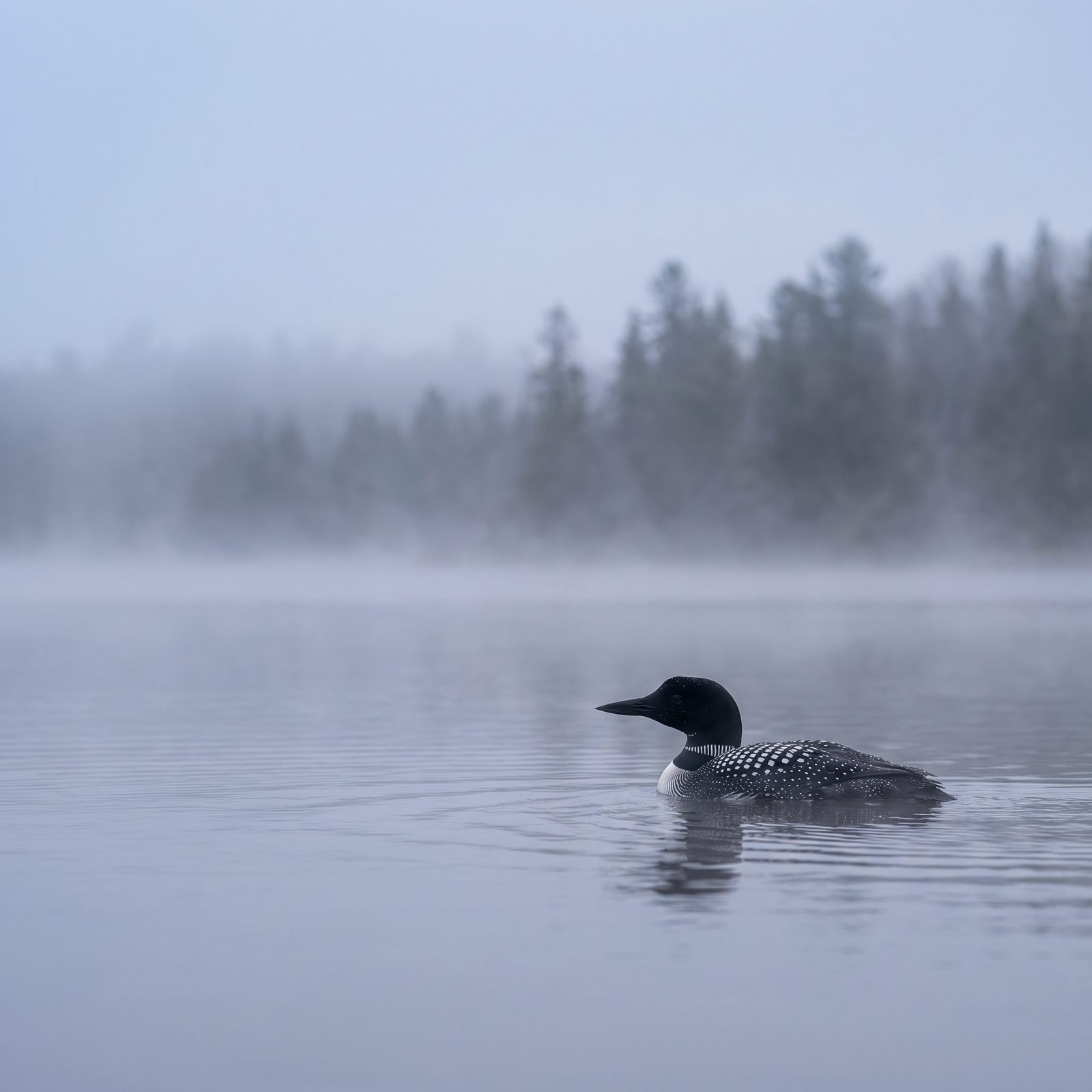
Most loons have long cleared out by Christmas, headed for the coast. But on lakes that stay partly open, or where a late freeze holds them, you catch one. That wailing call cutting across the fog at dawn is a sound you don’t forget.
It carries for miles. Stop what you’re doing when you hear it — loons at the holidays are a gift you can’t schedule.
11. Bald Eagles Working the Open Water Outside the Window
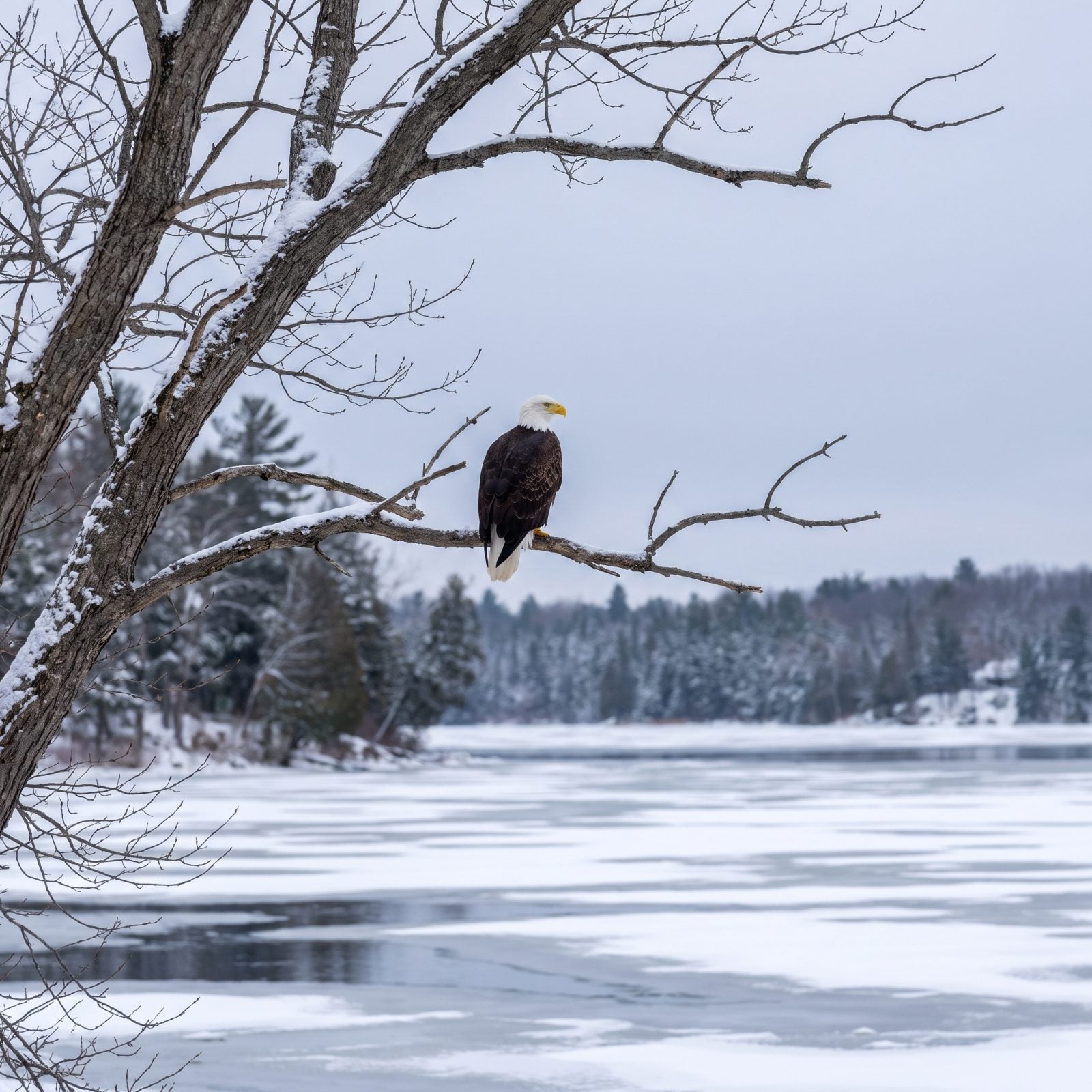
Eagles follow the open water in winter, and a lake that doesn’t fully freeze becomes a cafeteria. You’ll spot one hunched in a tall pine on the point, watching the dark channels for fish, pale head swiveling.
Keep binoculars on the windowsill through the holidays. Besides eagles you’ll get buffleheads, goldeneyes, mergansers riding the last open patches, and maybe a late loon. Christmas morning at the lake comes with better wildlife than most zoos, and it’s free with the view.
10. Skating a Sheltered, Wind-Swept Frozen Cove
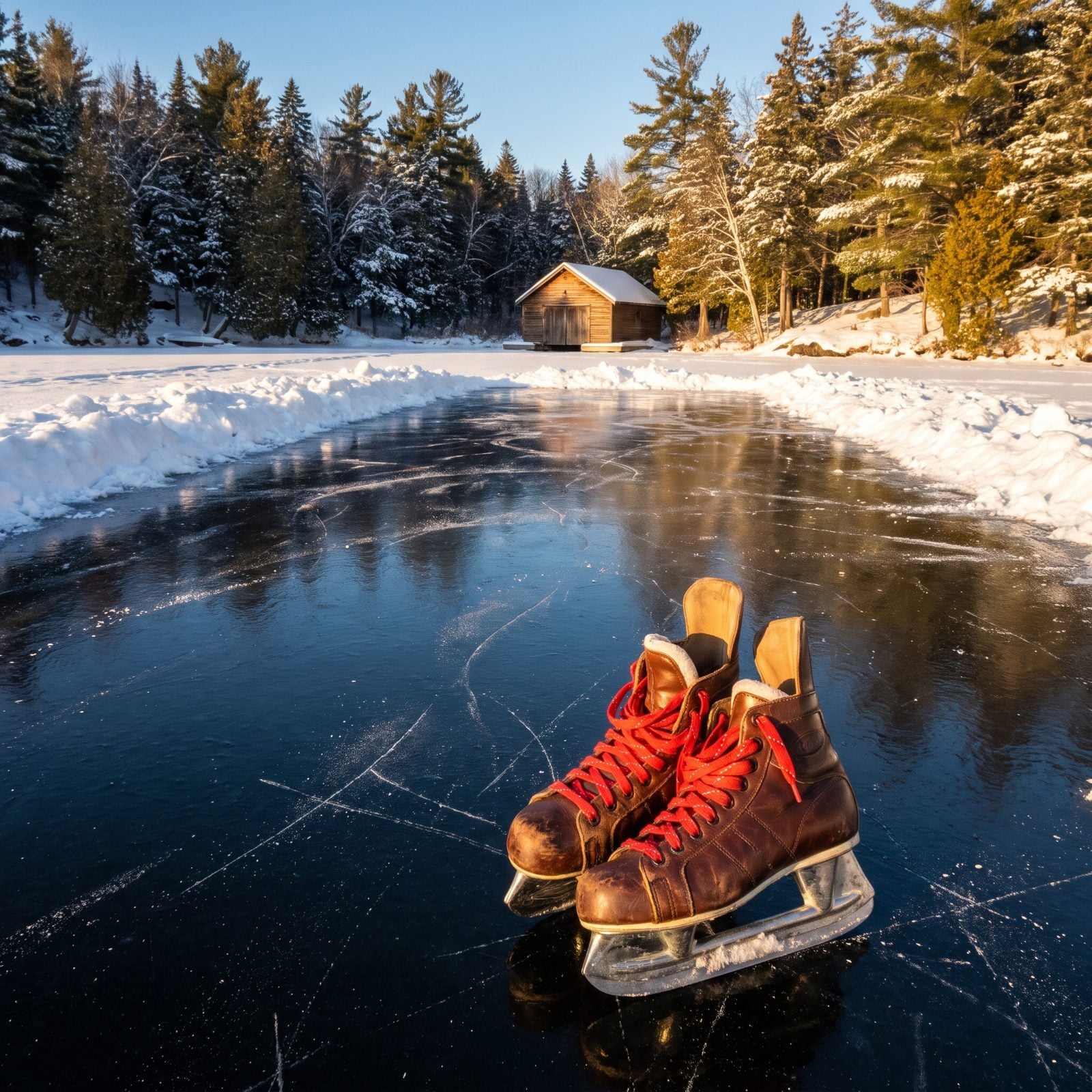
A sheltered cove freezes first and freezes smoothest, protected from the wind that roughs up the main body. That black, glassy ice early in the season is what every skater dreams about and rarely gets.
But lake ice is not a rink. Check thickness before anyone steps on it, know your lake’s spring holes and current spots, and never trust ice near inlets or docks. Four inches of clear, solid ice is the usual minimum for a person on foot, more for a crowd.
9. Sledding Down the Lawn Straight Toward the Shore
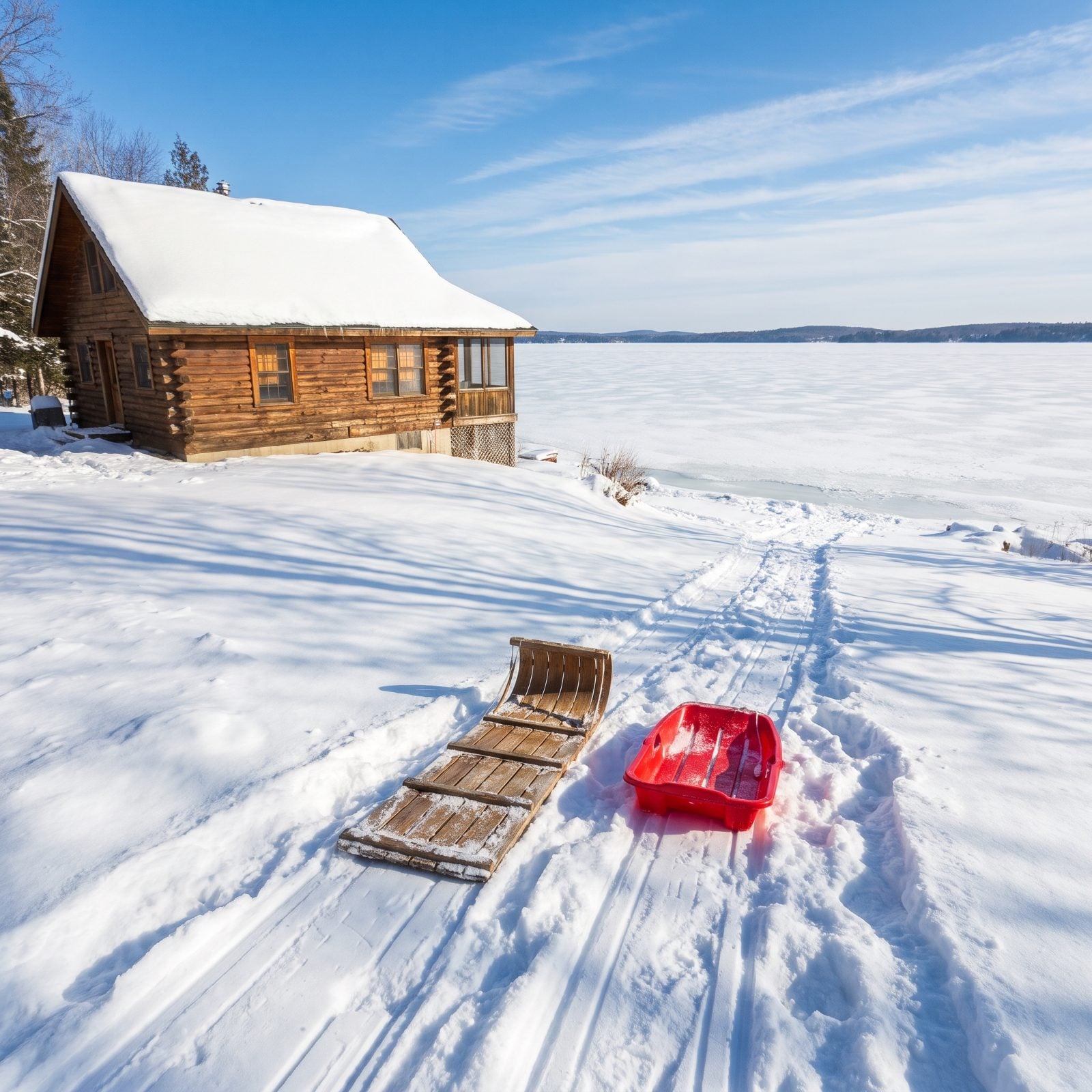
A lake house lawn usually slopes to the water, which means you’ve got a free sledding hill with a lake view at the bottom. Beats any park, because the whole thing opens onto that wide white expanse.
One hard rule: know where the lawn ends and the ice begins. Pile straw bales, set up a hay-bale backstop, or steer the run so nobody goes sailing out onto questionable ice. The thrill is the hill. The lake stays a backdrop, not a destination.
8. Ice Fishing a Walleye Before the Holiday Meal
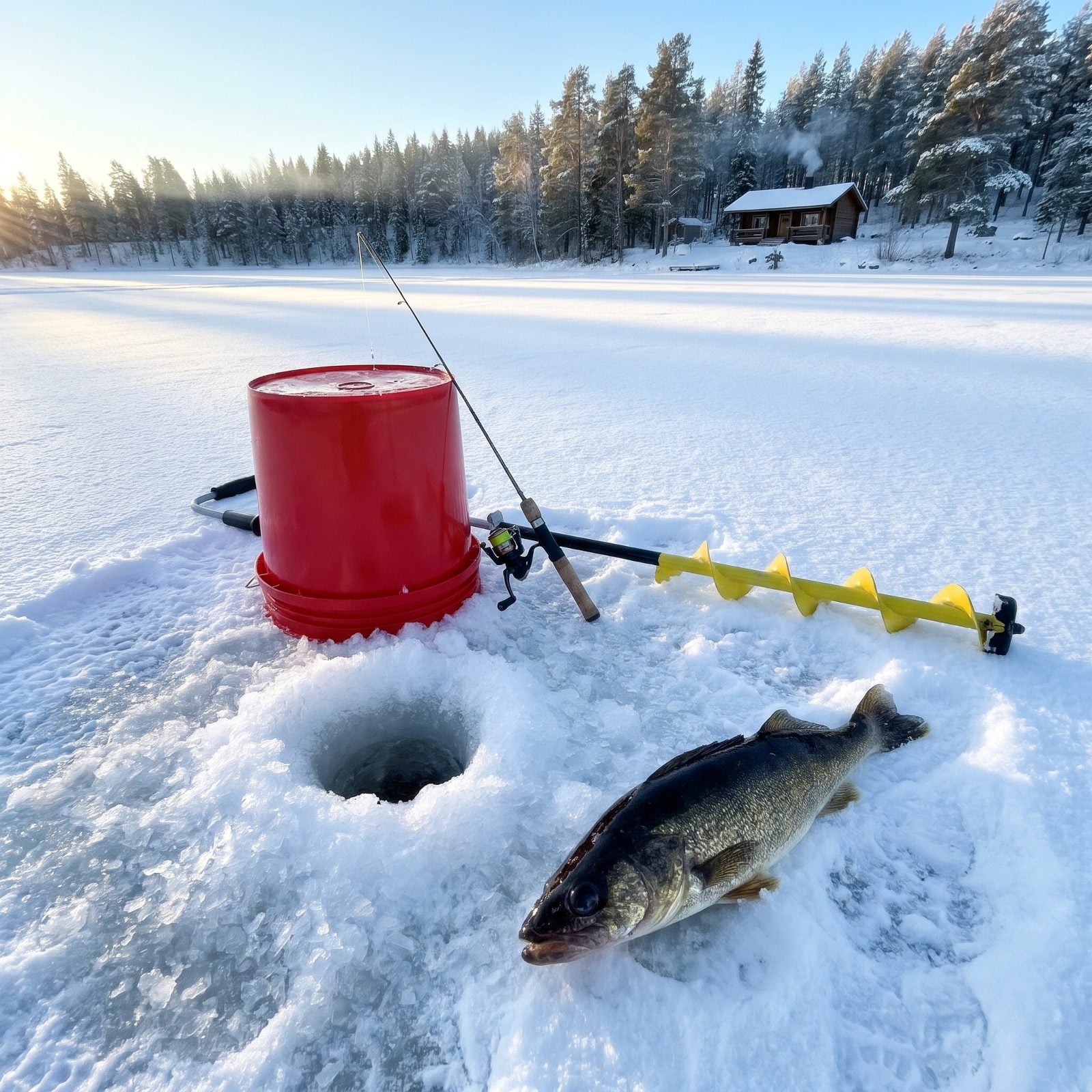
Nothing beats pulling a walleye or a mess of perch through the ice the morning of the big meal and frying it up as the first course. It’s the most local food you’ll ever serve, caught forty yards from the kitchen.
Bring the auger, a jigging rod, a bucket to sit on, and more patience than you think. Most states require an ice fishing license, and shelter and access rules vary, so check your regulations before you drill. Cold hands, a thermos, and a flag popping up on a tip-up. That’s the whole sport.
7. A Christmas Morning Polar Plunge Off the Dock
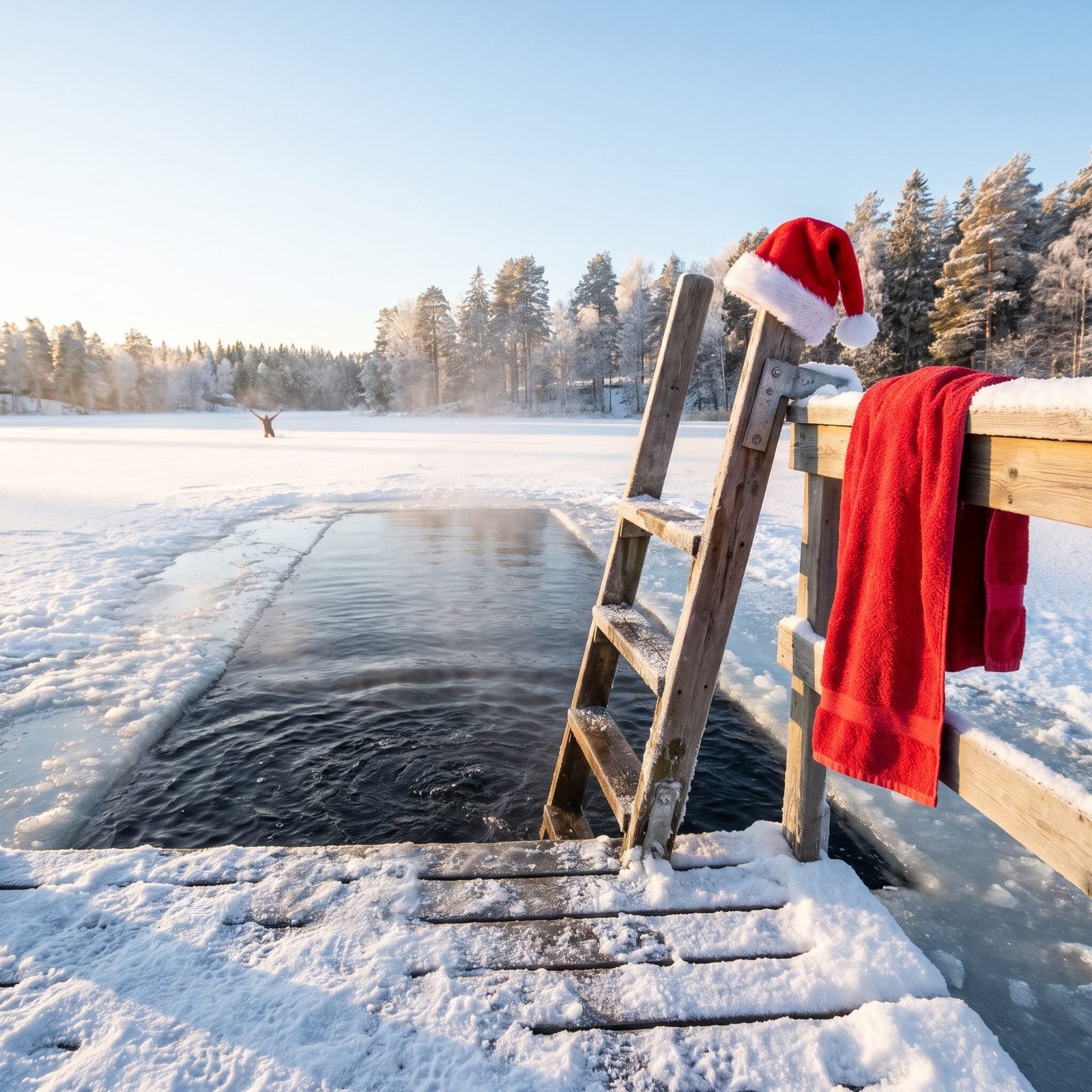
Some lake families end every Christmas morning the same way: a scream, a splash, and a sprint back to the fire. The polar plunge is the tradition nobody wants to start and nobody will give up.
Done right, it’s a few seconds in the water and straight back to a warm towel and a dry robe. Done wrong, it’s dangerous. Never plunge alone, keep it short, have a spotter and a sure way back out of the hole (a ladder that actually reaches down into the water), and know that cold-water shock is real. Skip it entirely if anyone has heart trouble.
6. A Holiday Kayak Paddle in Warmer Climates
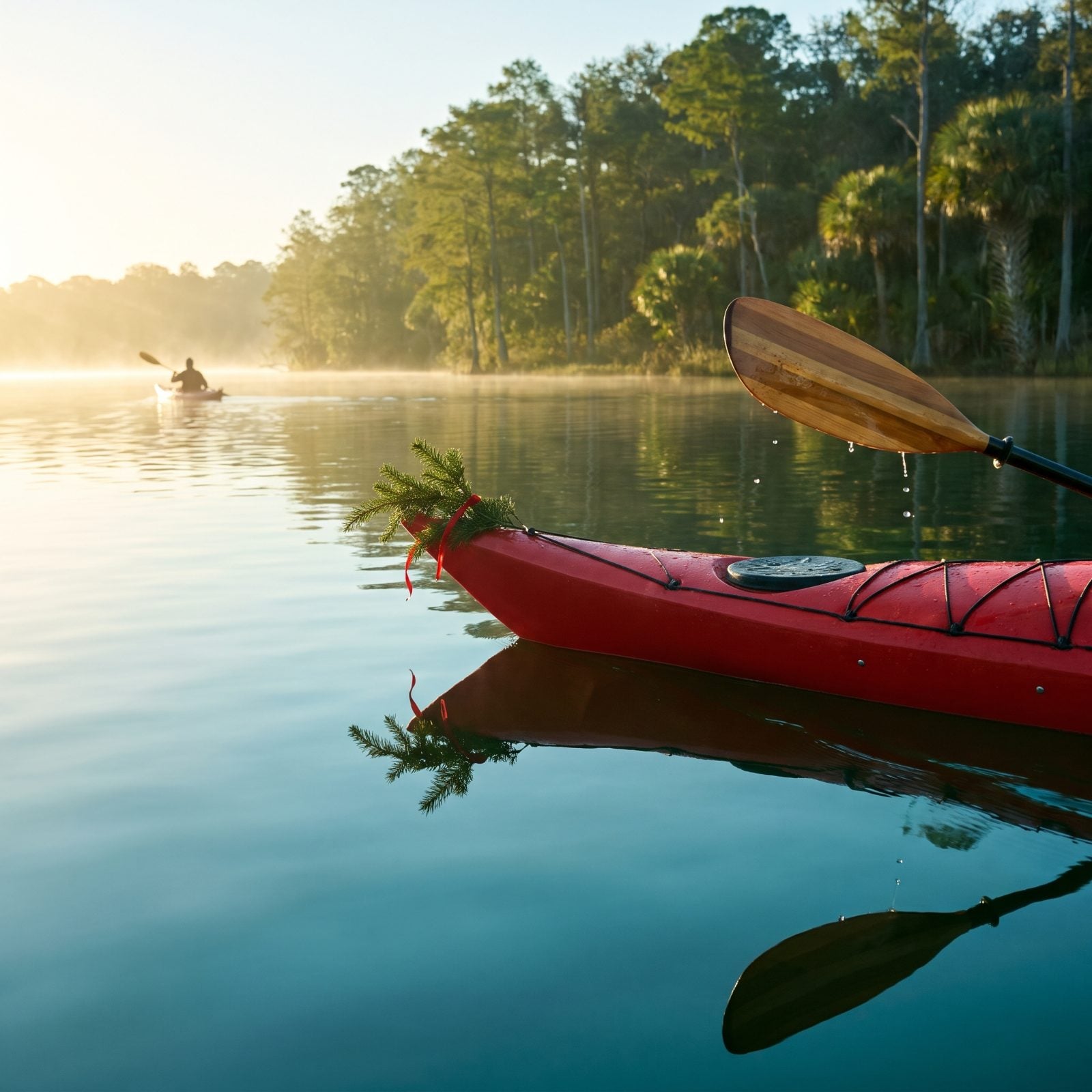
Down south, Christmas doesn’t come with snow. It comes with a paddle and a thermos of coffee and 58 degrees that feels downright tropical if you grew up anywhere north of Georgia.
December water runs clearer than it does all year — no boat traffic, no jet skis, none of that summer algae gumming things up. You can see straight to the bottom in the shallows, and the whole lake belongs to you for about an hour before anyone else drags themselves out of bed.
Tie a little sprig of evergreen to the bow if you want to feel festive. Nobody will see it but you, and that’s sort of the point.
5. A Christmas Eve Fish Fry
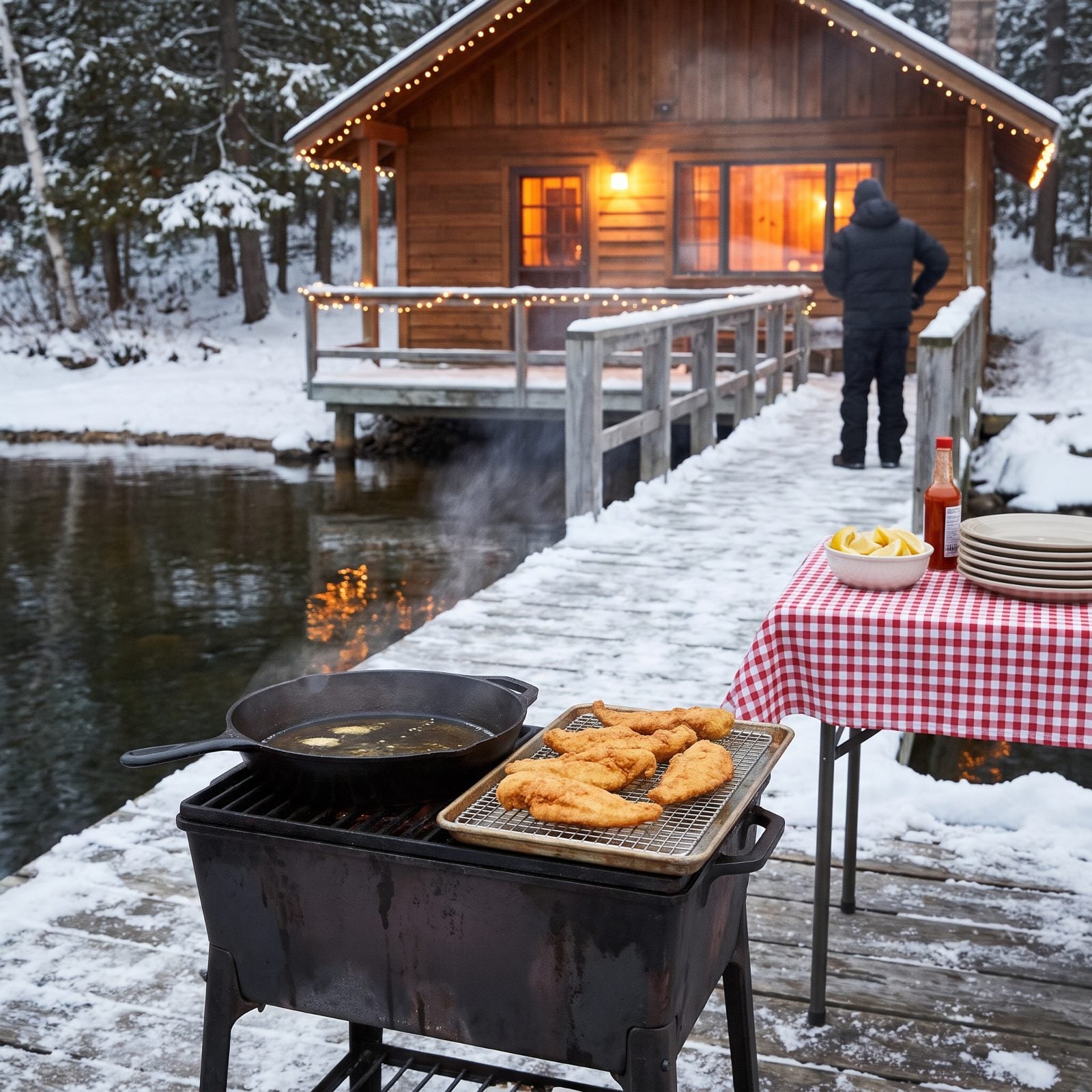
The ham can wait for tomorrow. Christmas Eve at the lake belongs to whatever came out of the water that year, dredged in cornmeal and dropped in hot oil.
Crappie if you had a good spring. Walleye up north, catfish down south, bluegill if the kids did the catching. Doesn’t matter much — fried right, they all taste like the lake tastes in July, which is a strange and lovely thing to serve in the dark of December.
Fry it outside. Always outside. Nobody ever regrets frying fish on the porch, but plenty of people have regretted the three days their kitchen smelled like it afterward.
4. The Annual Family Photo at the Water’s Edge
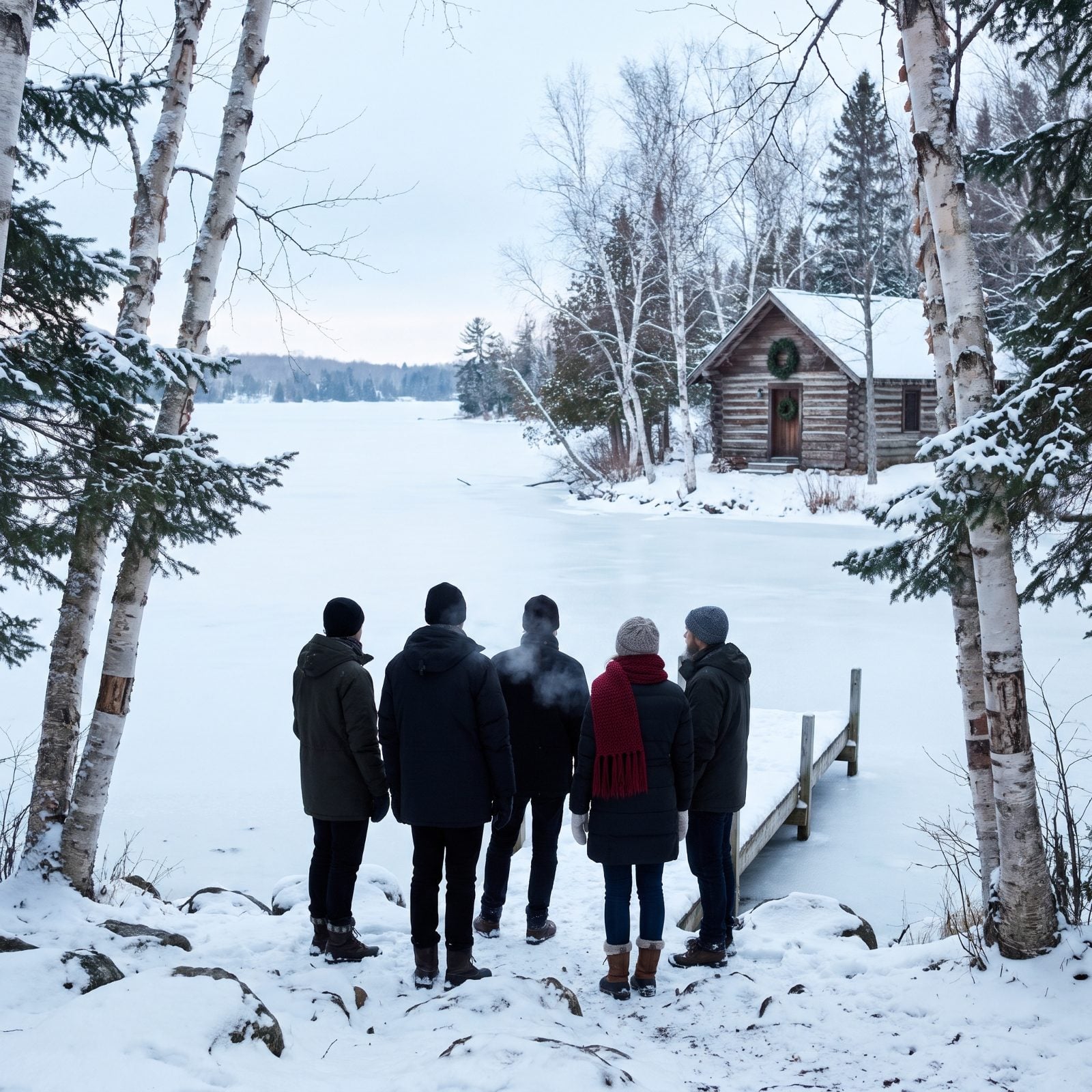
Same spot every year. That’s the whole trick.
Line everyone up at the end of the dock, or down where the grass meets the water, and shoot it in the same frame you used last year and the year before. The lake changes behind you — low in a drought year, iced over in a cold one, fog sitting on it some mornings like it’s thinking something over.
Stack those photos side by side after a decade and you’ll see the kids shoot up and the dock go grey and somebody’s hair go white. The water keeps the time better than any calendar.
3. Friendly Dock-Decorating Rivalries Between Neighbors
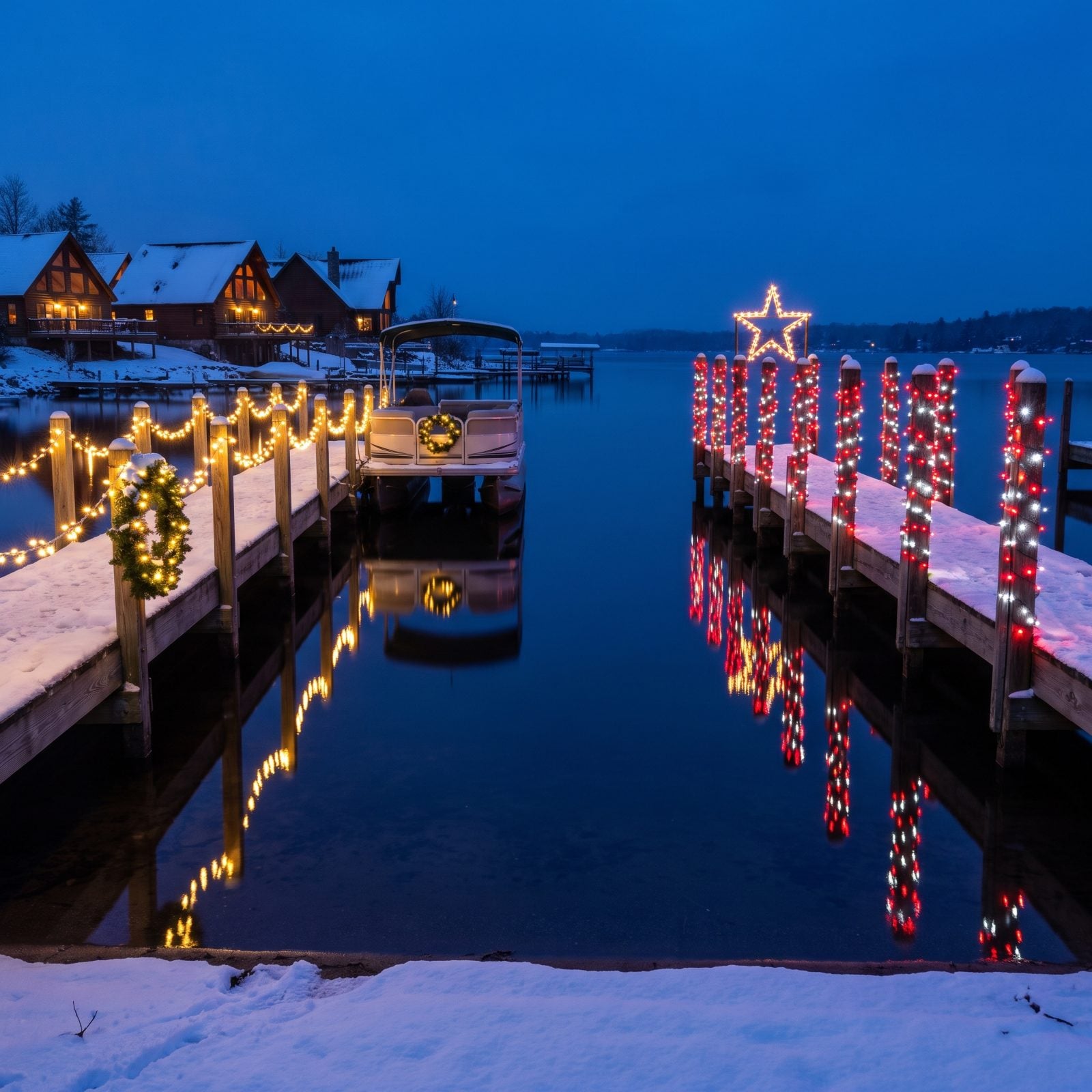
It starts innocent. One neighbor wraps a string of warm white lights around their dock pilings, and the next weekend the dock across the cove answers with a lit wreath and a reindeer cutout.
By mid-December somebody’s running an inflatable snowman off the end of their boat lift and someone else has a star up a pole you can see from the next bay over. Nobody admits it’s a competition. Everybody knows exactly where they stand.
The water does the heavy lifting here. Every bulb doubles in the reflection, so a modest string reads twice as big from across the lake. Lazy and brilliant.
2. Watching a Snowstorm Cross the Open Water
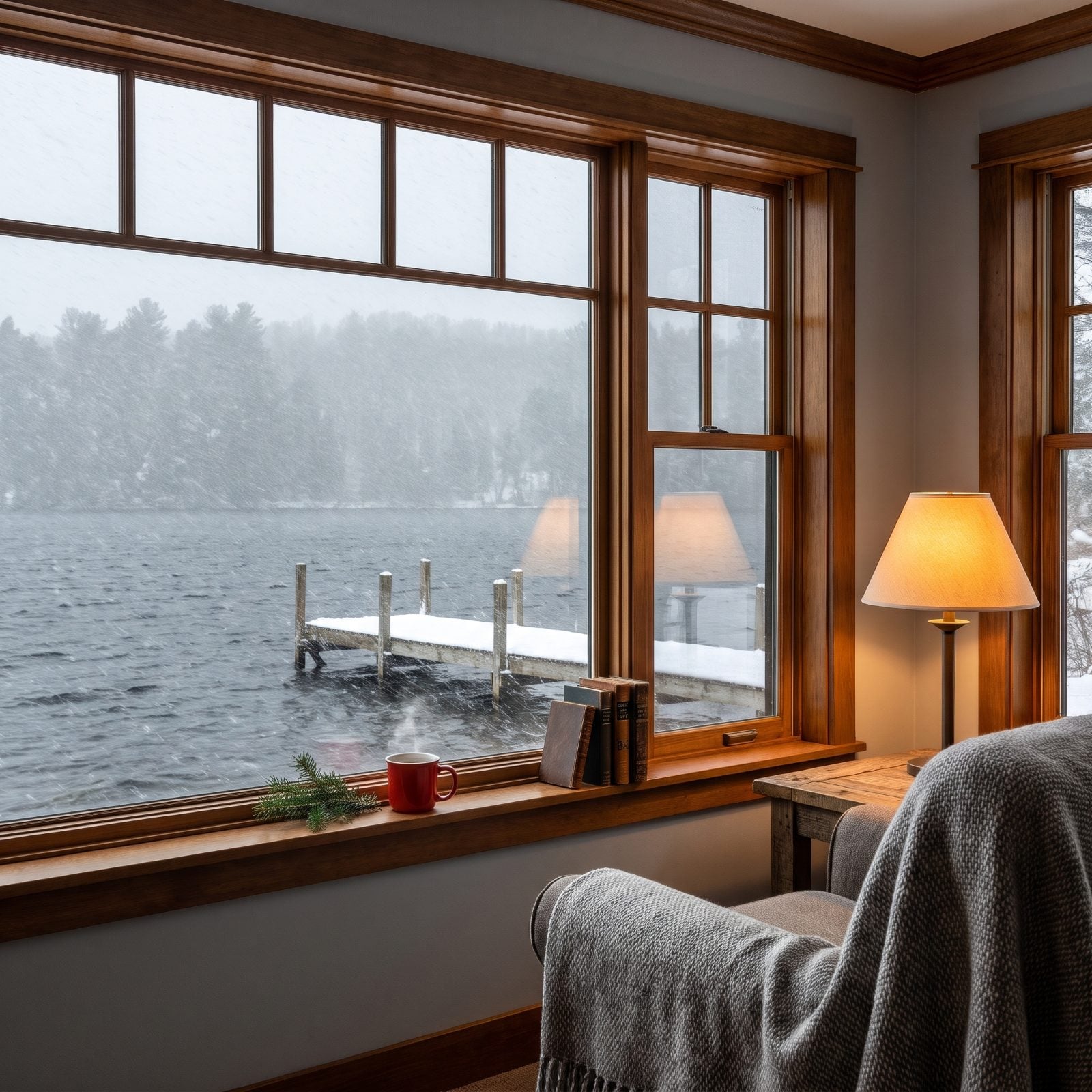
There’s a reason lake houses have big windows facing the water, and it’s not the summer sunsets. It’s this.
You see a snowstorm coming on a lake long before it reaches you. The far shore goes soft, then vanishes. That line of falling snow moves across the open water like a curtain being drawn, and you can watch the whole thing cross the lake from the warm side of the glass with a coffee in your hand.
No trees in the way, no hills, nothing to hide it. Just the weather doing its slow march toward you while you do absolutely nothing about it. Best seat in the house.
1. Moonlight Stretching Across the Lake on Christmas Night
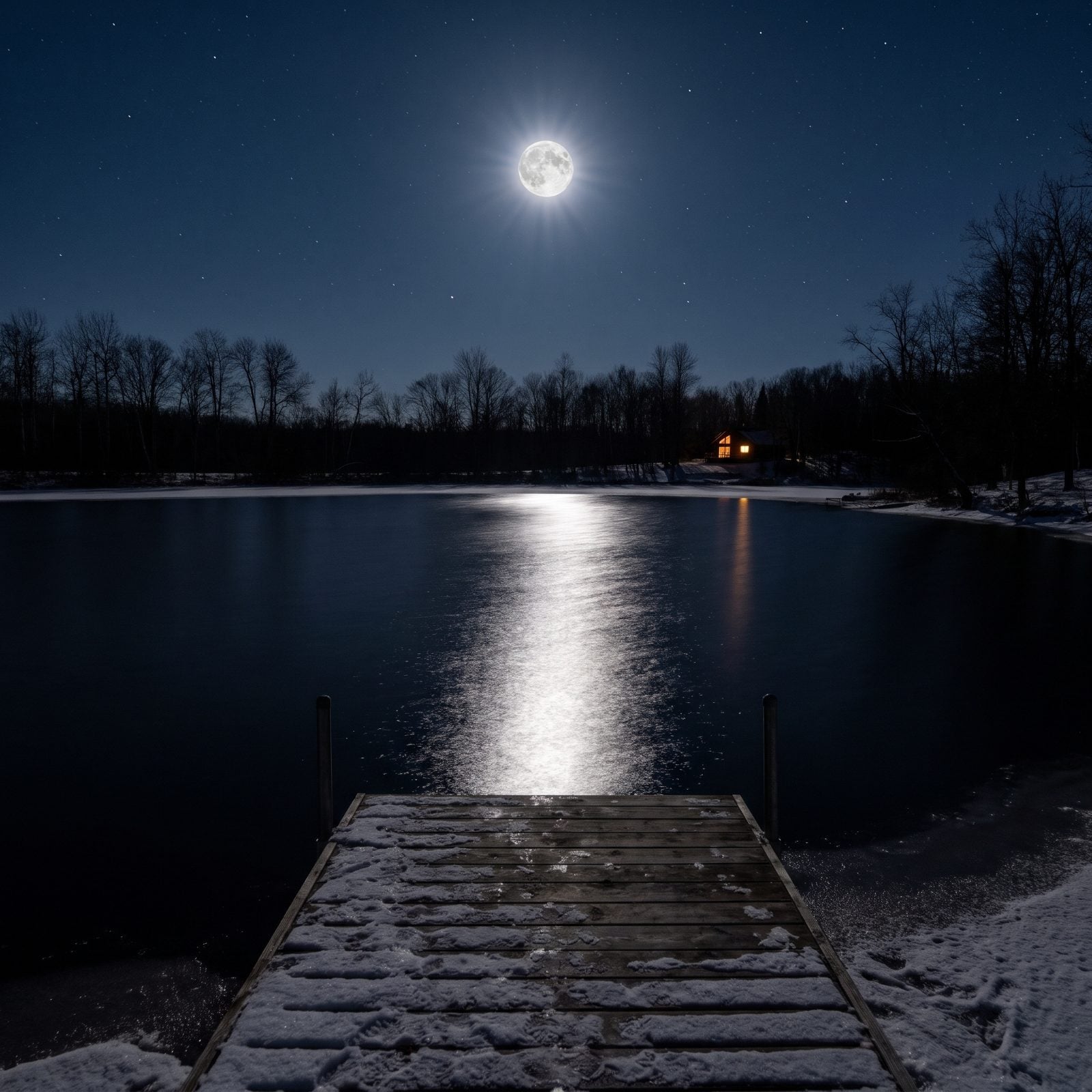
Everybody’s asleep. The wrapping paper’s bagged up, the fire’s down to coals, and you step out on the dock one last time because you can’t quite let the day end.
And there it is. A full moon on a clear cold night lays a path of silver straight across the water, right up to your feet. On a still lake it looks solid enough to walk on.
Nothing moves. No boats, no wind, no summer crowds. Just a wide black lake, a stripe of light, and the kind of quiet you only get when it’s bitter cold and nobody else is foolish enough to be standing outside.
Then your toes go numb and you head in. But you saw it. That counts.