

The first conversation on a lake happens before anyone speaks. Someone pulls up to their own dock, cuts the motor, and looks down the shoreline at the new structure next door, reading it the way you read a handshake. Is that walkway sagging? Did they build right up to the line? Are those pilings leaning like a drunk at last call? None of it gets said out loud, but all of it shapes how the welcome goes — a wave or a tight nod. Here’s what the people a hundred feet over are quietly clocking.
Please note that some of the imagery in this article may have been enhanced with the assistance of AI.
39. How Close It Sits to the Property Line
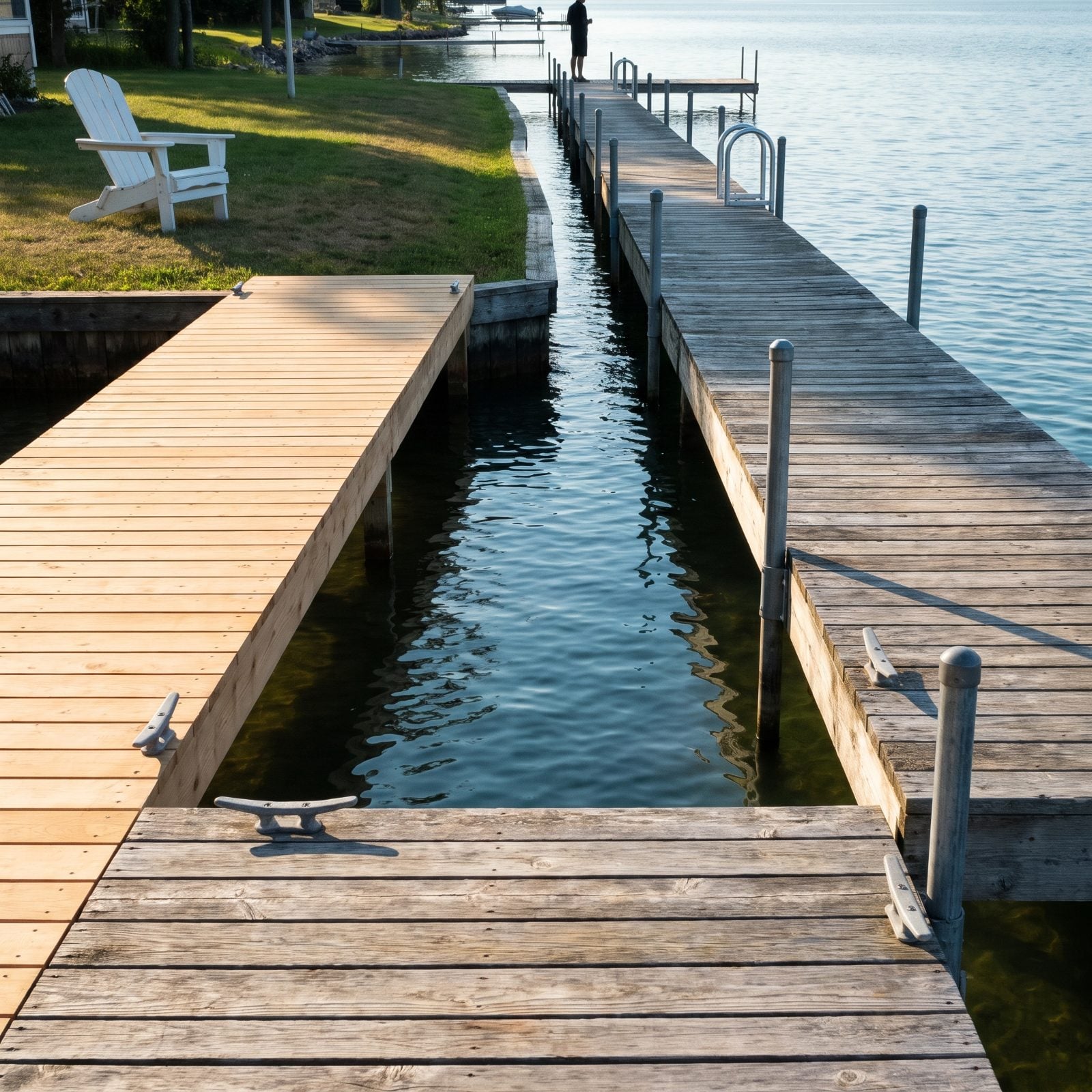
Nothing sours a new-neighbor welcome faster than a dock that crowds the line. Most lakes carry a setback rule — some distance off the extended property boundary — though it shifts by state and lake authority. The people next door know roughly where that line falls because they’ve stared at it for years.
Build close to it and the message reads as entitled before you’ve met anyone. Leave a little breathing room and you’ve bought goodwill you didn’t even have to pay for.
In its guide to waterfront regulations, a dock manufacturer explains that “Setback rules control how close your dock can be to neighboring properties.”
38. Tall Structures That Block a Neighbor’s View
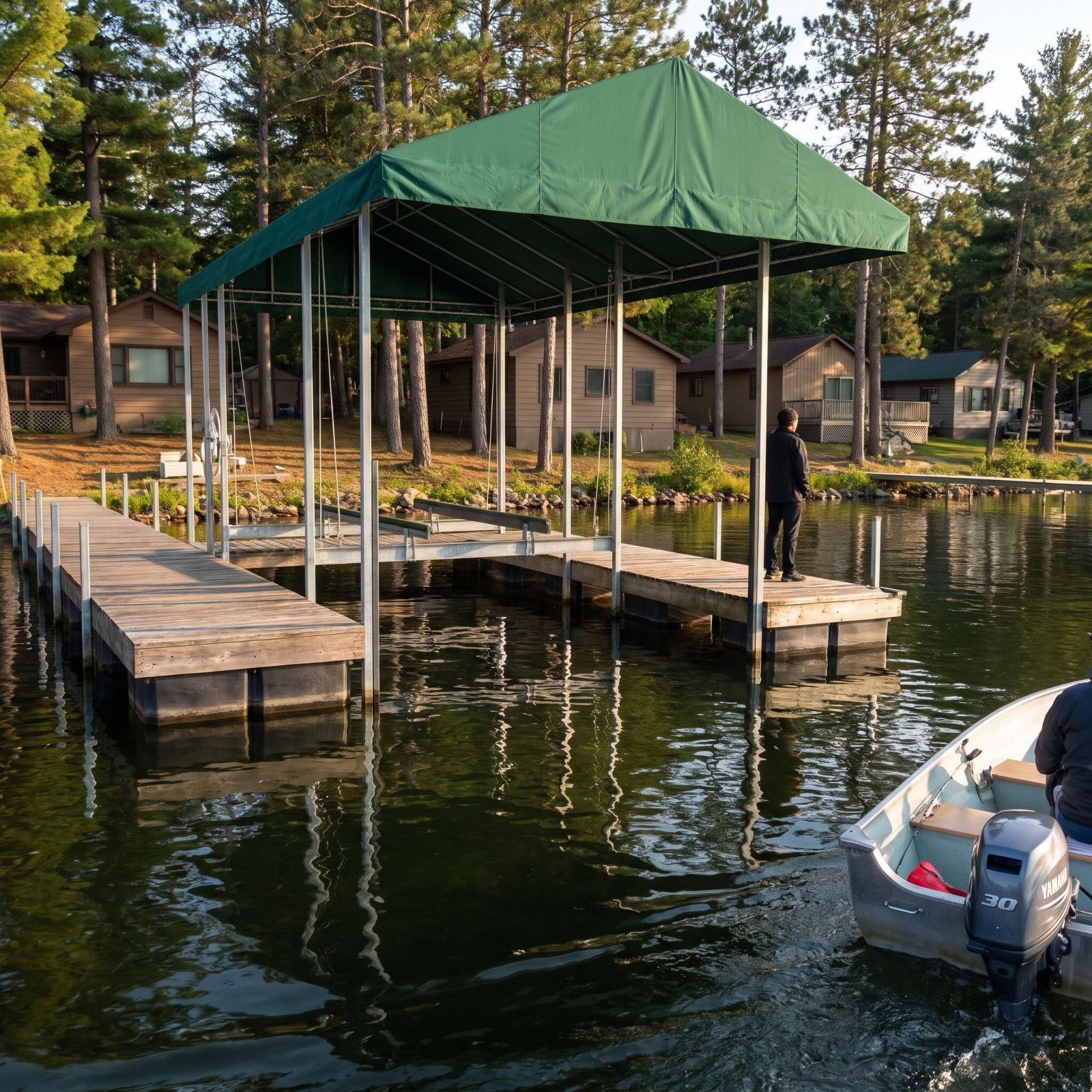
The view is the whole reason anyone bought in. So when a new owner raises a two-story boat lift canopy or a towering covered slip, the folks whose sightline just got eaten take it personally, even if they never say a word.
Height is the quietest form of rudeness on a lake. A structure can be fully permitted and still make you the house that stole the sunset from the people behind you. If you need the lift, think hard about where it goes and how tall it has to stand. Sometimes nudging it ten feet changes everything for the neighbor and nothing for you.
37. How Far It Reaches Into the Lake
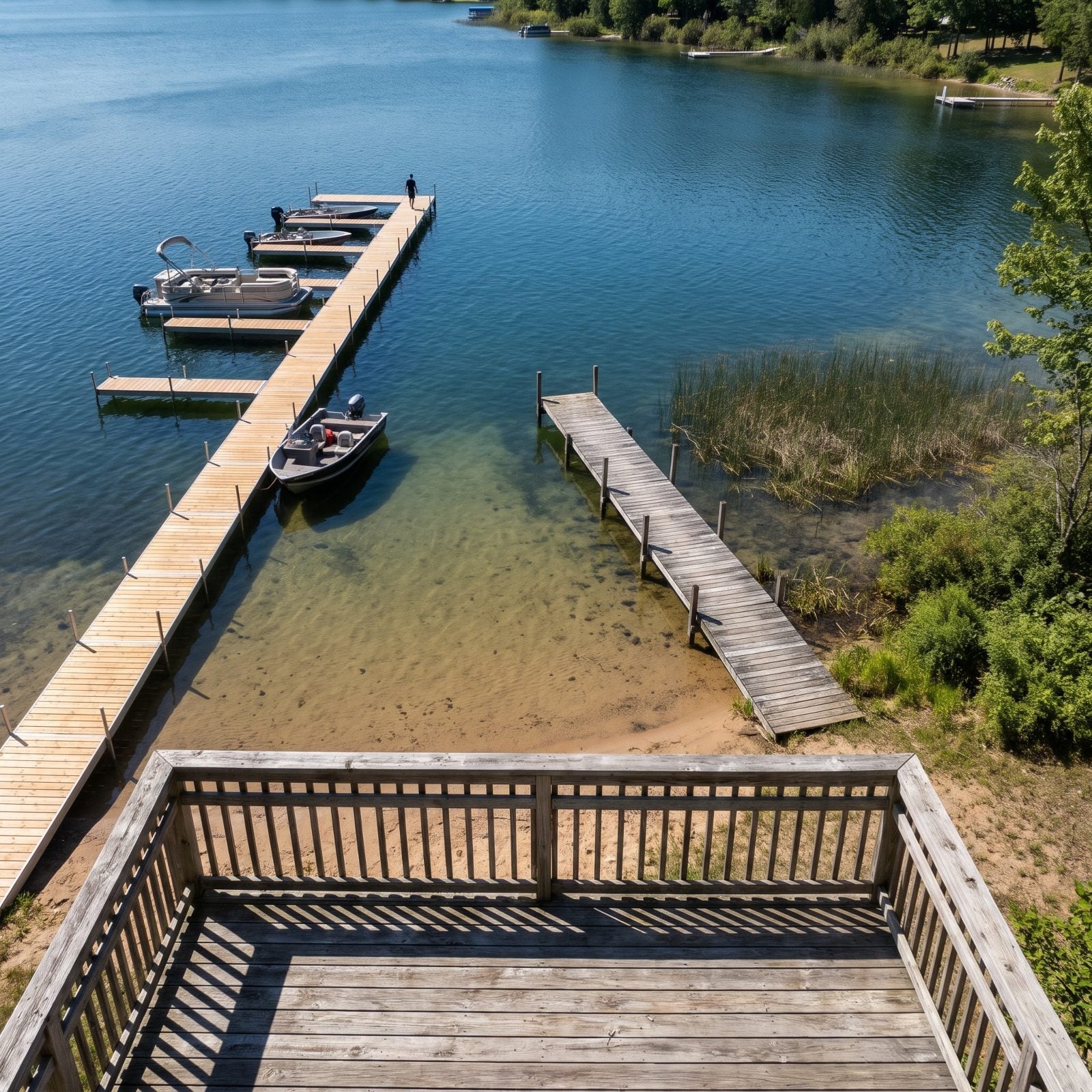
Reach too far and you’ve built a wall across everyone’s water.
Docks that overshoot the natural line of the shore push into the shared channel boats use to pass. Neighbors who’ve motored the same lane for twenty years now have to swing wide around your structure, and they’ll resent every pass.
Most lakes cap how far a dock can extend, measured from the shoreline or an established dock line. The length that gets you deep enough for your boat is usually a lot shorter than the length you think you want. Stop at useful. Longer isn’t a flex here — it’s a nuisance with pilings.
36. Whether Two People Can Pass Comfortably
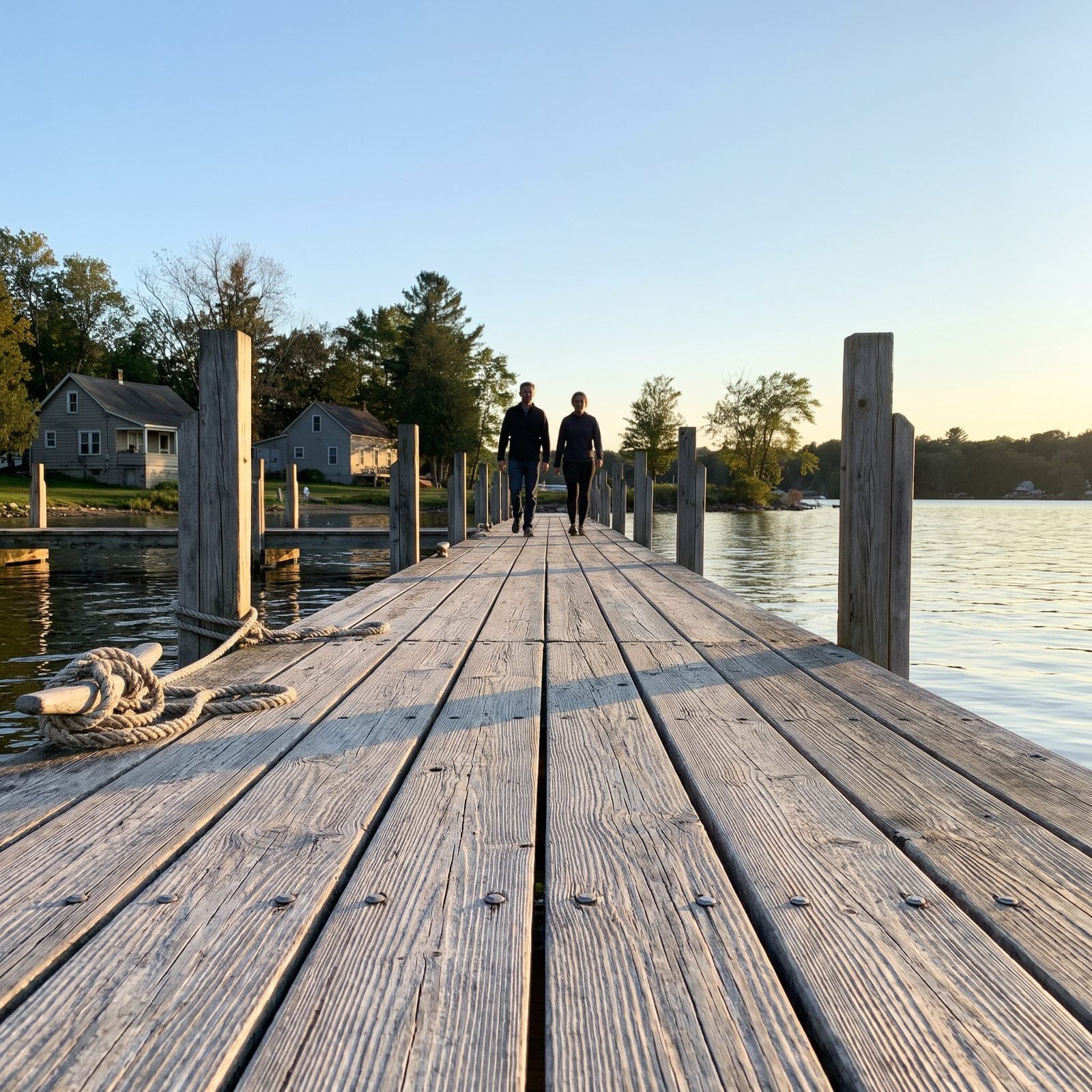
Width tells people whether you planned for company or just for yourself. A walkway under three feet makes two adults do an awkward shuffle, one stepping aside while the other squeezes past with a cooler.
Four to five feet of clear decking reads as generous without looking like a parking lot. It says you expect kids, grandkids, guests hauling tubes and chairs. Narrow docks feel stingy in a way nobody can quite name but everybody feels when they’re standing on one.
35. A Walkway That Sags or Twists
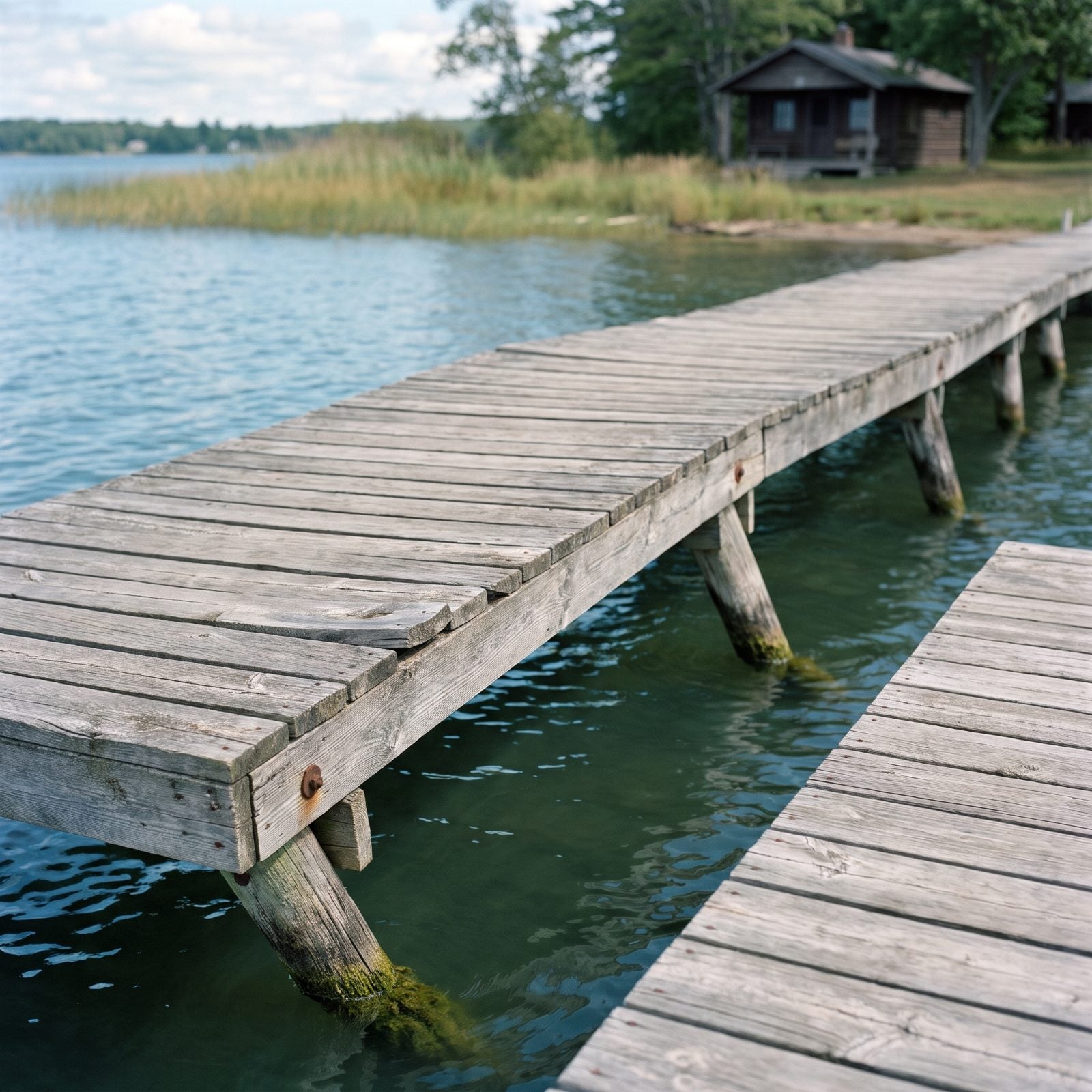
A sagging walkway is a confession. It tells the whole cove that the frame underneath is failing, the fasteners are letting go, or the floats have waterlogged and quit.
Neighbors clock it instantly, because a dock that dips in the middle today is a dock that’s partly in the lake next spring. And when it ends up in the lake, it becomes everyone’s problem — the ice shoves it downshore into their swim area.
Writing about floating-dock trouble, a canadian dock dealer warns that “Over time, docks can start to lean, sag, or ride unevenly in the water. Those small shifts are often signs of flotation issues that, if ignored, can turn into major repair jobs.”
34. Pilings That Lean Out of Plumb
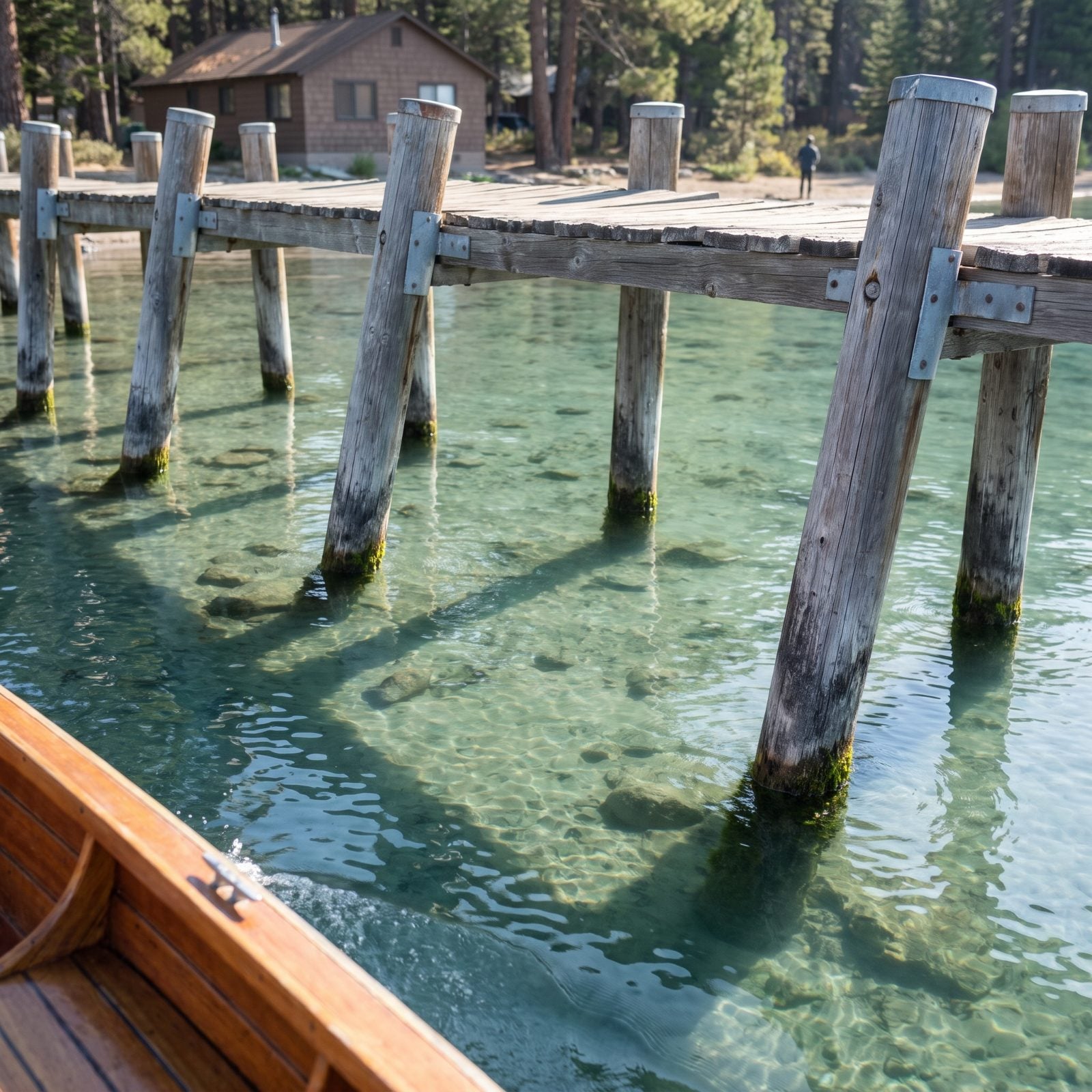
Plumb pilings are the spine of the whole thing. When they start tilting, the lake is telling you the bottom shifted, the posts never seated deep enough, or ice has been working them loose winter after winter.
To a neighbor who knows docks, a lean isn’t a quirk. It’s a countdown. Posts that drift from vertical lose their grip fast once they start, and a leaning piling under load is one hard wake away from a bad afternoon. Re-driving or bracing them early runs cheap compared to pulling the whole structure out of the water and starting over.
33. Splintered, Sun-Bleached, or Freshly Sealed Boards
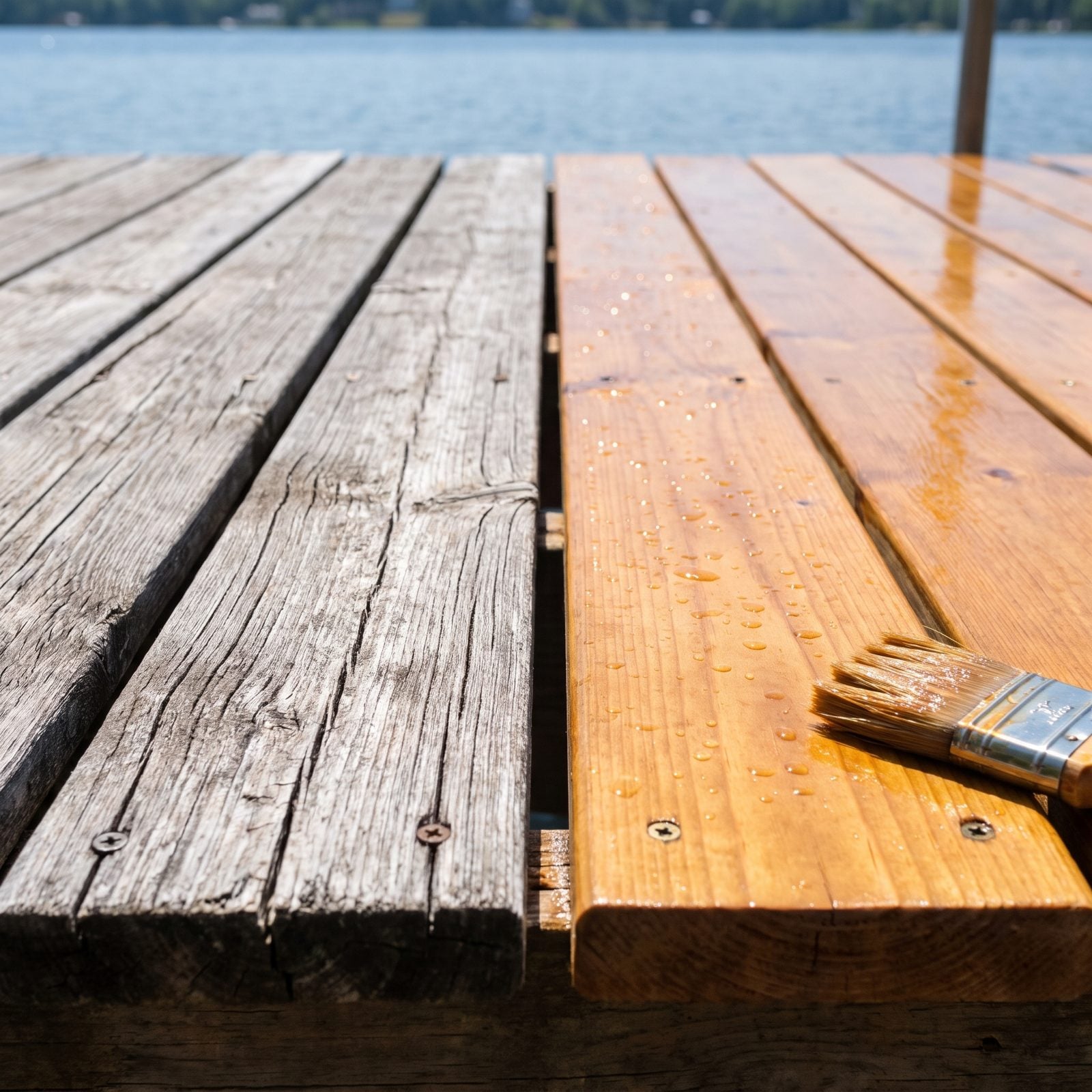
Board condition is the fastest read on the lake, because it’s the one thing visible from fifty feet without squinting.
- Splintered boards say nobody’s touched this dock in years, and that nobody plans to.
- Sun-bleached gray is neutral, honestly. It happens to everyone and it isn’t a sin.
- A freshly sealed deck, that honey-amber glow with water beading on top, tells the whole cove a careful owner just moved in.
You don’t have to seal it the week you close. But getting it done that first season is the cheapest reputation you’ll ever buy on the water.
32. The Shore-to-Dock Transition and Erosion Around It
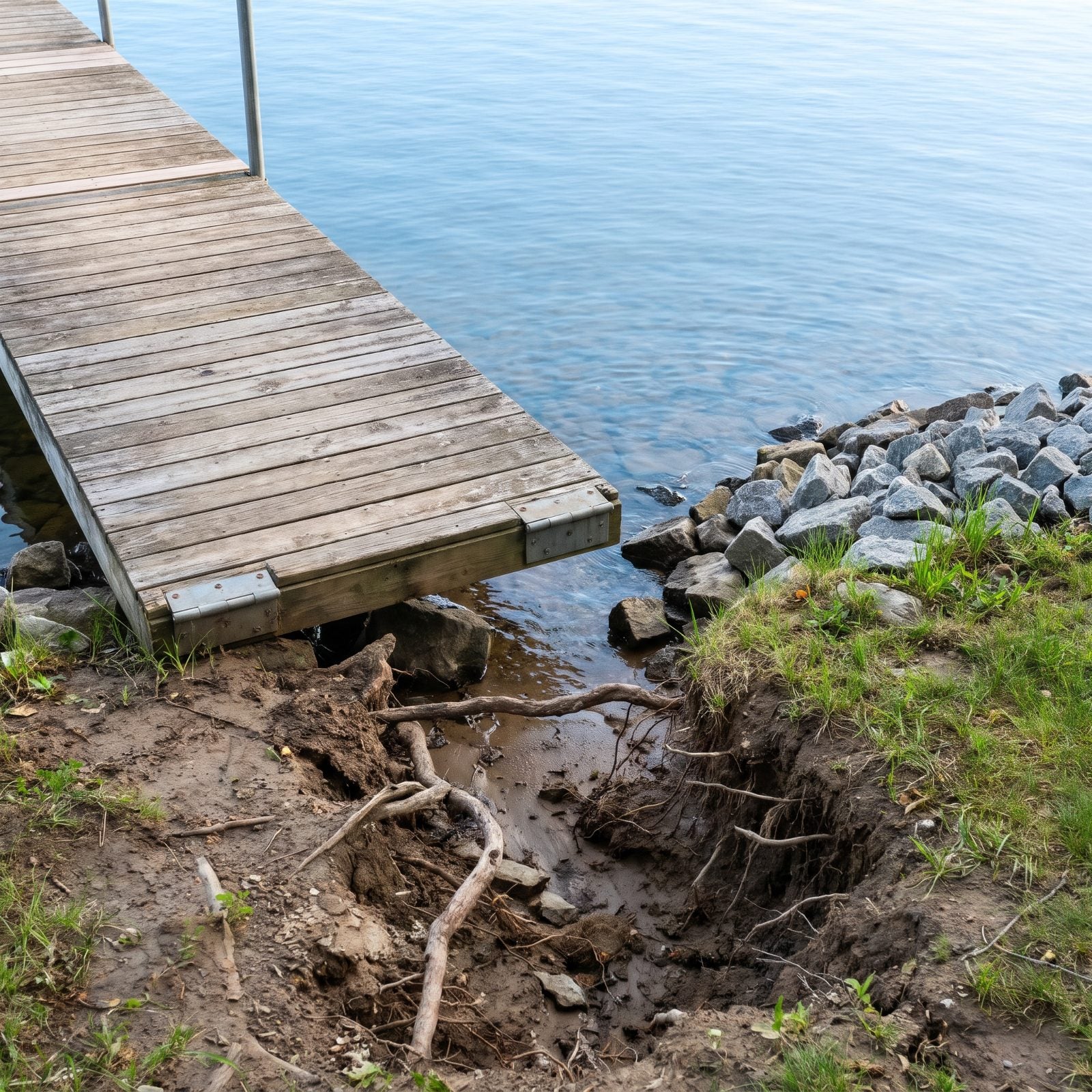
Where the dock touches land is where neighbors look for trouble, because erosion doesn’t stay on your side.
A washed-out bank at the shore connection spills silt into shared water, undercuts the ramp, and tends to spread downshore to the next property. People notice a gully opening under your first section the way they’d notice a leak in a shared roof.
Riprap stone, a stable grassed bank, or a proper retaining edge at the transition holds your soil where it belongs. Leave it bare and raw, and you’ve become the source of a problem the whole cove inherits every heavy rain.
31. The Path and Steps Leading Down
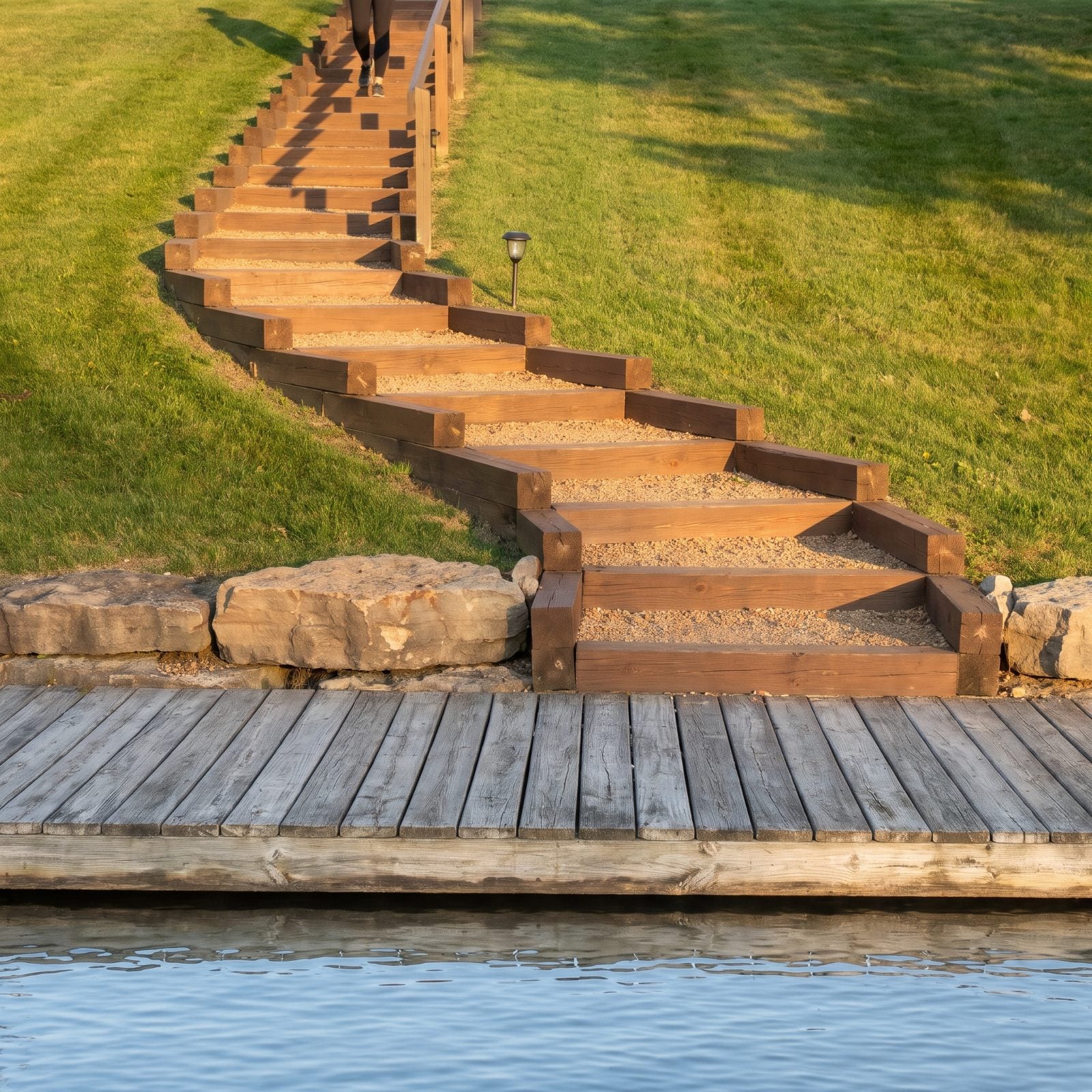
The walk down matters more than people expect.
A clear, built path with real steps reads as thoughtful and, frankly, as safe. A muddy slide of worn dirt with a rope tied to a tree reads as an accident waiting to find a grandkid. Neighbors with their own aging knees notice which kind you’ve got, because they’re imagining their own trip down after a rain.
Timber steps with gravel treads, a few landscape stones, maybe a solar light or two. None of it is expensive, and all of it says you thought about the people who’ll actually use this.
30. Handrails Where the Drop Is Steep
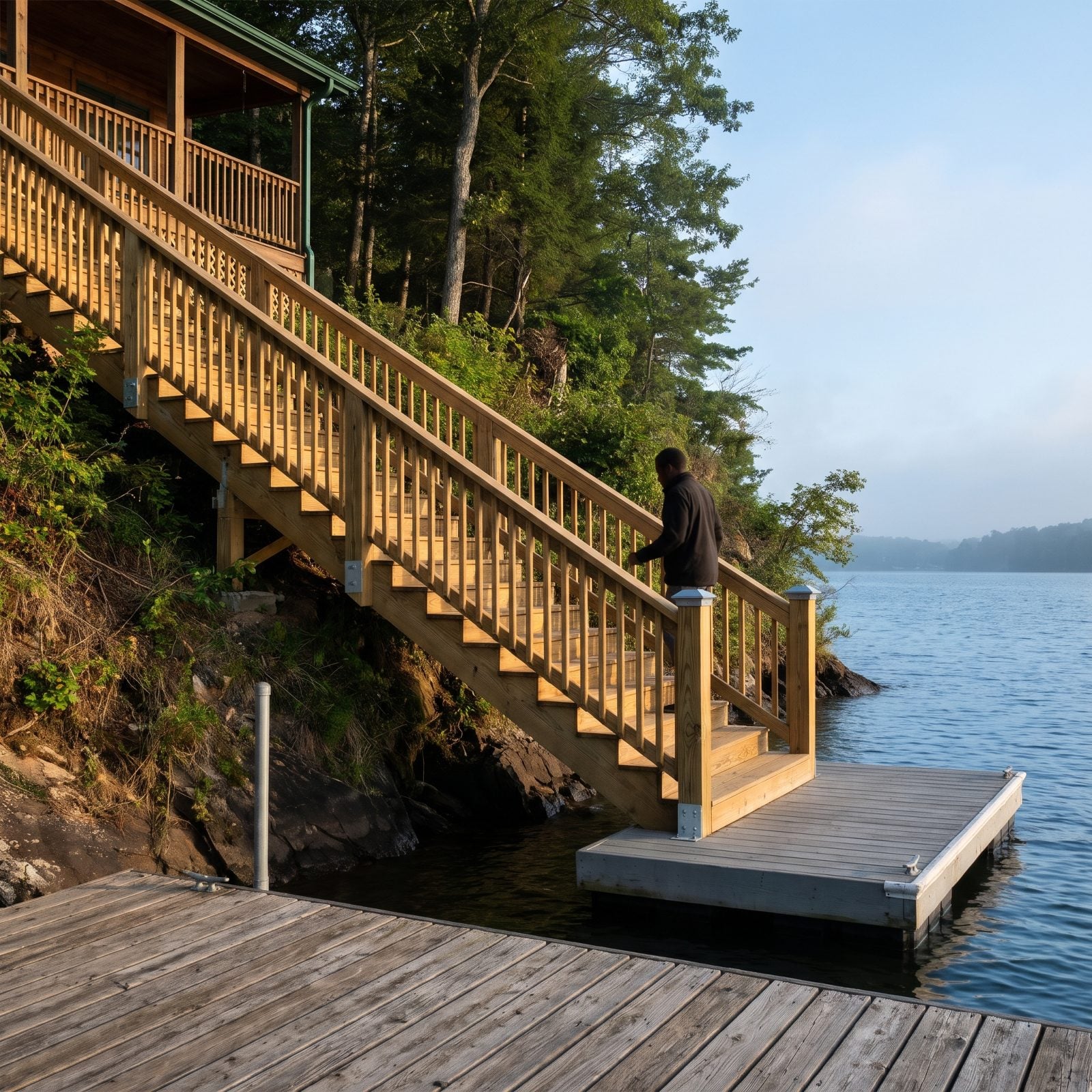
A missing handrail on a steep drop turns a friendly neighbor into a worried one.
People read an unprotected steep run as a risk to kids, to guests who’ve had a beer, to anyone carrying a cooler down after dark. A simple, continuous rail where the slope gets serious changes the whole feel of your access from careless to considered.
And here’s the part owners forget: the first impression isn’t only about looks. It’s about whether the folks next door picture calling an ambulance to your address someday. A rail quietly answers that question, and it’s the cheapest answer on this whole list.
29. A Ladder That Actually Reaches the Water
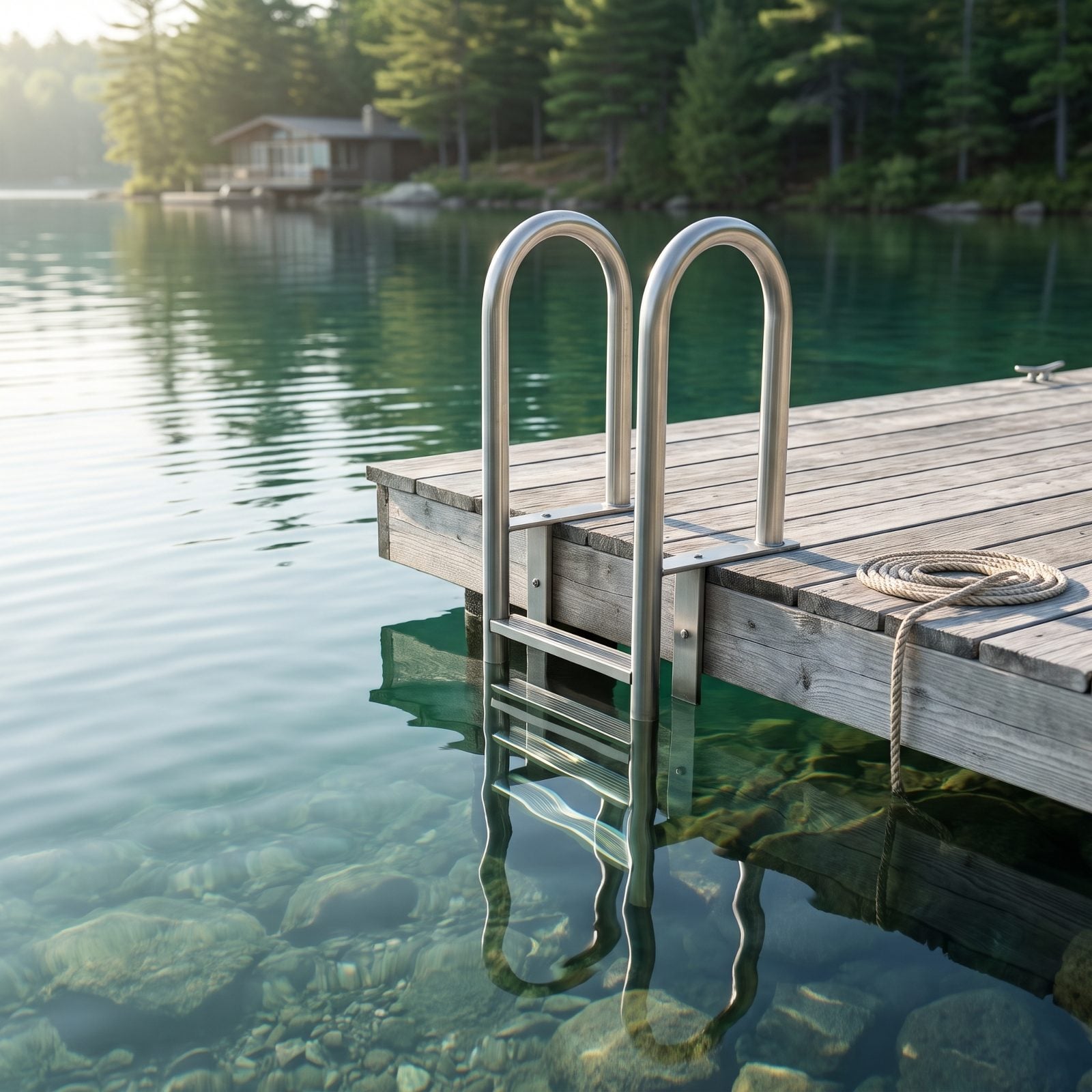
The ladder is the first thing your neighbors judge, and most of the time it flunks the only test that matters: does it reach the water. A ladder that quits two feet above the surface at summer drawdown is decoration, and everyone across the cove knows it the second they watch some poor swimmer haul themselves up by the elbows.
Get the two bottom rungs under the waterline. Three is better. That reach says you’ve actually swum off your own dock instead of just photographing it.
28. A Life Ring in Plain Reach
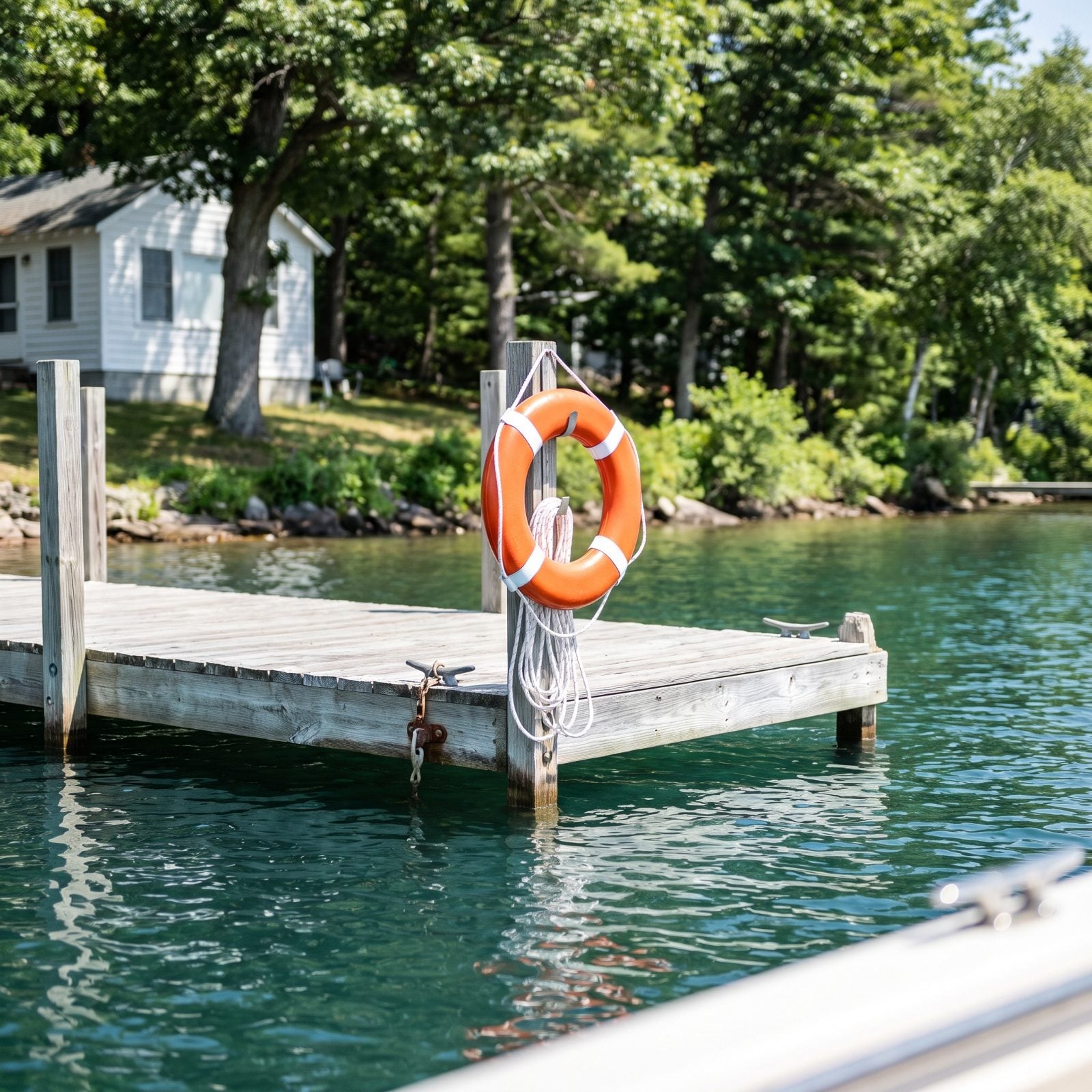
Nobody mentions the life ring until the day it’s needed, and by then it’s too late to go hunting for it. Hanging one where you can see it does two jobs at once. It signals you take the water seriously, and it shows guests exactly where help lives before anyone has to ask.
Mount it near the shore end, low enough to grab, throw rope coiled and ready. Stuffed in a dock box, it might as well still be at the hardware store.
27. Depth Markers and No-Diving Warnings
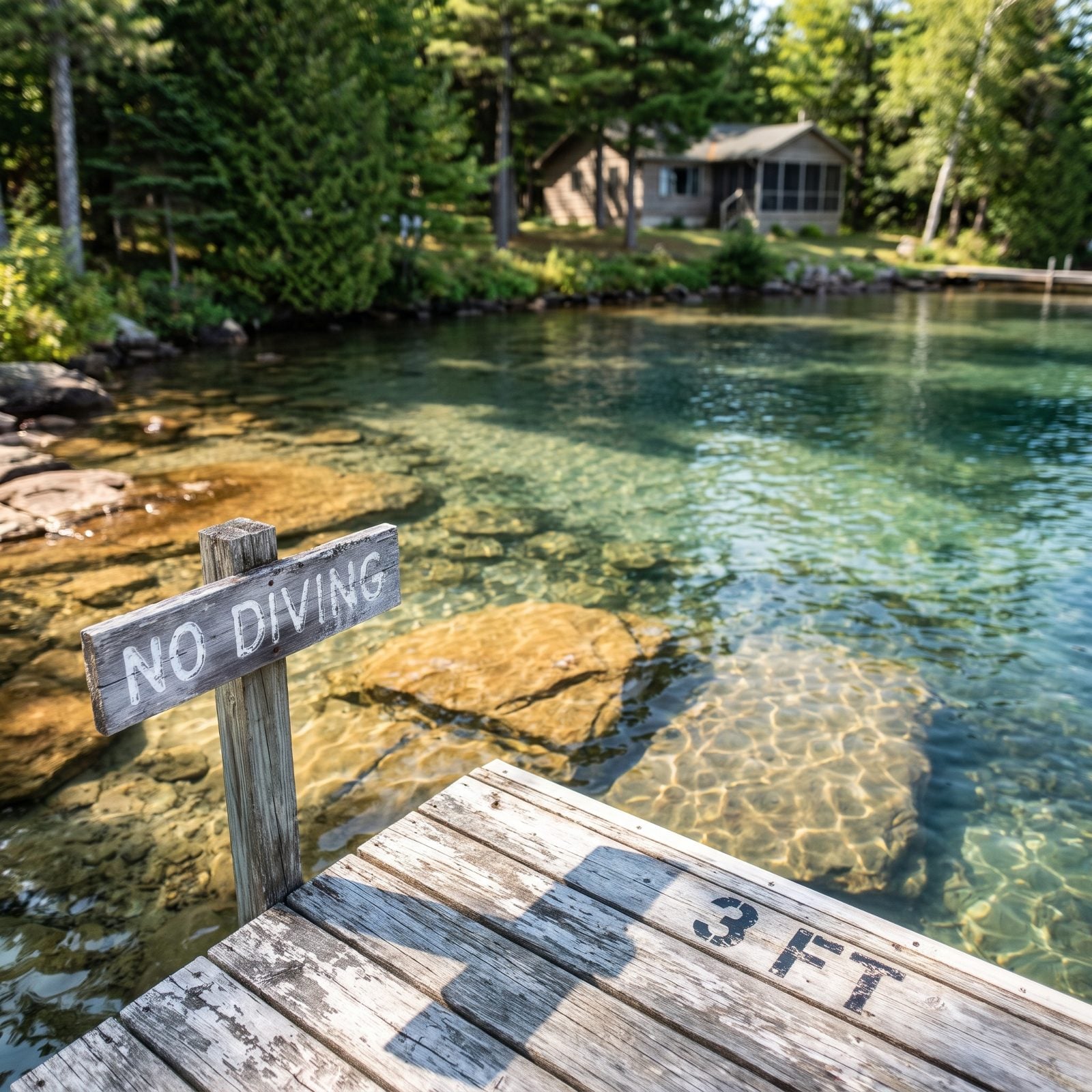
Shallow water looks deep when the sun is behind you. That little optical trick has broken more necks on lakes than anyone likes to think about.
A depth marker and a no-diving note aren’t about liability paranoia. They tell every visitor, instantly, that your dock sits over rock and sand rather than twelve forgiving feet of water. Neighbors read that as competence. Bare, unmarked edges over a two-foot bottom they read as an accident waiting for a houseguest.
Talking about diving-related spinal cord injuries, a hospital injury prevention coordinator says “These types of injuries are completely preventable, because, truly, you should never be diving unless you are in a very specific area that’s designated for diving”
26. Reflectors Visible From an Approaching Boat

Come back across the lake after sunset and you’ll understand this one fast. A dock with no reflectors just vanishes. You’re reading it by memory and the shape of the trees, hoping you’ve got the corner right.
A few reflective markers on the outer pilings fix that. From a boat coming in, they draw the whole dock out of the dark. Neighbors who come home late notice who has them and who doesn’t — and they quietly file the dockless-after-dark owner under ‘new, hasn’t learned yet.’
25. Dock Lights That Are Warm, or Glare Across the Cove
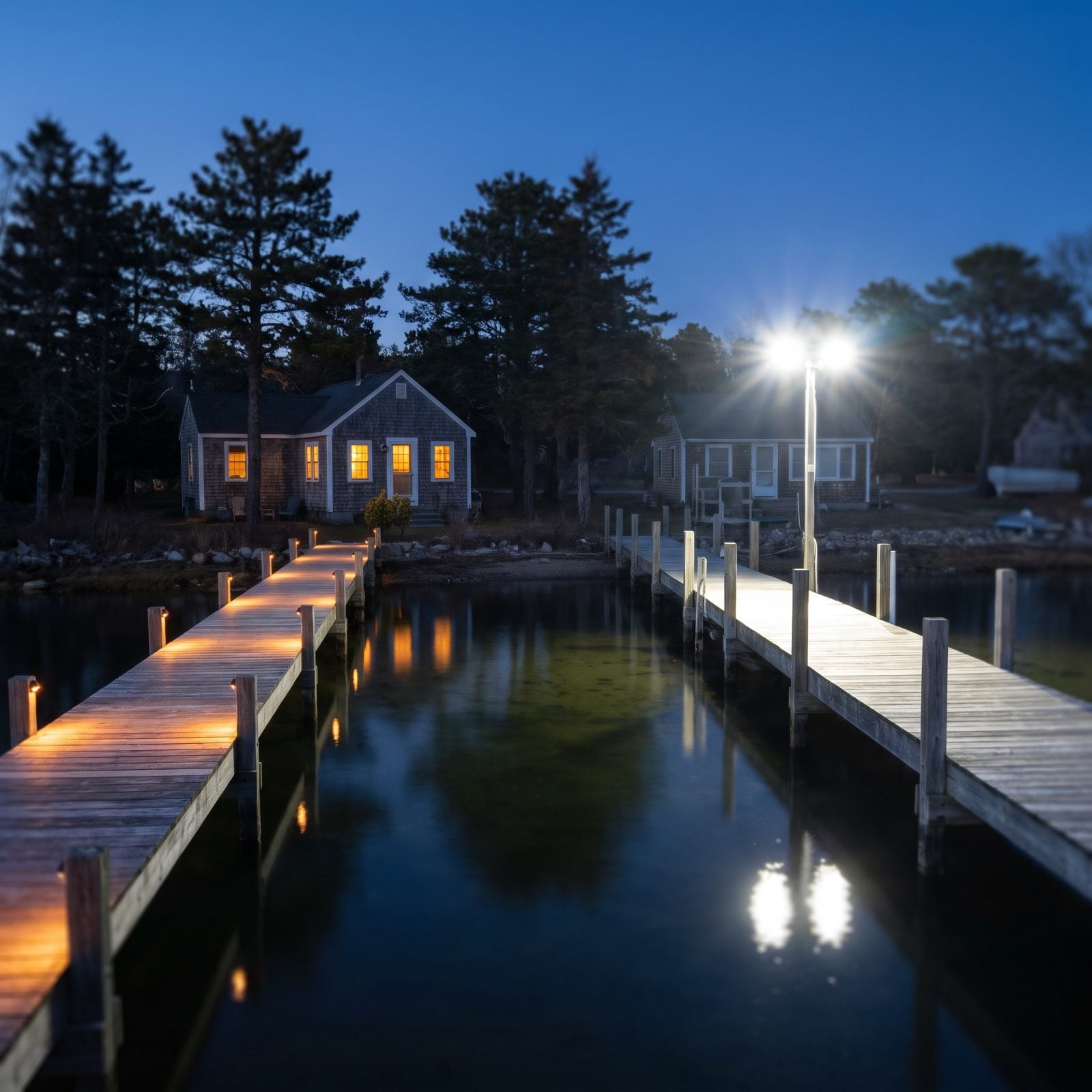
There are two kinds of dock lighting, and your neighbors have strong opinions about both.
Warm, low path lights that pool on the planks and barely touch the water? People love those. They make a cove feel like a place where folks sit out after dinner, swapping lies about the fish they almost caught. Then there’s the other kind — the floodlight aimed sideways that turns the whole bay into a parking lot and wrecks the stargazing for three properties in every direction.
Light down, not out. Warm color, under 3000K. Your standing on the cove rides on it more than you’d guess.
In a piece on shoreland lighting, a county land conservation department notes that “Light trespass is not a legal concept, but rather a description of the nuisance effect of improperly aimed lights on someone else’s property.”
24. Marine-Grade Power, or Household Cords by the Water
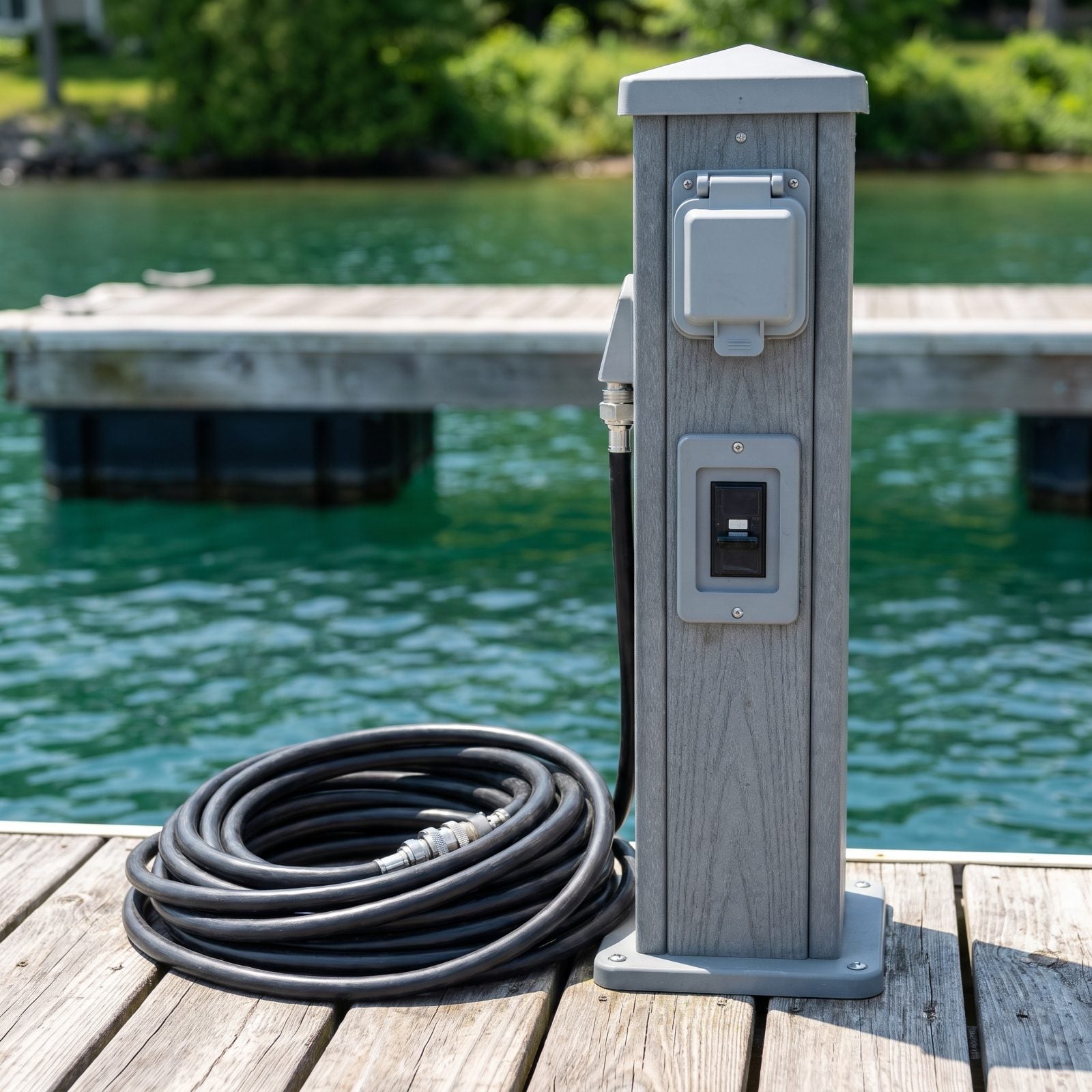
You can spot the trouble from the next dock over. An orange household extension cord snaking across wet planks to run a radio or a boat charger. It works right up until it doesn’t, and water plus 120 volts doesn’t hand out second chances.
A proper weatherproof pedestal with a GFCI breaker costs more than a cord yanked out of the garage. It also tells anyone glancing over that you’ve grasped the one thing that makes lake electricity different from backyard electricity: the water is always right there, inches away, waiting.
In its advice on preventing electric shock drowning, an electrical contractor that wires docks and boat lifts is blunt: “No household cords to the dock, the lift or the boat. If you need power out there, it should be permanent wiring with proper protection.”
23. Enough Cleats in Sensible Places
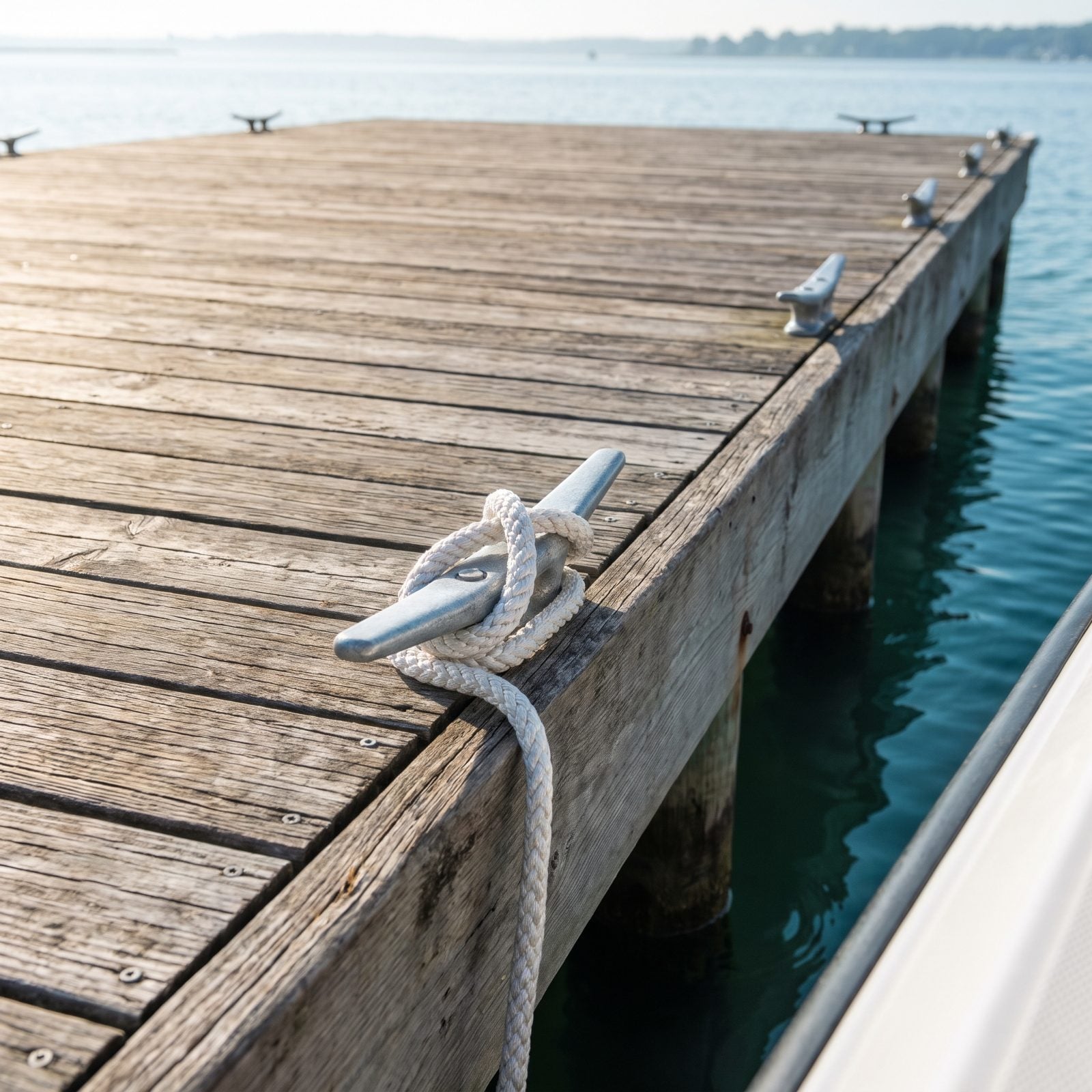
Too few cleats, badly placed, and every docking turns into a fumble. You’ve watched it happen — a boat drifting off while the captain hunts for something to tie to, lines dangling, a fender swinging at nothing.
Space them so bow, stern, and both spring lines each have a home, on both sides if guests might come in either direction. Small expense, and it reads as fluency. Anyone who ties up and finds a cleat sitting exactly where their line wants to go will think, quietly, that you know what you’re doing out here.
22. Mooring Lines Tied With Real Dock Knots

A knot tells on you. A clean cleat hitch — figure-eight, then a locking turn — says you learned this from somebody who’d done it a thousand times. A line piled around a cleat’s base and horns in jumbled loops, a strand crossing the middle at random and no locking turn, announces the opposite, loudly, to anyone who happens to glance that way.
Lines left in a wet tangle on the planks are their own confession. So coil them. Ten seconds, and it’s the easiest way there is to look like you belong on the water.
Teaching students how to tie dock lines, a sailing school cautions: “Avoid the temptation to overdo a cleat hitch. As the forces of the wind nudge the boat and tug on the line, the knot will be pulled tight and can become extremely difficult to untie.”
21. Hull-Saving Bumpers Along the Edge

Bare dock edges leave two marks: scuffs on your planks, and scuffs on whatever hull drifts against them. Anyone with a nice boat notices which docks will chew up their gelcoat and which ones won’t.
Hang fenders where boats come alongside, run a strip of rubber edging on the corners that take a beating, and your dock stops being a hazard. Call it a courtesy as much as a protection. The dock that won’t scratch a visiting boat gets more visitors — and on a quiet cove, that’s everything.
20. Room for a Guest Boat to Tie Up
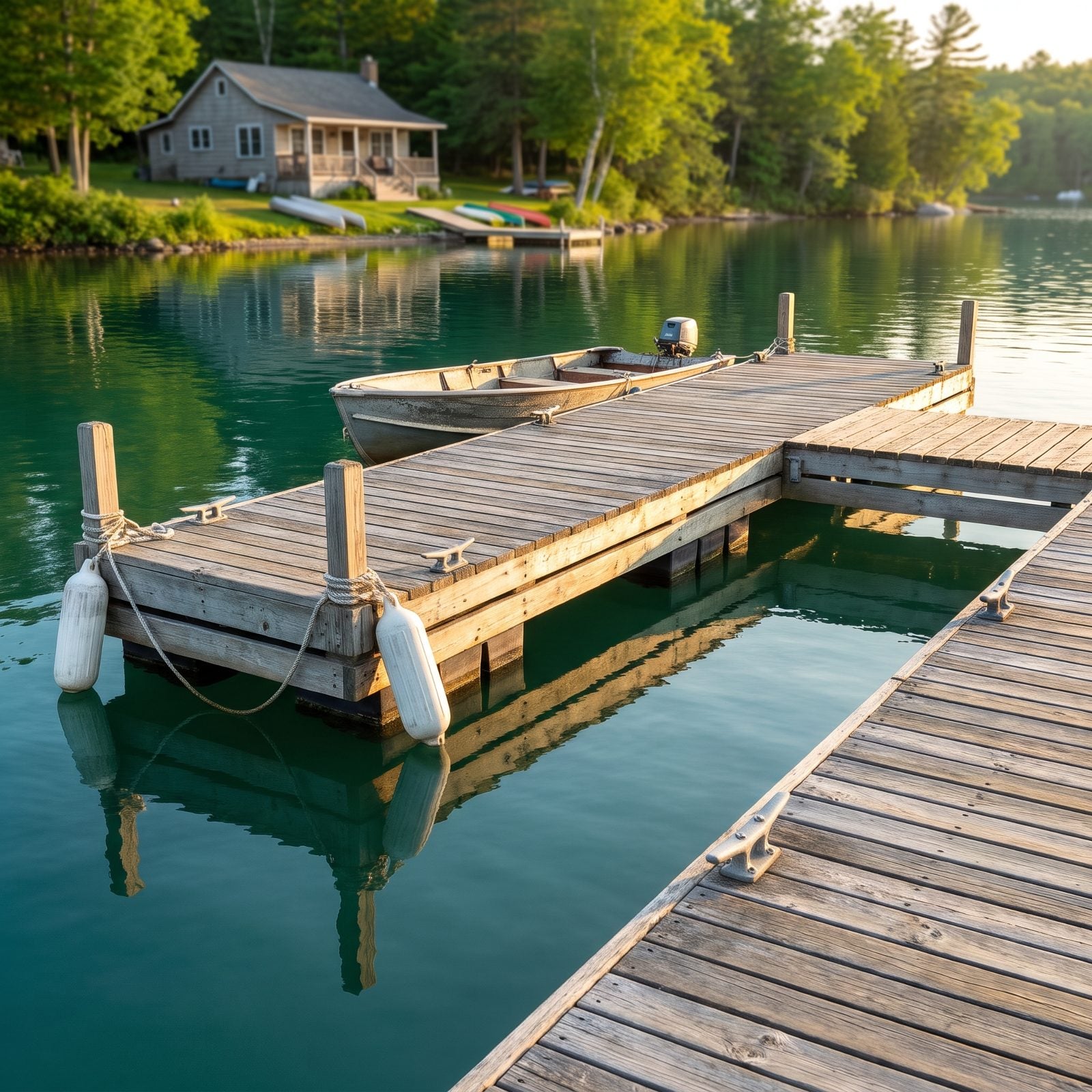
This is the detail that quietly decides whether you ever get folded into the cove’s social life: is there anywhere for a friend to tie up when they motor over.
A dock crammed edge to edge with your own stuff, no open run, no spare cleats — that tells the neighbors you’re not expecting company and would just as soon not have any. Leave a stretch clear. A couple of fenders out, a cleat free. It’s the waterfront version of leaving the porch light on, and people on the lake spot an open berth faster than they spot just about anything else.
19. A Boat Lift That Matches the Boat
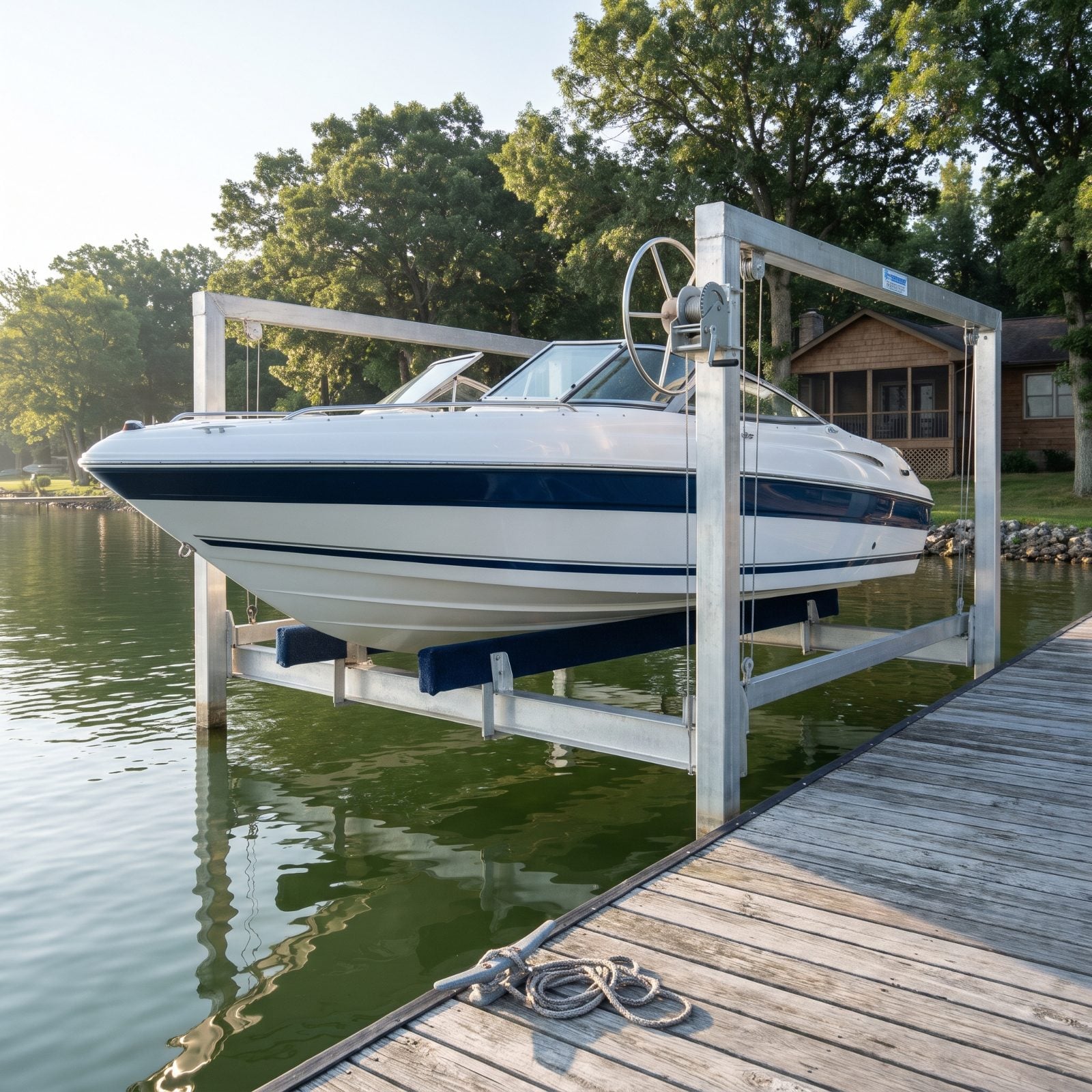
The lift tells your neighbors whether you did the homework. A 4,000-pound cantilever straining under a loaded pontoon reads as borrowed, rushed, or hand-me-down. Match the rated capacity to the boat with room to spare and the whole setup looks deliberate.
People across the water notice the little things — a hull sitting crooked on the bunks, cables that hum and shudder on the way up, a boat parked an inch above the surface instead of lifted clear.
18. A Lift Canopy That Looks Storm-Ready
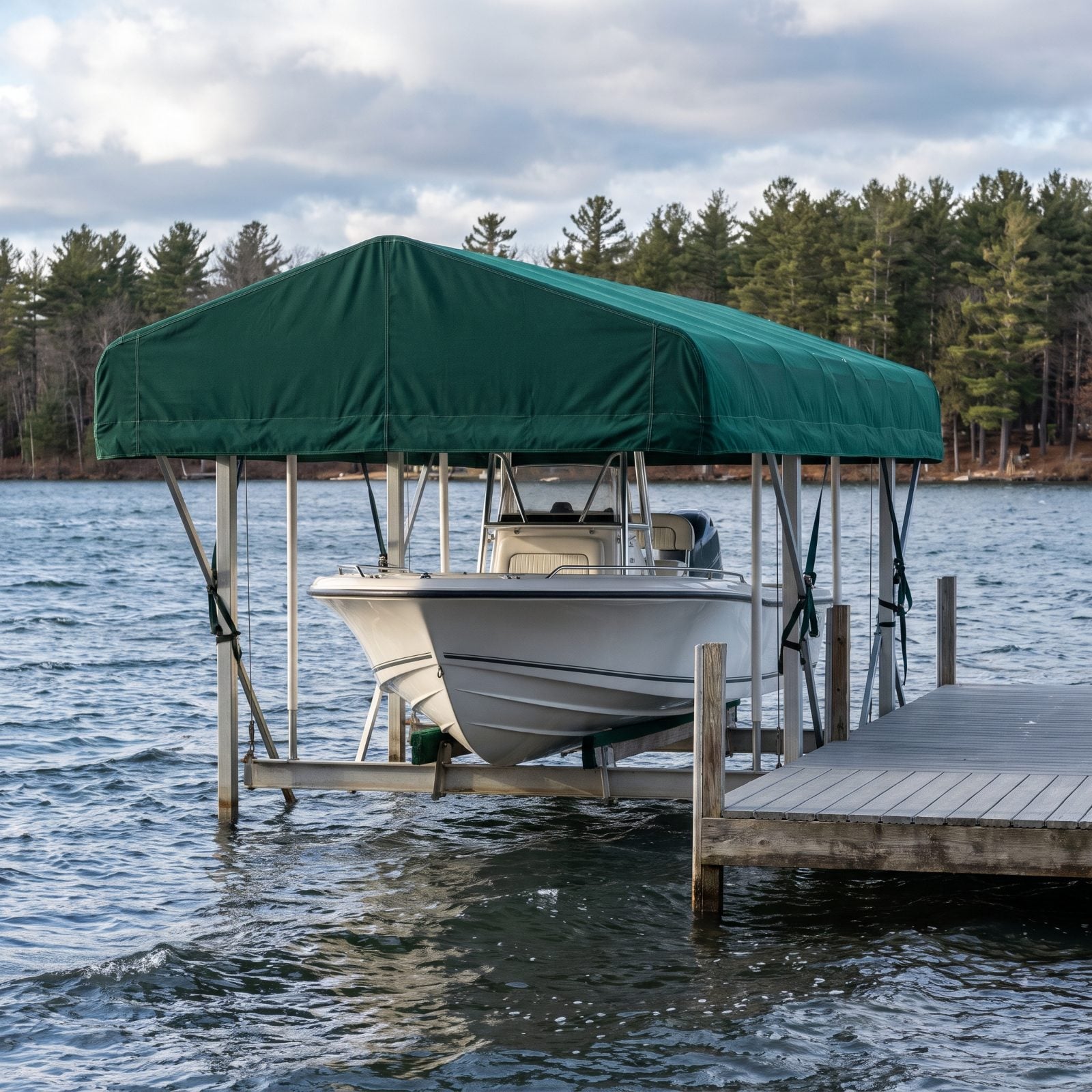
A sun-faded canopy with a torn corner flapping in the breeze is the waterfront equivalent of a dead lawn. It says nobody’s minding the place.
Taut canvas in good color does the opposite — stretched tight, strapped down where it counts, no pooling water in the top — and every loose tie-down cinched before the wind picks up. When a squall rolls through and your canopy is still sitting flat while others balloon and tear, people remember who buttoned up before the storm.
Faded is forgivable. Shredded and ignored is not. Replace the fabric before it starts coming apart, not after.
17. A Dedicated Spot for Jet Skis
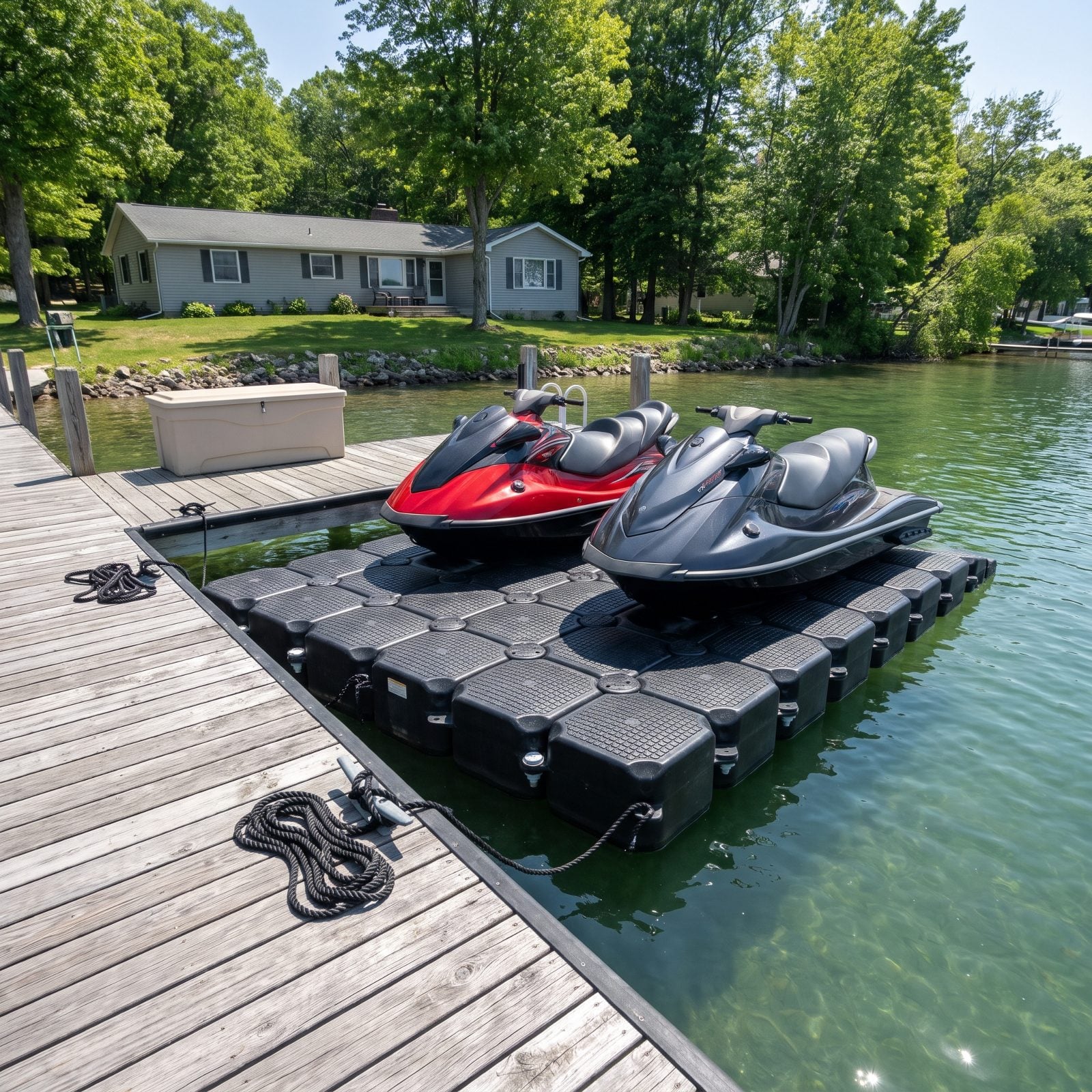
Jet skis left bobbing on bumpers all summer scuff the dock, swing into each other, and leave that oily sheen on the water everyone pretends not to see.
A drive-on floating port fixes all of it. The skis sit up out of the water, dry and parked, and the whole dock stops looking like a yard sale. Neighbors clock the difference the second they pass by.
16. One Organized Rack for Kayaks, Canoes, and Paddleboards
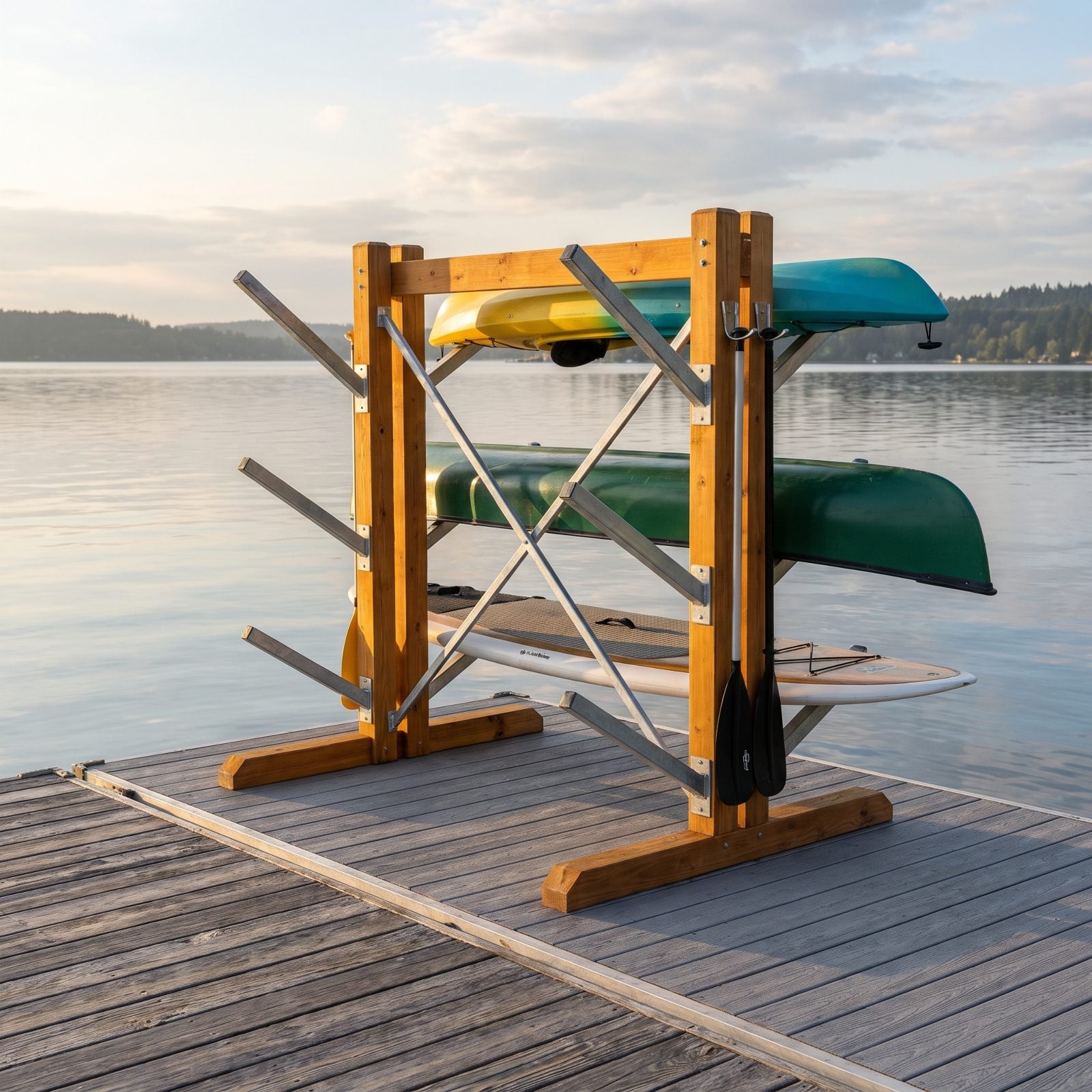
Loose boats are the fastest way to look like you just moved in. A kayak dumped on the lawn, a paddleboard leaning against the shed, a canoe flipped over the grass killing a brown oval into the turf.
A simple A-frame rack pulls it all into one spot — hulls up off the ground where they dry out and stop breeding mosquitoes underneath, paddles on hooks instead of scattered down the shoreline.
15. A Ramp or Step Made for the Dog
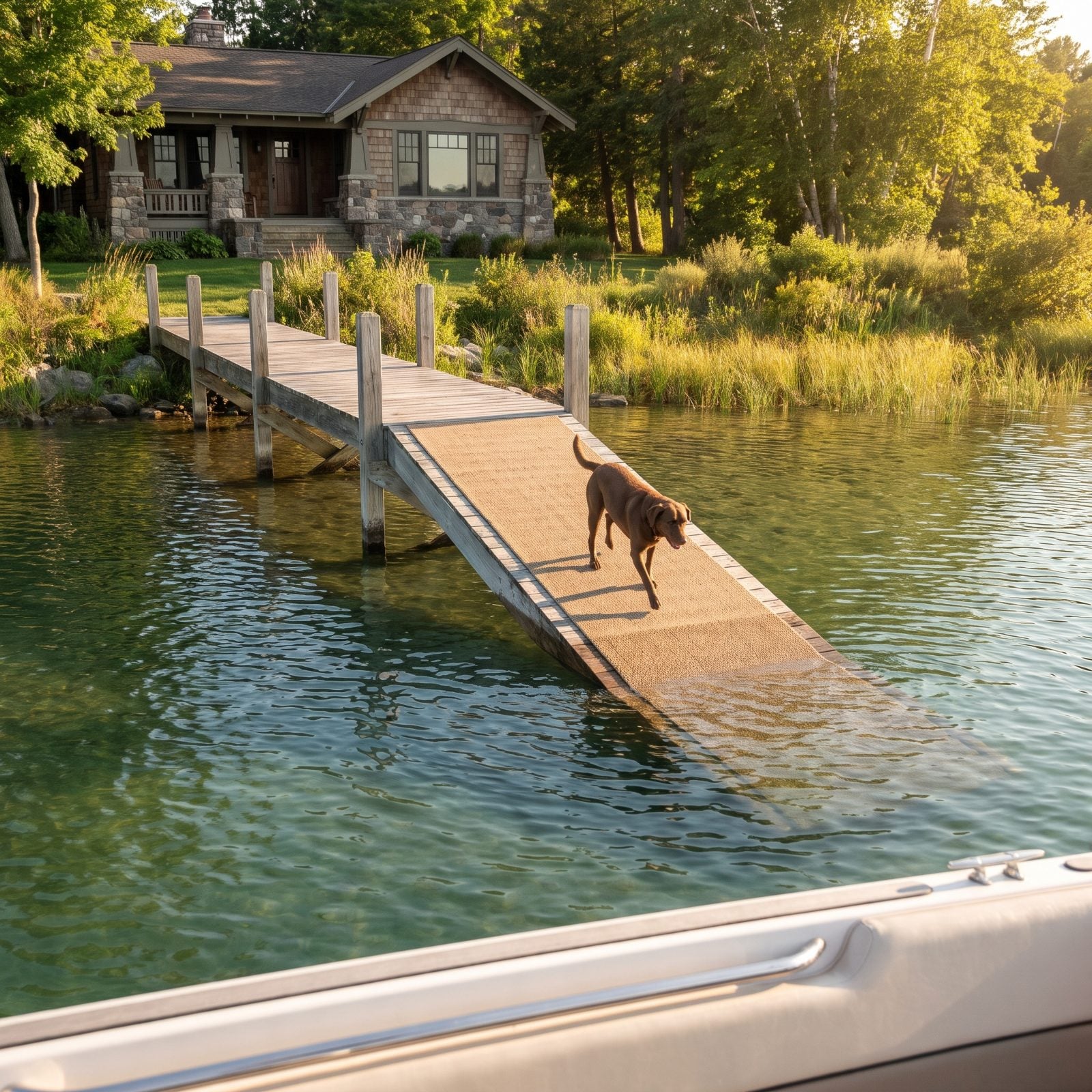
Watch a Labrador scramble its nails bloody trying to claw up over a dock edge and you understand why the ramp matters.
A carpeted or ridged dog ramp into the shallows signals you planned for the whole family, four-legged members included. Neighbors with dogs notice first — and lake neighbors with dogs are the ones who’ll wave you over for a beer by August.
14. A Dock Box Big Enough to Hide the Gear
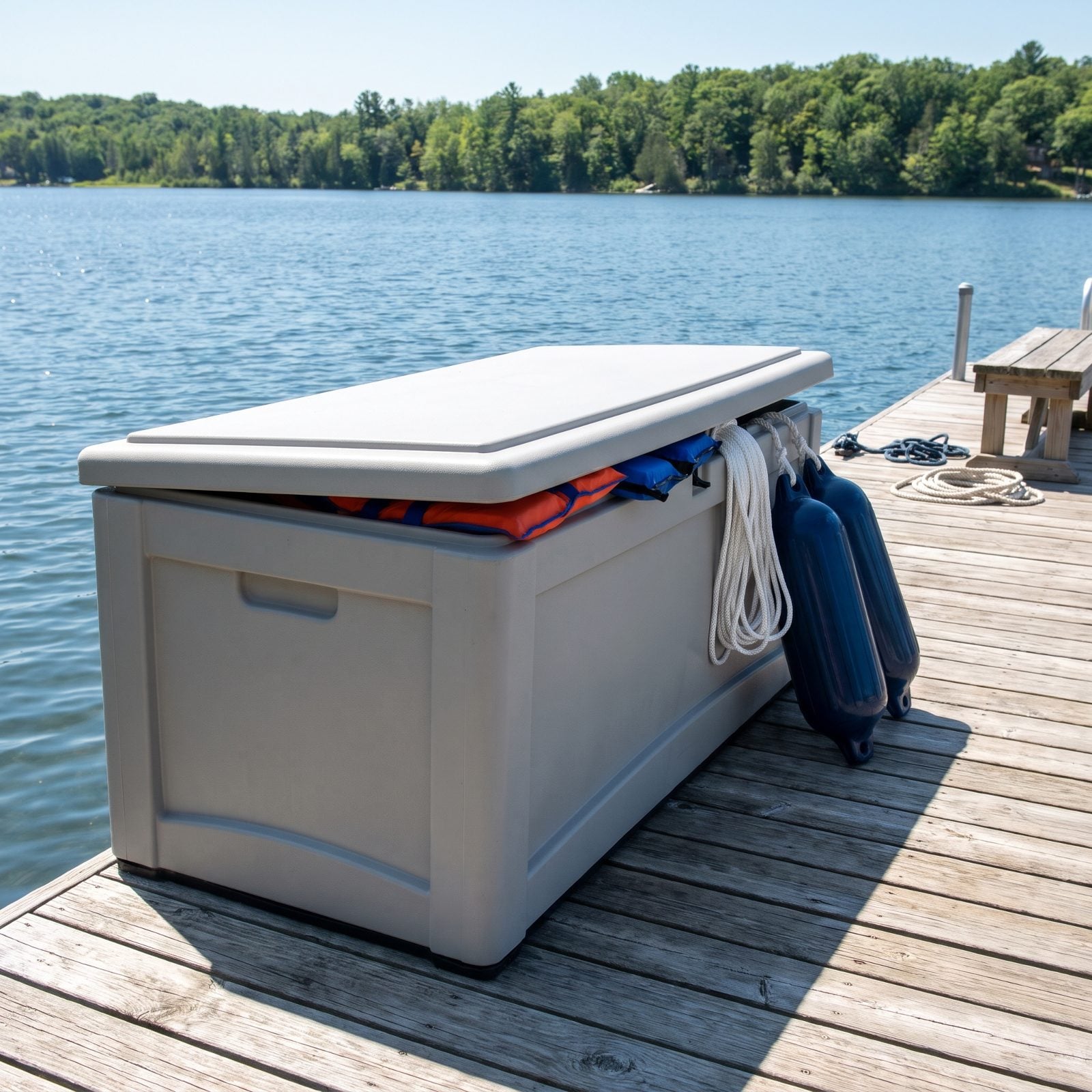
The difference between a tidy dock and a messy one is usually one box.
Life jackets, tow ropes, fenders, the stray flip-flop, a bottle of sunscreen melting in the sun — all of it either lives in a dock box or lives scattered across the boards for the whole lake to see. A weatherproof box swallows the clutter and gives you a bench to sit on while you tie your shoes — as long as it’s big enough. If life jackets spill out under a lid that won’t close and the ropes and fenders still end up on the boards beside it, size up.
13. Seating Arranged for the View

Two chairs facing the house instead of the lake is a rookie tell. You bought the water view and then sat down with your back to it.
Angle the seating outward, toward open water and the sunset line. It flips the dock from storage platform to a place somebody actually sits. A pair of Adirondacks pointed at the horizon says this person gets it.
Nobody visits a lake to admire the siding.
12. An Umbrella That Can Handle Lake Wind
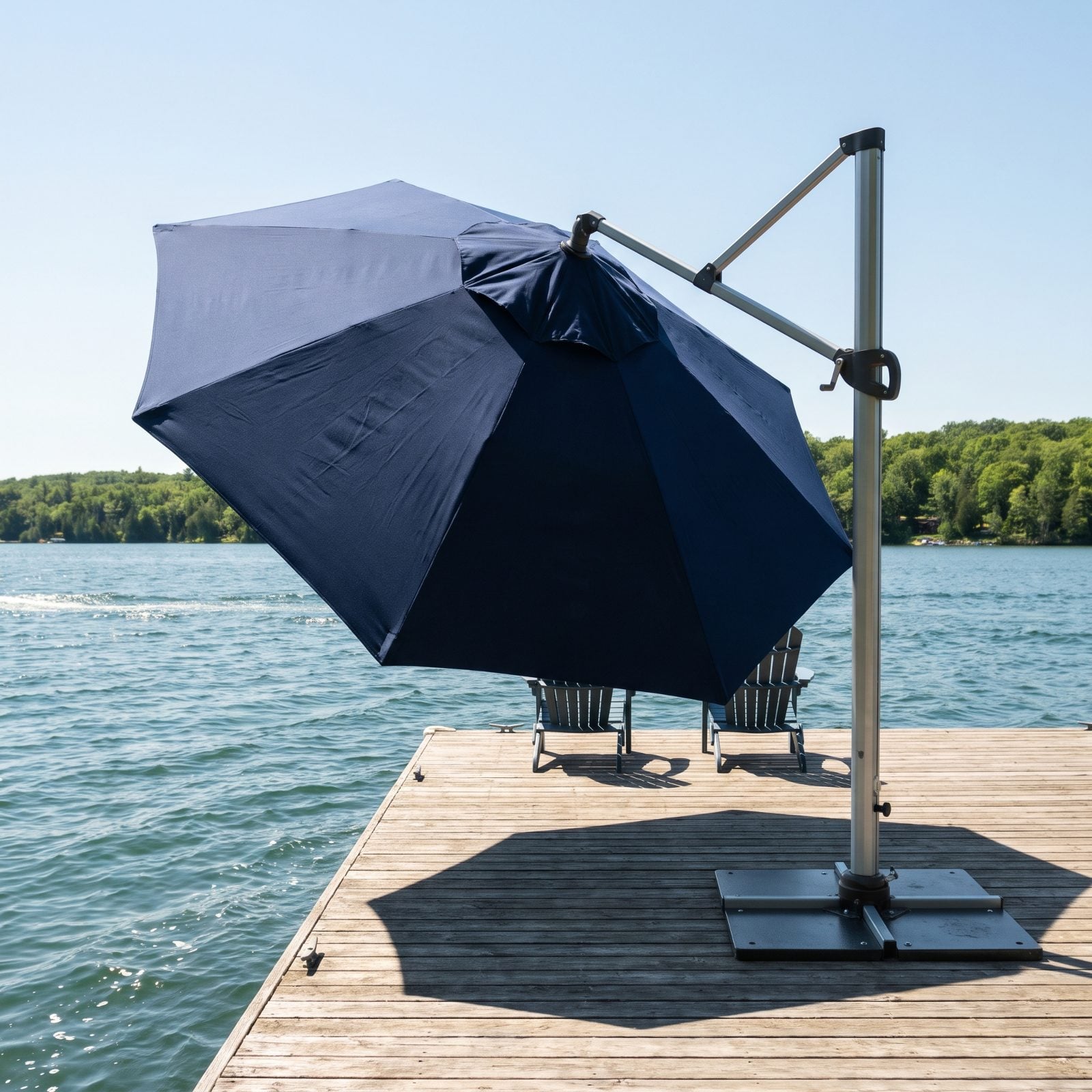
A cheap umbrella is a kite with ambitions. The first real gust sends it cartwheeling across three docks, and you’ll be the one fishing it out of the shallows.
Wind off open water is stronger and steadier than anything your backyard taught you to expect. A vented canopy and a properly weighted or mounted base is the whole game. An umbrella that stays put all summer looks like it belongs; one that launches into the lake twice a week becomes a running joke at the next cove gathering.
11. A Grill Set Too Close to Wood or Canvas
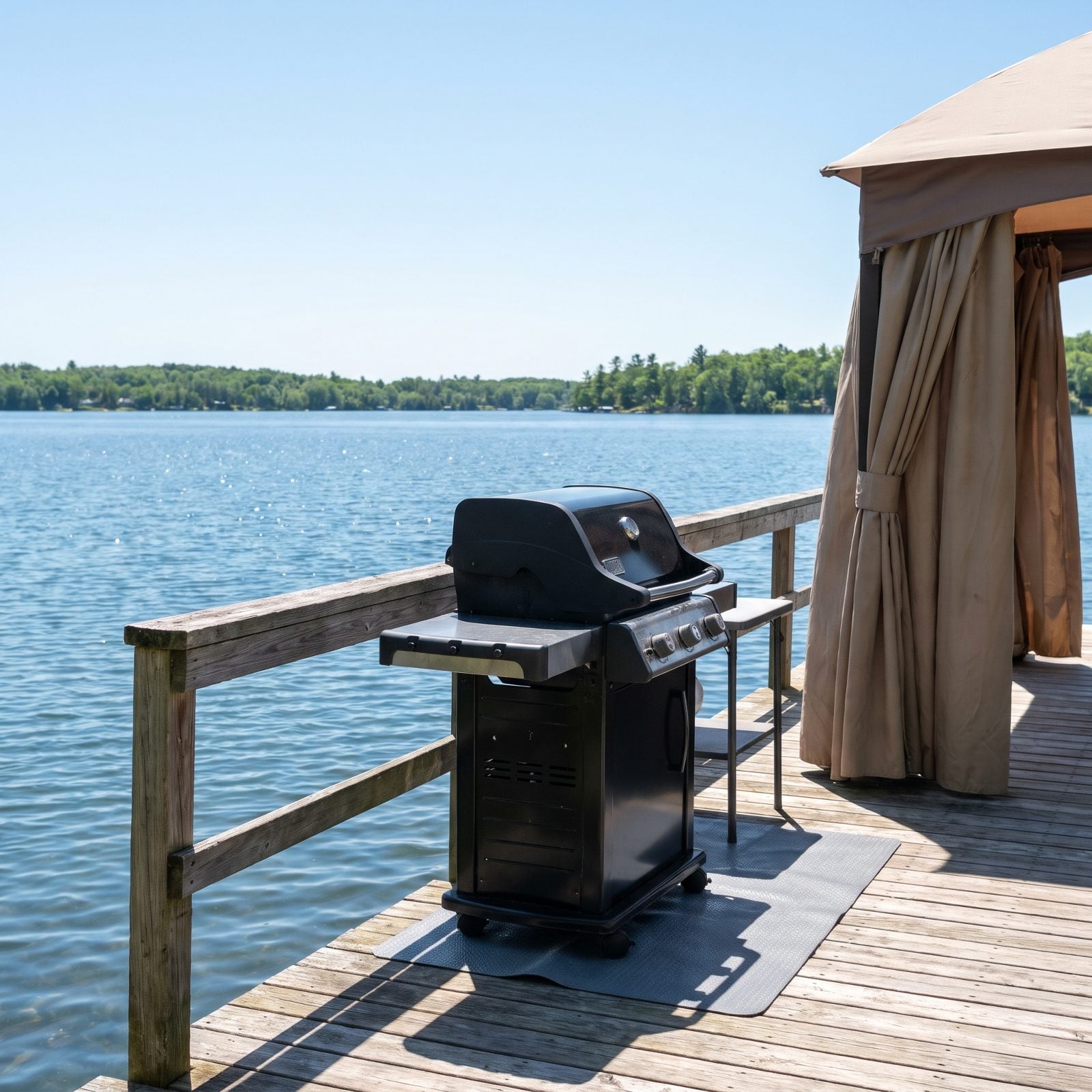
This one’s not about looks. It’s about the smell of fear that travels down a dock when someone fires up a grill backed right against the canvas lift canopy.
Wood decking, fabric, coiled fuel lines, and an open flame make a bad neighborhood. Your fire is their fire — docks sit close and share air, so lake neighbors watch where you put the grill.
10. A Lidded Trash Can Instead of Loose Bags
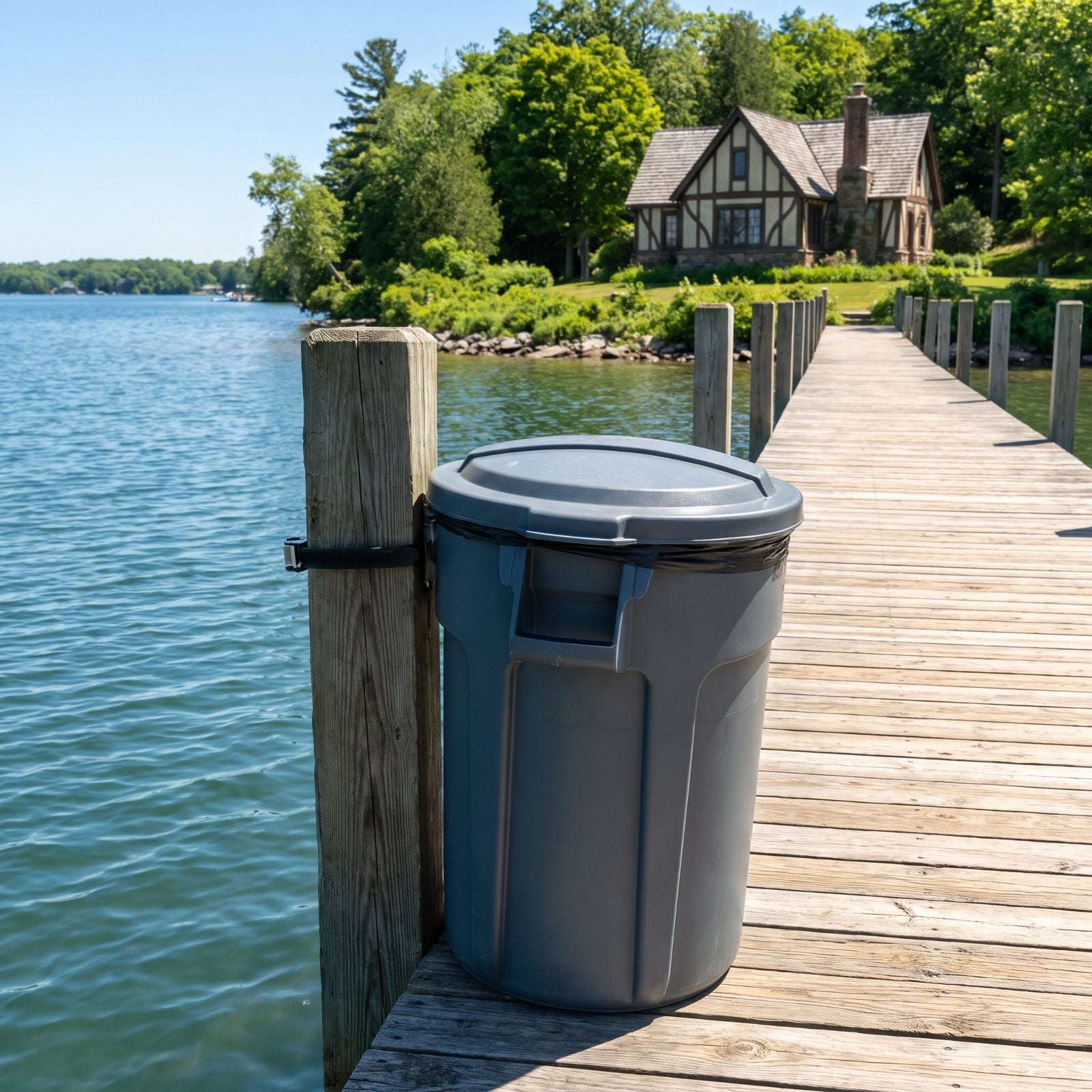
A torn garbage bag tipped by raccoons at dawn spreads your weekend across the shoreline and into the water. Chip bags floating in the shallows. Everyone downwind knows exactly what you grilled.
A lidded can, strapped to a post so the wind can’t walk it off, ends the whole problem. It’s the least glamorous item on this list and the one that quietly earns you the most goodwill. Clean shorelines are a group project, and the person who litters theirs is the person nobody waves to.
Keep the lake out of your trash and the trash out of the lake. That’s the whole etiquette, start to finish.
9. Which Flag Flies From the Post
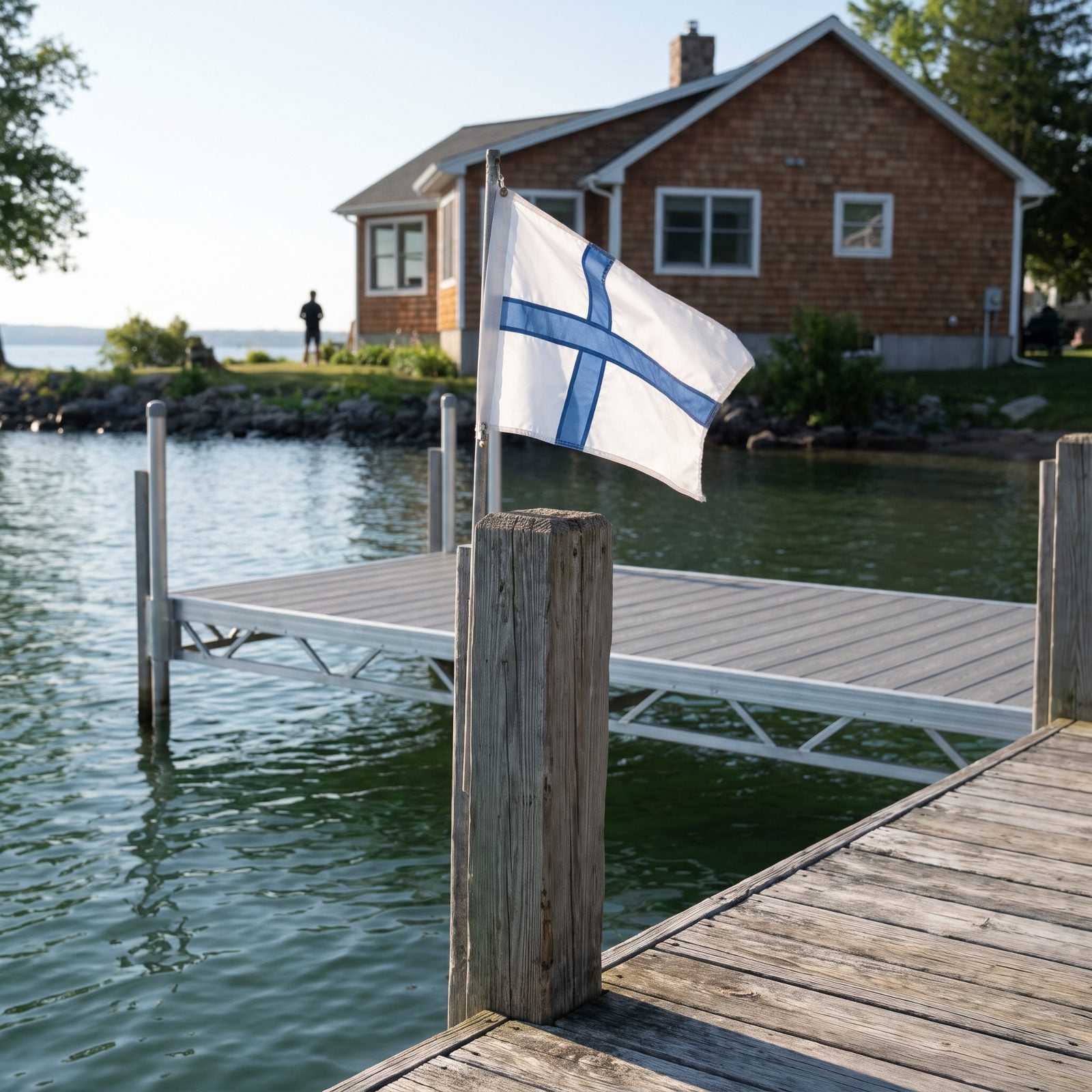
A flag is the first thing your neighbors read, and they read it fast. A faded, sun-shredded one says the owner stopped caring somewhere around last August, while a crisp one says someone shows up and pays attention.
Fly your state flag or a plain nautical pennant and you blend in fine. Fly something loud, political, or snarky, and you’ve just announced yourself to forty boats before anyone’s said hello. On a small lake that follows you — to the fuel dock, the association meeting, the Fourth of July potluck.
8. Fuel Cans Stored Out in the Sun
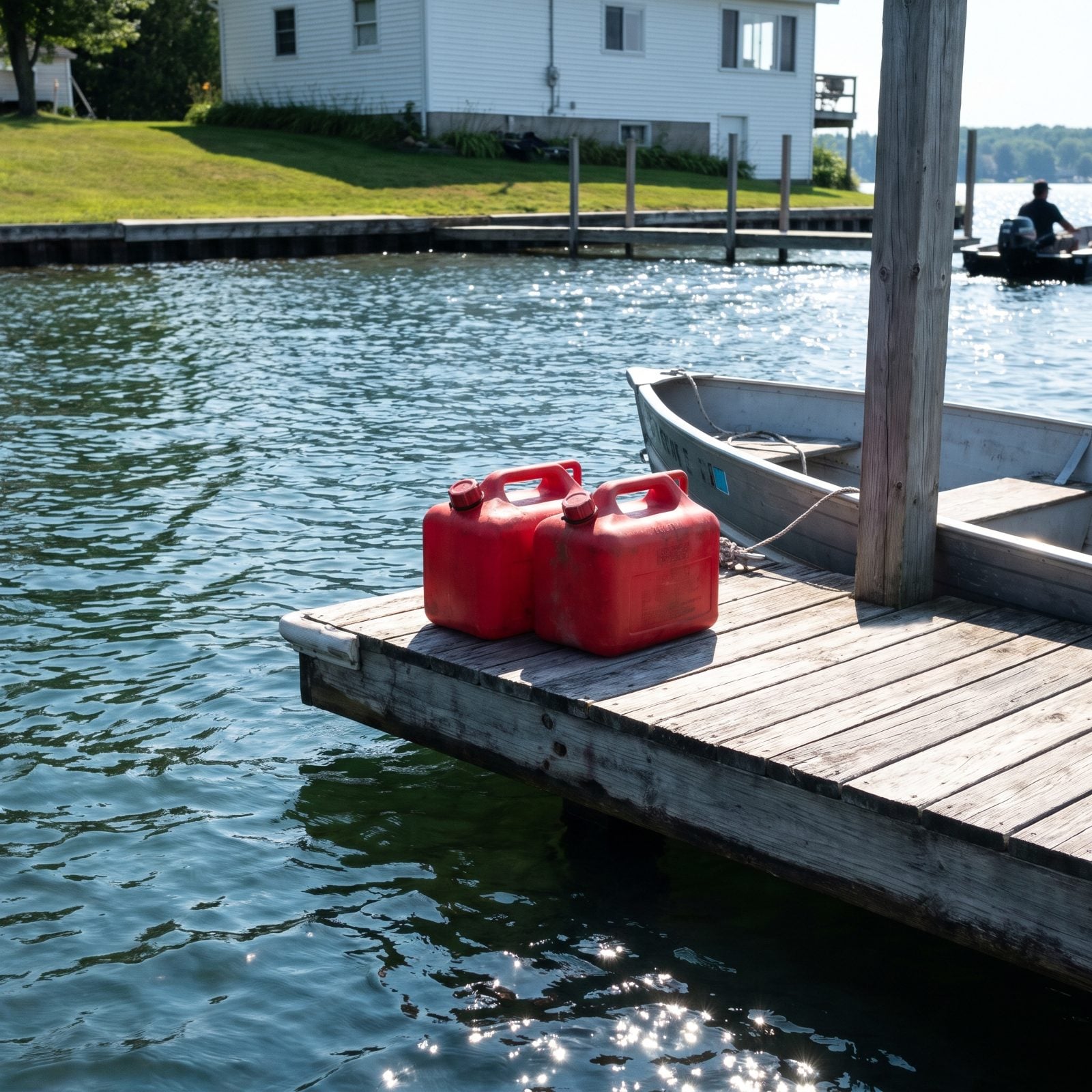
Red fuel cans baking on the dock planks are a small thing that reads loud. To a boater passing twenty feet off your slip, they signal two things at once: a safety shortcut and a storage problem the owner hasn’t solved yet.
Gasoline vapor expands in heat and seeps past imperfect seals. Leave cans in full sun and you get fumes drifting across the water, a faint sheen near the ladder, and neighbors who notice. Most lake associations frown on open fuel storage near the waterline, and some ban it outright.
Tuck the cans in a shaded dock box or carry them up to the shed. Out of sight, cooler, and nobody’s wondering what else you’re cutting corners on.
7. A Security Camera Pointed Toward the Shore
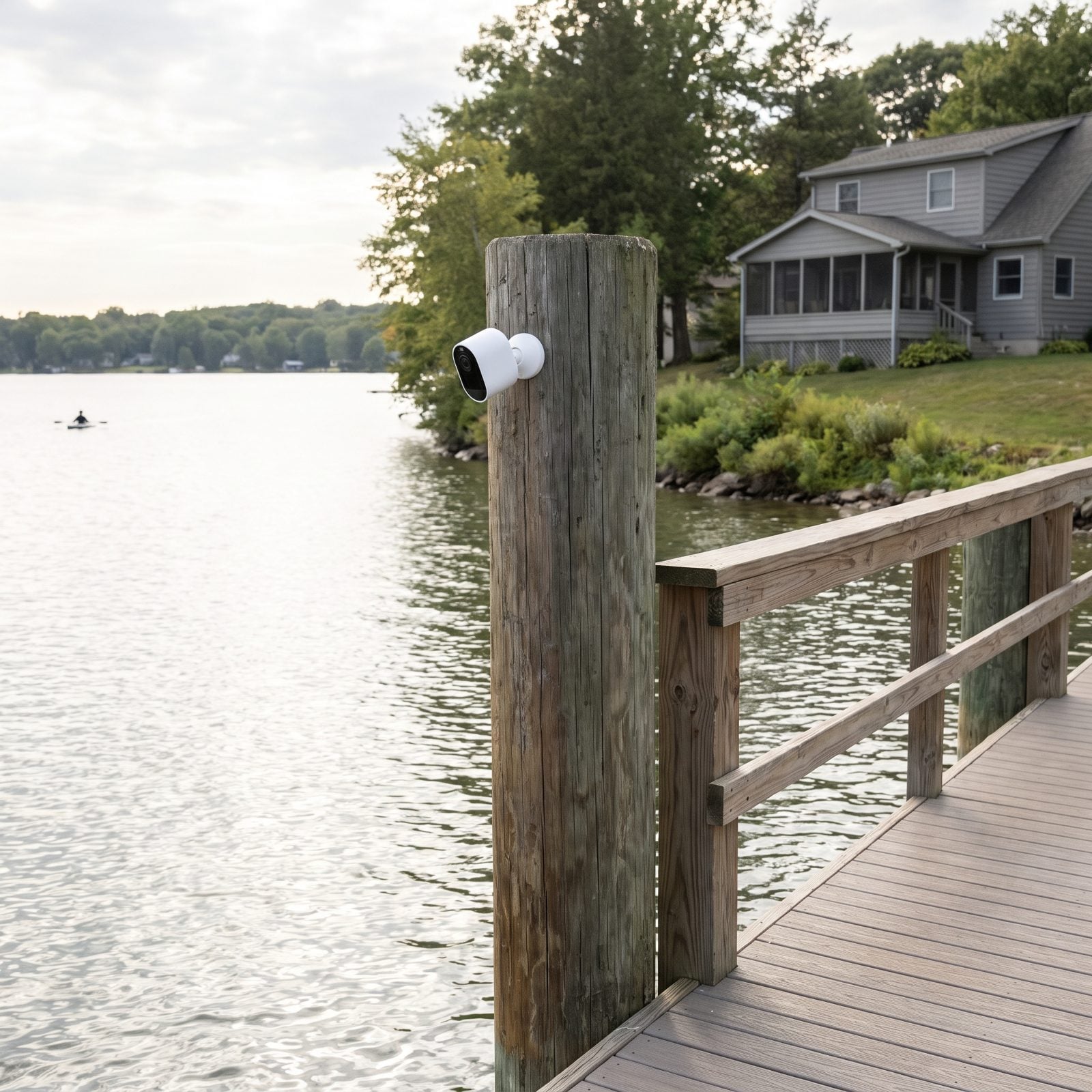
Nothing cools a dock wave faster than a camera staring down the shoreline.
Angle a lens at your own ladder and slip, and nobody blinks — that’s your property, your business. Angle it out across open water where neighbors swim and kids paddle, and you’ve told the whole cove you see them as a threat before they’ve handed you a single beer.
Point the camera at your own stuff. Tilt it down, not out. The water is shared, and people feel the difference between a camera watching a dock and a camera watching them.
6. The House Number Visible From the Water
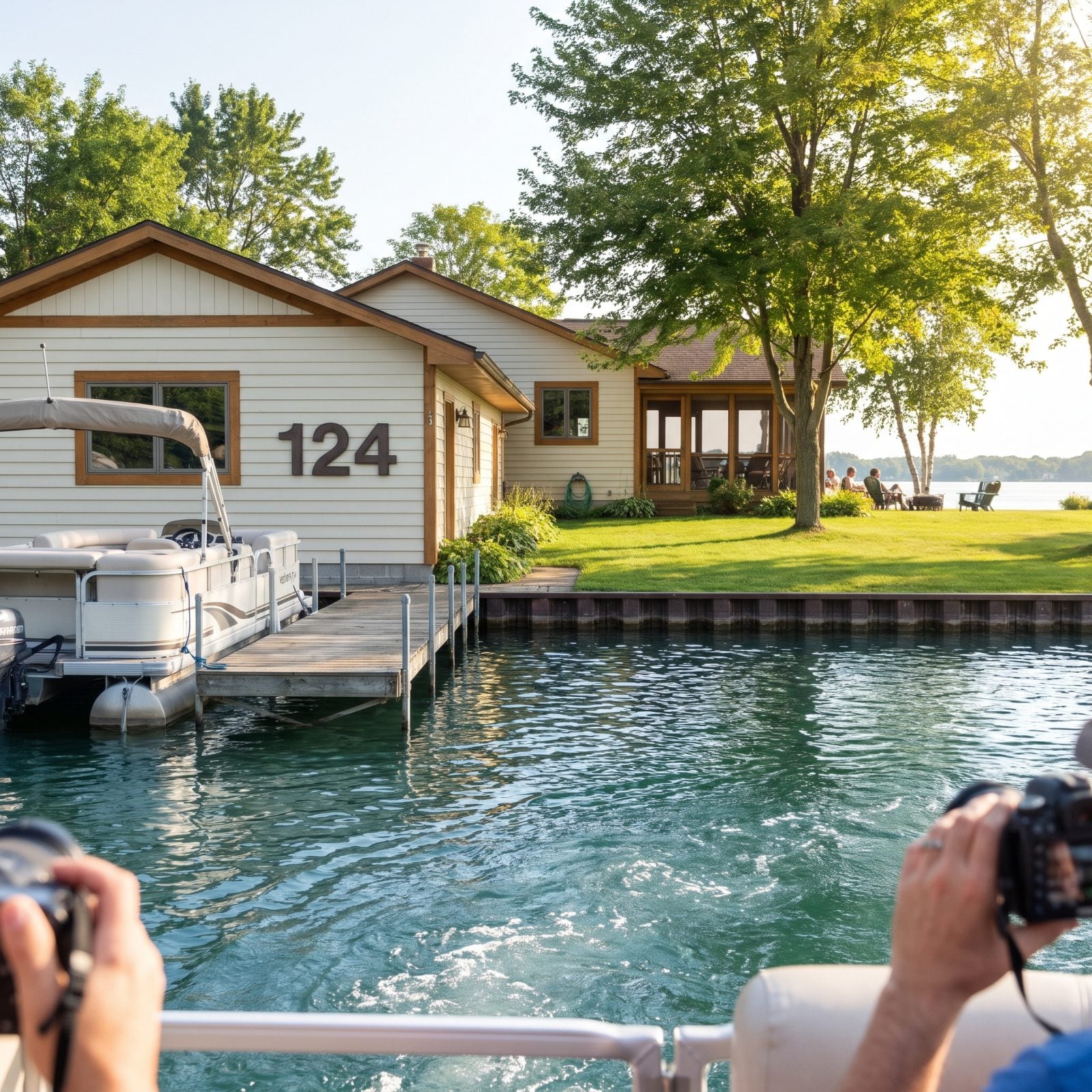
Most new owners put the address on the road side and forget the lake side entirely. Then a neighbor’s trying to flag which house is throwing the party, or — worse — a first responder is scanning the shoreline from a rescue boat and can’t tell your place from the four that look just like it.
A clear number facing the water quietly signals that you get lake life. You thought about the view that matters, the one everybody actually arrives from.
5. Mooring Springs for Passing-Boat Wake
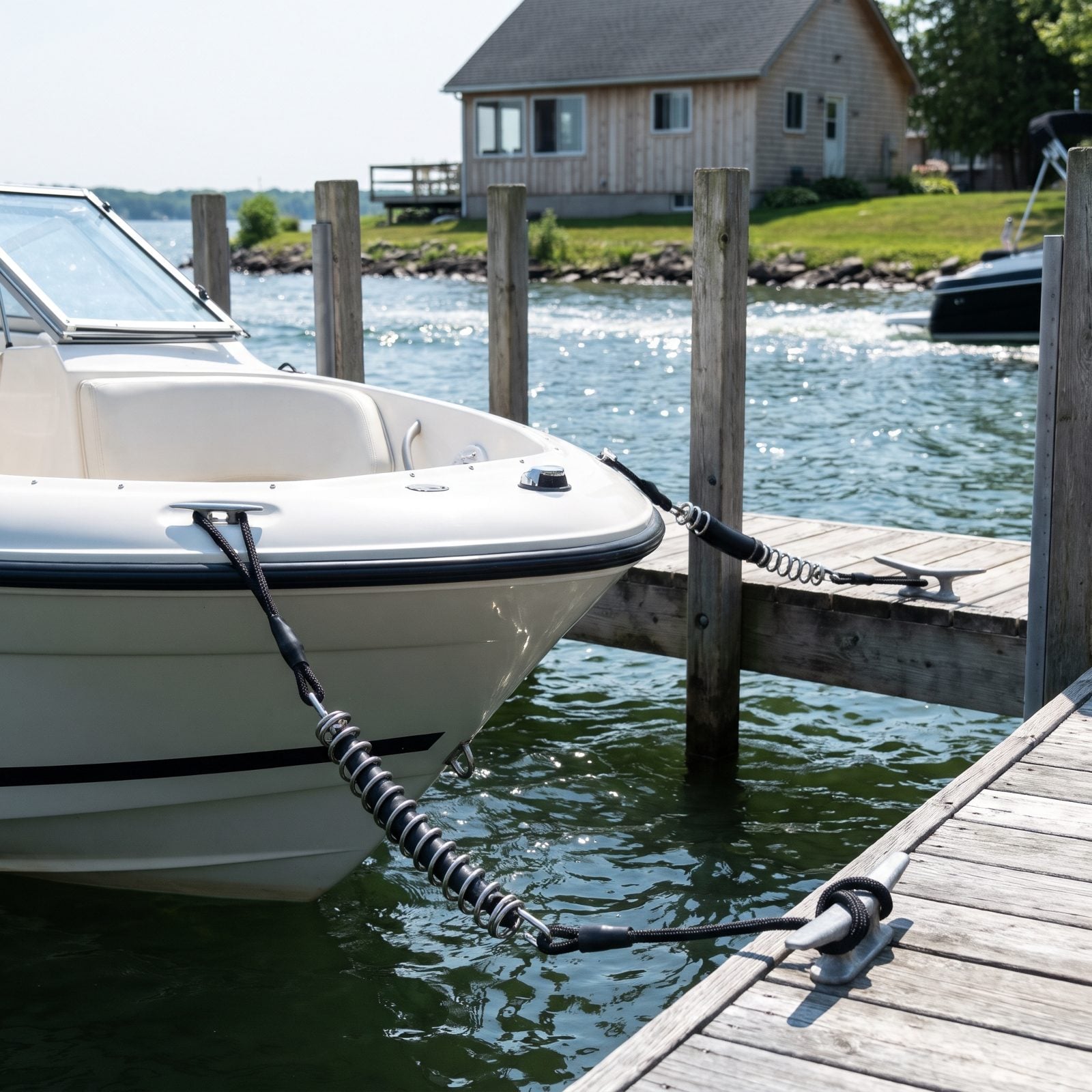
Nobody tells a new owner this: how your boat sits in the slip tells people whether it’ll still be there after a rough wake weekend.
Rubber snubbers and proper spring lines keep a hull from slamming its cleats every time a wake-boat rolls through. Skip them and you get banging all afternoon, chafed lines, and a boat that works itself loose. Neighbors hear the banging. They also know a drifting boat becomes their problem too once it’s loose in the cove.
A boat tied with springs and a little slack says the owner has done this before. Boring detail. Earns more respect than a fresh paint job.
4. A Wave Break or Attenuator Beyond the Slip
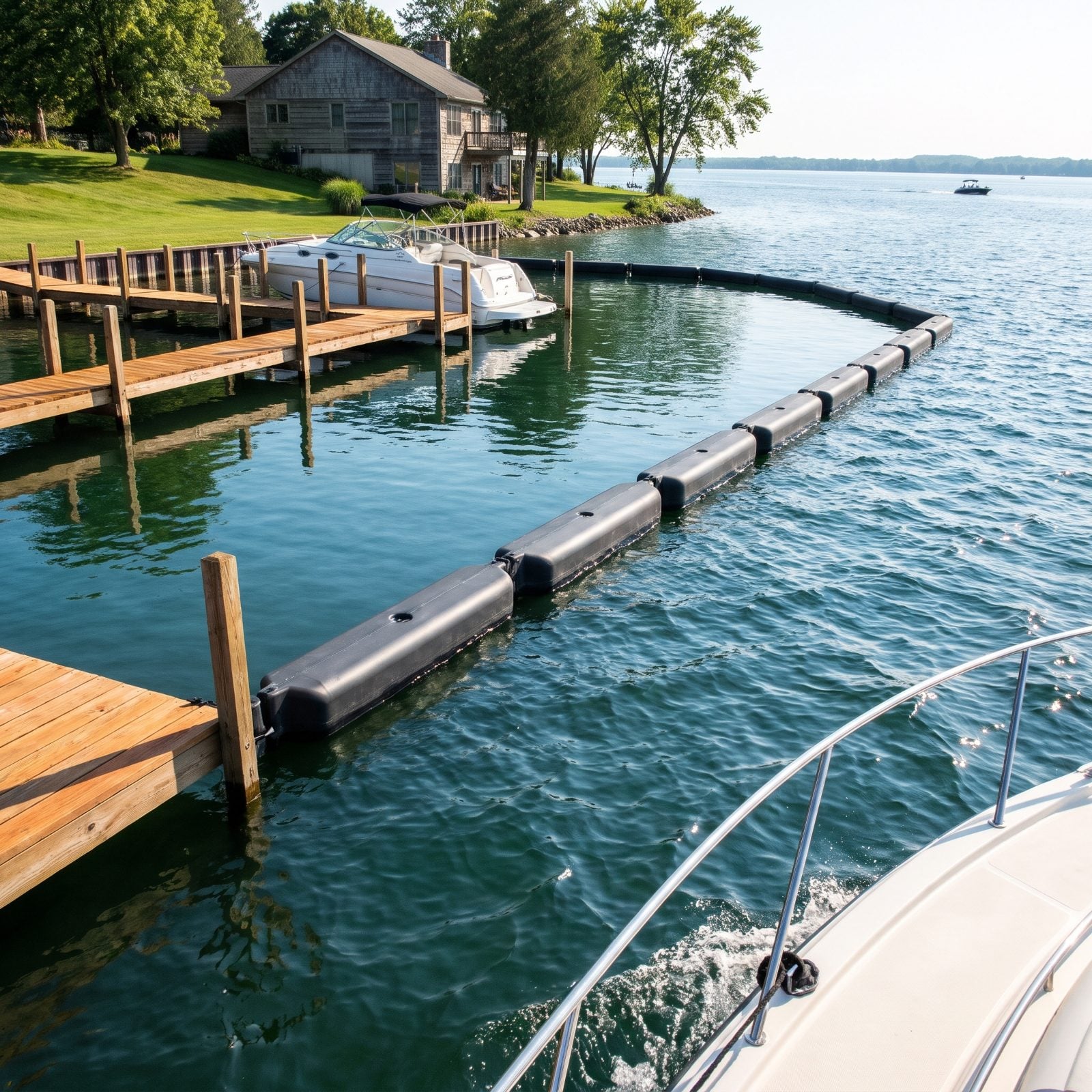
A wave break is the biggest-ticket item a new owner installs, and it sends the loudest signal — for better or worse.
Done right, it calms the water inside your slip and keeps your dock from taking a beating. Done without a permit, built too far out, or dropped where it shoves wake onto the neighbor’s shoreline, and you’ve started a cold war that outlasts the summer.
Floating attenuators and breakwaters almost always need sign-off from the lake authority or the state, and sometimes the neighbors too. Build first and ask later, and the first impression you make is the one that shows up in the association minutes.
3. Green Algae at the Waterline
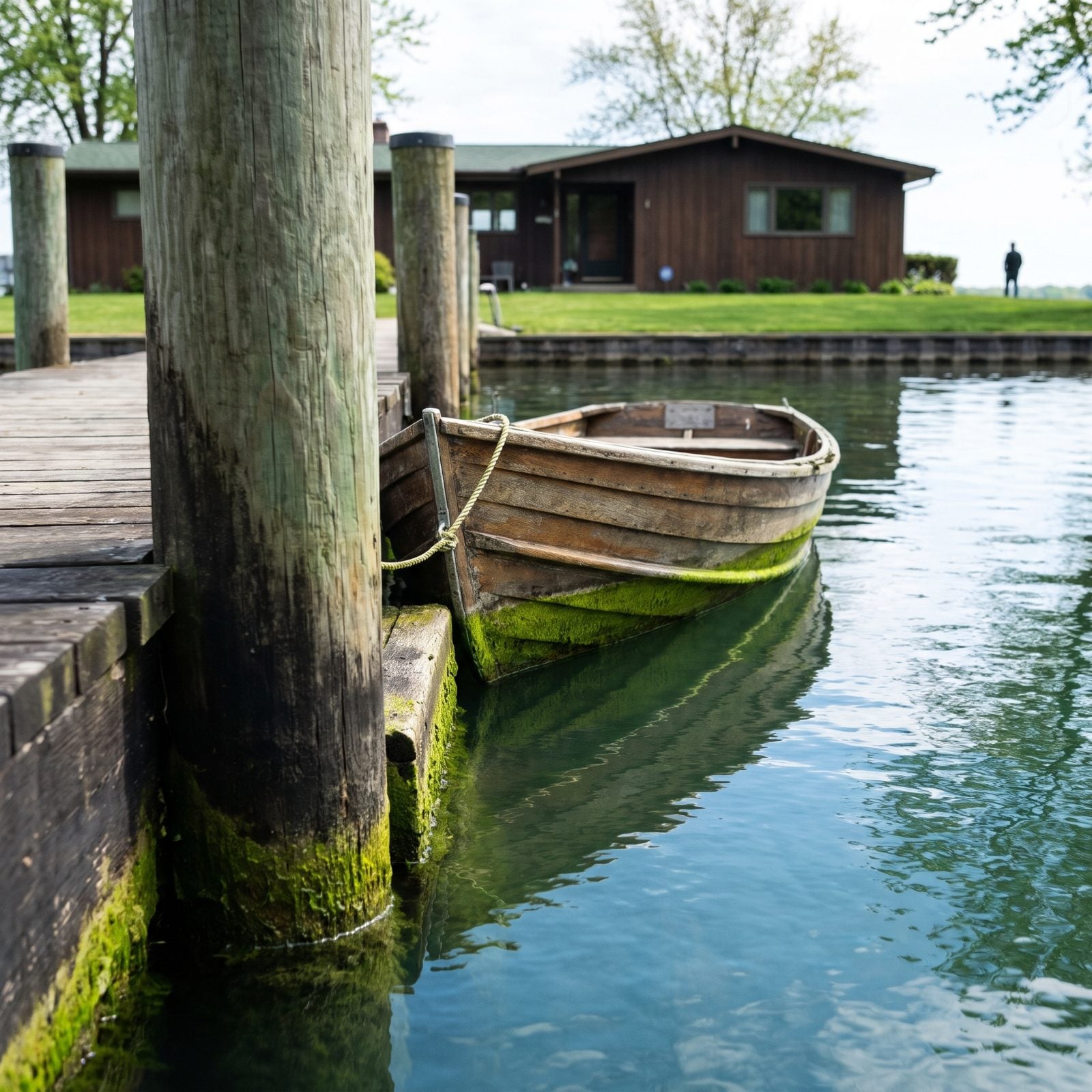
That slick green film at the waterline is the first thing a boater’s eye lands on when they pull alongside. It reads as neglect even when the house above it is spotless.
Algae and slime build up fast on pilings, swim ladders, and hull bottoms that sit still too long. A little is normal. A thick mossy stripe says nobody’s touched this dock in a while.
A scrub brush and a weekend knock it back. On most lakes you’re expected to use plain water or lake-safe cleaners — never bleach or harsh chemicals that run straight into shared water. Neighbors notice who respects that and who doesn’t.
2. Towels, Sandals, and Toys Blocking the Walkway
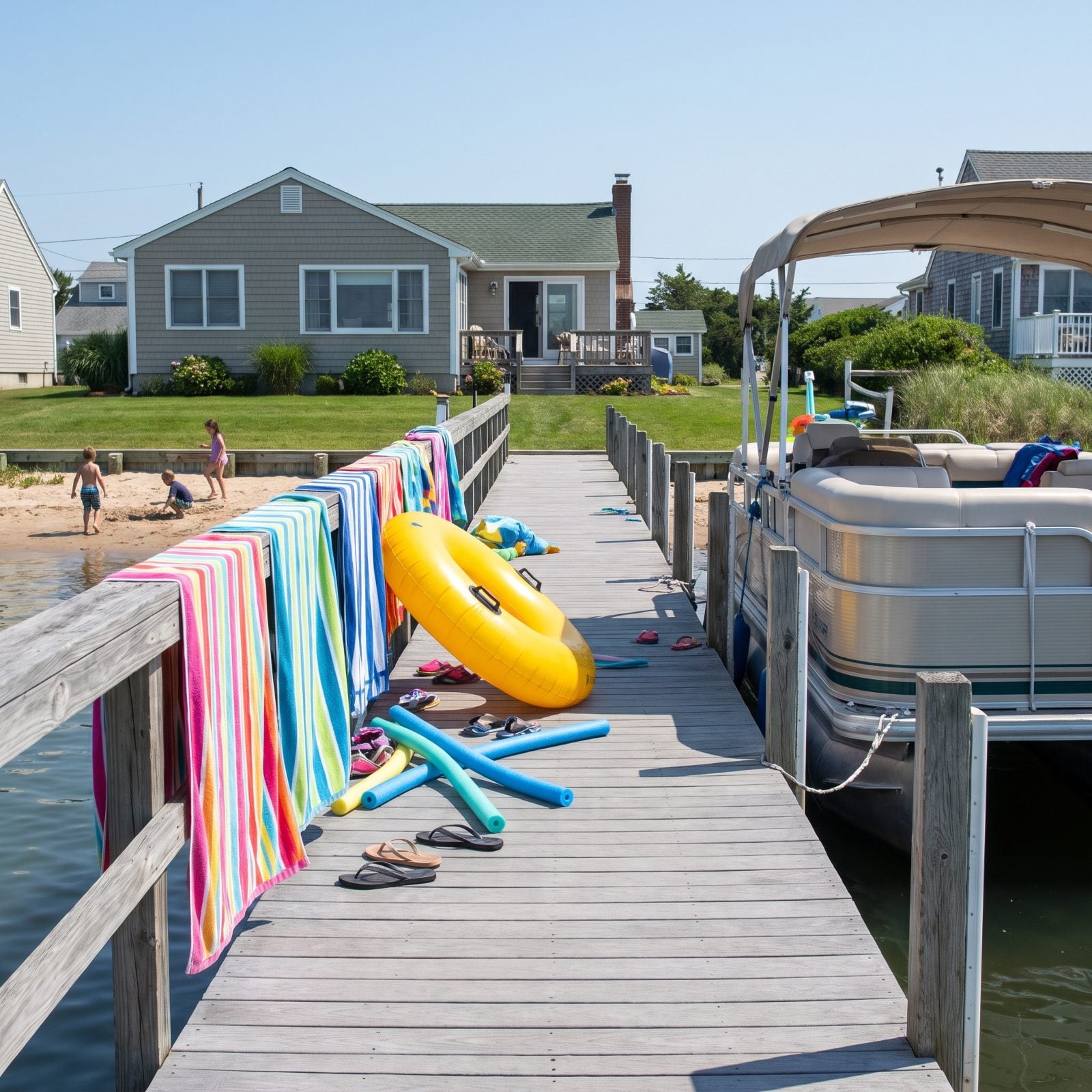
A dock buried in towels, noodles, and a big yellow inflatable tube tells one story to a parent and a different one to a boat trying to raft up next to you.
The parent sees a family using the place, which is exactly what it’s for. The neighbor sees a trip hazard and a walkway they can’t get past when they come over to say hi or hand back a strayed fender.
Nobody expects a lake dock to look like a showroom. It shouldn’t. But a clear path to the ladder and the boat is both a safety thing and a courtesy thing, and a simple dock box swallows the chaos in ten seconds and resets the whole impression.
1. Speakers Aimed Across the Water
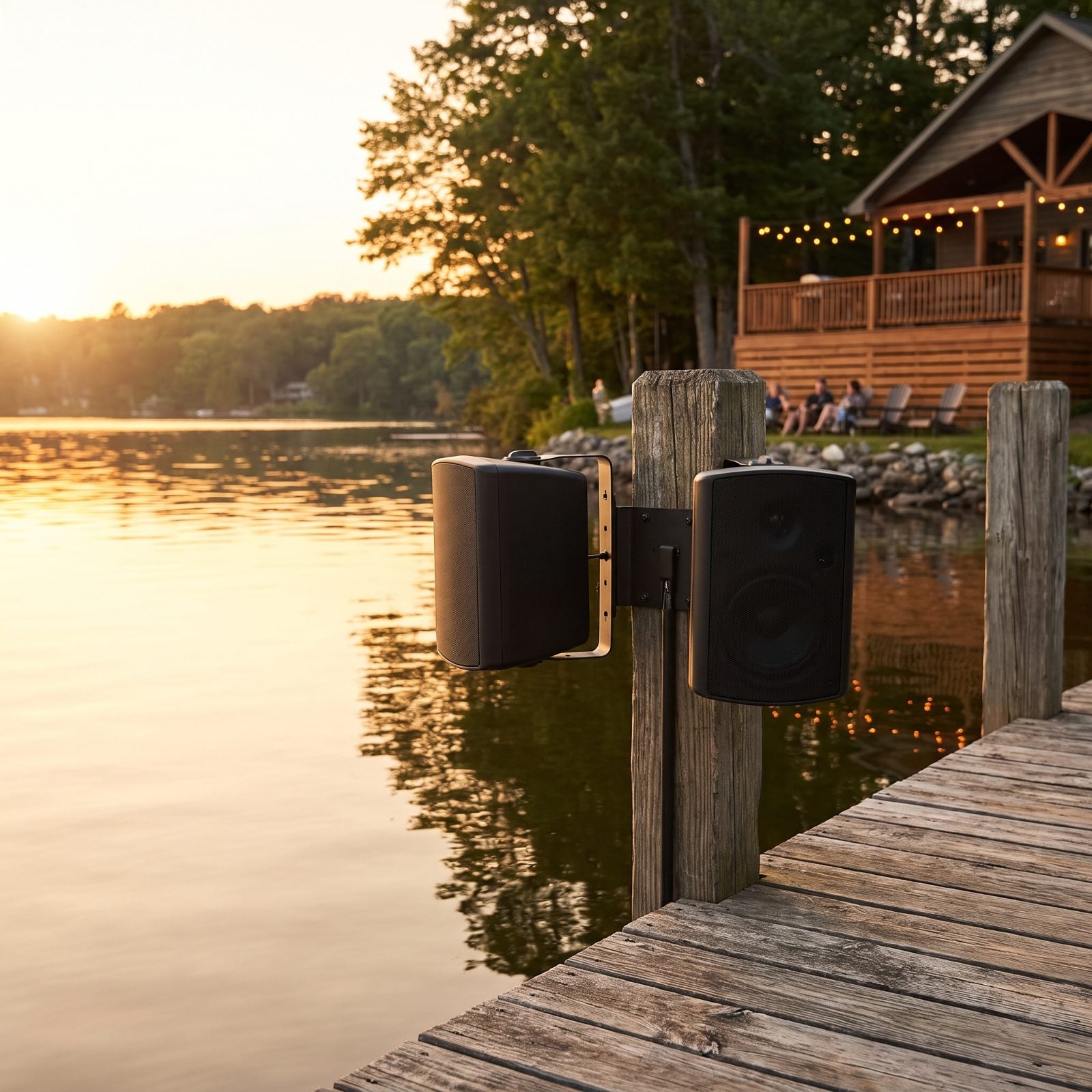
Sound does strange things over water. It skips across a flat lake at night and lands in a bedroom window half a mile away like you’re playing in their living room.
Speakers aimed across the cove are the fastest way to go from new owner to the house everyone complains about. The music that feels reasonable on your own deck hits three times louder across the far shore, where people are trying to sleep.
Point them back toward your own seating. Keep the volume where you can still hear a conversation. And learn the lake’s quiet hours before your first party, not after the association letter.
Explaining how sound waves bend over a lake at night, a local tv news station describes it this way: “As night time falls, you can still see those across the lake but now you can hear them as if they are standing right next to you.”