
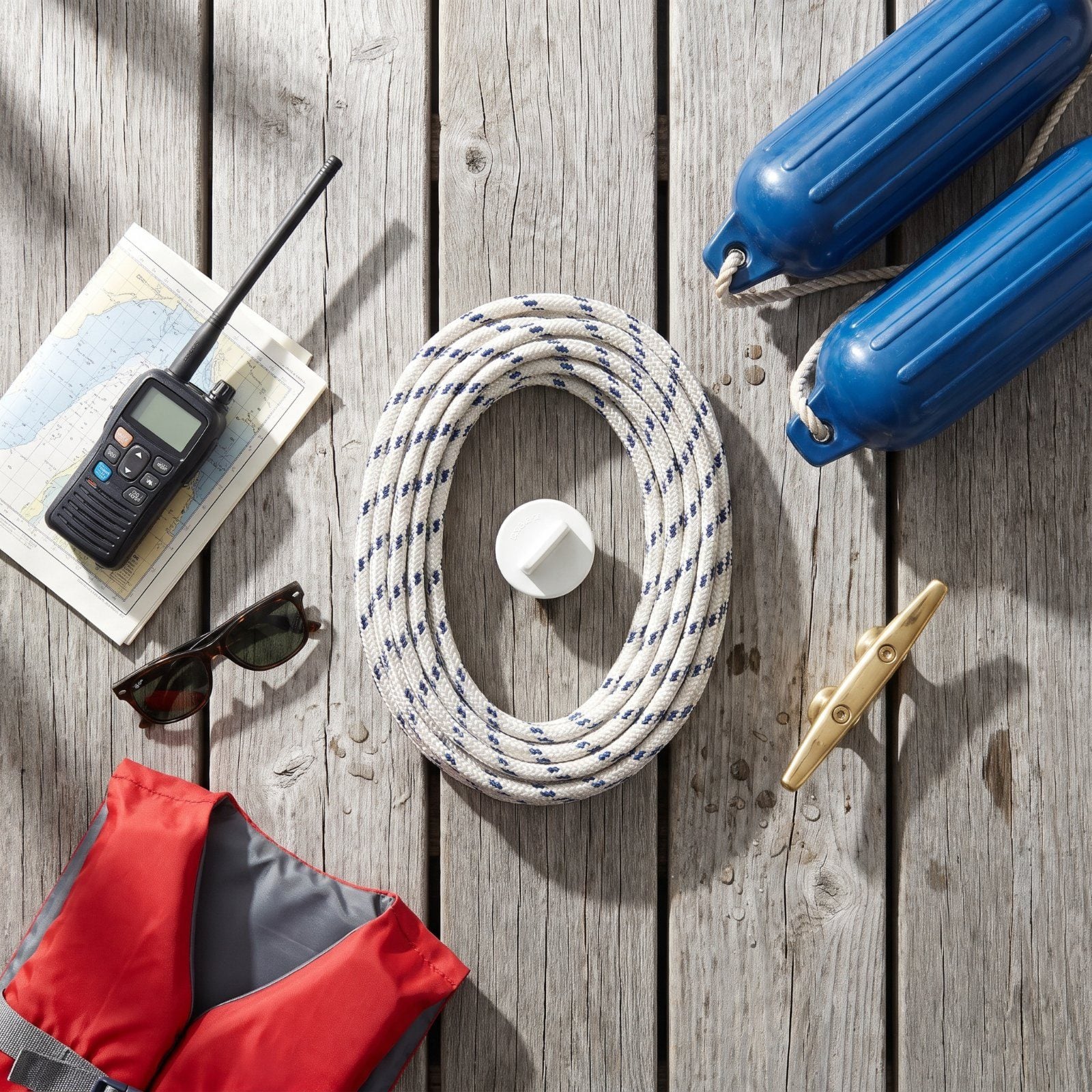
Somewhere right now, a brand-new boat is sitting on a trailer with the drain plug still in the owner’s jacket pocket. Happens every launch-ramp Saturday.
The first full season on the water teaches you things no sales brochure mentions, and most of those lessons arrive the hard way, usually with an audience leaning on the dock railing. Here’s the comforting part: almost every one of them is avoidable once you know what to watch for. These are the ones that trip up nearly everybody, plus the small habits that keep them from happening to you.
Please note that some of the imagery in this article may have been enhanced with the assistance of AI.
38. The Drain Plug Must Be Checked Every Single Launch
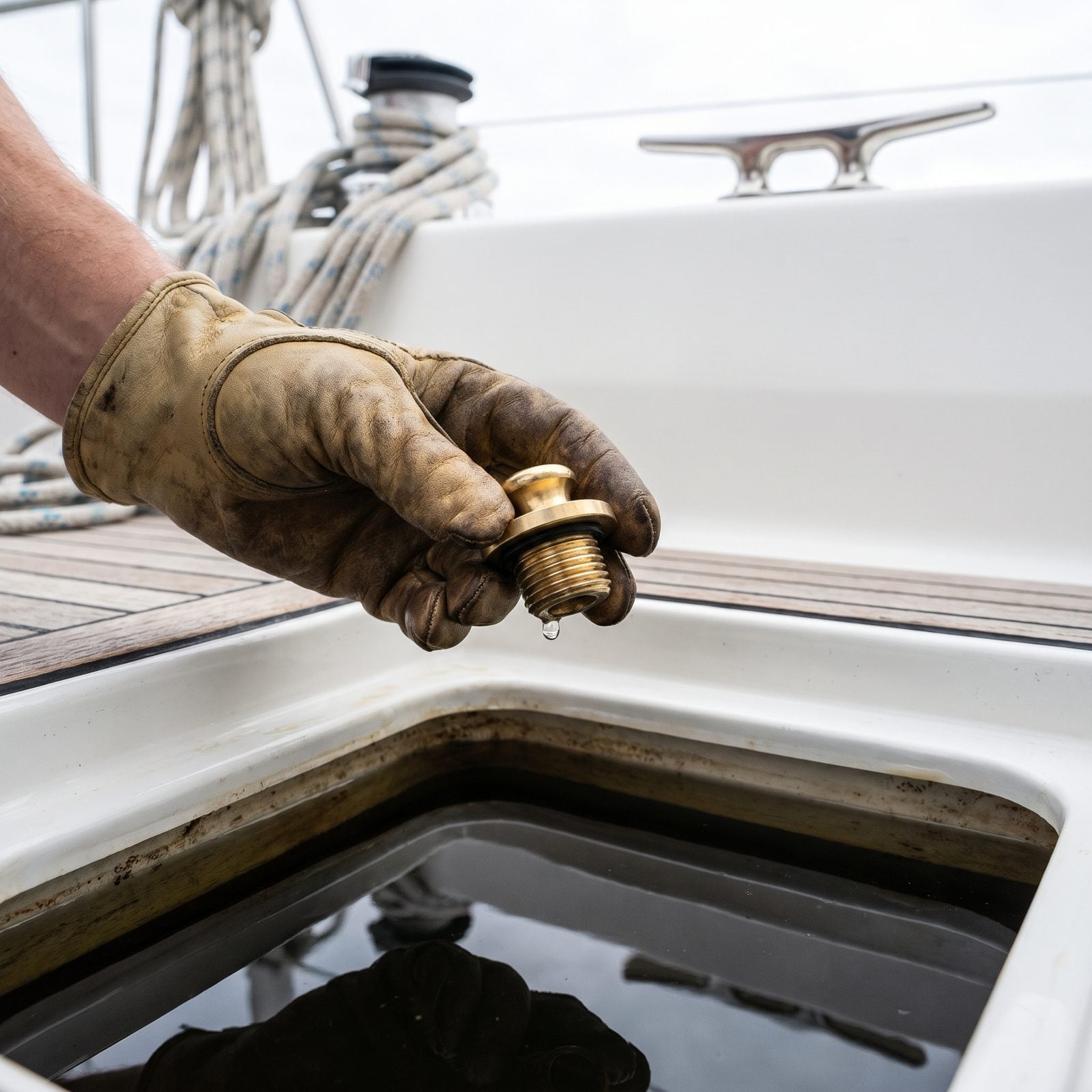
The drain plug is the cheapest part on your boat and the one most likely to sink it. It lives in a little hole at the stern, and on launch day it’s the easiest thing in the world to forget.
Here’s how it goes. You back down the ramp, float the boat off the trailer, tie up, and go park the truck. By the time you walk back, water’s sloshing around your feet and your cooler is doing a slow spin in the bilge, and now you’re bailing in front of everybody.
Build a ritual. Plug goes in before the boat leaves the driveway, and you touch it with your hand as the last thing you do before backing down. Keep a spare zip-tied near the helm. Check it every time, even the hundredth time.
As a longtime boater puts it, “Being conscientious, I felt my right pocket for the car keys before shutting the door. When I slapped my hand against my leg, I felt that little brass drain plug.”
37. A Full Fuel Gauge Is Not a Promise You’ll Get Home
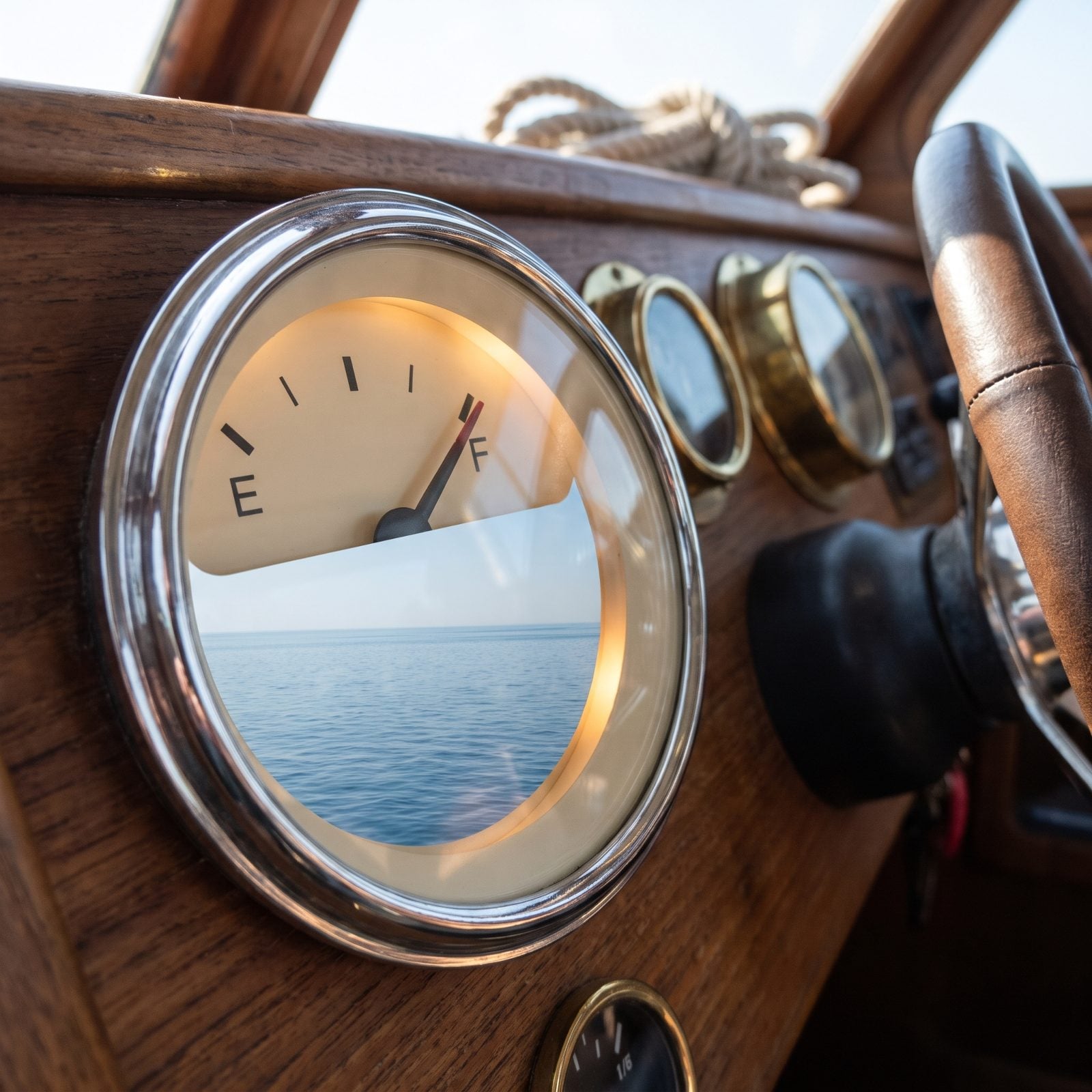
Boat fuel gauges are famously unreliable. They bounce with the waves, read differently on plane than at rest, and plenty of them amount to little more than a rough suggestion.
Unlike a car, you can’t coast to the next exit. Run dry a couple miles from the ramp and you’re drifting, calling for a tow, watching your afternoon turn into a four-figure invoice.
Use the one-third rule and never argue with it. A third of your fuel to get out, a third to get back, a third held in reserve for wind, current, and the friend who wants to go just a little farther. Track your actual burn rate over a few trips so you know what the gauge is really trying to tell you.
36. The Weather on the Water Moves Faster Than the App
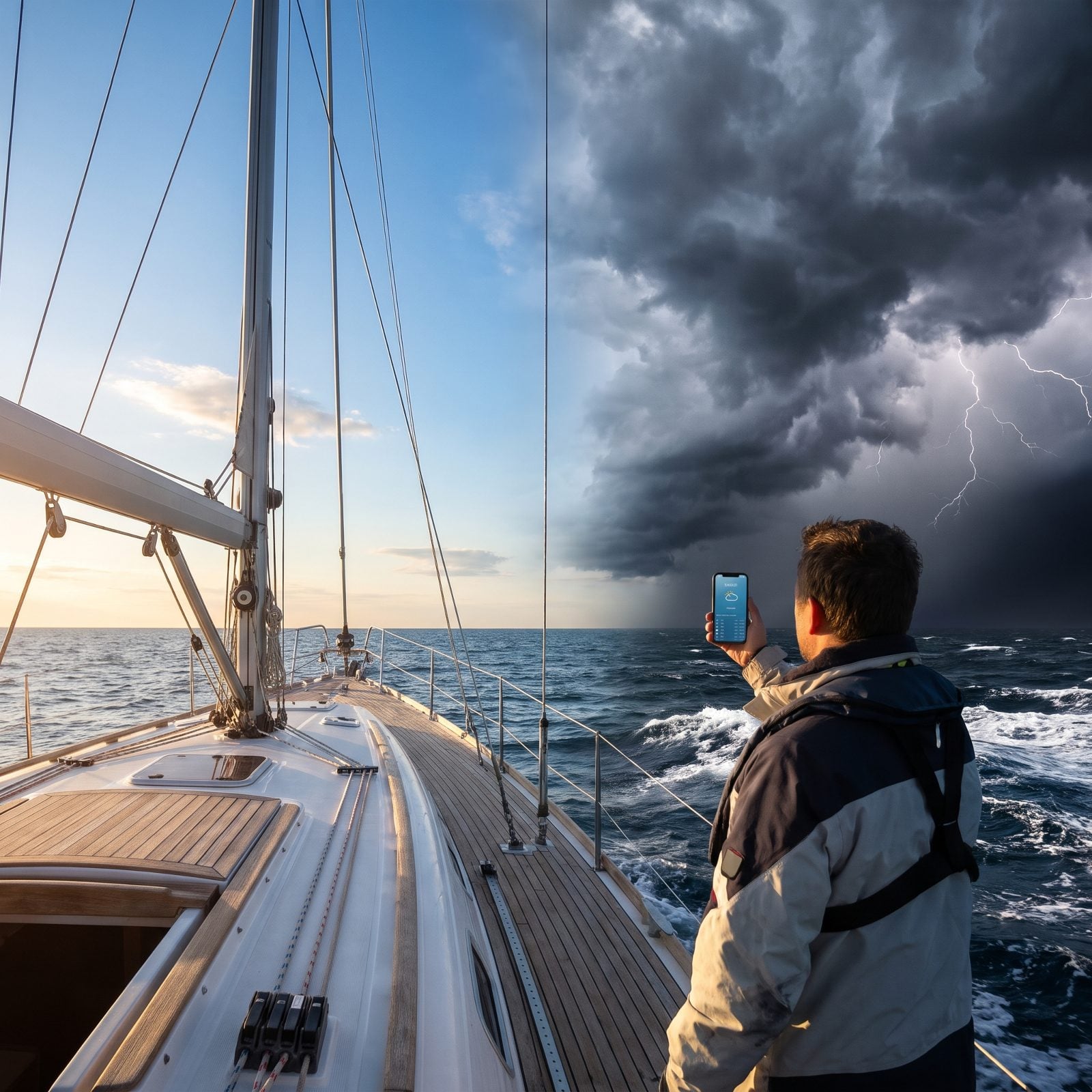
You check the forecast at the dock. Clear skies, light chop, you’re good. Three hours later the sky over the far hills has gone the color of wet concrete and the wind just flipped direction.
Forecasts cover a wide region and a long window, but out on the water conditions turn on a dime, and a lake can go from glass to whitecaps in twenty minutes. Getting caught out there is how new owners learn what real fear feels like.
So watch the sky yourself. Clouds stacking up, a sudden cool gust, water that darkens and ripples against the wind — that’s your real forecast. When something’s coming, head in early. You can always go back out.
35. Your Docking Plan Dissolves the Moment a Crosswind Hits
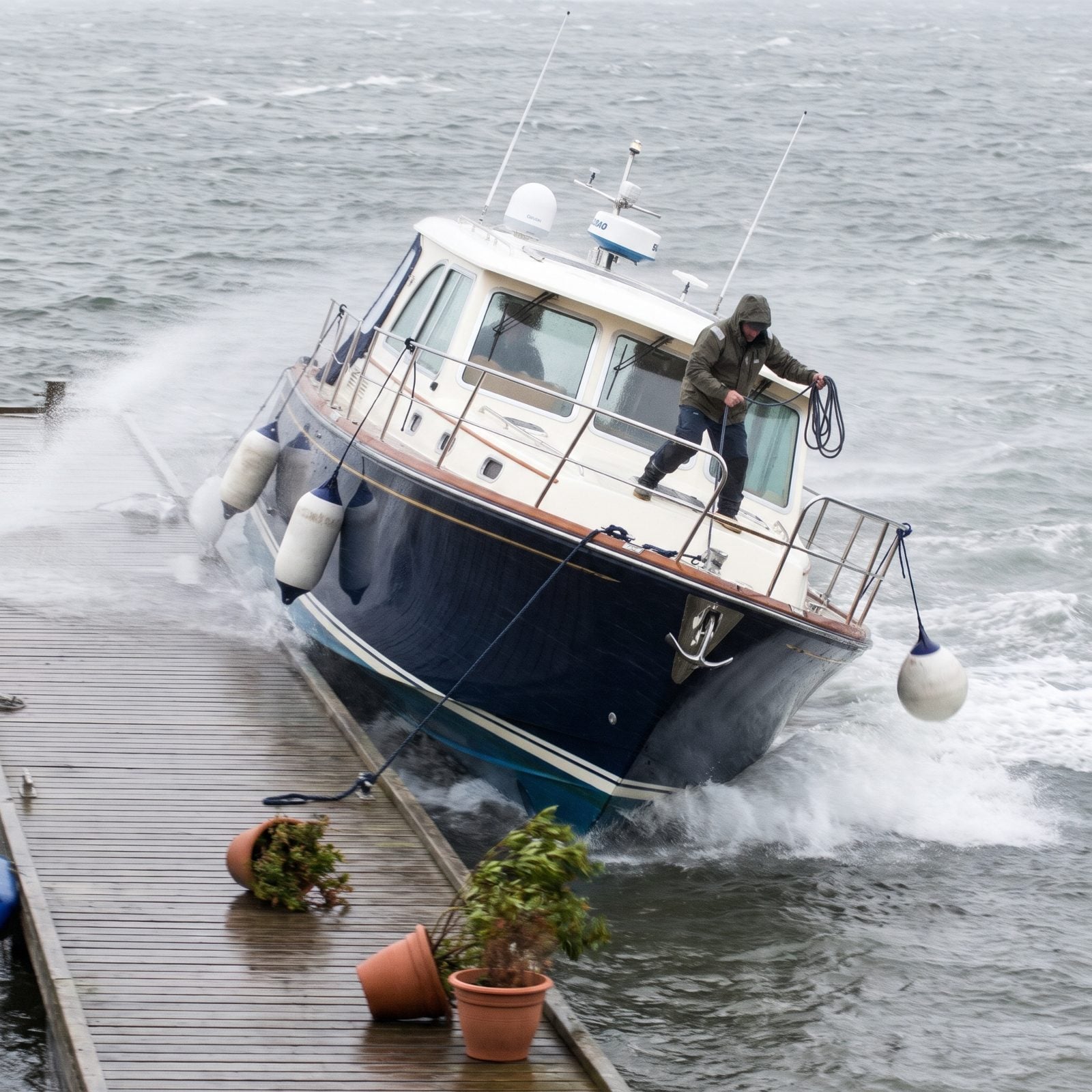
You rehearse the perfect approach in your head. Ease in slow, swing the stern, step off with the line. Then a sideways gust grabs the bow and walks your boat straight into the neighbor’s hull.
Wind moves a boat far more than new owners expect, especially a high-sided bow, even with a driver at the helm. A plan that ignores the wind isn’t really a plan.
Before you commit, read the wind and plan to use it. Approach into it when you can, so it slows you down instead of shoving you around. If it’s blowing you onto the dock, come in shallow and let it set you gently alongside; if it’s blowing you off, come in steeper and get a line on fast. And have a bailout — if the approach goes wrong, power out, circle, try again. Nobody good at docking nailed it the first season.
34. Reverse Steering Feels Completely Backward (Until It Doesn’t)
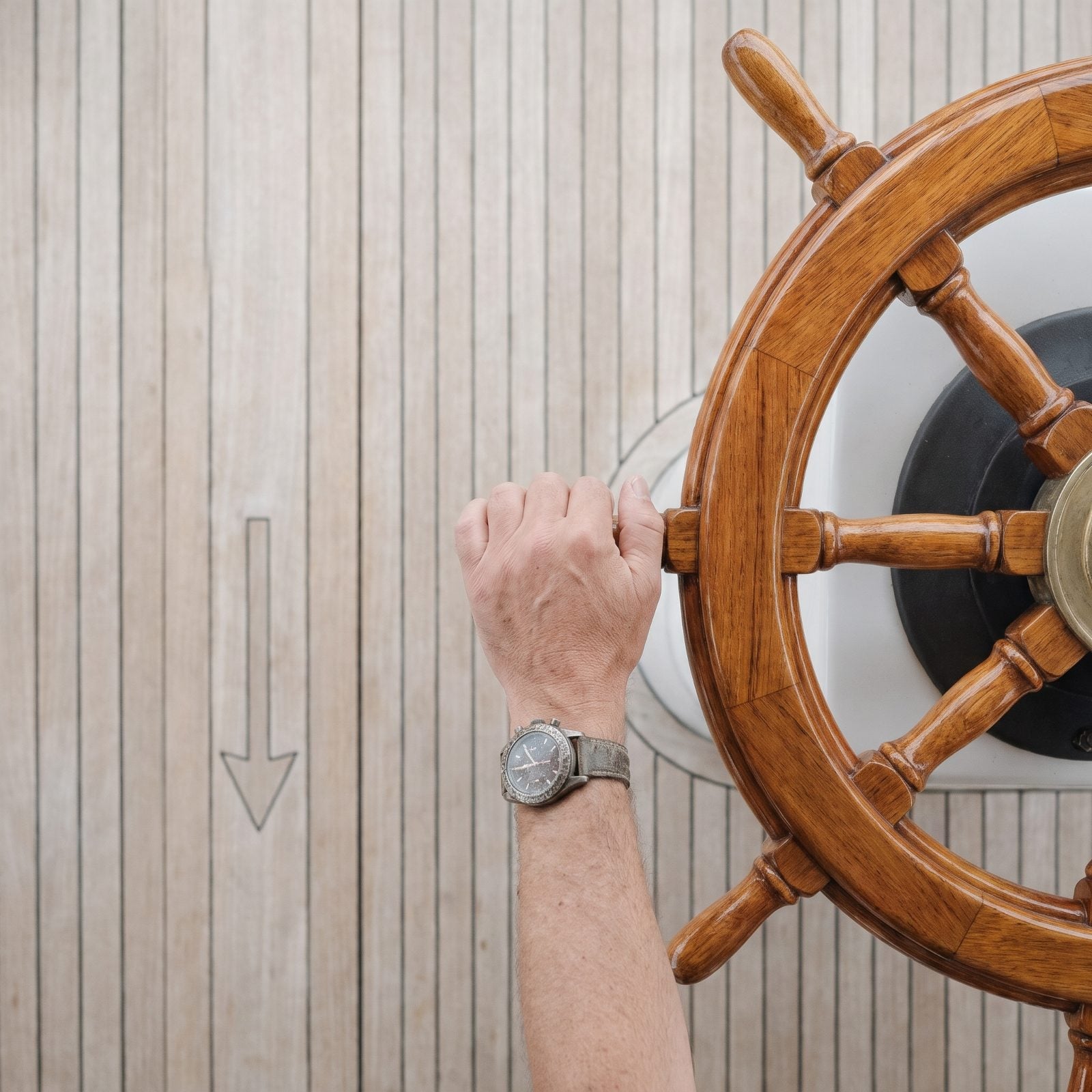
Pull the wheel one way in reverse and the stern goes the opposite direction from what your car-trained brain predicts. Add prop walk — where the stern drifts sideways on its own — and your first few attempts at backing into a slip look like interpretive dance.
The cost here is mostly pride, plus the occasional dock rash. But fumbling reverse at a busy fuel dock gets old fast.
Practice in open water with no pressure and no audience. Pick an imaginary slip between two buoys, or just a patch of water, and back toward it over and over. Make small control inputs and wait, because the boat responds slowly. Learn which way your prop walks so you can use it instead of fighting it.
33. Momentum, Not Speed, Is What Ruins a Docking
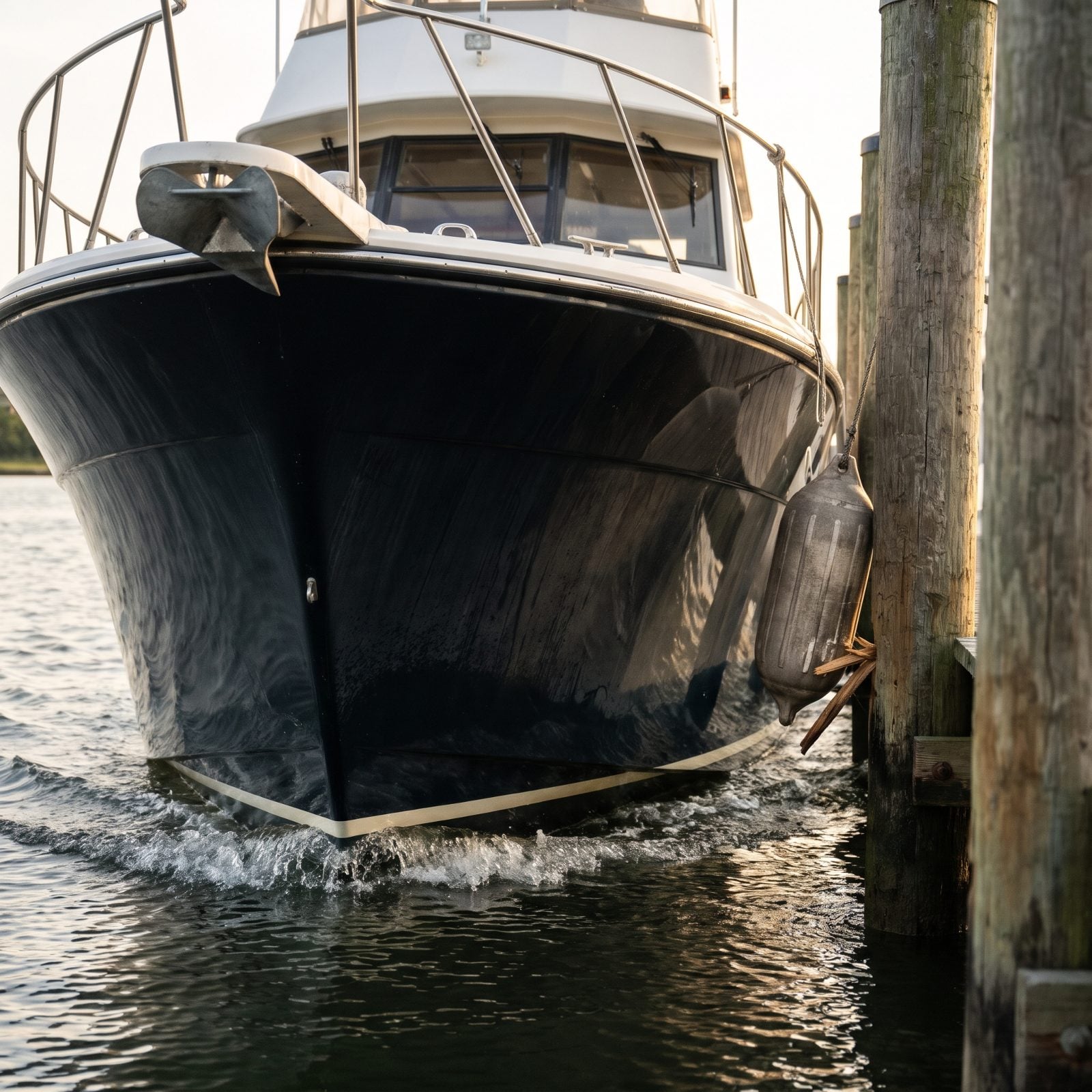
New owners obsess over going slow. Slow is good — but slow with too much mass still coming is how you crunch a dock, because a heavy boat creeping in at walking pace carries a surprising punch.
Think about momentum, not the speedometer. A big cruiser idling toward a piling has real force behind it, and once it’s moving, it wants to keep moving.
Approach at the slowest speed that still gives you steering, then bleed off the last of your way before you arrive. Short bursts of reverse to check your speed work better than one long panic burst at the end. The goal? Touch the dock so softly you’d barely spill a coffee.
As a certified yacht broker puts it, “Reduce to idle well before the dock so the boat is not carrying momentum into the approach.”
32. Fenders Belong Over the Side Before You Need Them, Not After
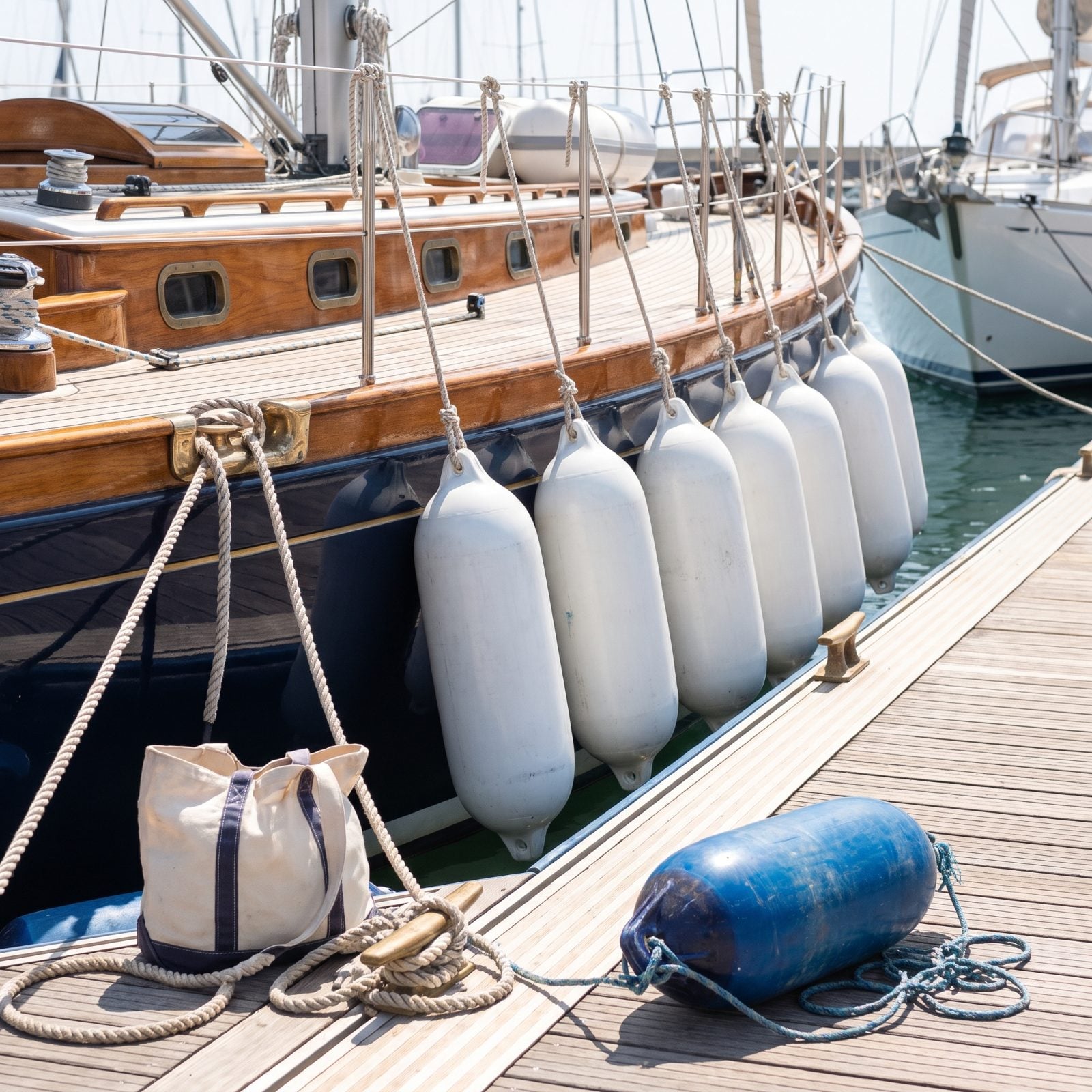
Picture the scramble. You’re seconds from the dock, the wind’s pushing you in, and now you’re diving for fenders, fumbling knots, hull about to kiss the planks. Too late. That’s a gelcoat scuff you’ll notice every time you walk past.
Fenders only protect you if they’re already down and set at the right height when you arrive.
Hang them well before your approach, adjusted to the dock’s height so they actually sit between hull and wood, and set them on the side you’ll be tying to. A couple of cheap fenders and ten seconds of prep save you a repair bill and the quiet shame of explaining the scratch to whoever asks.
31. Loose Rope in the Water Will Find Your Propeller

A rope trailing in the water looks harmless right up until the second it wraps your spinning prop. Then the engine stalls, you’re dead in the water, and you’re either diving under the boat with a knife or paying a diver to cut you free.
Dangling dock lines, a swim ladder rope, a stern line nobody pulled aboard — any of them can get sucked in the moment you shift into gear. One of the most common and most avoidable ways to end a day.
Before you ever touch the throttle, do a walk-around. Every line aboard and coiled, nothing hanging in the water, no anchor rode loose over the side. Make it the same habit as checking the plug. A few seconds of looking beats an hour in the water.
30. Changing Tides Can Tighten Lines or Leave a Boat Hanging
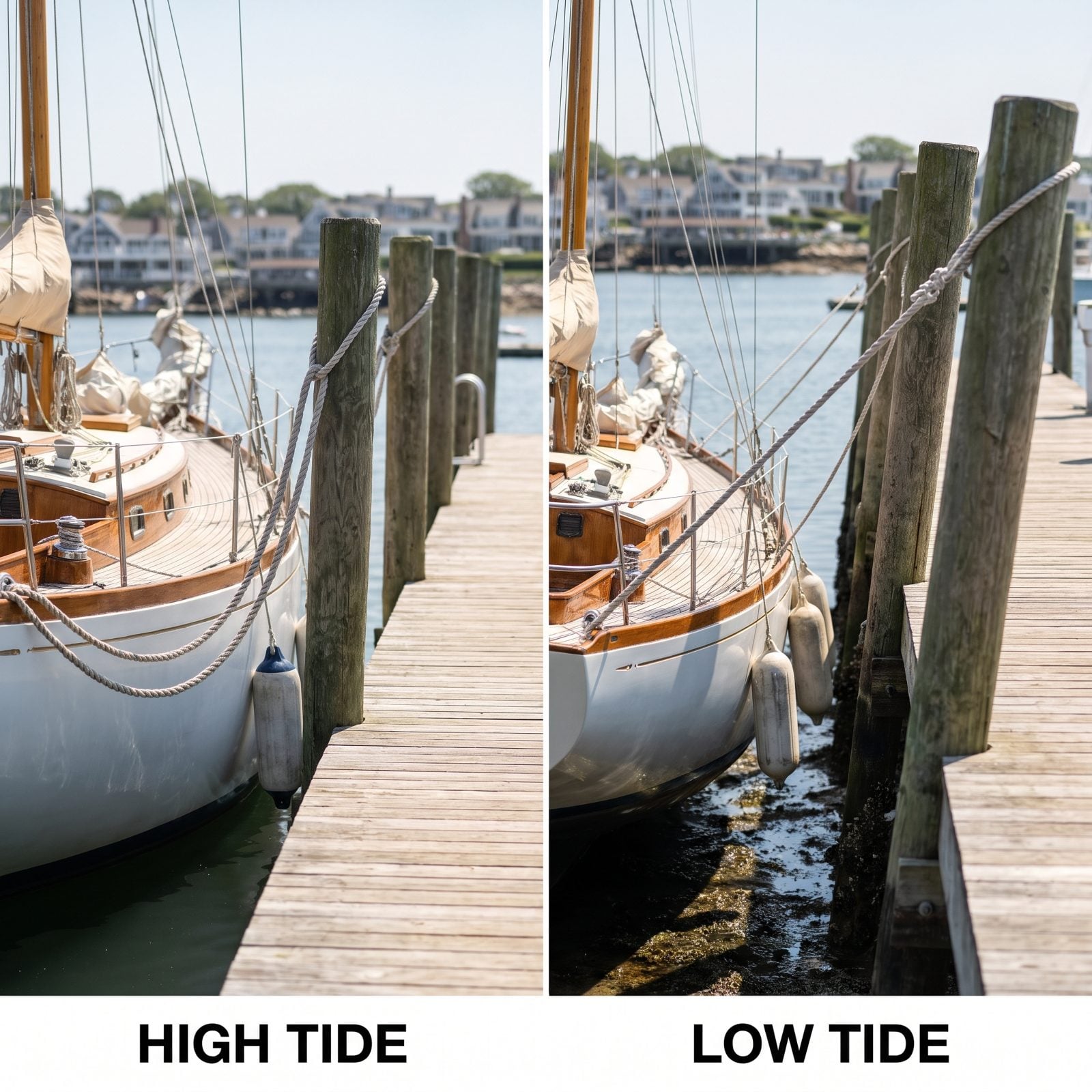
A line that looks perfect at noon can be a problem by dinner. In tidal water the level rises and falls twice a day, and a boat tied snug to a fixed dock at high tide can end up hanging from its cleats at low tide, with lines groaning and hardware straining. Tie up tight at low tide and the rising water can pull the boat down against its own lines.
The fix is slack with a purpose. Leave enough length in your lines to handle the full tidal range, and use longer lines run at an angle rather than short ones straight to the dock. Check a tide table before you leave the boat for any length of time. Floating docks rise and fall with the water, but fixed pilings and seawalls don’t, so tie up for the low tide that’s coming, not the water you see right now.
29. Wake Can Damage a Boat at Its Own Dock
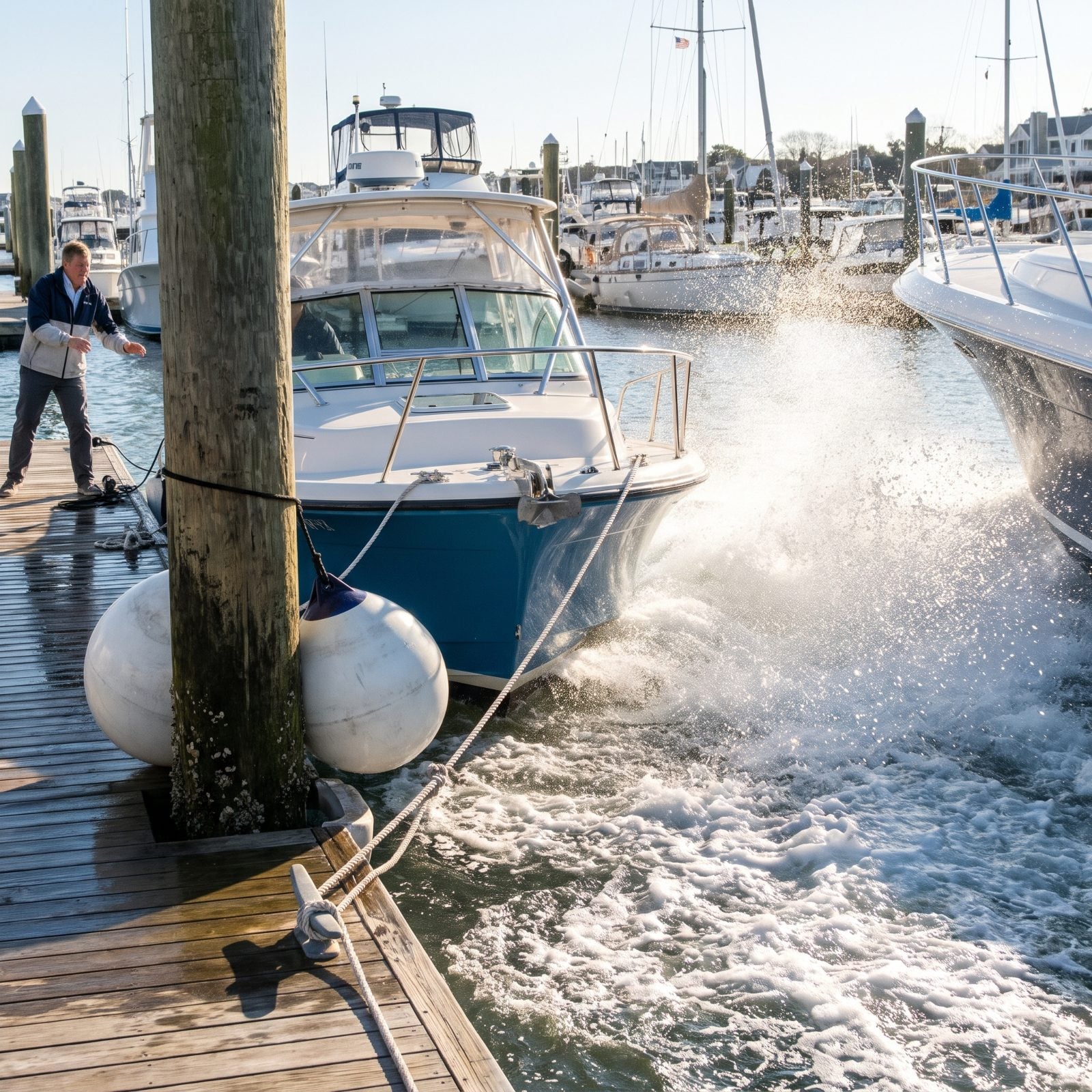
You’d think a boat tied up at the dock is safe. Then a cruiser rumbles past a little too fast, the wake rolls in, and your hull starts banging against the pilings like it’s trying to escape. Gelcoat gets gouged, rub rails crack, and cleats get yanked hard enough to loosen.
Set the boat up for the wake you can’t control. Hang fenders where the hull actually meets the dock, not where it looks tidy. Adjust lines so the boat can rise and fall but can’t surge forward and back into the pilings. Chafe guards on lines that rub against edges are cheap insurance.
And remember it works both ways. In many places you’re legally responsible for damage your wake causes, so slow down early in no-wake zones and near marinas. Somebody else’s boat is tied up there too.
28. Passengers Move at Exactly the Wrong Moment
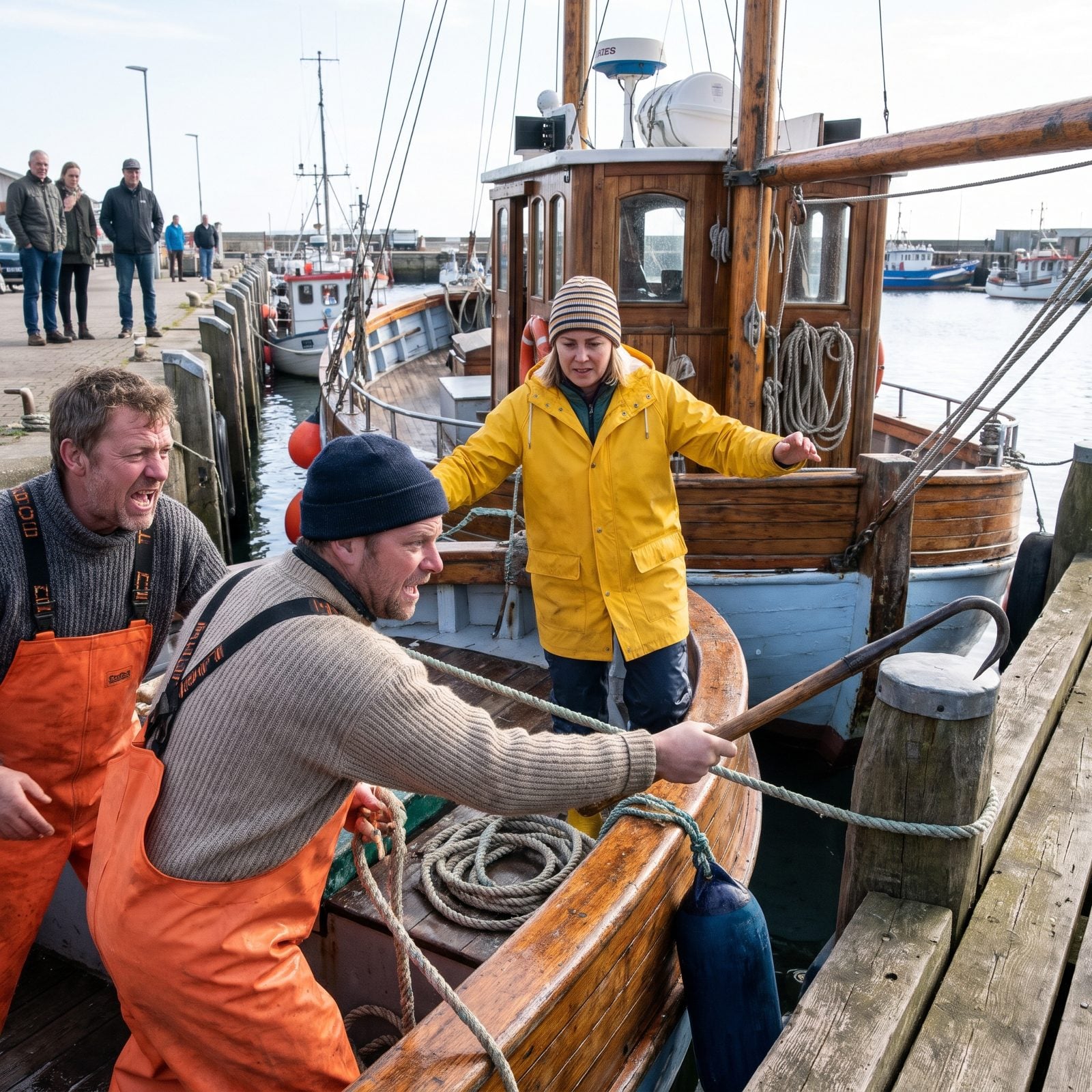
Your guests mean well, and that’s exactly the problem. Just as you line up a tight docking, somebody stands up to grab a bag, another leans over the side to help, and a third decides to step onto the dock while the boat’s still a foot and a half away. Suddenly the boat lists, your view is blocked, and someone’s leg is dangling over a gap that’s opening and closing.
Brief your crew before you ever leave the dock. Tell them where to sit, who handles lines, and that nobody steps off until you say so. Make it clear that no one ever puts a hand, foot, or arm between the boat and a dock or piling to stop a bump. That’s what fenders are for. Bodies are not fenders.
Underway, keep people seated inside the boat rather than perched on the bow or gunwales. One wake at the wrong angle is all it takes to put someone in the water.
27. Children’s Life Jackets Must Fit Before Launch Day
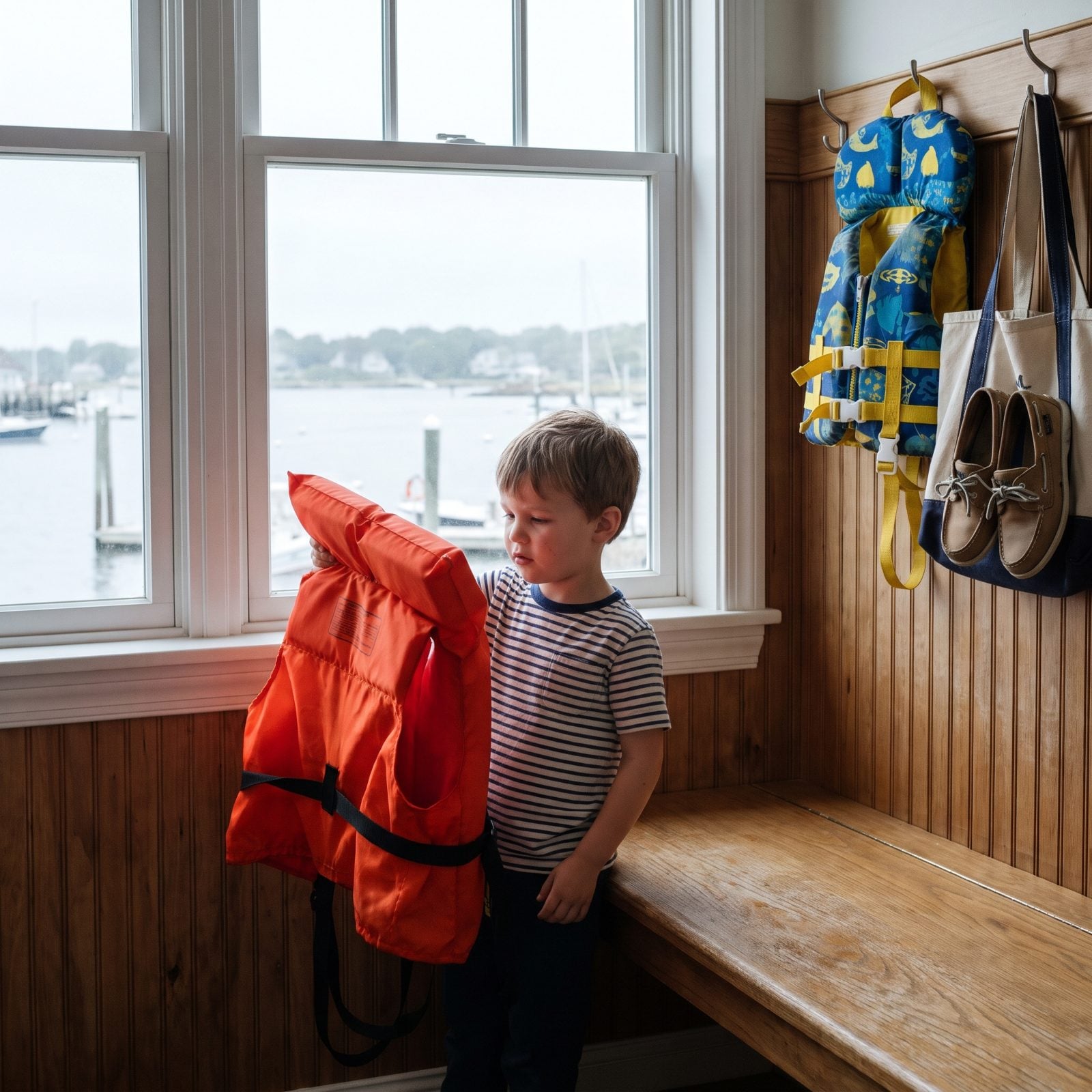
A kid’s life jacket that’s two sizes too big looks fine sitting on the seat. In the water, it rides up over their face and they slip right through it. That’s a lesson nobody wants to learn on the water.
Check fit at home. Look at the weight range on the label, buckle it snug, then lift the jacket by the shoulders. If it slides up past the chin or ears, it’s too loose or too big. Infants and small children need jackets with a head support and a grab handle. Better still, let kids try theirs in a pool so they know how it feels to float in it and don’t panic the first time.
In the US, federal rules require children under 13 to wear a life jacket while the boat is underway unless they’re below deck or in an enclosed cabin, and many states set their own age rules. Kids also outgrow jackets fast, so recheck the fit every season.
26. A Throwable Device Must Be Reachable
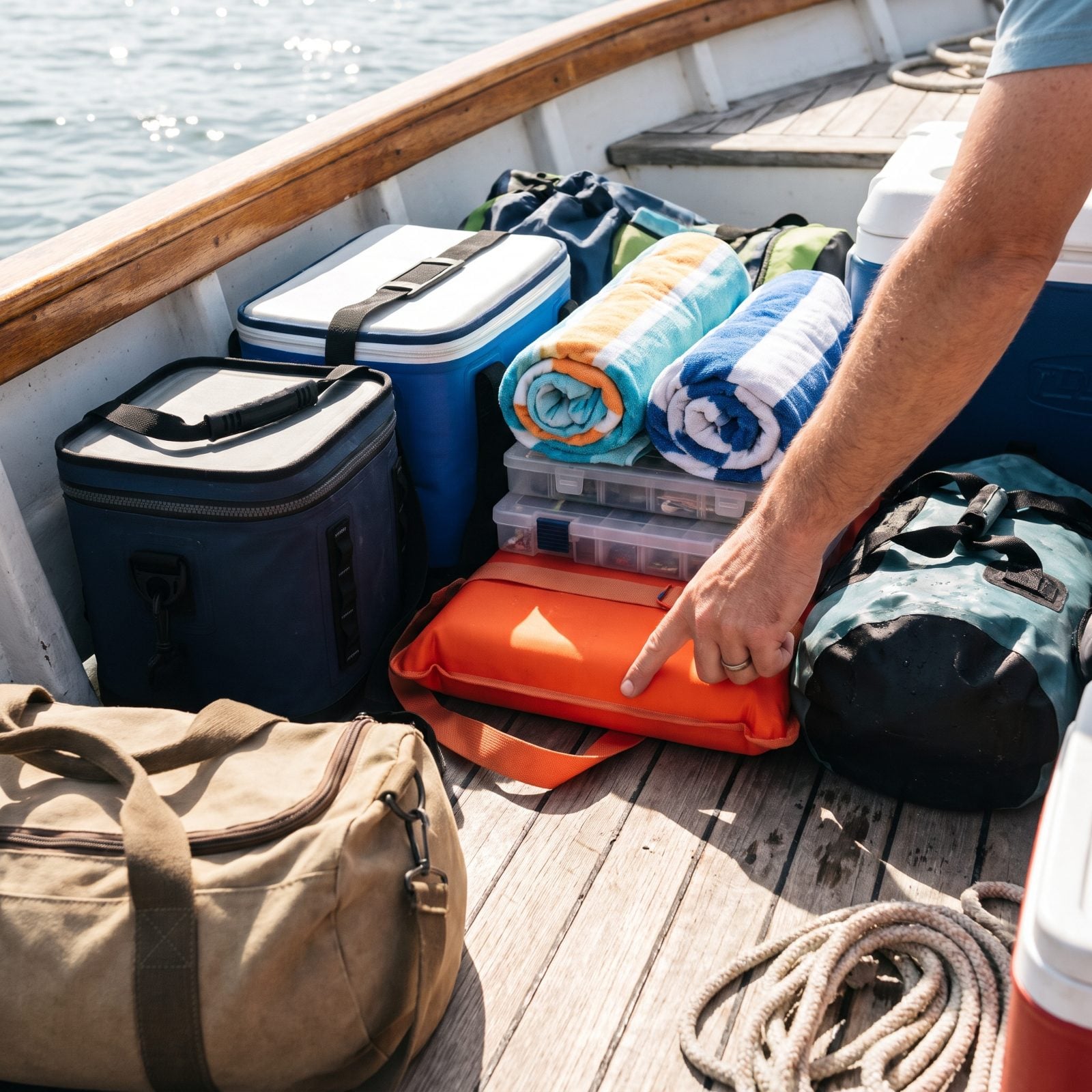
A throwable cushion or ring buried under coolers and towels is just storage. In the US, boats 16 feet and longer generally need a throwable flotation device on board, and the rule is that it has to be immediately available. That’s not a technicality. When someone goes over, you have seconds, not minutes, to get something floating in their direction.
Keep it somewhere anyone aboard could grab it without moving anything first, near the helm or the stern, out from under seat lockers. Tell your guests where it is during your pre-departure briefing. Attaching a length of floating line makes it easier to pull someone back to the boat.
Then practice a toss. A seat cushion flung in a panic tends to sail off in a random direction. Aim a little upwind or upcurrent of the person so it drifts toward them, not away.
25. The Kill-Switch Lanyard Only Works When Worn
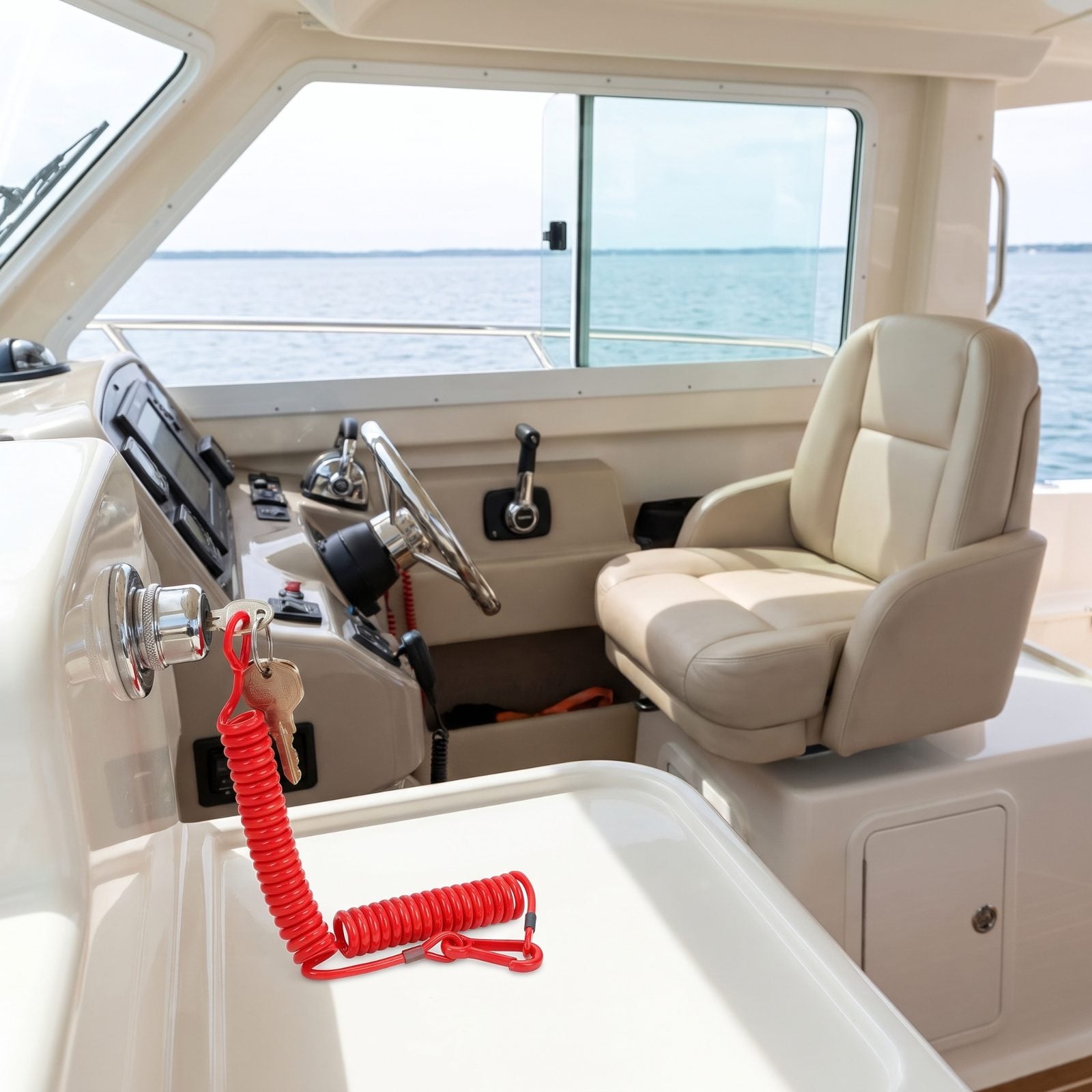
The kill-switch lanyard is that coiled cord dangling near the ignition, and plenty of first-season owners treat it like a decoration. But if the operator gets thrown from the helm by a wave or a sharp turn, a boat with no one at the controls can keep running, sometimes circling right back toward the person in the water.
Clip the lanyard to your life jacket, wrist, or belt loop every time the engine’s running. If you get knocked away from the wheel, the engine shuts off. In the US, federal law now requires operators of most recreational boats under 26 feet to use the cutoff switch when running on plane, if the boat is equipped with one.
Test it at the start of the season by pulling the clip at idle to make sure the engine actually dies. Keep a spare lanyard aboard, because they have a habit of going missing exactly when you need one. Wireless versions are available too if the cord drives you crazy.
24. A Float Plan Matters on Familiar Water
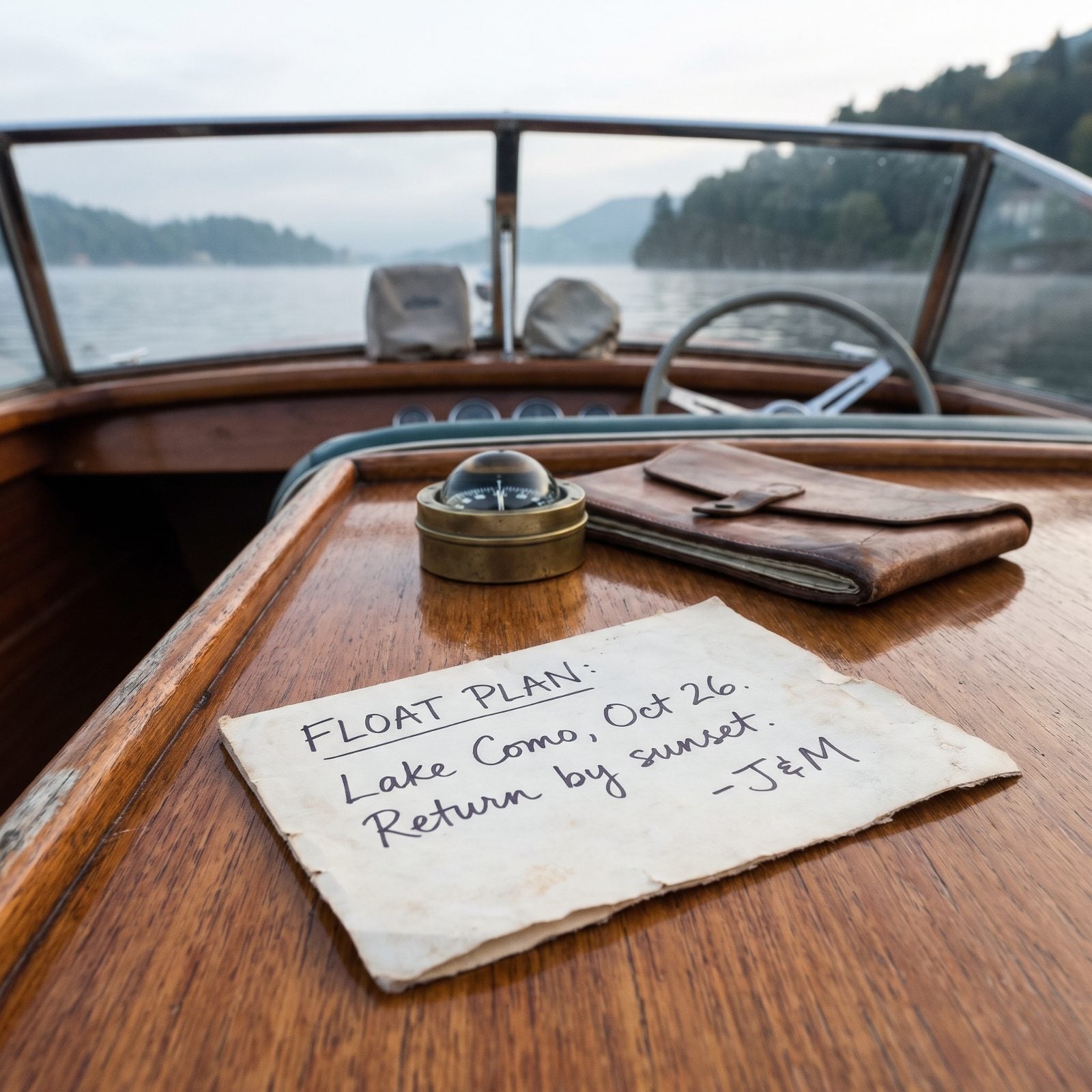
Nobody files a float plan for a quick run across the lake they’ve boated since childhood. That’s precisely when the engine dies in a cove nobody can see from shore, the phone battery is at four percent, and the afternoon storm is rolling in. If no one knows where you went or when to expect you, no one knows to start looking.
A float plan doesn’t need to be formal. Tell someone reliable on shore where you’re headed, who’s aboard, what your boat looks like, and when you’ll be back. Agree on a time when, if they haven’t heard from you, they call the Coast Guard or local authorities. Then actually check in when you get home, so you don’t trigger a search while you’re unloading the cooler.
23. Navigation Apps Need Offline Maps Before Cell Service Disappears
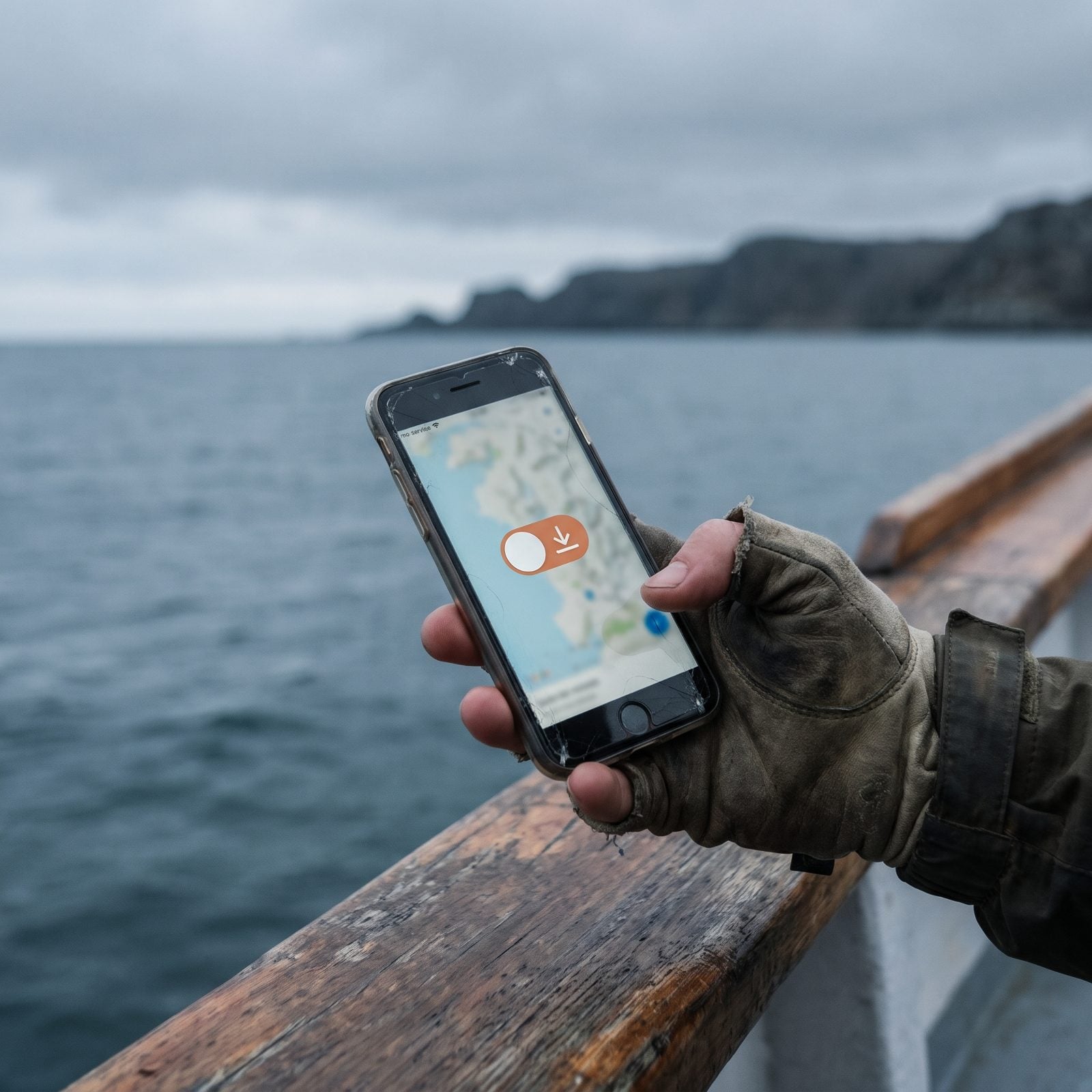
Your phone’s navigation app works beautifully at the dock. A few miles offshore, or tucked into a remote lake surrounded by hills, the signal drops, the map stops loading, and you’re staring at a blue dot floating in a gray void.
Download charts and maps for the whole area before you leave, while you still have a strong connection, and confirm they load with the phone in airplane mode. Phones also overheat in direct sun and drain fast when the screen runs all day, so bring a charger that works off the boat’s power and keep the phone shaded.
Treat the phone as a backup, not your only plan. A paper chart of your home waters weighs almost nothing and never runs out of battery. And for calling for help, a VHF radio reaches boats and rescuers when your cell phone can’t reach anyone at all.
22. Channel Markers Change Meaning With Direction
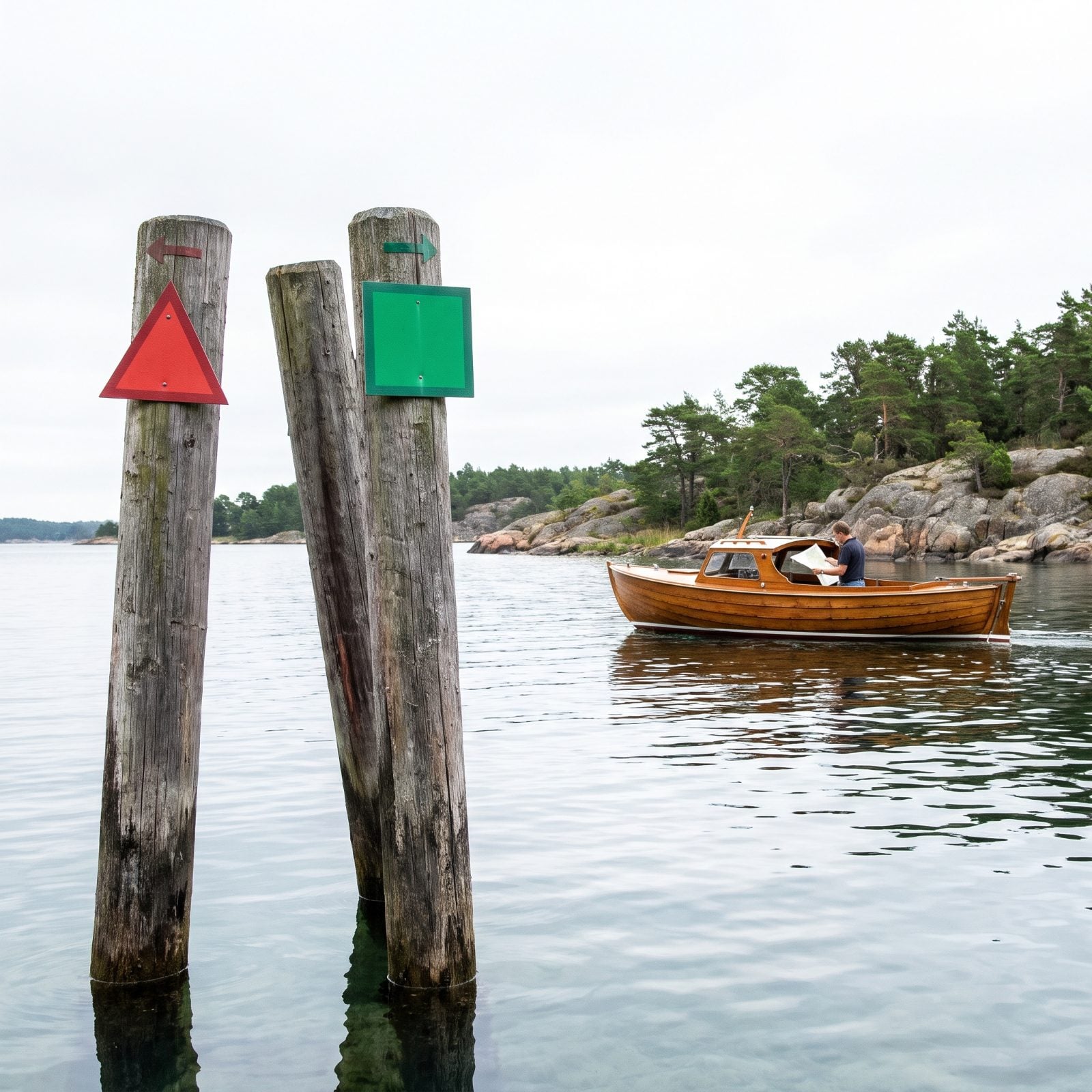
A red marker doesn’t mean the same thing every time you pass it. In US waters the rule of thumb is red, right, returning: when you’re coming in from open water toward a harbor or heading upstream, keep red markers on your right and green on your left. Head back out and it flips, red on your left. New owners memorize the phrase, then forget which direction counts as returning and run right outside the channel.
Red markers carry even numbers and green markers carry odd numbers, and the numbers generally increase as you head in from the sea. That’s a handy check when you’re unsure which way you’re facing. On some rivers and on the Intracoastal Waterway, the definition of returning follows its own convention, so study the chart for your area. Boating abroad, many countries use the opposite color system entirely.
When in doubt, slow down and figure it out before you pass between markers. Guessing wrong puts you on the shallow side of the channel.
21. Local Knowledge Beats Guessing at an Inlet

Every inlet has a temper, and it rarely matches the chart. Sandbars migrate, channels fill in, and a spot that was eight feet deep last spring can be two feet of churning soup by August. A new owner reads the GPS, sees open blue, and runs straight into a shoal the locals avoid by pure instinct.
Run aground on a falling tide and you’re not just embarrassed — you’re stuck until the water comes back, maybe with a cracked lower unit for your trouble. So before you tackle unfamiliar water, ask at the marina and watch how the regulars line up their approach. Time your run near slack or a rising tide.
20. Sun Glare Can Hide Debris and Markers
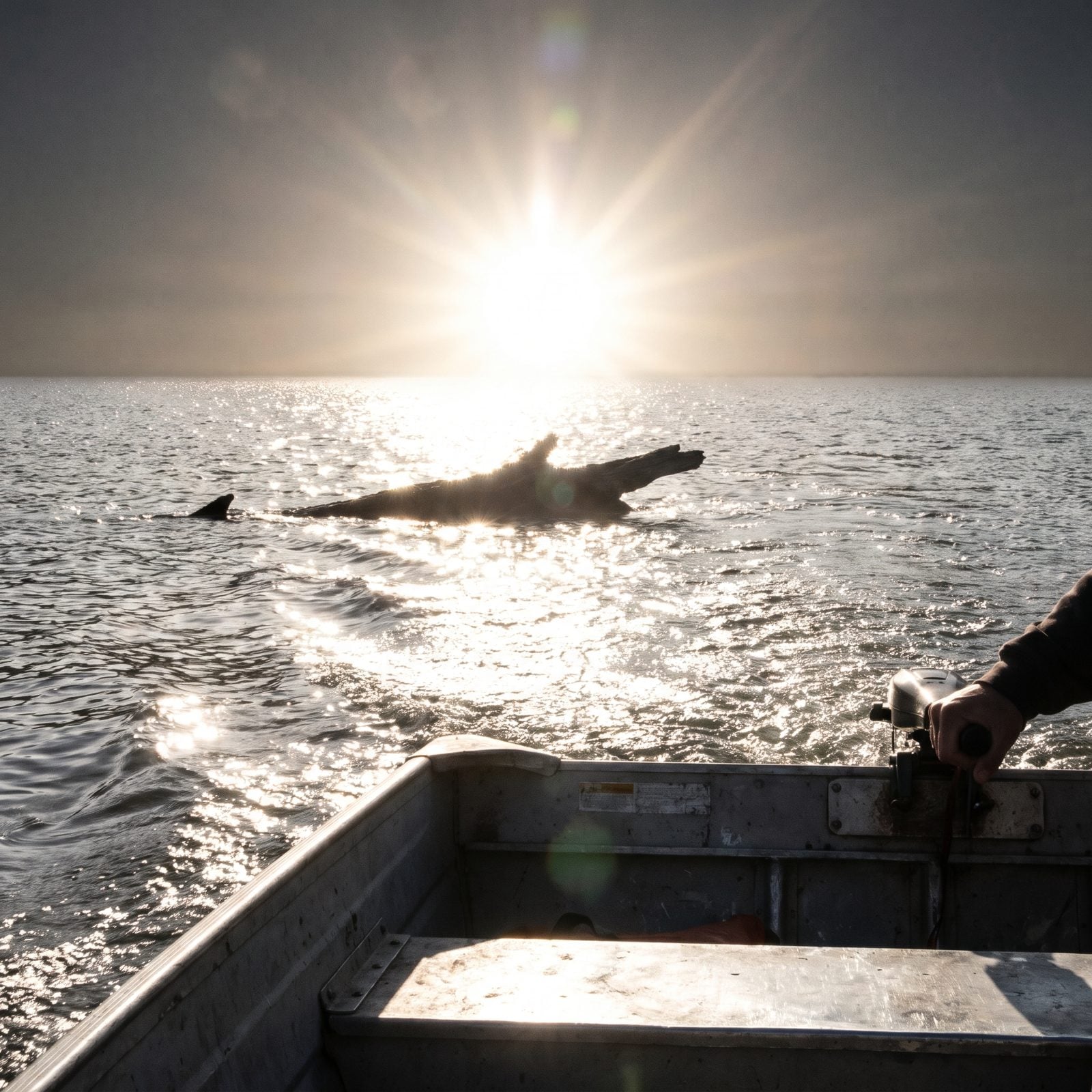
Look ahead into low sun and the water turns into a sheet of hammered silver. Now you can’t see the deadhead log a few boat-lengths ahead or the marker you’re supposed to leave to starboard. It’s one of the sneakiest hazards out there, because it feels like a calm, pretty afternoon right up until it isn’t.
Keep polarized sunglasses on the boat — not in the truck — and a brimmed hat within reach. When the glare gets bad, slow down. Speed buys you nothing if you can’t see what you’re aiming at, and a floating log doesn’t care how nice the day looks.
19. Night Boating Shrinks Reaction Time
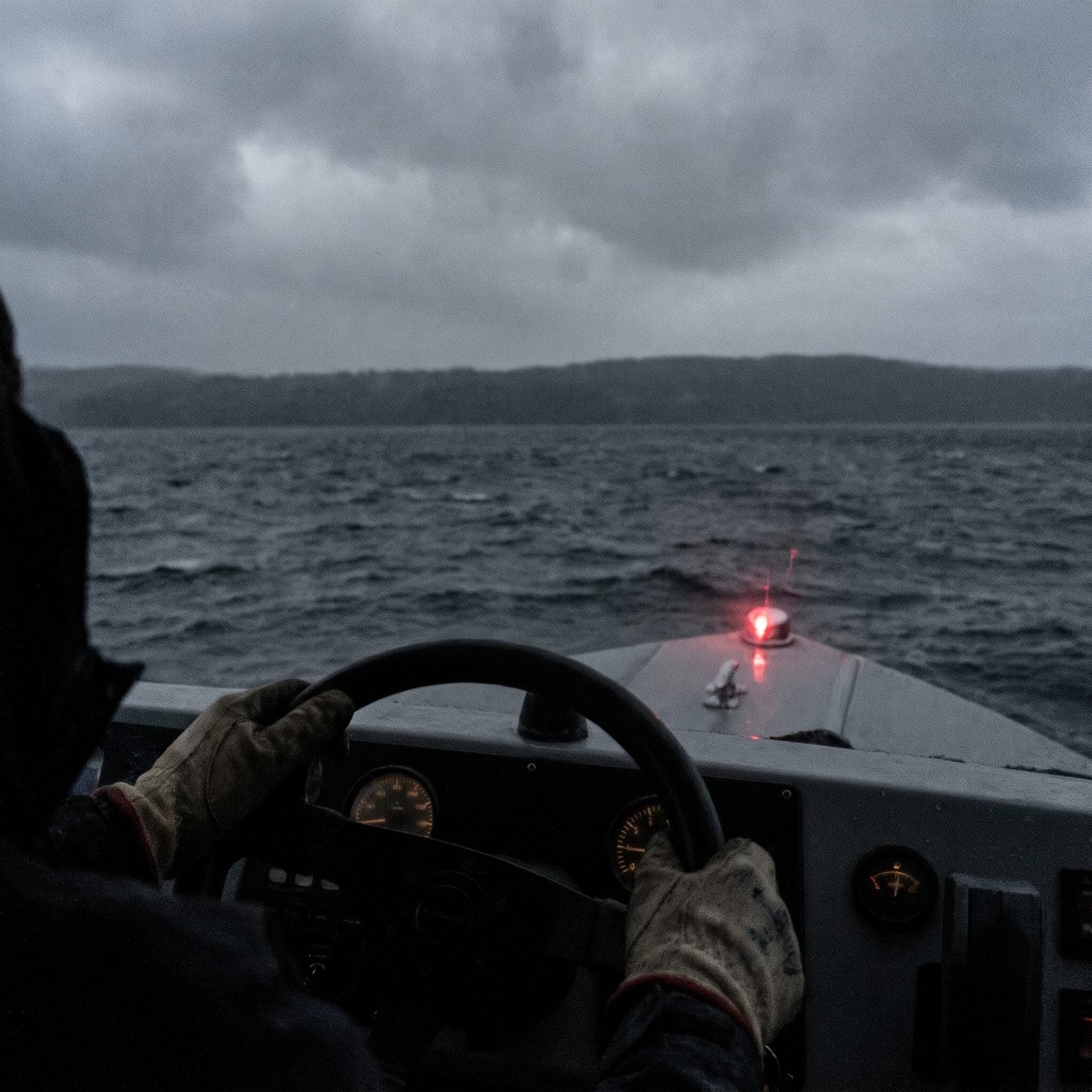
Everything you know in daylight gets harder after dark. Distances flatten, shorelines vanish, and a channel marker you’d spot a mile off at noon becomes a faint blink you catch far too late. First-season owners push their luck on the ride home because the day ran long — then find themselves creeping through a bay they simply cannot read anymore.
Cut your speed hard and trust the chartplotter more than your eyes. Learn what the light patterns on markers actually mean before you need them. Carry a spotlight, but don’t sweep it around constantly, because it kills your night vision and blinds every boat coming the other way.
At night the water keeps its secrets, and speed just means you meet them sooner.
18. Navigation Lights Need Testing Before Sunset
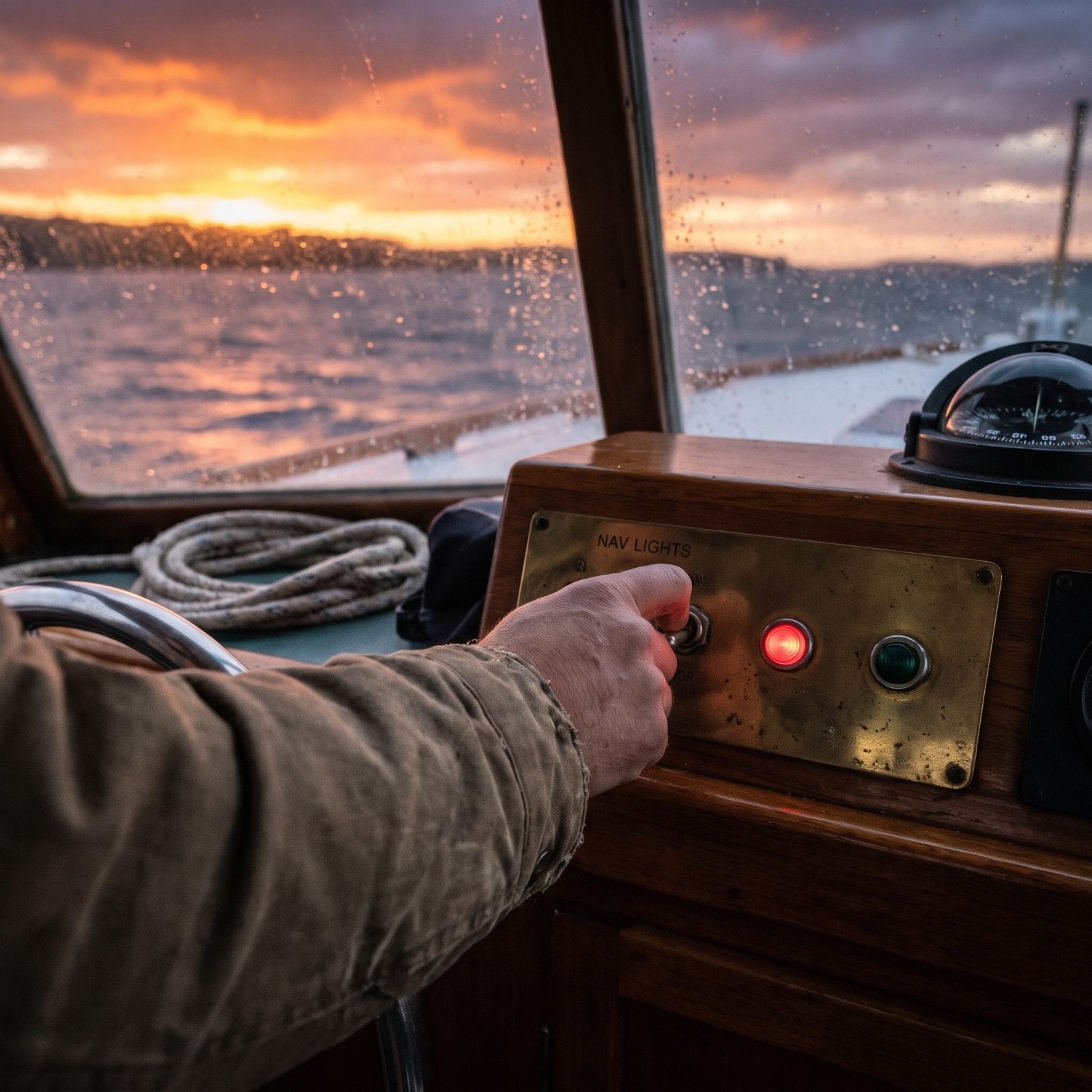
Here’s a mistake that waits until the worst possible moment to show itself. You stay out later than planned, flip the nav lights, and the bow light stays dark. A corroded bulb, a loose connection, a blown fuse — and now you’re running a mile offshore, effectively invisible to everyone around you.
Test your running lights at the dock, in daylight, before any trip where there’s a chance you’ll be out past sunset. Ten seconds, tops. Keep a spare bulb and a couple of fuses in a dry box aboard, because the one night you need them is not the night to go hunting.
17. Too Little Scope Makes a Good Anchor Useless
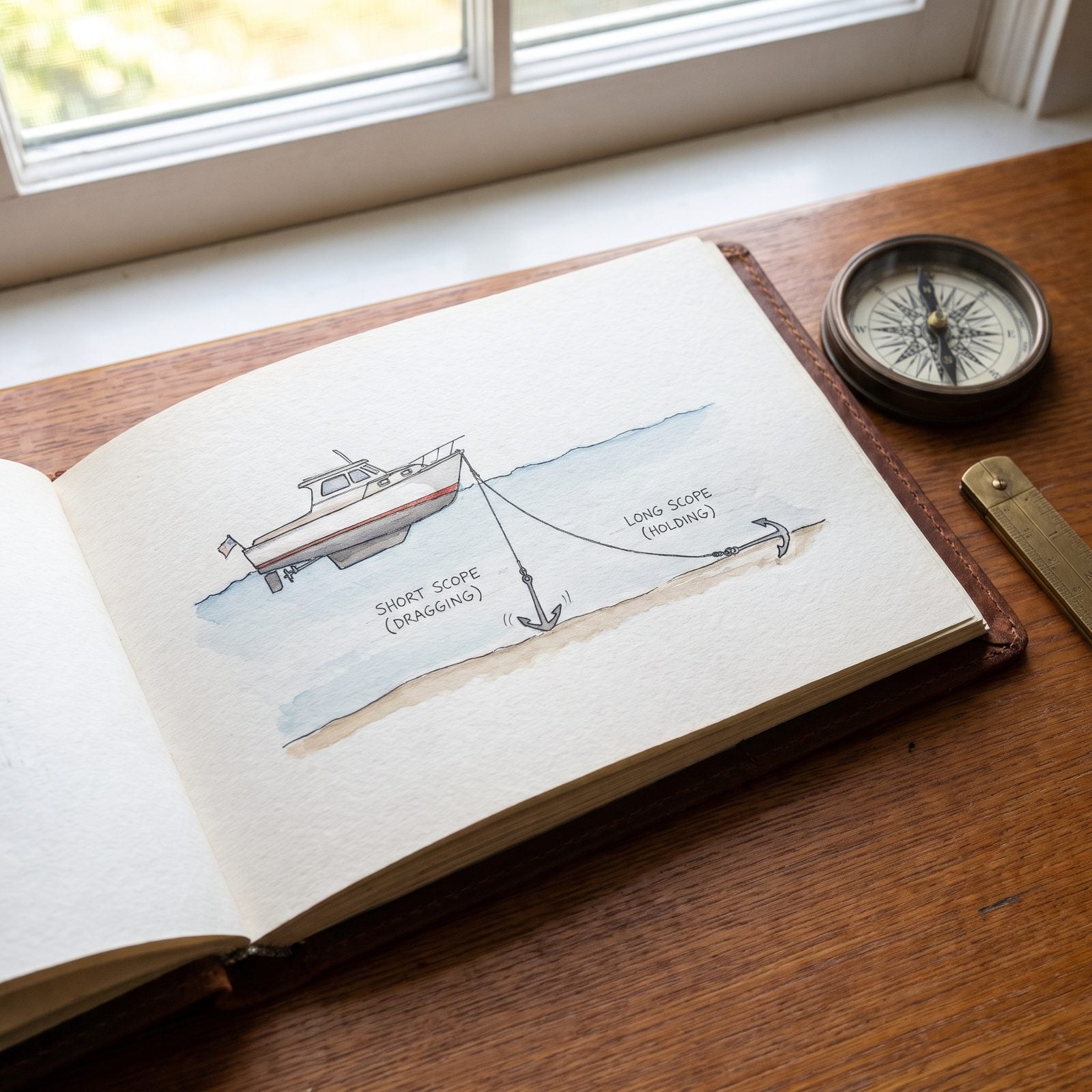
New owners let out a few feet of line and then wonder why they keep dragging. Picture a long, angled rode running from the bow out to the anchor: that low angle is the point. The anchor needs to pull almost flat along the bottom to dig in. Skimp on scope — the amount of rode you let out versus the water depth — and you’re basically holding the boat with a straight-up tug that pops the anchor loose at the worst moment.
A common starting point: seven feet of rode for every foot of water depth, and more in wind or chop. Factor in the tide if you’re on salt water. What’s fine at low tide can come up short when the water rises.
16. The Wrong Battery-Switch Setting Can Leave You Stranded
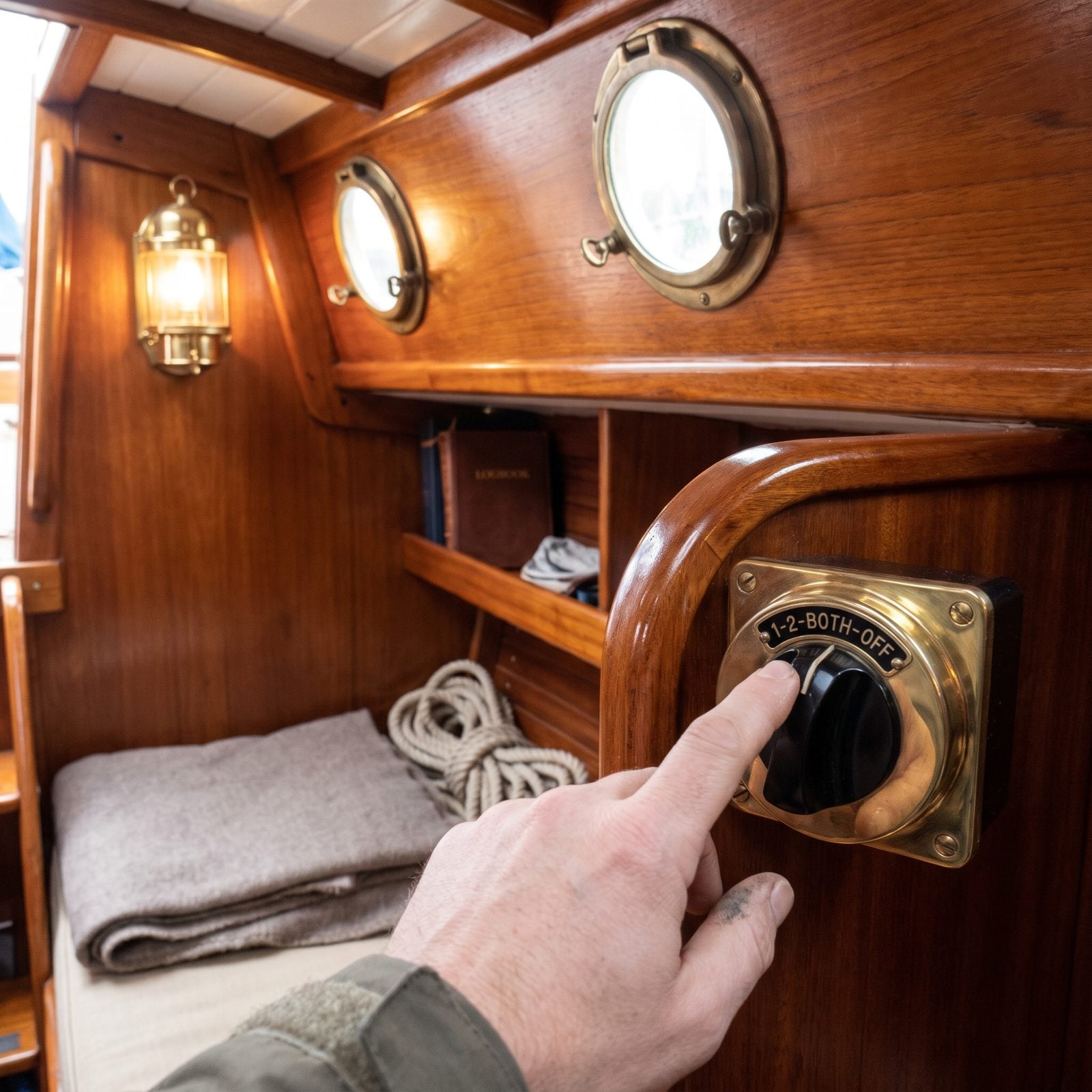
That black knob in the brass housing marked 1, 2, BOTH and OFF confuses a lot of first-year owners. Leave it on the wrong battery all day and you can drain your starting battery running the stereo and the livewell, then turn the key to nothing but a click. Out in the middle of the lake, that silence gets loud fast.
Learn what each position does on your specific boat. Run house loads off one bank, keep a charged battery in reserve for starting, and get in the habit of checking the switch before you settle in with the engine off. A dead battery is a tow, and tows cost real money.
15. Bilge Pumps Need Manual Testing
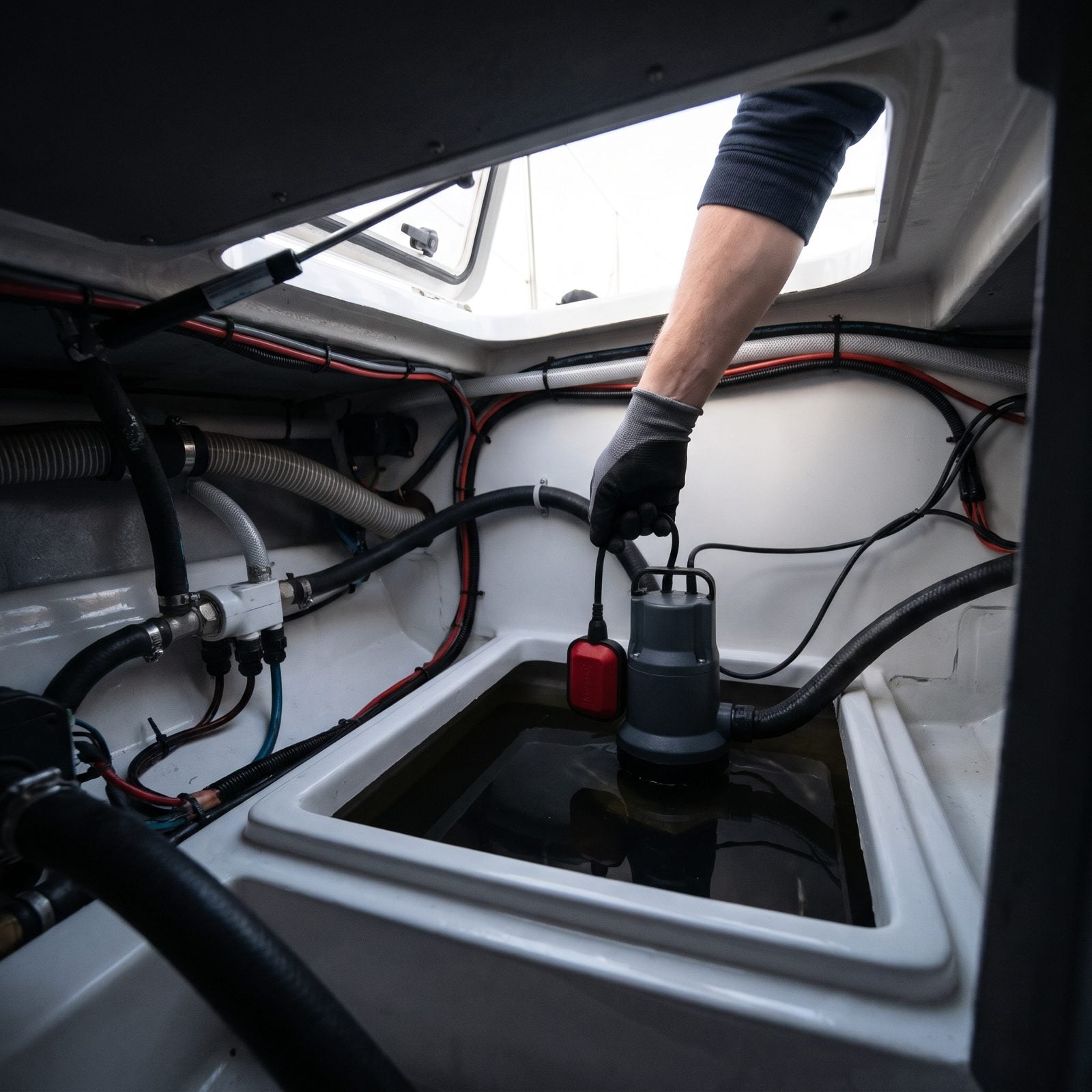
The bilge pump is the one piece of gear you hope to ignore all season — which is exactly why it fails the moment you finally need it. Float switches stick, debris jams the impeller, wiring corrodes, all of it silently, because you never turn the thing on. Then water starts coming in and the pump you assumed worked just sits there doing nothing.
So test it by hand. Lift the float switch or hit the manual override and confirm water actually shoots out the discharge. Pour a little clean water in the bilge and watch the automatic cycle kick on. Do this at the start of the season and spot-check it through the summer. A working bilge pump is the quiet difference between a soggy afternoon and a very bad day.
As a marine surveyor puts it, “Most bilge failures aren’t the pump motor — they’re the float switch. Switches get fouled by oil and debris, stick in the “off” position, or corrode until they no longer close the circuit.”
14. The Engine Blower Needs Time to Work
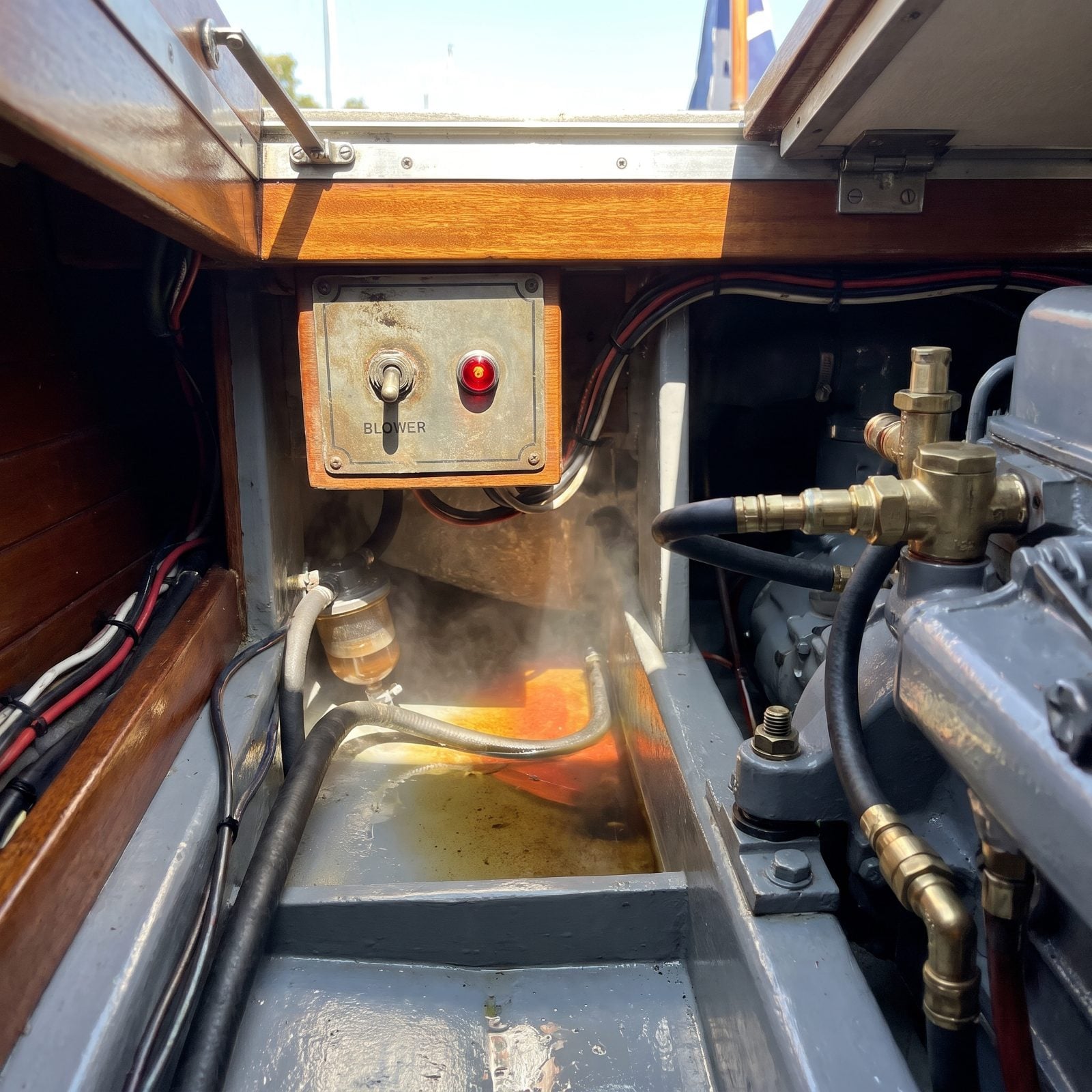
Gas fumes are heavier than air. They settle in the bilge and pool there, often unnoticed, while you’re busy coiling lines and sipping coffee. Turn the key before you’ve cleared them and you’ve made your engine compartment into something you really don’t want to be sitting on top of. If you ever see flame or smoke down there, shut everything off and get clear.
Run the blower four full minutes before you start an inboard or sterndrive gas engine, then open the hatch and actually smell the compartment. Your nose catches fuel vapor faster than any gauge will. This takes less time than tying a decent cleat hitch, and it’s the single easiest safety habit on the boat.
13. An Overheating Engine Must Be Stopped Early
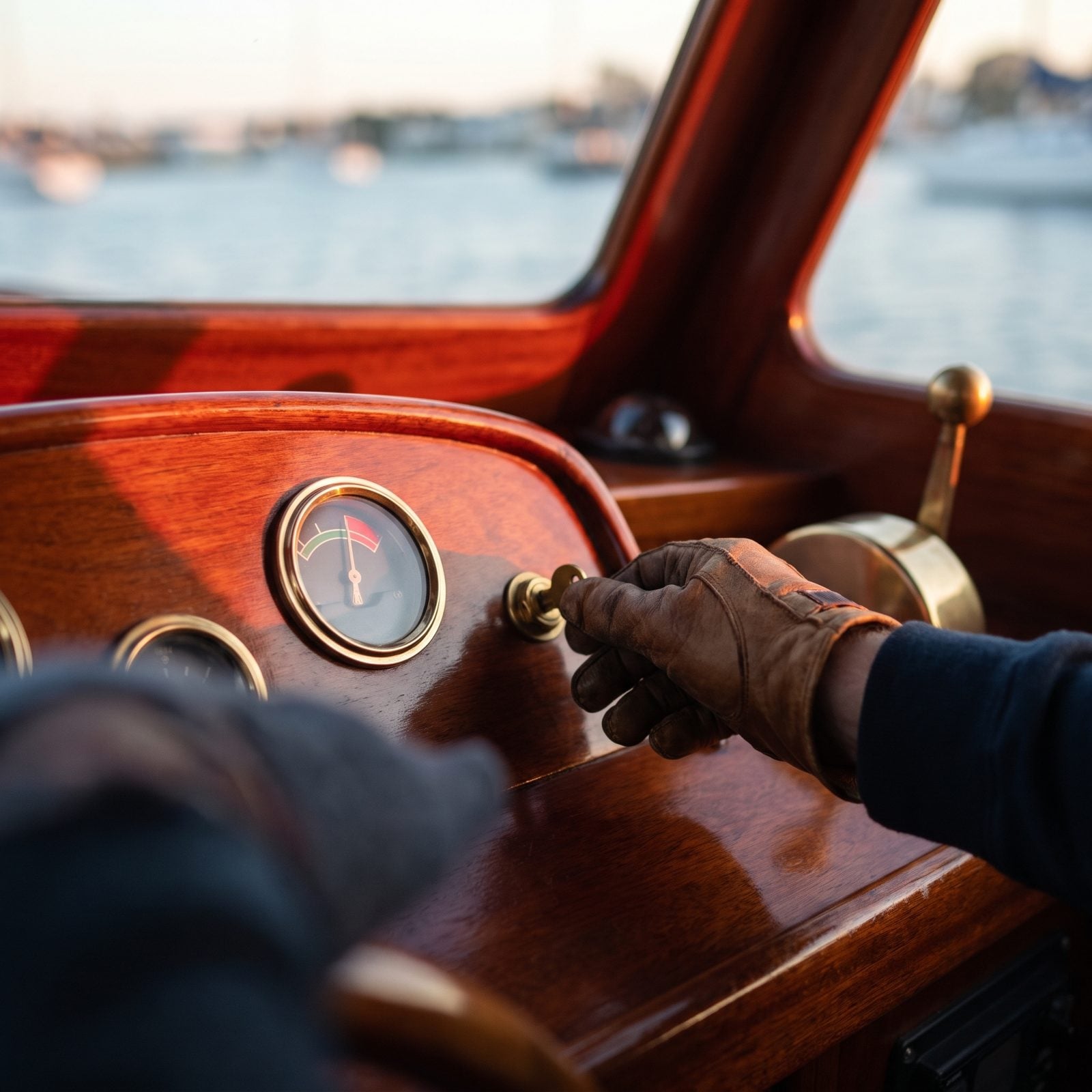
New owners trust the gauge to warn them, then second-guess it the moment it does. The needle creeps toward red and you tell yourself you’ll make it back to the ramp. A seized powerhead costs more than most people’s first boat, and it happens in minutes once cooling stops.
Learn to watch the telltale — that thin stream an outboard spits out the back. If it weakens or quits, you’ve got a blocked water pump or a bad impeller, and you shut down immediately. Idle, kill the engine, check for a plastic bag or weeds on the lower unit intake. And replace the impeller every season no matter what. Rubber vanes crack and lose their bite long before they fully fail.
12. Old Fuel Creates New Problems

Fuel left in a tank over winter doesn’t just sit there quietly. Modern ethanol gas pulls moisture out of the air, and after a few months you’ve got water at the bottom of the tank and gum forming in the lines. Come spring the engine cranks, sputters, and dies, and you blame everything but the thing that’s actually wrong.
Add stabilizer before the boat goes away for the season and run the engine long enough to pull treated fuel through the whole system. In spring, change the fuel-water separator filter and check the bowl for anything cloudy. Fresh fuel is cheap. A carburetor rebuild is not.
11. Fuel Spills Spread Farther Than Expected
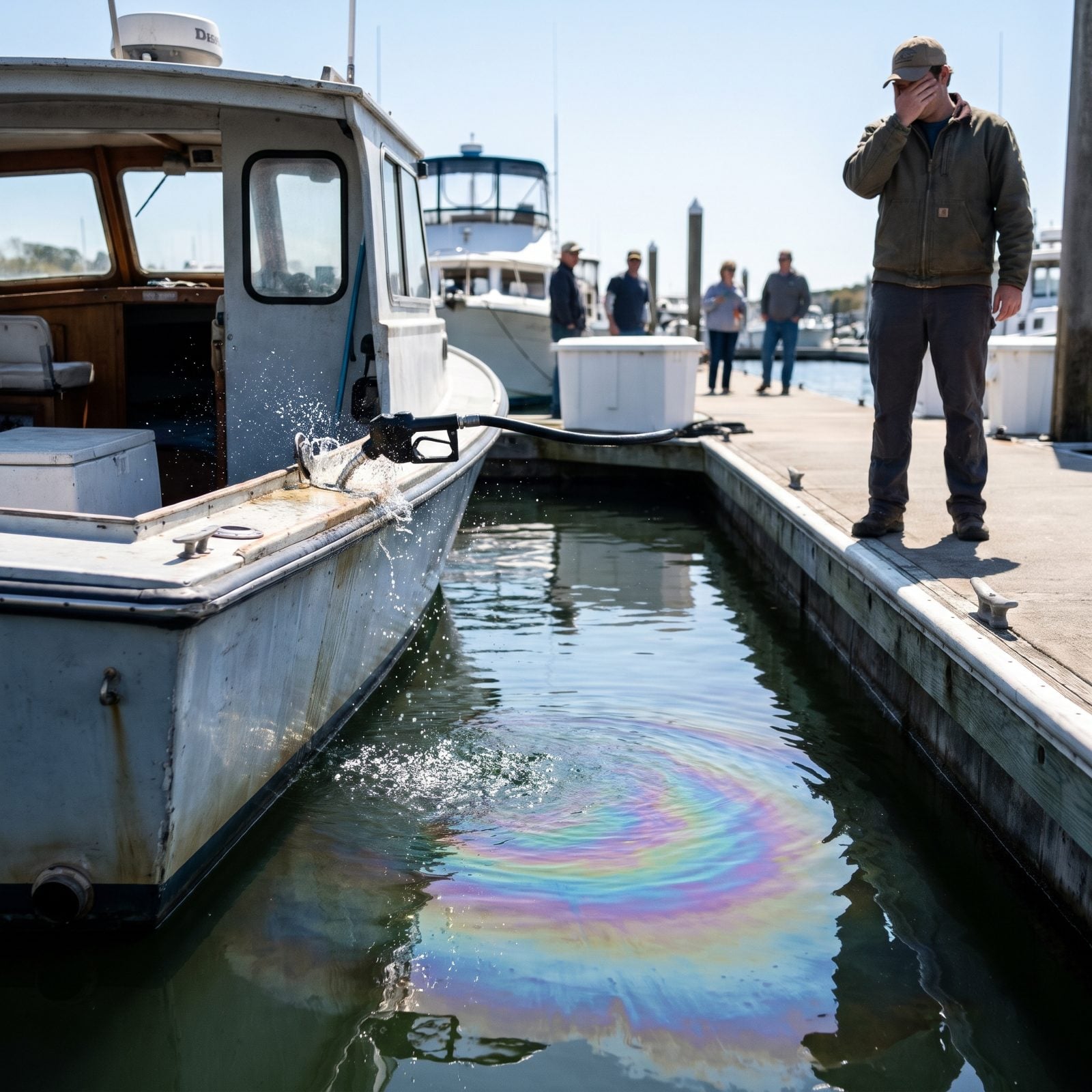
You top off the tank, hear the gurgle, glance away for a second — and that’s exactly when droplets come spattering out of the fill on deck and splash over the side straight into the water. A cup of gasoline spreads into a sheen the size of a parking lot, and in a lot of places that sheen comes with a fine attached.
Fill slowly and stop before the tank is brimming. Fuel expands in the sun, so leaving a little room keeps it from pushing back out later. Keep an absorbent pad over the fill area while you pour, and never walk away trusting the auto-shutoff on a marine fill. They’re not built like the one at your gas station.
10. A Spare Prop Is Worth the Storage Space
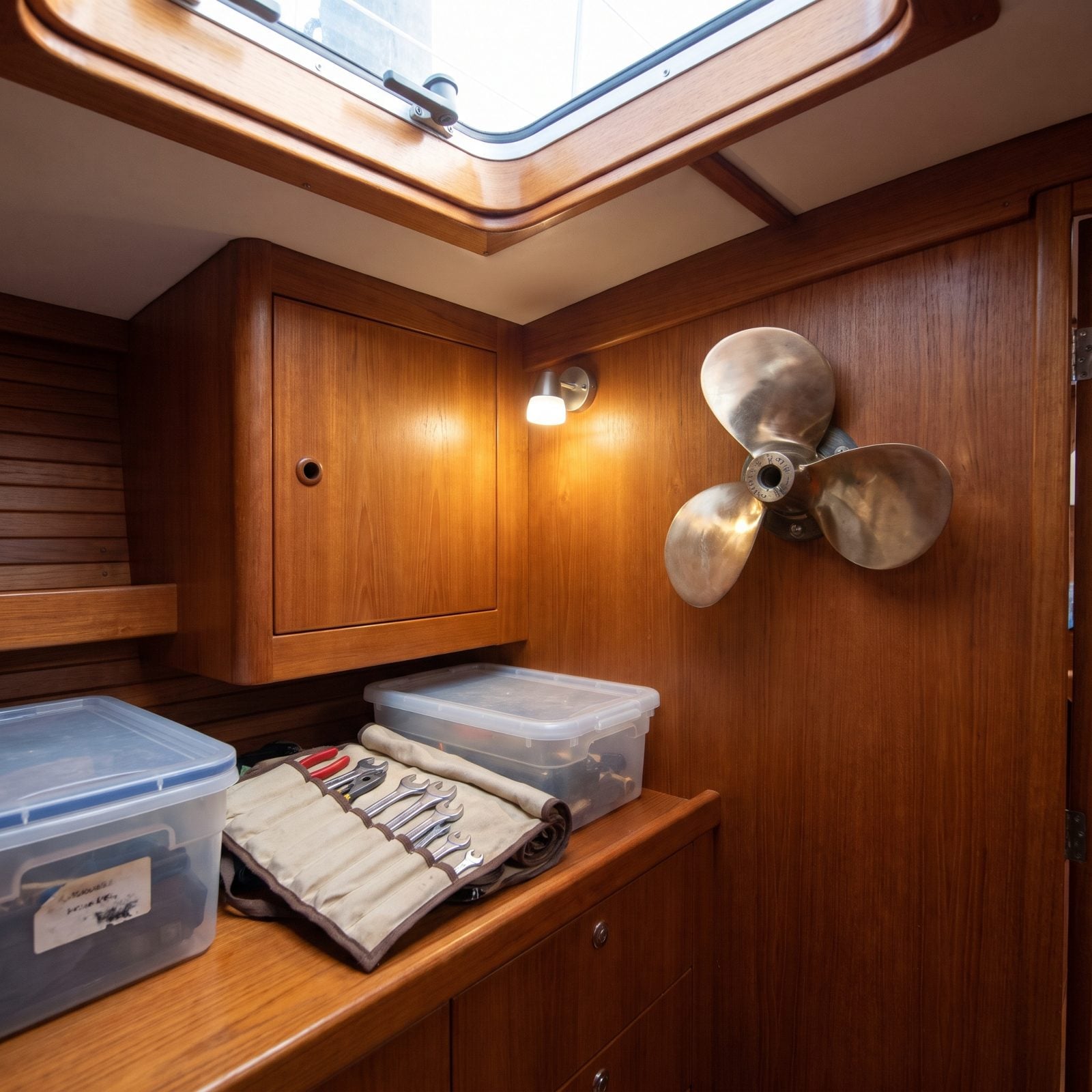
There’s a specific flavor of helplessness in finding a rock with your prop two miles from the ramp, spinning a bent blade, no way to fix it and a long drift home ahead of you. A spare prop, the right wrench, a fresh nut and cotter pin, and knowing how to swap one turns a ruined day into a fifteen-minute pit stop on the water.
Store the kit in a dry locker and practice the swap once at home before you need it for real. Props get nicked, dinged, and occasionally lost to the deep. The backup aboard is the difference between annoyance and a tow.
9. Prop Damage Can Begin With a Tiny Vibration

A faint buzz through the deck at cruising speed is easy to shrug off as normal. It isn’t. A slightly bent blade or a tiny ding throws the prop out of balance, and that vibration travels straight up the shaft into your bearings, your seals, and eventually your wallet.
Check the prop every time the boat comes out of the water. Run your thumb along each blade edge and look for cracks near the hub. A prop shop can straighten a minor bend for a fraction of what a new lower unit costs. Catch it small and it stays small.
8. Trailer Tires Age Even When Tread Looks New
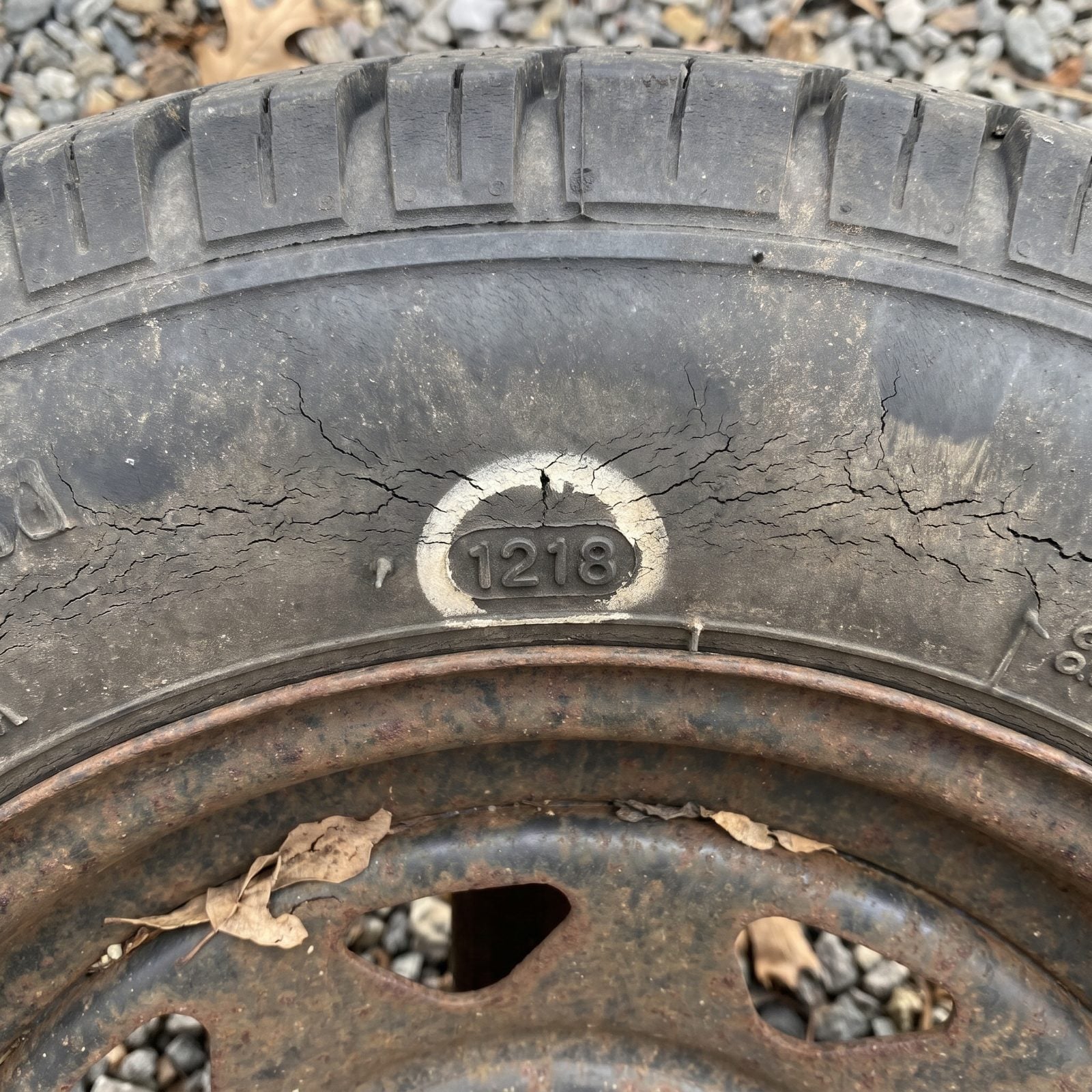
Trailer tires fail by calendar, not by mileage. A tire can look nearly new, full tread and all, and still be six years old and rotting from the inside, because it spent its life baking in the sun at the ramp lot instead of rolling down the road. Then it blows on the interstate with your boat behind it.
Find the DOT date code on the sidewall. The last four digits are the week and year it was made. Older than five or six years? Replace it, never mind how the tread looks. Check pressure cold before every long tow and carry a mounted spare you’ve actually confirmed fits.
As a longtime boating editor puts it, “After a few years, the laminates rot from within, and that can lead to blowouts. So you can’t really judge an old trailer tire by its looks.”
7. Trailer Bearings Require Their Own Maintenance
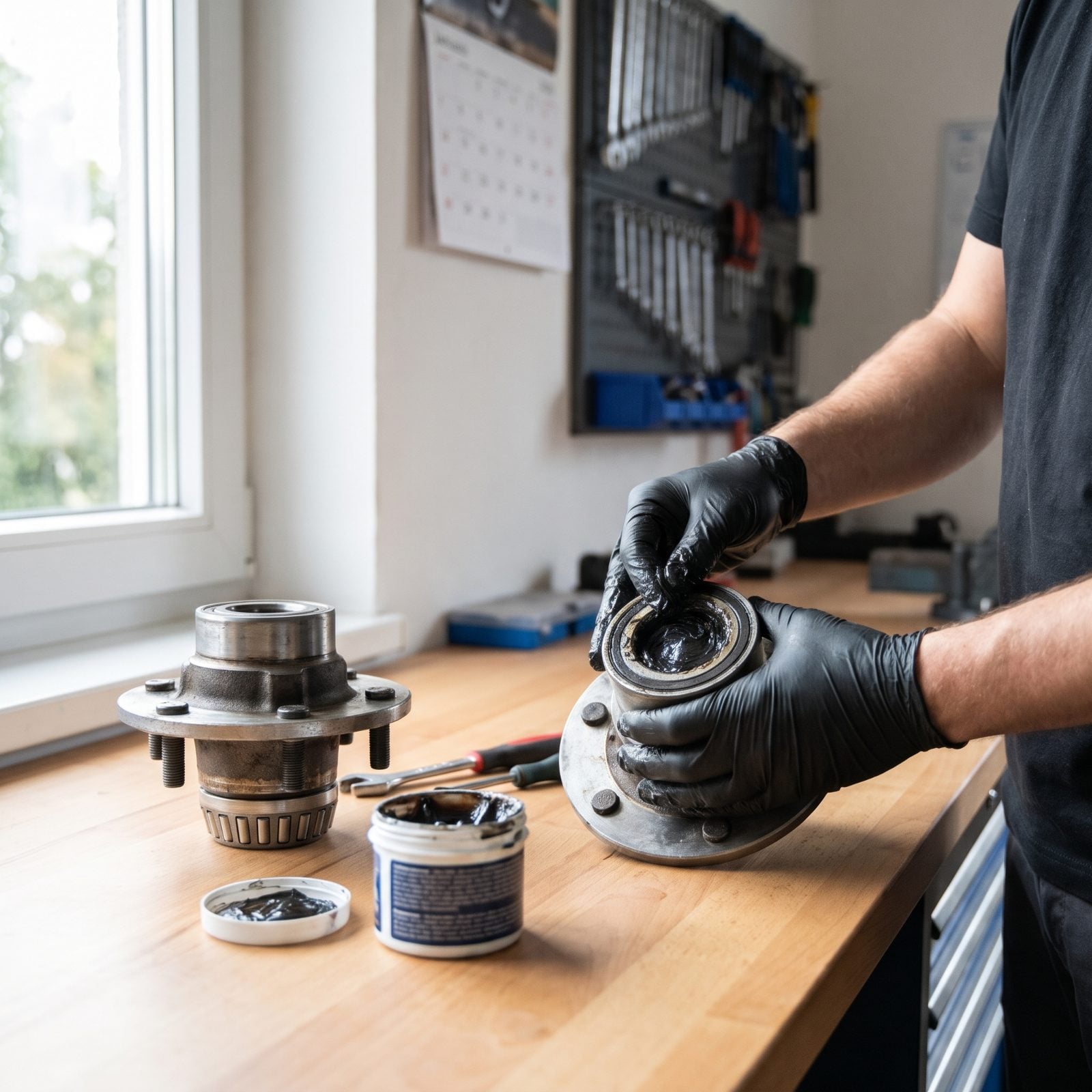
Nobody mentions this part when you buy your first boat. The trailer needs maintenance too, and the bearings are the thing most likely to strand you. Back a hot hub into cold lake water enough times and the grease breaks down, water sneaks past the seal, and the bearing cooks itself on the drive home.
Repack the bearings or confirm your bearing protectors are holding grease at least once a season. After launching, give the hubs a minute to cool before you plunge them under. A smoking hub on the shoulder of a highway is a long, greasy afternoon — one you can skip entirely with a grease gun and twenty minutes.
As a trailer axle repair shop puts it, “Let hubs cool before launch. A hot hub plunged into cold water draws moisture past the seal as it contracts.”
6. Safety Chains Must Cross Beneath the Coupler
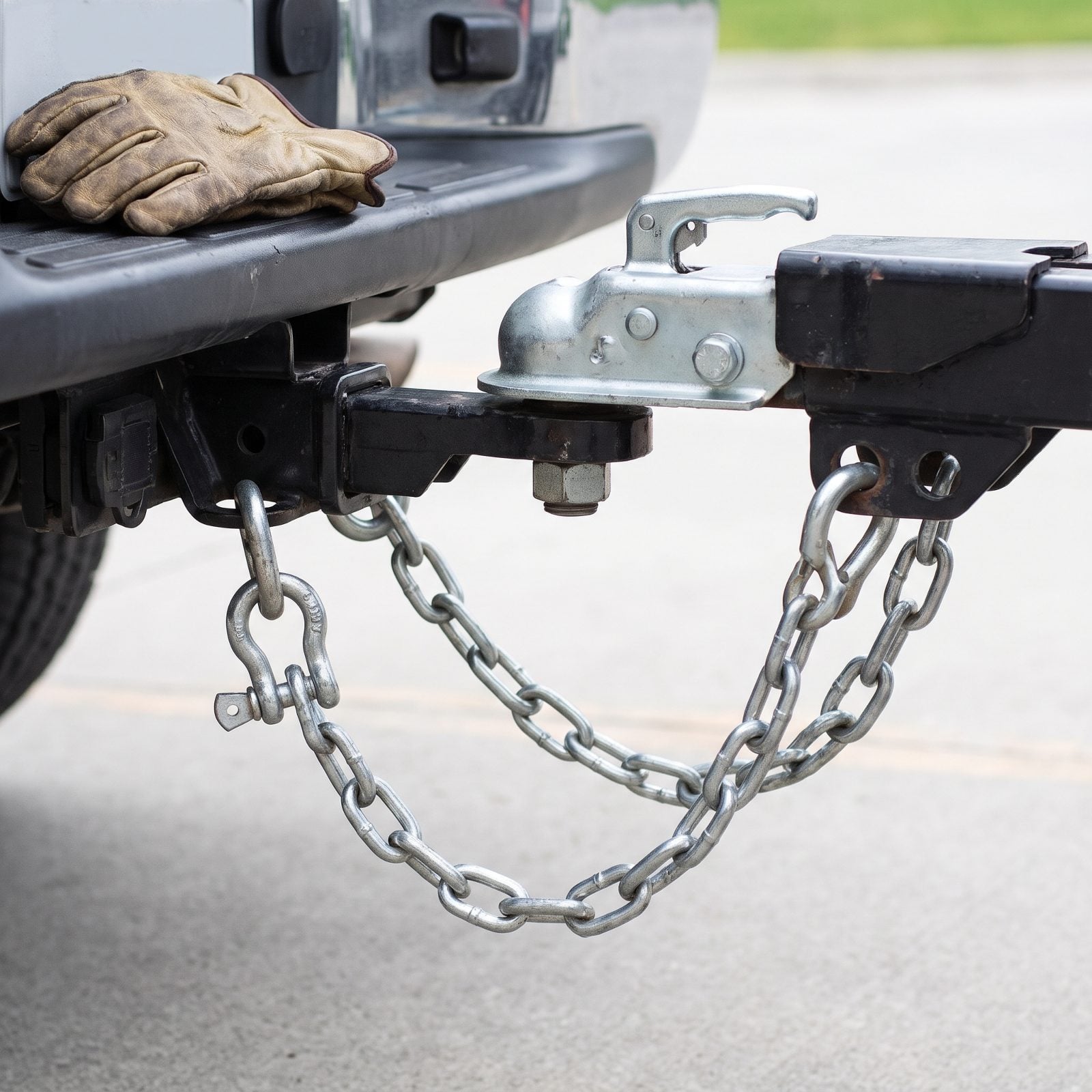
Most new owners hook the safety chains straight back and never think about it again. Straight chains work fine right up until the coupler pops off the ball on a bump — and then the tongue drops to the pavement and digs in like a plow.
Cross the chains in an X underneath the coupler so they form a cradle. If the hitch ever fails, the tongue falls into the chains instead of the road, and you keep enough control to pull over. Leave just enough slack to turn sharply without binding, no more. Chains that droop almost to the pavement have far too much slack; shorten them so they can’t drag or snag. Ten extra seconds to hook them right. It’s the kind of detail that only matters once, which is exactly why it matters.
As a trailer dealer puts it, “This is one of the most important details. Your safety chains should be crossed underneath the trailer tongue before connecting them to your hitch.”
5. The Winch Strap Is Not the Only Bow Restraint
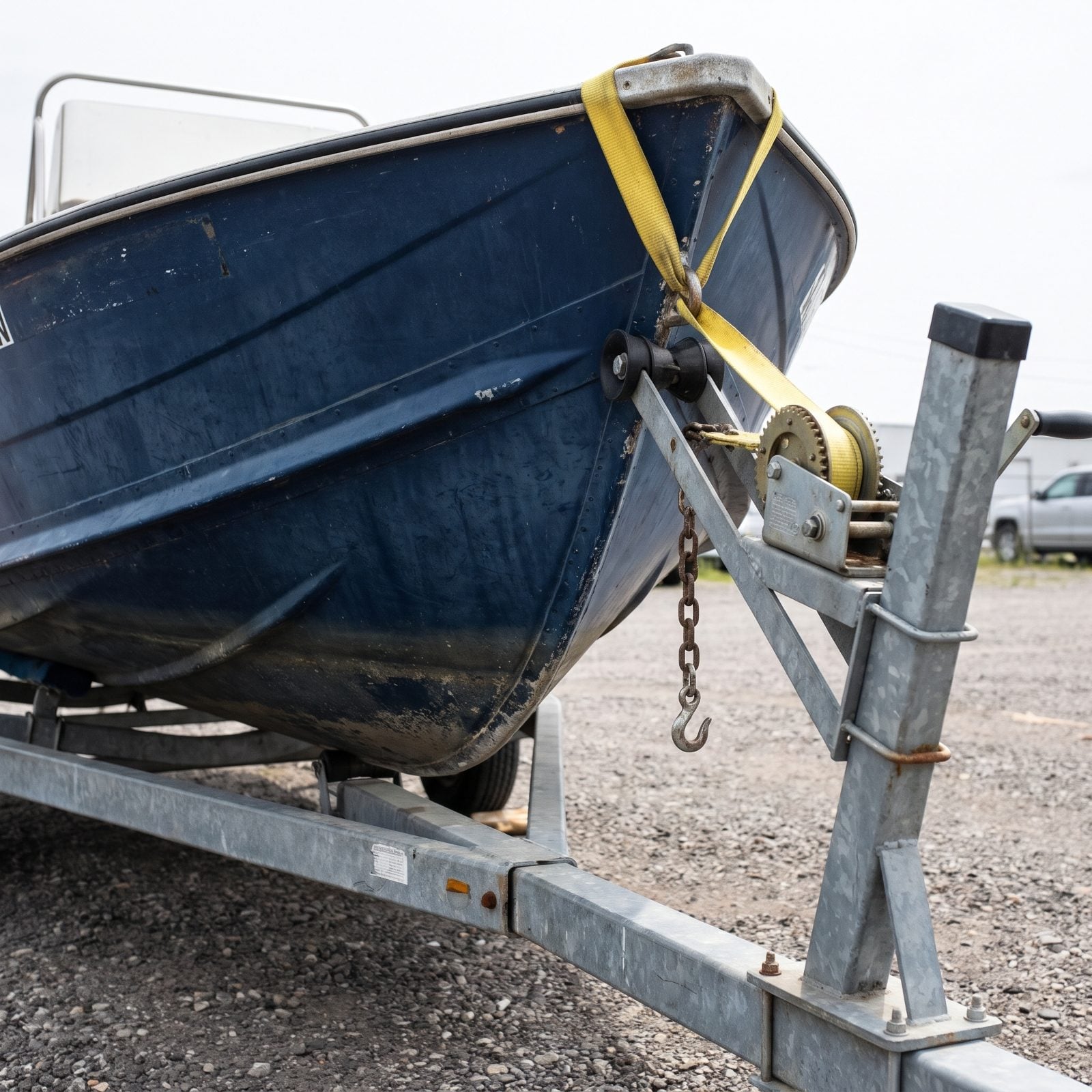
The winch strap looks like it’s holding everything. It isn’t. That strap is built for cranking the boat up the trailer, not for surviving a hard stop at a red light while the hull tries to keep going forward.
New owners skip the safety chain all the time because the boat looks secure sitting there in the driveway, and then they brake on the highway and learn that one strap and a single ratchet are the only things standing between the bow and the back of the truck.
Run a separate safety chain or cable from the bow eye to the trailer frame, every single trip. Ten seconds. It’s your backup for the day the strap lets go.
4. A Boat Cover Can Pool Hundreds of Pounds of Water
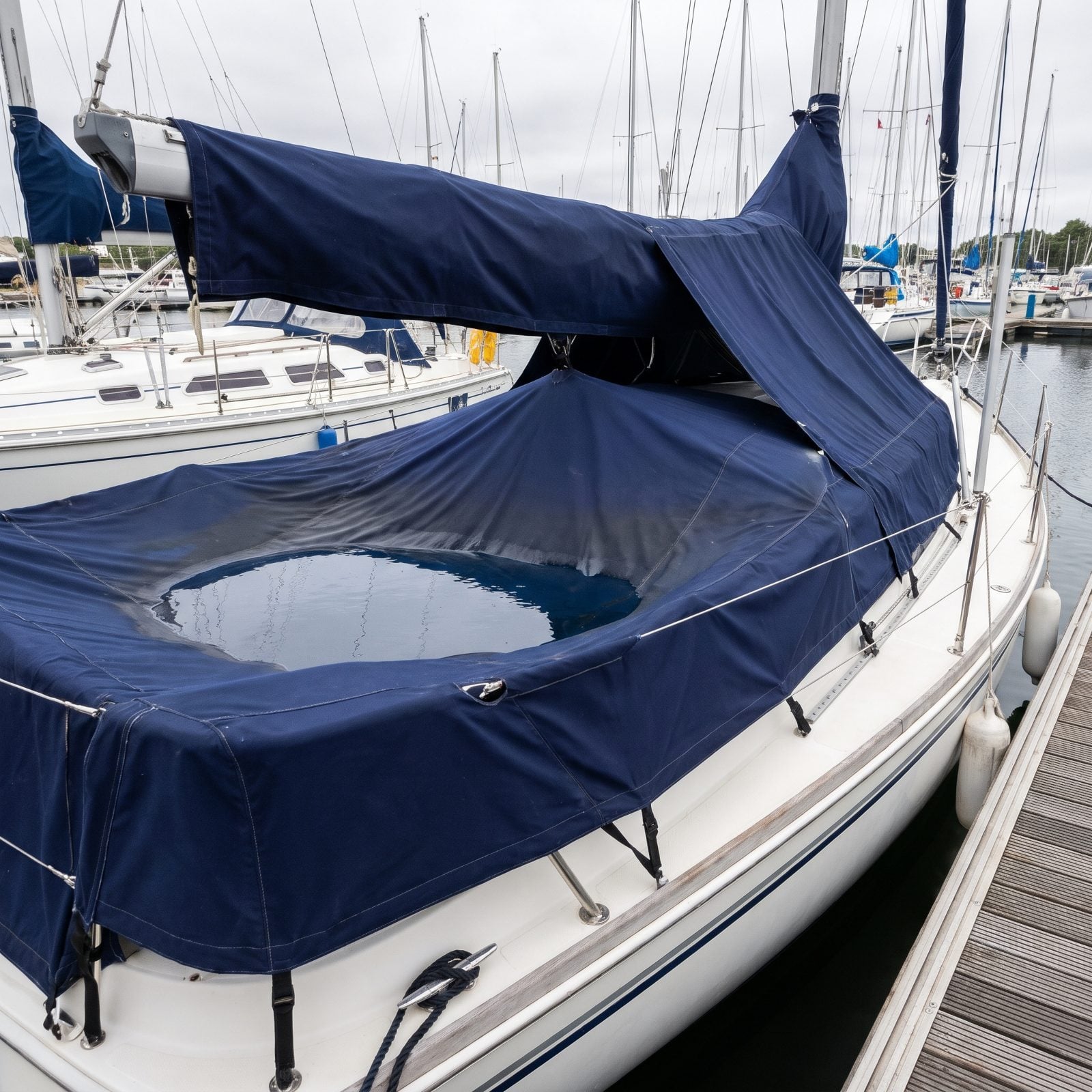
A flat boat cover is a swimming pool waiting to happen. Rain pools in the low spot in the middle, and water is heavy. A big enough puddle holds a stack of sandbags’ worth of weight.
That sagging belly of water stretches the cover, snaps the straps, and can swamp the cockpit or even pull the boat down at the mooring. People come back to find a pond where their seats used to be.
Tent it so the water runs off. A support pole, an inflatable bladder, or a few PVC uprights under the center create a peak that sheds rain instead of hoarding it. Check it after the first hard storm to make sure your rig actually drains.
3. Sunscreen Can Permanently Mark Upholstery
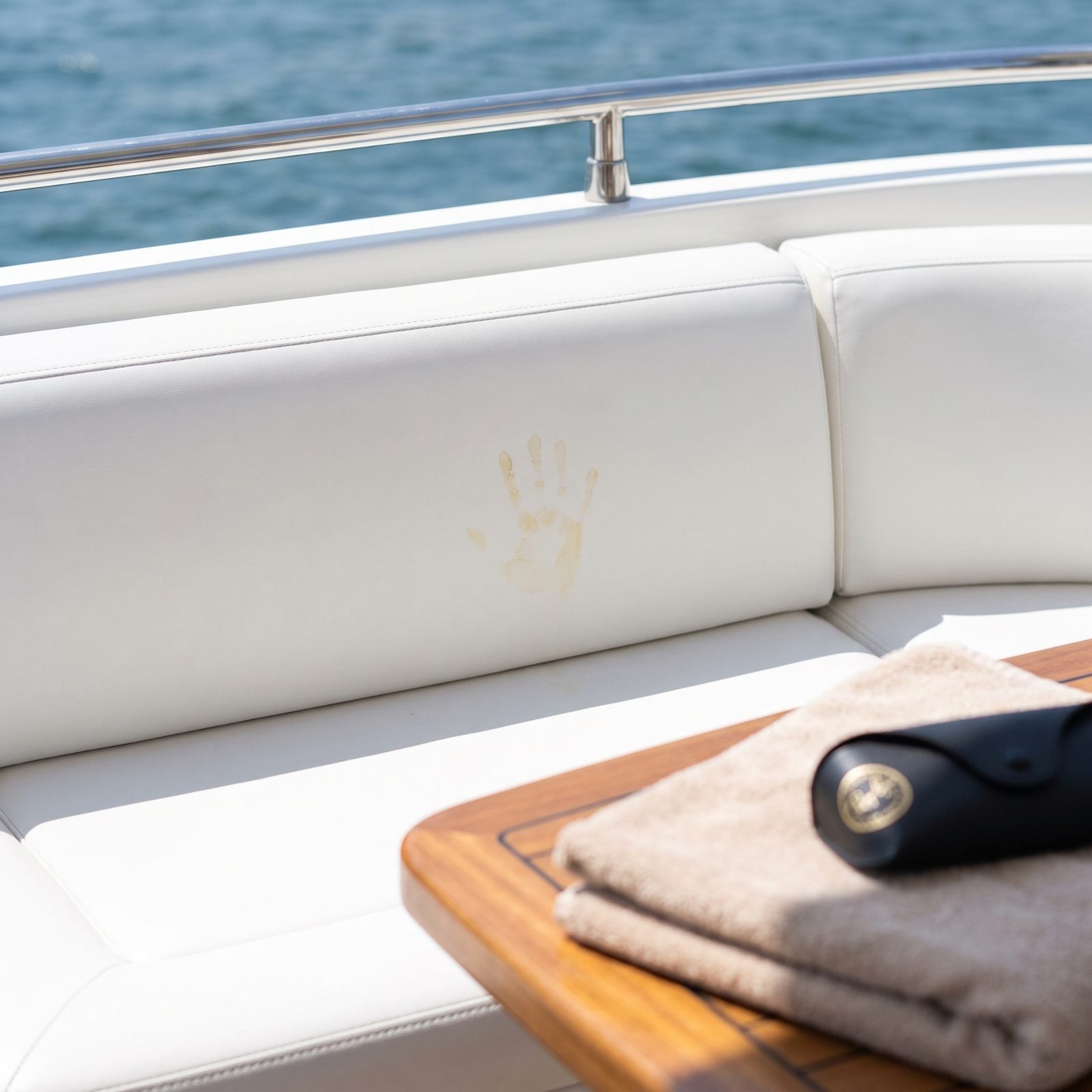
Here’s one nobody warns you about. The sunscreen protecting your skin is quietly eating your seats.
Certain ingredients, avobenzone being the big culprit, react with marine vinyl and bake in yellow-brown stains that no cleaner lifts out. Come August, that pristine white helm seat wears a permanent set of handprints and headrests the color of weak tea.
Let sunscreen dry fully before anyone sits down, keep a stack of cheap towels over the high-contact spots, and wipe the vinyl down at the end of each day. A marine vinyl protectant adds a barrier layer. Once those stains set in you’re staring down reupholstery, so the five-minute wipe-down is the cheapest insurance on the boat.
As a pontoon boat builder puts it, “Avobenzone, found in most sunscreens, is particularly bad for the fabric. It can strip away the topcoat of the vinyl, exposing your seats to further wear and tear.”
2. Every Loose Item Becomes Airborne in Chop
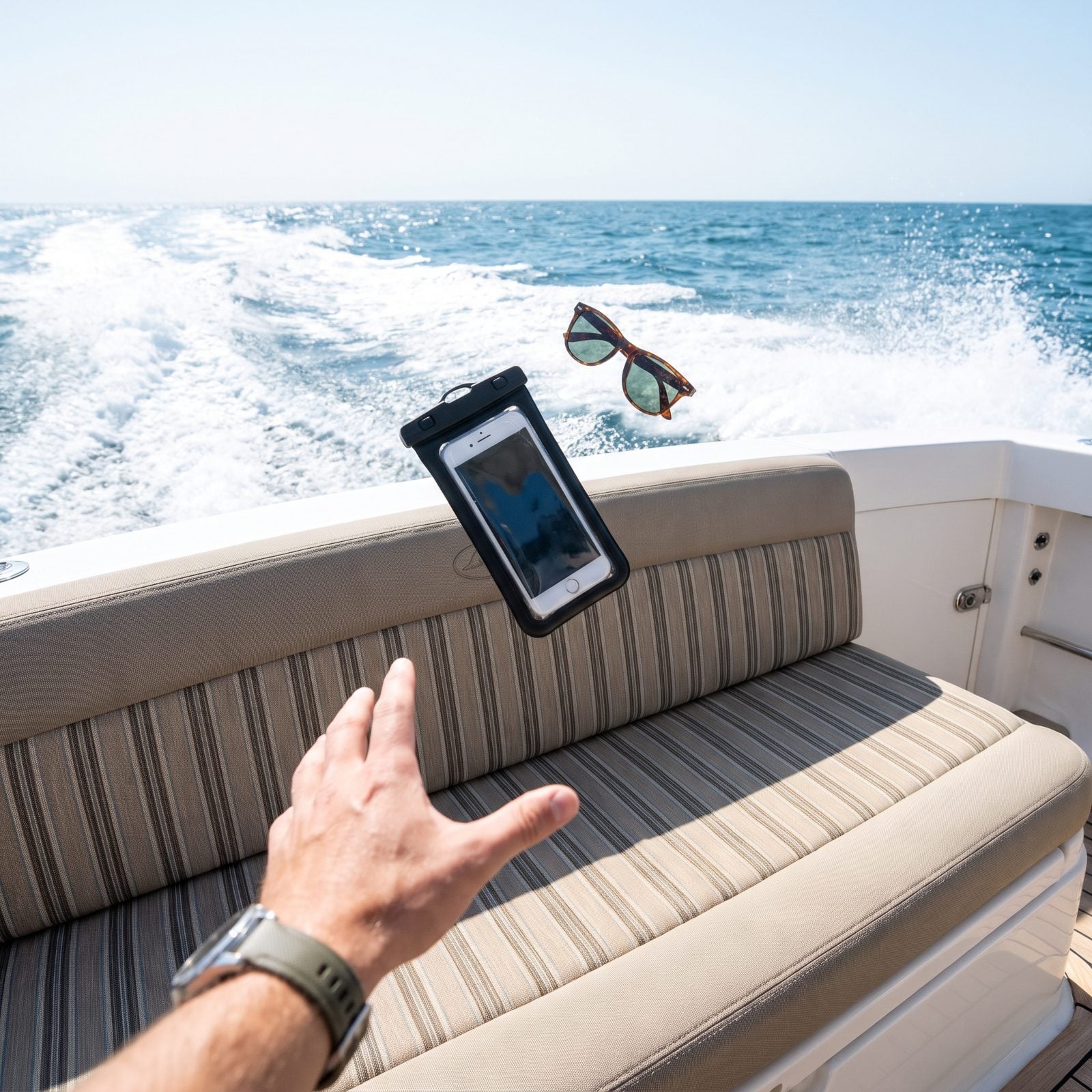
Flat water lies to you. Everything sits perfectly still at the dock, so you leave your phone on the seat, your sunglasses on the dash, the cooler loose on the deck.
Then you hit a wake or a wind chop and the boat drops out from under all of it. Phones go overboard. Coolers slide and spill. A loose lid or an unsecured anchor turns into a projectile, and that’s how somebody ends up hurt.
Stow it or strap it before you throttle up. Bungee the cooler, clip a dry bag to a rail, drop phones and keys into a closed cubby. If it isn’t held down, assume it’s going swimming.
1. The Marine Toilet Needs a Crew Demonstration
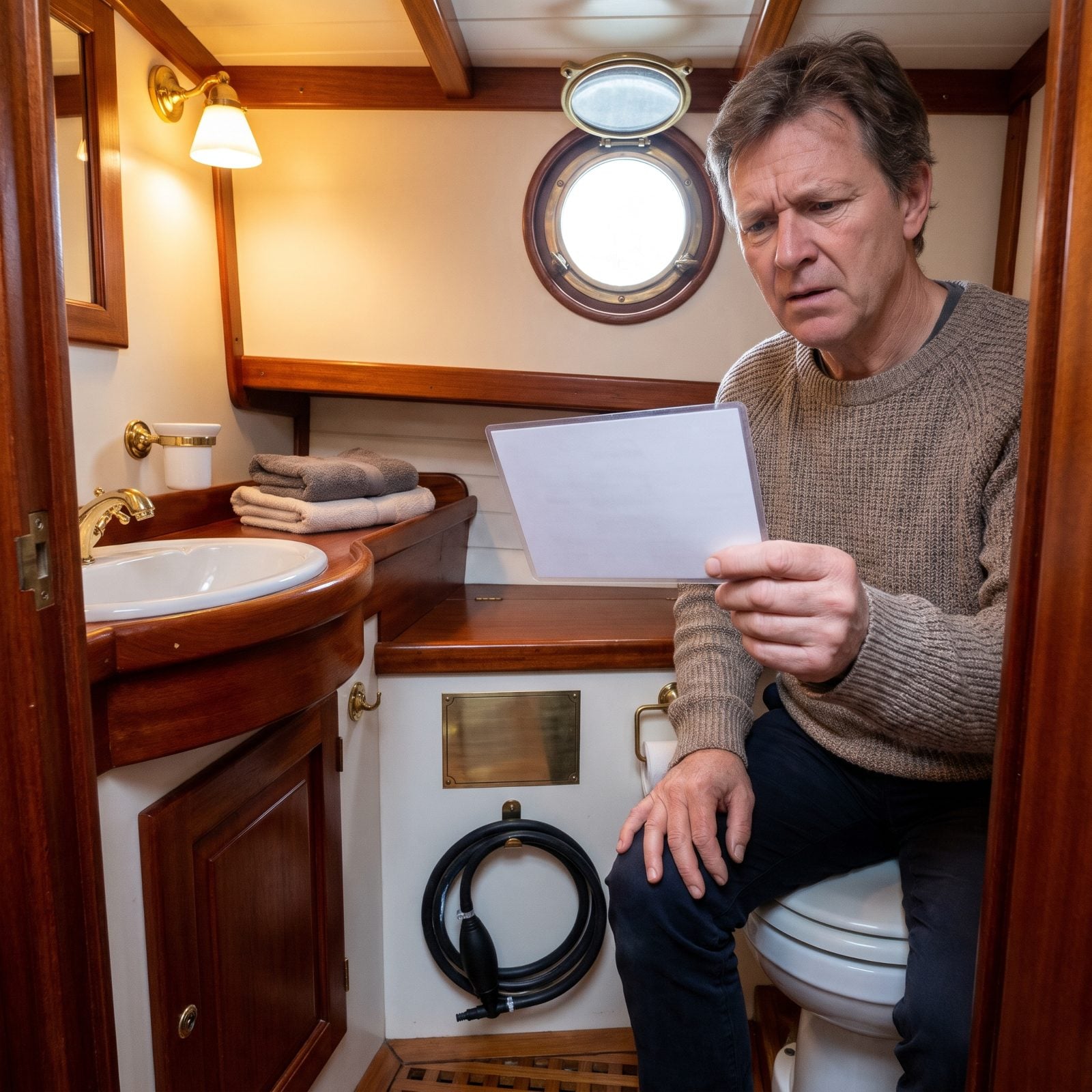
Nothing humbles a new skipper faster than the marine head. It does not work like the toilet at home, and nobody cracks the manual until it’s already too late.
Put the wrong thing down it, or skip the pump sequence, and you’ve got a clog deep in the plumbing or a backed-up holding tank at the worst possible moment. Messy, expensive, deeply unglamorous, and it always happens with guests aboard.
So give every single person a short demonstration before they ever use it. Marine tissue only, work the pump handle through its full cycle, and nothing goes in that didn’t pass through a human first. One two-minute briefing saves a whole season of grief.