
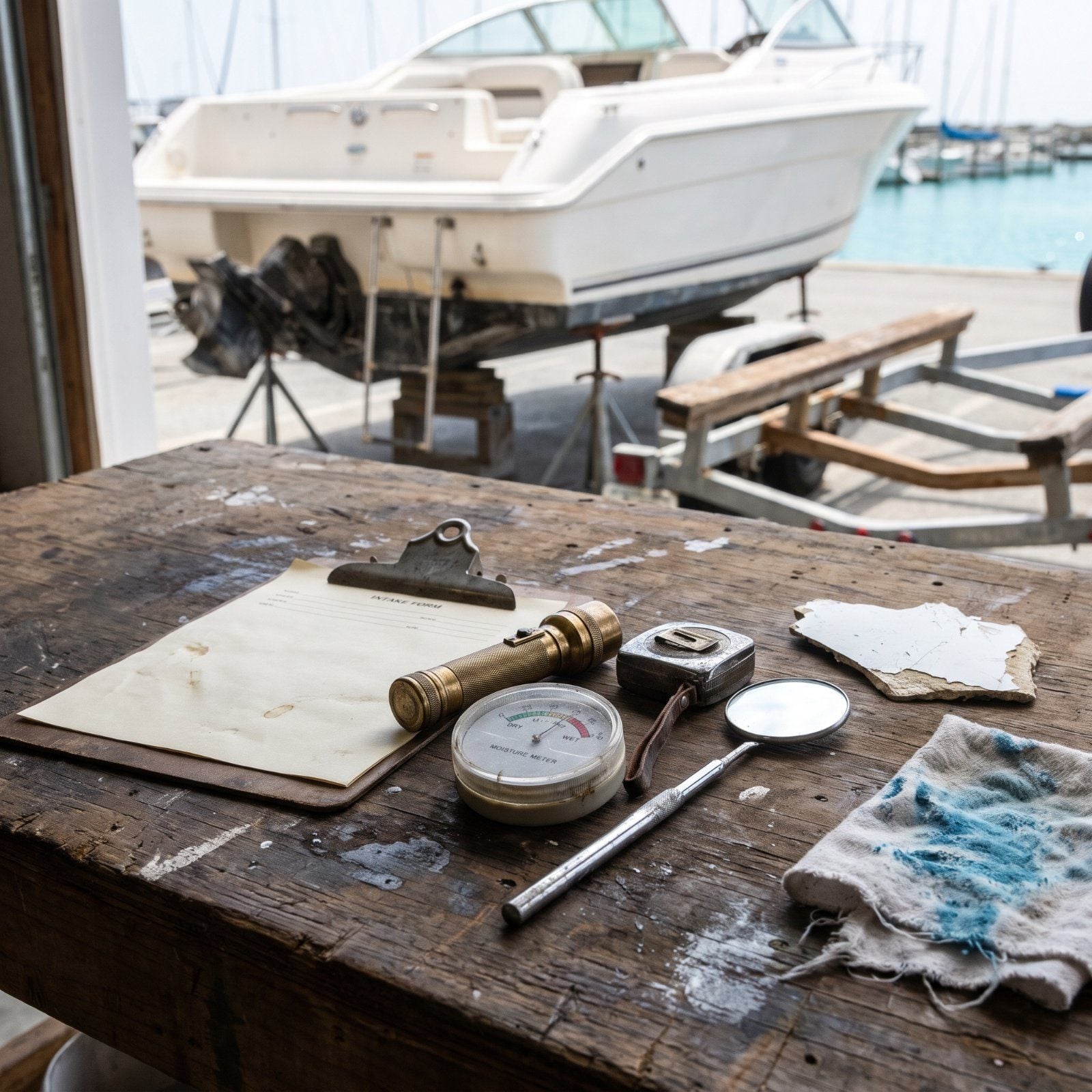
A good yard tech barely touches the boat before the diagnosis starts. They walk the hull once, slow, the way you’d circle a used car that somebody swore ran great. The boat tells on itself. A stern that squats too low, a scum line crawling up the topsides, a cleat that wiggles when nobody’s looking — none of it needs a scope or a code reader, just eyes, ears, and a hand that’s felt a few thousand decks. Here’s what the pros catch while you’re still digging for your paperwork, and why each one matters more than it looks.
Please note that some of the imagery in this article may have been enhanced with the assistance of AI.
41. A Stern Sitting Noticeably Too Low
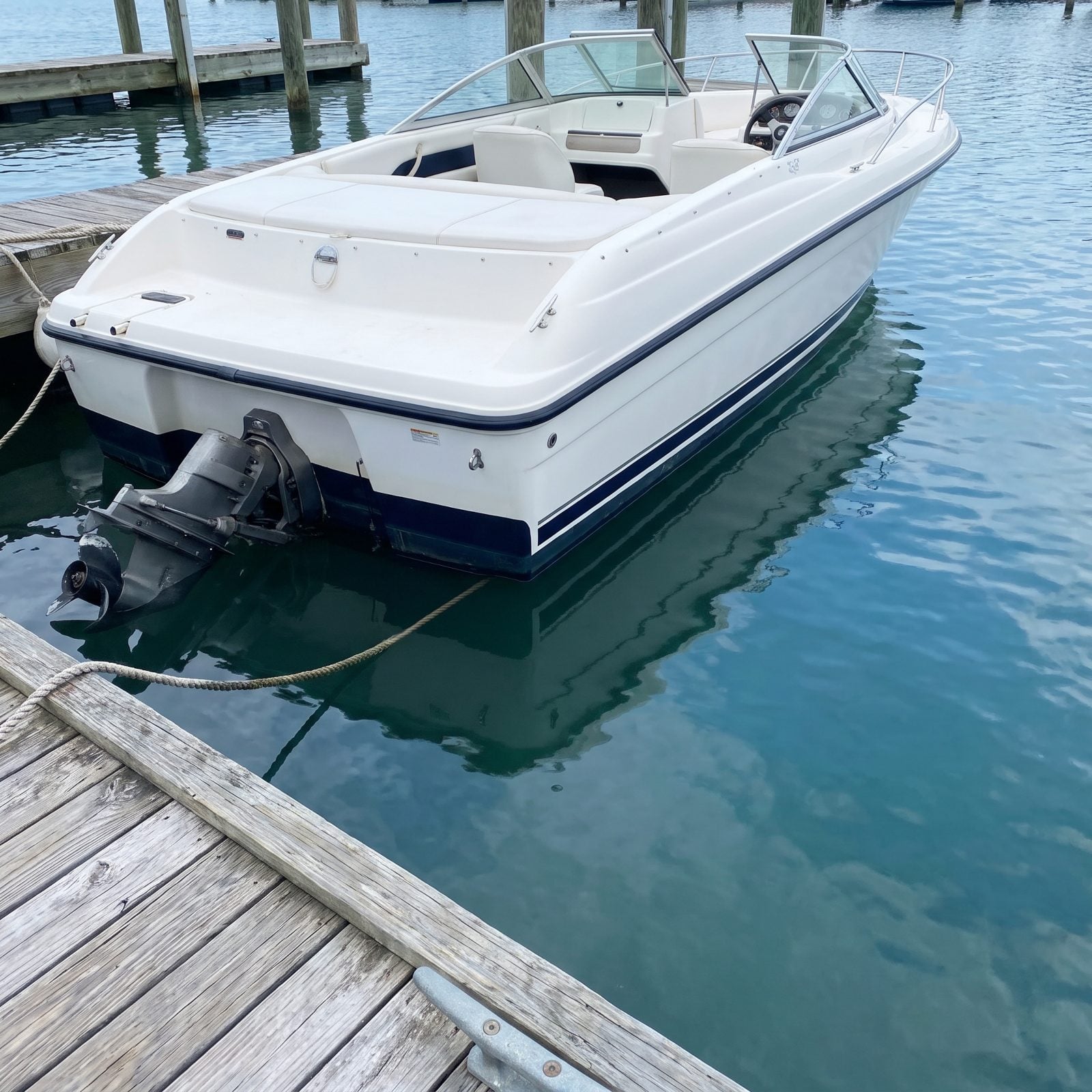
A stern that squats is the boat whispering about weight it shouldn’t be carrying. First suspect is always water, usually sitting in the bilge or trapped in a waterlogged transom core, and a tech will pop the engine hatch to check the bilge before anything else.
Gear matters too — a full fuel tank aft, a kicker motor, batteries that migrated back over the years. But a stern that sinks lower than it used to, with nothing new loaded, points at absorbed water. That’s not ballast. That’s a leak you’ve been boating with.
40. A Boat Listing to One Side at Rest
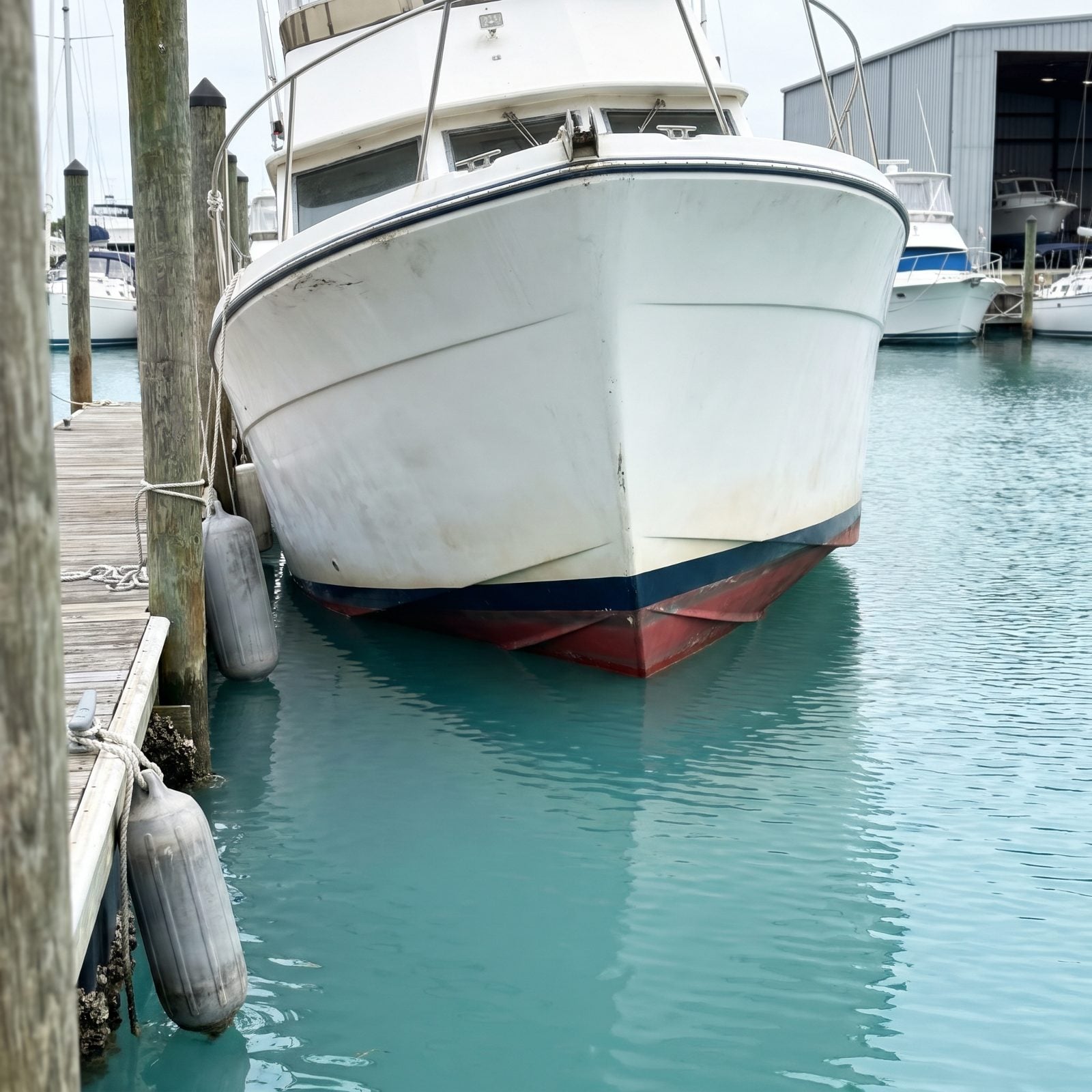
Water finds the low point and stays there. So a boat leaning at rest usually has fluid pooling on one side, a battery bank loaded heavy to port, or a saturated section of hull soaking it up unevenly.
The real tell is consistency. If she leans the same way every single time, dry or loaded, a mechanic starts hunting for trapped water in a stringer bay or a foam-filled compartment that’s gone heavy. A list that shifts with the gear is just your stuff. A list that never moves is the structure talking.
39. A Dark Scum Line High Above the Bottom Paint
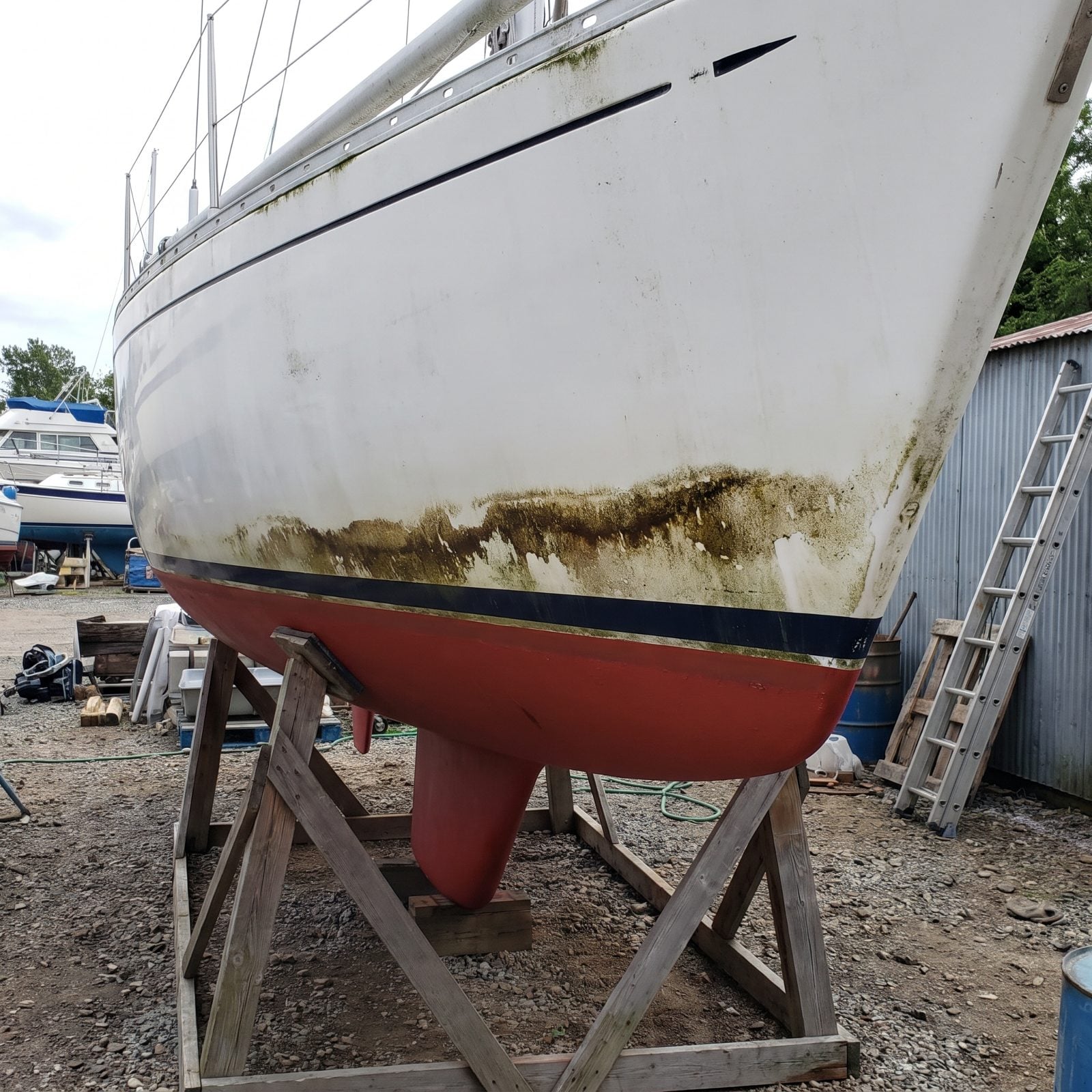
That grimy band of brown and green sits like a high-tide mark on the hull, and it tells a mechanic exactly how deep the boat has been floating. When the scum line rides well above the bottom paint, she’s been sitting lower in the water than her designer intended.
Could be chronic overloading. Could be slow water intrusion adding weight month after month. Either way, it’s a record of where the waterline actually lives, not where the paint says it should. The hull keeps the receipt whether you want it to or not.
38. Dome-Shaped Blisters Below the Waterline
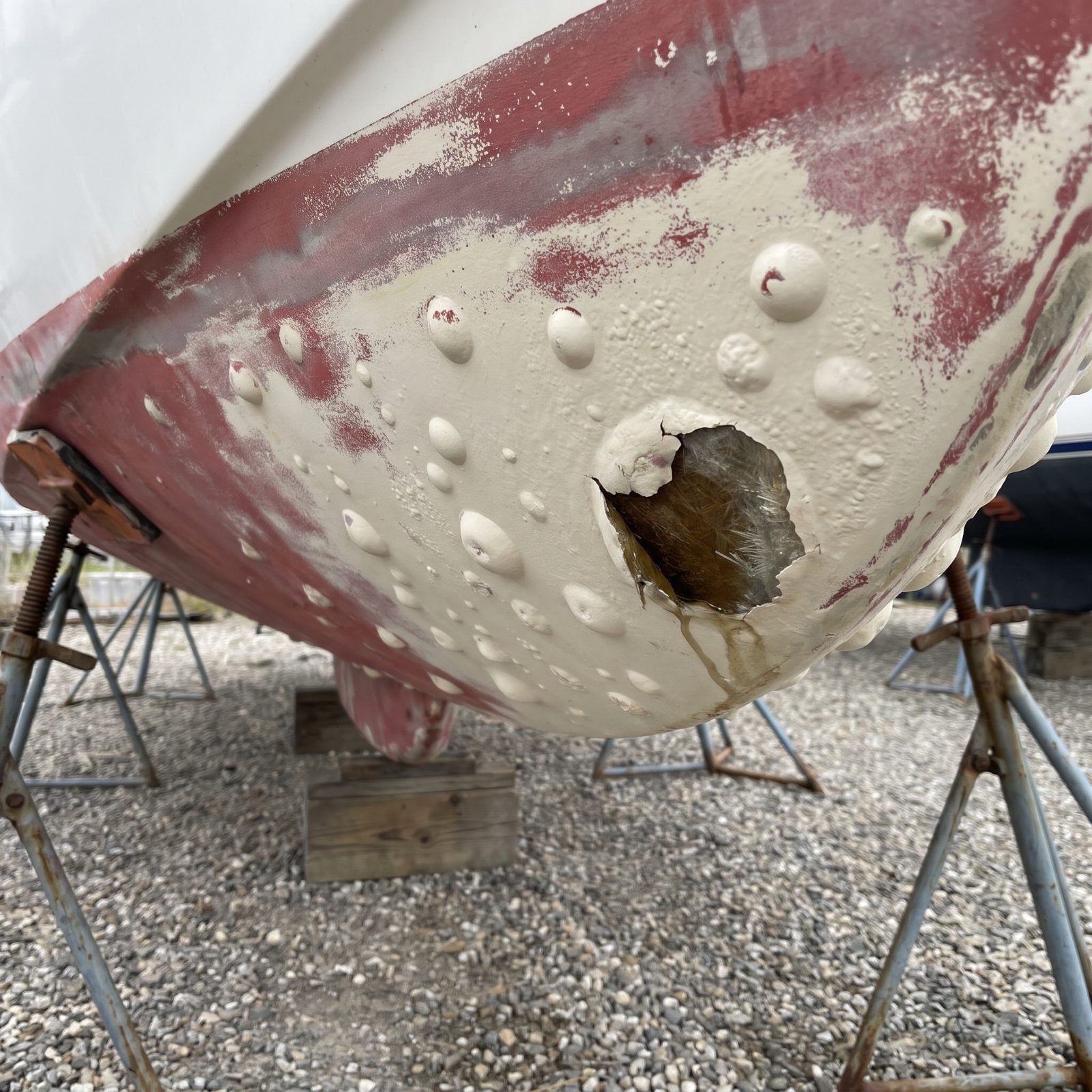
On a fiberglass hull, blisters mean osmosis, plain and simple. Water works its way through the paint and fairing over years, reaches the laminate underneath, and the trapped fluid pushes little domes outward. Pop one and you find bare glass-fiber strands, and soon an amber, resin-colored weep running down the hull. A mechanic has seen it a hundred times.
A few scattered blisters aren’t an emergency. A hull bottom peppered with them, especially ones that have burst open to bare laminate, means water is reaching the fiberglass and a conversation about peeling, drying out, re-fairing and barrier-coating that runs into real money. It’s slow, it’s cosmetic at first, and it’s the kind of thing people ignore until it isn’t cosmetic anymore.
37. Grounding Scrapes Across the Keel
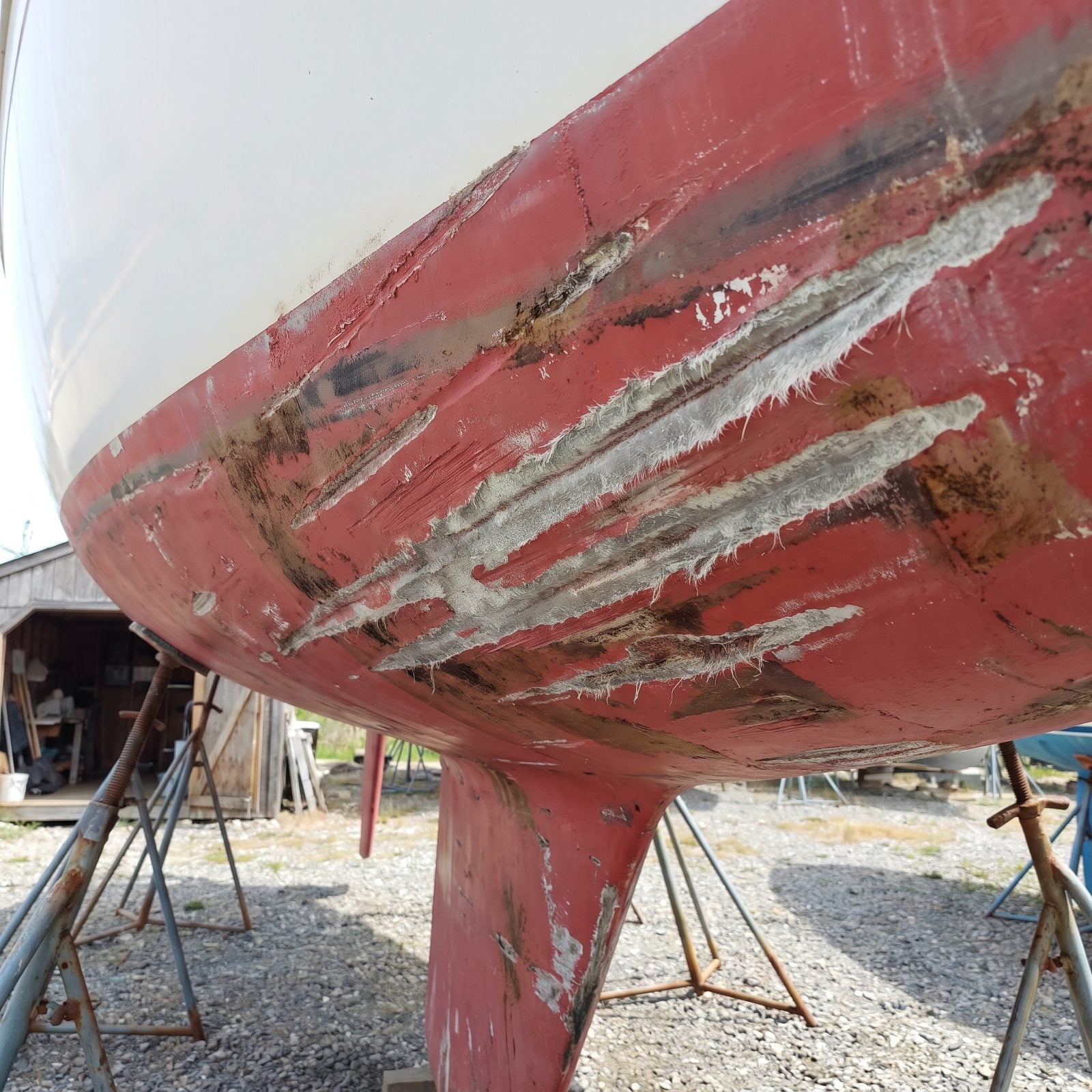
Scrapes running the length of the keel read like a logbook. Shallow, fuzzy scratches are the cost of a few sandbar kisses, and most boats wear a couple. No big deal.
What makes a tech lean in close are the deep ones, where the paint’s gone and the fiberglass is torn open or ground flat. Those mean a real grounding, hard enough to maybe stress the hull-to-keel joint or crack internal supports. The scrape itself is minor. It’s what the impact might have done above it that gets checked.
36. Hairline Cracks Radiating From the Transom Corners
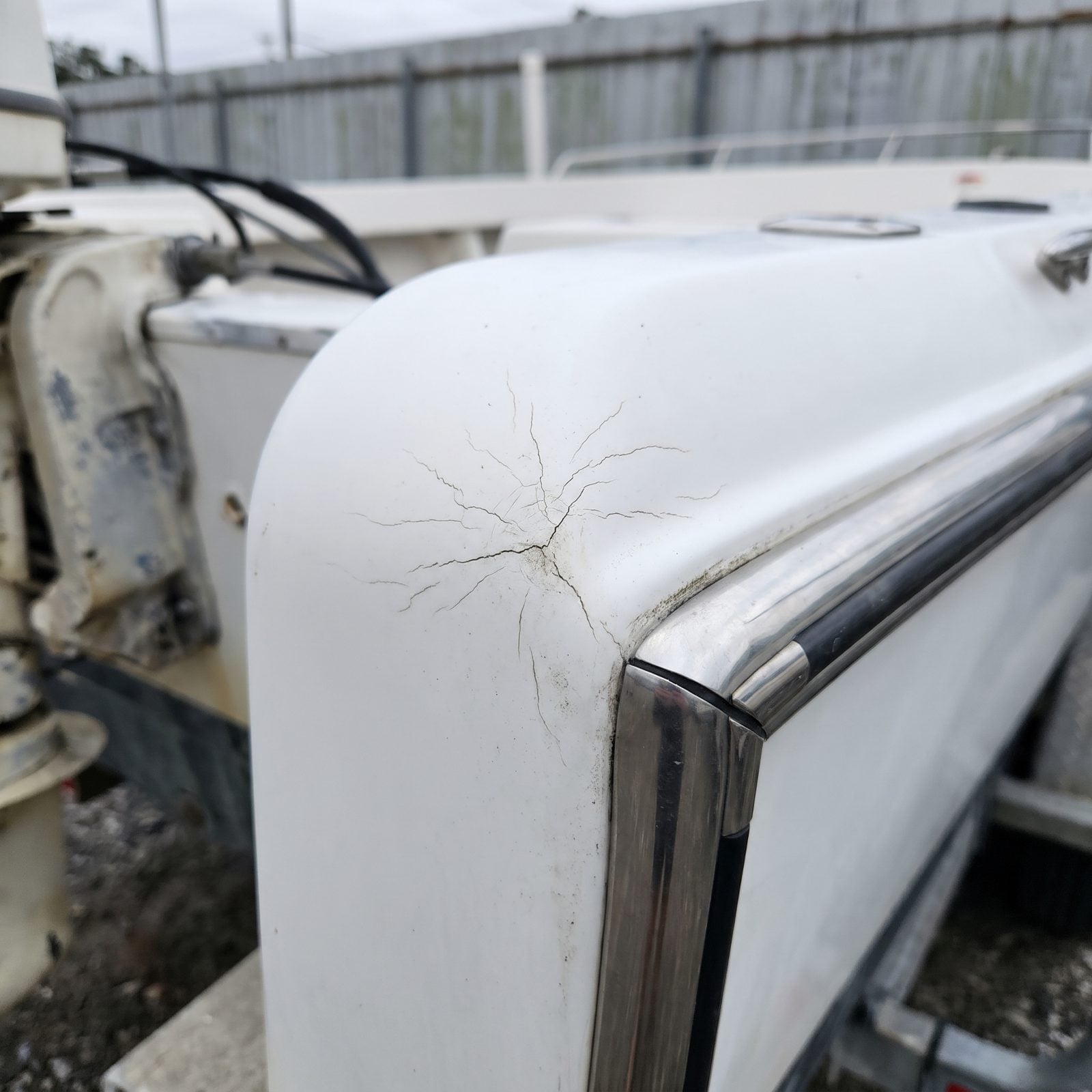
Gelcoat cracks fan out from the transom corners like fractures in a dropped eggshell, and they’re never just surface drama. That corner carries the load every time the outboard pushes the boat forward or slams down off a wave.
A mechanic separates two kinds here. There’s shallow crazing from flex and age — ugly, but it stays near the surface. Then there are cracks that run deeper into the laminate, hinting the transom core is softening or the engine’s bolting pattern is working loose. The direction tells the story. Fanning out from a stress point means something back there is moving.
35. Crushed Fiberglass Beneath the Outboard Mounting Washers
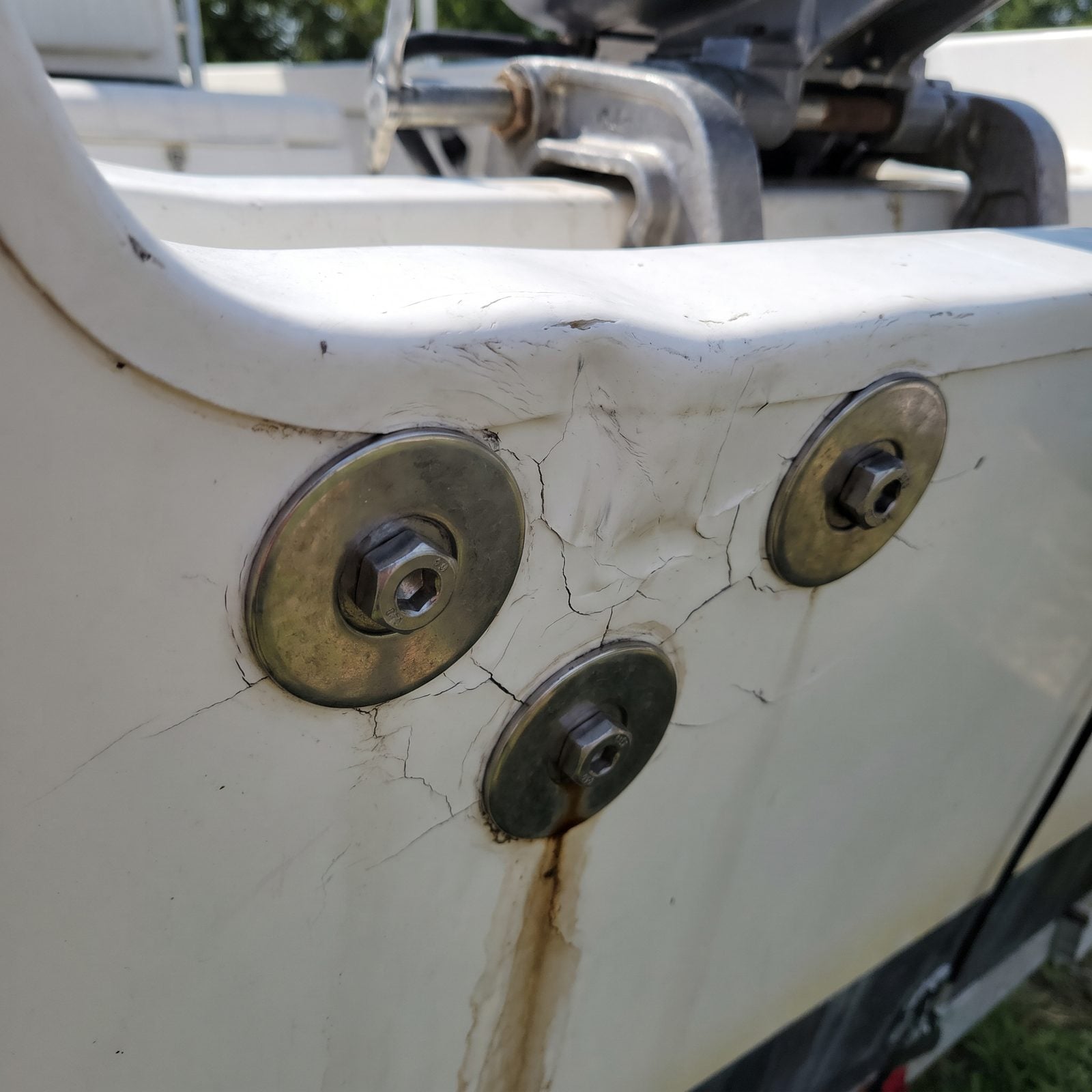
Pull up to the engine mount and look at the washers. When the fiberglass around them is dished in and cracked, the transom core underneath has gone soft, usually from water creeping in around the bolt holes and rotting the wood core.
The washers didn’t crush solid glass. They crushed mush. A rusty weep or dark stain from a bolt confirms it. This is one of the ones that scares mechanics, because a failing transom isn’t cosmetic — it’s the piece holding a heavy motor to the back of your boat.
34. A Deck That Flexes Under One Footstep
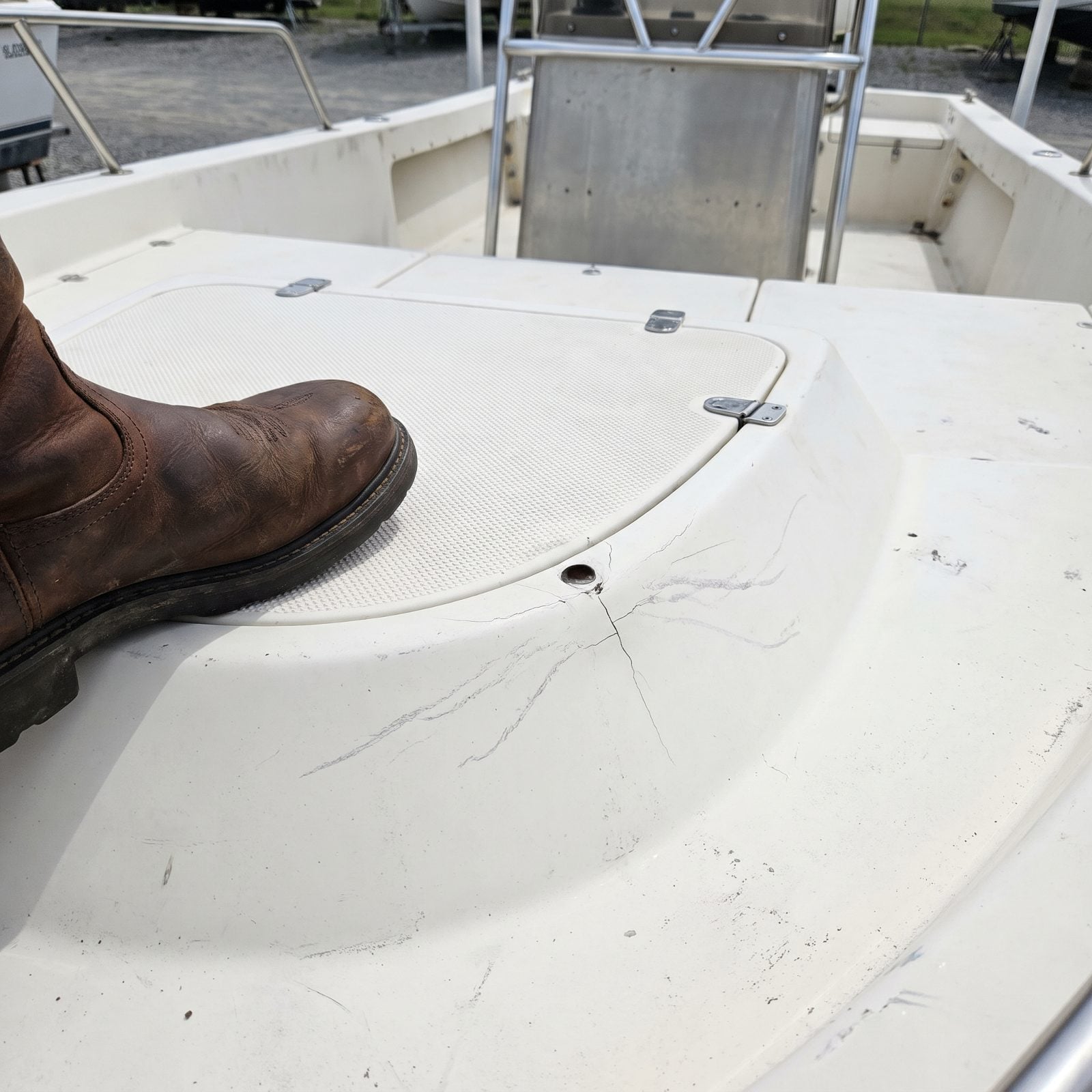
Step on it and feel it give. A healthy cored deck is stiff underfoot. One that flexes, bounces, or makes a soft crunch has a wet, delaminated core, where water got between the skins and turned the balsa or foam to spongy pulp.
Techs walk the whole deck on intake, heel to toe, listening and feeling. Soft spots cluster around fittings, hatches, and anywhere a screw opened a path for water. The surface looks fine. The feeling underfoot is the giveaway, and it’s the kind of repair that eats a weekend fast.
33. A Cleat Lifting Away From the Deck
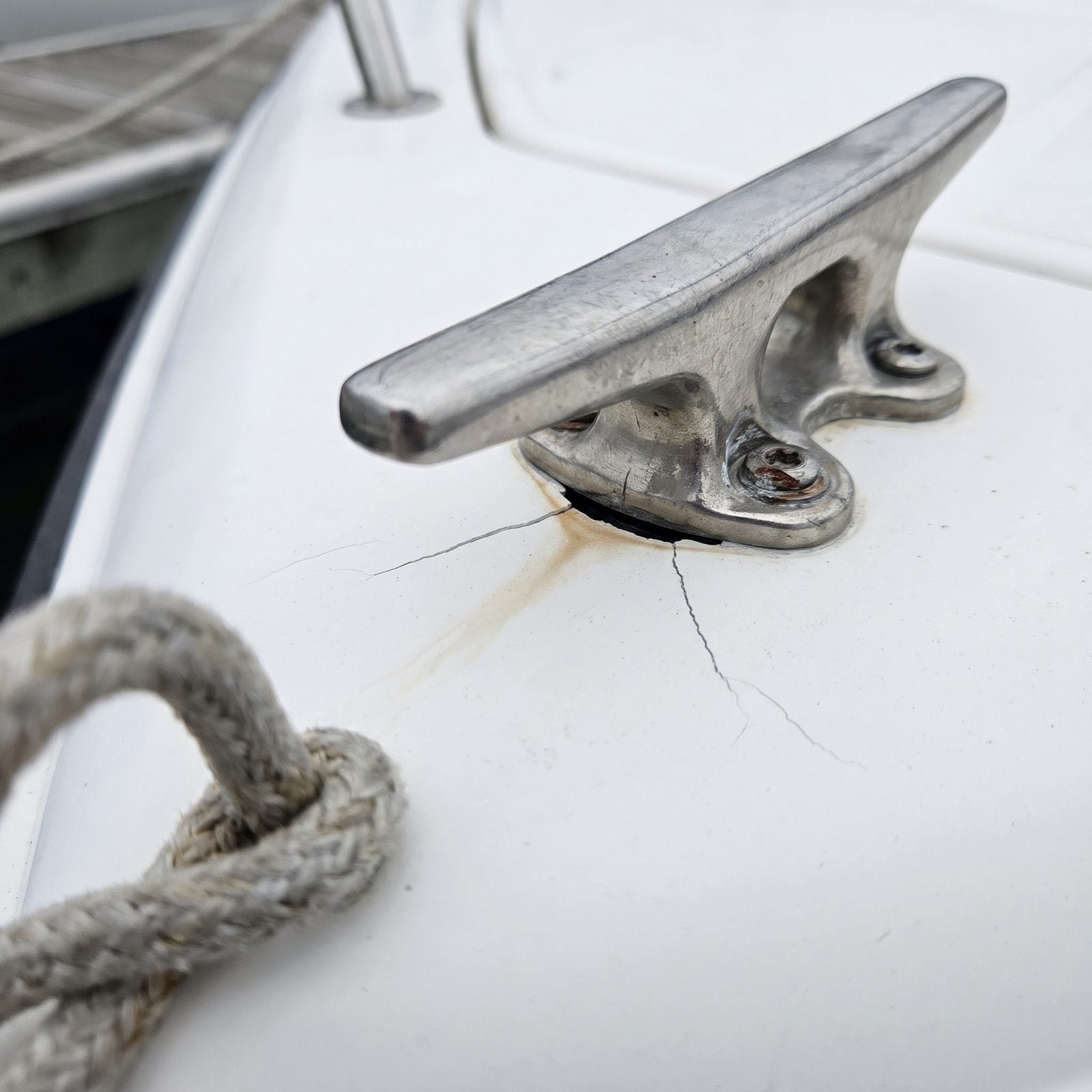
Grab the cleat and give it a wiggle. If it lifts, rocks, or shows a gap and cracked gelcoat at its base, it’s pulling out — and that matters more than it looks, because a cleat is only as strong as the backing plate under the deck.
When one lifts, either the backing plate is undersized or missing, or the deck core around it has softened and lost its grip. A mechanic knows what comes next. A cleat lets go under load at the worst possible second, usually while you’re fighting wind at the dock.
32. Thick Silicone Smeared Around a Through-Hull Fitting
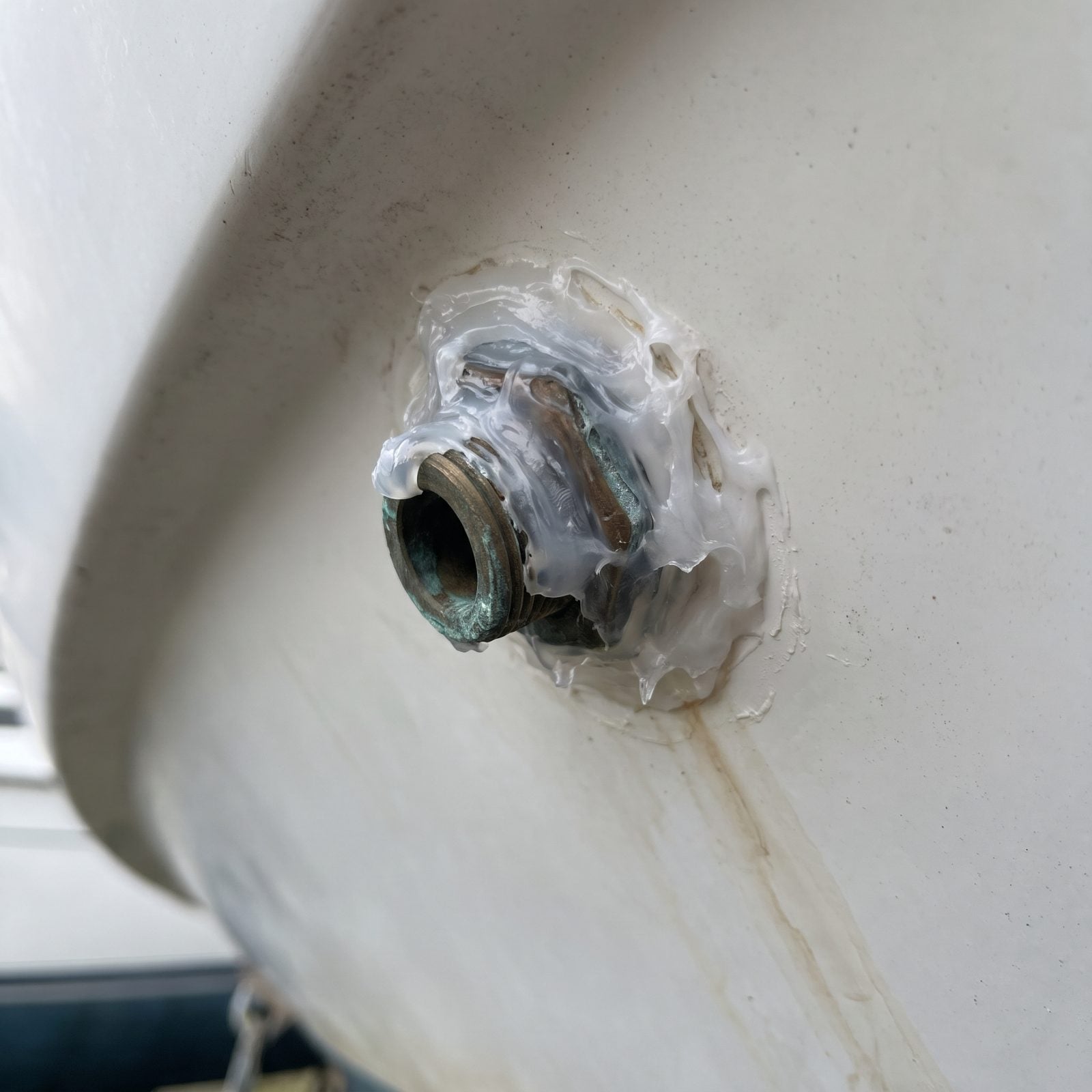
A fat glob of silicone around a through-hull is a confession. Something leaked, and somebody fixed it the fast way instead of the right way.
Silicone is the wrong product below the waterline. It doesn’t bond well to a wet fitting, it peels, and it hides the real problem — usually a loose or corroded through-hull that should’ve been pulled and rebedded properly. When a mechanic spots that smear, they stop trusting every other repair on the boat and start checking.
31. A Bow Eye Pulling Away From the Hull
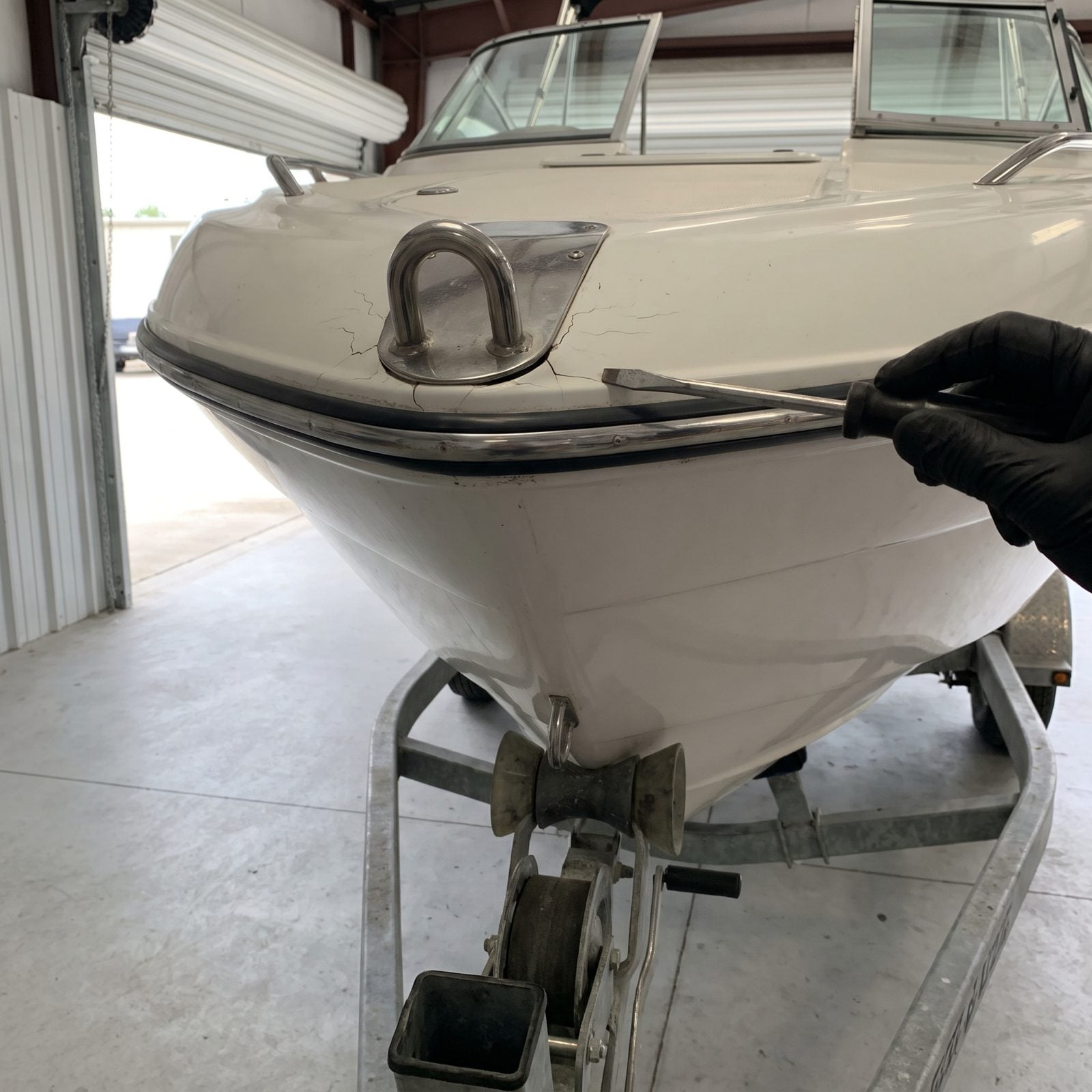
The big U-shaped bow eye on the stem takes the load every time a mooring or tow line goes tight, so when the fiberglass around its base plate starts to crack, a mechanic’s eyes go straight there before anything else.
This is the one that worries them. A bow eye working loose means the backing inside the hull is failing — and that’s the fitting your dock or tow line pulls against when the boat surges. Spider cracks around the base are the early warning. A plate that starts lifting away from the deck is the late one.
30. A Hull Sitting Crooked on Its Trailer
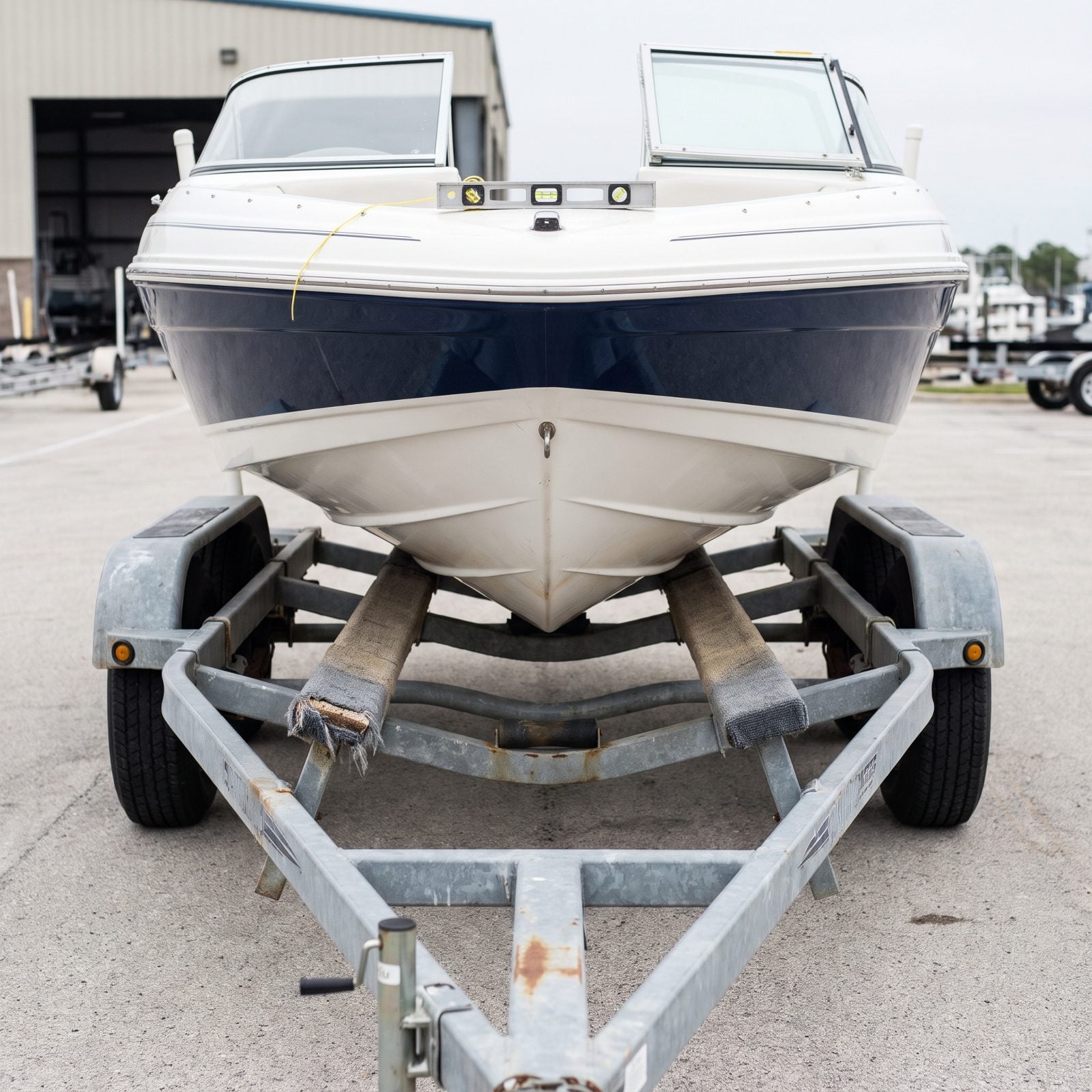
Stand at the tongue of the trailer and the keel should split the difference between the bunks. When it doesn’t, something loaded wrong or something shifted.
Ride off-center all season and the hull wears unevenly, leans its weight onto one bunk, and can crack gelcoat along the chine over a stretch of highway miles. Mechanics clock it from fifteen feet away, before they’ve even walked up with a clipboard. The tell? One carpeted bunk shiny and flattened while the other looks almost new.
29. Grease Flung Across the Inside of a Trailer Wheel
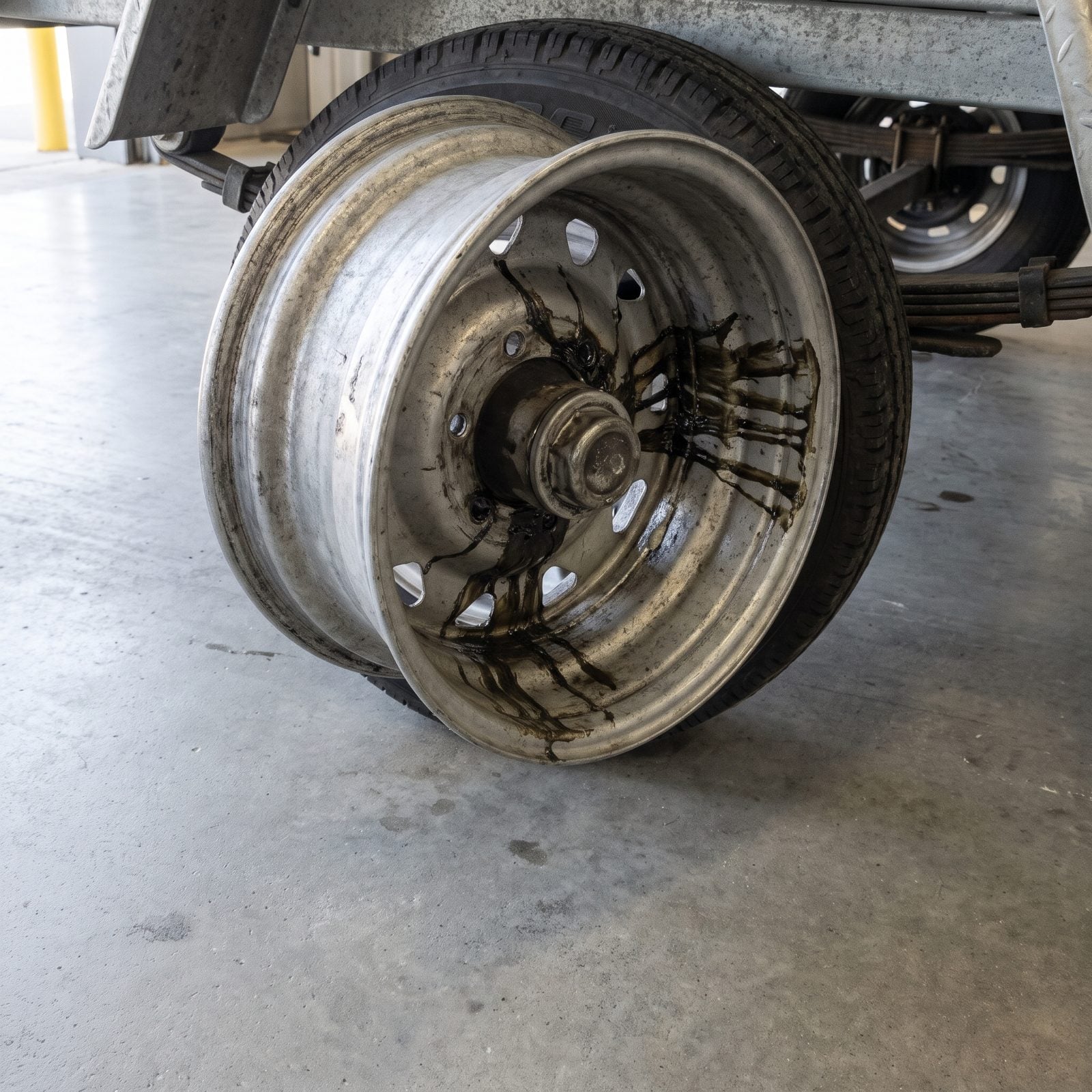
Grease belongs packed inside the hub. When it’s painted in a radial spray across the inside face of the wheel, the seal let go and the bearing has been slinging it out at speed.
That fan pattern tells the whole story — heat, water intrusion, a failing seal, and a bearing running dry underneath. Trailer bearings are cheap. A bearing that seizes on the interstate and drops a wheel is not, and that’s the kind of roadside mess that ends a weekend before it starts. A good mechanic will spin that hub by hand and listen for the grind.
28. Deep Cracks in the Trailer Tire Sidewalls
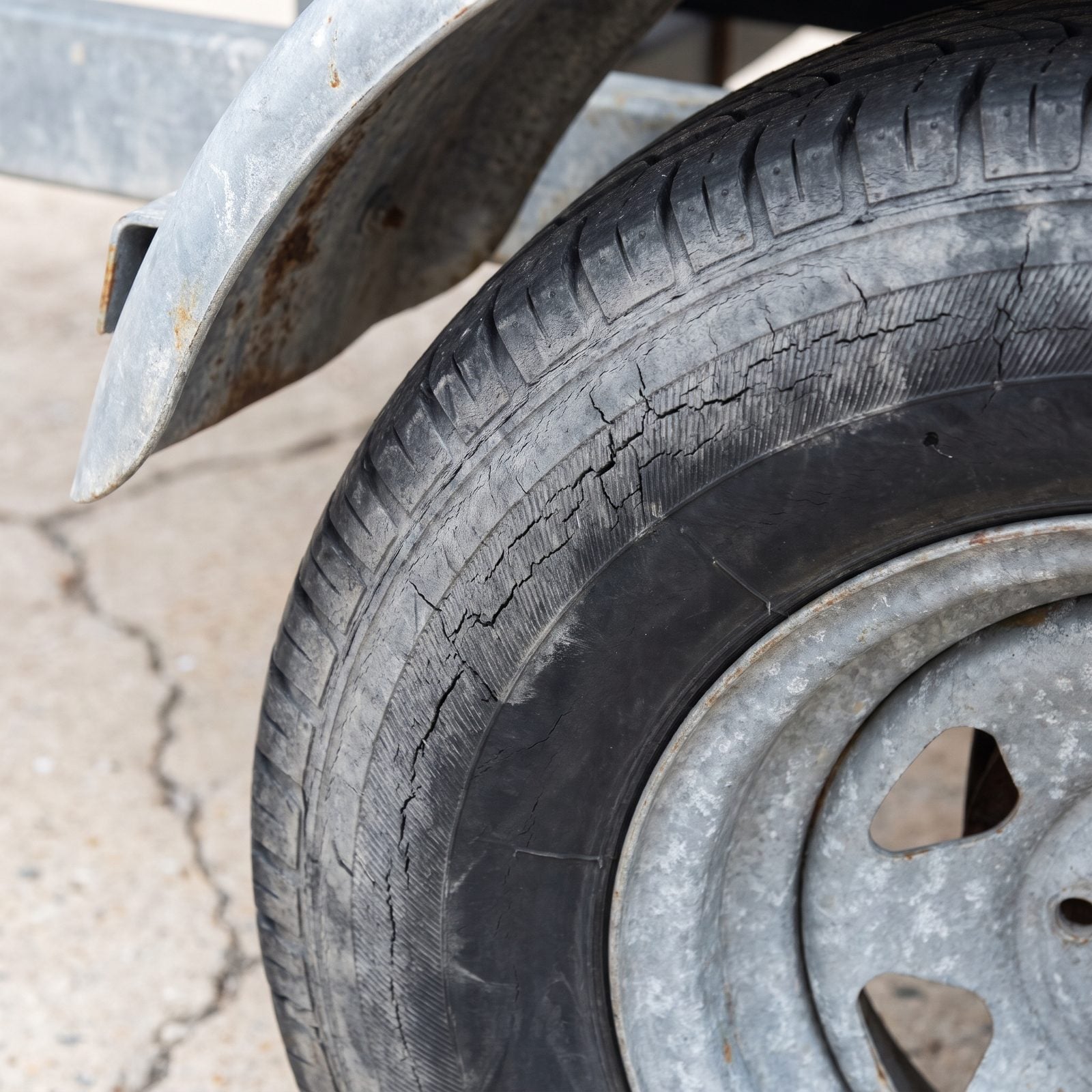
Trailer tires don’t die from mileage. They die from standing still in the sun.
You’ll see plenty of tread left and a sidewall that looks like dried mud, cracks running deep between the ribs. That’s dry rot, and it means the rubber has aged out whether or not you’ve put miles on it. Most trailer tires are done after about five or six years regardless of tread, even ones with gorgeous tread left. A mechanic reads the date code stamped on the sidewall and the cracks together, and both say the same thing: these are living on borrowed time.
27. A Sun-Rotted Winch Strap
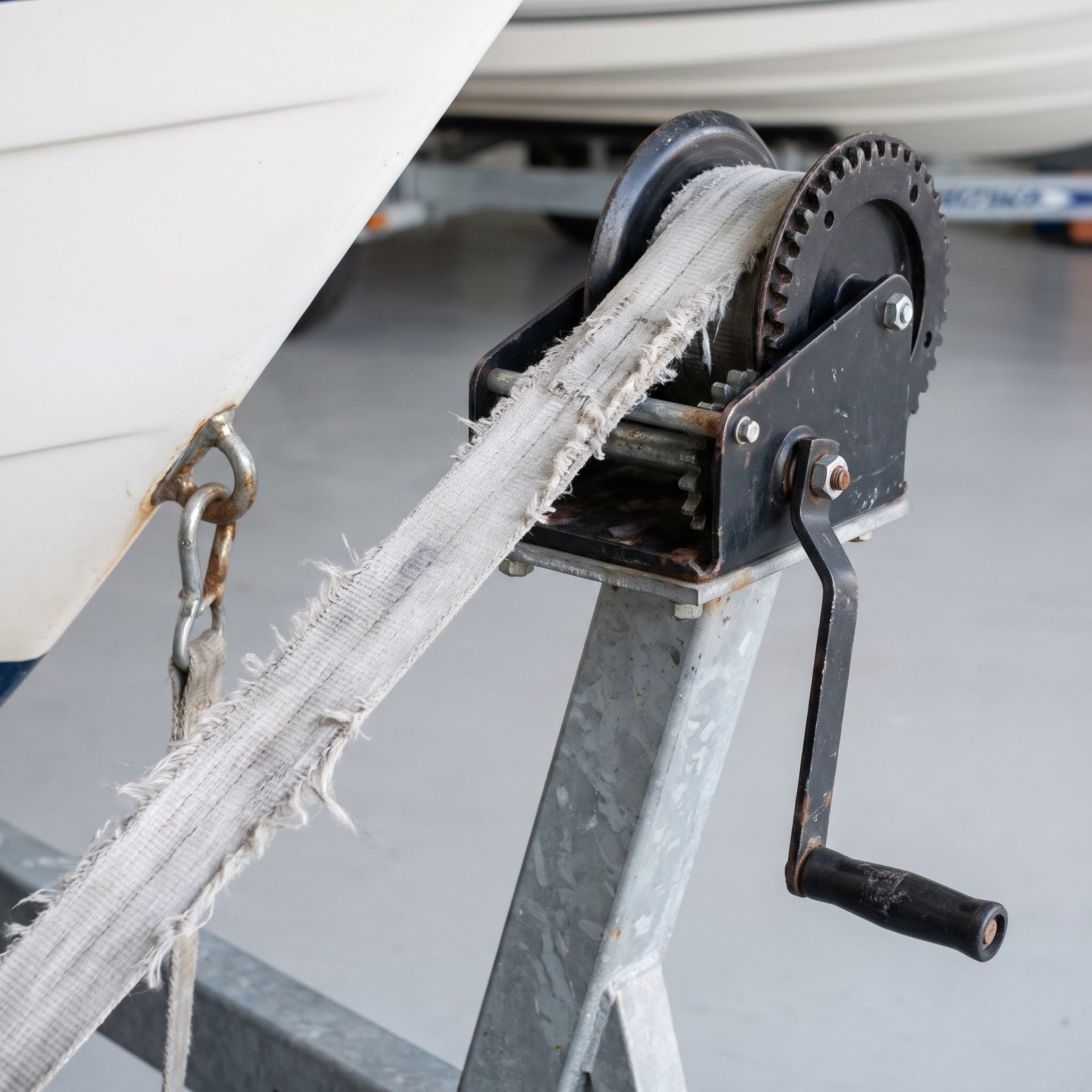
The strap goes from woven to fuzzy. Edges fray, the color bleaches to a chalky gray, and the fibers break when you pinch them. And that strap is the one thing holding your boat’s bow to the trailer at highway speed.
Sun is the killer. UV eats polyester webbing from the outside in, so a strap can look perfectly fine down at the drum and be rotten right at the bend over the roller. Mechanics run it through their hands looking for the soft, powdery spots. Replacing one costs less than a tank of gas.
26. Fresh Dings Along the Propeller Blades
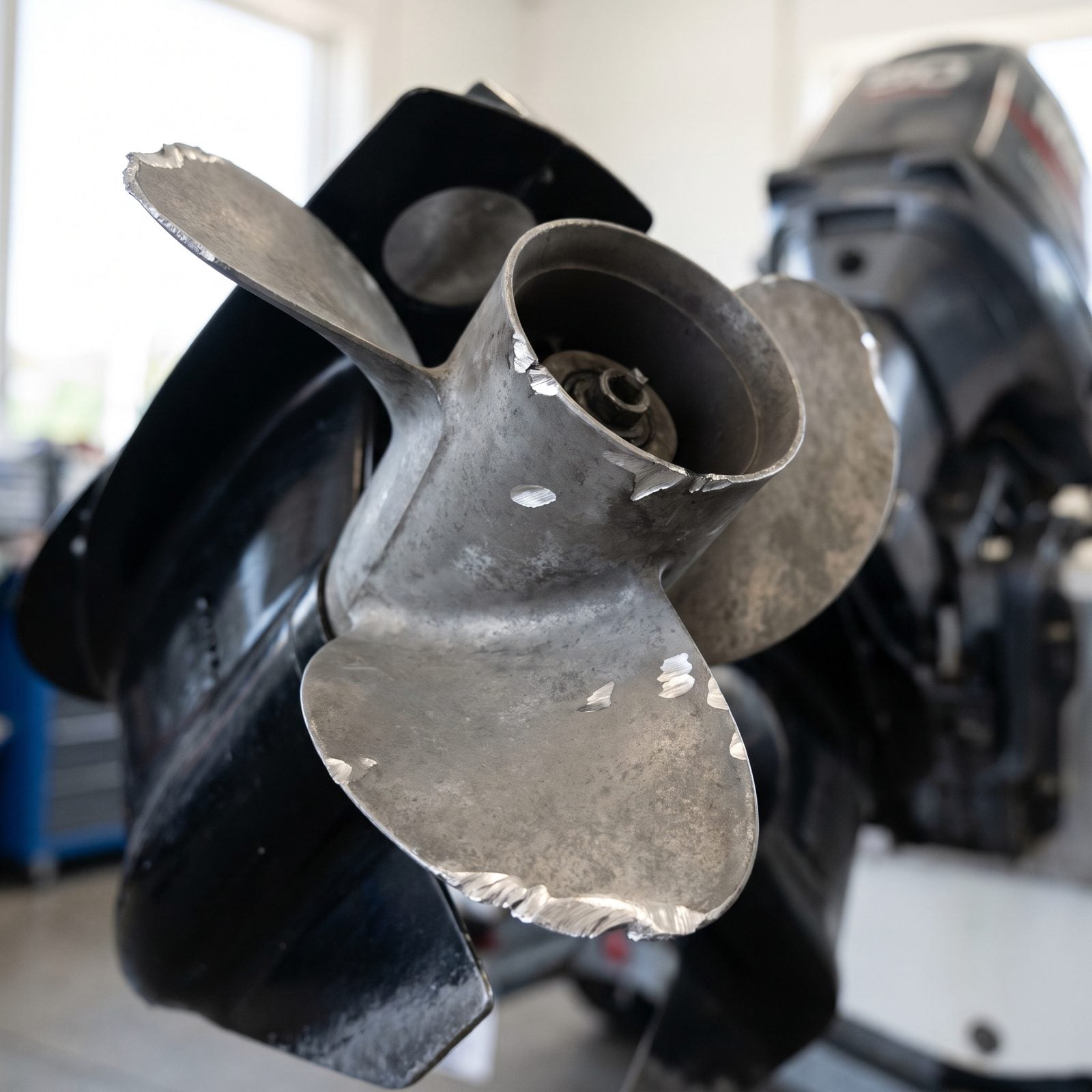
Old prop damage goes dull and gray. Fresh damage shines. That’s the first thing a mechanic reads off a propeller — the bright silver where metal got scraped back to bare, versus the oxidized nicks from seasons ago.
Fresh dings along the blade edges usually mean a recent run-in with a rock, a sandbar, or a submerged log. Even small nicks throw a prop off balance, and that imbalance sends vibration straight up the shaft into the gearcase seals. A ding you can catch with a fingernail is worth watching. Several are worth a repair.
25. A Skeg Bent Noticeably to One Side
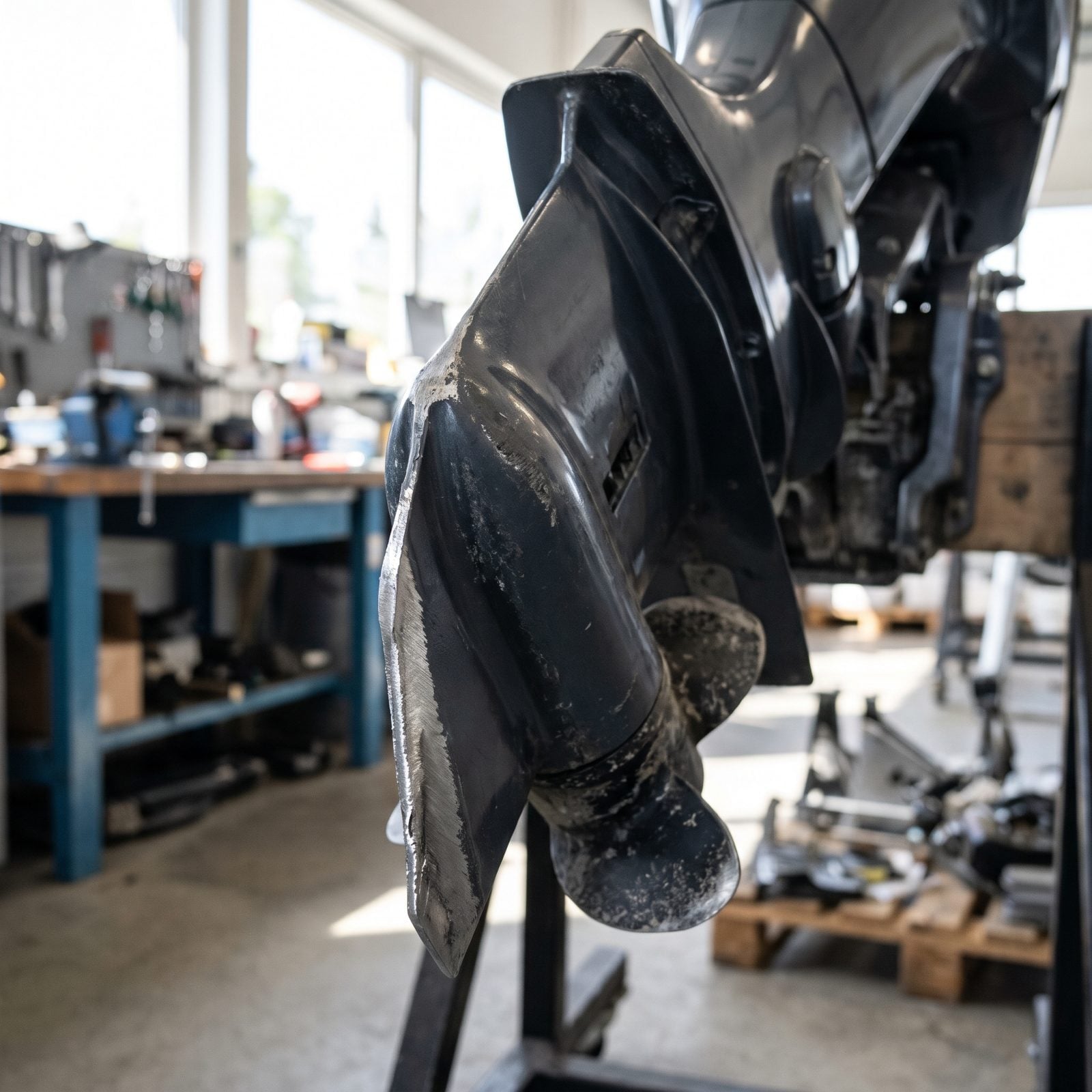
The skeg is that thin fin at the bottom of the lower unit, sitting below the prop, with its scraped leading edge showing bare metal where it hits bottom first. A noticeable bend to one side tells a mechanic the lower unit kissed a rock or a trailer bunk, probably hard.
Here’s what surprises people. A bent skeg pulls the steering — the boat tracks to one side and you fight the wheel all day without knowing why. Down there it’s acting as a rudder, and a bent one is a crooked rudder.
24. Fishing Line Wrapped Around the Propeller Shaft
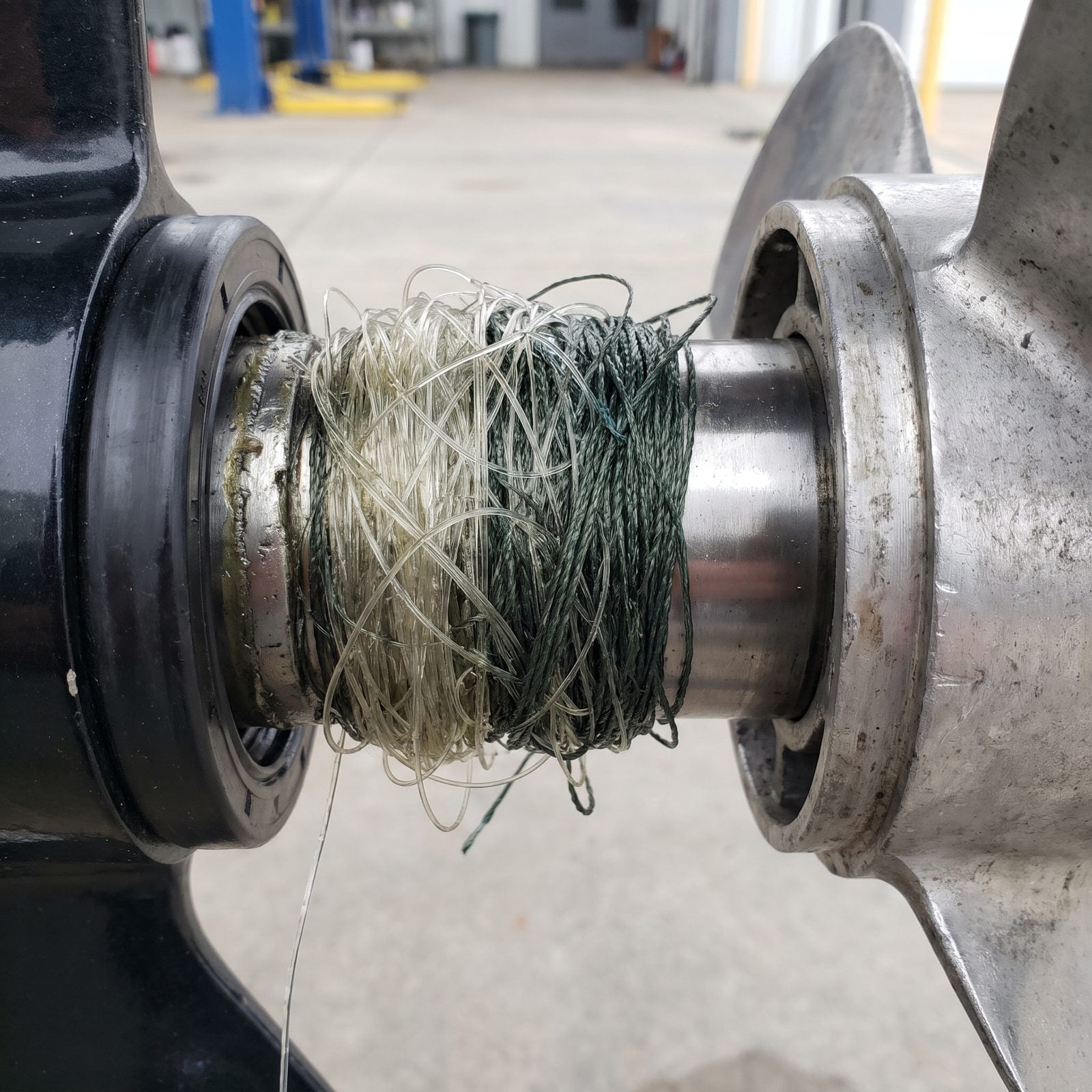
Pull the prop and sometimes you find a tight little bird’s nest of mono and braid wound against the gearcase seal. Anglers get this one a lot.
Looks harmless. It isn’t. Line packed against the prop shaft seal acts like a wire, slowly cutting and wearing the rubber lip until water gets in and gear oil gets out — and the repair for that costs a whole lot more than the line ever did. A mechanic who finds it will unwind it and then go hunting for the first signs of seal damage.
23. Milky Gear Lubricant Dripping From the Lower Unit
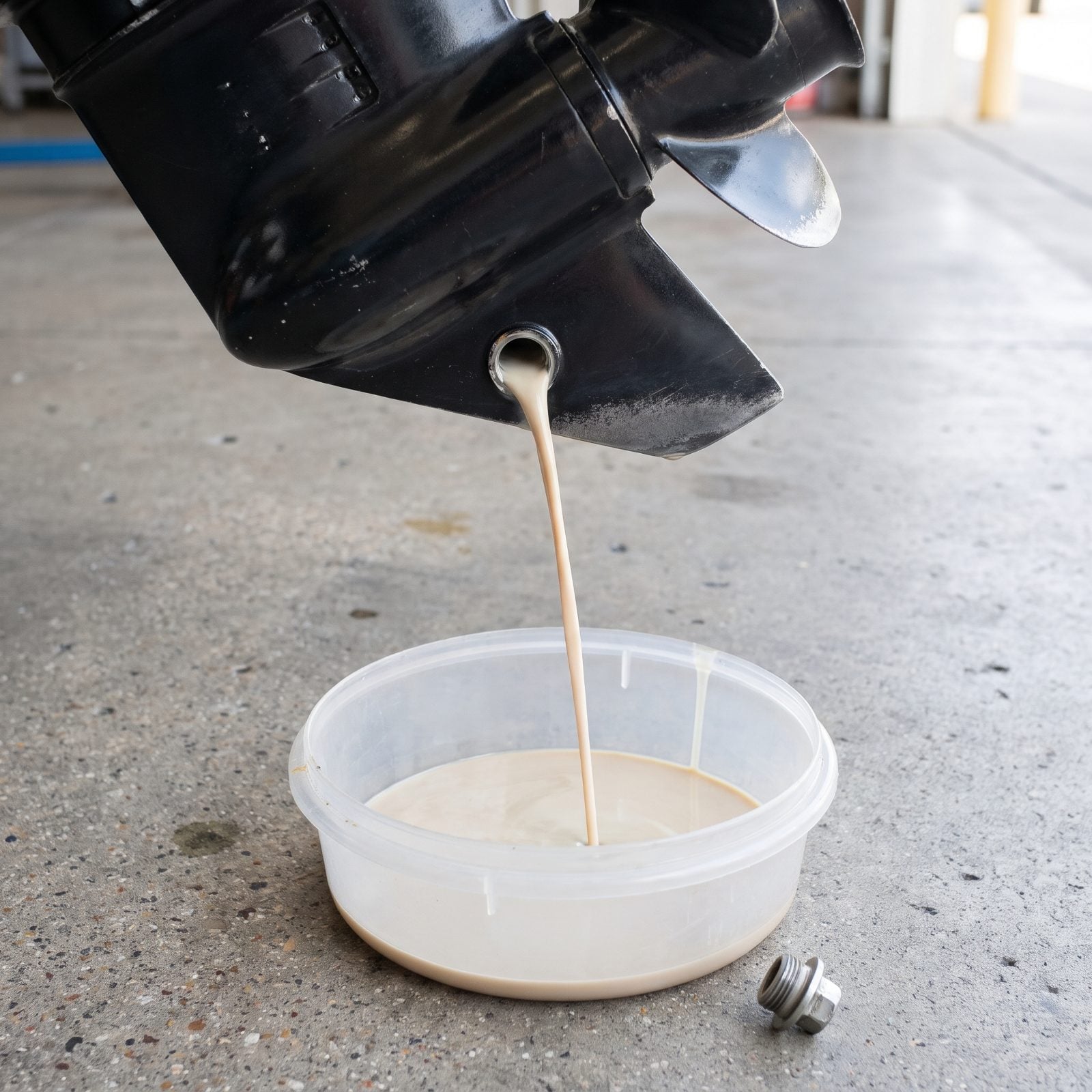
Clean gear oil runs clear amber. When it comes out the color of coffee with cream, water got in, and the gearcase has been running churned-up emulsion instead of lubricant.
That milky look is the clearest sign of a failing seal down low. Water and oil won’t mix, so they beat each other into a pale foam that lubricates almost nothing. Leave it, and the gears grind themselves to filings. Mechanics catch the color the instant it hits the drain pan, and it usually means pulling the lower unit to track down where the water snuck in.
22. Sacrificial Anodes Worn Down to Nubs
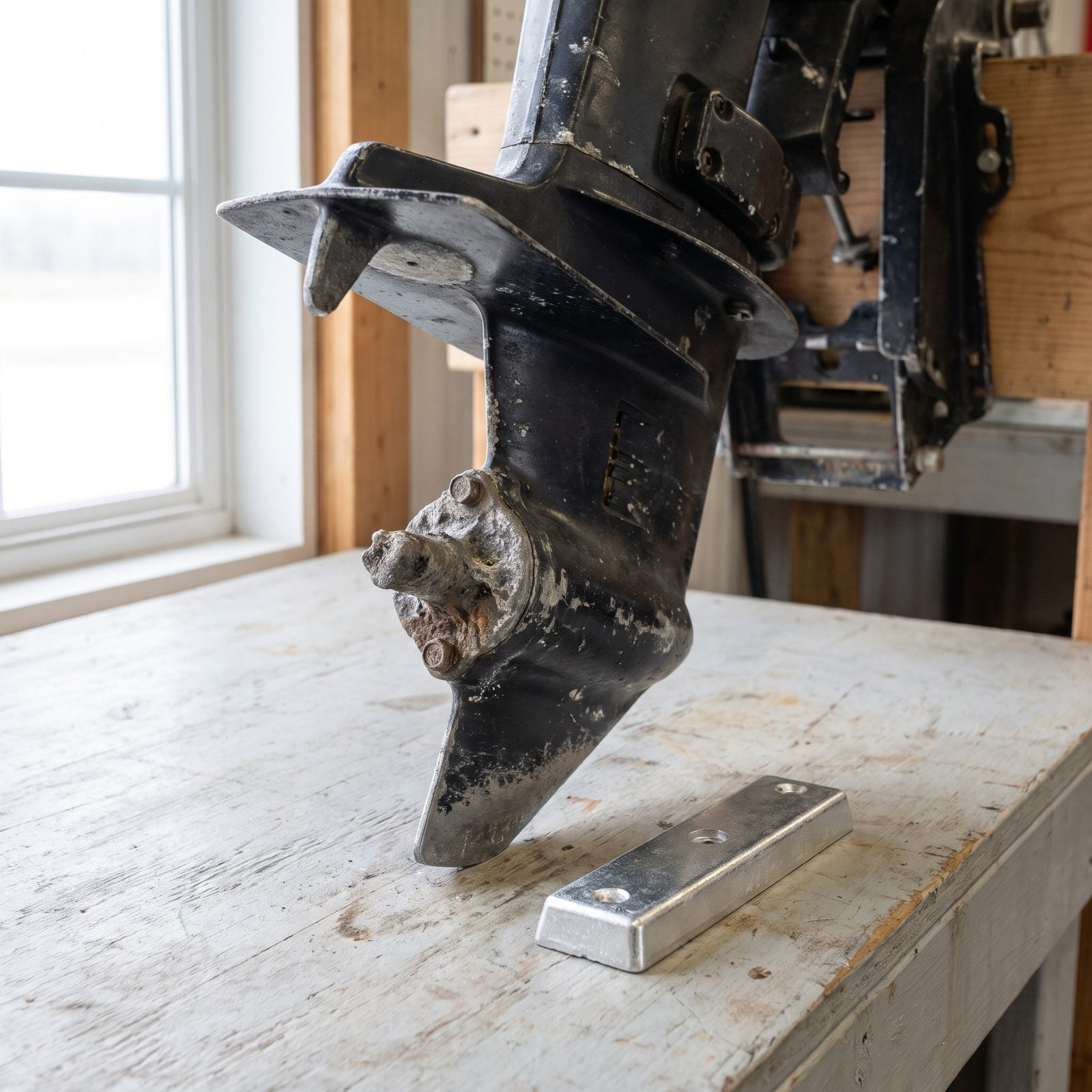
Anodes are supposed to disappear. That’s the whole job. These soft metal blocks corrode so your expensive aluminum and stainless parts don’t have to.
When a mechanic finds them worn to pitted nubs, it tells two things at once. One, the anode has been earning its keep, which is good. Two, it’s nearly out of material, which means your drive is next in line for the corrosion. A worn anode is cheap and quick to swap. What it protects is neither.
21. A Weak, Sputtering Cooling-Water Stream
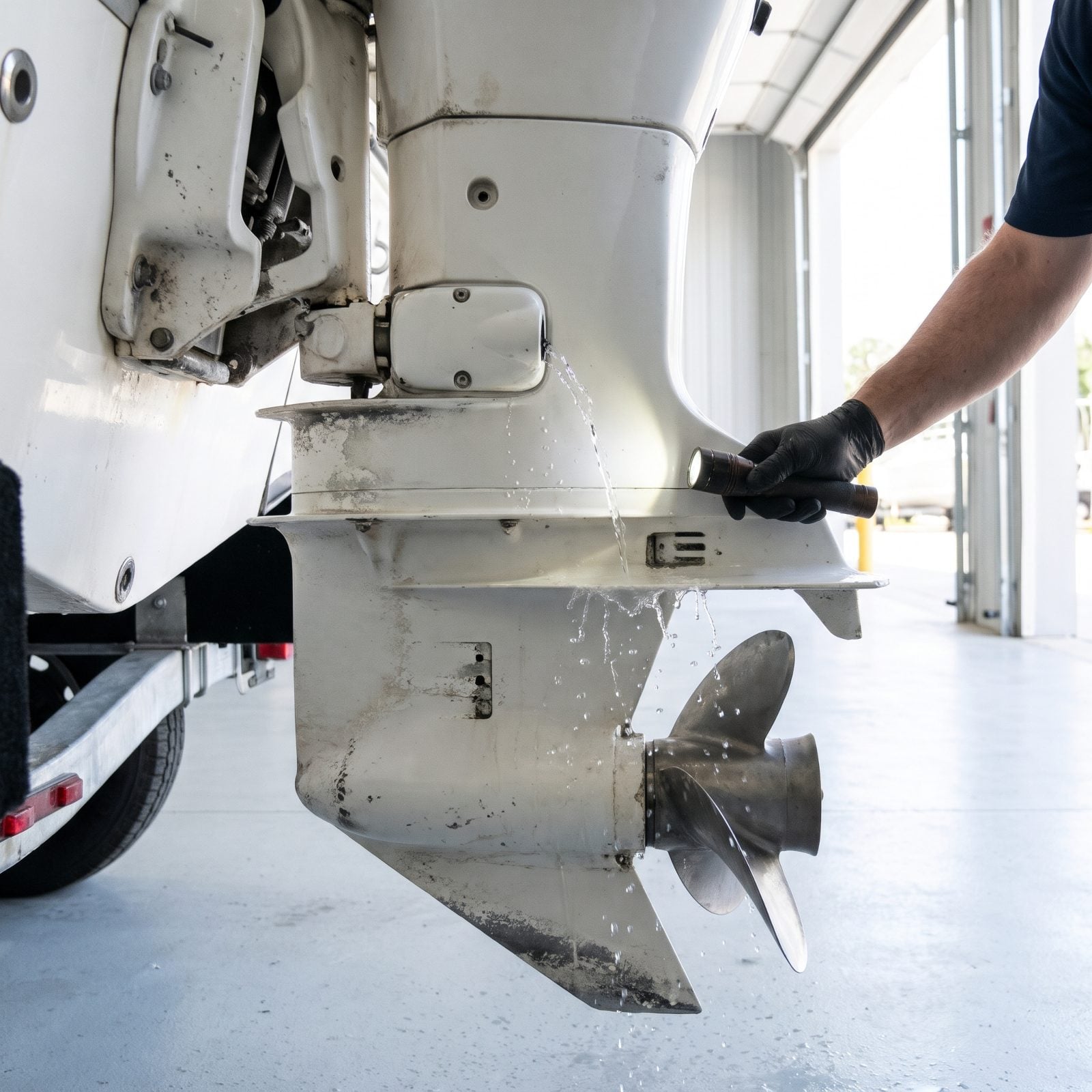
Most outboards spit a small telltale stream of cooling water from a fitting on the side of the engine. Strong and steady means the water pump is doing its job. Weak, spitting, or dribbling means it isn’t, and a good mechanic clocks the difference before the boat’s even off the trailer.
Nine times out of ten it’s a worn impeller — that little rubber paddle wheel inside the pump that goes brittle and chewed up with age. Sometimes it’s just a wasp nest or a pebble lodged in the outlet. Either way, a cooling system that can’t move water is an engine quietly cooking itself.
20. Blue Smoke Hanging Behind the Engine
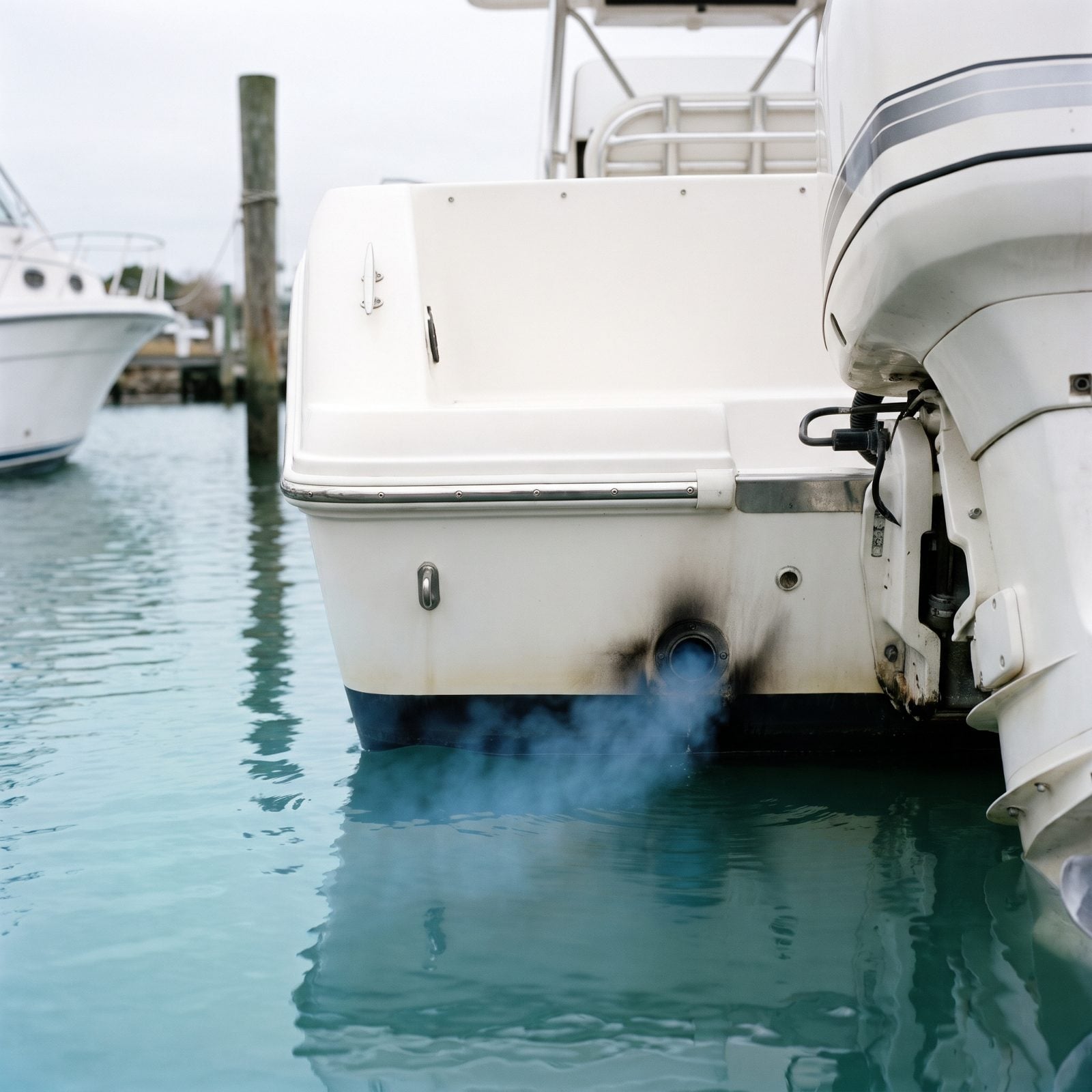
Blue smoke means oil is going where oil shouldn’t — straight into the combustion chamber and out the pipe.
On a two-stroke, a little haze at startup is normal. A steady blue cloud that hangs in the air after warmup is not. It points to worn piston rings or an oil-injection system dumping too much. The mechanic usually smells it before seeing it, because two-stroke oil has a sweet, chemical tang that lingers.
Don’t wave it off as the engine just being old. Burning oil is money leaving in vapor form.
19. White Steam Billowing From the Exhaust
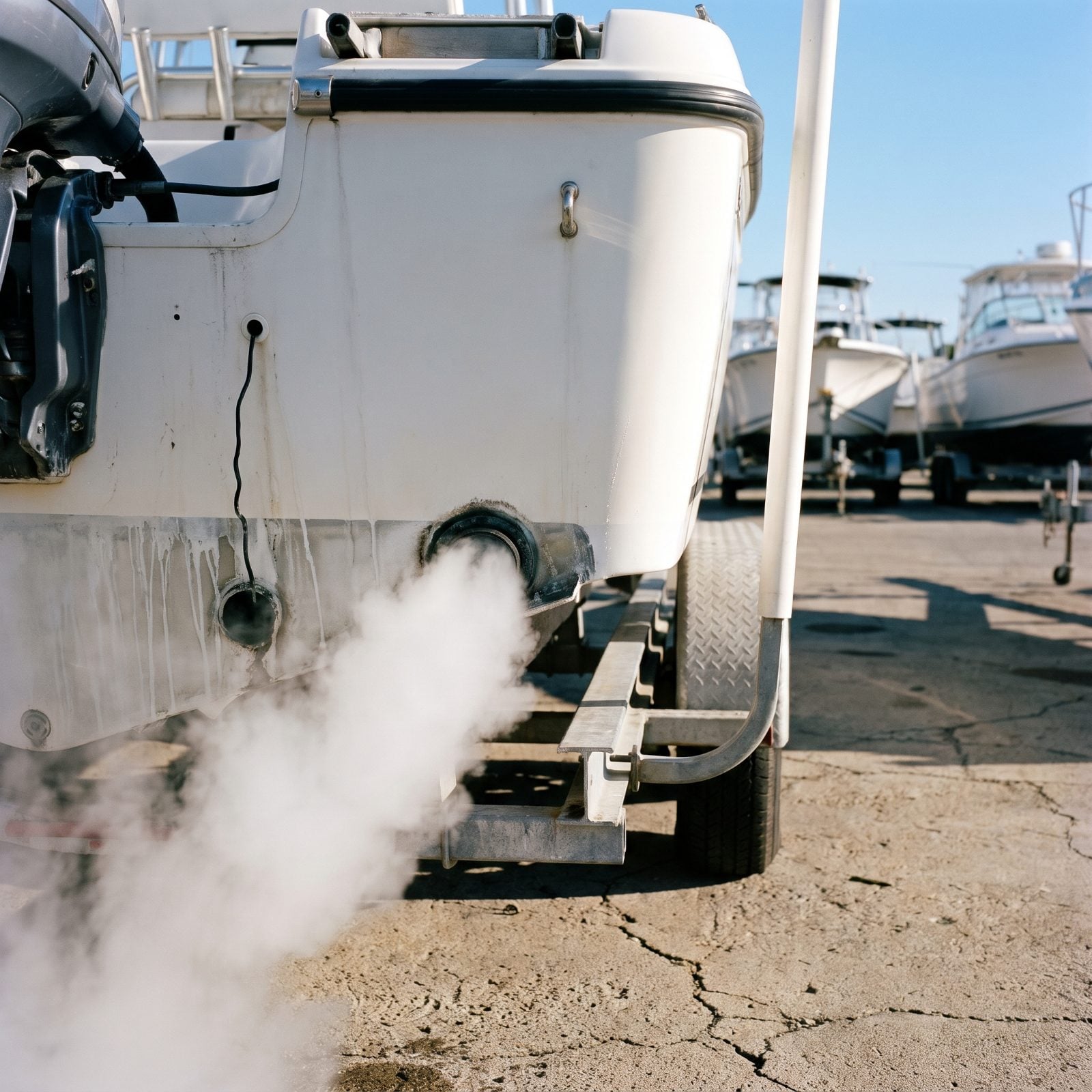
White is the color nobody wants. A little condensation steam on a cold start burns off fast. Thick white smoke that keeps coming is coolant getting into the cylinders, and now you’re having a conversation about head gaskets.
The giveaway is the smell. Burning oil smells acrid; burning coolant smells faintly sweet, almost like maple. That’s why a mechanic will lean right into the exhaust stream.
18. An Engine That Surges Instead of Idling Smoothly
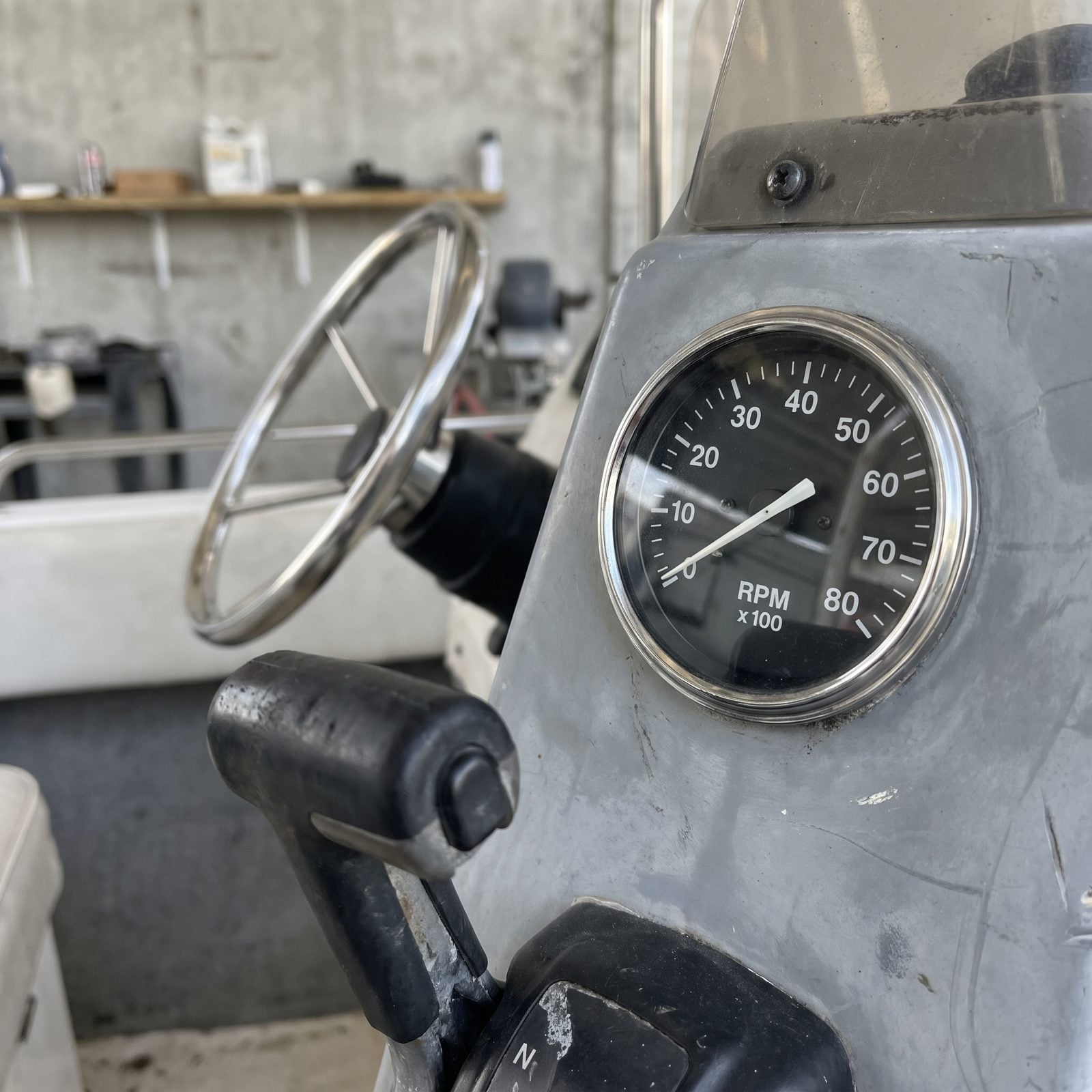
A healthy idle holds a steady line. A sick one hunts, climbing and falling like it keeps losing its footing.
That surge usually traces back to the fuel side — a clogged idle jet in the carburetor, a lean mixture, an air leak sneaking into the intake, or dirty injectors on a newer rig. The engine keeps grabbing for a stable mix and can’t find one.
Owners learn to live with it, nudging the throttle at the dock to keep the thing running. A mechanic hears it idle for ten seconds and knows the fuel system needs attention before you ever leave the no-wake zone.
17. Fresh Oil Pooled Beneath the Engine Cowling
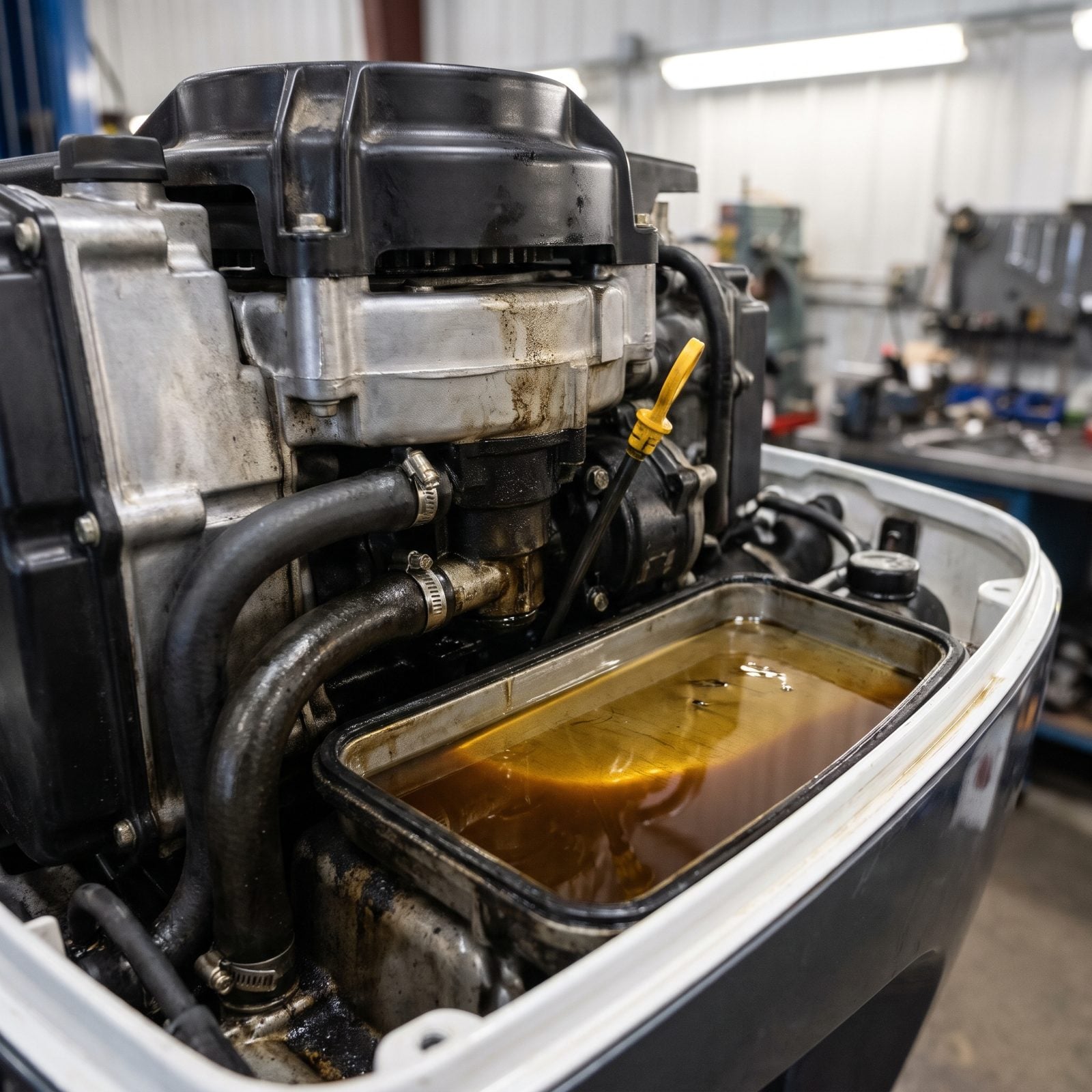
Pop the cowling and a mechanic’s eyes go straight to the low spots. Oil collecting there points to a leak, and leaks have a short list of usual suspects: a loose drain plug, a tired valve cover gasket, an over-filled crankcase pushing oil out the breather.
The word fresh matters. Old, dusty residue is history. Clean, bright amber oil filling a pan is happening right now.
16. A Fuel Sheen Spreading Behind the Stern
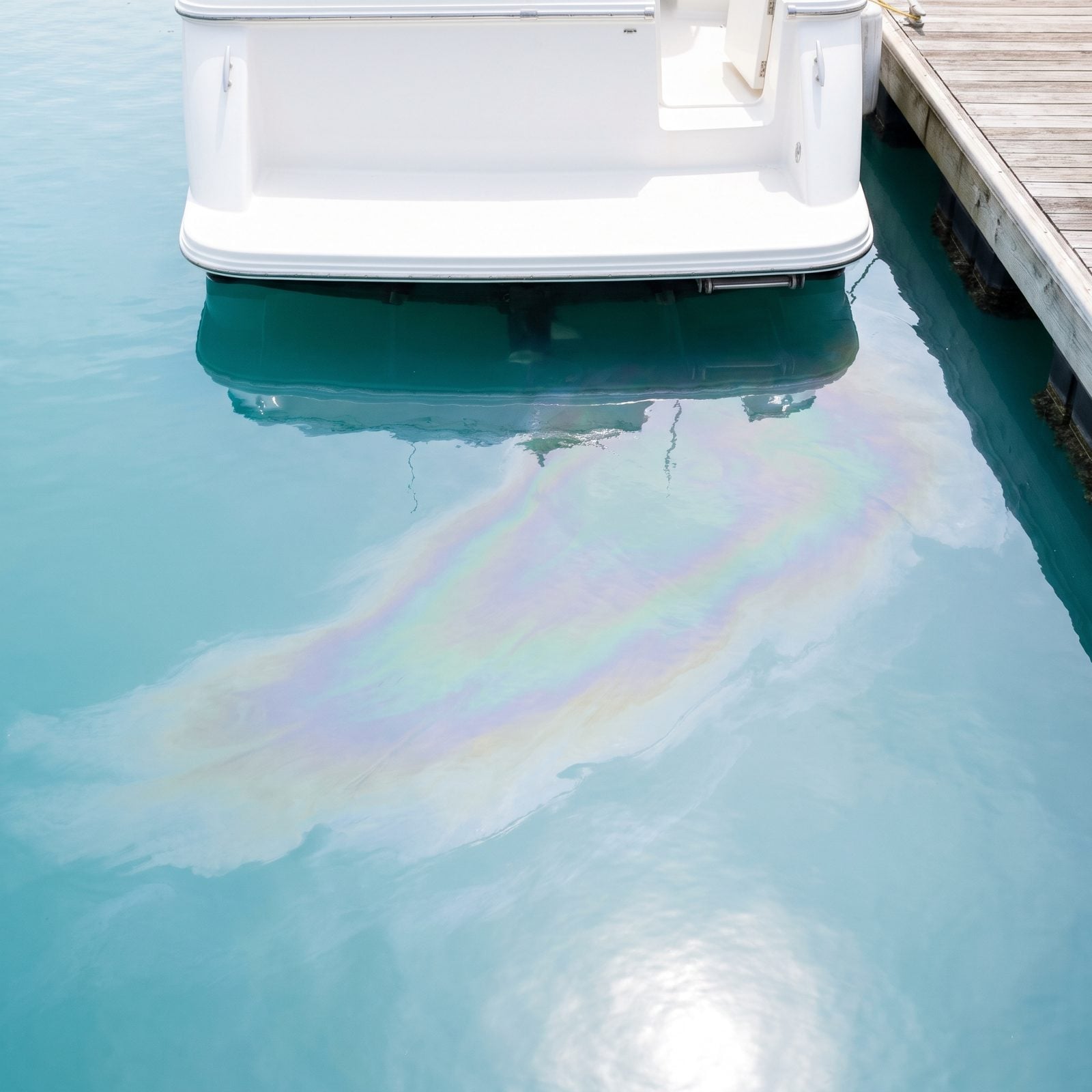
A thin, colored film spreading out behind the transom is fuel, not a trick of the light.
It can mean a cracked fuel line, a weeping carburetor, a loose fitting, or a tank vent that dribbles when the boat tips. Small as it looks, it’s two problems at once: a fire risk near a hot engine, and a fine you really don’t want, since putting fuel on the water is illegal in every state.
A sharp mechanic spots the shimmer before the boat’s even fully docked. Then the nose confirms it.
15. Dark, Varnish-Colored Fuel in the Filter Bowl
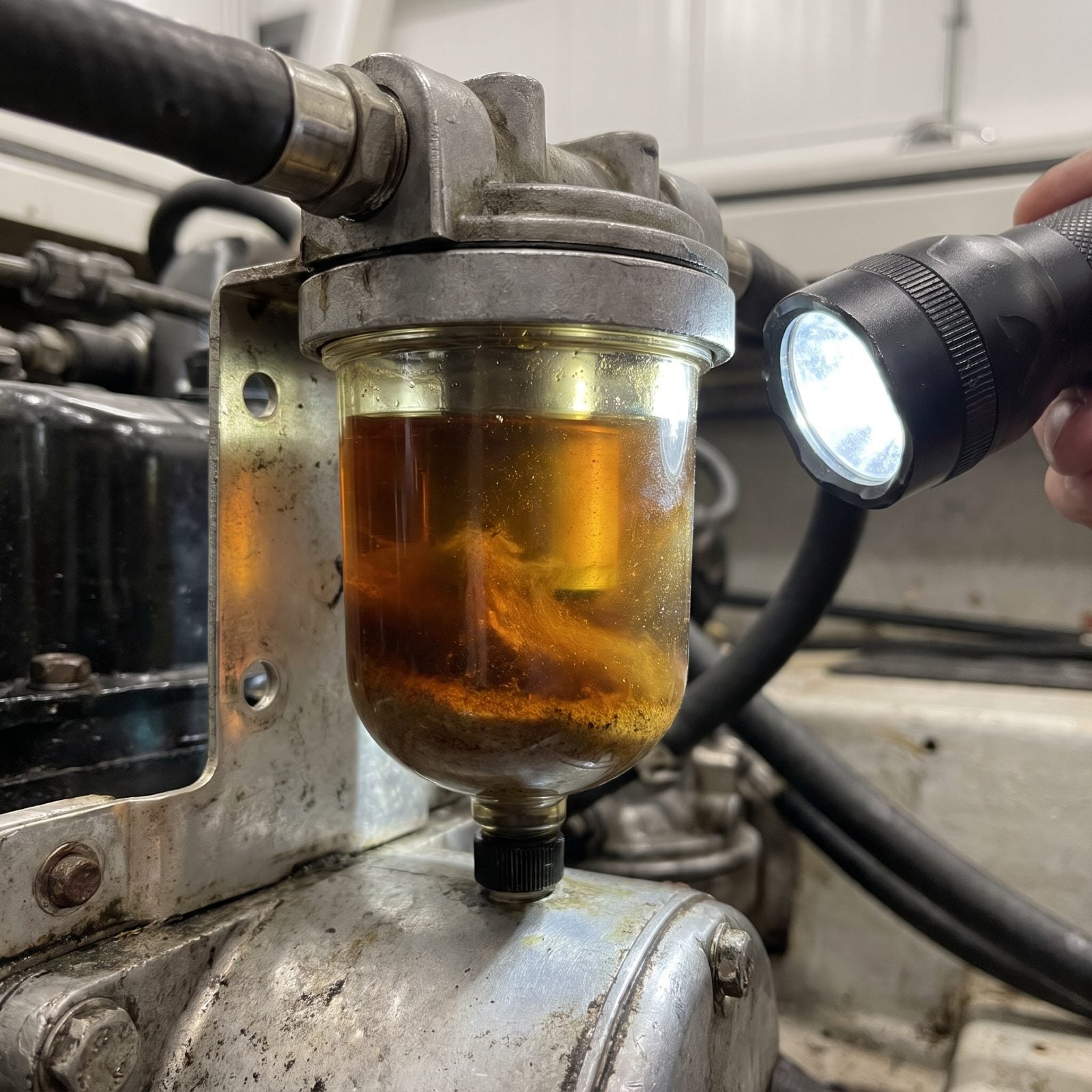
Good gasoline runs clear with a faint straw tint. When it turns the color of dark honey or old varnish, it’s gone stale.
Ethanol fuel breaks down fast, especially in a tank that sat all winter. It goes gummy, drops sediment, and leaves that sticky coating on everything it touches. A mechanic unscrews the see-through filter bowl, holds it to the light, and the diagnosis is right there in the glass.
14. Cracks Around the Ends of the Fuel Hose
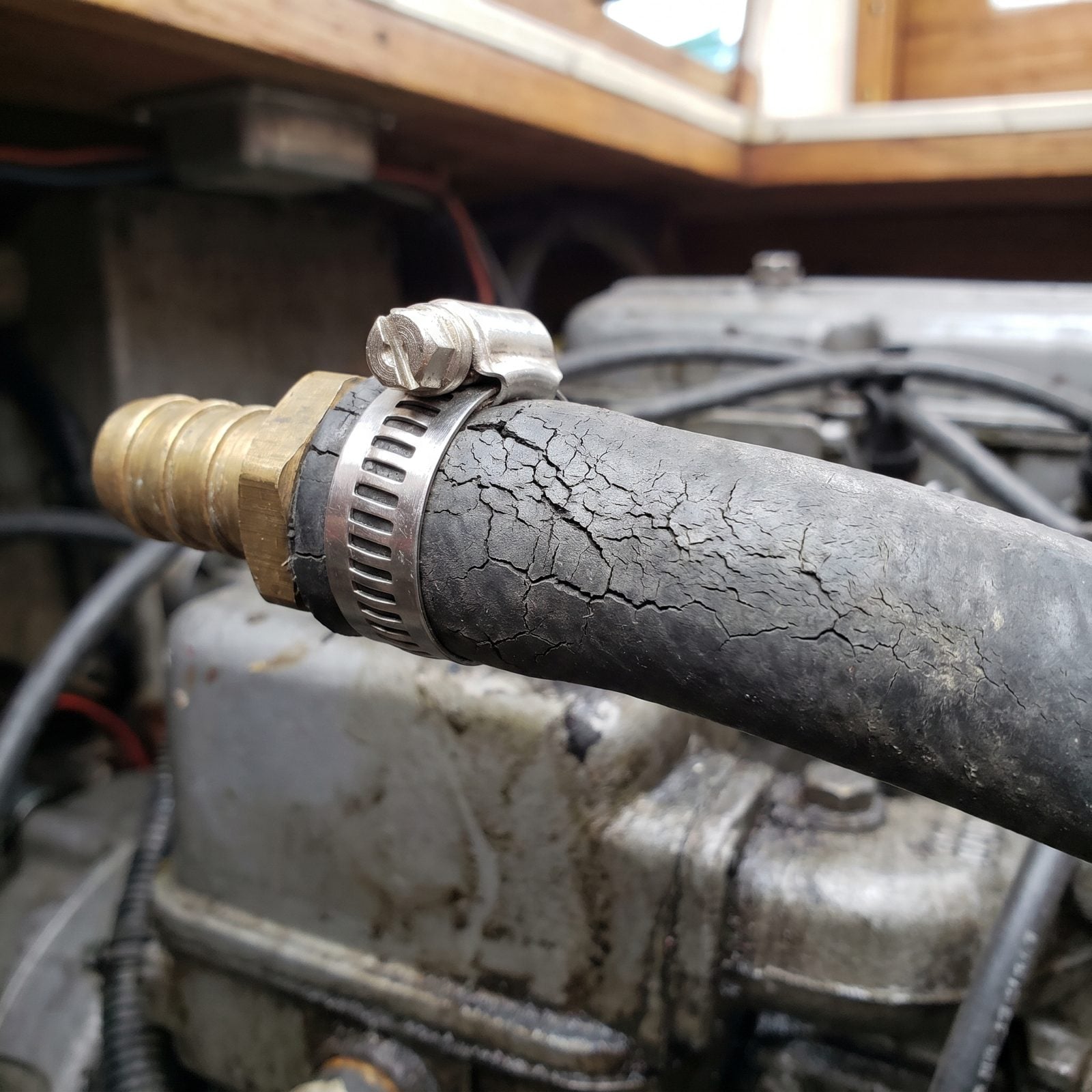
Fuel hose doesn’t fail in the middle. It fails at the ends, where it bends over a fitting and flexes every single time the engine runs.
A mechanic runs a thumbnail along the hose near each clamp. Fine spiderweb cracks mean the rubber has dried out and gone hard. It might hold today, but under pressure on a hot afternoon, that’s exactly where it splits and starts weeping fuel into the bilge.
Cheap part, big consequence. This is the kind of thing that gets replaced on sight rather than watched.
13. A Primer Bulb That Stays Collapsed
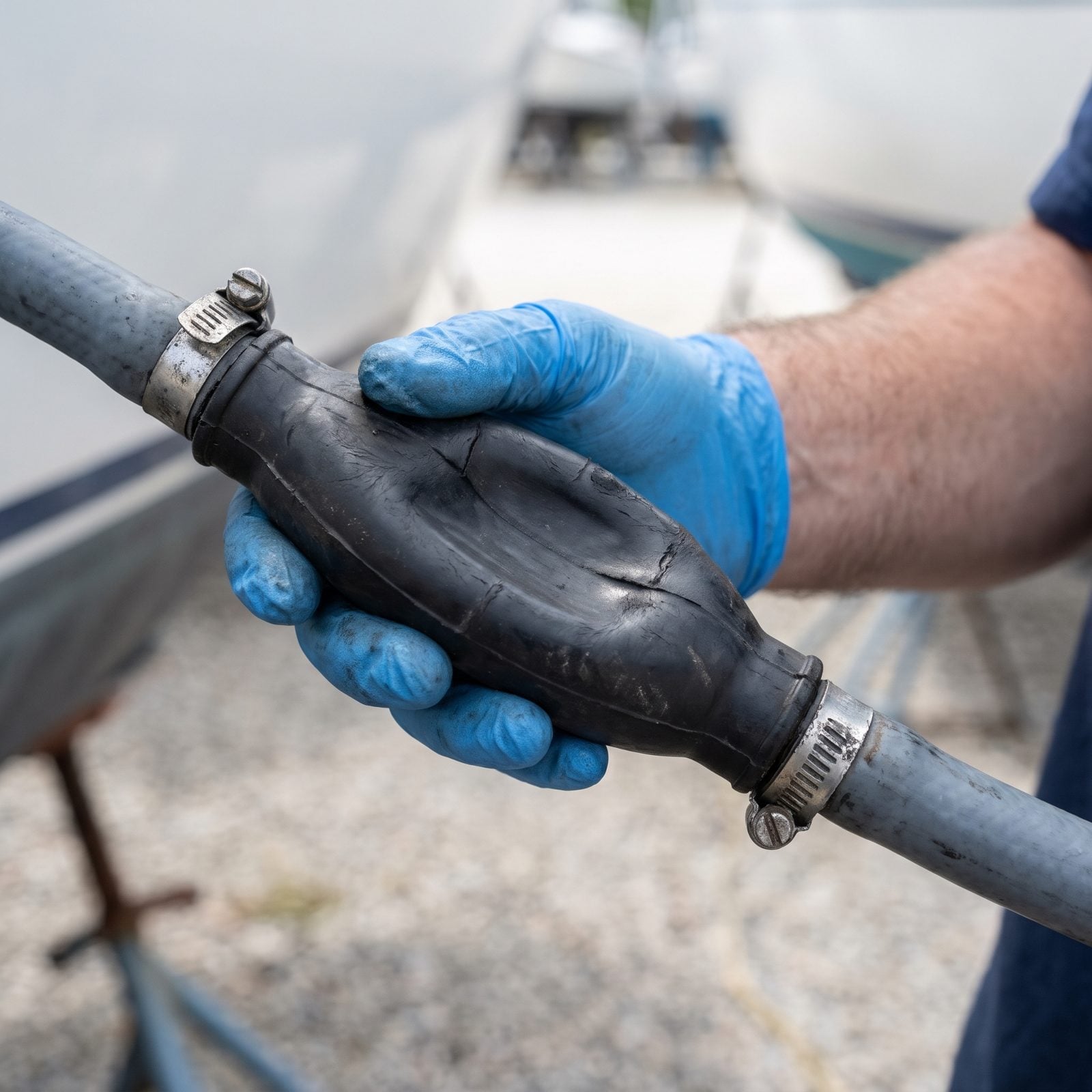
Squeeze the primer bulb. It should firm up and spring back round, which tells you the fuel line is sealed and full.
When it stays collapsed and limp, something’s wrong on the suction side — an air leak, a failed one-way check valve inside the bulb itself, or a line sipping air it shouldn’t. The engine starves for fuel and dies the moment you leave idle.
It’s a ten-second test a mechanic does on reflex. The bulb is a two-dollar tell that saves a whole afternoon of chasing a stall.
12. A Rainbow Oil Sheen Across the Bilge Water
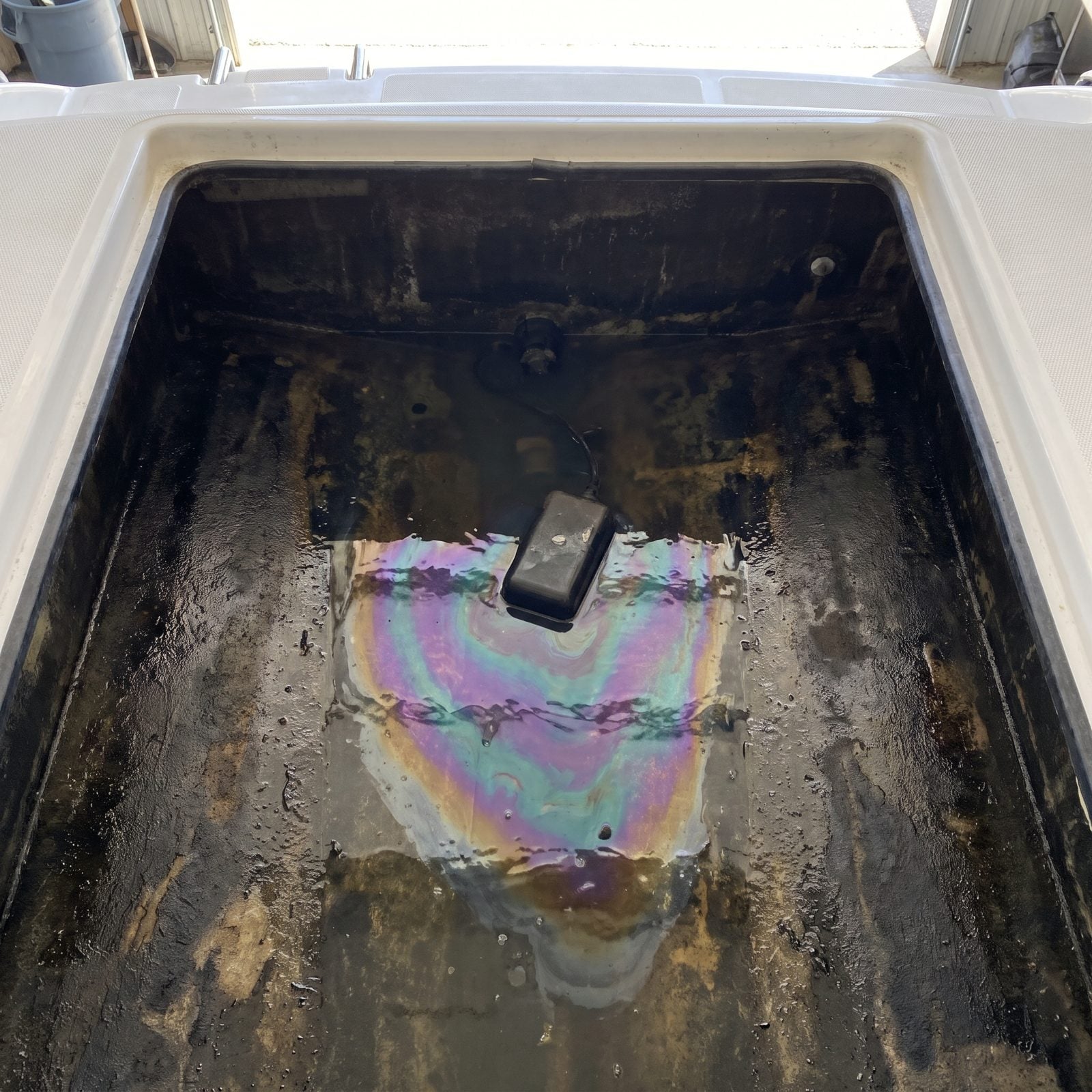
Open the bilge hatch and a shifting rainbow film on the water tells its own story before any tool comes out.
That sheen is oil or fuel that’s leaked and settled in the lowest point of the boat, which means a drip somewhere above — maybe the engine, maybe a fitting — slowly feeding the pool. And the bilge pump that’s supposed to protect the boat is now rigged to push that mess straight overboard, which is both an environmental fine and a clue the leak has been going a while.
A dry, clean bilge is one of the quietest signs of a boat that’s been looked after. The rainbow is the opposite.
11. An Automatic Bilge Pump That Never Stops Cycling
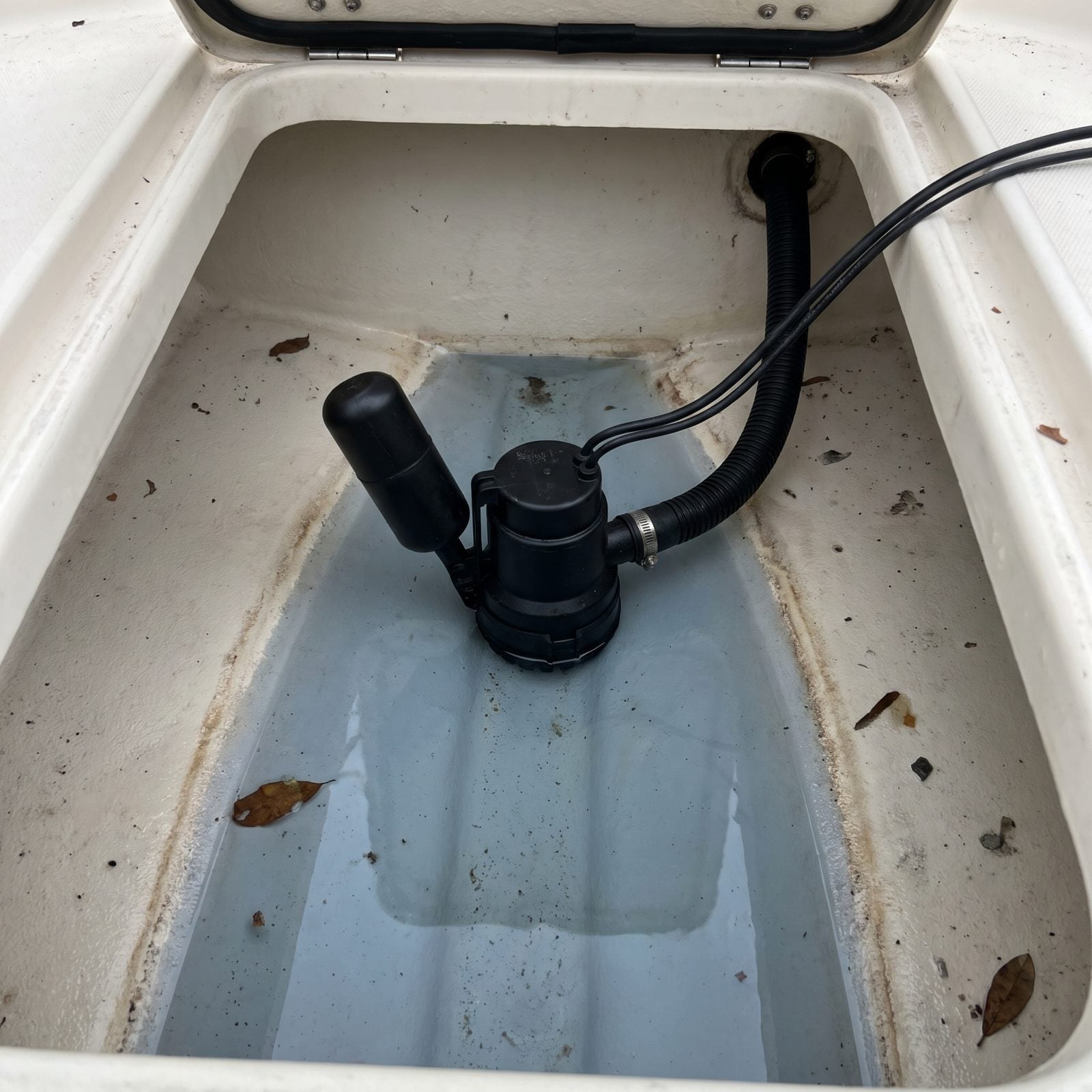
A pump that kicks on every few minutes isn’t working hard. It’s telling you water is getting in faster than it should, and the pump is the last thing standing between your boat and the bottom of the slip.
Mechanics listen for this before they look. That rhythmic hum and gurgle on a boat that’s been sitting dry means a leak somewhere upstream — a tired packing gland, a cracked hose clamp, a thru-hull that’s weeping. The pump is a symptom, never the cure.
10. Green Fuzz Crawling Up the Battery Terminals
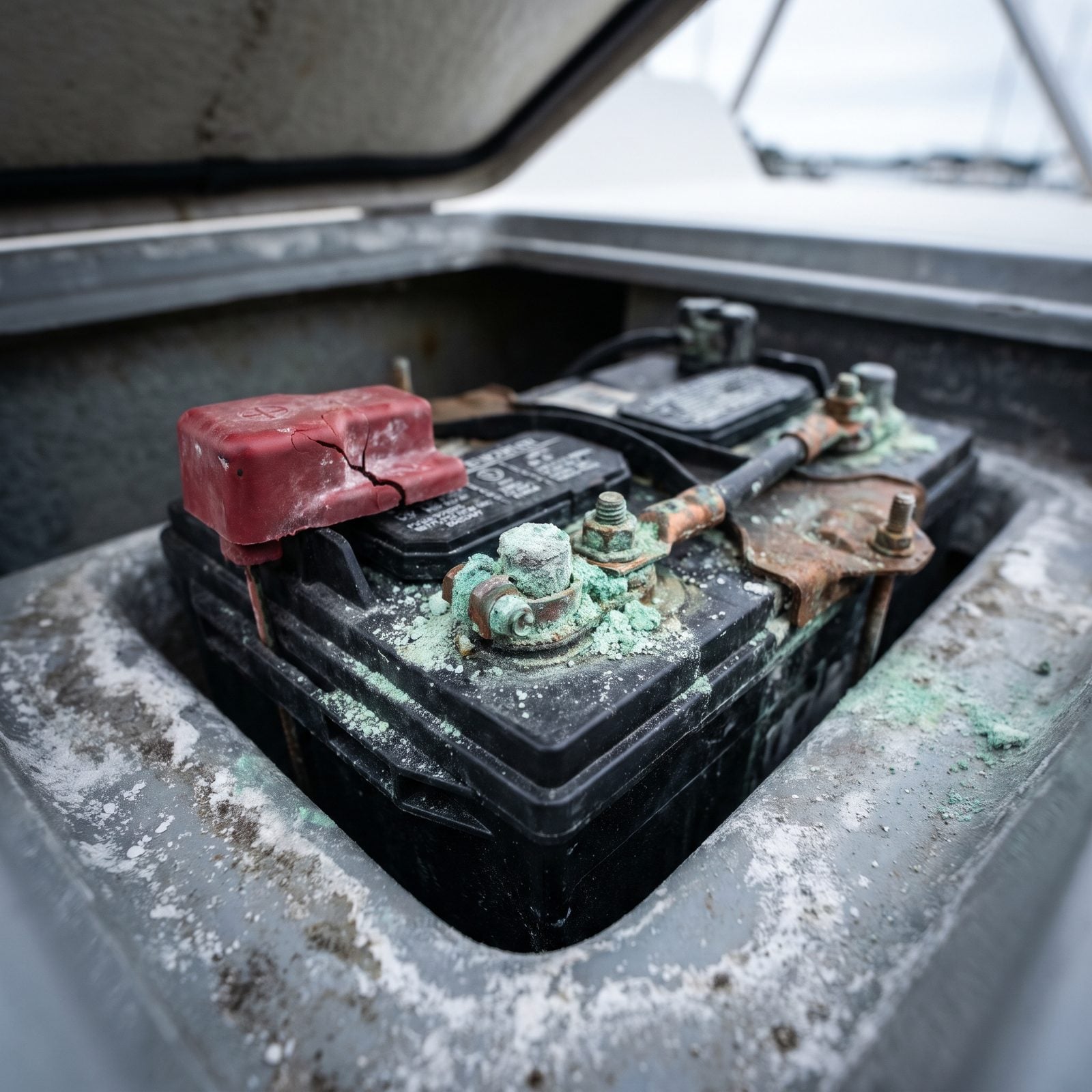
That blue-green bloom on a terminal looks like decoration. It’s resistance. Corrosion fights current, and a corroded post can starve your starter, dim your lights, and leave you cranking a dead click at the worst possible moment.
Here’s the part people miss: the fuzz means a connection has been loose or wet for a long while. A mechanic reads it like rings on a tree. A light dusting is recent, but a crusty green beard climbing the cable means neglect measured in seasons — and probably a cable that’s corroded internally where you can’t see it.
9. Wing Nuts Doing the Job of Real Battery Hardware
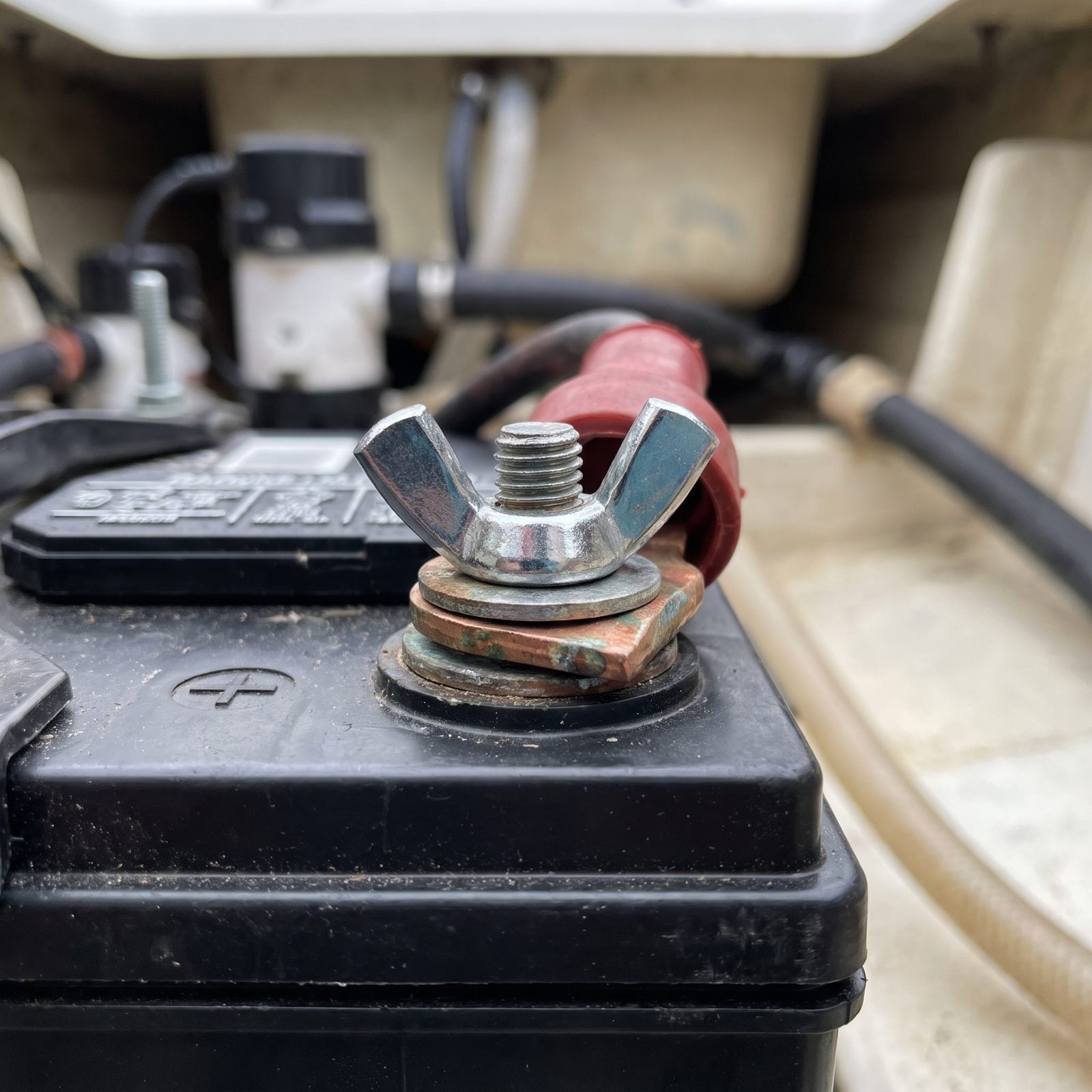
A wing nut on a battery terminal is a confession. It says someone wanted a connection they could undo by hand, which is exactly what a battery connection should never be.
Vibration is the enemy here. A boat pounds across chop all day, and a hand-tight wing nut backs itself off, arcs, heats, and eventually melts something. Marine standards call for a proper nut torqued down tight — not a fingertip fastener from the hardware store aisle.
8. A Battery Skating Loose Around Its Tray
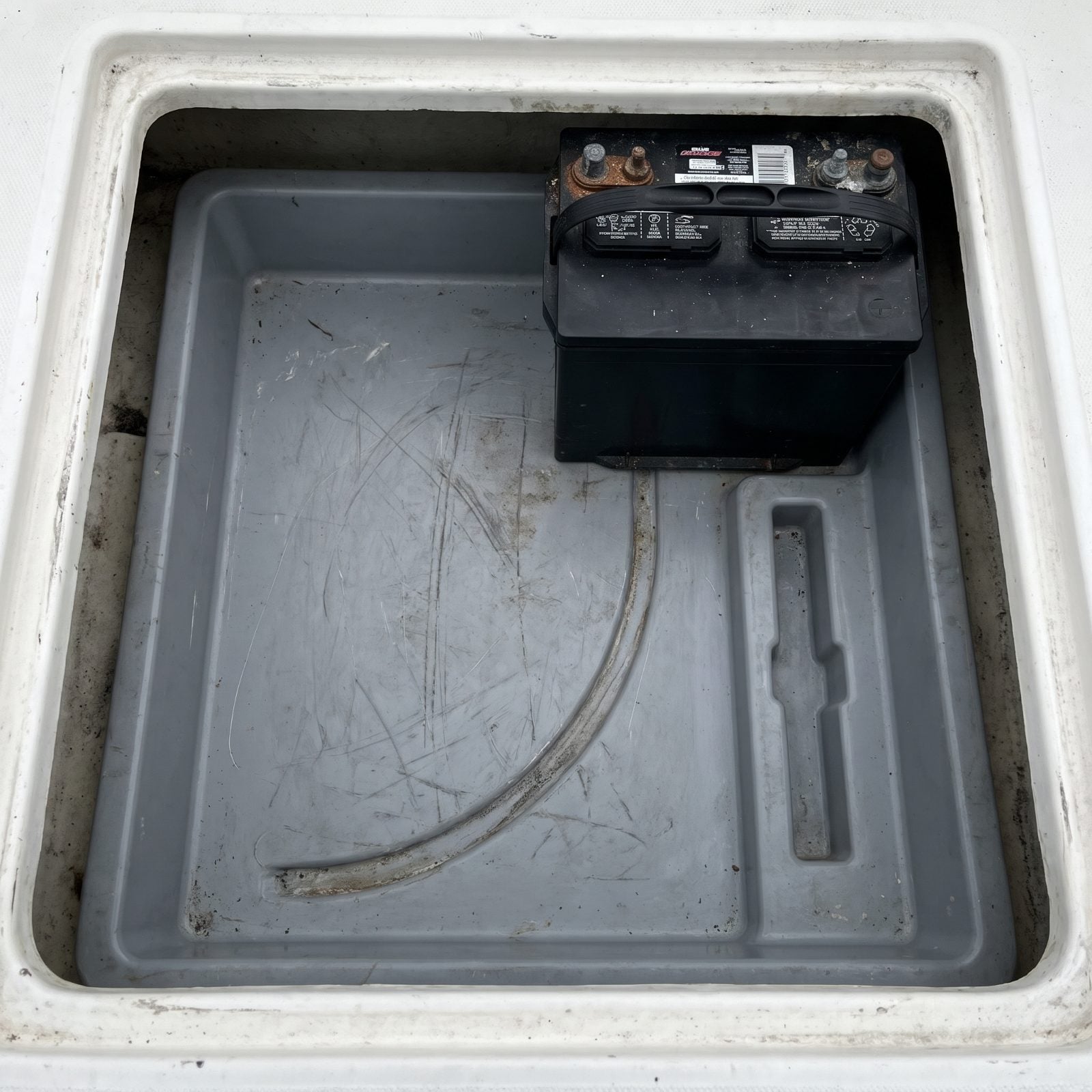
Pick up the boat’s story by nudging the battery. If it slides, it’s been sliding for a while, and the scuff trail in the tray proves it.
An unsecured battery is a 40-pound projectile waiting for one hard wake. It yanks on cables, shorts against metal, cracks its own case. The fix costs almost nothing — a proper box or a hold-down strap. The damage from skipping it does not.
7. Household Wire Nuts Hiding in the Marine Wiring
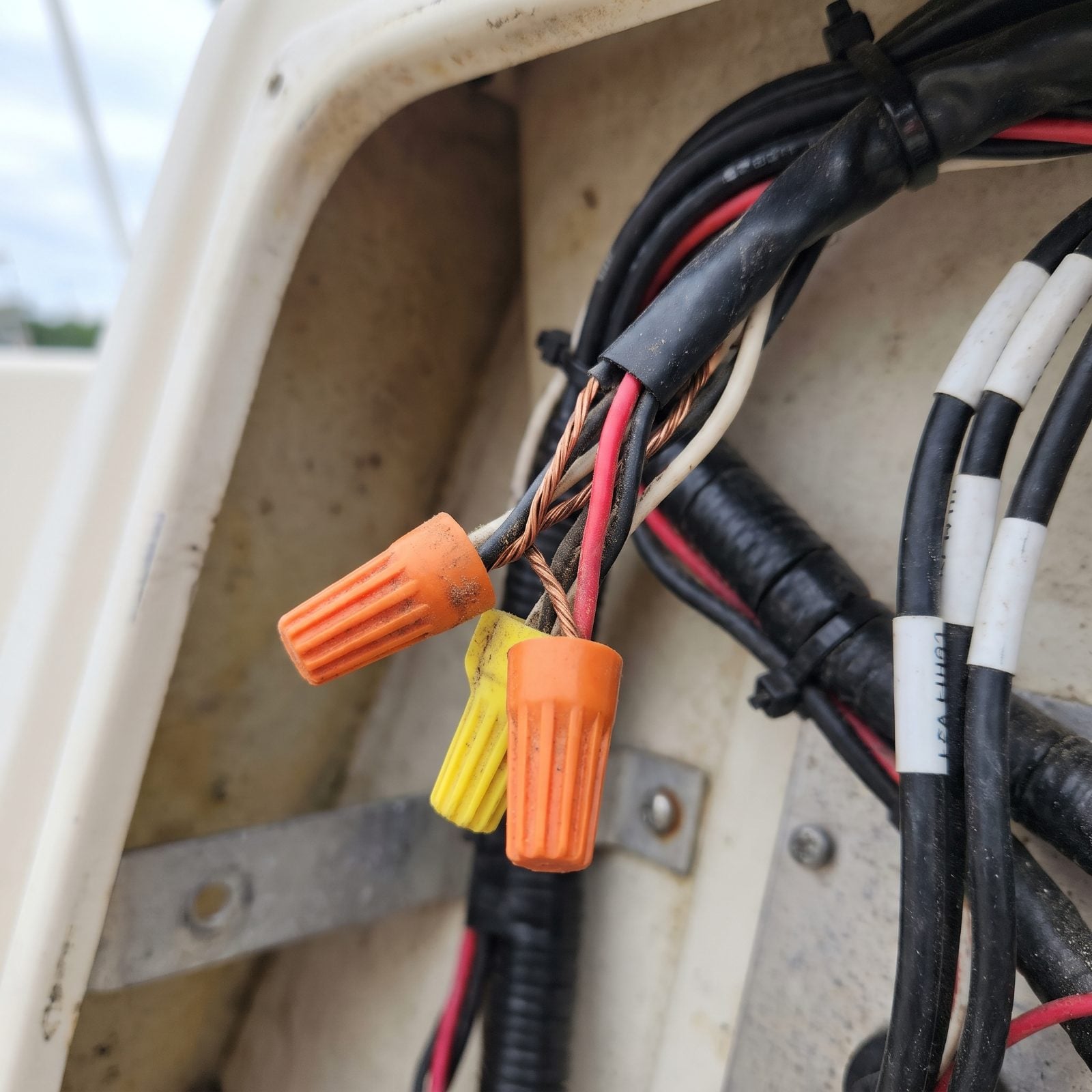
Those cone-shaped plastic caps belong in a dry wall cavity in your living room. On a boat, they’re a slow-motion failure.
Wire nuts rely on gravity and a tight twist, and a hull slamming through waves respects neither. They loosen, trap moisture, corrode the copper inside, and never show it until the circuit dies some afternoon you’re a mile offshore. Marine connections get crimped and sealed for exactly this reason.
6. A Tangled Nest of Accessory Wires With No Fuses
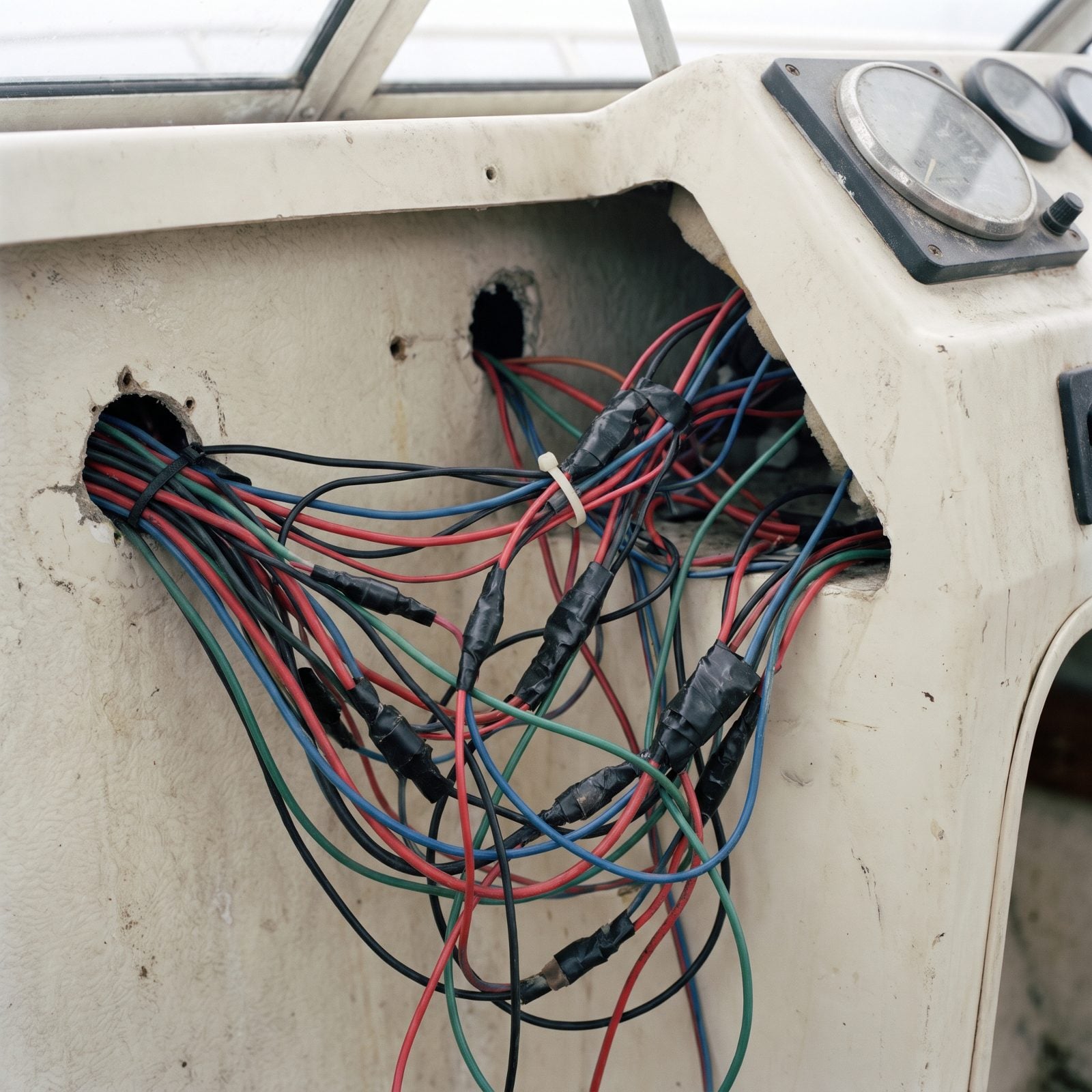
You’ve seen the back of a dash that looks like a plate of spaghetti someone electrocuted. Stereo, chartplotter, a couple of accessory lights, all daisy-chained off whatever wire was closest, none of it fused.
A mechanic doesn’t just see mess. They see fire risk. An unfused wire has nothing to stop it when it shorts — it heats until the insulation melts and the fiberglass starts smoking. Every added circuit needs its own fuse sized to the wire. And that rat’s nest? Usually hours of untangling before anything else can even get diagnosed.
5. Scorch Marks Around the Shore-Power Inlet
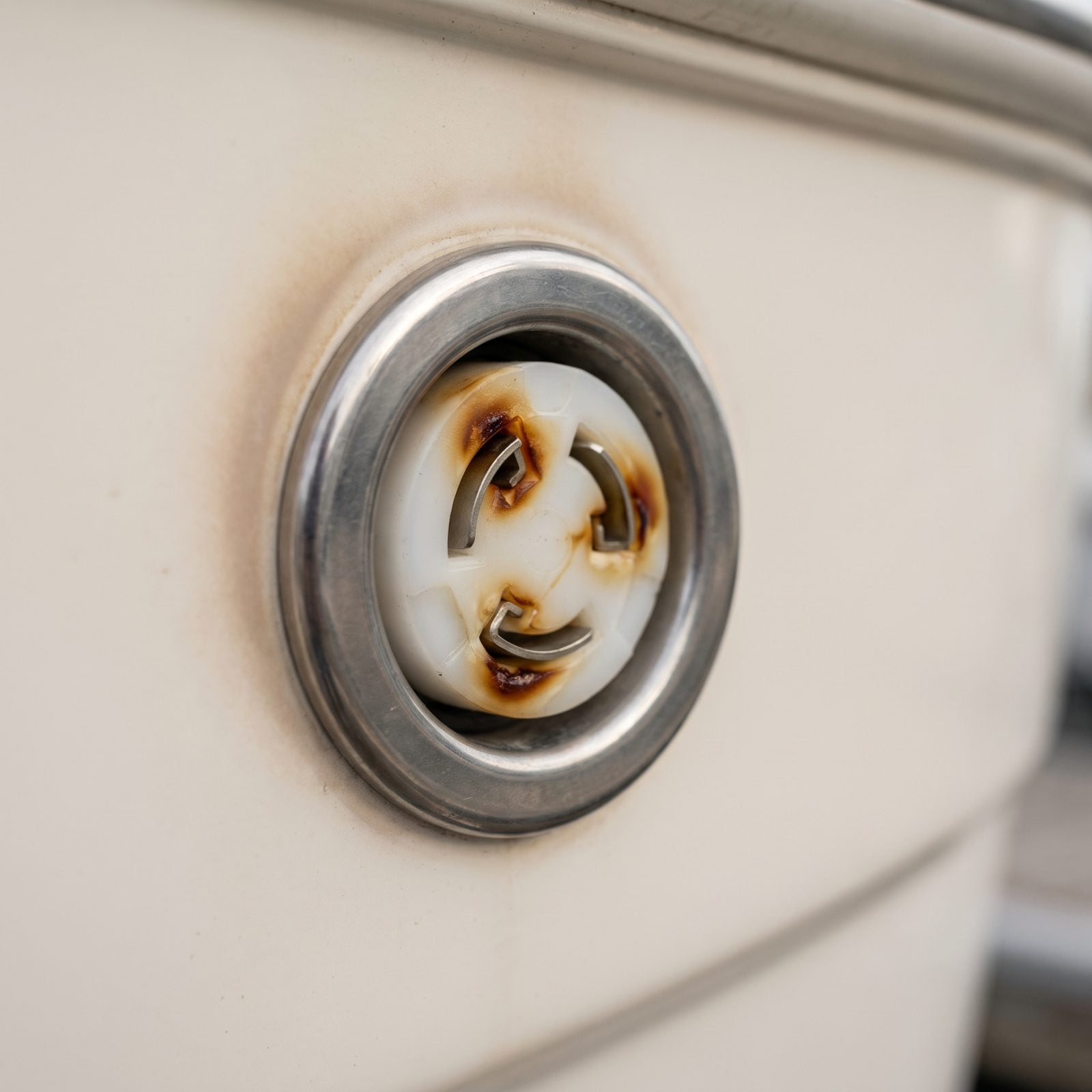
Brown melt rings around a shore-power inlet are the loudest quiet warning on a boat. Heat like that comes from a loose or corroded connection drawing an arc every time the boat pulls amps overnight.
This is the one that keeps mechanics up at night. A cooking inlet is how boats catch fire at the dock while everyone’s asleep. A discolored face means the damage is already done inside. It gets replaced, not cleaned.
4. A Steering Wheel With a Dead Zone You Can Feel

Spin the wheel a quarter turn before the boat even thinks about responding, and you’ve found slop. A little free play is normal. A lot is a cable steering system that’s worn, stretched, or starved of grease.
Out on the water that dead zone turns into a boat that wanders and corrects late, which stops being an annoyance the second you’re threading a crowded channel. Mechanics check it at idle in the yard because that’s the cheapest moment to catch it.
3. Hydraulic Fluid Weeping Beneath the Helm
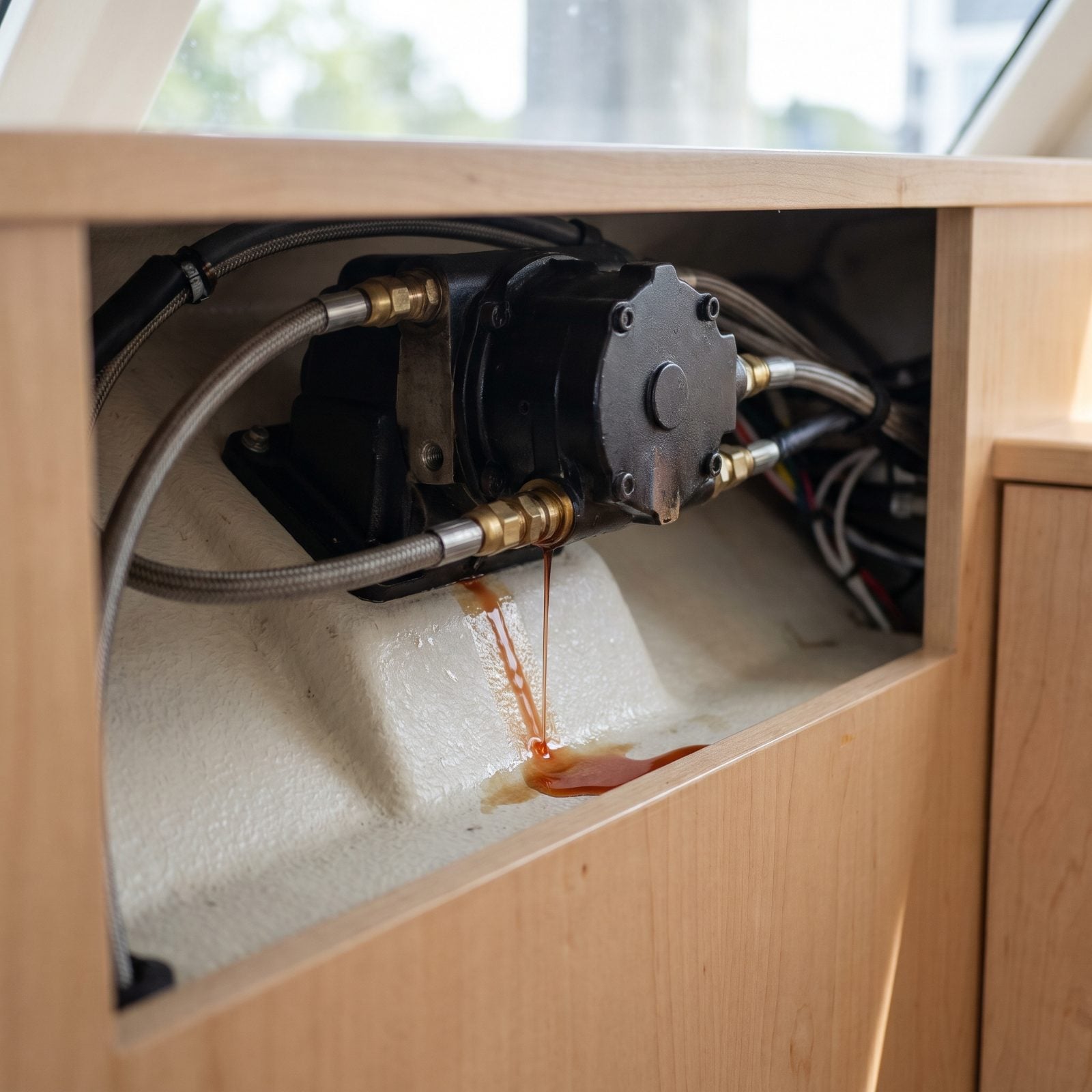
A damp reddish film under the helm looks minor. In a hydraulic steering system, minor is the whole warning.
These systems are sealed and work on pressure. Any seep means air is getting in as fluid gets out, and air in hydraulic steering makes the wheel feel spongy and vague right when you need it crisp. A fitting that’s barely weeping today is a steering system losing bite tomorrow. Find it and seal it before it becomes a boat that won’t hold a line.
2. Electrical Tape Covering an Engine Warning Light

Nothing makes a mechanic set down their coffee faster than a warning light wearing a tape blindfold.
That light came on for a reason — oil pressure, overheat, charging fault. Covering it fixes nothing. It just removes the one thing warning you the engine is in trouble. A taped light usually means a known problem someone chose to stop looking at.
1. A Single Clamp on a Below-Waterline Hose
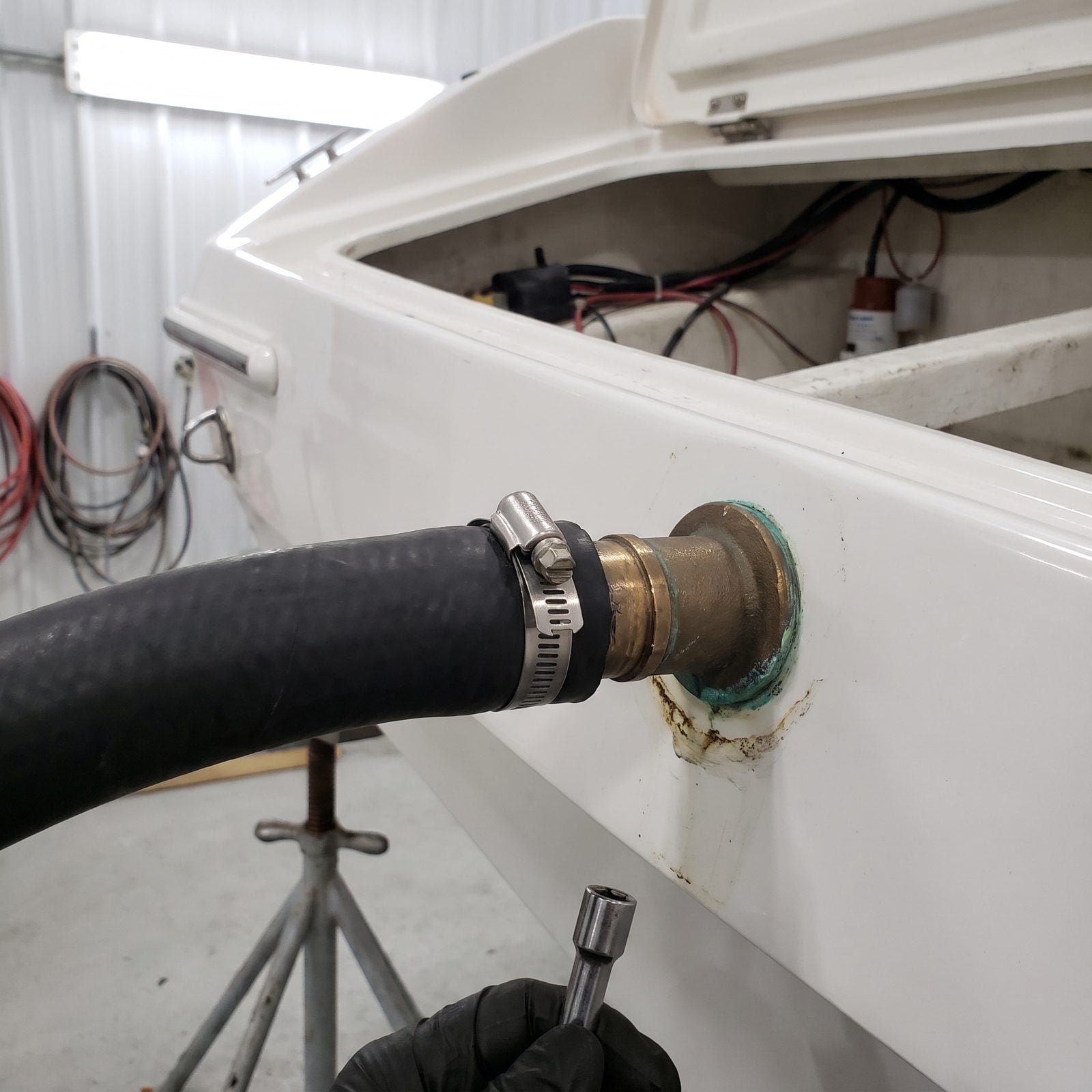
The through-hulls below the waterline are the ones that scare mechanics. And the tell is almost comically small: one clamp where there should be two.
Any hose that sits under the waterline needs double clamps, both marine-grade stainless, so a single failure doesn’t quietly sink the boat at the dock while you’re home asleep. A mechanic clocks that lonely single clamp in about three seconds, and the whole story falls out of it — somebody worked back there in a hurry, bought the cheaper hardware, and never learned the rule in the first place.
Same shortcut shows up all over the place: raw-water intake lines, bilge pump discharges, cockpit drains. The clamp costs a couple of bucks. What it’s holding back is the lake.