
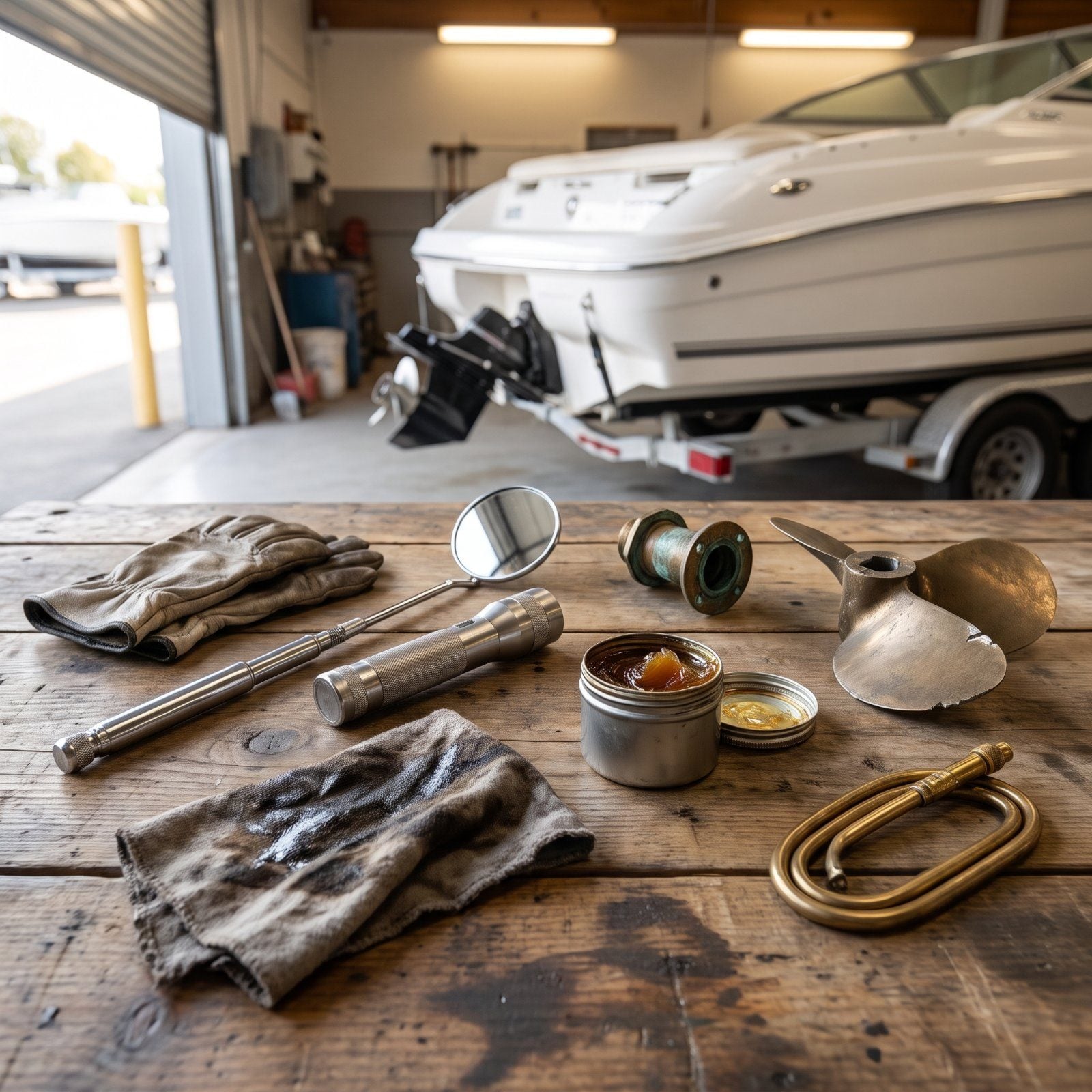
Watch a good marine tech the moment your boat rolls into the yard. They don’t go straight for the clipboard. First comes a slow lap around the trailer, hand resting on a hub, eyes dropping to the keel line, nose working the air near the cowling. By the time you’ve finished explaining the noise you heard, they’ve already built half a diagnosis. Boats talk. Not in words, but in wear marks and warm metal and the way a hull settles on its bunks. Here are the quiet signals a seasoned eye catches early on, long before the real teardown begins.
Please note that some of the imagery in this article may have been enhanced with the assistance of AI.
25. A Suspiciously Warm Engine at Drop-Off

The first thing a lot of techs do is nothing dramatic. They just lay a palm flat on the cowling.
A warm engine at drop-off is a tiny mystery. You told them you trailered it in cold this morning, so why is the block giving off heat? Maybe you ran it in the driveway on muffs to show a buddy the problem, or maybe you weren’t totally honest about that last outing. Either way, residual warmth changes how they read everything else, because a motor that’s been run recently hides symptoms a cold one shows plain.
24. Uneven Tire Wear on the Trailer

Before anyone looks at the boat, a careful tech glances at what carried it. Trailer tires are a confession.
Wear that’s heavier on one side points to a bent axle or an alignment that’s been off for a long drive, while cupping and feathering across the tread hint at bad bearings letting the wheel wobble. Center wear says it’s been riding overinflated. None of this is about the boat, exactly. But a trailer that abuses tires often abuses bunks and rollers too, and that abuse travels straight up into the hull. The rubber tells them how the whole rig has been treated on the road.
23. Dry or Greasy Wheel Hubs
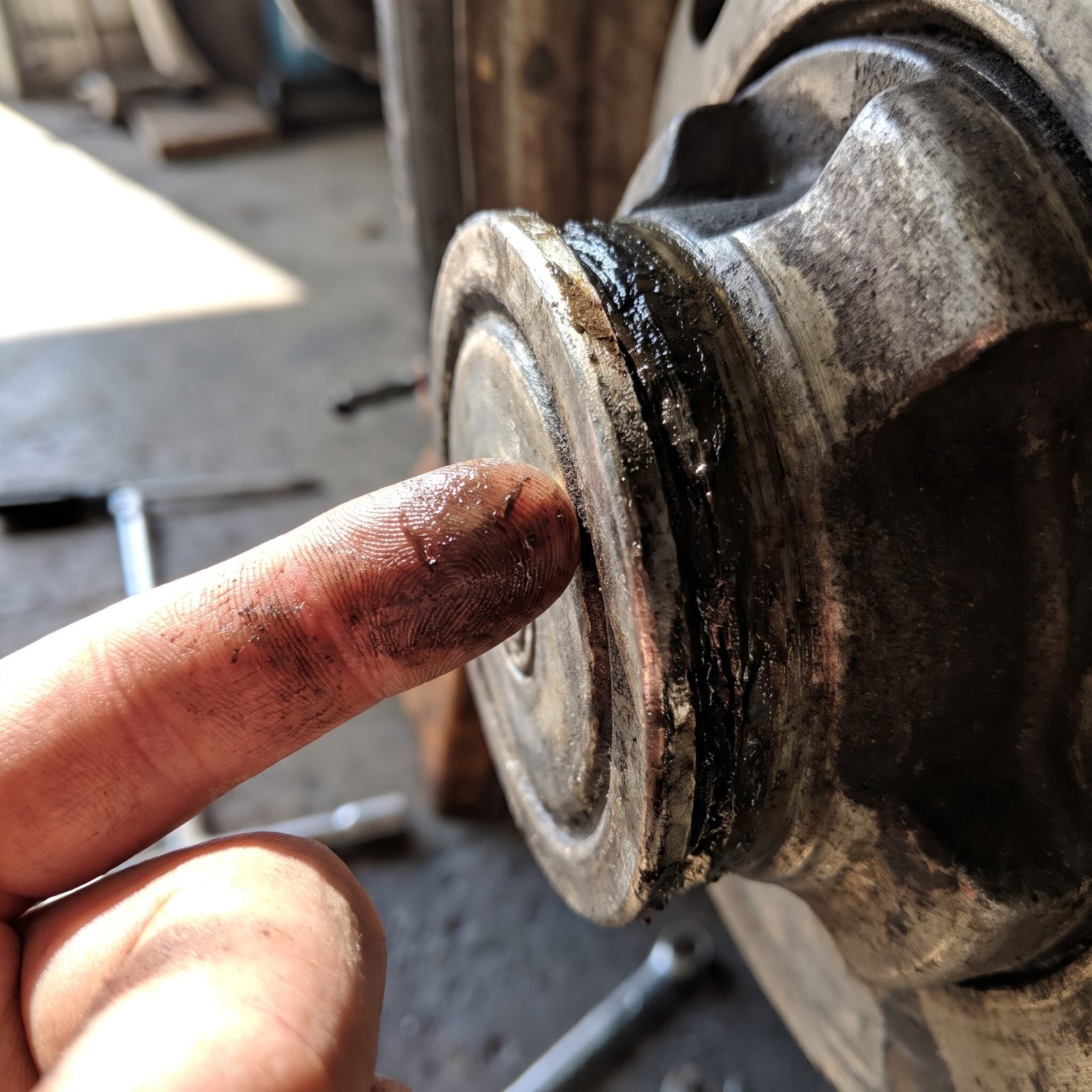
Hubs are where a tech separates the owners who maintain from the owners who hope.
Run a finger near the cap. Fresh amber grease that’s still tacky means recent service. Grease flung in a dark ring around the wheel means a seal let go and heat cooked it out, usually right before a bearing failure. Bone dry? That hub has been running hot and loud and is living on borrowed time.
It matters more than it looks, because a seized bearing on the highway doesn’t just strand you. It can drop a wheel and send your boat skidding across the trailer.
22. Whether the Boat Sits Squarely on Its Bunks

Step back far enough and the boat should look like it belongs on the trailer. A lot of them don’t.
A hull that sits cocked to one side, or rides high on one bunk and heavy on the other, has been loaded crooked for who knows how long. That uneven support concentrates stress on parts of the hull never meant to carry it, and over a season it can press flat spots into the fiberglass or worse. A tech clocks a lopsided stance immediately. It reframes every crack and oil-can flex they find later as a cause-and-effect story, not a surprise.
21. Fresh Scrapes Along the Keel
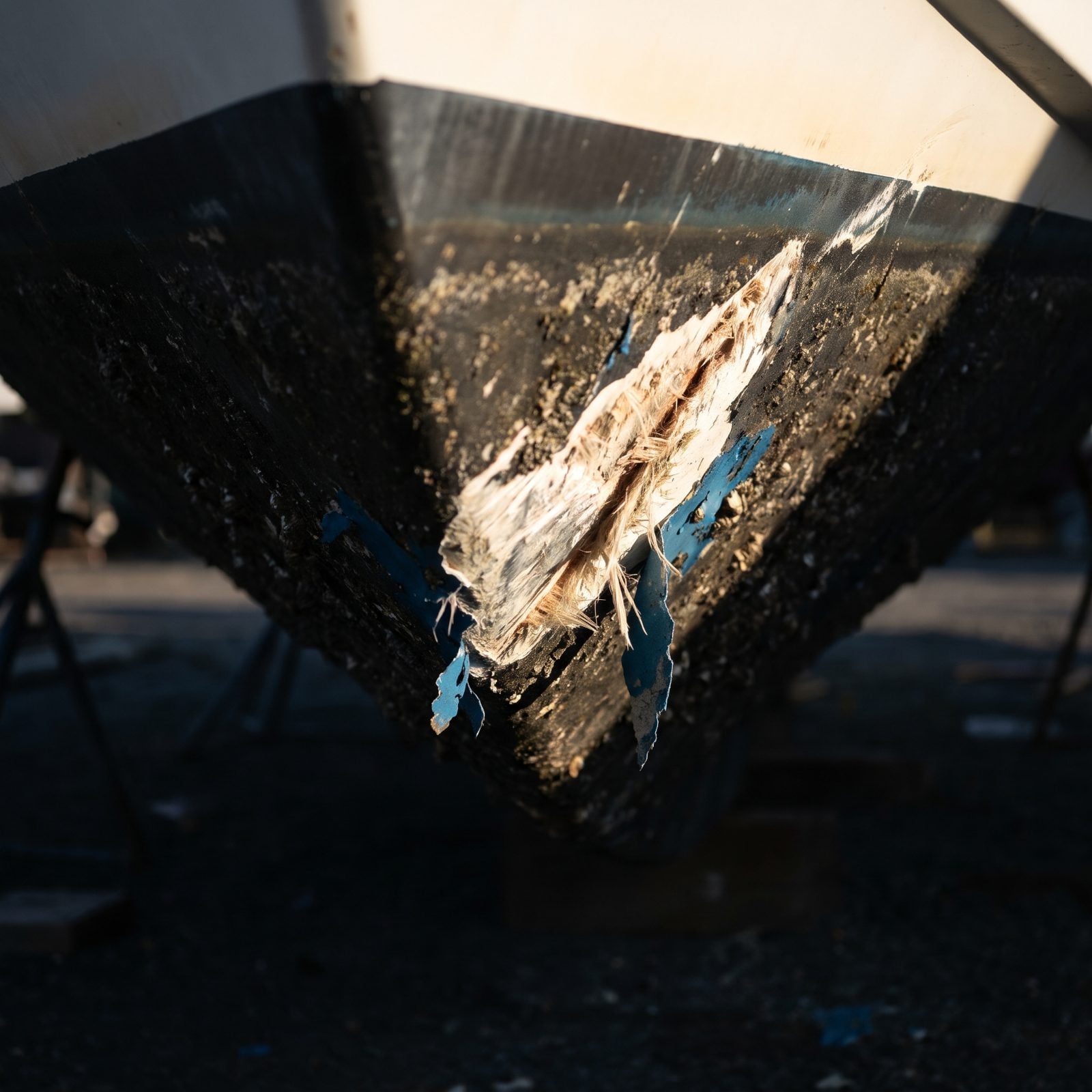
Scrapes along the keel are a map of recent mistakes. The sharper and brighter the gouge, the newer the story.
Old scrapes dull and collect grime. A fresh one is still white and raw at the edges, which tells a tech the boat touched bottom not long ago, probably hard. That reorders their whole inspection. Now they’re looking for cracked stringers, a loosened transom, water sitting somewhere it shouldn’t. A grounding you shrugged off as a bump can quietly open a path for water to work into the laminate, and that’s the kind of thing that gets expensive while you ignore it.
20. Stress Cracks Around the Transom
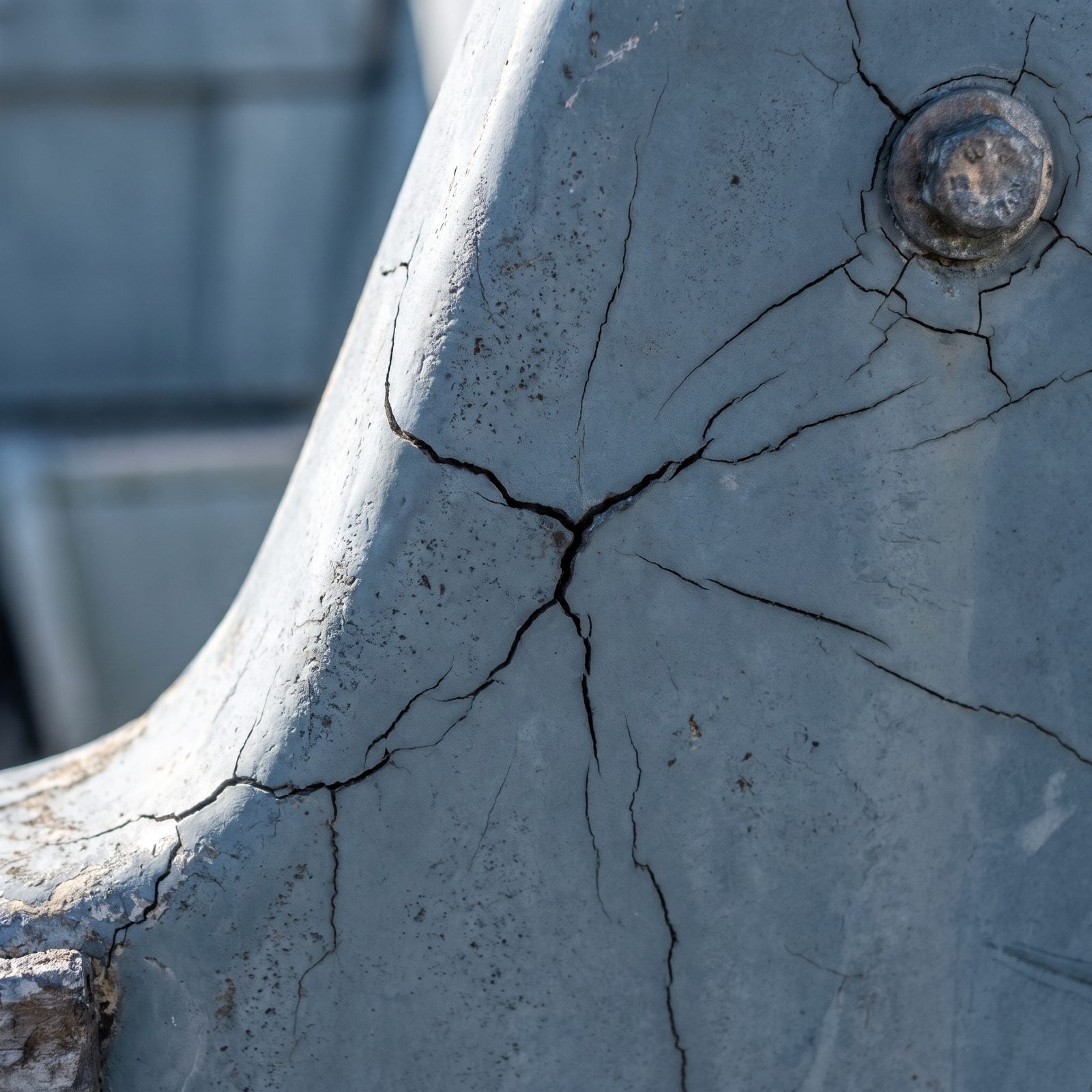
The transom carries the whole load of the engine, and it complains before it quits.
Fine cracks radiating out from motor bolts or the corners of the transom are the first whisper. Some crazing in old gelcoat is cosmetic and nothing to lose sleep over. But cracks that line up with stress points, that spread out from where the engine hangs, get a tech’s full attention. They’ll press on the transom, maybe tap it listening for the dull thud of wet, soft wood inside.
A soft transom is a boat telling you it’s tired of holding your engine up.
19. Mismatched Patches in the Hull Finish
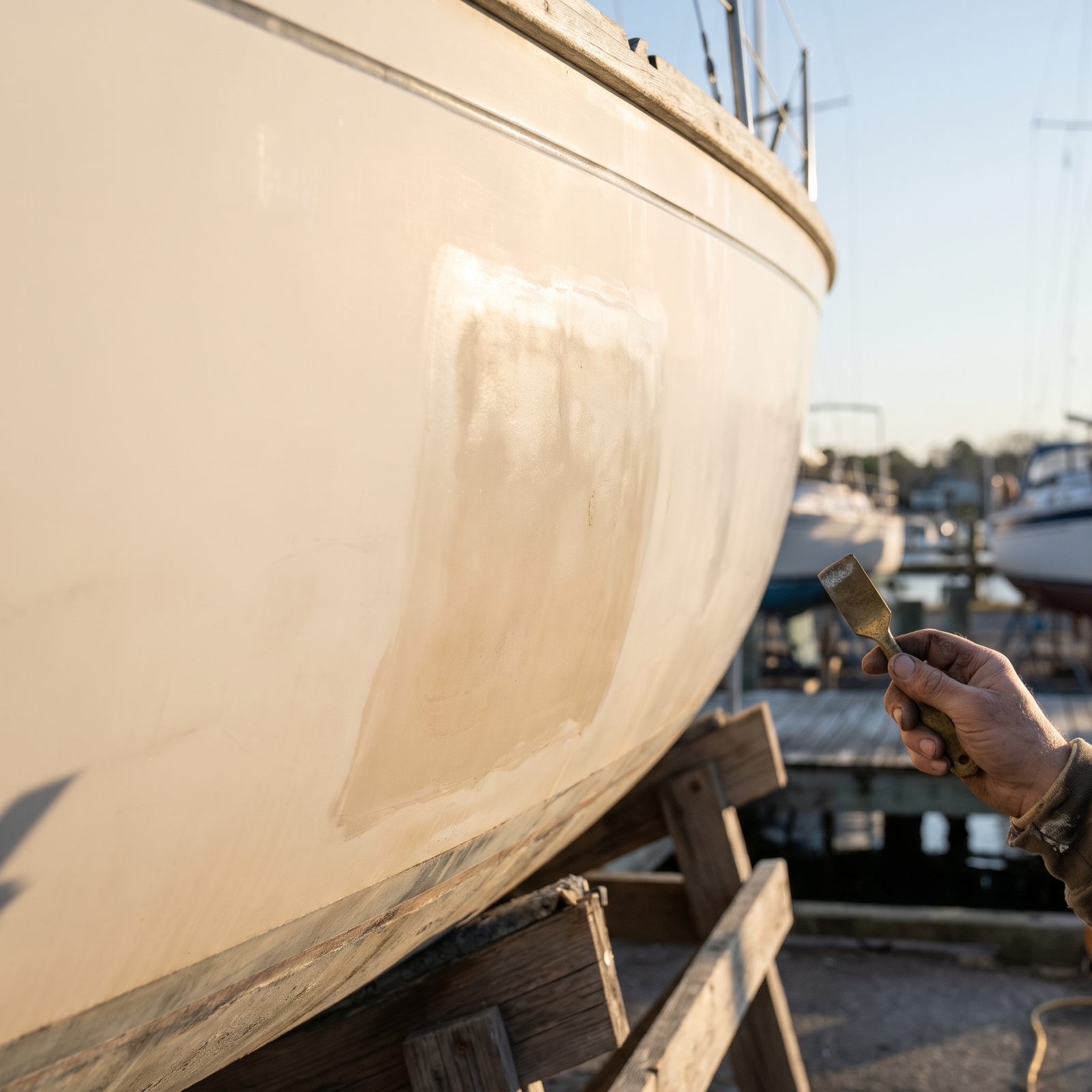
A good repair is invisible from ten feet. Up close, in the right light, it has a tell.
Gelcoat patches almost never match the original sheen perfectly. A slightly duller rectangle, a faint color shift, an edge you can feel more than see. When a tech spots a patch, the question isn’t the patch itself, it’s what the patch is hiding. A repair over a structural crack means something underneath was serious enough to break. Fresh patches near the waterline or the strake make them wonder what happened, and whether it was fixed right or just made pretty.
18. Marine Growth Below the Waterline

The waterline is a timeline. A tech reads it like tree rings.
A thin green film means the boat sat in the water a while recently. A crust of barnacle scars and hard growth says it lived on a mooring or a slip for a long stretch, likely without regular bottom cleaning. That history matters. Growth drags down speed and fuel economy, sure, but it also tells the tech the boat was wet for a long time, which raises the odds of water intrusion, corroded fittings, and gear that’s been working harder than the owner realized.
17. Corrosion on Through-Hull Fittings
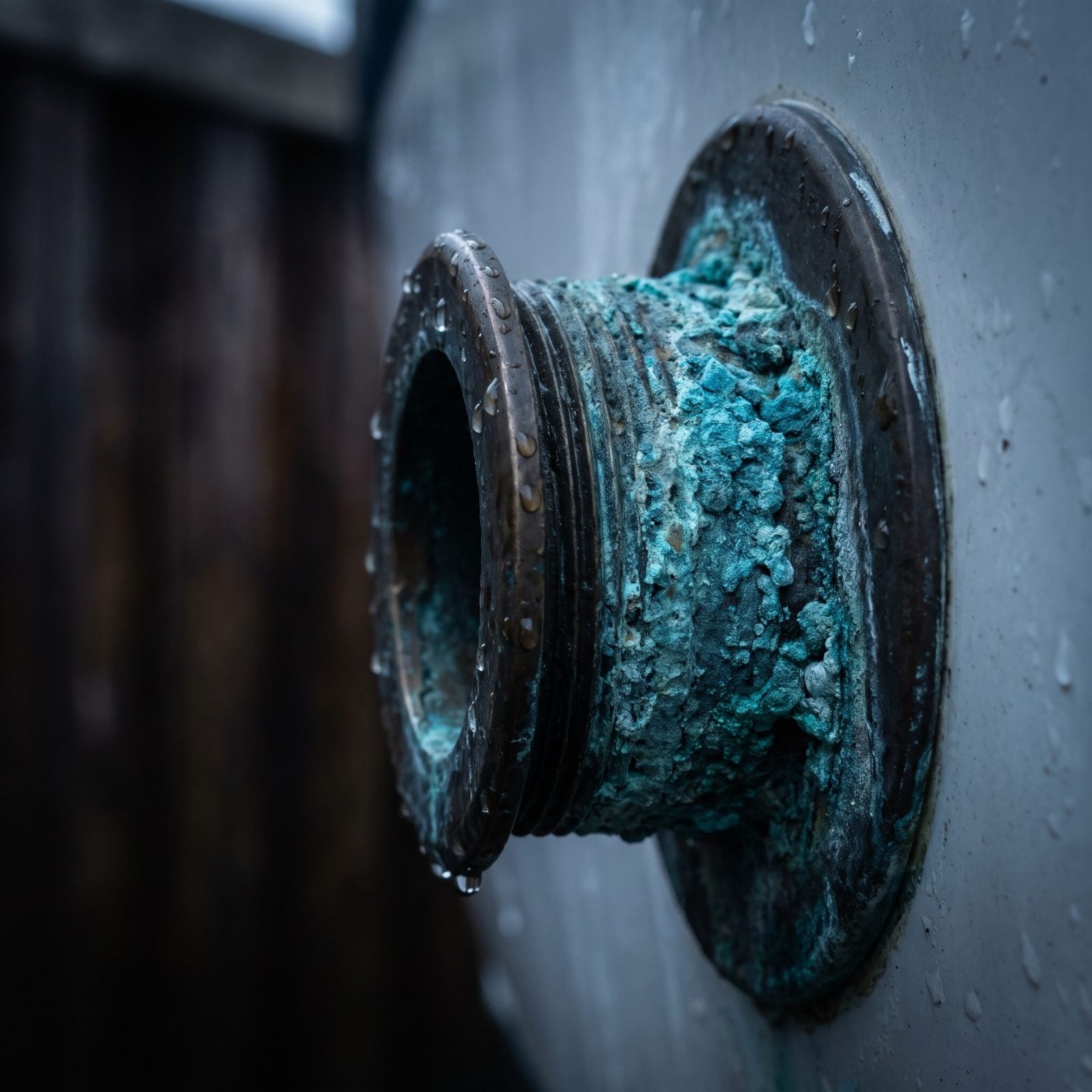
Through-hulls are small holes in your boat held shut by metal and faith. A tech never skips them.
A faint green film is normal patina. What stops them cold is a bronze fitting crusted in thick, crumbly turquoise corrosion, which means the metal is being eaten away underneath and left brittle. That’s galvanic corrosion, usually a sign the boat’s bonding or anode protection has been neglected. A fitting like that can crumble, and a failed through-hull below the waterline is one of the few ways a boat quietly sinks at the dock overnight.
16. Sealant Smeared Around Hardware
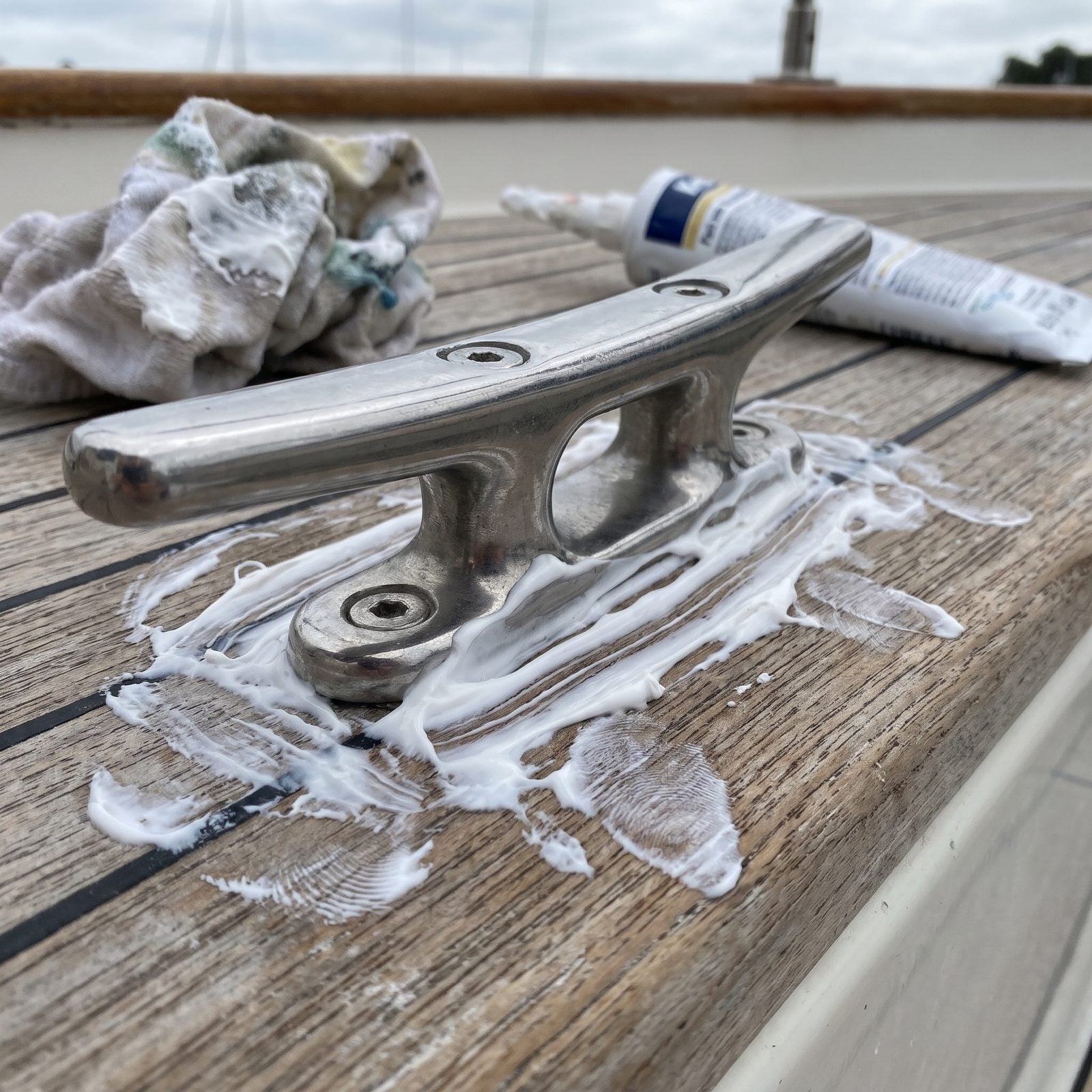
Sealant tells on the person who applied it. A tidy bead is one thing. A smeared, fingerprinted mess around a cleat or a fitting is another thing entirely.
Sloppy sealant usually means a leak someone chased from the top instead of pulling the hardware and bedding it properly. A tech sees that globbed-on fix and reads an owner (or a cheap yard) who patched a symptom and left the real problem, water working into the deck core, right where they can’t see it. Over-painted sealant is the same story with a disguise. And here’s the frustrating part: the fix that looks worst is often the honest one. It’s the slick cover-up that worries them.
15. Water Stains Inside Storage Compartments
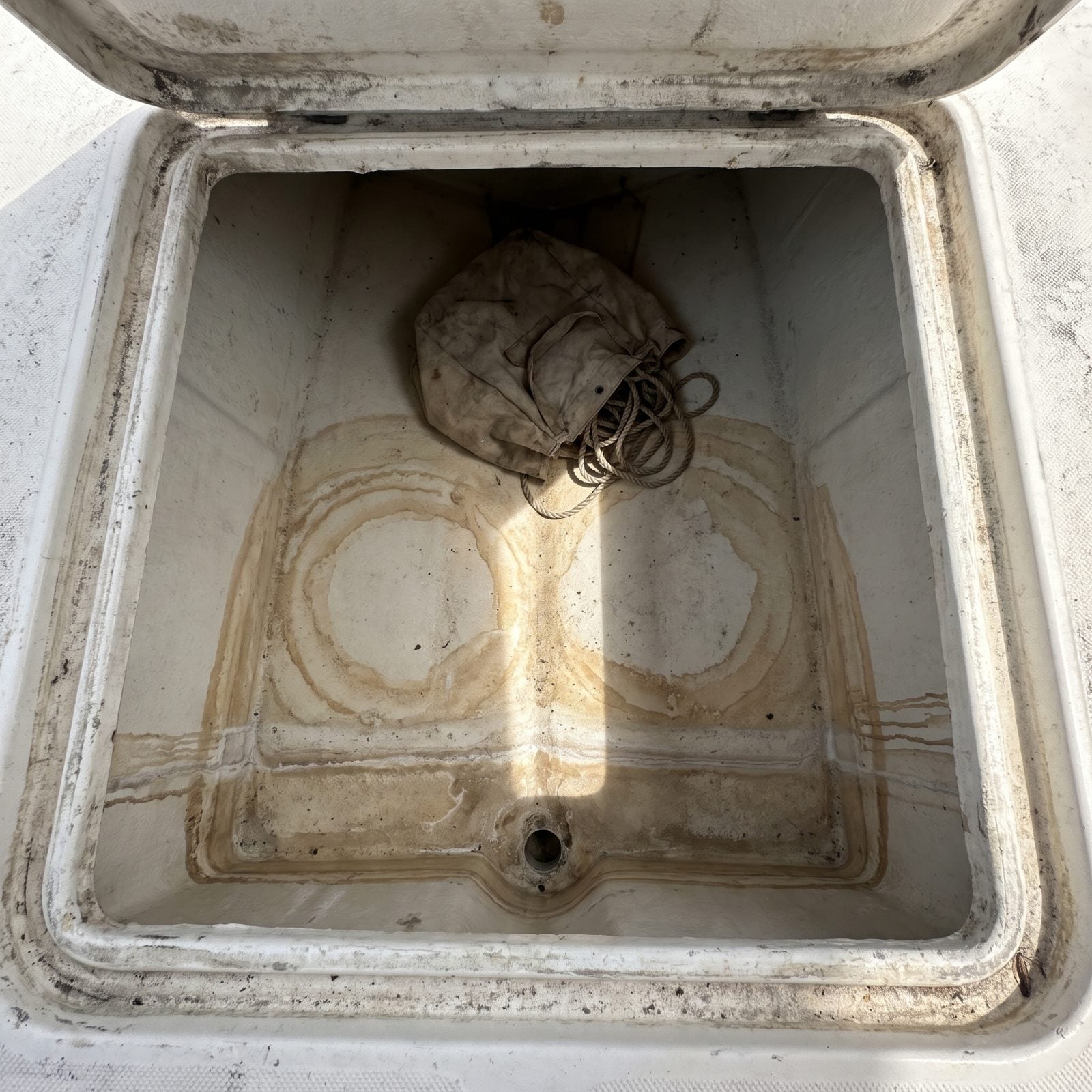
Open a hatch and look at the walls, not the gear. Those faint tan rings circling the inside of a storage locker tell you water has been sitting in there, draining slow or not at all.
Dry stains mean an old problem that’s since dried up, but a damp, sour-smelling compartment means it’s still happening right now — a clogged drain, a cracked hatch gasket, rain sneaking in through a deck seam. None of it looks dramatic when you first spot it. Still, it’s the first hint that the boat spends more time wet than it should.
14. Oil Sheen in Bilge Water
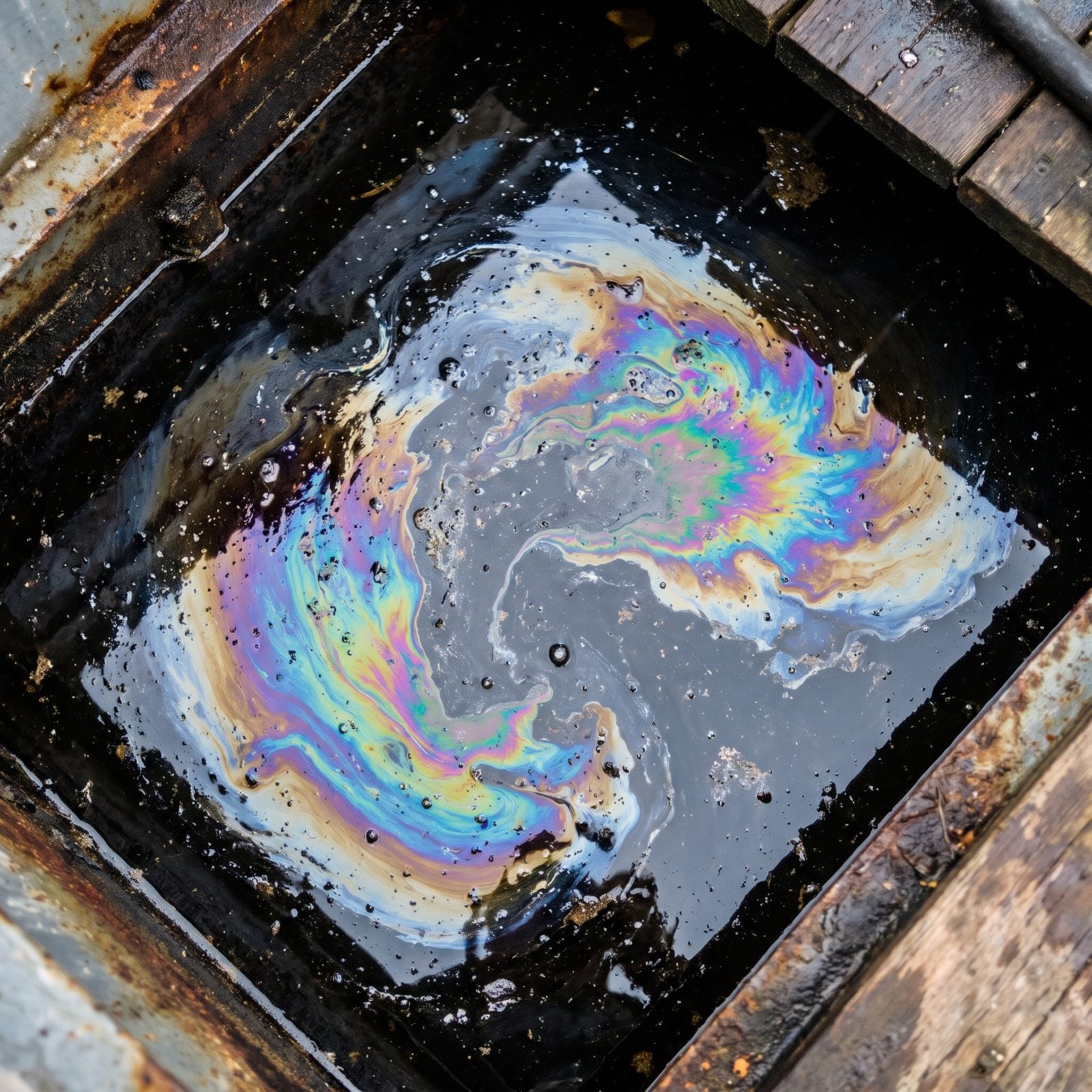
That rainbow swirl on the bilge water is the boat telling on itself. Clean bilge water sits clear, so a film of color on top means oil or fuel is getting in from somewhere above.
Could be a tired valve cover gasket, a weeping oil filter, a drip from the drive, or raw fuel leaking in from upstream. The sheen won’t tell you which one. It just says look up and find the drip. A tech will note how thick it is and whether it smells like gas or engine oil, because those point in completely different directions.
13. Corroded Battery Terminals
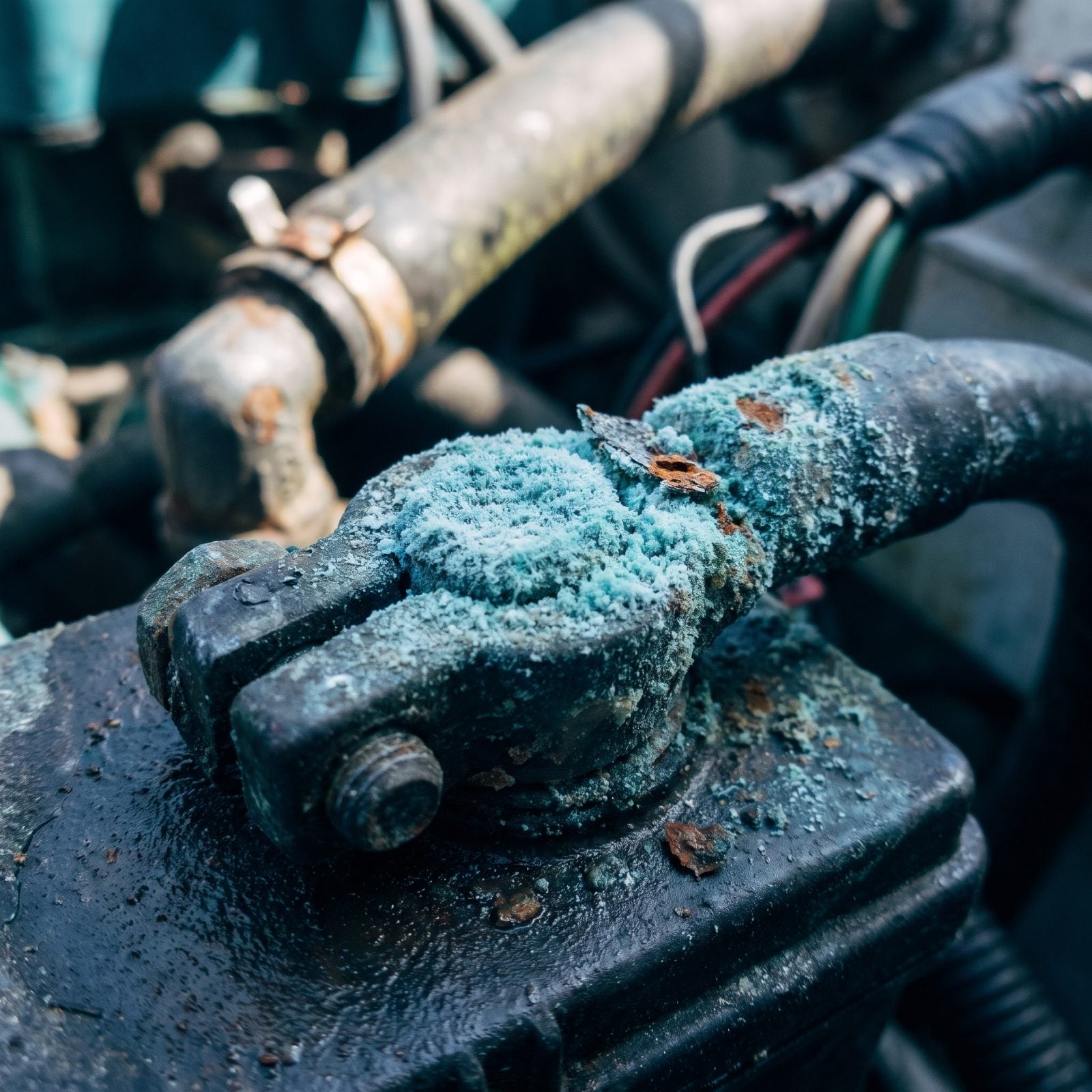
Fuzzy blue-green crust on a battery post looks minor. It isn’t.
That powder is resistance, and resistance means the engine cranks slow, the electronics flicker, and the charging system wears itself out trying to shove current through the gunk. Out on the water, the crust itself is a warning that salt, moisture, and acid vapor have been chewing on this battery for a long while.
Clean terminals take about two minutes, which is exactly why people skip them for years. A tech sees heavy buildup and assumes the rest of the electrical system got the same neglect.
As a certified marine technician puts it, “not only causes equipment failures but can lead to resistive connections that heat up (a fire risk) or lose continuity (equipment malfunctions when you need them most).”
12. Loose Wires Added Directly to the Battery
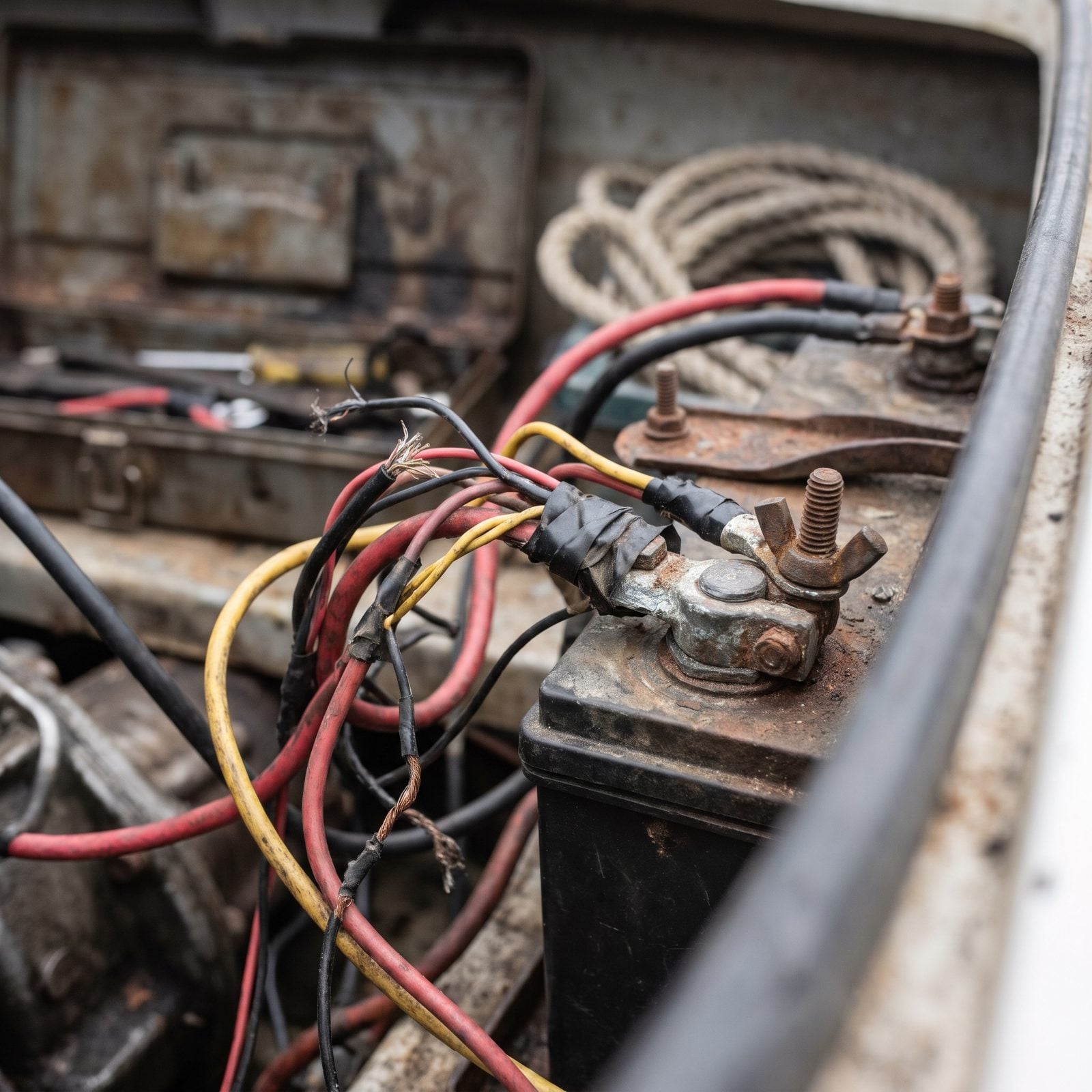
Factory wiring runs to a fuse block, not straight to the post. So when a tech finds a nest of extra wires twisted onto the battery terminals, they know somebody’s been bolting on gear as the mood struck.
A fish finder here. A stereo amp there. Maybe a bilge pump bypass, each one jammed onto the battery, unfused, because it was faster. Trouble is, every one of those add-ons skips the protection that would stop a short from turning into a fire. Nothing says “patched by hands in a hurry” quite like it.
11. Cloudy Fuel in the Separator Bowl

Clear fuel glows a clean amber. Cloudy fuel in the separator bowl means water has found its way into the tank.
Condensation over a damp winter, a leaky fill cap, bad gas straight from the pump — it all shows up here first, which is exactly what the separator is for. You’ll often see a distinct layer settled at the bottom where water dropped out of the gas.
A tech reads the bowl like a thermometer. Cloudy and separated means the fuel system needs attention before the engine ever gets a fair shot at running clean.
10. Cracked Fuel Hoses
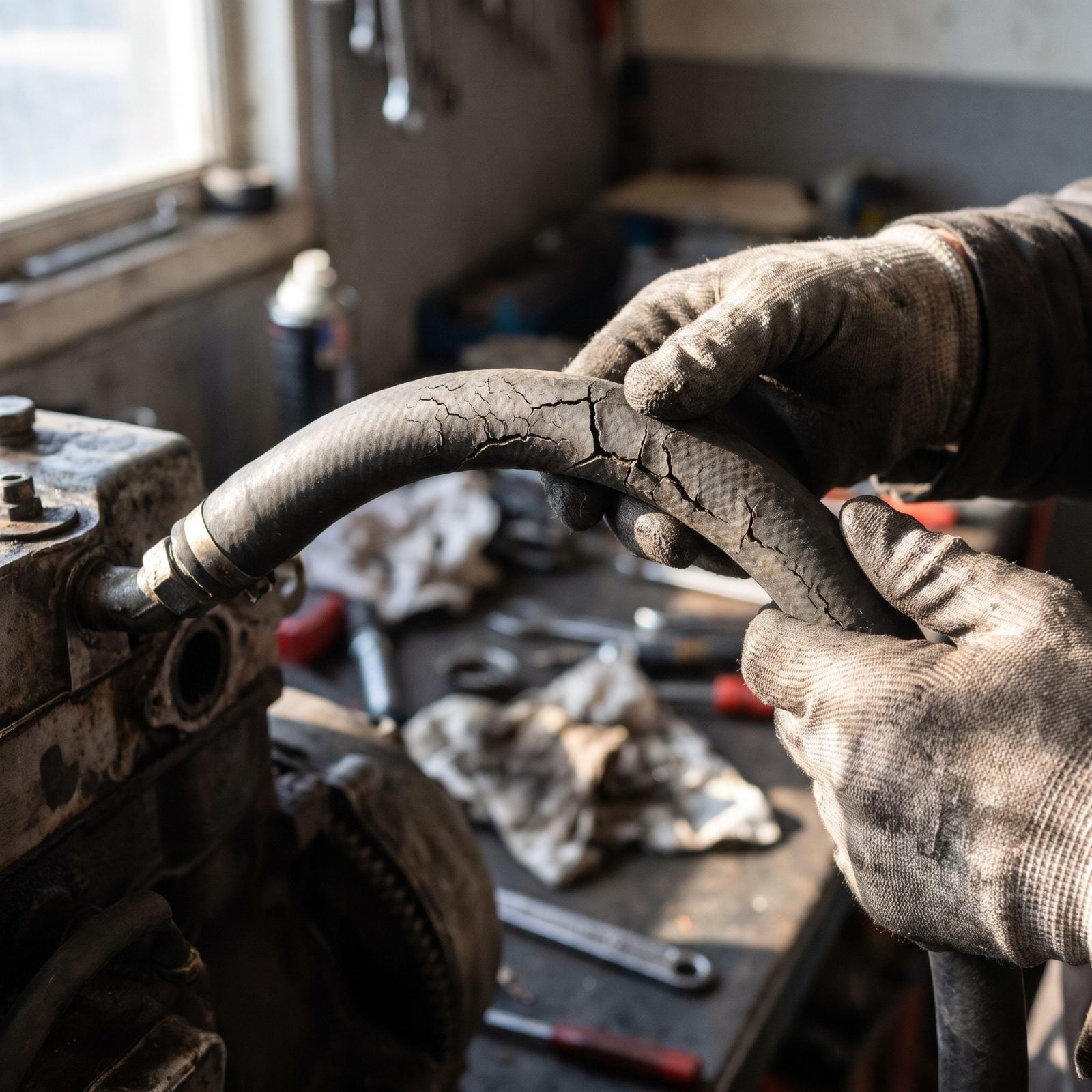
Flex an old fuel hose and watch what the rubber does. Fine cracks spidering across the surface mean it’s gone dry and brittle from age and heat.
Those cracks start out shallow and cosmetic. Then they deepen, and a hose that looked fine last season starts weeping fuel at the fittings where it bends the hardest. On a boat, fuel leaking near a hot engine is the one failure nobody shrugs off.
So a tech checks the hoses closest to the engine first. That’s where the heat lives, and that’s where the rubber ages fastest.
9. Scorched Paint on the Engine Block
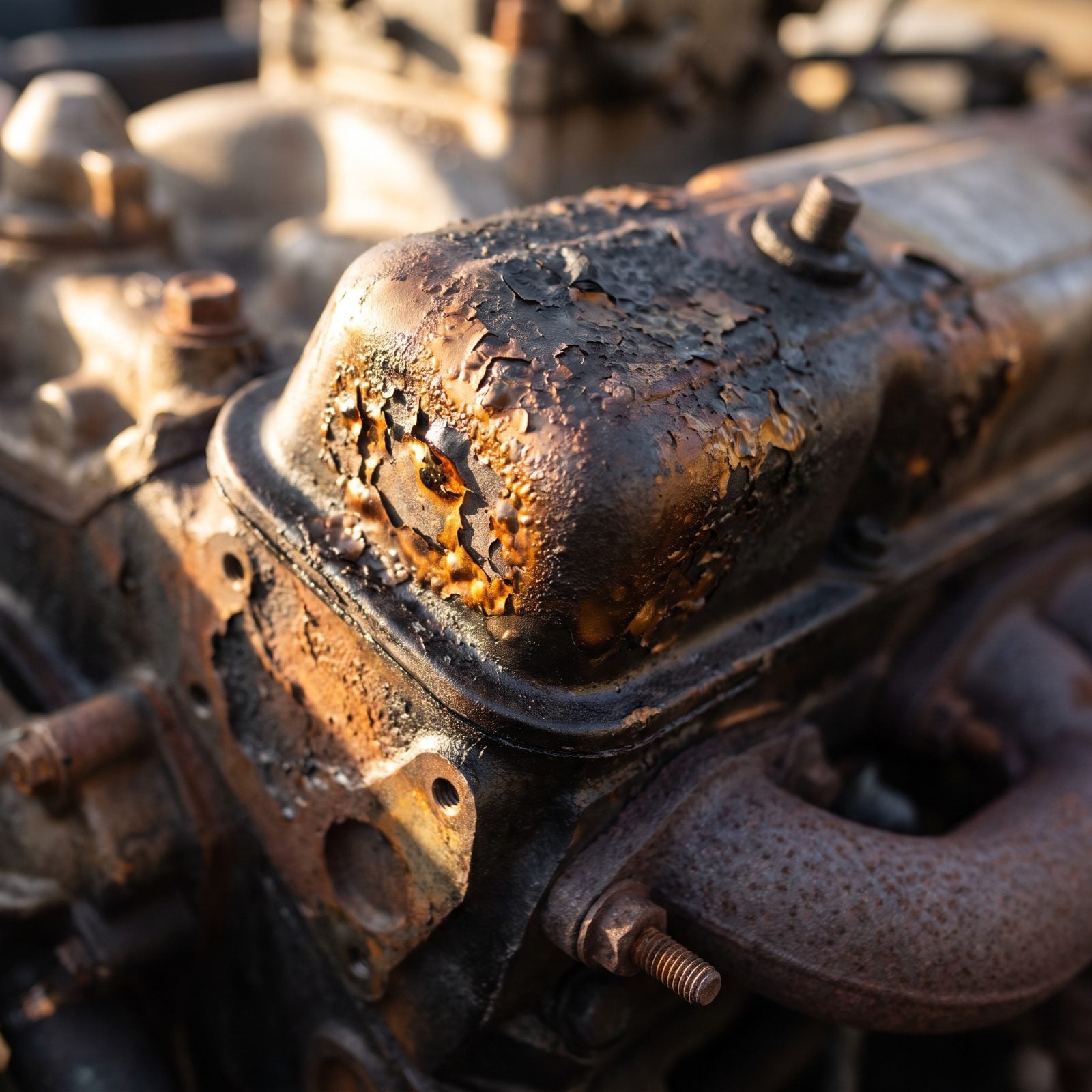
Paint doesn’t lie about heat. A browned, blistered patch on the block is a record of the moment this engine ran far hotter than it ever should have.
Usually it points at cooling gone wrong — a blocked raw-water intake, a failing impeller, a clogged passage, something that let the block cook itself. The scorch mark is where the whole episode got written down.
Fix the cooling problem and the discoloration still hangs around as evidence. A tech sees it and starts asking what overheated this engine, and whether whatever caused it is still lurking in there.
8. Nicks Along the Propeller Edges
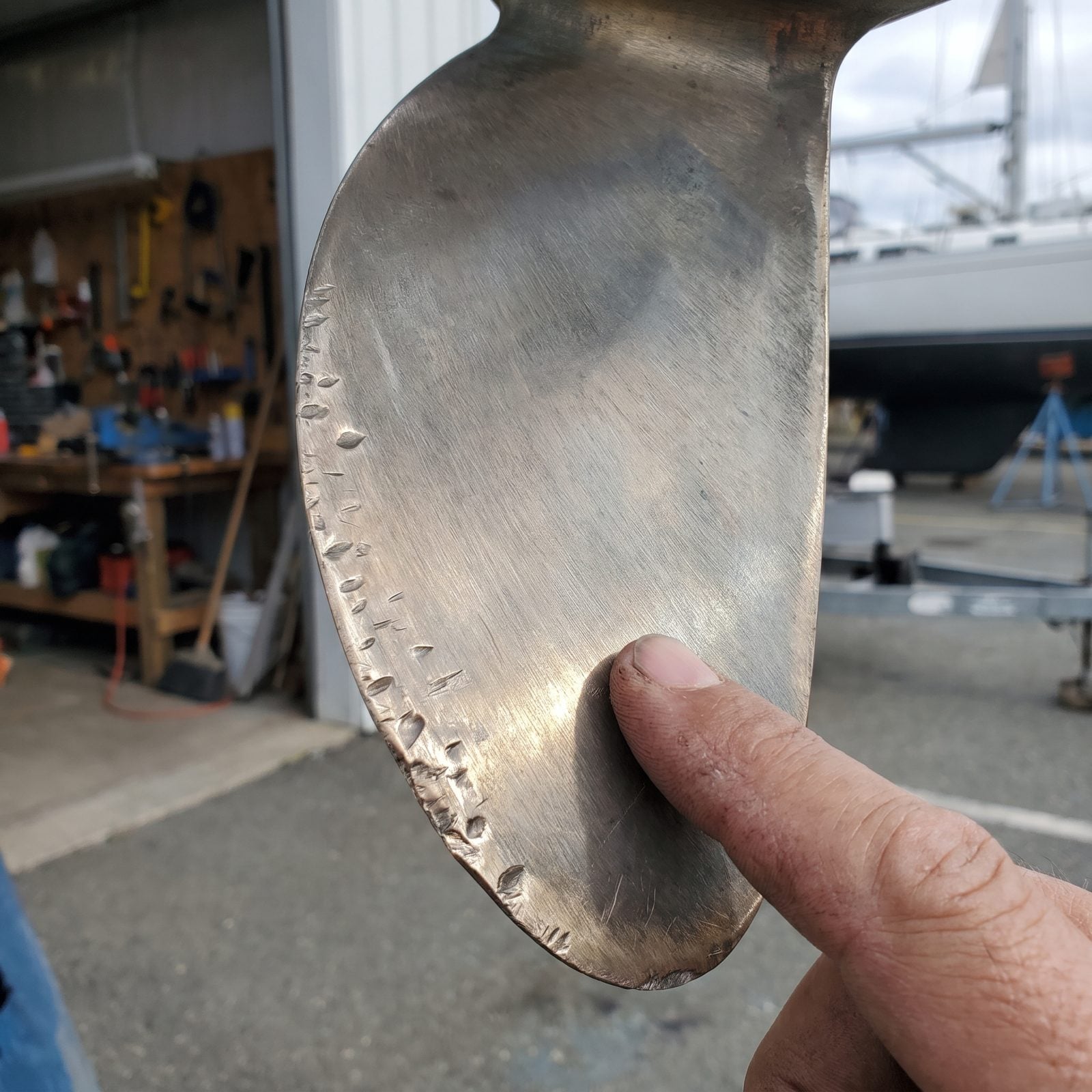
Run a fingertip along a prop’s leading edge and the history is right there. A row of small nicks and a curled tip means this boat has kissed sand, gravel, or the odd submerged log more than once.
Minor dings seem harmless. Each one throws the blade a hair out of balance, though, and that imbalance turns into a vibration that works its way up through the drive and, given enough time, wears bearings and seals.
So the prop reads like a logbook. Smooth edges say careful water. A chewed-up blade says the shallow stuff got a little too familiar.
7. Fishing Line Wrapped Behind the Propeller
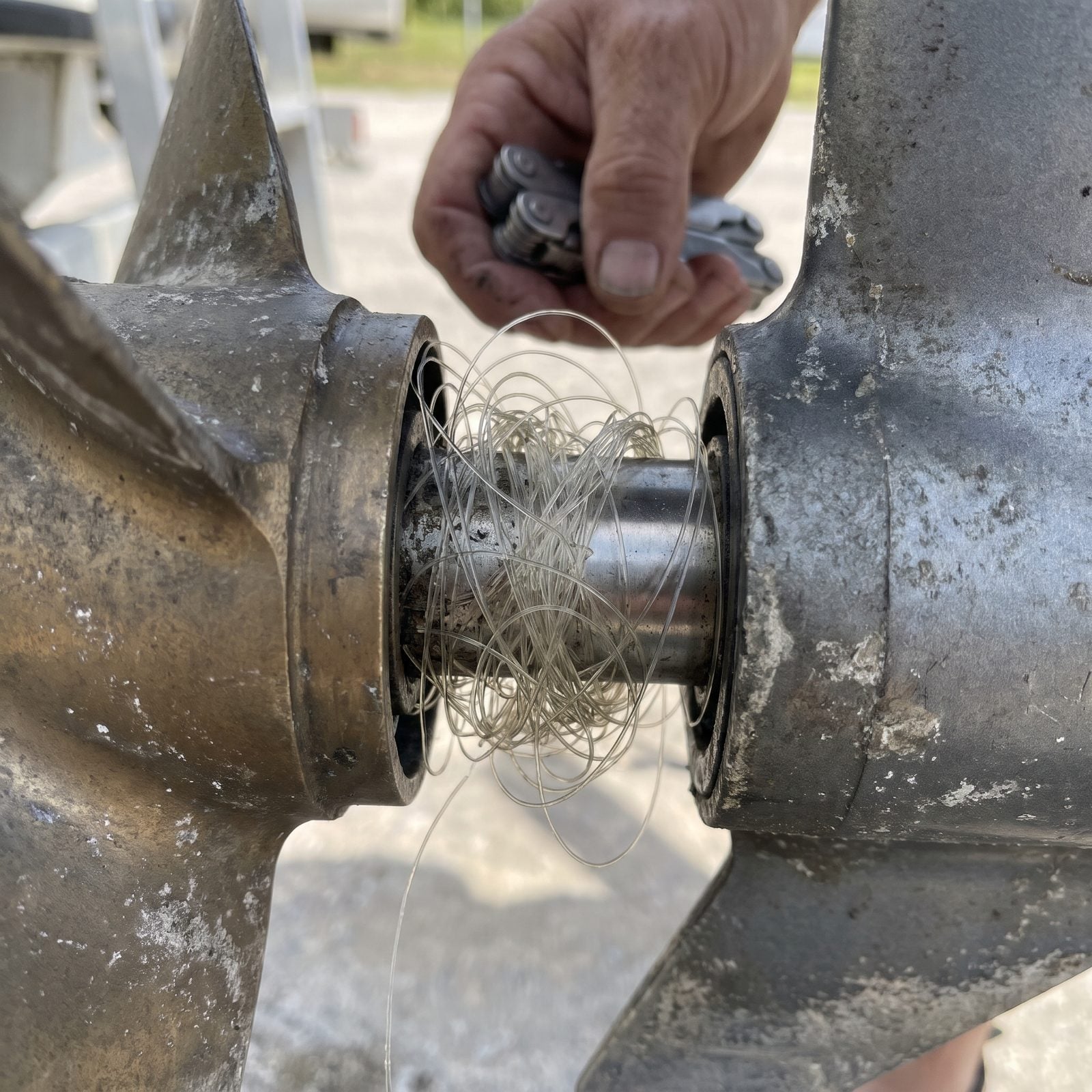
It looks like nothing — a few threads of fishing line coiled behind the prop, the kind you’d flick off with a thumbnail. That tiny bundle is a slow leak waiting to happen.
Line works its way into the gap between the propeller and the gearcase, then saws at the prop shaft seal every time the shaft turns. Once that seal gives up, gear oil weeps out and water weeps in, and you find out the hard way — usually mid-season, when the oil comes up milky.
As an outboard technician puts it, “As it melts, loose strands cut into the propshaft seals that are located right behind the forward thrust washer.”
6. A Chipped Skeg
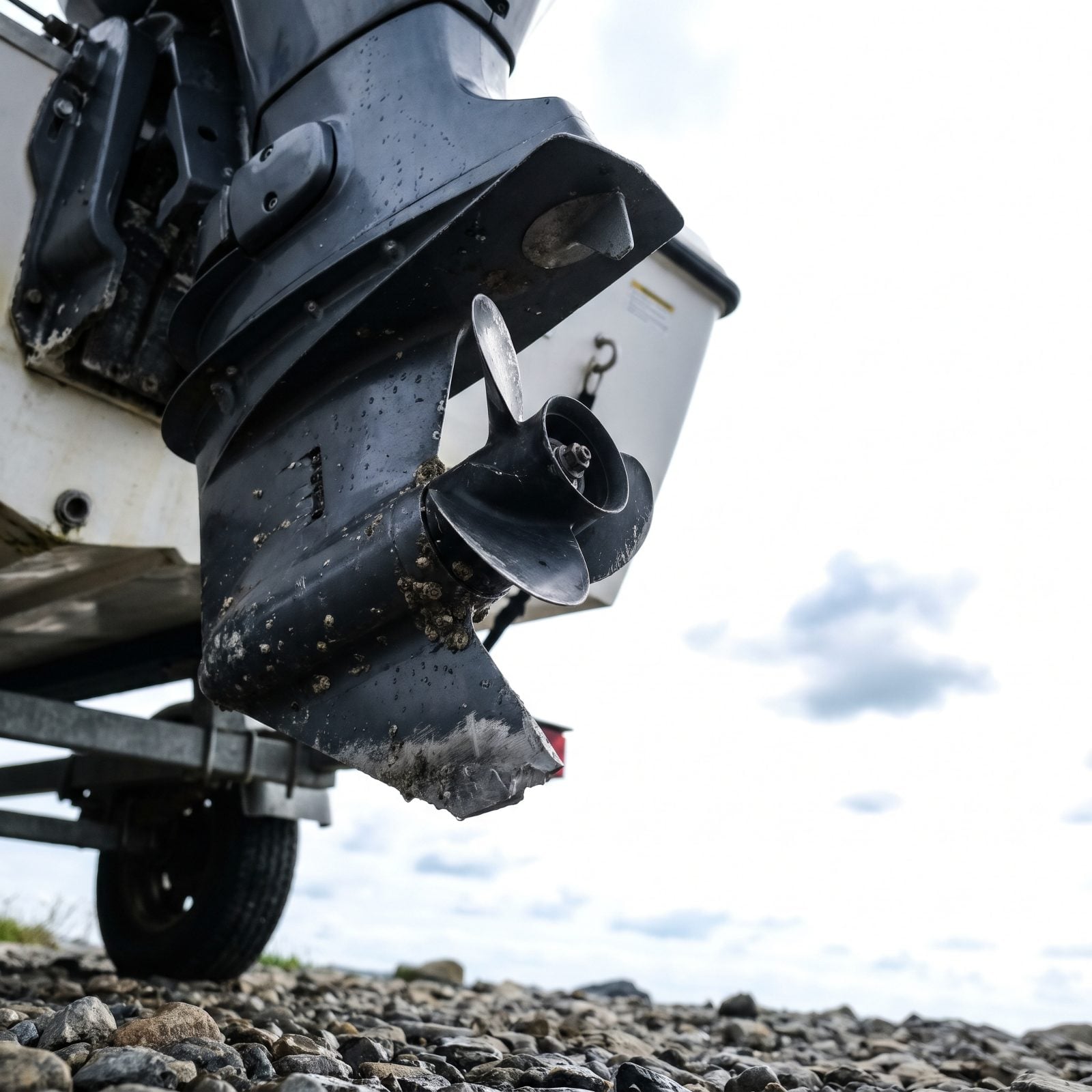
The skeg is that fin hanging off the very bottom of the lower unit, and it’s the first thing to meet a sandbar, a rock, or a careless trailer load. A chip there reads like a diary entry: this boat has kissed the bottom at least once.
A small chip is cosmetic. A bent or snapped skeg is a steering and tracking problem, and bare aluminum sitting in saltwater starts corroding fast. We read the chip, then look harder at the prop and shaft — because whatever hit the skeg usually said hello to them too.
5. Trim Rams With Pitted Surfaces
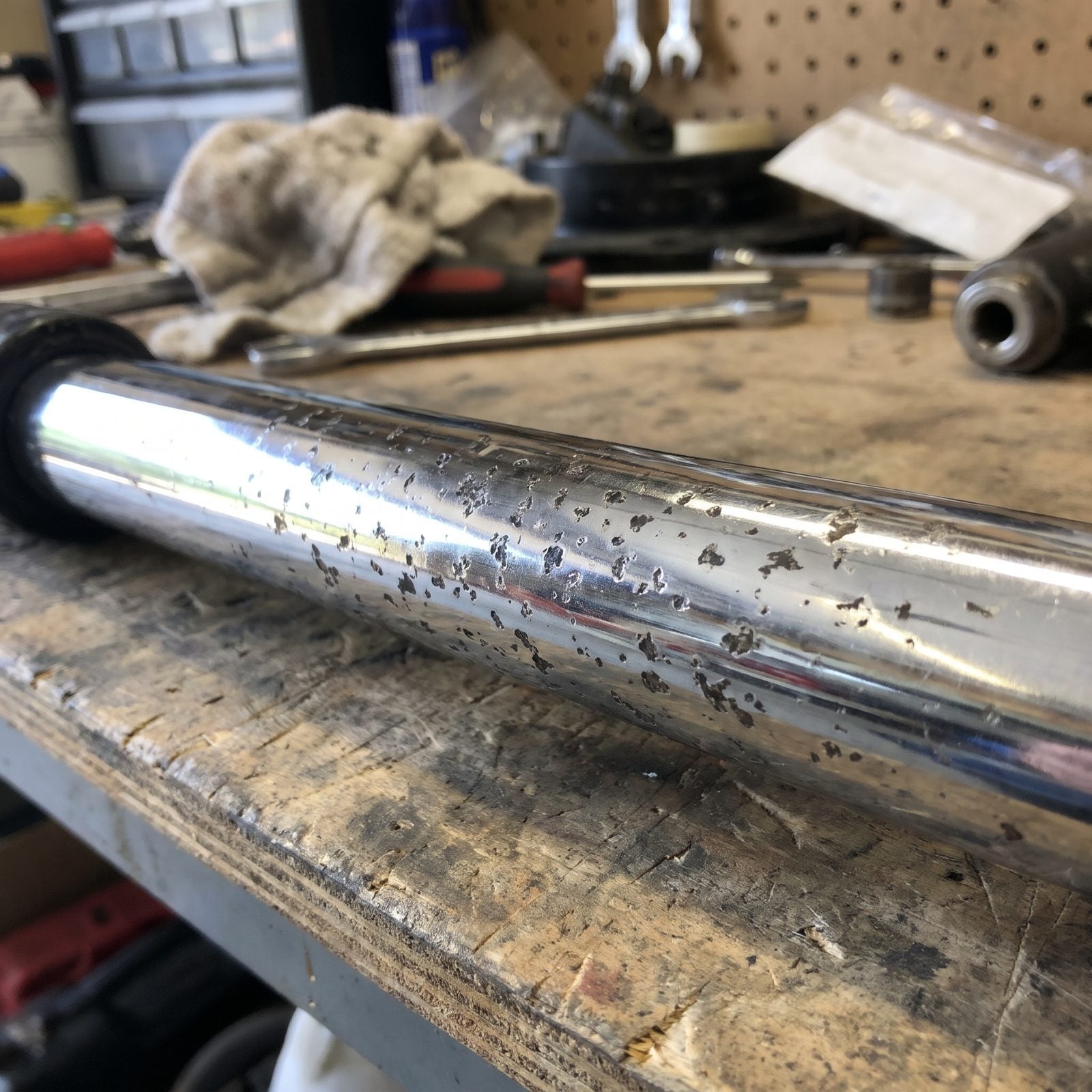
The shiny chrome on trim rams lies. It looks fine from across the dock. Up close you spot the pitting — little rust freckles where the plating let go.
Here’s the catch: on a trim ram, every pit like these is a jagged edge that drags across the seal each time the engine tilts. Seals shred, hydraulic fluid weeps out, and one morning the engine won’t lift at the ramp with a line of boats stacked up behind you.
Writing about tilt-and-trim leaks, a marine surveyor cautions “But if the rams are pitted, new seals won’t hold — the pitting will damage them during operation.”
4. White Corrosion Around the Anodes
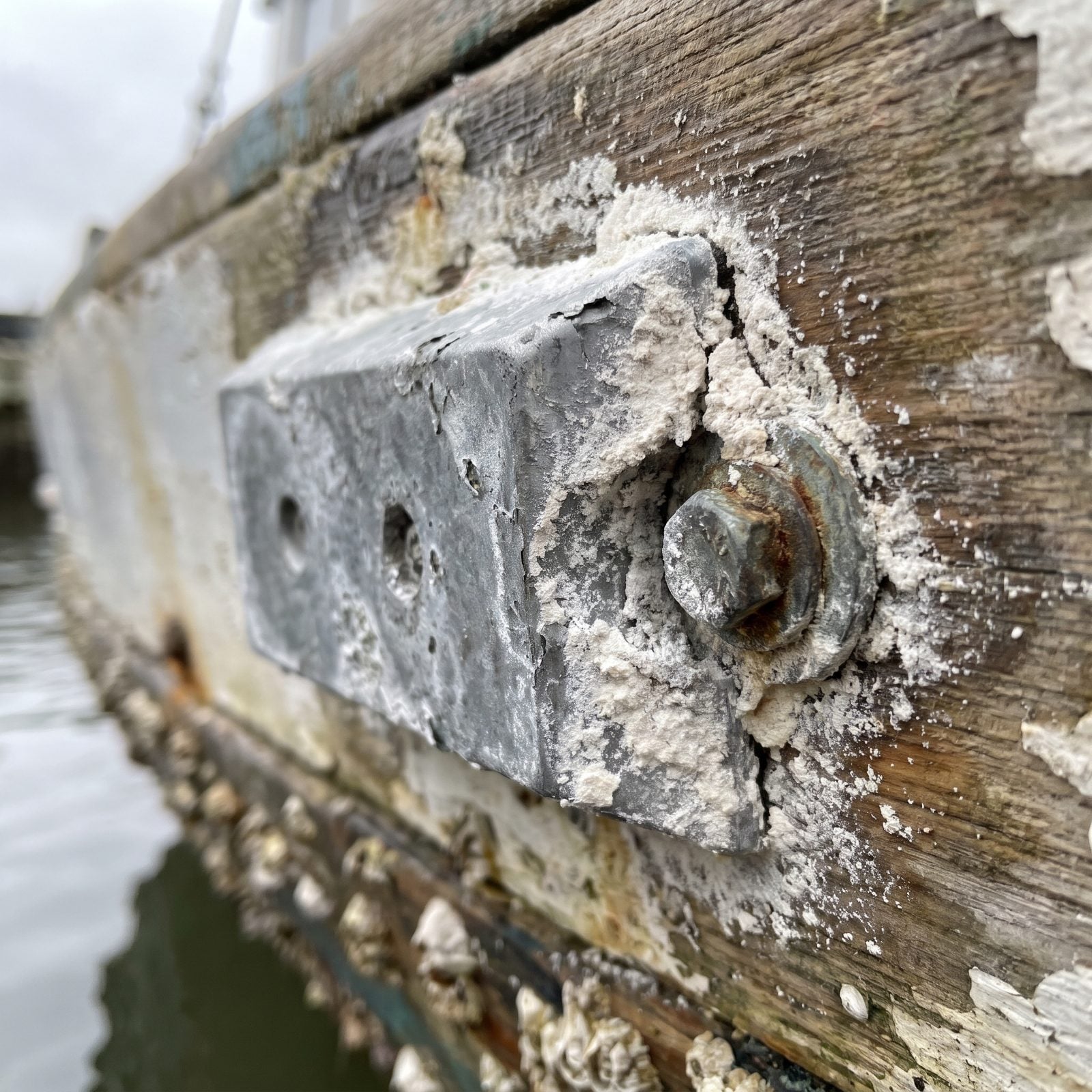
Anodes are supposed to disappear. That’s the whole job. These dull metal blocks corrode so your expensive underwater fittings don’t, which is why they’re also called sacrificial zincs.
So a half-eaten anode is good news, and a chalky white crust spreading past the anode onto the wooden planking around it is the opposite. It means the reaction has spilled onto the hull, and the alkaline residue can soften and damage the wood you actually care about. We check them first because a fresh set costs about as much as a nice lunch, and replanking a hull does not.
As a metallurgist puts it, “One is that in fresh water, zinc develops a white insoluble coating of zinc hydroxide that inhibits its operation.”
3. Old Impeller Pieces Near the Water Intake
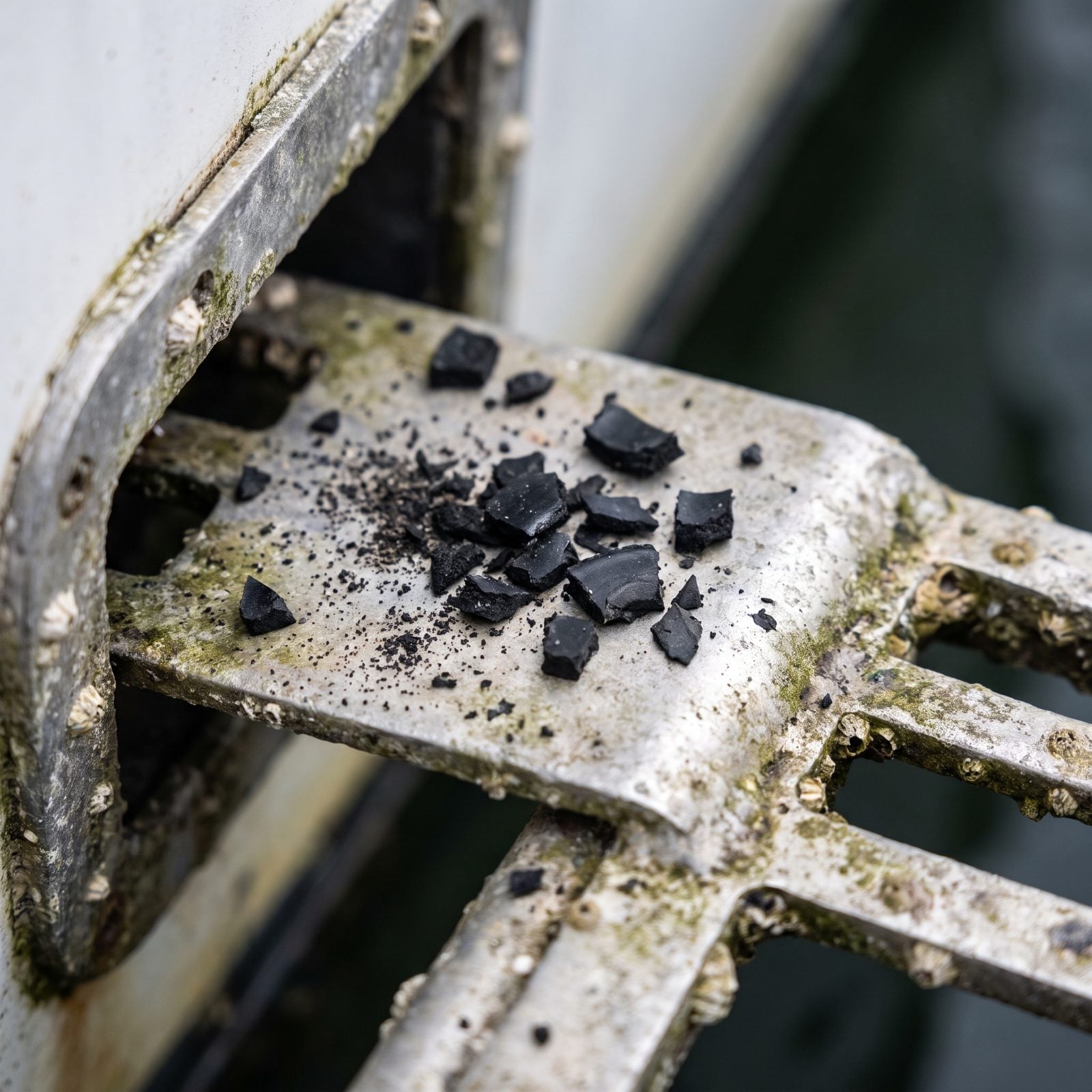
Little black crumbs near the water intake don’t look like much. They’re the chewed-off fins of an impeller, the rubber pump that shoves cooling water through your engine.
When an impeller shreds, those pieces don’t vanish — they lodge in cooling passages and the thermostat, choking the water flow long after you’ve swapped the pump. An engine that overheated last summer sometimes still carries the evidence months later. Finding rubber debris tells us the impeller already failed once, and that we need to chase down every fragment before it strangles the cooling all over again.
2. Soot Around the Exhaust Outlet
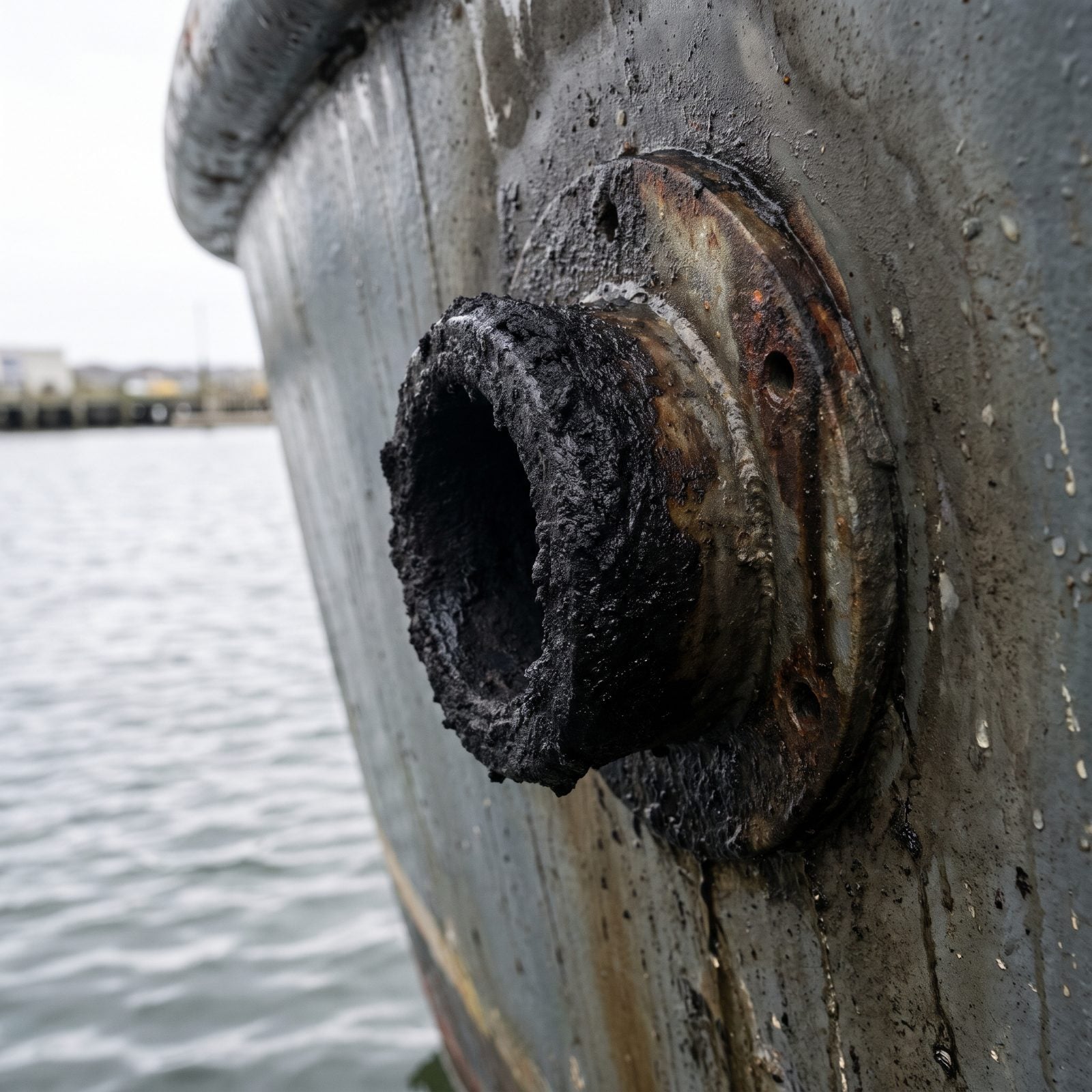
A clean-burning engine runs mostly clean out the back. A black, oily ring crusting the exhaust outlet is the engine trying to tell you something, and it’s rarely good news.
Heavy soot points at an engine burning rich or burning oil — a fuel mix that’s off, worn rings, or a tune that drifted. Each of those costs fuel, costs power, and costs you at the pump. We read the soot pattern before we ever pop a cowling, because the color and the greasiness narrow down what’s wrong faster than any guessing game.
1. Brittle Belts and Coolant Hoses
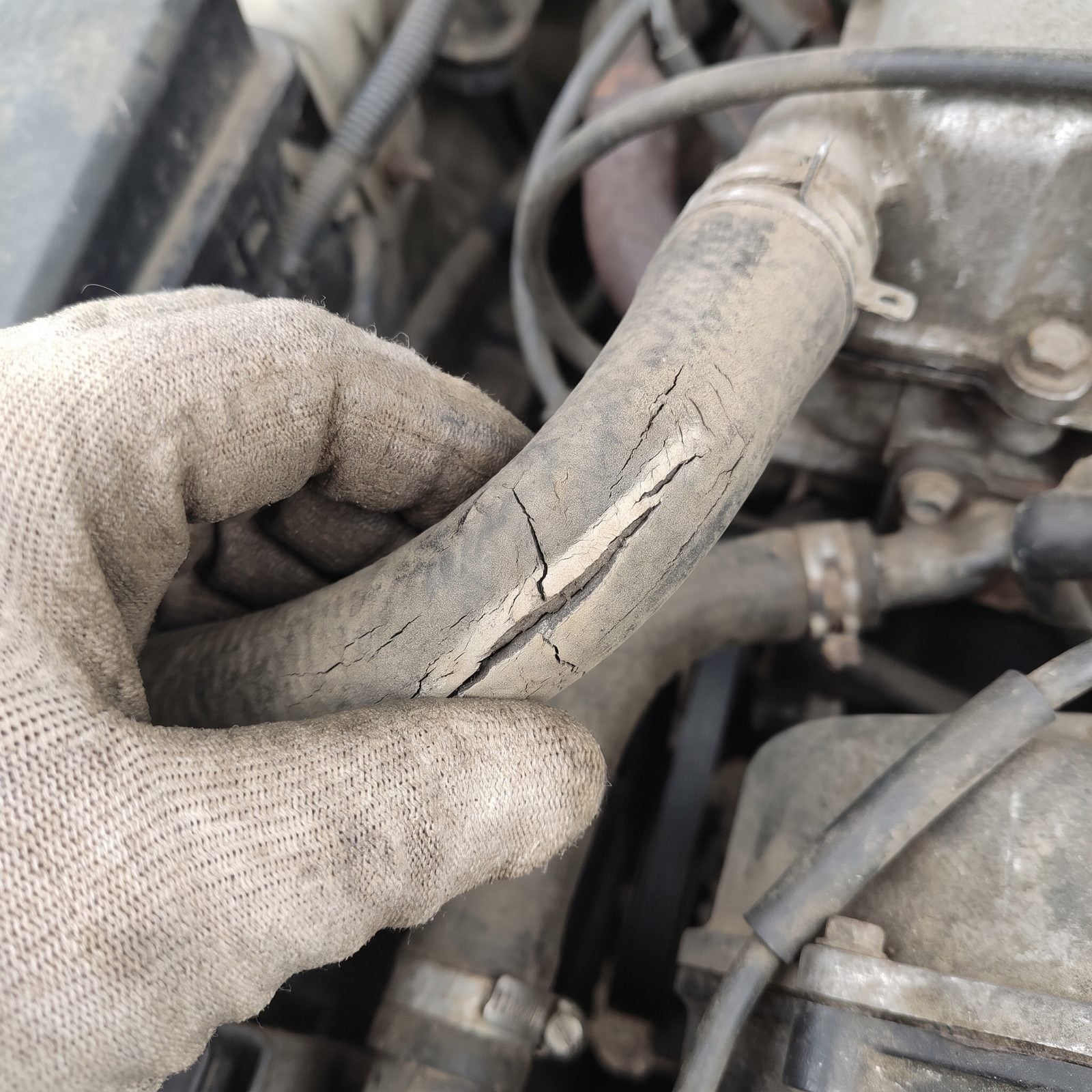
Pinch a hose. A good one gives a little and springs back. A bad one feels like a dried-out garden hose from the back of the garage — hard, shiny, done.
Belts tell the same story through tiny cracks across the ribs and a glazed sheen that means they’re slipping. Rubber ages whether you run the boat or not, so a weekend cruiser that sat three seasons can have older hoses than a boat used hard every month. And a belt that strands you in open water isn’t an inconvenience. It’s a tow bill and a ruined afternoon.