
The ramp at Norris on a July Saturday looks like a tailgate that lost its stadium. Trailers backed up to the road, coolers sweating, somebody’s bowrider idling sideways across the no-wake zone. There’s another Tennessee, though, hiding in the mountains and the river bends most folks drive right past. Water the color of sweet tea in October. Coves where the only sound is a kingfisher and your own paddle. These are the reservoirs and fishing lakes that never made the brochure. Pack a thermos, leave the wakeboard at home, and come see what quiet actually feels like.
Please note that some of the imagery in this article may have been enhanced with the assistance of AI.
28. Calderwood Lake, Remote Water Beneath Sheer Forested Slopes
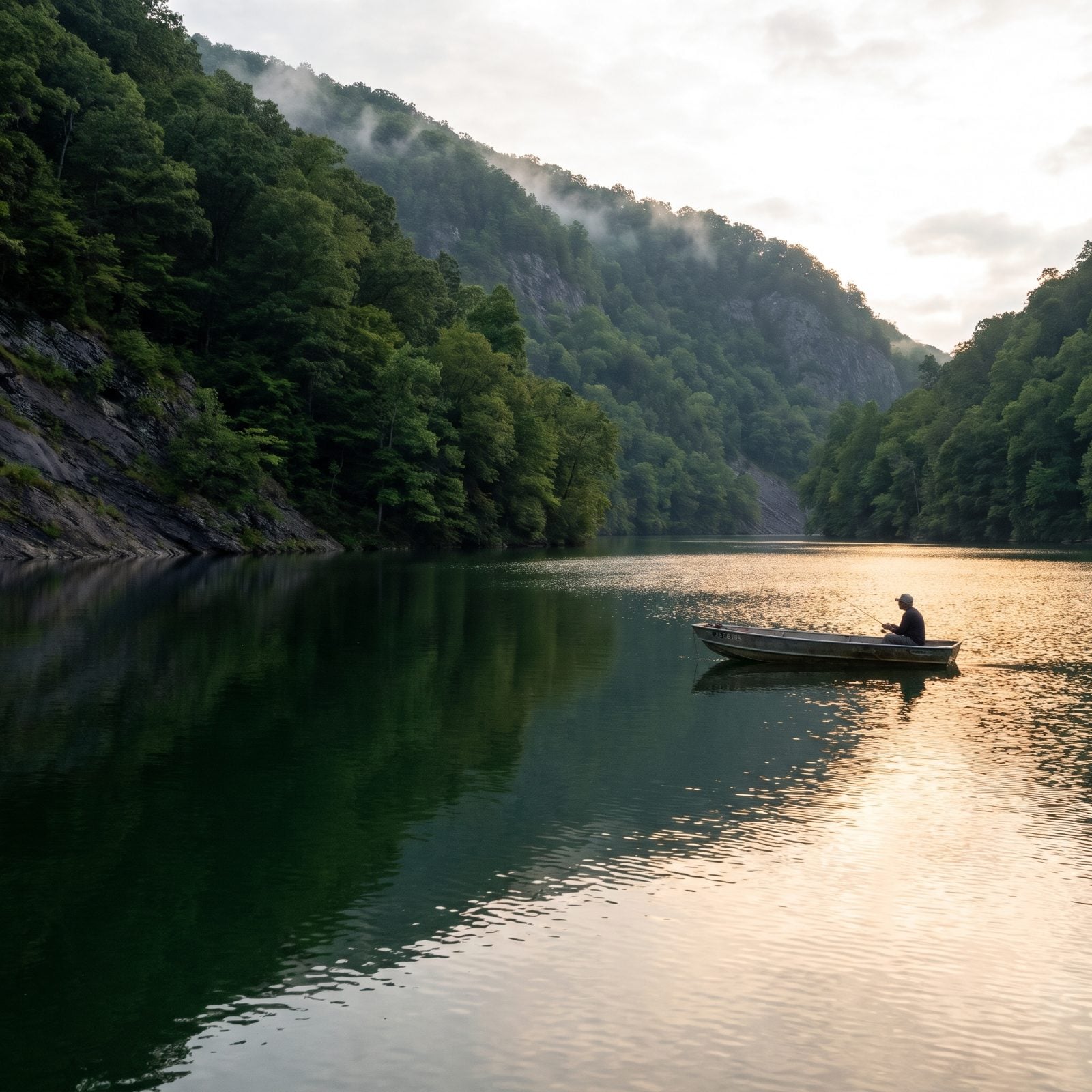
Calderwood is the one that stops people mid-sentence. It sits in a gorge so steep the mountains basically fall into the water, which means no lake houses, no marina, nobody carving figure-eights on a jet ski. Cold, clean water fed down from Cheoah above it.
The trout fishing here is quietly serious, and the lack of access is exactly why. Bring a small boat or a kayak. The bank is mostly rock wall, and cell service vanishes about a mile in.
27. Indian Boundary Lake, A Small Forest Lake on the Cherohala Skyway
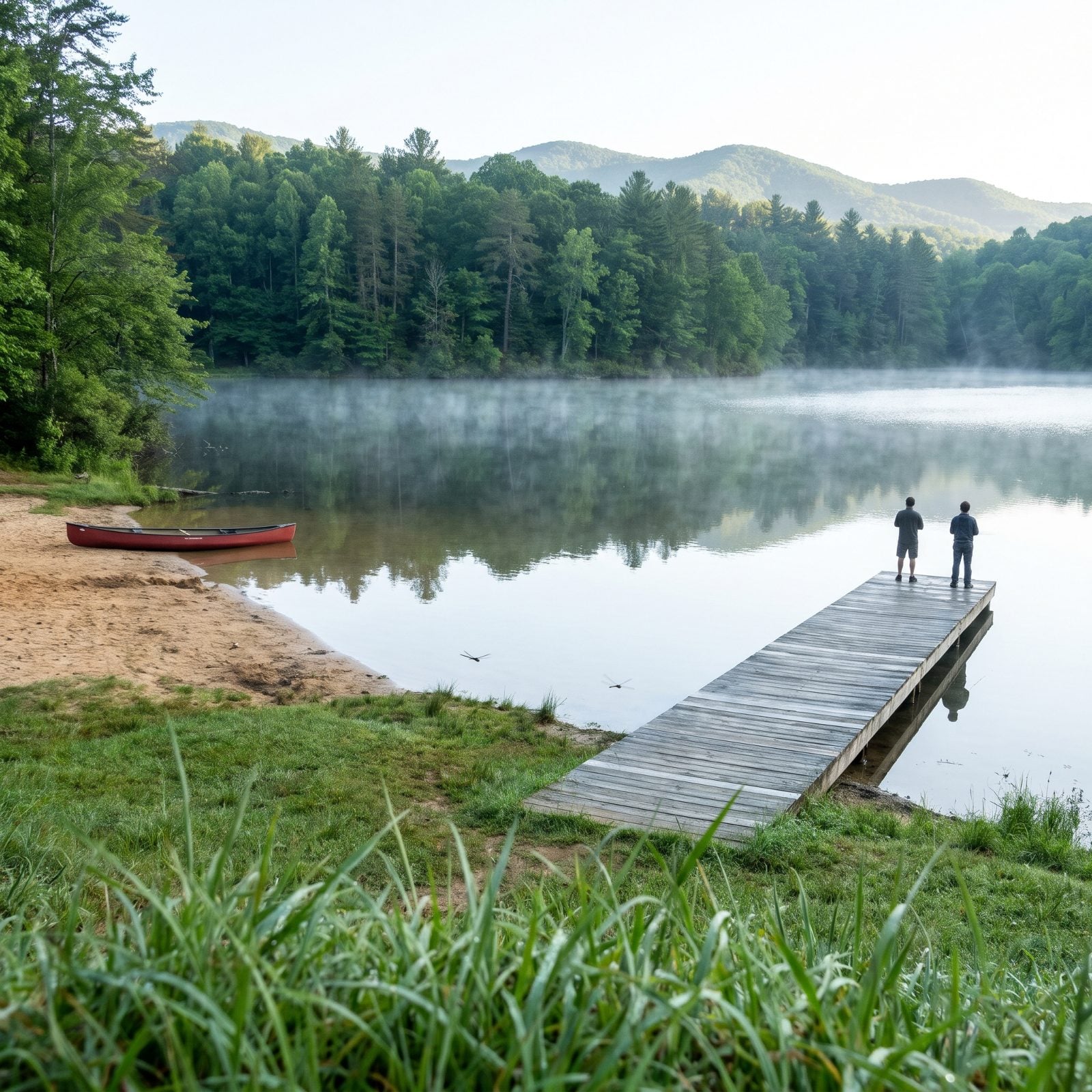
A hundred acres or so, no gas motors allowed, ringed by a flat walking trail you can finish in under an hour. Indian Boundary is the rare mountain lake that suits grandparents and grandkids on the same trip.
The campground books out for a reason. You’ve got a swim beach, paddle rentals, and a loop road that keeps the whole thing feeling tucked away. It sits right off the Cherohala Skyway, so you earn it with one of the prettier drives in the state. Bring the paddleboard. Leave the ambition at home.
26. Chilhowee Lake, A Narrow Mountain Reservoir Below the Foothills
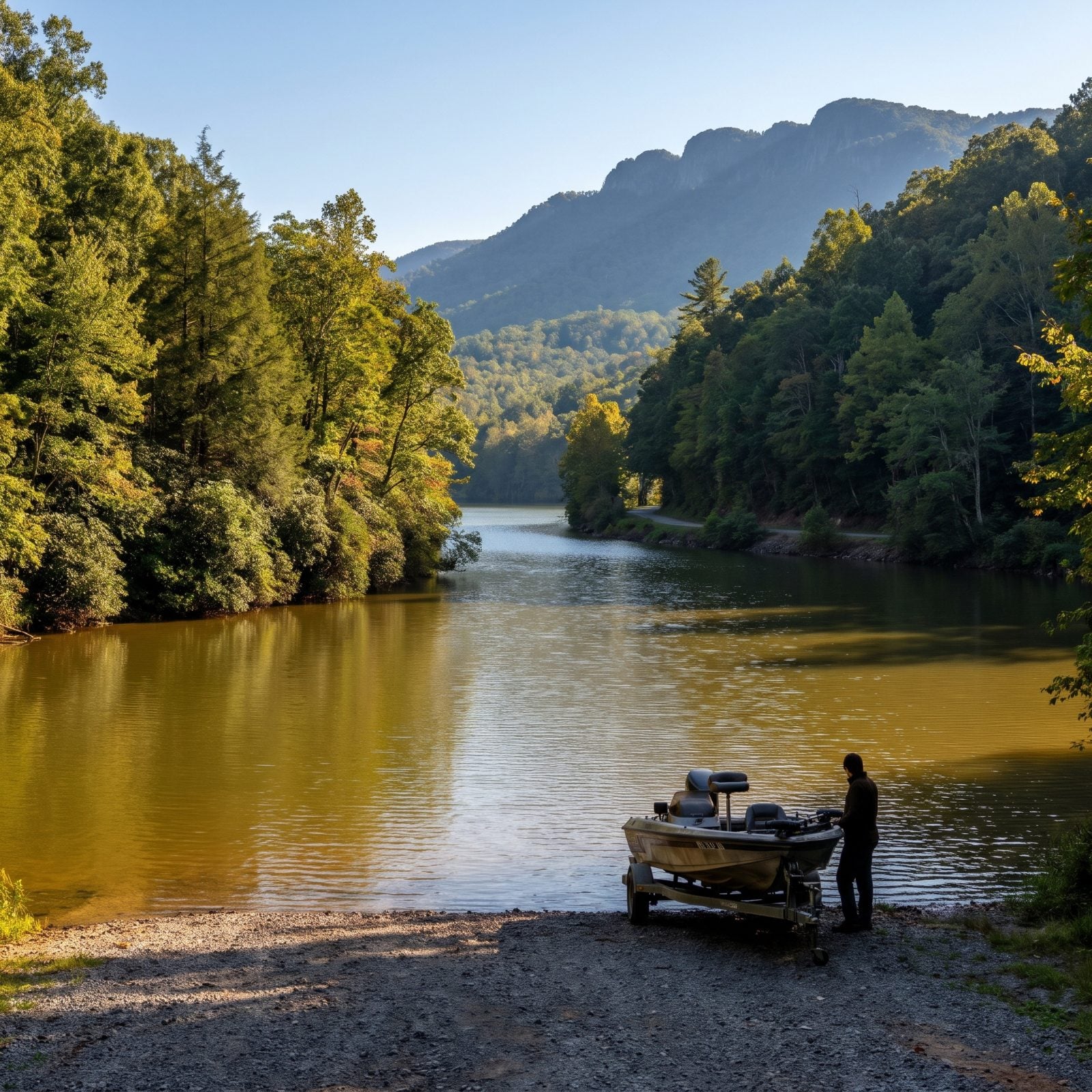
Thousands of people drive right past Chilhowee every summer on their way to the Smokies and never stop. That’s their loss. US-129 runs the whole shoreline, so you can scout the water from your truck before you ever back the trailer in.
It’s long and skinny and tied to the river current, so the bite moves with the flow. Smallmouth and spotted bass hold tight to the rock. Just know the Dragon’s Tail stretch of 129 sits close by, and weekend motorcycle traffic can get loud on the access road.
25. Watauga Lake, Mountain Coves Beneath the Cherokee National Forest
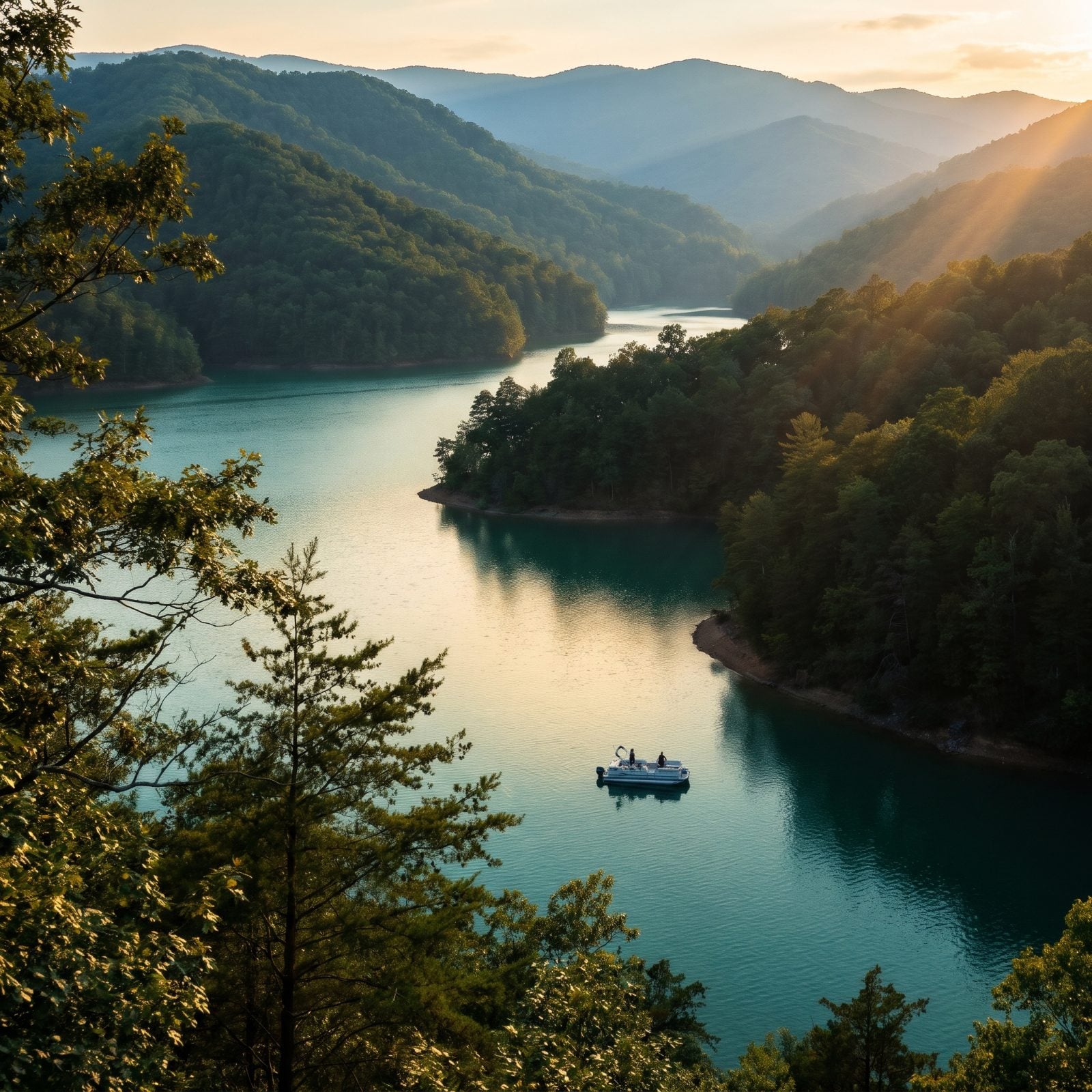
Watauga is clean enough that you can watch your line disappear into the green. High in the mountains near the North Carolina line, it stays cooler and clearer than almost anything downstream.
The Appalachian Trail crosses the dam, so you’ll share a cove or two with thru-hikers smelling of three weeks on foot. The coves here feel genuinely secluded — the kind where you cut the motor and hear nothing at all. And lake trout and smallmouth both live here, which is an odd, wonderful pairing.
24. South Holston Lake, Clear Water Along the Virginia Line
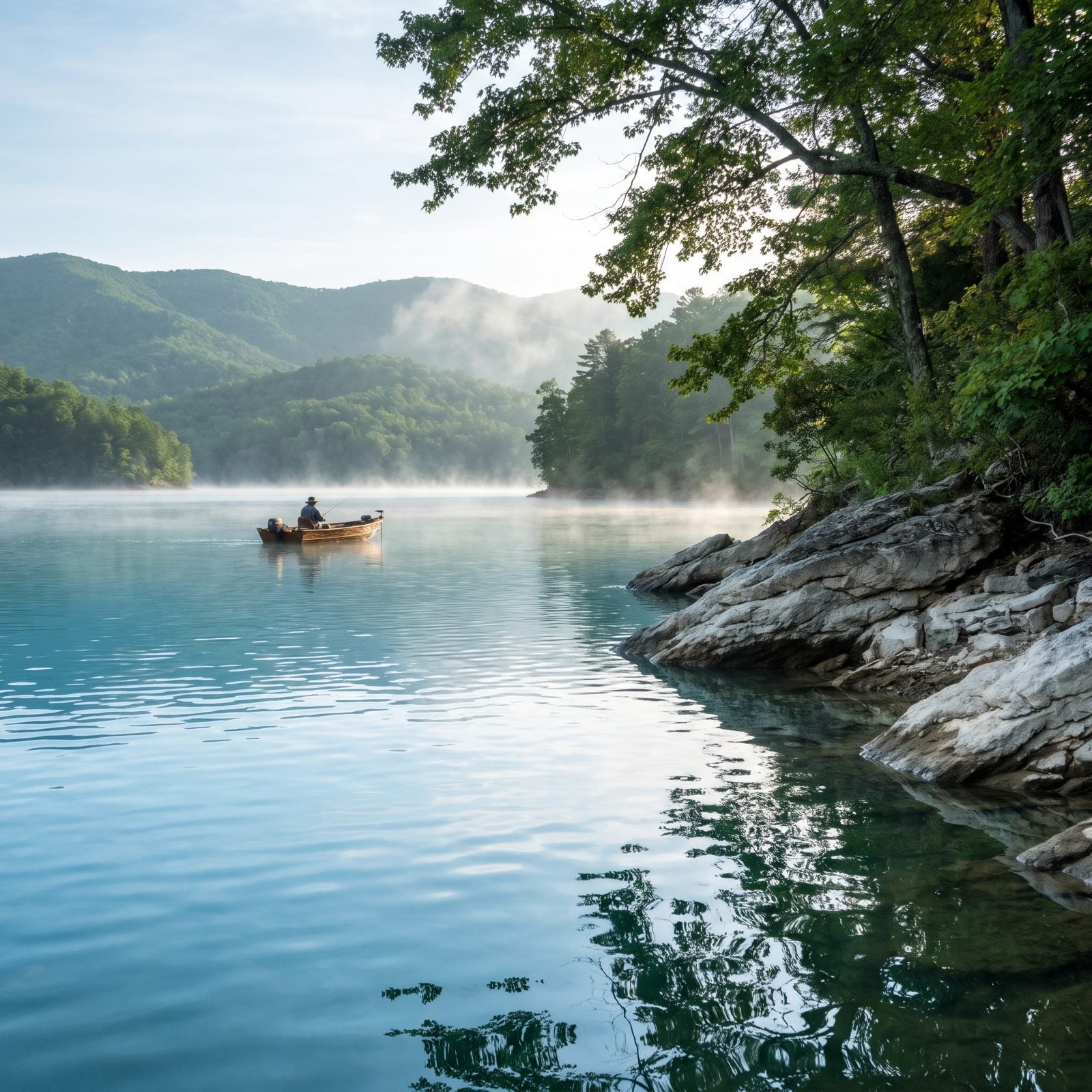
Big water, quiet water. South Holston spreads across the state line and never feels as busy as its size suggests, probably because the crowds spill over toward Bristol instead.
Below the dam is where it gets famous among fly fishers, one of the better tailwater trout fisheries in the Southeast. On the lake itself, the clarity and cool depth make for strong smallmouth. Pontoon the main channel at sunrise and you’ll have most of it to yourself before the Virginia boats wake up.
As one fly-fishing guide outfit puts it, “The South Holston is a renowned destination fishery boasting thousands of trout per mile, which offers anglers an unforgettable experience.”
23. Parksville Lake, Ocoee River Scenery Beneath Chilhowee Mountain
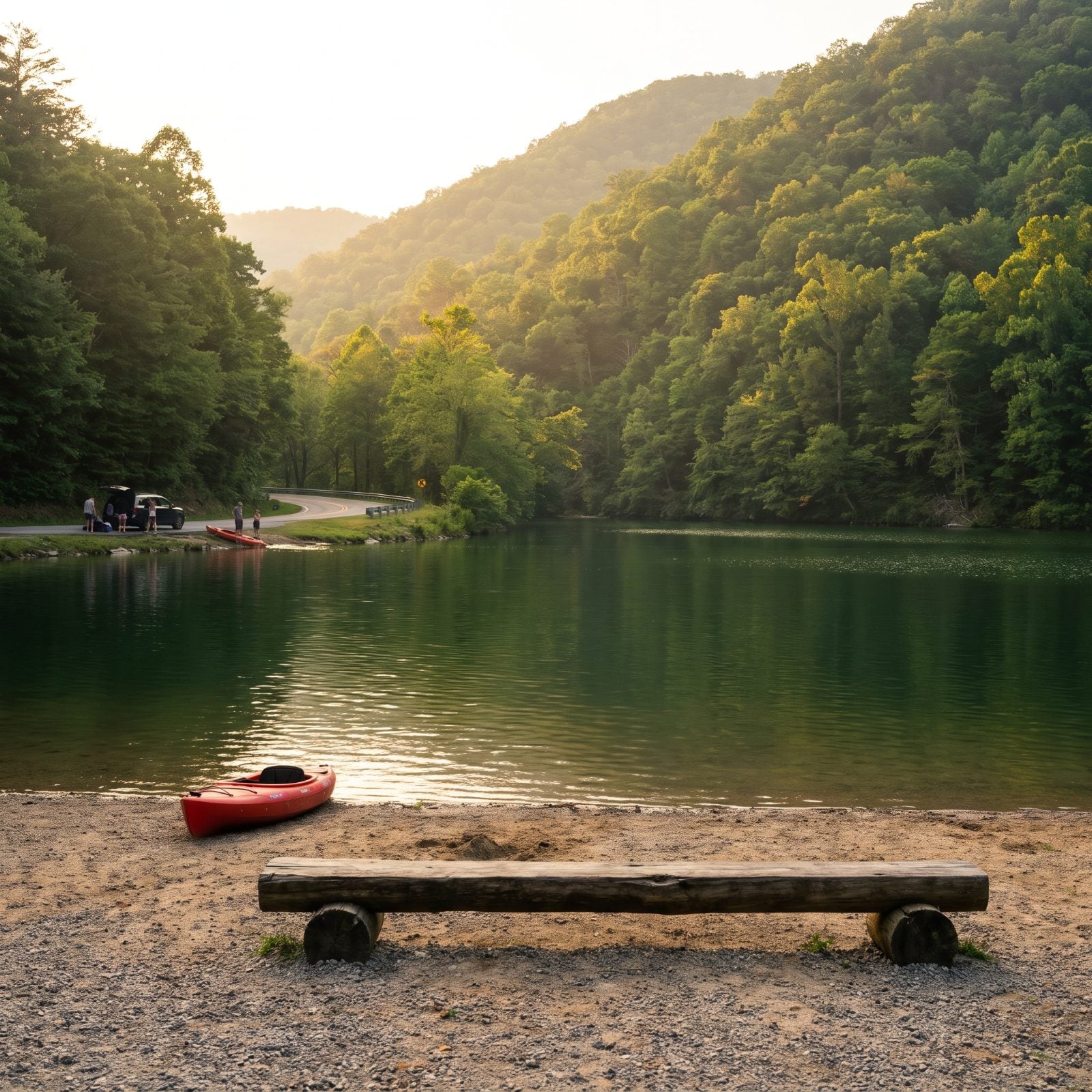
Everyone knows the Ocoee for whitewater and the 1996 Olympic kayak course. Fewer stop at the calm lake the same river feeds, which is a shame, because Parksville is the mellow sibling in the family.
There’s a real swim beach, shaded picnic spots, and bank fishing you can actually walk to. It stays shallow and warm enough for an easy afternoon, no technical boating required. Pull off US-64, spread a blanket, and let the whitewater crowd race past overhead.
22. Fort Patrick Henry Lake, A Compact Holston River Escape
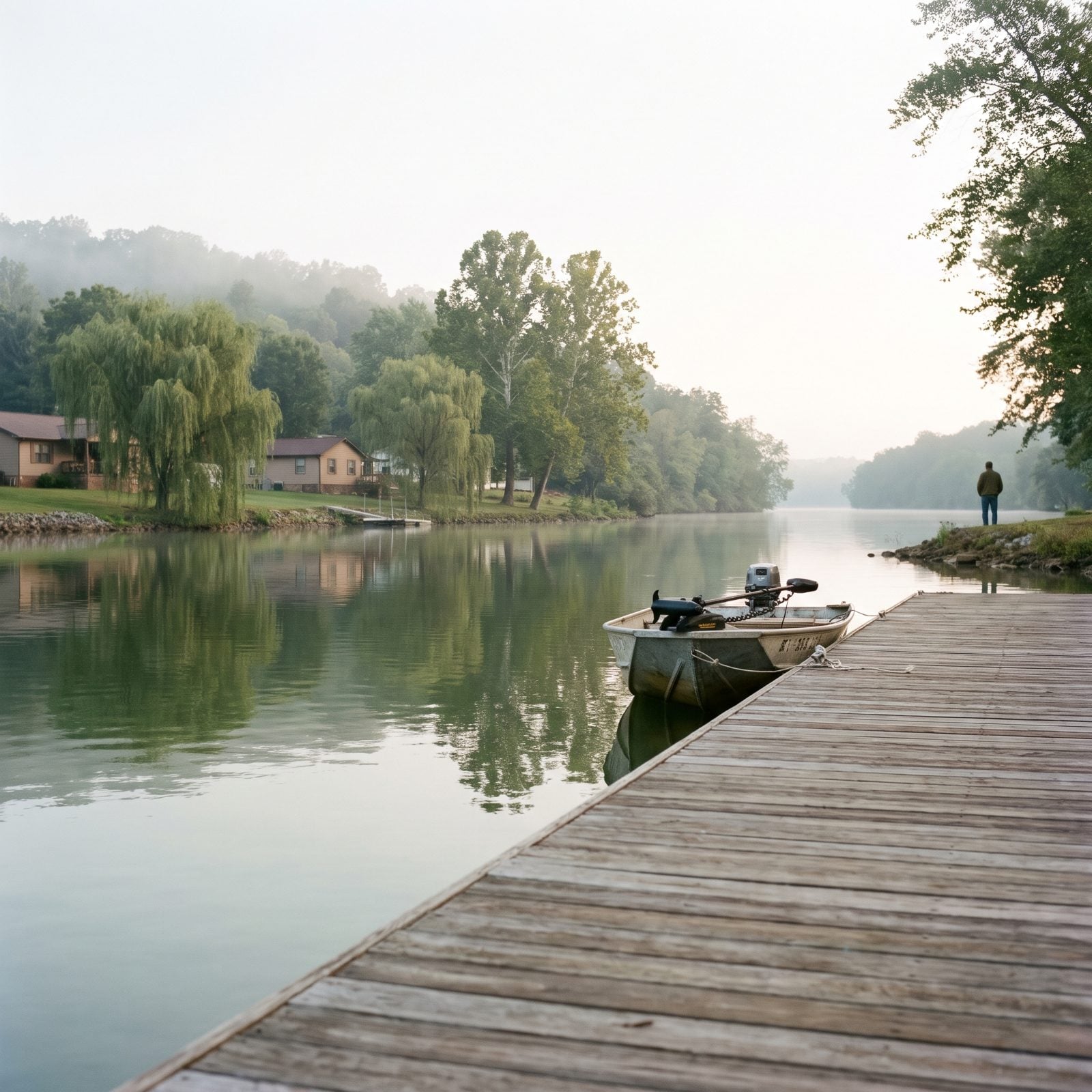
Small and often overlooked, which is exactly its charm. Fort Patrick Henry is barely more than a wide spot in the Holston, a short run of water you can cover in a single morning.
That compactness makes it great for a first kayak outing, or an evening paddle after work if you live near Kingsport. No wind fetch to speak of, no big-lake chop. Expect bass and bluegill, a few herons, and neighbors who wave from their docks because that’s just how it goes out here.
21. Boone Lake, Wooded Inlets Between Bristol and Johnson City
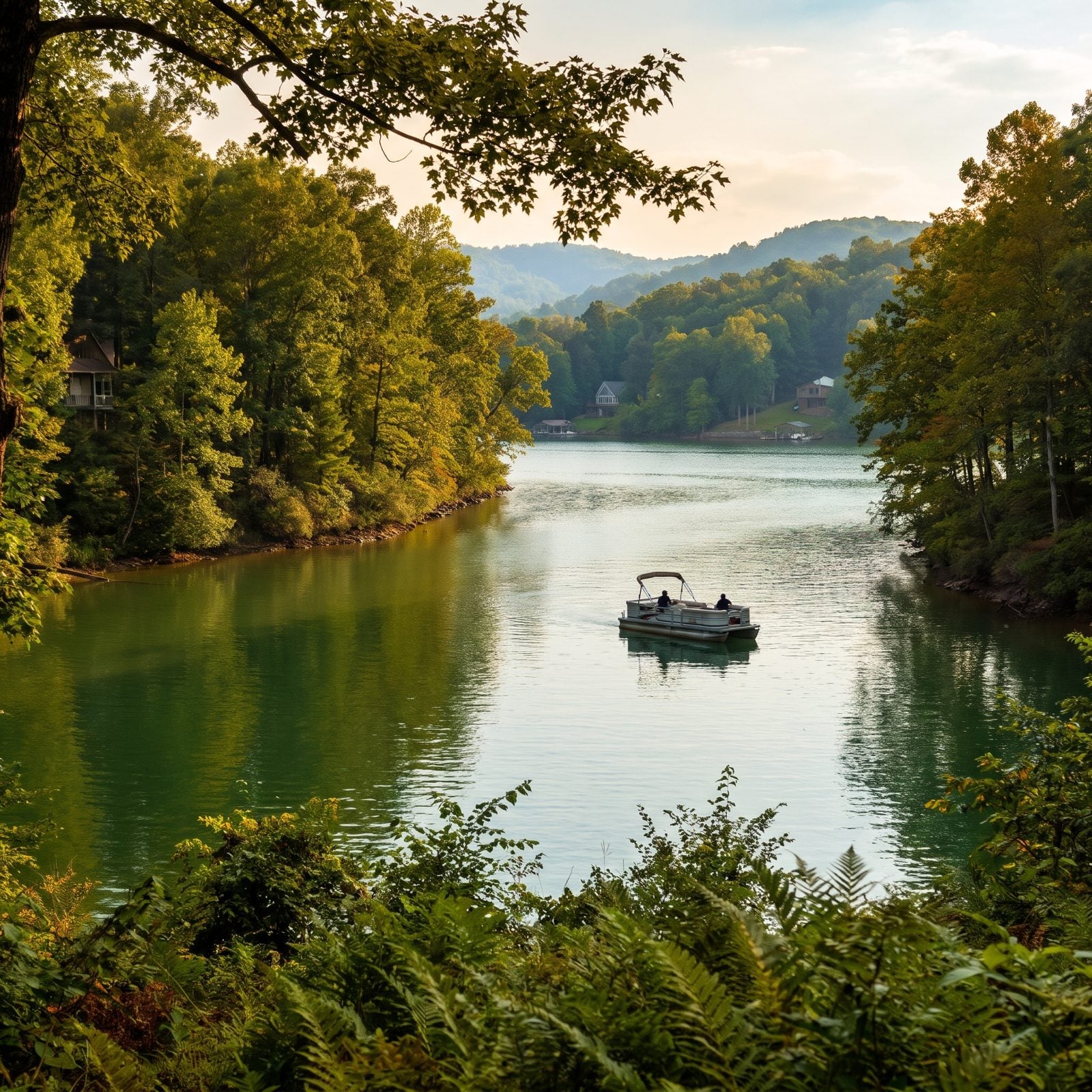
Boone is all fingers and inlets, a lake that rewards curiosity. You can spend a whole Saturday poking into coves you’ve never seen and still miss a few.
It went through a long drawdown for dam repairs a few years back and sat low for ages, which quietly thinned the crowds. The water’s back up now and the fishing has rebounded. Set between two decent-sized towns, yet those back inlets still feel private enough to anchor and swim off the bow.
20. Melton Hill Lake, Calm Clinch River Water Near Oak Ridge
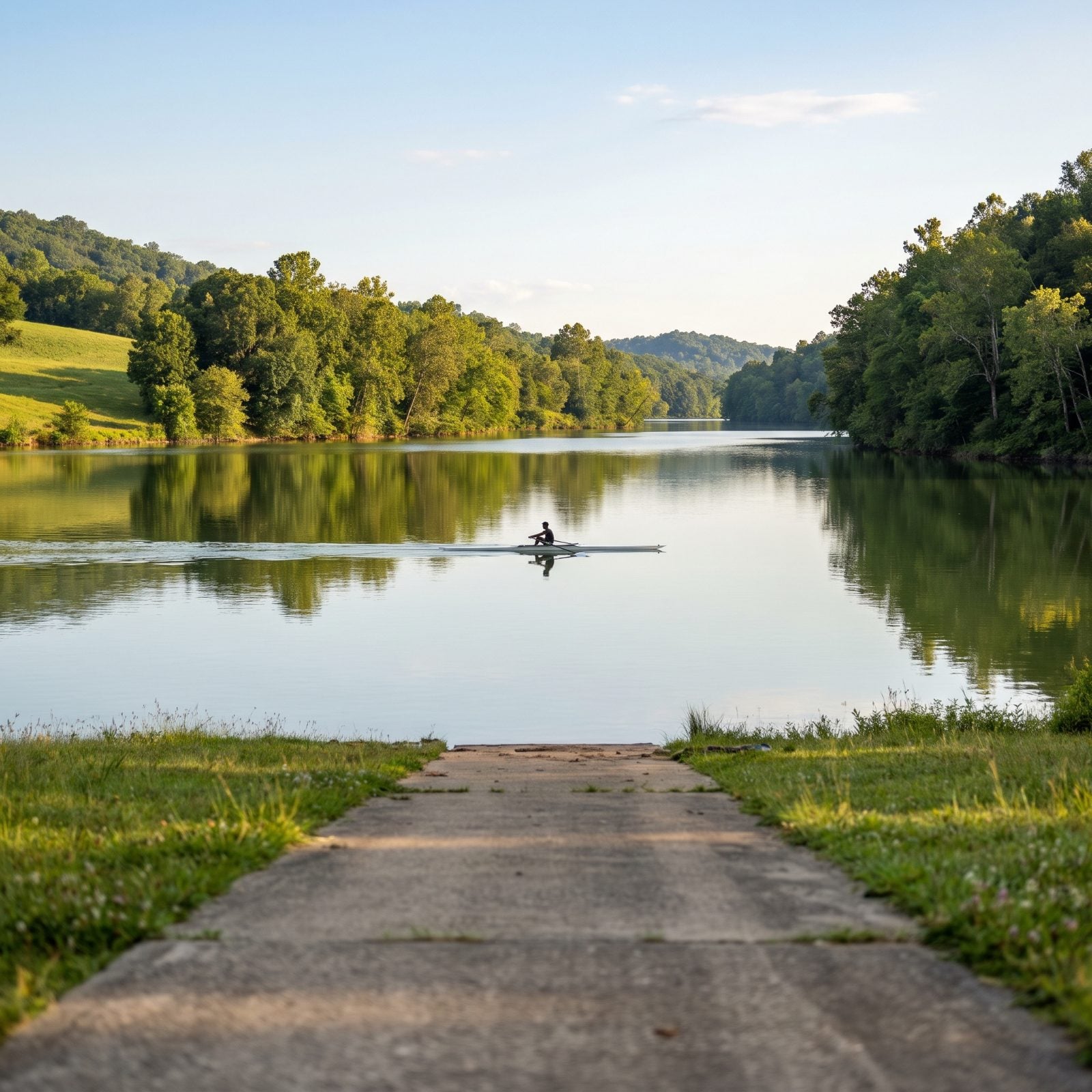
Melton Hill has a reputation among exactly one crowd: rowers. The Clinch sits flat and protected enough here to host regattas, and that same stillness makes it a dream for a morning paddle.
It’s one of the few TVA lakes with lakefront camping where you can tie up right at your own site. Crappie and bass fill the quieter arms. Being so close to Oak Ridge, you’d expect busy — but the long narrow shape keeps everything spread thin and calm.
19. Center Hill Lake, Waterfall Coves Beyond the Busy Launches
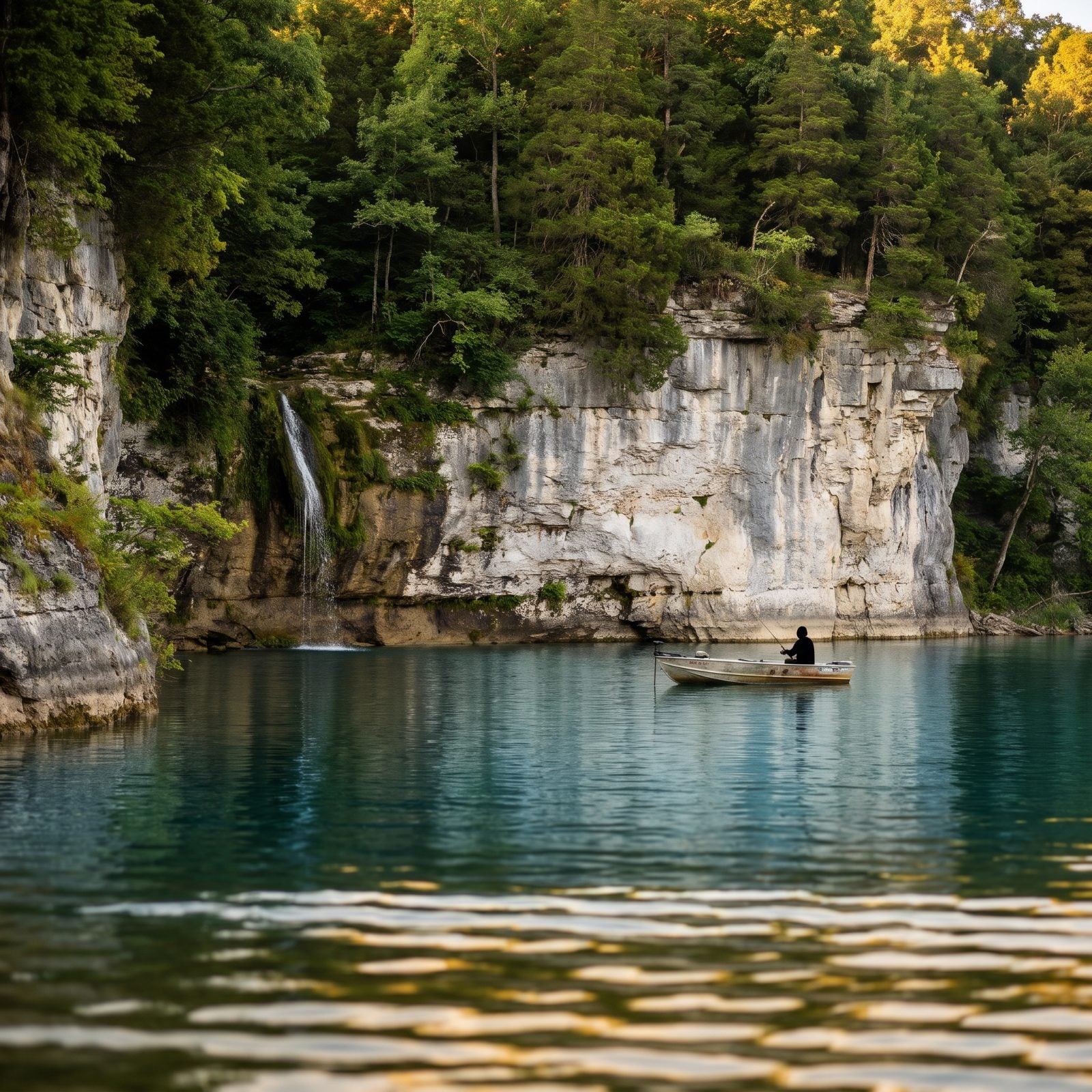
Center Hill gets busy at the main ramps, no denying it. But the lake is carved into limestone, so the back coves hide waterfalls, caves, and bluff walls most day-trippers never bother to find.
Paddle or idle past the crowded launch and the lake changes character within a mile. Clear water, sheer rock, little ribbons of waterfall after a good rain. The smallmouth and walleye fishing is legitimately good. Come for the known part, stay for the hollows nobody photographs.
18. Tims Ford Lake: Limestone Coves Away From the Main Park
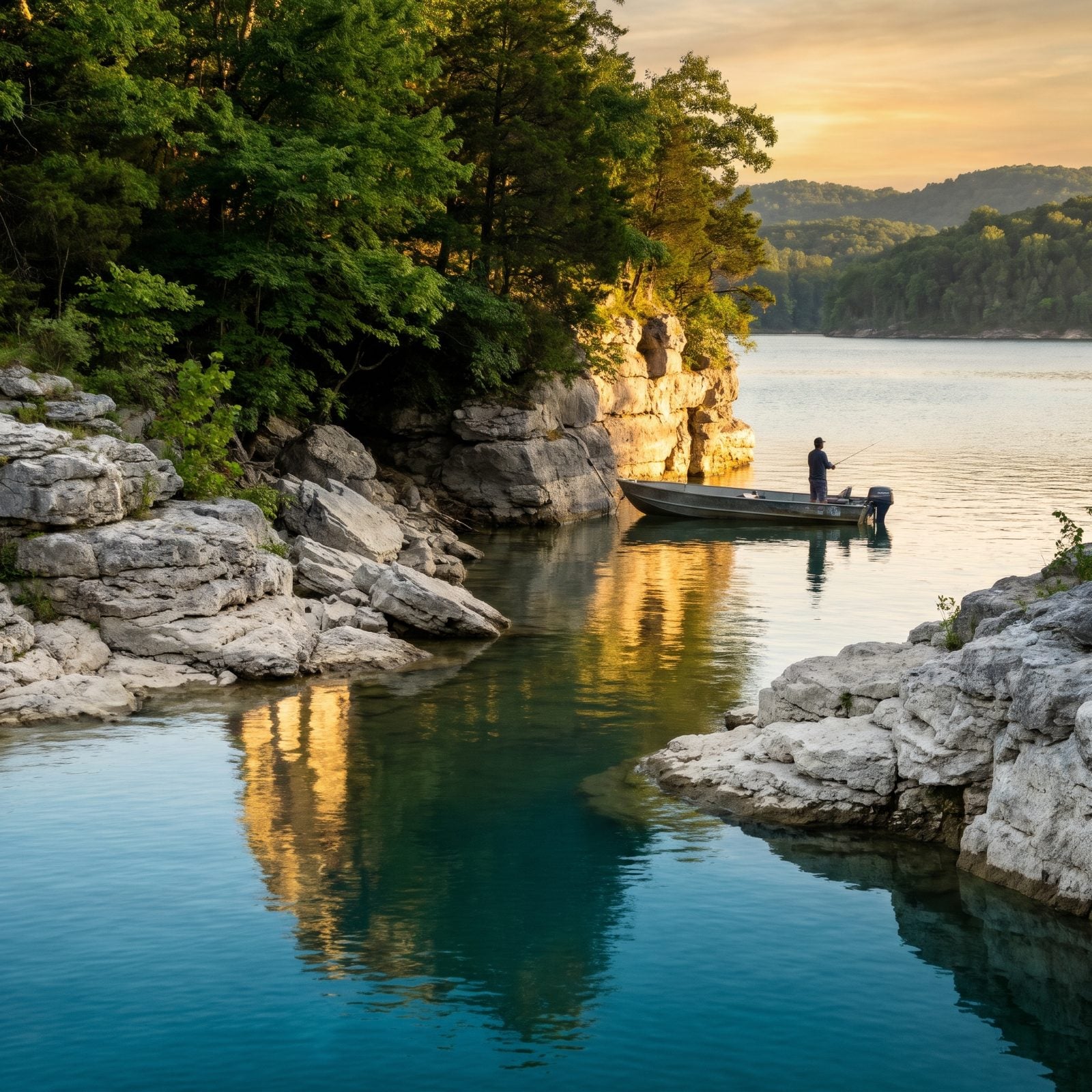
The dam park and the marina stay busy all summer. Paddle or idle a half mile past them, though, and Tims Ford turns into something else entirely — all pale limestone, shelves and fingers of rock that drop straight into clear water and carve out little coves where you can tie off and swim without another boat in sight.
Smallmouth hold tight to those rock ledges. On a calm morning the water’s clear enough that you’ll watch them track your lure. Bring something small and natural colored.
17. Normandy Lake: Pastoral Shorelines Near Bell Buckle
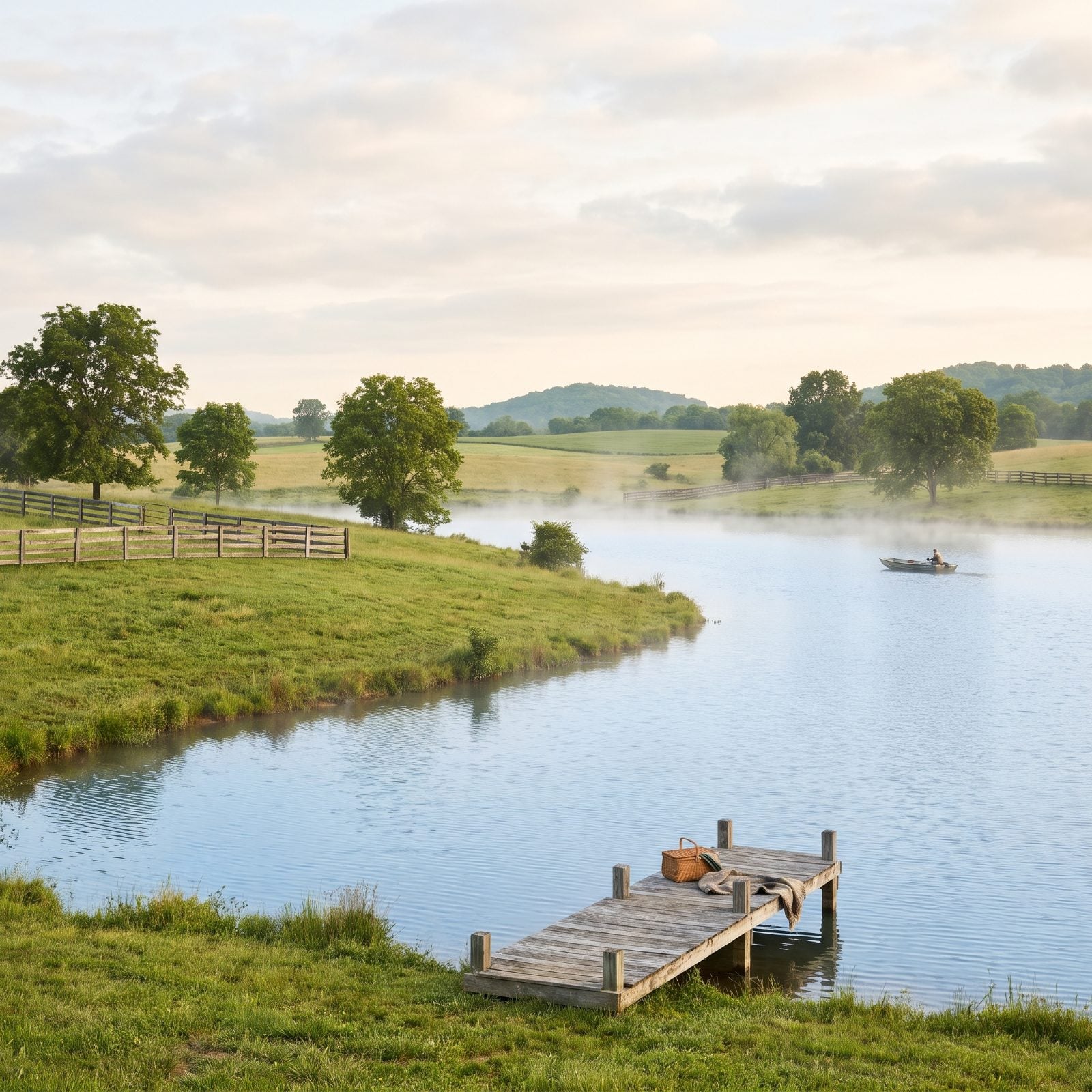
Normandy doesn’t try to impress you, and that’s the appeal. It’s a Duck River impoundment wrapped in the kind of middle Tennessee farm country that makes you slow the truck down — rolling pasture, old fence lines running right to the water, cows standing in the shallows.
Bell Buckle is ten minutes off, so you can fish till noon and still make it to town for a slice of pie and a browse through the antique shops. Not the worst way to spend a Saturday.
16. Woods Reservoir: Quiet Fishing Water Around Arnold Air Force Base
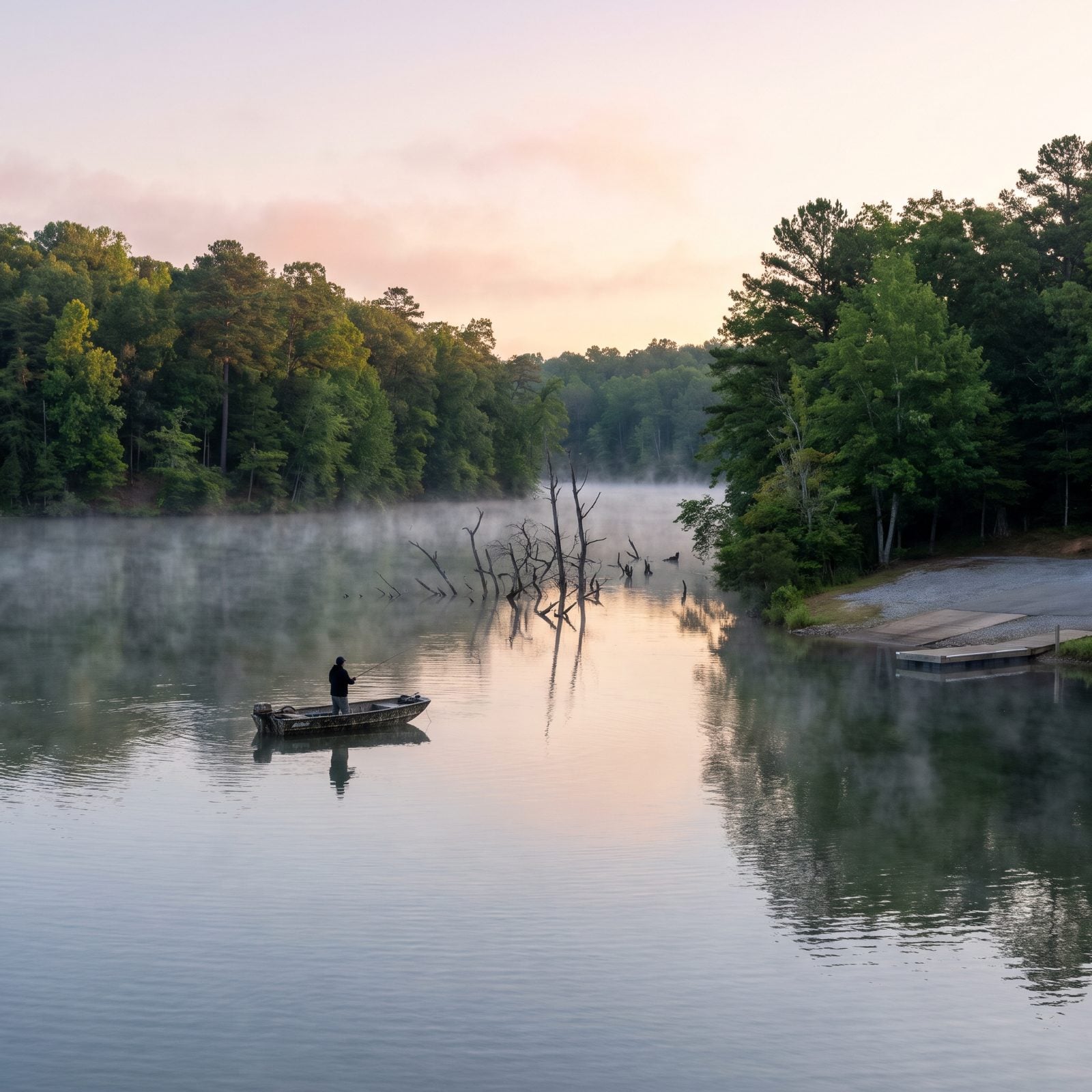
Flooded timber and almost nobody on it. Woods Reservoir sits on land managed alongside Arnold Air Force Base, which keeps development off the shore and the crowds thin. Instead you get a lake full of standing dead timber — the kind of structure crappie and bass stack up in by the hundreds.
Access is public, but check the regulations before you go. The base connection means a few areas have restrictions, and rules shift. Call the local TWRA office if you’re unsure.
15. Nickajack Lake: Tennessee River Bluffs and Hidden Paddling Water
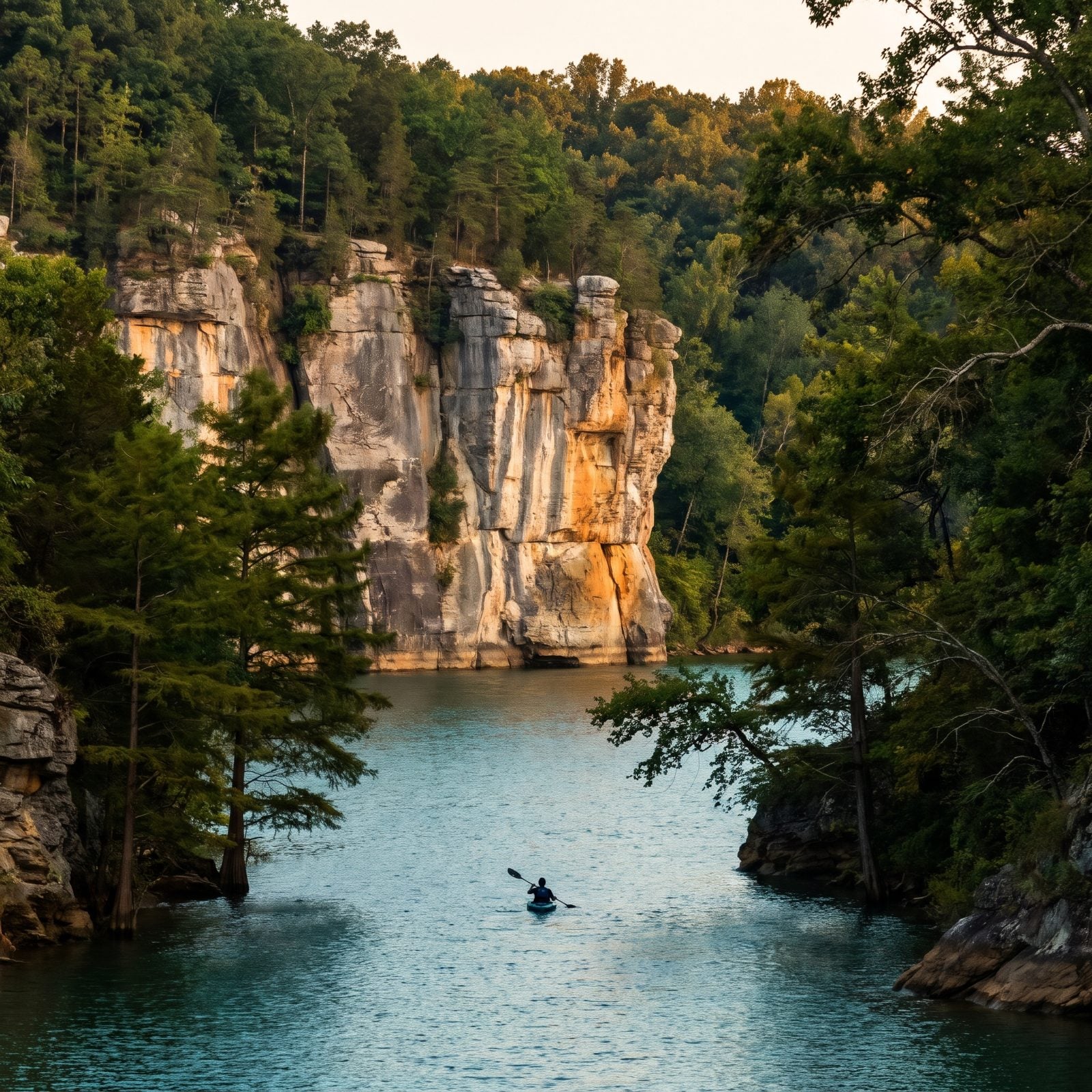
Barge traffic on the main Tennessee River channel makes Nickajack feel like working water. Duck off into the side sloughs, though, and you find a different lake — narrow paddling channels that wind back under the bluffs, past old marshy pockets where herons work the shallows and the barge wake never reaches.
Those river bluffs are the thing people drive for. Gray and ochre rock faces rising straight out of the water, best seen from a kayak at the right hour. We’d take an early evening paddle here over a crowded ski lake any day.
A Chattanooga kayak outfitter leads easy sunset paddles on Nickajack Lake to the bat cave refuge, which it describes as the summer roost for up to 100,000 gray bats. (via a Chattanooga kayak outfitter)
14. Cordell Hull Lake: Broad Cumberland Water Near Carthage
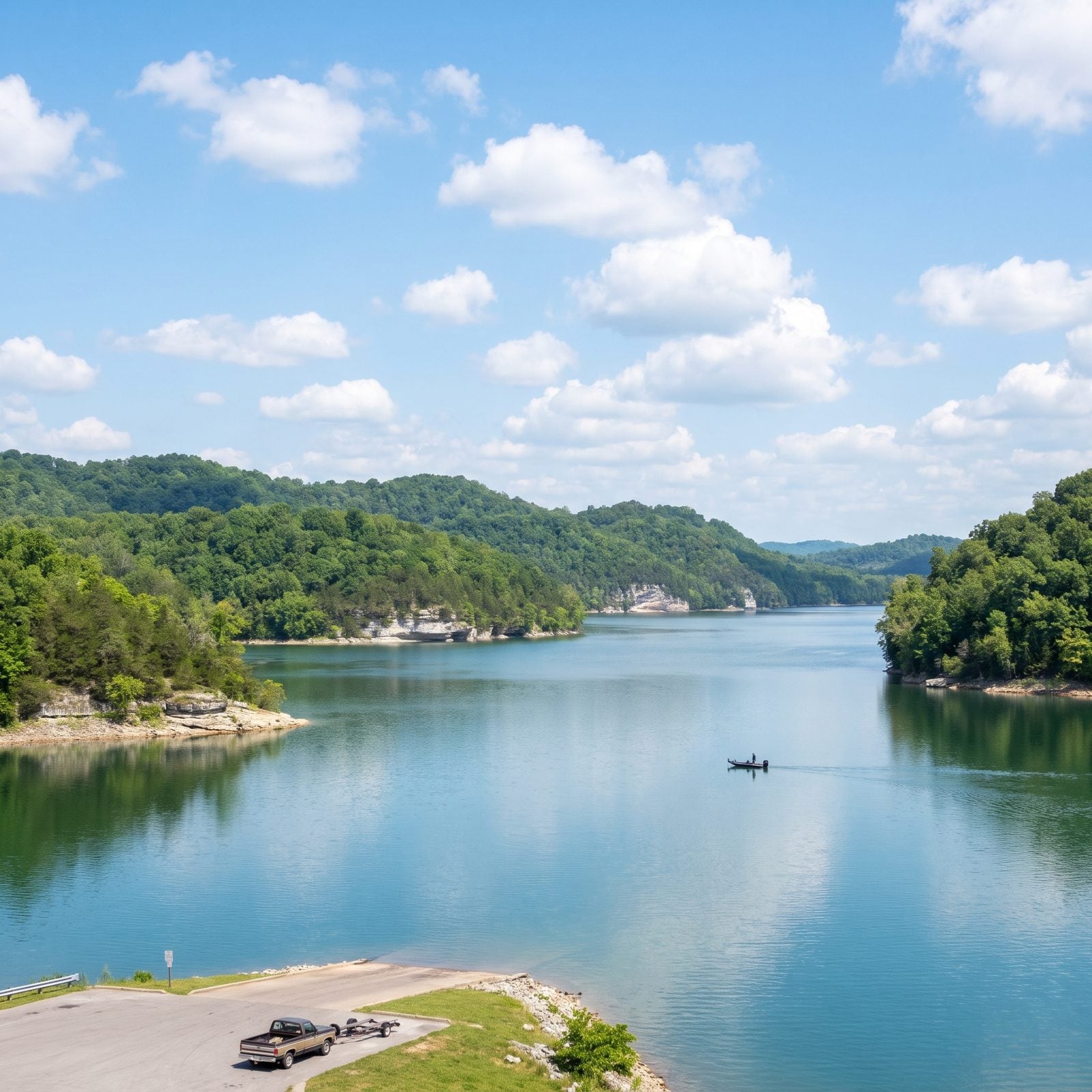
Cordell Hull is big water without the big crowds. A Cumberland River reservoir with room to spread out, broad enough that you can run for miles and pass a handful of boats on a weekday.
The fishing runs deep here. Walleye, sauger, catfish, smallmouth up in the rocky stretches. Carthage sits right there as your base, a small river town that still feels like one.
13. Cheatham Lake: Cumberland River Backwaters West of Nashville
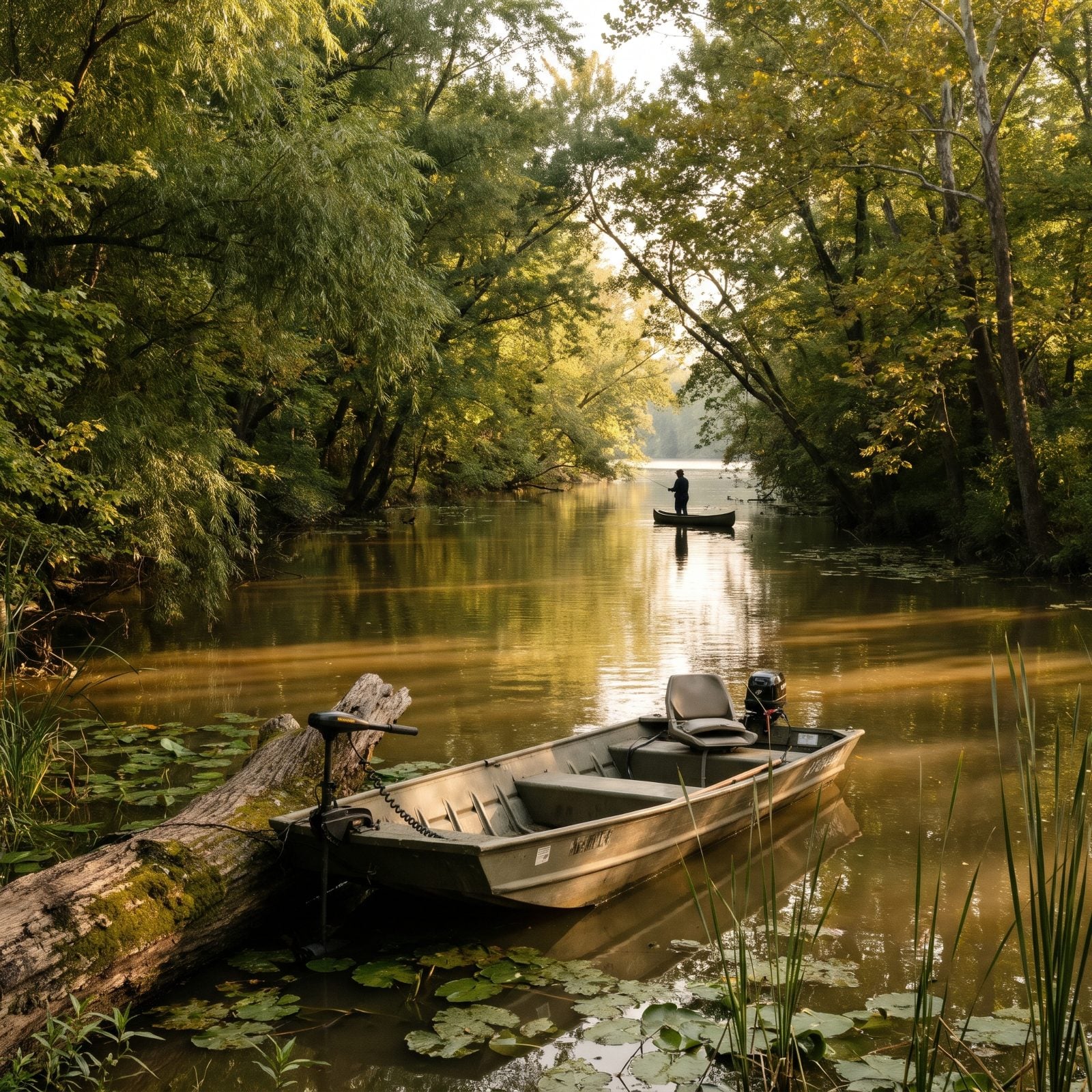
Half an hour from downtown Nashville and it feels like another state. Cheatham is a run of the Cumberland pooled behind a lock and dam, and its real treasure is the backwaters — shallow sloughs lined with willows, water the color of weak tea, bass holding in the shade of fallen timber.
These quiet pockets stay calm even when the main river’s busy with pleasure craft. Easy paddling, good bank access, close enough to the city that you can be fishing before most people finish breakfast.
12. Marrowbone Lake: Bank-Fishing Water North of Nashville
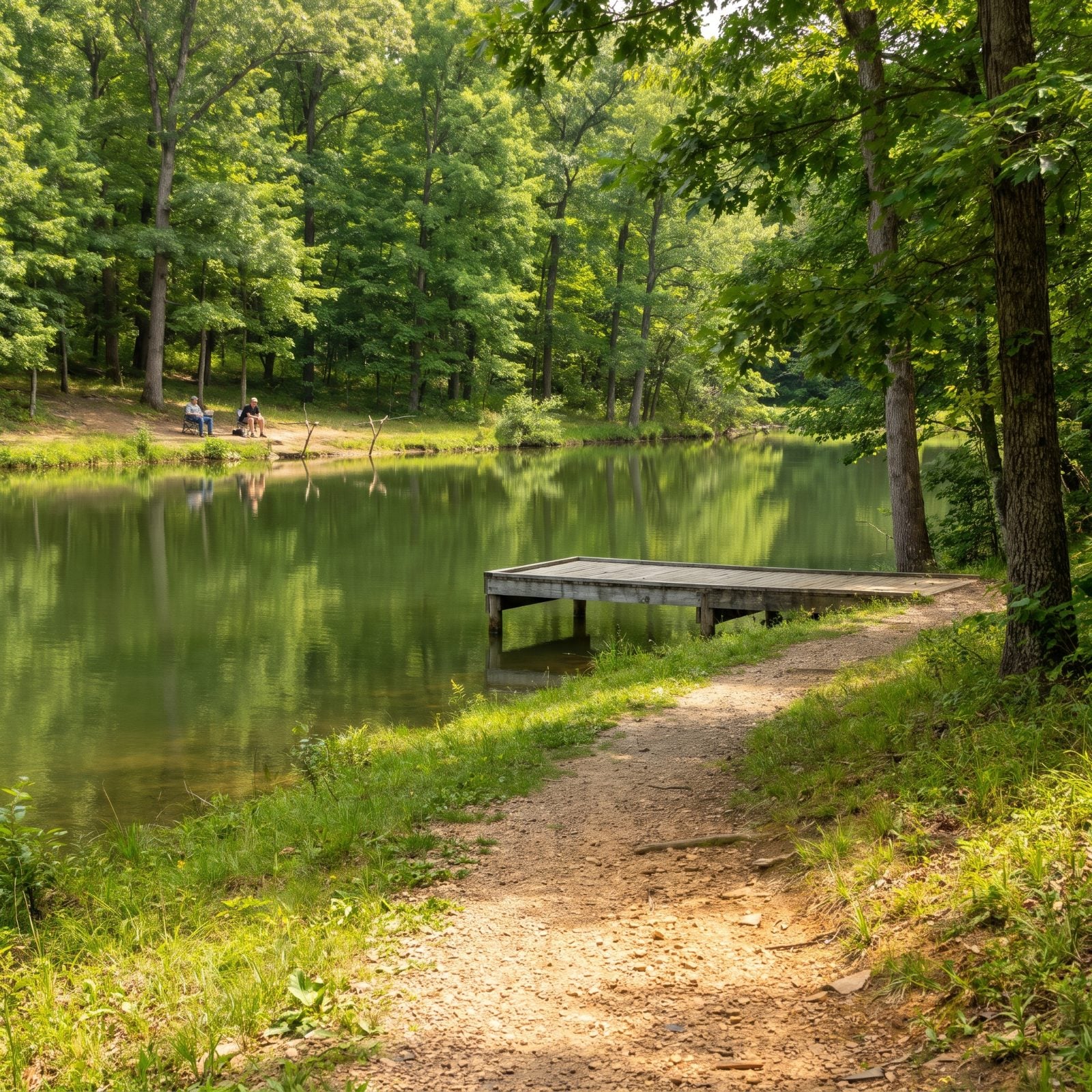
You don’t need a boat here, and that’s exactly why it made the list. Marrowbone is a small TWRA lake north of Nashville built for this: walk up, find a spot on the bank, catch bluegill and bass without owning a trailer or a dime of gas.
It’s a good lake to teach a grandkid on. Easy walking, short casts, fish willing enough to keep a young attention span hooked. The kind of place that made you a fisherman in the first place.
11. Laurel Hill Lake: Spring-Fed Fishing Water Near Lawrenceburg
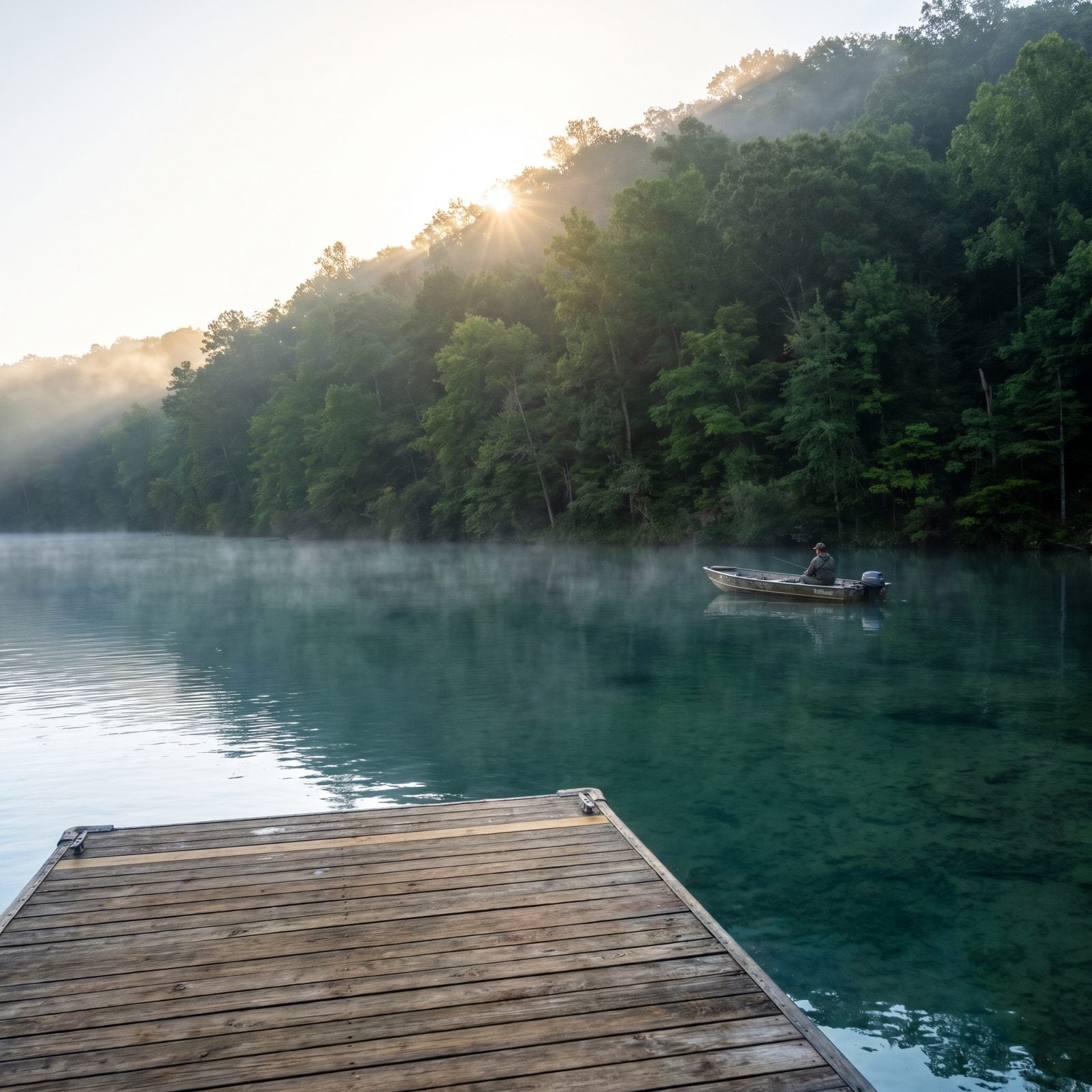
Laurel Hill is spring-fed, and you can tell. The water runs cooler and clearer than most Tennessee lakes, tucked into a wooded wildlife management area down near Lawrenceburg. It’s managed as a fishing lake, so expect decent bass and bluegill and a boat launch built for small craft, not bass-boat armadas.
There’s usually a check-in and a small fee. That little barrier keeps the place quiet, which is exactly why the regulars like it. A secluded valley lake that feels like a secret even though it isn’t.
10. Lake Halford: West Tennessee’s Reborn Carroll County Lake
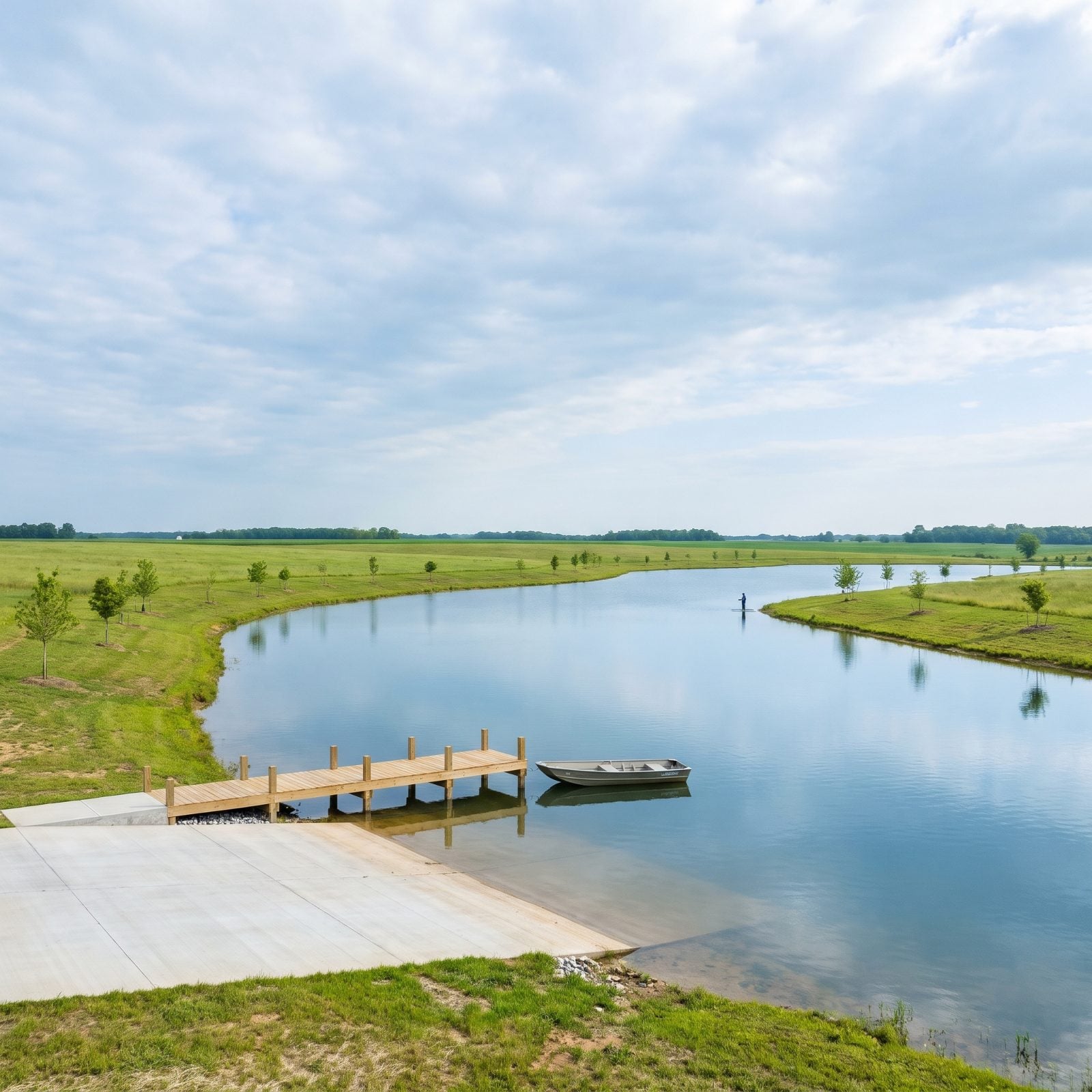
Here’s a rare thing: a lake that got a second life. Lake Halford in Carroll County was drained and reworked over recent years, restocked and reopened as a managed fishing lake — and a reborn lake fishes nothing like an old one.
Young fisheries can run hot. Stocked bass and bream grow fast in fresh water with little pressure, which means your odds of a good day beat what you’ll find on some picked-over old reservoir. Check current TWRA status before you load the truck, since reopened lakes sometimes carry special creel or size rules while the fishery establishes.
9. Garrett Lake: Cypress-Fringed Fishing Water Near Dresden
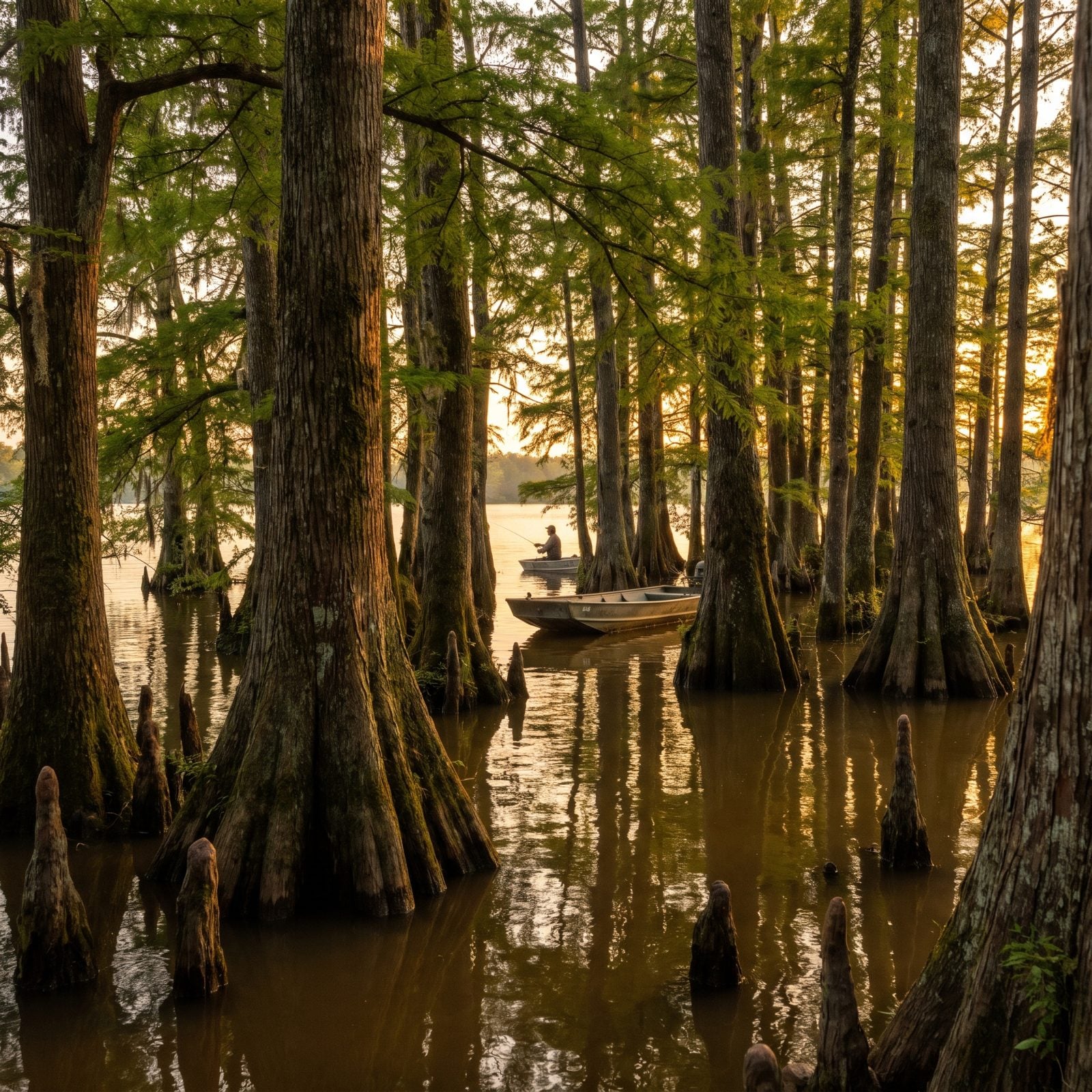
Cypress trees change everything. Garrett Lake sits out near Dresden in west Tennessee, ringed and dotted with bald cypress — those flared trunks and knobby knees that make a lake feel more Deep South than hill country.
Fishing around cypress is its own game. The trees hold crappie and bluegill tight to the trunks and submerged roots, so you work slow and vertical, dropping a jig right against the wood. And golden hour here? The light sliding sideways through the trees, reflecting off that dark water — worth the drive on its own. It’s easy to stay out past dark just watching it.
8. Gibson County Lake: Open Banks and Trophy-Bass Water
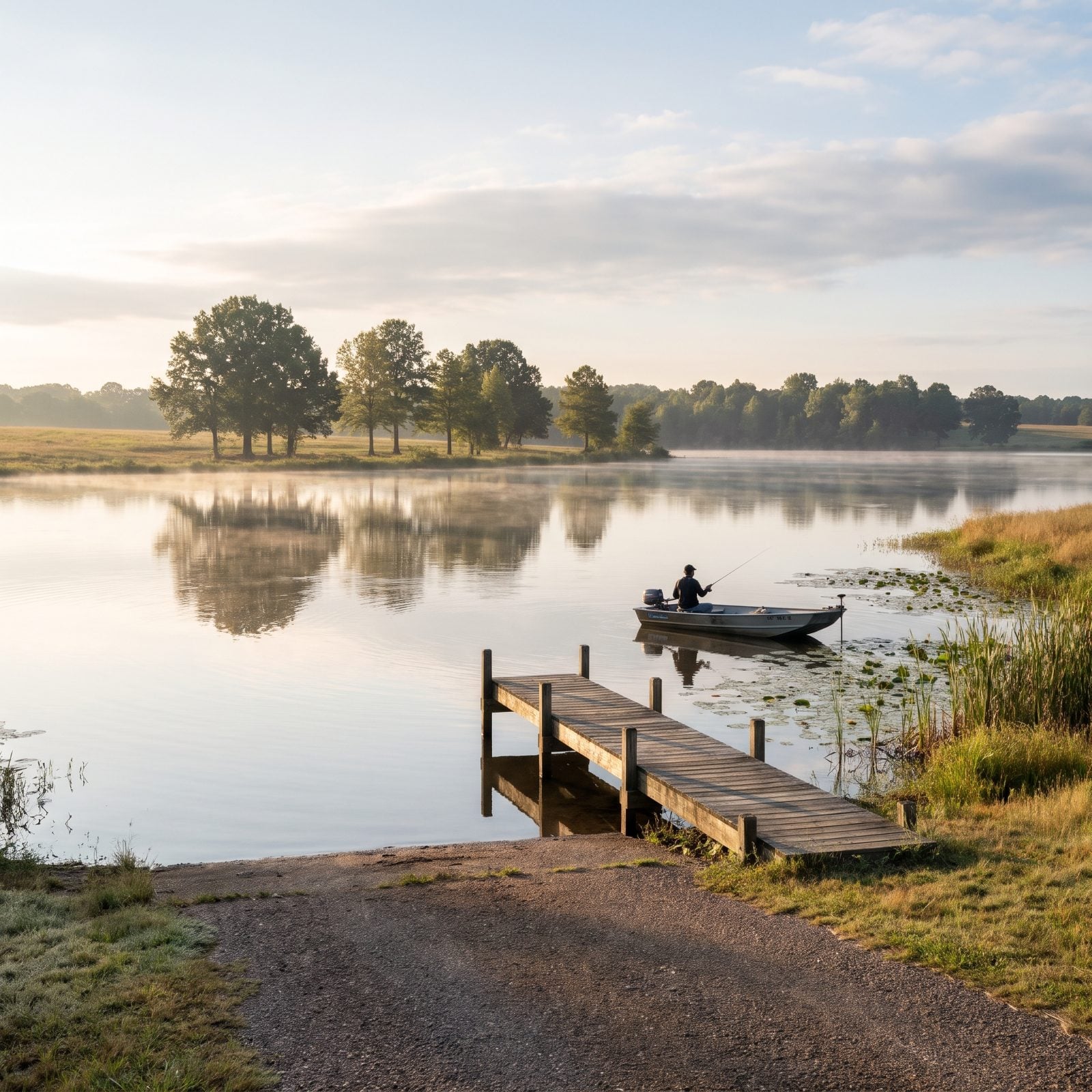
Big bass live in small, unbothered water. Gibson County Lake holds roughly 500 acres of it, and the banks here are generous enough that you can walk most of the shoreline without fighting through brush — which matters more than people admit when you’re trying to read a new spot from land.
The pier and open grass make this an easy one for anyone who’d rather not launch a boat just to catch a largemouth. It’s managed as a quality-fishing lake. Expect size limits, and check them before you keep anything.
7. Herb Parsons Lake: Peaceful Paddling a Short Drive From Memphis
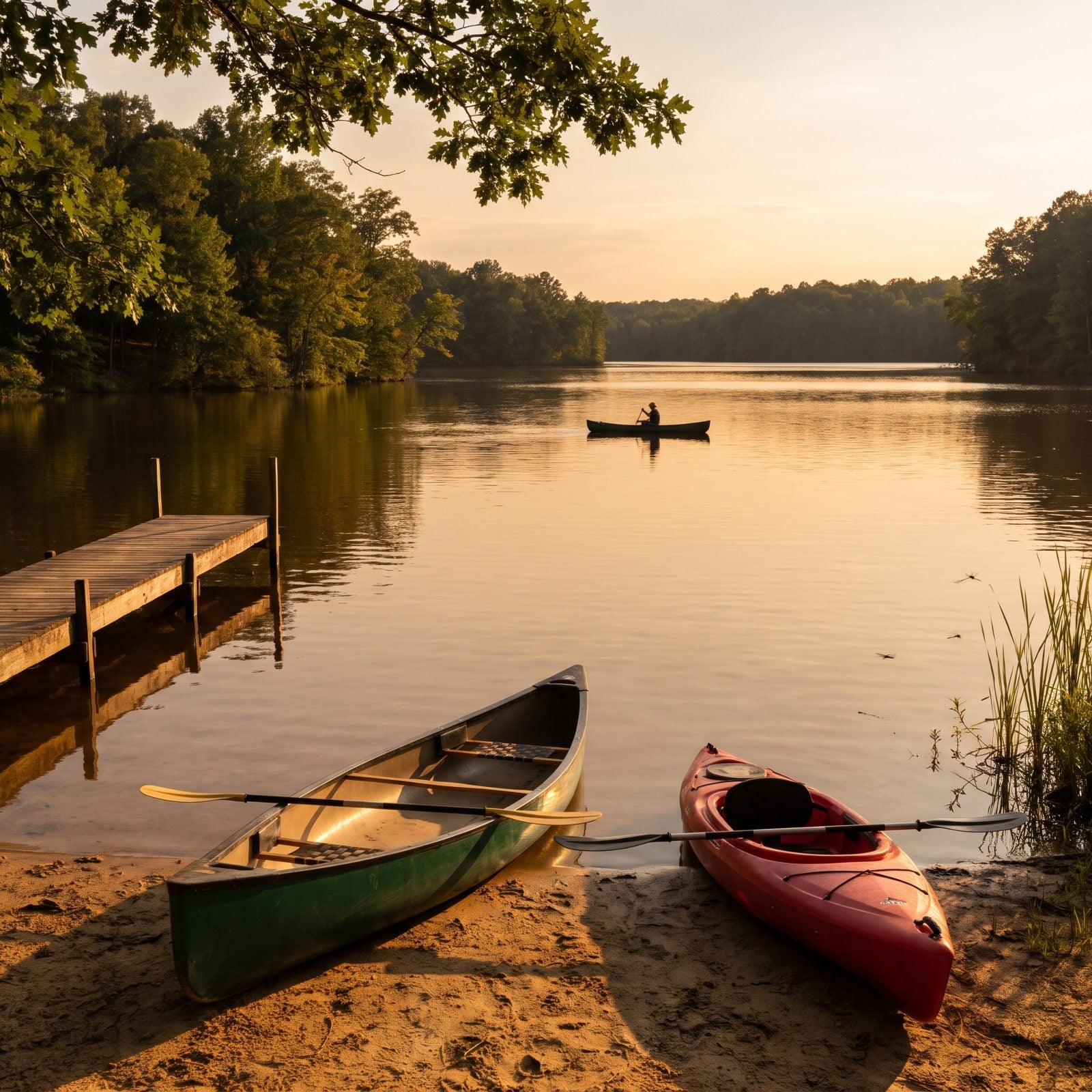
A half hour out of Memphis and the city just stops existing. Herb Parsons runs about 177 acres inside a wildlife area, so no gas motors — which is the whole point. The quiet is the amenity.
Bring a canoe or a kayak and you’ve got coves to yourself most weekday mornings. It stocks well for crappie and bluegill, and the no-wake calm makes it one of the better spots nearby to teach a grandkid to paddle. Nobody’s wake will rock them off balance here.
6. Glenn Springs Lake: A Working Rural Fishing Lake in Tipton County
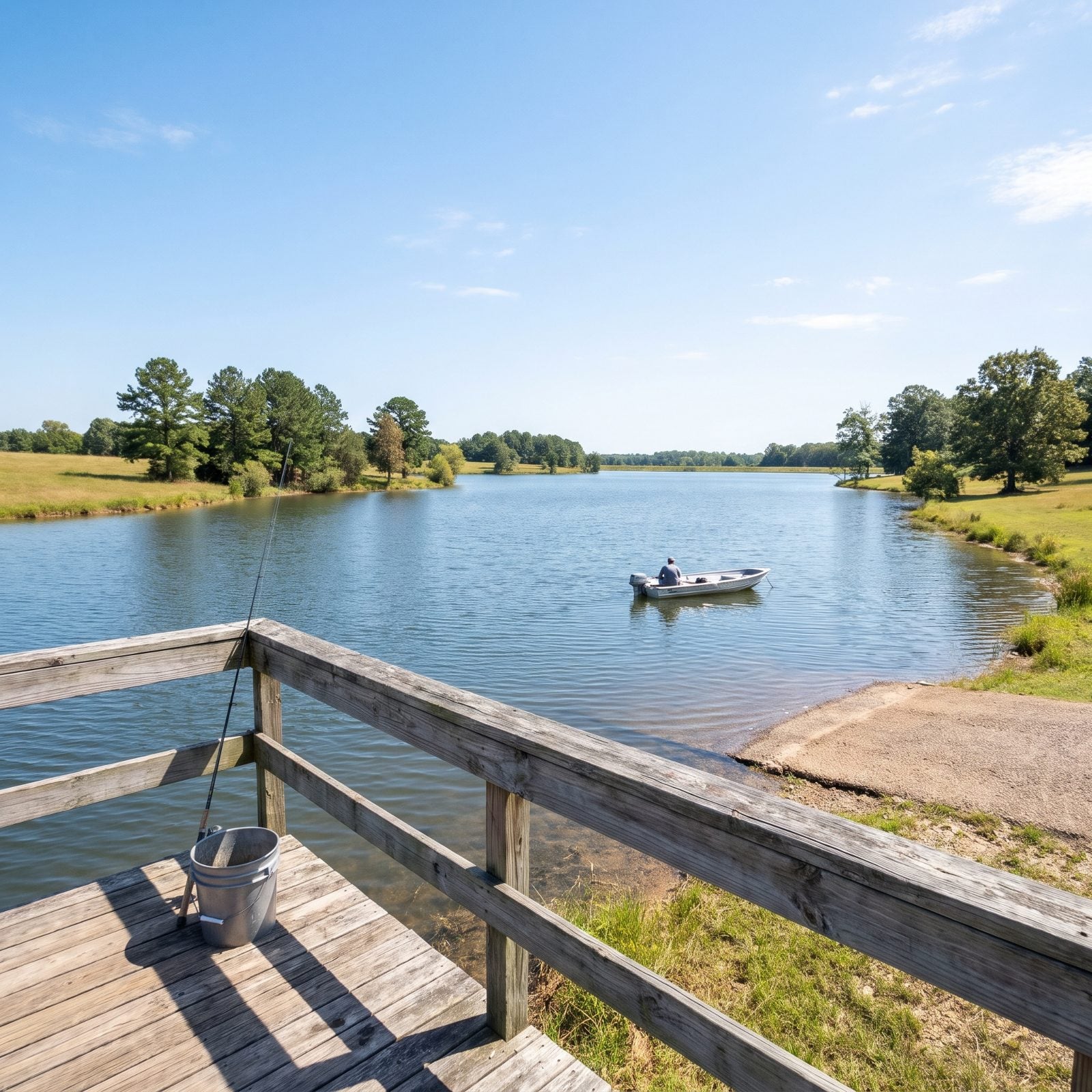
Nobody’s writing travel guides about Glenn Springs, and that’s exactly its charm. Roughly 450 acres, a straightforward fishing lake built for people who want to catch bream and bass without a crowd watching over their shoulder.
The bank access is simple and the pier does its job. No marina, no snack bar. What you’ll find instead is a handful of locals who’ve fished the same cove for twenty years and will nod at you if you give them room.
5. Poplar Tree Lake: Cypress Water Inside Meeman-Shelby Forest
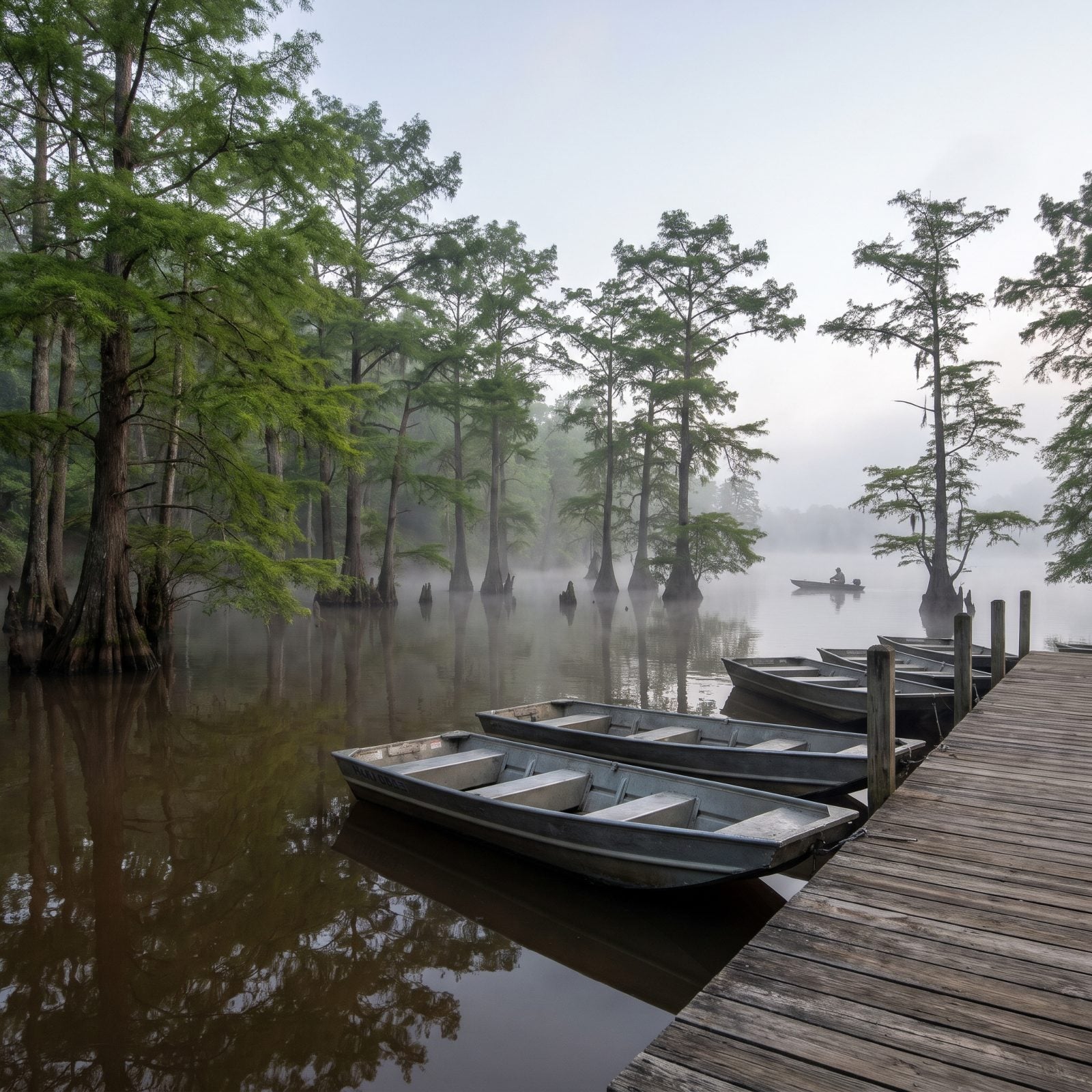
Cypress knees in black water make this one feel older than the rest. Poplar Tree sits inside Meeman-Shelby Forest, about 125 acres tucked into bottomland just north of Memphis. The flooded cypress along the edges give it a swampy, Southern hush you simply don’t get on an open reservoir.
You can rent a jon boat at the park, which saves you hauling your own. Paddle in among the trunks on a misty morning and the quiet does something to you. Crappie hold tight to that cypress structure, so cast close.
4. Travis McNatt Lake: A Pocket Lake Inside Big Hill Pond State Park
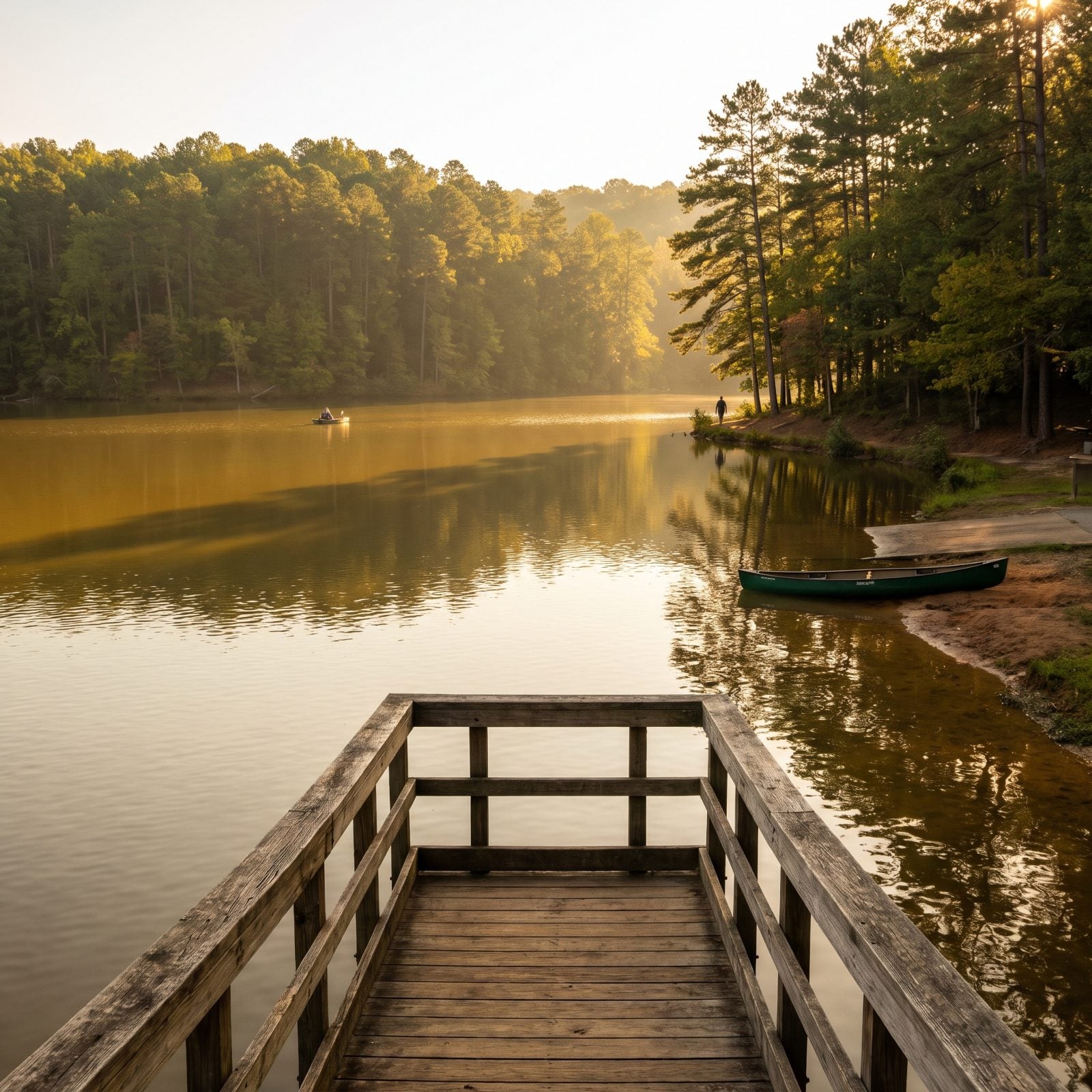
Tucked into Big Hill Pond State Park near the Mississippi line, Travis McNatt Lake runs about 165 acres and comes bundled with miles of hiking trail. That’s the quiet trick of these state-park lakes — you get the water and the woods in one trip.
Fish it in the morning. Walk the boardwalk and ridge trails after lunch. The park is one of the least-visited in the state, which means the lake stays calm even on a holiday weekend. Bring your own boat or paddle, and plan to stay the whole day.
3. Lake Placid: The Hidden Recreation Lake at Chickasaw State Park
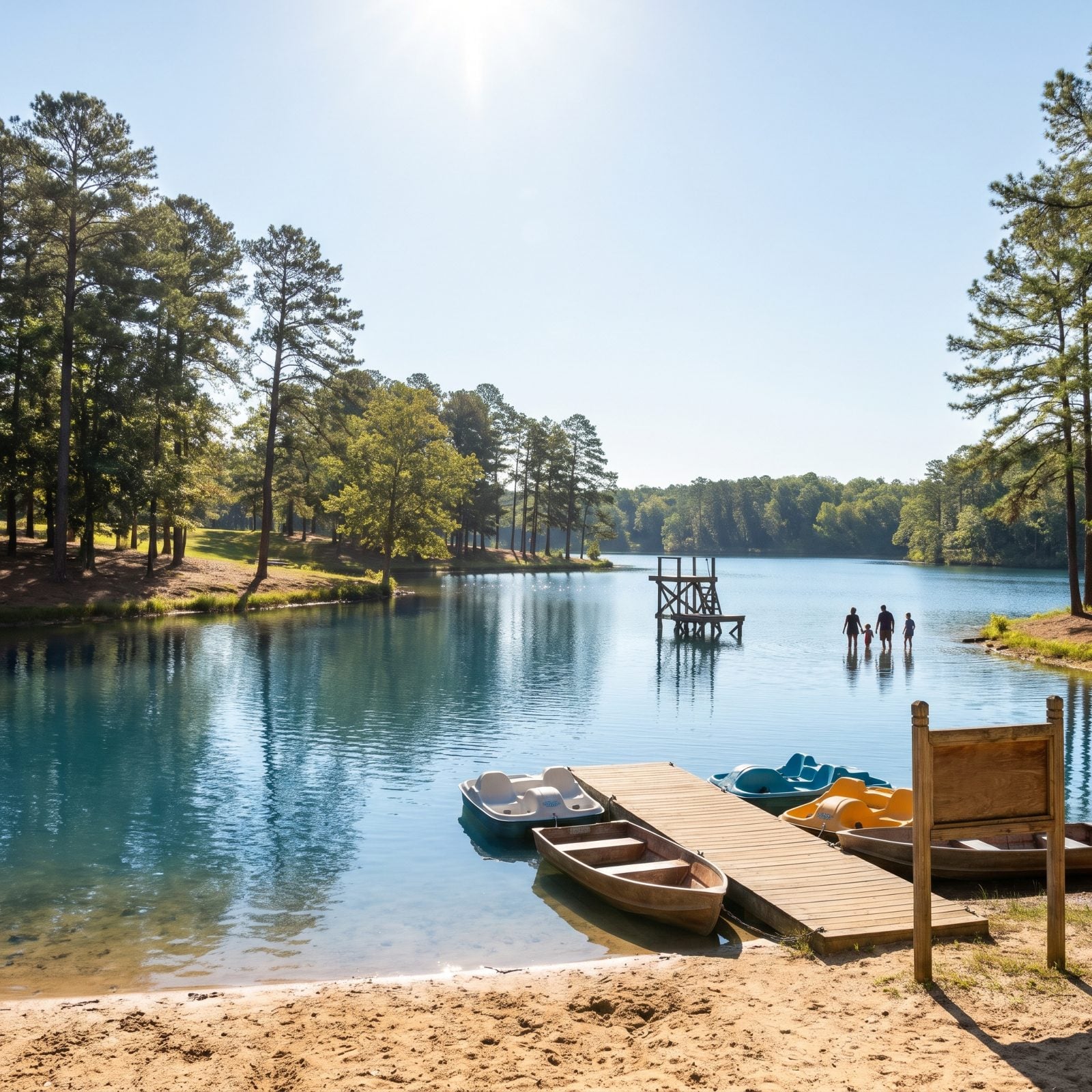
The name oversells the drama and undersells the ease. Lake Placid inside Chickasaw State Park is a modest recreation lake — sand swim beach, pedal boats, a fishing pier — built for a lazy family afternoon rather than a trophy haul.
This one’s for the grandkids. Rent a rowboat, let them splash at the beach, fish for bluegill off the dock in between. There are cabins if you want to stretch one day into a long weekend, and the pine shade keeps the whole thing cooler than you’d ever expect out of a West Tennessee July.
2. Pin Oak Lake: Wooded Coves in Natchez Trace State Park
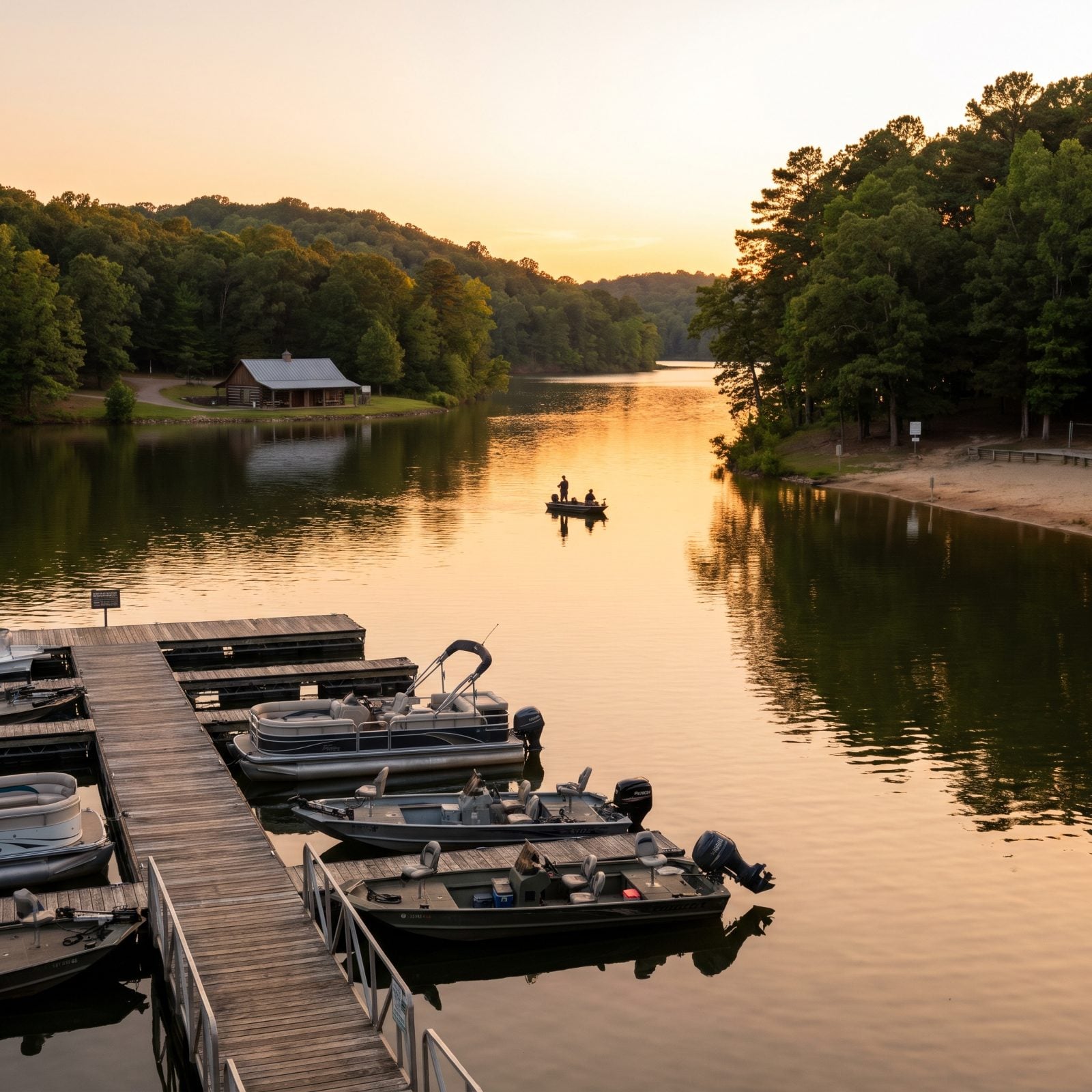
Pin Oak is the big one in this corner of the state, roughly 690 acres of wooded coves inside Natchez Trace State Park, and somehow it still feels private despite the size. The shoreline folds into long fingers. Even on a busy Saturday you can tuck into a cove and lose the crowd entirely.
A lodge, cabins and a swim beach make it the easiest sell for a couple that wants a few comforts without the resort scene. Spring crappie fishing runs strong. Rent a pontoon if you’ve got company and want to drift away a whole afternoon.
1. Beech Lake: A Quiet Henderson County Fishing Stop
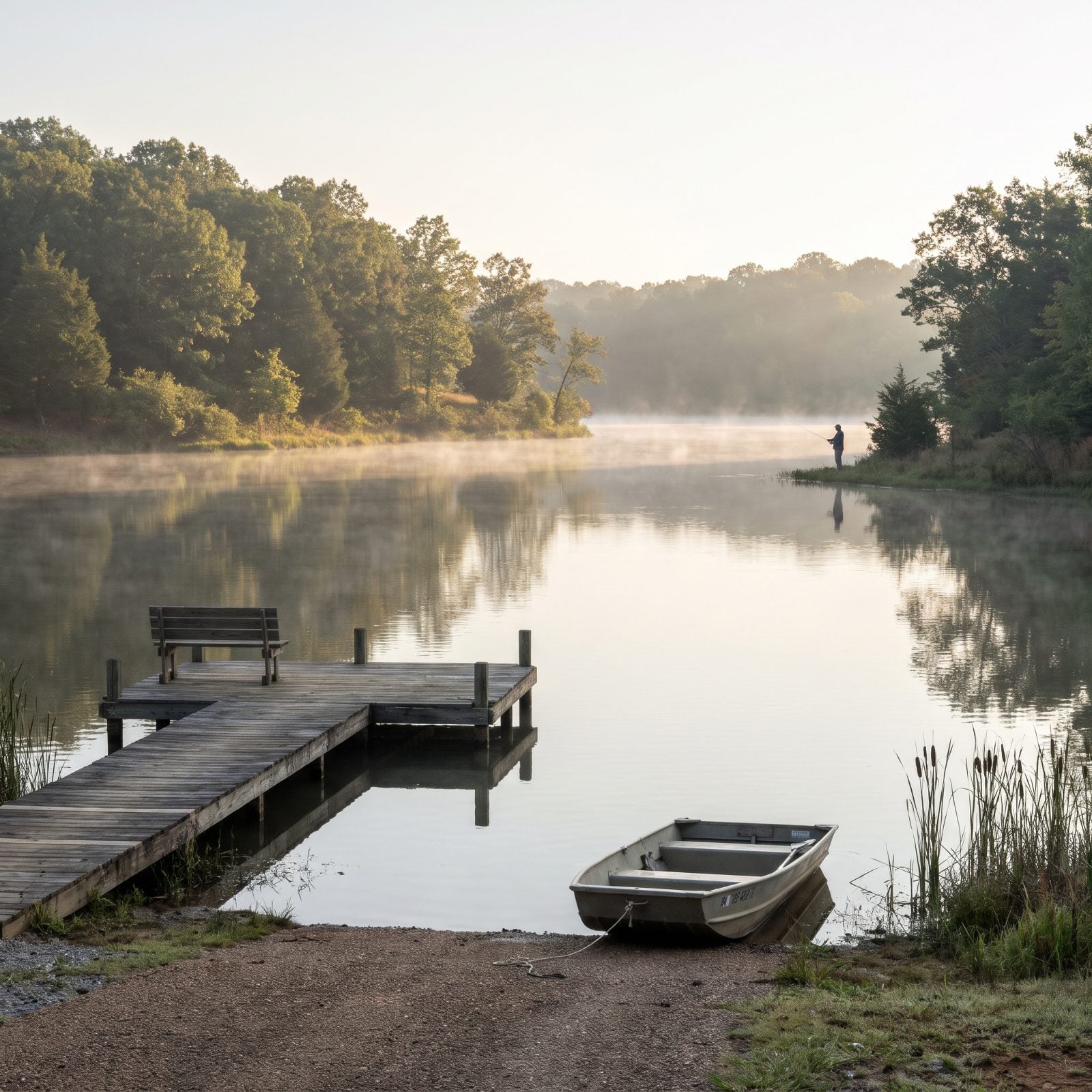
Beech Lake sits just outside Lexington, about 320 acres, and it’s the kind of place you stop at because a local told you to. Honest bank fishing, thin crowds.
Catfish and crappie keep the regulars coming back. There’s a small park and launch, nothing fancy — which has been the running thread through every lake on this list. The famous reservoirs will always have their place. But the quiet ones leave you alone with the water, and some mornings that’s the whole reason you drove out here before the coffee had even cooled.