
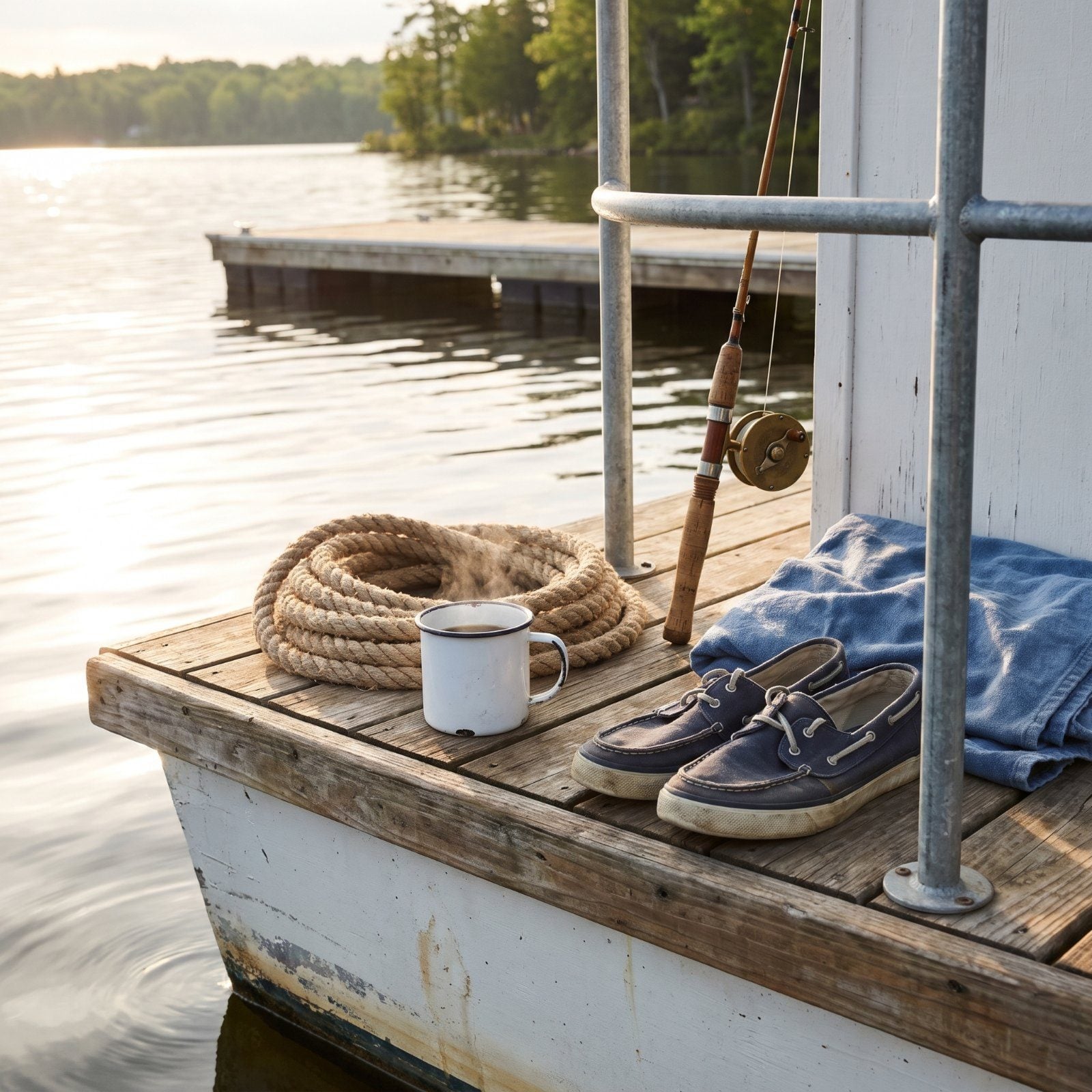
The coffee tastes different when the whole house rocks two inches with every wake that rolls past the slip. That’s the first thing you notice. Houseboat life gets sold as either a retirement fantasy or a budget compromise for people who couldn’t swing a lake house, and both takes miss the point. The real pleasures are small, practical, a little odd, and you only find them after a season tied to a dock. Easy cleaning. A roof you’ll actually use. A lake standing in for a swimming pool whenever the mood strikes. Here are the ones worth knowing before you ever cast off.
Please note that some of the imagery in this article may have been enhanced with the assistance of AI.
41. Changing the View Can Be as Simple as Changing Slips
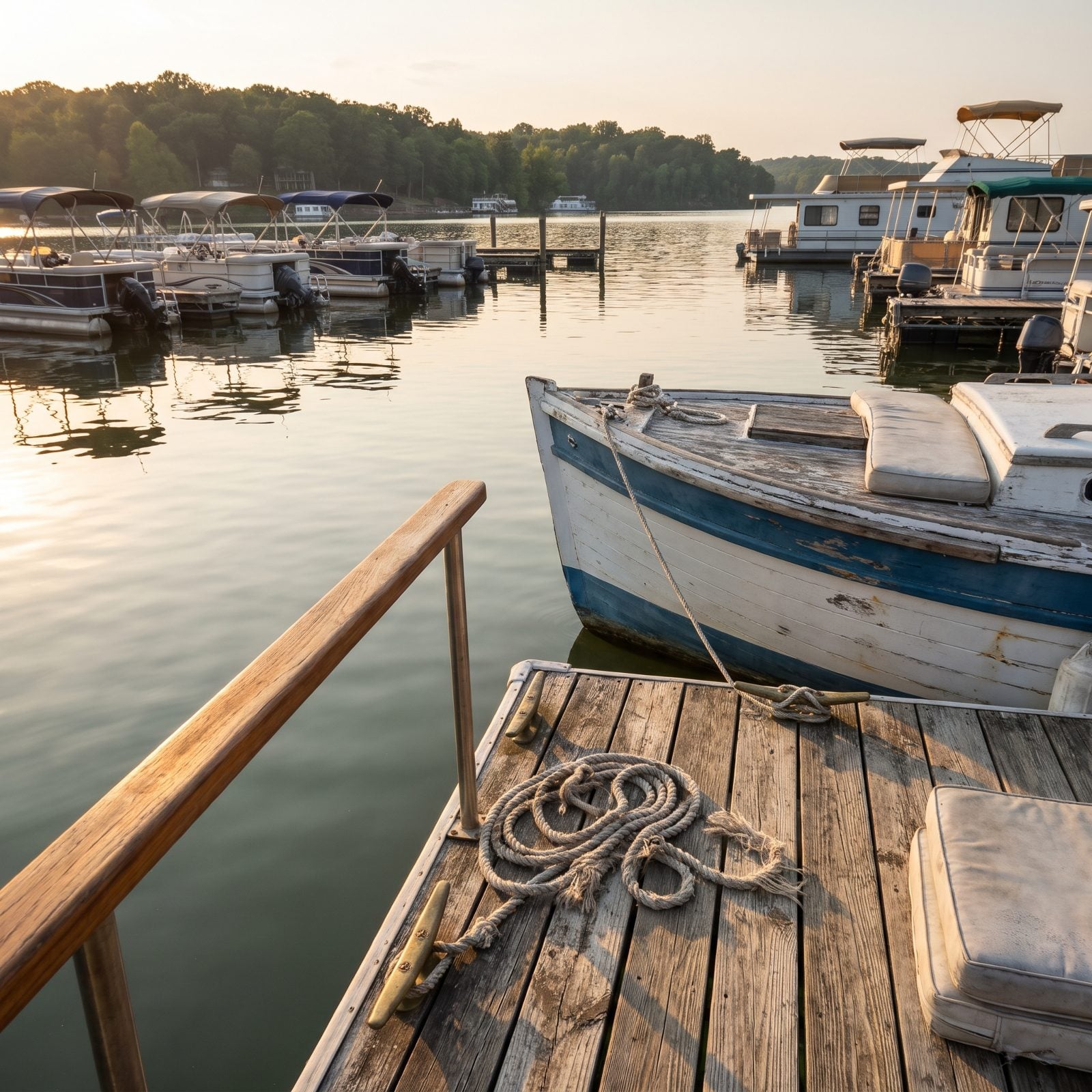
Tired of looking at the same stretch of shoreline? Move the house. That’s the part land dwellers never quite get their heads around.
Swap slips at the far end of the marina and your whole morning flips. The sunrise hits a different window, the neighbors change, and a cove that was blocked by a point of trees suddenly opens up wide. No selling, no packing, no hiring a mover. You untie, idle over and tie up again before the coffee goes cold.
40. The Swim Ladder Turns the Lake Into a Backyard Pool
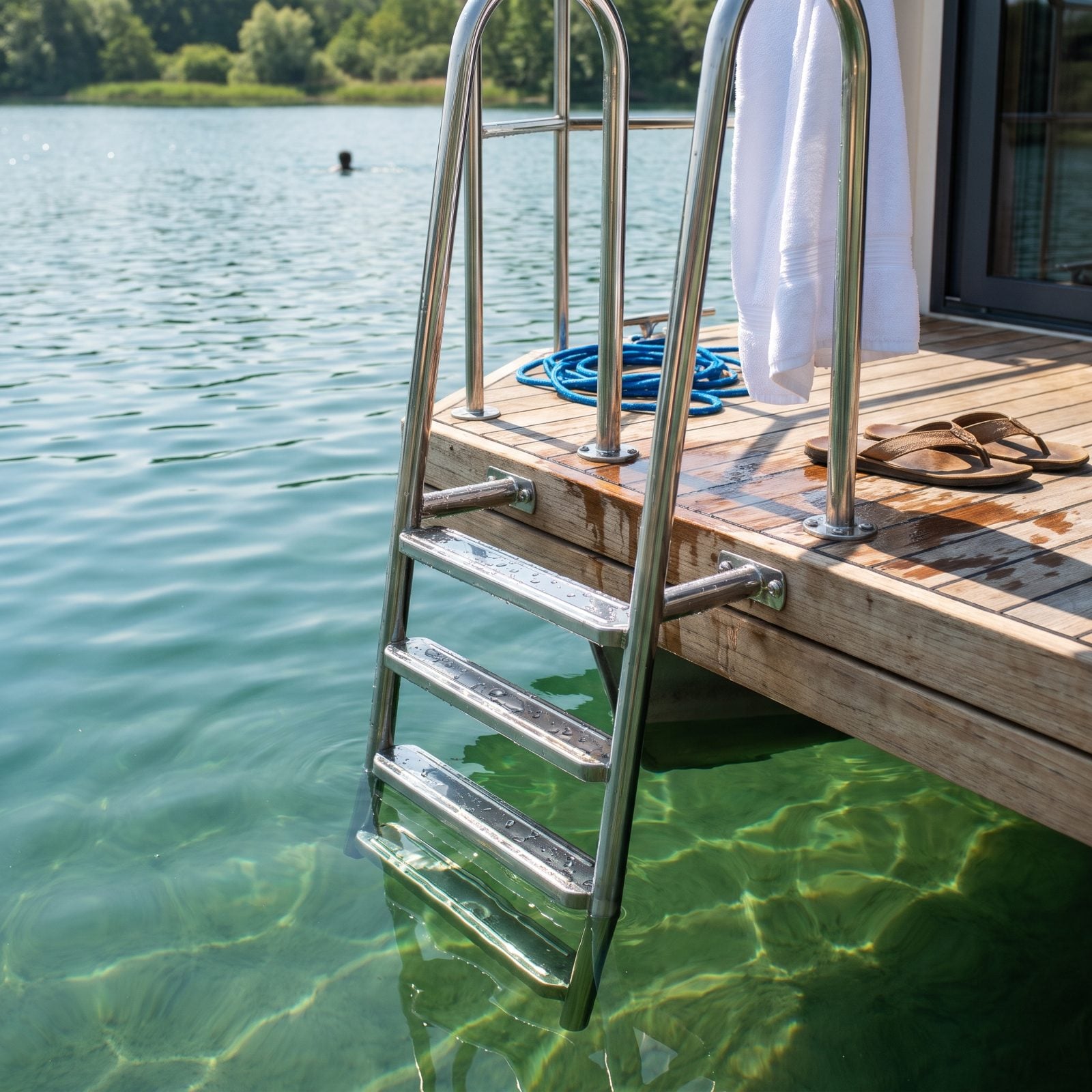
There’s a ladder bolted to your back deck, and at the bottom of it is a swimming pool you never have to clean, chlorinate or fill.
Hot afternoon, you climb down, push off, float. Done swimming, you climb back up and you’re home. No towel-dripping trudge across a parking lot, no gate code to remember. The lake does everything a backyard pool does and asks for nothing but a quick rinse of your feet before you track grit inside.
Honest truth: the first few steps down are always colder than you remember. Then it’s fine. Then it’s the best part of the day.
39. The Roof Becomes a Second Living Room
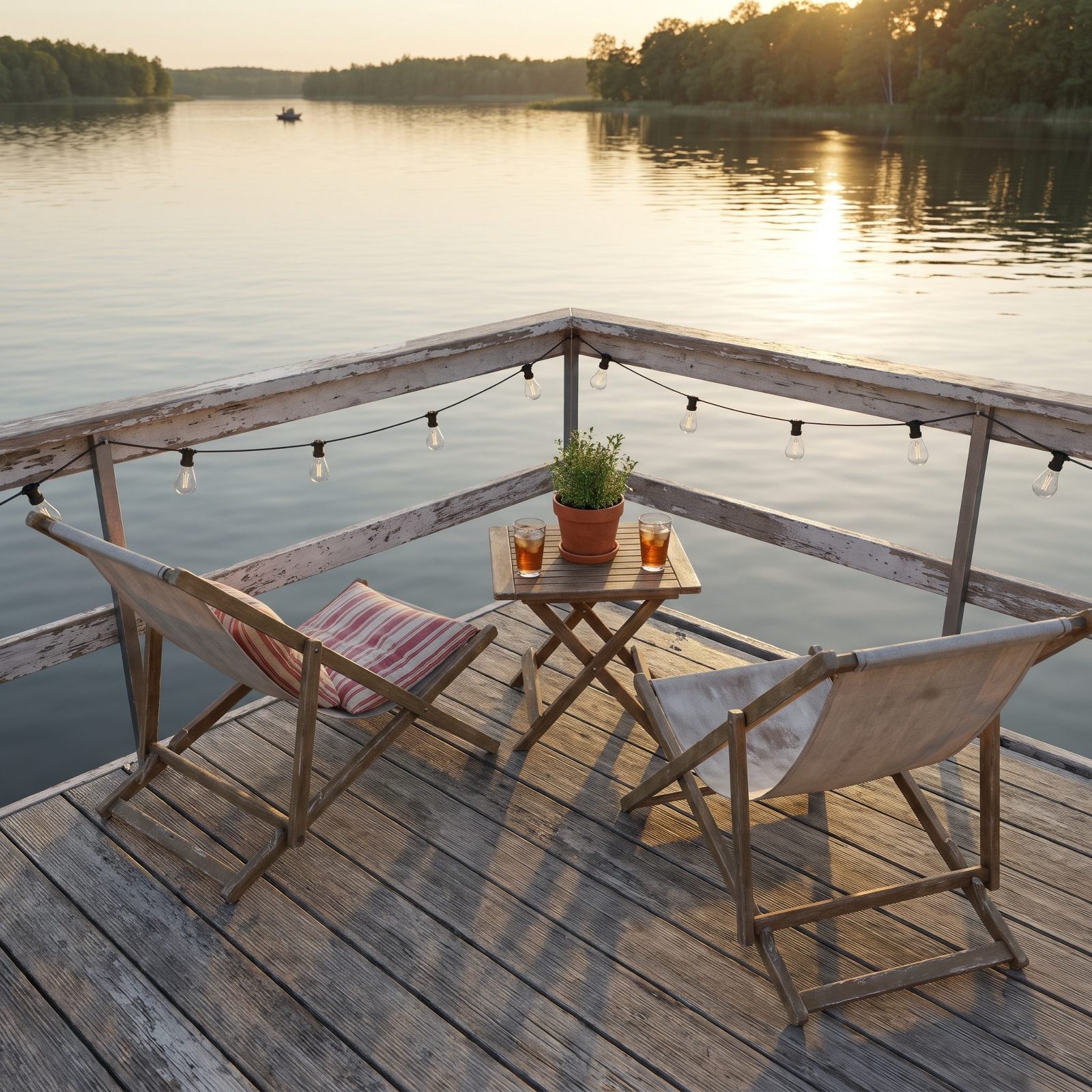
The square footage you thought you were giving up is sitting right over your head.
A houseboat roof is flat for a reason. Drag a couple of chairs up there and it stops being storage, starts being the room you actually live in from May to October. Morning coffee up high. Sundowners with a view that runs the full circle. Stargazing with nothing between you and the sky.
38. The Dinghy Starts Feeling Like a Second Car
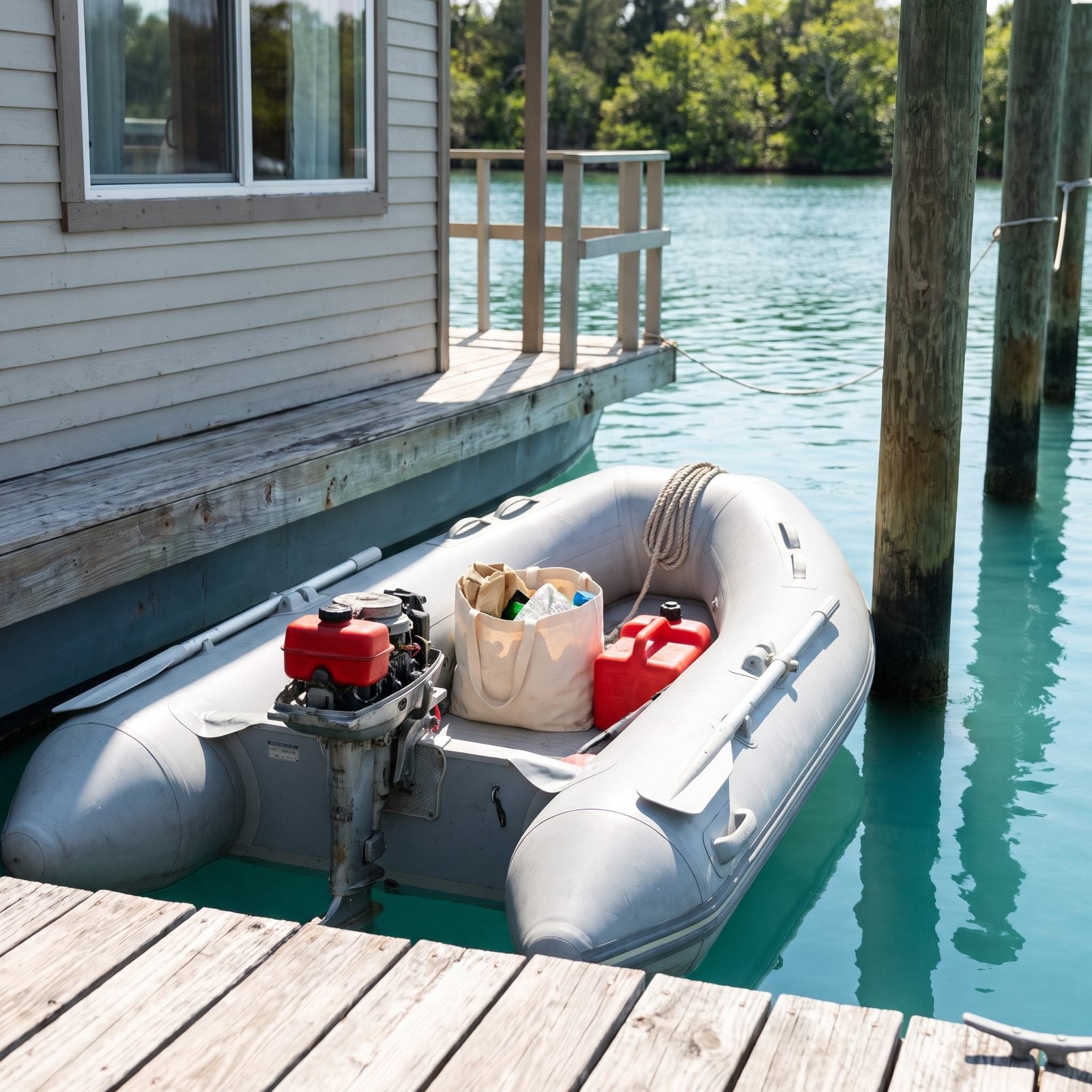
Need milk? Take the dinghy.
On a houseboat the little tender stops being a toy and becomes genuine transport. It’s how you run to the marina store, visit the boat three slips down, ferry guests from the parking lot, haul the trash to shore. You park it where a car would sit and you never watch it drink gas the way a V8 does.
It’s easy to treat the dinghy as a weekend-only thing at first. Then it quietly slips into daily rotation. Keep it fueled. Keep the oars aboard anyway.
37. Rain on the Roof Becomes Free Background Music
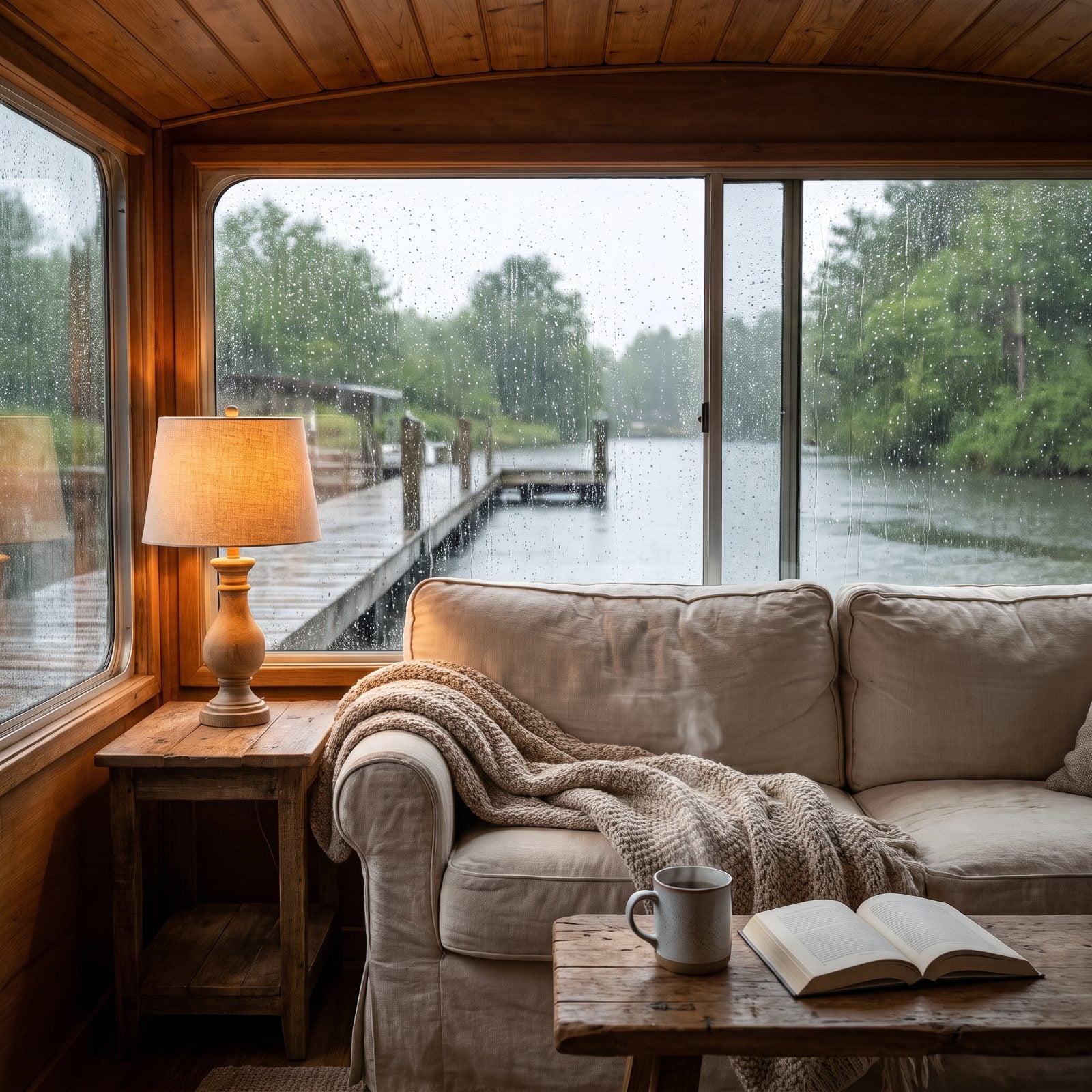
Rain on a shingled house is muffled by attic insulation and twenty feet of air. On a houseboat it lands four feet above your head, and that gap is the whole experience.
You hear every drop. It builds, eases, drums harder, taps off to nothing. Add the lake lapping the hull and you’ve got a soundscape people pay for on apps.
Best nap of your life is a rainy afternoon on a moored houseboat. We will die on this hill.
36. Rippling Reflections Dance Across the Ceiling
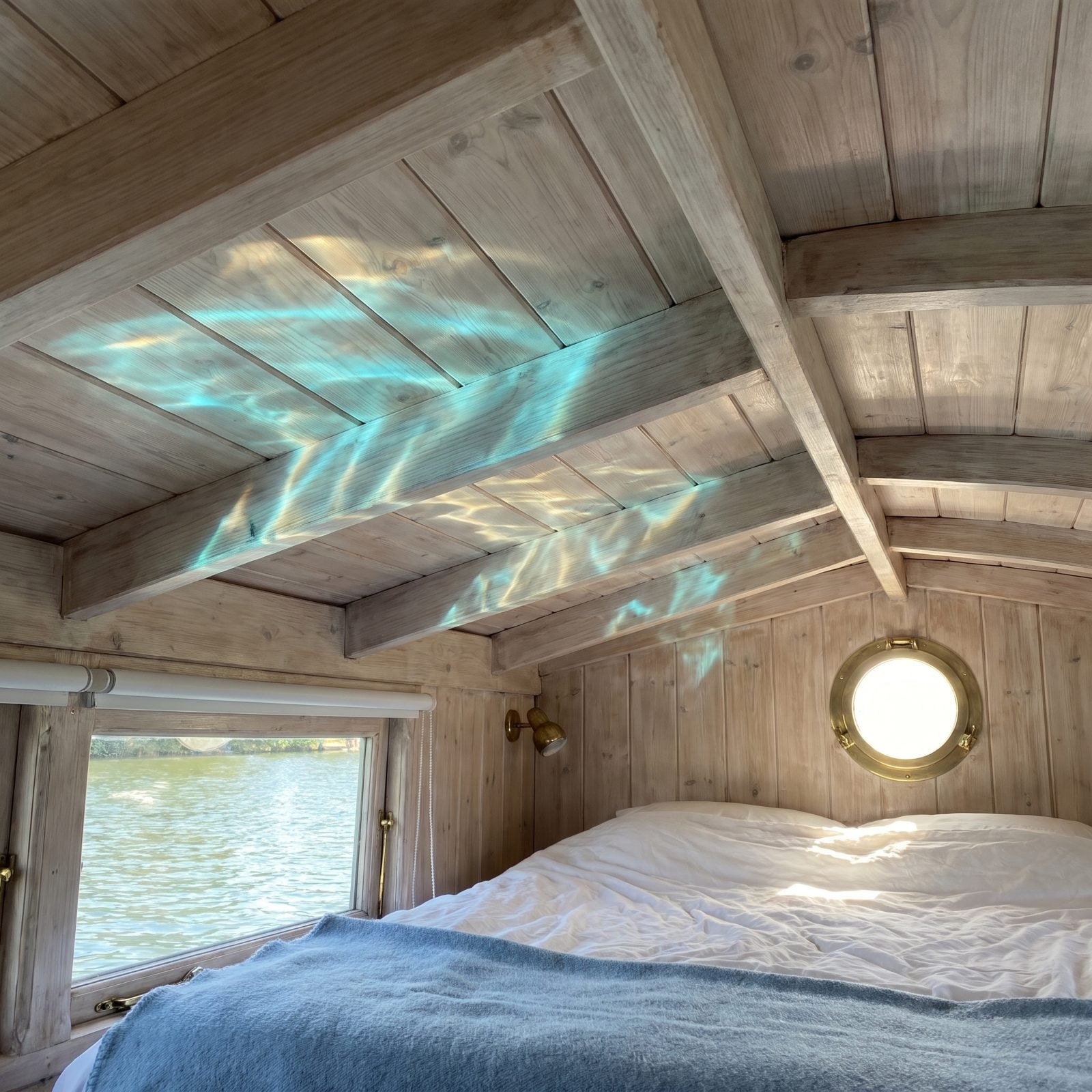
Nobody mentions the ceiling.
On a bright morning, sunlight bounces off the moving water and throws liquid, rippling patterns across the cabin overhead. They never hold still, drifting and flickering all day, a free light show that shifts with the wind, the wakes and the hour.
35. Nobody Ever Has to Mow the Lawn
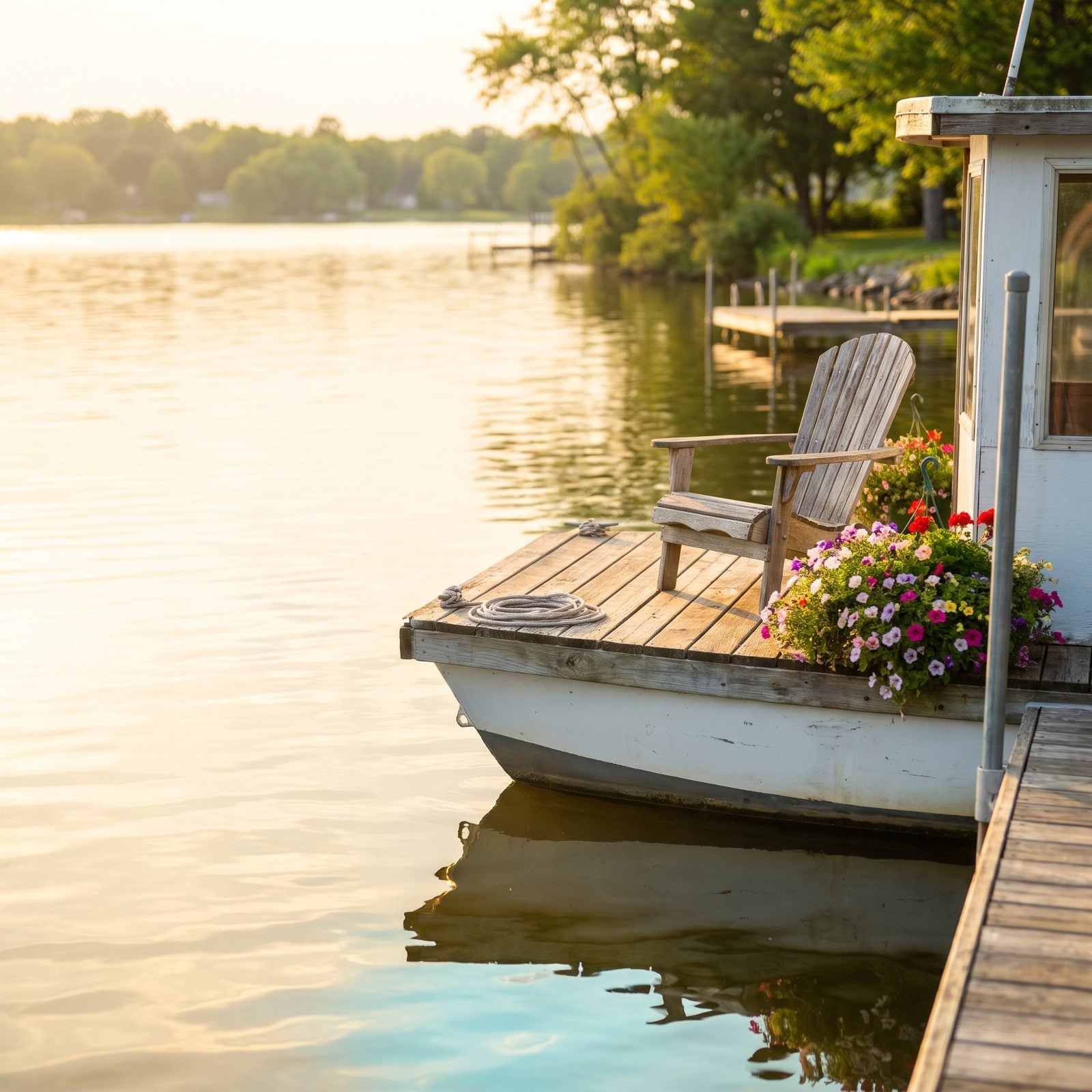
Your yard is water, and water doesn’t grow.
No mowing. No edging. No weekend lost to a machine that smells of gas and dies every July. No leaf raking, no sprinkler system, no fertilizer schedule, no weeds staging their annual coup against your flower beds.
The hours a landowner pours into keeping a lawn presentable, you simply keep. That’s the quiet math of it. You trade a mortgage on grass for a few flowerpots on the deck, and those pots are the only green thing that ever asks for your time.
34. The Entire Home Can Be Cleaned in an Afternoon
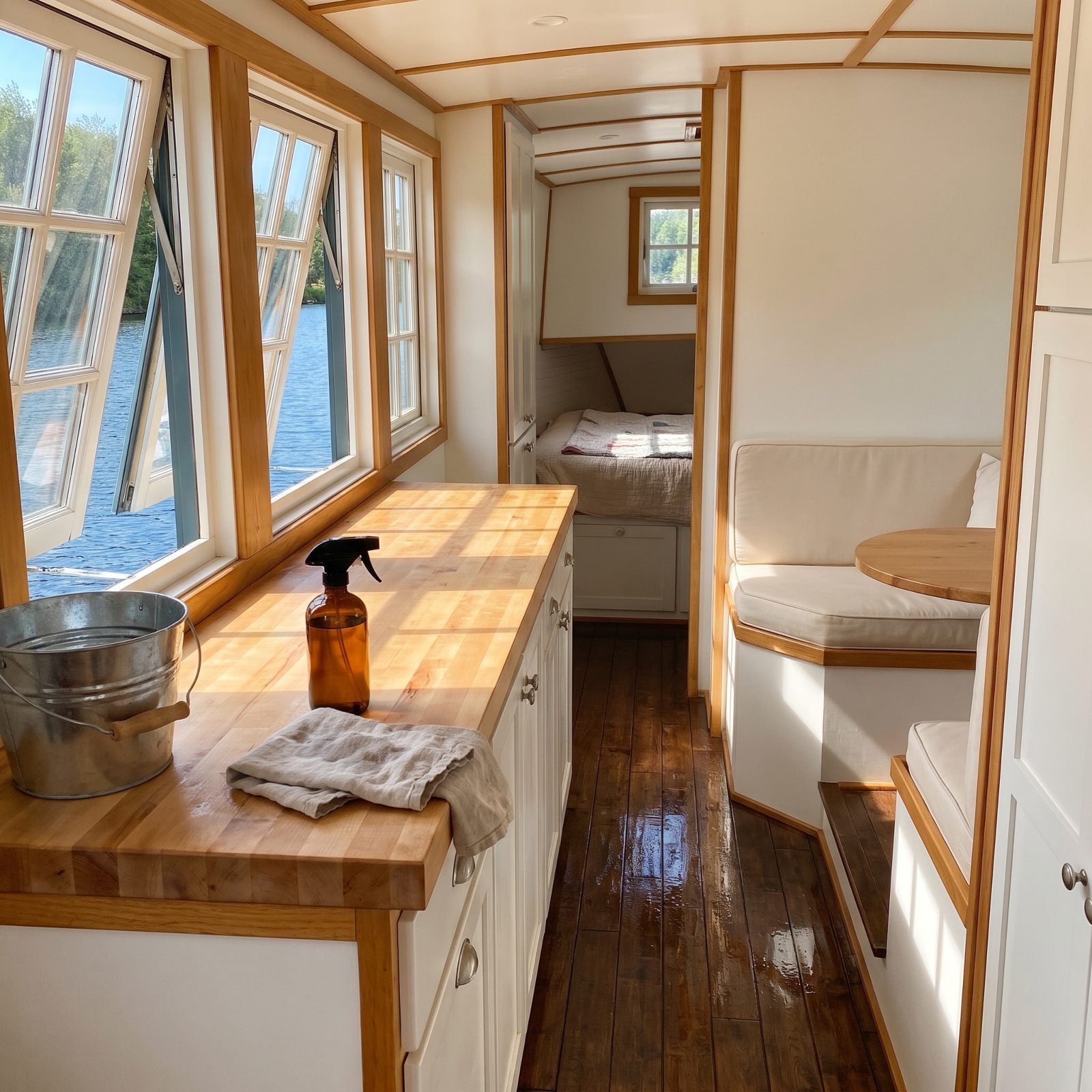
Here’s a perk that sounds boring until you’ve lived it. The whole place cleans in an afternoon, and some weeks in under an hour.
Less square footage means less to wipe, less floor to mop, fewer corners for dust to hide in. You can stand in one spot and reach half the galley. Spill something? The entire home is three steps from a cloth.
A house on land can eat a full Saturday of cleaning. Here it’s a chore you knock out before lunch and forget about. Small space, small list. The hour you save is the real luxury, not the view.
33. Storage Hides Beneath Benches, Beds and Stairs
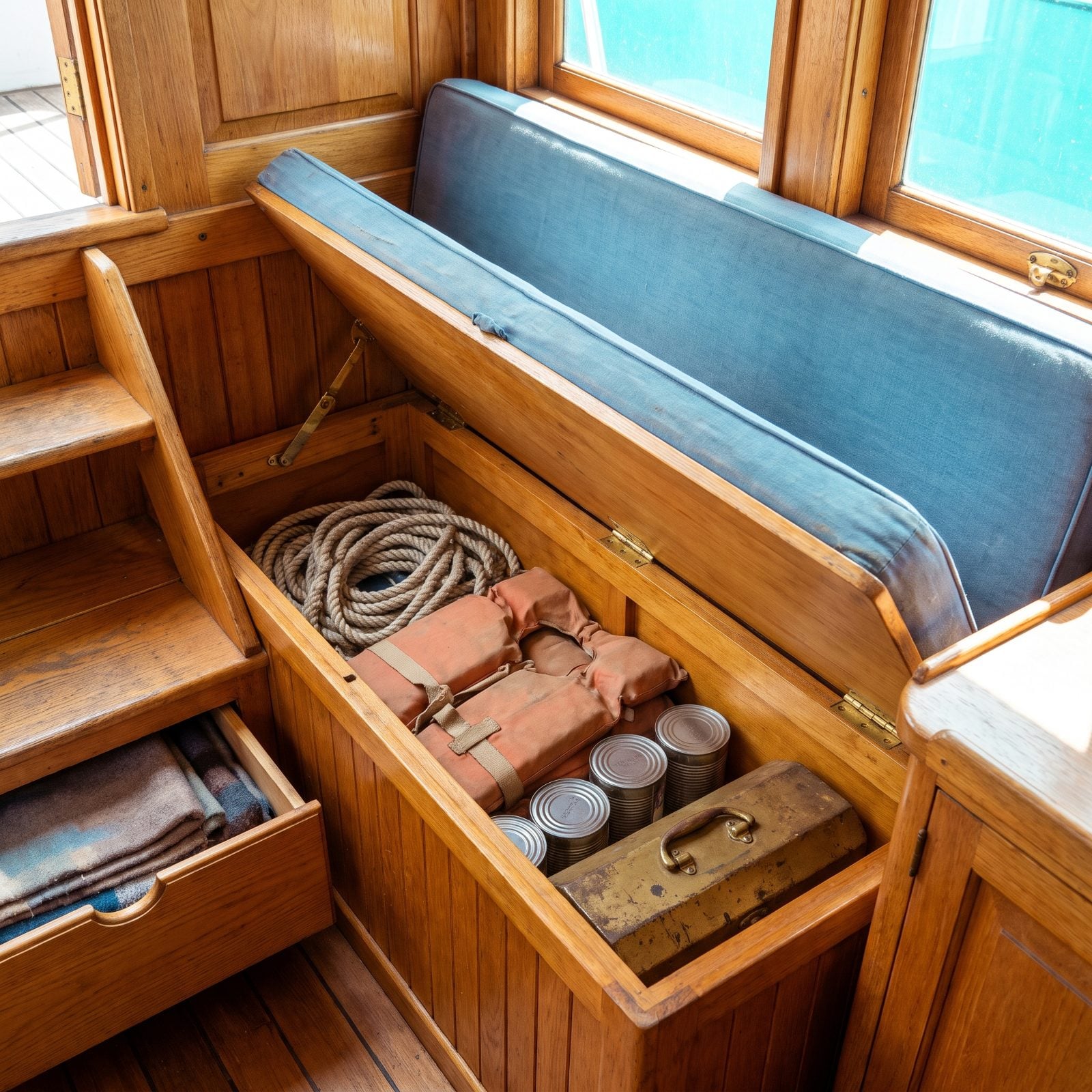
Lift the dinette bench. There’s a locker under there. Pull the top stair and it’s a drawer. The step up to the berth hides a bin, and the berth itself swings up on gas struts to swallow everything you’d otherwise have no room for.
Boat designers have spent a century solving the puzzle of tiny homes that float, and their answer is simple: every flat surface you sit on, sleep on or walk across is also a cupboard. You stop owning clutter because there’s nowhere obvious to set it down, and every object has to earn its berth.
32. A Dock Box Functions as the Garage
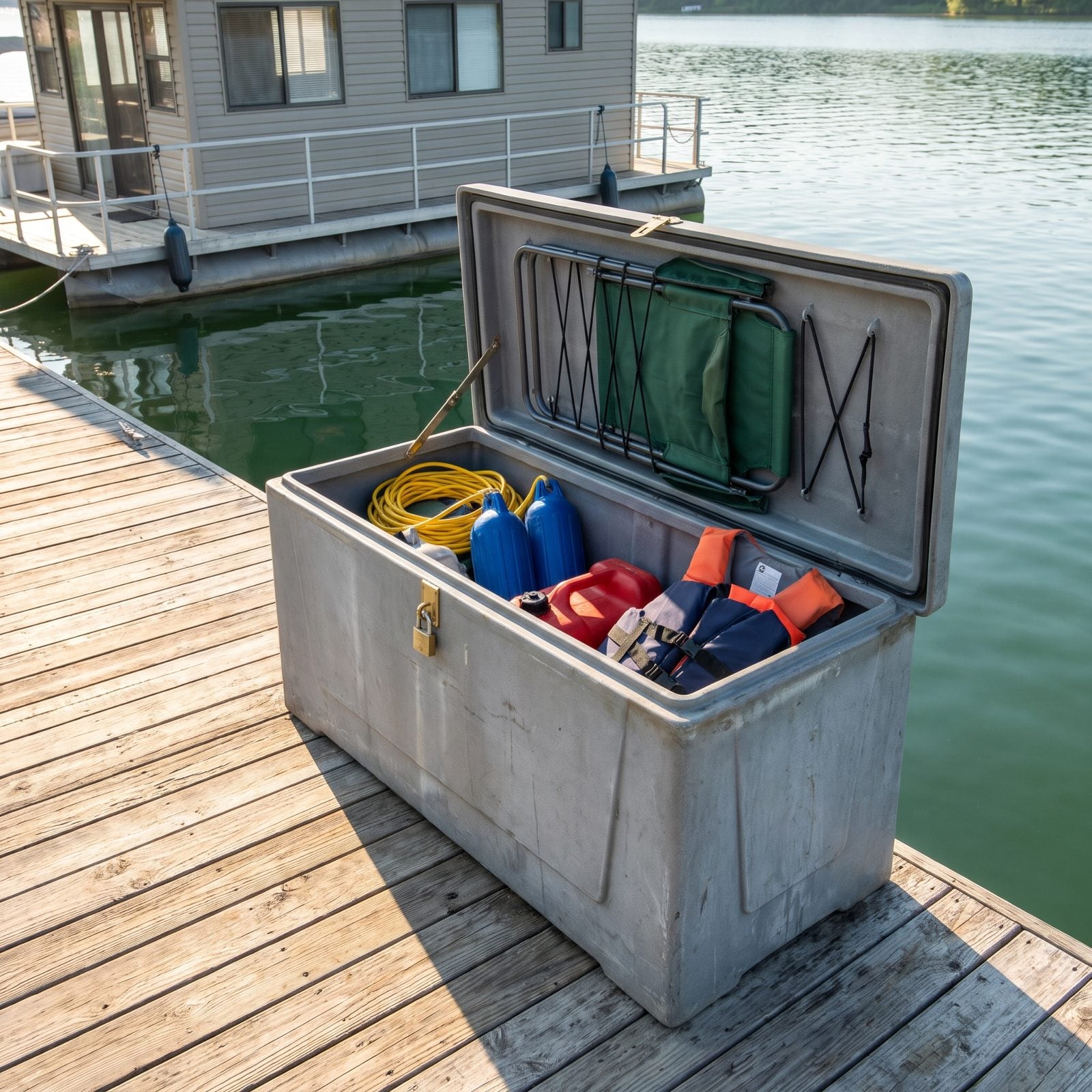
You don’t get a garage on the water. What you get is a box about the size of a chest freezer bolted to the dock, and somehow it swallows your whole outdoor life — cords, fenders, the spare dock line, the life jackets you keep meaning to replace, a folding chair, the bug spray.
The trick nobody warns you about: heat and damp live in there too. Anything metal rusts and anything paper turns to mush. Toss a cheap moisture absorber in the corner and raise your gear off the floor on a plastic grate.
31. Marina Carts Make Grocery Runs Surprisingly Easy
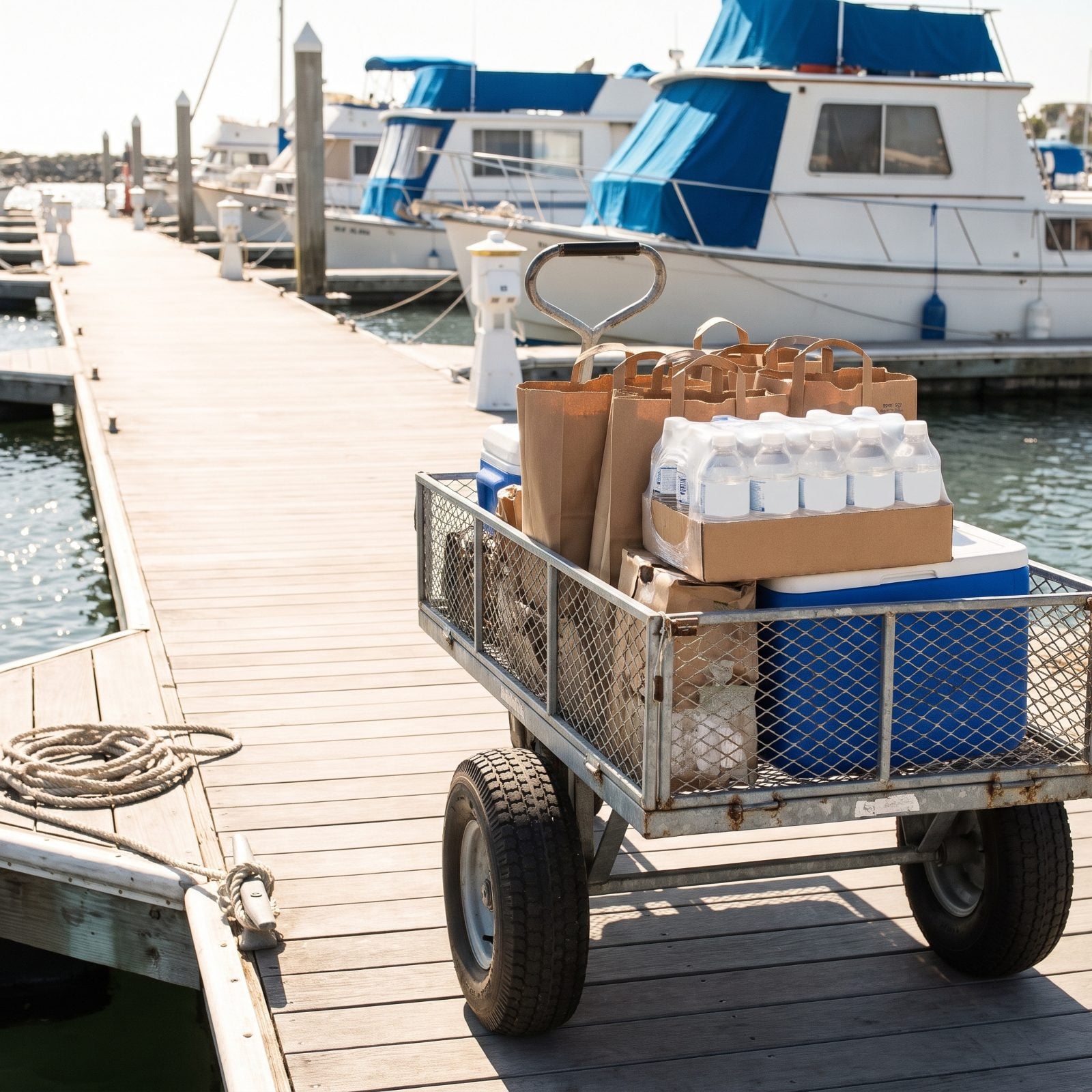
This one surprised me. Hauling groceries to a houseboat beats carrying them up a flight of apartment stairs, hands down. The marina keeps a row of steel carts by the gate, and a single trip rolls the whole week’s haul right down to your gangway.
You load, roll, unload, push the cart back. No elevator, no staircase, no circling the block for parking. And everyone learns the one rule fast: return the cart. A cart abandoned at the far end of the dock is the marina’s version of leaving your shopping trolley sideways in a parking space.
30. The Marina Office Can Double as a Package Room
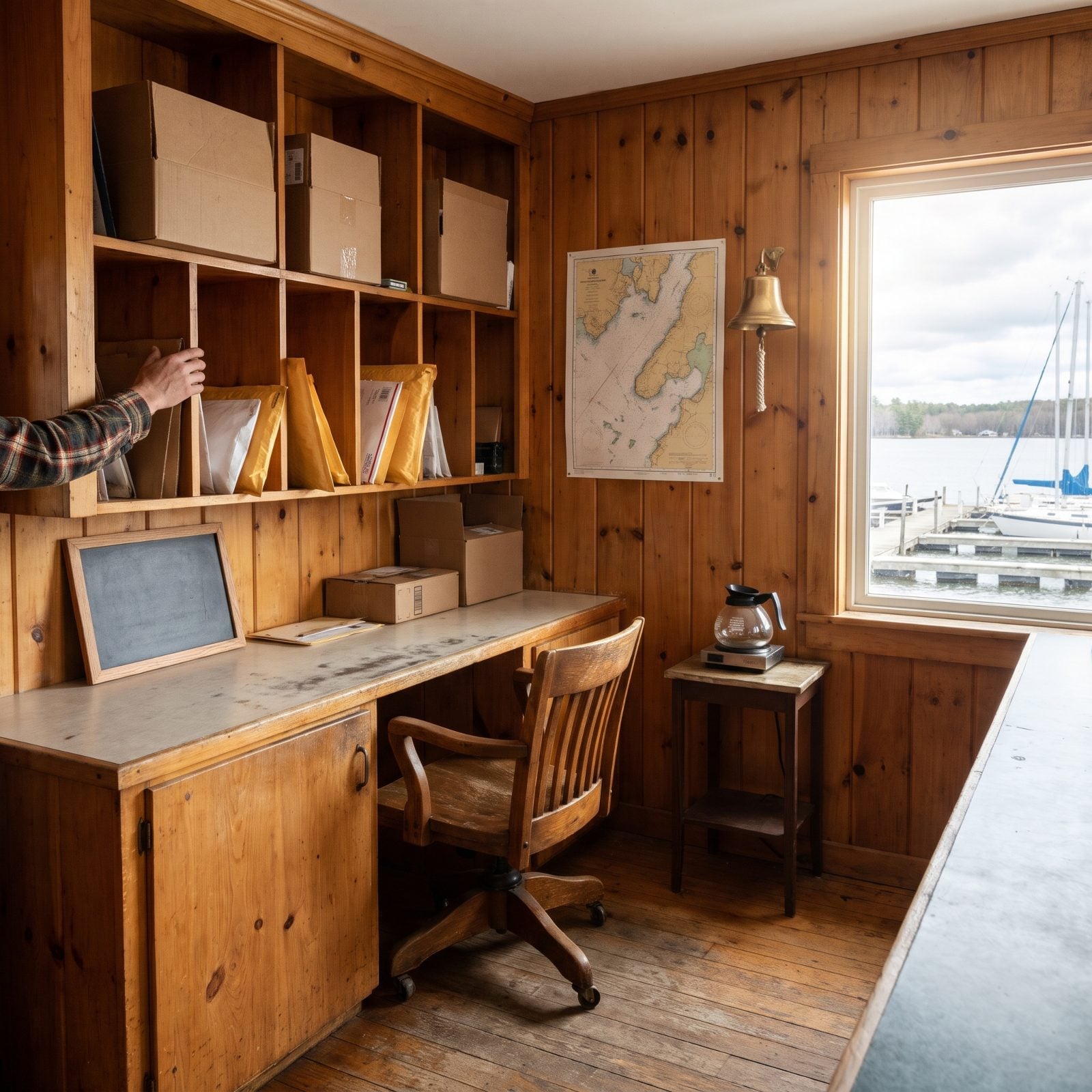
Your address problem has a simple fix. A boat slip isn’t a street address, and delivery drivers hate a dock. So most marinas let the office take your parcels and hold them behind the counter until you wander up to collect.
Honestly, it works better than a porch ever did — no packages baking in the sun, no porch pirates, no box soaked by an afternoon squall. You just check at the desk when you grab your mail.
29. The Bathhouse Becomes a Spare Bathroom for Guests
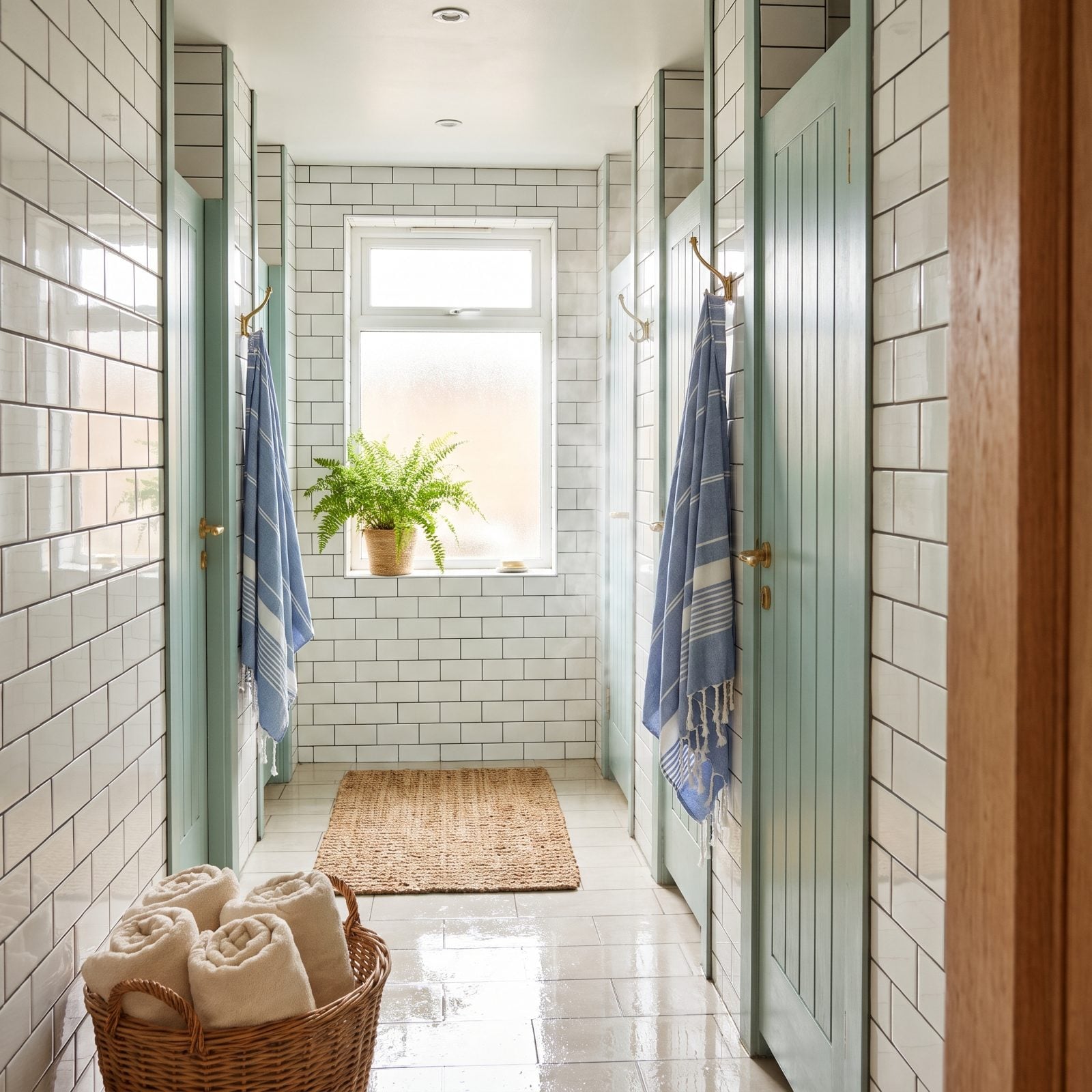
A houseboat head is small. There’s no polite way around it — the shower is a phone booth and the holding tank has opinions.
So when guests stay over, the marina bathhouse quietly becomes your second bathroom. Full-size showers, real water pressure, no tank to babysit. A good bathhouse feels less like a campground and more like a decent gym locker room, which means your guests aren’t elbowing you for the one tiny sink at seven in the morning.
Keep a little dopp kit stocked with flip-flops, a fresh towel and quarters for whoever’s crashing. People remember that kind of hosting.
28. One Shore-Power Cord Can Plug In the Whole Home
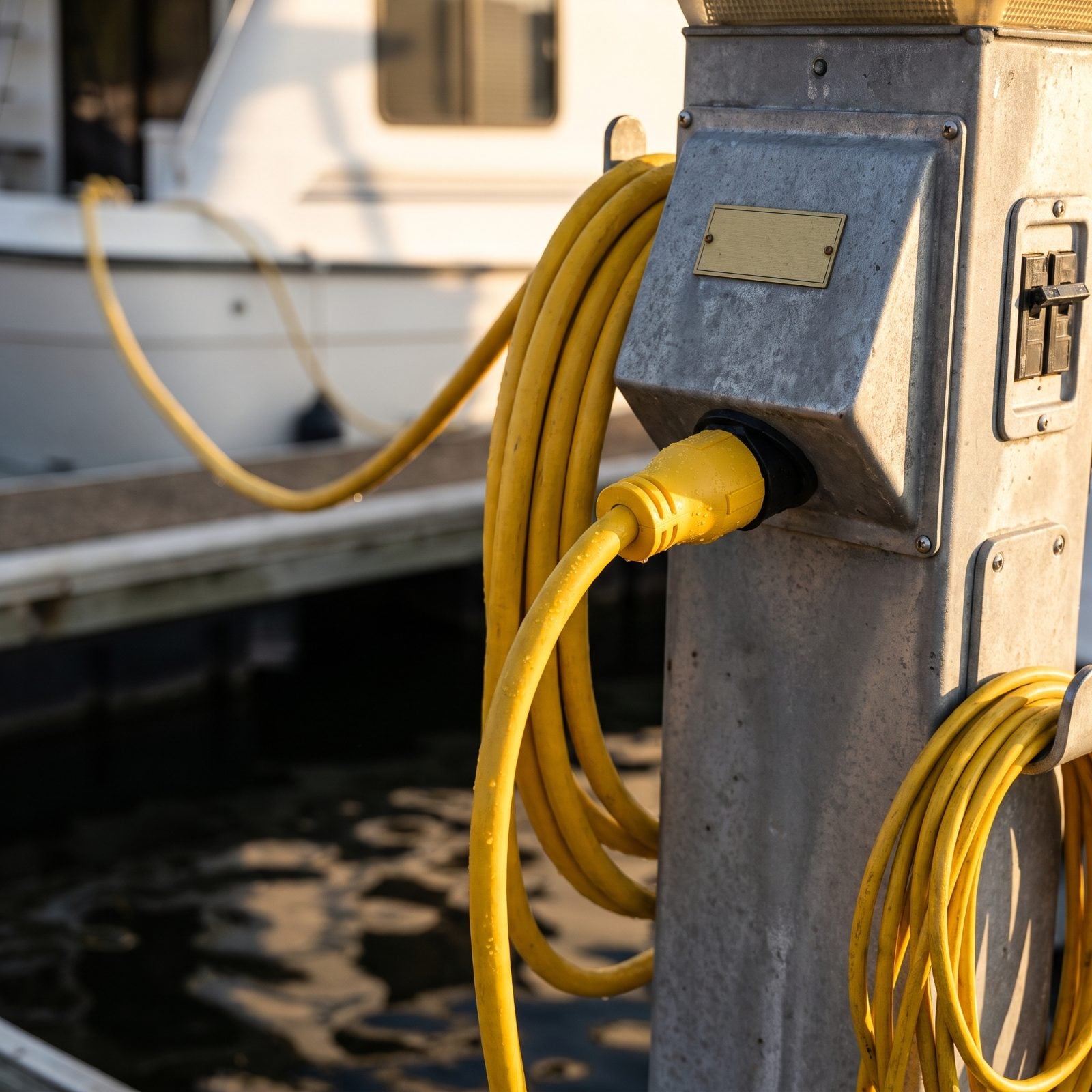
The whole electrical life of a houseboat runs through one fat yellow cord. You plug the twist-lock into the dock pedestal, give it a quarter turn, and the fridge, the lights, the coffee maker and the AC all wake up at once.
Respect that cord. A loose or corroded connection is where dock fires start — not a scare tactic, just the reason marinas bother inspecting pedestals at all. Feel the plug now and then, and if it’s warm, something’s wrong.
27. Storm Preparation Can Feel Like a Neighborhood Block Party
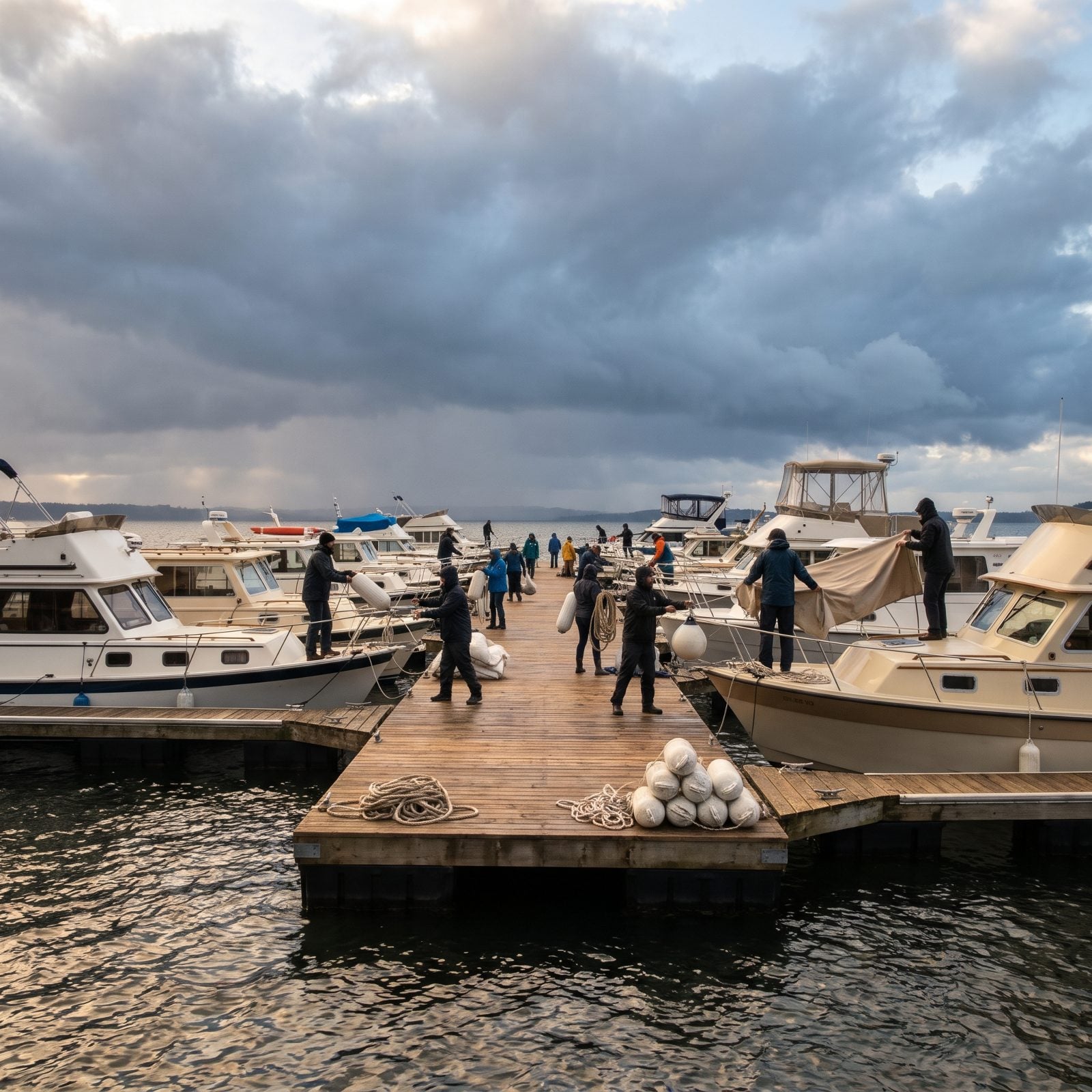
You’d expect a storm warning on a dock to feel like dread. It feels more like everyone spilling into the yard at once.
When the forecast turns, the whole dock comes alive. Folks double up their lines, hand over spare fenders, tend to the slip neighbor who’s out of town. There’s an easy rhythm to it — a shared job that gets done faster because five pairs of hands are doing it together.
By the time the first fat raindrops hit, the boats are snugged down and somebody’s inevitably put a pot of chili on. Weather binds a dock community tighter than any sunny afternoon ever will.
26. Checking Dock Lines Becomes a Calming Daily Ritual
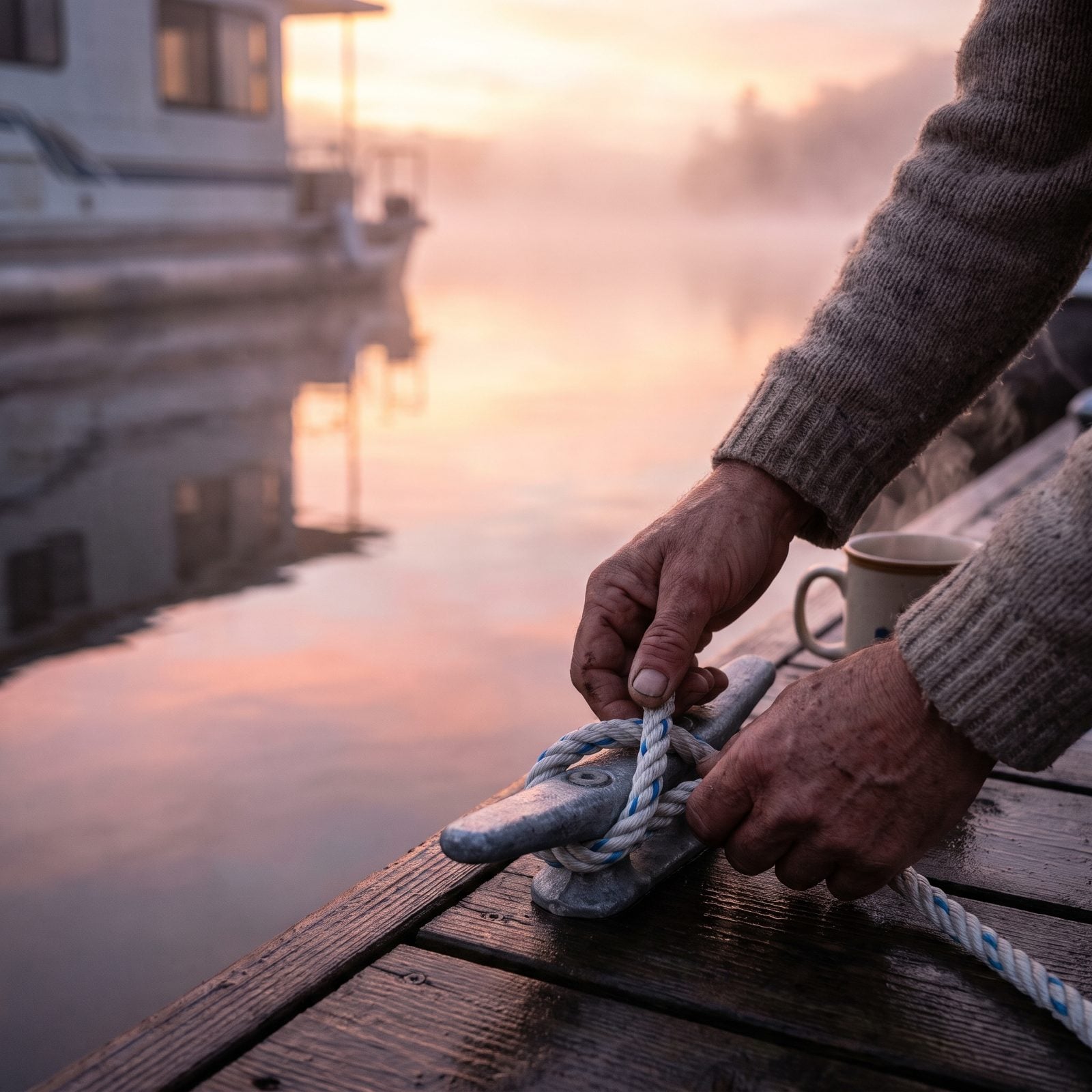
There’s a slow morning habit that comes with living on the water. Coffee in hand, you walk the lines.
You check the bow, the stern, the springs, feeling whether the overnight wind stretched anything, whether a cleat hitch slipped, whether the fenders rode up. It takes two minutes and it quietly tells you everything about how your home spent the night.
25. Fenders Make Parking a Home More Forgiving
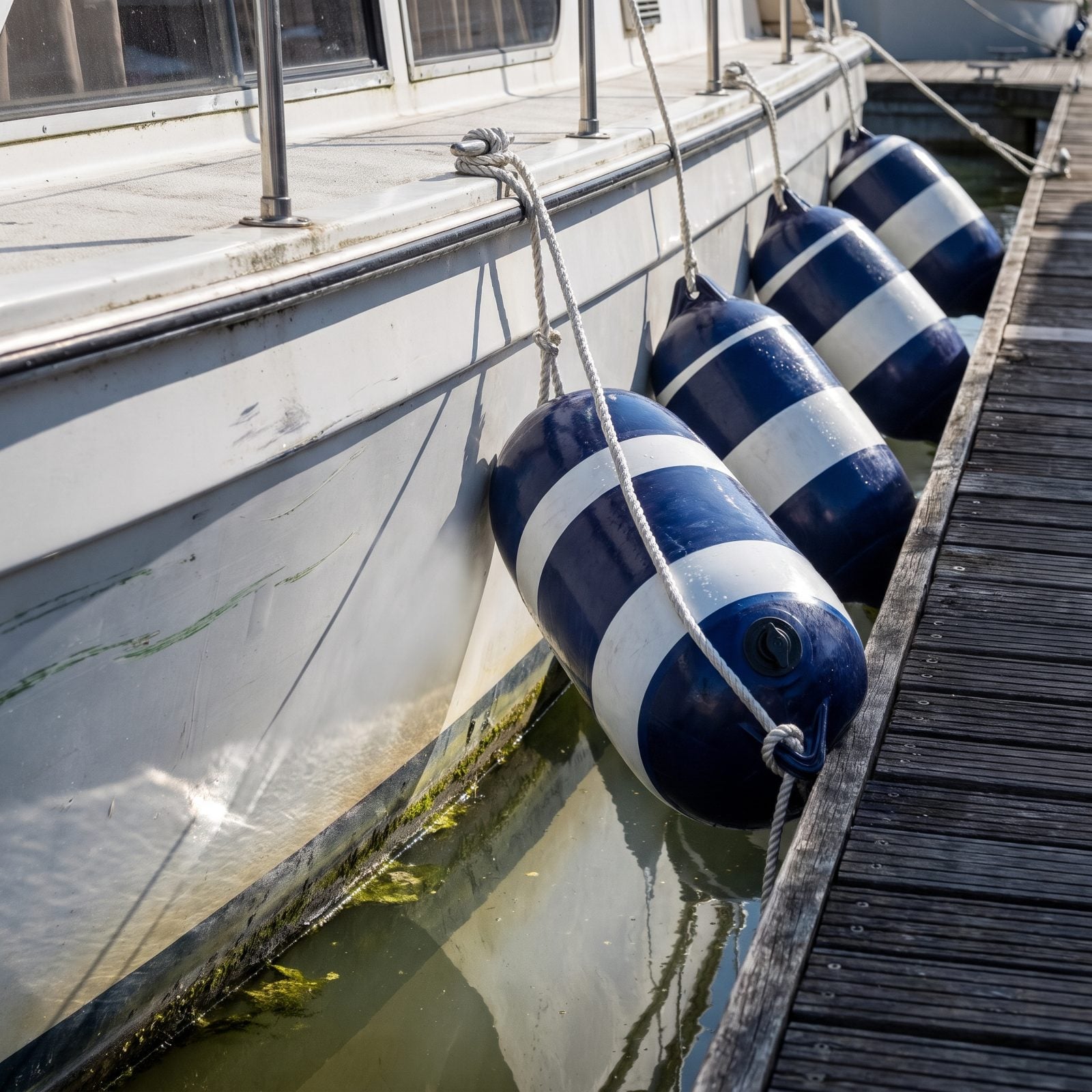
Your house is parked against a dock, and the dock does not move gently. Wind pushes, wakes roll through, a passing cruiser sends a swell right at dinnertime. Without something between the hull and the wood, every bump would land as a thud you’d feel in your coffee.
Fenders are those fat rubber cushions slung along the side, and they take the hit so your home doesn’t. Here’s the forgiving part: you never have to park perfectly. The fender absorbs the sloppy approach, the gust at the worst moment, the neighbor’s kid casting off too hard. Dock life is kind to imperfection, and that’s half the charm of it.
24. A Boat Hook Retrieves Almost Everything That Falls Away
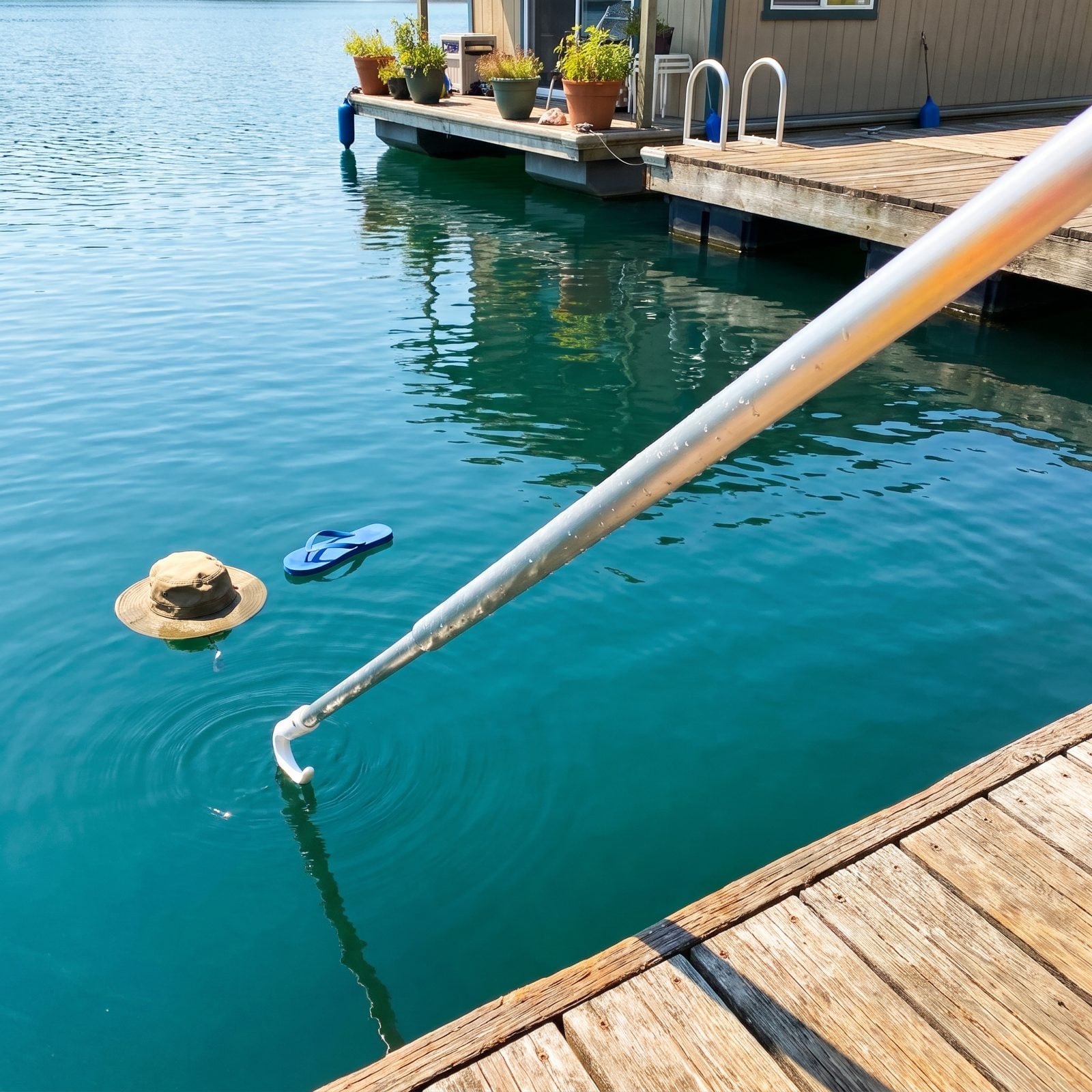
Everything floats away eventually — a hat, a flip-flop, the lens cap, the pool noodle, a fender that worked its knot loose. The lake takes it all with the same slow indifference.
A boat hook answers nearly every one of those small tragedies. It’s a long aluminum pole with a hook on the end that telescopes out eight or ten feet, and you snag the drifting thing and reel it back before it clears the slip.
Clip it somewhere you can grab it in under five seconds. The window between “it fell in” and “it’s gone for good” is shorter than you’d think, especially on a breezy afternoon.
23. Carabiners Solve an Astonishing Number of Storage Problems
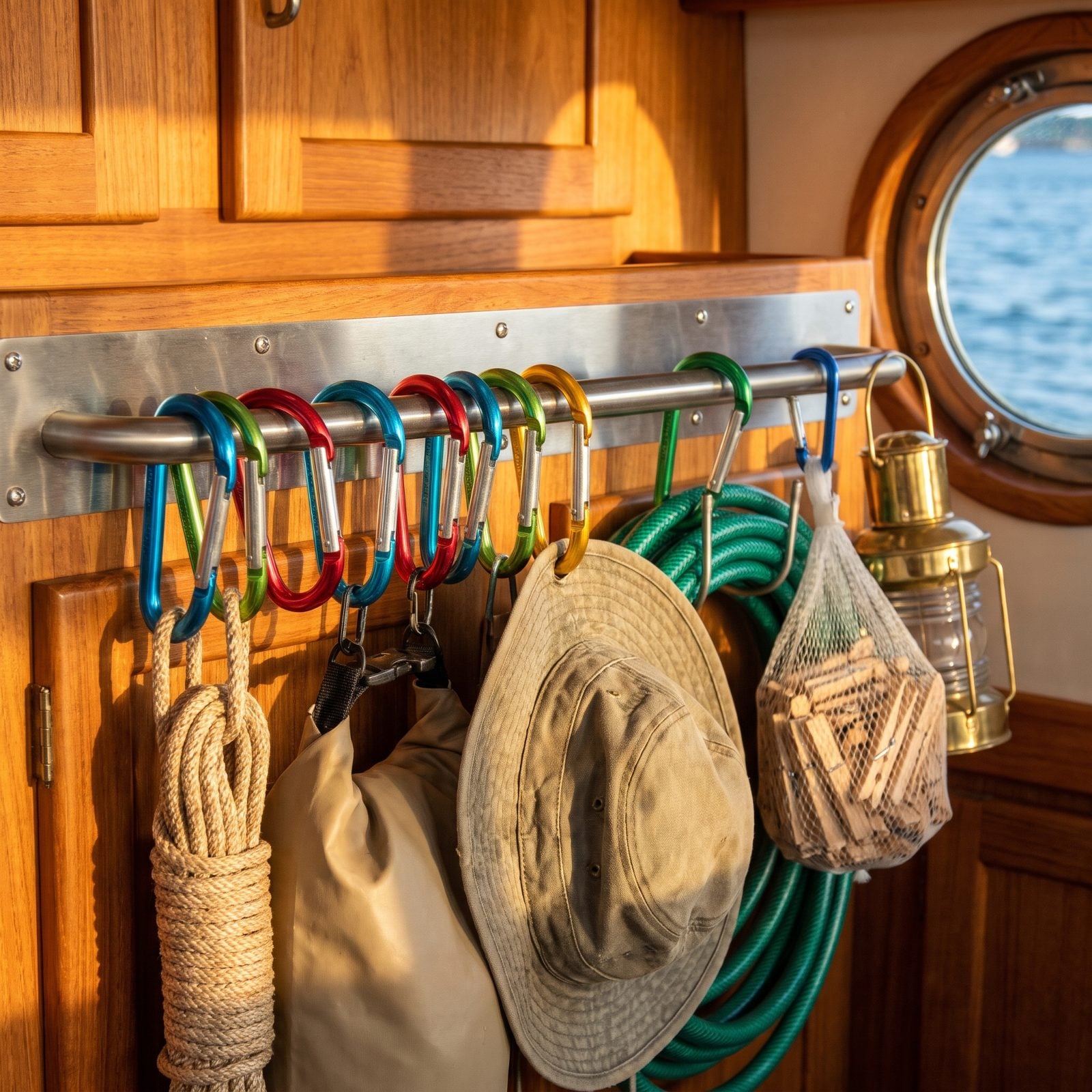
Buy a bag of carabiners and you’ll wonder how you ever lived without them. Not the climbing-rated kind — just the cheap aluminum clips that come in a dozen loud colors.
On a boat, every bit of rail turns into storage. You clip up the coiled hose, the dry bag, the hat, the bag of clothespins, the lantern, even the keys so they never meet the water. Things that would otherwise slide and rattle around a cabinet just hang in place, off the floor, swinging harmlessly when a wake rolls through.
22. A Fold-Down Table Creates a Dining Room on Demand
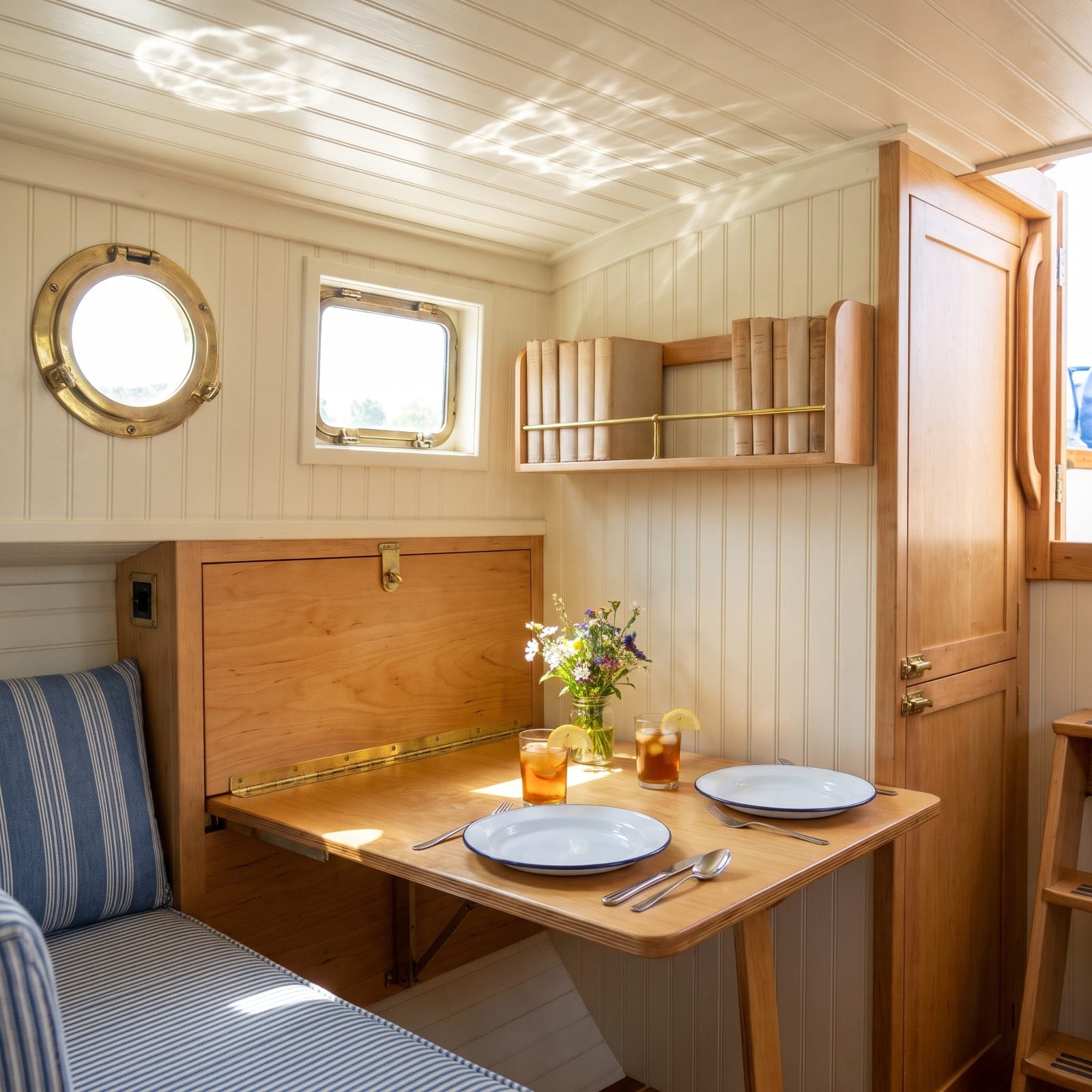
On land, a dining room sits empty most of the day waiting for dinner — square footage you heat, dust, and walk past. On a houseboat, the table lives flat against the bulkhead until you need it, then drops down on a brass hinge and feeds two in under a minute.
The trick nobody mentions? The good ones have a fiddle rail or a lip so your plate doesn’t slide when a wake rolls through. Cheap conversions skip that detail, and you learn why the first time a ferry passes.
21. Opening Two Hatches Creates Instant Cross-Ventilation
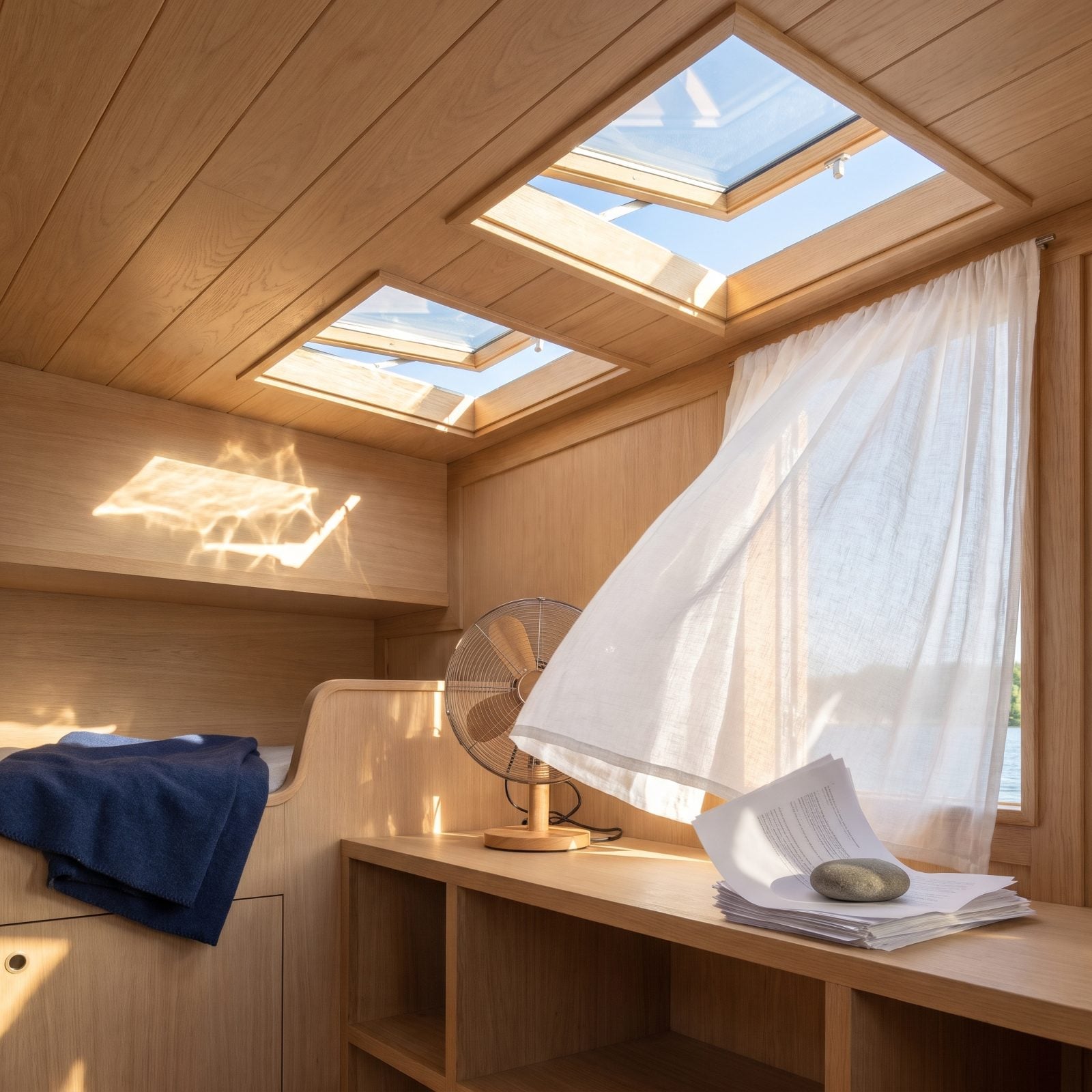
Pop one hatch and the air just sits there. Pop a second one at the far end and the whole cabin starts to breathe — you feel it on the back of your neck within seconds.
This is physics doing you a favor. Air moves from the opening catching the breeze toward the opening in the lee, and a boat sitting on open water almost always has a breeze coming off the surface. A house wedged between two others can’t pull this off. A houseboat does it almost for free: the little desk fan on the shelf only has to nudge the breeze along.
In a guide to keeping a boat cabin cool, a naval architect points out “And exhaust is just as important as intake—the companionway acts as a wonderful exhaust path.”
20. The Surrounding Water Helps Moderate Temperature Swings
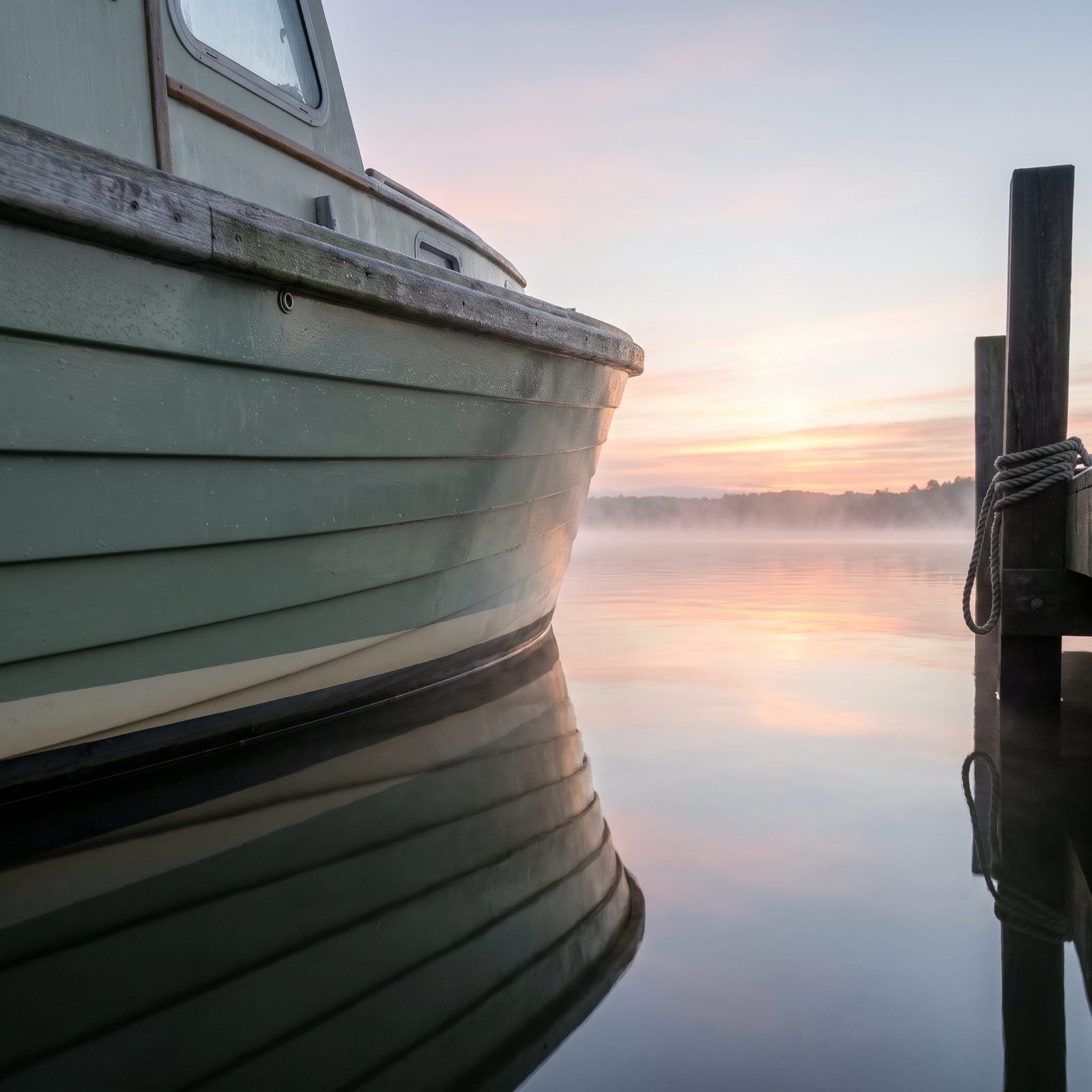
Water holds its temperature like a grudge.
A lake takes hours to warm in the sun and hours to give that warmth back at night, and your houseboat floats in the middle of that enormous, slow-moving mass. It buffers you. The scorching afternoon doesn’t bake the cabin the way it bakes a tin-roofed shed, and the pre-dawn chill arrives gentler too.
No magic here, and no insulation either. The water around and below you simply refuses to swing as fast as the air does, so your space follows the water’s slower rhythm instead of the sky’s.
19. A Flat Houseboat Roof Is Ideal for Solar Panels
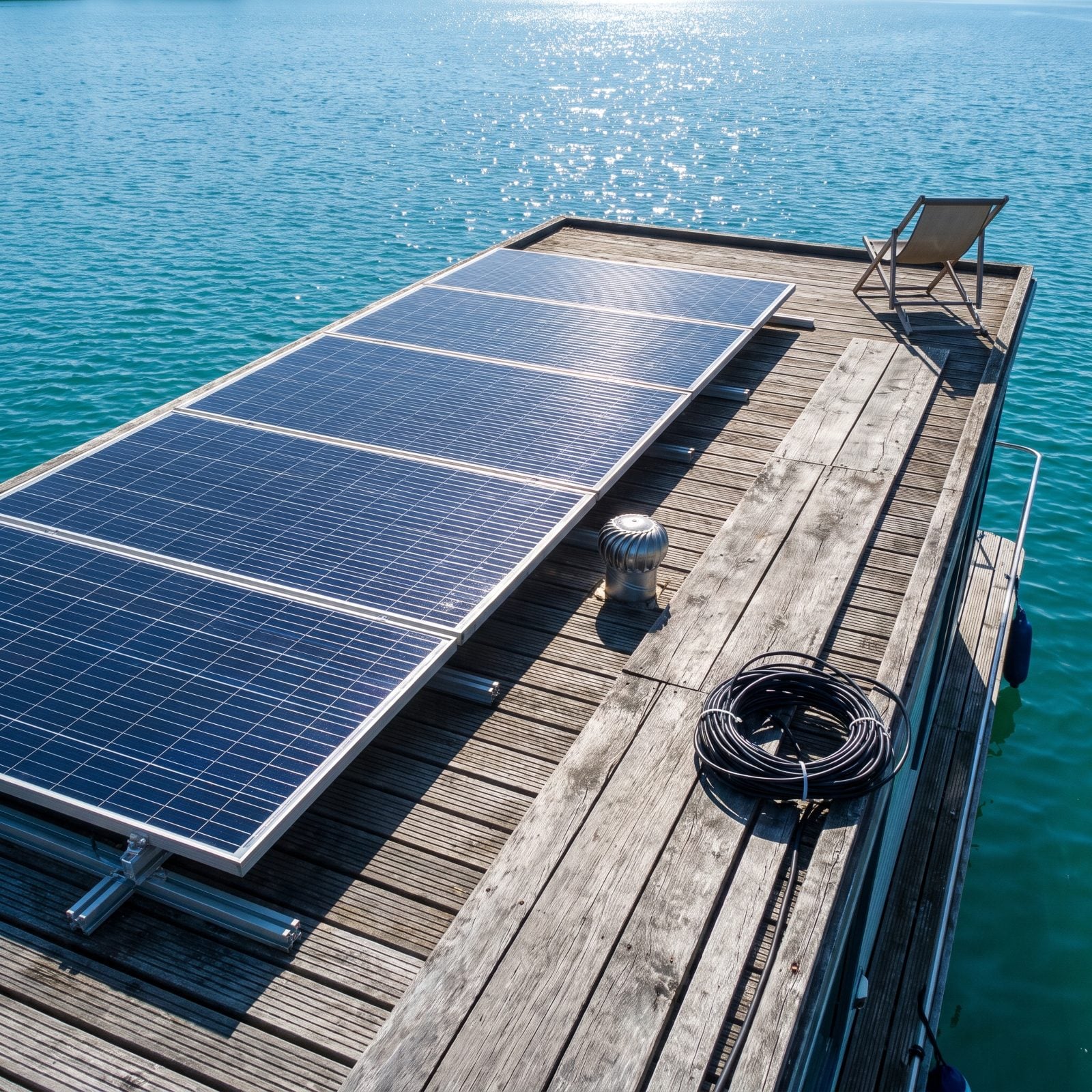
Most houses have roofs angled for rain, pointed in whatever direction the builder liked. A houseboat roof is a flat, unshaded rectangle sitting in the open with nothing tall anywhere near it — close to the best solar real estate you can ask for.
No chimney throwing shade at four o’clock, no neighbor’s oak, no dormers. Lay the panels flat or prop them on a cheap rack tilted toward the summer sun. On a bright lake day the glare off the water even bounces a little extra light up at them.
You won’t run a whole household off it. But lights, the water pump, a laptop, a fan? Easily. And it’s quiet, which after a weekend of listening to someone’s generator two slips down, you’ll appreciate more than you expect.
18. Tank Gauges Turn Water Conservation Into a Satisfying Game
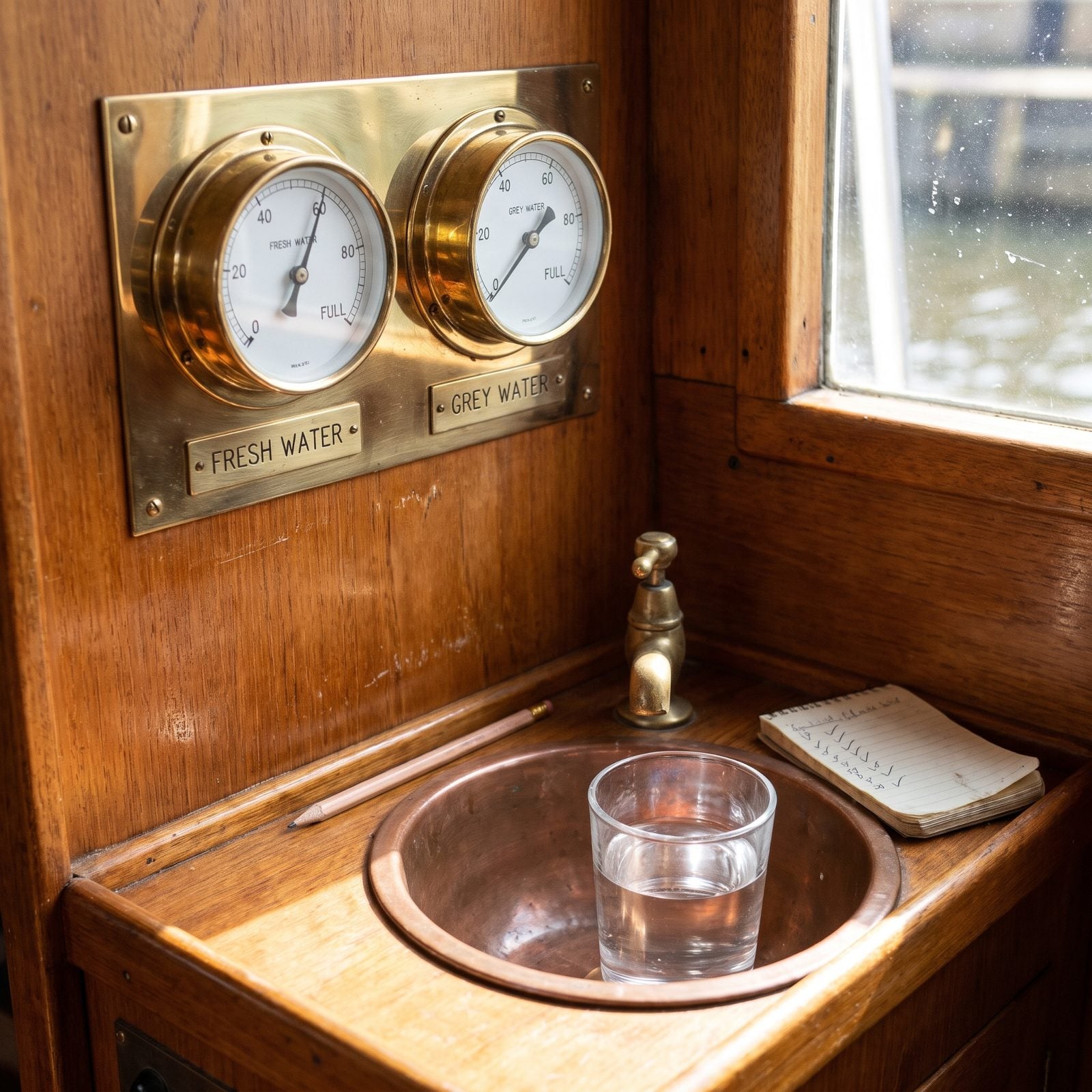
Back home, water is abstract. You turn the tap, it runs, a bill shows up once a month and you barely glance at it. On a boat, water is a needle on a dial you can watch drop.
Something clicks when you can see the number. You start catching the rinse water in a basin and you notice the tap you left dribbling. Seeing how long you can stretch a full tank becomes a quiet little sport you play against yourself, and here’s the funny part — you stop feeling deprived. You feel competent.
The gauge doesn’t nag. It just tells you the truth, and the truth turns out to be motivating.
17. Door-to-Door Solicitors Rarely Cross the Gangway
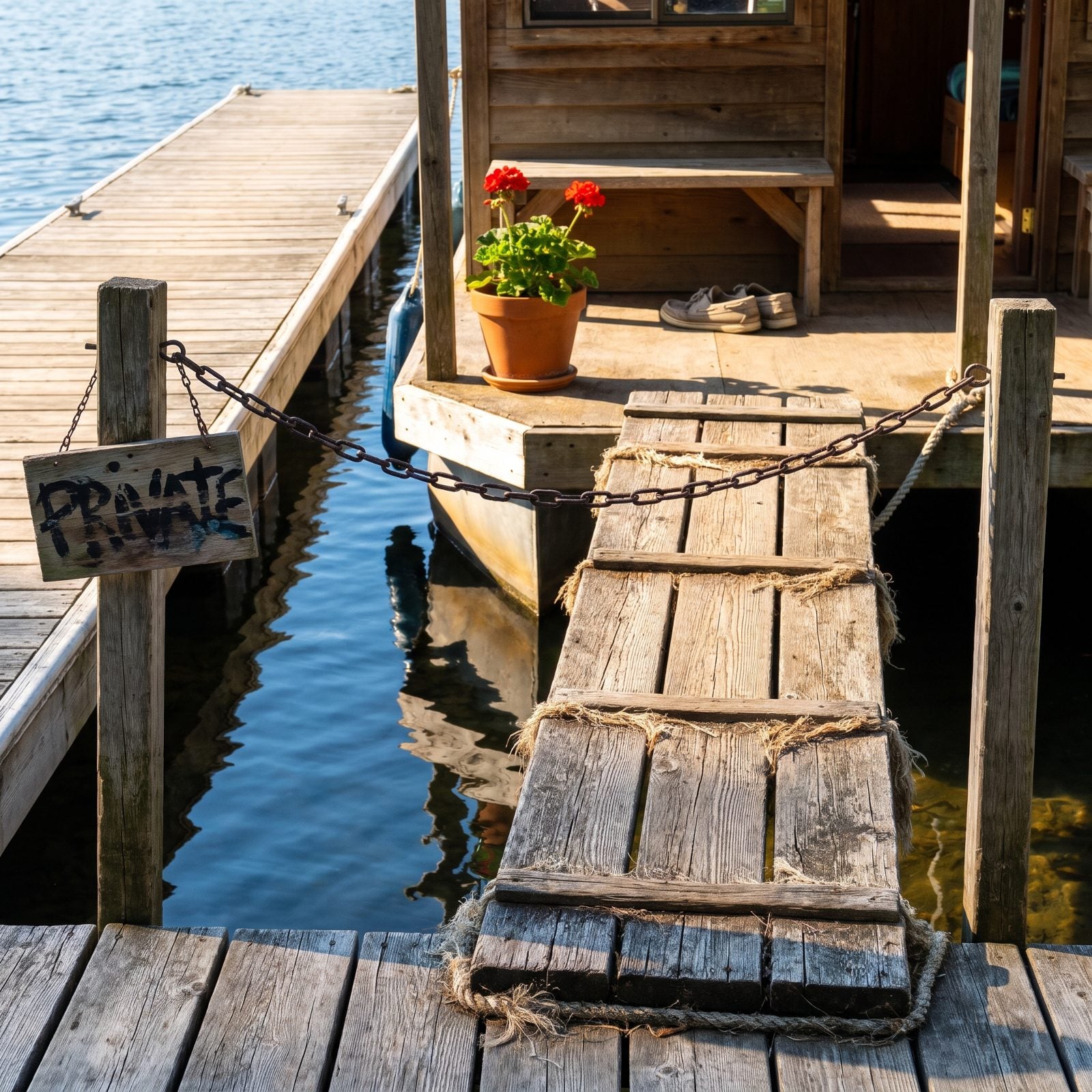
Nobody’s clipboard wants to walk a floating dock, step over a chain, and balance across a gangway that moves under their shoes to sell you a gutter system you obviously don’t have.
So the water does the screening for you. The people who make the trip out to your slip were either invited or belong on the dock. That afternoon knock from someone reciting a script is a land problem, and out here it mostly evaporates. You don’t realize how much low-grade irritation that knock carried until it stops happening.
16. Neighbors Keep an Eye on Dock Lines While Owners Are Away
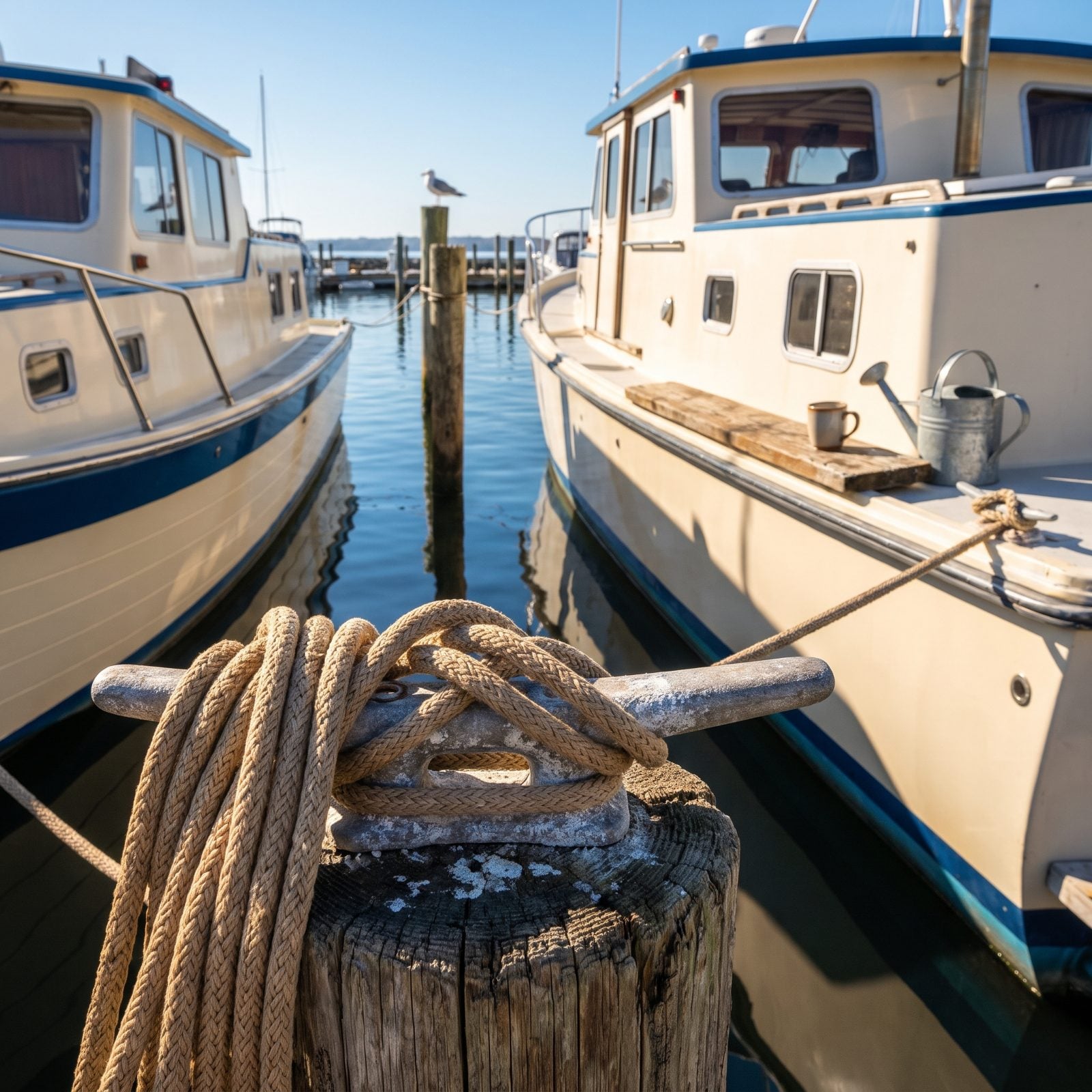
A marina is a small town that happens to float.
Your neighbors are tied up fifteen feet away, and they can see your boat from their galley window. When a line chafes or a fender slips or the water drops and your spring line goes tight as a guitar string, someone usually notices before you’d ever know.
This isn’t charity — it’s self-interest wearing a friendly face. A boat that drifts loose becomes everyone’s problem fast, so the whole dock has a stake in your lines holding. You watch theirs, they watch yours. Oldest arrangement on the water.
15. Reading the Weather Becomes a Useful Everyday Skill
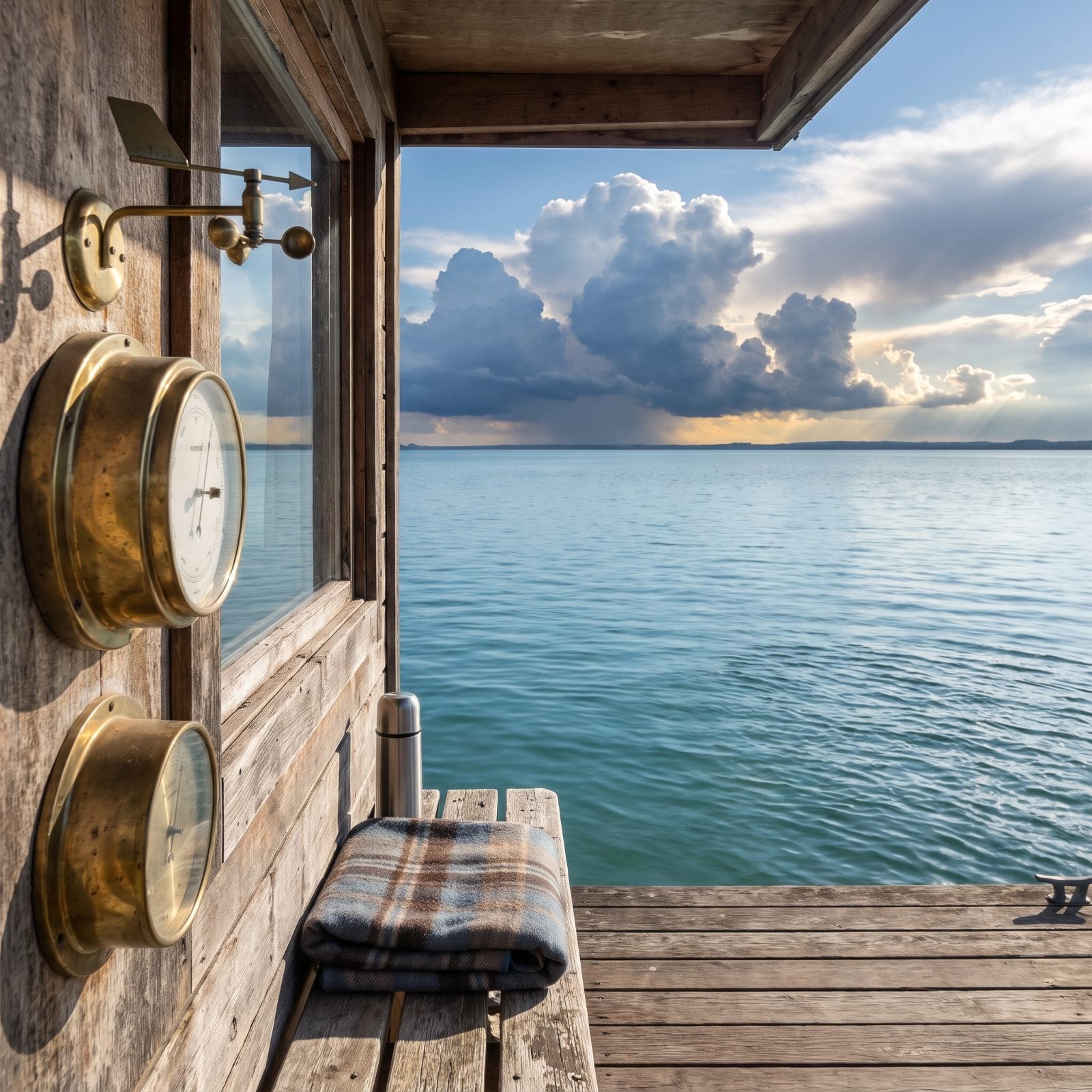
After a season on the water you catch yourself reading the sky the way you read a face. The dark, rippled patch out past the point means a breeze is coming. The air goes still and heavy before a summer line of storms. A little shift in wind tells you the afternoon’s about to change its mind.
You don’t study for any of this — it soaks in because it matters. A squall that’s a mild inconvenience in a house is something you actually want to see coming on a boat, so you start paying attention. Before long you’re the one at the family picnic saying we’ve got maybe forty minutes before that reaches us. And you’re usually right.
14. Binoculars Replace a Surprising Amount of Television
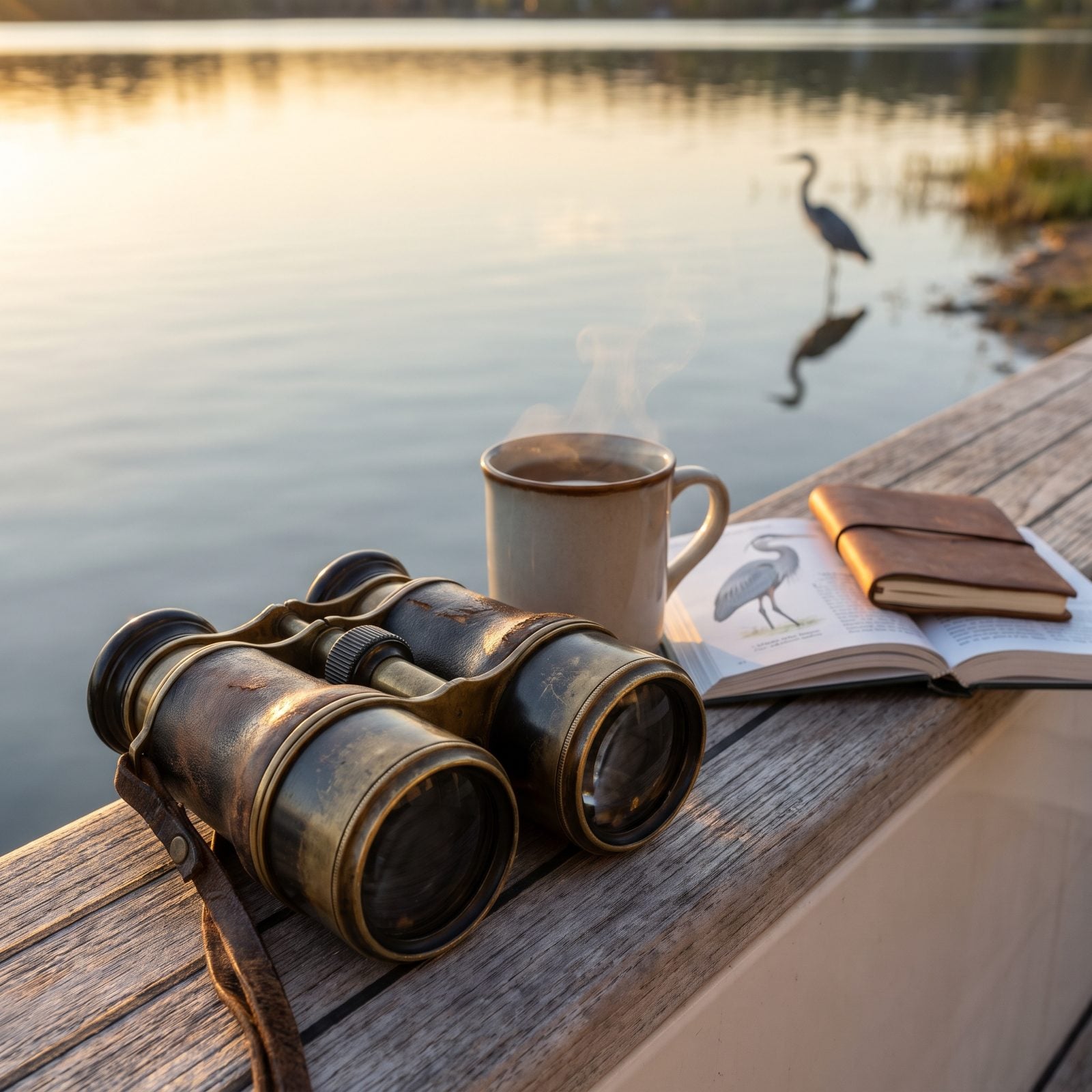
There’s a heron that works the shallows across the cove every evening. Once you’ve watched it stalk and strike a few times, a nine o’clock crime drama starts to feel like a lot of effort.
Keep a decent pair of binoculars by the best seat on the boat and see what happens. Birds you can’t name yet. The slow business of a far-off sailboat tacking home. An osprey hitting the water and coming up with something. It’s not that the lake beats television — it’s that it’s real, different every night, and it asks nothing of you but to look.
13. Passing Boats Create a Parade Outside the Window
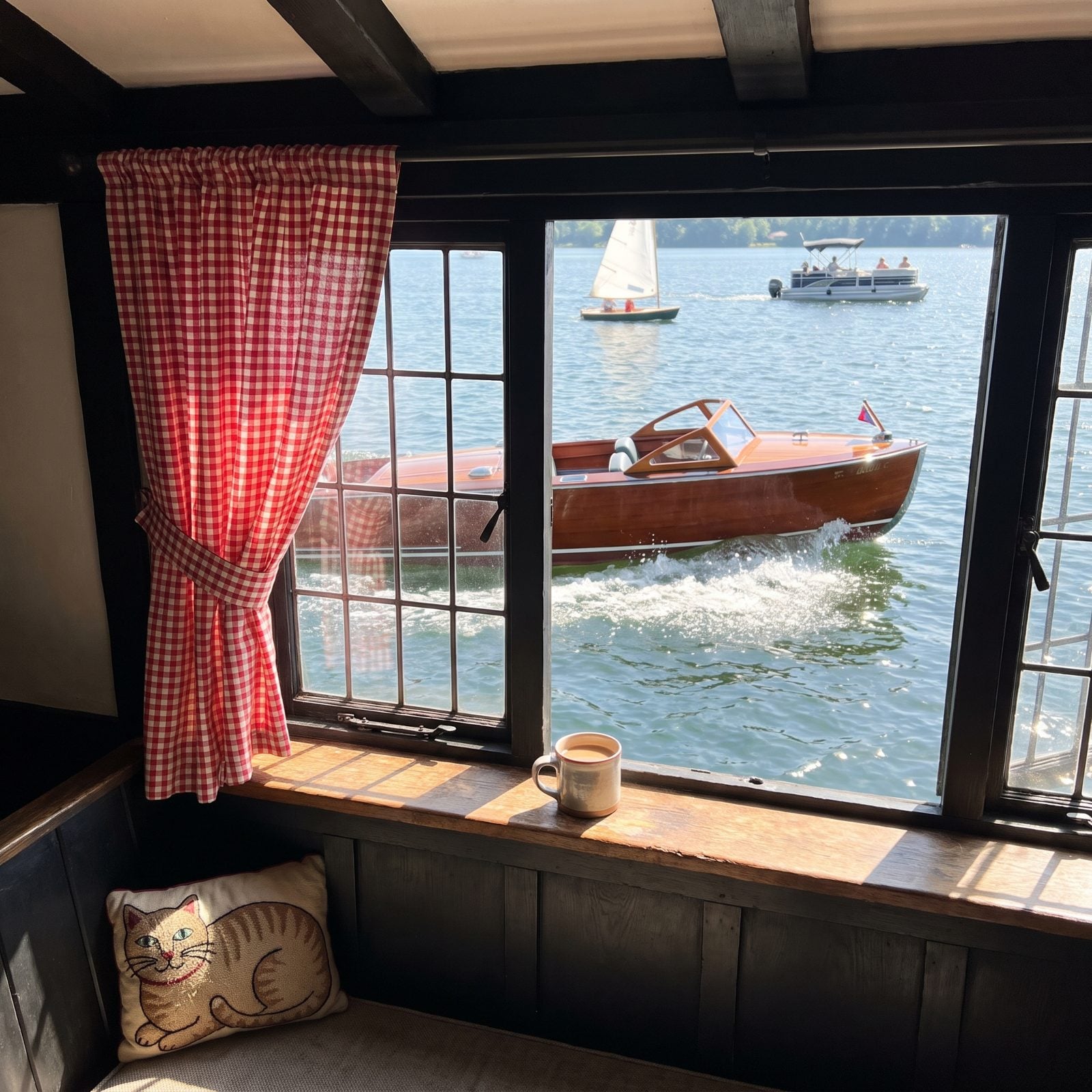
Your window doesn’t look at a street. It looks at a slow-moving show that changes all day.
The varnished wooden runabout somebody loves too much to leave in the water overnight. The pontoon crowded with a birthday. A kayak at dawn, a fishing skiff at dusk, the little sailboat that never seems to get anywhere and clearly isn’t trying to. You wave at some, you don’t at others, and you learn the regulars by their hulls the way you’d learn cars on a quiet street.
Took me a full summer to figure out the real perk of living on the water: the entertainment was never something you had to go find. It just drifts past, all day, asking only that you glance up from your coffee. Grab the good chair. The next one’s already coming.
12. A Gentle Wake Can Rock You to Sleep
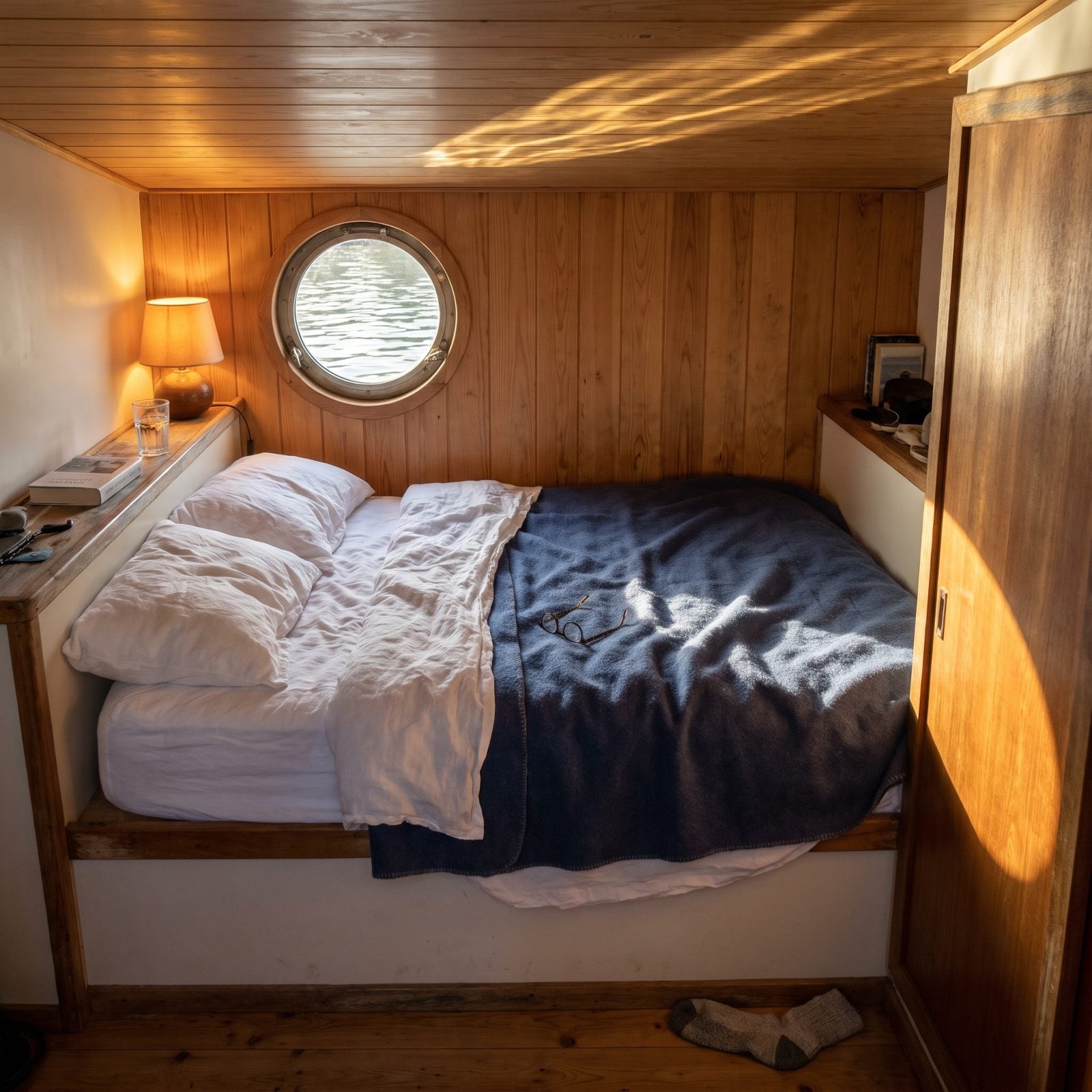
Nobody warns you how fast you stop noticing the motion. The first week, every passing boat registers — the gentle lift, the slow settle back down, water lapping the hull a few inches from your pillow. By week two that rhythm is the thing putting you under.
It’s the same reason a hammock works, or a car ride knocks a toddler out cold. Slow repeating motion slows your breathing to match it, and your body reads it as safe.
Plenty of people sleep worse on land for a while after. Too still, too quiet. The floor just sat there, doing nothing.
Reacting to a study that found gentle rocking helps adults fall asleep faster and sleep more deeply, a cognitive neuroscientist observes “We’ve been rocking our babies for thousands of years now. We know it helps them fall asleep”
11. Morning Fog Works Like a Giant Privacy Curtain
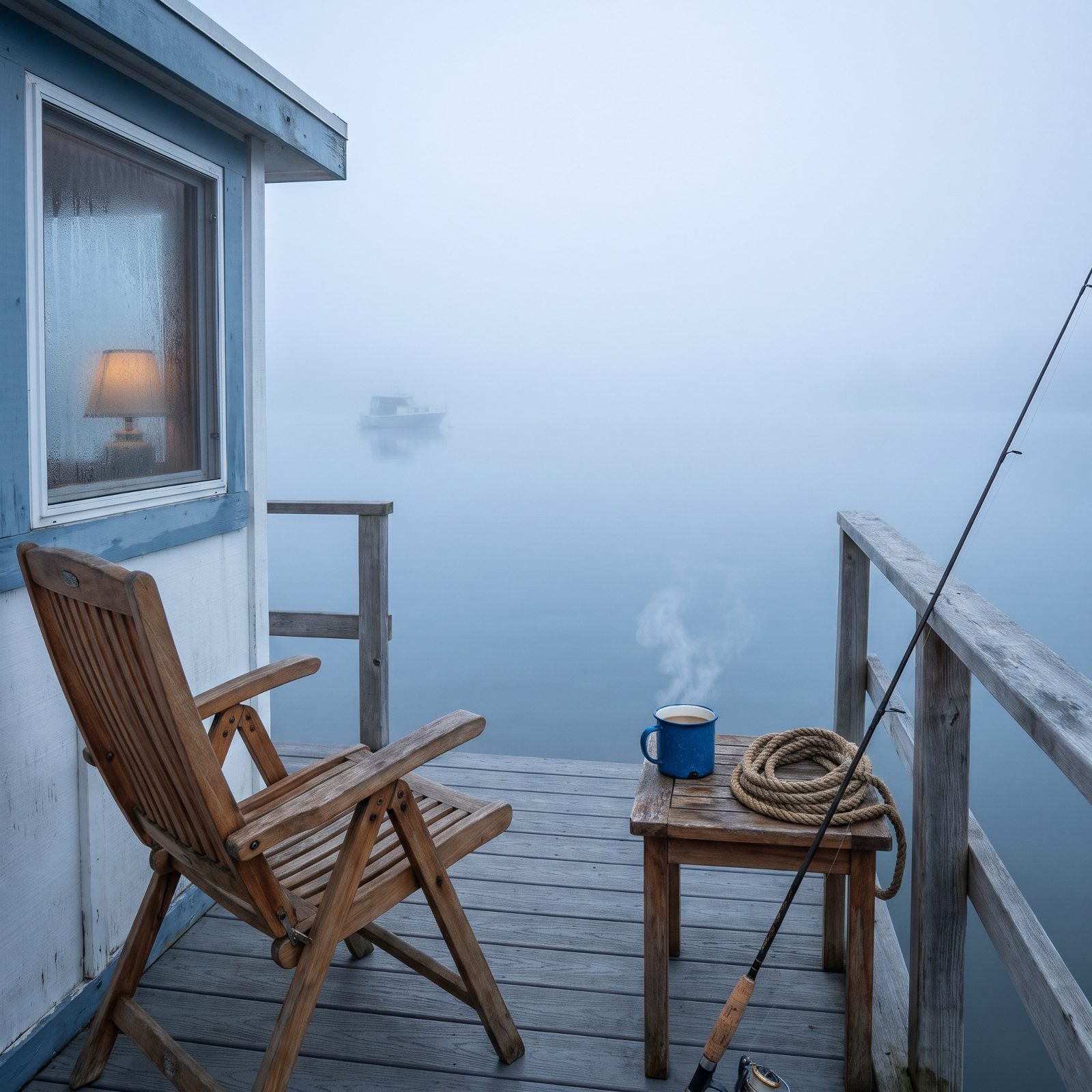
Fog is the cheapest window treatment on the water. On a crowded weekend when every slip is full and your neighbors are close enough to borrow sugar, a heavy morning mist draws a soft white wall around your deck.
Sit out in your robe with coffee and nobody sees a thing. The marina goes quiet, sound deadens, and for an hour or so that busy little floating neighborhood belongs only to you.
10. Sunsets Appear Twice When the Water Is Still
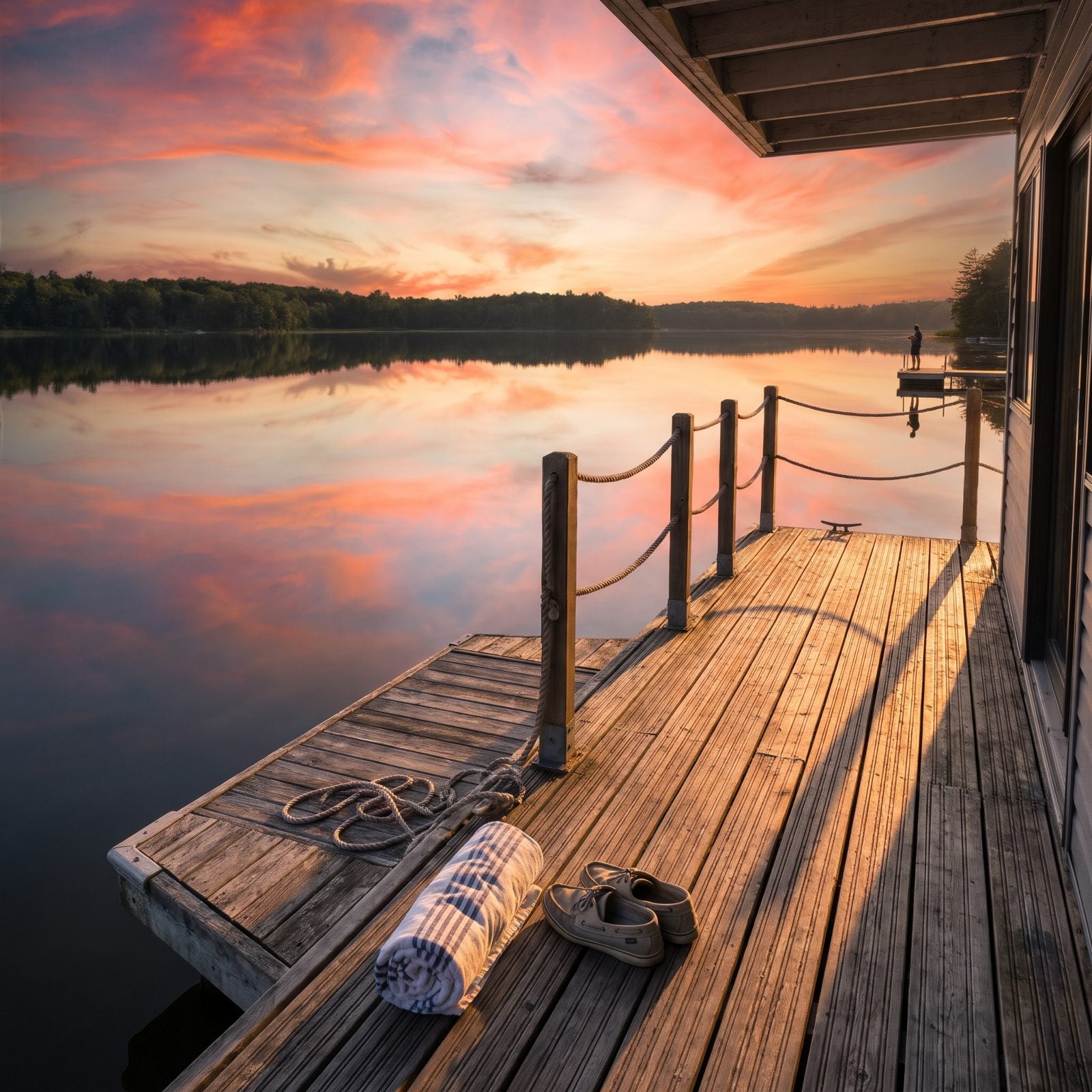
On a dead-calm evening the lake turns to glass, and that sunset you paid for gets delivered in duplicate — sky on top, a near-perfect copy below, the shoreline a dark seam running between them.
Land can’t do this. Too many obstacles, too much texture underfoot. You need a big flat surface sitting perfectly still, and the water hands you exactly that.
9. Migrating Birds Pass Right at Eye Level
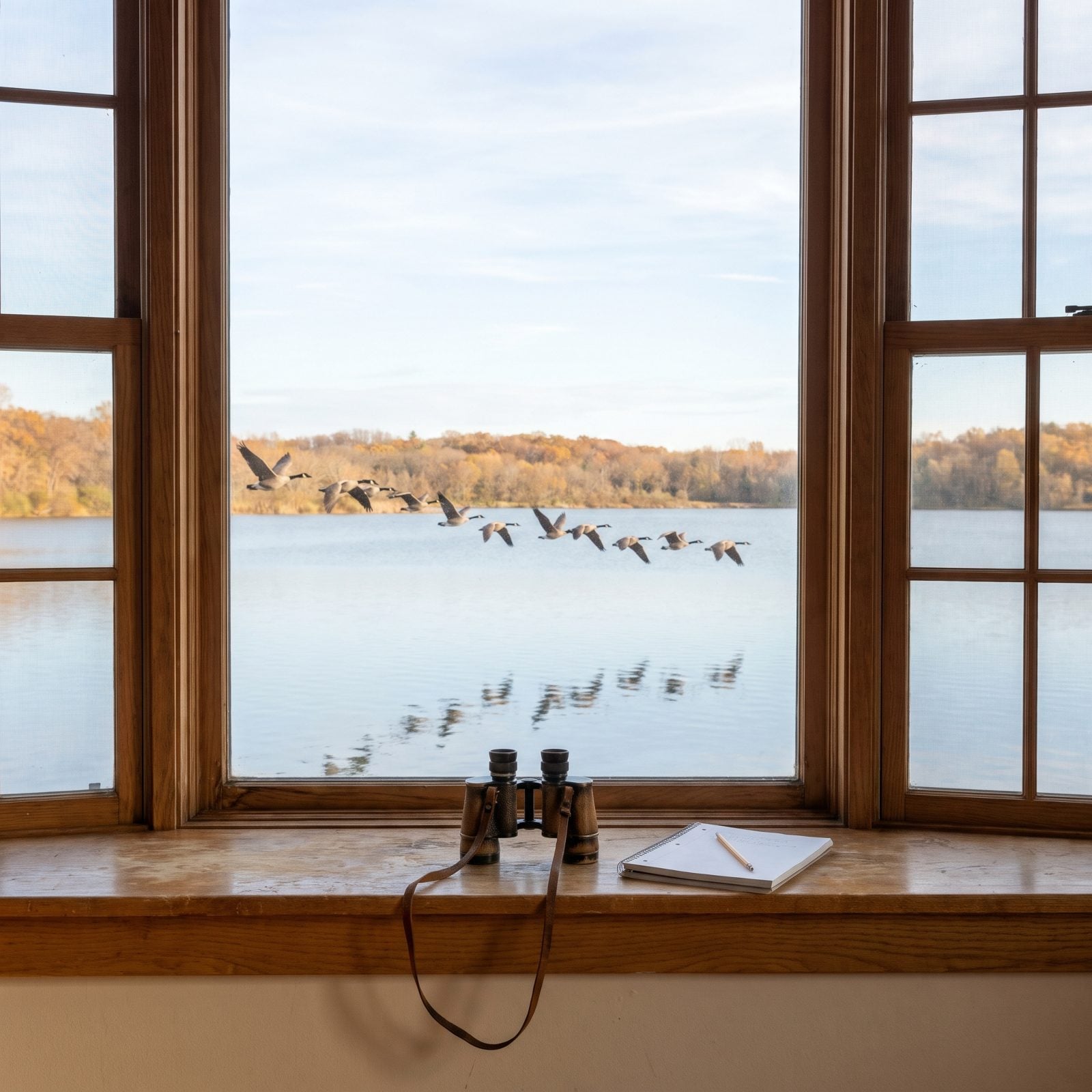
Watch a flock of geese from a hilltop and they’re specks against the sky. Watch them from a houseboat and half the time they’re coming in low over the water, wingtips almost brushing the surface, close enough to hear the whuff of air through their feathers.
Birds follow shorelines and open water on migration, which means your floating living room sits right in the commuter lane, spring and fall both.
Keep a cheap pair of binoculars by the door. You’ll reach for them more than you’d think.
8. The Fish Under Your Deck Start to Feel Like Pets
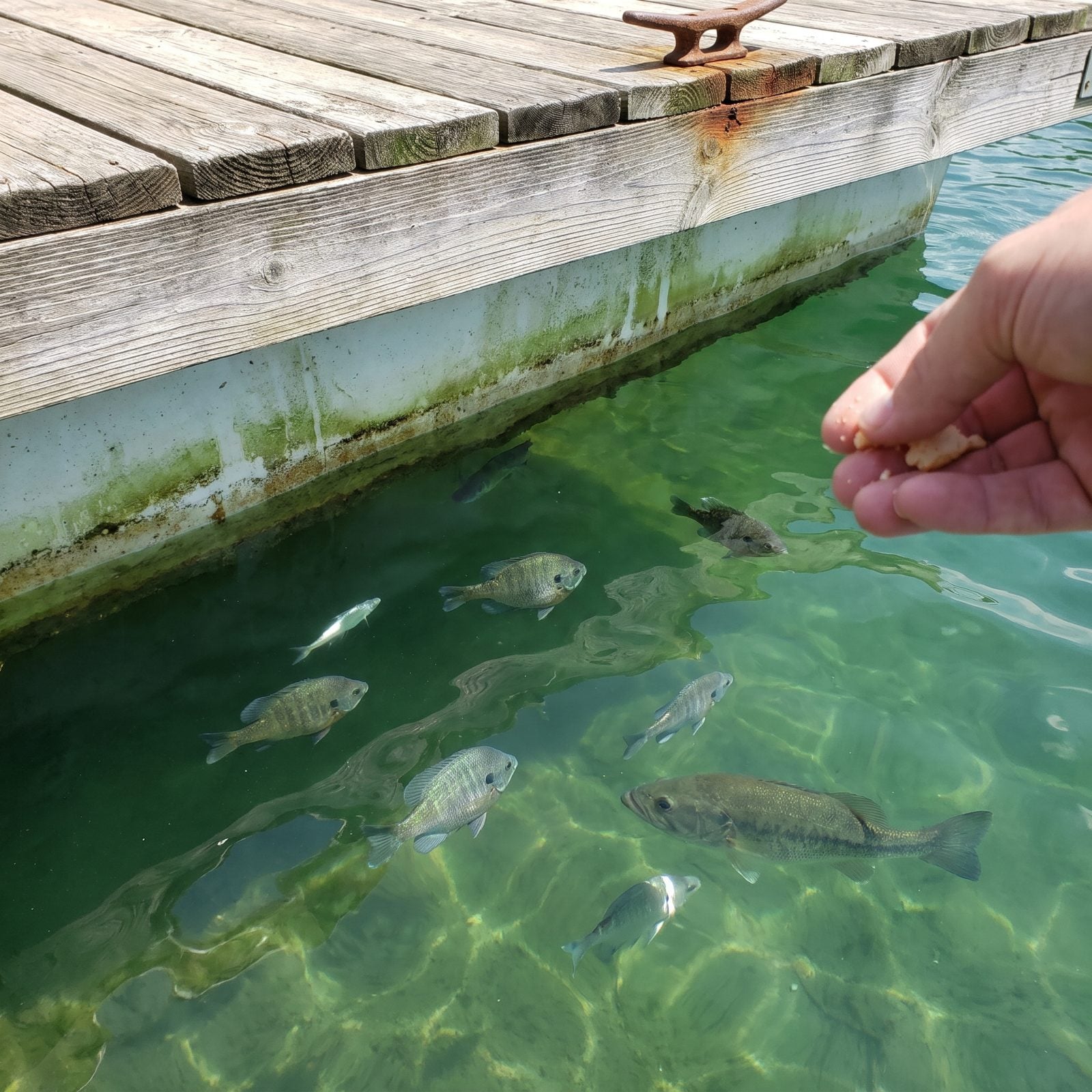
Give it a month and you’ll name one. The same bluegill hang in the shade under your hull day after day, and the big slow bass that patrols the shadow line shows up on a schedule you could set a watch to.
They learn your footsteps on the deck. Toss a crumb once or twice and a little crowd gathers whenever you step out, faces up, waiting.
Go easy on the feeding, though. Bread isn’t good for them and too much just lands in the water as mush. A pinch now and then is plenty.
7. Turtles Regularly Haul Out in Your Floating Front Yard
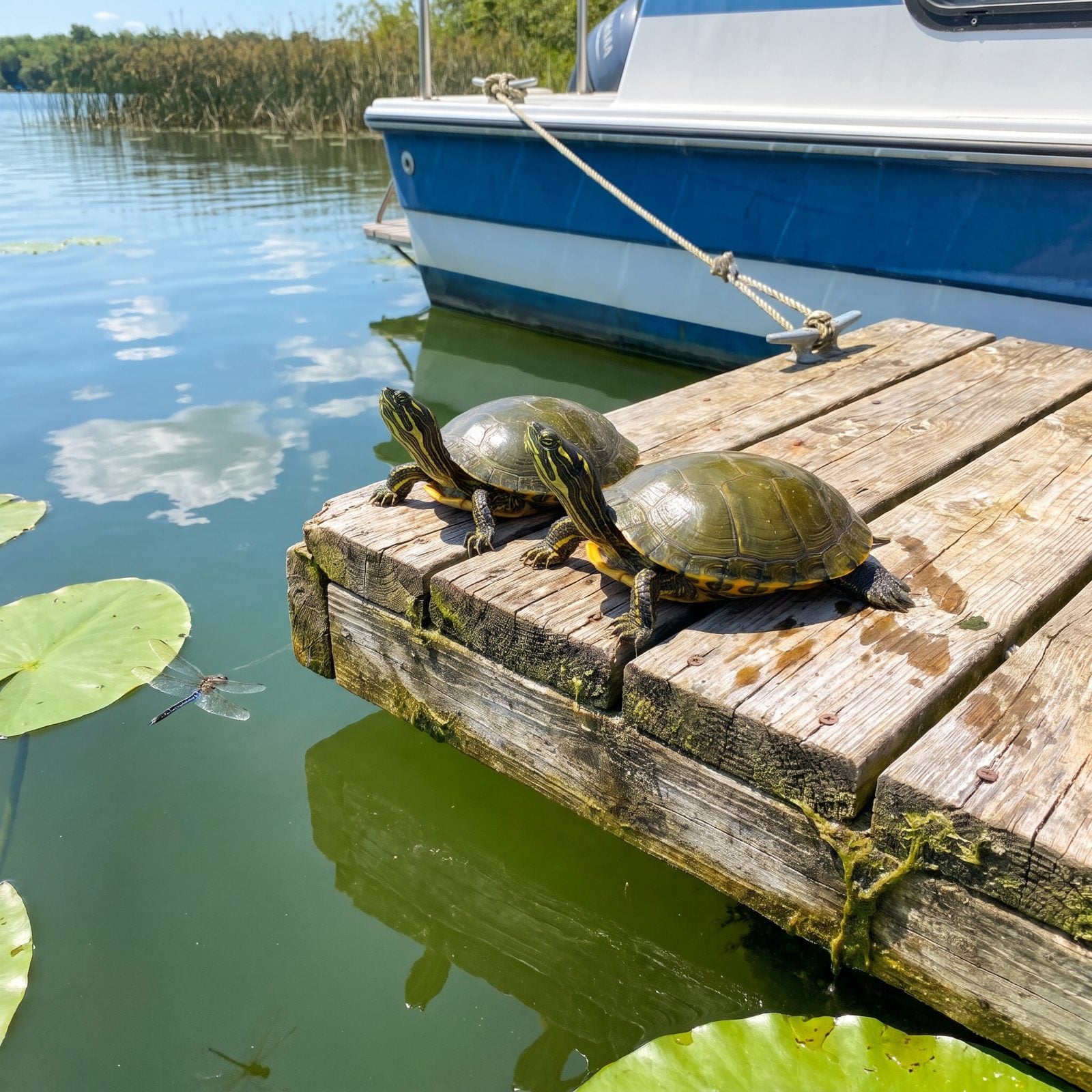
A sunny float is a turtle magnet. Painted turtles bask to regulate their temperature, and any warm dry surface at water level qualifies — your swim step, your kayak, the low end of the ramp.
Move slow and they’ll let you get close. Thump across the deck, though, and they drop off in a line, one after another, like they rehearsed it.
Describing where painted turtles haul out to warm up, a nature columnist writes “Logs that are floating on the surface, a small island of peat, or a deteriorating muskrat house are all common places that the painted turtle visits to bask in the sun.”
6. Herbs Thrive in Sunny Containers on the Roof

The roof of a houseboat gets sun like nowhere on land. No fences, no tall trees, no building next door throwing shade across your tomatoes by two o’clock — out on the water it’s open sky from sunrise to sundown.
Basil, rosemary, thyme, and mint eat that up. A row of galvanized buckets up top gives you cut-as-you-cook herbs ten steps from the galley.
Wind is the catch. Up high and over open water, a gust will dry pots out fast and knock over anything light. Heavy containers, lower growers, and a sheltered corner behind the cabin wall solve most of it. Mint will take over any pot you give it — the one plant I’m genuinely glad is trapped in a bucket.
5. The Helm Doubles as a Compact Home Office
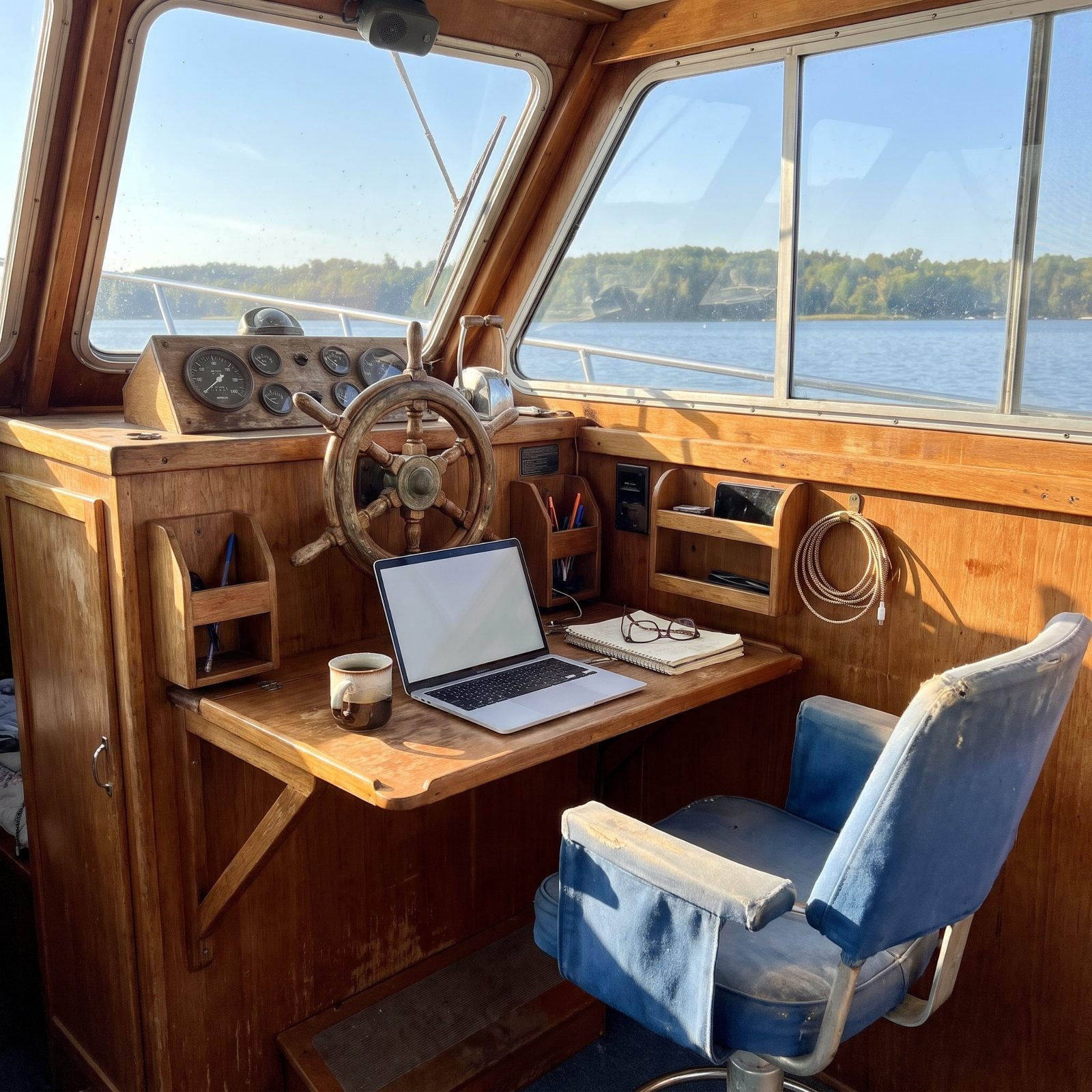
The best desk on the boat is the one you already have. A helm station comes with a wide windscreen, a chart table built for spreading paperwork, and a captain’s chair that swivels. Swap the charts for a laptop and you’ve got a workspace with a whole lake behind the monitor.
Natural light pours in and the view shifts with the weather. When the day ends, you close the laptop and you’re already home, because home never went anywhere.
4. Guests Can Arrive by Boat Instead of by Car
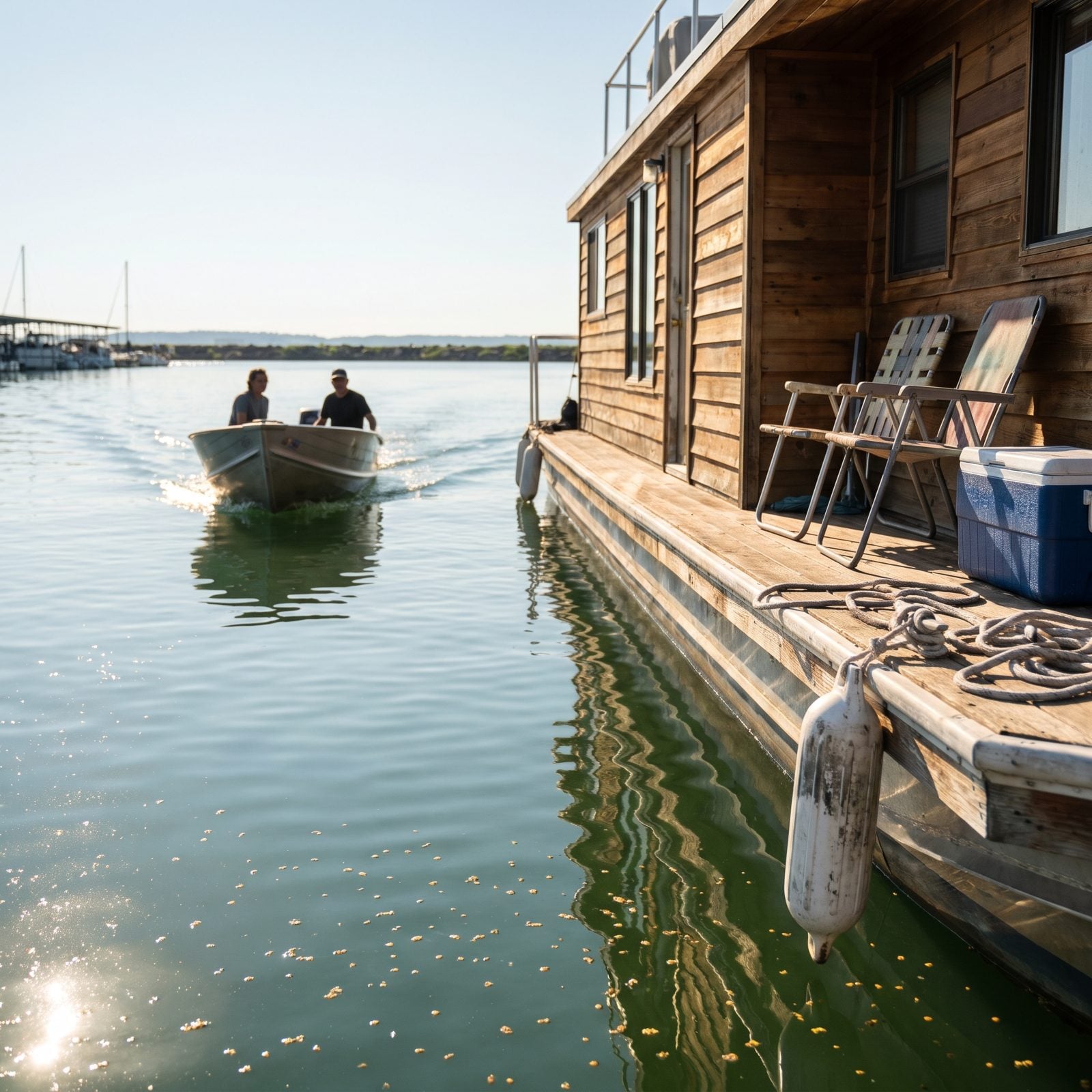
On land, guests circle the block hunting for parking. On a houseboat, the best ones just idle up to the swim platform.
Friends with their own boats can cruise over from across the lake, toss you a line and tie off alongside for the afternoon. Nobody fights traffic and nobody needs directions past the gas station with the broken sign. The arrival itself becomes part of the visit: you hear the motor, step out on deck and wave them in like a harbor pilot. Raft a couple of boats together and a simple Saturday lunch turns into a floating get-together.
Check your marina’s rules first. Some allow rafting at the slip, others steer visitors to a guest dock. Either way, keep a spare fender and an extra line handy for whoever shows up.
3. A Hammock Can Hang Directly Over the Water
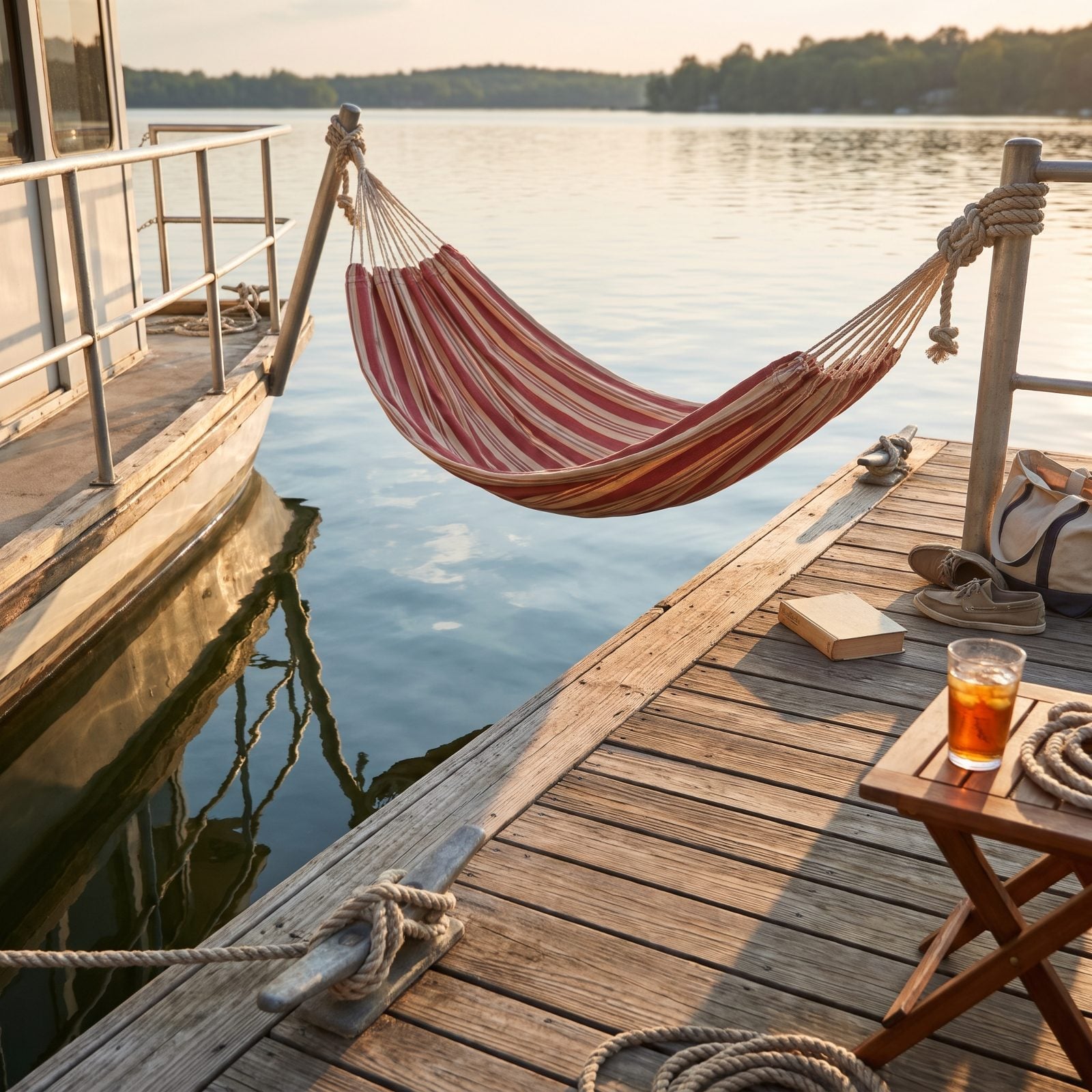
A hammock in a backyard hangs over grass. Yours can hang over the lake.
String one off the stern or across a shaded corner of the upper deck and you get the gentlest version of the gentlest seat ever invented. The water moves beneath you, a breeze comes off the surface, and the slow sway of the hammock lines up with the slow roll of the boat. Afternoons have a way of disappearing out there, usually with a book face-down on your chest.
2. Traveling Through a Lock Feels Like Riding a Water Elevator
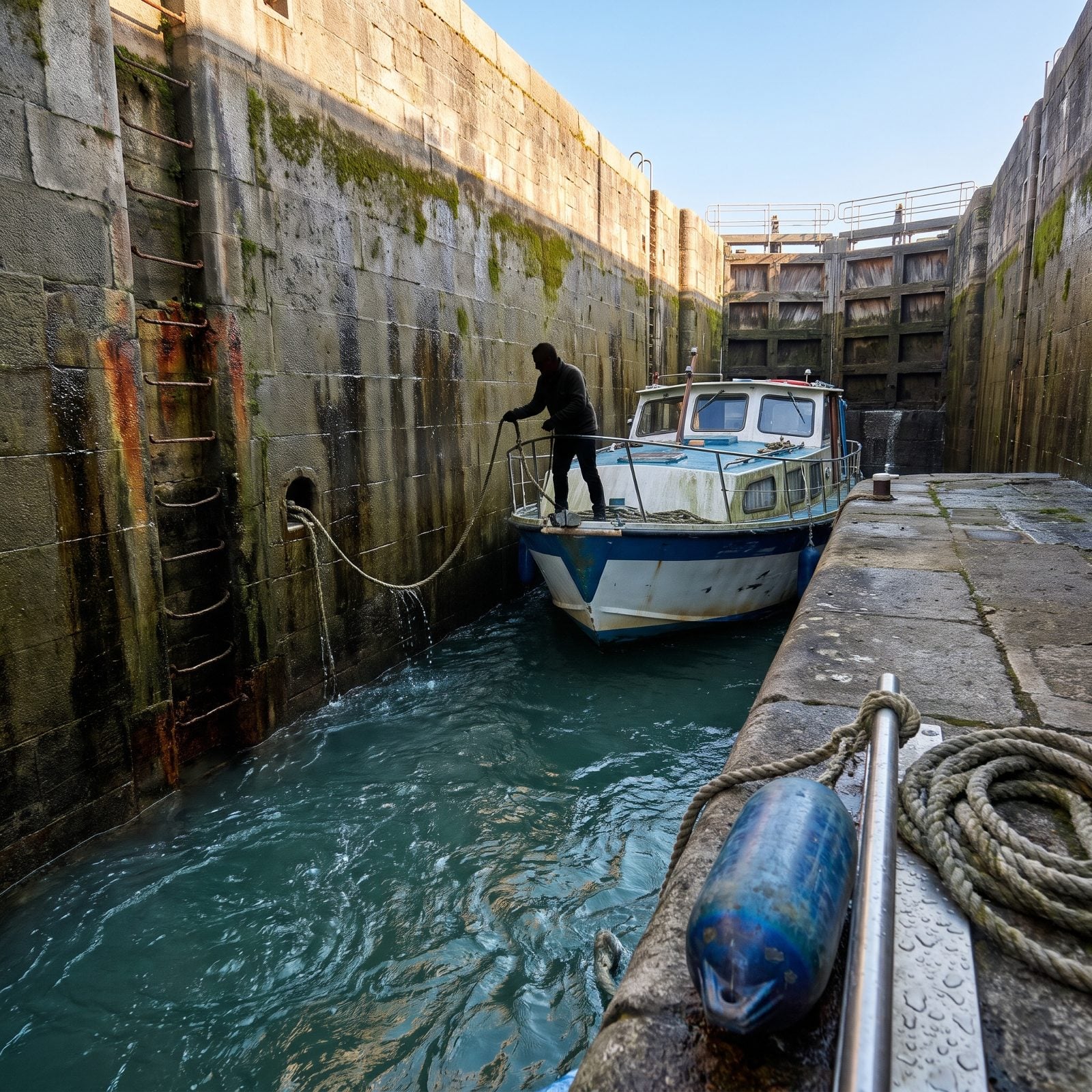
Some rivers come with stairs, and the stairs are made of water.
When a river changes elevation at a dam, a lock carries boats between levels. You motor into a long concrete chamber, the gates close behind you, and the water slowly rises or drops, lifting or lowering your whole house with it. Then the gates ahead swing open onto a new stretch of river. It’s equal parts engineering marvel and amusement park ride, and it never gets old watching the walls climb or shrink beside your windows.
The etiquette is simple. Wait for the signal to enter, keep fenders out on the wall side, and tend your lines by hand rather than tying them off hard, since the water level is changing the whole time. Follow the lock operator’s instructions and the rest takes care of itself.
Explaining how river locks work, a local history columnist writes “The lock system allows boats to move from one "lake" to the next by gradually lifting or lowering the boat 10 to 15 feet to the next level, like an elevator.”
1. The Entire Home Can Sometimes Be Towed to the Repair Yard
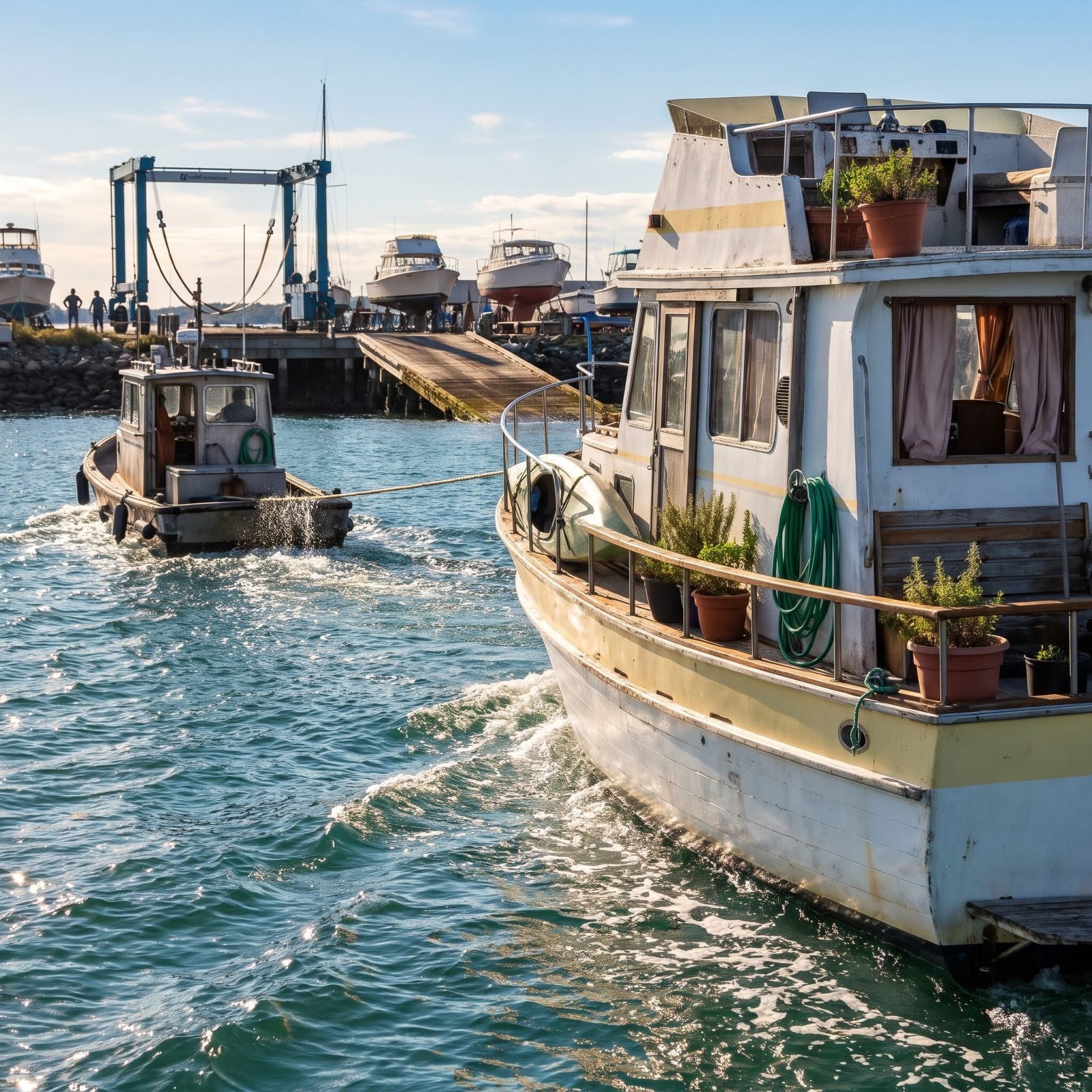
A house on land with a cracked foundation stays put while crews tear it apart around you. A houseboat with a problem below the waterline can sometimes go to the shop.
Depending on size and design, a houseboat can be towed by a marine towing service or run under its own power to a boatyard, where a travel lift or marine railway hauls it out of the water. Hull repairs, pontoon work, bottom paint and anything else that needs dry access get done in one place by people who do it every day. When the work is finished, the whole home goes back in the water and returns to its slip.
Not every floating home can make the trip, and very large ones may need repairs done in place. But for many, sending your house in for service is just another errand on the calendar.
Answering common buyer questions, a houseboat real estate agent notes “You’ll regularly see houseboats being towed around the lake because they are encouraged to take a trip to the boatyard every few years for hull inspections.”