
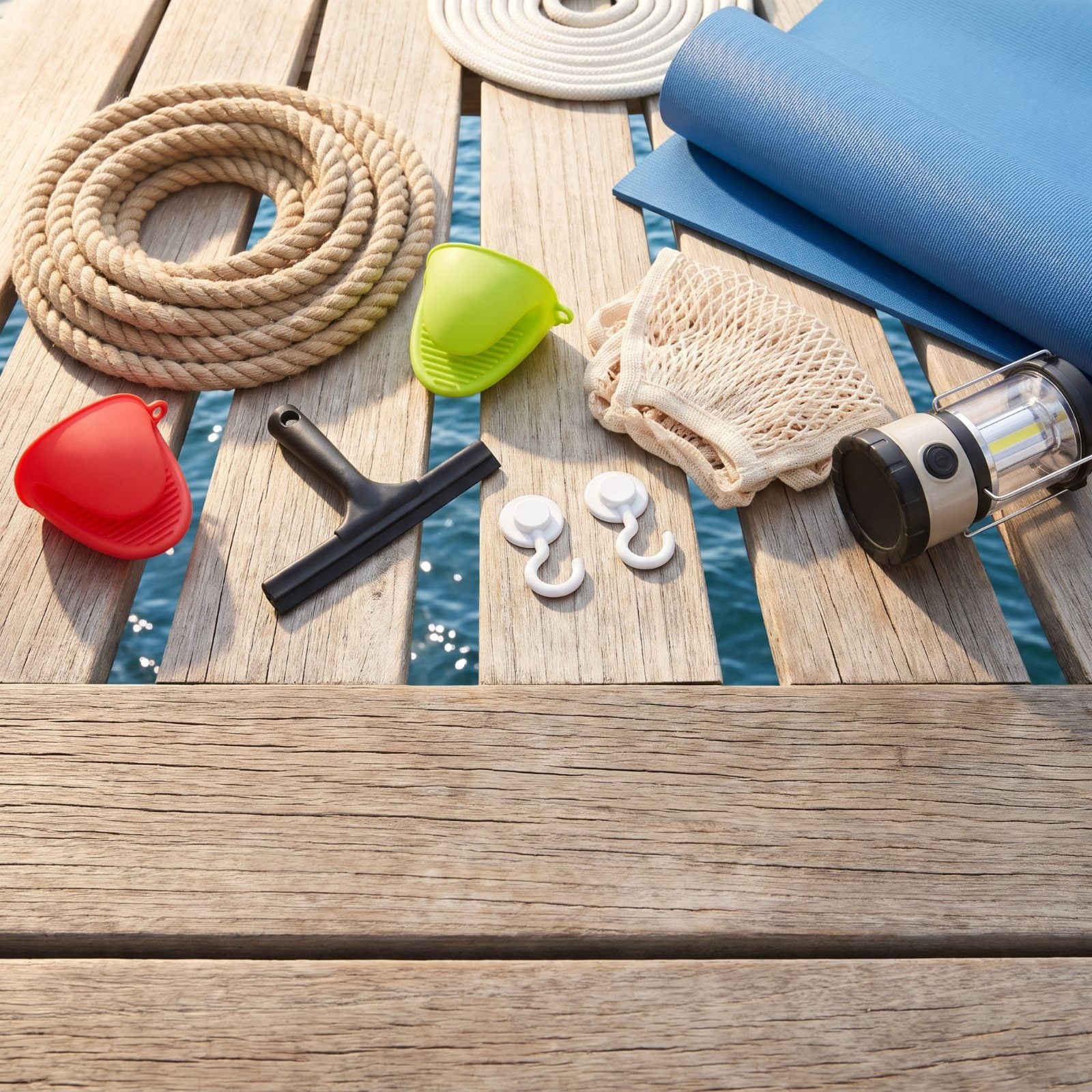
The best gear aboard almost never comes from a marine catalog. It comes from a hardware aisle, a kitchen drawer, or the back of a garage where it spent years doing some unrelated job. A boat punishes anything loose, anything that rolls, anything that assumes a flat surface will stay flat. So the stuff that survives tends to be clever more than expensive. We pulled together the small fixes that earn their keep on a modest cabin cruiser or a dock slip — the ones you spot on well-run boats and wonder why you waited so long.
Please note that some of the imagery in this article may have been enhanced with the assistance of AI.
36. A Hammock for Produce That Hates Counters
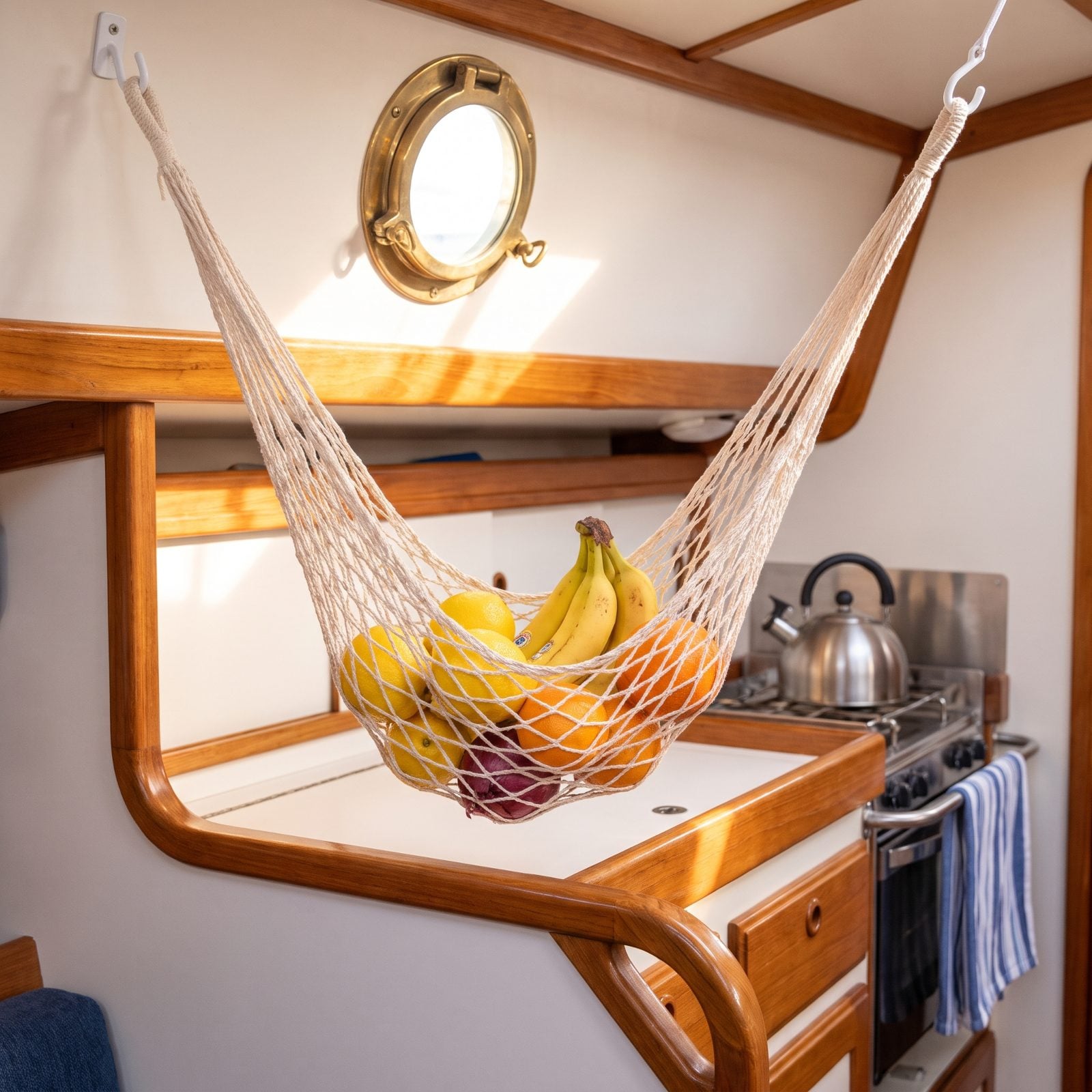
Fruit and onions roll off every flat surface the second you cast off. A mesh hammock solves it by hanging produce where the motion can’t send it flying, and air moves around everything, so your bananas don’t turn to mush against the hull by day two.
We ran a bowl of lemons for one season before we learned our lesson. They found the floor every single time we hit a wake. The hammock cost under ten dollars and we’ve never chased a lemon across the cabin sole since.
35. A Pool Noodle Wrapped Around the Dock Ladder
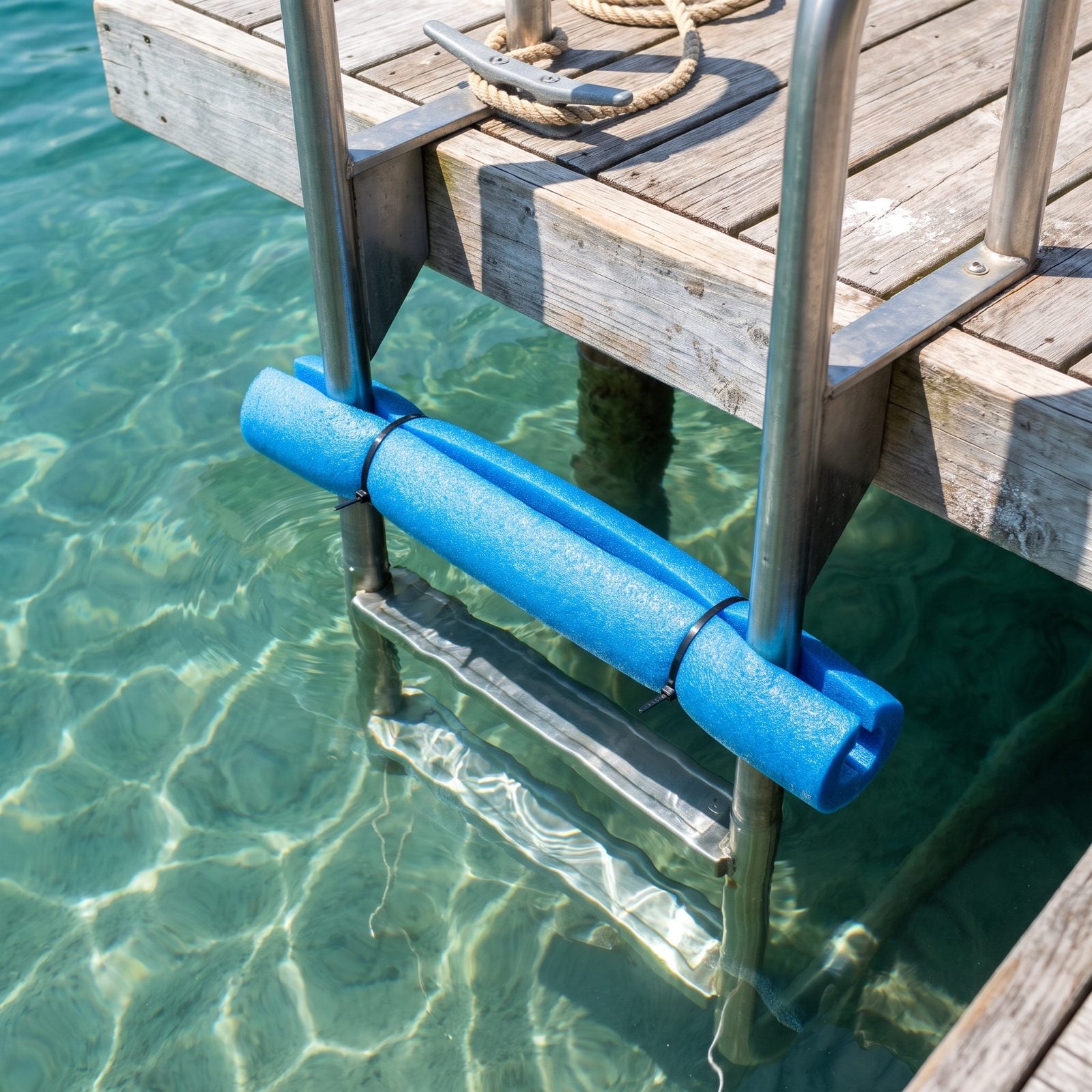
Climb a bare metal dock ladder with wet feet and bare shins and you’ll understand this one fast. Those rungs bruise, and the cold steel in April is a shock nobody needs.
Lay a pool noodle horizontally across the front of the two rails, just above the top step, and zip-tie it to each rail. The steps stay bare metal, but now there’s a soft bumper where your shins and knees would otherwise knock on the way up. A couple of bucks, and it lasts a summer or two before the foam gives up. Replacing it is a five-minute job.
34. Magnetic Hooks That Turn Walls Into Storage
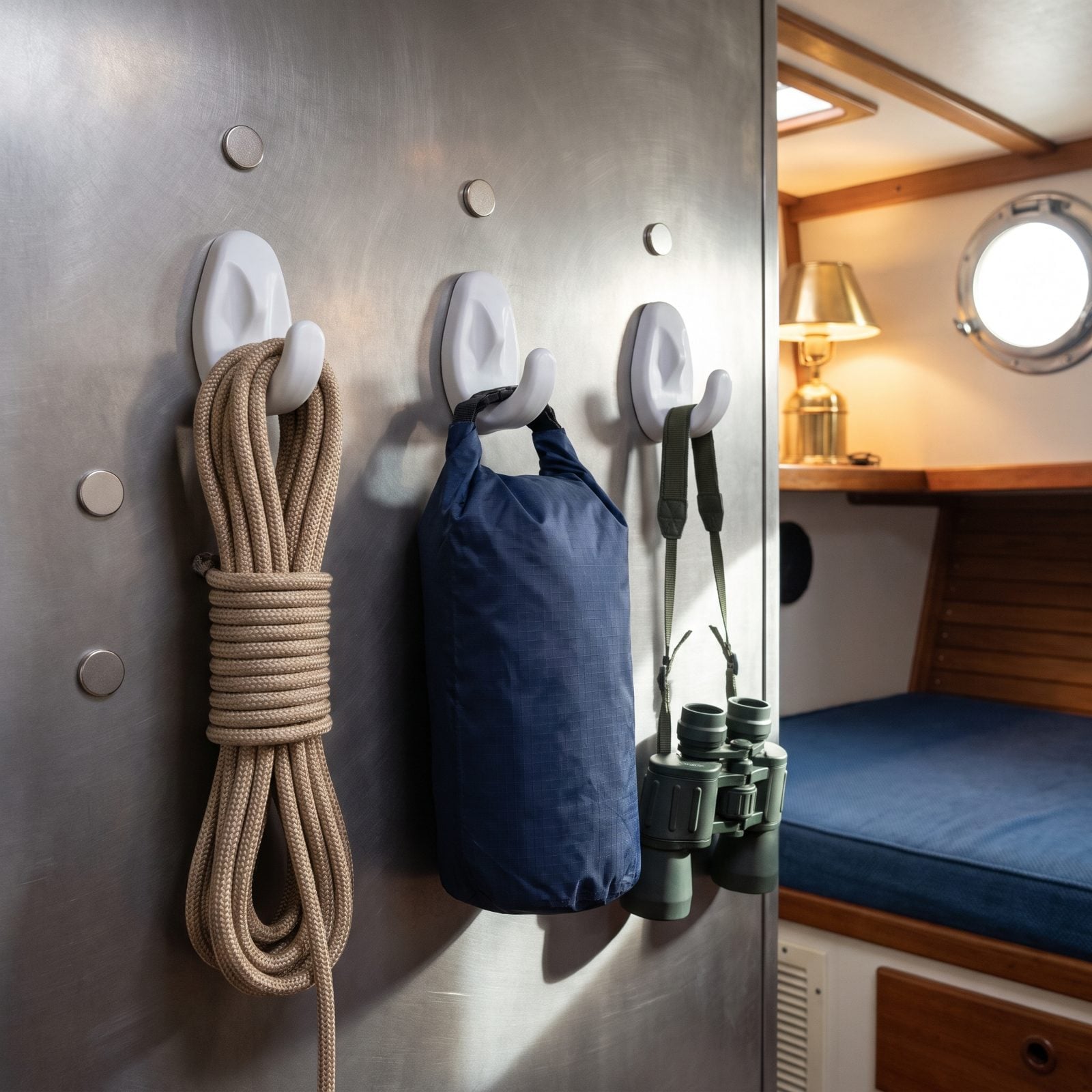
A bare cabin wall is wasted storage until you mount a steel sheet and add magnets. Fix the panel by the window seat and the whole thing becomes a hanging spot for a coil of rope, a dry bag, binoculars, keys, a headlamp, the handheld radio that otherwise vanishes into a cushion.
Get the rated-strength ones, not the craft-store weaklings. A hook rated for a good chunk of weight holds a wet rain jacket without creeping down the wall all afternoon. And because nothing’s screwed in, you can rearrange the whole setup in about a minute when the layout annoys you.
33. A Painter’s Bucket With a Padded Seat Lid
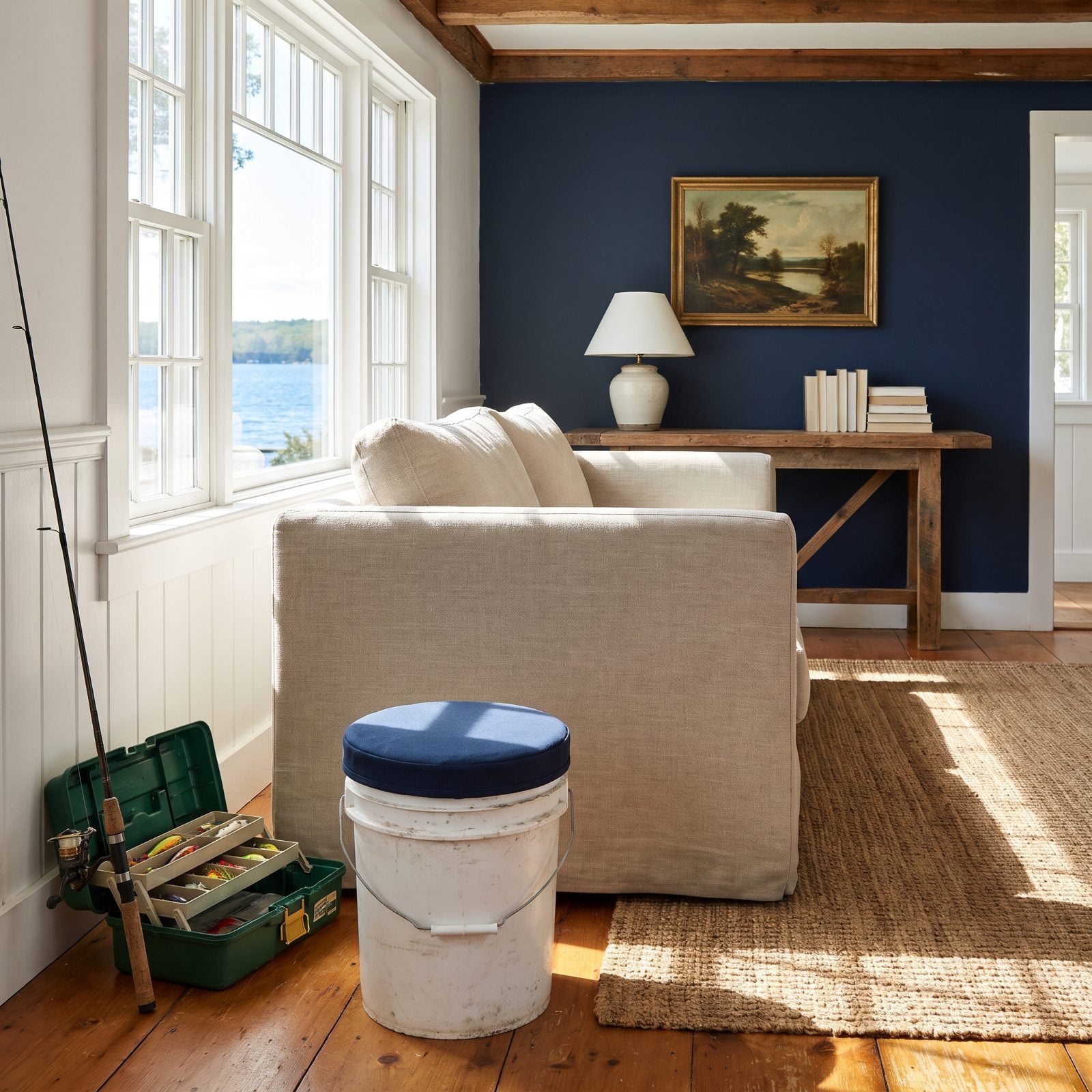
Seating is always short on a small boat, and so is storage. A five-gallon bucket with a padded swivel-seat lid does both jobs at once. Inside goes your gear, lines, a spare anchor rode, whatever. On top goes you.
Fishermen have known this trick forever. The seat lids run cheap and snap onto any standard bucket. On a crowded cockpit it’s the extra perch nobody has to fight over, and when you stand up it’s a dry box again.
32. Silicone Drink Holders That Grip Any Rail
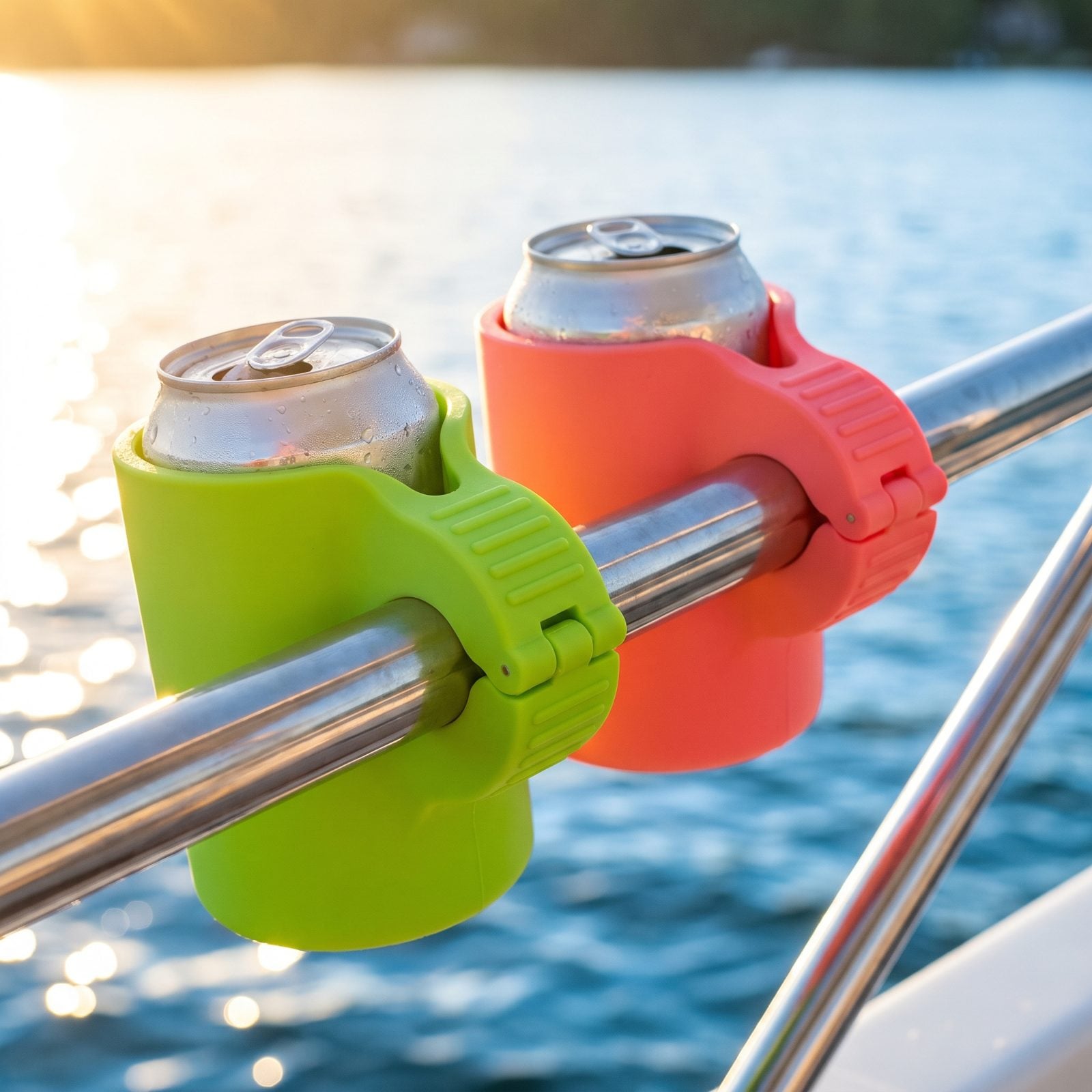
A drink set on any flat boat surface is a drink about to go over. Silicone clamp holders grab onto a rail, a stanchion, a bimini frame, almost any round tube, and hold your can at a tilt the wakes can’t beat.
They cost a few dollars for a pair and weigh nothing. We keep a handful in a drawer and clip them wherever people end up sitting. Cheaper and far more forgiving than a drilled-in cupholder you can never move once it’s mounted.
31. A Cafeteria Tray for Carrying Meals Aboard
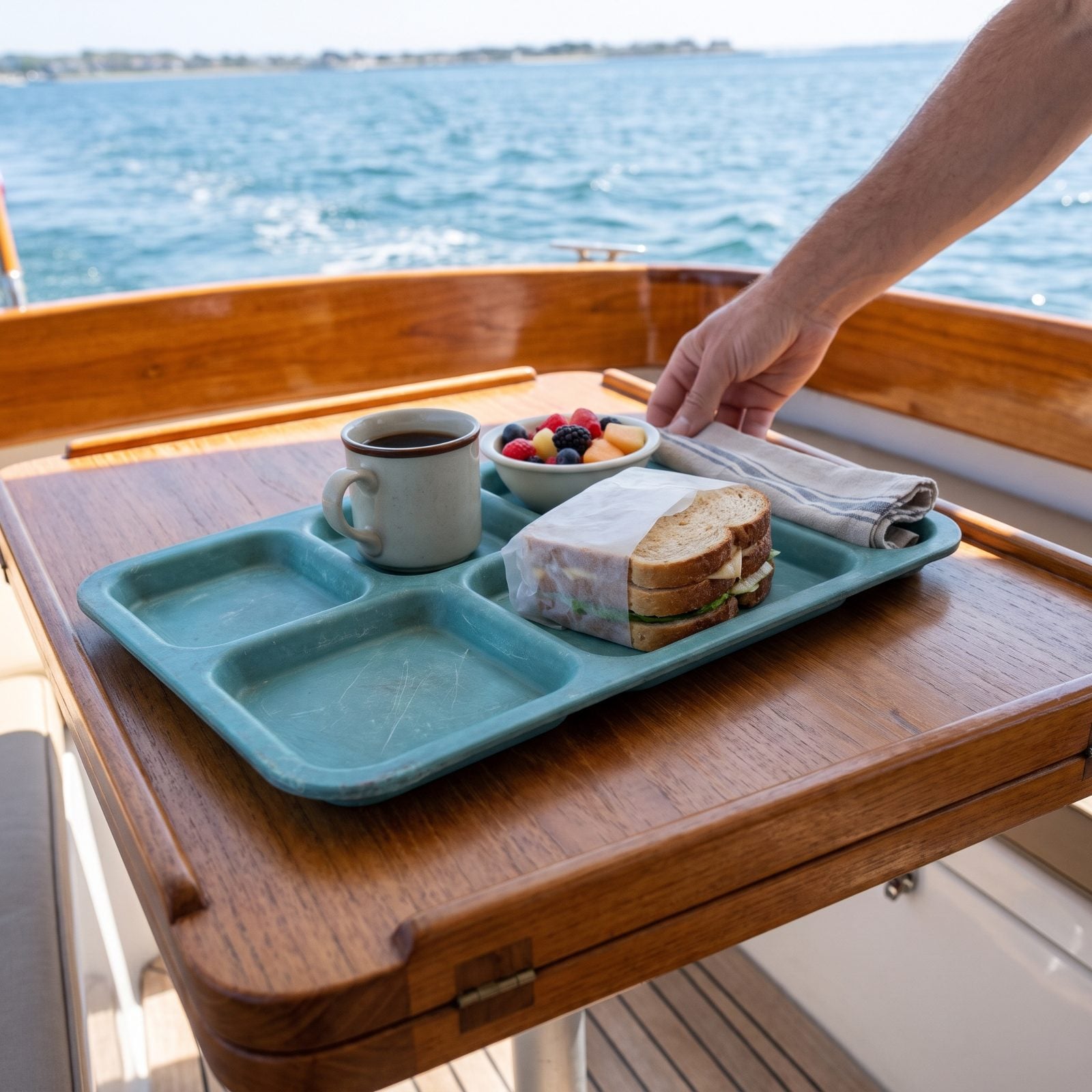
The walk from galley to cockpit with two plates and a drink is where lunch usually ends up on the sole. A cafeteria tray fixes it. The raised lip holds everything in place while the deck moves under you, and you carry it all in one trip.
Go for the old-school compartmented kind — the sections stop a roll from mixing your food into one sad pile. A few bucks at a restaurant-supply store, and it doubles as a steady surface for cutting up fruit when the counter’s pitching.
30. A Fishing Net Used to Retrieve Dropped Gear
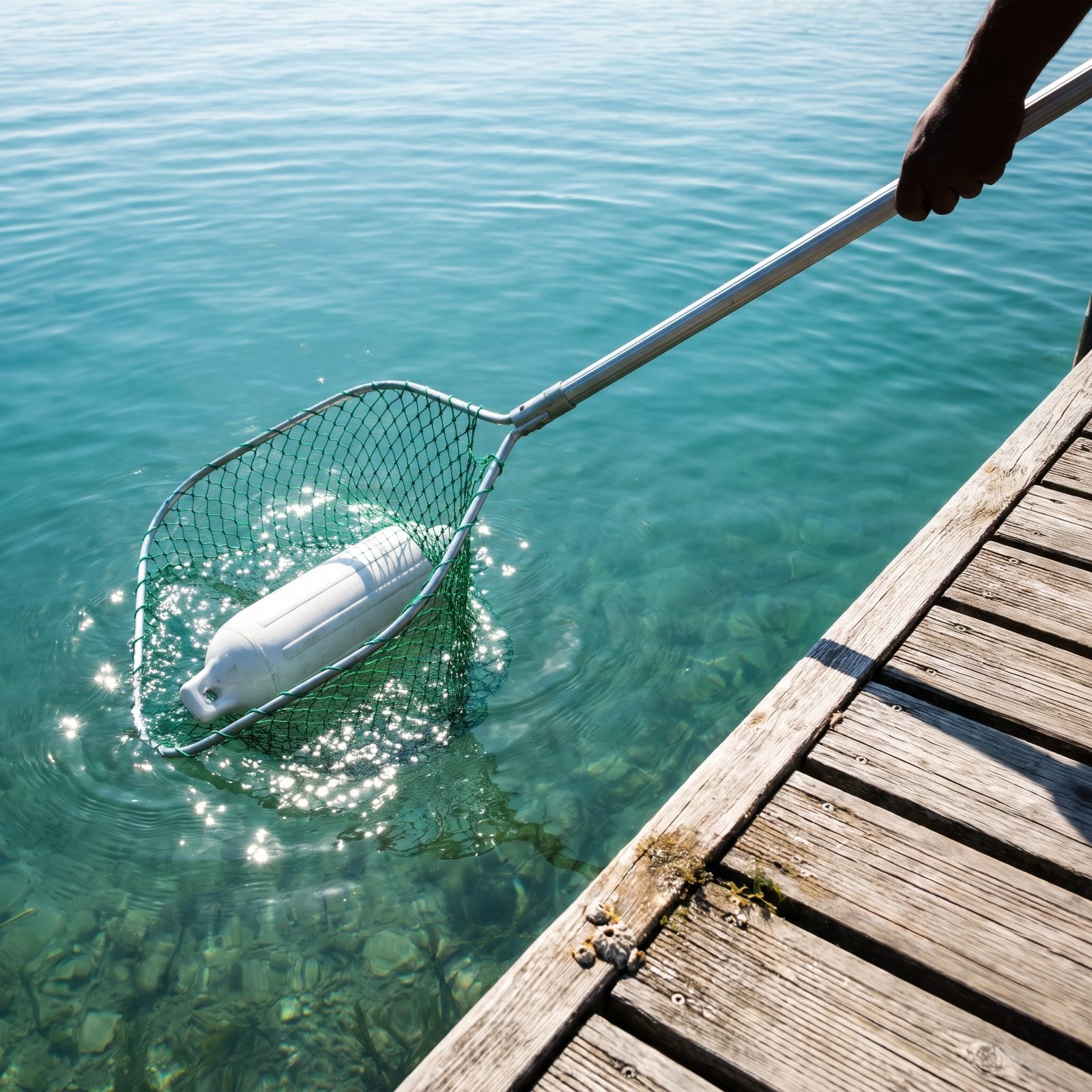
Sooner or later something goes over the side. A hat, a fender, a flip-flop, a winch handle if you’re unlucky enough that it floats. A fishing landing net reaches out and scoops it back before it drifts away or sinks.
The long handle keeps you from leaning out over the rail, which is the real win here. Nobody should be hanging off the gunwale grabbing at a floating sandal. Keep the net clipped somewhere handy on deck, not buried in a locker where it does nothing.
29. A Rubber Squeegee Small Enough for a Cupholder
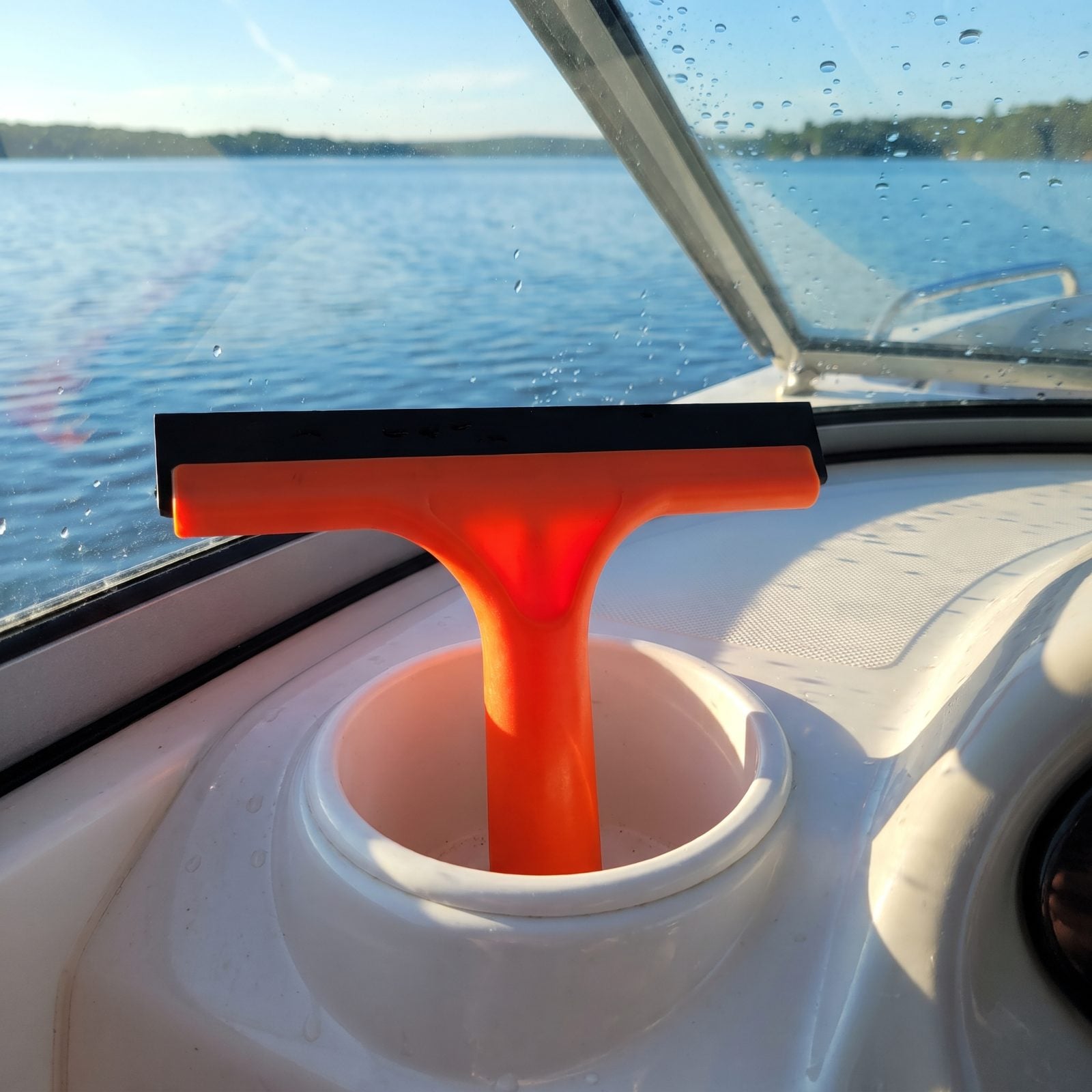
Morning dew and spray fog up a windshield fast, and a towel just smears it. A pocket-size rubber squeegee clears the glass in two passes so you can actually see where you’re pointed.
Get one short enough to live in a cupholder near the helm. If it has its own home you’ll grab it without thinking. It’s also the fastest way to clear water off the cockpit seats before anyone sits down in it.
28. A Yoga Mat Cut Into Nonslip Drawer Liners
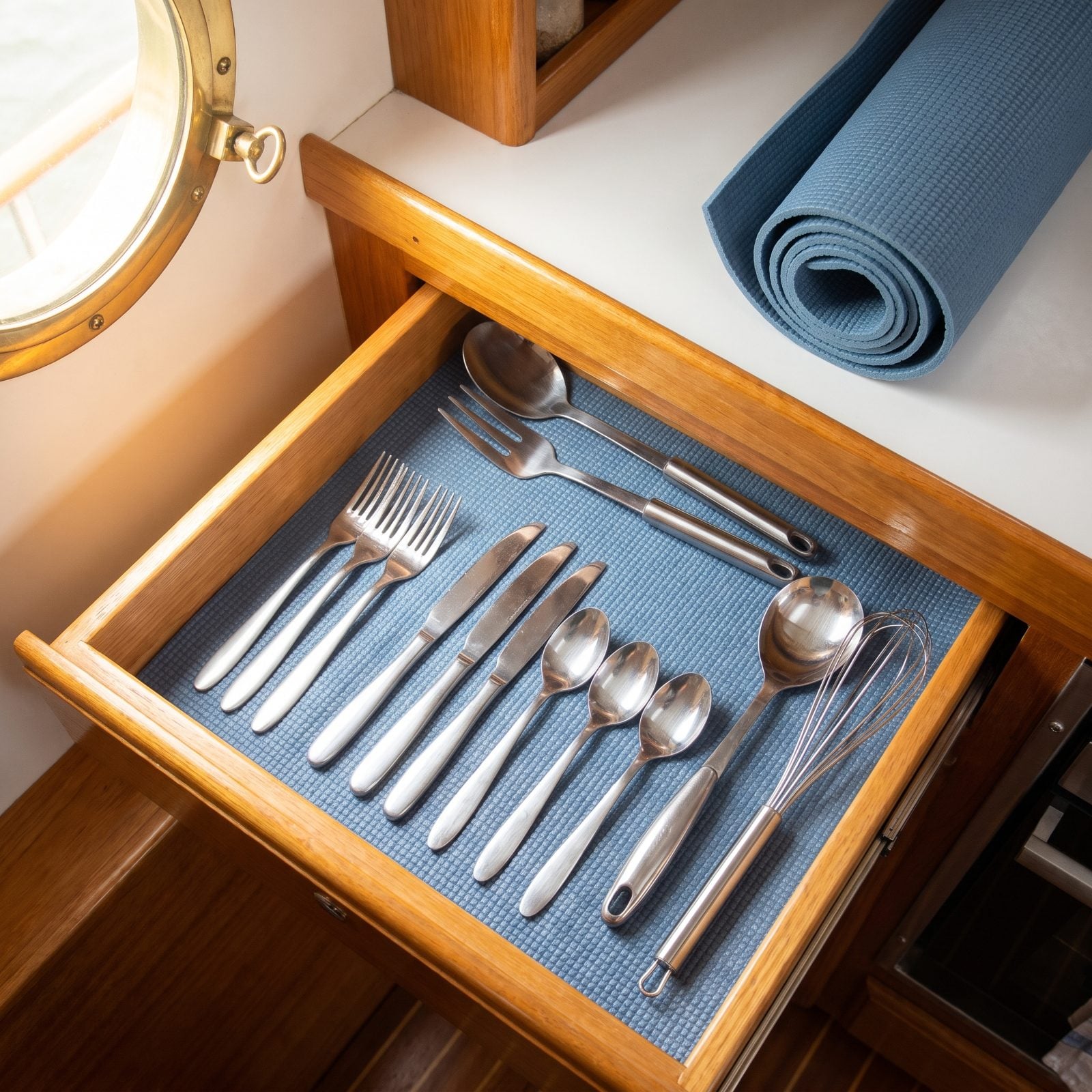
An old yoga mat is the best drawer liner nobody sells as a drawer liner. Cut it to fit and that grippy foam stops your cutlery, mugs and tins from sliding into a clattering heap every time the boat heels.
It’s thicker and quieter than the thin shelf liner from the store, and it cushions glassware against the hull pounding. One beat-up mat lines every drawer and locker on a small boat with plenty left over for the helm seat. Free, if you were going to toss the mat anyway — which, let’s face it, most of us should.
27. A Waterproof Basket Just for Wet Shoes
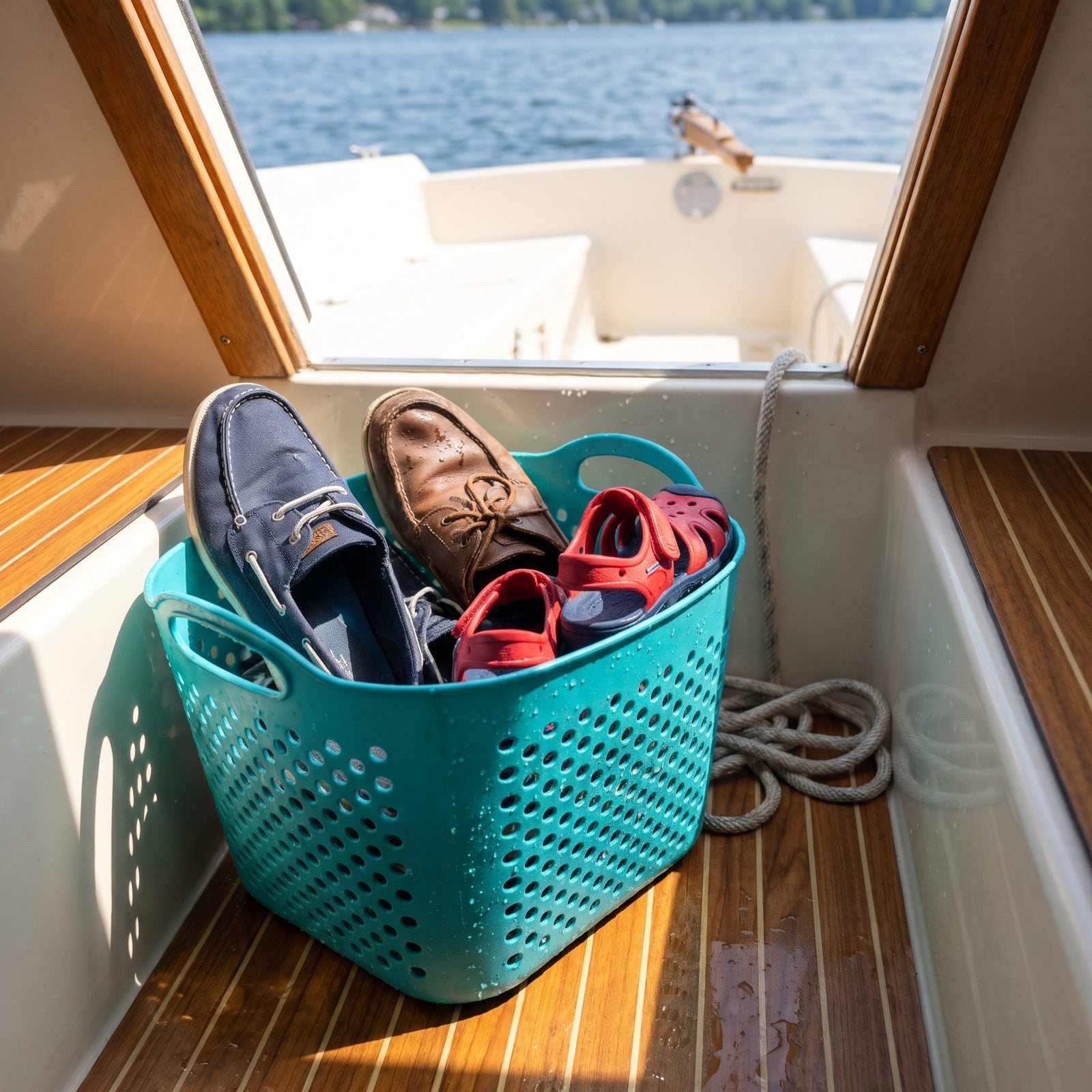
Wet shoes are the quiet saboteurs of a clean boat. They get kicked off at the hatch and left in a puddle, and by afternoon the whole cabin smells like a locker room that gave up.
A cheap perforated rubber basket solves it. The holes let water drip out and air circulate, so shoes dry instead of stewing in their own swamp. Keep it right at the companionway where everyone naturally sheds their deck shoes anyway. Ten bucks at any hardware store, and it ends the eternal argument about who tracked the lake down the steps.
26. A Clip-On Fan Pointed Into the Berth
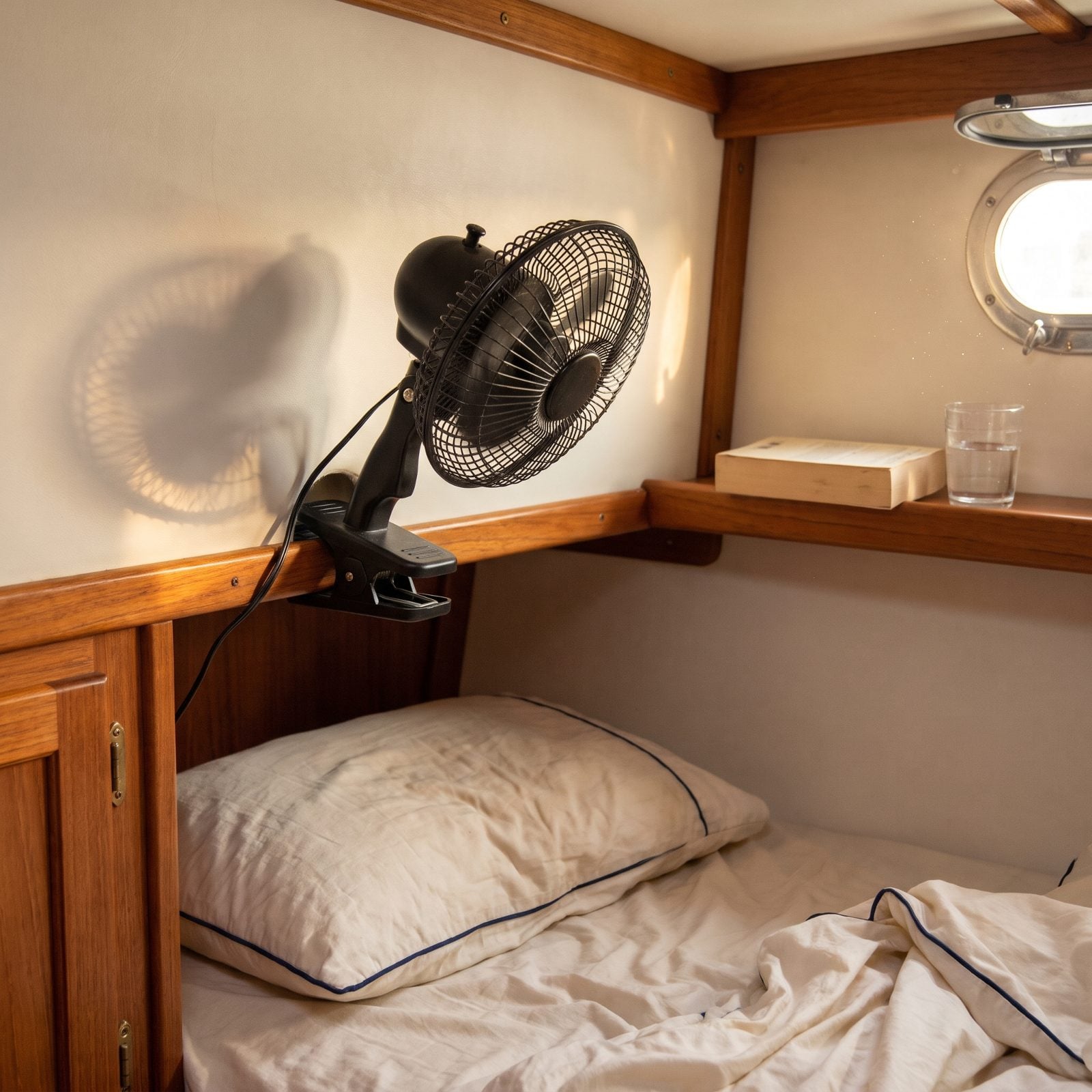
The first night aboard in July teaches everyone the same lesson. The cabin holds the day’s heat like a thermos, and still air at 2 a.m. is its own particular misery.
A clip-on fan, the kind sold for gym lockers and office desks, clamps onto a grab rail and points straight into the berth. Air movement is the whole game here. It doesn’t have to cool the cabin, it just has to slide across your skin. Battery or USB models run all night on a power bank without touching your house batteries.
We resisted this for years out of some misguided purist streak. Then we slept through a muggy night for the first time all season and felt foolish for waiting.
25. A Shower Caddy for Sunscreen and Bug Spray
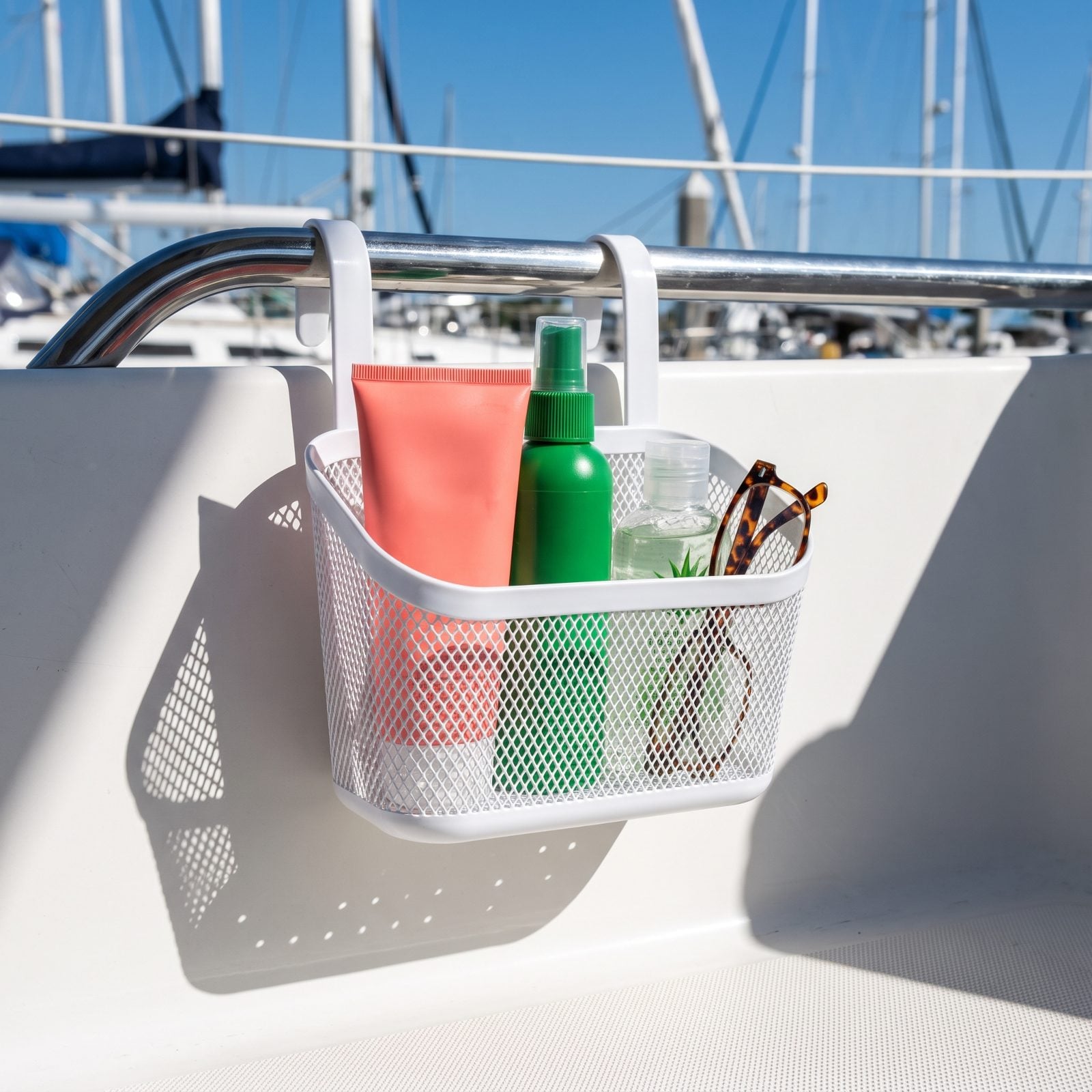
The sunscreen is never where you need it. It migrates. One day it’s under the helm seat, the next it’s rolled into the bilge with the bug spray, and by the time you dig it out your shoulders are already pink.
A hanging mesh shower caddy, the dorm-room kind, bolts that problem shut. Hang it in the cockpit or by the companionway and every repellent, sunscreen, and aloe lives in one draining basket. The mesh means no water pooling, no mildew, no mystery sludge in the bottom.
24. A Floating Keychain That Actually Supports the Keys
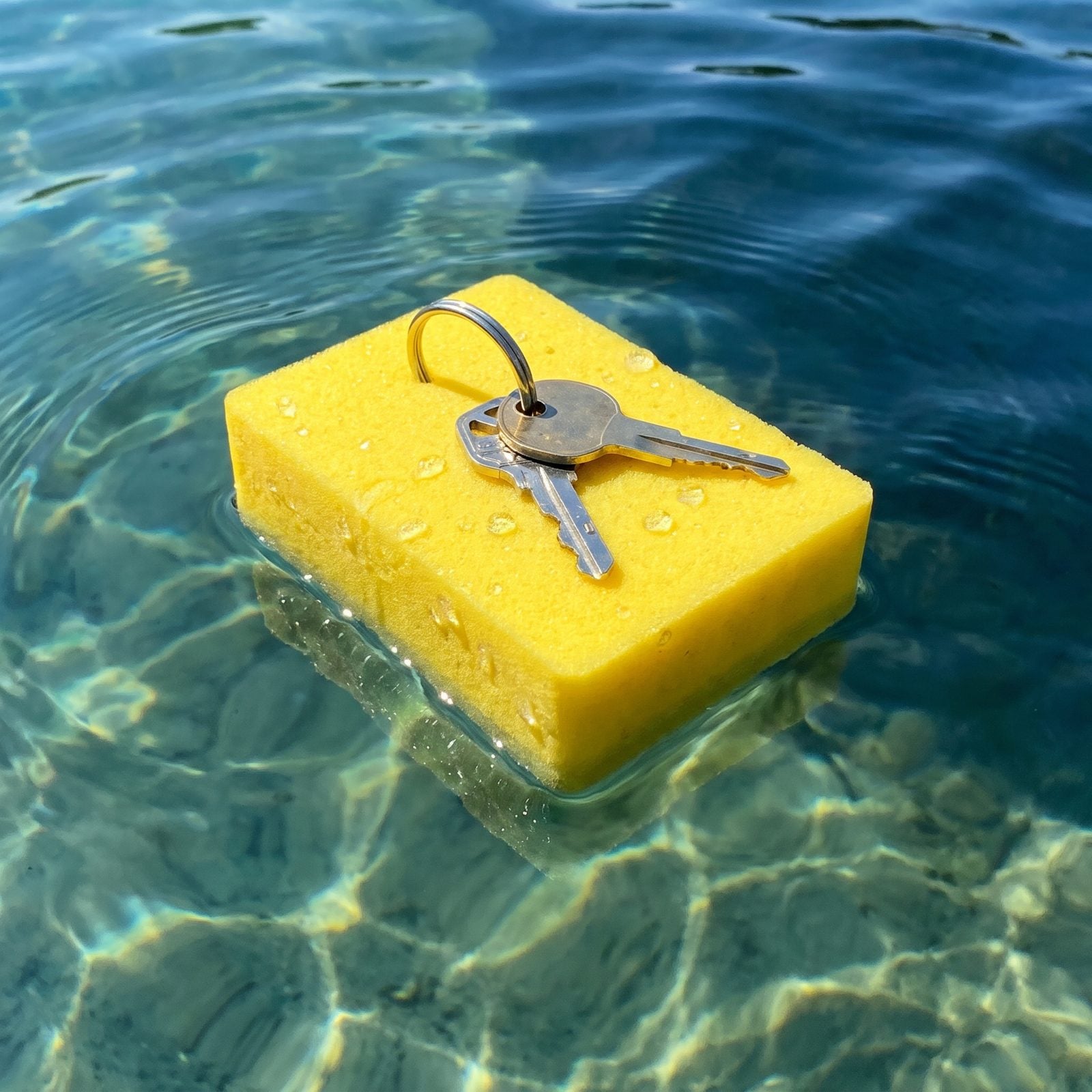
Not all floating keychains float. That sounds like a joke until you’ve watched a fully loaded key ring drag a skinny foam fob straight to the bottom.
The physics matter. A keychain needs enough buoyancy to hold the actual weight of your keys at the surface, not just itself. Go for the fat foam ones rated for a real key ring. Skip the sleek little versions that look good and sink fast.
Ask me how I know. Somewhere on the bottom of a very clear lake is a set of keys and the cheap fob that promised to save them.
23. A Garden-Kneeling Pad for Low Lockers
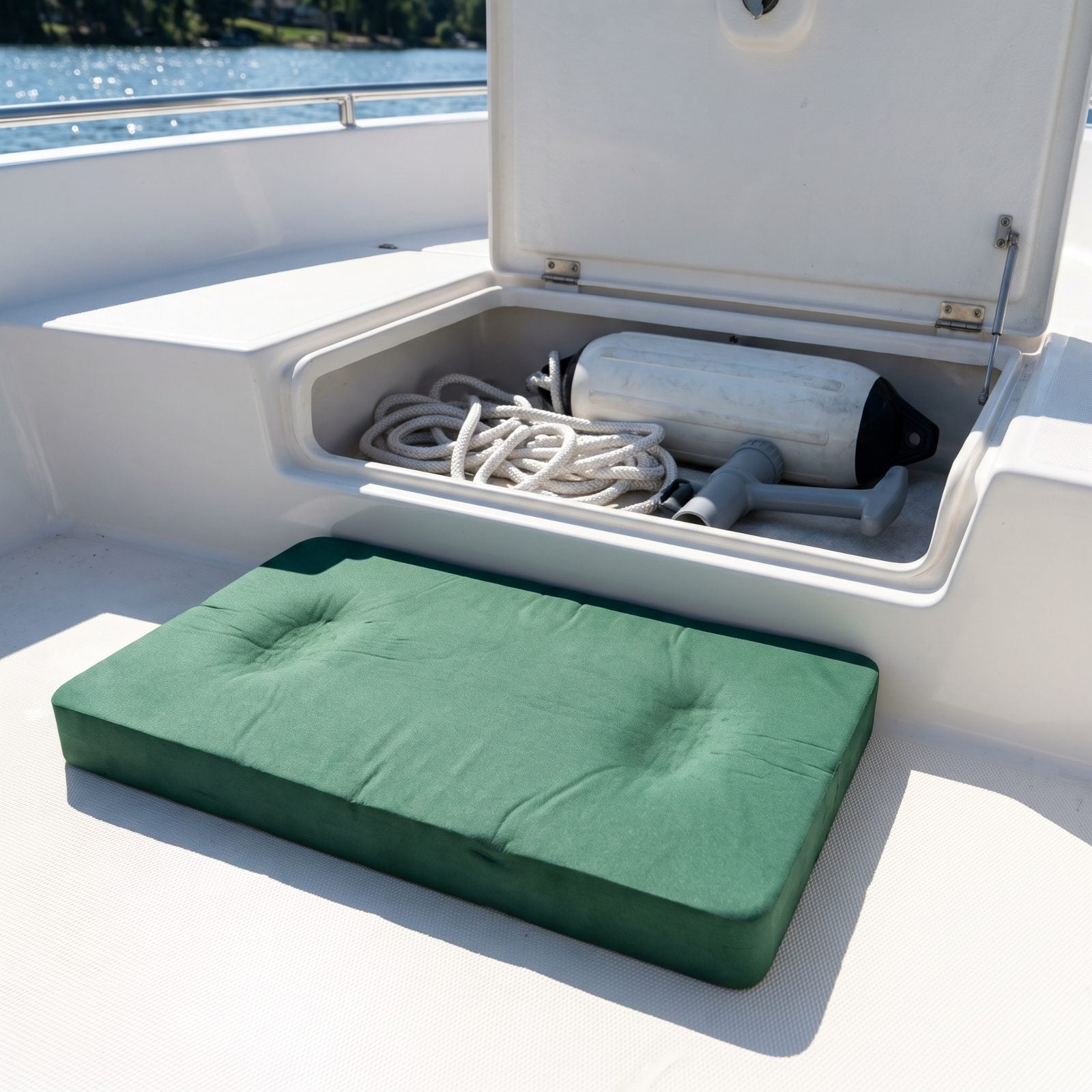
Every boat has that one locker that lives at knee height, and every job inside it starts with you kneeling on hard fiberglass or a gritty nonskid deck.
A foam garden-kneeling pad, three dollars at the garden center, lives in the lazarette and comes out for every one of those jobs: checking the bilge, untangling lines, fishing for a dropped tool. Your knees at fifty-plus are not the knees that happily knelt on a dock at twenty, and pretending otherwise is just stubbornness with a bruise at the end of it.
22. A Collapsible Wagon Waiting at the Marina
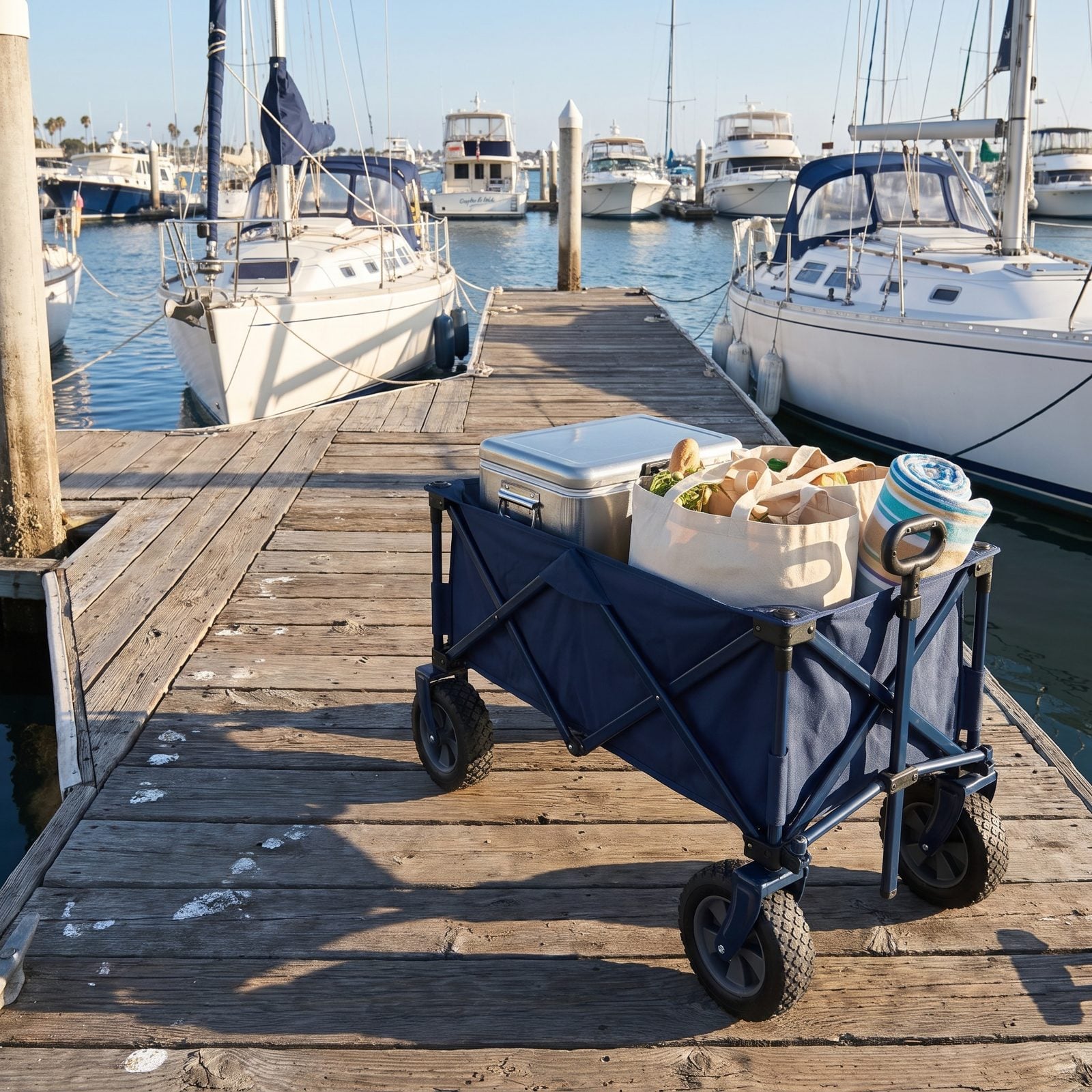
The walk from the parking lot to the slip is the part nobody budgets for. It’s a quarter mile of dock, your arms are full of groceries and a cooler, and the ice is melting with every step.
A collapsible garden wagon folds flat in the trunk and carries a whole weekend’s provisions in one trip. The fat-wheeled ones roll over dock gaps and gravel without fighting you.
The number of trips you make up the dock is the single best predictor of whether you’ll actually go out next weekend.
Make loading easy and you go more often. Make it a hassle and the boat starts gathering dust. It really is that simple.
21. A Retractable Clothesline Hidden Under the Bimini
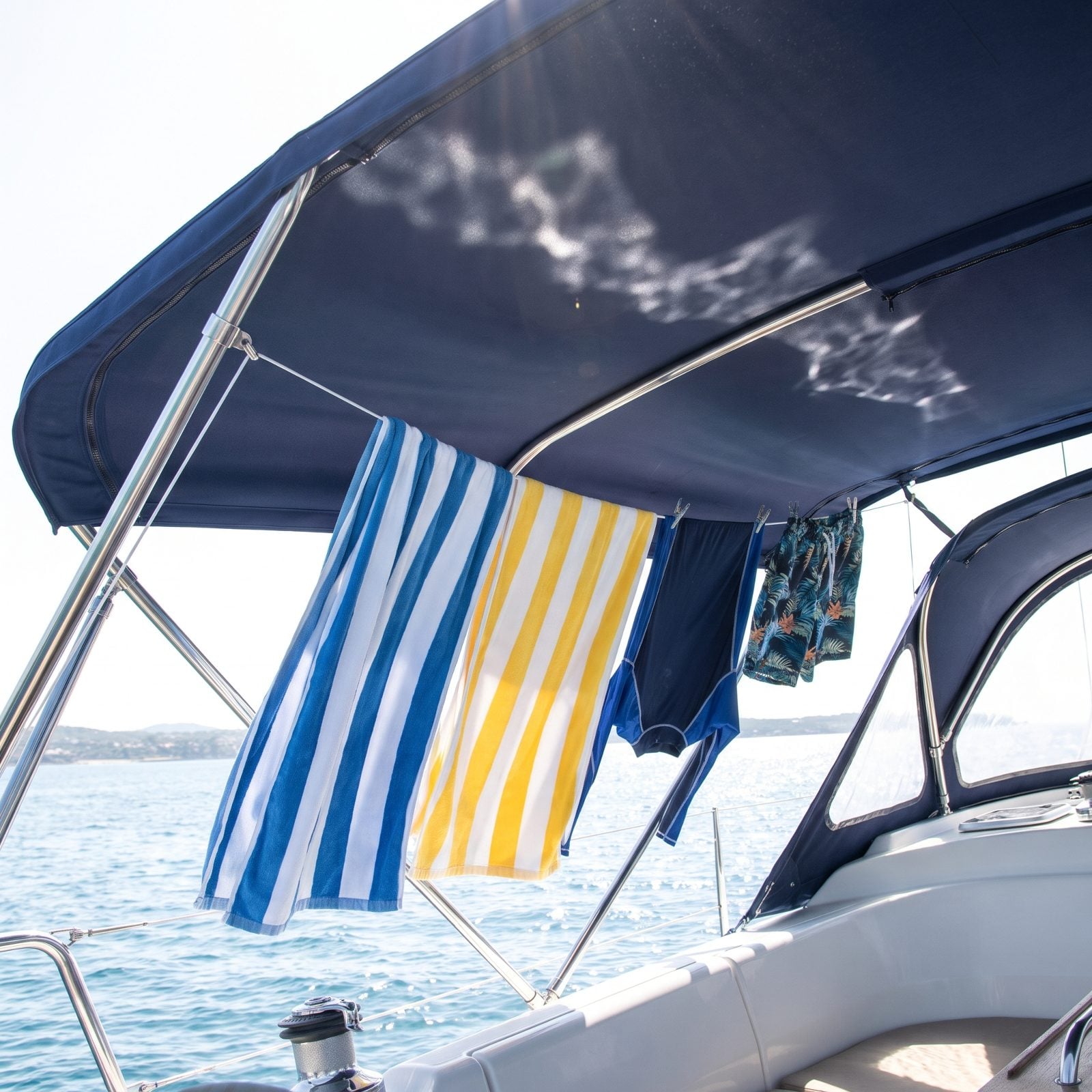
Wet towels draped over the lifelines look like a yard sale and never actually dry. They flap into the water, they catch spray, and they’re still damp at bedtime.
A retractable clothesline, the camping-van kind, mounts between two bimini frame tubes and pulls out only when you need it. Under the shade it keeps towels from baking stiff, and up out of the way it keeps the deck clear. Done for the day? It zips back into its little housing and disappears.
20. A Magnetic Parts Tray for Emergency Repairs
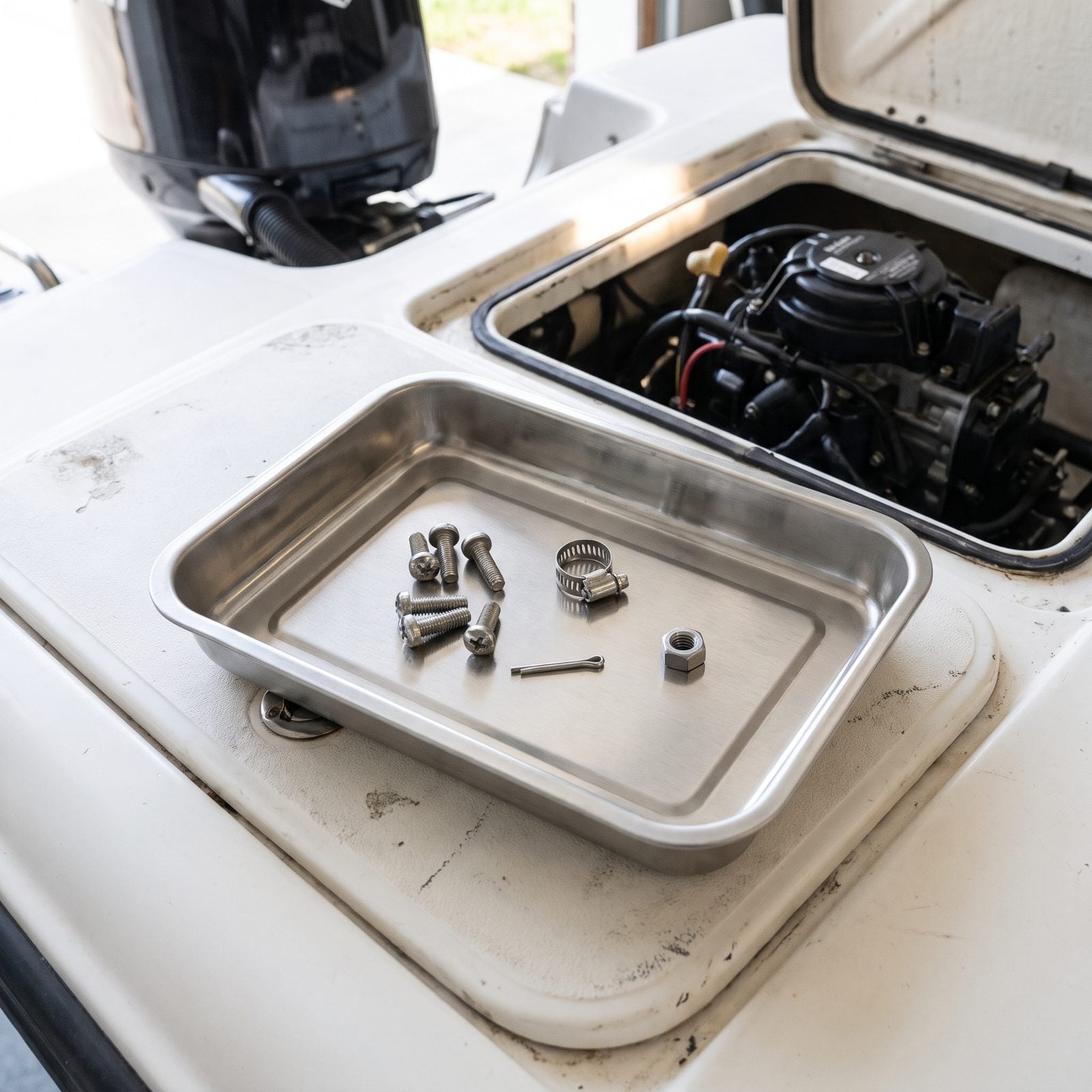
A dropped screw on a boat is gone. It finds a seam in the deck, it rolls into the bilge, it vanishes into the one gap you can’t reach. And the one you dropped is always the one you needed.
A magnetic parts tray, that auto-mechanic staple, holds every loose screw, nut, and clamp fast while you work, even when the boat rocks. Set it on the engine hatch and the whole scatter of hardware stays put. It’s the difference between a ten-minute fix and a thirty-minute floor search that ends in defeat.
19. A Frozen Water Bottle Used as an Ice Pack
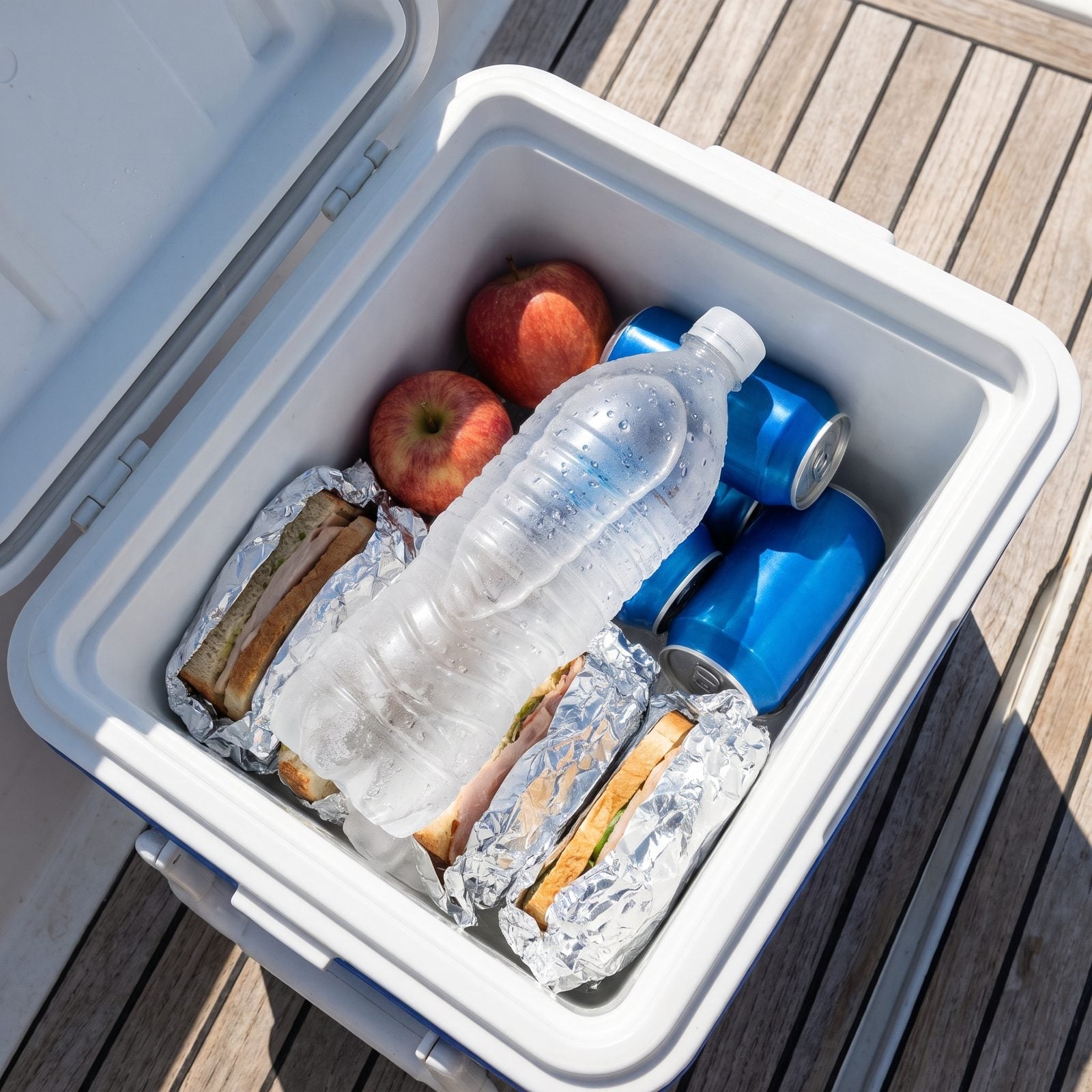
Bagged ice does two things: it keeps your food cold, then it melts into a lukewarm soup that floats your sandwiches and ruins the cardboard.
Freeze a few water bottles solid the night before and pack them in the cooler instead. They chill everything just as well, they don’t leave a flooded mess, and as the day heats up they thaw into cold drinking water. Two problems, one frozen bottle, zero soggy lunches.
It’s the kind of trick that sounds too obvious until you spend one trip fishing a drowned ham sandwich out of the meltwater. Then you never go back.
As one yacht charter operator puts it, “They add cooling mass throughout the cooler, then become drinking water as they thaw.”
18. A Rubber Doorstop That Keeps Hatches From Slamming
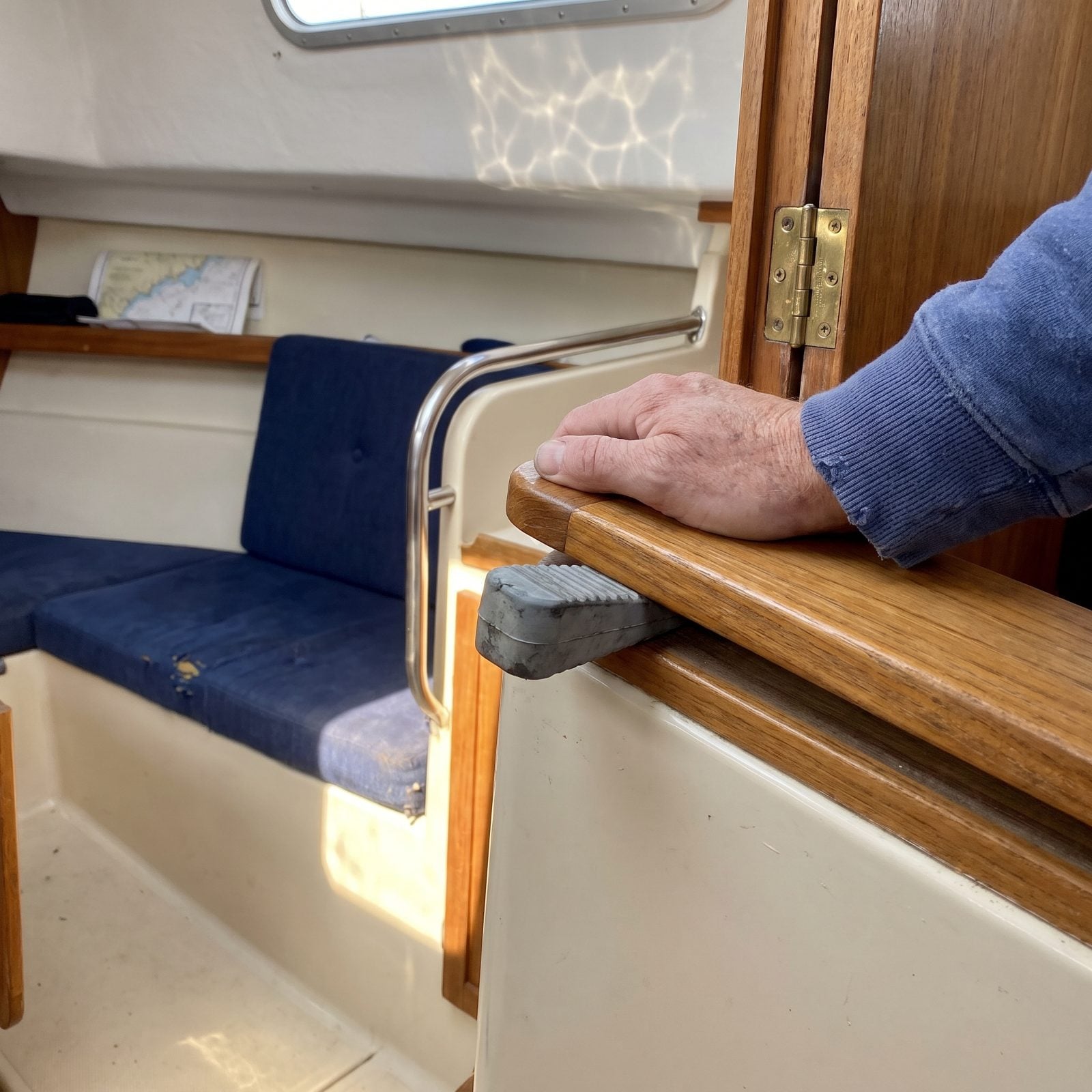
A hatch that slams in a gust sounds like a car door in a cathedral, and on a boat every noise doubles, traveling through the hull to wake everyone asleep in the forepeak.
A two-dollar rubber wedge fixes it. Jam it under the hatch board or between the companionway and the slide, and the thing stays put through a passing wake or a sudden breeze. No more lunging across the cabin to catch a falling board on your knuckles. I ruined a thumbnail that way once and never again.
17. A Carabiner on Every Frequently Used Tool
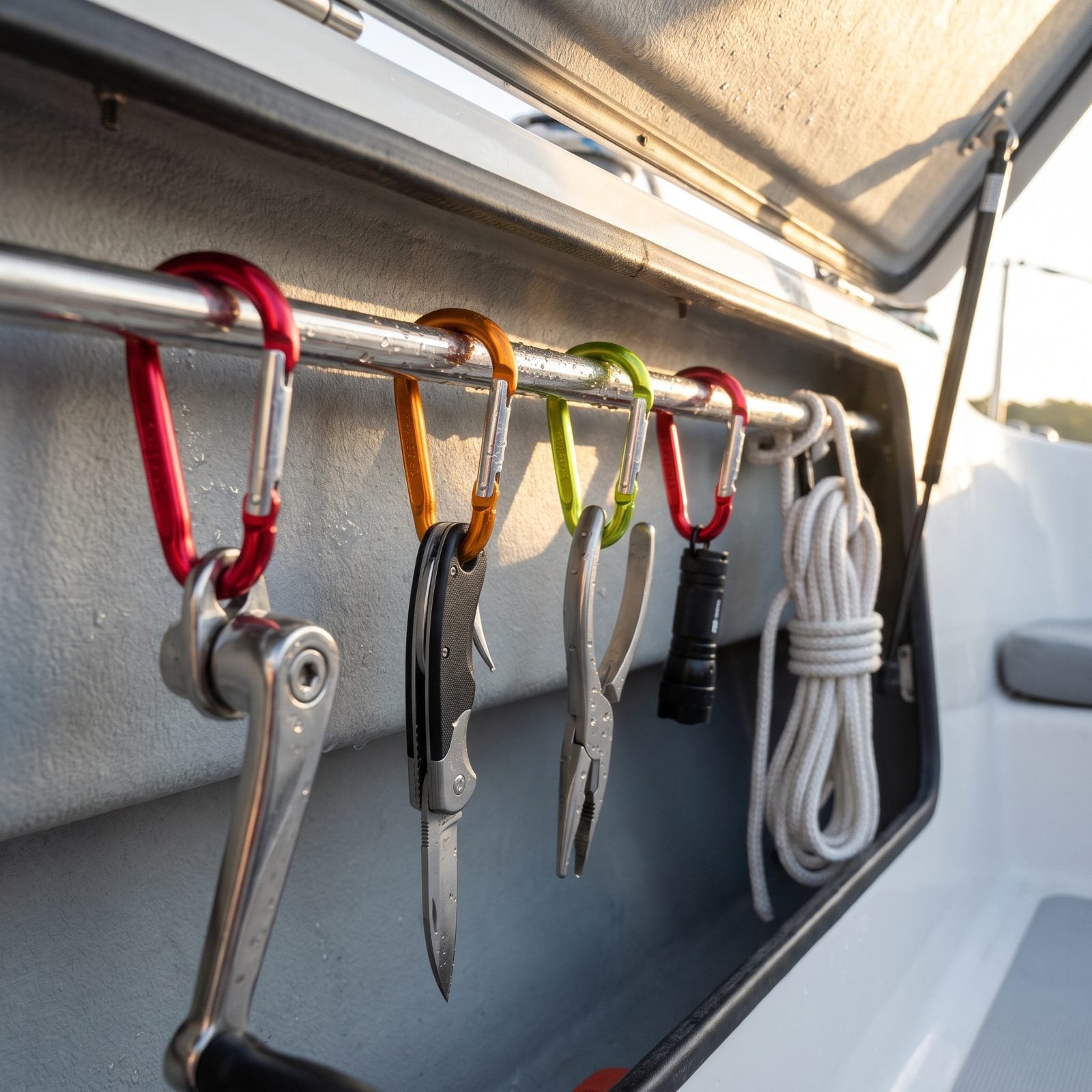
Anything not clipped down is already halfway to the bottom of the lake.
Put a carabiner on the tools you reach for most and two problems disappear at once. They hang where you can grab them without digging, and they stop sliding off a wet seat into the water the second the boat heels. A winch handle, a flashlight, a multi-tool, the boat key fob. Clip them.
16. A Spray Bottle Filled With Fresh Water
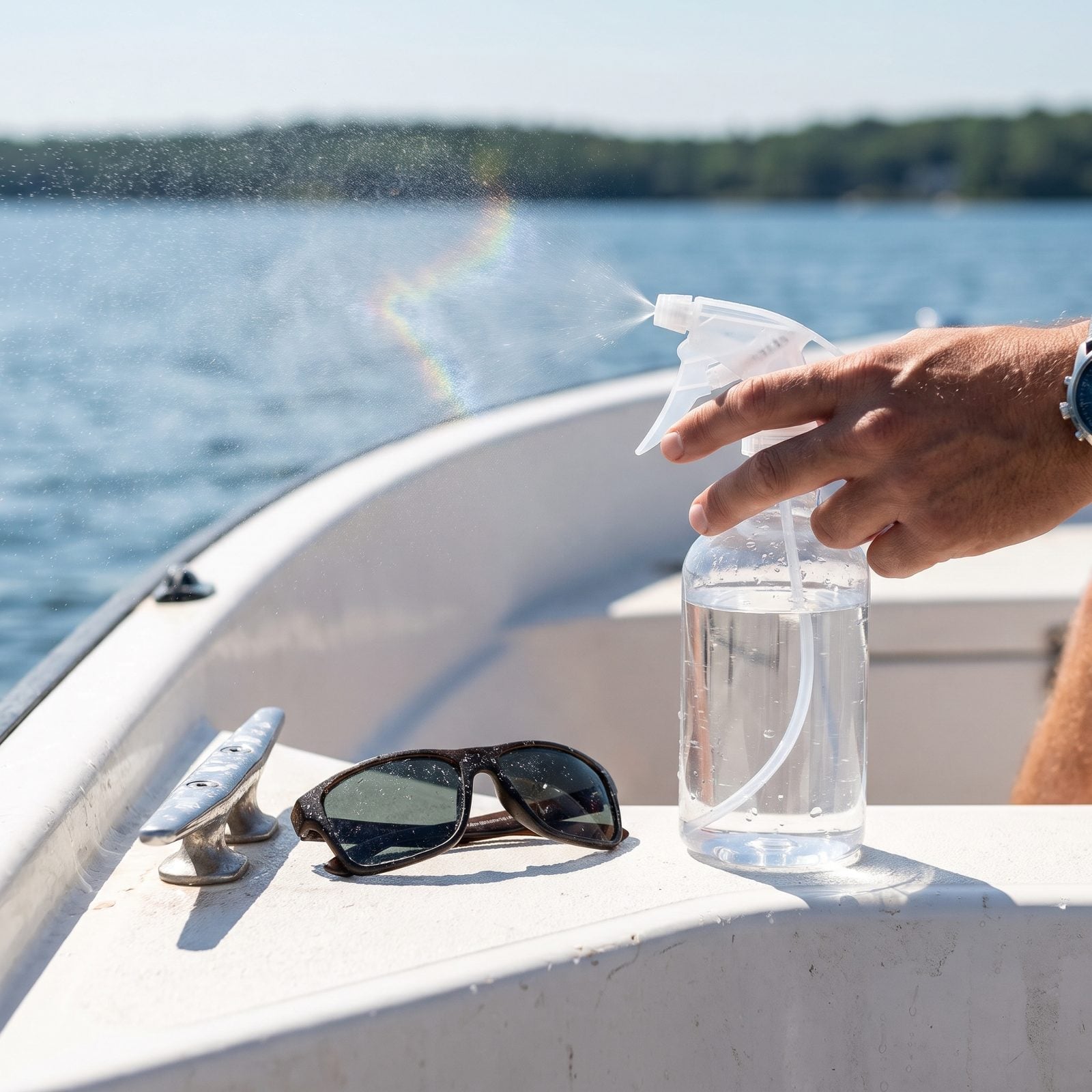
Salt spray dries on everything and turns it chalky — sunglasses, the chartplotter screen, your bare feet after a wet ride. A spray bottle of plain fresh water handles all of it before it bakes on.
A quick mist rinses salt off eyewear so you can actually see. It knocks sticky sunscreen off a vinyl seat. And it cools the back of your neck on a windless July afternoon when the lake feels like glass and nobody’s moving.
Keep it in the cup holder. Cheapest comfort aboard, and on a hot day the crew fights over it.
15. A Pool Skimmer for Floating Leaves Around the Boat
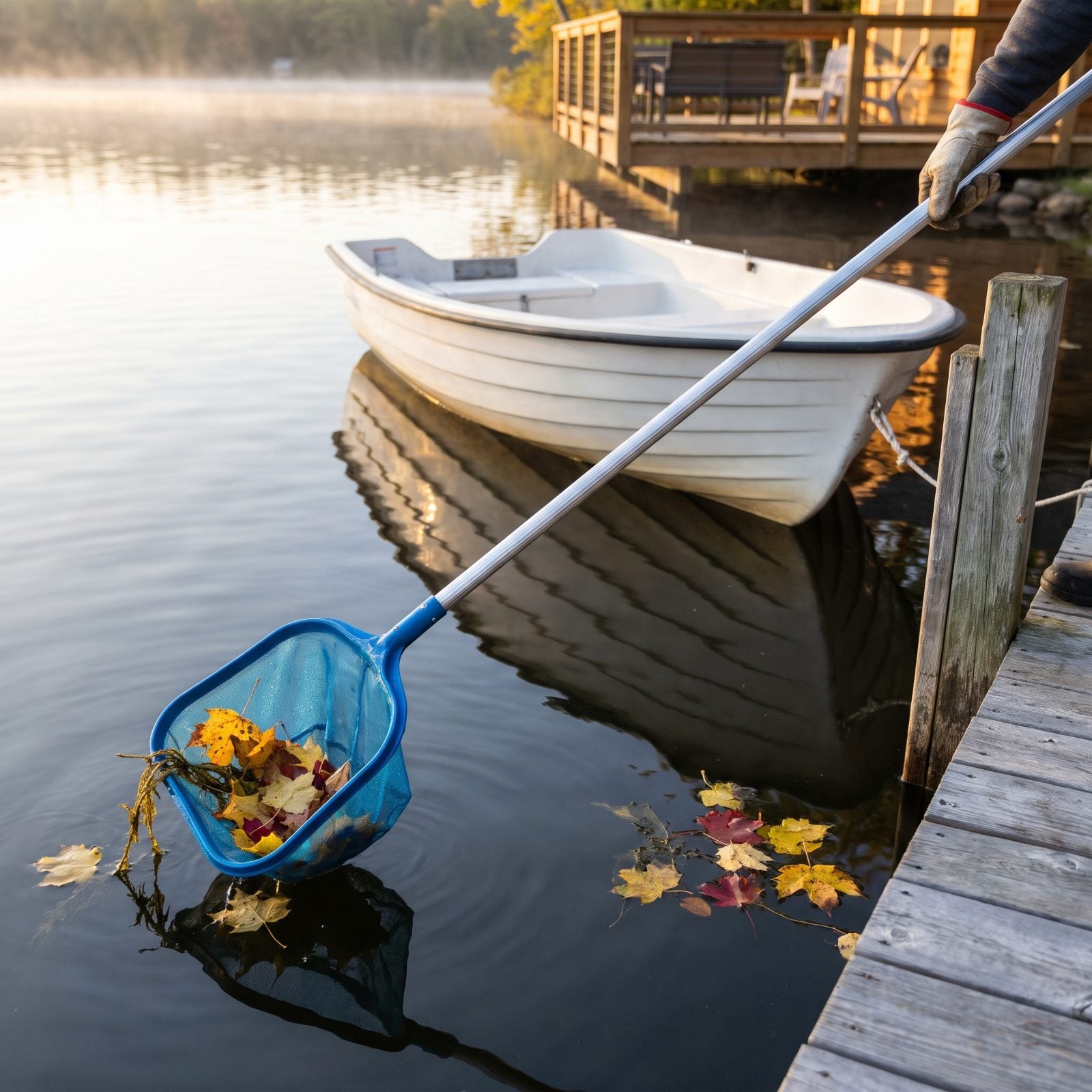
Leaves don’t look like a problem until they are. They pile against the hull in a slip, soak up water, and stain a white gel coat with tannin streaks that scrub out slowly if at all.
A basic long-handled pool skimmer, the kind for a backyard pool, clears the slip in two minutes. It also fishes out the sunglasses someone dropped, the floating dock line, the dead minnow the dog keeps staring at.
The telescoping handle is the detail that matters, because it reaches under a finger pier where the junk actually collects.
14. A Dishpan That Fits Exactly Inside the Sink
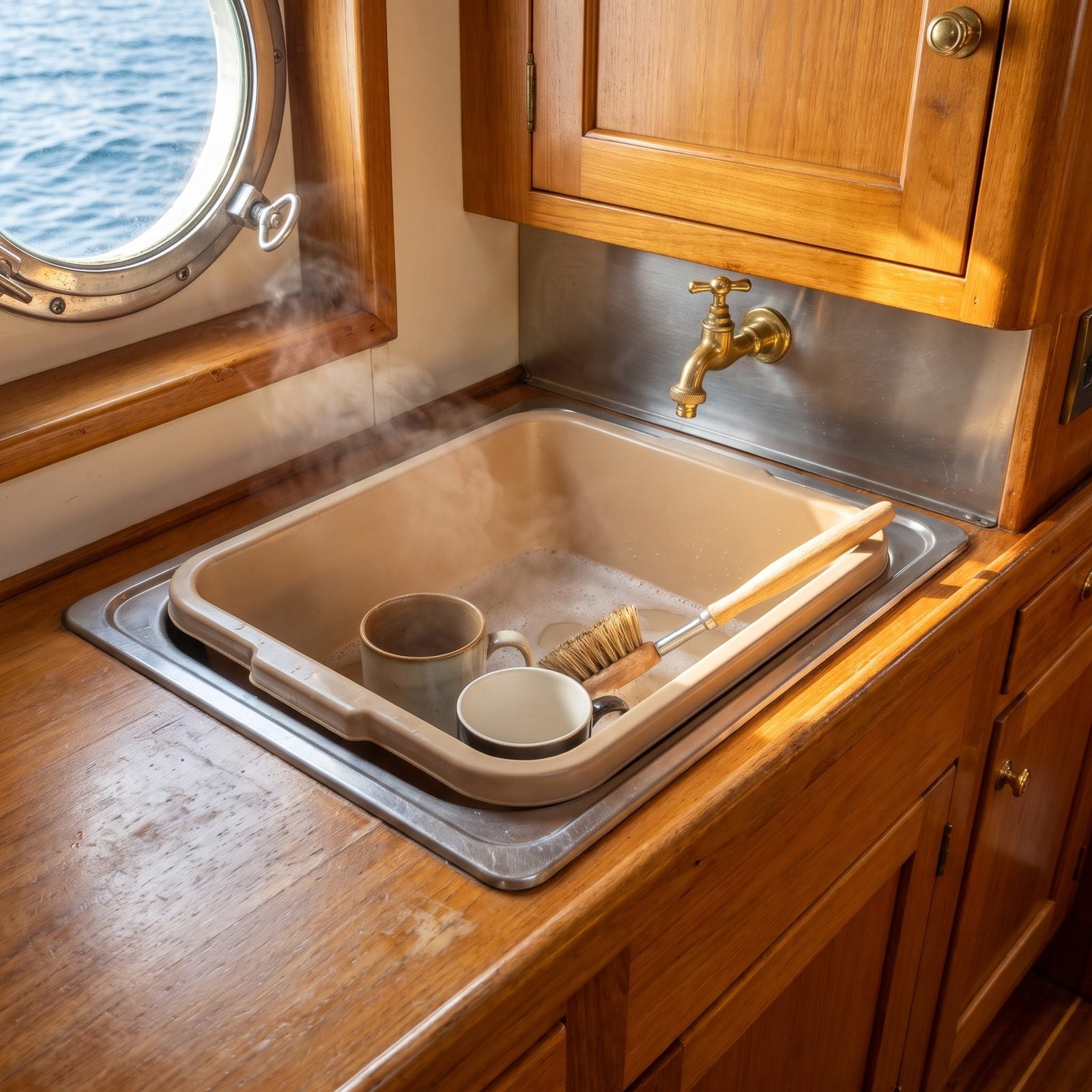
Boat water tanks are small, and a running tap drains them fast. A dishpan sized to drop into your galley sink changes how you wash up entirely.
You wash in a couple of inches of water instead of under a stream. When you’re done, carry the pan up and tip the gray water into a proper dump, keeping the holding tank happy and the dishes out of the bilge. On a mooring with no shore power, that saved water is the difference between staying out another day and heading in for a fill.
13. A Color-Coded Towel for Every Crew Member
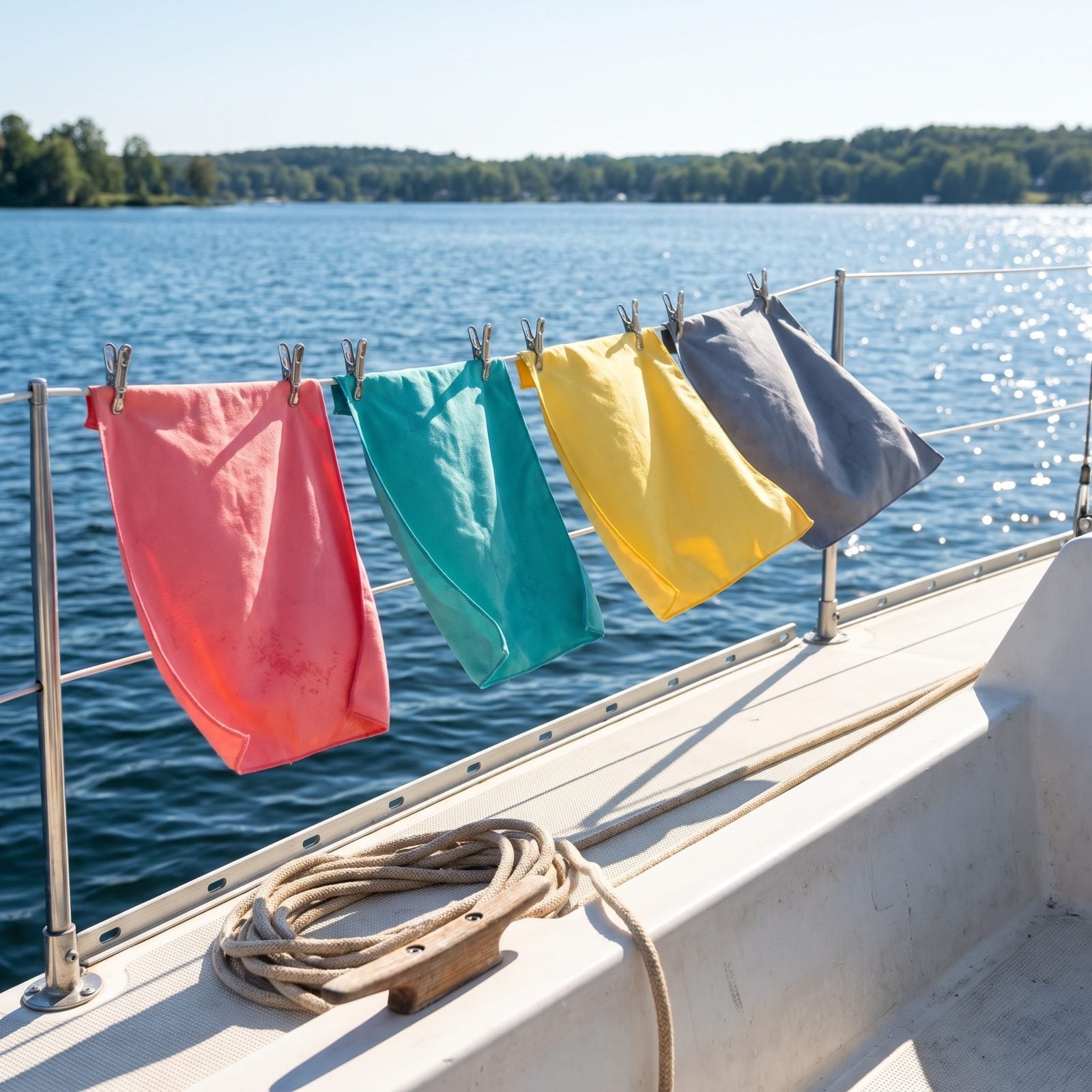
Nothing starts a dock argument faster than a pile of identical damp towels. Whose is whose, which one’s clean, who used the dry one for the dog.
Give everybody a color and the whole debate evaporates. Coral is yours, teal is mine, yellow belongs to the kid who’s already back in the water. You hang them separately, they dry faster, and nobody’s wiping their face with the towel that mopped the cockpit sole an hour ago.
Microfiber is the move because it dries between swims and packs down to nothing. A fluffy cotton bath sheet never dries on a boat — it just gets more damp in interesting ways.
12. A Wooden Clothespin Clipped to Every Open Snack Bag
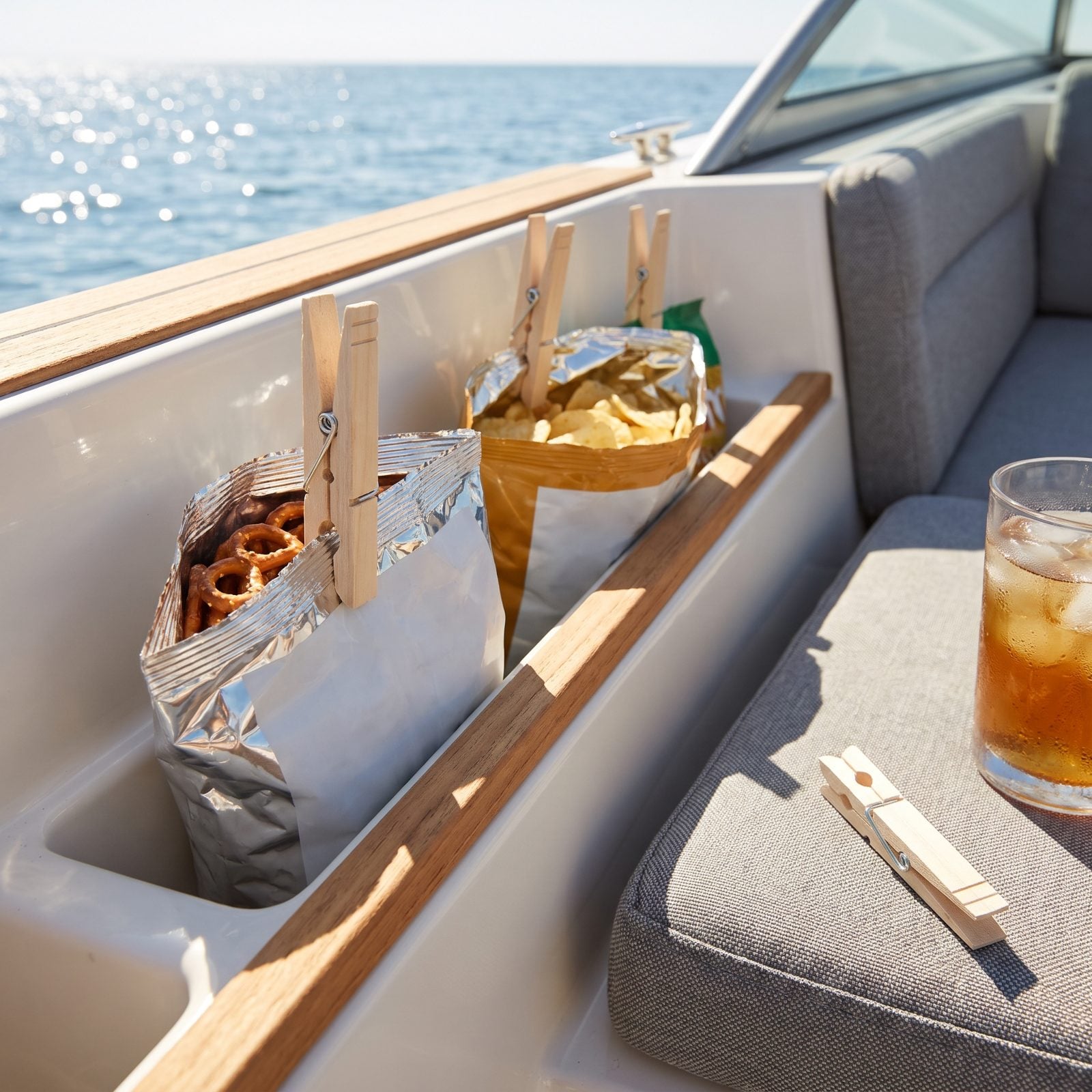
Humidity on the water turns an open bag of chips to cardboard by lunchtime. Wind takes the rest overboard.
A wooden clothespin clipped to one edge of every open bag solves both. It holds the bag open for easy grabbing, pins it shut against the damp once snack time is over, and it’s heavy enough to keep the bag from sailing off the seat in a gust. Cheap, bombproof, and they float if one does go in. Keep a handful in the galley drawer.
11. A Handheld Vacuum for Sand and Crumbs
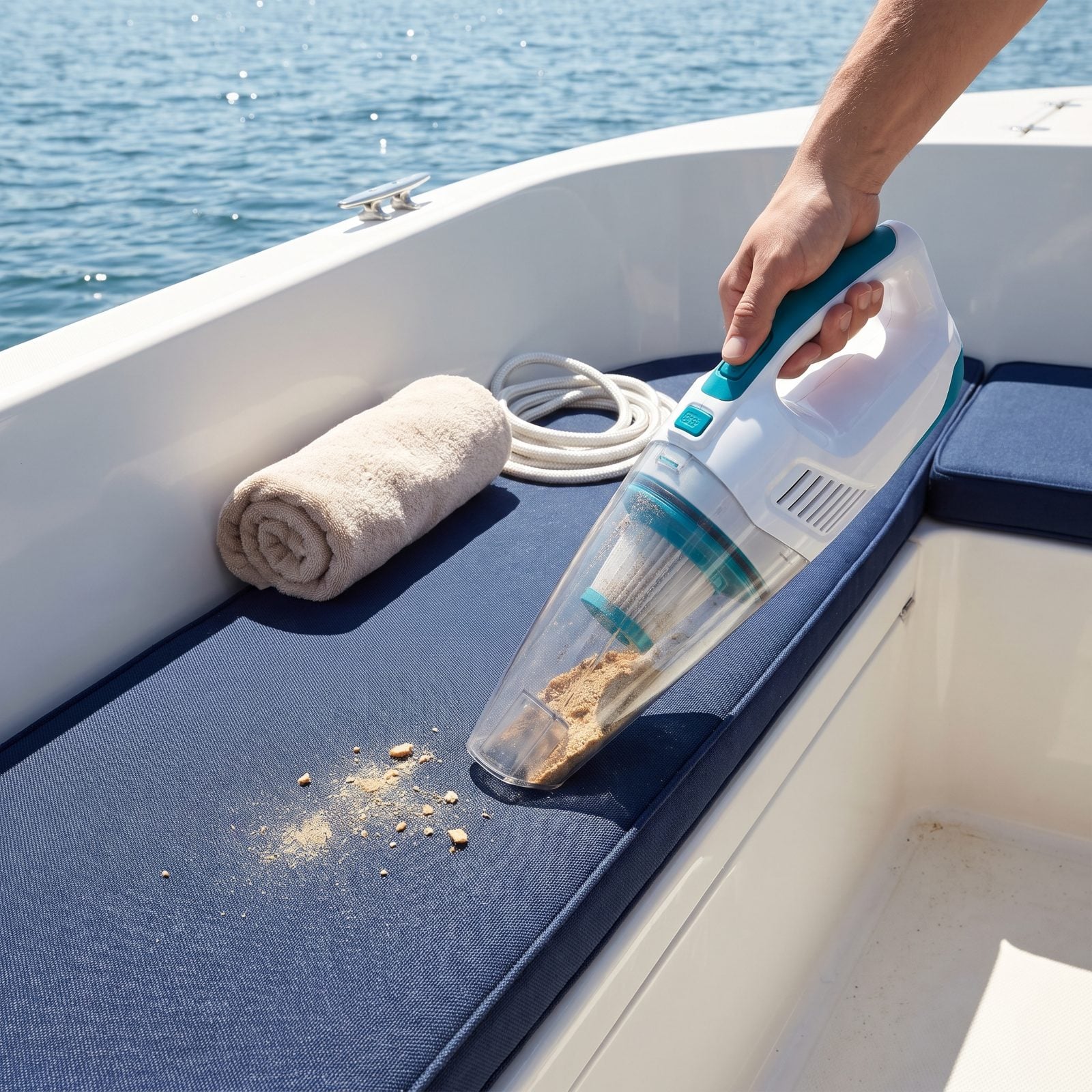
Sand is the uninvited crew member. It rides aboard on everyone’s feet, settles into the cushion seams, and grinds itself into the sole until the whole cabin feels like a beach you didn’t ask for.
A cordless handheld vacuum, charged off the house battery or at the dock, deals with it in the five quiet minutes before dinner. Crumbs, dog hair, the crushed chip nobody owns up to. A broom just shoves sand into the next corner, but a vacuum actually takes it off the boat — which is the only place you want it gone.
Get one with a washable filter. Salt and grit murder the paper kind, and buying replacements all season gets old fast. I learned that the expensive way.
10. A Length of Paracord With Measured Marks
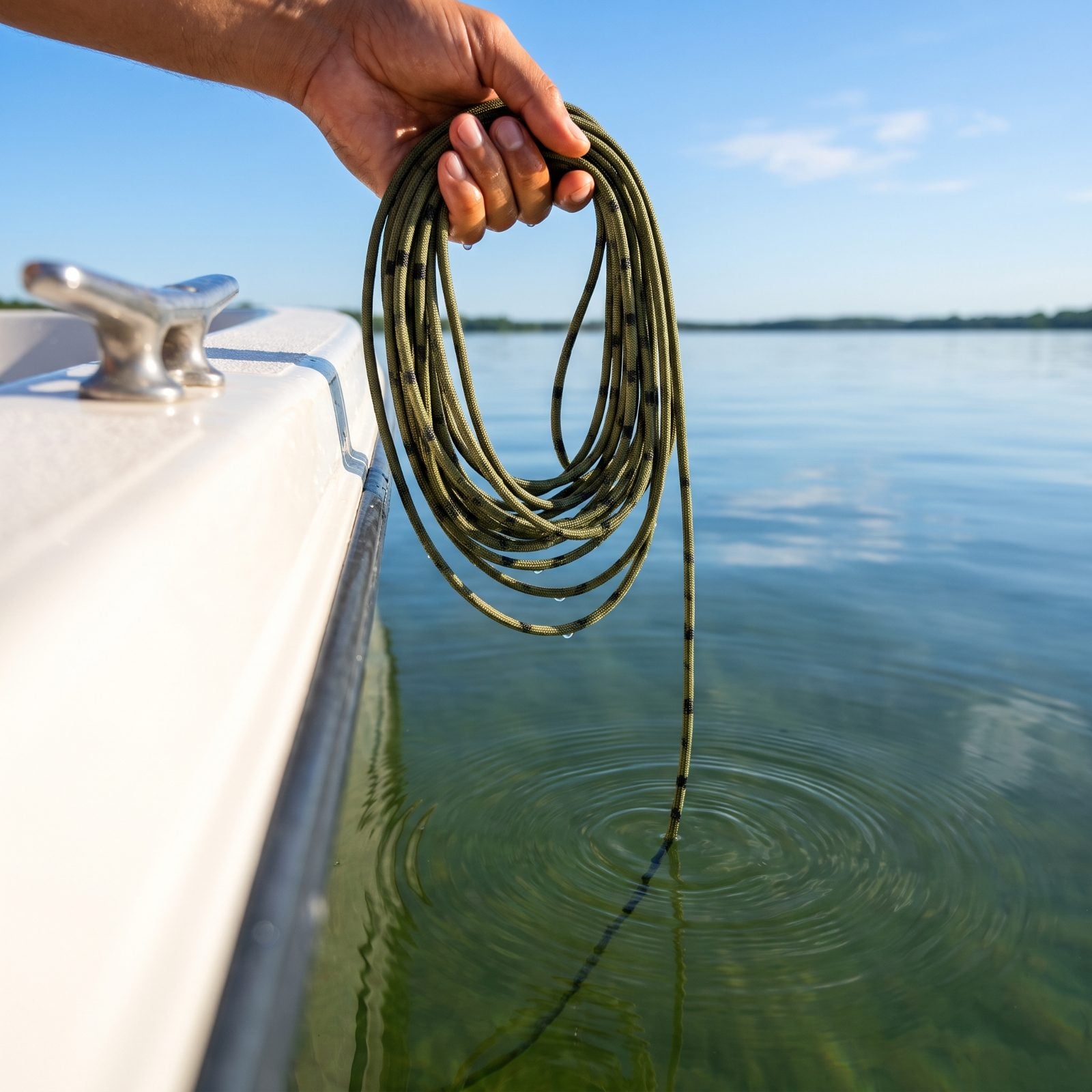
Put a Sharpie mark every foot along a cheap length of paracord and you’ve got a depth gauge, an anchor-scope check, and a tape measure that lives in a drawer and never corrodes. Keep it coiled, tie a small weight to one end, and pay it out over the side to sound an unfamiliar cove before you nose in, counting the bands as it goes down.
We ignored this trick for years. Looked too simple to matter. Then we kissed a rock in a channel we thought we knew by heart, and the cord has lived in the console ever since.
9. A Dry-Erase Board for the Departure Checklist
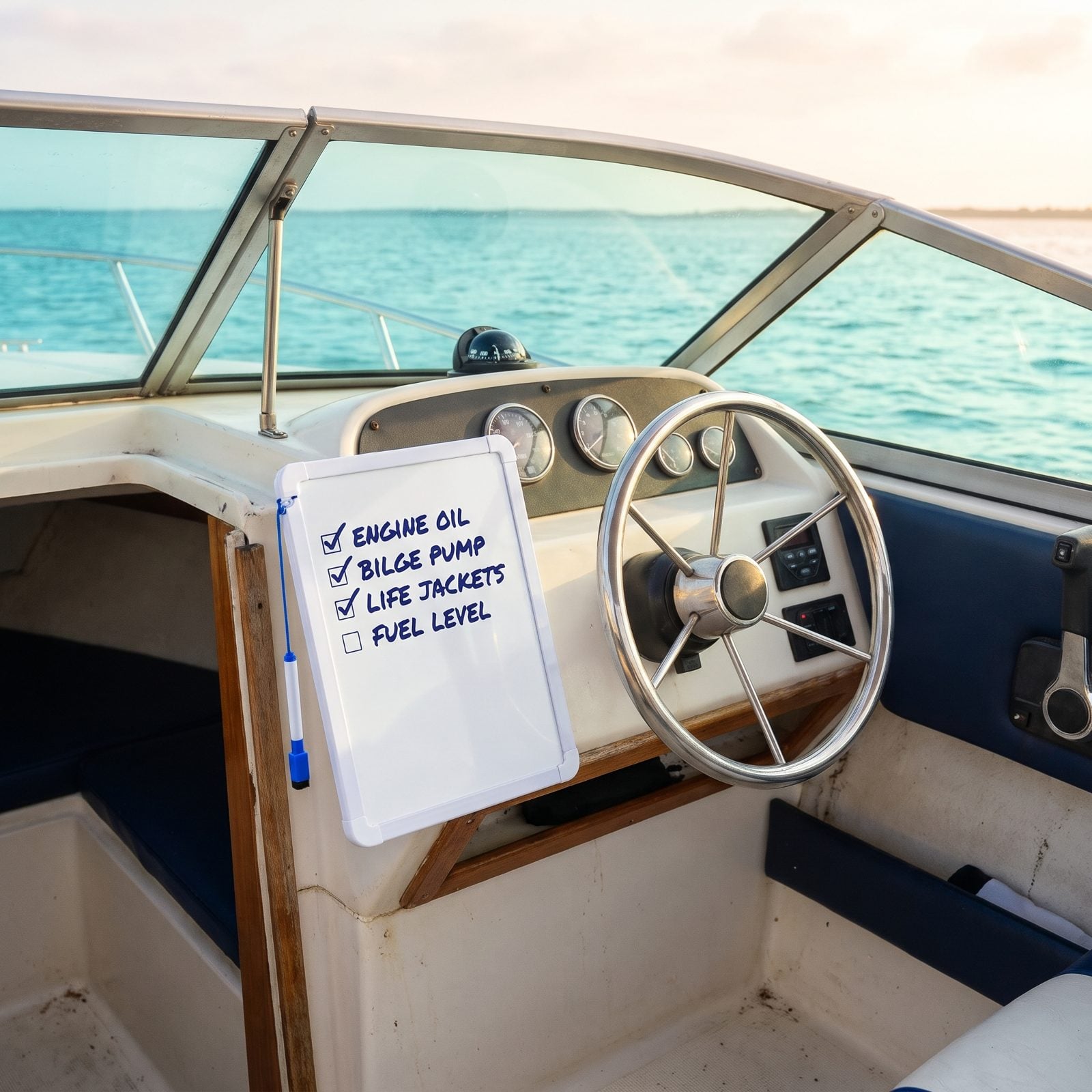
Memory fails in exactly the wrong moment. Bilge plug in? Fuel checked? Fenders up? A cheap dry-erase board, wiped and rewritten each trip, catches the thing you’d otherwise forget until you’re off the dock and sinking slightly.
The magic isn’t the list. It’s the ritual of physically checking each line before you cast off. Pilots do it. Surgeons do it. The habit keeps your brain from skipping a step it’s run a hundred times and gone numb to.
8. A Snap-Lid Container for Phones at the Dock
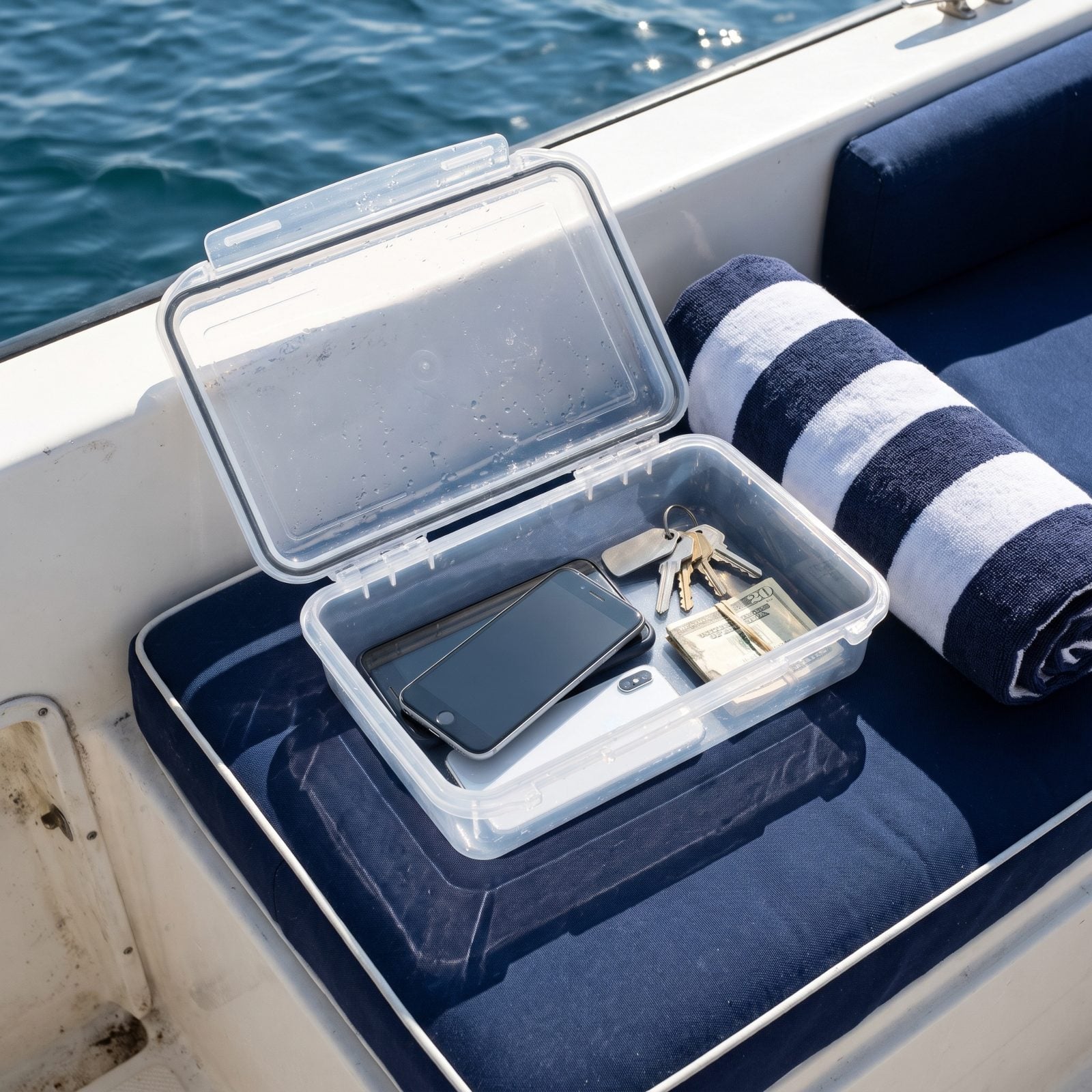
Phones and open water have a short, tragic relationship. A clear hinged dry box, the kind with a gasketed lid and two snap latches, keeps keys, cash, and phones dry, together, and in one findable place instead of scattered across cup holders and footwells.
It floats if the lid’s on, it’s see-through so you don’t have to dig, and when someone inevitably asks whether anyone’s seen their keys, you just point at the box. Cost: a few bucks for a basic dry box.
7. A Bright Towel Draped Over a Hot Vinyl Seat
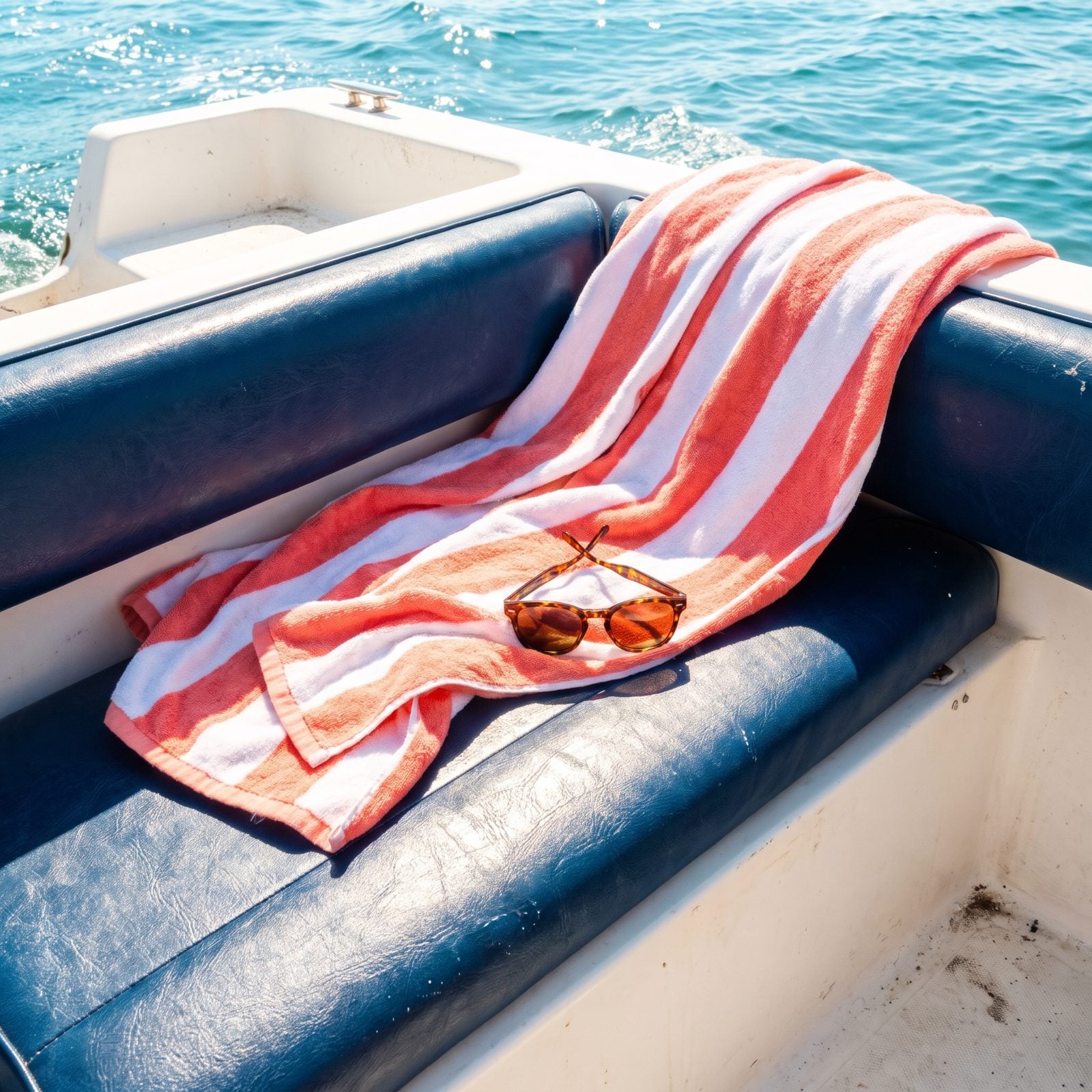
Anyone who’s sat bare-legged on dark vinyl at noon knows the yelp. That stuff gets hot enough to redden skin, no exaggeration. Throw a bright towel over the seat before you anchor and you turn a branding iron back into a bench.
Go light-colored. Dark towels soak up the same heat you’re trying to dodge. And the brighter it is, the easier it is to spot the towel, and the seat under it, when you haul yourself back aboard wet and squinting.
6. A Clamp-On Umbrella for the Stern
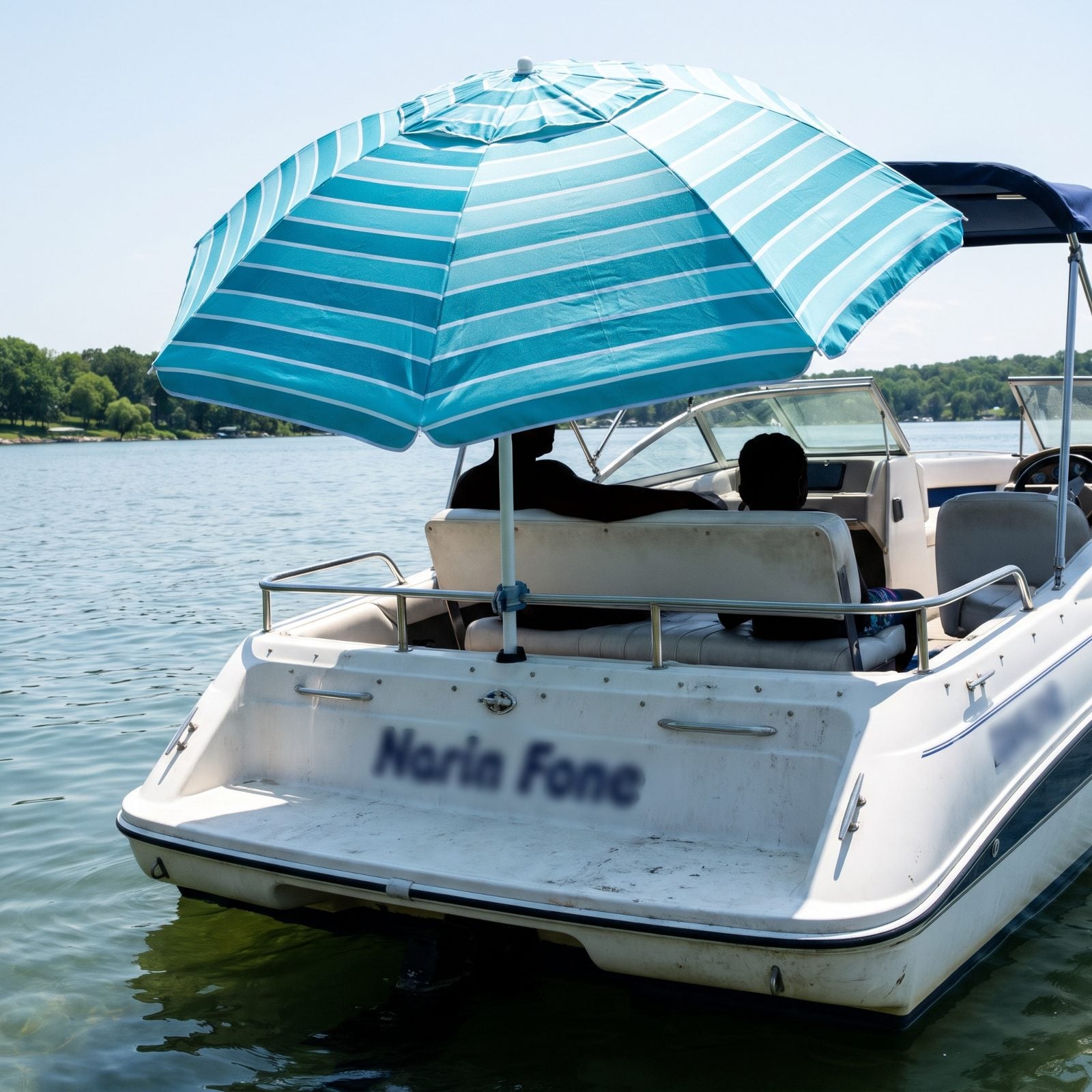
Not every boat has a bimini, and the ones that do rarely shade the stern, which is exactly where everyone piles up. A clamp-on umbrella, the kind sold for beach chairs and patio tables, grips a rail and drops shade right where you’re sitting.
A decent one with a real clamp won’t cost you much. Just take it down before you get underway. An umbrella at twenty knots becomes a sail, then a kite, then somebody else’s problem downwind.
5. A Welcome Mat That Traps Sand Before It Boards
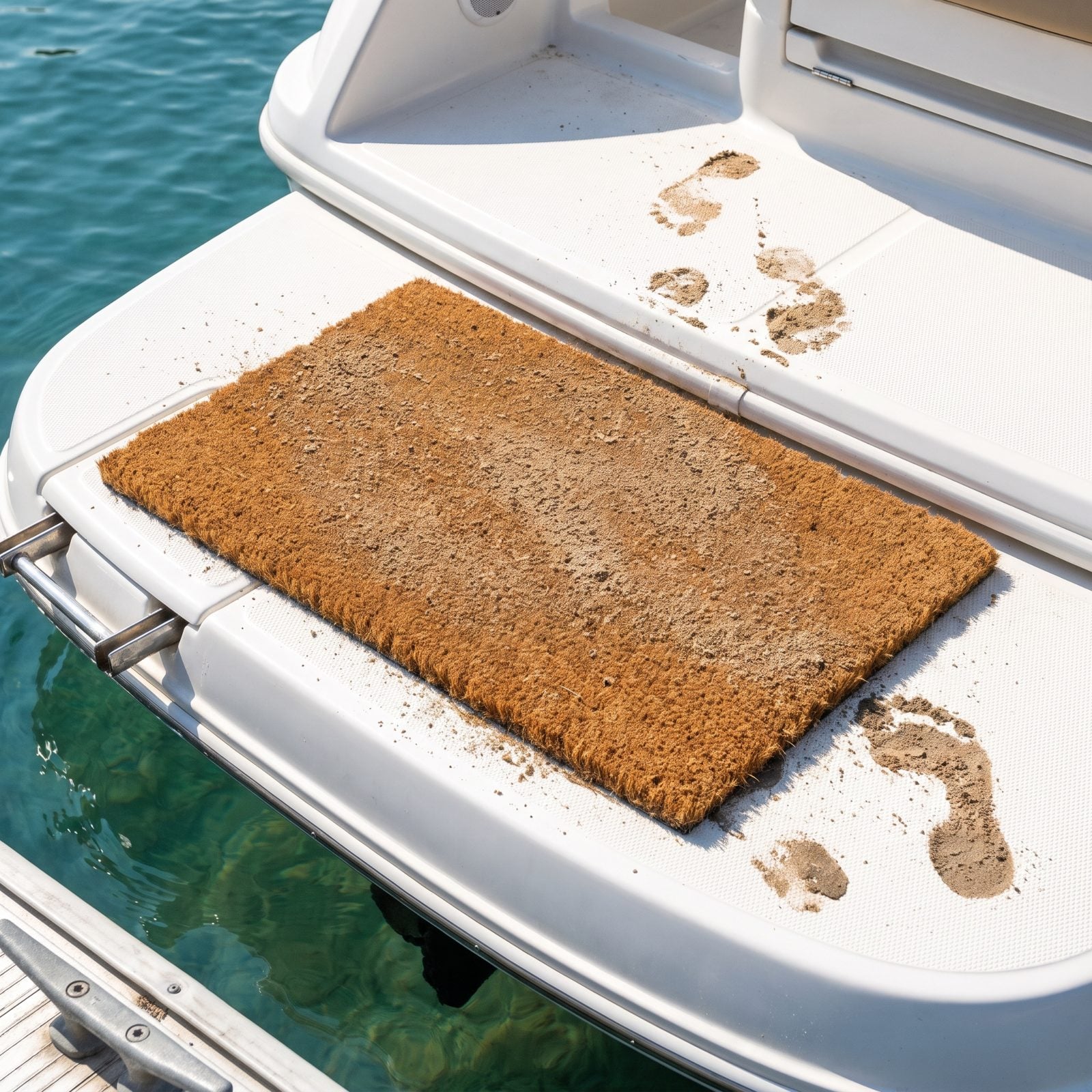
Sand is the mouse that eats a boat alive. It works into the bilge, grinds under cushions, scratches the gelcoat, and never fully leaves. A rough coir or rubber mat on the swim step or cabin entry catches the worst of it before it tracks aboard.
Liveaboards swear by this one. A little friction at the threshold saves hours of sweeping later. Shake the mat off the dock, not into the water.
4. A Flyswatter Kept Beside the Helm
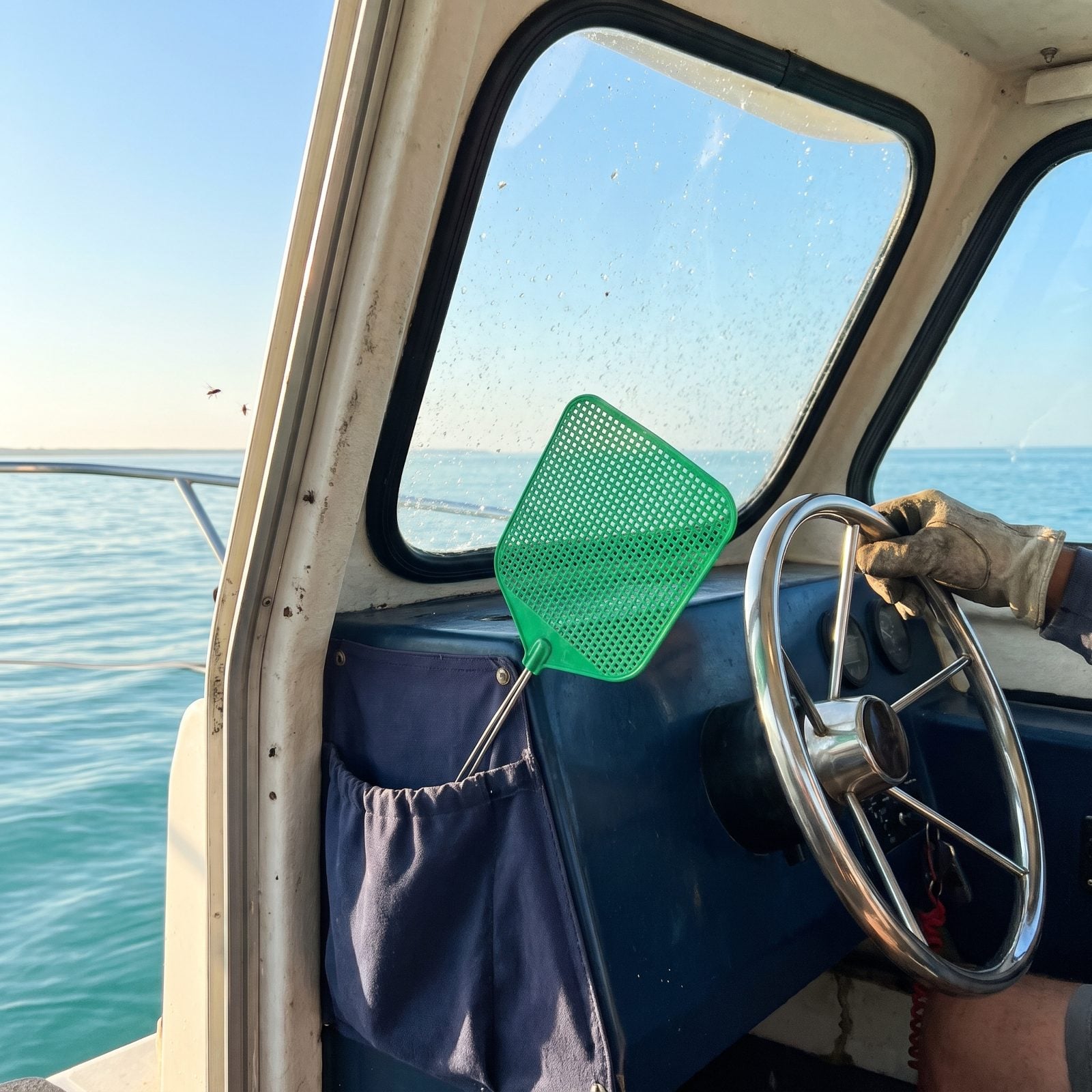
Horseflies turn a lazy afternoon at anchor into guerrilla warfare. They bite, they’re fast, and they seem to clock the exact moment your hands are busy. A cheap flyswatter clipped near the helm is the one weapon that works without flailing a rolled magazine around a boat full of people.
Sounds like a joke until deerfly season rolls in. Then it’s the most requested object aboard. Keep it where you can grab it one-handed.
3. A Windproof Ashtray Repurposed as a Small Trash Cup
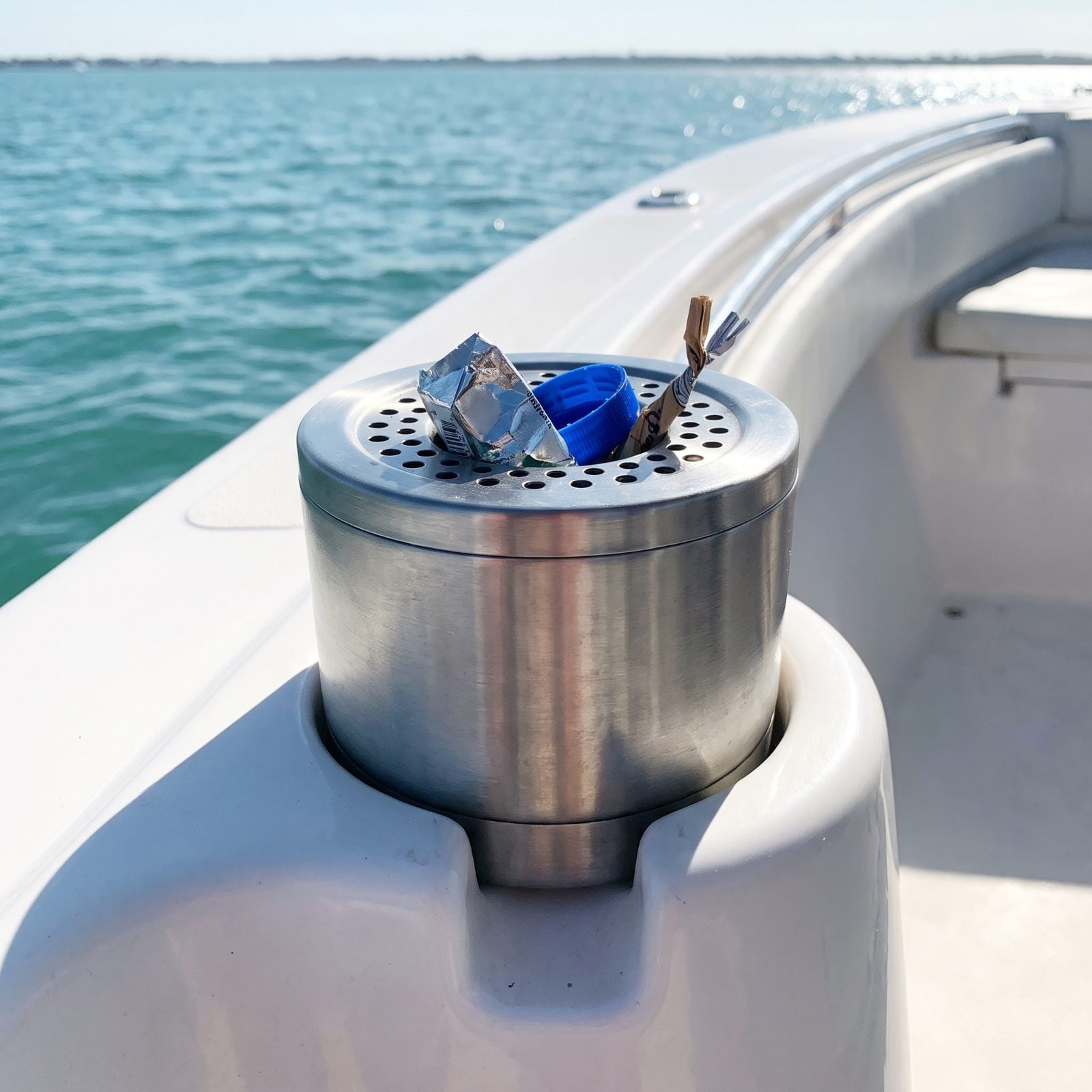
Little trash blows overboard before you even notice. Bottle caps, wrappers, bits of line, the shredded label off a water bottle. A weighted windproof ashtray, the kind with the spinning lid, drops into a cup holder and swallows small debris without letting the breeze steal it back out.
Nobody has to smoke for this to earn its spot. It’s the one trash receptacle aboard the wind can’t empty into the lake. And keeping your junk out of the water is just the price of being allowed to enjoy it.
2. A Headlamp With a Red-Light Setting
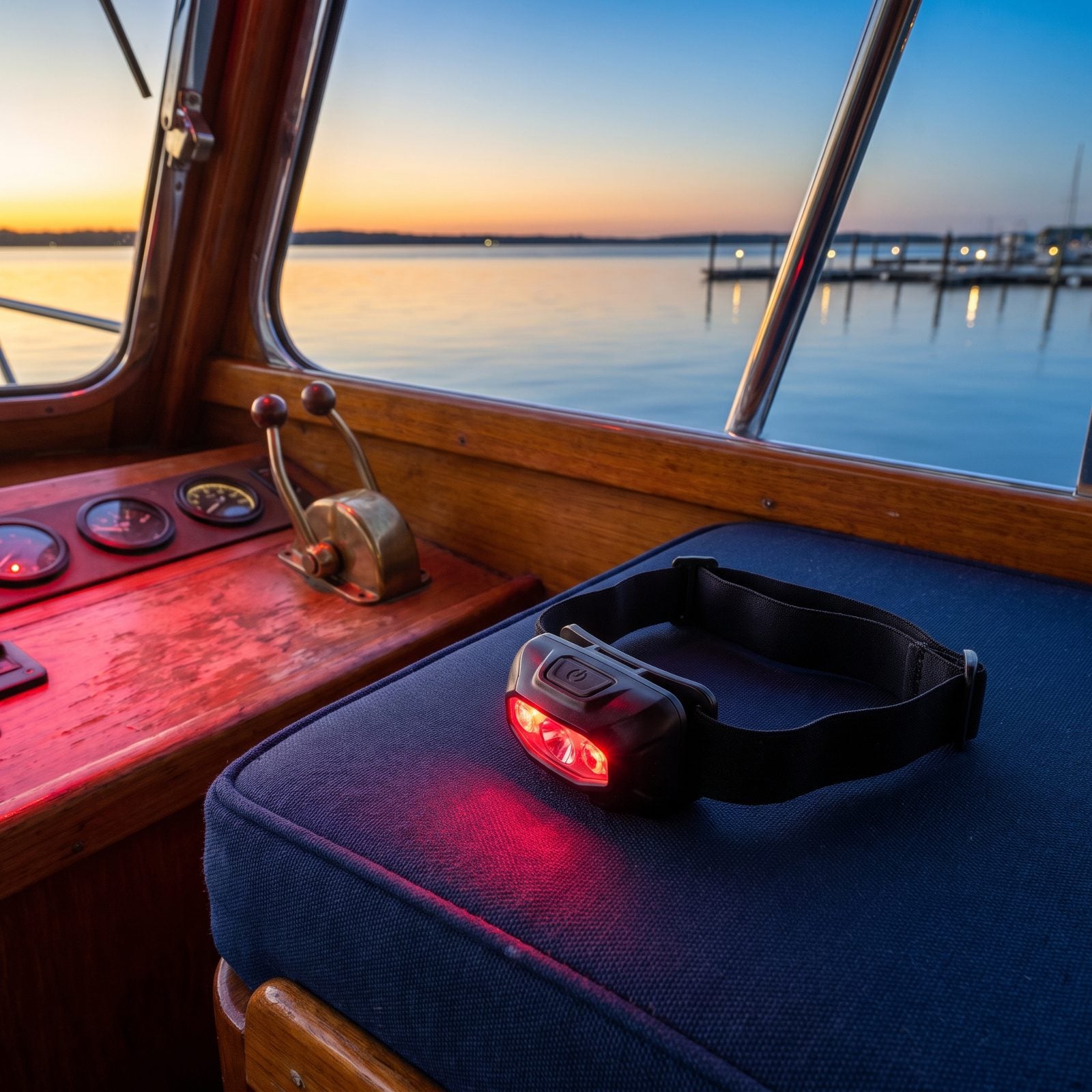
White light at night wipes out your night vision for a good twenty minutes. On the water after dark, that’s the difference between spotting an unlit buoy and not. A headlamp with a red-light mode lets you read a gauge, find a line, or dig through a locker without blinding yourself or everyone else aboard.
Hands-free matters more than you’d think when both of yours are wrestling a dock line in the dark.
As one veteran navigation expert puts it, “Certainly a red light at the chart table will reduce the impact on night vision when the cockpit doors are opened”
1. A Soft Paintbrush for Dusting Instrument Panels
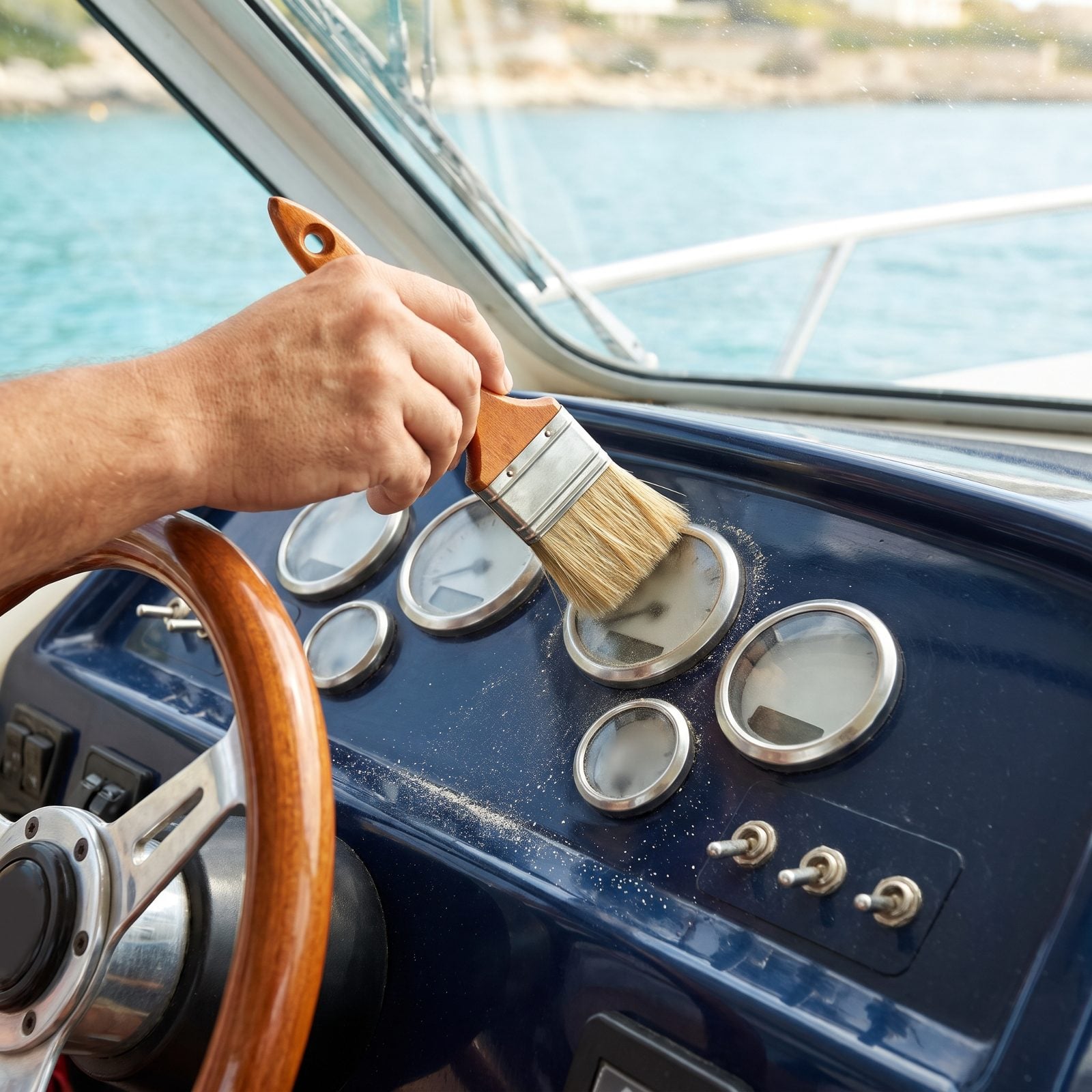
Rags smear. Paper towels snag on switches and leave lint in the seams. A soft two-inch paintbrush flicks dust, salt film, and spiderweb out of the tight spots around gauges, vents, and fiddly helm switches where a cloth just can’t reach.
It’s a detailer’s secret that costs almost nothing. One brush lives in the glovebox of every well-kept boat I’ve been on. Keep it dry, keep it clean, and your panel stays readable instead of gritty.