
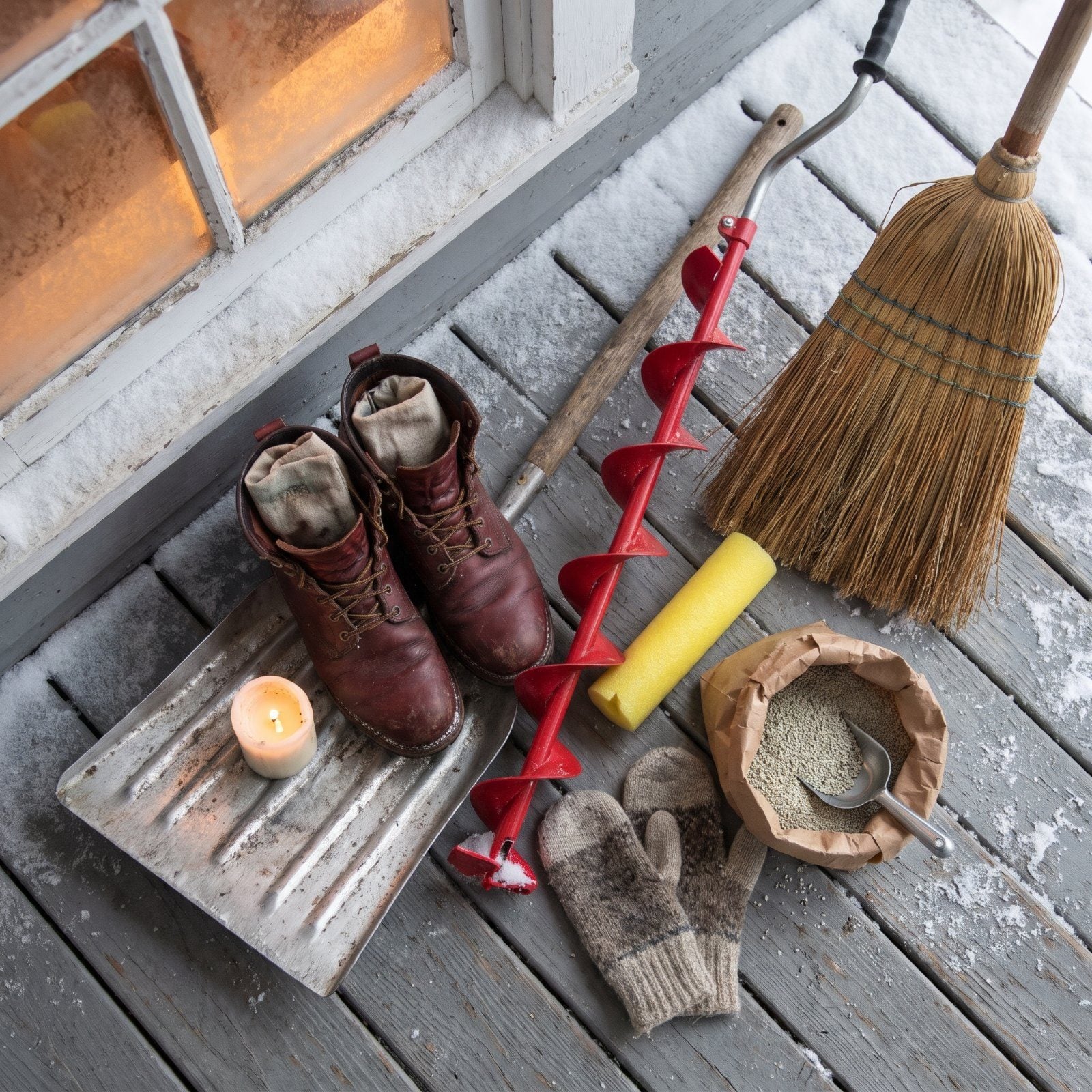
Nobody writes a manual for living on a frozen lake. You learn it from the neighbor who notices your car facing the wrong way, or the old-timer at the hardware store who hands you a candle stub without a word of explanation. The habits below look ridiculous to summer people. A sock on a side mirror. Bread bags inside boots. But every one of them solves a real problem that shows up around the first hard freeze and doesn’t leave until April. These are the small, slightly dumb-looking moves that keep a year-round lake house running through the quiet, brutal months.
Please note that some of the imagery in this article may have been enhanced with the assistance of AI.
25. Slip Bread Bags Over Socks Inside Your Boots
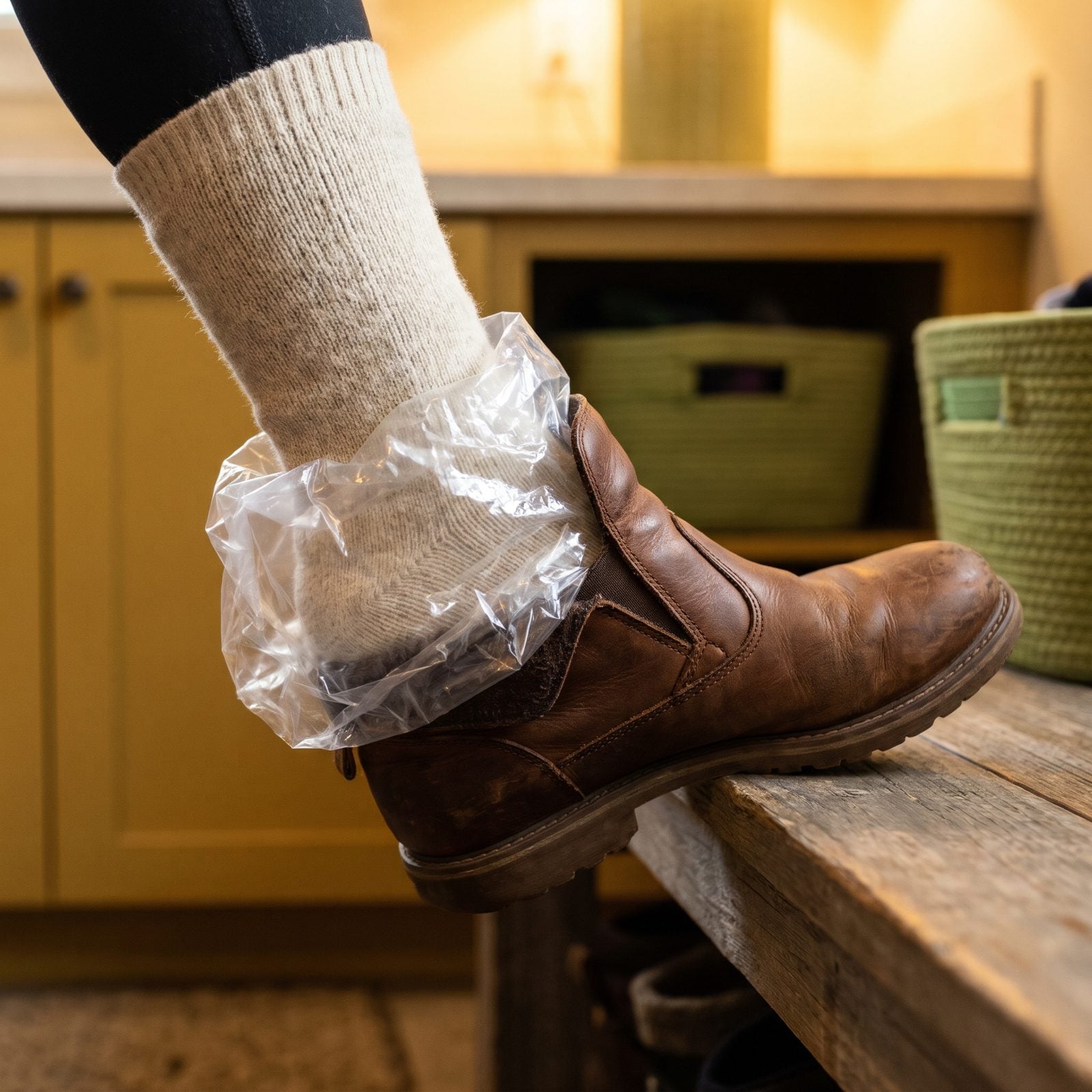
The bag goes between your sock and your boot, not over your bare foot. That’s the part people get backwards, then they wonder why their toes are soaked.
It’s a vapor barrier. The plastic traps sweat before it reaches the insulation, so your sock stays dry, and a dry sock is the whole game. What actually makes you cold out on the ice isn’t the air temperature at all — it’s a wool sock soaked through with your own sweat, which quits on you by noon.
Bread bags win because they come up past the ankle and you can’t feel them. Free, too.
Explaining a cheap vapor barrier liner for cold feet, a longtime backpacking blogger writes “You can buy commercial VBLs ..or you can use the dirt-bagger version: bread bags or similar.”
24. Wax the Snow Shovel Blade With Candle Stubs
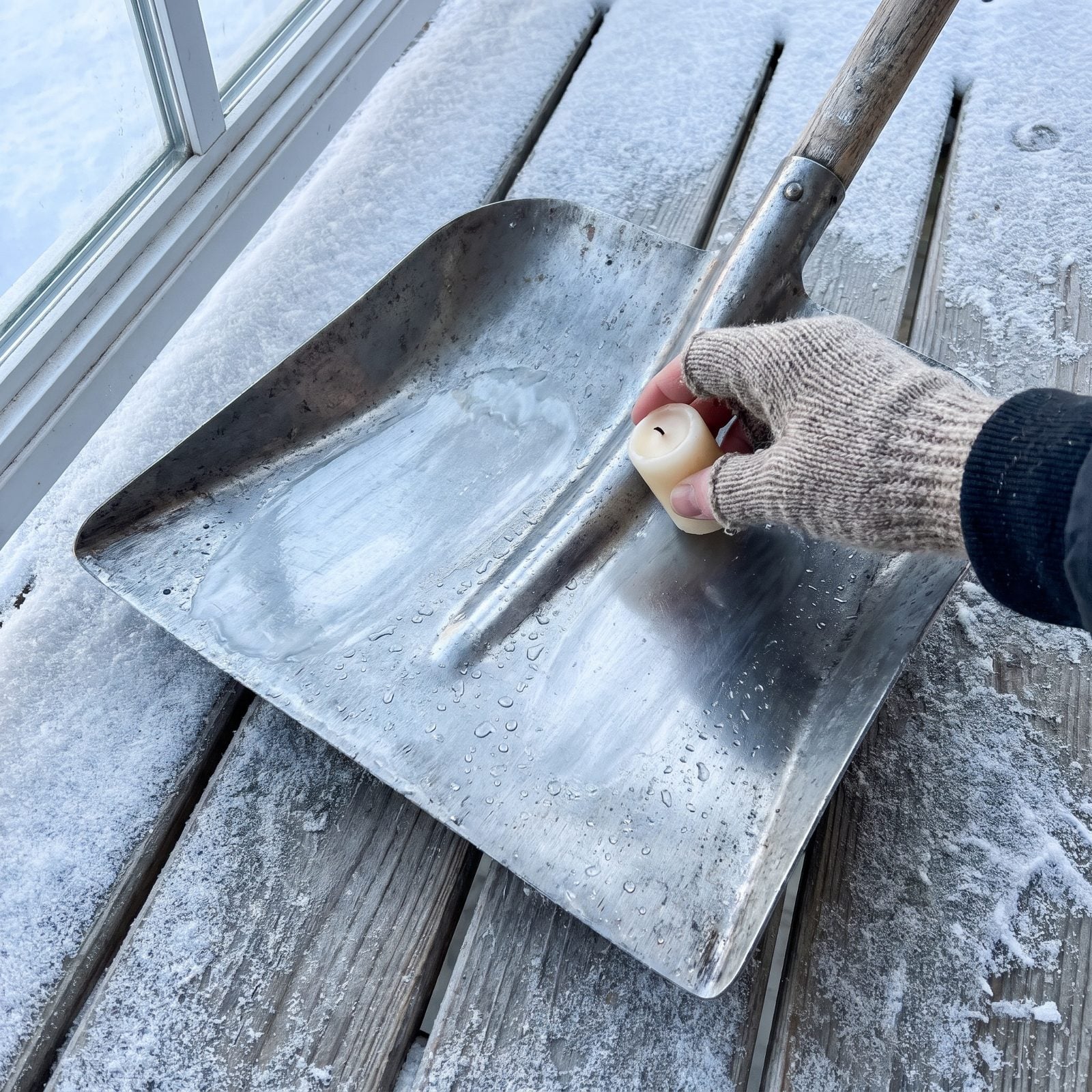
Wet, heavy lake snow cements itself to a bare shovel blade and builds up until you’re hauling ten pounds of ice with every scoop. Rub a candle stub hard over the metal and it slides right off.
Old paraffin stubs are perfect — you were going to toss them anyway. One good waxing lasts a few driveways, and you’ll know the second it wears off, because the snow starts clinging again.
23. Spray the Auger Chute With Cooking Oil
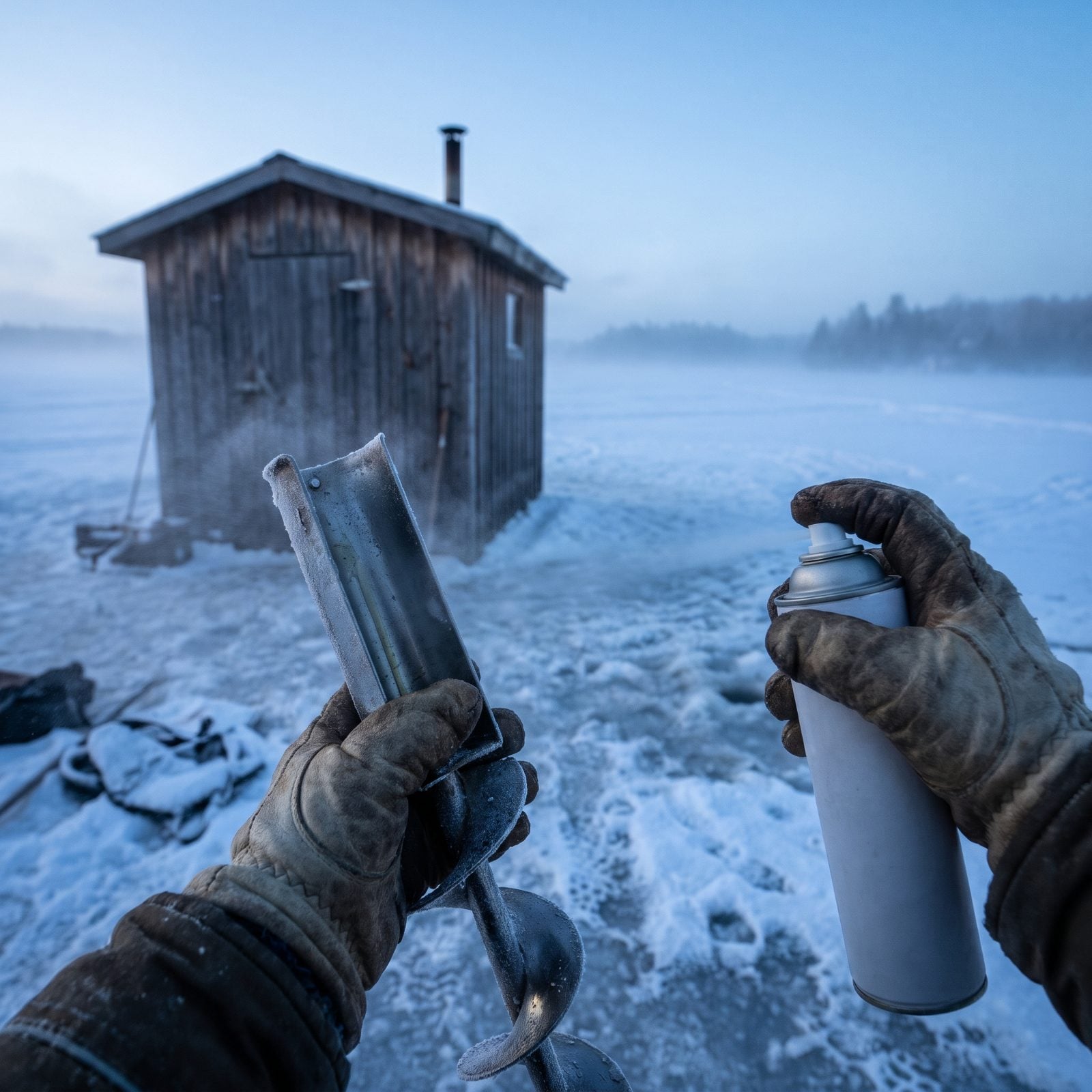
Drilled ice turns to slush, slush refreezes, and a frozen auger chute is a bad time when the fish are biting.
A quick spray of cooking oil keeps the shavings from packing into the flighting and locking up solid between holes. The auger comes up clean and spins free on the next one.
Plain vegetable oil works. So does a can of nonstick kitchen spray tucked in the sled. Just keep it off the handles, or you’ll be chasing a greasy auger across the ice, which is its own kind of misery.
22. Warm Your Hand Tools in an Insulated Cooler
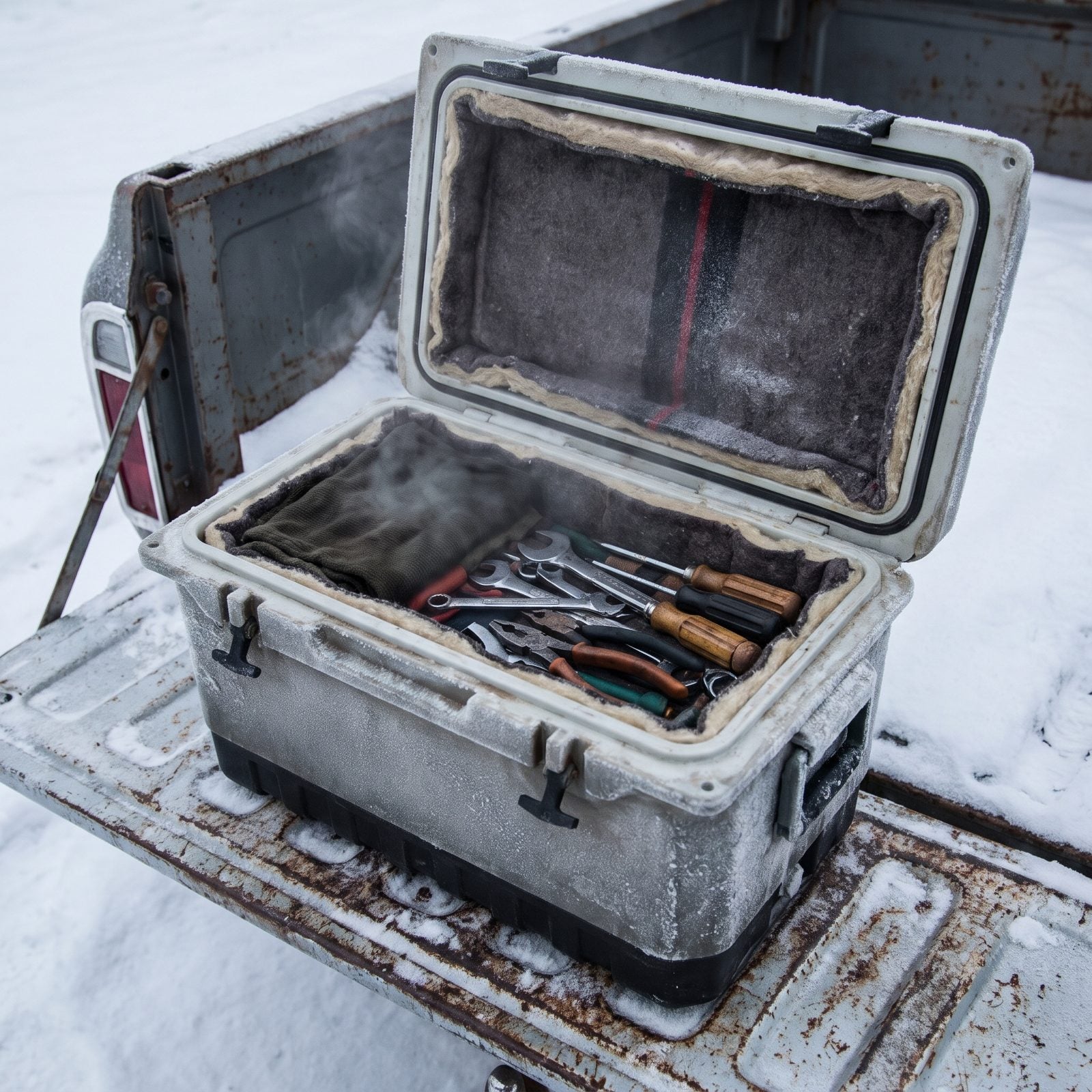
A cooler keeps cold things cold. Flip the logic and it holds warm things warm, which is the whole trick.
Toss your hand tools — and especially your cordless drill batteries — into a closed cooler with a hot water bottle or a warm brick, and they’ll stay usable for hours out on the ice. Cold lithium loses most of its charge fast, and a battery that reads dead at zero degrees usually has plenty left once it thaws.
Metal tools matter too. Bare steel at subzero will grab damp skin and hold on, and a warm wrench just sits better in your hand.
21. Dry Mittens Over the Boot-Dryer Pipes
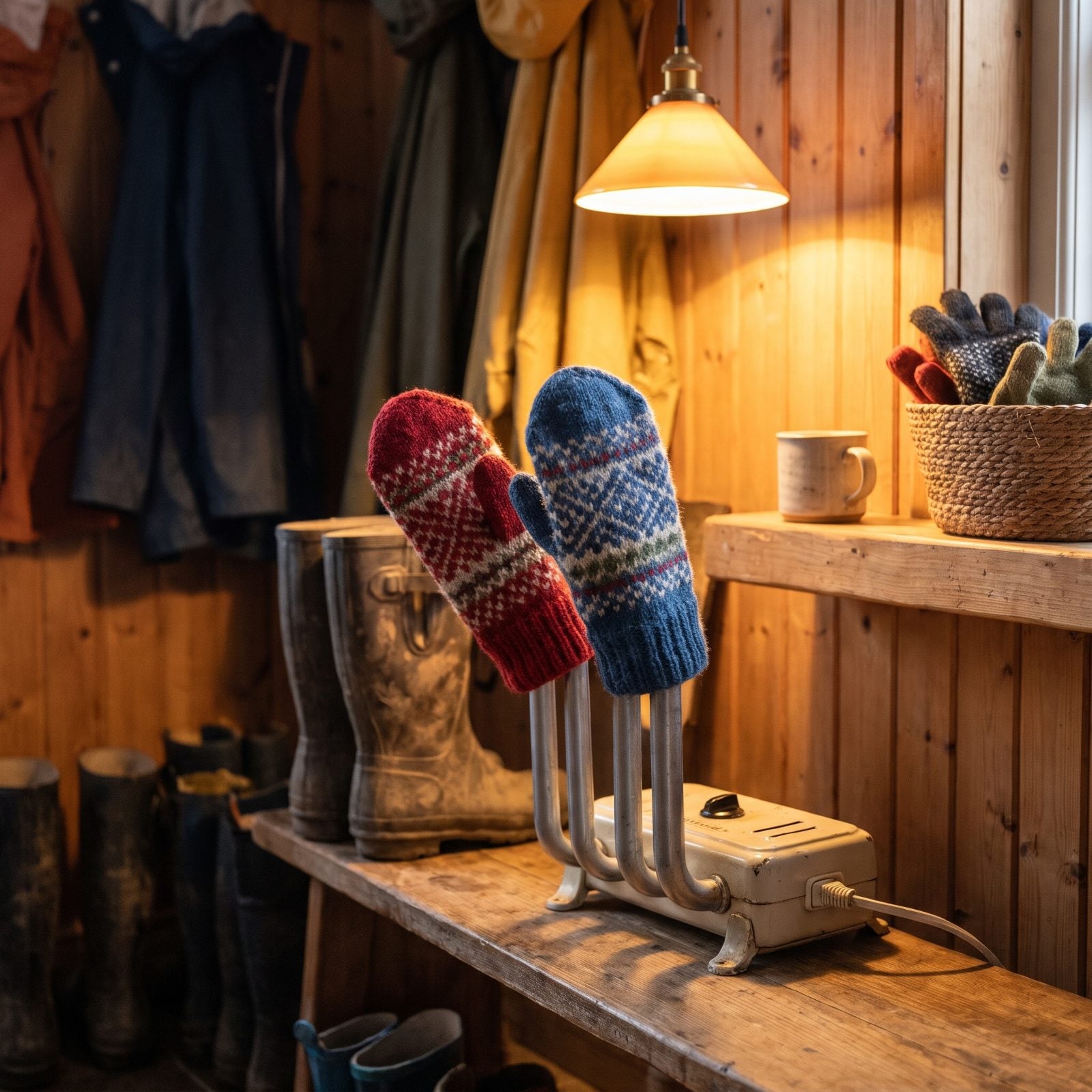
Those cheap forced-air boot dryers have more pipes than you have boots. The spare ones? Mitten dryers nobody bothered to tell you about.
Slide damp wool mitts or gloves over the open vent pipes and they’re warm and ready by morning. Leave gloves on a radiator overnight and they dry stiff and crunchy, but the gentle warm air off a boot dryer keeps them soft.
20. Point Parked Cars Away From the Lake Wind
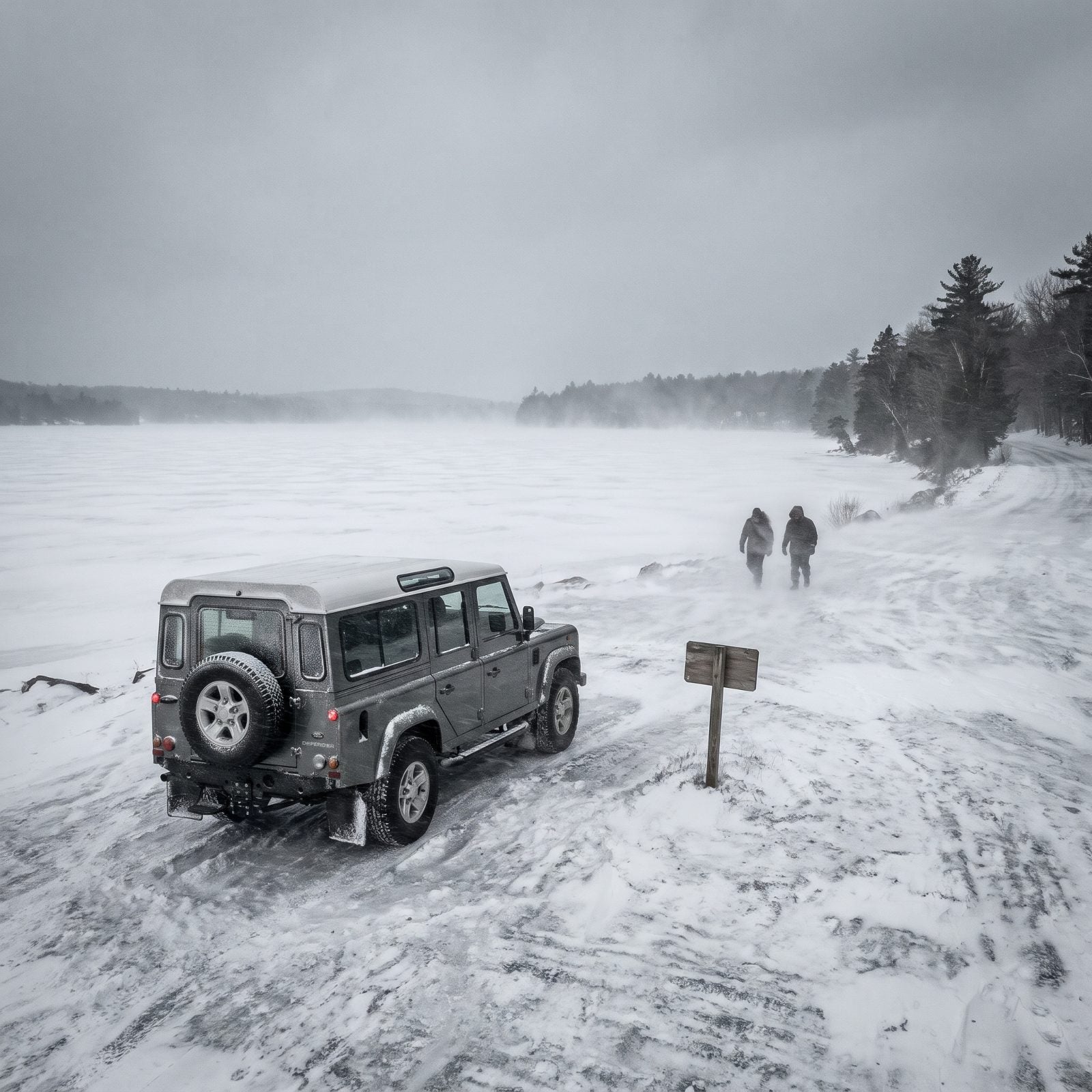
Wind comes off a frozen lake with nothing to slow it down. Miles of open ice, then your windshield.
Back the car in so the windshield faces the house and the rear faces the water. The glass you have to clear in the morning catches the least drift, and the wind packs snow against the trunk instead of plastering your wipers. Lake people do this on instinct. You can spot a newcomer by the car pointed at the water with eight inches welded across the windshield.
19. Mark the Mailbox With a Pool Noodle
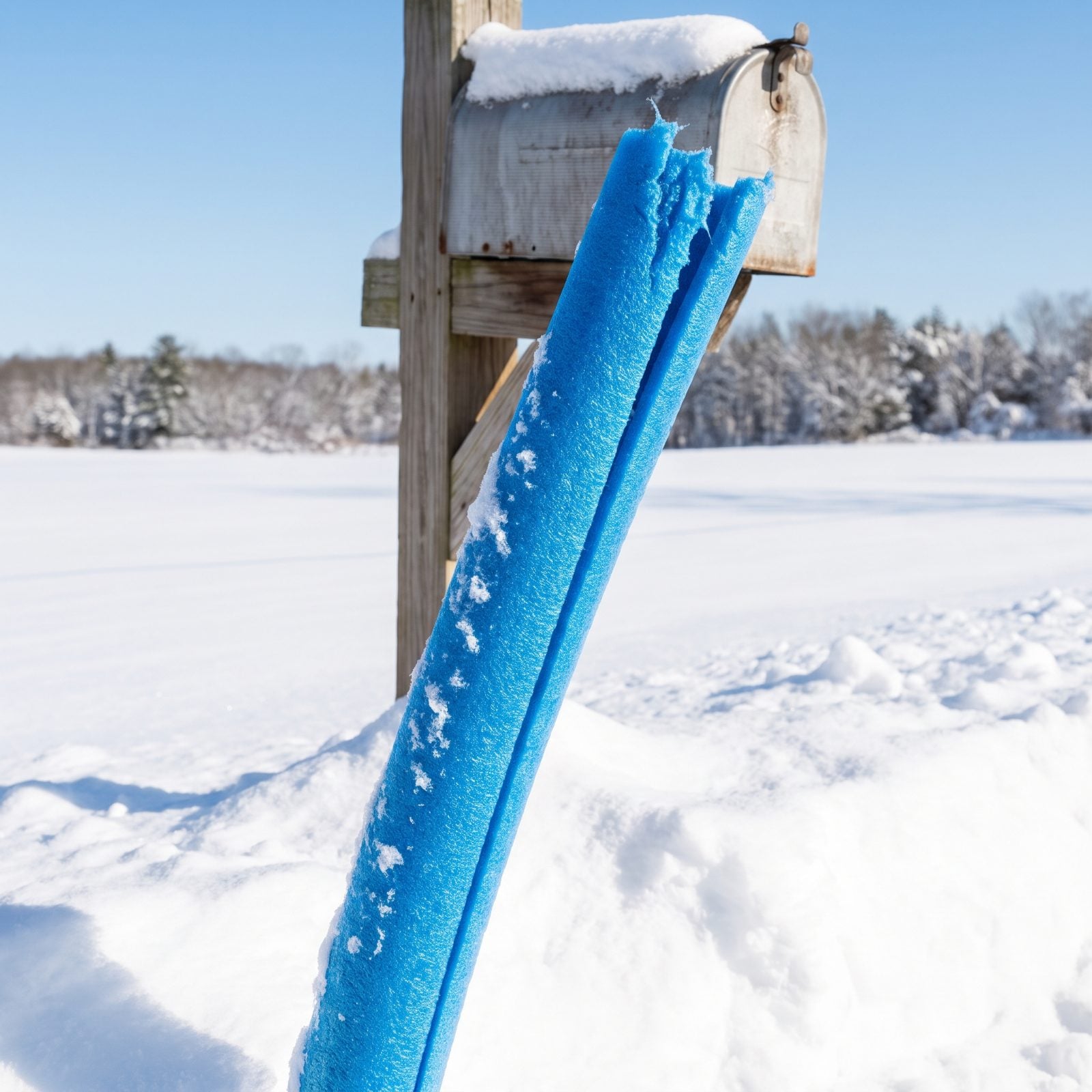
Plow drivers can’t see what the snowbank buried. A mailbox clipped by a plow is a cold weekend repair, and it happens every single winter.
Slide a bright pool noodle over a tall stake next to the box, or right on the post itself. It rises above the snowbank, costs about nothing, and flexes instead of breaks. Summer gear doing winter work.
Same move marks the edge of your driveway so the plow doesn’t carve up the lawn. A row of noodles on stakes looks silly in July and saves your bacon in February.
18. Cover Your Side Mirrors With Old Socks
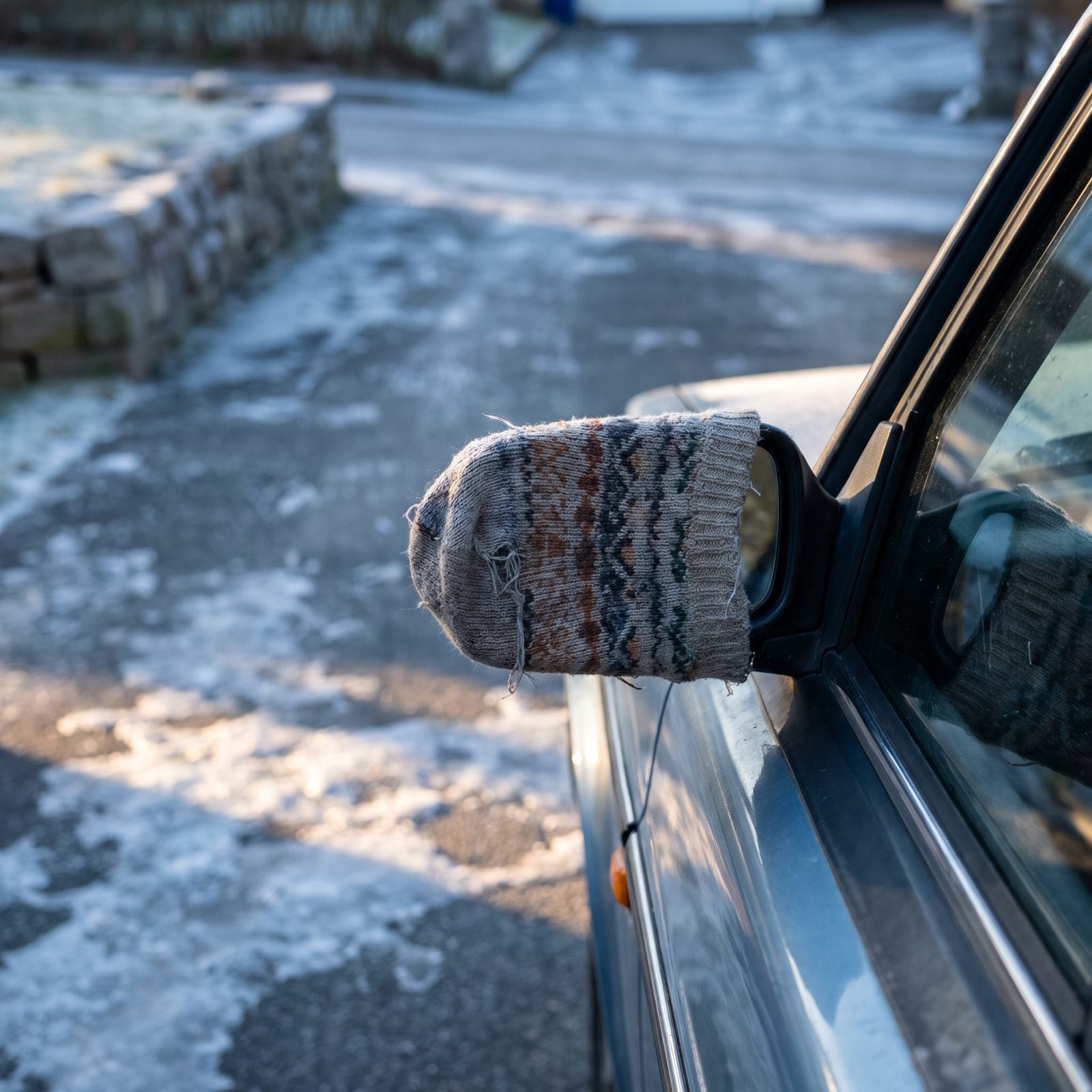
A big old sock pulled over each side mirror at night means no scraping frost off tiny curved glass in the dark before work. Peel the sock, the mirror’s clean.
Freezing rain is the real enemy. It glazes mirrors solid, and a sock keeps the ice off the glass entirely. Thick wool or athletic socks fit the housing best — the ones that lost their match in the dryer finally earn their keep.
17. Keep a Broom Outside Every Door
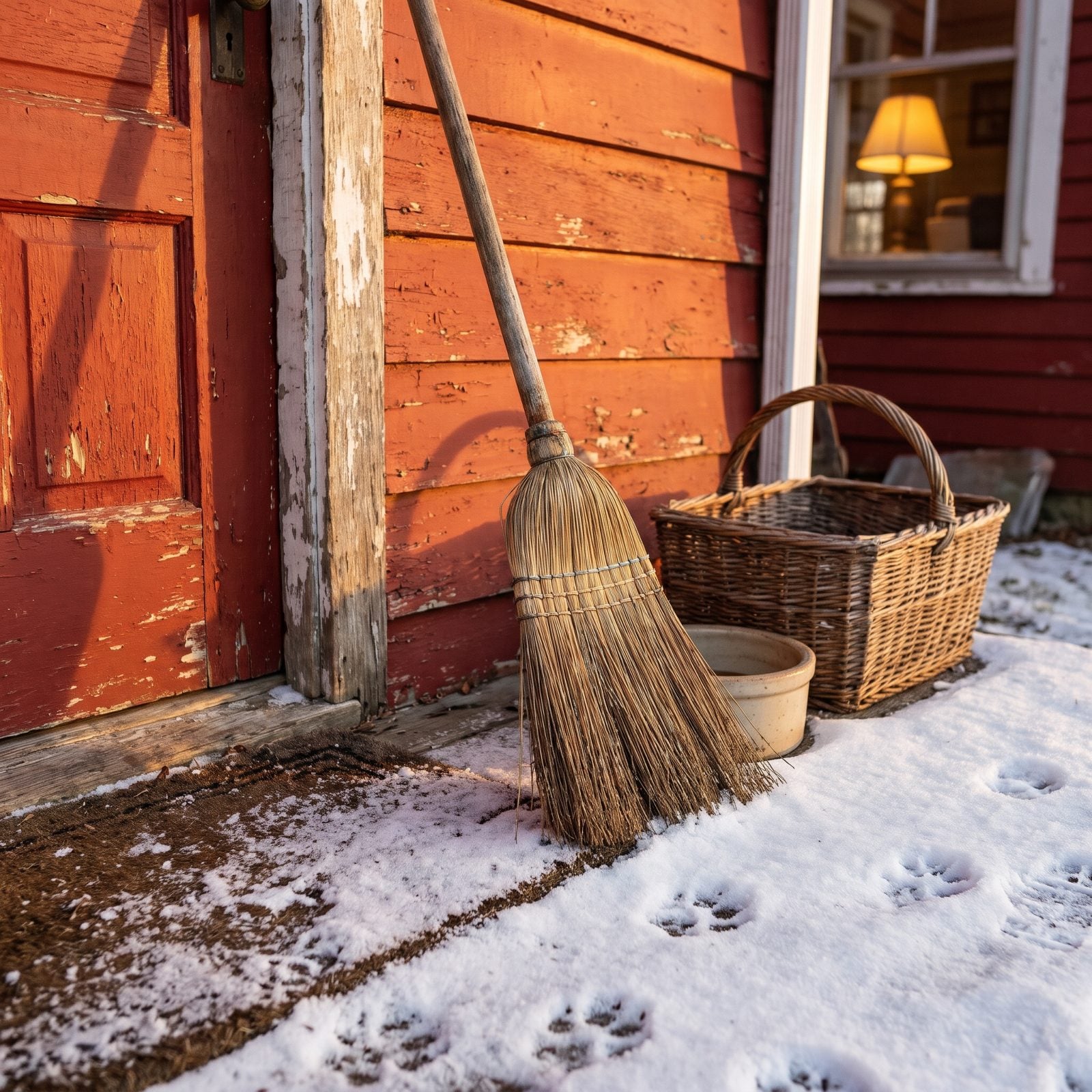
A broom by the door isn’t for sweeping the porch. It knocks snow off your boots, your coat, and the dog before any of it comes inside and melts into the floorboards.
It sweeps the fresh dusting off the steps before it packs down to ice, and it reaches the snow off the car roof too. One at the front, one at the back, one in the garage. You stop dragging half the lake into the kitchen, and your floors will thank you.
16. Carry Non-Clumping Kitty Litter Behind the Driver’s Seat
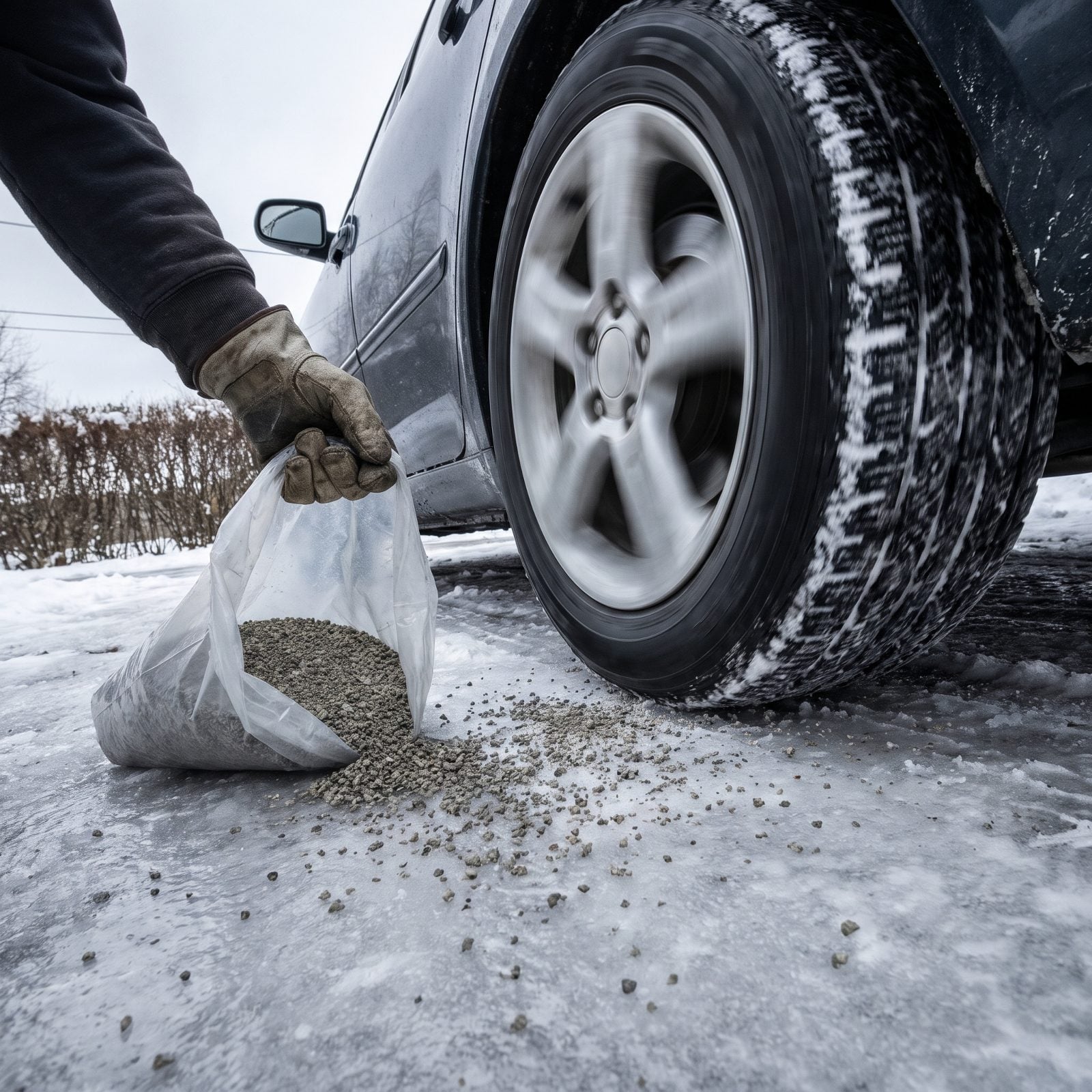
Get stuck on an icy incline and a scoop of clay kitty litter under the drive wheels gives you enough bite to climb out. Sand works too, but litter is lighter to carry and doesn’t freeze into a brick as fast.
Buy the cheap non-clumping clay kind. Clumping litter turns to paste the second it hits slush and does absolutely nothing — the plain gray clay is what grips.
The weight behind the rear axle helps a little, though that matters more in a rear-wheel truck than a front-driver.
Urging drivers to keep a winter survival kit in the car, a state patrol colonel says “These can include winter clothing, blankets, a shovel, jumper cables, a snow brush, ice scraper, flares or roadside markers, sand or kitty litter for traction in case you get stuck”
15. Flip the Wiper Blades Up Before Freezing Rain
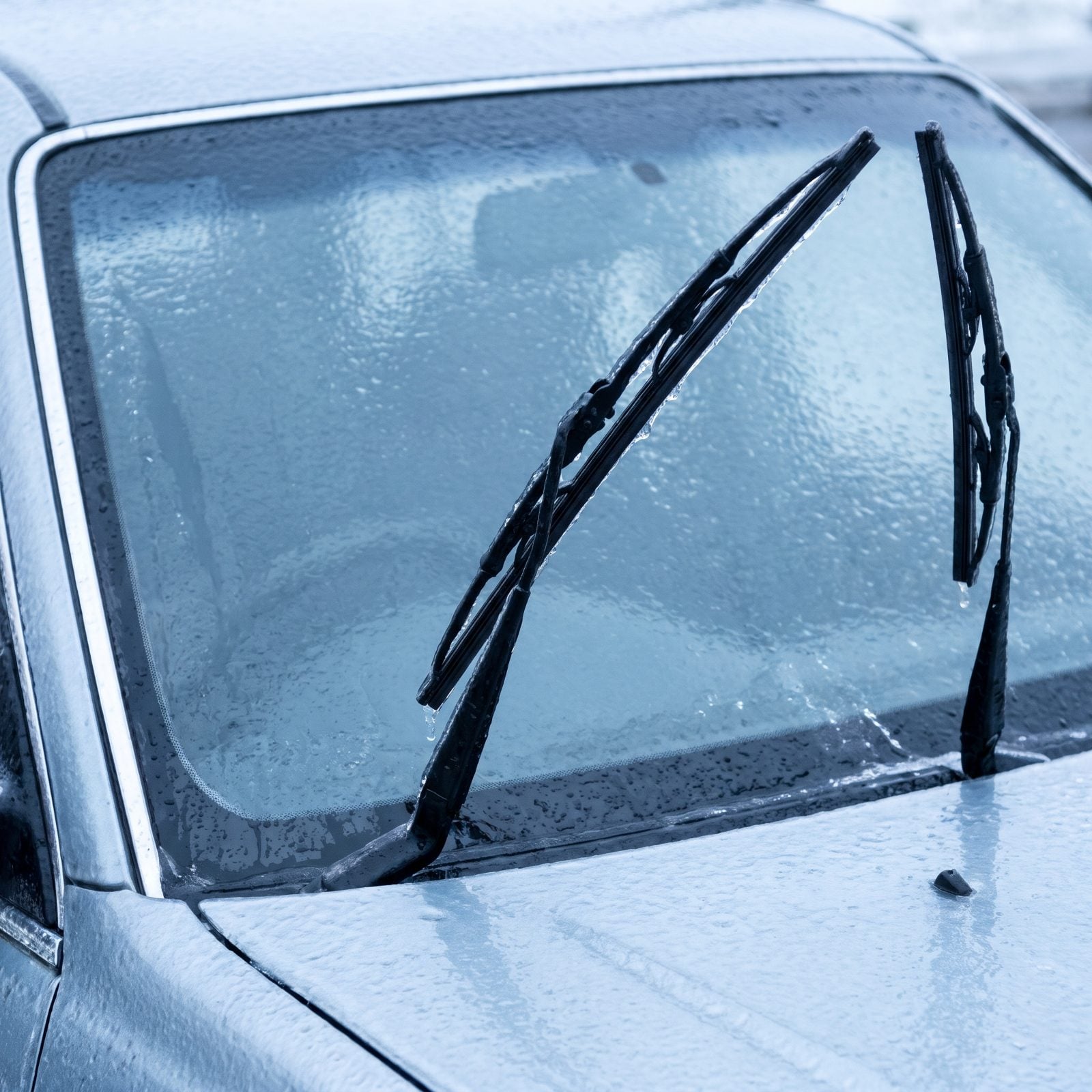
Leave them flat and the rubber freezes to the glass overnight. Flip the switch in the morning and you either tear the blade or burn out the little motor trying to rip two inches of ice loose.
So stand them up before the ice comes. Takes four seconds. The blades stay clear of the glaze, and you’re not peeling frozen rubber off your windshield with a credit card while the cold bites through your gloves.
14. Set Wet Boots on Scrap Wood, Never Bare Concrete
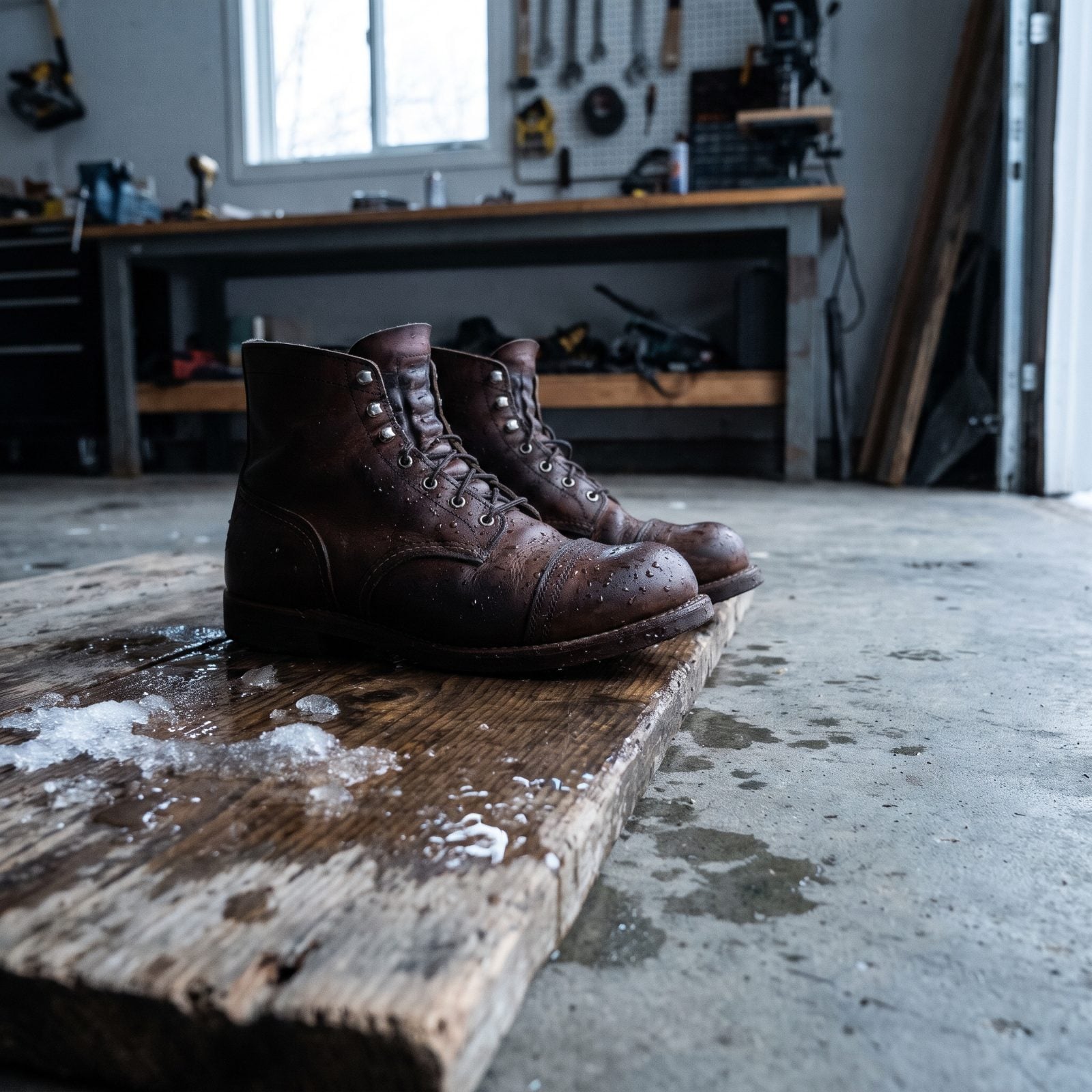
Concrete pulls the warmth right out of leather. Set soaked boots straight on a cold slab overnight and by morning they’re stiff as plywood and cold enough to make your socks damp the second you step in.
A single scrap board lifts the boots off the floor and lets the air move underneath, so they dry faster and stay warmer. The wood soaks up a little of the melt instead of leaving a frozen puddle you step in barefoot at 5 a.m.
13. Spread Chicken Grit on the Walk Instead of Road Salt
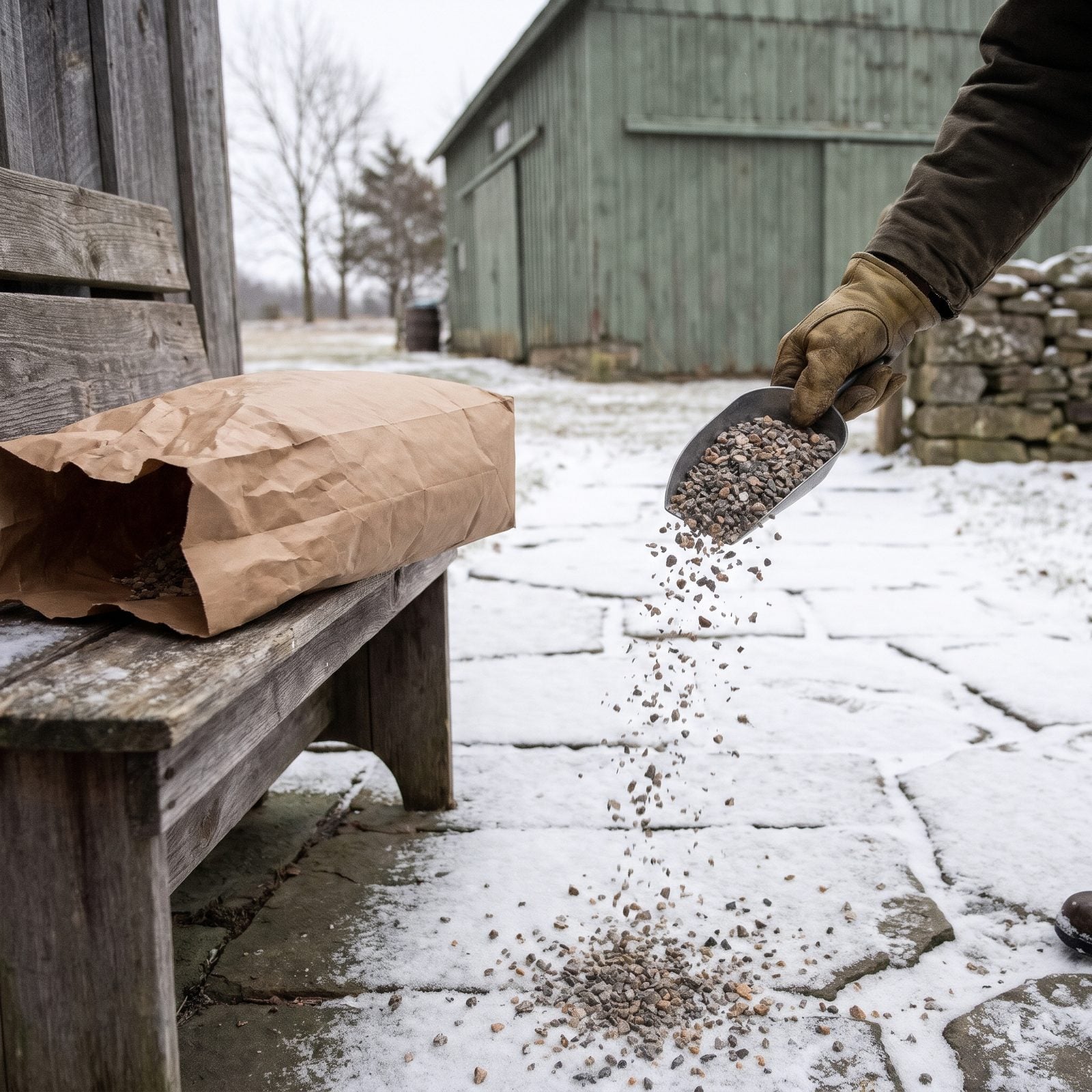
Road salt eats concrete, kills the grass come spring, and tracks into the house as a white crust on every floor. It barely works below fifteen degrees anyway.
Crushed granite grit — the cheap stuff sold at the feed store for chickens — gives your boots something to bite into at any temperature. It doesn’t melt the ice. It just makes the ice walkable, which is the part that matters when you’re carrying groceries across a glazed path.
Sweep it up in spring and you can use it again. Salt’s gone the second it melts.
Worried about road salt washing into lakes, university lake scientists note “If it’s below 15 degrees (F), it’s probably too cold for salt to work.”
12. Keep a Padlock Working With a Puff of Graphite
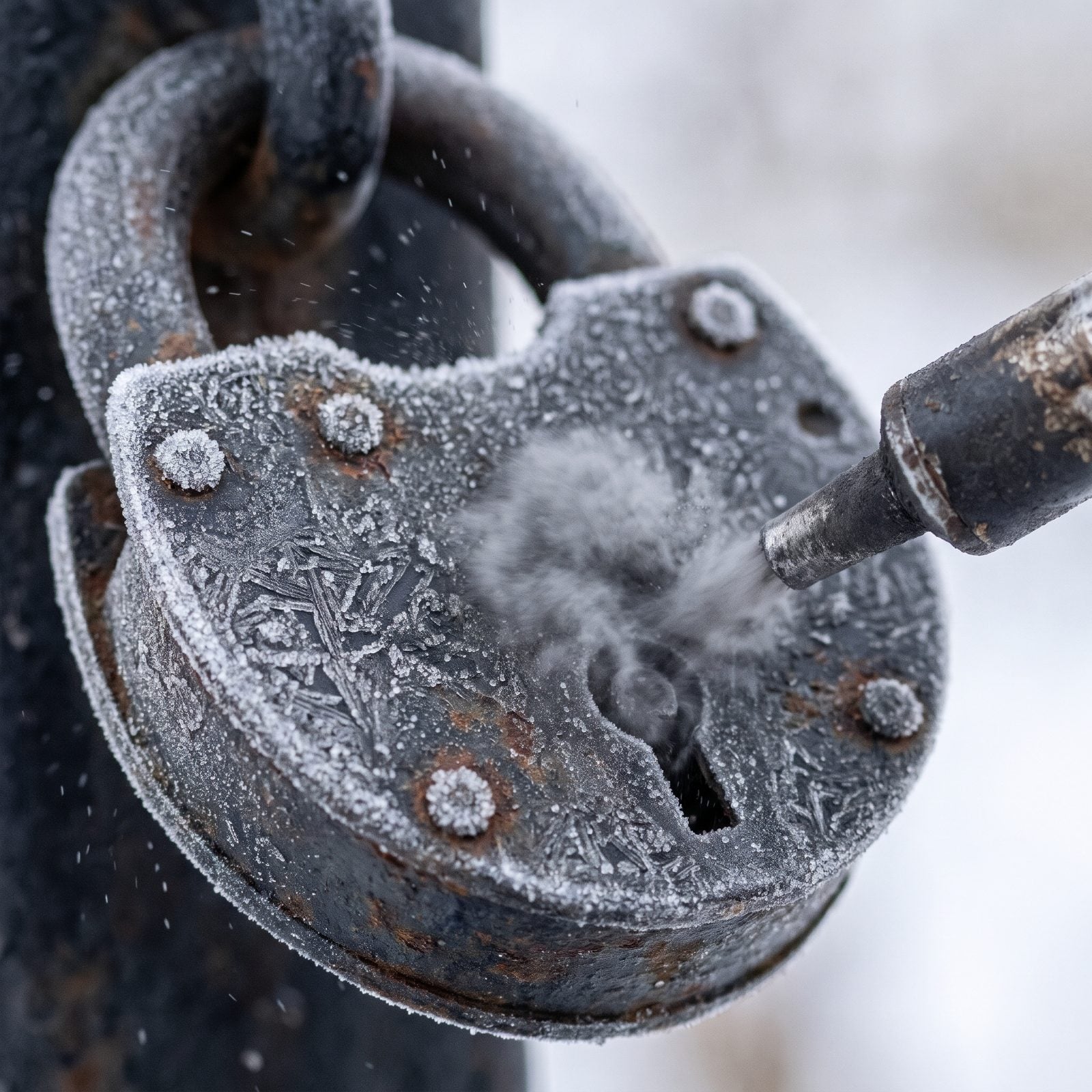
Spray oil in a cold padlock and you’ve made it worse. Oil holds moisture, moisture freezes, and now your lock is a solid brick on the coldest morning of the year.
Dry graphite is the answer. A little puff of the powder into the keyhole keeps the pins moving and gives water nothing to cling to. The lock turns at ten below like it’s the middle of July.
Warning against using WD-40 on frozen locks, a locksmith service advises “For long-term prevention, use a graphite or silicone-based lock lubricant. These products are designed specifically for the delicate internal mechanisms of a lock, providing a protective barrier against moisture without attracting gunk.”
11. Run a Candle Along a Sticky Sliding Door Track
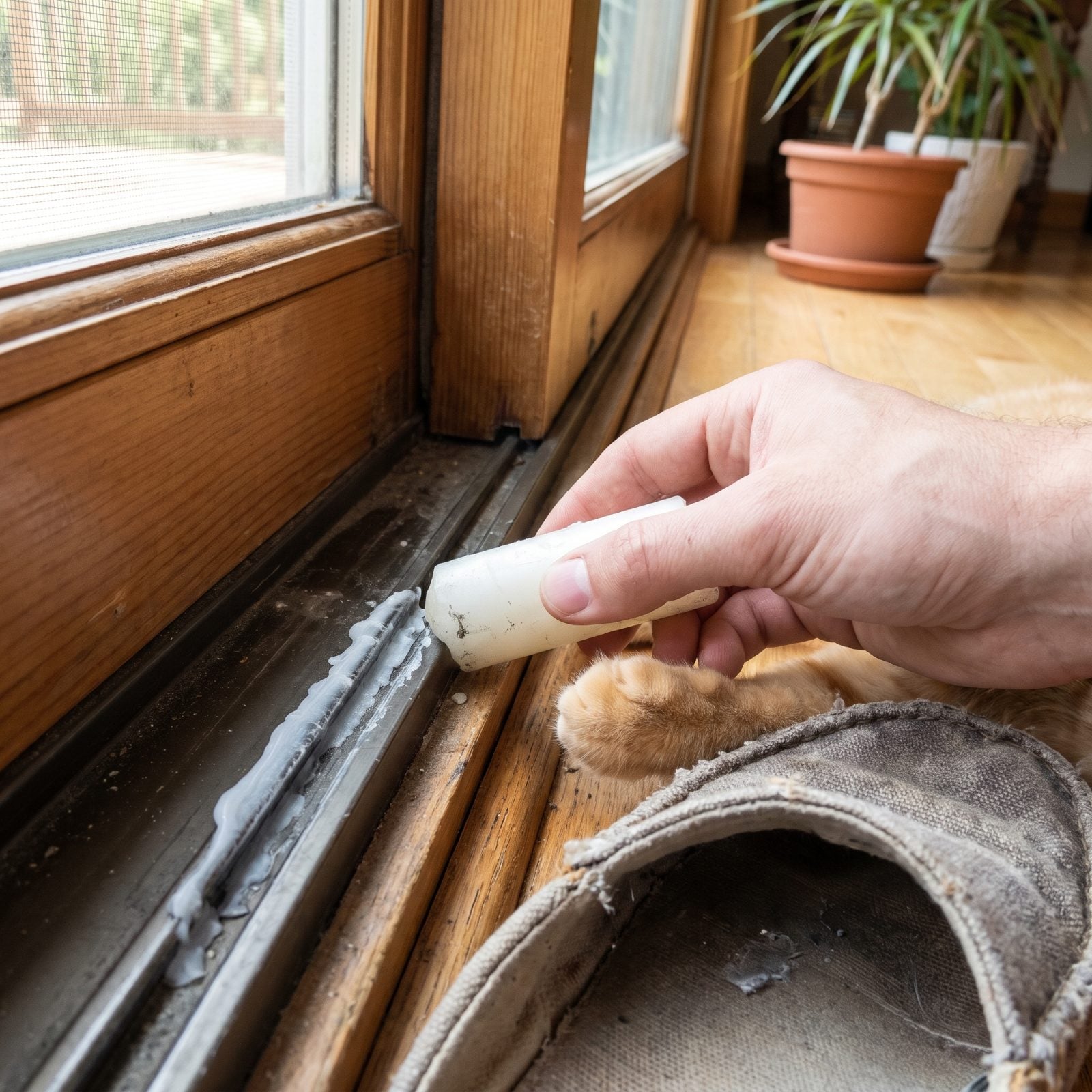
Cold stiffens everything — sliding doors, window tracks, the kitchen drawer that always catches. By January they fight you every time.
Rub a plain candle stub along the track. The wax leaves a slick film that lets the door glide without grabbing, and unlike oil it won’t collect grit or draw moisture into the channel where it’d freeze solid. Works on wooden drawer runners too. An old trick from folks who figured it out long before anyone sold spray lubricant in a can.
10. Prop the Storm Door Open on a Bright Afternoon
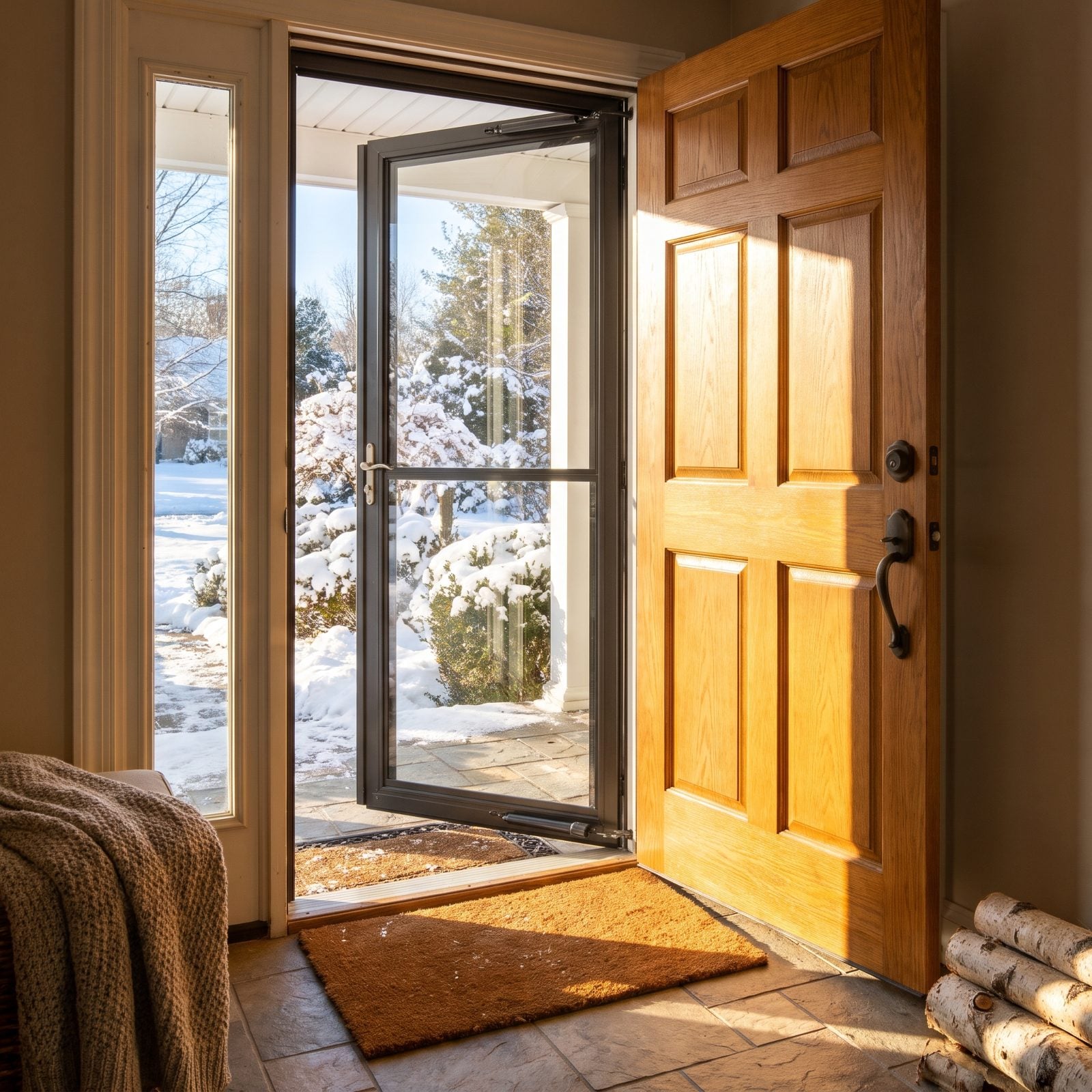
A storm door traps cold air against your main door all winter, and on a sunny day it traps the warmth too, right where you can’t use it.
Swing it open for a few minutes when the sun’s hitting the entry full on. Low winter sun lands straight on the bare wood of the main door and warms the frame, the threshold, that little pocket of air that’s been frozen since Thanksgiving. It dries the wood out and keeps the door from swelling shut. Close them both again before the sun drops, and the heat you gained is yours to keep.
9. Leave the Sink Cabinet Doors Open on the Coldest Nights
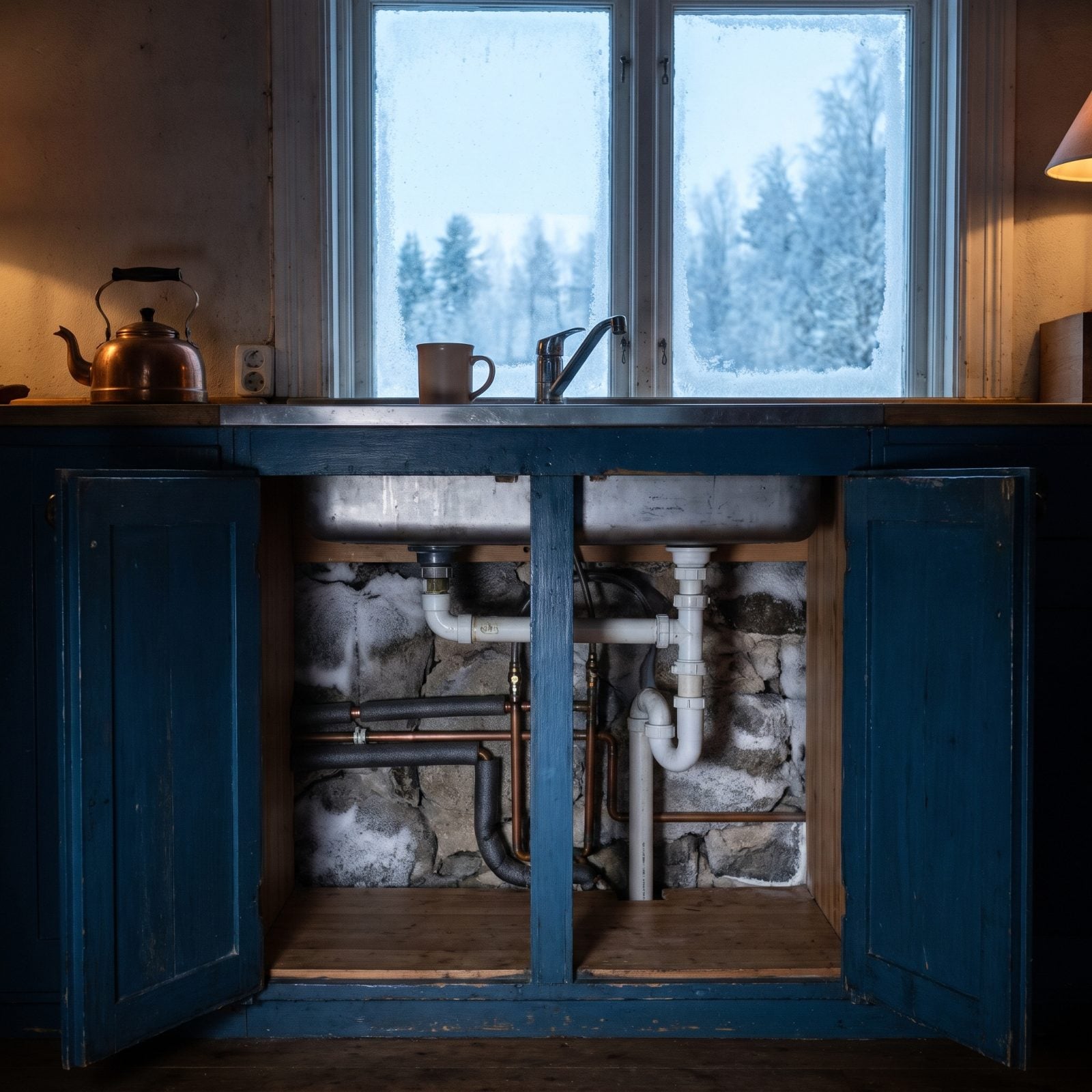
The pipes that freeze first are the ones tucked in a sink cabinet against an outside wall, because the cabinet seals them off from every bit of heat in the house.
On a bitter night, open those doors. Household air drifts in and keeps the pipes a few degrees warmer — sometimes the difference between a working faucet and a burst line at 3 a.m.
Got little kids or a curious dog? Move the cleaners out first. Nobody needs a frozen pipe and a vet bill in the same week.
In a local TV news report, a master plumber recommends opening the cabinet doors beneath sinks so warm household air can circulate around the plumbing.
8. Float a Sealed Jug in the Stock-Water Trough
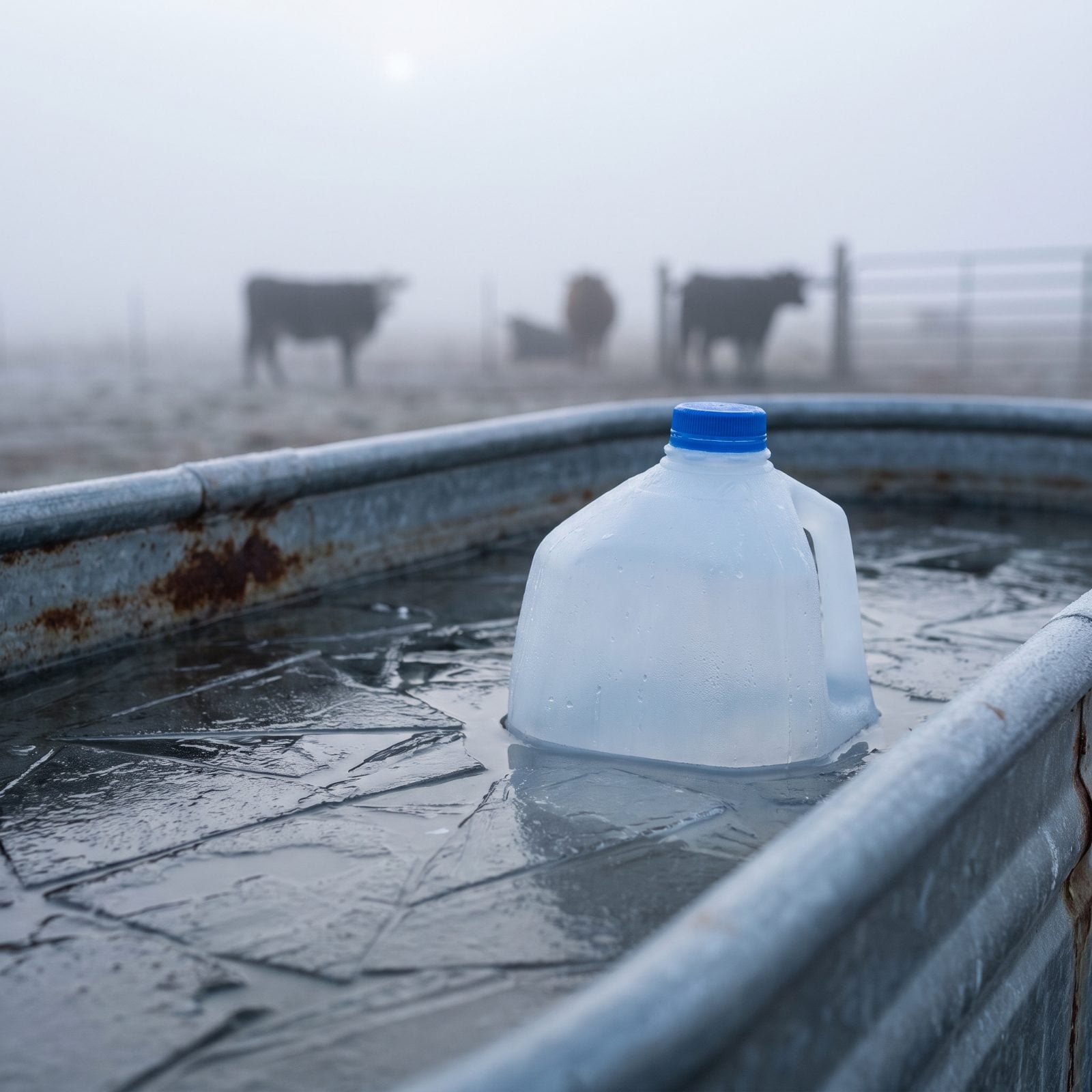
A stock trough skins over fast, and animals won’t paw through ice the way they’ll root through snow. Let it freeze solid and you’re hauling warm water twice a day in a five-gallon bucket.
Toss in a capped jug weighted with a little salty water so it floats low. As the animals drink and the wind nudges it around, the jug rocks and keeps a ring of open water around itself. It won’t beat a plug-in heater on the worst nights, but it buys you hours and a lot fewer frozen bucket trips.
7. Shovel a Clear, Narrow Path to the Propane Tank
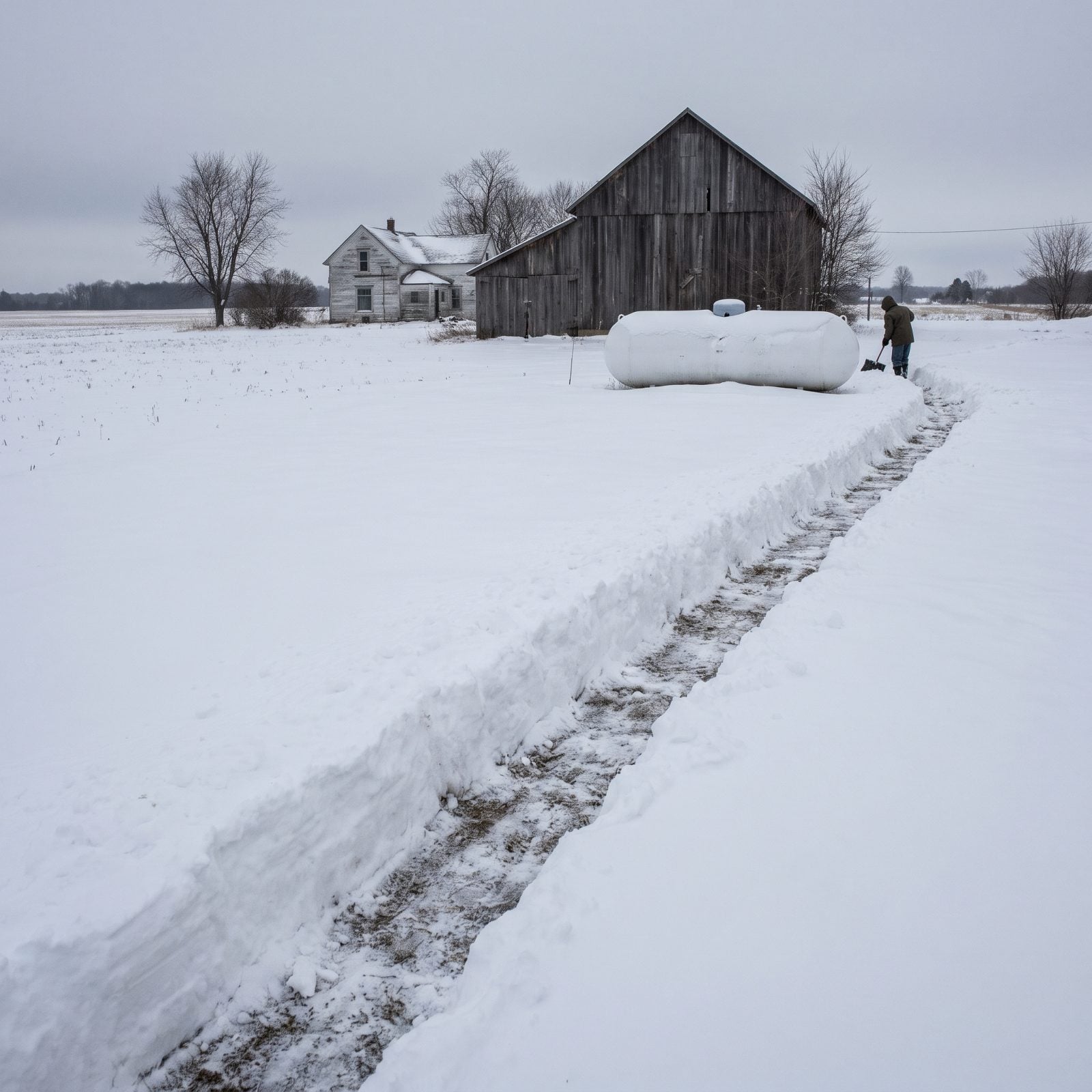
Your propane driver is hauling a heavy hose through your yard in January. If he can’t reach the tank, he leaves — and your next delivery might be a week out while your furnace sips the last of what’s left.
Keep a shoulder-wide path shoveled from the drive to the fill valve, and clear the snow off the tank’s gauge dome so he can read it. Mark the tank with a tall driveway stake if it’s buried out of sight.
Small courtesy, warm house. Drivers remember the people who make their day easier, and they remember the ones who don’t.
Asking customers to help its drivers through the winter, a national propane distributor writes “Clear a walking path, or at least mat down the snow to create a path that is safe for us to walk along to get to your propane tank.”
6. Build a Simple Windbreak Around the Trash Bins
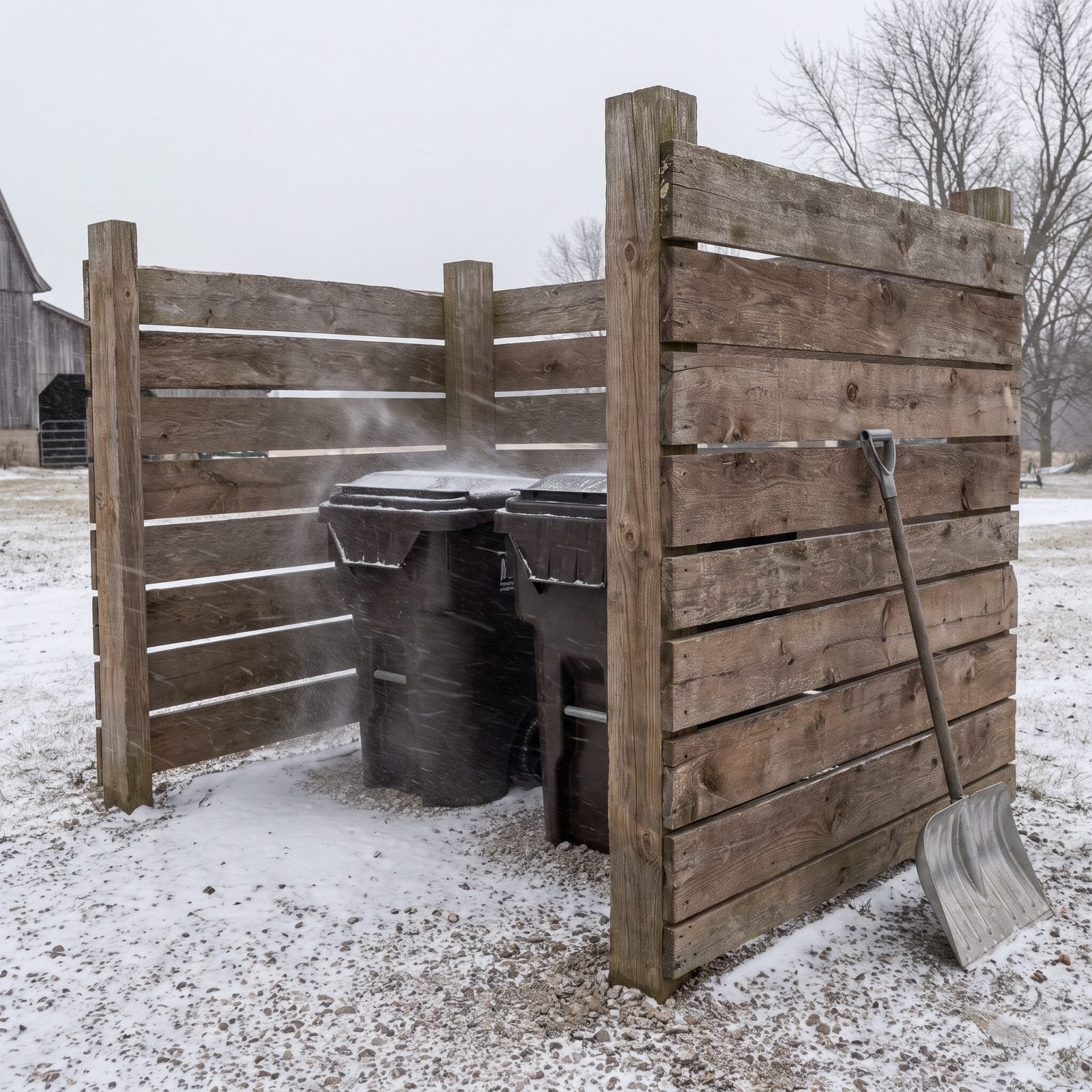
Lids blow off. That’s the whole problem. Wind comes screaming across a frozen lake with nothing to slow it down, catches a bin lid at just the right angle, and now your week’s trash is decorating the neighbor’s hedge.
A short windbreak fixes it cheap. Grab two T-posts and a run of lattice or old fence boards, then set the whole thing on the side the weather comes from. You’re not building a fort, just giving the bins something to hide behind.
Here’s the part nobody mentions. Put the main wall on the upwind side with short fences on the left and right, but always leave the front open, because closing the bins in completely traps drifting snow that packs solid and freezes the lids shut by February. Trust us on that.
5. Freeze Food Outdoors in Animal-Proof Coolers
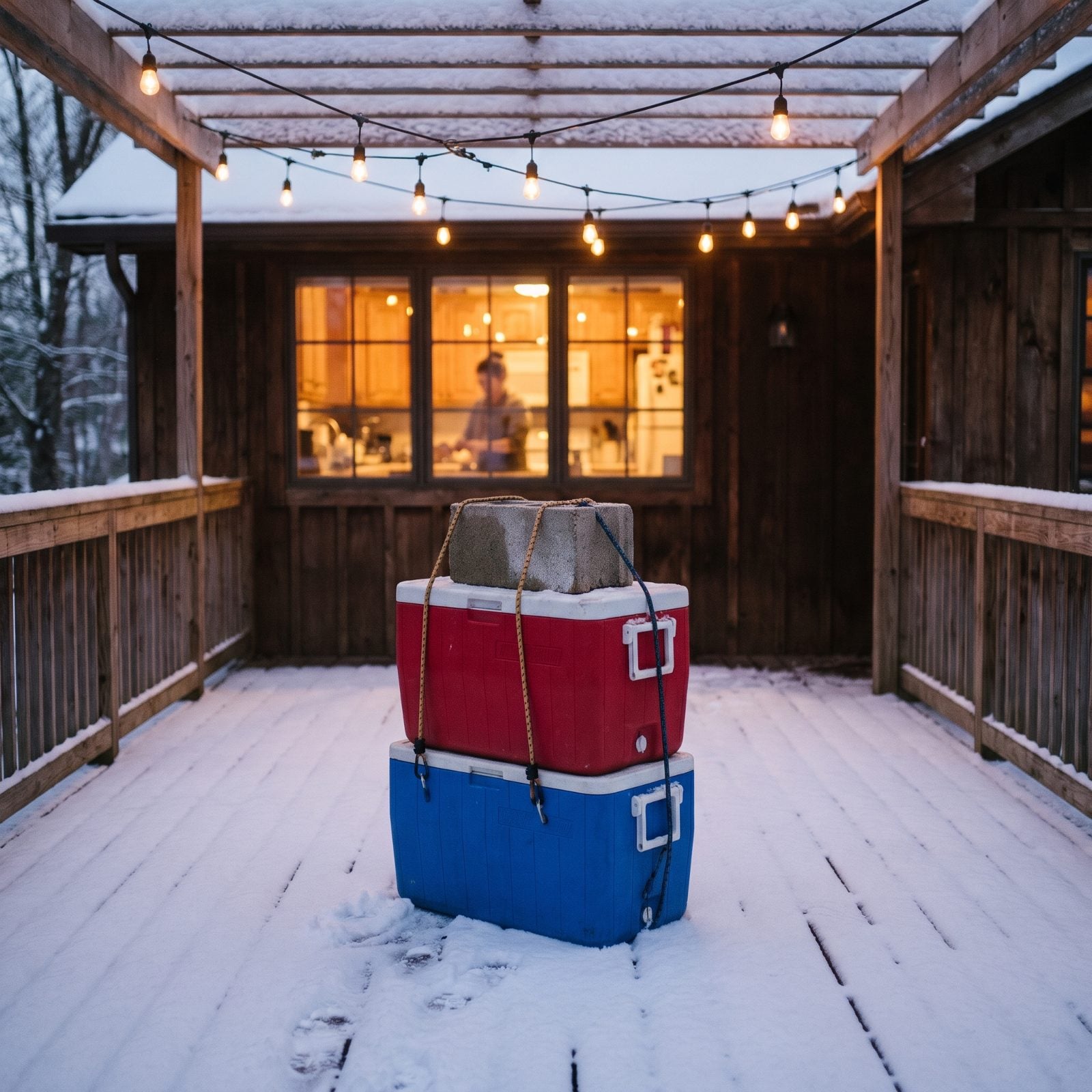
When the freezer fills up around the holidays, the deck becomes overflow storage. Nature already dropped the temperature below zero for free, so why fight it?
The catch: everything else that lives near a lake also wants your food. Raccoons work a latch like they’ve got thumbs, and they basically do. A plain cooler on the porch is a gift basket with a bow on it.
So here’s what the year-rounders trust. A hard-shell cooler, lid strapped down, a cinder block on top, and ideally the whole thing propped up off the deck so critters can’t get a grip. Soft coolers and cardboard boxes? Shredded by morning.
4. Keep a Thermos Filled Before the Power Flickers
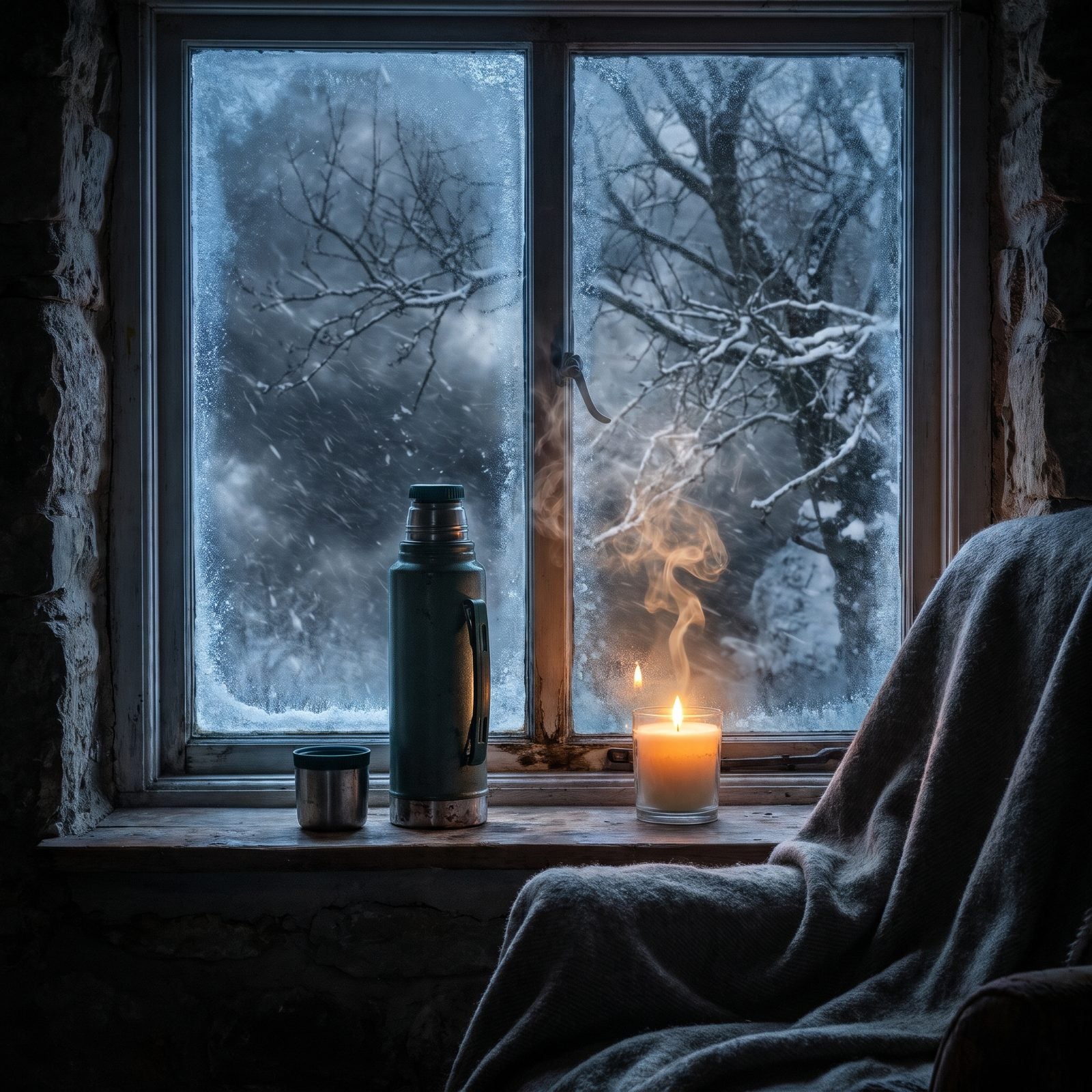
Fill the thermos when the forecast turns, not after the lights go. Ice storms take out power along lake roads for hours, sometimes days, and an electric kettle is just a paperweight once the grid drops.
Boil a full pot while you still can and pour it into a good stainless thermos. A decent one holds heat most of a day — enough for coffee, tea, a hot water bottle, oatmeal, something to wrap your hands around while you wait for the utility truck to crawl up the road.
Honestly? It can feel like overkill, right up until the February evening you’re watching your breath fog up in your own living room. Fill the thermos anytime the sky looks mean.
3. Shovel by Headlamp, Not Flashlight
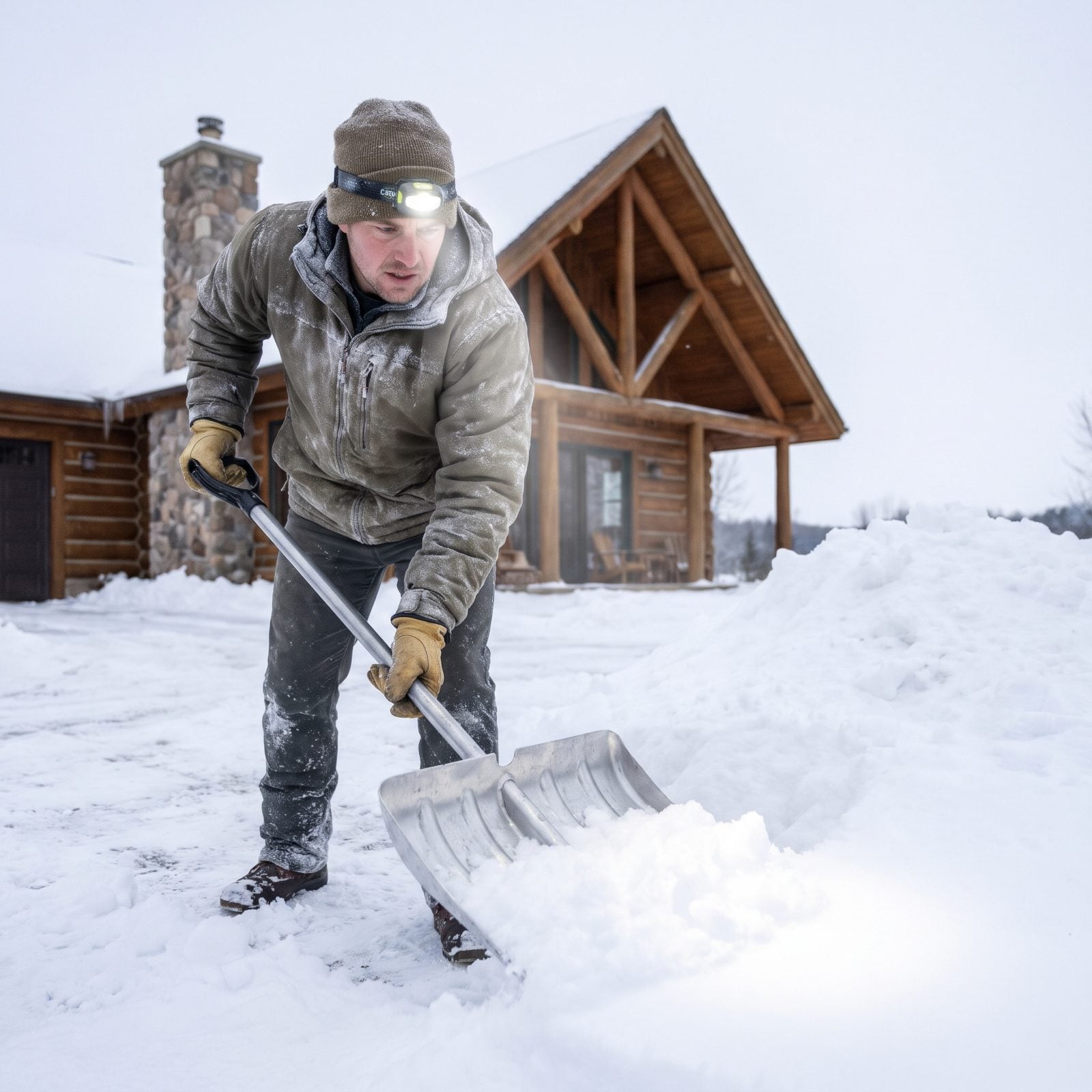
Both hands. That’s the entire argument. A flashlight needs one hand and shoveling needs two, so you end up tucking the light under your arm and lighting nothing but your own elbow.
A headlamp points wherever you look. The beam follows the next shovelful, lands on the ice patch before you step on it, catches the edge of the walk you’d otherwise never find under six fresh inches.
Lake-road mornings start in the dark and end in the dark, and the plow trucks come early. Being lit up helps them see you, too.
2. Stack Kindling in Paper Grocery Bags
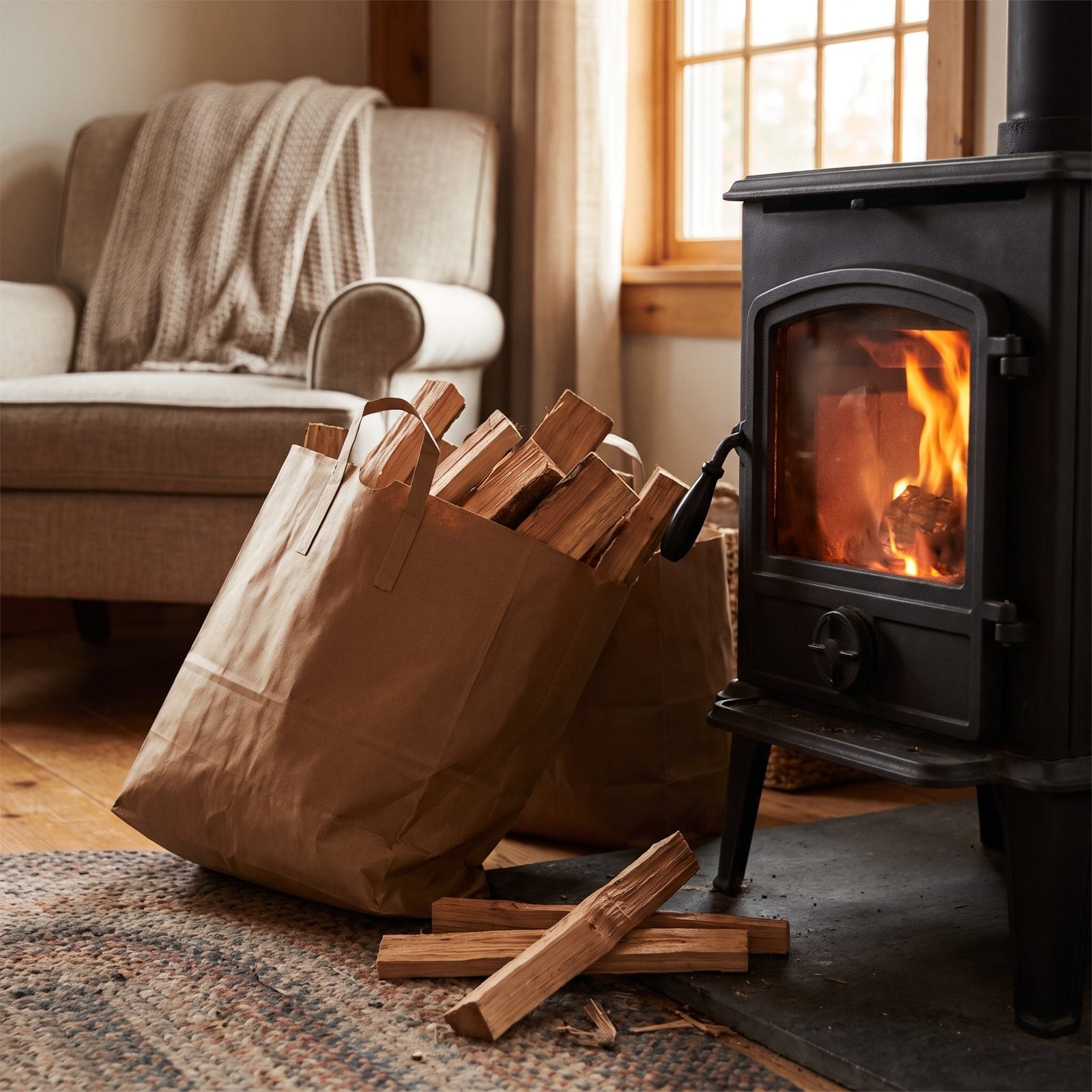
The bag goes in the stove too. That’s the trick that beats a tidy box or a crate every time.
Fill a paper grocery bag with dry kindling and split scraps during the day. When you’re ready to light the stove, set the whole bag in, match the bottom corner, and the paper plus the dry wood catches on the first try. No fumbling for newspaper, no building a little teepee in the cold with stiff, aching fingers.
Keep a few bags packed by the hearth. On the morning the house is freezing and you want fire now, having it ready to drop and strike is worth more than it has any right to be.
1. Keep Ice Cleats Right Beside the Mudroom Door
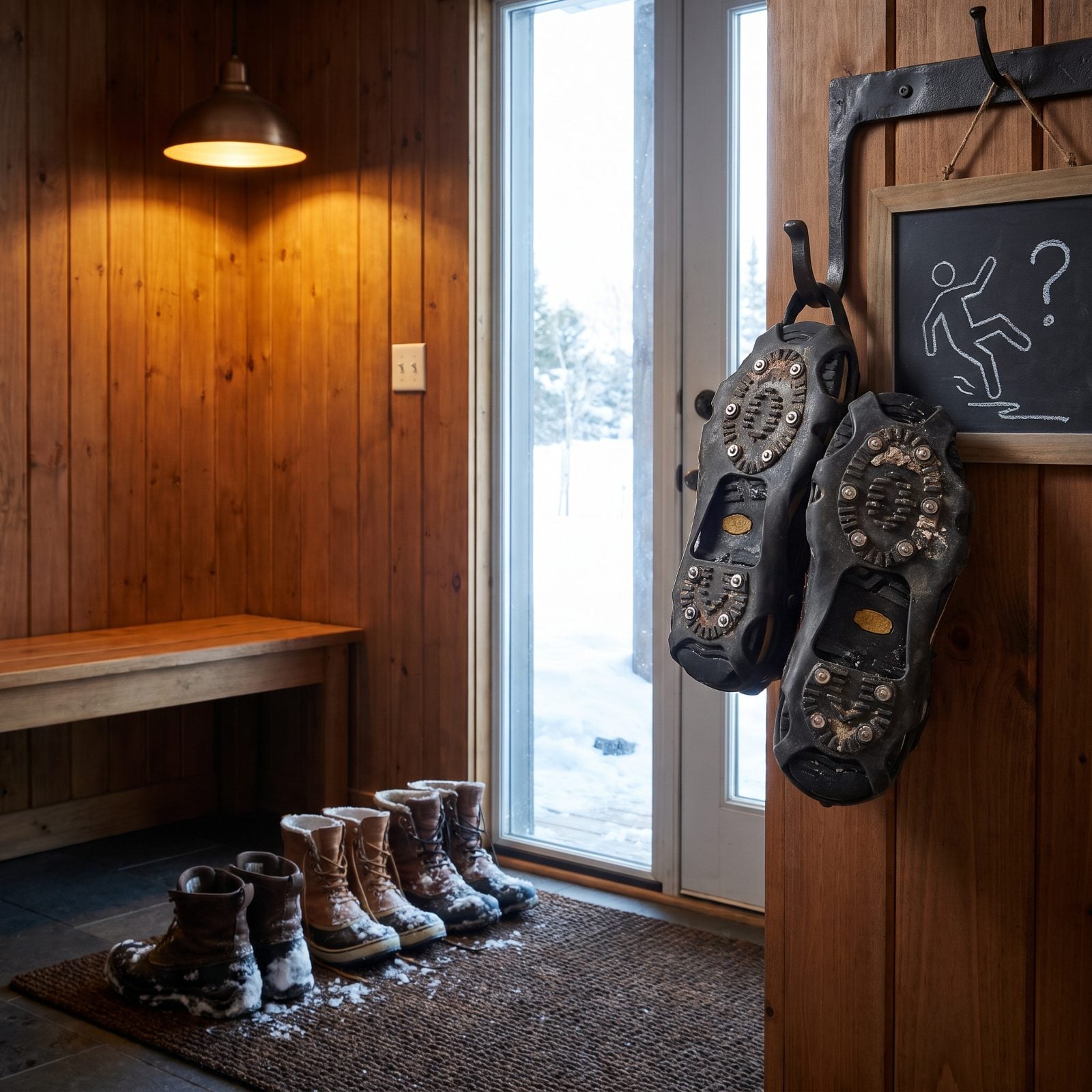
Cleats you have to dig out of the garage are cleats you’ll skip. And the day you skip them is the day the thawed-and-refrozen walkway turns to glass.
Year-rounders keep a pair slipped over their boots or hung on a hook within arm’s reach of the door, and you pull them on in the time it takes to zip a coat. Black ice near the lake is sneaky — the air off the water lays down a glaze on walks and docks that looks wet, not frozen.
A fall on ice at sixty does not heal like it did at thirty. I’ll say that part plainly. The cleats cost about twenty bucks, and a hip costs considerably more.