
The dock boards warm up around ten, and that’s when the real conversations start. Not about fishing. About the Medicare letter that landed in July with a surcharge nobody saw coming, and the tax bill that showed up because one fund kicked out a capital gain in December. Retirement income is a strange animal — it rewards timing and punishes autopilot. The habits below aren’t flashy, and they won’t make anyone rich overnight. What they do is better: they keep more of what’s already yours from leaking out through surcharges, surprise taxes, and reinvestments you never meant to make.
Please note that some of the imagery in this article may have been enhanced with the assistance of AI.
42. Use Late-Year IRA Withholding to Fix Missed Quarterly Tax Payments
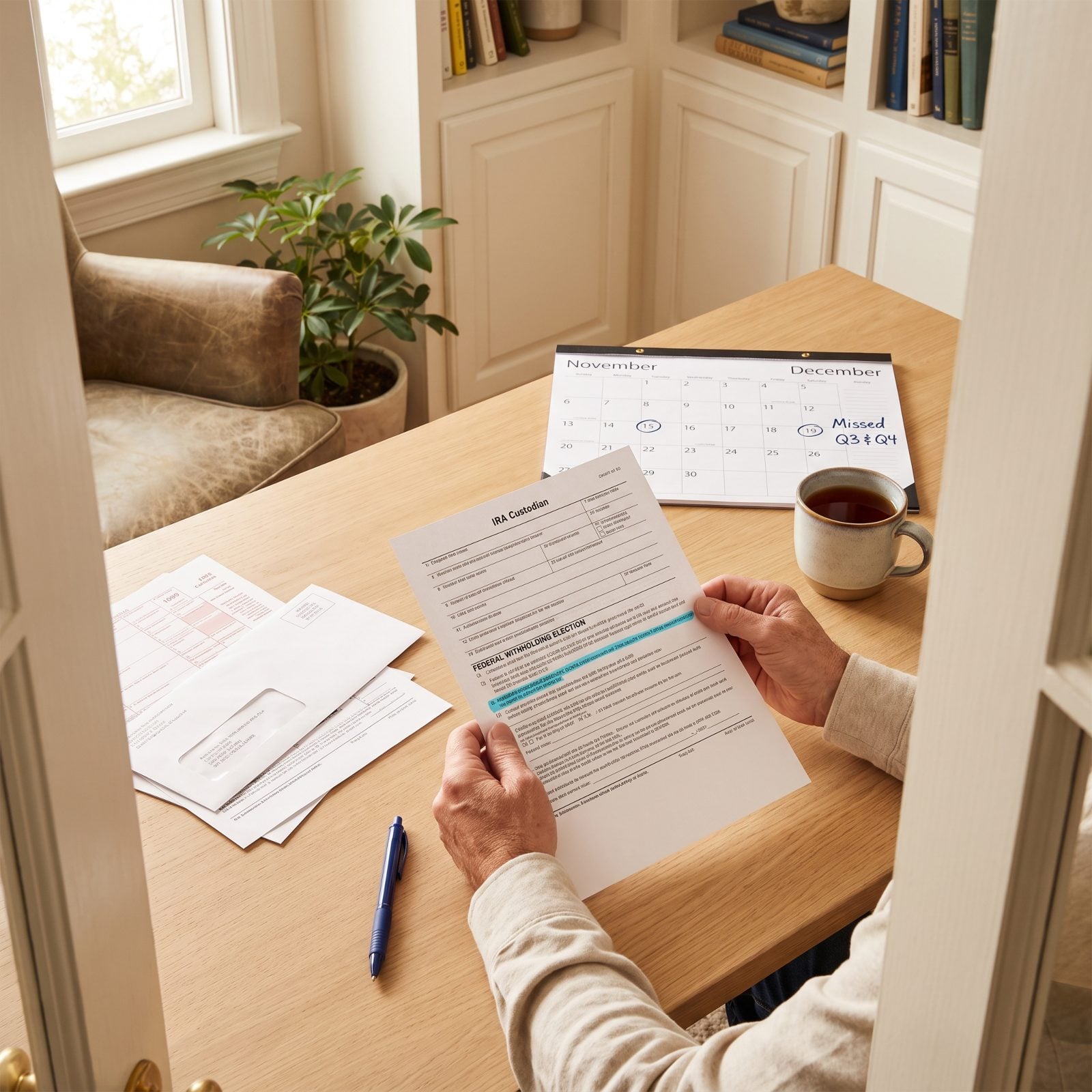
Here’s a quirk of the tax code almost nobody uses on purpose. Money withheld from an IRA distribution gets treated as if it were paid evenly across the entire year, no matter when it actually leaves the account.
So if the quarterly estimated payments slipped — and they slip for a lot of people that first retired year — a single November IRA withdrawal with heavy tax withholding can patch the whole year and sidestep the underpayment penalty. A separate check mailed in November gets no such even-spreading treatment. The withholding does.
41. Archive HSA Receipts Now, Reimburse Yourself Tax-Free Years Later
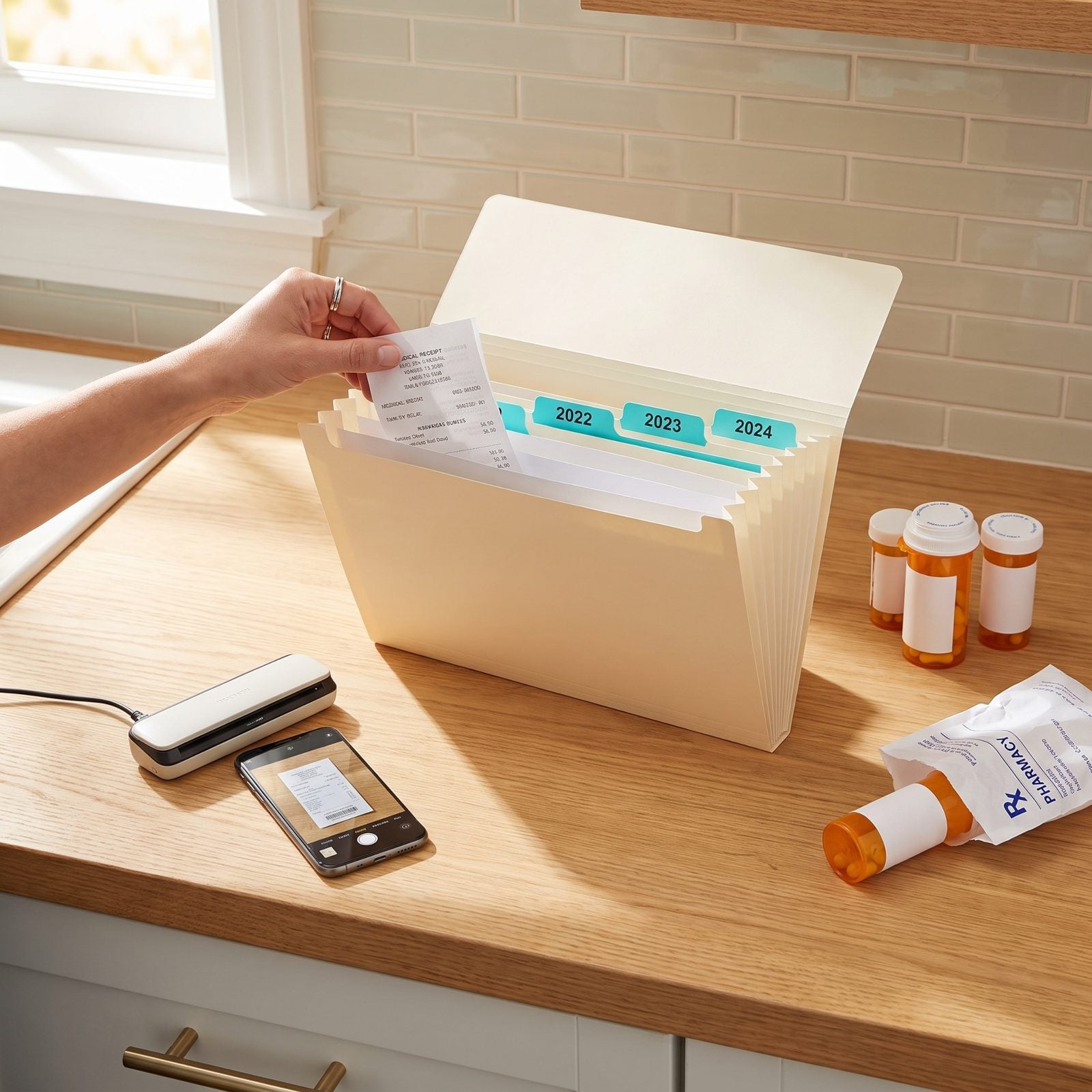
An HSA has a feature most owners never trigger: there’s no deadline to reimburse yourself. Pay a doctor’s bill out of pocket today, keep the receipt, and the HSA can pay you back a decade from now — completely tax-free, with all that growth in between.
So the account compounds untouched while a shoebox, or better yet a scanned folder, quietly builds a bank of future tax-free cash. The catch is the paper trail. No receipt, no proof, no reimbursement. Scan everything the day it happens. Future-you will be grateful, and slightly smug.
40. Track Income on a Two-Year Calendar to See IRMAA Coming

Medicare has a two-year memory, and it’s working against you. Your premium surcharge — they call it IRMAA — this year is based on your tax return from two years ago. One good year of income, say a big Roth conversion or a property sale or a mutual fund surprise, can quietly bump your Part B and Part D premiums for twelve months, long after you’ve forgotten why.
Map income on a two-year horizon and that ambush becomes a decision. You get to see the thresholds before you cross them.
39. Send Charitable Gifts Straight From Your IRA, Skip the Taxable Income

Once you’re old enough to take Required Minimum Distributions, you can send money straight from your IRA to a qualified charity and have it count toward that RMD without the amount ever hitting your taxable income. It’s called a Qualified Charitable Distribution.
Why does that beat writing a personal check and deducting it? Because most retirees take the standard deduction now, so the charitable write-off does nothing. The QCD skips the income entirely, which can also keep you under those IRMAA cliffs and lower the tax on your Social Security. One rule, though: the gift has to go straight from custodian to charity. Route it through your checking account first and the whole benefit evaporates.
38. Fill the Low Brackets With Measured Roth Conversions

The years between retiring and starting Social Security (or RMDs) are a rare window. Income dips, and you can sit in a low tax bracket on purpose.
Convert just enough traditional IRA money to Roth each year to fill that bracket — no more — and you move future tax money off the table at today’s low rate. The Roth grows tax-free forever and never forces an RMD. Overfill it, though, and you spill into the next bracket, bump your Medicare premium, or push your capital gains into a taxable zone. The whole art is stopping at the line.
37. Pick Your Exact Tax Lots Before You Sell a Single Share

Sell shares and leave the method on default, and your brokerage usually dumps the oldest ones first — often the ones carrying the biggest gain and the biggest tax bill.
Choose specific lots instead and you can hand over the shares with the highest cost basis, or the ones already past the one-year mark for long-term rates, or even a few sitting at a loss. Same sale, same cash in hand, a smaller tax hit. The window to specify closes once the trade settles, so it has to happen before you hit confirm.
36. Let Your Withdrawals Do the Rebalancing, Not Extra Trades

Most people rebalance by selling what grew and buying what lagged, which can trigger taxes in a brokerage account. But retirees are already pulling money out every month to live on.
So pull that monthly income from whatever’s overweight. If stocks ran up, fund your spending by trimming stocks. The portfolio drifts back toward target without a single standalone trade. You were going to withdraw anyway — this just points the withdrawal where it does double duty.
35. Switch Off Dividend Reinvestment in the Accounts Paying Your Bills

Automatic dividend reinvestment makes sense while you’re building. In retirement, it quietly works against the account you’re also drawing from.
Picture it. Dividends buy more shares on the 15th, then you sell shares on the 20th to cover the mortgage, racking up tiny purchase lots and tax paperwork for money that’s just heading back out the door. Turn reinvestment off in your spending accounts and let the dividends land as cash you actually use. Keep it on in the Roth and the accounts you’re not touching for years.
34. Run a Tax-Loss Harvest Check Every November

November is the month to go hunting for the losers. Any holding sitting below what you paid can be sold to lock in a loss that offsets your gains dollar for dollar, plus a limited amount against ordinary income on top of that.
Honestly? Most people forget until the year’s gone and the chance with it. Make it a date on the calendar, right alongside the furnace filter and the storm windows. One rule to respect: don’t rebuy the same security within 30 days or the loss gets disallowed as a wash sale. Buy something similar, not identical, and the loss still counts.
33. Reapply for Senior Property-Tax Relief Every Time the Rules Shift

Property-tax breaks for seniors are real money, and they’re a moving target. Income limits get raised, age thresholds drop, new freeze and deferral programs appear — and almost none of it comes with a letter telling you you now qualify.
A homeowner turned down at one age might sail through a few years later under a rule that changed last spring. So check the county assessor’s page once a year, every year. The application is usually a single form, and the exemption can shave a meaningful chunk off the bill annually for as long as you own the place.
32. Search Official Unclaimed-Property Databases Every Year

States hold a fortune in forgotten money. Old security deposits, final paychecks, insurance refunds, dividend checks that bounced back to the issuer — it all gets handed to the state, and the state just waits for you to ask.
Use the official database, nothing else. Search your state’s treasury or unclaimed-property site, plus the national MissingMoney site that many states feed into. Both are free. Anyone charging a fee to “find your money” is selling you something you can do yourself in ten minutes.
Do it every January. Search your name, your spouse’s, maiden names, old addresses, any business you ran. New money turns up there all the time, years after the fact.
31. Add a Trusted Contact to Brokerage and Bank Accounts

Five minutes, and almost nobody does it. A trusted contact is a person your bank or brokerage can call if something looks off — if they can’t reach you, or they suspect confusion or fraud on the account.
Here’s what it is not. That person gets no access, no control, no ability to move a dime. They’re just a phone number the institution can use when they see a withdrawal that doesn’t fit the pattern, a second set of eyes you’ve authorized before money walks out the door.
Elder financial fraud tends to work because the firm has nobody to call. A trusted contact closes that gap without handing over any power.
30. Freeze Credit Reports Until New Credit Is Actually Needed

A credit freeze is the closest thing to a deadbolt your finances have. With all three bureaus frozen, nobody can open new credit in your name, because lenders can’t pull the report they need to approve it.
Retirees rarely open new accounts. No car loan this month, no new mortgage, no store card at the register. So the freeze just sits there doing its job, costing nothing and bothering no one.
When you do need credit, you lift it temporarily and refreeze. Freezing and unfreezing is free at Equifax, Experian, and TransUnion. Just be sure you ask for a freeze, not a “credit lock.” A lock is a different and often paid product. Do all three — otherwise you’ve locked two of three doors and left one open.
29. Carry Umbrella Liability Coverage to Shield the Nest Egg From Major Claims

An umbrella policy is the coverage people skip right up until the afternoon they desperately need it. It sits on top of your home and auto insurance and kicks in when a claim blows past those limits.
Picture a guest who slips on your wet dock and sues. Or a fender-bender where the other driver’s injuries run into six figures. Your auto liability caps out, everything above that cap comes straight from your savings, and the portfolio you spent forty years building becomes the plaintiff’s payday.
A million dollars of umbrella coverage often runs a few hundred dollars a year — about the cheapest protection you can buy relative to what’s at stake. Retirees with paid-off homes and real savings are exactly the people a plaintiff’s attorney looks at hardest.
28. Report Lower Retirement-Era Mileage to the Auto Insurer

The commute’s gone. No more forty minutes each way, five days a week. But if you never told your insurer, you may still be paying as if you’re logging a full year of highway miles when you’re barely leaving the neighborhood.
Mileage is a real rating factor. Drivers who don’t rack up the miles file fewer claims, and insurers price for it. Call and update your annual estimate, and while you’re on the phone, ask whether they offer a low-mileage or usage-based discount.
Worth going a step further, too. If a second car mostly sits in the driveway, some carriers let you drop it to a stored or occasional-use rate.
27. Compare Medicare Part D Plans During Every Open Enrollment

Part D plans rewrite their formularies and pricing every single year. The plan that was cheapest for your prescriptions last January can quietly become one of the priciest by the next, and the insurer is in no hurry to tell you.
During open enrollment, usually mid-October through early December, plug your actual drug list into Medicare’s Plan Finder and re-shop. Not browse. Re-shop, with your real medications and your real pharmacy.
Staying put out of habit is the single most expensive decision most retirees make with their drug coverage.
People lose real money year after year, simply by renewing the same plan without checking. It’s an hour at the kitchen table against a number that can sting.
26. Check Prescription Cash Prices Before Using Insurance

Strange but true: the cash price for a generic drug is sometimes lower than what your insurance copay would charge. And here’s the part that makes people mad once they learn it — a pharmacist often won’t volunteer that unless you ask.
Before you hand over the insurance card, check a discount coupon app and ask the pharmacist flat out: what’s the cash price? Compare it to your copay, then pay whichever is lower. Simple as that.
This matters most on cheap generics, and on anything your deductible hasn’t covered yet.
25. Ask for the Self-Pay Price Before Scheduling a Procedure

Hospitals and clinics quietly keep two prices for the same procedure: the billed price, which is fiction, and the self-pay or cash price, which is often a fraction of it.
If you haven’t met your deductible, or the service is one insurance covers poorly, call the billing office before you schedule and ask for the self-pay rate. Then ask if paying it upfront gets you a prompt-pay discount on top.
It feels backwards to pay cash when you have insurance. Sometimes it’s simply cheaper, and the only way to find out is to ask the question most people are too polite to ask.
24. Request an Itemized Medical Bill Before Paying the Balance

The summary bill a hospital mails you is almost designed to be paid without a second look. One balance due, no detail, pay here. Don’t.
Request the itemized version — the one that lists every charge line by line — and then actually read it. Duplicate charges show up constantly. So do items for supplies never used, a room rate for a day you were already home, services billed twice over.
Billing errors are common enough that checking is worth the stamp and the phone call. You can’t dispute a charge you never saw.
23. Pay a Fixed Monthly “Paycheck” From the Portfolio

Retirement flips a lifelong habit. For forty years a paycheck landed automatically and you budgeted around it. Now money sits in accounts and you have to decide, over and over, how much to pull out. That constant decision-making is where overspending hides.
So recreate the paycheck. Set a fixed monthly amount to move from the portfolio into your checking account, same date every month, ideally automated. You spend from checking the way you always did, and the investments stay invested.
Two things happen. You stop dipping into savings on impulse, because the transfer is a fixed number you’ve already decided. And you stop selling investments at random moments, including the bad ones. A steady withdrawal is calmer than a reactive one.
22. Set Spending Guardrails That Trigger Small Cuts After Market Declines

Most retirees pick a withdrawal rate and never touch it again. That works right up until the market drops hard and you’re still pulling the same dollars from a smaller pile.
A guardrail fixes that without the guesswork. You decide ahead of time that if the portfolio falls below a set line, the discretionary spending trims by a modest slice of the flexible stuff until things recover. No panic. No agonizing in the moment, because the call was already made on a good day.
The trim is usually small. Skip one trip, delay one upgrade. Doing it early, in a down year, keeps you from selling investments at the worst possible time just to cover a dinner out.
21. Match Essential Bills to Guaranteed Income Before Funding Extras

Here’s a trick that calms more retirement nerves than any budgeting app ever has: cover the must-pay bills with money that shows up no matter what the market does.
Social Security, a pension, an annuity if you’ve got one. Line those guaranteed checks up against the non-negotiables first — housing, utilities, insurance, groceries, medicine. Once the floor is covered by income that can’t vanish, a bad market year stops feeling like an emergency.
Everything else gets funded from the portfolio. The travel, the grandkids, the new kayak. And because that’s the flexible layer, it’s exactly the part you can dial back without missing a mortgage payment. Build the floor before you build the fun.
20. Adjust Portfolio Withdrawals for Inflation Only Once a Year
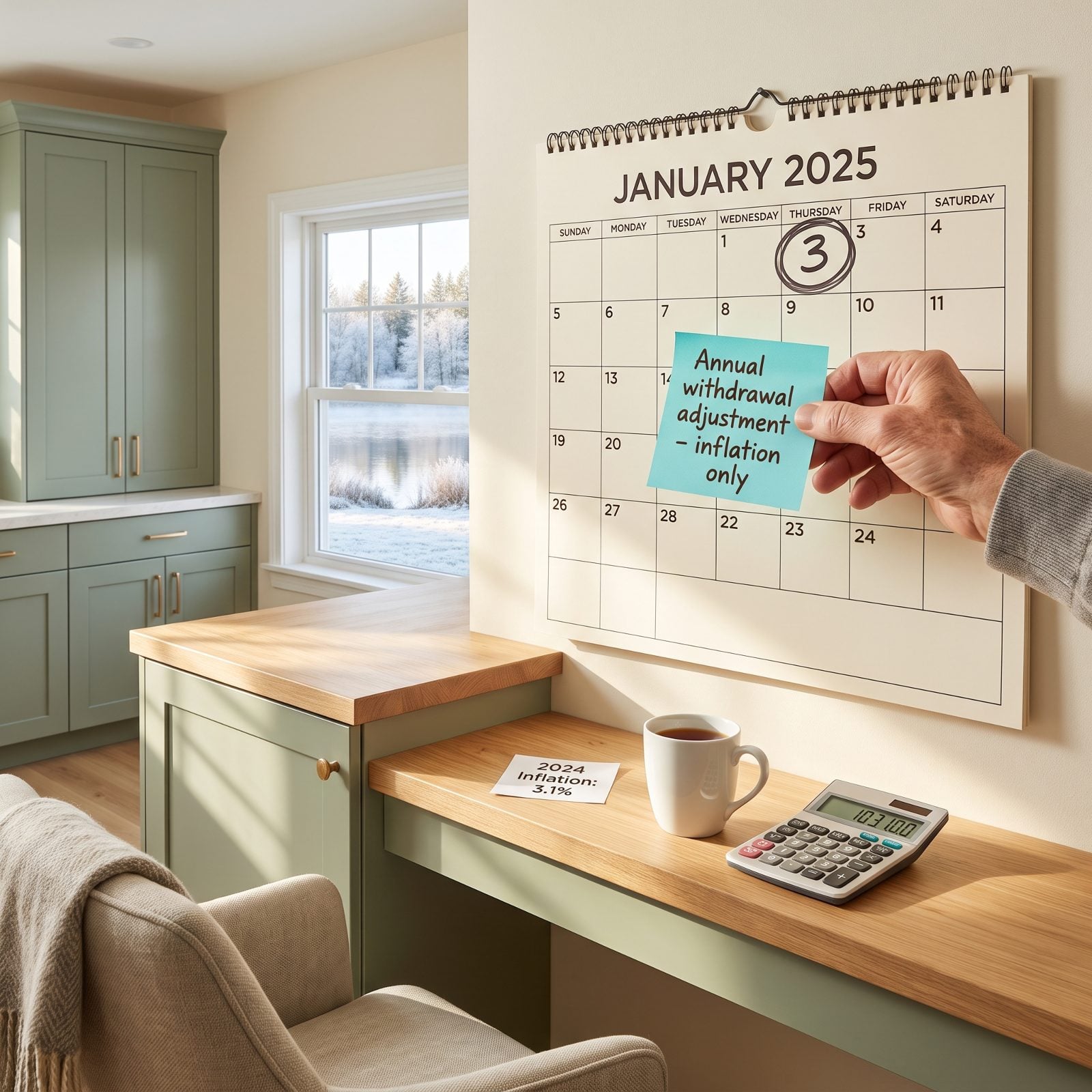
Bumping up your spending every time prices tick higher feels responsible. It’s a slow leak dressed as discipline.
Pick one day a year — say the first week of January — and make the inflation adjustment then. One calculation, one new withdrawal number, done until next year rolls around. Adjust in real time instead, reacting to every gas-pump headline, and you get spending creep that quietly compounds against you.
Once a year keeps the math honest and your blood pressure lower. Write the date on the calendar so it turns into a ritual rather than a worry.
19. Divide Annual and Irregular Bills by 12 and Save That Amount Monthly

Property taxes, insurance premiums, the HOA dues, the boat’s annual haul-out. None of these arrive monthly, so they ambush you the moment they do.
So add up every once-a-year and twice-a-year bill, divide by twelve, and move that amount into a separate account every month like it’s just another utility. When the big bill lands, the money’s already sitting there waiting for it.
Sounds almost too simple to bother with. But the retirees who actually do it never scramble, never dip into investments at a bad moment to cover a tax bill, and never feel that lurch of a four-figure charge showing up out of nowhere.
18. Use a 13-Month Bill Calendar to Expose Renewals Before They Hit

The streaming service that quietly renewed at twice the intro rate. The insurance that auto-bumped. That warranty you forgot you even bought. Renewals are designed to slip past you.
A 13-month calendar catches them. Instead of a normal wall calendar, you use a big grid with a column for each month plus one set aside for next January, and every recurring charge gets a dot or a written note in the column for the month it renews. Now you spot the renewal coming a month out, which is just enough time to shop it, cancel it, or call and ask for the loyalty rate.
That extra thirteenth month does all the work. It stops the January surprise from blindsiding you back in December.
17. Keep a Five-Year Replacement Forecast for Cars, Appliances, and Major Home Systems

Nobody plans to replace a water heater. It just dies, usually on the coldest weekend of the year, and suddenly there’s a surprise four-figure bill and a mad scramble to find a plumber who’ll answer the phone.
A replacement forecast ends the ambush. List the big-ticket items you own — the roof, the furnace, the car, the fridge, the dock if you’ve got one — and jot down a rough year each is likely to need replacing based on its age. Spread those costs across the years ahead instead of eating them all at once.
You can’t predict the exact failure. You can stop being shocked that a fifteen-year-old appliance is nearing the end. The forecast turns a crisis into a line item.
16. Require a Repair Estimate Before Replacing Anything Expensive

The washing machine makes a noise and the first instinct is to replace the whole thing. Retailers absolutely love that instinct.
So make a rule. Nothing expensive gets replaced until someone hands you a repair estimate. Half the time the fix is a sixty-dollar part and an hour of labor, not an eleven-hundred-dollar new unit plus delivery and haul-away.
Sometimes the estimate confirms it really is time. Fine — now you’re deciding with information instead of impulse. The estimate costs a service-call fee at most, and it regularly saves ten times that.
15. Keep a Labeled Bin of Small Parts That Prevent Costly Service Calls
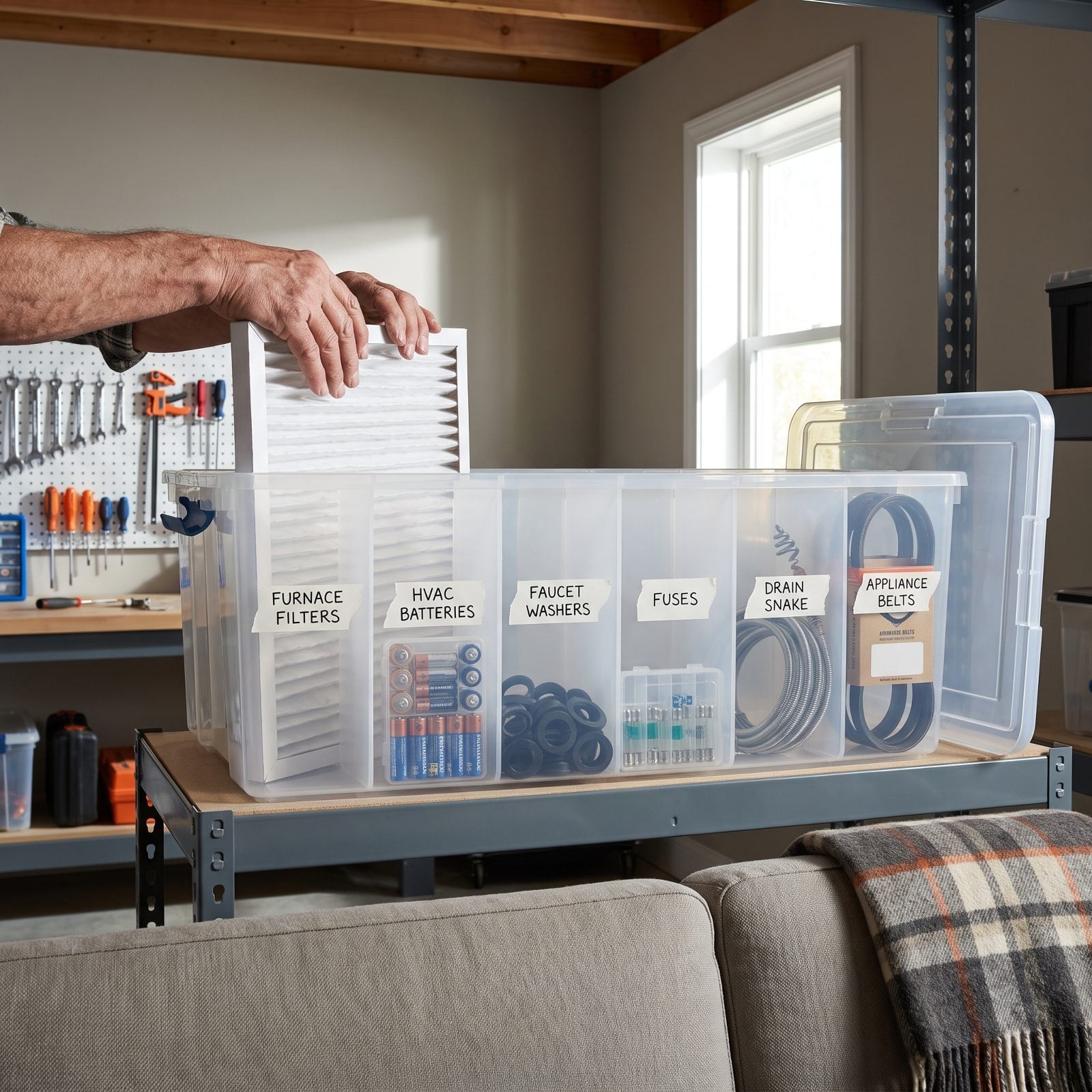
A service tech charges a visit fee, a diagnostic fee, and shop time just to show up. Then he swaps out a part you could’ve swapped yourself in ten minutes.
Keep a bin. Furnace filters, a spare thermostat battery, faucet washers, fuses, the common belts for your appliances, a drain snake — label every bit of it. When the heat quits because the filter’s clogged, or the smoke detector starts chirping at 2 a.m., the fix is on the shelf instead of on the phone.
The parts cost pocket change. The service call you dodge does not.
14. Use a Plug-In Energy Meter Before Blaming an Appliance for a High Utility Bill

The electric bill jumps and everyone blames the old fridge out in the garage. Sometimes that’s right. Often it isn’t.
A plug-in energy meter settles the argument for about the price of a lunch. You slot it between the outlet and the suspect appliance, let it run, and read exactly how much power the thing actually pulls. No guessing, and no replacing a perfectly efficient freezer just because it looks old.
It also sniffs out the real culprits — the second fridge running half-empty, the dehumidifier that never shuts off, the space heater somebody left plugged in behind a door. Measure before you blame. The meter pays for itself the first time it talks you out of a needless appliance purchase.
13. Check the Library Before Buying Tools, Entertainment, or Attraction Passes

Most people think the library is books. It stopped being only books a long time ago.
Plenty of branches now lend tools, telescopes, sewing machines, board games, even metal detectors. And here’s the one that floors everyone: free or deeply discounted passes to local museums, botanical gardens, state parks, and attractions. You check them out like a novel.
Before buying that pressure washer you’ll use twice a year, or paying full admission for the whole family at the aquarium, call the library and ask what they lend and what passes they carry. Checking first can save you hundreds a year on stuff you’d otherwise own and store or pay full retail to enjoy.
12. Get an Insurance Quote Before Choosing the Next Car

Two sedans can cost the same at the dealer and hundreds apart at the insurer. One gets flagged as a theft target, while the other has cheap bumpers and a boring safety record, which is exactly what keeps the premium down.
Spend five minutes pulling a quote on the three models you’re weighing and you’ll know the true yearly cost before you fall in love with the wrong one. Retirees on a fixed income feel every premium hike, and the hike stays invisible until the policy renews.
11. Sell the Old Version Before Purchasing Its Replacement

Buy the new thing first and the old one stops being an asset. It becomes clutter you’ll eventually give away or dump for pennies, because once the replacement is sitting there, the motivation to sell just evaporates.
Selling first flips the pressure. The old item is worth the most the day before the upgrade arrives, when it still works and you still care, and it funds part of the replacement, which quietly trims what comes out of savings.
Works on cars, kayaks, patio furniture, the second TV nobody watches. Sell, then shop.
10. Schedule a Trial’s Cancellation the Same Day It Starts

Free trials make money on forgetting. The whole business model assumes you’ll miss the auto-charge date, and most people do.
The fix takes thirty seconds. The moment a trial starts, circle the start date and set a cancellation reminder for that same day. Not some vague someday, and not the day it ends. Today, so your phone tells you to cancel long before the auto-renew date.
If the service earns its keep, you resubscribe on purpose. Making that call clear-headed instead of by default is what saves the money.
9. Choose One Annual Day to Review Every Automatic Renewal

Subscriptions scatter across the year on purpose. A magazine here, a roadside plan there, a streaming bundle that renewed in March while you weren’t looking. Spread out, each one slips past.
Pick a single date — say the first Saturday after New Year’s — and pull every recurring charge onto one list. Insurance, memberships, cloud storage, the warranty on the washer. Then go line by line and ask the simple question: did this earn its spot?
8. Downgrade Unused Annual-Fee Credit Cards Instead of Automatically Renewing

Cancelling a card feels responsible. It can actually ding your credit by shortening your history and shrinking your available credit, which matters even in retirement if you ever refinance or co-sign.
There’s a better move most people never ask about. Call the issuer and request a product change to a no-annual-fee version of the same card. The account stays open, the history survives, and the yearly fee disappears.
That annual fee was buying perks you quit using after the first year. Downgrade, and keep the account age working for you.
7. Sweep Checking-Account Money Above a Fixed Ceiling Into Savings

Money sitting in checking does nothing. It earns close to zero and, worse, it looks spendable, which is how a comfortable balance slowly leaks into things nobody remembers buying.
Set a ceiling. Say thirty-five hundred dollars covers your monthly bills with a buffer — anything above that gets swept into a savings or money-market account where it earns real interest and stops tempting you.
You can automate the sweep, but doing it by hand once a month has a hidden benefit. You actually see the balance and stay honest about where it went.
6. Use a Cash Envelope Only for the One Spending Category That Consistently Leaks

The old envelope system, where every category gets its own cash stash, is a hassle, and most people abandon it inside a month. Too fiddly.
Run it for one category instead — the one that always overshoots. For a lot of households that’s dining out or impulse runs to the hardware store. Put the month’s budget for that single leak in cash, and when the envelope’s empty, you’re done until next month.
Cash makes spending feel real in a way a tapped card never will. Tapping is frictionless, and frictionless is the problem.
5. Keep an “Eat First” Container at the Front of the Refrigerator

Food waste is grocery money in the trash. Households toss a shocking amount of it every year, and most is stuff that got shoved to the back and forgotten until it turned.
One clear bin at the front, marked with a bright turquoise tag, fixes the geometry. Anything close to its last good day goes in the bin, so you open the fridge, you see it, you use it.
Simple, a little dorky, and it works. That container becomes the first thing you reach for instead of the last thing you discover.
4. Maintain a Dry-Erase Freezer Inventory on the Door

A chest freezer is where good intentions go to get buried. You buy in bulk to save money, then forget the salmon under three bags of ice until it goes freezer-burned and sad.
Stick a dry-erase board on the door and suddenly you can read the whole inventory without digging through anything. Make a tally mark as each item goes in, and keep a running count by category. You stop re-buying what you already have, and you stop losing food to the deep-freeze void.
3. Replace a Worn Phone Battery Before Replacing the Phone

A phone that dies by mid-afternoon usually isn’t a dead phone. It’s a dead battery, and those are two very different price tags.
A battery swap often runs well under a hundred dollars at a reputable shop, and a new phone runs many times that. The screen’s fine, the camera’s fine, the thing you actually use works perfectly. The battery just wore out, the way every rechargeable battery eventually does.
Retailers love the upgrade cycle because it moves units. A fresh battery buys you a couple more good years and keeps a working device out of a drawer.
2. Test a One-Car Month Before Paying to Maintain a Second Vehicle

Most people keep the second car because selling it feels like a decision, something you have to actually commit to and defend at dinner. Parking it for thirty days isn’t a decision at all. It’s a test, and it costs you nothing.
So what actually drains money on a car that mostly sits? Insurance, registration, the slow leak of depreciation, and the repairs it needs precisely because it never moves. Gaskets dry out, batteries die, tires flat-spot. A car used twice a month ages worse than one you drive to work every single day — which nobody tells you when you buy the thing.
Pick a normal month. Not a travel month, not the month your sister visits, just a plain ordinary stretch of weeks. Leave the keys in the dish and keep a note of every time you reached for the second set and genuinely couldn’t get by. Doctor’s appointment landing the same morning as a grocery run is a real conflict. Feeling a little naked without it sitting in the driveway is not.
Run the month, count the conflicts that were real, then do the math. A rideshare or the odd rental covers a surprising number of gaps for a fraction of what a stored car costs you just to keep breathing.
1. Book Refundable Travel, Then Recheck the Price Before the Cancellation Deadline

The refundable rate feels like paying extra for nothing. It’s the opposite. You’re buying a reservation you can swap out the second a better price shows up, and better prices show up all the time.
Hotel and flight pricing drifts every single day. That room you booked in March for a July lake trip might drop forty dollars a night by May as the place sees how fast it’s filling up. Lock in the non-refundable deal and that lower price just sits there taunting you while you do nothing. Book refundable instead, and you rebook at the new rate, cancel the old one, and pocket the difference.
The whole thing hinges on one deadline. Put the cancellation date on the calendar the moment you book. Not in your head — on the calendar, where you’ll actually see it.
Refundable isn’t about canceling the trip. It’s about keeping the right to find a better version of it.
A few days out, pull the same room up and compare. Half the time nothing’s budged and you leave it be. The other half buys you a dinner out on the water, which is the kind of errand worth running.