
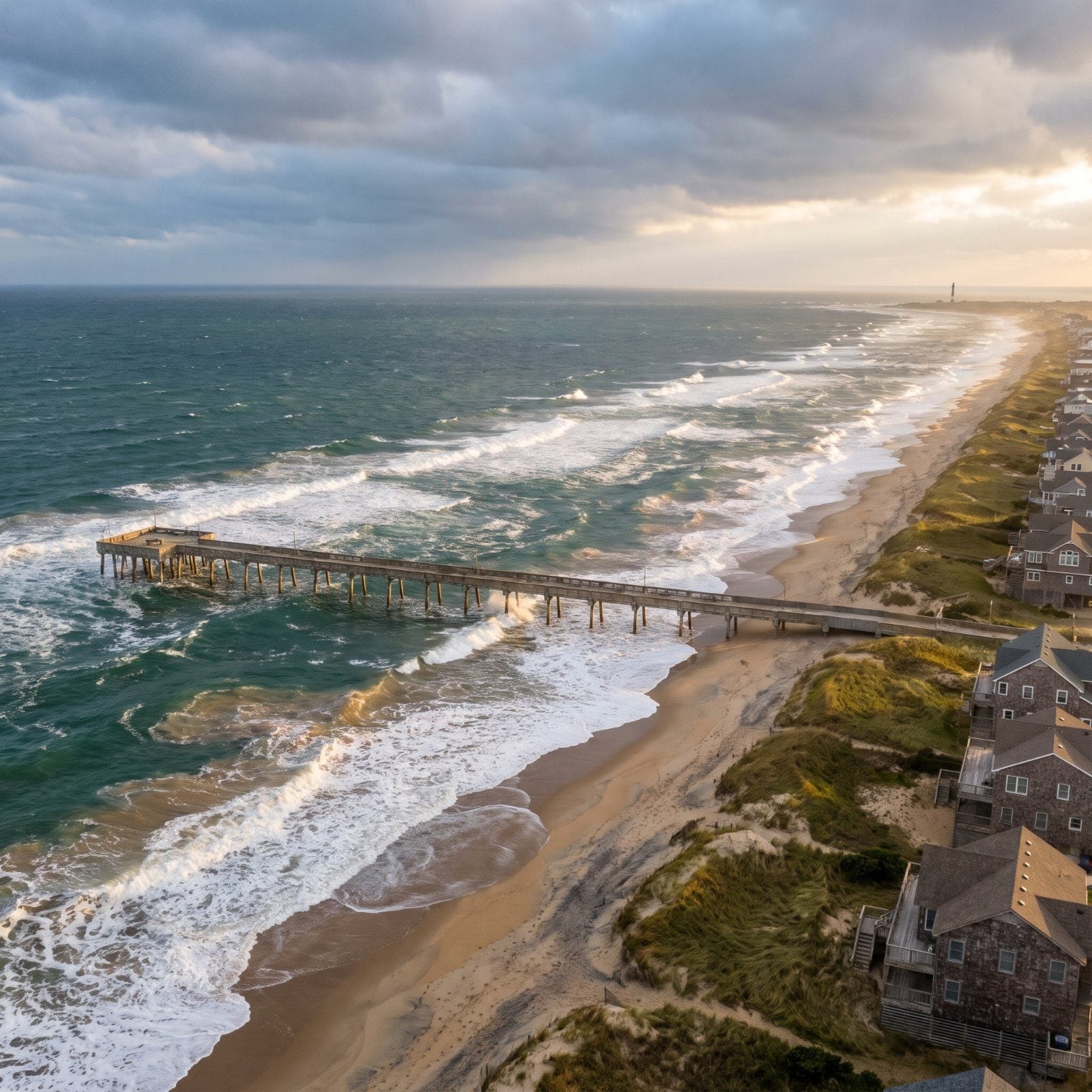
A nor’easter doesn’t announce itself. It shows up offshore, the wind backs around, and the Atlantic starts throwing its weight against the pilings. If you’ve spent any time on the Outer Banks or the Crystal Coast, you know the pull of standing somewhere high and dry while the ocean loses its mind forty feet below. The trick is knowing which spots hand you the view without handing you to the water. These are the real ones, with real access notes and the restrictions that bite people who don’t check first. Storms are magnificent. They are also unforgiving.
Please note that some of the imagery in this article may have been enhanced with the assistance of AI.
15. Jennette’s Pier, Nags Head
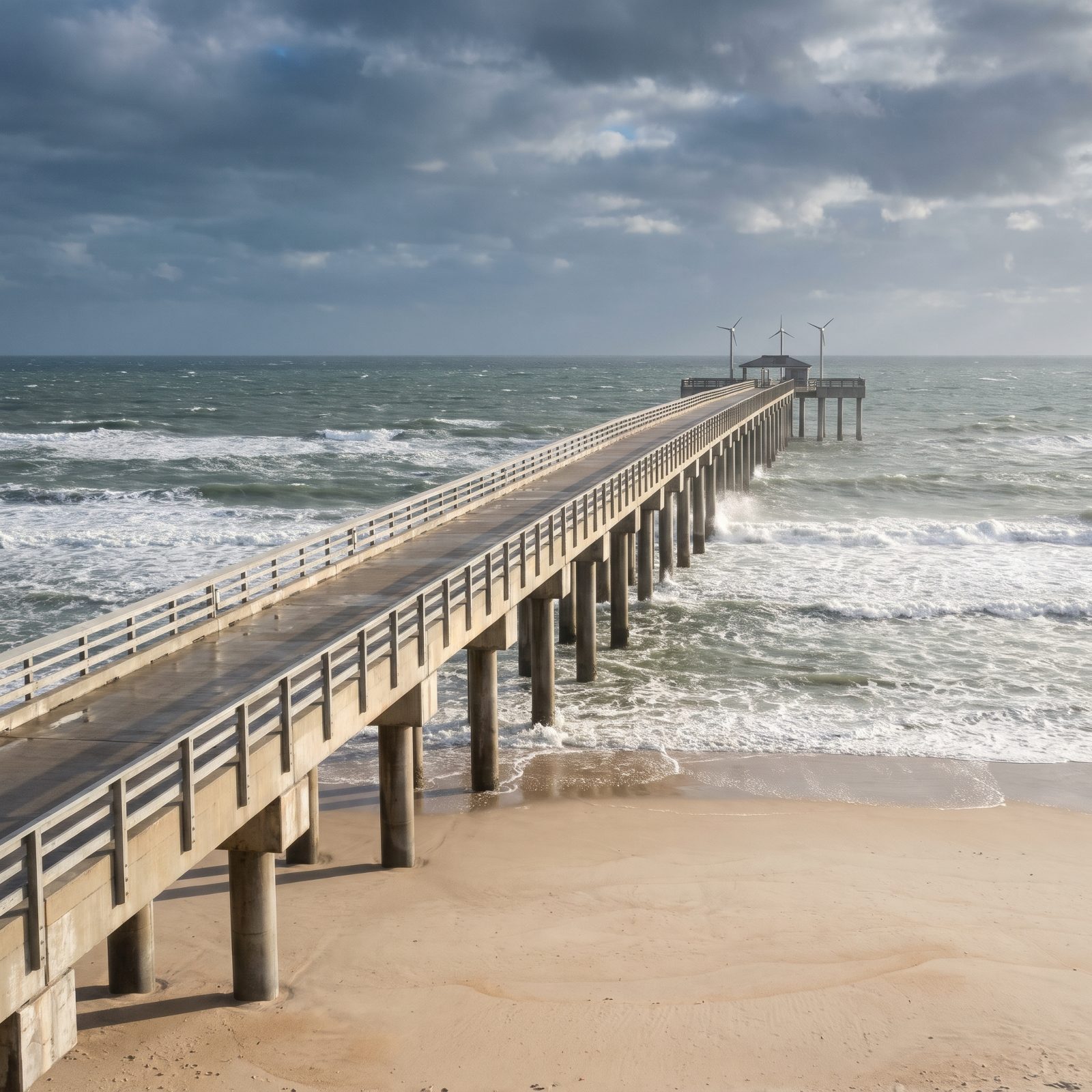
A local guide once called it a thousand feet of hurricane-proof concrete, and that’s exactly why it earns the top spot. Run by the NC Aquarium at milepost 16.5 on the Beach Road, Jennette’s is built to take a beating the old wooden piers couldn’t. Parking is free, and a walk-on pass buys you a straight shot out over the breakers.
Open all year. The hours swing with the season, though: 6 a.m. to 10 p.m. in summer, down to 9 to 5 in the dead of winter, closed Thanksgiving and Christmas. And when the wind gets serious, they close the deck. Don’t argue with that.
14. Old Lighthouse Beach and Cape Hatteras Lighthouse, Buxton
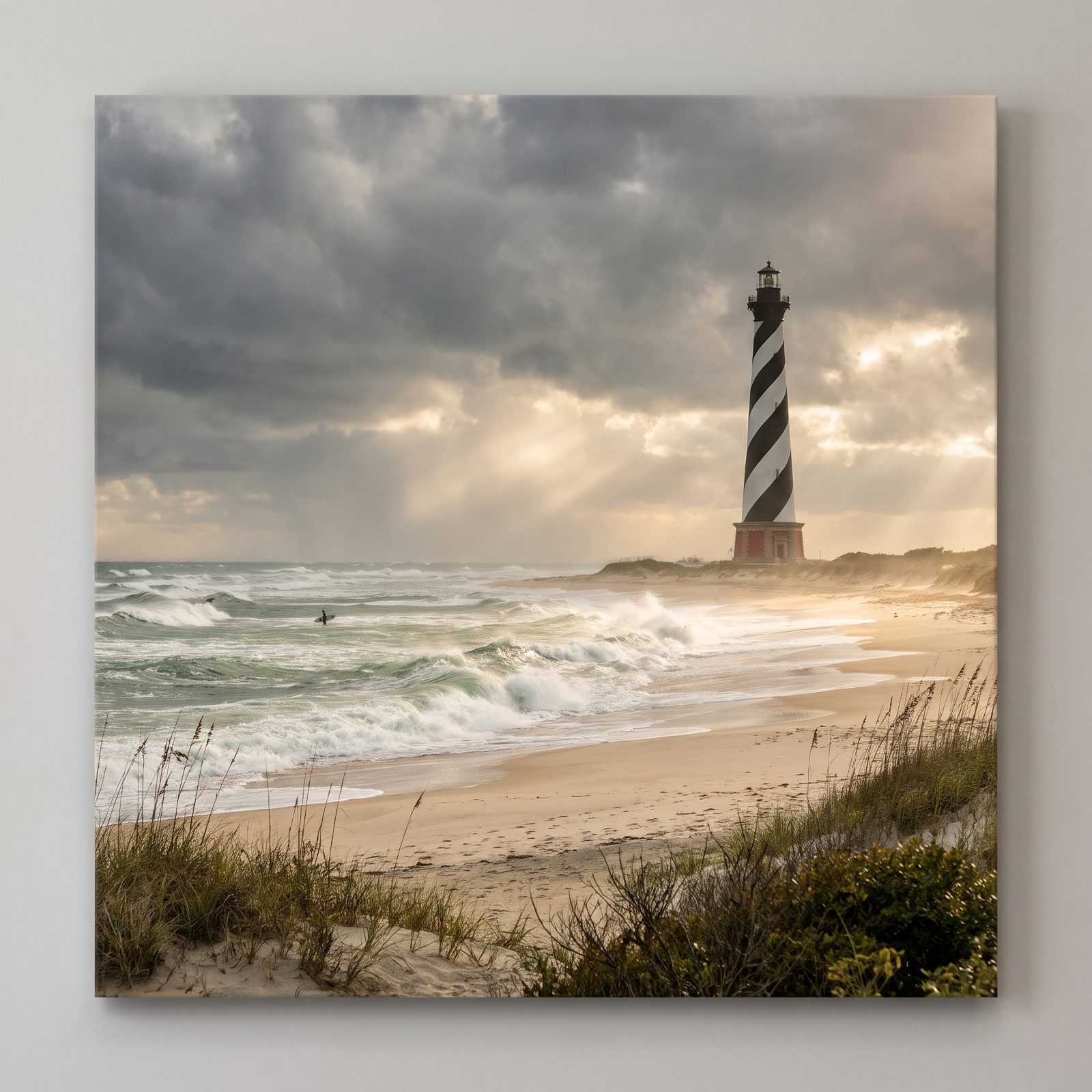
This is the stretch of Buxton sand where the lighthouse used to stand before they moved it inland. The nearly 200-foot tower still looms behind the dunes, warning ships off Diamond Shoals, and that’s the shot every TV crew wants: churning surf in front, striped tower behind.
Pro surfers show up when the swell is right. Plenty of people visit the lighthouse, so you won’t have it to yourself in daylight. It’s part of Cape Hatteras National Seashore, which means some beaches close seasonally for nesting birds. Check the NPS updates before you load the car, because a closed-beach drive out to Buxton is a long, grumpy ride home.
13. Cape Point, Buxton
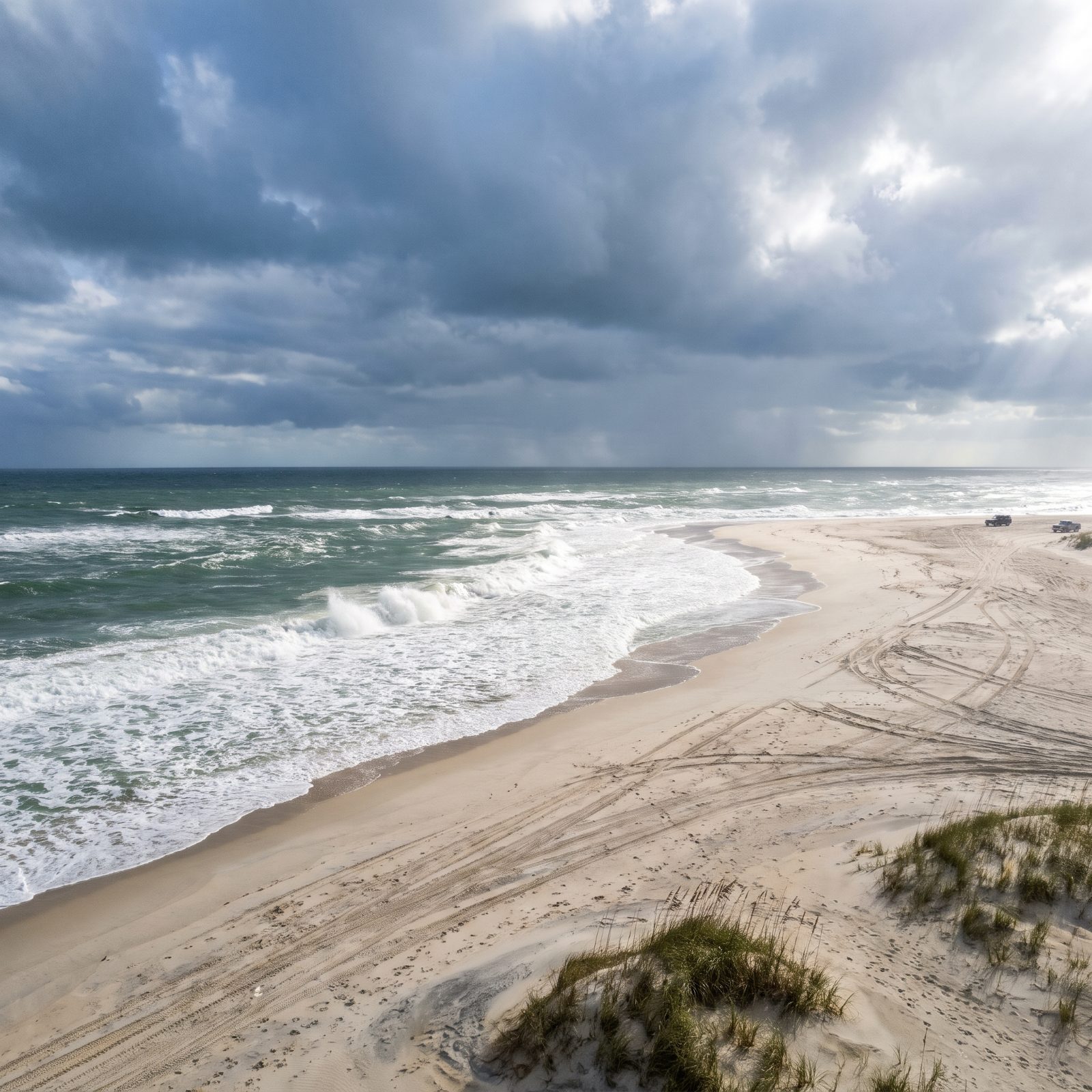
Cape Point is where Hatteras Island makes its true turn, and the waves break on two sides at once. Surf guides call it powerful and best left to experienced surfers. Translation for the rest of us: watch from the beach and keep your feet dry.
You reach it by off-road vehicle through Ramp 44 in Buxton, so you’ll need a 4WD and an ORV permit. The catch is closures. NPS shuts it down for nesting birds without much warning. It closed in early July 2026 for least tern chicks and reopened a week later, and the Cape Point and Frisco campgrounds reopened in late October 2026 after a nor’easter. This place changes status constantly. Treat the NPS page as gospel.
12. The S-Curves, Rodanthe
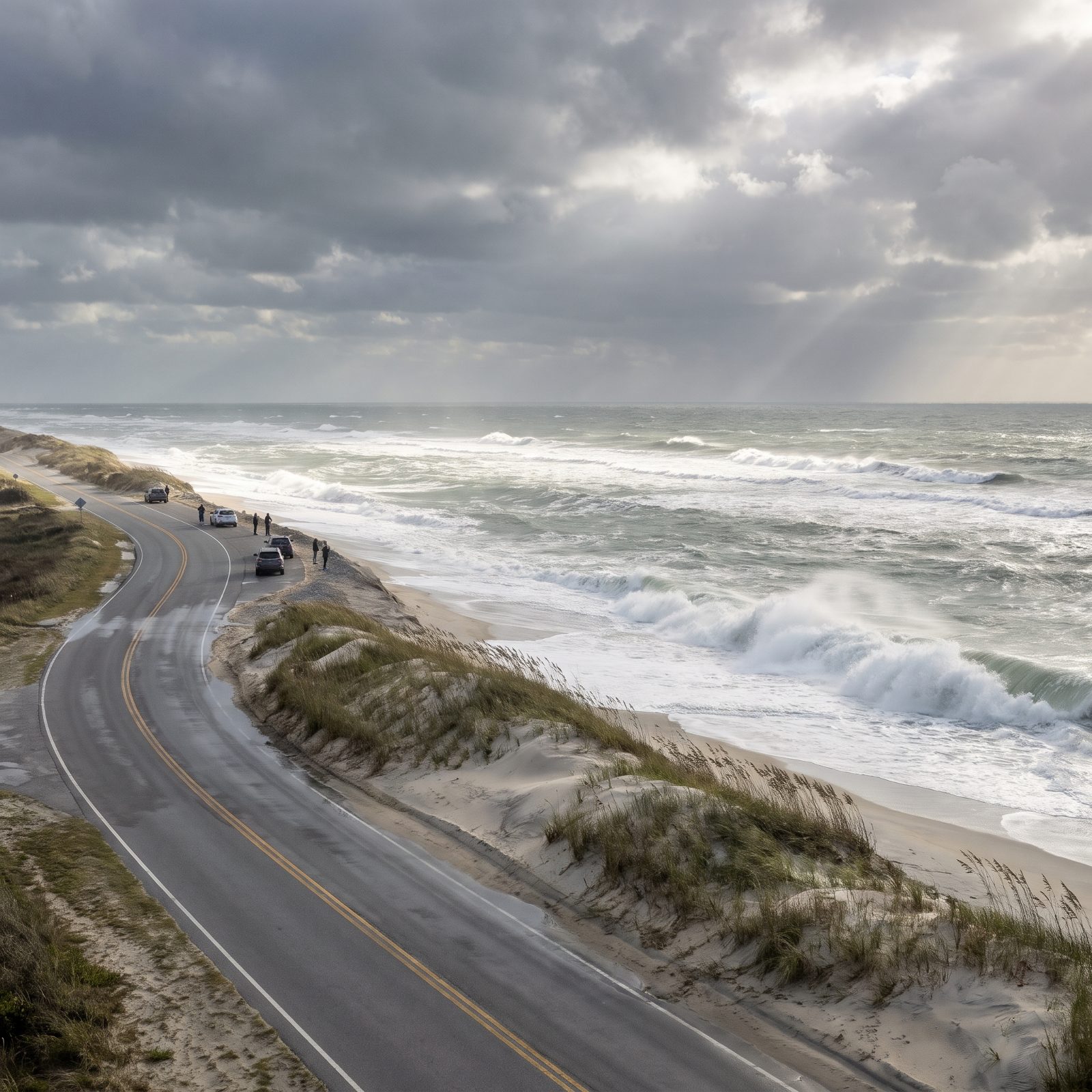
East Coast surfers have trained on the S-Curves for decades. It’s a curvy run of NC 12 just north of Rodanthe where the coastline juts out and catches south swells at full strength. On a big-wave day, dozens of cars line the shoulder and spectators actually cheer the surfers from the dunes.
You park along the road and cross over. Simple enough. But Rodanthe is where houses have literally collapsed into the surf, and after the October 2026 nor’easter the NPS asked visitors to watch for debris on the beach. NC 12 at Pea Island reopened in late October on a one-lane temporary detour, so the drive down may still crawl. Respect the barriers and the collapsed-house zones. That sand is not as solid as it looks.
11. Coquina Beach, Nags Head
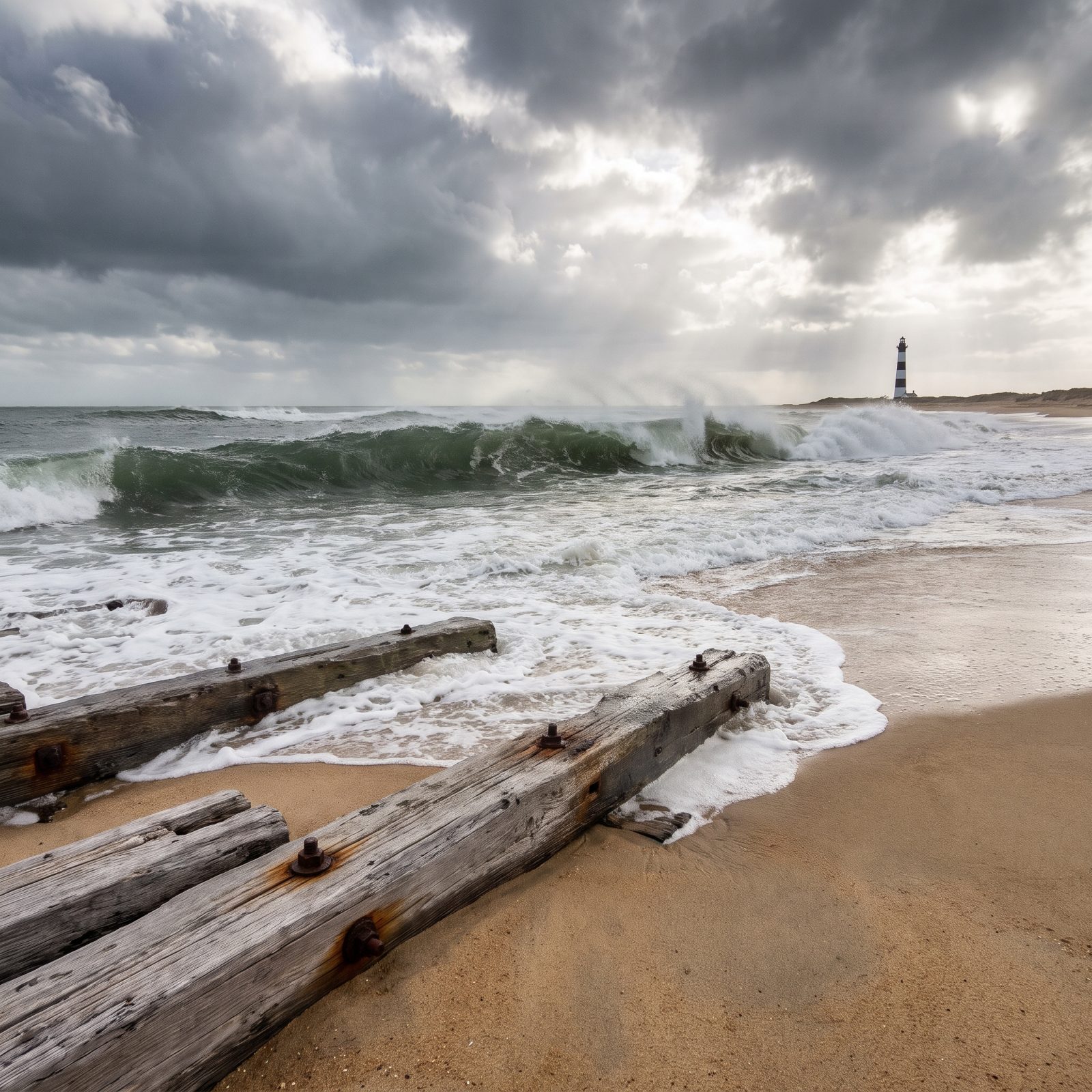
Coquina is the quiet one. An undeveloped beach on NC 12 about eight miles south of the Nags Head town line, part of the national seashore, with no boardwalk circus and no crowds.
The draw is history you can touch. Rough surf wrecked the four-masted schooner Laura A. Barnes here in June 1921. The Bodie Island Lifesaving Station crew pulled everyone off alive, and storms later moved the wreck about a mile south of where it grounded, and what’s left of it sits at Coquina Beach across from the Bodie Island Lighthouse, often partly buried by shifting sand. A storm swell churning behind weathered ship timbers is a particular kind of view. You get there on foot or by 4WD.
10. Nags Head Fishing Pier, Nags Head
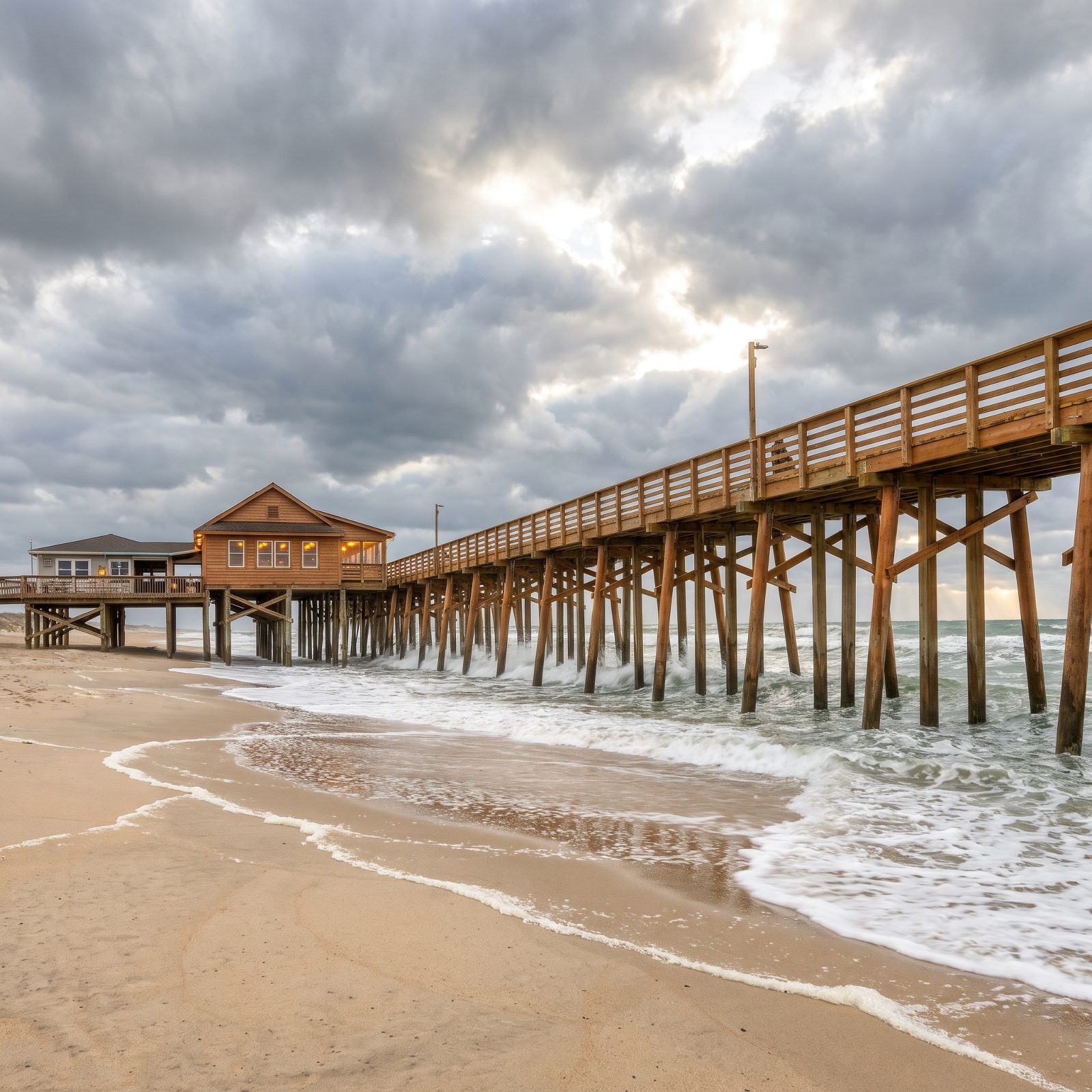
This 750-foot pier at milepost 11.5 just got a second life. New owners bought it and reopened it in July 2026 after a major renovation, with the Pier House Cafe and the Off the Hook Beach Bar sitting at the base.
Here’s the part that matters for storm-watchers at home: the live HD pier cam is back online. You can check the surf from your couch before you commit to the drive, which beats guessing. Open daily in season. When a real blow comes in, watch it on the cam and leave the pier to the pelicans.
9. Avalon Pier, Kill Devil Hills
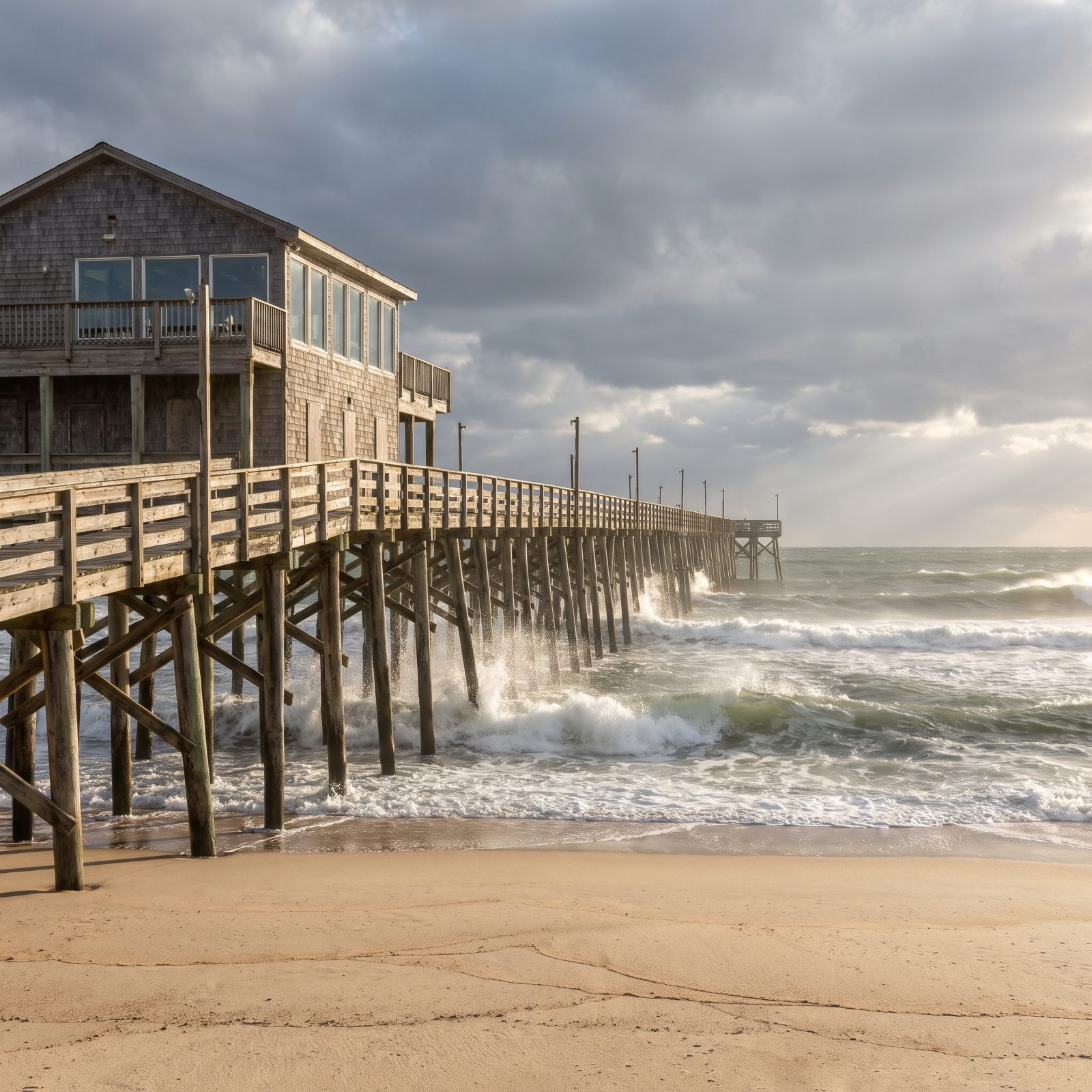
Avalon has the old-pier soul. A wooden pier from 1958 at milepost 6, shortened by Hurricane Dorian in 2019, with the upstairs Stonefish Bar looking straight out over the Atlantic. There’s an arcade, a bait and tackle shop, and parking is included when you buy a pier pass.
Watching a storm roll in from the Stonefish with a window seat is about as civilized as storm-watching gets. Know this going in: hours change with the season, and a 1958 wooden pier is far more weather-sensitive than the concrete monsters down the road. Check before you make a winter trip out, and don’t expect the deck to stay open in a hard blow.
8. Fort Macon State Park, Atlantic Beach
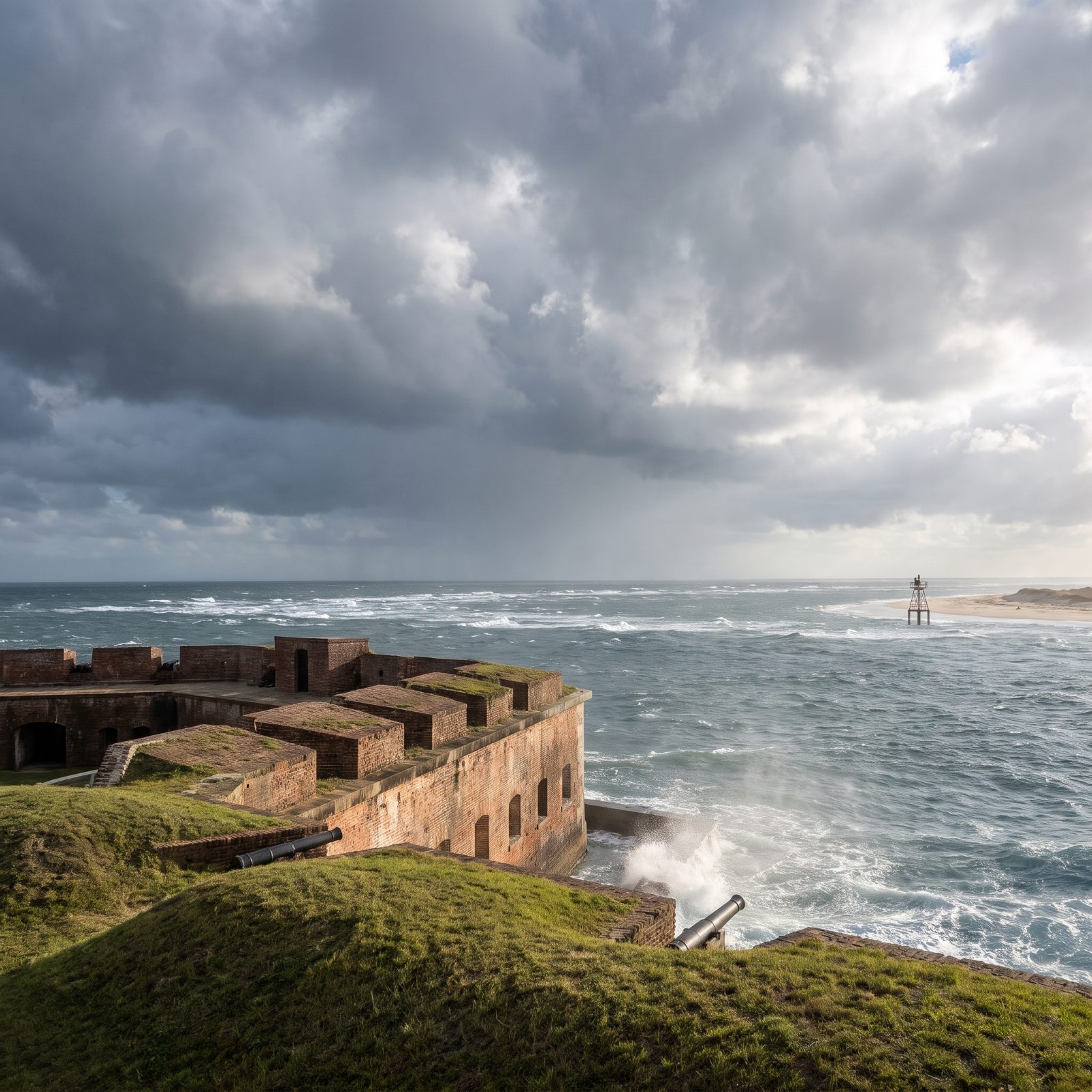
Down on the Crystal Coast, Fort Macon gives you something no pier can: elevation. A 424-acre state park at the eastern tip of Bogue Banks, where the Atlantic, Beaufort Inlet, and Bogue Sound all meet within walking distance.
The brick walls sit just back from the water, and from the grassy ramparts you look across Beaufort Inlet to the open ocean. That inlet is one of the few deep-water entrances on the NC coast, so in rough weather it’s a dead-on spot to watch boats thread the channel and the sea pile up. The beach by the inlet is one of the state’s better shelling spots too, especially after a nor’easter stirs the bottom.
7. Bogue Inlet Pier, Emerald Isle
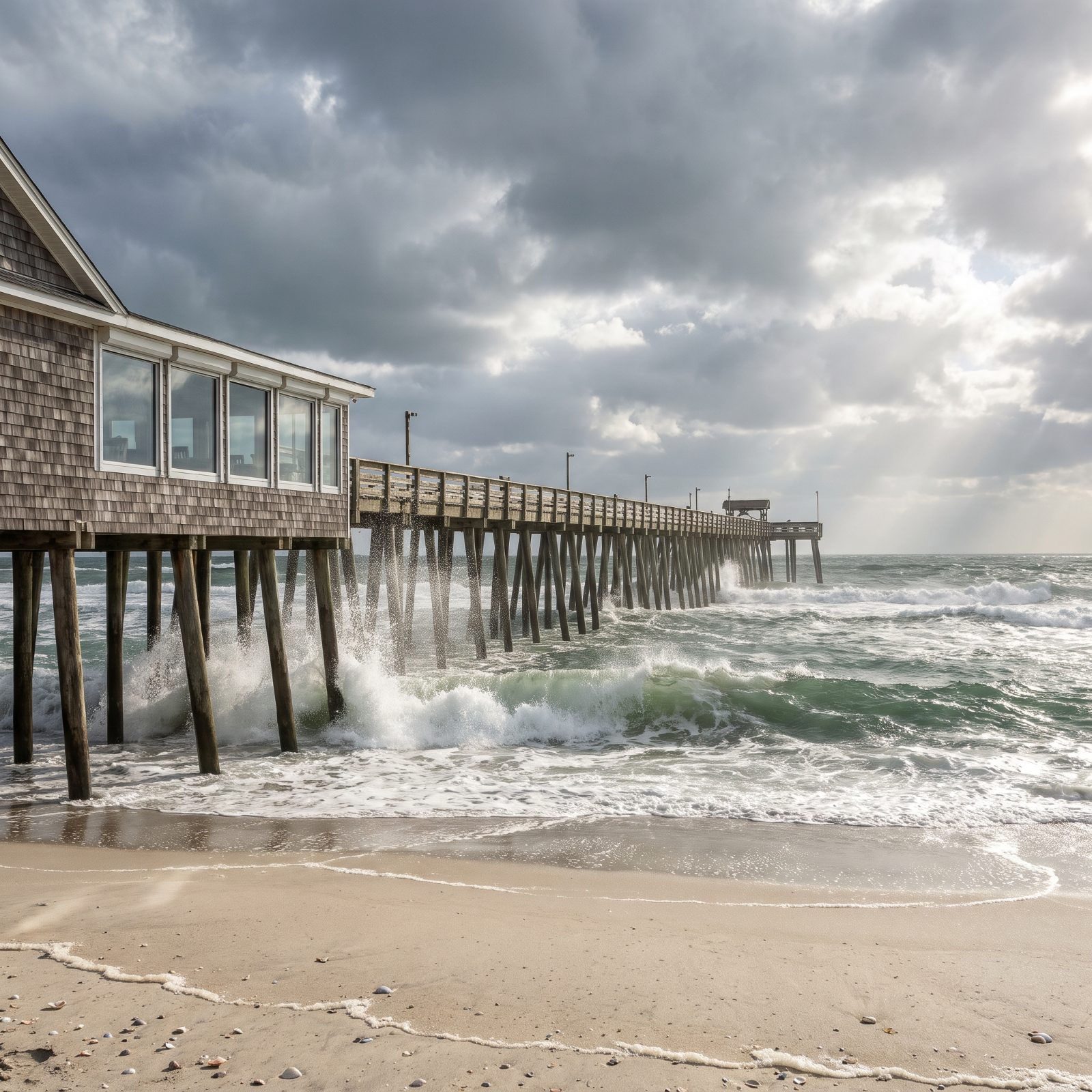
Bogue Inlet runs a thousand feet out from Emerald Isle, with an observation deck built right into it and Surfs Up Grill and Bar at the entrance looking over the water. This is a fishing pier with real credentials: the current NC state-record sea mullet, 3 pounds 8 ounces, came off this deck.
The observation deck is the point for storm-watchers. It sits at the end of the pier, so the walk out takes you over the whole working length before you get the open view of the surf. Full view of the swell, a drink within reach, and the Crystal Coast light that feels softer than the Outer Banks. When the deck closes for wind, you watch from the grill.
6. Johnnie Mercer’s Pier, Wrightsville Beach
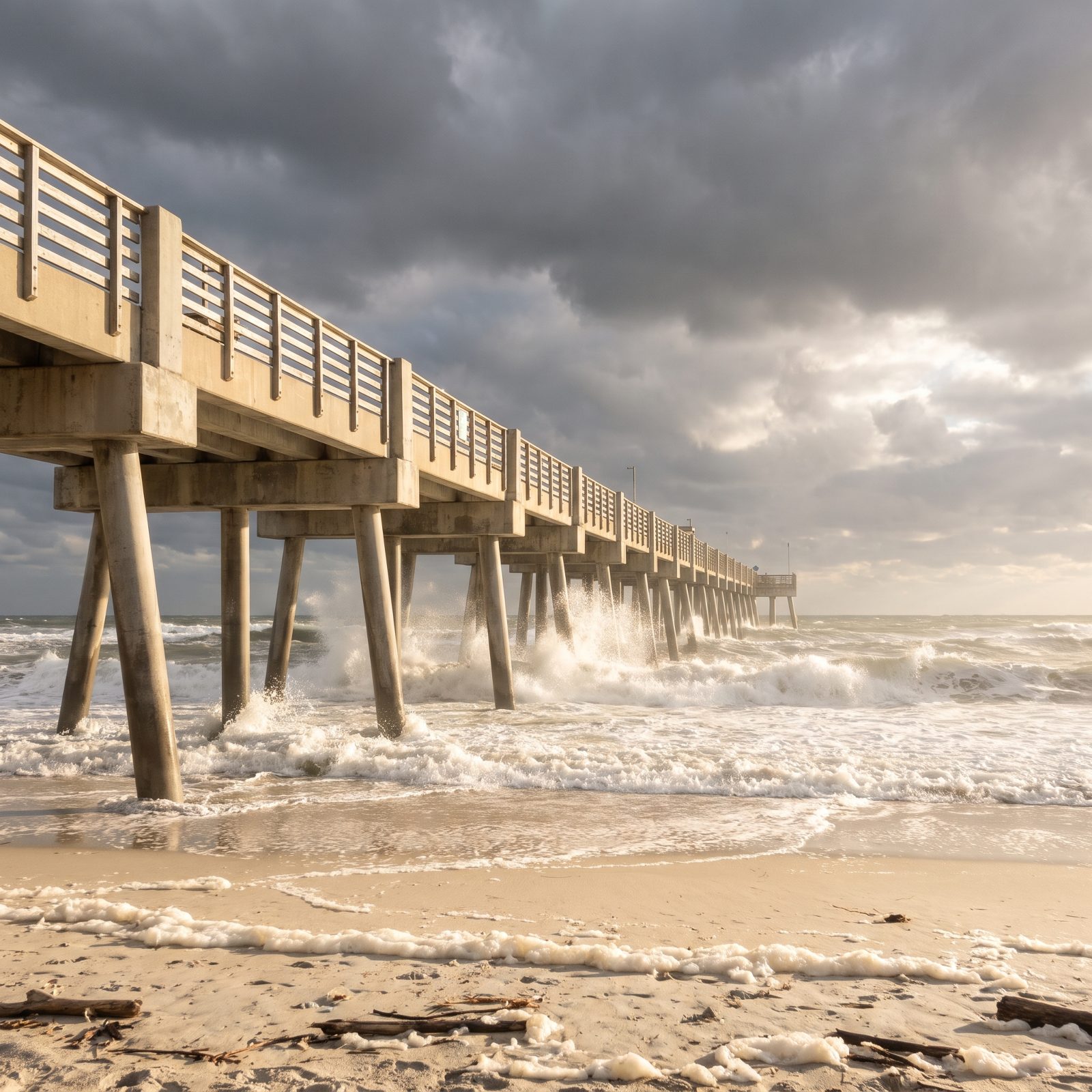
Down near Wilmington, Johnnie Mercer’s is the heavyweight: concrete, over 1,200 feet long, with a deck standing 25 feet above the sea. That height is the whole story here. It puts you well clear of all but the worst surf.
Walking and fishing passes are sold, parking is paid and run by the town of Wrightsville Beach, and the pier stays open for fishing year-round. Posted hours are 6 a.m. to 11 p.m. on weekdays and 6 a.m. to midnight on weekends, but confirm on the day.
Because it’s concrete, it takes storms far better than the wooden pier it replaced. Still, the same rule applies everywhere on this list: when the town or the pier closes the deck for high wind, you stay off it. The ocean is the one argument you will not win.
5. Fort Fisher State Recreation Area, Kure Beach
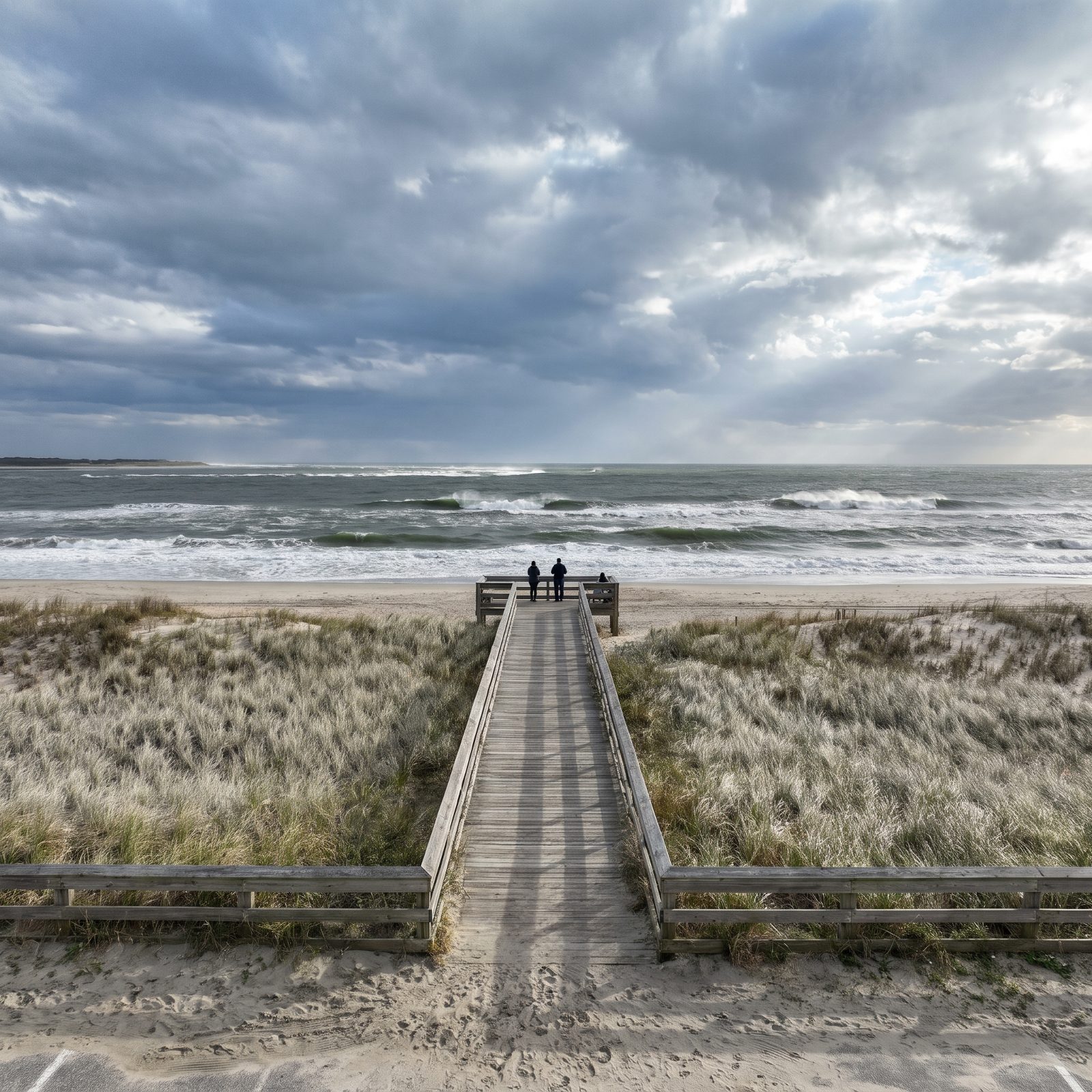
Come here because the dunes do the work for you. The elevated boardwalk lifts you above six miles of beach with nothing built on it, which on the southern coast is rarer than you’d think. You watch the surf from behind the dune line, never in front of it, and that distance is exactly what you want.
The park sits at the south end of Pleasure Island with the Atlantic on one side and the Cape Fear River on the other. A long stretch of sand is four-wheel-drive only, so storm-watchers spread out and keep to themselves.
4. Kure Beach Fishing Pier, the Oldest on the Atlantic Coast
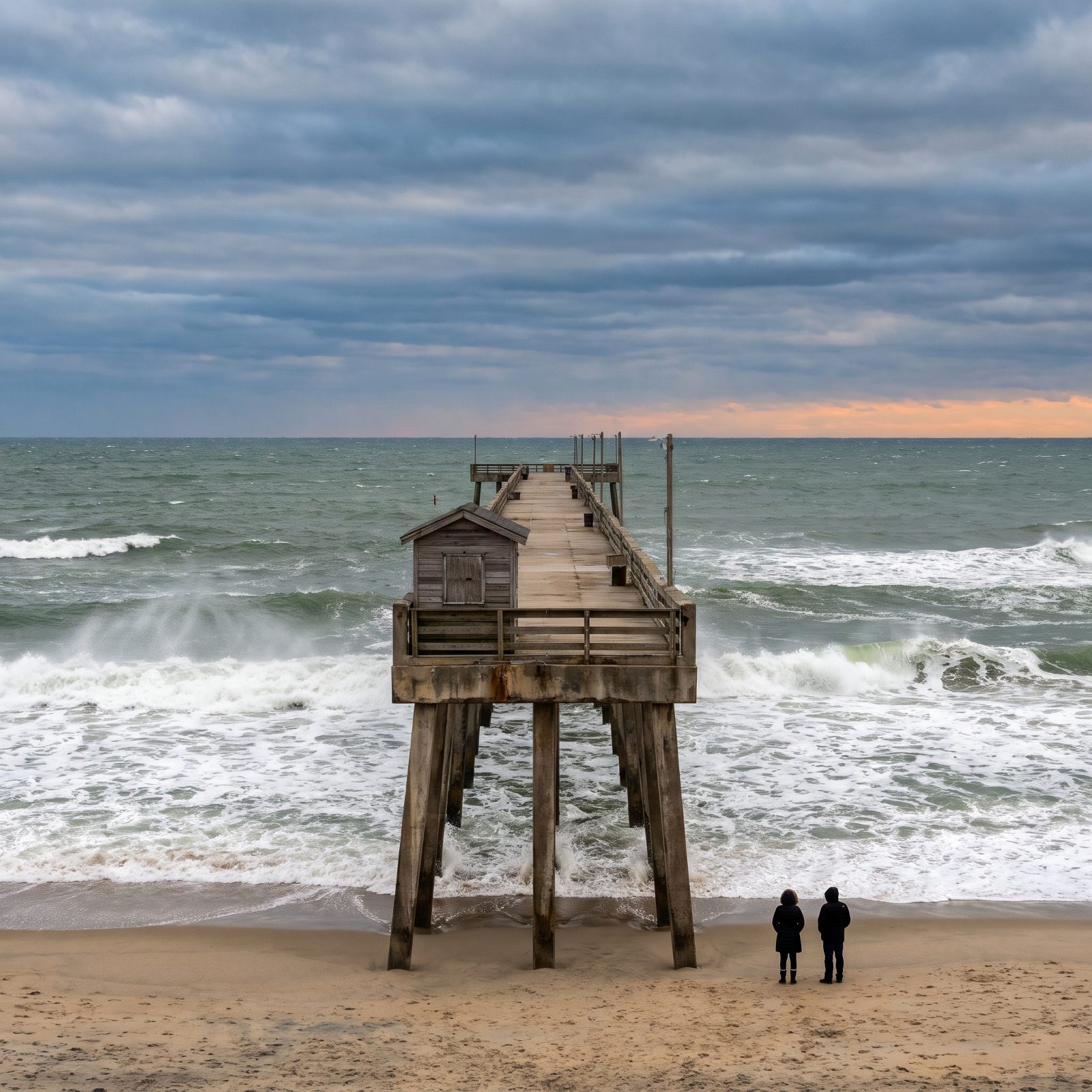
History and a front-row seat, same spot. This is widely billed as the oldest fishing pier on the Atlantic Coast, dating to 1923, rebuilt the next year by L.C. Kure on reinforced concrete pilings back when nearly everyone else was still working in wood. Storms, including Hurricane Hazel in 1954, have knocked it down more than once, and it has been rebuilt every time.
At 100 Atlantic Avenue, it runs 711 feet now. Walking it is free, which we appreciate more than we probably should. The pier itself stays open all year, but the Pier House is seasonal, April 1 through November 30, so in a winter blow you’ll get the deck and the view and no coffee.
When the wind picks up, the pier closes. Don’t push it. The concrete isn’t what gets you hurt out there — the rail, the spray, and the gusts are.
3. Oak Island Pier, North Carolina’s Highest Deck
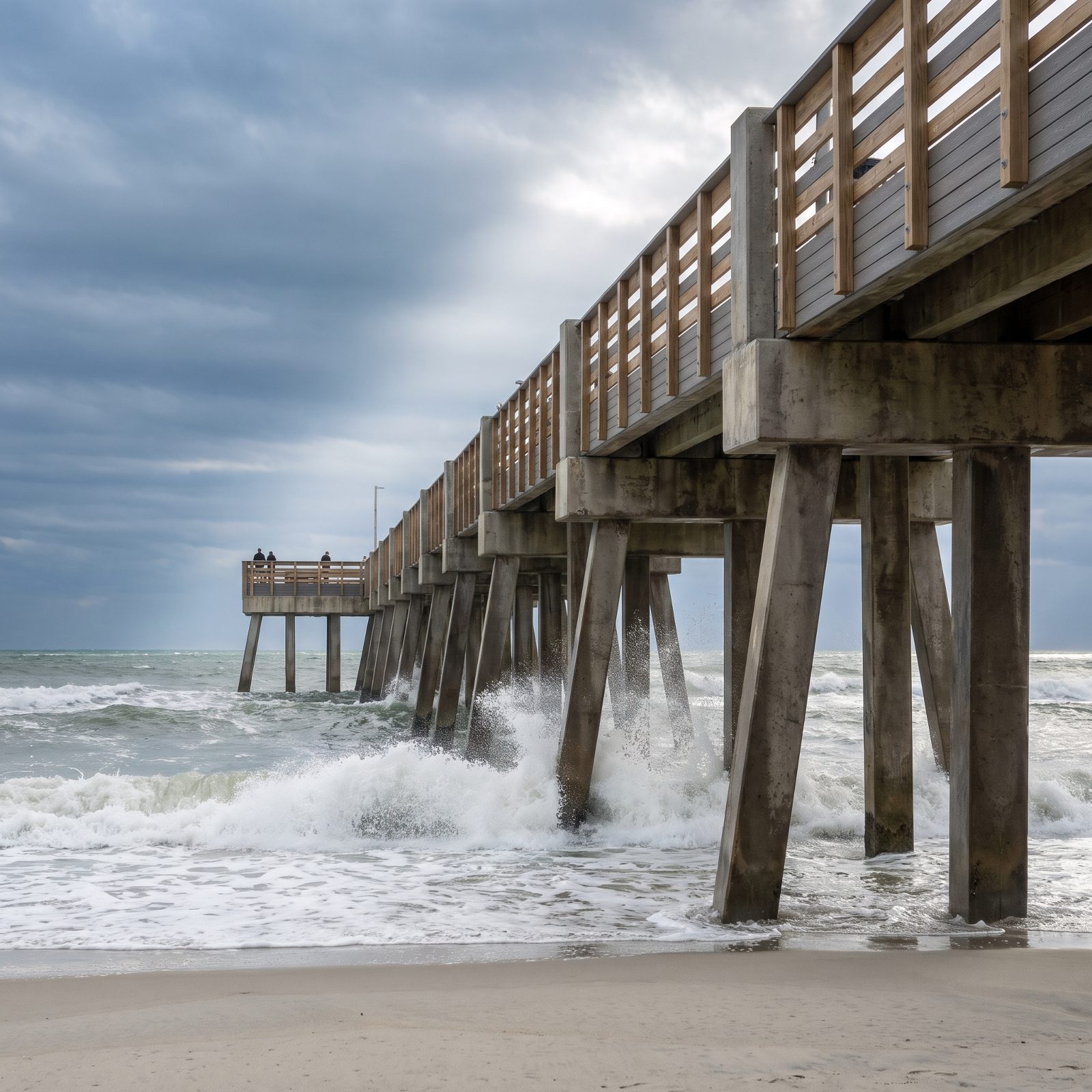
Height changes everything. Oak Island calls this North Carolina’s highest pier, and when the sea is up, that extra elevation turns a gray afternoon into real theater — you’re looking down onto the wave faces instead of across at them.
Rebuilt and reopened in 2019 at 705 Ocean Drive, it was the first town-owned pier in the state. It runs all year, 7 a.m. to 9 p.m. daily (check the town’s site, since hours can change), and there’s a public Pier Cam so you can read the surf from your couch before you drive over. A damaged piling was replaced and the whole thing reopened in May 2026.
2. Surf City Pier on Topsail Island
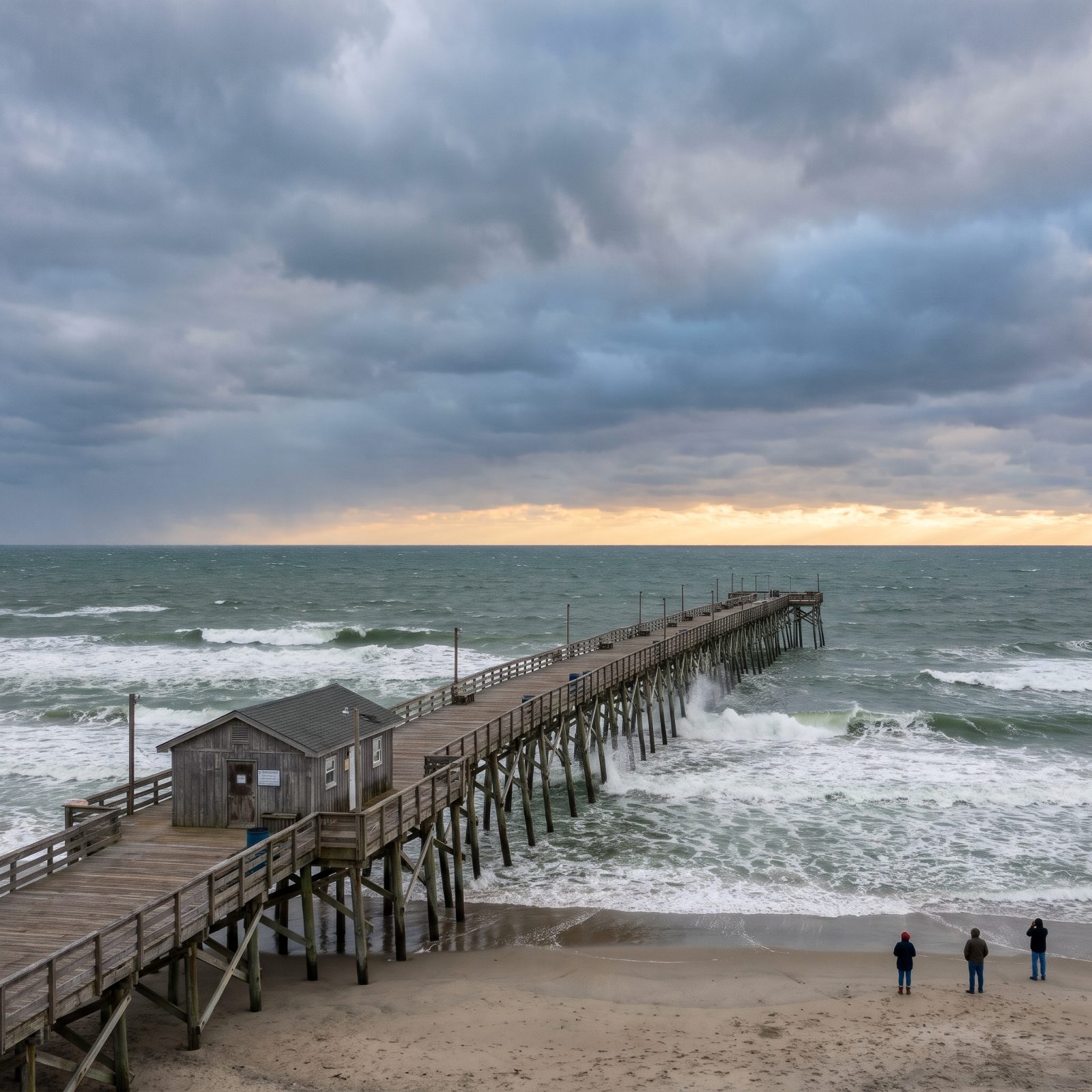
Topsail Island takes its storms seriously, and so does this pier. First built in 1948 and running 937 feet at 112 S. Shore Drive, Surf City Pier has been knocked around by hurricanes more than once — Gloria in 1985, plus Bertha and Edouard. And it keeps coming back, which tells you something about both the pier and the folks who rebuild it.
The long deck gives you a straight shot out into the swell. When the wind rules out the deck itself, the beach at its base is an easy, safe place to stand and watch.
Hours shift with the season and the weather, so confirm before you drive down, especially in storm season when a closure can happen fast.
1. Jolly Roger Pier, Topsail Beach’s Classic Wooden Walk
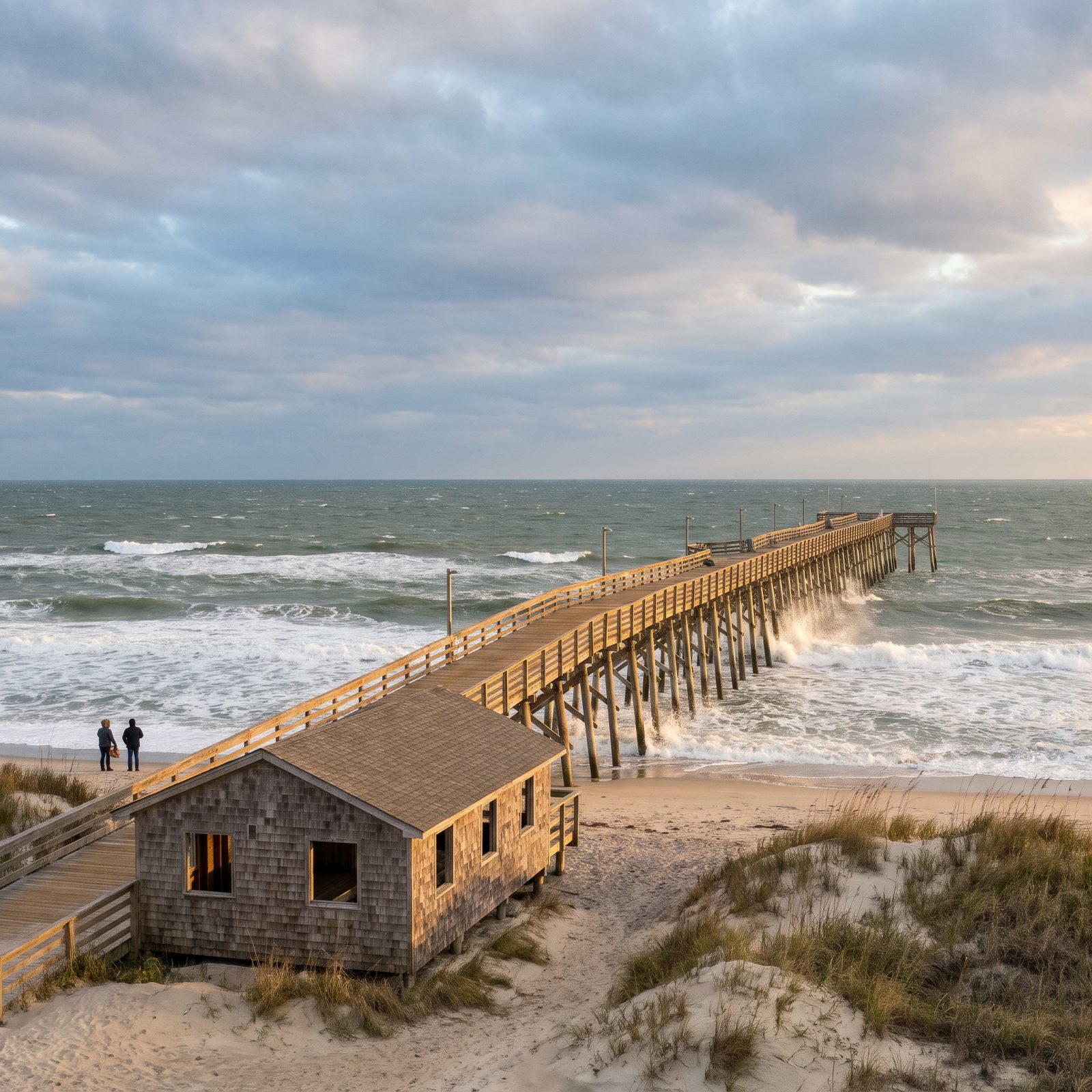
End on the quiet one. Down at the south end of Topsail Island, 803 Ocean Blvd., the Jolly Roger is a wooden pier running roughly 850 feet — a plain, old-school boardwalk that feels right when the sea is grumbling. No height record. No gimmicks. Just weathered planks and the breakers rolling in.
Seasonal hours change with weather and fishing conditions, so check thejollyroger.com before you go.
One rule for every spot on this list, and we’ll say it plainly: never watch a storm during a hurricane warning or an evacuation, and get off any pier the moment it closes for wind. As of late October 2026, NC 12 at Pea Island was down to a one-lane temporary detour after back-to-back nor’easters. Re-check road, pier and park updates the morning you head out. The water will still be dramatic tomorrow. Be around to see it.