
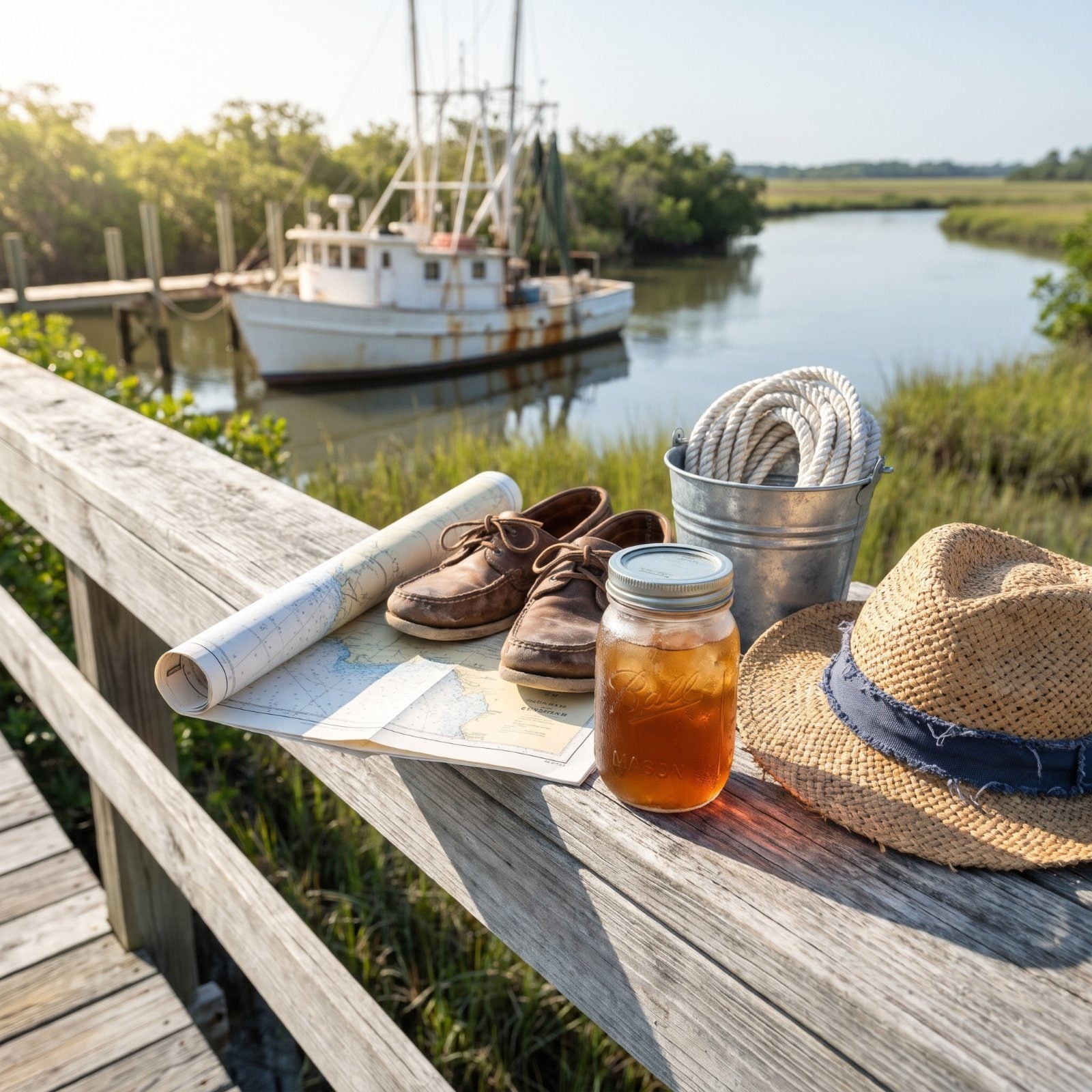
Everybody wants the postcard. The pass with the dolphins, the harbor packed with sailboats, the condo tower with the infinity pool. That stretch of Florida priced itself out of reach a decade ago, and it isn’t coming back. But drive north and east, past the beach crowds, into the quiet marshy curve of the state’s coastline, and the math changes. The Big Bend and the Forgotten Coast still run on shrimp boats and oyster money. The houses sit on stilts, porches face the river, and the folks fishing off the dock live there year-round, not just for a week in July. And the same story keeps going west along the Gulf, through Alabama, Mississippi, Louisiana and Texas. These are the towns where a water view is still something a regular budget can reach.
Please note that some of the imagery in this article may have been enhanced with the assistance of AI.
37. Carrabelle, Florida: A Working Waterfront on the Carrabelle River
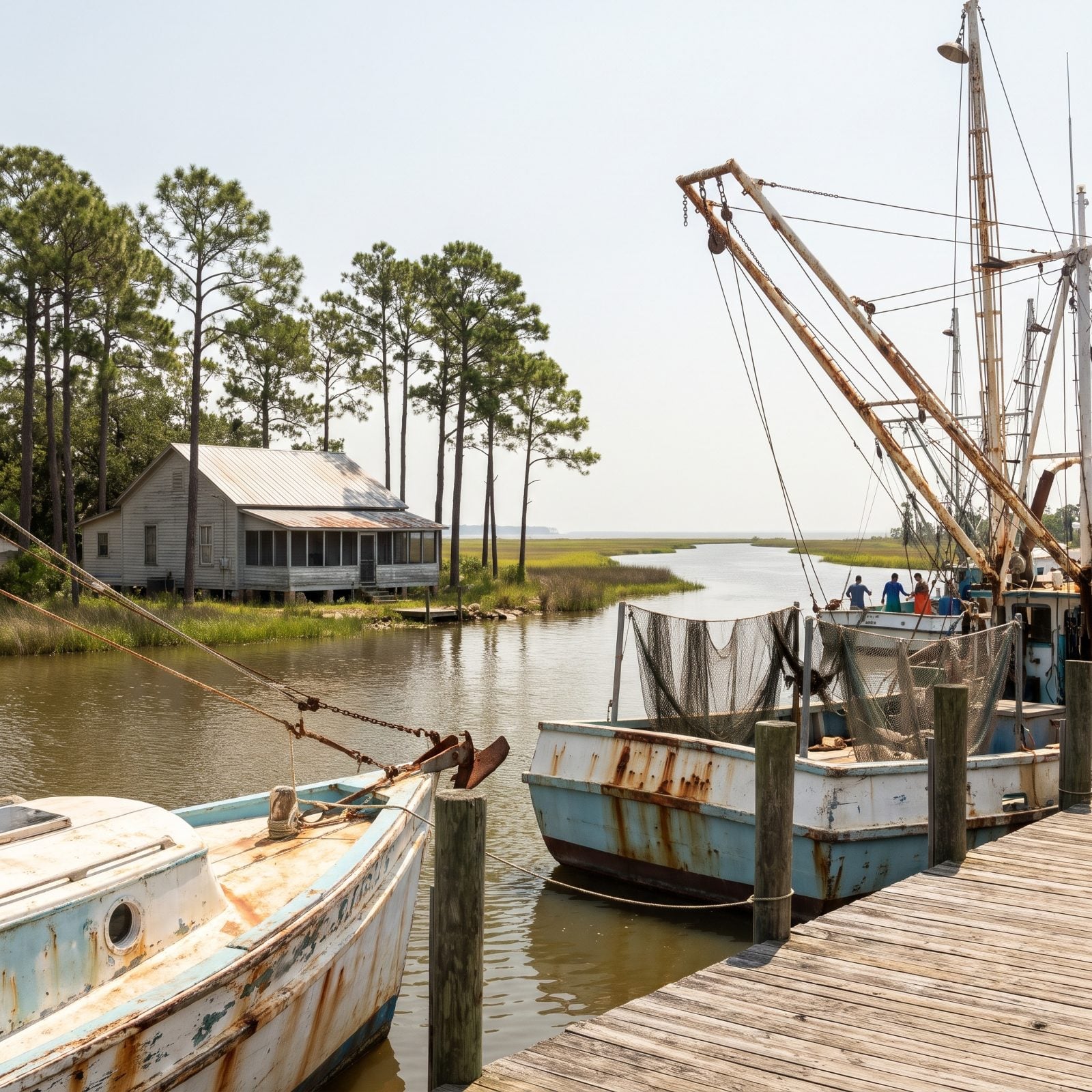
Carrabelle runs on boats that actually leave the dock. This is not a town pretending to be a fishing village for the gift shop crowd. The shrimpers tie up on the river, the bait store opens early, and the water view out your window usually includes somebody heading out to work.
By the numbers: Carrabelle, Florida on The Town Files (home values, weather, tornado history and schools)
What you get for the money here is real estate that still remembers the Forgotten Coast before it had a brand. Modest houses on the river or a canal off it, often older, often needing a little love. The payoff? A slow brown-green river that opens straight to the Gulf, and a fishing fleet that never stopped.
36. Eastpoint, Florida: Apalachicola Bay Without the Tourist Core
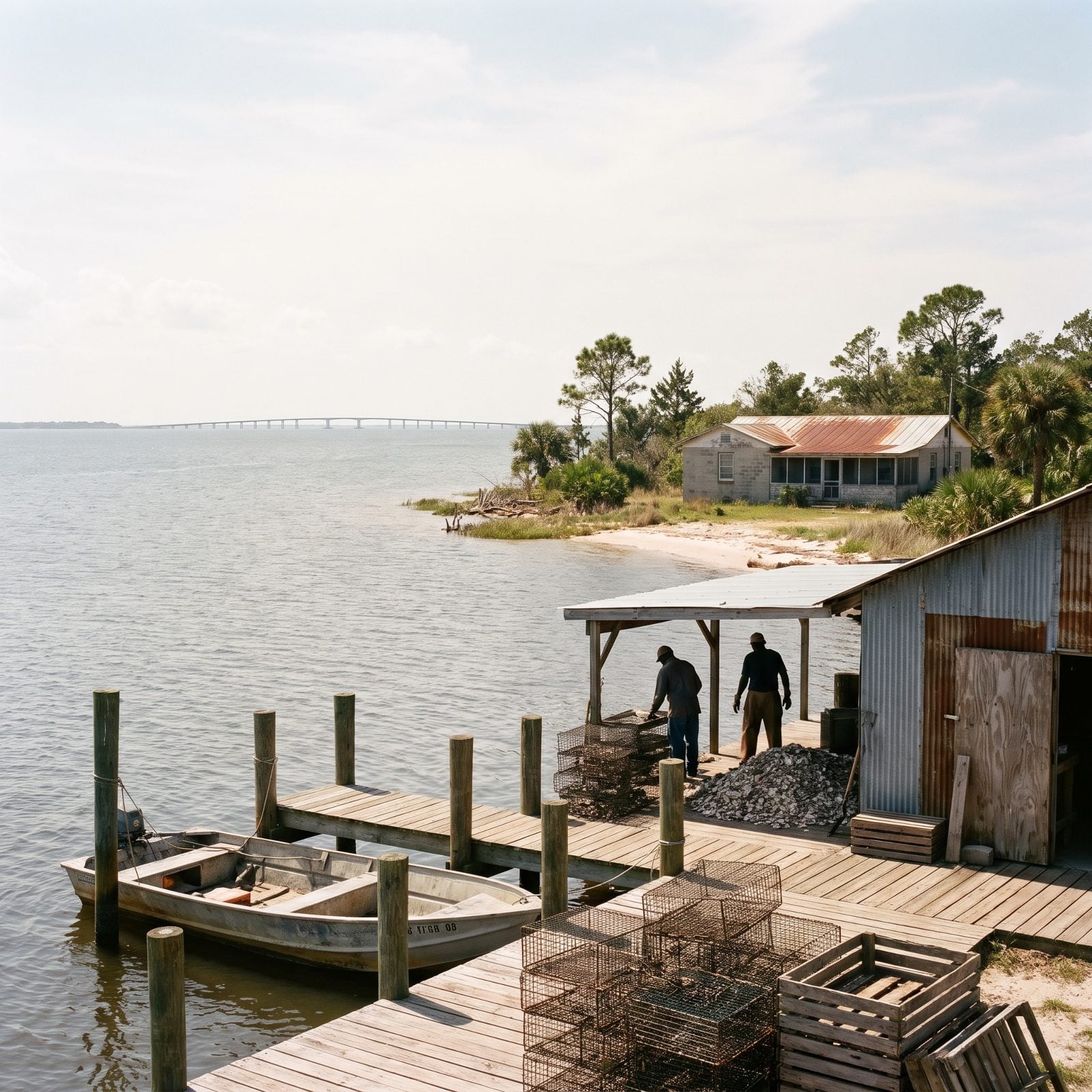
St. George Island gets the beach houses and the rental money. Eastpoint sits across the bridge and shucks the oysters that made the whole bay famous. The difference in price is the width of a causeway.
By the numbers: Eastpoint, Florida on The Town Files (home values, weather, tornado history and schools)
You trade a Gulf beach for Apalachicola Bay, which is honestly the better deal if you own a boat. Flat water, redfish, trout, and the same sunsets without the premium. Homes tend toward the practical: cinderblock bones, metal roofs, a yard that ends at the water. Not fancy. But you’ll be staring at one of the most storied estuaries in the South from your own porch, and that counts for a lot when the oyster boats come in at dusk.
35. Panacea, Florida: Modest Homes Along Dickerson Bay
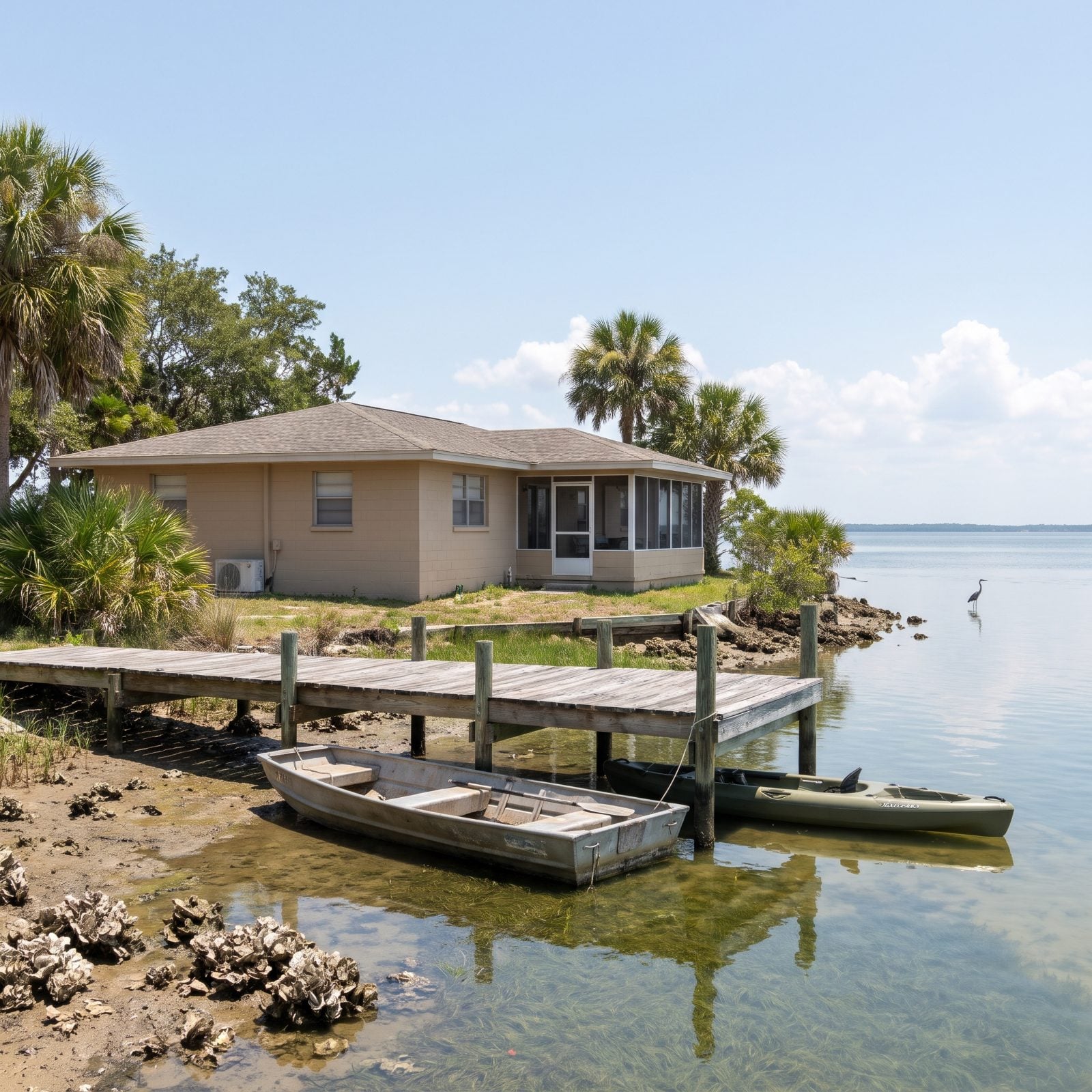
Nobody’s heard of Panacea, and that’s the point. It’s a crumb of a fishing community south of Tallahassee, named by somebody who once sold the local mineral springs as a cure-all. The springs are long gone. The quiet stayed.
By the numbers: Panacea, Florida on The Town Files (home values, weather, tornado history and schools)
Dickerson Bay is shallow, grassy, and loaded with scallops in summer. The homes here lean mid-century concrete block, the kind built cheap and solid in the 1960s and still standing sixty years later. You won’t find polish. What you’ll find is a johnboat tied to a dock, a screened porch to keep the no-see-ums off your ankles, and some of the most affordable saltwater addresses left in the state.
34. St. Marks, Florida: River Views Near the Old Lighthouse
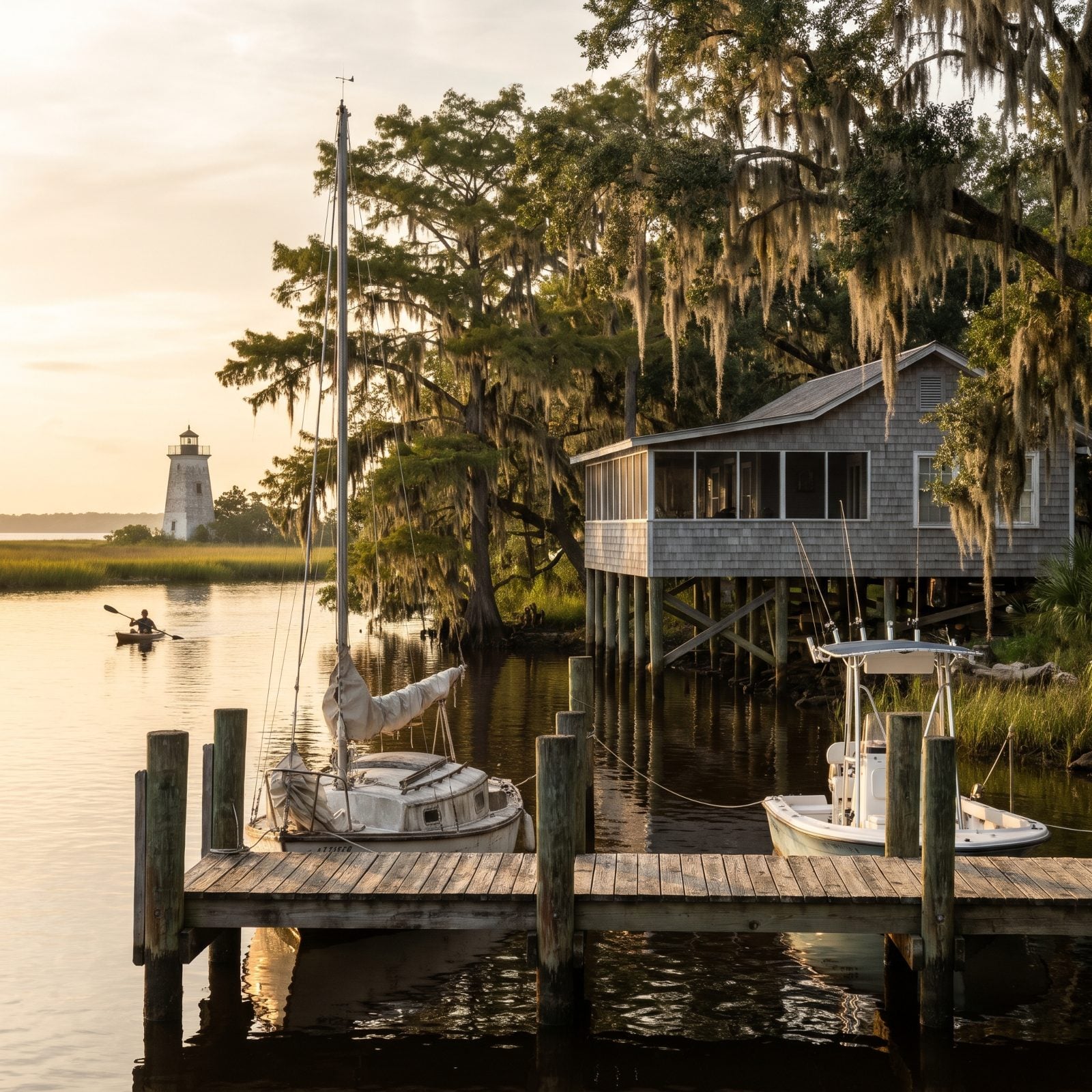
Two rivers, one of the oldest lighthouses in Florida, and a town that fits in your rearview mirror. St. Marks sits where its namesake river and the Wakulla come together and slide out to the Gulf through a wildlife refuge. The 1831 lighthouse still stands at the river mouth, white against the marsh grass.
Come here and you’re in paddler and birder country as much as boater country. River cottages on stilts, dark tannin water full of mullet, a pace that hasn’t budged in decades. And the refuge means much of the land around you will never be developed, which keeps the view permanent and the crowds thin.
33. Steinhatchee, Florida: Canal Cottages in the Big Bend
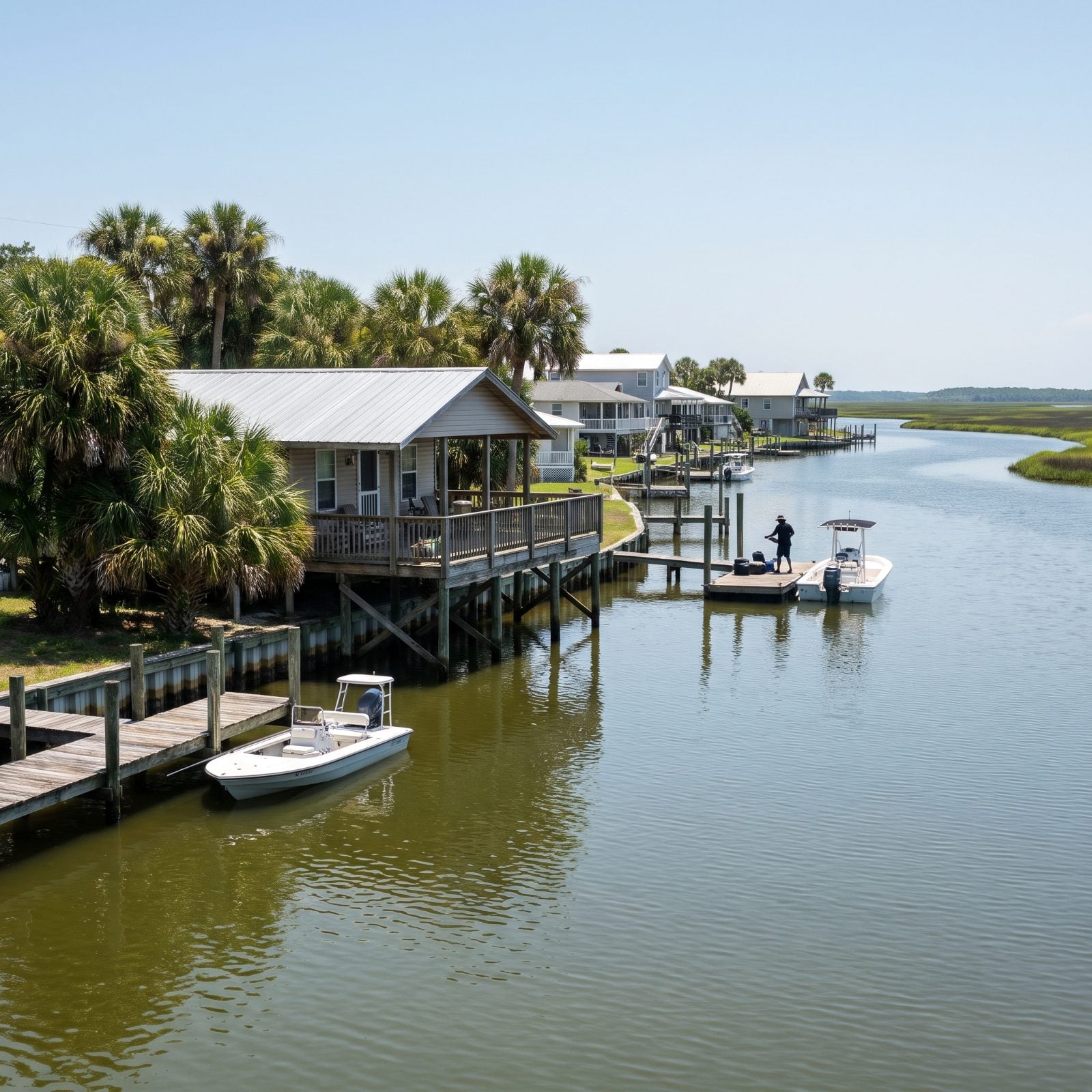
Steinhatchee is scallop country, and come summer the whole town smells like boat fuel and sunscreen. What pulls seasonal buyers in is the canals: a whole grid of residential waterways where a modest cottage can sit with its own dock and open water minutes away.
By the numbers: Steinhatchee, Florida on The Town Files (home values, weather, tornado history and schools)
Per foot of waterfront, this is one of the better values on the Gulf. The homes are simple, raised on pilings against the flood maps, built for people who fish more than they entertain. Grouper, redfish, and bay scallops are the local economy. Want a canal cottage where you can step off your deck straight into a flats boat? The Big Bend still makes that possible.
32. Suwannee, Florida: Stilt Houses Where the River Meets the Gulf
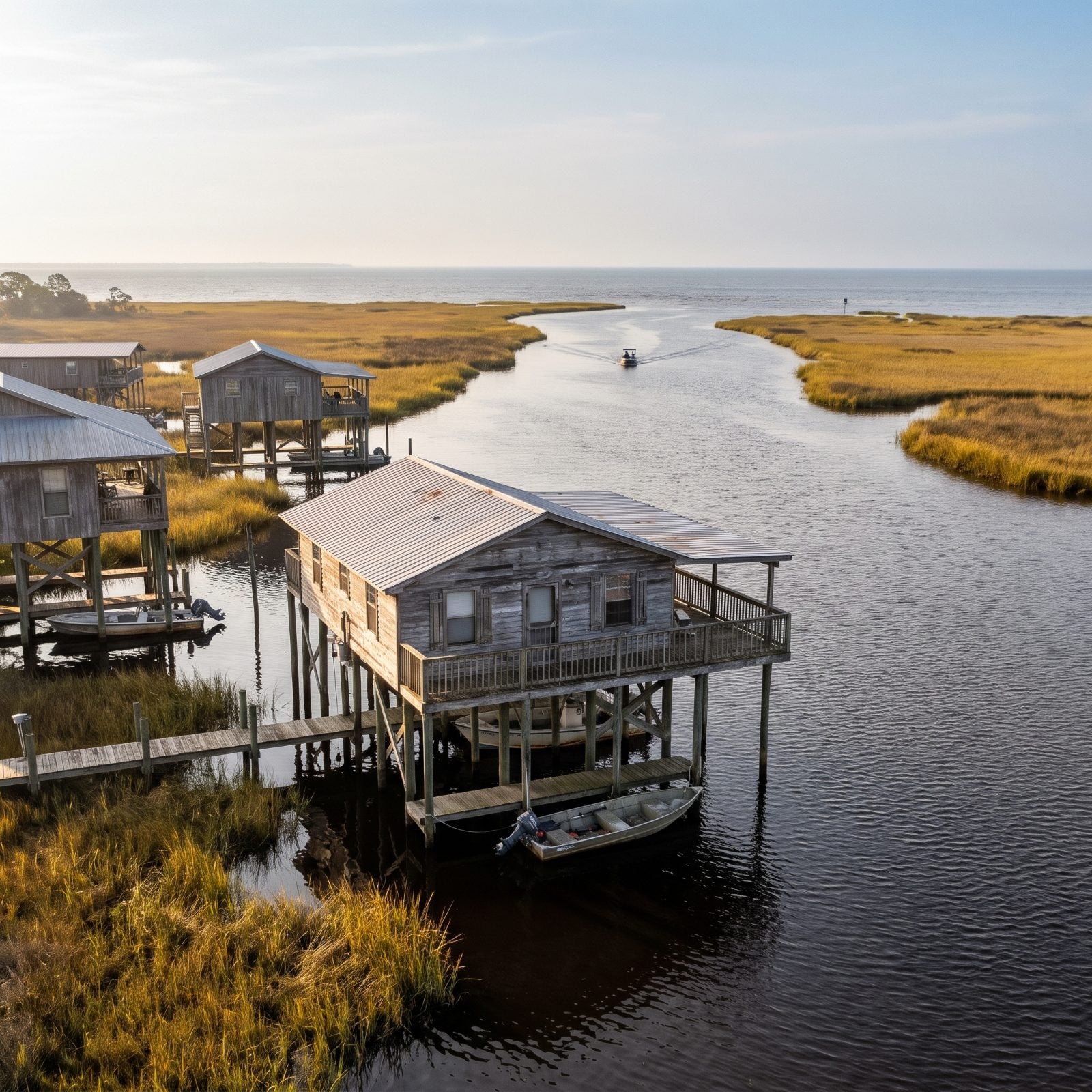
You reach the end of the road, and then there’s Suwannee. The river that Stephen Foster made famous empties into the Gulf here, and the whole village sits up on stilts because the marsh gives it no choice.
This is about as off-grid-feeling as coastal Florida gets while still having a road. Houses perch high over canals, you get around by boat as much as by car, and the fishing is the whole reason anybody comes. Nature Coast remoteness keeps prices reasonable, though you pay in isolation, because the nearest real grocery run is a drive. For the right person, a stilt house watching the Suwannee pour into the Gulf is worth every mile of that drive.
31. Cedar Key, Florida: Old Florida Views Beyond the Downtown Core
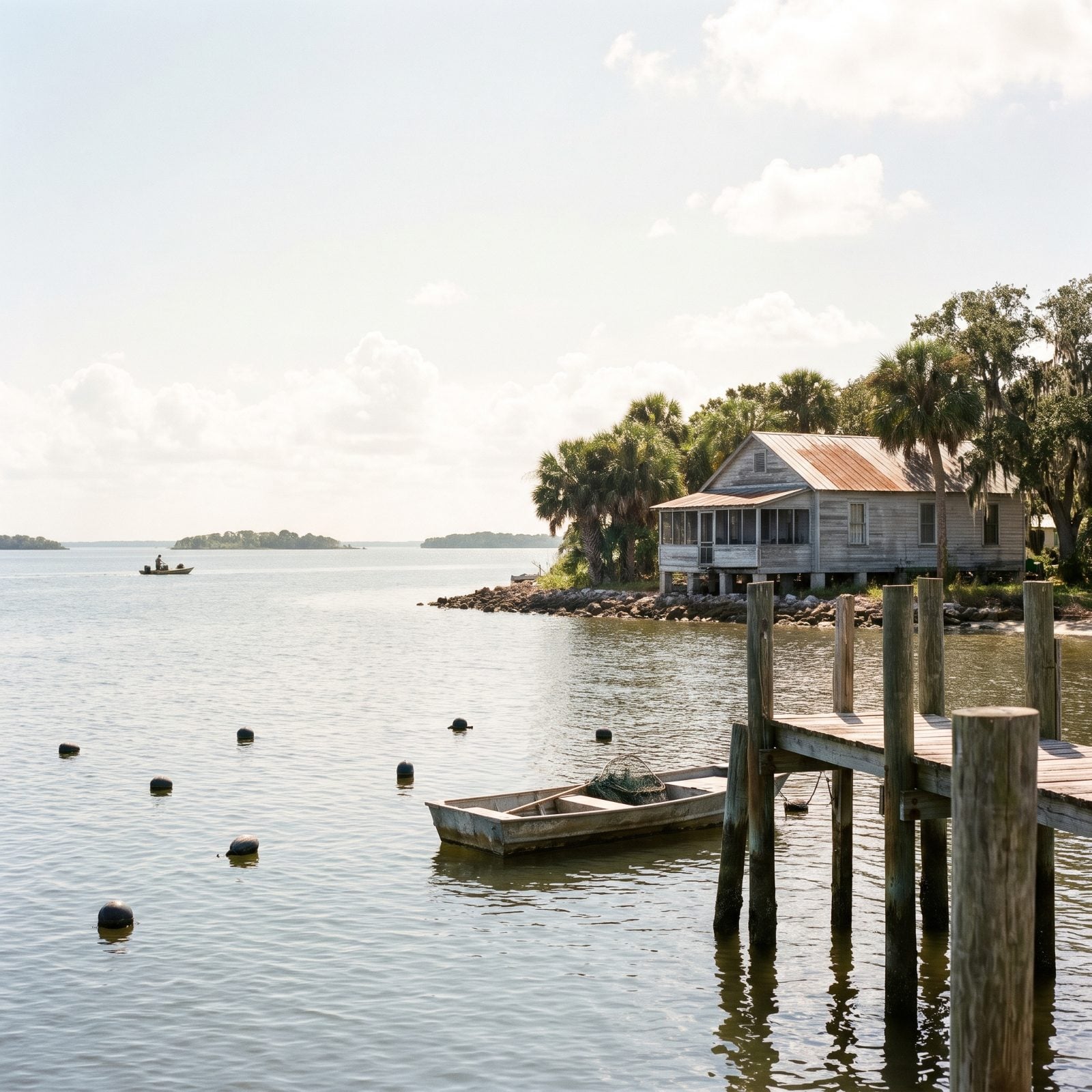
Cedar Key’s little downtown has gotten popular enough that the prices there followed right along. But step off the main stretch, onto the quieter residential keys, and the Old Florida math still works.
By the numbers: Cedar Key, Florida on The Town Files (home values, weather, tornado history and schools)
This is a clamming town through and through. The farmed clams off these flats feed half the country, and the water around the island is dotted with aquaculture floats. Away from the dock bars you’ll find modest wood-frame cottages with tin roofs and porches built for the heat. Scattered islands and silver Gulf water instead of a crowded beach. Fair warning: inventory is thin and gets snapped up fast, so patience matters here more than money.
30. Yankeetown, Florida: Withlacoochee River Porches Near the Gulf
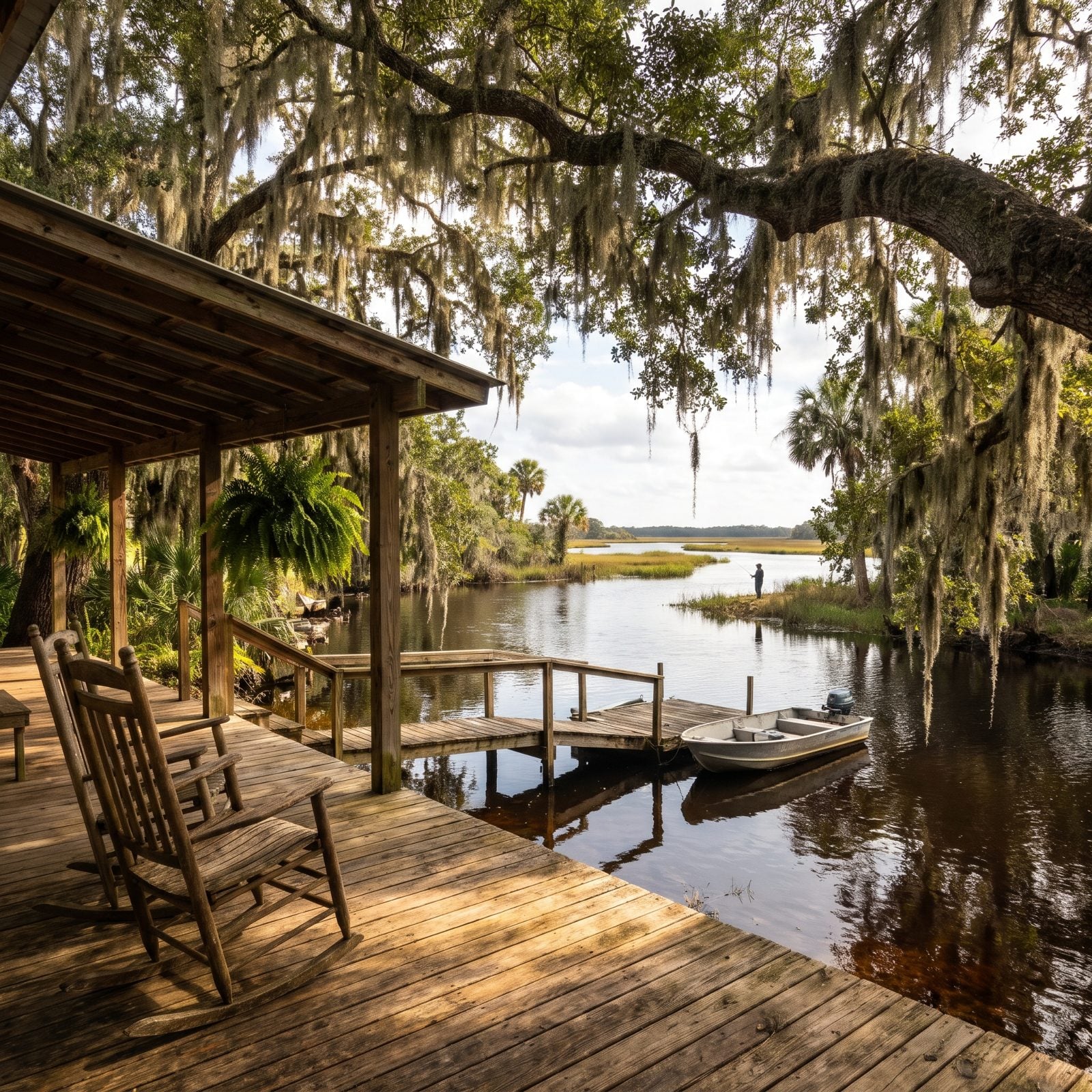
Shade is the thing people forget to want in Florida, and Yankeetown has it in spades. Live oaks hung with Spanish moss arch over the Withlacoochee River, and the town tucks itself along the banks where the water runs slow and dark toward the Gulf.
By the numbers: Yankeetown, Florida on The Town Files (home values, weather, tornado history and schools)
Small, old, and quiet. It’s a river town first and a Gulf-access town second, which keeps it well off the radar of beach buyers. A porch cottage under the oaks here costs a fraction of what the same water view runs an hour south. Manatees winter up the river, the fishing stays steady all year, and the pace lands somewhere between slow and stopped. Exactly as advertised.
29. Homosassa, Florida: River Views Beneath the Live Oaks
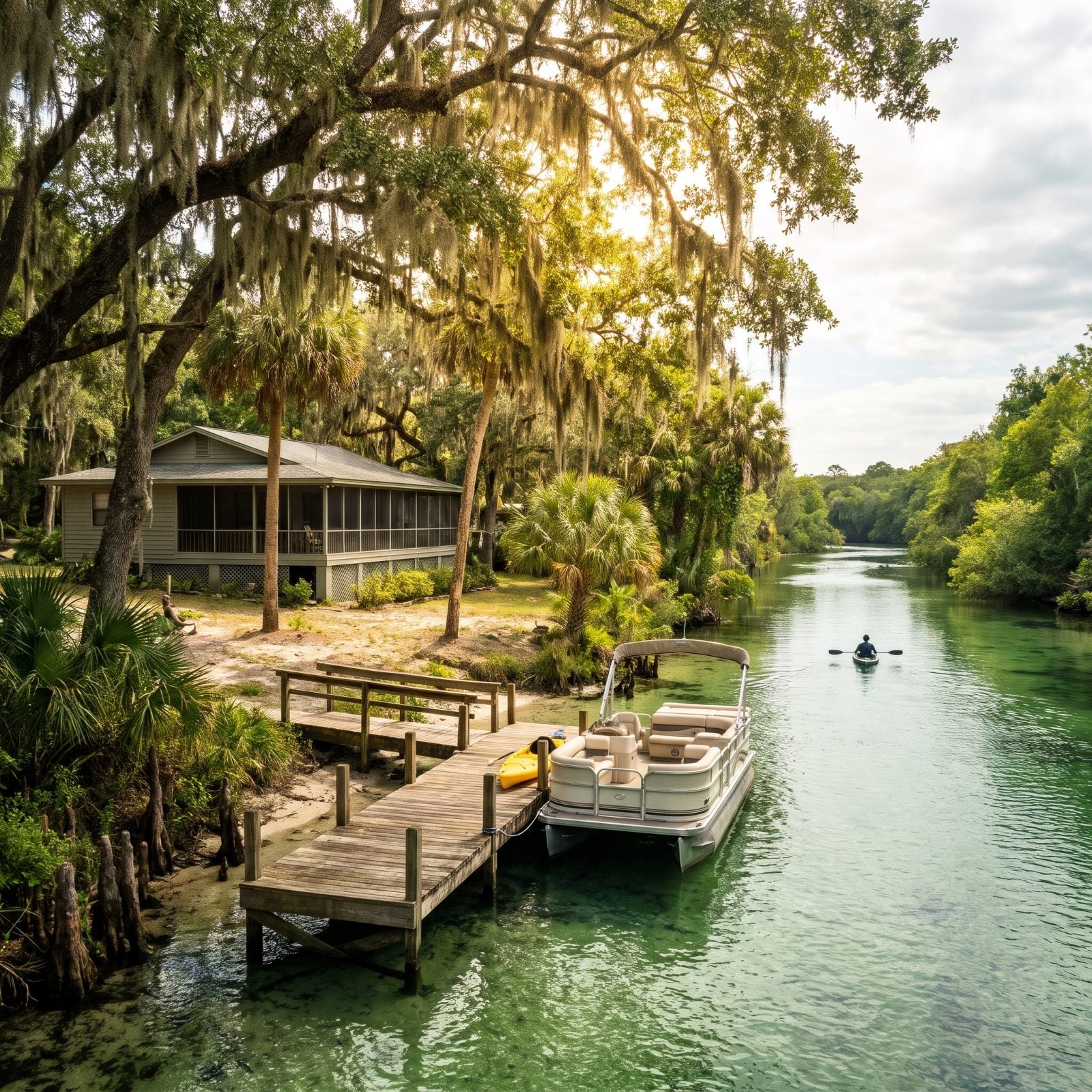
Spring water runs through Homosassa clear enough to count the fish. The river feeds from one of Florida’s great springs, so it holds a steady temperature year-round and pulls in manatees by the hundreds when the Gulf turns cold.
By the numbers: Homosassa, Florida on The Town Files (home values, weather, tornado history and schools)
The town wraps around that river under enormous live oaks. Homes run the range from humble to flat-out fixer, and because much of the waterfront sits up a winding spring river rather than on open Gulf, the prices stay friendlier than the water would suggest. Crystal water, deep shade, manatee season, and a boat ride down to the Gulf when you want it. For the money, you won’t beat that clarity anywhere on the coast.
28. Aripeka, Florida: A Tiny Fishing Village on the Marsh
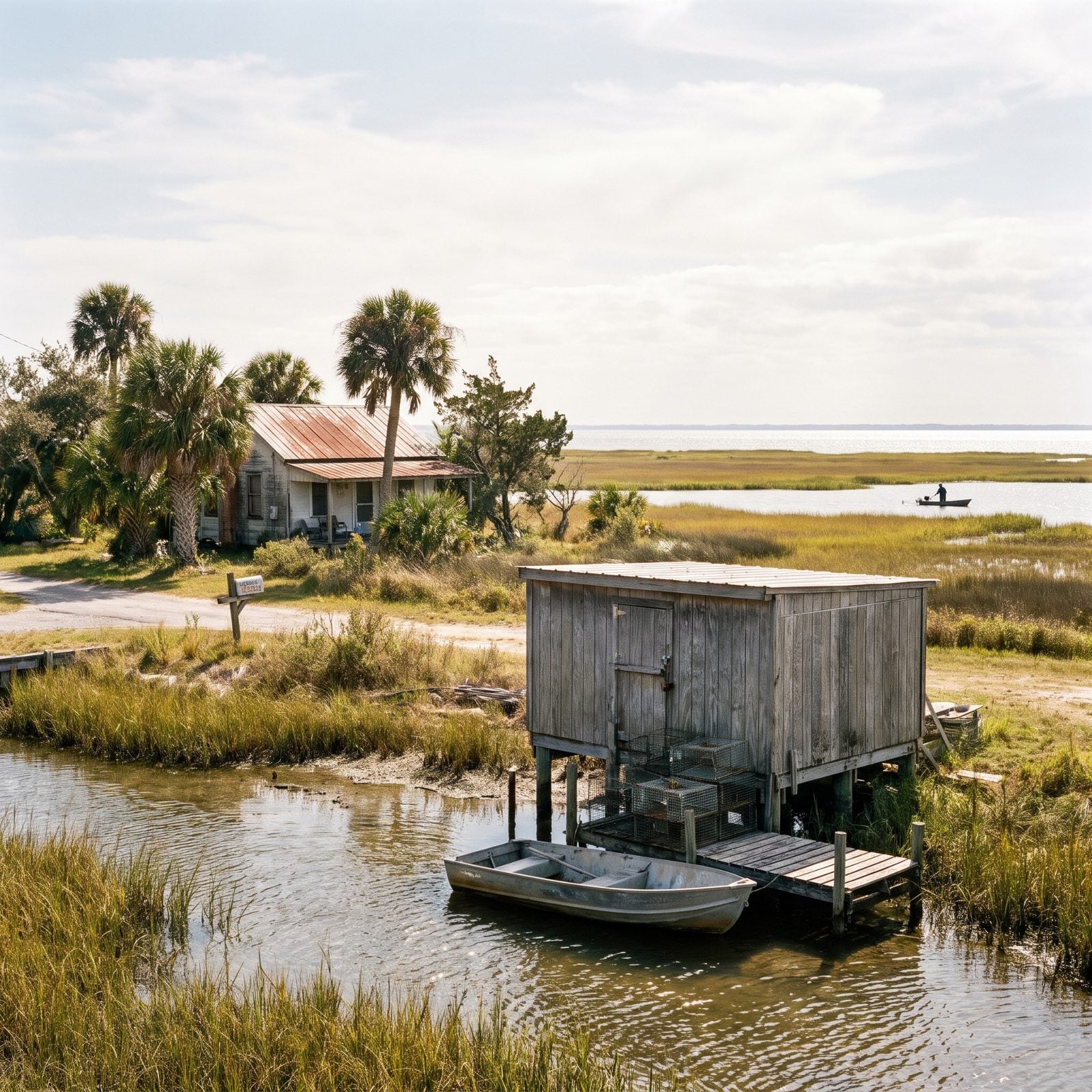
Blink and you’ll miss Aripeka. It straddles two counties, claims barely more than a handful of streets, and still runs on crab traps and fishing skiffs. There’s no tourist strip to spoil, because there’s barely a town to find.
What’s here is marsh. Tidal creeks winding out to the Gulf, weathered shacks on pilings, cottages that haven’t changed hands in a generation. One of the last truly tiny fishing villages on this coast, and the anonymity is exactly why a water view here can still land within reach. You won’t have neighbors stacked around you. You’ll have marsh grass, crab traps, and the Gulf a short run down the creek.
27. Hudson, Florida, Canal Neighborhoods With Gulf Access
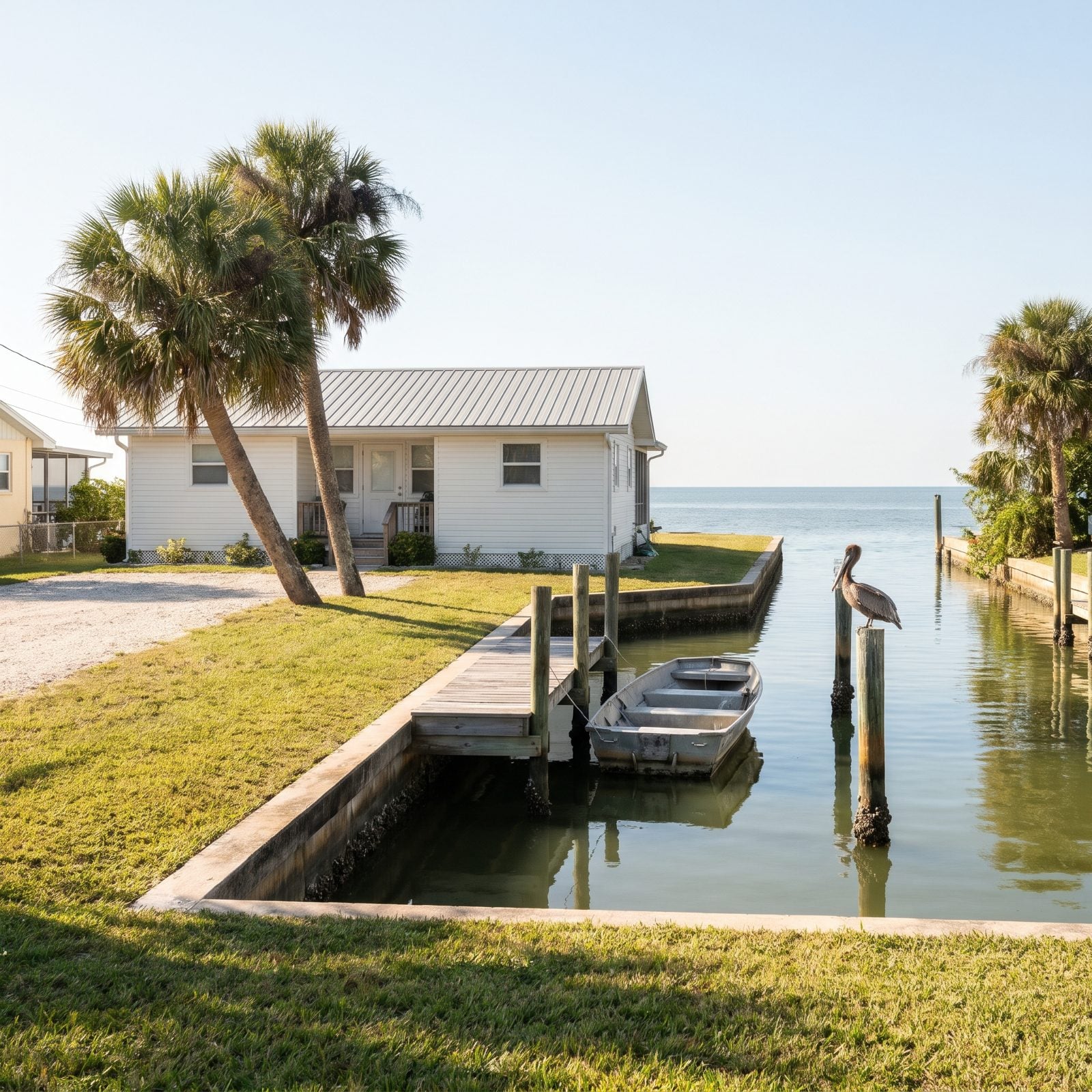
Hudson is where Tampa-area boaters go when they want deep-ish water and a dock without a six-figure premium. The whole town is stitched with saltwater canals, most of them a short, no-wake idle from the open Gulf. Keep a flats skiff behind the house and you’re on the grass flats in twenty minutes.
By the numbers: Hudson, Florida on The Town Files (home values, weather, tornado history and schools)
The catch nobody mentions: a lot of these canal lots sit low, so flood insurance is part of the math, not an afterthought. Check the elevation certificate before you fall for the dock.
26. Ruskin, Florida, Little Manatee River and Cockroach Bay
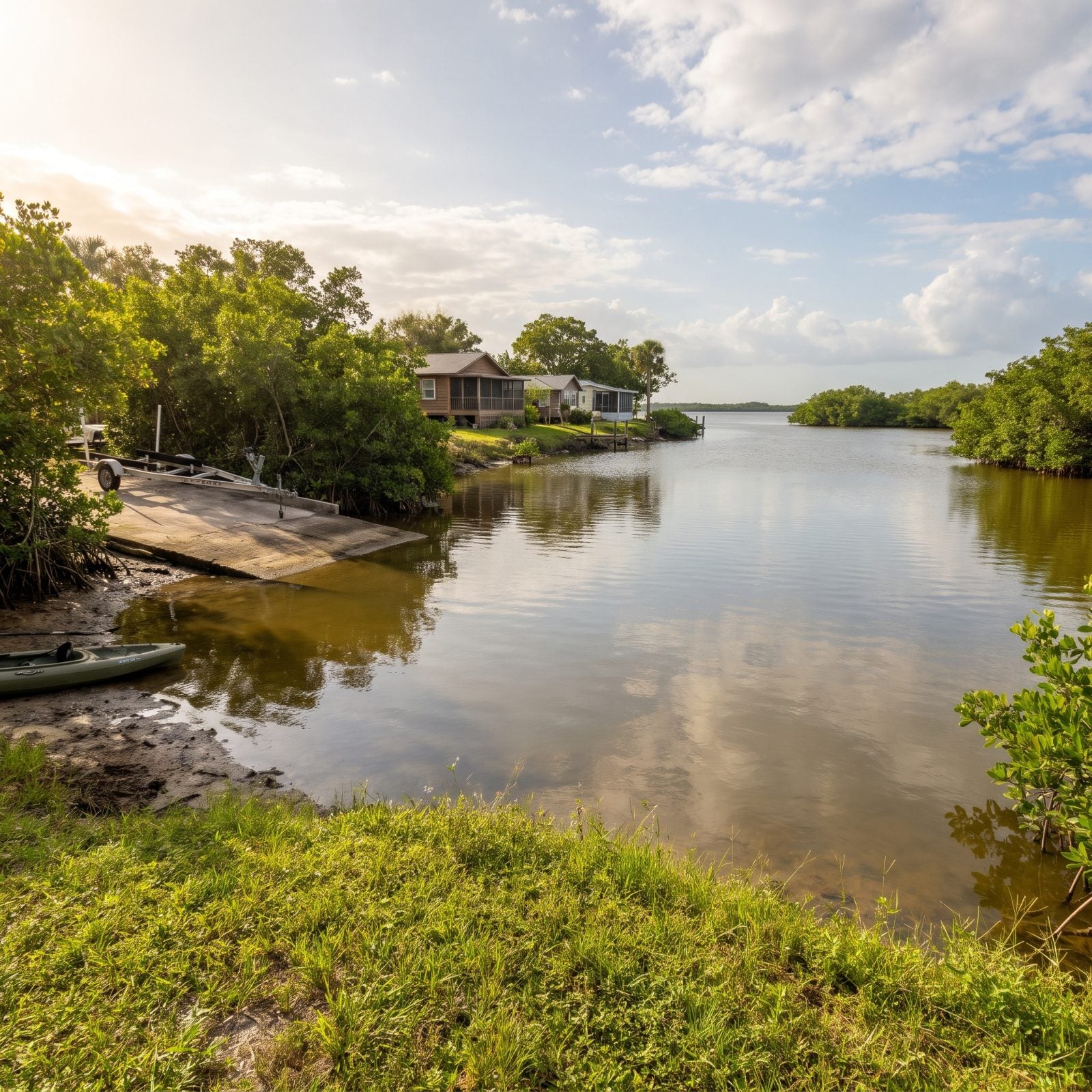
Ruskin still smells like tomato fields and river mud, and that’s exactly why we like it. It sits on the Little Manatee, a slow tannin-dark river that empties into Cockroach Bay — one of the better-protected flats-fishing zones on the whole bay. Snook, redfish, the works.
By the numbers: Ruskin, Florida on The Town Files (home values, weather, tornado history and schools)
Homes here run cheaper than almost anywhere else on Tampa Bay with real water access, partly because the place reads as agricultural rather than coastal. Rentals on or near the river exist, but they move fast among anglers who already know. The river is no-wake and winding, so forget speed. You come here to drift, not to roar.
25. Everglades City, Florida, Stilt Houses on the Barron River
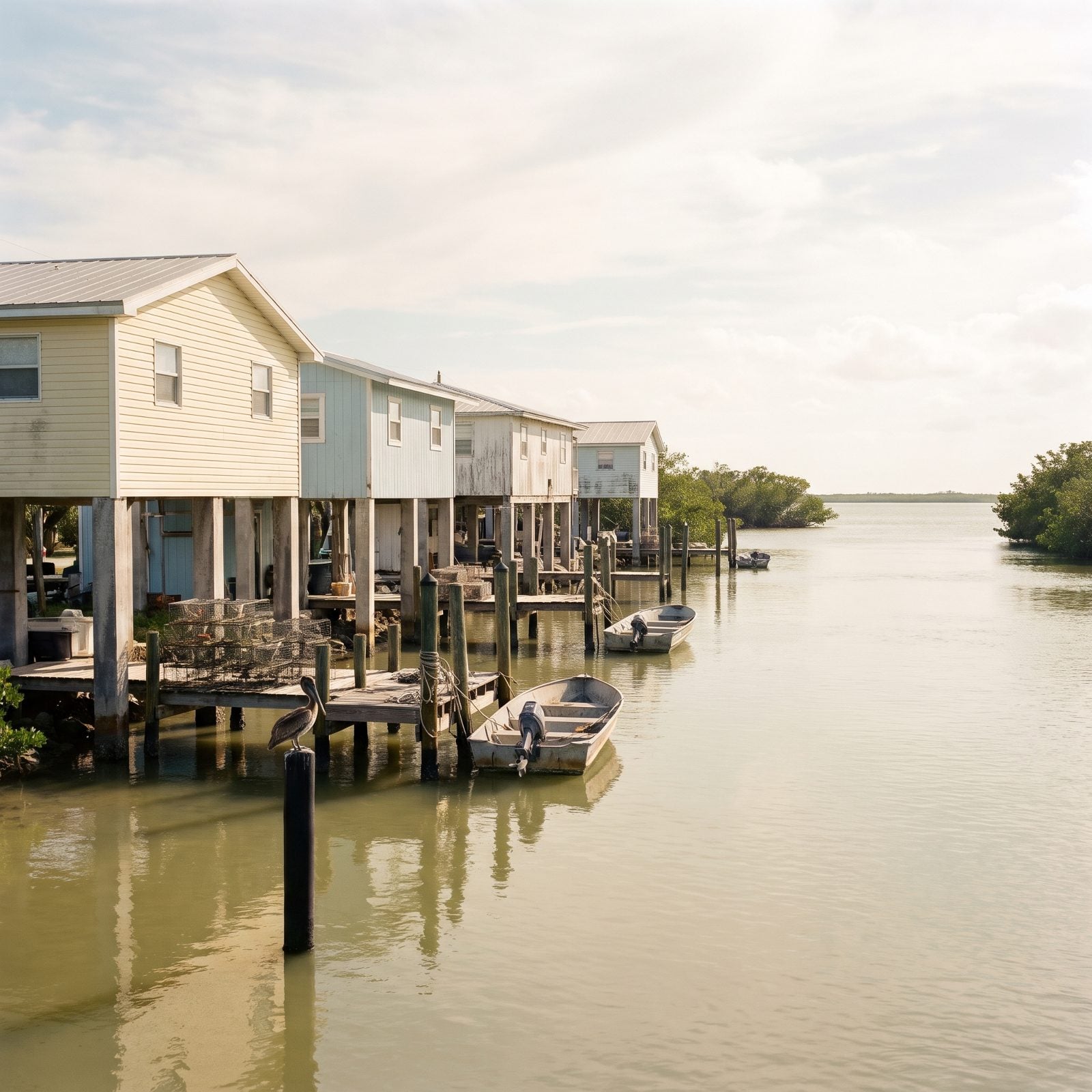
This is the last real frontier town on Florida’s Gulf side. Everglades City sits at the edge of the Ten Thousand Islands, and the homes that line the Barron River stand on stilts for a reason. Hurricanes have come through hard, Irma most recently, and the places that survive are built high and plain.
Prices here stay lower than the beach towns because it’s genuinely remote. Naples is nearly an hour, and groceries take planning. But if your dream is stone crab season, tarpon in the backcountry, and a dock where you launch straight into a mangrove maze, nowhere else comes close.
Looking ahead after Irma, a local recovery committee chairman in Everglades City predicted “Everyone’s going to be up on stilts. There’s not going to be this panic the next time a hurricane comes, and we’re not going to have to worry about storm surge.”
24. Bayou La Batre, Alabama, Shrimp-Boat Views From a Working Port
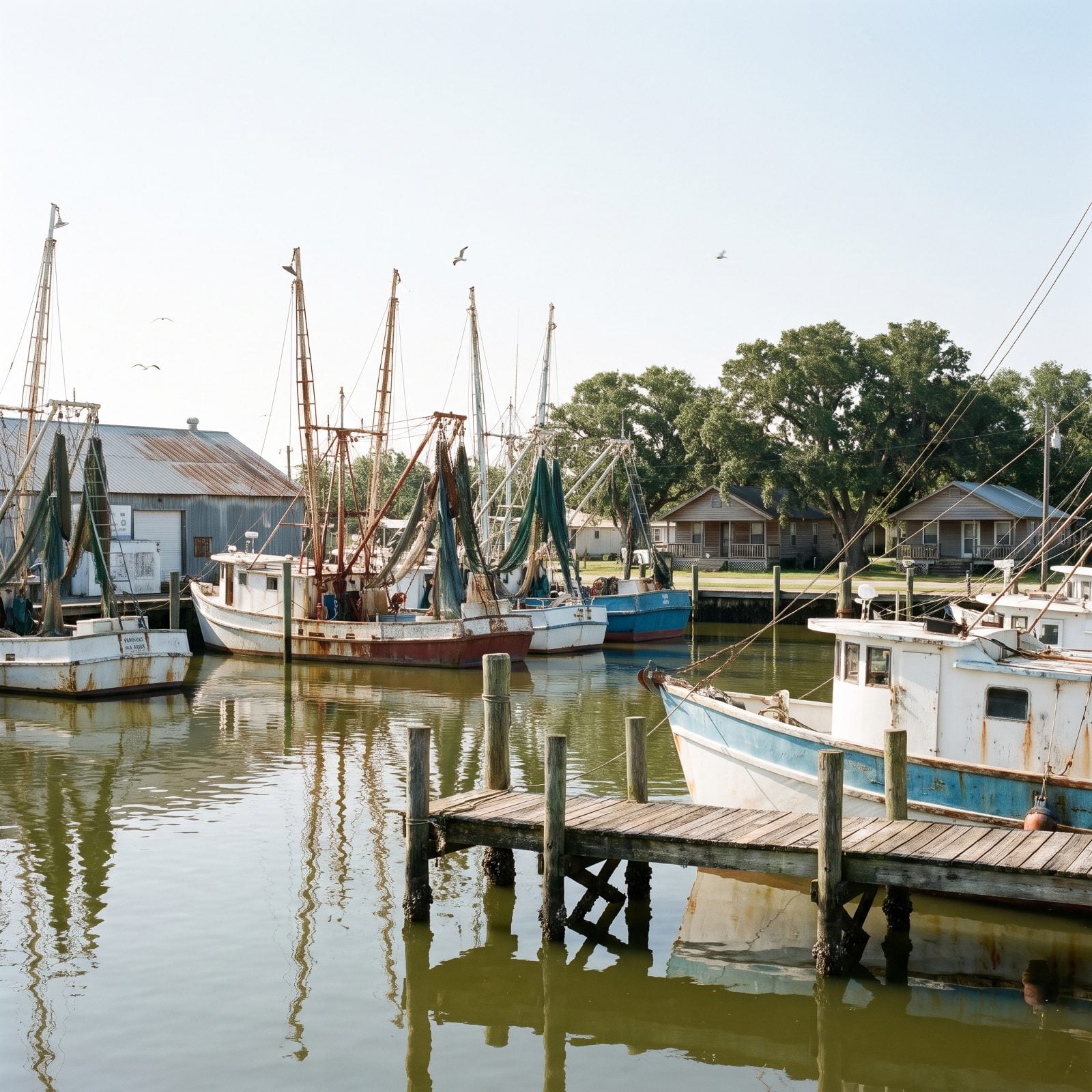
Bayou La Batre bills itself as the Seafood Capital of Alabama, and it earns it. This is a working shrimp port, not a postcard. The boats come in at dawn, the ice house hums, and the whole place runs on the tide and the catch.
By the numbers: Bayou La Batre, Alabama on The Town Files (home values, weather, tornado history and schools)
That working-town character is why waterfront here costs a fraction of what the Alabama beaches demand. You buy a view of real trawlers instead of a resort pool, and for a certain kind of person that’s the better deal. Just know a seafood plant and a diesel-engine chorus come with the package — and neither one runs on a vacation schedule.
In Bayou La Batre, one shrimp-boat crew member says her crew gets little break on the water and drops anchor right after daylight to eat breakfast.
23. Coden, Alabama, Quiet Shorelines Beside Portersville Bay
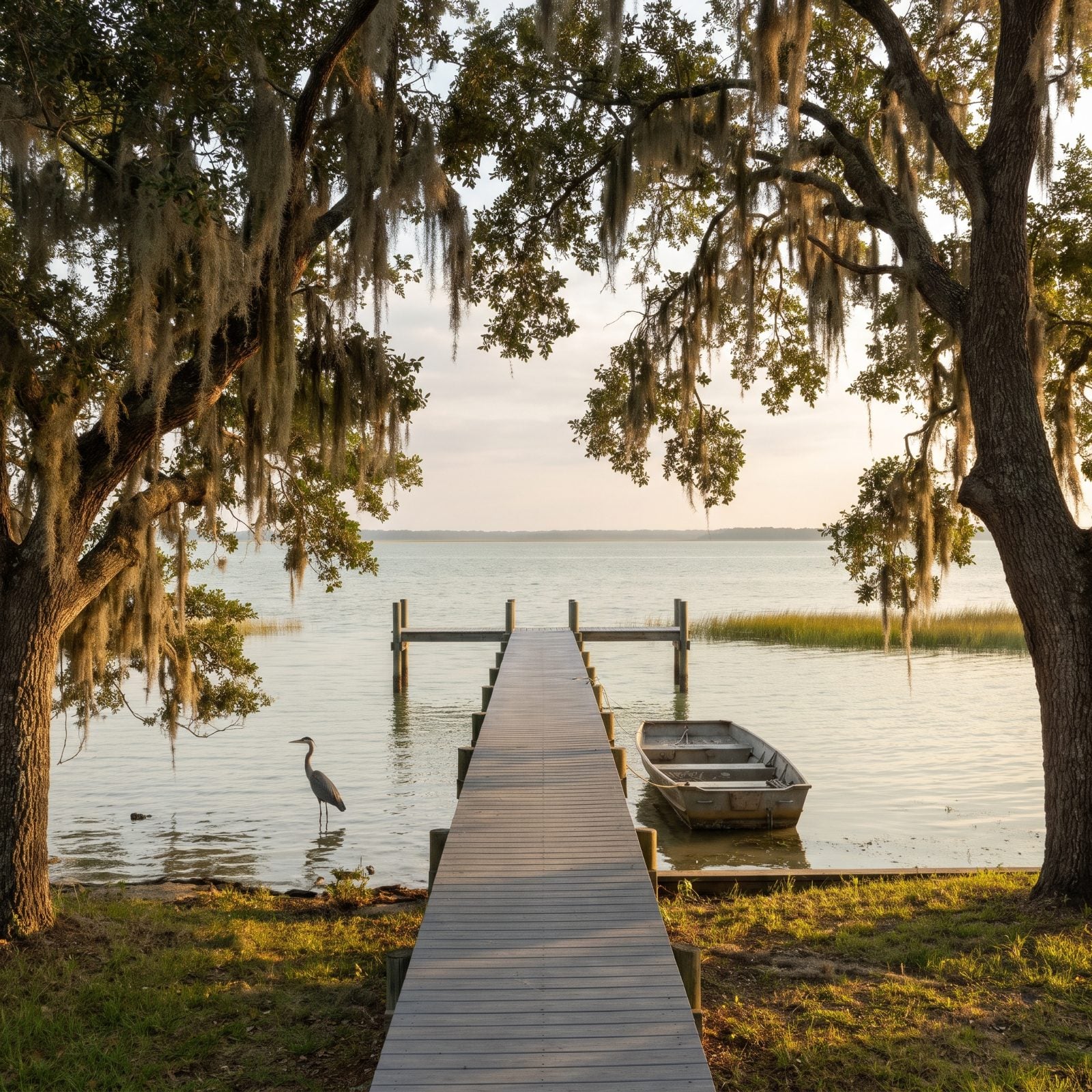
Right next to Bayou La Batre, and almost nobody’s heard of it. Coden hugs Portersville Bay with a string of low-slung homes, old piers, and live oaks that have stood through more storms than anyone’s counting. It’s about as quiet as the Alabama coast gets.
The water here is shallow and marshy, better for a johnboat and a cast net than a deep-draft cruiser. Crabbing off your own pier counts as a legitimate afternoon plan. Values stay modest because there’s no beach, no boardwalk, no reason for a crowd to show up — which is rather the whole idea.
22. Bon Secour, Alabama, River Cottages Behind the Beach Crowds
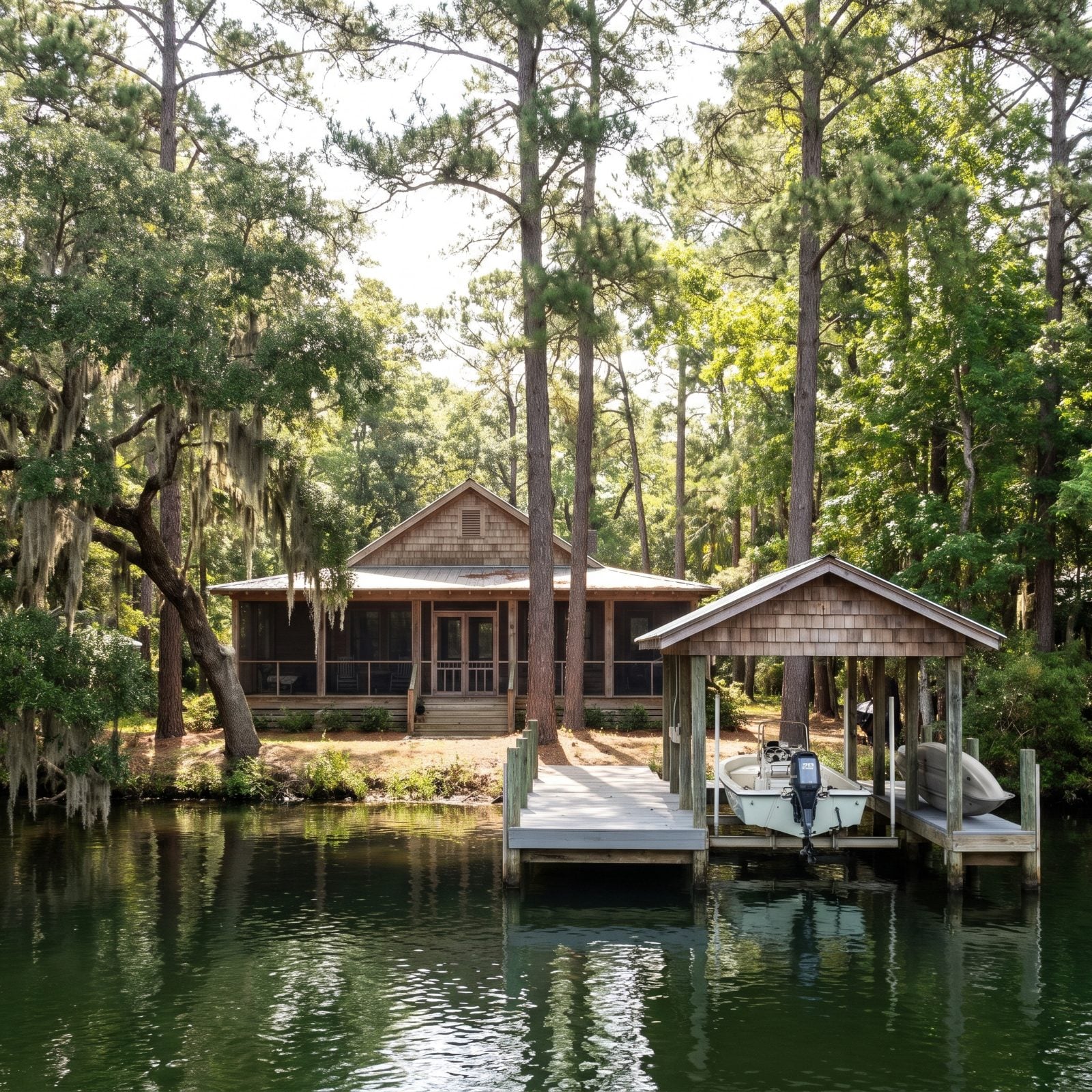
Everybody drives through Bon Secour on the way to Gulf Shores and never stops. Their loss. The Bon Secour River winds through a shaded, oak-draped corner of the coast that sits a short boat ride from the beaches, without the beach prices or the bumper-to-bumper summer traffic.
By the numbers: Bon Secour, Alabama on The Town Files (home values, weather, tornado history and schools)
You get the same Gulf access the resort crowd pays double for, minus the resort crowd.
River cottages here come with water deep enough to keep a real boat on a lift, and you’re idling out to the Intracoastal in minutes. The National Wildlife Refuge next door means a big chunk of the shoreline will never be developed. Scarcity like that holds value.
21. Pascagoula, Mississippi, Waterfront Value Near the Shipyards
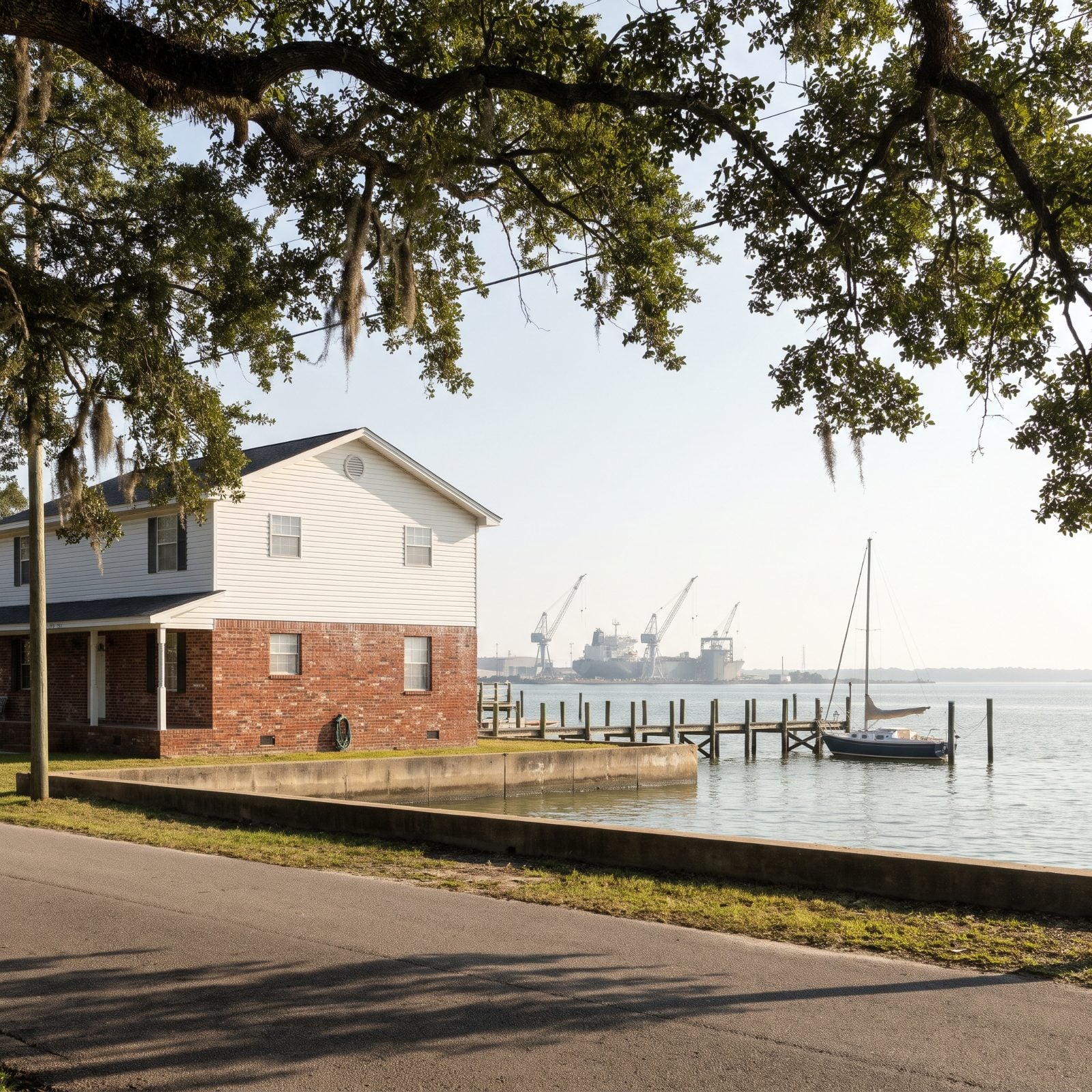
Pascagoula is a shipbuilding town, and that fact keeps a lid on waterfront prices in a way that rewards a seasonal buyer with patience. The Ingalls yard anchors the economy, so this is a real city with real jobs, not a tourist strip. Water views cost less because the town isn’t marketing itself as a getaway.
By the numbers: Pascagoula, Mississippi on The Town Files (home values, weather, tornado history and schools)
You’ll find homes along the river and bay that would be priced wildly higher a couple hours east. Round Island Lighthouse, the beach drive, and easy Gulf access are all here.
20. Gautier, Mississippi, Bayou Homes Along the Pascagoula River
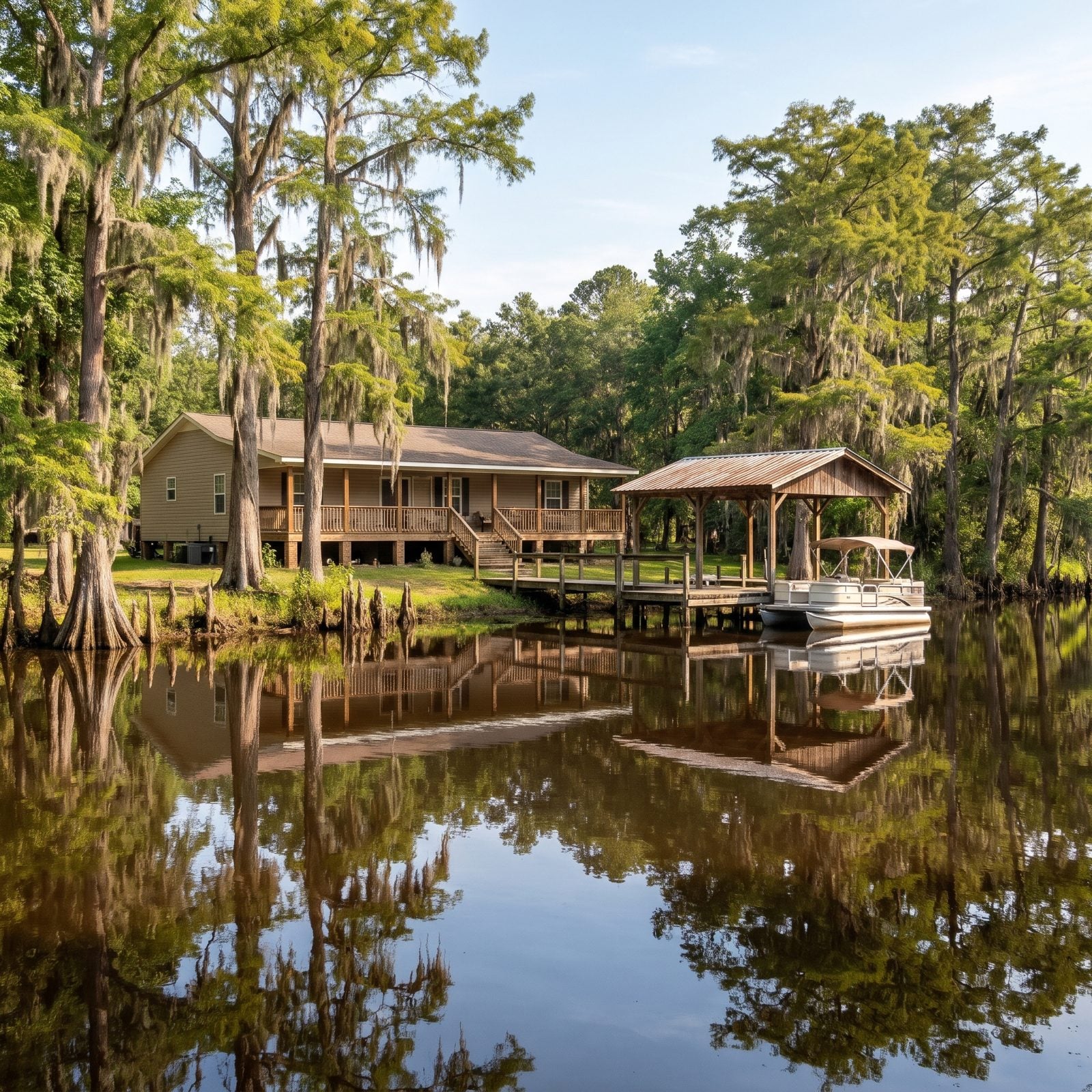
Gautier spreads along the lower Pascagoula River, the largest unimpounded river system in the Lower 48, and the bayou channels that branch off it hide some genuinely good waterfront bargains. Cypress knees, moss, slow dark water. It feels a hundred miles from anywhere, even though I-10 runs right there.
By the numbers: Gautier, Mississippi on The Town Files (home values, weather, tornado history and schools)
Homes with a boathouse on a bayou here run well below what the same setup fetches in Florida. The trade-off is depth — much of this water is shallow and better suited to a pontoon or a jon boat than a big cruiser. Perfect for drifting, crabbing, and watching alligators mind their own business.
19. Moss Point, Mississippi, River Views Beneath Moss-Draped Oaks
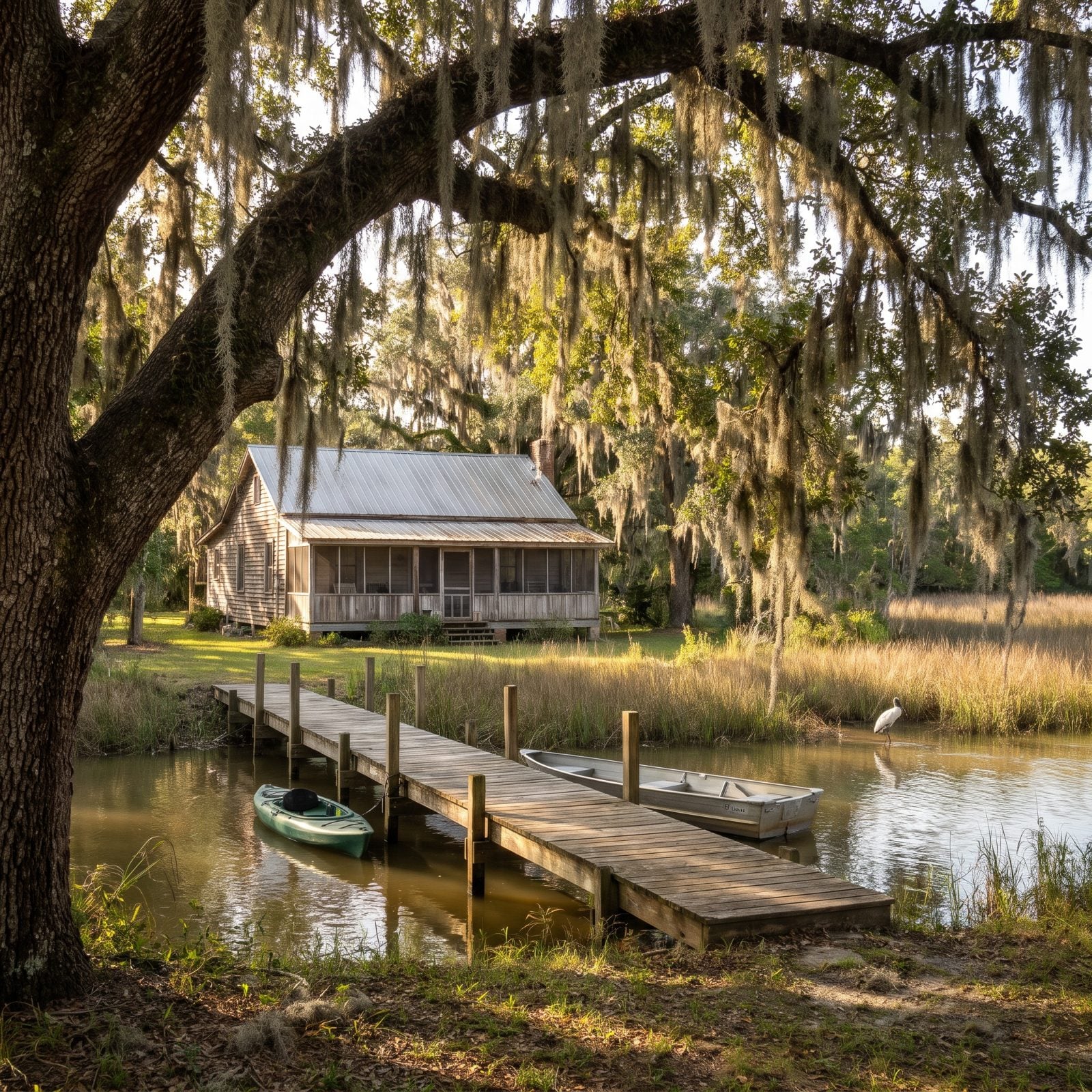
The name tells you what you’re getting. Moss Point sits where the Escatawpa meets the Pascagoula, under some of the oldest, most heavily moss-draped oaks on the coast. The town’s seen hard times, and it shows up in the price tags — which is honestly the opportunity.
By the numbers: Moss Point, Mississippi on The Town Files (home values, weather, tornado history and schools)
River frontage here is some of the most attainable on the Gulf for a buyer willing to look past the surface. The Pascagoula River Audubon Center sits right in town, and the birding on this river system ranks among the best in the Southeast. You wake up to wood storks and the occasional eagle.
18. Waveland, Mississippi, Simple Coastal Living Near the Beach
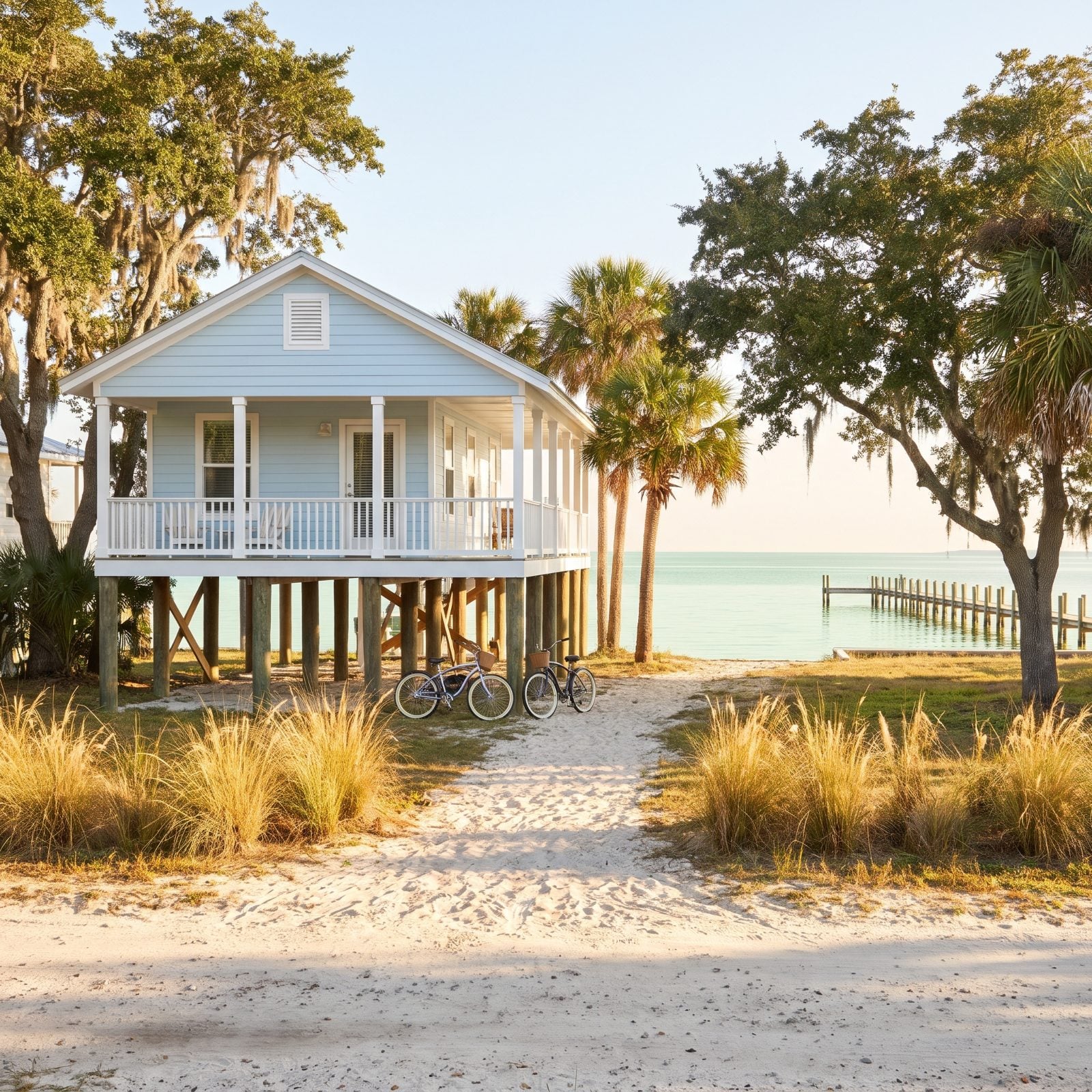
Waveland took the full force of Katrina’s eye and rebuilt itself into something quieter and more deliberate than the flashier Gulf beach towns. What’s left is a small coastal community where raised cottages near the Mississippi Sound still land within reach of a modest seasonal budget.
By the numbers: Waveland, Mississippi on The Town Files (home values, weather, tornado history and schools)
The beach here is calm, shallow, and nearly empty on a weekday morning. You bike to it. The pier at the end of town is a free, no-drama place to drop a line. New Orleans is barely an hour away, which means your view costs Mississippi money while your weekends can cost whatever you want them to. Good trade. More people will figure it out eventually.
17. Long Beach, Mississippi, Gulf Views West of Gulfport
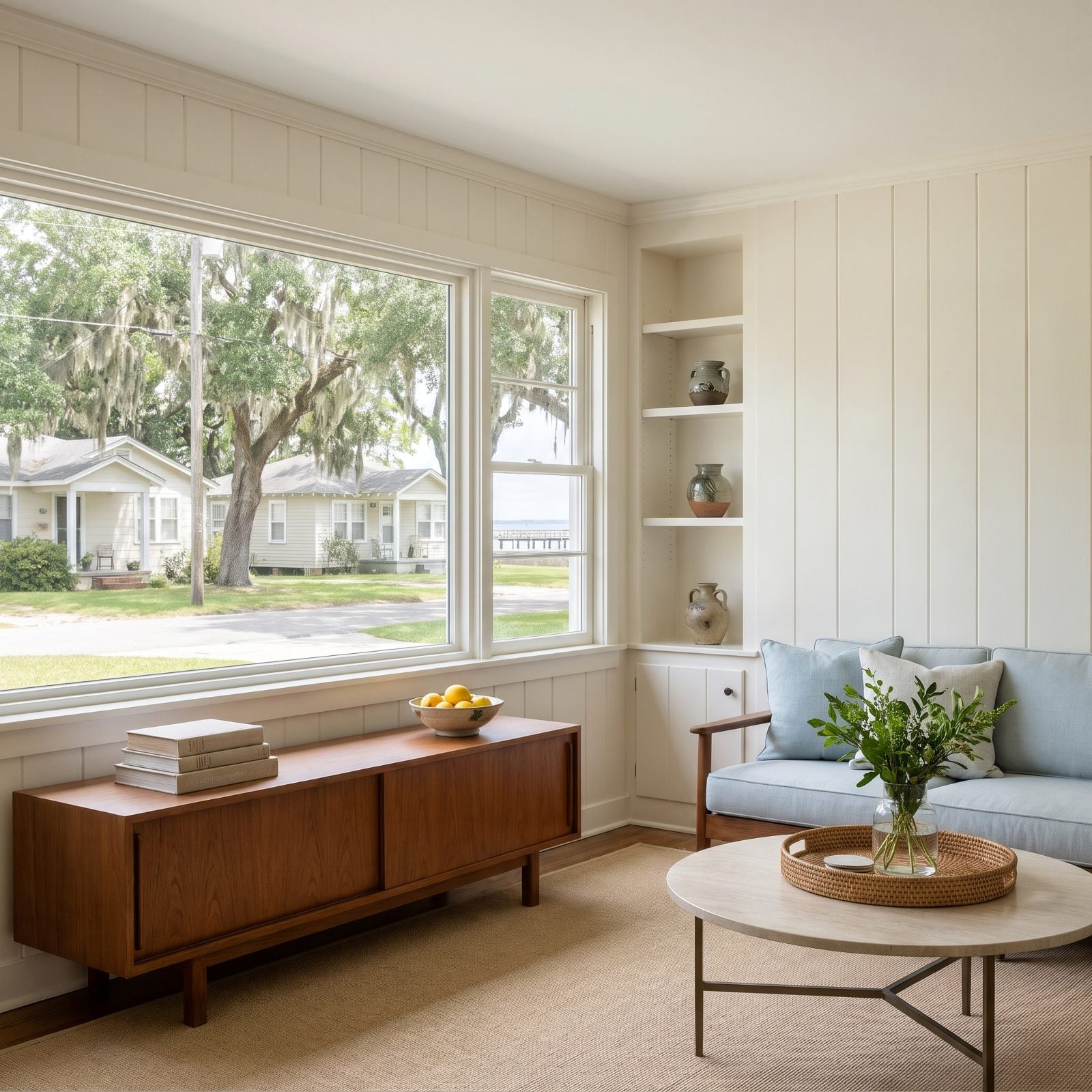
Long Beach sits in the shadow of Gulfport, which is the whole point. You get the same stretch of Mississippi Sound and the same long sweep of Highway 90 with its sand beach, minus the resort pricing that creeps in closer to Biloxi. Homes a block or two off the water run noticeably cheaper than anything with a deed that touches the sand.
By the numbers: Long Beach, Mississippi on The Town Files (home values, weather, tornado history and schools)
The live oaks are the real draw. Some predate the Civil War, and after Katrina took so much, the town held onto them like heirlooms. A cottage under one of those canopies with a wedge of gulf visible from the porch is about as good as the coast gets for the money.
16. Holly Beach, Louisiana, Raised Cottages on the Creole Nature Trail
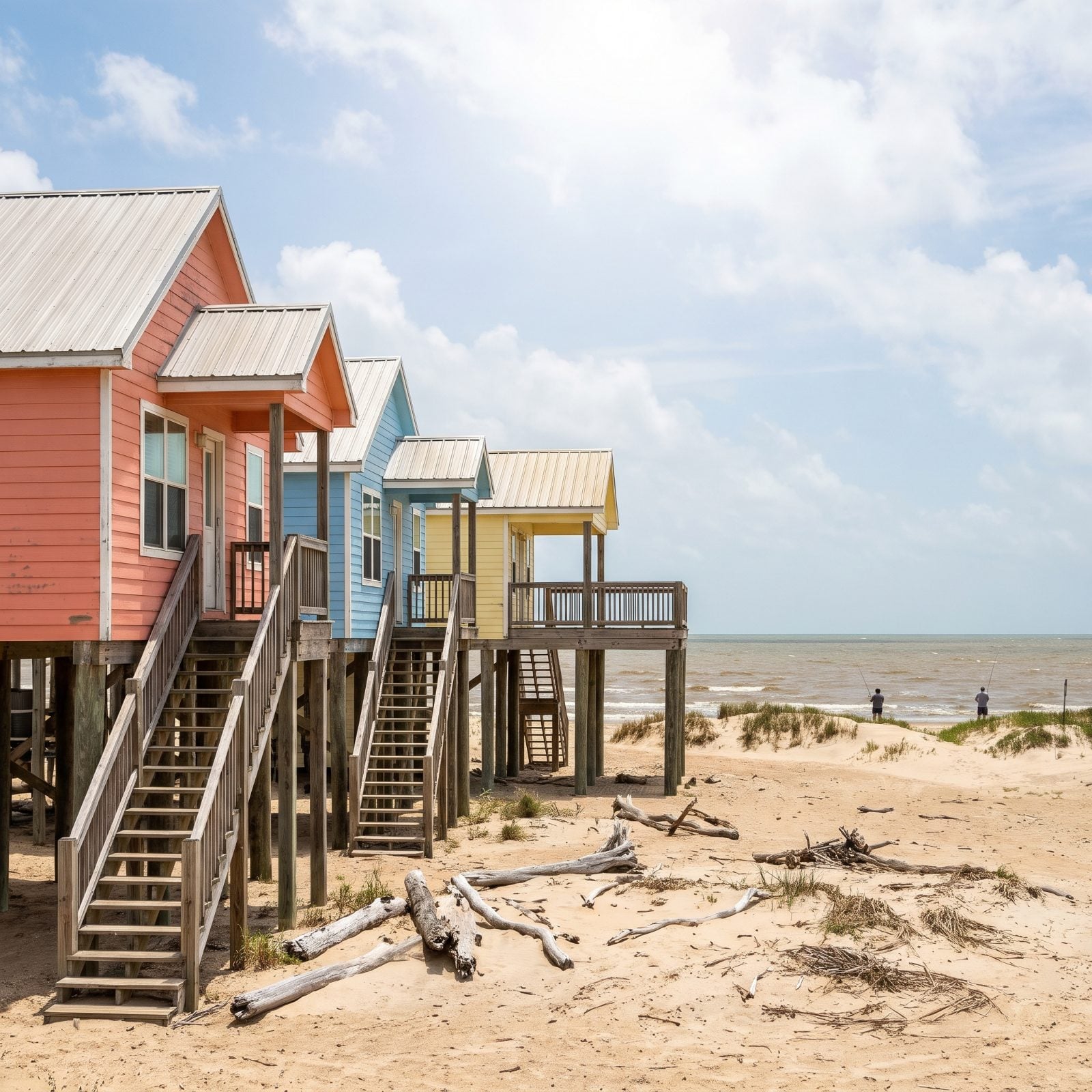
They call Holly Beach the Cajun Riviera, and the nickname gets said with affection, not pretension. This is not a manicured place. It’s a line of stilt camps on a windblown stretch of beach you reach via the Creole Nature Trail, and most of what you see got rebuilt after Rita and Laura flattened it.
That history keeps prices down. Insurance is the real conversation here, not the sticker price. A raised cottage with the Gulf out the front door can cost surprisingly little, because the storms have taught everyone exactly what they’re buying. Want big water and don’t mind a working relationship with the weather? Few places give you more frontage per dollar.
15. Cameron, Louisiana, Wide Marsh and Ship-Channel Views
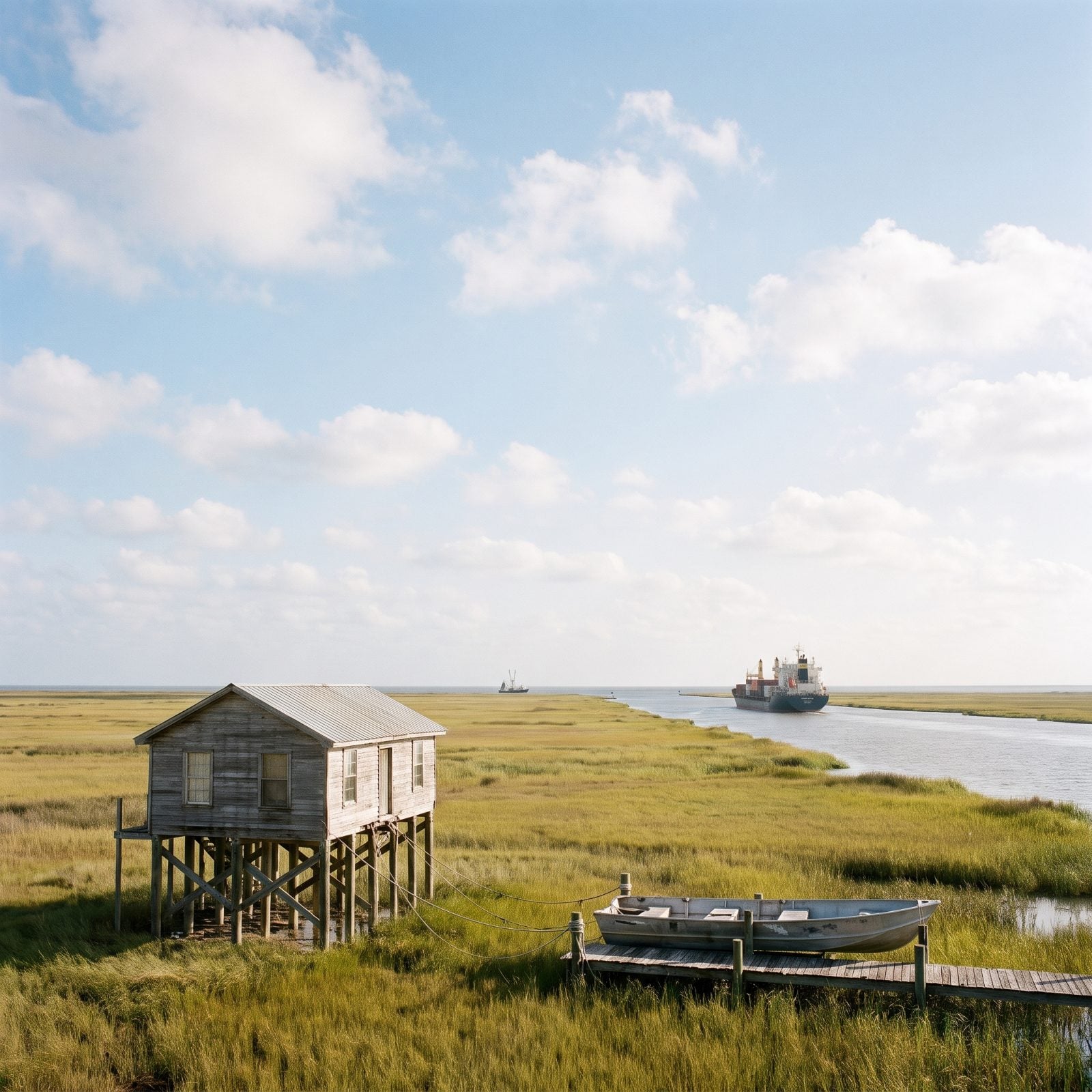
Cameron is the seat of Louisiana’s largest parish by area and one of its emptiest by population, which tells you most of what you need to know. Marsh runs to the horizon in every direction, and the Calcasieu Ship Channel brings tankers and shrimp boats past your window on the same tide.
This is frontier living for people who like solitude with a view. The LNG terminals up the channel have reshaped the local economy, and that’s worth knowing before you fall for a quiet dock. A raised home here, marsh on three sides and the channel out front, still stays cheap compared to anything you’d find east toward Grand Isle.
14. Hackberry, Louisiana, Calcasieu Ship Channel and Bayou Scenery
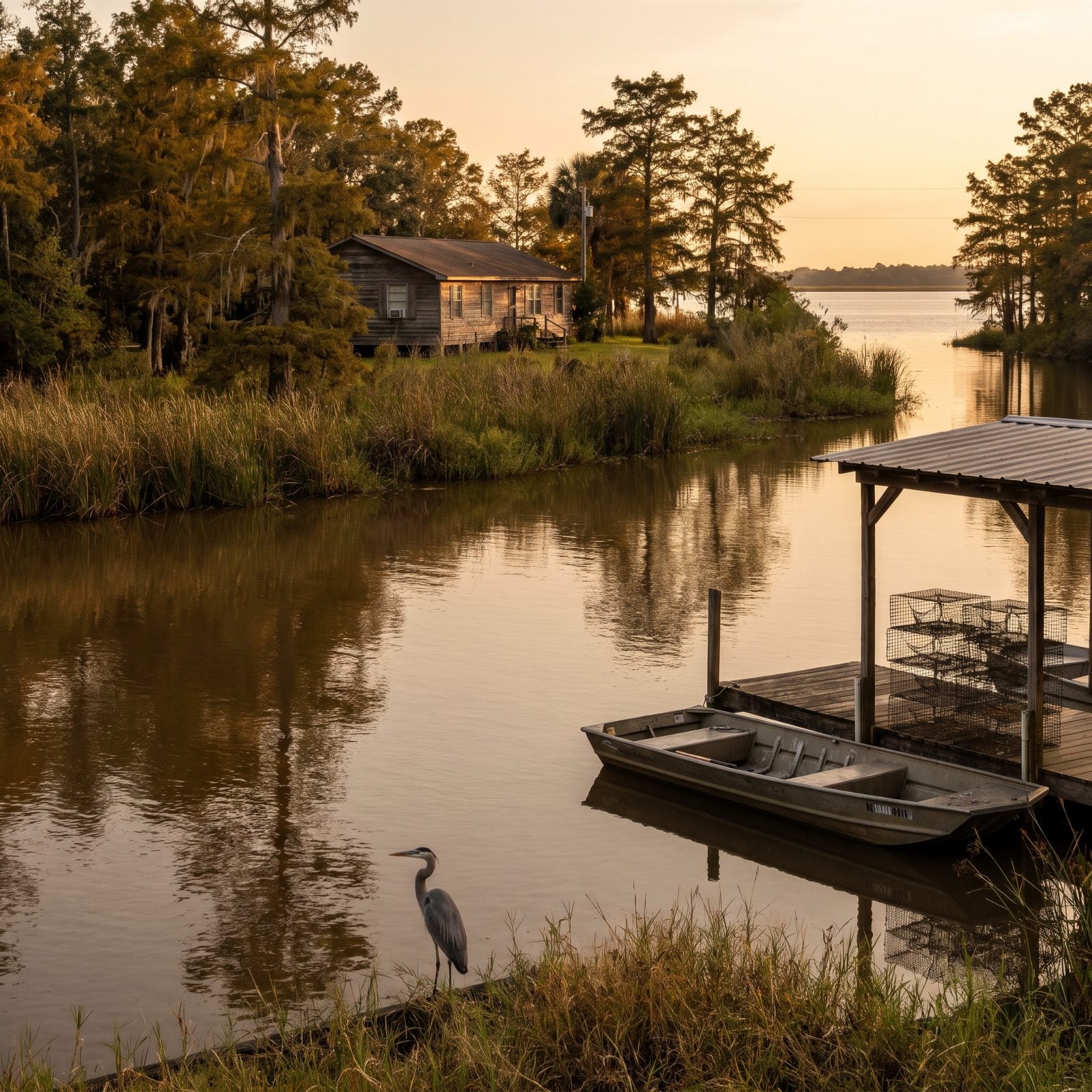
Hackberry calls itself the trout fishing capital, and the town more or less organizes its life around the water. Tucked between the Calcasieu Ship Channel and a web of quiet bayous, it serves up two kinds of view in one small place: the big industrial waterway and the slow, cypress-shaded backwater.
By the numbers: Hackberry, Louisiana on The Town Files (home values, weather, tornado history and schools)
Prices here are modest because the town is small and the commute to Lake Charles is real. What you get for that is a dock in your backyard, redfish within casting distance, and sunsets over the marsh that nobody charges admission for. Buy the boat before you buy the fancy furniture. You’ll spend more time on one than the other.
After landing a 7 1/2-pound speckled trout in Calcasieu Lake, a Hackberry fishing guide said “This time of year, from March through May, is usually when we see our biggest trout caught.”
13. Delcambre, Louisiana, Shrimp-Boat Views Along the Canal
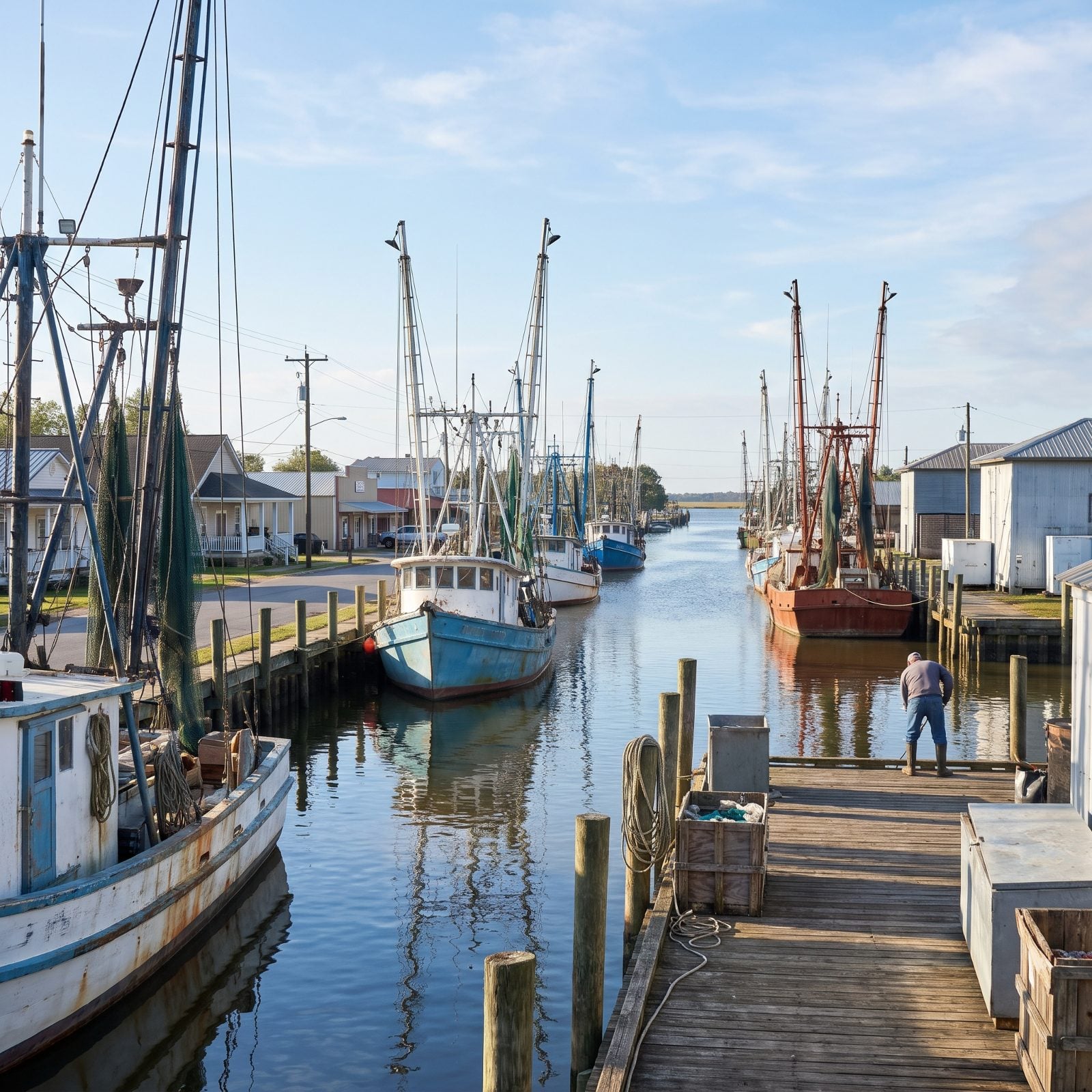
Delcambre is a shrimp town that means it. The canal runs straight through the middle, and the trawlers tie up close enough that you can read their names from the road. Every August the whole place throws the Louisiana Shrimp Festival, and the rest of the year it just quietly lands the catch.
By the numbers: Delcambre, Louisiana on The Town Files (home values, weather, tornado history and schools)
Homes along the canal are plain and affordable, the kind of frame houses built by people who worked the water rather than vacationed on it. If a view of working boats and hanging nets sounds better to you than a manicured marina, this town delivers it at a fraction of resort prices. And the seafood is a side benefit you won’t shut up about.
At the Delcambre shrimp festival, a shrimper who owned boats (more than 20 of them) recalled “As a teenager, my ex-husband and I used to walk the docks of Delcambre, and we always said we were gonna get a shrimp boat one day.”
12. Cocodrie, Louisiana, Camps Overlooking Terrebonne Bay
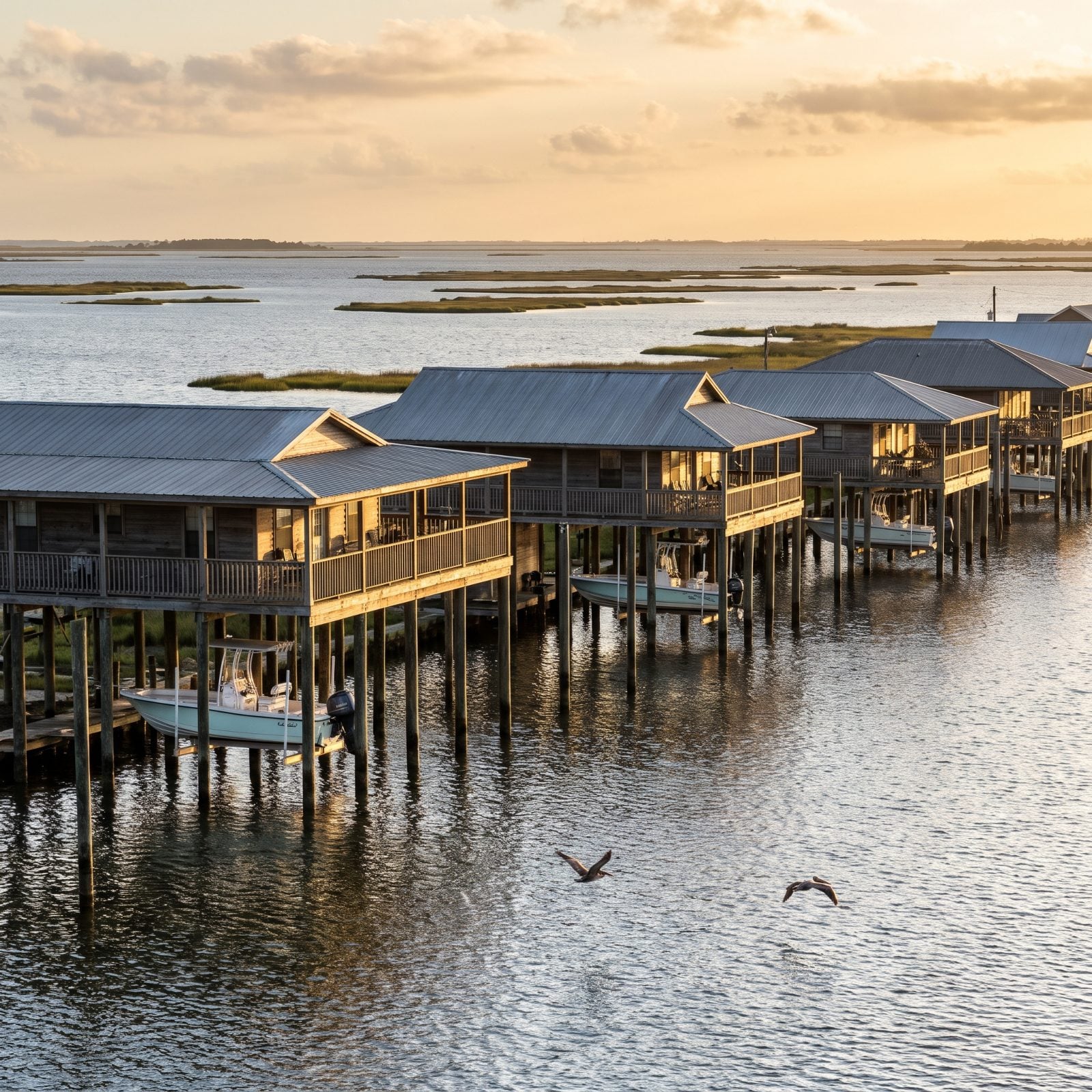
Cocodrie is where the road finally gives up and hands you over to the water. Drive south out of Houma until the land runs thin, and you arrive at a knot of stilt camps overlooking Terrebonne Bay, with a marine research station and not much else for company.
These are camps, not houses, and that distinction matters. People buy them as weekend fishing bases, which keeps the market different from a typical neighborhood. You can still find a raised place with a boat lift and open-bay views for a price that would barely cover a condo down a prettier coast. Just go in clear-eyed about elevation, insurance, and the long drive to the nearest real grocery store.
11. Shell Beach, Louisiana, Stilt Homes Facing Lake Borgne
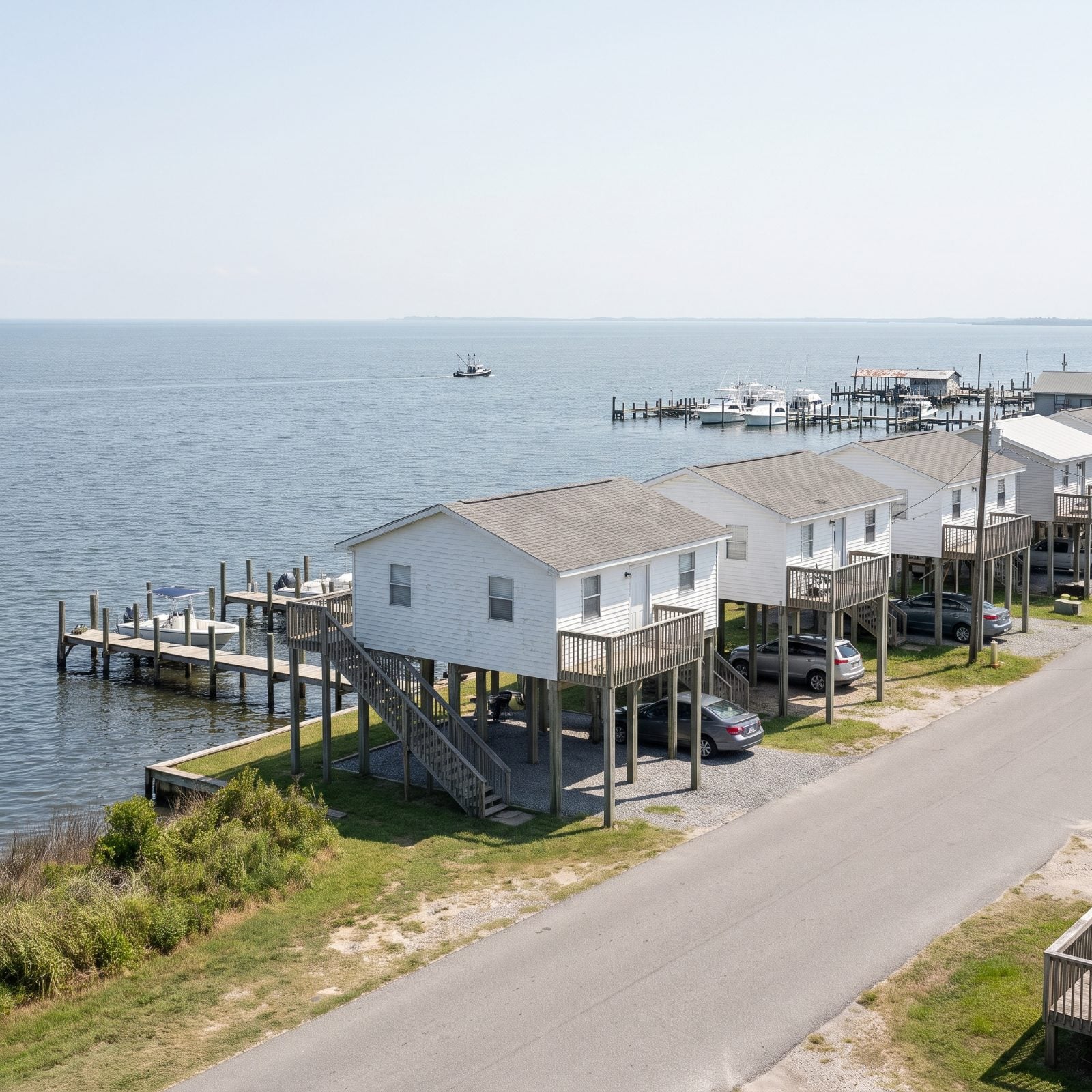
Shell Beach is close enough to New Orleans to surprise people. A short drive down through St. Bernard Parish puts you on the edge of Lake Borgne, where stilt homes line the road and charter captains run out for redfish and trout.
The water here is technically a lagoon off the Mississippi Sound, big and open and full of fish. Because the community is small and storm-tested, prices stay reasonable for somewhere this near a major city. That’s the trade the whole Gulf Coast runs on: the more honest a place is about its weather, the softer its prices tend to be. Shell Beach is honest.
10. Sabine Pass, Texas, Ship-Channel Views at the Louisiana Line
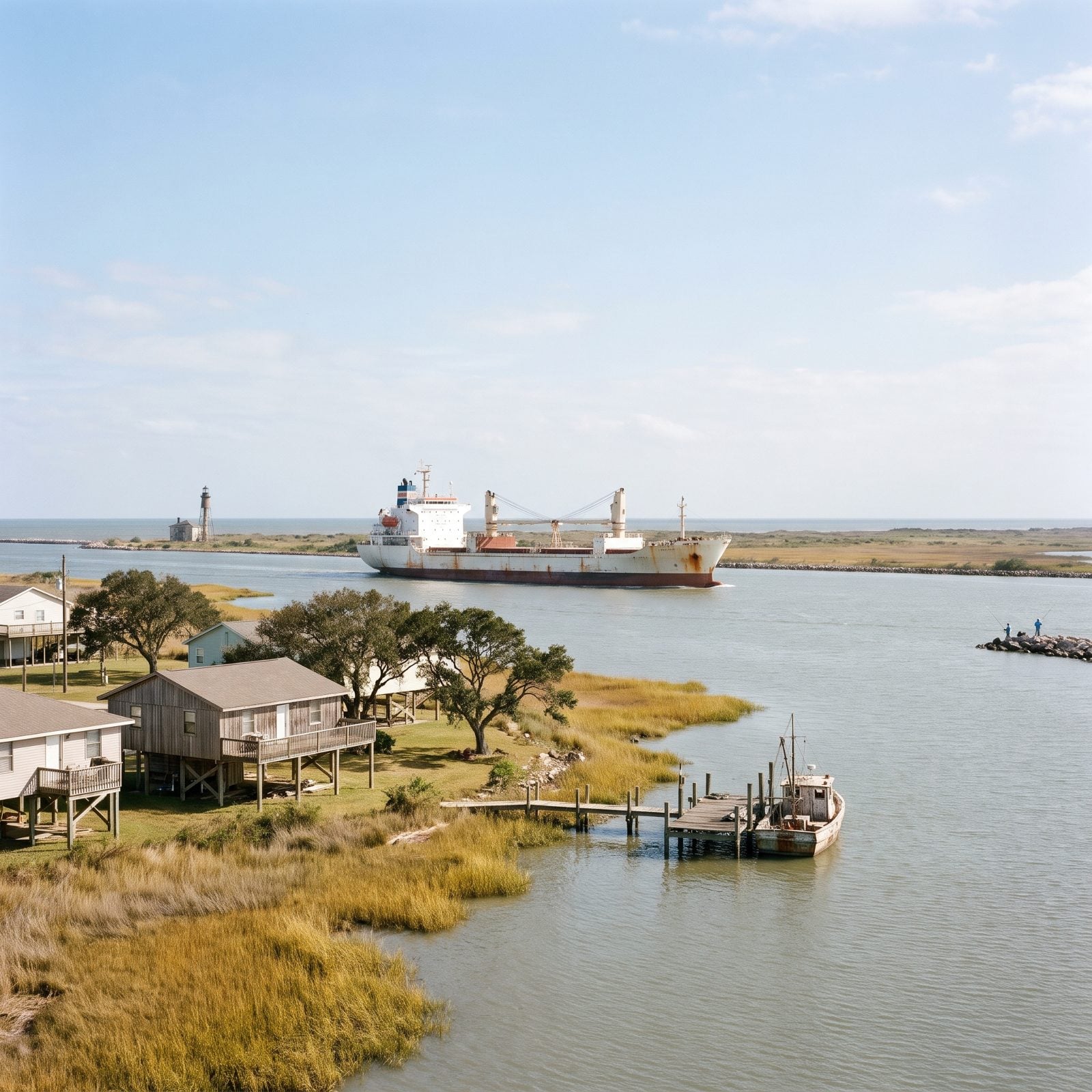
Sabine Pass sits right where Texas becomes Louisiana, on a channel that funnels enormous ships between the Gulf and the ports upriver. Watching a loaded tanker slide past your window never quite gets old, and the fishing in the pass is legendary among people who chase big reds.
This is working coast, part of greater Port Arthur, so nobody’s selling you a dream of seclusion. What they’re selling is water frontage at prices the rest of the Texas coast abandoned years ago. If the hum of industry and the churn of passing ships read as life rather than noise to you, your money stretches a long way here.
9. Freeport, Texas, Working-Port Views on the Brazos River
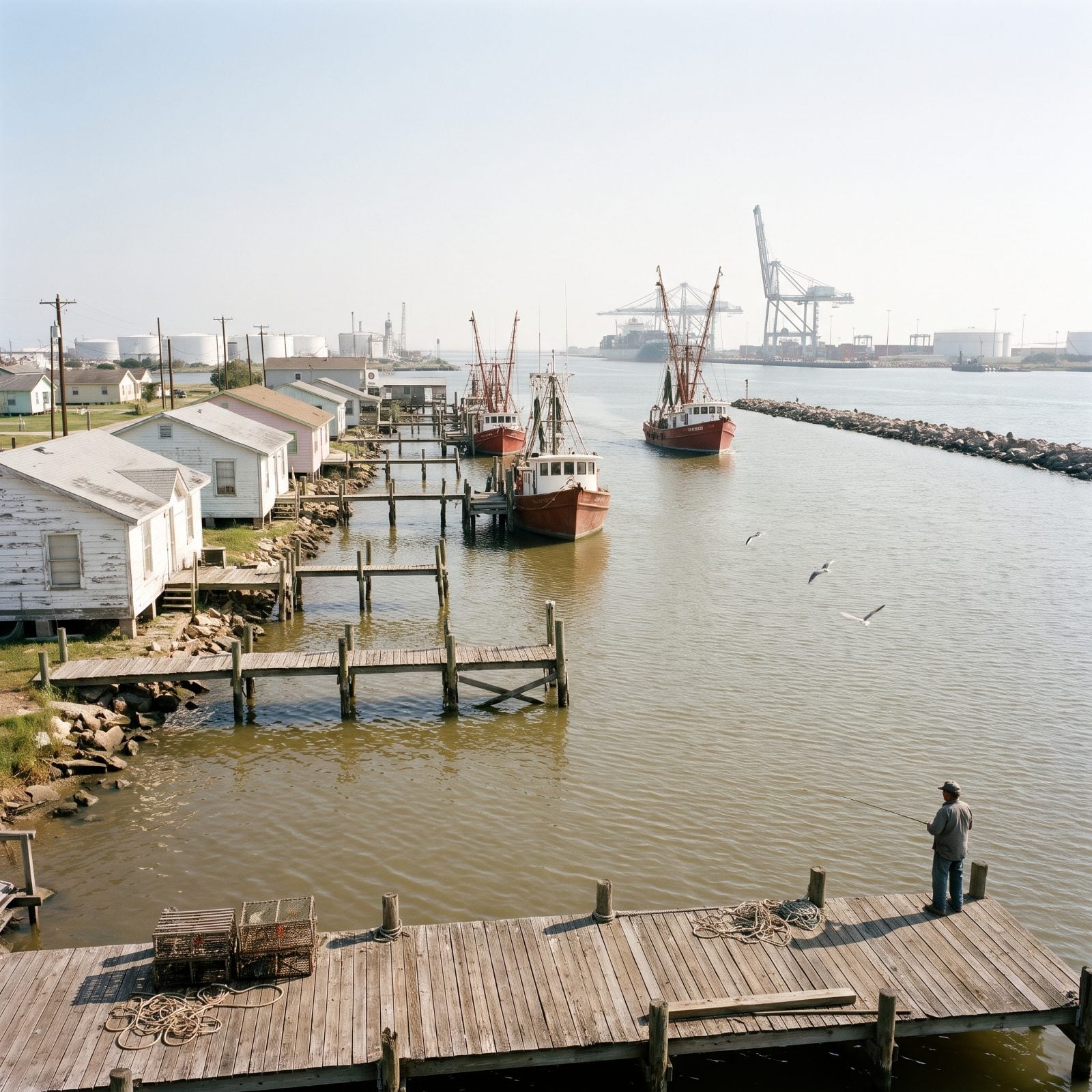
Freeport doesn’t pretend to be Galveston, and that’s its appeal. This is a working port town at the mouth of the old Brazos channel, where shrimp boats, chemical plants and sport fishermen all share the same water. The beach at nearby Surfside is a short hop, but in town you’re living on a river that still does a job.
By the numbers: Freeport, Texas on The Town Files (home values, weather, tornado history and schools)
Prices reflect the industrial neighbors, so a modest home with water and boat access here costs a fraction of anything on the barrier islands. We’d rather have a dock on a working river than a view of a parking garage anywhere pricier. Freeport gives you the dock.
8. Palacios, Texas, Long Bayfront Walks on Matagorda Bay
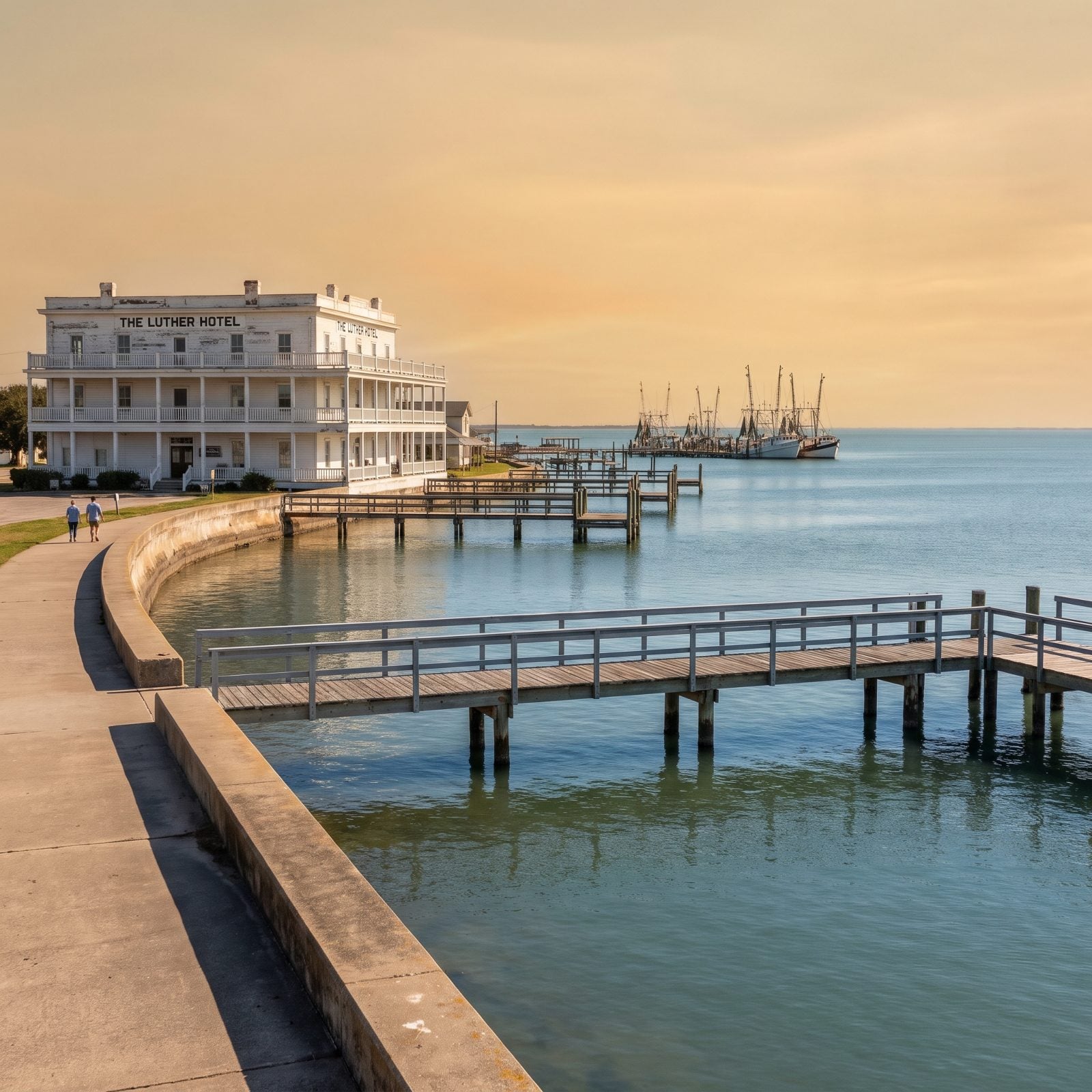
Palacios keeps one of the longest public bayfronts on the Texas coast, a seawall walk that curves along Matagorda Bay for miles. The old Luther Hotel still stands watch over the water, white-galleried and stubborn, built back when this was a resort town and never torn down.
By the numbers: Palacios, Texas on The Town Files (home values, weather, tornado history and schools)
A sizeable shrimp fleet still works out of here, and the bay stays calm and shallow and full of fish. Of all the attainable Gulf towns, Palacios is the one we’d point a hesitant buyer toward first. It has a real downtown, that walkable waterfront, and home prices that haven’t caught up to how pleasant a place it is to sit and watch the boats come in. Go walk the seawall at sunset. That’s the whole pitch.
7. Port Lavaca, Texas, Lavaca Bay Views From an Unfussy Downtown
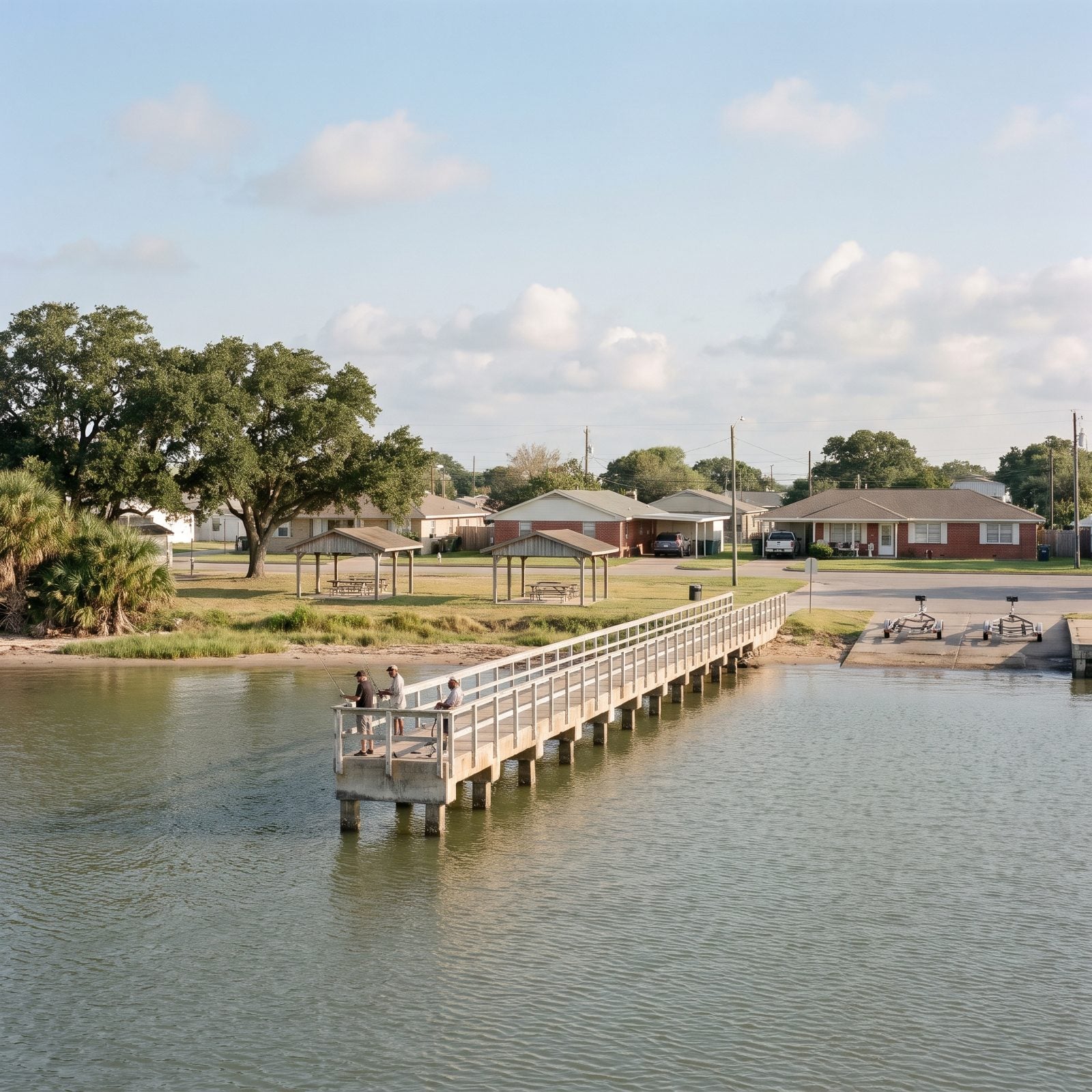
Port Lavaca gets skipped by people driving hard for the beach, which is exactly why it still works. The town sits right on Lavaca Bay, and its public fishing pier runs out far enough that you feel like you’re standing on the water itself. Real estate here leans practical rather than polished — modest frame houses a block or two off the bay, no glass towers on the sand.
By the numbers: Port Lavaca, Texas on The Town Files (home values, weather, tornado history and schools)
Nobody mentions the catch up front: this is working bay, not clear Gulf surf. The water’s green and good for fishing, less so for Instagram. Came for turquoise? Keep driving. But if your idea of a good morning is coffee on a porch while the redfish boats head out, you’ve found the place.
6. Seadrift, Texas, Small-Town Shoreline on San Antonio Bay
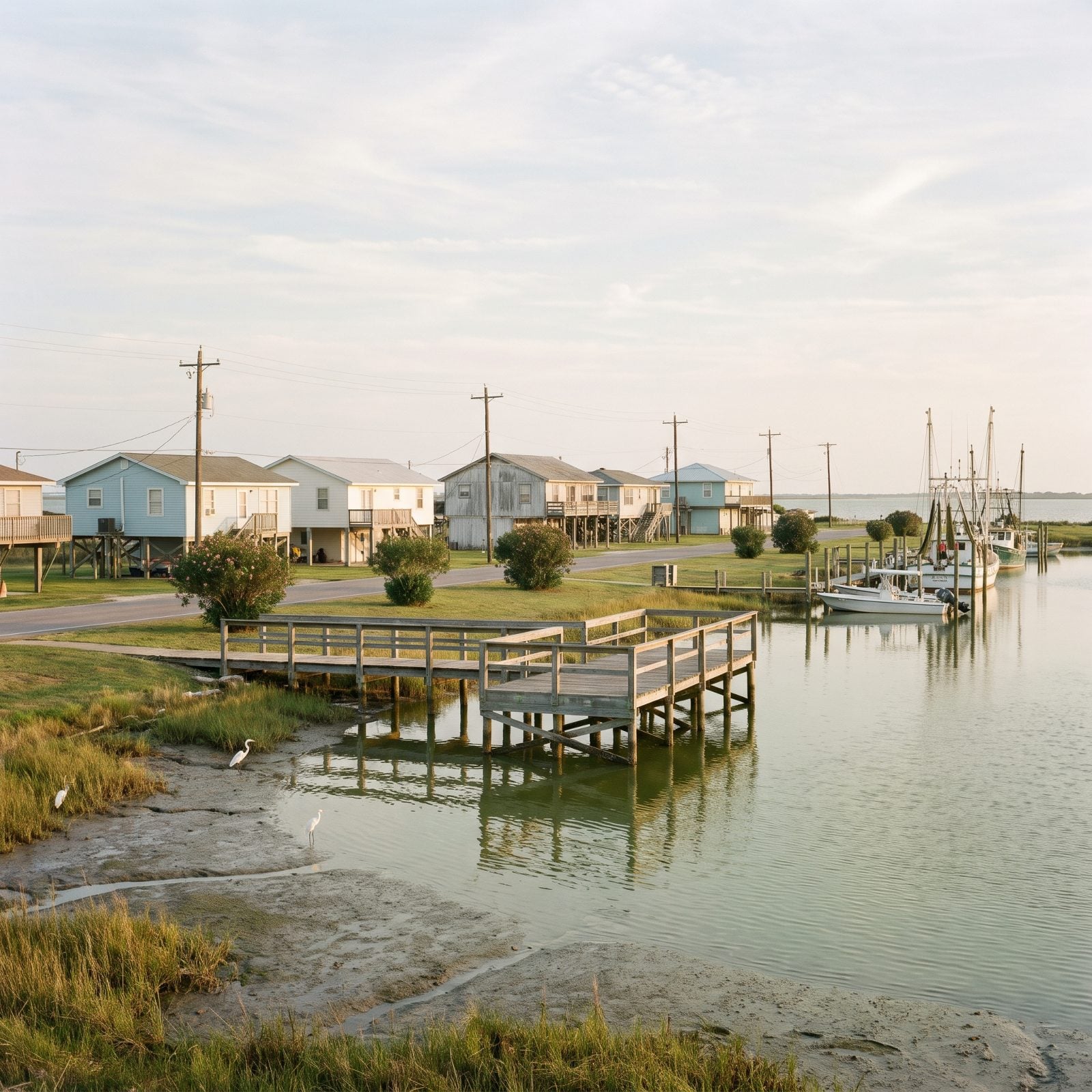
Seadrift is the kind of place where the whole town turns out when the shrimp boats come in. It sits at the literal end of a road, tucked against San Antonio Bay, with a population you could fit inside a high school gym and still have room for the band. Homes run modest, often raised on stilts against storm surge — that’s just the deal this far down the coast.
By the numbers: Seadrift, Texas on The Town Files (home values, weather, tornado history and schools)
What you’re buying is quiet and water access, not amenities. The grocery run might mean a drive. In exchange you get a shoreline park, a public pier, and bay sunsets nobody’s charging admission for. Come for the stillness.
5. Fulton, Texas, Fishing-Pier Views Beside Aransas Bay
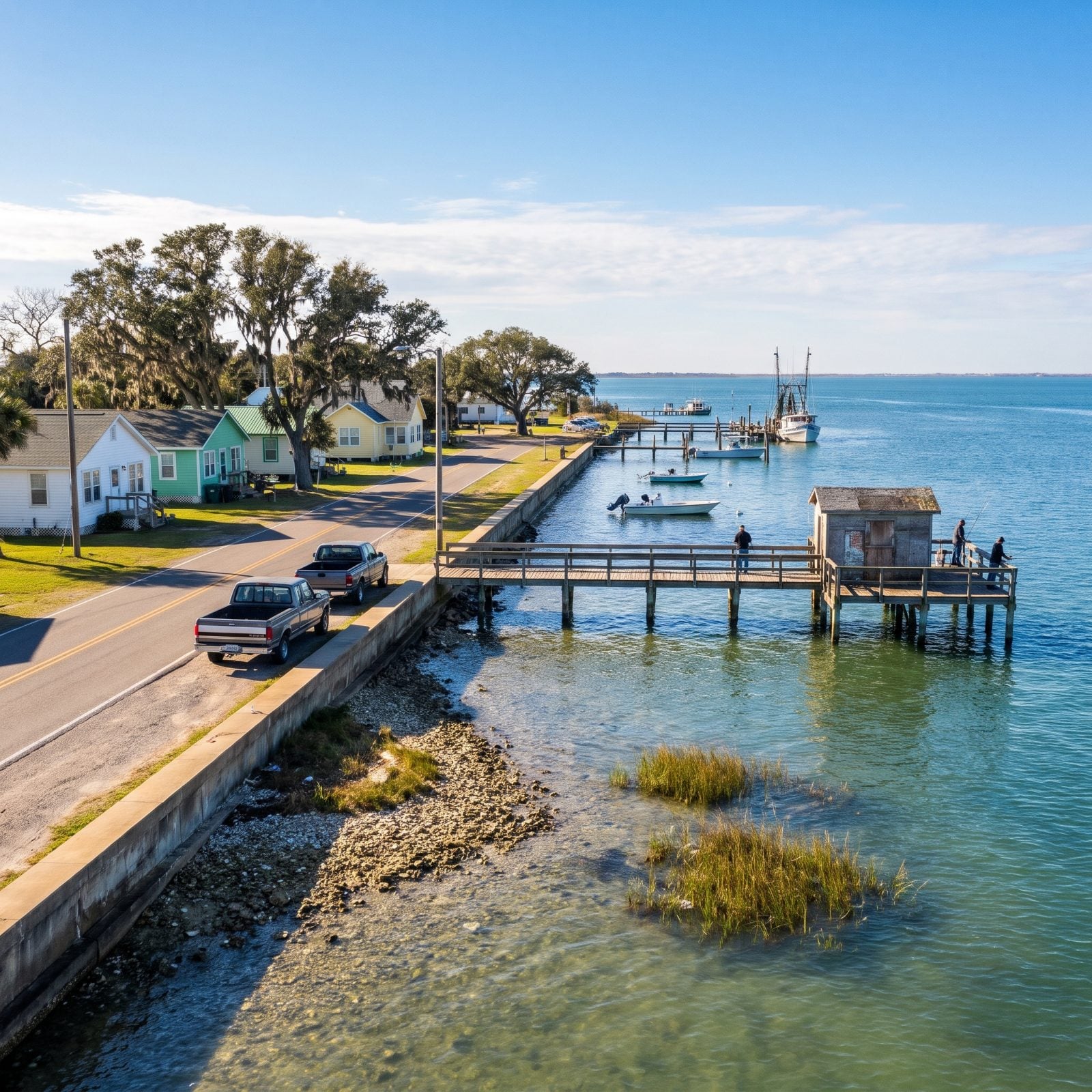
Fulton is Rockport’s quieter, cheaper neighbor, and it knows it. They blur together on a map, but Fulton keeps the smaller cottages and the old fishing-pier feel while Rockport handles the galleries and the crowds. You get live oaks bent sideways by decades of bay wind, a working waterfront, and homes that haven’t fully priced out the seasonal buyer yet.
By the numbers: Fulton, Texas on The Town Files (home values, weather, tornado history and schools)
Fishing is the local religion. The piers off Aransas Bay stay busy with flounder and trout chasers, and you’re never far from a bait shack. Just know that “views” in Fulton often means a one-street-back cottage with a wedge of bay between two houses. The full-frontal water lots went years ago.
4. Aransas Pass, Texas, Canal and Harbor Options Behind the Islands
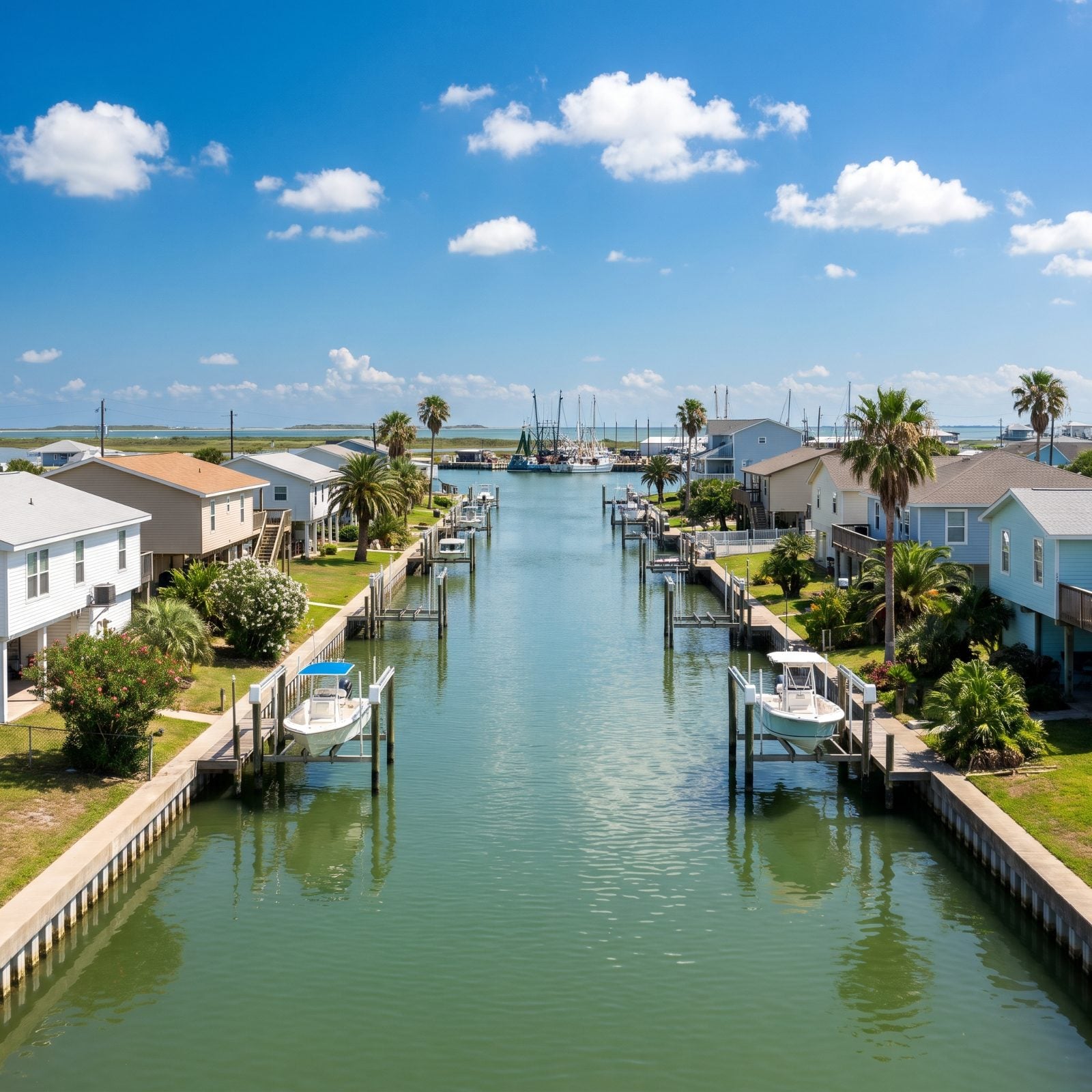
Want a boat lift in your own backyard without a seven-figure budget? Aransas Pass is where that math still works. The town sits behind the barrier islands, laced with residential canals that run straight out to the harbor and on toward the Gulf, and plenty of these homes come with a private dock and lift as a standard feature rather than a luxury upgrade.
By the numbers: Aransas Pass, Texas on The Town Files (home values, weather, tornado history and schools)
The trade-off is honest. Canal water isn’t swimming water, and the view out your back door is a bulkhead and the neighbor’s boat, not open horizon. But if your whole reason for moving here is fishing, launching from your own slip at dawn beats scrapping over a ramp spot every single time.
3. Port Isabel, Texas, Laguna Madre Views Beyond South Padre
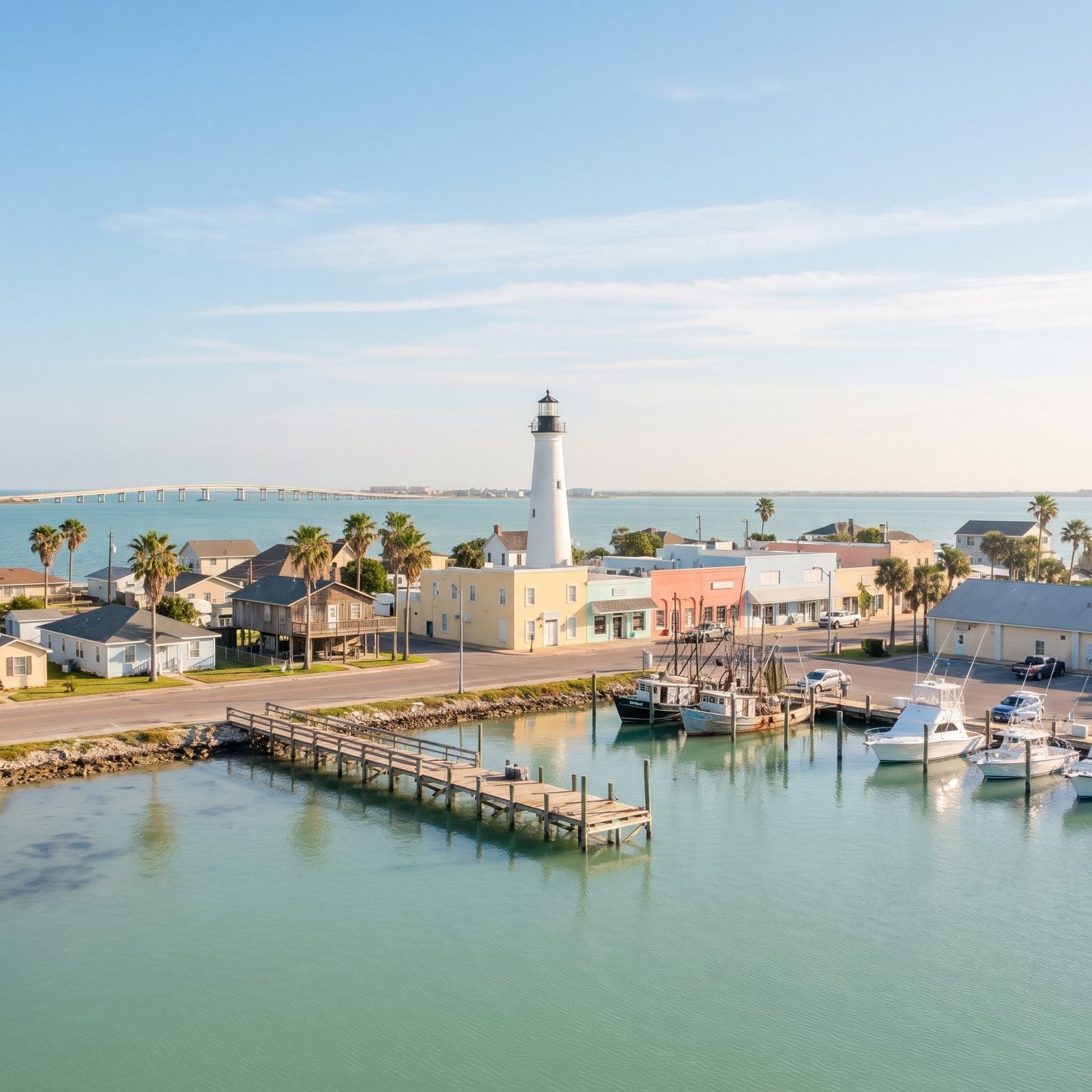
Everybody books South Padre. Smart money looks across the causeway at Port Isabel, the mainland town guarding the entrance to the island — all the Laguna Madre water views at a fraction of the beachfront ask. The old lighthouse anchors a walkable downtown of taco joints and bait shops that actually feels like a town, not a spring-break set piece.
By the numbers: Port Isabel, Texas on The Town Files (home values, weather, tornado history and schools)
You’re a bridge away from the beach without paying beach prices. The Laguna Madre runs shallow, warm, and loaded with fish. And homes here still include modest places with a bay glimpse that a seasonal buyer can reasonably stretch for.
2. Rio Hondo, Texas, Arroyo Colorado Waterfront Away From the Beach
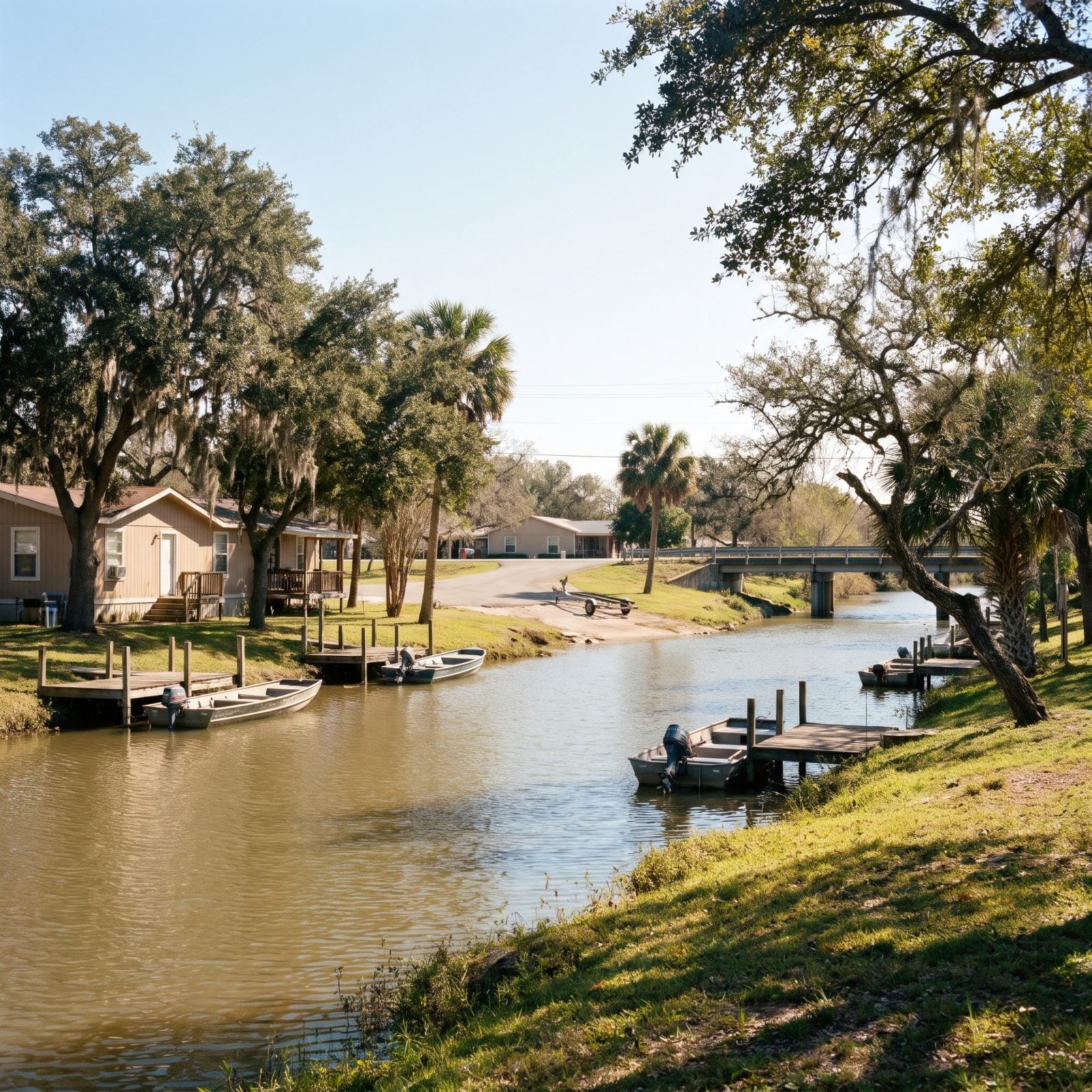
Rio Hondo is water for people who don’t actually care about the ocean. It sits on the Arroyo Colorado, a tidal channel that winds inland and eventually links to the Laguna Madre and the Gulf beyond. You can keep a boat at your own dock and run down to the bay, but your daily view is a calm, tree-lined river rather than surf.
By the numbers: Rio Hondo, Texas on The Town Files (home values, weather, tornado history and schools)
Prices run gentle because you’re trading the coast for the countryside. It’s quiet to the point of sleepy — no boardwalk, no crowds, just herons, bass, and the occasional neighbor idling past on a skiff. For a certain kind of retiree, that isn’t a compromise at all. It’s the whole reason to be here.
1. San Leon, Texas, Galveston Bay Living on a Fishing Peninsula
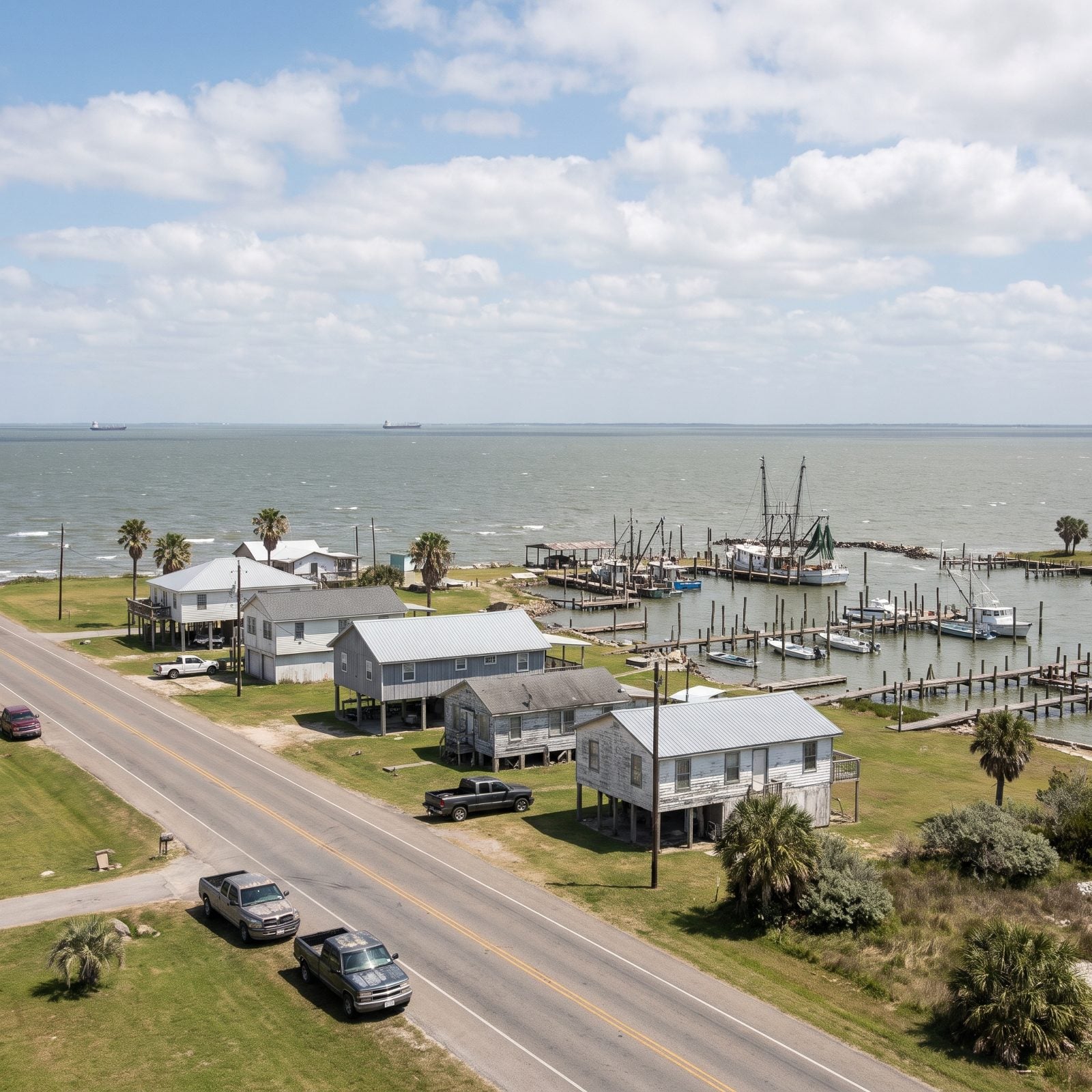
San Leon is scruffy, salty, and completely unbothered about it. The peninsula pokes into Galveston Bay about halfway between Galveston and the Houston sprawl — close enough to visit either, far enough to feel like neither. Oyster-boat and fish-camp country, where a raised bungalow with a bay view costs a whole lot less than anything on the actual Galveston seawall.
By the numbers: San Leon, Texas on The Town Files (home values, weather, tornado history and schools)
Here’s the real talk: San Leon isn’t tidy. Lots sit cheek by jowl, some places are humble, and the marina smells like exactly what a working marina smells like. But you’re minutes from launching into some of the best bay fishing in Texas, and the sunsets over the water couldn’t care less how fancy your siding is.