
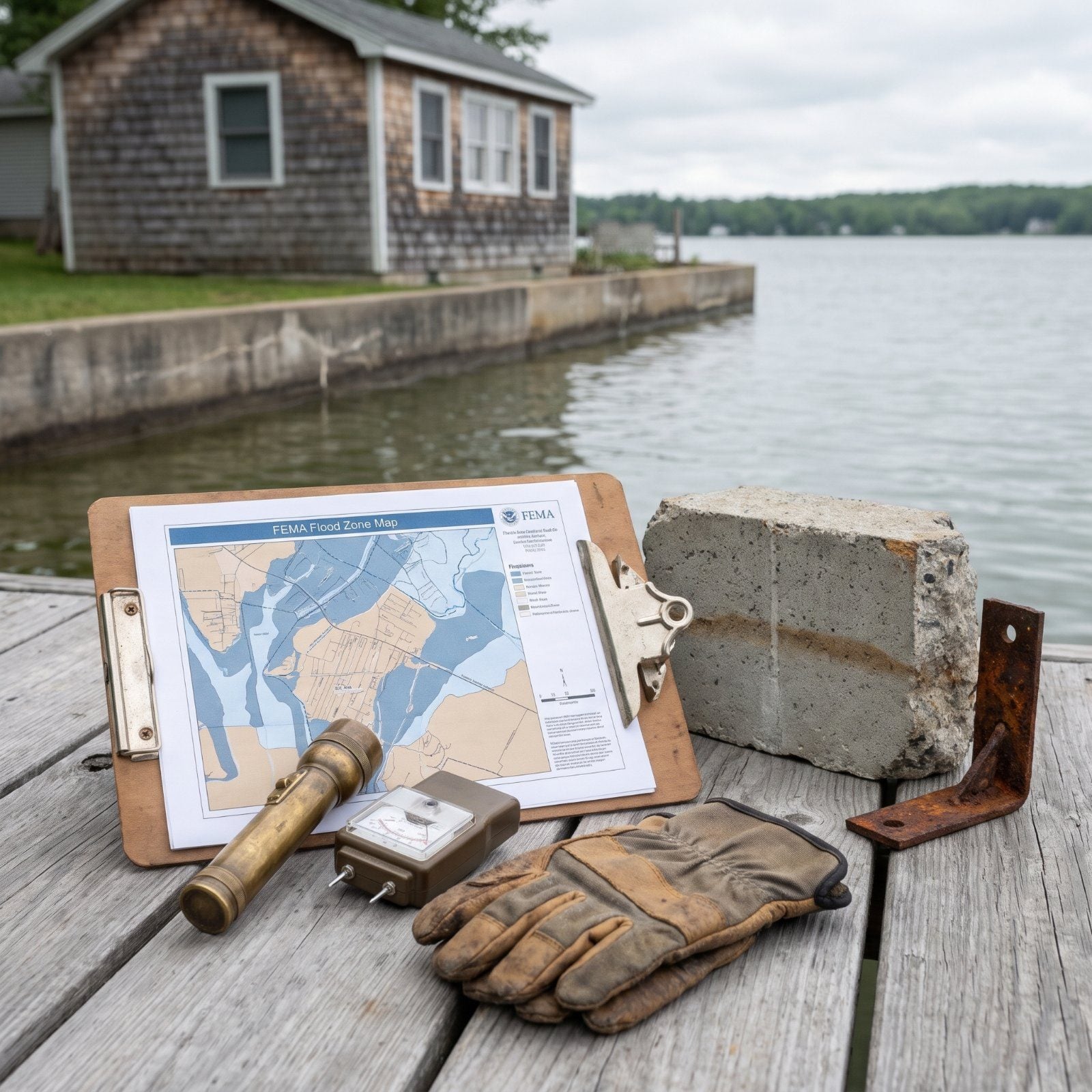
The seller painted the basement last week. Fresh, white, smells like a hardware store. That’s the first thing that should make you suspicious, not relieved. Flooding leaves a trail, and a nervous seller spends good money covering it up. The water stains, the swapped drywall, the furnace sitting on a little concrete throne it didn’t come with — all of it tells you whether this house has gone under before and whether it’ll do it again. A waterfront home is worth loving. It’s also worth inspecting like you don’t trust it. Here’s what to look for before the dock view talks you out of your good sense.
Please note that some of the imagery in this article may have been enhanced with the assistance of AI.
31. A Horizontal High-Water Stain on the Foundation
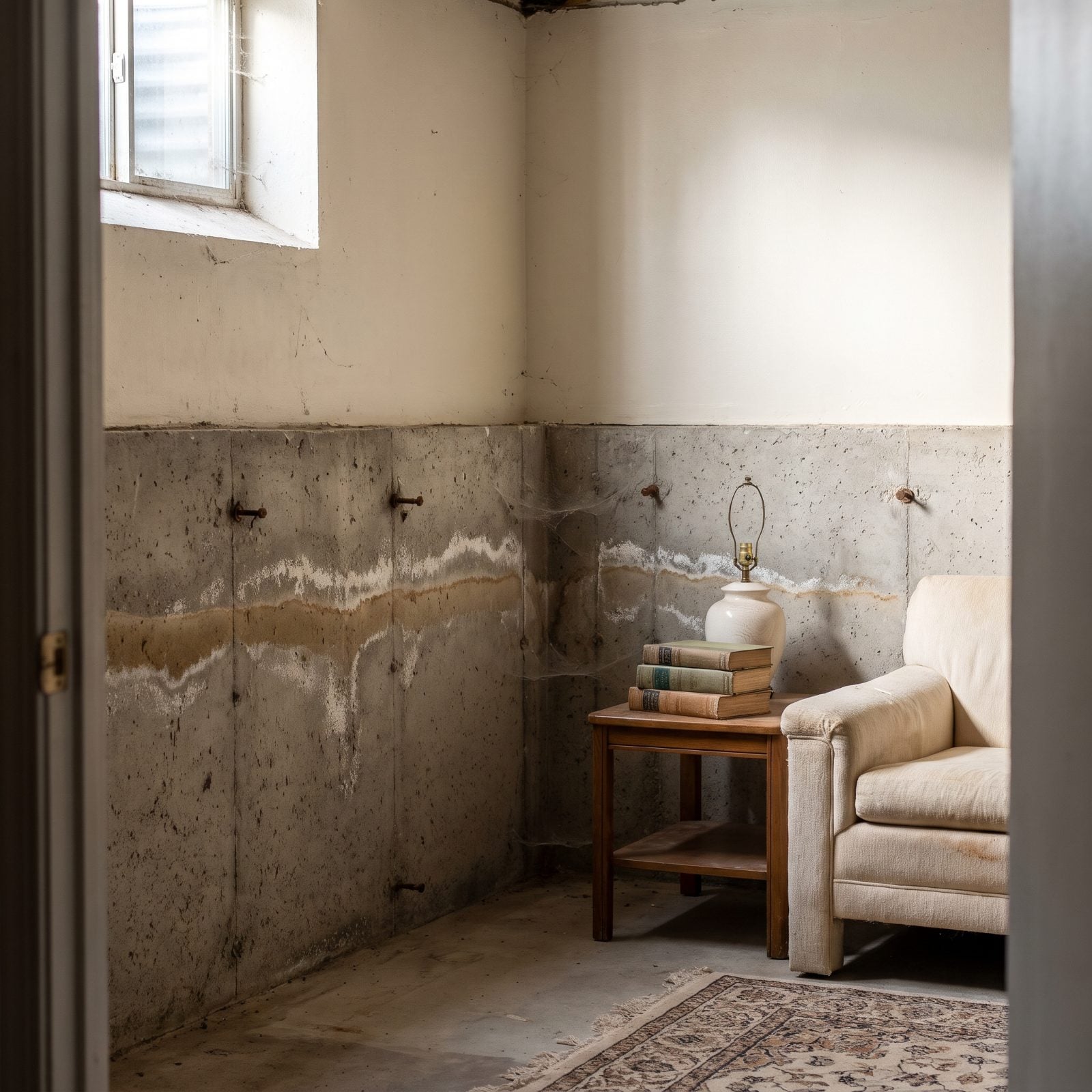
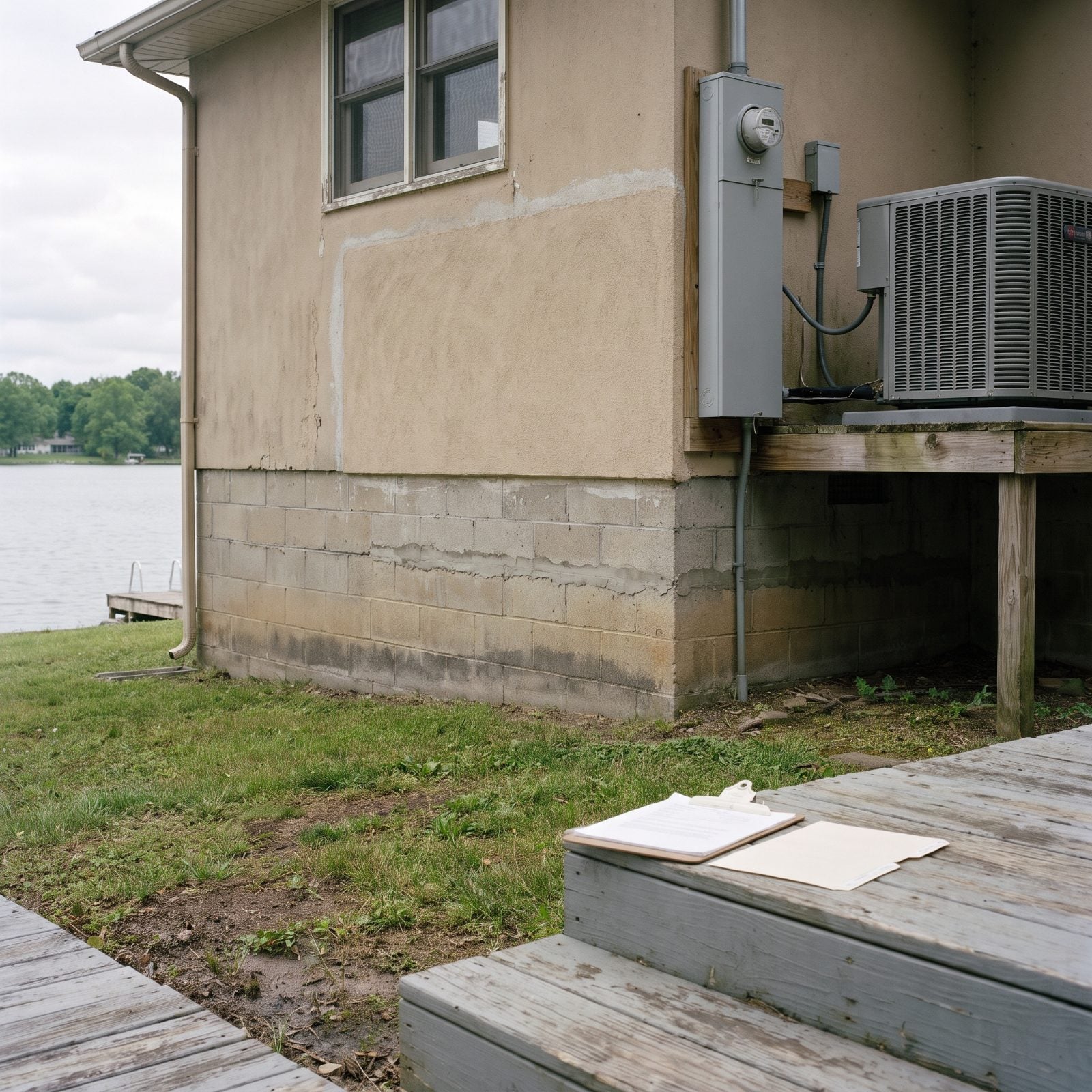
The cleanest clue is also the one sellers forget to scrub. Look low on the foundation for a tan, wavy band running across the concrete — it rises and sags as water wicks unevenly into the masonry, with drips trailing below, but it holds roughly the same height around the room, like a ragged bathtub ring. Above and below it you’ll often see efflorescence, that chalky white powder that means moisture has been moving through the masonry for a while.
One line could be an old plumbing leak. A band that carries onto every wall at roughly the same height is a flood telling on itself.
30. A Suspicious Band of Replaced Lower Drywall
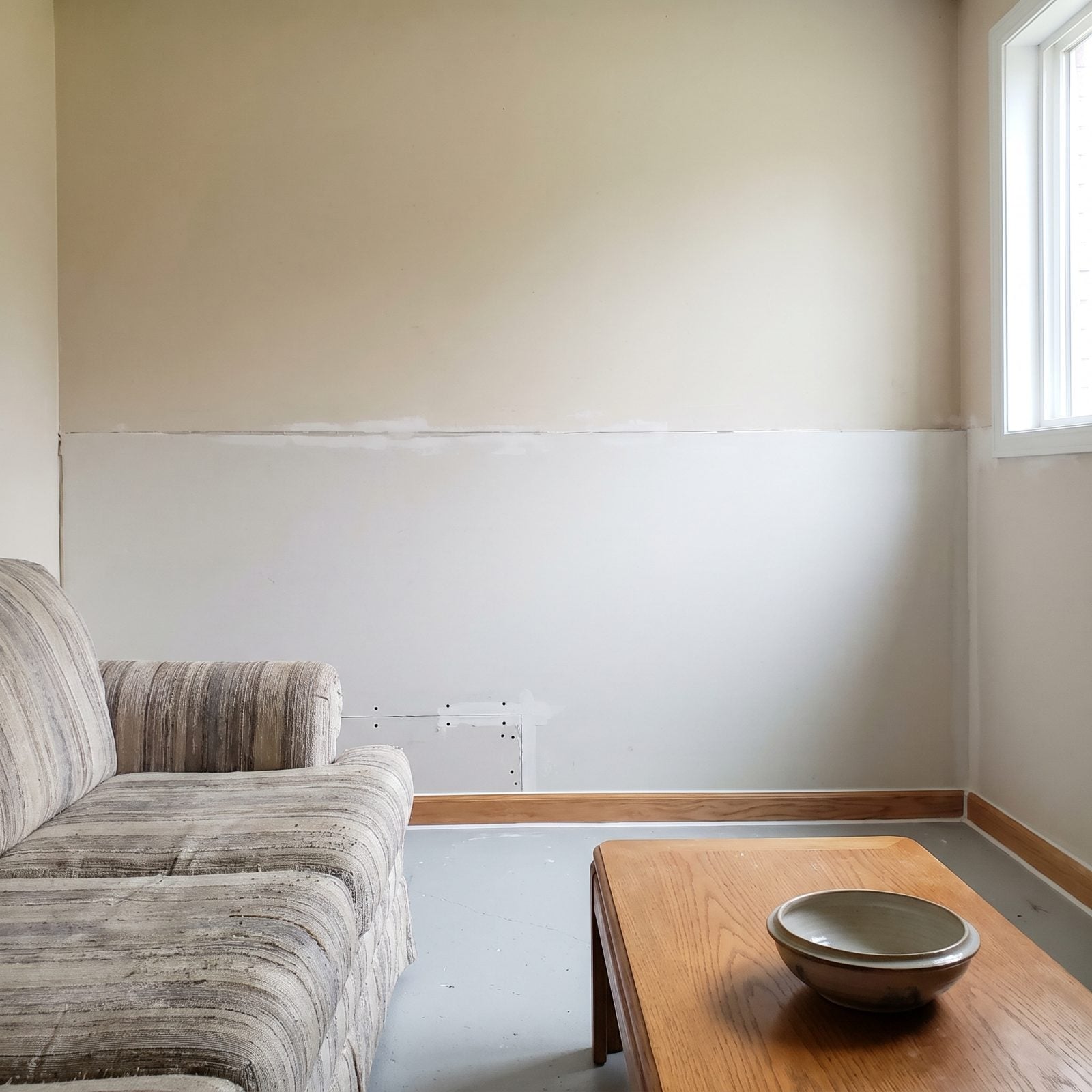
Flood repair has a signature, and it’s a horizontal line about four feet off the floor. That’s where crews cut away soaked drywall and screwed in fresh board — a repair the trade calls a flood cut. The giveaway is the mismatch: newer, cleaner panels below, older and faintly yellowed above, with a taped seam running level along the back wall and stopping right at the corner.
Nobody replaces only the bottom of a wall because they felt like it. They do it because the bottom of the wall drank lake water.
29. Buckled Laminate or Cupped Hardwood Flooring
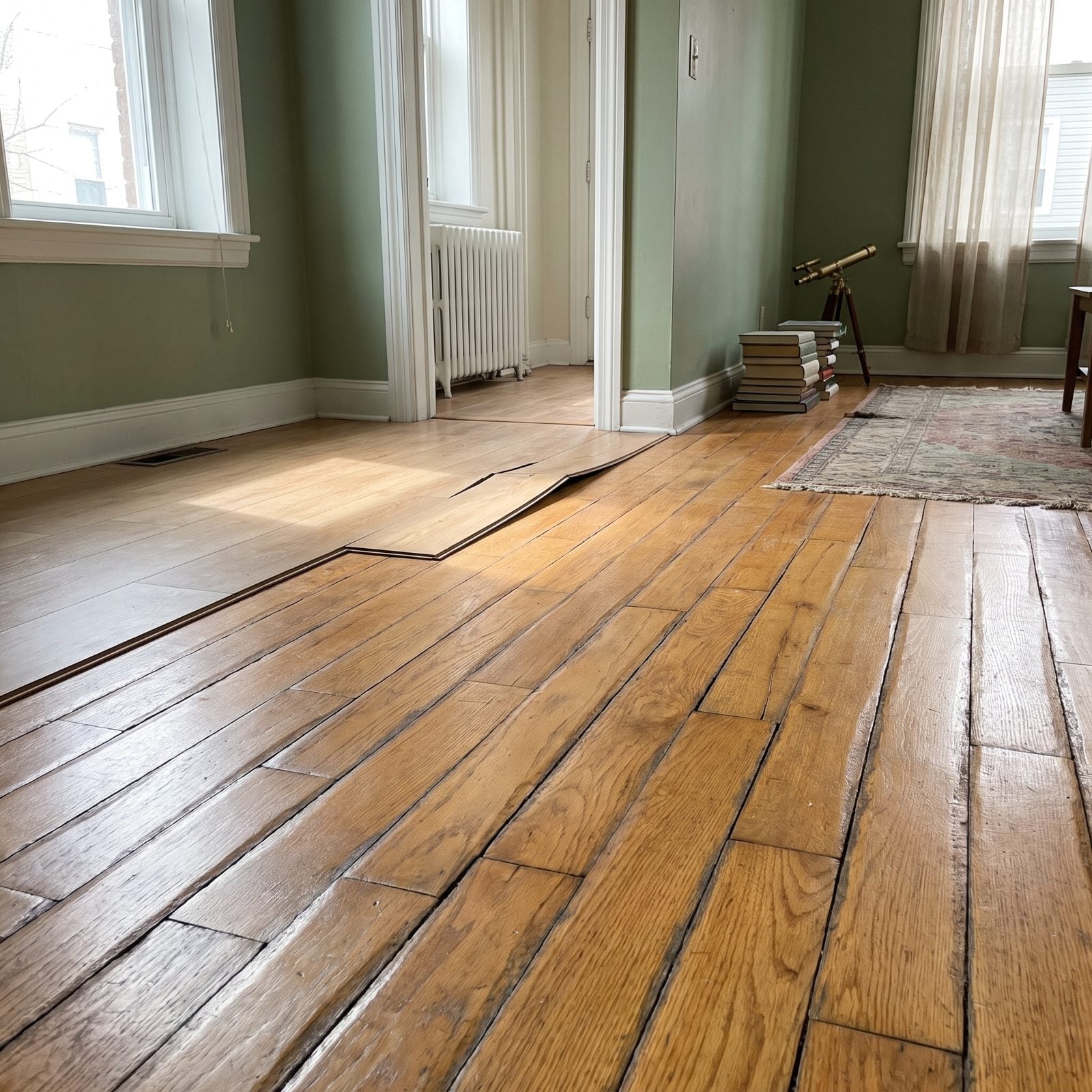
Wood remembers water longer than anyone wants it to. Hardwood that’s been wet from below swells and warps, bending the plank seams into wavy, rippling lines that run across the boards. Run your hand flat across the floor. If it rolls and dips under your palm, that’s warping.
Laminate shows it differently — it peaks and separates at the seams, pushing up into little tented ridges that catch the light. Both mean moisture got in and had time to do real damage, not a spilled glass of wine. Check near exterior walls and doorways first, where floodwater arrives.
28. Water Marks Inside the Electrical Panel
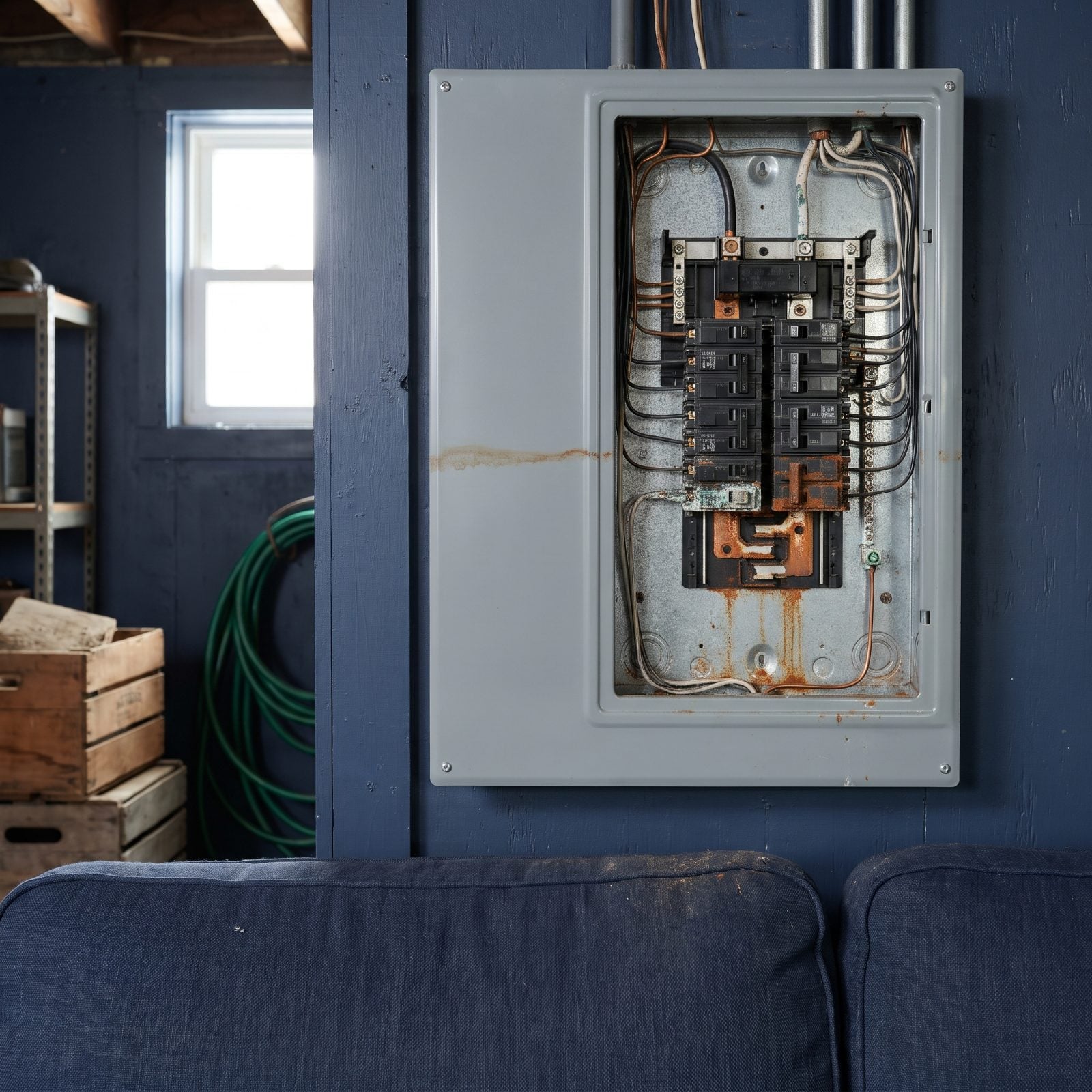
This one is both a flood clue and a safety flag, so treat it with respect and don’t go poking around a live panel yourself. Have an inspector or electrician pull the cover. Inside, you’re looking for rust streaks on the breakers, white or green corrosion on the connections, and a staining line across the metal backplate.
A panel that’s been underwater may need full replacement. Soaked breakers fail quietly, and corrosion keeps working inside the housing long after the water’s gone.
27. Rust Around the Bottom of the Furnace
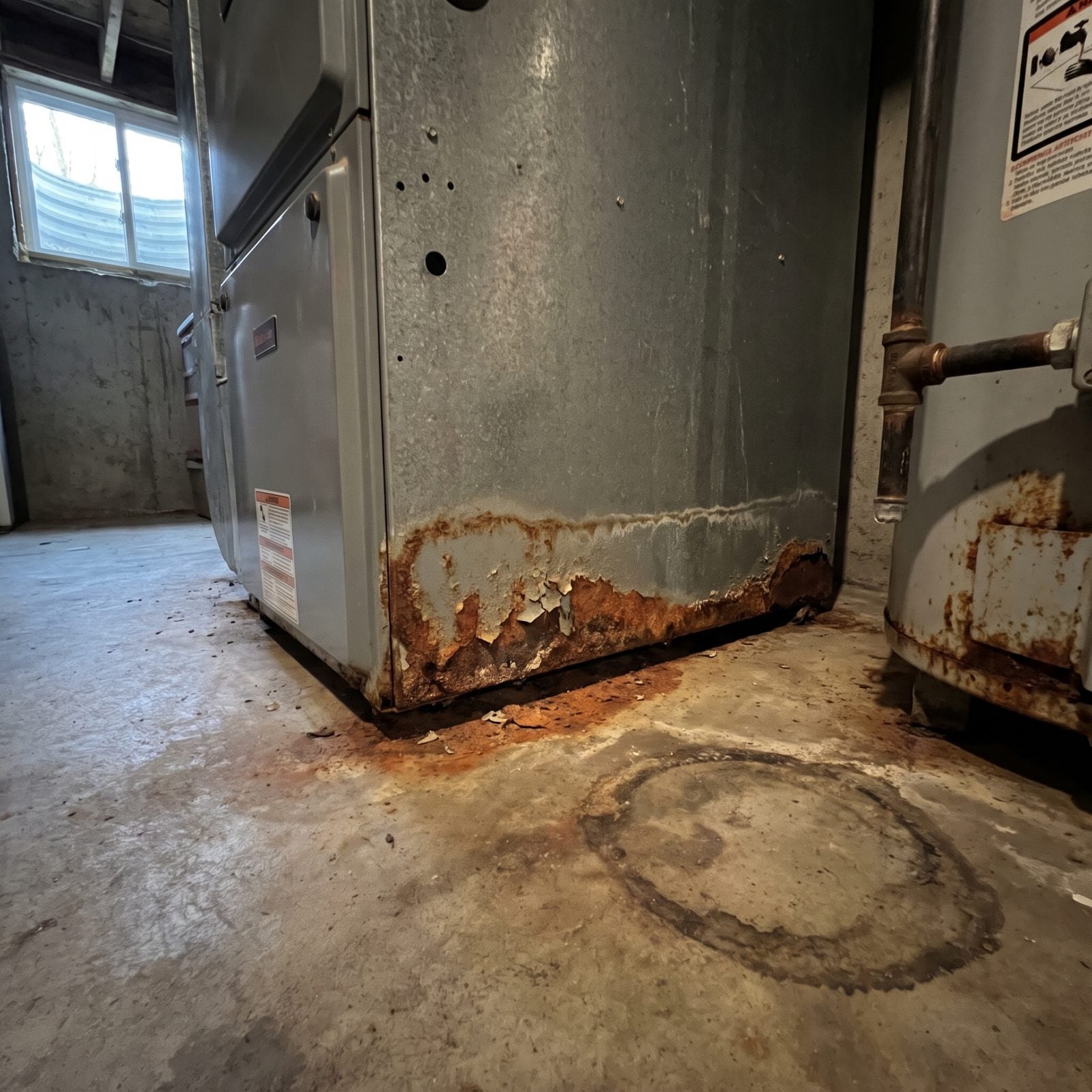
Metal mechanicals are honest. A furnace or water heater rusting only along the bottom few inches has stood in water, plain and simple. The top stays clean gray while the base flakes orange, drawing you a tide line without saying a word.
Check the water heater, the furnace cabinet, and any ductwork that runs low. Rust that stops at a consistent height around all of them tells you how deep the water got.
26. A Musty Smell That Returns After Ventilation

You walk in and the basement smells like a church basement after a wet spring — dusty, earthy, a little sour. The seller opens windows and runs a fan, the smell fades, and you tell yourself it was nothing.
Come back a day later with the house closed up. If that smell has crept back, you’re smelling damp materials off-gassing, the scent of moisture living inside walls and subfloor. Candles and plug-in air fresheners are a seller trying to perfume a problem. Trust your nose over their diffuser.
25. Mold or Fungal Growth in the Crawlspace
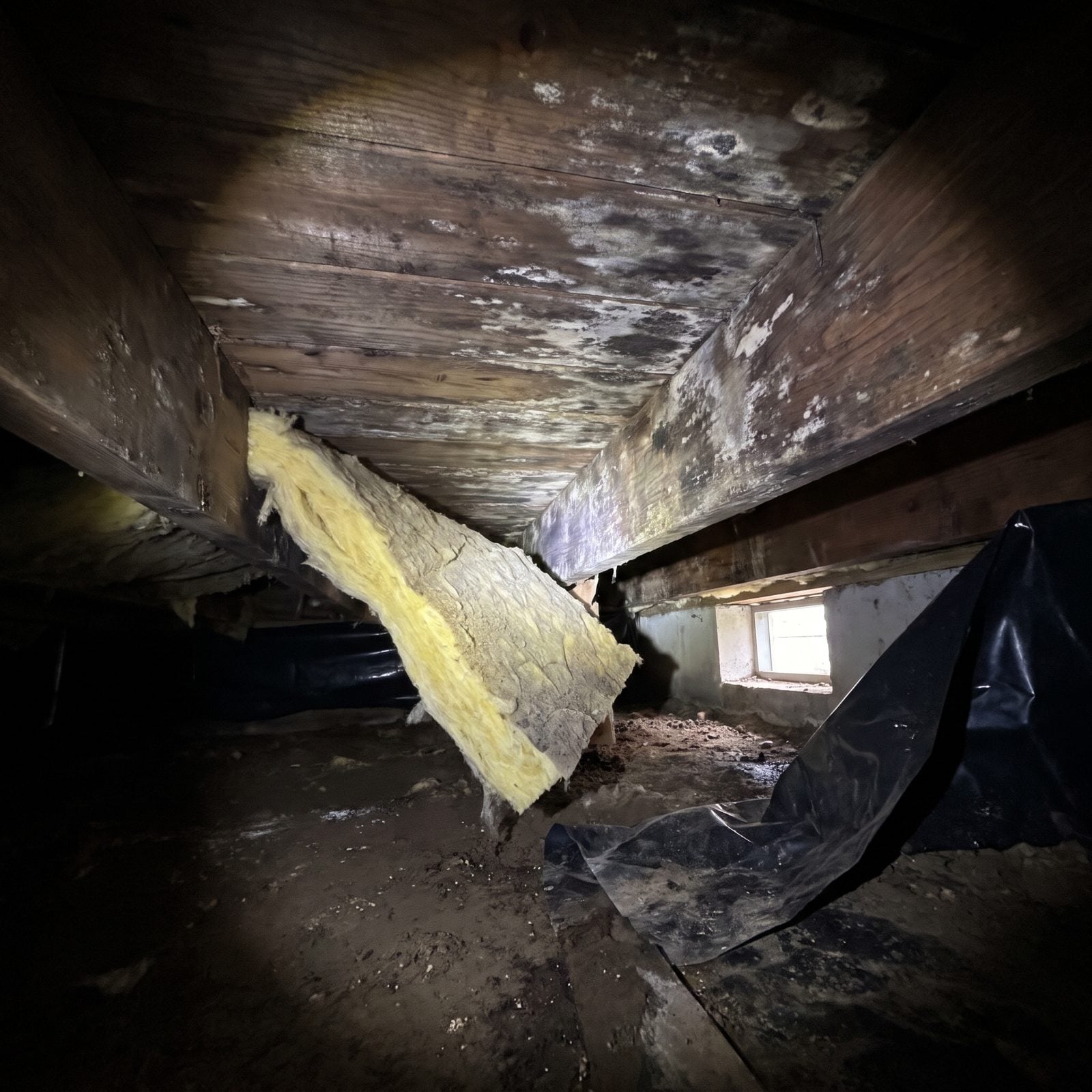
The crawlspace is where sellers hope you won’t go. Put on old clothes and go anyway, or send your inspector in with a good light.
You’re looking up at the joists and subfloor for fuzzy white or gray patches, black staining, and insulation that’s sagging and dark instead of fluffy and pale. A pulled-back vapor barrier over damp dirt is another tell. Crawlspaces under waterfront homes take on groundwater that never quite drains, and that constant damp grows exactly what you’d expect. Mold up there doesn’t stay up there.
24. A Sump Pump That Runs During Dry Weather
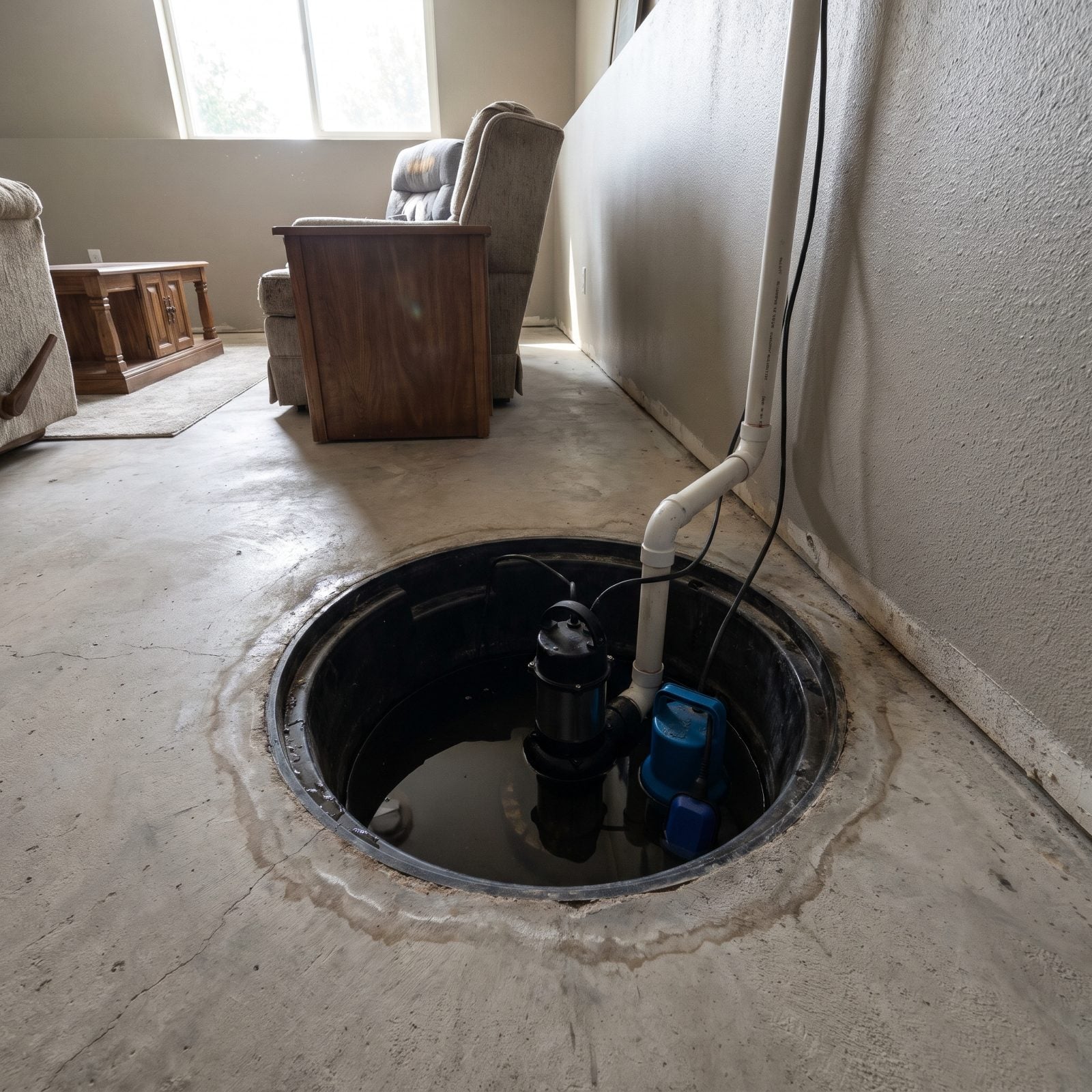
Stand near the sump pit for a few minutes during a tour, especially if it hasn’t rained in days. If the pump kicks on, pay attention. A sump that cycles in dry weather is fighting a high water table, which means groundwater sits right under the slab all the time.
That isn’t a one-storm problem. It’s the house’s baseline condition. Note whether there’s a battery backup and a second pump too. If someone spent money on redundancy, they did it because the single pump wasn’t enough.
23. Mechanical Equipment Raised on Concrete Platforms
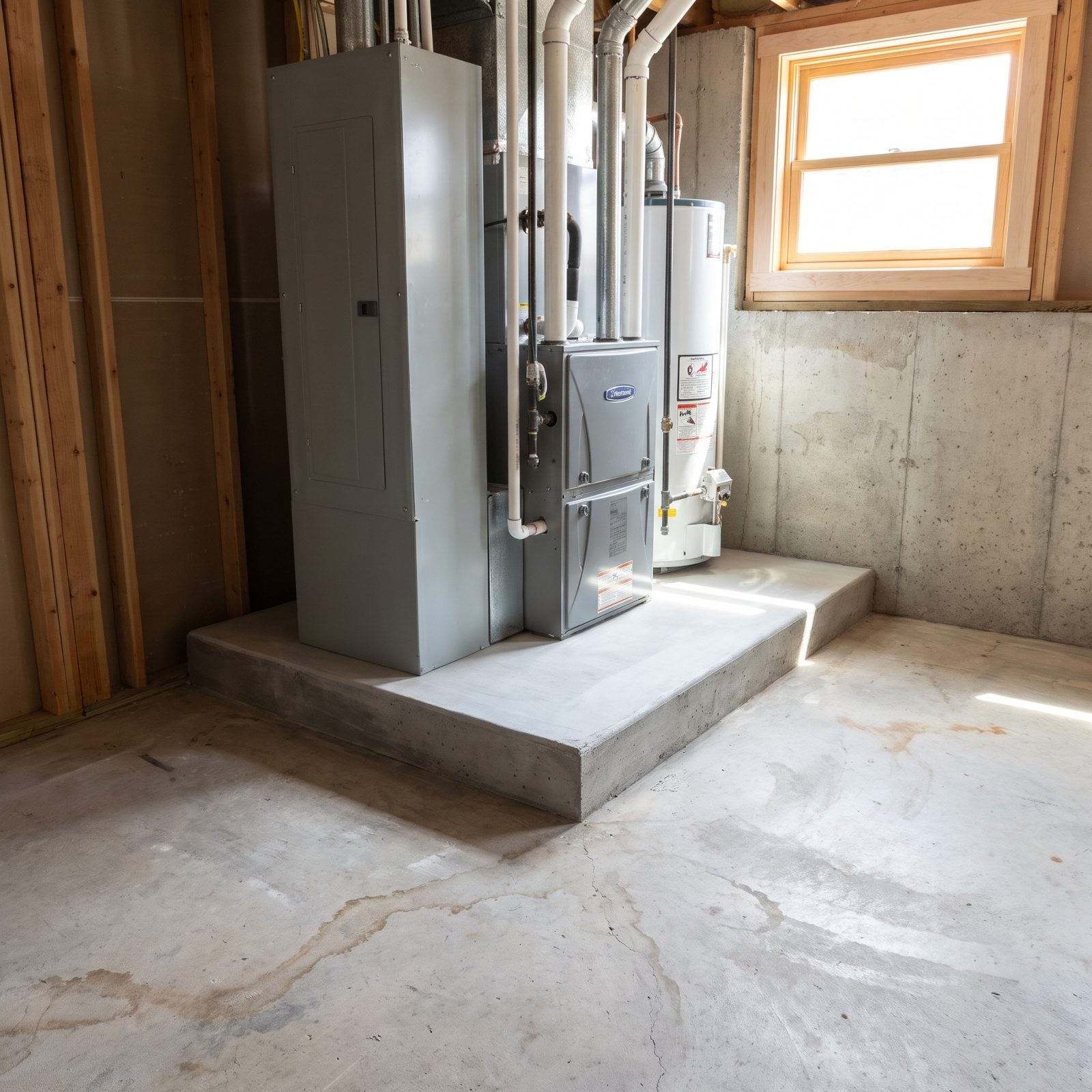
Here’s a clue that cuts both ways. Finding the furnace, water heater, and panel all perched on fresh concrete platforms a foot or more off the floor means someone had them raised on purpose. Smart move, that.
But it’s also an admission. You don’t elevate your mechanicals unless you expect water to reach the floor. The platforms reassure and worry you in the same breath. Ask when the work was done and why — the honest answer is almost always a flood that already happened.
22. Flood Vents Built Into Foundation Walls
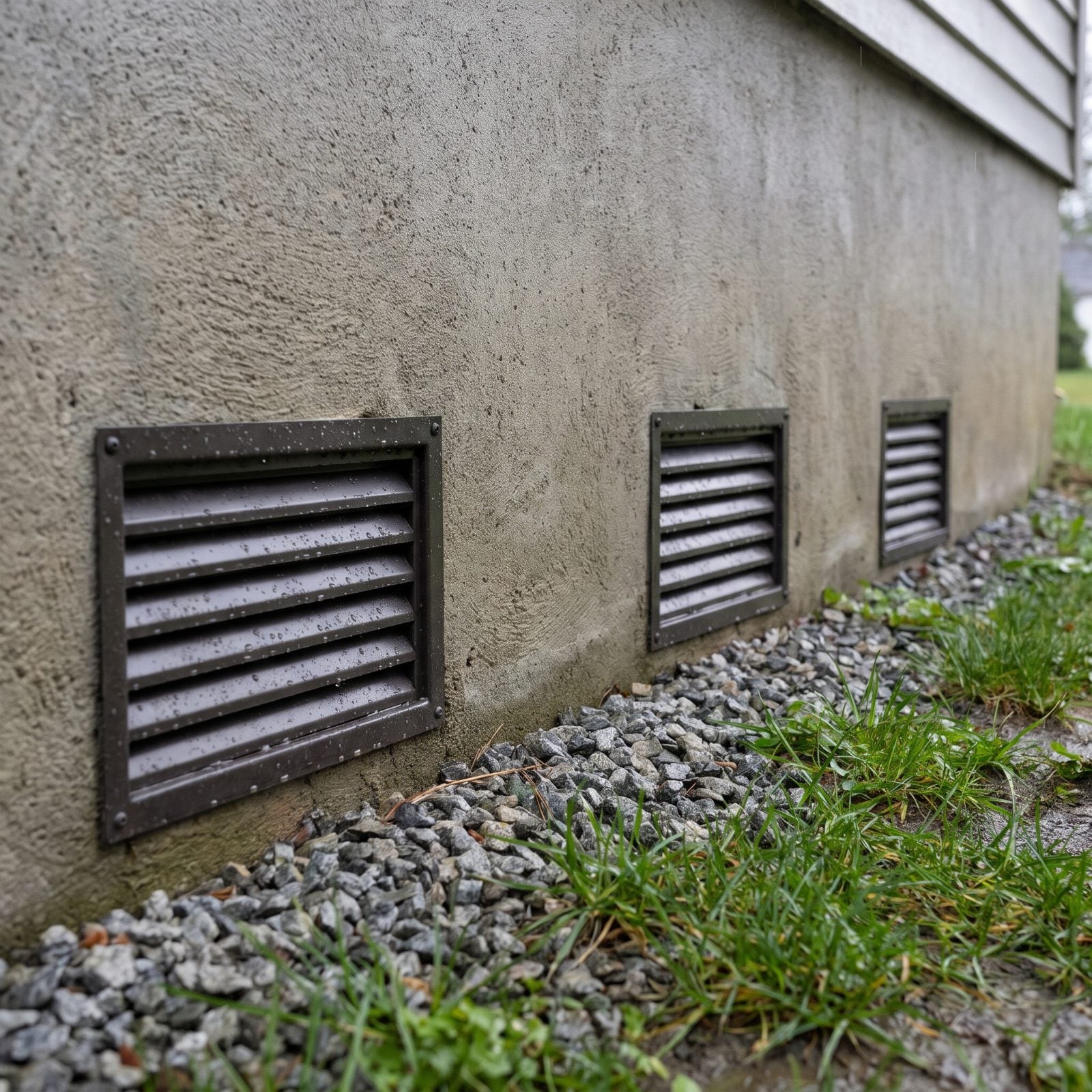
Look low along the outside foundation for small louvered openings set near ground level. Those are engineered flood vents, and they aren’t decorative. They let floodwater flow through the foundation instead of building pressure against it and caving the walls in.
A house with proper flood vents is a house built or retrofitted for a place that floods, full stop. Builders in designated flood zones install them to meet code, which tells you the official maps already flag this ground as water-prone.
21. Mounting Tracks for Removable Door Barriers
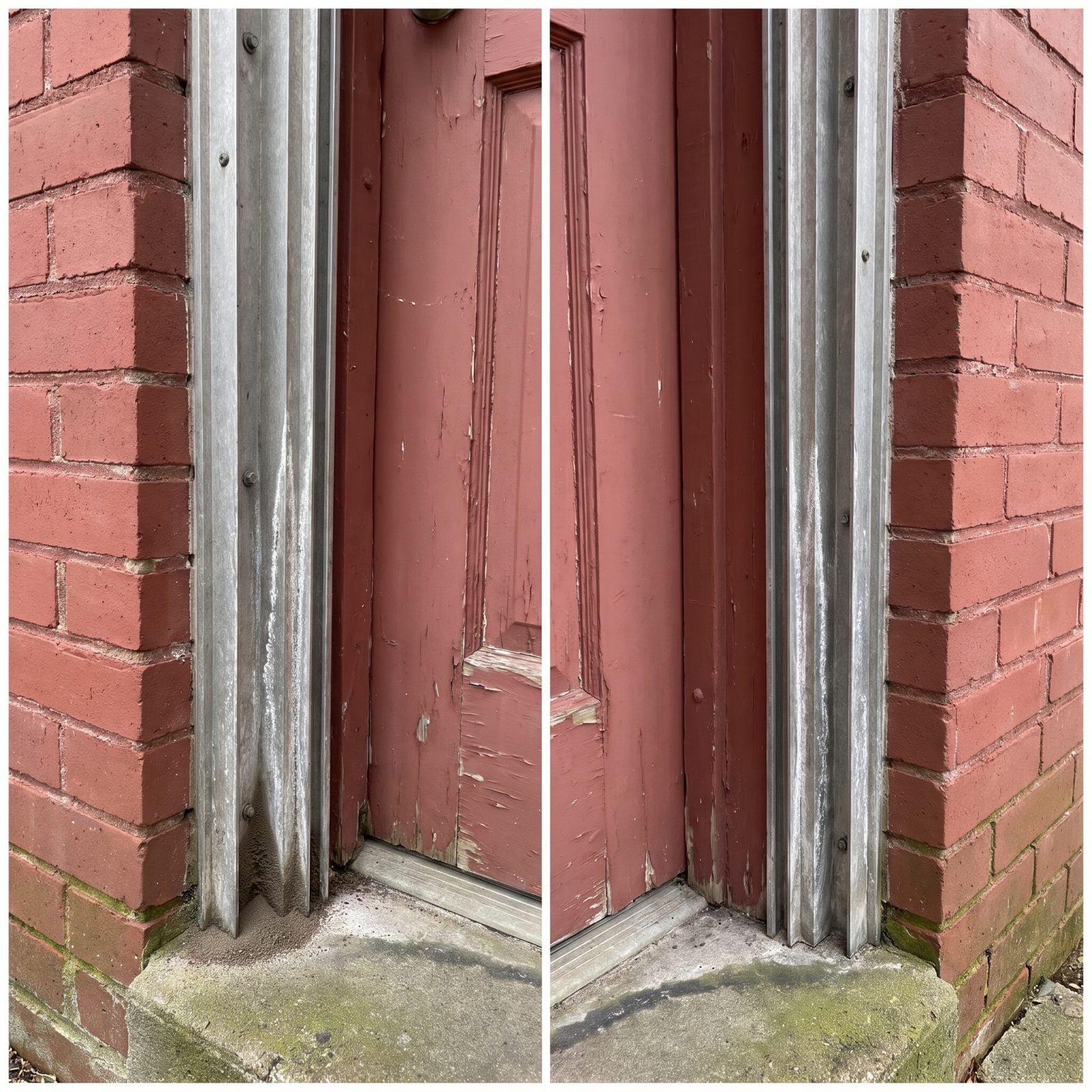
Permanent metal channels bolted on either side of a door exist for exactly one reason: somebody needed to slide a barrier in fast, and more than once. Nobody drills flood tracks into a brick jamb on a hunch.
You’ll spot them as paired aluminum or steel grooves running up the jamb, sometimes with a sill plate across the bottom. Look inside the channels. Fine silt or a chalky mineral crust means they’ve actually held water back, not just sat there as insurance against a flood that never came.
20. Silt Deposits Along Fences and Garden Edges
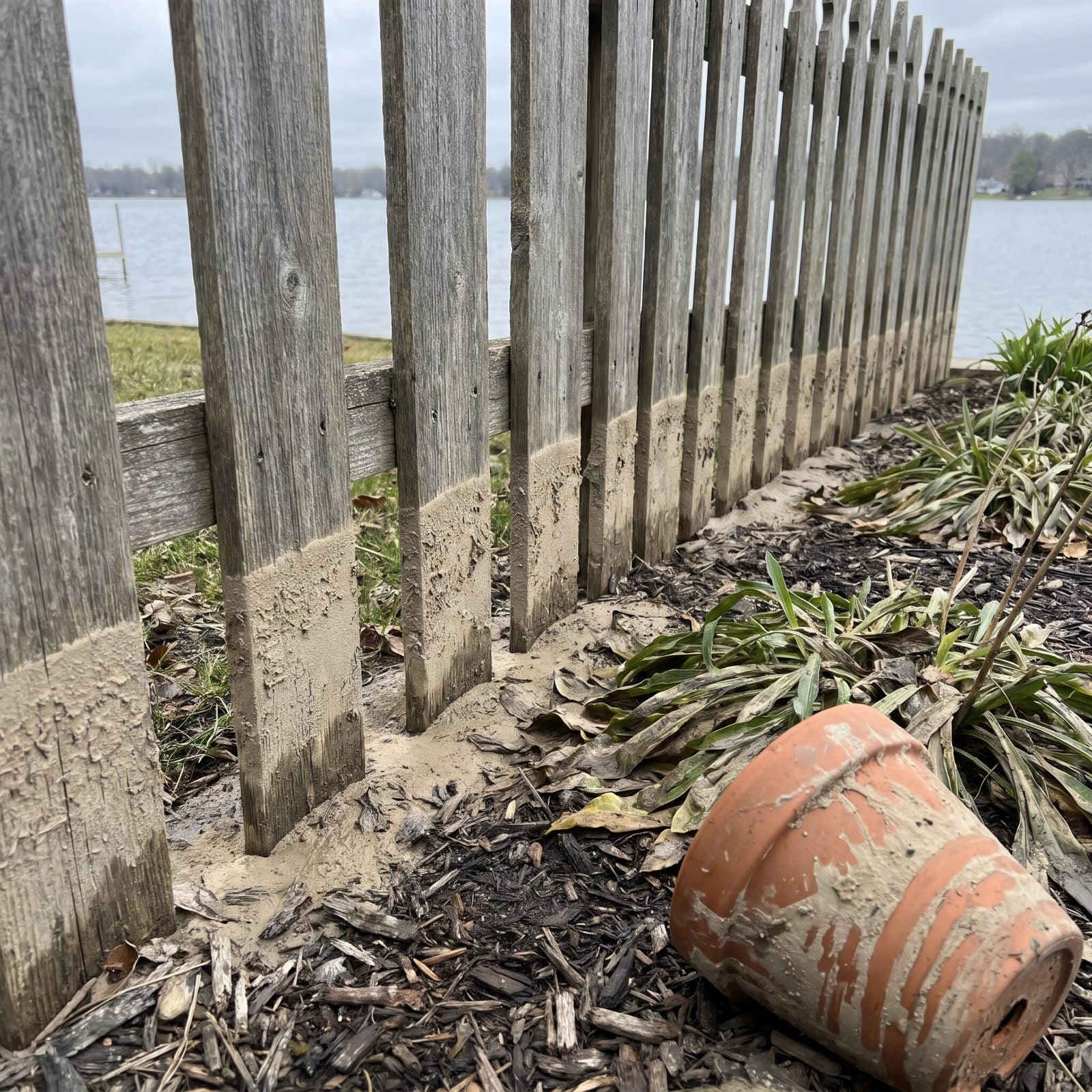
Mud doesn’t climb a fence on its own. When floodwater sits and then recedes, it drops whatever it was carrying right where it slowed down, leaving a pale sediment line clinging to the bottom of the boards, stacked against garden borders, caught in the mesh of wire.
Rain splash makes a mess near the ground. Flooding leaves a horizontal band, often a foot or more up, running dead level across the whole property. Check whether the line matches from the fence to the shed to the flower bed. Level means standing water sat there long enough to leave a tide mark. Splatter means a storm.
19. Water Lines on Trees or Dock Pilings

Trees and pilings keep honest records. A persistent high-water mark leaves a stain ring, a shift in bark color, or a line where the lichen just stops because it drowned too often to hang on.
Walk the shoreline. Find that band on a few trees and dock posts, then measure the gap between it and your doorstep. If the historic high water sits only a foot or two below your threshold, the margin protecting the house is thinner than any agent is going to admit standing in the driveway.
18. Flattened Grass Forming a Drainage Route
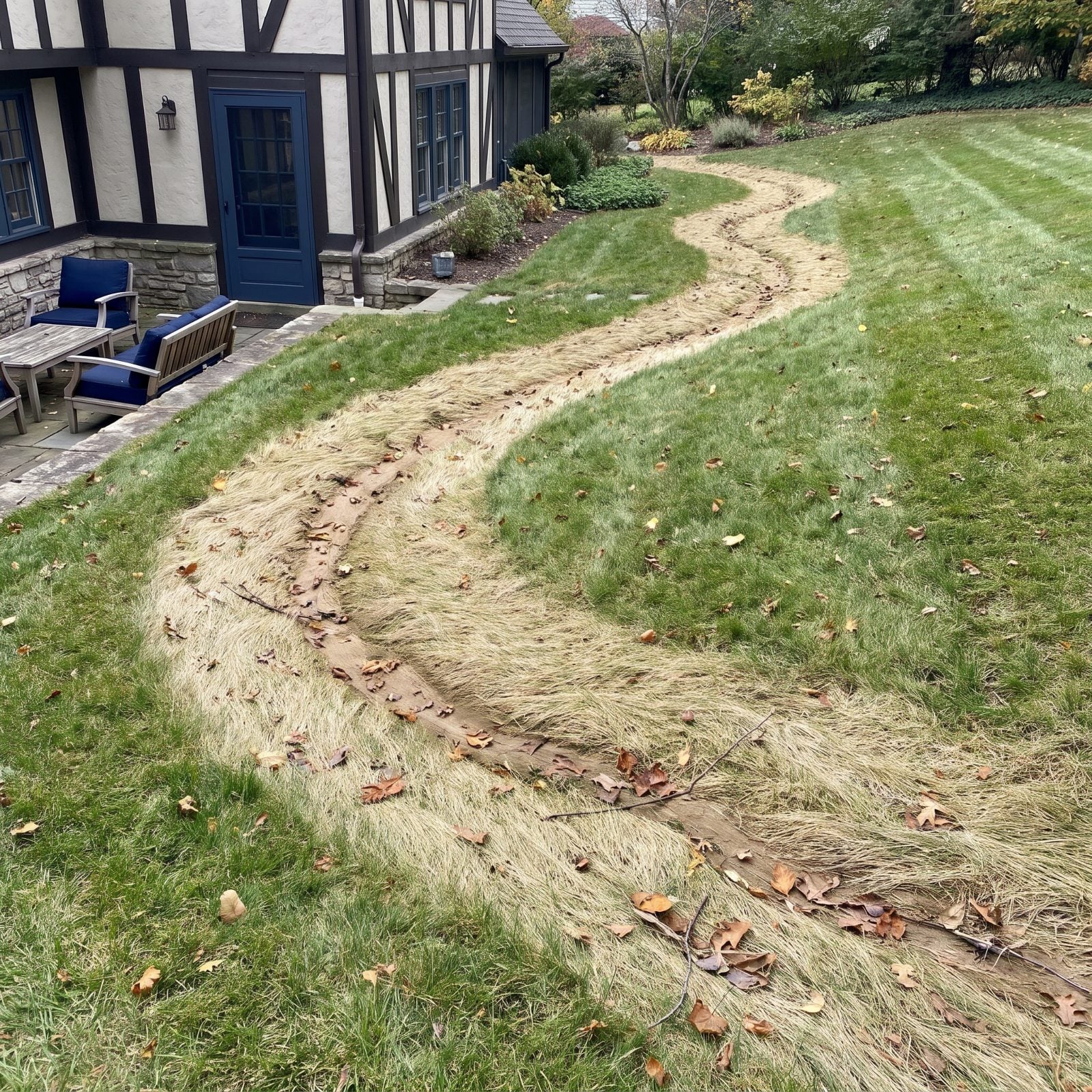
Grass combed flat in one direction is a map. Moving water lays the blades down and points them downhill, so you can trace exactly where the runoff travels across the yard just by reading the lean.
Follow the flattened lane. If it dead-ends at the foundation, the garden shed, or a basement window well, there’s your problem. Grass doesn’t lie about which way water wants to go, and water almost never changes its mind on its own.
17. Standing Water That Remains Days After Rain
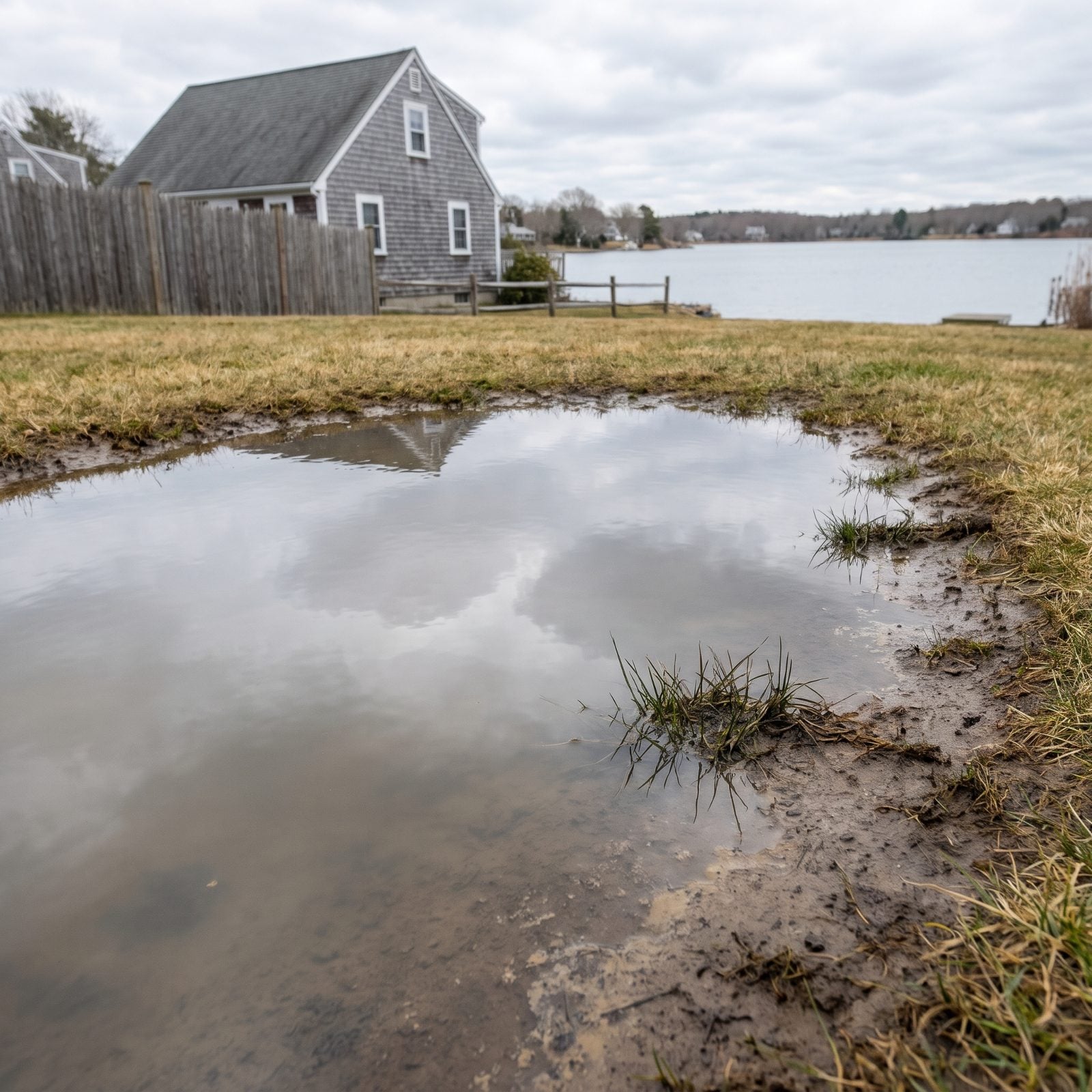
A puddle after a storm is normal. A puddle three sunny days later is a drainage failure in a disguise.
Water that won’t leave means the soil is saturated clay, or the water table sits high, or the grade traps it with nowhere to run. All three spell trouble for a home this close to the lake. Visit after a wet stretch, not during a dry spell when the yard is on its best behavior and faking it beautifully.
16. The House Sits Lower Than the Road
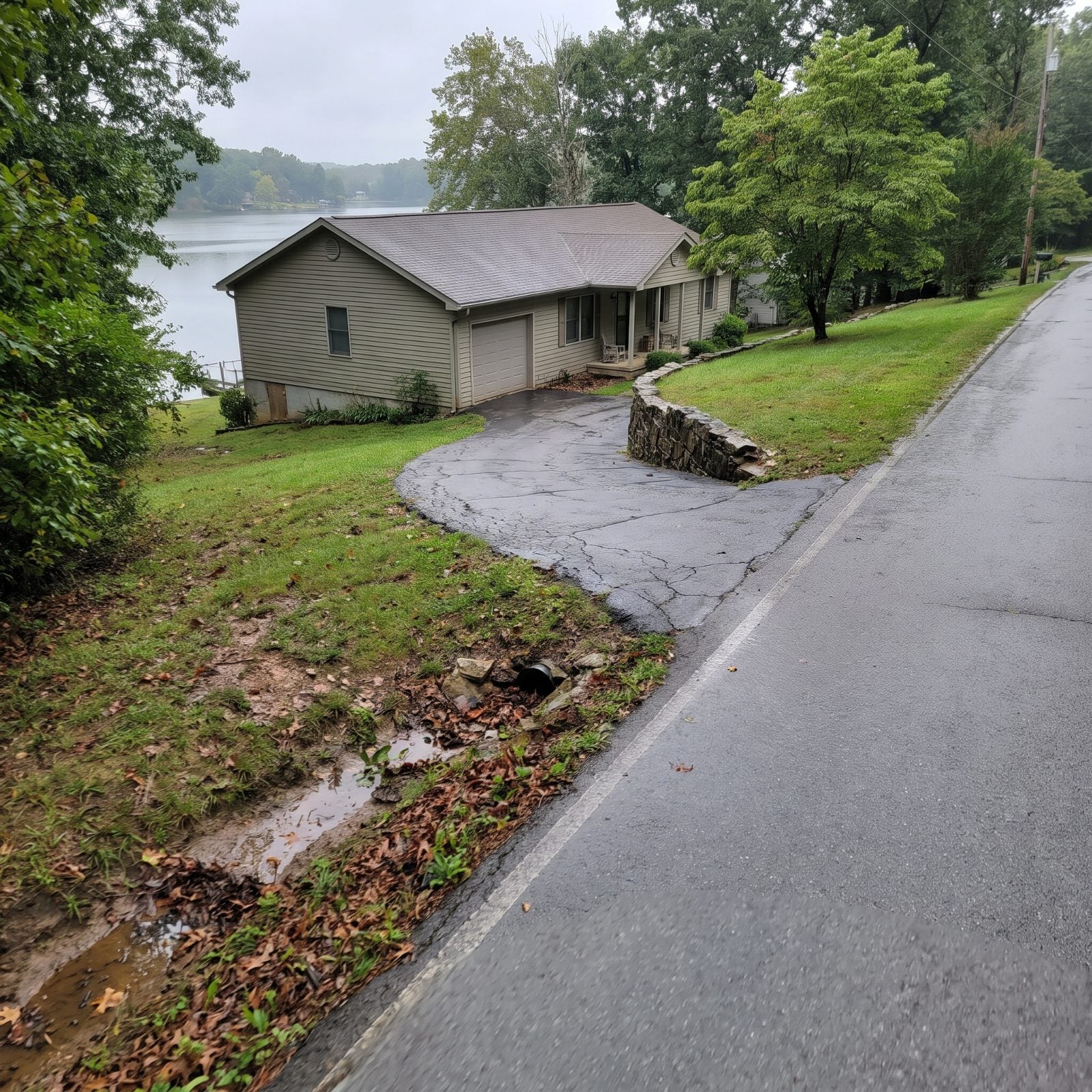
Stand in the road and look at the front door. If you’re looking down at it, you already know where the water goes during a hard rain. Everything the street sheds rolls toward the lowest point, and the lowest point is the house.
Roads often get built up on fill, which leaves the homes below them sitting in a natural catch basin. And a pretty driveway that dips toward the garage? Same problem, nicer surface.
15. The Yard Slopes Toward the Foundation
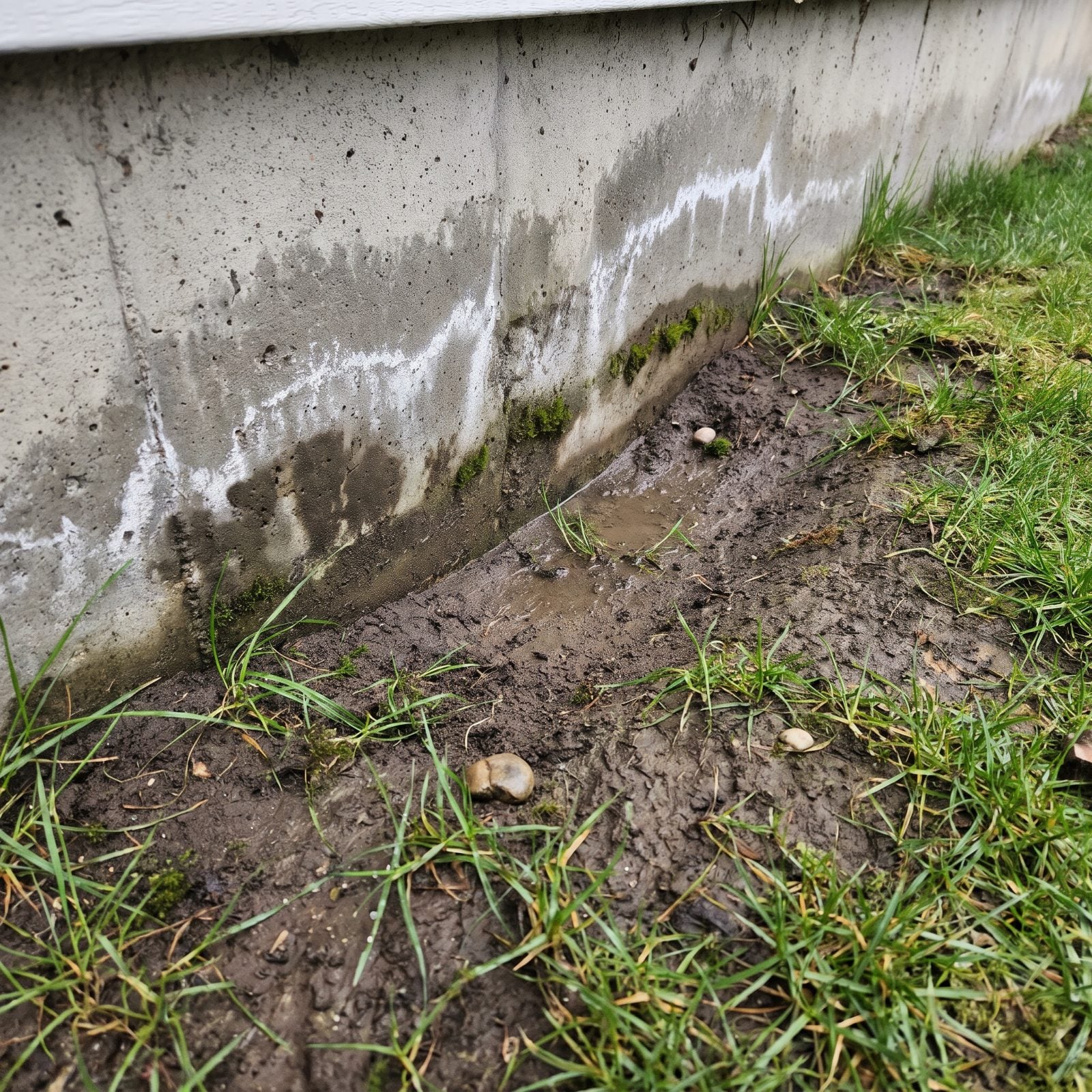
Proper grading sends water away from the house. Plenty of yards do the exact opposite, and it’s shockingly easy to miss until you crouch at the foundation and sight along the ground like you’re lining up a pool shot.
Watch for soil that tilts back toward the wall, mulch piled above the siding, a trench worn in along the footing. The concrete tells its own story too: the white chalky bloom called efflorescence, dark stains near the base. That’s a wall that’s been wet, over and over, from the outside in.
14. An Undersized or Debris-Clogged Road Culvert
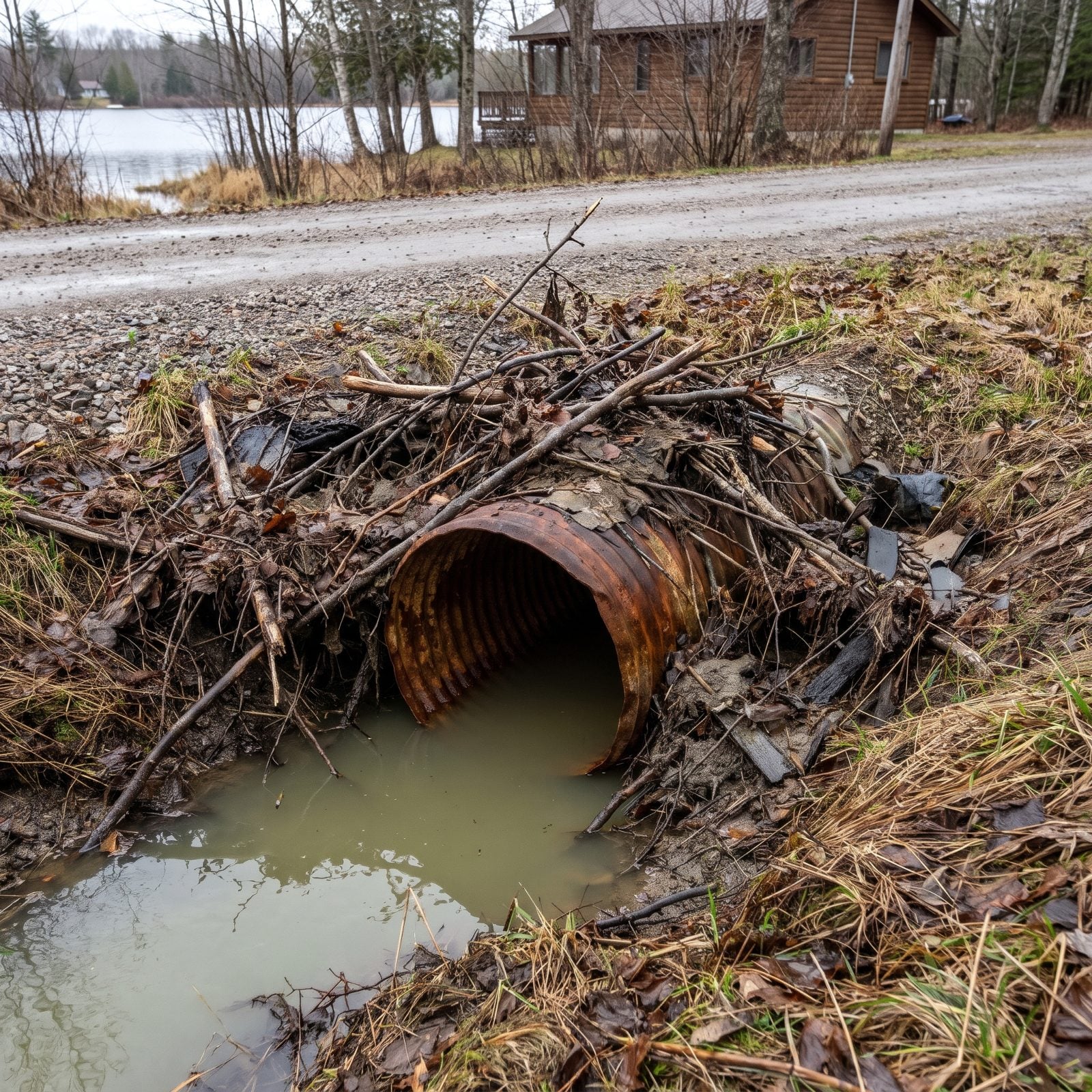
The pipe running under the road near the property is the drainage system’s throat. When it’s too small or packed with leaves and sticks, water backs up and spreads sideways, and sideways usually means into the nearest low yard.
Look at the culvert mouth. Is it clear? Is it big enough for the ditch feeding it? A rusted, half-buried pipe stuffed with debris is a flood waiting for the next heavy storm to pull the trigger.
13. A Low-Water Crossing on the Only Access Road
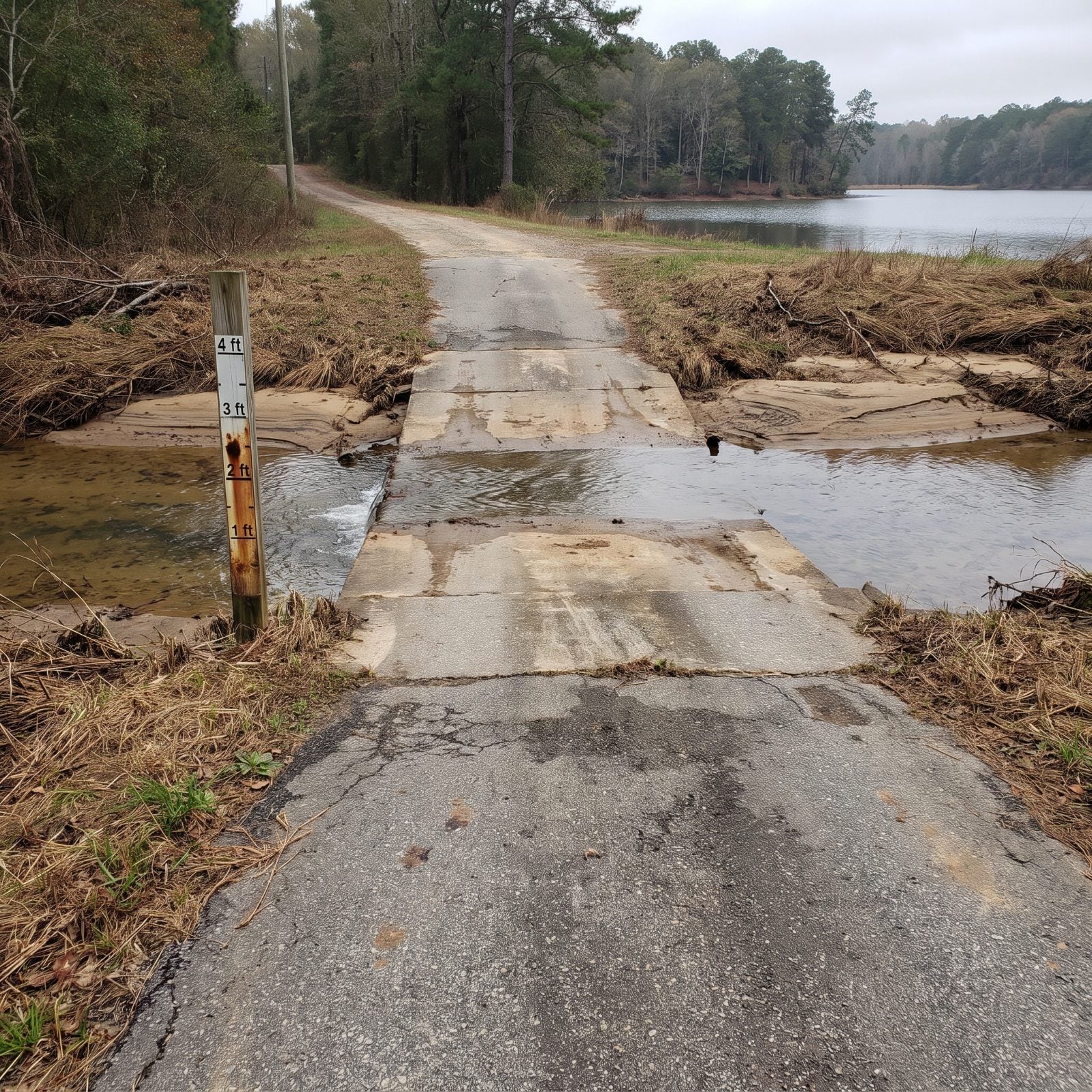
The house might stay bone dry while you’re stranded on the wrong side of a creek. A low-water crossing on the only road in means that when the water rises, you don’t drive home. You wait it out.
That dip in the road with a depth marker standing beside it isn’t decoration. Somebody installed that post because the crossing floods often enough to need measuring, which tells you plenty before anyone says a word. Ask how many days a year it’s impassable, then double whatever answer you get.
12. A Seawall With Water Seeping Through Its Joints
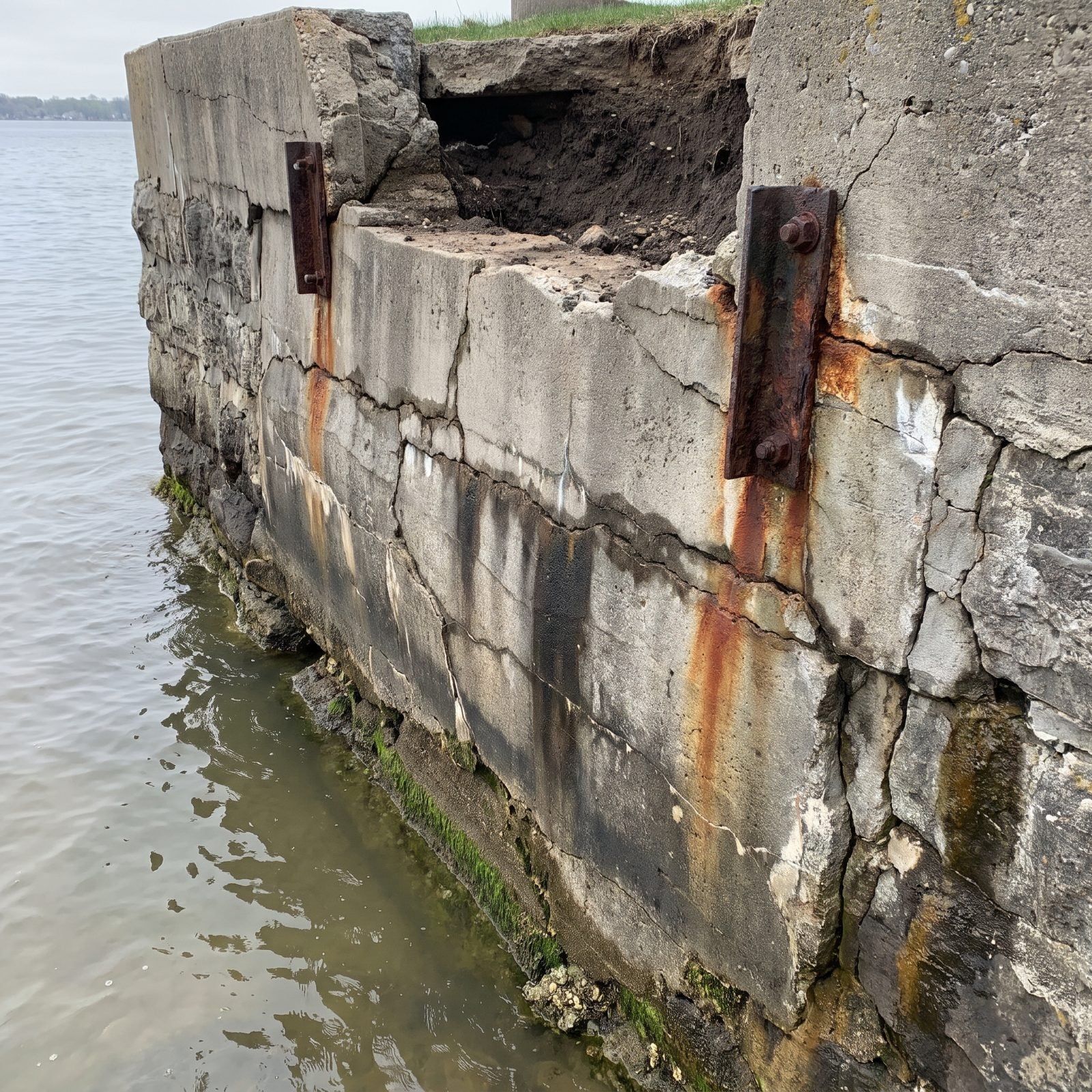
A seawall is only as good as what holds it together. When water pushes through the joints, you’re watching it slowly lose an argument with the lake.
Dark seepage streaks, rust bleeding from the tie-back hardware, a face that bulges, sunken soil along the top edge: all of it points the same way. The backfill is washing out and the pressure is winning. And seawall repairs are no weekend job.
11. An Eroded Bank Beneath the Lawn
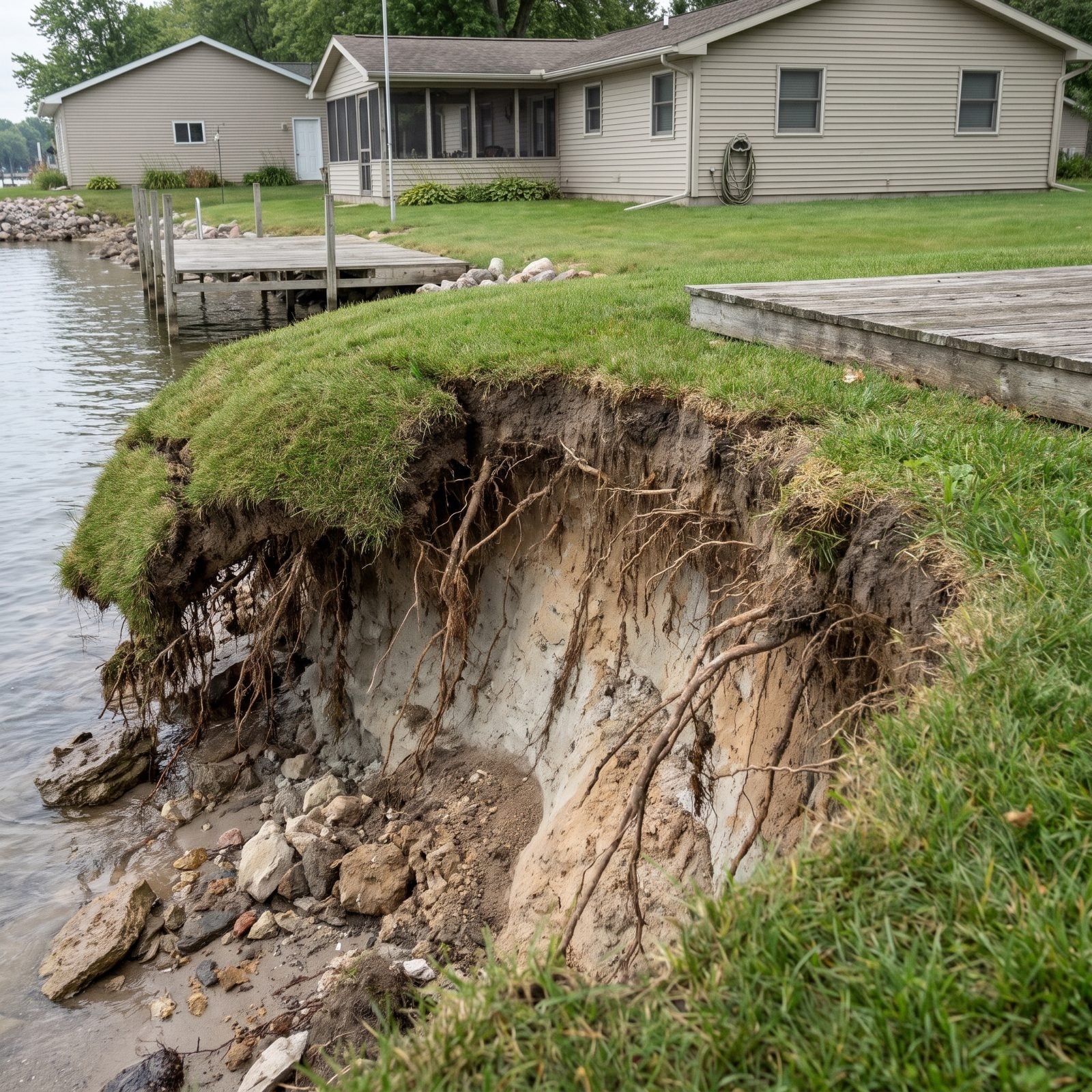
Grass that stops like a cliff edge is the yard telling on itself. When a bank undercuts, the turf keeps growing out over nothing until one spring it sags and drops. That lip means water has been chewing the soil out from under it, usually during high water or after a heavy runoff.
Walk the whole shoreline, not just the pretty part by the dock. You’re hunting for exposed roots, fresh soil at the waterline, and little slump cracks running parallel to the edge. A lawn that erodes a few inches a year is a slow problem. A lawn that loses a foot in one season? That’s a budget.
10. A Leaning or Bowed Retaining Wall
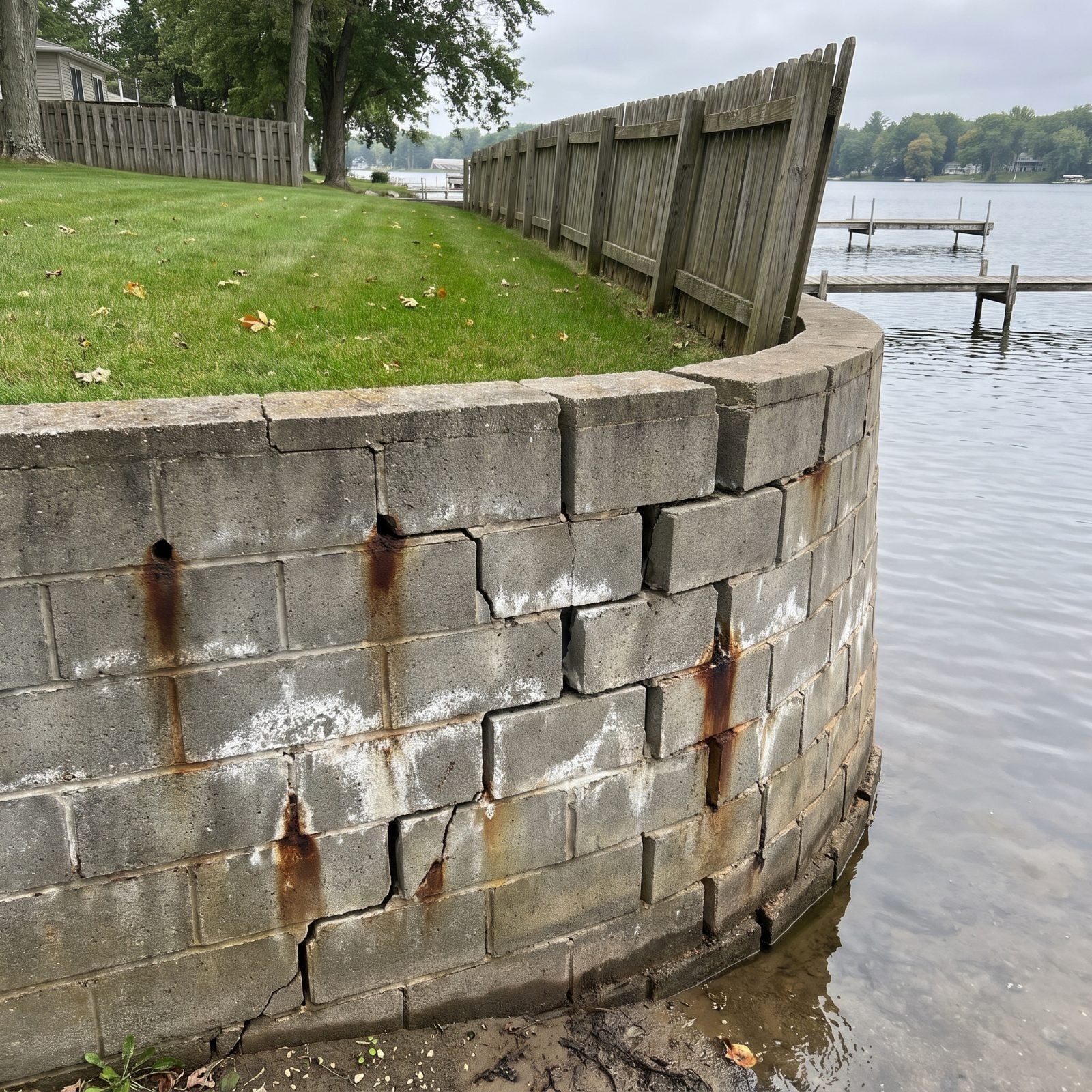
A retaining wall is supposed to be boring. When it starts leaning, bulging, or cracking in stair-step lines through the joints, something behind it is pushing — and that something is usually waterlogged soil that keeps saturating and swelling, which happens when the ground stays wet long after a flood or a storm surge.
Rusty streaks from the weep holes tell you the drainage behind the wall quit working. White chalky crust means water is moving through the masonry. Both say the same thing. This wall is fighting water it shouldn’t have to fight.
Replacing a failing seawall or retaining wall rarely comes cheap, and the quote climbs fast once a barge or crane gets involved. Get it looked at before you fall for the view.
9. Neighbors’ Homes Stand on Taller Foundations

Your neighbors already did the research. When the houses on both sides sit a story up on pilings and the one you’re touring sits flat on grade, that gap is a confession. Somebody got flooded, rebuilt higher, and the house that didn’t is now the low point on the block.
Next door, look for flood vents in the foundation walls, breakaway lattice under the raised homes, and front steps that climb four or five feet to the door. Elevated construction is expensive, and nobody does it for fun. They do it because the water told them to.
8. The Street Puddles During an Ordinary High Tide
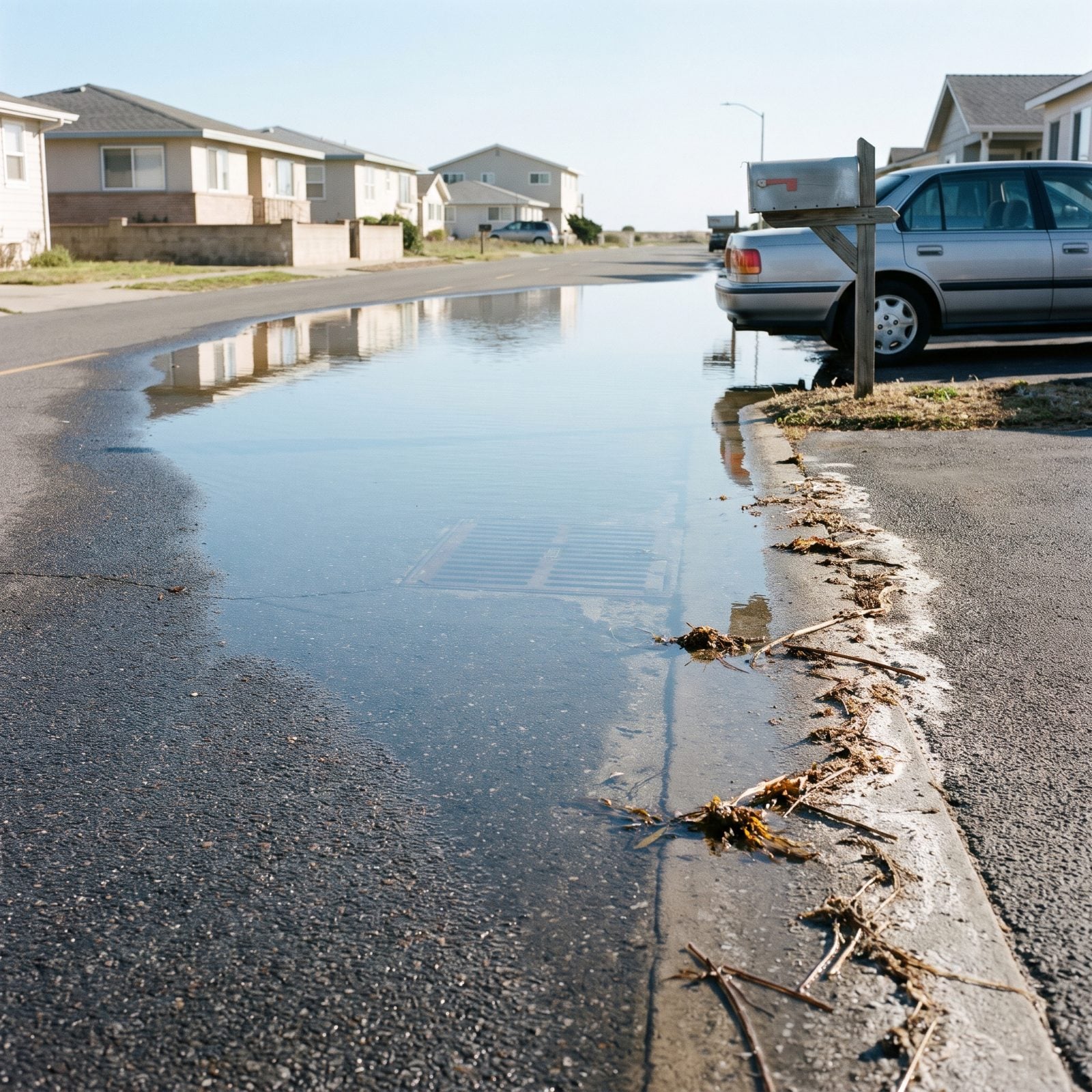
Clear sky, no rain, and the street is wet anyway. That’s nuisance flooding — water backing up through the storm drains on a high tide — and it’s getting more common in low coastal neighborhoods. If the road floods when nothing is happening, picture it with a storm piled on top.
So visit at the wrong time on purpose. Check the tide chart, show up near a high tide, and drive the access road yourself. A street that puddles on a calm afternoon becomes impassable on a bad one, and you can’t launch a rescue from a driveway you can’t reach.
7. The Property Depends on a Levee, Tide Gate, or Pump Station
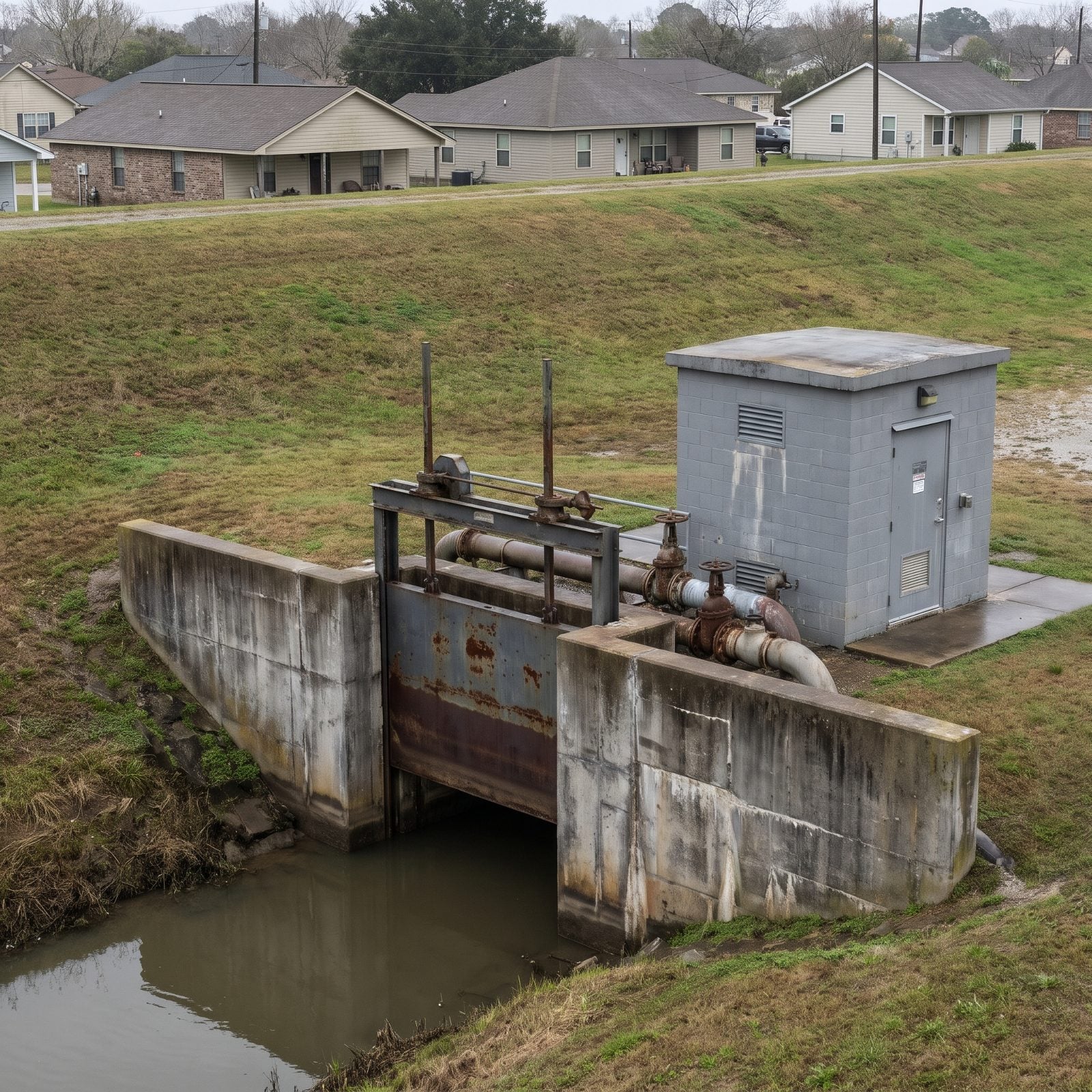
Some waterfront homes stay dry only because a machine keeps them dry. A levee. A tide gate. A pump station in a little gray shed at the end of the canal. That protection is real, right up until it isn’t.
Ask who owns and maintains it. A federal levee is one thing. A privately managed pump that a homeowners’ association covers out of dues is a whole other animal, and the bill lands on you when it burns out at 2 a.m. in the middle of a storm. Find out when it was last inspected and who’s on the hook for repairs. Protection you don’t control is a standing liability wearing a reassuring face.
6. The Parcel Appears in a FEMA Special Flood Hazard Area
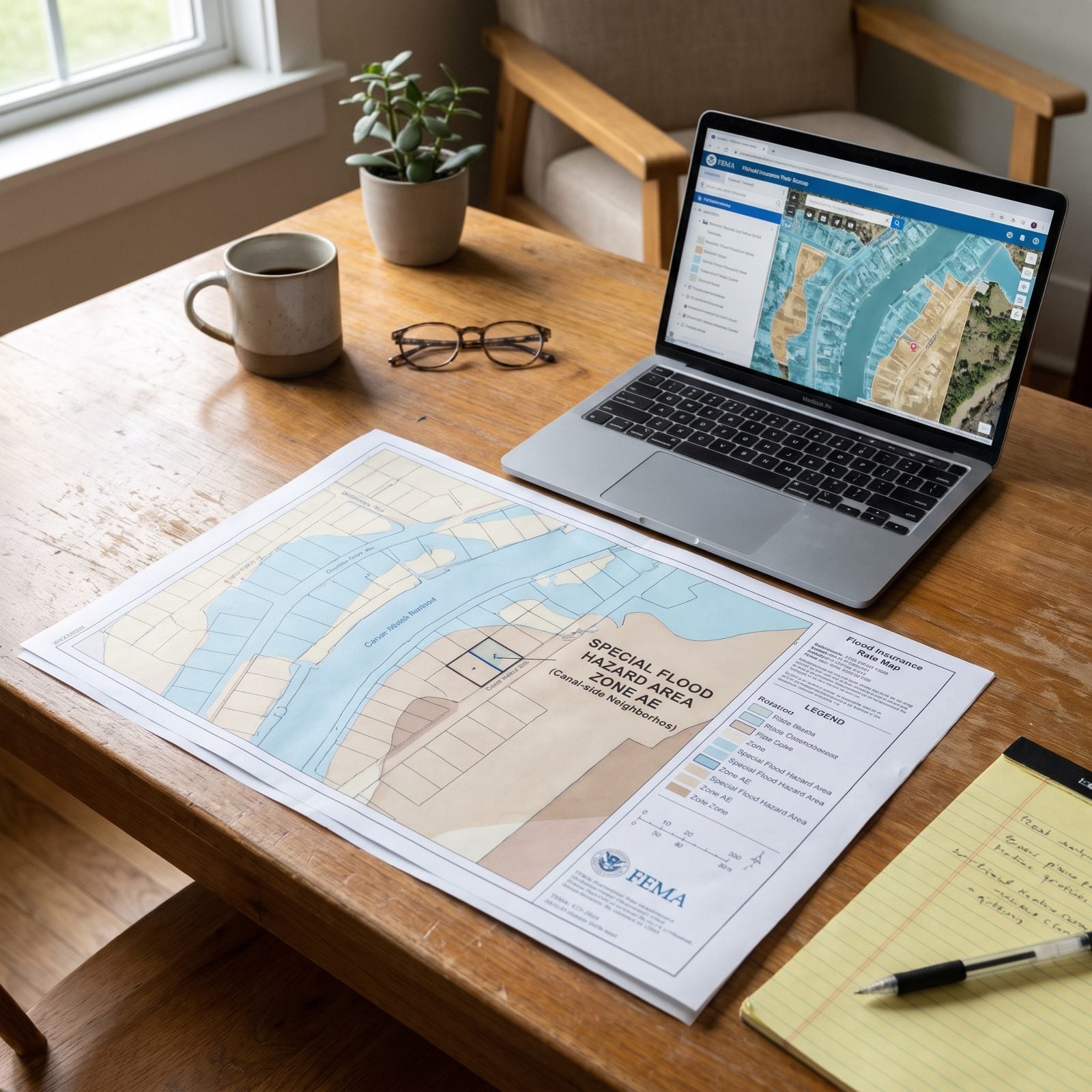
Before you fall for the sunset over the water, pull the flood map. FEMA’s online viewer is free, and checking the parcel’s flood zone takes about two minutes. A Special Flood Hazard Area — the zones that start with A or V — means the government rates this spot as carrying a meaningful chance of flooding across the life of a 30-year mortgage.
A zone isn’t a death sentence. But it drives flood insurance requirements and premiums, and a V zone out on the open coast carries wave-action rules that make building and insuring far pricier than some quiet inland lot.
The view sells the house. The flood zone prices it.
Maps get updated, too, so the zone when the current owner bought may not be the zone you’re buying into.
5. The Elevation Certificate Shows a Low Lowest-Floor Elevation
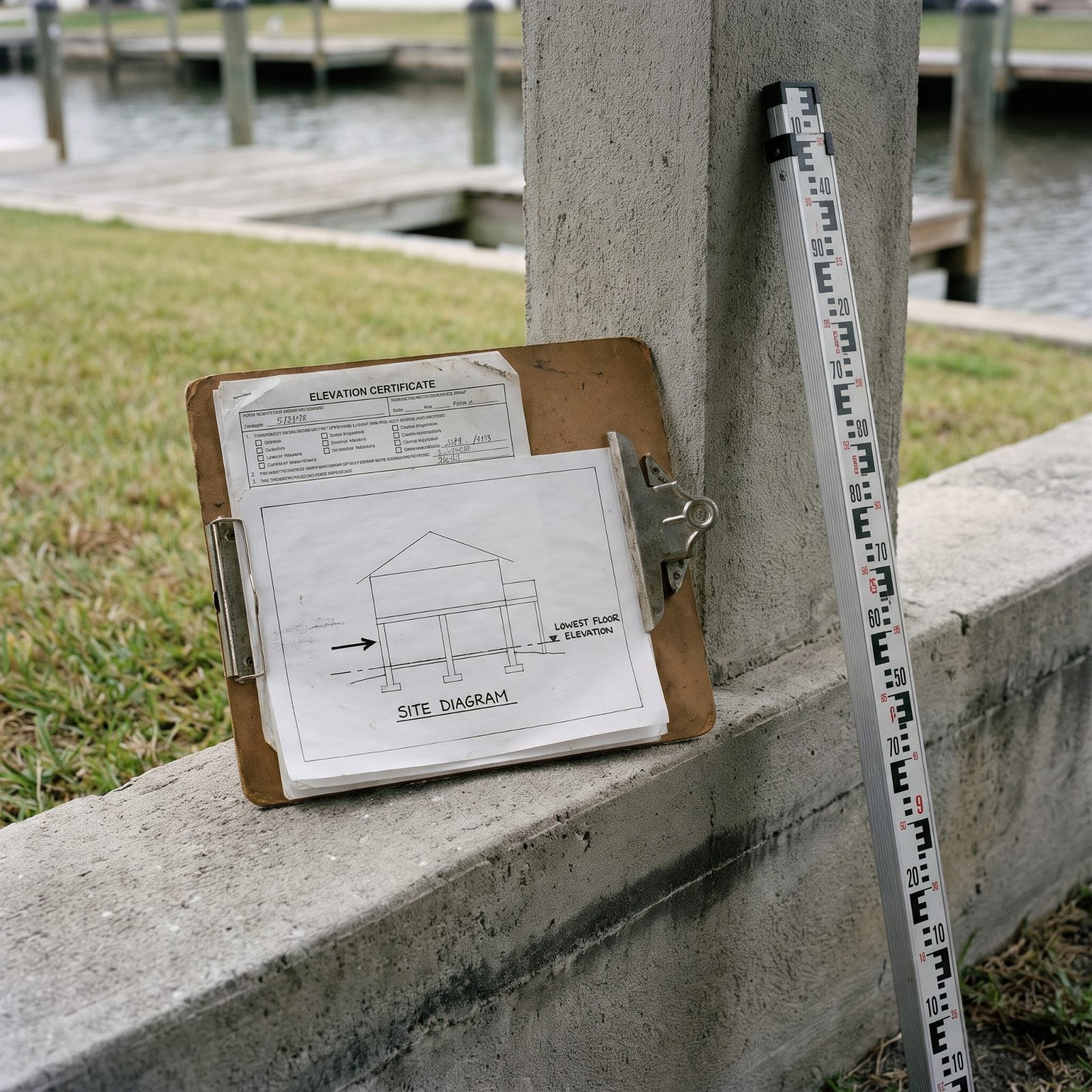
An Elevation Certificate is the least romantic document in real estate and one of the most useful. A licensed surveyor measures how high the lowest floor sits relative to the Base Flood Elevation — the water level FEMA expects in a serious flood.
When that lowest floor sits below the Base Flood Elevation, you’re underwater on paper before a single drop falls. That number drives insurance cost more than almost anything else, and the gap between a floor a foot above and a foot below can swing premiums dramatically year over year.
4. Seller Disclosures Mention Water Intrusion or Drainage Repairs
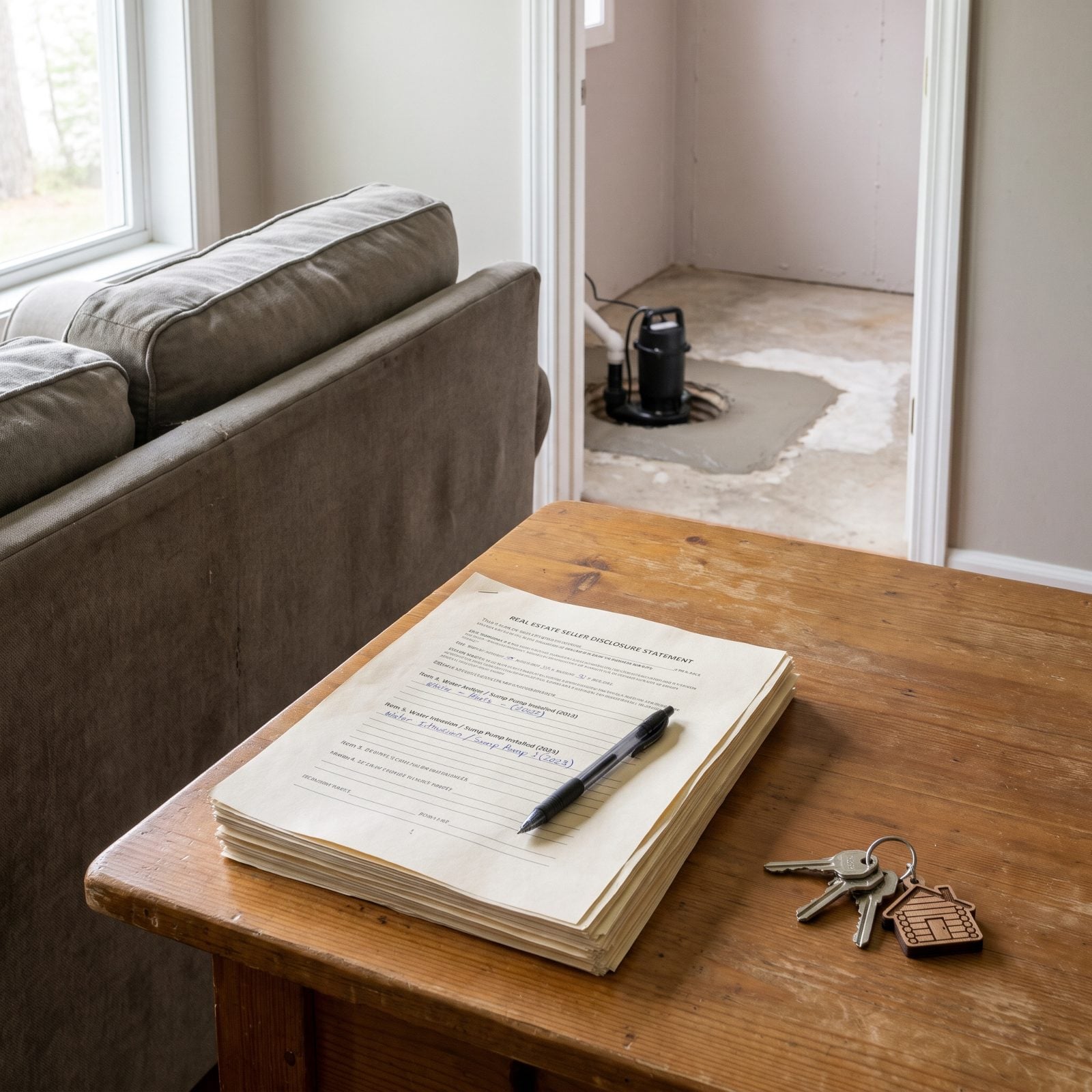
Read the disclosures slowly, because the language is deliberately mild. “Minor water intrusion,” “drainage improvements,” “sump pump installed” — all of it describes the same thing in gentler and gentler words. Water got in, and someone spent money fighting it.
A sump pump isn’t a flaw. A sump pump installed after the fact, paired with a line about “occasional moisture,” is a story. Ask when. Ask how often. Ask what set it off.
And remember, disclosure laws vary by state. Some require sellers to report past flooding and insurance claims; some let them keep quiet. In a weak-disclosure state the paperwork tells you less, which means the basement has to tell you more.
3. Historic Aerial Photos Show Water Crossing the Lot

Land has a memory even when the lawn doesn’t. Historic aerial photos — often free through state archives, university libraries, or the USDA — show what the parcel looked like before the fill went in and the house went up.
Dig up shots from a few decades back. If the lot used to be marsh, a creek channel, or open water that got filled to make buildable ground, the original water knows the way home. Filled low ground settles, drains poorly, and floods along the old path no matter how nice the sod looks today.
Then compare the old image to a current satellite view. When the waterline used to sit right where the kitchen is now, you’ve learned the one thing the listing will never mention.
2. County Records That Quietly Log a Flooded Road or Neighborhood
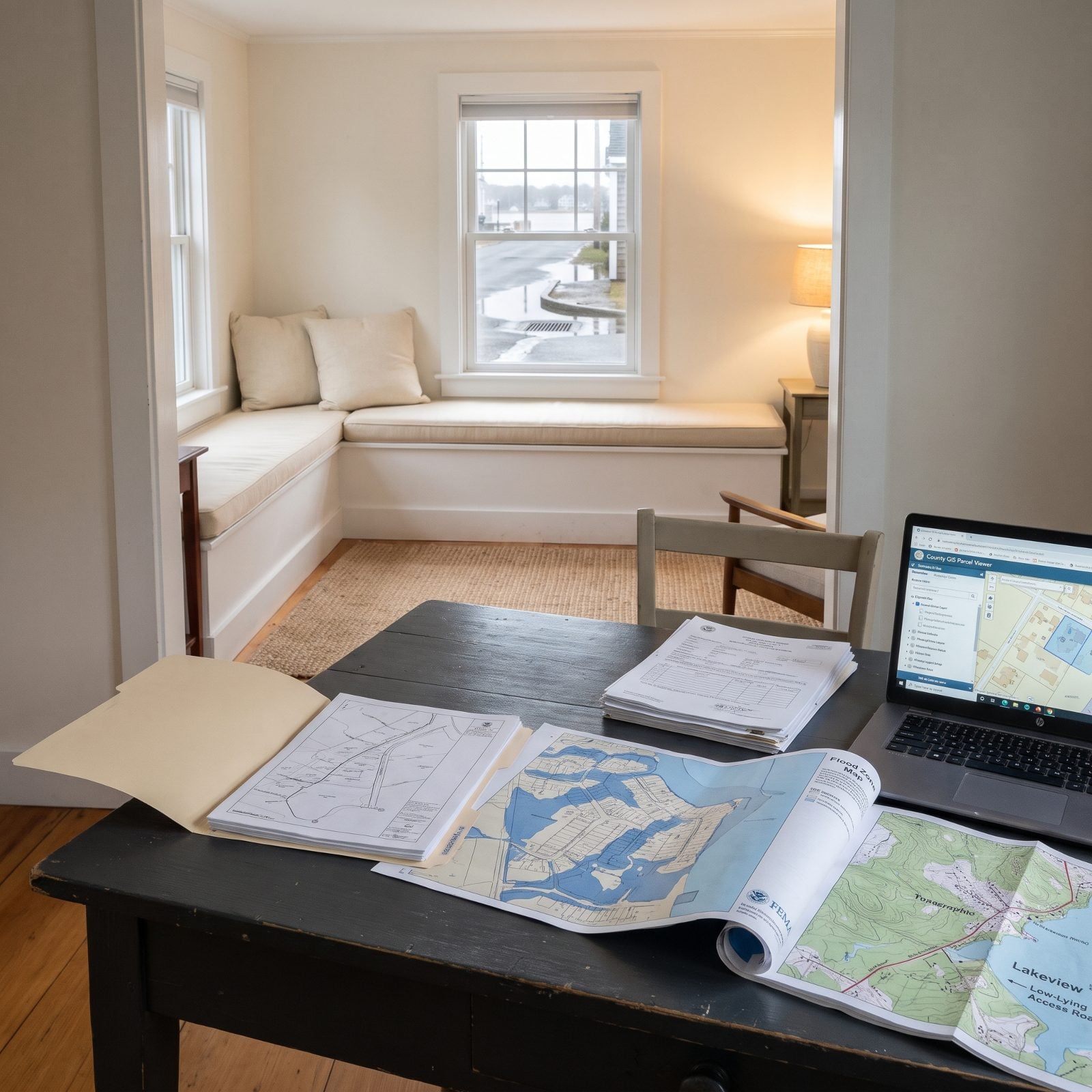
The house can look bone dry and still have a paper trail that tells on it. Counties keep road-closure logs, public-works repair records, drainage complaints, and FEMA flood-zone maps, and it’s worth pulling all of them before you fall in love with the dock.
Here’s what buyers skip. The home itself may have never taken on a drop of water, but if the only access road floods twice a year, you’re still stuck — can’t leave, can’t get groceries, can’t get an ambulance in. That’s a flood problem even when your floors stay bone dry.
So search the parcel in the county GIS viewer, then hunt for that access road in repeated storm-drainage work orders. Ask the clerk whether the street turns up on any road-closure list. Free, public, and almost nobody bothers.
1. Prior Flood Insurance Claims Already Filed on the Property
A home can be sold, repainted, and relisted, but its flood-claim history follows the address, not the owner.
Properties with repeated National Flood Insurance Program payouts get flagged as Repetitive Loss or Severe Repetitive Loss. That status doesn’t vanish because a seller dropped in new laminate and a cheerful welcome mat — it’s glued to the parcel for good.
You can’t just look this up in some public database, which is the maddening part. But you can ask. Request the property’s NFIP claims history and any elevation certificate from the seller in writing, and watch how they react; a seller who hesitates is telling you plenty. Check with the state floodplain manager too, and get an NFIP-savvy insurance agent to quote the address. The premium alone will spill the story.