
The first time you back a 30-footer into a slip with three strangers watching from the dock, your mouth goes dry and every bit of marina confidence you faked at the boat show just evaporates. Nobody warns you about this part. Sailing magazines are all trade winds and teak, and the forums assume you already know which line to throw. You don’t, and that’s completely fine — everybody started somewhere, usually badly. These are the low-stakes-but-high-anxiety questions that keep new owners rehearsing in the parking lot. Straight answers here. No lectures, no pretending you should’ve been born knowing a spring line from a stern line.
Please note that some of the imagery in this article may have been enhanced with the assistance of AI.
34. How Many Dock Lines Does My Sailboat Actually Need?
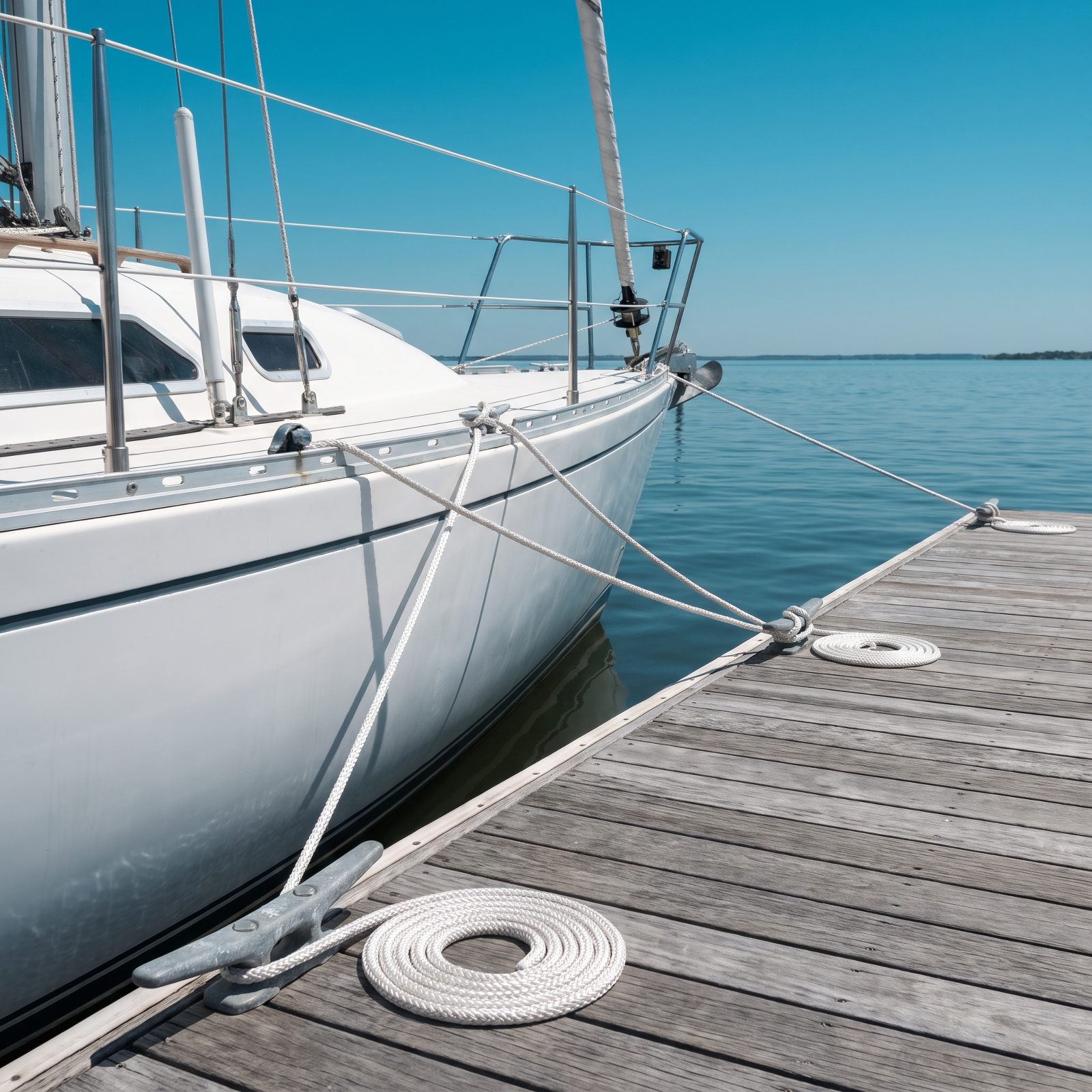
Four. That’s the honest baseline for an overnight stay: a bow line, a stern line, and two springs. The bow and stern keep you from drifting fore and aft, and the springs keep you from surging into the dock or sawing back and forth when a wake rolls through.
Carry six aboard, though. You want two spares, because the one night you really need extras is the night a storm’s forecast and the chandlery’s locked up tight. Plenty of owners learn that the hard way, standing in a 30-knot gust borrowing line off a neighbor who was too polite to mention it the whole rest of the season.
33. Where Should I Hang the Fenders, and at What Height?
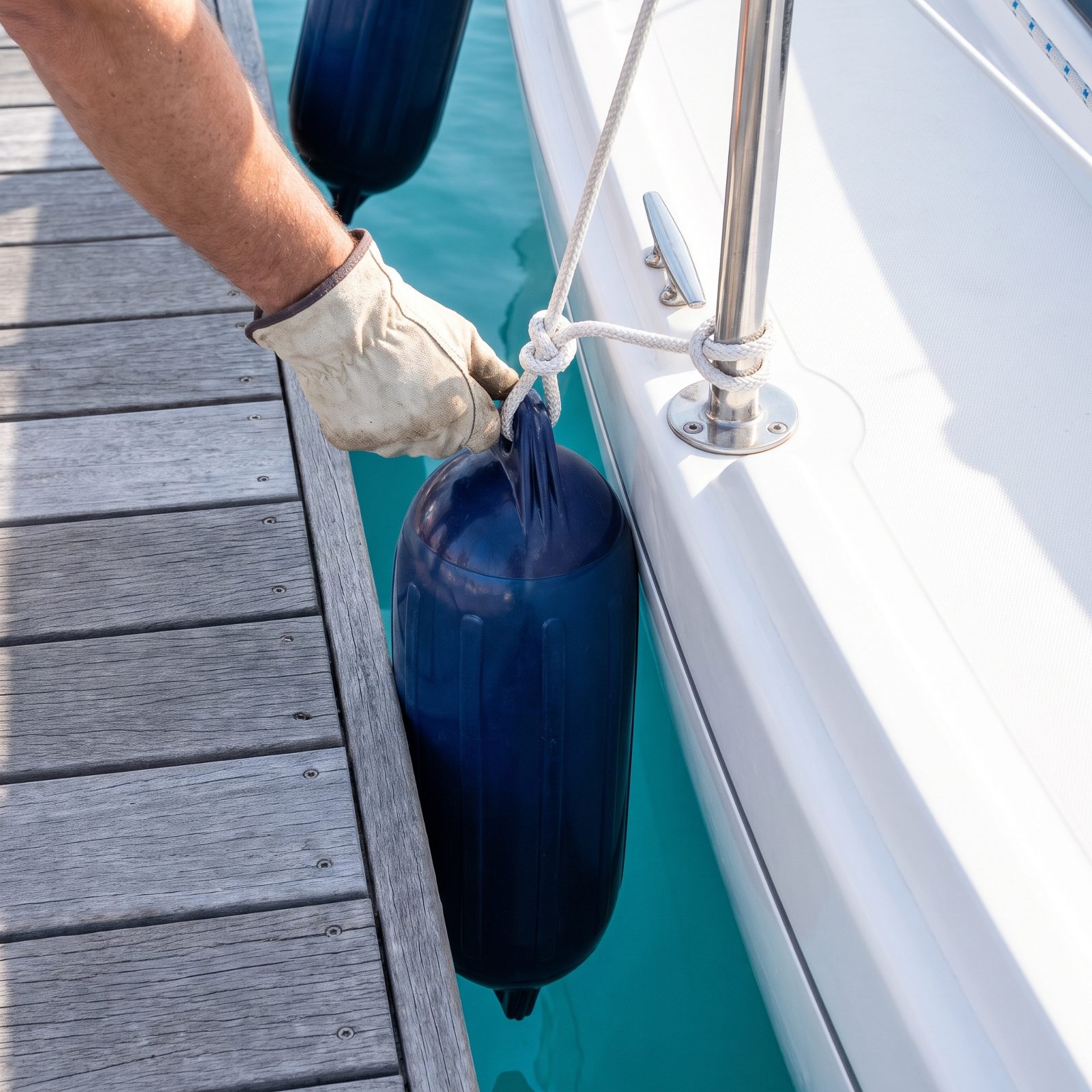
Hang them so the fat part of the fender meets the dock at the boat’s widest point, usually near the beam. Height matters more than people think. Set the fender so its middle lines up with the dock’s rubrail or the top edge of the pier — not so high it rides above contact, not so low it just dangles in the water looking useless.
Three per side covers a boat under 35 feet. Tie them to the lifelines or stanchion bases with a clove hitch and you can slide them fore and aft as you come alongside.
32. How Do I Tie a Cleat Hitch That Won’t Jam?
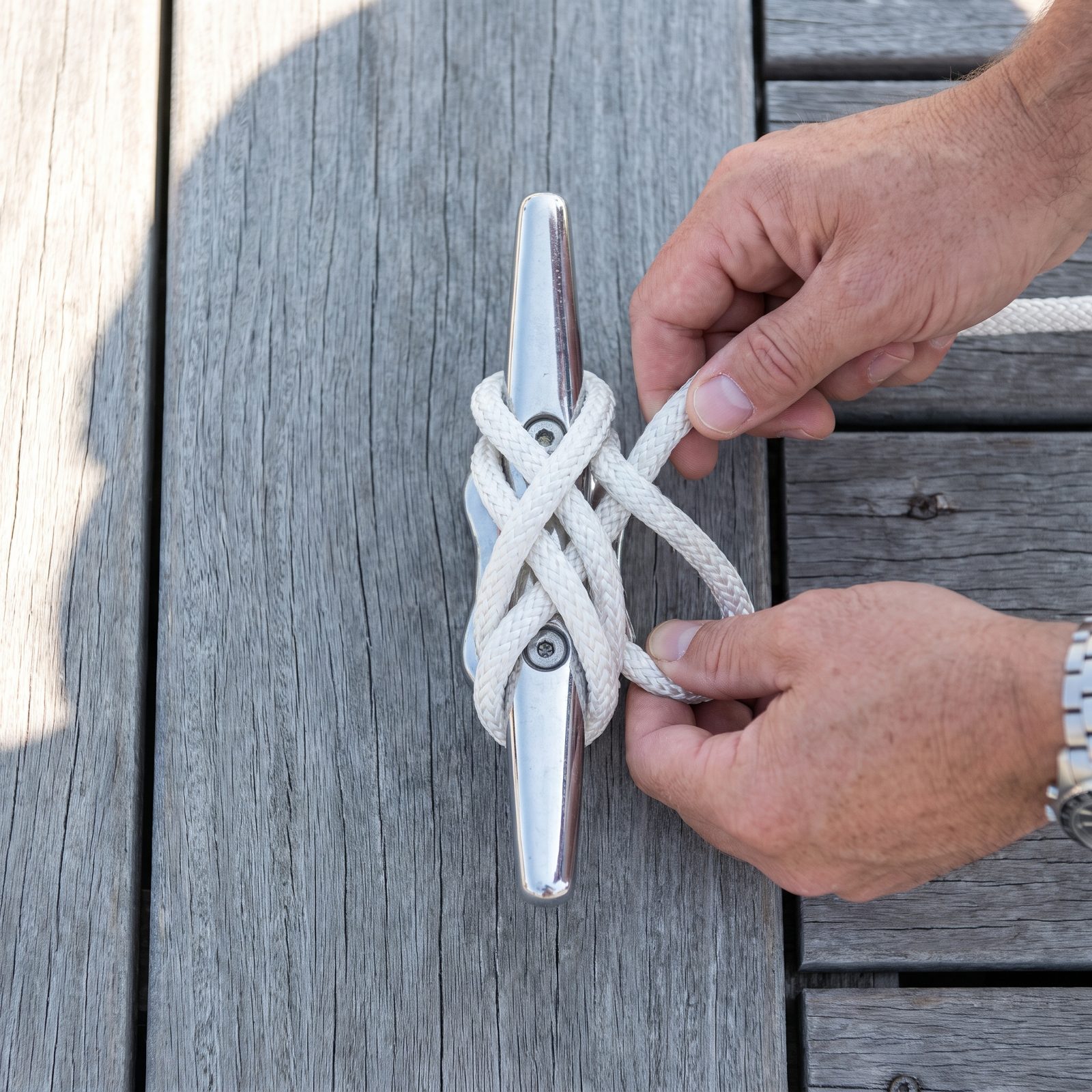
One full turn around the base, then figure-eights, then one locking hitch. That’s it. The mistake new owners make is piling on five or six locking hitches thinking more is safer. It isn’t. What you get is a tangle: wraps and crossings piled on top of each other, a knot that swells under load and fuses into a lump you’ll be sawing off at midnight.
Done right, it looks far tidier. Start with a complete wrap around the far horn and the near horn, cross over the top in a figure-eight a couple of times, and finish with a single under-tuck so the line pinches itself. One lock holds fine. Two if you’re nervous.
31. What Is a Spring Line, and When Do I Actually Use One?
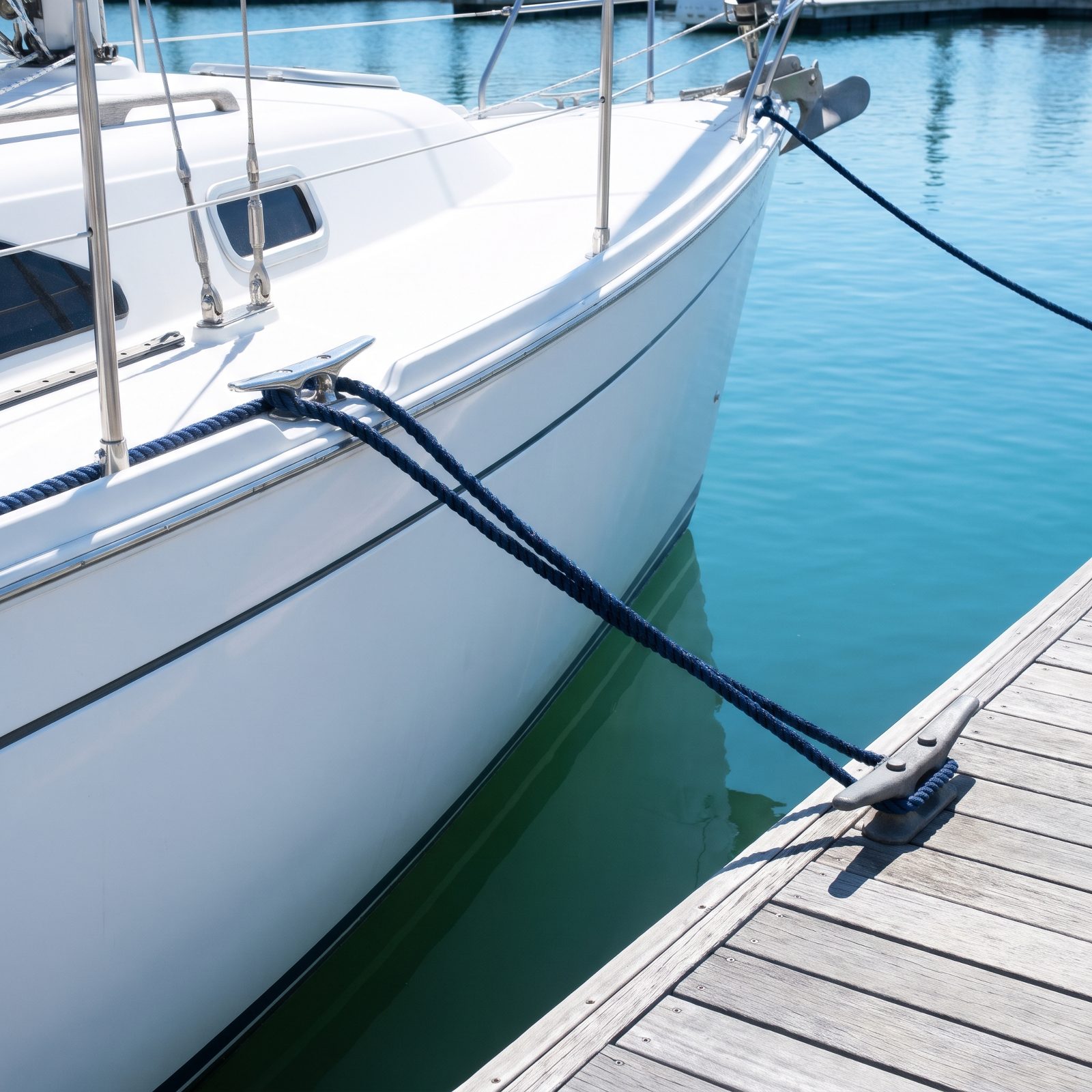
A spring line runs diagonally, not straight across. It’s the line that stops your boat creeping forward or backward in the slip. Bow and stern lines hold you off the dock; springs hold you in place along it.
You use one every single time you’re tied alongside for more than ten minutes. But here’s where the spring really earns its keep — as a docking tool. Loop it onto a midship cleat, ease against it with the engine in gear, and you can pivot the boat snug to the pier in a crosswind without touching another line. That trick alone is worth the afternoon it takes to learn what a spring is.
The spring line is the quietest hero in the marina. Nobody notices it until the day it saves your gelcoat.
30. Which Dock Line Should I Release First When Leaving the Slip?
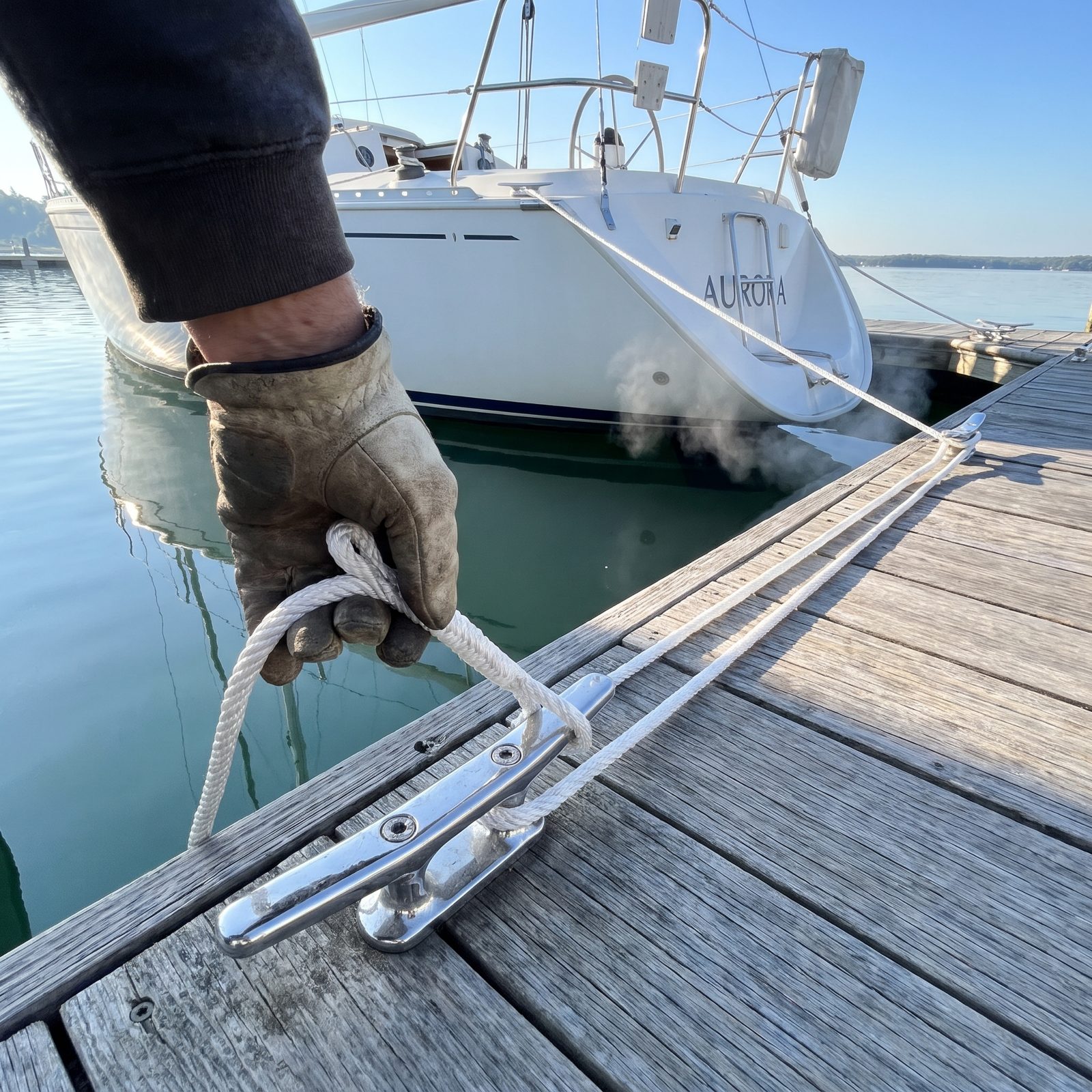
Release the lines the wind or current is not pushing against first, and hang onto the one holding you safe until last.
Say the breeze is pinning you against the finger pier on your port side. Drop the port lines early, since the wind holds you there anyway, then use a stern spring to pivot the bow out before you cast off the last line. The order is never fixed. Read the wind, figure out which line is doing the real work, and that’s the one that comes off last.
29. Why Does the Stern Swing Sideways When I Reverse?
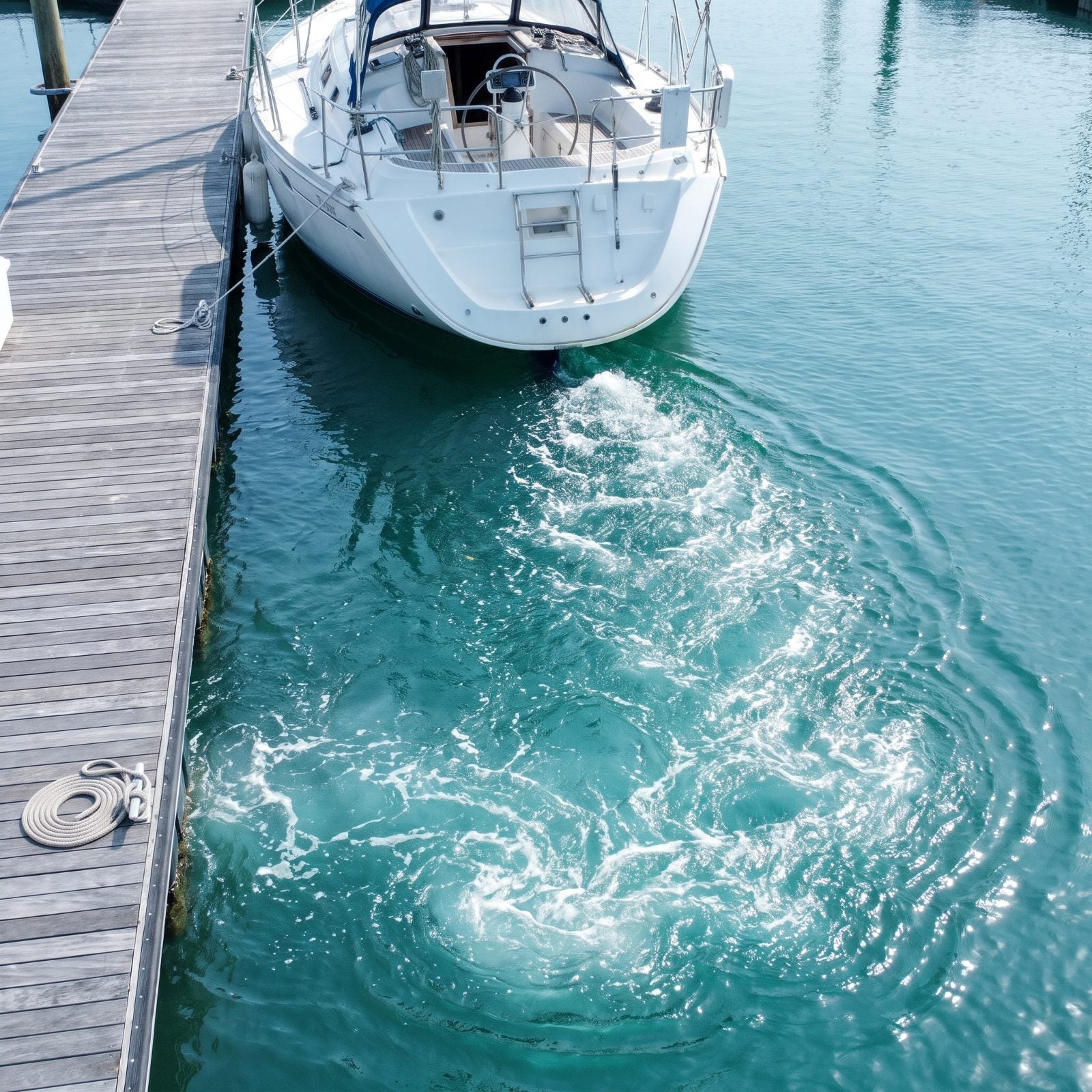
It’s called prop walk, and you’re not doing anything wrong. A single fixed propeller shoves the stern sideways in reverse because the blades bite harder on one side than the other. Most boats with a right-hand prop walk the stern to port when backing.
Now the useful part. Stop fighting it and start using it. Once you know which way your stern wants to swing, you can set up your approach so prop walk tucks the stern exactly where you want it. Back into a slip with the walk working for you and it looks like magic to the folks on the dock. It’s just physics you’ve made a friend of.
28. How Do I Dock When the Wind Is Pushing Me Off the Pier?
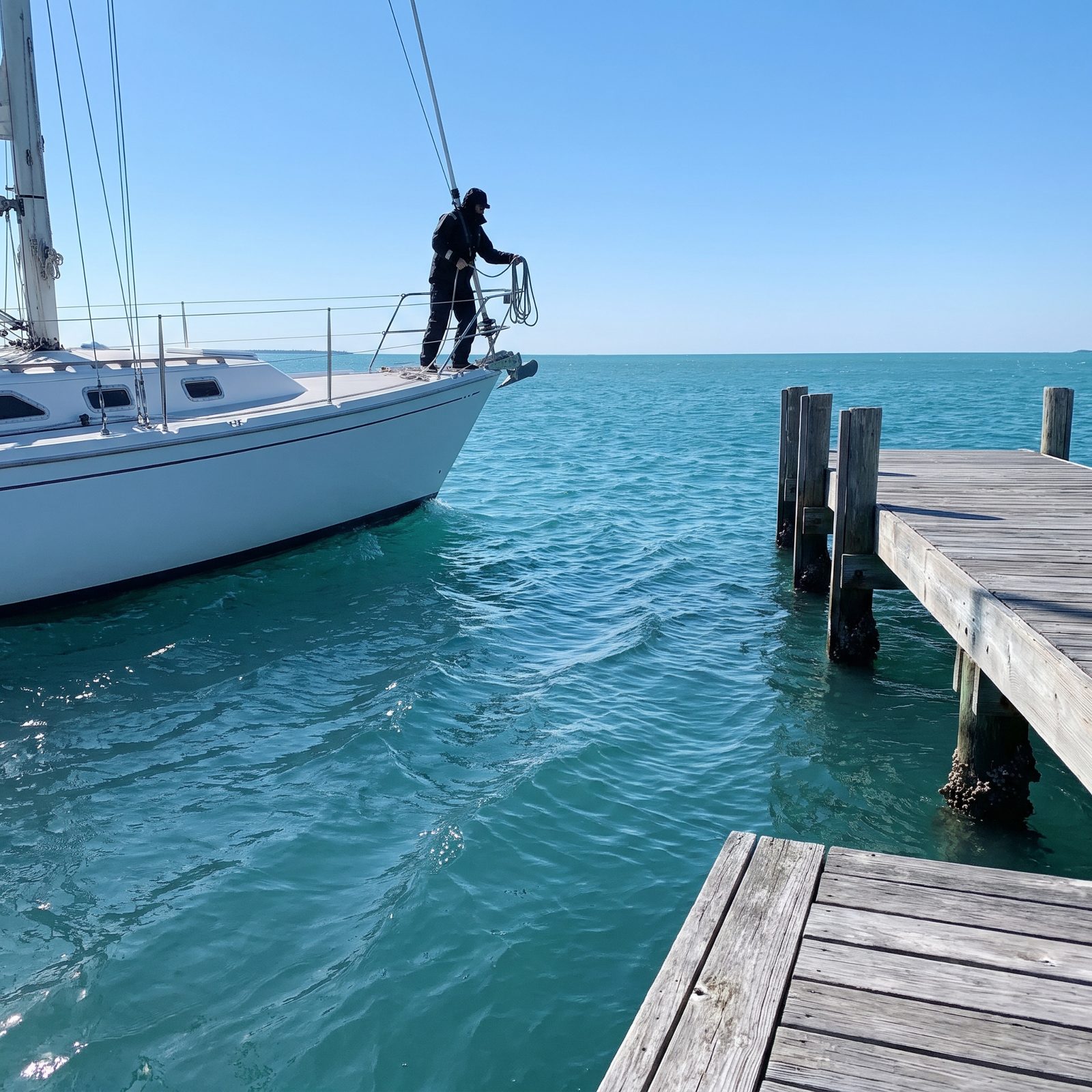
Come in at a steeper angle than normal, something like 30 or 40 degrees instead of a shallow glide. Wind blowing you off the pier straightens your approach for you, so aim a little aggressively toward the dock knowing the breeze will swing the bow parallel on its own.
Get a bow line or a midship spring onto the dock fast, before the wind shoves you back out. Then use that line against the engine to haul the rest of the boat alongside. Fighting an offshore wind with no line ashore is a losing game — the line is your anchor point and the engine does the pulling.
27. Can I Step Across Someone Else’s Boat to Reach the Dock?
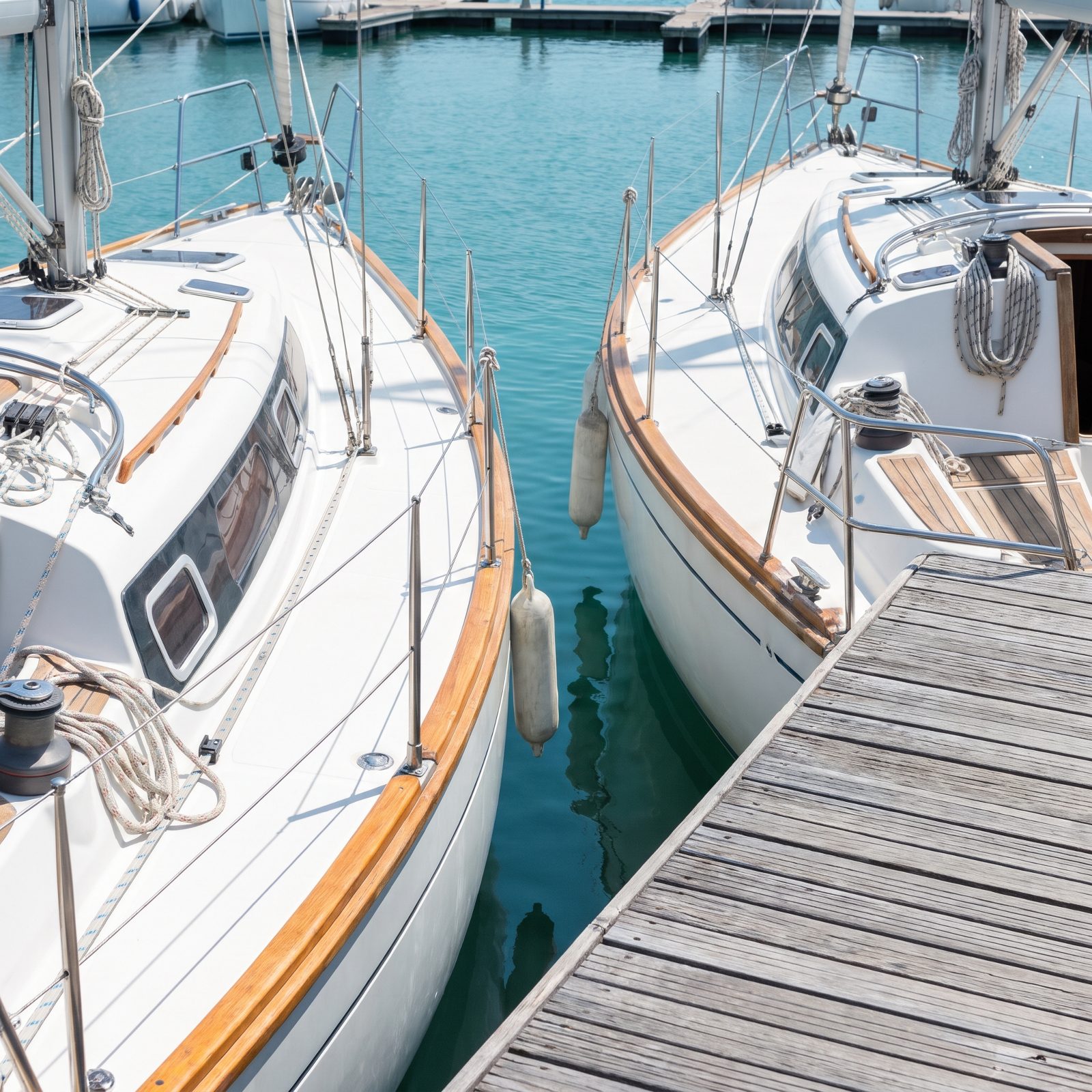
Sometimes yes, but there are rules of courtesy every sailor follows. When boats raft together you cross in front of the mast, never through the cockpit. The cockpit is someone’s living room. The foredeck is the hallway.
Ask first if anyone’s aboard. Keep your voice down, keep your shoes clean, don’t grab the lifelines like handrails, and never linger — cross quick, cross forward, nod a thanks. This is the stuff that makes you the neighbor people are glad to see instead of the one they warn each other about over coffee.
26. Is It Customary to Tip Marina Dockhands?
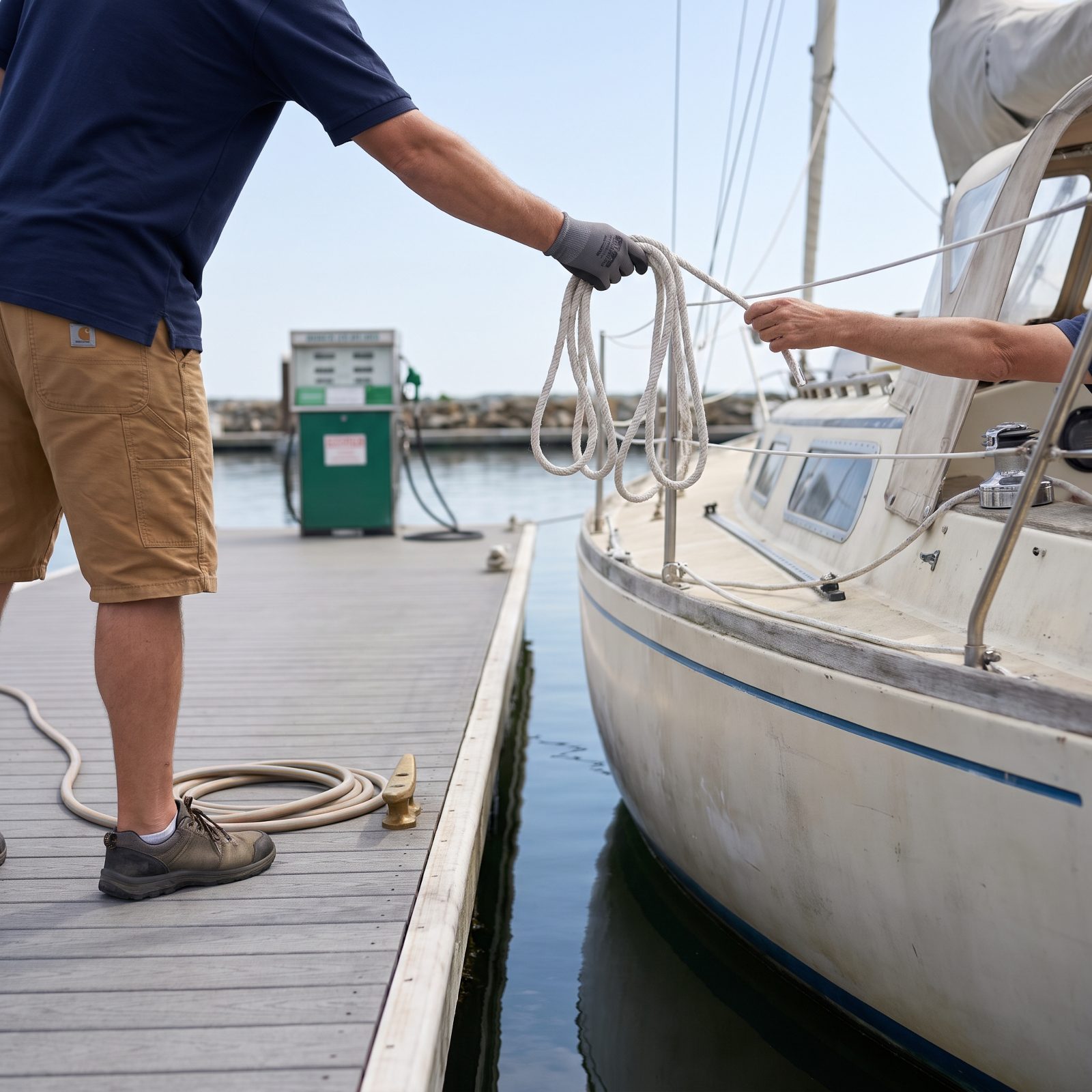
Short answer: yes, usually, and not much. A dockhand who catches your lines, walks you into a tight slip, or runs fuel out in the rain has earned a few bucks. Five to ten for routine help, more if they saved your topsides from a piling.
Nobody chases you down if you skip it. But marina staff talk, and the person who tips tends to be the one who gets the easy slip next time, the quiet heads-up about weather, the spare pump-out token when the machine’s acting up. Goodwill, not obligation.
25. How Do I Stop My Halyards From Slapping All Night?
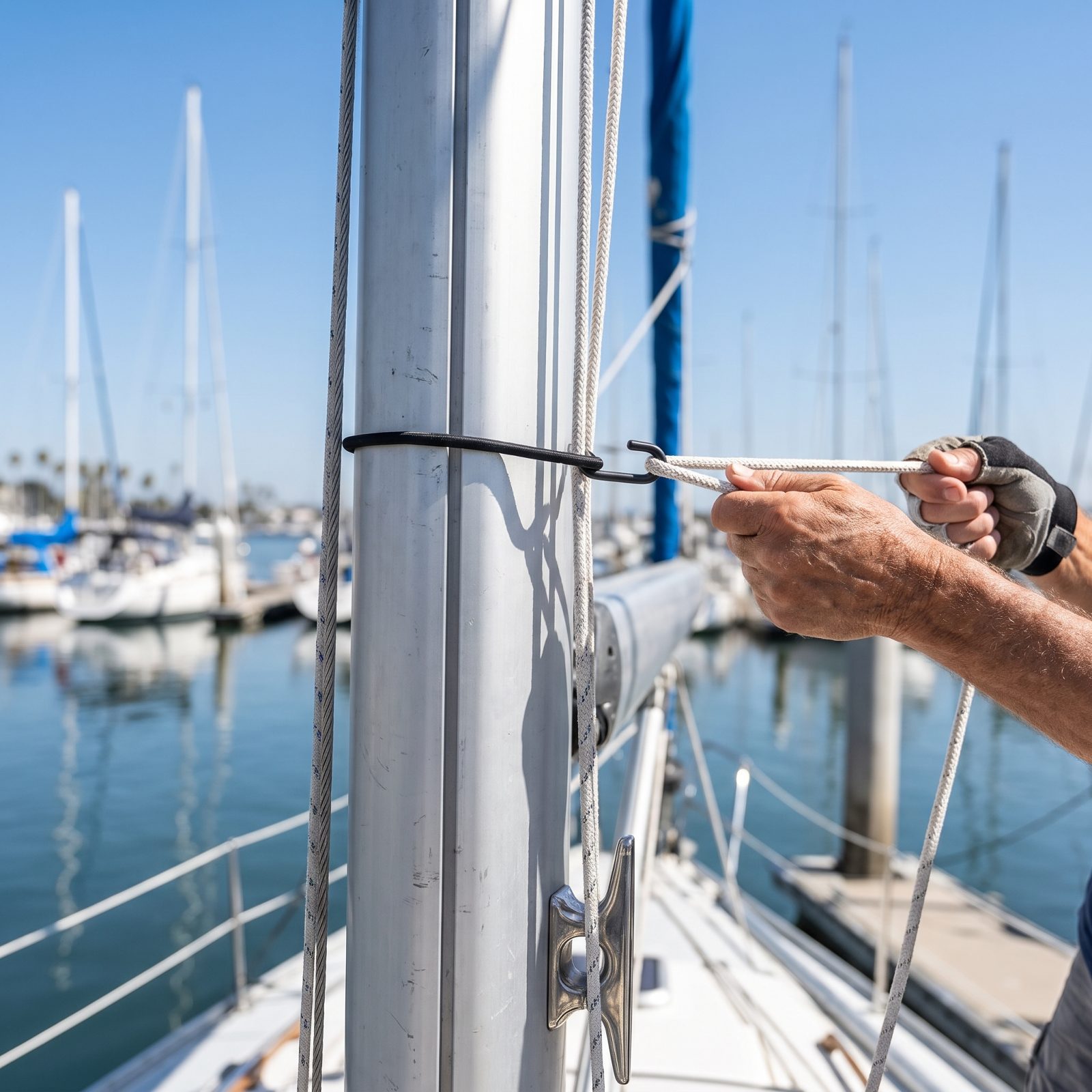
That tick-tick-tick against the mast at 2 a.m. is the sound every dock neighbor secretly hates, and your boat is probably the one making it. Halyards slap when the wind swings them against the aluminum.
The fix is dead simple. Pull the halyard out and away from the mast, then tie it off to a shroud, a lifeline, or a stay so there’s constant tension holding it off the spar. A short bungee does the same job in seconds.
Do it every time you leave the boat, even for an afternoon. Forget once at a quiet marina and you may come back to a very polite, very pointed note taped to your companionway.
24. What Is the Correct Way to Connect Shore Power?
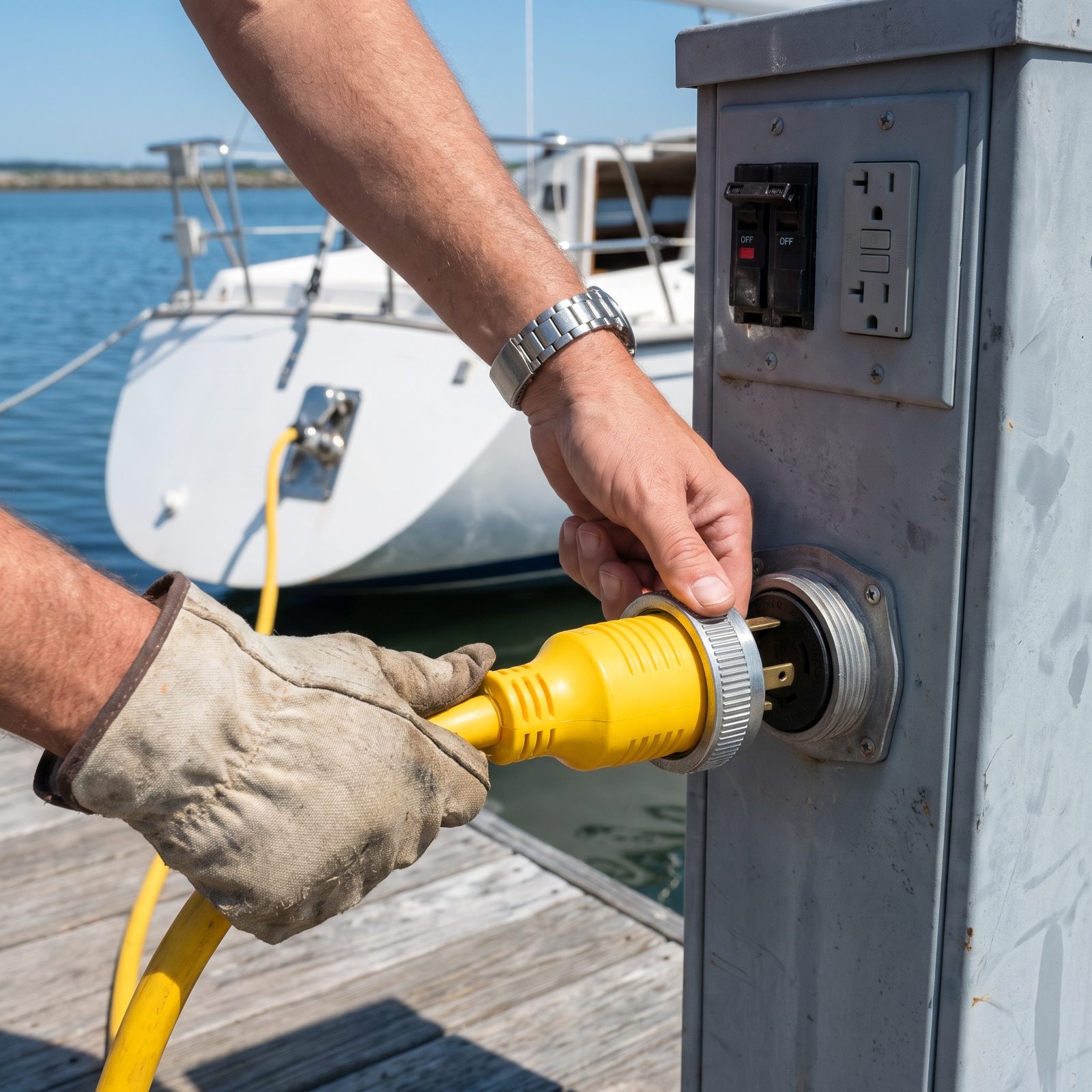
Order matters, and getting it backward is how people make sparks.
Connect the cord to the boat first, then to the dock pedestal, and only then flip the pedestal breaker on. To unplug, reverse it: pedestal breaker off first, then pull the dock end, then the boat. You never want to make or break a live connection under load.
Twist the locking collar until it seats. A loose connection in salt air corrodes, heats up, and in bad cases melts the plug. Cord end looking brown or feeling warm? Stop using it and replace it. That’s not a repair job.
23. What Does the Battery Selector Switch Actually Do?
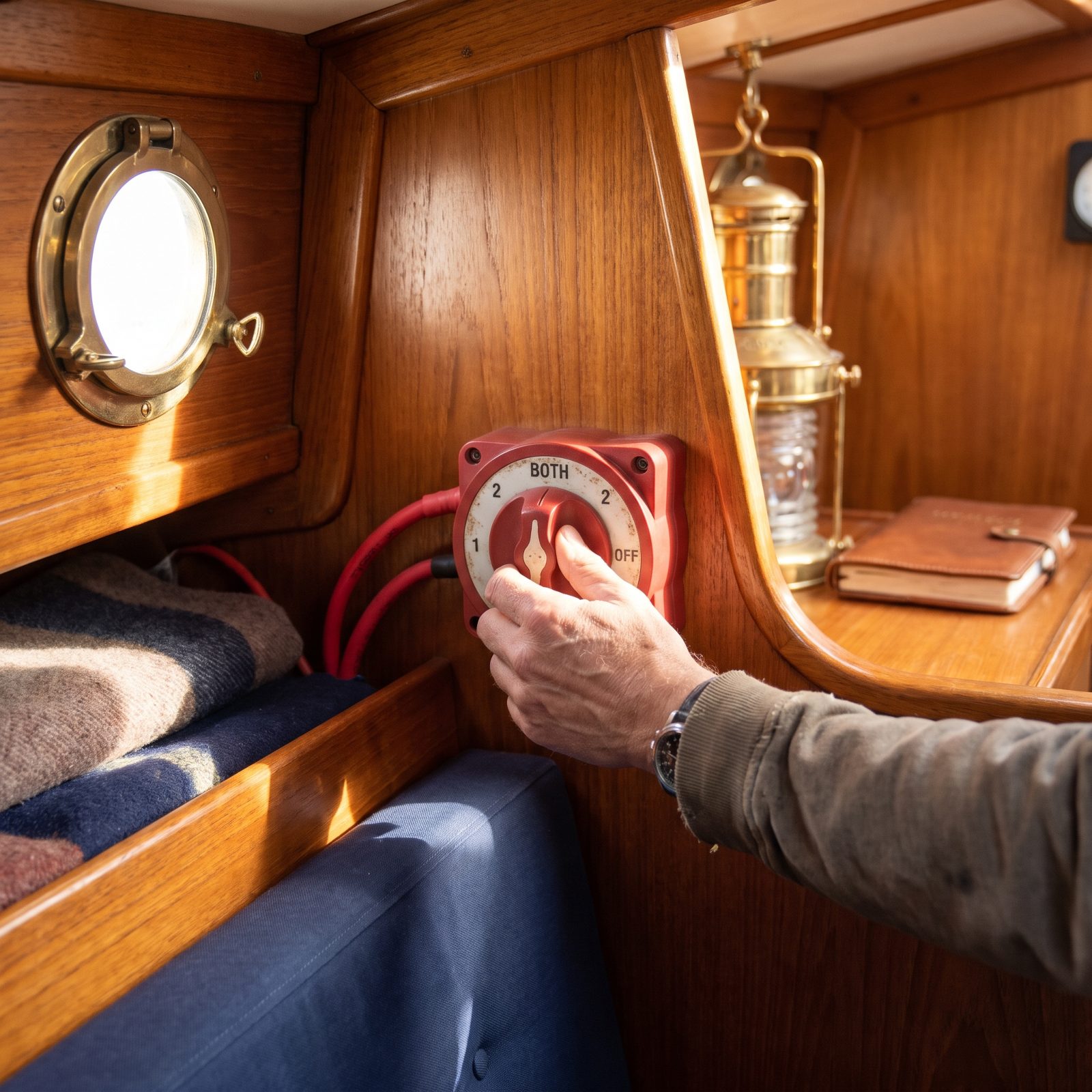
That red dial marked 1, BOTH, 2, and OFF trips up almost every new owner, and the mystery is smaller than it looks. It just picks which battery bank feeds the boat.
Usually one bank is your house — lights, fridge, pumps — and one is your start battery for the engine. Running on 1 or 2 keeps them separate so you never flatten the starter with an all-night anchor light. BOTH ties them together, OFF cuts everything.
The big rule: don’t spin it to OFF while the engine is running. On a lot of older setups that fries your alternator diodes in an instant. Not sure which position does what on your boat? Trace the cables now, in good light, not later in the dark when it matters.
22. How Do I Know the Holding Tank Needs a Pump-Out, and What Happens During One?
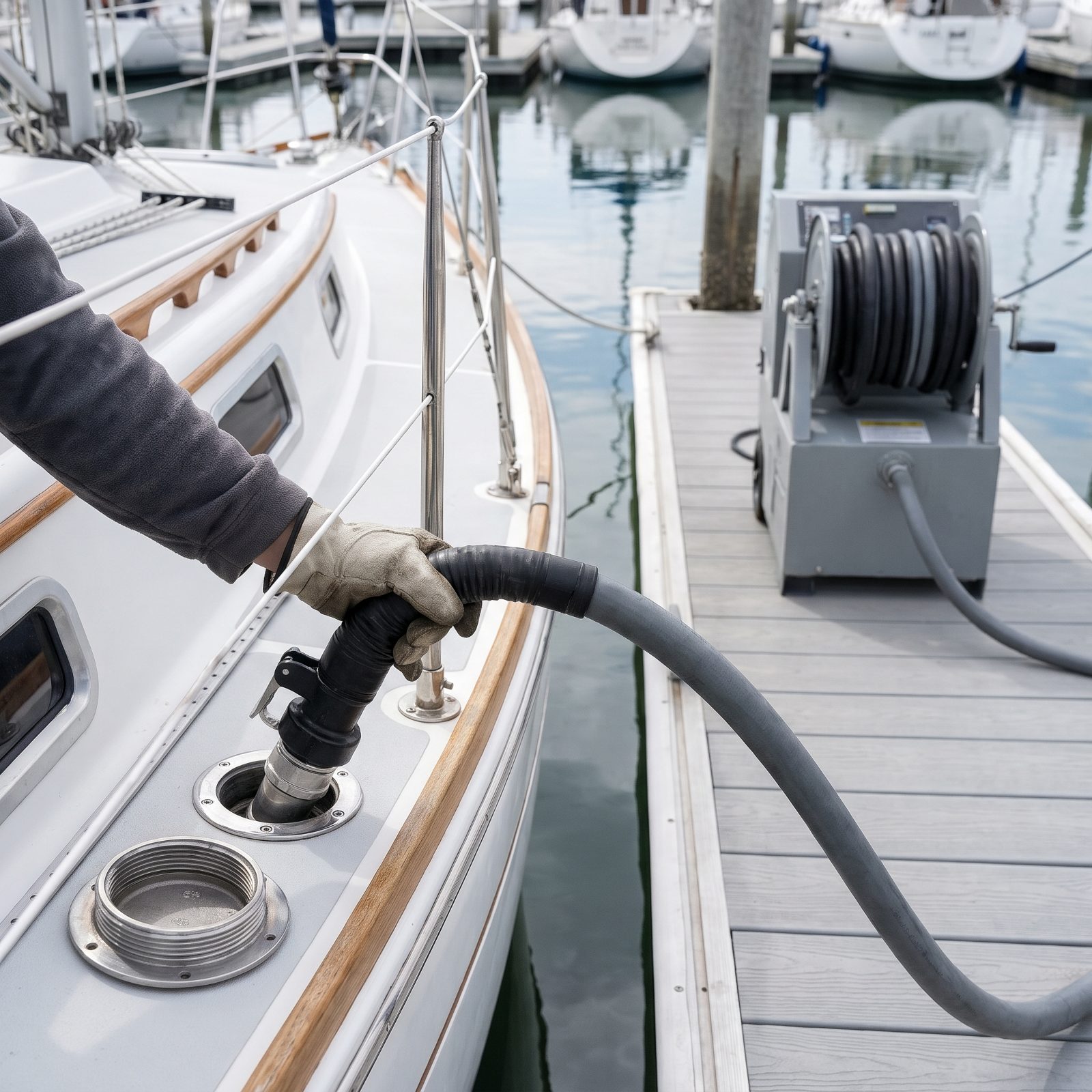
Most tanks have a gauge, but gauges lie, so people learn the feel instead: a sluggish flush, a faint smell, or the plain calendar math of how many days aboard. A couple on a weekend can fill a small tank fast.
The pump-out takes about five minutes and it’s cleaner than it sounds. You open the deck fitting, seat the suction hose from the dockside machine, flip it on, and it vacuums the tank empty. Rinse by running a little fresh water through the head and pumping that out too.
Many marinas offer it free or for a few dollars. Never discharge a tank in a no-discharge zone, which covers most lakes and inland harbors. The fines are real and the neighbors notice.
21. Why Is There Water in the Bilge?
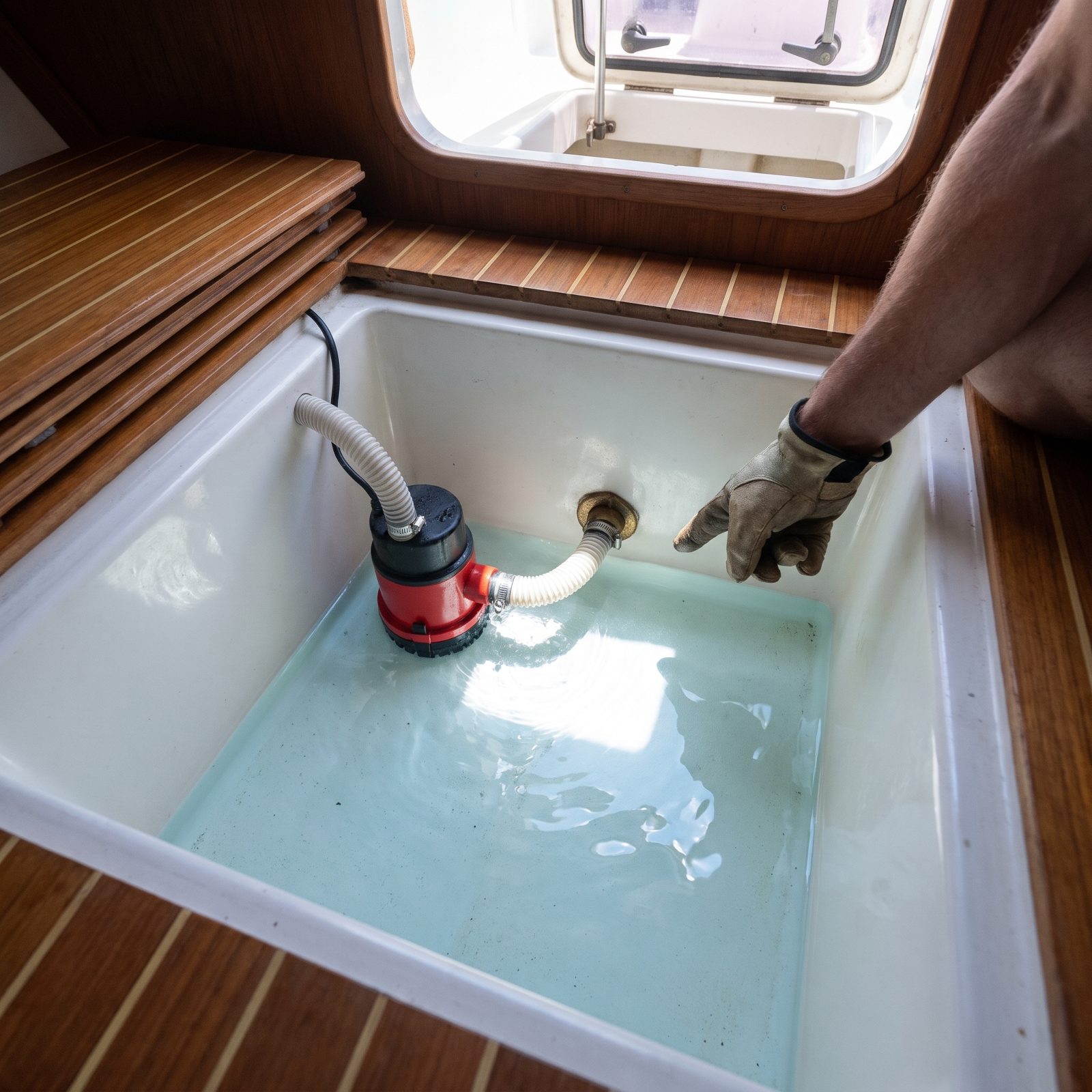
A little water in the bilge is normal on almost every boat. Rain sneaks past the mast and hatches, the stuffing box around the prop shaft is built to drip slightly, and condensation collects down low where it’s cool.
What you’re watching for is change. Taste or smell it if you have to — clear and salty points to a seawater leak, oily means engine, soapy or fresh could be a water tank or the shower sump. A rising level that keeps coming back after you’ve pumped it dry is the one that should get your full attention.
Know your normal. Check the bilge every time you board and the day it sits higher than usual, you’ll catch it early instead of at anchor in the dark.
20. Why Is Cooling Water Coming Out With the Engine Exhaust?
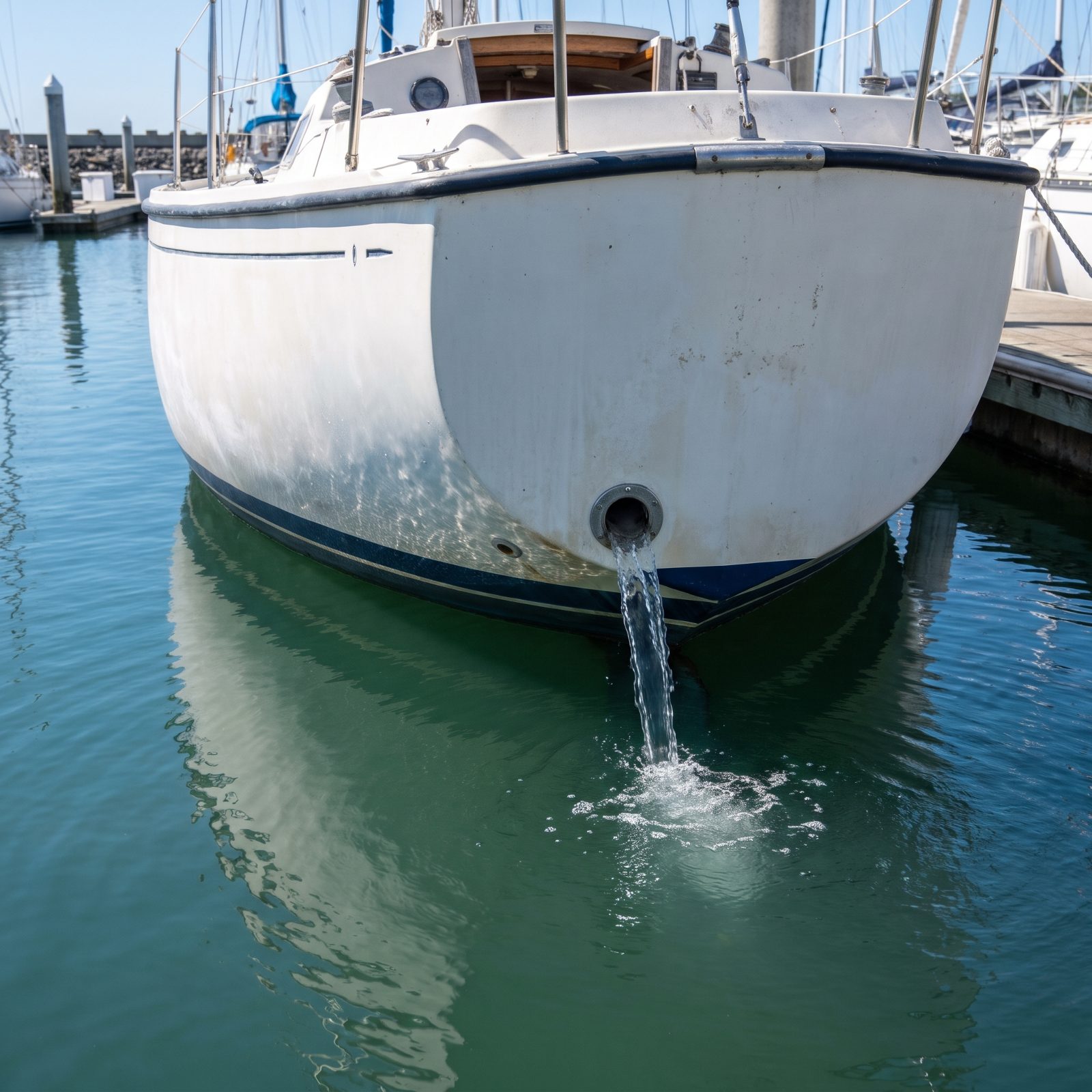
Good news: that’s exactly what you want to see. Most sailboat diesels are raw-water cooled, which means they pull lake or sea water through to carry heat away, then spit it out mixed with the exhaust.
Spotting that steady stream at the exhaust every time you start the engine is the single most important habit you’ll build. Water coming out means water is flowing in and the engine is cooling. No water means stop — shut it down before you cook the impeller and overheat.
When it stops, the usual culprit is the raw-water impeller, a small rubber part that wears out, or a clogged intake strainer. Learn to glance at that exhaust the way you glance at a car’s temperature gauge. It becomes automatic, and one day it’ll save you a very expensive repair.
19. What Are Sacrificial Anodes, and Why Do They Disappear?
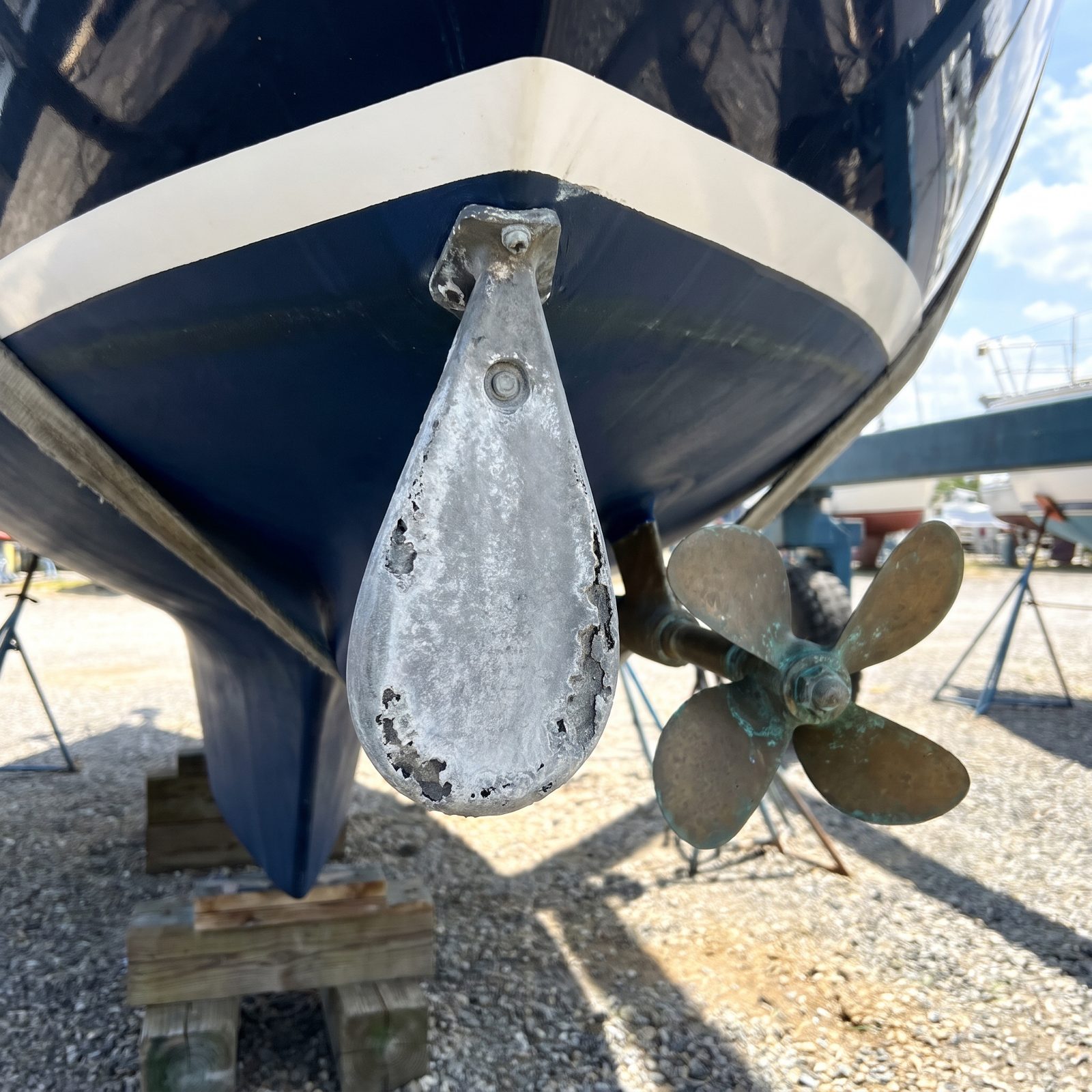
That grey lump bolted to your hull beside the keel is a bribe. Put two different metals together underwater and you get a tiny electrical current, and that current eats metal. The anode, usually zinc in salt water or aluminum in brackish, is softer and more eager to corrode than your expensive bronze propeller and shaft, so it gets eaten first.
When it’s about half gone, replace it. Let it vanish completely and the galvanic current goes hunting for its next meal, which happens to be your running gear. Replacement anodes cost a few dollars. A chewed-up prop does not.
18. What Happens During a Haulout?
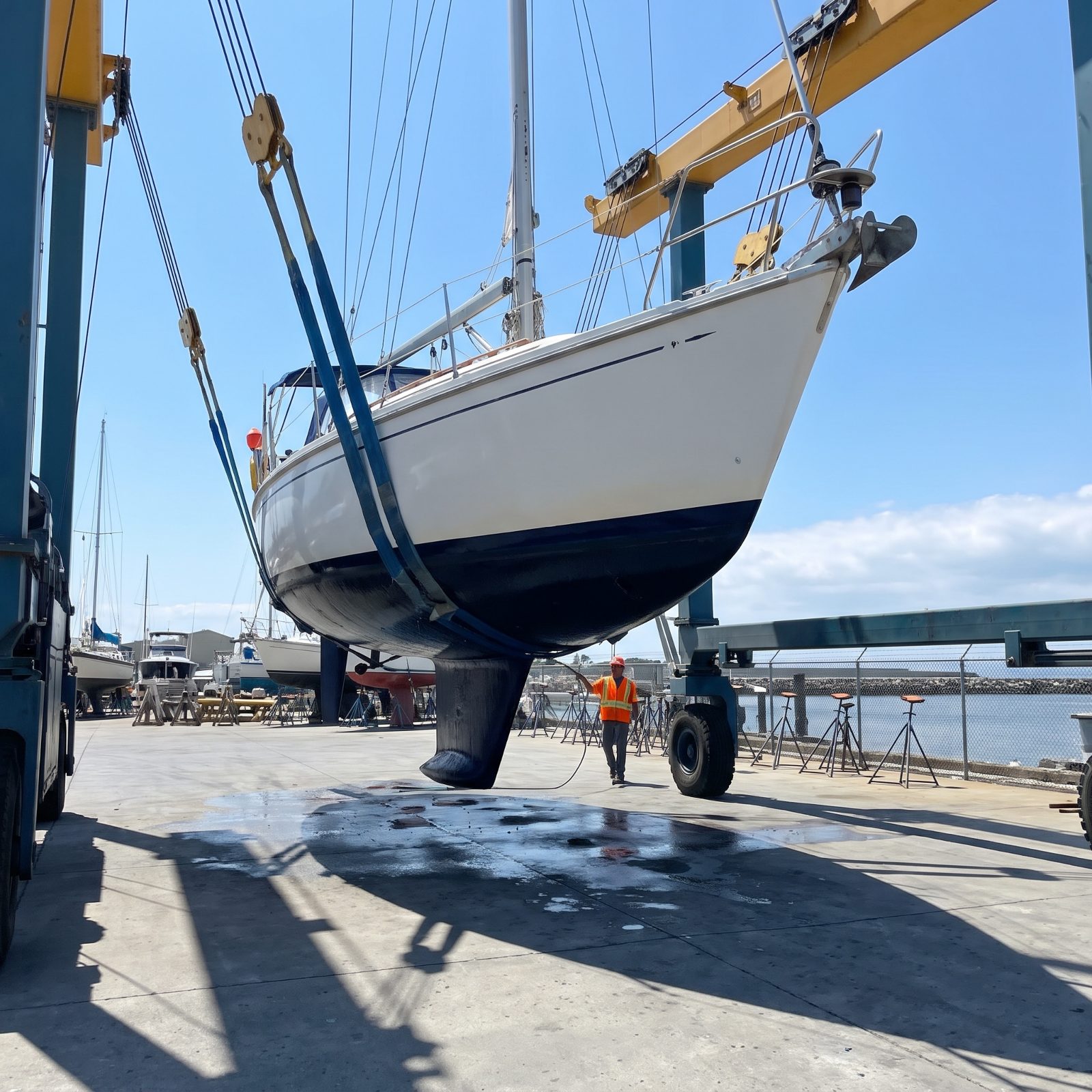
The travel lift is the scariest machine you’ll love. Two fabric slings cradle the hull, the boat comes out of the water, and suddenly you can see everything below the waterline that you’ve been ignoring all season.
A haulout usually means a pressure wash of the bottom, an inspection of the keel, rudder, and through-hulls, fresh antifouling paint, and new anodes. Yards often bill the lift, the storage, and the labor separately, and costs vary a lot by region and boat length. Ask for a written estimate first.
Walk the yard while she’s up. Tap the hull, check the rudder for play, look at the seacocks. This is the one day a year you get an honest look at the half of the boat that stays hidden.
17. What Is the Difference Between a Halyard and a Sheet?
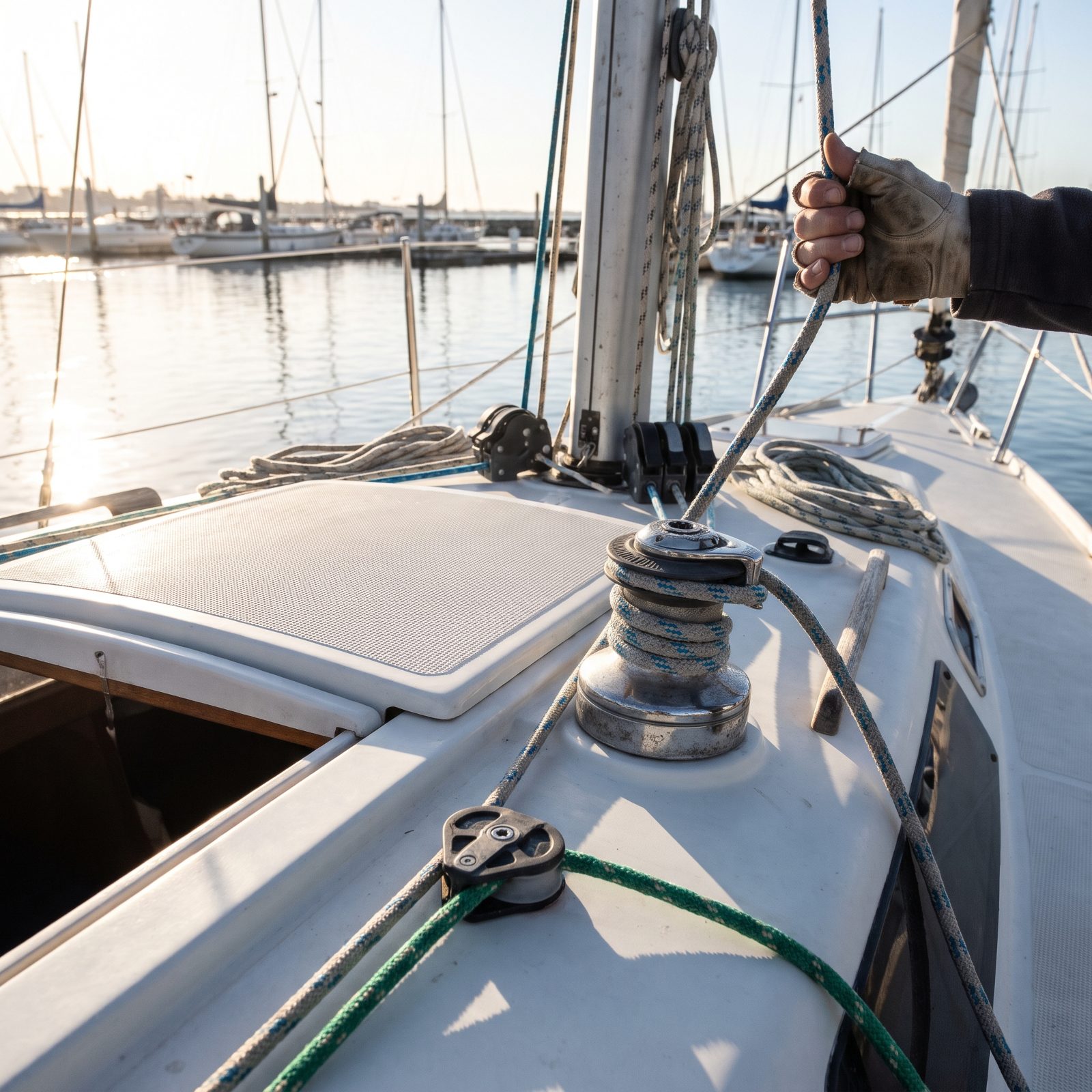
Simplest rule on the boat: halyards go up, sheets go sideways. A halyard hauls a sail up the mast. A sheet controls the angle of that sail once it’s up there. Mix them up out loud and someone will correct you, usually loudly.
The names come from old working ships, and most lines on a sailboat are named for the sail or the job rather than the material. Once that clicks, a confusing spaghetti of colored rope becomes a map. Jib halyard. Mainsheet. Each one does exactly what its name says.
16. Why Can’t a Sailboat Sail Straight Into the Wind?

There’s a wedge of roughly 45 degrees on either side of the wind where sails just flap and go nowhere. Sailors call it the no-go zone, and every boat has one.
A sail doesn’t get shoved around by the wind like a grocery bag. Angled right, it behaves like a wing, generating lift that pulls the boat forward. Point too close to the wind and the airflow collapses, the sail luffs, and you lose your drive. So to get somewhere upwind, you zigzag across the breeze in a series of tacks. It feels inefficient. It’s also the whole reason sailing is a skill and not just a drift.
15. What Is the Difference Between Tacking and Jibing, and Why Is an Accidental Jibe Dangerous?

Both turns swap which side the wind hits. The difference is where the bow points as you do it.
Tacking turns the bow through the wind, up into that no-go zone and out the other side. The sails flap, then fill gently on the new side. Calm, controlled, boring in the best way.
Jibing turns the stern through the wind instead. And the boom, loaded with full wind, slams from one side of the boat to the other. On purpose, you control it with the mainsheet. Accidentally, when the wind sneaks behind the sail without warning, that boom travels at head height with real force. People get hit. Masts get damaged. Keep your head down and your crew warned whenever the wind is behind you.
14. When Is It Time to Reef the Sails?
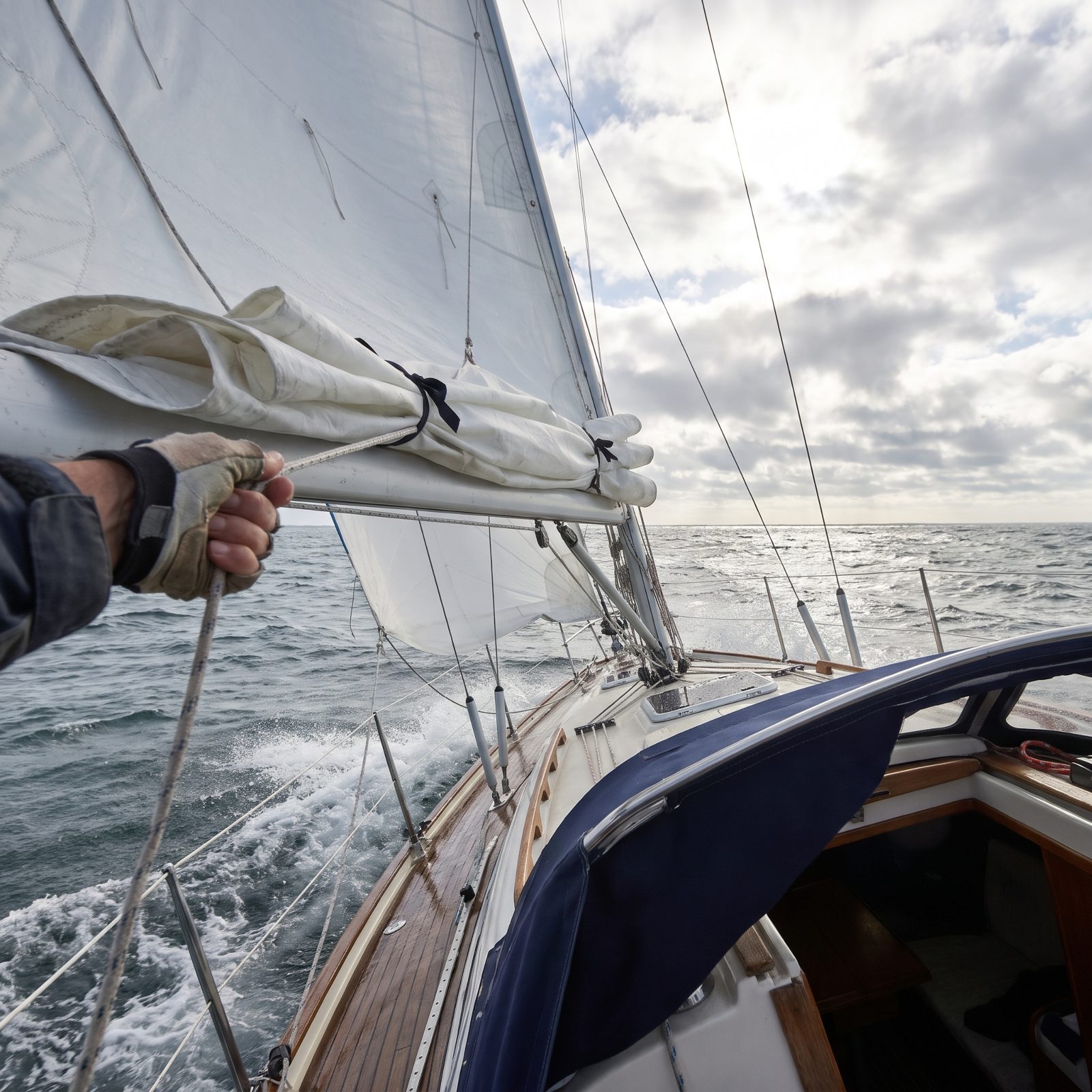
The old saying is the truest thing in sailing: the first time you think about reefing is the time to reef. If the question has entered your head, the answer is yes.
Reefing shrinks the sail area so the boat stays balanced and upright in stronger wind instead of fighting you and burying the rail. Watch for the tells: the boat heels hard and won’t come back, the helm feels heavy and wants to round up, or the forecast is building. Reef early, in calmer conditions, while it’s easy. Wrestling a reef in during a gust with the boat on its ear is a miserable way to learn the lesson.
13. What Are the Little Yarn Telltales Trying to Tell Me?
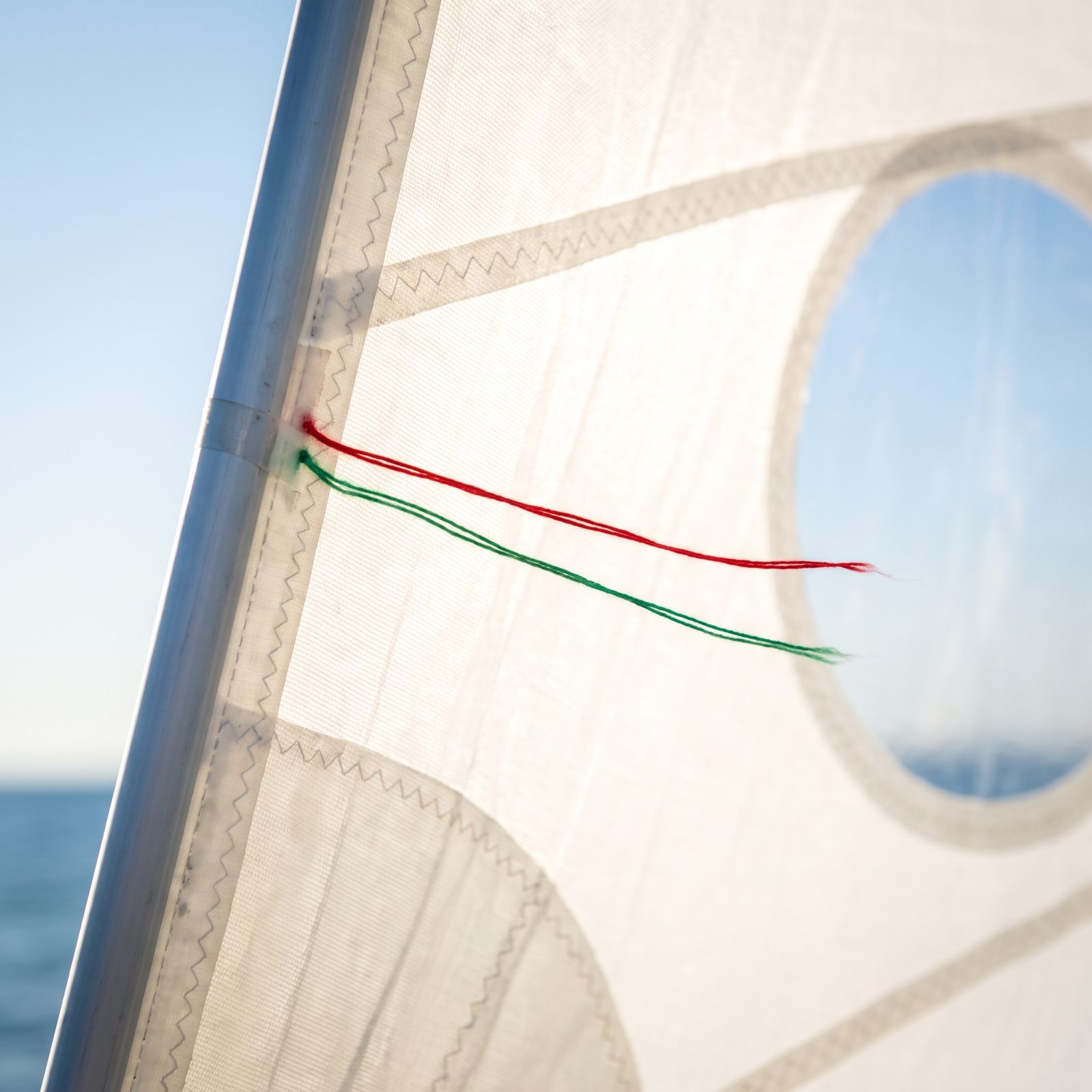
Those scraps of yarn stitched near the front edge of the sail are your cheapest instrument, and arguably your best. They show you the airflow you can’t see.
When both telltales stream straight back, the sail is trimmed right and the air is flowing clean. When the windward one lifts and dances, you’re pointing too high or the sail’s eased out too far. When the leeward one flutters, you’re too low or the sail’s trimmed too tight. The rule most people memorize: adjust toward the side that’s misbehaving.
Spend one afternoon just watching them instead of the horizon. You’ll learn more about sail trim in those two hours than in a whole season of guessing.
12. Why Is the Roller-Furling Line So Hard to Pull?
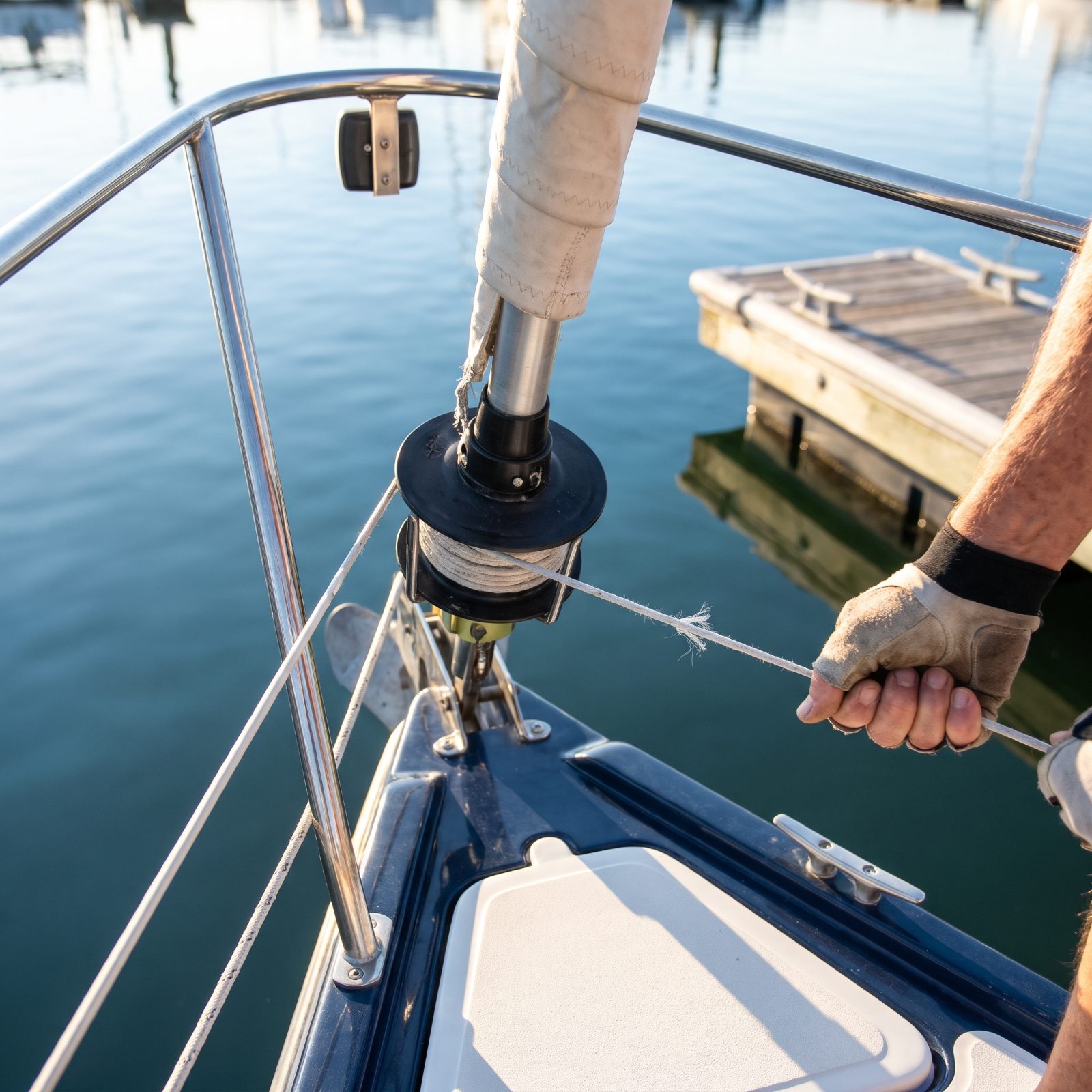
If the furling line fights you, nine times out of ten you’re trying to roll up a sail that’s still full of wind. Ease the sheet off first. Take the load out of the jib and the furler turns like it’s greased.
The other usual suspects: a line that jumped off the drum and wrapped on itself, a halyard tangled at the top of the foil, or dirt and salt in the bearings that a freshwater rinse will fix. Brute force rarely solves any of them, and yanking a jammed furler is how you snap a line or bend a foil.
11. Should I Leave the Winch Handle in the Winch?
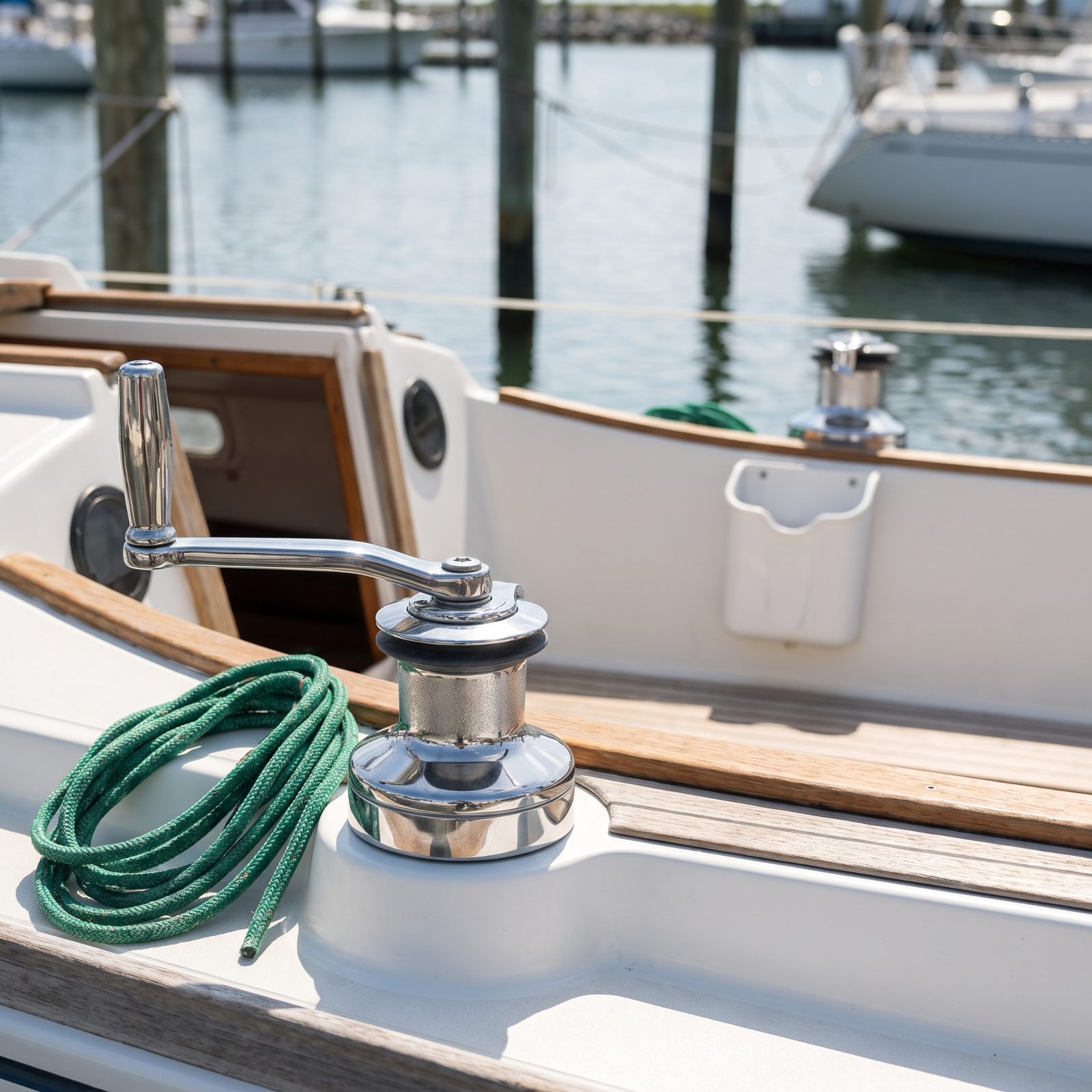
No. Pop it out the second you’re done cranking.
A handle left sitting in the winch is the thing that catches a flogging sheet, cracks a shin, or goes overboard with a satisfying little plop when someone grabs the lifeline for balance. I once watched a perfectly good handle sink in six feet of water because nobody wanted to carry it two steps to its holder. Nobody volunteered for the dive, either.
Every boat has a handle pocket somewhere in the cockpit. Use it. The habit takes about a week to stick and saves you a cold swim later.
10. What Should I Do When a Line Overrides on a Winch?
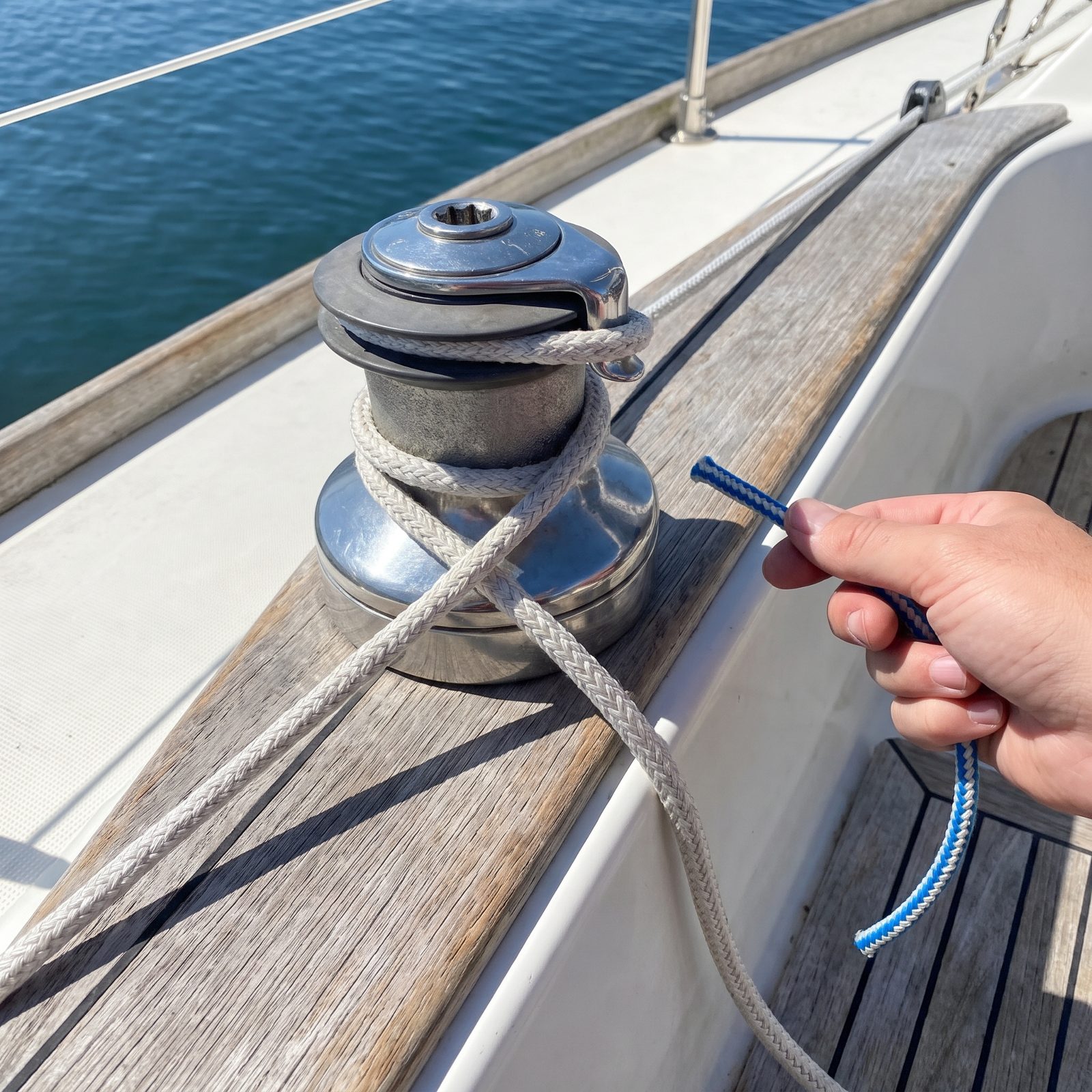
An override is a riding turn: one wrap jumps over another and jams the whole thing solid under load.
Don’t yank at it, and don’t crank harder hoping it clears — you’ll only wind it tighter. Take the load off the winch first. Loop a second line through the loaded sheet and haul on it by hand until the override goes slack. Now unwrap the mess by hand.
Nine times out of ten an override happens because the line led up to the drum at the wrong angle. Fix that and you’ll rarely see another one.
9. Why Should I Never Wrap a Line Around My Hand?
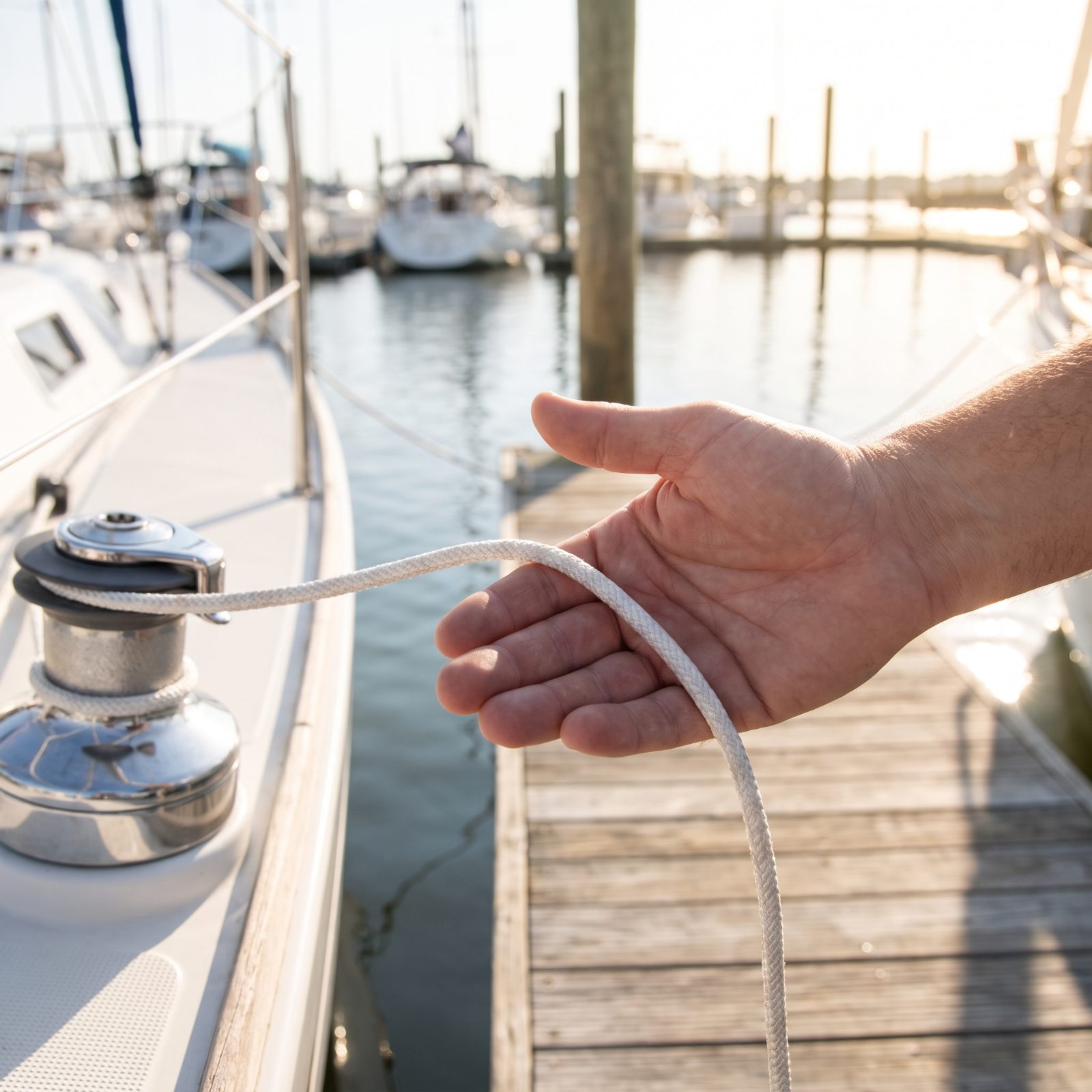
Because a sailboat sheet under sail can carry more load than you can out-muscle, and a wrapped line doesn’t let go when you need it to.
Hold the tail across an open palm. If a gust loads the sheet and it starts running, you just drop it. A line looped around your hand or wrist can’t be dropped, and it will take your fingers with it. This is the one that sends new sailors to the emergency room, and it’s completely avoidable.
Loose grip, flat hand, nothing wrapped. That’s the whole rule.
8. Is It Normal for a Sailboat to Heel This Far, or Could It Capsize?

That tilt feels alarming the first dozen times. It’s almost always fine.
A keelboat carries thousands of pounds of lead or iron bolted beneath the hull. That ballast wants to pull the boat upright, and the harder the wind shoves the mast over, the harder the keel shoves back. Round-bottomed cruisers find a balance point and just sit there. A ballasted keelboat is not a dinghy and will not flip from heel alone in normal sailing.
If the rail buries and the helm goes heavy, you’re over-powered, not in danger. Ease the mainsheet or head up into the wind and she stands right back up.
7. What Should I Do If the Keel Touches Bottom?
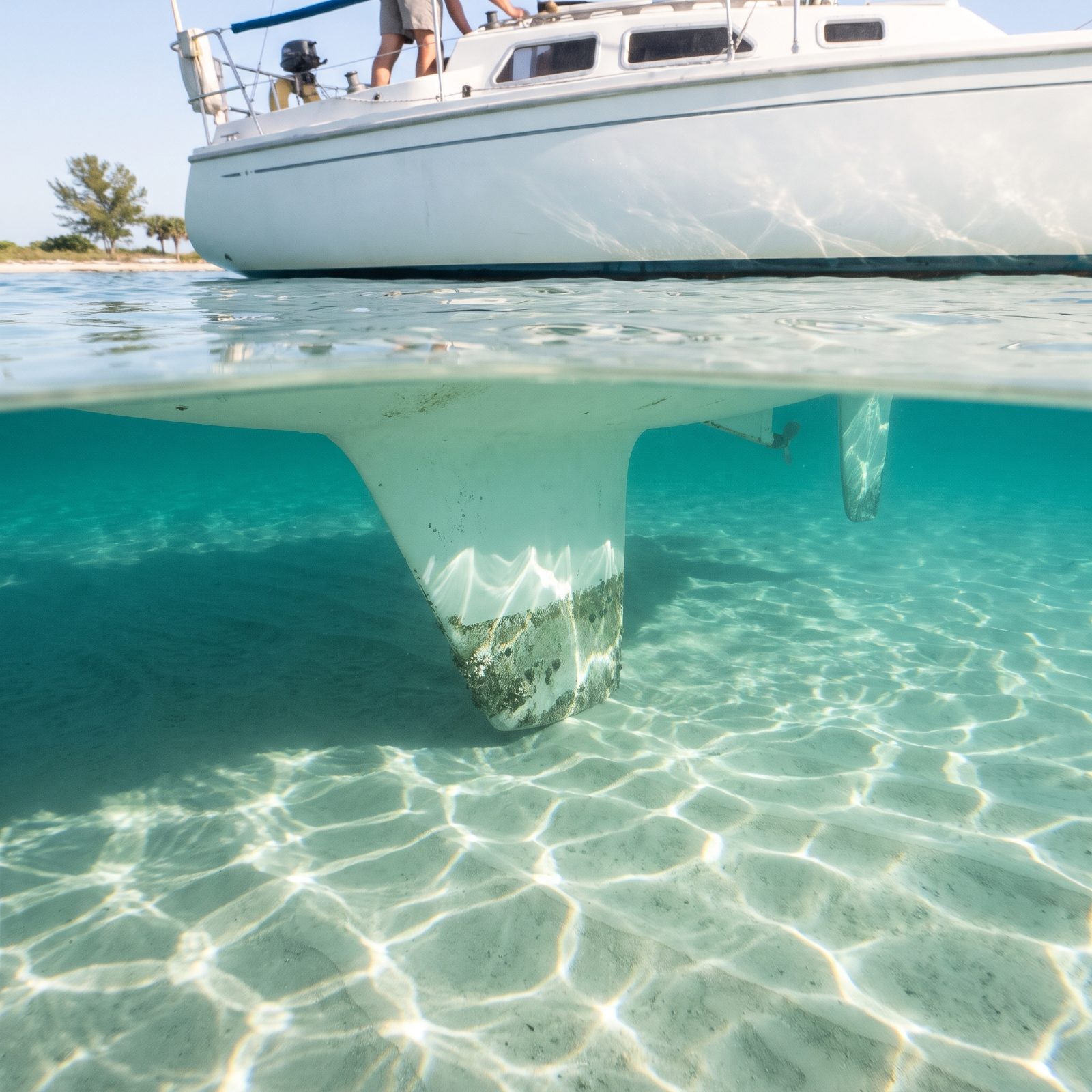
First: don’t panic, and don’t gun the engine in reverse. On soft sand or mud a gentle grounding is usually a nuisance, not a crisis.
Note which way you came from, because that water was deep enough. If you’re sailing, ease the sails to drop the heeling force. Often you can heel the boat on purpose by shifting crew weight to the low side, which lifts the keel’s draft a few inches, then motor gently back toward deeper water.
Check the bilge afterward. A soft touch rarely hurts a solid keel, but you want to know nothing’s weeping before you relax. Rock bottoms are a different conversation entirely — if the boat’s hard aground on rock in a falling tide, swallow your pride and call for help early.
6. Does the Depth Sounder Measure From the Keel or the Transducer?
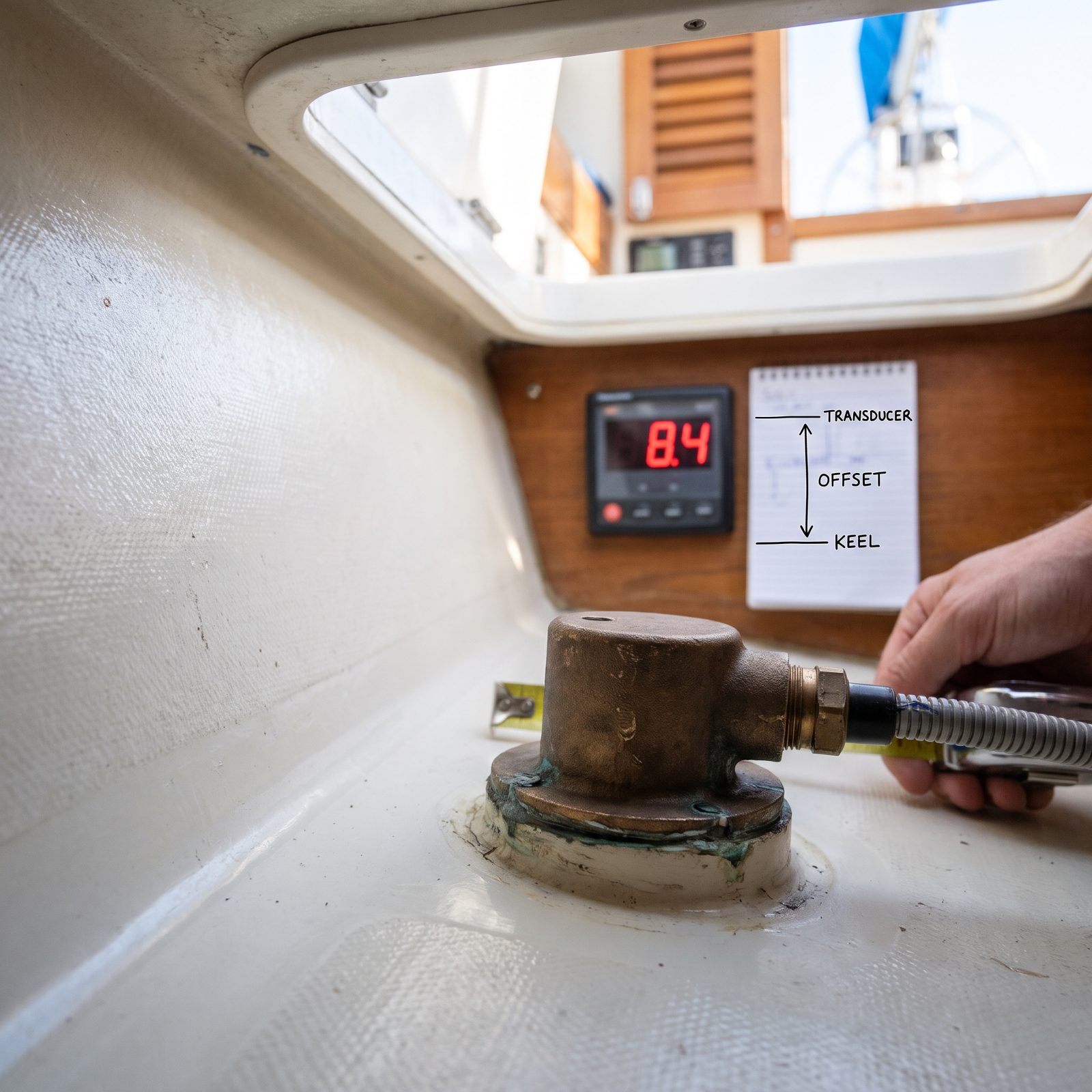
The transducer, until you tell it otherwise.
Out of the box, most depth sounders read from the transducer, wherever it happens to be mounted, not from the bottom of the keel. So the display might cheerfully say five feet while you’ve got only two feet of water under your keel. That’s how people run aground staring at a number that looks perfectly safe.
You can set an offset in the instrument menu so it reads depth below the keel, or depth below the waterline. Figure out which your boat is set to before you go poking into skinny water. Two-minute check. Saves a very expensive afternoon.
5. How Do Tides Affect the Water Depth at My Slip?
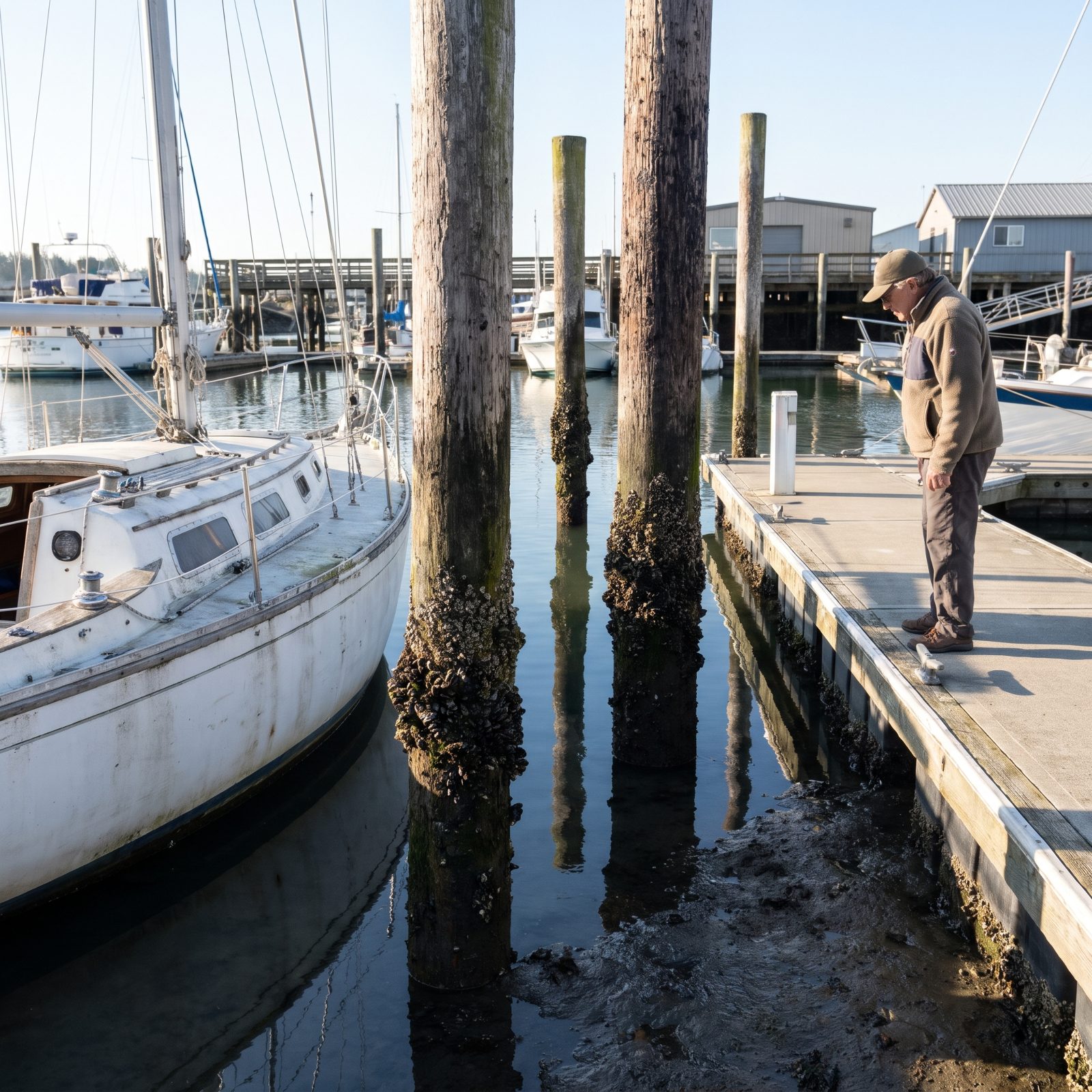
On a coast, the depth at your slip changes every few hours, and the swing runs anywhere from a foot to double digits depending on where you keep her.
Check a tide table for your harbor and watch the growth line on the pilings. That dark, barnacled band shows you how low the water drops. The number that matters is low tide depth minus your draft. If that gap gets thin at the bottom of a spring low, your keel can settle into the mud — fine on soft bottoms, not fine on hard ones.
On most lakes, tides aren’t the issue. Seasonal drawdown and dam releases are, and those move water levels by feet over weeks.
4. How Much Anchor Rode Should I Let Out?
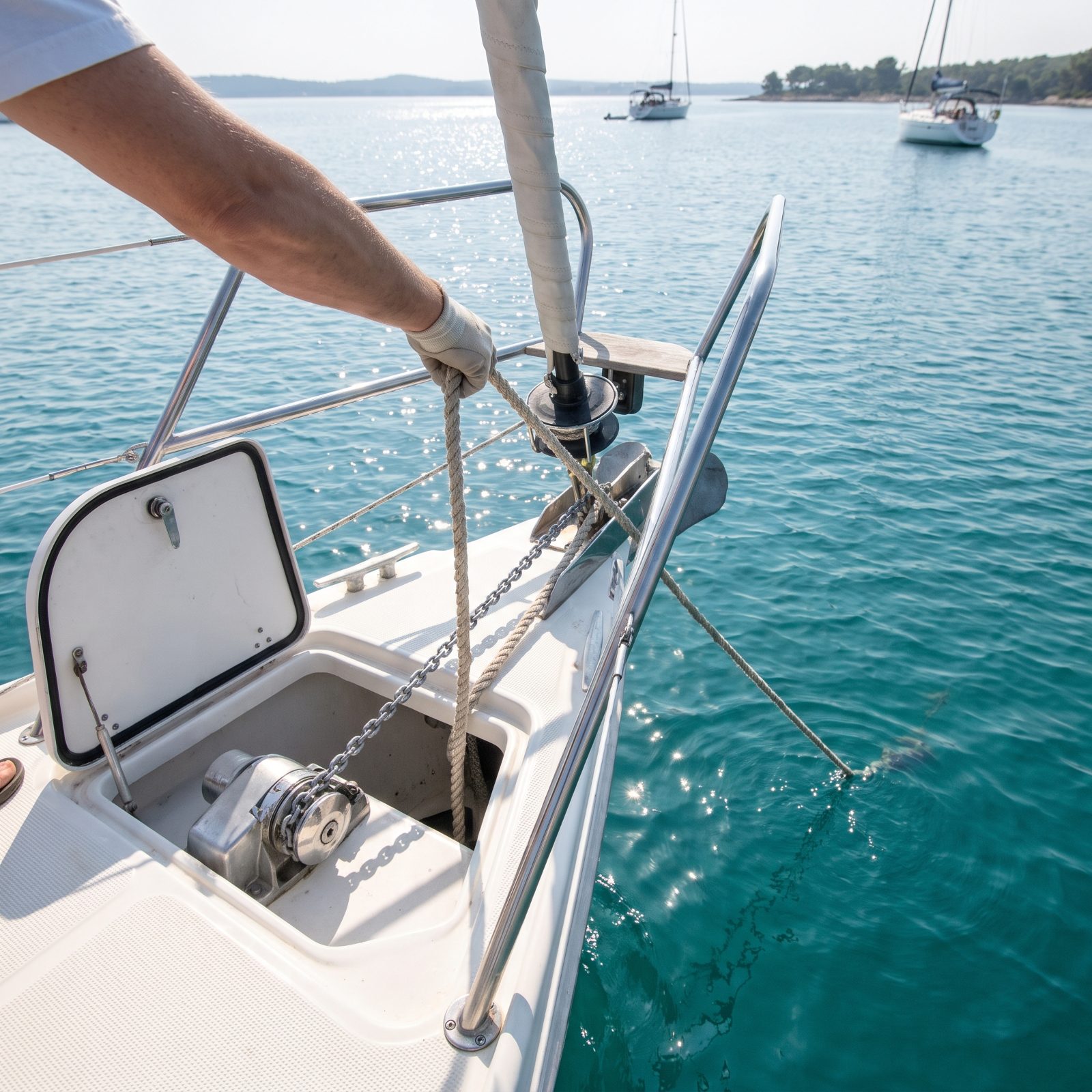
The old rule is scope: let out five to seven times the depth of the water, measured from where your rode leaves the bow to the bottom, not just the charted depth.
So in ten feet of water with four feet from waterline to where the rode leaves the bow, you’re figuring fourteen feet, and seven-to-one means roughly a hundred feet of rode. More scope lays the pull flatter along the bottom, and that flat angle is what actually lets the anchor dig in and hold. Short scope just drags.
Account for the tide rising while you sleep, give yourself swing room from other boats, and let the anchor set with a gentle backward pull before you trust it. Then watch a landmark for a few minutes to make sure you’re not creeping.
3. How Do I Pick Up a Mooring Ball Without Falling Overboard?
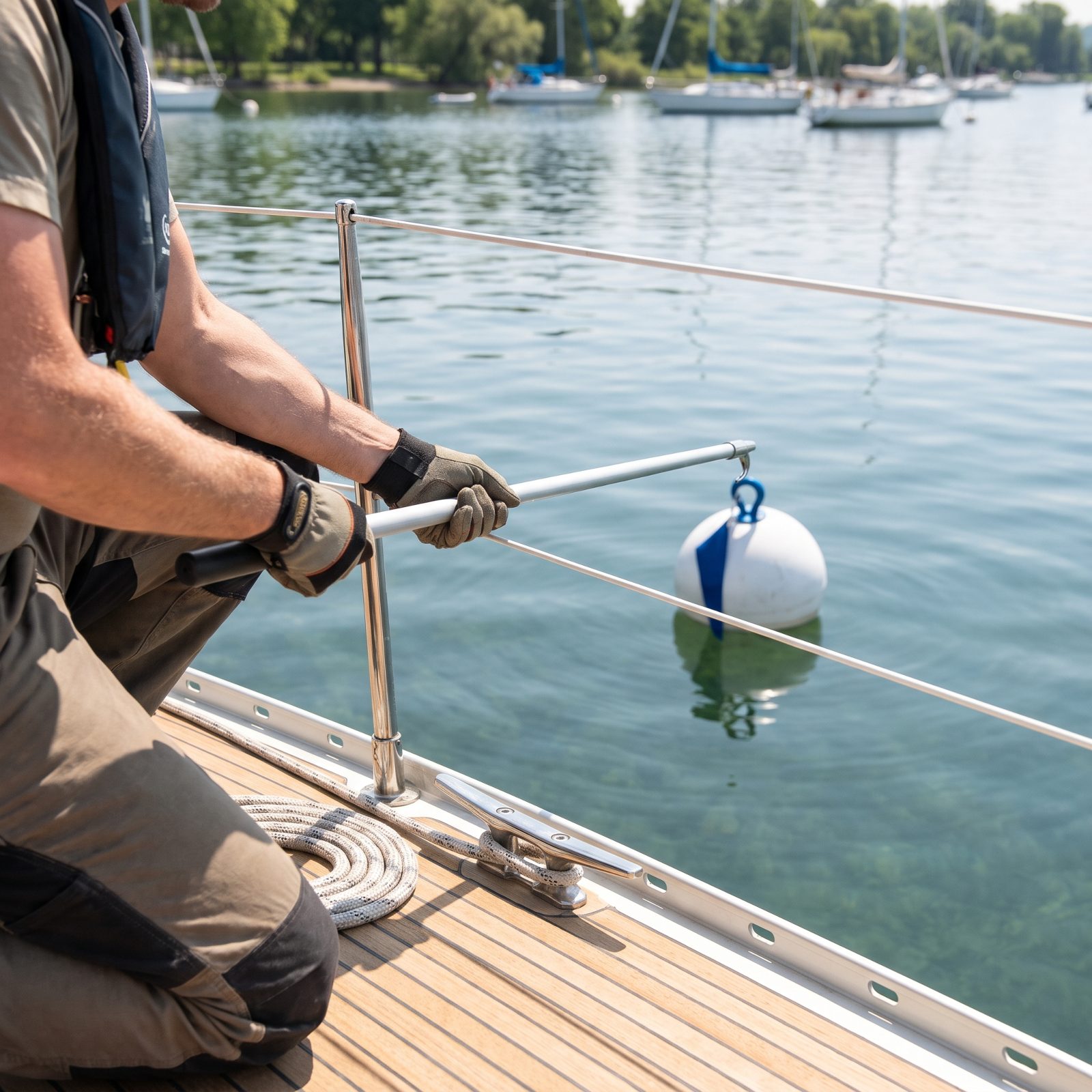
The trick nobody tells you: slow down before you think you need to. Most overboard scares happen because the boat still has way on while the person up front is lunging at a ball that’s already sliding past. Come in against the wind at a crawl and let the bow drift the last few feet.
Stay low. Kneel on the side deck inside the lifelines, brace your body against the stanchions, and reach out with the boat hook in both hands — you’re hooking the fitting on top of the ball and drawing the pennant within reach, not armwrestling the ocean. If you miss, you miss. Circle around and have another go, because a clean second pass beats a wet first one every time.
2. Can I Drink Water Straight From the Sailboat’s Tank?
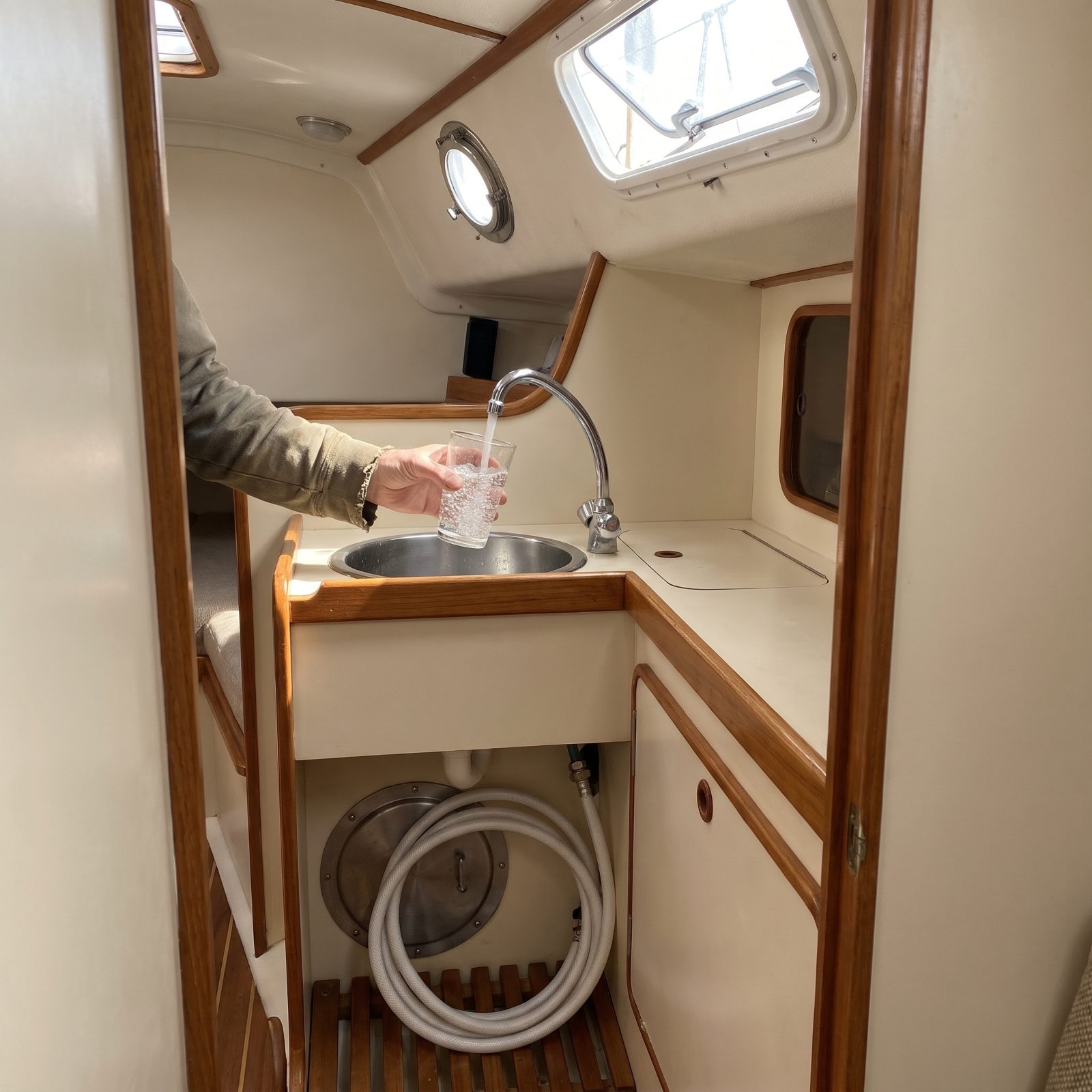
Honestly, it depends — and anyone who gives you a flat yes or no hasn’t peered inside enough tanks. Water that’s been sitting in a plastic or aluminum tank for weeks goes stale and a little plasticky, sometimes worse if the tank has never once been sanitized.
Fill it from a known-good dock supply through a food-grade hose, drink it down within a few days, and you’re fine. I still won’t touch it straight on a boat I just bought. No clue what the previous owner poured in there or when they last scrubbed it out. Run it through a basic inline filter, or keep jugs of drinking water aboard and let the tank handle dishes and washing up.
1. How Can I Tell Which Deck Cap Is for Water and Which Is for Fuel?
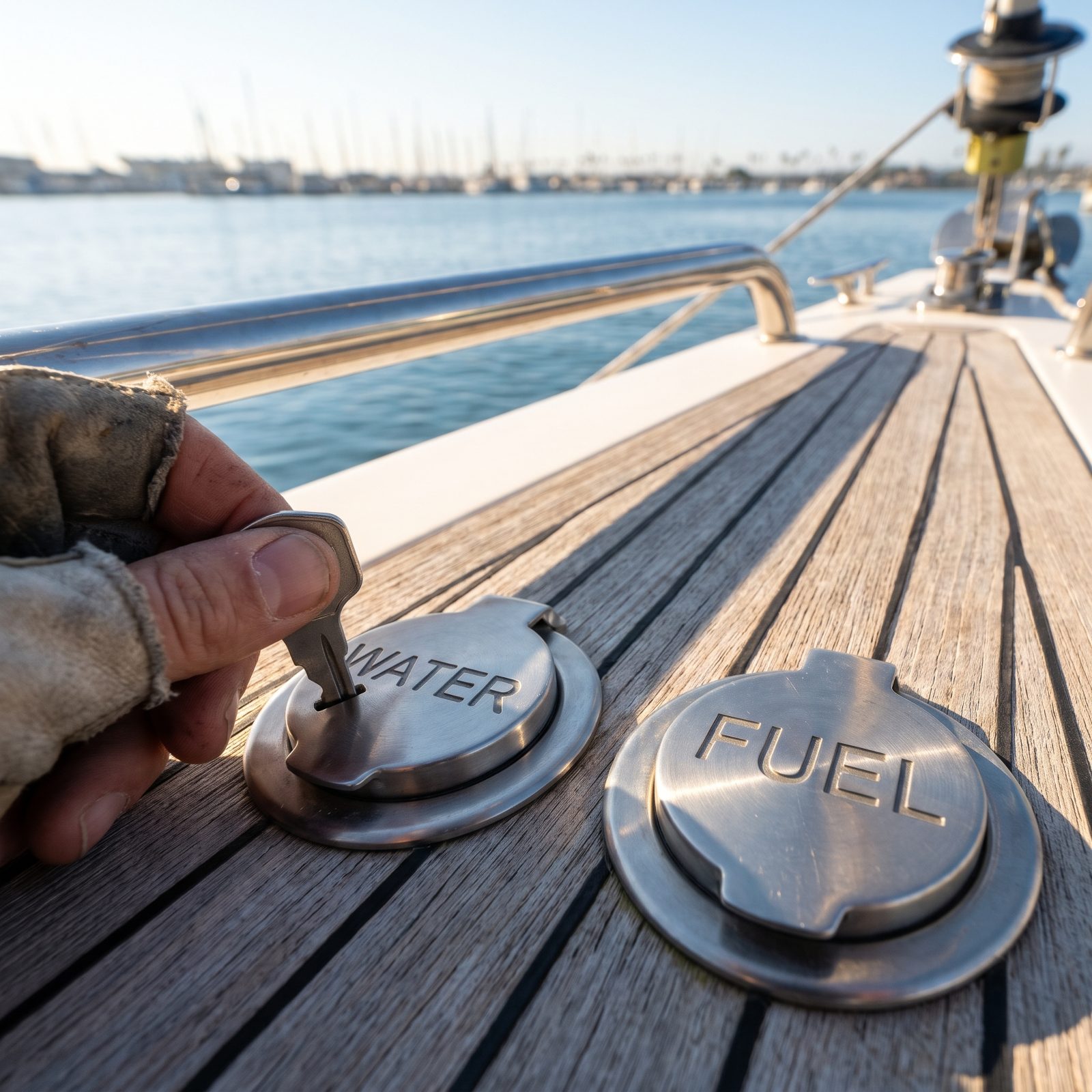
Read the cap. That’s the whole answer, most days. Deck fills are usually stamped WATER, FUEL or DIESEL, and sometimes WASTE. Get down on your knees to look, because the lettering wears smooth and clogs with gunk until you’re rubbing it with your thumb to make out a single letter.
Engraving gone? Trace the hose below deck. Pull the inspection panel, follow the fill line, and see where it lands — the tank, the diesel bladder, the holding tank. Then mark each cap with your own system. I use color-coded tape, since reading WASTE at the wrong moment is a mistake you only want to make once.