The pontoon came off the lot fine. Comfortable enough, fast enough. Then the second summer hit and the cracks showed: the seat that bakes in the afternoon sun, the cooler that lives in the walkway and trips everyone boarding, the cup of coffee that slides across the deck every time a wake rolls through.
None of it ruins a day on the water. All of it chips away at one. But a pontoon is the easiest boat on the lake to upgrade, and most of these pay you back the very next Saturday. Here are the ones that actually earn their keep.
Please note that some of the imagery in this article may have been enhanced with the assistance of AI.
38. Add a Full-Width Bimini Top for All-Day Shade
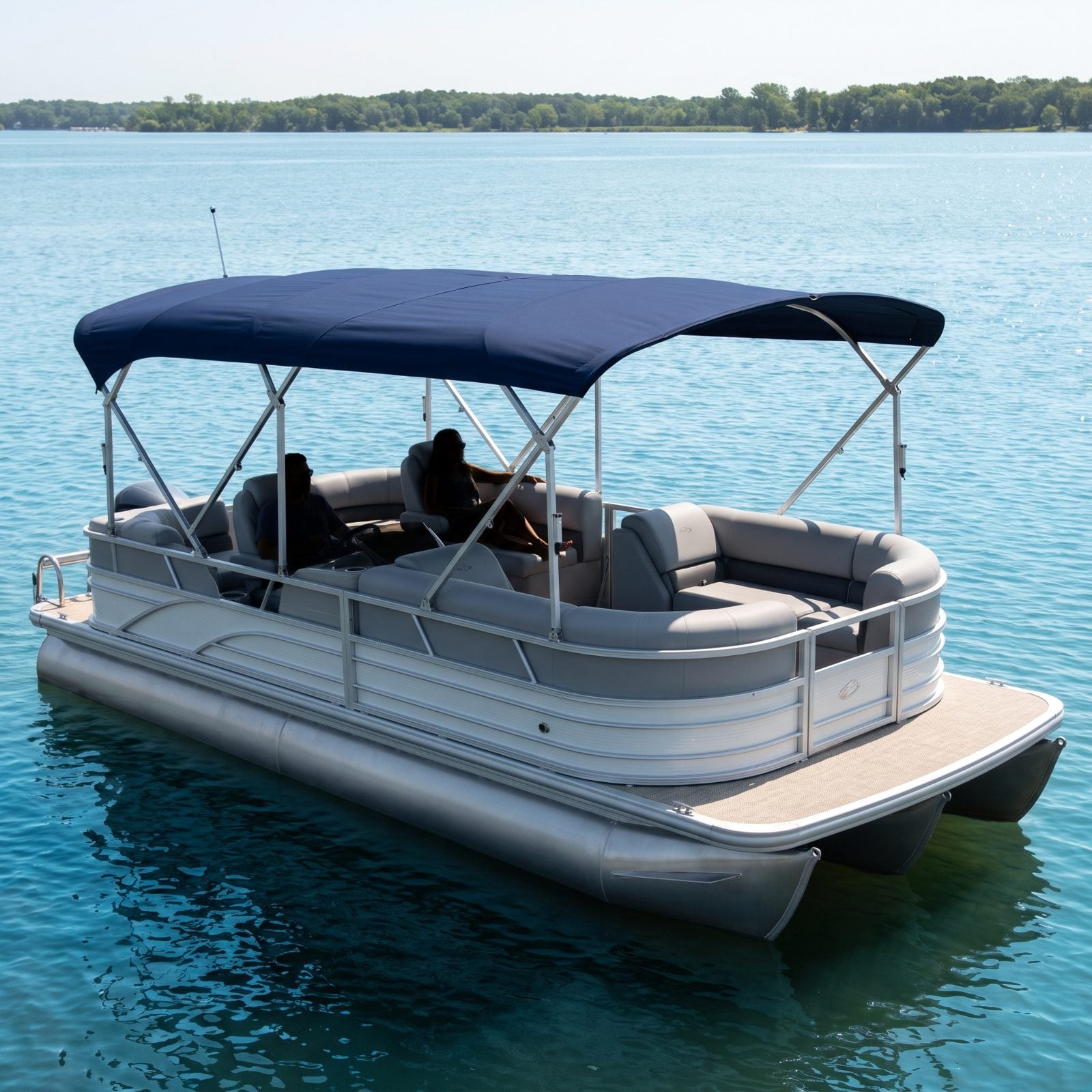
Shade is the upgrade that makes every other upgrade usable. A half-size bimini covers the helm and leaves everyone in the stern cooking. Go full-width and you buy back the whole afternoon, that stretch between noon and three when a bare deck turns into a griddle.
Expect to spend in the low-to-mid four figures for a quality Sunbrella canopy with a stainless frame, less for aluminum. Pay for the Sunbrella. The cheap polyester fades to chalk in a couple of seasons, and you’ll be buying it twice.
37. Swap the Carpet for Marine-Grade Woven Vinyl Flooring
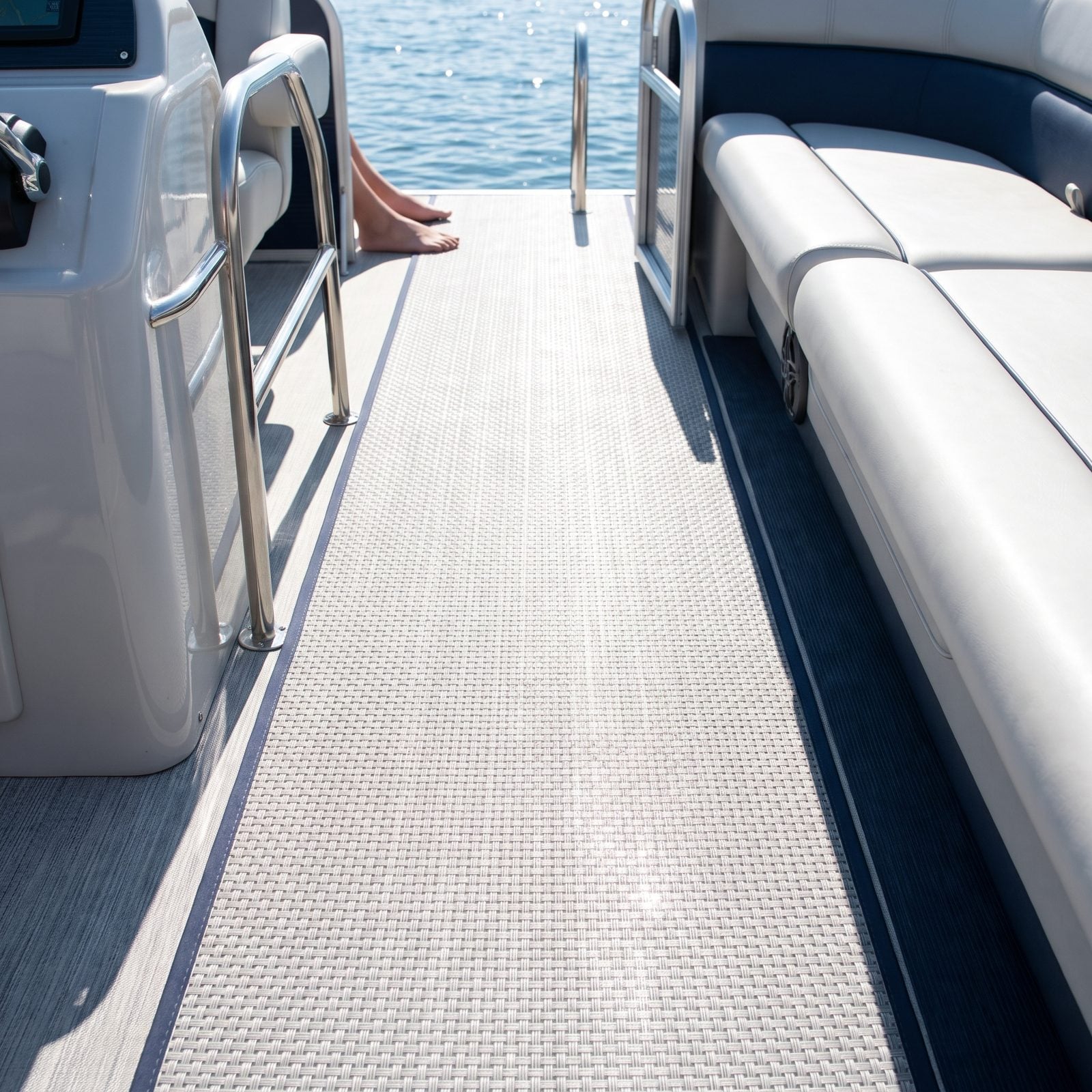
Pontoon carpet is a mistake the industry keeps selling. It soaks up lake water, hides fish slime, grows a smell by August that no amount of hosing fixes, and turns to mush where everyone steps off the dock.
Woven vinyl is the fix. You spray it down, it dries in minutes, and it looks sharp for a decade. It runs more upfront, figure a few thousand installed depending on deck size, but you’ll never shampoo a floor again. Pull up old carpet and you’ll find the real color of regret underneath. Go vinyl from the start.
36. Put a High-Back Helm Seat Where You Actually Sit
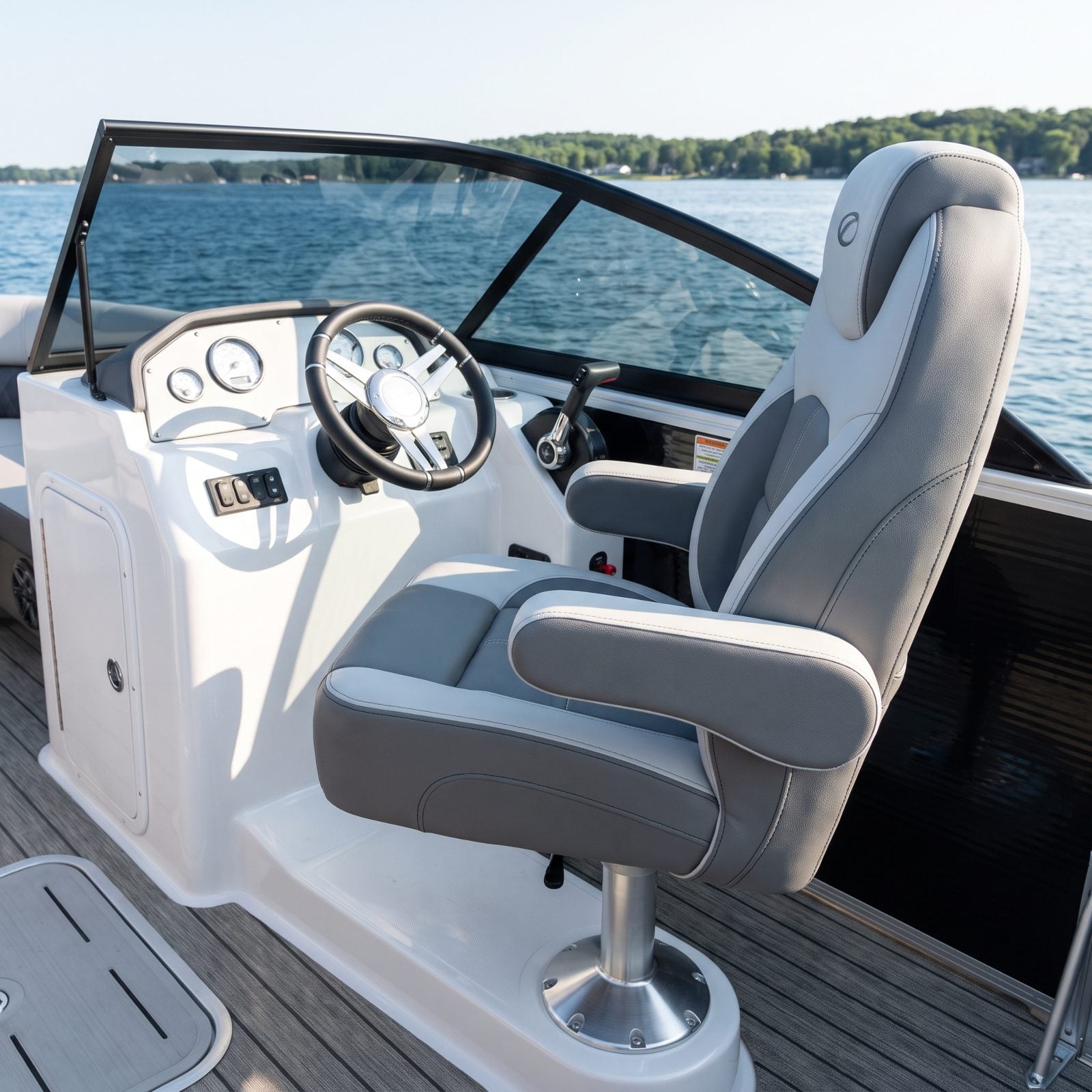
The captain does the most work and usually sits in the worst seat. A flat bench with no back and no bolster leaves your spine aching after an hour of chop.
A high-back helm seat with a flip-up bolster changes the whole drive. Sit for long cruises, or pop the bolster and stand for shallow water and docking. Look for one on a swivel pedestal so you can turn and talk to the stern without craning your neck.
35. Convert the Stern Into a Rear-Facing Lounge
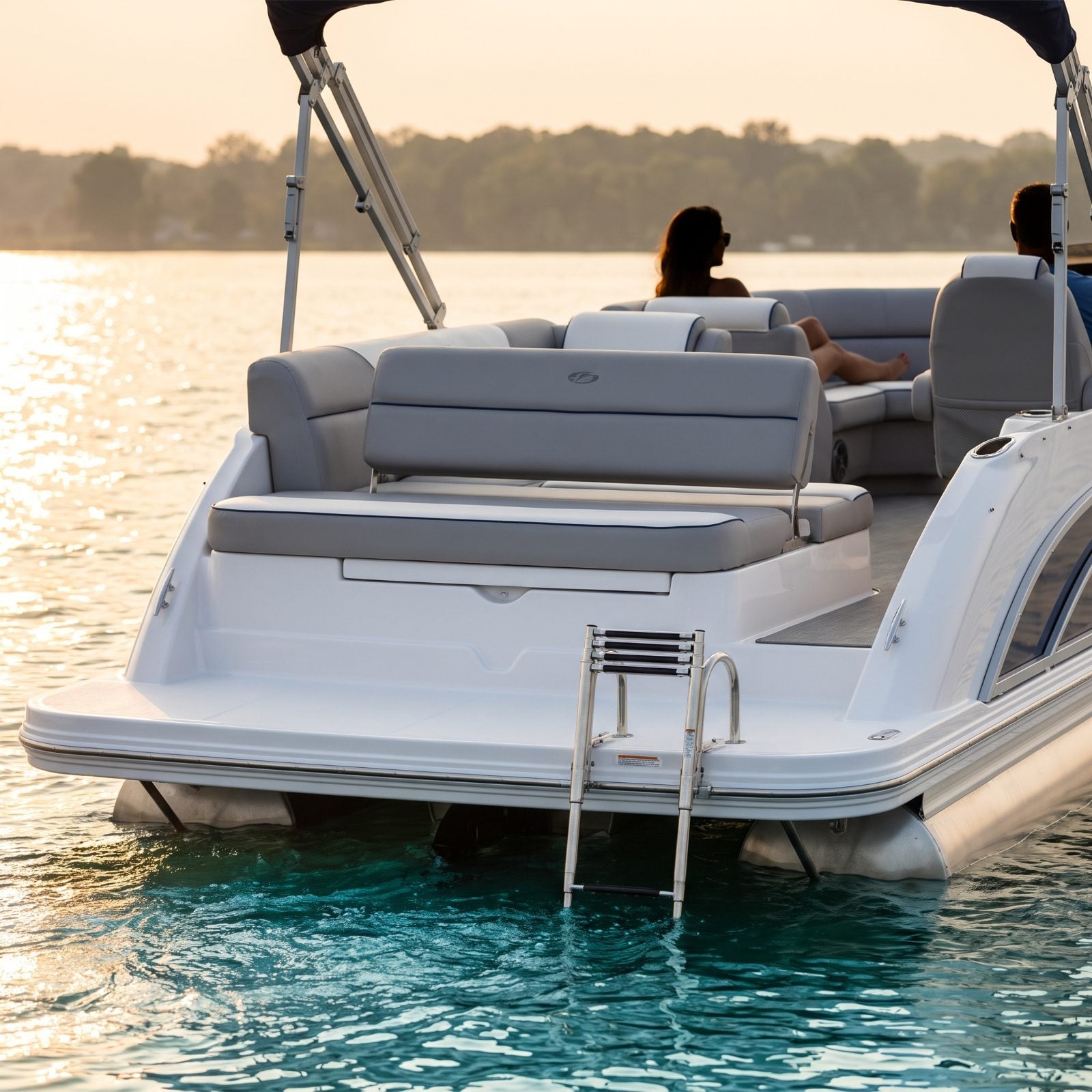
Most pontoons point everyone forward, which is fine until you’re anchored in a cove and the best view, the swimmers, the sunset, the wake, is all behind you.
A rear-facing lounge kit reclaims that dead space over the motor well and turns it into seating people fight over once it exists. Great for watching kids on the ladder. If your layout allows a convertible setup that flips between forward bench and aft lounge, even better, since you get both configurations from one footprint.
34. Drop In a Removable Table With Recessed Drink Holders
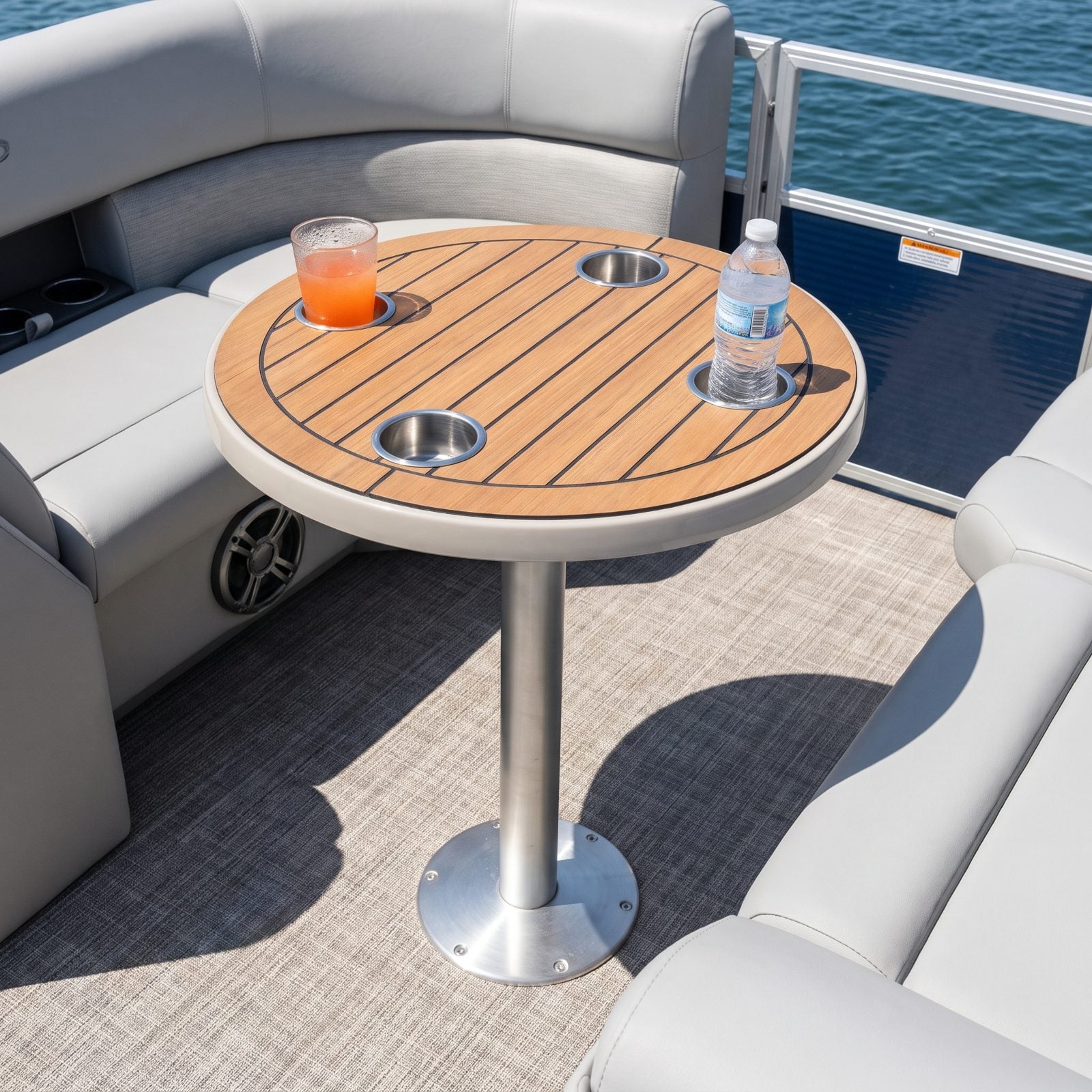
You’ve watched a plate of sandwiches slide across a bench the second a cruiser throws a wake. A removable table ends that.
The recessed drink holders are the real win here, not the tabletop. A regular cup holder tips when the boat rocks, but wells sunk into the table surface hold a can dead still through chop. Pull the whole thing off its pedestal when you want the floor clear for swimming or dancing, and stash it in a few seconds.
33. Build In a Marine Cooler Drawer You Don’t Trip Over
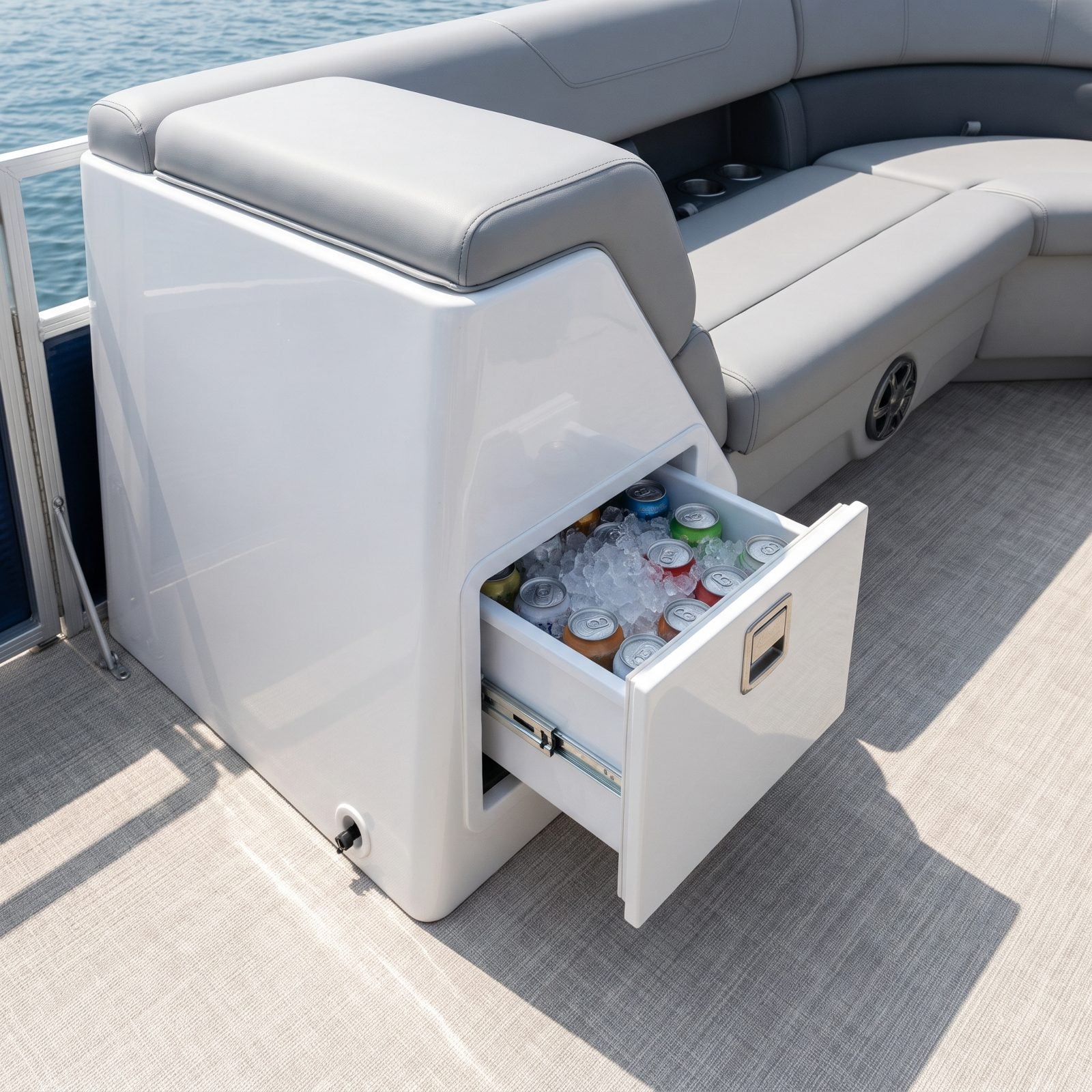
The portable cooler is the thing everyone trips over boarding, kicks while fishing, and forgets to drain until it sloshes warm water across the deck.
A built-in cooler drawer slides into the base of a bench and disappears. It drains overboard through a plumbed line, so no more hauling a heavy box up the dock ramp. And the drawer keeps the walkway clear, which matters more than you’d think on a crowded boat.
32. Mount a Propane Grill Right on the Rail
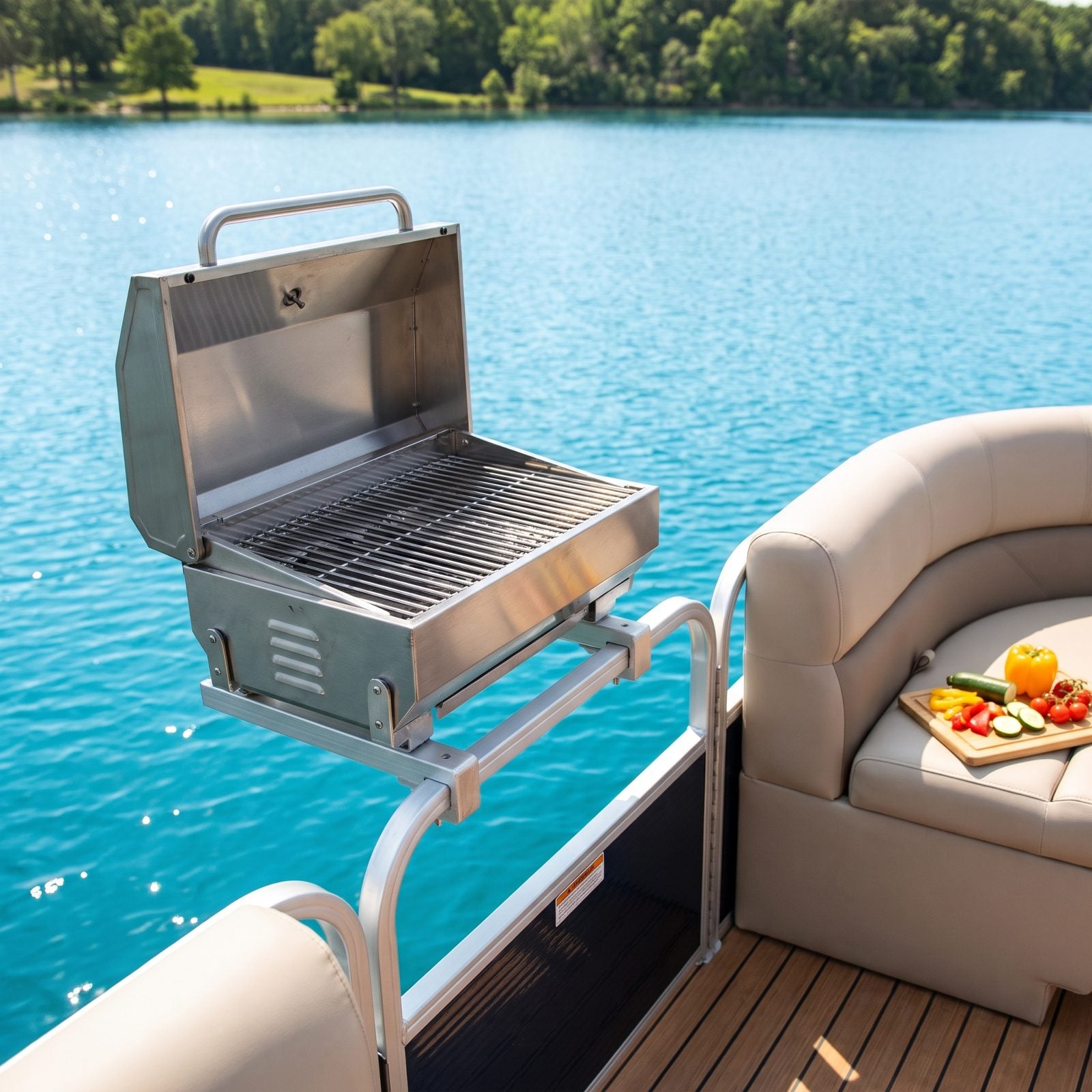
A hot lunch changes the whole character of a day on the water. Instead of soggy sandwiches at eleven and a hungry ride home at two, you’ve got burgers off the rail at one and nobody’s rushing anywhere.
A rail-mounted propane grill clamps to the outside of the rail so heat and grease stay over the water, never the deck. Small one-pound canisters run it, and the whole thing lifts off its bracket for cleaning at home.
Only ever light it at anchor or at the dock, never underway, and keep it clamped outboard where a drip can’t land on anything that burns.
31. Wire In a Waterproof USB-C Charging Station
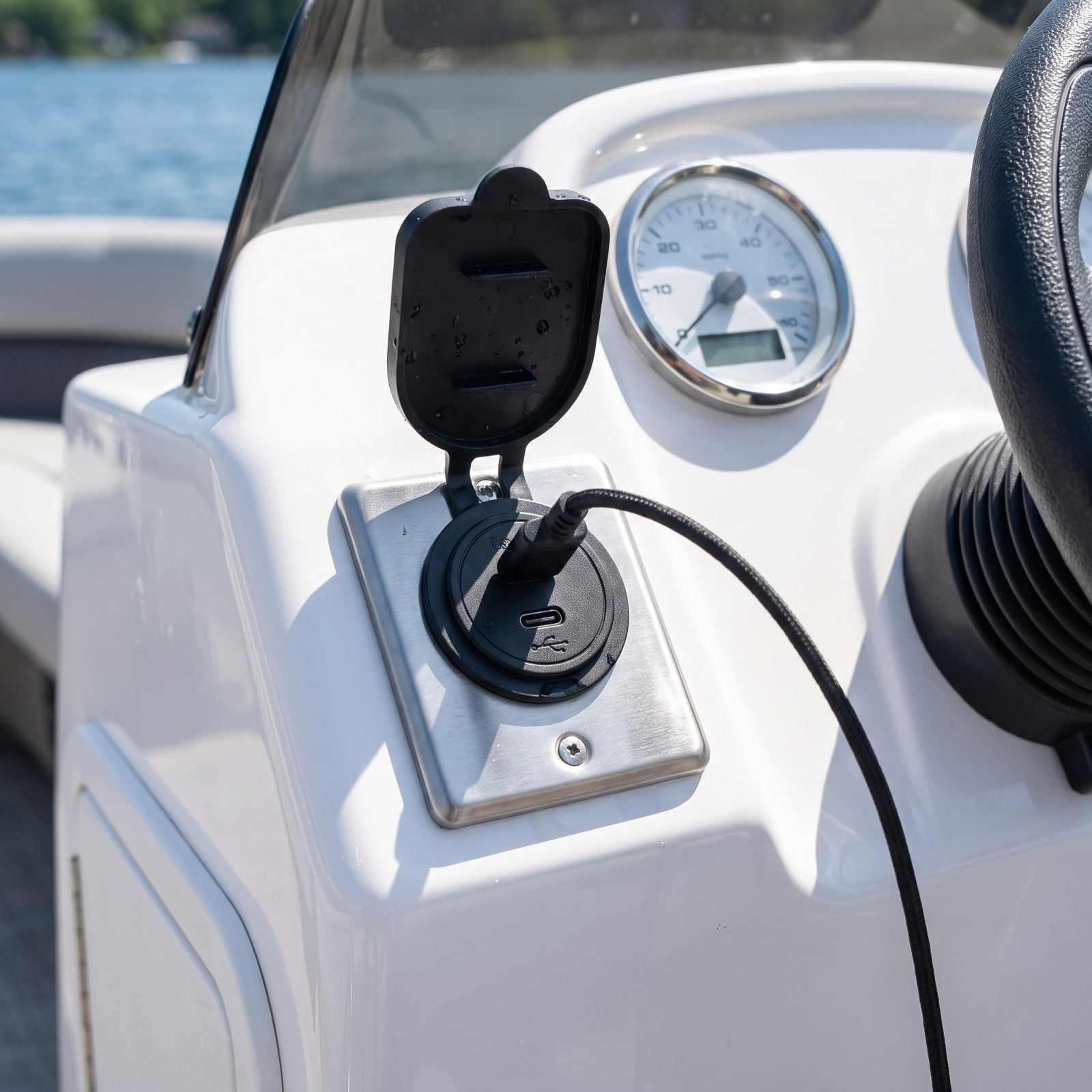
The cigarette-lighter adapter dangling off a splitter is a sad sight on a modern boat. One good wave and your phone slides into the bilge.
A flush-mounted marine USB-C station with a sealed splash cover charges phones, speakers, and tablets without the dash spaghetti. Marine-rated means the ports survive spray and humidity that would corrode a car charger in a season. Wire it to a switched circuit so it isn’t quietly draining your battery while the boat sits on the lift all week.
30. Upgrade to a Real Bluetooth Marine Stereo
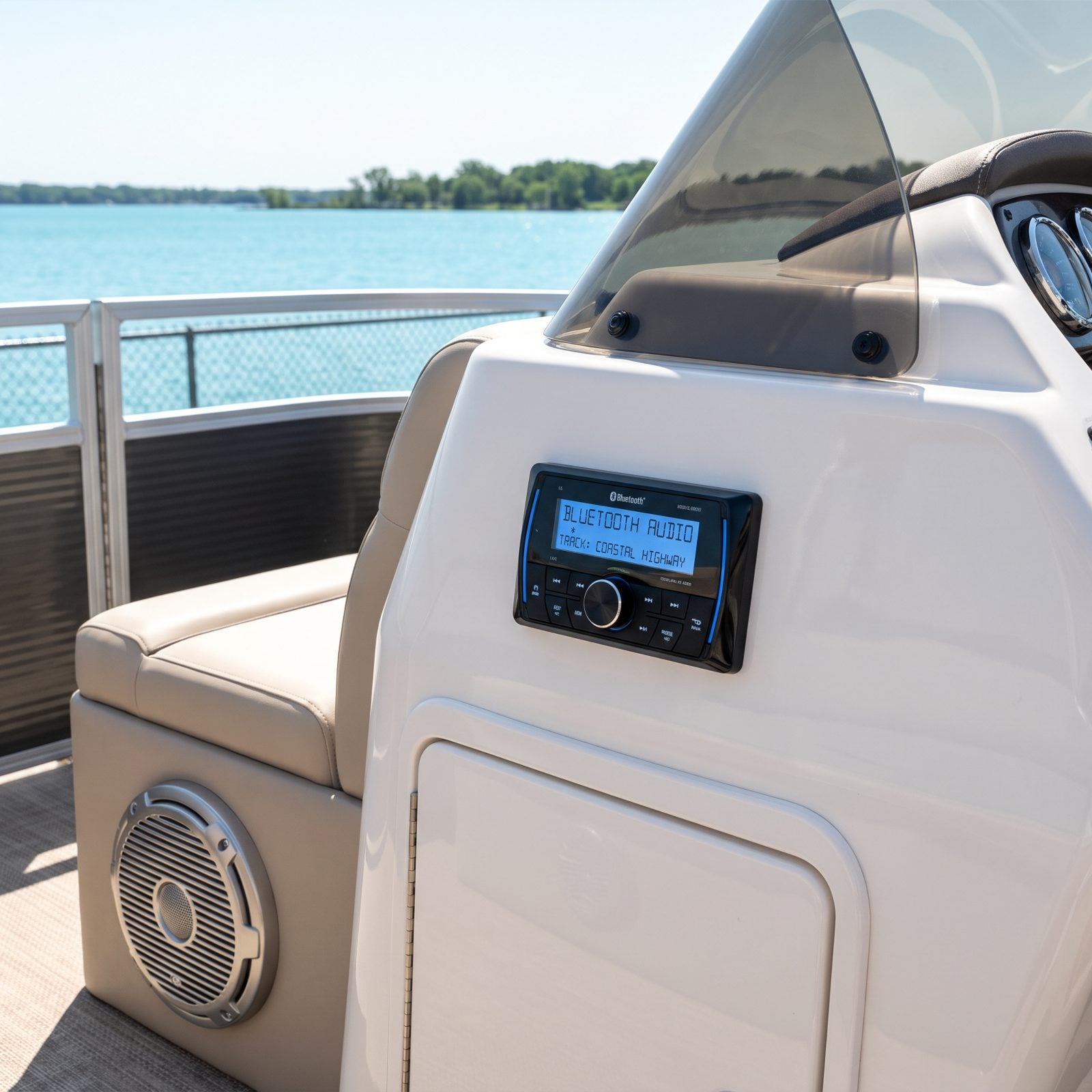
The stereo most pontoons ship with was built to a price, and at speed you hear wind and nothing else.
A proper Bluetooth marine head unit paired with weatherproof speakers fixes the two things that matter: it pairs to your phone without a cable, and the speakers are sealed against spray so they don’t buzz and die by season’s end.
29. Run Color-Changing LED Deck Lights for the Evening Cruise
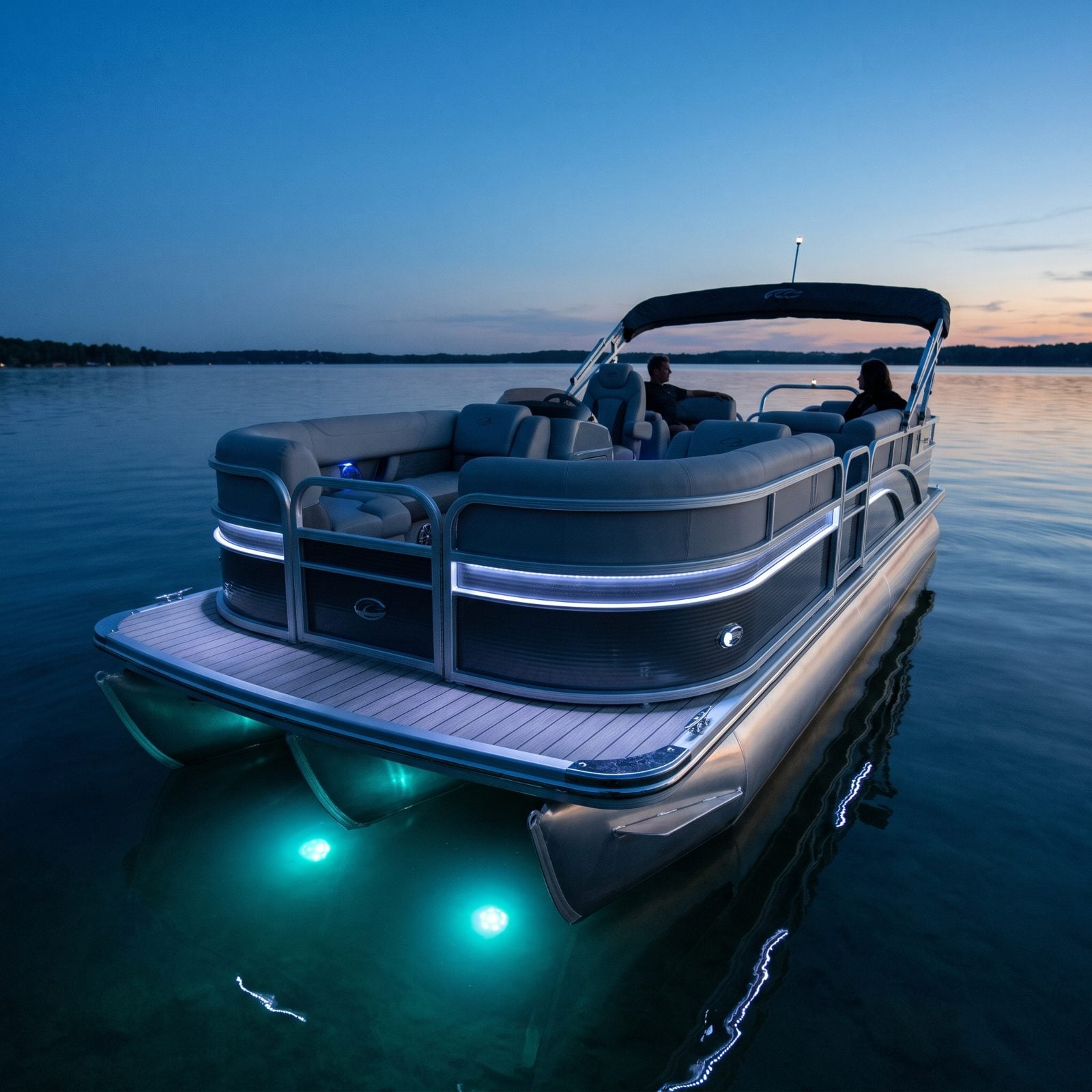
The best hour on the lake is the one after sunset, and most pontoons go dark and quiet right when the day gets good.
Color-changing LED strips tucked under the rails and seat bases keep the cove lit without blinding anyone. Dial them warm white for dinner, soft blue for a mellow drift home. They draw almost nothing off the battery, so you can run them for hours while anchored.
Keep the required navigation lights separate and bright, though. Decorative LEDs are atmosphere, not legal running lights, and the Coast Guard isn’t impressed by a purple glow when you’re underway after dark. Light the deck, let your nav lights do their real job, and that evening cruise becomes the reason you bought the boat in the first place.
28. Install Underwater Transom Lights
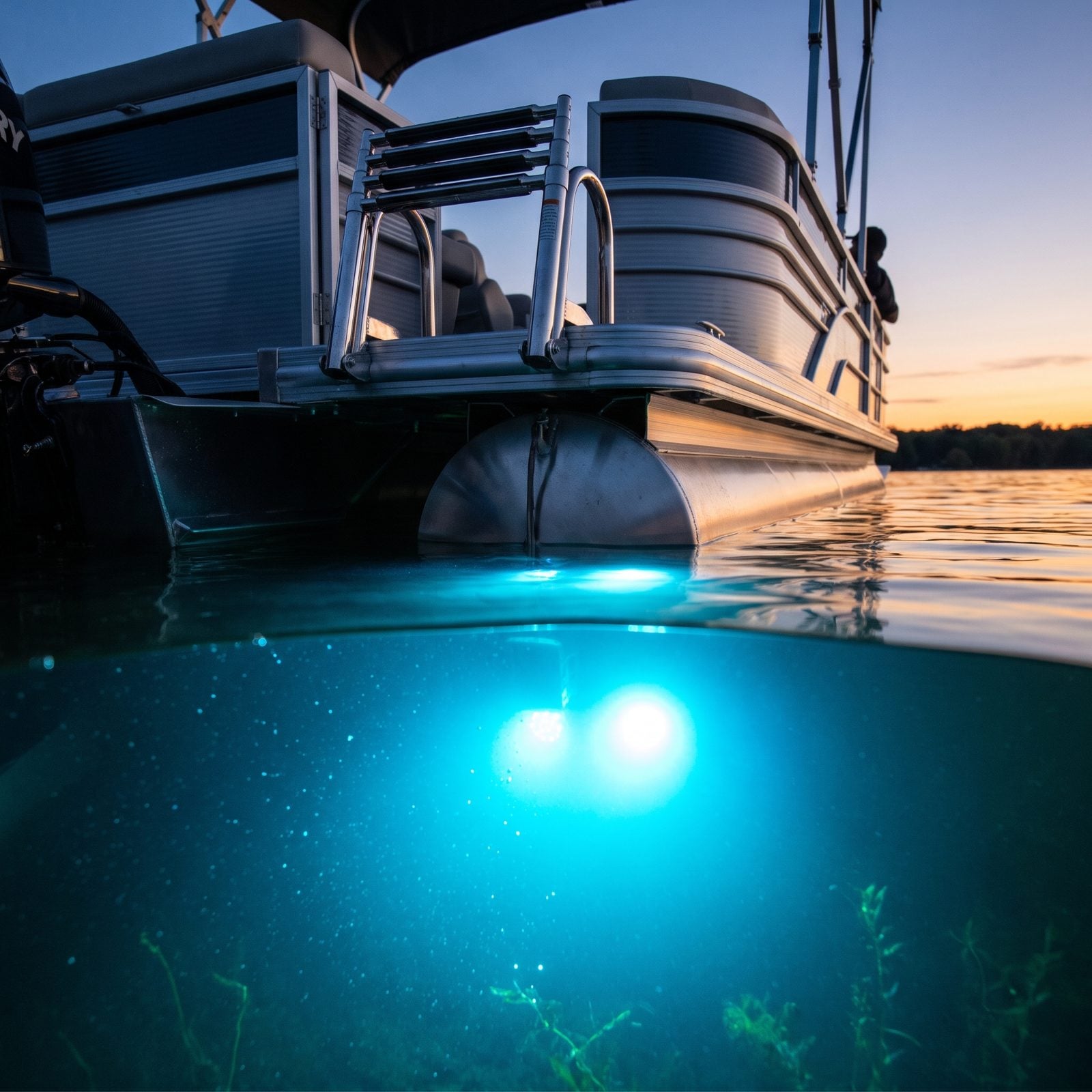
These do nothing for you at noon. At dusk they change the whole mood of the boat. A set of LED pods mounted below the waterline turns the water around the transom into a lit-up aquarium, and on a dark lake that’s the difference between people drifting off to their phones and people staying out another hour.
Go with a sealed, marine-rated LED unit and have the through-hull wiring done right, because water finds bad wiring. Expect to spend somewhere in the low hundreds for a decent pair, more if you want color-changing. Bonus: the brightness helps you find the swim ladder when the sun’s long gone.
27. Upgrade to Insulated Stainless-Steel Cup Holders
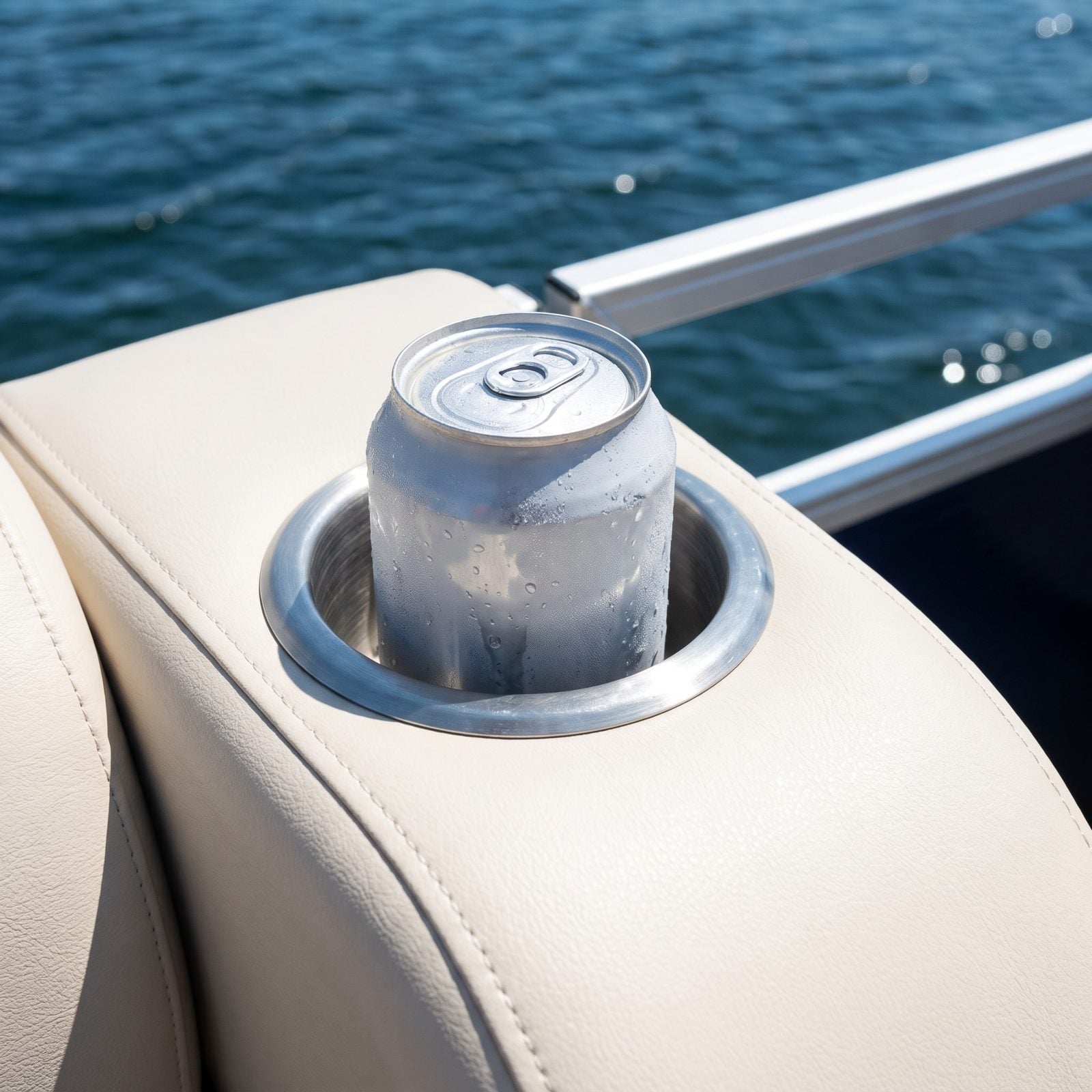
The plastic holders that come standard do exactly one job. Swap them for double-walled stainless and they keep a drink cold in July heat for a stretch that actually matters. Better pitch than it sounds.
You’ve reached for a lukewarm soda at 2 p.m. and regretted the whole afternoon. These fix that for not much money. Just get ones rated marine-grade, or the salt and sun will rust them into junk by season two.
26. Add Under-Seat Storage Bins
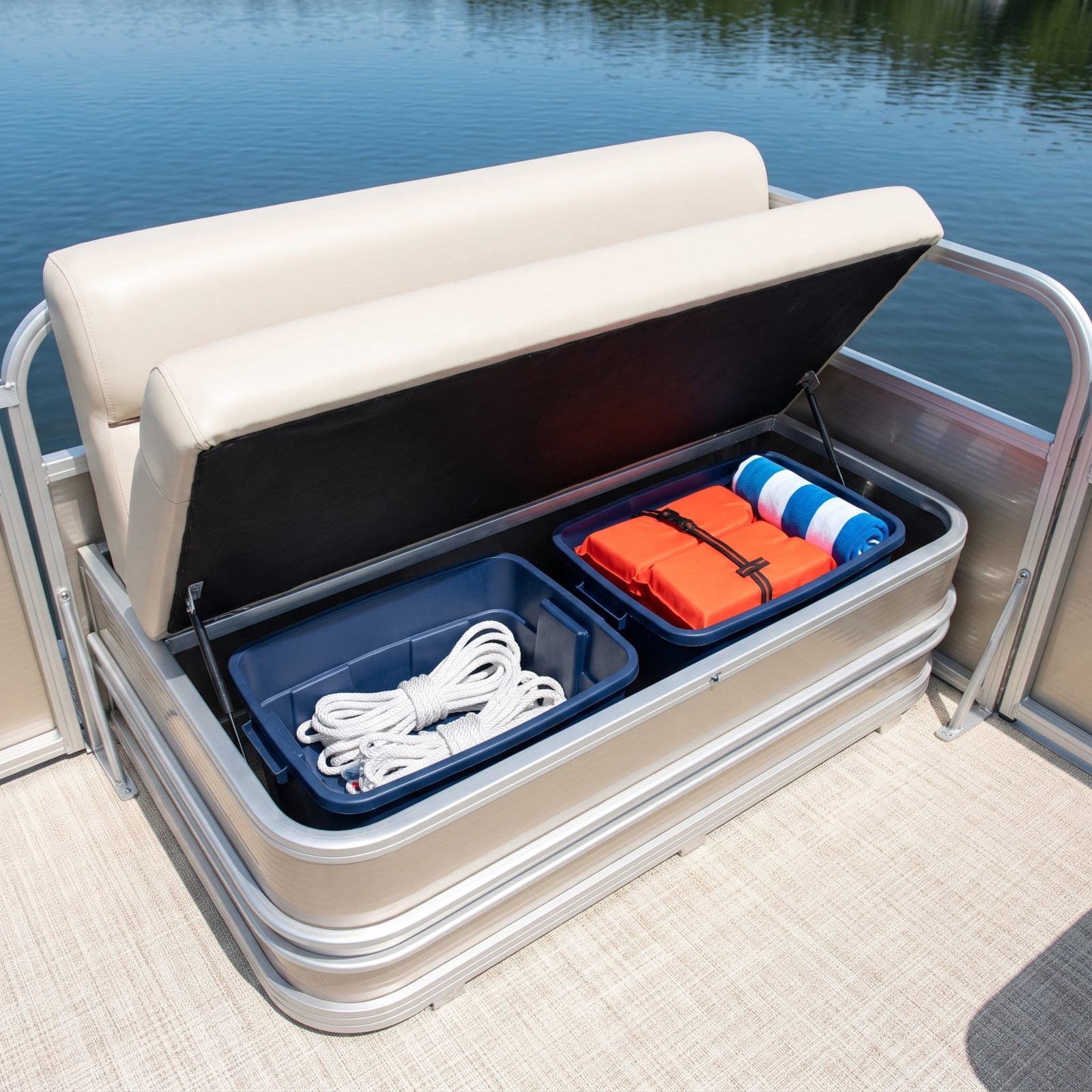
Every pontoon has that one bench where things go to disappear. Loose, wet, tangled. Drop a set of removable bins under the seats and suddenly the ropes live in one place, the sunscreen in another, and nothing’s swimming around in two inches of bilge water.
The trick nobody mentions: get bins that lift out. When they’re full of sand and spilled bait water, you want to carry them to the hose, not bail them out on your knees.
25. Mount a Waterproof Dry Box
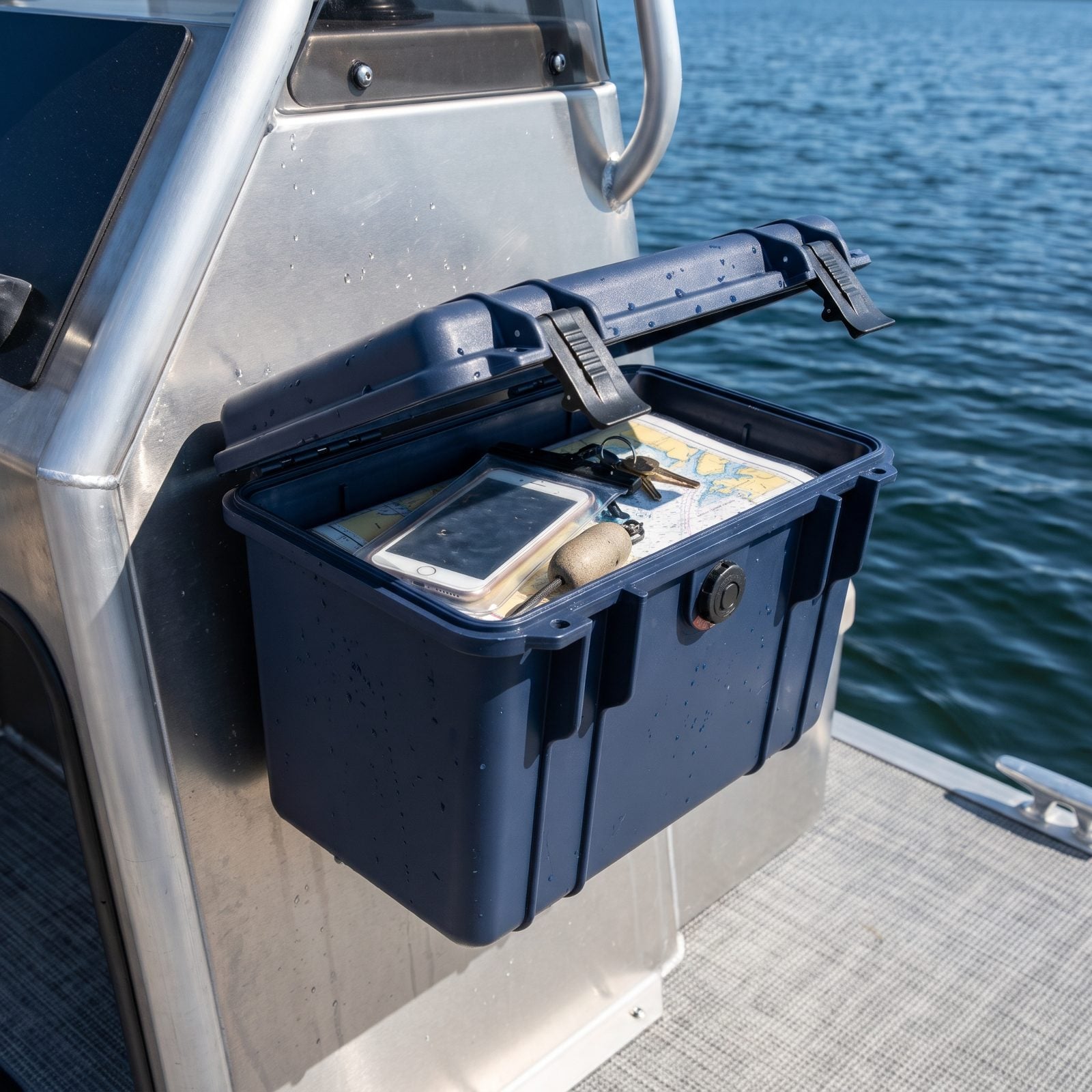
Phones and lake water have a bad history. A sealed, gasketed dry box bolted somewhere near the helm gives you one spot that stays dry no matter how wild the kids get with the water balloons.
Keys, wallet, phone, the title and insurance card if you’re smart. A hard-shell box with a rubber O-ring seal runs anywhere from cheap to steep depending on size. Mount it so it can’t slide — a dry box that becomes a projectile in a wake is a whole different problem.
24. Install Overhead Life-Jacket Storage
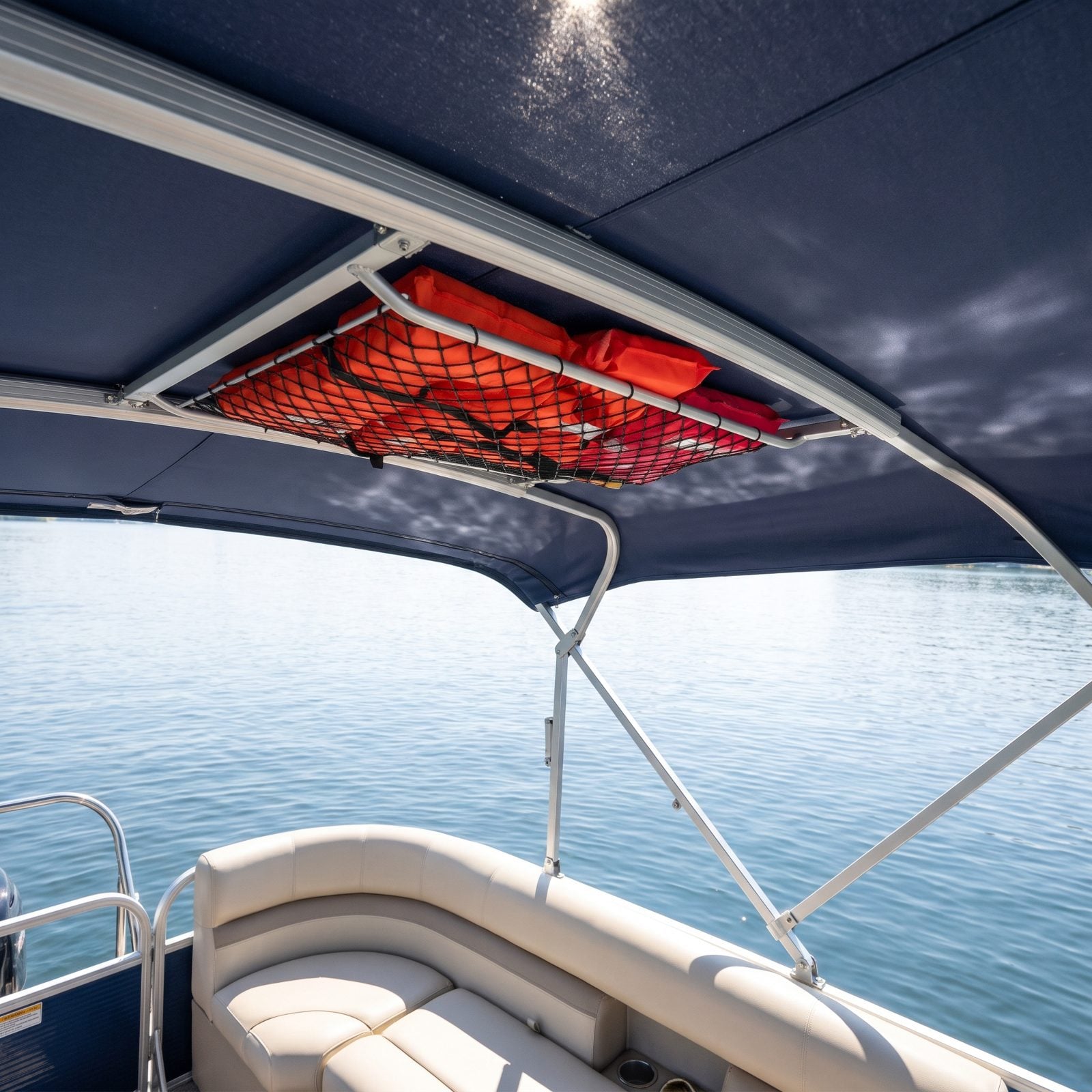
Life jackets belong where you can grab them in two seconds, not buried under the cooler. A simple net or rack under the bimini top gets them up and out of the way while keeping every one within arm’s reach of the deck.
This one pulls double duty. It clears your seating of bulky vests, and it means nobody’s digging through a storage bin during the one moment they actually need a jacket fast. Keep the kids’ sizes at the front — they’re the ones who’ll need them without warning.
23. Add a Pop-Up Privacy Enclosure
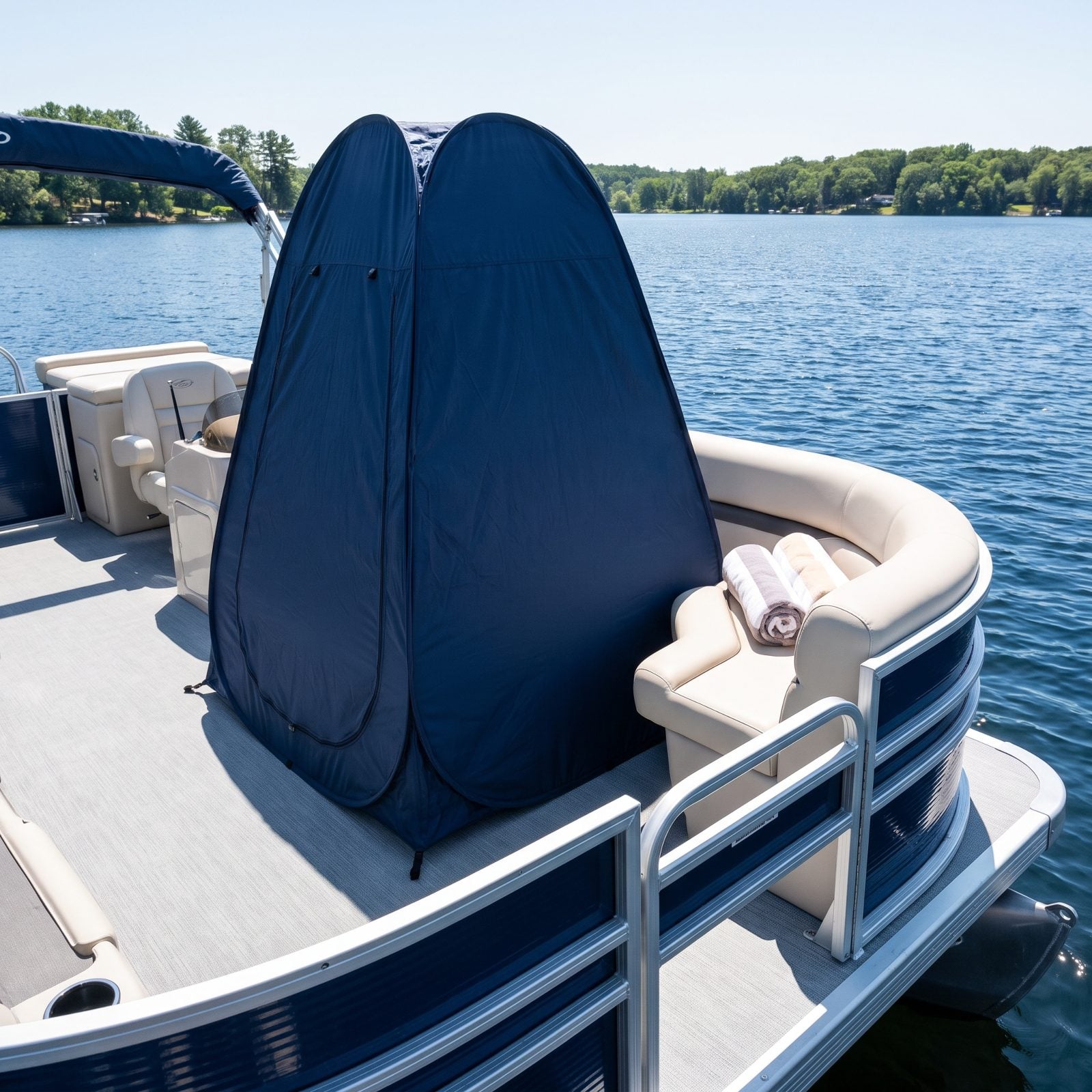
Nobody plans an all-day trip until they realize there’s nowhere to change out of a wet suit, nowhere to do the thing everybody needs to do eventually. A collapsible fabric enclosure folds flat against a rail and pops up on the deck when you need it.
Changing room, shade for a napping toddler, a dignified spot for the portable toilet to live. It’s the least glamorous upgrade here and the one that quietly makes the longer days possible. Pick one with a weighted base so a gust doesn’t send it overboard.
22. Install a Portable Marine Toilet
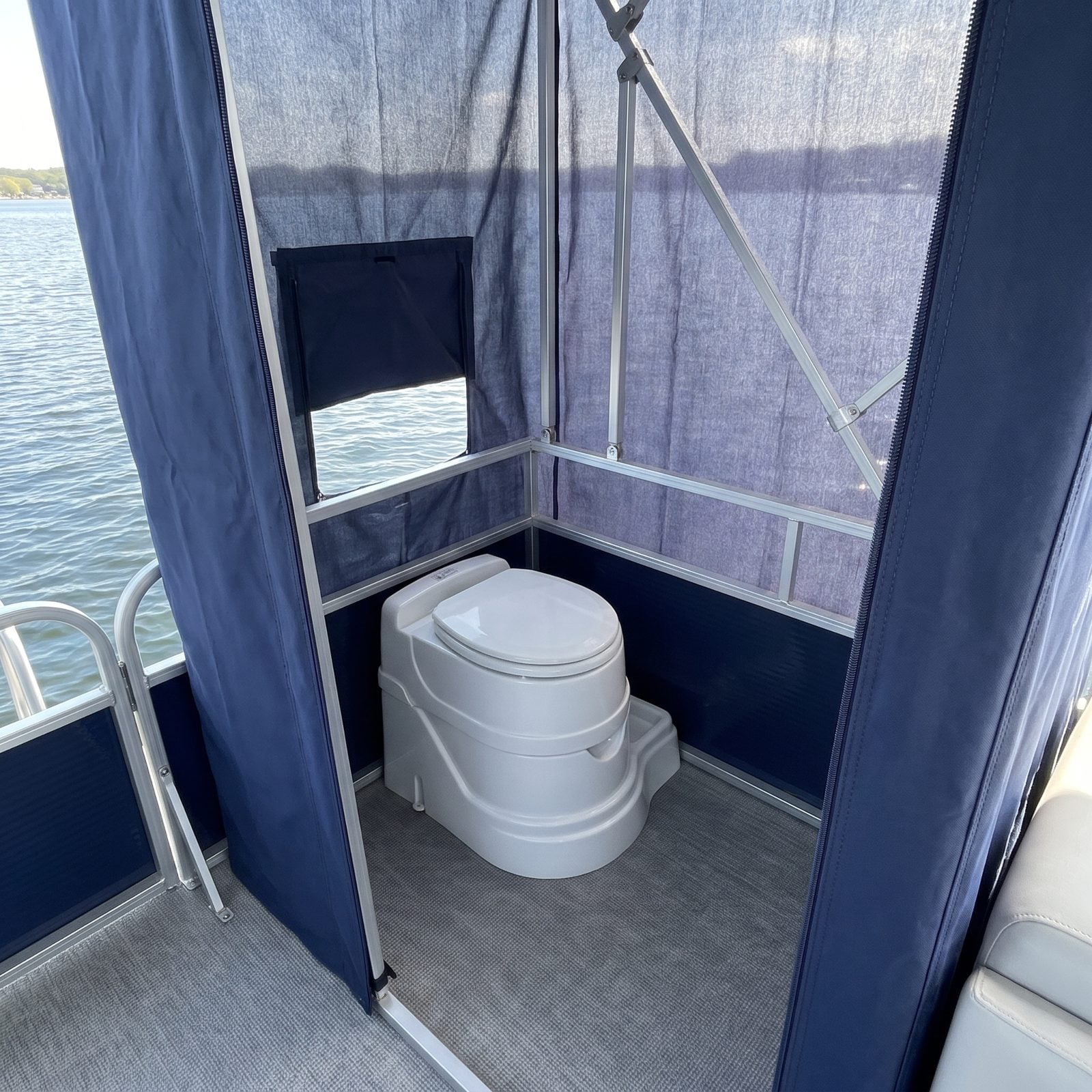
This extends your range more than anything else on the list. Once there’s a working toilet aboard, you stop planning the whole day around the nearest marina bathroom, and the kids can actually stay out past lunch.
A self-contained portable unit with a sealed holding tank is the simplest route. No plumbing, no through-hull, just empty it at a proper dump station when you’re done. Pair it with the privacy enclosure above and you’ve basically built a cabin on an open-deck boat. One warning: check your local rules on discharge. They vary by state and lake, and the fines aren’t cheap.
21. Mount Vertical Fishing-Rod Holders
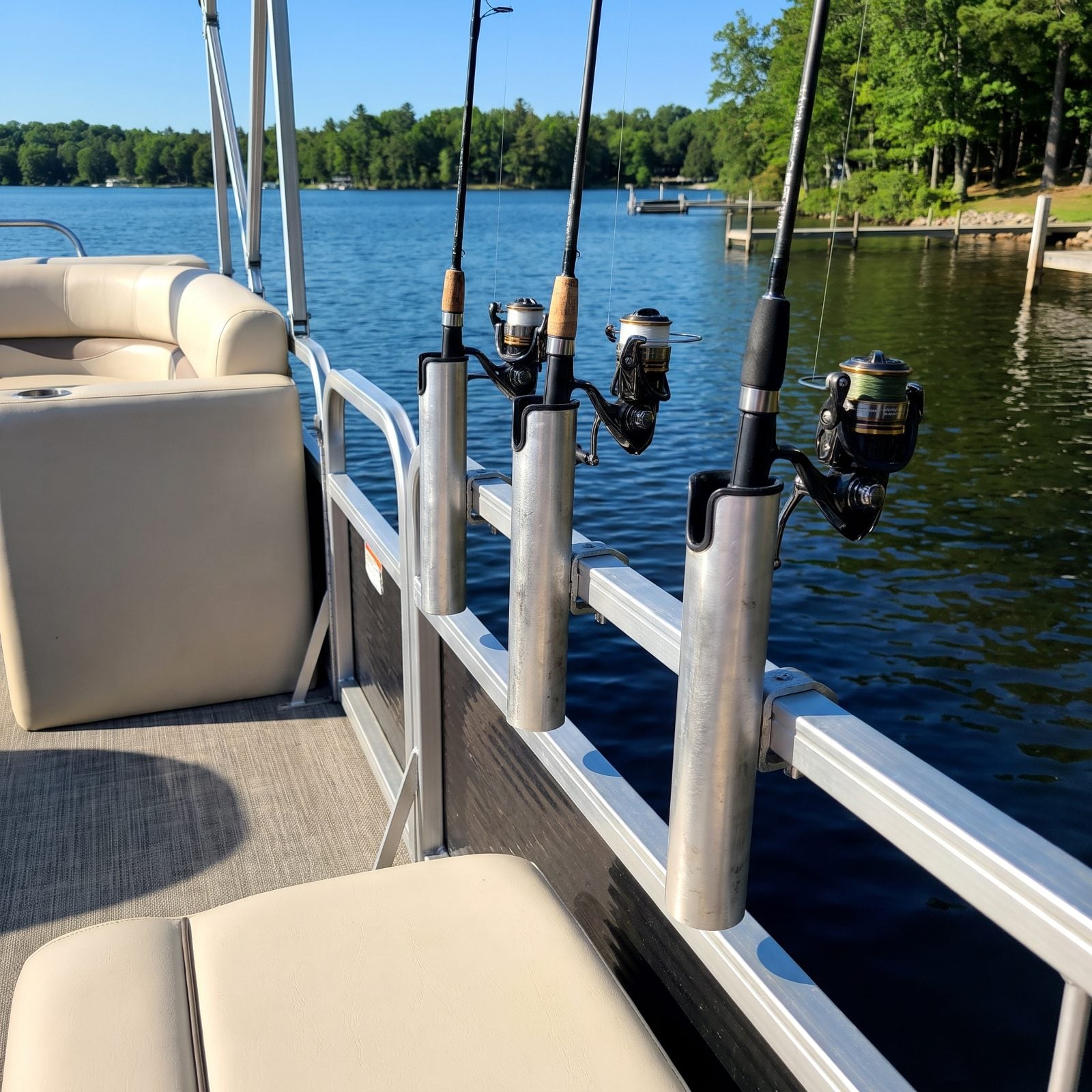
Rods laid flat across the deck get stepped on. Every time. Vertical holders clamped to the rail stand them up out of traffic, tips to the sky, where nobody’s planting a flip-flop on a guide.
Even if you’re not a serious angler, a couple of these keep things tidy when one person wants to cast while everybody else swims. Look for ones that clamp without drilling if you’d rather not put holes in the rail. The no-drill mounts hold fine for light freshwater work.
20. Add a Livewell for Fishing Weekends
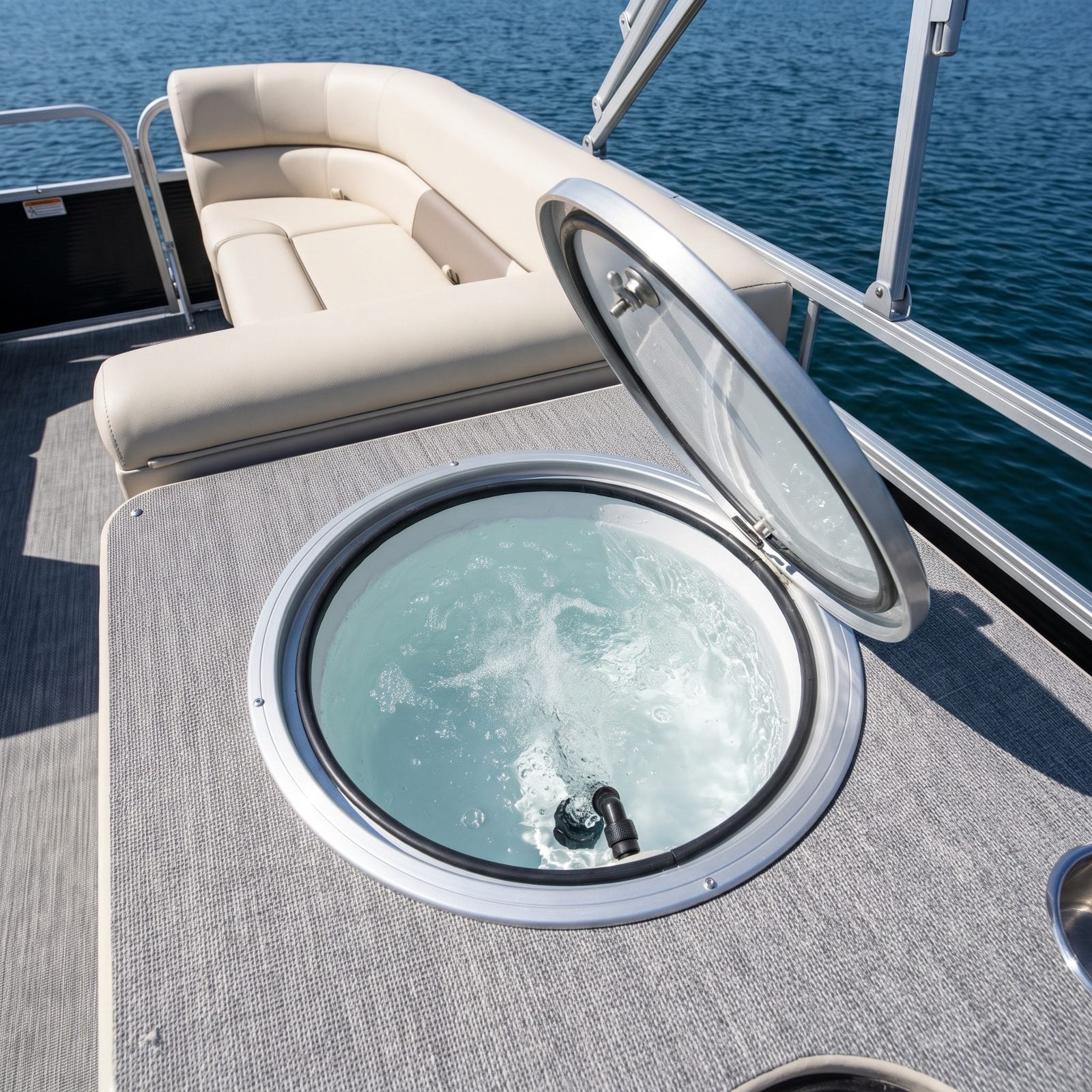
If weekends mean fishing, a livewell pays for itself in kept fish and happy kids. An aerated tank keeps your catch alive and healthy instead of sloshing around a bucket going belly-up by noon.
Pontoons have the flat deck space to add one cleanly — a built-in unit, or a portable aerated cooler if you’d rather not commit. The aerator pump is the part that matters, because a still tank in summer heat does the exact opposite of keeping fish alive. And if you release everything anyway? It still beats a dry deck covered in flopping bluegill.
19. Mount a Fish Finder at the Helm
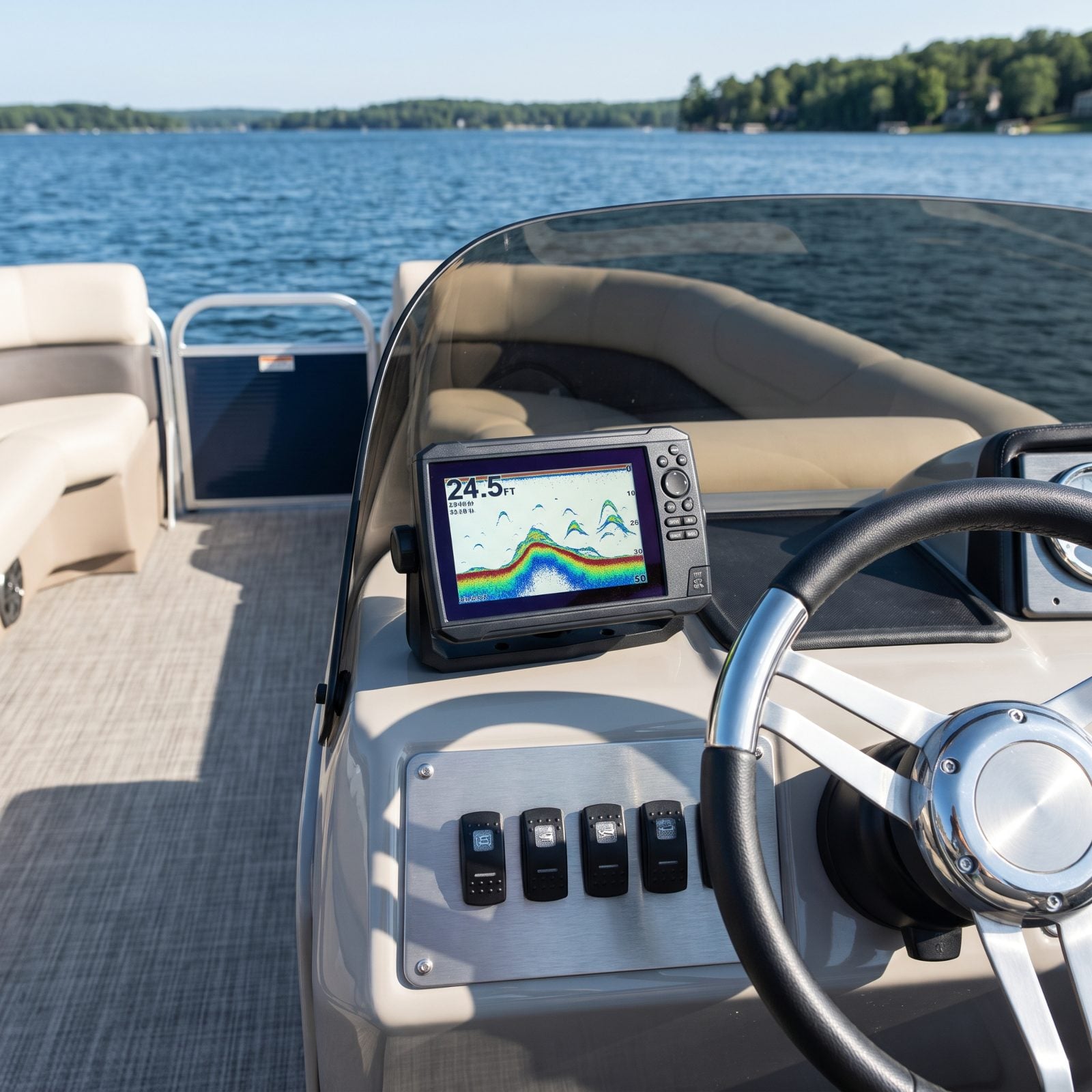
A fish finder earns its spot on the helm even if you never bait a hook. The depth reading alone keeps you off the shoals and sandbars that eat lower units, and on an unfamiliar lake that’s worth every penny by itself.
Modern units run from basic depth-and-fish readouts to full GPS charting with mapping, and the entry-level ones are genuinely affordable now. Mount the display where the sun won’t wash it out, and run the transducer so it reads clean at cruising speed. Get that transducer placement wrong and the screen turns to static the second you throttle up. That’s it. Now go find the cold side of the lake and drop the anchor.
18. Install a Trolling Motor on the Bow
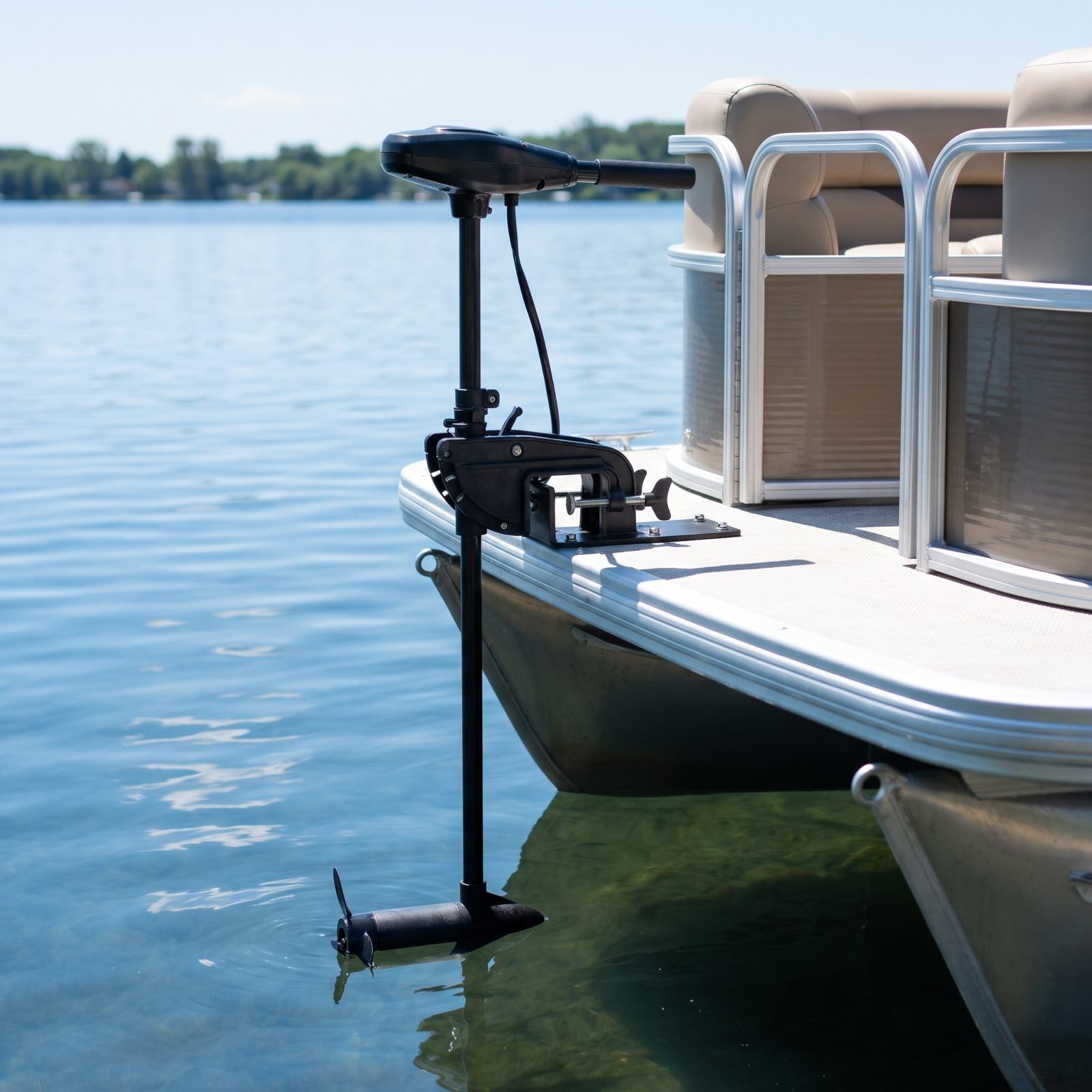
A bow-mounted trolling motor is the quietest upgrade you can bolt on. It lets you creep into a cove, hold position over a fishing spot, or nudge up to a sandbar without firing the big outboard and scattering every fish within a hundred yards. Just set the shaft deep enough: the prop has to be fully submerged before it can push or hold you anywhere.
Then there’s spot-lock, the feature nobody mentions until they’ve had it for a season. Push a button and the motor fights wind and current to pin you over one patch of water, hands free. For a lazy afternoon of casting, or just floating with a cold drink, that’s the whole game.
Budget for the batteries too. The motor is half the cost. Deep-cycle batteries and a decent charger are the other half, and people forget that part every single time.
17. Upgrade to a Quiet Electric Anchor Winch
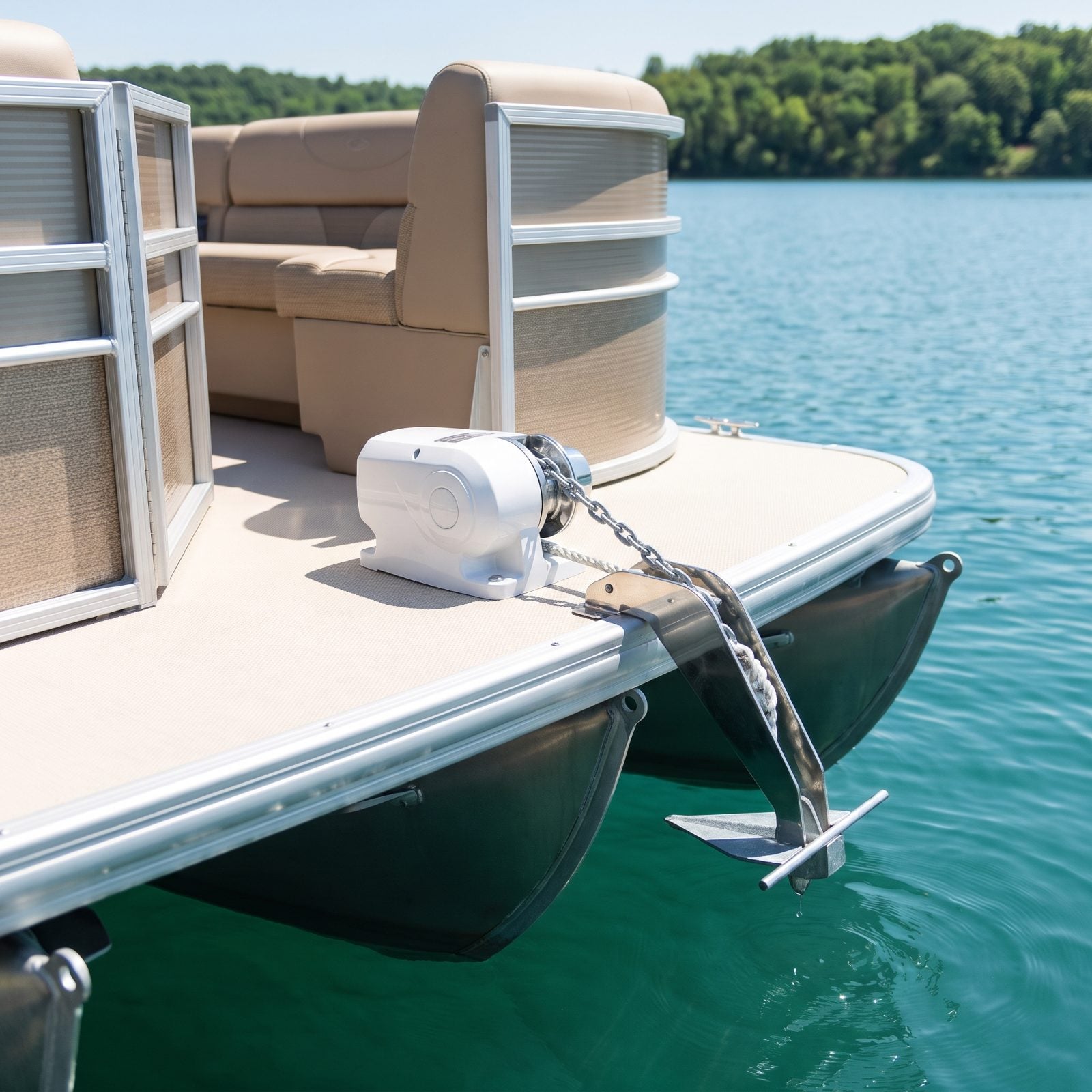
You know the scene. One person wrestling a muddy anchor rope at the bow while the boat swings sideways and everyone else pretends not to watch.
An electric winch ends that. A button drops the anchor and reels it back, rinsed of most of the lake bottom by the time it clears the water — no bent backs, no rope burn, no shouting between the bow and the helm.
16. Install a GPS Chartplotter
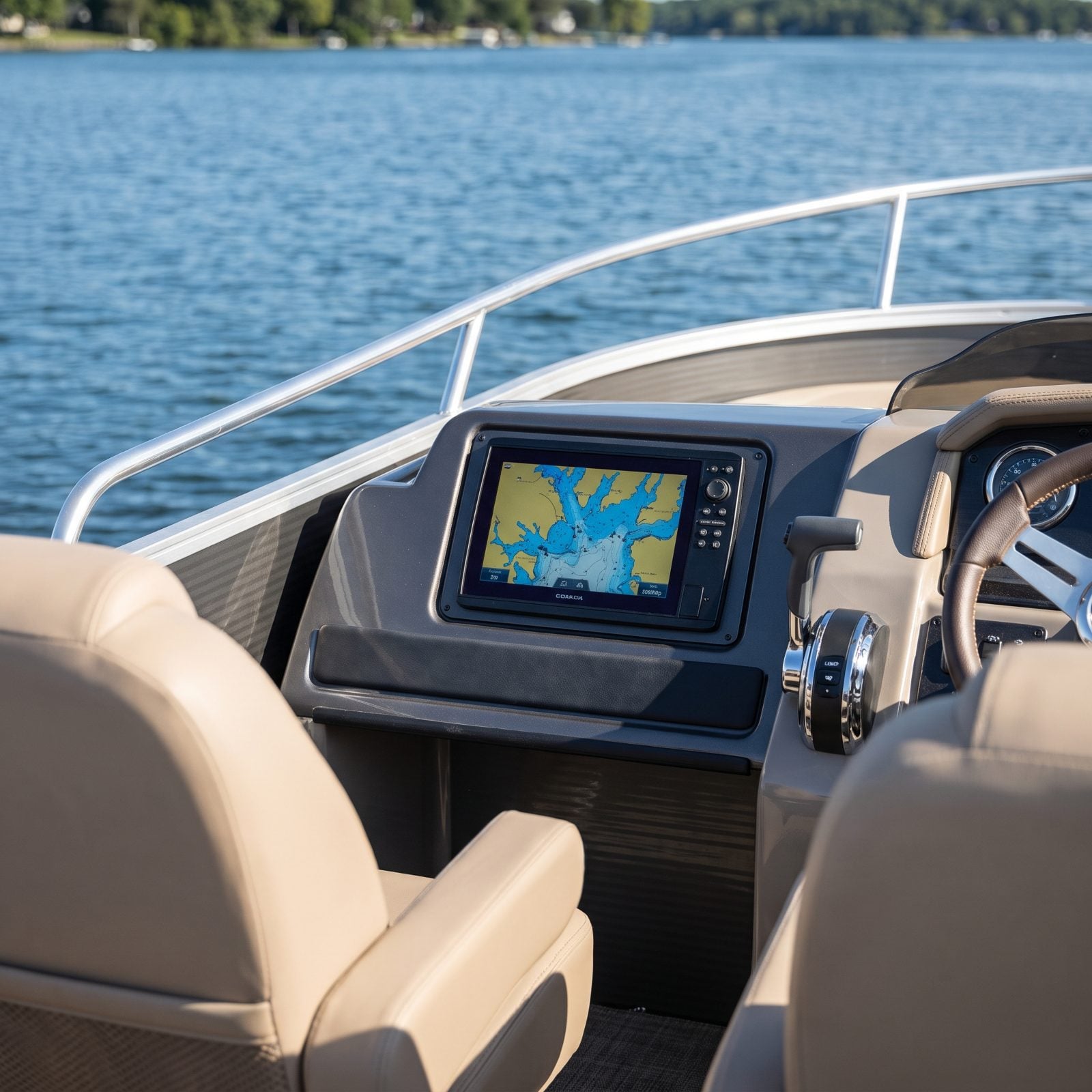
A chartplotter earns its keep the first time you cross an unfamiliar lake at dusk and it shows you exactly where the shallow bar hides before your prop finds it.
Modern units do far more than map. Depth, water temperature, your tracked path back to the ramp, waypoints for that quiet cove you stumbled into last July. Mount it at the helm where you can read it in sunlight, which means spending a little more for a screen that doesn’t wash out at noon.
15. Add a VHF Marine Radio
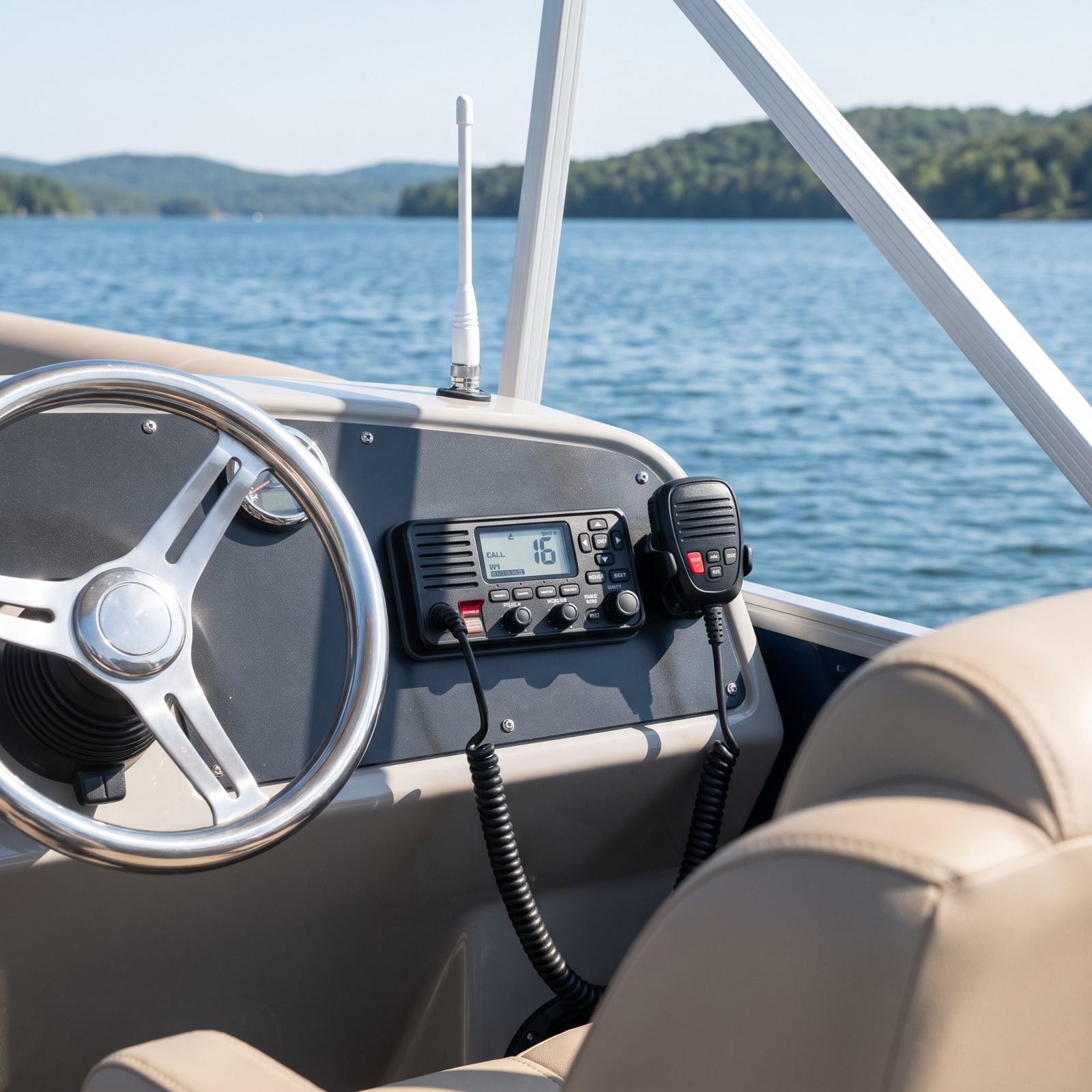
Your cell phone is not a safety plan. Dead zones on big lakes are real, batteries die, and nobody monitors your number when things go wrong.
A VHF radio puts you on the same channel as every other boater, the marina, and emergency services. Channel 16 is the one that matters. A fixed-mount unit with a digital selective calling button can broadcast your exact position with one press if it’s wired to your GPS.
It costs less than a nice cooler. And on the day you actually need it, it’s the only thing on the boat anyone will care about.
14. Mount a Floating Emergency Grab Bag
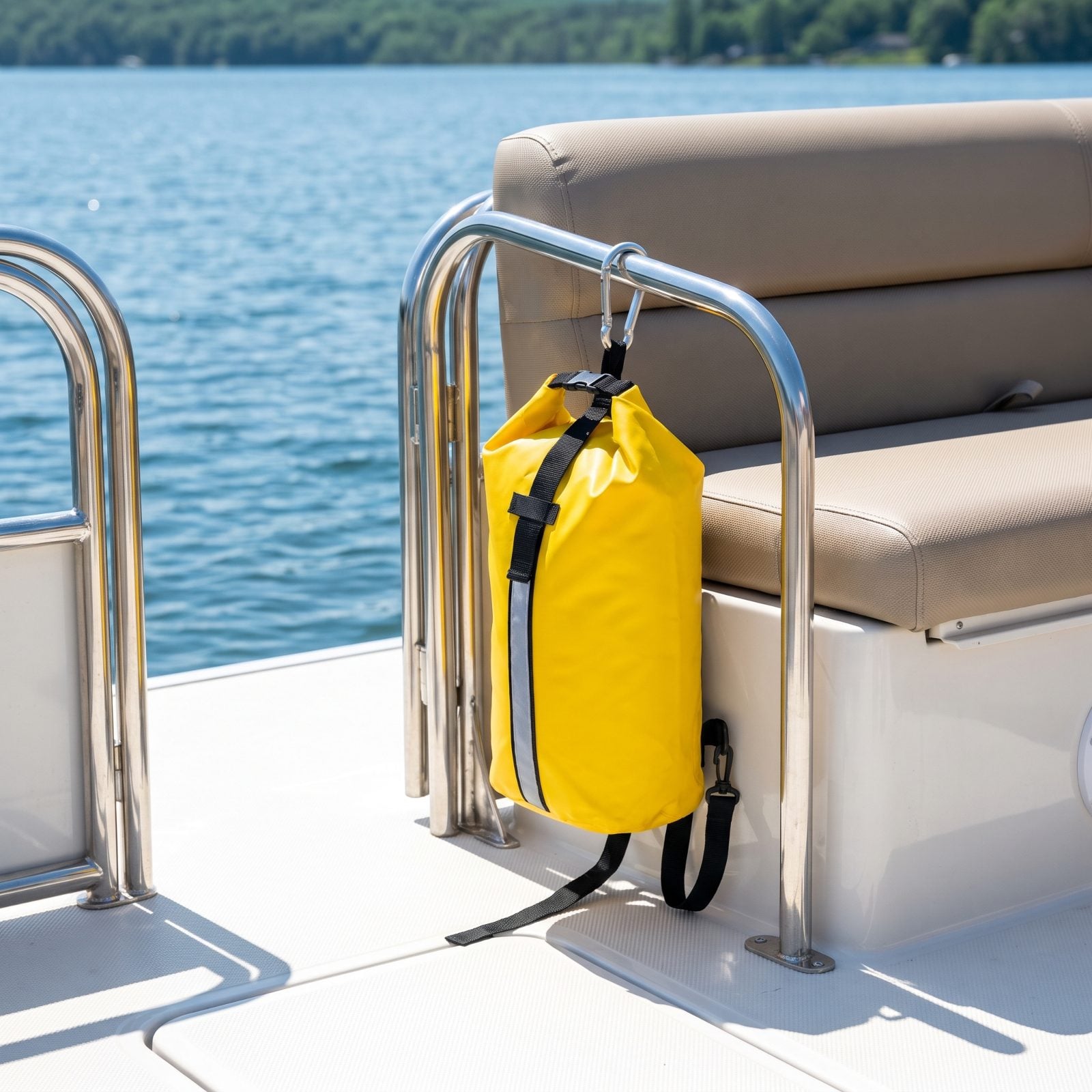
Keep one bag that floats, and keep the stuff that matters inside it: a whistle, a signal mirror, a spare handheld VHF, flares that haven’t expired, a flashlight, a basic first-aid kit.
The point is simple. If you ever have to leave the boat fast, you grab one thing and everything useful comes with it. Scattering that gear across six different compartments is how people end up with nothing in their hands when it counts.
Clip it to a rail near the helm, bright yellow so you can find it without looking. Check the contents every spring. Flares expire, and flashlights die quietly in a bag you swore you’d packed right.
13. Upgrade to a Wide Four-Step Swim Ladder
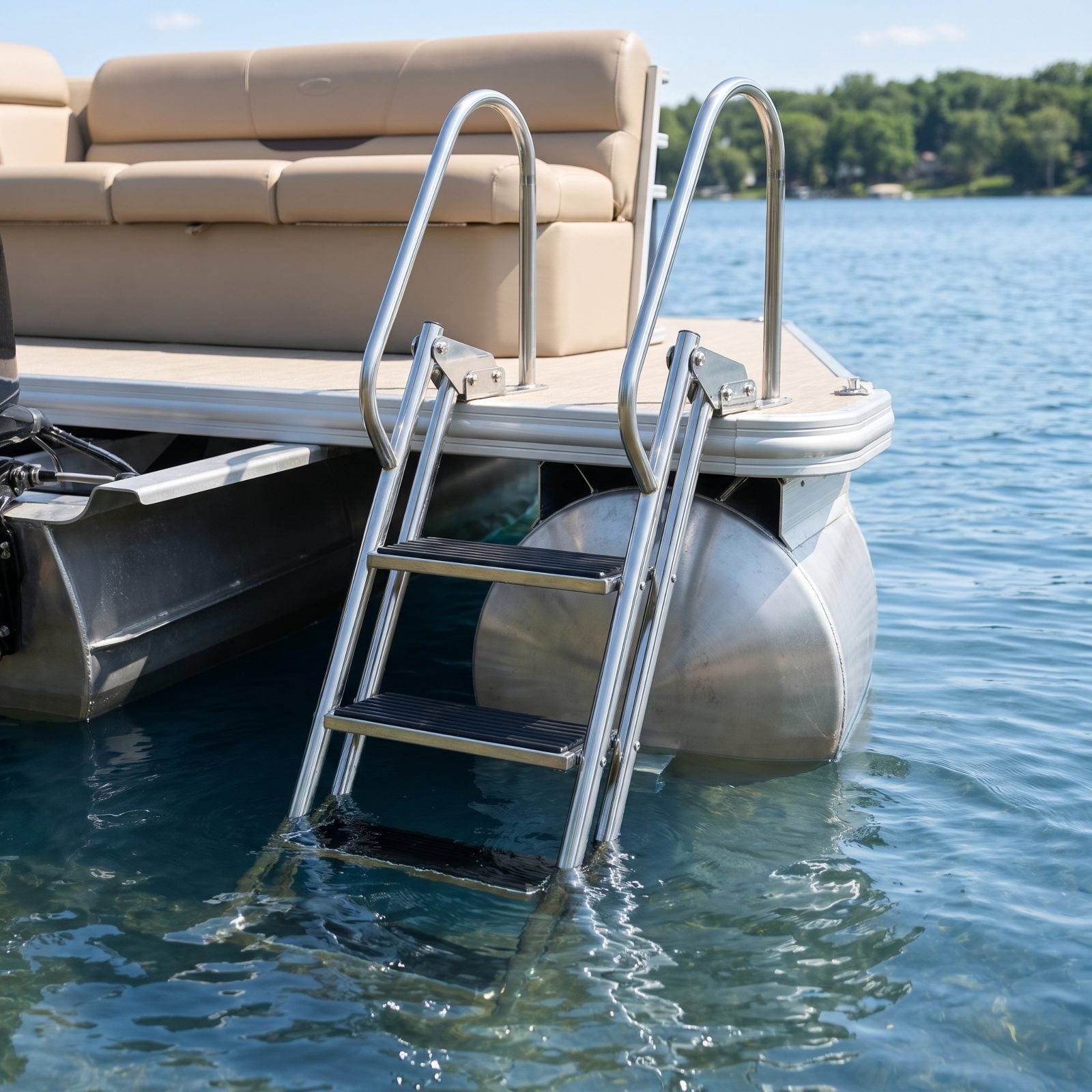
The skinny two-step ladder that came with most pontoons was designed by someone who never had to climb it wet, tired, and over fifty.
A ladder with four wide treads that reaches right down to the waterline changes everything. That bottom step at the water’s surface is the one that matters — it gives your foot a place to push from instead of asking you to haul your whole body up by your arms.
12. Add Retractable Boarding Handles
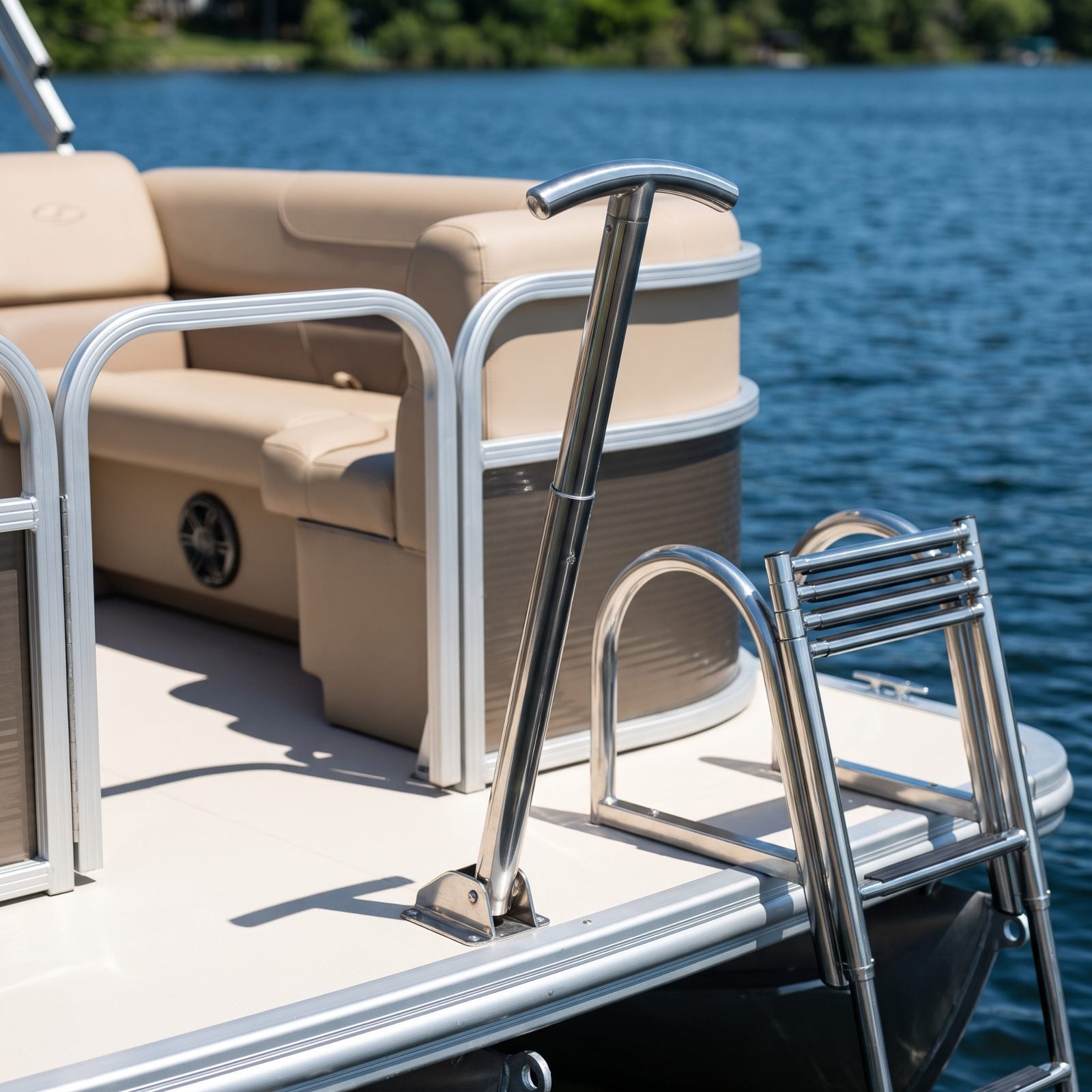
Boarding is where most dock injuries happen. One foot on the ladder, one hand grabbing at a rail that isn’t quite in the right place, and down someone goes.
A tall, T-handled boarding pole solves the geometry. It gives you something solid exactly where your hand reaches as you come up from the water or step over from the dock, and its hinged deck bracket lets it fold down flat when you’re underway so it stays out of the way of anyone walking past.
Mount one right beside the boarding ladder. For anyone with a cranky knee, that’s the difference between coming aboard with dignity and coming aboard like cargo.
11. Install a Non-Slip Boarding Platform Mat
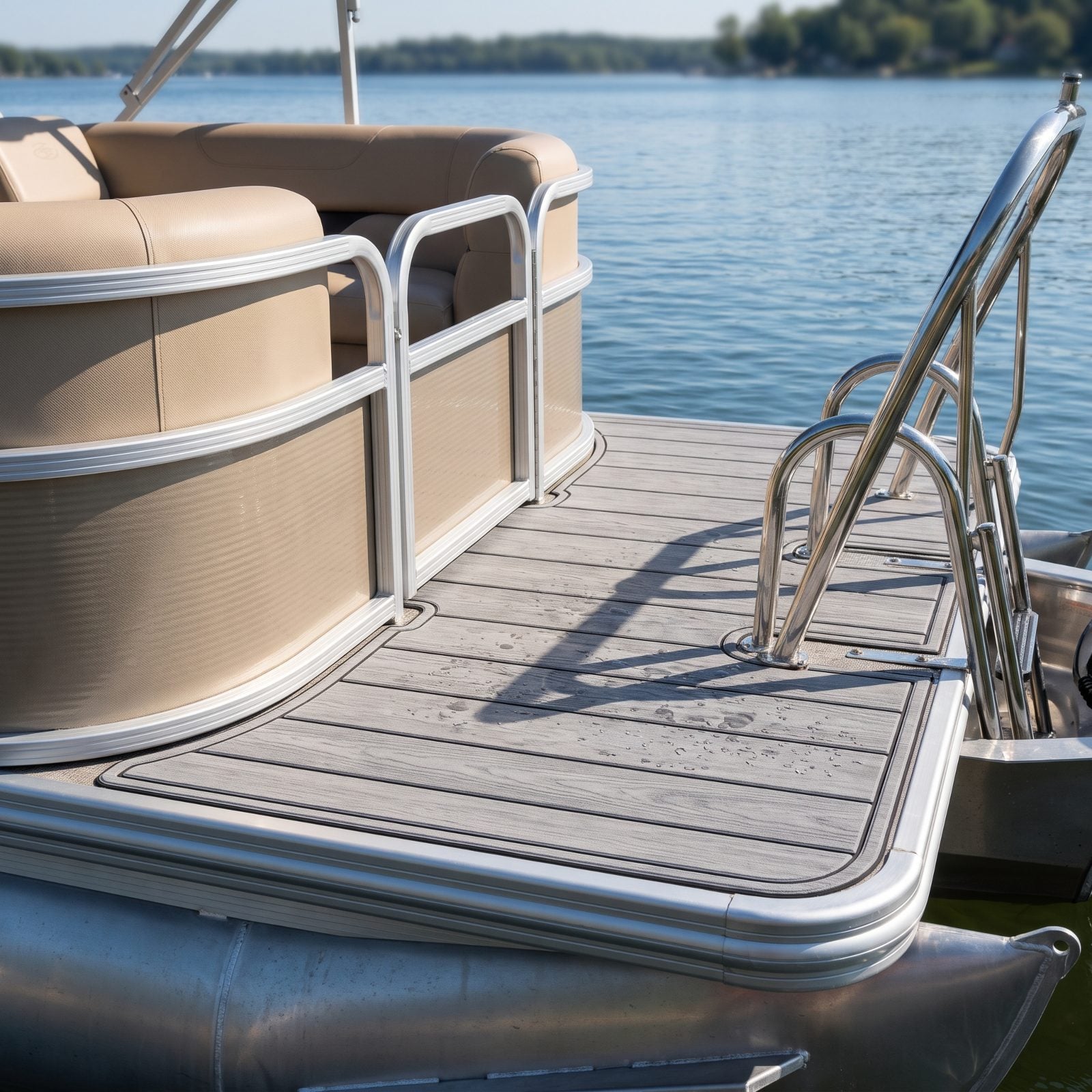
Wet fiberglass is a skating rink. You already know this if you’ve ever come up the ladder and felt your heel start to go.
A fitted foam mat with a teak-style texture turns the slickest part of the boat into the safest. It’s soft underfoot, it drains, and it stays cool enough to stand on barefoot when the deck itself is hot enough to fry an egg.
The peel-and-stick kind goes on in an afternoon. Measure twice, though — once that adhesive grabs, it is not going anywhere polite.
10. Add Removable Safety Netting for Children or Pets
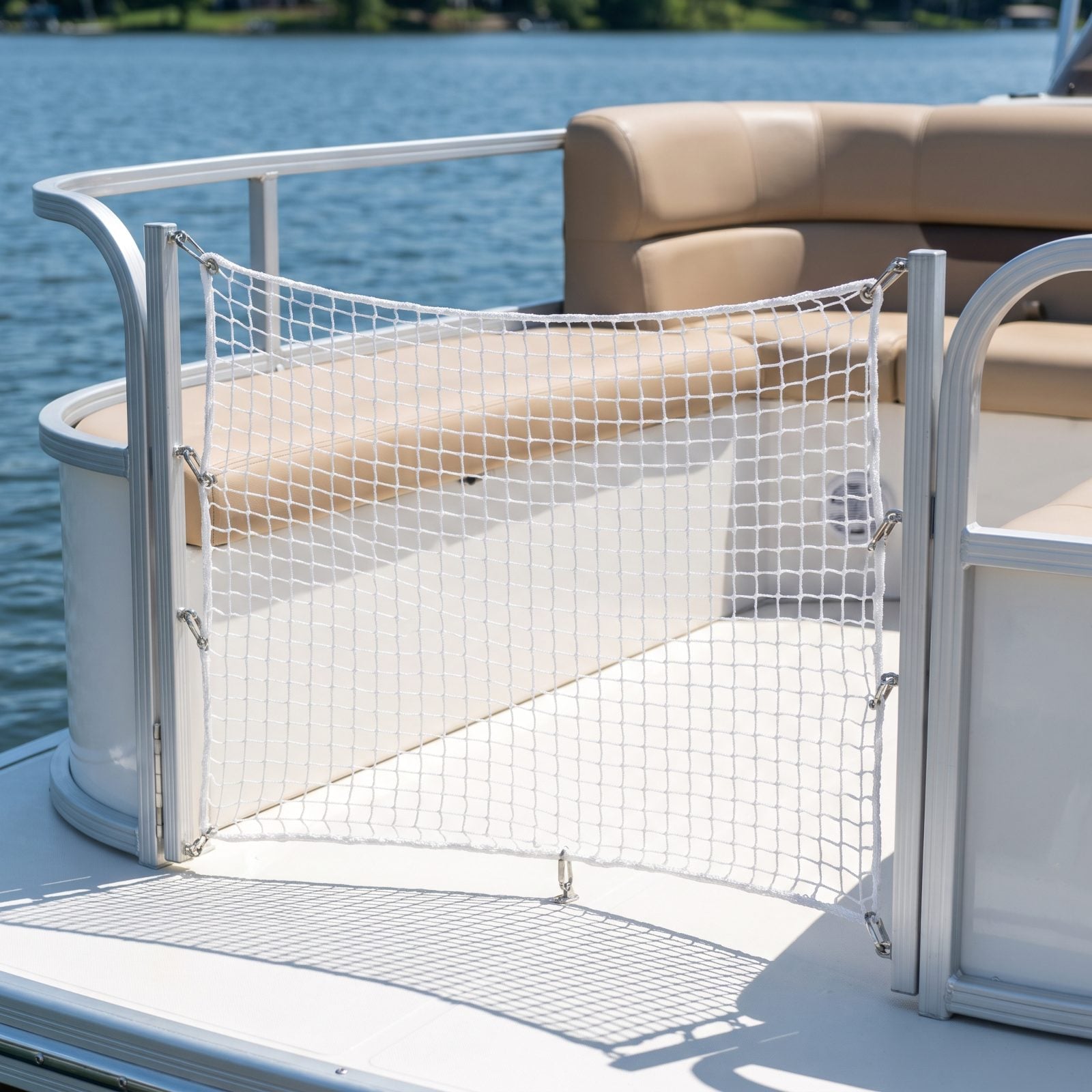
The gap under the rail is invisible to adults and perfectly sized for a toddler or a small dog to slip through. Netting closes it.
Marine mesh clips along the inside of the rails and the gates — soft enough not to mark anyone who leans into it, open enough that it doesn’t trap the breeze. It goes up in about twenty minutes for the day and comes down just as fast when it’s only grown-ups aboard.
9. Install a Dog Boarding Ramp
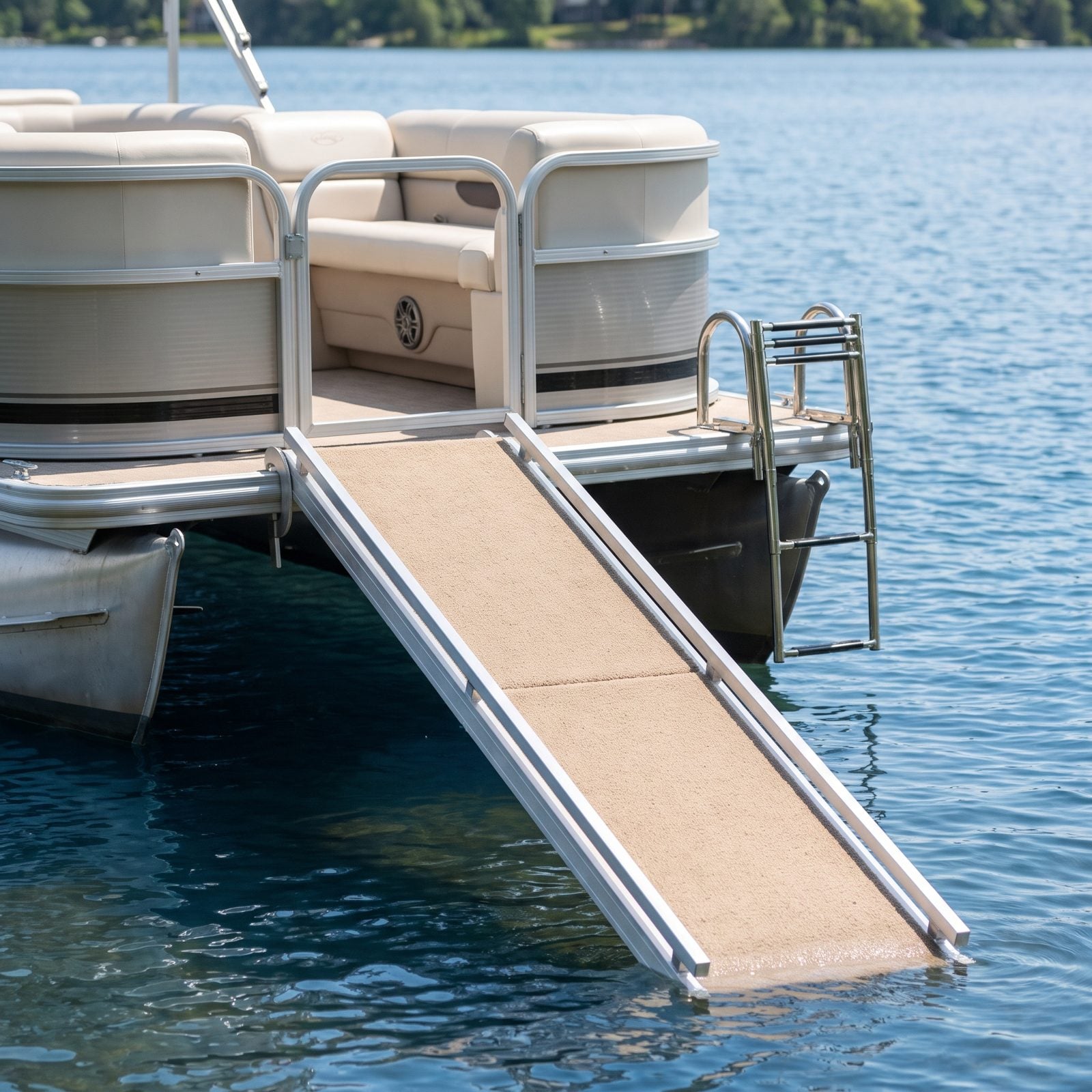
Big dogs can’t climb a swim ladder, and hauling a soaking seventy-pound retriever over the transom by the collar is nobody’s idea of a relaxing swim break.
A sloped ramp with a carpeted, grippy surface lets the dog walk itself back aboard. The good ones float, hook over the platform, and fold down for storage. Train the dog on it once in calm water and you’ll never go back to the lift-and-pray method.
Worth saying plainly: it saves your back as much as the dog’s dignity. And a dog that can get in and out easily is a dog that actually enjoys the boat — which is half the reason you brought it along.
8. Install Rub-Rail-Mounted Docking Lights
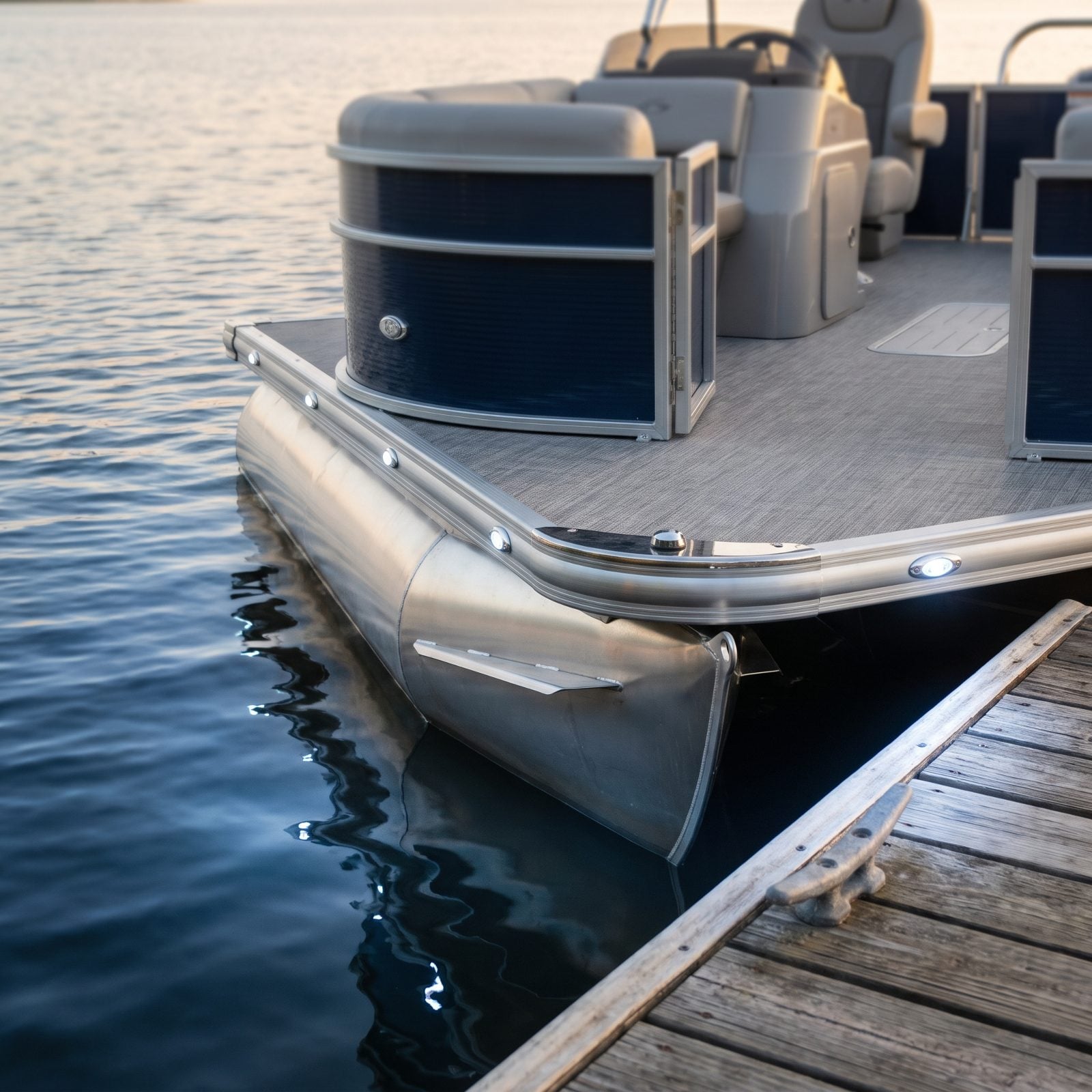
Docking after sunset is where a good day goes sideways. You can’t see the piling, can’t judge the gap, and the poor soul on the bow is just guessing in the dark. Rub-rail docking lights fix that by sitting low along the hull and washing light down onto the water and the dock edge, right where you actually need it.
A decent set runs somewhere between $40 and $150, more if you go wireless. They pull off your 12-volt system and most draw almost nothing. Mount them on the bow and both corners of the stern and you’ve got every angle covered when you’re easing in.
7. Add Permanent Fender Hangers
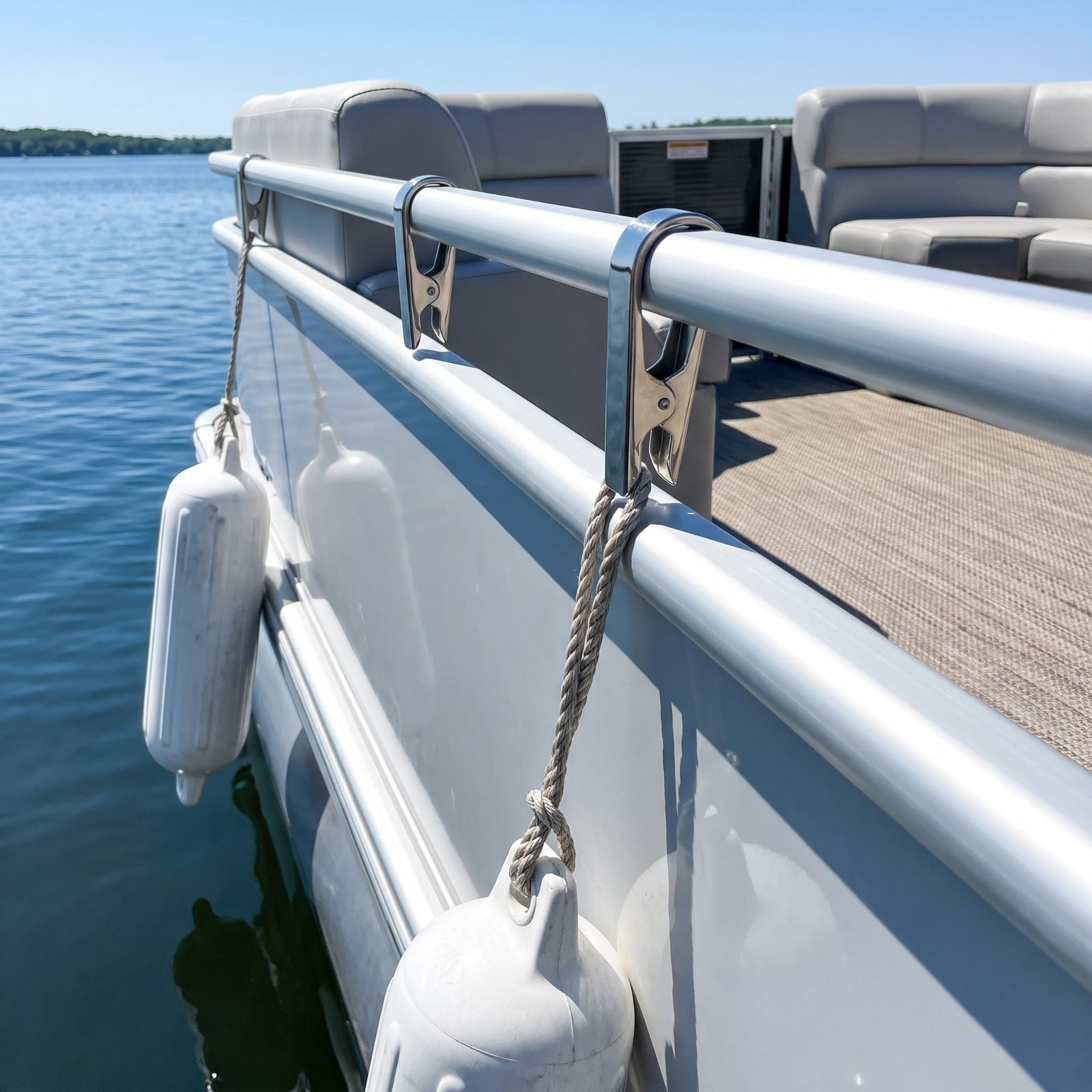
You know the scramble. Someone’s got a fender in each hand while the boat drifts, tying frantic knots on the rail while you white-knuckle the helm trying to hold position. It’s chaos, and it’s completely avoidable.
Permanent fender hangers clip over your top rail and hold the fender at a fixed height, ready to go — no knots, no fumbling. Figure $15 to $30 a pair, and they install in minutes with no drilling on most pontoon rails. Set them once at the right drop for your usual slip and that’s it. The smug little feeling of pulling in clean is worth the fifteen bucks all by itself.
6. Upgrade to Quick-Adjust Dock Lines
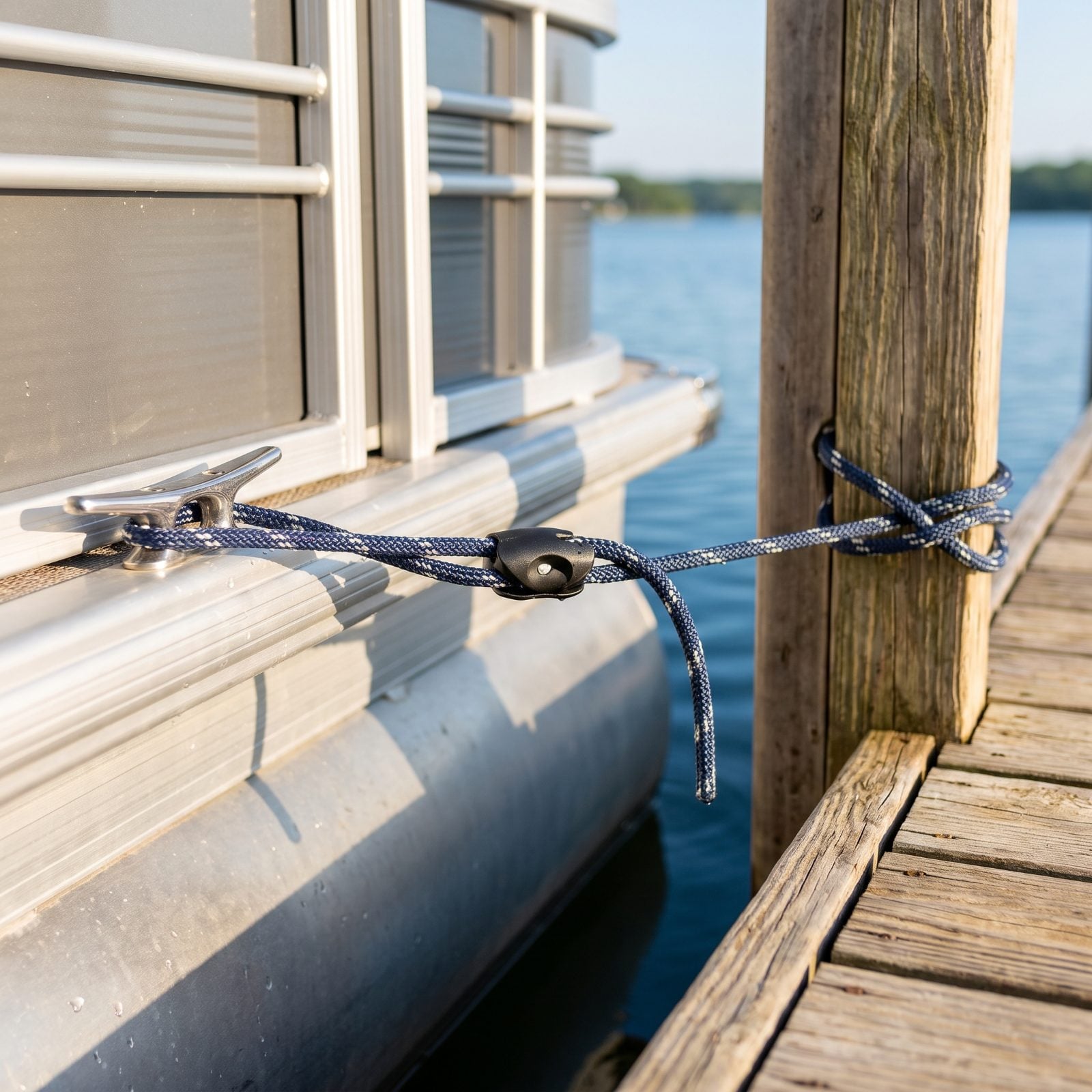
Tide, wakes, and wind are always shoving your boat around, and your dock lines need to shove back. Standard lines mean you’re forever untying, pulling slack, retying. Quick-adjust lines use a sliding cam or loop system that lets you snug up or loosen off with one hand in a second flat.
A set runs roughly $25 to $60 per line depending on length and hardware. Worth it if you deal with changing water levels or a busy marina where boat wakes rock you all day long. You pull in, snug the line, done — and then you’re reaching for a cold drink instead of fighting a cleat hitch.
5. Install a Dual-Battery System
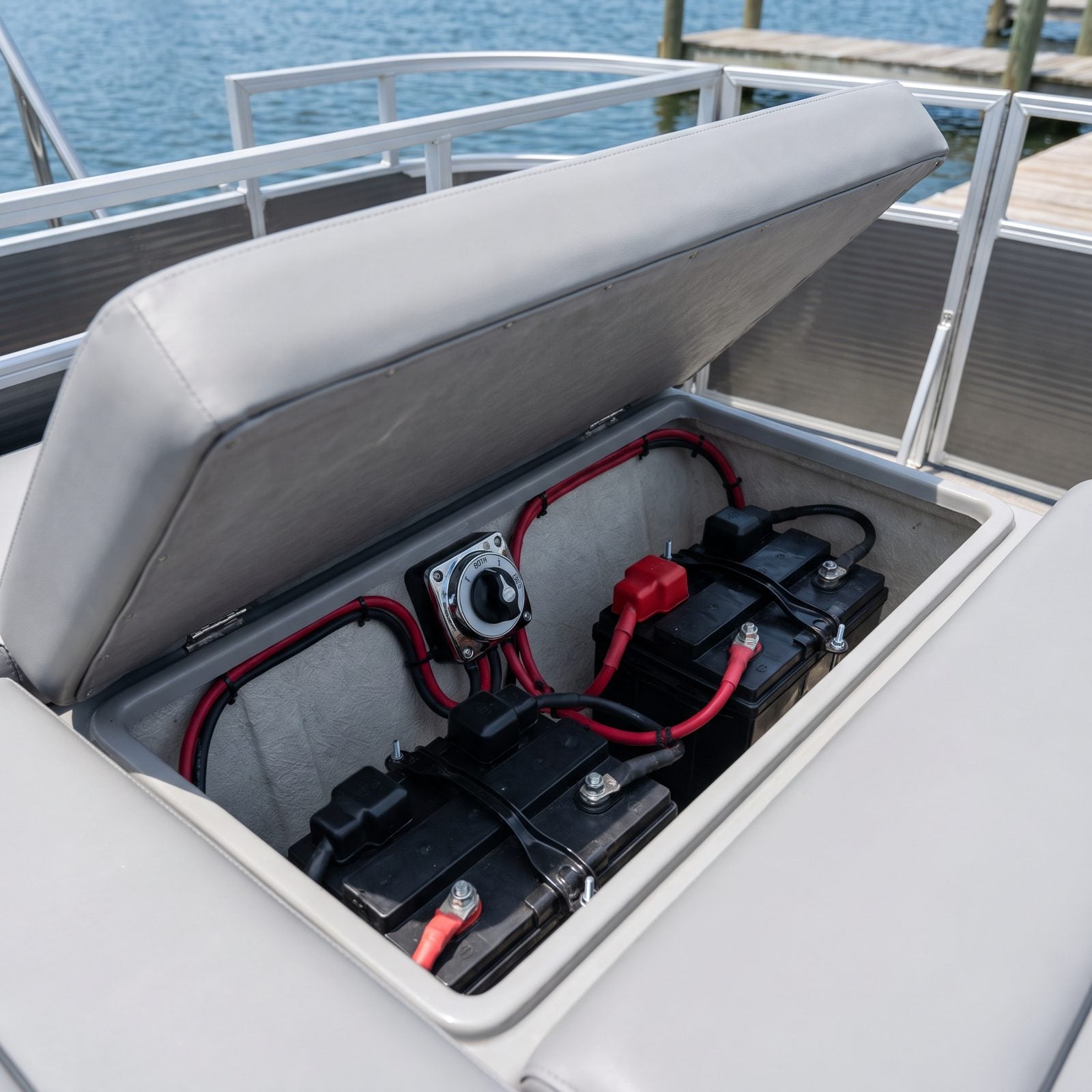
Here’s the day nobody wants. You’ve run the stereo and the lights all afternoon anchored in the cove, and now the engine won’t crank. One battery does everything on most pontoons, and that’s a single point of failure sitting right between you and the ramp.
A dual-battery setup splits the job: a dedicated starting battery, and a separate house battery for your accessories. Run the lights, the radio, the livewell all day on the house side and your crank battery never gets touched. A rotary selector switch lets you isolate them, or combine them when you’ve painted yourself into a corner.
Figure $150 to $400 for the second battery, a switch or isolator, boxes, and cable. Best insurance policy you can bolt to a boat, honestly.
4. Add a Smart Battery Monitor
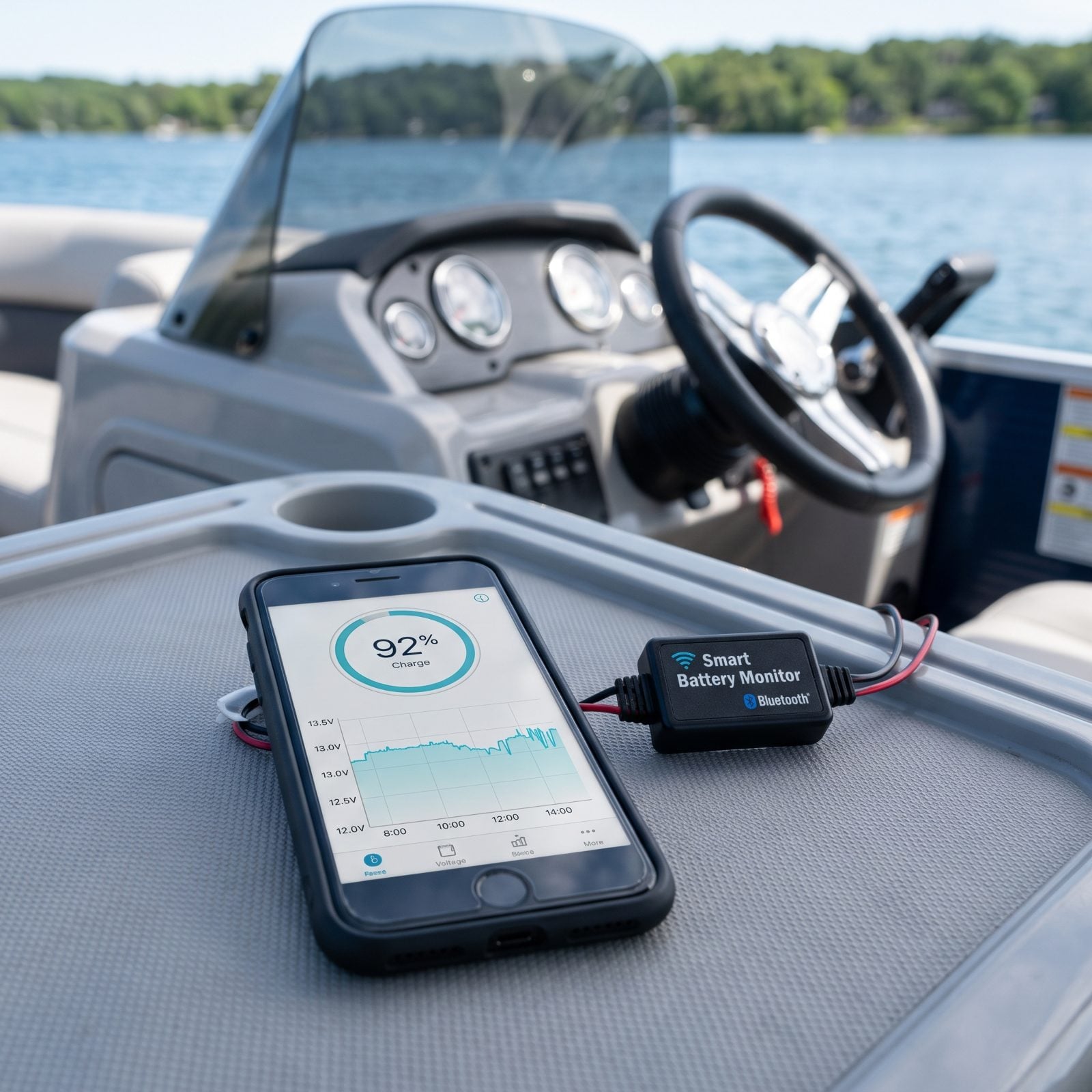
A battery monitor answers the one question that actually matters out there: do I have enough juice to get home? Instead of guessing, you glance at your phone and see exact voltage, charge percentage, and how fast you’re drawing it down.
Modern Bluetooth units run around $70 to $150 and wire straight to the battery in about fifteen minutes. The app shows how many amp-hours you’ve burned sitting at anchor and roughly how much time you’ve got left. No mystery, no crossing your fingers on the key.
And it pairs beautifully with a dual-battery system — one tells you what you’ve got, the other backs you up when you don’t.
3. Mount a Solar Trickle-Charging Panel
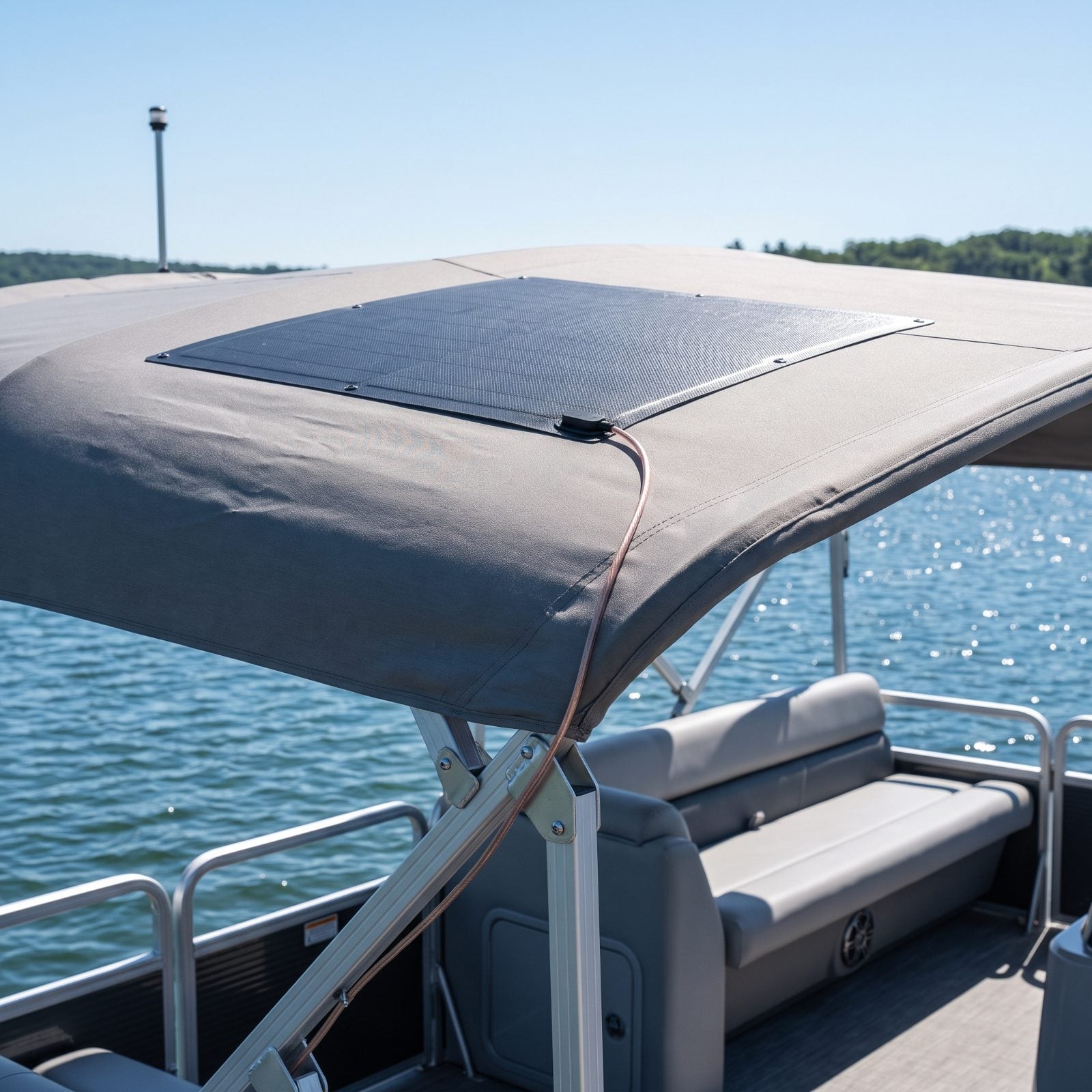
Your battery dies quietly between outings. Bilge pumps, stereo memory, and a dozen tiny draws nibble away at it all week while the boat just sits there. Then you roll in for a Saturday run and it’s flat as a pancake.
A small solar trickle panel solves that and asks nothing of you. Mount a slim 10 to 50-watt panel on the bimini or a flat stretch of deck, run the cable to a charge controller, and it keeps the battery topped off whenever there’s sun. A full kit runs about $50 to $200.
Won’t power your boat. That’s not the job. It just stops the slow bleed so the battery’s ready when you are.
2. Add Trim Tabs for Better Ride Control
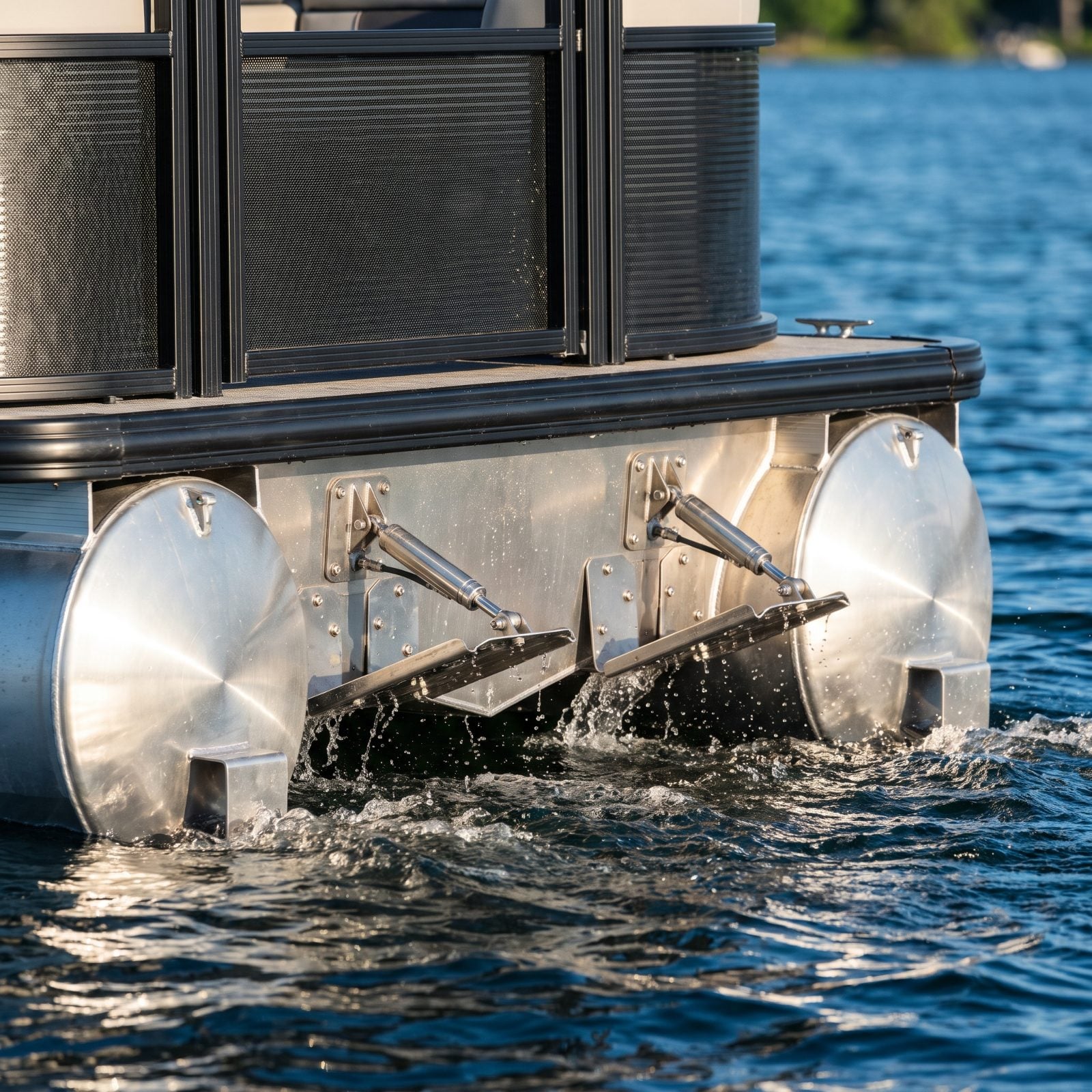
Ever had everyone pile onto one side of the boat and felt it lean like a tired old porch? Trim tabs cure that lean and a whole lot more. They’re adjustable plates mounted on the stern panel between the pontoon tubes, angled by actuators controlled from the helm, that push the stern up or level the boat side to side.
On a pontoon they get you on plane faster, settle the bow in chop, and correct a lopsided load so you’re not fighting a tilt all afternoon. Expect $600 to $1,500 installed. That’s real money, but the difference in rough water is the kind you feel in your knees at the end of the day.
If your tri-toon plows through wakes and soaks the front row every time, this is the upgrade that buys back some goodwill from your passengers.
1. Upgrade to Hydraulic Steering
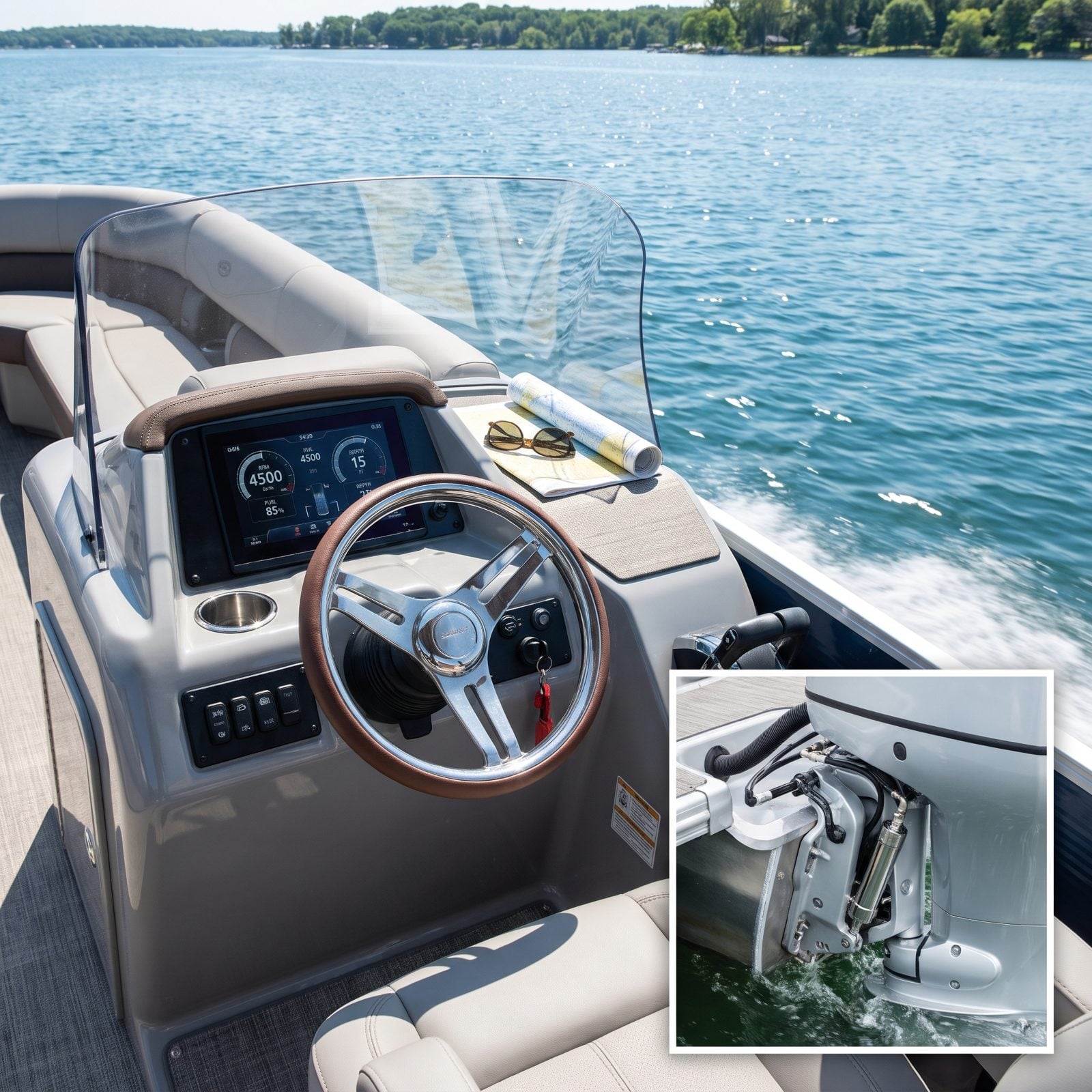
Mechanical cable steering gets stiff, notchy, and flat-out tiring on a long day, and it’s worse on a big tri-toon hauling a heavier motor. You end up muscling the wheel through every turn and wrestling torque at speed.
Hydraulic steering turns all that into a light, smooth, almost car-like feel — no kickback, no wrestling, just easy fingertip control whether you’re creeping into a slip or running wide open across the lake. On anything with real horsepower, it transforms the day.
It’s one of the priciest things on this list, usually $700 to $1,500 for parts and often more once a pro installs it. But if you cruise a lot, or your current setup fights you, this is the one you’ll feel every minute at the wheel. And that wraps up the short list of money worth spending.