

A pontoon boat in 1960 was basically a wooden platform bolted to two steel barrels, pushed along by a motor smaller than what runs a modern trolling rig. Nobody called it a party barge. Nobody put a stereo on it. It floated, it held a few lawn chairs, and that was the whole promise. Watch what happens to that simple idea across more than six decades and the whole story of American lake weekends shows up with it. Prices climb, rails appear, and carpet eventually replaces splinters. Here’s what a new pontoon actually cost, decade by decade, in the dollars of the day and in money that makes sense now.
Please note that some of the imagery in this article may have been enhanced with the assistance of AI.
1960: A Bare-Bones Pontoon With a Wooden Deck and Small Outboard
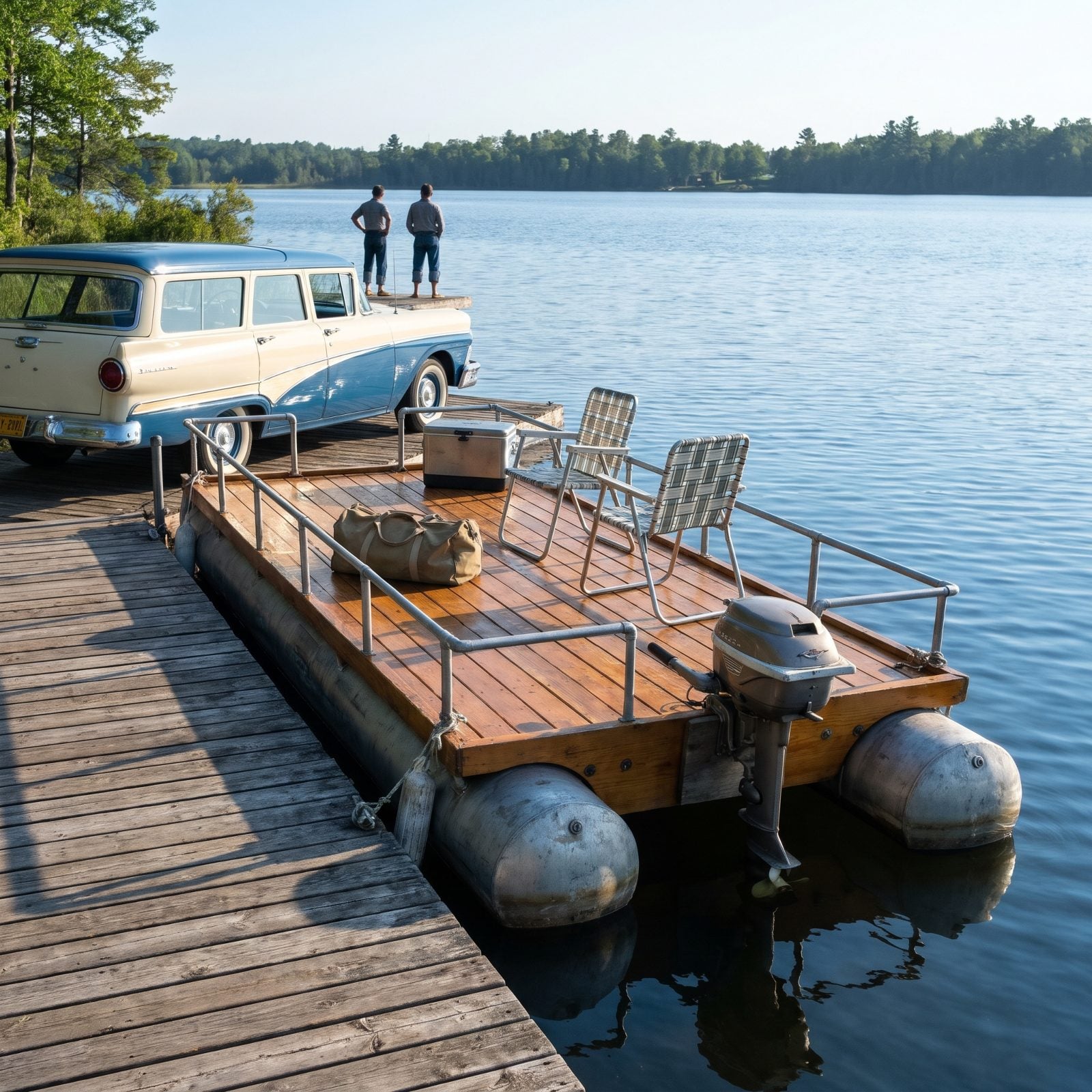
Strip a pontoon of everything and this is what’s left: two tubes, a wooden deck, and a tiller motor you steered by hand from the back. No console, no upholstery. The seating was whatever folding chairs you carried down from the garage.
A new one ran roughly $600 to $900 in 1960 dollars, motor included on the cheaper setups. That’s somewhere around $6,500 to $9,500 today. Cheap by modern pontoon math, sure, but back then it bought you a floating porch and not much else.
1964: A Utility Pontoon Built Around Open Deck Space and Portable Seating
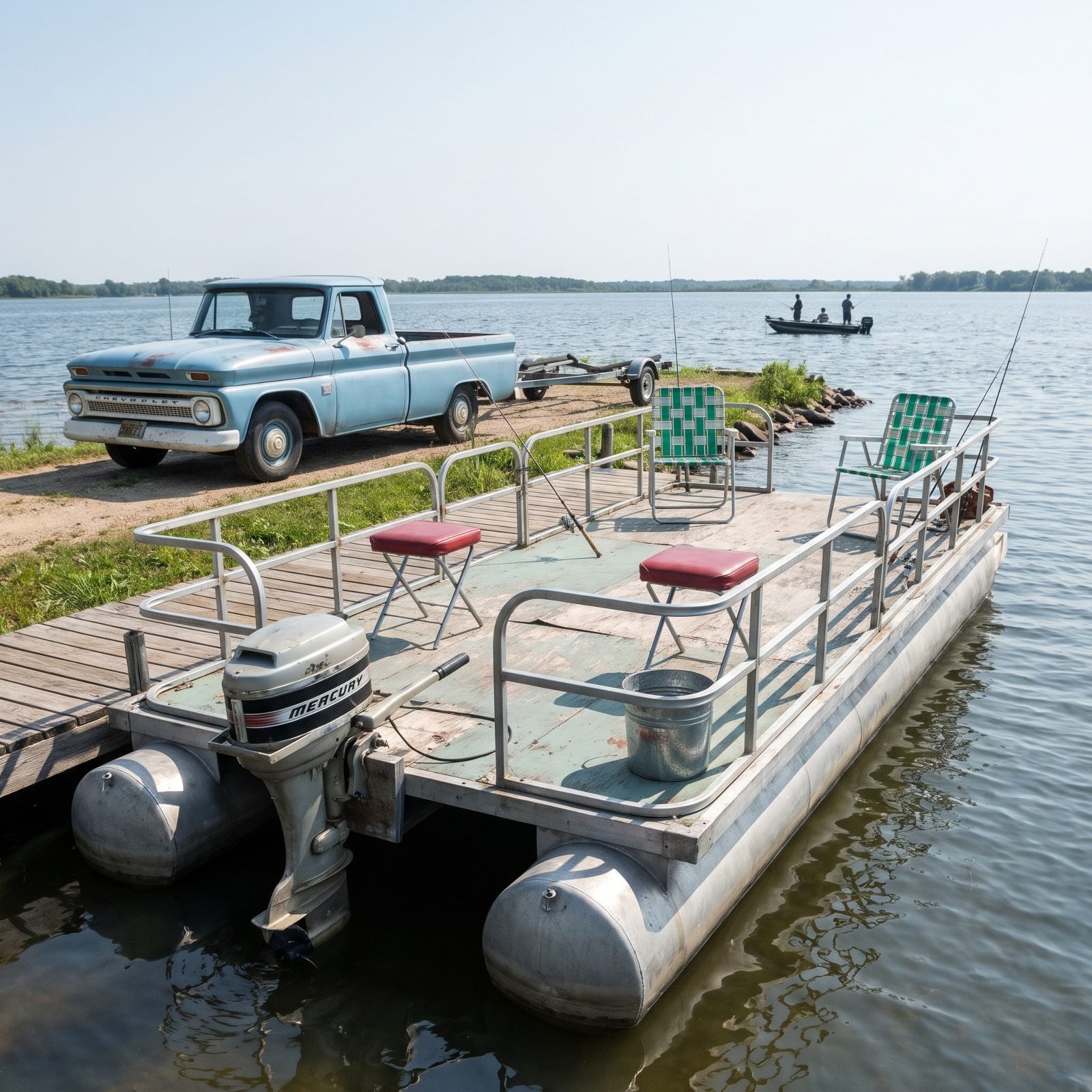
By the middle of the decade the pontoon had figured out its real job, which was space. A wide open deck, a low rail around the edge, and seating you moved wherever you needed it. Fishermen loved it. So did anyone hauling kids, coolers, and a day’s worth of gear.
Prices crept toward $900 to $1,200 with a modest outboard, call it $9,000 to $12,000 in today’s money. You weren’t paying for comfort. You were paying for a stable platform that didn’t tip when four people crowded onto one side.
1968: The Family Pontoon Gains Railings, Upholstered Seats and a Canopy
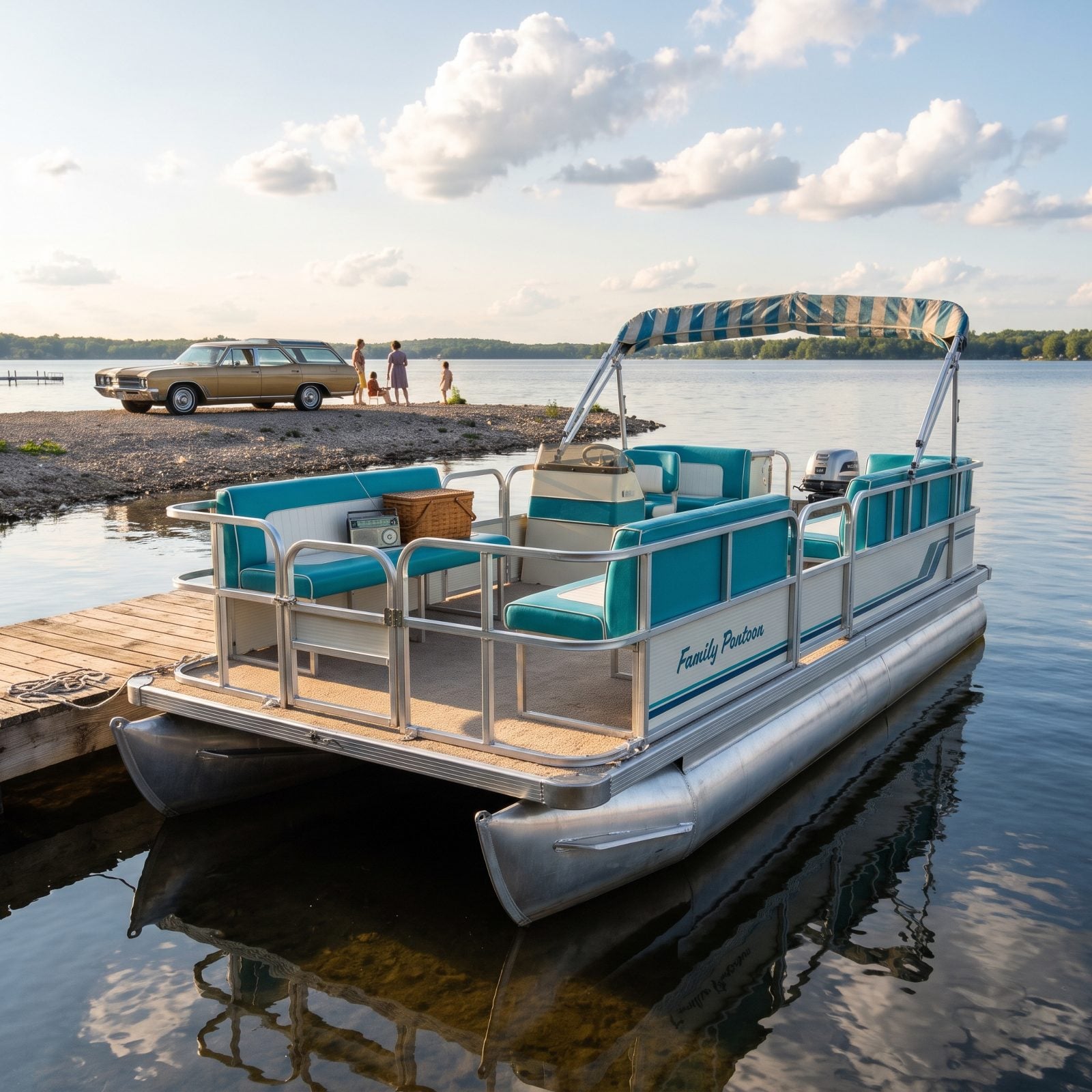
This is the year the pontoon stopped being a work platform and started being a weekend. Railings all the way around. Padded vinyl benches in colors somebody actually picked on purpose. And that striped canvas bimini meant you could sit out past noon without cooking.
New ones landed around $1,400 to $1,900 depending on the motor, which works out to roughly $13,000 to $17,500 in today’s dollars. The jump wasn’t the aluminum. It was comfort. Once you could nap on a cushioned bench under shade, the whole point of the boat changed.
1970: An Entry-Level Cruiser for Simple Summer Outings
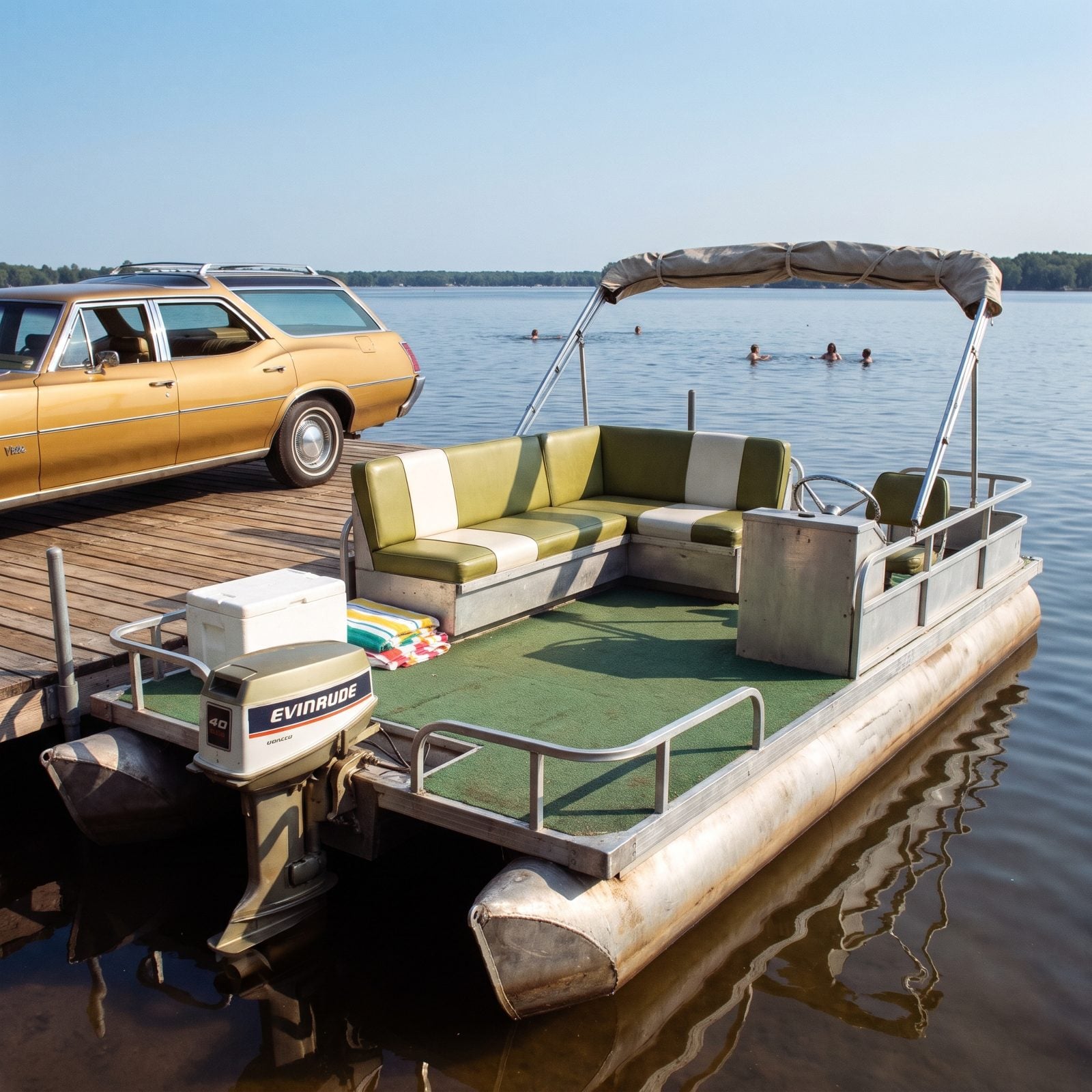
The entry-level cruiser of 1970 was the Sunday-afternoon boat. Nothing fancy about it. A side console so one person could steer while everyone else lounged, a carpeted deck, and enough bench seating for a small crowd.
Base prices sat around $1,800 to $2,400 with a 40 to 50 horse outboard, which comes out to roughly $14,500 to $19,500 today. Honestly, the value hasn’t moved as much as you’d think over fifty years once you adjust for inflation. What you got for the money was the real change.
1974: A Fishing-Focused Pontoon With Pedestal Seats and an Open Bow
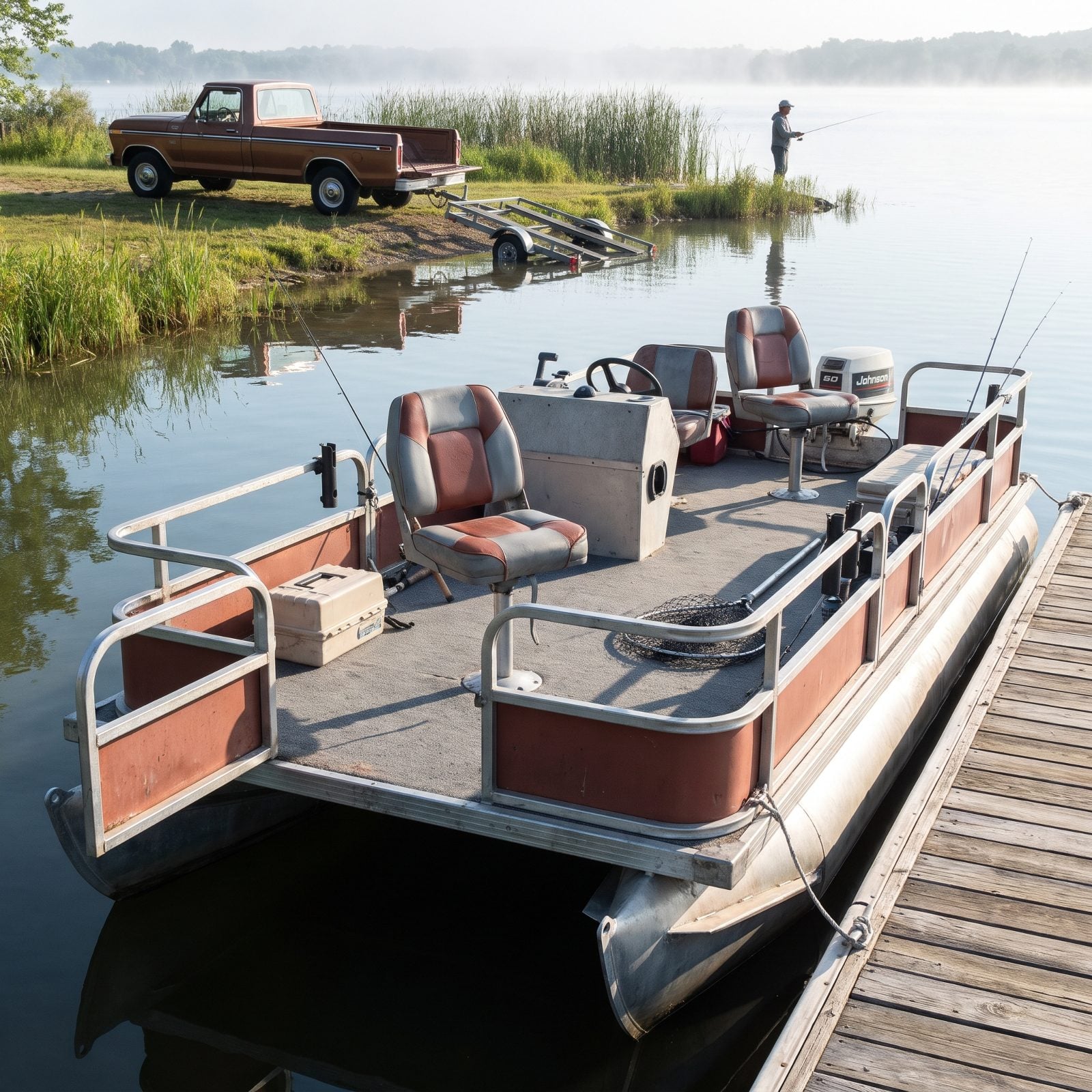
Pedestal seats changed everything for anglers. You could swivel, cast in any direction, and the open bow gate let you step right out onto a dock or shallow bank without climbing over a rail.
A fishing-trimmed pontoon ran about $2,500 to $3,200 in 1974, somewhere near $16,000 to $20,500 now. The extras weren’t luxury. They were tools: rod holders along the rail, a tackle shelf, a swivel chair that didn’t make your back ache after four hours of crappie.
1978: A Larger Outboard and Full Steering Console Add to the Price
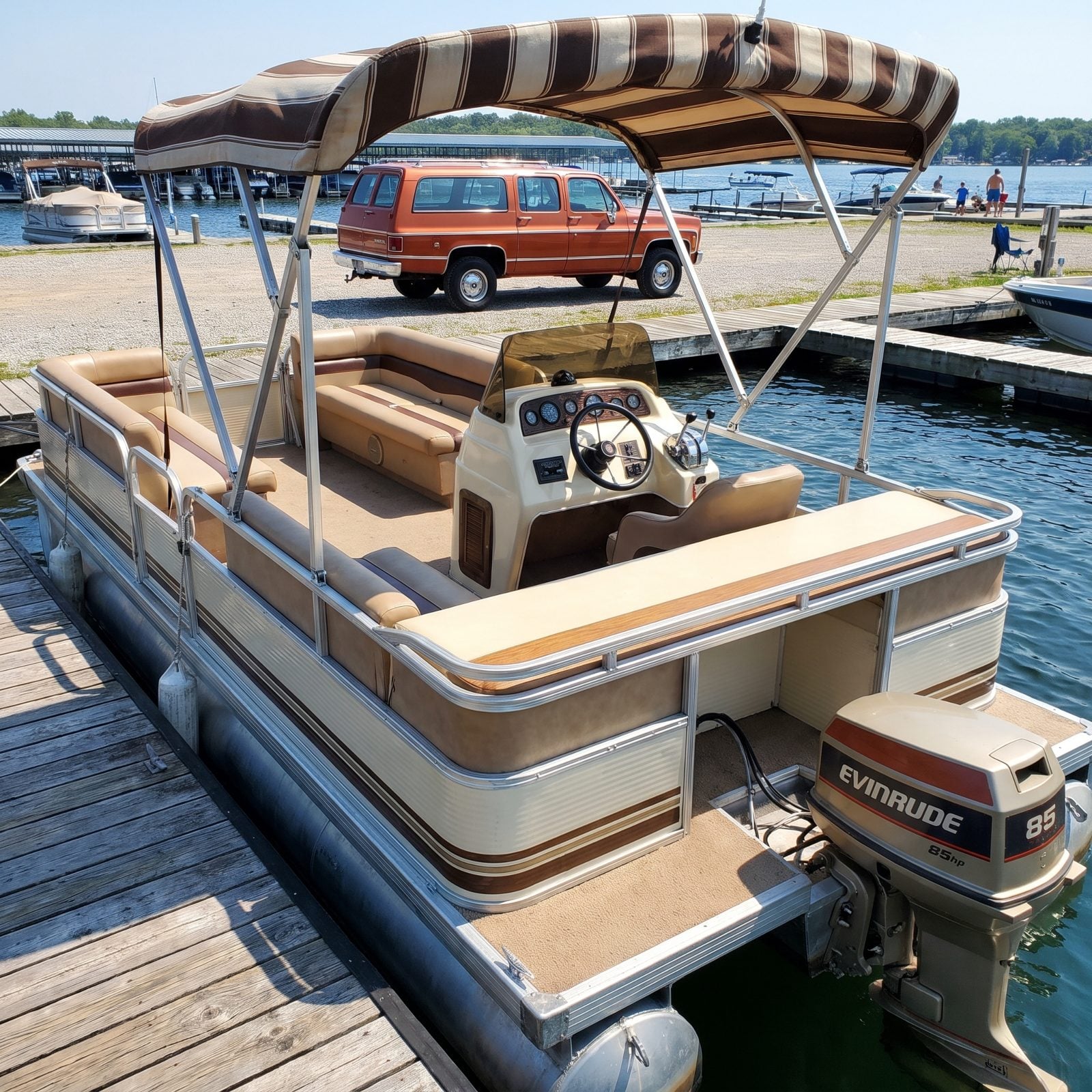
The forward helm console is the upgrade that quietly drove the price up. Gauges, a throttle, a windscreen, and a real wheel positioned where you could actually see where you were going.
Pair that with a 70 to 85 horse outboard and you’re looking at $3,500 to $4,800 new, roughly $17,500 to $24,000 today. The bigger motor is where the money went. More horsepower meant more weight, more fuel, and stronger transom construction to handle it.
1980: A Two-Tube Family Pontoon With More Seating and Better Controls
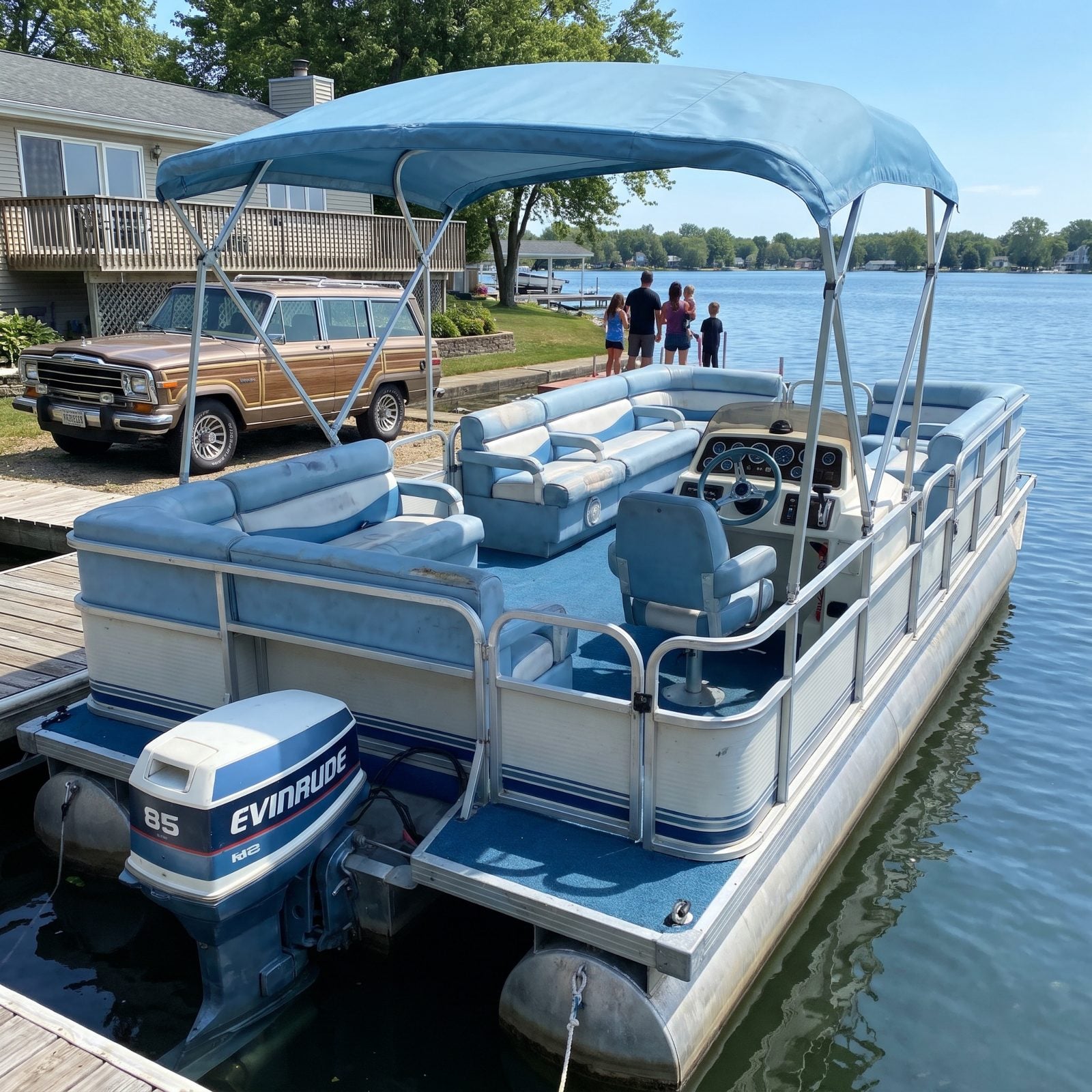
Step aboard a 1980 model and the difference you feel first is the seating. Wraparound lounges with armrests, more cushion, room for the whole family to sprawl. The controls got better too, with gauge clusters that told you something and throttles that moved smoothly.
New prices sat around $5,000 to $6,500 with a motor in the 85 to 100 horse range. Adjusted, that’s roughly $19,000 to $24,500 today. The boat was growing up. Still two tubes, still aluminum, but the ride and the comfort had both climbed.
1984: Livewells, Rod Storage and Fishing Chairs Create a New Upgrade Path
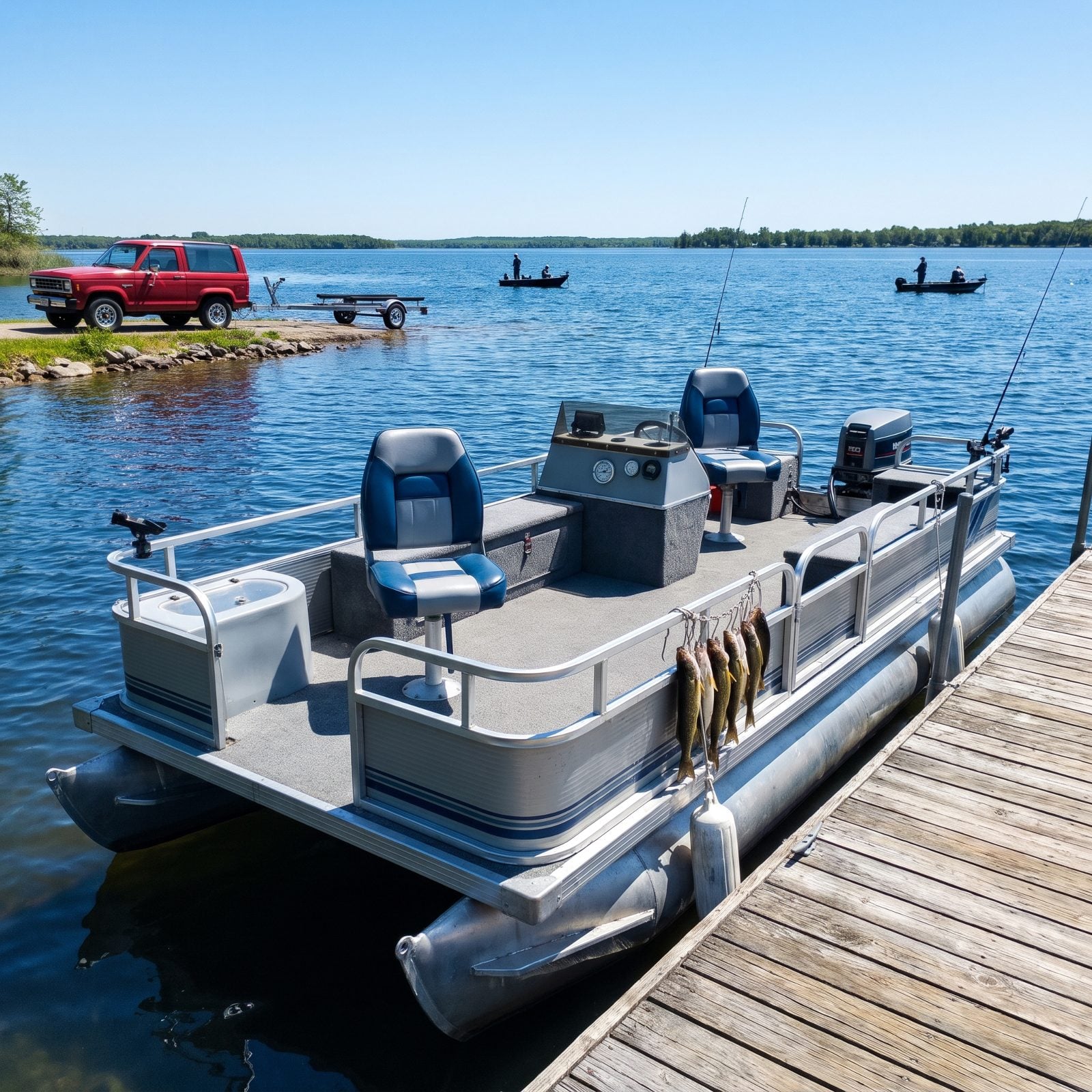
Mid-80s builders figured out something smart: let the buyer choose. The fishing package became its own menu. Livewells to keep your catch alive, lockable rod lockers so expensive gear stayed put, high-back swivel chairs that beat anything from the previous decade.
Loaded up, a fishing pontoon ran $6,500 to $8,500, around $19,500 to $25,500 in today’s dollars. And here’s what nobody tells you: those options added weight fast, so a boat spec’d for serious fishing needed more motor just to stay quick, which piled cost on top of cost.
1988: The Party Barge Era Brings Sun Decks, Stereos and Bigger Motors
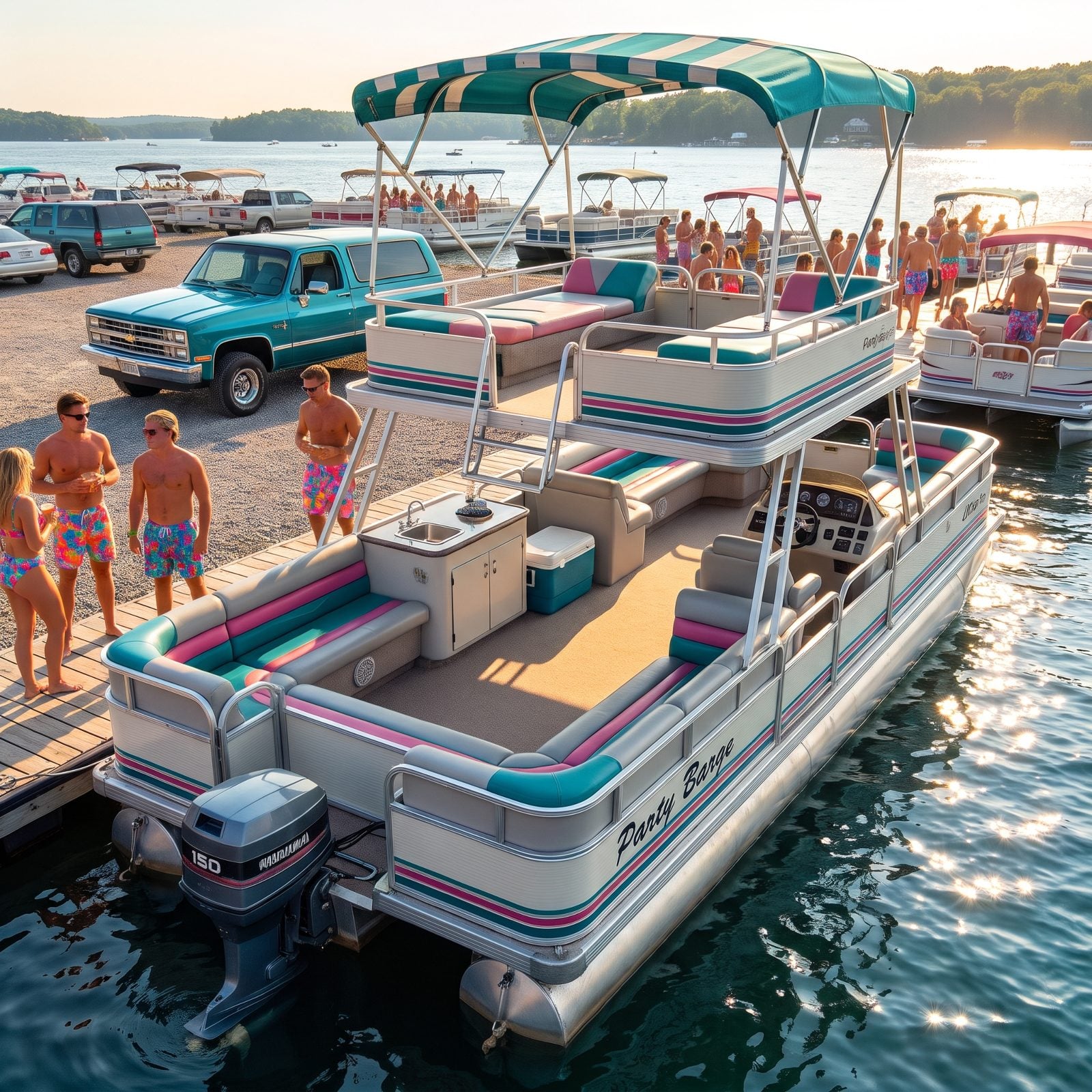
You know the look. Teal and pink vinyl, a stereo loud enough to annoy three coves over, a rooftop sun deck up a ladder, and a motor finally big enough to pull a kid on a tube. This is the pontoon that stopped apologizing for being fun.
A fully loaded party barge pushed $9,000 to $13,000 new, roughly $24,000 to $35,000 today. Bigger motors in the 115 to 150 horse range were doing most of the work on that price. The era’s taste has aged like a mall food court, but the idea stuck.
By 1988 the pontoon wasn’t a fishing platform that sometimes had fun. It was a floating backyard that sometimes caught a fish.
1990: Aluminum Decking and Improved Furniture Raise the Standard
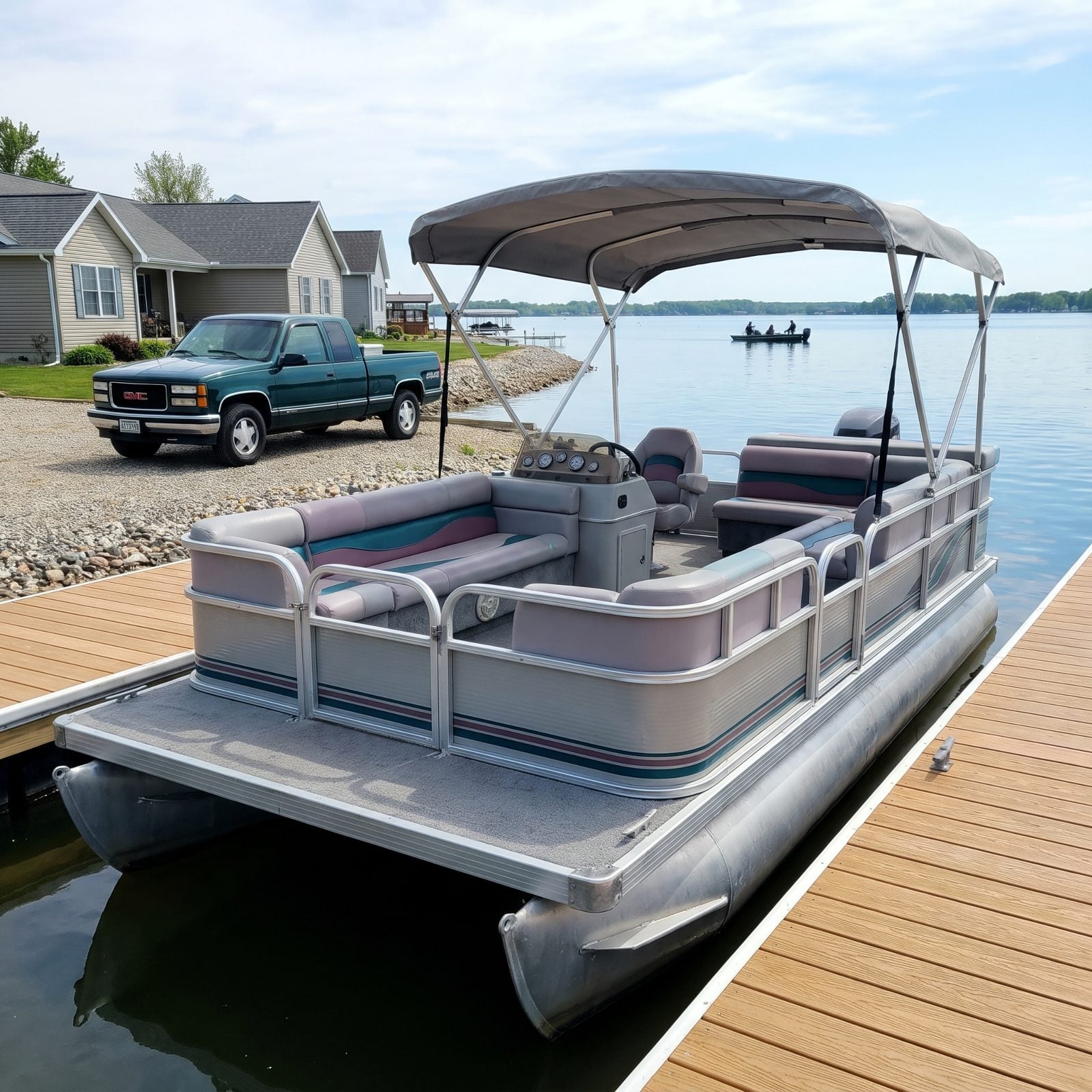
The big change in 1990 was underfoot. Aluminum decking under the carpet replaced the plywood that rotted and warped, and that one swap made boats last longer and feel more solid. The furniture improved too, with thicker foam and backs that supported you through a long cruise.
Base prices landed around $10,000 to $14,000 with a decent motor, call it $24,500 to $34,500 adjusted. Compare that to the splintery wooden platform from 1960 and the money, inflation-adjusted, roughly tripled. So did everything else about the boat. The power, the space, the comfort, and the number of summers it would survive all climbed right along with the price.
1994: Four-Stroke Power Arrives Quieter, and Pricier
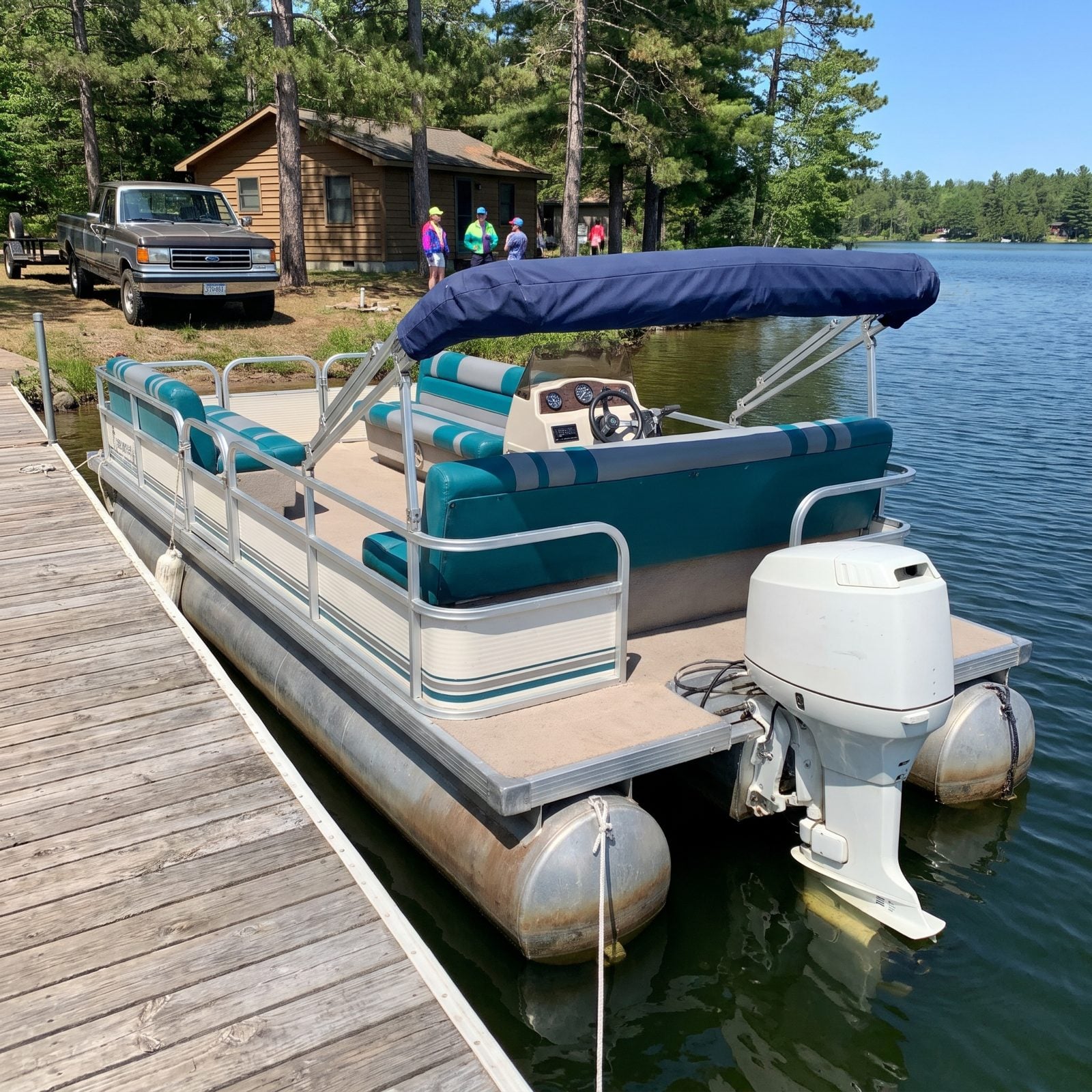
The four-stroke outboard showed up at the dock and nobody could hear it idle. That was the whole pitch, and it worked. Where a two-stroke snarled and left a blue haze over the swim ladder, the early four-strokes just hummed along — quieter mornings, no mixing oil into the gas, cleaner water behind the boat.
You paid for the privilege. A new 18-footer with a modest four-stroke ran around $12,000 to $15,000 in 1994, give or take $26,000 to $32,000 today. Flat carpet deck, striped vinyl seats, a pair of analog gauges and a key for a helm. Plain by current standards. But that motor changed what an afternoon on the water sounded like.
1998: Changing Rooms and Bigger Sun Decks Win Over Families
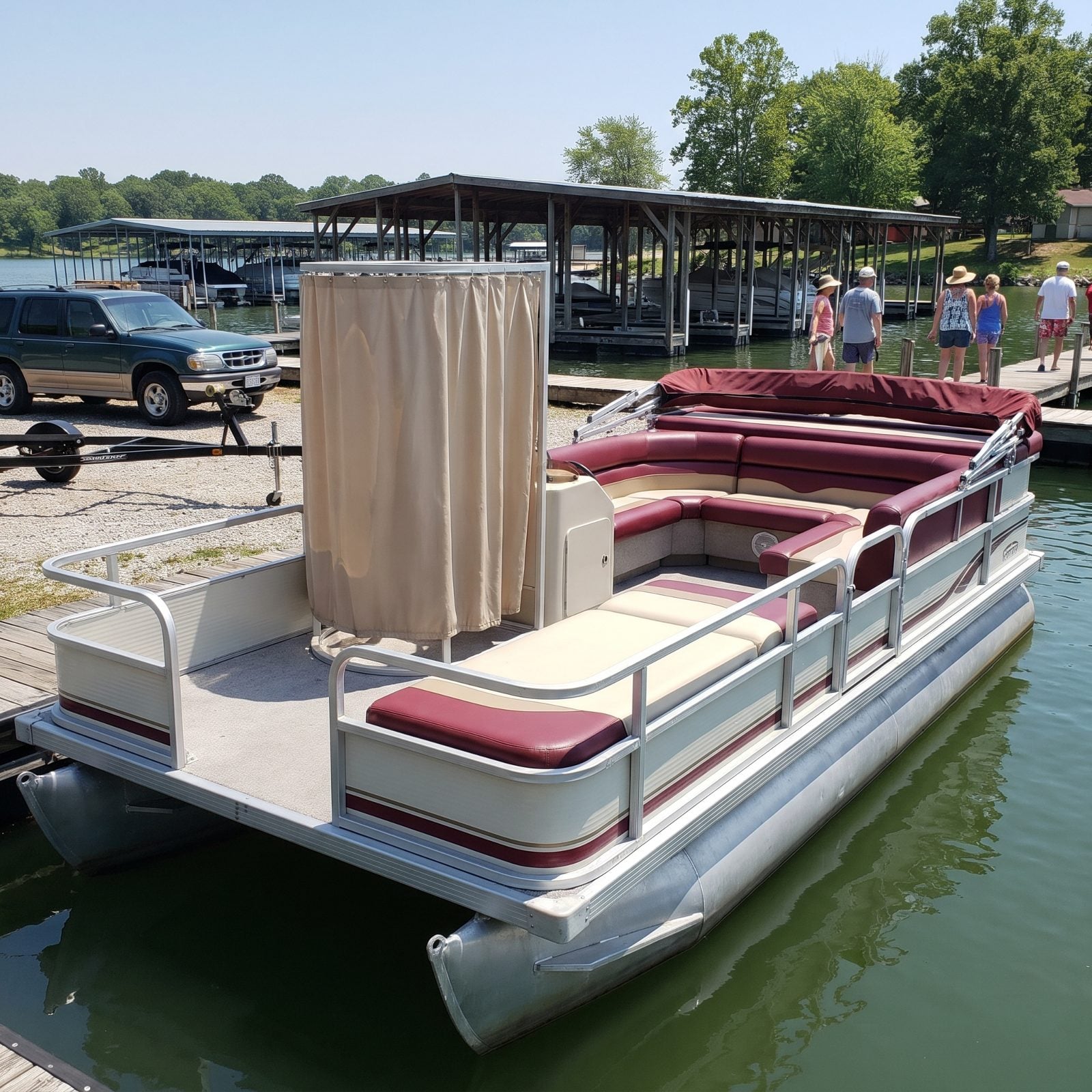
Somebody at a pontoon builder finally asked the obvious question: where does everyone change into a swimsuit? For a while the answer was behind a towel somebody held up. By 1998 the enclosed changing room — curtain, portable toilet tucked underneath — became a selling point, and suddenly families who’d been on the fence signed the paper.
Sun decks grew too, the forward lounge pad stretching into real lie-down territory. A 20-footer with these touches landed near $16,000 to $19,000, call it $31,000 to $37,000 in today’s money. Still carpet and vinyl and an analog helm. But it started acting like a floating living room instead of a floating bench.
2000: The 20-Foot Family Pontoon Finds Its Final Form
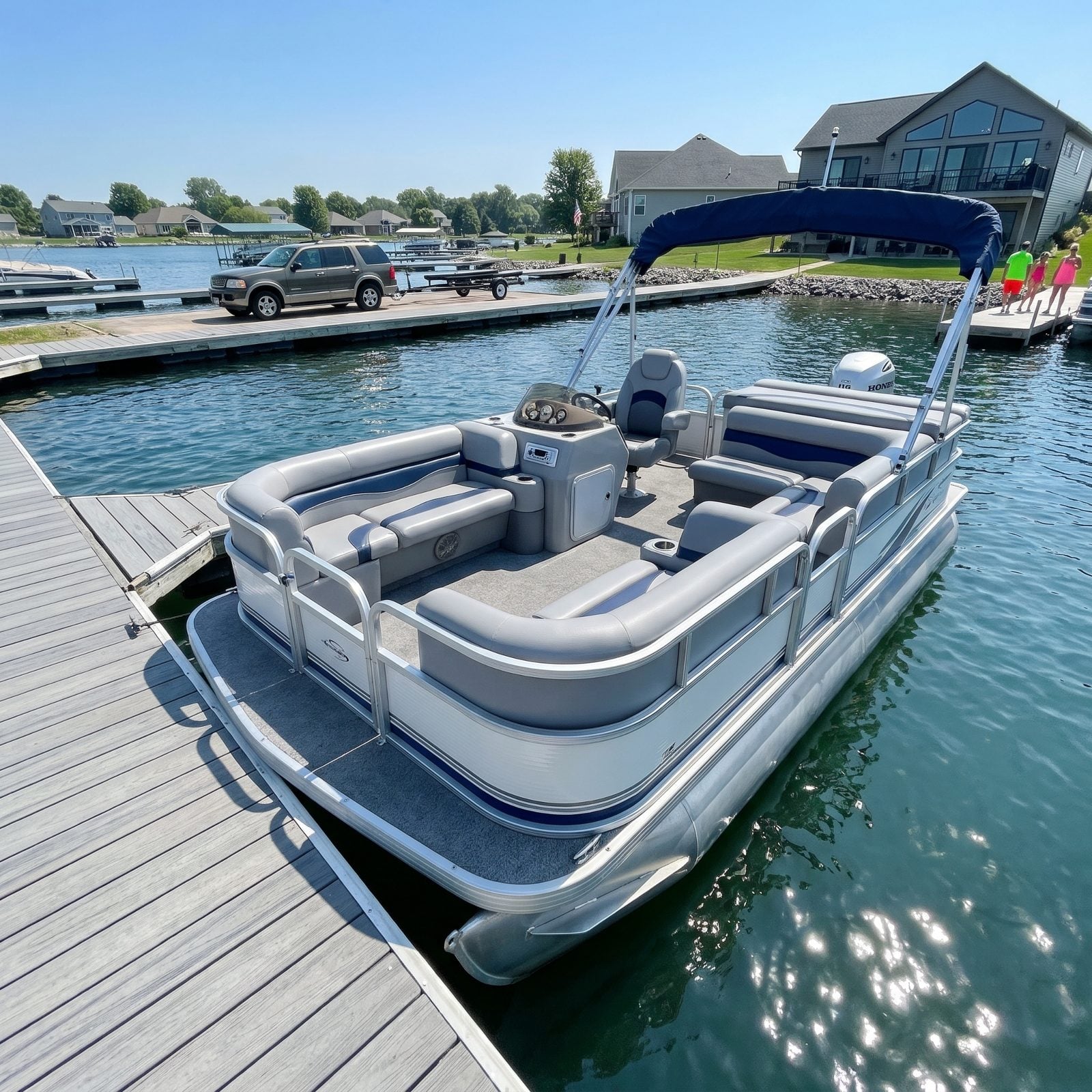
This is the pontoon your memory probably defaults to. By 2000 the 20-foot family layout had settled into a shape that barely changed for years: wraparound lounges front and back, a captain’s chair at a side console, cup holders exactly where your hand already was, carpet underfoot and a bimini overhead.
A boat like this ran roughly $18,000 to $22,000 new, around $33,000 to $41,000 adjusted. The 115-horse four-stroke could pull a kid on a tube without complaint. Nothing fancy. Everything in the right place.
2004: Fuel Injection and Readable Gauges Clean Up the Helm
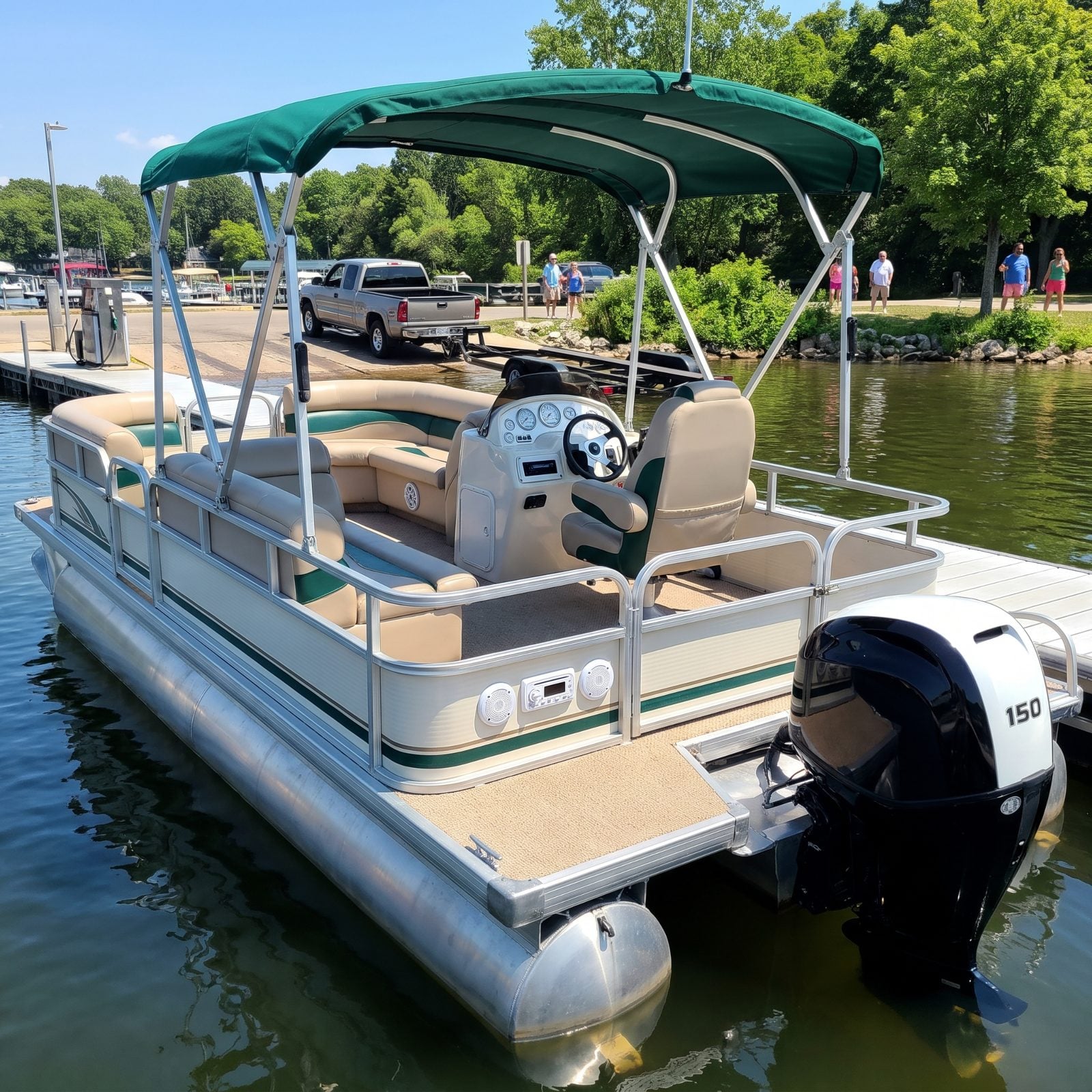
Fuel injection quietly fixed a pile of annoyances nobody loved talking about. Cold starts got easier, the hesitation at the throttle smoothed out, and the motor sipped a little less gas across a day of lazy circling — which the person paying at the fuel dock noticed.
The helm got honest too. Clearer gauges, a real tach, a fuel readout you could actually trust. A fuel-injected 150 on a 21-footer pushed prices to around $22,000 to $27,000, roughly $37,000 to $46,000 today. Still carpet and vinyl, but the business end of the boat finally told you what it was doing.
2008: The First Tritoons Trade Money for Speed and a Steadier Ride
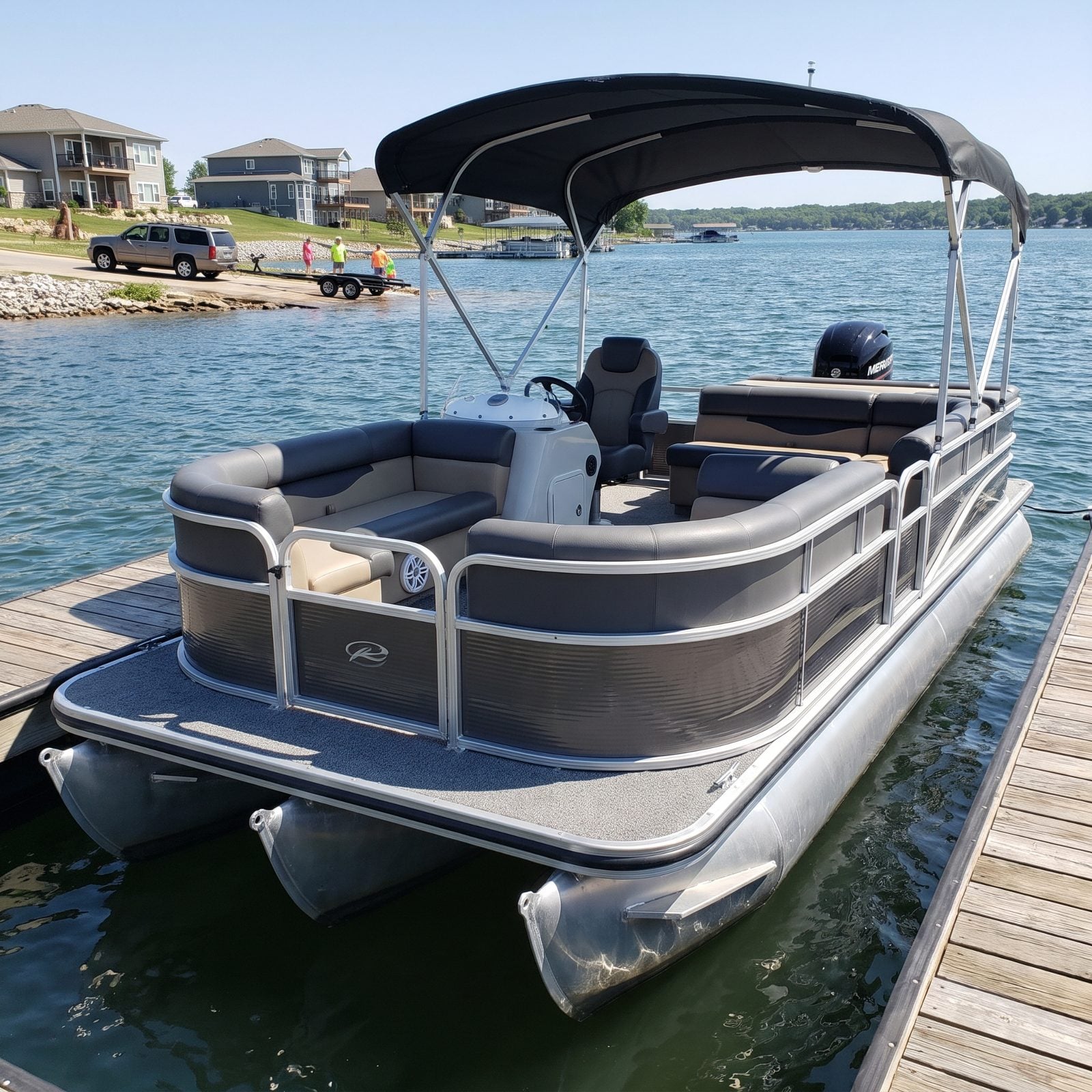
Add a third tube down the middle and the whole personality shifts. The tritoon rode flatter in a chop, turned without that old flat-bottom lurch, and held more horsepower without feeling nervous about it. The early packages weren’t subtle about charging for the privilege.
A 22-foot tritoon with a 200-horse motor crossed into $28,000 to $35,000 territory around 2008, roughly $42,000 to $52,000 adjusted. That center tube brought buoyancy and bite. For the first time a pontoon could carry a crowd and still get up on a plane like it meant it.
2010: Bigger Motors, Softer Seats, Higher Sticker
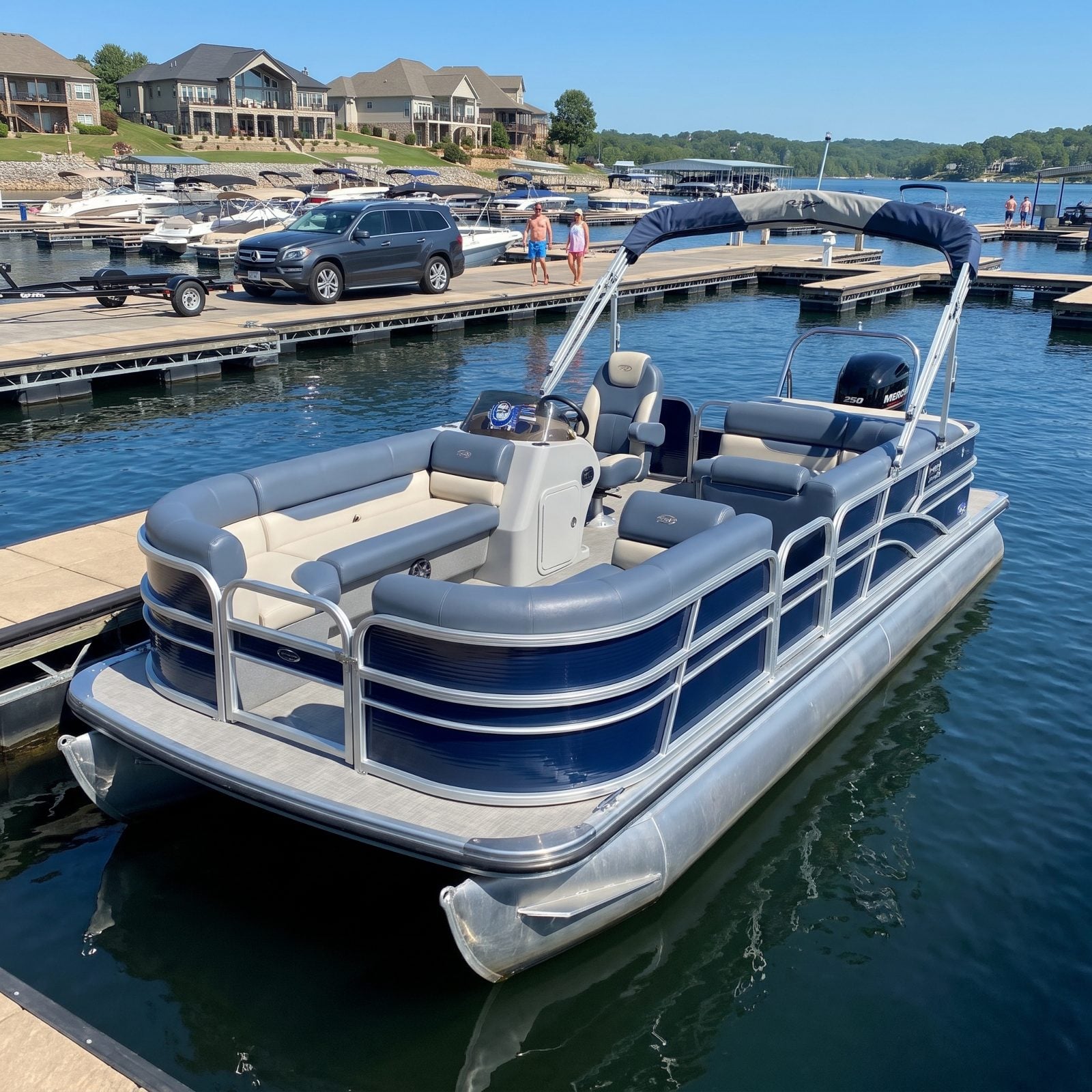
The interiors started feeling like they’d wandered off a far pricier boat. Thicker foam, blue-gray vinyl with real stitching, armrests, a captain’s chair you’d happily sit in for a two-hour cruise. Motors climbed toward 250 horses on a 23-footer.
Prices followed the comfort, settling around $35,000 to $45,000 new, roughly $50,000 to $64,000 today. The pontoon stopped apologizing for being a pontoon. It parked next to the ski boats and asked, politely, why anyone would pick cramped over a couch on the water.
2012: Strakes and Hydraulic Steering Make Tritoons Actually Fast
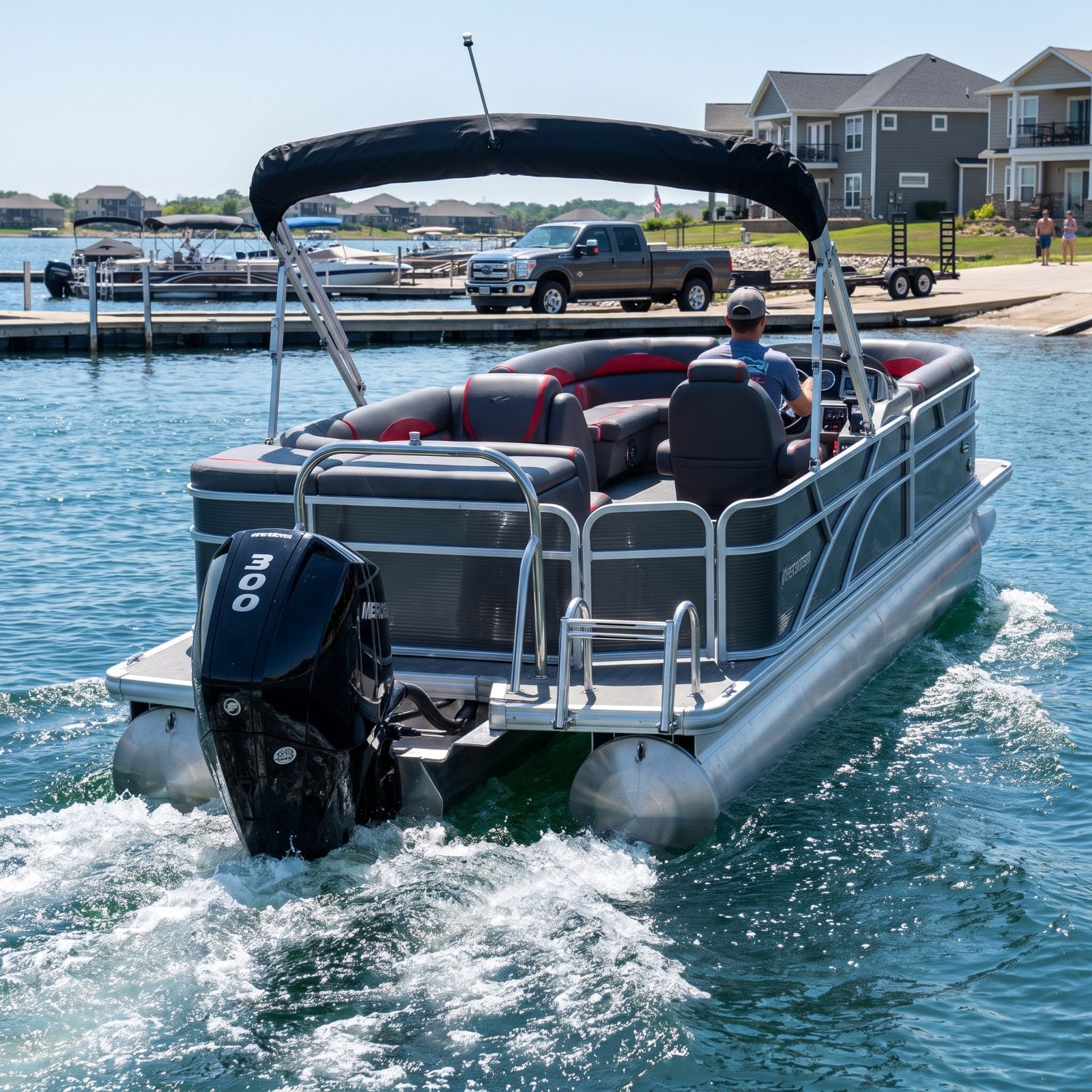
Lifting strakes are those angled fins welded onto the tubes, and they do something sneaky — they shove the boat up out of the water and let it run flatter and faster. Pair them with hydraulic steering, which takes the arm strain out of a hard turn, and a tritoon starts behaving like a sport boat that happens to seat twelve.
A 24-footer built for this ran $45,000 to $55,000 around 2012, roughly $62,000 to $76,000 adjusted. The 300-horse motor was no longer showing off. It was the point.
The boat stopped being a slow lake cruiser and started cornering like it had something to prove.
2014: Tow Bars and Sport Packages Court the Watersports Crowd
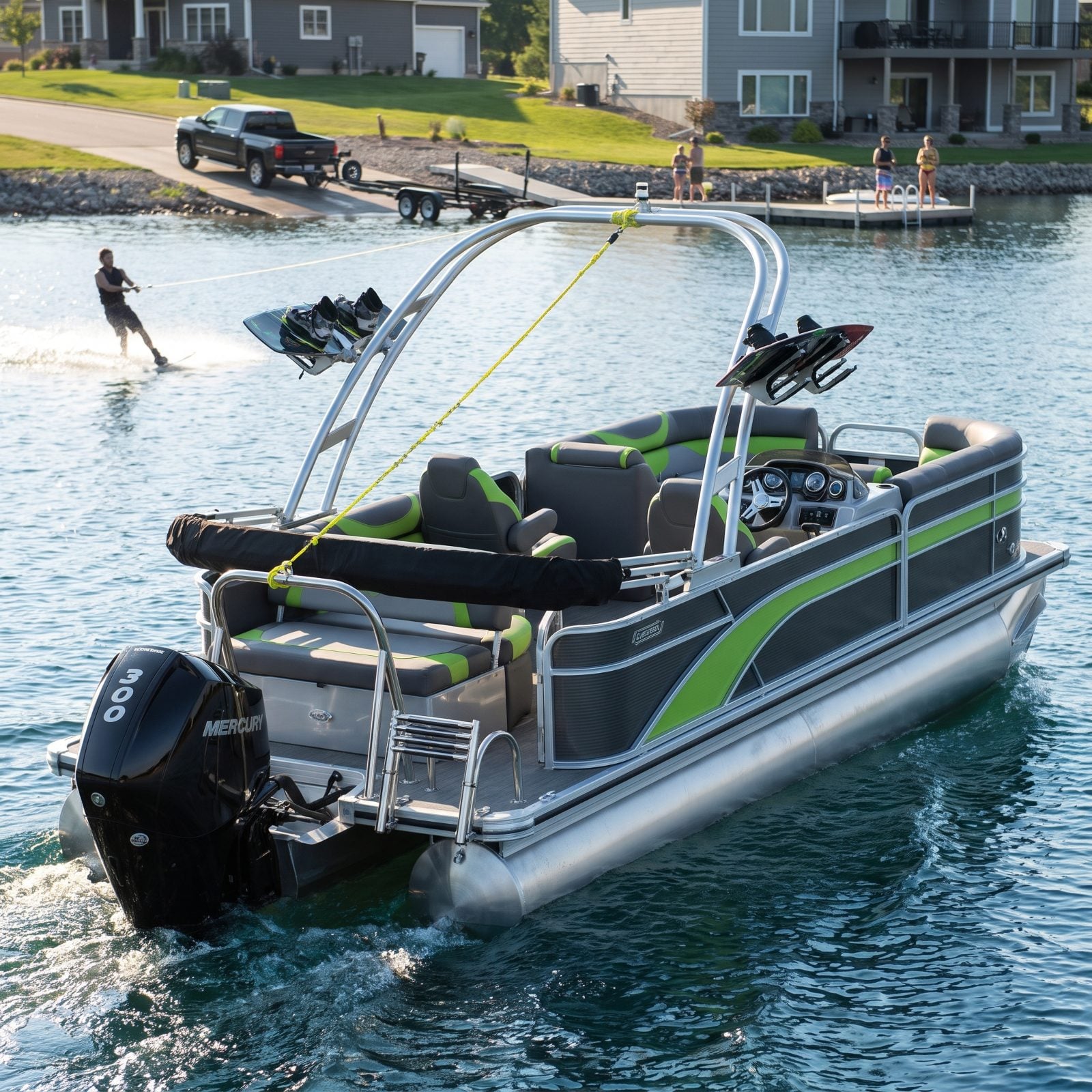
The arched tow bar changed what a pontoon was for. The tall arch gave the family pontoon a wakeboarding look it never had before. Toss in board racks, a rear ladder and a sport package, and the family cruiser moonlighted as a tow boat.
Sport trim on a 24-footer landed around $48,000 to $58,000, roughly $64,000 to $77,000 today. Nobody’s claiming a tritoon throws a wake like a dedicated ski boat. It doesn’t. But for a boat that also naps a dozen people in the shade, it got close enough to keep the teenagers happy.
2016: LED Lighting and Premium Audio Pile On as High-Dollar Extras
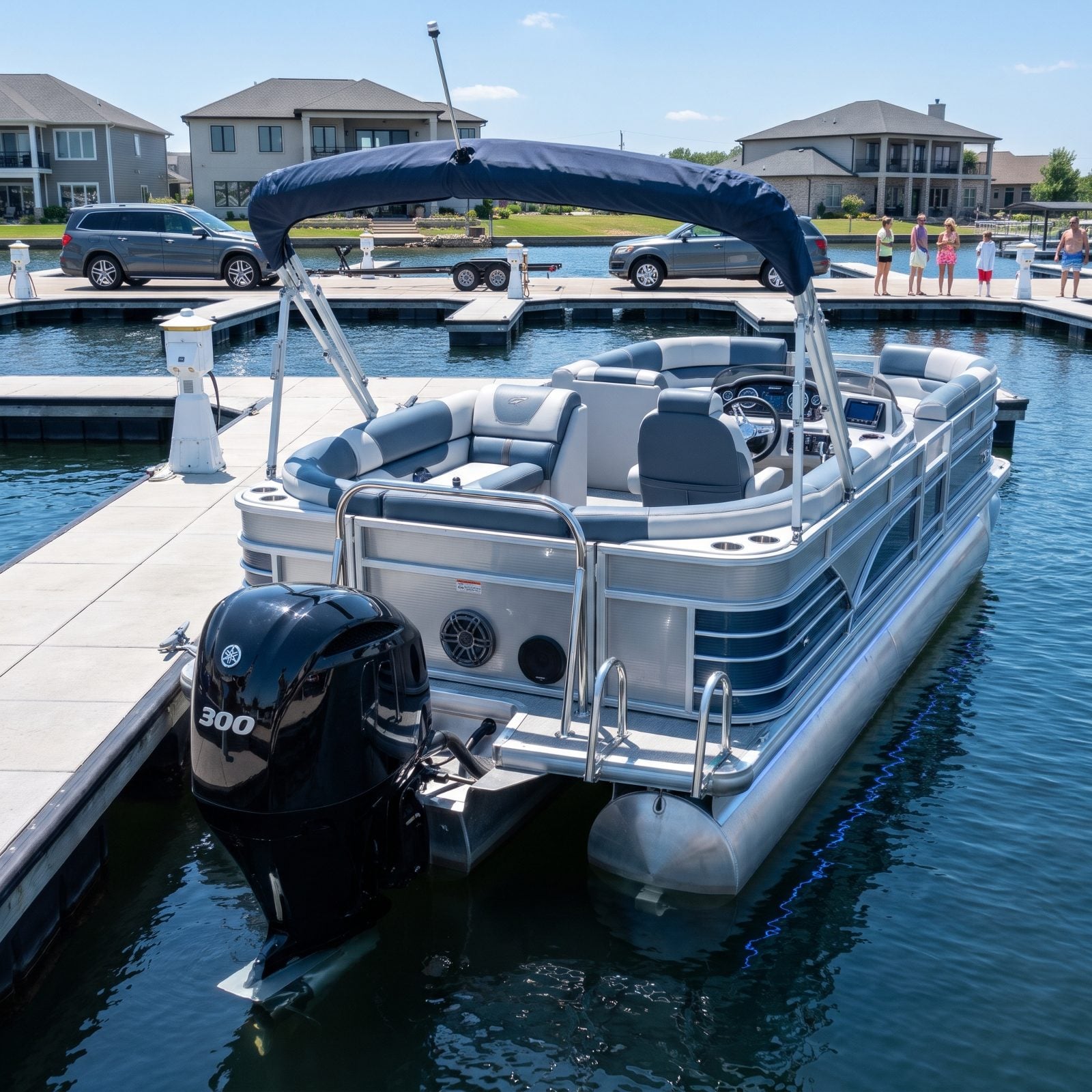
Two things buyers kept checking the option box for: light and sound. LED strips threaded under the deck and into every cup holder turned a sunset cruise into something theatrical. Premium audio meant real speakers, a subwoofer tucked under a seat, and volume that carried clear across a cove whether the cove wanted it or not.
None of it came cheap. A loaded 25-footer pushed $55,000 to $70,000 around 2016, roughly $71,000 to $90,000 adjusted.
Do everyone a favor and be the one who keeps the volume reasonable after dark. Your neighbors across the water hear every bass note, and they remember which boat it came from.
2018: Touchscreens, Power Biminis and Lounge Seating Rewrite the Rules
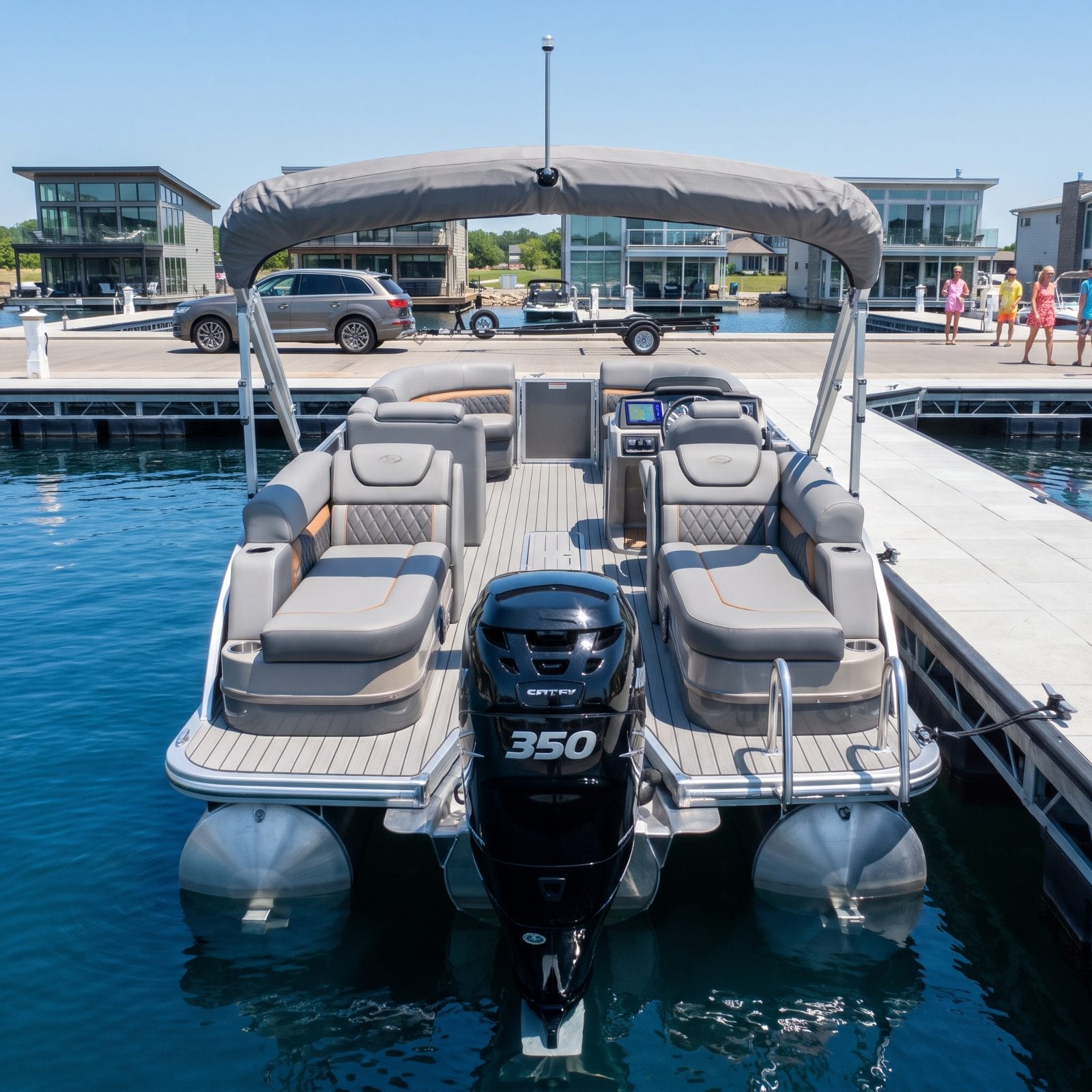
The glass touchscreen at the helm was the tell. Depth, speed, navigation, music and the camera on the motor all lived behind one screen, same as the dash in a new truck. Push a button and the bimini raised itself. Seating went full lounge — chaise ends and all — with gray vinyl underfoot and the big 350 outboard sitting between the stern loungers.
Here’s where pontoons quit pretending to be budget boats. A loaded 26-footer with a 350-horse motor ran $70,000 to $100,000 and up in 2018, roughly $88,000 to $125,000 today.
Hold a 1994 sticker next to that number and the whole story is right there. Same aluminum tubes under it all. Everything above the waterline, reinvented twice over. The lake looks exactly the same from either deck, which is the part worth remembering before you sign anything.
2020: The Family Tritoon Everyone Wanted and Nobody Could Find
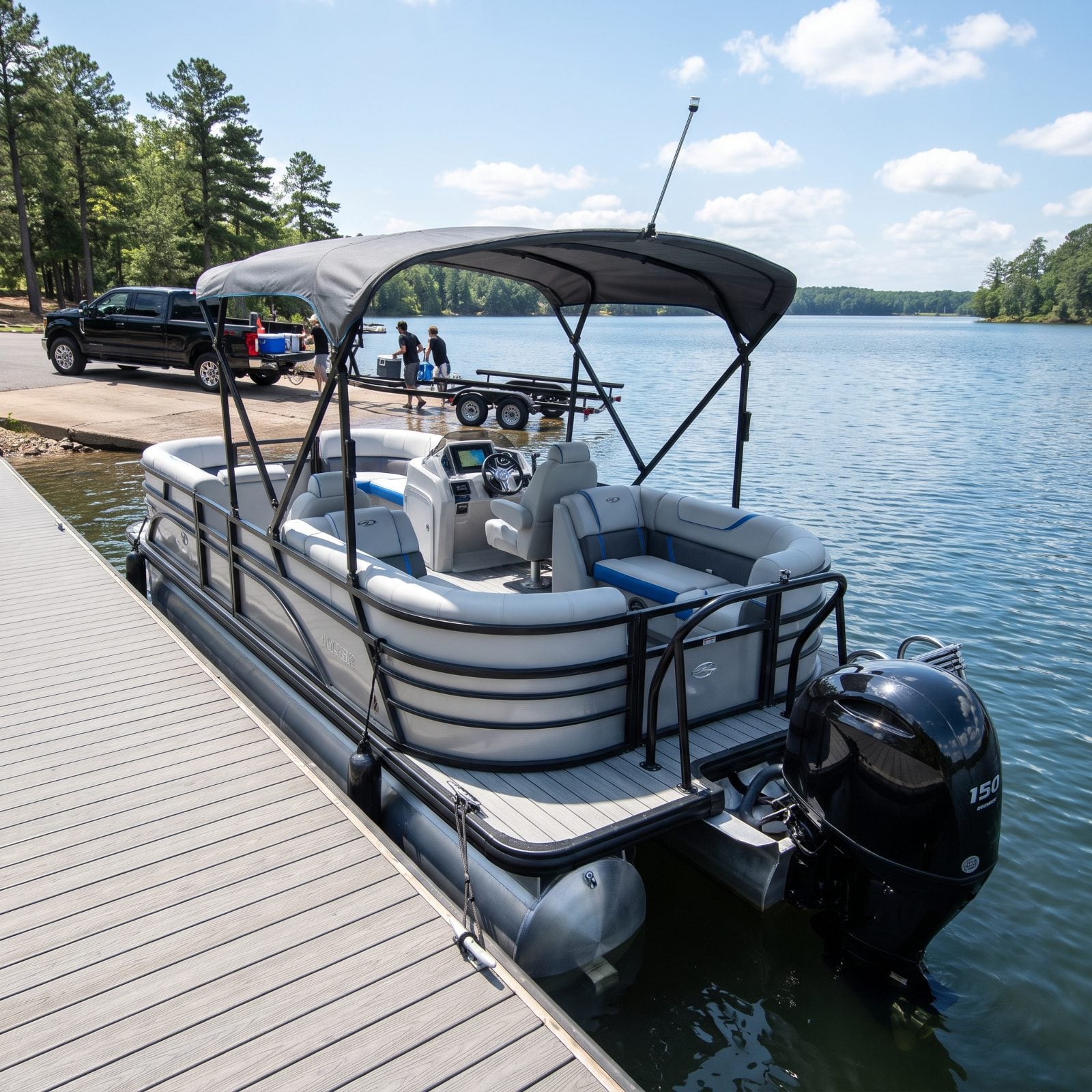
The spring of 2020 turned pontoon boats into gold. Marinas cleared their floor stock in a few weeks and waitlists ran into fall, so a family tritoon that should’ve been a simple order became the thing you called four dealers to chase down.
A well-equipped 22-footer with a 150-horse four-stroke, a touchscreen helm and wraparound lounge seating landed somewhere in the mid-$40,000s to mid-$50,000s that year. Still, if you were patient, you could find one close to sticker.
2021: Empty Showrooms and the Year the Markup Became Normal
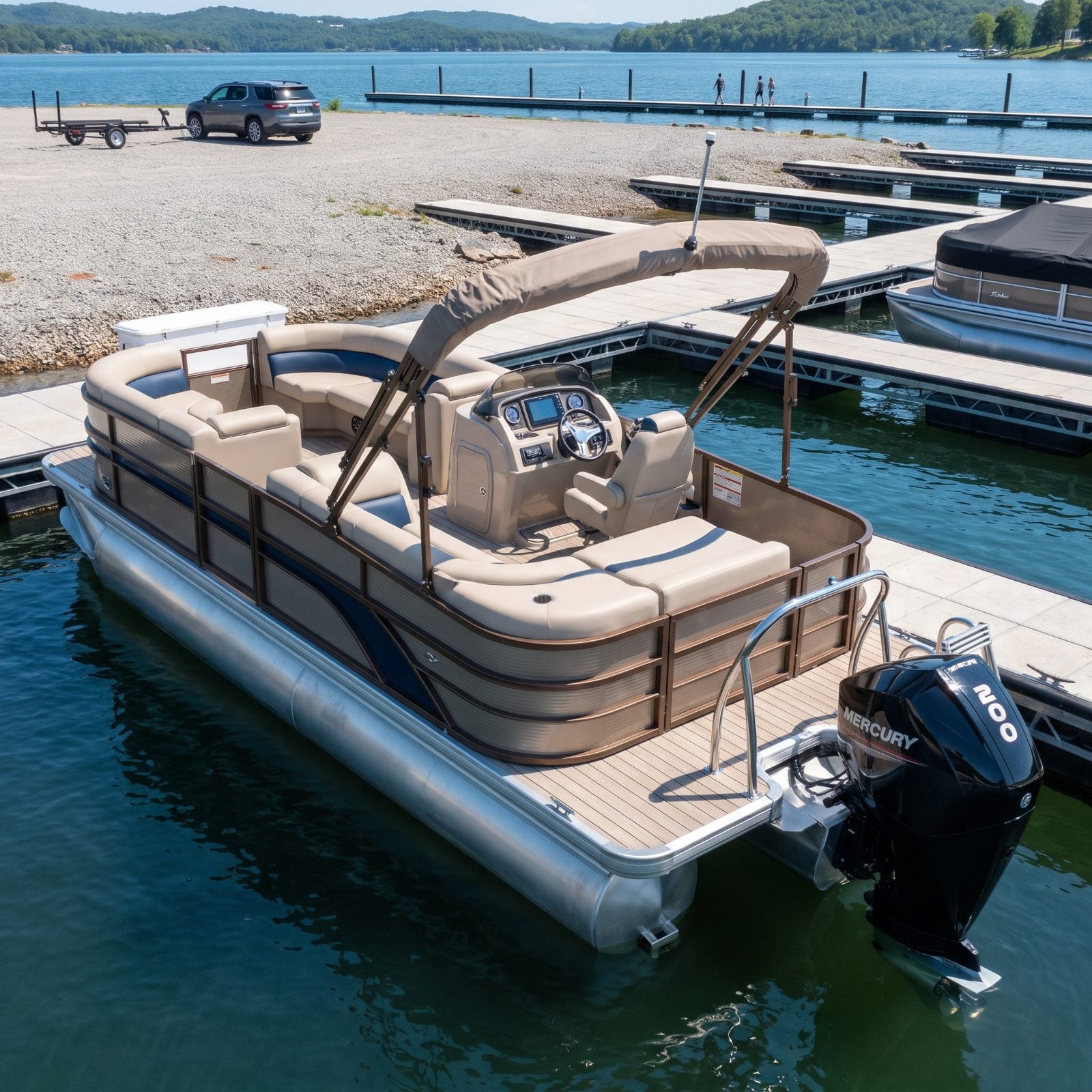
Showrooms sat half empty, and the boats that did show up wore a different kind of price tag. Engines, vinyl and aluminum all seized up at once. Dealers who used to haggle suddenly had a line of buyers happy to pay full freight.
That same family tritoon that ran mid-$40s in 2020 was crossing into the high-$50s and low-$60s by 2021. The equipment barely changed. The number climbed because it could.
This was the stretch where “we can get you one by next season” became a normal answer at the dock. Plenty of buyers ordered in spring and didn’t launch until the following July.
2022: When a Second Engine Became the New Starting Point
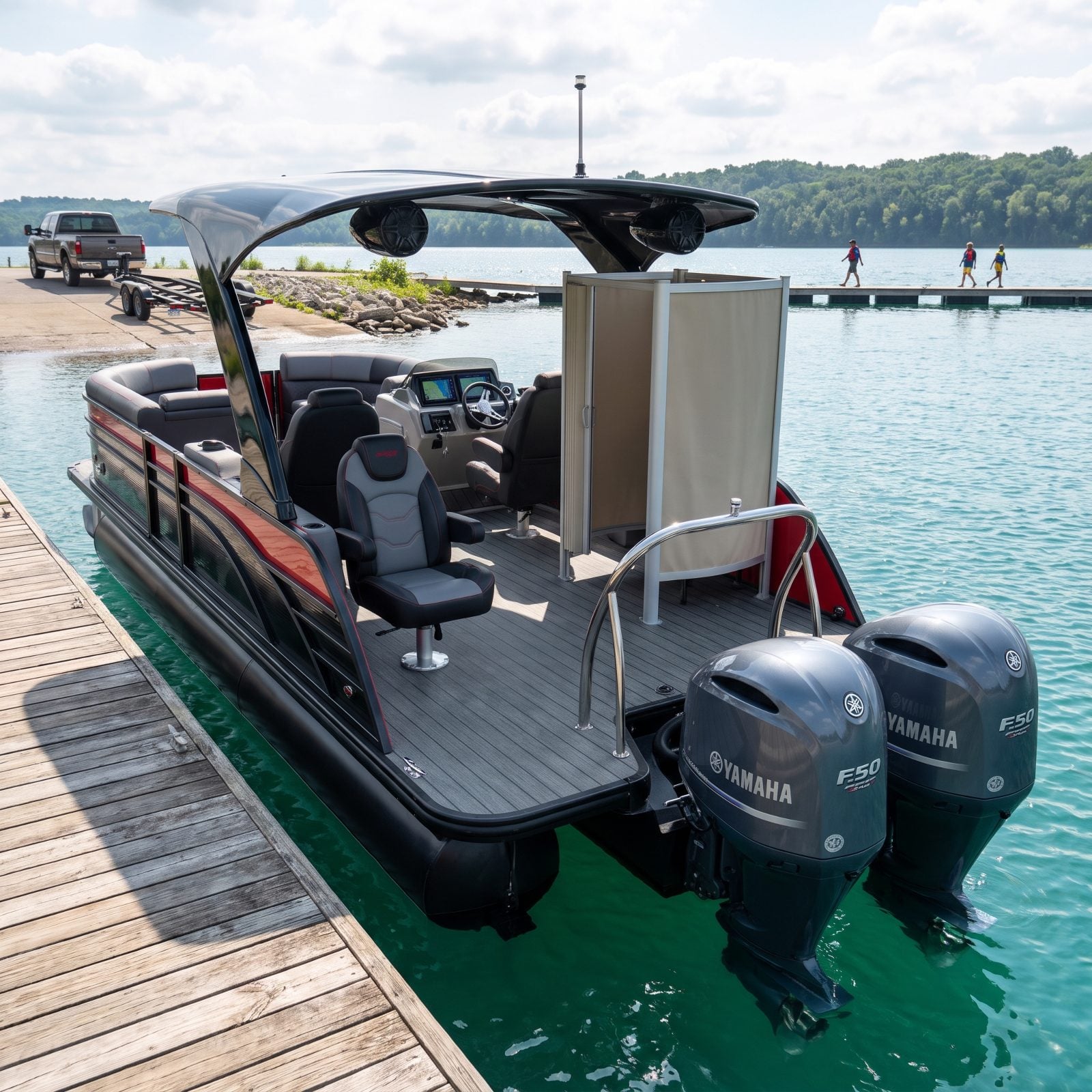
The gap between a basic pontoon and a loaded one blew wide open in 2022. Twin outboards, glass-dash helms, powered biminis, premium audio — none of it was exotic anymore. It was all showing up on the order sheets of perfectly ordinary buyers.
A performance tritoon with twin 250s, sport seating and a long option list could run from the mid-$80s to well over a hundred grand. Meanwhile the same brand still sold a stripped single-engine model down in the $40s. So two families could stand at the same dock, with the same boat length, and tens of thousands of dollars sitting between them.
2024: The Year a $30,000 Pontoon and a $200,000 Pontoon Shared a Dock
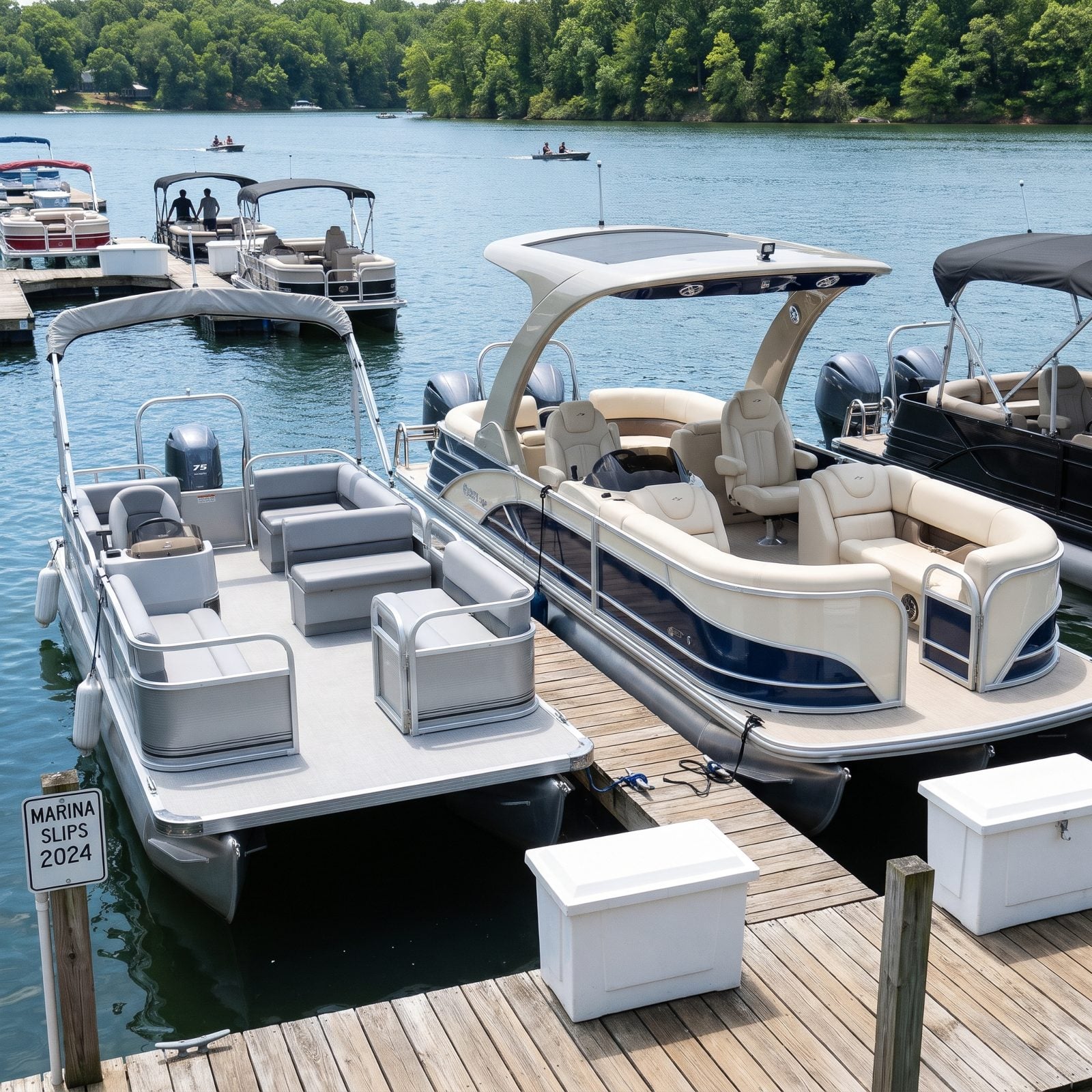
By 2024 the pontoon market had split in two and stopped pretending otherwise.
At the bottom, a no-frills dual-tube model with a small outboard and bench seating could be had new in the low-to-mid $30,000s. At the top, builders were pushing fully loaded tritoons with hardtops, dual touchscreens, leather-look lounges and twin high-output engines well past $150,000, and a few sailed over $200,000 once you checked enough boxes.
Same category, same dock, wildly different checkbook. And we’ll say it flat: a lot of those six-figure builds are spending money on screens and mood lighting that a plain bench and a good cooler would cover just fine. The ceiling’s real now, though, and people keep paying it.
2026: What Entry, Midrange and Luxury Pontoons Actually Cost Right Now
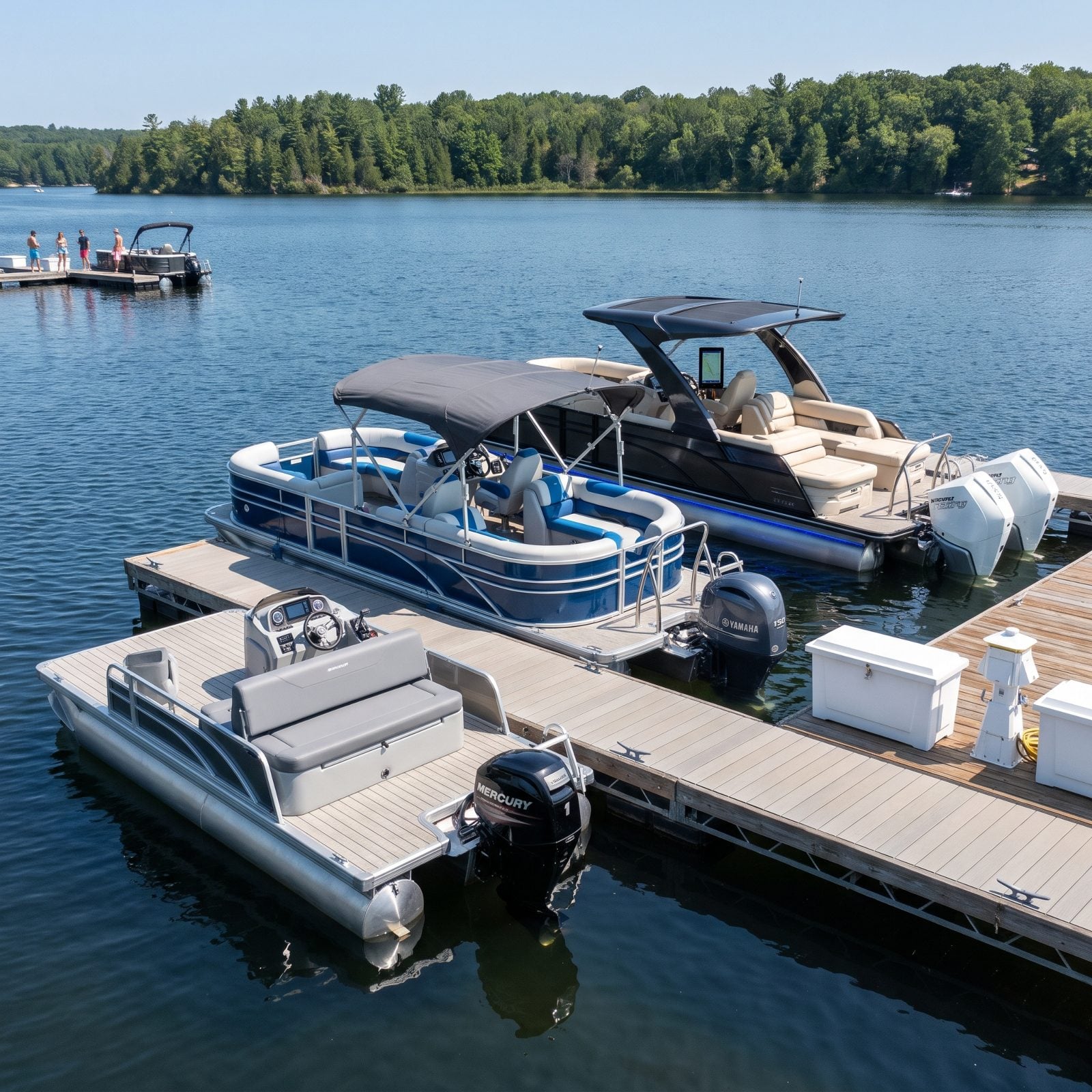
So where does it all sit now? Here’s the honest lay of the land.
Entry-level pontoons — picture a dual-tube boat around 18 to 20 feet with a small single engine and basic seating — start in the mid-$30,000s and climb into the low $40s. Family tritoons in the 22- to 24-foot sweet spot, the ones with a 150-horse four-stroke, a touchscreen and real lounge seating, land somewhere in the $50s to $80s depending on how far you go with options.
Luxury is a different sport. Loaded flagships with hardtops, dual screens, premium audio and twin high-output engines routinely clear $120,000, and the wildest builds push past $200,000.
Now rewind to 1960. A basic pontoon back then was $600 to $900 of steel drums and plywood — call it $6,500 to $9,500 in today’s money. The deck got carpeted, then vinyl, then composite. The 10-horse kicker became twin 300s. Somewhere in there the humble floating patio quietly turned into one of the most expensive toys on the lake.