
Ask a boatyard mechanic which brands they dread opening up, and the answers rarely match the ones with the fanciest showroom reputations. We spent time with service techs at inland lake marinas and coastal yards, asking one plain question: which boats cost more to own than the name lets on? The yardsticks stayed the same across every conversation — service access, build quality, parts availability, recurring faults, maintenance cost, and how the hull and systems hold up after a decade of real use. None of this is about bad boats. Several of these are genuinely well-built. It’s about the gap between the badge on the bow and the invoice at season’s end.
Please note that some of the imagery in this article may have been enhanced with the assistance of AI.
35. Sea Ray: Showroom Gloss, Labor-Heavy Repairs Underneath
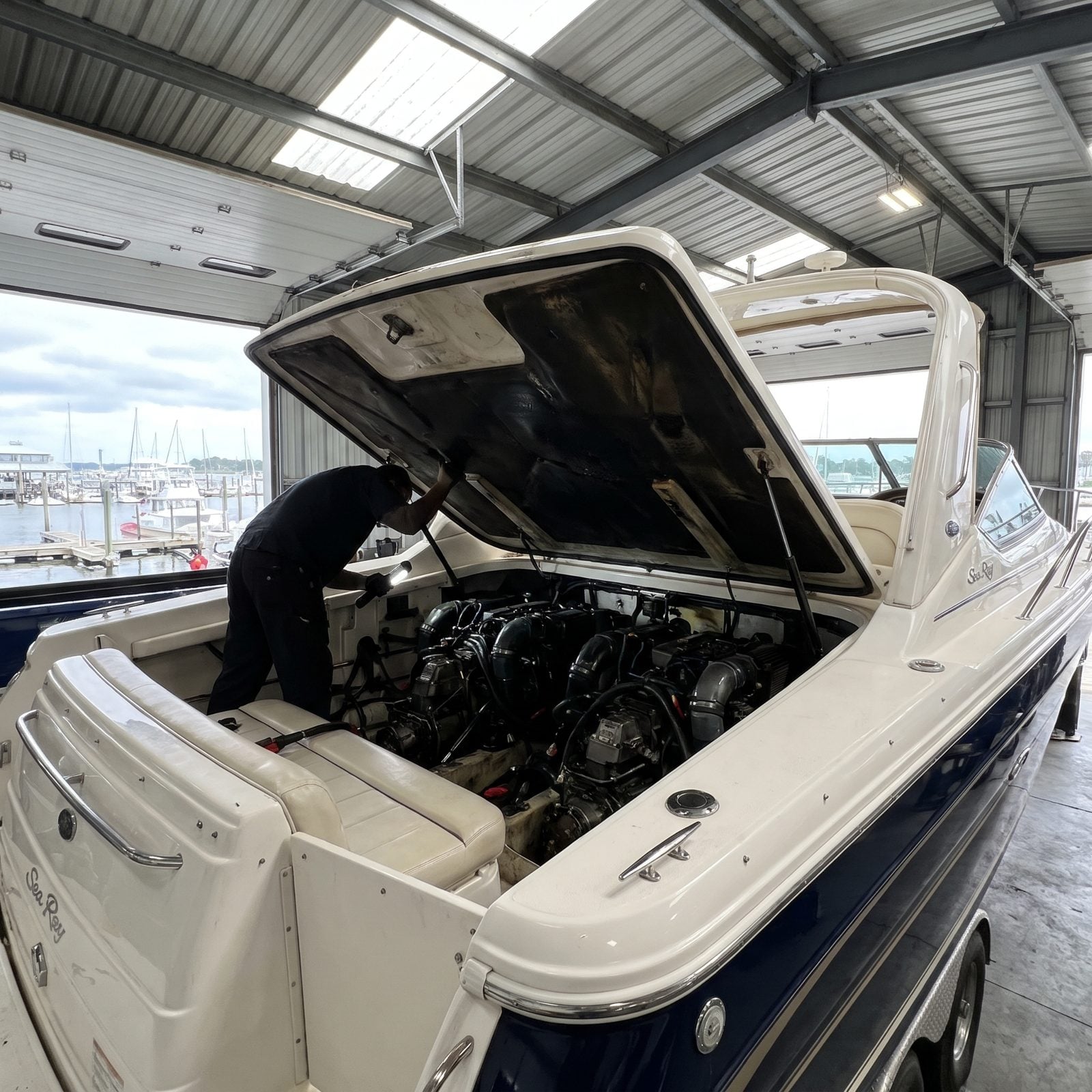
The cockpit looks like a hotel lobby, and that’s exactly what sells the boat. Sea Ray delivers it. The trouble lives below the floorboards.
Techs kept flagging the same thing: the finish quality that sells the boat makes the mechanical work slow. Engines sit tucked under molded liners and finished panels, so reaching a raw-water pump or an exhaust riser can mean pulling trim, carpet, and sometimes seating first.
“The part might cost eighty bucks,” a sterndrive mechanic told us. “The three hours to get to it is where you feel it.” Labor is the line item that bites here, not parts.
34. Bayliner: The Low Sticker That Shows Its Seams by Year Ten
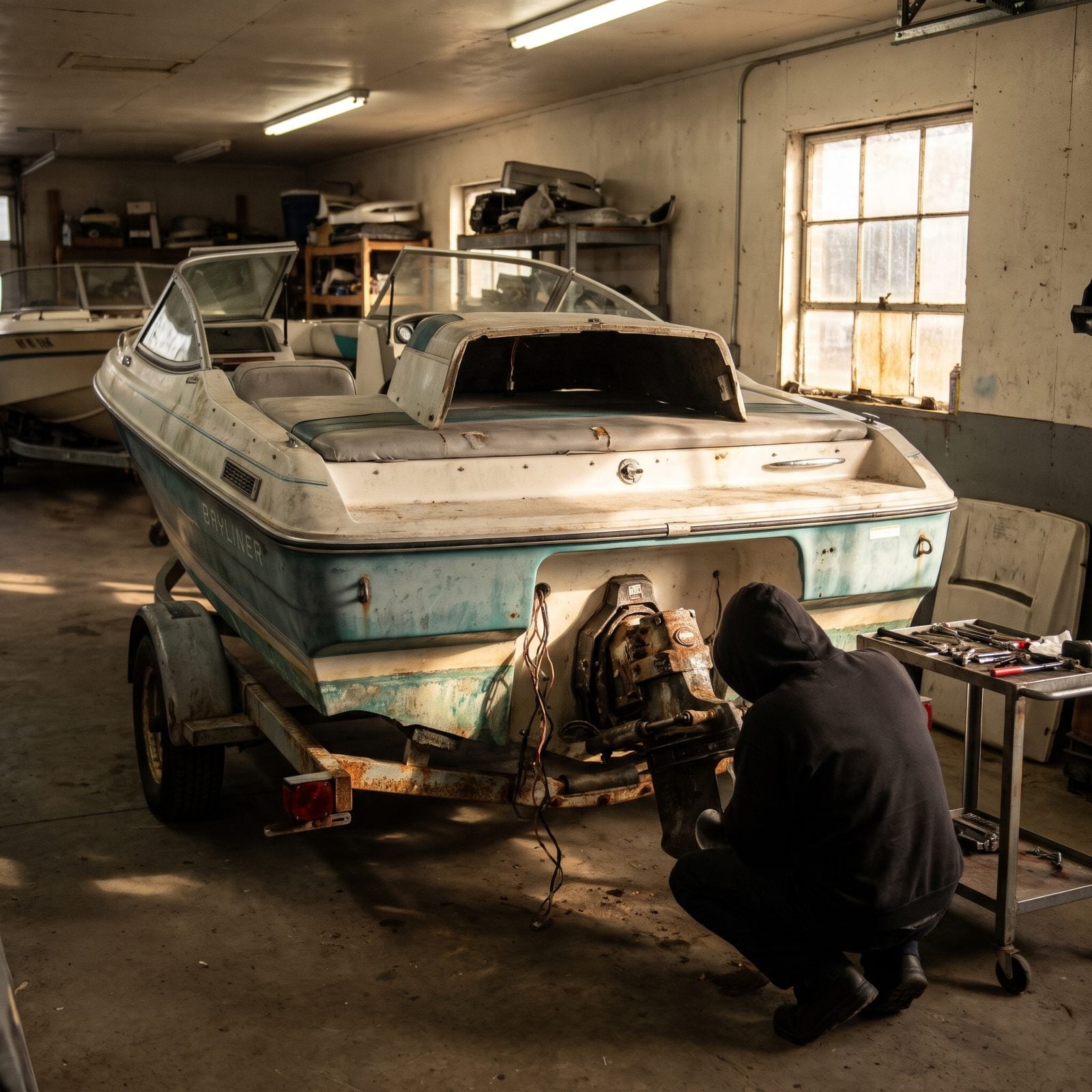
Bayliner sells on one number: the price on the window sticker. For a first boat or an occasional lake runner, that number does a lot of good work. The mechanics weren’t mean about it — they were just honest about where the savings came from.
Thinner gelcoat, lighter hardware, value-grade upholstery. That’s how the price gets hit, and none of it matters much in year three. By year ten, though, techs see more oxidation, more cracked trim, and fittings that gave up earlier than on pricier hulls.
“Great boat to learn on, buy it used, don’t expect it to be a twenty-year heirloom,” one yard owner said. Fair criteria, fairly applied.
33. MasterCraft: Sophisticated Wake Systems, Sophisticated Diagnostic Fees
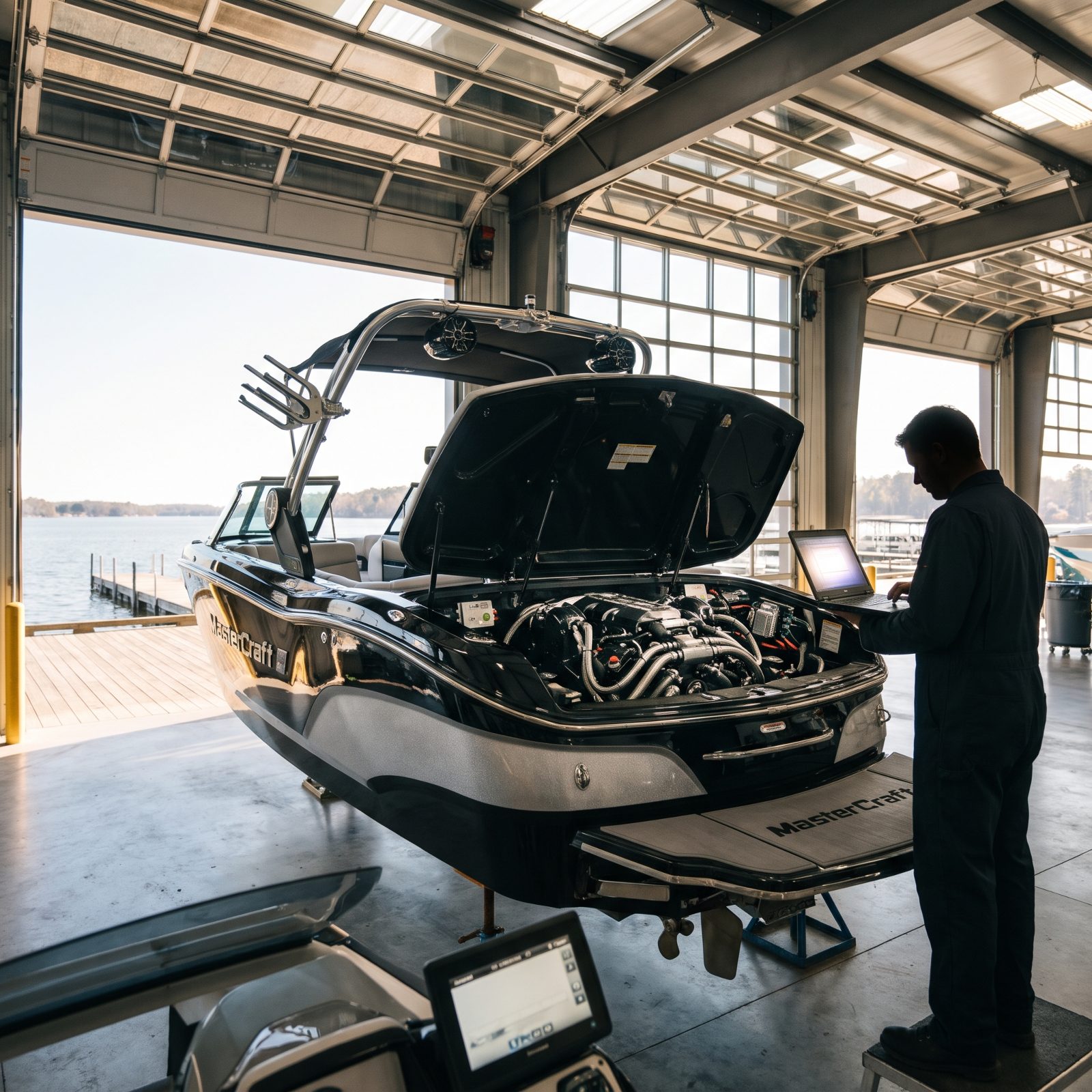
MasterCraft builds a genuinely good inboard. The hull tracks, the fit is tight, the wake tech is the best in its class. That’s not the complaint.
The complaint is that all that tech talks to a computer, and the computer talks to a technician with the right software and a subscription. Surf tabs, ballast, electronically controlled everything.
“When one of these throws a fault, you’re not guessing with a test light. You’re plugging in, and that’s a dealer-level visit.”
Routine service is reasonable. It’s the intermittent electronic gremlin — the one that takes hours to trace — where owners really feel the premium.
32. Tige: Every Surf Feature Is One More Thing That Can Fail
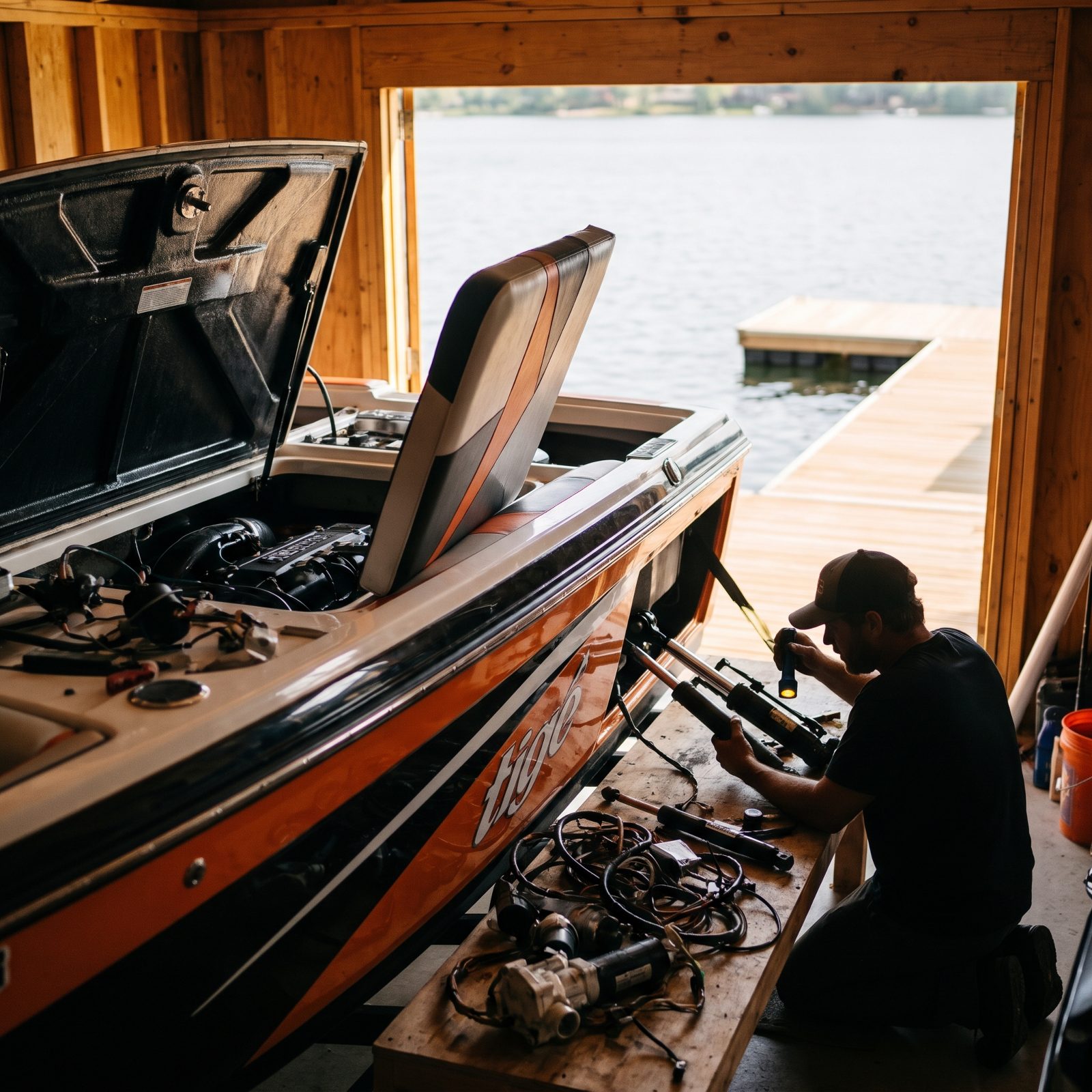
Surf boats won the wake wars by piling on systems, and Tige sits right in that race. The wave is adjustable, the ballast fills on command, the tabs shape the curl. Impressive on the water.
Every one of those features is a pump, an actuator, or a sensor that can quit. Mechanics count the failure points, and surf-specific boats have a pile of them compared to a plain ski inboard.
“Add a hundred moving parts to make a better wave, you’ve added a hundred things I might see on the bench,” one tech said with a shrug. He wasn’t knocking the boat. He was just reading you the odds — more complexity, more service calls, that’s the trade.
31. Beneteau: Beautiful Cabins That Box In the Engine
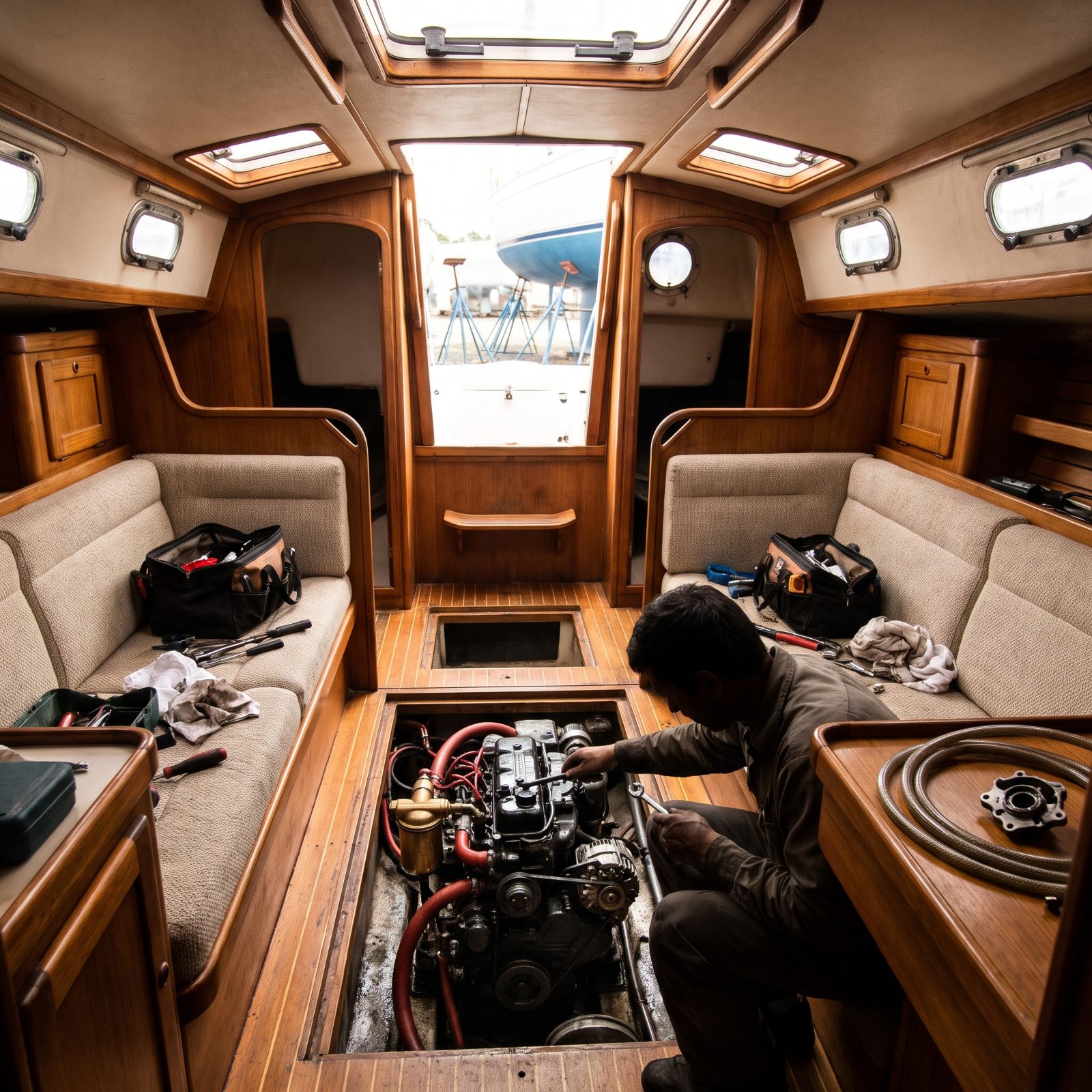
Step below on a Beneteau and the cabin sells itself. Light, airy, the joinery done right, a galley that makes you want to cook aboard. The yard crew admire it too — right up until they have to service the diesel.
That finished interior often sits directly on top of the engine. Access can mean pulling companionway steps, panels, sometimes furniture, just to reach a water pump impeller or bleed the fuel system.
“Gorgeous boat to live on,” a diesel tech said. “Annoying boat to work on.” The two things are directly related. The space that makes the cabin feel open is space stolen from the engine room.
30. Tracker: The All-In Package Price Can Paper Over Basic Hardware
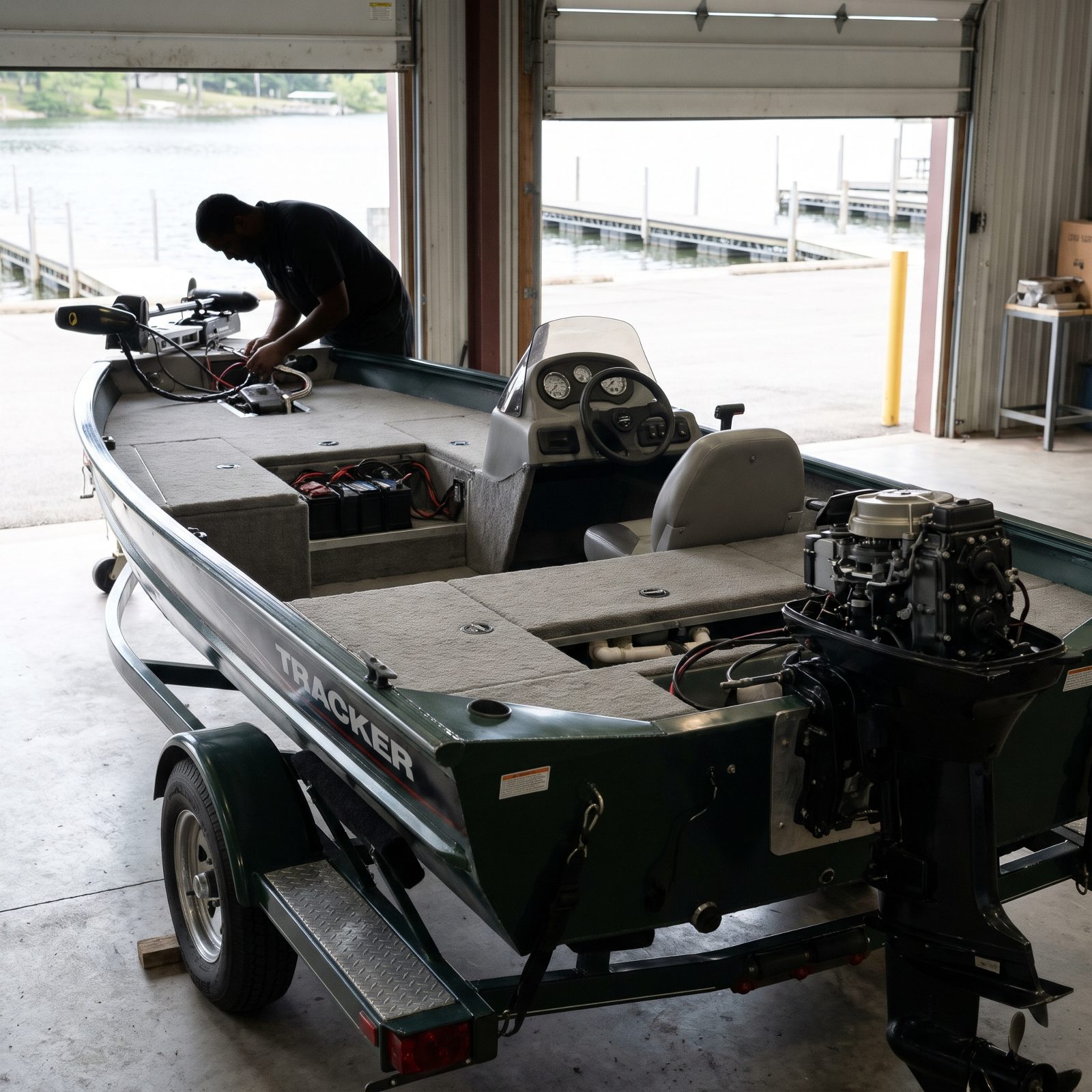
Tracker’s genius is the package. Boat, motor, trailer, trolling motor, electronics, one price, drive it home. For a lot of anglers that’s exactly right, and the value is real.
Mechanics just want you to read what’s actually bundled. The headline price gets hit with value-grade components in a few spots — the trolling motor, the gauges, the trailer hardware. Nothing dangerous, nothing shoddy, just chosen to hold a price point.
“It’s a fine package,” a rigging tech said. “Know that ‘included’ and ‘top-tier’ aren’t the same sentence.” The fun starts the day you buy. The small upgrades start a season or two later.
29. Ranger: Tournament Pedigree Priced for Tournament Anglers
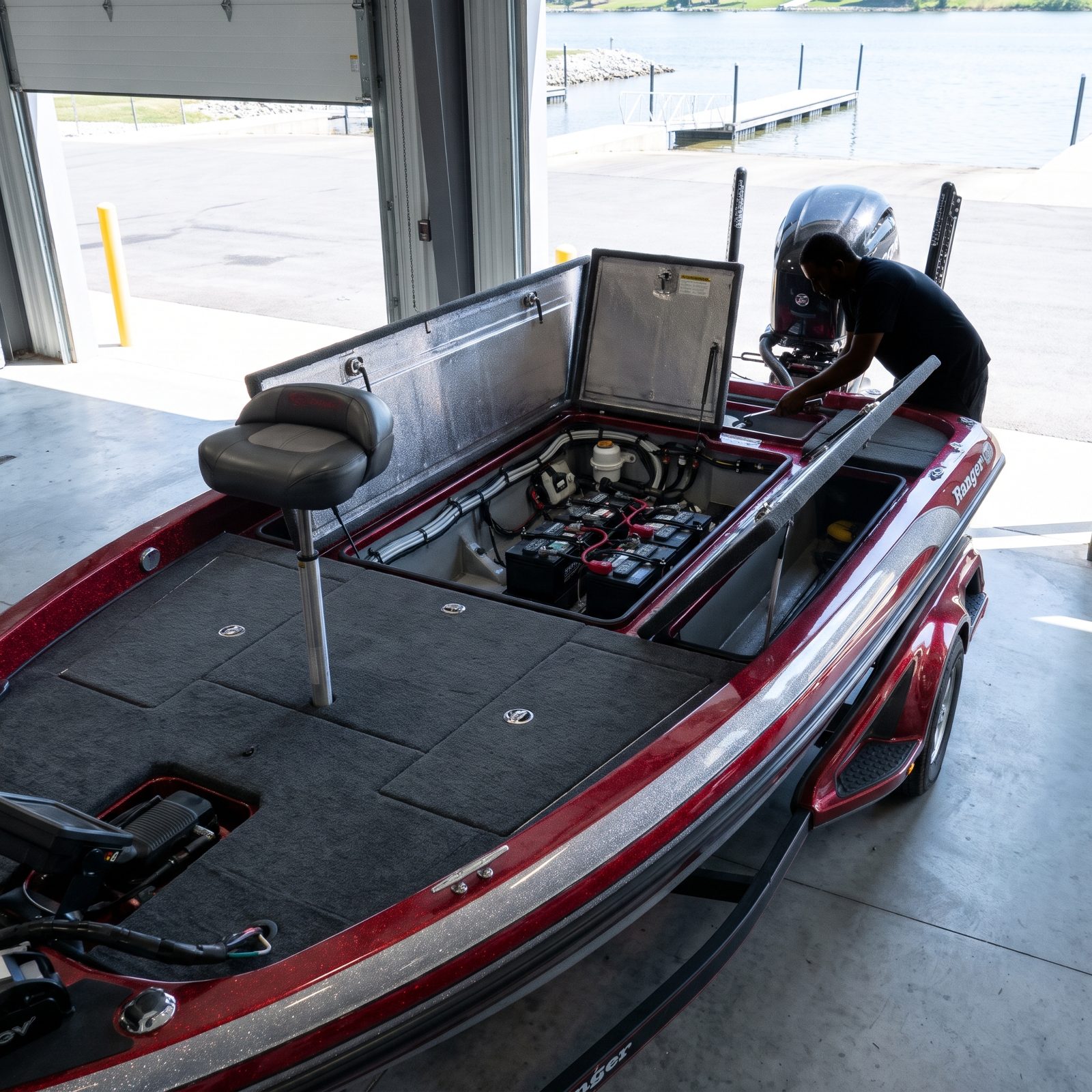
Ranger earns its name. The hulls are solid, the fit is tight, and the resale holds better than most bass boats. Tournament anglers trust them for good reason, and the mechanics largely agreed on the quality.
Where “overrated” sneaks in is the premium. You pay up front for the pedigree, and the brand-specific rigging and components price right along with it. A comparable fishing hull from a less decorated builder often does similar work for less.
“Buy it if you fish serious tournaments or you keep boats a long time,” a tech advised. “Buy it to look right at the ramp, you overpaid.” The build justifies the money. The badge is where buyers lose their discipline.
28. Cobalt: Flawless Finish, Invoices That Match the Finish
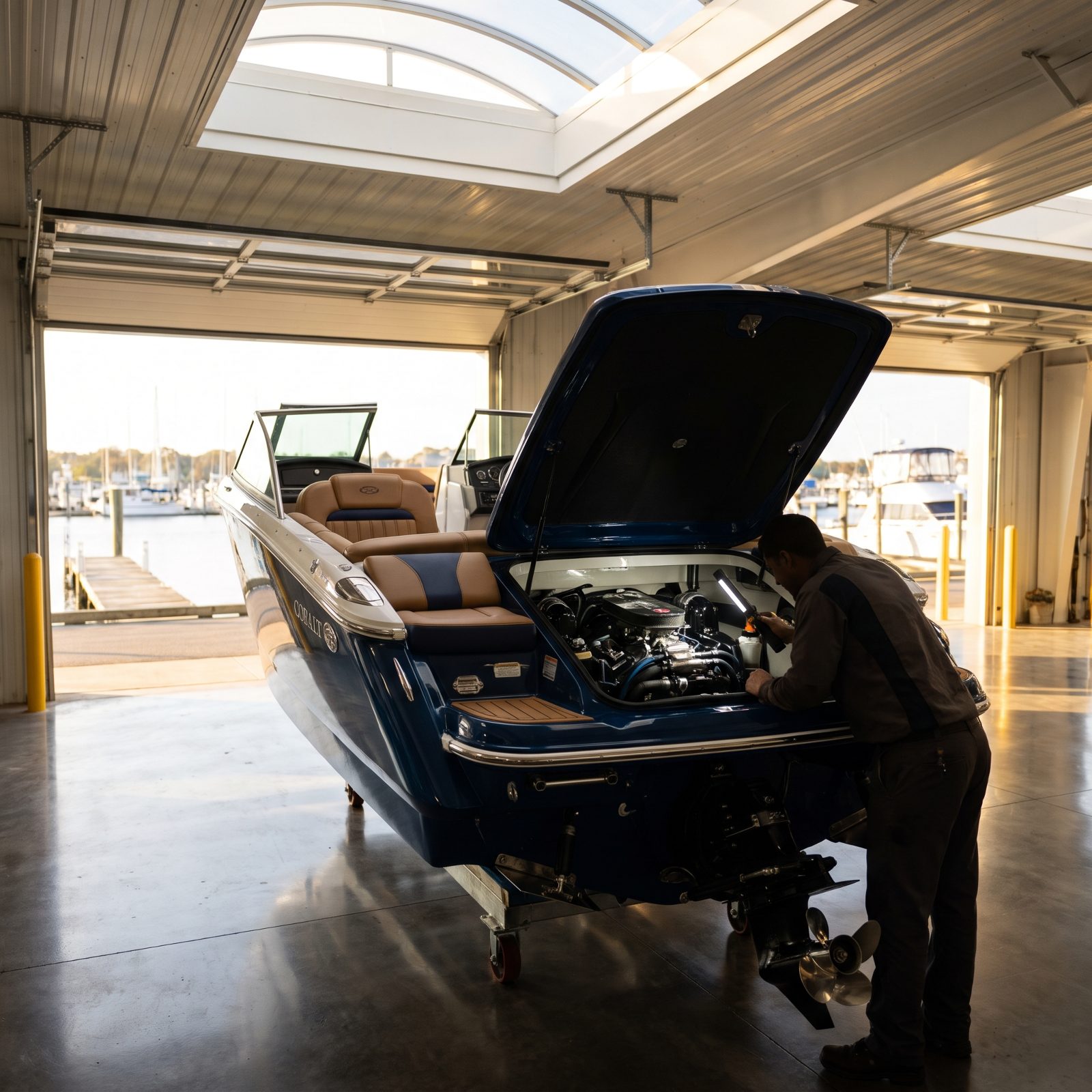
Want to end an argument about build quality? Point at a Cobalt. The gelcoat runs mirror-deep, the upholstery is wrapped and stitched like furniture, and the bilge is organized enough to eat off. Mechanics respect these boats.
They also quote them accordingly. Premium construction means premium parts, premium fittings, and a brand that doesn’t discount its support network. Even routine work carries the finish-level expectation.
“It’s a beautifully built boat, and nothing about it is cheap to touch,” one tech said plainly. That’s the honest summary of the premium brands. The best-built boats aren’t bad buys. They just ask you to keep paying for the quality long after the showroom handshake — and that’s the number to have in your head before the badge talks you into it.
27. Overrated: Scout, Sleek Construction Can Limit Behind-the-Scenes Access
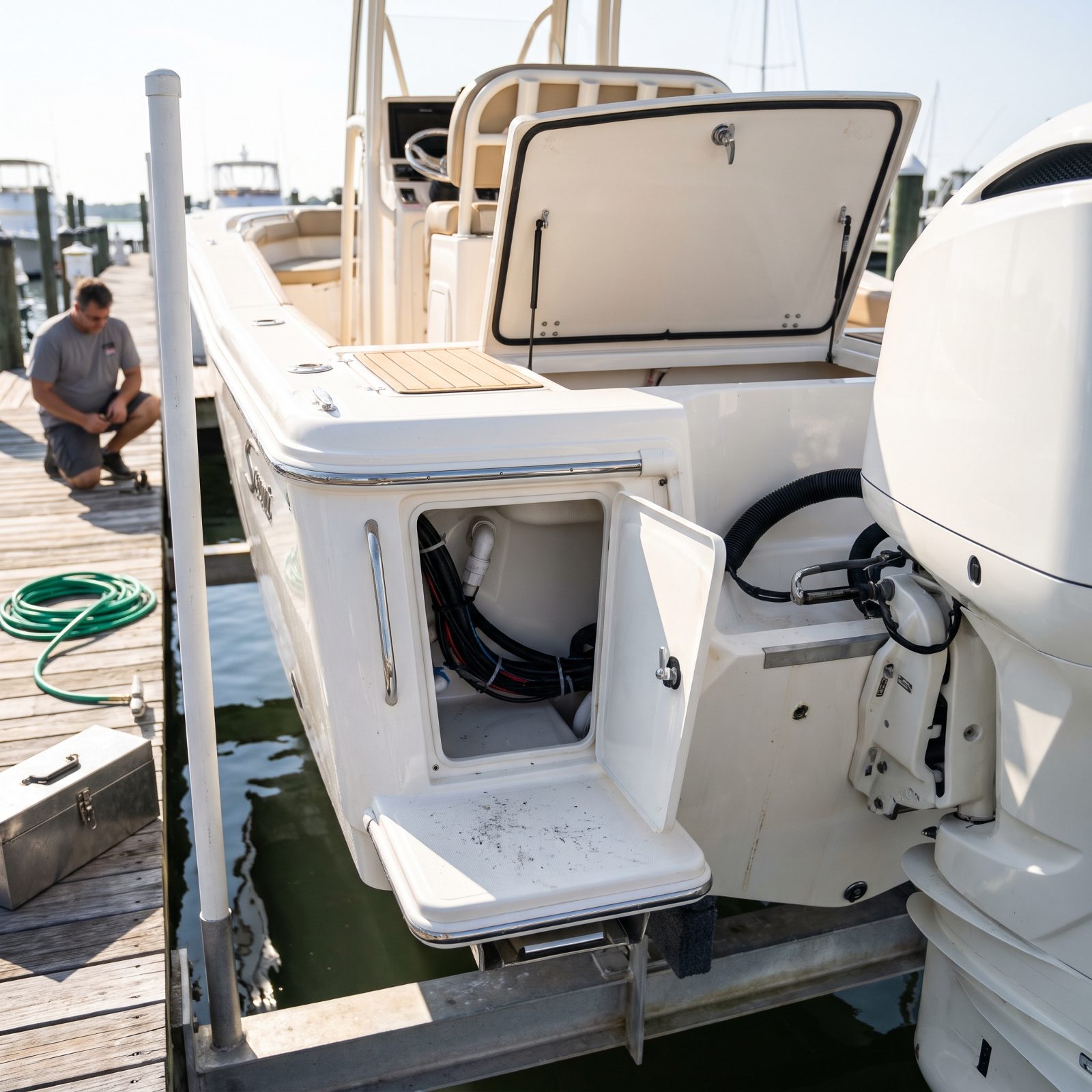
Scout builds a pretty boat. Ask anyone who has tried to chase a wiring fault behind one of those molded liners and you’ll hear a long, tired sigh. The fit and finish that sells the boat on the showroom floor is the same thing that boxes in the rigging once something goes sideways.
Mechanics we spoke with judged these on four plain criteria: how long it takes to reach a common part, whether the liner has to come apart, parts lead time, and shop labor hours per typical job. Scout scores clean on looks and low on access. A bilge pump swap that runs 40 minutes on an open-bilged boat can stretch past two hours when the pump sits under a glassed-in liner.
26. Overrated: Sportsman, Feature-Packed Consoles Can Become Wiring Mazes
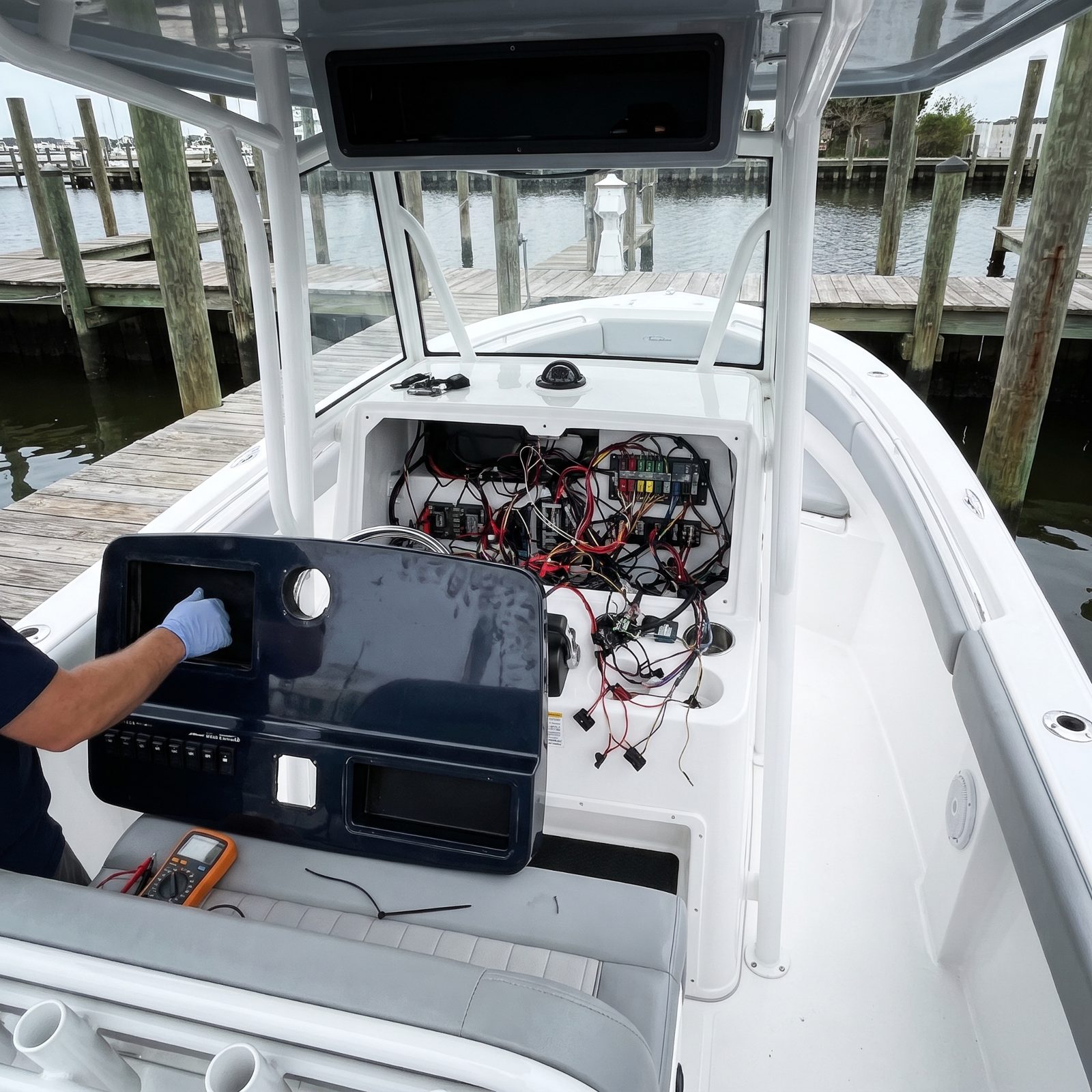
Load a console with enough gadgets and you build yourself a puzzle. Sportsman packs chartplotters, livewell timers, courtesy lights, trim tabs and stereo zones into a helm that looked downright simple from the captain’s chair.
No single feature is the villain. It’s the sum. Every added switch is another splice, another ground, another thing that can corrode somewhere you’ll never think to look. When one accessory dies, a tech often has to pull the whole dash to trace it, because builders rarely label the harness the way an owner would beg them to.
“The boat isn’t bad. The wiring behind the dash just wasn’t drawn for the next guy who opens it.” That’s the common refrain.
25. Overrated: Tidewater, Big-Boat Features Increase Maintenance Demands
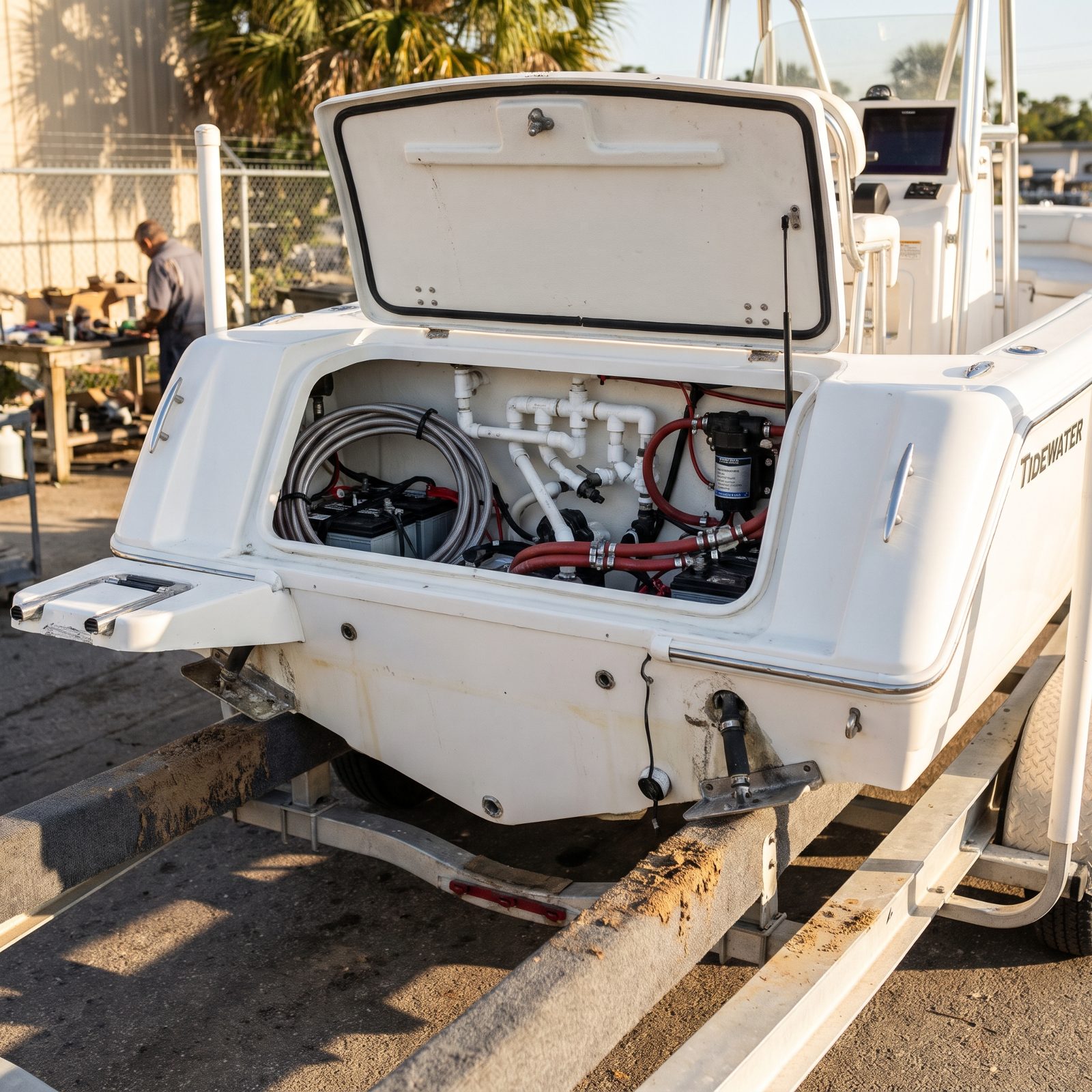
Tidewater sells a lot of boat for the money. That value comes stacked with big-boat plumbing crammed onto a mid-size hull: pressurized washdowns, dual livewells, extra batteries, hydraulic steering. Every one of those is a convenience right up until the day it becomes a maintenance item.
More systems mean more hoses, more clamps, more pumps and more places for saltwater to sneak in. The mechanics ranking these flagged recurring raw-water and washdown pump failures, plus a cramped transom bilge that makes those swaps slower than the part cost would ever suggest. Nice features. Just know you’re signing up to service all of them.
24. Overrated: Intrepid, Custom Features Require Specialist-Level Attention
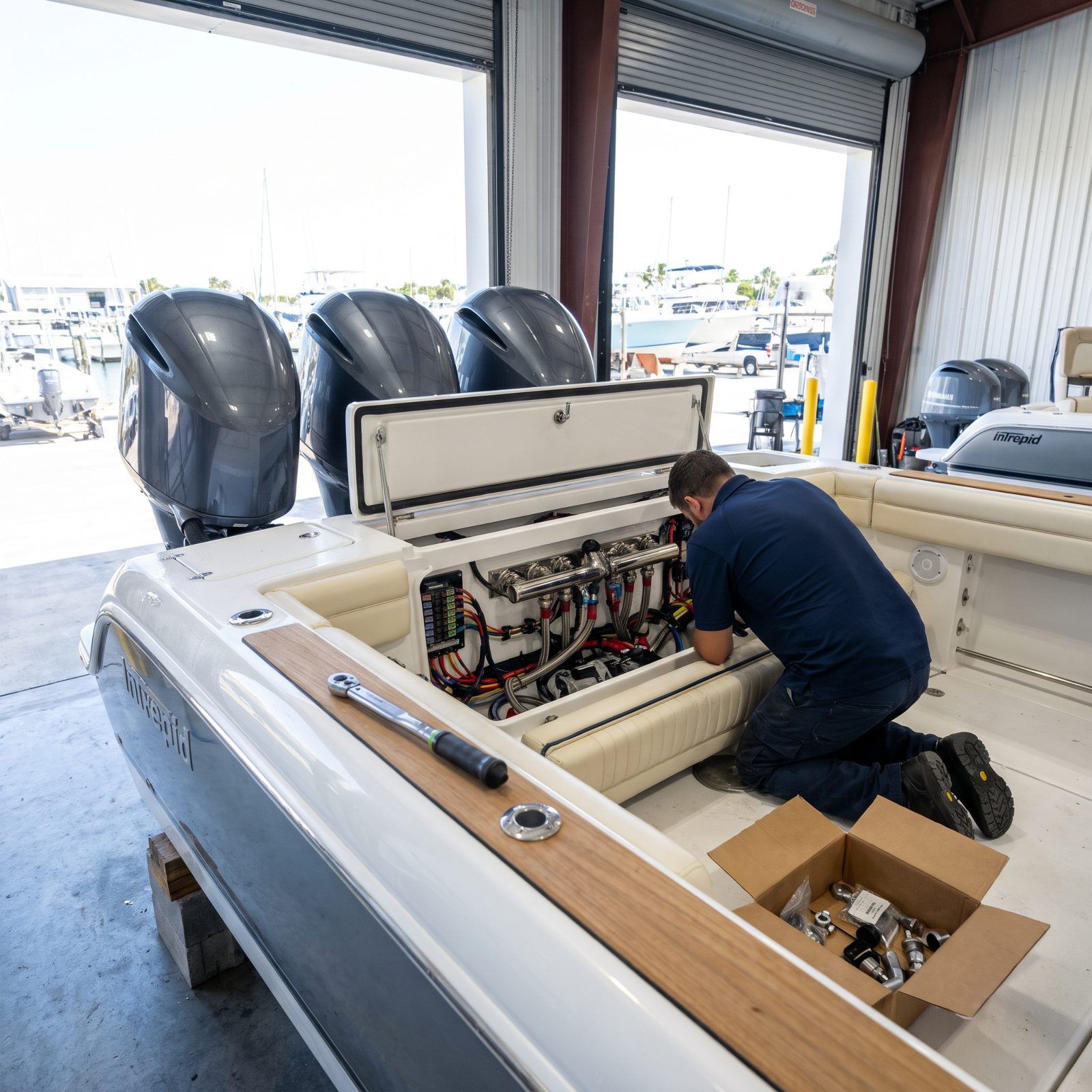
Order two Intrepids and you can walk away with two different boats. That’s the whole pitch: build it to spec. It’s also the catch when it needs service.
Custom rigging, one-off layouts and premium systems mean the mechanic down the street often can’t just pull up a parts schematic. Jobs route back to the builder or to specialists who know that exact hull. Owners love the exclusivity, and honestly, who wouldn’t. But the ranking criteria, parts support and routine service access, punished it hard, because both availability and labor hinge on finding someone fluent in your particular boat.
23. Overrated: Formula, Performance Hardware Brings Performance-Level Bills
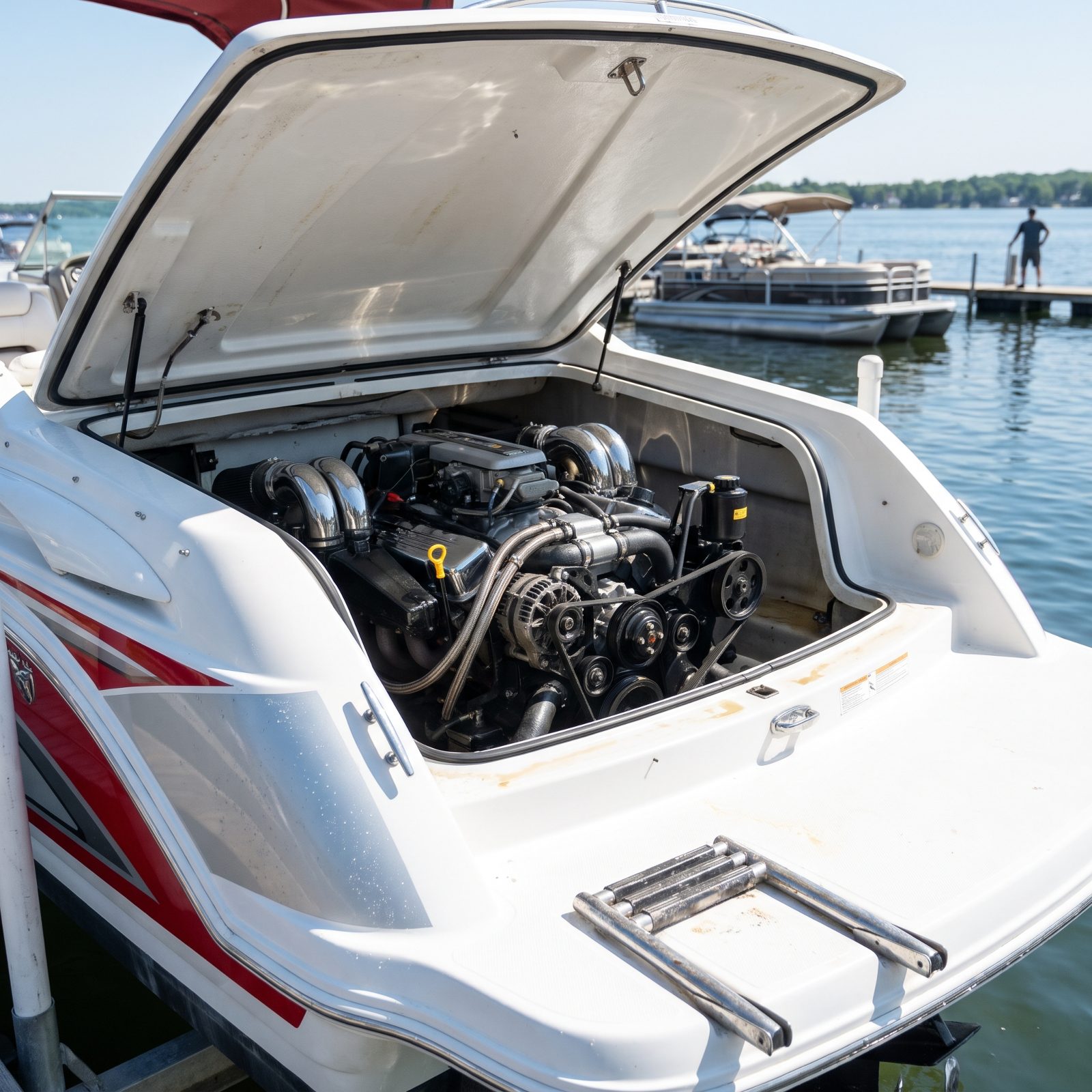
Formula makes a fast, beautifully finished boat, and the power to back it up. That’s the part nobody budgets for.
Performance sterndrives and big-block gas engines cost more to feed, more to service and more to fix when a riser, manifold or drive needs attention. The hardware is quality. It’s also expensive quality. Mechanics rating maintenance cost put these squarely in the pricey tier, where annual service, drive maintenance and the occasional exhaust job all run well above what a modest cruiser owner braces for.
None of this is a knock on the build. It’s just math. Buy the performance, pay the performance bill.
22. Overrated: Crownline, Styling Sometimes Takes Priority Over Wrench Room
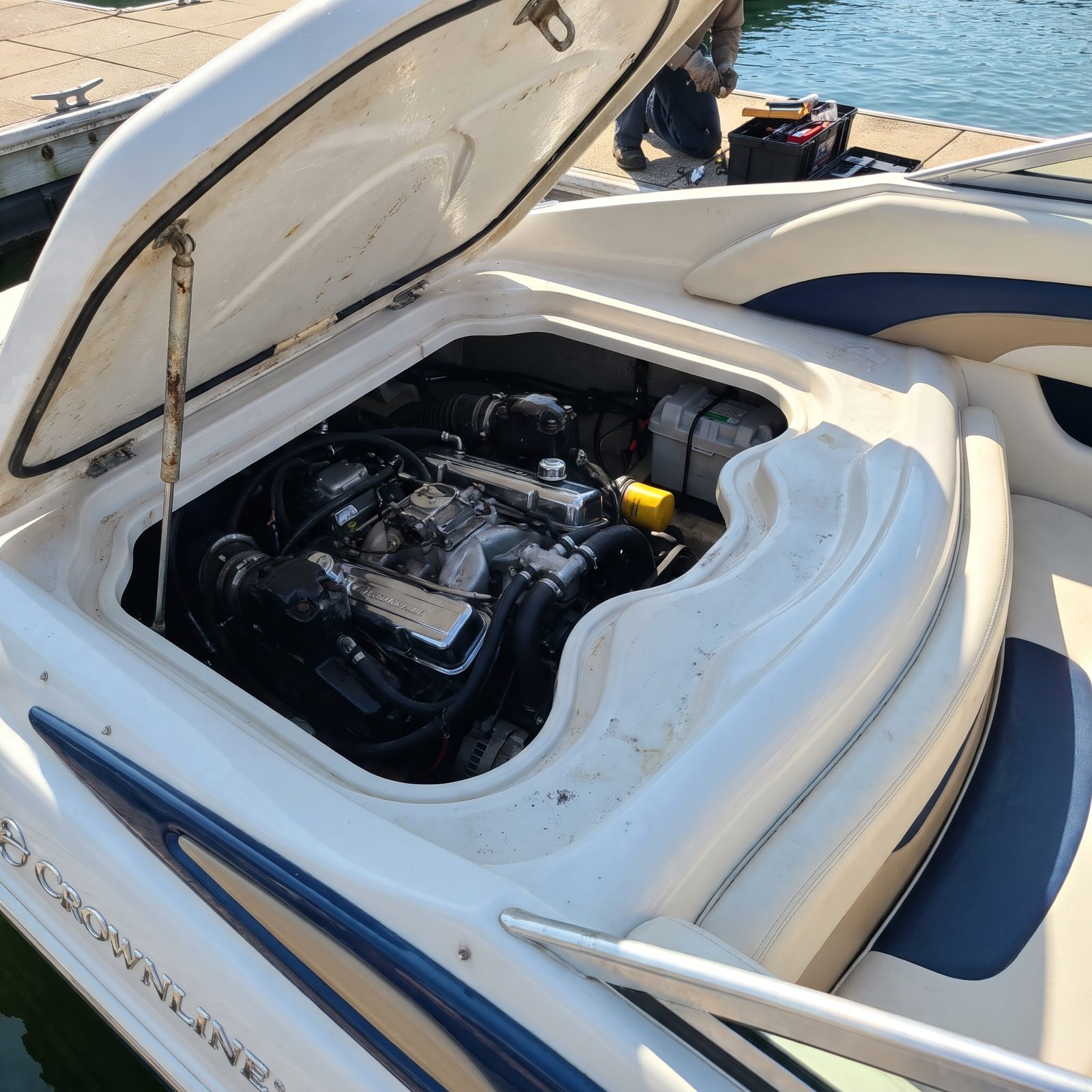
Crownline nails the curves. Those molded decks and sculpted sunpads look great from across the harbor. Then you lift the hatch and find an engine wedged into a space shaped more for the eye than for a mechanic’s hands.
Styling-first layouts mean tight clearances around valve covers, oil filters and the bilge. On our access criterion, techs noted that routine jobs, an oil change, a belt, a sender, take longer simply because there’s nowhere to turn a wrench. Nothing exotic breaks. The ordinary stuff just costs more labor than it has any business costing.
21. Overrated: Four Winns, Added Comfort Features Create More Failure Points
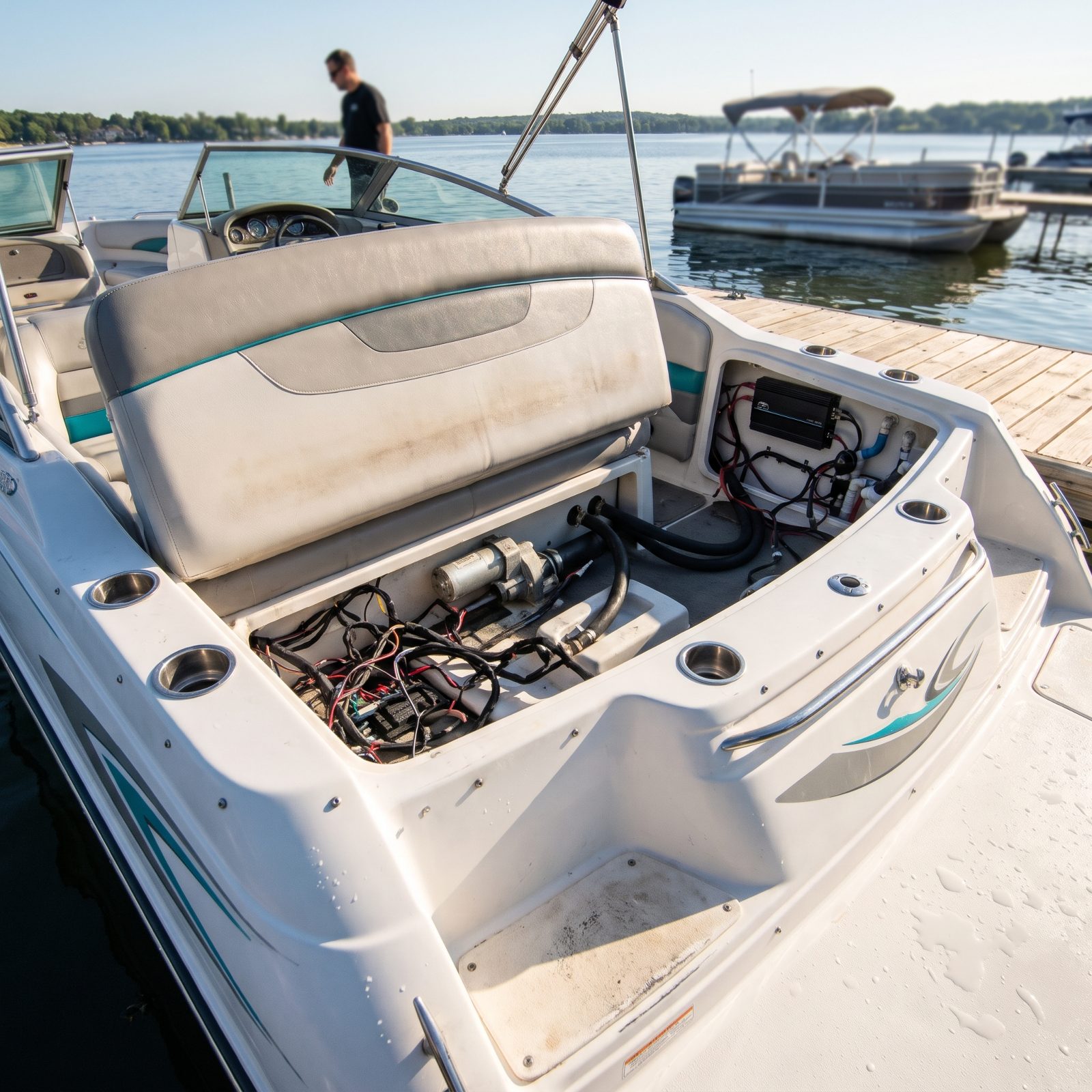
Every comfort feature is also a future repair. Four Winns leans hard into the good life, with powered hatches, premium audio, cockpit heaters, snap-in tables and backlit cup holders. On a sunny afternoon, all of that is pure joy.
A few seasons in, it’s a to-do list. Actuators seize, amplifiers fault, heater lines weep, and each one is a service call the simpler boat down the dock never has to make. The build itself holds up fine. What hurt its ranking was failure points per season: more motors and electronics means more things waiting to go dark at the worst possible moment.
20. Overrated: Bennington, Luxury Pontoon Options Multiply Service Calls
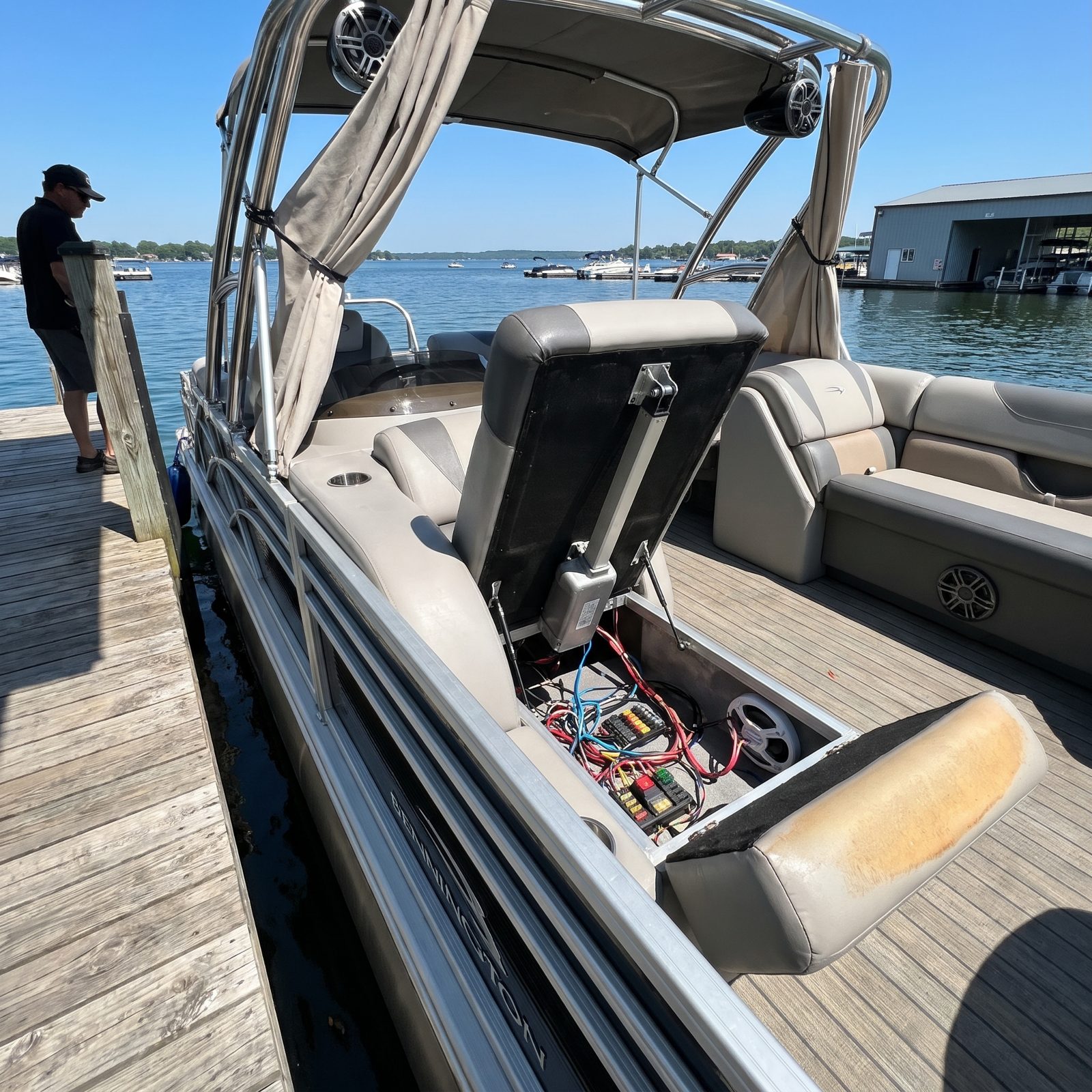
A loaded Bennington is a floating living room, and that’s the whole idea. Powered Bimini tops, LED lighting, tower speakers, powered recliners, a changing room. Fun on the water. A lot to keep running.
The pontoon structure itself is simple and durable as a brick. Everything bolted on top is where it goes wrong. Mechanics ranking these flagged the luxury option packages, not the logs, as the recurring service driver: motors, lights and audio that quietly give up in the lake’s heat and humidity and need chasing one stubborn fault at a time.
“The toons last forever. It’s the toys on top that keep bringing people back to the shop.”
Order light if you’d rather boat than troubleshoot.
19. Overrated: Sea-Doo, Clever Design Can Complicate Routine Service
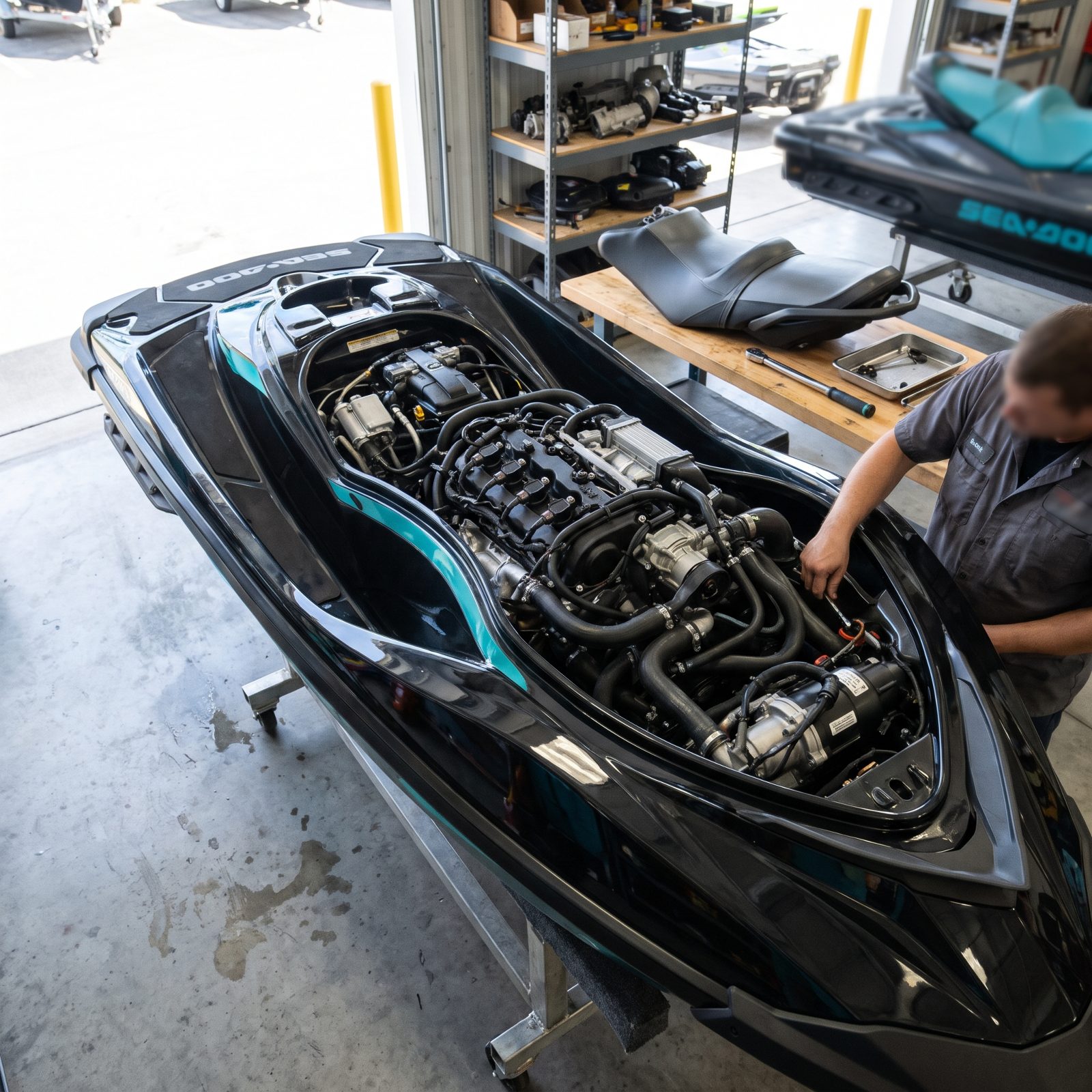
Sea-Doo crams remarkable engineering into a tiny hull. The iBR braking, the supercharged Rotax, the closed-loop cooling: smart work that makes the craft ride better than it has any right to.
Smart is dense. Everything lives on top of everything else, so a job that sounds trivial, a spark plug, a wear ring, an intercooler service, means pulling parts to reach other parts. Build quality is solid and parts support is good. It’s the routine-service access that drags the ranking down. You pay for all that tidy packaging in shop time, season after season.
18. Overrated: Scarab, Jet-Boat Packaging Makes Engine-Bay Work a Knuckle-Buster
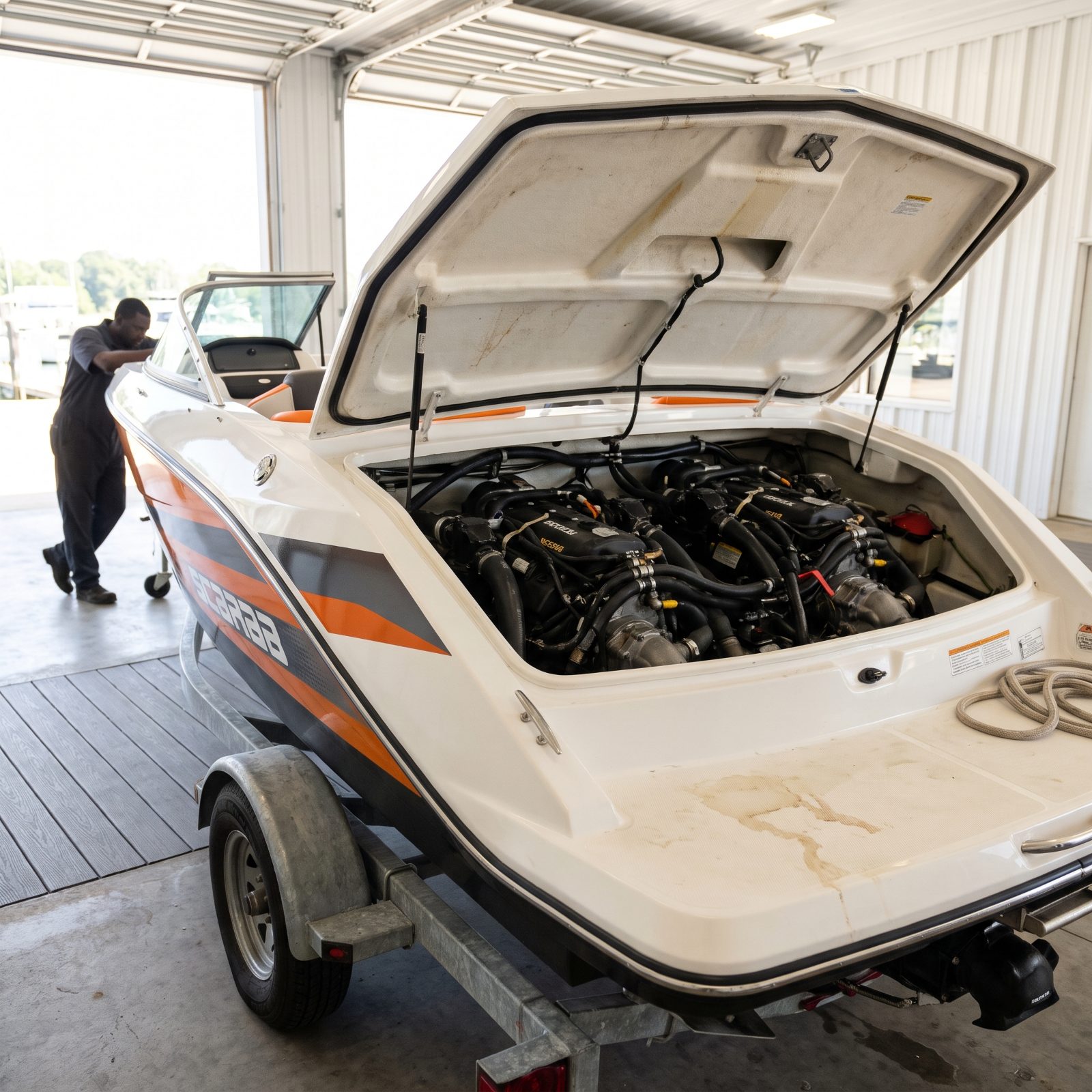
Every mechanic we talked to keeps circling back to the same gripe about Scarab jet boats: the fun lives up front, the pain lives in the stern. Jet propulsion means there’s no outboard to tilt out of the way, so the whole works gets jammed into a shallow, crowded bay under the sunpad.
Judge it on what matters at service time — access, wrench clearance — and it fares badly. One tech described reaching past two Rotax units to get at a single clamp, working mostly by feel. The boat runs great. Fixing it just takes longer and costs more in labor than a hull this size should.
17. Underrated: Parker, Workboat Bones Mean Everything Is Where You Can Reach It
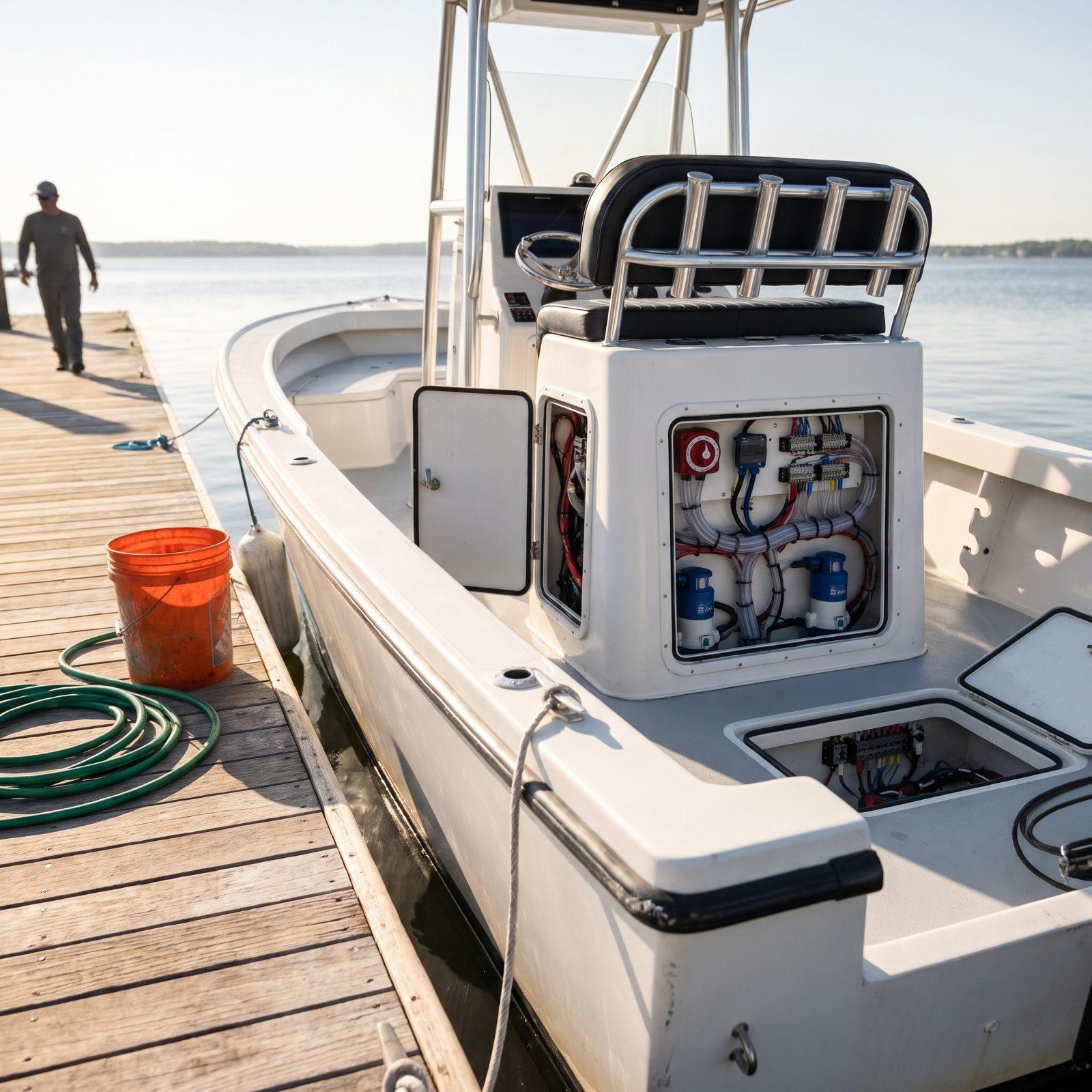
Parker builds like it expects you to fix things yourself. Ask the shops that see them, and that’s the thing they keep coming back to.
A lot of recreational hulls hide the rigging behind molded liners. Parker leaves room. Mechanics rate it well on access and parts support because the layout is honest — the bilge pump switches sit up in the console compartment where you can reach them, the fuel sender isn’t buried under a cabinet, the wiring runs are chased instead of stuffed. Workboat DNA shows up as fewer billable hours, which is to say, more weekends on the water and fewer at the dealer.
16. Underrated: Robalo, Quietly Solid While Louder Names Get the Headlines
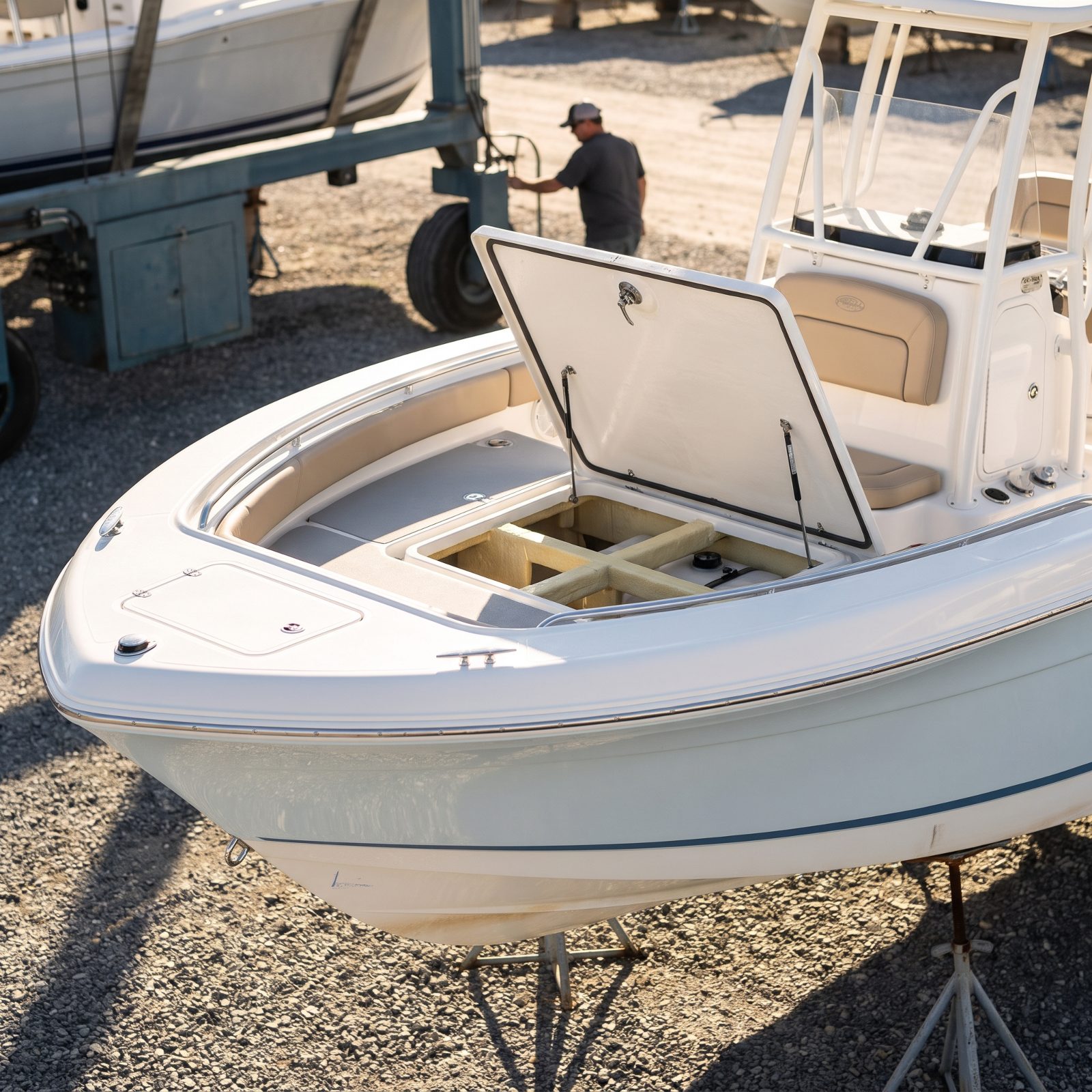
Ask three mechanics about Robalo and you’ll get a shrug that means approval. No drama, no recurring nightmare they warn you about. The construction holds up, the hardware is standard, and parts don’t send anybody off on a two-week scavenger hunt.
The brands people brag about aren’t always the ones a shop is relieved to see on the schedule.
On the stuff that counts — build quality, parts availability, freedom from chronic failures — Robalo just scores steady, line after line. It won’t win the dock-party conversation. It wins the long run.
15. Underrated: Grady-White, The Older Hull That Pays Back Every Oil Change
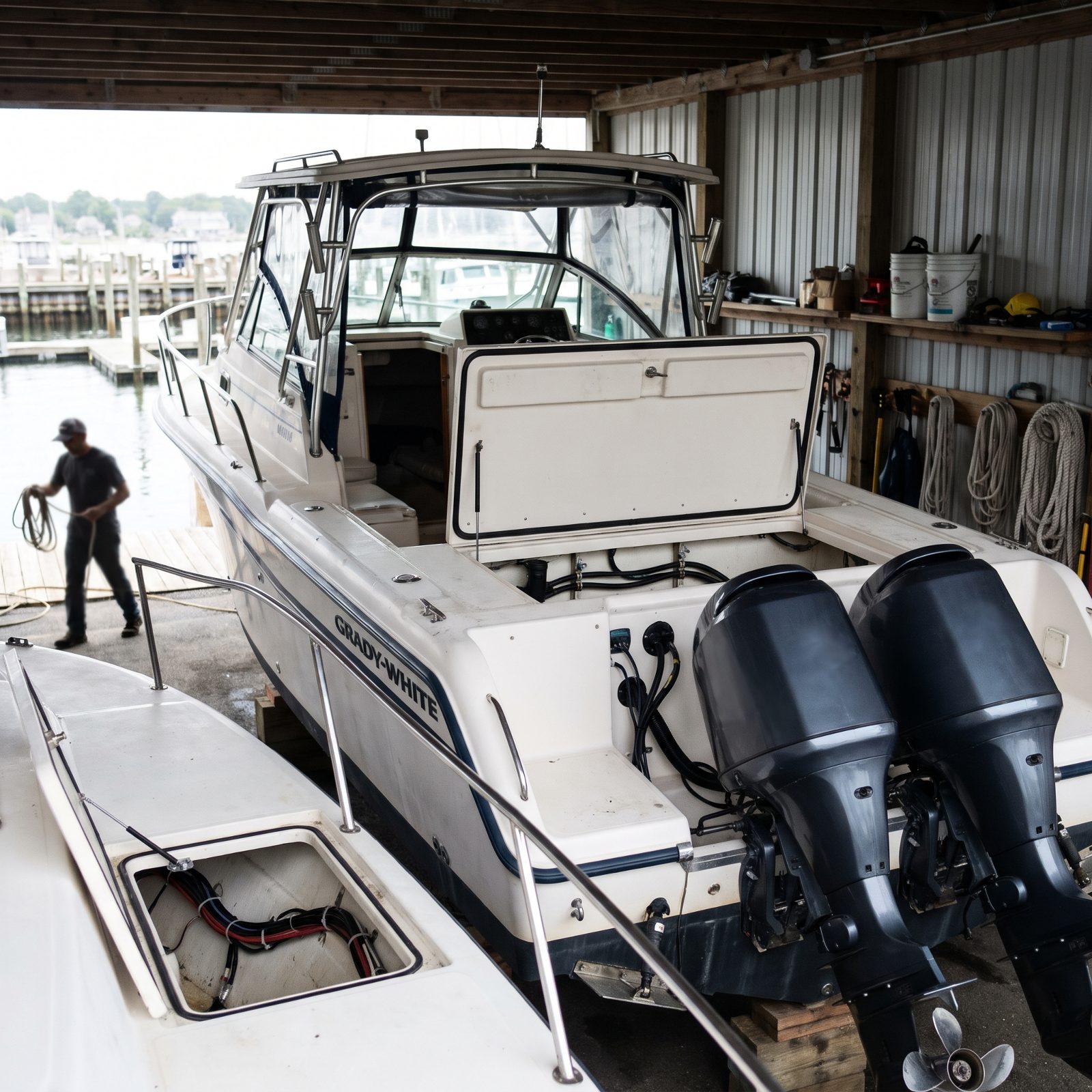
Here’s a sentence you’ll hear in a lot of boatyards: a well-kept older Grady is worth more than a neglected new anything.
The hulls come overbuilt by modern standards, and mechanics rate long-term durability high because the build actually gives maintenance something to work with. Stay on top of the outboards and the rigging, and a twenty-year-old Grady-White pays you back with hull integrity that newer, thinner-laid boats just can’t touch. Skip the upkeep, though, and even a Grady will punish you for it. The boat holds up its end. You’ve got to hold up yours.
14. Underrated: Pursuit, Rigging That Was Clearly Laid Out by Someone Who’d Have to Fix It
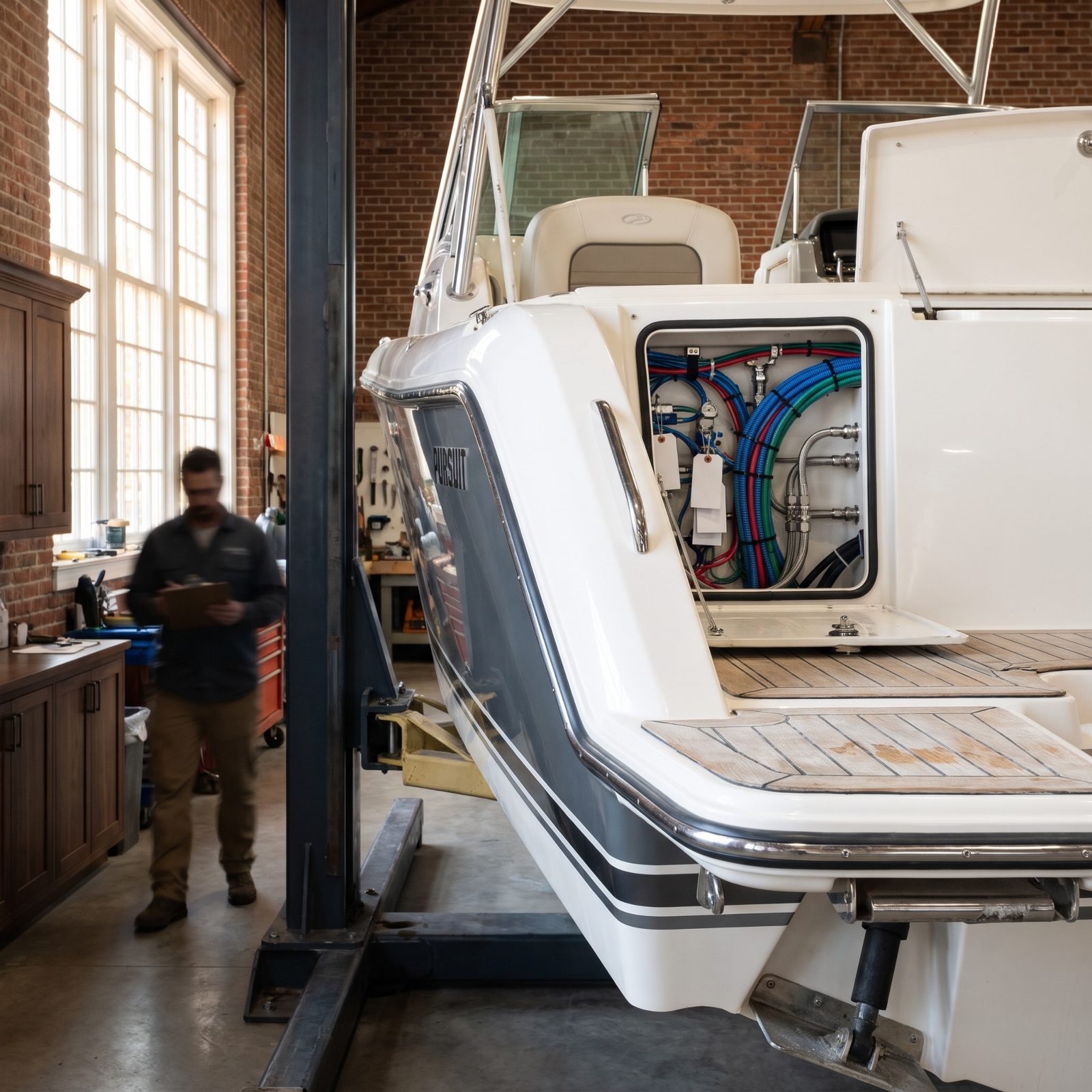
Open a Pursuit at service time and the techs we interviewed tend to ease up a little. The rigging comes routed, labeled and loomed instead of crammed, so tracing a fault doesn’t turn into a dig through sediment.
That care shows up down on the labor line of the invoice. Parts support is solid, the systems are mainstream, and the build respects whoever’s eventually going to open it up. It’s the kind of quality you don’t clock at the boat show and then quietly appreciate for a decade after.
13. Underrated: Lund, Aluminum Every Repair Shop Already Knows How to Handle
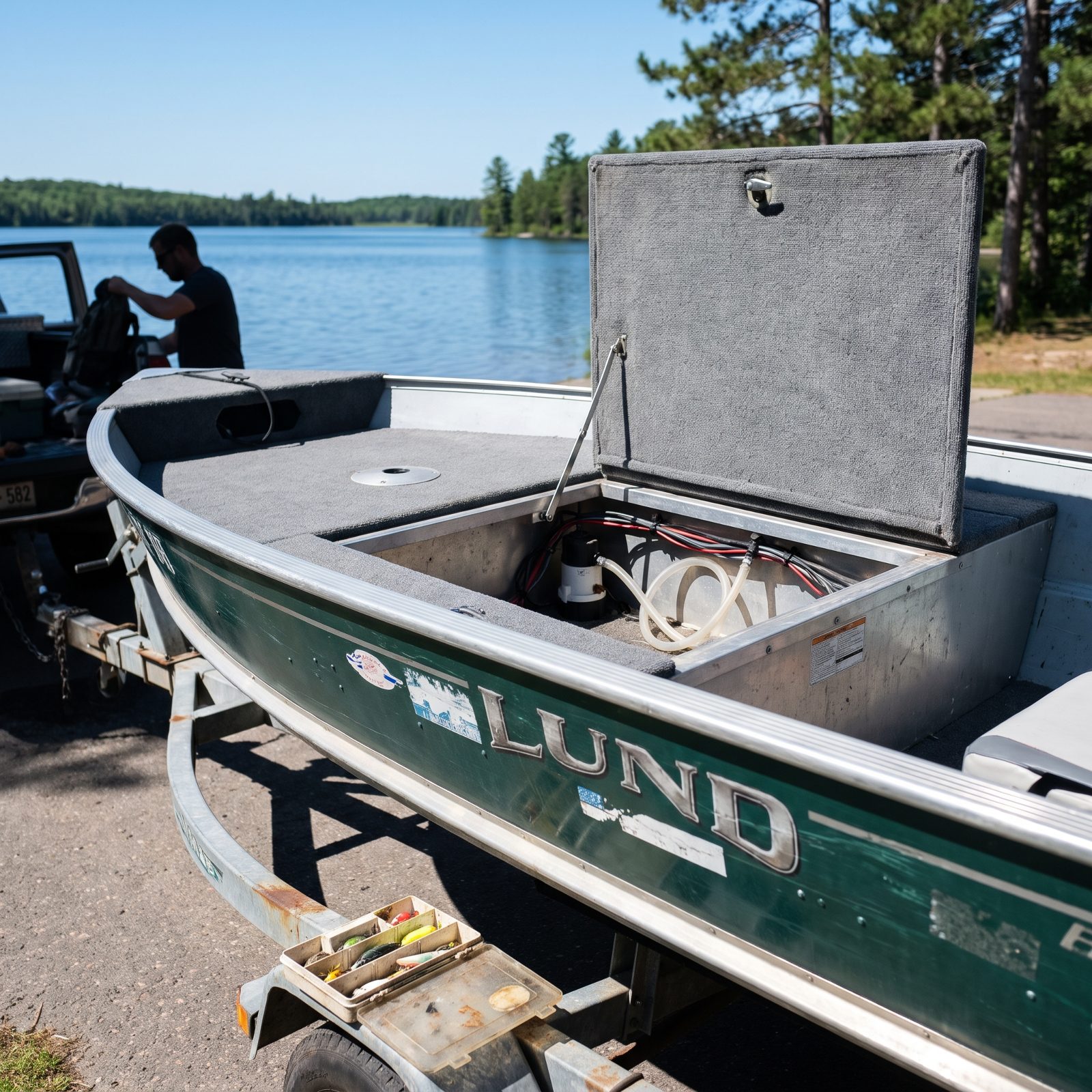
Aluminum isn’t exotic, and that’s precisely why mechanics love a Lund. Any lake-town shop can weld it, patch it, rivet it — no specialized gelcoat matching, no coring to fuss over, no mystery composites that only one guy in the county understands.
The hulls shrug off dock rash and trailer scrapes that would crack fiberglass clean through. Parts turn up everywhere, the systems stay plain, and when something does go sideways, the fix is familiar to anyone who’s ever worked a boat ramp. Underrated because it’s humble. Durable because it’s simple.
12. Underrated: Hewes, Shallow-Water Minimalism Means Less Hardware to Fail
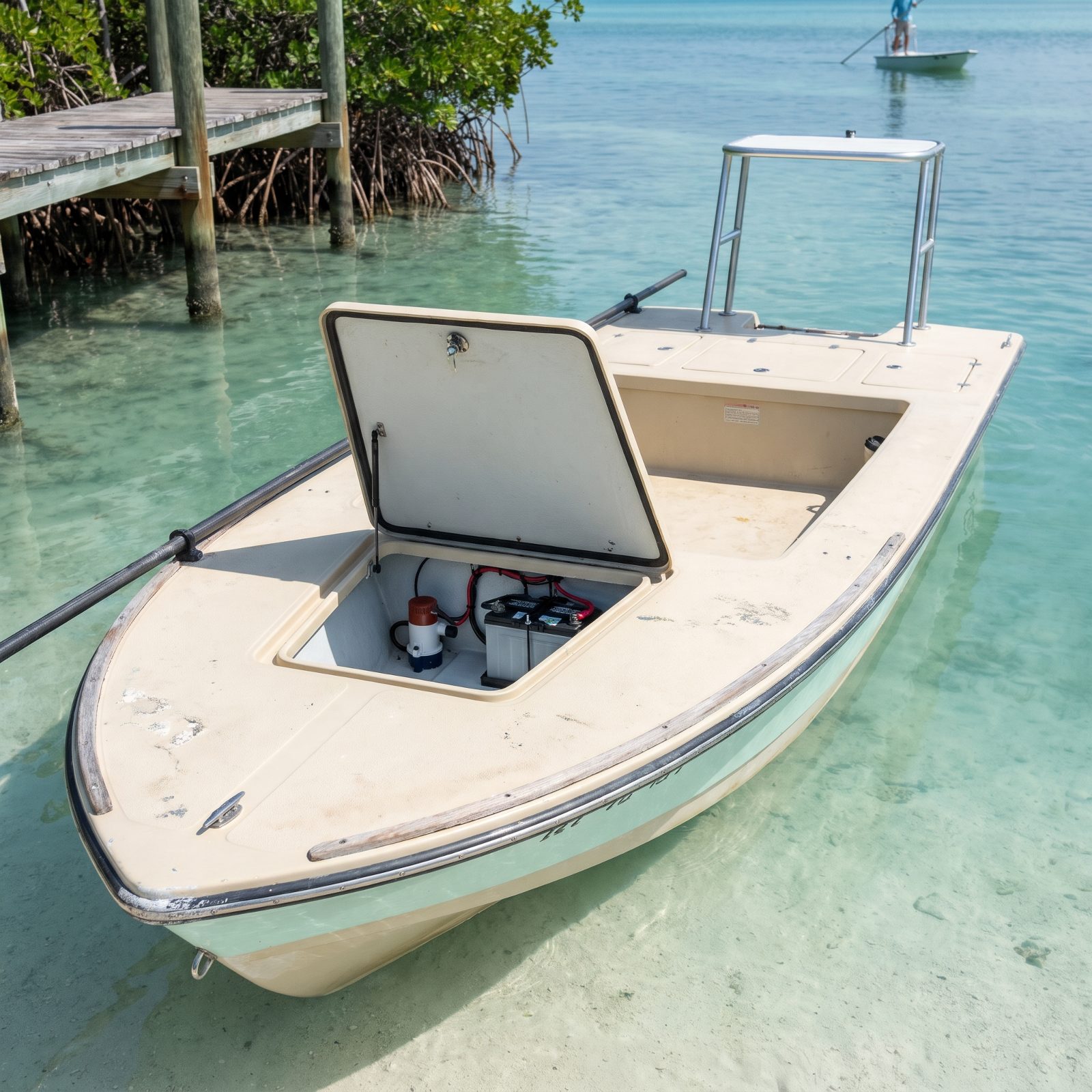
Less boat, fewer problems. Hewes flats skiffs get built around one idea — getting skinny over the flats — and that single-mindedness strips out the clutter that breaks on heavier boats.
No complicated ballast. No stacked systems, no deep bilge full of surprises. Mechanics rate it well because there’s simply less to go wrong, and whatever’s there sits right in plain reach. On a boat like this, simplicity isn’t a compromise. It’s the whole design.
11. Underrated: Albemarle, Old-School Offshore Construction That Earns a Nod in the Shop
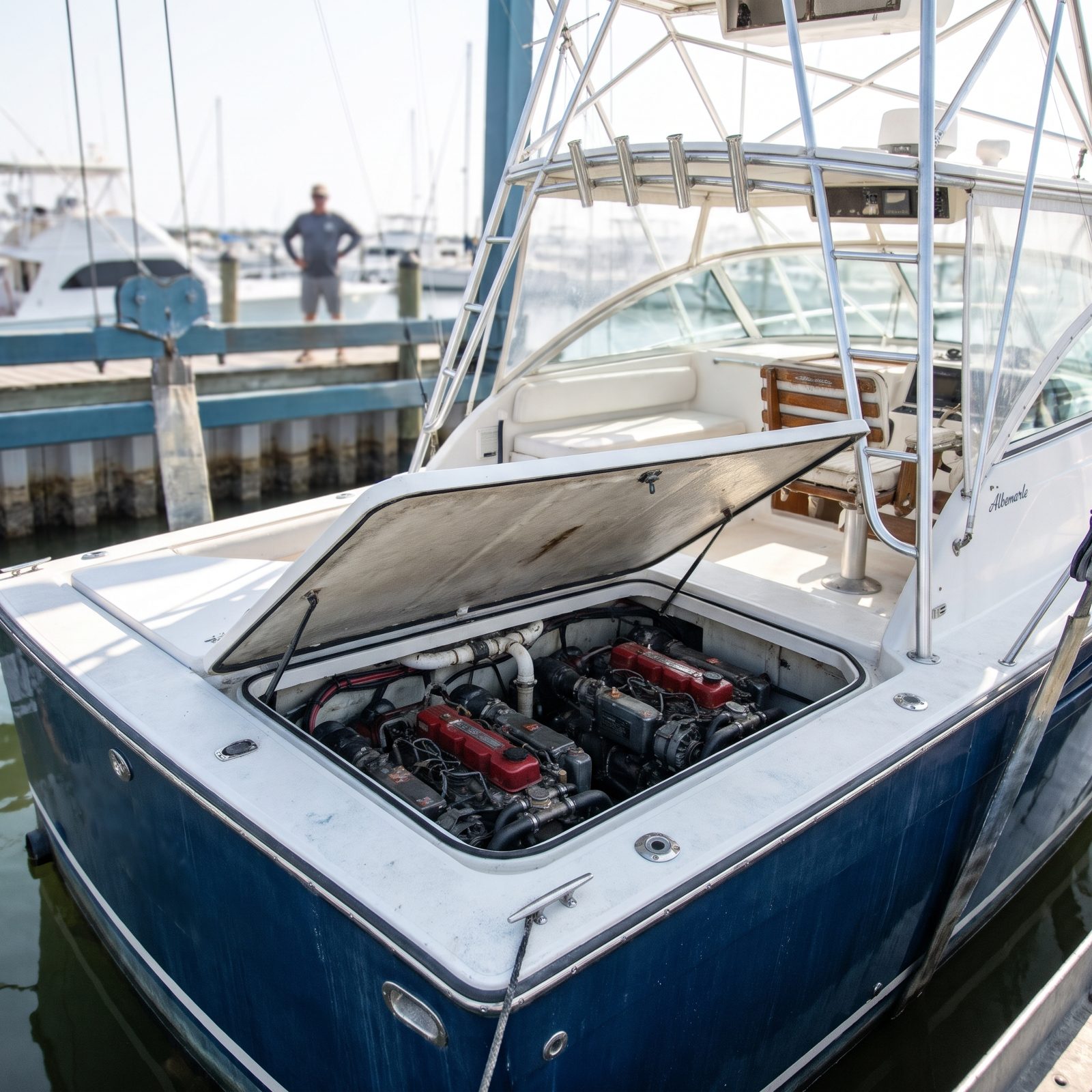
Mention Albemarle to an old-guard diesel mechanic and you get respect, not a sigh. These are traditional offshore boats — heavily laid up, built to take a beating a hundred miles out and still bring you home.
The techs we spoke with rate long-term durability high and point to construction that keeps its shape under real sea load. Parts are conventional, the systems serviceable, and the hull doesn’t flex itself into trouble. Next to the flashier sportfish names it flies under the radar. On the water and in the shop both, it quietly out-earns them.
10. Carolina Skiff: When a Plain Layout Is the Whole Point
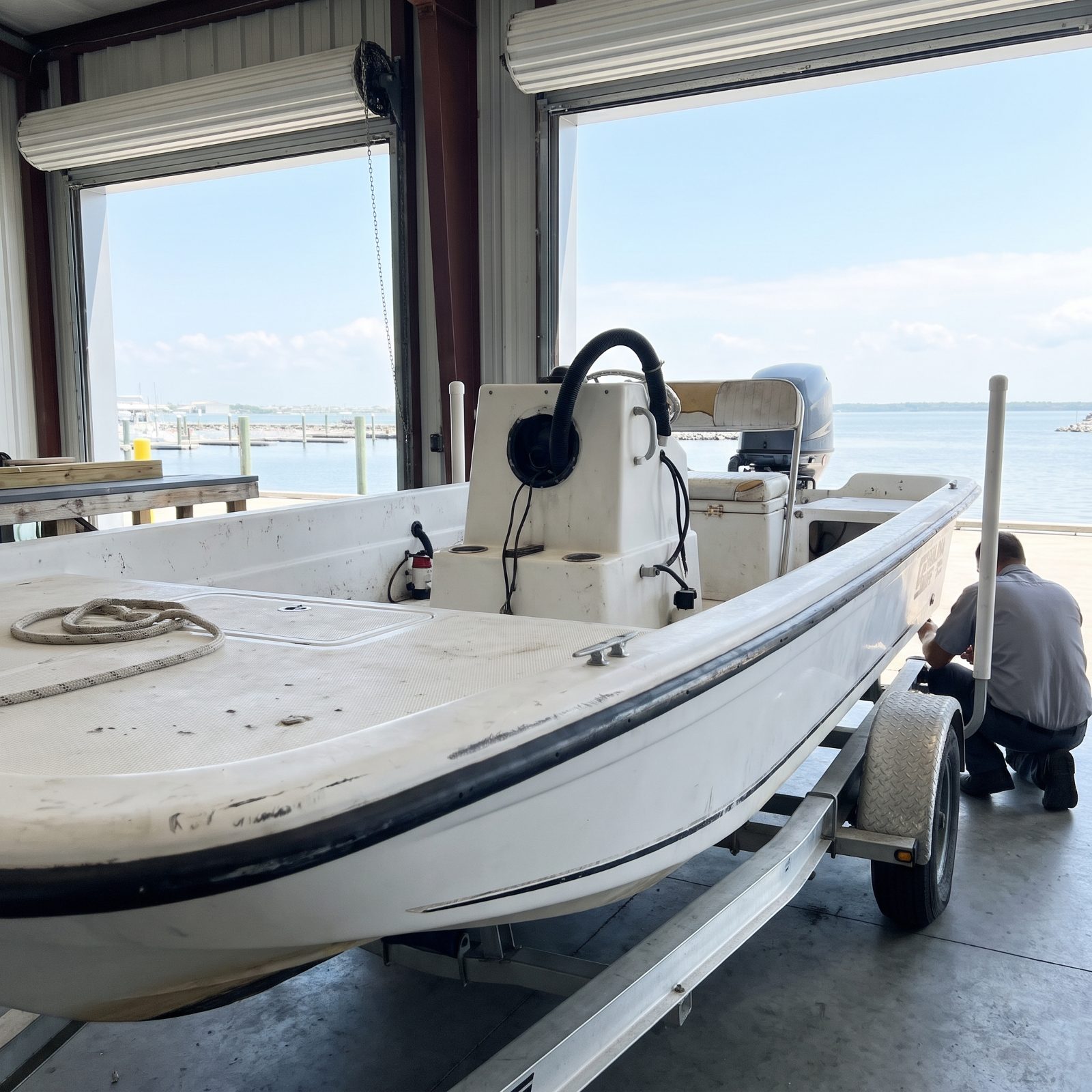
Ask mechanics about the brands they actually like and they keep landing on one unglamorous word: accessible. Carolina Skiff builds a boat where almost nothing hides. Pop the console, trace the wire, you’re done — no sculpted liner swallowing the harness, no molded tunnel you have to fish a snake through.
The flat, simple hull turns a failed bilge pump or a corroded ground into a ten-minute find instead of a scavenger hunt. On rankings weighted toward service access and build simplicity, it climbs higher than its price tag would suggest, and the judgment comes from shop techs scoring diagnosis time and parts commonality rather than how the thing photographs on a Tuesday.
9. World Cat: The Catamaran Hull Earns Back Its Second Engine
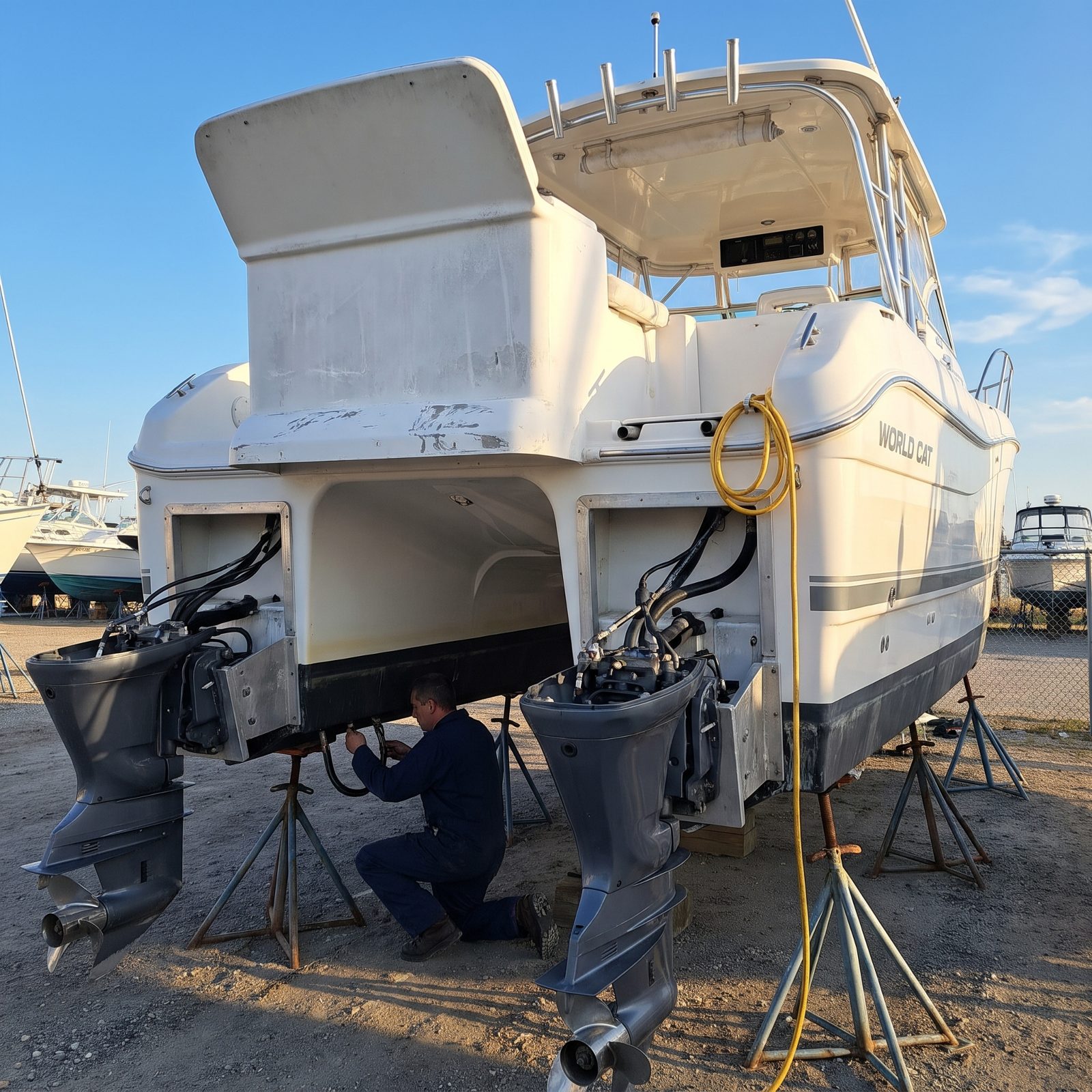
Two hulls and two engines sound like twice the maintenance. Ask the people who turn the wrenches and you get a more interesting answer.
A World Cat rides flatter and takes less of a beating in a chop, which spares the hardware, the mounts, and everything bolted to them. The twin-hull layout also spreads the machinery out instead of cramming it into one tight well, so a tech can actually stand between the engines and work. Sure, there’s more to service. But the redundancy and the kinder ride add up to fewer catastrophic one-engine-down days, and on a ranking that cares about getting home over raw part count, the math shifts.
8. Freeman: Offshore Rigging Built Like It Expects Abuse
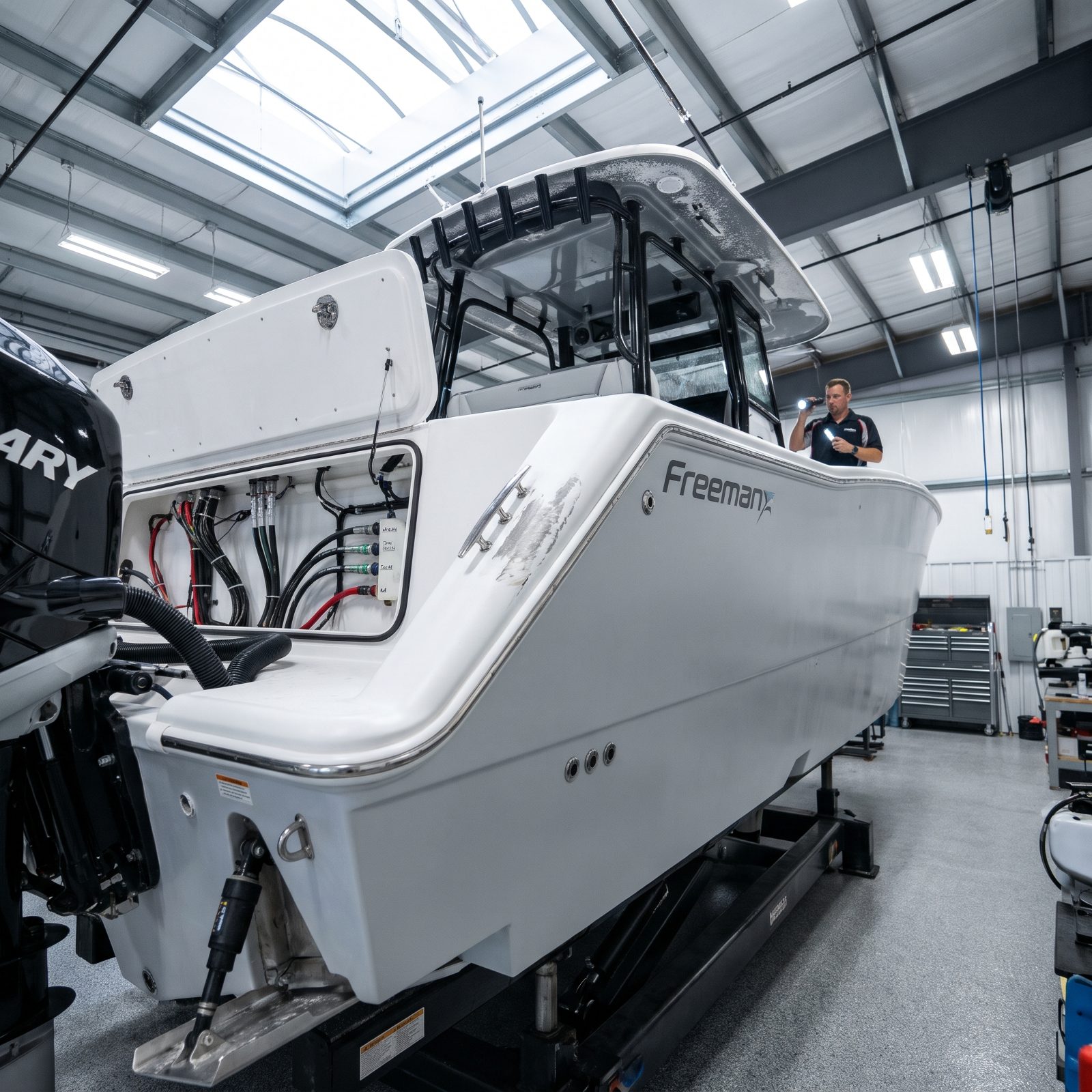
Open the rigging bay on a Freeman and it looks like someone cared. Tinned wire, sealed connections, fuel lines labeled and routed with room to spare. None of that is an accident. These boats run far offshore on multiple engines, and the rigging is built to survive the pounding that kind of running delivers.
Service techs rate it high on build quality because the stuff that usually fails first — connectors, grounds, chafed lines — got room and protection straight from the factory. You pay a premium up front. What you get back is rigging that holds together when you’re sixty miles out and nowhere near a mechanic.
7. Contender: A Fishing Deck With Nothing Extra to Break
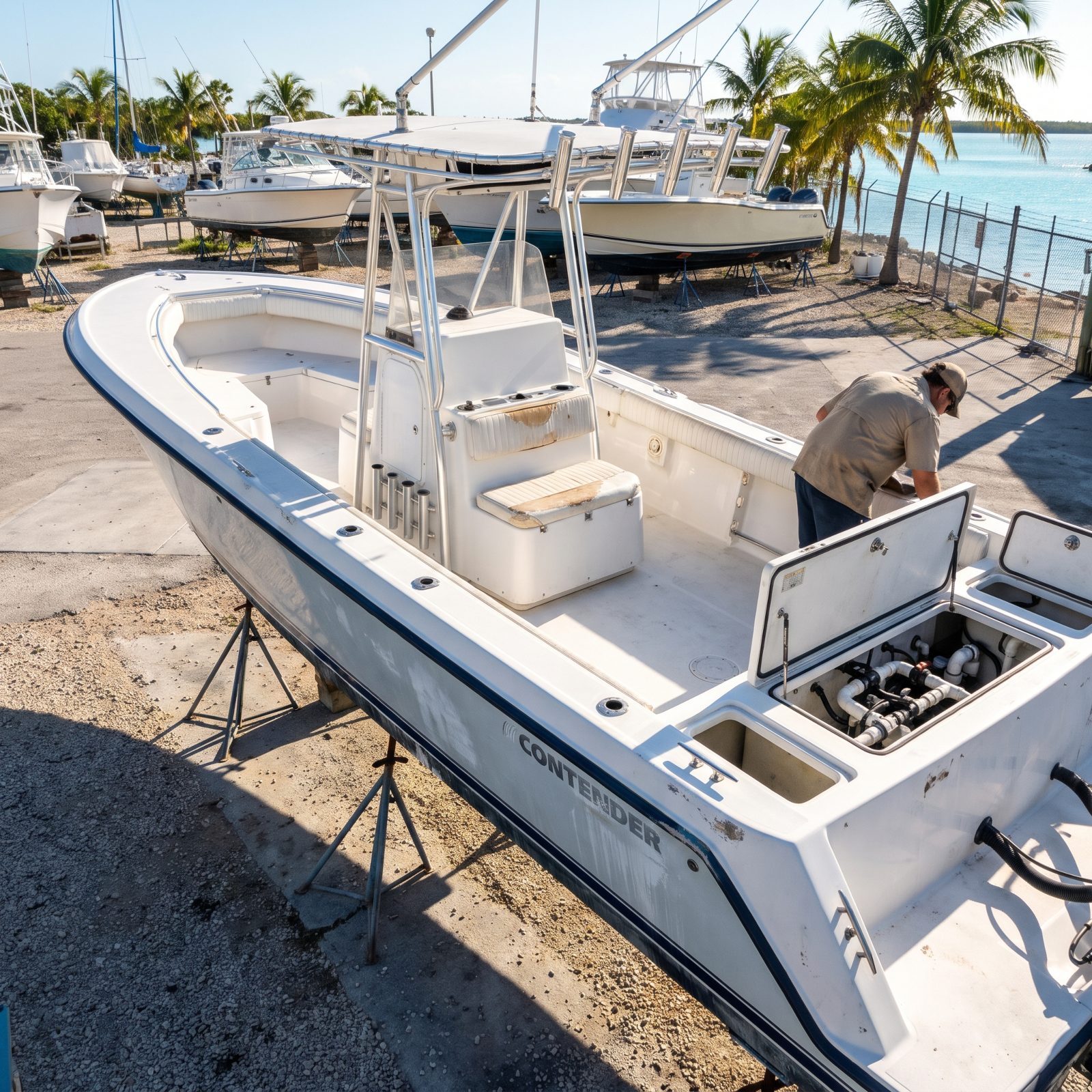
The Contender philosophy is subtraction. No cabin you’ll never use, no gimmick wiring, no molded features that exist only to look full in a brochure — just a fishing deck and the plumbing to support it.
Mechanics who grade on durability tend to like simple for the obvious reason: less to go wrong, and what does go wrong is easy to reach. The livewell plumbing sits where you can get a hand on it. The bilge isn’t buried under three layers of cockpit. When a boat’s job is one thing, you can build it to do that one thing without a dozen failure points riding along for the trip.
6. Viking: An Engine Room You Can Actually Work In
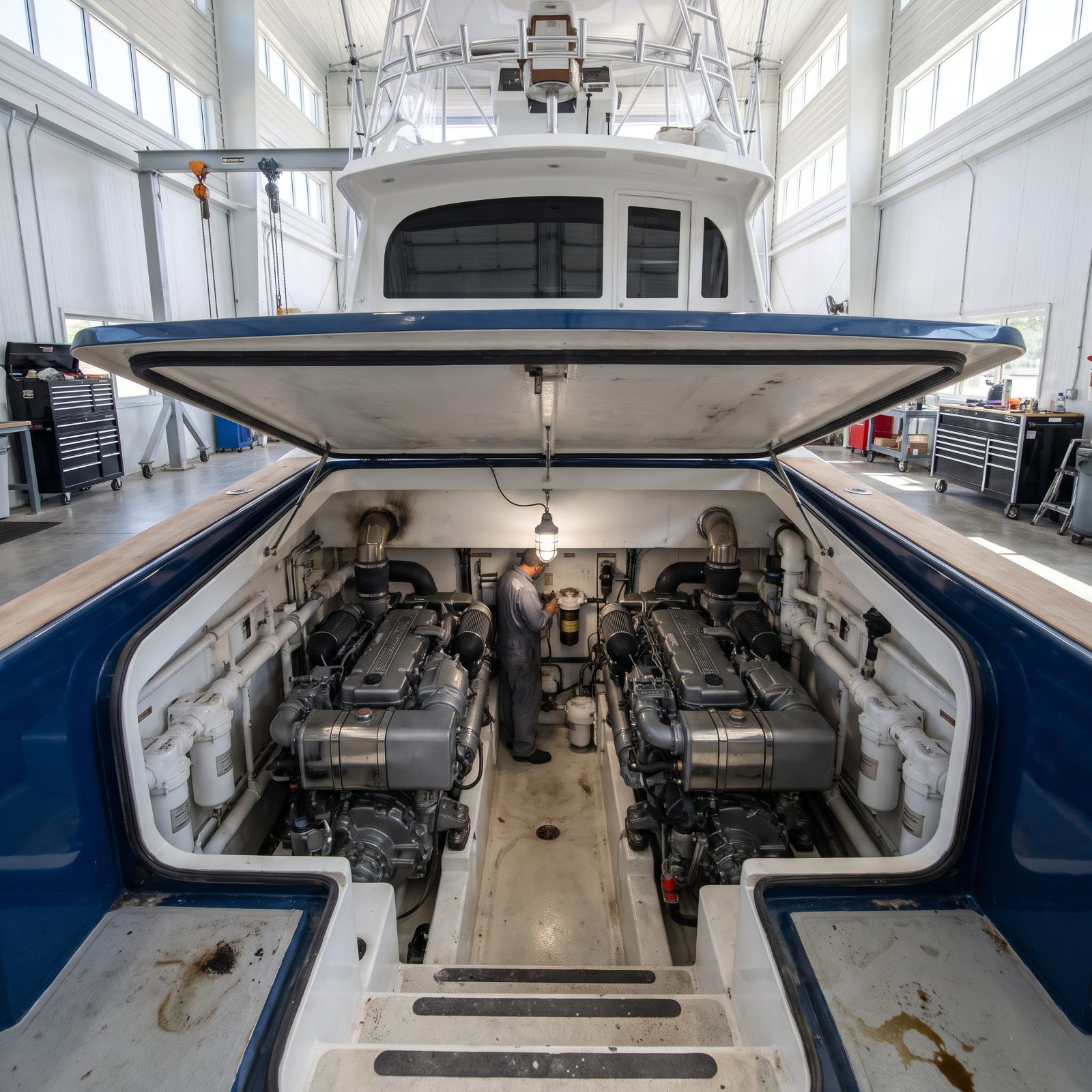
A big sportfisher is a complicated animal — generators, hydraulics, watermakers, air handling, a wiring diagram that reads like a city grid. All that complexity is just the cost of a yacht this capable.
What techs single out about Viking is the engine room. You can stand up in it. You can reach the filters, the strainers, the belts, without becoming a contortionist. Service time drops when access is designed in instead of fought for.
A yacht isn’t rated by how few systems it has. It’s rated by how easily a tired mechanic can reach the one that failed.
That access doesn’t erase the complexity, but it blunts the labor bill complexity usually drags along behind it. On rankings weighted for the serviceability of genuinely complicated boats, that’s a real edge.
5. Sabre: Systems Laid Out for the Long Haul
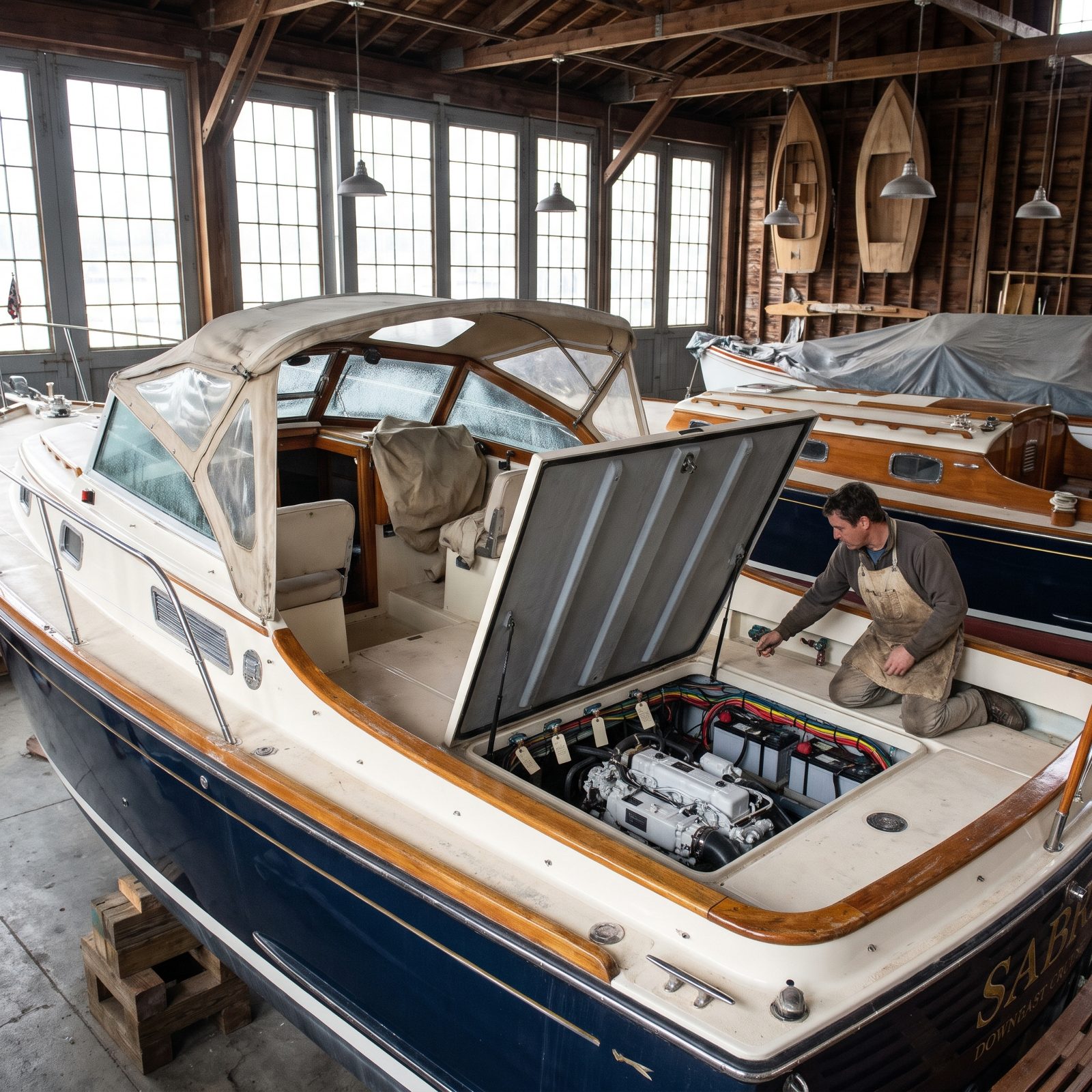
Some boats are built to look good at the dock and punish whoever services them. Sabre runs the other way.
Mechanics who favor it point to the systems layout: seacocks you can reach without moving anything, battery banks that aren’t buried under a sole you have to unscrew, wiring with enough slack to work on without cutting. Classic downeast looks, sensible guts.
None of that shows up in a brochure photo. It shows up on year eight, when a hose needs replacing and the job takes an afternoon instead of a wrecked weekend. Long-term ownership is a thousand small jobs stacked end to end, and Sabre seems to know it.
4. Back Cove: Single-Engine Simplicity, Downeast Looks
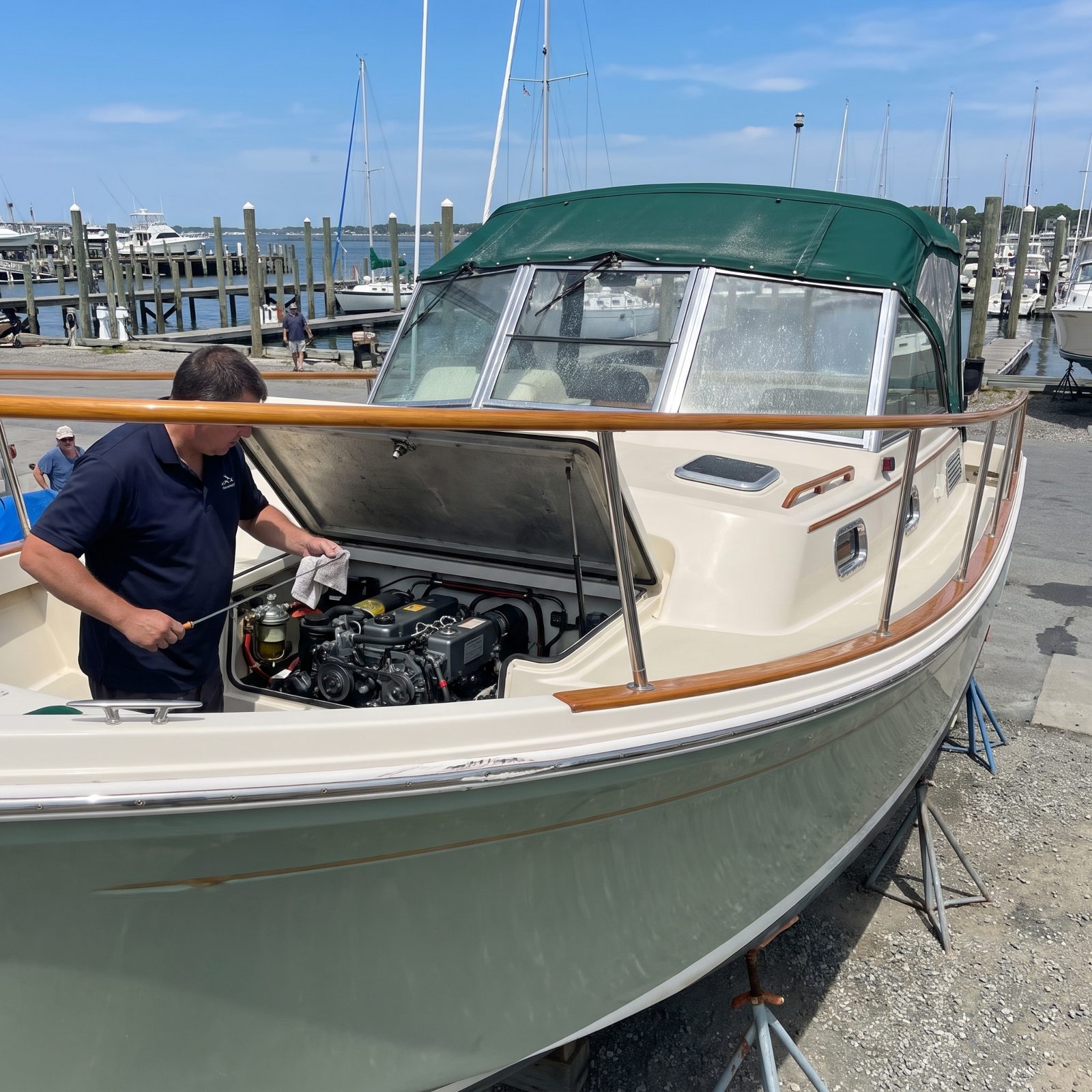
One engine. That’s the whole thesis, and it’s a good one.
A Back Cove hands you the downeast profile people love without a second diesel doubling your service list. Techs rate it well on maintainability for exactly that reason — fewer running systems, generous access, nothing shoehorned in to pad a feature count. Pop the engine box and there’s real working room.
Single-screw boats scare off buyers who want twin-engine redundancy, and that’s a fair personal call. But on cost of ownership and recurring repairs, one well-placed diesel beats two tucked where no human hand can reach them.
3. Arima: Small Pilothouse, Not a Single Wasted Inch
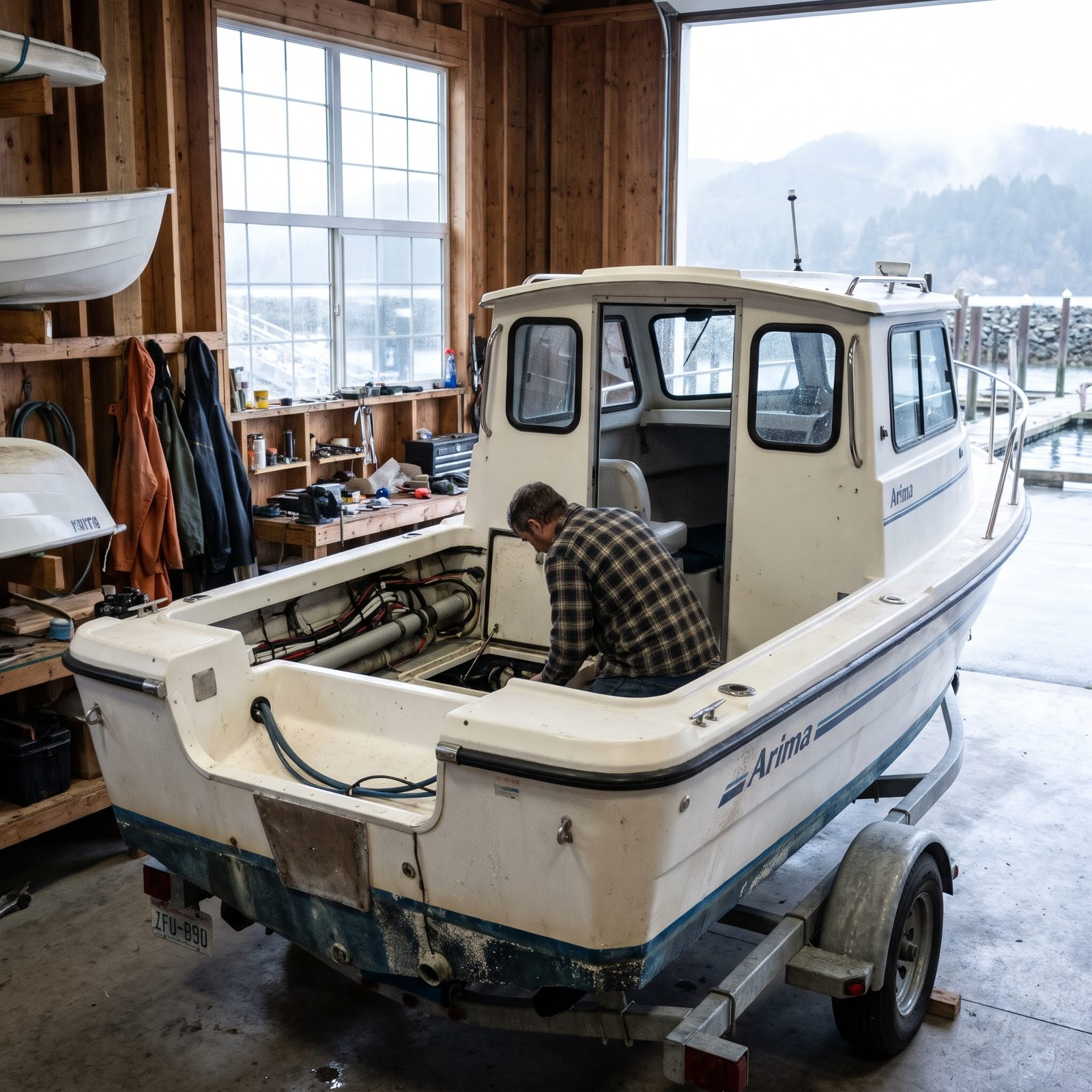
Small boats usually pay for their size in access. Cram a cabin, a helm, and fishing space into eighteen feet and something always ends up buried. Arima pulls off the trick better than most.
The pilothouse layout uses the space without hiding the systems. Techs who work on Pacific Northwest fishing boats rate these on how sensibly the rigging and bilge are packed — tight but reachable, not a puzzle box. For an affordable, trailerable boat that lives a hard coastal life, that efficiency is the quiet thing keeping it running.
Not flashy. Just thought through, which is rarer than it ought to be.
2. Underrated: Defiance, Commercial-Inspired Layouts Built Around Getting the Job Done
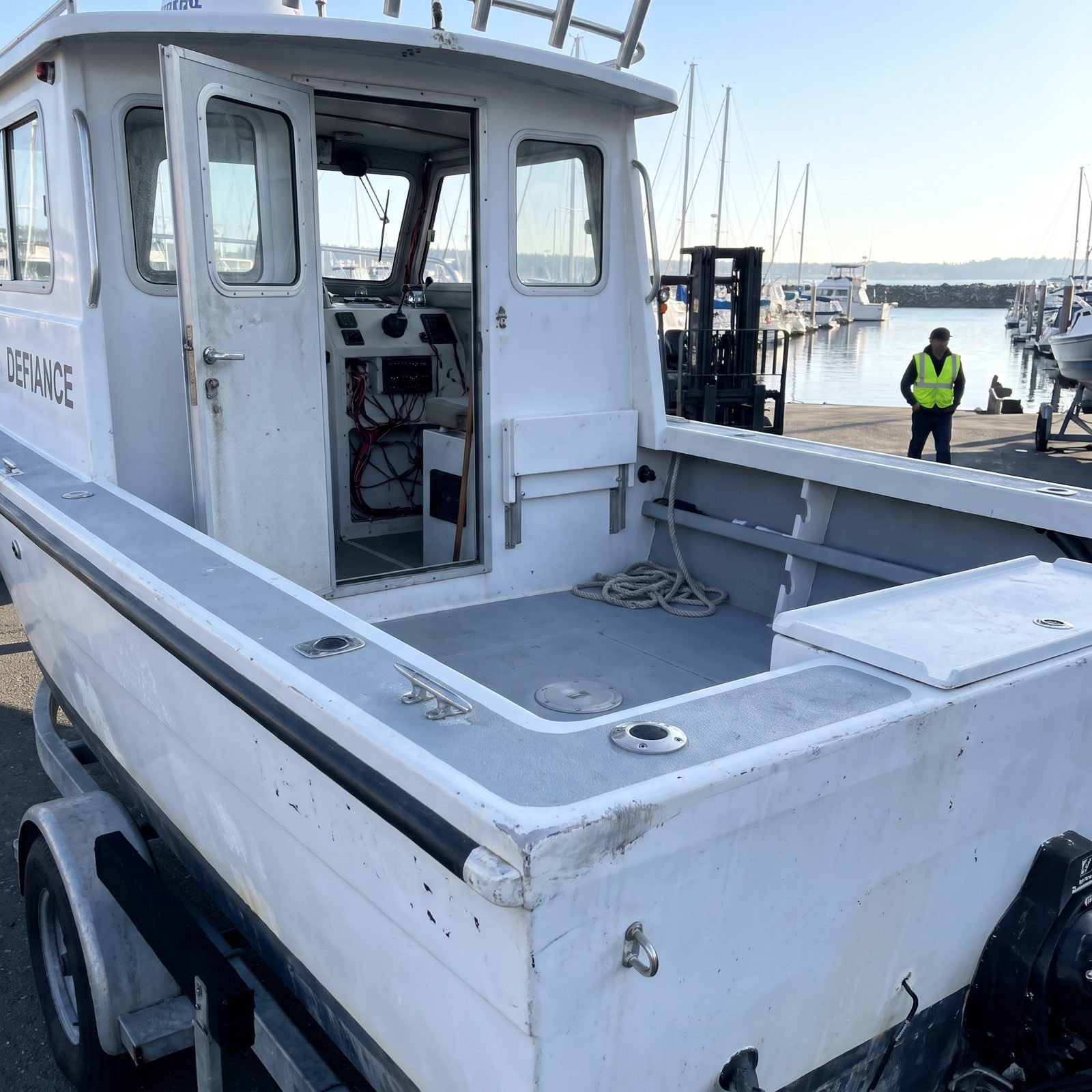
Ask a working mechanic what they like about a Defiance and they almost never mention the styling. They mention how easy it is to reach the fuel-water separator without lying flat across a hot engine.
These get built in the Pacific Northwest, for people who fish in weather that keeps most boats parked on the trailer. The layouts borrow from commercial work boats, so storage ends up where you actually need it and the deck drains like it means business. Nothing’s hidden behind a molded panel just to look tidy in the brochure.
That working-boat heritage spares you the “you have to pull the whole console to swap one hose” nightmares that balloon a service bill.
1. Underrated: North River, Heavy-Gauge Aluminum That Shrugs Off a Rough Season
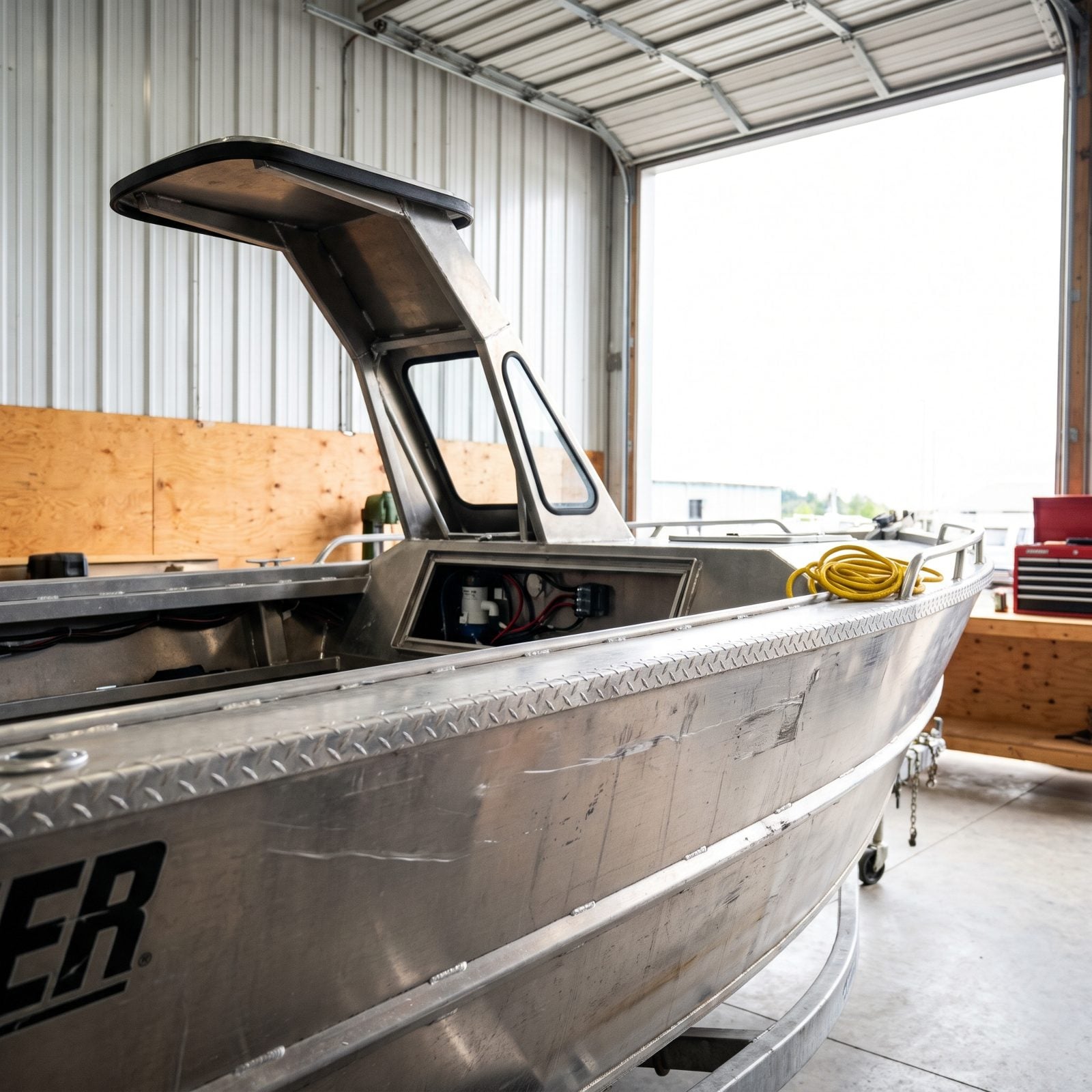
Heavy-gauge aluminum is the whole argument here. North River runs thicker hull plating than a lot of competitors, and you feel it the first time you beach the boat on gravel and nothing dents.
Mechanics tend to love aluminum for one plain reason: it doesn’t rot, and it doesn’t hide blisters under the gelcoat waiting to ambush you in year eight. Weld repairs are straightforward if you ever need one, and the parts are generic enough that no single supplier gets to hold you hostage.
The trade-off? Noise and ride. These boats ring a little louder in chop than a comparable fiberglass hull, and a heavy aluminum boat sits firmer underneath you. For somebody who uses a boat hard and plans to keep it fifteen years, that’s a deal worth taking.