
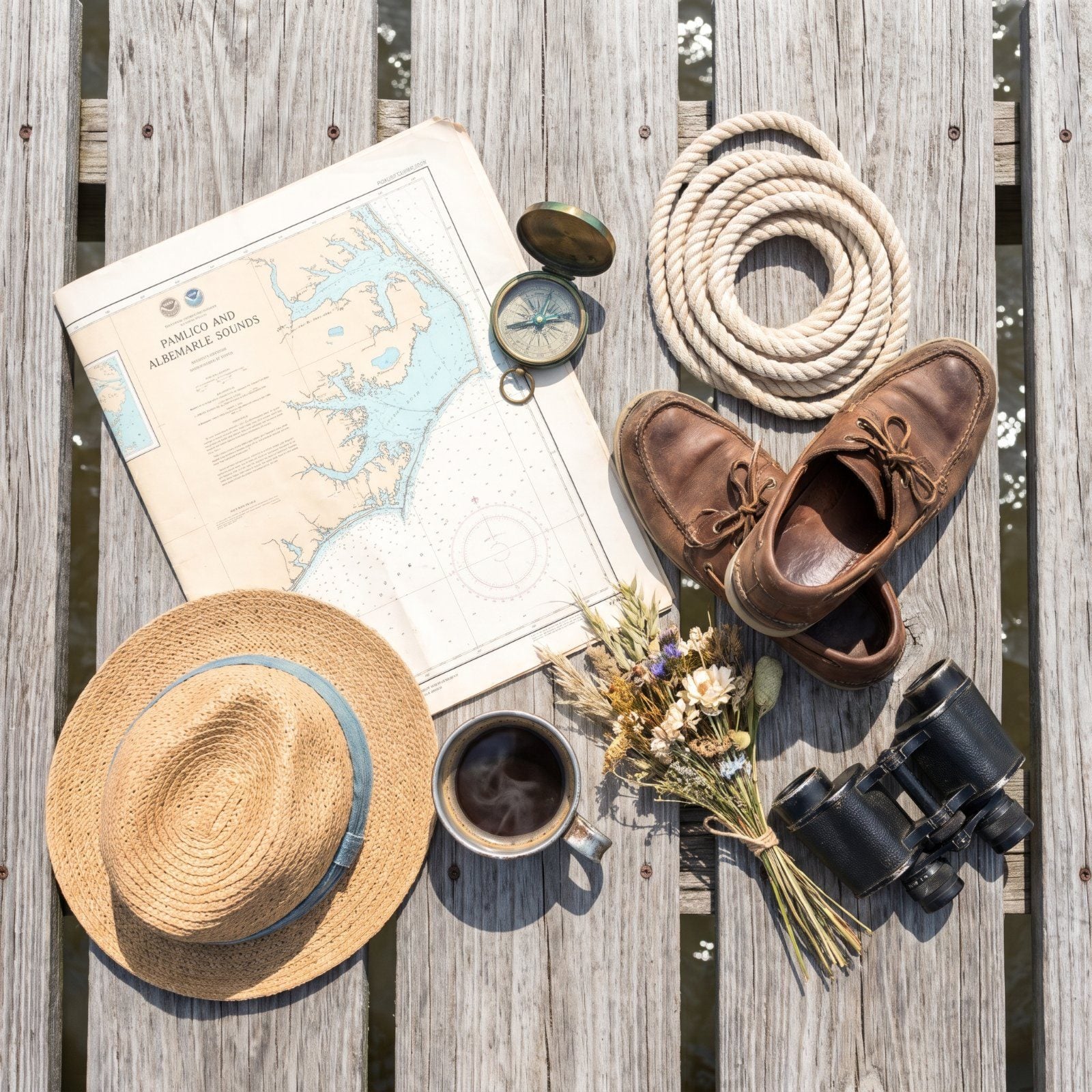
In one Pamlico County town most maps barely register, the boats outnumber the people. That one fact tells you most of what you need to know about North Carolina’s quieter waterfronts, from the sounds where the Intracoastal Waterway threads past places the Outer Banks crowds never find to the mountain lakes out west. River towns and sound towns, built around a creek or a wharf. You can tie up free for a night and walk to dinner. The water does the talking here. Some docks give you nothing but cleats, and one of them has a stranger waiting to hand you a rose. Here’s where to point the bow.
Please note that some of the imagery in this article may have been enhanced with the assistance of AI.
17. Oriental: The Sailing Capital Where Masts Outnumber Mailboxes
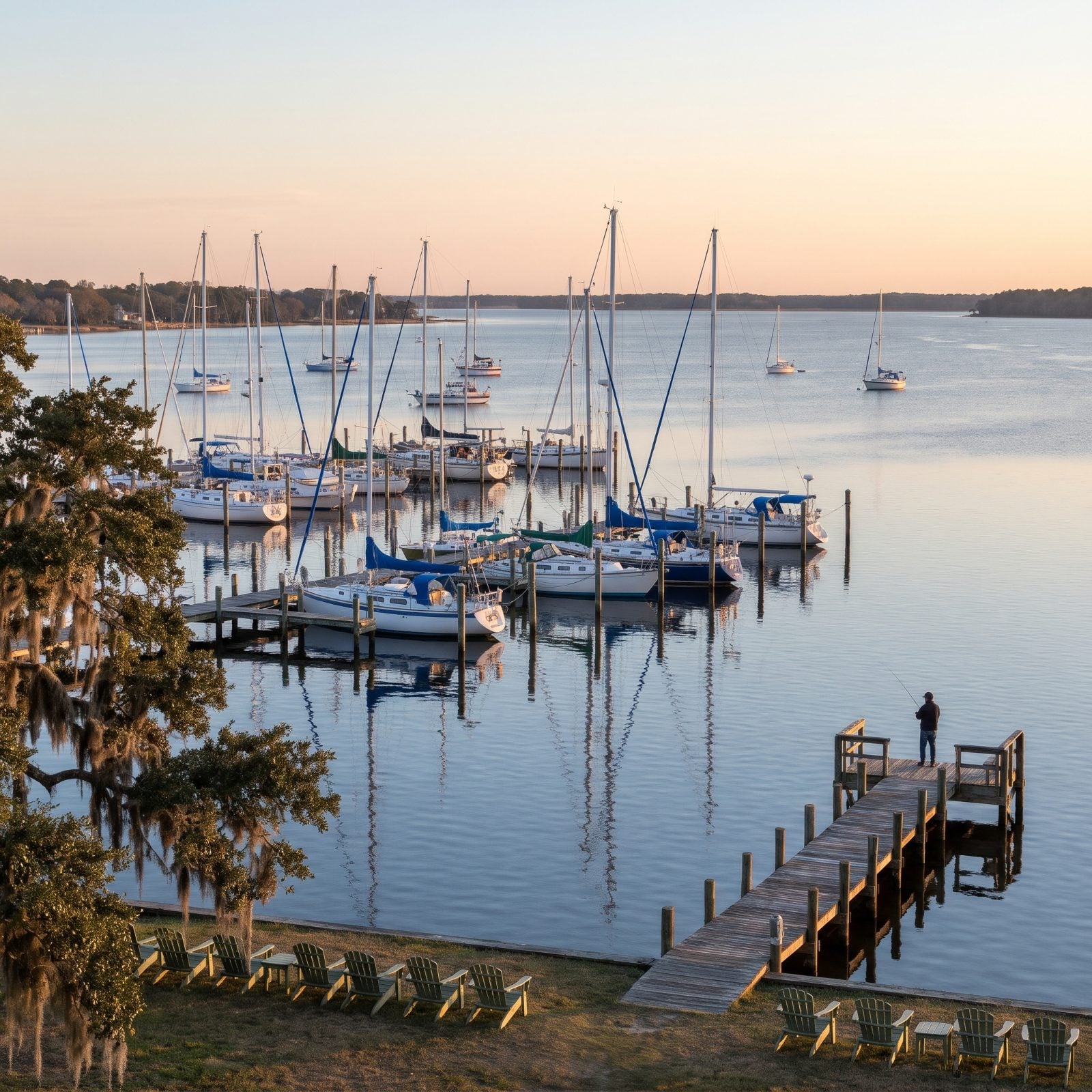
Eight hundred and eighty people live here, and the boats have them beat three to one. That’s the kind of math that makes a town stop pretending it’s about anything but the water. Oriental sits on the Neuse River in Pamlico County, and it calls itself the sailing capital of North Carolina without so much as a shrug of apology.
By the numbers: Oriental, North Carolina on The Town Files (home values, weather, tornado history and schools)
Boaters working the Intracoastal pull in for repairs and never quite leave. Lou-Mac Park is the whole pitch: half an acre, a row of Adirondack chairs, a view of the river doing its slow thing. Sit there long enough with a coffee and you’ll stop asking why nobody’s in a hurry.
16. Belhaven: The Beautiful Safe Harbor Where the ICW Was Born
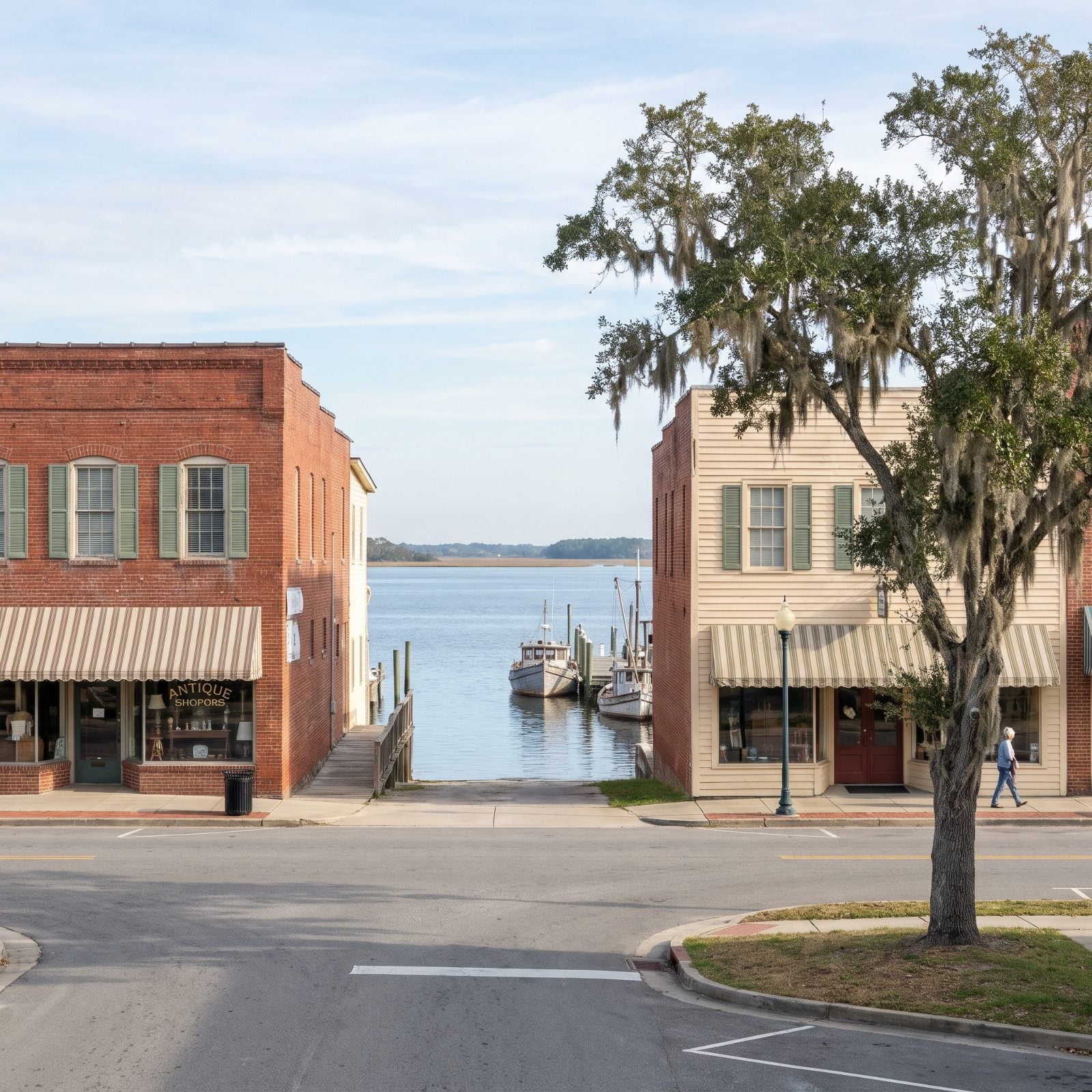
Belhaven claims to be the birthplace of the Atlantic Intracoastal Waterway, a big title for a town of fewer than 2,000 people. It earns it anyway. This Beaufort County spot on the Pungo River has been a safe harbor since it incorporated in 1899, and the second nickname — “The Beautiful Safe Harbor” — is the one that sticks in your head when a squall chases you in off the sound.
By the numbers: Belhaven, North Carolina on The Town Files (home values, weather, tornado history and schools)
Main Street is the kind you walk slow, poking through storefronts full of old lamps and furniture with no real plan. Come in October and the Belhaven Trout Tournament and Festival takes the place over for a couple of days.
15. Bath: North Carolina’s Oldest Town, With a Free Dock and a Pirate Problem
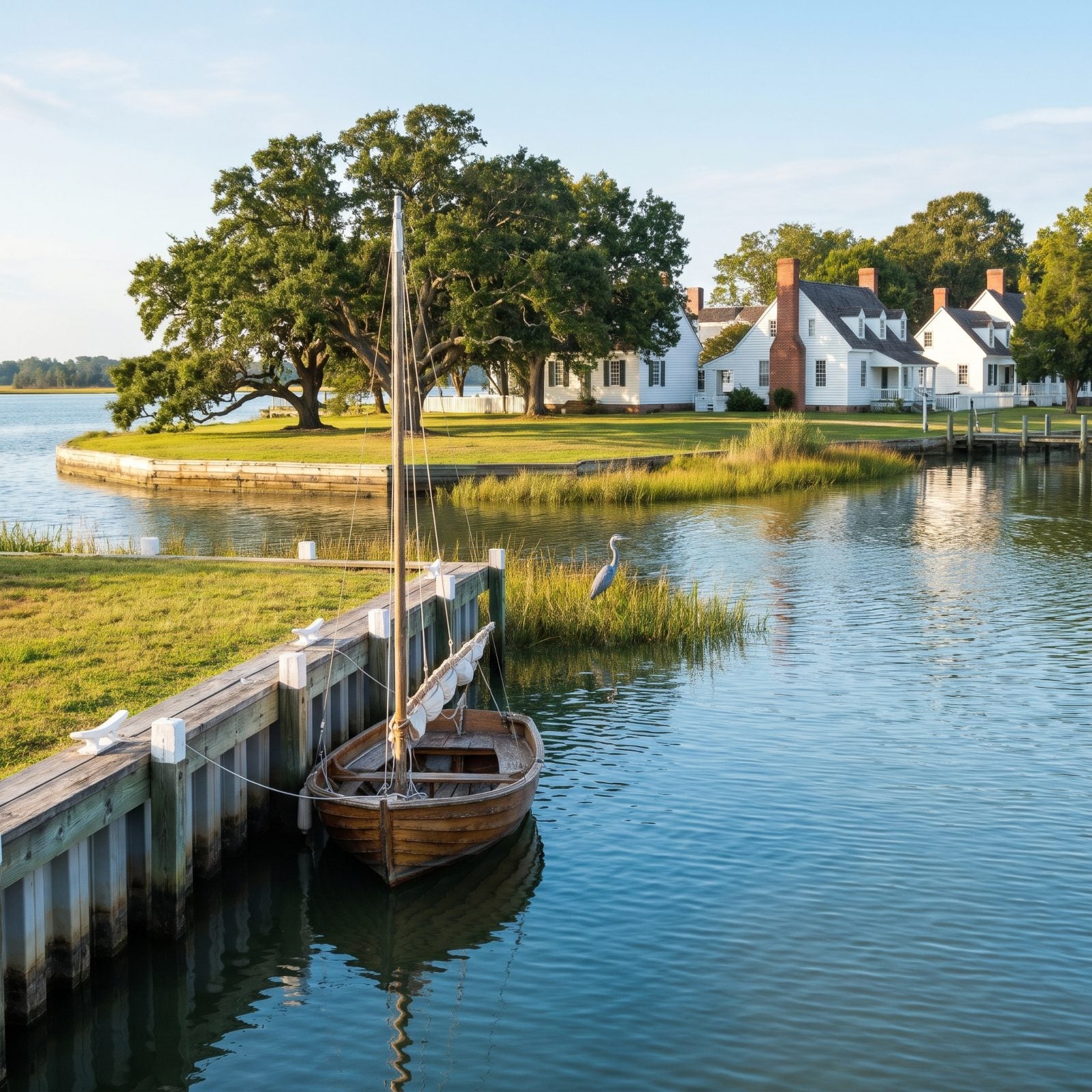
Founded in 1705, Bath is the oldest town in the state, and it wears its age lightly. It sits on Bath Creek just north of the Pamlico River, and here’s the part boaters actually care about: you can tie up free at the North Carolina State Dock by the bridge for up to 72 hours.
Don’t expect much. The dock has cleats and nothing else — no power, no water, no fuss. But it’s a short walk to the village, to Bonner’s Point where the creek spills into the Pamlico, and to the exhibit center that’ll fill you in on early shipbuilding and Blackbeard, who called this place home near the end of his career.
14. Washington: ‘Little Washington’ and a Free Slip on the Pamlico
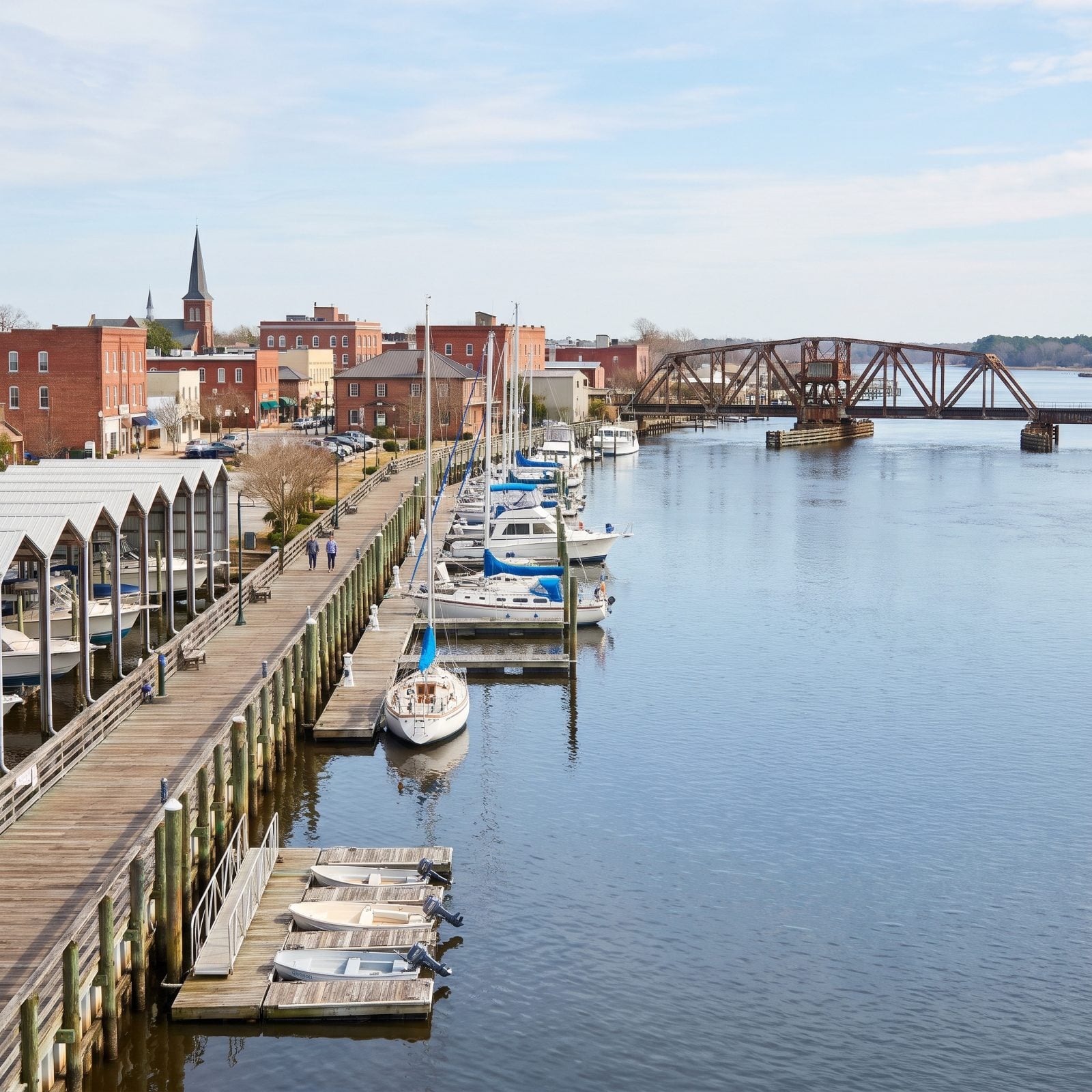
Everybody calls it Little Washington, and nobody minds. This one sits on the north shore of the Pamlico River at 301 Stewart Parkway, about 25 nautical miles west of the Intracoastal, which does a nice job keeping the casual traffic down.
The city docks give you options. The bulkhead docks (G, H and I) have no power or water but come free for up to two nights. Want more than that? There are 56 slips, plus a pump-out, showers, laundry and a dinghy dock.
Remember one thing on the way in: radio the dock attendant on VHF 16 near the railway swing bridge. It’s usually closed from roughly 8 to 11 a.m. on weekdays, and waiting that out bobbing in the current is nobody’s idea of a good morning.
13. Plymouth: A Former Seaport Where Black Bears Draw Bigger Crowds Than Boats
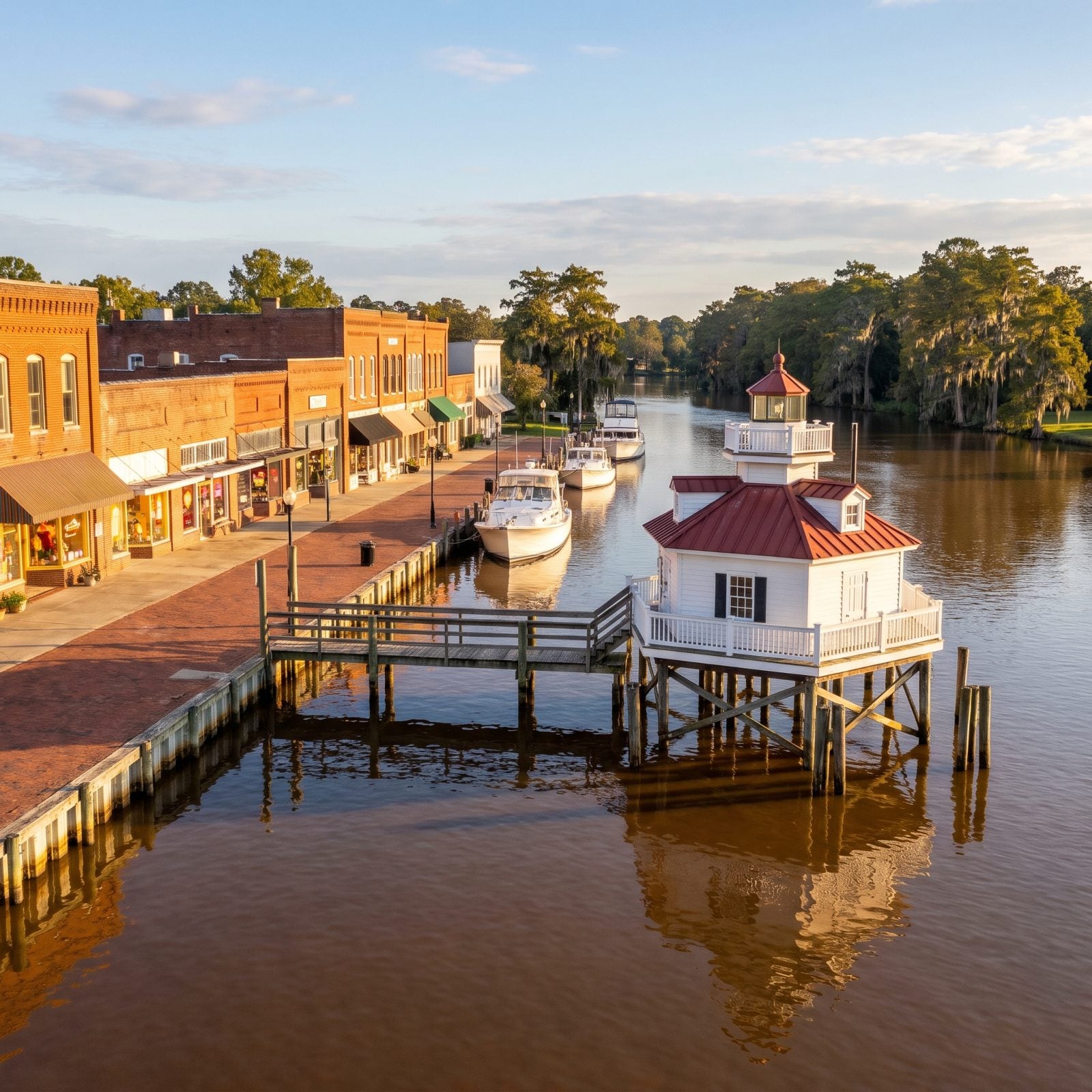
Plymouth sits six miles up the Roanoke River and once ranked as North Carolina’s second-largest seaport. That past is still legible in a three-block downtown running from the Port o’ Plymouth Museum to the Roanoke River Lighthouse, a 2003 replica standing in for the real thing.
By the numbers: Plymouth, North Carolina on The Town Files (home values, weather, tornado history and schools)
Along the way you’ll find cafés, three museums, and transient docking if you come by water. The genuinely odd flex here is the National Black Bear Festival, which pulls thousands of people into a town this size. The bears, for the record, do not attend.
12. Columbia: A Cypress-Swamp Boardwalk That Walks You Into Downtown
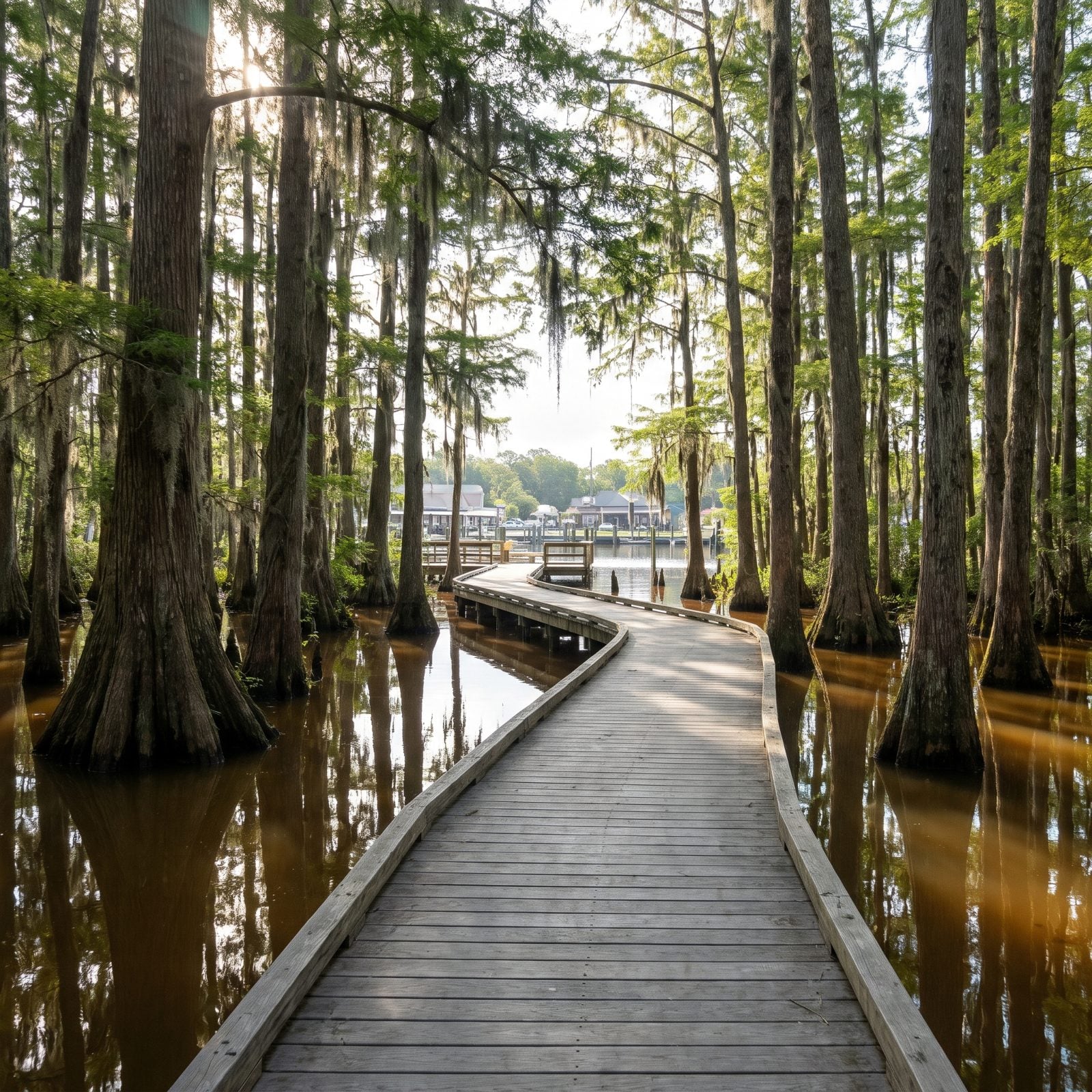
Most towns make you choose between wilderness and Main Street. Columbia hands you both on one plank walkway. The Scuppernong River Interpretive Boardwalk runs a three-quarter-mile loop through a cypress swamp and drops you right into downtown — a National Recreation Trail run by the Pocosin Lakes National Wildlife Refuge at 205 South Ludington Drive.
By the numbers: Columbia, North Carolina on The Town Files (home values, weather, tornado history and schools)
It’s a small Tyrrell County town on the Scuppernong, the blackwater kind where the water sits tea-dark and dead still. Go slow out there. The swamp rewards people who stop moving.
11. Edenton: The First Colonial Capital on the Albemarle Sound
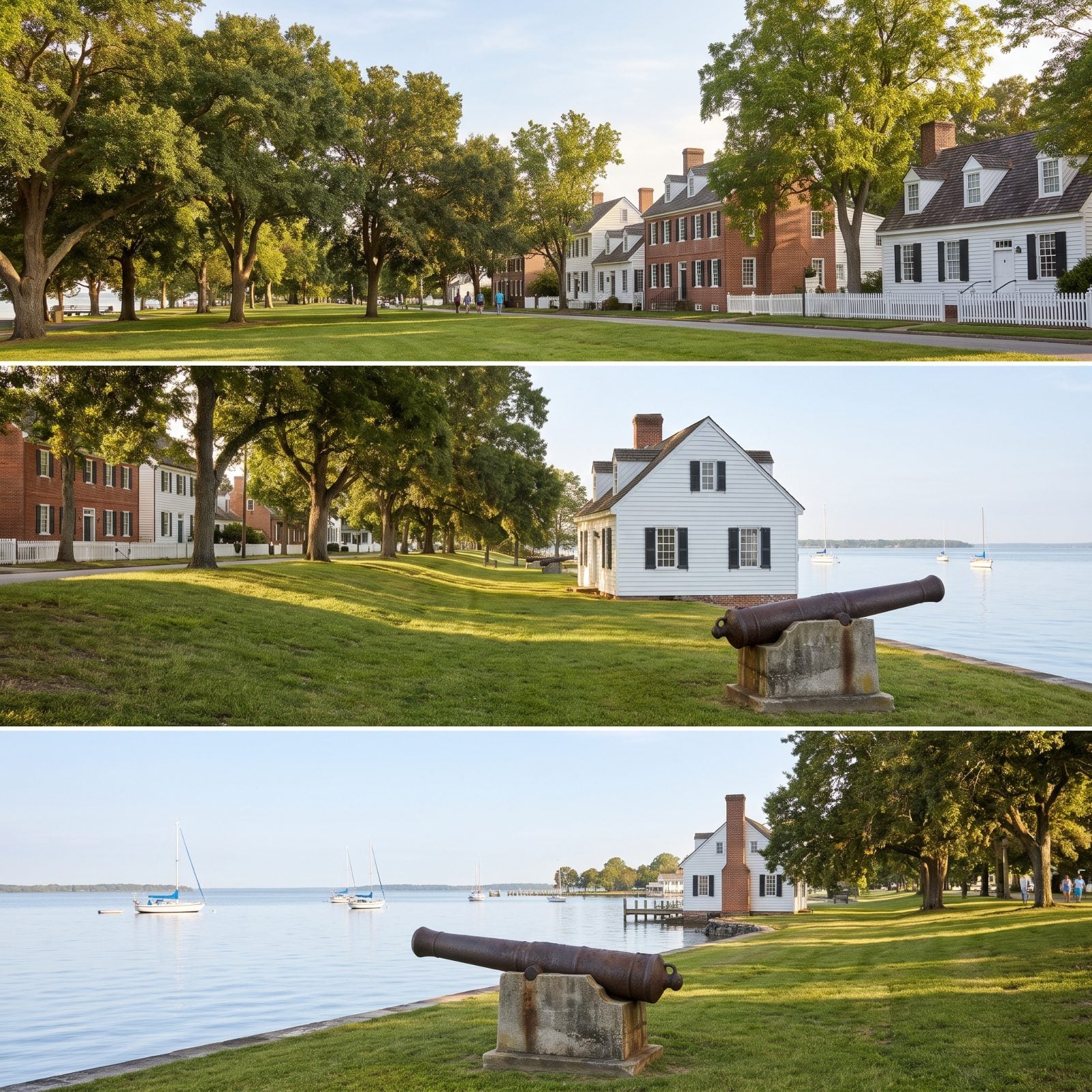
Edenton was North Carolina’s first colonial capital, founded in 1722, and it has the housing stock to prove it: hundreds of 18th-century homes strung along the Albemarle Sound and Edenton Bay. The courthouse gets promoted as the oldest operating colonial courthouse in America.
By the numbers: Edenton, North Carolina on The Town Files (home values, weather, tornado history and schools)
What we like about Edenton is that it never feels like a museum pretending to be a town. The waterfront is a working waterfront. Visit Edenton runs experiences out onto the water, the Albemarle Queen among them, and the sound opens wide and pale in front of you while the whole place carries itself like it knows exactly how old it is.
10. Hertford: The Perquimans River Town With a Brand-New Swing Bridge
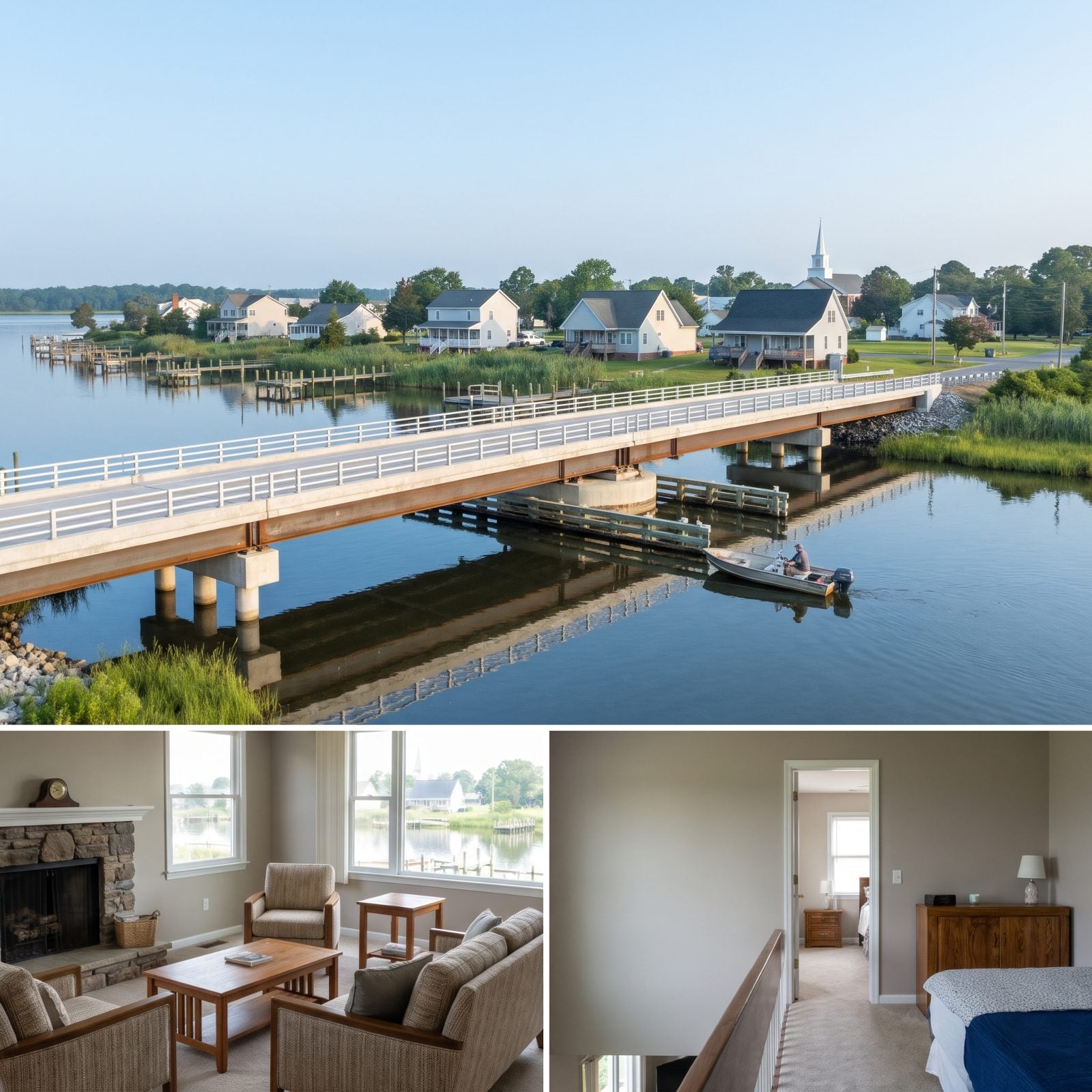
For 90 years, Hertford’s claim to fame was a swing bridge they called the S-Bridge, a graceful old thing stretched over the Perquimans River. NCDOT replaced it as part of a $57 million project on US 17 Business and NC 37 between Hertford and Winfall, and the new swing bridge got its own community day and ribbon cutting in 2022.
By the numbers: Hertford, North Carolina on The Town Files (home values, weather, tornado history and schools)
A new bridge isn’t usually front-page news. But in a small Perquimans County town like this, where the river runs right through the middle of everything, it absolutely is. The water still does the same slow bend it always did.
9. Elizabeth City: The Harbor of Hospitality Where Strangers Hand You Roses
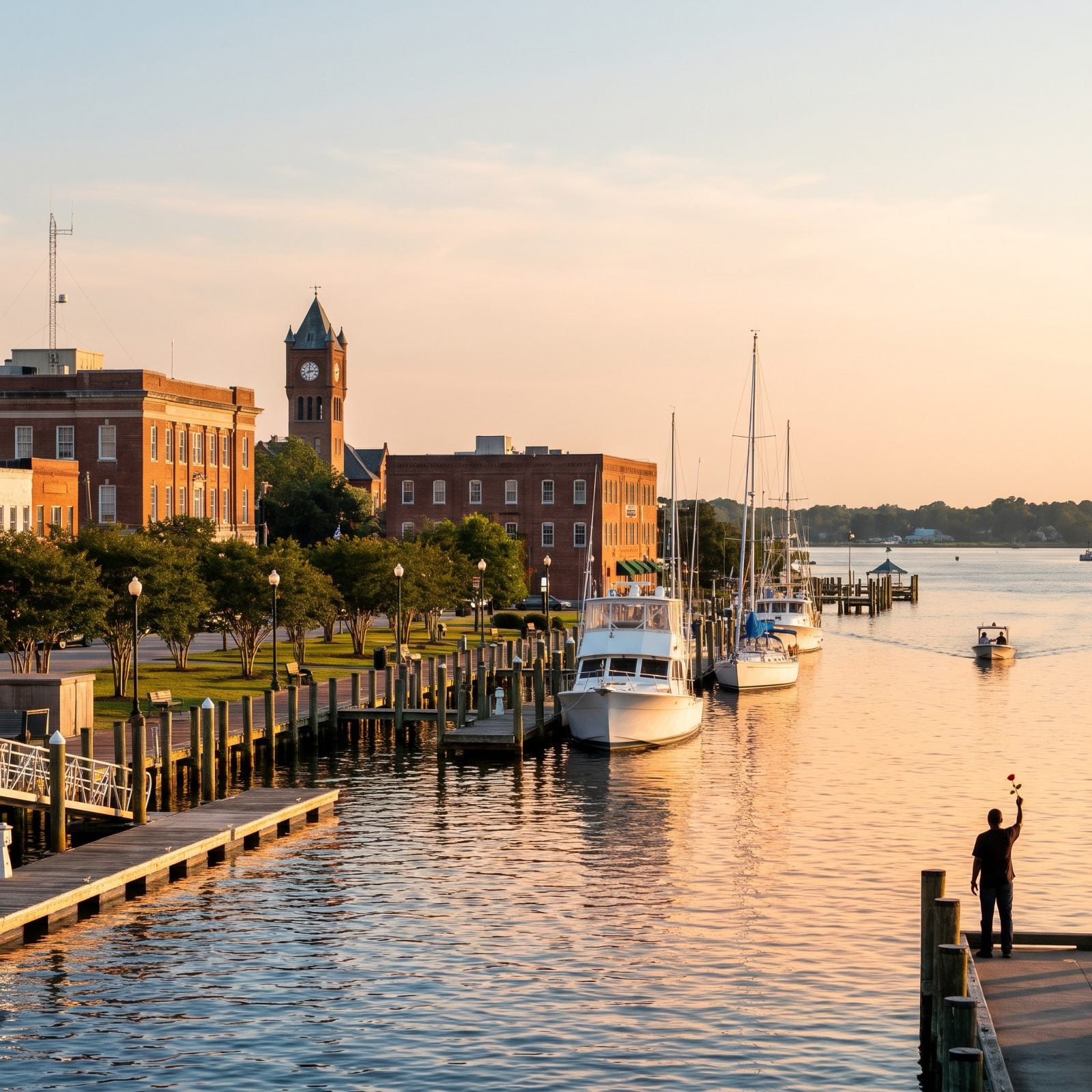
Pull into Elizabeth City by boat and someone may walk up and hand you a rose. That’s not a sales gimmick. The Rose Buddies are volunteers who’ve greeted arriving boaters for years, roses in hand, ready to help you with your lines. The town calls itself the “Harbor of Hospitality” and actually means it.
By the numbers: Elizabeth City, North Carolina on The Town Files (home values, weather, tornado history and schools)
Incorporated in 1793, it sits on the Pasquotank River. You can dock free at Mariners’ Wharf Park, where the city offers 14 transient slips free for up to 48 hours. Waterfront Park anchors the south end of downtown, and the Museum of the Albemarle packs 50,000 square feet of state and local history a short walk away.
8. Windsor: The Cashie River Town Where You Can Sleep in a Treehouse
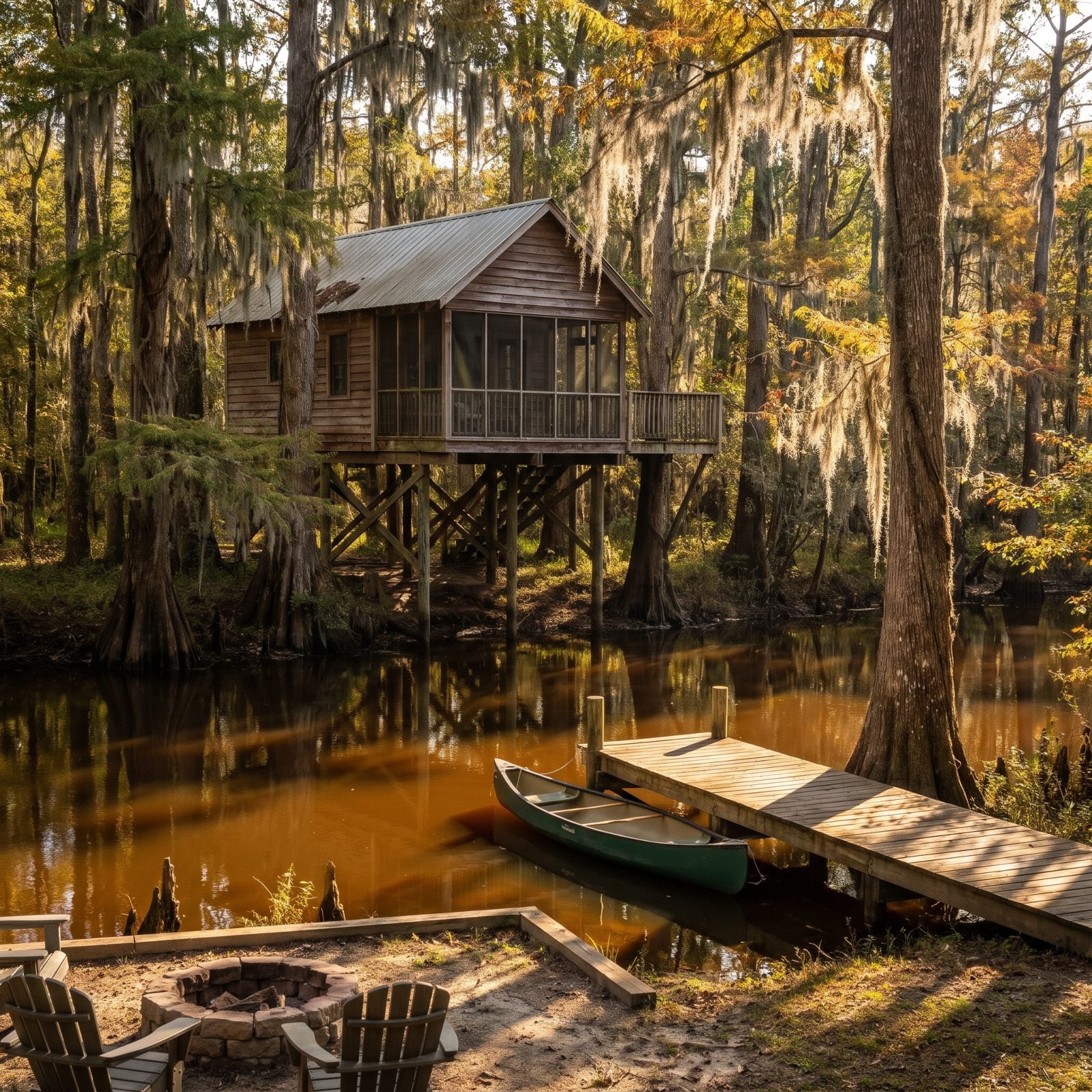
Windsor exists because of the Cashie River. The county seat of Bertie County, deep in the Inner Banks, it grew up right where that blackwater river made it convenient to grow.
By the numbers: Windsor, North Carolina on The Town Files (home values, weather, tornado history and schools)
The thing worth driving for is the town-run Cashie River Treehouses and Campground on Elm Street, where you can actually sleep in a treehouse right beside the river. Riverside camping, a canoe at hand, cypress crowding in on all sides. It’s the sort of quiet that city people pay a lot to find and locals here just call Tuesday.
7. Swansboro: The Friendly City by the Sea on the White Oak River
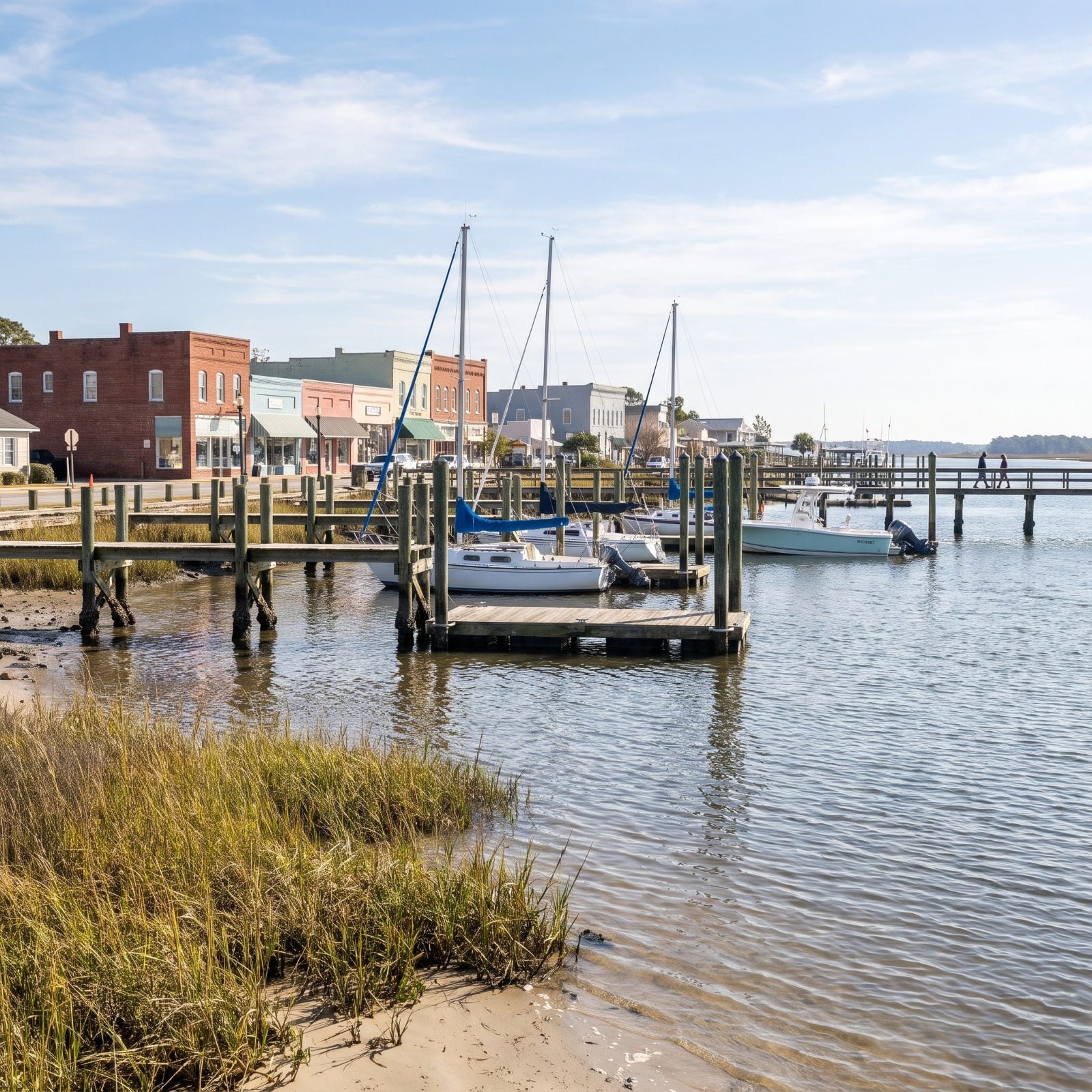
Swansboro sits where the White Oak River slides into the Intracoastal, a few minutes’ run from the open Atlantic. It calls itself the Friendly City by the Sea, and the public docks, kayak outfitters and charter boats back up the claim without any fuss.
By the numbers: Swansboro, North Carolina on The Town Files (home values, weather, tornado history and schools)
Hammocks Beach is close enough to make this a base camp rather than a quick stop. And the waterfront calendar does the heavy lifting here, from the Mullet Festival of North Carolina in fall to the Christmas Flotilla, when the whole harbor lights up and floats by.
6. Lake Waccamaw: The Carolina Bay With Fish Found Nowhere Else
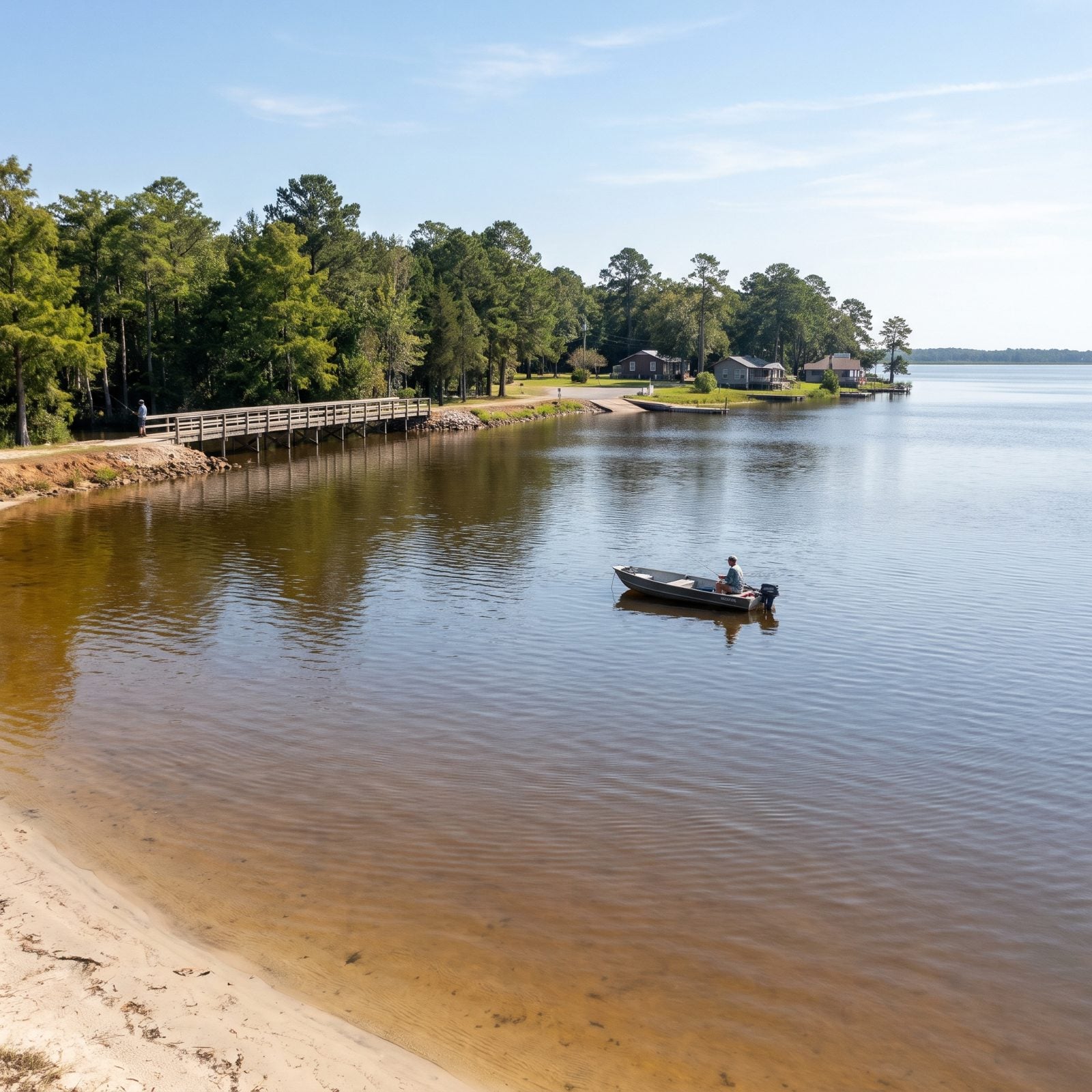
This little Columbus County town sits on the largest Carolina bay, west of Wilmington. Most Carolina bays are choked with vegetation. Waccamaw is open water, and that’s half of what makes it worth the drive.
By the numbers: Lake Waccamaw, North Carolina on The Town Files (home values, weather, tornado history and schools)
The other half is strange and a little wonderful. A limestone bluff lowers the lake’s acidity, so a handful of aquatic species live here and nowhere else on earth, which is the kind of oddity you don’t get at your average reservoir. A footbridge over the Waccamaw Dam lets you walk the full shoreline. Lake Waccamaw State Park has a boat ramp, paddling, fishing and tent camping, and the Wildlife Resources Commission runs a second ramp on the northwest side.
5. Littleton: A One-Square-Mile Town at the Edge of Lake Gaston
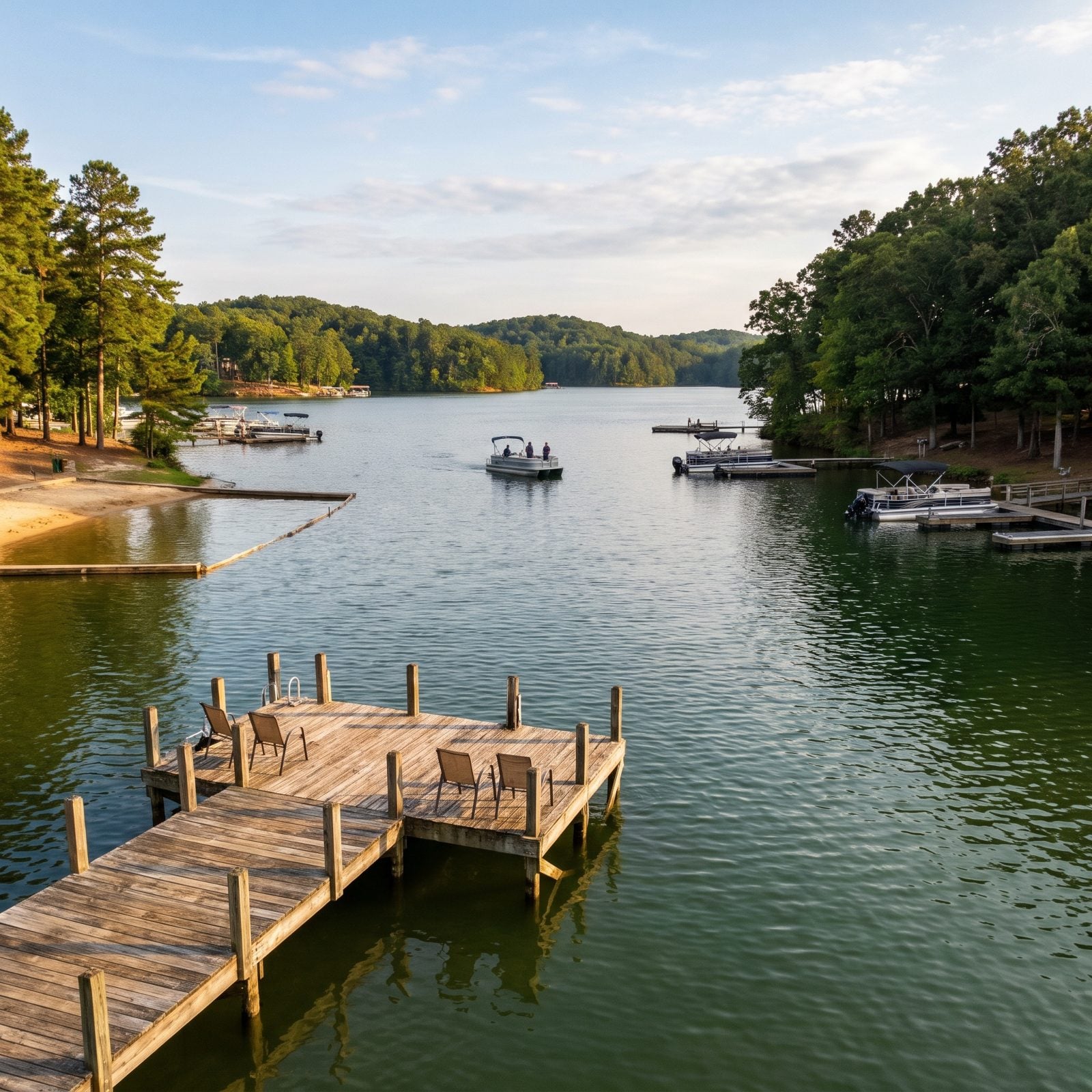
Littleton is tiny. A few hundred people, roughly a square mile, a stone’s throw from the Virginia line. The town is small. The lake is not.
By the numbers: Littleton, North Carolina on The Town Files (home values, weather, tornado history and schools)
Lake Gaston sprawls out north of town, built by Dominion Energy back in 1963, and it’s made for the kind of summer you remember years later: pontooning, tubing, wakeboarding, fishing until the light goes. The closest public access is the Lake Gaston Day Use Area, open spring through fall, with a boat launch, fishing pier and swimming area. Eaton Ferry Marina is a short drive away and rents boats if you don’t haul your own.
4. Badin: The Aluminum Town Sitting on a Yadkin River Lake
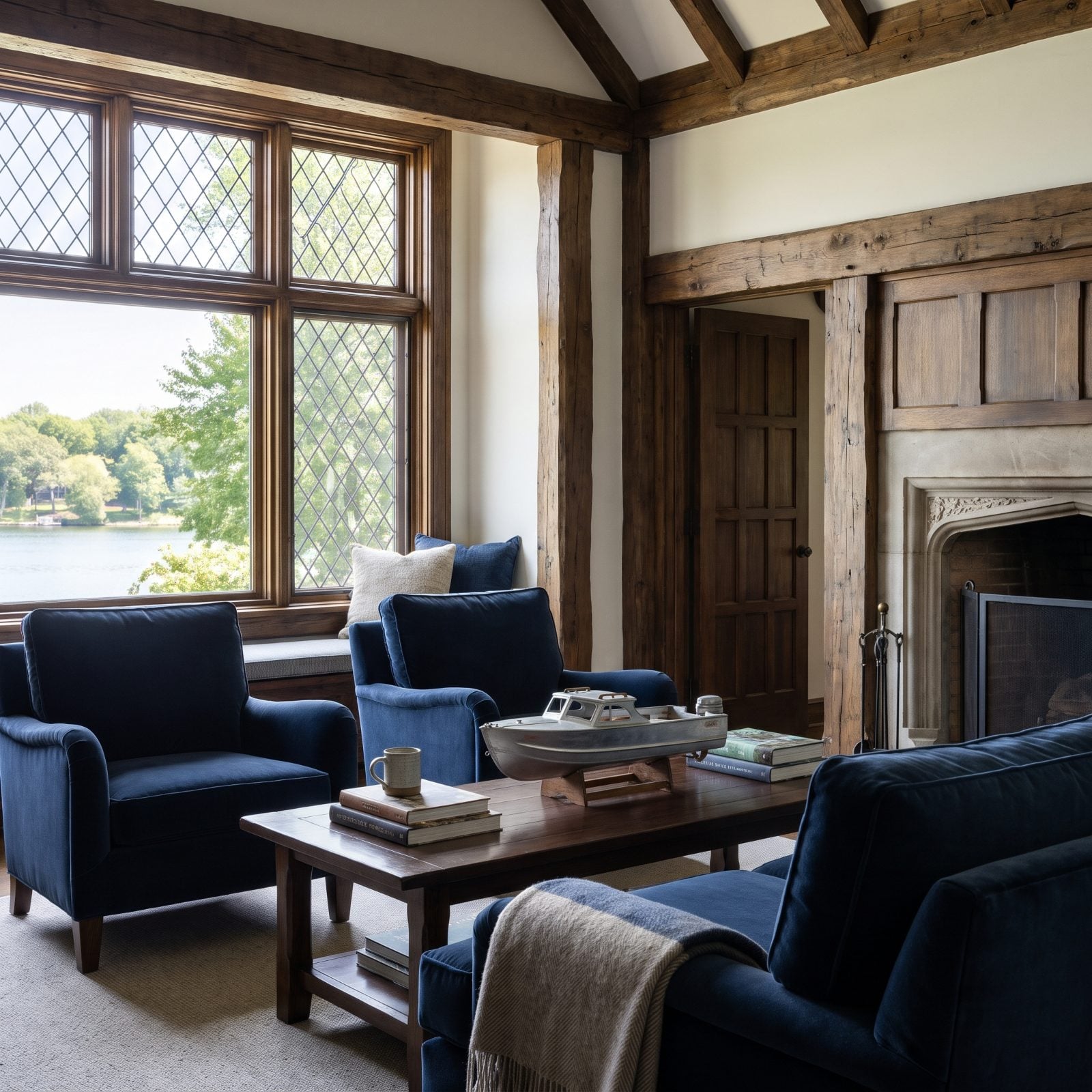
Badin Lake has an odd origin. Alcoa built it back in 1917 to power an aluminum plant, damming the Yadkin River at the Narrows so the water backed up into what is now the Uwharrie Lakes region.
By the numbers: Badin, North Carolina on The Town Files (home values, weather, tornado history and schools)
What you get today is a Piedmont lake wrapped by the Uwharrie National Forest. That buys you long stretches of undeveloped, forested shoreline that feel older and quieter than most. Good fishing, easy boating, and a town that still carries the fingerprints of the industry that made it.
3. Hayesville: Mountain Boating on Lake Chatuge’s 130 Miles of Shoreline
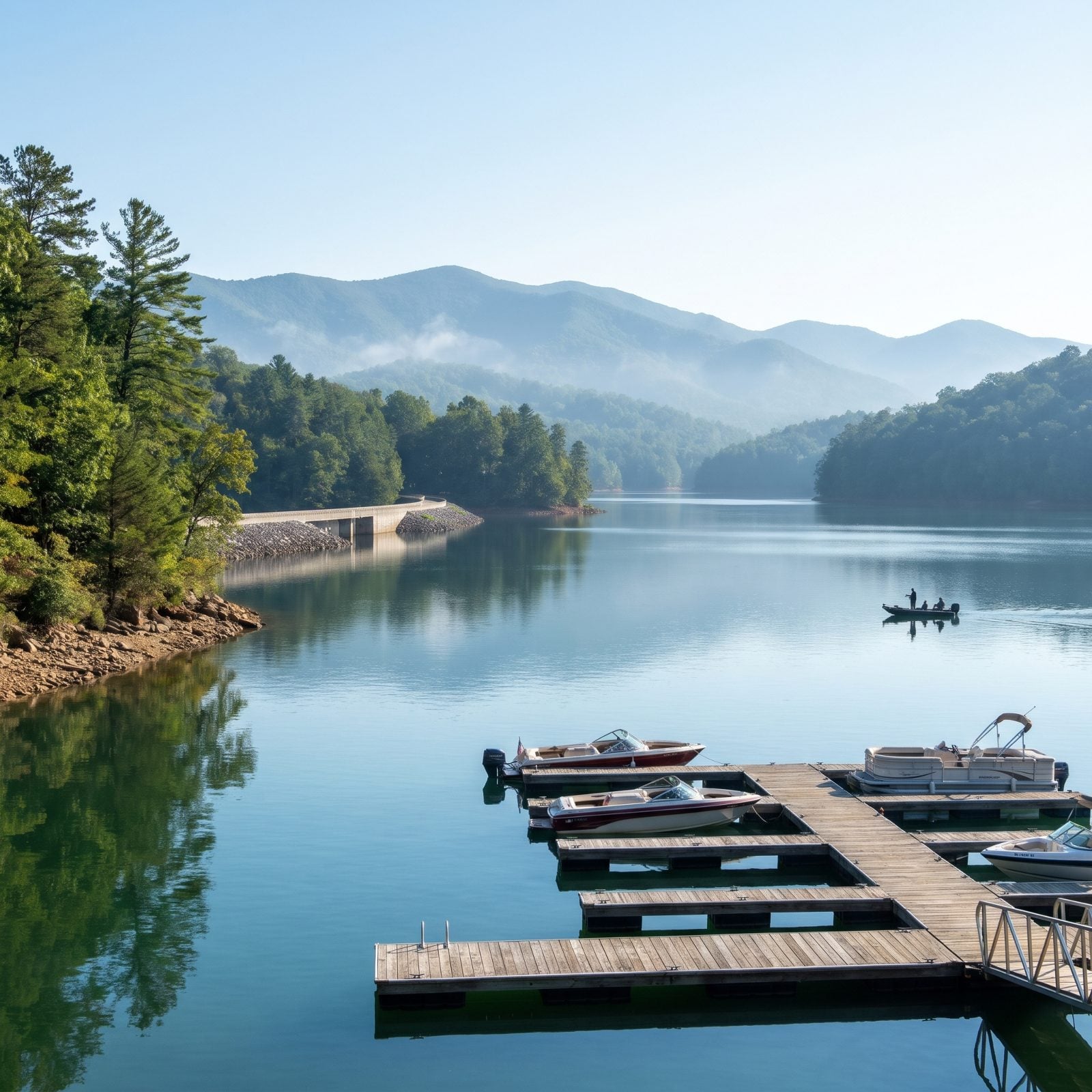
Hayesville is the Clay County seat, way out at the western tip of the North Carolina mountains, with a courthouse dating to 1888 and only a few hundred people to its name. Small town, big water.
Lake Chatuge spreads out around 130 miles of shoreline, and the town leans into it: boating, swimming, long picnics that run past dinner. Walk across the Chatuge Dam, set up at the Clay County Recreation Park, or rent a boat from one of the local marinas and spend the day poking into coves with mountain ridges stacked up behind you.
2. Robbinsville and Lake Santeetlah: Where the National Forest Owns the Shoreline
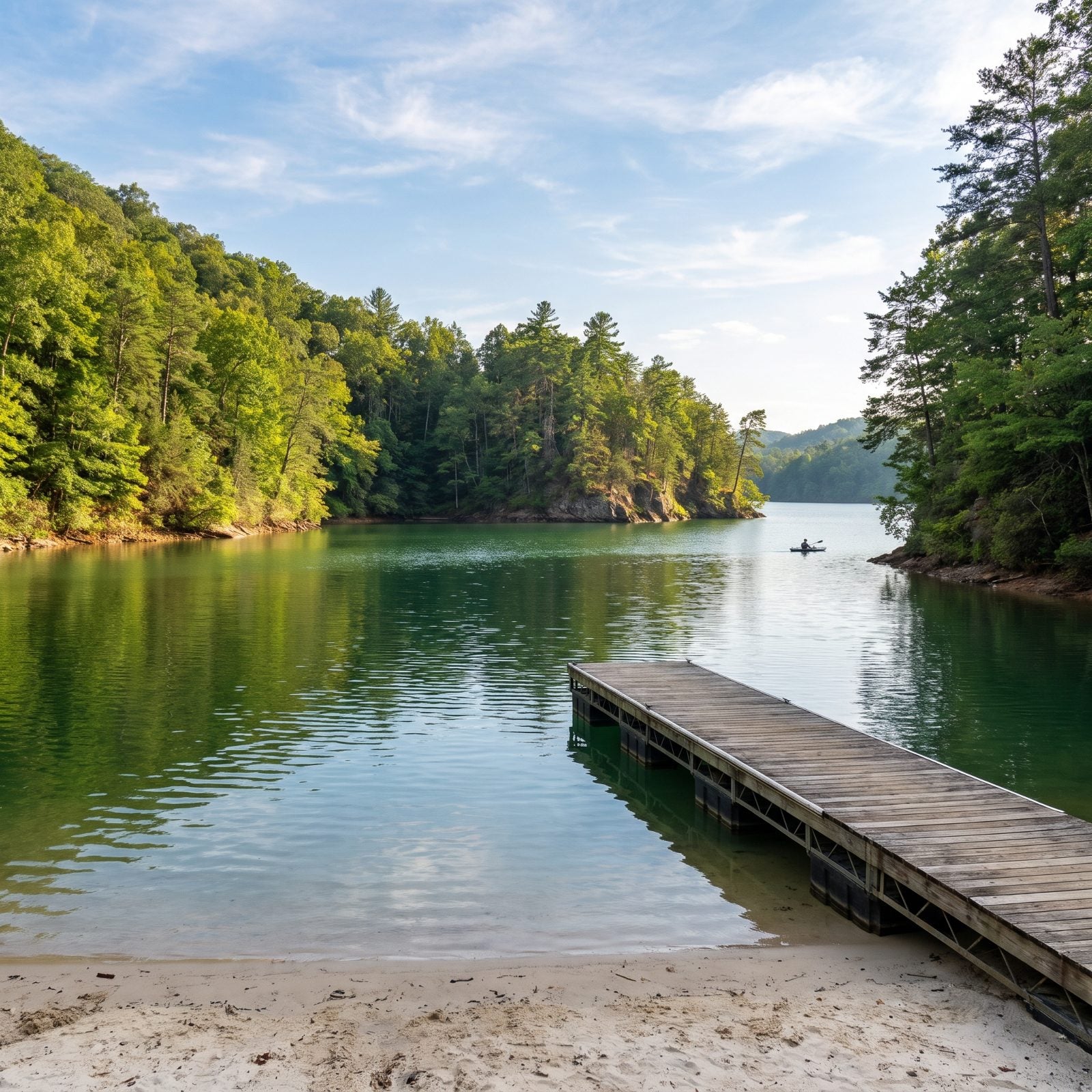
Robbinsville sits in Graham County, and a short drive northwest the tiny town of Lake Santeetlah perches on a peninsula, mostly second homes and quiet.
Alcoa created the lake in 1928 by damming the Cheoah River. Here’s the detail that changes everything: most of the surrounding land belongs to the Nantahala National Forest. So the bulk of that winding shoreline stays undeveloped, no wall of docks and rooftops, just forest coming down to the waterline. People come for boating, fishing, camping and a beach that doesn’t feel like a parking lot.
1. Murphy and Hiwassee Lake: North Carolina’s Most Remote Water
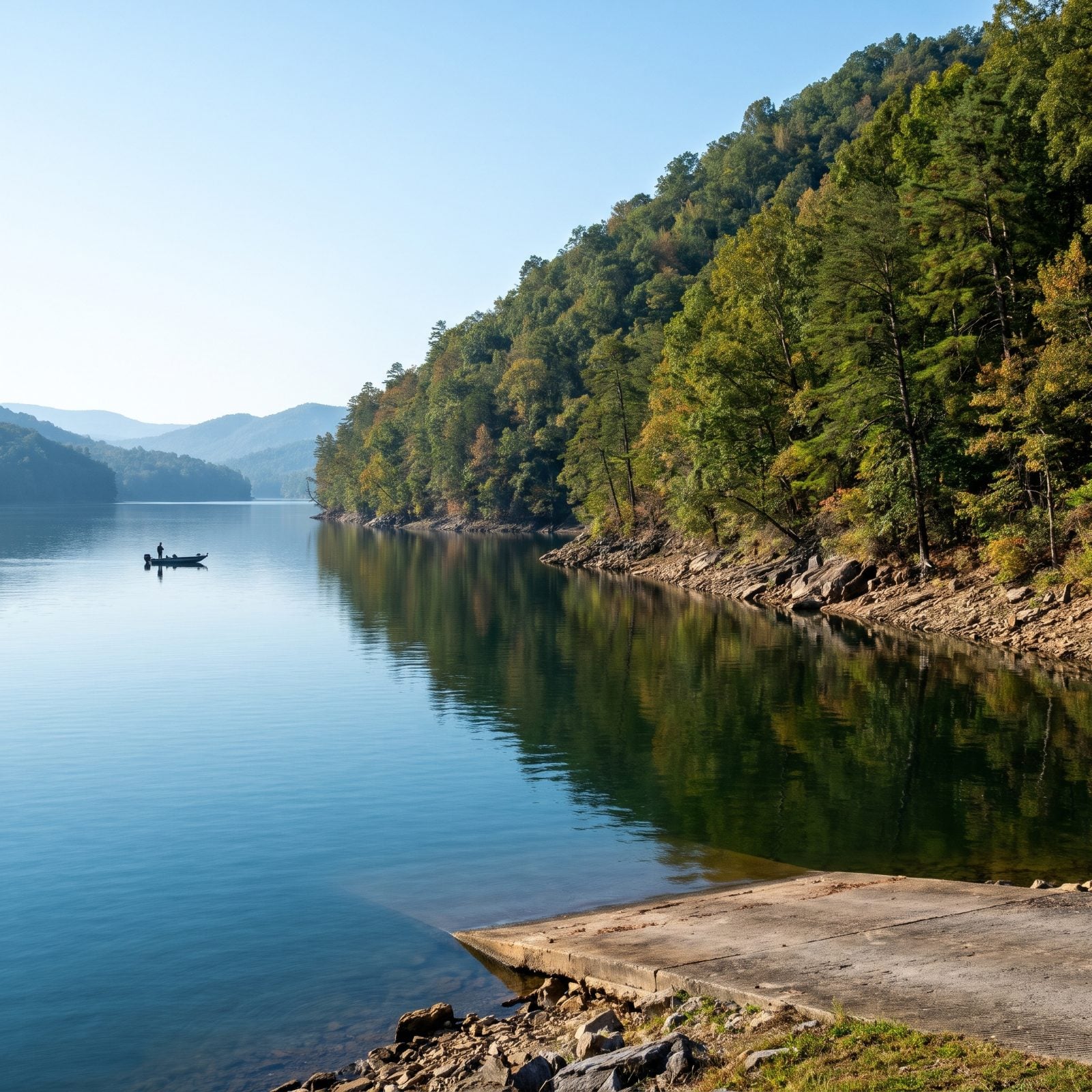
If you want a lake that feels like the edge of the map, Hiwassee is it. Out near Murphy in Cherokee County, it’s billed as North Carolina’s westernmost and most remote lake, and it earns the title by staying quiet and largely undeveloped while the busier waters pull the crowds elsewhere.
A local real estate source calls the shoreline overwhelmingly wild and forested. Treat that as unofficial, because nobody’s out there handing you a survey. But stand on the bank and it feels about right. This is the lake you drive a long way to and then forget to check your phone.