
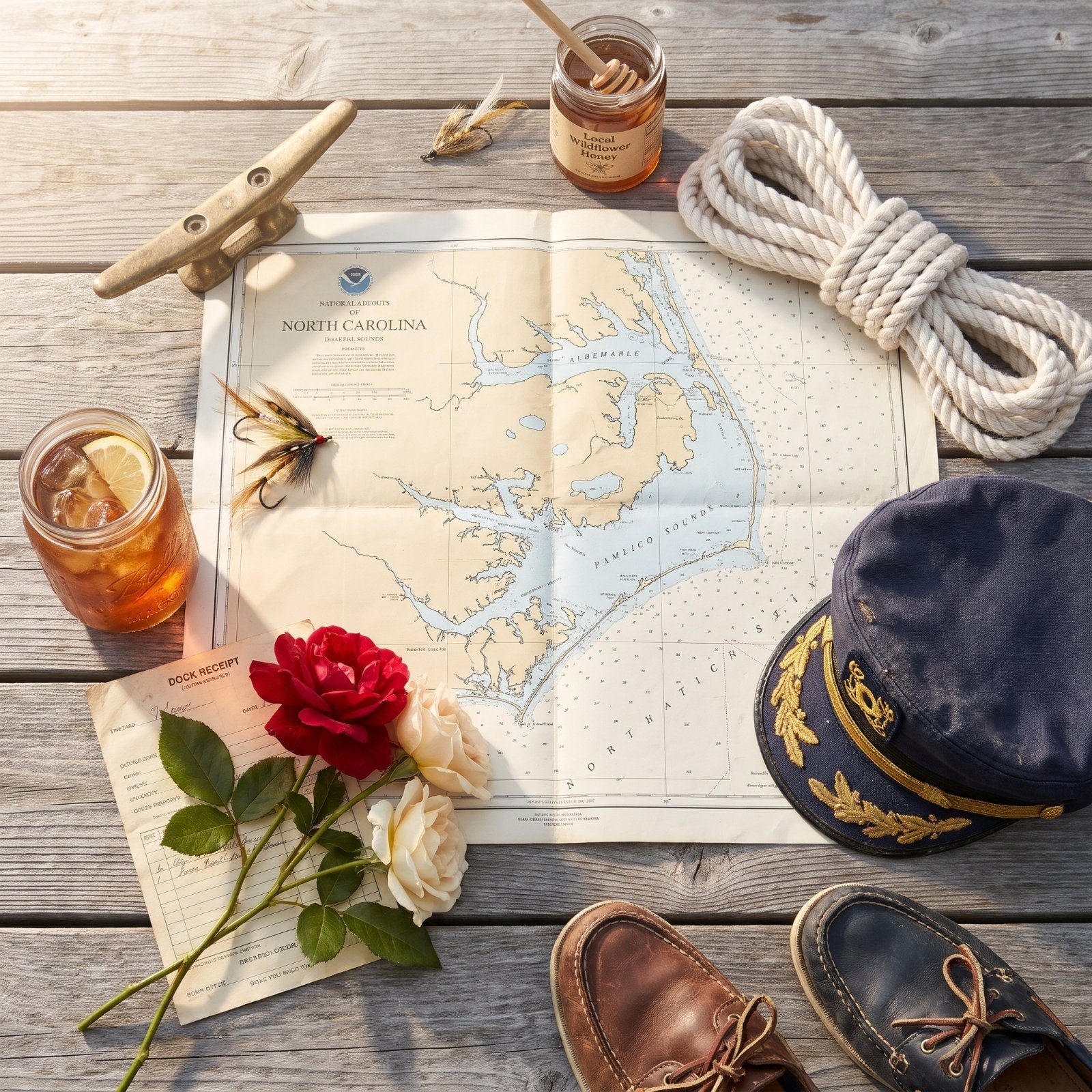
The dock lines go slack, the diesel smell drifts off, and somebody three slips down is frying speckled trout at nine in the morning. That’s the North Carolina nobody puts on a postcard. Everybody chases the Outer Banks and leaves the quiet water behind. Big mistake. The Albemarle Sound villages, the Pamlico creek towns, the far-western mountain lakes: these are the places where a free town dock still exists, where a stranger hands you a rose when you tie up, where retirees sold the house and never looked back. Here are the ones that earn a weekend, a season, or the rest of your life.
Please note that some of the imagery in this article may have been enhanced with the assistance of AI.
20. Oriental: The Sailing Capital Where Boaters Come to Fix a Rudder and Stay a Decade
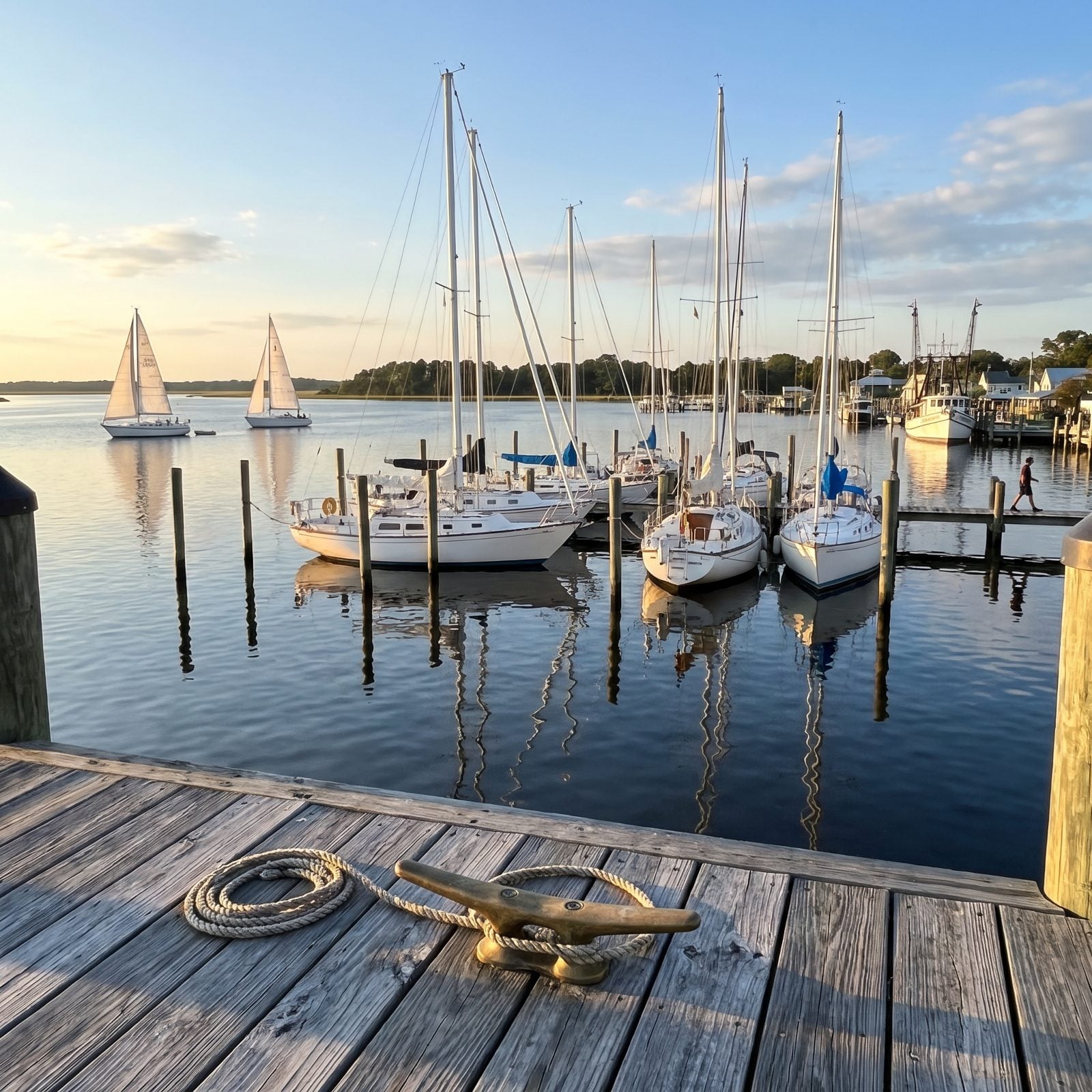
Population 880, more sailboats than people. Oriental sits on the Neuse in Pamlico County and calls itself the Sailing Capital of North Carolina, and for once the slogan holds up. Boaters running the Intracoastal Waterway pull in for a rudder repair and somehow never leave. You hear the same story at every coffee counter.
The free town docks are the draw. Town Dock #2 gives you 48 hours in any 30-day window, roughly six feet of depth, a pump-out and restrooms. No water or power hookups, so plan accordingly. That’s the trade for free.
19. Edenton: Home to the Only Screw-Pile Lighthouse Left Standing in the State
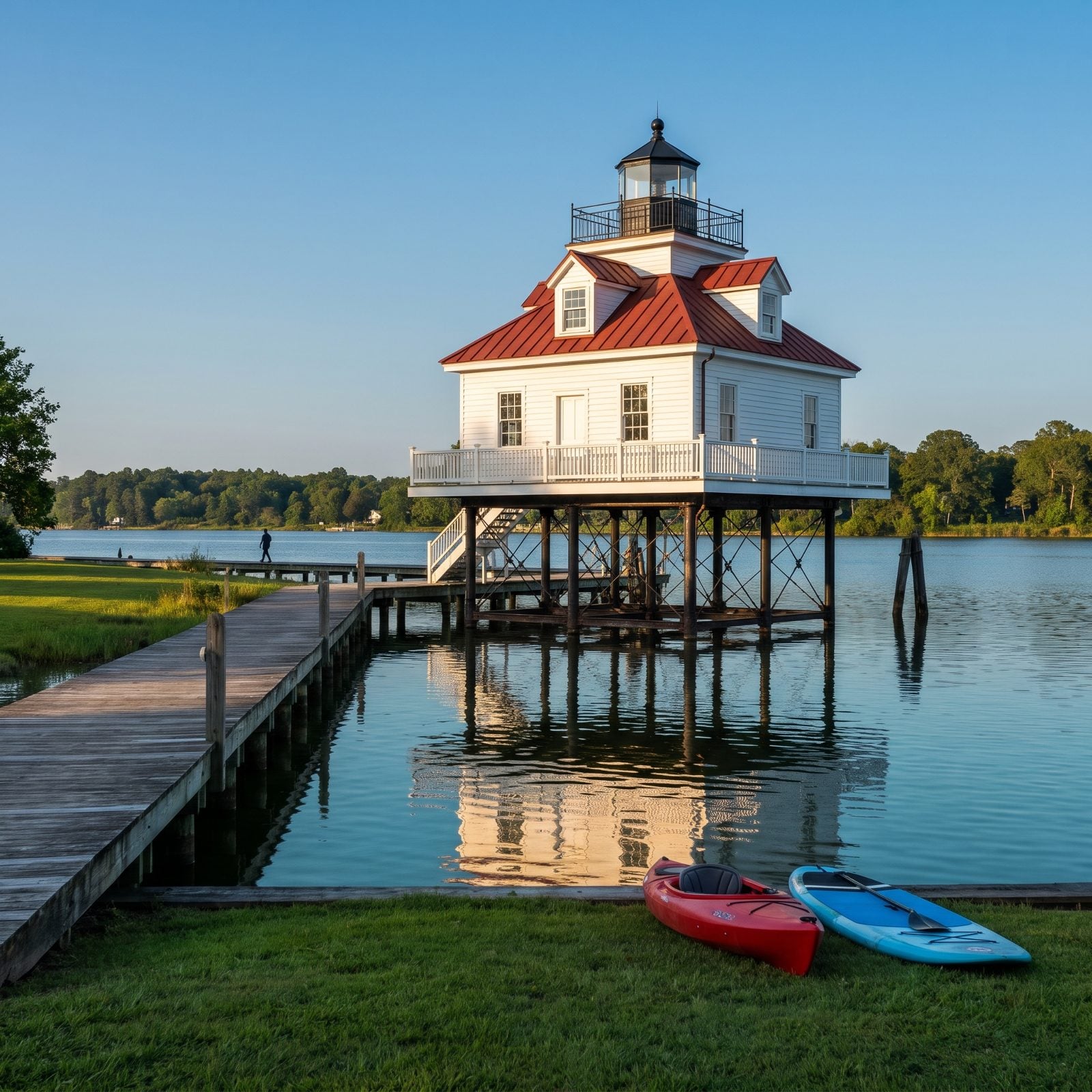
Most people have no idea the 1886 Roanoke River Lighthouse on Edenton’s waterfront is the only surviving screw-pile lighthouse in North Carolina. And it didn’t even start here. The Edenton Historical Commission bought it in 2007 and floated it in by barge to Colonial Park.
Edenton Harbor, at the foot of Broad Street, is a free dock monitoring VHF 16. Boaters doing the Albemarle Loop report 48 hours of free dockage and a courtesy truck to run errands. Want to stay on the water instead of a boat? Kayak and SUP rentals are right there on the bay.
18. Bath: The Oldest Town in North Carolina, and It Still Feels Like 1705
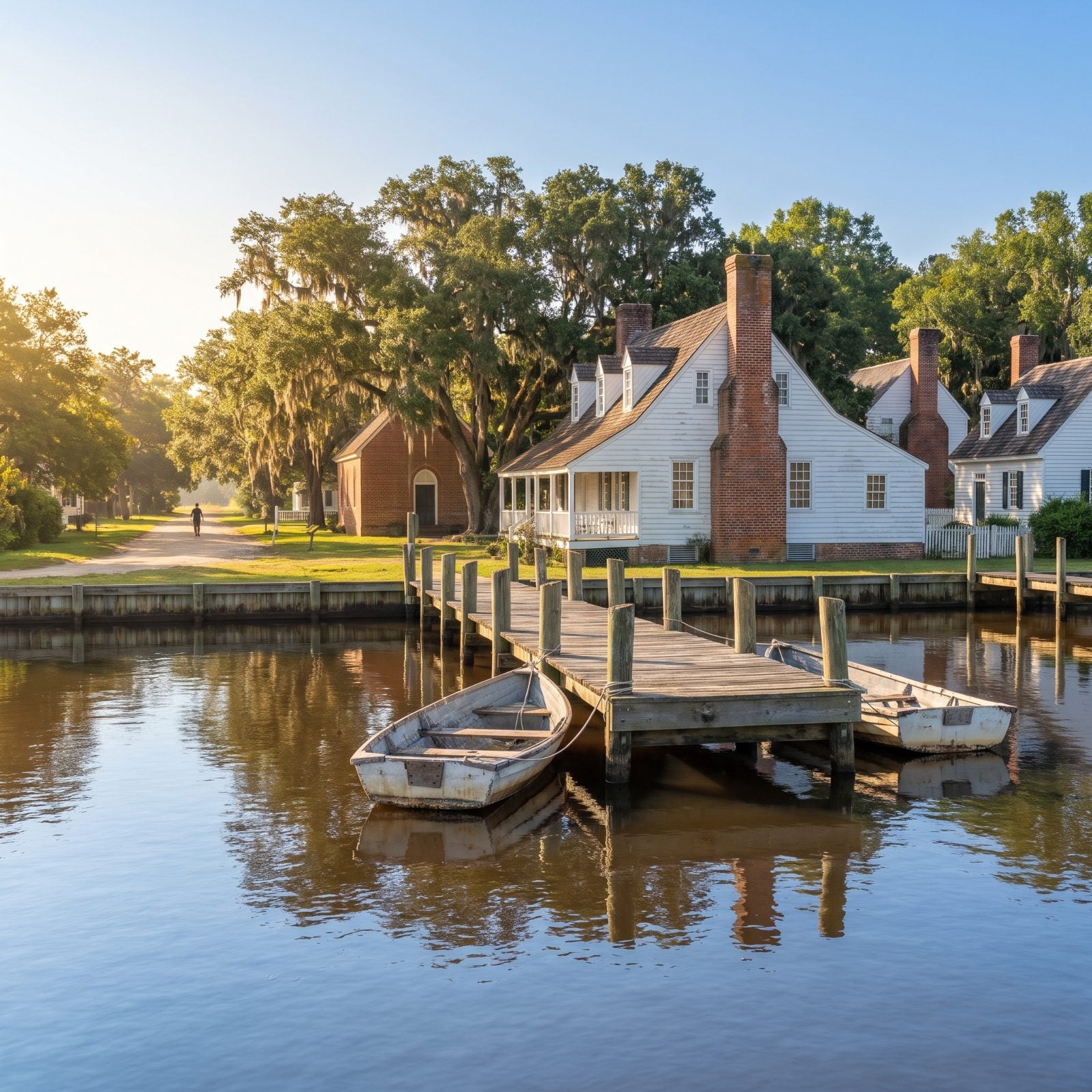
Founded in 1705. Nothing else in the state is older. Bath sits on Bath Creek just north of the Pamlico, and you can walk the whole place in an afternoon, which is exactly the point.
St. Thomas Episcopal Church on Craven Street has held services for about 300 years. Let that sit a second. People were getting married in that building before the country existed. The fishing’s good, the historic homes are the real thing, not reproductions, and the creek stays quiet. Want a lake house with a boat lift and a tiki bar? Keep moving. If you want somewhere that doesn’t perform for you, this is it.
17. Belhaven: Victorian Porches on the Pungo, With Marinas Everywhere You Look
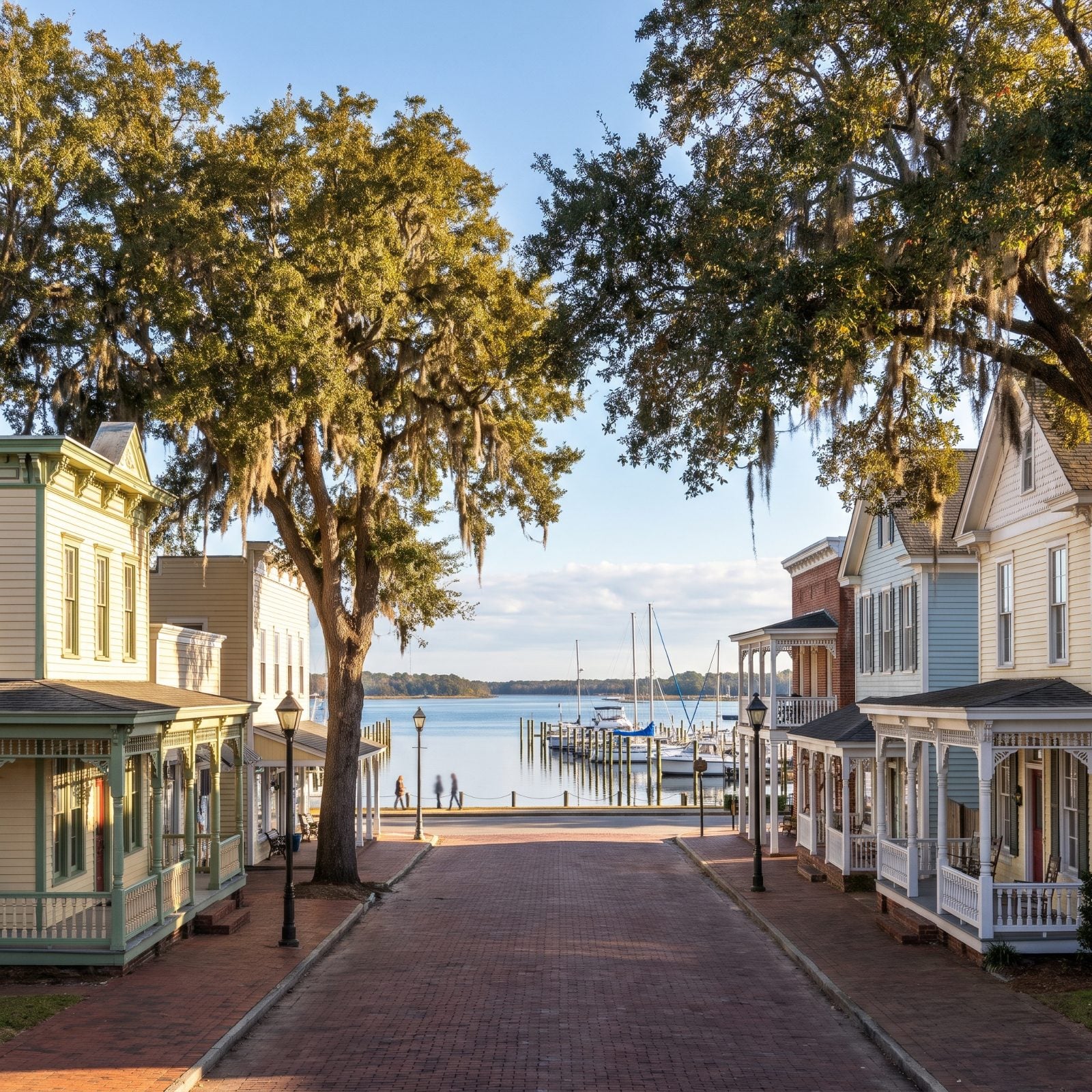
Fewer than 2,000 people, incorporated in 1899, and the Pungo River does most of the heavy lifting. Waterway Guide names the Pungo as a stretch thick with marinas and quiet anchorages, and Belhaven is the waterfront town at the center of it.
The Victorian architecture is the first thing you notice. Gingerbread trim, deep porches, houses that make you slow the car down. Then the shops, then the fishing and wildlife-photo trips out onto the water. It’s an easy place to spend three days and start checking real estate listings on your phone at night. Don’t say we didn’t warn you.
16. Swansboro: The Friendly City by the Sea at the Mouth of the White Oak
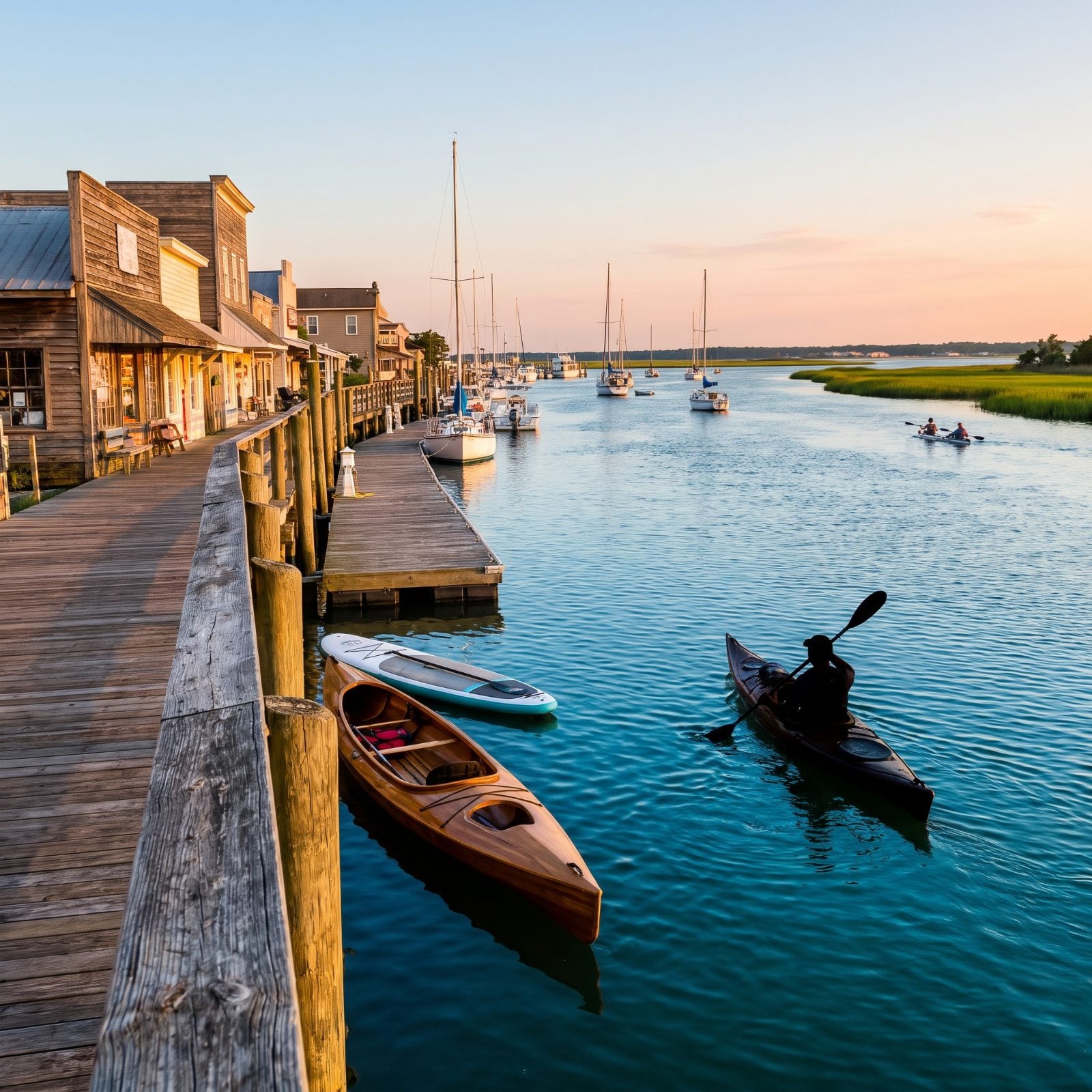
Swansboro leans into the nickname: the Friendly City by the Sea. Founded in 1783 at the mouth of the White Oak, right where it hits the Intracoastal Waterway. The historic downtown looks out over the water, which is the correct way to build a downtown.
What makes it worth the drive is the paddling. Launch from downtown and work your way down the ICW toward the beaches around Bogue Inlet. Bear Island is close enough to make a day of it. Bring water and a dry bag, the channel gets busy with powerboats on summer weekends, and a kayaker has to keep his head on a swivel out there.
15. Hertford: The Town With a Swing Bridge That Still Opens for Sailboats
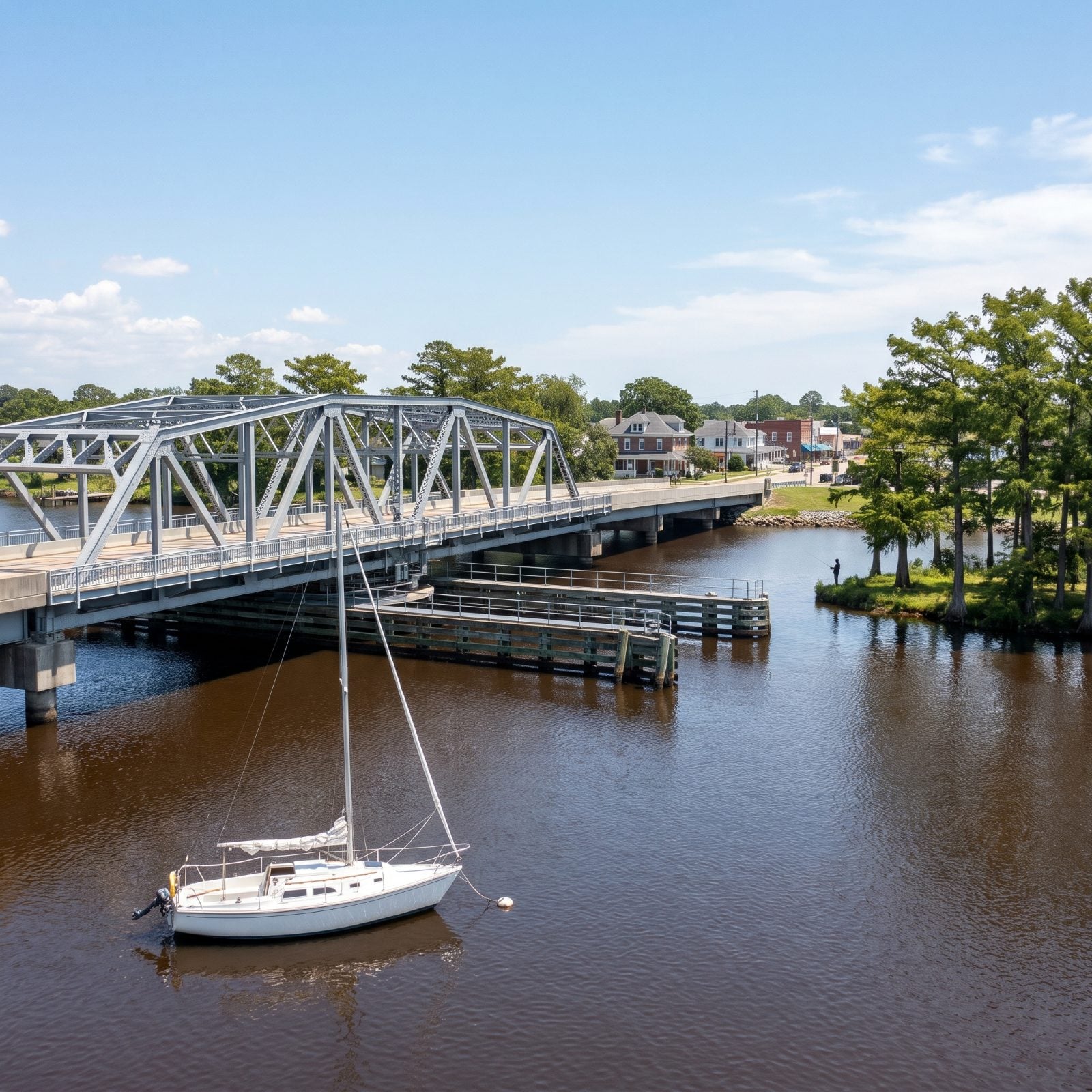
The Perquimans County seat has a party trick. Its famous S-Bridge, a swing span carrying US 17 Business between Hertford and Winfall, has been replaced: the old swing span, dating to 1928, came out in July 2021, and the new bridge opened in August 2022. But here’s the good part: the new bridge was built to look like the original, and because it’s a swing span, it still opens for boat traffic on the river.
That matters more than it sounds. Towns tear out the old working bridge and drop in a fixed concrete slab all the time, cutting off the upriver water forever. Hertford didn’t. The sailboats can still get through, and that’s worth stopping to watch.
14. Columbia: A Cypress-Swamp Boardwalk That Walks You Straight Into Town
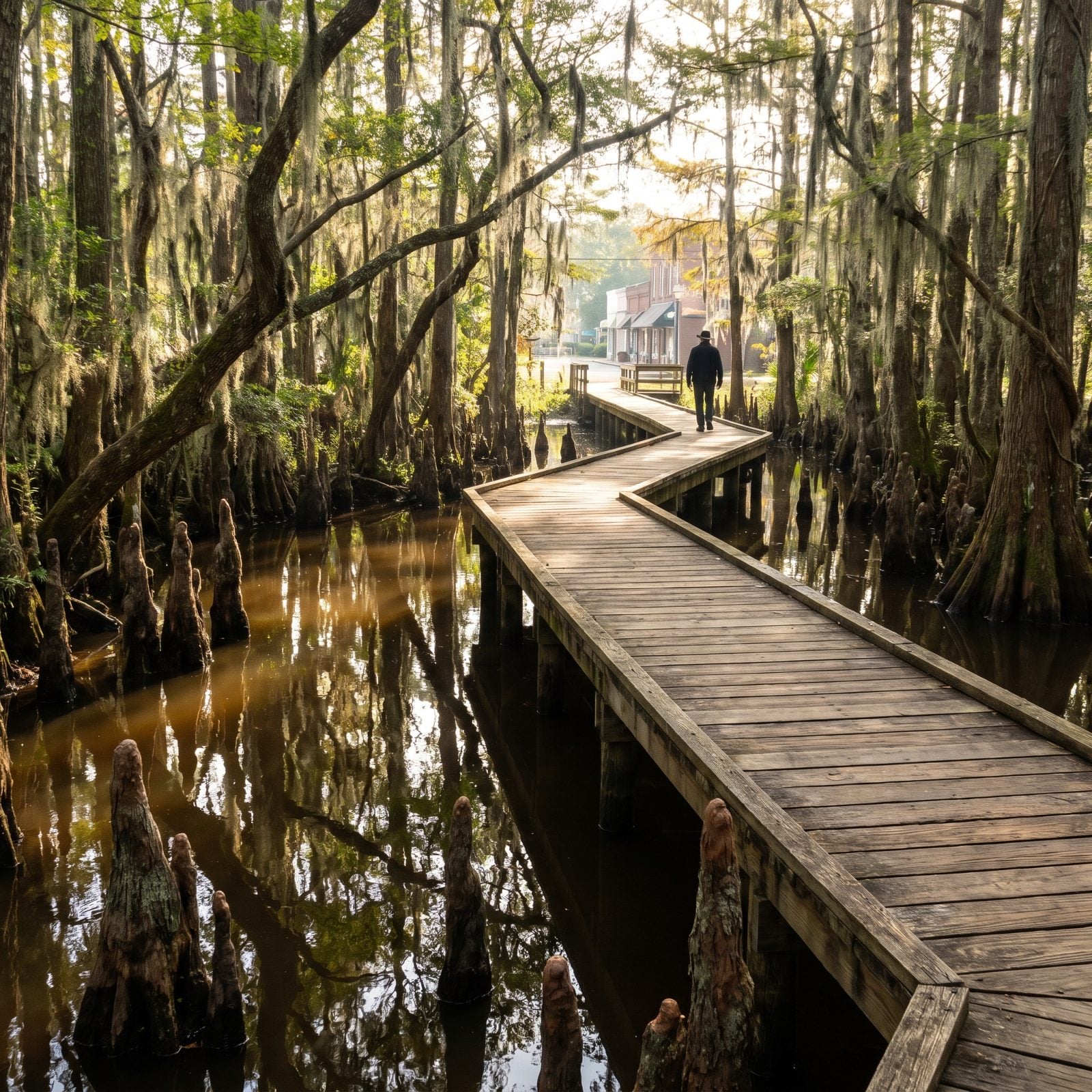
Columbia is small, it’s in Tyrrell County, and it has a downtown arts scene you wouldn’t expect, including Pocosin Arts School of Fine Craft. But the thing to do here is the Scuppernong River Interpretive Boardwalk.
Three-quarters of a mile of loop through cypress swamp, named a National Recreation Trail back in 2005, and it delivers you right into downtown. Pocosin Lakes National Wildlife Refuge manages it, and you pick it up behind the Tyrrell County Visitors Center off US 64. Go early. The light coming through the cypress at that hour, with the black water sitting perfectly still, is the kind of thing you don’t get out of a car window.
13. Plymouth: Three Blocks, Three Museums, and a Lighthouse You Can Climb
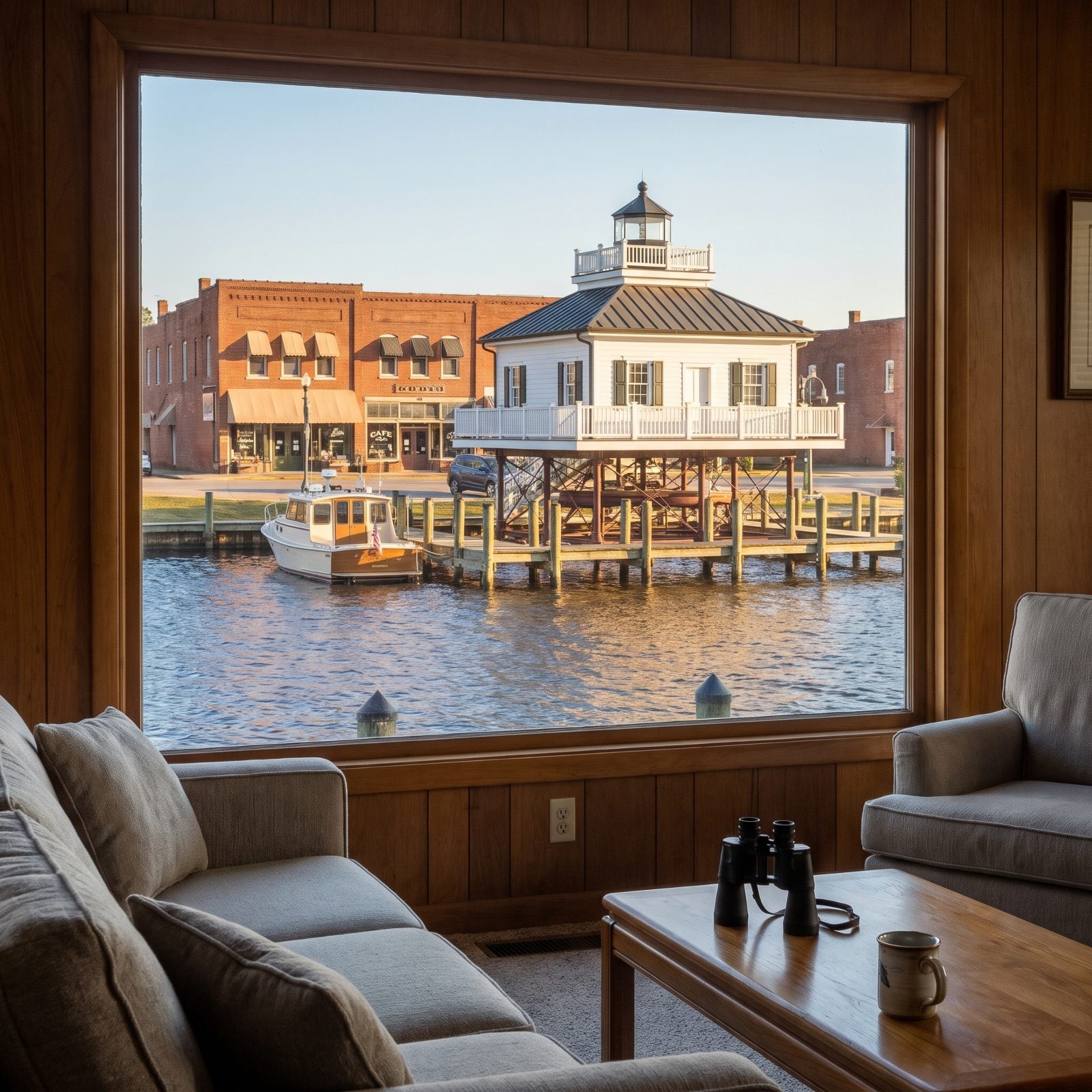
Don’t let the size fool you. Plymouth’s downtown is about three blocks, and it packs in cafes, shops, three museums, transient dockage and water access on the Roanoke River.
There’s a climbable replica of the Roanoke River Lighthouse downtown, built in 2003. Climb it. The view’s the point. And the Roanoke River Maritime Museum at 206 West Water Street does a real job of covering the region’s maritime past, which runs deeper than most visitors expect. For a town this compact to hand you dockage, a lighthouse, and three museums is a good return on a tank of gas.
12. Elizabeth City: The Harbor Where Volunteers Hand You a Rose When You Tie Up
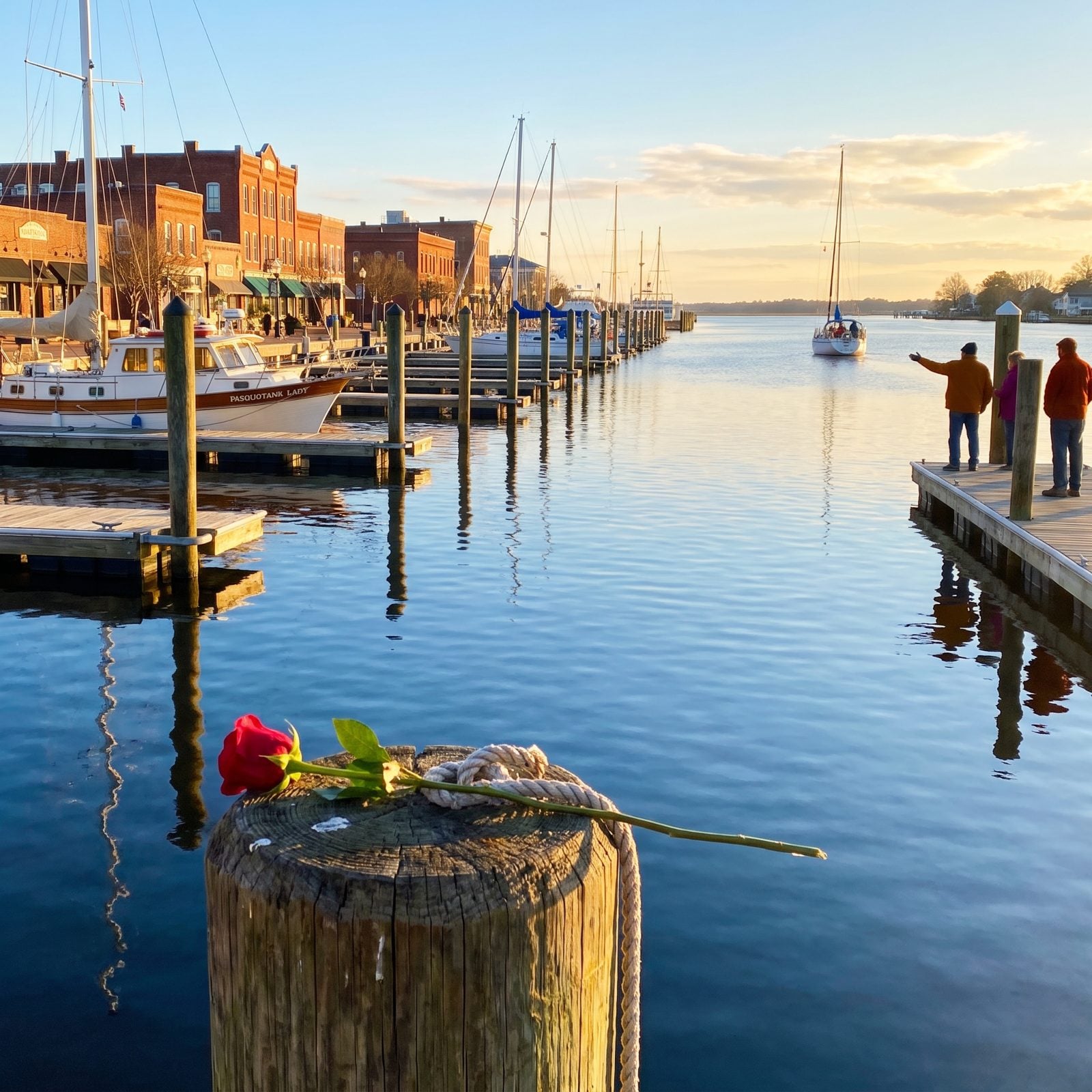
They call it the Harbor of Hospitality, and for once a town earns its slogan at the dock. Elizabeth City sits on the Pasquotank just before the Albemarle Sound, and you can tie up free at Mariners’ Wharf Park.
Here’s the part that gets talked about up and down the ICW: the volunteer Rose Buddies. They welcome arriving boaters with roses and help you with your lines. Sounds corny until it happens to you after a long day on the water. The Museum of the Albemarle and downtown restaurants are a short walk from the docks, so leave the car where it is.
A stranger handing you a rose and grabbing your bow line is the kind of welcome you remember longer than the trip.
11. Washington: ‘Little Washington’ and 80-Foot Free Docks on the Pamlico
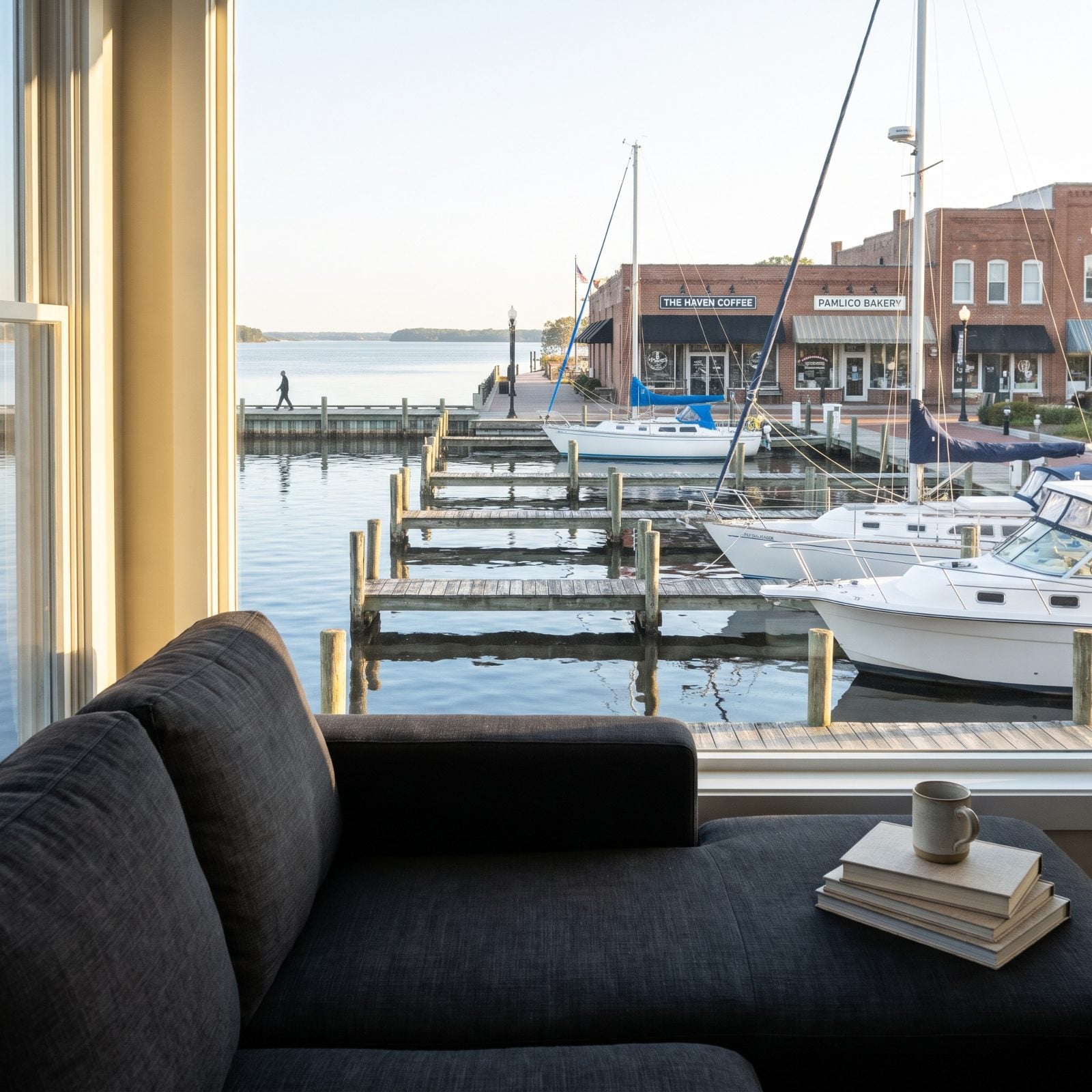
Little Washington earns its spot, and it earns it well. The Washington Waterfront Docks run along Stewart Parkway on the Pamlico River, about 24 miles west of ICW mile 147.
You get free dockage for up to 48 hours on three 80-foot bulkhead docks at the midpoint of the waterfront. No water or power on the free docks, so run your systems before you tie up. Staying longer runs $1 per foot per day after that (up to five extra days), which is fair. Restaurants, coffee shops and bakeries sit two or three blocks off the water, close enough that you’ll walk to breakfast in your dock shoes and nobody will blink.
10. Harkers Island: Decoys, Core Sound, and the Door to Cape Lookout
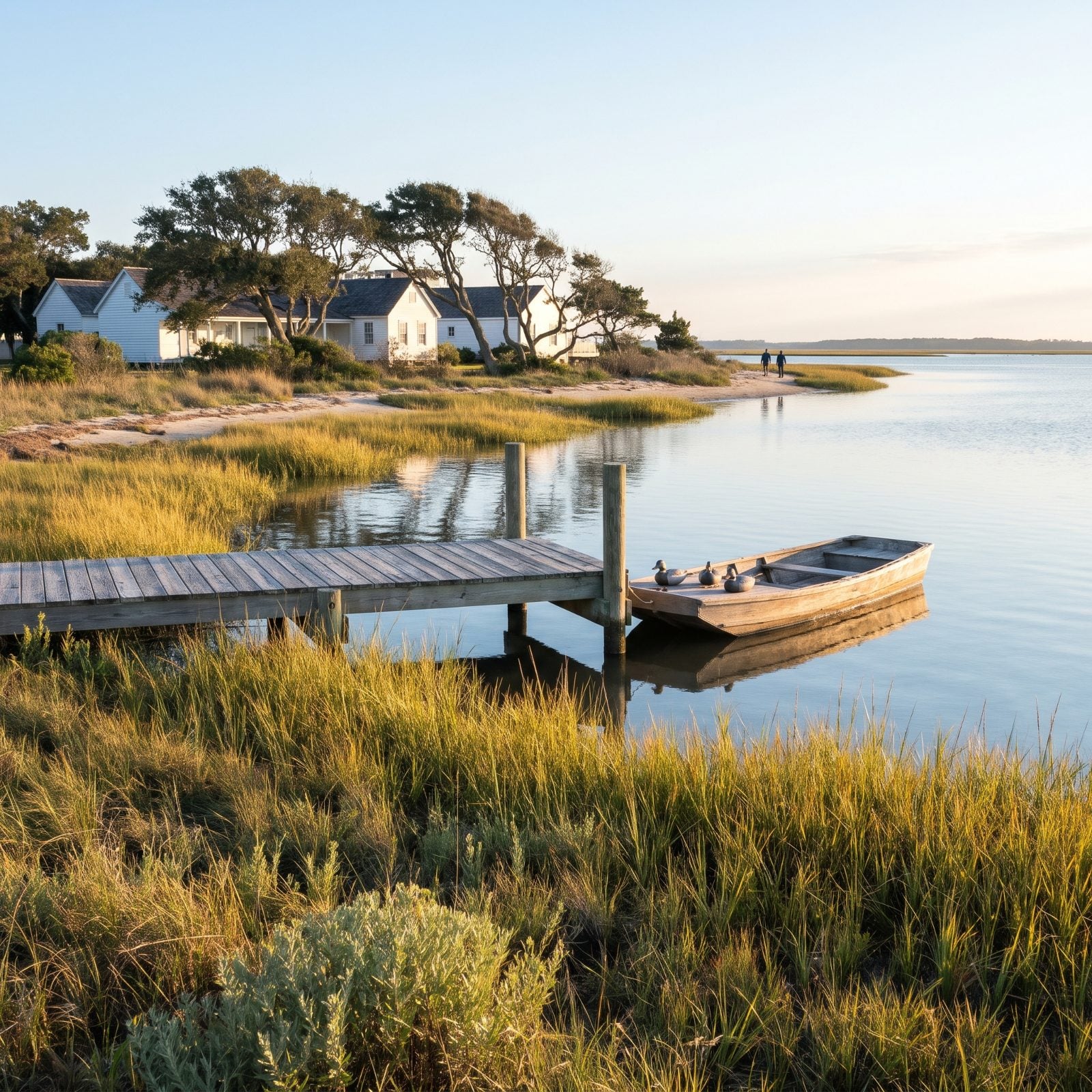
This is the end of the road in Down East Carteret County, and that’s the appeal. Harkers Island sits on Core Sound and is home to the Cape Lookout National Seashore’s Harkers Island Visitor Center, so it’s your jumping-off point for the wild barrier beaches and that candy-striped lighthouse.
Stop at the Core Sound Waterfowl Museum & Heritage Center on Island Road. It’s built around decoy carving and the culture of Down East fishing families, and the Willow Pond Trail behind it is a quiet walk through the scrub. The museum also anchors the southern end of the Outer Banks National Scenic Byway, so a long, pretty drive starts right here.
9. Murphy and Hiwassee Lake: Where Two Rivers Meet in the Far West
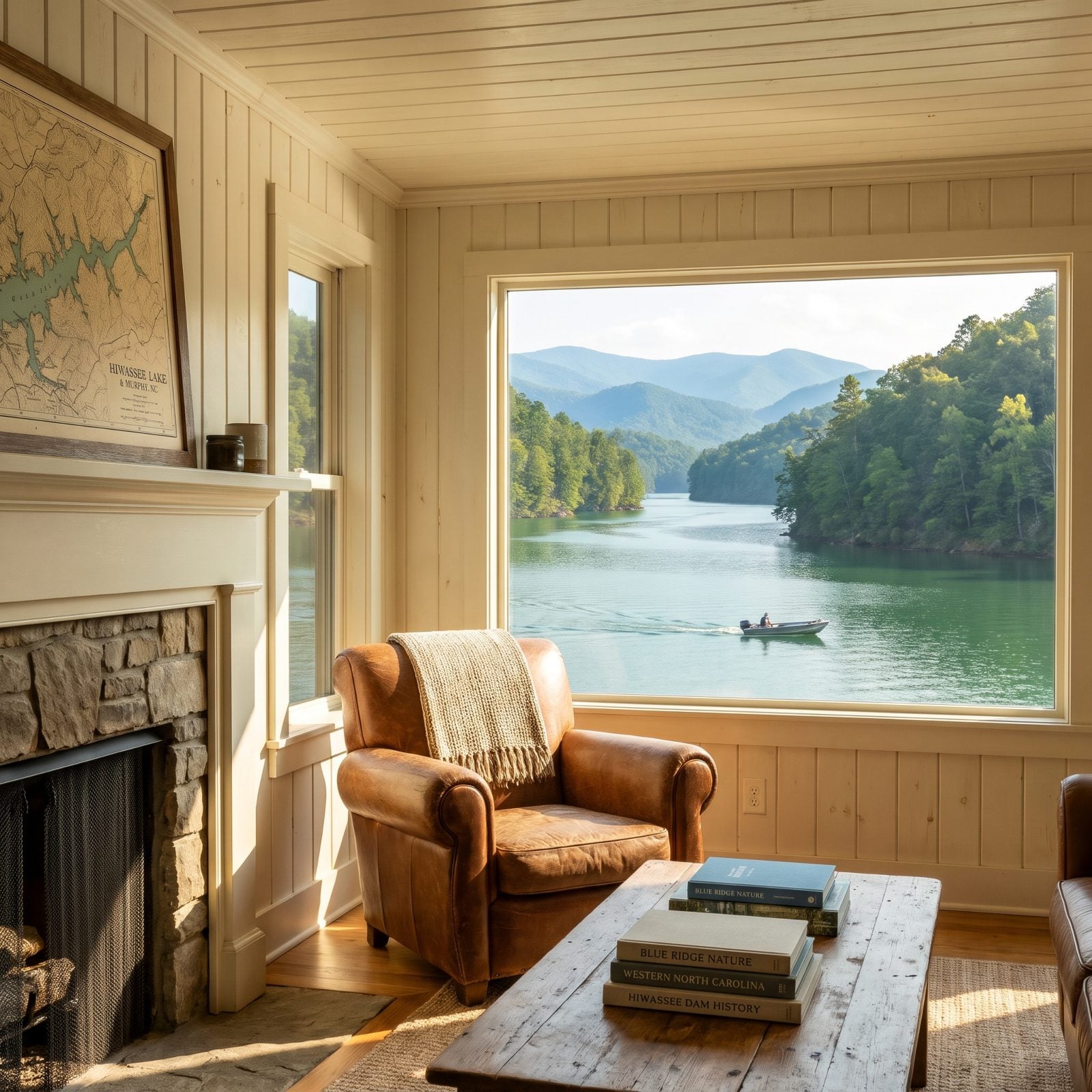
Murphy is about as far west as North Carolina goes before you’re standing in Tennessee or Georgia, and that remoteness keeps the crowds thin. Hiwassee Lake stretches a long way, with wooded, quiet shoreline running in every direction. Fishing, boating, swimming, and almost nobody to share it with on a weekday.
Downtown, the Murphy River Walk follows the Hiwassee and Valley Rivers right at the spot where they meet. Up on the lake, Hanging Dog Recreation Area has the Ramsey Bluff mountain-bike trails if you want to earn your view. We’ll level with you: this is a brutal drive from anywhere, and that’s precisely why people lose their hearts to it.
8. Badin: A Company Town Turned Lake Retreat Near Charlotte
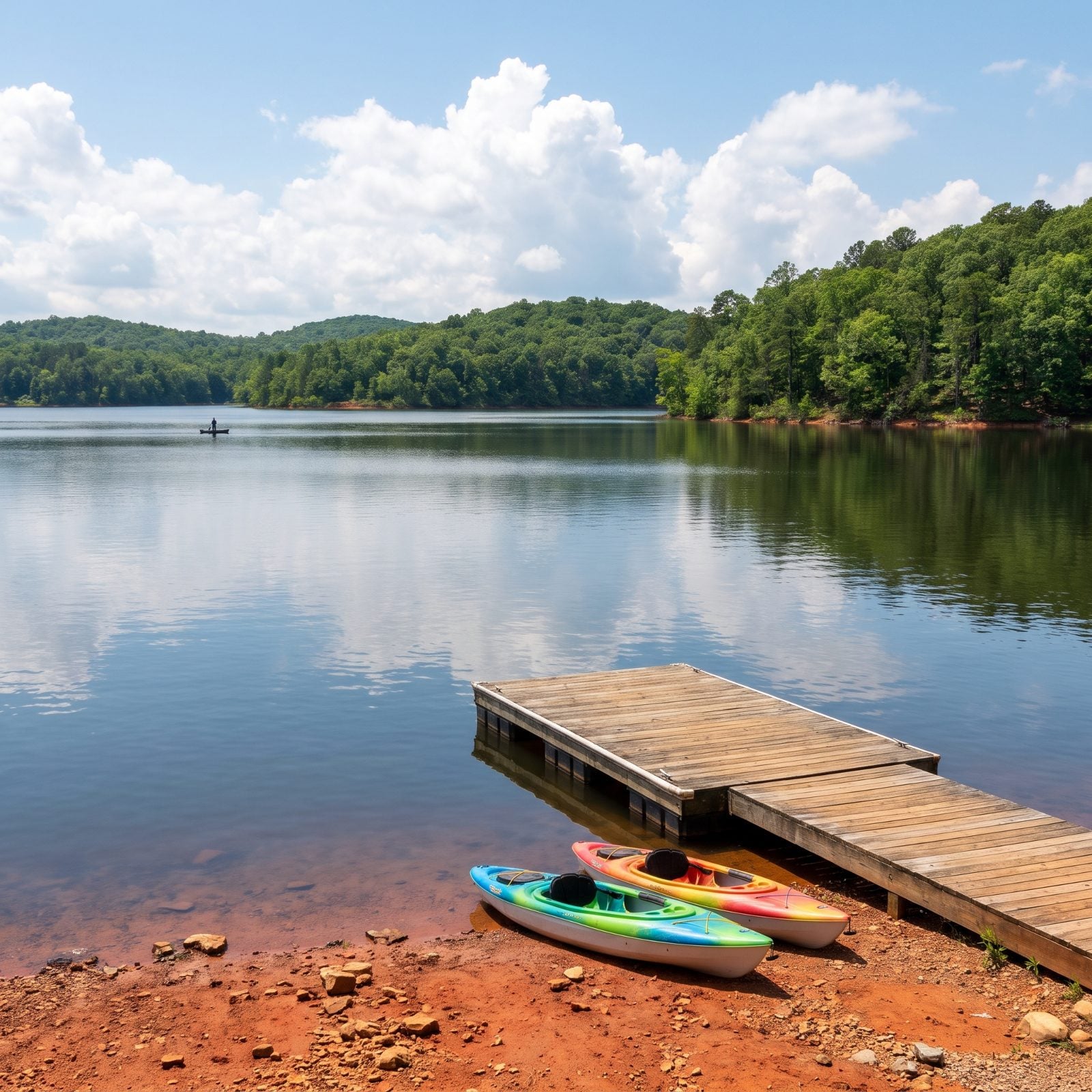
An hour from Charlotte and Greensboro sits a lake most of those commuters have never fished. Badin was a company town built around an Alcoa aluminum plant, and the lake came with it. Narrows Dam went up on the Yadkin River back in 1917, flooding a wide stretch of valley into deep, cold water.
Miles of wooded shoreline, much of it tucked inside Uwharrie National Forest, keep the banks green and undeveloped. For a Piedmont lake this close to two big cities, that quiet is rare.
7. Lake Lure: Hickory Nut Gorge, and a Town That Refilled Its Lake
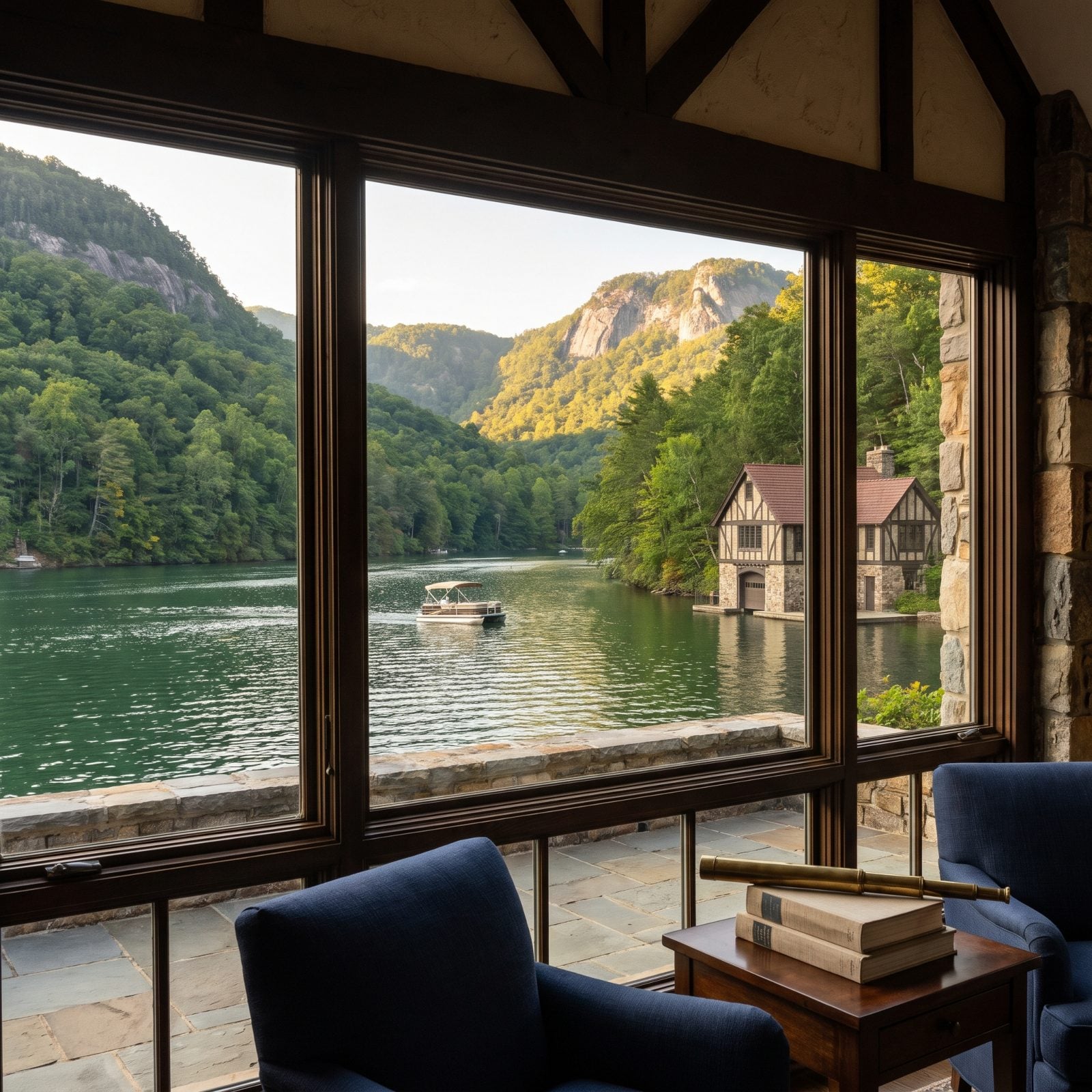
Lake Lure took a hard hit. Helene flooding in September 2024 tore through the town, and for a long stretch the famous lake sat drained and damaged. Recovery has been slow, and it’s been real.
Since then the lake has been refilled. The town held a soft reopening on April 20, 2026, with leaders saying water levels were approaching full pond, and a full public grand reopening was set for Memorial Day weekend 2026. Check the current status before you make the drive, because this is still a place finding its footing.
What hasn’t changed is the setting. Tucked into Hickory Nut Gorge with Chimney Rock looming overhead, it’s about as dramatic a lake site as the state offers.
6. Henderson and Kerr Lake: 50,000 Acres an Hour North of Raleigh
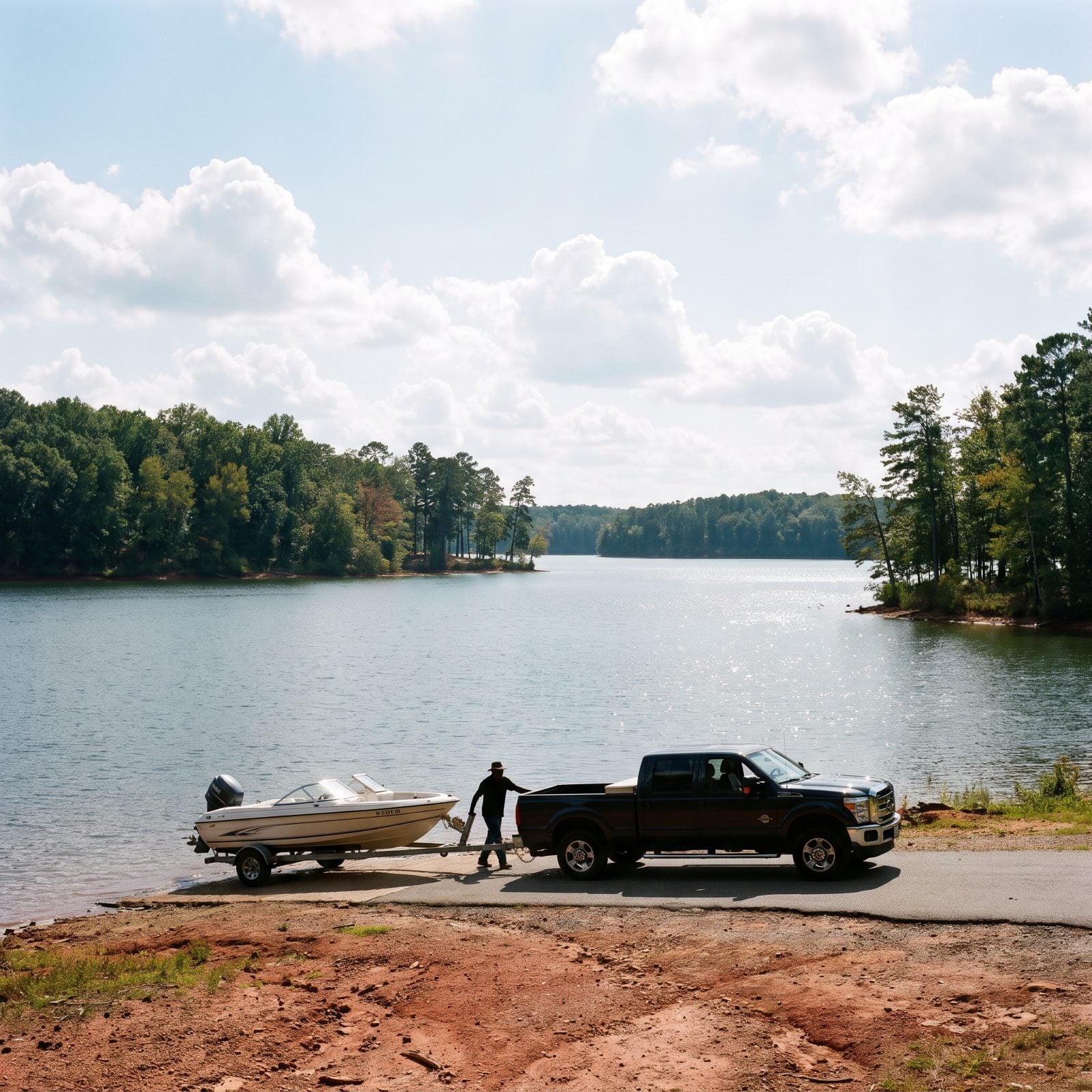
Raleigh folks head for the beach every summer and never think to look north. Their loss. This reservoir sprawls across tens of thousands of acres and reaches up into southern Virginia, with access areas scattered all the way around the shoreline for camping, boating, swimming, and fishing.
Henderson is the North Carolina gateway, roughly an hour north of the capital, and the Kerr Lake State Recreation Area headquarters sits out on Satterwhite Point Road. For a lake this size this close to a major city, the launch ramps rarely feel jammed on a regular weekend.
5. Littleton: Brewery Stops on the Way to Lake Gaston
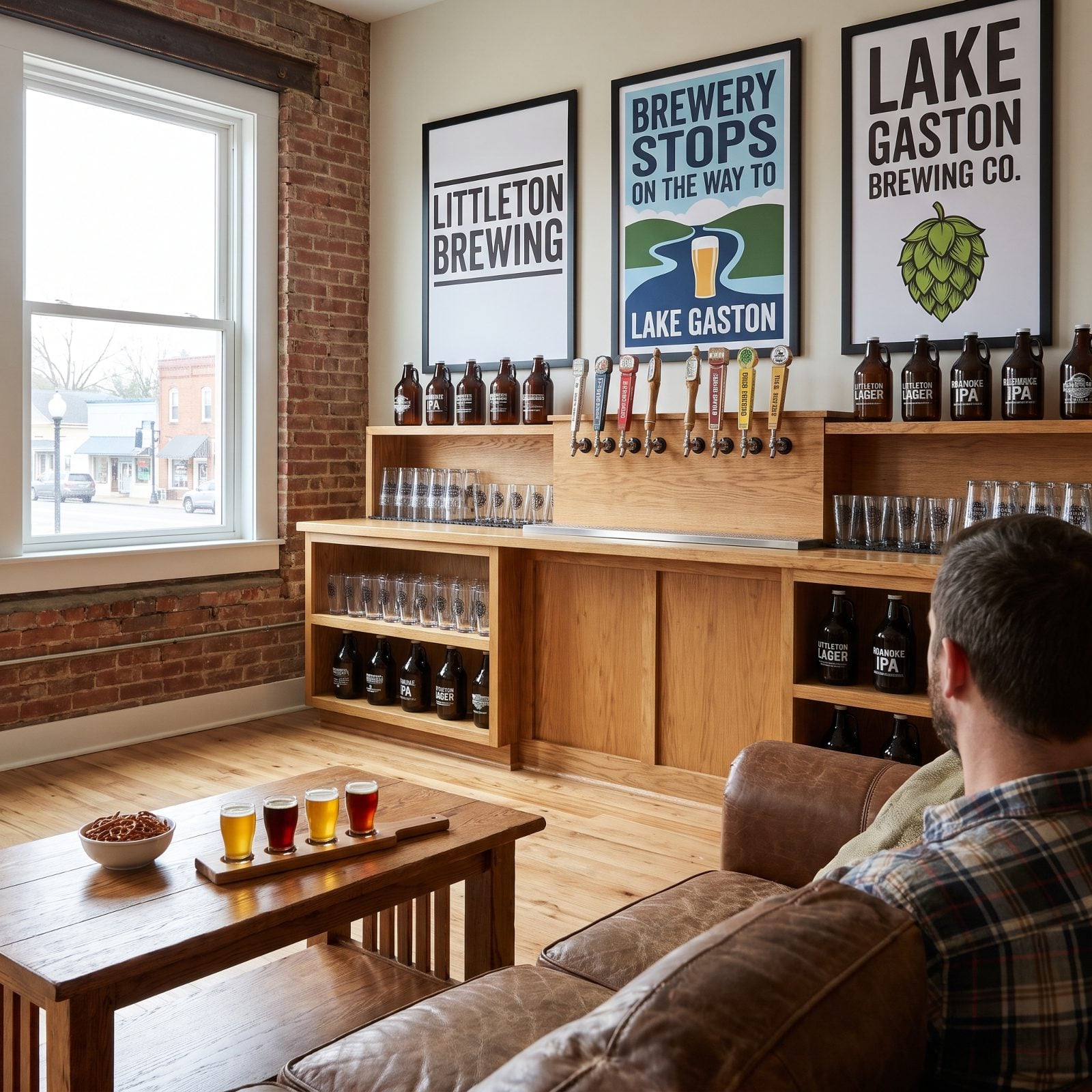
Littleton is a small town just south of the Virginia line that punches above its weight as the gateway to Lake Gaston. Figure about an hour and a half from Raleigh. It draws retirees and second-home owners who want lake life without the long slog to the Outer Banks.
Lake Gaston itself is a reservoir on the Roanoke River, created in 1963 when the Gaston Dam went up. The water laps into Virginia, but Littleton sits firmly on the North Carolina side, and it’s the local brewery and shops that make the town a stop rather than a drive-through. Pull over.
4. Calabash: The Self-Declared Seafood Capital of the World
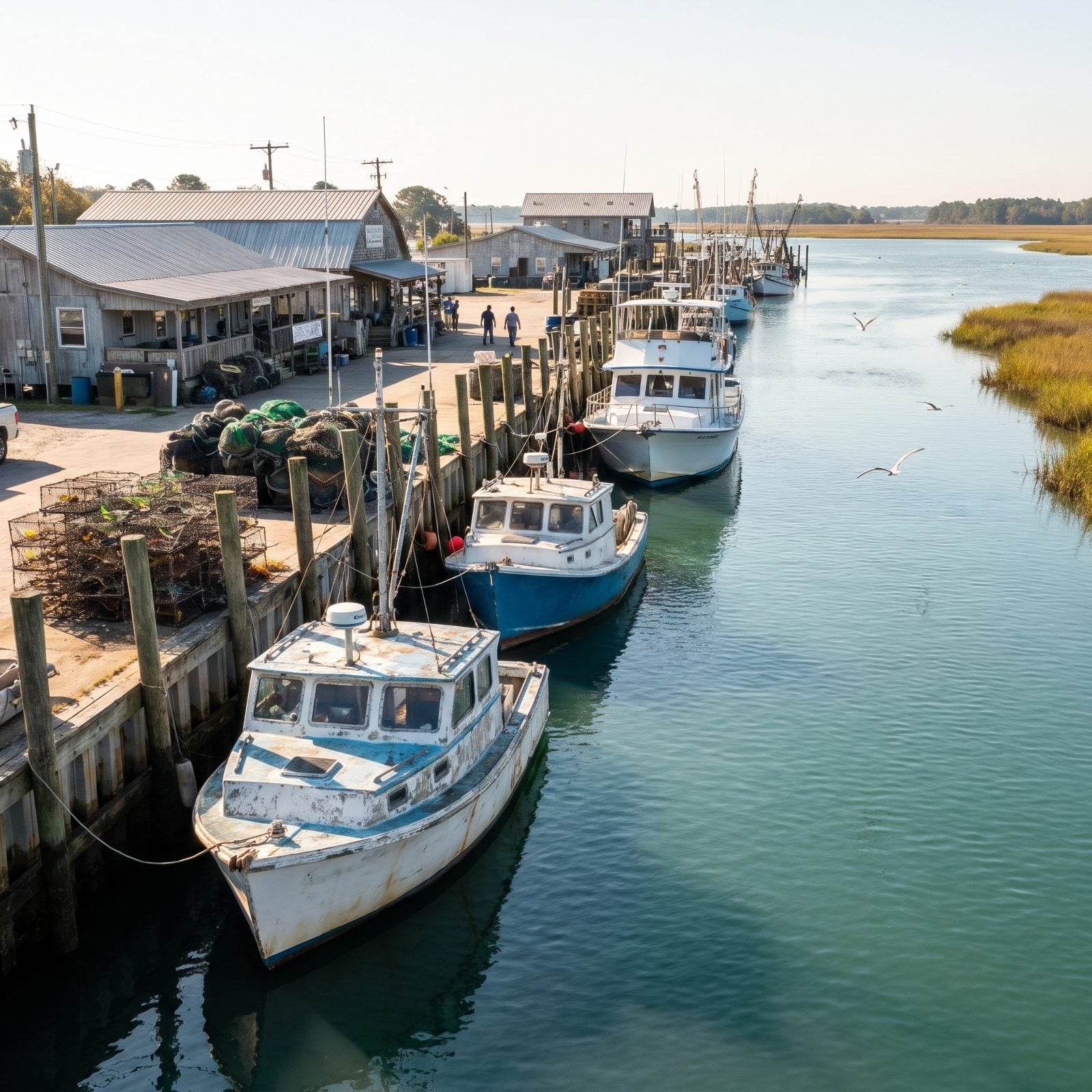
Calabash is a fishing village on the Calabash River down in Brunswick County, and it bills itself as the “Seafood Capital of the World.” Bold claim for a town this small. But it came by the name honestly.
Local fishing families got their start serving the catch straight off the boats on the riverbank. By the 1940s they had opened waterfront restaurants doing lightly breaded fried seafood, and “Calabash-style” became shorthand for that exact preparation across the whole region. Deep-sea trips still leave from the waterfront, so you can catch it and eat it the same day.
3. Manteo: Roanoke Island’s Walkable Harbor Town
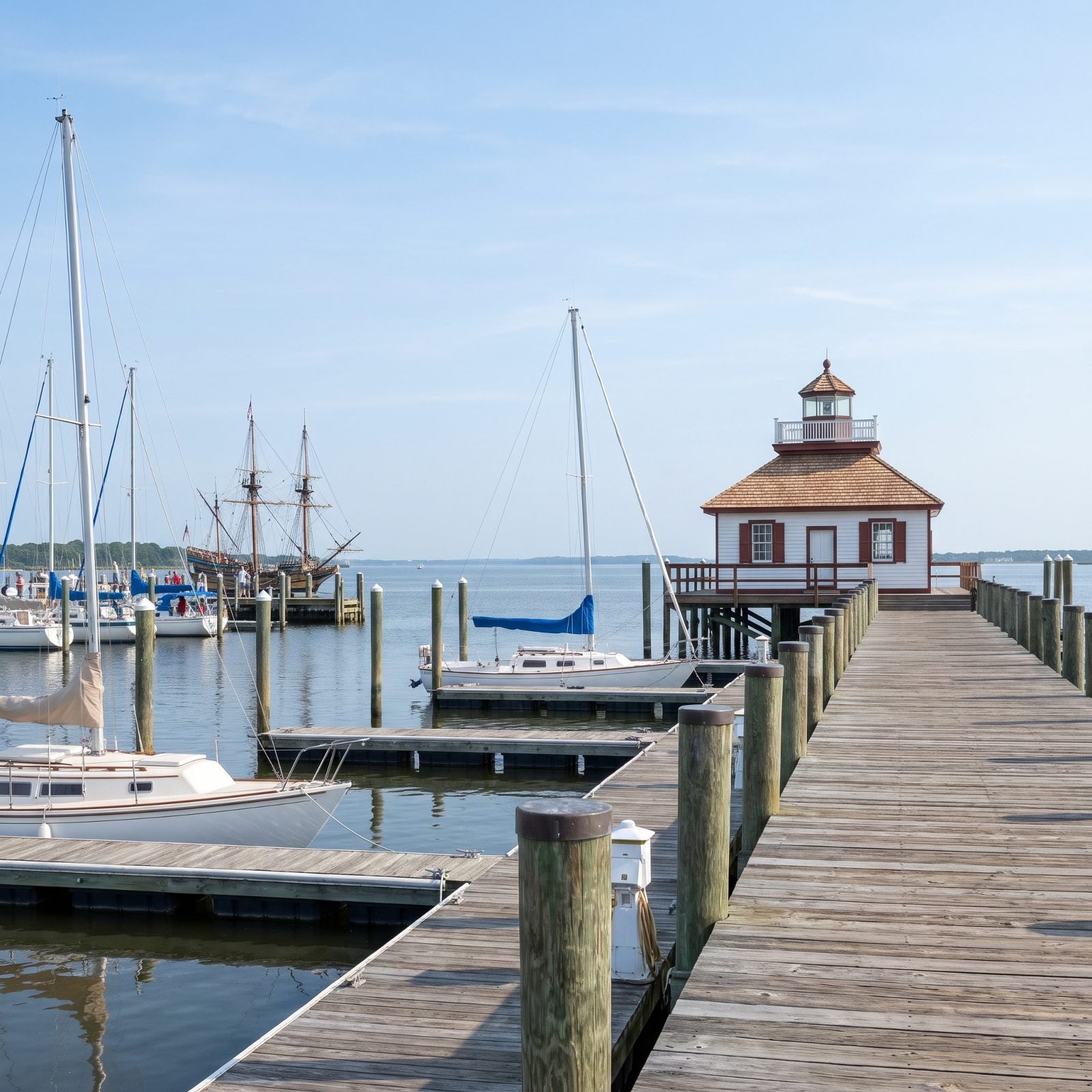
While everyone else sits in traffic headed to Nags Head, Manteo stays calm on the other side of the bridge. This Roanoke Island town has a walkable downtown waterfront wrapped around its marina, a Clean Marina facility with showers and laundry for cruisers passing through.
And here’s the real gift for anyone traveling by boat: free overnight tie-ups, space-available, no services. Roanoke Marshes Lighthouse sits right on the waterfront, and across the bay at Roanoke Island Festival Park you’ll find the Elizabeth II, a full-scale replica colonial ship. The Outer Banks without the sunburned chaos.
2. Nebo and Lake James: Boating at the Base of Linville Gorge
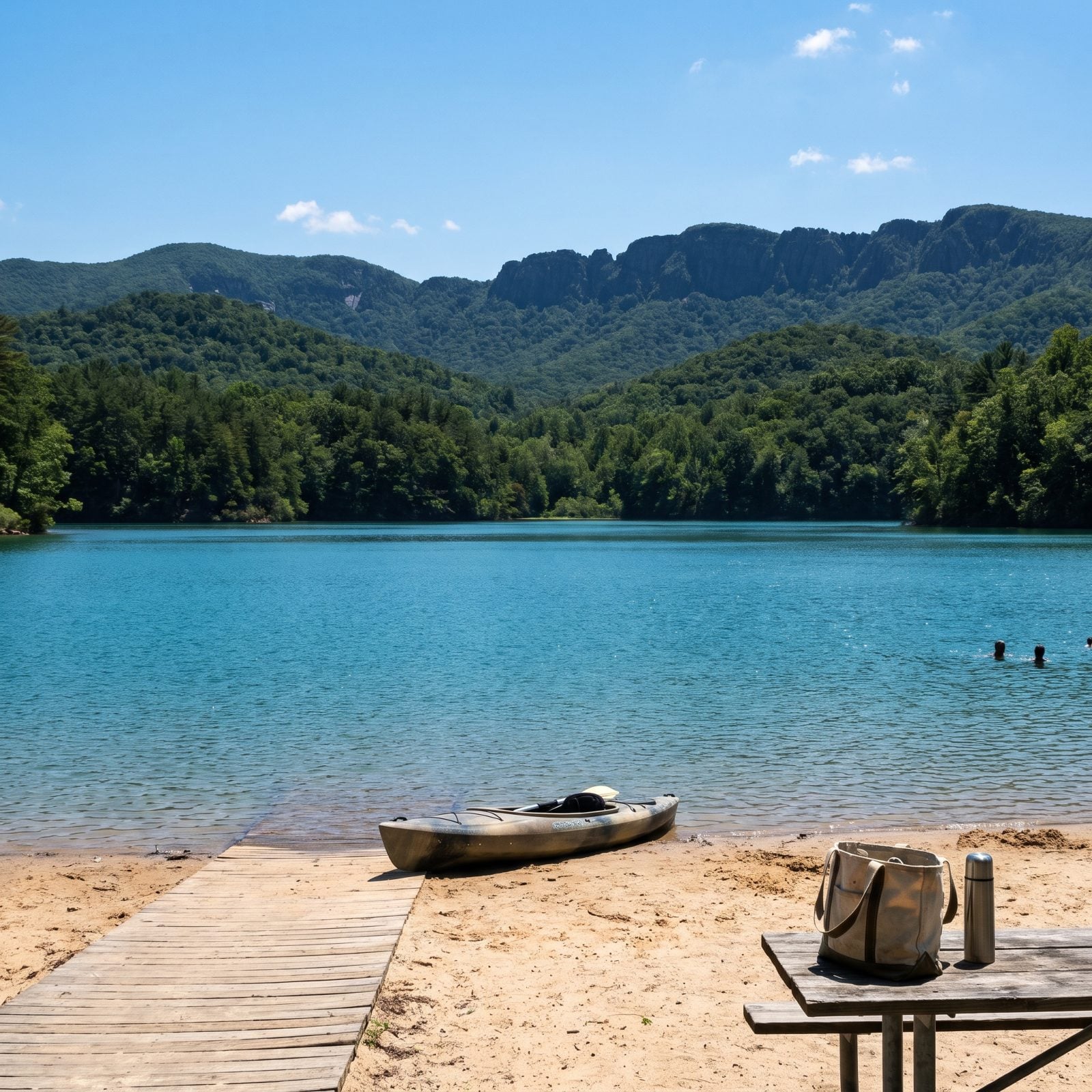
Lake James sits in Nebo, about 50 miles northeast of Asheville, and it may be the clearest big lake in the mountains. The water runs a striking blue-green at the foot of Linville Gorge, with the state park wrapping around a large chunk of the shoreline.
The park is built for boating, swimming, and fishing. You’ve got the Paddy’s Creek and Catawba River access areas plus the Hidden Cove and Canal Bridge boat ramps, and Paddy’s Creek adds drive-in tent sites if you want to wake up on the water. For a lake this pretty, getting in is remarkably easy.
1. Lake Waccamaw: A Carolina Bay That Holds Open Water
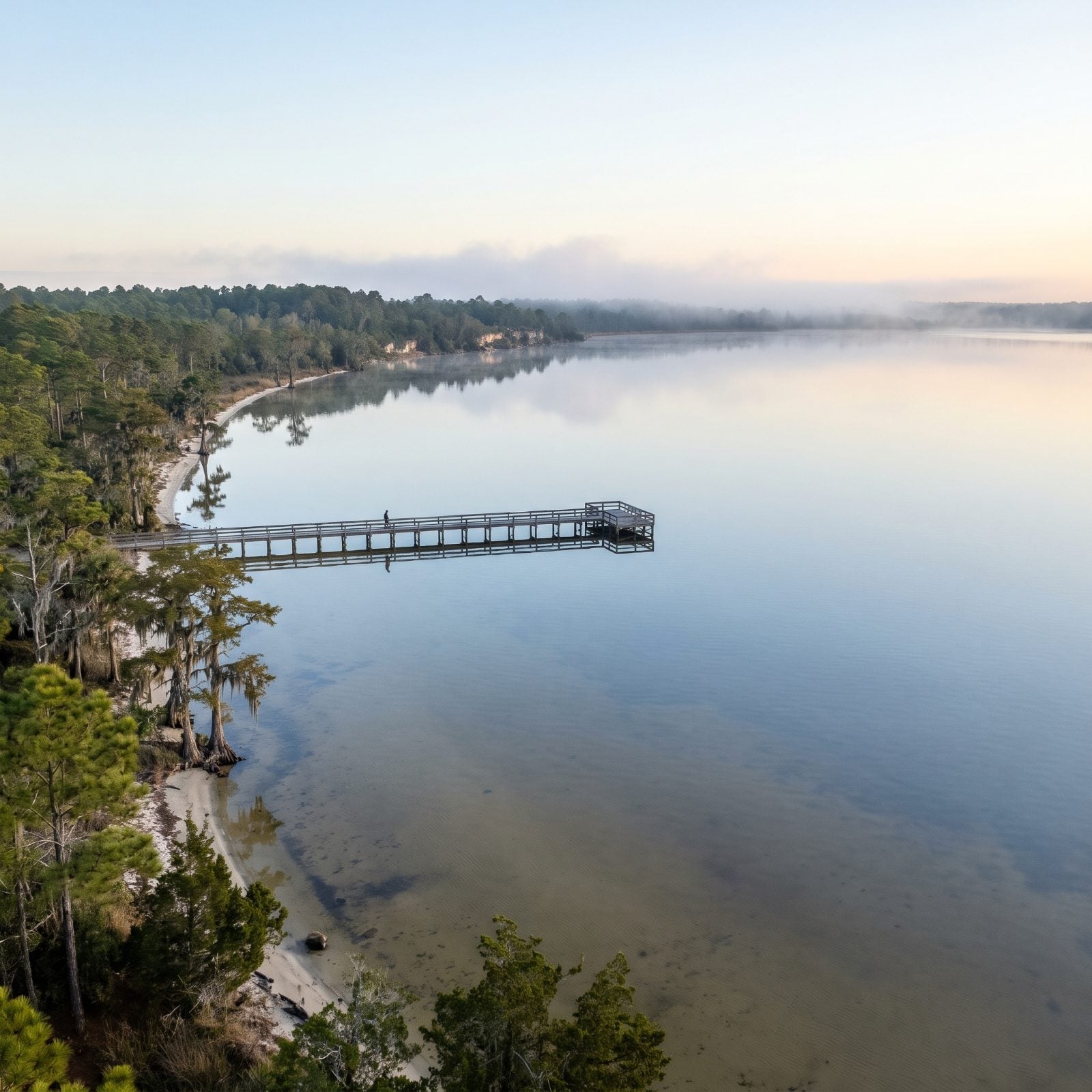
About 40 miles west of Wilmington lies something genuinely odd: the state’s largest Carolina bay lake. Thousands of these mysterious oval depressions are scattered across the coastal plain, and Waccamaw is one of the rare few that holds open water instead of choking up with vegetation.
Now for the part that stops biologists cold. A limestone bluff lowers the lake’s acidity, which lets it support aquatic species found nowhere else on Earth. Lake Waccamaw State Park on State Park Drive gets you onto a body of water that is, no exaggeration, one of a kind.