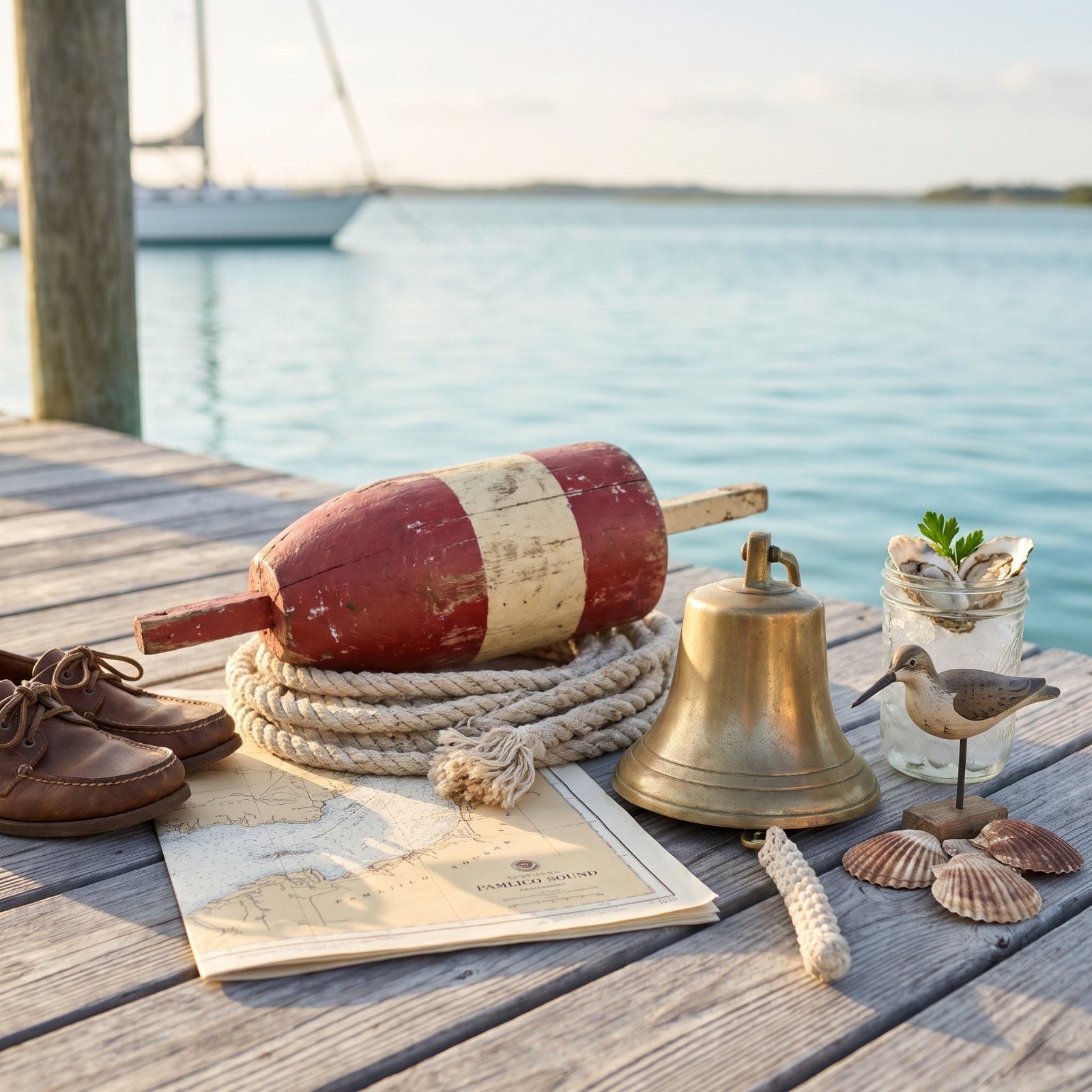
The ferry smells like diesel and salt, and nobody on it is in a rush. That’s the first thing you notice about the forgotten edge of North Carolina, that stretch of villages wedged between the Atlantic and the sounds where fishing boats still work the water and the lighthouses still earn their keep. These aren’t resort towns dressed up in nautical cosplay. They’re the real thing: squatters’ communities turned sailing capitals, oyster-shack harbors, boardwalks rebuilt a dozen times over. Pack a cooler, leave your watch at the cottage, and come ride the ferries south with us. The good ones go slow on purpose.
Please note that some of the imagery in this article may have been enhanced with the assistance of AI.
17. Manteo: Boardwalk Strolls Along Shallowbag Bay
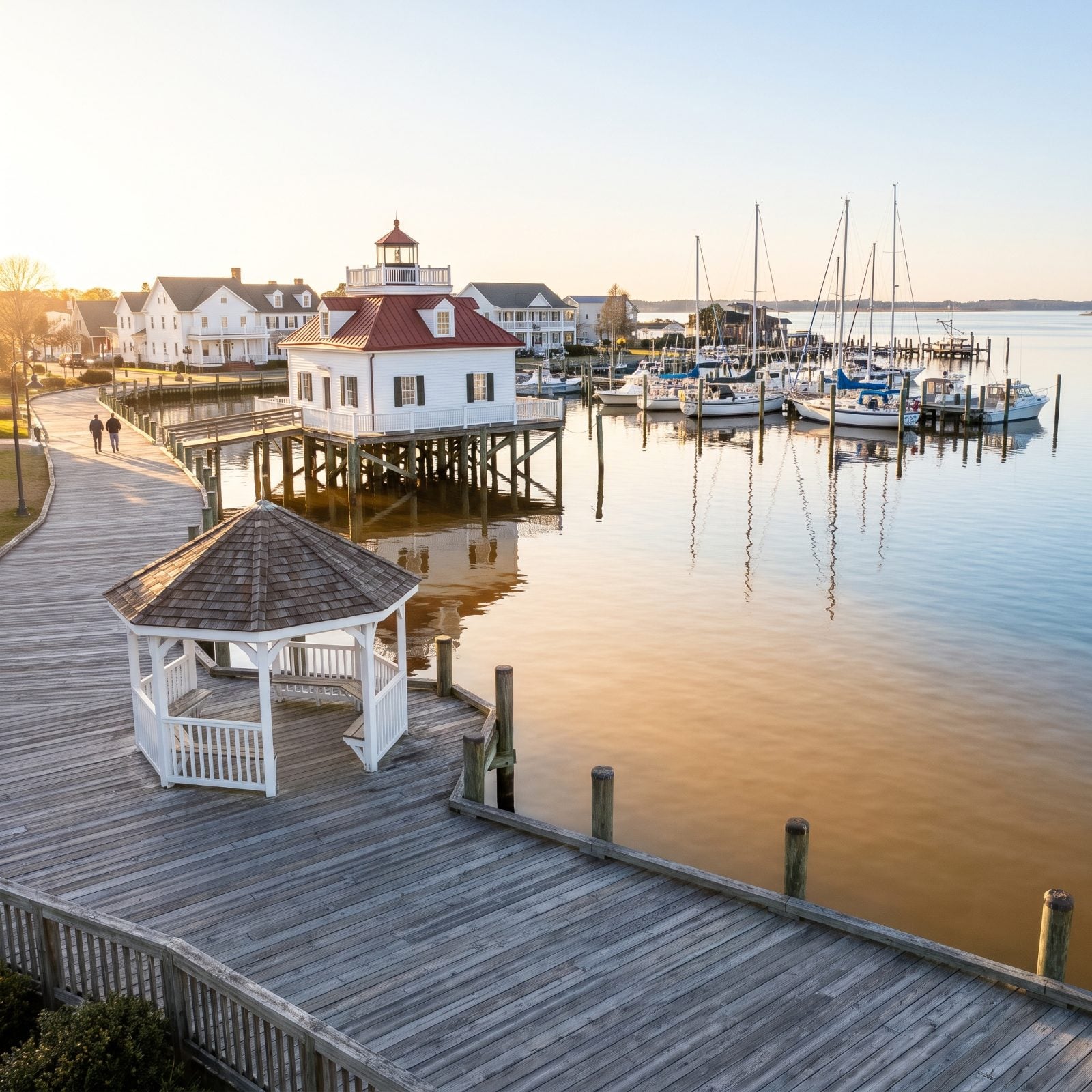
It sits on the island where England’s first American colony landed, and it wears that history lightly. Manteo’s waterfront wraps Shallowbag Bay with a boardwalk made for drifting, not marching, and you can tour the Roanoke Marshes Lighthouse and the Roanoke Island Maritime Museum at your own pace for exactly nothing.
Come Saturday morning in summer, the Downtown Manteo Market sets up on the waterfront, starting at 9 a.m. Across the footbridge at Roanoke Island Festival Park, you can finally board the Elizabeth II, that ship you’ve been eyeing from the dock all along.
16. Hatteras Village: Where the Charter Docks Still Run
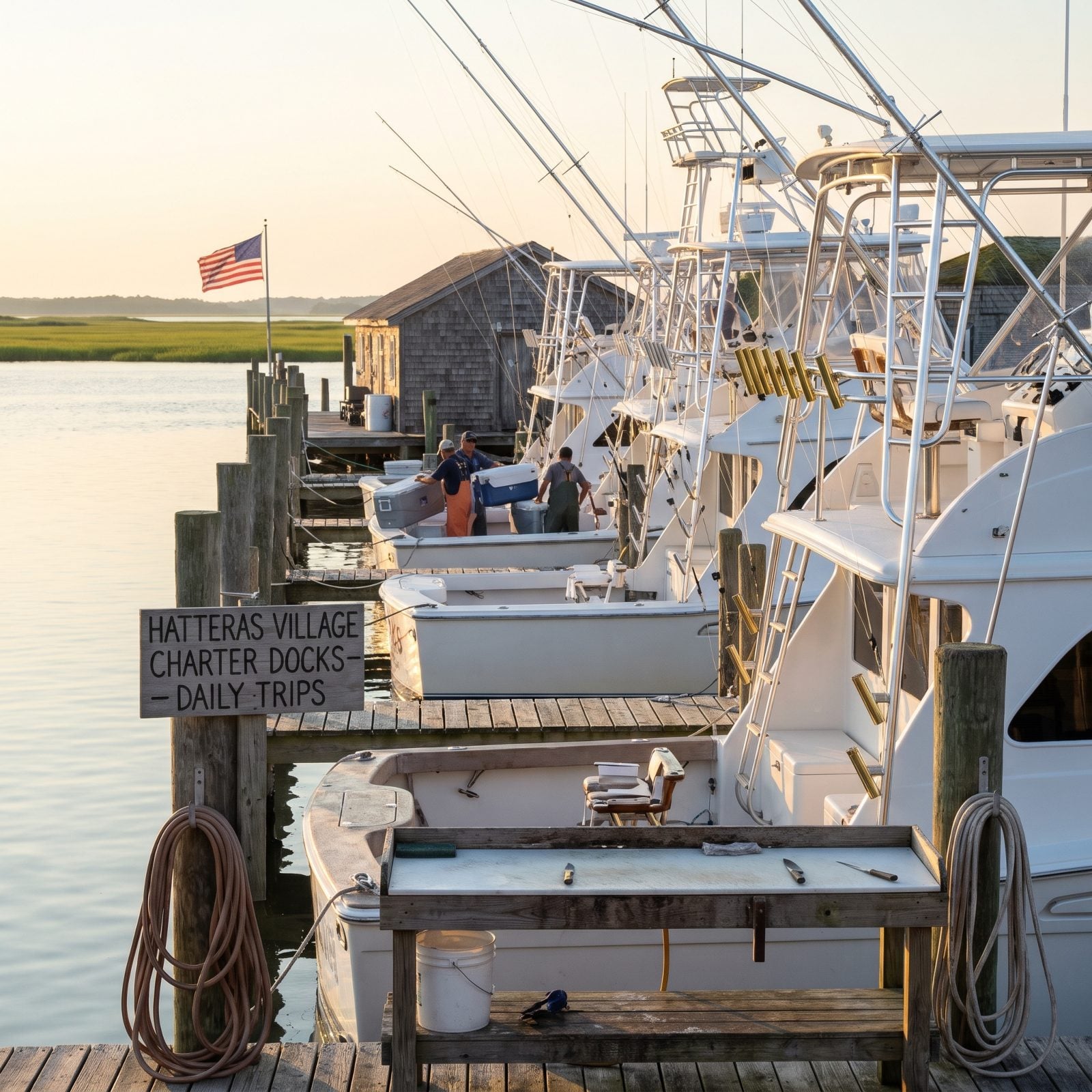
Sitting on the southern tip of Dare County with the Atlantic on one side and the sound on the other, Hatteras Village never stopped fishing. The families here worked boatbuilding and the old U.S. Life-Saving Service, which eventually became the Coast Guard. Walk the commercial marinas at dawn and you’ll see the heritage isn’t a museum exhibit. It’s the morning schedule.
The Graveyard of the Atlantic Museum sits right beside the Hatteras-Ocracoke ferry landing. That ferry is free, part of the Outer Banks National Scenic Byway, and quite possibly the smartest cheap ride in the state.
15. Ocracoke Village: Live Oaks, Silver Lake and a Pirate’s Ghost
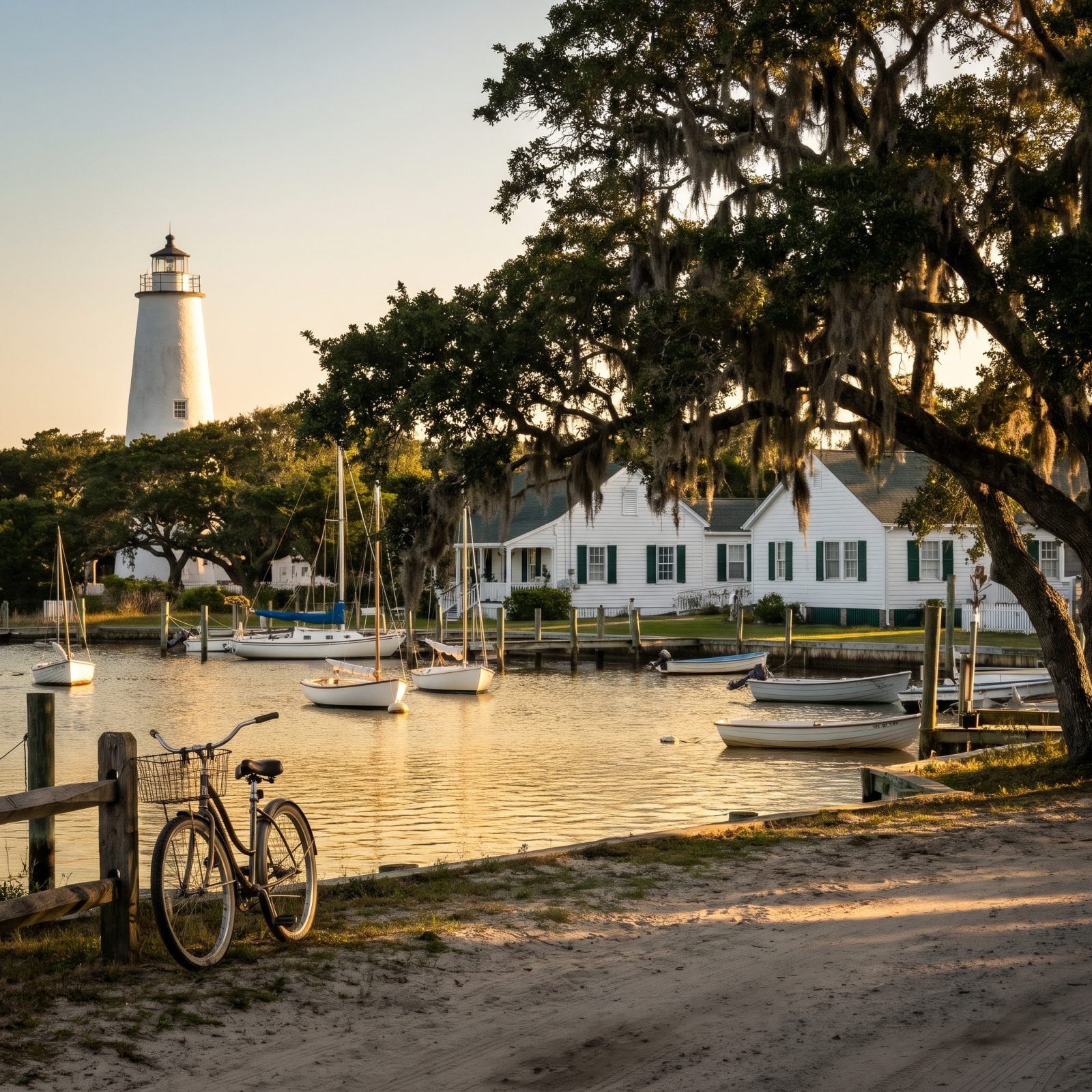
You can’t drive straight here, and that’s the point. Ocracoke comes only by ferry, private boat, or small plane, and the effort filters out the hurried. Miles of undeveloped beach sit protected by the Cape Hatteras National Seashore. The village curls around Silver Lake, and everybody gets around by bike on quiet lanes shaded by live oaks.
The Ocracoke Lighthouse ranks among the oldest operating lighthouses in the country. Blackbeard was killed just offshore in 1718 — the kind of fact that sticks with you on a dark walk back to the cottage.
14. Oriental: The Sailing Capital Where Boats Outnumber People
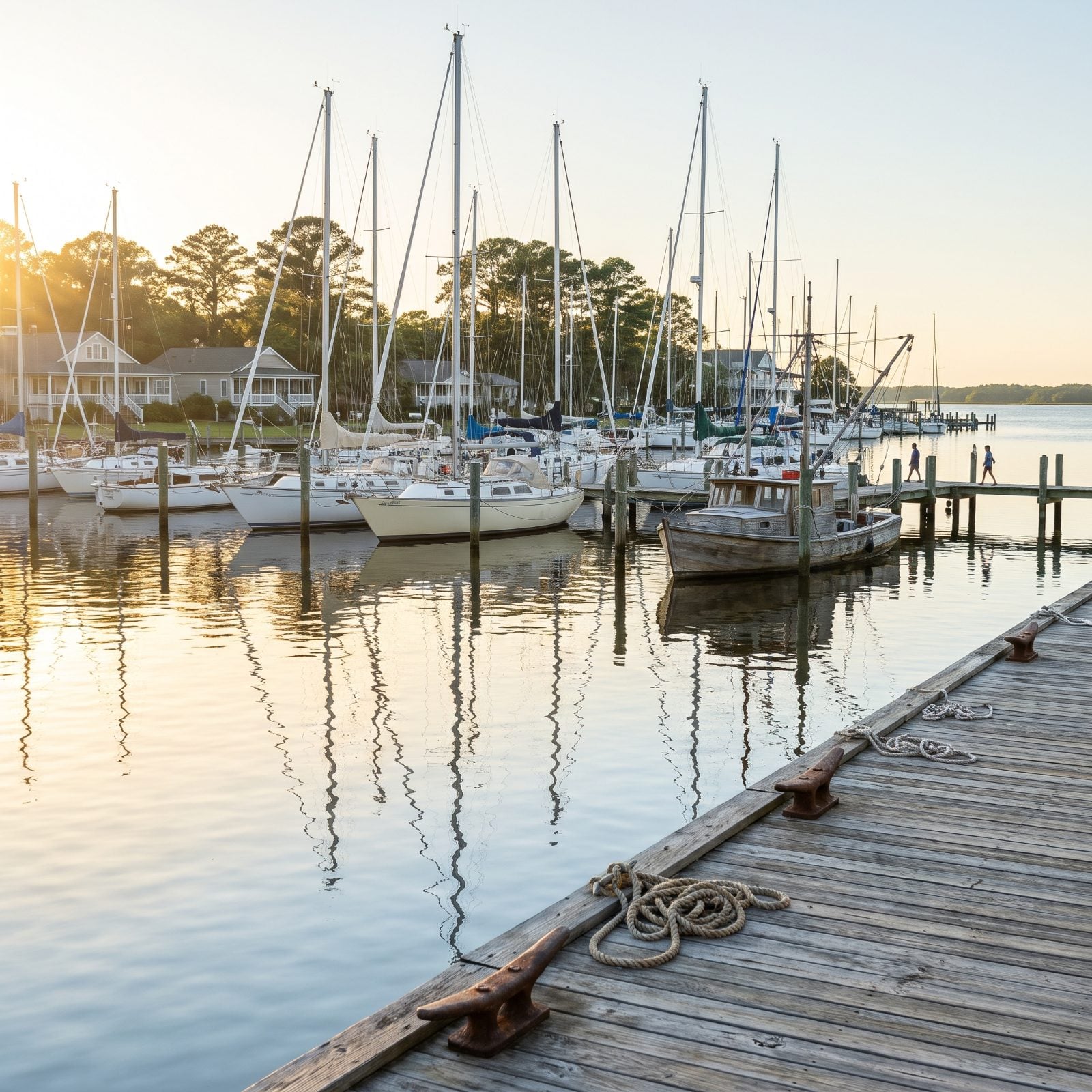
Here’s a number worth sitting with. Back when the last sawmill closed, a handful of sailboats called Oriental home. Now there are thousands, against a town of fewer than a thousand people. VisitNC puts it plainly: the boats outnumber the residents.
Sitting on the Neuse River right on the Intracoastal Waterway, Oriental earns its title as the Sailing Capital of North Carolina honestly. Several sailing clubs call this tiny town home. If you’ve ever wanted to learn to sail, or just watch people who already can, this is the dock to park yourself on.
13. Harkers Island: Facing the Diamond Lady Across the Water
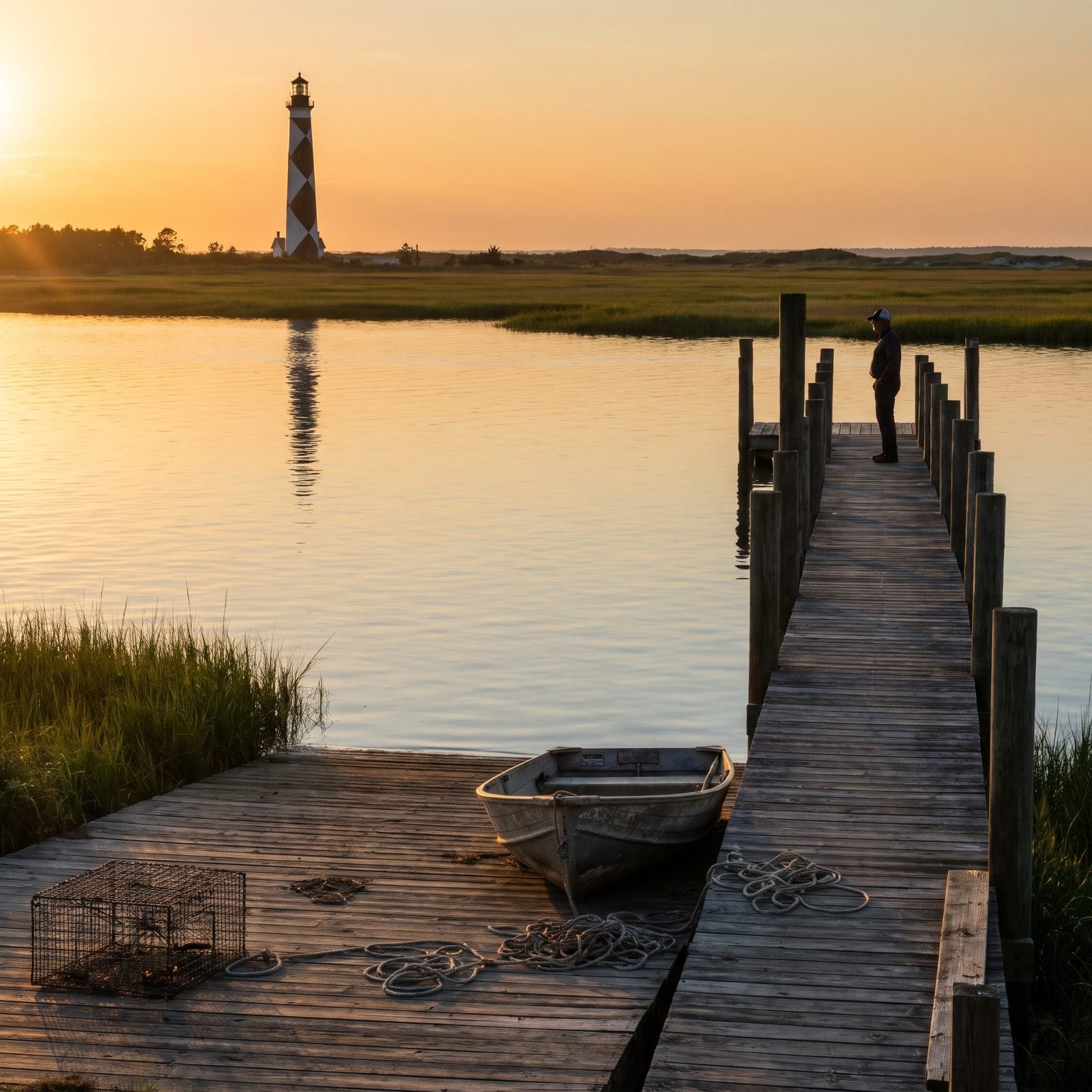
Down East locals call the Cape Lookout Lighthouse the Diamond Lady, and from Harkers Island you get some of the finest views of her black-and-white paint anywhere. The official ferry to Cape Lookout National Seashore leaves from the island’s eastern tip, and the Island Express ride runs about twenty minutes.
The Core Sound Waterfowl Museum & Heritage Center holds the region’s largest decoy collection plus exhibits on workboats and commercial fishing. Now the honest part: Hurricane Florence battered it in 2018 and kept it closed for 20 months before it reopened in 2020. Call ahead before you build a whole day around it.
12. Beaufort: Front Street and the Third-Oldest Town in the State
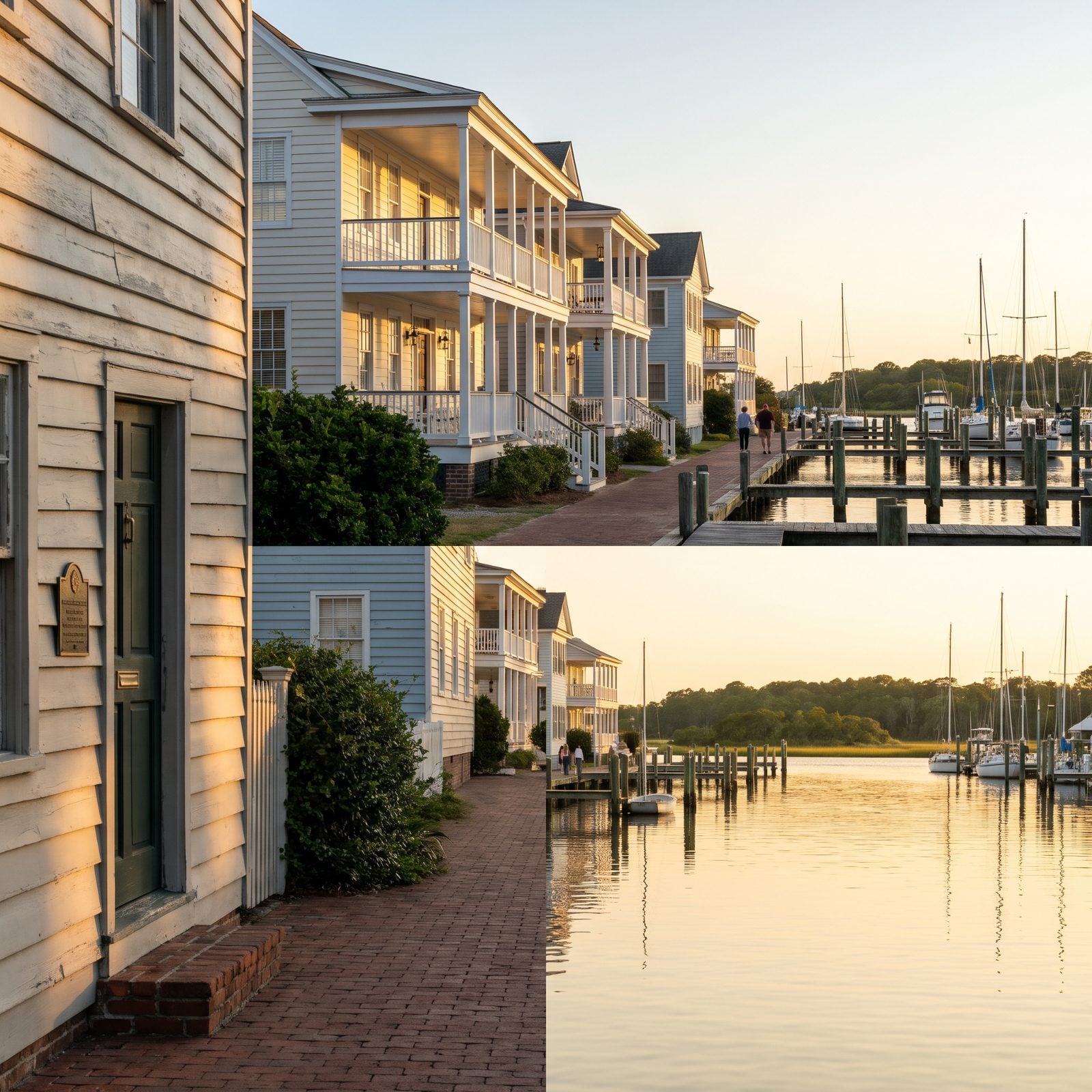
Beaufort is North Carolina’s third-oldest town, and it started the way the good ones do: a fishing village and safe harbor back in the late 1600s. Front Street runs along Taylor’s Creek, lined with original Bahamian and West Indian-style homes. Look near the doors and you’ll find little plaques naming the first owners, which can be more moving than anything in a fancier town.
The Beaufort Historic Site keeps a cluster of restored historic homes and buildings downtown. Arriving by water? Boaters can reserve slips right at the Beaufort Town Docks, a short walk from everything that matters.
11. Salter Path: The Fish-House Village Between Ocean and Sound
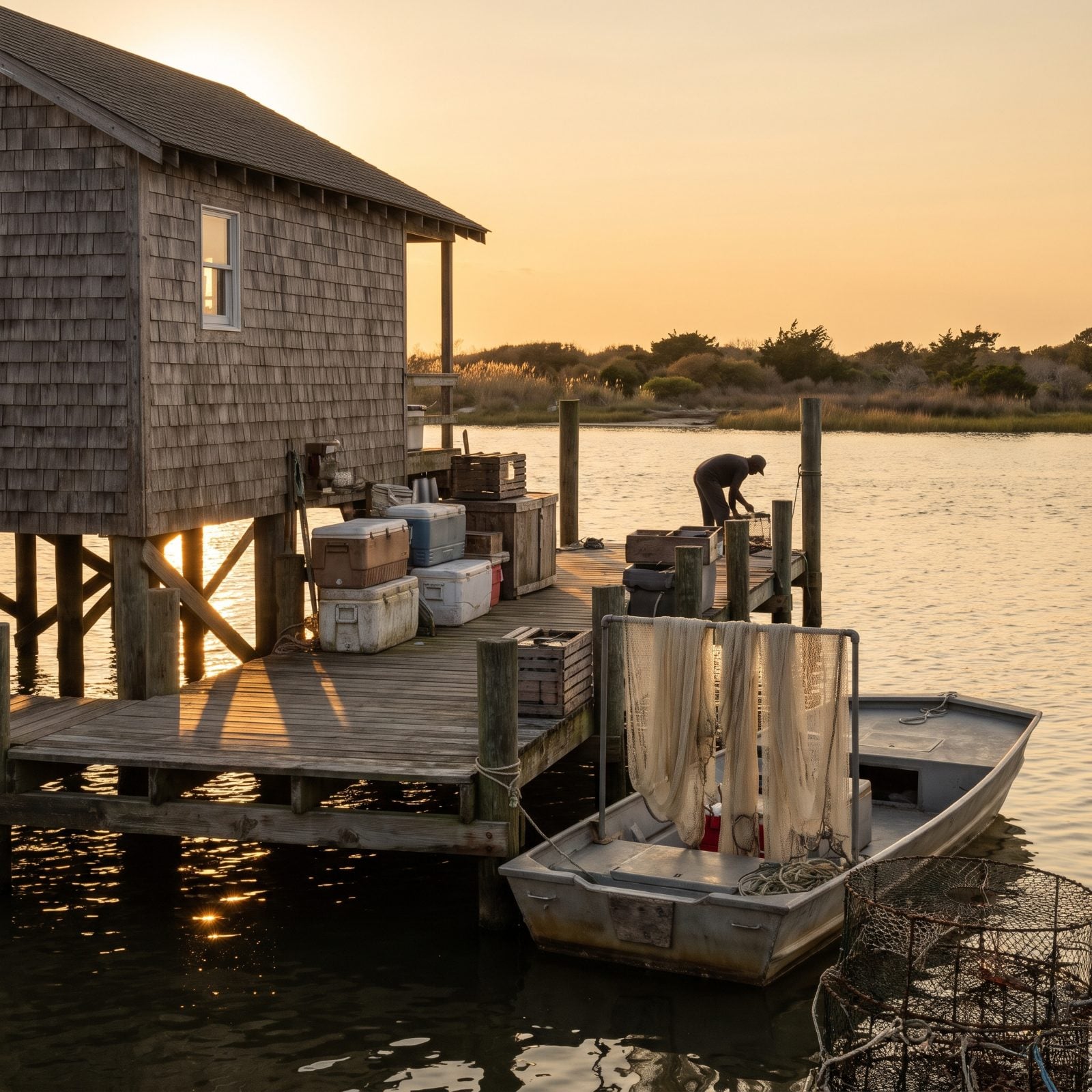
Salter Path sits at the narrowest point of Bogue Banks, so the beach and the sound are only a short walk apart. Some of the families who first settled here still live on the island and still make a living from the water, selling their catch straight to the fish-house markets.
The name is pure working history: fishermen walked from sound to ocean and wore a path past a Salter family’s house. Early settlers built without deeds, and the place grew up as a squatters’ community. NC Sea Grant counted a few dozen households here back in the 1920s. Buy your fish at the source and you’re part of a very old arrangement.
10. Swansboro: The Friendly City by the Sea on the White Oak River
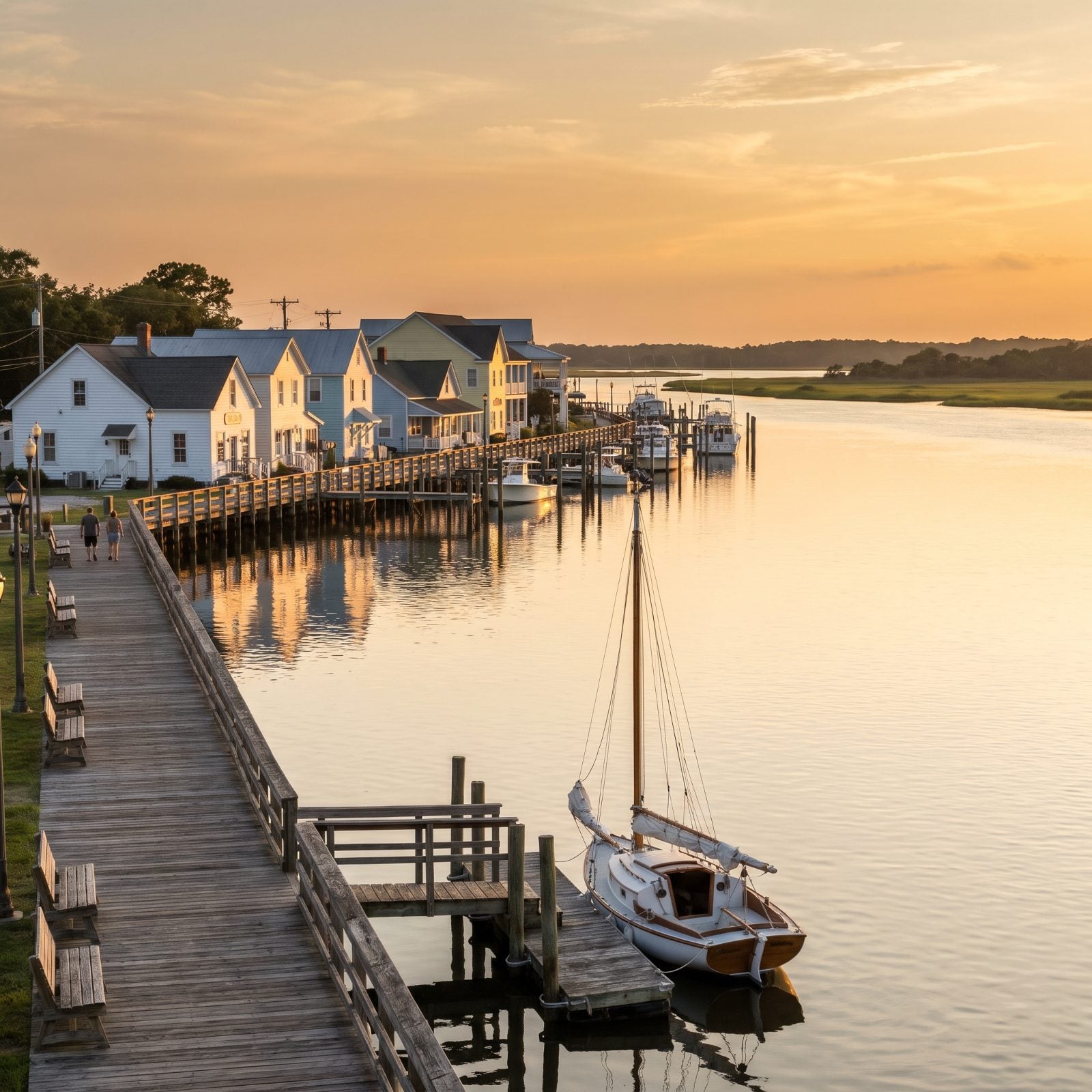
Founded in 1783 and still calling itself the Friendly City by the Sea, Swansboro sits where the White Oak River meets the Intracoastal Waterway. The historic downtown looks straight out over the water toward Bogue Banks across the sound.
Bear Island’s undeveloped beaches sit just offshore, close enough for an easy day by boat. This is a town of a few thousand people that throws its waterfront history into its downtown events rather than hiding it away in a visitor center. Small, walkable, and genuinely glad to see you.
9. Topsail Beach: Mayberry by the Sea and the Secret Missile Towers
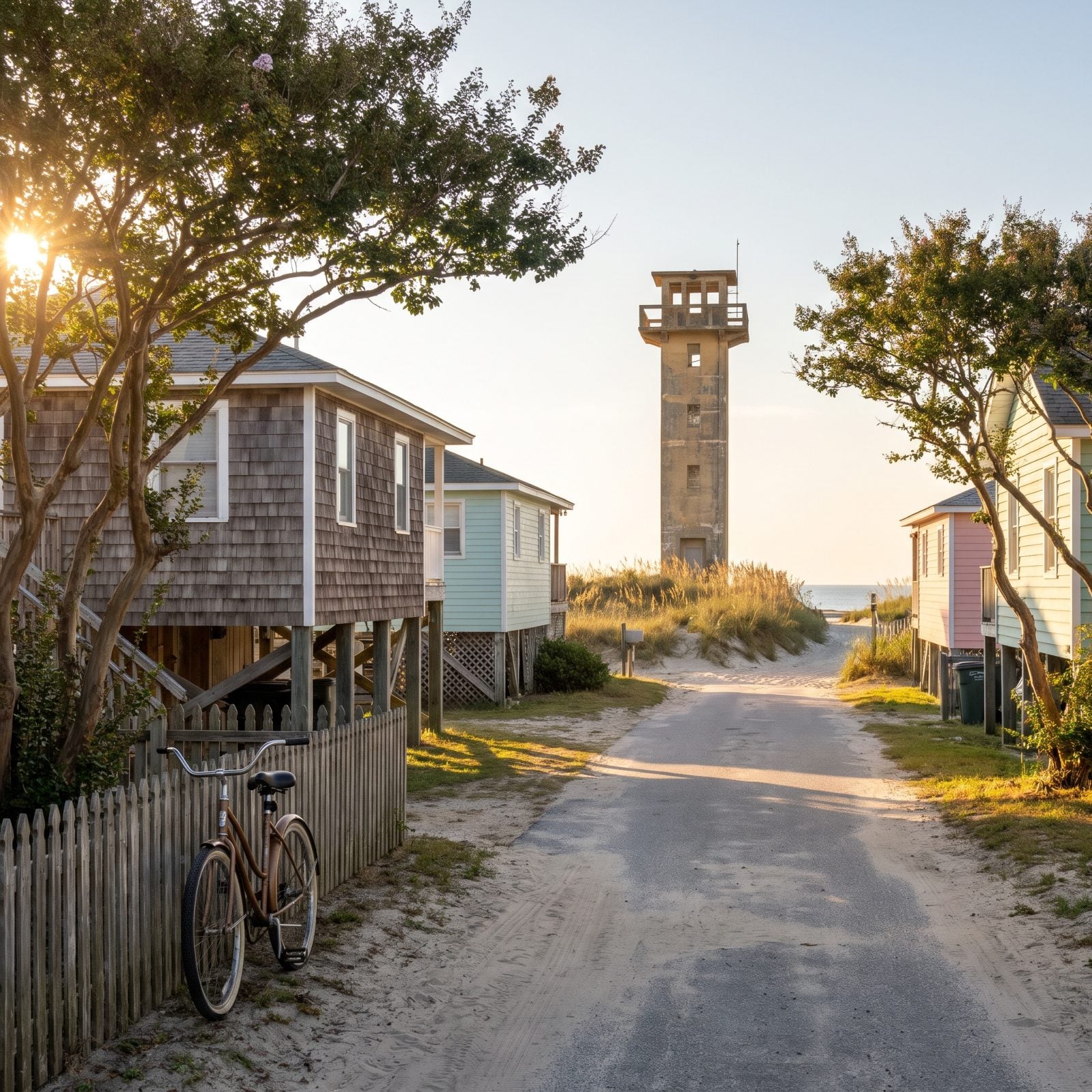
Travel writers nicknamed Topsail Beach Mayberry by the Sea, and the shoe fits. This is the quiet south end of Topsail Island, long on cottages and short on neon.
The oddest story in town hides in plain sight. From 1946 to 1948, the Navy ran Operation Bumblebee here — secret guided-missile tests — and the old concrete observation towers still stand on the island like forgotten chess pieces. The Missiles and More Museum, over in the historic Assembly Building, tells that story alongside pirates and the WASP pilots. It’s seasonal and run by the Topsail Historical Society, so check the hours before you go.
8. Carolina Beach: The Rare Boardwalk That Borders the Sand
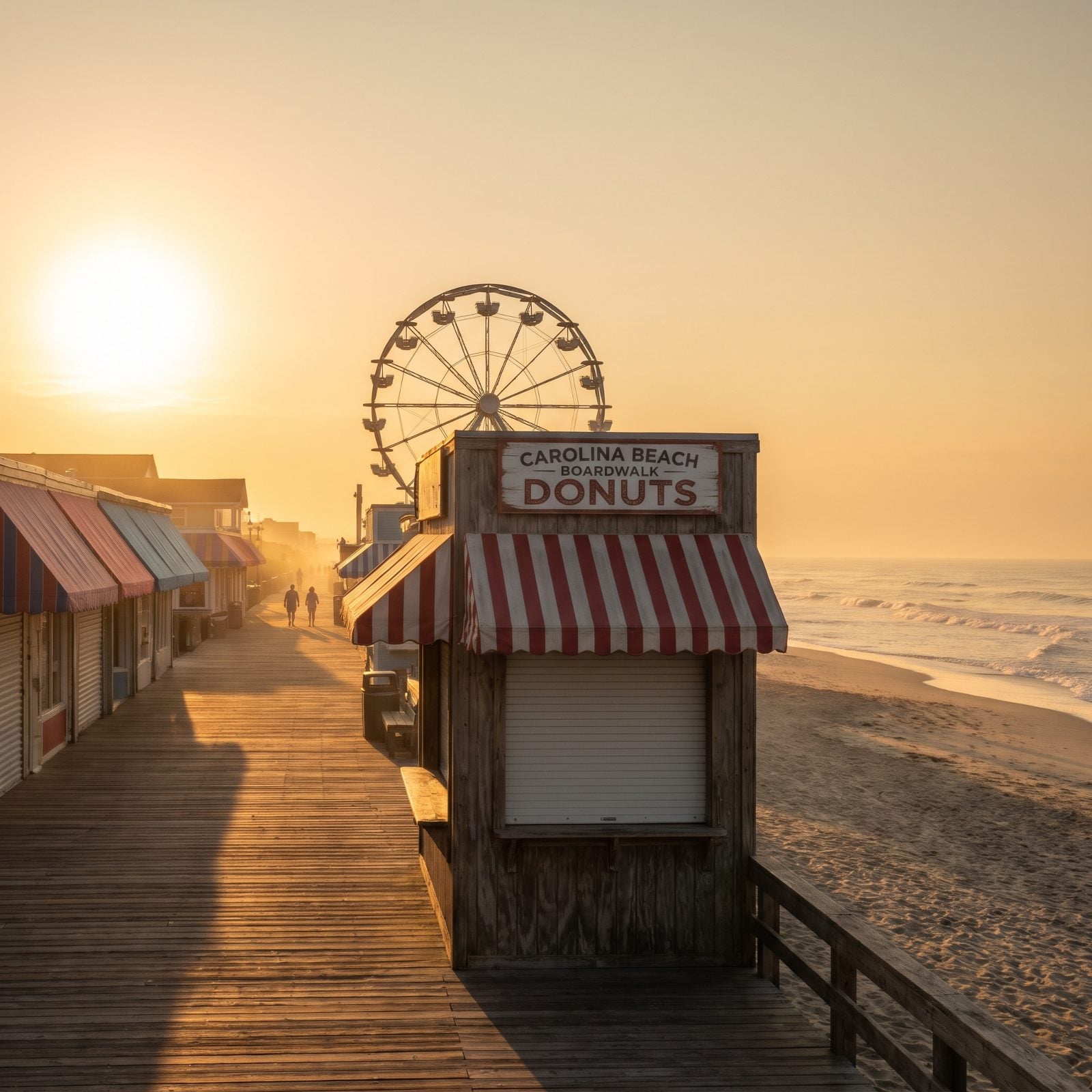
This one opened as a resort back in 1887, pavilion and all, then incorporated in 1925. It’s survived fire, storms, and repeated rebuilds of the boardwalk itself, with the latest improvement project breaking ground in 2014. Our State points out it’s one of the few boardwalks that remain in North Carolina, and this one runs right along the sand.
Britt’s Donuts has been frying on this boardwalk since 1939, and the line out front tells you everything. Get there early, get the hot ones, eat them over the sand. That’s the whole assignment.
After a 1940 fire wiped out two blocks of boardwalk, the town rebuilt and billed itself as ‘The South’s Miracle Beach.’ It’s been earning the name back ever since.
7. Kure Beach: The Oldest Fishing Pier on the East Coast
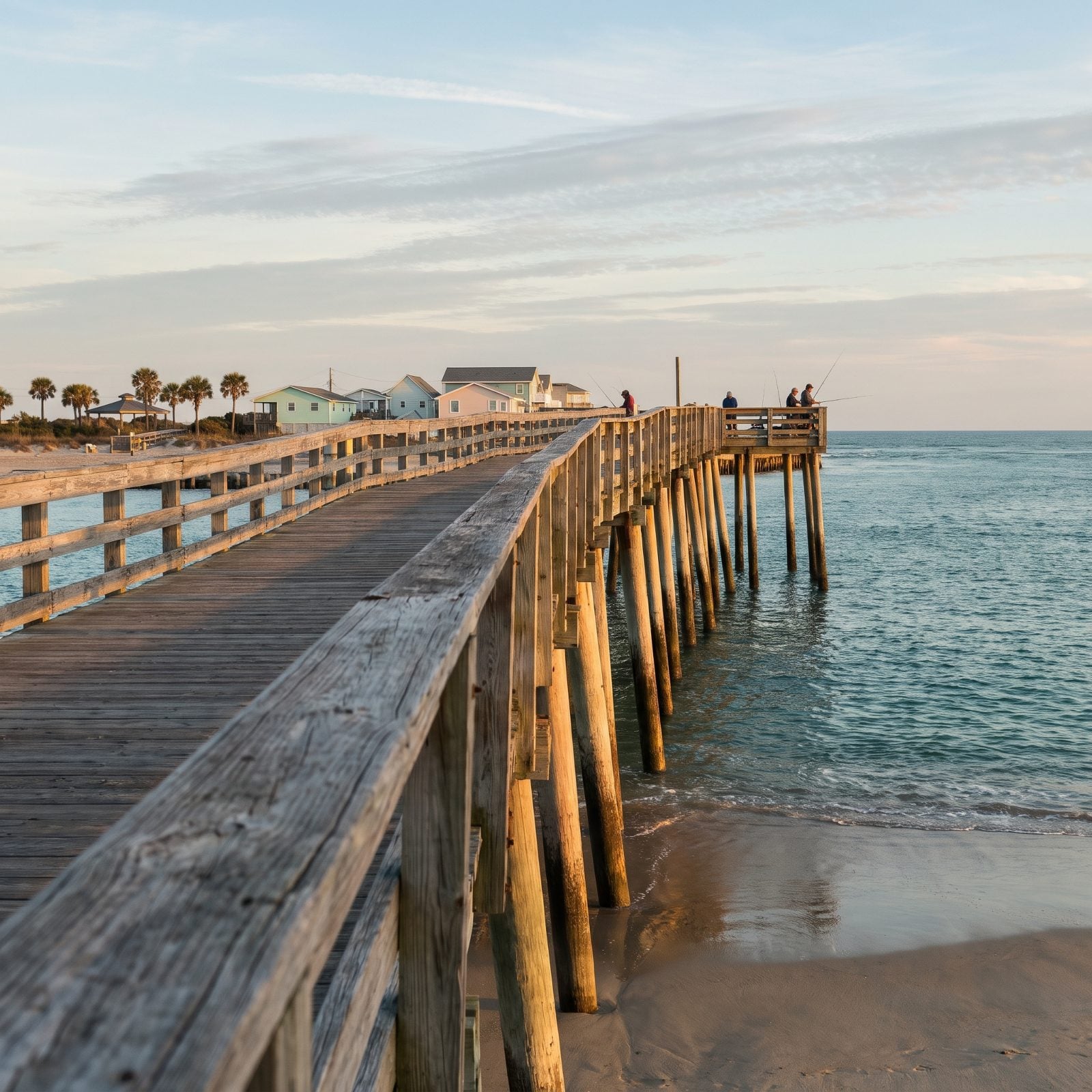
First thing: it’s pronounced “Cure-ee.” Get that wrong at the bait shop and everyone will know you just got here.
The town claims its fishing pier is the oldest on the East Coast. L.C. Kure first built it in 1923, and it’s been knocked down and rebuilt more times than anyone cares to count. Walk out its weathered planks over open water and look back: a row of pastel beach houses lines the shore instead of resort towers looming over everything. Anglers set up their rods right along its rails.
Walking the pier is free. One catch worth knowing: a recent review says it closes November through April for renovations, so call ahead before you drive down for a sunrise stroll.
6. Southport: Oak-Shaded Riverwalk Where the Cape Fear Meets the Sea
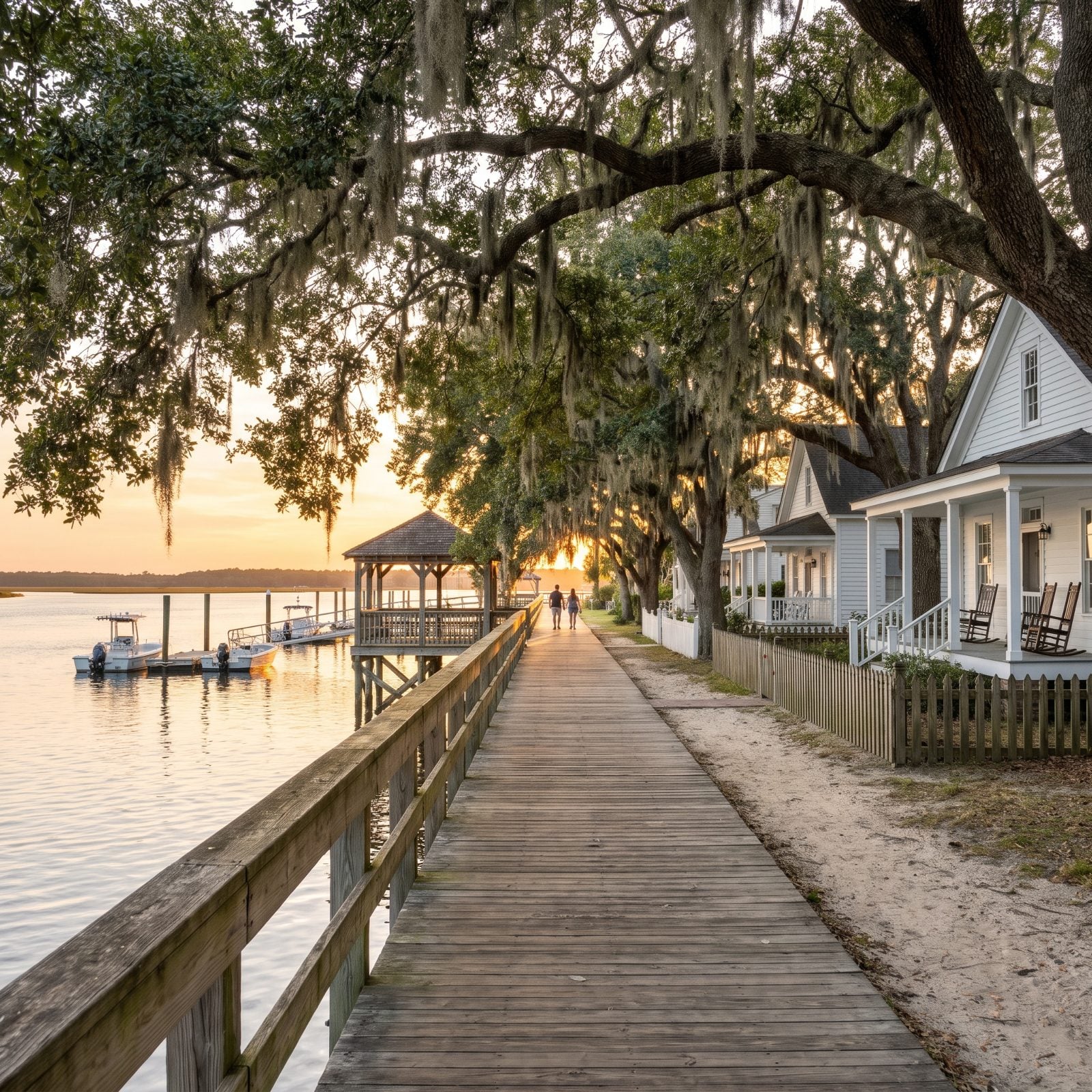
You’ve seen Southport before, even if you’ve never set foot in it. A Walk to Remember filmed here, and so did Safe Haven and Crimes of the Heart. Hollywood keeps coming back for the same reason you will: streets running under live oaks so old they’ve grown into a single canopy, and water that throws off a light doing half the cinematographer’s work.
The 2020 count put the town at just under 4,000 residents. The Historic Riverwalk traces the waterfront, and if you want the backstory, the Fort Johnston, Southport Museum and Visitors’ Center sits at 203 E. Bay St. From here, ferries run to Fort Fisher and across to car-free Bald Head Island.
5. Bald Head Island: Golf Carts Under North Carolina’s Oldest Lighthouse
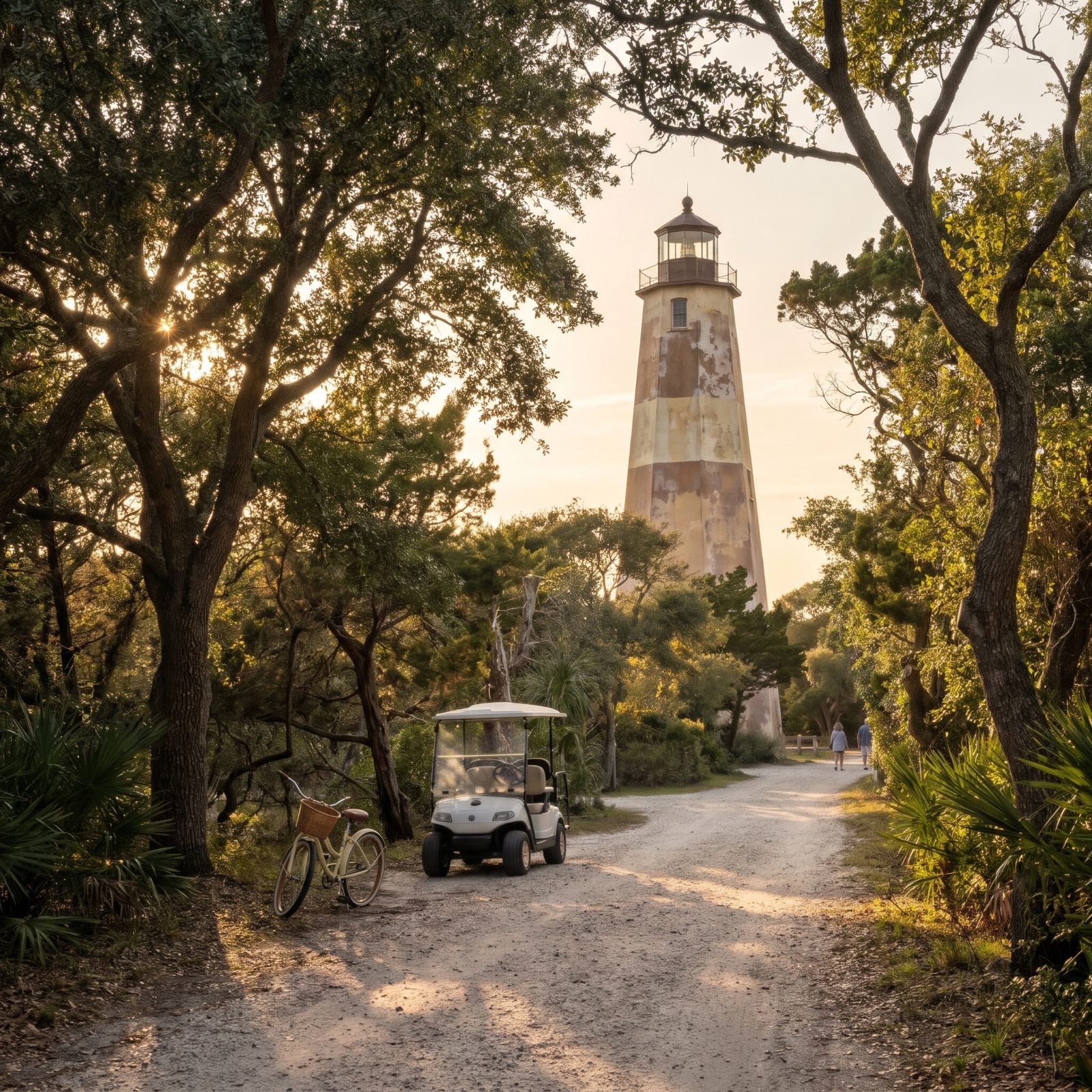
No cars. None. That’s the whole deal.
You park in Southport, hop a 20-minute passenger ferry across the Cape Fear River, and from there it’s golf carts, bicycles, or a tram. Private boats work too if you’ve got one. Fourteen miles of beach, a maritime forest, and almost no engine noise anywhere.
Old Baldy, commissioned in 1817, is the oldest lighthouse in the state. Climb it if your knees allow. The quiet here isn’t the marketed kind, where a resort politely lowers its music at ten. It’s the real thing, because whatever makes the racket everywhere else simply isn’t allowed on the ferry.
4. Holden Beach: The Least Commercial Strip of Sand in the State
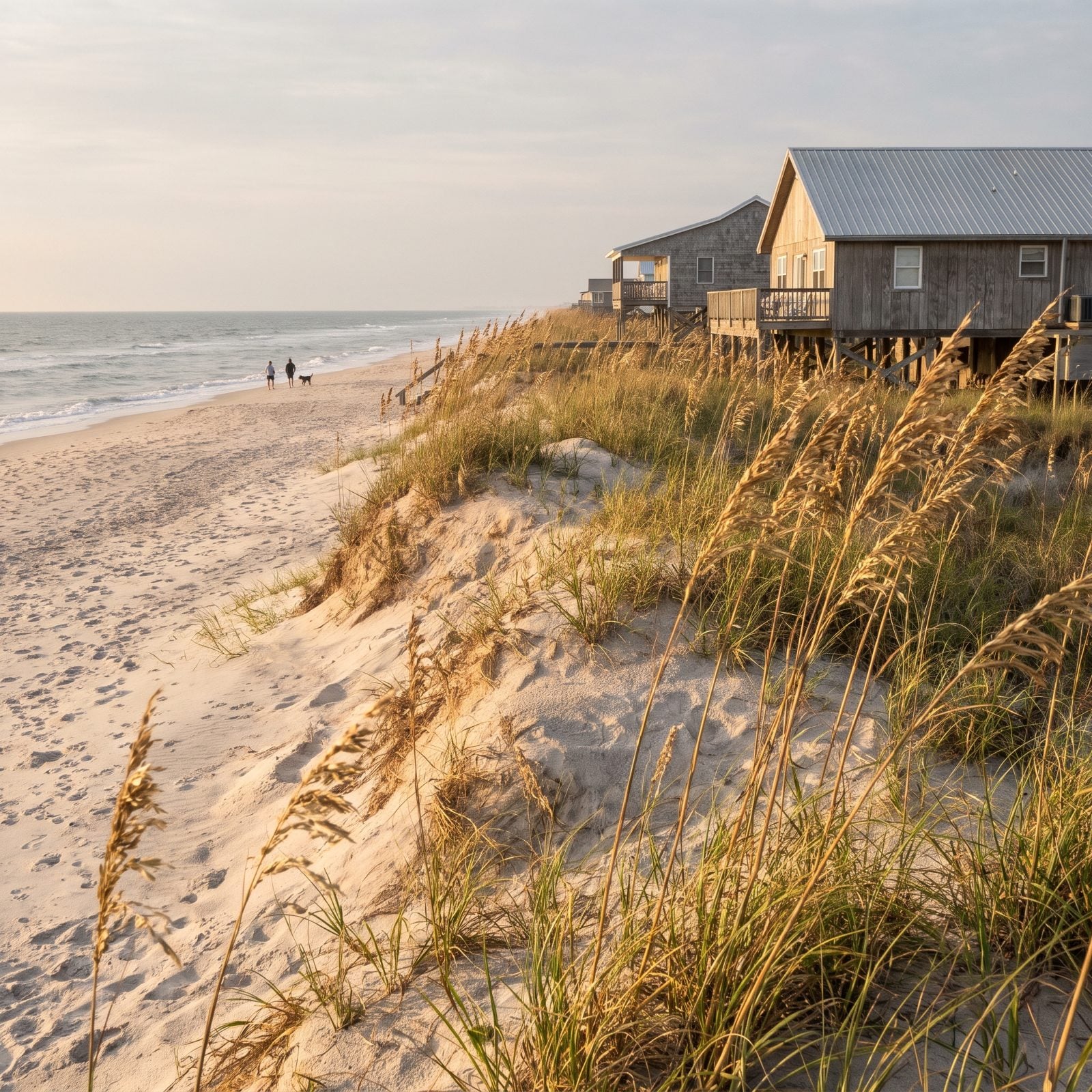
The town’s official motto is “The Family Beach,” and for once a slogan isn’t lying. Small Brunswick County place, incorporated in 1969, with fewer than a thousand people on the books. Mostly homes, barely any commercial sprawl — which is exactly why the folks who’ve found it won’t shut up about it.
Here’s the best quirk. The 8-mile island faces south, so you can watch the sun both rise and set over the ocean from the same beach. Most coastlines can’t pull that off.
One honest note: the fishing pier is now town-owned but has been closed since 2022 and its future is uncertain, so don’t plan a trip around it until you’ve confirmed it’s open.
3. Ocean Isle Beach: The South’s Best Tiny Town, By Vote
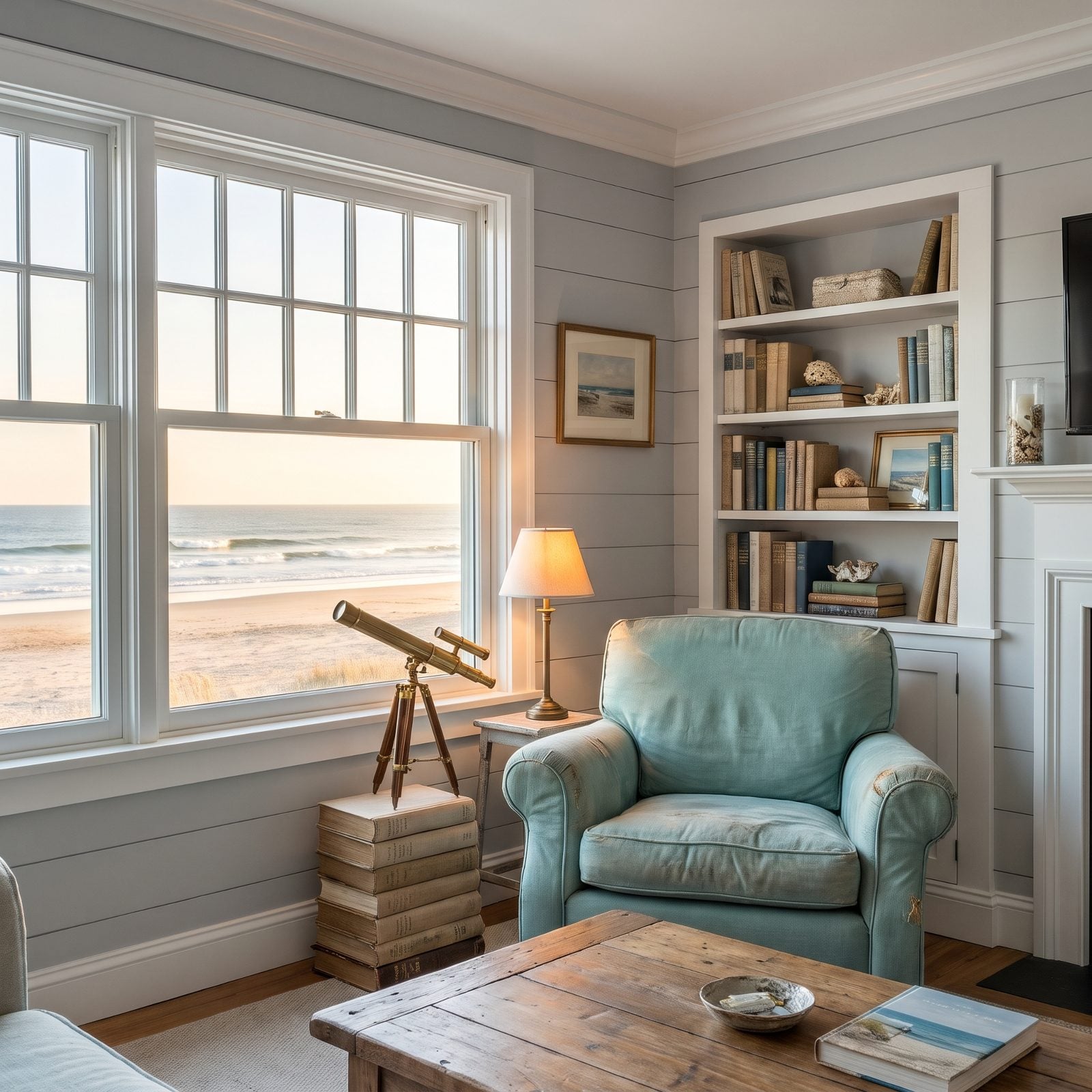
The accolades keep stacking up. Southern Living named Ocean Isle Beach the “South’s Best Tiny Town” back in 2018, and USA Today readers voted it the best beach in North Carolina in both 2024 and 2026. That’s a lot of trophies for a place most people couldn’t find on a map.
What earns it? A laid-back, family-first stretch of the Brunswick Islands with none of the high-rise clutter you’d expect from a beach this celebrated. Rainy afternoon? The Museum of Coastal Carolina at 21 E. Second St. has live fish, turtles, and a saltwater touch tank that’ll keep the kids busy longer than you’d guess.
2. Sunset Beach: An Old Swing Bridge and a Mailbox in the Dunes
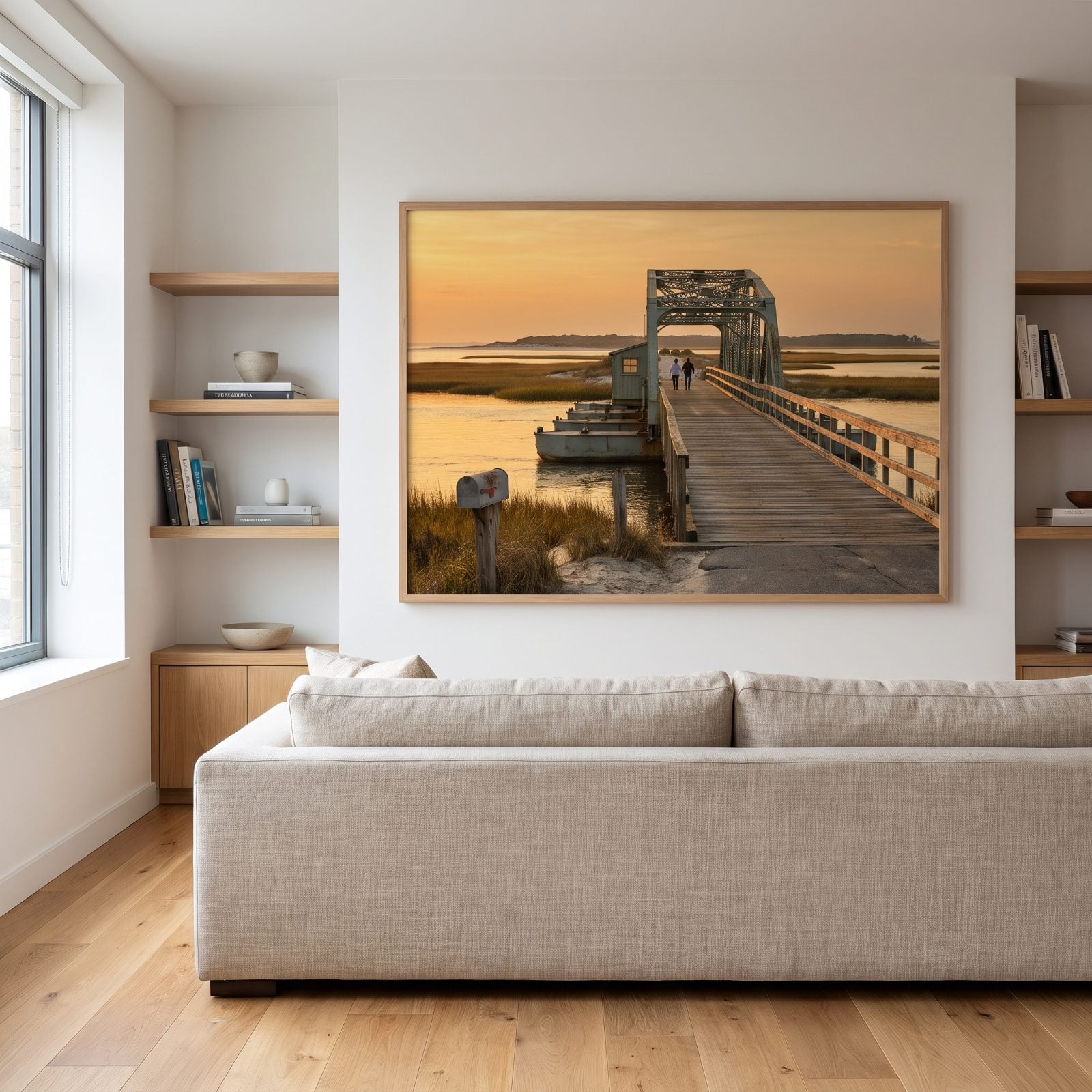
From 1958 to 2011, a one-lane floating pontoon swing bridge was the only way onto this island. Think about that. For more than fifty years, getting to the beach meant waiting on a bridge that physically swung open to let boats through.
They retired it, but they didn’t scrap it. The old bridge tender’s house and a piece of the span were saved and moved to the mainland, where they now serve as a small museum.
Then there’s the Kindred Spirit Mailbox, tucked in the dune grass on undeveloped Bird Island, a long walk west down the beach, where strangers leave notebooks full of their private thoughts for anyone to read. It takes some walking to find, which is half the charm. Bring water. You’ll linger longer than you planned.
1. Calabash: The Seafood Capital of the World (So Says the Times)
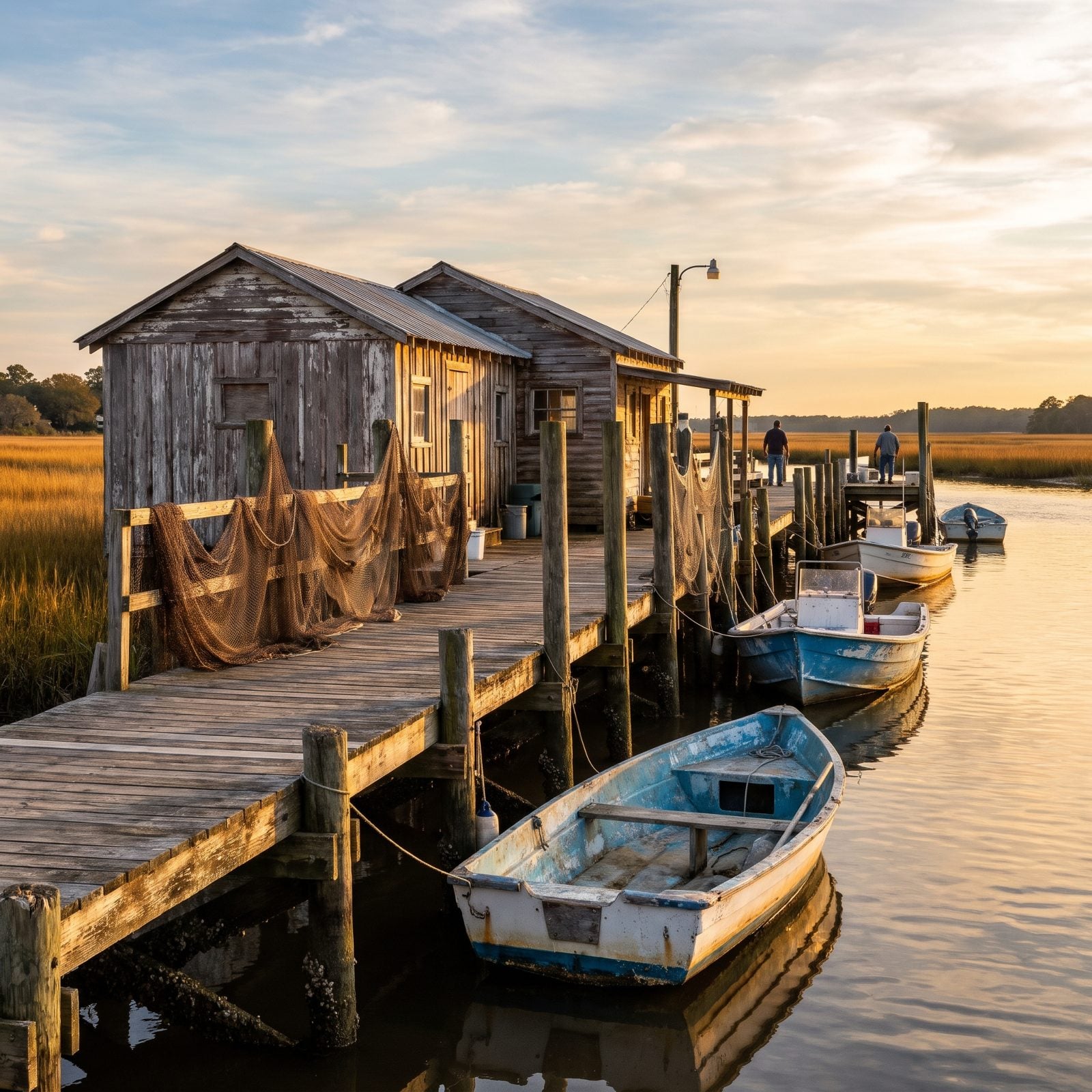
A New York Times food editor once called this little spot the “Seafood Capital of the World,” and nobody here has ever argued.
The reason is on every plate. Back in the 1930s, local families started opening restaurants near the waterfront, frying their seafood in a thin, light breading instead of the heavy batter you’d get elsewhere. That style spread far enough to earn its own name: Calabash-style. Order it fried and you’re eating a recipe older than most of the people cooking it.
The town counted about 2,000 residents in 2020 and sits roughly five miles from Sunset Beach, on the Calabash River in the far southwestern corner of Brunswick County. End your tour here, with a plate of lightly fried shrimp and a river that still runs working boats.