
The best lighthouses make you pull over before you mean to. You spot a candy-striped tower above the dunes or a white column hanging off a cliff, and suddenly the gas station can wait. These aren’t museum pieces behind velvet rope — they’re working beacons and salvaged survivors you can drive to, climb, and stand under while the wind does its thing. From the Outer Banks down to a quiet cove on San Juan Island, these reward the people who take the long way. Pack a windbreaker, charge the camera, and leave room in the schedule. You’ll want it.
Please note that some of the imagery in this article may have been enhanced with the assistance of AI.
29. North Carolina: Cape Hatteras and Its Black-and-White Spiral
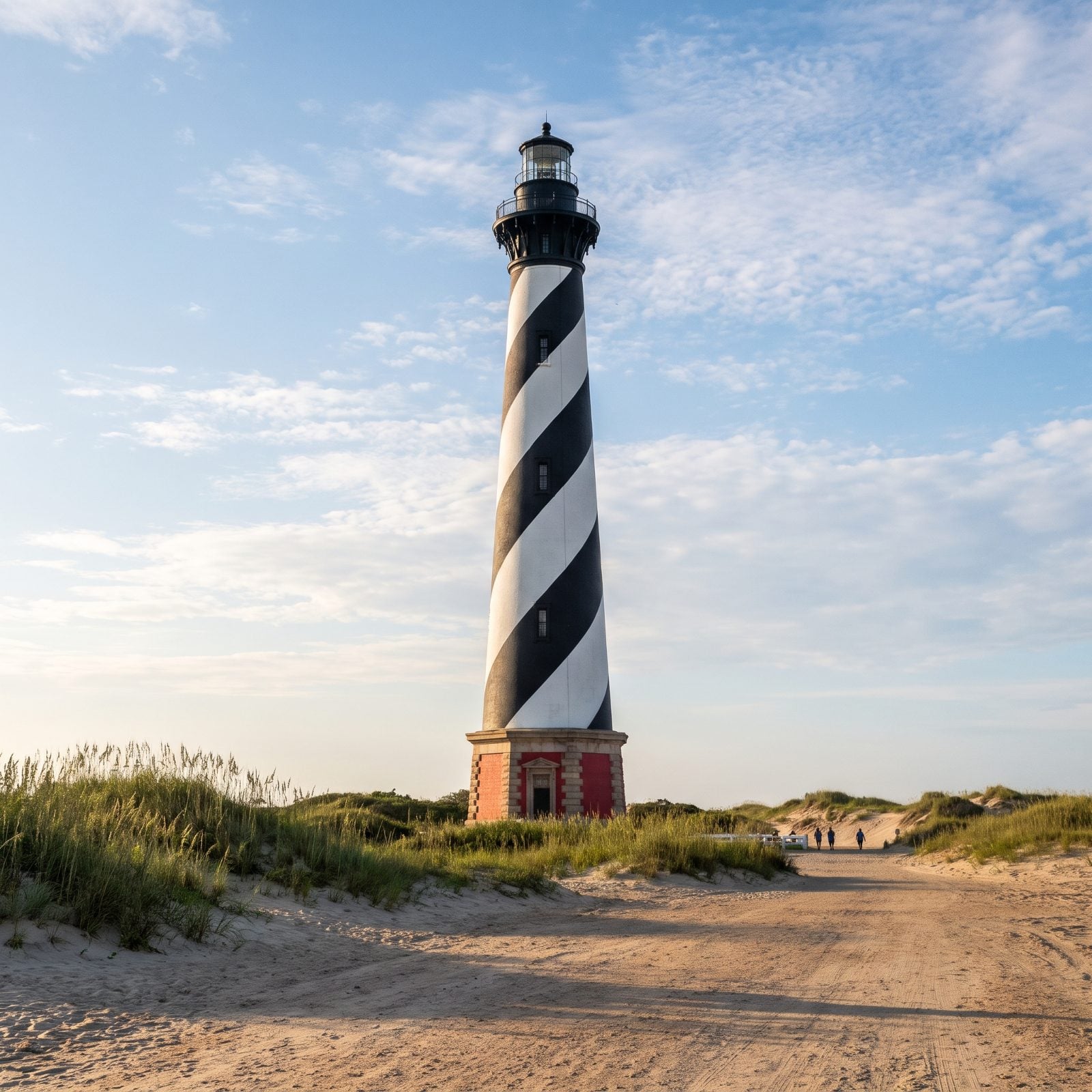
You can spot it from a mile off, which was exactly the point. The black-and-white barber-pole spiral is the tallest brick lighthouse in America, somewhere near 198 feet, and it marks the edge of Diamond Shoals — the stretch sailors nicknamed the Graveyard of the Atlantic for good reason.
Here’s the part people forget: this whole tower moved. Back in 1999, crews jacked it up and rolled it inland on a track to save it from the eroding shoreline, thousands of tons of brick creeping along inch by inch to get clear of the encroaching surf.
Climb it if your knees allow. The spiral staircase is a workout, and the gallery view of the dunes and surf is the payoff.
28. South Carolina: Morris Island Light, Stranded Offshore
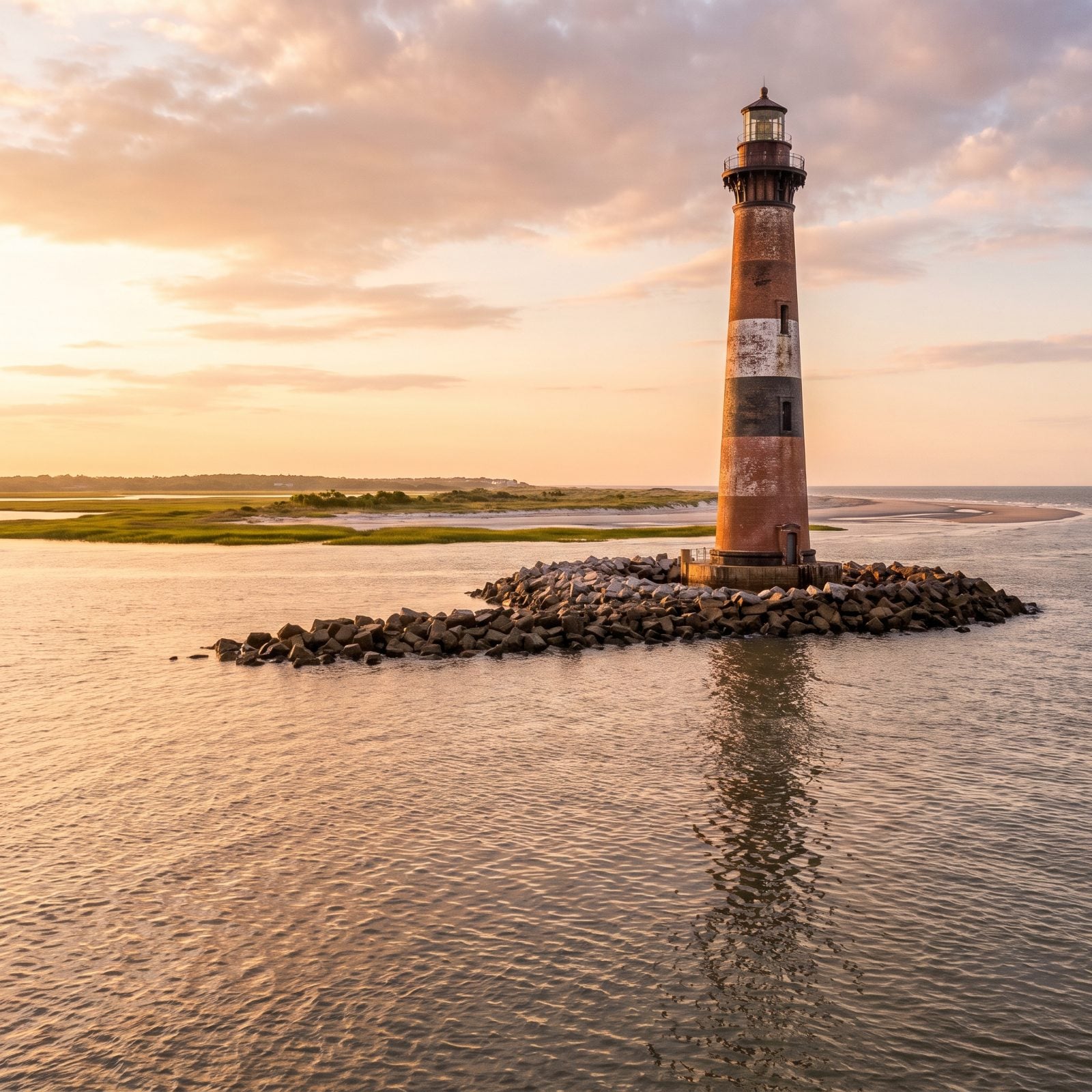
This one breaks hearts a little. Morris Island Light near Charleston used to stand on dry ground with a keeper’s village around it, and now it sits a few hundred yards out in the water, waves lapping its brick base, the island long since washed away beneath it.
You view it from Folly Beach, along the Morris Island trail at the end of East Ashley Avenue, and low tide is your friend for photos. It’s not open to climb, and probably never will be. But there’s something about a lighthouse that outlived its own island that sticks with you longer than the ones you can walk into.
27. Georgia: Tybee Island Light Station Outside Savannah
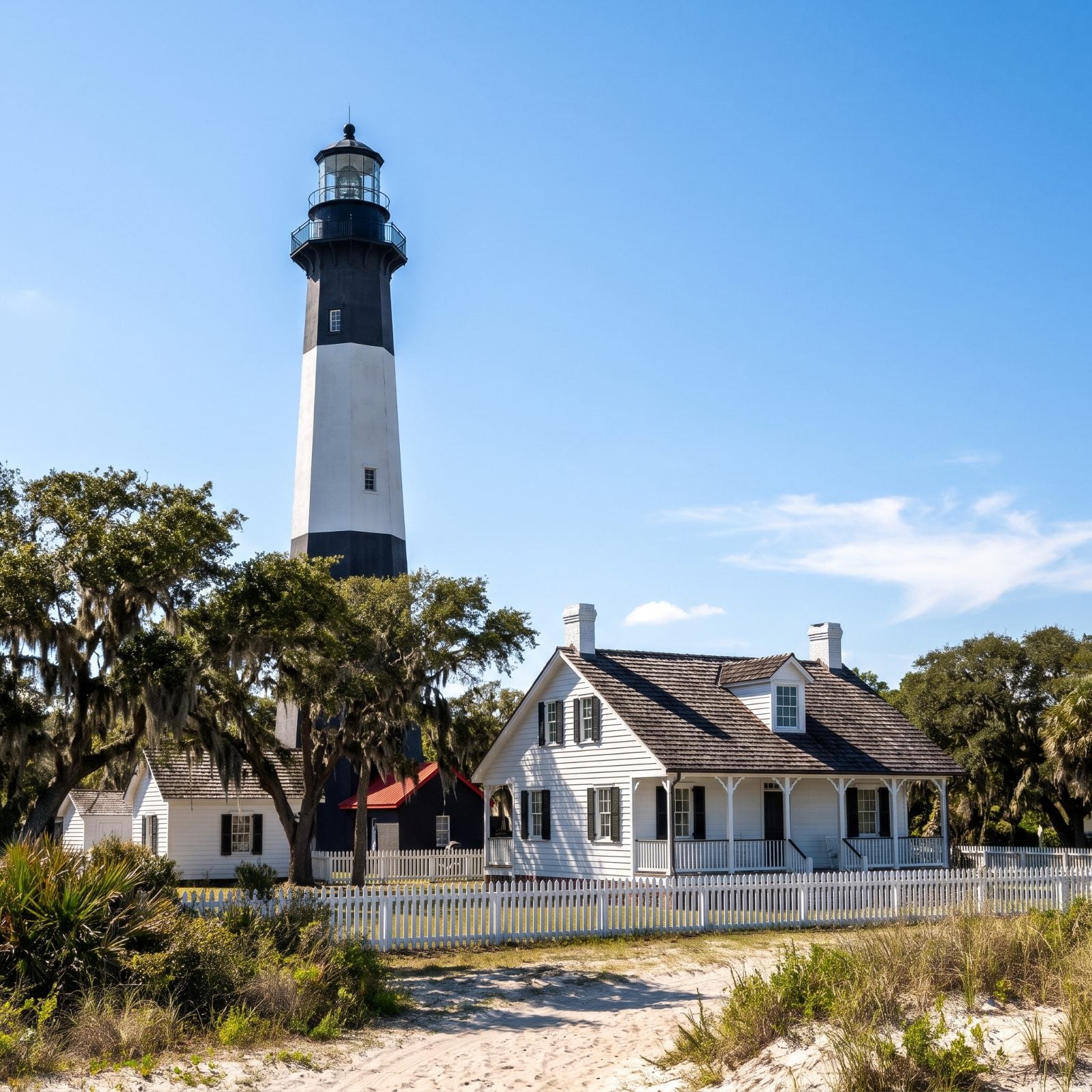
One of the oldest light stations in the country, and still one of the most complete. Tybee has been guiding ships into the Savannah River since the 1700s, rebuilt more than once. What you see today is a 145-foot tower painted black on top and white below, with the original keeper’s cottages still standing on the grounds.
That’s the real draw. Most lighthouses lost their support buildings decades ago, but Tybee kept the whole station, so you get the full picture of how people actually lived out here — the washhouse, the cottages, the works. Climb the 178 steps, then cool off at the beach fifteen minutes away.
26. Florida: St. Augustine’s Black-and-White Barber Pole
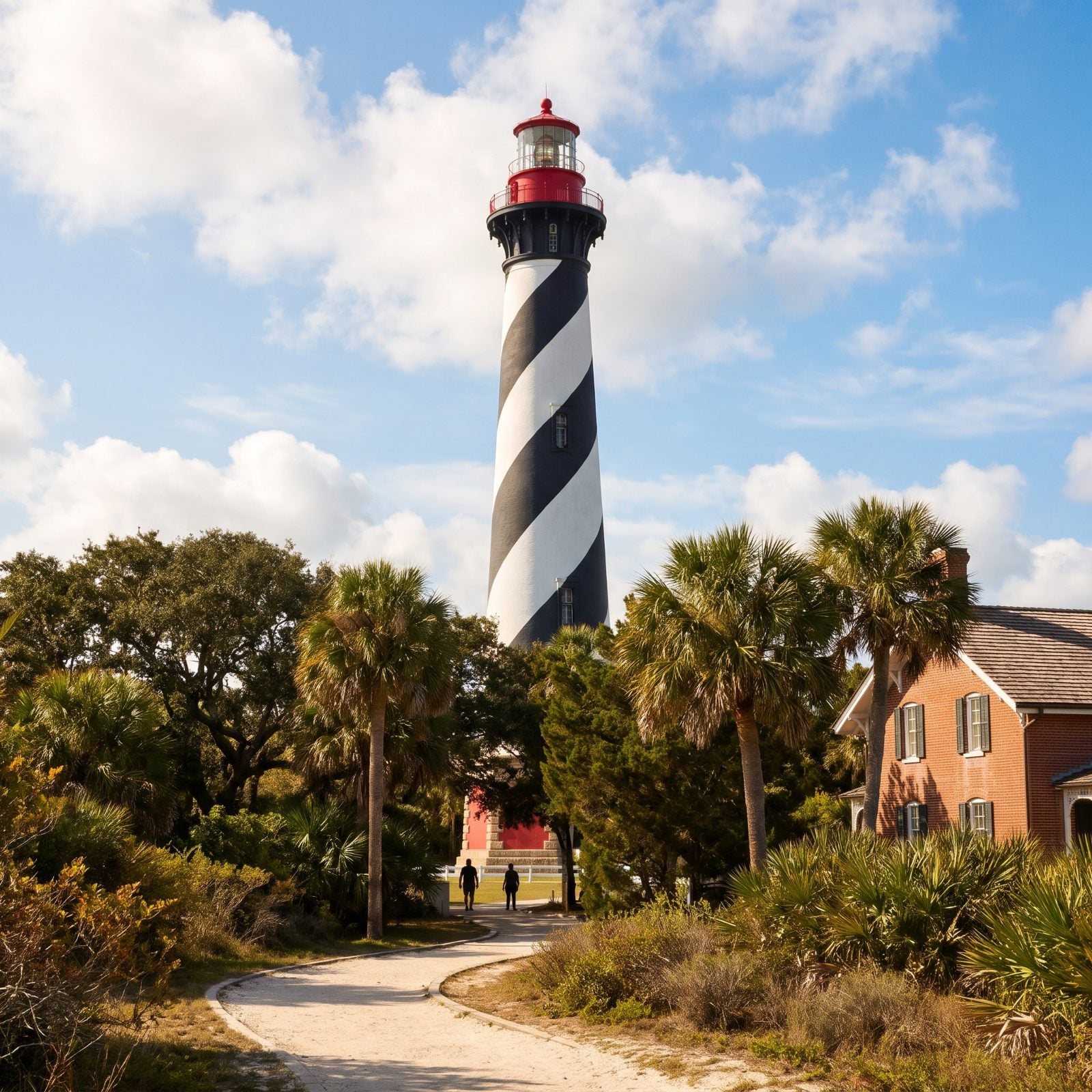
The red top throws people. They expect another plain white tower and instead get a 165-foot spiral stripe crowned with a cherry-red lantern room, surrounded by palms and Spanish moss.
St. Augustine leans into its ghost reputation hard, with evening tours and the whole paranormal pitch. Skip that if it’s not your thing. Come for the climb — 219 steps — and the view across Anastasia Island and the oldest city in America laid out below you.
25. Mississippi: Biloxi Light in the Middle of the Road
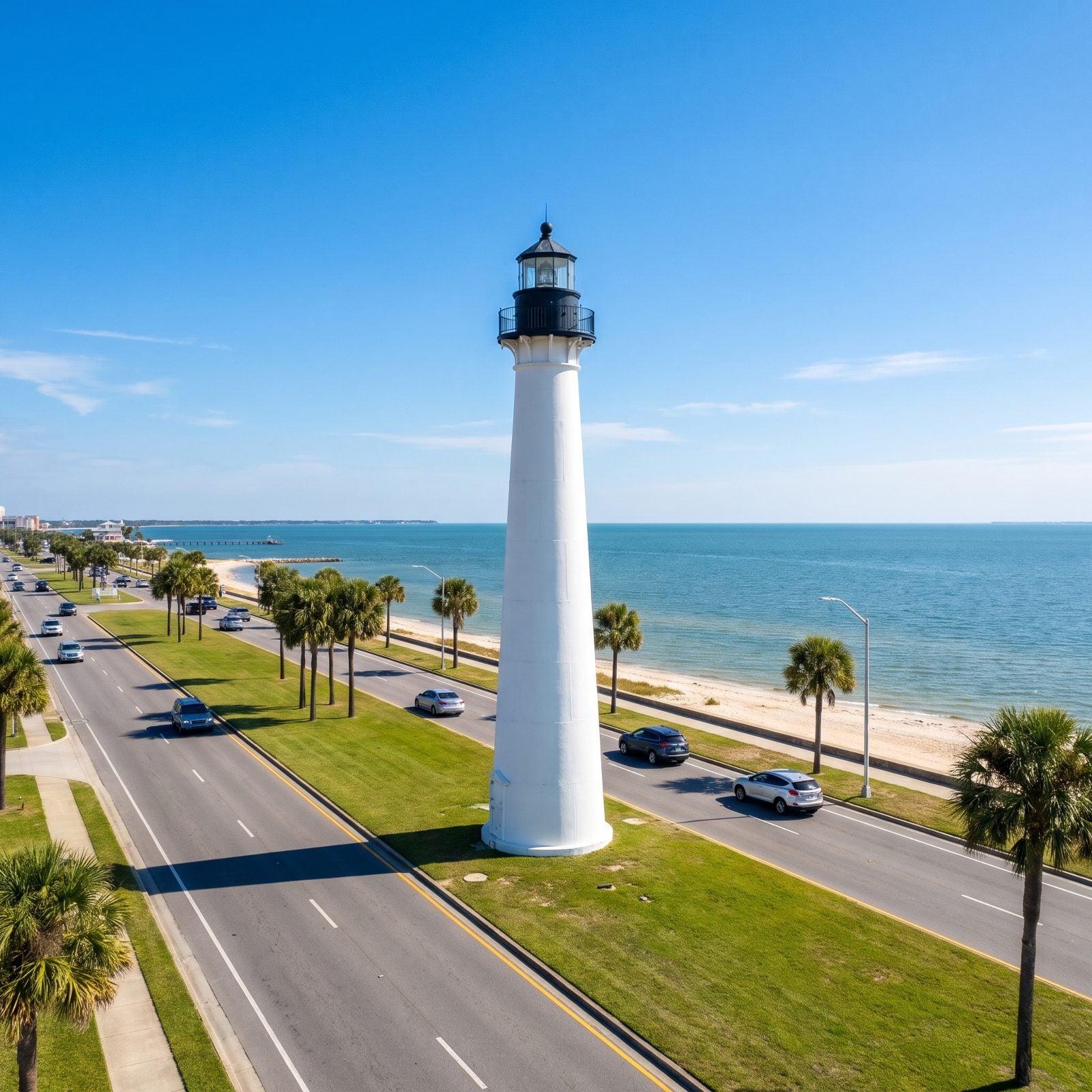
Blink and you’ll drive right past it, because it stands on a median in the middle of Highway 90 with traffic on both sides and the Gulf just beyond. The Biloxi Lighthouse has been a city symbol since 1848, one of the first cast-iron towers in the South.
It took Hurricane Katrina’s surge head-on in 2005 and came through it. The city restored it afterward, and locals point to it as proof of what gets rebuilt here. Tours run on a limited schedule, so check before you count on climbing it.
24. Louisiana: New Canal Light on Lake Pontchartrain
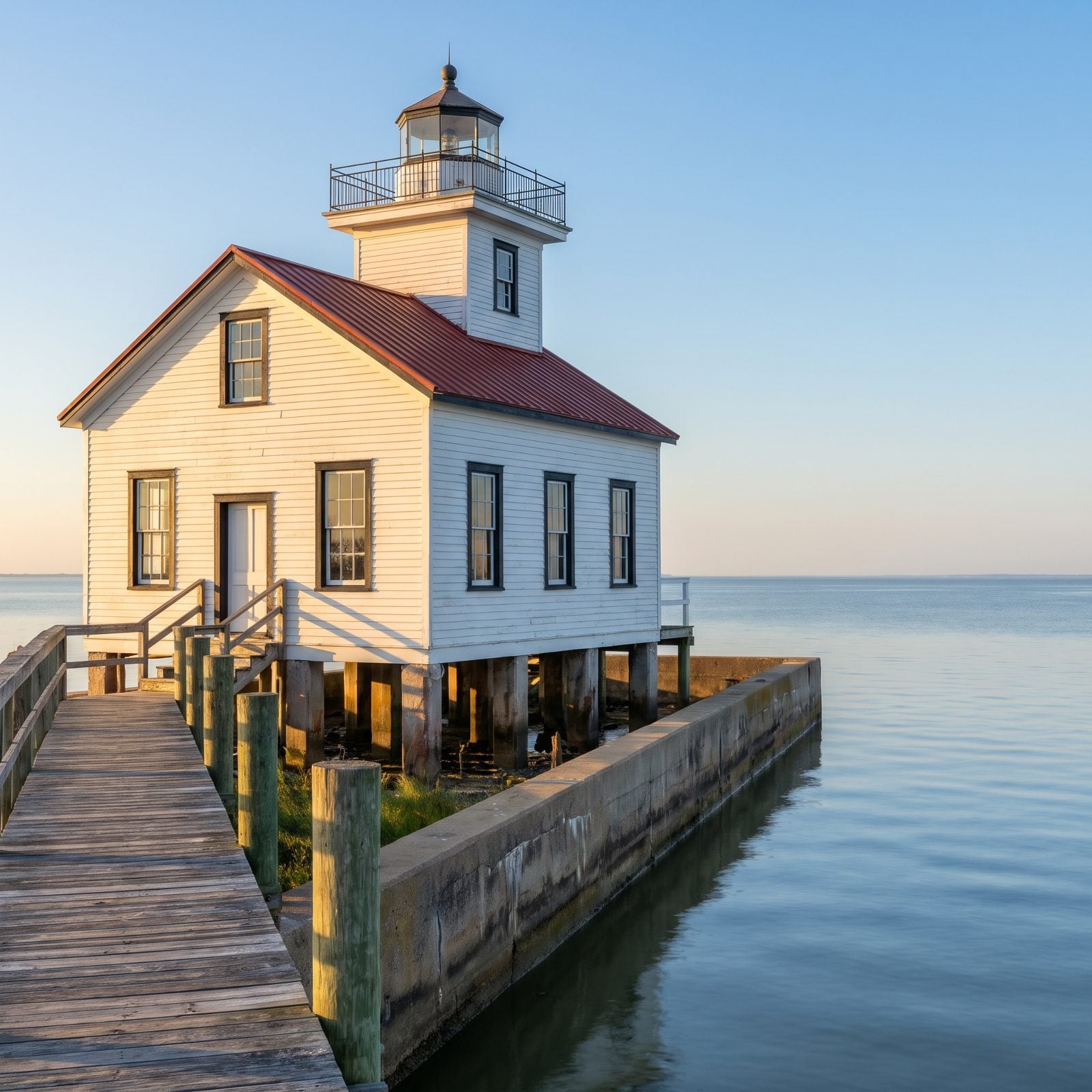
This isn’t a tall offshore tower. It’s a cottage-style lighthouse perched at the lake’s edge, a keeper’s house with the beacon rising right out of the roof. The current building is a careful rebuild, because Hurricanes Katrina and Rita flattened the original.
Volunteers raised it back using salvaged timber from the old structure. It now runs as a maritime education center on the Lake Pontchartrain seawall, a short drive from downtown New Orleans.
Go for sunset. The light coming off the lake behind that white clapboard is the kind of thing you’ll be glad you stayed for.
23. Texas: Port Isabel Light Over the Laguna Madre
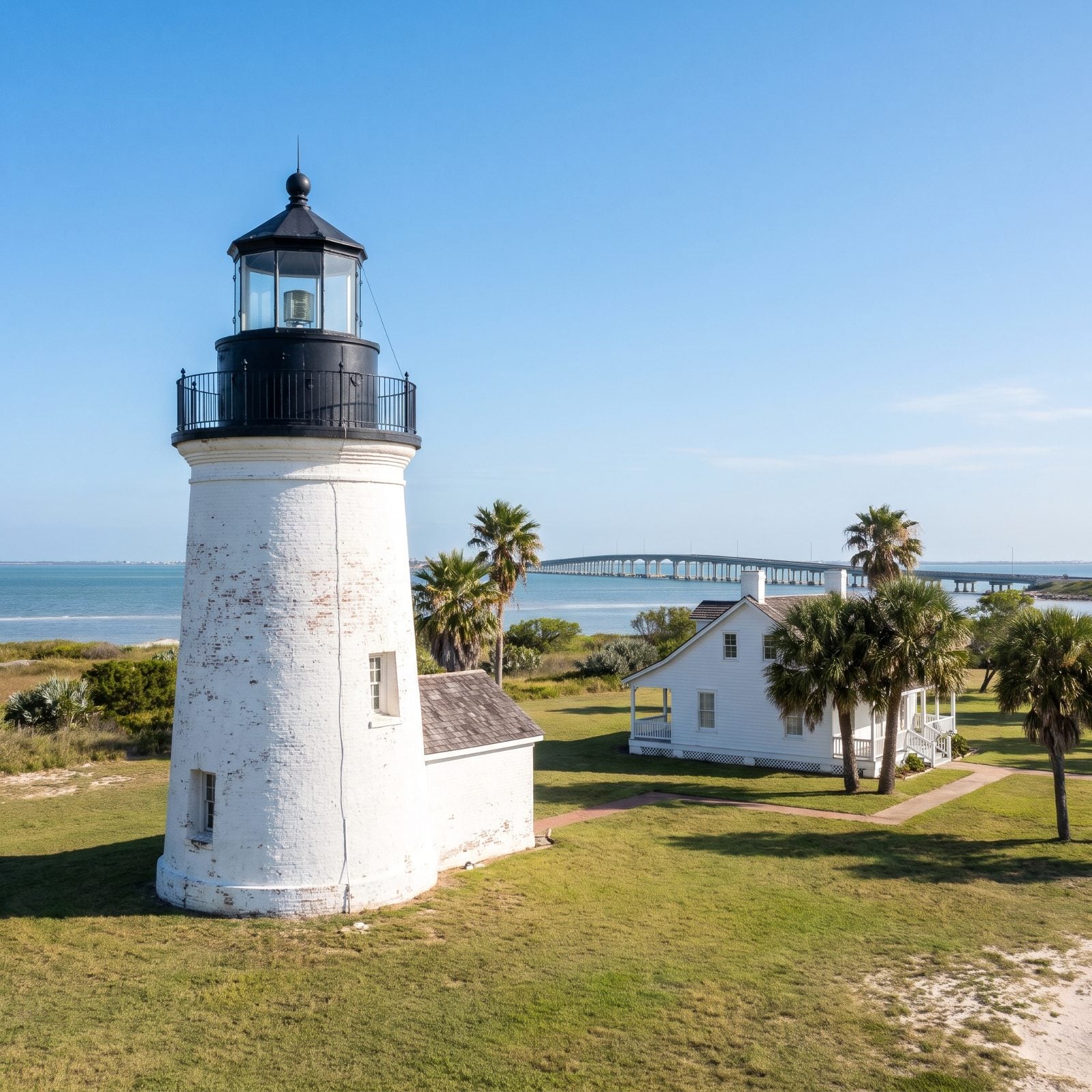
Short, sturdy, and the only Texas lighthouse open to the public. Port Isabel stands near the causeway over to South Padre Island, a whitewashed brick tower that once guided ships through the Brazos Santiago Pass.
The climb is quick compared to the East Coast giants, but the view up top opens wide: the shallow turquoise Laguna Madre on one side, the Gulf beyond the island on the other. It’s a state historic site now, with a restored keeper’s cottage next door. Easy stop, big reward, and a built-in excuse to keep driving to the beach.
22. California: Point Reyes Light Below the Cliffs
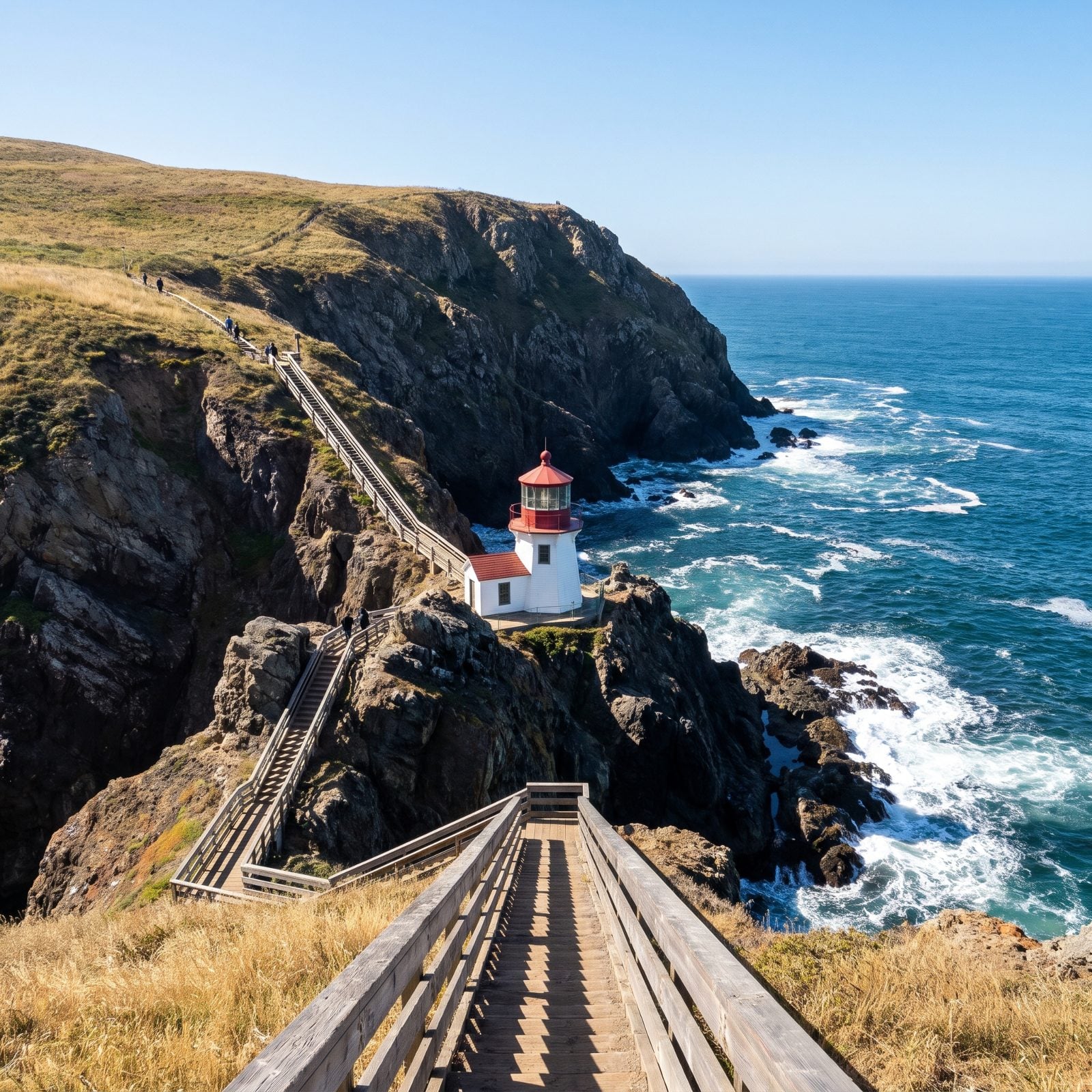
You have to earn this one. The lighthouse sits far below the clifftop, and reaching it means a staircase of more than 300 steps down, which you then have to climb back up. Worth every one.
Point Reyes clings to one of the windiest, foggiest headlands on the Pacific, chosen precisely because ships kept wrecking here. On a clear winter day, it’s one of the best spots on the entire West Coast to watch gray whales migrate past.
The fog that makes this place dangerous is the same fog that makes it unforgettable.
Check the visitor center hours. The stairs close in high wind, and you don’t want to drive all the way out there for nothing.
21. Oregon: Heceta Head Above Its Forested Cove
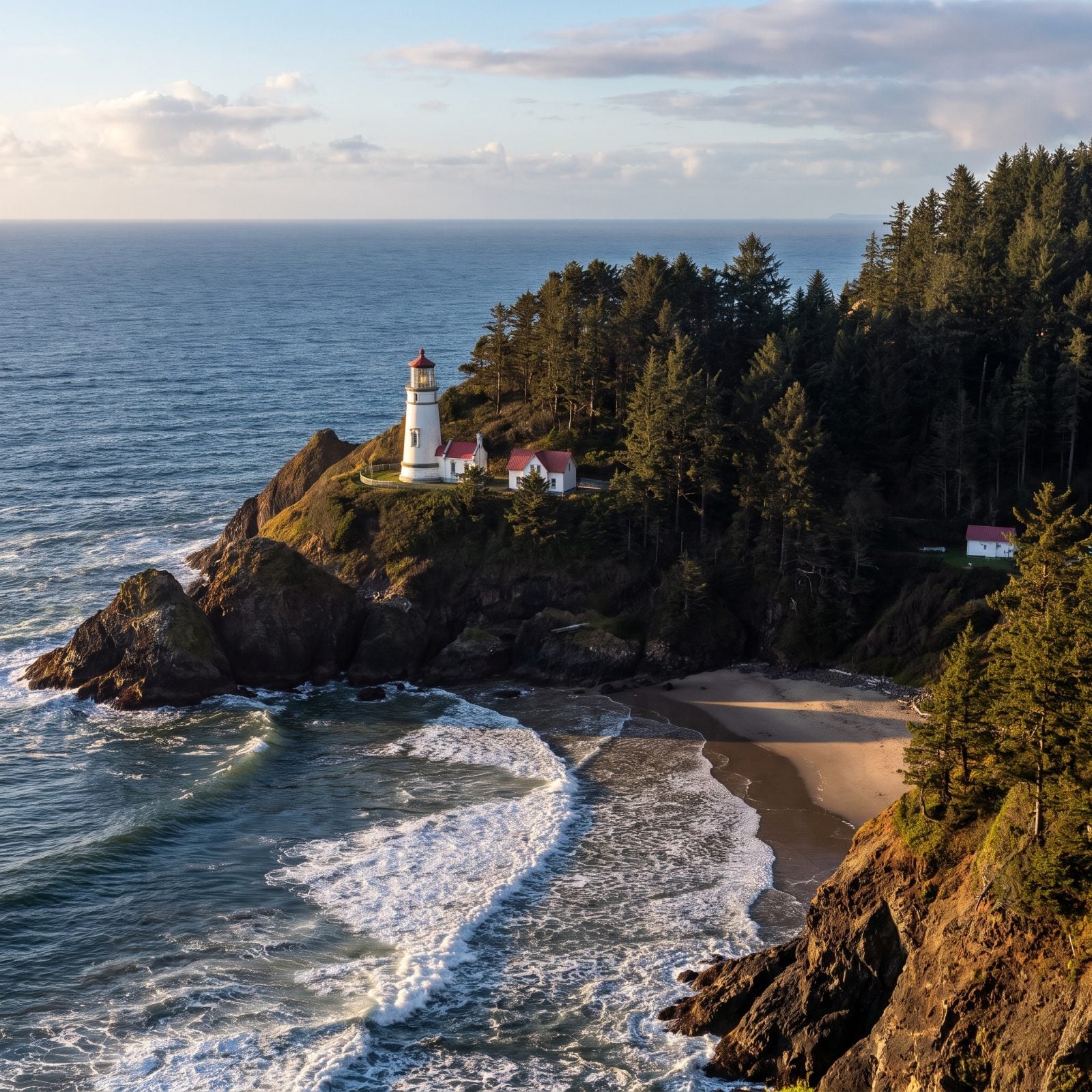
This is the one you’ve seen on calendars even if you don’t know its name. Heceta Head sits on a green headland above a curved cove on Highway 101, and the view of the white tower against dark forest and rolling surf is about as good as the Oregon coast gets.
Its beam reaches far out to sea, one of the strongest on the coast. The old keeper’s house below runs as a bed and breakfast now, supposedly haunted by a keeper’s wife they call Rue. Stay the night if you want the story. Pull over at the viewpoint either way.
20. Washington: Lime Kiln Light on San Juan Island
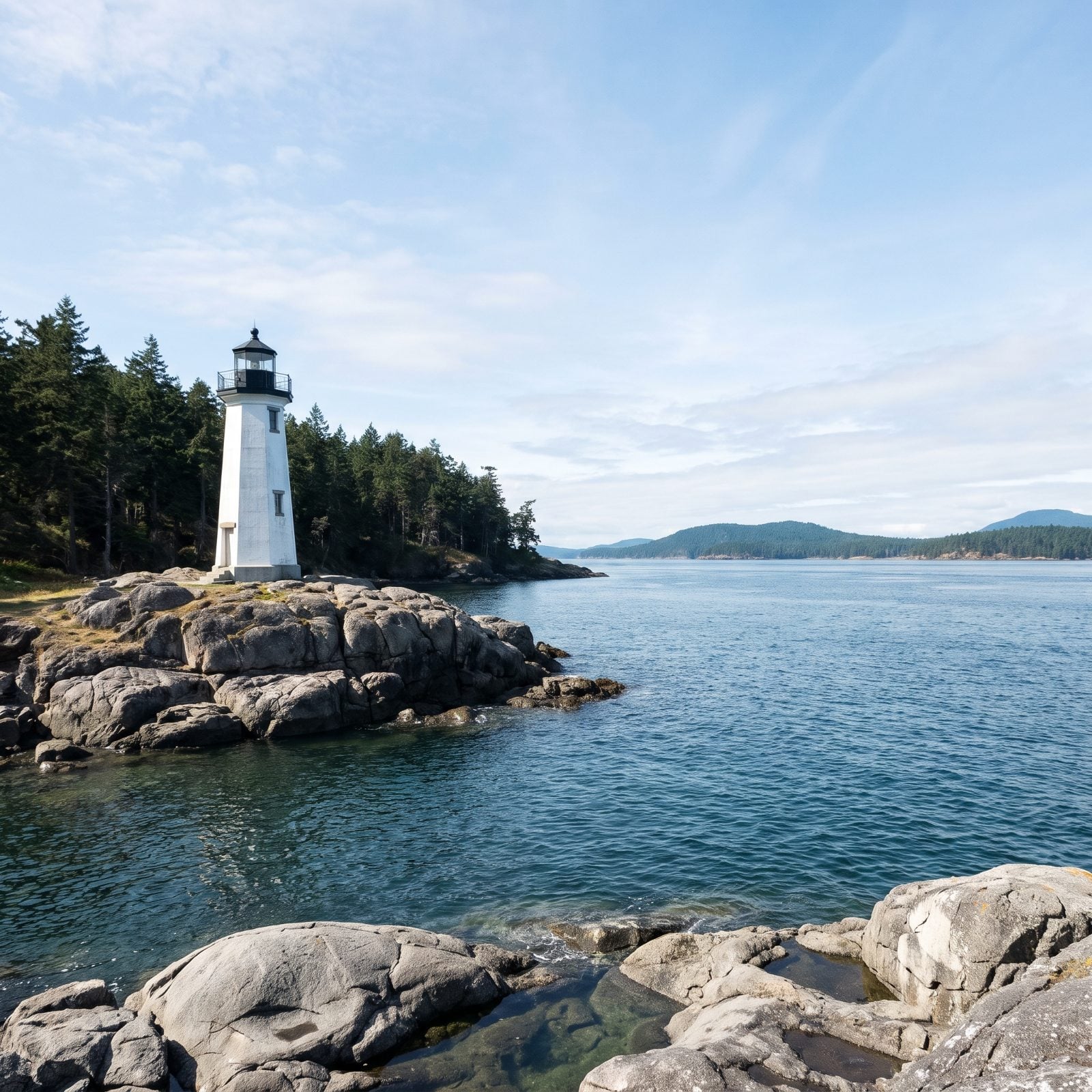
Most lighthouses are about ships. This one’s about whales. Lime Kiln sits in a state park on the west side of San Juan Island, considered one of the best shore-based spots in the world to watch orcas swim past — close enough, on a still day, to hear them breathe.
The tower itself is small and plain, white concrete on rock, and the setting does all the work. You walk a short trail through the woods, the sea opens up, and the whole Salish Sea spreads out to the islands beyond.
Getting here means a ferry from Anacortes, so build in the extra time. That ferry ride is half the trip anyway.
19. Alaska: Eldred Rock Lighthouse Framed by Snowcapped Peaks
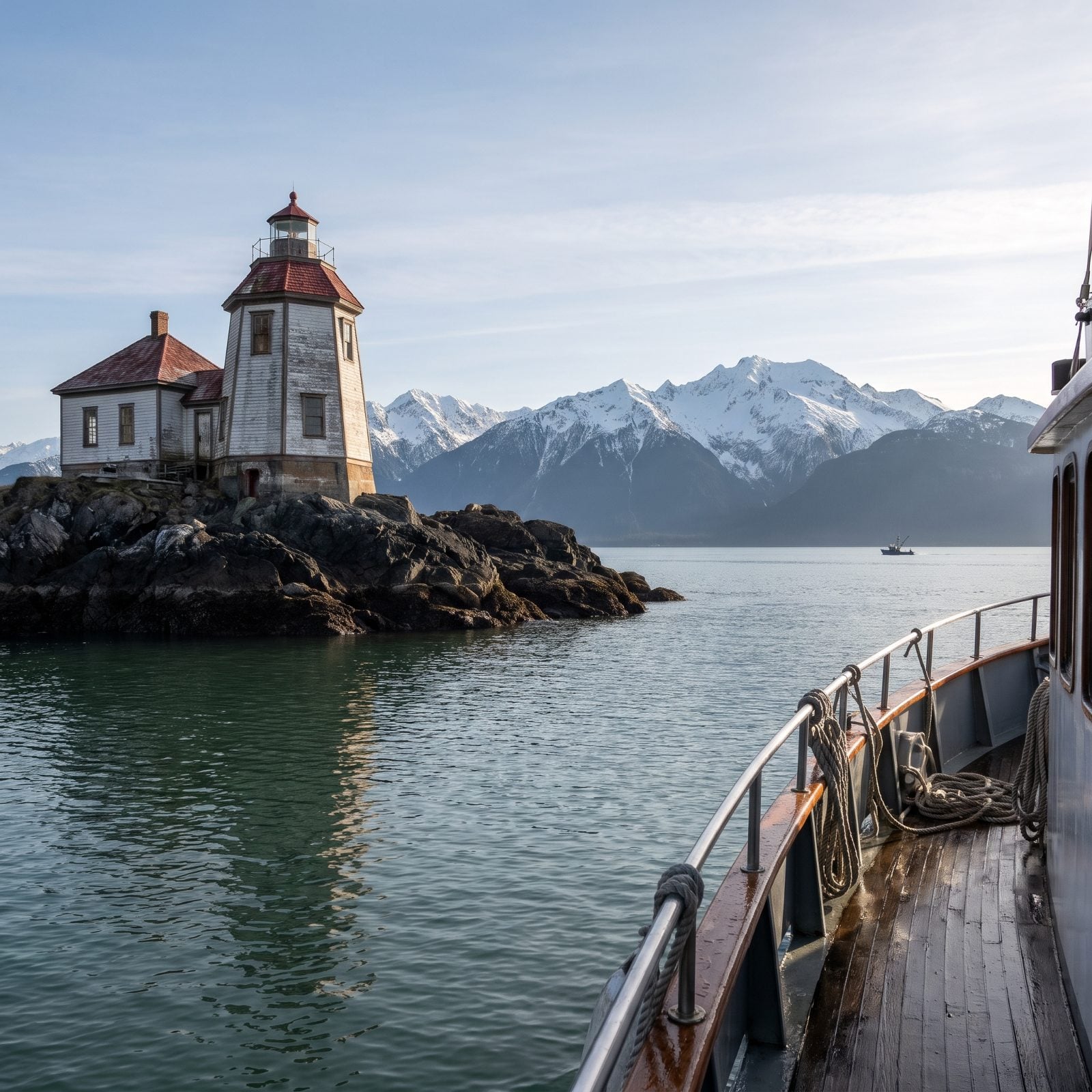
Alaska’s oldest standing lighthouse is a boat trip, not a drive. Eldred Rock sits alone in Lynn Canal between Juneau and Haines, and the only way to really see it is from the water — which is half the charm.
The octagonal shape is unusual up here, and that red-roofed keeper’s house tucked against the tower reads like a toy dropped in front of those enormous peaks. It went up in 1906, after too many ships came to grief on this stretch, and it has outlasted every keeper who ever stood watch inside it.
18. Hawaii: Makapuʻu Point Lighthouse on Oahu’s Volcanic Coast
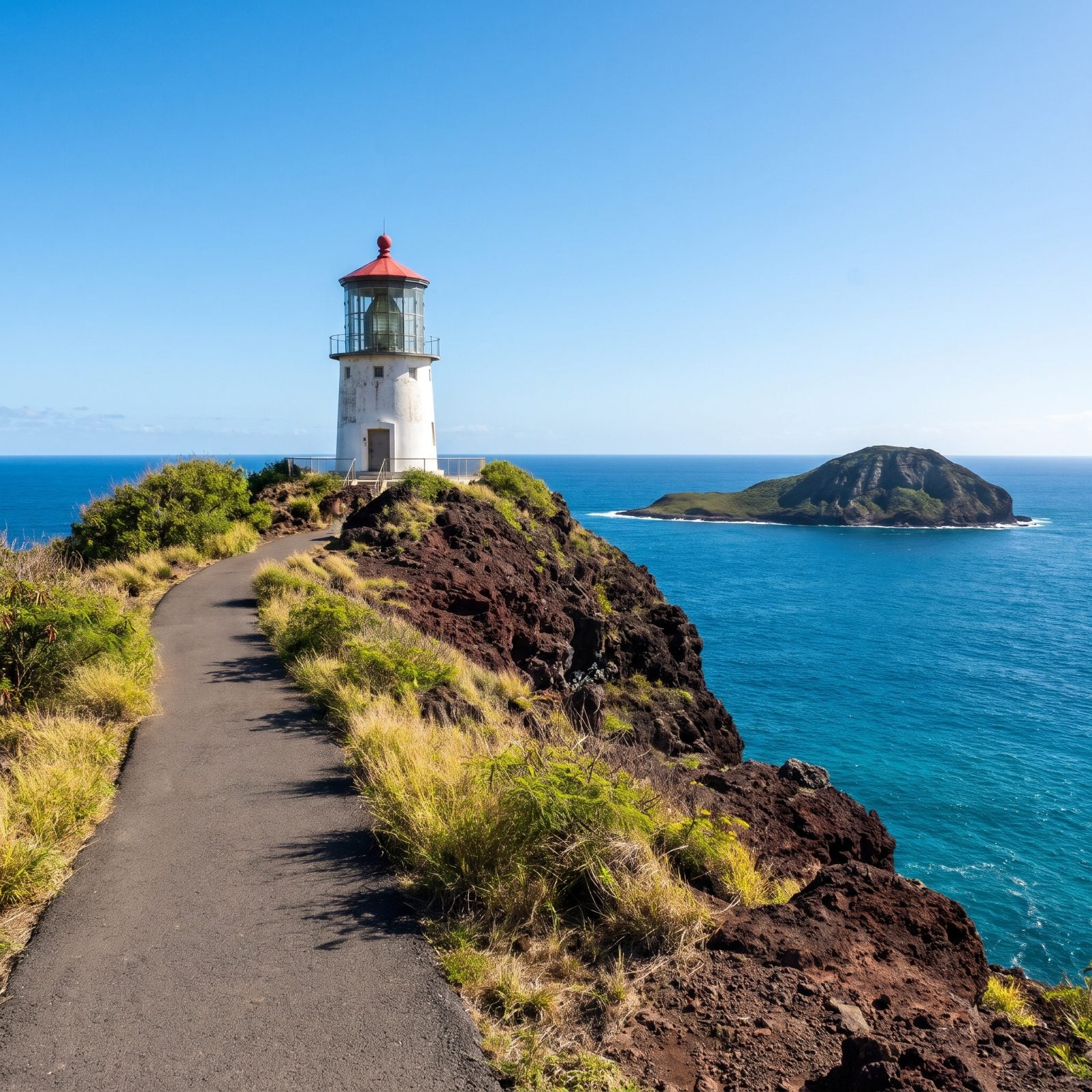
Short and stubby, Makapuʻu looks almost comical next to the tall tapered towers you see on the mainland. There’s a reason for that. Perched high on a volcanic cliff, it didn’t need any height — the land did the lifting.
You reach it by a paved walk a couple of miles round-trip, gaining elevation the whole way with the Pacific wide open on your right. Winter brings humpback whales offshore, and you’ll catch them breaching from the lookout before you ever make the tower. Wear real shoes and bring water. People underestimate the sun out here and pay for it.
17. Minnesota: Split Rock Lighthouse Above Lake Superior
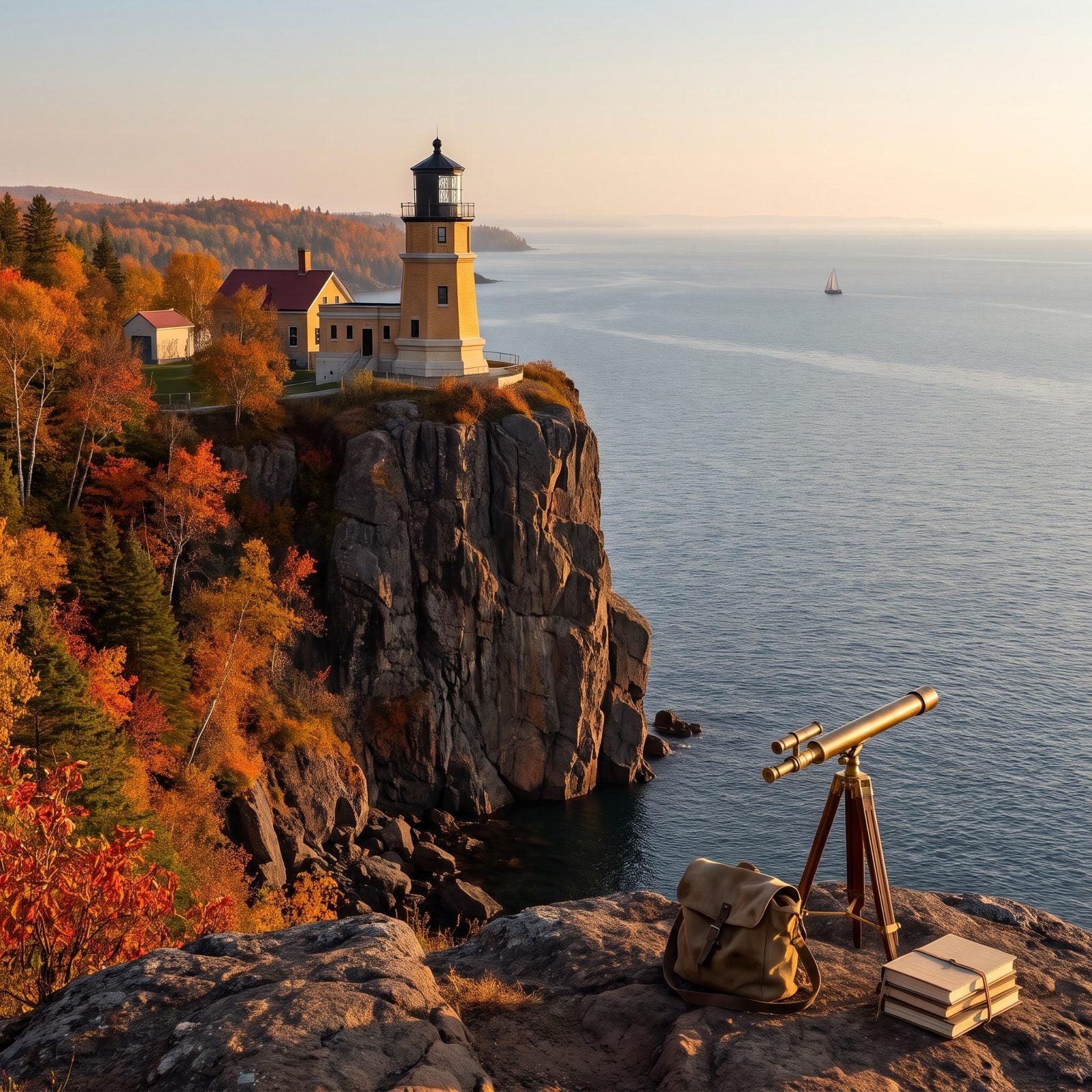
This is the lighthouse everyone pictures when they picture a lighthouse. Split Rock rises off a cliff so clean it looks staged, the yellow brick glowing against Superior’s cold blue. It’s one of the most photographed lights in the country, and for once the hype holds up.
It was built in 1910 after a single November storm wrecked nearly 30 ships on this coast, and for years you could only reach it by boat. Now Highway 61 runs right past the front door.
16. Wisconsin: Cana Island Lighthouse at the End of a Stone Causeway
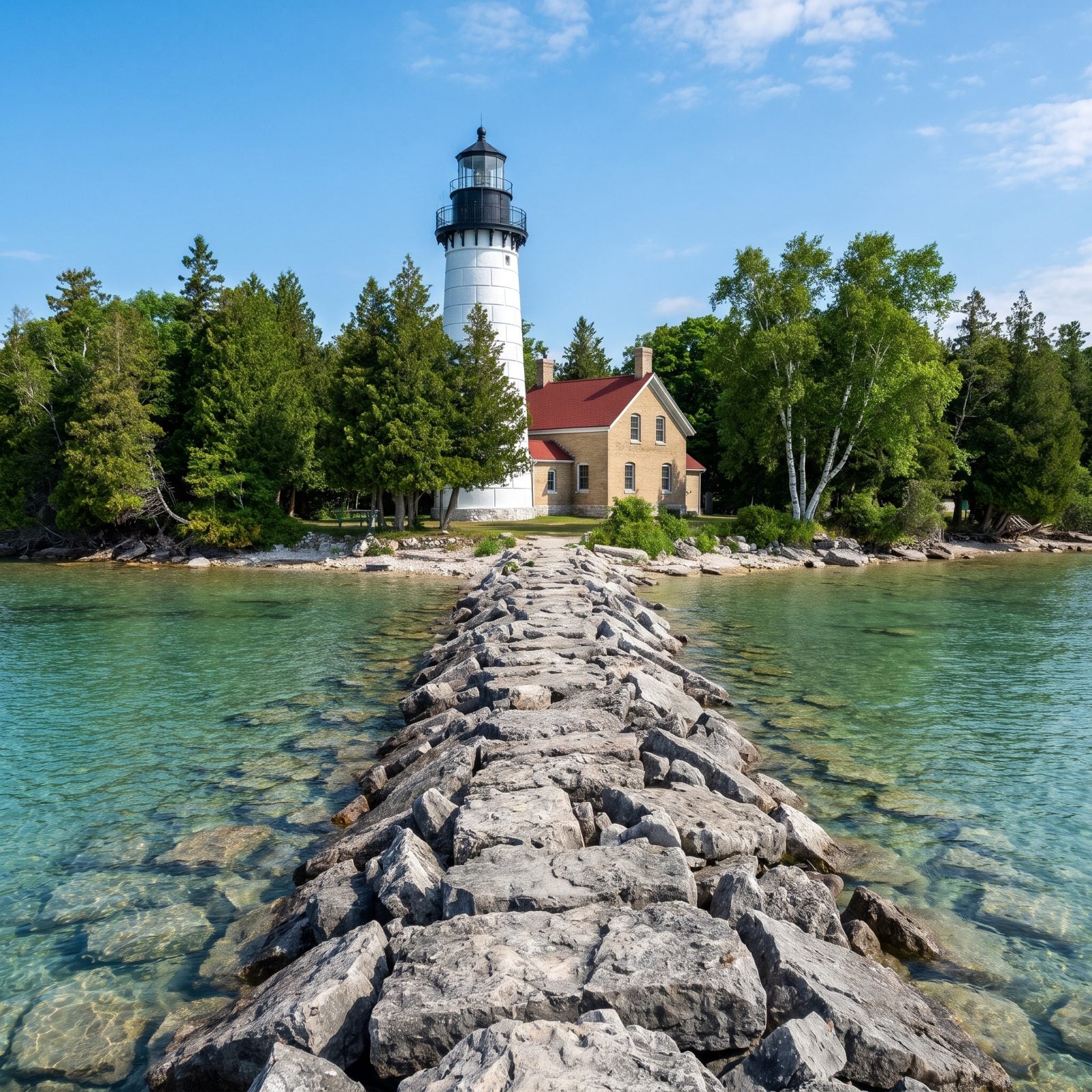
You walk to Cana Island across a stone causeway, and whether you arrive with dry feet is a gamble. When Lake Michigan runs high the path floods and a tractor-pulled wagon ferries visitors over the water; when it runs low, you just stroll across.
The original brick was eventually wrapped in a steel-white shell to stop it crumbling, which is why the tower looks newer than its 1869 build suggests. Climb the 97 steps and Door County’s shoreline opens up below you — all cedar and limestone, as far as you can see.
15. Illinois: Grosse Point Lighthouse and Its Historic Keepers’ Quarters
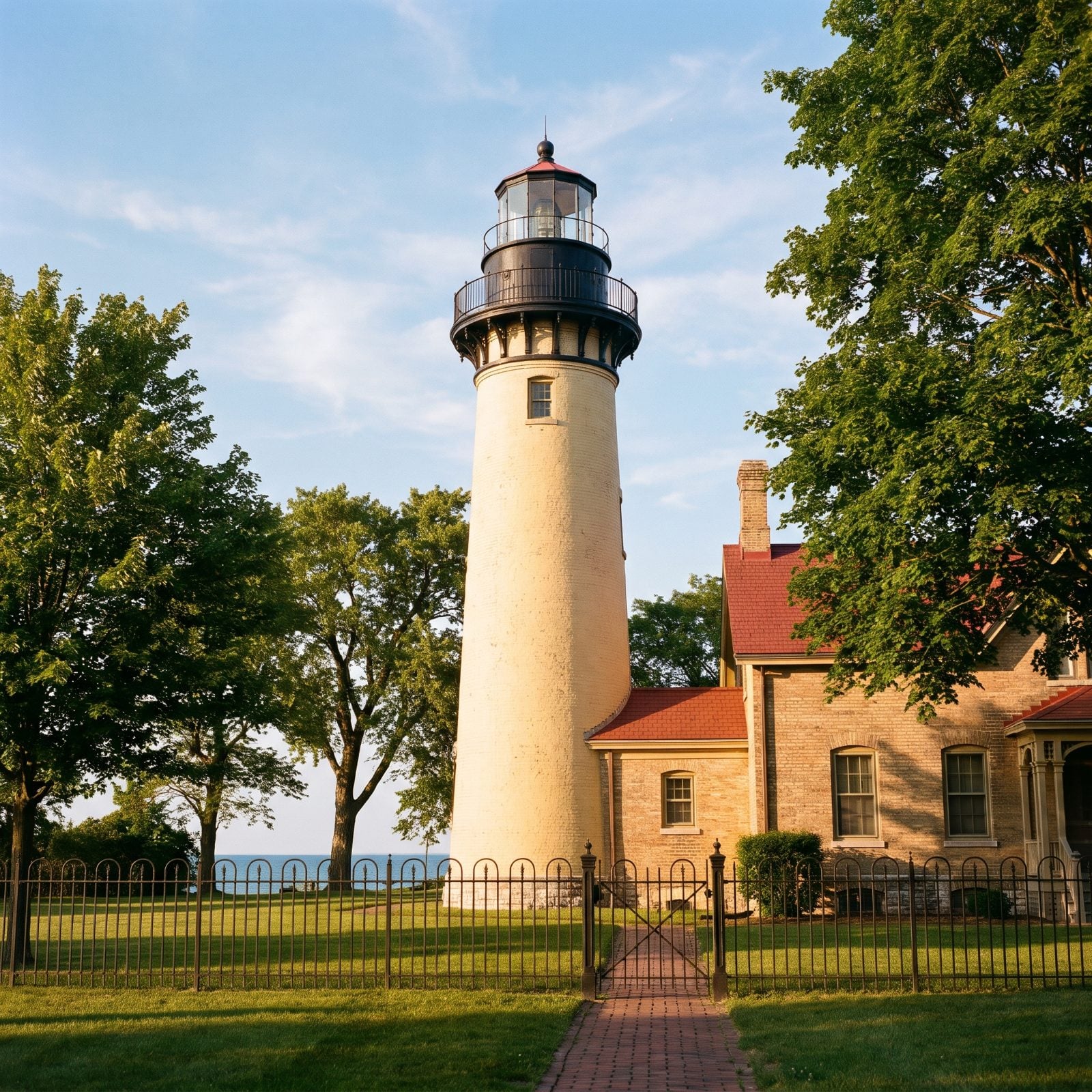
A lighthouse in the suburbs feels wrong until you actually see it. Grosse Point stands in a leafy Evanston neighborhood, ringed by lawns and oaks instead of surf, and that quiet mismatch is exactly the surprise.
It went up in 1873 after the Lady Elgin disaster killed hundreds off this shore, one of the worst the Great Lakes have seen. The keepers’ quarters still stand connected to the tower, and on summer weekends you can climb the spiral iron stairs. The original Fresnel lens is still in place up top — rarer than most people realize.
14. Indiana: Michigan City East Light at the End of the Pier
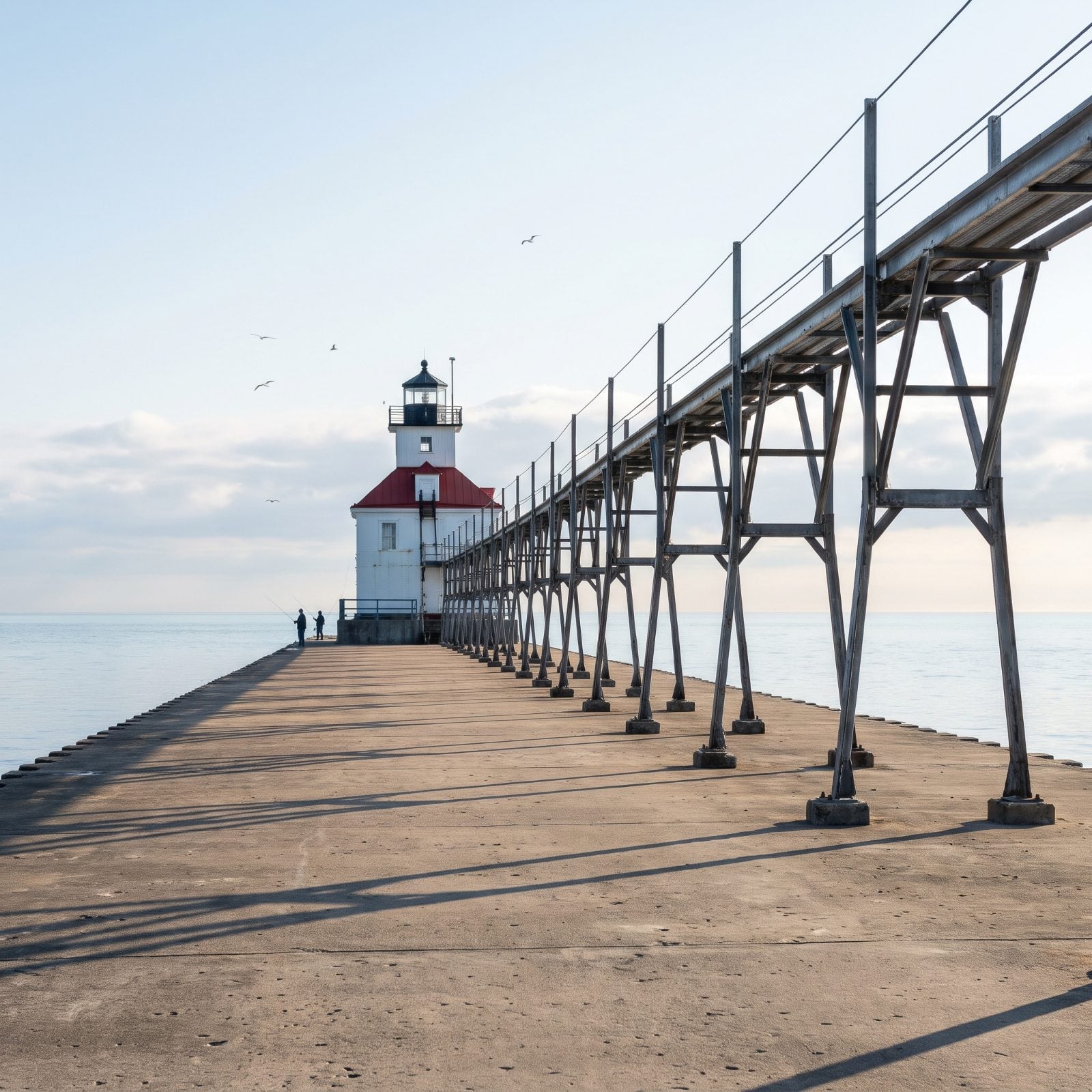
Indiana barely touches a Great Lake, but it made the shoreline count. The Michigan City East Light sits at the end of a long pier with a raised steel catwalk running beside it — the kind keepers once used to reach the light when waves swallowed the pier whole.
That catwalk is the whole look. It lends the place an industrial grace you’ll never get from a cliff-top tower.
13. Michigan: Big Sable Point Lighthouse Among the Lake Michigan Dunes
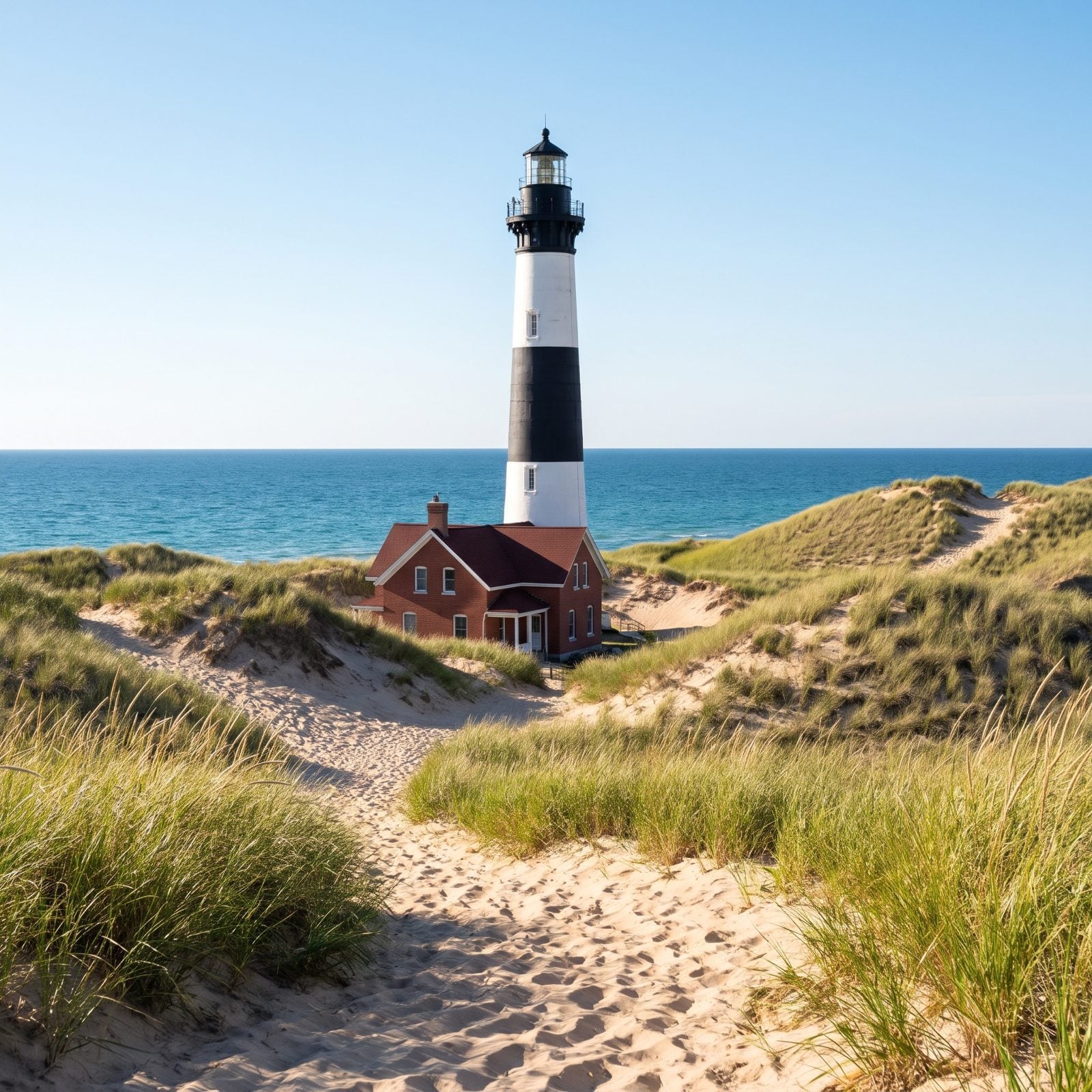
You earn Big Sable Point. No road reaches it. You walk nearly two miles of sandy trail through Ludington State Park to get there, and that effort does a fine job of thinning the crowds.
The reward is a bold black-and-white banded tower rising straight out of the dunes, 112 feet of it, framed by nothing but sand grass and open lake. By the early 1900s the original brick was failing, so crews wrapped it in a steel skin and painted on those daymark stripes. Climb it if your legs survived the trail and have 130 more steps in them.
12. Ohio: Marblehead Lighthouse on a Rocky Lake Erie Point
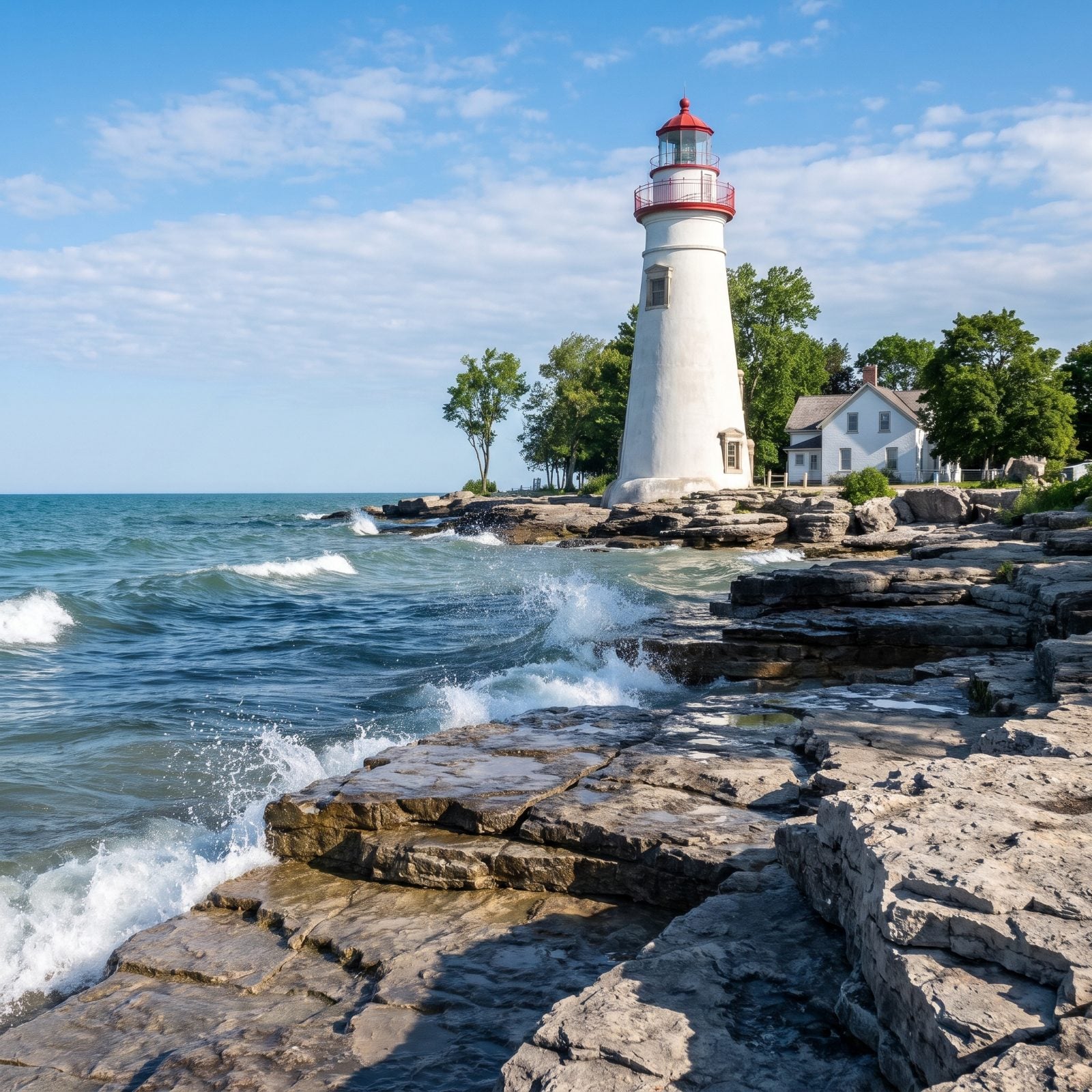
Marblehead is the overachiever of Lake Erie. Lit in 1822 and still running, it’s the oldest continuously operating lighthouse on the Great Lakes, and it stands on the kind of flat layered limestone shelf kids will clamber over for hours.
The point catches weather from three directions, so the lake out here is rarely glassy. Come on a breezy day and watch the waves slam the ledges while the white tower just holds steady. Tours run through summer, and the climb up is short.
11. Pennsylvania: Presque Isle Lighthouse Beyond the Lake Erie Dunes
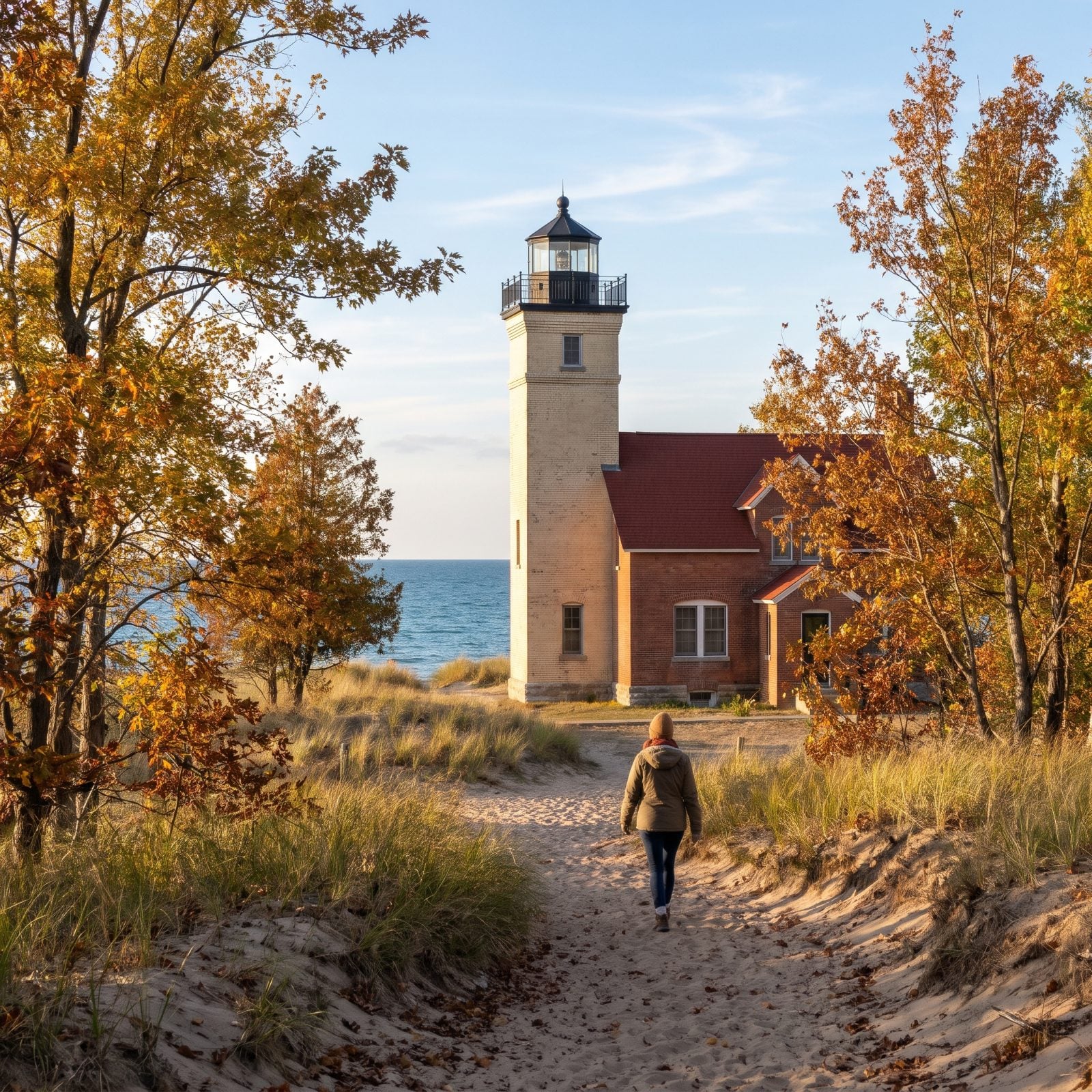
Presque Isle is a sandspit curling into Lake Erie, and the lighthouse hides in its woods rather than standing out on a bare point. That’s unusual — most towers want to be seen for miles. This one sits back behind the dunes, reachable by a short trail through the trees.
Built in 1872, the square brick tower connects straight to the keeper’s house, now a small museum. The whole peninsula is a state park wrapped in beaches and lagoons, so the light is really just the excuse and the rest of the day is the reward.
10. Virginia: Assateague Lighthouse Above the Maritime Forest
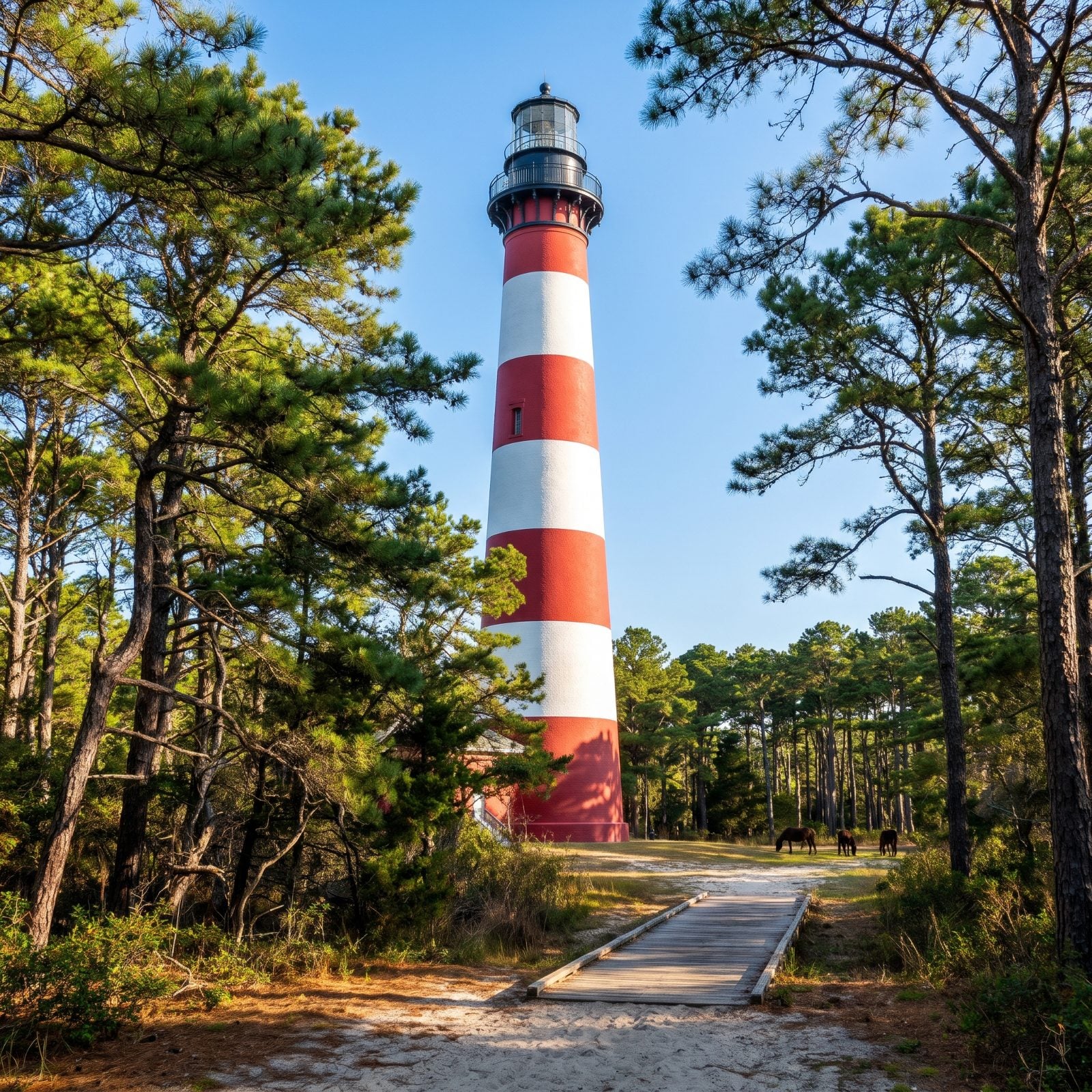
Red-and-white stripes rising out of a pine forest, with wild ponies grazing somewhere off in the trees. That’s Assateague. About as close to a storybook as a real lighthouse gets.
You hike a short forest trail from the Chincoteague side to reach the base, then climb 175 steps to a view over the barrier island, the marsh, and the open Atlantic. It was lit in 1867 and still works, and those bold bands were painted on so the tower would stand out against all that flat green. Check the visitor center for open-climb days, because the schedule shifts with the season and the ponies don’t keep a calendar.
9. Maryland: Thomas Point Shoal Lighthouse on Chesapeake Bay
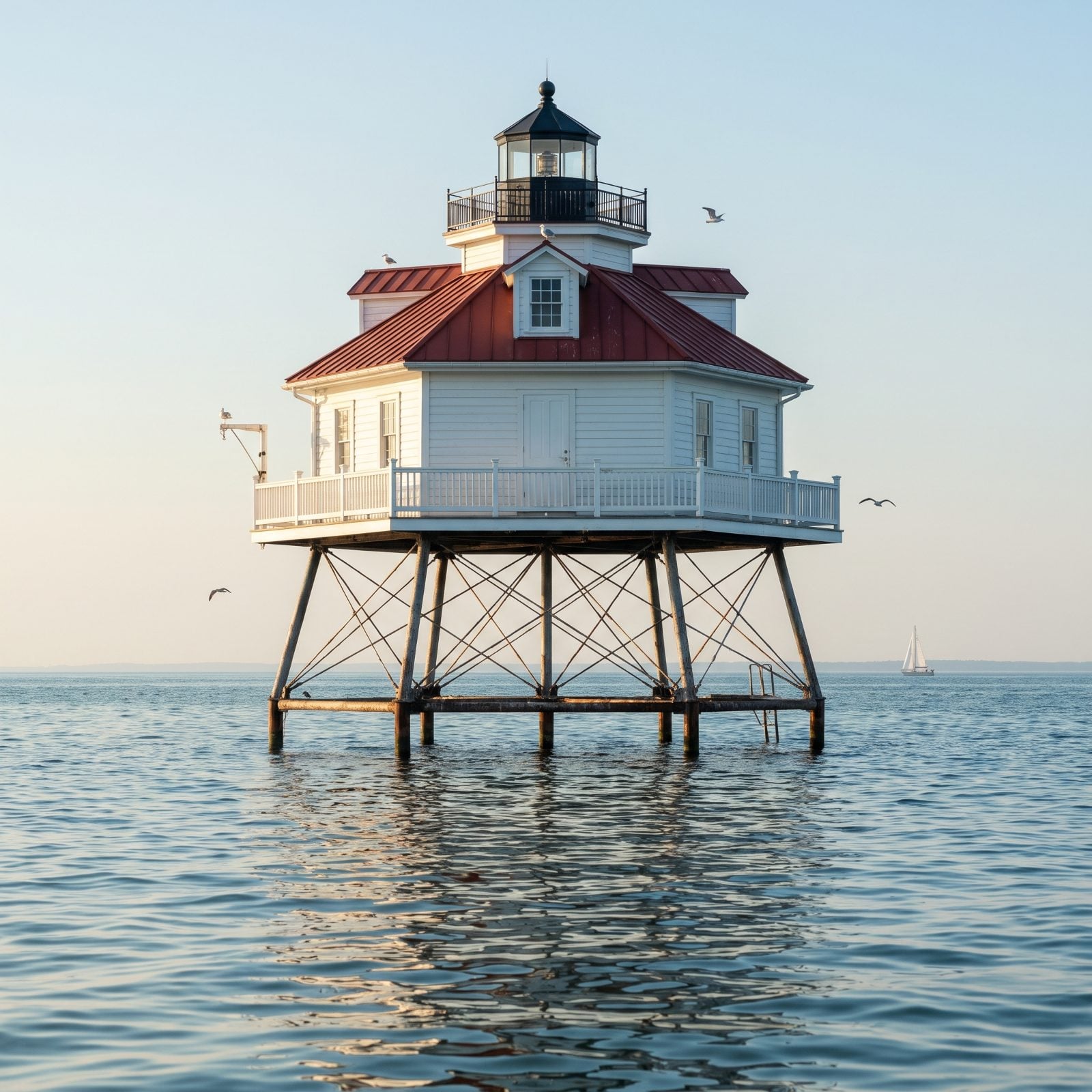
You can’t drive to this one, and that’s half the charm. Thomas Point sits out on the water south of Annapolis, perched on spindly iron legs like a house that waded in and forgot to come back. It’s the last screwpile lighthouse in the country still standing on its original foundation, and it looks exactly like what a kid draws when you say the word lighthouse.
Seasonal boat tours run from Annapolis in summer, and they fill, so book early. The best free look is from the beach at Thomas Point Park, where the light floats on the horizon like a toy.
8. Delaware: Harbor of Refuge Lighthouse in Delaware Bay
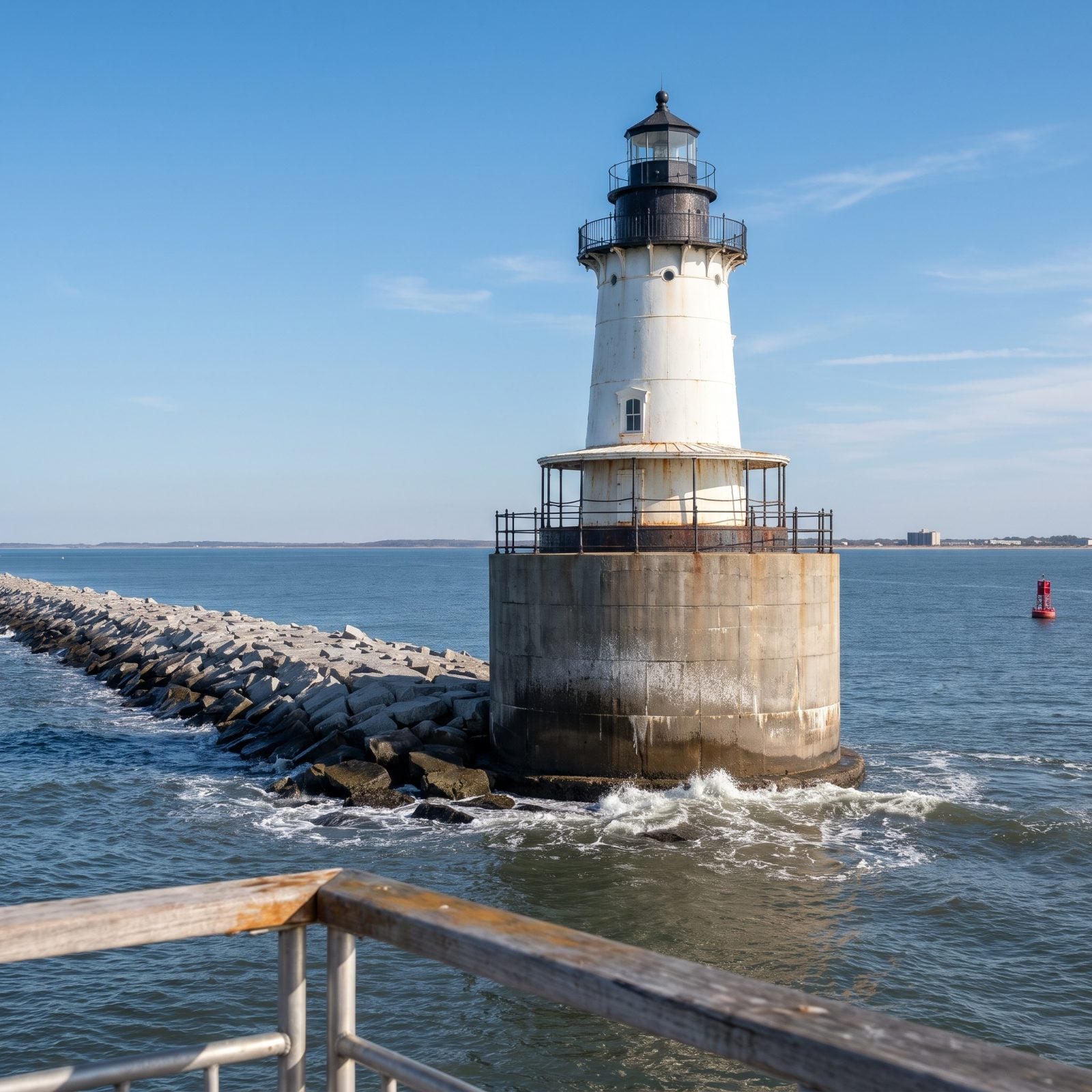
Harbor of Refuge earns its name honestly. It stands partway along the Delaware Breakwater, a long spine of stone built to give storm-chased ships somewhere to duck out of the weather. The current tower dates to 1926, the third attempt after the bay chewed up the first two.
Nobody tells you this, but you have to work to see it well. The best views come from the Cape May-Lewes Ferry deck or a charter out of Lewes, and volunteer groups run occasional landing trips. Standing on that breakwater with the swell slapping the rocks beats squinting at it from land any day. Bring a windbreaker. It’s always breezier out there than you expect.
7. New Jersey: Cape May Lighthouse Above the Coastal Wetlands
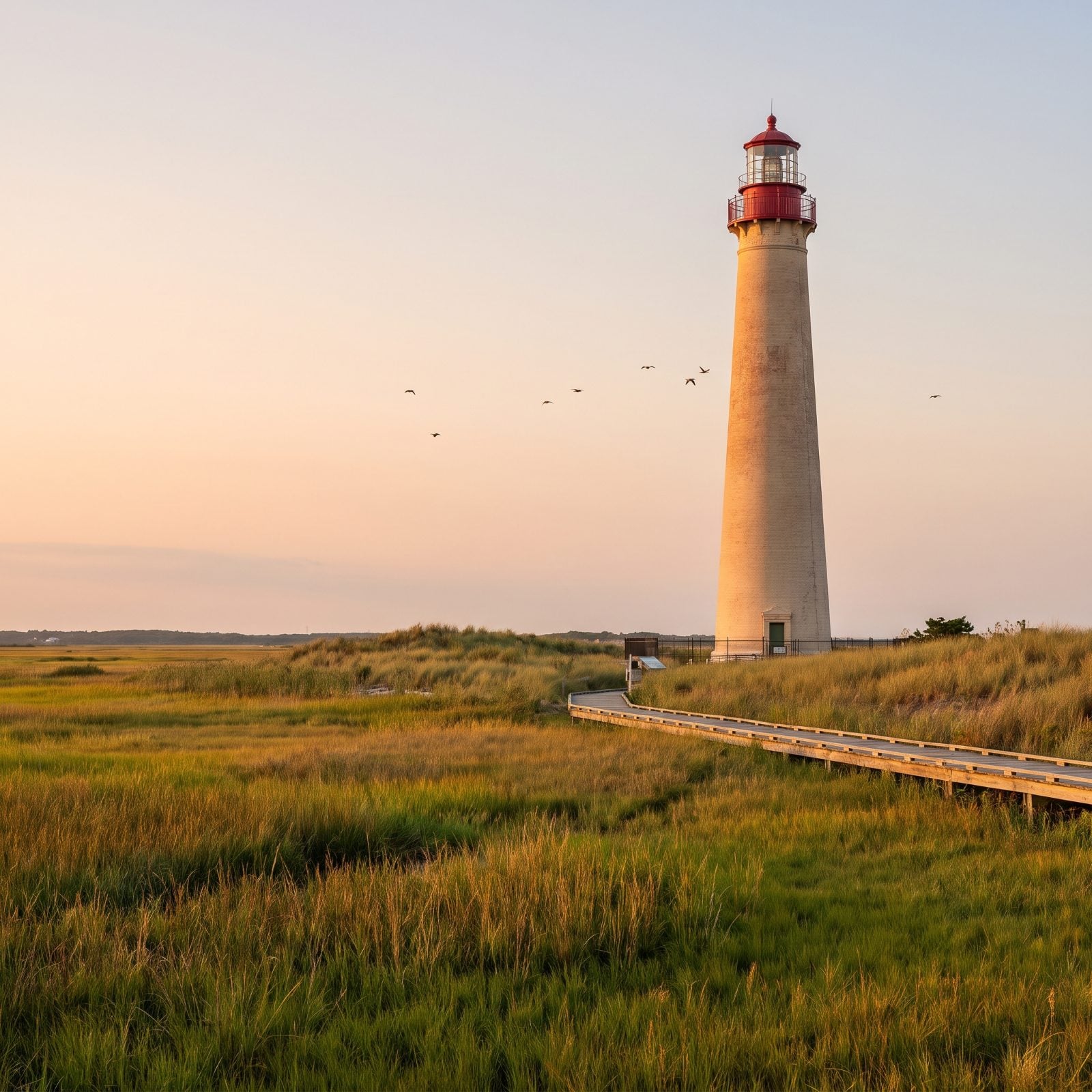
Cape May rewards the climb. Up the tight spiral you go, all the way to the top of a 157-foot brick tower, and the whole point of New Jersey spreads out below you. Marsh, dune, ocean on one side and Delaware Bay on the other.
The setting is what makes this one special. The lighthouse anchors Cape May Point State Park, one of the great bird migration crossroads on the East Coast. Come in fall and the sky over the marsh fills with hawks and monarchs funneling south. The light is open most of the year for a modest fee, and the town itself — all gingerbread Victorians and porch swings — sits a short drive back.
6. New York: Montauk Point Lighthouse at the End of Long Island
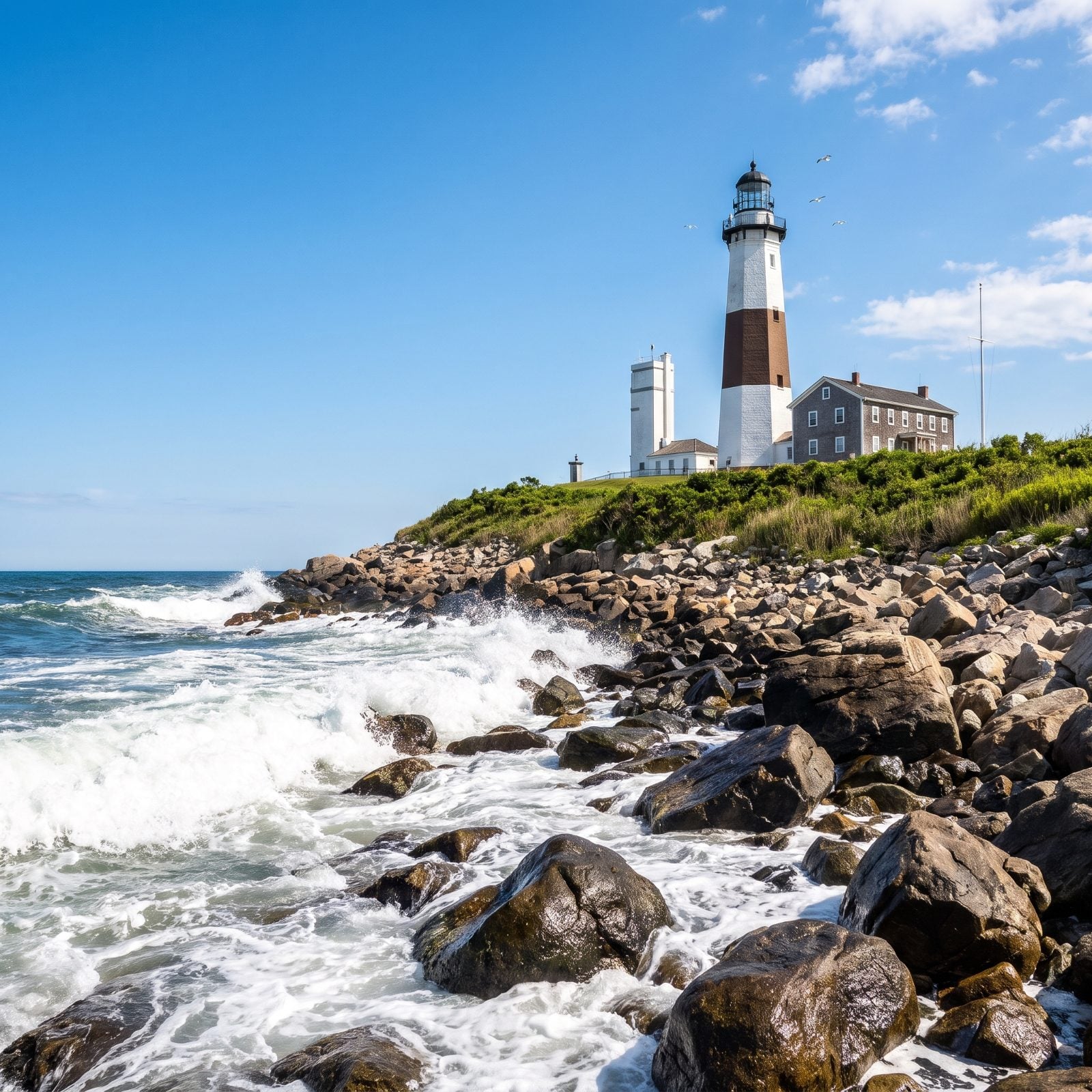
This is the one at the literal end of the road. Drive east on Long Island until you run out of island, and Montauk Point is standing there waiting, commissioned under George Washington and finished in 1796. The brown band around the white tower makes it unmistakable.
You can park, climb the tower, and tour a genuinely good little museum in the keeper’s house. Below, the water does something strange: currents from two directions collide offshore, kicking up a churn of standing waves the fishermen call the rips. Stand on the bluff and watch it. There’s nothing calm about the Atlantic out here, and that’s exactly why people drive three hours to see it.
5. Connecticut: New London Ledge Light Rising From the Thames River
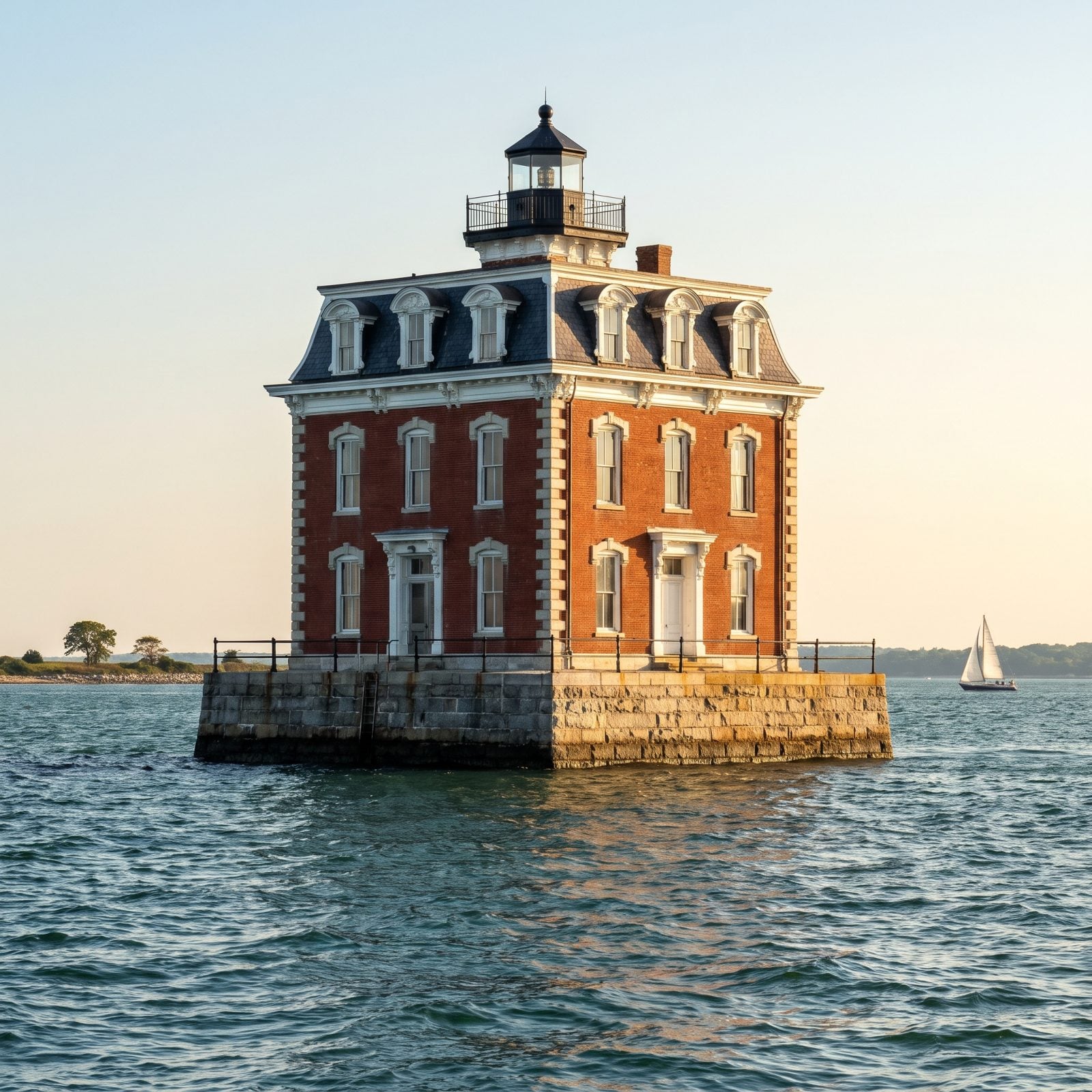
Ledge Light breaks every rule about what a lighthouse should look like. No white cone here. Instead you get a three-story brick mansion with a mansard roof, dropped onto a platform in the middle of the river like someone misplaced a French chateau. The story goes that the keepers’ wives wanted something that felt like home.
You see it best by water. Cruises run out of New London in season, and some even play up the resident ghost, a keeper named Ernie who supposedly never left. Ghost or not, the building is the draw — one of the oddest lighthouses in the country, sitting right where the Thames spills into Long Island Sound.
4. Rhode Island: Castle Hill Lighthouse at the Edge of Narragansett Bay
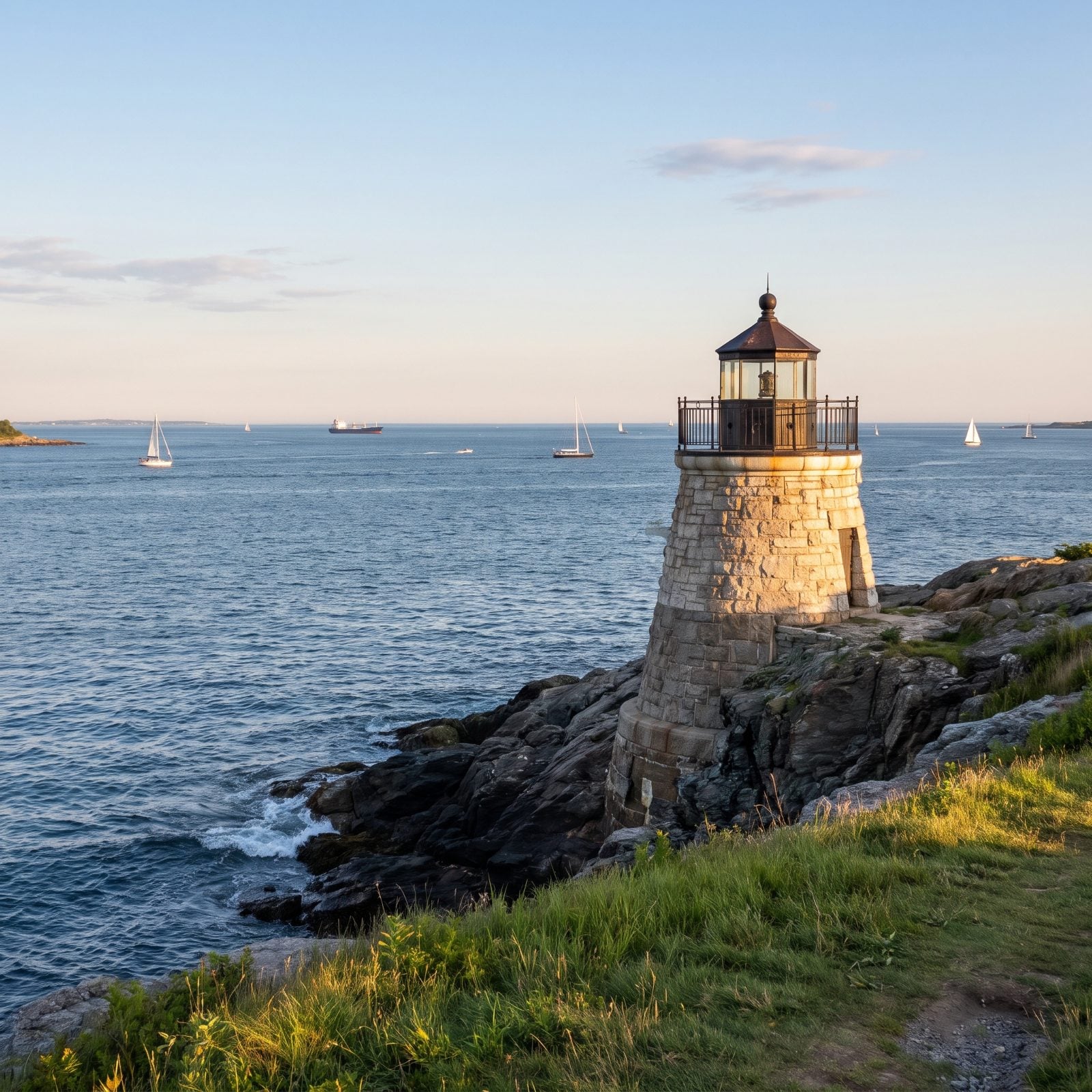
Castle Hill is small and low, tucked right into the granite ledge, and that’s precisely its appeal. It guards the entrance to Narragansett Bay where the sailboats stream in and out of Newport all summer long.
The walk to it runs through the grounds of the Castle Hill Inn, past a lawn where people sip Adirondack-chair cocktails and watch the regatta traffic. The lighthouse is closed to the public, but the setting does the heavy lifting. Come at sunset and you’ll understand why this stretch of coast costs what it costs.
3. Massachusetts: Nauset Light on Cape Cod’s Sandy Bluffs
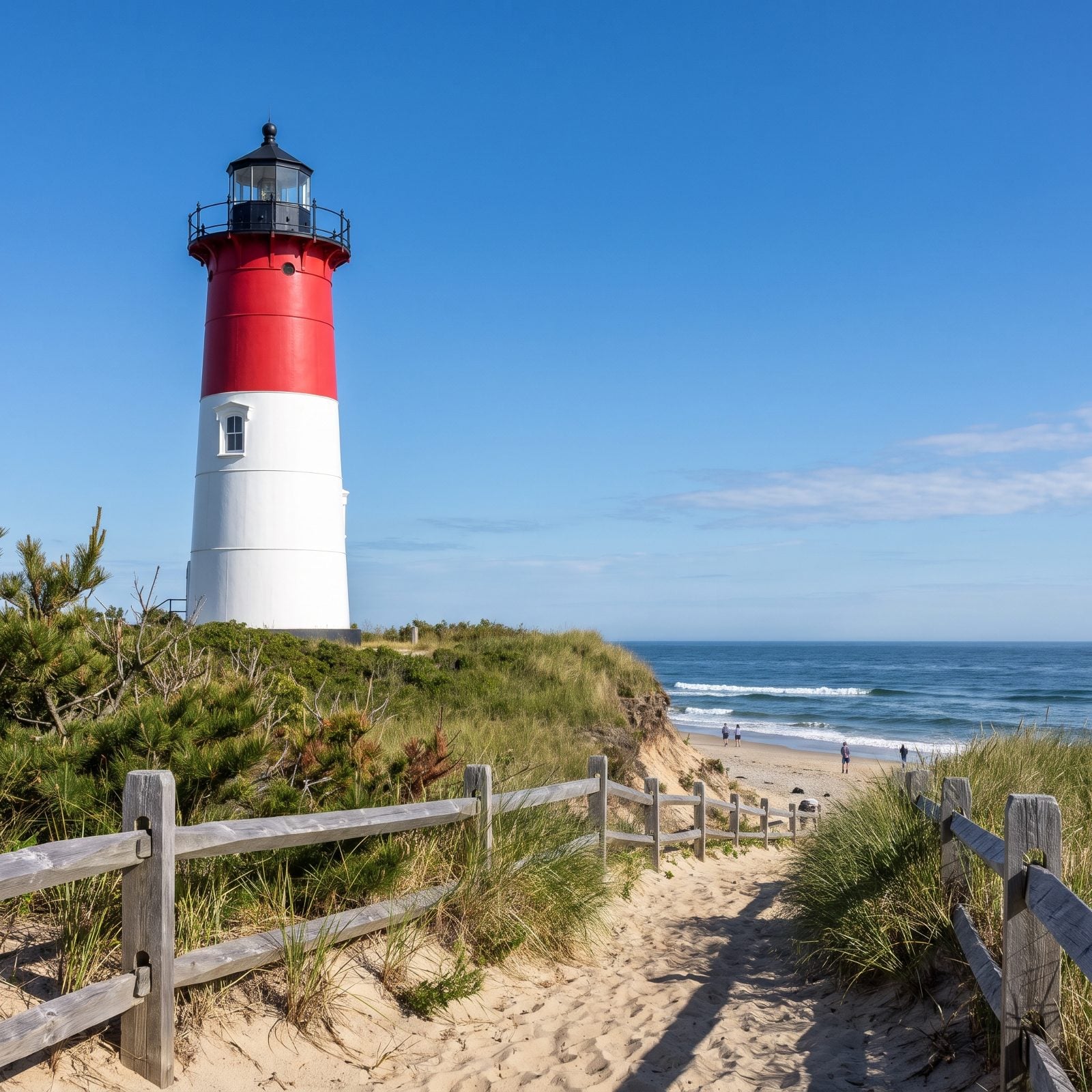
You already know this one. That red-and-white tower is the face on every bag of Cape Cod potato chips, and in person it’s smaller and friendlier than you’d guess. Nauset Light sits on the bluffs in Eastham, a short walk from the beach that shares its name.
Here’s a detail that gets me every time: this lighthouse has moved. The Atlantic kept gnawing at the cliff, so in 1996 the whole tower was jacked up and rolled back from the eroding edge. And the bluff keeps retreating. One day it’ll have to move again. Climb it on summer tour days and look out at the water that’s slowly winning.
2. New Hampshire: Portsmouth Harbor Light at Fort Constitution
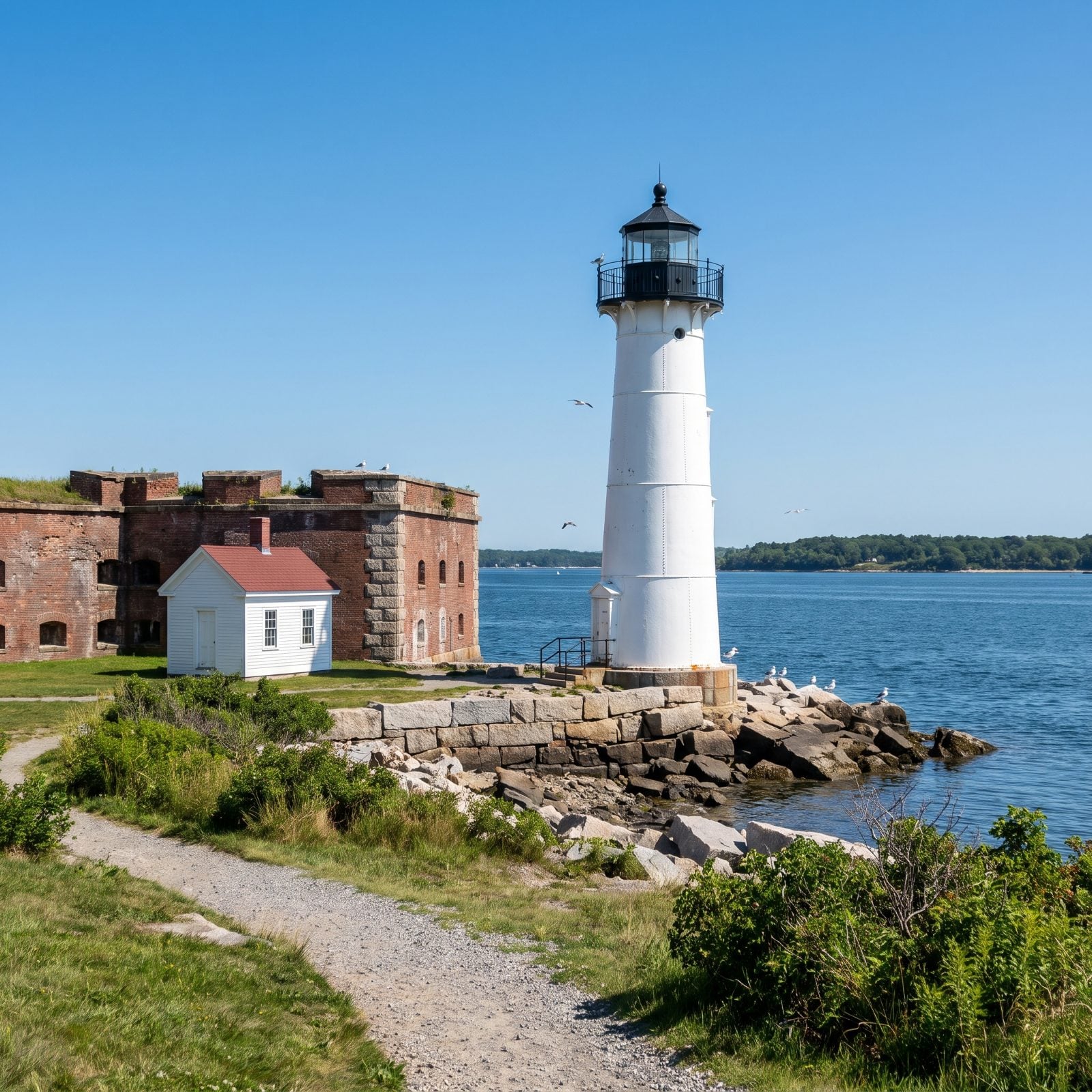
New Hampshire owns barely a sliver of coast, and this little white tower makes the most of it. Portsmouth Harbor Light stands on the grounds of Fort Constitution in New Castle, where a lighthouse has burned since 1771.
The pairing is the reason to go. A slim white cast-iron tower, right beside the brick walls of a Revolutionary-era fort — two kinds of history stacked on one point of land. The grounds are a free walk, and a local keepers group opens the tower on scheduled summer Sundays. Check their calendar before you drive up. The hours are limited, and we’ve watched people show up on the wrong day and settle for the fence view.
1. Maine: Portland Head Light Above the Crashing Atlantic
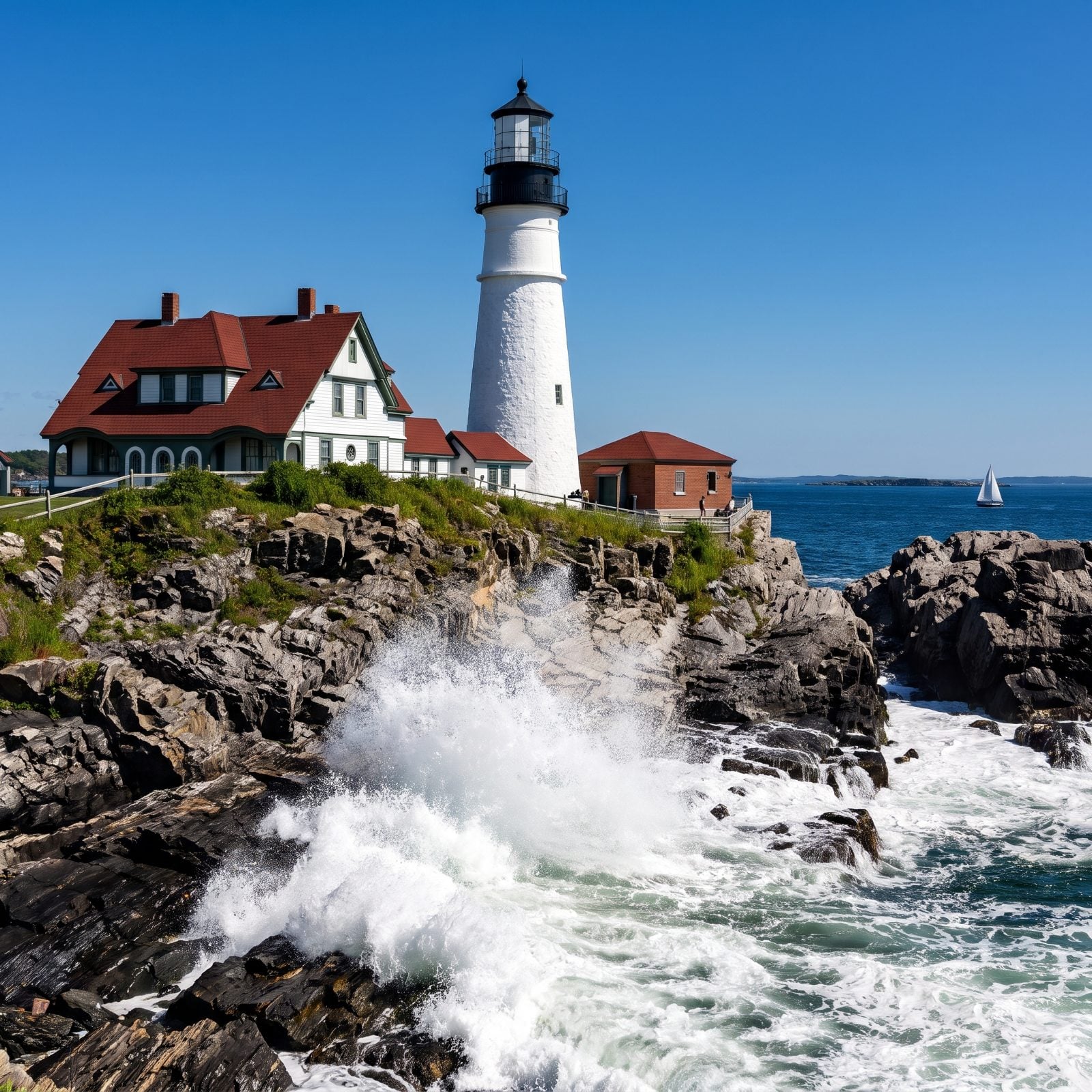
Few lighthouses are as instantly recognizable as this one. Portland Head rises over the rocks at Cape Elizabeth — white tower, red-roofed keeper’s house, Atlantic smashing itself to foam against the cliffs below. Commissioned under George Washington and lit in 1791, it’s the oldest lighthouse in Maine, and it has earned every photo ever taken of it.
It sits inside Fort Williams Park, free and open year-round. The tower isn’t climbable, but the keeper’s house runs a museum, and the cliff paths put you close enough to feel the spray on a rough day. Go in October, when the crowds thin and the light turns gold over the water, then drive five minutes for a lobster roll. That’s the whole trip, and it’s a good one.