
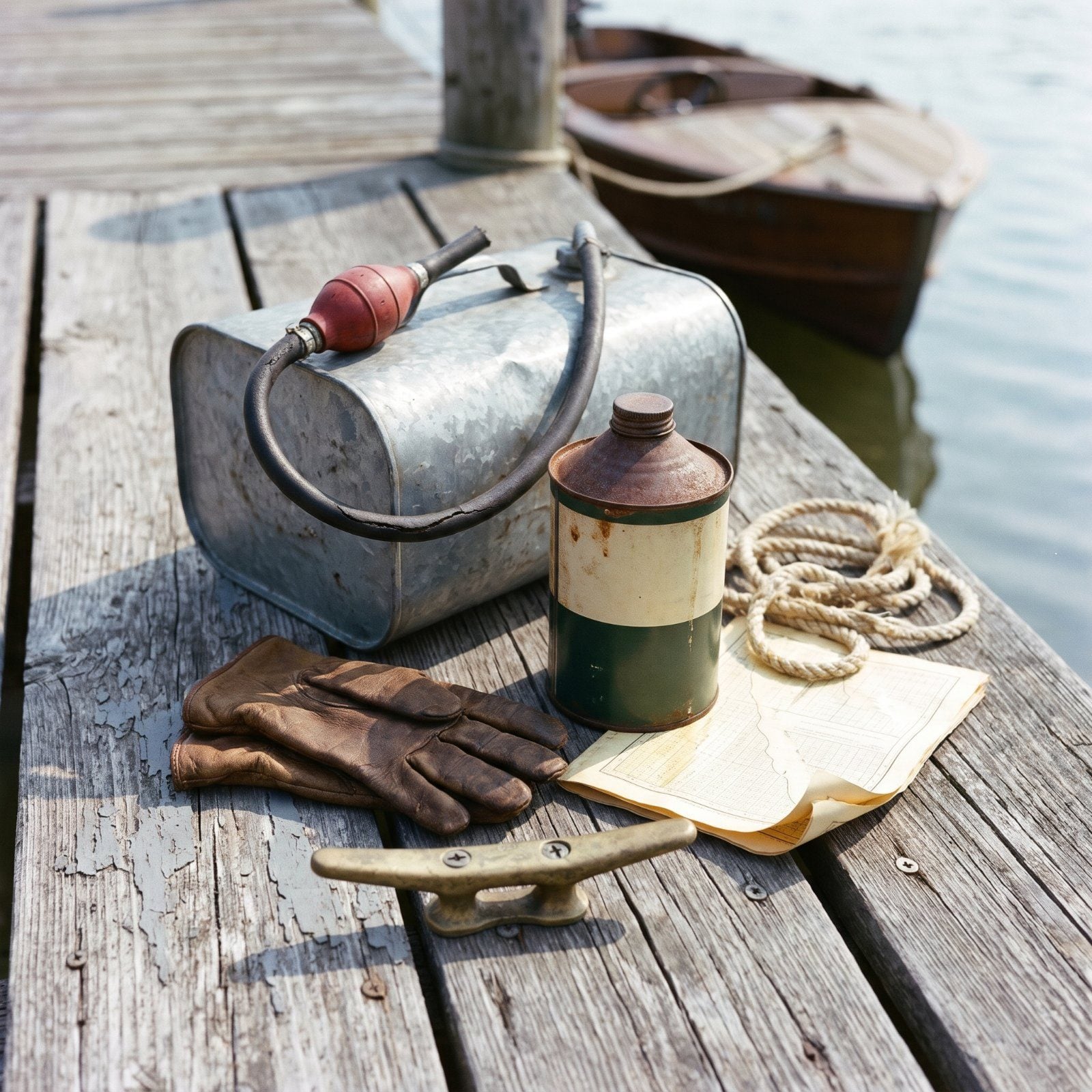
The smell gives it away first. Two-stroke oil, warm creosote, and gasoline that still had lead in it, all cooking together in the July sun. Walk any working marina in 1975 and that smell meant you were home. So did the clatter of machines doing jobs a phone now does silently in your pocket. The waterfront ran on steel, rubber, mechanical drums, and a guy named Earl who knew everybody’s slip number by heart. Most of it is gone. Not retired with ceremony, just quietly swapped out one summer at a time. Here’s what we lost, and what it felt like to stand next to it.
Please note that some of the imagery in this article may have been enhanced with the assistance of AI.
28. The Enclosed Coin-Operated Dockside Phone Booth
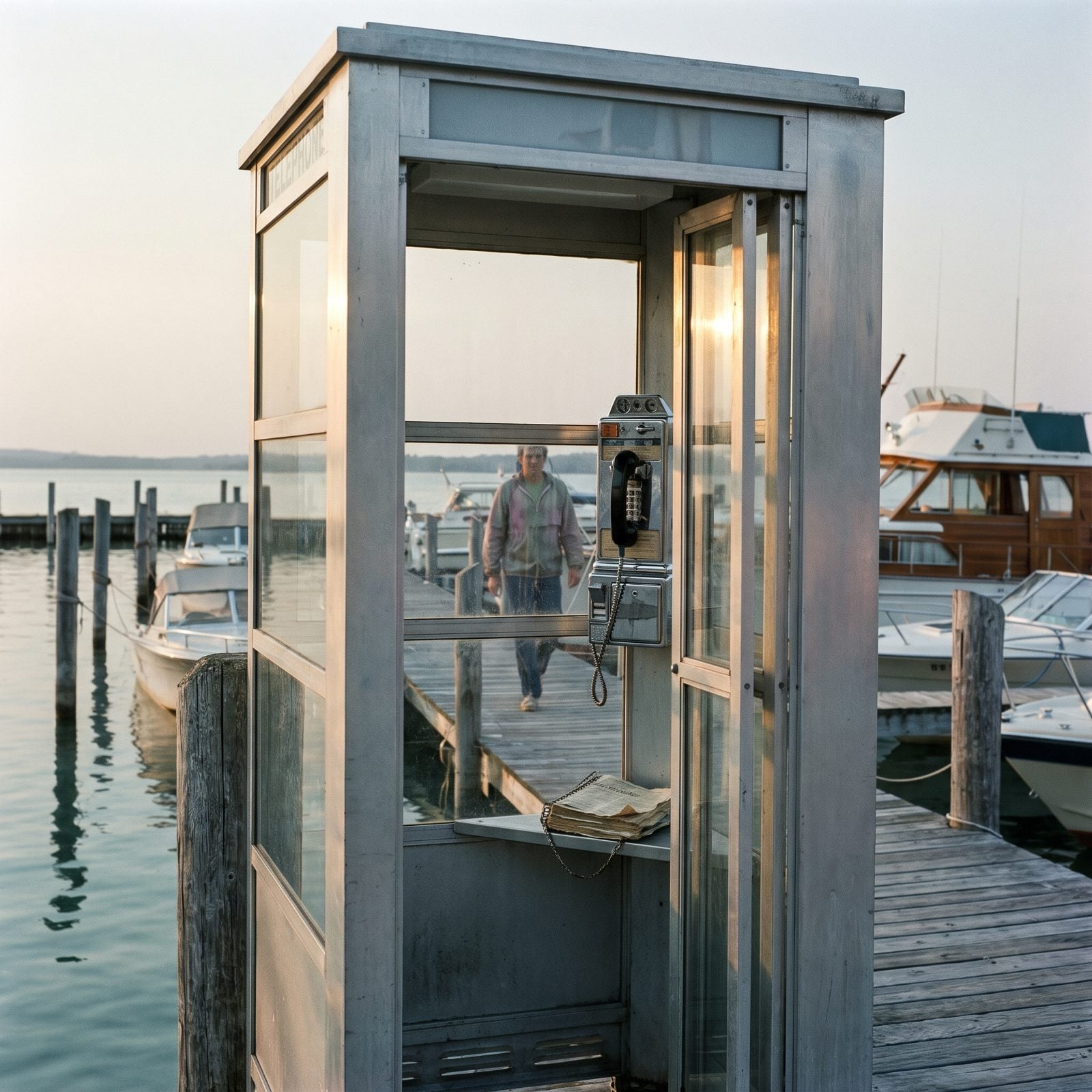
You fed it a dime, then more dimes, while the operator counted down your three minutes. The booth sat at the top of the dock like a little glass sentry, door folding shut on a spring, directory hanging from a chain because somebody always tried to walk off with it.
That booth was the whole marina’s lifeline — wives calling to say come home, mechanics calling for a part, a captain phoning the fuel dock to hold a slip. One line, one booth, a lineup on busy Saturdays. Nobody was reachable out on the water, and honestly, that was the point.
27. A Rubber Service-Bell Hose Stretched Across the Marina Entrance
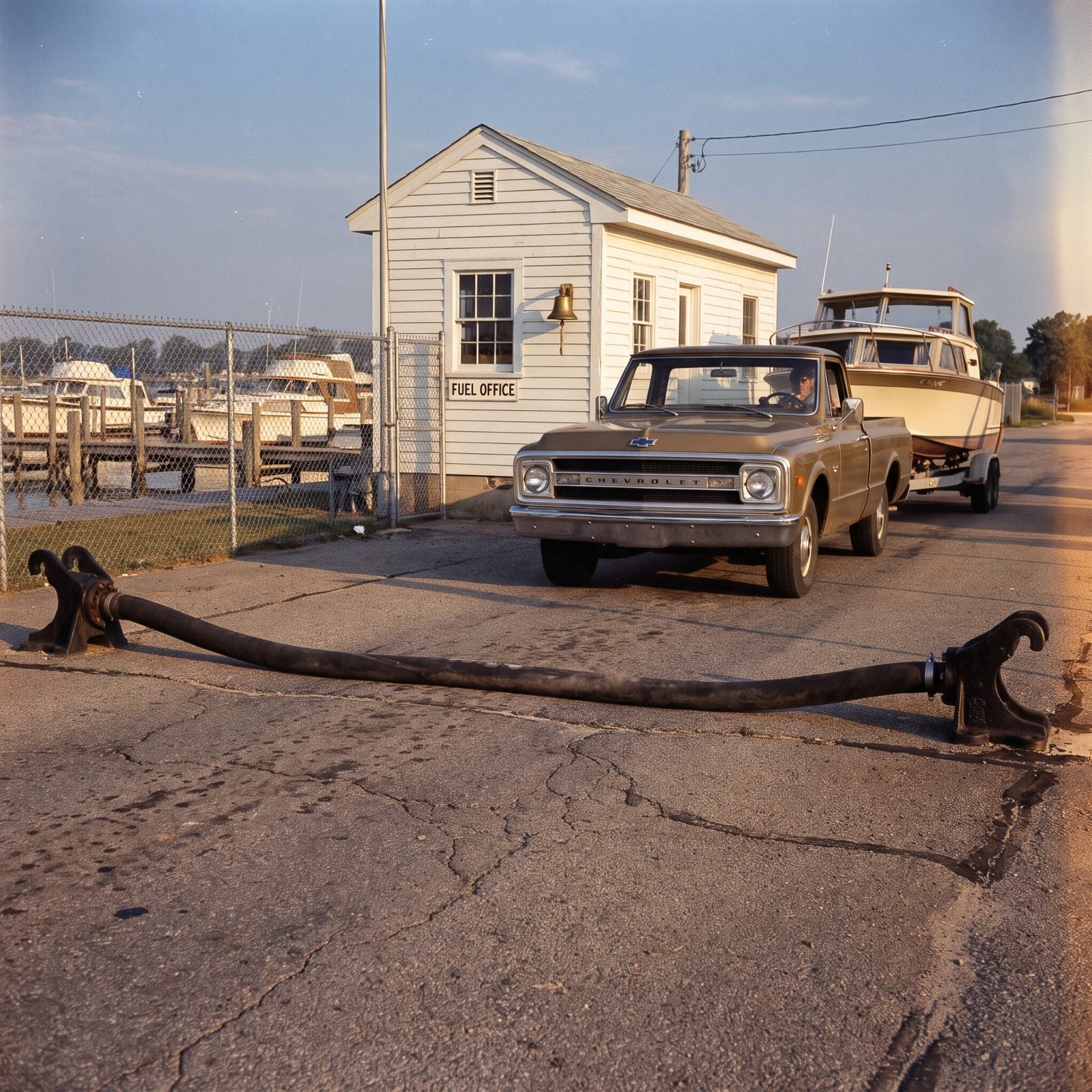
That black rubber hose lies stretched in one length across the lane, resting on the asphalt between two heavy cast-iron hook-shaped brackets, while a brass bell hangs on the outside wall of the fuel office. Ding-ding. Somebody put down their coffee and came out to pump your gas or point you toward an open slip.
Gas stations had the same trick, but at a marina the hose did double duty — it told the lone attendant a trailer had rolled up to the launch ramp too. One length of rubber, stretched flat across the asphalt, doing the work of a doorbell, a security camera, and a greeter all at once. Simple, loud, impossible to ignore.
26. The Marina Operator Who Connected Ship-to-Shore Calls
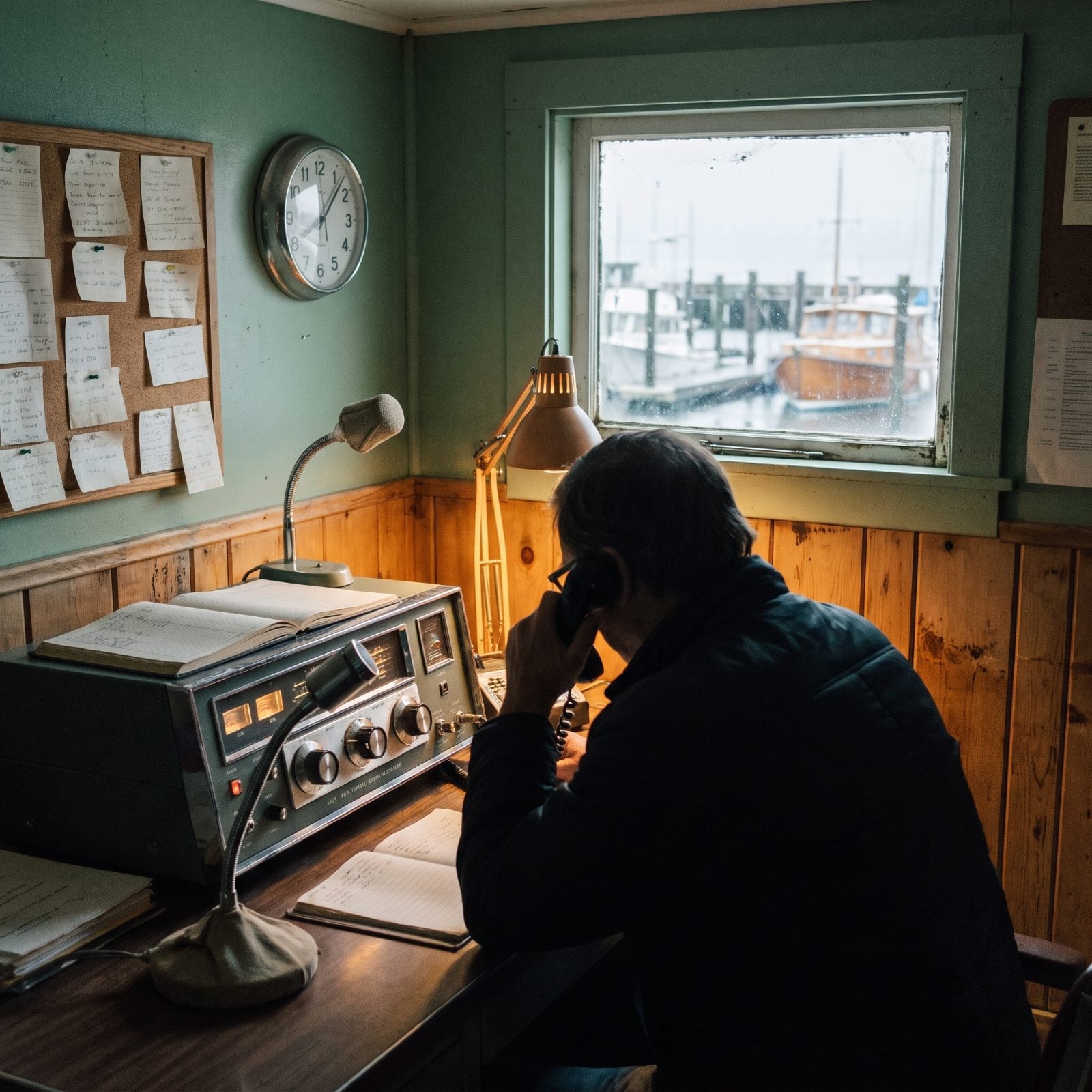
Before anyone had a phone in their pocket, calling home from a boat meant calling the marine operator. You raised them on VHF or single-sideband, they patched you through to a landline, and the whole conversation went out over an open channel.
So the whole lake heard you. You learned to keep it brief. Over. Say your piece, say over, wait. The operator timed the call, placed the charges, and signed off. Intimate and public at the same time, a little radio town square. That voice crackling the weather and the slip numbers was the closest thing a marina had to a heartbeat.
Looking back at the era of radiotelephone patches, a veteran maritime trade journalist writes “That crisp voice on VHF channel 26 was the mariners’ link to home and family anywhere on coastal and inland waters for decades.”
25. Weather Forecasts Arriving on a Clattering Teletype
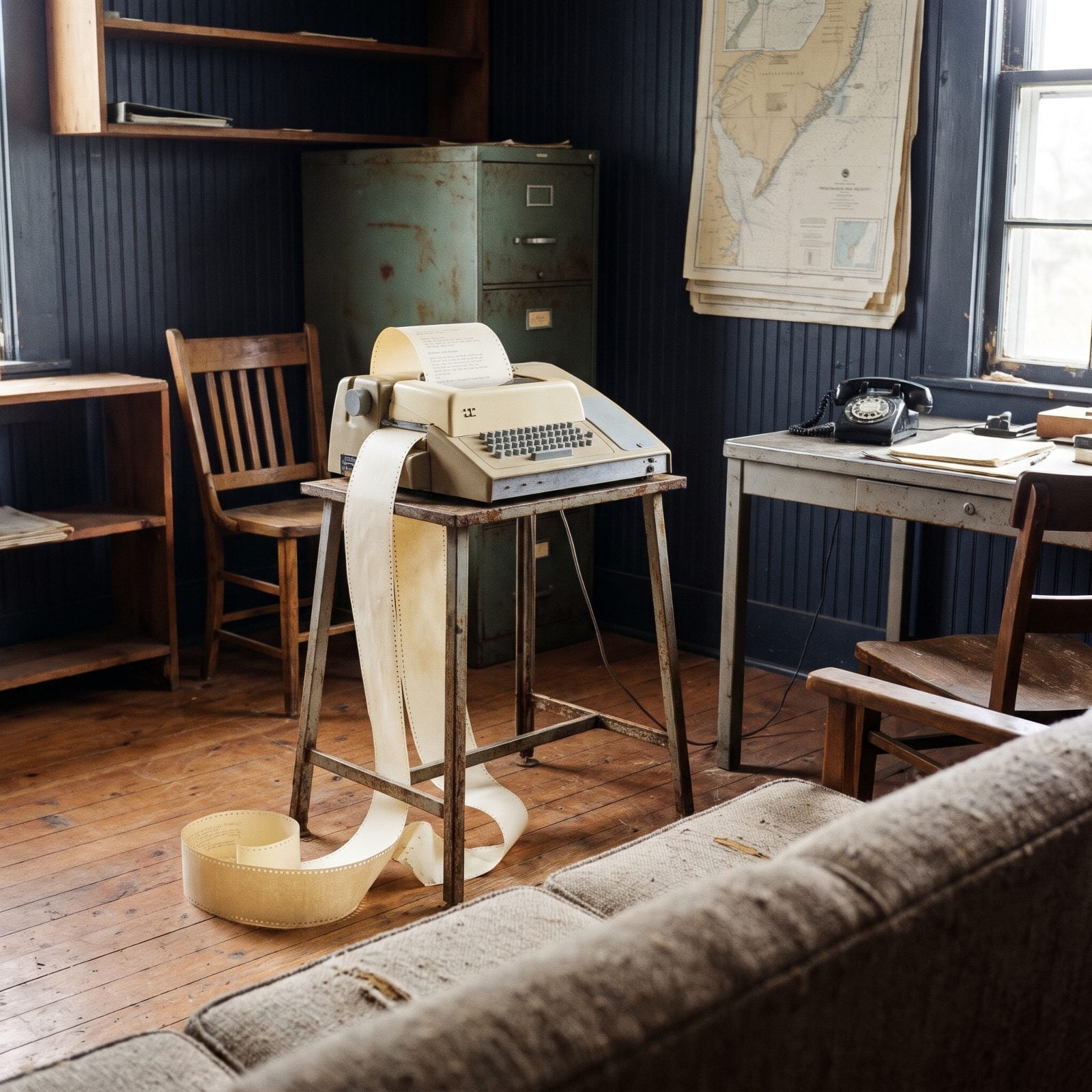
The forecast didn’t ping. It clattered.
A teletype in the back office hammered out weather bulletins on a continuous roll of paper, printing in that stiff monospaced type, the whole machine shuddering like it had something urgent to say — and it did. The harbormaster tore off the sheet, read it, and decided whether to run up the small-craft warning flag. You’d watch that paper curl onto the floor and know a front was coming before a cloud ever showed. Clumsy, slow, a little thrilling. Weather used to arrive like a telegram.
24. Coast Guard Storm-Signal Towers Flying Warning Flags
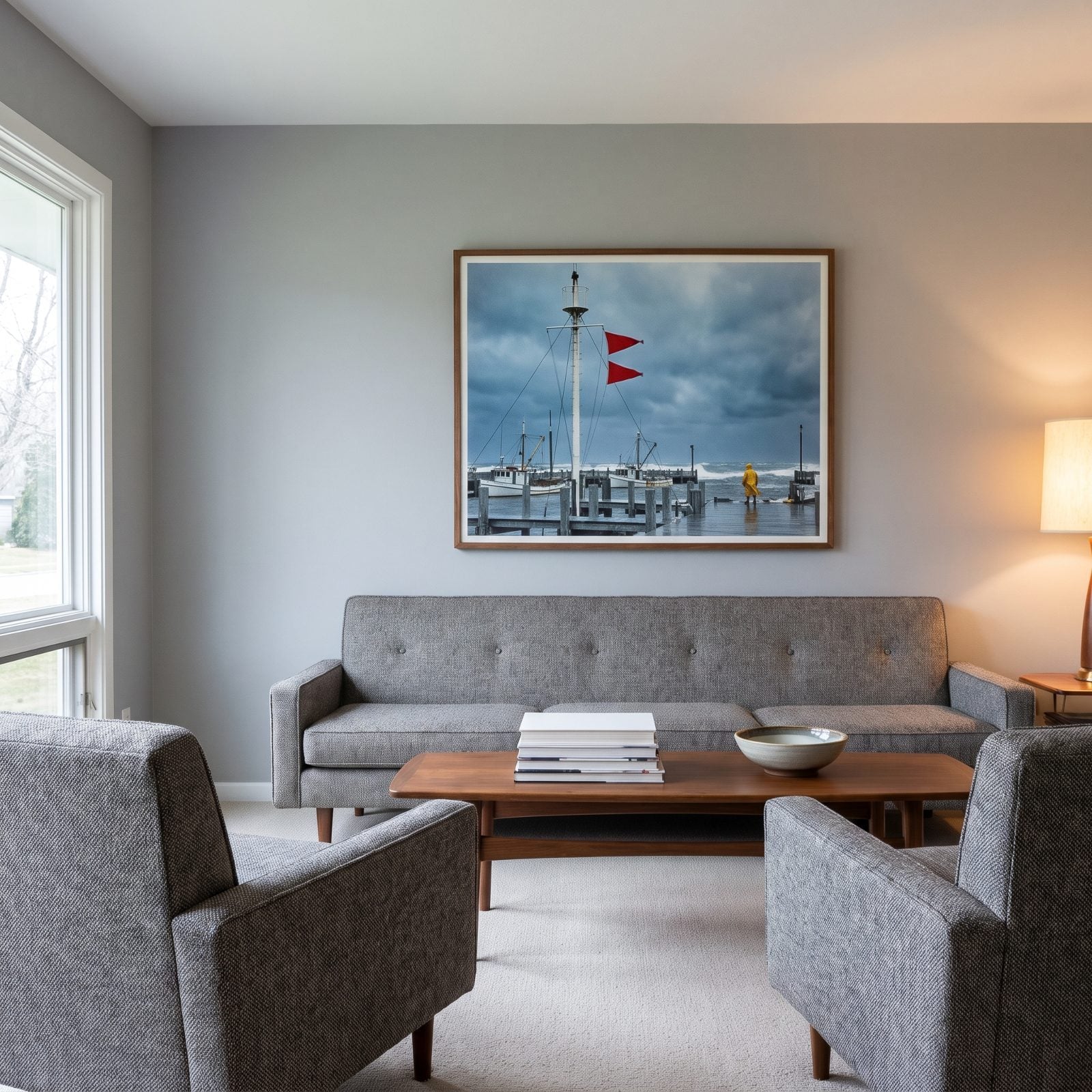
Red flags up, stay in. One red pennant meant small-craft warning, two meant gale, a square red flag with a black center meant storm, and if you saw two of those, nobody had to explain it to you. You tied off and went home.
Coast Guard stations and harbor entrances flew these on tall masts up and down both coasts and the Great Lakes. You read the sky, you read the flags, and between the two you made your call. No app, no push notification — just canvas on a halyard telling you the ocean meant business today. Honest and old as sailing itself.
23. Fuel Pumps With Spinning Mechanical Number Drums
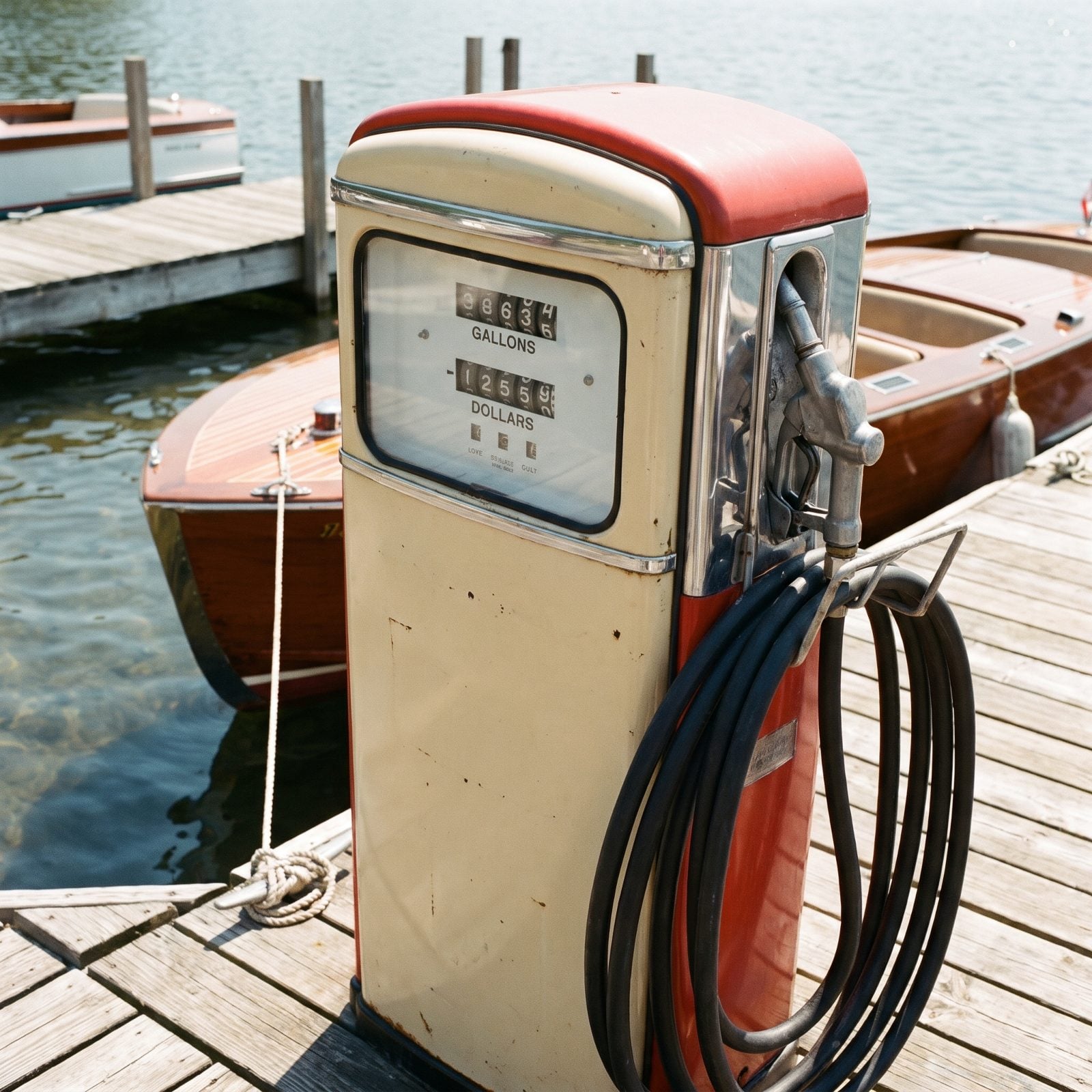
You could watch the money add up. Little white number drums spun behind the glass, gallons on one register and dollars on the other, clicking over with a mechanical whir that sped up as the tank filled and the attendant squeezed the nozzle.
There was a rhythm to it you don’t get from a digital readout — the numbers rolling, the smell rising off the fuel, the attendant eyeballing when to ease off. Half the fun of filling up was watching those drums race. Modern pumps are faster and more accurate, sure. They’re also completely silent about the whole thing.
22. Dock Signs Advertising Ethyl Leaded Marine Gasoline
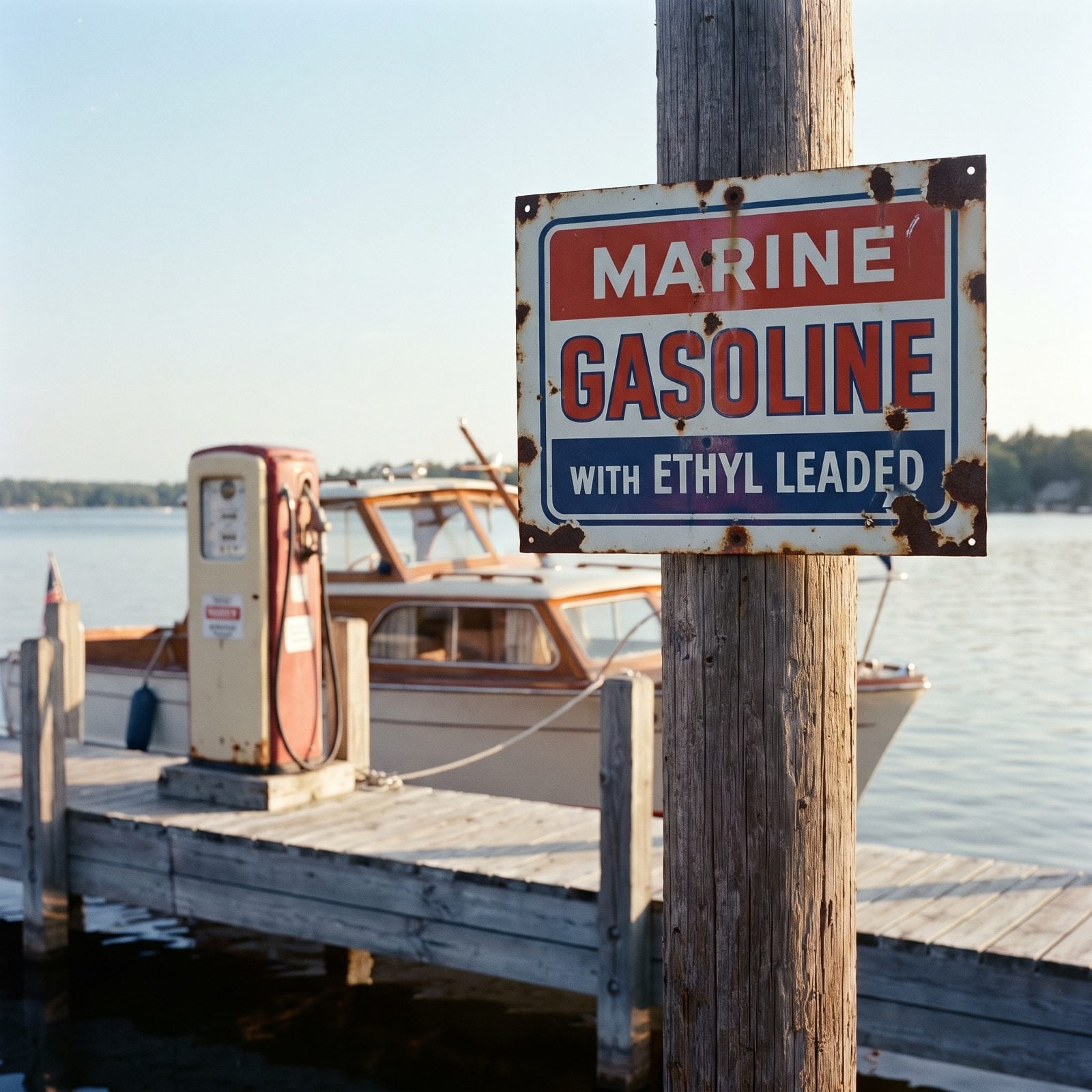
Ethyl. The word was practically a promise, stamped on enameled signs bolted to the fuel-dock post, rusting gracefully at the corners. Leaded gas ran cleaner-burning engines and smoother idles, or so the signs told you, and nobody at the dock was arguing.
The lead is why that era had its own smell. It’s also why the signs are collector’s items now and the fuel is long illegal.
21. Six-Gallon Steel Outboard Fuel Tanks
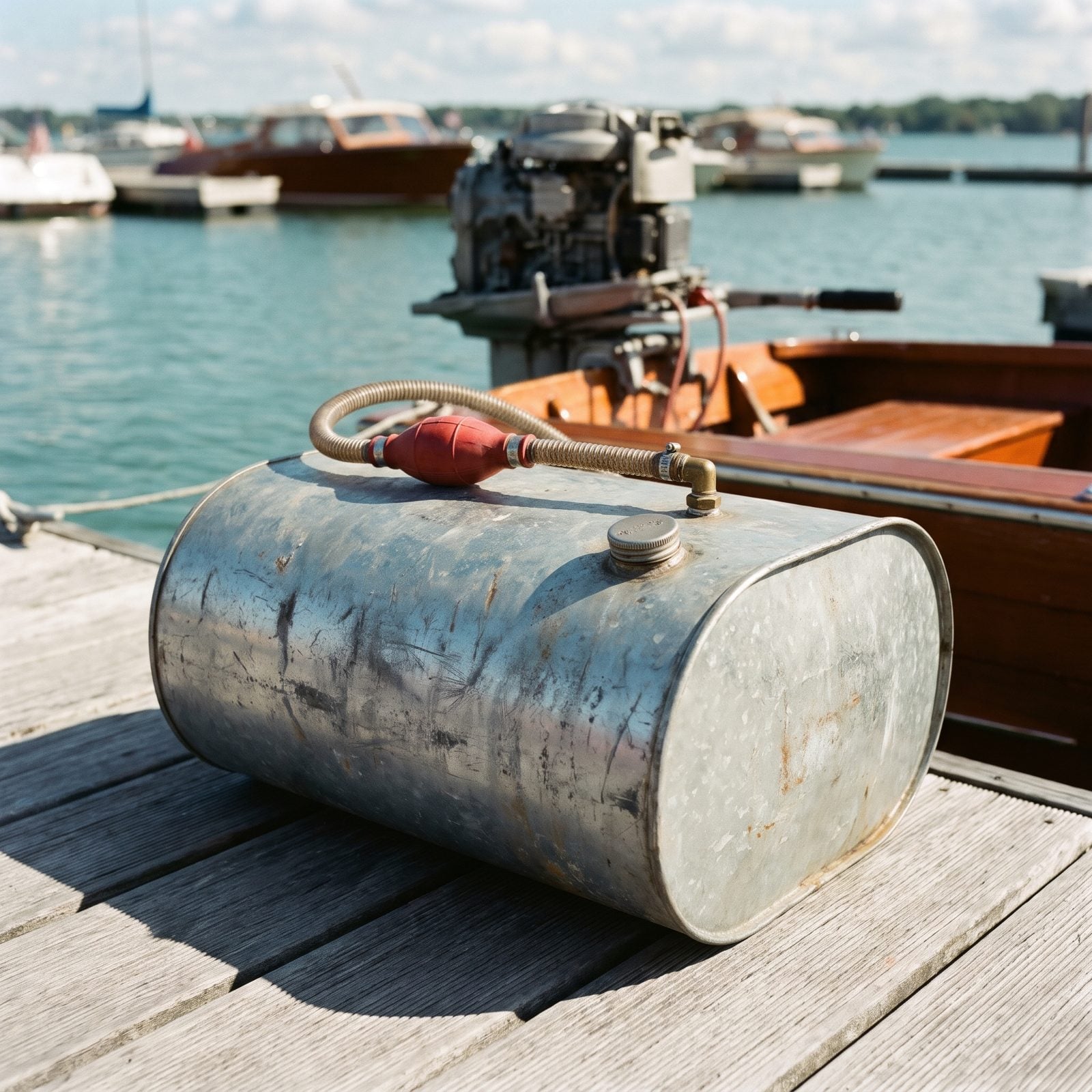
Before cheap molded plastic, your portable fuel tank was a pressed-steel oval, six gallons, with a rubber primer bulb you squeezed until the line went firm. They were heavy, they dented, and left outside they rusted from the inside out.
But they lasted. Decades, some of them. You hauled it down the dock in both arms, ran the corrugated line over to the boat, pumped the bulb, and pulled the cord. That red bulb is still around on modern tanks. The steel body gave way to red plastic — lighter, uglier, and it won’t outlive you the way the old one would.
20. Cone-Top Metal Cans of Outboard Motor Oil
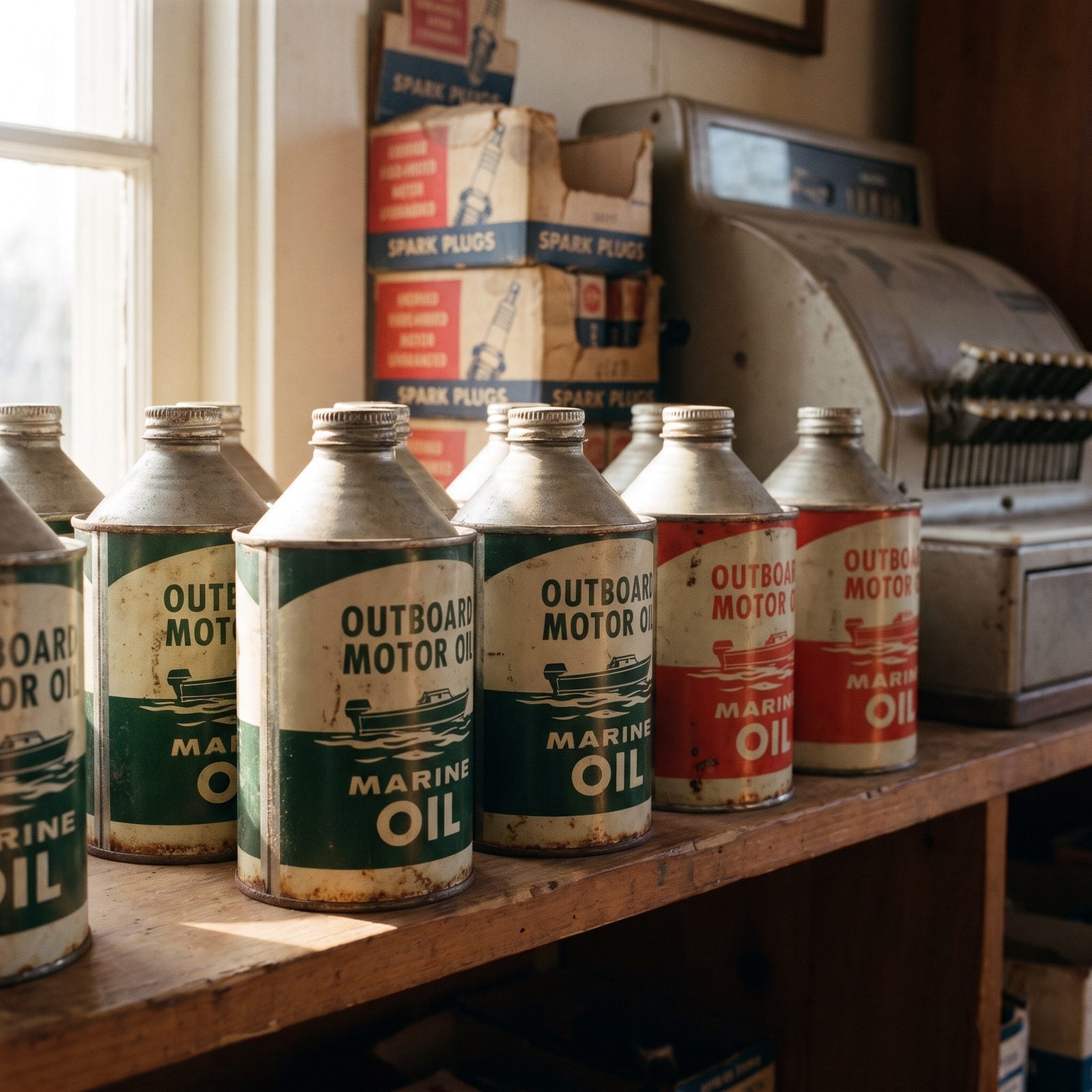
Oil came in a can with a little screw cap you twisted off by hand.
These cone-top cans had a tapered neck and a threaded screw cap, built so they could run down a bottling line like a beer bottle and still pour clean. You spun off the cap, tipped it into your fuel measure, and the empty went in the trash barrel at the end of the dock. Plastic jugs with handy spouts killed them off — more convenient, no argument there.
But a shelf of those green and cream cans in an old marine shop looked like something, the kind of honest packaging nobody bothers to design anymore.
19. Handwritten Carbon-Copy Fuel Receipts
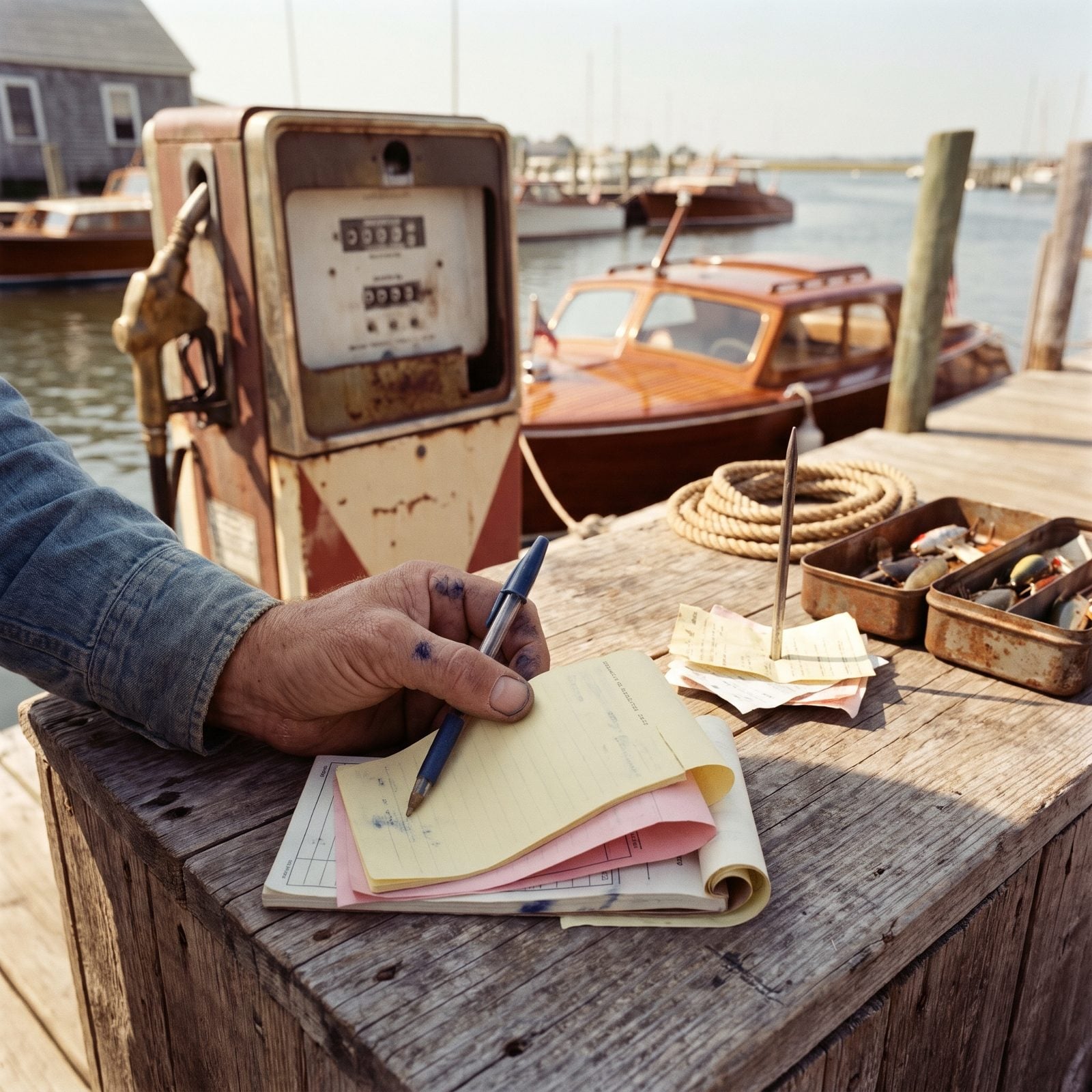
You pulled up for gas and the dockmaster scribbled the gallons on a pad, pressing down hard so the blue carbon would catch the second sheet before he tore off your copy. That copy lived in your glovebox until it turned soft as tissue.
No screen to read. No card to swipe. Just a number on a rolling dial, a total worked out in his head, and a signature line you signed with his pen because you never brought your own.
18. Slip Assignments Written on a Giant Chalkboard
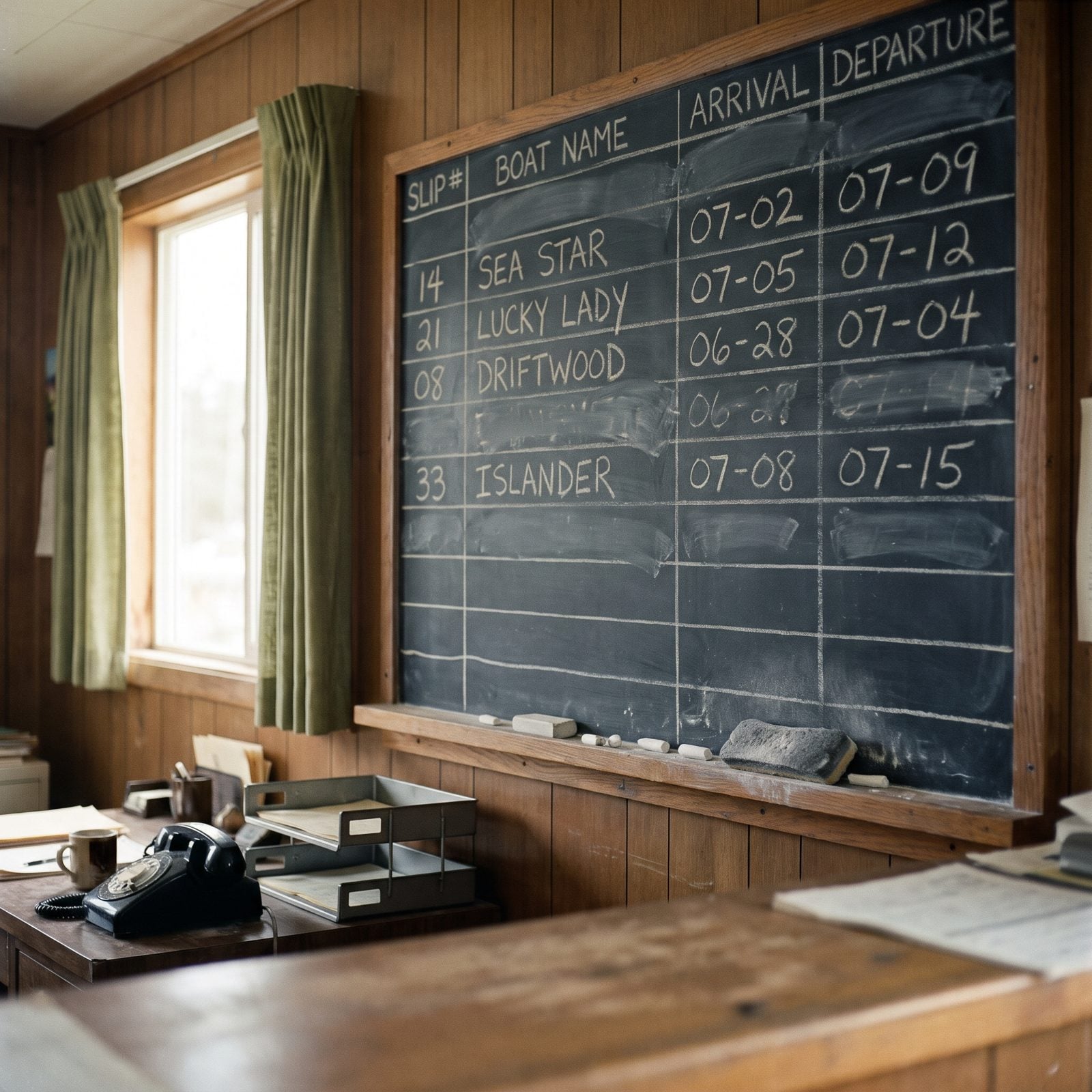
The whole marina lived on one wall. Every slip, every transient, every boat due in on Friday, all of it chalked into a grid the dockmaster updated with the side of his hand and a fresh stick of chalk.
Smudge a name and you’d double-book a slip, which happened more often than anyone will admit. The board was the single source of truth, and if it rained through an open window, the truth got blurry.
17. Block Ice Chopped Apart With a Pick and Tongs
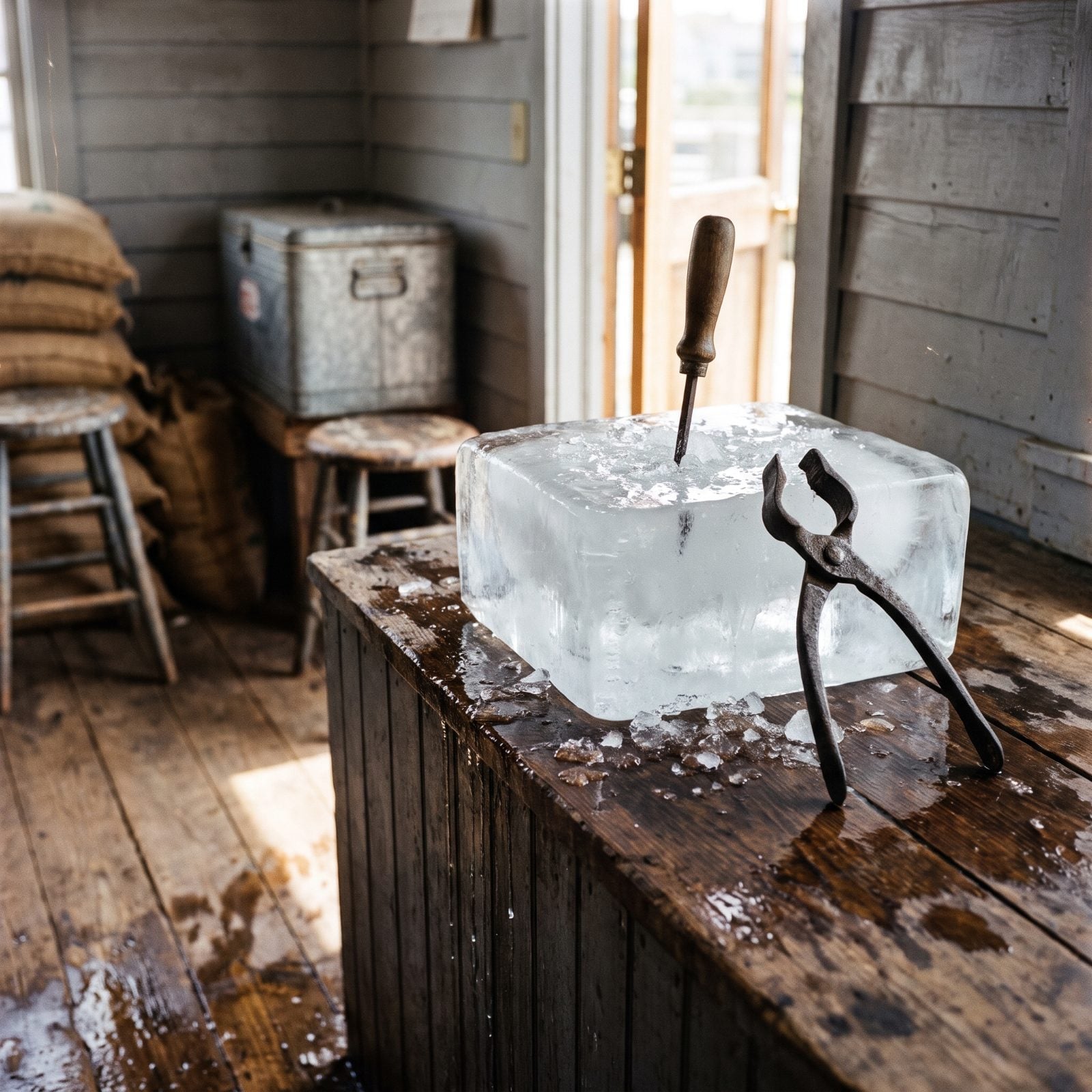
Before the bagged cube machine by the door, you bought ice in a block and broke it down yourself. The pick, the tongs, a canvas sack, and a cooler packed for the weekend.
Block ice lasted longer than cubes, which is why serious anglers swore by it. It also took a strong arm and a careful hand, because that pick slipped on wet ice more often than you’d want.
16. Returnable Glass Soda Bottles in a Mechanical Vending Machine
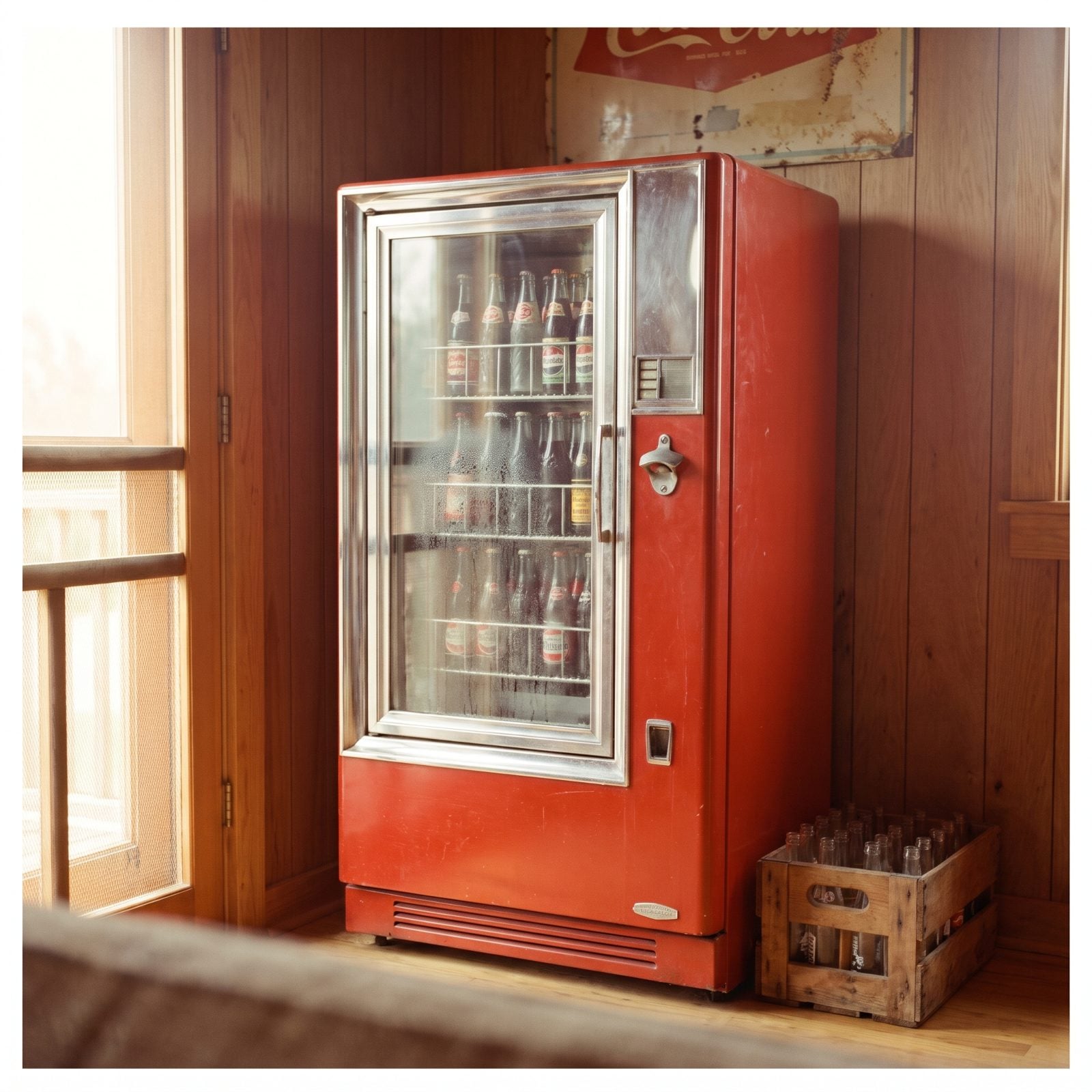
Drop your coins, pull the cold bottle straight out of the chrome rack, and pop the cap on the opener bolted to the side. The glass was so cold it stung your palm on an August afternoon.
You didn’t throw the empty away. You set it back in the wooden crate for the deposit, because the bottle came back and got filled again. Kids at the dock hunted returnables for pocket money all summer long.
15. A Cigarette Vending Machine in the Marina Lounge
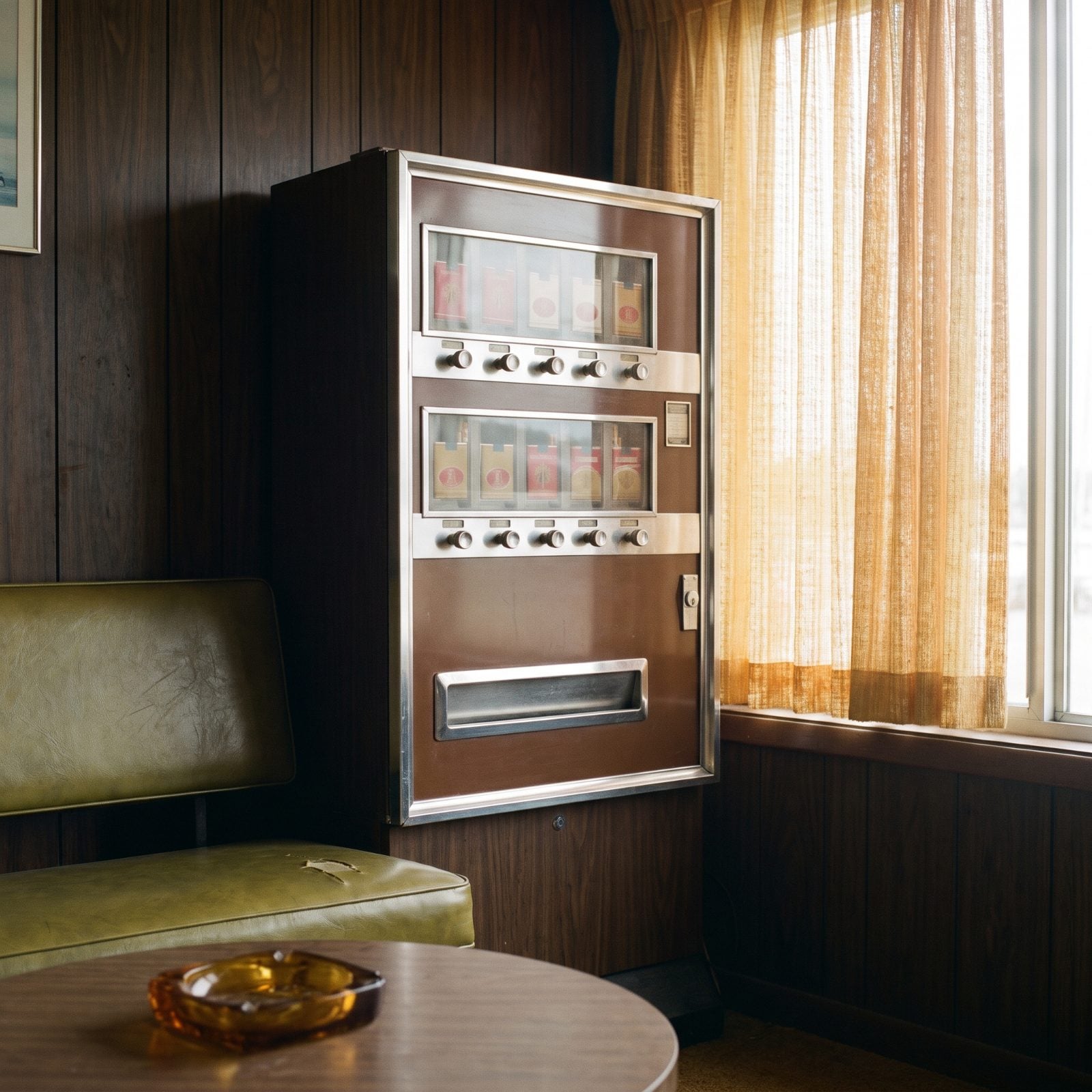
Right there in the lounge, between the vinyl bench and the coffee pot, stood a machine that sold cigarettes to anyone tall enough to reach the pull-knob. No ID, no questions, just a quarter and a yank.
The lounge itself was a fog of smoke, cards slapping on the table, and the radio calling a ballgame. Nobody thought twice about it then.
14. A Continuous Cloth Roller Towel in the Restroom

You washed your hands, reached for the towel, and pulled down a loop of damp cotton that everybody before you had already used. A fresh patch, if you were lucky and early.
A linen service swapped out the cabinet on a schedule nobody at the dock could ever tell you. Health codes eventually sent these to the scrapyard, and most of us didn’t mourn.
13. Bulky Orange Kapok Life Jackets for Loan or Rent
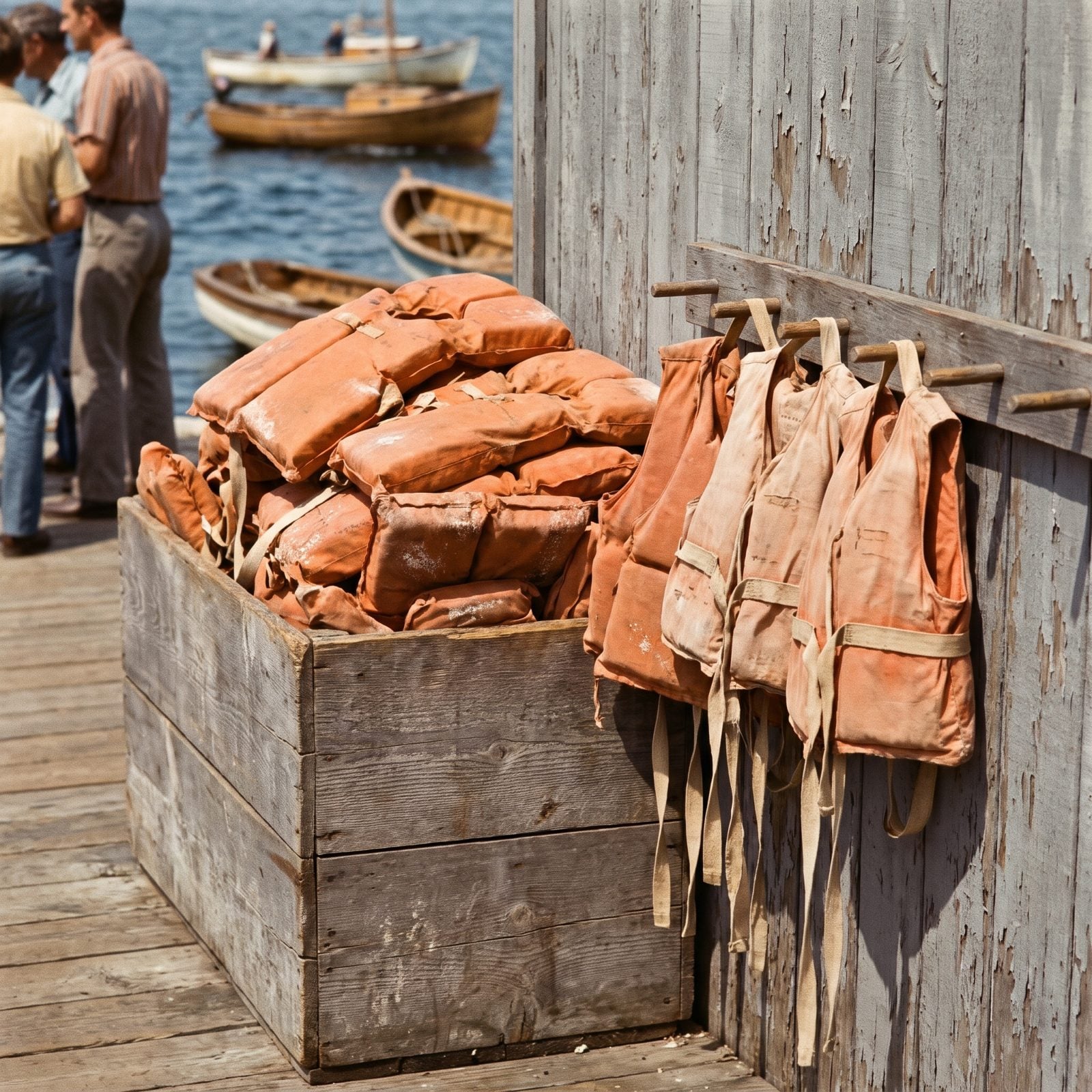
The orange brick. Every rental boat came with a bin of these kapok vests, stiff as a corset, tied on with canvas straps, and smelling faintly of mildew no matter how long they’d aired out.
They floated, which was the whole point, but they rode up around your ears and nobody wore one a minute longer than the dockmaster insisted.
12. Cork-Filled Ring Buoys Wrapped in Painted Canvas
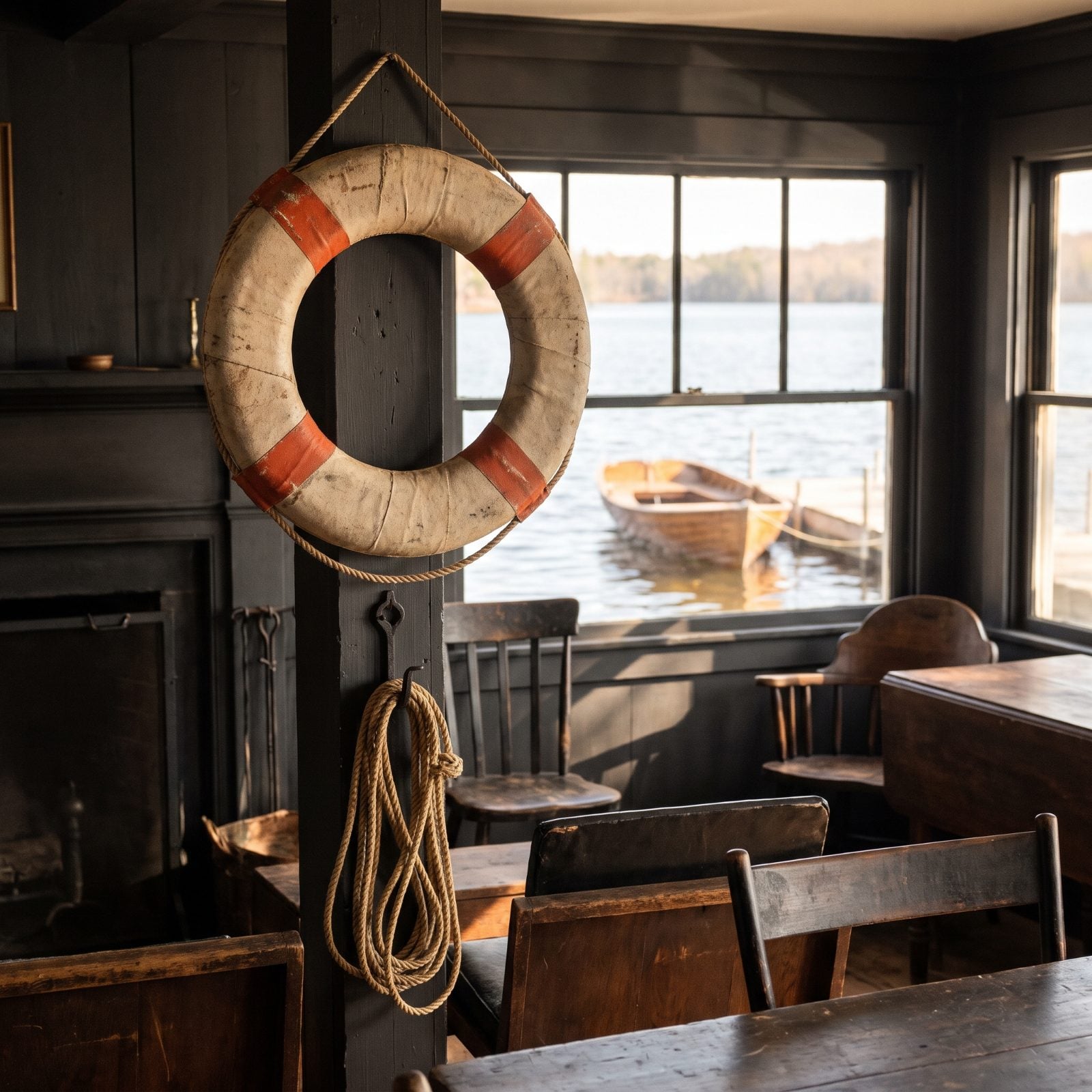
Hung on a post at the end of every dock: a heavy ring of cork sealed in canvas, painted white and orange, with a coil of manila rope ready to throw at anyone who went in off the end.
Today’s ring buoys are molded foam, lighter and cheaper and impossible to rot. The old canvas-and-cork ones soaked up water, cracked their paint, and grew heavy over the years. Prettier, though. A painted ring buoy on a gray post is the picture people still hang in lake cabins to this day.
11. Polaroid Fishing Photos Tacked to the Catch Board
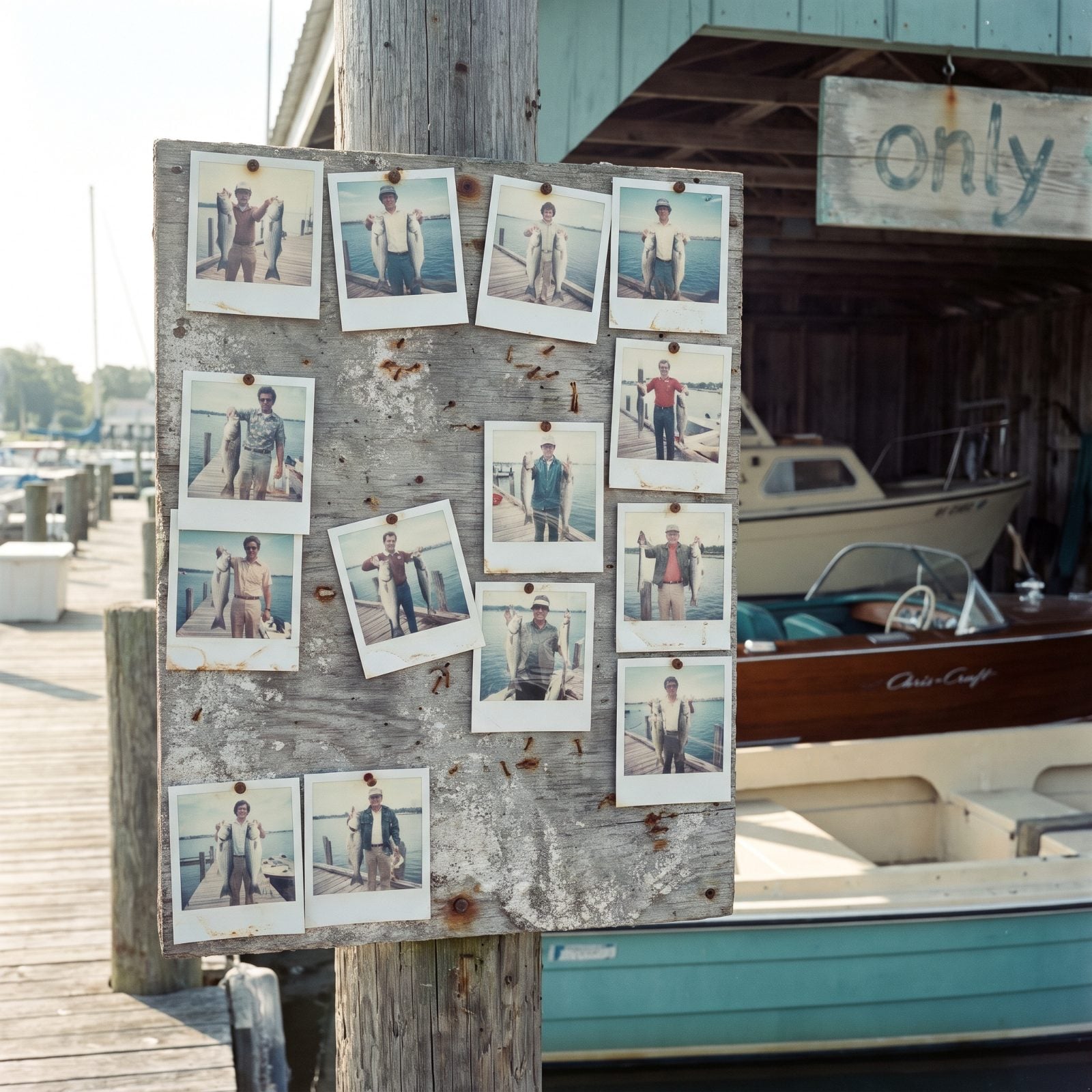
Before anyone carried a camera in their pocket, proof of a good day lived on a weathered wooden board nailed to a dock piling at the marina. You caught something worth remembering, somebody shook a Polaroid dry, and up it went with a nail.
The photos faded fast — sun turned the bluefish gray and the grinning faces orange inside a season, and nobody minded one bit. That board was a running conversation between everyone who fished the water. You could stand there reading it like a feed.
10. Fish-Cleaning Tables That Dropped Scraps Directly Overboard
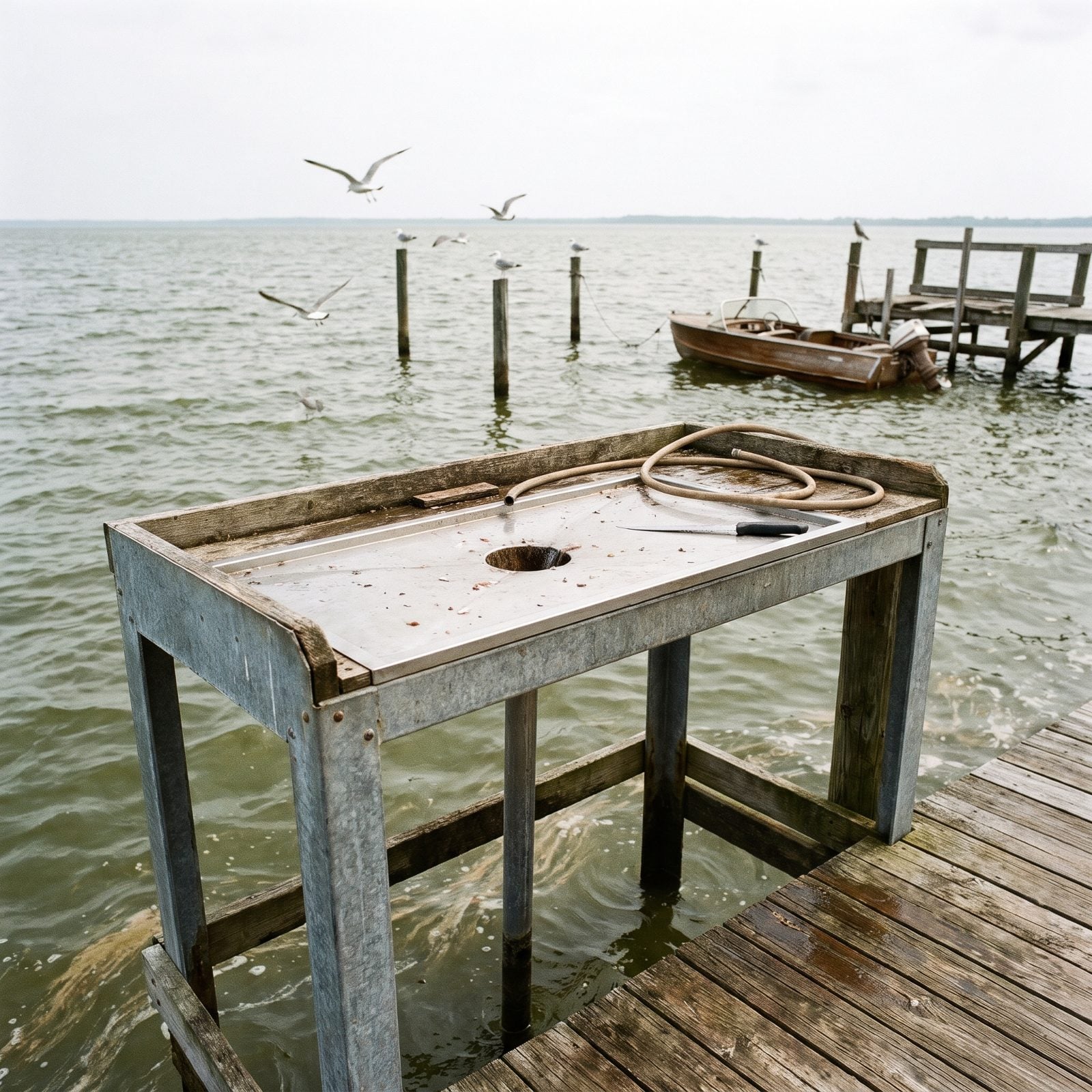
The cleaning table sat right at the water’s edge for one reason: gravity did the cleanup. Heads, guts, and scales dropped through a hole in the stainless and straight into the lake, where the gulls and the turtles sorted it out.
Made perfect sense to everyone then. Nature’s disposal, free of charge. We know more now about what a summer’s worth of fish waste does to a quiet cove, so most marinas today run the scraps into a bin or a macerator kept well clear of the swim area. Cleaner water, and fewer gulls dive-bombing your lunch.
9. The Marina’s Open Burn Barrel for Dockside Rubbish
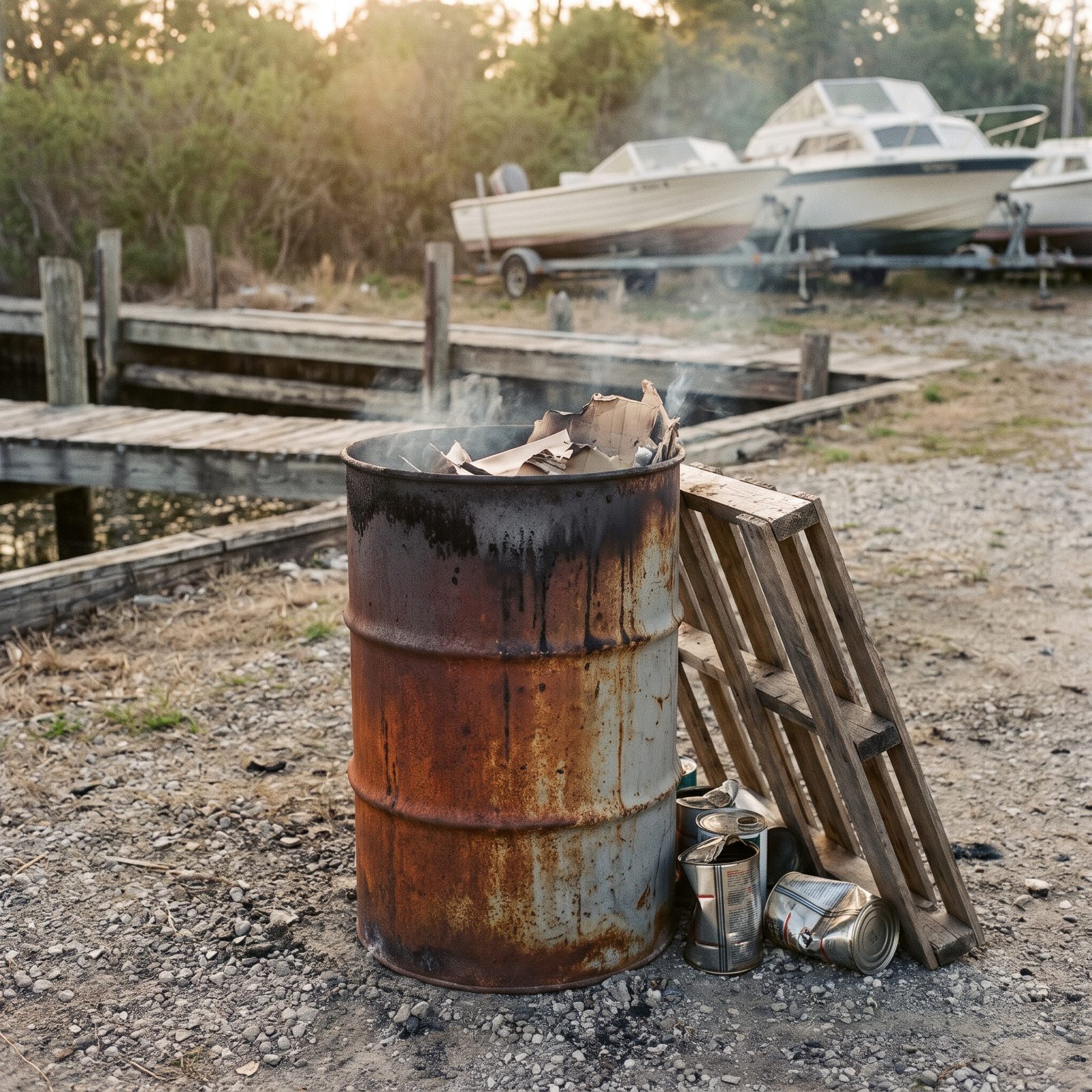
Trash day at the marina used to mean a match. Cardboard boxes, paper bags, broken crates, the occasional thing that absolutely should not have gone in — all of it went into a rusted drum and up the chimney of its own smoke.
You could smell which marina you were approaching by what they were burning. Practical, universal, and almost entirely gone now, pushed out by burn bans, air-quality rules, and the simple arrival of a dumpster with a weekly pickup. Nobody misses the smoke in their cockpit cushions.
8. Bottom Paint Sanded in the Open Without Dust Containment
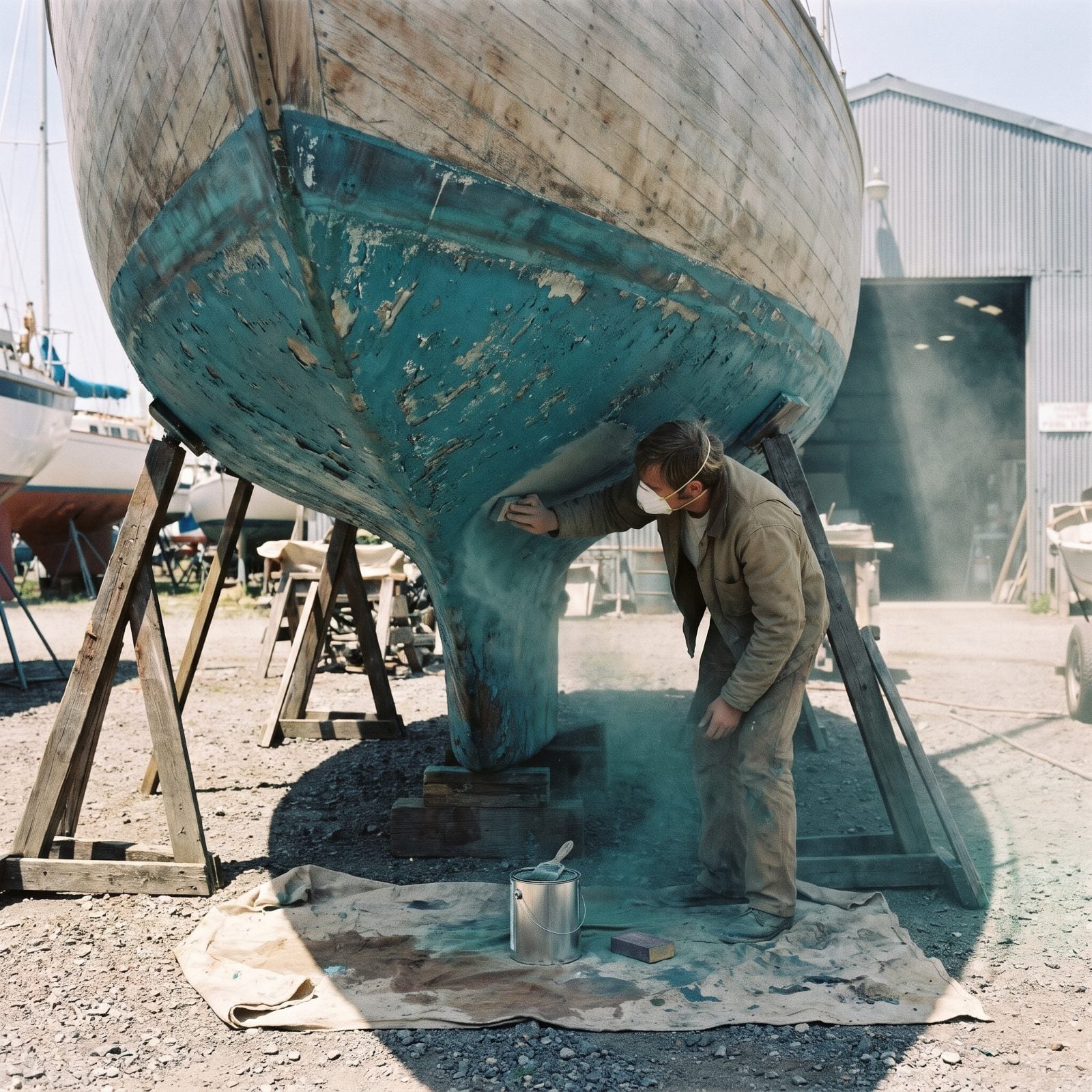
Spring haul-out had a signature cloud. Someone would be under a hull with a sanding block, knocking last year’s antifouling loose, and a fine blue-green dust drifted across the whole yard to settle on everything downwind.
That dust was loaded with copper and, in the older paints, nastier stuff. A paper mask felt like plenty back then. Today a yard that let you dry-sand bottom paint in the open could lose its permit — the work happens under tarps now, with vacuum sanders and collection bags, and the yard air no longer tastes faintly of metal in April.
7. Asbestos Exhaust Wrap Beside the Engine-Repair Bench
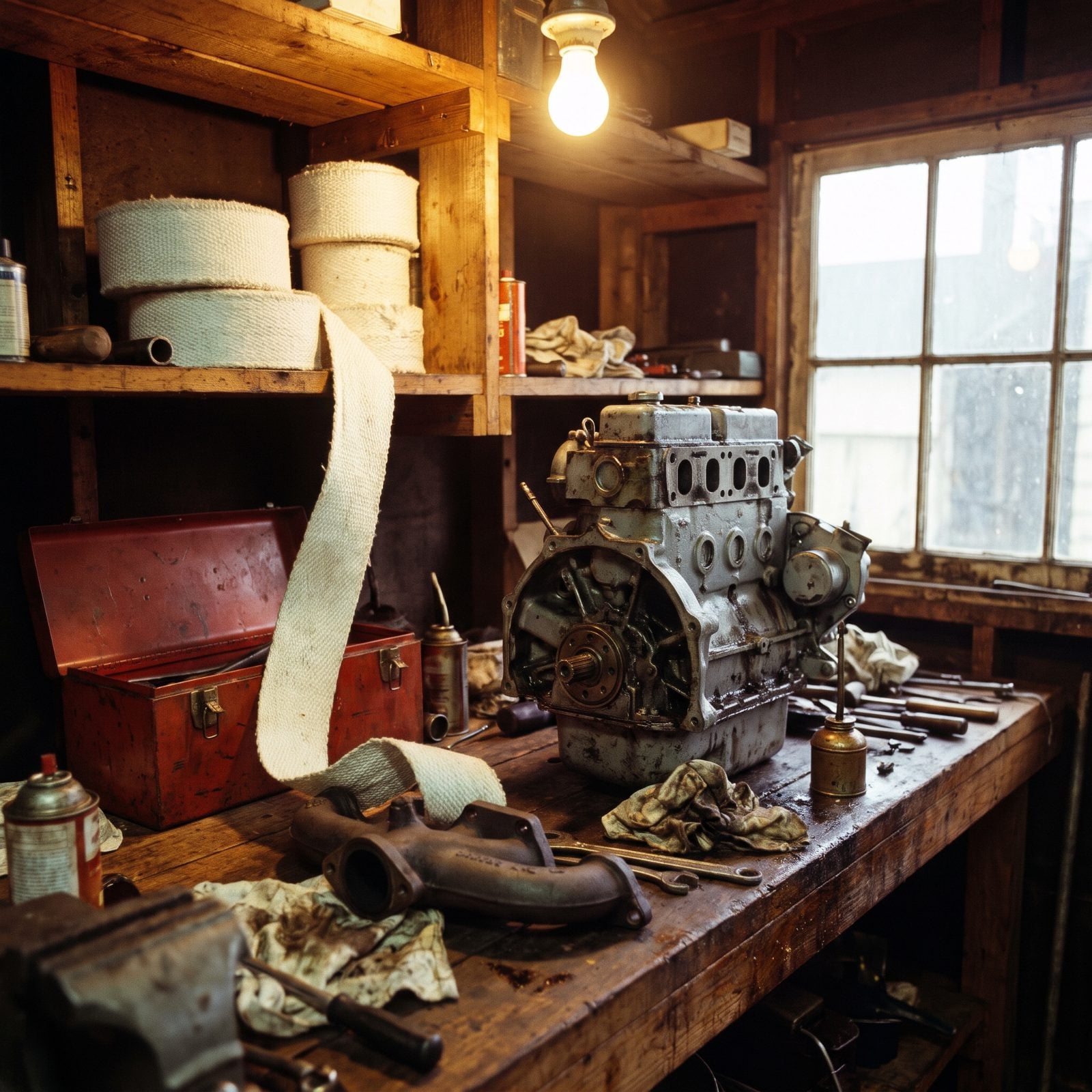
Every marina engine shop kept rolls of it on the shelf: soft white woven tape for hot exhaust manifolds, meant to keep the heat off the hull. Handled fire beautifully. It was asbestos.
Mechanics cut it, unrolled it, and breathed the dust off it for years without a second thought, because nobody had told them a second thought was warranted. By the mid-1980s the stuff was understood for what it was, and modern exhaust insulation uses fiberglass and ceramic instead.
Buy an older boat with a crumbling white wrap on the manifold and here’s my one piece of hard advice: don’t sand it, scrape it, or pull it apart yourself. Call someone who removes it properly. Of every job on an old boat, this is the one worth paying a specialist for.
6. Dock Electrical Boxes Protected by Screw-In Fuses
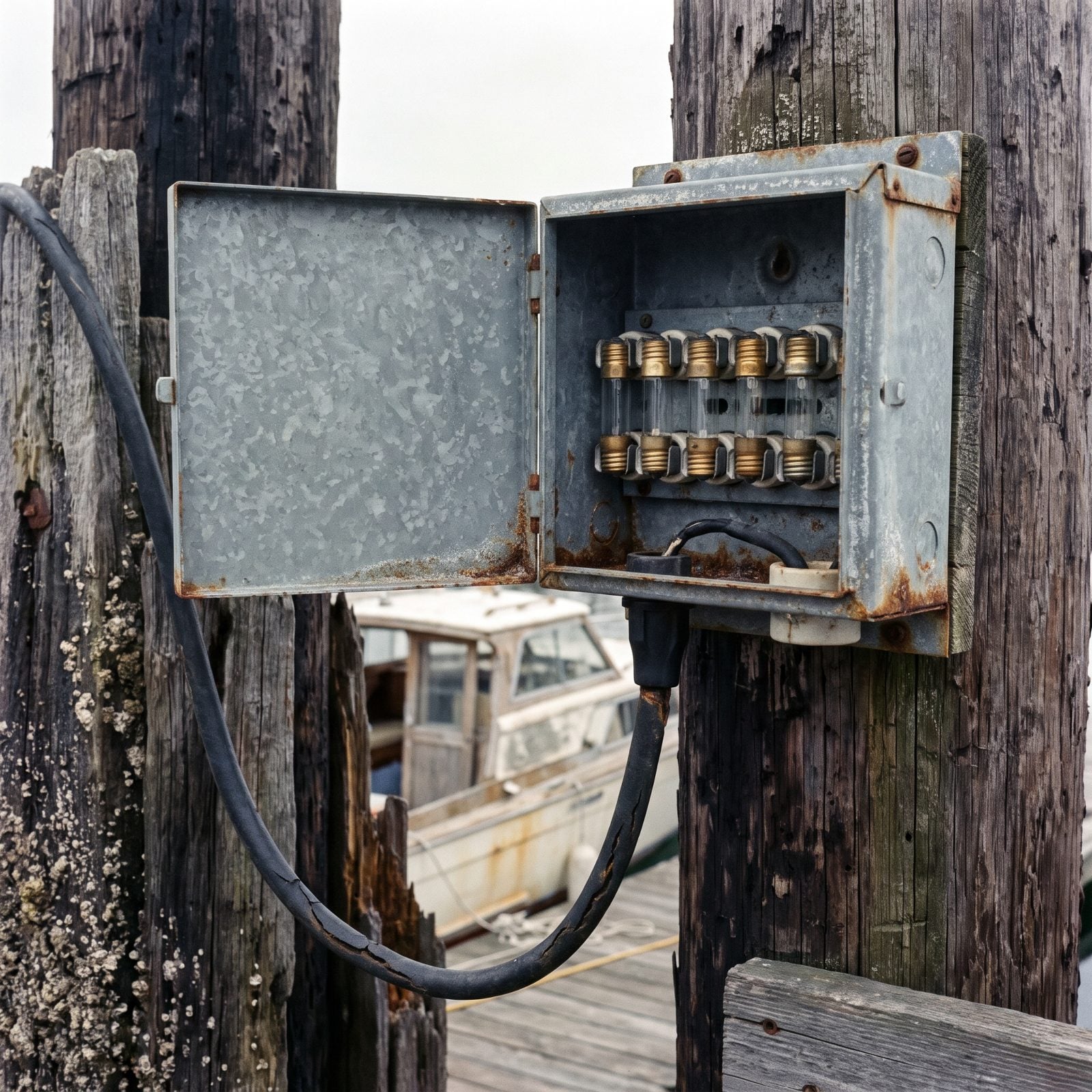
Open a shore-power box in 1975 and you were looking at a row of glass-windowed screw-in fuses, wire filaments visible inside, brass bases threaded into the panel — the same fuses that lived in the cellar of every old house.
When one blew, you squinted through the glass tube to find the broken filament, then walked up to the office for a replacement. The danger was the penny trick: a blown fuse, no spare, and somebody tempted to bridge it with a coin and keep the air conditioner running. Modern docks run circuit breakers and ground-fault protection you reset with a flip, and they trip on the kind of fault that used to put swimmers at real risk. That change saved lives, quietly.
5. Blue-Green Mercury-Vapor Lights Over the Boat Yard
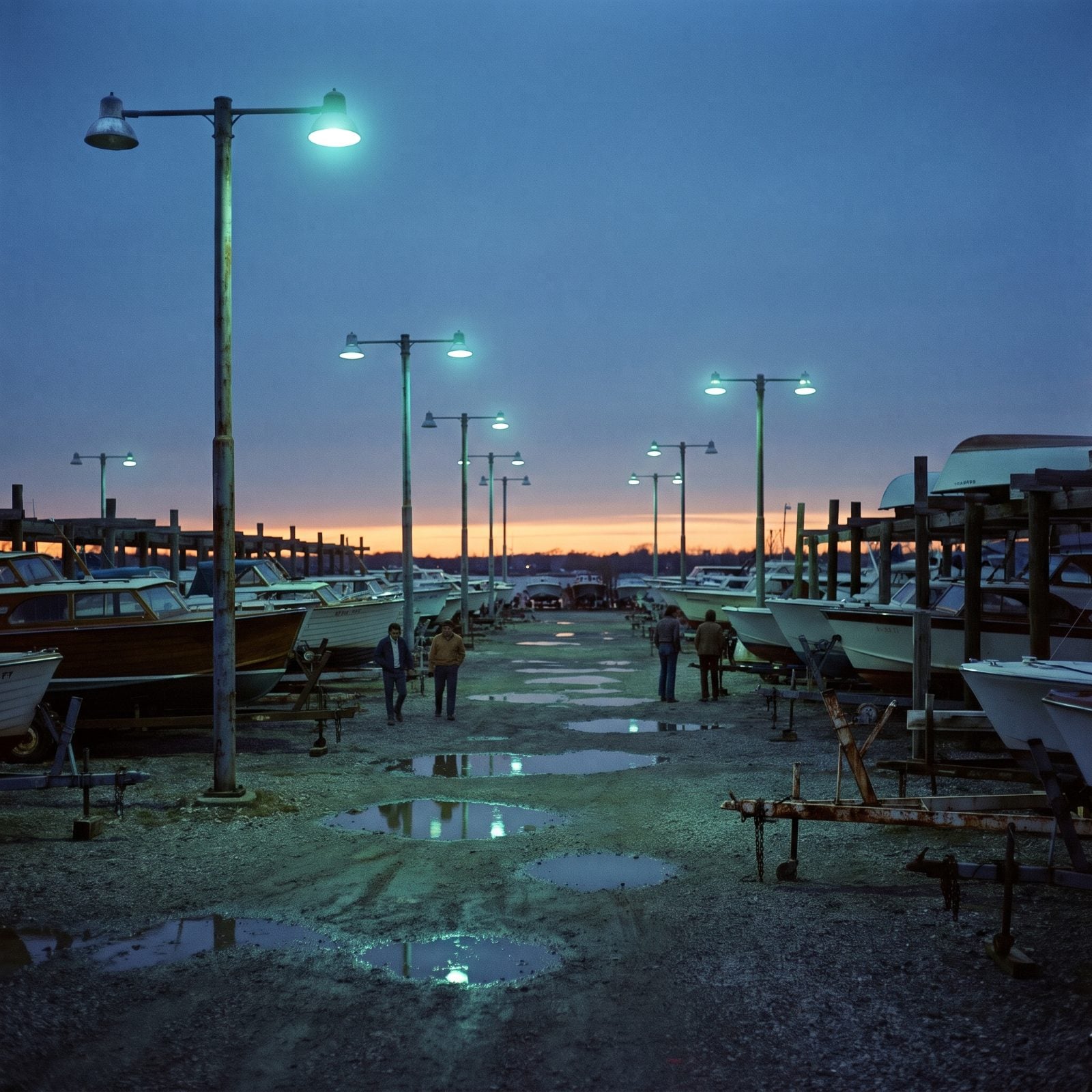
Pull into a marina lot after dark in 1975 and the whole yard glowed a strange underwater blue-green. That color was mercury vapor, the standard for lighting anything big and outdoor, and it made every boat look like it was parked at the bottom of a swimming pool.
Harsh light, slow to warm up, and hopeless at showing true color — your red bottom paint came out brown under it. Marinas have swapped nearly all of it for LED, which snaps on instantly and throws a cleaner white. Still, something about that eerie green haze over a row of winterized hulls says “marina at night” to anyone who grew up around one.
4. LORAN-A Receivers Glowing Inside Cruising-Boat Cabins
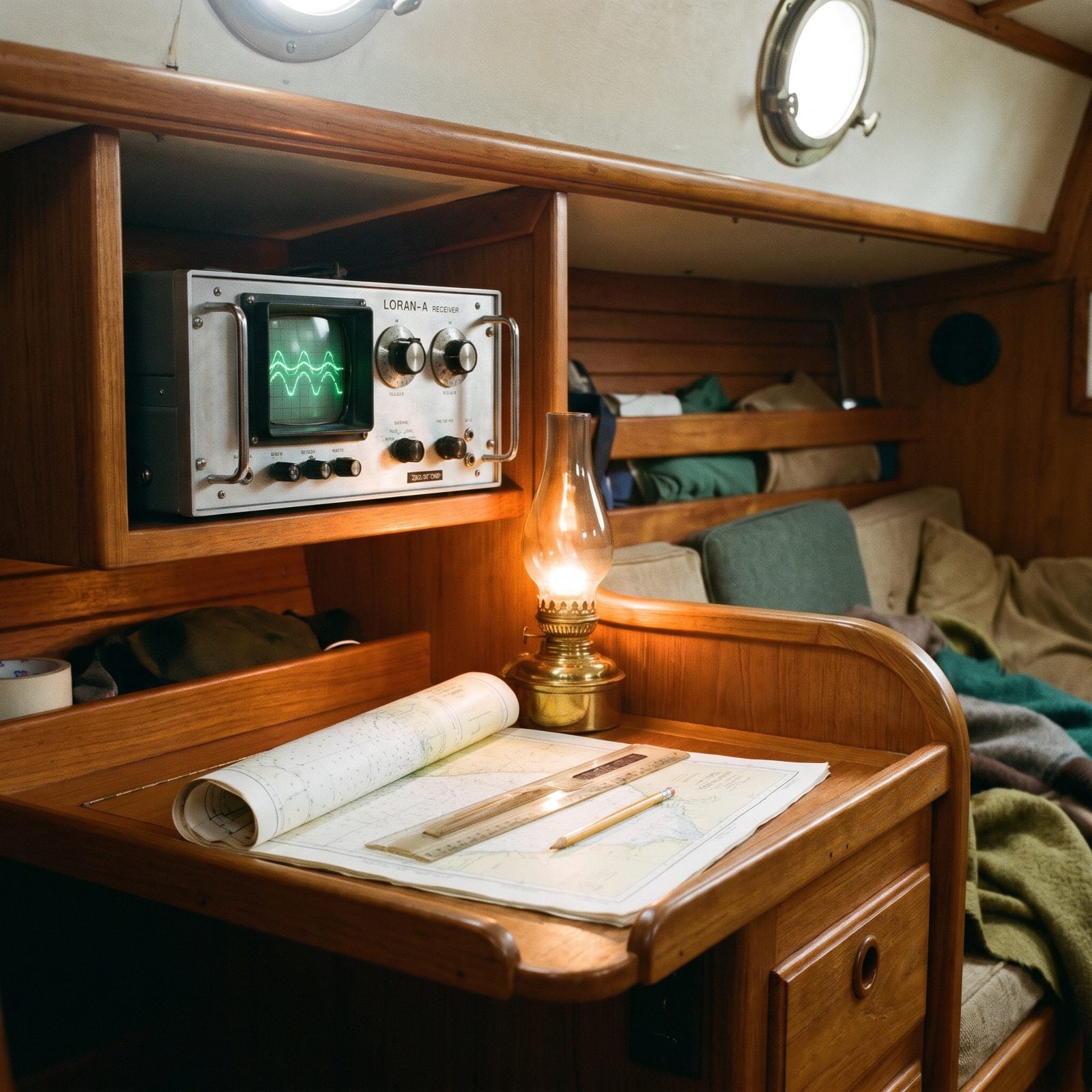
Finding your position offshore in 1975 meant hunching over a glowing green tube and matching wiggly lines by eye. That was LORAN-A, a radio navigation system that gave you a fix if you were patient, skilled, and the signal felt like cooperating.
Finicky as anything. You tuned pulses, read lag times, and plotted lines that crossed somewhere near where you actually were. The U.S. shut LORAN-A down at the end of 1980, replaced first by the more capable LORAN-C and then swept aside entirely by GPS.
Recalling his first navigation job in Alaska, one professional mariner describes the old LORAN-A set: “Ours had a little wheel that you’d turn to get the two signals to line up on the cathod ray tube to get the time delay between the two stations.”
3. Paper-Recording Fathometers Printing the Bottom Profile
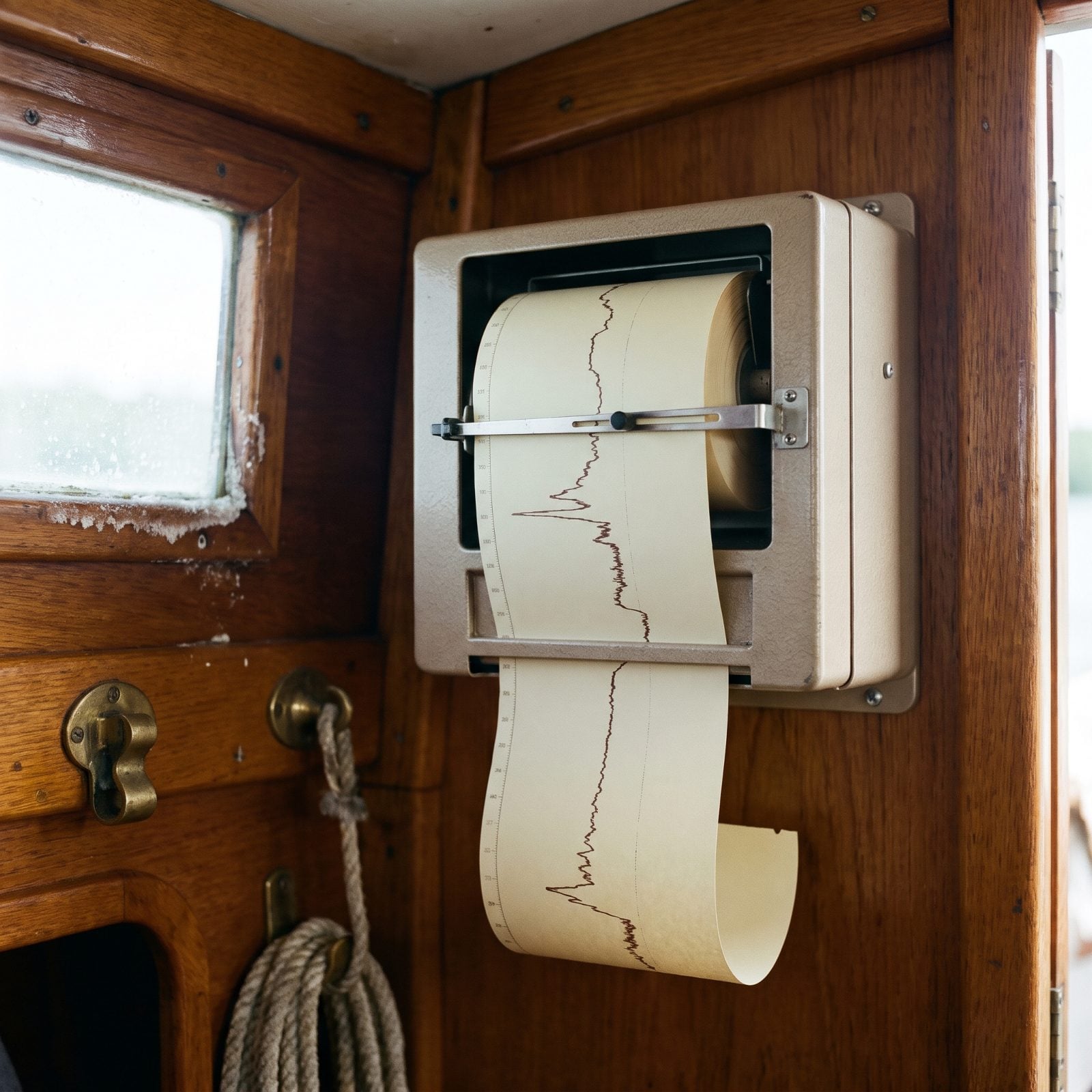
Finding fish once came with a sound and a smell — the faint buzz of a stylus and the warm paper tang of a chart slowly unspooling the bottom in front of you. The paper-recording fathometer drew the lake floor as a jagged ink line, and the dense smudges floating above it were your fish.
Captains swore by the paper trace. Tear off a strip, mark the spot, study it over coffee later. But the rolls ran out at the worst possible moment, the stylus wore down, and the whole thing got replaced by flickering green LCD fish-finders in the 1980s and color screens after that.
Ask an old-timer and he’ll tell you the paper showed structure better than anything did for years after. He might even be right.
2. The Eight-Track Tape Player Bolted Under the Helm
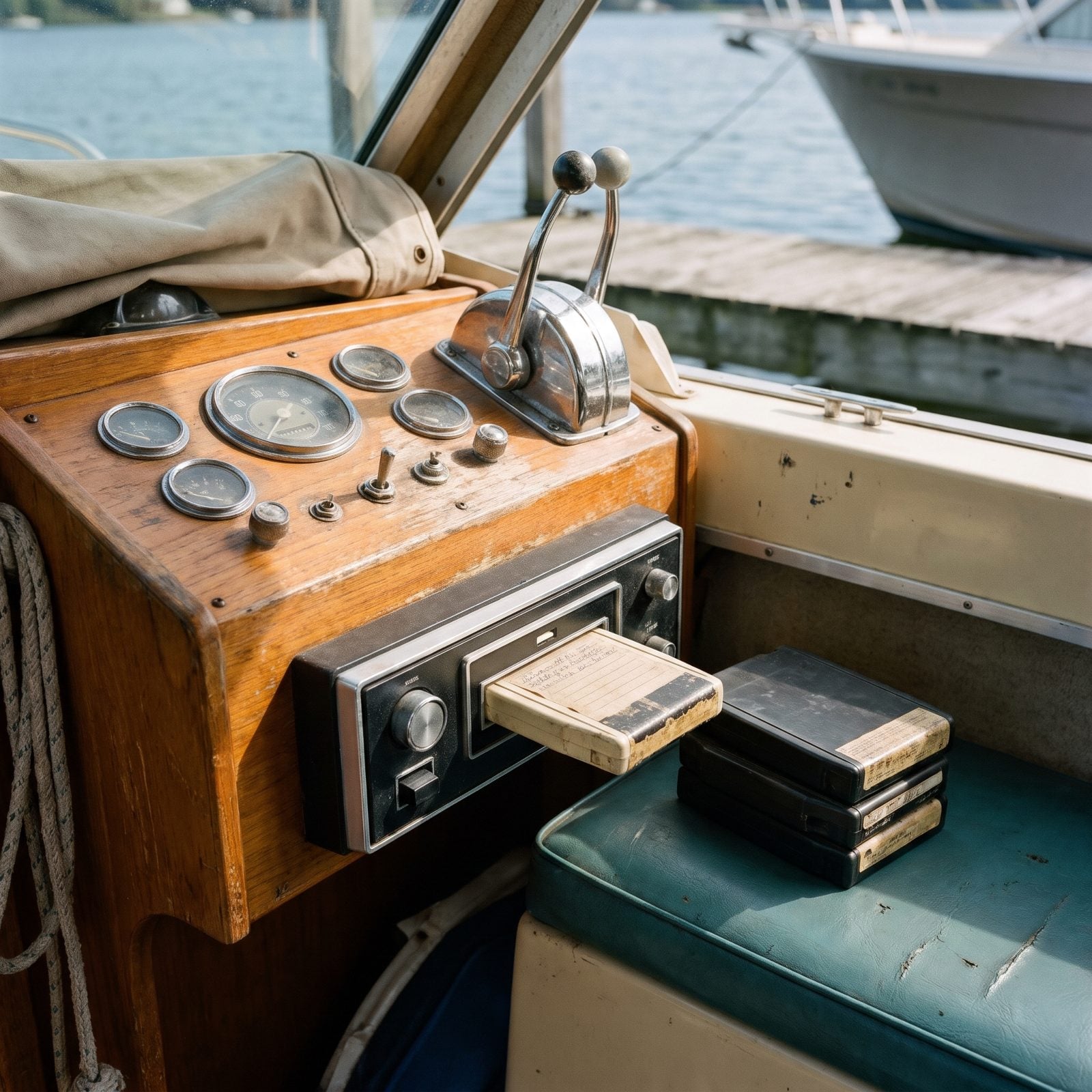
For a stretch there, no helm counted as finished until somebody had screwed an eight-track in under the wheel. The tapes were the size of a sandwich and they didn’t rewind. Hit a seam mid-chorus and the song just quit on you — a mechanical clunk, then it limped back in a key you weren’t ready for.
Salt air killed them slowly, the way salt air kills everything. The foam pads inside would swell, the tape jammed, and every boater we knew kept a spare cartridge or two in the glove box. Still. There was something about pulling away from the dock with Fleetwood Mac blasting out of one tinny speaker while the other one sat there long dead, and nobody minding either way.
1. The Black-and-White Portable TV Flickering in the Marina Lounge
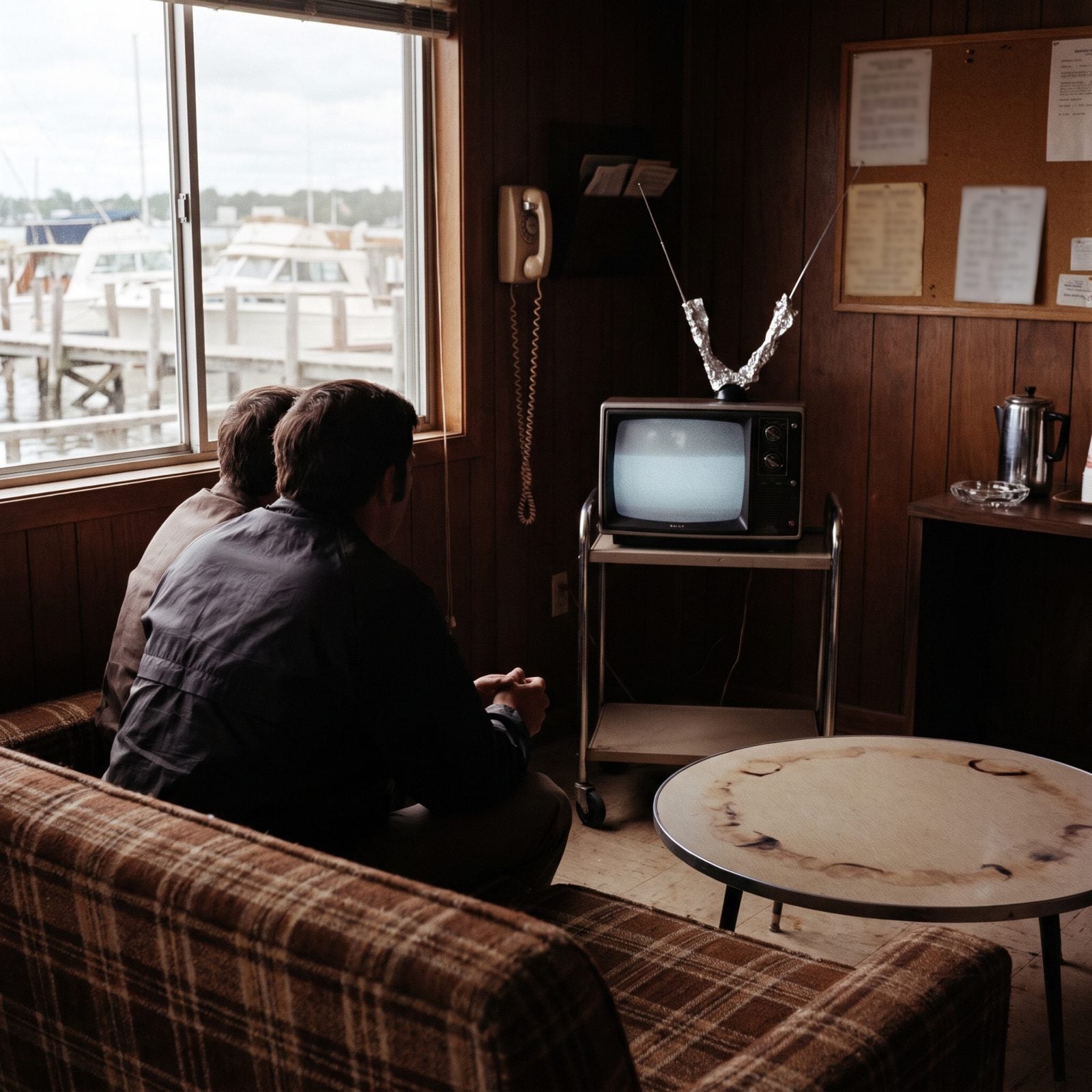
The marina lounge had exactly one television and it owed nobody an apology. Twelve-inch screen, black and white, rabbit ears crowned with a ball of tinfoil that somebody swore improved channel four. You’d fiddle with it, somebody would yell, and you’d end up holding the antenna at some ridiculous angle until the game came in — then you stood there like a human aerial for the next forty minutes while your arm went numb.
It lived on a metal cart that squealed when you rolled it. Rain days packed that room: wet windbreakers steaming, coffee going stale in the percolator, three guys arguing about tides and one dog asleep under the coffee table.
Nobody owned the TV and everybody did. That’s how a lounge used to work.
Color sets and private cabin screens emptied the room out eventually. The weather still rolls in the same way it always did. The crowd that used to wait it out together, though — that part’s gone.