

The dock looks great in the listing photos, and that sunset shot pulls fifty saves on Instagram. Then a guest cancels at midnight over a missing clause, or a spring flood soaks a crawlspace your policy never covered, and the whole dream starts leaking money.
Owning a lake house that pays for itself is possible — plenty of people pull it off. But the gap between a rental that funds your retirement and one that quietly drains it usually comes down to a handful of decisions made early, before the first guest ever walks in the door.
Please note that some of the imagery in this article may have been enhanced with the assistance of AI.
42. Buying the Lake House Before Checking Short-Term Rental Rules
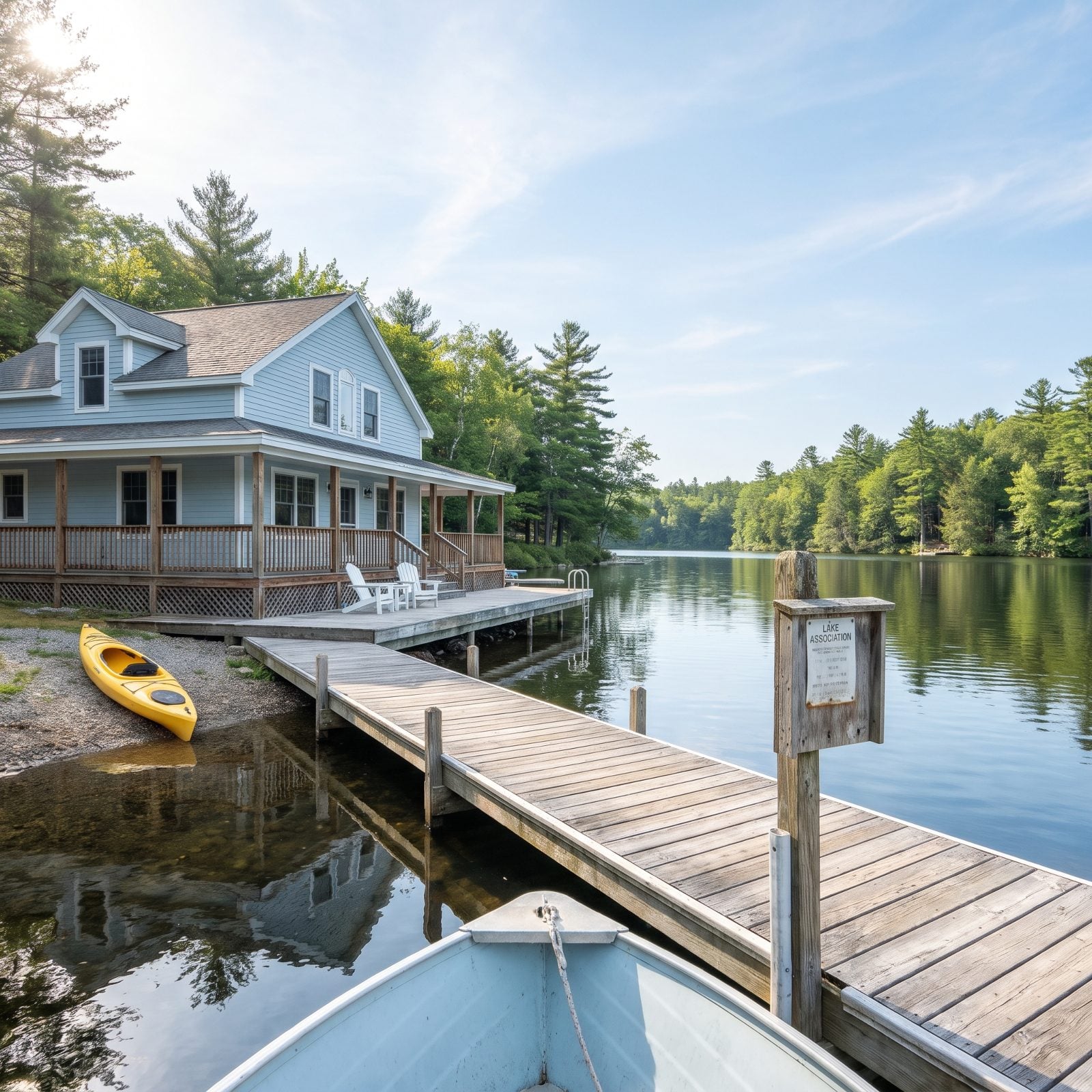
You close on the place in April, already spending the summer bookings in your head before the ink dries. Then the lake association hands you a bylaw that caps rentals at a thirty-day minimum, or the county drops a moratorium on new short-term permits. Now you own a vacation home you can’t rent to anybody.
This happens more than people admit. Towns tighten rules fast when weekend traffic starts annoying the year-round residents, and lake HOAs are famously protective of their quiet little coves.
Before you make an offer, pull the municipal code, call the zoning office, and read the HOA covenants line by line. Ask specifically about permit caps, minimum-stay rules, and whether existing rentals are grandfathered. Get the answer in writing.
41. Choosing Insurance That Quietly Excludes Paying Guests
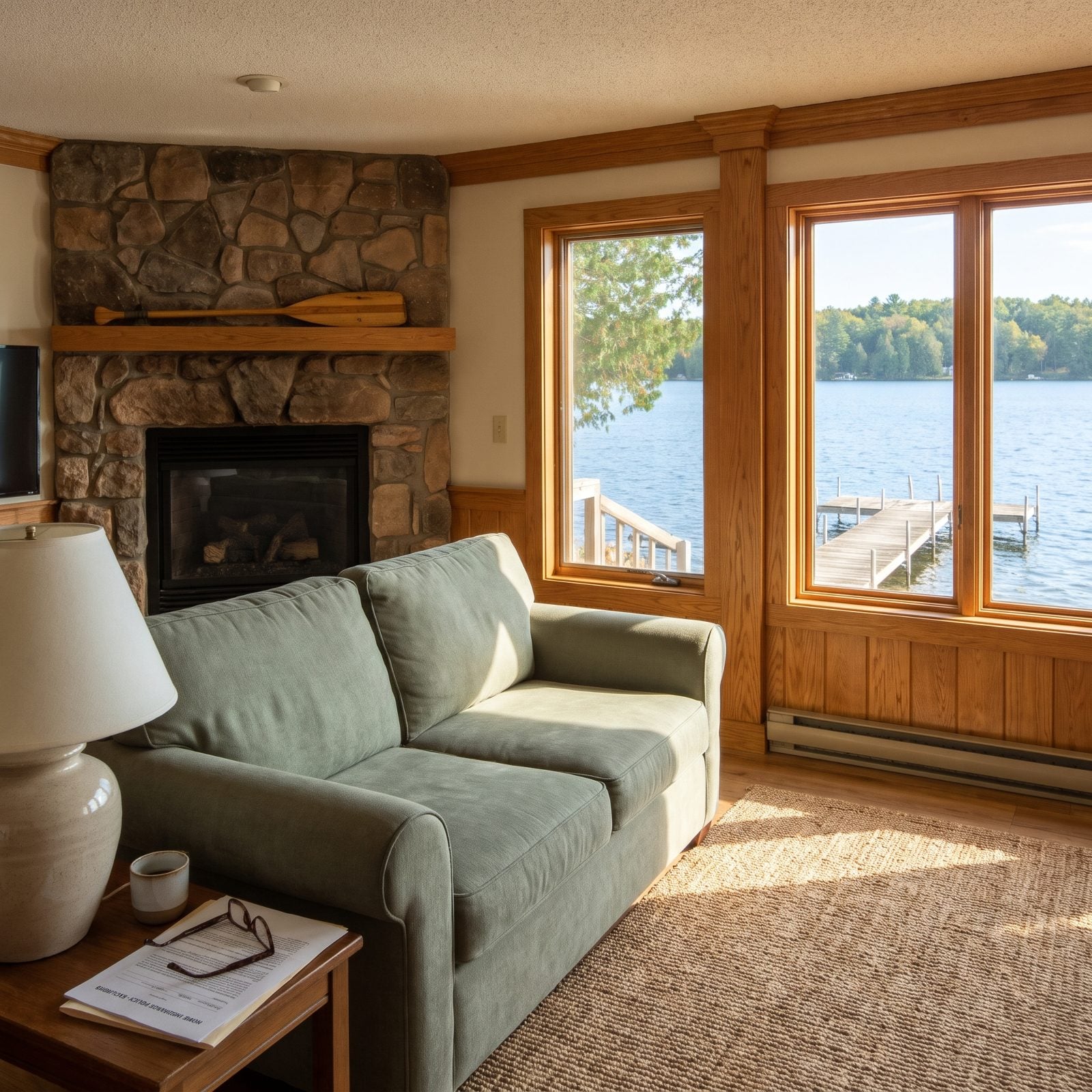
Here’s the trap. A standard homeowners or second-home policy covers you, your family, and your occasional houseguests. The second money changes hands, you’re running a business — and most of those policies simply walk away from the claim.
Picture a guest slipping on your dock ramp and snapping a wrist. You file, the adjuster asks one question — were they paying to stay here? — and your coverage evaporates on the spot. Now you’re personally staring down a lawsuit.
What you need is a commercial or short-term rental policy, sometimes called a landlord or home-sharing endorsement. Tell your agent exactly how you’ll use the house: how many nights a year, how many guests. Underpaying for the wrong policy isn’t saving money, it’s borrowing trouble.
40. Leaving Flood Coverage Off a Waterfront Policy
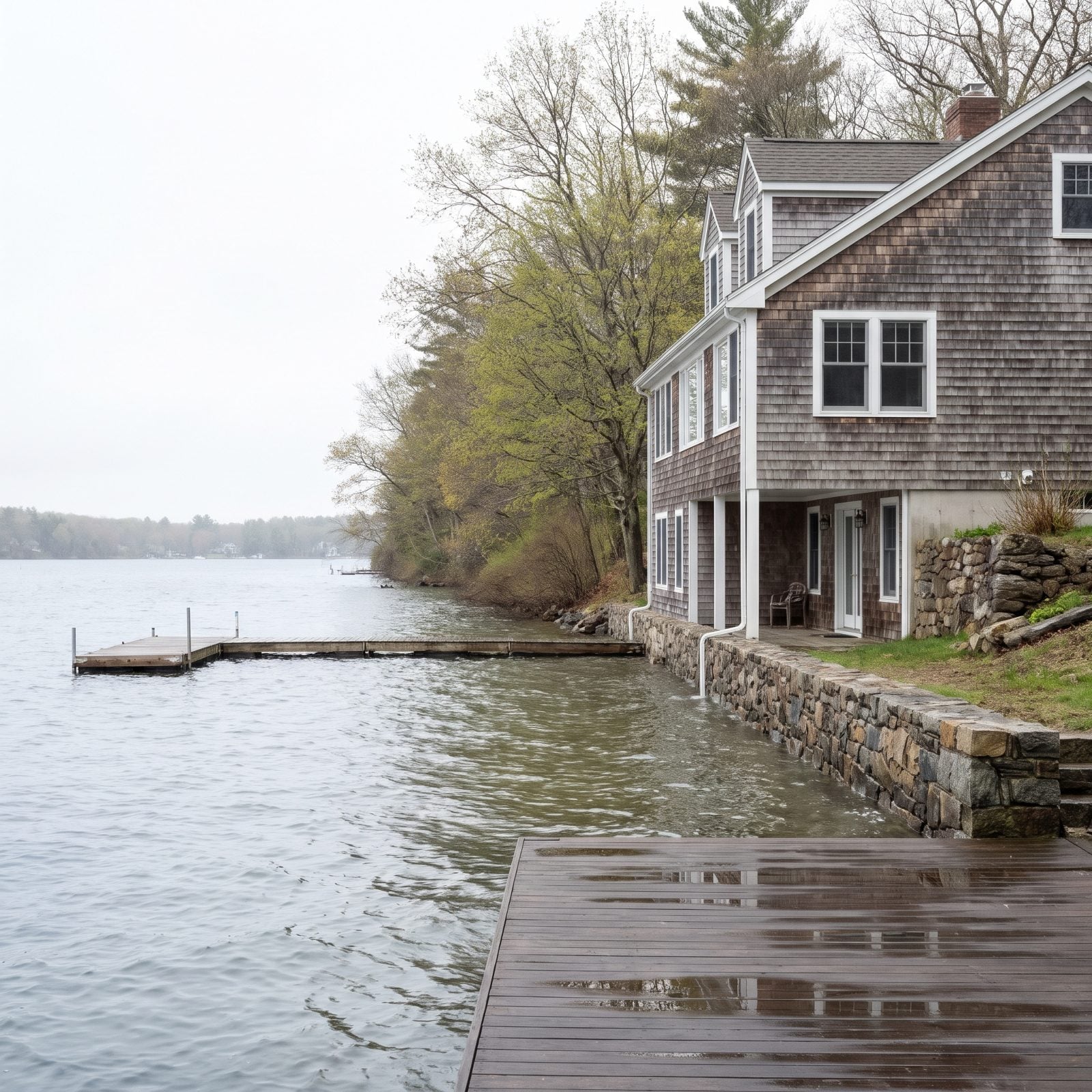
Standard policies don’t cover flood. I’ll say it again, because it catches smart people off guard every single year: your regular coverage does absolutely nothing when the lake comes over the bank.
Waterfront property floods. Snowmelt, a stuck dam gate, a week of hard rain upstream, and your walkout basement is six inches deep in muddy water. Without a flood policy you eat every dollar of that repair while the rental sits dark through your best weeks.
Get a separate flood policy, either through the NFIP or a private insurer. Know your flood zone before you buy, and know that private carriers often cover more than the federal cap. The premium stings once a year — the uncovered claim stings for a decade.
39. Assuming the Dock Falls Under Your Standard Policy
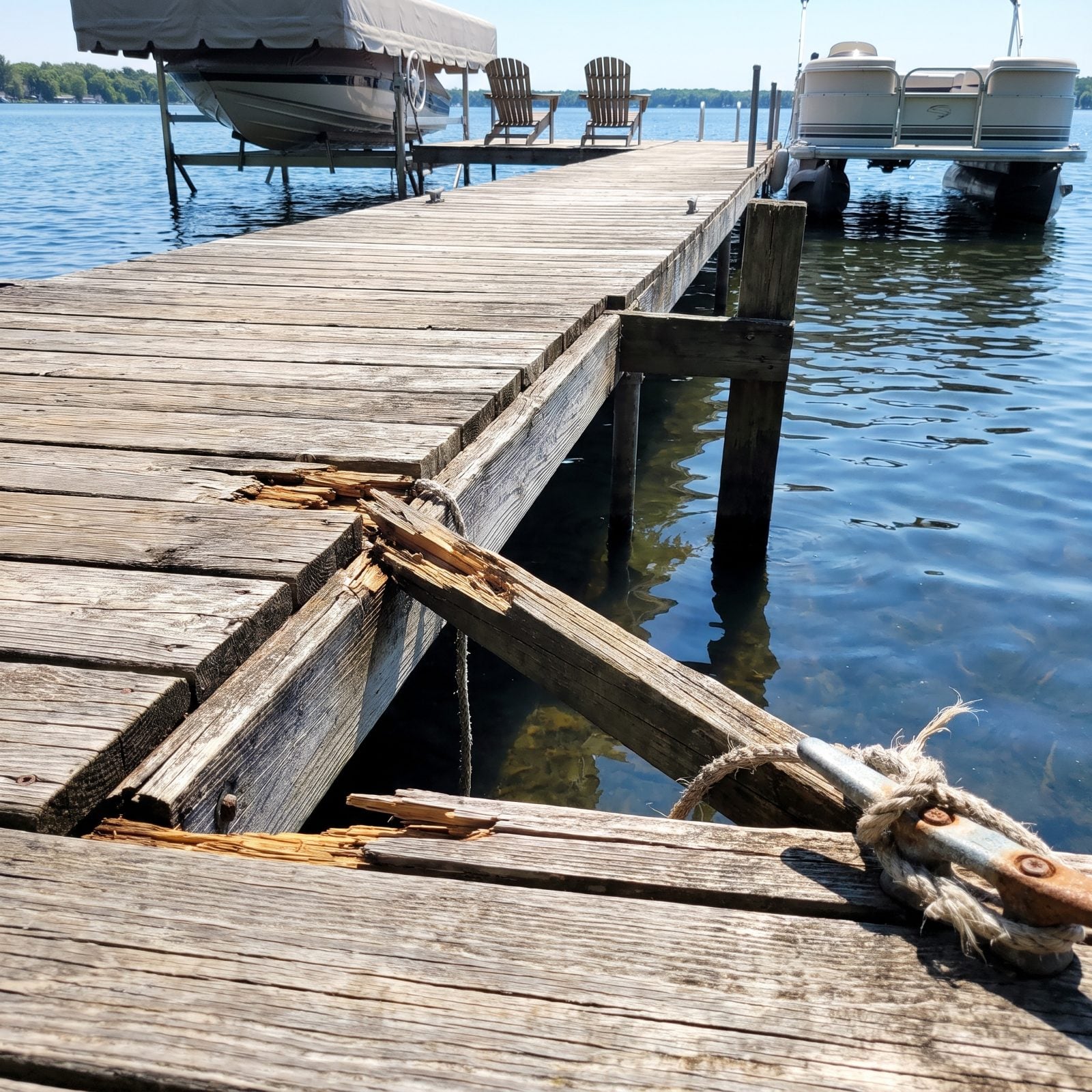
A good dock with a boat lift and a covered slip can run well into five figures to replace. Many owners assume it rides along on the house policy like a porch would. It usually doesn’t.
Docks, lifts, boathouses, and shoreline structures get excluded outright or capped at some tiny limit, and winter ice damage is the classic claim carriers hate to pay. One hard freeze heaves the pilings and your dock lists over like a sinking ship.
Ask your agent flatly: what’s my coverage on the dock, the lift, and the boathouse, and does it include ice and freeze? If the limit is laughable, add a scheduled endorsement. A dock is an asset, not a decoration, so insure it like one.
38. Skipping the Professional Inspection to Close Faster
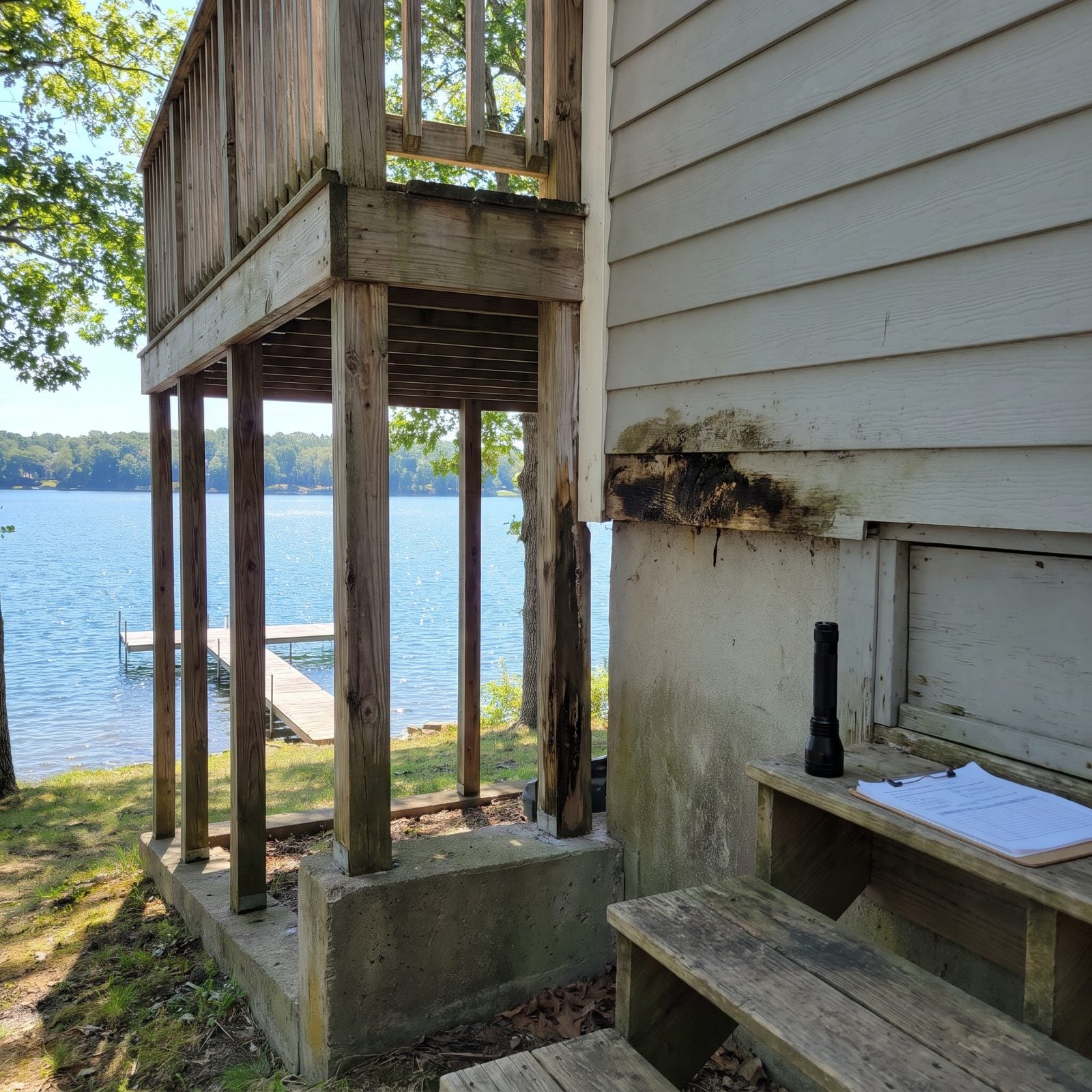
Lake houses hide their problems below the waterline of your attention. Septic systems crowded up against a shoreline, well water, a seawall slowly giving way, a crawlspace that’s been damp for fifteen summers running. A standard home inspection barely scratches any of it.
Say you skip the extras to win a bidding war. Three months later the septic backs up mid-stay, you refund the week, and the repair runs more than a whole season of bookings.
Spend the money on a full inspection plus specialists: septic, well, seawall, and the dock. On an older lake property, add a moisture and mold check. Cheapest insurance you’ll ever buy — and the one most people talk themselves right out of.
37. Financing a Rental With a Residential Mortgage

You get a better rate on a primary-residence or second-home loan, so the temptation is to sign those papers and quietly list the place on a booking site. That’s occupancy fraud, and lenders have gotten very good at sniffing it out.
Second-home mortgages usually bar short-term rental or cap it hard. Break the terms and the bank can call the loan due in full, demand immediate payoff, and report the fraud. A cheaper rate you can’t legally use is no bargain at all.
Finance a rental as what it actually is — an investment property. The rate runs higher and the down payment’s bigger, but the loan permits what you’re doing. Tell your lender your real plan from day one and sleep fine.
36. Overestimating How Full Your Peak Season Will Really Be
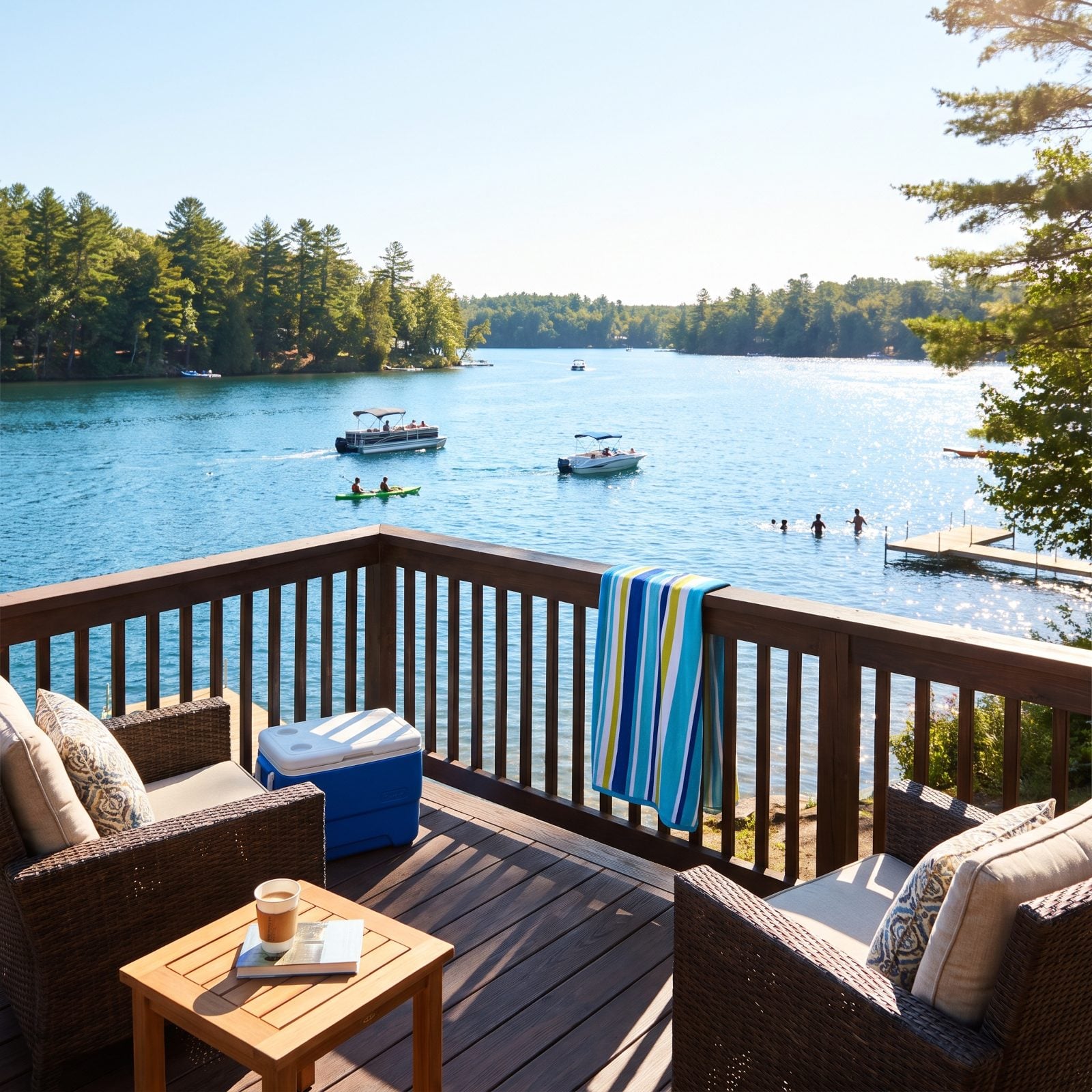
The spreadsheet always lies in your favor. You pencil in a fat summer occupancy, multiply by your dream nightly rate, and the mortgage pays itself with change to spare. Then reality shows up around mid-July and the numbers get quiet.
Lake rentals are brutally seasonal. A handful of genuinely strong weeks, maybe, then shoulder season, then a long quiet stretch where you’re heating an empty house for nobody. Build your budget on the fantasy number and the first slow summer will scare the daylights out of you.
Pull real comps from the booking platforms for houses like yours, on your lake, in your exact season, then subtract for cleaning gaps and your own family weekends. Model the house at breakeven on conservative occupancy. If it only works when it’s nearly full, it doesn’t work.
35. Setting One Nightly Rate and Leaving It There All Year
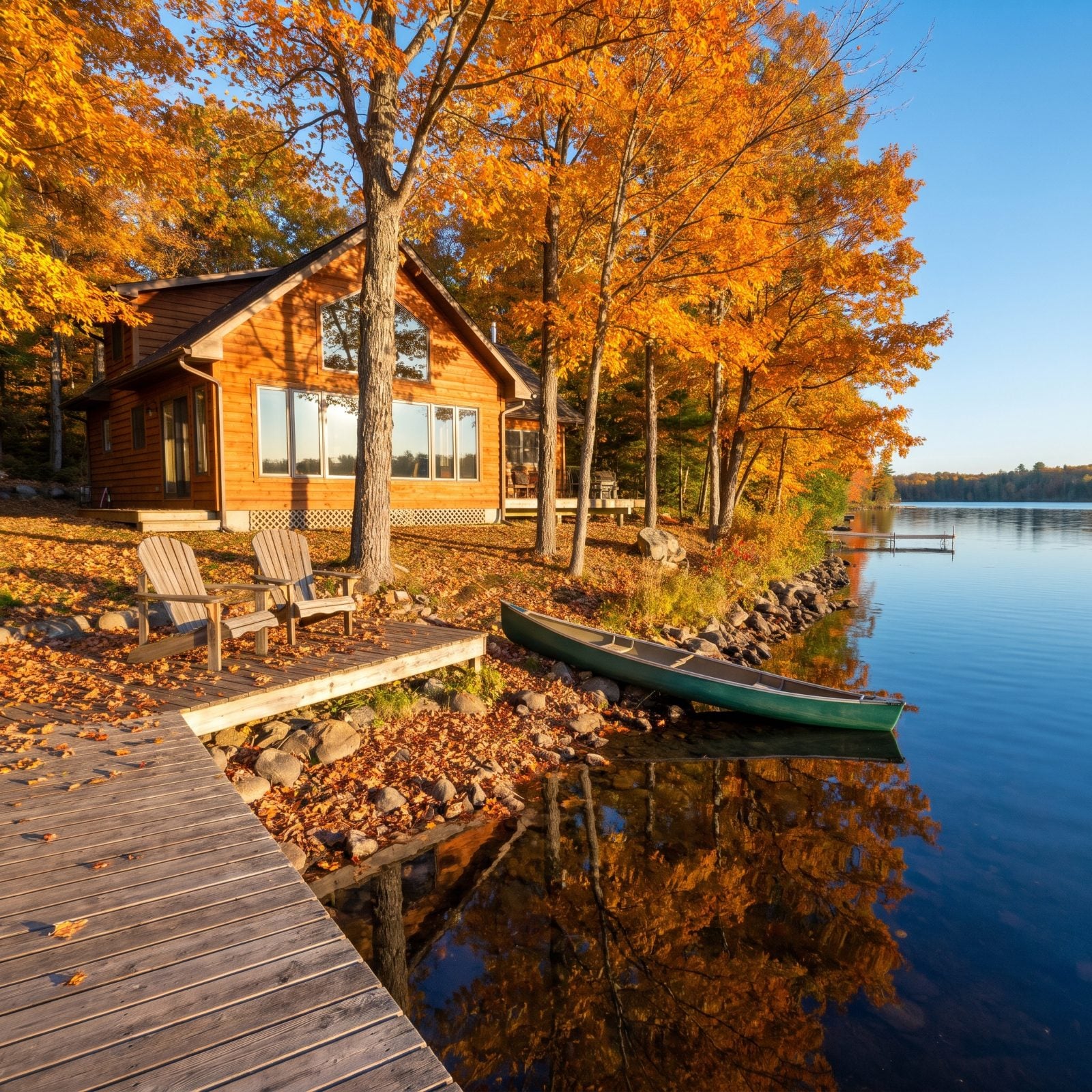
A flat year-round rate feels fair and simple. It’s also leaving real money on the table in July while scaring off the only guests you’ll see in November.
Charge your summer rate in March and the calendar stays empty. Charge your March rate on the Fourth of July and you’ve undersold a room that would’ve gone for double. Both directions cost you.
Price by season, by day of week, by demand. Weekends above weekdays. Holidays and regattas marked up months in advance. Shoulder and off-season dropped low enough to actually book. Dynamic pricing tools handle most of this on autopilot now, but honestly, even a rough three-tier system you adjust by hand beats one flat number every time.
34. Taking Direct Bookings Without a Signed Rental Agreement
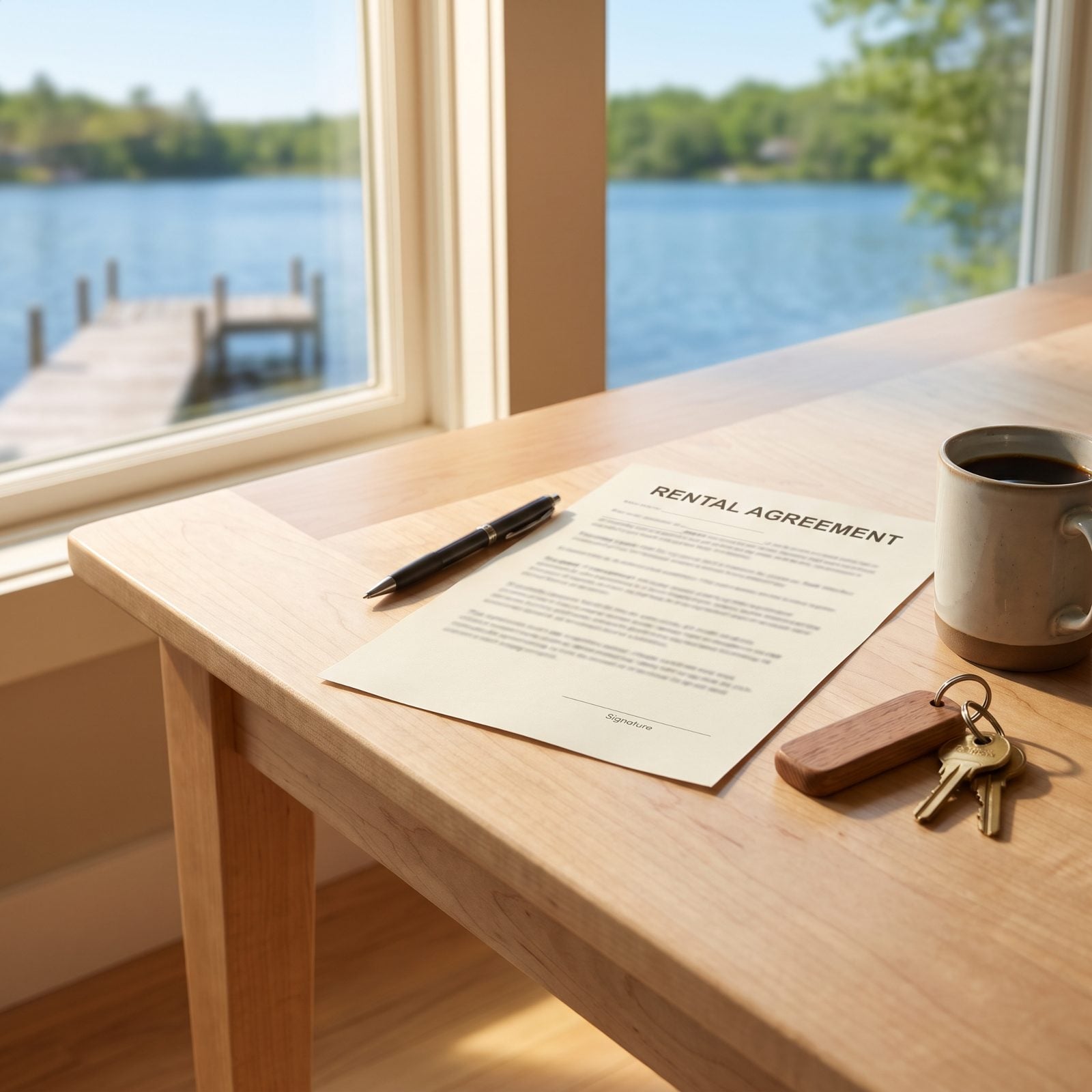
Direct bookings tempt you because you skip the platform fee. Then a guest pays by check, there’s no contract, and they cancel the week before your biggest weekend. You’ve got nothing to stand on.
Platforms handle agreements, payments, and disputes for you. Go direct without rebuilding that structure and you’ve stripped away every protection, including plain proof of the terms you both agreed to.
Every direct booking needs a written rental agreement: dates, total price, security deposit, cancellation policy, occupancy limit, house rules, signature. Use a documented payment method — never a loose check or cash in an envelope. A good agreement protects the guest too, which is exactly why reasonable people sign it without blinking.
33. Letting the House Fill Up Without an Occupancy Cap
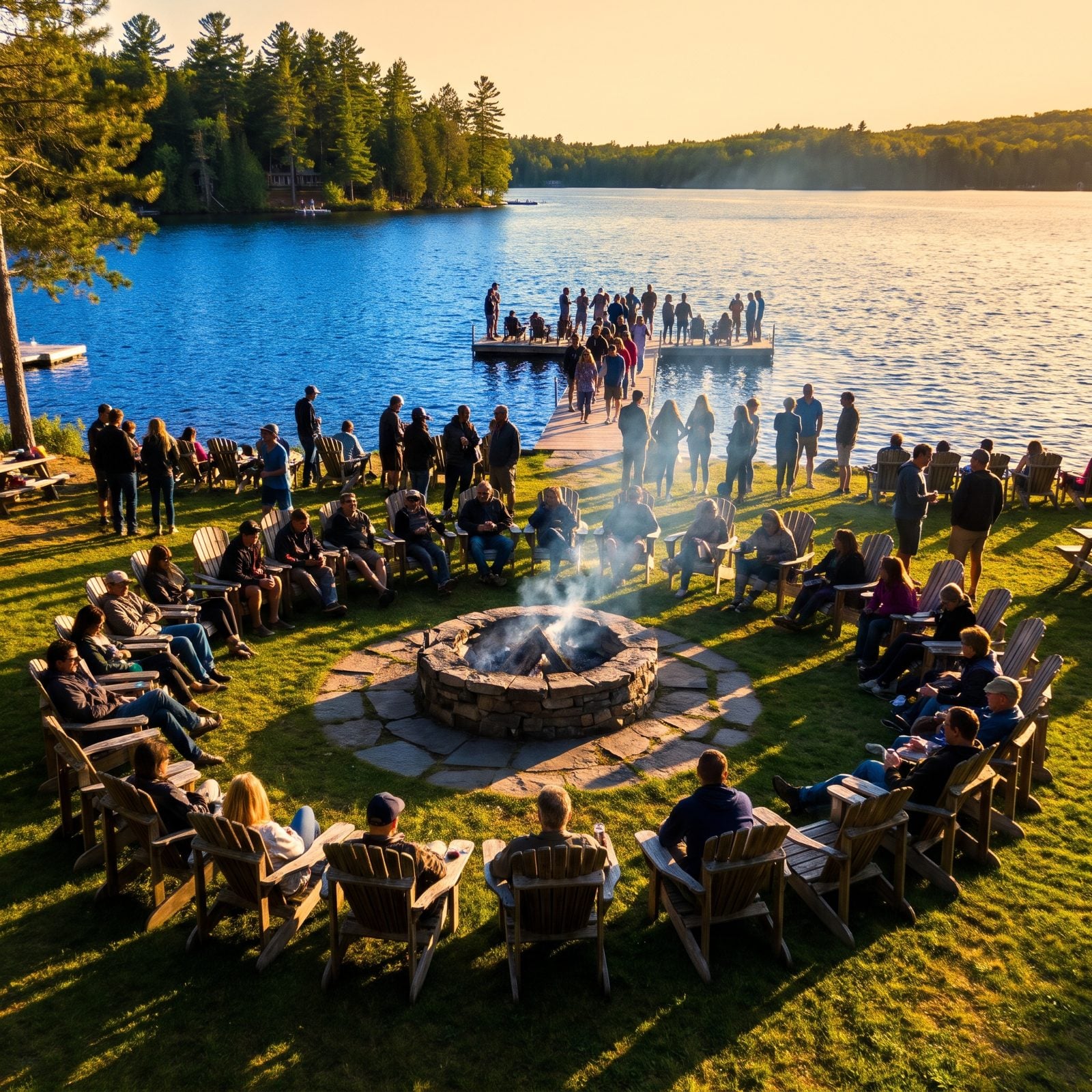
A listing that sleeps eight becomes a listing that hosts twenty the moment nobody sets a limit. Someone books for a ‘small family gathering,’ and by Saturday night there are forty cars jammed on the lawn, a bounce house, and a neighbor on the phone with the sheriff.
Overcrowding wrecks septic systems built for a household, not a wedding. It burns through your dock’s weight tolerance, torches the goodwill of neighbors you actually need, and can void your insurance if an injury traces back to a party you never approved.
Write a firm maximum occupancy into the agreement, day guests included, and spell out the penalty plainly. Note it in the listing too. On a lake, where the dock and the water pull a crowd like nothing else, the cap isn’t you being stingy — it’s the line between a rental and a liability.
32. Advertising More Bedrooms Than the Septic Permit Allows
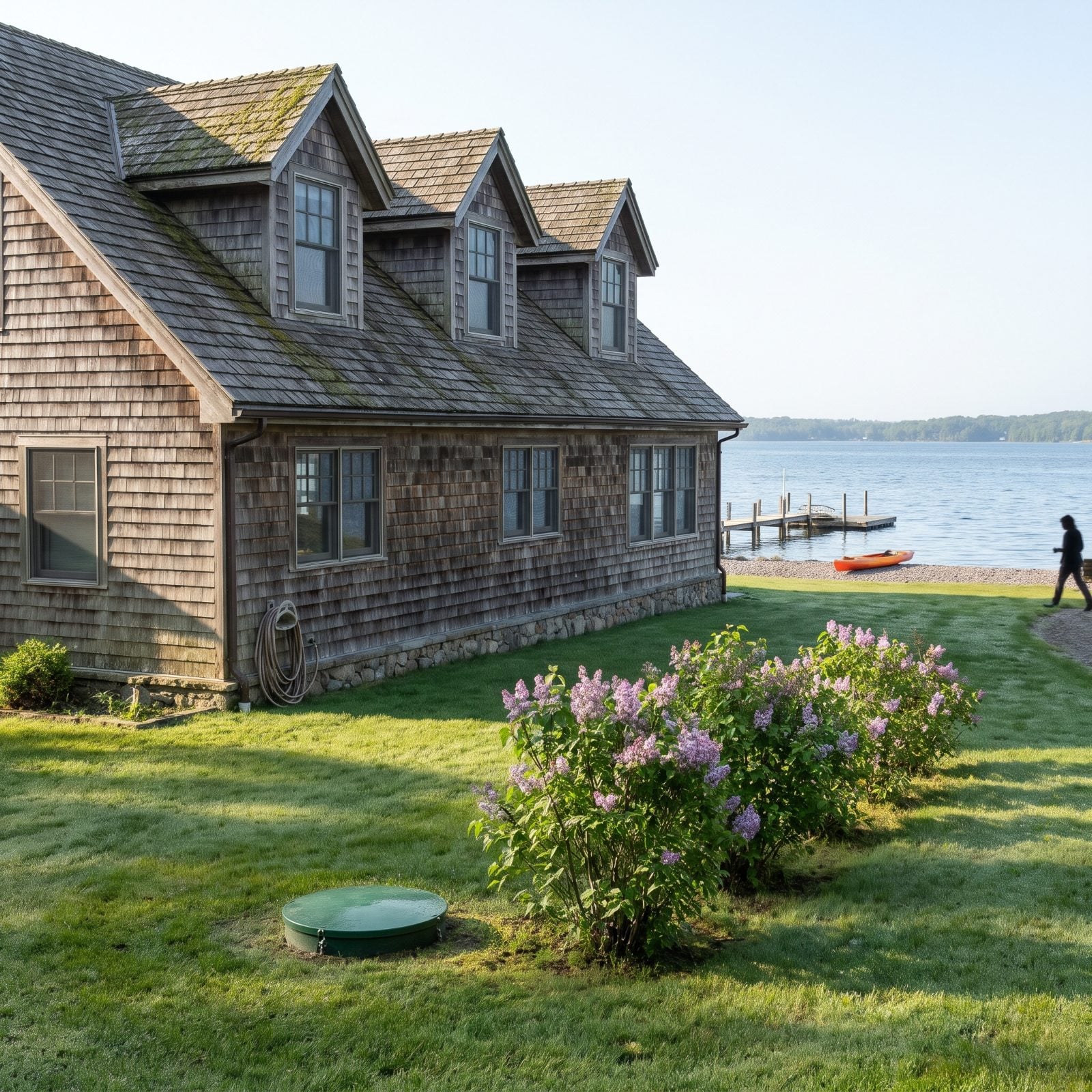
Your listing says sleeps ten. Your septic system was permitted for a three-bedroom house back in 1994, and those two numbers could not care less about each other. The gap between them is where plenty of owners get burned.
Over-occupancy pushes a drain field past what it was built to handle. A field that fails in August costs real money to replace, the county can shut down your rental while you wait, and some towns tie your rental license straight to the septic permit on file.
So pull the permit before you write a single word of the listing. Advertise the bedroom count the system is rated for, not the number of mattresses you can wedge under the roof. Want more heads in beds? Talk to a licensed installer about a bigger field first.
31. Ignoring Local Lodging Taxes

Lodging tax feels like somebody else’s problem until a notice shows up with back taxes, penalties, and interest stacked on top. Plenty of owners never knew their county charged one in the first place.
Short-term rentals usually owe a transient occupancy or lodging tax, and the rate swings wildly from one lake town to the next. Skip it and you’re not saving money. You’re borrowing it from the tax collector at a lousy rate.
Call the county treasurer or finance office before your first booking. Who collects it? What’s the rate? Does your booking platform remit it for you? Some do, some don’t, and assuming is exactly how the bill gets ugly.
30. Treating Rental Income as Tax-Free Cash

The money hits your account and feels like found money. It isn’t. The IRS sees rental income, and depending on how many days you rent versus how many days you use the place yourself, the rules shift right under your feet.
Owners who don’t track anything end up guessing at tax time. They miss deductions they earned, or worse, they underreport and draw a letter. Mortgage interest, cleaning fees, repairs, depreciation, even the dock stain you bought back in May can all count against what you owe.
Open a separate account for the rental. Log every deposit and every expense from day one. Come tax time, hand a real accountant who actually understands vacation rentals the clean numbers instead of a shoebox in October.
29. Hiring the Cheapest Property Manager
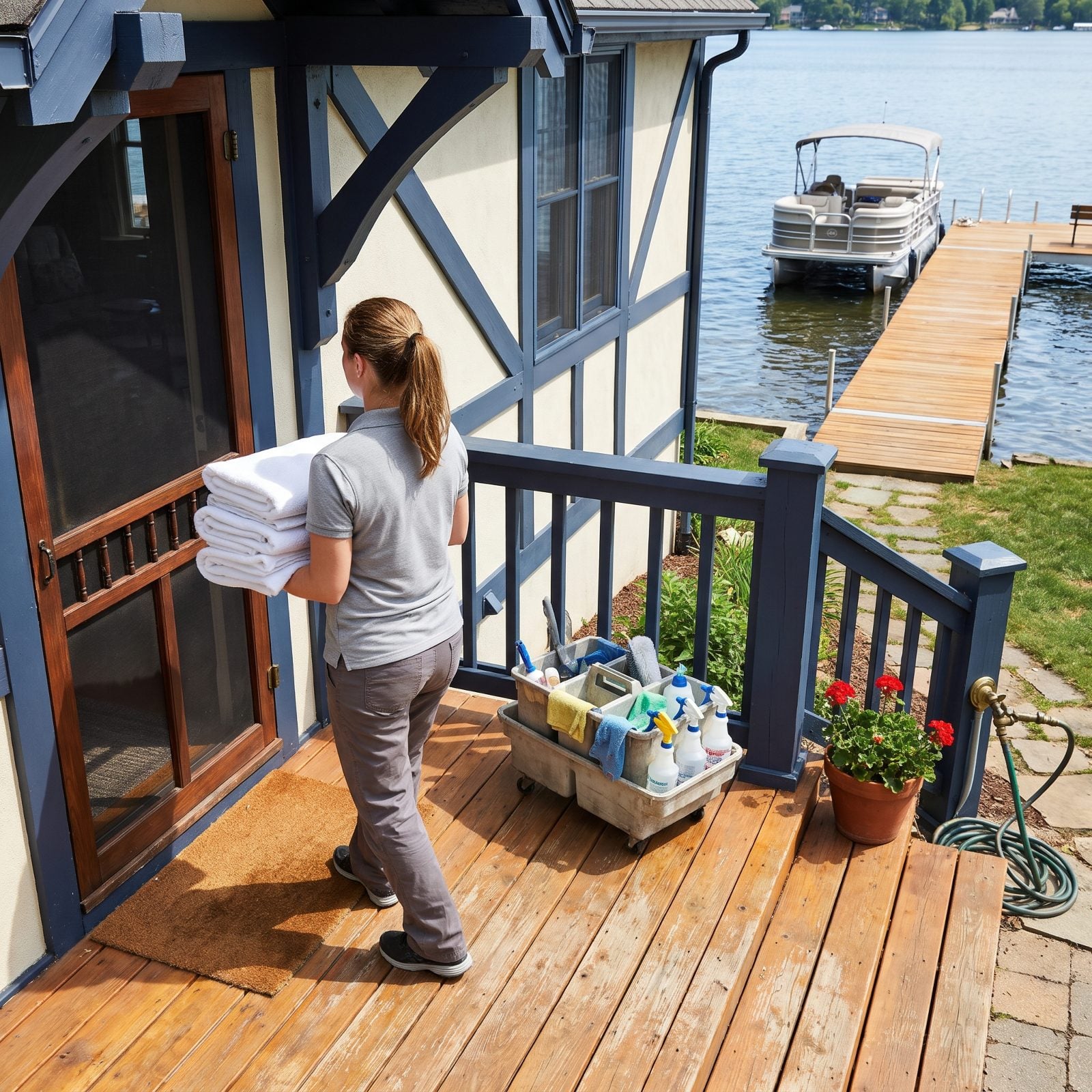
The low bid wins the contract and loses the season. A bargain manager usually means slow responses, skipped detail, and a guest standing on your dock at 9pm with nobody picking up the phone.
A waterfront rental is a harder job than some suburban condo. Docks shift, weather cancels plans, lake traffic peaks hard in July. And the manager who quoted you the lowest rate is almost always the one juggling forty other properties and handing yours the scraps.
Interview three. How fast do they answer an emergency call? Who actually does the turnovers? Do they inspect after cleaning? Pay for someone who treats your five-star reviews like their own paycheck, because that’s exactly what they are.
A cheap manager is cheap right up until the guest leaves a two-star review that follows your listing around for a year.
28. Scheduling Same-Day Turnovers Too Tightly
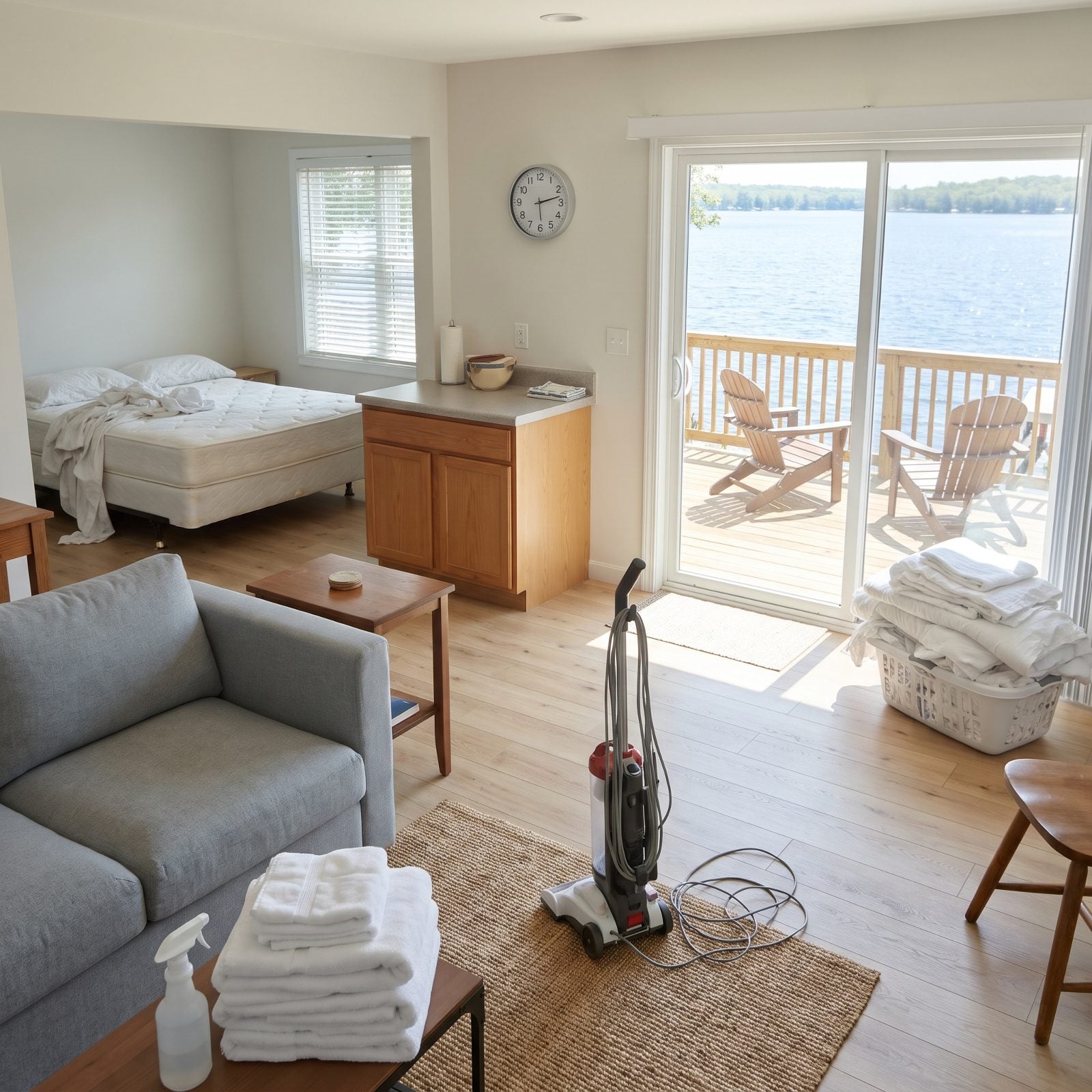
Checkout at 11, check-in at 3. On paper that’s four hours. On a rainy Saturday with a boat parked in the driveway and a six-guest party trailing lake mud across the floor, it’s nowhere near enough.
Squeeze the window too tight and your cleaners cut corners, or your next guests walk into half-made beds and a vacuum still running. Either way the review tanks.
Give yourself real breathing room. Five hours minimum on peak weekends, more if your crew handles laundry on-site. And a few times a season, block one buffer night between stays so the dock, the kayaks, and the grill get a proper once-over instead of a rushed glance on the way out.
27. Skipping Post-Cleaning Inspections

Cleaners are human, and they miss things. The hair on the shower floor, the ring in the toilet, the sand tracked under the entry bench from the last crew off the lake. A quick walk-through catches all of it before a paying guest does.
Nobody ever wrote a glowing review about a clean bathroom. They absolutely write a scorcher about a dirty one. One missed detail can wipe out the memory of an otherwise flawless stay.
Walk the property yourself, or have your manager send a photo walkthrough after every clean. Hit the spots guests clock first: the coffee station, the master bath, the glass door facing the water, the welcome mat where everybody drops their bags.
26. Waiting Too Long to File Platform Damage Reports
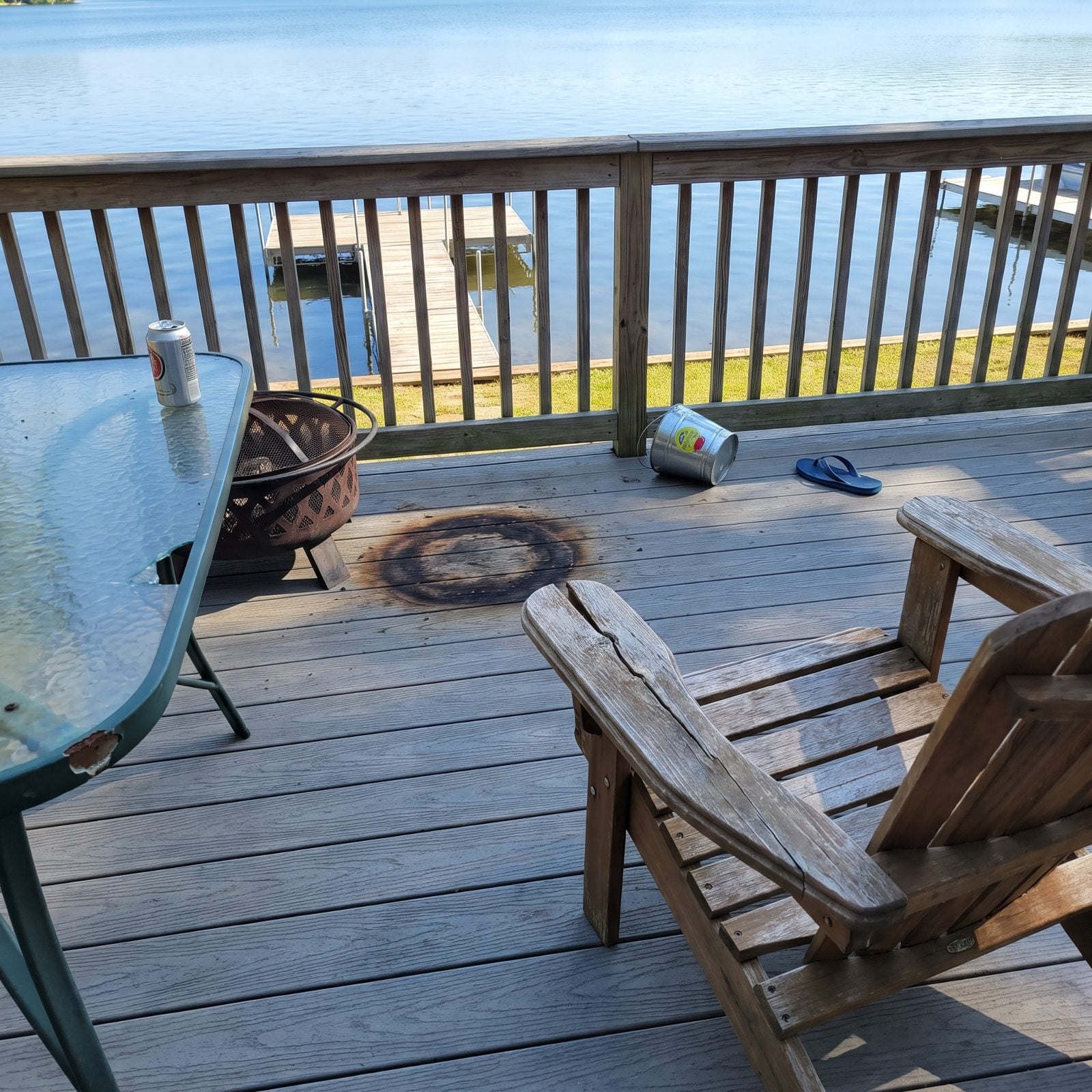
You find the cracked Adirondack chair and the burn on the deck three days after checkout. You mean to report it. Then the next guest arrives and the whole week gets away from you.
Every booking platform runs on a clock. Miss the reporting window, often just days after checkout, or as soon as the next guest checks in, and your damage claim is dead on arrival. You eat the cost yourself.
Inspect the moment guests leave. Deck and dock included. Photograph the damage with a timestamp, file the claim same day, name the specific booking. Fast and documented beats slow and sorry every single time.
25. Installing Delicate Flooring Near Waterfront Entrances
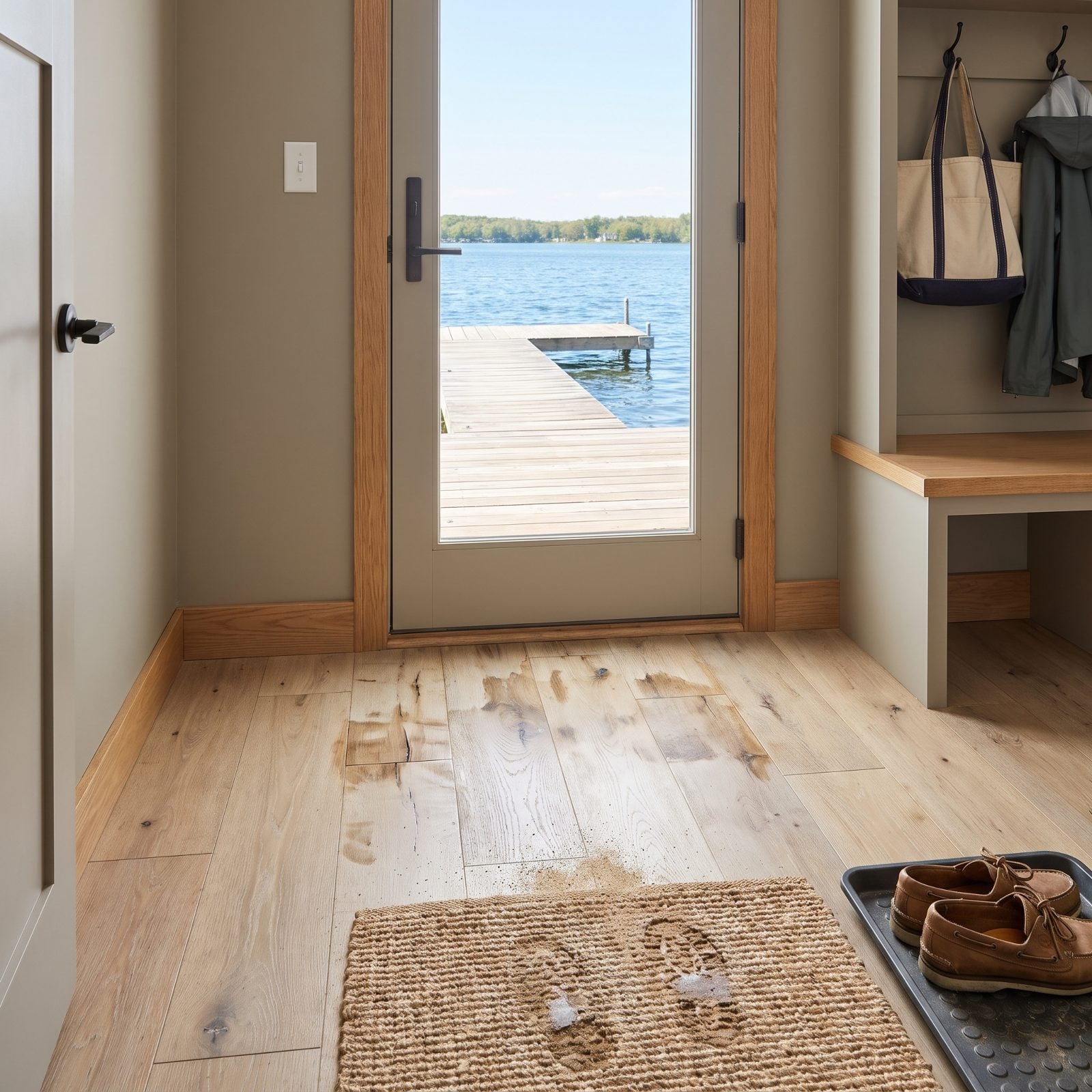
Hardwood and lake life make a bad marriage. Wet swimsuits, sandy feet, dripping towels, dogs that just hauled themselves off the dock — all of it hits that entryway first, and soft flooring soaks up every bit of the abuse.
Swollen planks, water-stained finish, sand ground deep into the seams. That means refinishing or replacing the floor every few years, which is a renovation the rental income was supposed to prevent, not bankroll.
Put the toughest surface you can stand at every waterfront door. Porcelain tile, slate, or a good luxury vinyl plank shrugs off water and sand without complaint. Then add a deep boot tray, a bench, and hooks so wet gear has somewhere to land before it ever reaches the nicer floors deeper inside.
24. Ignoring Deck Railing Safety
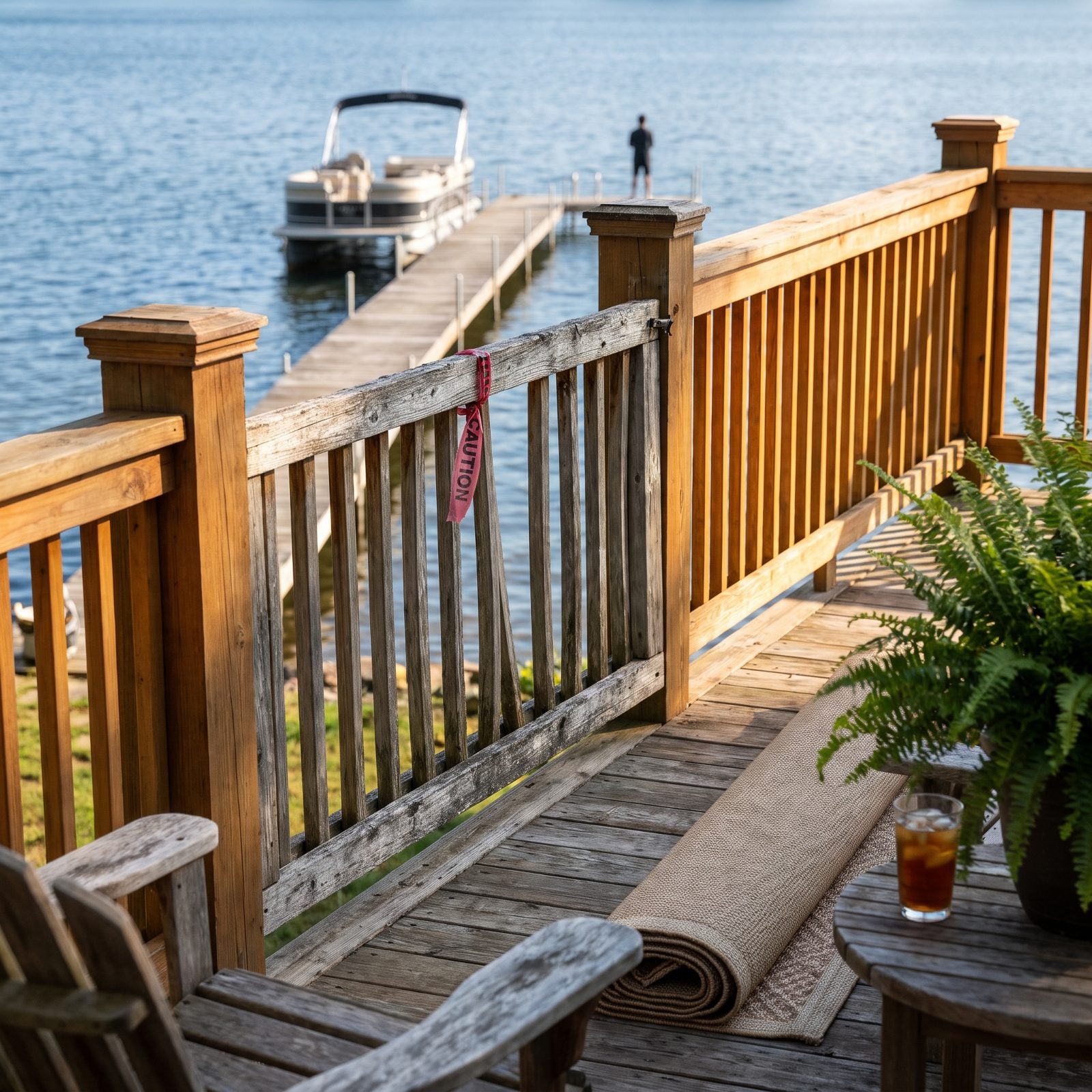
A railing on a raised lake deck is the only thing standing between a crowded sunset party and a long drop to the rocks. Guests lean on it, kids climb it, somebody sets a loaded cooler against it. It has to hold.
Loose posts, rot creeping up from the base, baluster gaps wide enough for a small body to slip through — those are liability nightmares just waiting their turn. One failure and you’re staring down an injury claim that dwarfs a whole season of bookings.
Grab every post and shake it hard each spring. Check that balusters sit no more than four inches apart, that heights meet code, and that the ledger board bolting the deck to the house hasn’t quietly corroded. This is not the spot to save yourself a weekend.
23. Postponing Rot Repairs on Wooden Stairs
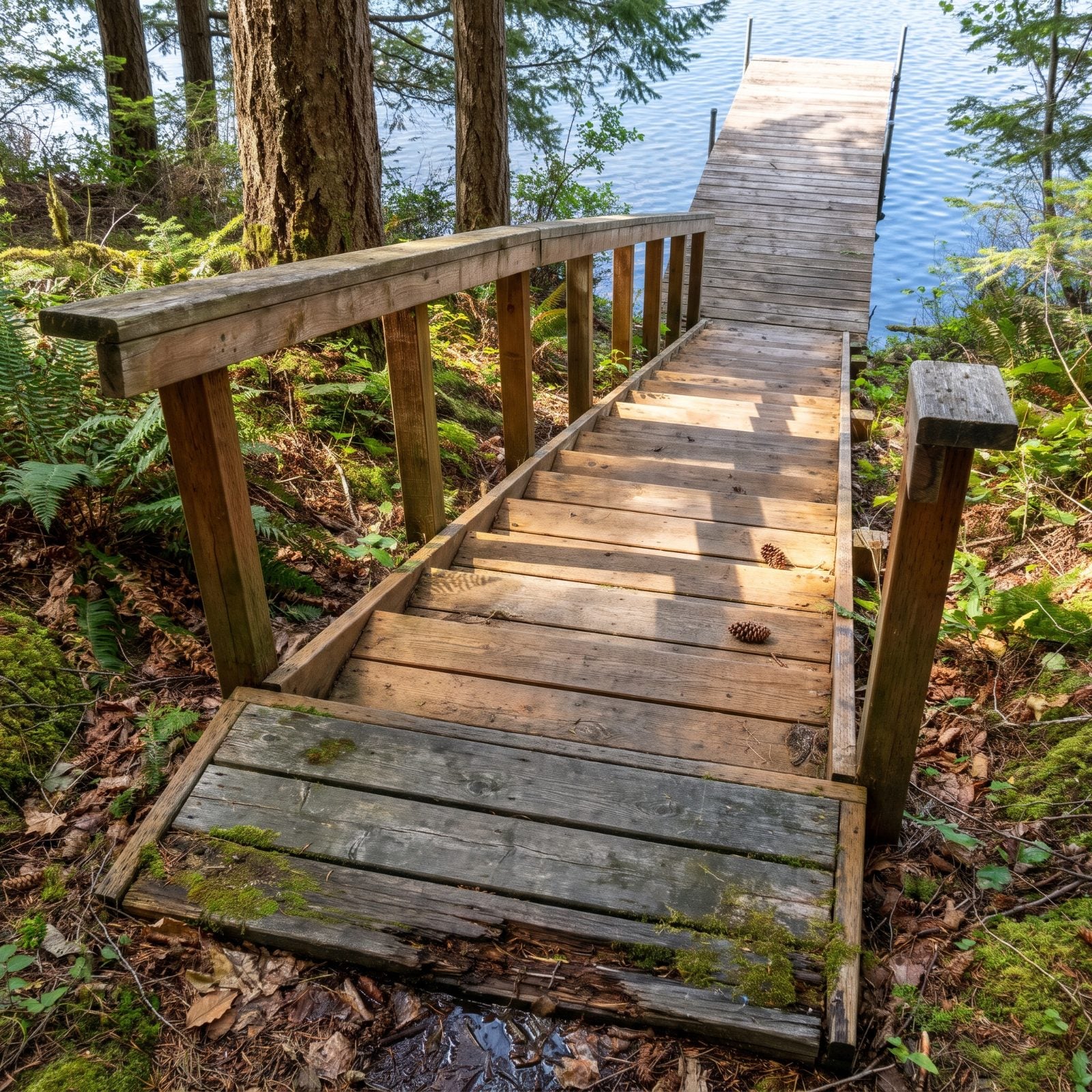
The stairs down to the dock take the worst of everything. Shade, splashback, wet leaves, and freeze-thaw cycles all gang up on the bottom treads — which, naturally, is right where the rot hides while you’re busy not looking.
A stringer that gives out under a guest hauling a cooler is the kind of accident that ends your rental season and kicks off a lawsuit in the same afternoon. Soft wood looks perfectly fine from above, right up until a foot goes through it.
Press a screwdriver into the lower treads and stringers every spring. If it sinks in, that board is finished. Replace rotted sections before the first booking, keep the handrail solid, and clear leaves off the steps so they stop pinning moisture against the wood.
22. Skipping the Annual Chimney Inspection
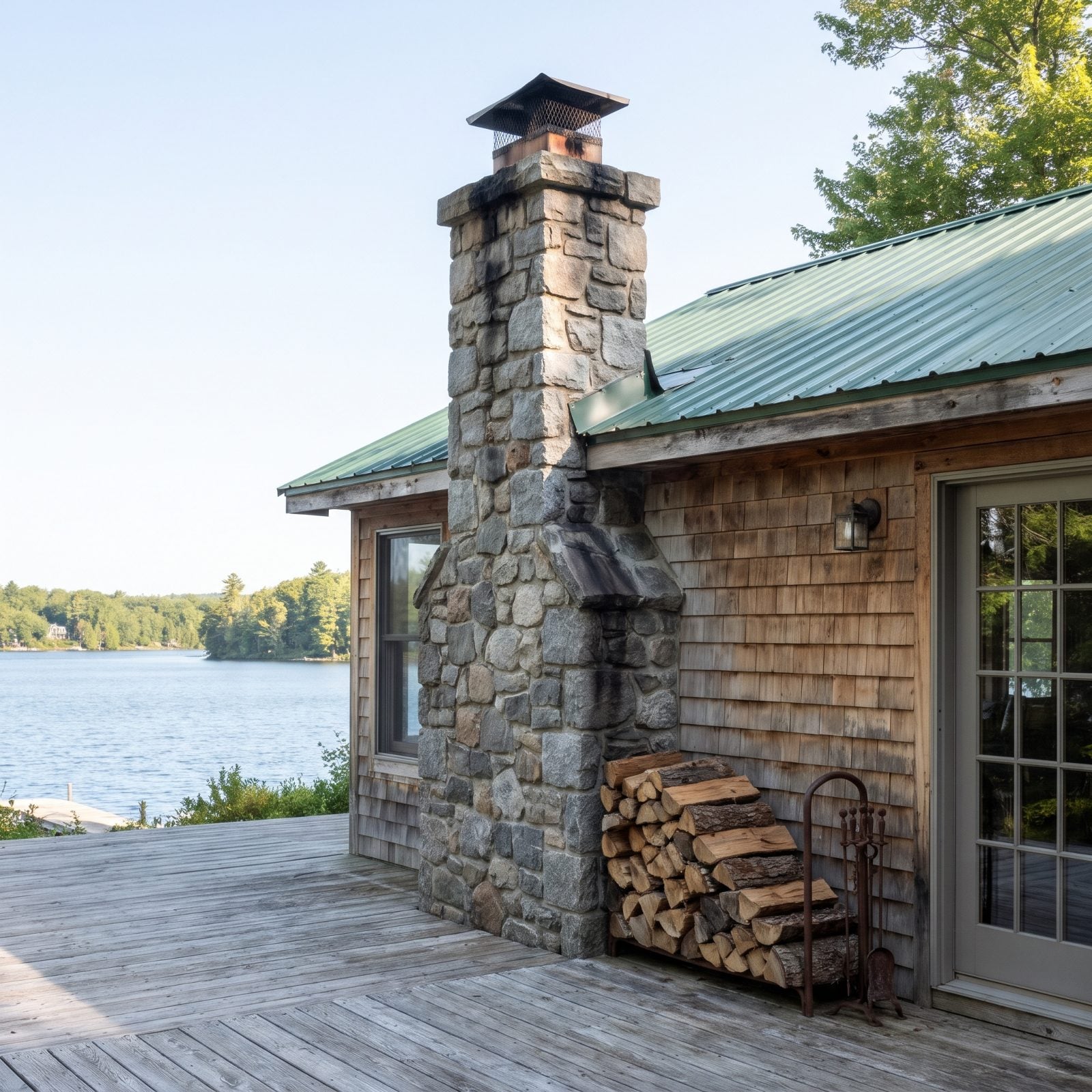
You light the first fire of the season, the one that smells like fall and cold water, and you don’t give a second thought to what’s been nesting in the flue since April. That’s the mistake. A lake house chimney left idle through spring and summer collects creosote, squirrel debris, and the odd abandoned nest, and the guest who builds a roaring fire on a frosty night is the one who finds out.
A chimney fire doesn’t announce itself politely. It’s a repair bill, an insurance headache, and maybe a guest injury you’ll never forgive yourself for. Book a certified sweep every year before your first rental season opens, and hang onto the paperwork. A stainless cap keeps critters out between visits.
21. Neglecting the Dryer Vent Full of Lint
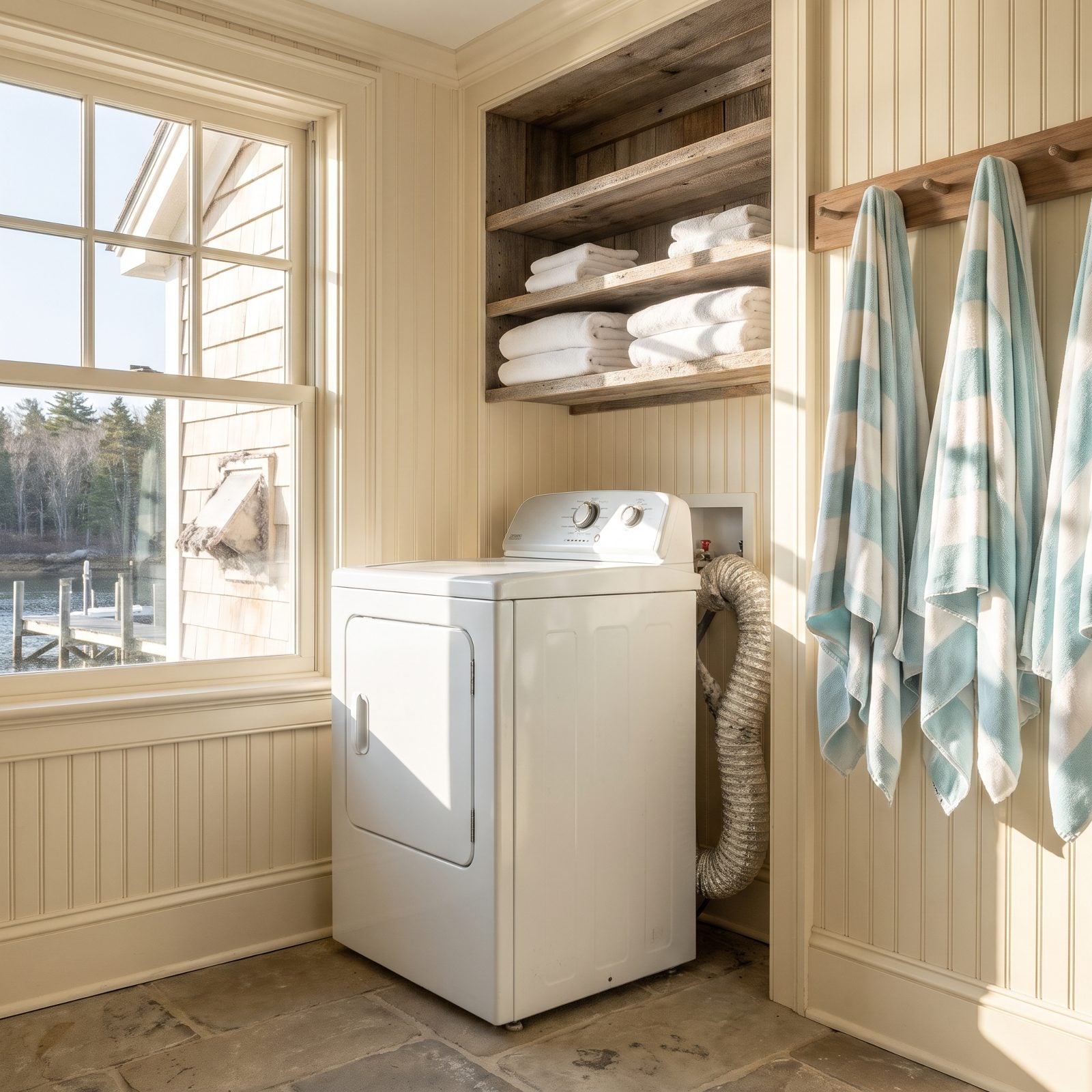
Lake rentals run their dryers hard. Wet towels, swimsuits, the pile of lake-damp laundry after every turnover — that vent packs with lint faster than any home you’ve ever lived in.
A clogged dryer vent is one of the most common causes of house fires. It also cooks your dryer early and runs up the electric bill while your guests wait two cycles to dry a single towel. Clear the full vent run, not just the lint trap, at least twice a season. And swap that flimsy foil hose for rigid metal duct — lint can’t grab onto smooth metal the way it clings to ribbed foil.
20. Leaving the Gutters Clogged Going Into Storm Season
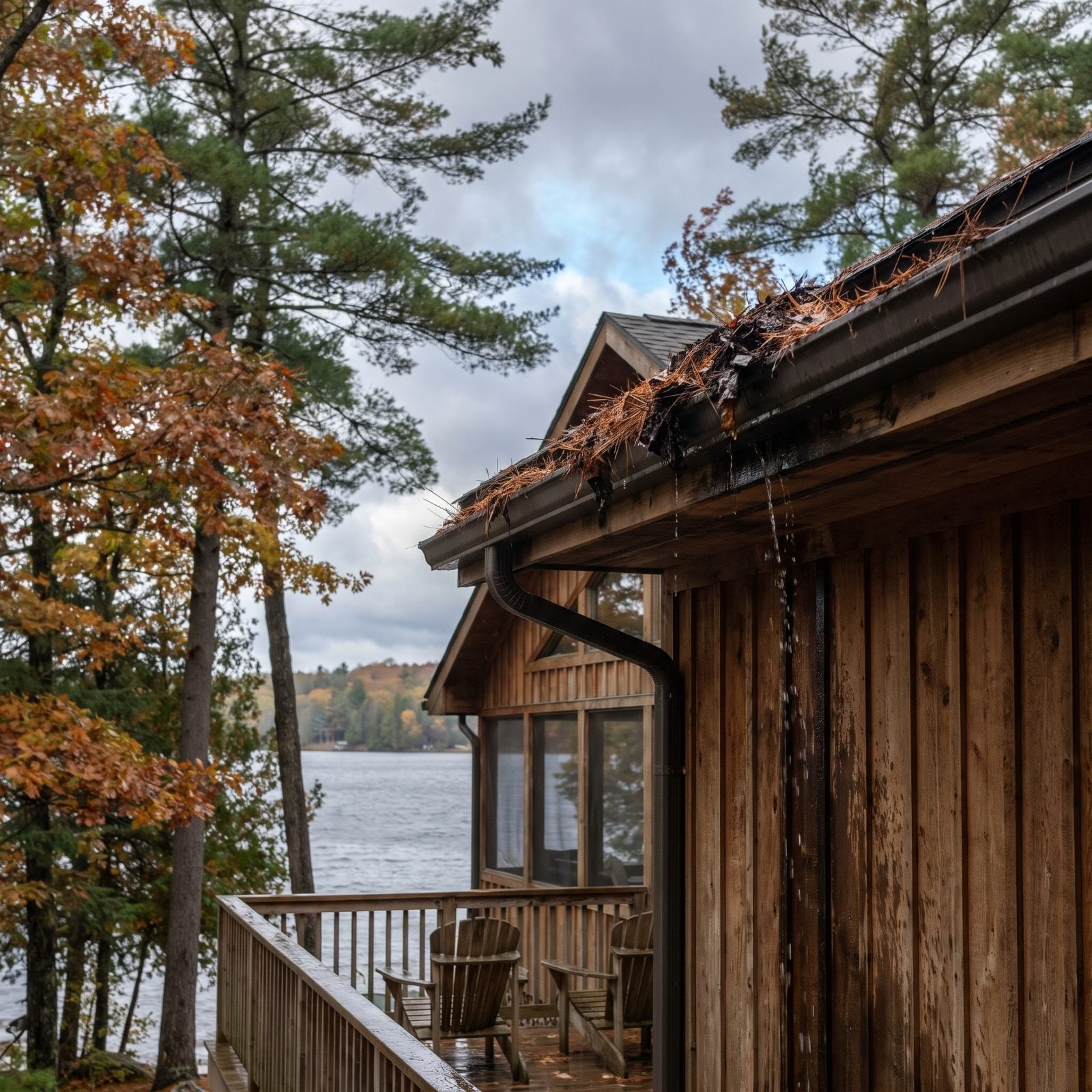
Wooded shorelines are gorgeous until October, when every pine needle and maple leaf within fifty feet ends up in your gutters. A lake house under a tree canopy clogs fast. And a clogged gutter during a heavy storm sends water straight down the foundation instead of away from it.
That’s rot behind the siding, a wet basement, ice dams come winter, and a slow soaking of the wood you paid good money for. Clean them in late fall after the leaves drop, and again in spring. If your roof backs into mature trees, gutter guards earn their keep in a single season.
19. Shutting the Heat Off Completely Between Guests
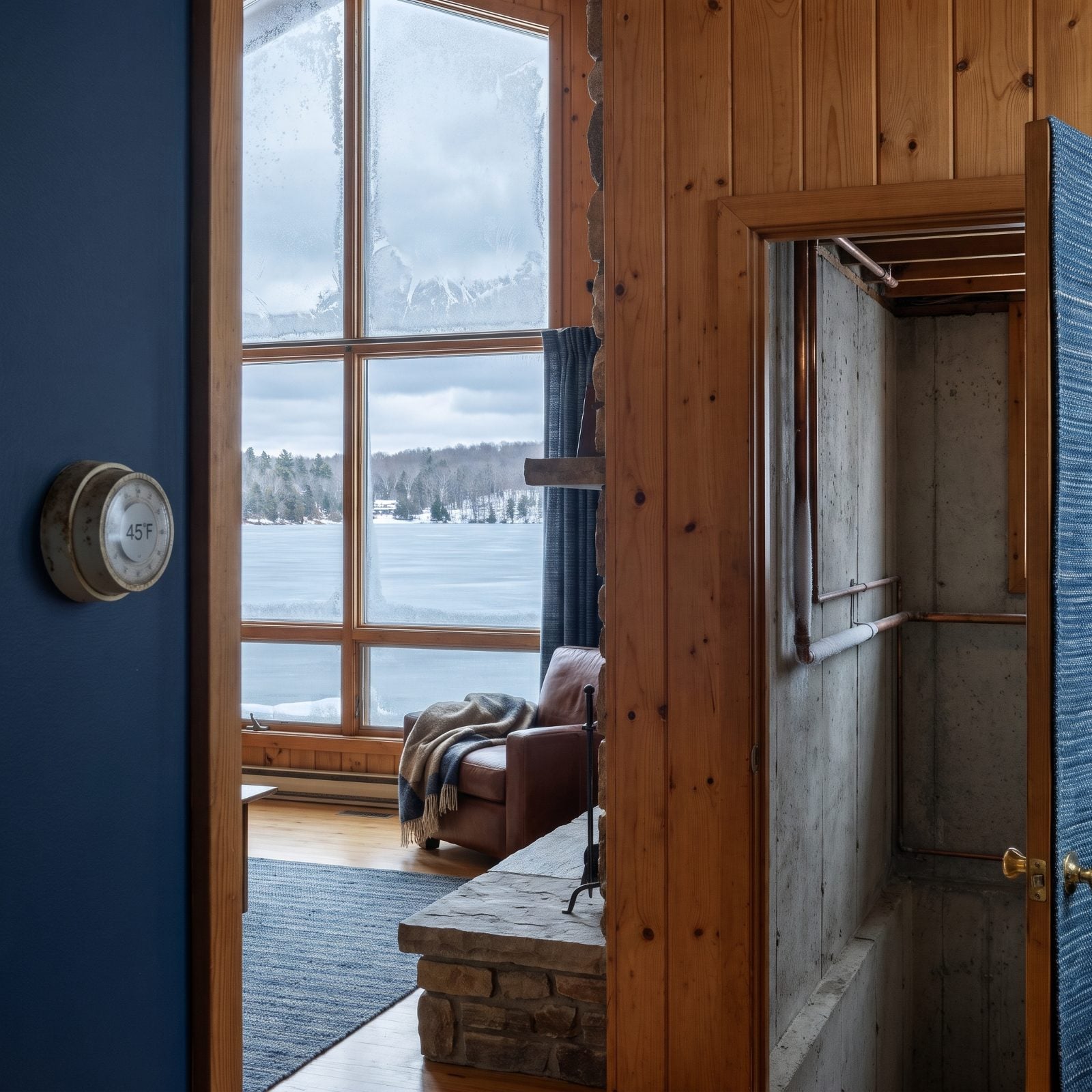
Last guest checks out in November, the next booking isn’t until spring, and killing the heat entirely feels like the obvious way to save a few bucks. It isn’t.
One hard freeze splits a pipe, and you won’t find out until the thaw floods the floor you refinished last year. A burst line in an empty lake house can run for days before anyone notices. Set the heat no lower than 55, leave cabinet doors open under sinks on exterior walls, and if you’re truly closing down, pay a plumber to blow out the lines and shut the water at the main. A smart thermostat that texts you when the temperature drops is cheap insurance.
18. Letting a Small Roof Leak Keep Dripping
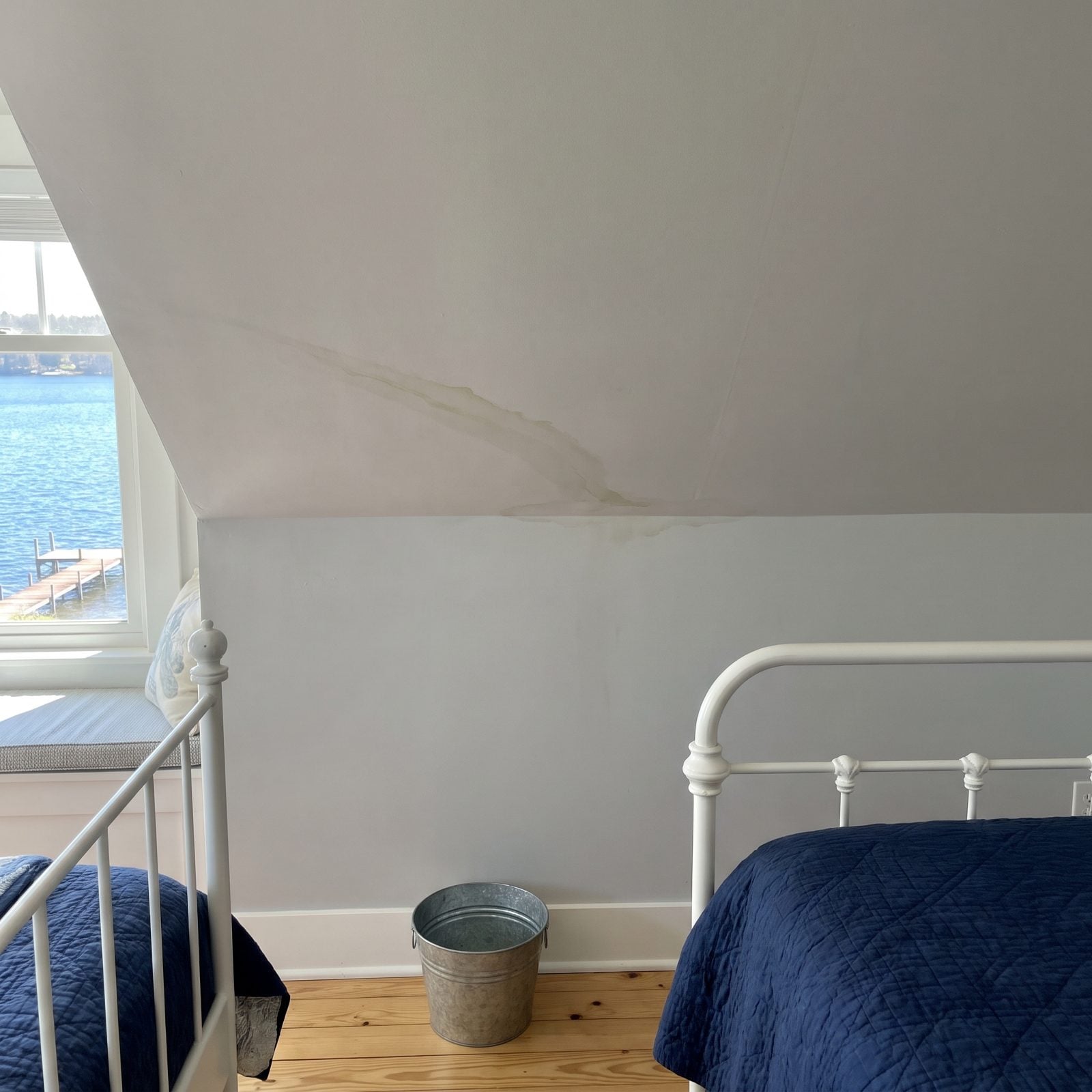
A little brown ring on the guest room ceiling looks like nothing. Put a bucket under it, repaint, book the next stay. But that ring is the cheapest version of a problem you’ll ever see, and ignoring it is how a hundred-dollar flashing repair becomes a ten-thousand-dollar rebuild.
Water doesn’t leak where it enters — it travels along rafters, soaks insulation, and quietly grows mold inside the wall where nobody’s looking. By the time a guest smells it, you’ve got a structural job on your hands. Get a roofer up there the week you spot the stain. Lake houses take a beating from wind, ice, and sun off the water, so inspect the roof every spring whether or not you see a stain.
17. Assuming the Well Water Is Fine Without Testing
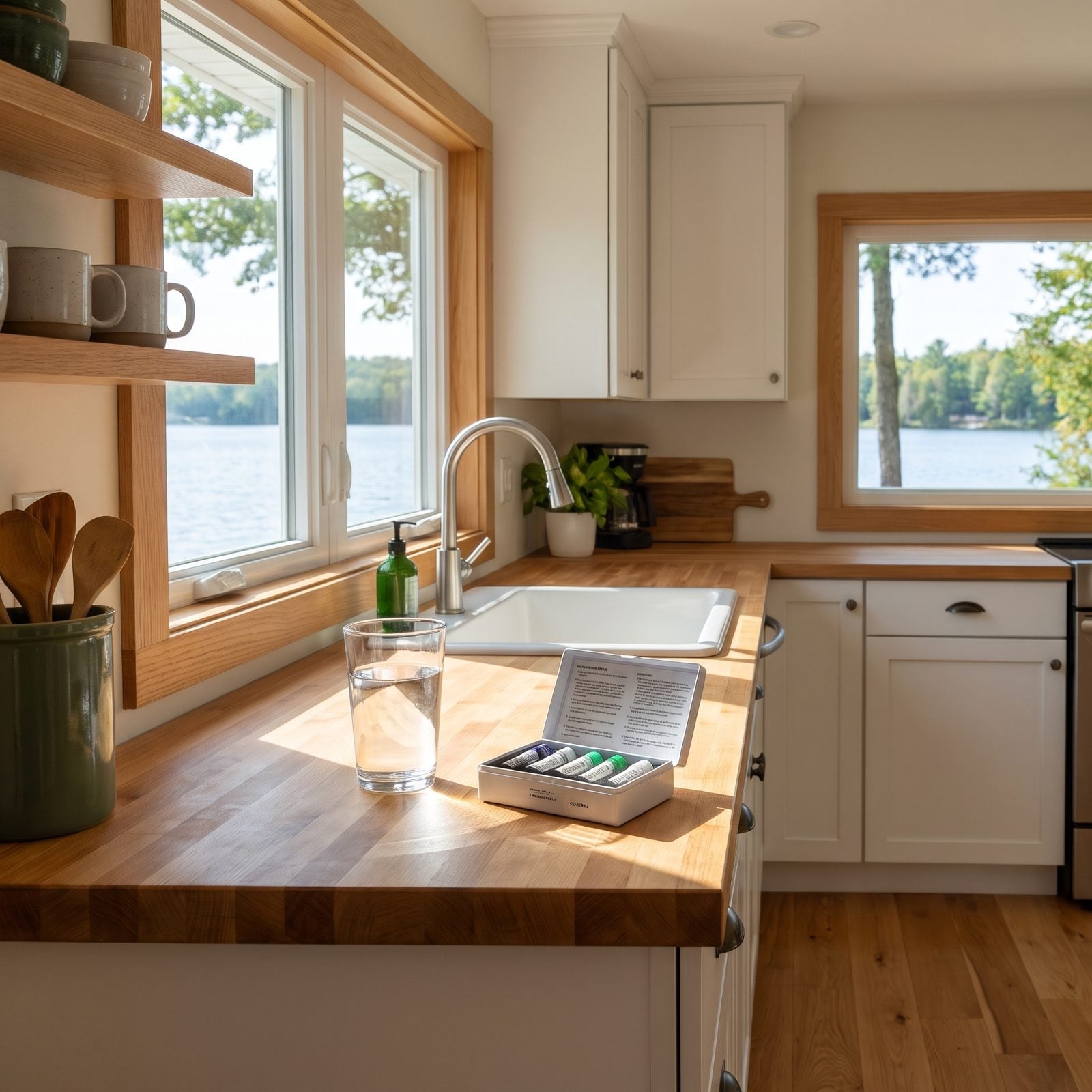
Most lake houses run on a well, and a well doesn’t come with a monthly bill or a warning light. It just keeps pumping whatever’s in the ground, which near a lake can mean runoff, bacteria, nitrates, or the slow creep of something from a neighbor’s septic field upslope.
Serve a guest water that makes them sick and you’ve bought a review you can’t recover from, plus liability you’d rather not think about. Test the well at least once a year, more often after heavy flooding or spring runoff. I’d test twice a year on any property near a shared shoreline — water moves underground in ways you can’t see. Keep the results posted inside a kitchen cabinet so guests know you take it seriously.
16. Clearing Shoreline Plants Without Checking the Rules
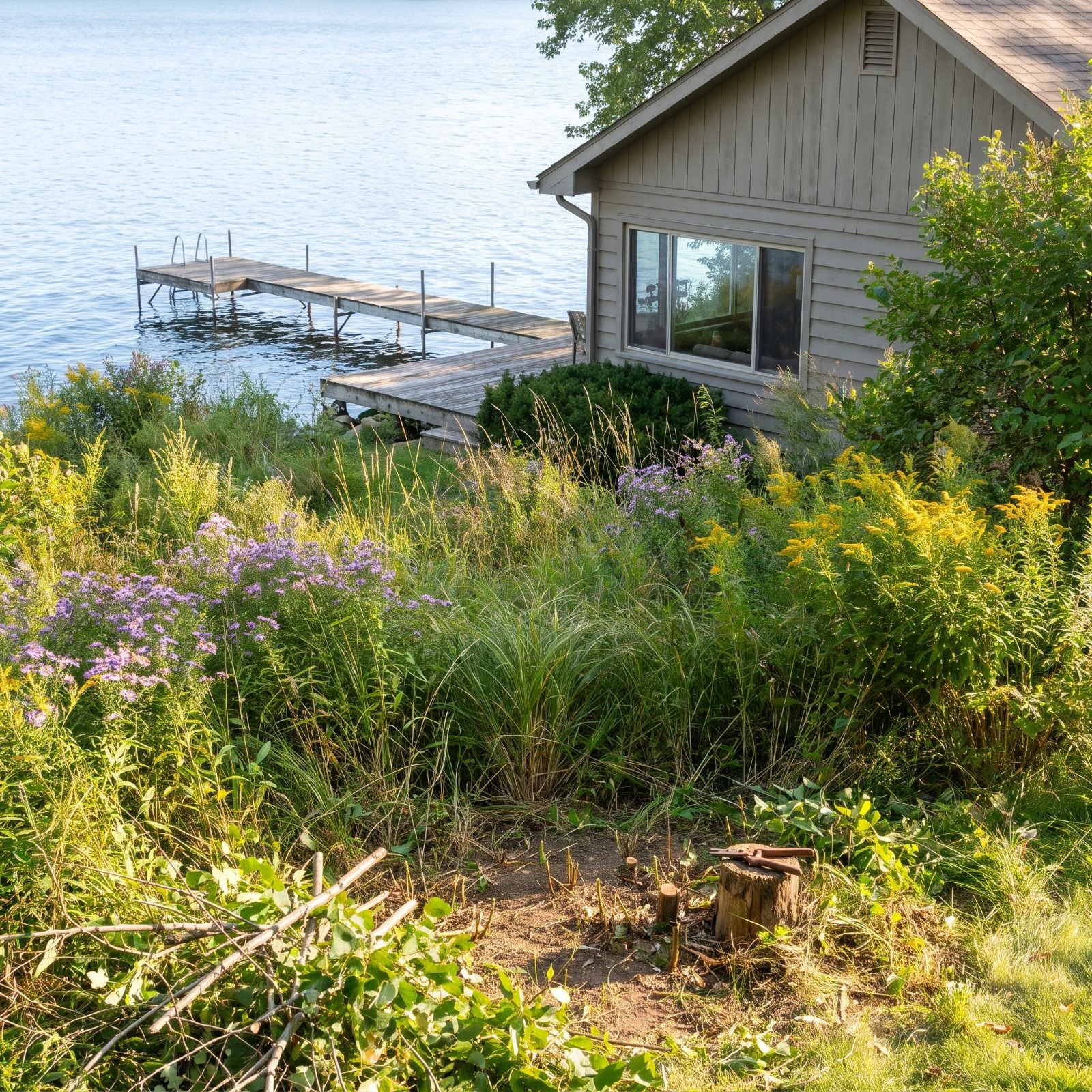
That tangle of grasses and shrubs between your lawn and the water looks messy, and the pull to rip it out for a clean lawn-to-waterline view is strong. Don’t. That buffer is often protected, and clearing it without approval is one of the fastest ways to earn a fine with real teeth.
Most lake states and counties regulate shoreline vegetation hard. It holds the bank in place and filters runoff before it hits the water, and tearing it out can trigger penalties that dwarf whatever bump you’d get to the view. Call your local conservation or DNR office before you touch a single shrub. A few approved trimmed sightlines keep you legal and still open up the water.
15. Skipping the Spring Dock Hardware Check
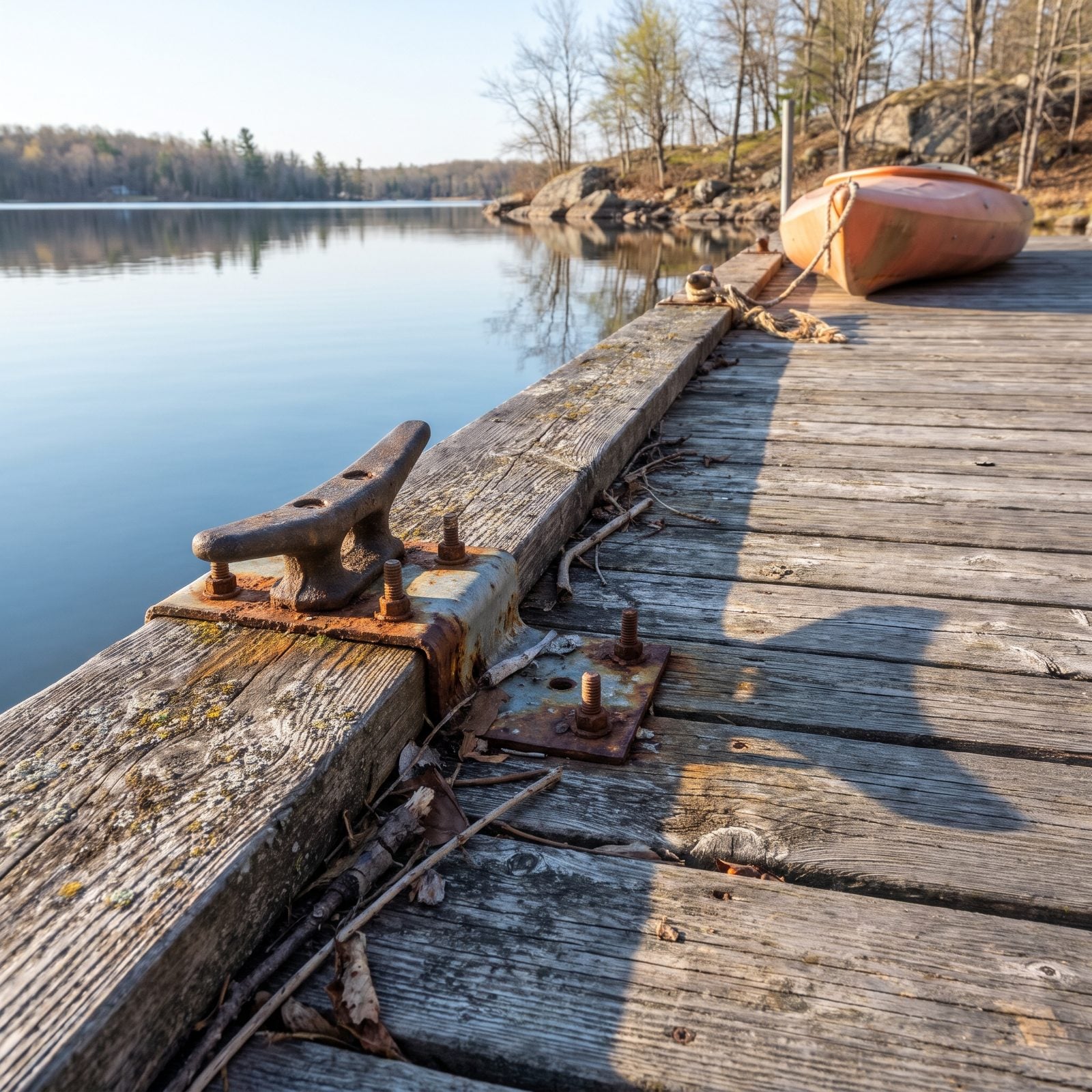
Winter is brutal on a dock. Ice heaves it, shifts it, and works every bolt loose while you’re not watching. Then the first warm weekend arrives, a guest walks out to cast a line, and a rotted plank or a sheared bracket is the thing that gives way.
A dock failure with people on it is the nightmare — the one that turns a happy review into a lawsuit. Every spring after ice-out, walk the whole thing. Check every bolt, bracket, cleat, and ladder rung. Replace anything rusted or loose, test the boards by weight, and don’t open it to guests until you’d let your own grandkids run down it barefoot.
14. Not Marking the Spot Where the Lake Bottom Drops Off

Your swimming area reads as shallow and safe right up until the sandy shelf vanishes and the bottom drops off a cliff. You know where that line sits because you’ve swum here a hundred times. Your guests don’t — and a child wading out confidently is the one who finds it the hard way.
An unmarked drop-off is the most preventable danger on the whole property. A simple swim buoy or a line of markers shows exactly where the shallow ends and the deep begins, and it costs almost nothing. Set the markers, note the drop-off in your house manual, and point it out at check-in. One sentence at the door can save a life, and that’s not a line I use lightly.
13. Providing Kayaks Without Properly Sized Life Jackets
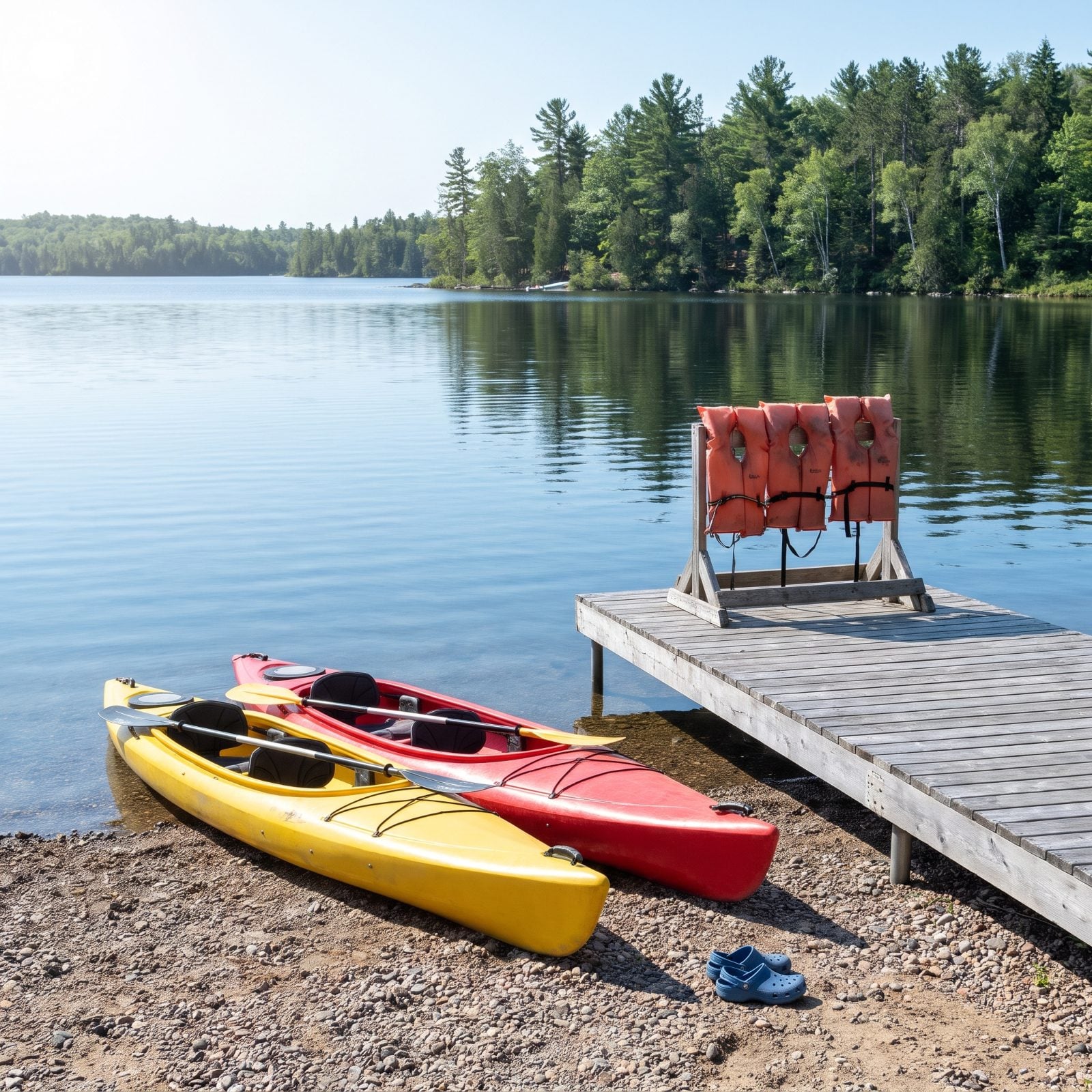
You stock two kayaks, three paddles, and a single milk crate of orange life jackets that all fit a grown man. Then a family with two small kids books the place. The adult vests swallow the children whole, which is worse than none at all, because a loose jacket rides up over a kid’s face the second they hit the water.
A life jacket that doesn’t fit isn’t safety gear. It’s decoration. And it’s the thing a lawyer asks about first if anything goes wrong.
Keep a range on hand: infant, child, youth, and at least two adult sizes, all US Coast Guard approved. Check the weight ranges printed inside each one. Hang them where guests see them before they ever touch the paddles, not buried in a shed behind the snow shovels and the busted leaf blower.
12. Skipping Carbon Monoxide Detectors Near Sleeping Areas
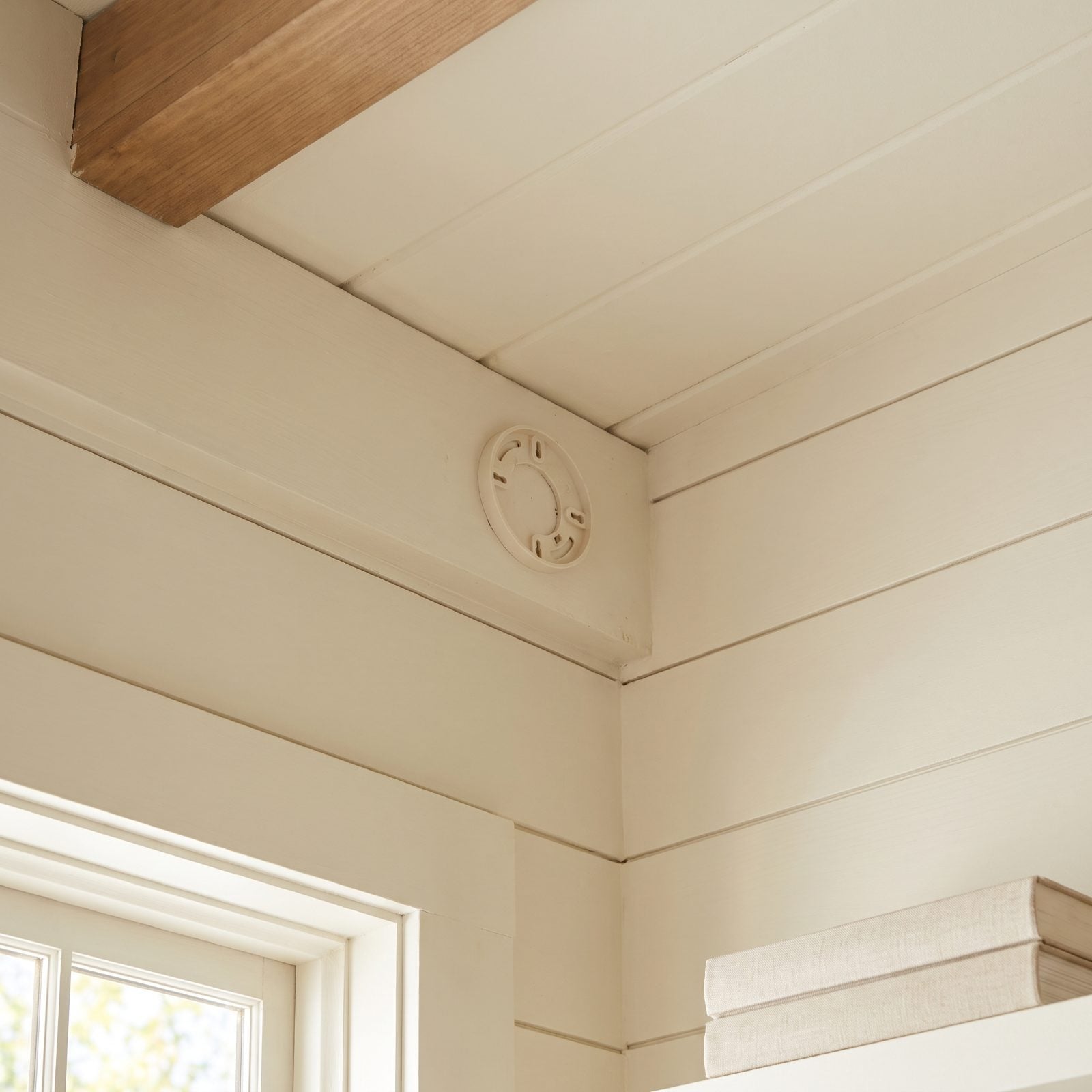
Lake houses love their fuel. Propane furnace, gas water heater, a fireplace somebody added one winter, maybe a generator for when the power flickers during a storm off the water. Every one of those can leak carbon monoxide, and the gas gives you nothing to go on, no smell, no color, no warning.
Guests sleep with the windows shut on a cold October night, and that’s the whole tragedy, right there. A detector that costs twenty dollars would have shrieked them awake.
Put a CO alarm on every level and within fifteen feet of every bedroom door. Hardwired with battery backup is best in a rental, because batteries go dead between bookings and nobody notices. Test them on turnover day along with the smoke alarms.
11. Installing Too Few Smoke Alarms
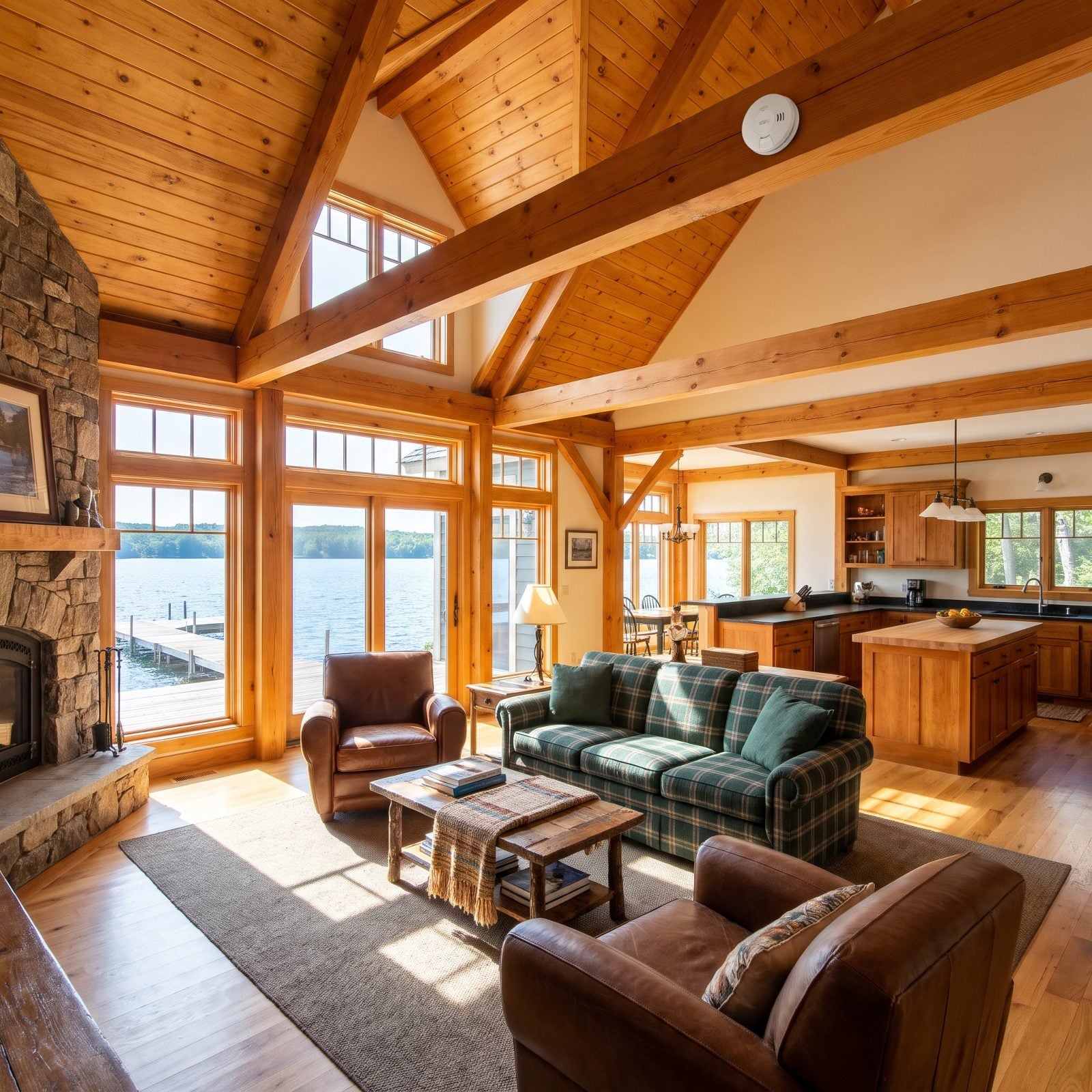
One smoke alarm in the hallway doesn’t cover a house. It really doesn’t cover a lake house, where the floor plan sprawls, the ceilings go cathedral, and the kitchen opens to a great room big enough to lose a canoe in.
Guests sleep in rooms they didn’t design, so a fire starting in a back bedroom with the door shut can get a long head start before any hallway alarm ever smells it.
Fit an alarm in every bedroom, outside every sleeping area, and on each level including the basement where the furnace lives. Interconnected units are the gold standard. One trips, they all trip, and nobody sleeps through the one down the hall.
10. Leaving Fire Extinguishers Hidden or Expired
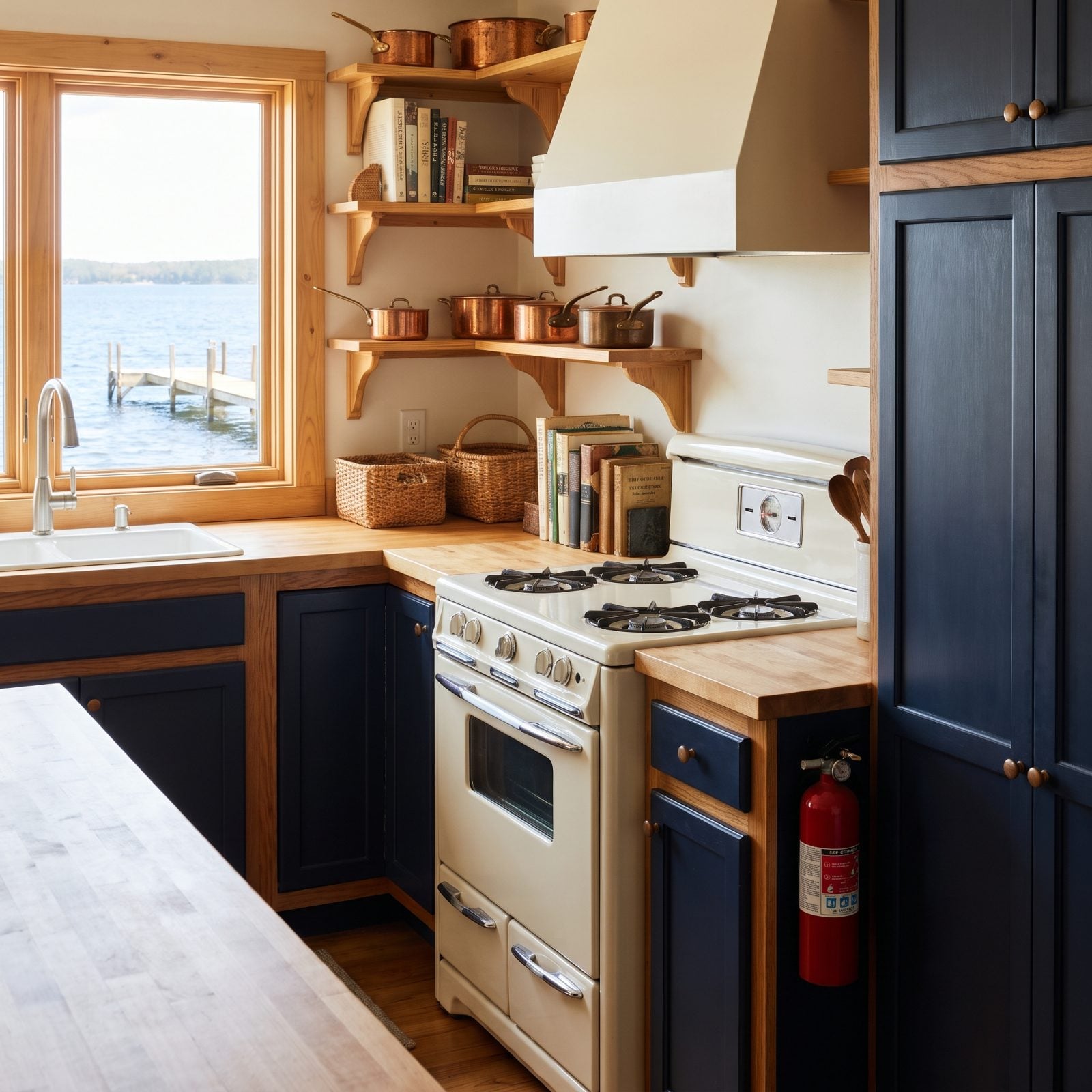
Picture the extinguisher jammed behind the pantry door, nozzle crusted, gauge sitting in the red, bought for a house you owned two cabins ago. That’s the one that was in the kitchen when the grease fire started. By the time a guest wrestled it free, the cabinet was already gone.
An extinguisher only earns its keep if a stranger can find it in three seconds and it actually fires.
Mount one in plain sight in the kitchen, near but not over the stove, and keep a second close to the fire pit or grill outside. Check the gauge every turnover. Green zone or it gets recharged. A guest should never have to go hunting for the thing.
9. Using an Unsecured Fire Pit
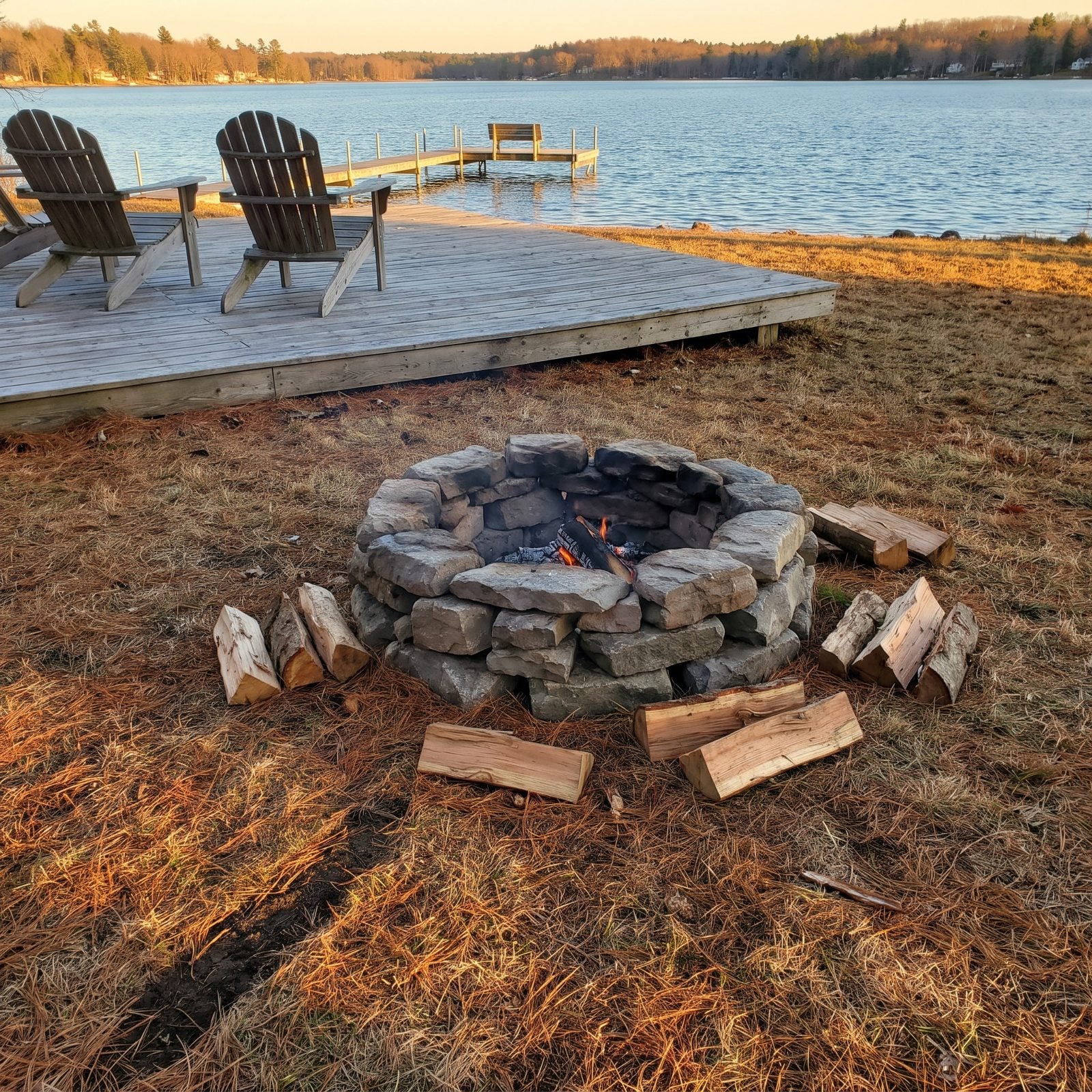
A stacked-stone fire ring, built straight onto dry grass and pine needles, a few feet from a wooden deck with two Adirondack chairs, with the lake and dock stretching out behind it. It photographs beautifully for the listing. It’s also a spark looking for a place to land.
Guests build fires bigger than you ever would. They leave them smoldering and wander off to bed. On a dry, breezy evening off the water, that’s how a backyard turns into a brush fire.
Set the pit on a non-combustible base, gravel or pavers, with real clearance from the deck, the furniture, and the trees. Spell out the rules in the welcome book: no fires on windy days, drown it dead before bed, bucket of water stays right there. A proper spark screen is cheap insurance.
8. Storing Propane Tanks Beside the House
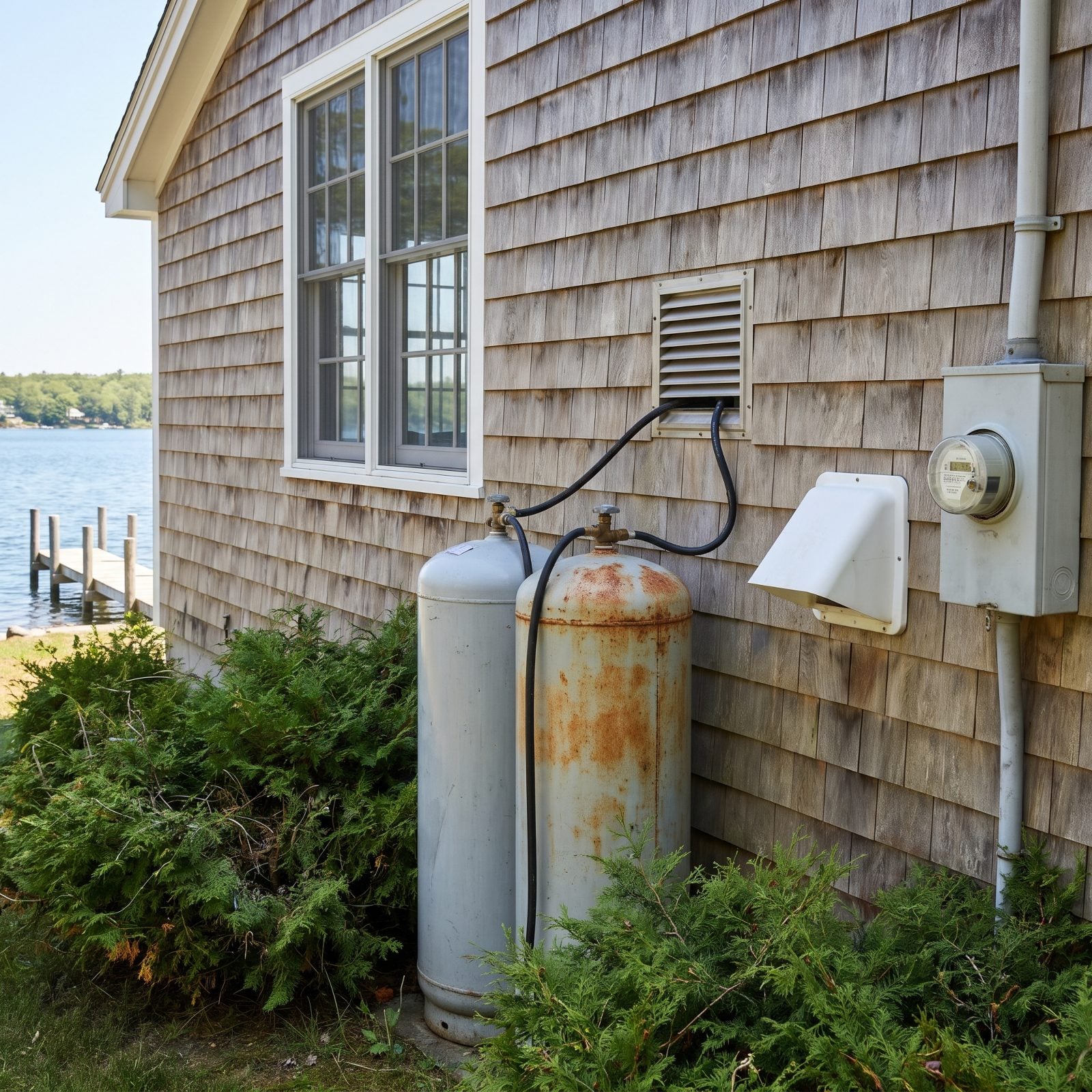
Two propane tanks shoved against the siding, right under a bedroom window, next to the dryer vent and the electrical meter. Convenient for the plumber. Dangerous for everyone sleeping six feet away.
Propane pools low and creeps toward anything that might light it. A tank crowded against the house with a slow leak has nowhere safe to go, no clearance to disperse.
Keep tanks away from the foundation, windows, and any vent or spark source, on a stable, level pad a delivery driver can actually reach. Check local code for the exact distances, because lake jurisdictions vary wildly. And the spare grill cylinder? Outdoors, upright, never tucked in a closet or under the deck stairs.
7. Leaving a Hot Tub Without Lockable Safety Controls
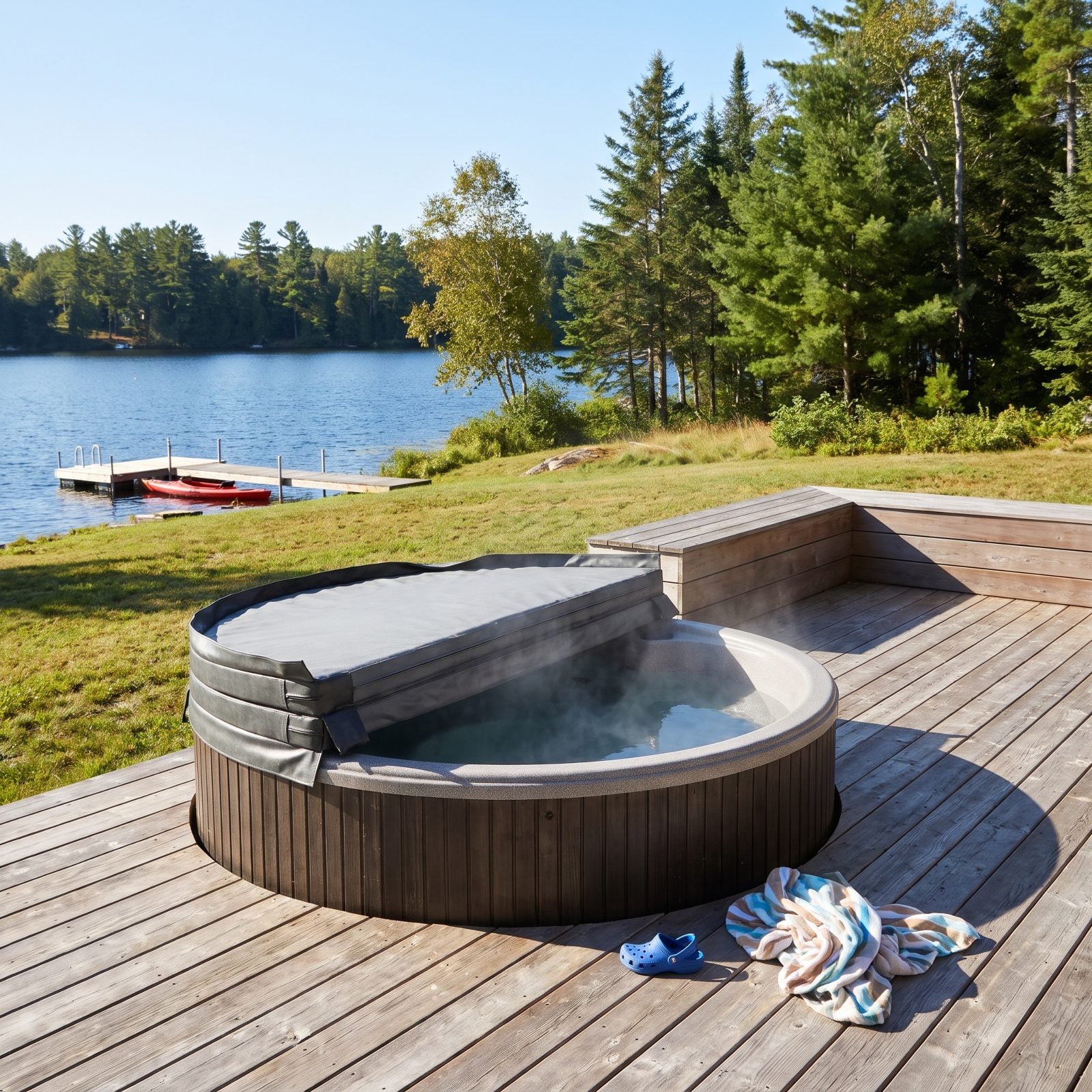
A hot tub steaming on the deck, cover flopped to the side, nothing between it and the toddler who just let himself out the sliding door while the adults made coffee. That’s the scene that keeps rental owners up at night, and it should.
An open hot tub is standing water a small child can reach in seconds, and the heat and the chemicals only sharpen the danger.
Install a cover that locks, and keep the locks working, because a loose clip is the same as no lock at all. Mount the controls so the temperature can’t be cranked past safe by a curious kid. Post the rules plainly: no young children unsupervised, ever. If your layout allows it, a gated enclosure settles the question for good.
6. Failing to Service the Hot Tub Between Guests
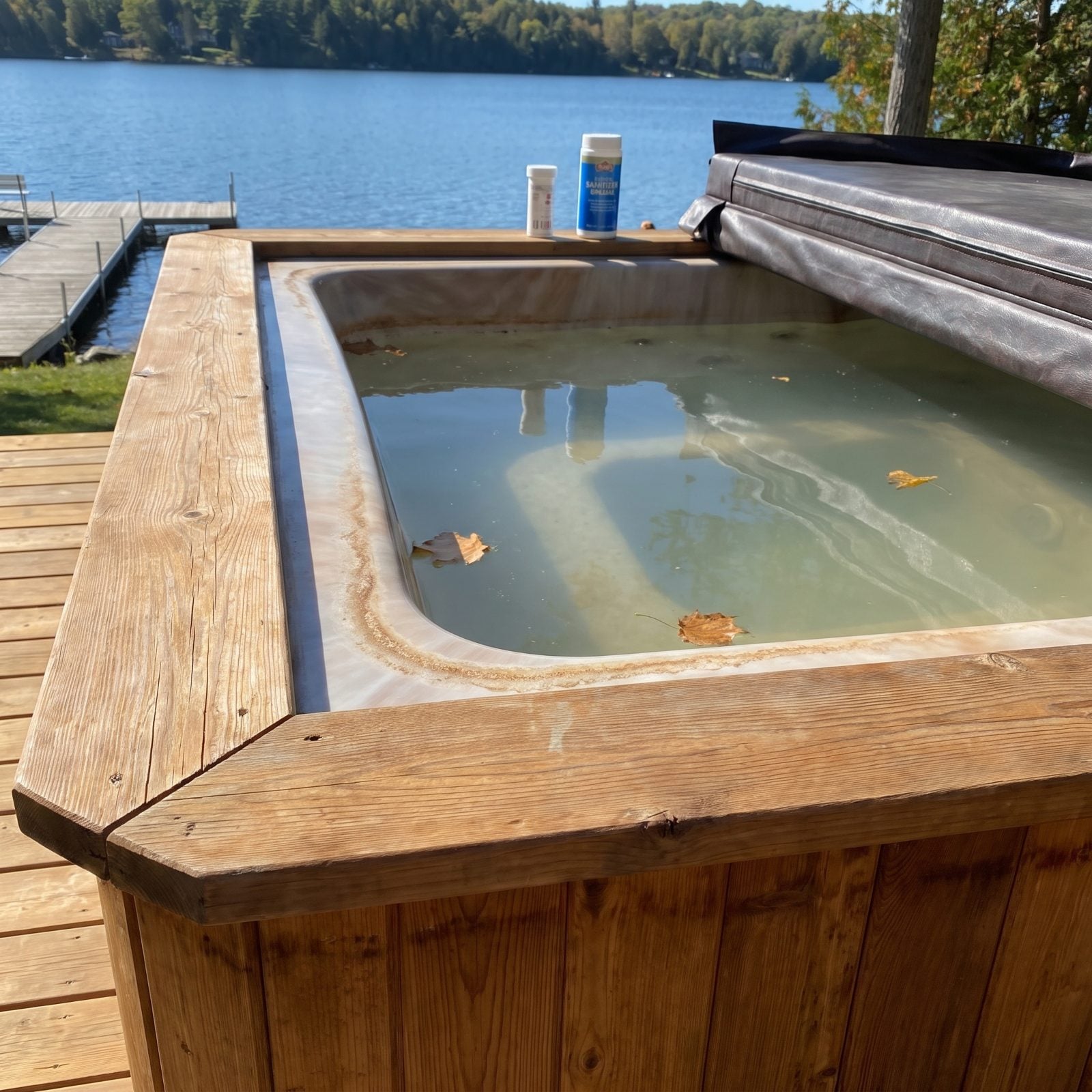
Back-to-back bookings, same-day turnover, and the hot tub gets a quick skim and a splash of chemical if it gets anything at all. The water looks fine. Looking fine is exactly the trap.
Warm standing water is a petri dish. Under-treated tubs grow bacteria that cause rashes, ear infections, and the lung illness folks call hot tub lung. One bad review about “the slimy hot tub” also trails your listing around forever.
Build real servicing into every turnover, not just the busy weeks. Test and balance the chemistry, scrub the waterline, drain and refill on a set schedule. Renting often? This is a line item you pay a pro for, not a corner you cut on a tight changeover.
5. Providing an Unstable Grill on a Wooden Deck
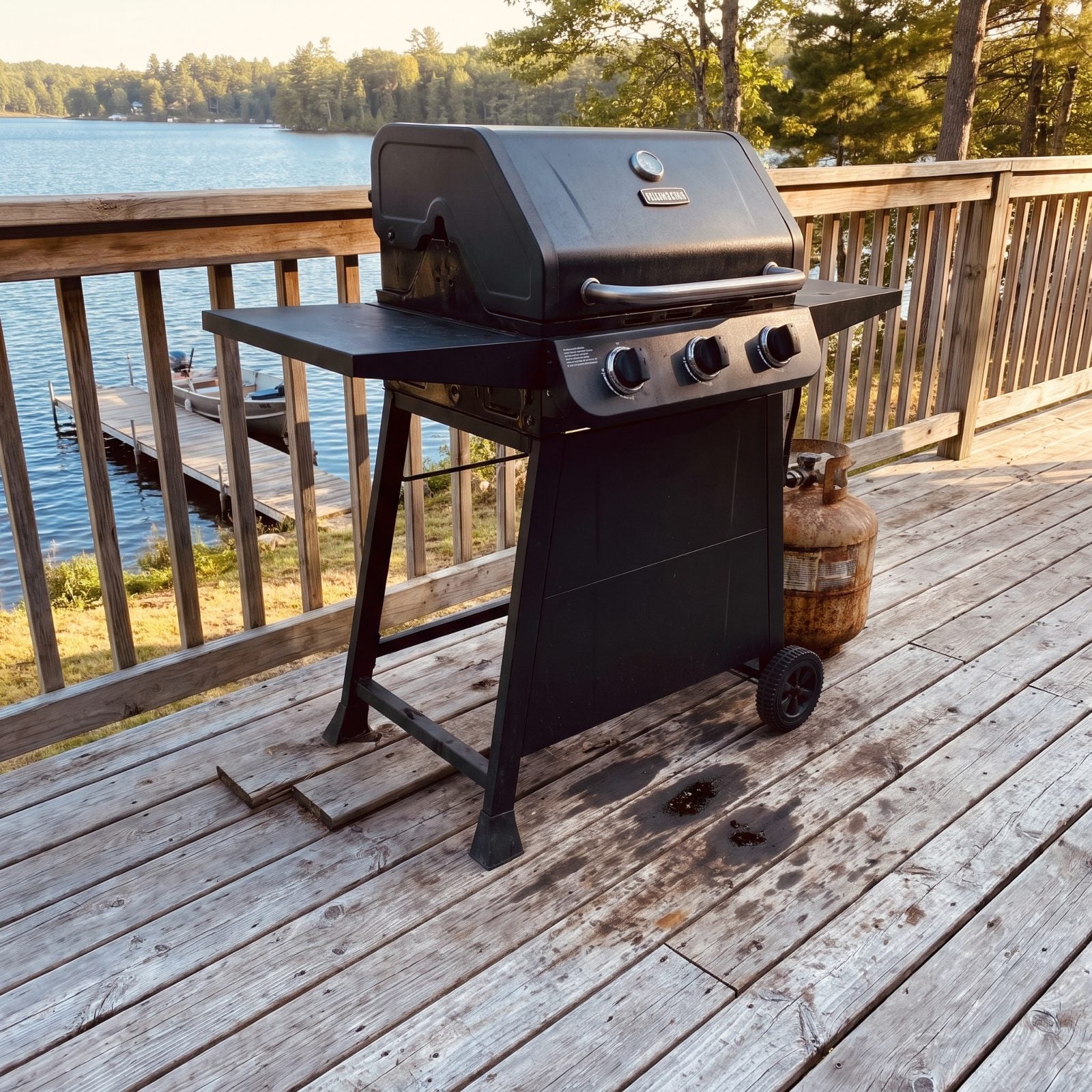
The grill’s been out on the deck three summers. One wheel’s seized, a leg’s loose, and it rocks when you open the lid. Nobody’s tightened it because nobody owns the hour it takes. Then a guest leans on it, the whole thing tips, and there’s a propane flame rolling across dry cedar planks.
A wobbling grill over flammable decking is a fire with a schedule.
Level it, tighten it, and set it on a heat-resistant mat with clearance from the railing and siding. Keep it clear of the eaves. Check the hose for leaks with soapy water each season. And give guests the one rule that matters: the grill stays outside, in the open, never dragged under the covered porch.
4. Ignoring Noise Complaints From Neighbors
Lake sound travels. A dock party that feels modest at your place carries clean across the water to the retired couple who’ve owned the next cabin for thirty years. They call, they text, they email, and you let it slide because the guest tips well and leaves Sunday.
That’s a mistake with teeth. Lake communities run on a short grapevine, and a neighbor you ignore turns into a complaint to the town, a noise ordinance citation, or a petition against short-term rentals that costs you the whole business.
Answer every complaint fast and actually do something about it. Set quiet hours in writing, cap guest counts, and consider a decibel monitor that flags a problem before the neighbor does. Keep the people next door on your side. They’re the ones watching the place in February when you’re four hundred miles away.
3. Allowing Parties Without Event-Specific Rules
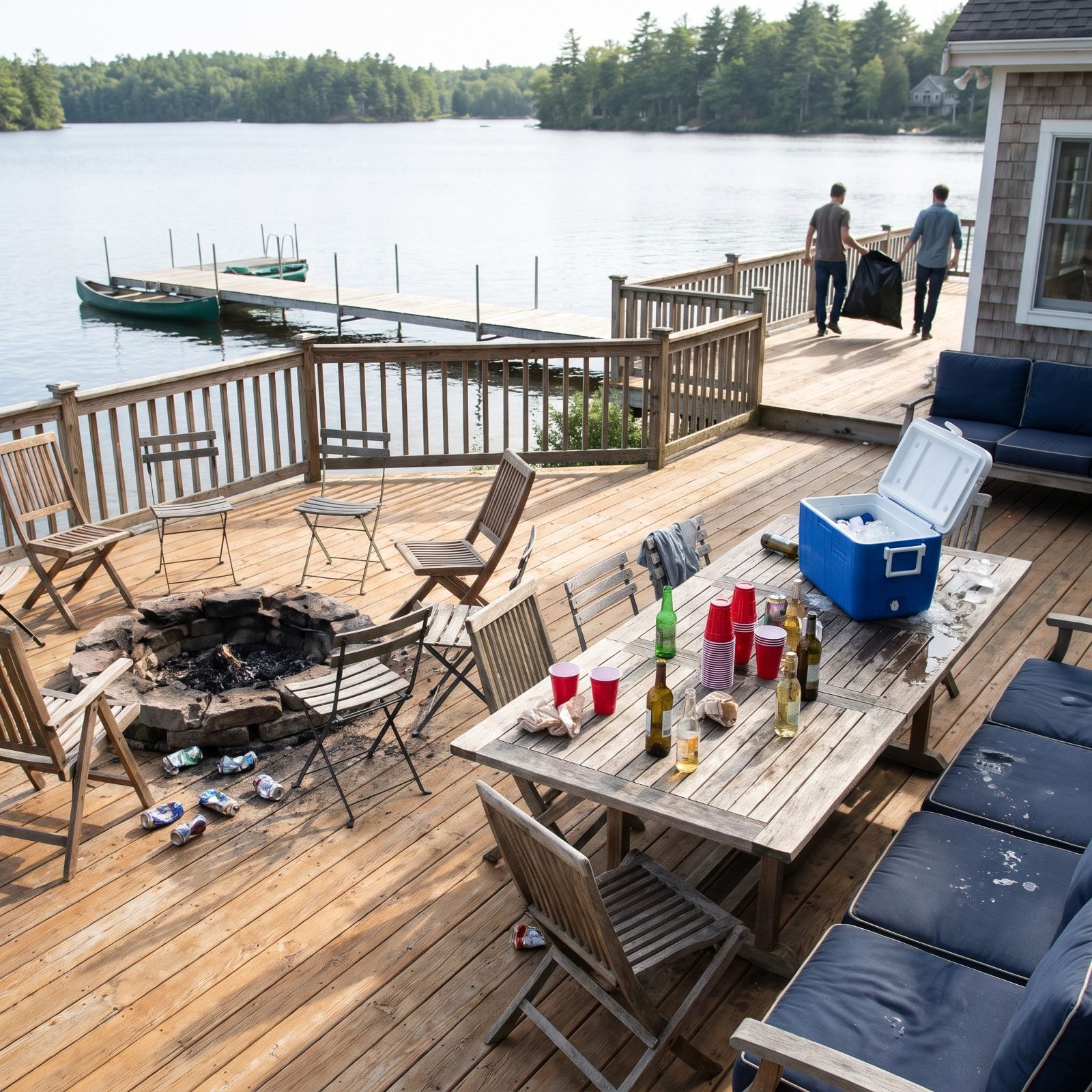
A twelve-person booking that balloons into a forty-person graduation blowout is the fastest way a lake house ages ten years in one weekend. Scorched deck boards, a cracked dock cleat, and neighbors who now have the county on speed dial.
Owners miss this part. A blanket “no parties” line in the listing does nothing when someone’s idea of a party and yours don’t line up. Vague rules get argued. Specific ones get followed.
So spell it out: a hard overnight guest cap, a daytime visitor cap, quiet hours tied to the actual clock, and a separate event fee with a signed agreement for anything bigger. Put a doorbell camera at the entry and say so plainly. I’ve watched owners skip the event fee because it felt unfriendly, then eat a $2,000 repair bill. Charge the fee. The folks who balk at it were going to be your headache regardless.
2. Trying to Manage the Property From Afar Without Local Support
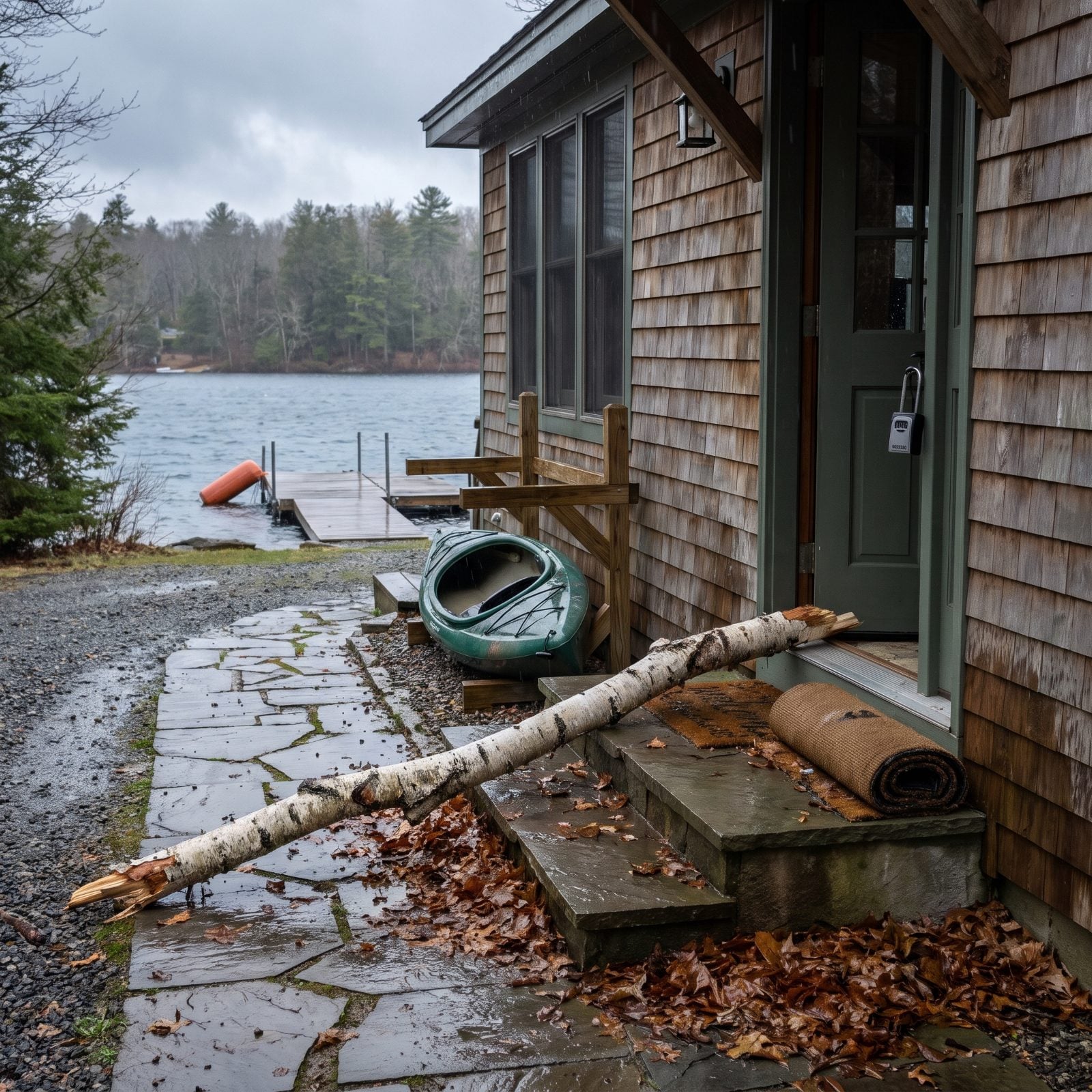
You live four hours away. A pipe weeps behind the washer on a Friday in February, and nobody knows until a guest shows up in June to a warped floor and a smell that won’t quit.
Remote ownership without boots on the ground is a bet that nothing breaks between visits, and lake houses lose that bet constantly. Frozen lines. A dock torn loose in a squall. A raccoon that found the attic soffit and decided to stay. Distance turns a $150 fix into a $5,000 one for the simple reason that nobody caught it early.
Build a local bench before you need it. A cleaner who handles the turnover and texts you a photo when something looks off. A handyman on call. A neighbor with a key who’ll walk the property after a storm. Pay them fairly and treat them well, because the person who notices the dripping faucet in April is worth more than any smart sensor you’ll ever bolt to the wall.
The caretaker who texts you a photo of a loose dock line is cheaper than the dock.
1. Letting Shoreline Erosion Reach the Foundation
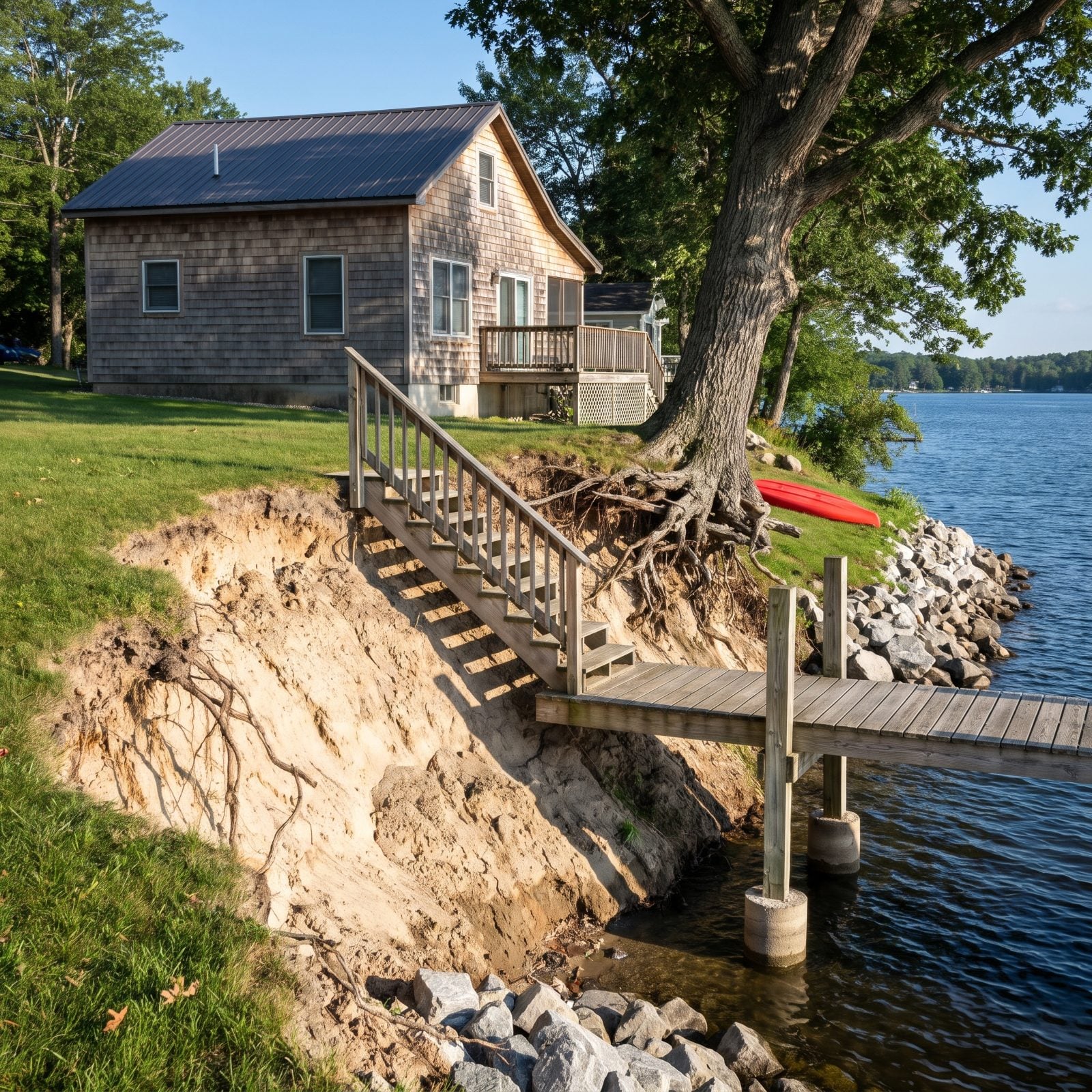
Erosion doesn’t announce itself. It takes a few inches a season, quiet as a tide pulling back, until the morning you find a staircase post standing in open air and the oak you loved leaning toward the water with half its roots laid bare.
This is the most expensive mistake on the list, because the bill lands on the structure itself. Let a slumping bank reach the footings and you’re done talking landscaping. Now it’s engineers, permits, and a foundation repair that can climb into six figures.
Walk your waterline every spring. Flag the spots where soil is peeling back from the grass, or where boat wake keeps gnawing at the base of the bank. Native plantings with deep roots hold ground that sod never will. For the ugliest stretches, riprap or a permitted retaining wall buys you decades. Check your local and state rules first — shoreline work is regulated nearly everywhere, and the fine for doing it wrong stings about as much as the erosion itself.