The listing photo shows golden light pouring through a wall of glass onto a dock that stretches into still morning water. You fall in love, you sign the papers, and then October arrives with its first hard freeze and teaches you what that dock really costs.
Lake houses look their best in the two seconds a camera shutter is open and their worst for the eleven months after. Some of the features that sell a waterfront home fastest are the exact ones that quietly drain a weekend and a wallet. Here are the ones that catch people out.
Please note that some of the imagery in this article may have been enhanced with the assistance of AI.
27. Floor-to-Ceiling Lakefront Windows
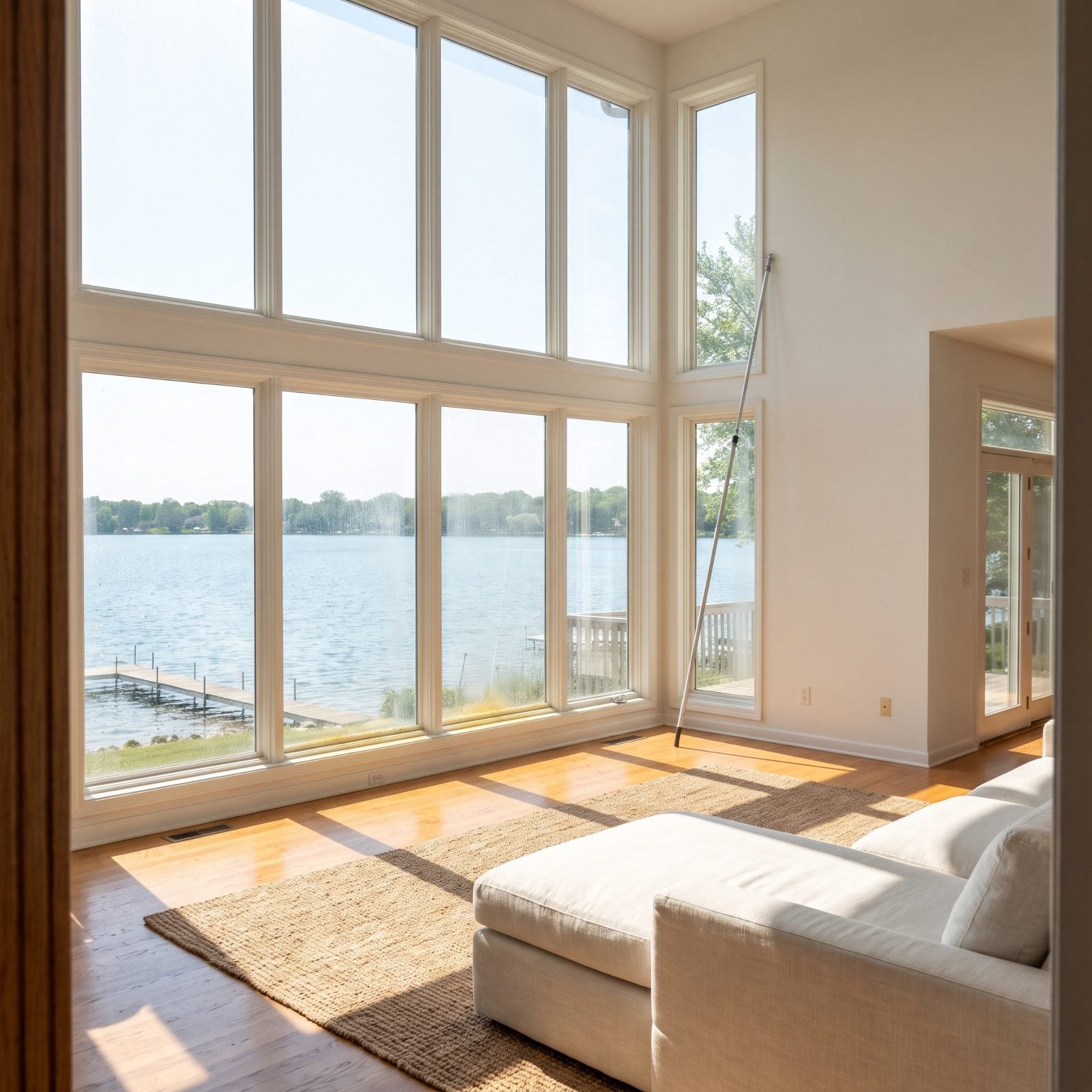
That view is the entire reason you bought the place, and it’s also a cleaning project with no finish line.
Within a week of the first warm day, spring pollen coats the glass in a yellow film, and lake spray leaves mineral spots that your usual cleaner won’t touch. The big panes that make the view feel endless? Often twelve, fifteen feet up. Which means a pro with a pole or a lift, not you with a squeegee and a dream.
Then there’s the other thing nobody mentions: the same sun that fills those rooms bleaches your floors and fades the furniture on the water side, so you’re forever shuffling rugs around and buying new cushions.
26. A Sprawling Wooden Dock
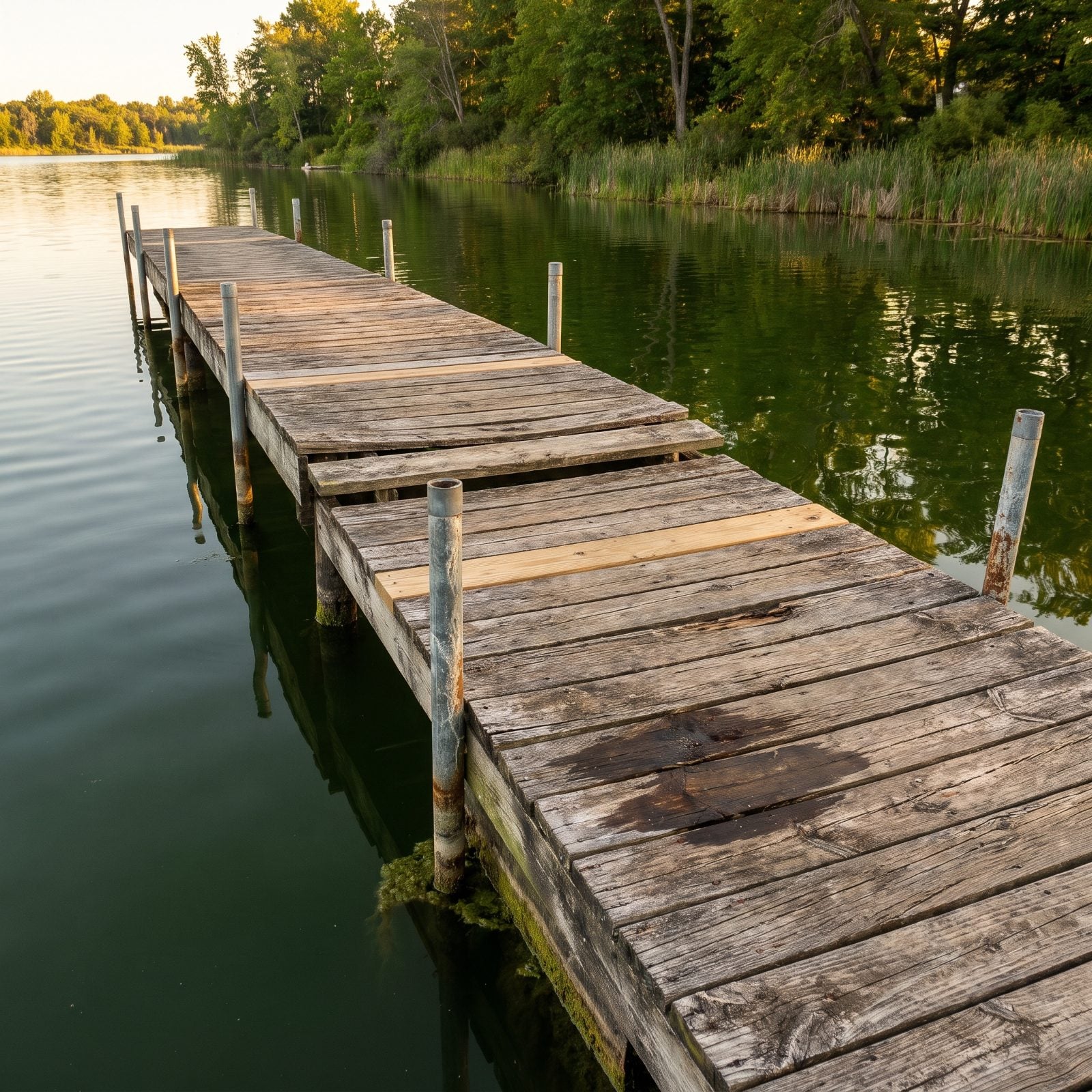
A long dock is the best seat in the house for a sunset. Boards rot. That’s the whole story, really, but it deserves the room.
Wood that sits over water lives in a permanent state of getting wet and drying out, which splits it, cups it, and softens it from the underside where you can’t see. You’ll be pulling and replacing planks every few years, and the hardware seizes up with rust long before the wood gives up.
Then there’s the seasonal shuffle. In freeze zones, a lot of docks have to come out before ice-up and go back in come spring, which is either a weekend of backbreaking work or a bill from the guys who do it for you.
25. A Natural Pebble or Sand Beach
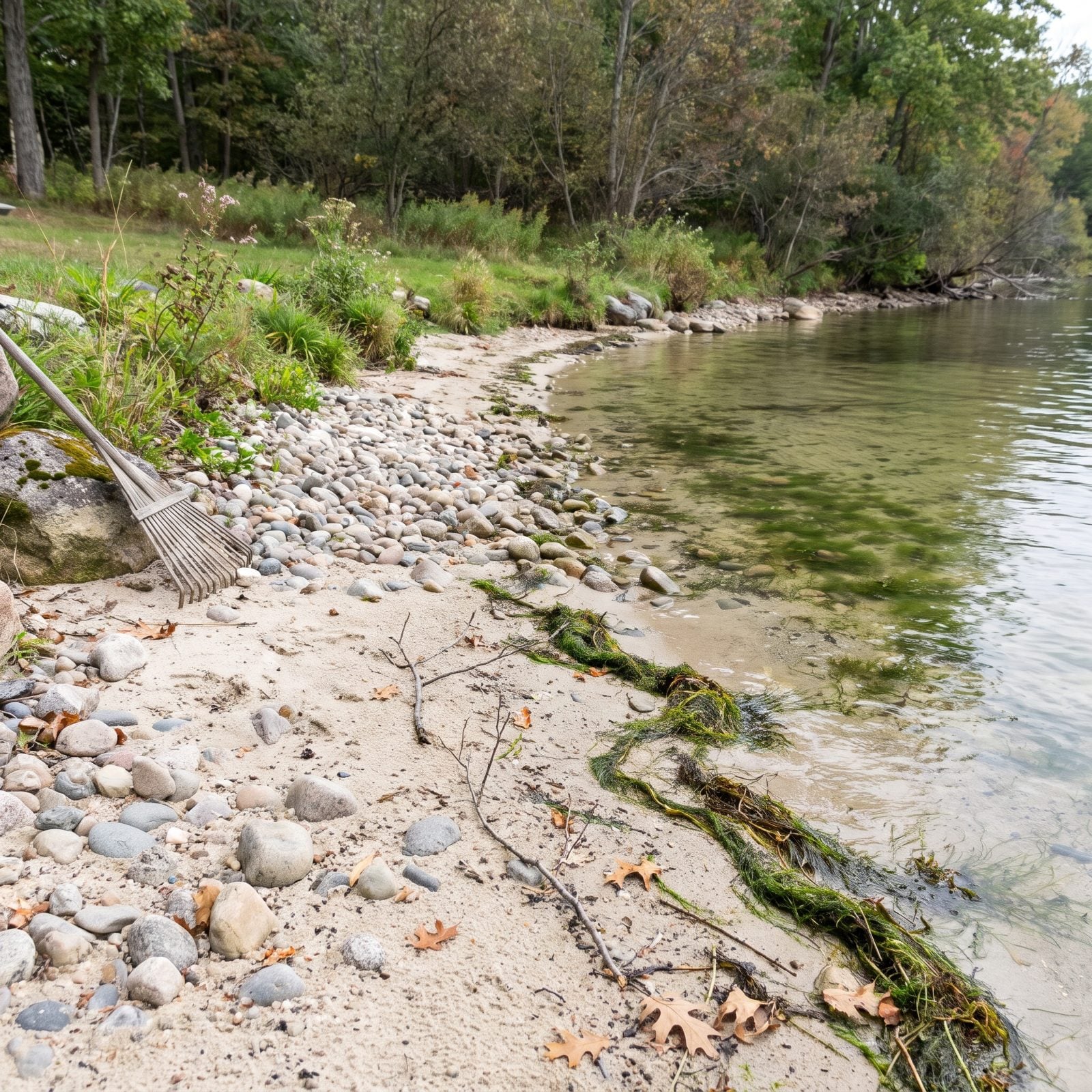
You pictured bare feet and a morning swim. Nobody mentions the weed line.
A natural shoreline is alive, so aquatic plants grow where the water’s shallow and warm, and dead weed, algae, and leaf litter wash in with every wind shift. You’ll be raking that waterline more than you ever raked a yard.
Sand is sneakier than it looks. It migrates — wave action and winter ice carry a little more off each year, so the beach you bought slowly becomes less beach. And hauling in replacement sand usually needs a permit, because you’re working below the high-water mark and your state cares a great deal about what goes into the lake.
24. Cedar Shake Siding
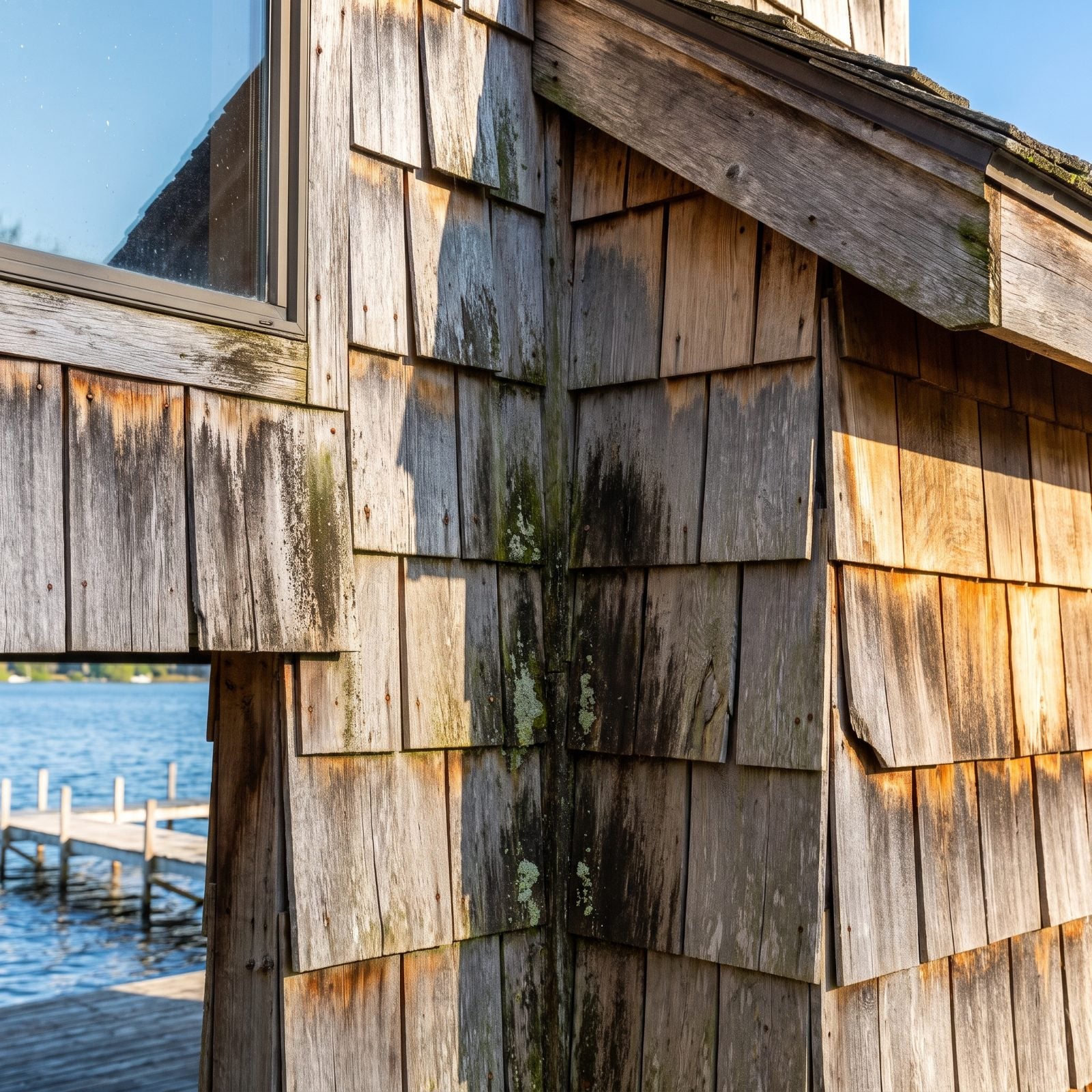
Cedar shake is gorgeous and it wants to kill you slowly with upkeep.
By the water, humidity is relentless, and cedar drinks it. That’s how you get the mildew streaks under the eaves, the moss in the shaded seams, and the curled shakes on the sun side. Keeping it right means washing, treating, and re-staining or sealing every few years, all the way around a house that’s usually two or three stories of lakefront wall.
Left alone, it weathers to that silvery gray some people love. Trouble is, silvery gray and “rotting from the inside” look identical from the driveway until a shake crumbles in your hand.
23. A Wraparound Screened Porch
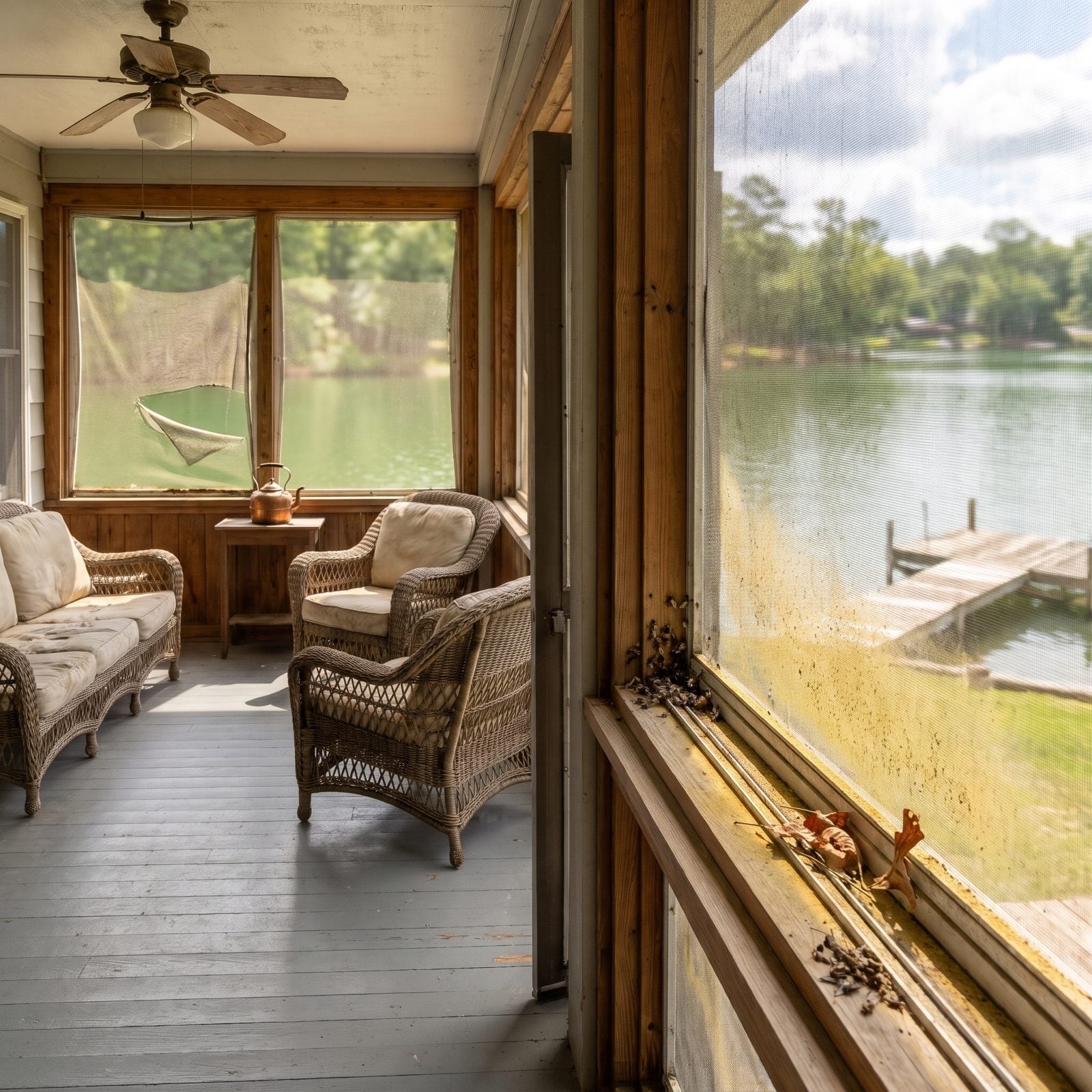
The dream is coffee out there while loons call across the water. The reality involves a lot of quality time with a vacuum and a staple gun.
Screens are the whole appeal and the whole headache. They catch pollen, cottonwood fluff, and spiderwebs, and they tear. A branch, a curious dog, a grandkid leaning the wrong way — now you’ve got a ragged panel letting every mosquito on the lake into your evening.
Bigger porch, more screen, more to patch. And the frame itself takes weather on three or four exposed sides, so it wants the same paint and rot-watching as the house.
22. A Boathouse With Living Quarters
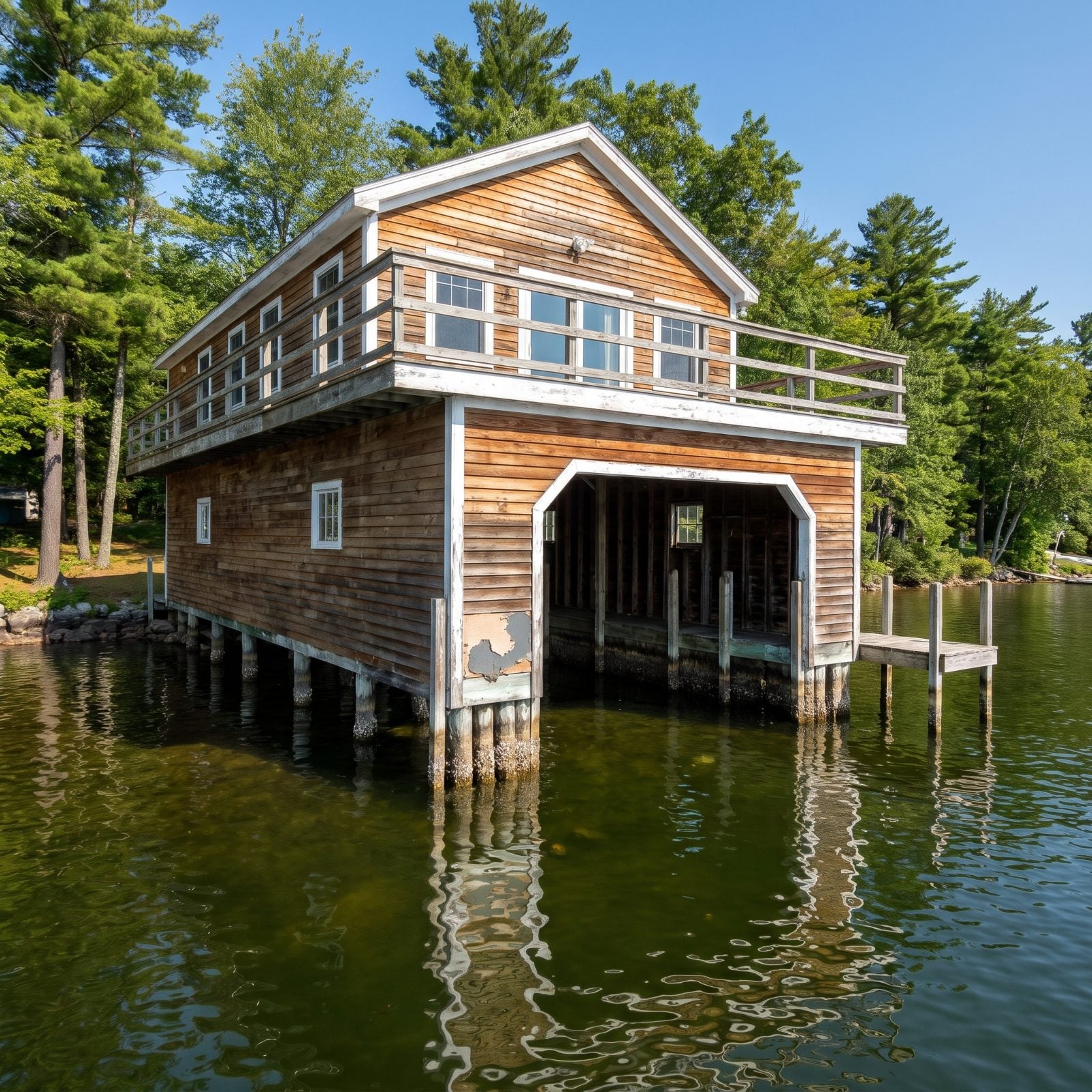
A guest suite above your own boat slip sounds like the best idea anyone ever had. It usually is — right up until the first insurance quote lands.
You’re running plumbing, wiring, and a finished living space in the dampest spot on the whole property, suspended over water. Humidity goes after everything: mold in the walls, corrosion on the fixtures, doors that swell until they stop closing by August.
The structure itself sits on pilings that live in the lake, and pilings are expensive and slow to replace. Add in that building or rebuilding over water is heavily regulated almost everywhere, and a repair that’d be routine on dry land turns into a permit application and a long wait.
21. An Infinity-Edge Pool Facing the Water
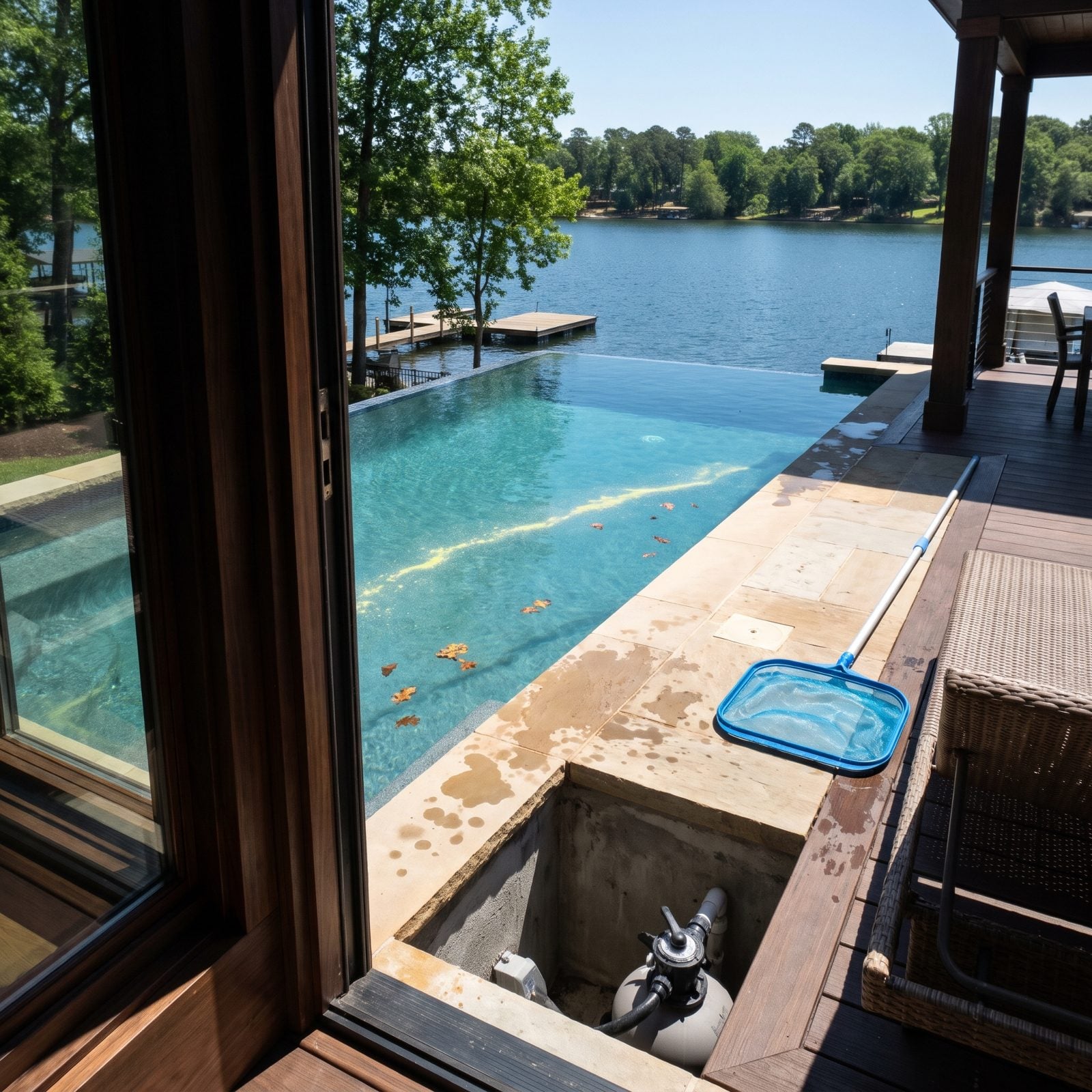
Here’s the strange part about putting a pool next to a lake: you built a lake you have to vacuum.
An infinity edge is a fussy piece of plumbing. Water pours over the lip into a hidden catch basin and gets pumped back up, constantly, which means a pump that runs more, costs more to run, and has more to go wrong than a standard pool. The leveling is finicky too — the whole illusion collapses if the edge settles even slightly.
And it sits outdoors by the water, catching the same pollen, leaves, and wind-blown grit as everything else, while you pay to chemically balance a swimming hole forty feet from an actual swimming hole.
20. Light-Colored Exterior Paint
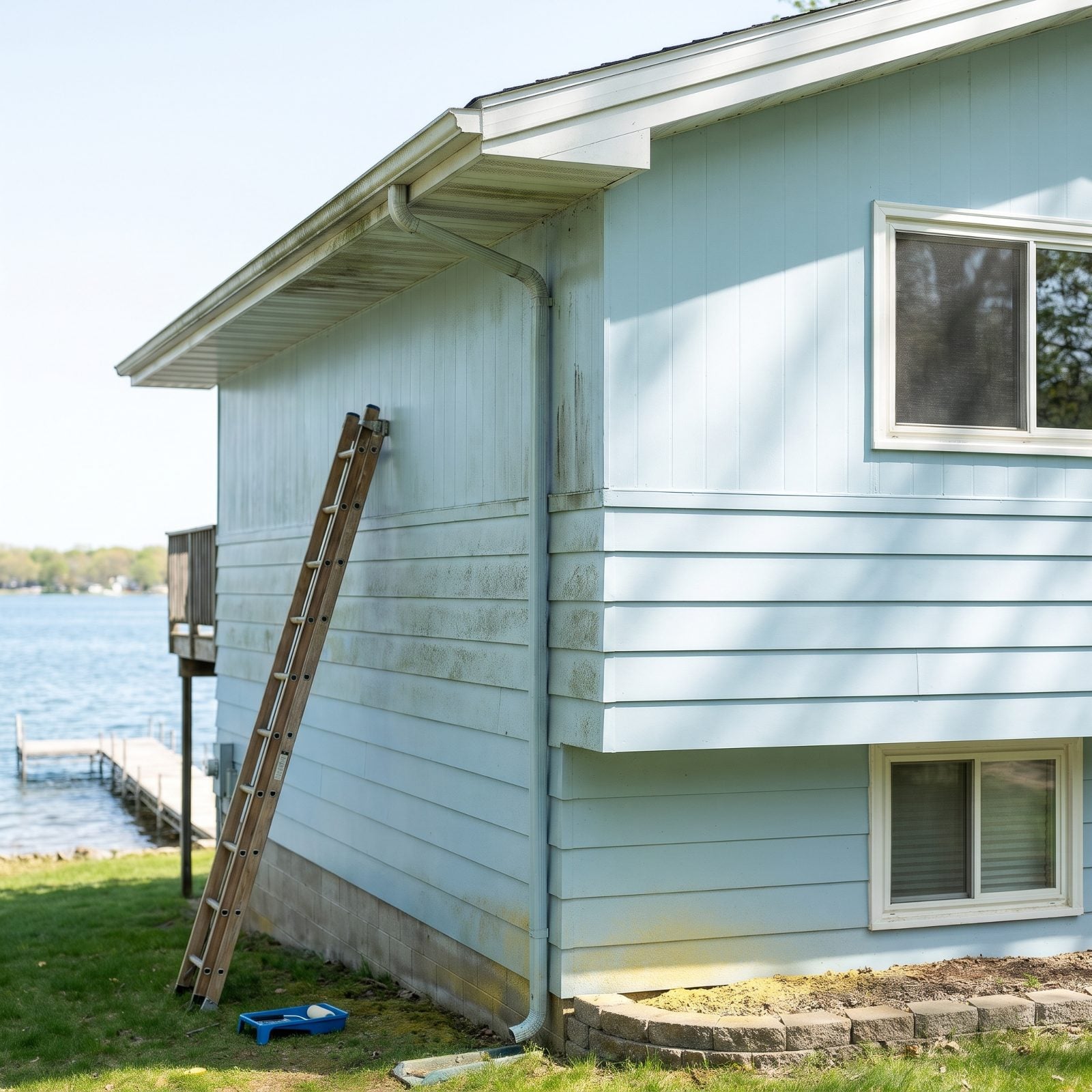
White clapboard on the water is the whole New England postcard. It also shows every single thing the lake throws at it.
Mildew loves pale paint in a humid, shaded spot, and the north side of a lake house is exactly that. Green-gray streaks show up within a season, along with dark runoff lines under the gutters and a yellow pollen tide along the base each spring.
Light colors mean more washing and more repainting to hold that crisp look, because the dirt that hides on a dark house advertises itself on a white one. The postcard is real. So is the pressure washer, every year.
19. A Steep Landscaped Hillside to the Shore
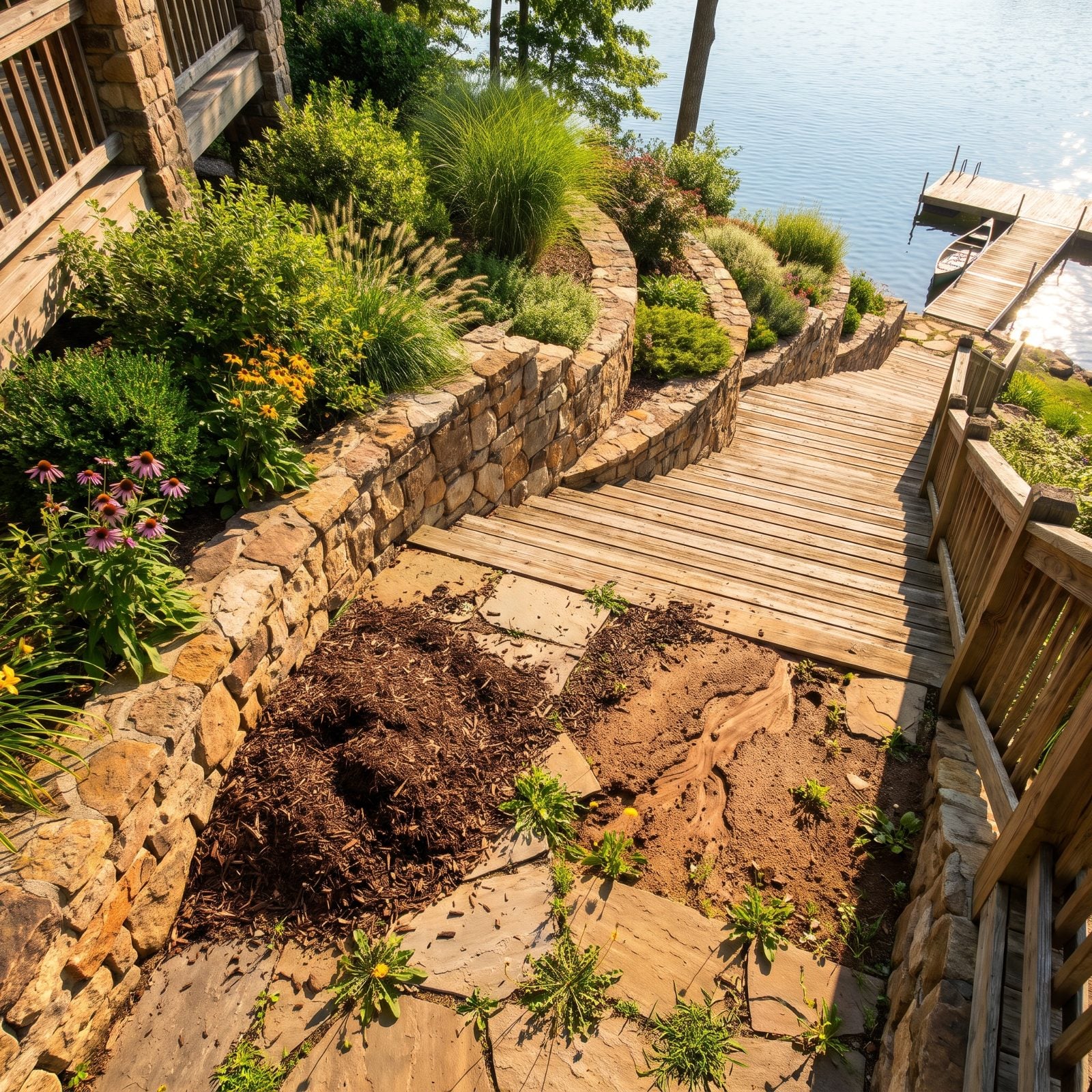
From the water, a terraced hillside tumbling down to the dock looks like a private botanical garden. From behind a wheelbarrow, it looks like a sentence.
Gravity is the enemy here. Mulch washes down, soil erodes in a heavy rain, and the retaining walls holding it all up are doing serious structural work that fails expensively when it fails at all. Every bag of soil, every plant, every tool goes down a long staircase and comes back up the same way.
18. A Private Floating Swim Platform
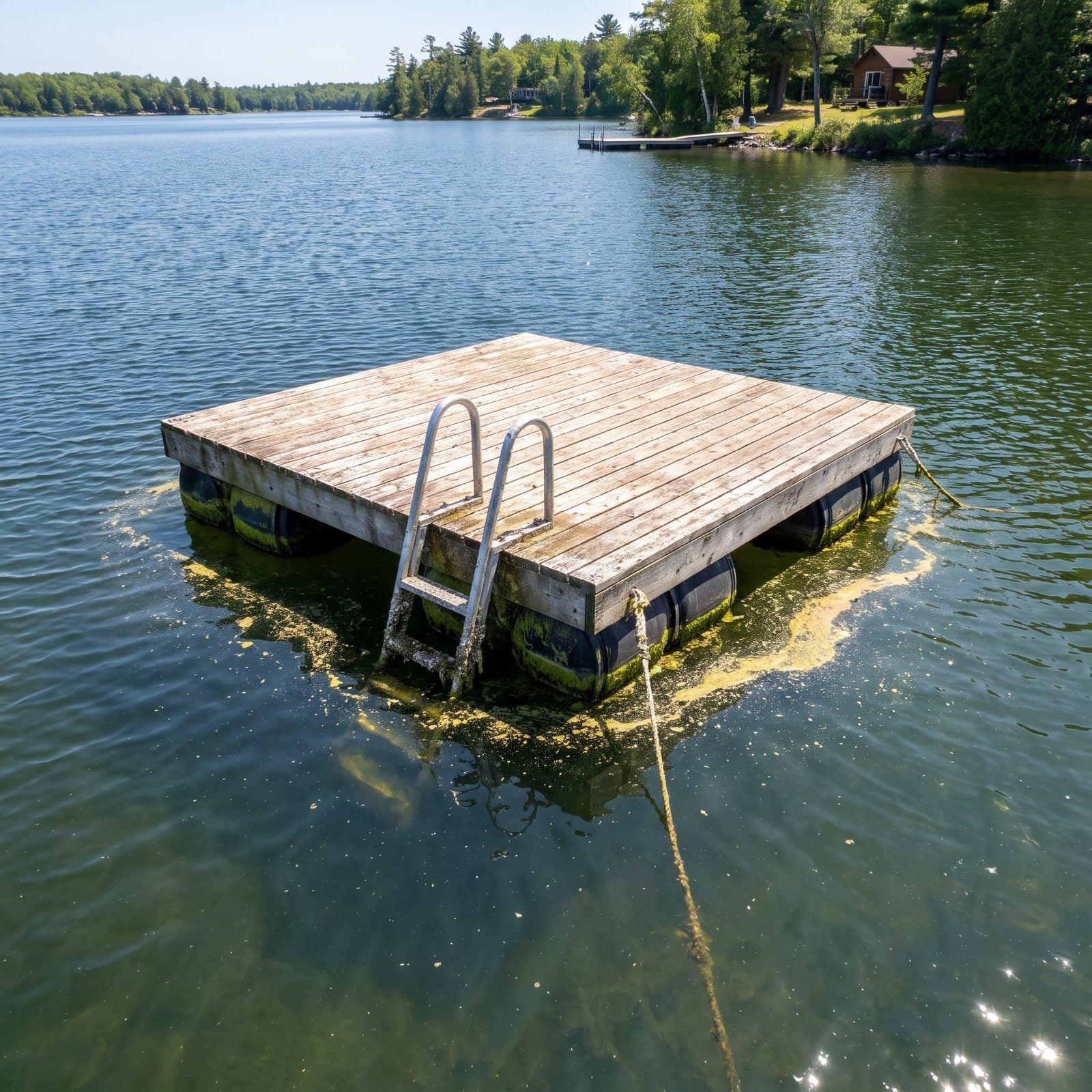
Anchored out past the shallows, a swim platform is pure summer. It’s also a chore you have to swim to.
The flotation drums and ladder rungs sit in warm, nutrient-rich water, so algae colonizes the underside fast and makes the whole thing slick and, frankly, gross to grab. Scrubbing it means climbing in with a brush, over and over.
The anchoring is the sleeper issue. Wind, waves, and the slow drag of winter ice work the anchor loose or nudge the platform off its spot, and in freeze country the whole unit has to come out before ice-up or the lake will crush it. One good summer. Two long seasons of babysitting it.
17. Sprawling Open Decks With Wood Railings
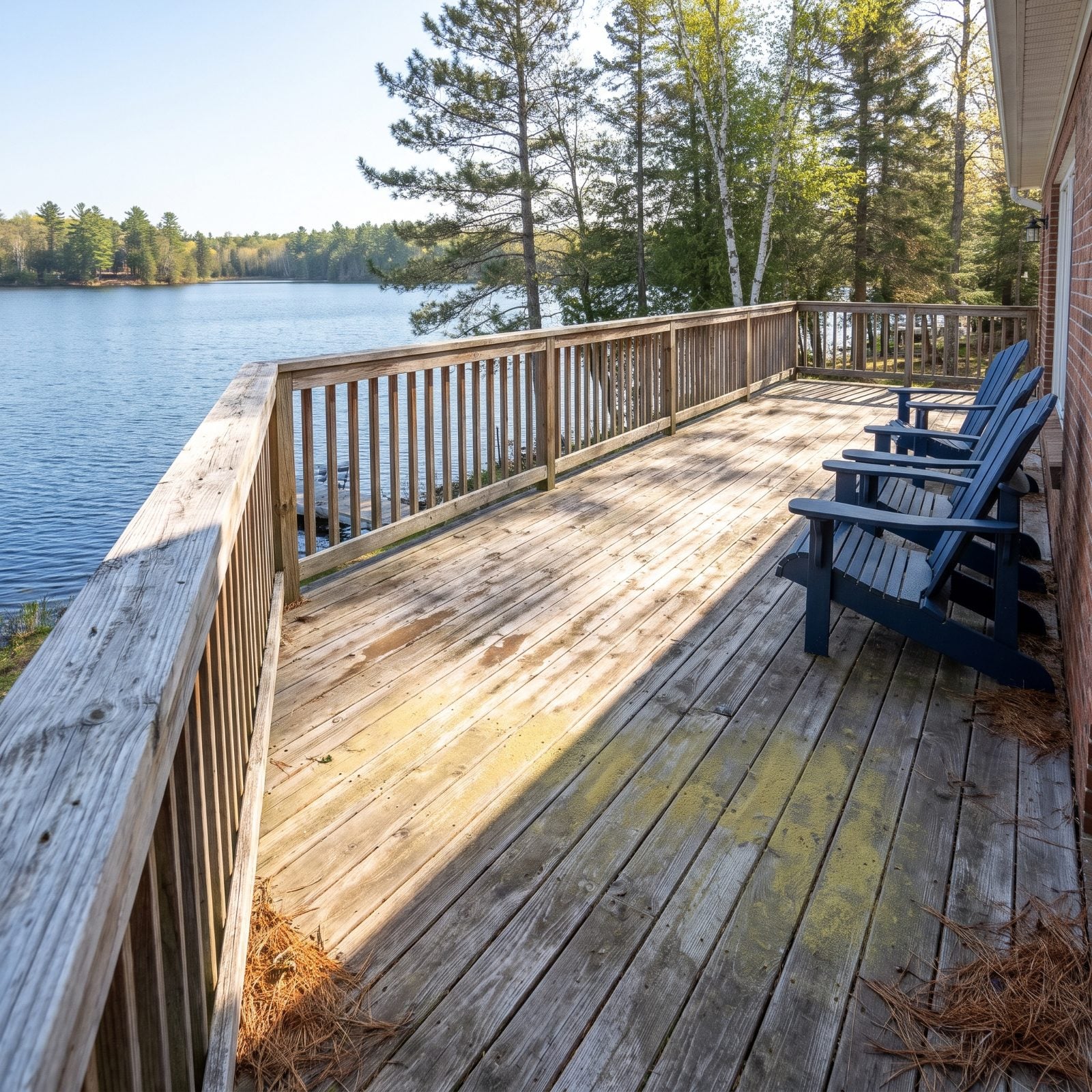
Nothing photographs like a wide cedar deck with a wood railing catching golden hour. Nothing fights you quite like one either.
Horizontal wood sitting in full lake sun drinks UV, holds moisture, and shows every bit of it. The railings go first. They’re up high, fully exposed, and they take the worst of the weather, so you’ll be sanding and re-staining the sunny side every two to three years while the shaded boards still look fine. The deck never ages evenly.
And pollen season turns the whole surface into a sticky yellow film that laughs at a quick sweep.
16. A Floor-to-Ceiling Stone Fireplace and Tall Chimney
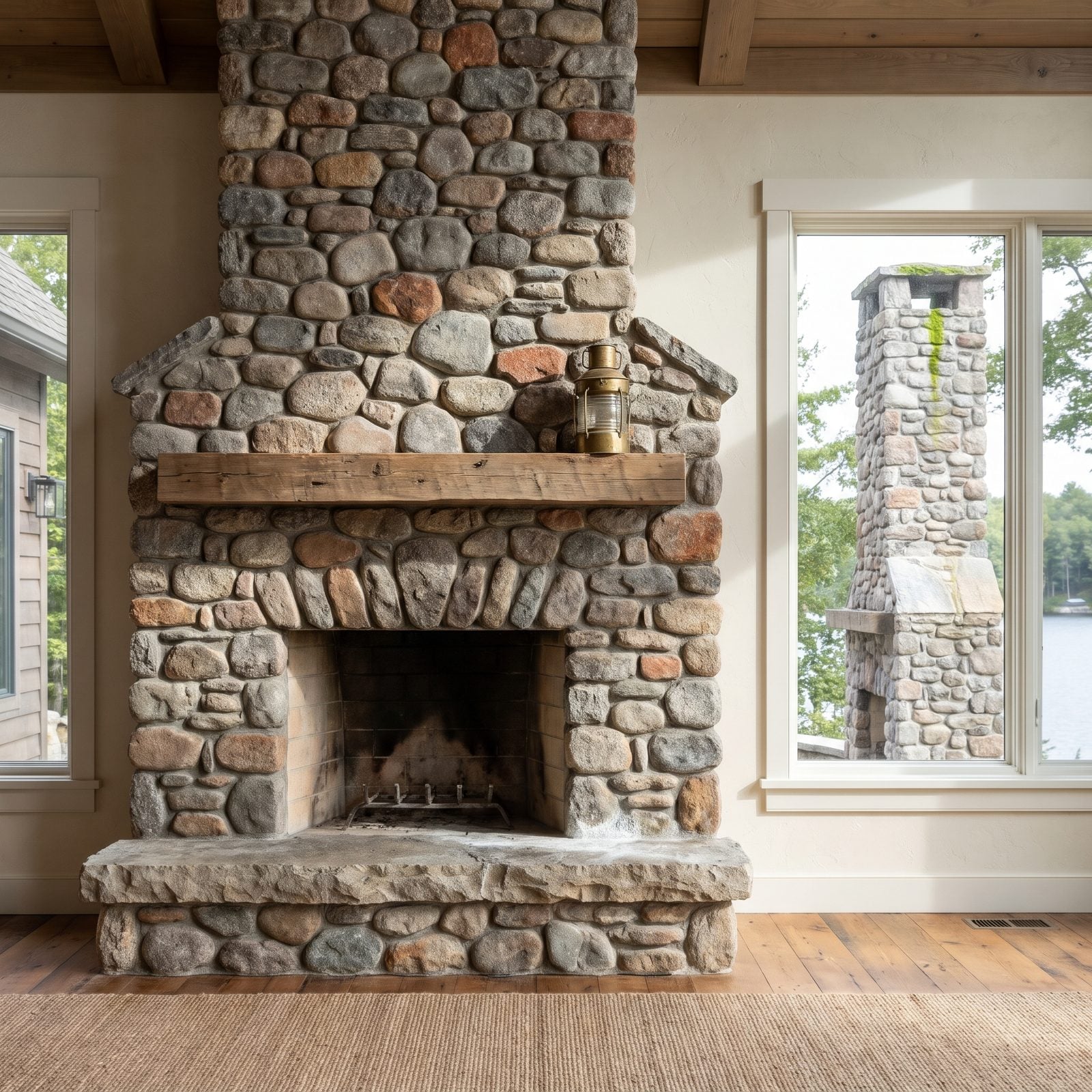
A two-story stone chimney is the money shot of nearly every lake house listing. It’s also a weather-exposed tower of masonry doing battle with freeze and thaw.
Water gets into the mortar, freezes, expands, and pops it loose joint by joint. The trouble starts up near the cap, where you can’t see it from the ground. Repointing a chimney that tall means scaffolding or a lift, and that’s a bill that makes people wince.
Inside, all that lovely rough stone is a magnet for dust and cobwebs you cannot simply wipe away. Every crevice holds it, and a feather duster does nothing. Plenty of people give up and just let the top ten feet go gray.
15. Reclaimed Barn Wood Interior Walls
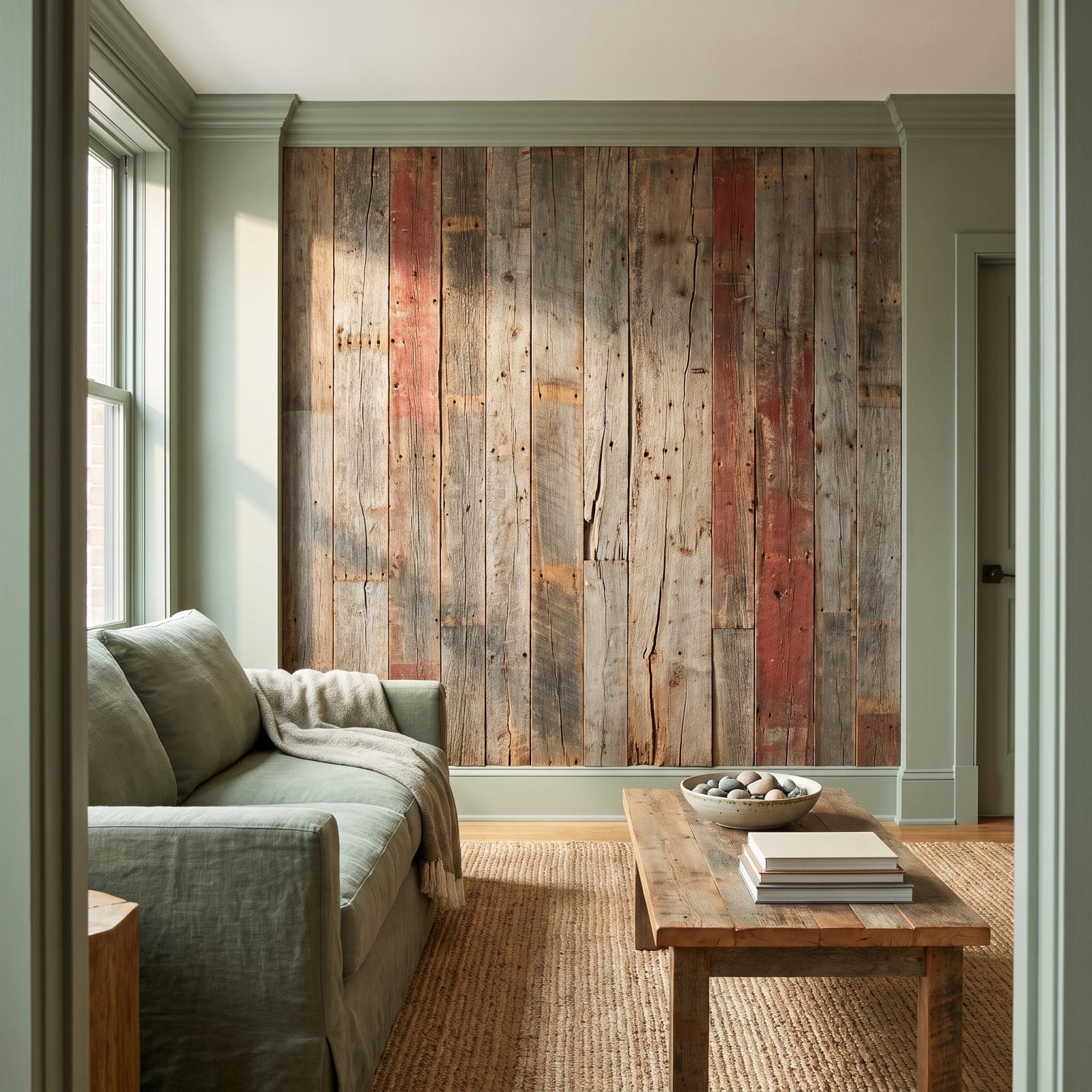
Reclaimed wood looks warm and lived-in from day one. That’s the draw. It also arrives with the baggage of a previous life.
Old barn wood can carry hitchhikers: powderpost beetles, old spores, the occasional mustiness that only shows up once the lake humidity gets into it. Reputable suppliers kiln-dry and treat it. Plenty of salvage piles don’t. In a house that sits closed and damp between visits, that matters more than people think.
Then there’s the dust. Rough-sawn grain grabs it and never lets go, and the deep cracks collect spider webs you’ll never fully reach. You don’t clean a reclaimed wall so much as negotiate with it.
14. A Koi Pond or Trickling Water Feature
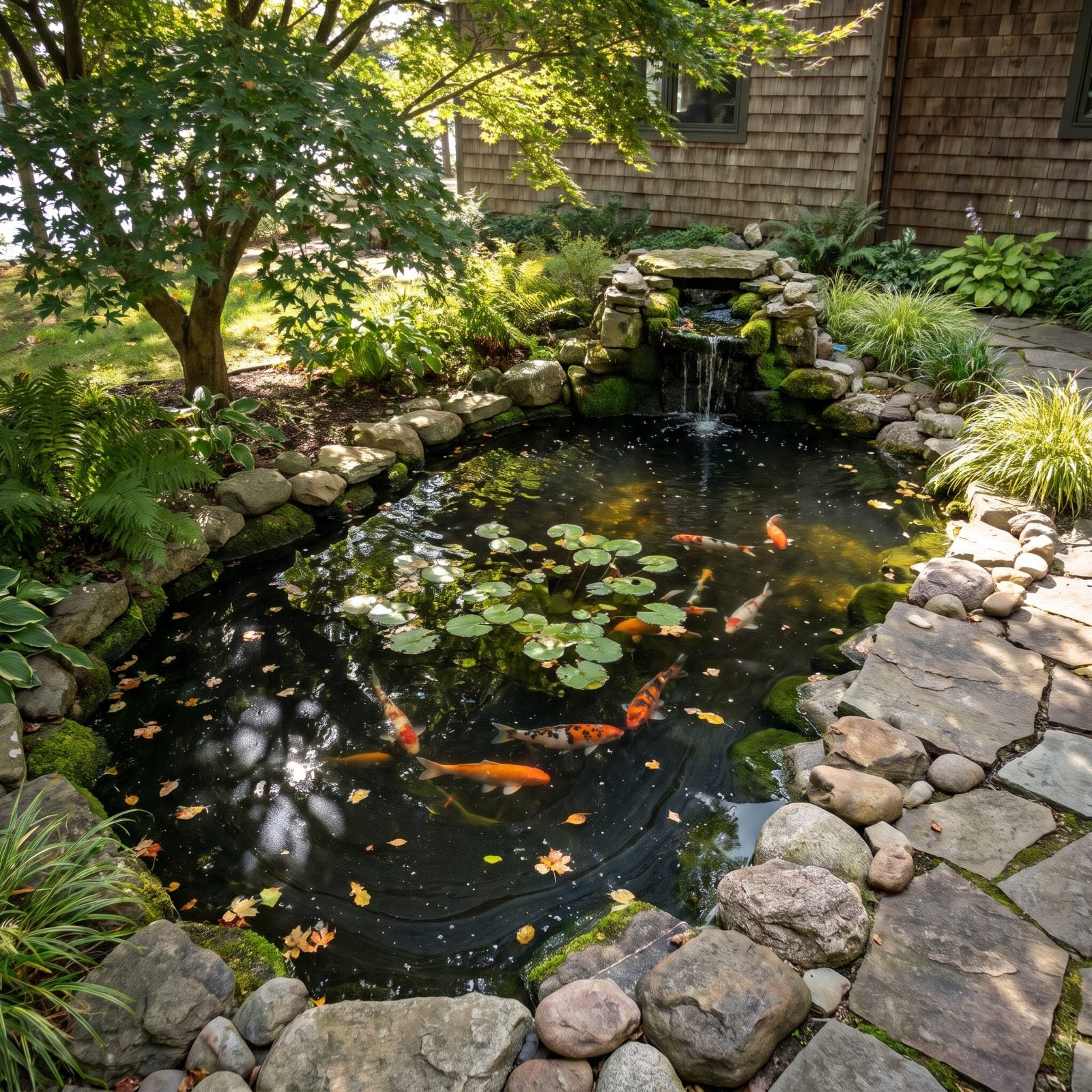
A koi pond is pure serenity in a photo. In practice it’s a small, demanding aquarium you installed in your yard.
The water needs a pump running basically year-round, a filter you’ll clean constantly, and a steady fight against algae every time the sun hits it. Fallen leaves foul it fast. And koi are not goldfish you forget about — they’re livestock with vet bills, predators (herons will clean you out in one morning), and winters that demand real planning in cold-lake country.
People fall for the still photo of fish under lily pads. What they get is a pump that hums all night and a skimmer you empty before coffee.
13. Giant Skylights Over the Great Room
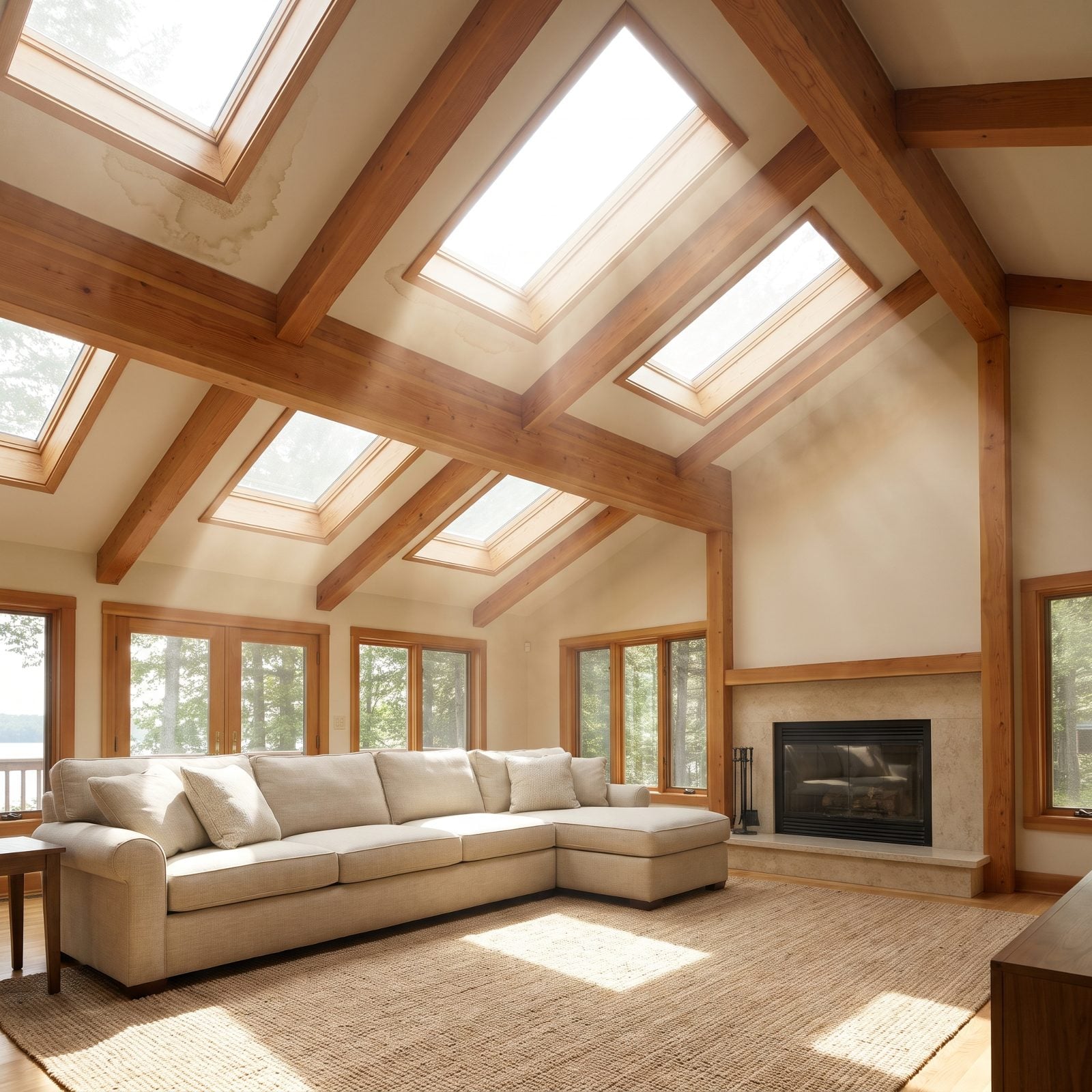
Skylights flood a great room with light and make the ceiling feel endless. They’re also, statistically, the thing most likely to leak on you.
Every skylight is a hole cut in your roof with a seal around it, and seals don’t last forever. Twenty years is a common lifespan, often less under harsh sun or heavy snow. The flashing fails quietly. The first sign is usually a brown stain spreading across the drywall below.
In summer they turn the room into a greenhouse. In winter they bleed heat. Big ones facing south will fade your furniture and floors over the years, whether you clock it happening or not.
12. A Rooftop Deck With the Big View
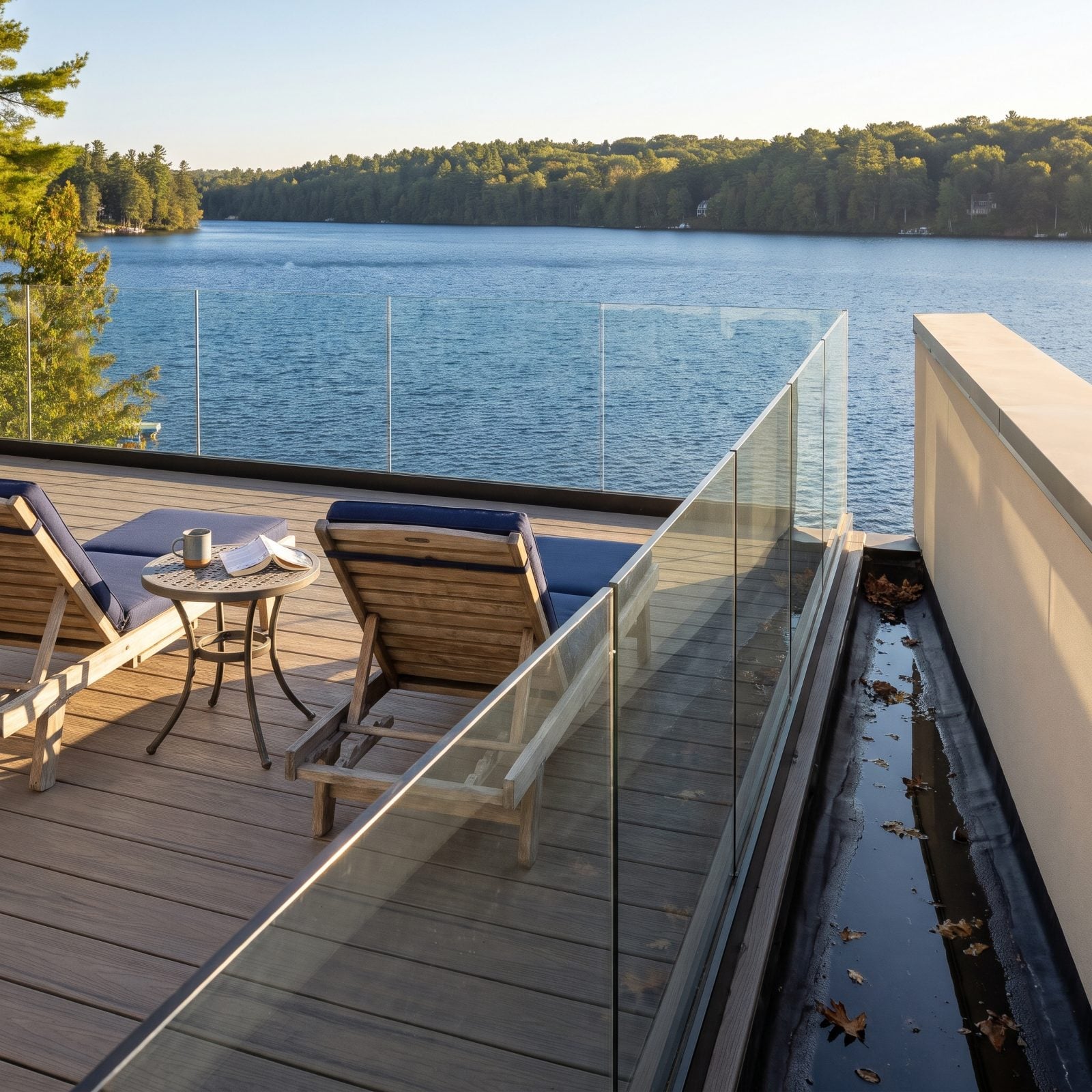
A rooftop deck gives you the view everyone at the party wants to stand on. It also puts a walkable surface on top of the one part of the house that absolutely must stay dry.
Everything rides on the waterproof membrane under that decking. If it fails, you’re not patching a deck — you’re repairing the ceiling of the room below it. Flat and low-slope roofs pond water, and ponding is what kills membranes. Drains clog with leaves and needles, so the whole thing needs inspecting every single year.
Fun in July. A liability you think about in every February thaw.
11. A Manicured Lawn Running Right to the Waterline
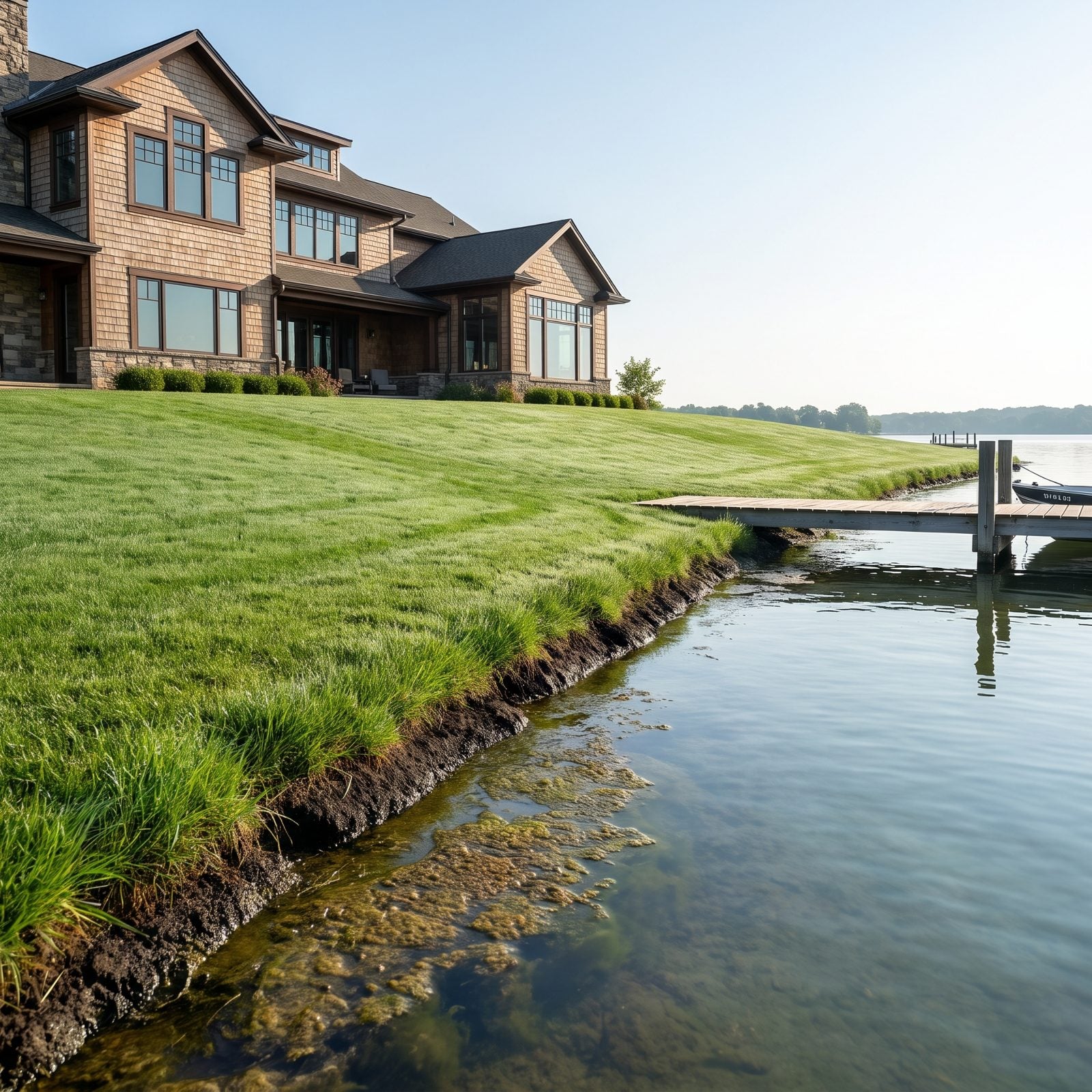
Golf-course turf sweeping down to the water reads as the dream in every listing. It’s one of the hardest things on this list to actually keep, and a fair number of lakes won’t even let you have it.
Grass alone does nothing to hold a shoreline. Without a buffer of native plants, the bank erodes, and every rain washes your fertilizer straight into the lake. That’s the exact runoff that feeds algae blooms and gets lakefront lawns regulated in the first place.
Many lake associations and state rules now require a vegetated buffer strip at the water’s edge. So you’re mowing a steep, soggy slope, reseeding the bare patches, and maybe breaking a rule to keep that clean green line.
10. A Retractable Awning Over the Patio
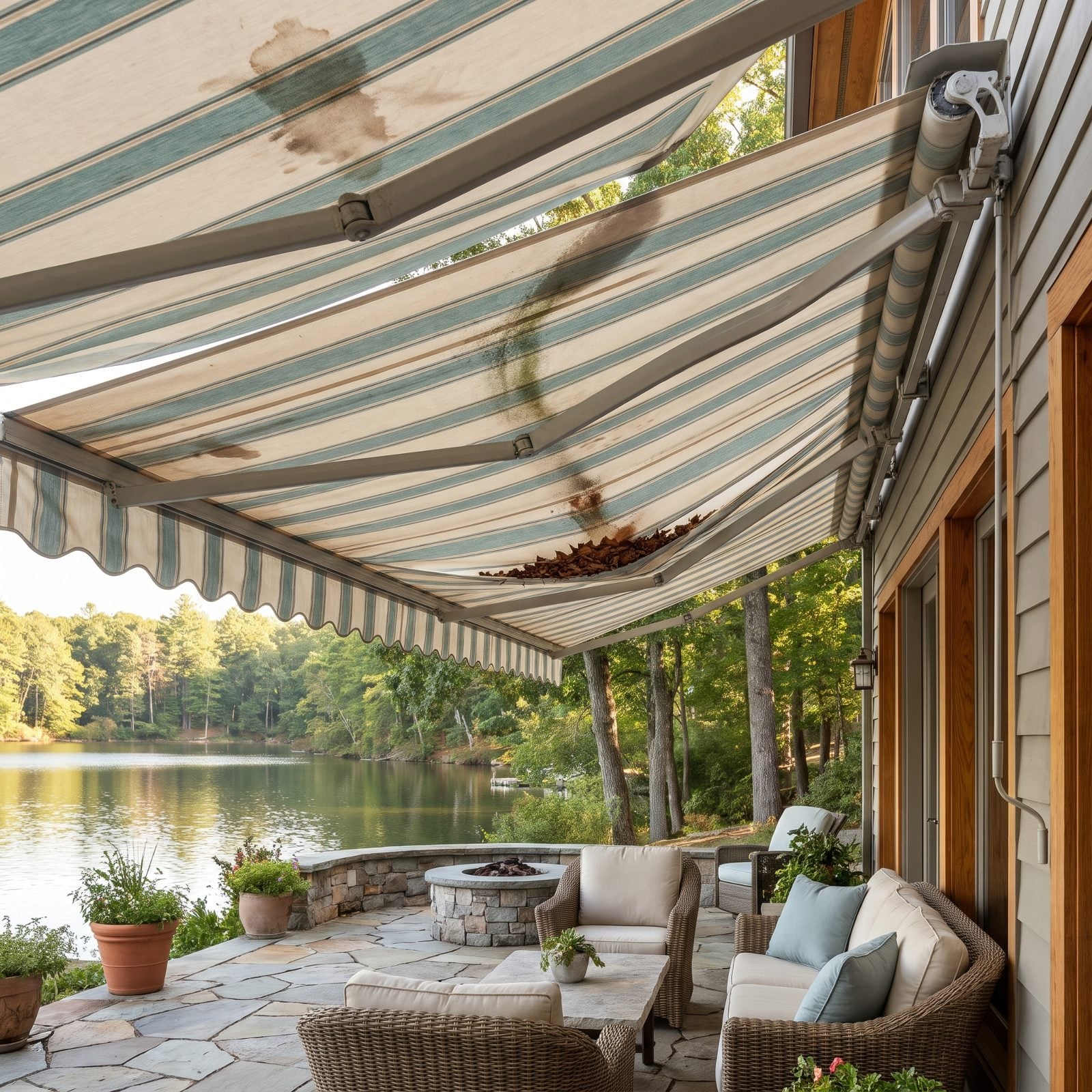
A retractable awning is instant shade, and it tucks away when you want the sun. The pitch sells itself.
The fabric is where it all falls apart. Lake humidity plus a little trapped debris means mildew along the seams, and those stains don’t scrub out easily. The motor and the rolling mechanism are moving parts living outdoors, so eventual repairs are baked in. Then there’s the cardinal sin people commit constantly: leaving it open in wind or when rain is coming. Water pools in the sag, the weight builds, and one good gust can wreck the whole arm.
9. An Outdoor Kitchen Built by the Water
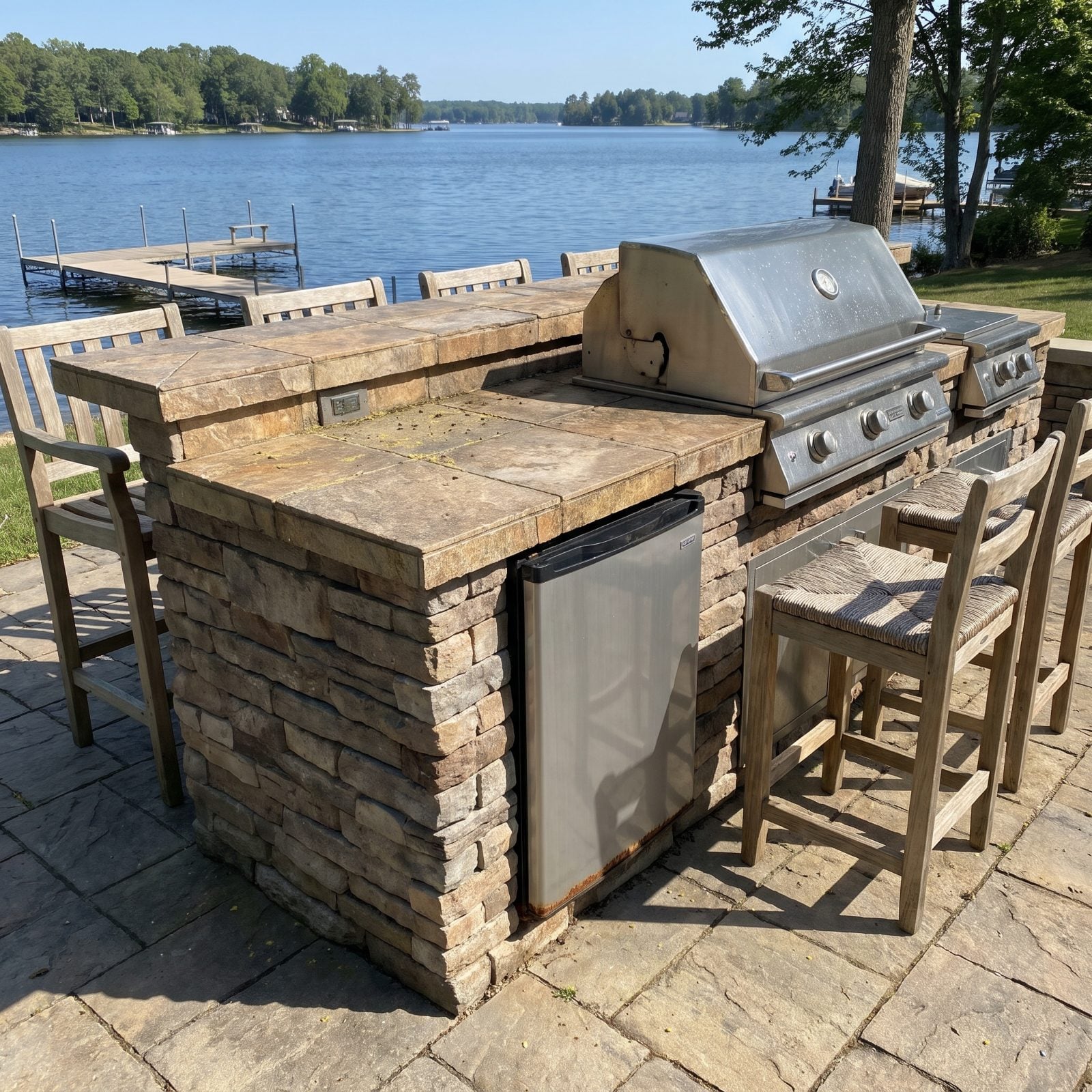
An outdoor kitchen by the lake sounds like endless summer dinners. The appliances disagree.
Here’s what the brochure skips: humid lake air is brutal on stainless steel, and “outdoor-rated” doesn’t mean rust-proof, it means rust-slower. The fridge, the grill, the ice maker all take a beating, and replacement parts outdoors cost more than their indoor cousins. In cold country you’ve got the whole winterizing ritual too — draining the sink line, killing the water, and hoping nothing cracks.
Then there are the uninvited guests. Mice, squirrels, and wasps love a sheltered outdoor cabinet, and they will absolutely move into yours between visits.
8. A Long Gravel Driveway Winding Through the Woods
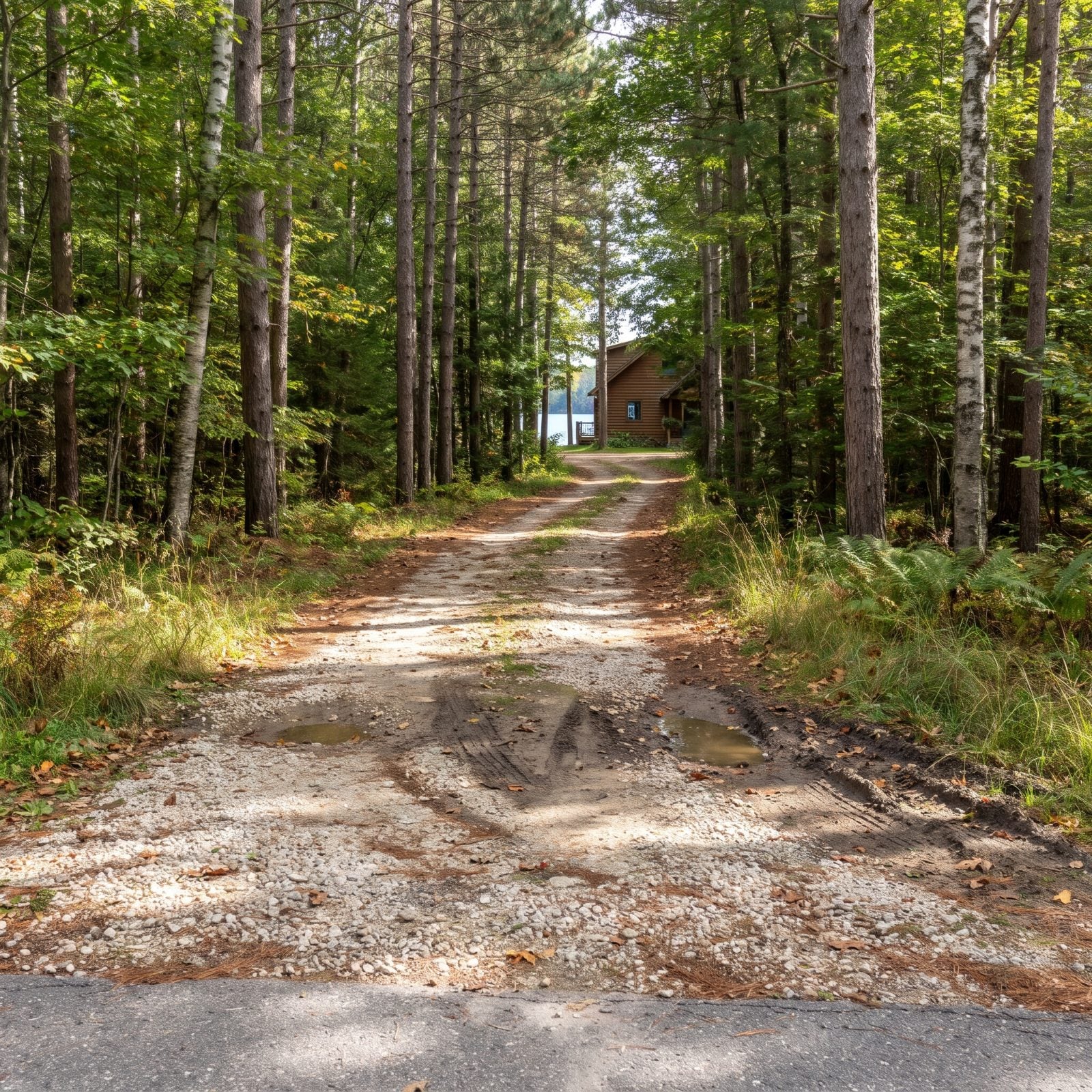
A gravel drive winding through the trees is the first thing that tells you you’ve arrived somewhere quiet. It’s also a chore that never really ends.
Rain carves ruts and washboard ripples, and every spring thaw leaves soft muddy spots that’ll swallow a tire. You’ll regrade and add fresh gravel every few years, and a long drive eats a lot of it. Plowing gravel in snow country is its own special headache: push too hard and you scrape half your surface into the ditch.
The woods don’t help. Roots heave it, leaves bury it, and the forest keeps trying to take the edges back one weed at a time.
7. The Deck Hot Tub You’ll Actually Use Four Times a Year
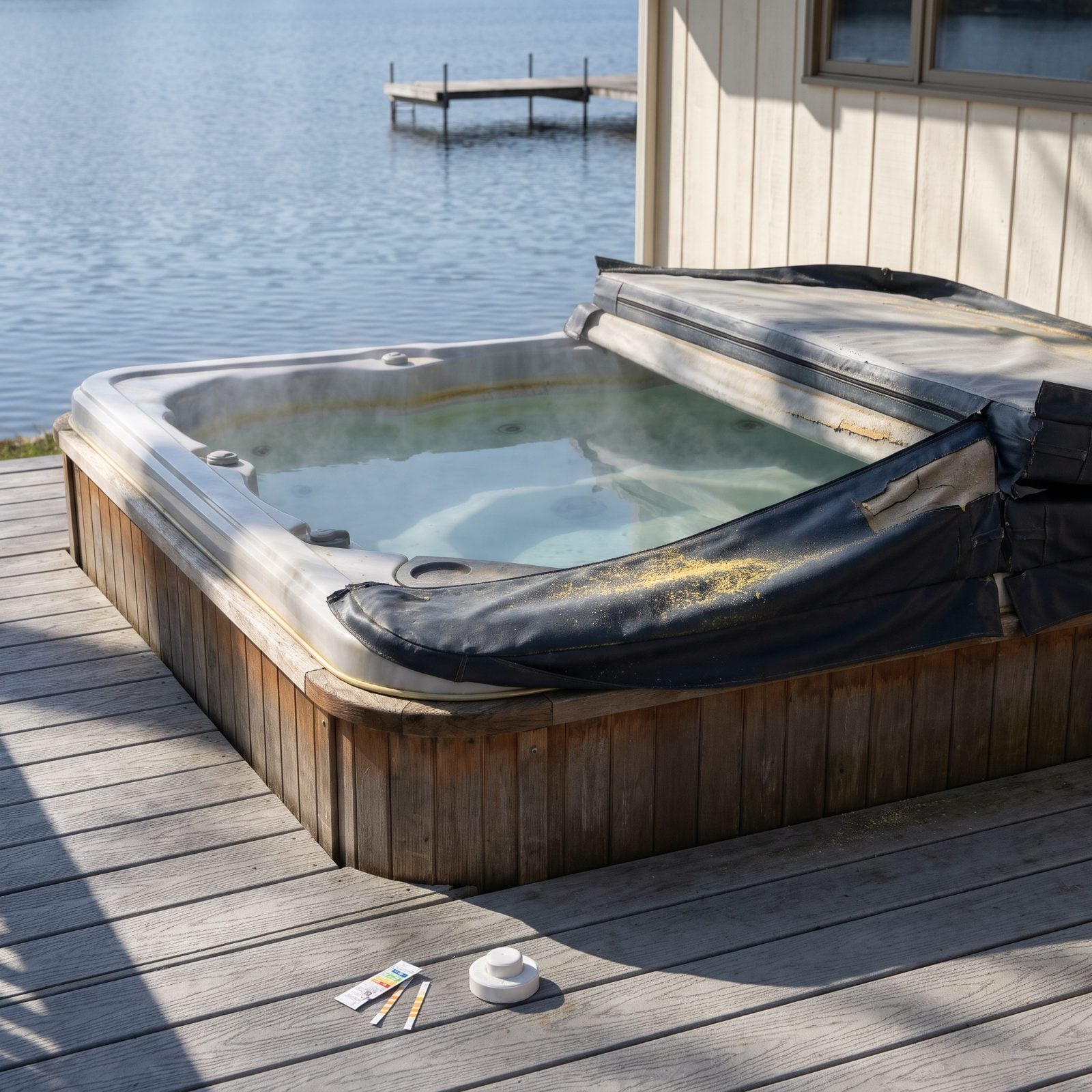
It photographs like a spa and lives like a part-time job. A hot tub exposed to lake weather drinks chemicals, grows biofilm down in the plumbing where you can’t see it, and cakes its cover in pollen every single spring. And the cover is the quiet villain here — it waterlogs, sags, and wants replacing every five years or so. A decent one isn’t cheap.
Winter’s worse. Leave it empty in a freeze and you risk cracked lines; keep it running and you’re heating water nobody’s sitting in.
6. Antique Windows That Leak Charm and Everything Else
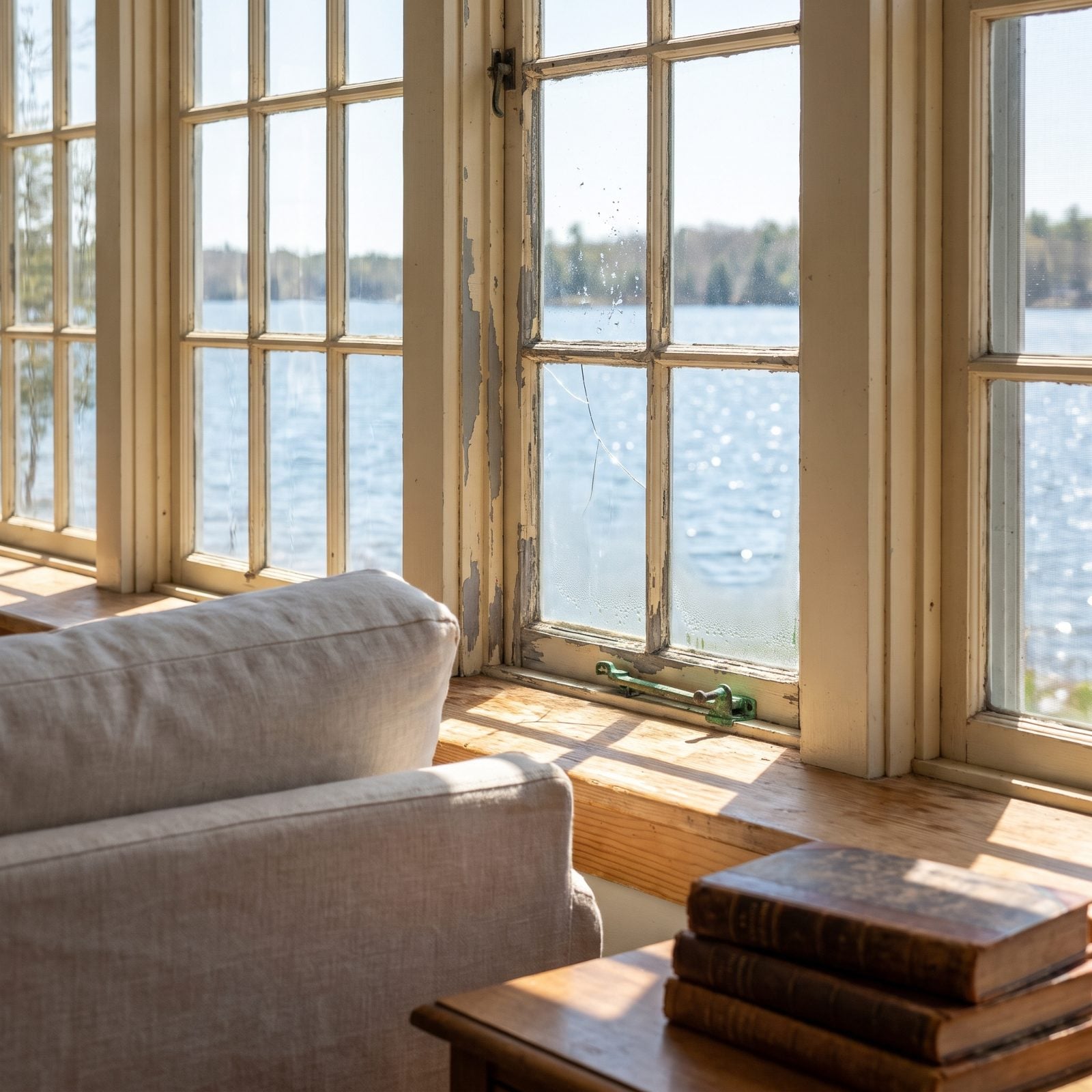
Wavy old glass is lovely, and we’d keep it too if we could. But single-pane antique windows are basically open invitations for lake wind, and that same charm comes with drafts that find you in January.
The glazing putty cracks. Sashes swell and stick through a humid summer, then rattle loose by fall. You can restore them — and the carpenters who do it well are worth every penny — but they’re rare and booked solid. Swap in modern replacement windows and you kill the look you bought the house for. It’s a genuine trade-off, and anyone who tells you it’s simple has never once tried to source a matching pane of distorted glass.
5. The Wood-Burning Sauna That Needs More Care Than You Do
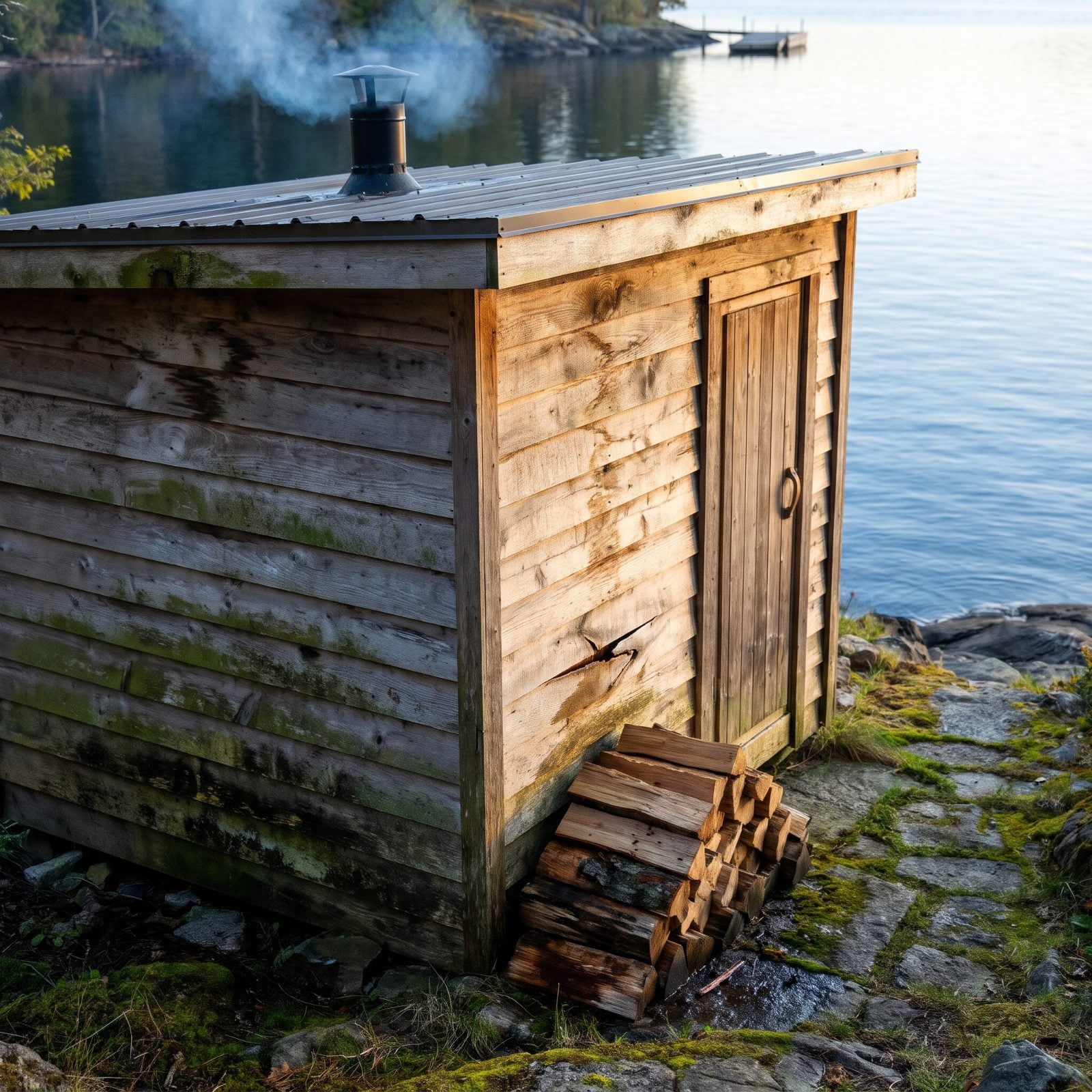
A sauna by the water is a dream until you’re the one hauling firewood in the rain. Wood-burning means a real fire, which means a chimney, which means creosote, which means annual cleaning you cannot skip next to a timber building on a dry lot.
Cedar sitting in lake humidity invites algae on the shaded side and rot where it meets the ground. The stove outlasts everybody. It’s the structure around it that needs steady attention. And here’s the kicker — every session wants forty minutes of heat-up before you even step in, so spontaneity goes out the window fast.
4. Rope Lighting Along the Dock That Dies One Bulb at a Time
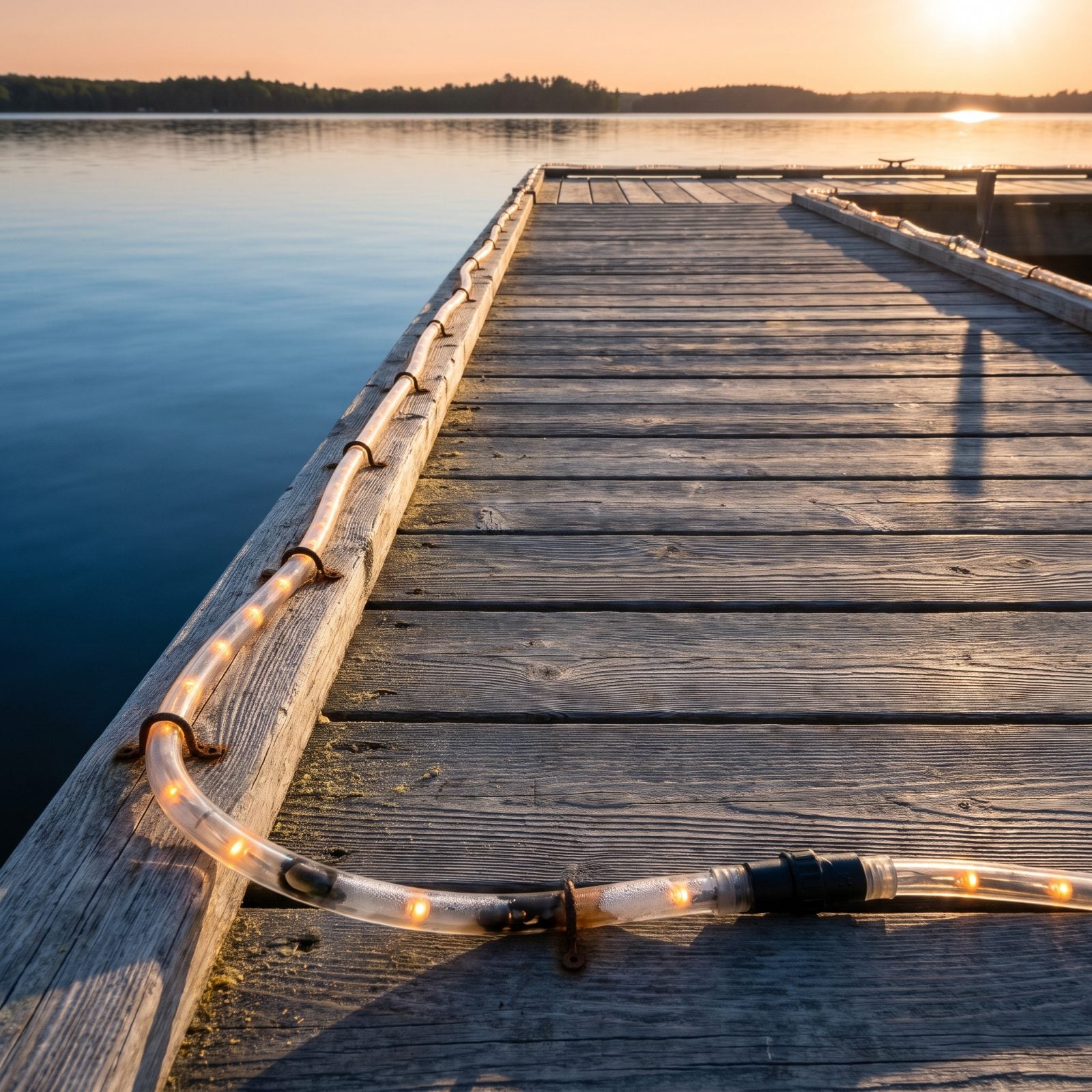
Glowing dock edges look magical in a dusk photo. In practice, rope lighting near water is a consumable, not a fixture. Moisture creeps into the tubing through the tiniest gap, fogs it up, and kills whole sections you can’t repair piece by piece.
Then the sun yellows the plastic and the connectors corrode, and you end up rebuying the full run every few seasons. It adds up quietly. Want lights by the water? Splurge on marine-rated low-voltage fixtures instead. They cost more upfront and last years longer, and you won’t be out there with a flashlight chasing a dead stretch some cold night in October.
3. Big Shade Trees Dropping Everything Onto Your Roof
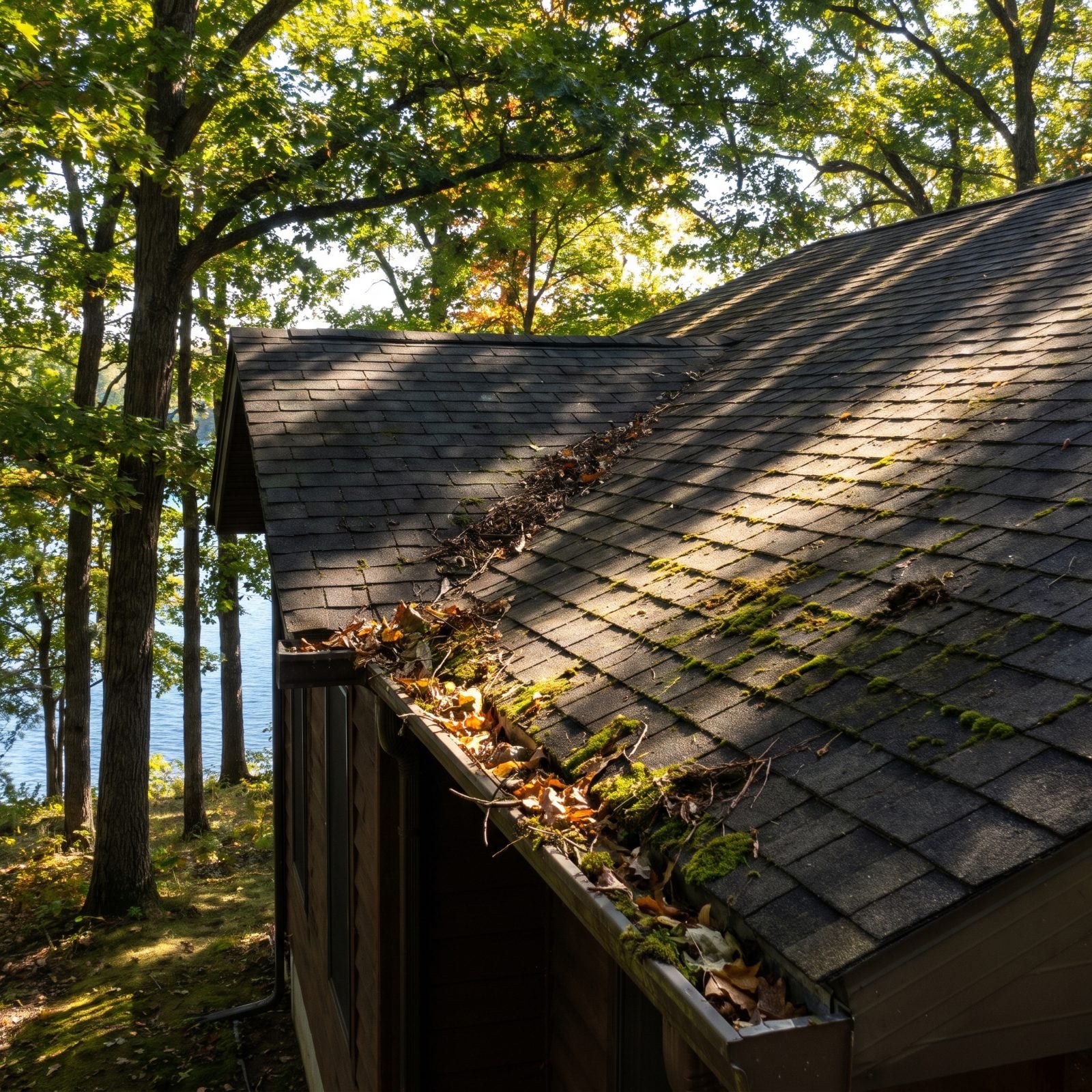
Those grand old trees are why the house stays cool and feels tucked into the land. They’re also dropping leaves, sap, and the occasional heavy limb onto your roof all year long.
Shade keeps shingles damp, and damp shingles grow moss and algae that shave years off a roof. Gutters clog faster than you can keep up. One storm off the lake can turn a leaning limb into a very expensive afternoon.
We’re not saying cut them down. We’d never. Just pencil in the arborist and the gutter guy as permanent line items.
2. The Glass Sunroom That’s an Oven in July and a Fridge in January
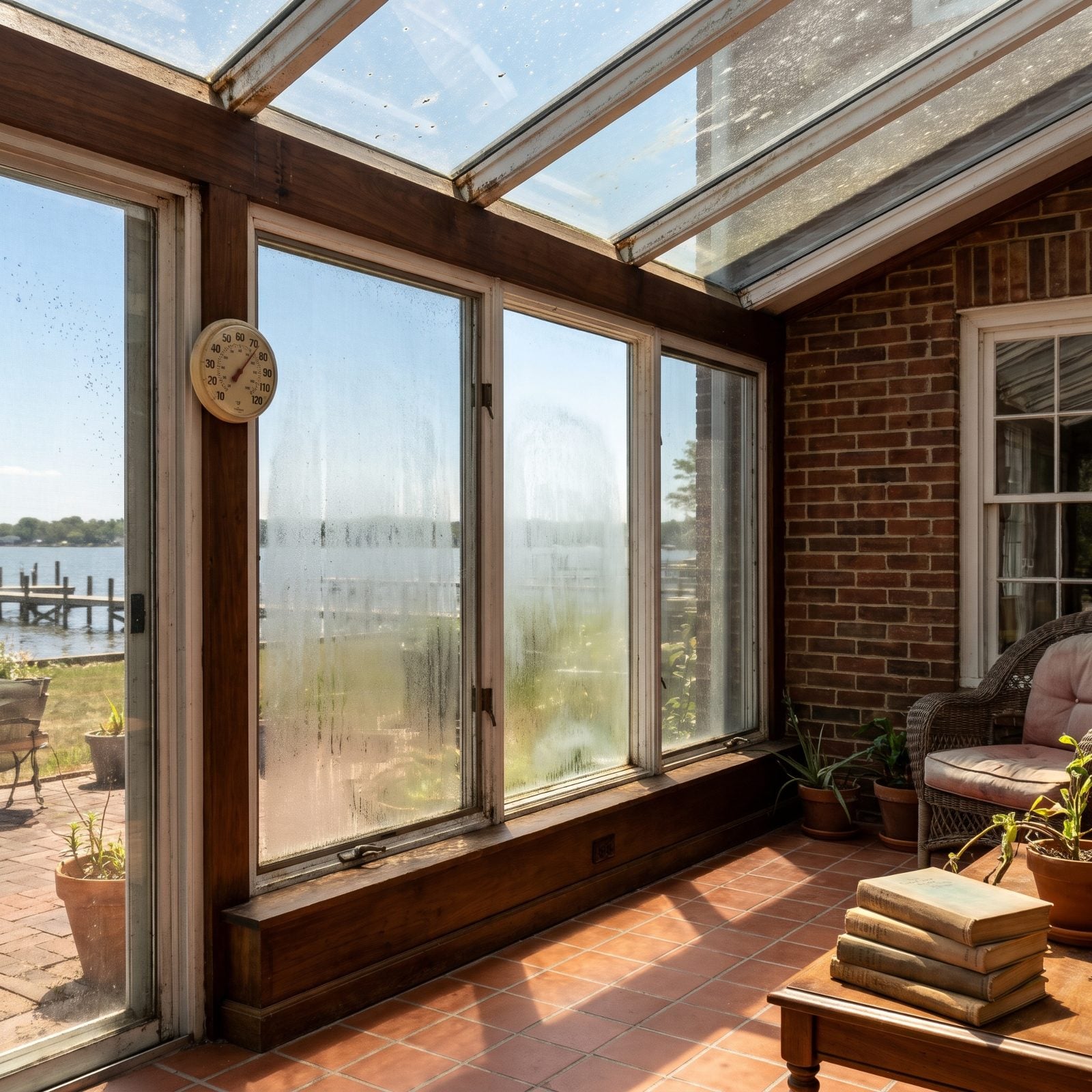
All that glass pointed at the lake is the whole fantasy. The physics are less romantic. A glass sunroom with a glass roof is a greenhouse, and come July it hits temperatures that make it unusable right when you most want to sit in it.
Winter flips the problem. Single-glazed or aging double panes bleed heat, and the sealed units fog up the day the seals quit — which they eventually do. Swapping fogged panes is no small chore.
The view costs you cleaning. Every pane, every season, inside and out, pollen and water spots and all.
Can you make it comfortable? Sure — good glazing, decent shades, a mini-split in the corner. Just know the entry-level version is a room you’ll mostly admire from the doorway.
1. Natural Stone Patios That Heave, Settle, and Grow Their Own Garden
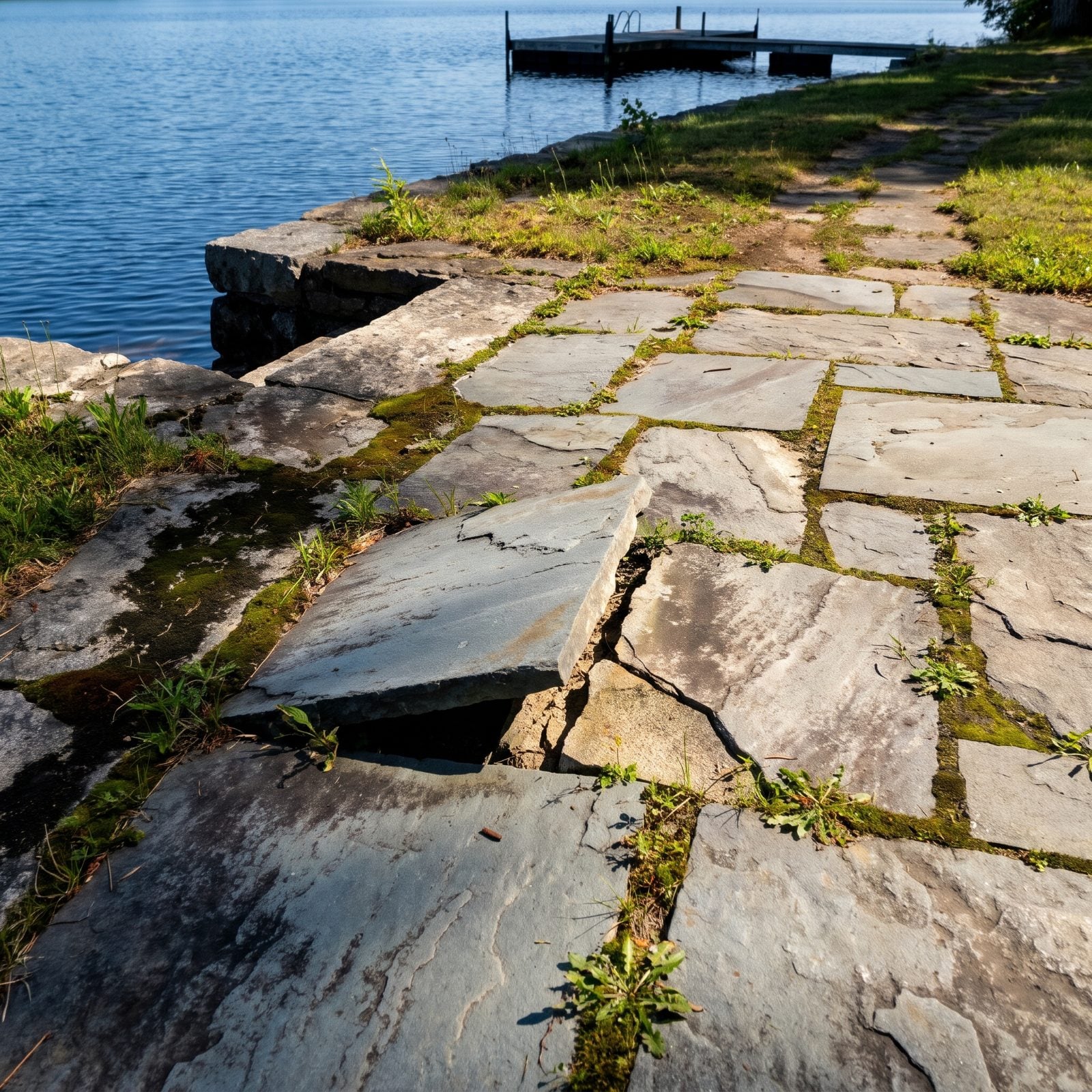
Stone underfoot by the water looks like it’s always been there, and that permanence is the whole selling point. Trouble is, natural stone on a lake lot moves. Freeze-thaw cycles heave the slabs, joints open up, and the gaps fill with moss and weeds that come back no matter what you do.
Down near the waterline the shaded stone grows algae and gets genuinely slick — a slip hazard worth taking seriously. Re-leveling settled flagstone and re-sanding joints is steady, unglamorous work, every couple of seasons for a big patio. Lovely to walk on. Never quite done.