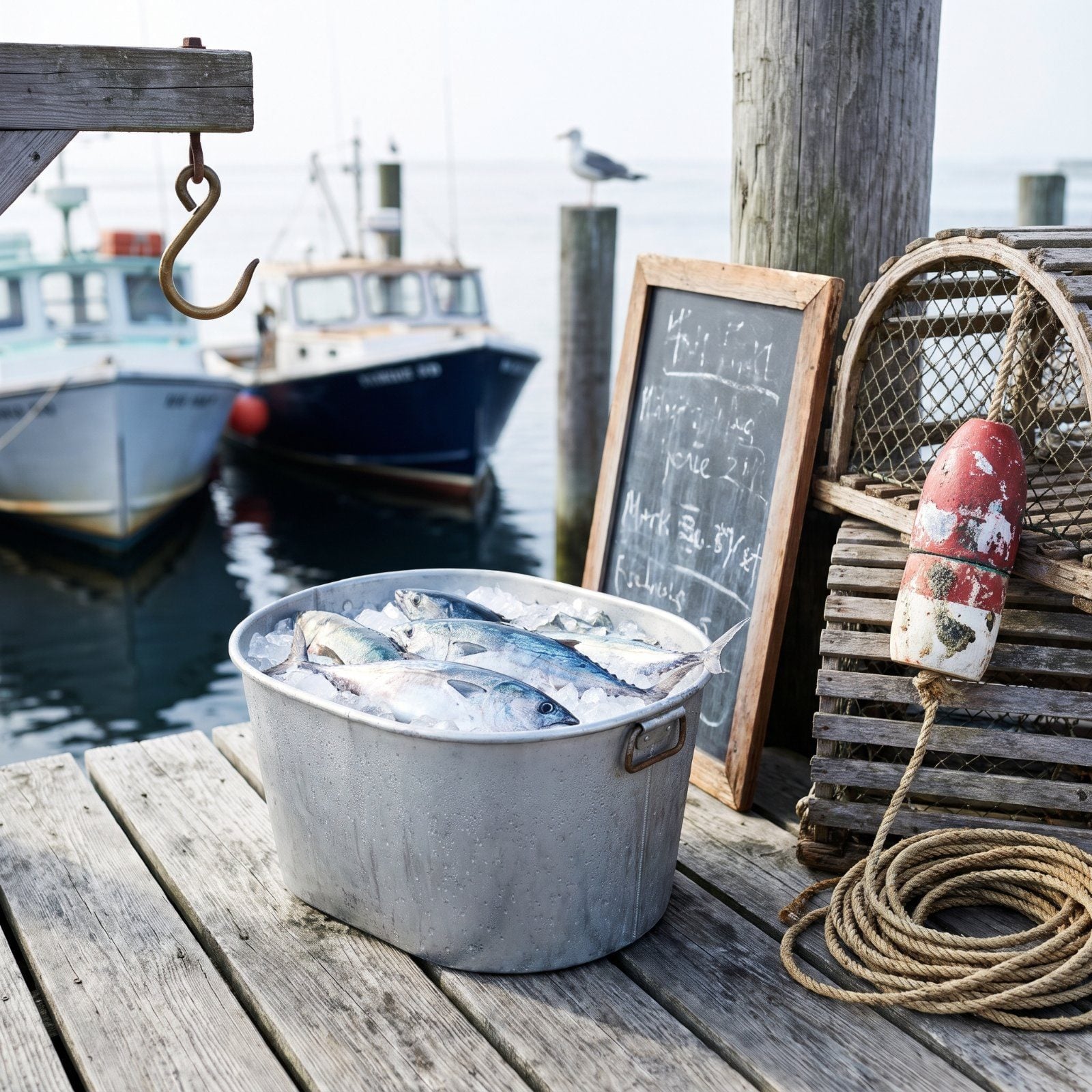
The best fish you’ll ever eat never saw the inside of a truck. It came up a ramp in a plastic tote, still twitching, and got weighed on a scale somebody’s grandfather bought. Most people drive right past these places on the way to a restaurant that charges four times as much for fish half as fresh, which is a shame when the alternative is standing on a dock handing cash to the person who caught your dinner. Across the country, harbors still work this way: the boats come in, the catch gets sold off the planks, and nobody takes a cut in between. Bring a cooler. Bring small bills. Here’s where to go.
Please note that some of the imagery in this article may have been enhanced with the assistance of AI.
49. San Diego, California, Tuna and Sea Urchin at the Tuna Harbor Dockside Market
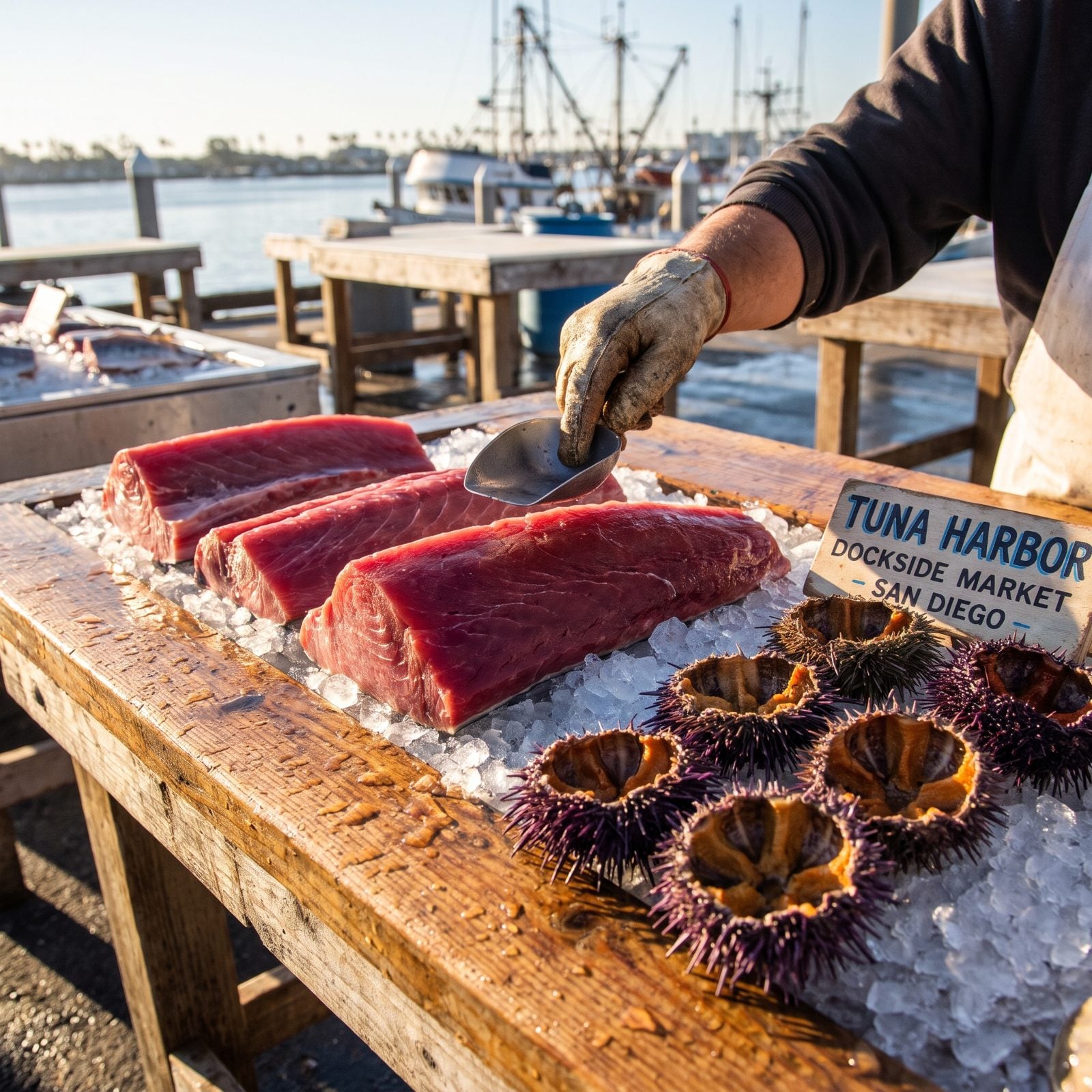
This one only runs on Saturday mornings, and when the tuna’s gone, it’s gone. The Tuna Harbor Dockside Market sits right downtown, under the shadow of the convention center, and it’s the real thing: California fishermen selling what their boats landed that week. Yellowfin, bluefin, local uni pulled from the kelp beds off La Jolla.
Go early. By mid-morning the good stuff thins out and you’re picking over leftovers, and the urchin especially sells fast because the sushi crowd knows exactly what it is.
48. Newport Beach, California, The Historic Dory Fleet’s Morning Catch
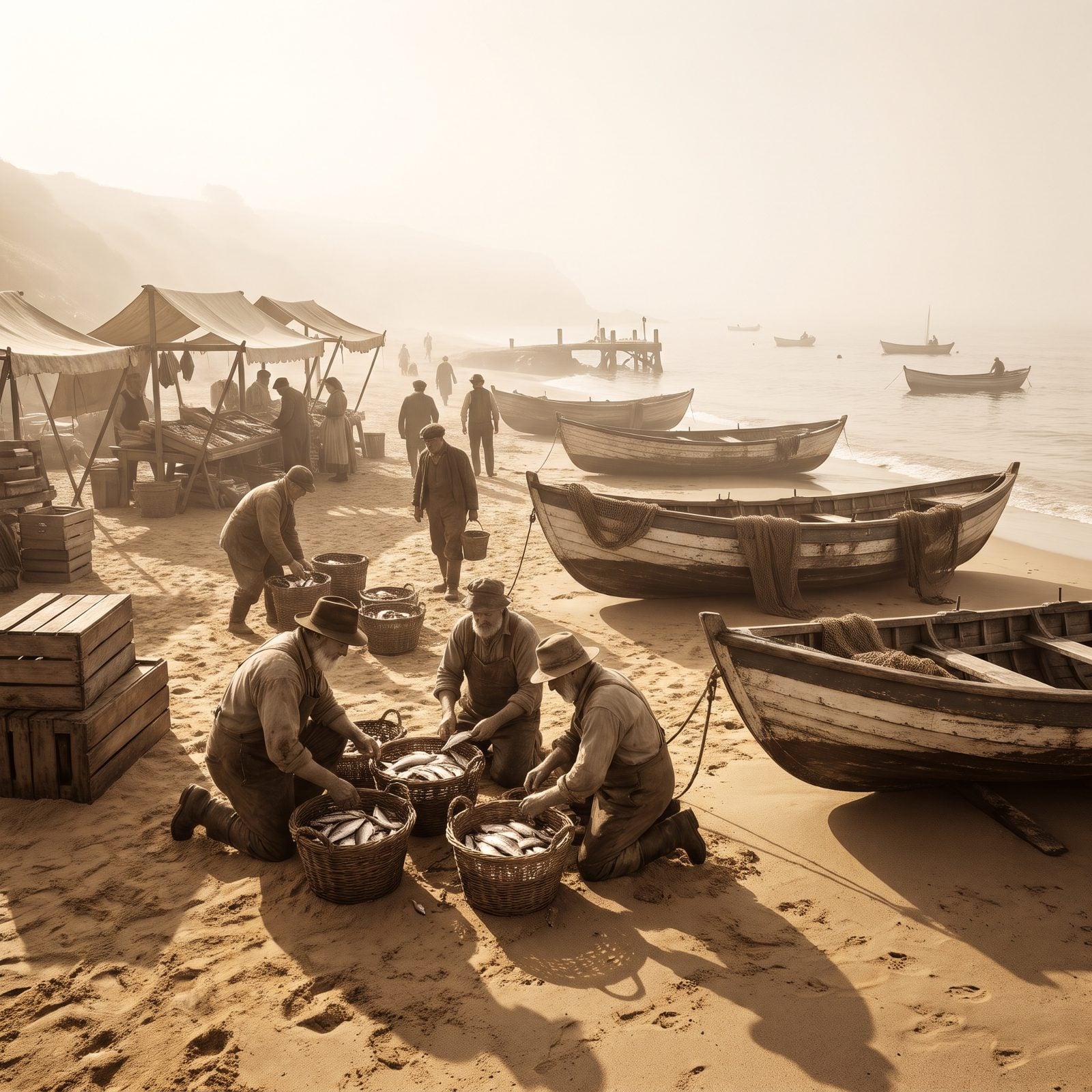
The Newport Dory Fleet has been selling fish off the sand since 1891, which makes it the oldest open-air fish market of its kind still running in the country. The boats go out before dawn and come back, and the catch is sorted straight into wicker baskets on the bare sand, right beside the Newport Pier.
You’re buying rockfish, whitefish, sometimes crab, sorted by hand, kneeling in the sand, by the person who hauled it up. No middleman. No cold-storage week.
Cash only, painfully early, and wonderfully low-key for Orange County. The fleet runs on stubbornness more than profit at this point, which is exactly why it deserves your business.
47. Half Moon Bay, California, Dungeness Crab Off the Pillar Point Boats
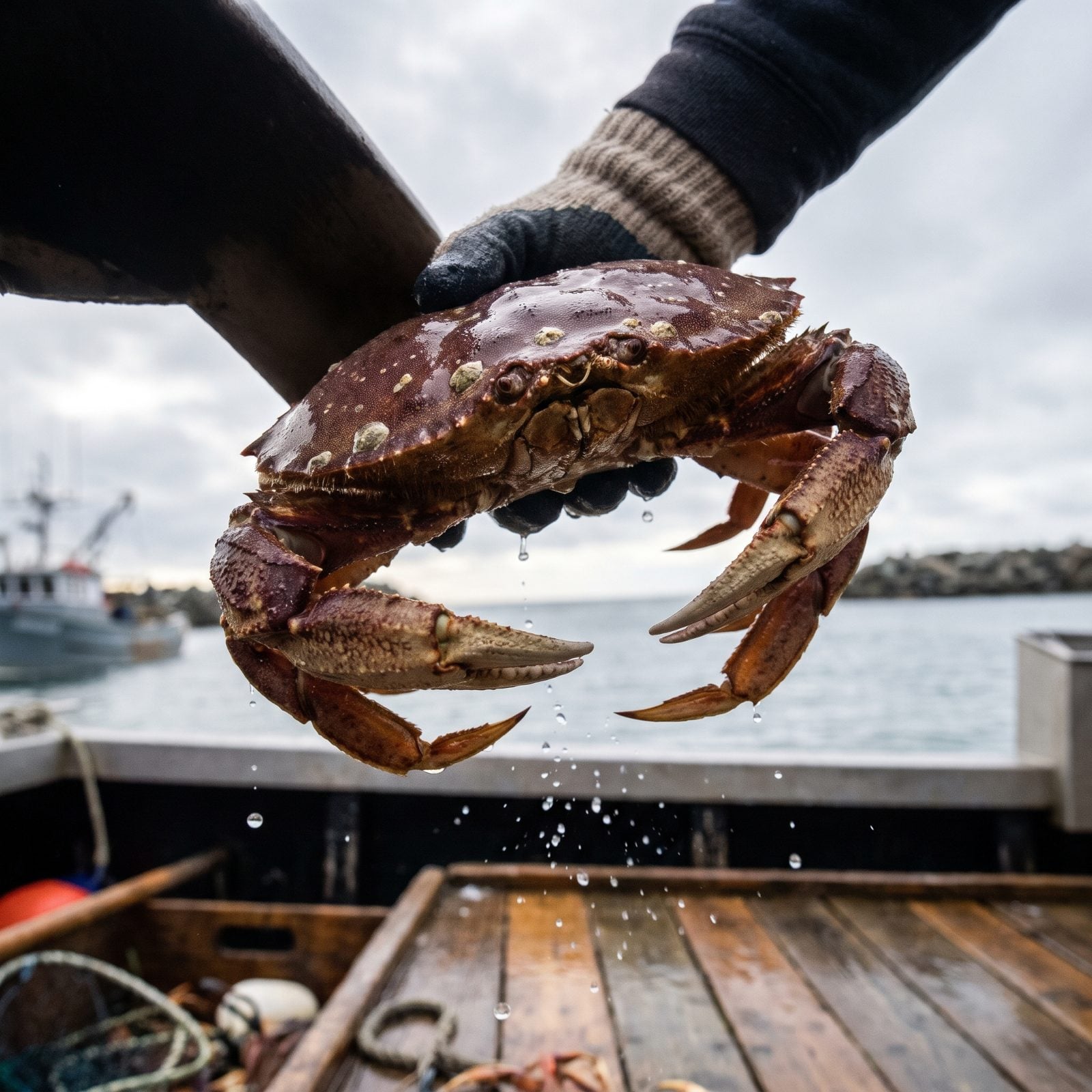
Dungeness season is the whole reason to come here. From roughly November into spring, the boats at Pillar Point Harbor pull traps loaded with the sweetest crab on the West Coast, and you can buy them live right off the deck or from the dockside vendors.
A few things people get wrong. The season opener shifts most years depending on how much meat is in the shell and on domoic acid testing, so call ahead before you drive out. And a live Dungeness should feel heavy and fight back a little. A light, sluggish one has molted recently and won’t give you much meat.
46. Menemsha, Massachusetts, Swordfish and Lobster by the Fishing Docks
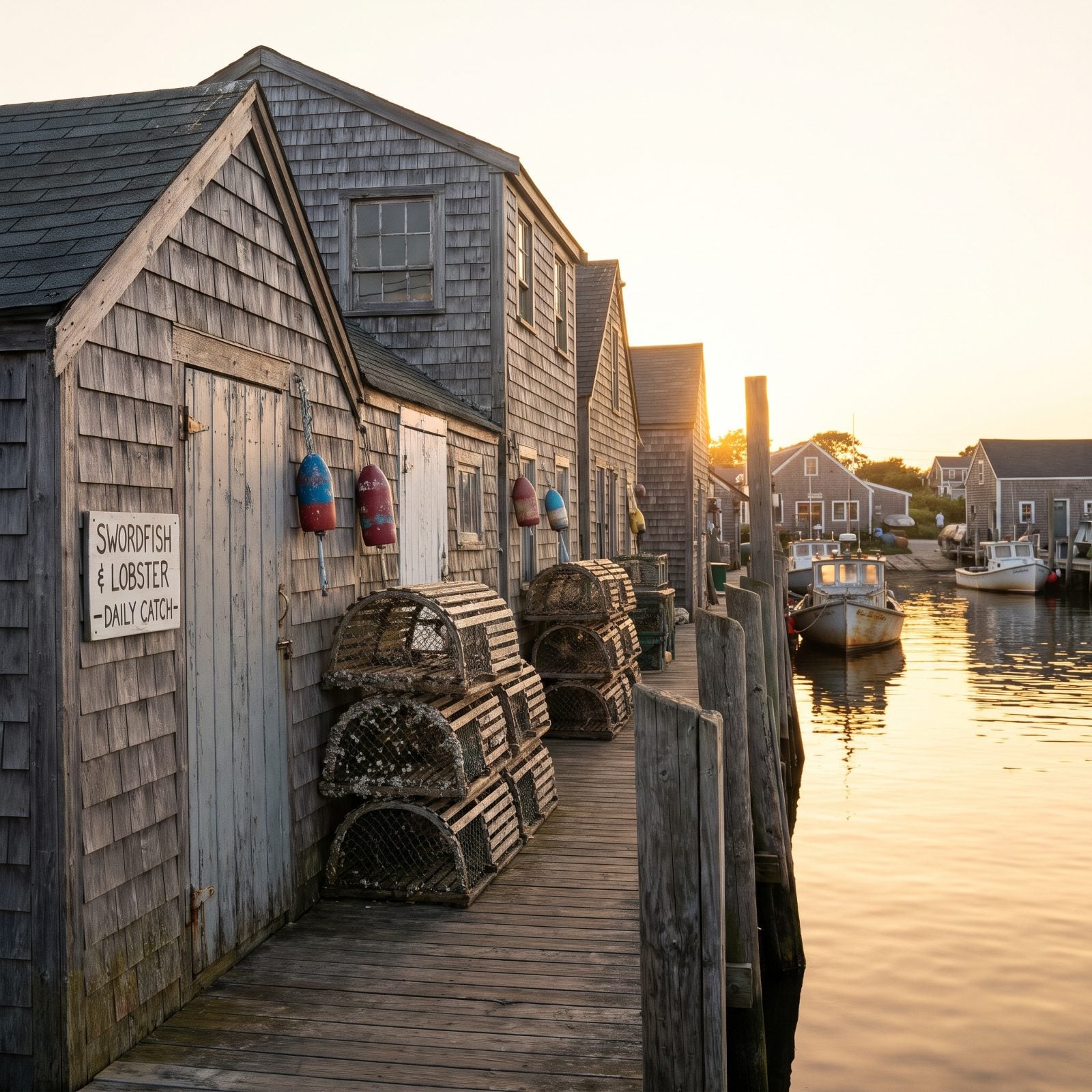
Menemsha is tiny, and that’s the point. A cluster of gray-shingled fish shacks on the western tip of Martha’s Vineyard, where the lobster boats and swordfishing vessels tie up and sell straight to whoever shows up with a cooler.
The swordfish here has a reputation because this stretch of Atlantic is harpoon-fishery country, so you’re getting fish caught by local boats rather than flown in frozen from the other side of the world.
Everybody crowds Menemsha for the famous sunset. Lovely, sure. But the smart move is coming earlier for the seafood and sticking around for the view: buy your lobster, get it steamed at one of the shacks, eat it on the jetty as the sky goes orange.
45. Tangier Island, Virginia, Chesapeake Blue Crabs From the Watermen
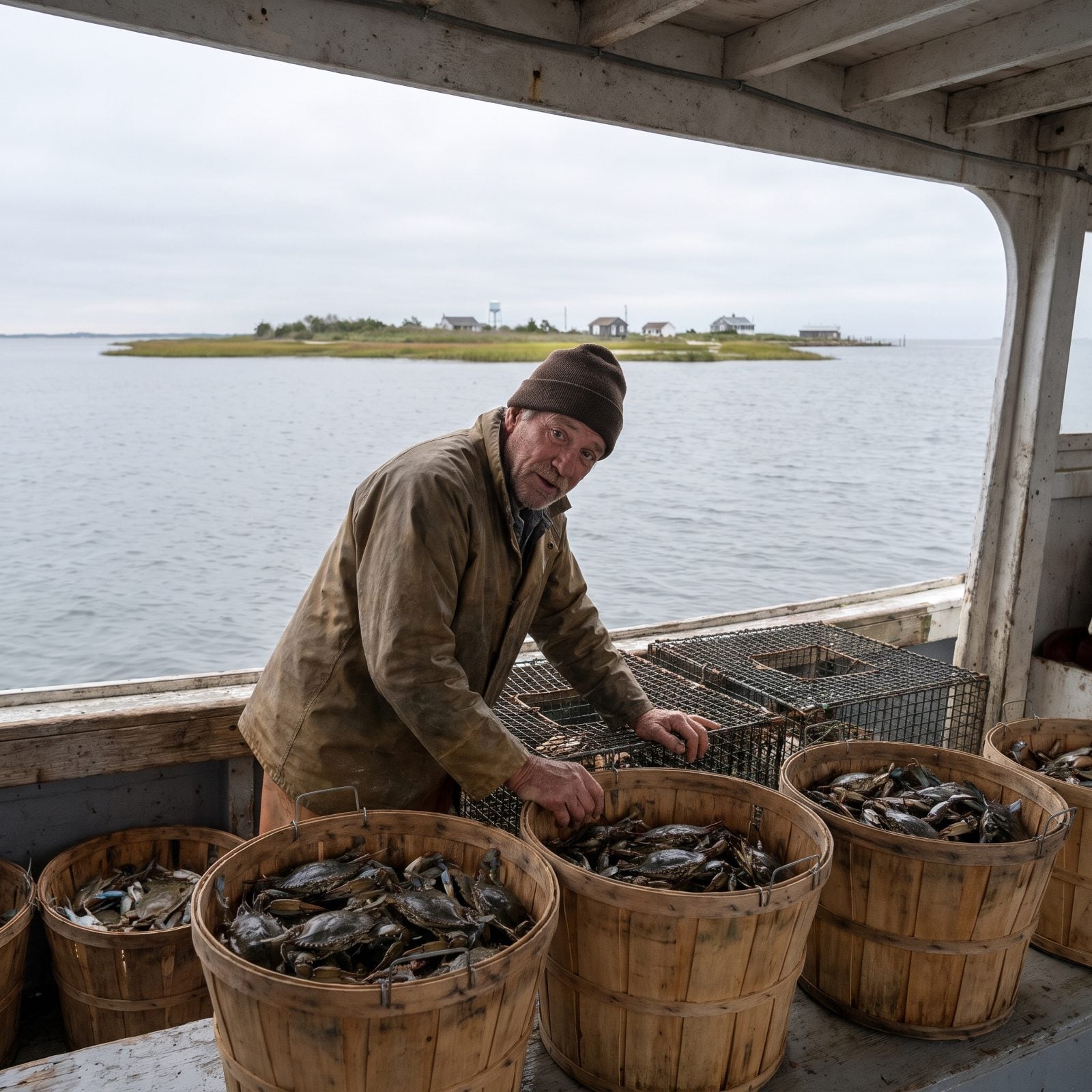
Getting to Tangier means a ferry ride across open water, and that isolation is why the place still works the way it has for generations. This is a true waterman’s island, maybe the most intact blue crab culture left on the Chesapeake, and the whole economy runs on the bay.
You can buy crabs and the prized soft-shells straight from shanties built out over the water, where the watermen sort and shed their catch in floats you can watch from the dock.
44. New Bedford, Massachusetts, Sea Scallops From the Country’s Top Fishing Port
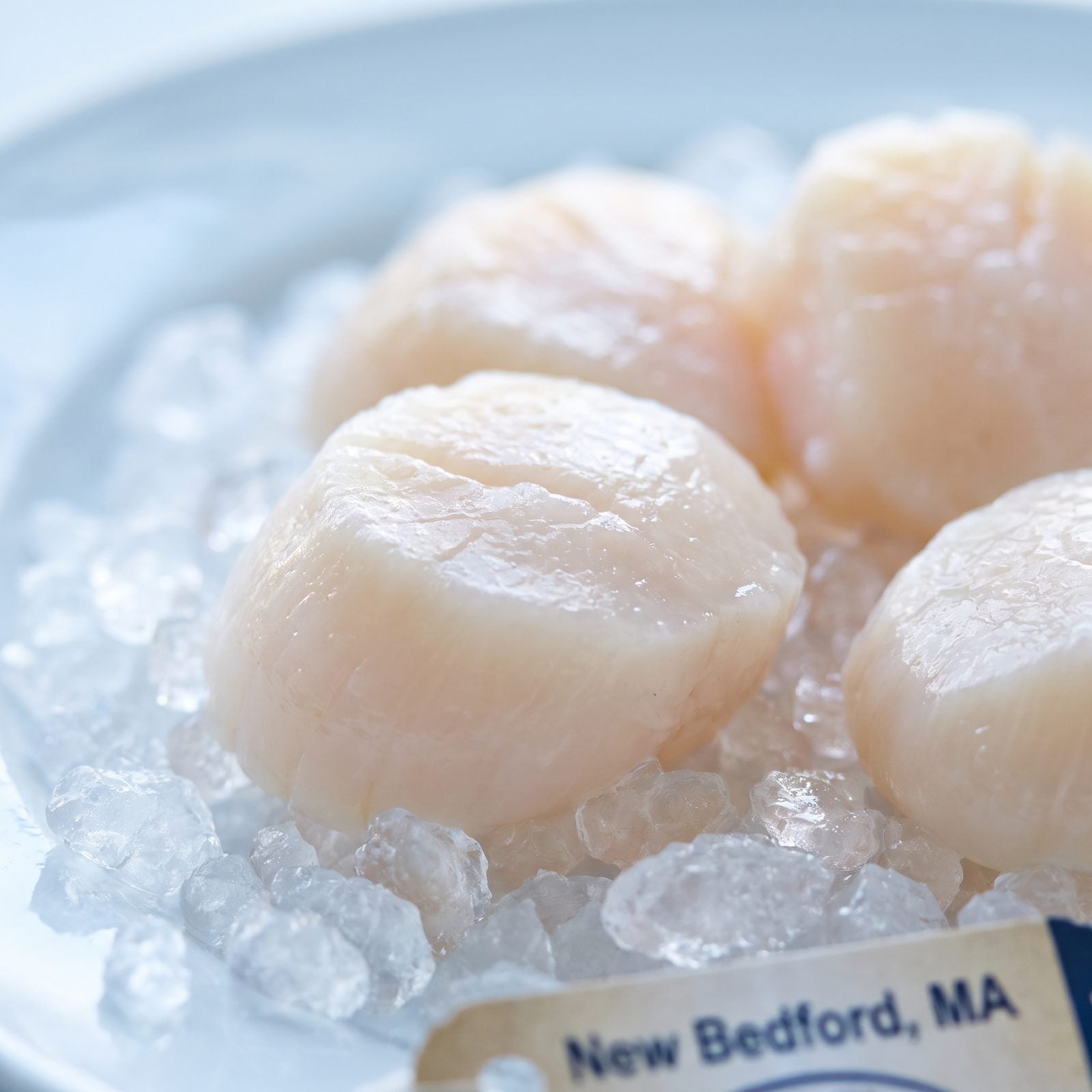
New Bedford has ranked as the highest-grossing fishing port in the United States for years, and the reason is one word: scallops. The big offshore draggers work Georges Bank and come home with the sweetest sea scallops you can find anywhere.
Now, the part nobody mentions at the grocery counter. Most store scallops are soaked in a phosphate solution that pumps them full of water, so they weigh more and refuse to sear right. Dockside here you can find dry scallops, no additives, which caramelize beautifully in a hot pan.
43. Westport, Washington, Albacore Tuna and Dungeness Straight Off the Fleet
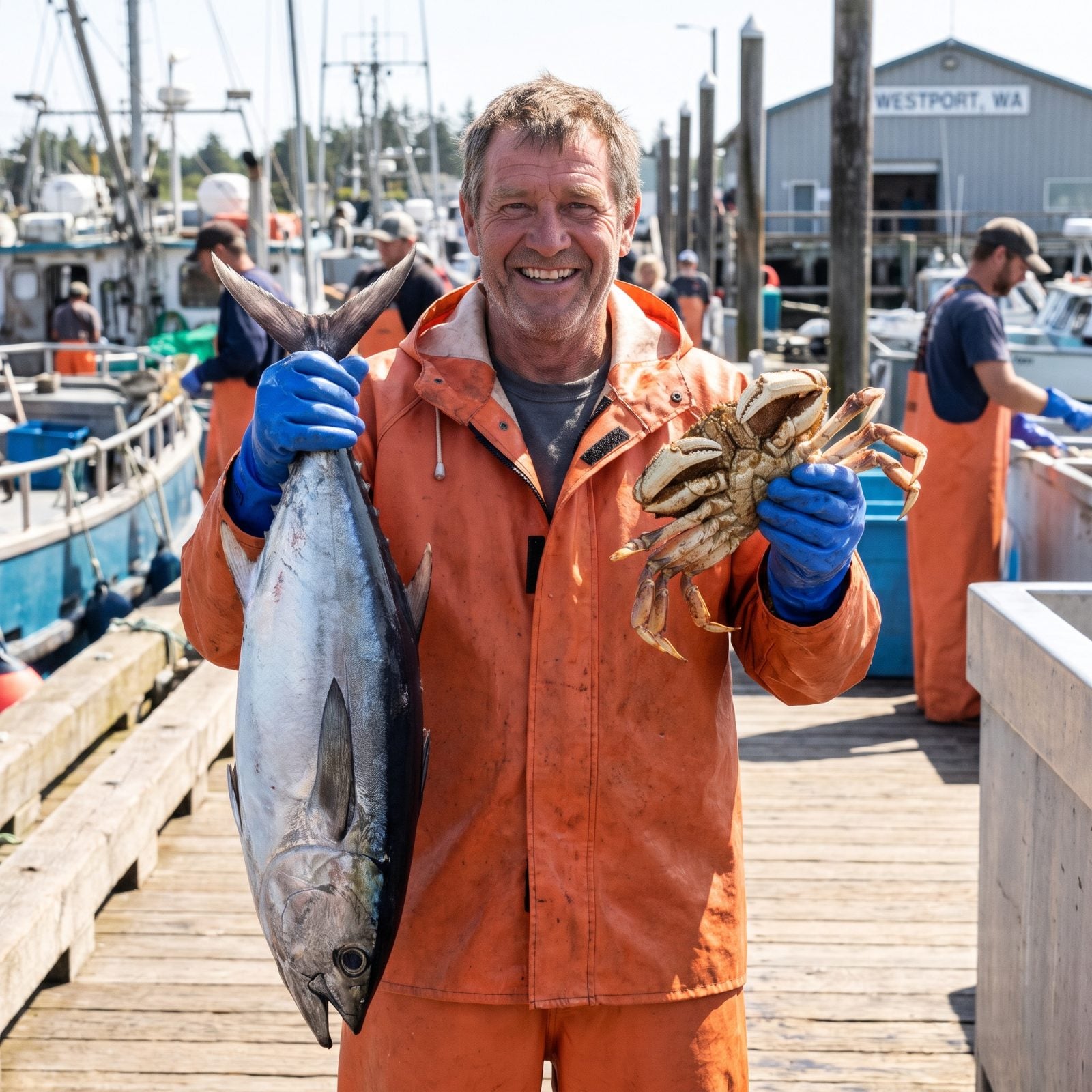
Westport sits on the Washington coast where the Chehalis meets the Pacific, and the fleet here brings in two things worth the drive: albacore tuna in late summer and Dungeness crab once the weather cools.
The albacore is the sleeper. These are the smaller troll-caught fish, far superior to the big longline tuna, and you can buy them whole off the boat for well under what the loins cost retail. Freeze some, can some, grill the rest.
It’s a no-frills town. Rubber boots, strong coffee, boats that look like they work for a living. Which they do.
42. Stonington, Maine, Lobster Landed on Deer Isle
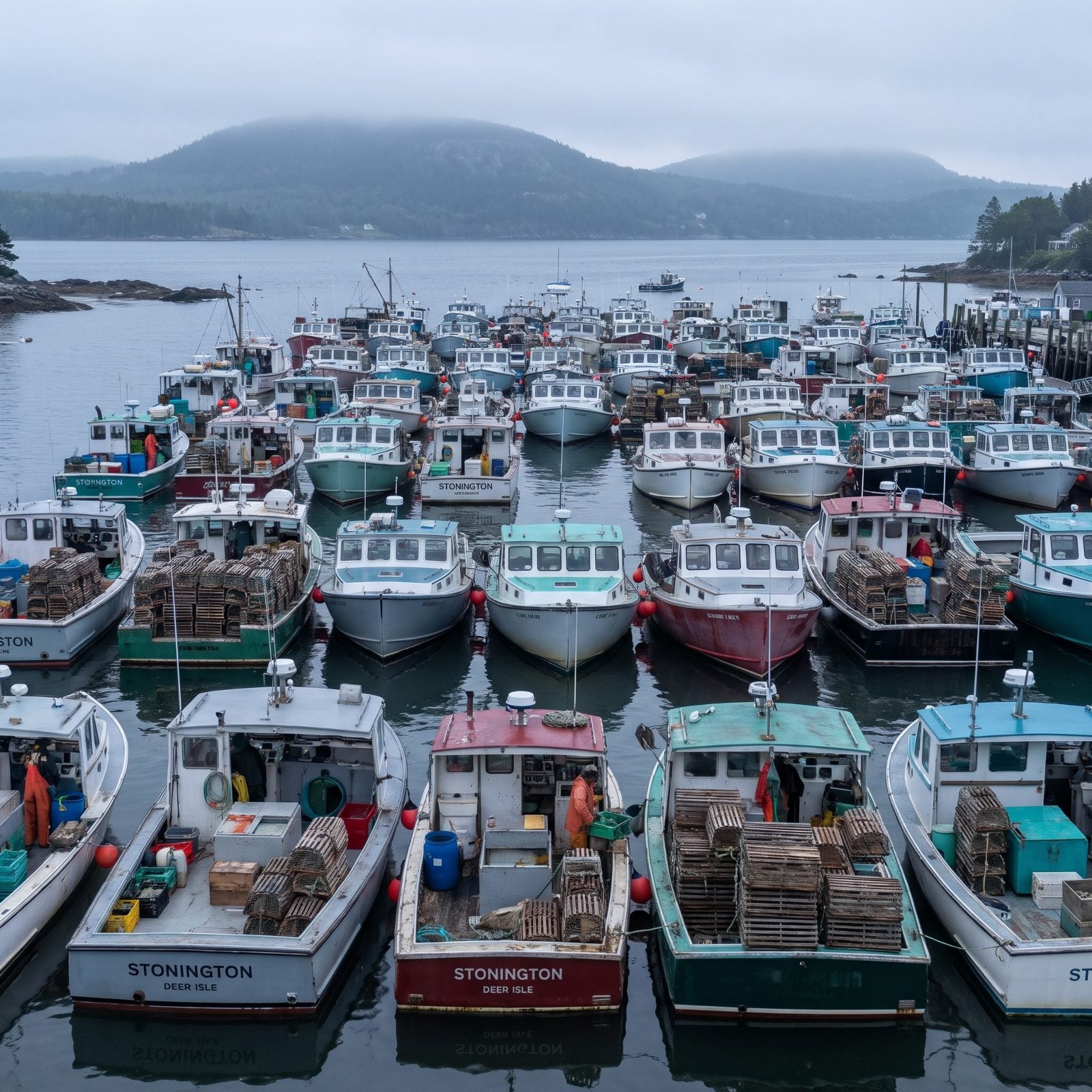
Stonington lands more lobster than any other port in Maine, and Maine lands more lobster than anywhere in the country. Do that math and you understand what this little granite-quarry town on Deer Isle is really about.
The co-ops and wharves sell straight to the public, often cheaper than almost anywhere because you’re buying at the source. Hard-shell lobsters in late fall and winter give you the most meat for your money. Soft-shells (new-shell) run cheaper and sweeter but hold less.
41. Wanchese, North Carolina, Shrimp and Tuna From the Outer Banks Fleet
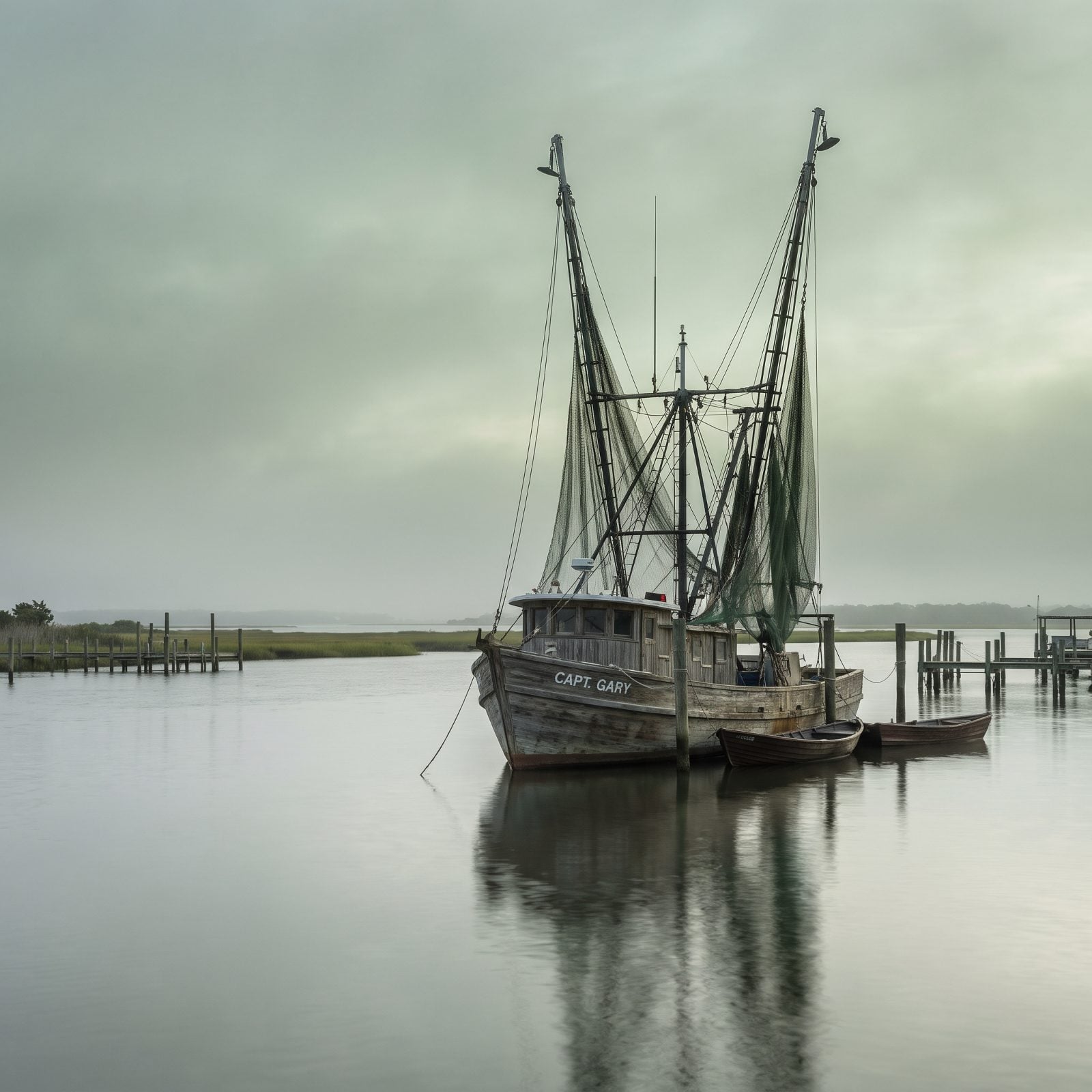
Wanchese is the commercial fishing heart of the Outer Banks, tucked on the sound side of Roanoke Island while the crowds stay out on the beaches. That split is good news for you.
The trawlers bring in local shrimp, and the offshore boats land yellowfin and other tuna from the Gulf Stream, which swings closer to this coast than almost anywhere else on the Eastern Seaboard.
Buy the shrimp head-on if you can get them. The heads carry most of the flavor, they’ll be fresher than anything deheaded for shipping, and you can make a stock that puts any store-bought version to shame.
40. Santa Barbara, California, Spiny Lobster and Spot Prawns at the Saturday Harbor Market
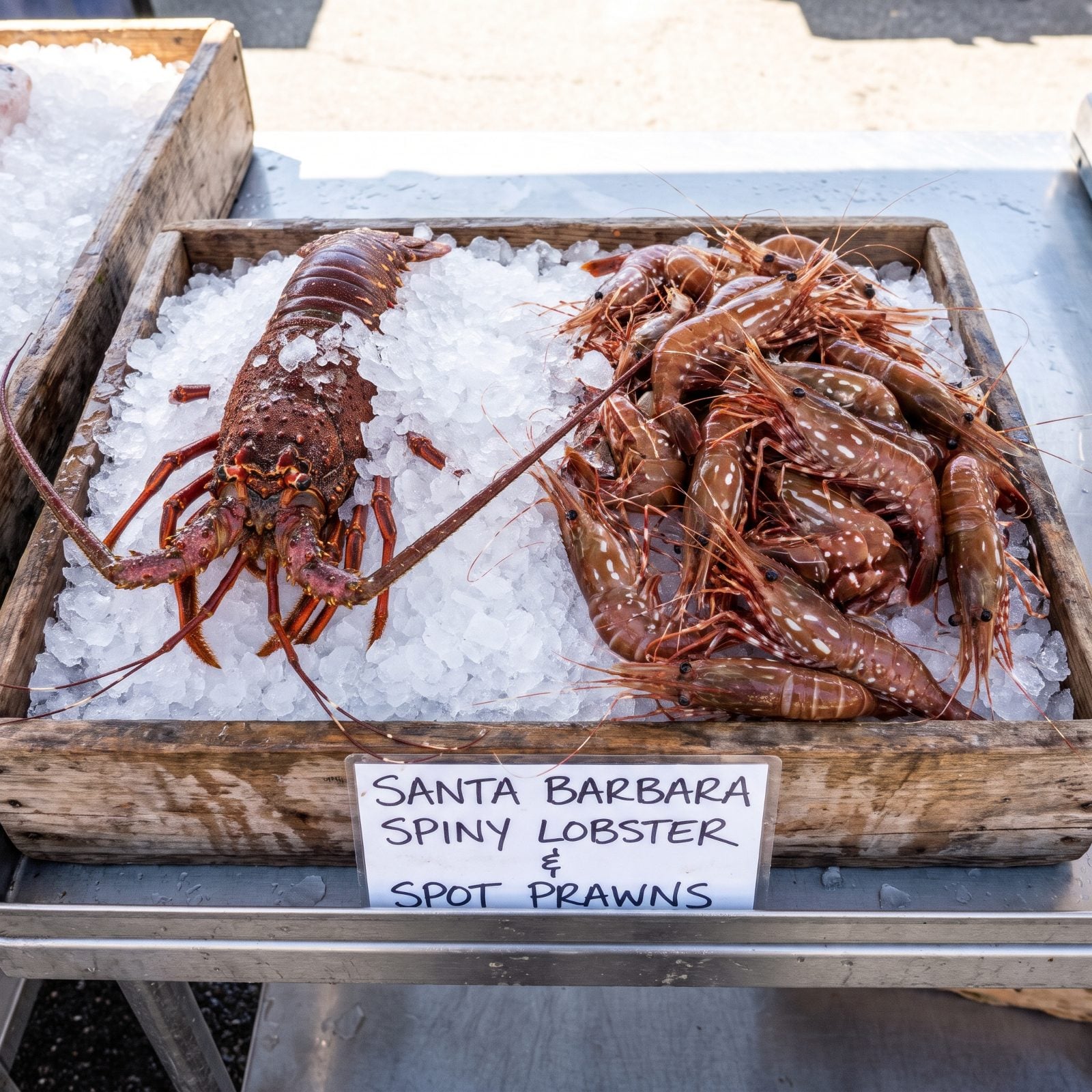
California spiny lobster surprises people who only know the Maine kind. No big front claws, all the meat in the tail, and a sweeter flavor that shows up every Saturday at the Santa Barbara harbor market when the season’s open (roughly October into March).
The other treasure here is spot prawns, those big coral-colored beauties that are usually still alive when you buy them. Eat them raw within hours, or the heads turn and the texture softens.
The market runs under white canopy tents alongside the farmers’ produce stalls, and it’s a hard setting to beat. Come early, bring cash and a cooler, and don’t overthink it. Fresh seafood off a boat rarely needs more than butter, salt, and heat.
39. Galilee, Rhode Island, Squid and Fluke Straight Off the Commercial Boats
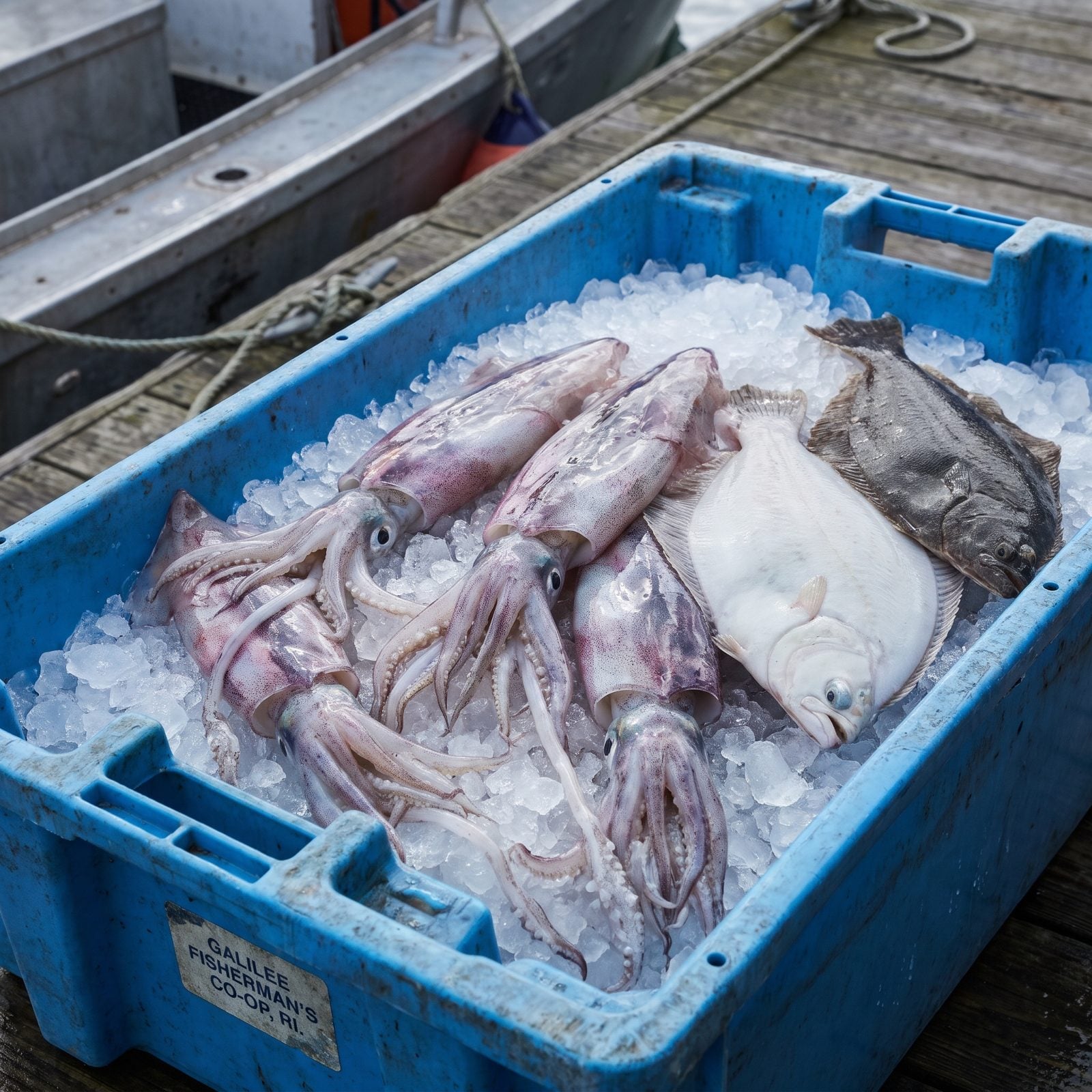
Point Judith lands more squid than almost anywhere on the East Coast, and in Galilee it comes off the boat still cold from the hold. Longfin squid in summer, whole and bright, the kind you clean yourself at the kitchen sink. Fluke too, flat and firm, caught by the draggers you can watch unload.
Go early. The commercial dock runs on the fleet’s clock, not yours, and the good stuff moves fast once the boats tie up. Bring a cooler — nobody here is gift-wrapping.
38. Apalachicola, Florida, Oysters and Shrimp From the Bay That Built the Town
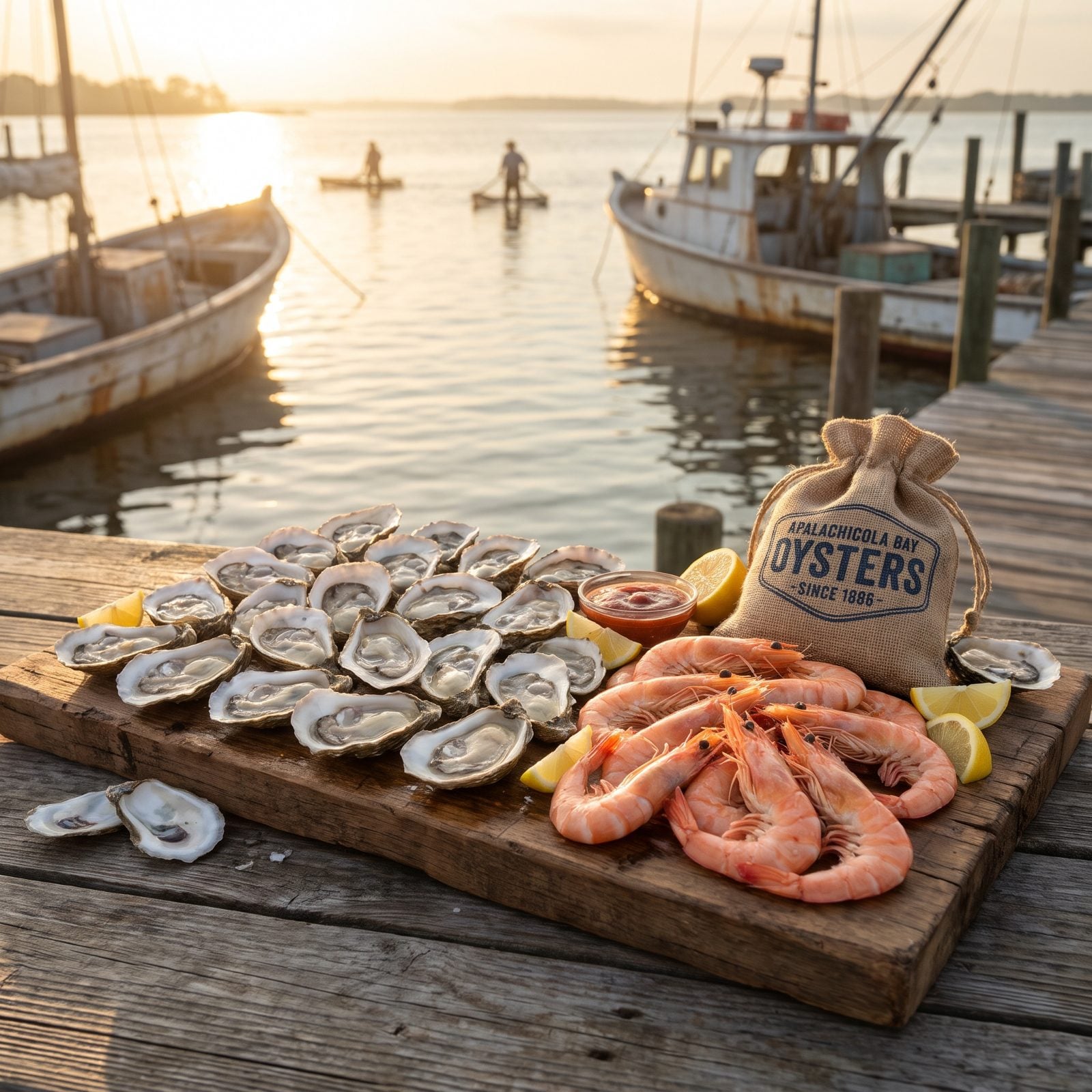
Apalachicola Bay oysters came back harder than anyone expected after the fishery closure, and the town that practically invented the salty Gulf oyster is landing them again. Shrimp too, straight off the trawlers with the outriggers still dripping.
Here’s what nobody tells you: supply swings with the season and the regulations, so what’s on the dock one week may be gone the next. Call ahead to the markets along Water Street. A standing phone number beats a wasted drive every time.
37. Barnegat Light, New Jersey, Scallops and Swordfish at Viking Village
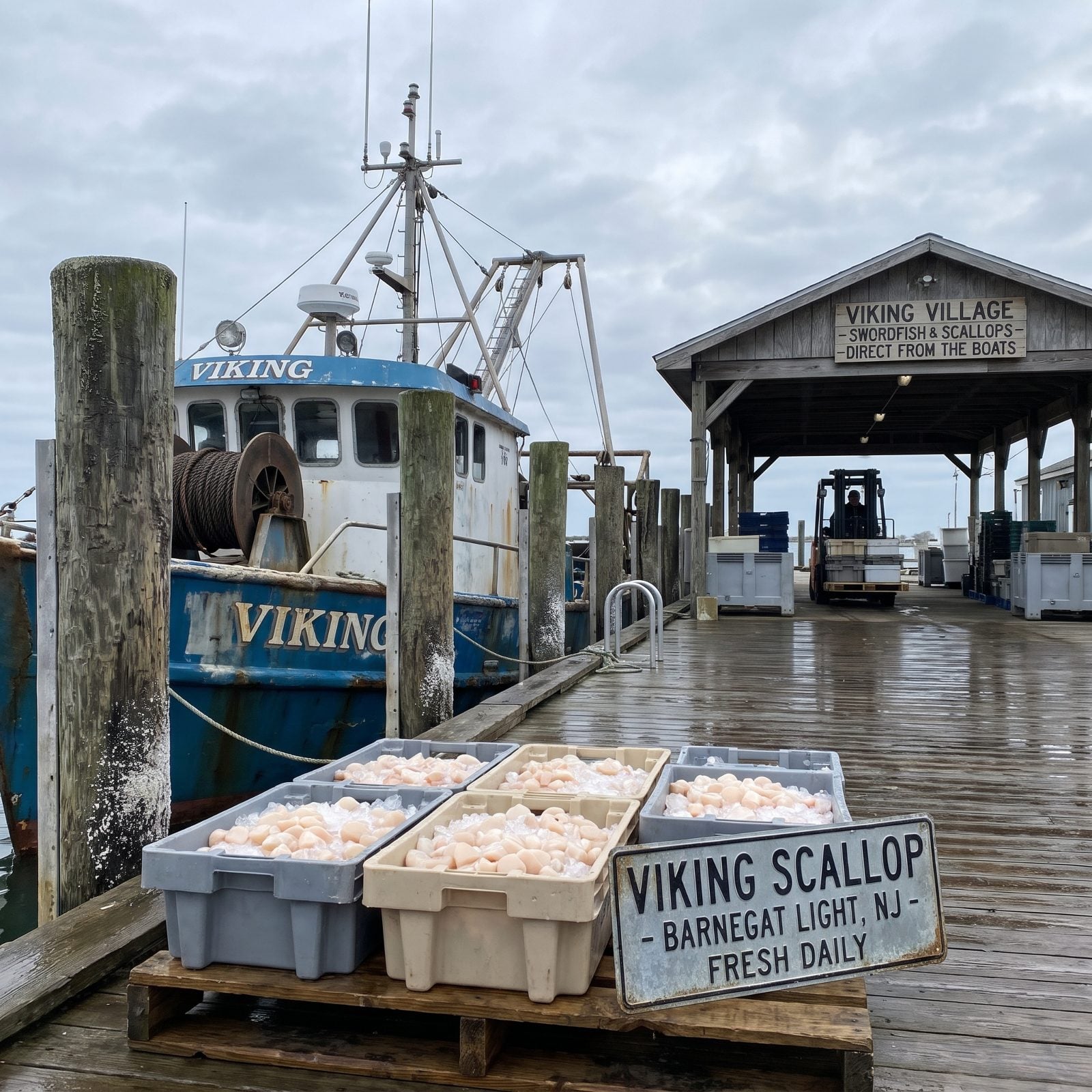
Viking Village ranks among the largest scallop ports on the Atlantic, and the day boats land scallops so fresh they almost don’t need cooking. Sweet, firm, dry-packed the way a scallop should be — none of that waterlogged supermarket stuff.
Swordfish shows up too, landed by the longline boats and cut thick. The shanties on the dock sell direct, and honestly the setting alone is worth the trip up to the north end of Long Beach Island.
36. Port Clyde, Maine, Lobster Off the Boat in a Working Harbor That Still Works
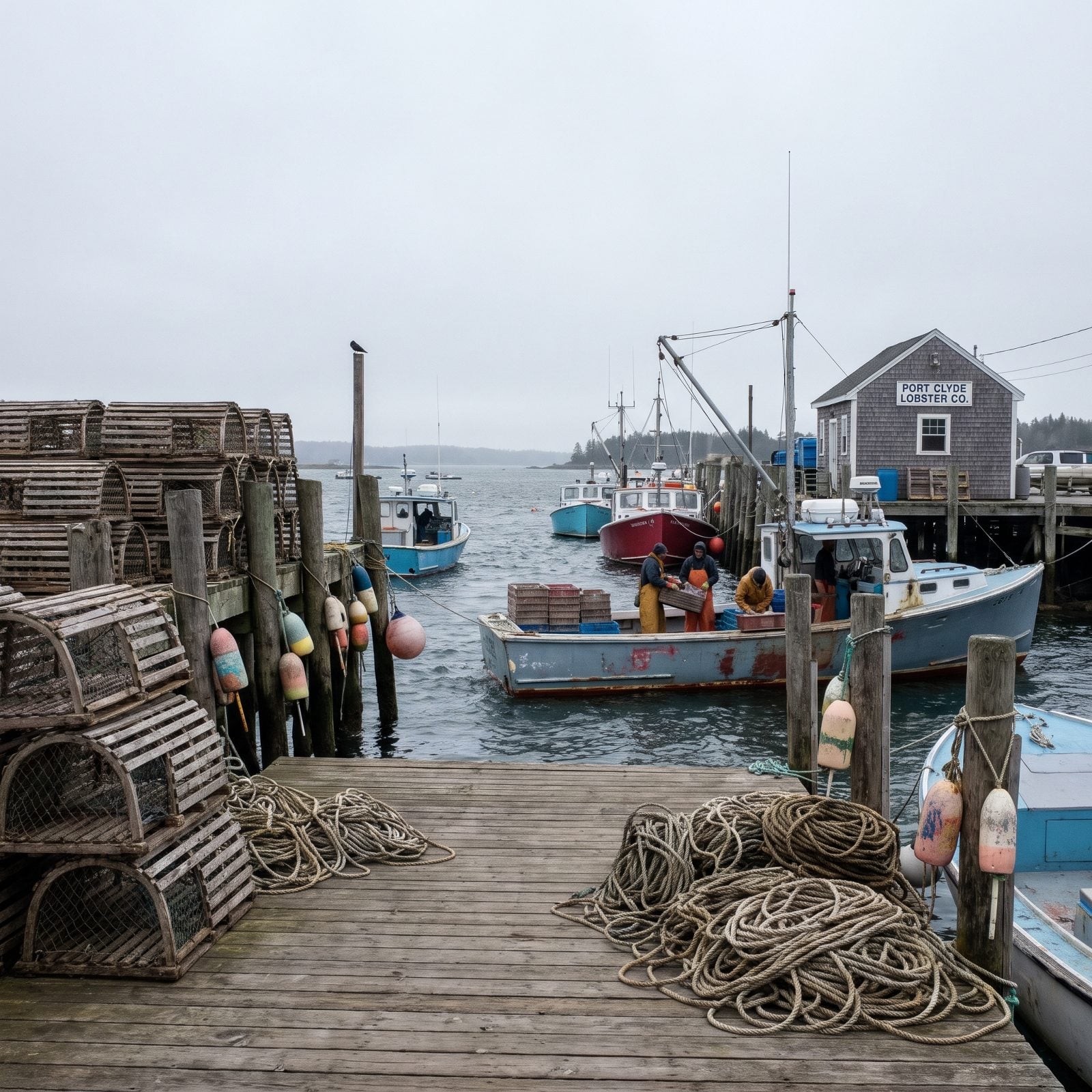
Port Clyde is the kind of harbor people drive to Maine hoping to find and mostly don’t. Working boats, stacked traps, a co-op that sells to whoever shows up with a cooler. The lobster comes out of the tank still kicking.
Prices move with the boat price, which means they’re cheaper here than anywhere a tourist menu will quote you. Hard-shell runs more than soft-shell, and come late summer you’ll mostly see soft-shell — sweeter, easier to crack. Buy what the harbor has that day and don’t argue with the season.
35. Montauk, New York, Tuna and Golden Tilefish From the Harbor Fleet
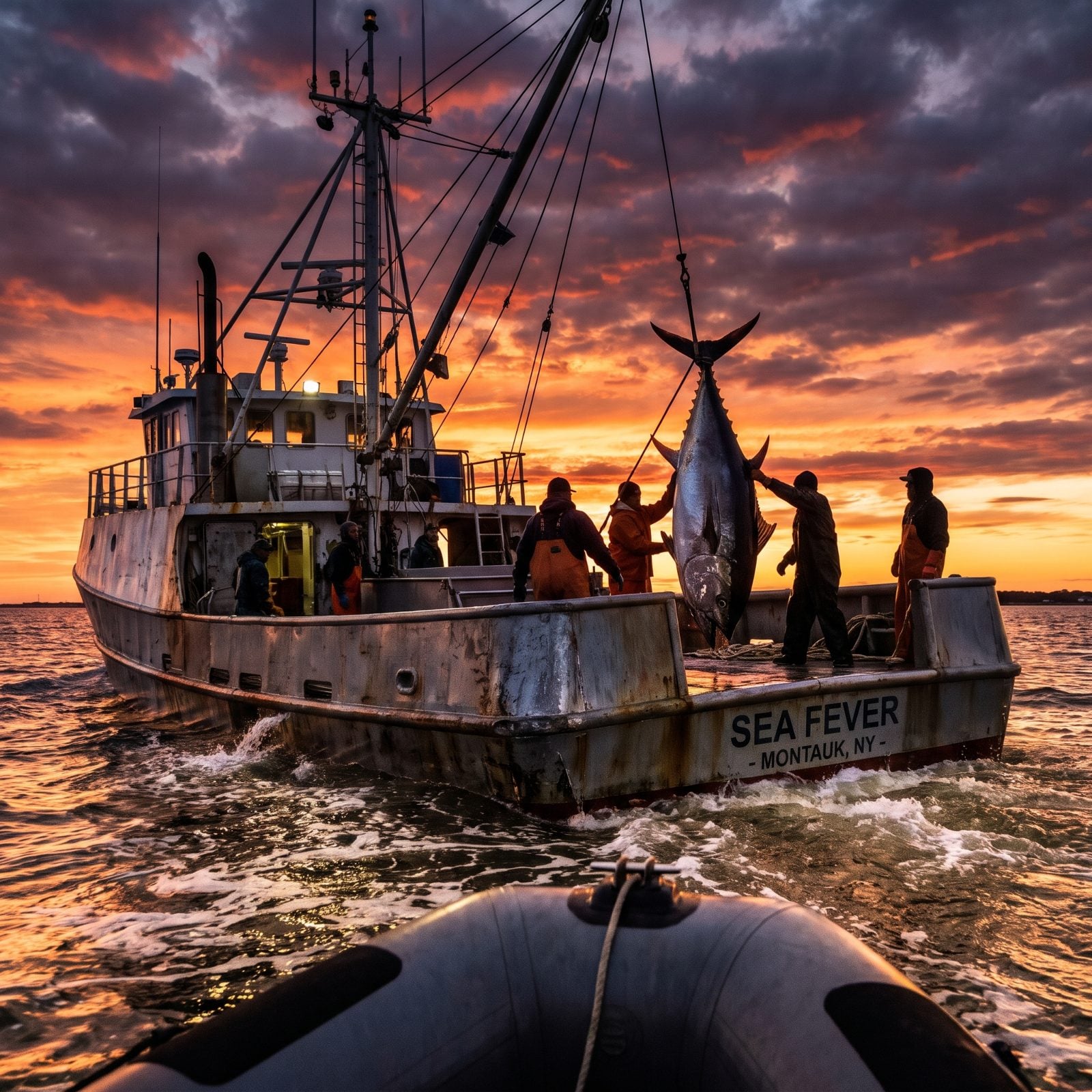
Montauk’s commercial fleet lands offshore fish most docks never see. Bigeye and yellowfin tuna in season, plus golden tilefish, a sweet white fish that fights for the title of New York’s best-kept dockside secret.
Retail here leans busy and summer-mad, so the quiet move is the commercial side of the harbor, where the boats actually unload. Watch for signs. Ask a mate. Tuna this fresh gets portioned for sashimi at home, no soy-sauce disguise required.
34. Darien, Georgia, Wild Georgia Shrimp Off the Trawlers on the Altamaha
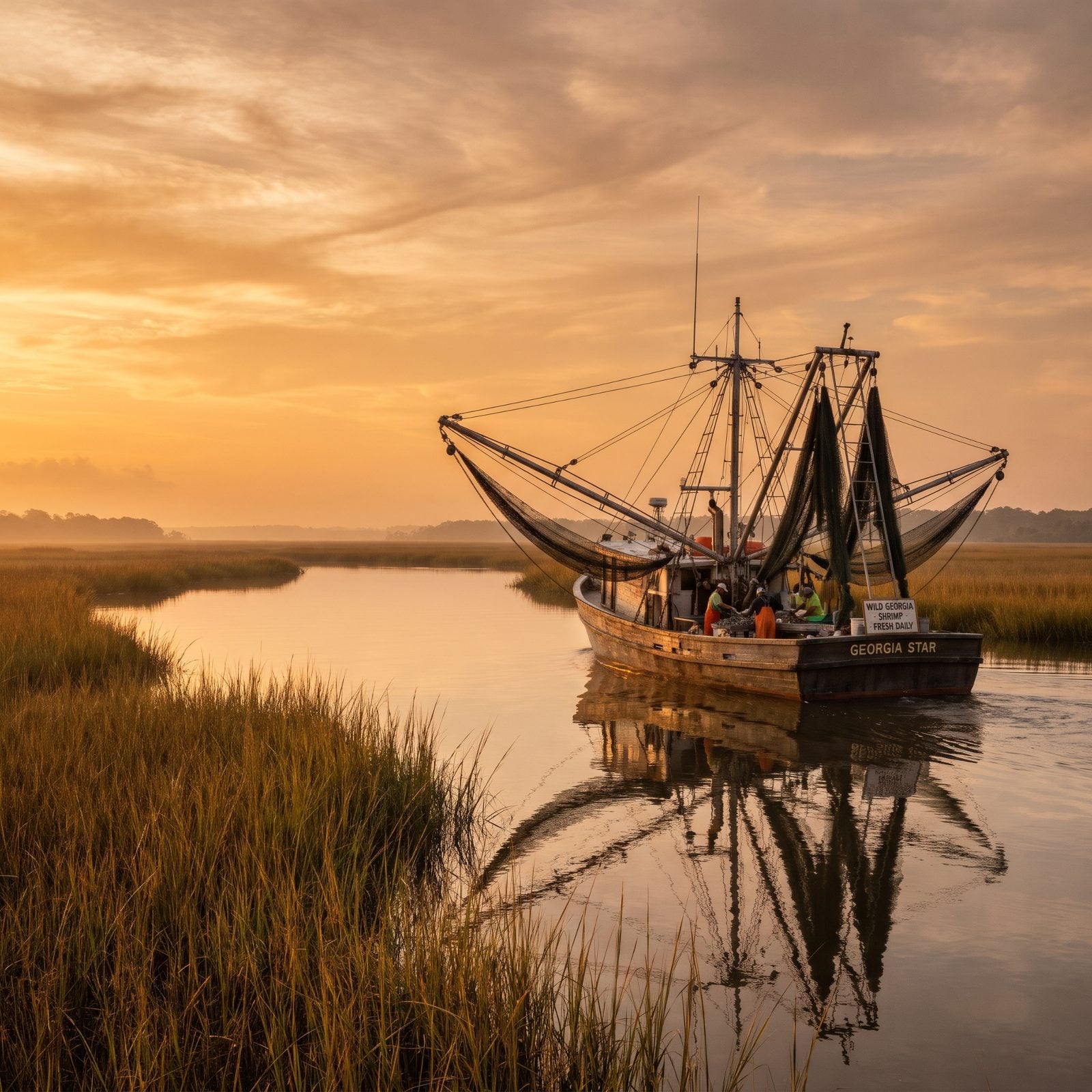
Darien is one of the last real shrimp towns on the Georgia coast, tucked where the Altamaha runs out to the marsh. The trawlers tie up right in town, and the shrimp come off heads-on, which locals will tell you is where all the flavor hides.
Wild Georgia shrimp season leans late spring through fall, strongest in the warm months. The boats sell direct along the waterfront, and the price difference between here and a city fish counter is the kind of thing that makes you reconsider some life choices.
33. Everglades City, Florida, Stone Crab Claws From the Local Crab Boats
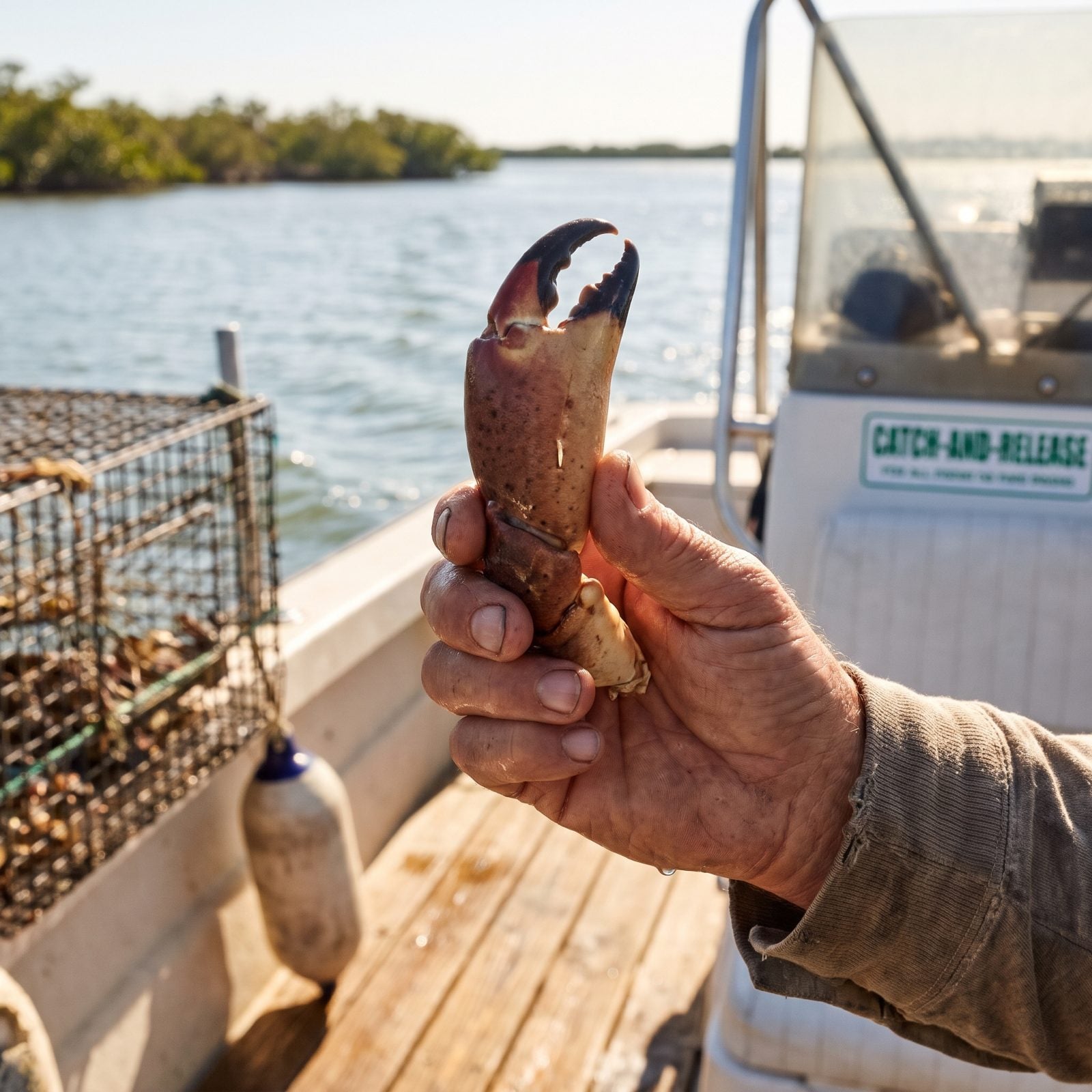
Stone crab is the rare seafood you take without killing the animal. The crabbers pull a claw and return the crab to the water to grow it back, which is about as close to a renewable harvest as the Gulf gets.
Everglades City runs on it. Season opens in mid-October and closes in the spring, and while it’s open the little crab houses sell claws cooked and chilled, sorted by size. Medium eats fine and costs a fraction of jumbo. You’ll want mustard sauce, and a mallet, and nothing else.
32. Bayou La Batre, Alabama, Gulf Shrimp From the Seafood Capital of Alabama
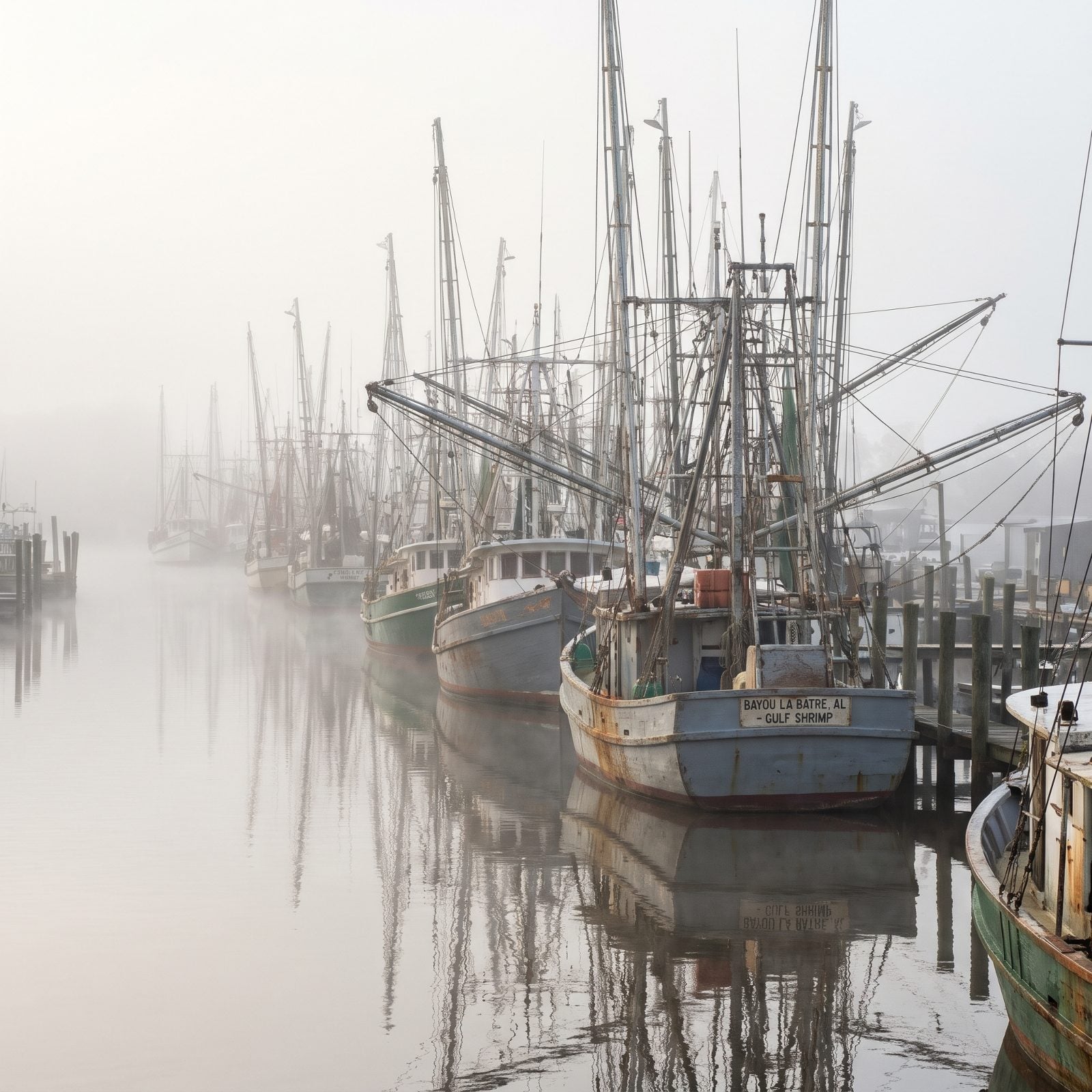
Bayou La Batre bills itself the Seafood Capital of Alabama, and the bayou is lined bow to stern with trawlers to back it up. This is a processing town, a working town, not a postcard town — which is exactly why the shrimp come cheap and plentiful off the dock.
Brown shrimp, white shrimp, the big Gulf royals late in the year. Buy by the pound, heads on, and ask which boat just came in. The answer changes what you buy.
31. Grand Isle, Louisiana, Shrimp, Tuna, and Snapper Straight Off the Docks
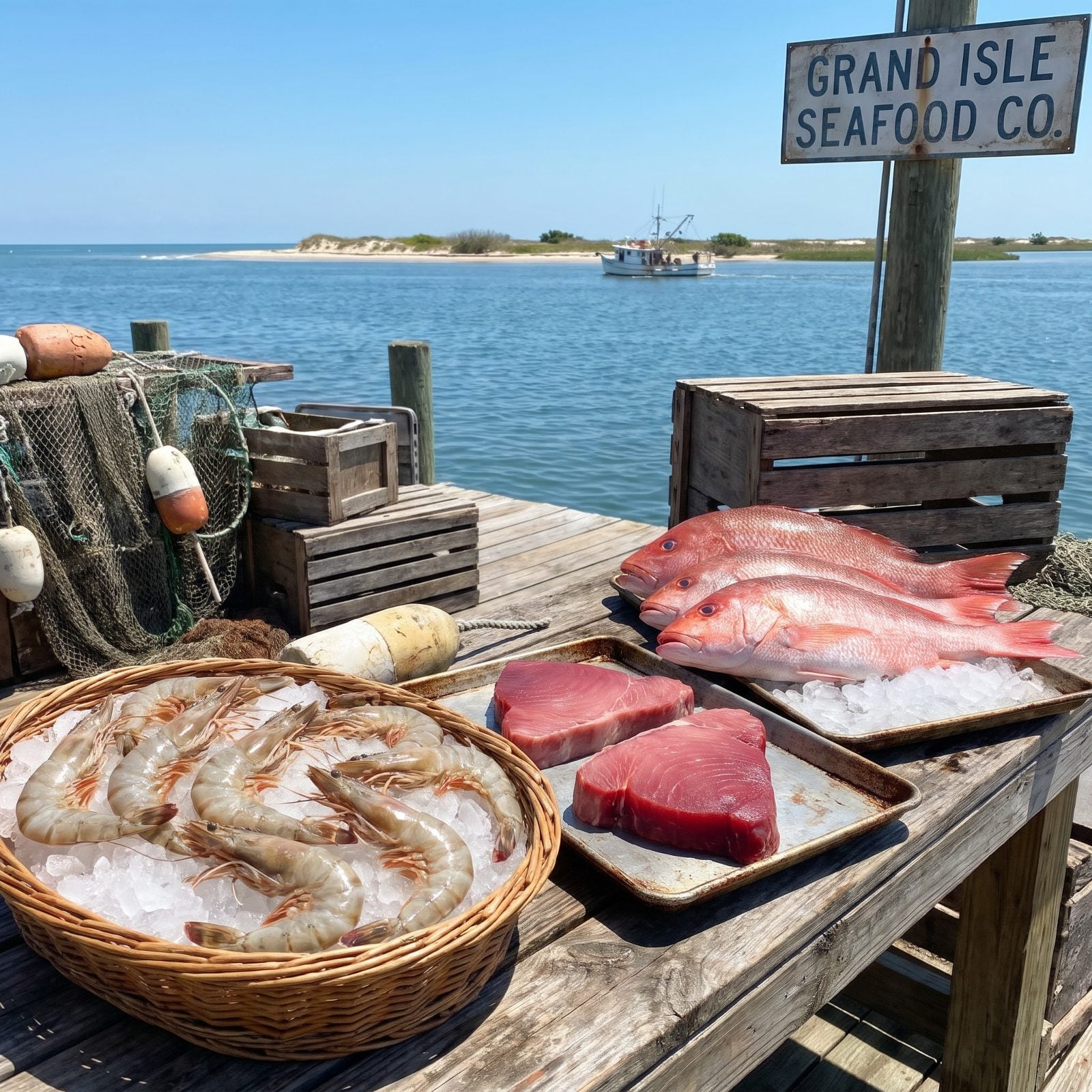
Grand Isle sits at the end of Louisiana’s only inhabited barrier island, which means the Gulf is right there and the boats don’t have far to run. Shrimp off the trawlers, yellowfin tuna and red snapper off the offshore boats, sometimes all tied up at the same dock.
This is a fishing community that rebuilds after every storm and keeps hauling. Supply depends entirely on weather and who got out, so there’s no set schedule. Ask around at the marinas. On the right afternoon you’ll catch a boat still unloading.
30. Delacroix, Louisiana, Shrimp From the End-of-the-Road Fleet
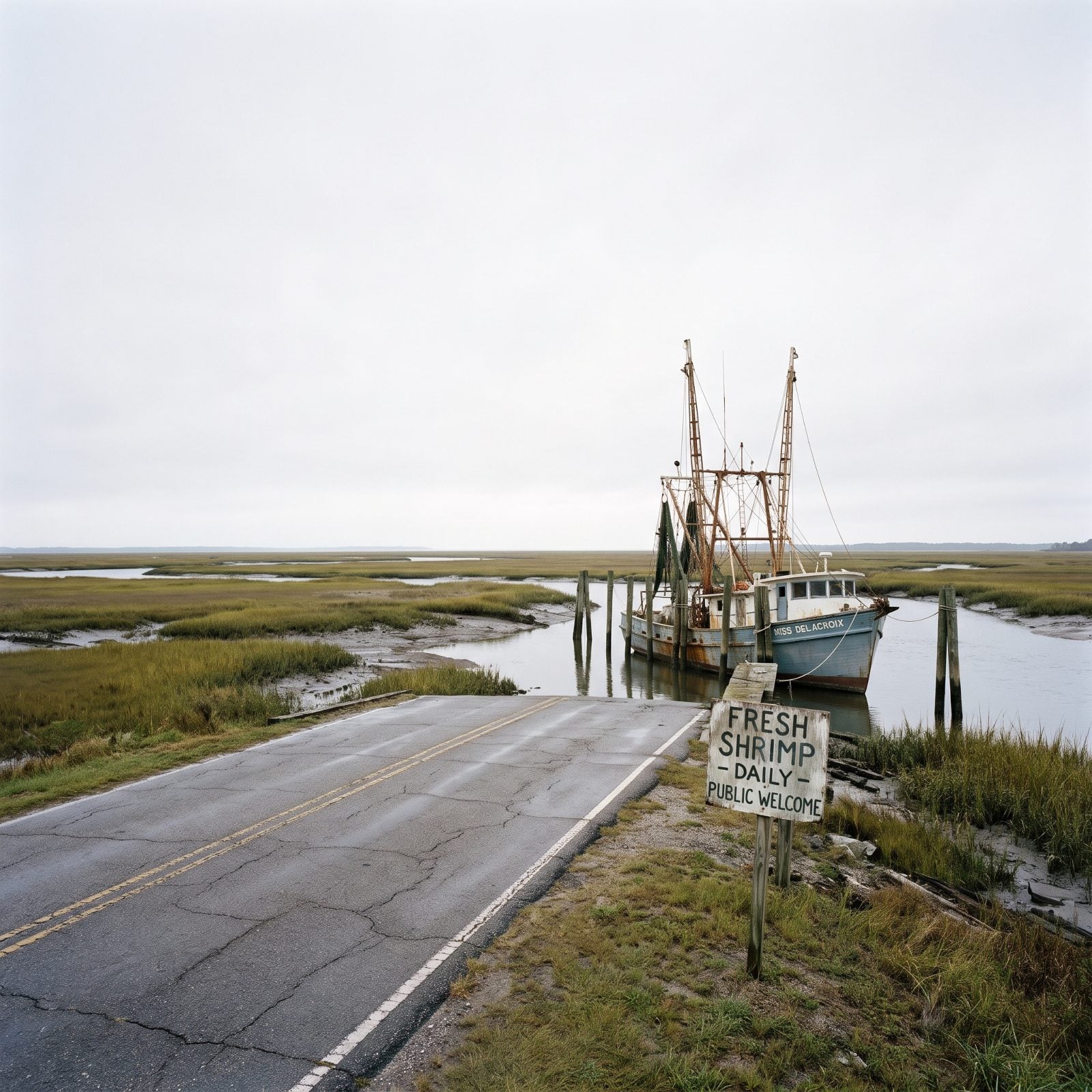
The road to Delacroix just stops. You drive south out of St. Bernard Parish until the marsh takes over and the pavement quits, and you’re a long way from anything.
Working-fisher shrimp, sold casual, by whoever’s still running boats out of these marshes. No tour. No gift shop. No printed menu. You buy what the boats brought, pay a fair price, and drive back to the city with a sack of shrimp that was in the Gulf this morning. That’s the whole trip, and it’s plenty.
29. Port Aransas, Texas, Gulf Shrimp and Red Snapper at the Harbor
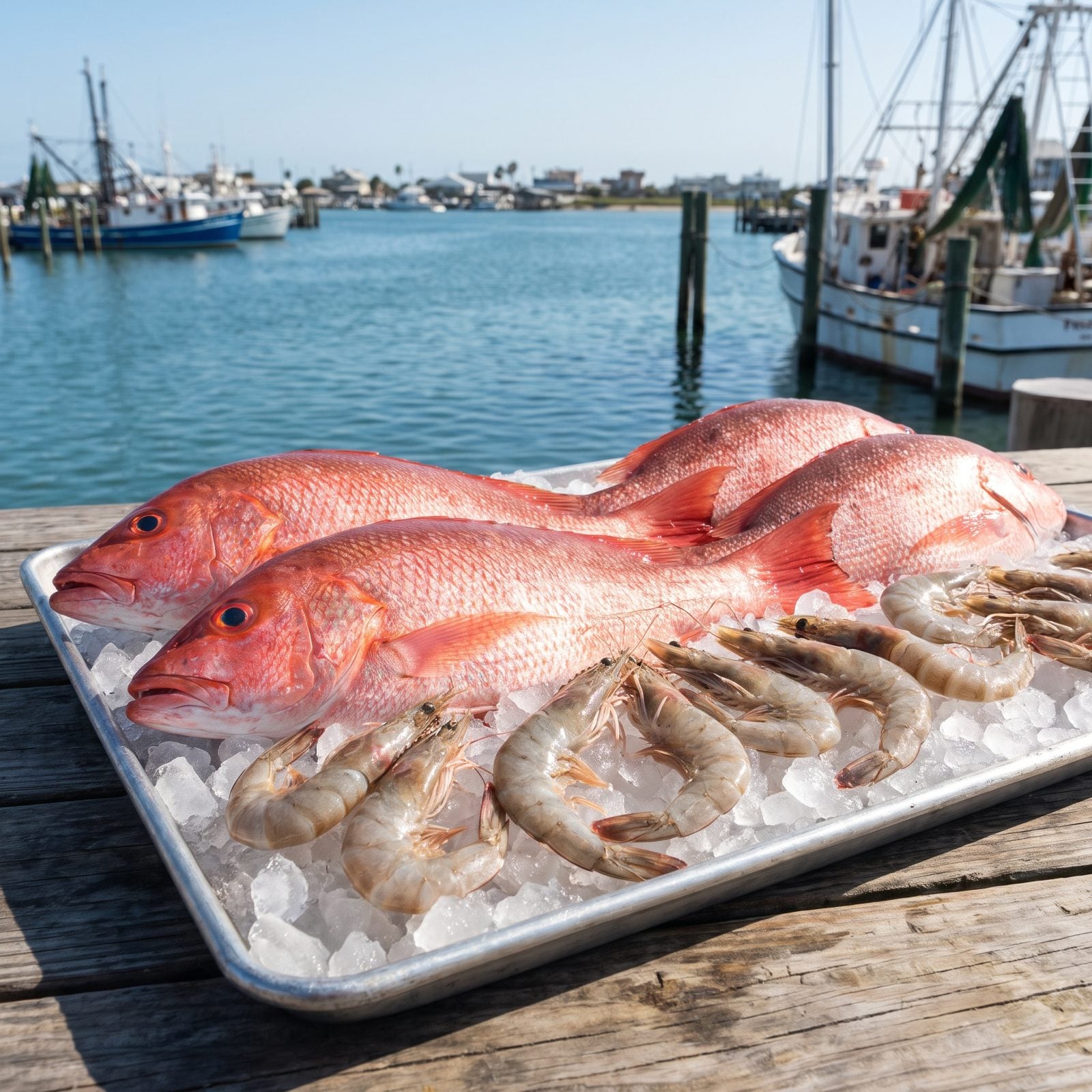
Shrimp boats work out of Port Aransas because the Gulf is right there, and so is the money fish: red snapper. When the boats tie up near Fisherman’s Wharf and the Woody’s area, you can buy shrimp by the pound still cold from the hold, heads on if you want them. And you should — the heads make a stock worth stealing.
Snapper season is federally regulated, the dates shift every year, and the dockside supply comes and goes with them. Call ahead. Or just walk the harbor and read the signs taped to the coolers.
28. Palacios, Texas, Shrimp From the Working Port
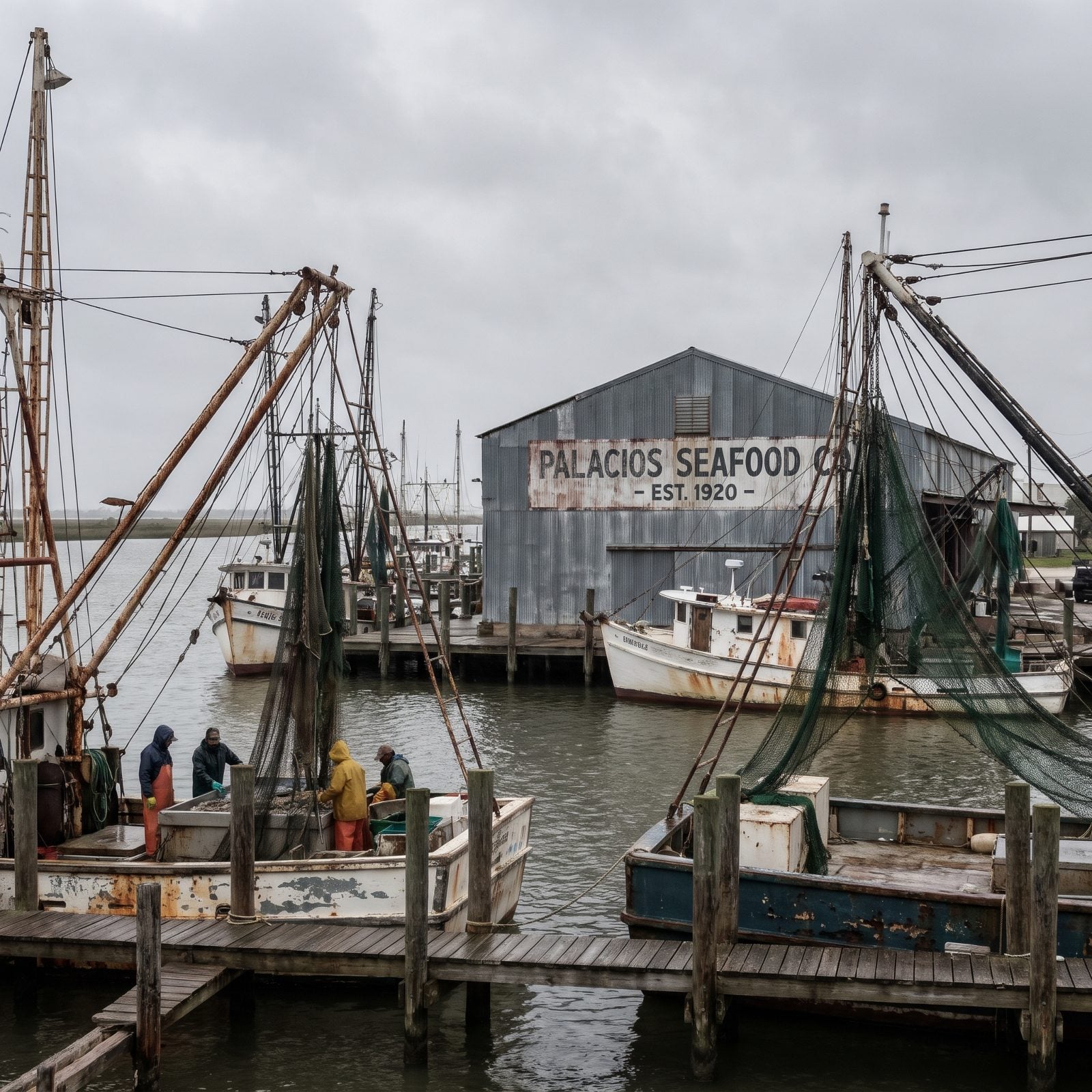
Palacios calls itself the shrimp capital of Texas, and the fleet backs it up. A genuine working port on Matagorda Bay — more boats than tourists — with a Vietnamese American shrimping community that’s run these waters for generations.
You won’t find a polished market here. What you’ll find is trawlers unloading and a few operations that sell direct, with brown shrimp, white shrimp, and bay shrimp coming in at different stretches of the year, each with its own texture and sweetness. Show up when the boats do, which is usually early.
27. Stock Island, Florida, Snapper and Grouper From the Key West Fleet
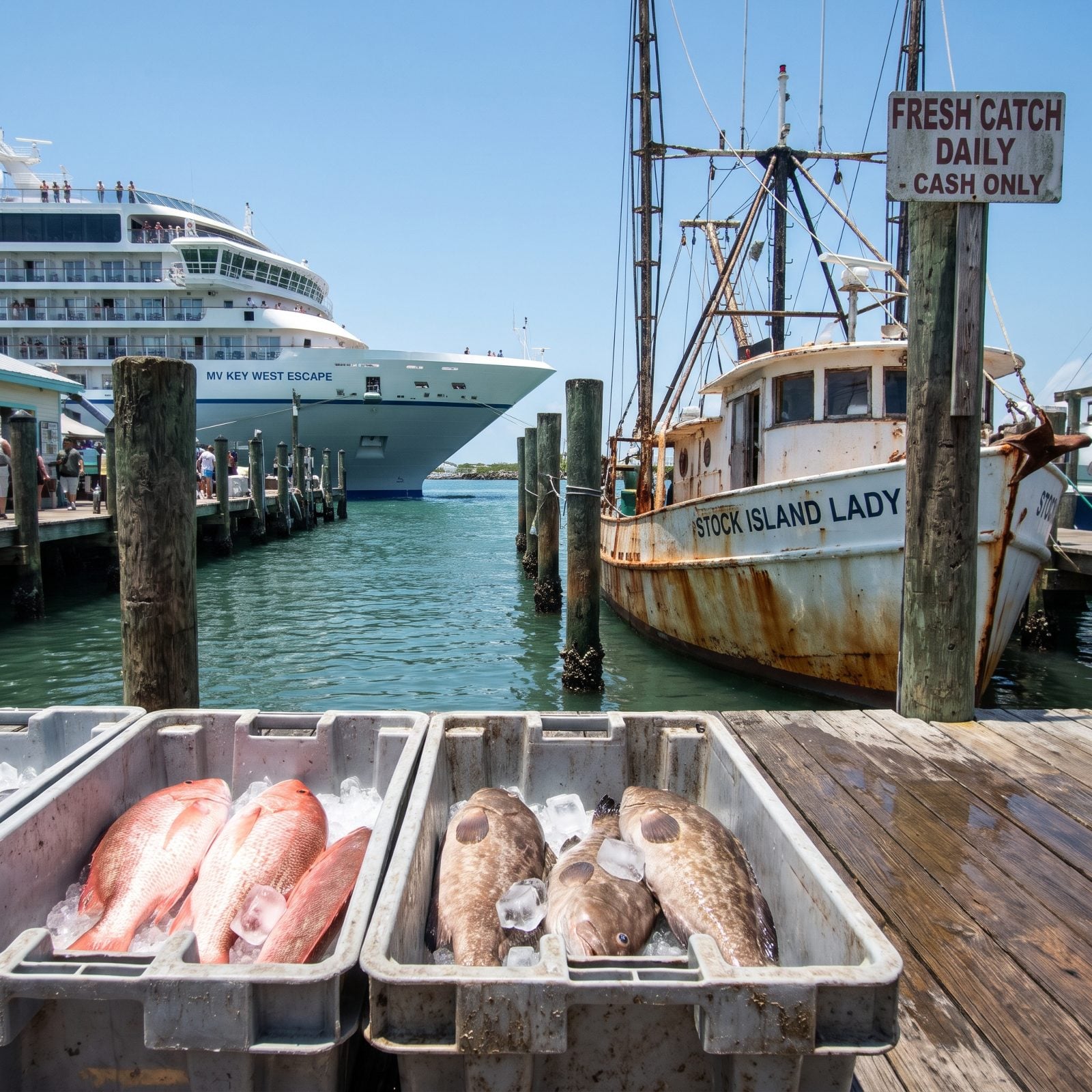
Key West’s postcard side is never far off, with cruise ships tying up just next door. But the fish still comes in on Stock Island, where the commercial fleet still works out of a gritty marina ringed by trap storage and ice plants.
This is where the deep-water boats land yellowtail and mutton snapper, black grouper, and hogfish. Buy it off the dock or from the small markets that sit right where the boats unload. The gap between this fish and the restaurant stuff three islands over is a matter of hours.
The cruise passengers watch from the rails. The grouper lands on the dock below.
26. Fort Myers Beach, Florida, Pink Shrimp From San Carlos Island Boats
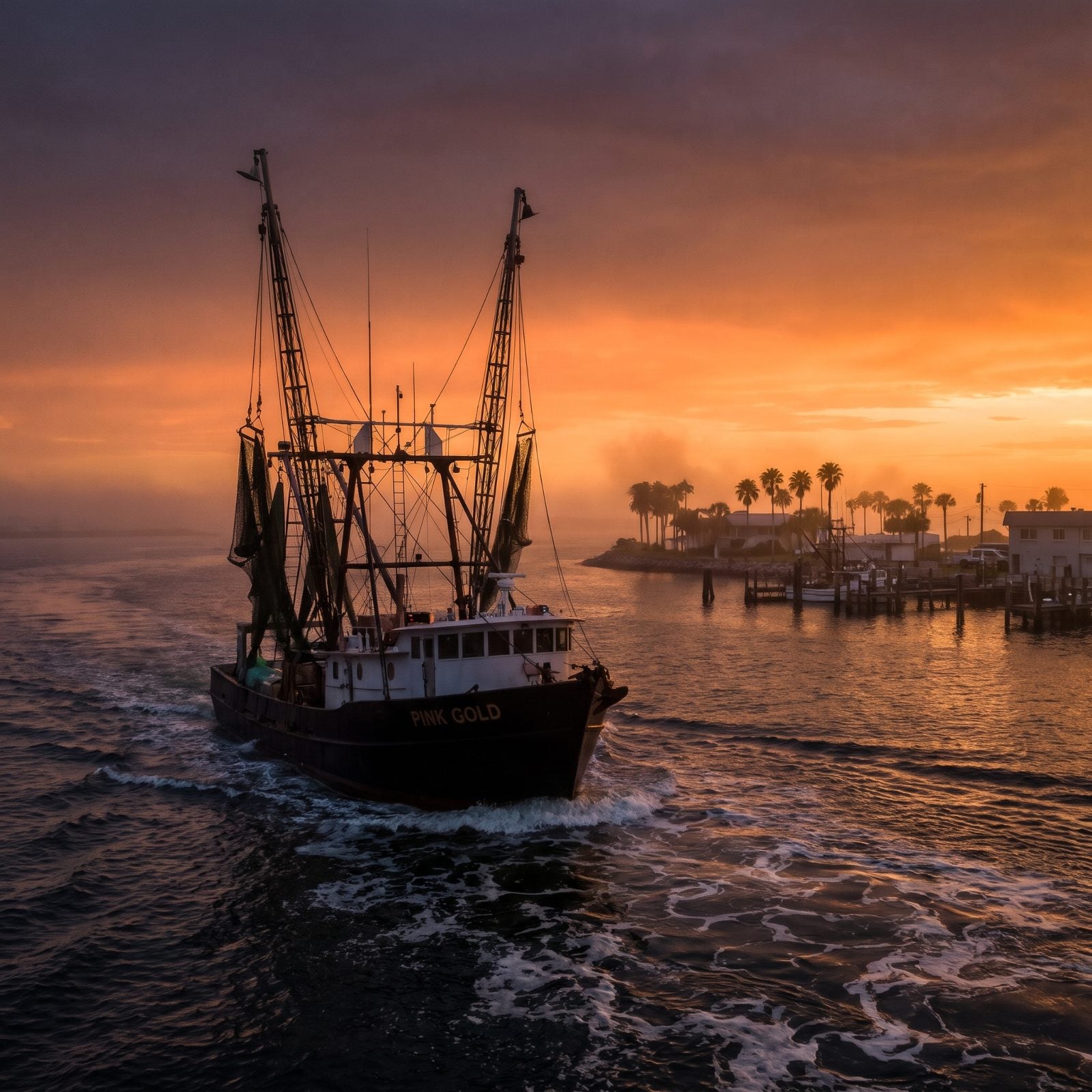
Pink shrimp are the reason this fleet exists. The big steel trawlers on San Carlos Island run offshore for days, and the Fort Myers Beach pinks come back sweet, firm, and a world away from anything thawed and labeled with a country of origin.
Erickson and Jensen and a handful of other outfits sell direct from the docks where the boats unload. Buy a few pounds, freeze what you don’t cook, and you’ll understand why people around here get snobby about shrimp. They earned it.
25. Mayport, Florida, Atlantic Shrimp From the Village Fleet
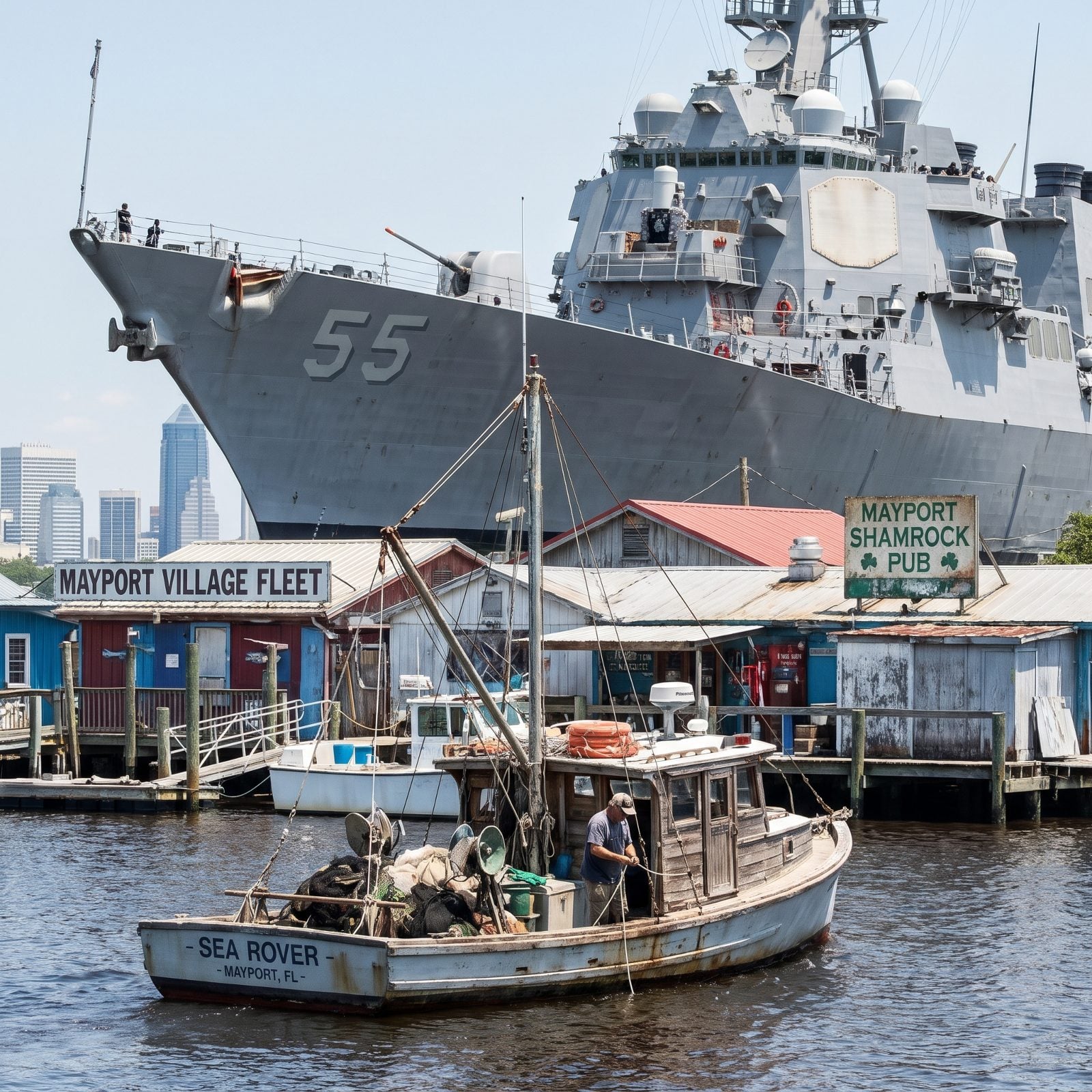
Mayport is a fishing village that happens to sit in the shadow of a naval base and a growing city, and it’s been shrimping the mouth of the St. Johns for over a century. Local white shrimp are the catch that gets a festival named after them.
Singleton’s and a couple of other old-line fish houses still sell off boats or straight from the dock. Small, unglamorous, the real thing. Come for the shrimp, stay for the ferry ride across the river.
24. McClellanville, South Carolina, Shrimp From Jeremy Creek Trawlers
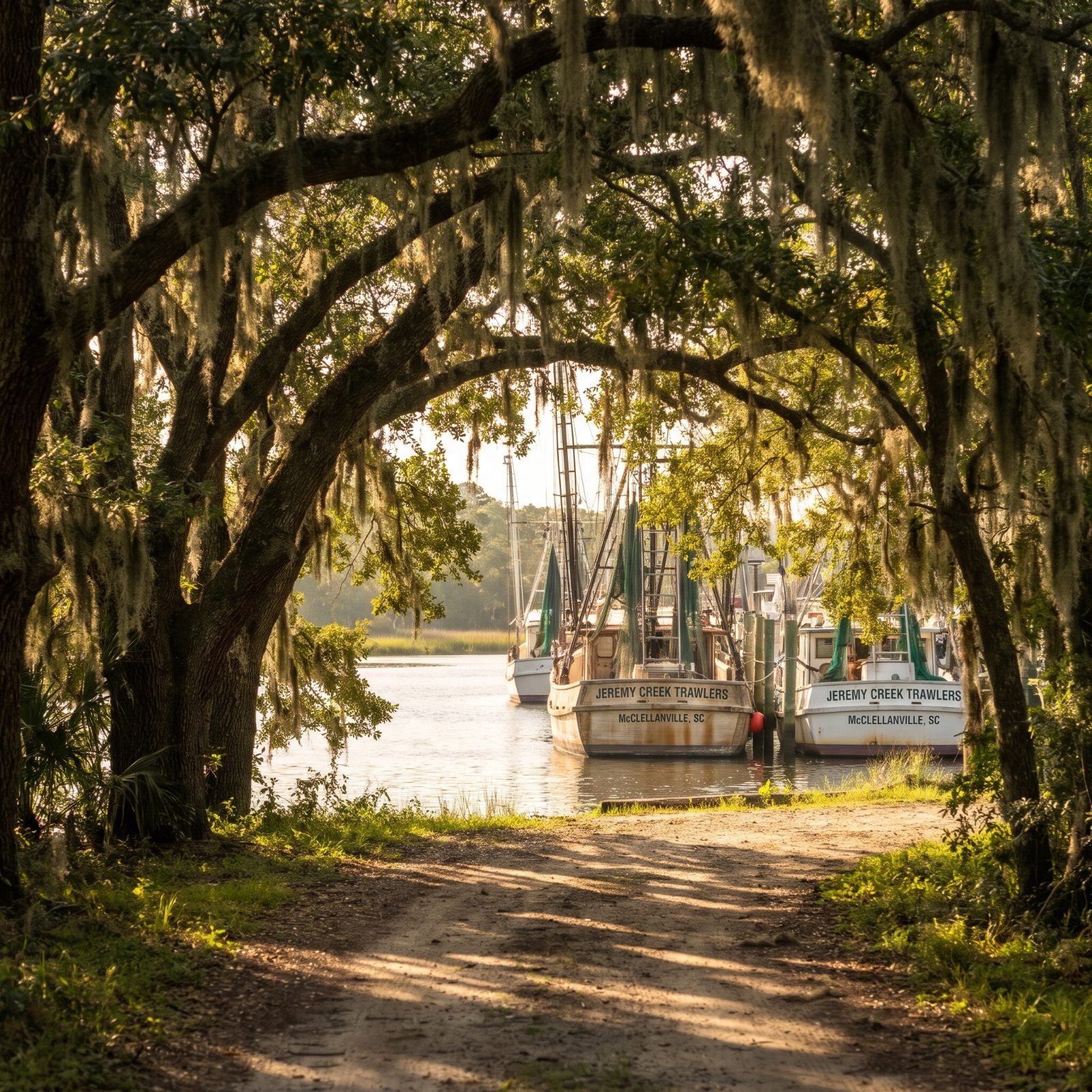
Drive down a live-oak tunnel to a creek lined with shrimp boats and almost nothing else. McClellanville is tiny, old, and about as pure a working shrimp town as the Atlantic coast has left.
The trawlers work Jeremy Creek and the sounds beyond, landing wild South Carolina shrimp that the whole Lowcountry kitchen is built around. Buy direct when the boats are in, which depends entirely on tide and season. There are no posted hours here. The place runs on the water’s schedule, and you adjust to it.
23. Mount Pleasant, South Carolina, Shrimp Boats on Shem Creek
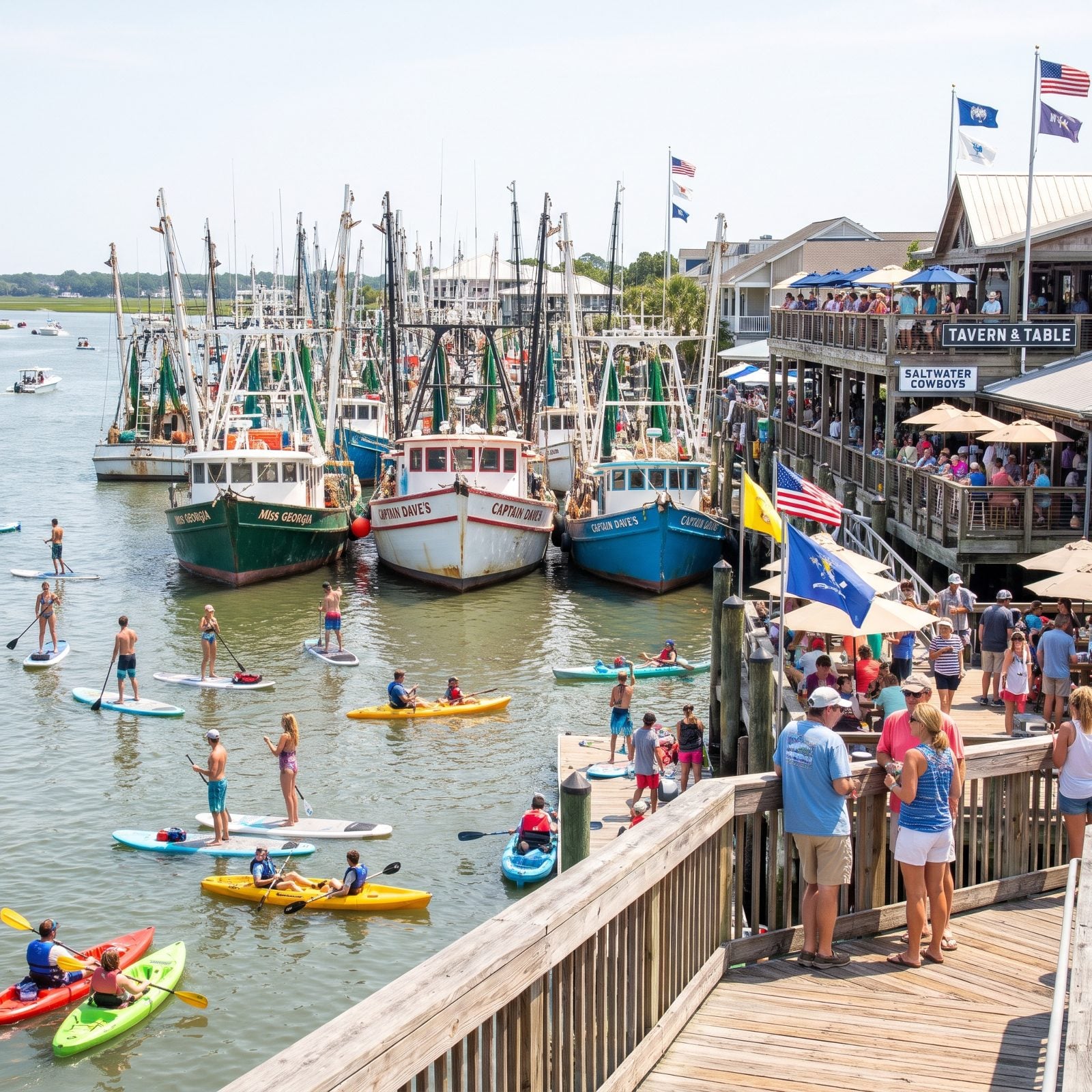
Shem Creek has the opposite problem of McClellanville — too many fans. Restaurants and paddleboarders crowd the water now, but the shrimp fleet still ties up here and still sells, and the pelicans still wait on the rigging for scraps.
Wild-caught Carolina shrimp off these boats go straight into the region’s Frogmore stew and shrimp and grits. You’re buying history as much as dinner. Come on a weekday morning when the boats are in and you’ll beat the weekend chaos by a mile.
22. Ocracoke, North Carolina, Island-Caught Fish From Working Watermen
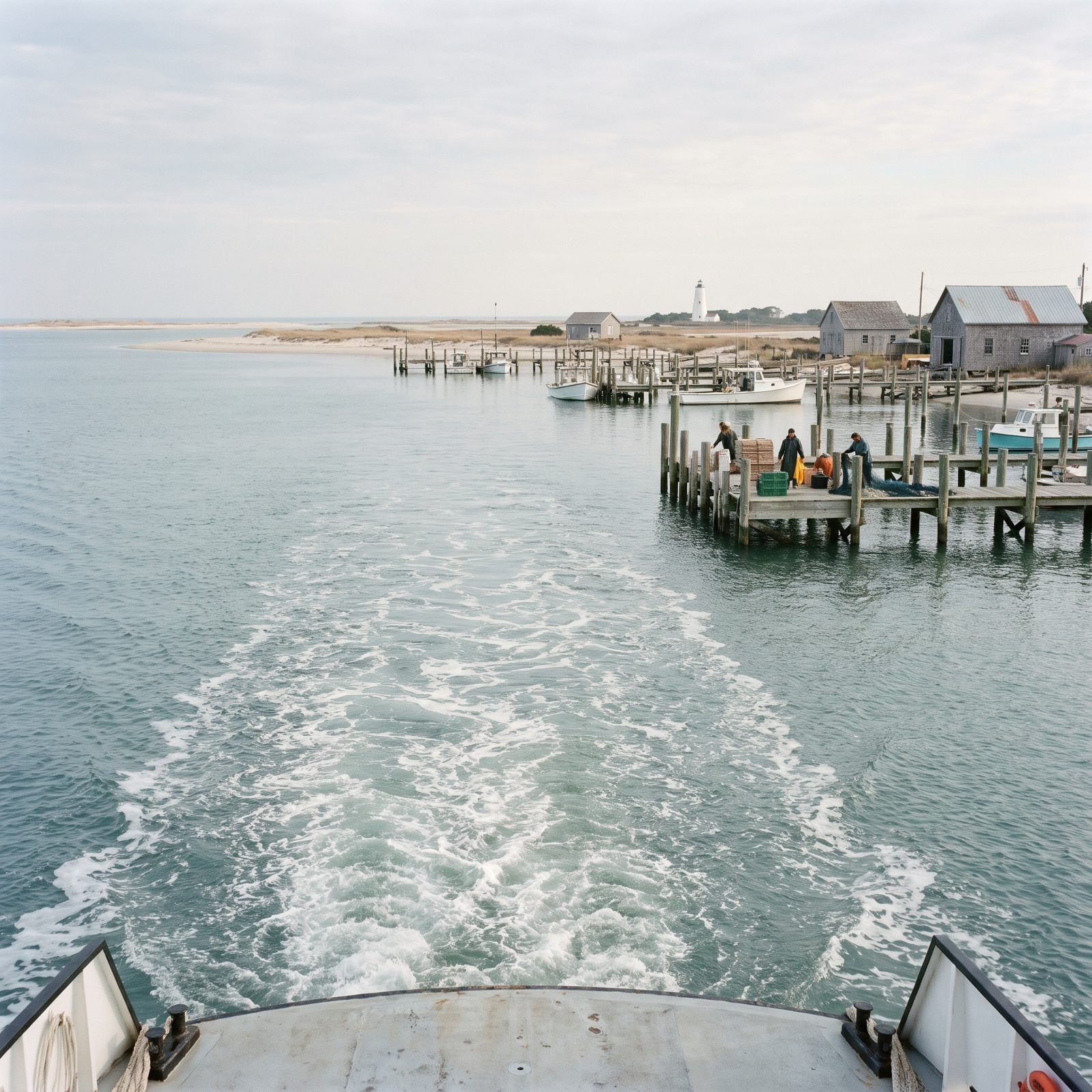
You take a ferry to reach Ocracoke, and that isolation is exactly why the fishing culture survived here when it faded elsewhere on the Outer Banks. A handful of commercial watermen still work these waters, backed by a fishermen’s cooperative keeping the tradition alive.
What’s on ice depends on the day: flounder, bluefish, drum, local shrimp, soft-shell crabs in spring. No guaranteed menu. You buy what the boats brought in, which is exactly the appeal.
21. Ocean City, Maryland, Tuna and Swordfish From the West Ocean City Docks
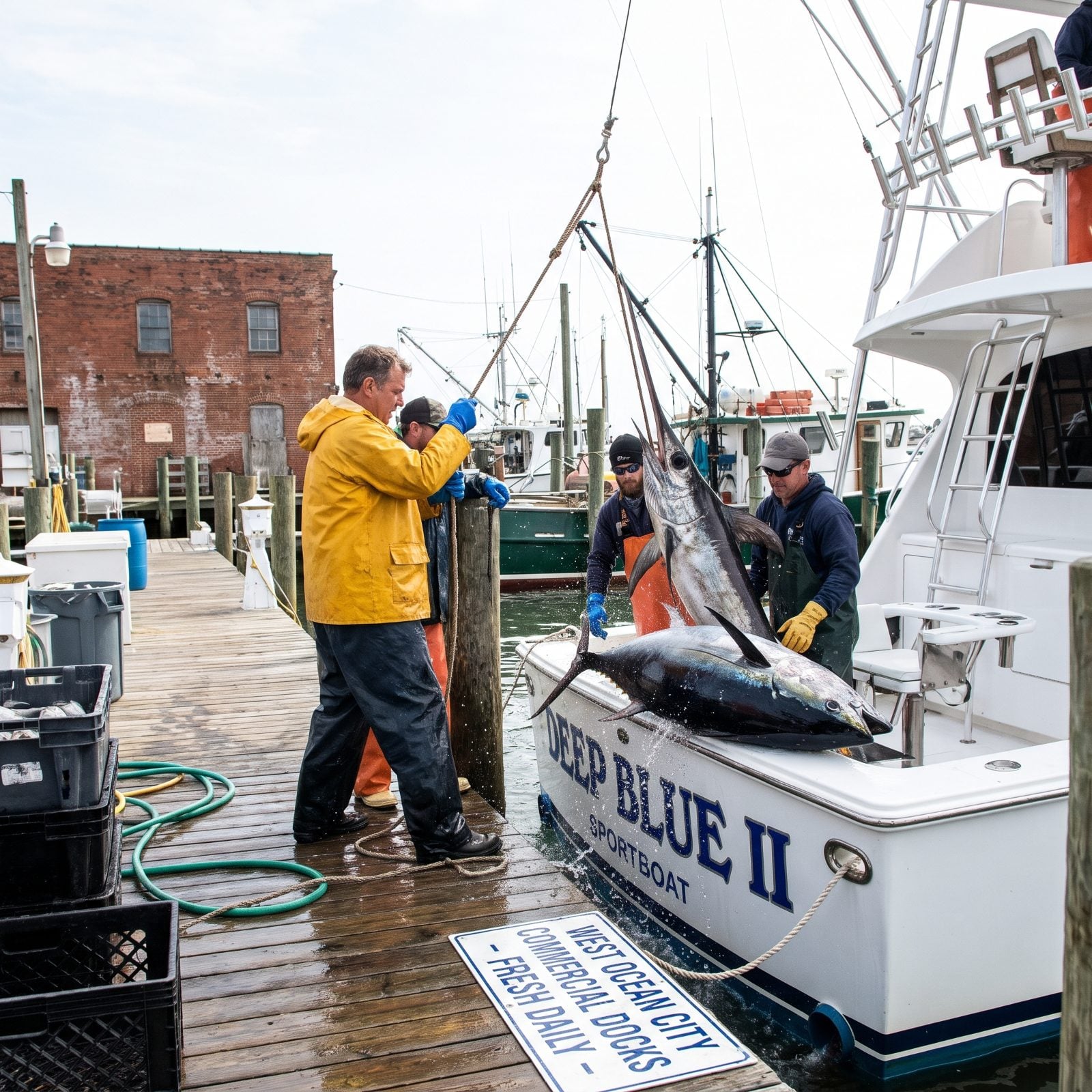
Ocean City runs a big offshore game, and the West Ocean City docks are where the boats come back heavy. Deep-water fishing: yellowfin and bigeye tuna, swordfish, mahi, sometimes a wahoo.
Some charter boats and commercial operations sell their catch right at the dock, cleaned and ready. The season runs summer into fall, timed to when the tuna and billfish move through the canyons offshore. A fresh tuna loin off one of these boats, seared for ninety seconds a side, will ruin grocery-store tuna for you permanently.
20. Cape May, New Jersey, Scallops From the Commercial Fishing Harbor
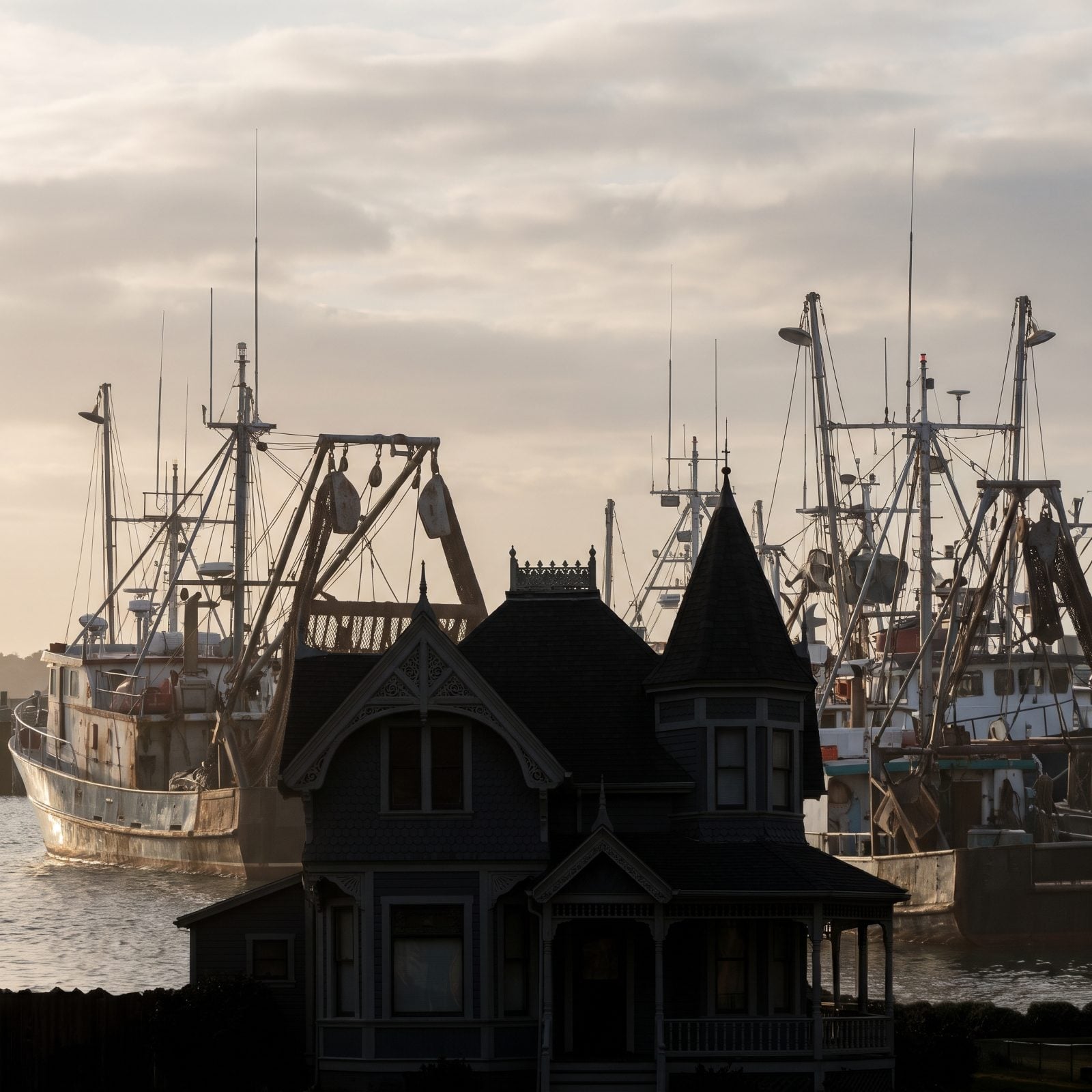
Cape May isn’t just Victorian bed-and-breakfasts. It’s one of the biggest commercial fishing ports on the East Coast, and the prize is scallops. The big steel dredge boats run offshore for a week at a time and land sea scallops by the tub.
Day-boat scallops, caught and landed fast, are a different animal from the soaked-in-preservative kind sold inland. Buy them dry, sweet, and firm straight from the harbor. Then sear them hard in a hot pan and don’t you dare overcook them. That’s the one rule. Break it and you’ve wasted the best scallops on the coast.
19. Gloucester, Massachusetts: Day-Boat Haddock From America’s Oldest Seaport
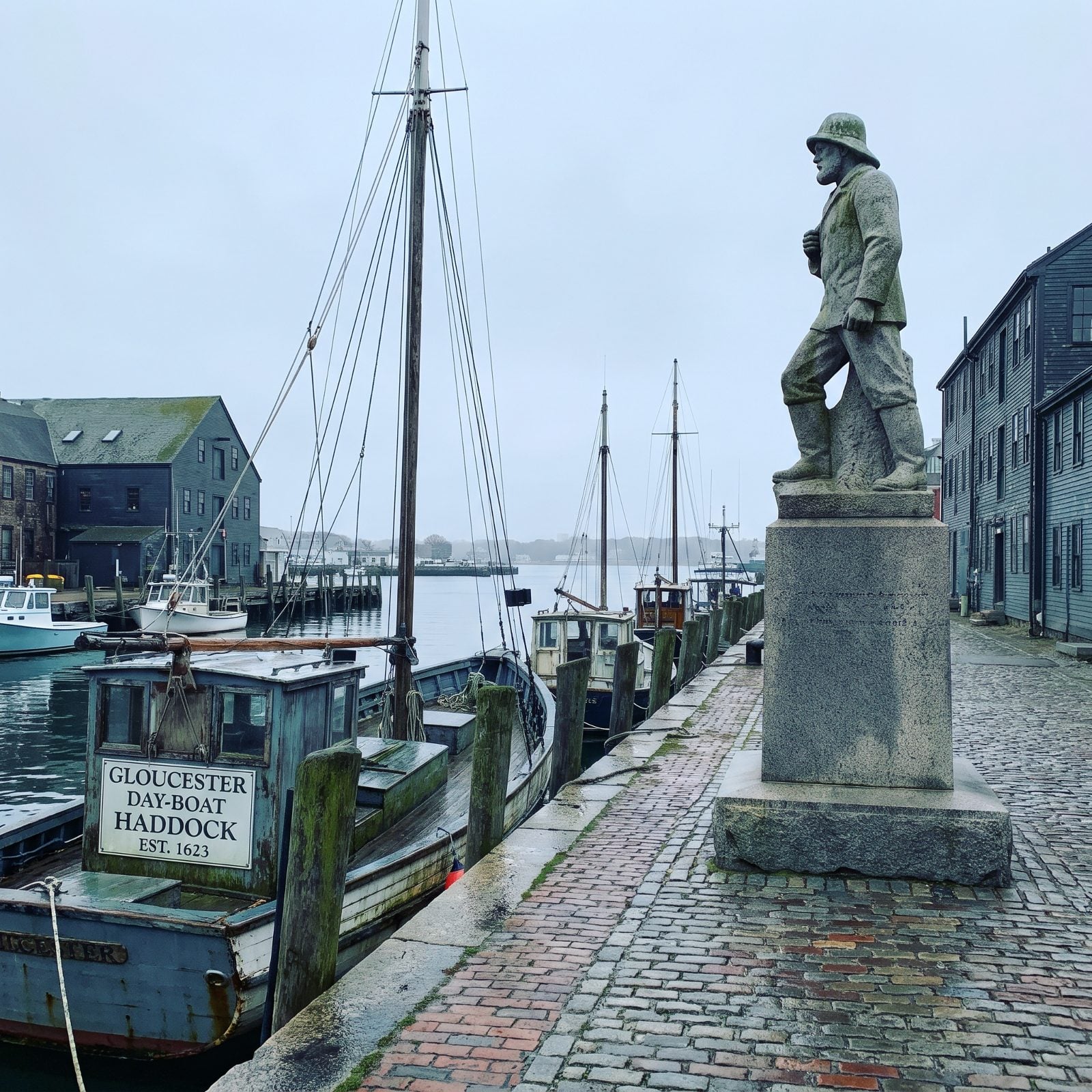
Gloucester has been catching fish since 1623, and the town still smells like it means business. The harbor is a working one, not a postcard, which is exactly why the fish is worth the drive.
Look for day-boat haddock and cod landed on short trips, so the catch comes back the same day instead of sitting in a hold for a week. That freshness is the whole point. A few retail operations along the harbor sell straight from the landings, and the fish you buy may have been swimming off Jeffreys Ledge that morning.
We’ve watched more than one tourist walk past the fish houses hunting for a sit-down lobster roll and miss the actual catch forty feet away.
18. Chatham, Massachusetts: Day-Boat Catch at the Cape Cod Fish Pier
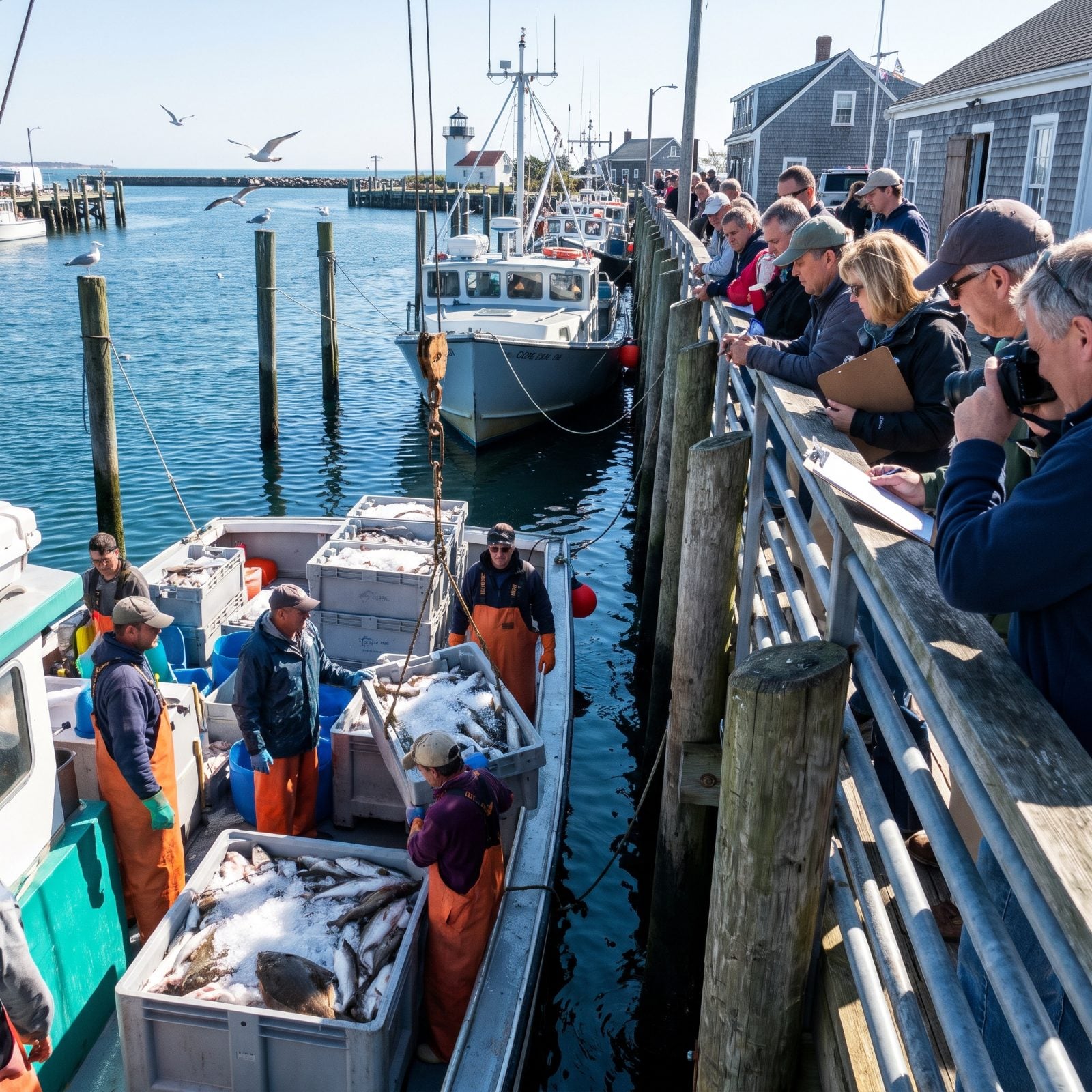
The Chatham Fish Pier is one of those rare spots where you can lean on a public rail, watch the boats unload, and buy the same fish a few steps away. It’s a genuine small-boat fishery — mostly hook-and-line and gillnet operations running short trips into the rich water off the Cape’s elbow.
Chatham cod and dayboat haddock carry a reputation among chefs, and it’s earned. Small boats, short trips, and the fish barely meets an ice machine before it’s for sale.
Go in the afternoon when the fleet comes in. Mornings are dead quiet, and you’ll end up standing on an empty pier wondering where everybody went.
17. Vinalhaven, Maine: Island Lobster Straight Off the Boat at Carver’s Harbor
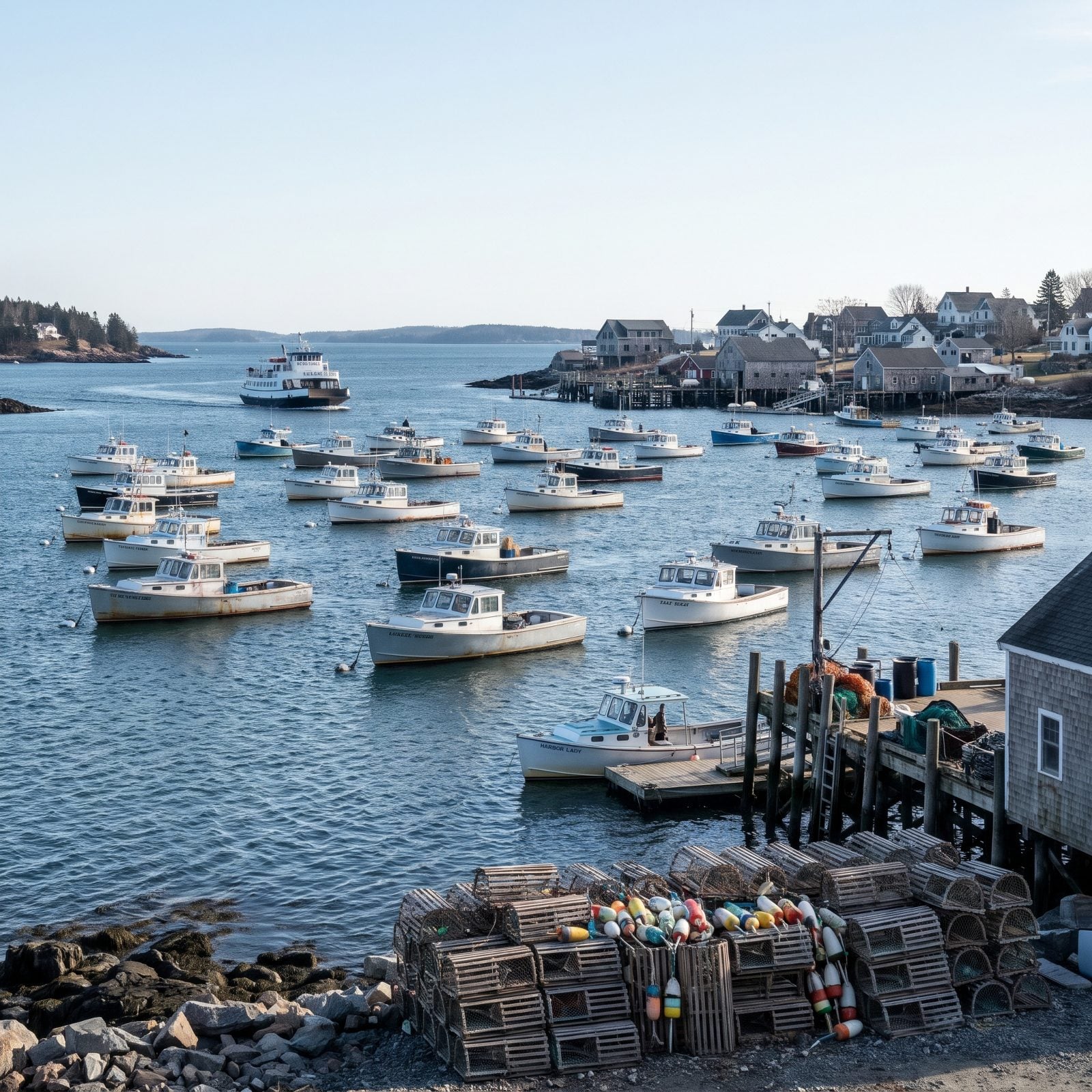
Vinalhaven is a lobstering island, full stop. You take the ferry out of Rockland — about an hour and fifteen across the bay — and you land in a town where the harbor is the economy, not the attraction.
Carver’s Harbor is one of the busiest lobster ports in Maine by volume. The co-op and a couple of wharves sell to the public, and buying a few pounds of banded hardshell off the dock is about as direct as seafood gets. Bring a cooler. The nearest big grocery store is a boat ride away, and that goes for any ice you forgot too.
16. Morro Bay, California: Black Cod and Rockfish From the Embarcadero Boats
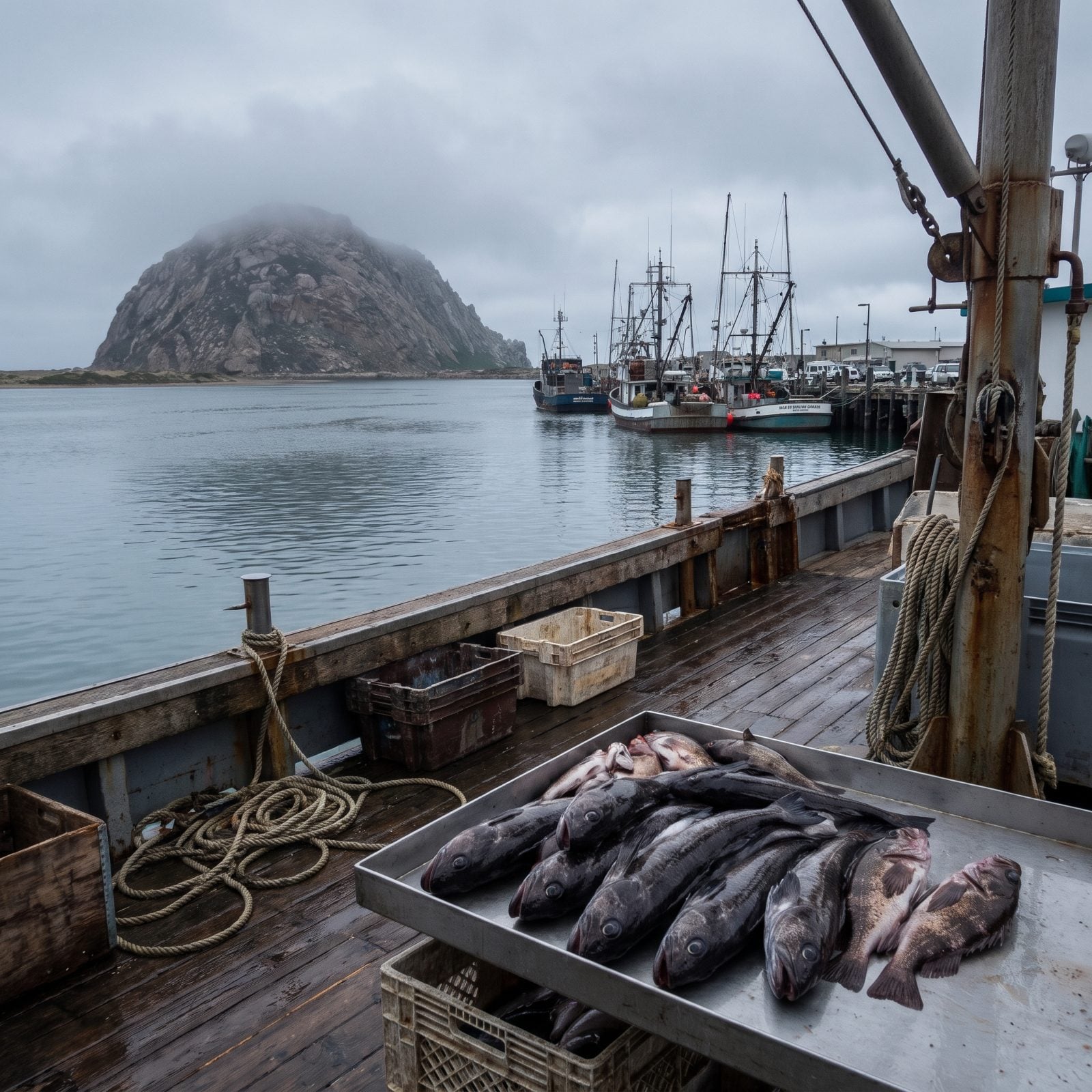
Morro Rock watches over one of California’s most honest little fishing ports. The Embarcadero mixes tourist shops with real commercial docks, and the boats here land black cod, rockfish, and the occasional halibut from the deep water off the Central Coast.
A handful of fishermen sell directly off their boats, or through small off-the-dock operations, often announced on a scrawled paper sign the same morning. Black cod — sold as sablefish too — is the quiet star: fatty, buttery, and criminally underpriced next to what a sushi counter charges for it.
Timing is everything. Direct sales depend entirely on who came in and what they caught, so call ahead or follow the local fishermen’s association online before you drive out.
15. Bodega Bay, California: Salmon and Dungeness Crab at the Harbor
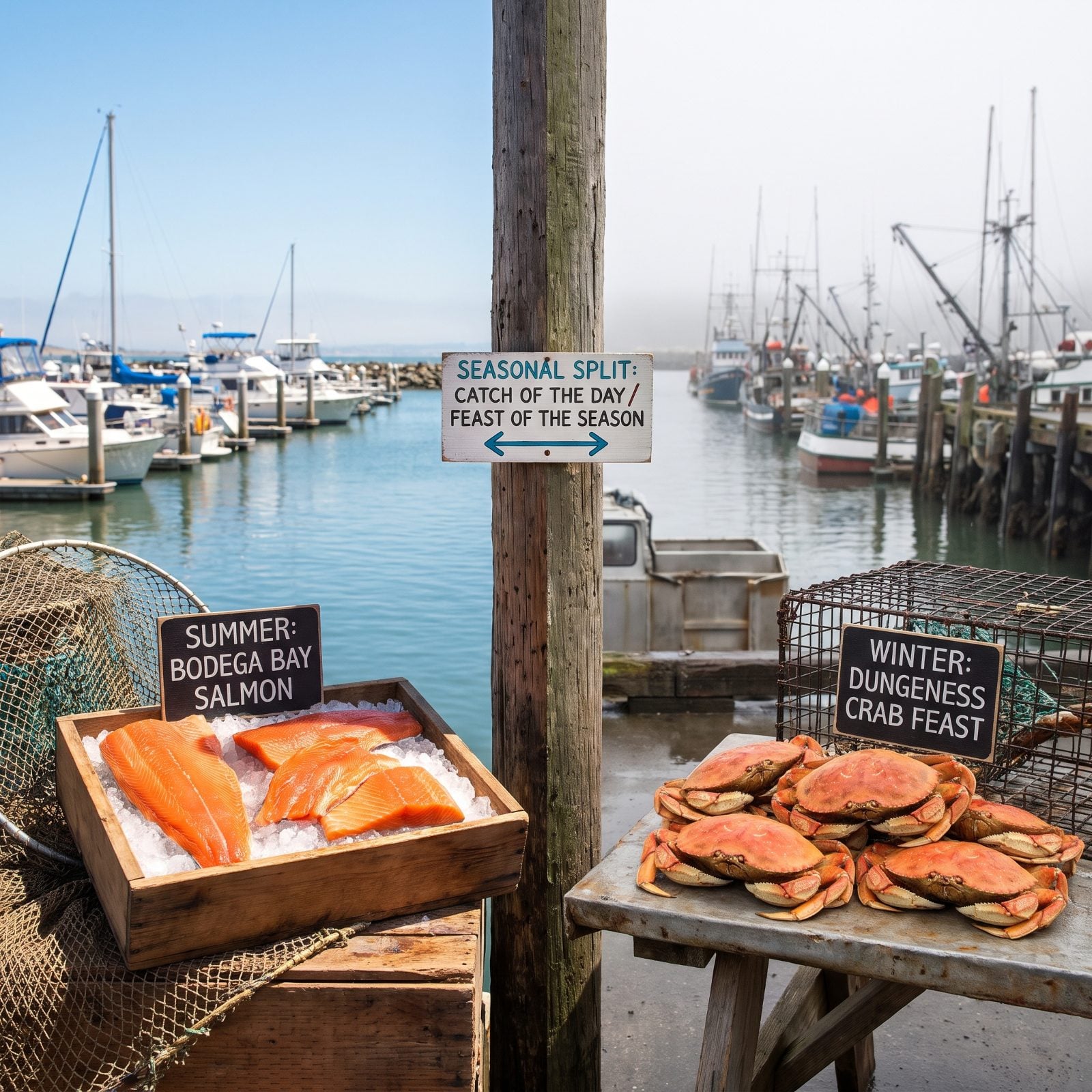
Bodega Bay runs on two things: king salmon in summer and Dungeness crab in winter. The harbor sits on the Sonoma coast where the cold current pushes nutrients up, and the fish that come off these boats taste like it.
Crab season usually opens in November, though it gets pushed back some years for whale safety and toxin testing, and when it’s on the boats sell live Dungeness right off the deck. Salmon’s another story — it leans hard on the season, and California has shut the fishery down entirely in recent years to protect the runs.
Check what’s actually open before you pack the cooler. Nothing sadder than driving all the way to the coast for fish nobody’s allowed to catch.
14. Fort Bragg, California: Salmon and Black Cod From Noyo Harbor
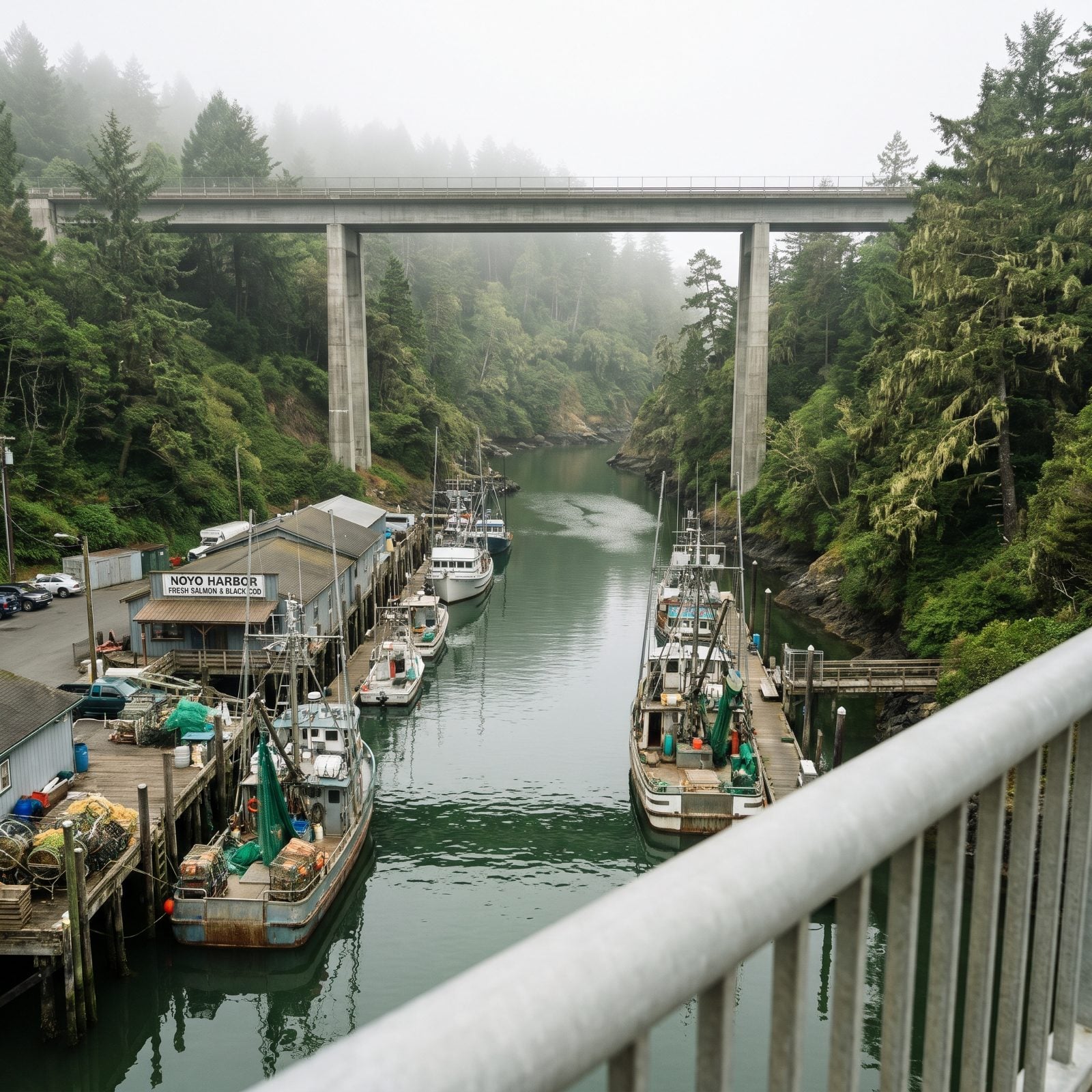
Noyo Harbor hides at the bottom of a river canyon under the Highway 1 bridge, and it’s easy to drive right over the top of it without knowing a working fleet sits below. Don’t.
Fort Bragg’s boats land salmon, black cod, rockfish, and crab depending on the season, and several operations sell straight to the public down at the harbor. The setting alone is worth it — redwood hills, fog rolling up the river, boats rafted three deep against the dock.
This stretch of the Mendocino coast stays cooler and quieter than the ports to the south. Fewer crowds competing for the same fish.
13. Crescent City, California: Dungeness Crab From Historic Citizens Dock
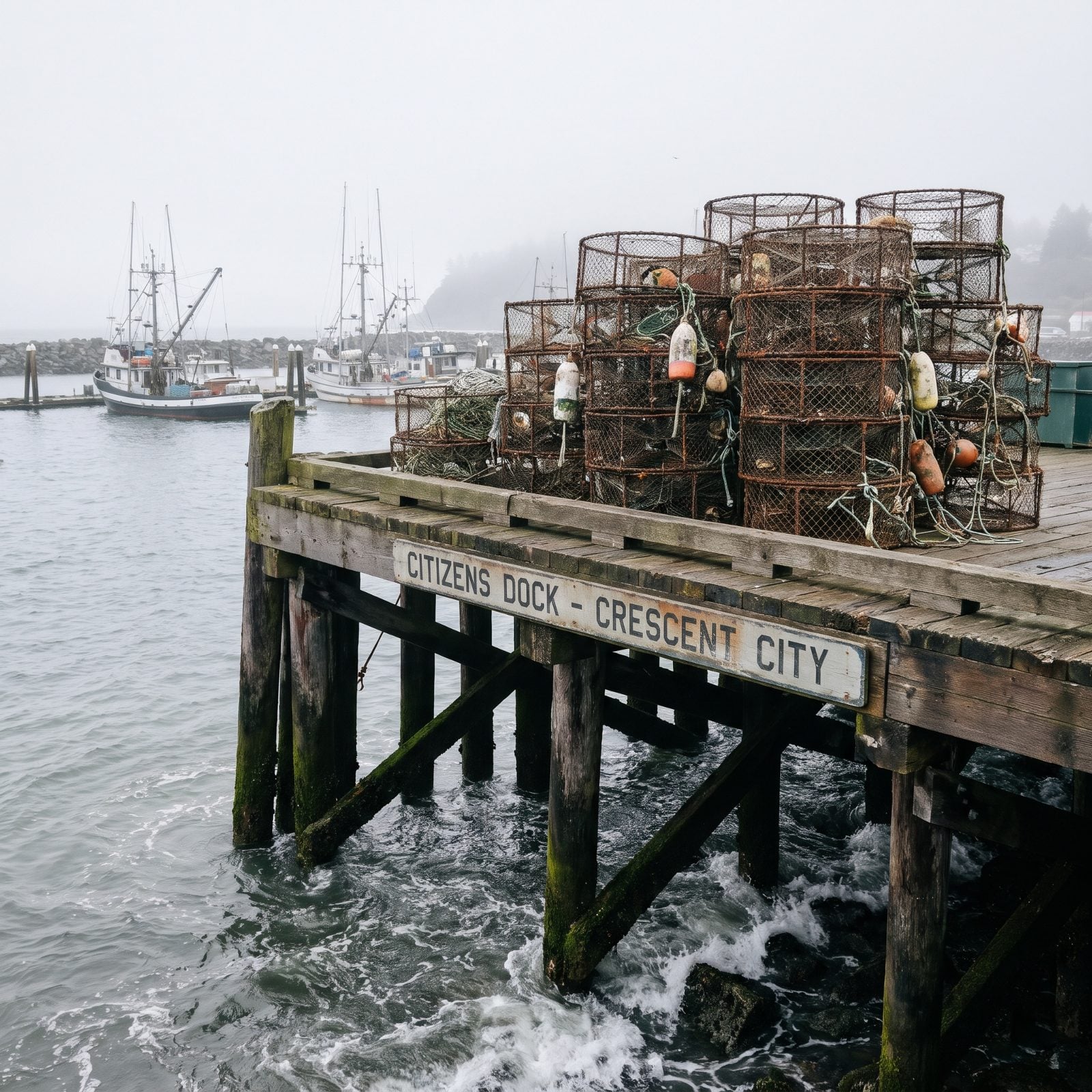
Crescent City sits in California’s far northwest corner, closer to Oregon than to anywhere you’ve heard of, and it’s a crab town through and through. Citizens Dock was literally built by the community in the 1950s, locals kicking in money and labor to give the fleet a home.
When Dungeness season’s on, the boats sell live crab right off the dock, weighed out on a hanging scale. It’s cold, it’s windy, it’s real. The crab runs firm and sweet from that frigid water, and the price off the boat undercuts anything you’ll find inland.
12. Brookings, Oregon: Albacore Tuna and Crab From the Port of Brookings Harbor
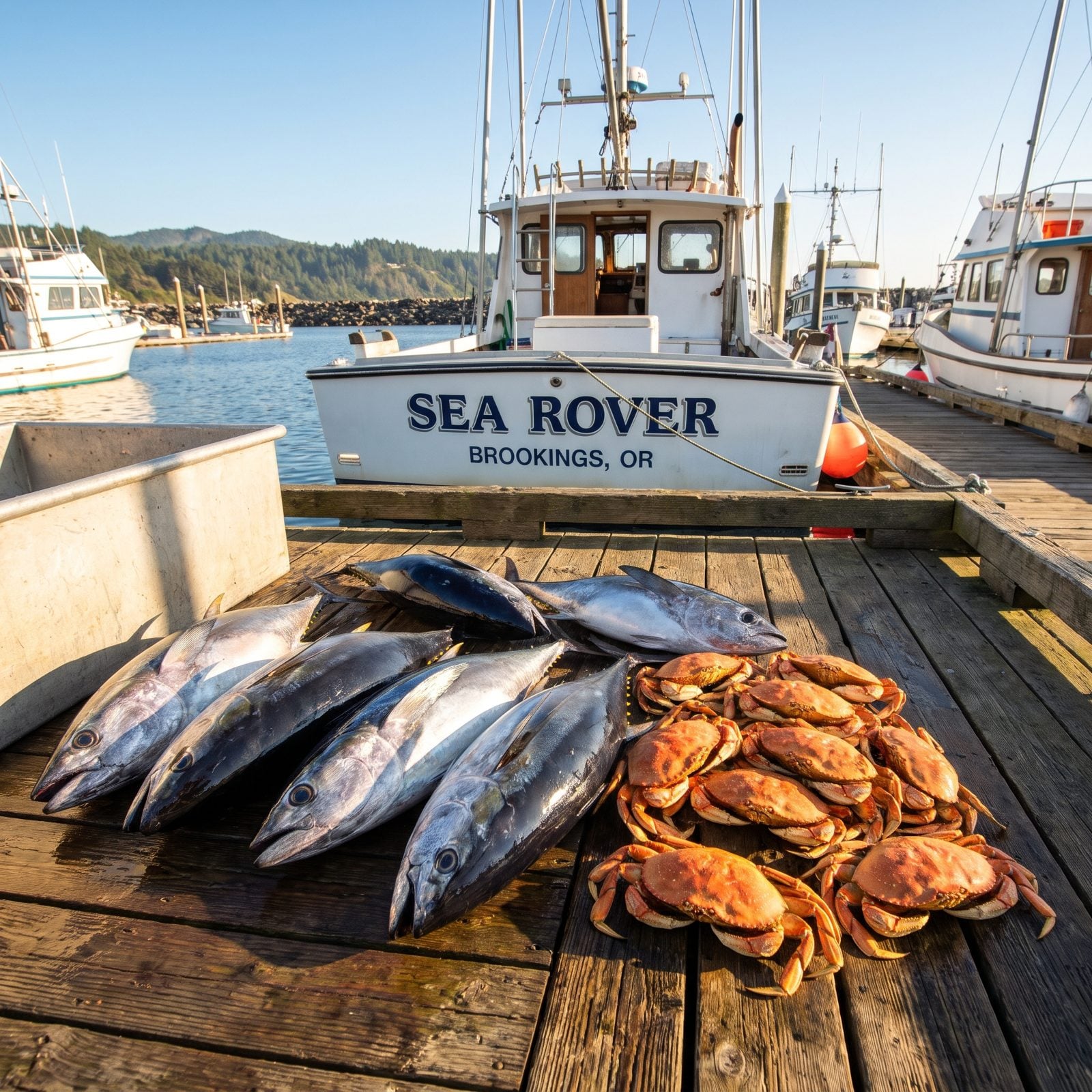
Brookings sits in Oregon’s so-called banana belt — the warmest, sunniest stretch of the whole coast — which makes it a rare place to stand on a fishing dock without freezing solid. The port runs active albacore and Dungeness fisheries out of the Chetco River mouth.
Summer and early fall bring the albacore boats in, and several sell whole or loined tuna straight off the deck. Troll-caught albacore is a different animal from the canned stuff: pale, firm, mild.
Crab season rounds out the calendar in the colder months. Ask the harbor office, or just watch the port’s board to see which boats are selling that week.
11. Charleston, Oregon: Albacore and Dungeness Crab at the Marina
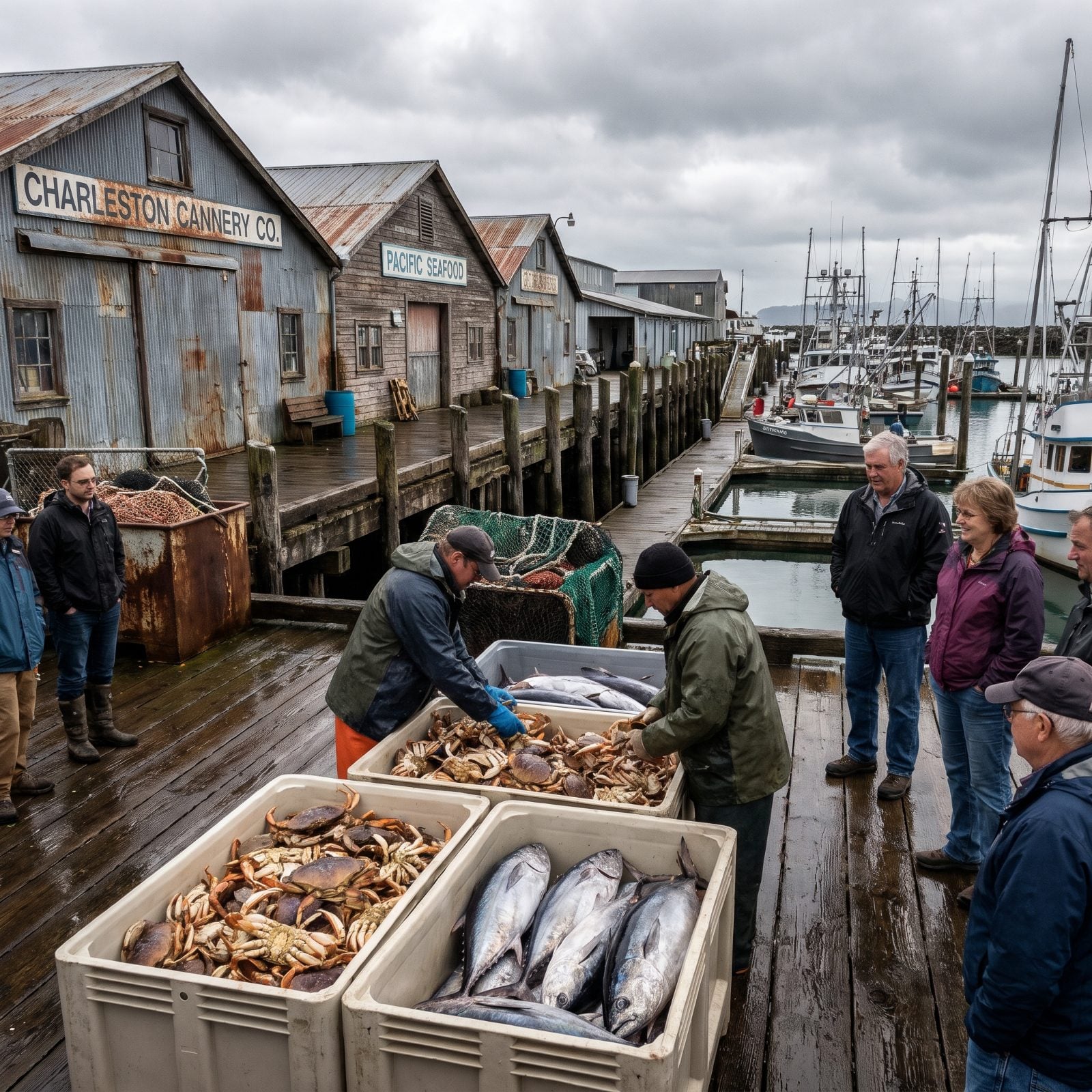
Charleston is the real-deal commercial side of the Coos Bay area — a working marina ringed by canneries and processors instead of gift shops. This is where Oregon’s seafood gets landed in volume.
Dungeness crab is the backbone of the port, with albacore, rockfish, and shrimp filling out the seasons. Direct boat sales happen here, and the marina is built for people who actually want to buy fish, not just photograph it.
The vibe is industrial and unglamorous. That’s precisely the point — you came for the catch, and Charleston has the catch.
10. Newport, Oregon: Tuna, Pink Shrimp, and Crab Along the Bayfront
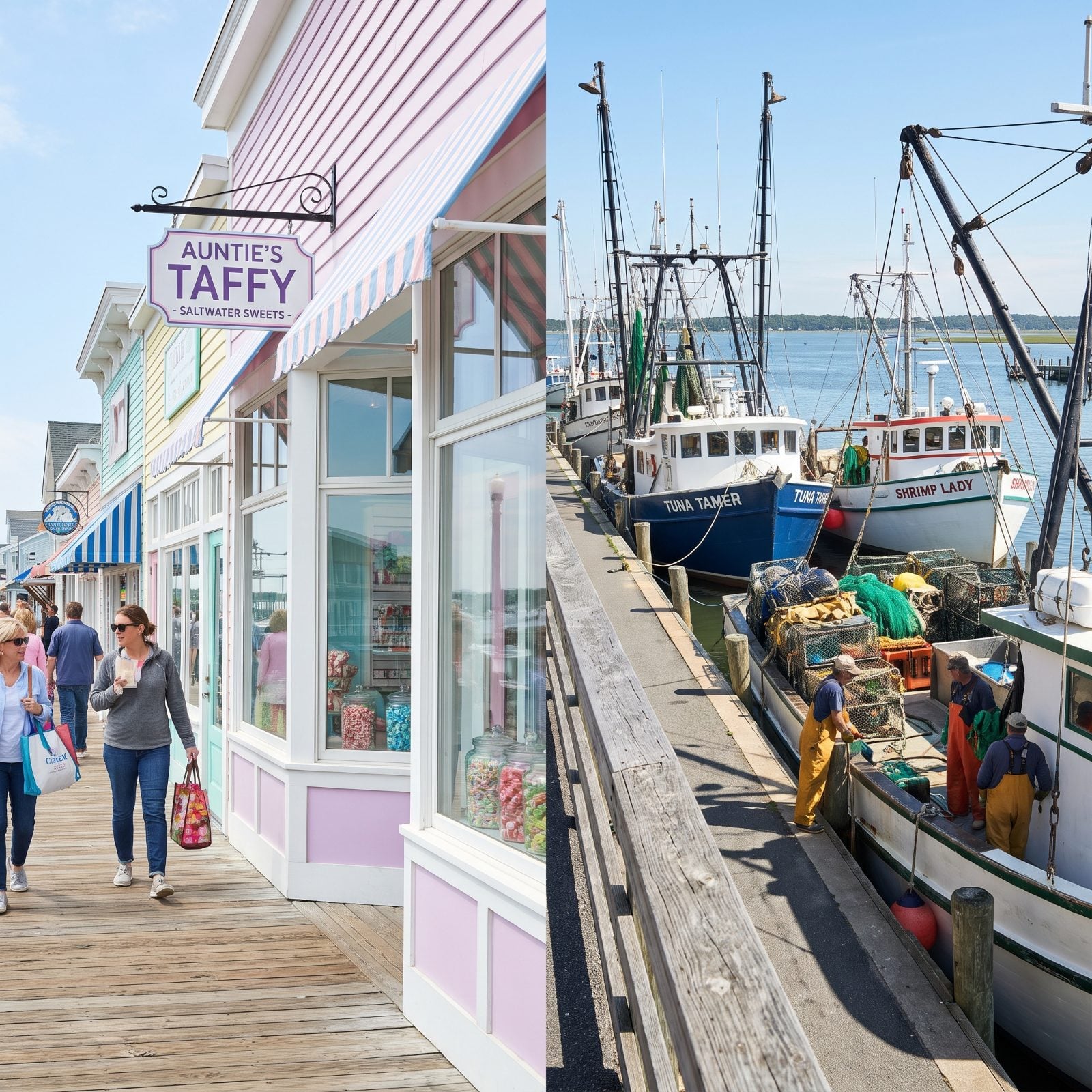
Newport’s Bayfront is Oregon’s seafood capital and doesn’t pretend otherwise. One side of the street has taffy shops and barking sea lions. The other side has the actual working fleet, and that’s where you want to be.
This is one of the busiest commercial ports on the West Coast, landing albacore, Dungeness crab, rockfish, and Oregon pink shrimp — those tiny sweet ones most people only know from a shrimp cocktail. Several operations sell straight off the docks, and the variety here beats almost anywhere else on this list.
Come for the tuna in late summer, the crab in winter, and the shrimp whenever the trawlers are running. There’s nearly always something fresh to haul home.
The sea lions on the docks aren’t a gimmick. They’re here for the same reason you are, and they got here first.
9. Astoria, Oregon, Salmon and Albacore From the Columbia River Fleet
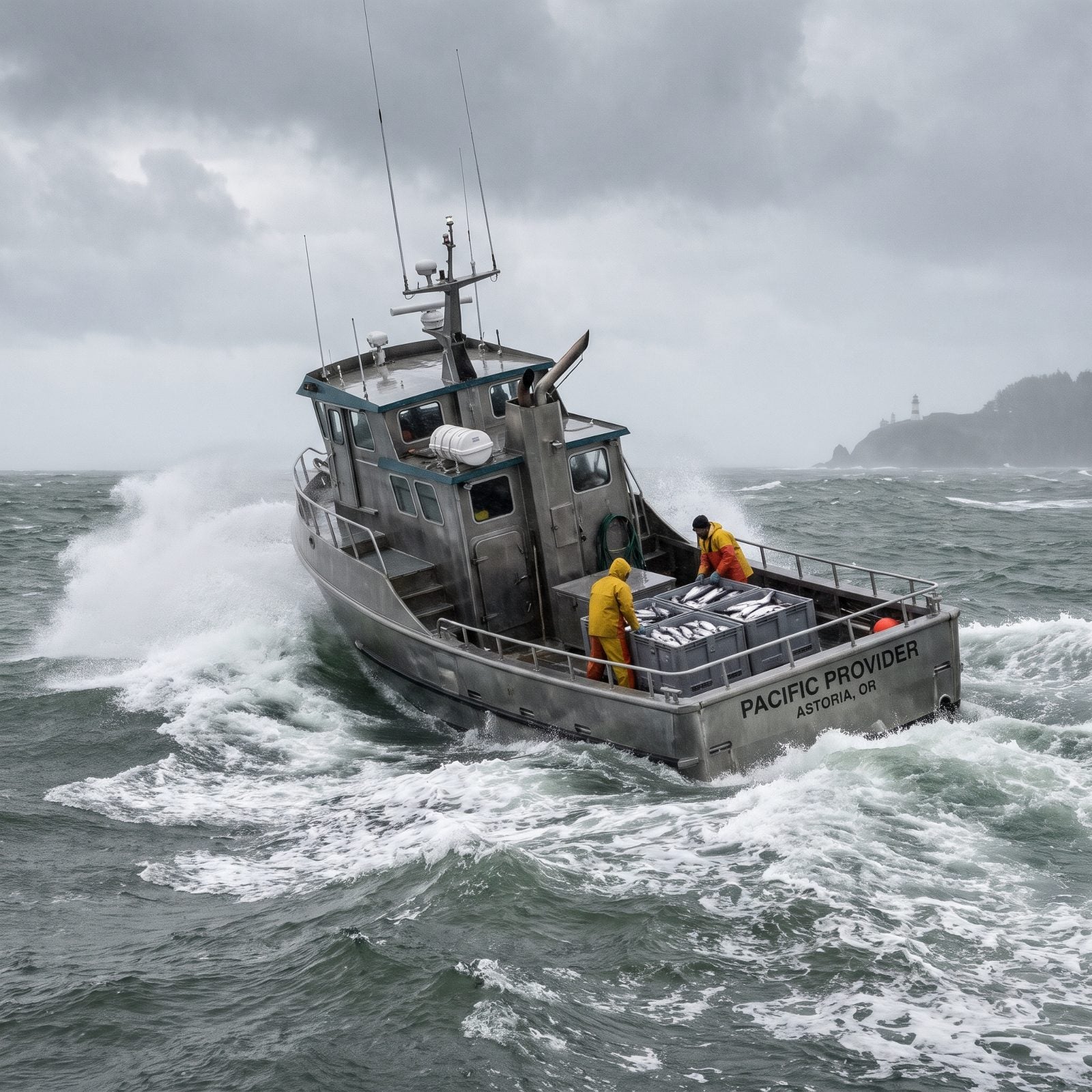
The Columbia bar is one of the meanest stretches of water on the continent, and the boats working out of Astoria earn every fish they land across it. Come down to the river in late summer and you can buy chinook and coho straight off the gillnetters, plus troll-caught albacore when the tuna run comes within range.
What most visitors miss is that timing beats luck here. Salmon seasons open and close on short notice, so a boat selling off the deck Tuesday might be shut down Wednesday. Ask at the Astoria Riverwalk or around the West Mooring Basin, and somebody will point you to whoever came in with ice still on the catch.
8. Ilwaco, Washington, Albacore and Salmon at the Port Docks
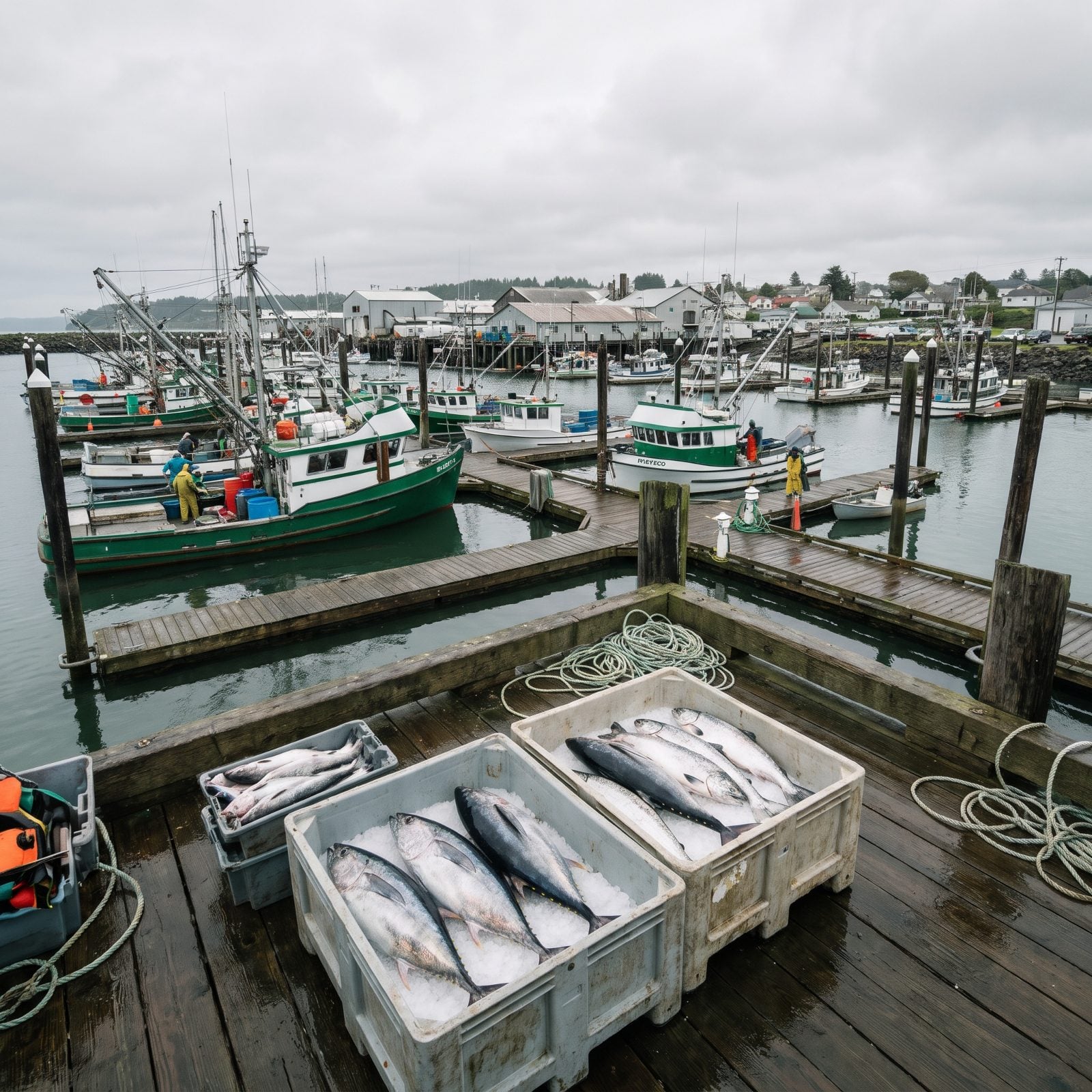
Ilwaco is small, and that’s exactly why it works. The whole harbor fits in one long look, and the boats that run offshore for albacore sell what they bring back right there at the port docks. You walk up, you ask, you pay, you carry a fish home in a cooler.
Troll-caught albacore is the prize. Each one comes aboard individually, bled and chilled fast. If you’ve only ever met tuna in a can, a whole fresh one off an Ilwaco troller will rewire your idea of what the fish even is.
7. Bellingham, Washington, Reef-Net Salmon and Spot Prawns at Squalicum Harbor
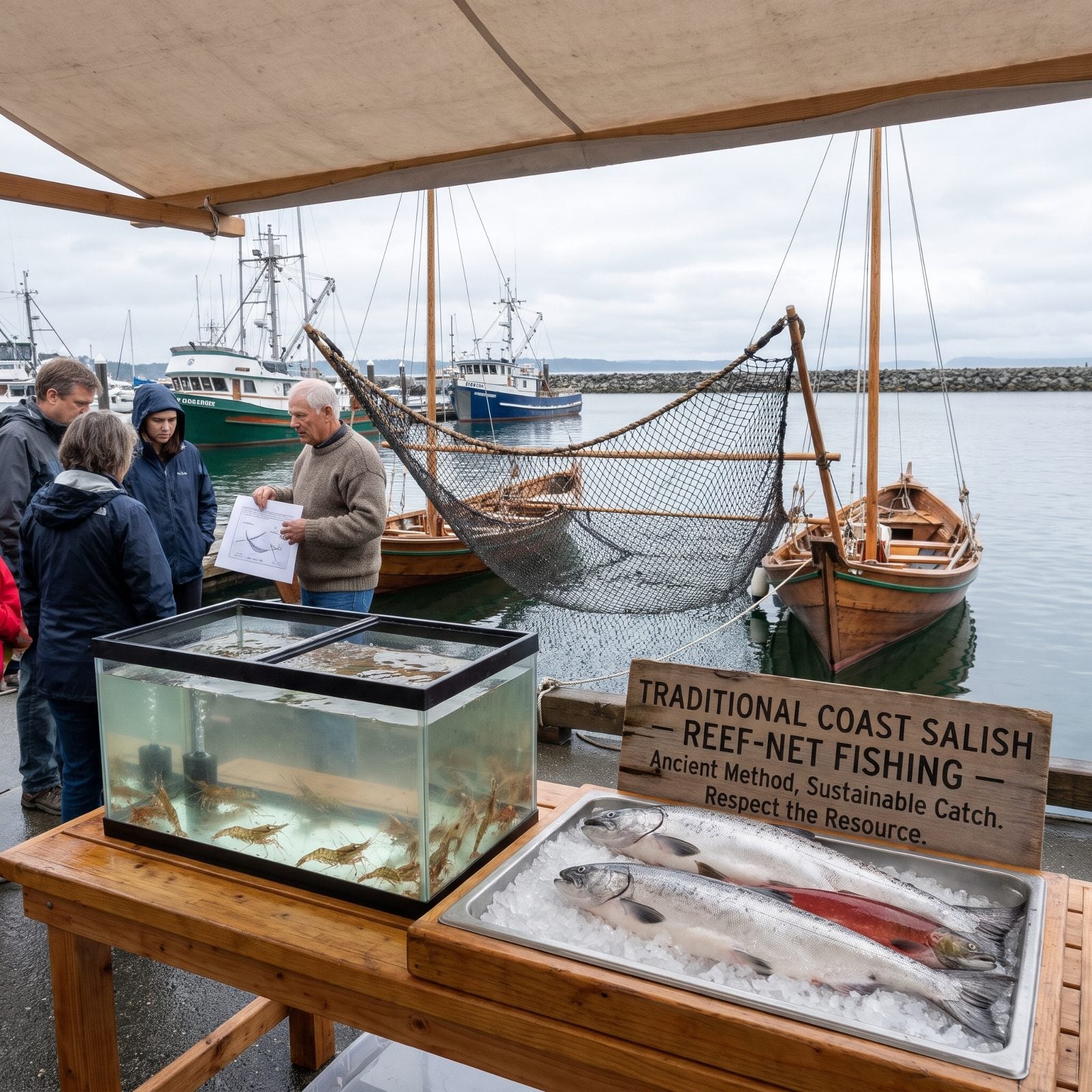
Reef-netting is older than the state of Washington. The Lummi and Straits Salish people developed the method long before engines existed, and a handful of boats still do it in the waters off Bellingham. It’s selective, low-impact, and the salmon come in barely stressed.
At Squalicum Harbor you’ll find those reef-net sockeye alongside the real seasonal event: spot prawns. The fishery runs a tight window, usually a few weeks in late spring, and when boats come in with live prawns in saltwater tanks, word moves fast around the docks.
6. Ketchikan, Alaska, Salmon and Halibut From the Tongass Narrows Fleet
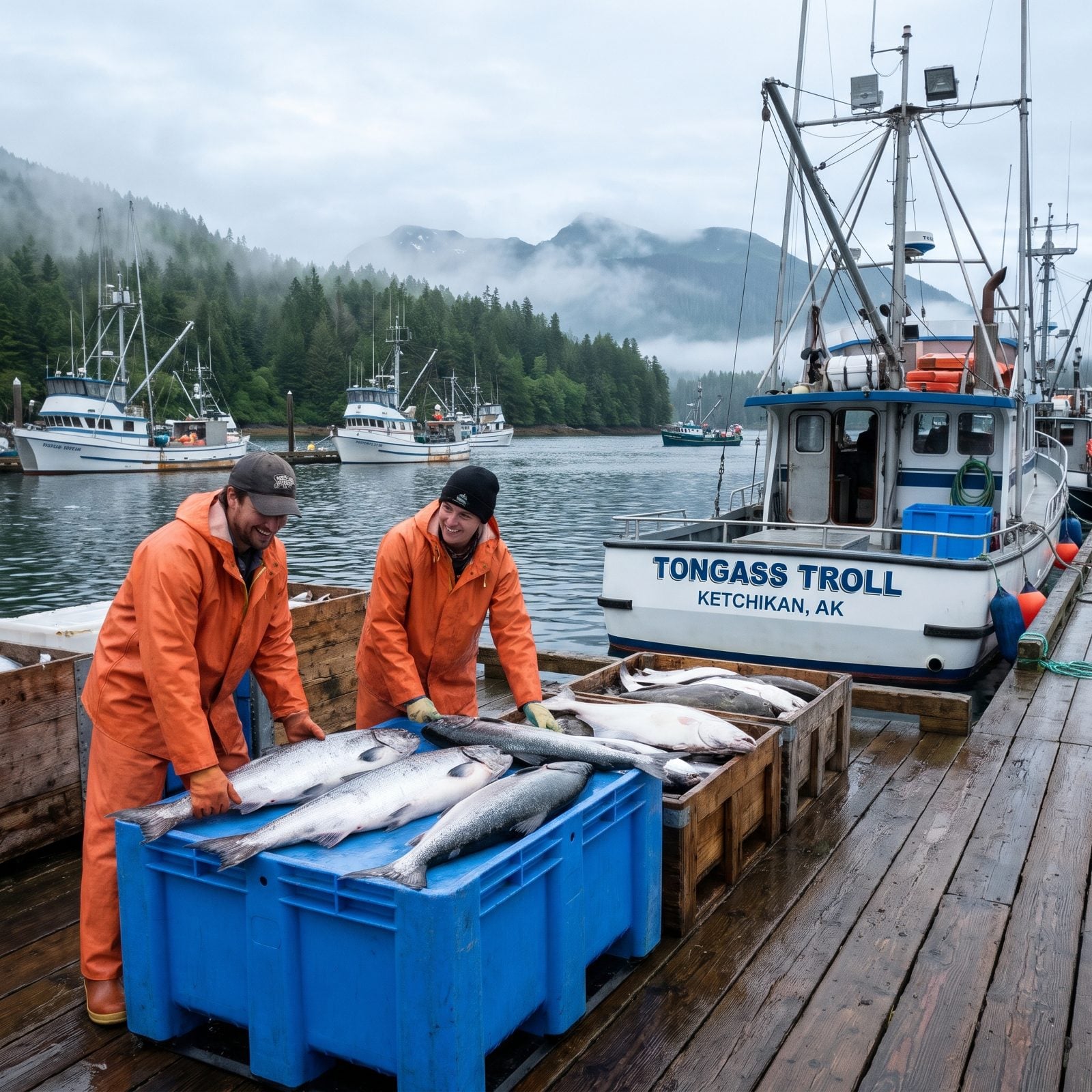
Ketchikan calls itself the salmon capital of the world, and the trolling fleet in the Tongass Narrows backs up the brag. Troll-caught king and coho come in hook-and-line, each fish handled one at a time rather than scooped by the thousand.
You can also find halibut landed off the longline and jig boats, the big flatfish that locals have been pulling out of these waters for generations. The narrows are busy with floatplanes and cruise ships, but the fishing side of the harbor still runs on its own clock.
Walk the floats, ask who’s selling, and don’t be shy about it. A fisher cleaning gear will usually tell you straight whether they’ve got fish or whether you should come back tomorrow.
5. Sitka, Alaska, Black Cod and Salmon From Local Longliners
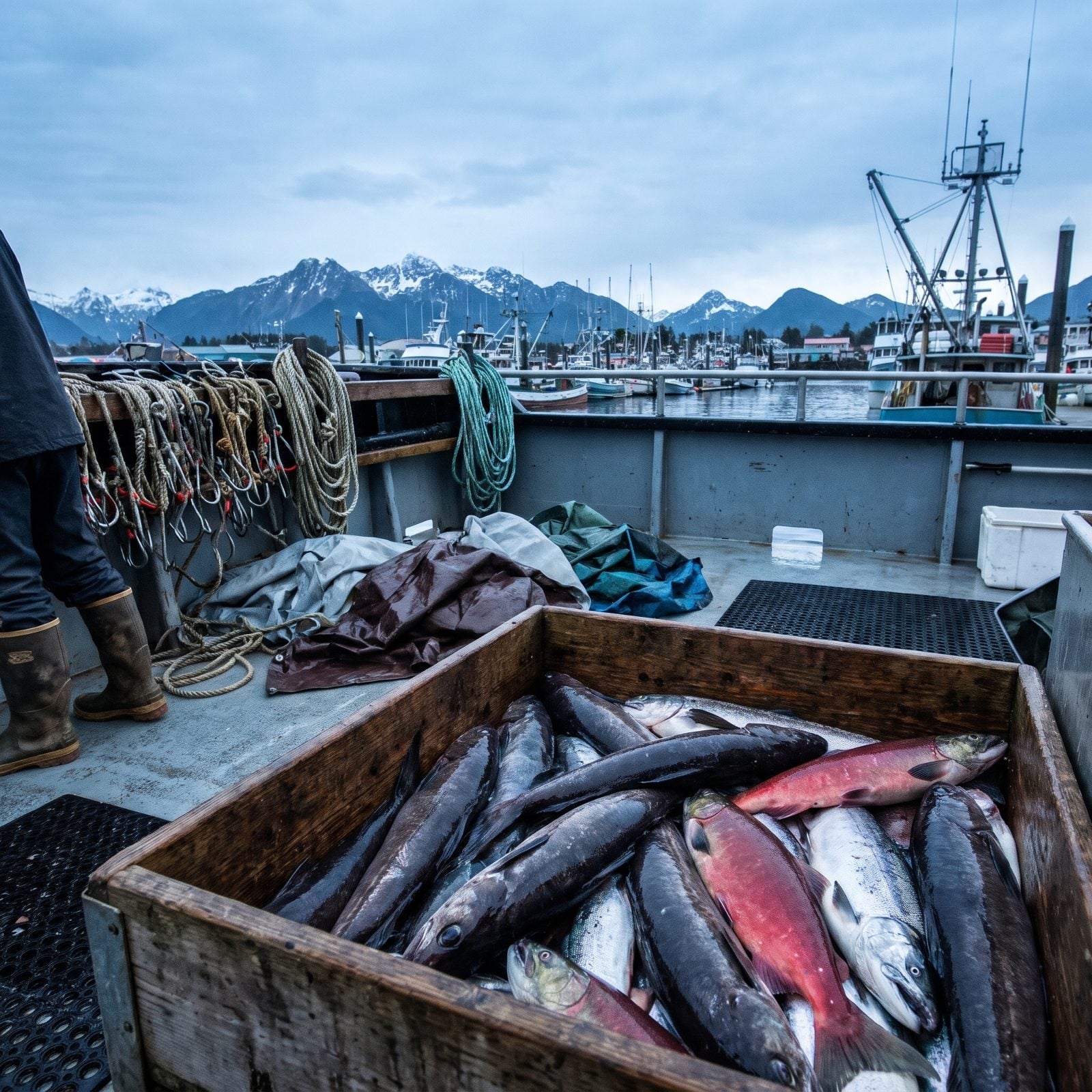
Black cod, sablefish, butterfish, call it what you want. The longliners working out of Sitka pull one of the richest, most buttery fish in the ocean, and it rarely shows up fresh outside Alaska because almost all of it gets shipped frozen to Japan.
So that’s the quiet opportunity here. Buy it off a Sitka boat and you’re getting the fish at the source, before it ever sees a plane. Dense flesh, oily in the good way, and nearly impossible to overcook.
4. Homer, Alaska, Halibut From the Spit’s Fishing Fleet
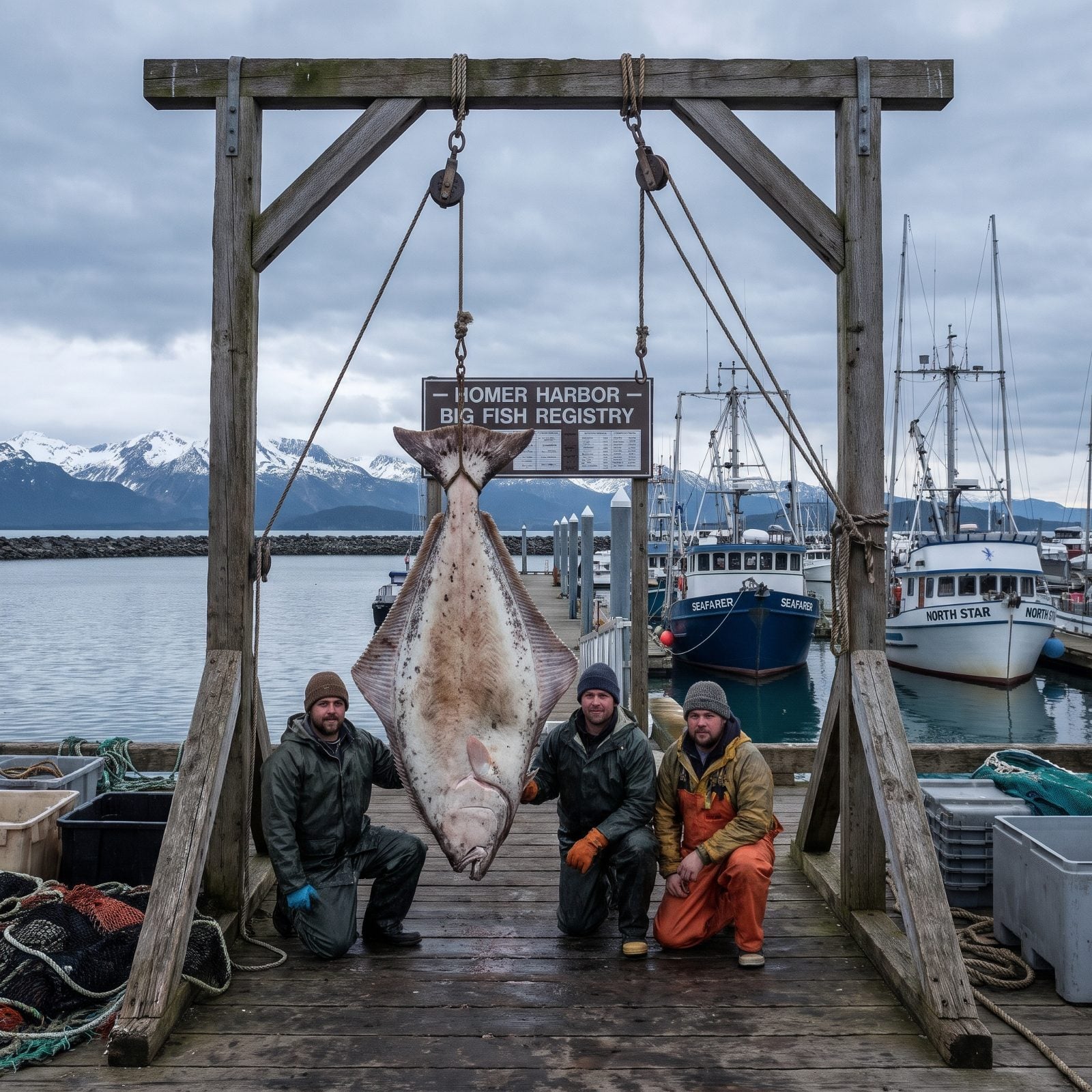
The Homer Spit is a four-mile finger of gravel poking into Kachemak Bay, and it calls itself the halibut capital of the world. Overstated? Maybe. But the fleet based here lands a staggering amount of the big flatfish, and the view of the Kenai Mountains across the water isn’t hurting anyone’s mood.
Fresh halibut off a Homer boat is firm, mild, snow-white, and about as versatile as fish gets. A lot of what comes off the spit is caught by day-trip boats, so plan to be around when they return in the afternoon with fish still cold from the water.
3. Kodiak, Alaska, Salmon, Halibut, and Crab From the Island Fleet
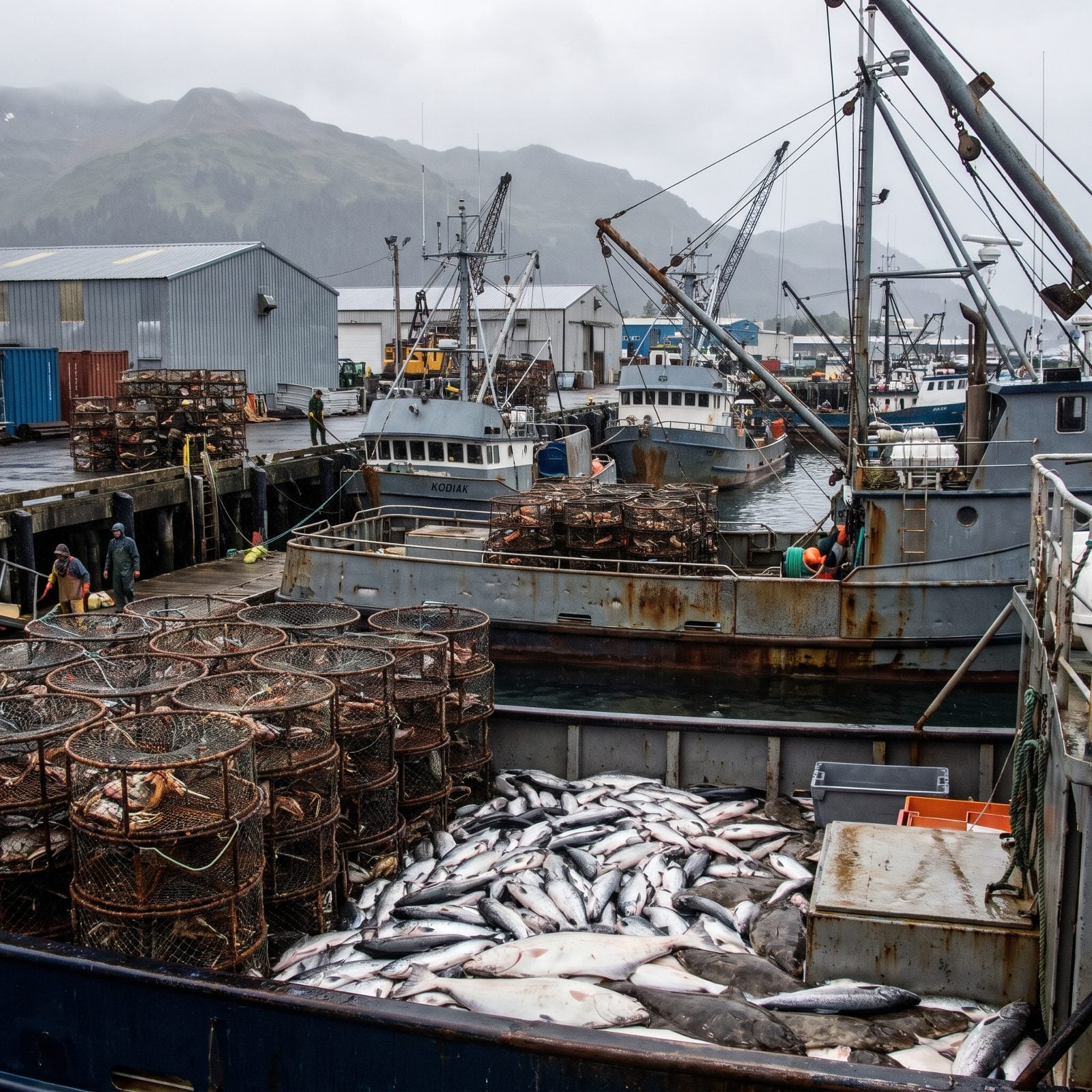
Kodiak runs one of the biggest commercial fishing ports in the country, with none of the cruise-ship polish of the Inside Passage towns. This is a full-tilt working island. Salmon seiners, halibut boats, and crab vessels all tie up in St. Paul and St. Herman harbors, and the whole place smells faintly of diesel and the ocean.
Sockeye, coho, halibut, Tanner and Dungeness crab, depending on the season you can find most of it moving through the docks. The crab fishery is serious business here, and buying it fresh off a boat in Kodiak gets you about as close to the source as it gets.
2. Cordova, Alaska, Copper River Salmon at the Working Harbor
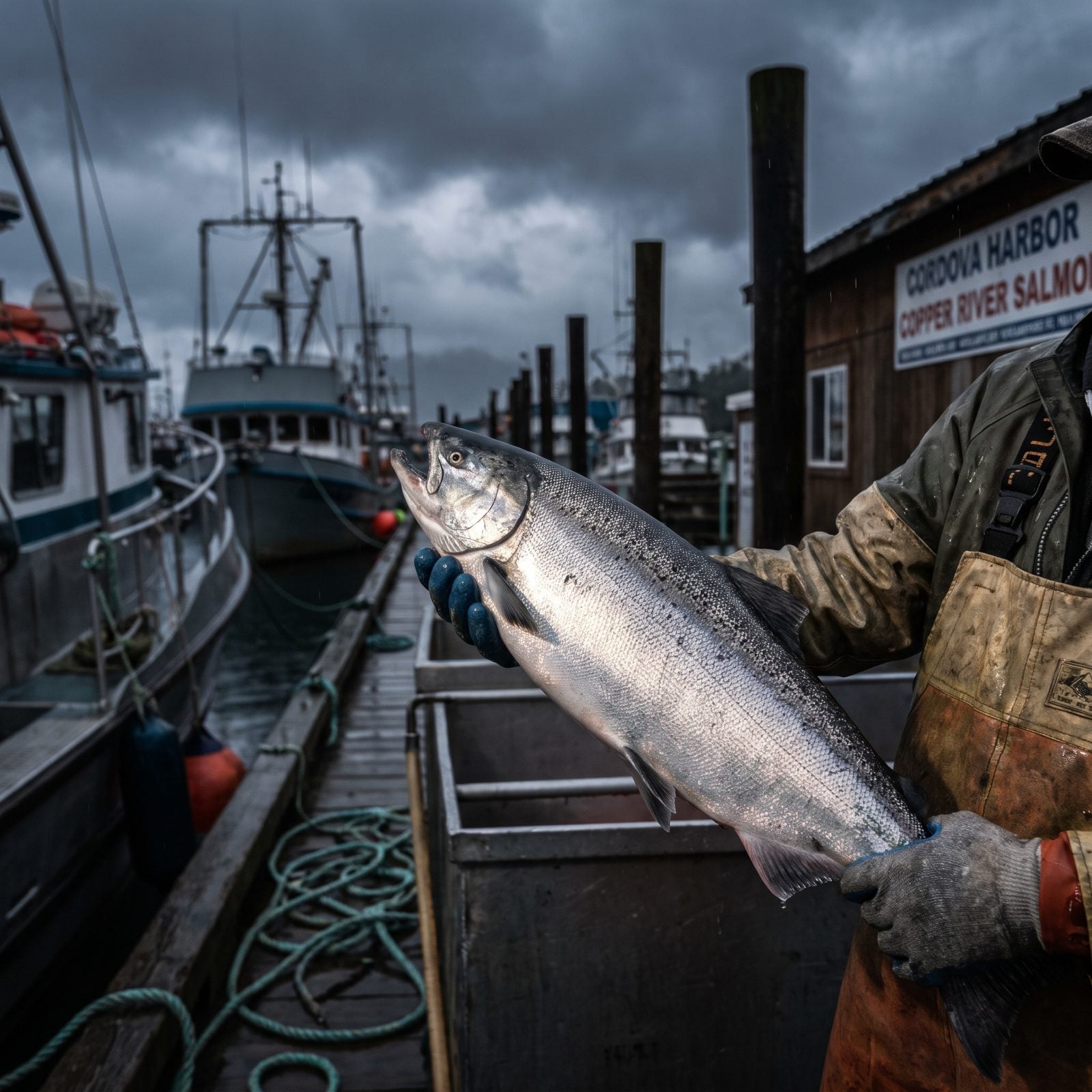
Every May, the first Copper River salmon of the season gets flown to Seattle and auctioned off like it’s made of something rarer than fish, and in a way it is. These sockeye and kings fight their way up one of the coldest, fastest rivers in Alaska, packing on fat for the journey, and that fat is why the flesh is so rich.
Cordova is the town that catches them. No road in. You fly or ferry, and the harbor is lined with aluminum bowpickers running the gillnet fishery. Buy a Copper River sockeye straight off a boat here and you skip the whole airfreight circus that drives the price sky-high everywhere else.
The hype is real. The markup usually isn’t, not when you’re standing on the dock where it was landed.
1. Port Orford, Oregon, Fresh Fish From Boats Hoisted Onto the Dock
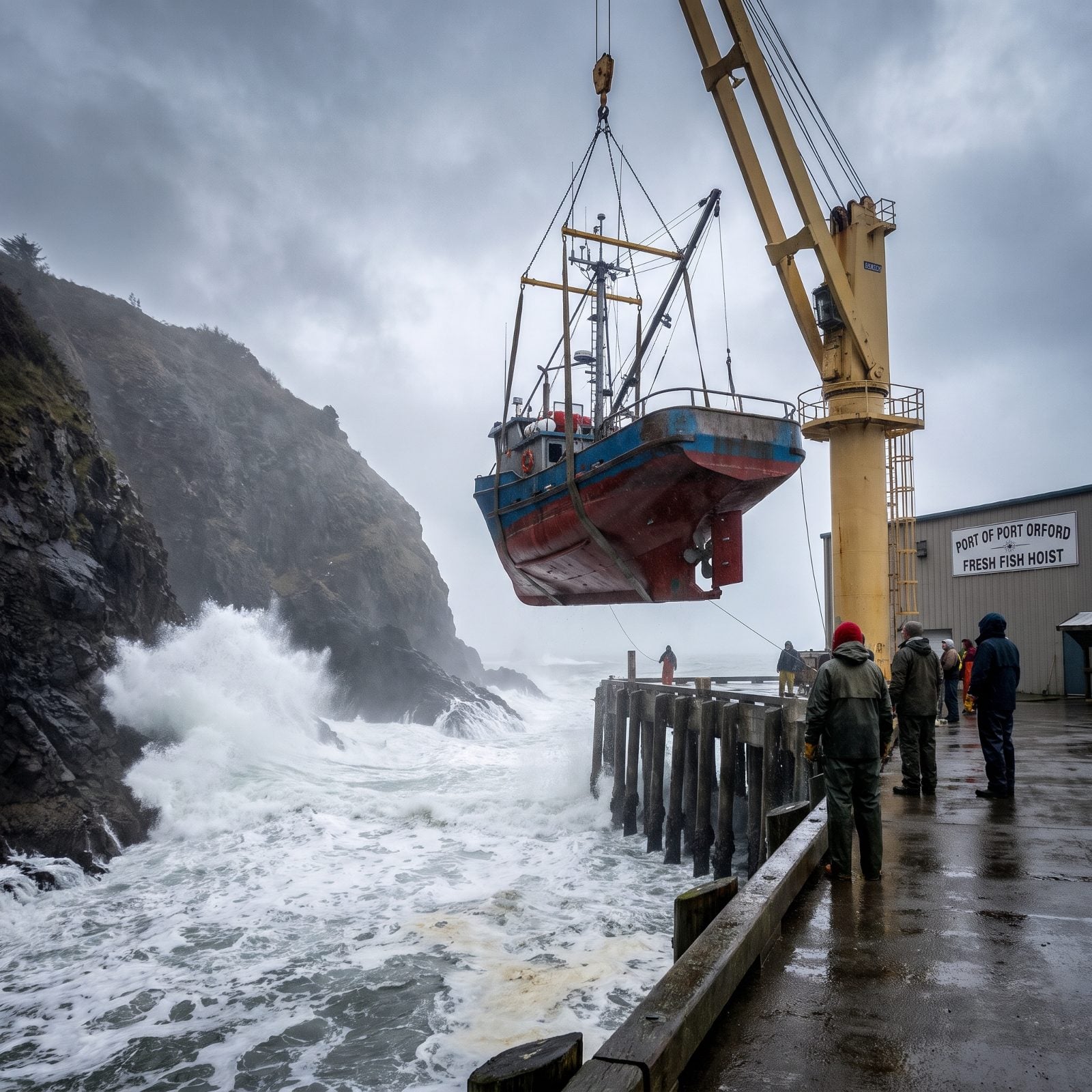
Port Orford has no breakwater and no safe harbor, just an open coastline that takes the full weight of the Pacific. So the boats here don’t moor in the water at all. They get craned out at the end of the day, hoisted up and parked on trailers right on the dock. It’s one of only a couple of dolly docks left in the country, and watching it work is reason enough to visit.
What comes off those boats is rockfish, lingcod, salmon in season, and whatever else the day-boat fleet runs for. The boats go out and come back the same day, so the fish is about as fresh as it physically can be.