The last weekend at the lake is never the relaxing one. There’s a cold snap in the forecast, the leaves are gumming up the gutters, and half your brain is already back in town. That’s exactly when something gets forgotten, and a forgotten thing in an empty house that sits through a hard freeze can cost thousands. What follows is the list we work through every fall before the house goes dark for winter. Work through it in order, tick each box with cold hands, and keep moving.
Please note that some of the imagery in this article may have been enhanced with the assistance of AI.
42. Review Your Insurer’s Winter Vacancy Rules
Most homeowners find out about the vacancy clause right after a claim gets denied — the worst possible time to learn anything. A lot of policies quietly stop covering an empty house after a stretch of consecutive days, so a frozen pipe that bursts well into that gap becomes your problem alone. Call your agent before you leave, and ask two plain questions: how many days can the house sit unoccupied, and what do you have to do to keep coverage valid?
The answer usually involves keeping the heat above 55 and having someone check the place on a schedule. Get it in writing, by email. No debate in February that way.
41. Book a Local Winter Caretaker Now

A caretaker you hire in October will actually answer the phone in January. The good ones get booked solid by the first snow, and the people scrambling during an ice storm end up with whoever’s left. You want someone who lives nearby year-round, knows where your water shutoff is, and can walk the property after a bad blow and tell you the dock’s still there.
Agree on a check-in frequency in writing. Every two weeks is standard for a heated house. Trade phone numbers, a key, and the alarm code, then walk them through the mechanical room once before you go. We learned the hard way that “the caretaker knows the house” means nothing if you never actually showed them anything.
40. Share Emergency Contacts With Trusted Neighbors
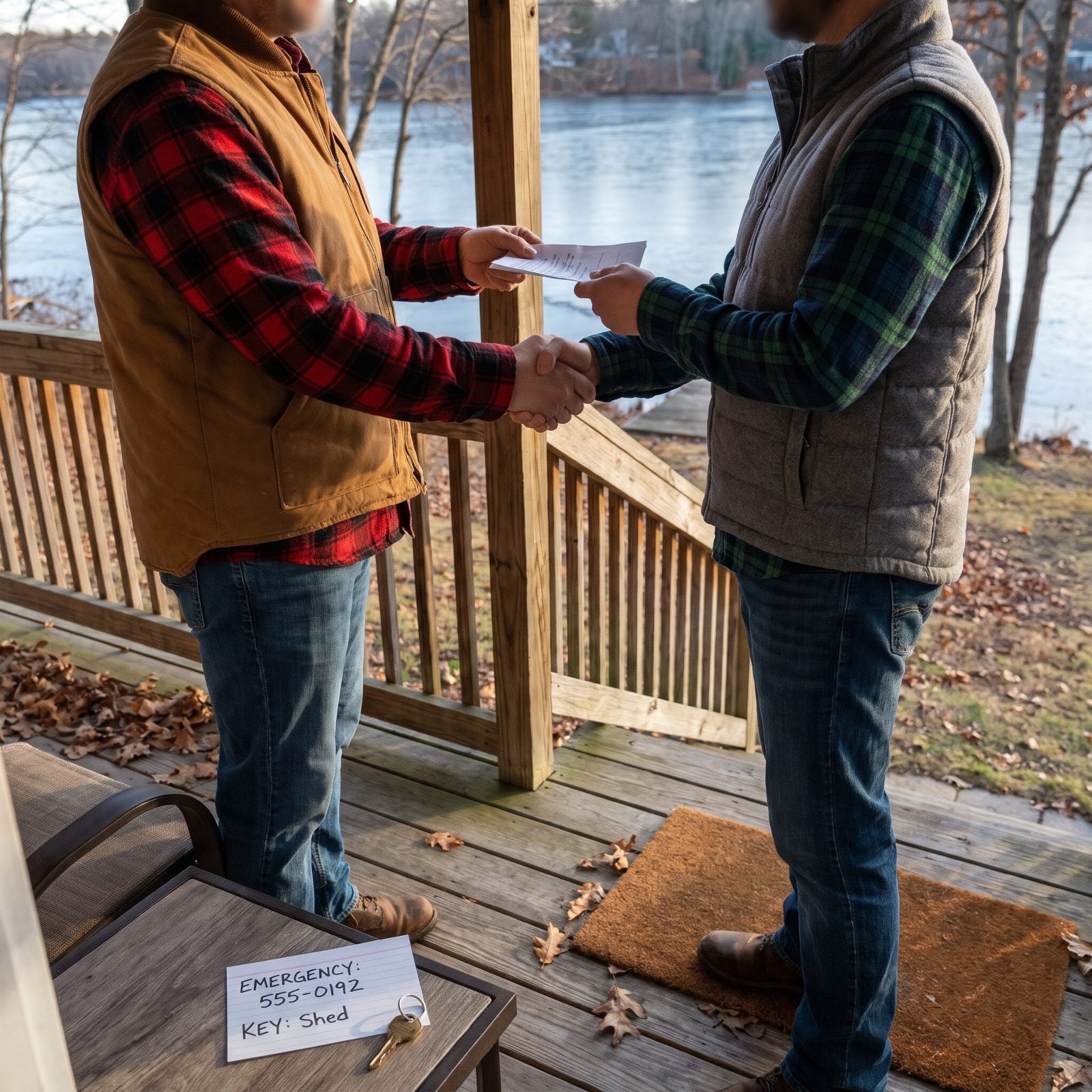
The neighbor who stays all winter is worth more than any alarm system. They’ll notice the broken window, the dark house that should have a timer light, the stranger’s truck in your drive, the water running down your foundation — all of it, long before anyone else does. But only if they know how to reach you.
Give two or three trusted neighbors a card with your cell number, your caretaker’s number, and who to call if they smell gas or see water. Then tell them the plan: house is closed, nobody should be here, call me first. A short conversation now turns a passing neighbor into someone watching your back for five months.
39. Pause Mail and Package Deliveries
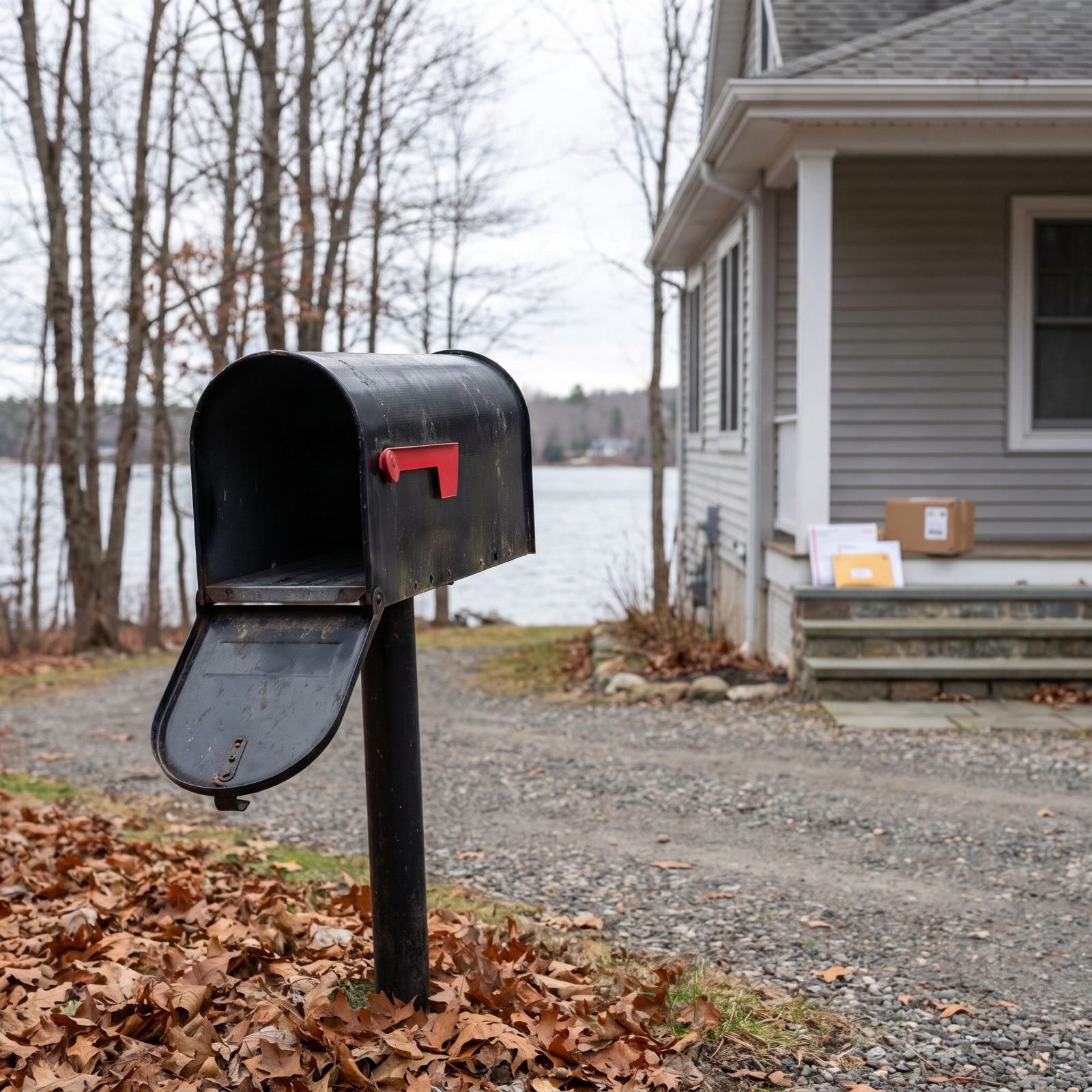
A mailbox stuffed to the hinge is a flashing sign that reads “nobody’s been here in weeks.” Same goes for a pile of packages slumped on the porch. Both tell anyone driving past exactly what they want to know.
Put a hold on your mail through the postal service — you can set it weeks ahead and extend as needed. Stop the subscription boxes and recurring deliveries too, the meal kits and wine clubs that’ll keep showing up and rotting on the steps. Still want mail reaching you? Have it forwarded to your winter address rather than simply held. An empty mailbox left open and obviously idle does more for your security than any sticker on the window.
38. Photograph Every Room and Update Your Contents Inventory

If a tree comes through the roof in a March storm, the adjuster will ask what was in the room, and “a lot of stuff” is not an answer that pays out. A fresh photo record settles those conversations before they start.
Walk every room with your phone. Open closets, open cabinets, pull out drawers, and shoot wide shots plus close-ups of anything worth real money — the TV, the kayaks in the boathouse, Grandma’s quilts, the good cookware. Say the serial numbers out loud if you’re taking video.
Then back the photos up to the cloud, not just the phone that lives in your pocket. An inventory stored only on a device that could get lost or soaked isn’t an inventory. It’s a hope.
37. Clear Out Food That Could Spoil or Freeze
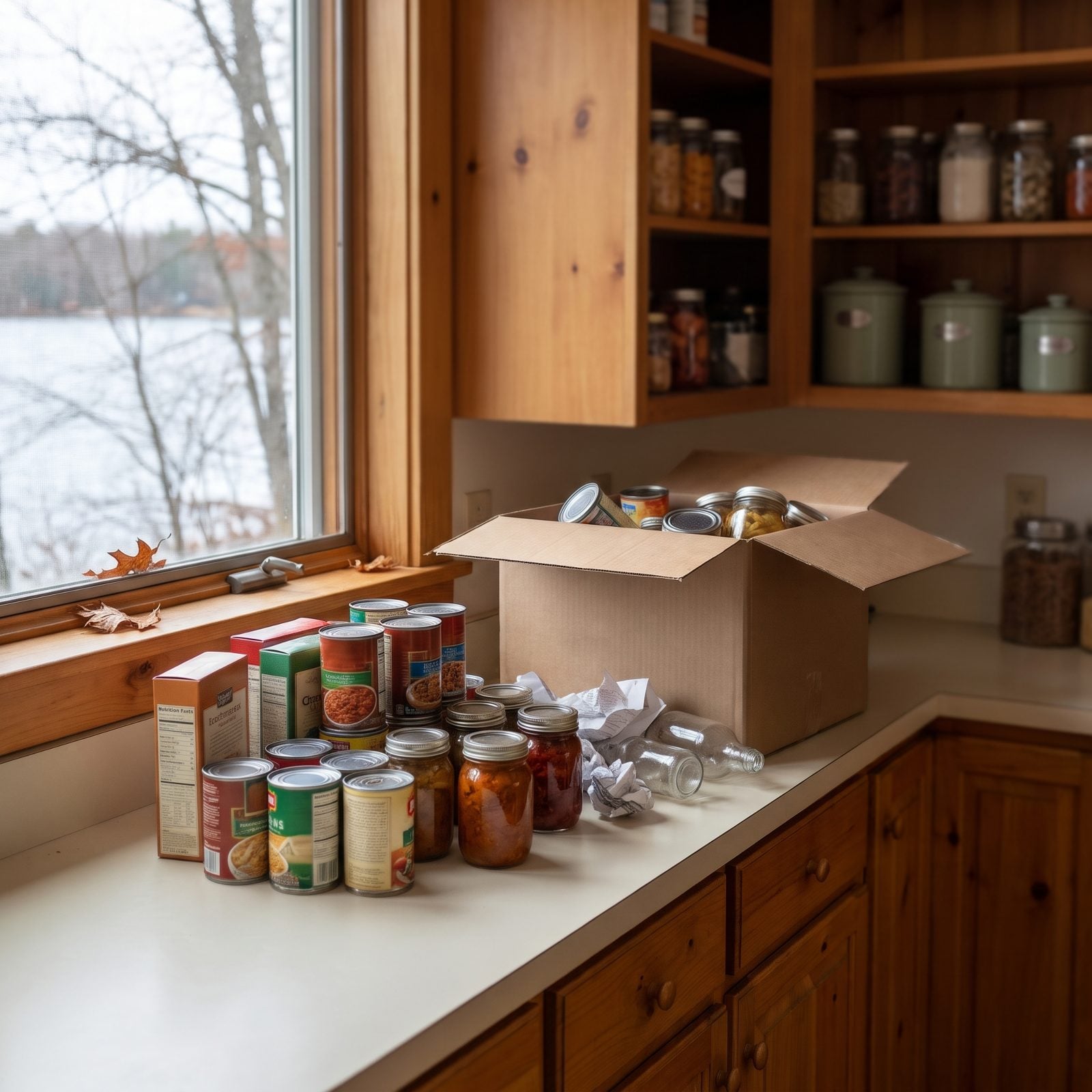
Two things happen to food in a cold, empty house: the perishables rot, and the cans and bottles freeze, split, and leave a mess waiting for you in May. A frozen can of soda or a jar of pickles in an unheated pantry will crack right open and leave a stain you’ll be scrubbing for an hour.
Take home anything liquid that can freeze — soda, beer, wine, water bottles, canned goods, condiments. Toss anything past its date. Haul out the perishables entirely. Leave the pantry with sealed dry goods only: flour, pasta, rice in rodent-proof containers, nothing a mouse would walk a mile for.
36. Wipe Crumbs and Grease From Every Cabinet
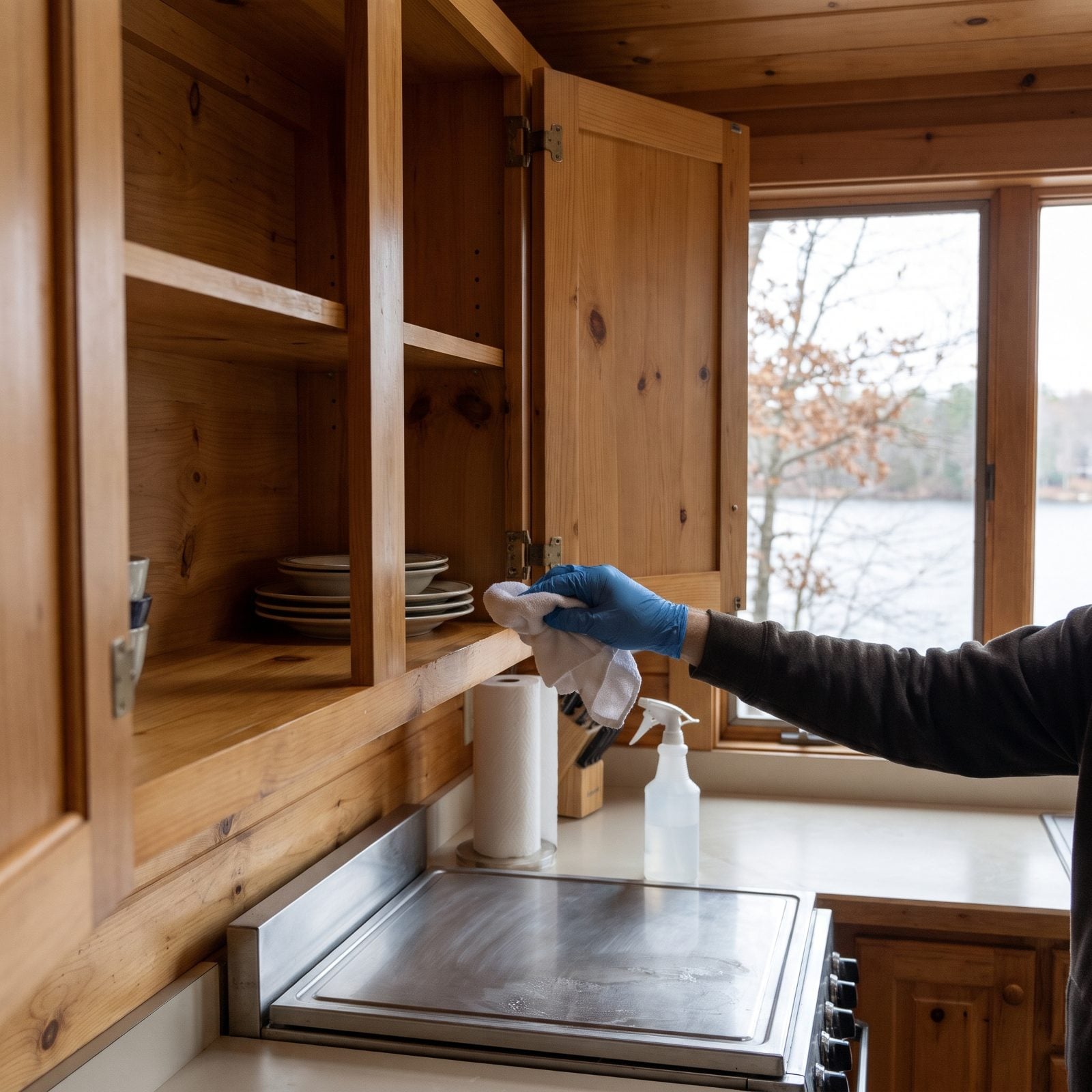
Mice don’t need much. A dusting of cracker crumbs in the corner of a cabinet, a film of bacon grease on the stovetop, a sticky ring where the honey jar sat all summer — that’s a five-star invitation for a creature that can squeeze through a gap the width of a pencil.
Pull everything out and wipe down the shelves, drawers, stovetop, counters, and behind the toaster where the crumbs collect. Degrease the range hood and the backsplash. A house that smells like nothing is a house mice ignore; a house that smells faintly of last July’s fish fry is one they move into.
35. Empty, Defrost, and Prop the Fridge and Freezer Open
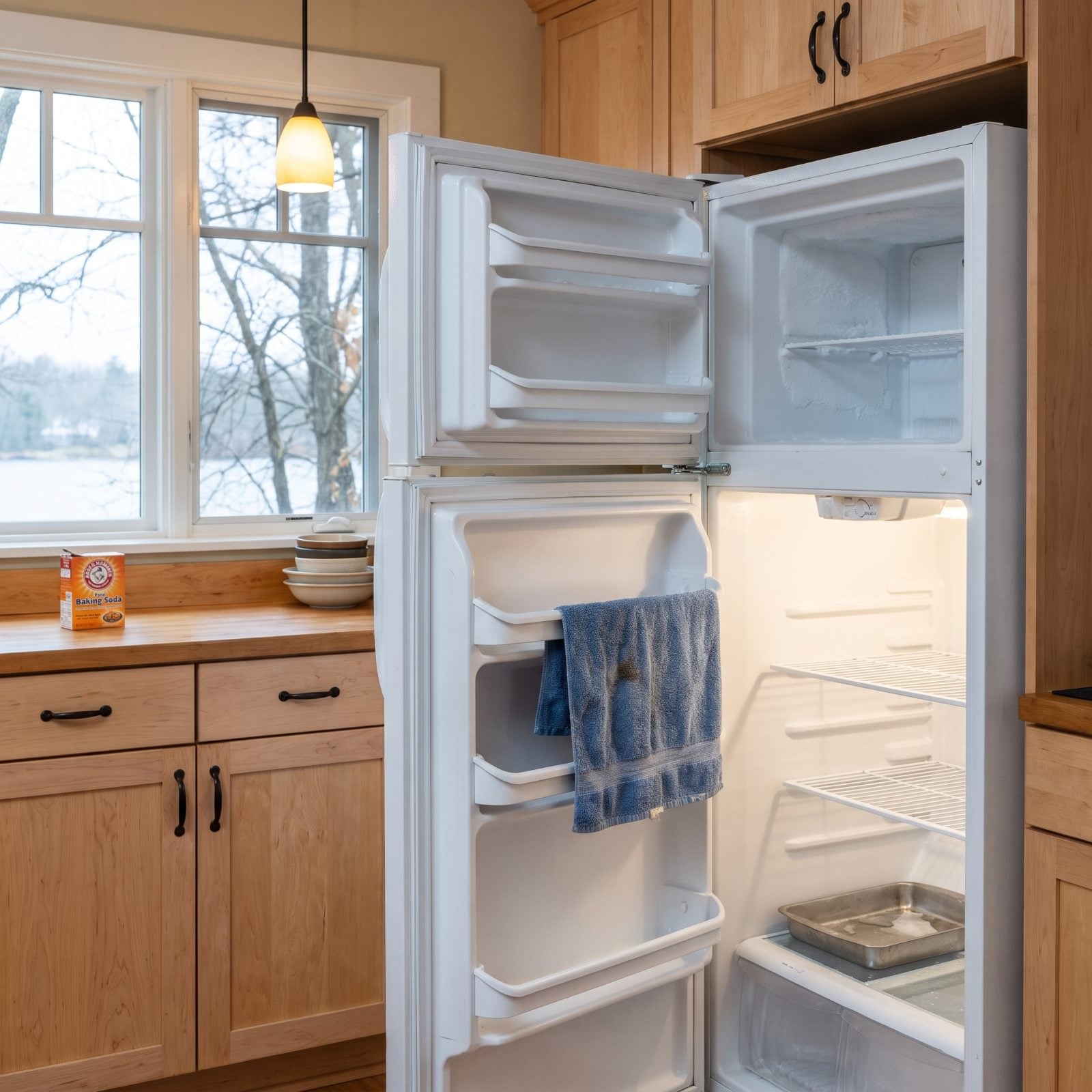
A fridge left shut and running with nothing in it wastes power all winter and still manages to grow something. Shut it off without propping it open and you come back to a sealed box of black mold that no amount of scrubbing fully erases. That smell never really leaves.
Empty it completely, unplug it, and let it defrost with a towel or pan underneath to catch the water. Wipe the interior dry, then wedge both the fridge and freezer doors open with a rolled towel so air keeps moving. Tuck an open box of baking soda on a shelf. Circulation is the whole trick. A closed empty fridge turns into a petri dish; a propped-open one is just furniture.
34. Disconnect and Drain the Ice Maker Line
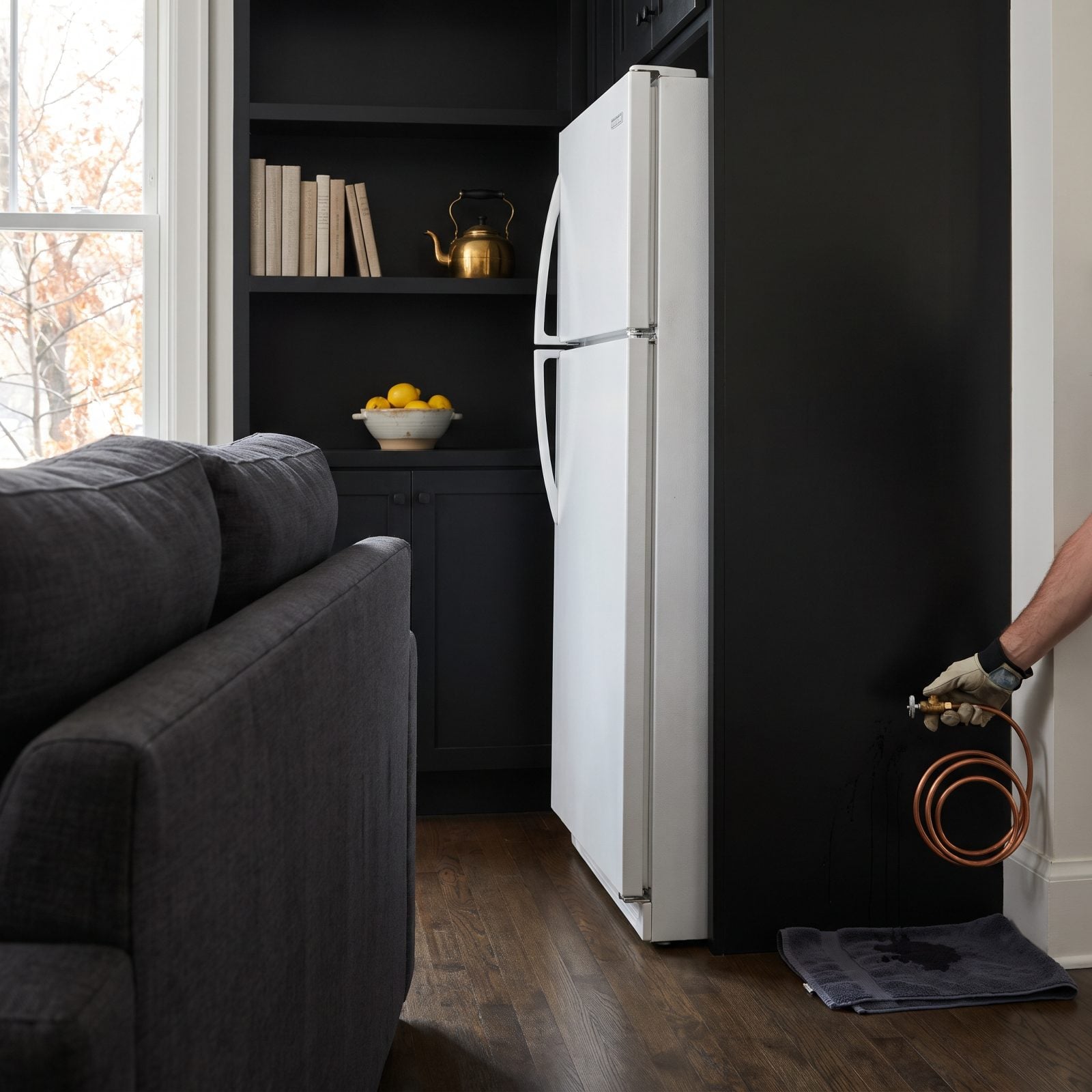
This is the one almost everyone forgets, and it’s the one that floods the kitchen. That thin water line feeding the ice maker runs through the back of the fridge and across an exterior wall more often than you’d think. Let the house drop below freezing even once and the line splits — then, come the thaw, it pours onto the floor of an empty house for weeks.
Shut off the valve where the line taps into your plumbing, usually under the sink or in the basement below. Disconnect the line at the fridge and let it drain onto an old towel laid on the floor. Dump the last batch of ice and switch the ice maker arm to the off position. One small valve stands between you and a ceiling collapse in the room below.
33. Shut Off The Main Water Supply
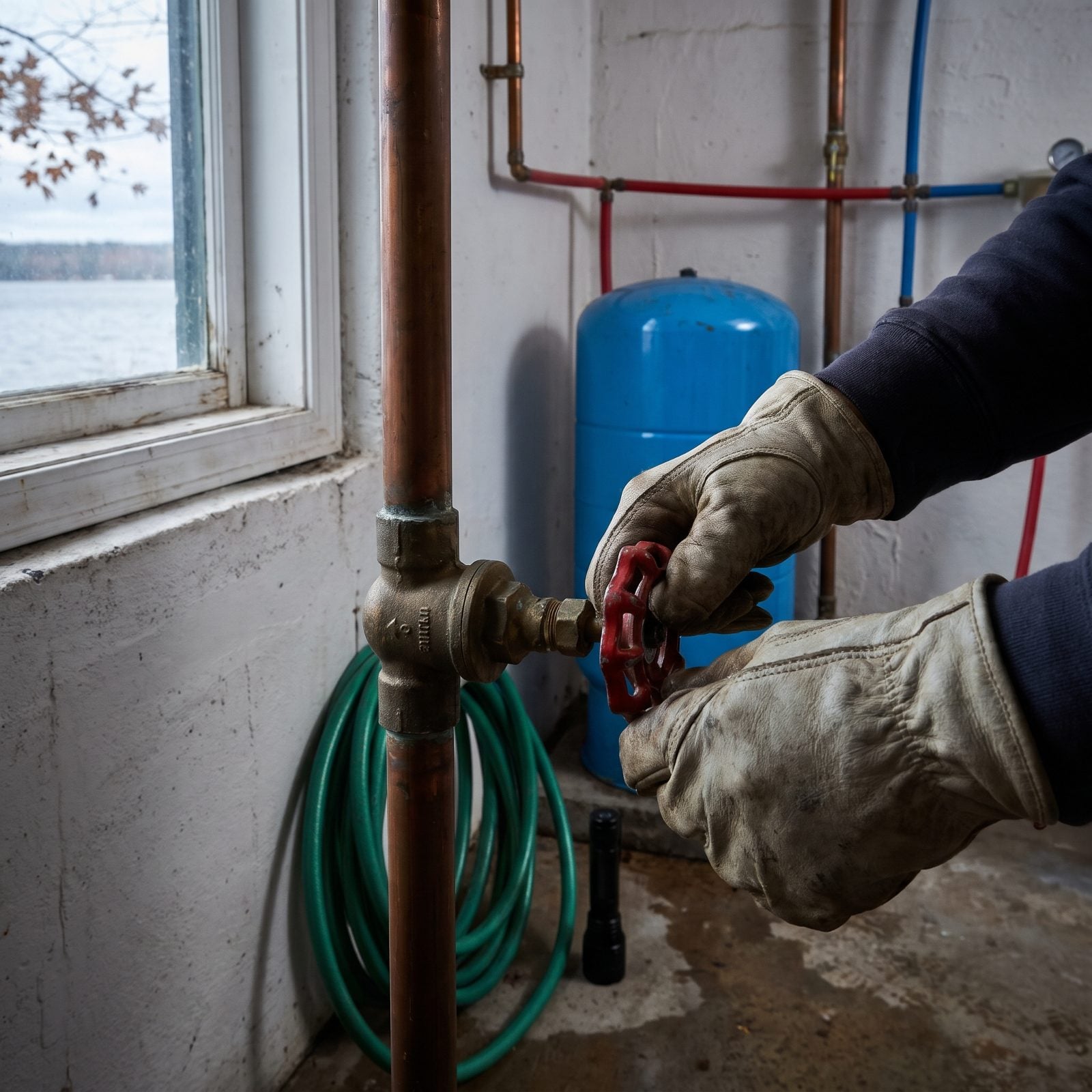
Everything downstream of this valve is yours to protect, and nothing else matters until it’s closed. Find where the water enters the house — usually near the pressure tank or where the service line pokes through the basement wall. On a lake place it’s often a brass gate valve with a round handle, or a lever that swings a quarter-turn from open to shut.
Turn it all the way closed, then test it. Open a faucet upstairs and watch the stream die to a trickle and quit. Still running? The valve is passing water, and you’ve got a bigger job before you leave.
32. Leave Faucets Open After Draining
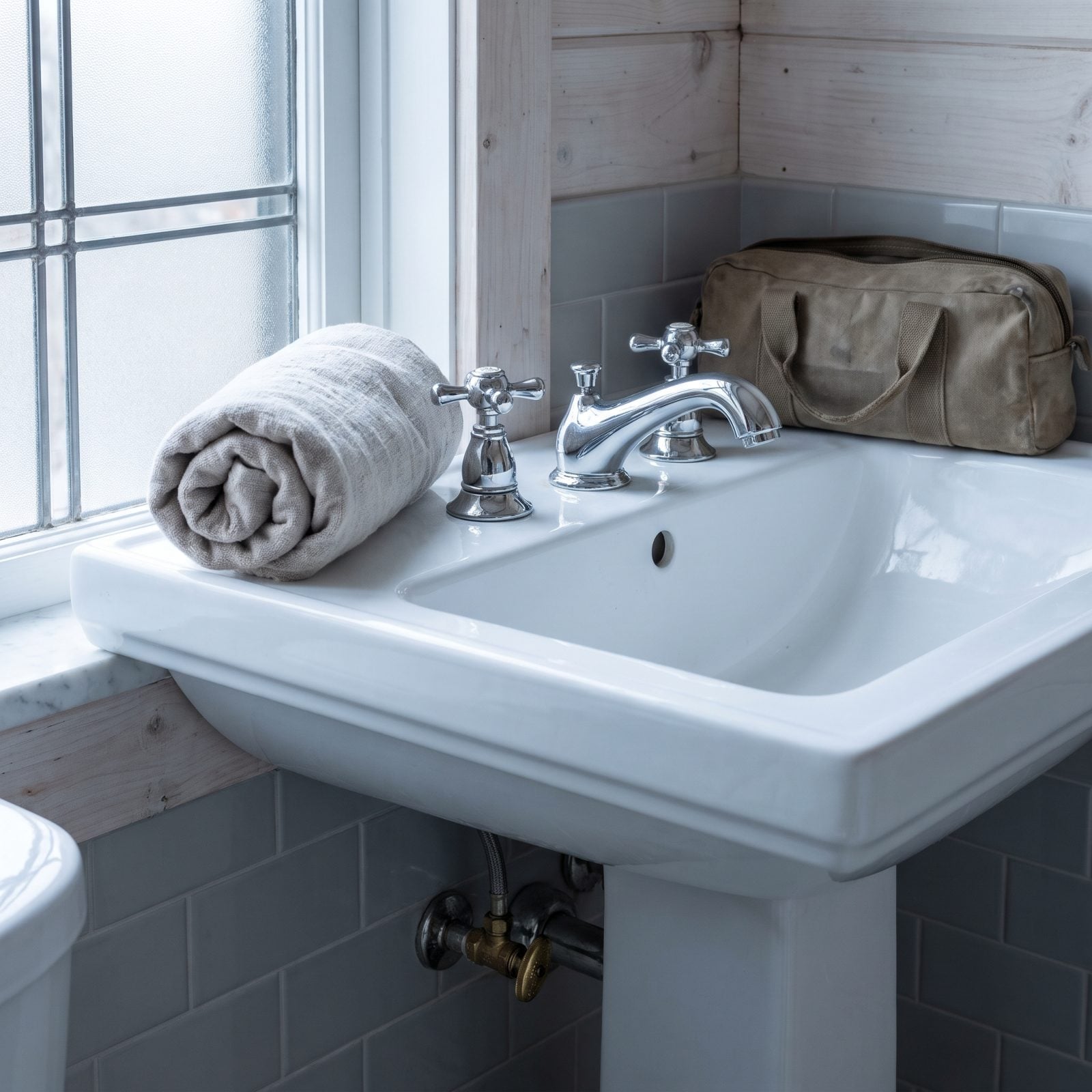
This one feels backward, which is exactly why people skip it. You just emptied everything — so why leave the taps wide open?
Because a closed system traps pressure. Any water you missed, even a cupful, will freeze with nowhere to go but through the pipe wall. Open faucets hand that expansion an escape route, and they let the last bit of moisture evaporate out over the winter.
Leave every handle wide open, hot and cold, kitchen and bath. Tub spouts, bar sinks, the laundry tub, all of them. Then walk the house twice, because you’ll swear you got them all and you won’t have. Two minutes of work, and it’s the cheapest insurance on this whole list.
31. Drain And Switch Off The Water Heater
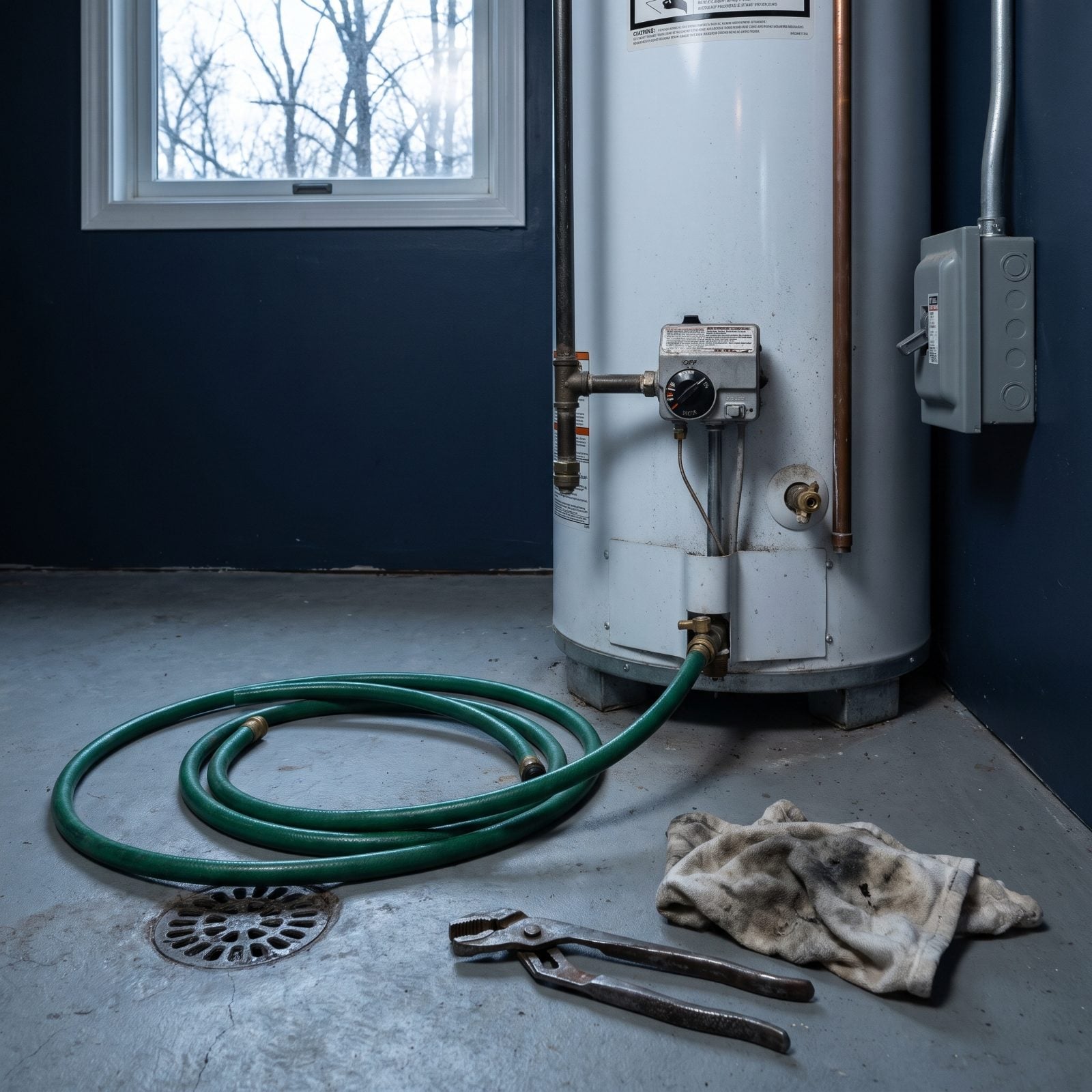
A full tank is a tank full of trouble once the furnace is off and the house drops below freezing. The water inside expands, the tank or its fittings crack, and a replacement water heater is the kind of spring surprise nobody budgets for.
Kill the power first. Flip the breaker on an electric unit, or turn the gas dial to off and shut the supply valve. Then hook a hose to the drain valve at the base, uncoil it and set its loose end right in the nearby floor drain (don’t leave it lying in a coil on the floor), crack a hot tap upstairs to break the vacuum, and open the drain valve to let the whole tank empty.
30. Protect Toilets And Drain Traps With RV Antifreeze
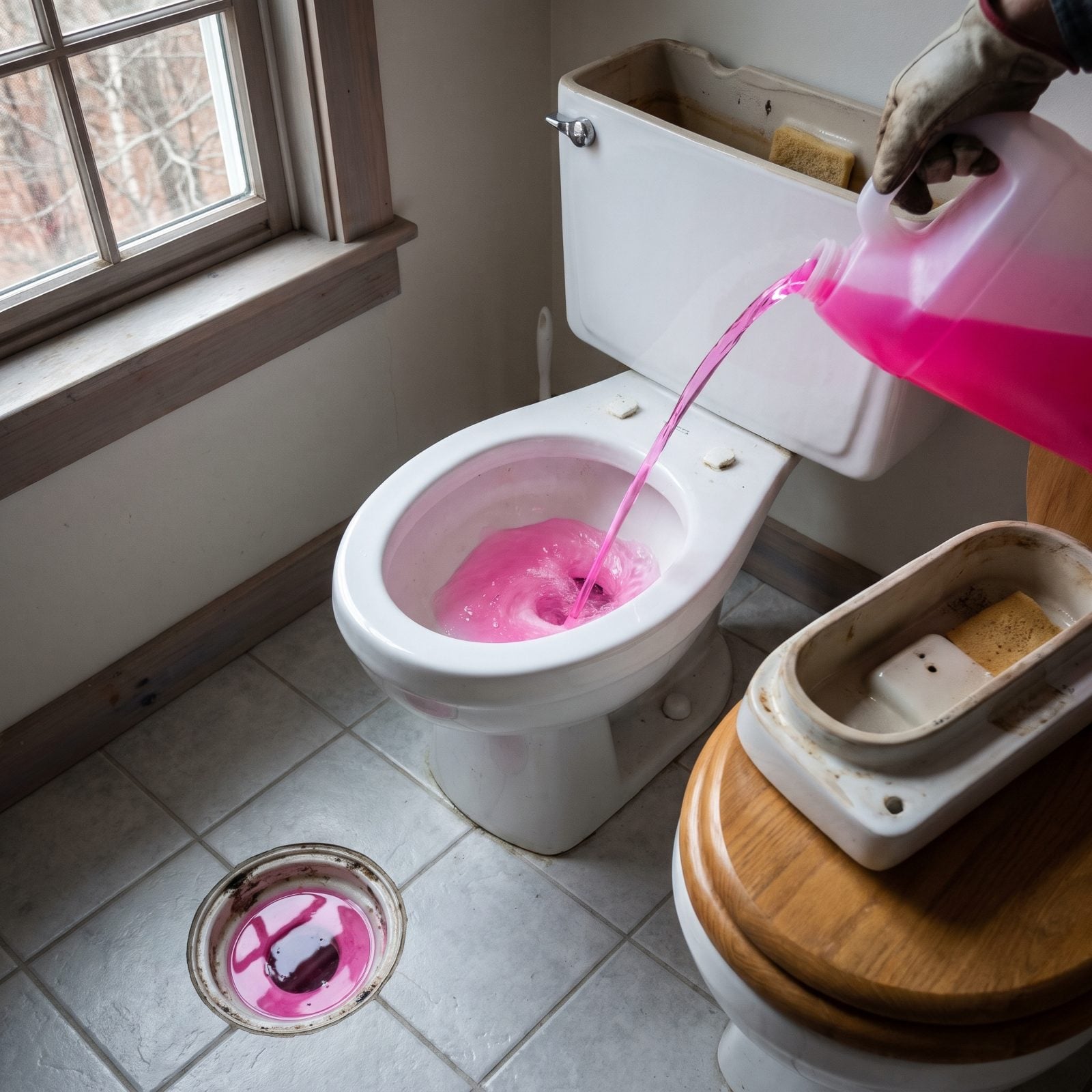
Toilets hold water in two places that both freeze: the tank and the bowl trap. Every P-trap under every sink holds water too, and so do the floor drains — and that’s not only a freeze risk. A dry trap lets sewer gas creep back up into a closed house all winter long.
Flush and sponge the tank dry, then pour a cup or two of pink RV antifreeze into the tank and the bowl. Pour some down every sink, tub, and floor drain so the traps hold the pink stuff instead of plain water.
Use the propylene glycol RV antifreeze — the pink nontoxic kind — never the automotive green. The green is poison, and it belongs nowhere near a drain that touches your drinking water lines.
29. Drain The Dishwasher Pump And Hoses
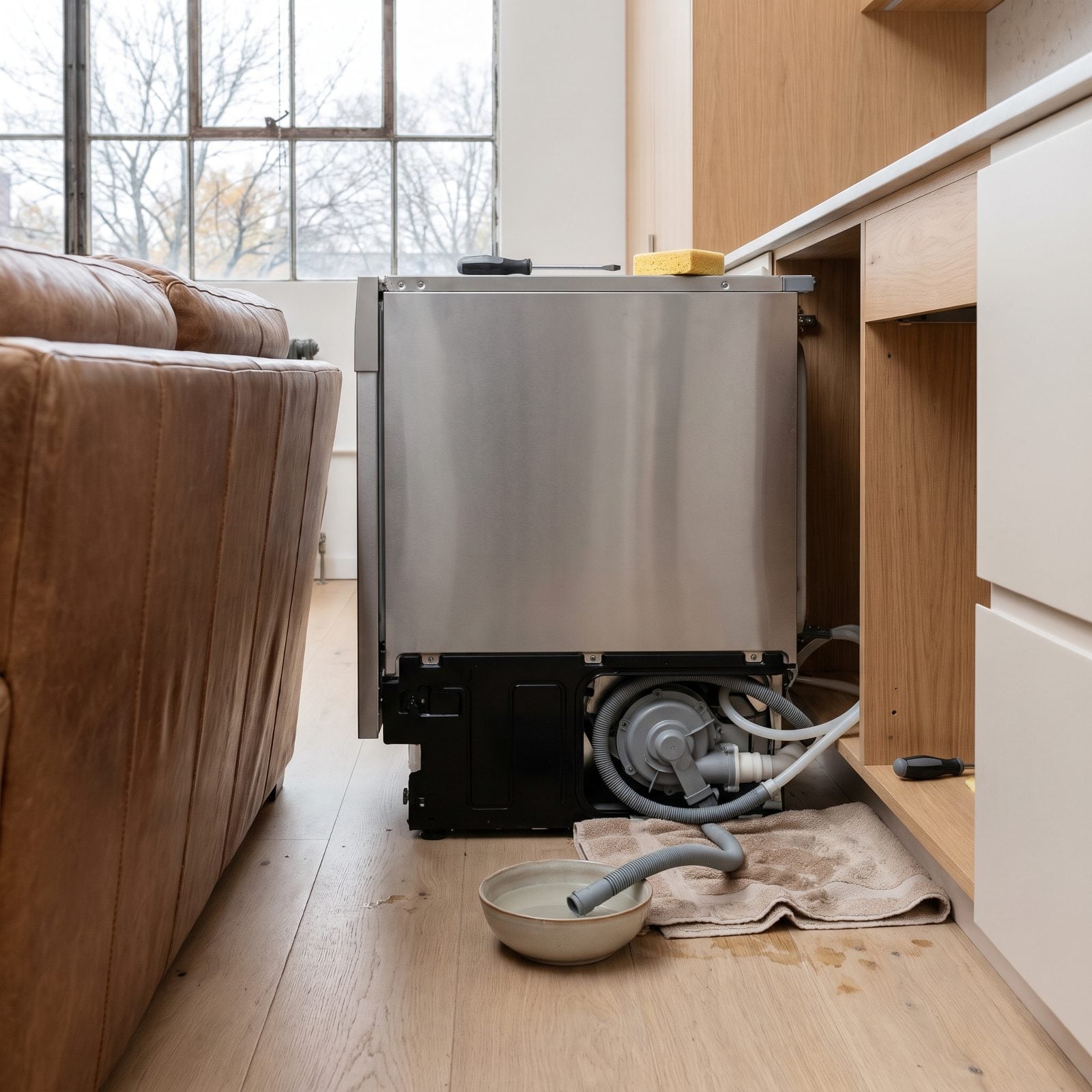
The dishwasher looks empty, but there’s always water sitting in the sump at the bottom and trapped in the pump. Freeze it and you crack the pump housing, which usually means a new machine rather than a repair.
Run a short rinse cycle to warm things up and get them moving, then cancel and let it drain. Shut off the water at the supply valve under the sink. Scoop the last standing water out of the base with a sponge. And to be really sure, pour a cup of pink RV antifreeze into the bottom and run the machine on rinse just long enough to pull the pink fluid through the pump and out the drain line.
28. Disconnect And Drain The Washing Machine
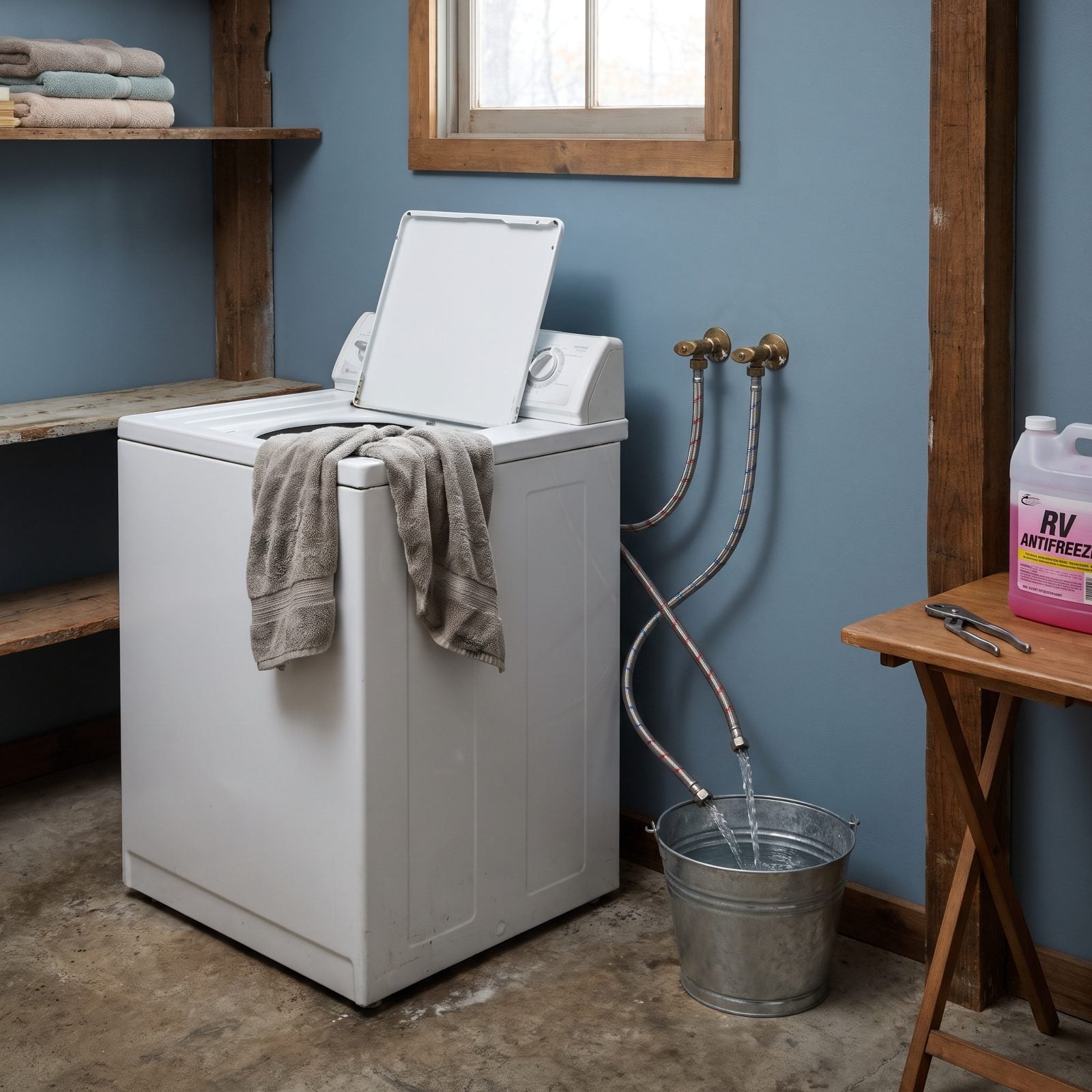
The washer hides water in three places, and the inlet valve is the one that gets you. It’s a small plastic solenoid at the back of the machine, and the water sitting inside it freezes and splits before the drum ever does.
Disconnect both supply hoses, aim them into a bucket, and briefly open the hot and cold valves on the wall to flush the lines before shutting them off tight. Then empty the machine itself by running a spin cycle. To clear that inlet valve, pour a quart of pink RV antifreeze into the detergent dispenser and run a rinse so it pulls through the valve and pump.
While the hoses are off, give the rubber a look. Braided ones crack with age, and spring is a fine time to swap any that look tired — better than waiting on the burst.
27. Drain Outdoor Showers, Faucets, And Hoses
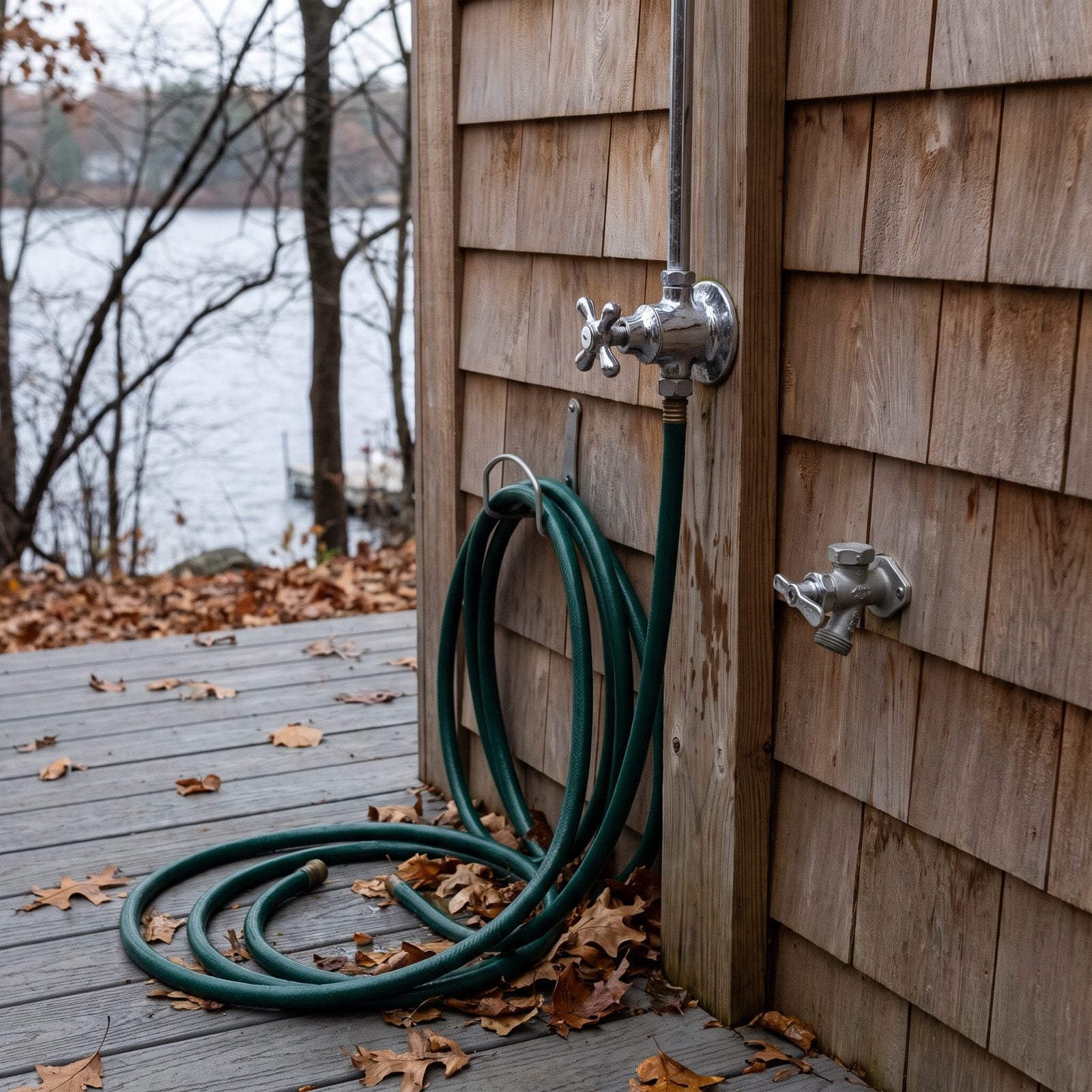
Outdoor plumbing freezes first because it has the least protection, and a split frost-proof hose bib leaks inside the wall where you can’t see it — until there’s a stain blooming on the ceiling.
Find the shut-off for the outdoor lines inside the house, usually a valve near where the pipe exits the wall. Close it. Then open the outdoor faucet and the shower valve to let the line between them drain.
Here’s the catch with frost-proof bibs: they only self-drain if you disconnect the hose. Leave a hose attached and it traps water in the valve body right where it can still freeze. Unhook every hose, drain it fully, coil it, store it inside. Blow out the long runs with a compressor if you’ve got one.
26. Blow Out The Irrigation System
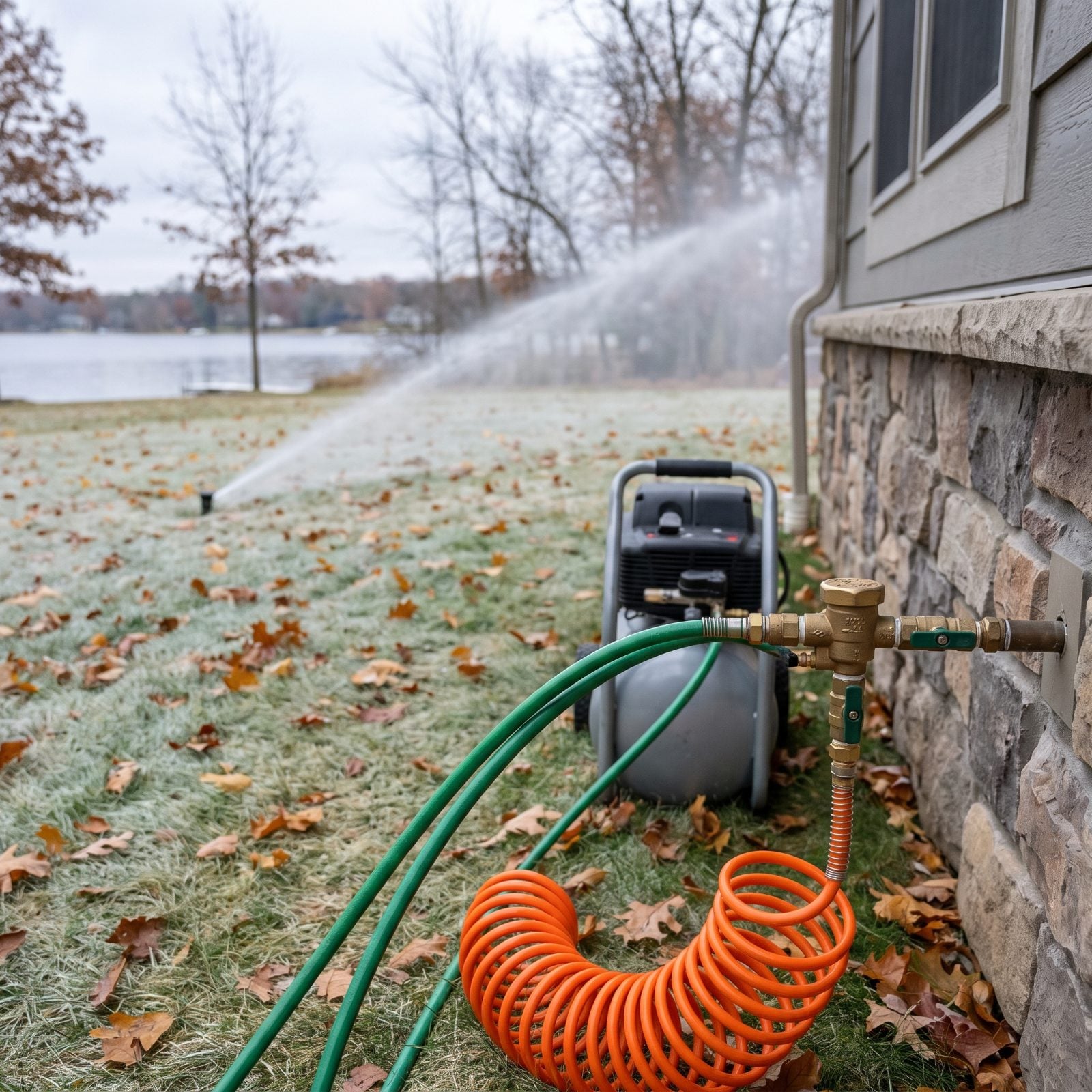
Buried irrigation lines sit below the surface but not below the frost line in most lake country, and a cracked underground pipe is a dig-up-the-lawn repair come spring.
Shut off the water to the system and connect an air compressor to the blowout port. Work one zone at a time, running air through until the sprinkler heads spit mist and then run dry. Keep the pressure modest — 40 to 50 PSI for buried lines, lower for drip. Push too much air and you’ll blow the heads apart.
25. Winterize The Well Pump System
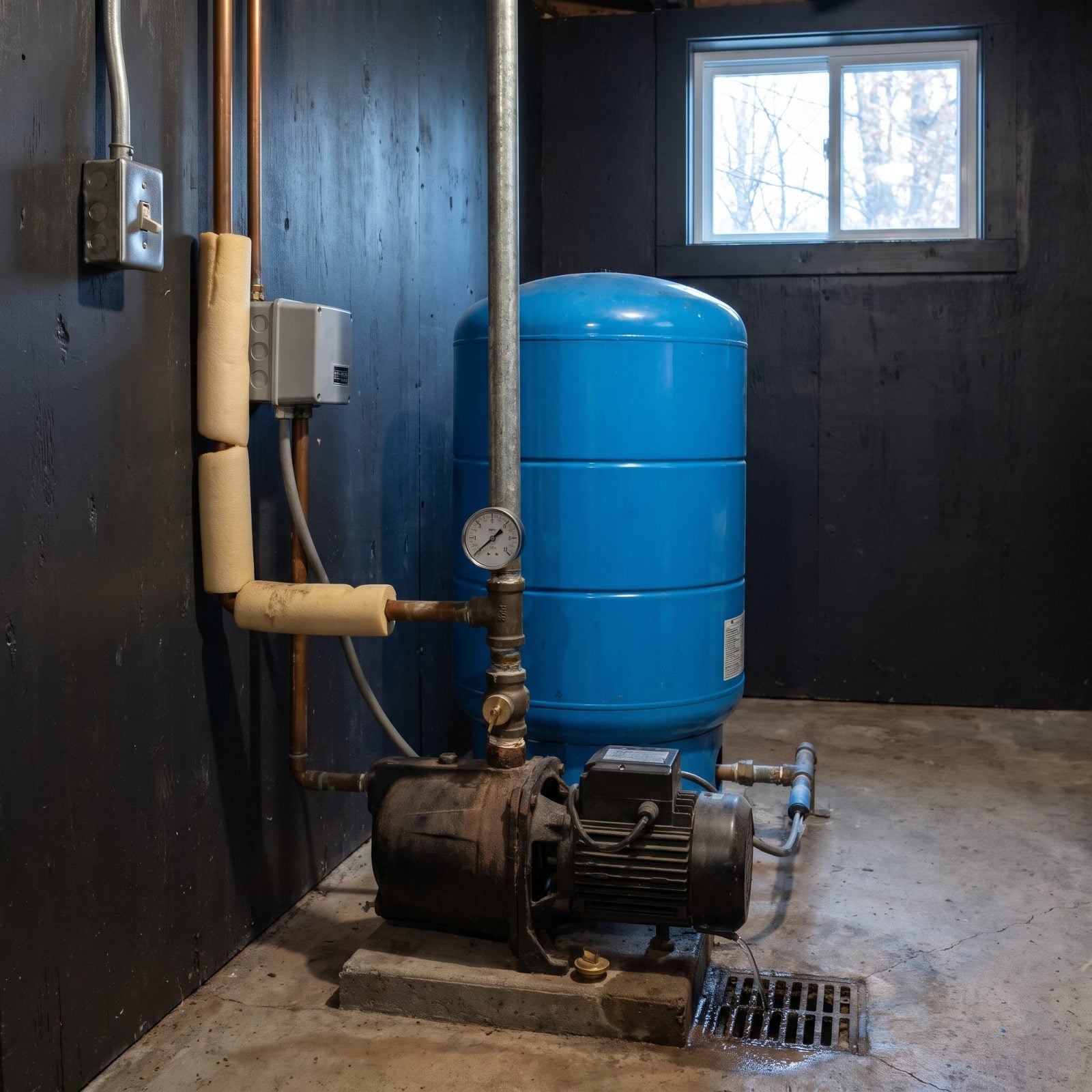
Plenty of lake houses run on a well, and that changes the game. The pressure tank, the pump, and the lines running out to the wellhead all hold water — and the pump itself is the pricey part to lose.
Cut the power at the breaker first, always. Drain the pressure tank by opening the drain valve at its base, then relieve the air charge so it empties fully. Drain the lines from the pump and clear any above-ground piping out to the well.
The part people miss is the pressure switch and those short runs of exposed pipe in an unheated pump room. Wrap them in foam pipe insulation. And if there’s a submersible pump deep in the well, that water doesn’t freeze, so leave it be. The danger lives entirely above the frost line.
24. Inspect Septic Lids And Exposed Pipes
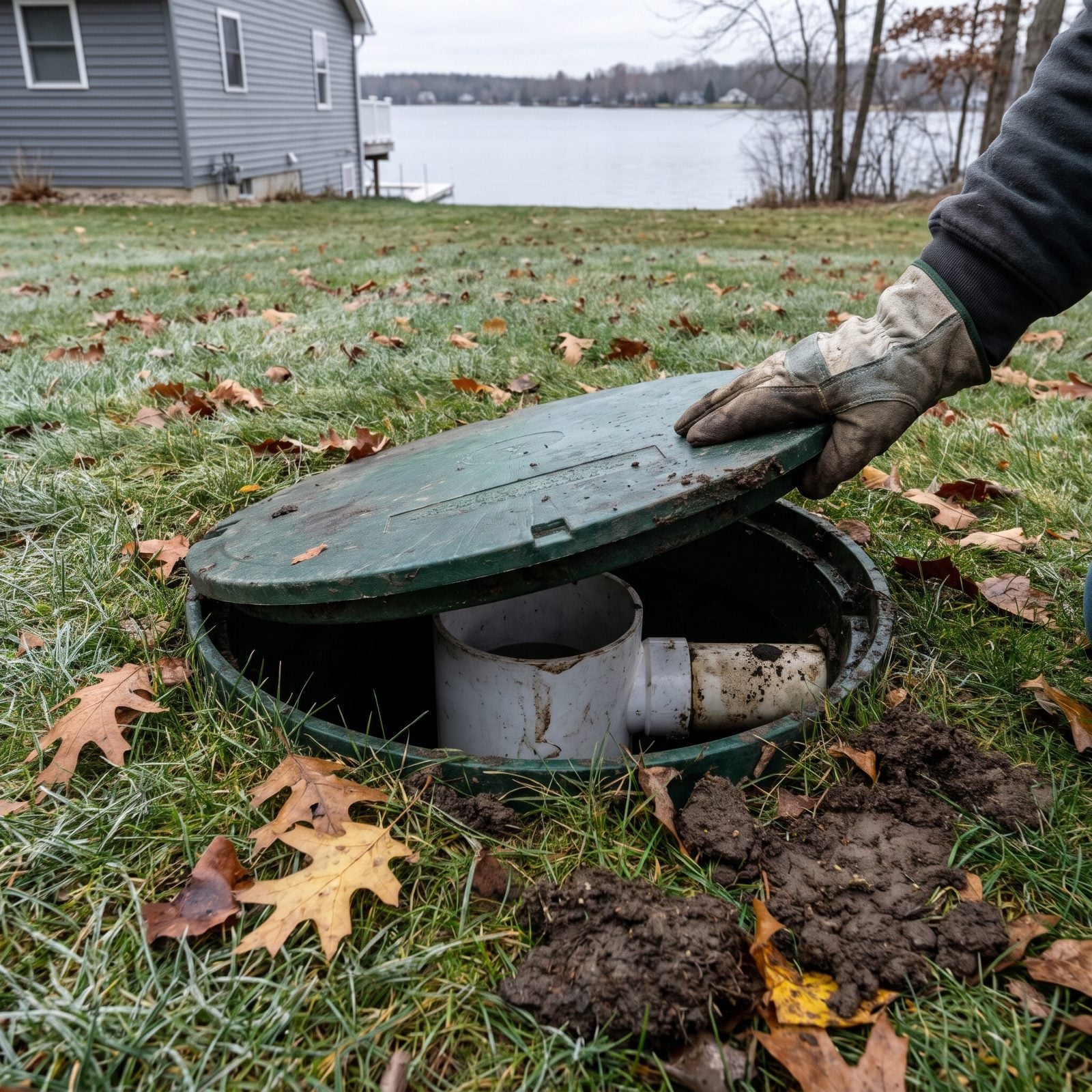
Septic systems freeze more often than people think, usually because the ground cover thinned out over a line that hasn’t had a full house’s worth of warm water running through it all winter. Empty house, no flow. No flow, no heat moving through those pipes. Lift the lids and look for standing water at the wrong level, cracked risers, or a lid that no longer seats flush. Then walk the line and find any exposed pipe near the foundation or pump chamber.
Here’s the part most folks skip. Mound up straw or leaf mulch over shallow lines before you leave, because bare saturated soil transfers cold straight down. A foot of loose cover buys you real insulation for free.
23. Test The Sump Pump Backup Battery
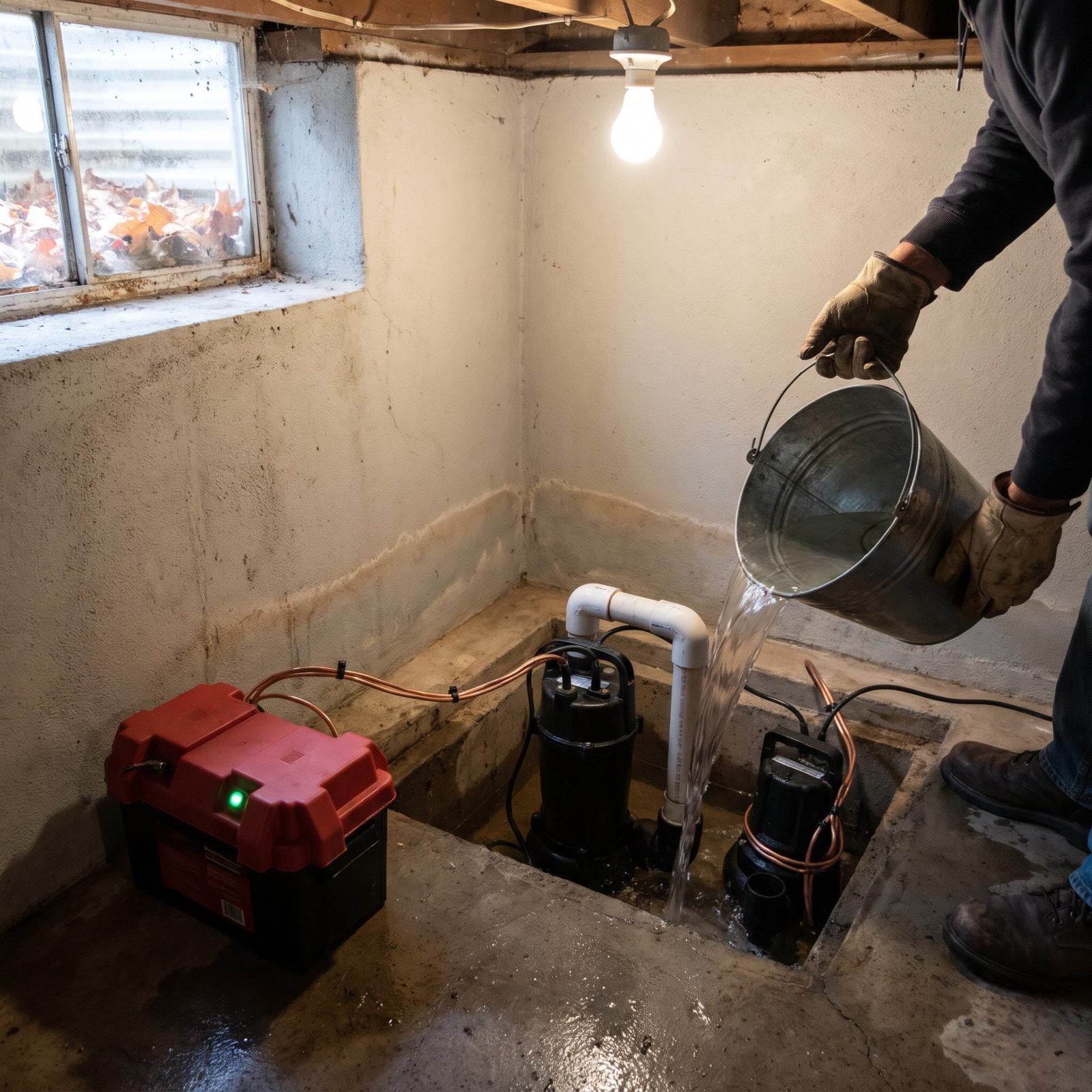
A pump on house power only works while the power’s on, and winter storms knock power out exactly when you’re not there to notice. A dead backup battery is the quiet failure that floods a finished basement over a long weekend you spent three states away.
With the pump running off the battery alone, pour a bucket of water into the pit. The pump should kick on, lift the float, and move water. If it groans, runs slow, or does nothing, the battery’s cooked. Sealed sump batteries don’t last forever, and they almost never tell you when they’re done, so check the manufacture date stamped on the case.
Nobody traces the discharge line. Follow the white PVC pipe up from the pump and confirm it actually leads out of the house instead of bending back down into the pit, because a pump with nowhere to send the water is just a pump that burns itself out.
22. Service The Furnace Or Boiler
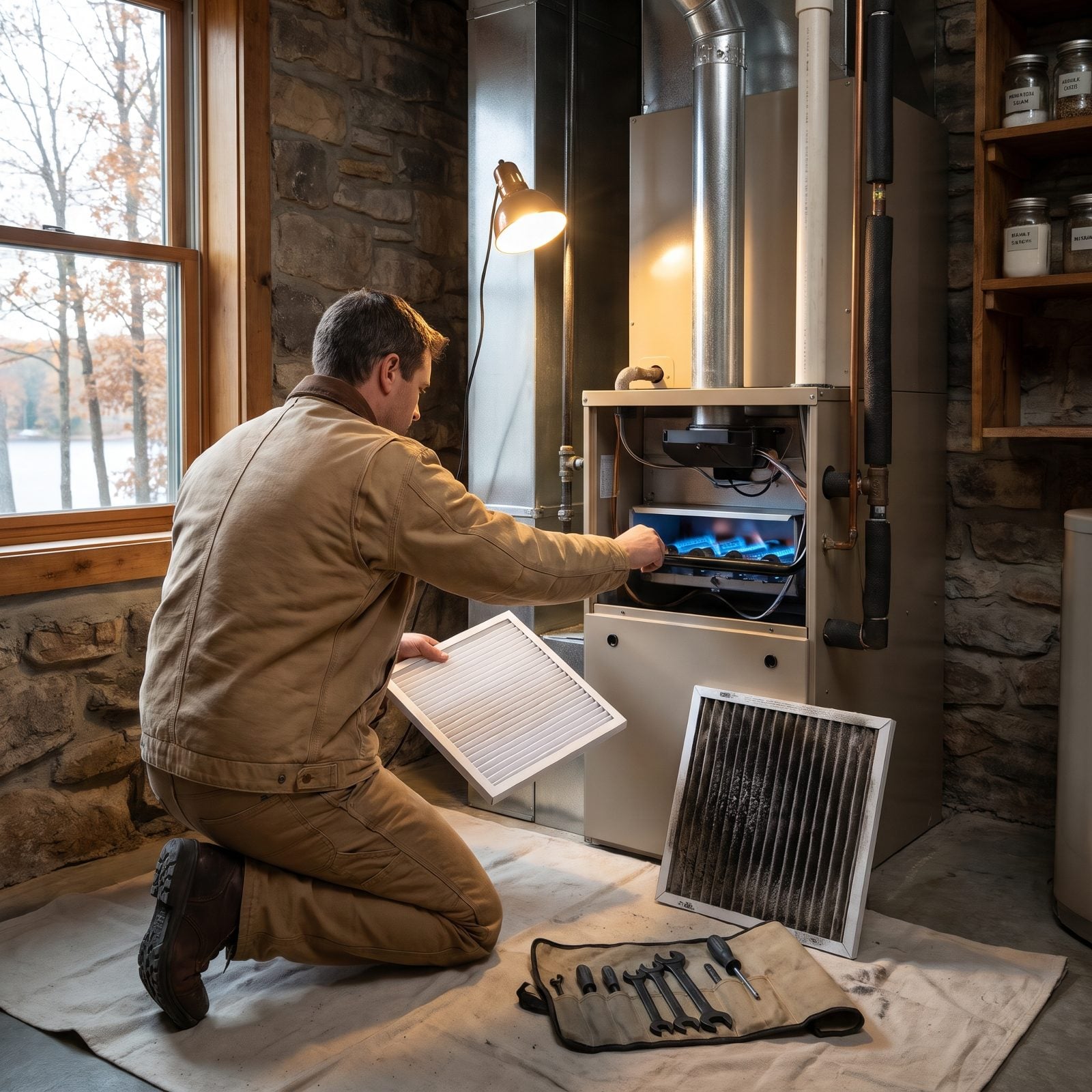
A heating system running unattended all winter does the single most important job in the house: keeping everything above freezing. If it quits in January with no one home, it takes the plumbing down with it. So you service it in autumn, not spring.
Get a tech in to clean the burners, check the heat exchanger for cracks, swap the filter, and confirm the ignition fires reliably. Cracked exchangers leak carbon monoxide. A clogged filter makes a furnace short-cycle itself to death.
Ask the tech to leave the system in heating mode and confirm the emergency shutoff switch is actually on. That red switch gets flipped by accident more than you’d believe.
21. Refill Propane Or Heating Oil Tanks
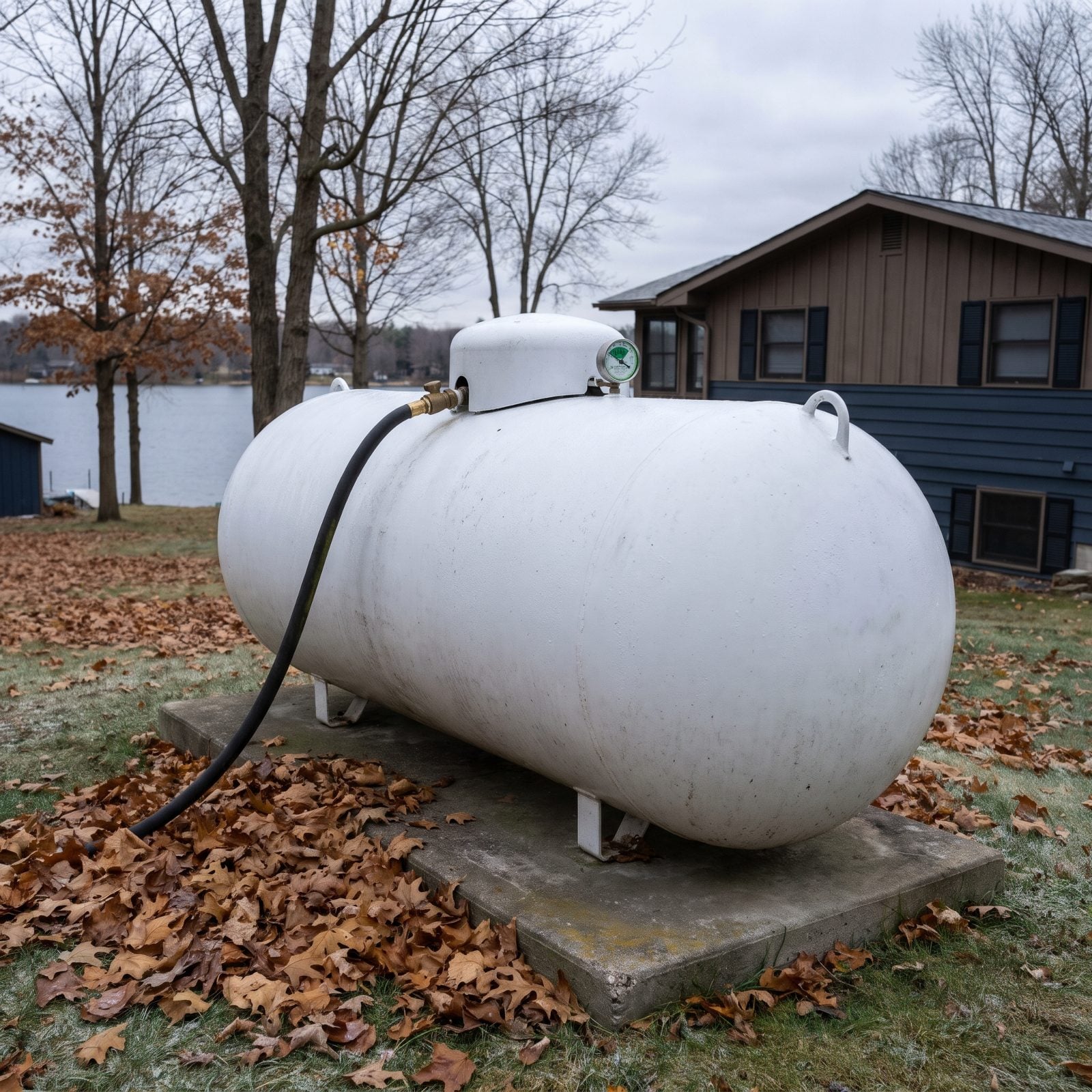
Running out of fuel mid-winter in an empty house is the mistake that cascades. No fuel, no heat. No heat, frozen pipes. And a delivery truck that can’t reach you for days because the long private road hasn’t been plowed.
Top the tank off before you leave. Not to a quarter, not to half, to full. Propane in particular loses pressure in deep cold, and a nearly empty tank in single-digit temperatures can struggle to feed the furnace at all. A full tank holds pressure better.
Set up an automatic winter delivery or will-call monitoring if your supplier offers it. An empty house doesn’t call for a refill on its own.
20. Set The Thermostat Safely Above Freezing
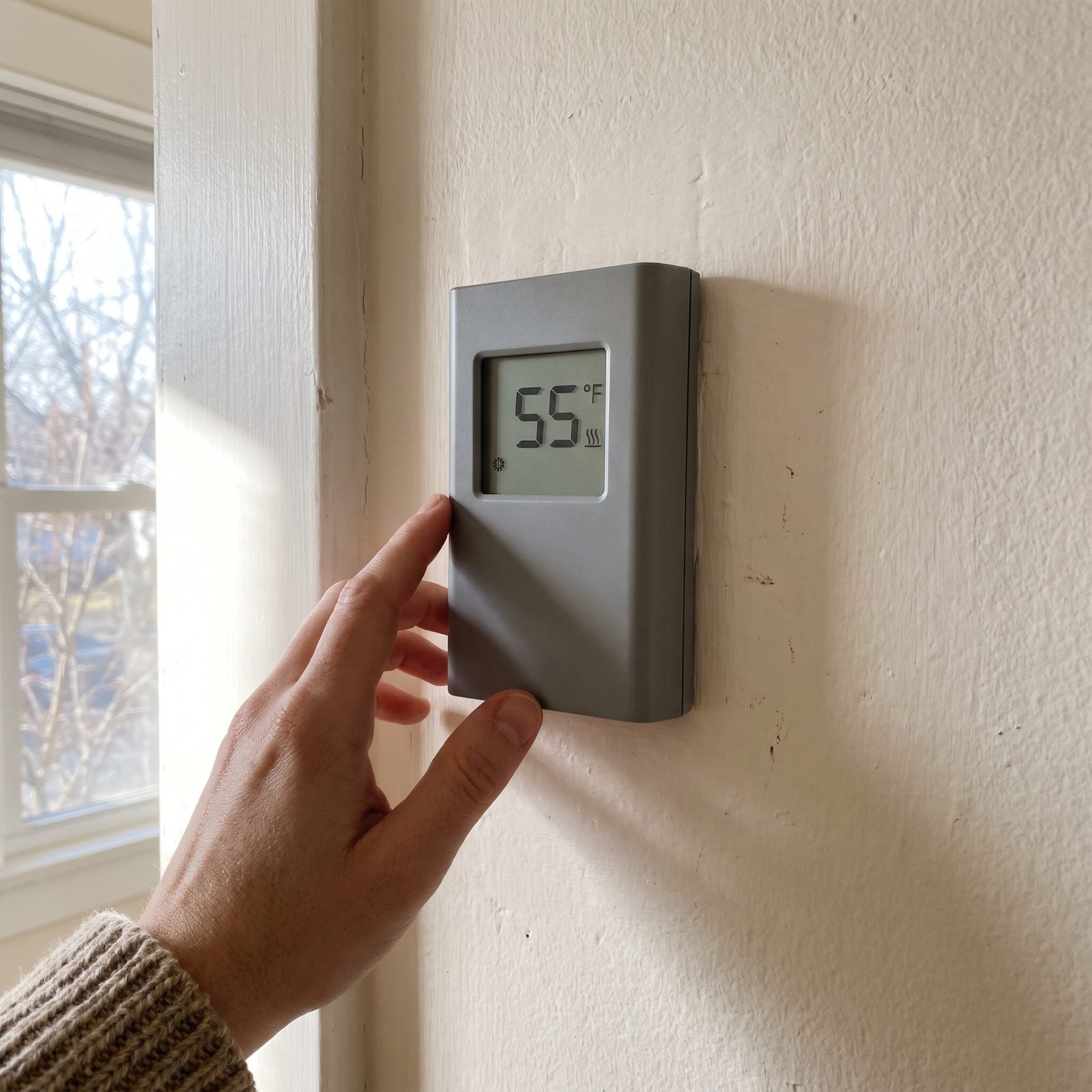
People turn the heat all the way down to save money and come back to a disaster. The goal isn’t comfort. It’s keeping the inside of the walls, where the pipes live, above freezing when the outdoor temperature drops to zero.
Set it no lower than 55 degrees. That sounds high for an empty house, but the number on the wall is warmer than the air inside an exterior wall cavity, and that gap is where pipes burst. Fifty-five on the dial keeps the hidden spaces in safe territory.
Got a smart thermostat? Now it earns its keep. Set it to ping your phone if the indoor temperature ever falls below a threshold. A dumb thermostat holds a number and says nothing while it’s quietly losing the fight.
19. Open Plumbing Cabinets For Warm Airflow
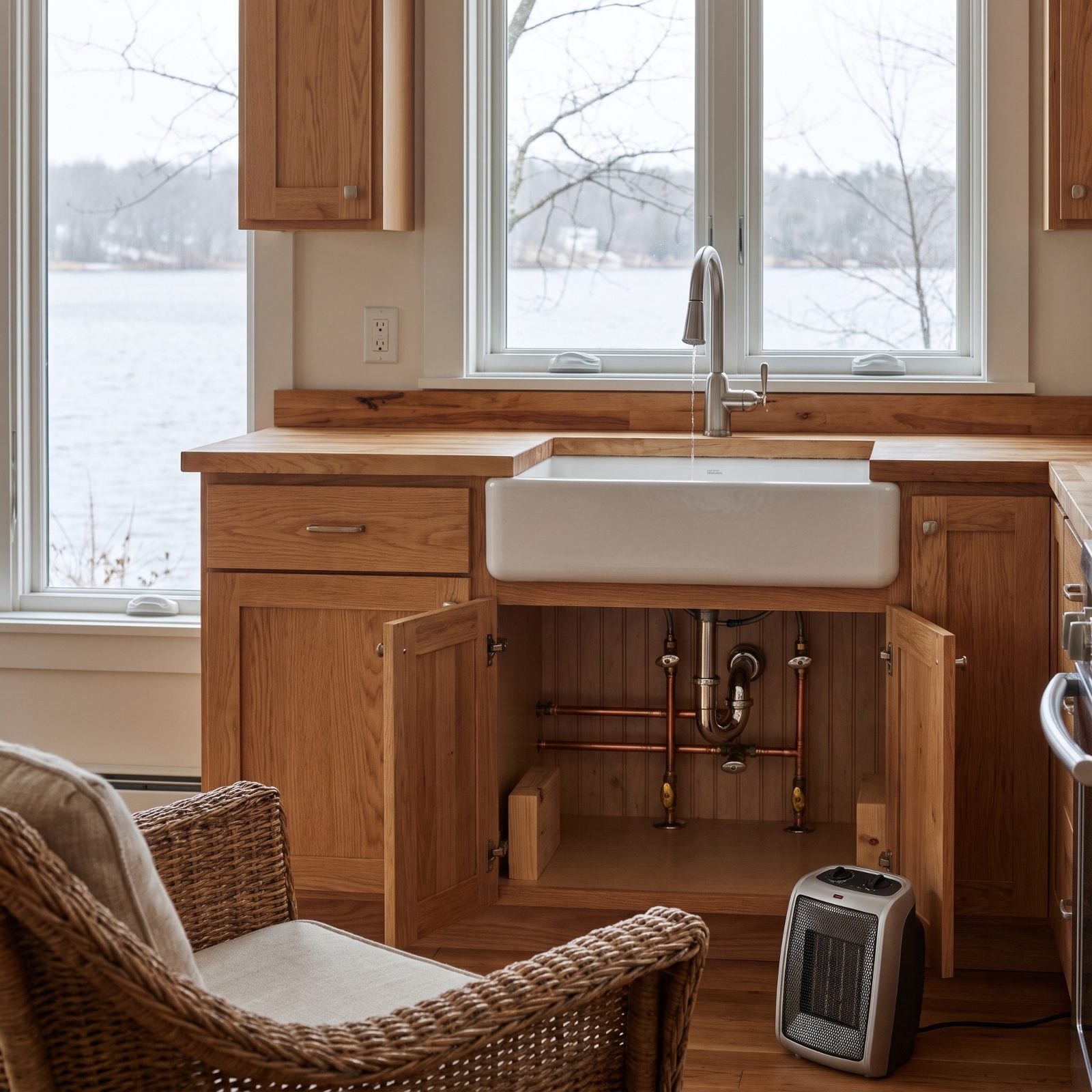
Pipes that run through an exterior wall behind a closed cabinet freeze first, because that little cabinet becomes a cold pocket the furnace heat never reaches.
Open every cabinet door under sinks and vanities on exterior walls, especially the kitchen and any bathroom against an outside wall. It lets the room’s warm air circulate around the supply lines. Crude, and it works.
Here’s the detail most people miss. Keep those drained faucets open, as covered above — an open tap relieves the pressure that actually splits a pipe. The ice isn’t what bursts the pipe. It’s the trapped pressure between the ice plug and a closed faucet.
18. Install Low-Temperature Alert Sensors
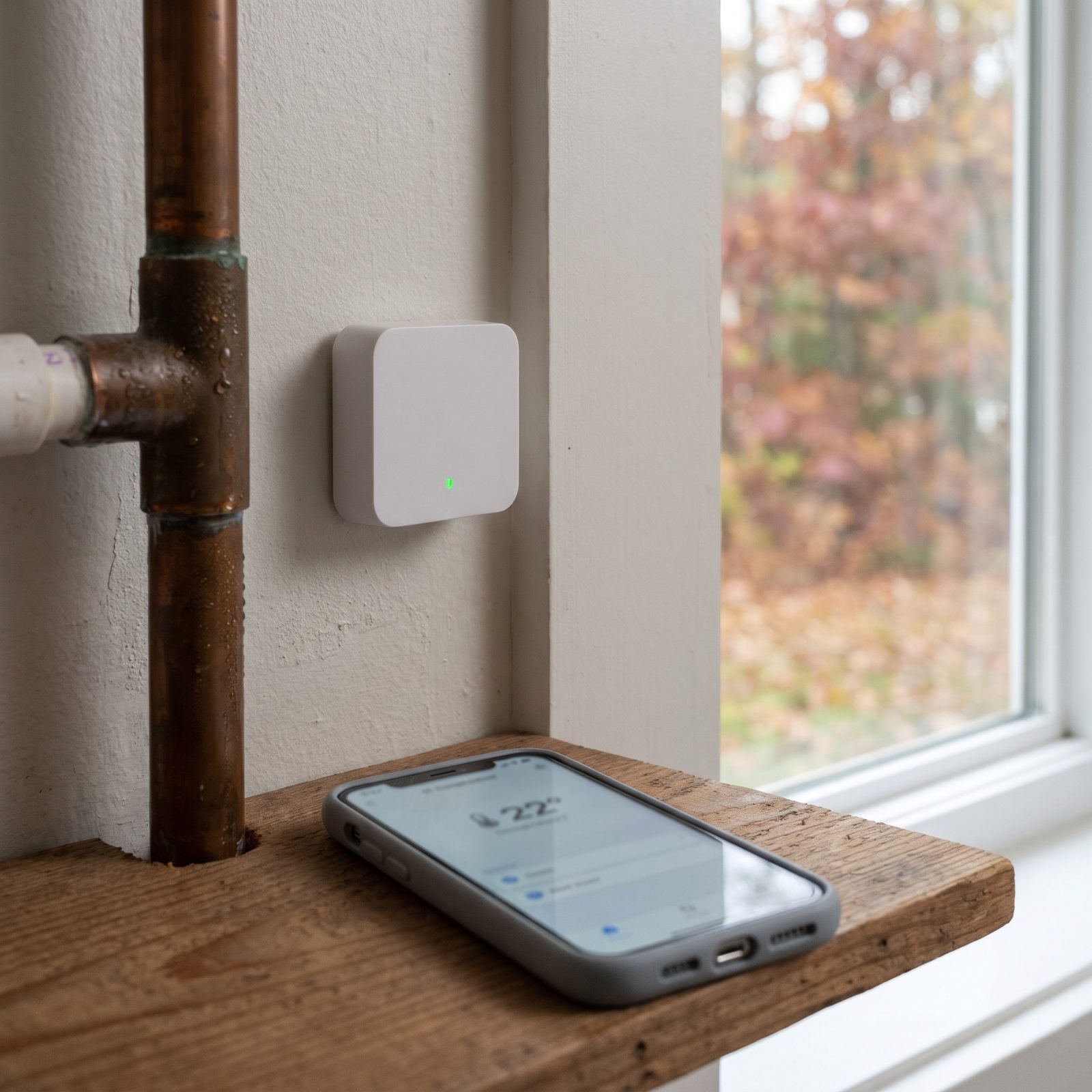
A thermostat tells you what one spot reads. A low-temperature sensor tells you the instant the whole house is losing heat, from wherever you happen to be, which when the place is empty is the only thing that matters.
Put a Wi-Fi temperature sensor near the most vulnerable plumbing, usually a basement wall or an exposed utility room. Set the alert threshold around 45 degrees, well above freezing but low enough it won’t nag you over normal swings. When your phone buzzes, you’ve got hours to call a neighbor before anything cracks.
17. Place Leak Detectors Near Plumbing
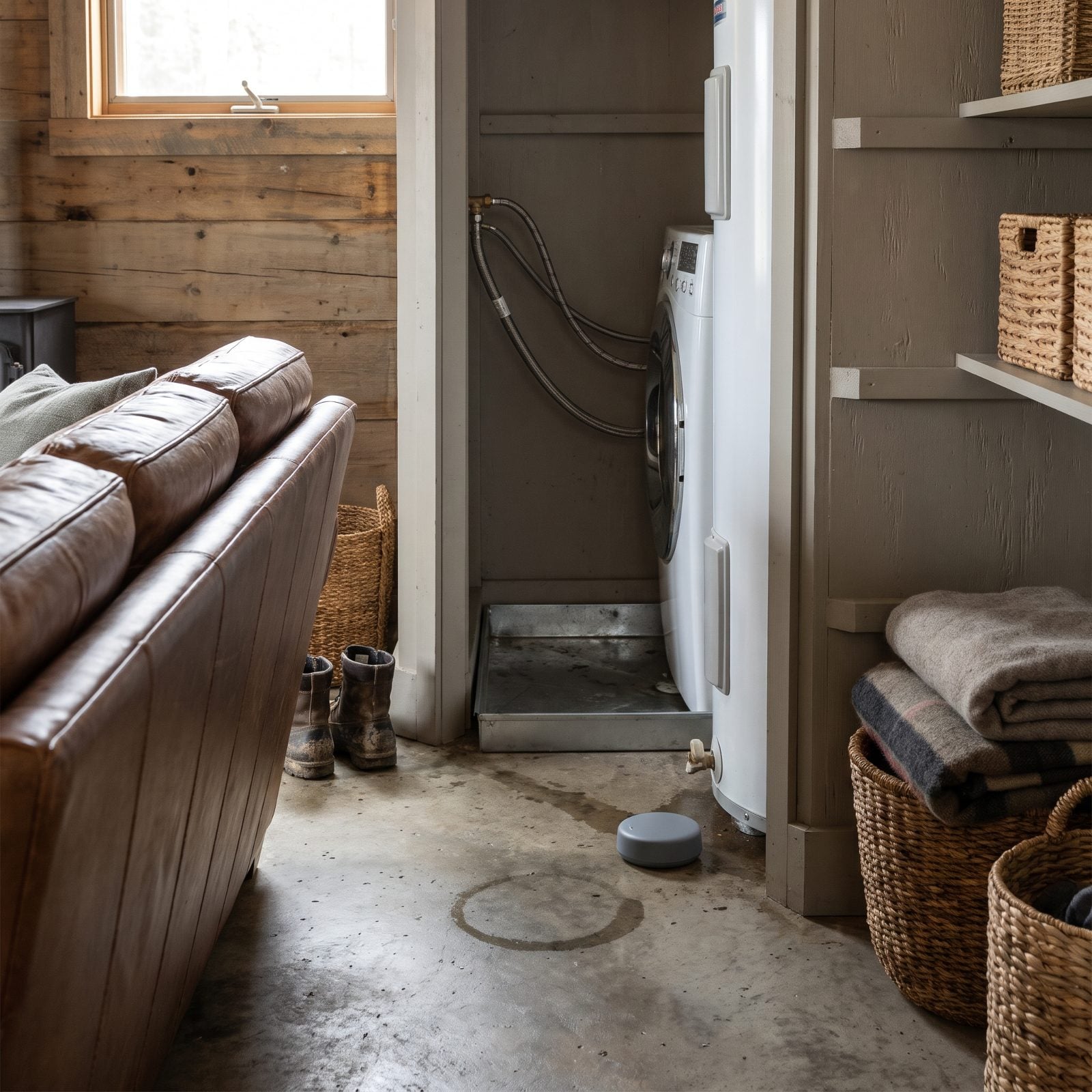
A pipe doesn’t have to freeze to flood a house. A failed water-heater fitting or a cracked supply hose runs for weeks in an empty place and does the same damage as a burst pipe, just quieter.
Drop leak detectors at the floor low points: next to the water heater, behind the washer, under the kitchen sink, near the main shutoff. The good ones sound a local alarm and send a phone alert the second a sensor pad touches water.
And go one better by installing an automatic shutoff valve on the main line. When it detects a leak, it closes the water supply itself. A detector tells you there’s a problem. A shutoff valve ends it while you’re still finding your phone.
16. Test Smoke And Carbon Monoxide Alarms
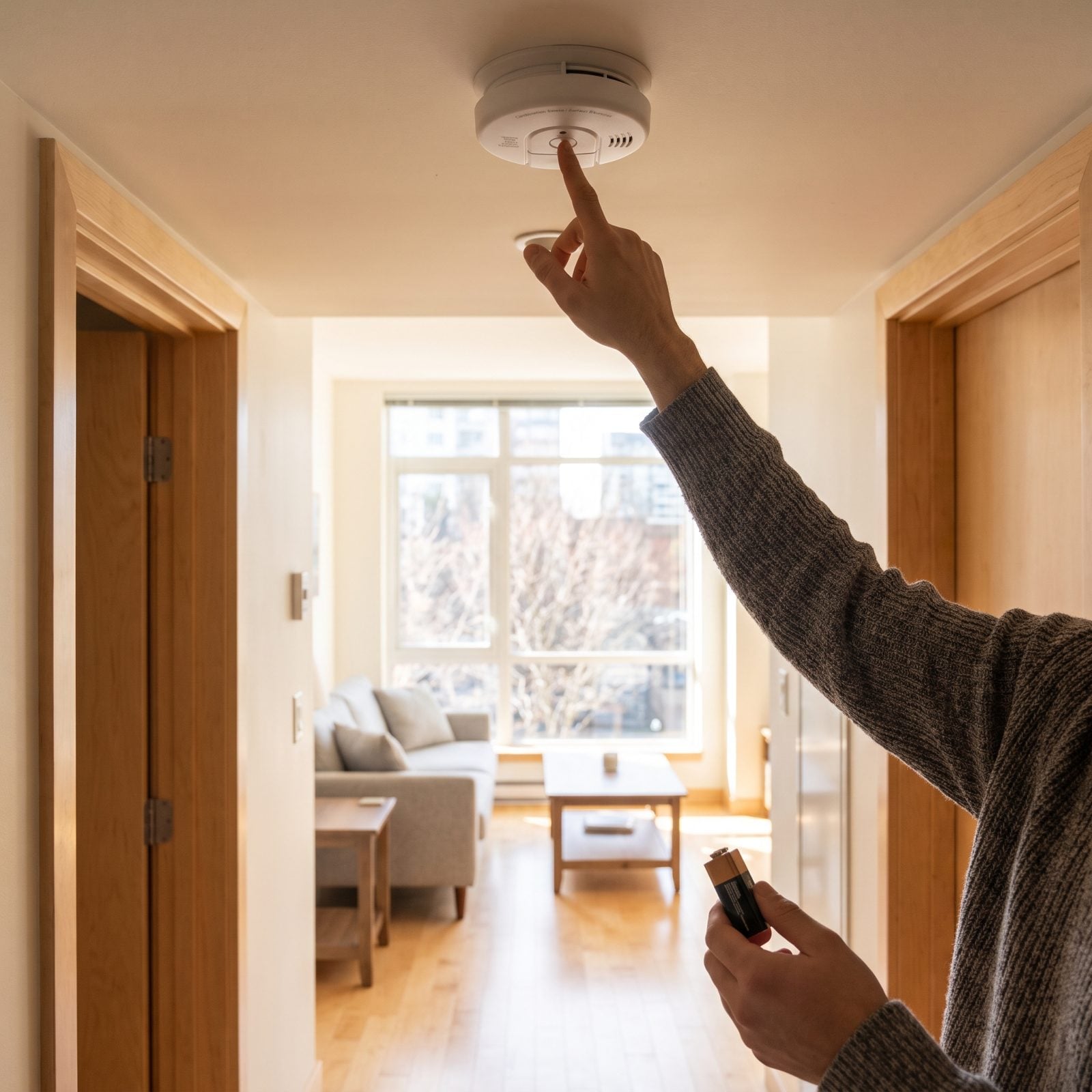
You run heating equipment all winter in a sealed-up house with nobody watching it. A cracked heat exchanger or a backdrafting flue produces carbon monoxide, and the alarm is the only thing standing between a minor fault and a tragedy when the family comes back for a holiday weekend.
Press the test button on every smoke and CO alarm. A chirp isn’t a test, it’s a cry for a new battery. Swap batteries in every unit before you leave regardless of how they sound. Then check the manufacture date on the back. Smoke alarms expire at around ten years, CO units sooner. An expired alarm can test fine and still fail to detect anything.
15. Service The Standby Generator
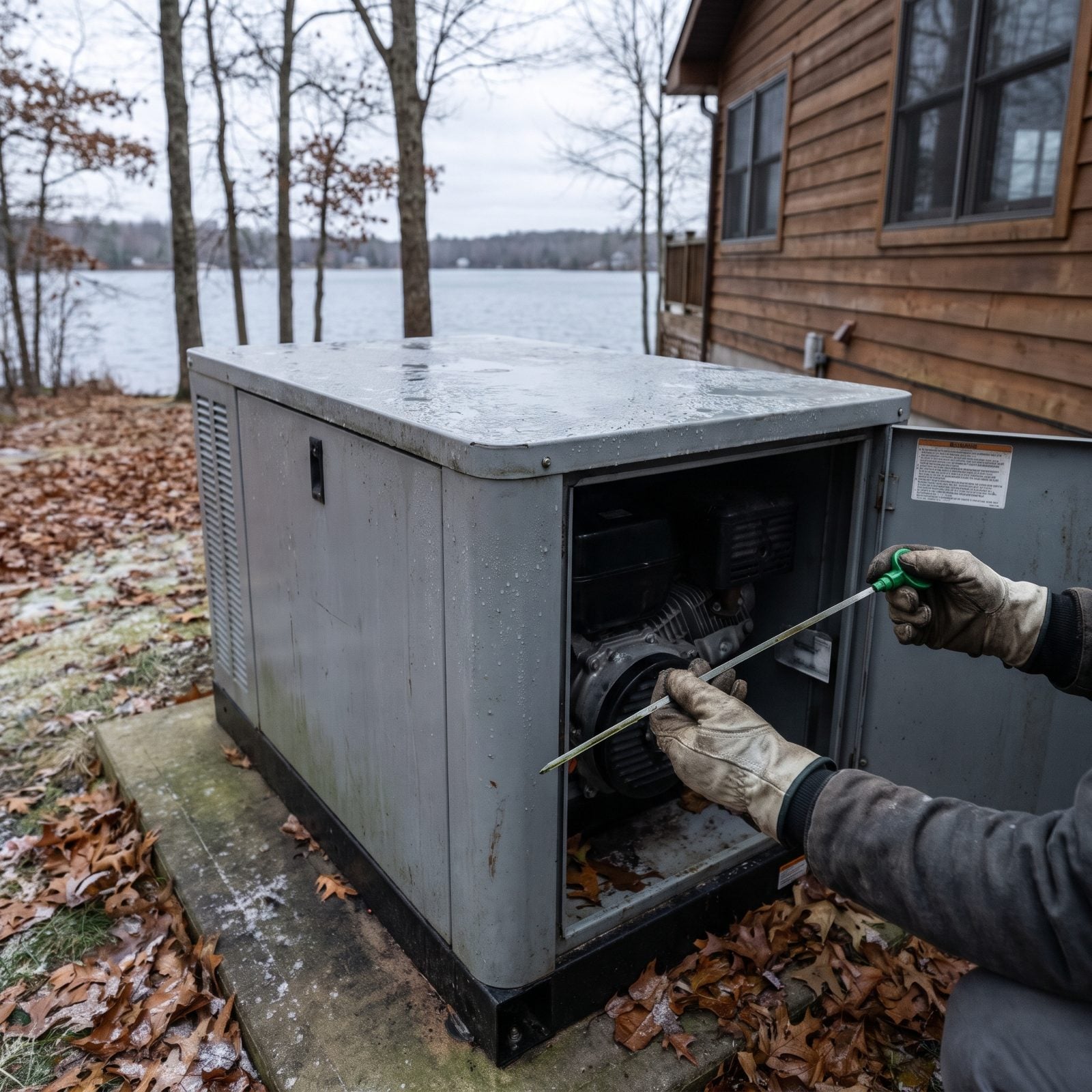
A standby generator is the whole insurance policy against a winter power outage, keeping the furnace, the sump pump, and the heat tape alive when the grid goes down in a storm. And a generator that won’t start on the day you need it is worse than no generator at all, because you stopped worrying.
Run a full load test, not just a spark. Check the oil, the coolant, the battery, and the fuel supply. Let it actually carry the house for a few minutes and confirm the automatic transfer switch hands the load over cleanly.
The thing people forget is the little starting battery on the generator itself. It’s exactly like a car battery, and it dies in the cold at the worst possible moment. Replace it on a schedule, whether it’s acting up or not.
14. Test The Automatic Transfer Switch
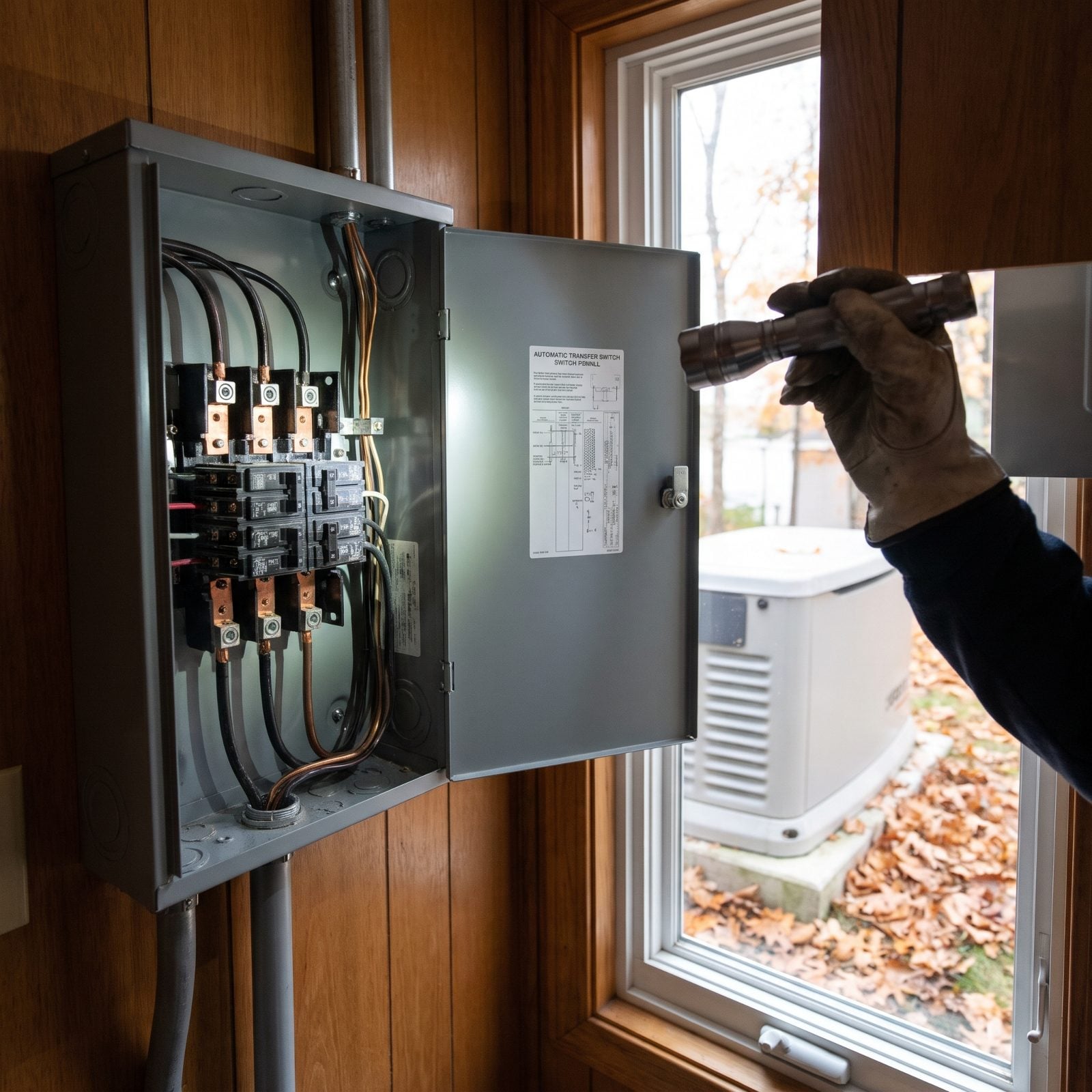
If you run a standby generator over winter, the transfer switch is the one part nobody tests until it fails — and it always fails during the storm that proves it. A furnace that stops because the switch never kicked over is how a lake house freezes solid while the generator sits there humming, powering nothing at all.
Kill the utility power at the main and watch what happens. The generator should start, and the switch should throw within half a minute. Listen for the clunk. Flip a few lights to confirm the critical circuits actually got the signal.
Now the part people skip. Look for corrosion or scorch marks on the contacts, because a switch that worked last year can arc and pit over a single season. Brown staining or a faint burnt smell? Call an electrician before you leave, not after.
13. Unplug Nonessential Electronics And Appliances
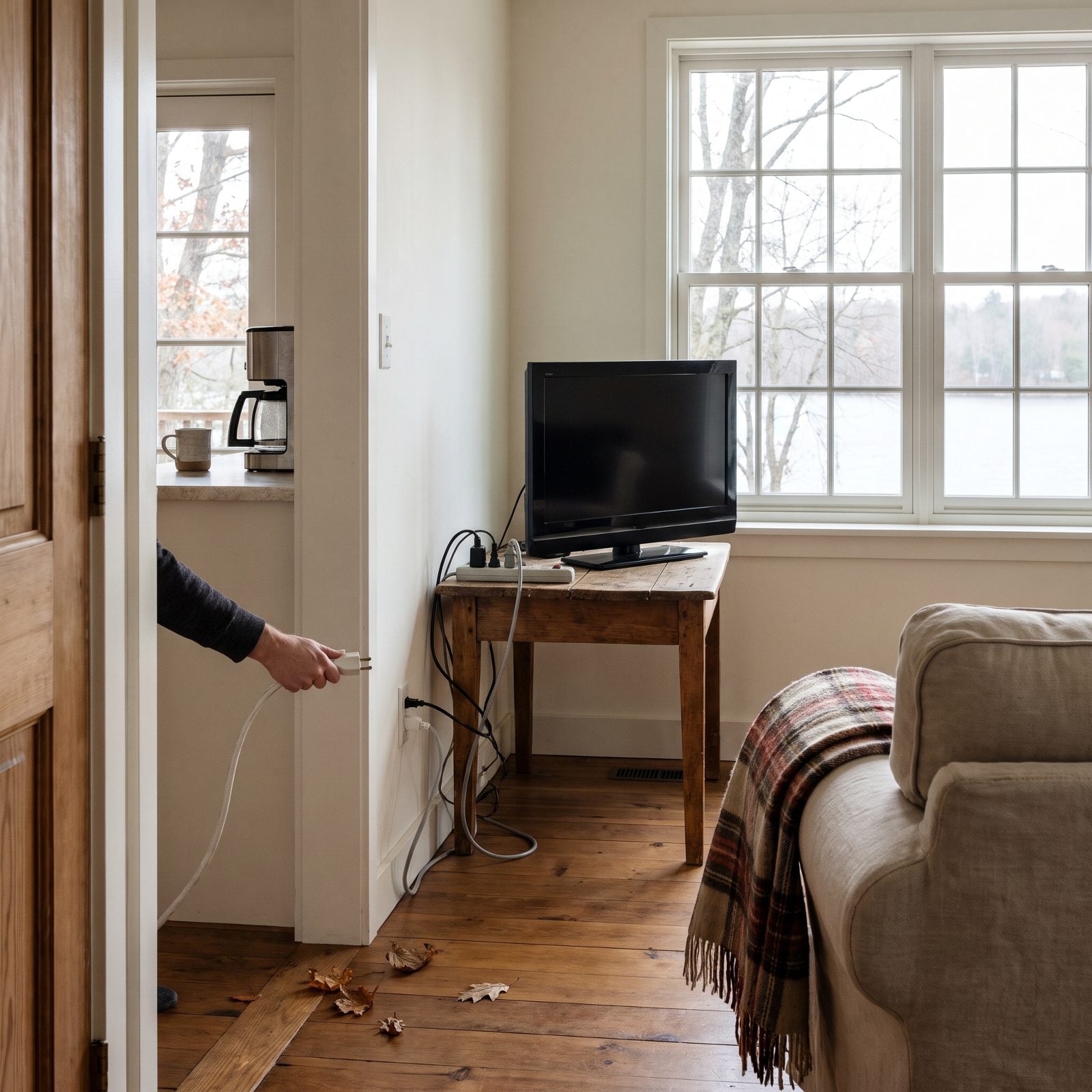
Phantom draw is the least of it. The real reason to pull plugs is that an empty house makes a perfect target for a power surge off a winter lightning strike or a utility fault, and nobody’s home to smell the burning.
Walk room to room and unplug anything you won’t miss until spring: TVs, the coffee maker, the microwave, routers, phone chargers left dangling in the wall. Leave the furnace, the sump pump, and anything on the generator’s critical list.
The two most people forget? The garage freezer and the well pump controller. One keeps your venison, the other keeps your pipes working. Label those cords so nobody yanks them by mistake, and you’ll thank yourself in May.
12. Clean The Fireplace And Secure The Damper
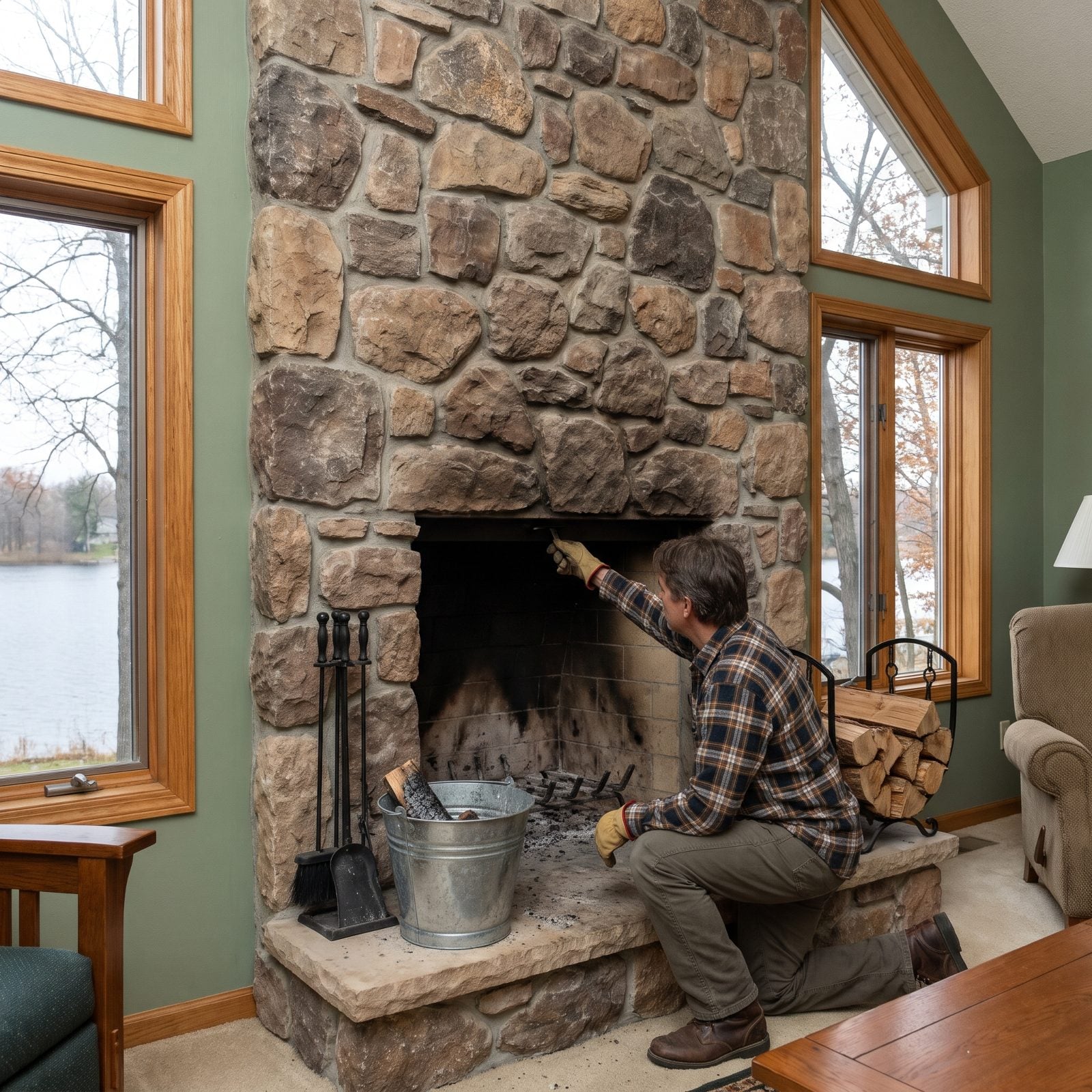
A closed damper over winter is doing two jobs: keeping heat in and keeping critters out. Leave it open on an empty house and you’re heating the sky — plus you’ve left a six-inch front door for squirrels and the occasional confused bird.
Shovel the old ash into a metal bucket, never plastic, because embers can live in ash for days. Brush down the firebox and the smoke shelf. Then close the damper and confirm it actually seals, holding a hand up to feel for a draft.
Most people never check whether the damper warped over the season. A gap you can see daylight through means warm air leaks all winter long. And a chimney cap screen is the fix nobody budgets for until a raccoon moves in.
11. Inspect The Roof For Loose Shingles
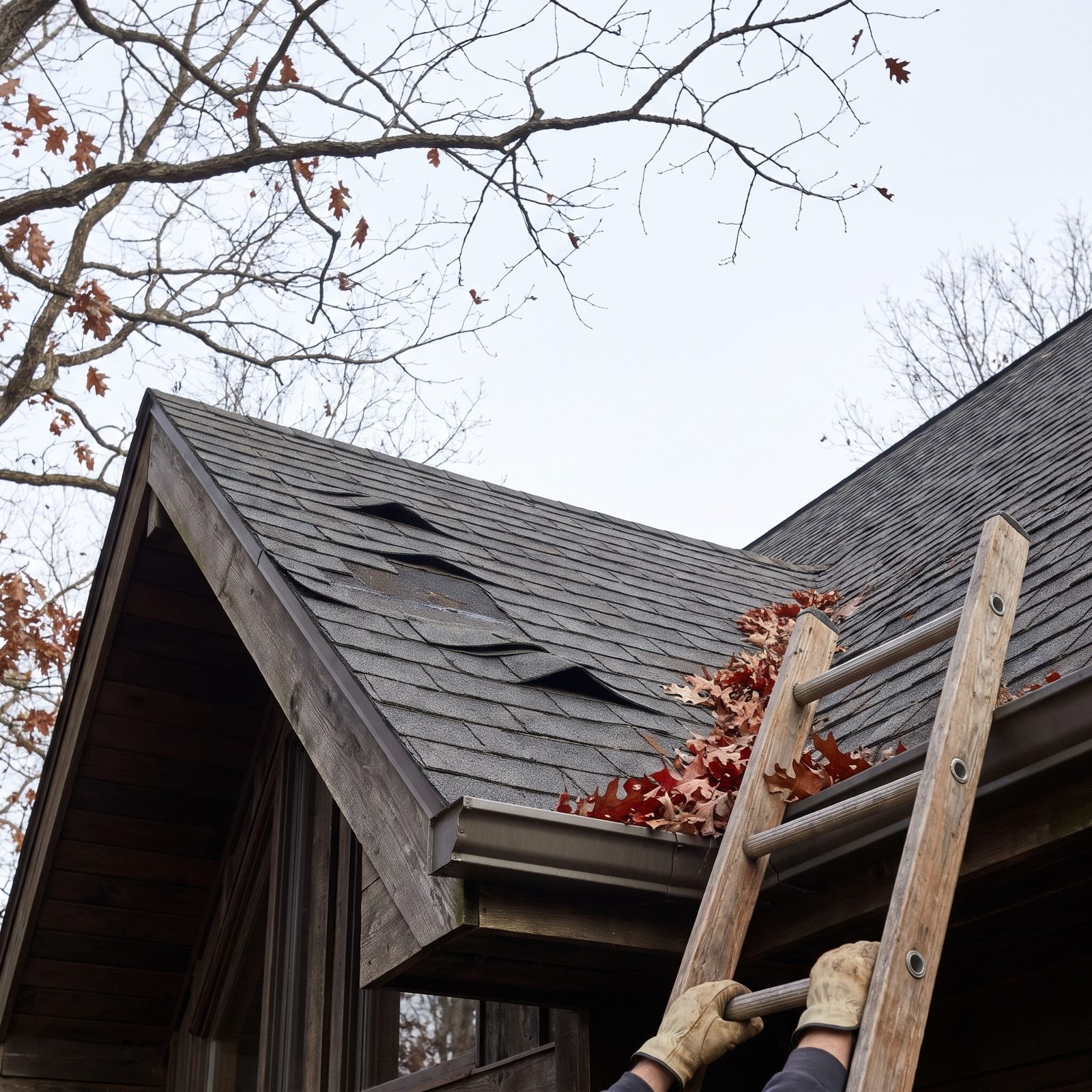
One lifted shingle in October becomes a soaked ceiling by March. Ice works into every gap you leave it, freezes, expands, and pries the next shingle loose behind the first — the damage compounding while you’re three hours away.
Inspect from the ground first with binoculars, then head up a ladder only if it’s safe and dry. Look for shingles curled at the corners, cracked, or missing granules so the black mat shows through. Check the valleys and the flashing around the chimney hardest, since that’s where leaks start.
The spot everyone misses is the nail pops — small tented bumps where a nail has backed out and lifted the shingle above it. They look like nothing. They’re the entry point for a whole winter’s worth of melt.
10. Clear Gutters And Downspouts
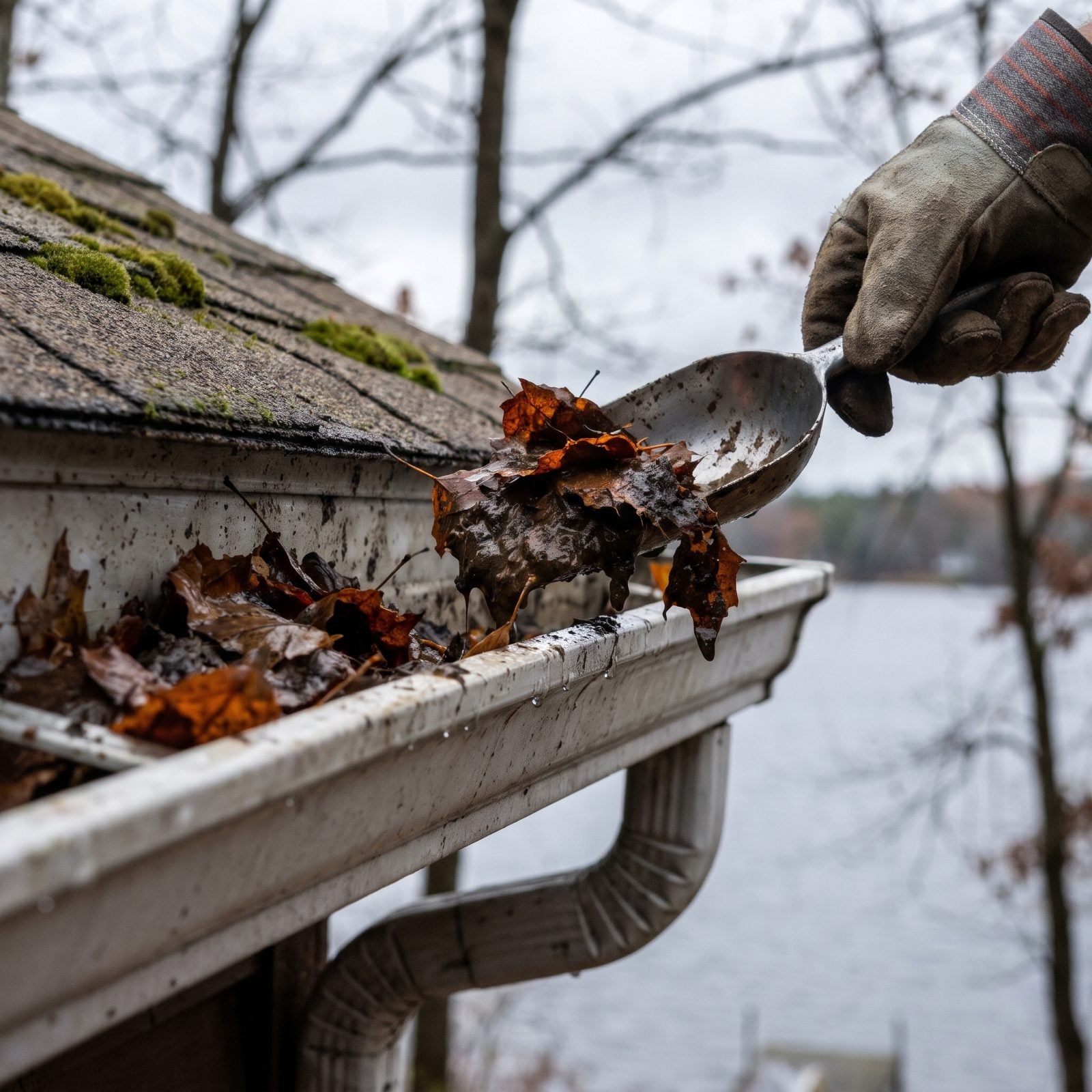
Clogged gutters are how ice dams get born. Water backs up, freezes at the eave, and the next melt has nowhere to go but under your shingles and into the wall. By the time you spot the stain inside, it’s already done.
Scoop out every handful of wet leaf sludge, then run a hose down each downspout to confirm it flows clear at the bottom. Water backing up means a clog in the elbow.
Here’s the detail worth the extra five minutes: make sure the downspouts discharge well away from the foundation. In spring the melt has to go somewhere, and an empty house won’t notice the puddle pooling against the basement wall until it’s inside.
9. Trim Branches Threatening Roofs Or Wires
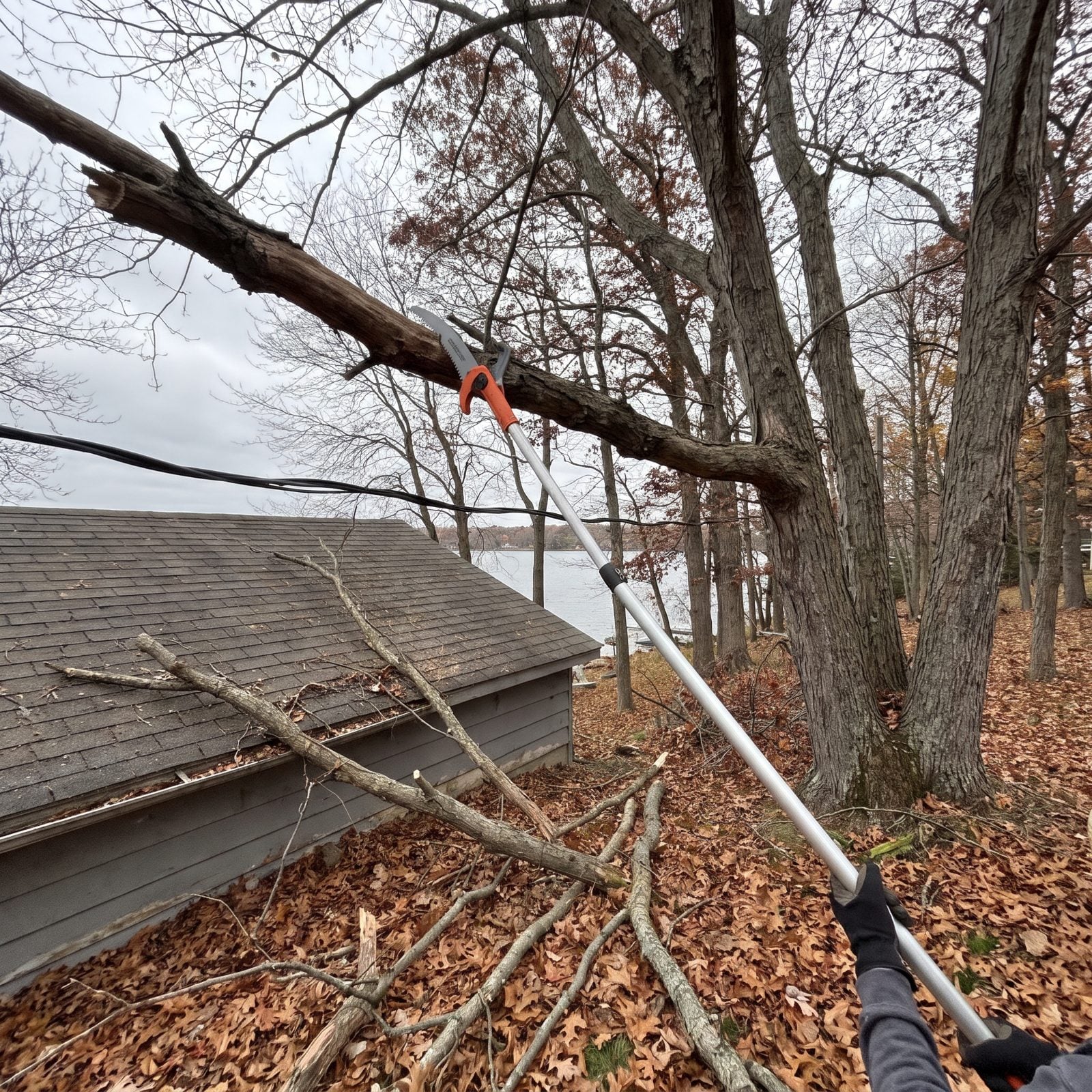
Snow load turns a healthy-looking limb into a battering ram. A branch that clears your roof by two feet in October will sag under wet snow and ice until it’s resting on your shingles — or worse, on the service line running to the house.
Cut back anything overhanging the roof, and get serious about the dead limbs, those gray leafless ones that snap first. A limb hanging over the power drop takes the most care: work from the ground with a long pole saw, never from a ladder, and call the utility first if you have any doubt.
What people underestimate is how much a loaded evergreen moves. Watch the trees in the next storm before you close up, and the ones swaying hardest over the roof are the ones to deal with now, while you can still reach them.
8. Seal Foundation Gaps Against Rodents
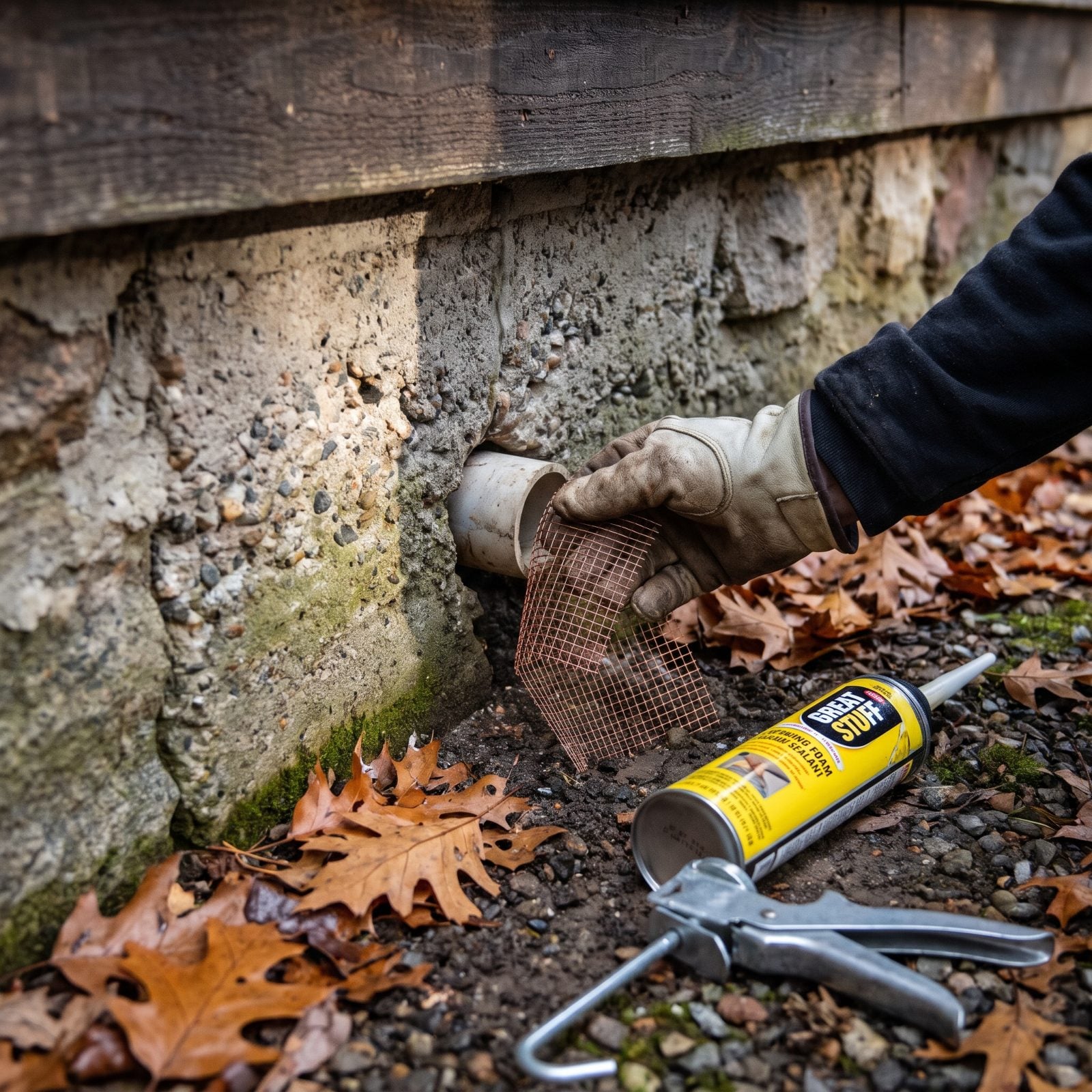
A mouse needs a gap the width of a pencil. A house left quiet and warm for months is an open invitation, and the first you’ll know of it is the chewed wiring and the smell when you walk back in come spring.
Crawl the foundation line and find every gap: where pipes and wires enter, around the sill plate, at vents and dryer exhausts. Stuff copper mesh or steel wool into the gap first, then seal over it with expanding foam. Mice chew through foam alone. They don’t chew through metal.
The entry point almost everyone misses sits where the gas line or water line comes through, because the hole was cut oversized to make the plumber’s day easier. That generous gap is a highway. Pack it tight.
7. Check Door And Window Weatherstripping
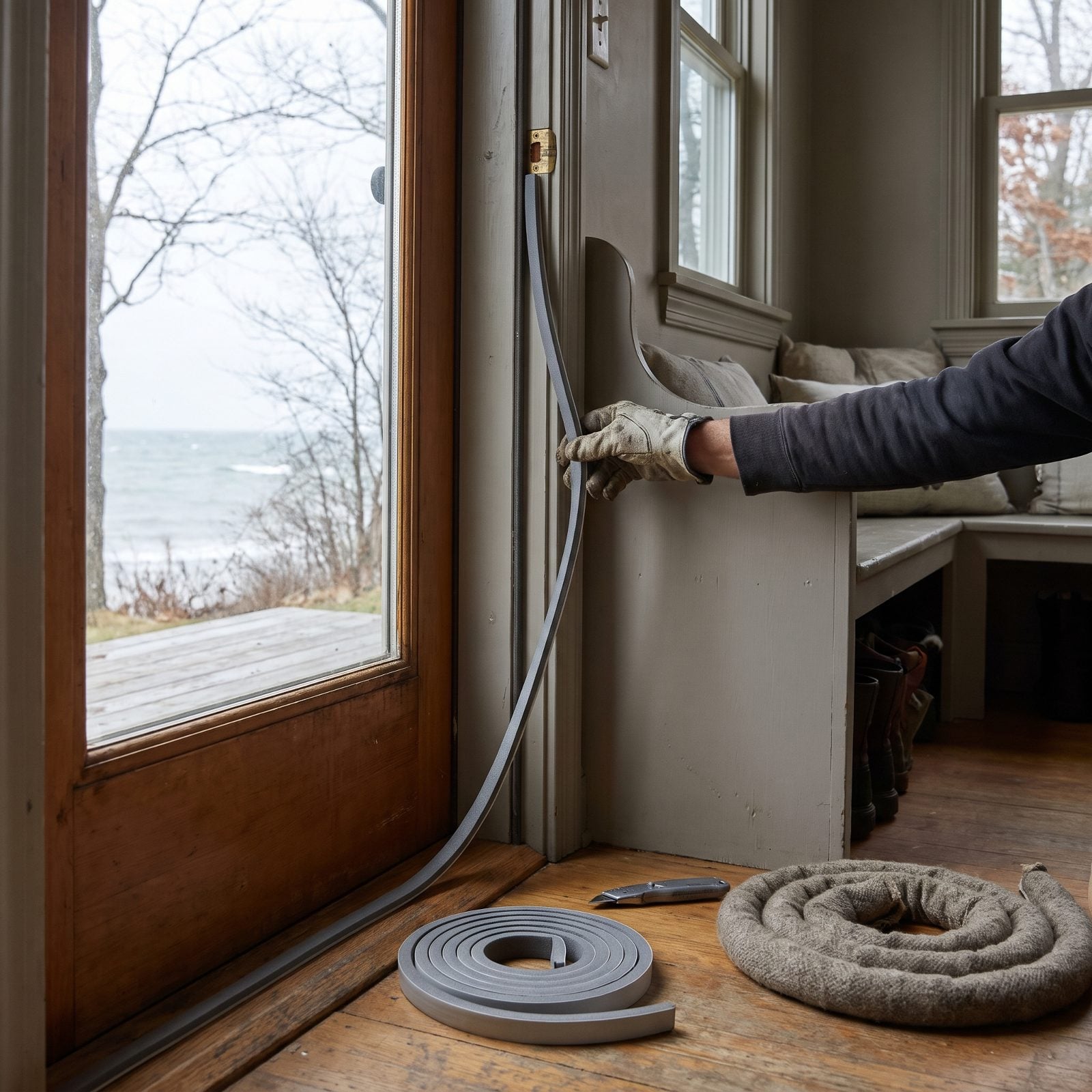
Cold air finds the weak seal and settles there. In a house heated by nothing but the furnace, that draft is what lets a nearby pipe freeze while the thermostat upstairs reads fine. The weatherstripping is cheap. The frozen line behind the wall is not.
Run the old dollar-bill test. Close the door on a bill and tug. If it slides out with no resistance, the seal’s gone. Do it top, bottom, and both sides, and every window you can reach.
Peel off the cracked or flattened strip and press on fresh foam or V-seal while the frame is clean. The commonly ignored spot is the bottom of exterior doors, where the sweep wears down and lets a steady cold draft slide across the floor all winter.
6. Store Propane Cylinders Safely Outdoors
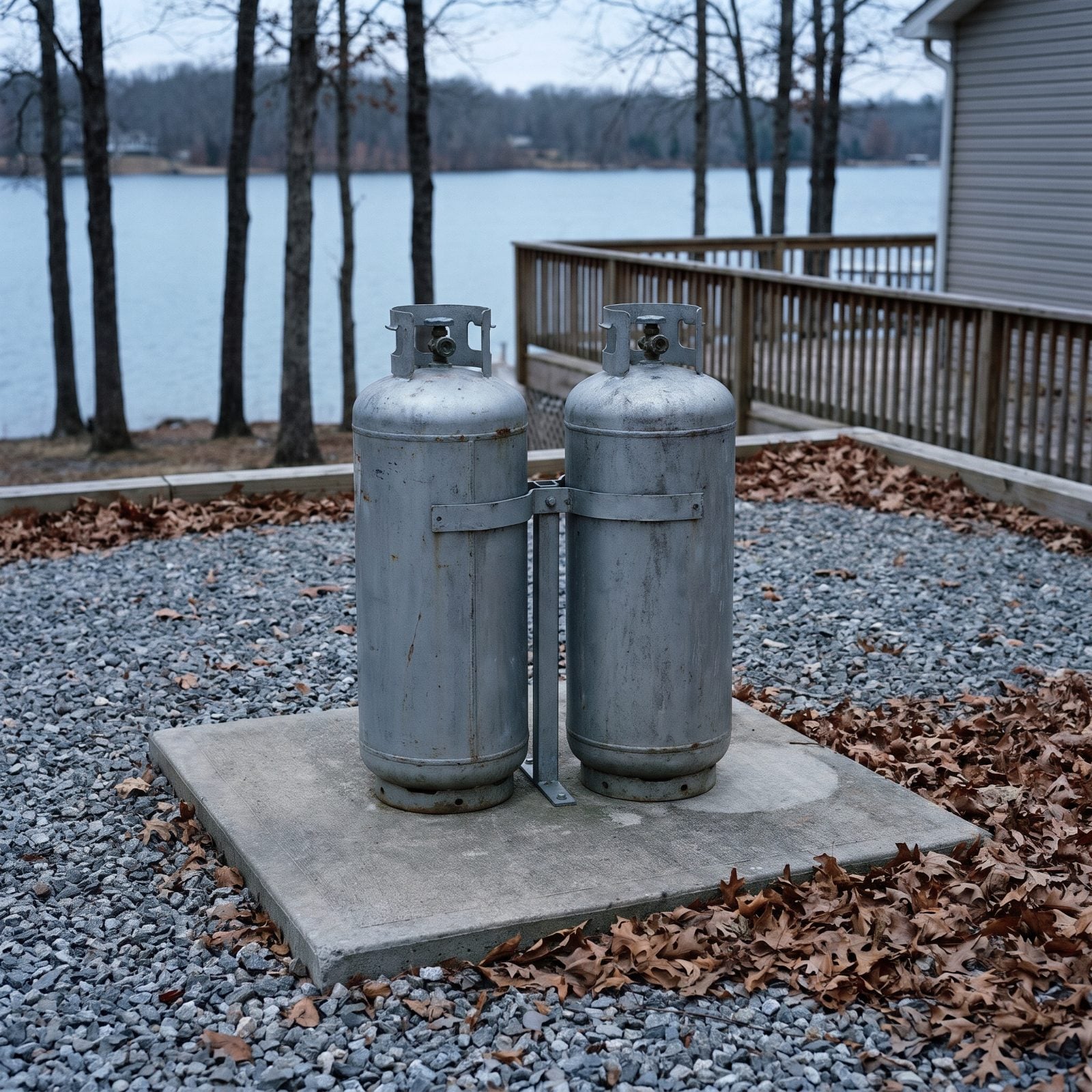
Propane cylinders belong outside, always, and that rule doesn’t bend for winter. People tuck them in the garage or basement to keep them out of the snow, and that’s exactly how a leak collects into something dangerous in an enclosed space with nobody around to smell it.
Close every valve tight. Stand the cylinders upright and strap or chain them so wind and snow can’t tip them, set on a hard surface, away from the house, clear of anything that could pile against them.
Here’s the overlooked part. Keep them out of direct sun where they’ll sit all winter — but never lay a cylinder on its side to do it. That pressure relief valve is built to vent vapor, not liquid, and on its side liquid is exactly what it would spit.
5. Mark Driveway Edges For Snowplows
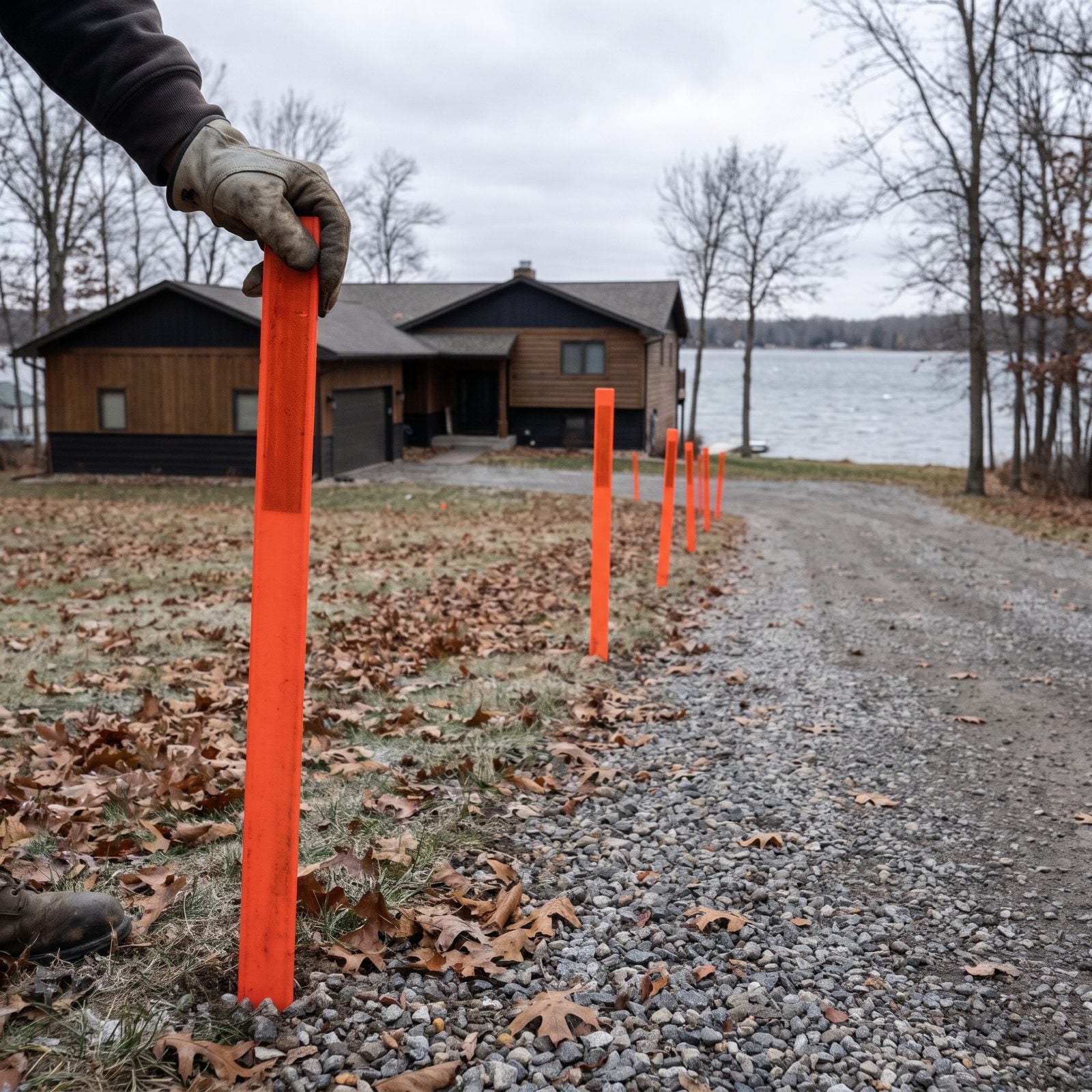
The plow driver in January has never seen your yard without snow. Everything is white, and your driveway edge, your septic risers, your low stone wall — all of it vanishes. A plow that doesn’t know where the gravel ends tears up your lawn, your landscaping, or worse.
Push fluorescent fiberglass markers into the ground every dozen feet or so along both edges before the first freeze locks the soil. Flag anything that juts into the plow’s path: a drain cover, a boulder, the end of a culvert.
The thing worth marking that nobody does is the septic tank lid and the well head. Catch one of those with a plow blade and the repair bill makes a whole winter of firewood look free. Flag them now, while you can still find them.
4. Winterize And Relocate Every Boat
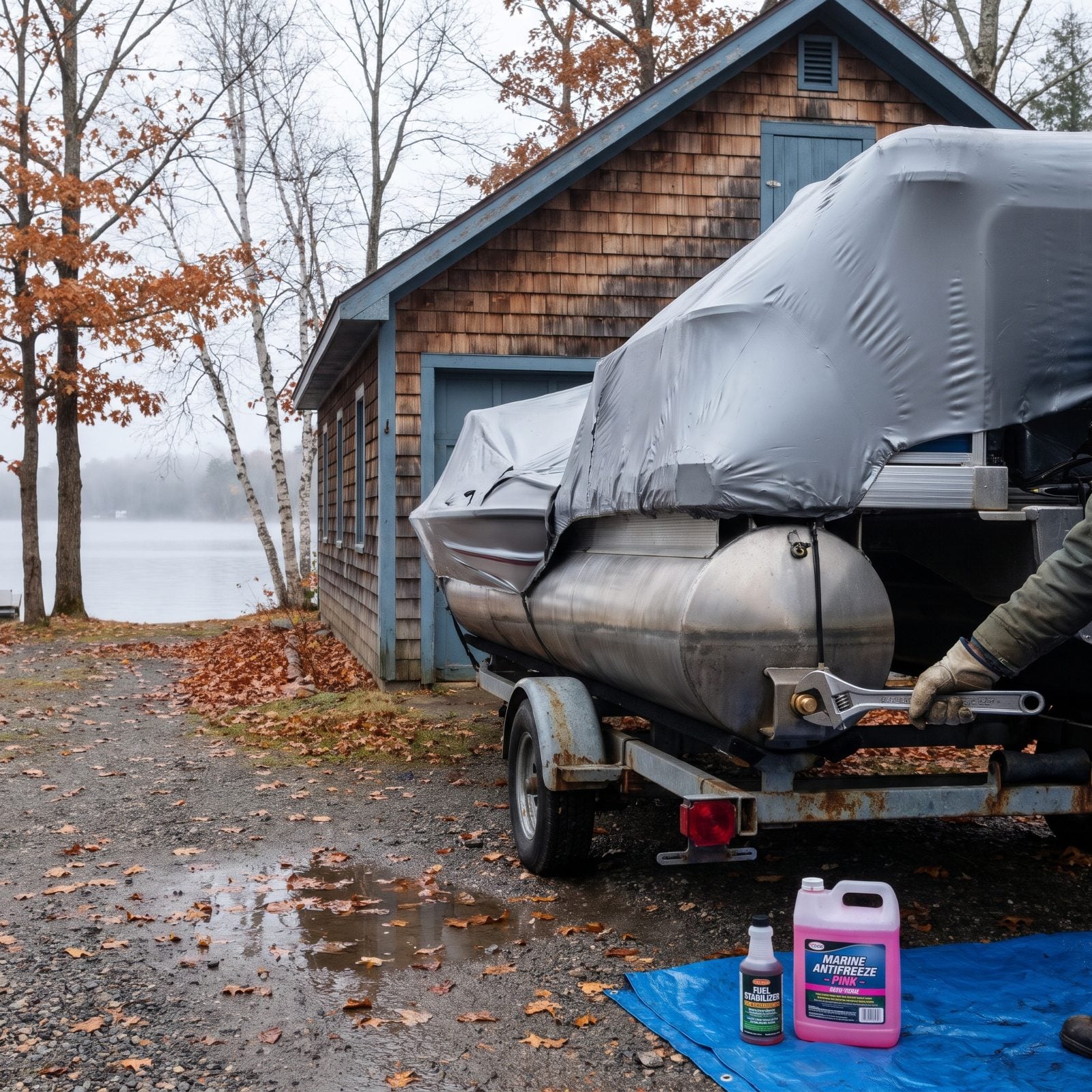
Water trapped in an engine block does exactly what water always does when it freezes: it expands and cracks whatever’s holding it. A cracked block is a spring surprise, and it costs more than the entire winter of neglect that caused it.
Run the motor, drain it all the way, then pull fresh antifreeze through until pink runs out the exhaust. Stabilize the fuel, fog the cylinders, and get that battery out and onto a trickle charger somewhere above freezing. Now for the part everybody skips. Drain the lower-unit gear oil and really look at what comes out, because milky oil means water snuck in, and if you leave it sitting all winter you’ll be shopping for a gearcase come April.
3. Secure Or Remove Seasonal Dock Sections
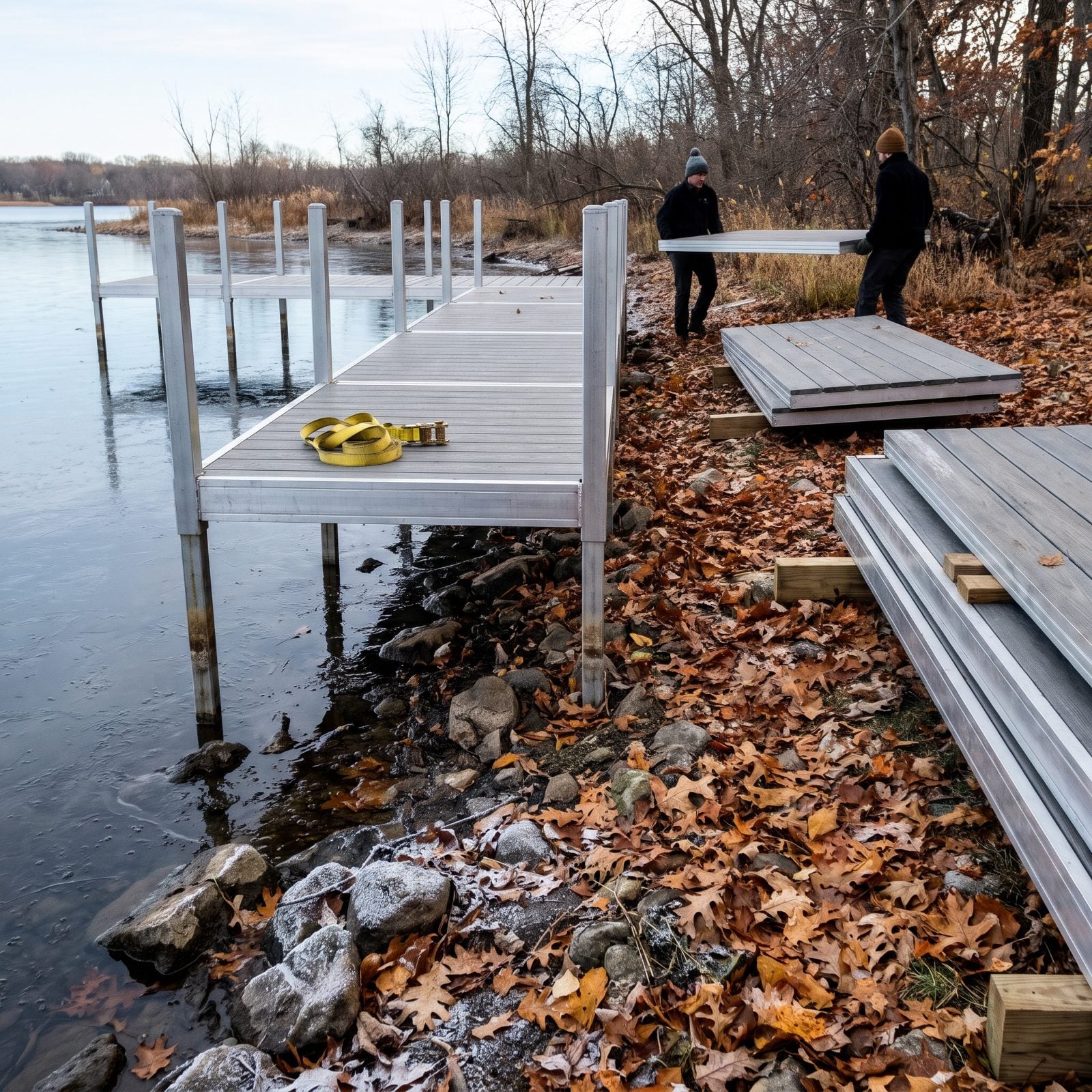
Ice is patient, and it’s strong. A lake that freezes and shifts will lift a dock, twist its frame, and walk the whole thing fifteen feet down the shoreline by March. Floating docks left in the water get chewed. Pipe docks get bent at the legs.
If your sections are built to come out, pull them before the water turns dangerous to stand in, then stack them on blocks above the high-water line so they drain and dry instead of marinating in mud. For docks that have to stay put, loosen the hardware a touch so there’s some flex, and brace against whatever direction the ice usually shoves things.
Here’s what folks forget: mark the sections as you take them apart. Future-you, kneeling over cold aluminum in May with no idea which post went where, will be grateful.
2. Inspect Dock Bubblers And De-Icers
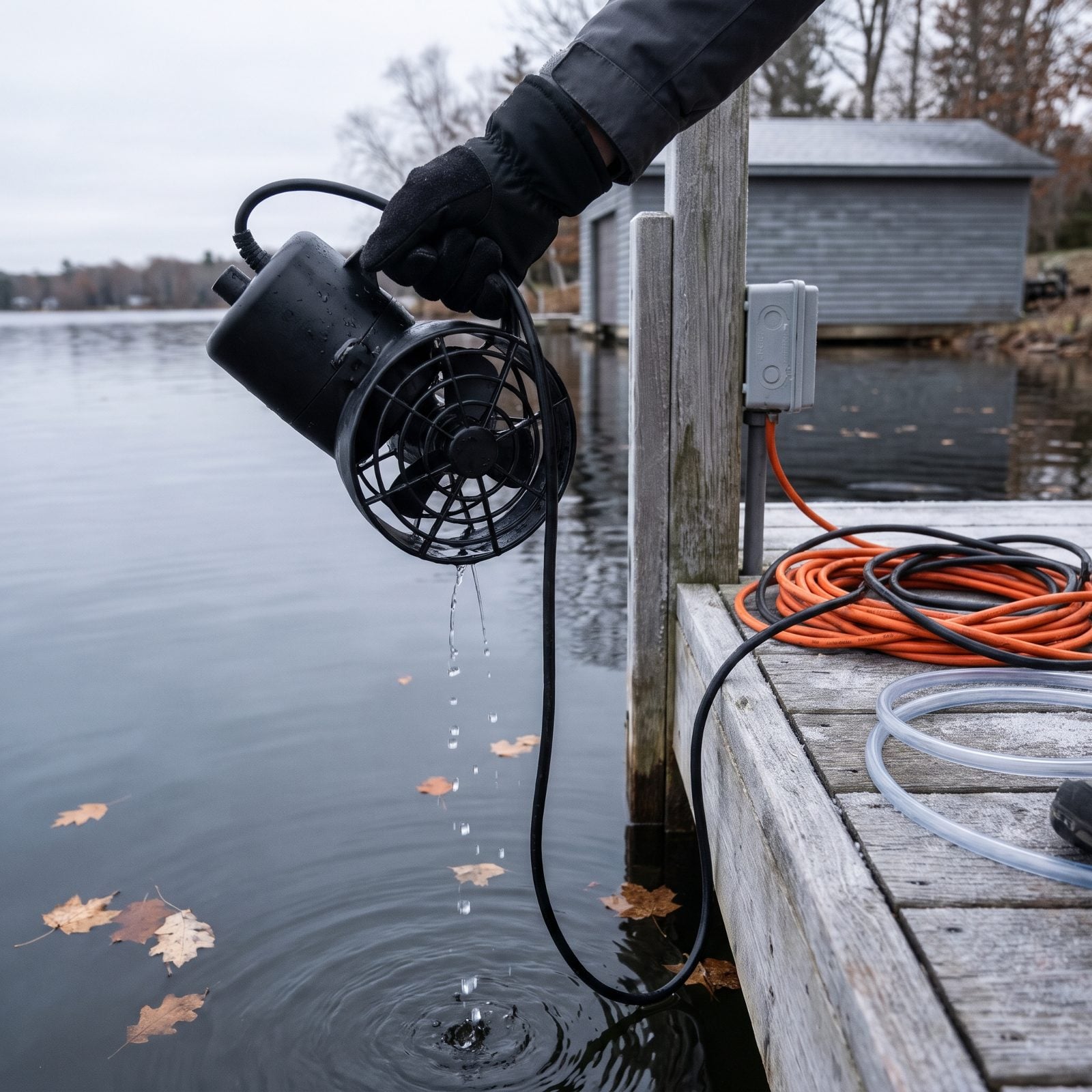
A de-icer that quits in January is worse than having none at all, because you planned around it. Its whole job is keeping open water around your pilings so ice can’t grab hold and lift them. When a dead unit lets you down, you find out in spring, with the damage already done.
Pull it up now, while the water’s still liquid and your hands still work. Spin the propeller by hand and feel for grit or a seized shaft. Run it a minute on the bench and listen, because a healthy motor hums steady while a failing one chatters or trips the GFCI.
Then walk the cord end to end looking for cracks and gnaw marks (mice adore cord insulation), and test the GFCI outlet itself before you trust it with another winter.
1. Test Remote Cameras And Notifications
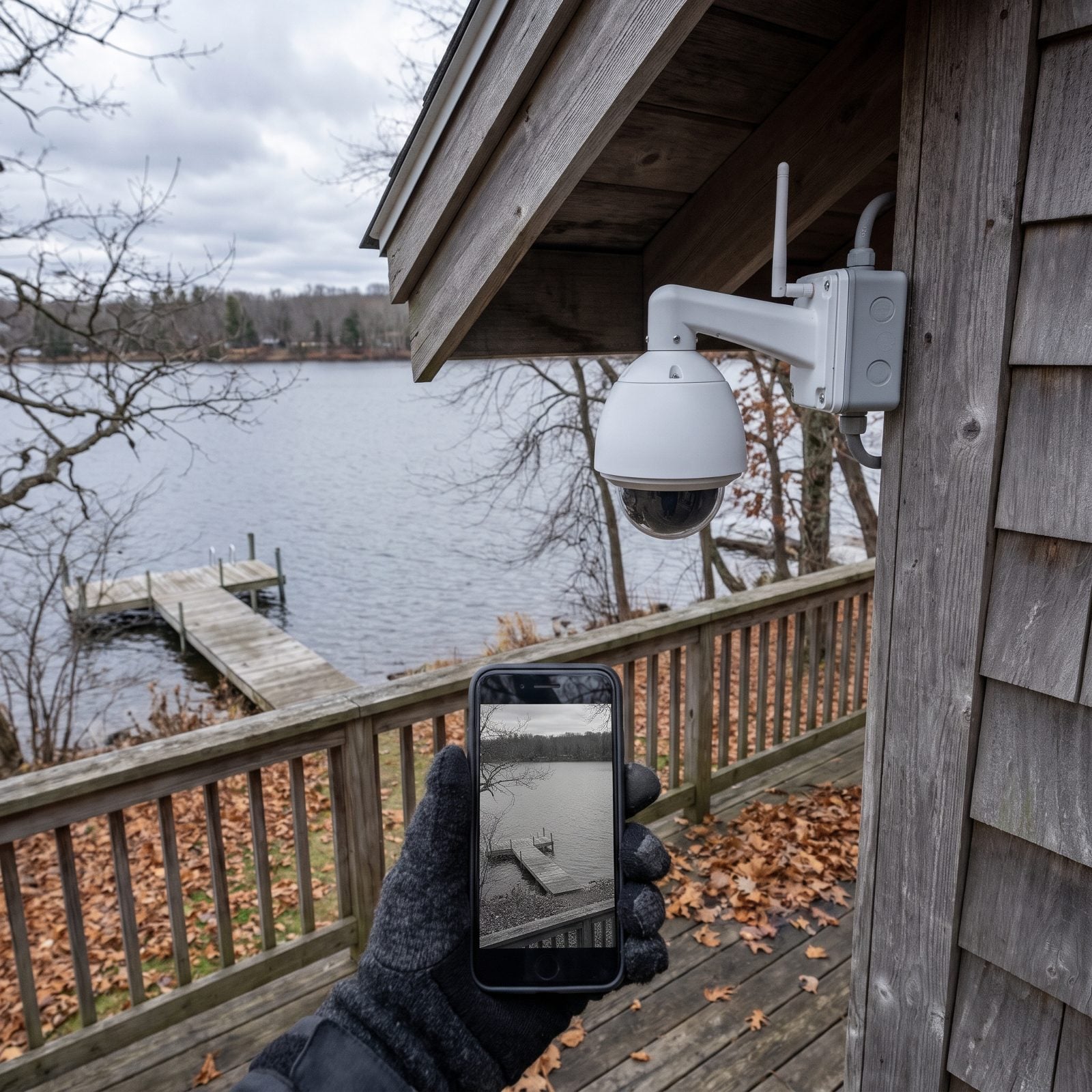
An empty lake house in winter is a quiet invitation, and the quiet is the problem. Snow piles up and pipes freeze, a branch comes through a window, and nobody drives past for weeks. A working camera is the whole difference between a phone alert in December and a flooded living room you discover in April.
Don’t assume anything works. Walk in front of every camera and confirm it pings your phone within a few seconds, then check the night view, because that’s exactly when you’ll need it. Swap the batteries in the wireless ones now. Cold murders battery life, and a half-charged unit in November is a dead one by January.
And here’s the step most people skip: confirm the cameras run on backup power or cellular. If they only live on the house Wi-Fi, a power cut yanks your eyes out at the precise moment you’d want them open.
The camera you never tested is just a decoration with a lens.
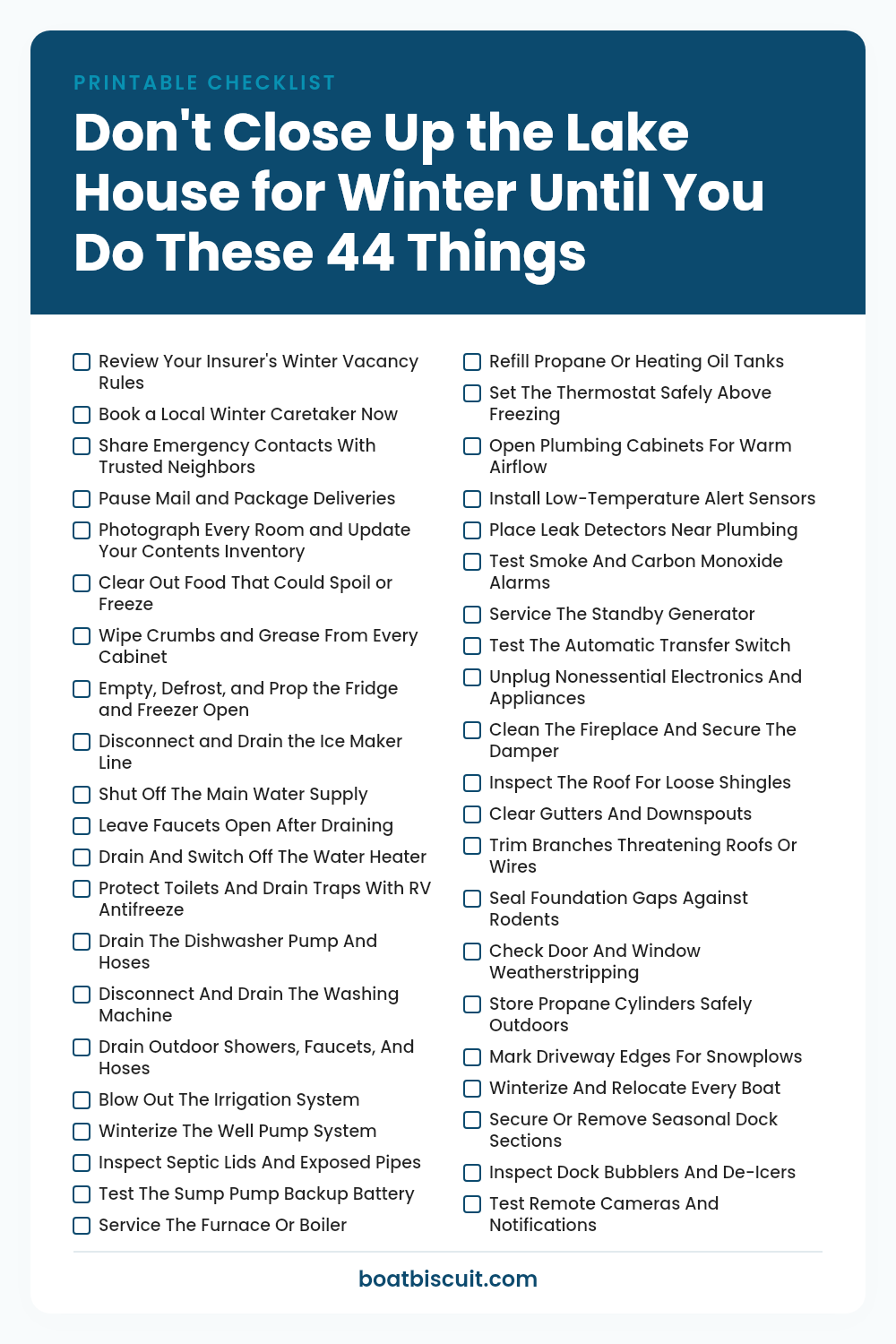
Your Printable Checklist
Save it to Pinterest or print it — every check from the list above on one page.