
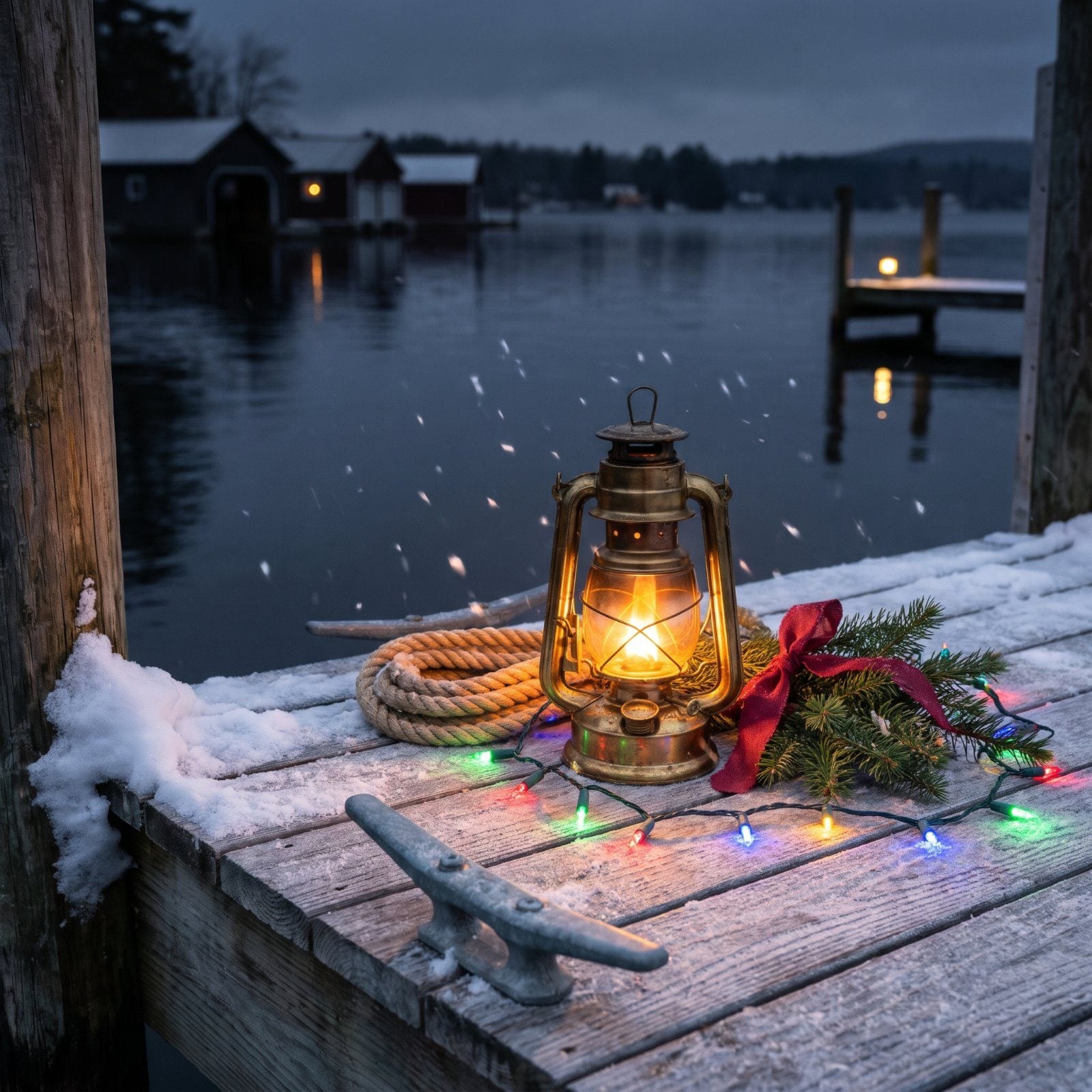
The dock creaks under a half-inch of snow, the water’s gone black and still, and somewhere down the shore a string of colored lights blinks on a boat that has no business being out this late in December. That’s the sound of a lake town getting ready for Christmas. These places don’t do the holidays the way the mall does. They drag the whole thing out onto the water, where the cold is sharper and the glow carries farther. What follows are the traditions that make a frozen lakeside feel like home when the summer crowds are long gone.
Please note that some of the imagery in this article may have been enhanced with the assistance of AI.
41. Holding a Christmas Boat Parade Down the Harbor
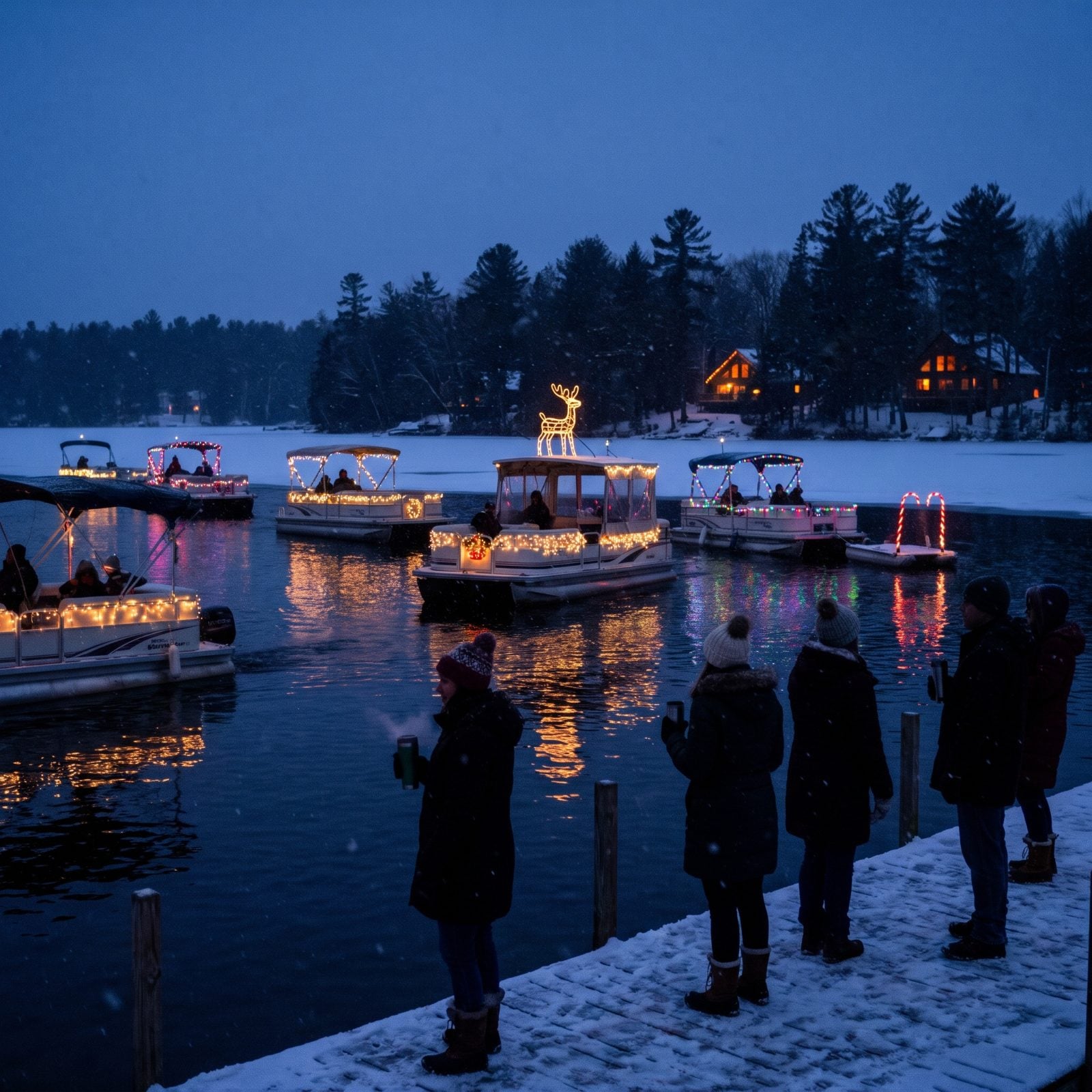
Nobody warns you how cold the water throws the wind back at you. The boat parade is a lake town showing off, plain and simple, and it’s earned every bit of the attention — dozens of boats wrapped in lights, idling slow down the harbor so the whole shore can see.
The best-decorated ones aren’t the biggest. They’re the pontoons where someone spent three weekends and a whole extension-cord budget wiring a reindeer to the rail. Judges are local, prizes are usually a gift certificate to the marina store, and the rivalry? Completely real.
40. Lighting the Historic Lakeside Lighthouse
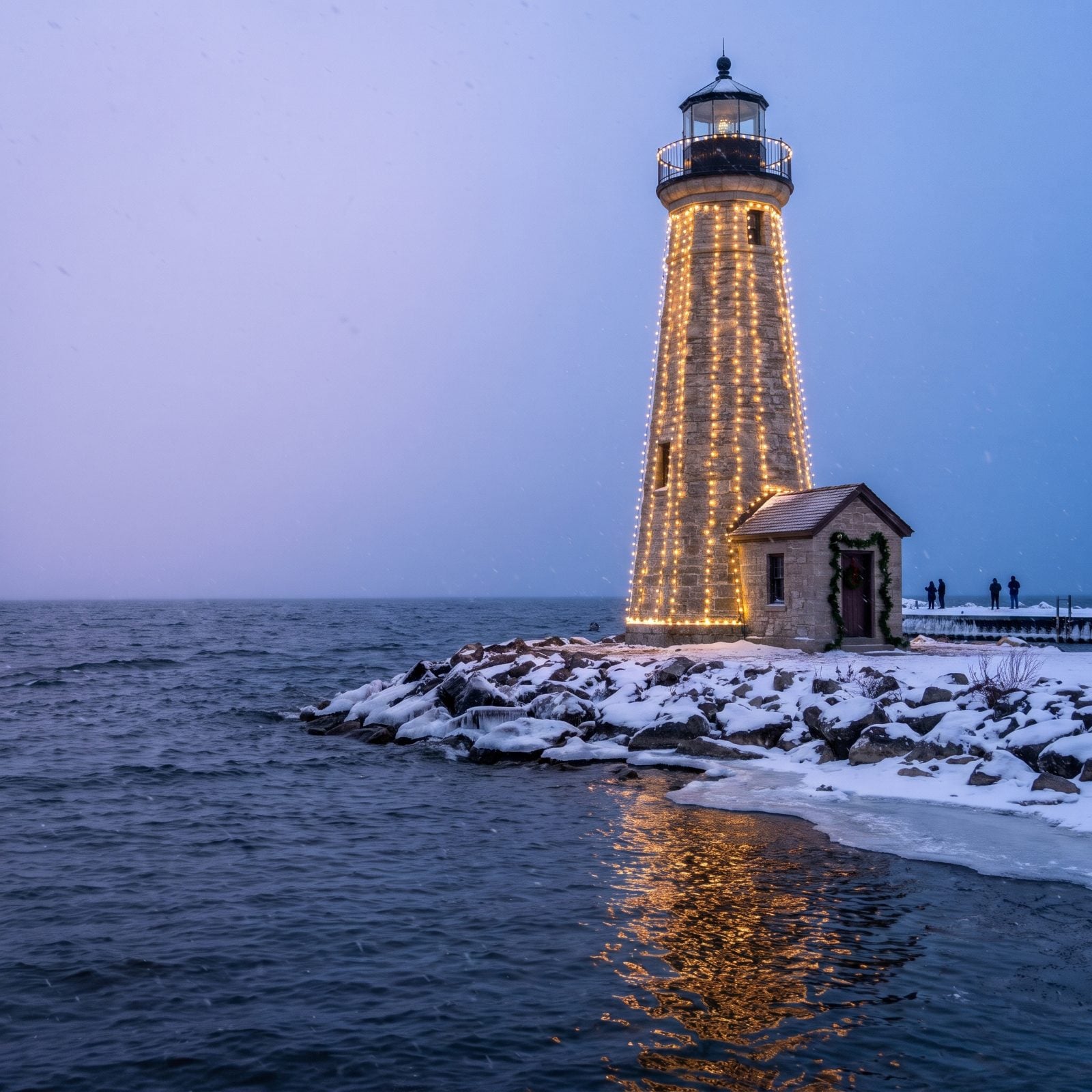
There’s a moment right before they throw the switch when the whole crowd goes quiet. The lighthouse has guided boats home all year. For one night it gets to be the thing everyone looks at instead.
Most of these towers are a century or more old, and the light-up is usually run by a historical society scraping by on bake-sale money. The lights go up by hand — cold hands, on a ladder nobody enjoys. Worth knowing when you drop a few dollars in the donation bucket.
39. Bringing Santa Ashore by Rescue Boat
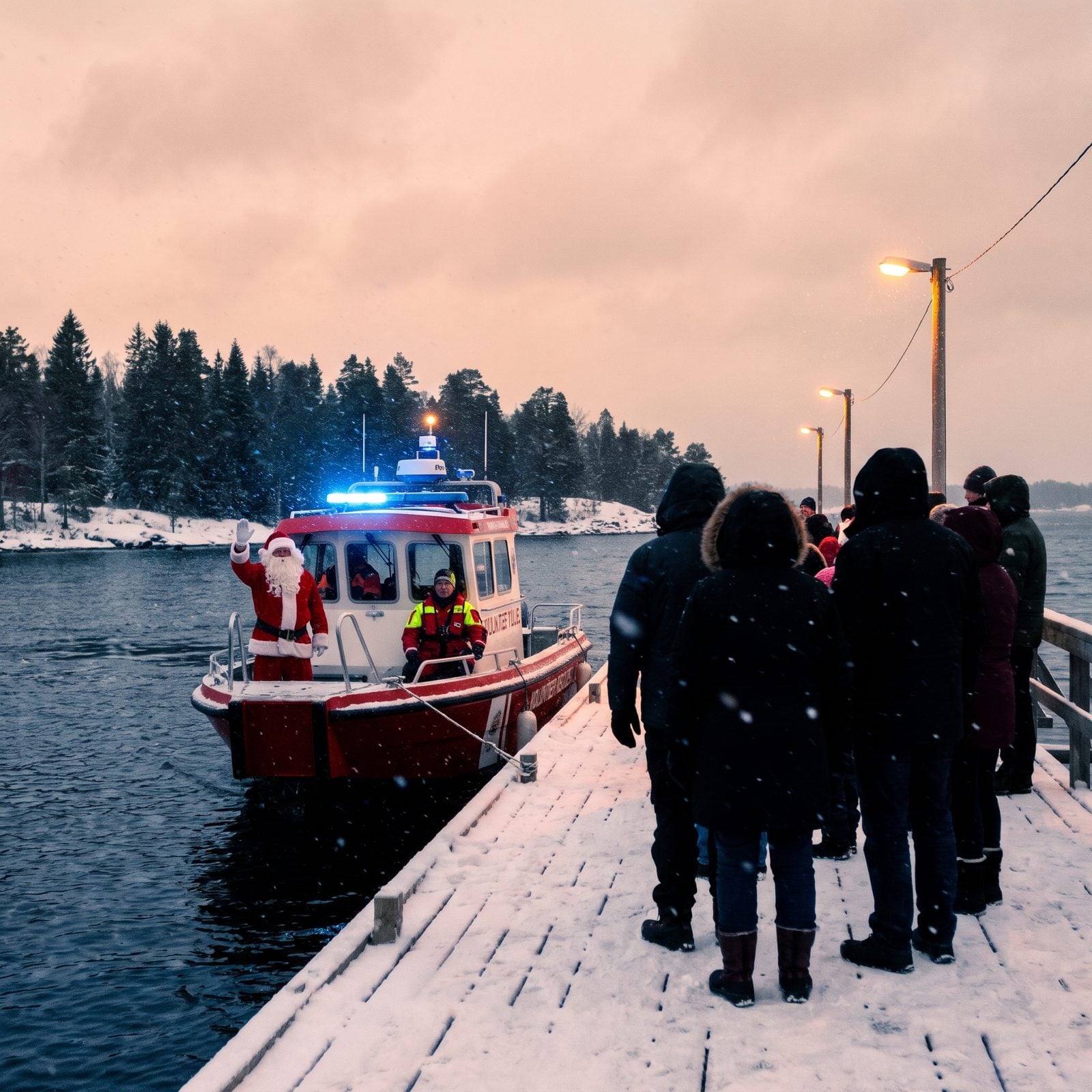
Forget the sleigh. On a lake, Santa comes in on the fire-rescue boat, lights flashing, usually with a couple of volunteers in waders ready to catch the bow line.
It’s a great bit, and it’s also a quiet thank-you. The same crew that fishes capsized kayakers out of the summer water gets to be the heroes on a happy day for once. Kids line the dock an hour early no matter how cold it is.
38. Illuminating a Floating Christmas Tree on the Water
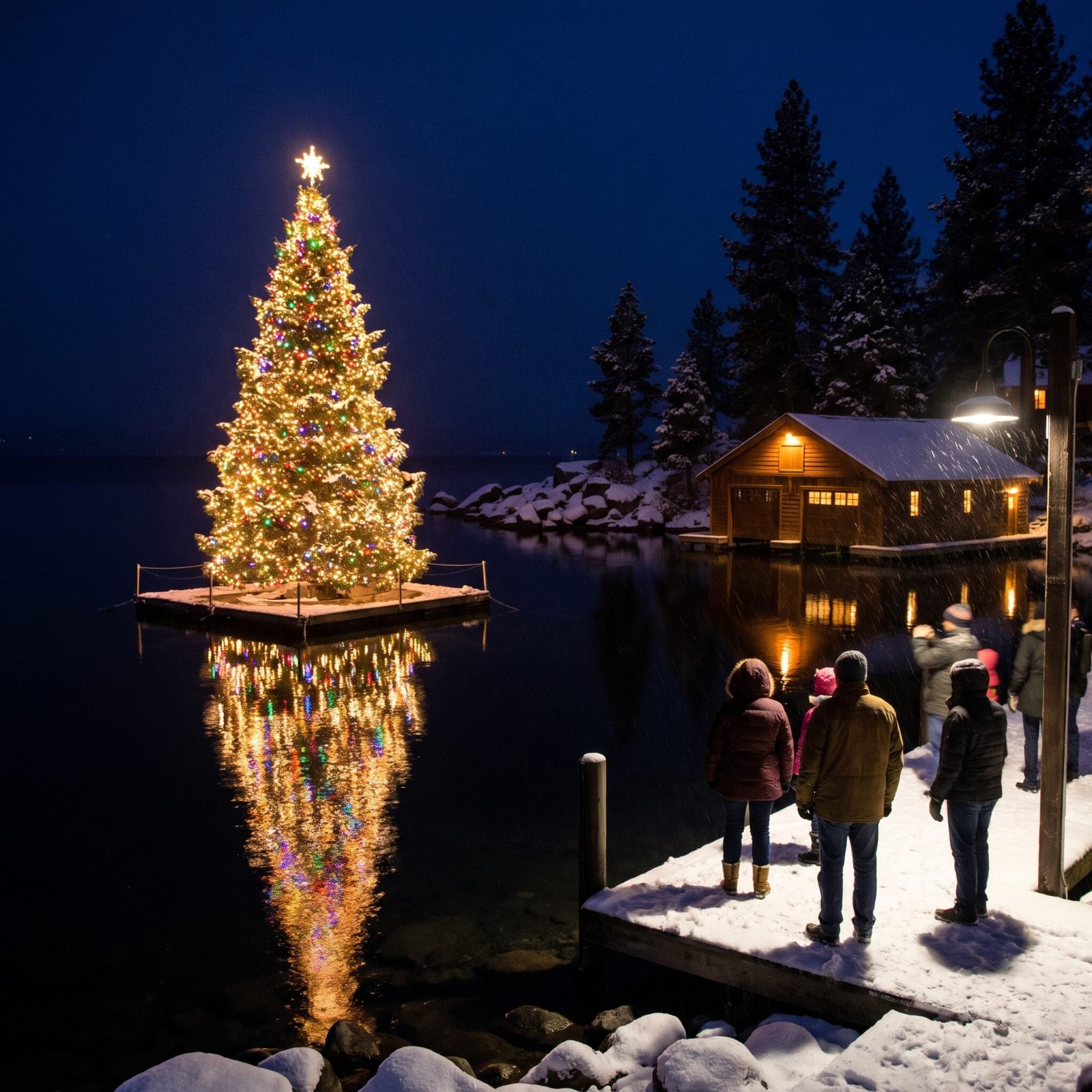
A Christmas tree out on the water shouldn’t work. No ground, no living room, no obvious reason. And yet it’s the one people drive across two counties to see.
What holds it up is more stubbornness than magic. Someone sinks a weighted platform, anchors a 20-foot fir to it, and runs a marine-grade cable to a shore generator while standing in a boat in December. On calm nights the reflection doubles the whole thing, so the tree looks twice as tall as it is.
Remembering how his troop first lit a tree anchored out in the middle of a lake, a former scout said “We all went home and got all the light bulbs we could find”
37. Ferrying the Town Christmas Tree Across the Lake
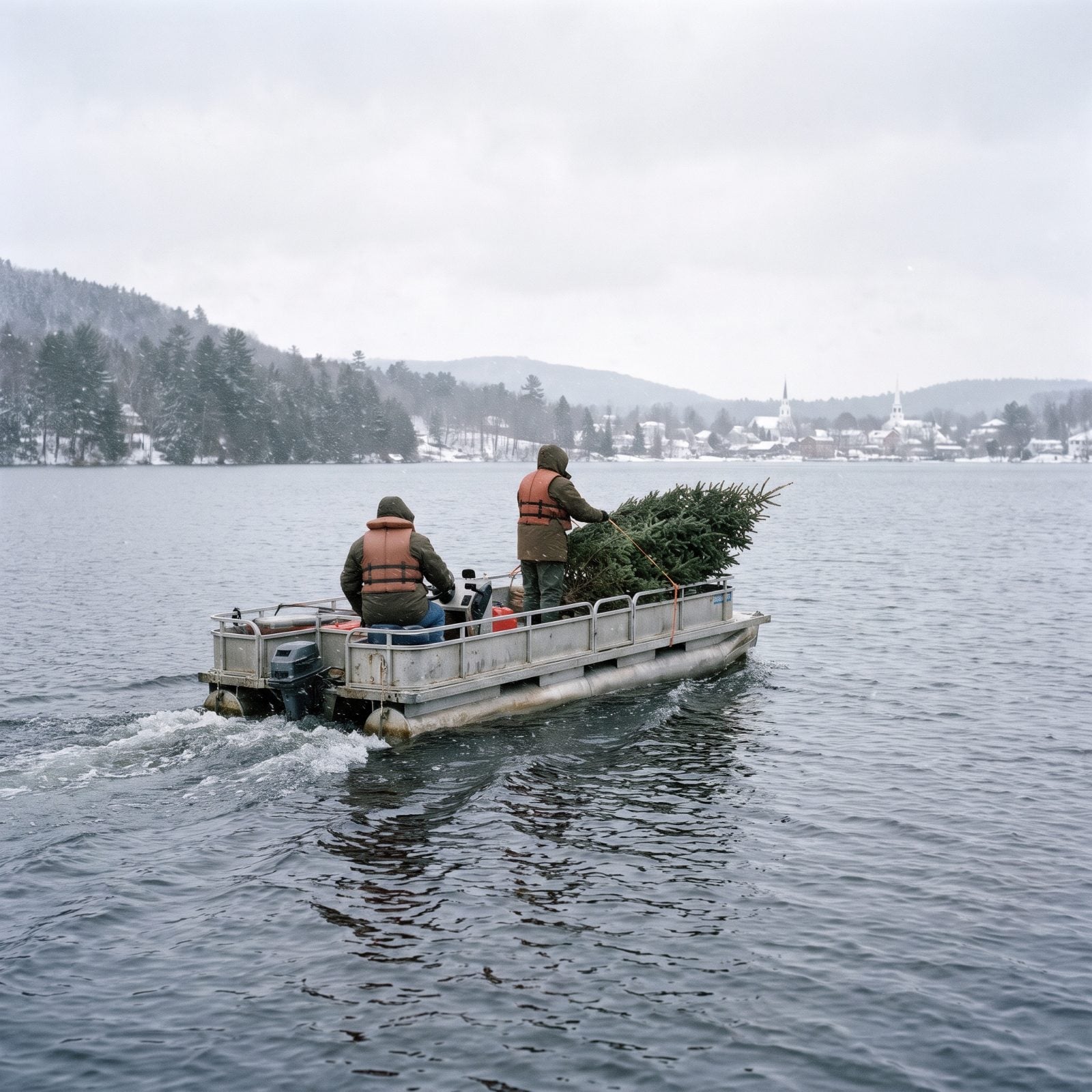
Some towns keep the tree lot on the wrong side of the lake on purpose. The crossing is the whole point.
A fir rides propped at an angle in an open aluminum skiff, held steady by the crew and tied with loose rope, and gets motored across the water to the town-square dock, where a crew hauls it upright with more rope and more swearing than you’d expect. Logistically ridiculous. Also the kind of thing a town does because their grandparents did it, and nobody’s about to be the generation that buys the tree at a gas station instead.
36. Sending Pontoon Carolers Around the Waterfront
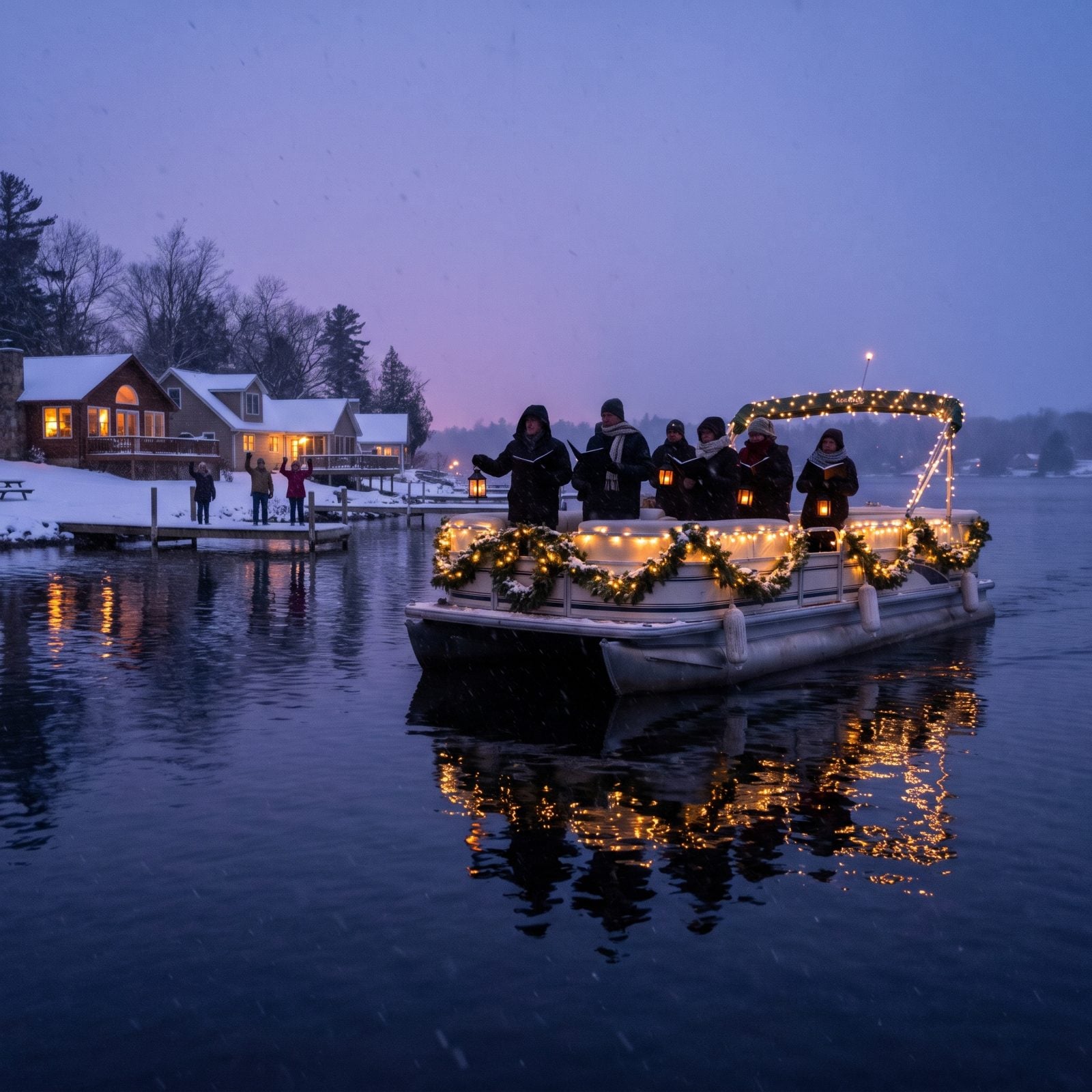
The carol sounds different coming off the water. Thinner, somehow, and it carries. You hear them before you see the lights rounding your dock.
Pontoon carolers hit the waterfront cottages that face the lake, the ones you can’t reach by sidewalk. Folks come out onto their docks in bathrobes and boots and sing back the choruses they know. It is amateur, out of tune, and one of the better things a cold December night has going for it.
35. Decorating Every Dock Along the Harbor
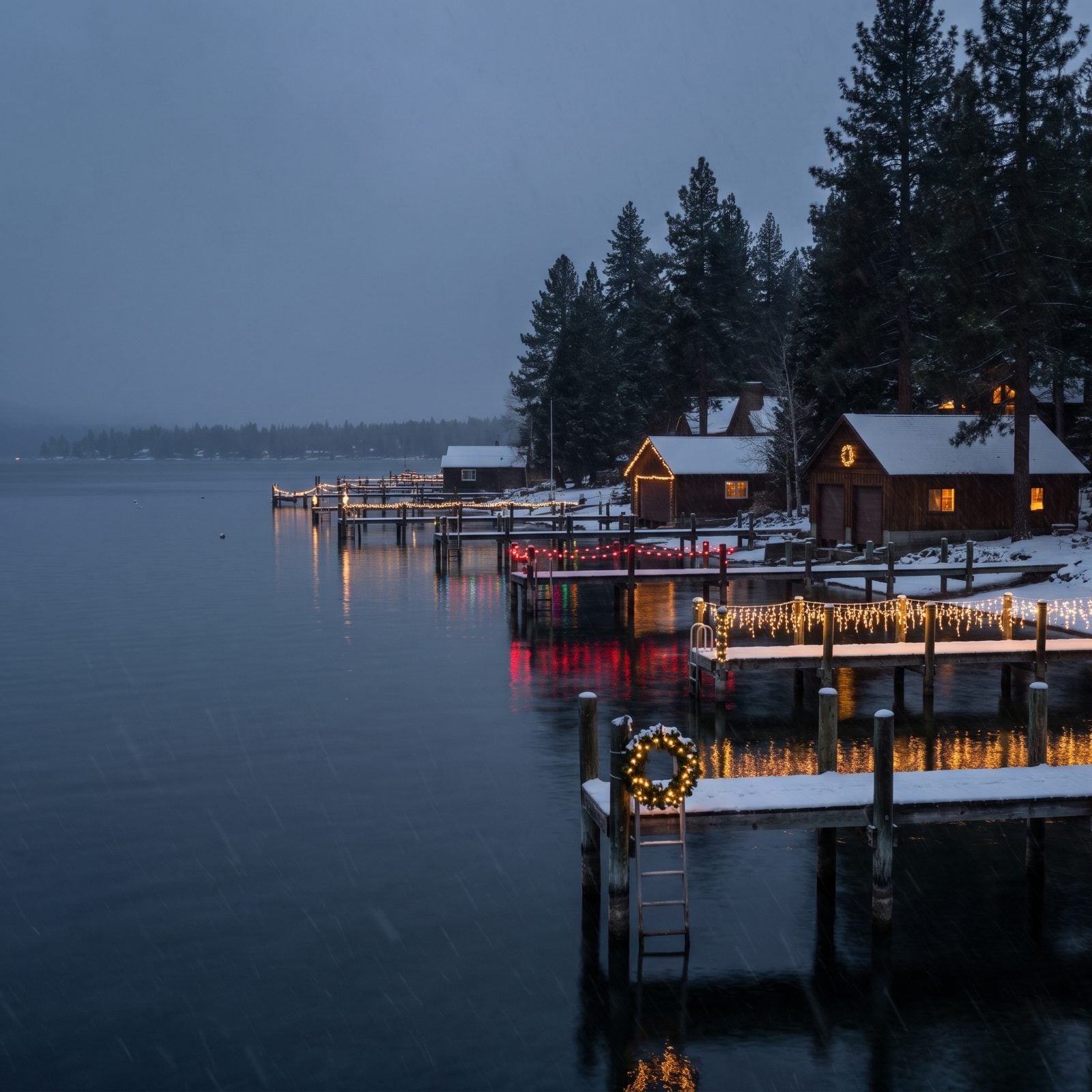
Here’s where the peer pressure gets beautiful. One neighbor lights their dock, then the one beside them can’t stand to be the dark gap in the row, and by the second week of December the whole shoreline is a string of glowing piers.
The reflection is the payoff. On a still night the lights run twice as long down the water, and the harbor reads like a necklace laid flat.
34. Sounding a Christmas Eve Harbor-Horn Salute
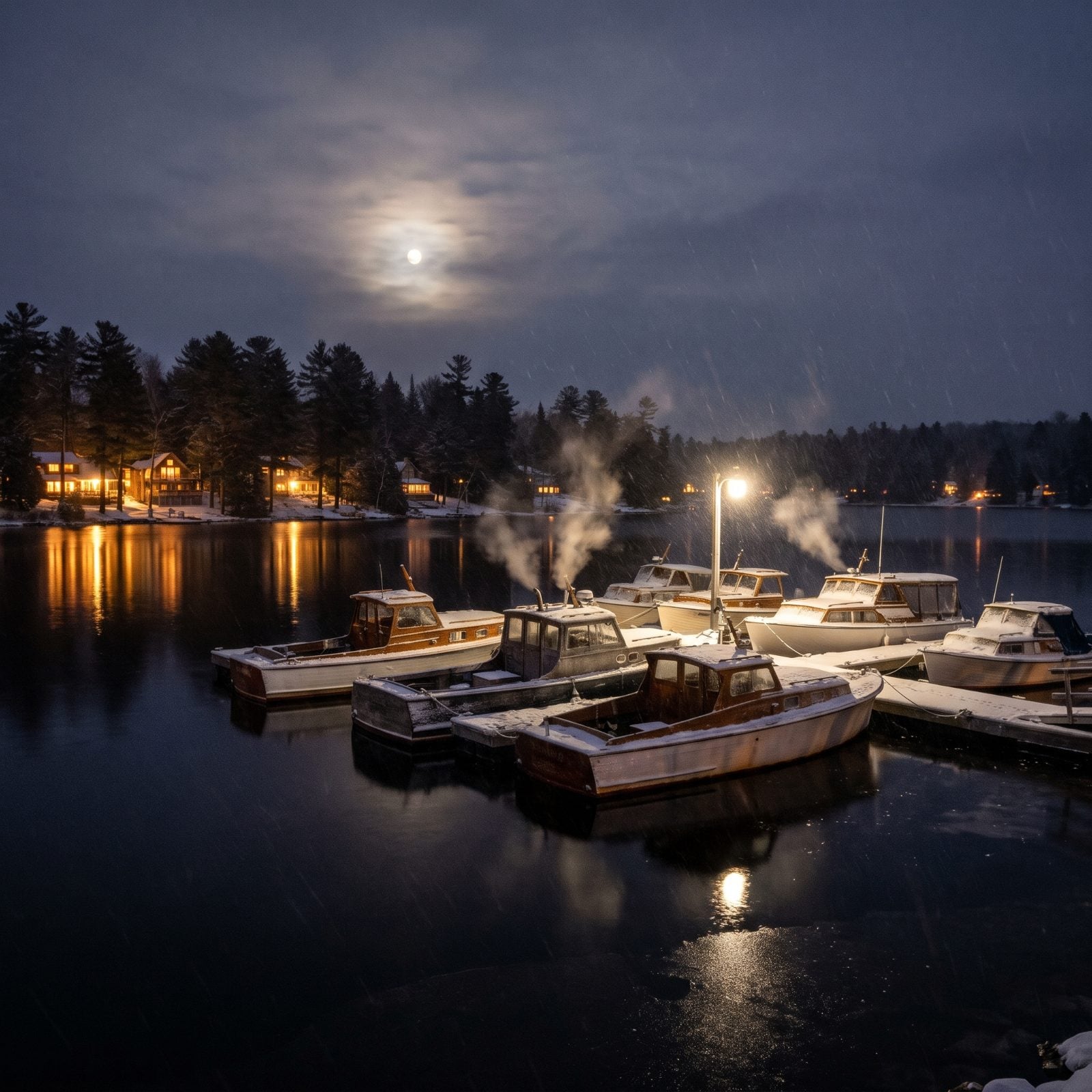
At a set minute on Christmas Eve, every boat still in the water leans on its horn at once. For about thirty seconds the harbor is deafening. Then it stops, and the quiet that follows is the actual point.
It’s a strange tradition and an old one. Part celebration, part roll call, a way for a town that lives by the water to say we’re all still here before everybody goes inside. You can feel it in your chest from the shore.
33. Hosting a Christmas Blessing of the Fleet
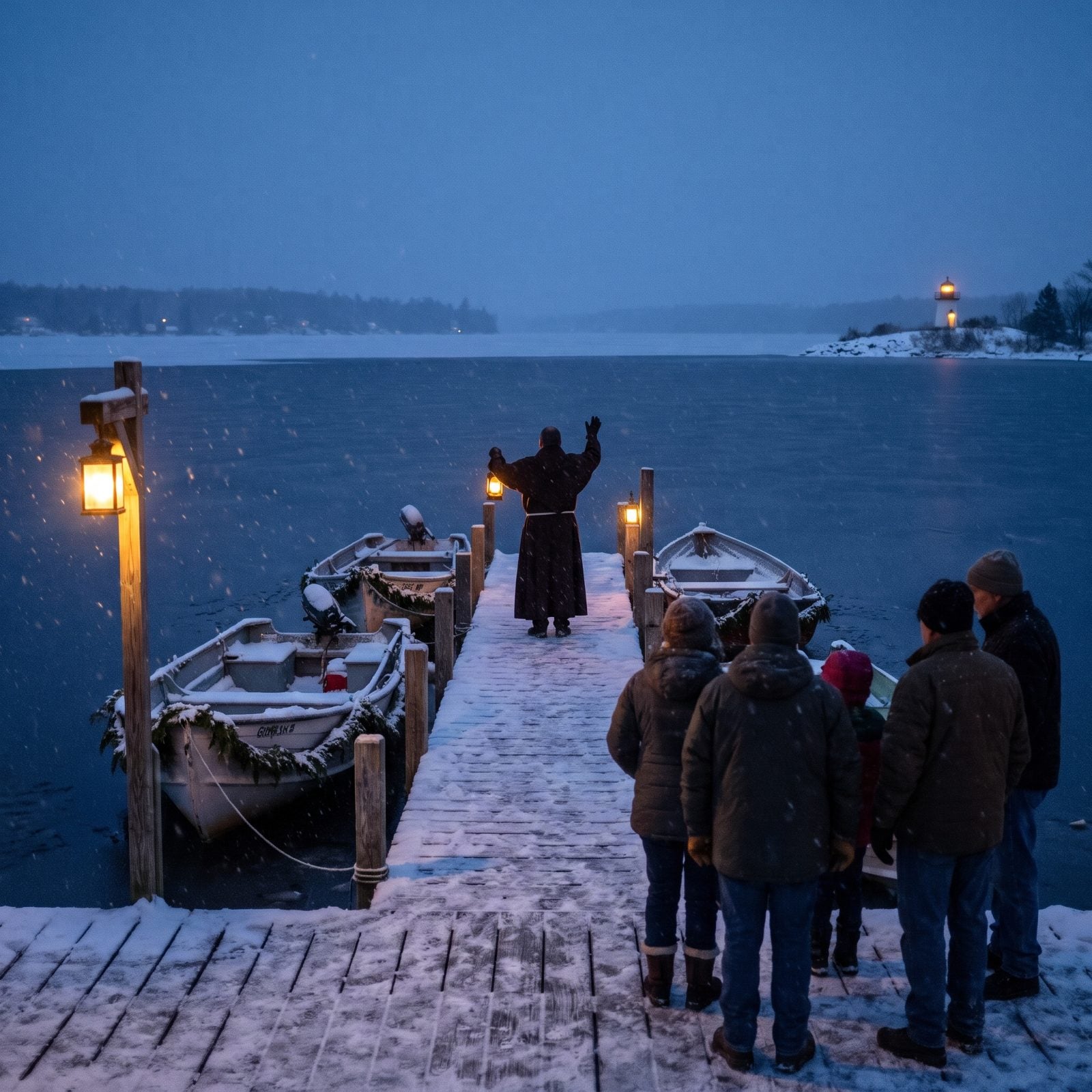
You usually think of the blessing of the fleet as a summer coastal thing. Plenty of lake towns moved it to Christmas, and it fits the season better than you’d guess.
It’s a short, plain ceremony at the dock. A few words over the boats, a prayer for everyone who makes their living or their peace on the water, a nod to anyone the lake took. Then everybody goes and drinks cocoa out of a thermos. No spectacle. Just a town being gentle with itself for ten minutes in the cold.
32. Launching Holiday Fireworks Over the Lake
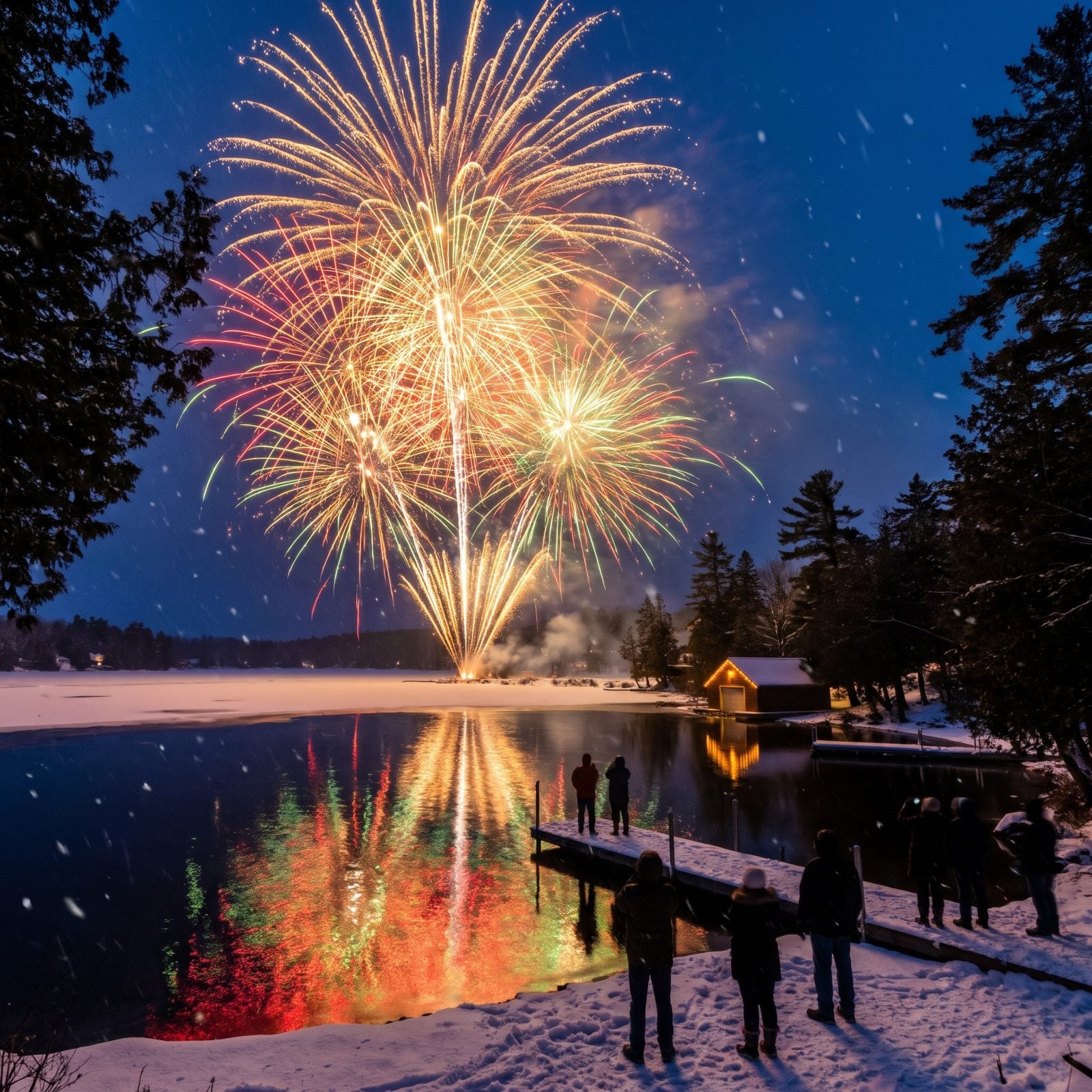
Water doubles fireworks. That’s the trick lake towns figured out that landlocked towns never will. Every burst overhead gets a second life streaking across the black surface below.
Winter helps, too. Cold, dry air makes the colors snap harder, and with the summer boat traffic gone the whole lake goes mirror-flat. Crews fire them from a barge or a point of land with the water as a safety buffer.
The real move is to watch from a dock out on the water instead of the crowded shore. You get the sky, the reflection, and the sound rolling back at you off the far bank, all at once. Bring a blanket. Bring two.
31. Hanging the Marina’s Giant Evergreen Wreath
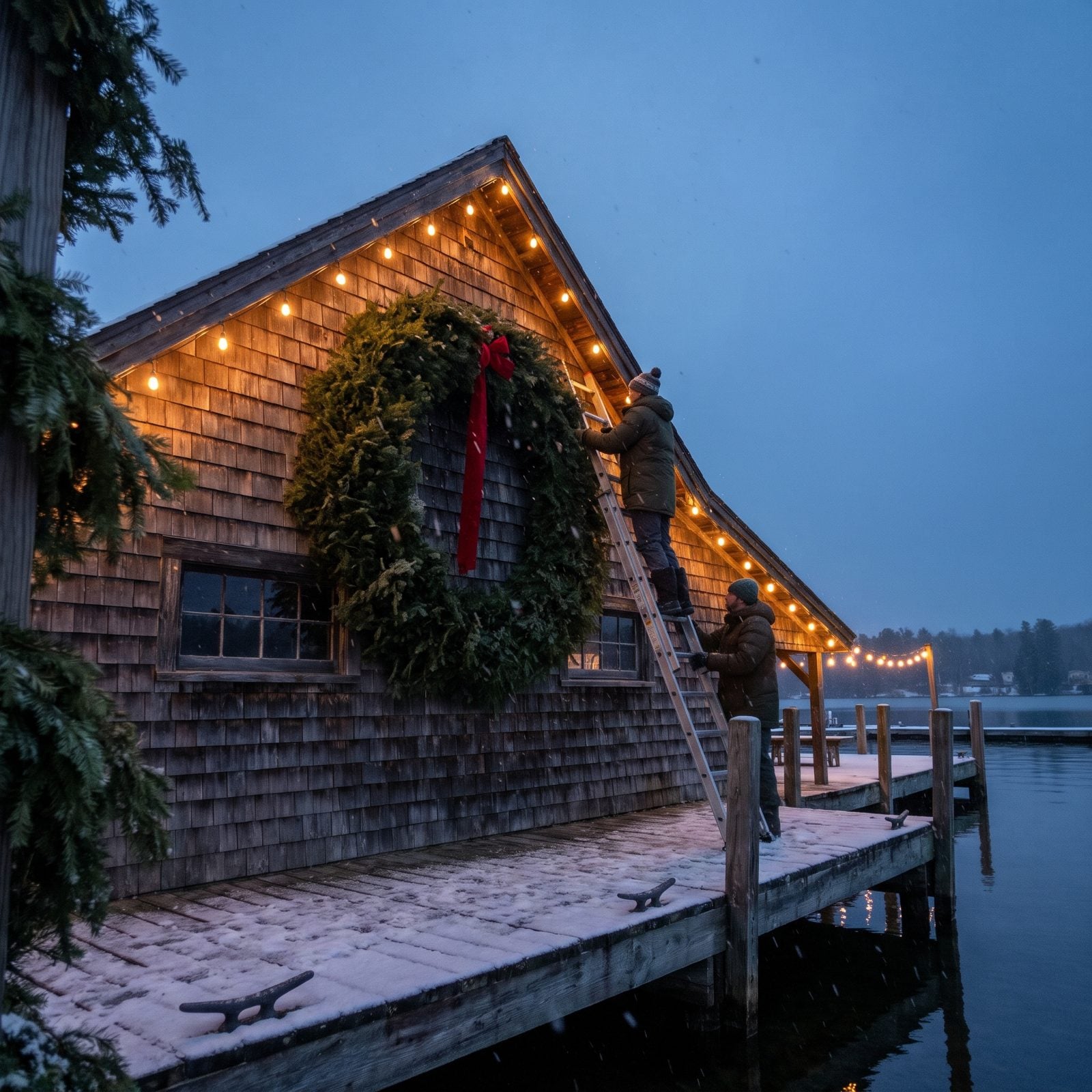
It starts every year with an argument about the ladder. The wreath goes up on the boathouse gable the first cold Saturday after Thanksgiving, and somebody always underestimates how much a six-foot evergreen wreath weighs once it’s soaked through.
The thing is heavy, prickly, and wider than two people’s arms stretched out — which is exactly the charm. You spot it from across the water, a dark green circle against gray clapboard, and you know the season has officially started on the lake.
30. Lining the Shoreline With Christmas Luminaries
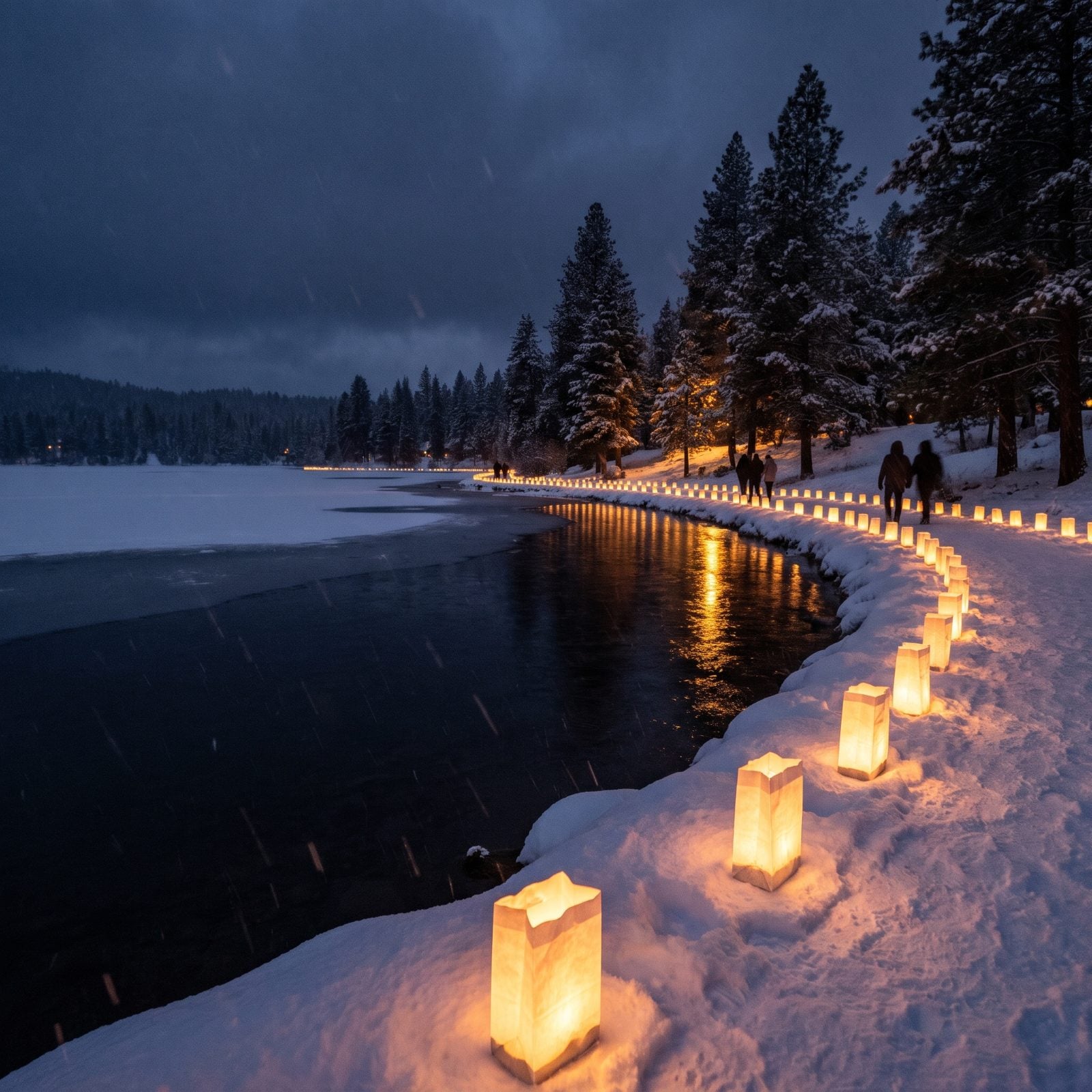
A luminary is just a paper bag, some sand, and a candle. Line a few hundred of them along a dark shoreline, though, and the whole lake seems to change temperature.
The magic is in the reflection. Open water — even a thin strip of it before the deep freeze sets in — catches every flame and doubles it, so you walk the path at dusk and the light runs beside you on the water, flickering, breaking apart in the wind, pulling itself back together.
The work is real, though. Somebody fills every bag by hand, and the first gust after setup sends half the crew chasing bags down the dock.
29. Marching in a Lantern-Lit Christmas Parade
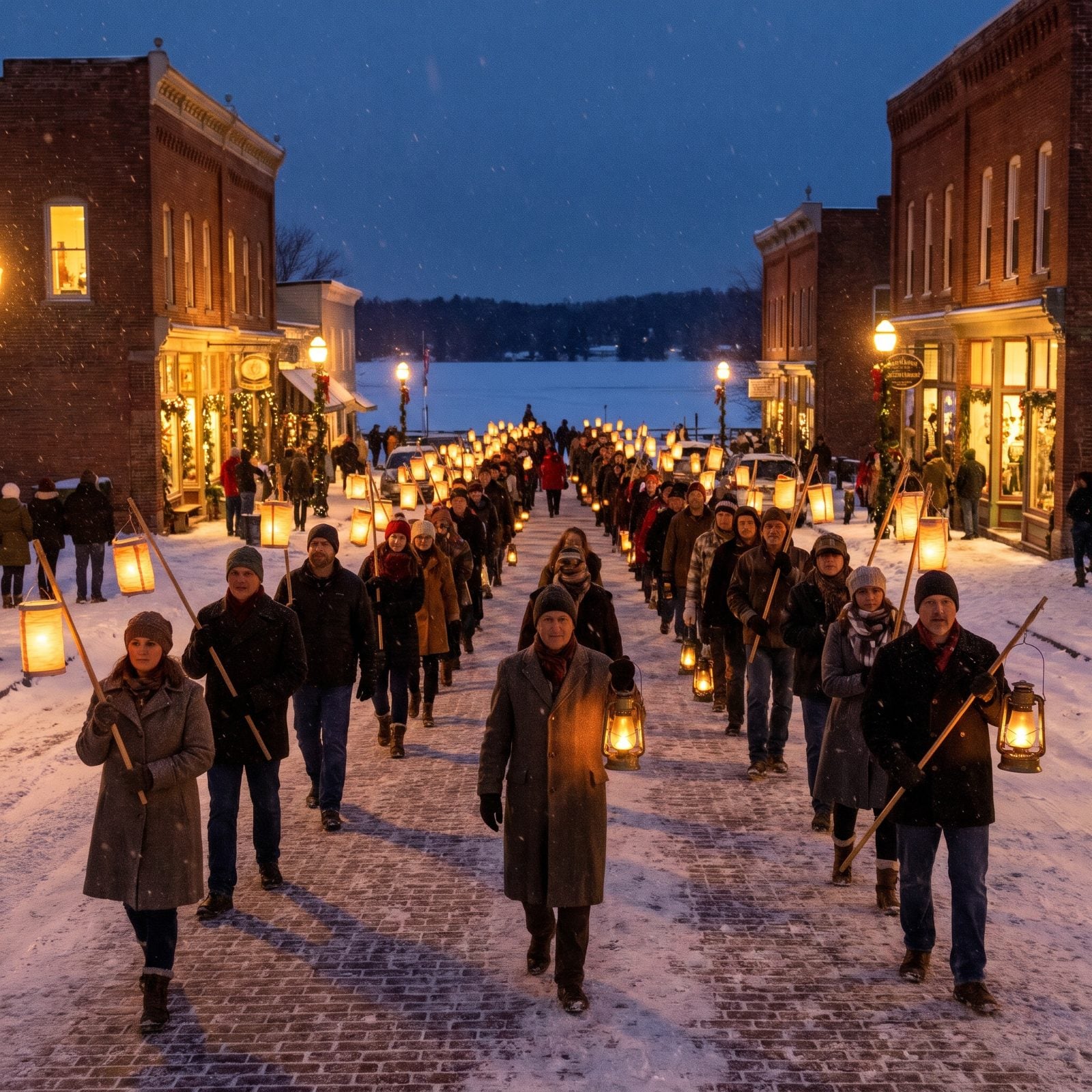
Forget the fire trucks and the inflatable snowmen. A lantern parade is the opposite of the big-city version, and it’s better for it.
People gather at dusk, each carrying their own light. Paper lanterns, old oil lamps dug out of garages, mason jars with tealights wobbling inside. The procession moves slow down the main street toward the water, and the only sound is boots on packed snow and the occasional kid asking how much longer.
28. Dressing Up for a Victorian Christmas Stroll
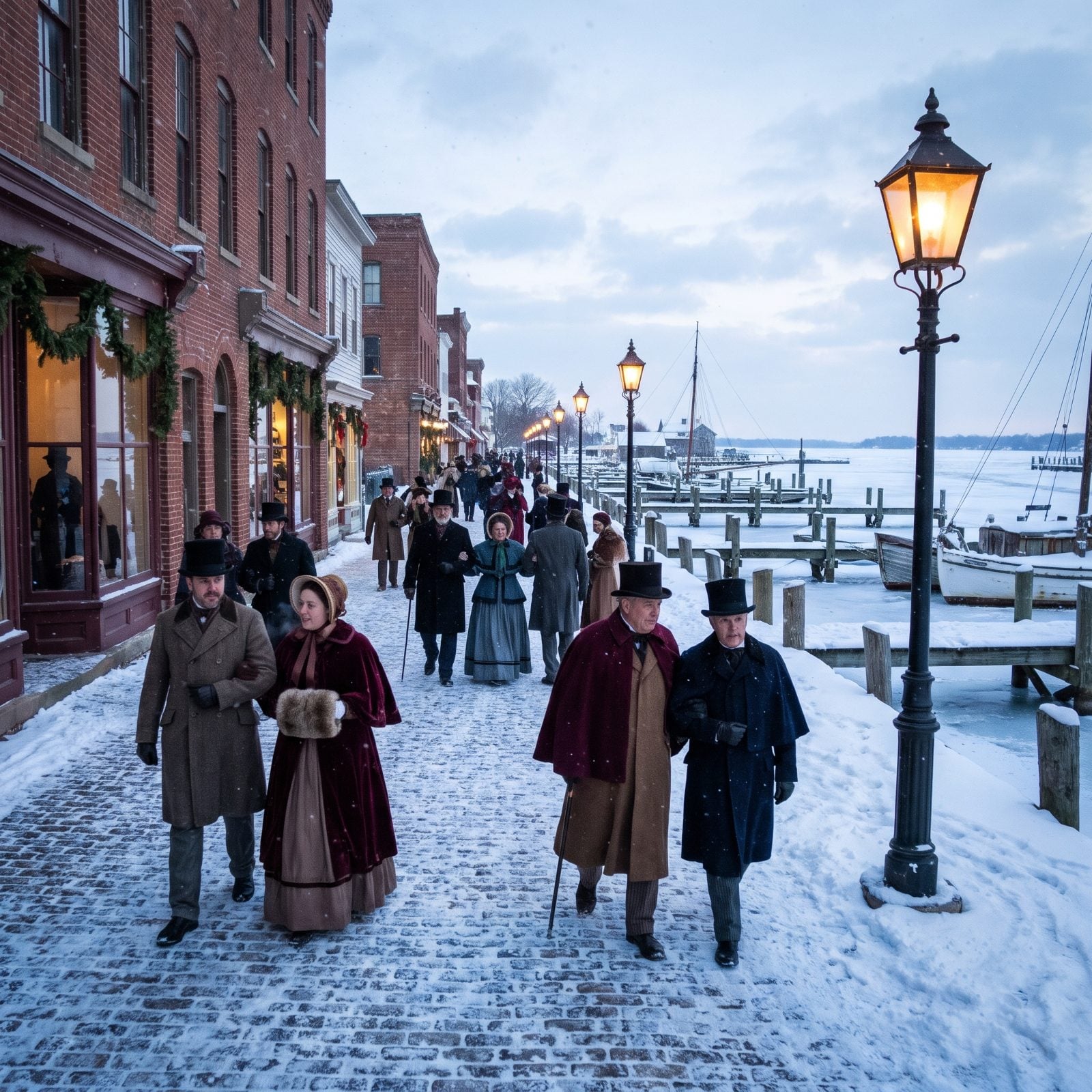
Some lake towns go full Dickens for a weekend. Long wool coats, capes, top hats, the whole costume drawer. It sounds like a tourist gimmick until you’re standing on a cobblestone street in the cold watching it happen.
The setting carries it. These towns already have the bones — the 1890s storefronts, the gas-style lamps, the harbor in the background with its docks frozen in place. Put people in period dress and the century falls away for an afternoon.
27. Singing Carols Around the Lakeside Gazebo
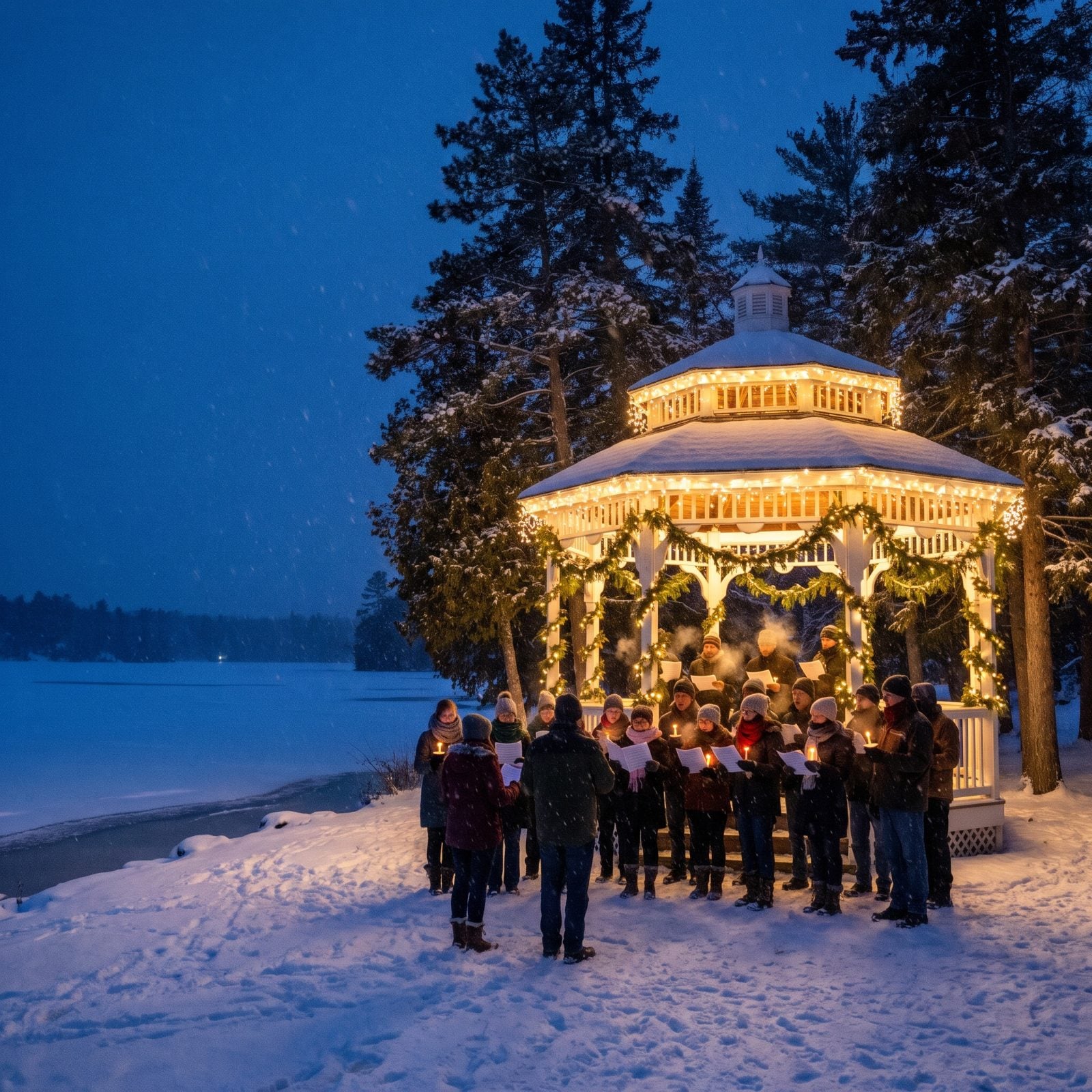
Every lake town with a gazebo uses it for exactly this, one night a year.
The caroling isn’t good. We’ll admit it. Half the crowd doesn’t know the second verse of anything, and somebody’s always a beat behind. Doesn’t matter one bit. You stand in a loose circle, candle in one hand, song sheet in the other, breath fogging in front of you, and you sing anyway.
26. Hosting a Brass-Band Concert in the Boathouse
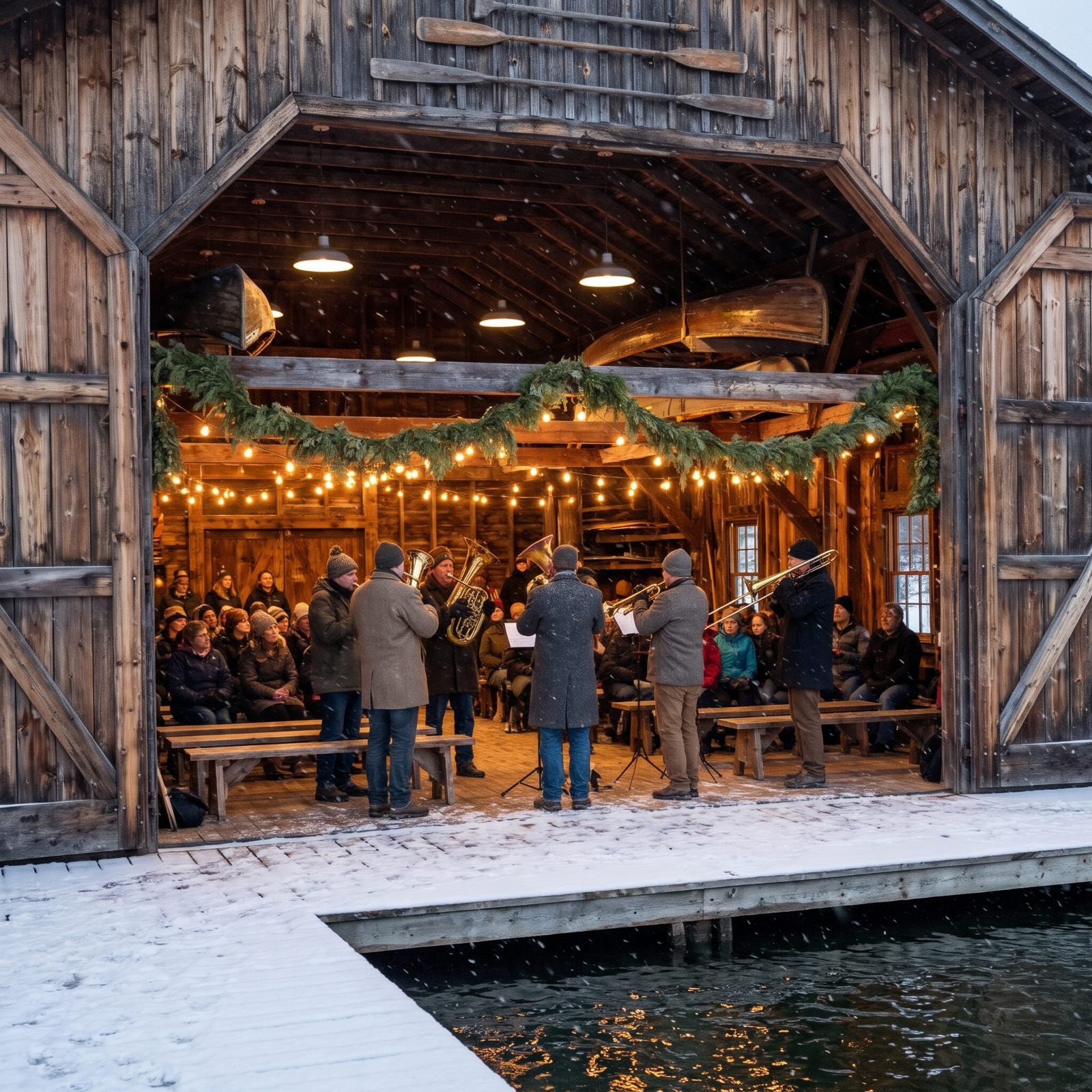
A boathouse has acoustics nobody planned for. High wooden ceilings, hard walls, an open end facing the water — put a brass band in there and the sound rolls clear out across the lake.
The temperature is part of it. Trumpets and trombones get cranky in the cold, so players blow warm air through them between numbers, and the whole room ends up smelling of valve oil and damp pine. You sit on a hard bench in your coat and let the low notes vibrate up through the floor.
Bundle up. The doors stay open to the water on purpose, and the back row gets the wind off the ice.
25. Holding a Christmas Market in an Old Boathouse
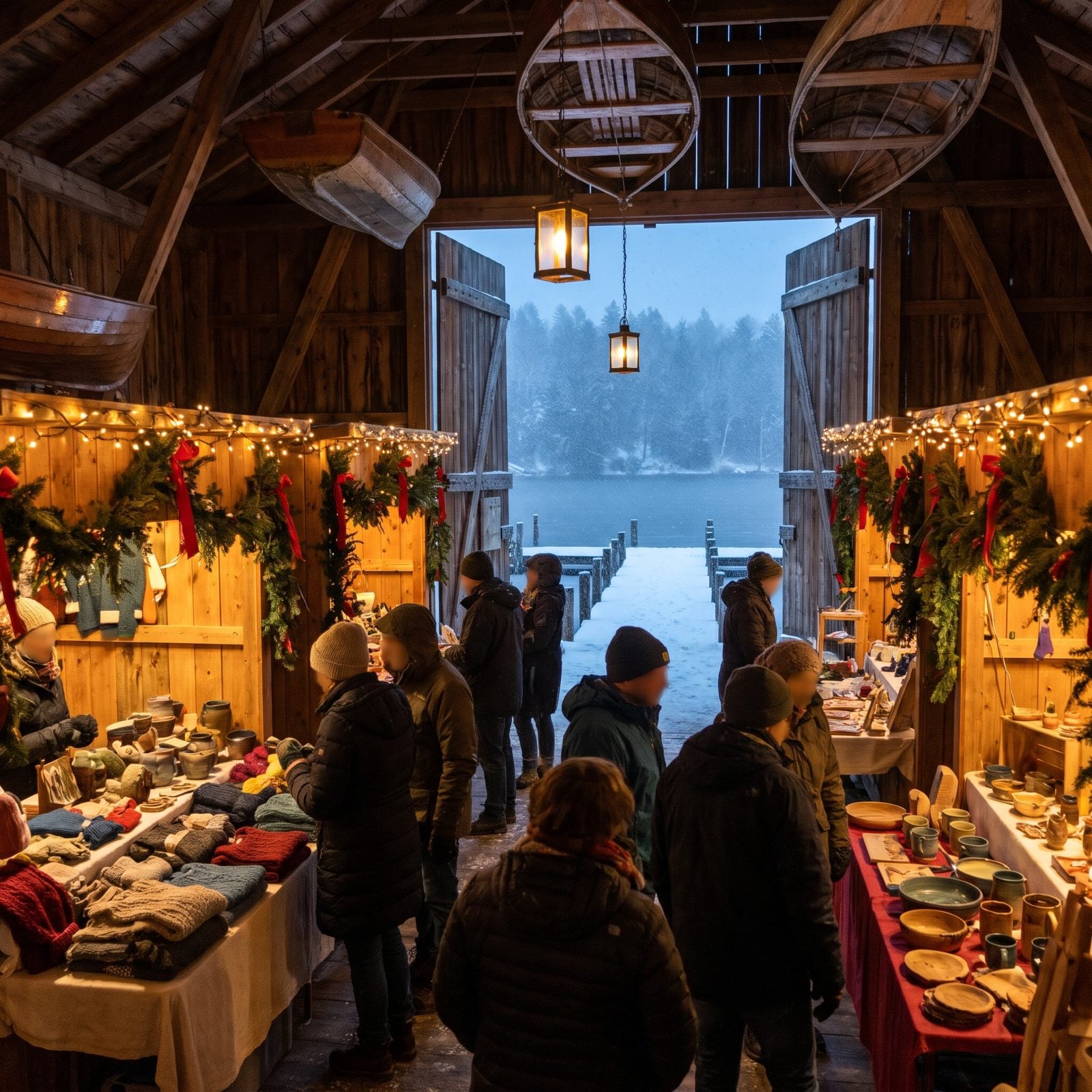
Nobody built these boathouses to sell handmade jam, but they’re perfect for it.
In summer the big wooden bay holds boats. Come December it holds vendor stalls strung with lights, the old timber walls glowing amber, and you wander the aisles with the lake visible through the open doors, cold air at your back and mulled cider warming your hands.
The goods are the usual — knit things, local honey, somebody’s woodwork. What you’re really buying is the hour spent inside a hundred-year-old building that smells of pine and lake water, snow coming down past the dock.
24. Opening Historic Lake Cottages for Holiday Tours
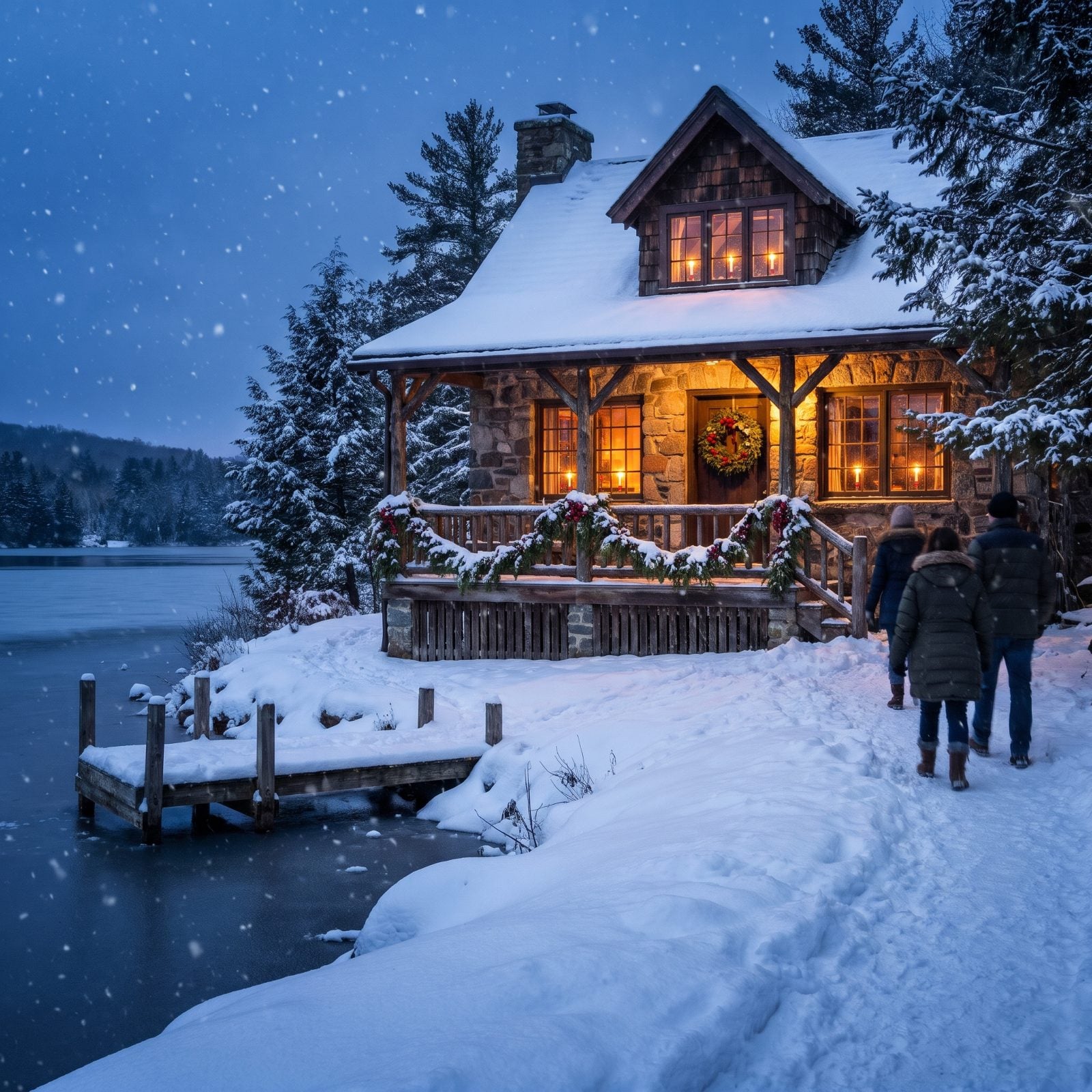
A handful of the old cottages open their doors one weekend in December, and the whole town lines up to walk through.
These are the houses you’ve paddled past all summer and wondered about. The 1910 bungalow with the deep porch. The log place with the stone chimney. For a few hours they let you inside, decorated for the season, candles in every window, and you finally get to see how the other side of the lake lives.
23. Flooding the Town Square for Outdoor Skating
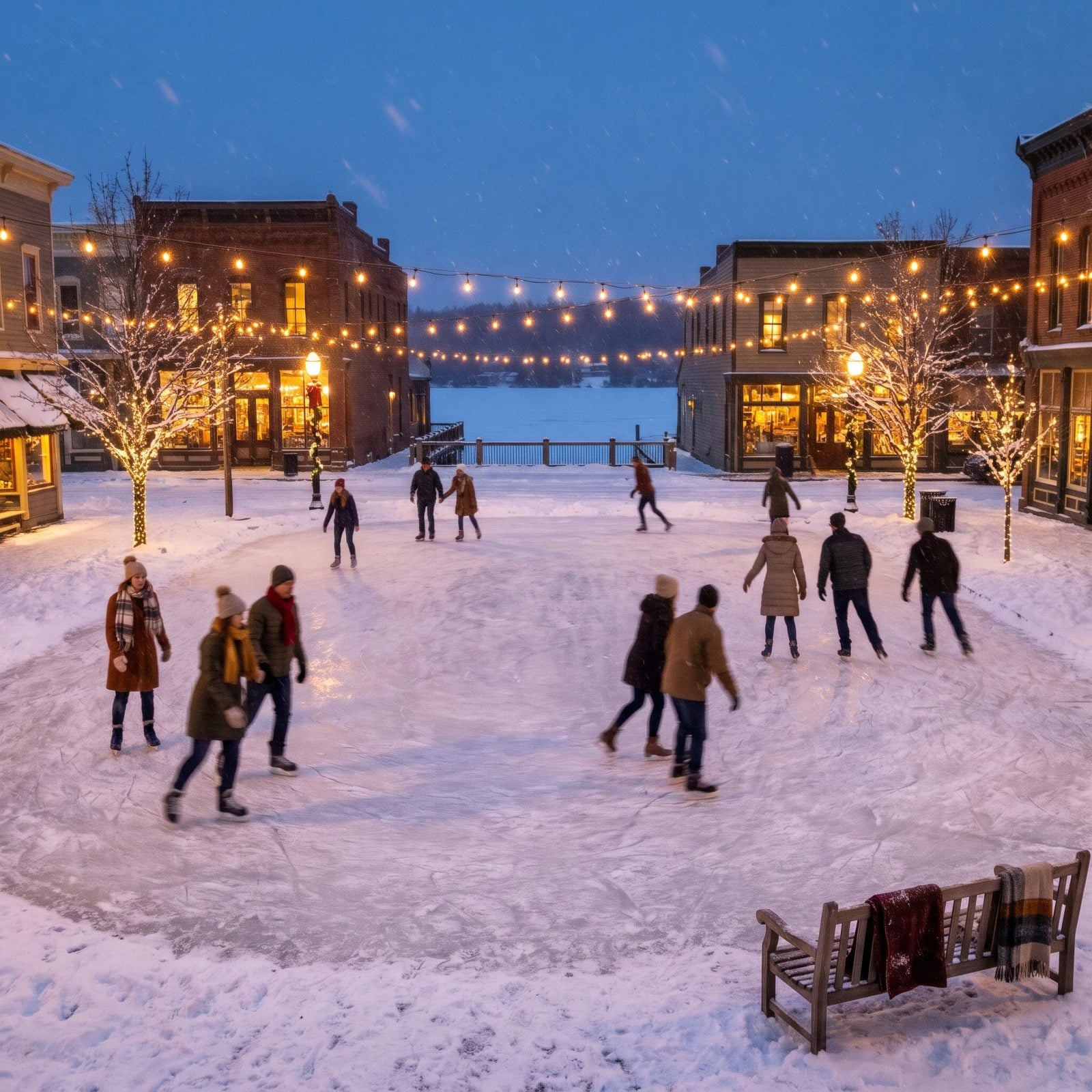
When the lake ice isn’t safe yet, the town makes its own. Somebody runs a hose into the square on the coldest nights and floods a flat patch until it freezes glass-hard.
It’s a scrappier skate than the lake proper — smaller, bumpier, ringed with string lights and a warming bench where the little kids trade skates and the dads catch their breath.
But it’s safe, it’s walkable, and it runs all season no matter what the lake is doing. Half the town learns to skate right there in the square, grabbing the boards, going down hard, getting up.
22. Racing Vintage Iceboats in Holiday Colors
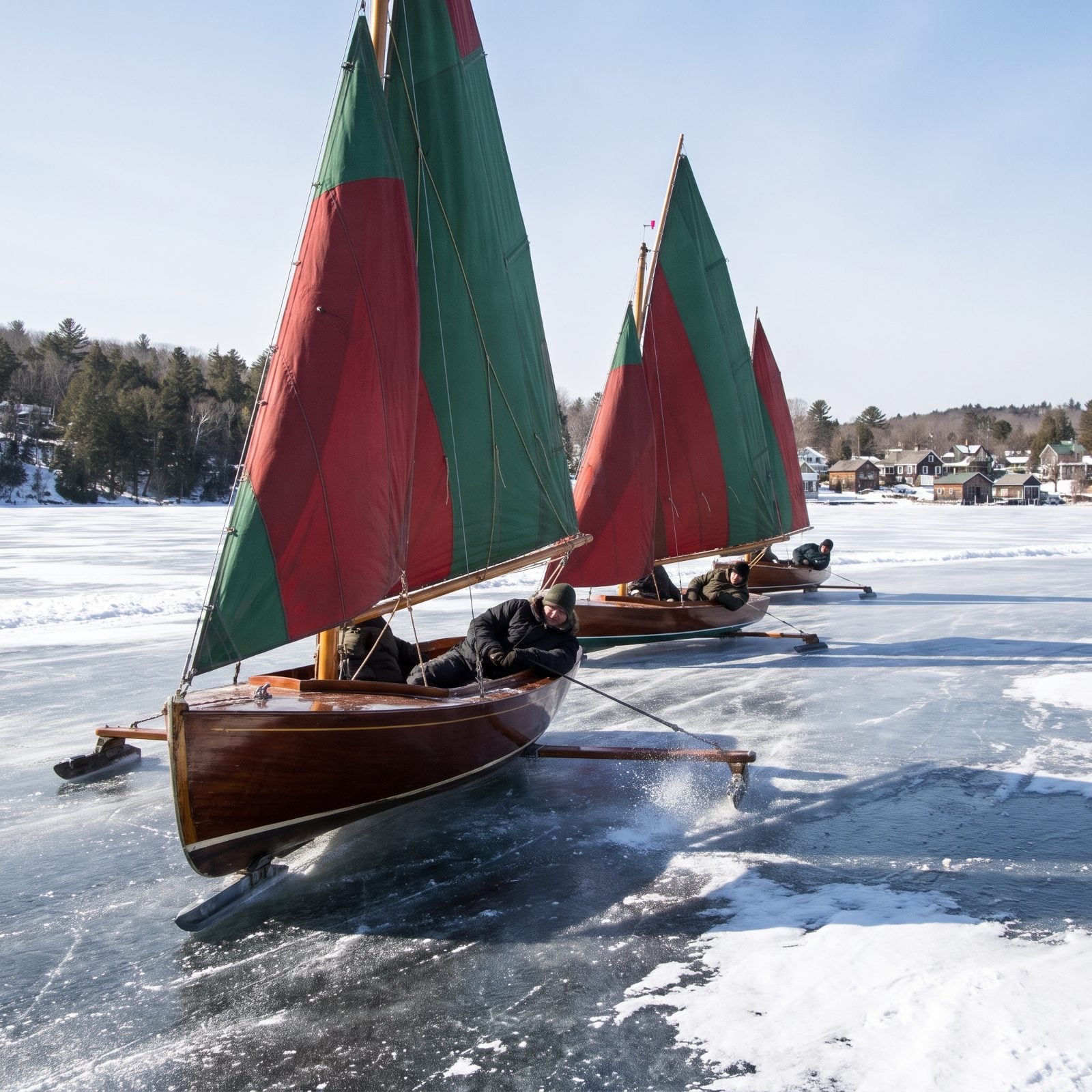
This one surprises people. These boats are old and genuinely a little quirky: smooth, carvel-planked dinghy hulls raised up off the ice, with a runner plank carrying a runner on each side and a steering runner under the bow.
The holiday version dresses the fleet in red and green sails and sends them sliding across the frozen lake while the town watches from shore. Some of these hulls are a century old, varnished wood, passed down through families who’ve sailed the same lake for generations.
21. Taking a Christmas Morning Polar Plunge
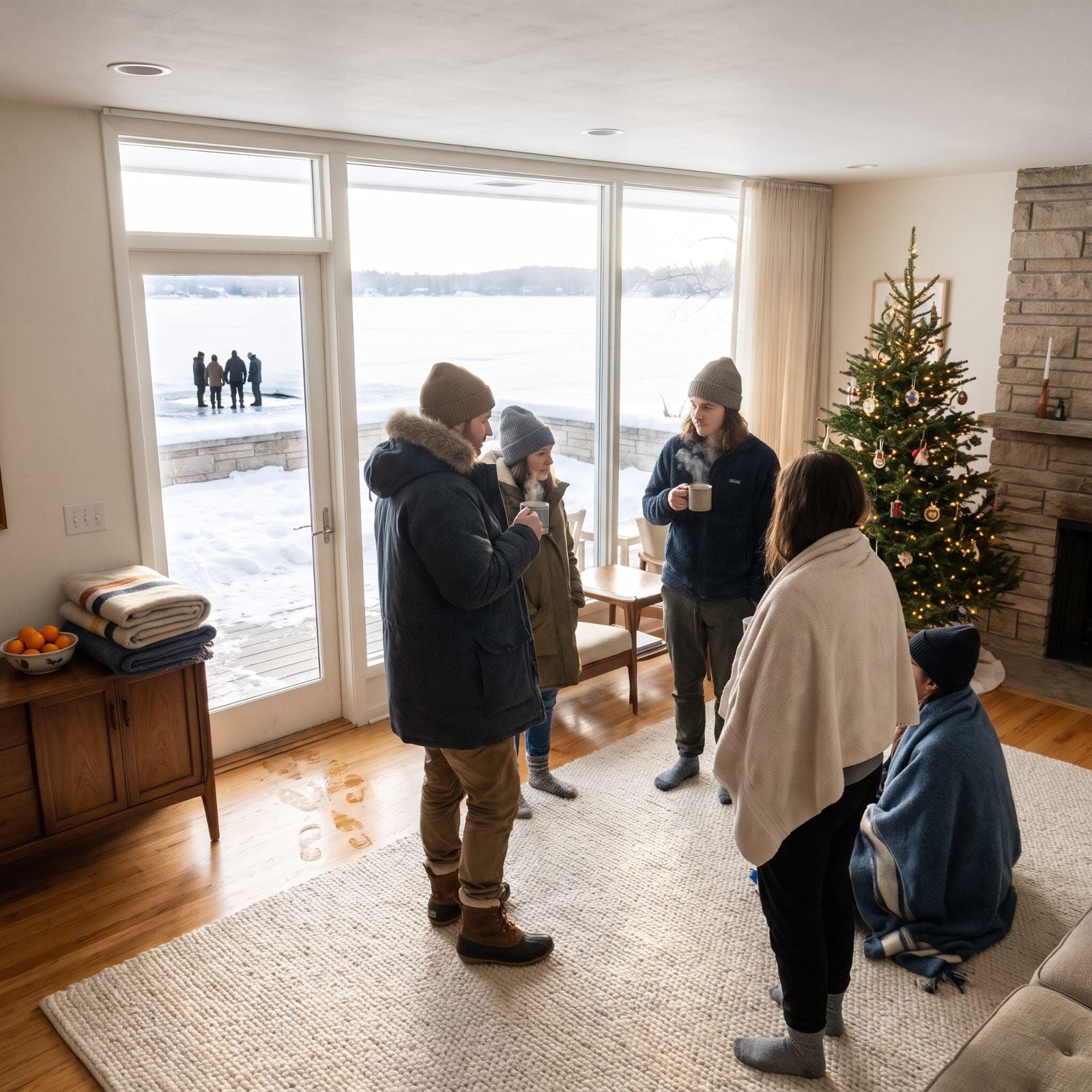
Nobody does this because it feels good. You do it because your friends are standing out on the ice watching, and backing out in front of them is worse than the water.
The lake is frozen solid and snow-covered all the way to the far shore, so someone has to cut a hole out on the ice, and you lower yourself in before you lose your nerve. Water runs somewhere in the mid-30s. You’re in for four seconds and out for the rest of your life bragging about it.
Here’s what nobody warns you about. The cold isn’t the hard part — the walk back across frozen planks in bare feet is. Bring boots you can step straight into.
Speaking about the first shock of icy water, a former cold-water swim coach who still swims through winter warns “Never, ever do a cold water swim on your own”
20. Gathering Around a Shoreline Christmas Bonfire
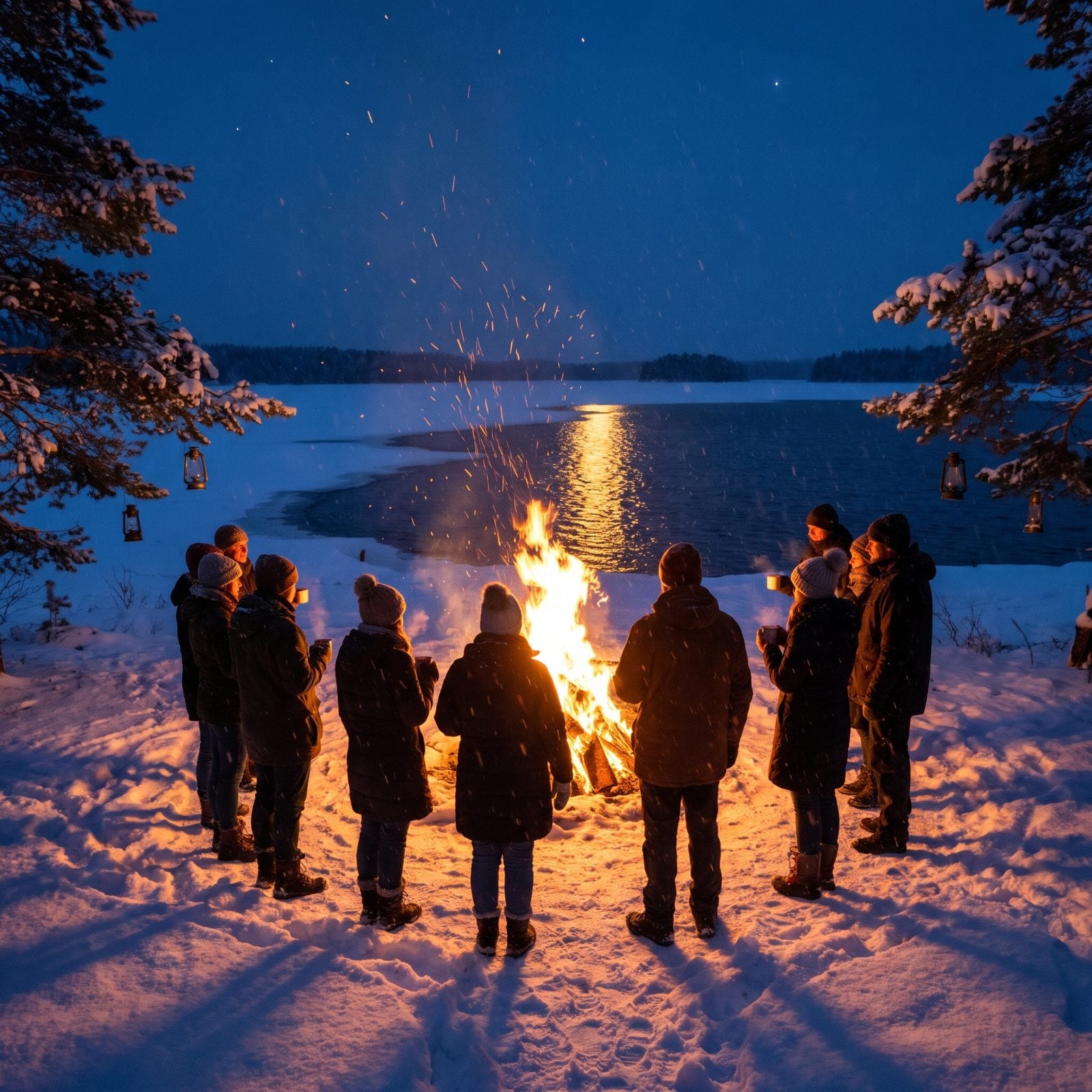
There’s a moment, maybe twenty minutes in, when the fire finally gets big enough to push the cold back a few feet and the whole crowd shuffles inward at once. You’ve felt it. Everyone has.
Shoreline bonfires run on an honor system older than any of the people tending them. Somebody brings the pallets. Somebody brings the cider. And a couple of folks always turn up with marshmallows and a baffling number of coat hangers.
The water is what makes it. A fire in a parking lot is just a fire. But a fire with black December lake behind it, throwing one long ribbon of orange across the surface — that’s the reason people pull on four layers and come down to the beach in the dark.
19. Holding a Christmas Eve Community Sled Run
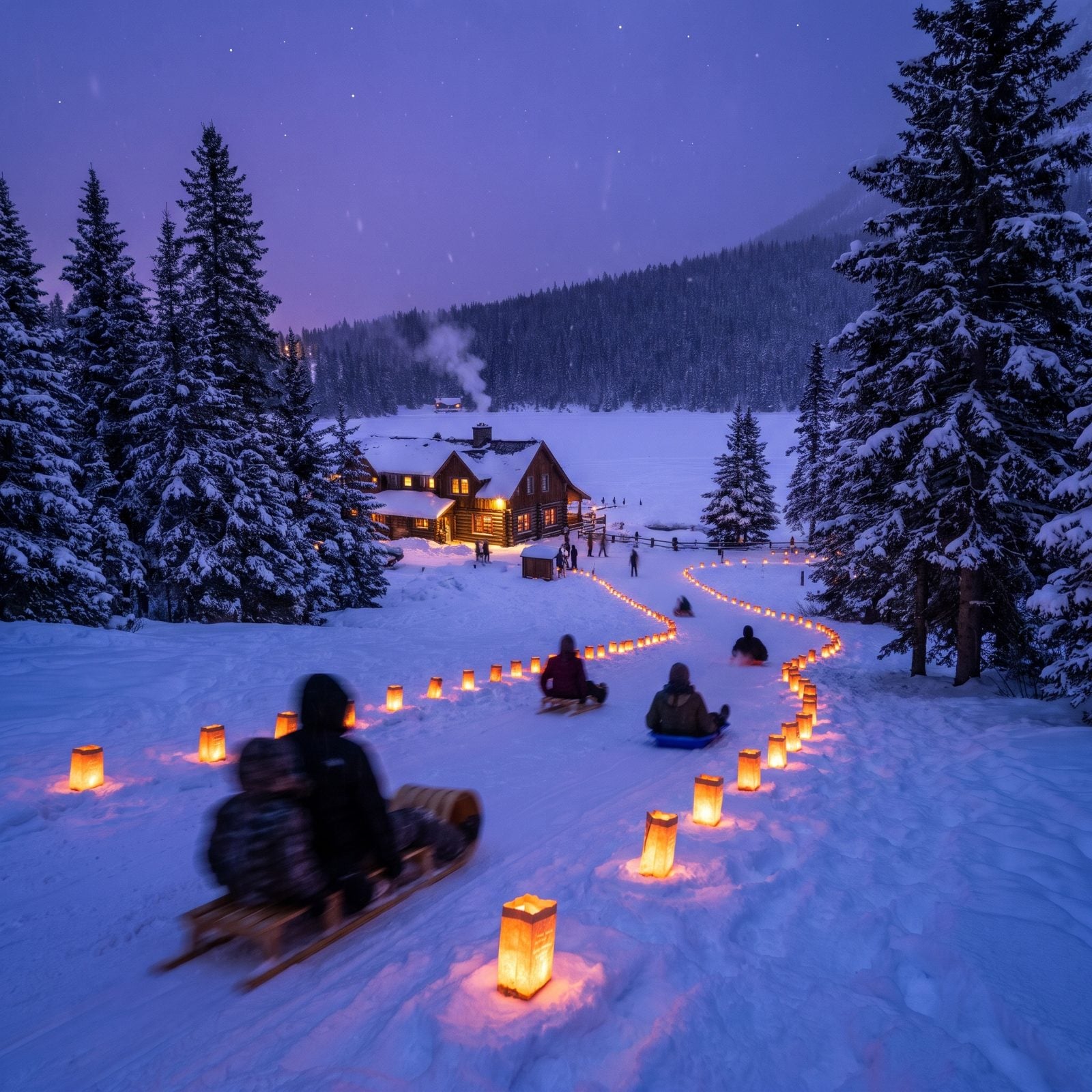
The hill is always somebody’s cow pasture or the slope behind the fire hall. On Christmas Eve, it belongs to everyone.
What makes these runs feel like church is the luminaries — rows of paper bags weighted with sand, a tea light in each, lining the track down to the lakeshore. By dusk the whole hill glows like a runway, sleds go down two abreast, kids scream, and grandparents keep insisting they won’t take a turn right up until they do.
18. Building Lake-Monster Snow Sculptures
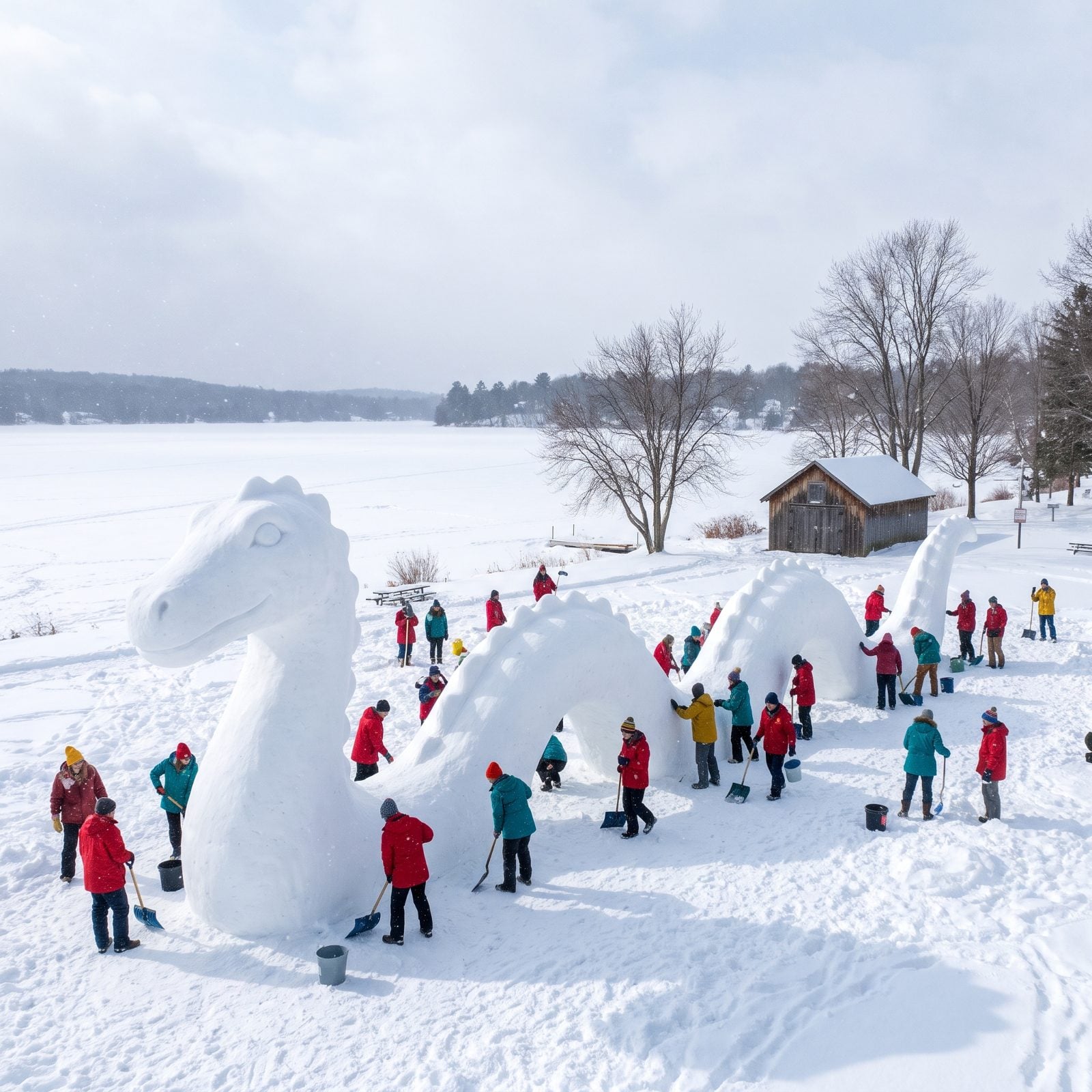
Every lake with a legend has one. Champ in Lake Champlain. The Flathead monster in Montana. Pepie down in Lake Pepin. Come December, the local kids build it out of snow, humps and all, rising off a park bank like it crawled up for the holidays.
These aren’t entries in some judged competition. They’re folk art by committee, built over a weekend by whoever wanders over with a shovel. The eyes are usually hubcaps or pie tins. The smile is always friendly.
It’ll last until the first real thaw, then slump into a gray lump nobody mourns, because next year it comes back. That’s the deal with snow.
17. Joining the Annual Christmas Bird Count
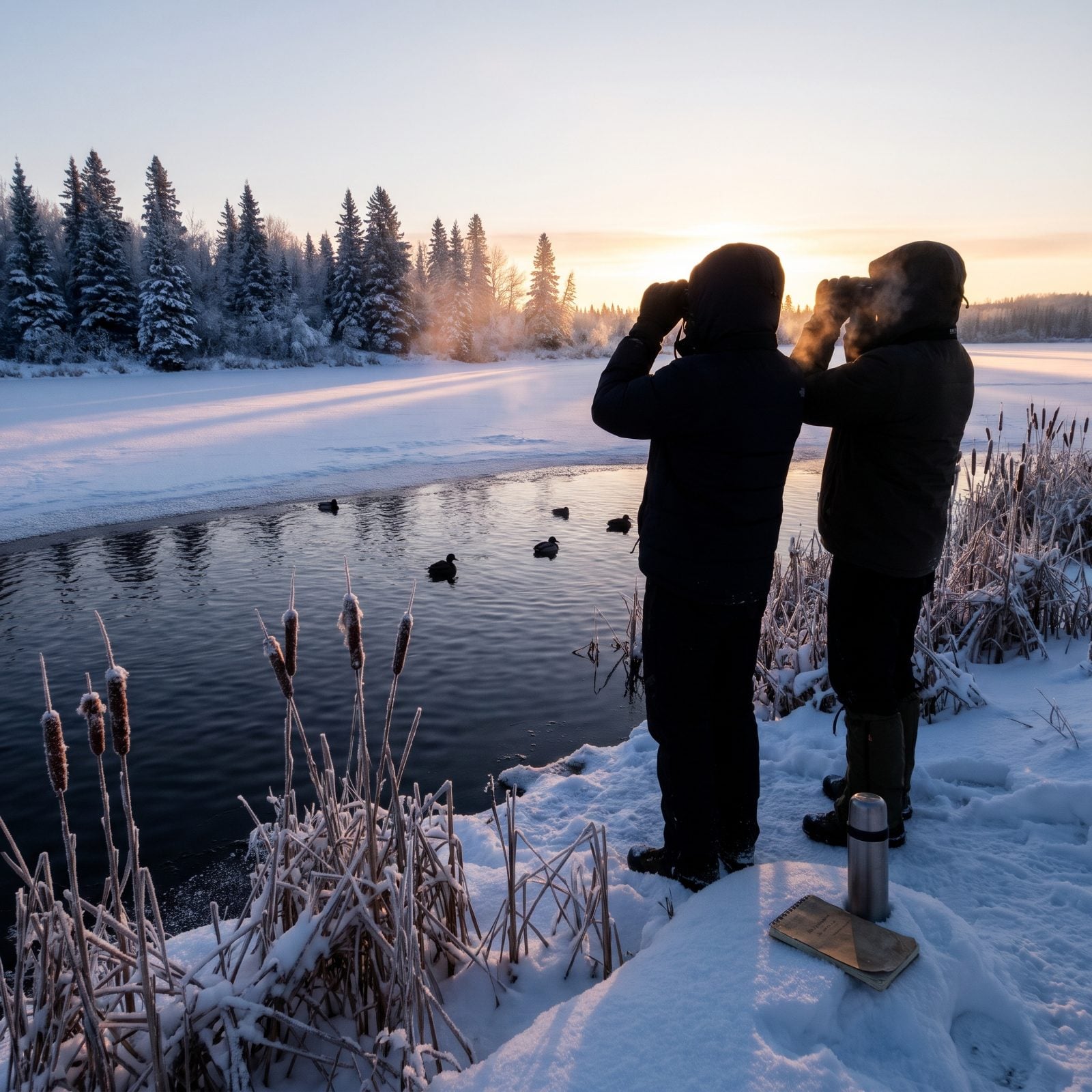
The Audubon Christmas Bird Count has run every winter since 1900, making it the longest-running citizen science project in the country. A surprising amount of it happens on frozen shorelines at first light, counting whatever’s still brave enough to sit on open water.
You don’t need to know a bufflehead from a merganser. Count circles pair beginners with people who’ve been at this for forty years and can name a bird by the sound of its wings.
After a frigid, snowy count morning, a nature center naturalist wrote that “The Christmas Bird Count is one of the only ways that long term information about the world is kept.”
16. Building a Driftwood Nativity Scene
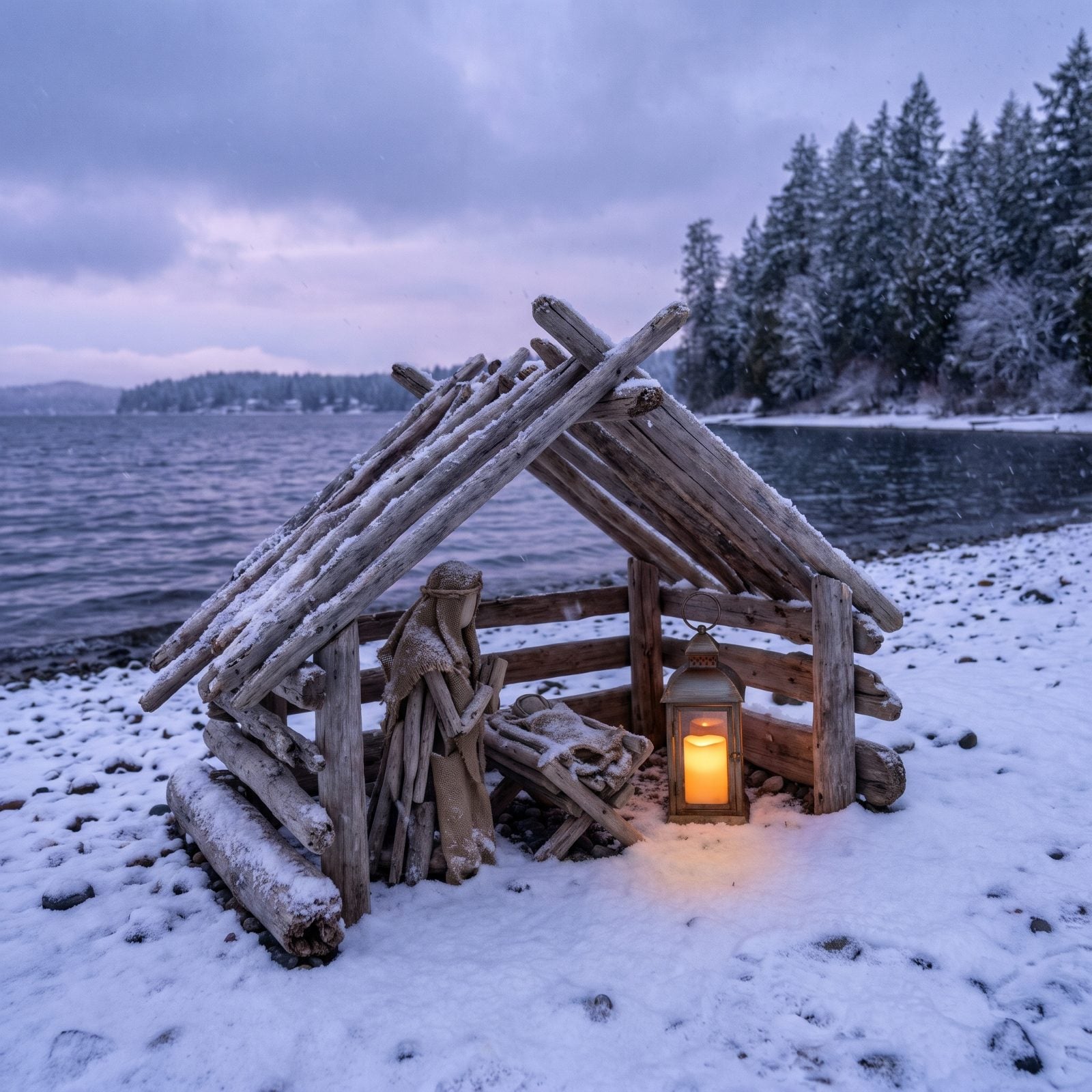
Driftwood is the one material a lake hands you for free — waterlogged, bleached silver-gray, worn smooth by a whole summer of waves. Somebody looks at a pile of it in November and sees a manger.
The figures are abstract, barnwood and branch, no painted faces, and that’s exactly what makes them work. A driftwood nativity reads more like a suggestion than a statue, and it sits right on the shore where the wood washed up.
One lantern inside the stable is all the lighting it needs. At blue hour, with snow settling on the gray wood and black water behind it, the thing stops anyone walking the shoreline cold.
15. Wrapping Dock Railings in Cedar Garlands
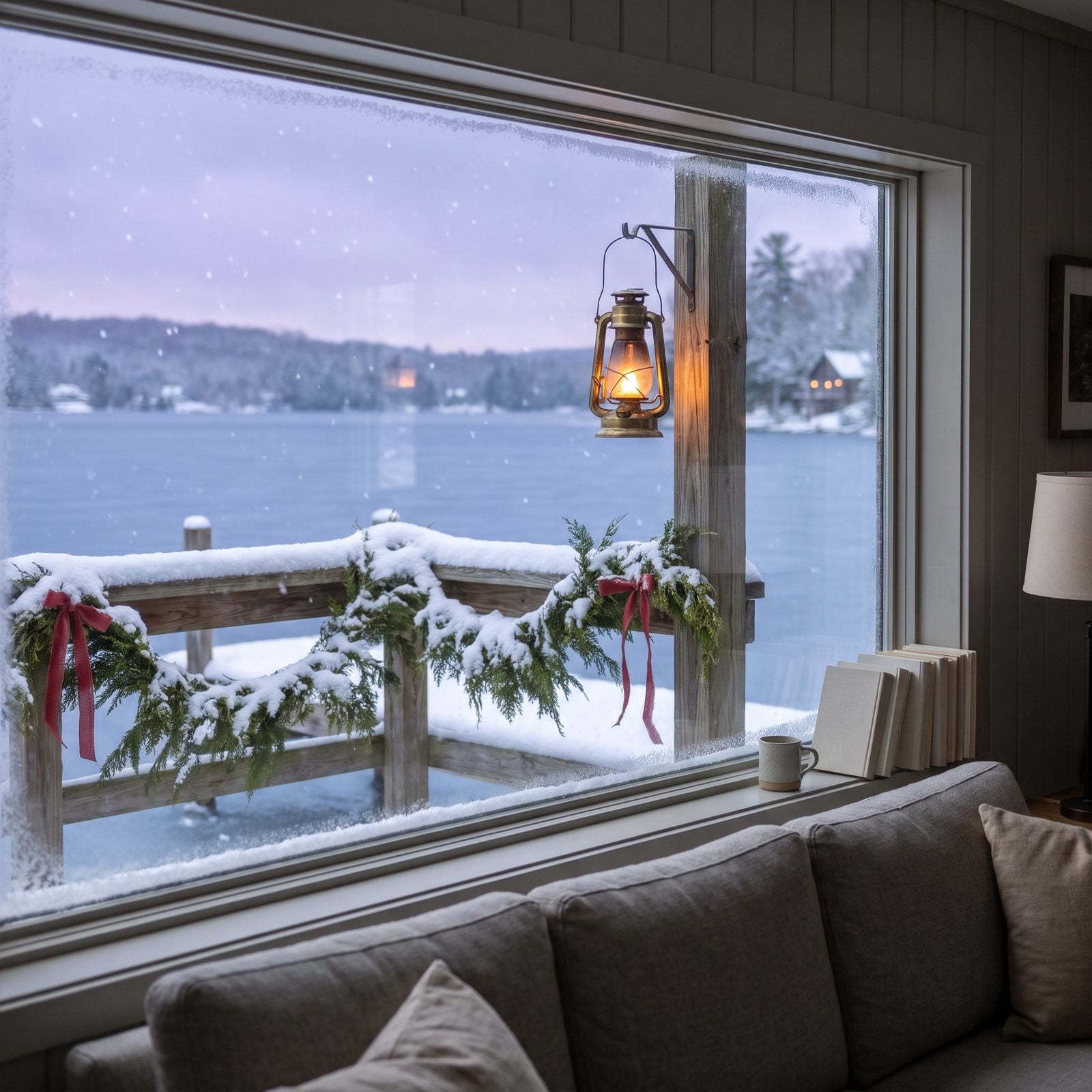
The boats are gone. The docks stay. And someone always decides a bare railing over a frozen lake looks lonely in December.
Cedar is the garland of choice up north for good reason. It holds its color in the cold, smells like the woods, and bends around a railing without snapping the way pine will. Give it a spool of red ribbon and an afternoon, and the empty dock looks dressed for the season.
14. Baking Fish-Shaped Christmas Cookies
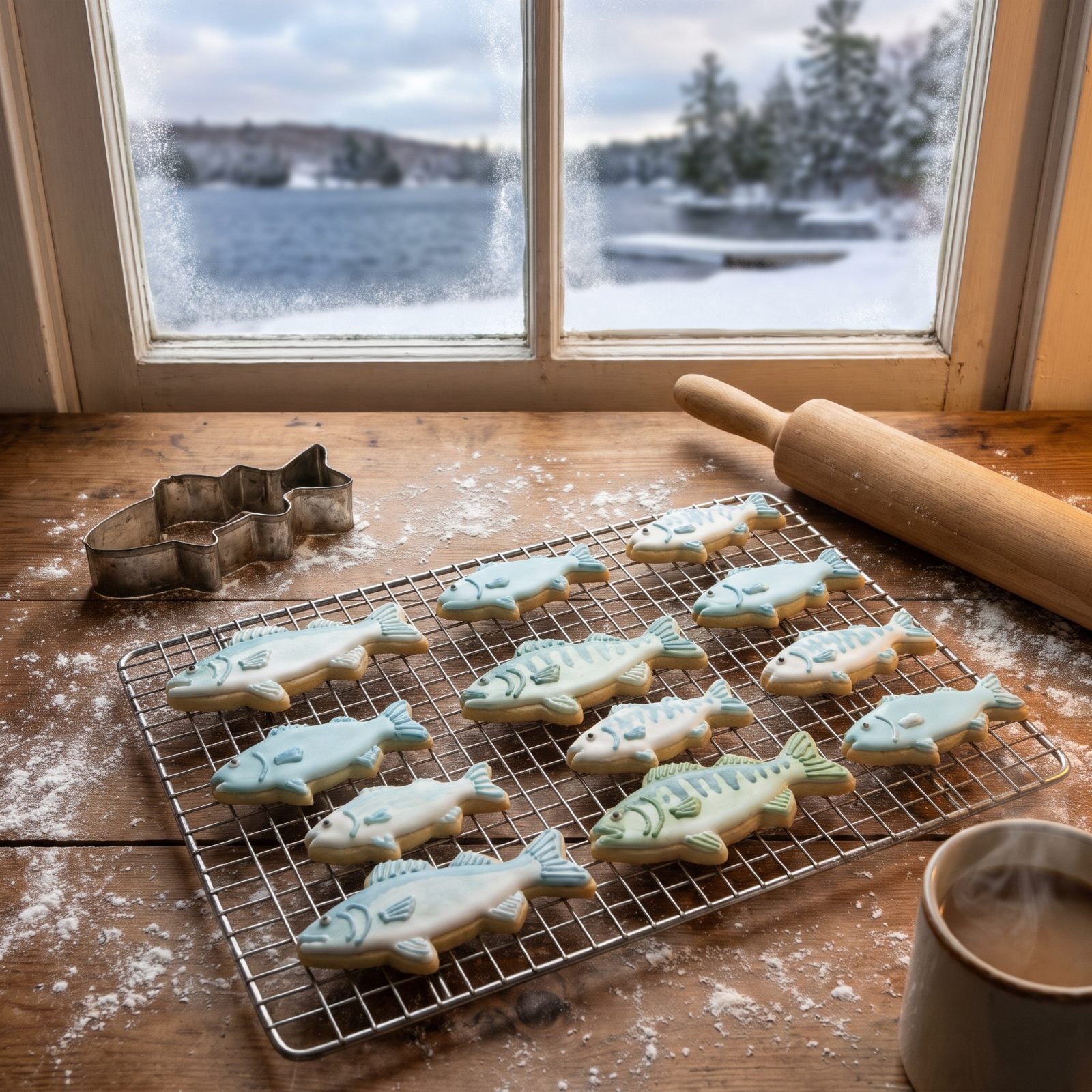
Gingerbread men are fine. But a lake town cuts its cookies into walleye.
The cutter usually came from a hardware store that closed years back, and it gets passed between households every December like a library book. Pale blue royal icing, a white belly, a dot of black for the eye. Kids who can’t yet read can tell a bass from a northern by the shape of the cookie.
Is it silly? Completely. That’s half of why it sticks. A town that fishes all summer isn’t about to bake snowmen in December when it could bake its dinner instead.
13. Serving a Community Christmas Chowder Supper
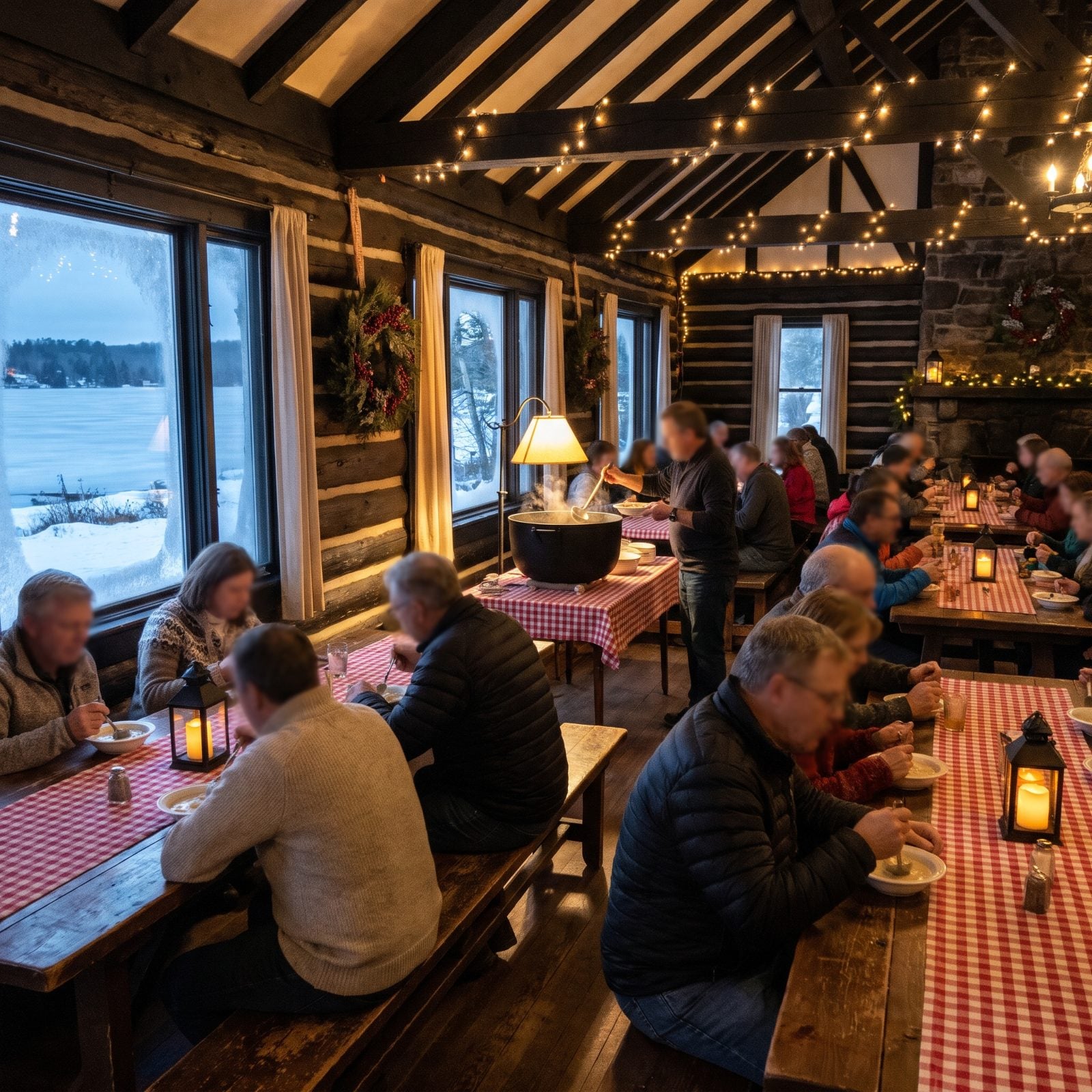
The hall smells like it from the parking lot. Smoked haddock, cream, potato, a pot big enough to bathe in, simmering since mid-morning.
Chowder suppers are the quiet backbone of lake-town Christmas. Ten dollars at the door, or free if it’s the kind of town that counts on everyone chipping in some other way. You sit where there’s room, which means you end up next to the family three cabins over you’ve waved at for years and never once talked to.
The recipe gets argued about every year and never changes. Somebody’s grandmother set it, nobody’s brave enough to touch it, and good — leave it alone.
12. Serving Breakfast With Santa at the Marina
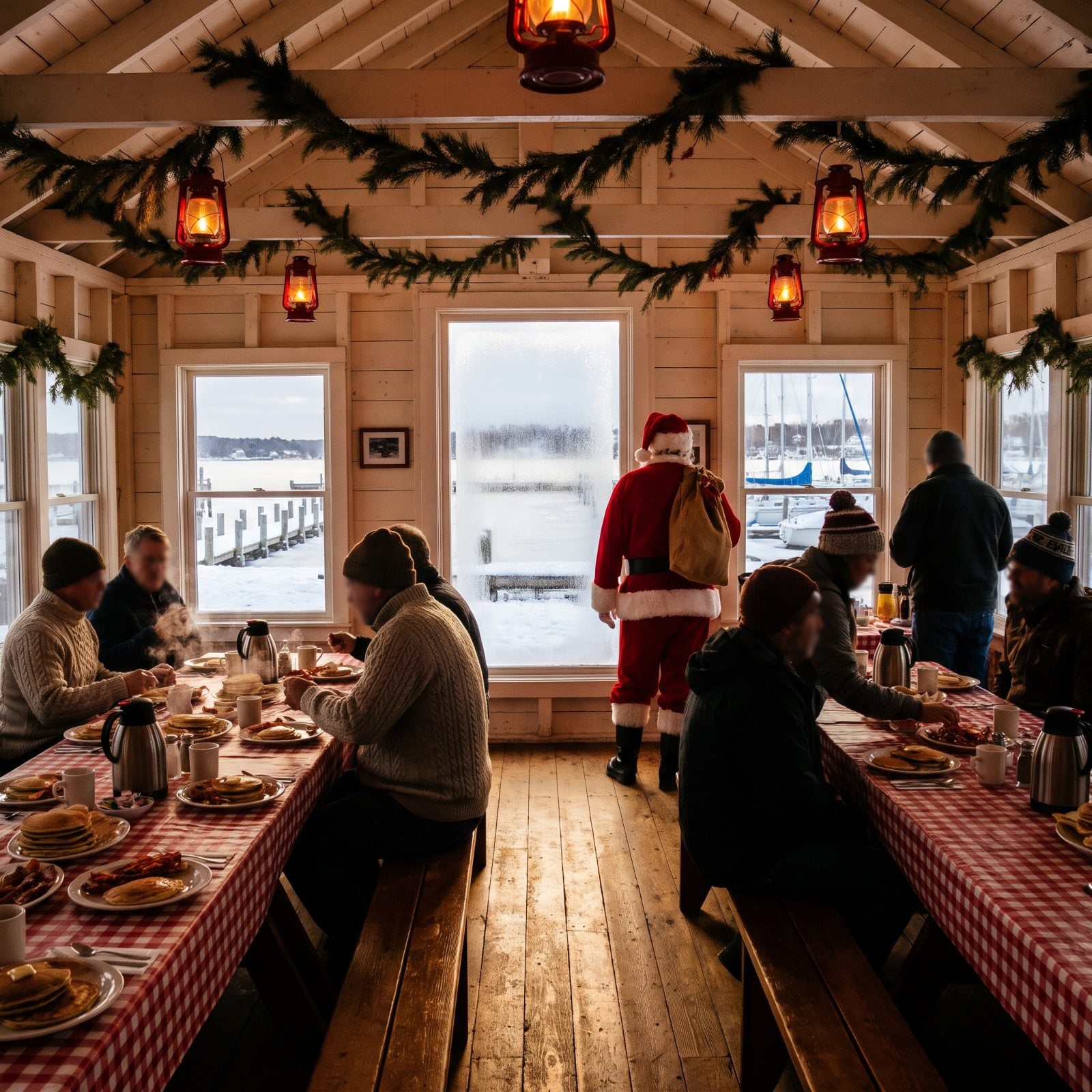
Pancakes at a marina in December sound like a logistics problem. Boats frozen in at the docks, half the staff gone south, the ramp iced over. Lake towns do it anyway.
The folding tables come out of the same shed that holds the summer life jackets, and someone’s uncle plays Santa because he already has the beard and the patience. Grown-ups in wool hats and snow boots instead of swim trunks crowd the benches while the harbormaster flips pancakes he’d never touch in July.
What makes it stick is the room itself. You’re eating breakfast where you spent all summer waiting for gas, now quiet and frosted and full of people you only see when the water’s warm.
11. Packing Smoked-Fish Christmas Gift Boxes
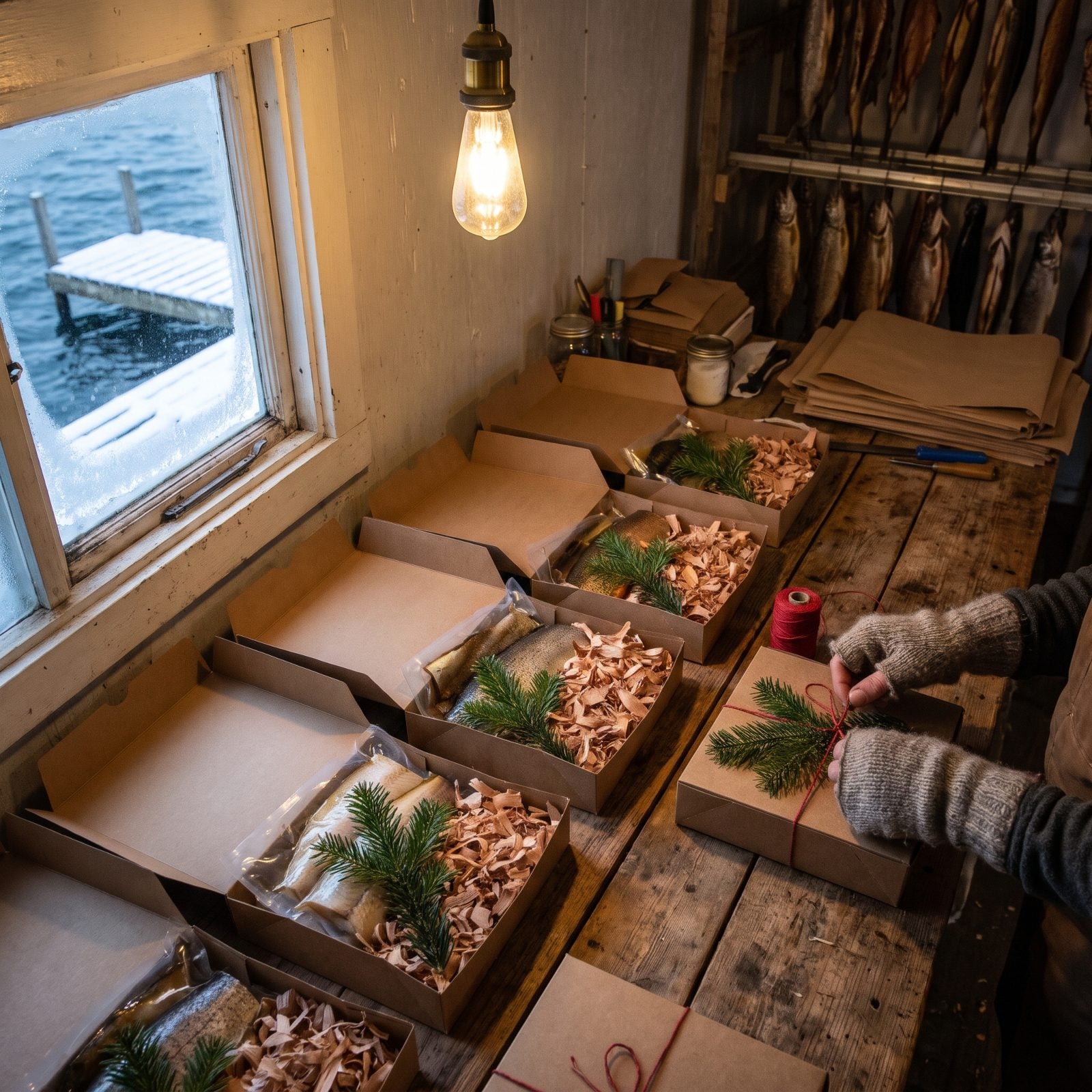
Every lake with a smokehouse has a Christmas gift that needs no explaining — a box of smoked whitefish, trout, maybe some cured chub, wrapped in brown paper and sent off to relatives who moved away and still miss the taste.
Families book their fish weeks ahead because the good smokers run out. You pack them on cedar shavings, tuck in a crackers packet nobody asked for, and tie it with red twine.
The ones who get these boxes know exactly what the inside of that smokehouse smells like. Oak, brine, cold air coming off the water. You can’t mail that part, but the fish gets close.
10. Delivering Holiday Hampers to Island Residents by Ferry
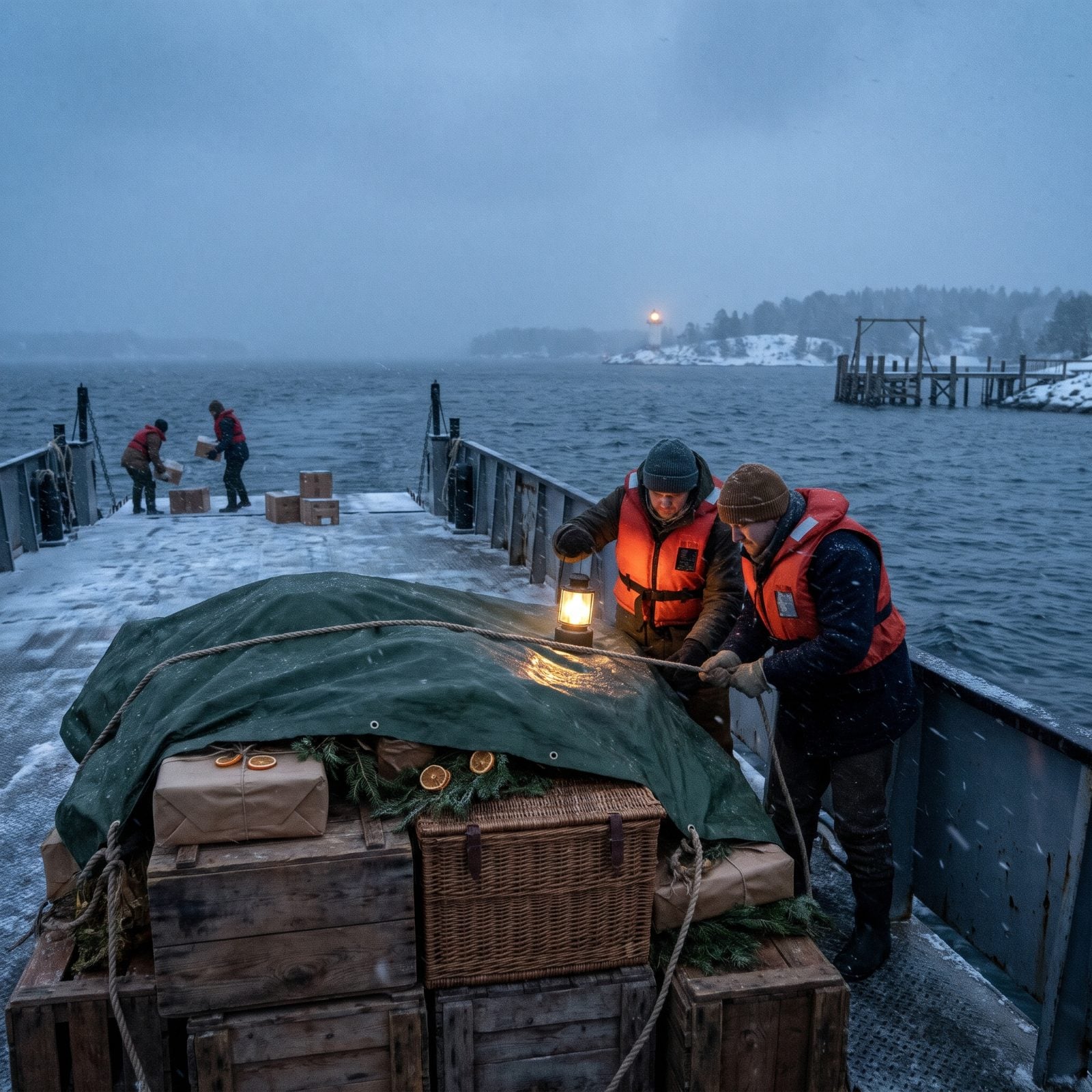
On the islands that go quiet after Labor Day, the grocery run becomes a seasonal event. A handful of year-round residents, one ferry, and a winter that cuts the world down to whoever stayed.
So the town packs hampers. Oranges, a ham, wrapped parcels, something from the church ladies and something from the hardware store. The ferry makes a special crossing, and volunteers haul the crates up frozen docks to porches that don’t see many visitors.
Nobody calls it charity. It’s just how you look after the people who hold the island down through the cold months, and the ferry captain does it off the clock.
9. Filling a Toy-Donation Flotilla at the Harbor
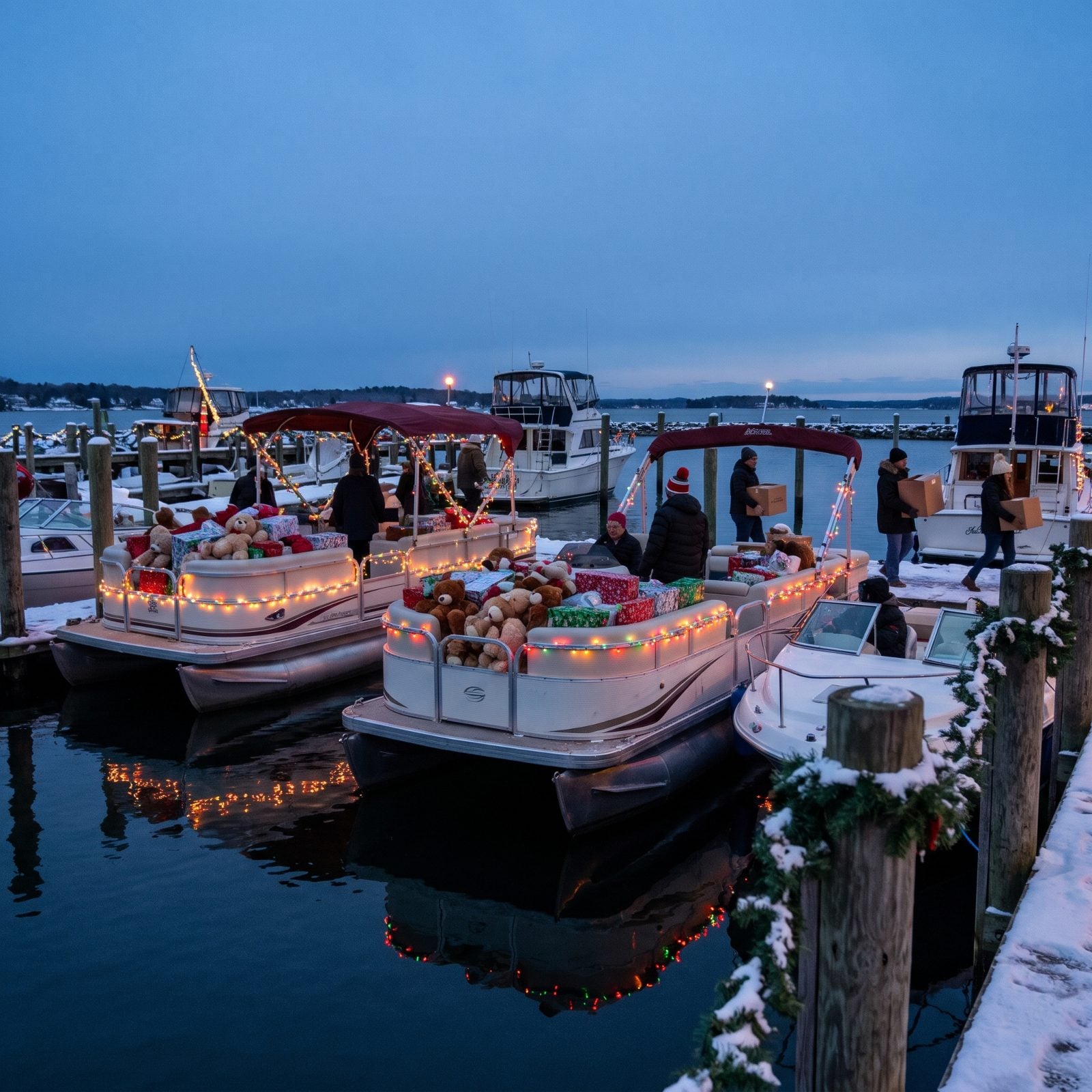
A boat parade is one thing. A boat parade that doubles as a toy drive is a lake town solving two problems with one string of lights.
Captains deck their hulls and load the decks with wrapped gifts bound for the county toy drive. People line the harbor wall, drop a donation, and watch the lit flotilla ease out across black December water while the toys ride in the cabin where it’s dry.
Here’s the trick nobody mentions: the cold keeps everyone sober and efficient. These boats glide, drop their load at the far dock, and the whole thing wraps before anyone’s hands go numb. Mostly.
8. Hanging Gift Requests on the Bait Shop Giving Tree
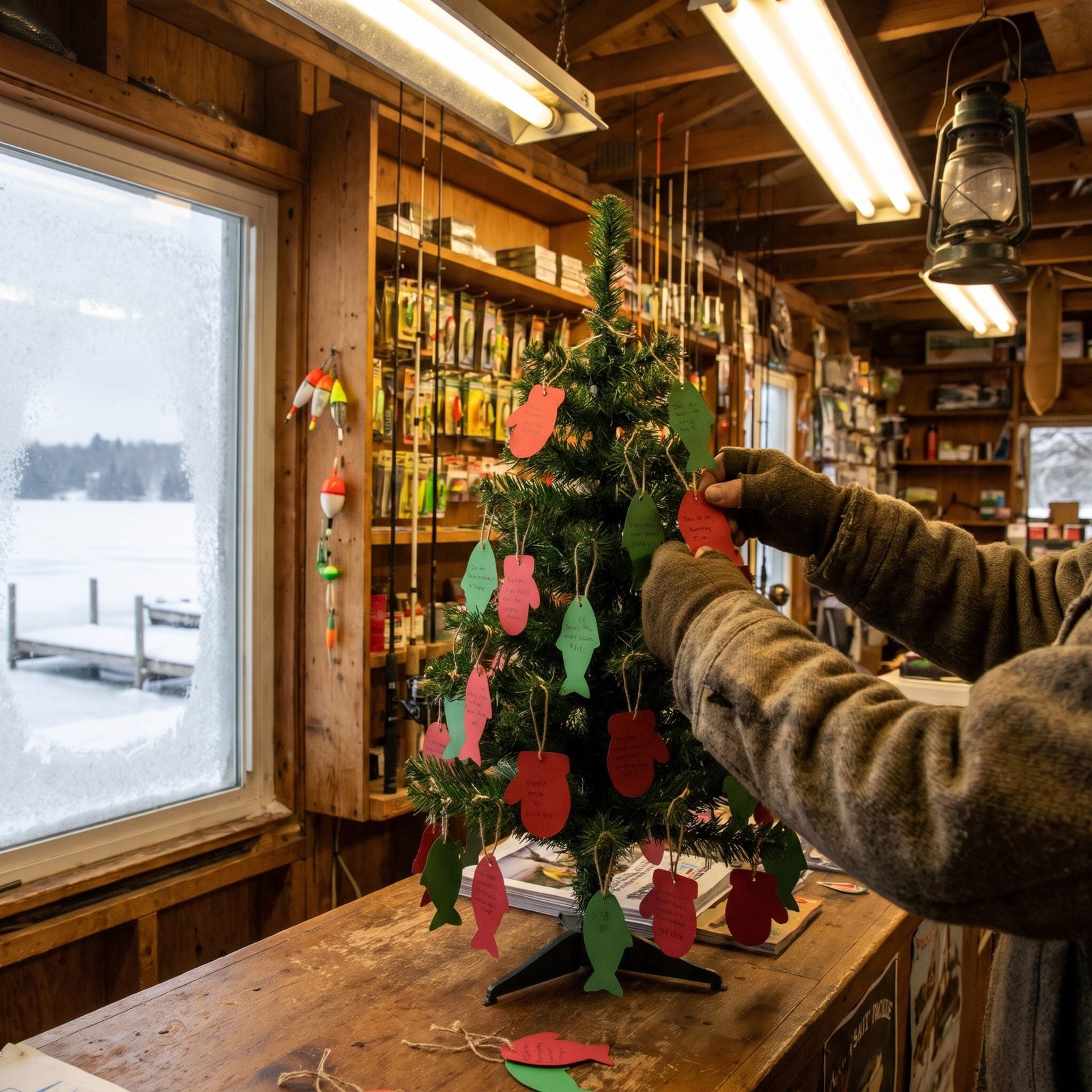
The bait shop stays open year round because somebody has to be. Minnows for the ice fishing crowd, coffee for the regulars, and come December, a little tree on the counter.
The tags are cut into fish and mittens, each one a kid’s gift request or a note from a family having a hard winter. You take a tag, you buy the thing, you bring it back wrapped.
It works because the bait shop sees everyone. The guy who runs it knows who’s struggling without anyone having to say so, and the tree just gives the rest of the town a quiet way to help.
7. Laying Christmas Wreaths at the Waterside Veterans Memorial
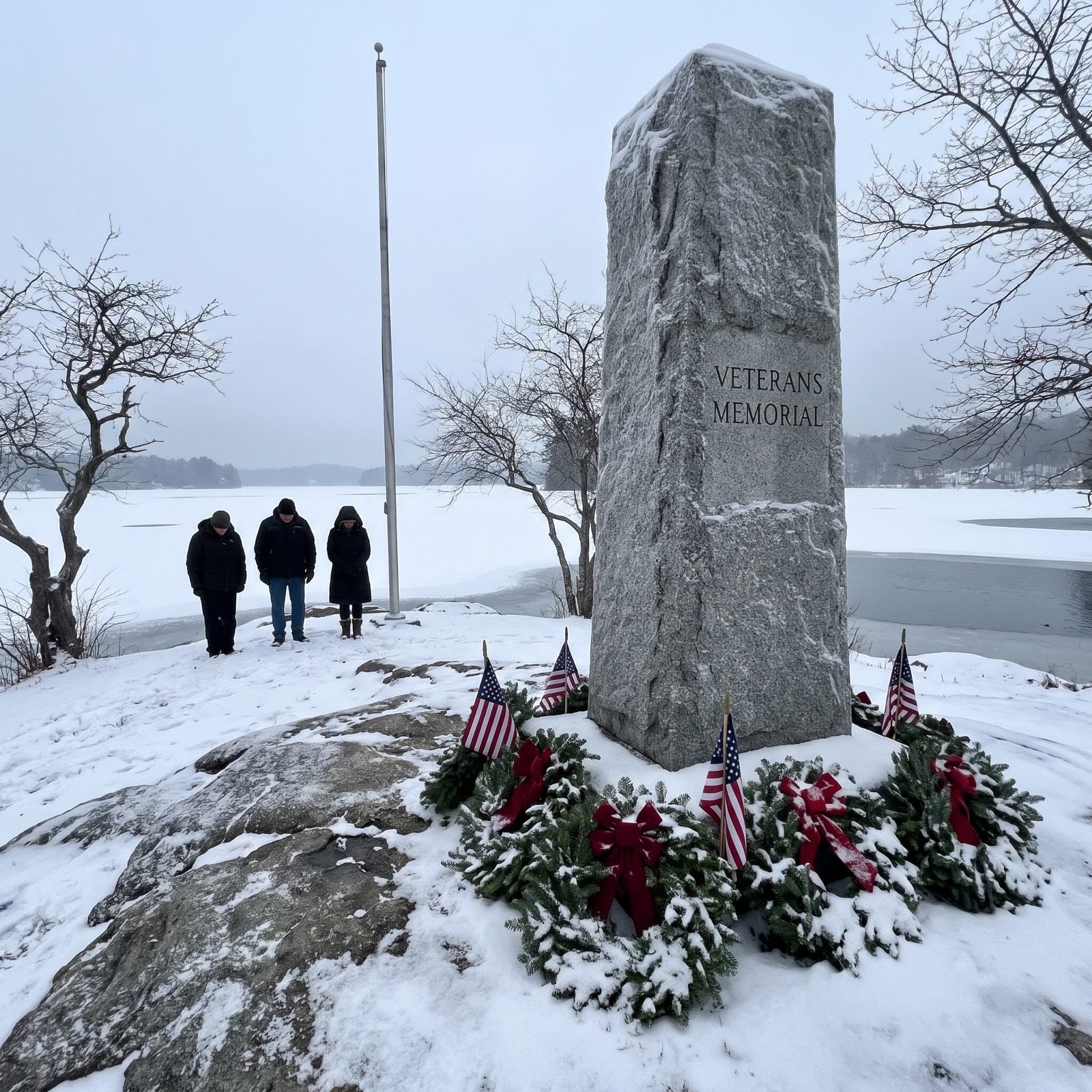
Most lake towns put their veterans memorial on the best piece of land they have — a point, a bluff, somewhere with water in every direction. In summer it’s where the photos get taken. In winter it’s nearly empty.
The wreath-laying brings people back. Evergreen rings with red bows, small flags pushed into the snow, names read aloud over a lake gone silent and gray.
Standing there with the wind coming off the ice, you understand why they chose this spot. The water doesn’t forget anybody. Neither does the town.
6. Driving a Lighted Tractor Parade Along the Lake Road
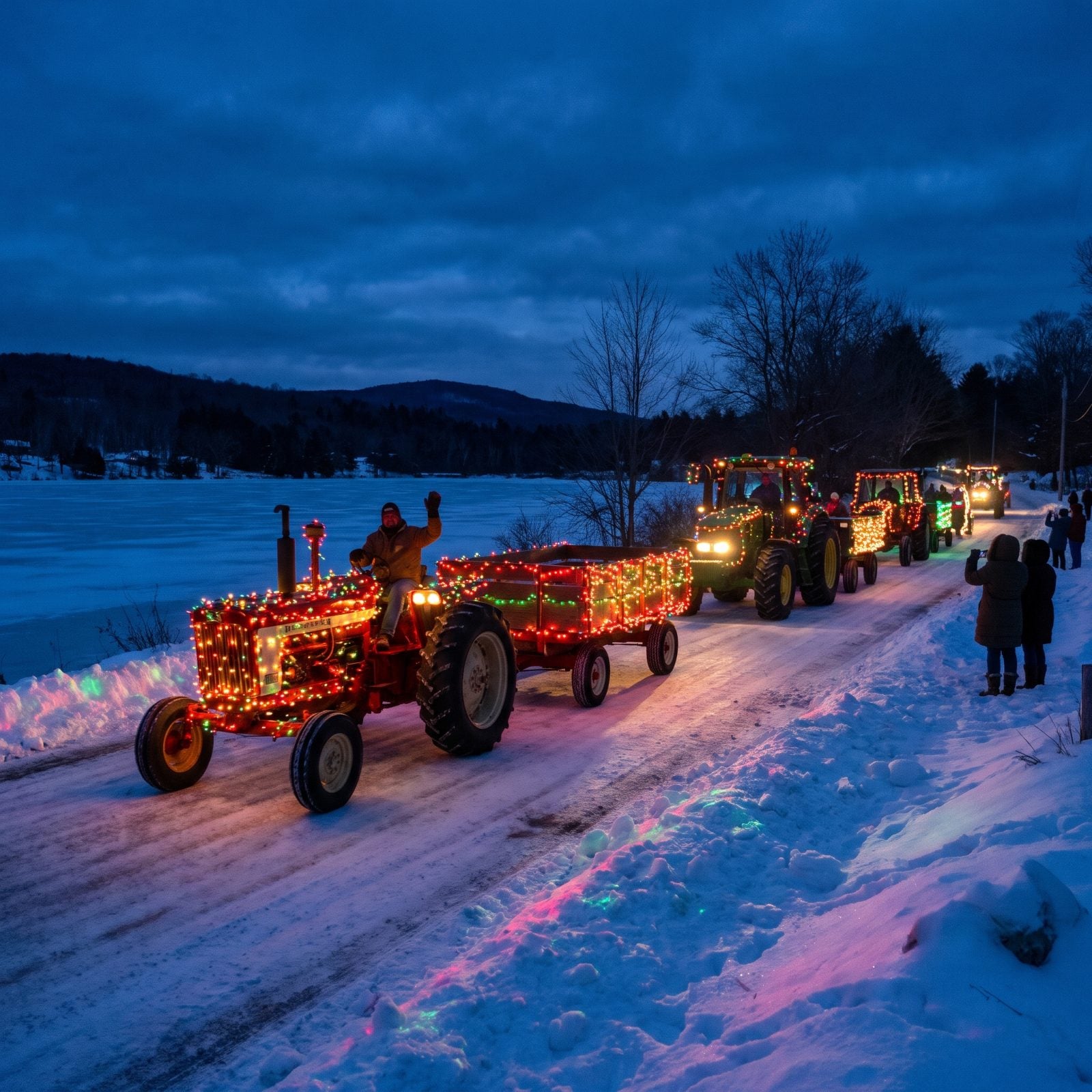
Most lake towns are farm towns too, and farmers have equipment. Come December, that equipment gets covered in lights and driven slow along the lake road.
Vintage tractors, grain wagons, a combine if someone’s feeling ambitious — all strung up and rolling past the frozen shoreline while kids wave from snowbanks. It’s loud, it’s cold, and it takes about an hour at tractor speed.
The best part is the reflection. All those bulbs lit up against the snow and the dark water, a parade route the lake itself seems to be watching.
5. Competing in a Lake-Cottage Porch Decorating Contest
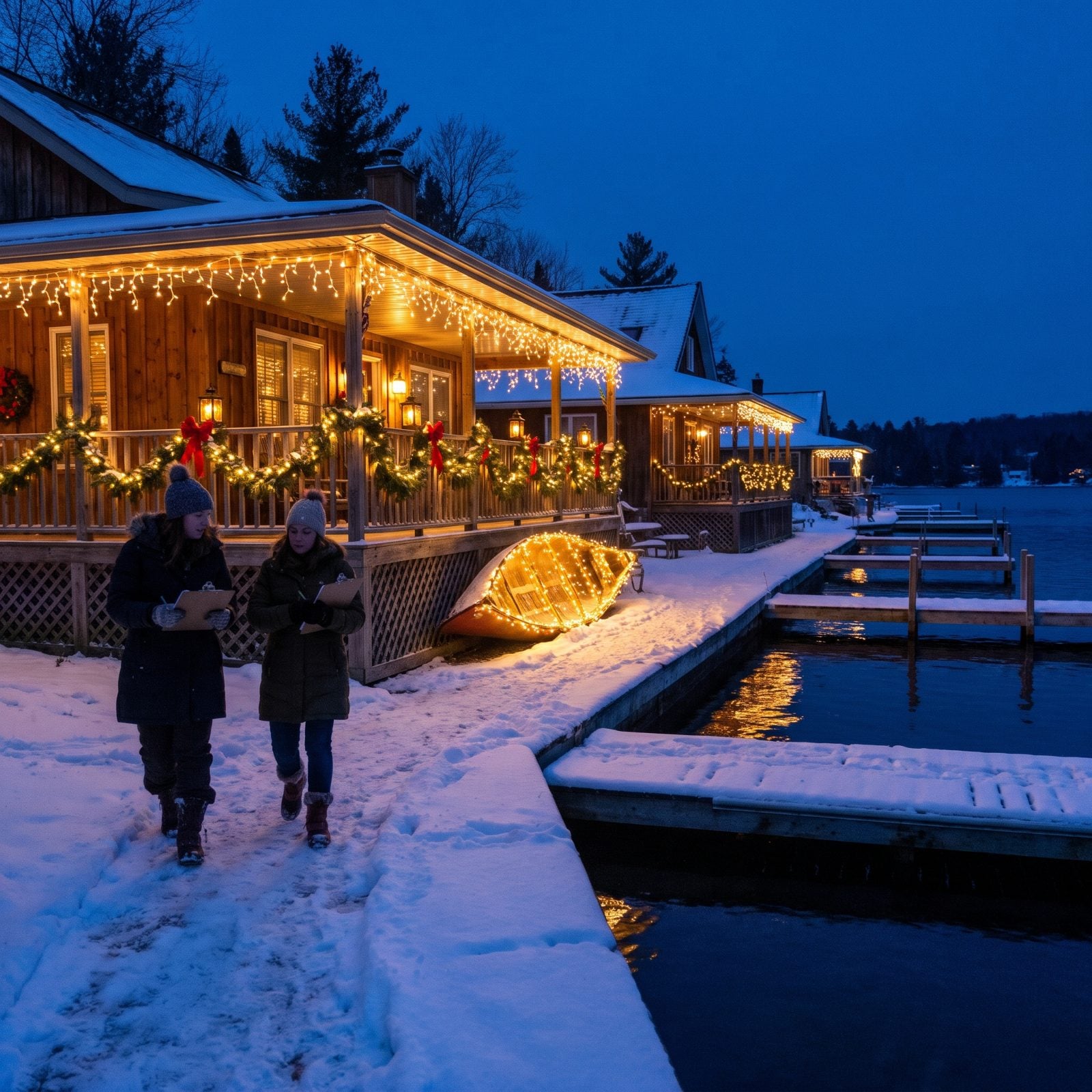
Give a street of cottage owners a contest and a modest trophy, and watch how competitive quiet people can get.
The porch decorating contest runs on pride and spite in equal measure. Garland on every railing, a canoe strung with lights, lanterns lining the walk down to the dock. After dark the judges walk the shore path and rate the displays while the owners pretend not to care.
The winning porches understand restraint. One well-lit tree and a glowing dock beats a tangle of inflatables every time, and the lake reflects it all back, so whatever you hang gets counted twice.
4. Swapping Handmade Nautical Christmas Ornaments
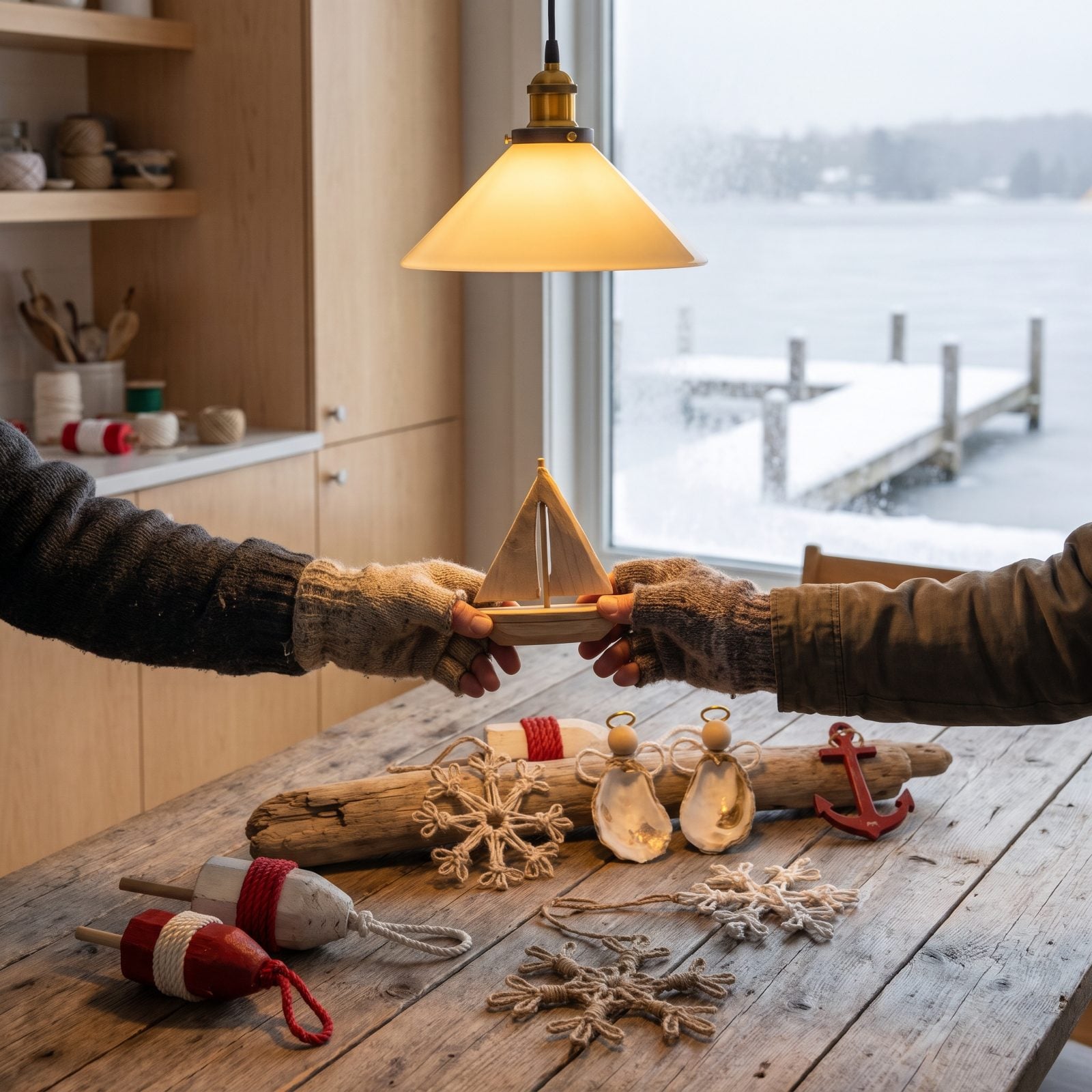
Store-bought ornaments can’t compete with a buoy the size of your thumb that somebody’s neighbor made from scrap rope.
The swap turns lake junk into treasure. Driftwood sailboats, knotted rope snowflakes, oyster-shell angels, a tiny anchor painted the same red as the dock. Everyone brings a dozen, everyone goes home with a dozen different.
Hang them the next December and every one becomes a name. That’s old Pete’s rope knot. That one came from the woman three docks down. By the third or fourth year your tree is basically a map of the lake, wrapped in fishing line and sentiment.
3. Taking the Annual Family Christmas Photo on the Dock
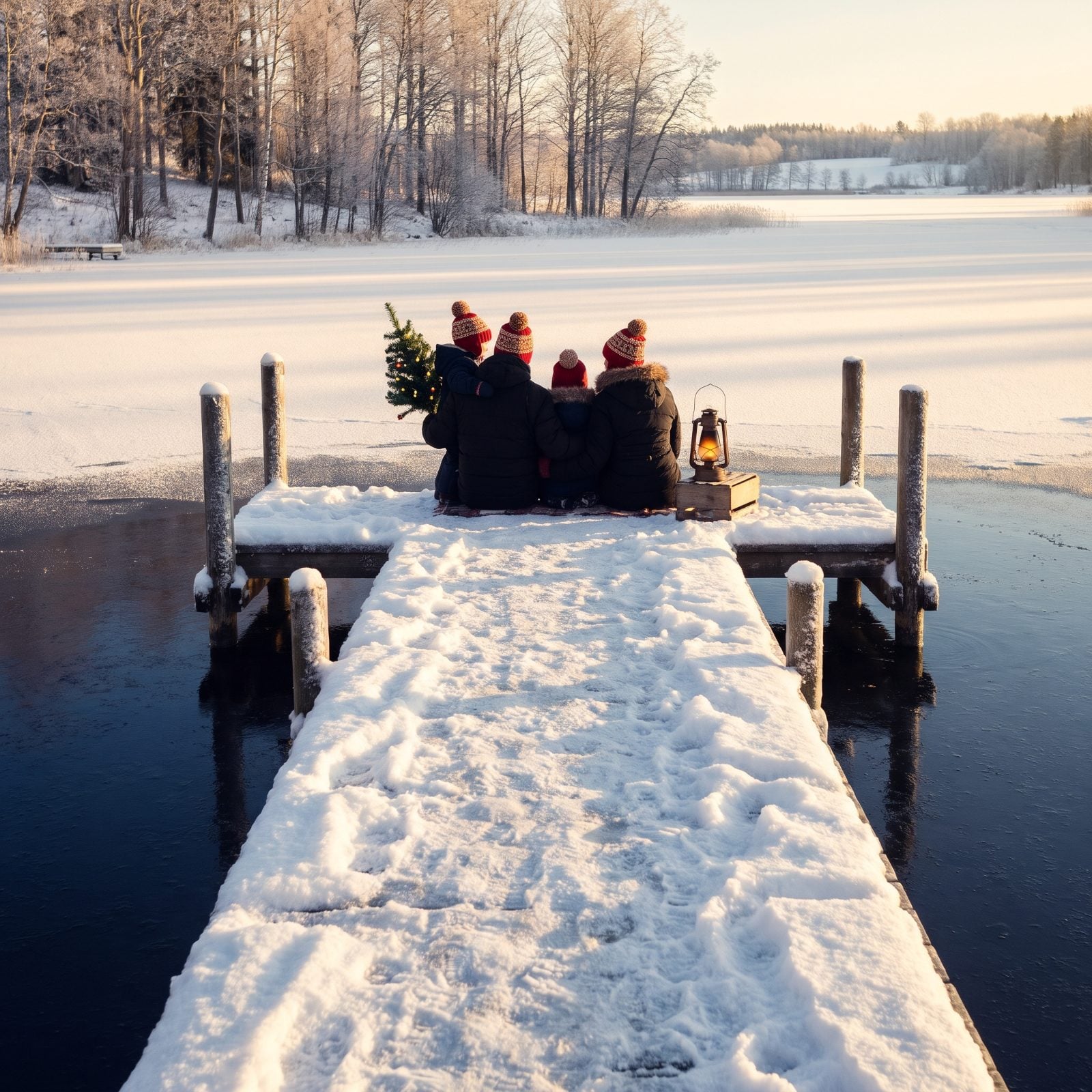
The dock is where every summer memory happened, so of course that’s where the Christmas card gets shot.
Same planks, same posts, just buried in snow now and bordered by water gone dark and slow. Everyone bundles up, somebody props a little tree and a glowing lantern on a crate at the end, and the whole crew shuffles out to the spot where they spent August jumping off.
It’s cold, somebody’s always squinting, and the dog won’t sit. But there’s something honest about posing on a dock in December. Summer people take the easy photo on the beach. Lake people stand on the frozen edge of the thing they love most and smile anyway.
2. A Candlelight Christmas Eve Service Overlooking the Lake
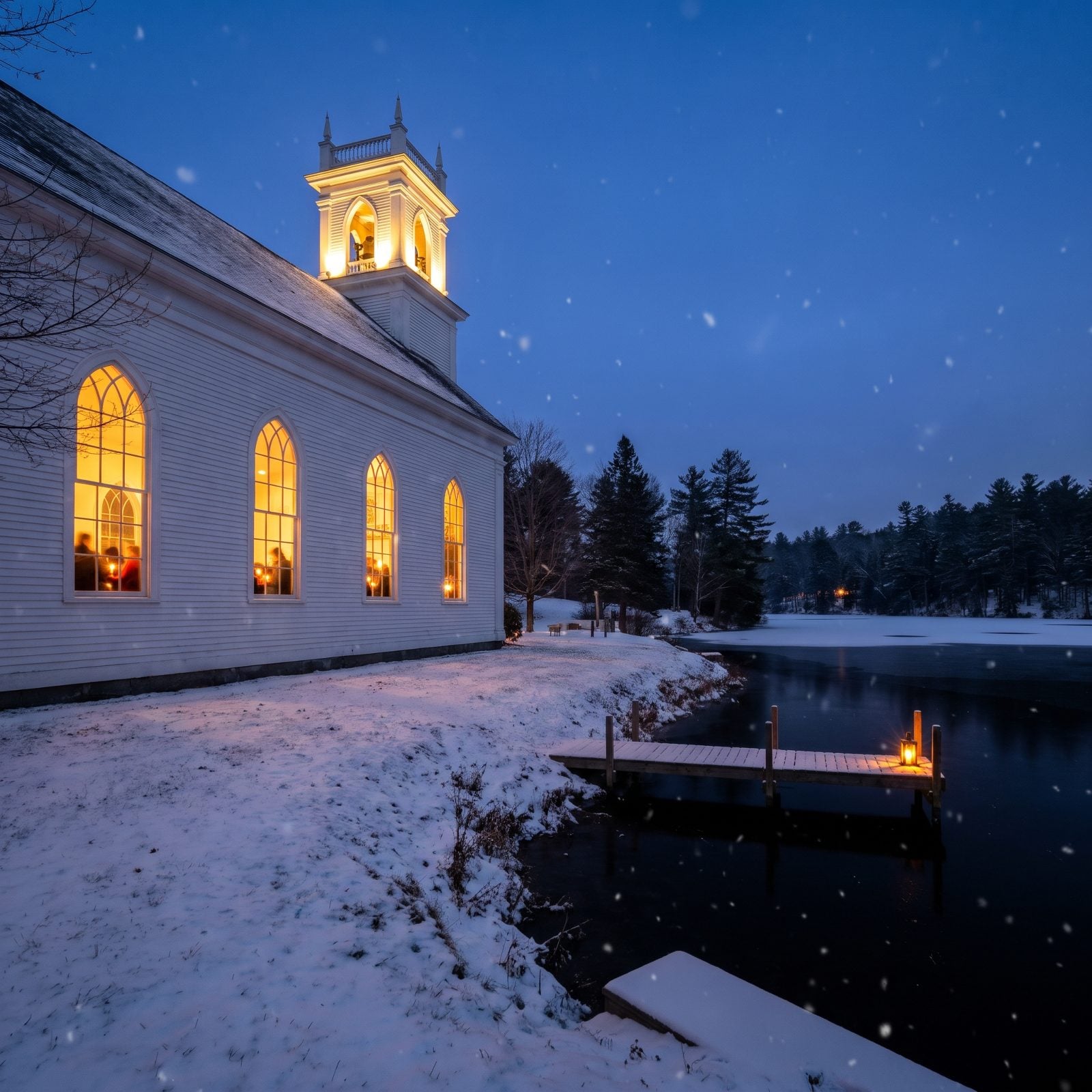
The small white church by the water fills to capacity exactly once a year, and that night is Christmas Eve. Half the people inside only come for this, and nobody minds. By the end everyone’s holding a candle, the lights go down, and a single flame passes hand to hand down the pews until the whole room is lit by people instead of bulbs.
Then the doors open, you step out into the cold, and the lake is right there — black, still, the church light spilling across the snow toward it.
Honestly, we’ve been to grander services in grander cities. None of them stayed with us the way a packed clapboard church beside dark winter water does.
1. Walking the Lakeshore Together on Christmas Morning
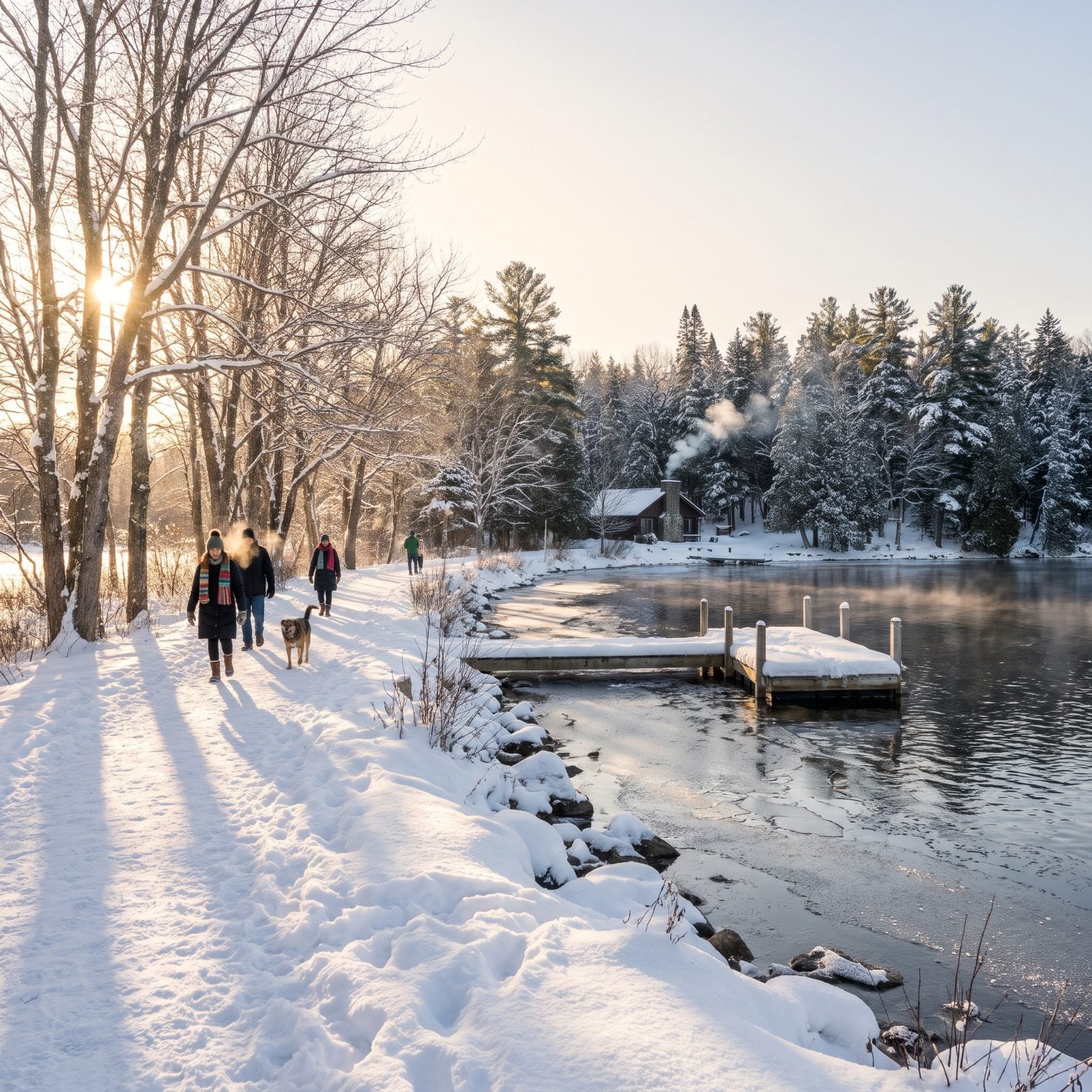
The gifts are open, the kitchen smells like coffee, and the quietest tradition in a lake town has nothing to do with any of it. People go for a walk — down to the shore, along the path, past the snow-covered dock still standing out in the water and the cabins with smoke coming off the chimneys.
It’s usually cold enough that your breath hangs. The lake sits half-frozen, steam lifting off the open water where the ice hasn’t closed over yet, and nobody talks much.
We’ll say it flat out: best part of the day, and it costs nothing.